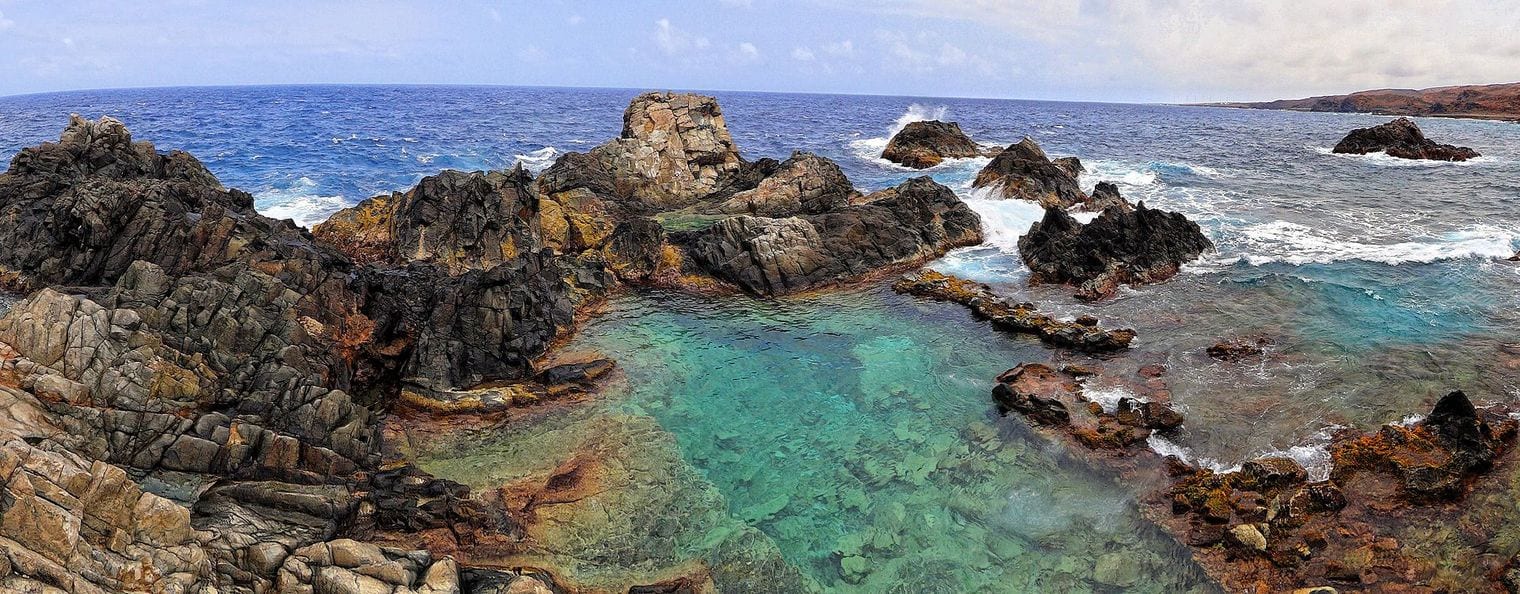
A desert island in the best possible sense — cactus, caves and gold-mill ruins on one coast, and the Caribbean's calmest water on the other.
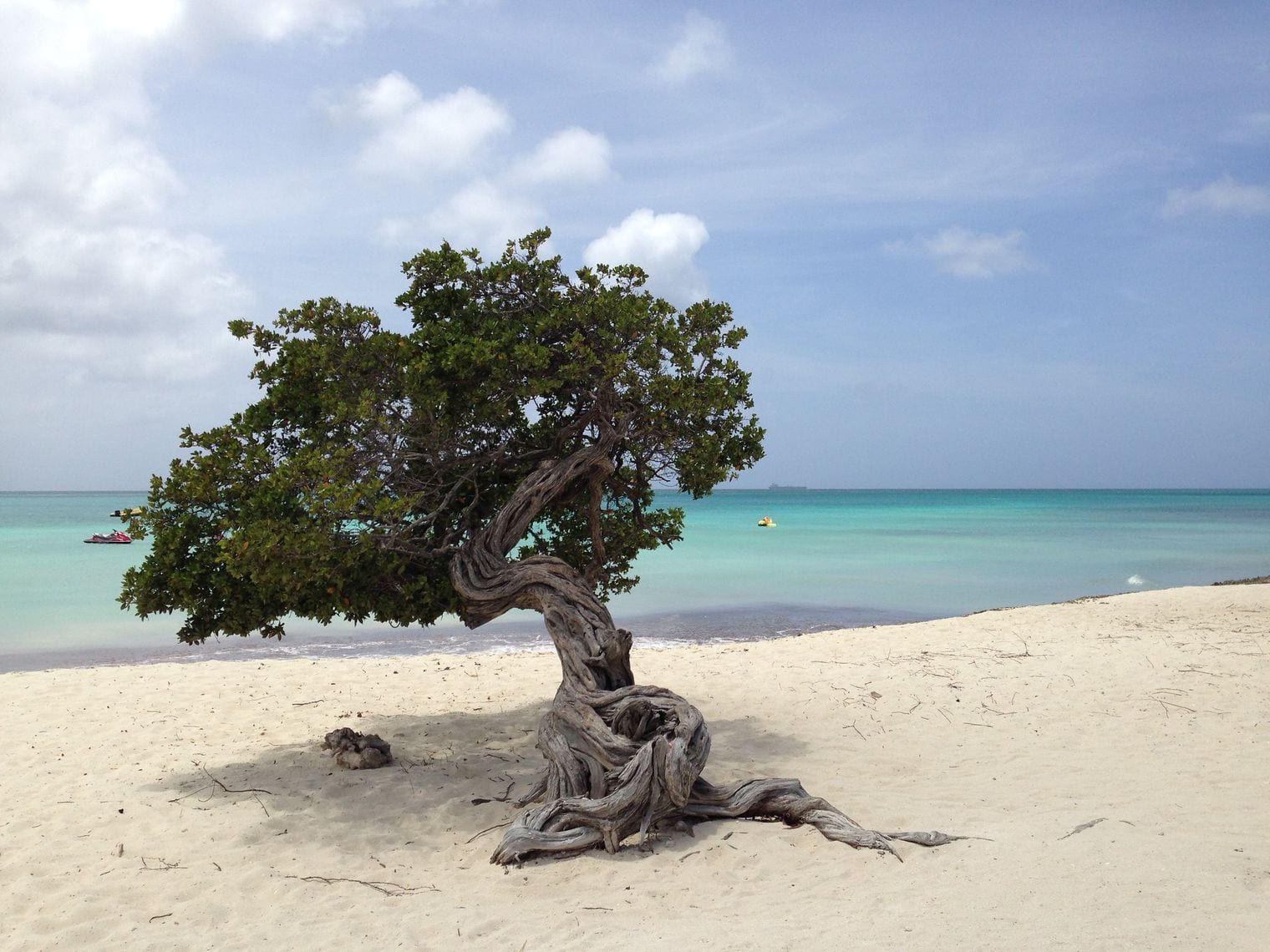
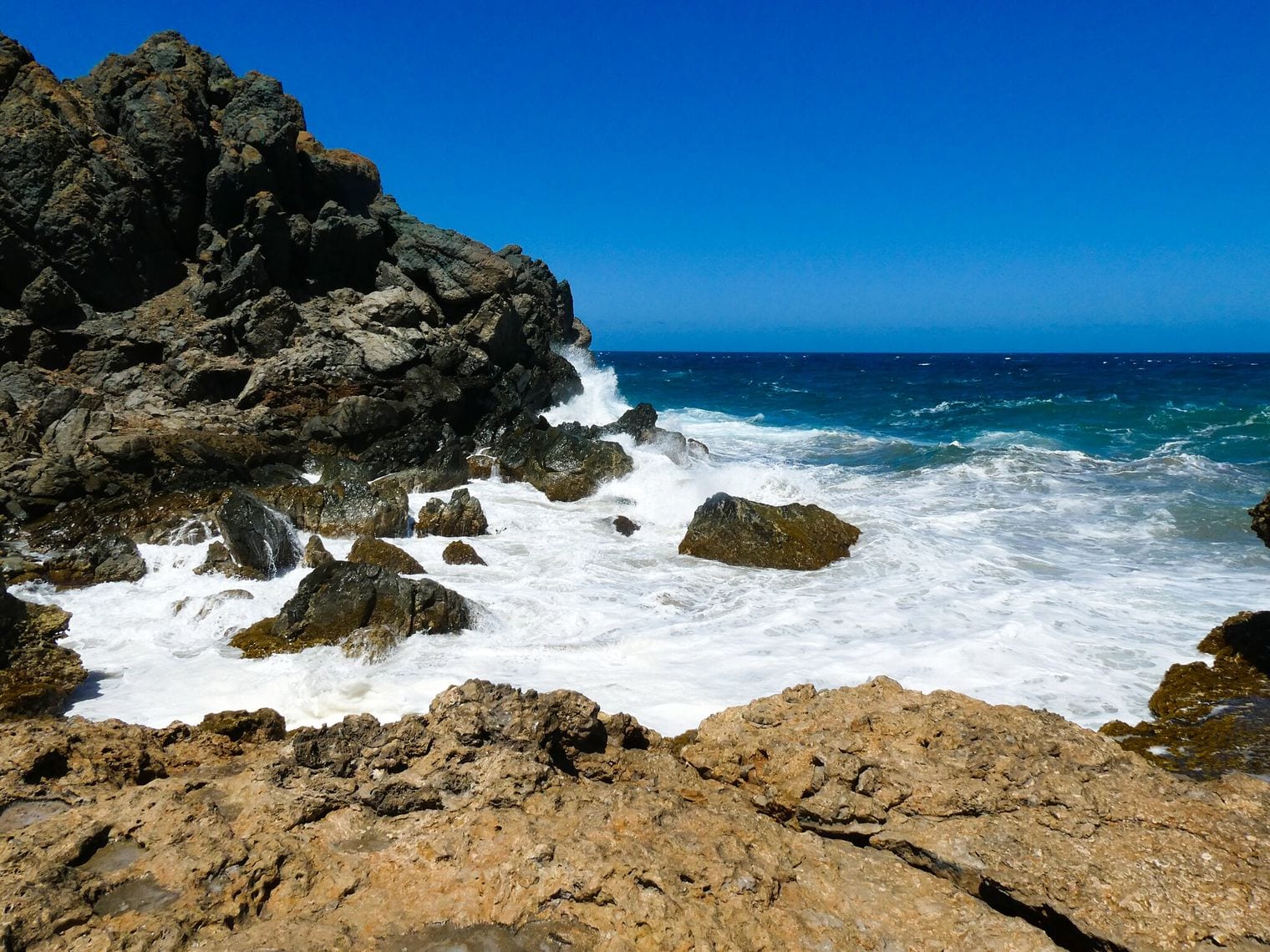
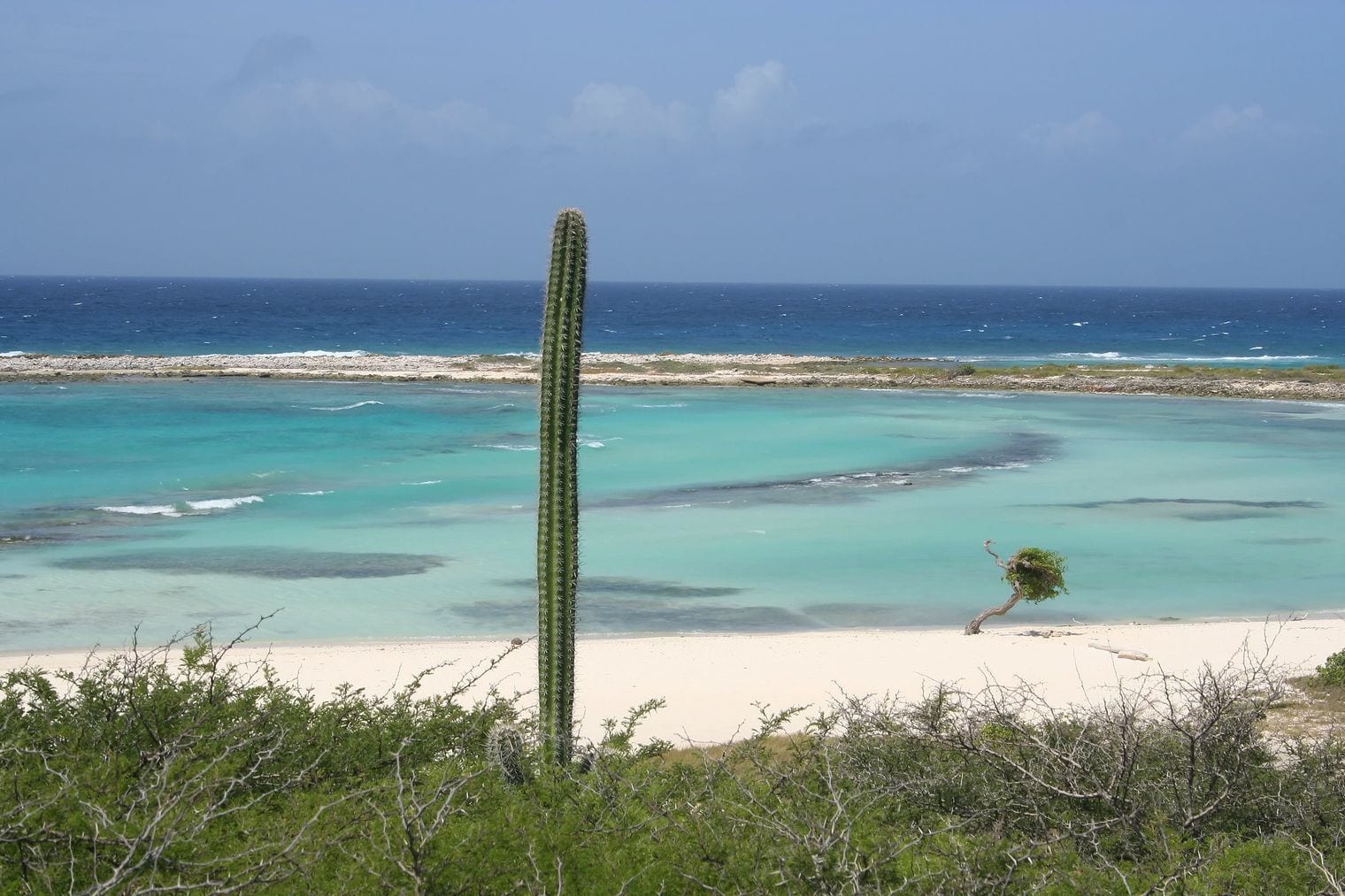
Aruba is a 20-mile ribbon of desert and white sand off the coast of Venezuela, where cactus and wind-bent divi-divi trees grow right down to some of the calmest water in the Caribbean. It sits below the hurricane belt, so the trade winds blow and the sun holds steady almost all year. The sheltered west coast holds the famous sand — Eagle Beach, Palm Beach, Arashi — while the windward side is raw and empty: sea caves, gold-mill ruins and the boulder fields and desert trails of Arikok National Park.
The driest and windiest stretch of the year. Best for windsurfing off Hadicurari and for walking Arikok's trails before the midday heat builds.
SummerJun–Aug
Hot and bright with the warmest sea and thinner crowds. Aruba lies below the hurricane belt, so the Atlantic storm season barely registers here.
FallSep–Nov
The quietest, most humid months, with the year's best chance of a short afternoon shower and the lowest room rates of the year.
WinterDec–Feb
Peak season: warm, dry and busy, with cruise ships in Oranjestad most days and Carnival building through January and February.
Regions
OranjestadThe pastel Dutch-colonial capital, with a free streetcar down the main street, the 18th-century Fort Zoutman, the archaeological museum and the cruise pier that feeds them all.
Palm Beach & NoordThe high-rise strip: the island's busiest sand, the big casinos and beach bars, and the low-key inland village of Noord with its 19th-century Santa Anna church.
Eagle Beach & the Low-RiseWider, quieter sand backed by low resorts and the two much-photographed fofoti trees — the stretch that lands on world-best-beach lists most years.
Arikok & the Windward CoastAlmost a fifth of the island, protected: cactus desert, Arawak cave paintings, the Natural Pool, and a wild Atlantic-facing shore where swimming is mostly unsafe but the walking is superb.
San NicolasThe old refinery town at the southern end, reinvented as Aruba's street-art capital — dozens of building-sized murals, a carnival museum and Charlie's Bar, going since 1941.
Savaneta & the South CoastAruba's oldest village and its calmest water: mangrove channels at Mangel Halto for snorkelling and kayaking, fishing piers, and the shallow half-moon lagoon of Baby Beach at the island's tip.
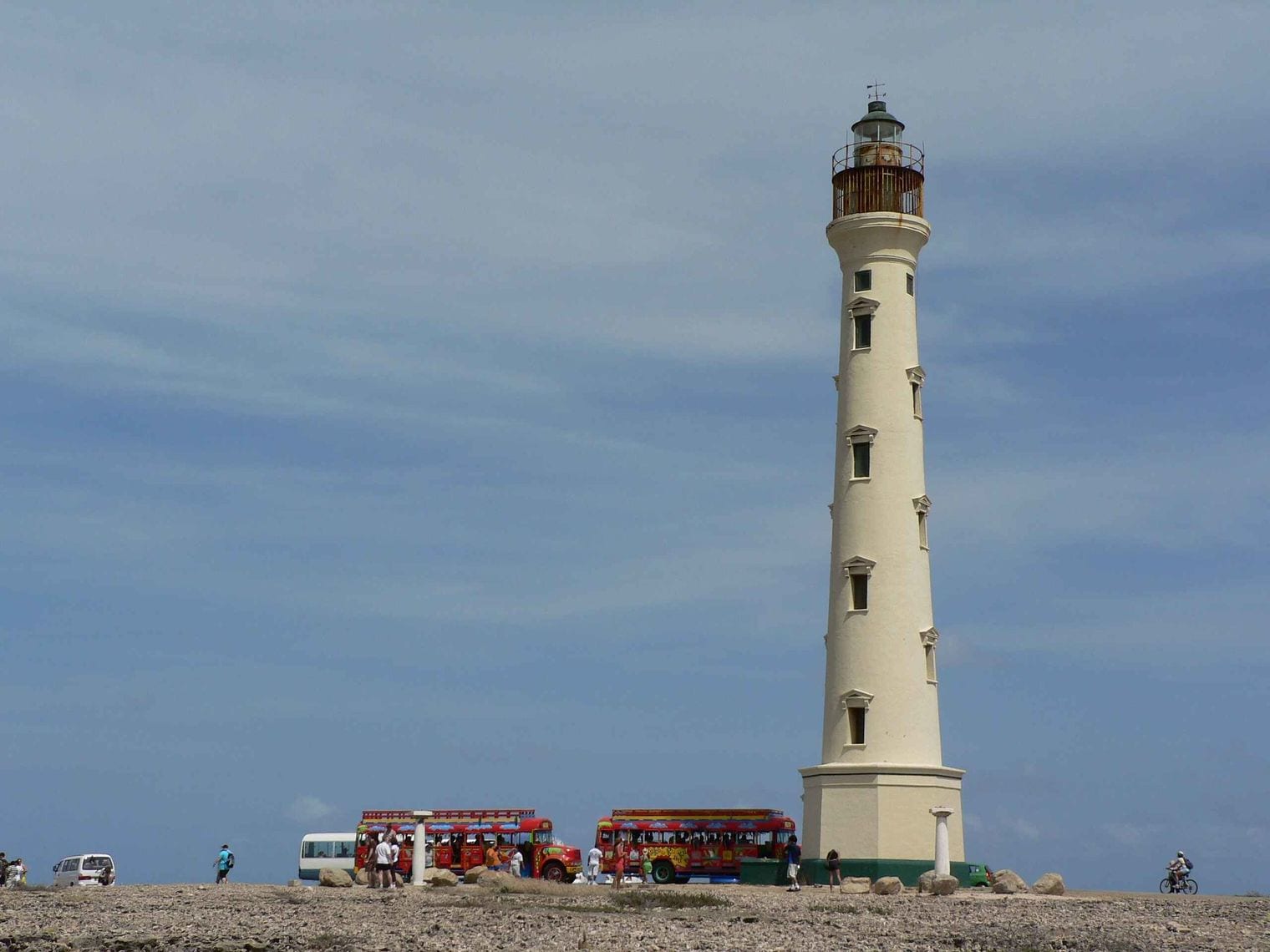
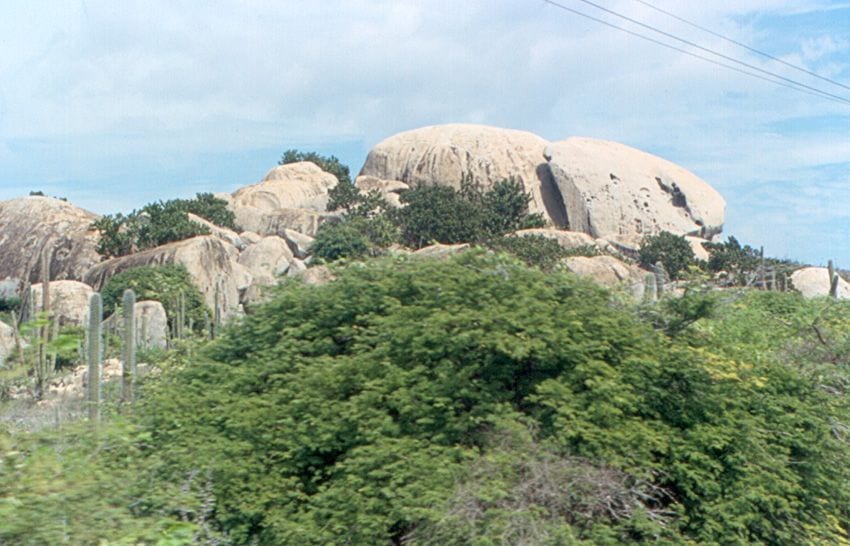
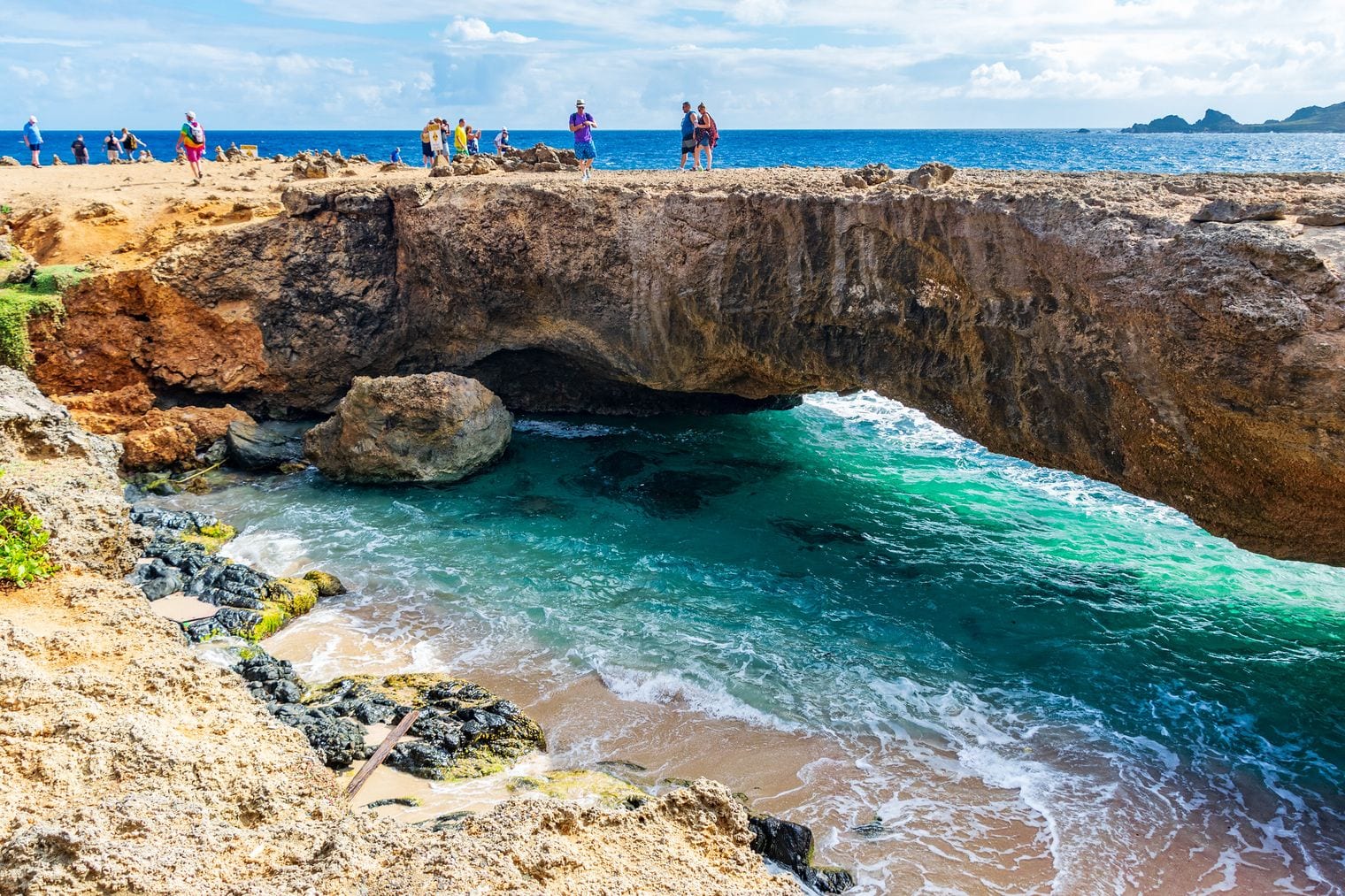
A single circuit of the north and centre that takes in the boulder fields, the gold-mill ruins and the lighthouse — all on paved roads, so any rental car manages it.
The windward half of the island, which needs four-wheel drive or a guided jeep tour. Caves first while it is cool, the sea pool after, and nothing on this route has shade to spare.
The sheltered leeward shore from the northern tip down to the southern one, taking in the best shore snorkelling on the island as well as the famous sand.
Aruba is warm and dry all year and sits below the hurricane belt, so there is no season to avoid. December to April is the driest and busiest, with the highest prices; September to November is quietest and cheapest, with slightly more humidity and the occasional short shower. If you windsurf or kitesurf, the trade winds are strongest from about May to July.
How many days do you need in Aruba?
Five to seven days suits most trips: two or three for the west-coast beaches, one for the north-coast loop of rock formations, ruins and the lighthouse, one for Arikok and the Natural Pool, and one for Oranjestad and San Nicolas. Three days is enough for beaches plus one inland day if that is all you have.
Do you need a car in Aruba?
Not if you are staying on Palm Beach or Eagle Beach and mainly want the sand — Arubus links the strips with Oranjestad cheaply and taxis are easy. You do need one to see the rest of the island, and reaching the Natural Pool needs genuine four-wheel drive or a booked tour; standard rental agreements do not allow ordinary cars on that track.
What is Aruba known for?
Beaches first — Eagle Beach and Palm Beach both appear regularly on world-best lists — but also for being unusually dry and un-tropical for the Caribbean: cactus, divi-divi trees bent flat by the trade winds, and a desert national park covering a fifth of the island. It is also known for calm, clear water that makes it one of the region's better places to snorkel straight off the beach.
Do they speak English in Aruba?
Yes, almost universally. The official languages are Papiamento, the local creole most people speak at home, and Dutch, the language of government and schooling — but English and Spanish are taught from primary school and are standard everywhere in tourism, shops and restaurants.
What currency does Aruba use, and are US dollars accepted?
The Aruban florin (AWG), pegged to the US dollar at a fixed rate of about 1.79 florins to the dollar. US dollars are accepted almost everywhere and cards are taken widely, so most visitors from the United States never need to change money — though change may come back in florins.
What should you eat in Aruba?
Look for keshi yena, a baked cheese shell filled with spiced meat, and pastechi, the fried turnovers eaten at breakfast. Fresh fish is the island's real strength: fried wahoo, mahi-mahi and red snapper are on nearly every menu, and the fishermen's piers on the south coast at Savaneta sell the day's catch by weight.
What kind of trip is Aruba best for?
Beach weeks, shore snorkelling, easy island driving.
We use cookies to analyse site traffic and improve your experience.
You can accept or reject analytics cookies. See our Cookie Policy.