We may earn a commission if you book or buy through a link on
this page, at no extra cost to you. It never affects which places we list or how
we rank them (how we make money).
Short answer
Aruba's three essentials are Eagle Beach, a perennial pick on world-best-beach lists with its leaning fofoti trees, Arikok National Park — a fifth of the island kept as cactus desert, caves and wild windward coast — and the California Lighthouse above the northern dunes. Three days covers the beaches and the northern loop; five to seven is comfortable if you want Arikok, the Natural Pool and Oranjestad without rushing.
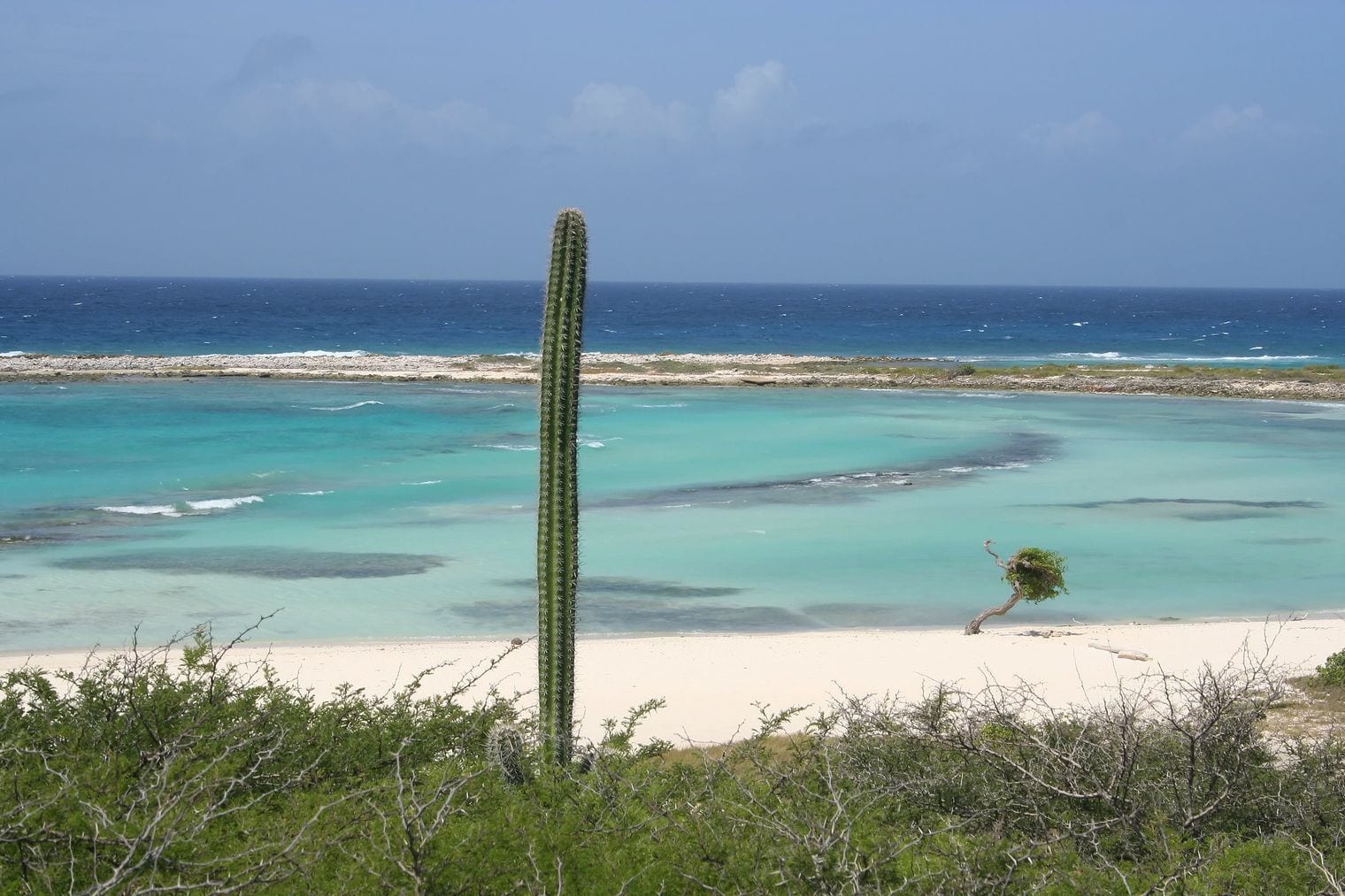
Aruba does not look like the rest of the Caribbean. Cactus and wind-bent trees grow down to the sand, the interior is dry scrub scattered with house-sized boulders, and the island sits below the hurricane belt, so the trade winds blow and the sun holds steady almost every day of the year.
This guide ranks 40 things to do across the island, from the calm west-coast beaches and shore snorkelling to Arikok's caves, the gold-mill ruins on the windward shore and the mangrove channels of the south coast. Five to seven days covers it comfortably.
Aruba sits outside the hurricane belt, well south of the track most Atlantic storms take — which is why the island stays open and dry through a season that closes much of the Caribbean.
The island’s divi-divi trees always point south-west, bent that way by trade winds that blow from the north-east almost without pause. They work as a compass if you ever lose your bearings.
Two languages are official — Papiamento and Dutch — but most Arubans also speak English and Spanish, so a great many people here are comfortable in four.
The aloe plant occupies the first quarter of Aruba’s coat of arms, in recognition of the island’s first important export; the crop has been grown and processed here since the nineteenth century.
Aruban sockets run at 127 volts on US-style plugs, and the florin is pegged to the US dollar — so American visitors need neither an adapter nor a currency exchange.
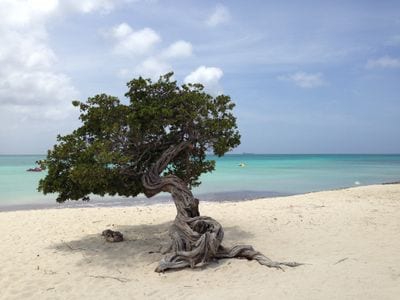
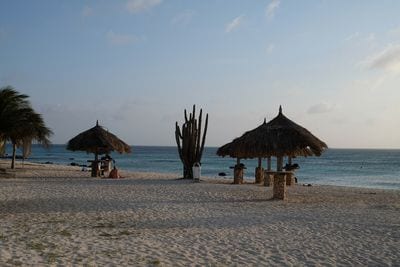
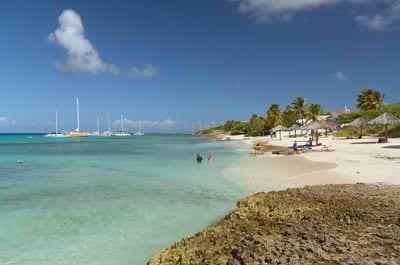
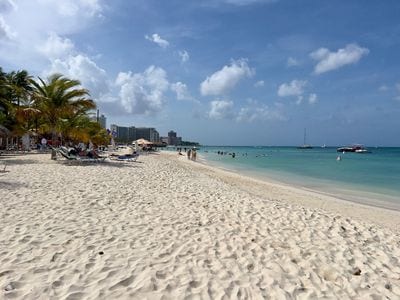
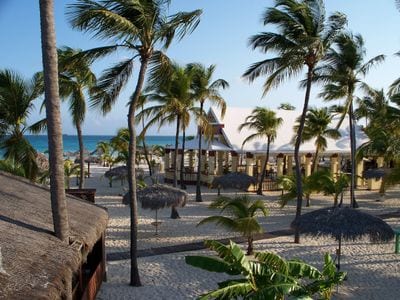
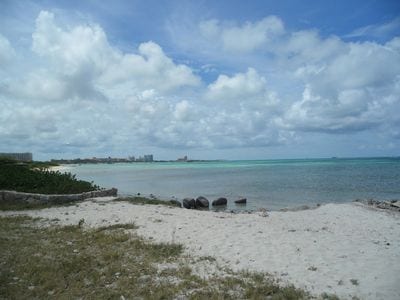
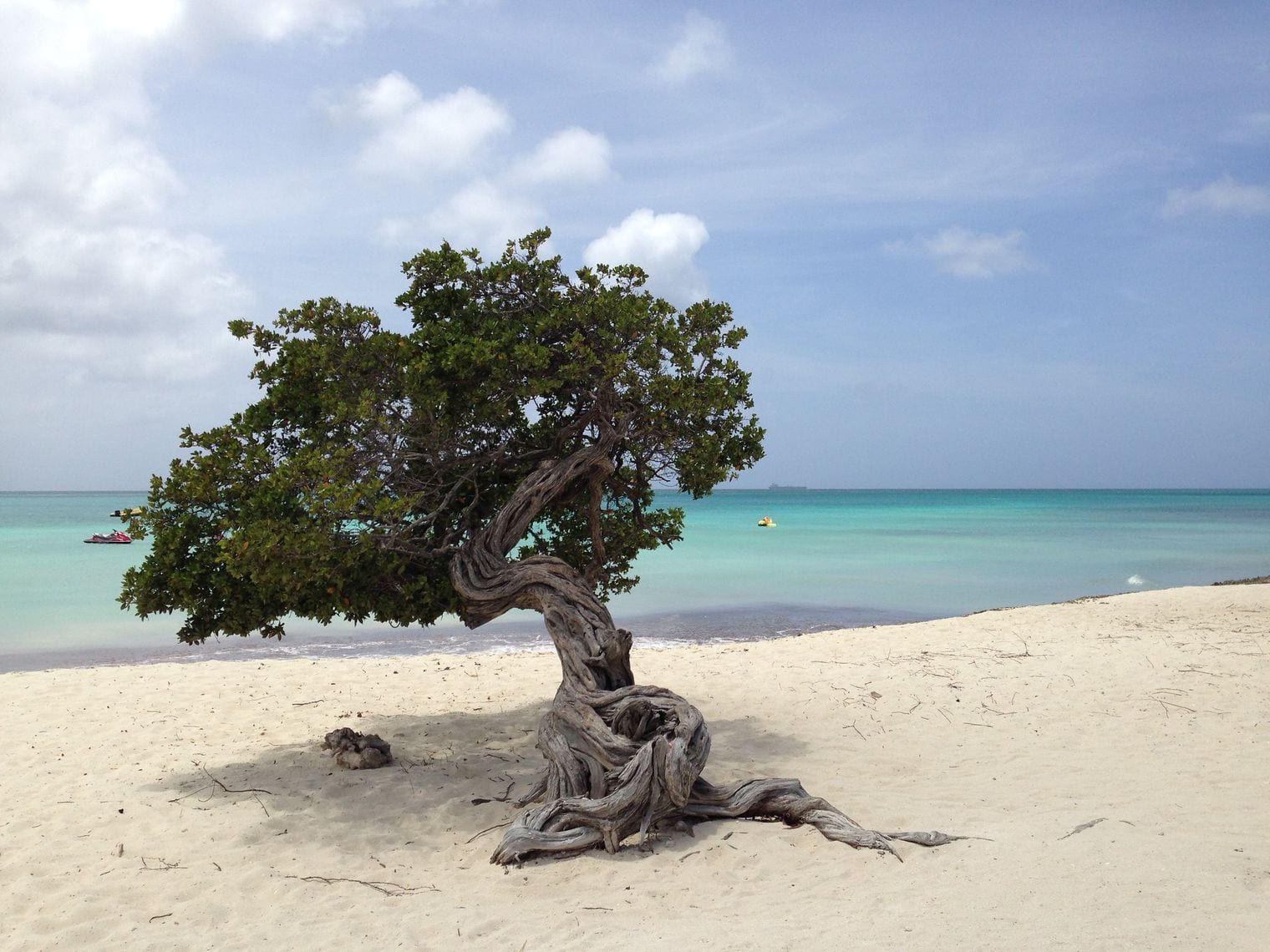
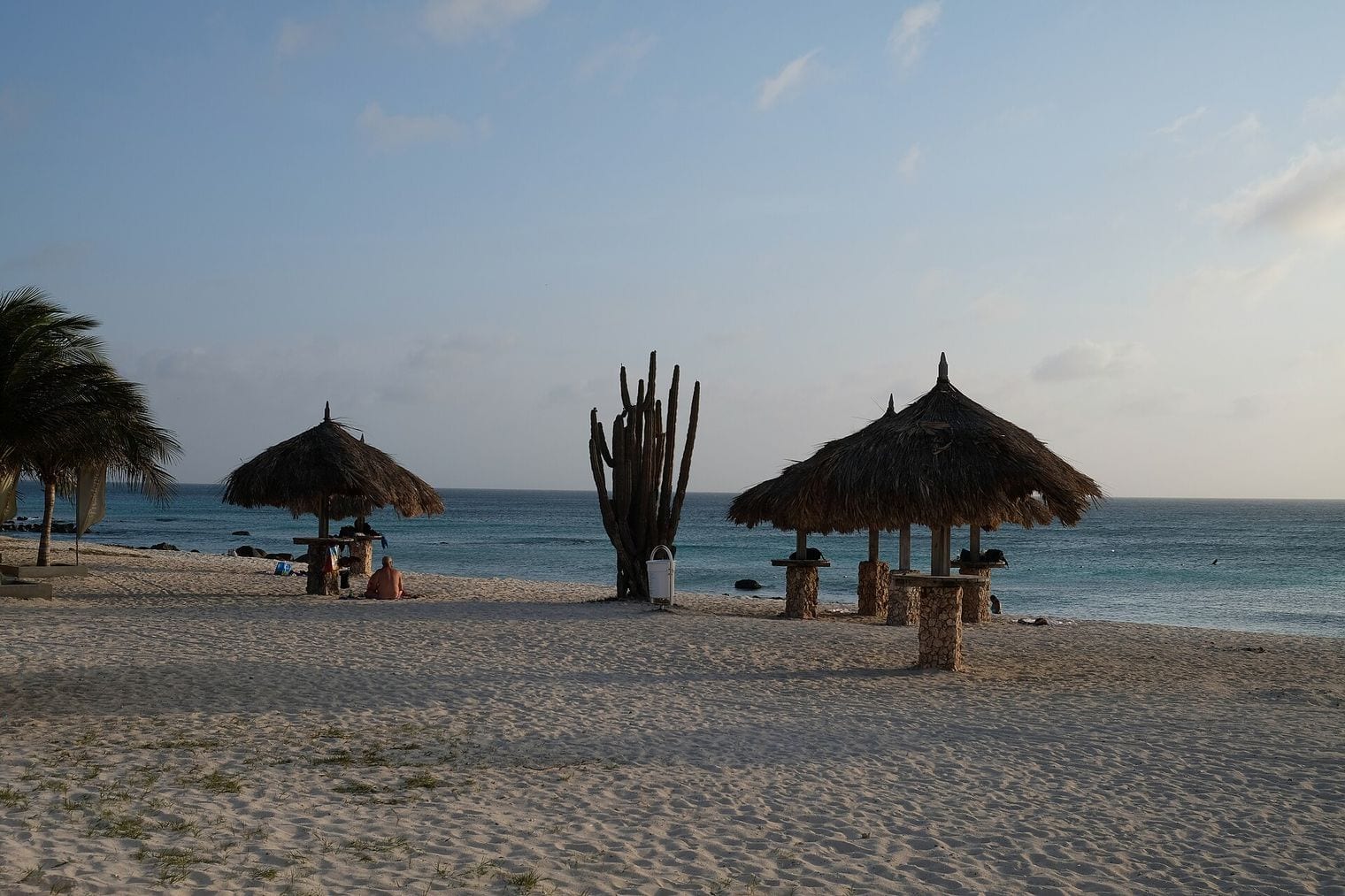
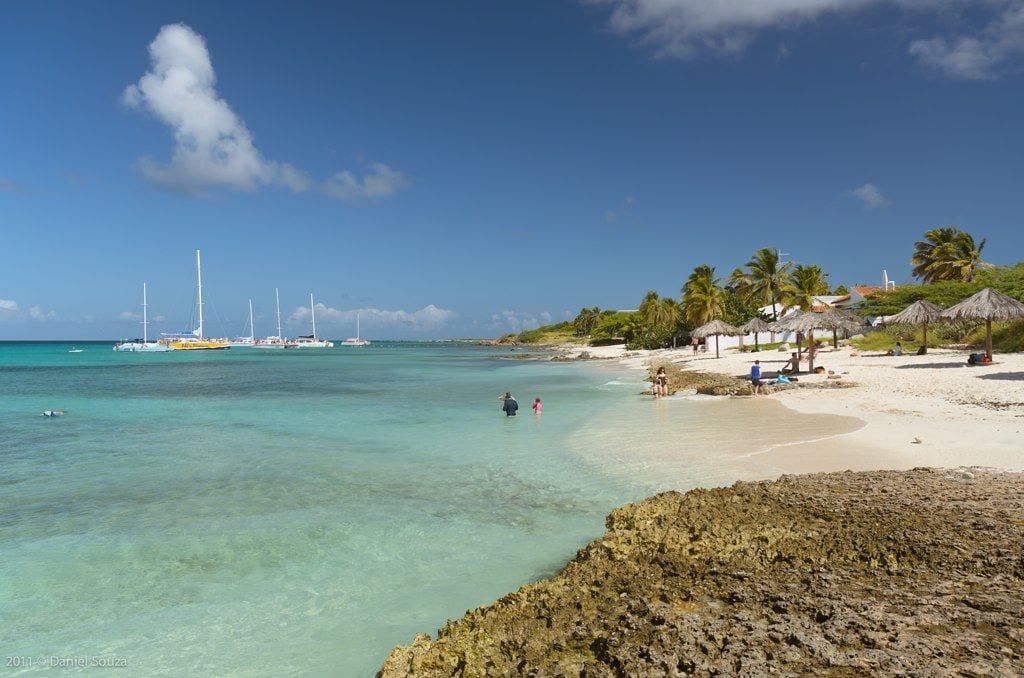
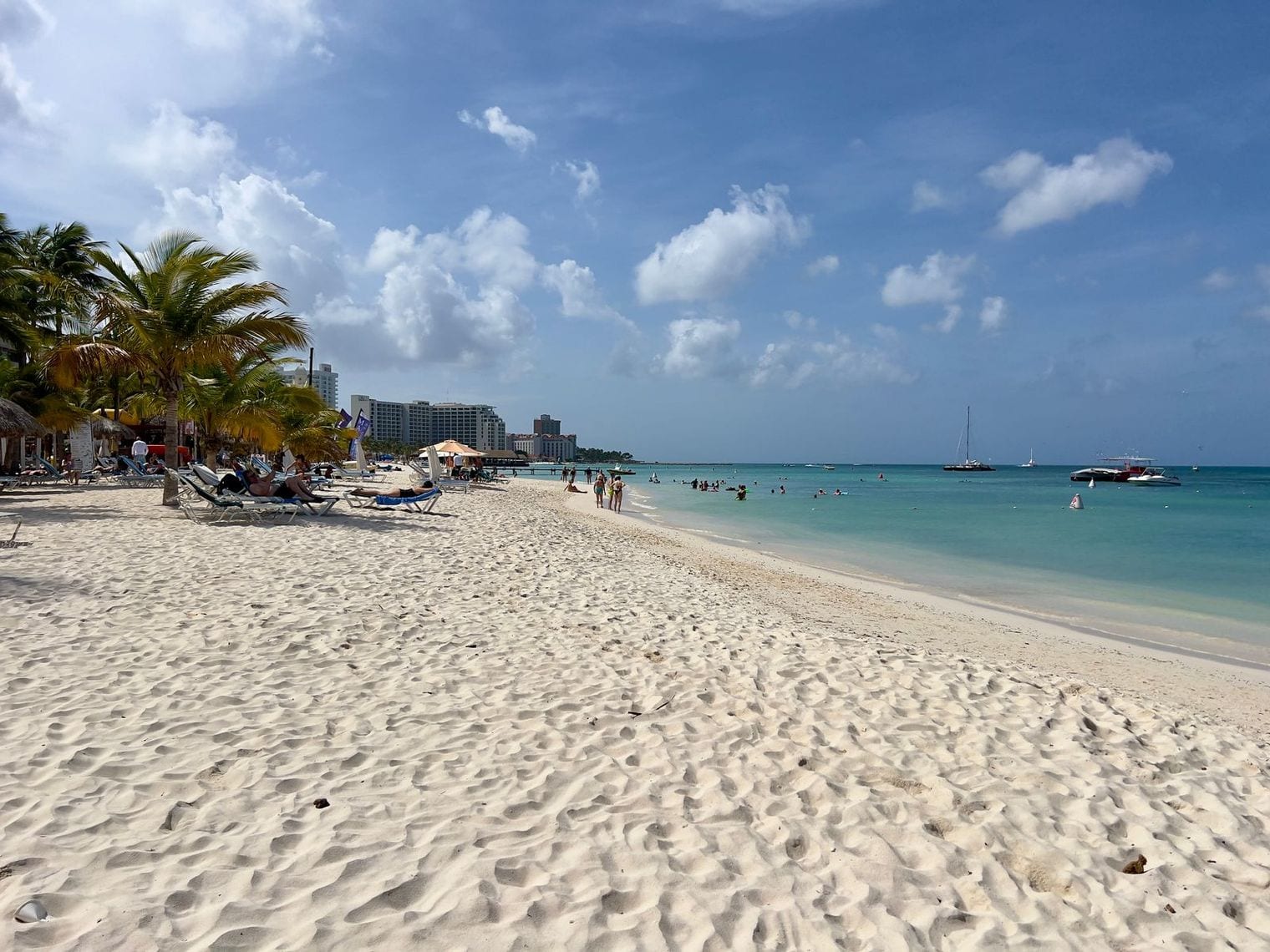
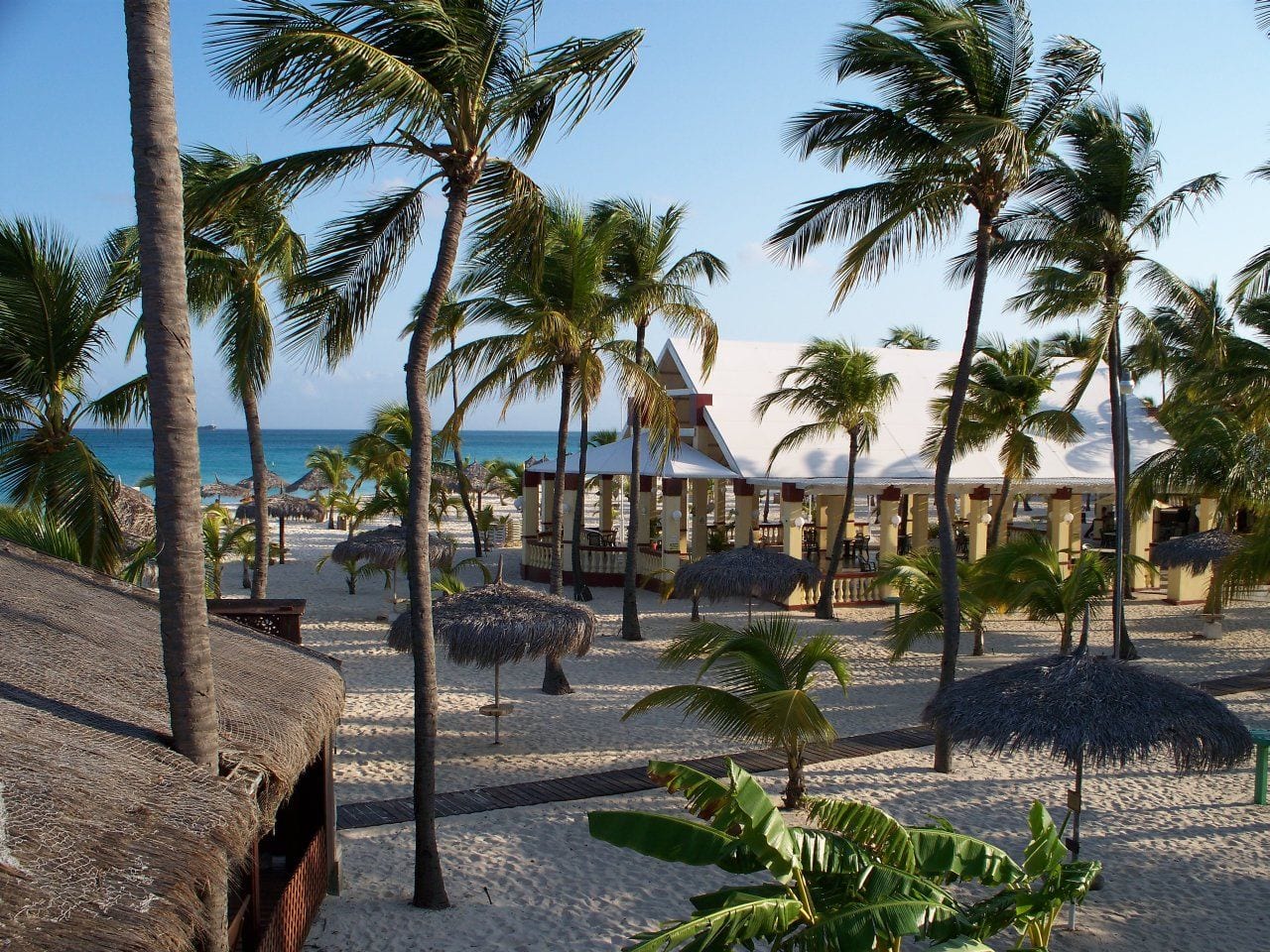
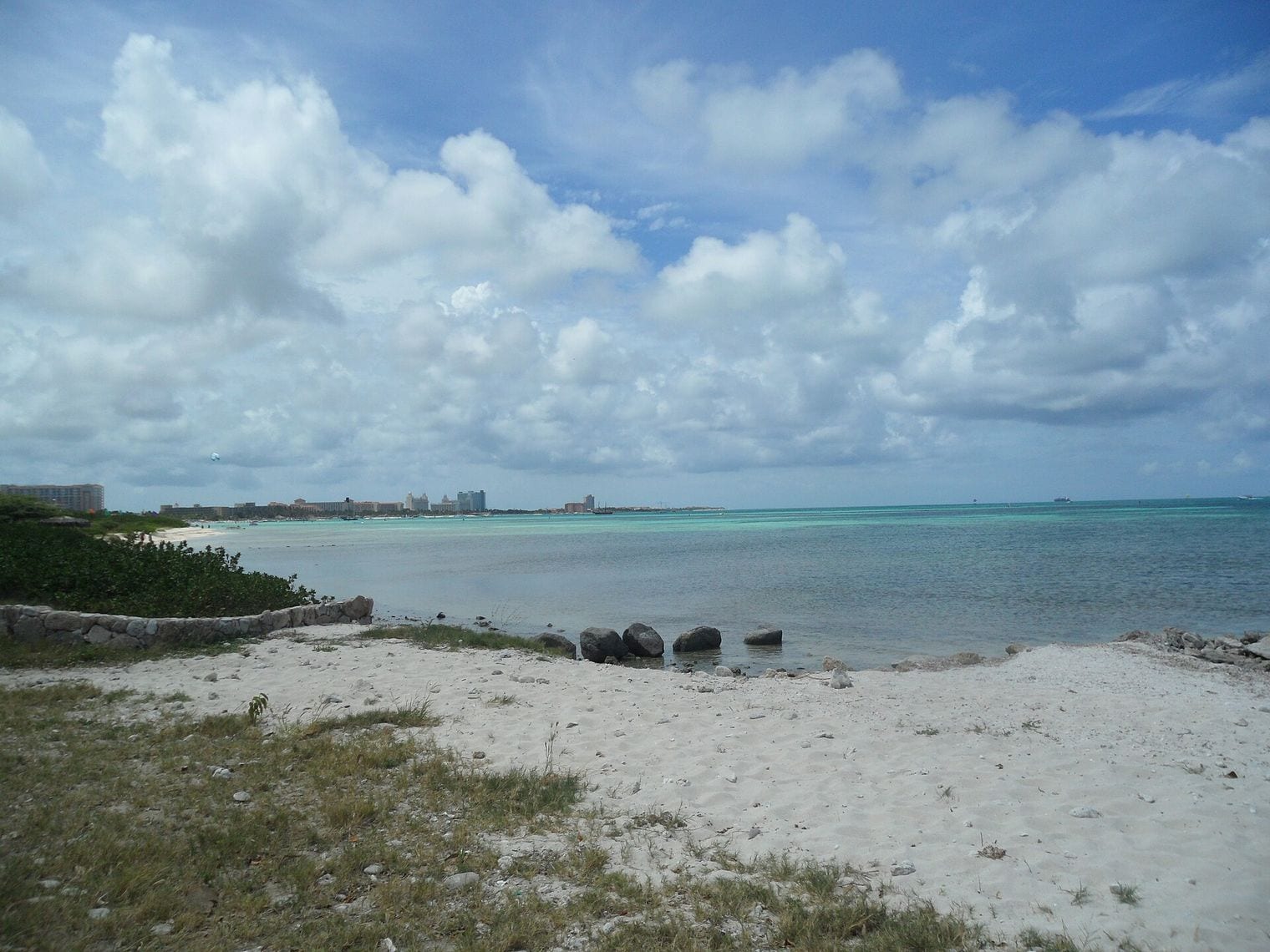
Eagle Beach is the stretch that lands Aruba on world-best-beach lists most years: a broad, gently shelving band of powder-white sand on the sheltered west coast, backed by low-rise resorts rather than towers, so it never feels hemmed in. The water is calm and shallow a long way out, which makes it as good for wading with small children as it is for a long swim.
The two wind-bent fofoti trees leaning over the sand near the middle of the beach have become the island's unofficial emblem, and you will meet them on everything from postcards to fridge magnets. Come early for the quietest sand and the softest light. Sea turtles nest along this stretch in spring and summer, so roped-off patches are left undisturbed.
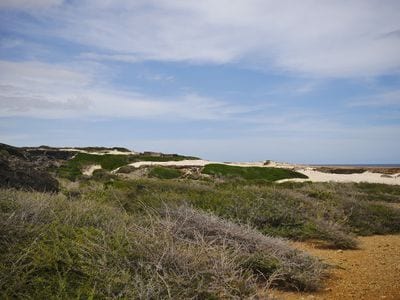
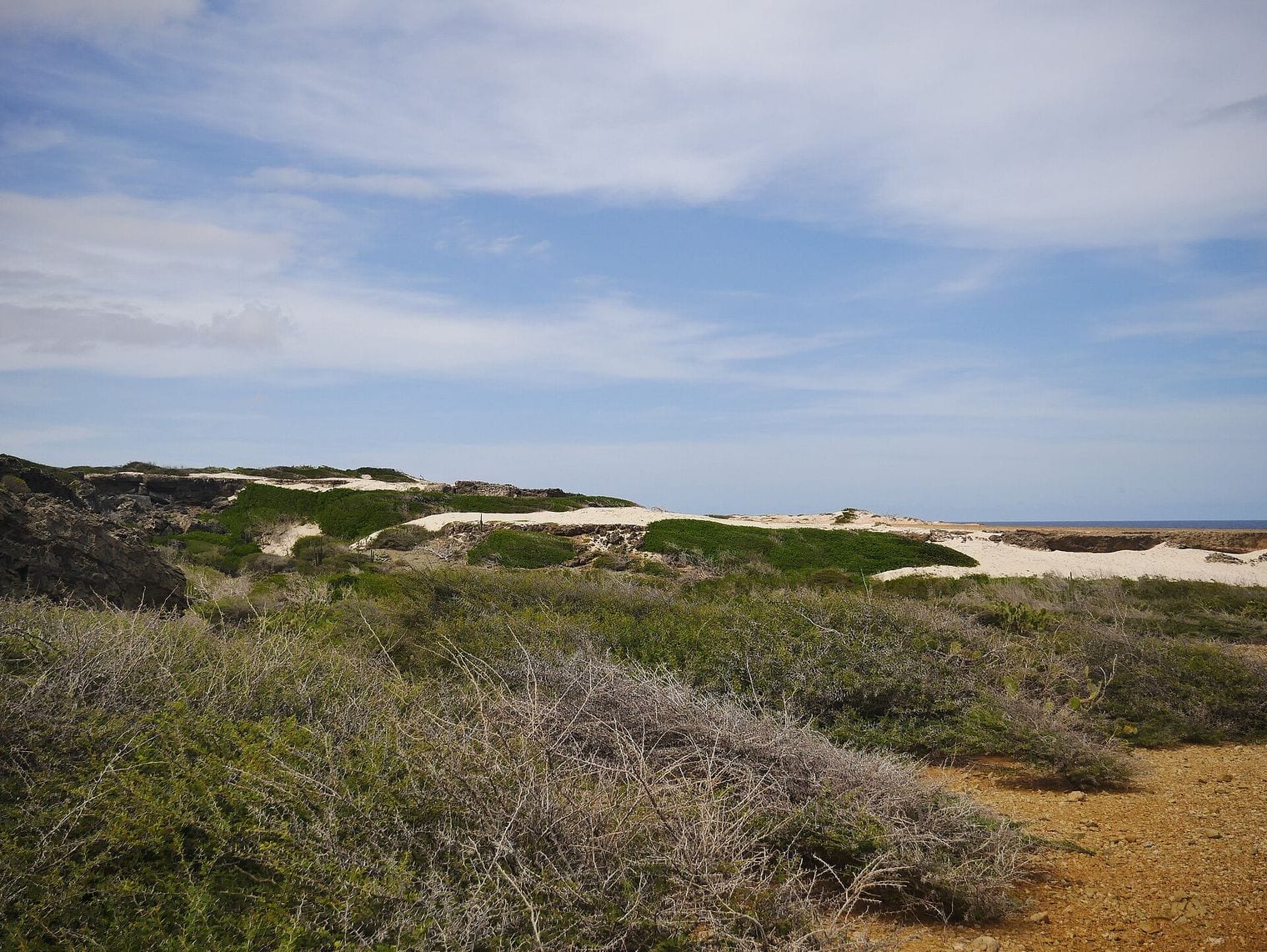
Arikok National Park covers roughly a fifth of Aruba, and it is the reason the island surprises people: not rainforest but cactus desert, with limestone terraces, wind-scoured hills and an Atlantic-facing coast where the sea comes in hard. Marked trails run from the visitor centre out to caves, coves and the rise of Mount Jamanota.
Give it most of a day and start early — there is very little shade and the ground throws the heat back at you. An ordinary rental car reaches the visitor centre and the main cave road, but the rough tracks to the north-eastern coves and the Natural Pool need genuine four-wheel drive, which is why most visitors take a guided jeep or UTV tour for that half of the park.
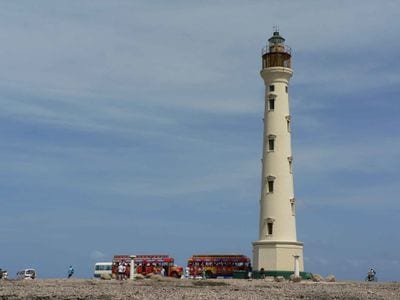
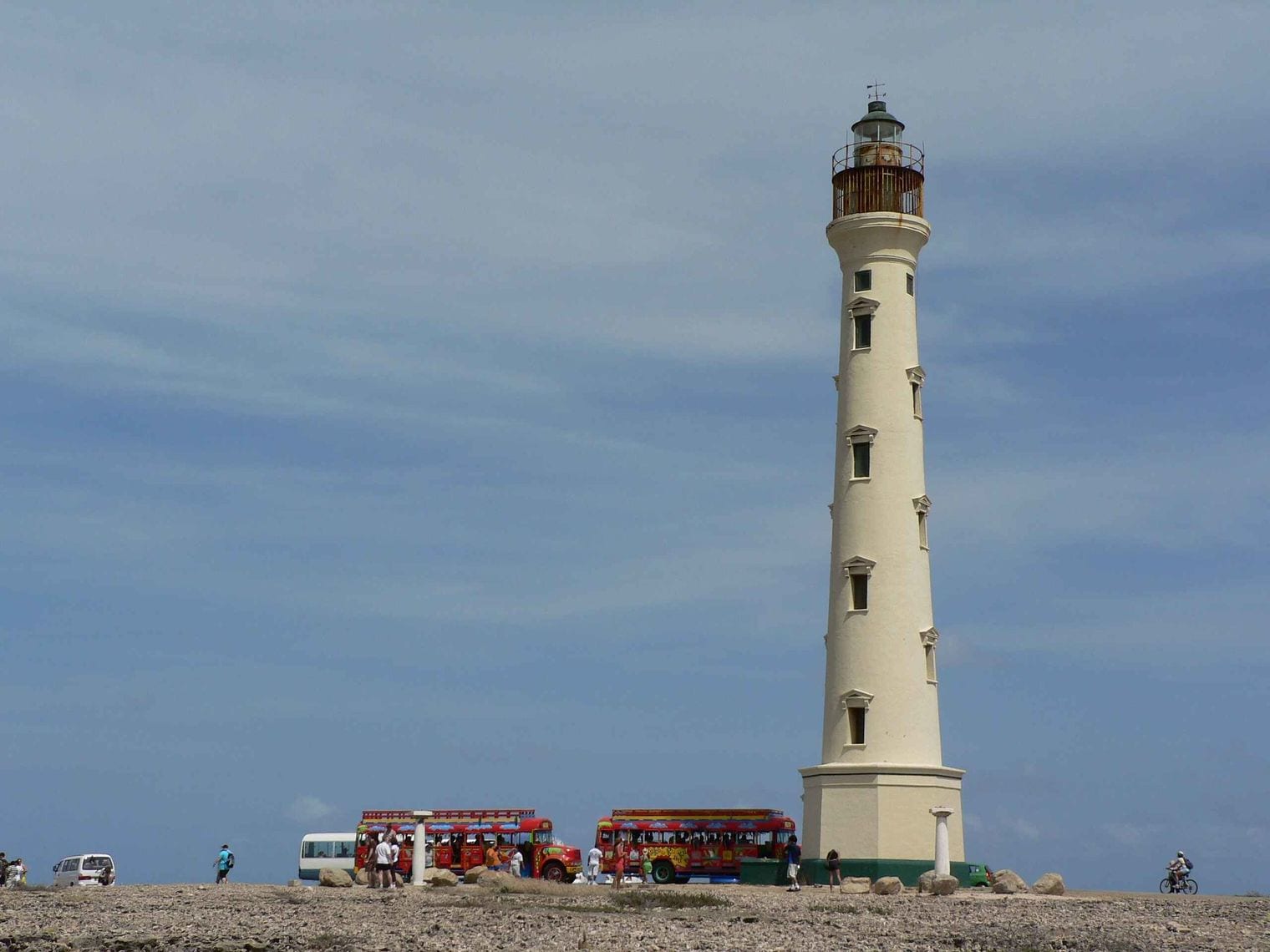
The California Lighthouse stands on the rise above the dunes at Aruba's northern tip, a 98-foot stone tower raised between 1914 and 1916 and first lit in 1918. It takes its name from the steamship California, wrecked off this coast in 1891 — searchers reportedly took the ship's name for a place name, and it stuck.
The climb up the internal staircase is the point: from the gallery the whole northern end of the island opens up at once, dunes and scrub on one side, the hotel strip curving away south on the other. It is the island's default sunset spot, so expect company in the last hour of light.
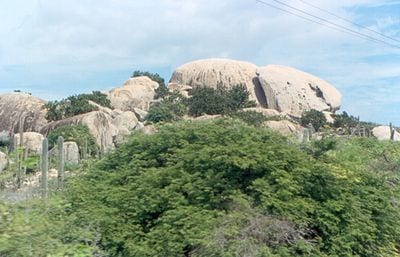
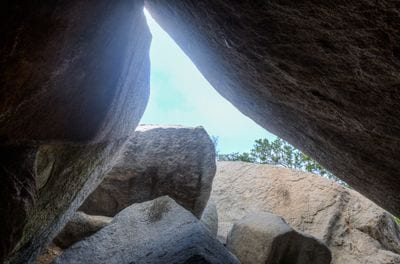
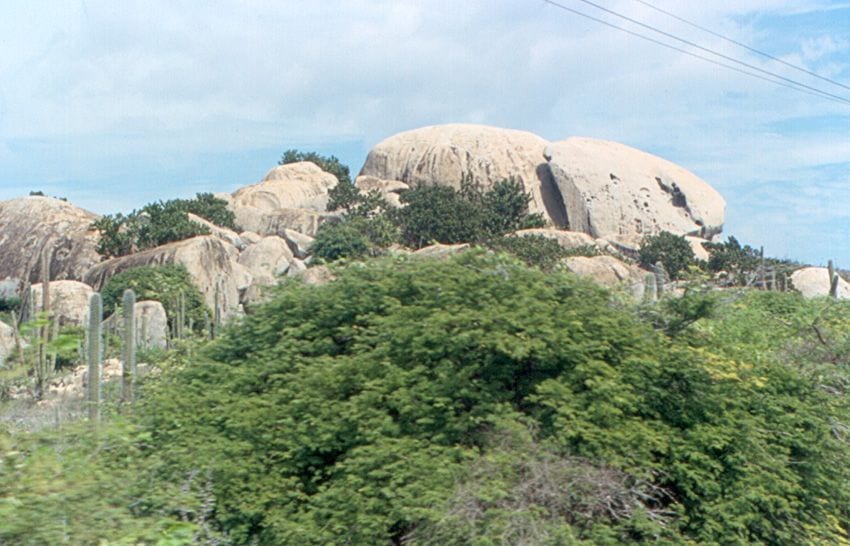
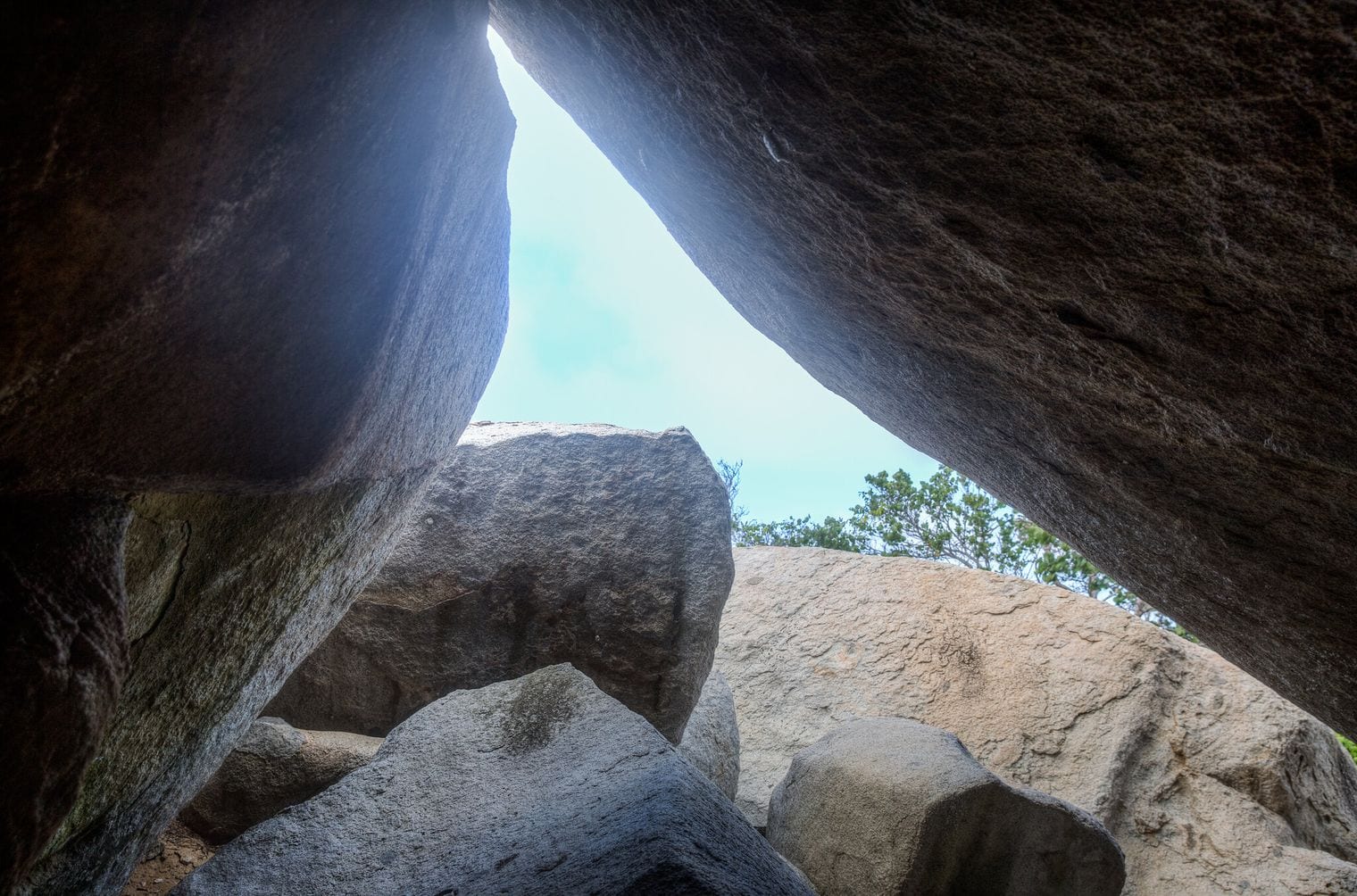
Casibari is a heap of enormous rounded boulders sitting in the middle of an otherwise flat island, weathered smooth and stacked into shapes that have collected nicknames from generations of visitors. Cut steps and narrow paths wind up and between them, through gaps you occasionally have to turn sideways for.
The scramble to the top takes only a few minutes and delivers a view clean across the width of Aruba, from the west-coast hotels to the wind turbines on the north shore. Cacti and iguanas are everywhere. The Casibari Rock Formations sit a short drive from the Ayo boulders, and most people do the two as a single stop.
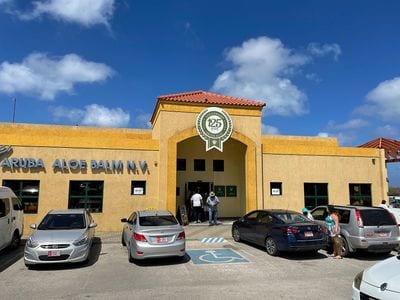
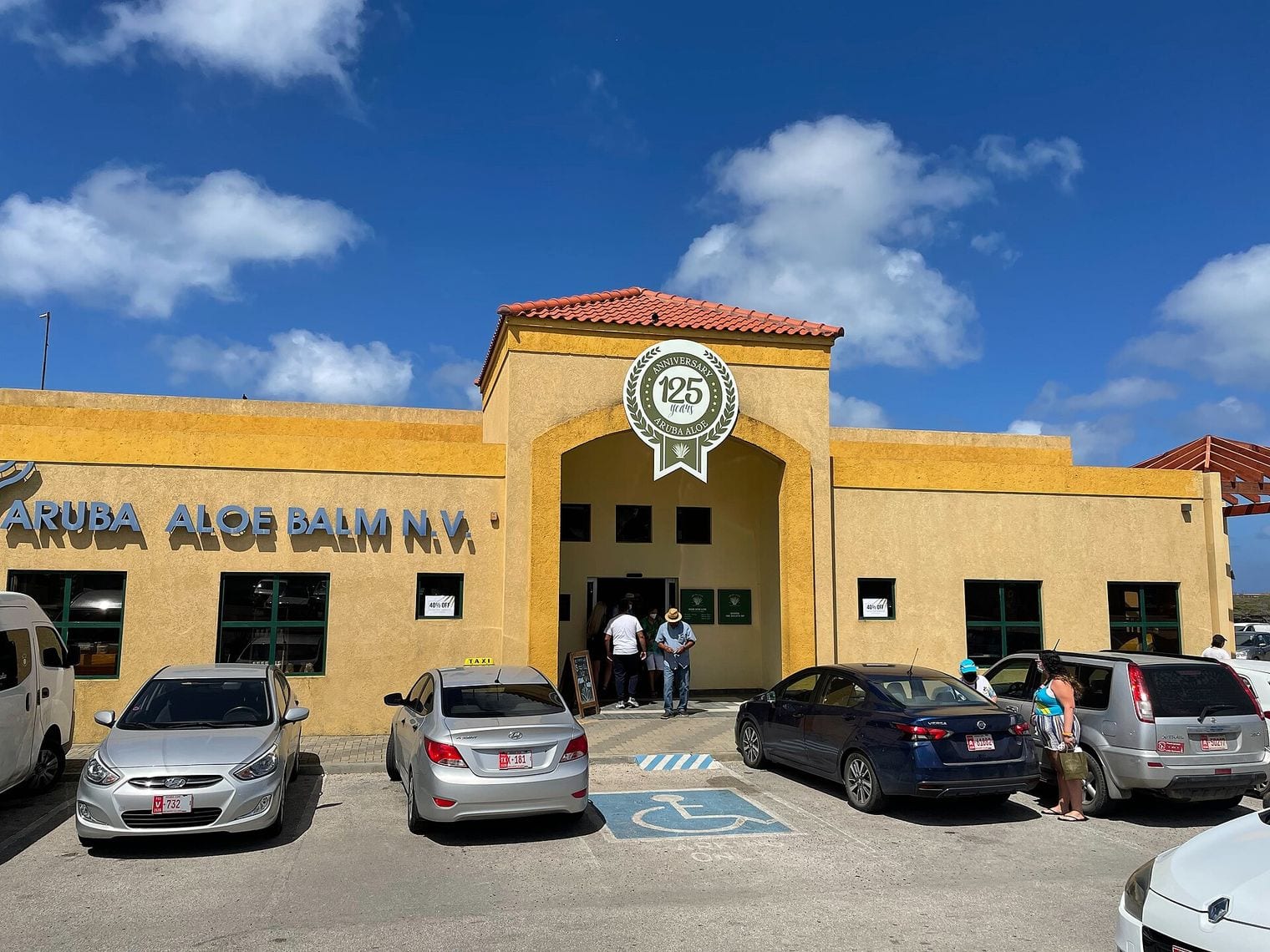
Aloe has been an Aruban crop since the nineteenth century — the plant appears on the island's coat of arms — and the Aruba Aloe Factory Museum and Store is where that history is still a working business rather than a display case. The guided tour walks you through the fields, the cutting and the filleting, then into the plant where the gel is processed.
It is short and genuinely interesting, and it explains how a dry, thin-soiled island ended up exporting a succulent to Europe. The museum end covers the boom years and the long decline of the trade, and the shop at the exit sells what was made a few metres away.
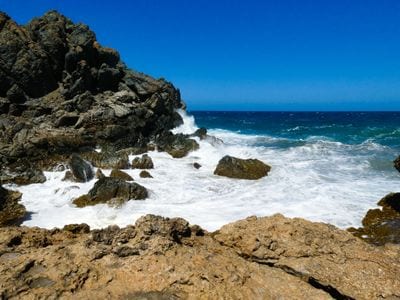
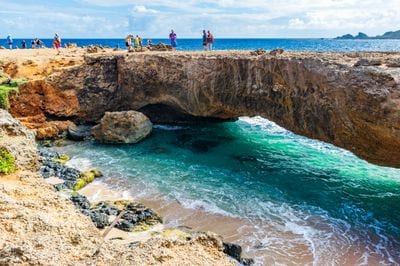
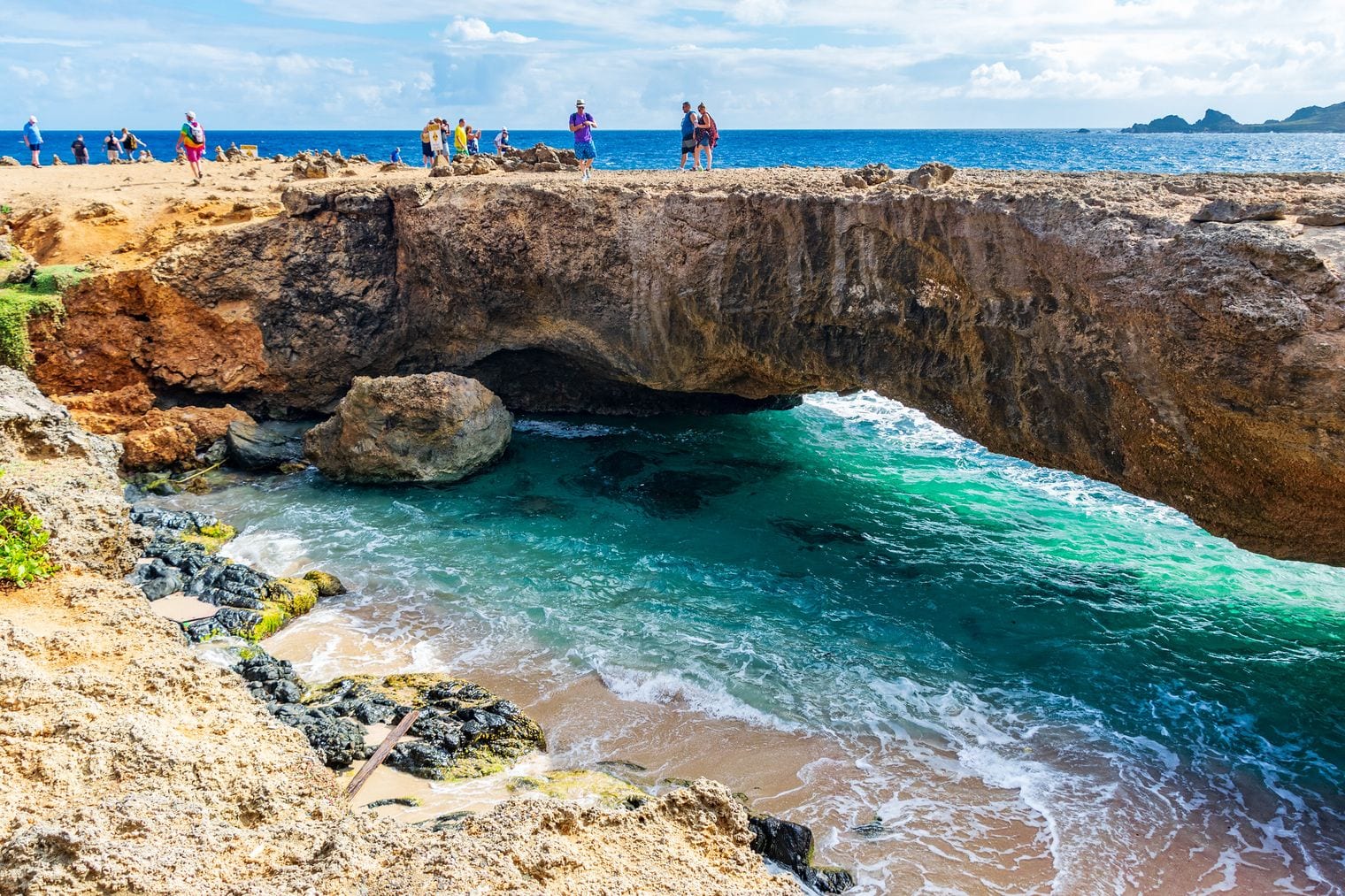
For decades this was Aruba's most photographed landmark: a coral arch spanning the water on the wild north coast. The Natural Bridge collapsed on 2 September 2005, and what you visit now is the site — the rubble of the span, the sea still driving into the gap beneath it, and a viewing area on the cliff above.
It is still worth the stop, partly because the smaller Baby Bridge stands intact a short walk along the shore and gives you the shape of what was lost, and partly because this stretch of windward coast is dramatic in its own right. Combine it with the Bushiribana ruins, which sit along the same coast road.
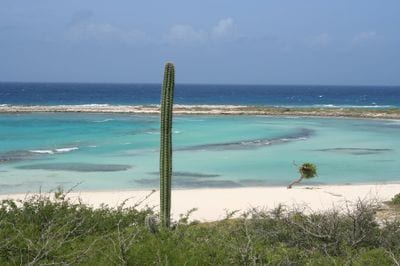
Baby Beach sits at the island's southern tip near San Nicolas: a near-enclosed half-moon lagoon sheltered by a rock breakwater. The water inside stays shallow and almost motionless a long way from shore, which is precisely why families and hesitant swimmers make the drive down.
It is the best beach on Aruba for young children and for anyone learning to snorkel, with fish gathering around the rocks at either horn of the bay. There is shade to rent and a bar or two behind the sand, but little else — the old refinery on the horizon is a reminder of what this end of the island used to do for a living.
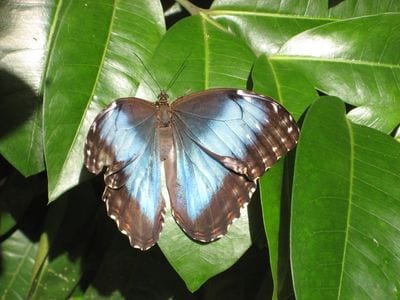
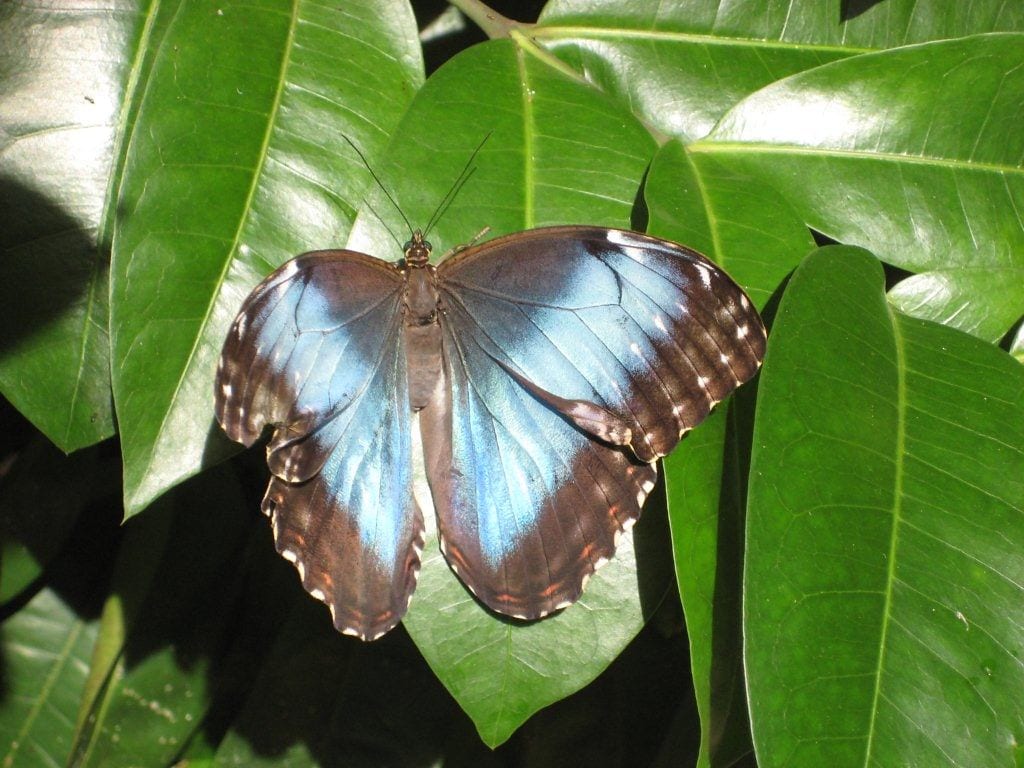
The Butterfly Farm is a netted tropical garden near Palm Beach where hundreds of butterflies from around the world fly loose around you. A short guided introduction comes with entry and runs through the full life cycle, and the pupae cabinet usually has something emerging while you stand there.
It is small and takes under an hour, which makes it a good first stop of the morning when the butterflies are most active, or a shady hour when the sun is at its worst. Wear bright colours and they will land on you — the guides positively encourage it.
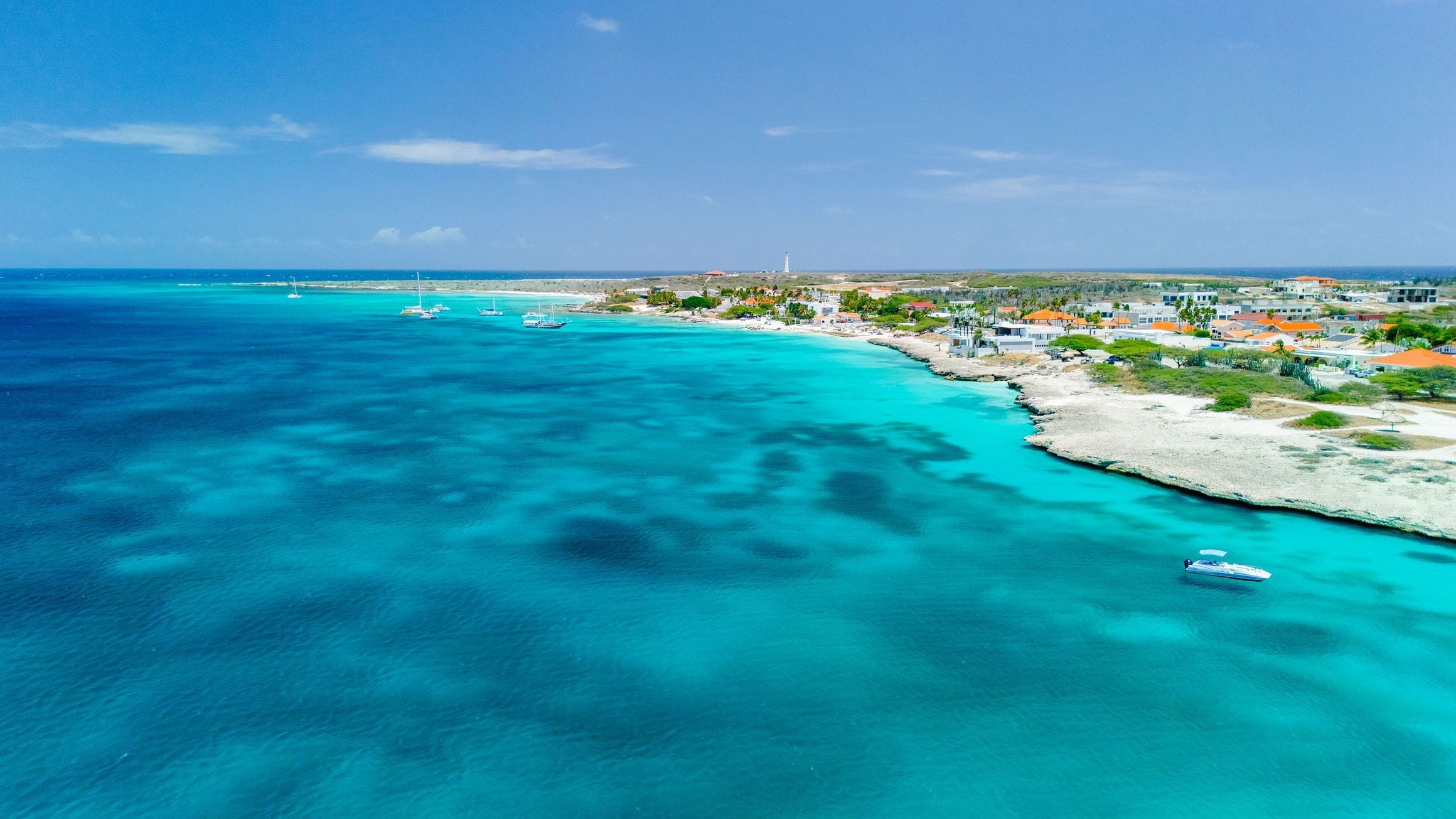
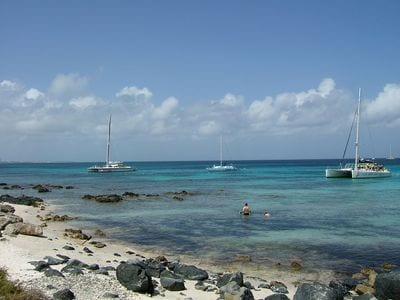
Arashi Beach is the last stretch of sand before the island turns the corner at its northern tip, and it is the local pick on a Sunday. The water is clear, calm and shallow over sand, with rocky patches at either end holding enough fish to make it one of the easiest shore snorkels on Aruba.
Palapas line the back of the beach and there is a small bar, but it stays low-key next to Palm Beach. It sits just below the California Lighthouse, so the two combine neatly — swim first, then climb the tower for the view.
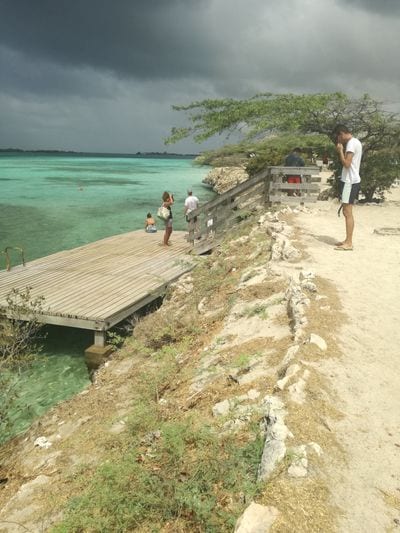
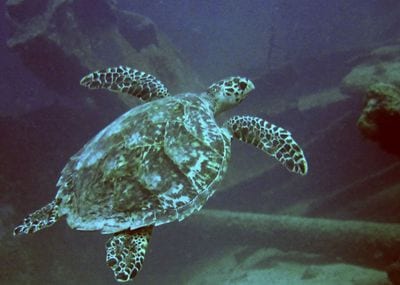
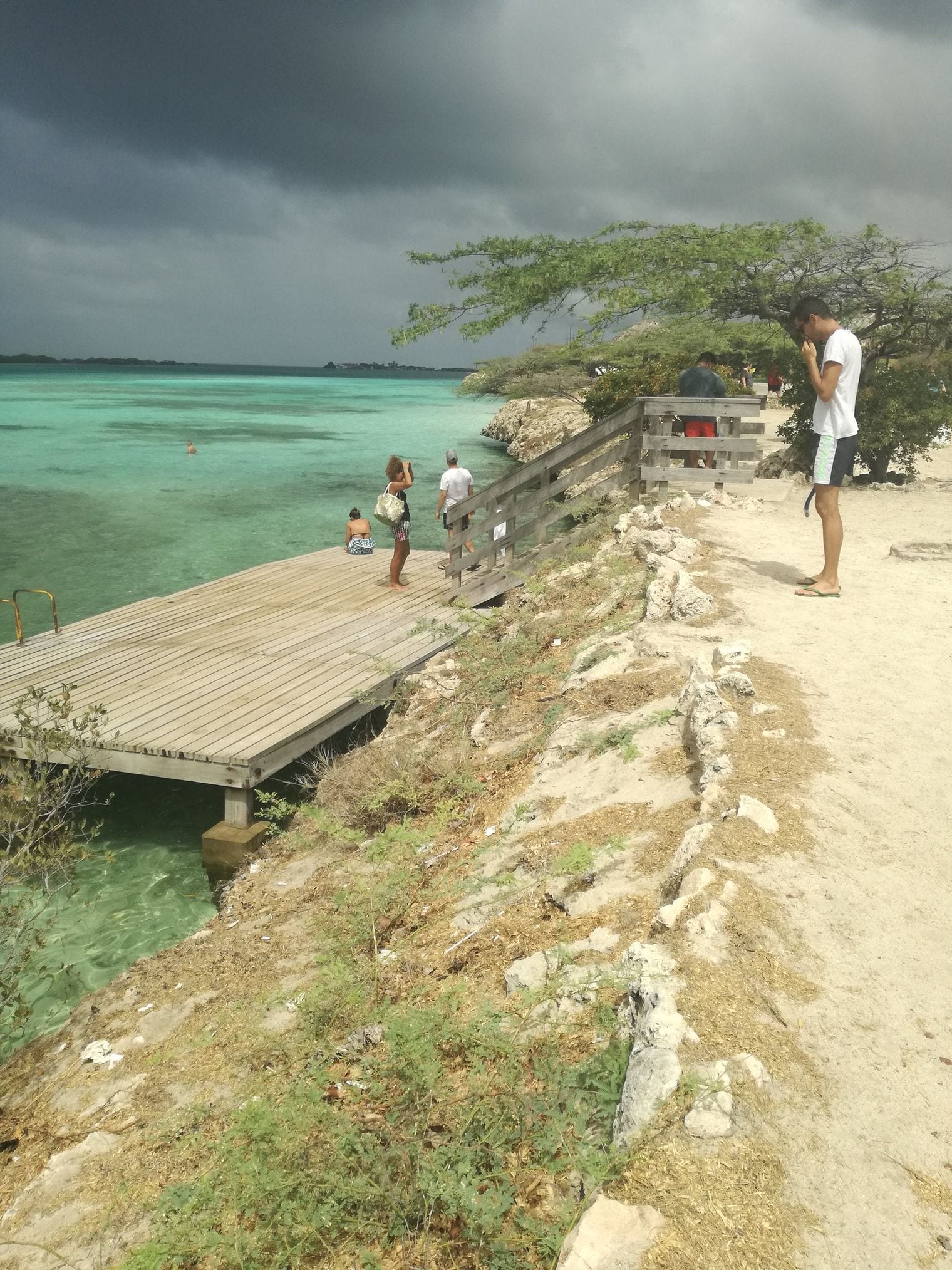
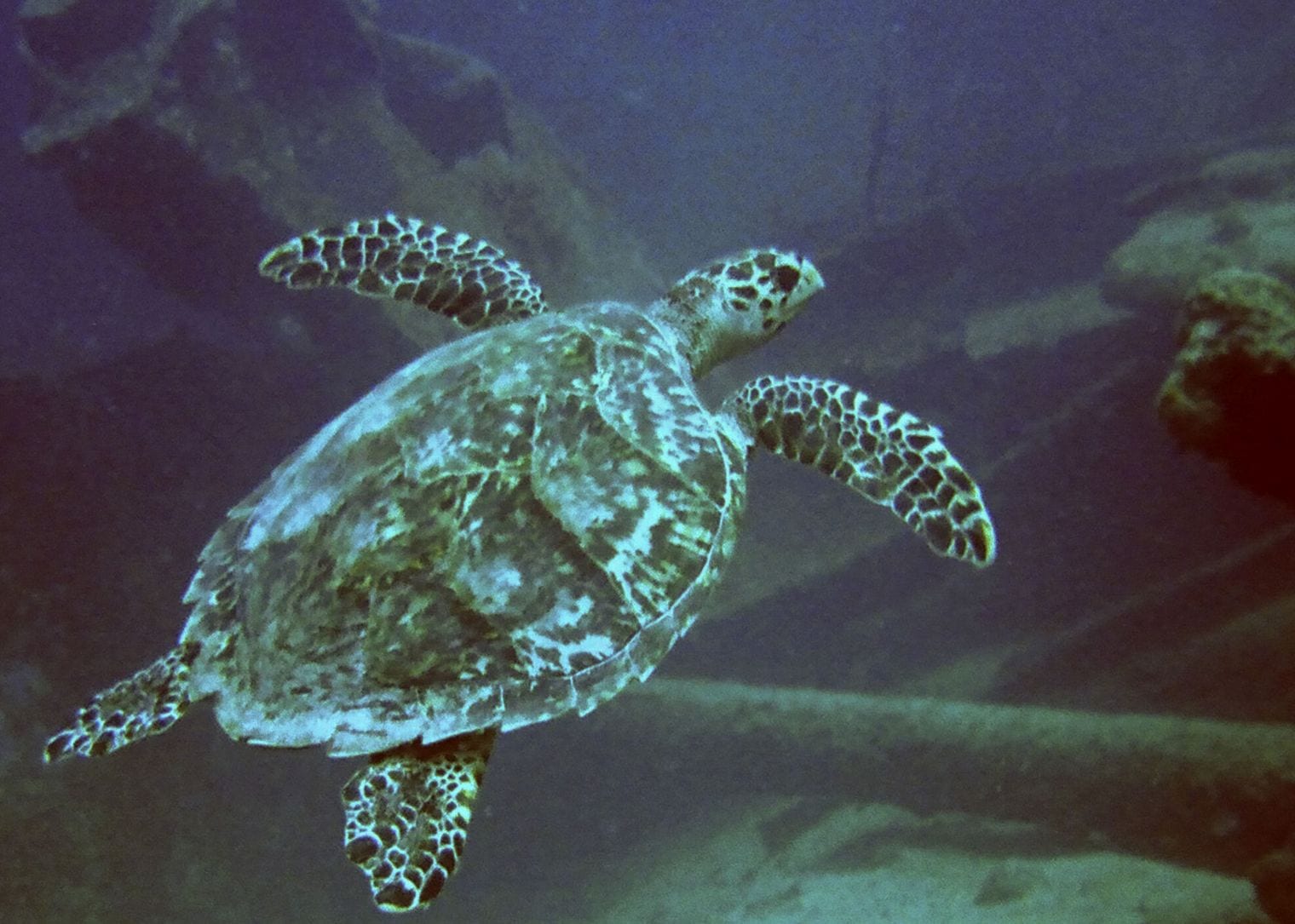
Tres Trapi takes its name from the three stone steps cut into the low rock shelf that lead down into the water — Papiamento for "three steps". It is a cove rather than a beach, with barely any sand, and it is on most itineraries for one reason: green turtles feed on the seagrass just offshore.
Bring your own mask and fins, because there is nothing to hire here, and go early before the tour boats arrive. Entry is over rock, so water shoes help. Keep a respectful distance from the turtles and let them come to you rather than swimming after them.
De Palm Island is a small private island a few minutes across the water from Aruba's south-western shore, run as a single all-inclusive day out. A short ferry takes you over, and admission covers the food, the drinks, the waterslides, the splash park and the snorkelling gear.
The draw underwater is the blue parrotfish that shoal in the shallows directly off the beach, close enough that you barely have to swim. It is unashamedly a family day rather than a wild one, and it works best on exactly those terms — a day where nobody has to organise anything.
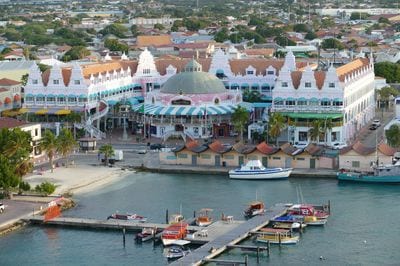
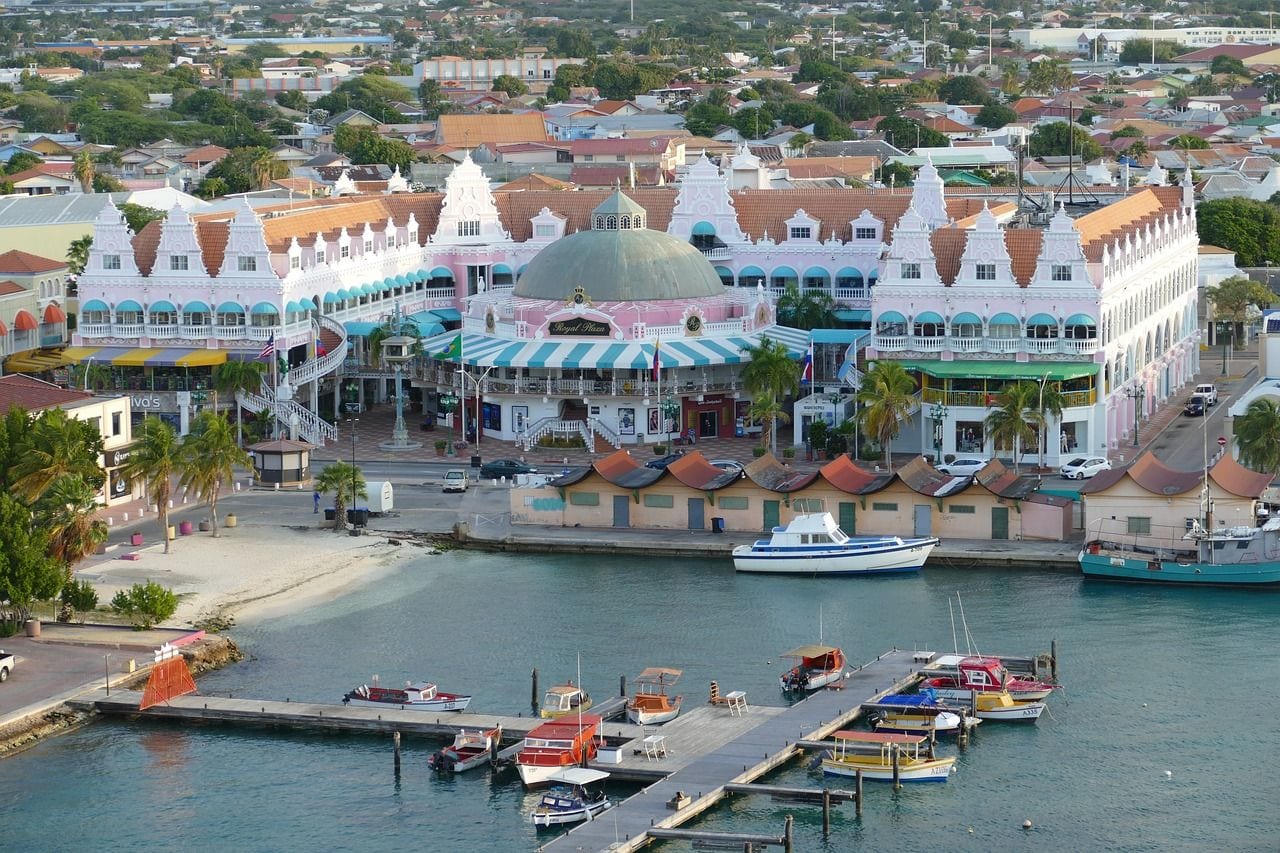
The Renaissance Marketplace is the waterfront end of an Oranjestad evening: an open-sided complex of restaurants, bars and shops wrapped around a marina where the boats tie up close enough to the tables to hear the rigging. A stage in the middle carries live music most nights.
It is the easiest place in the capital to eat outdoors with something happening around you, and it is an easy walk from the cruise pier and the main shopping street. Come for the last of the light — the water and the moored boats do most of the work.
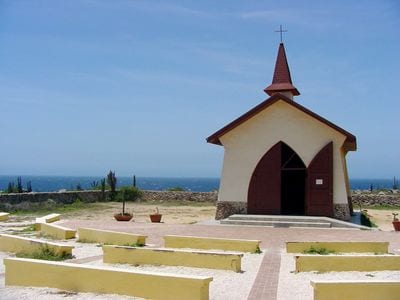
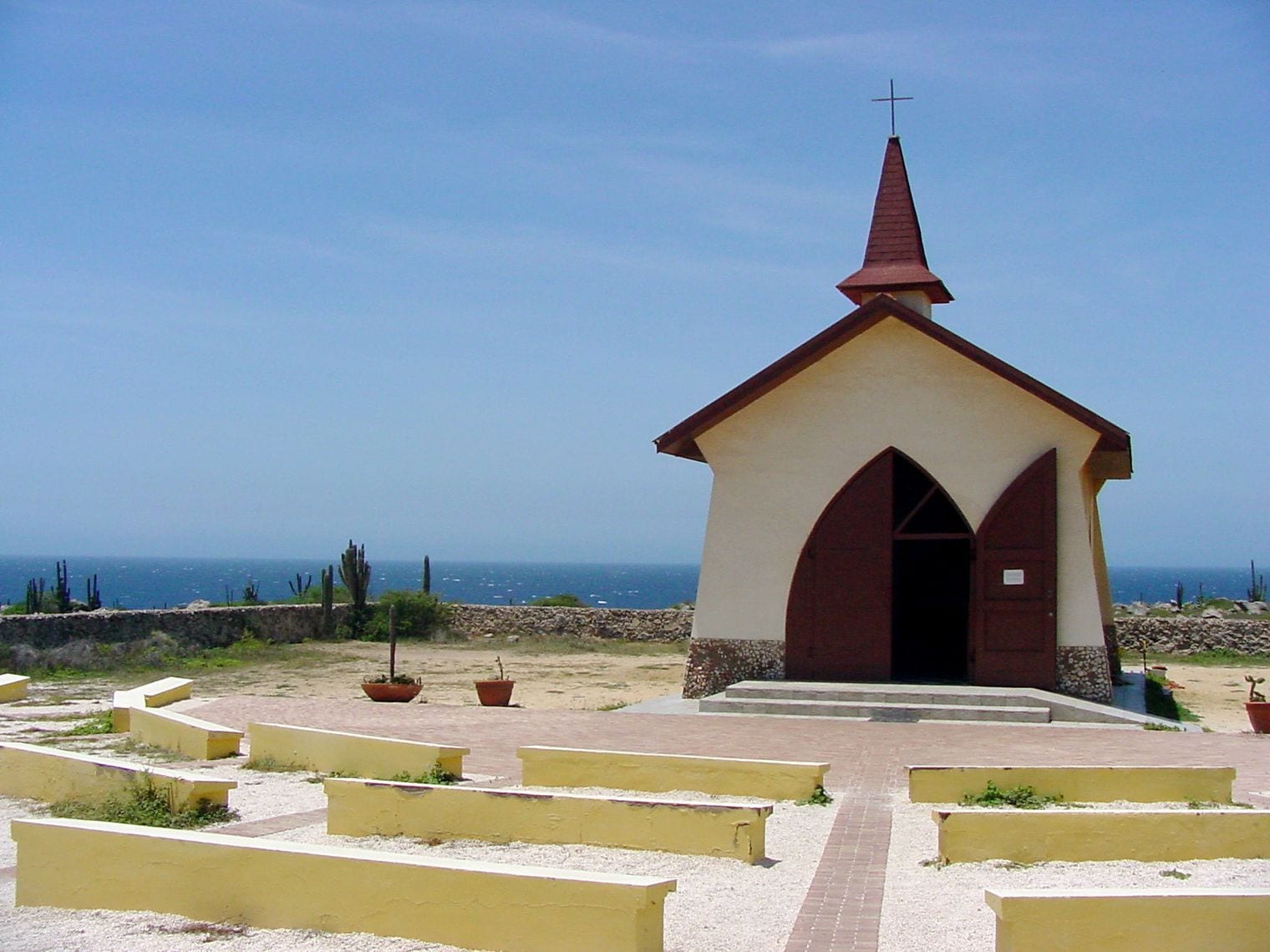
The small ochre-yellow Alto Vista Chapel stands alone on a hillside above the north coast, reached by a lane lined with white crosses marking the stations of the cross. A chapel was founded on this spot in 1750 by the Venezuelan missionary Domingo Antonio Silvestre and is said to be the first church established on Aruba; the building you see was rebuilt on the original footprint in 1952.
It is tiny — a handful of pews, an open doorway, and a view straight out over the scrub to the sea. The site is still in use and still a place of pilgrimage, so it rewards a quiet visit rather than a quick photograph and a drive on.
1414. Donkey Sanctuary Aruba
Association / Organization~2.8 km (1.7 miles) from centre
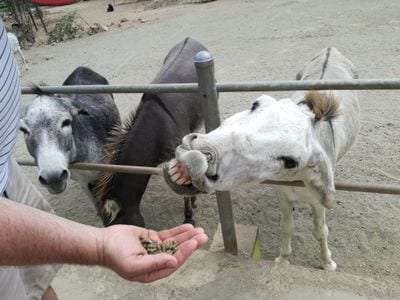
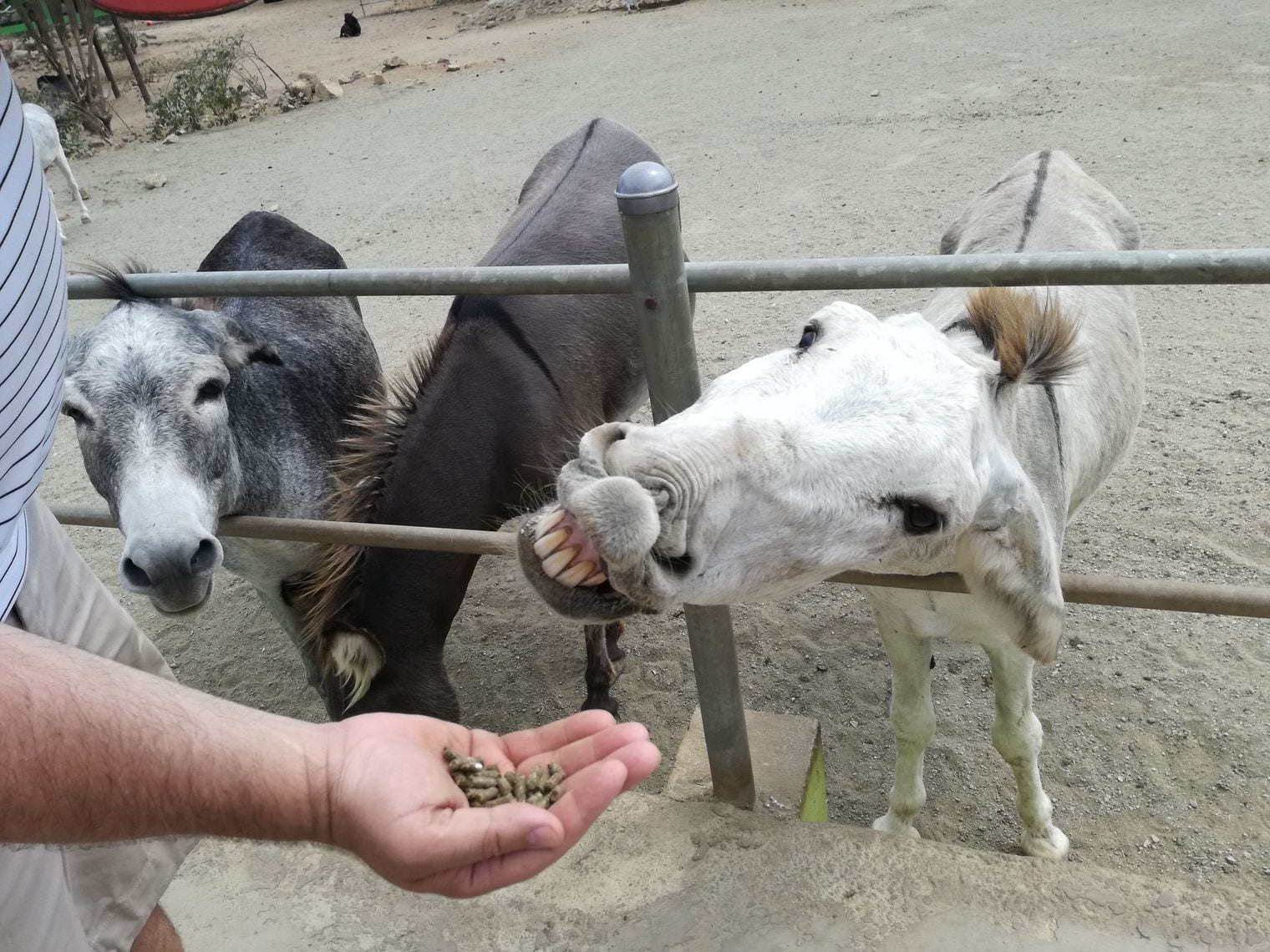
Donkeys were brought to Aruba centuries ago as working animals and were turned loose once cars arrived. Donkey Sanctuary Aruba, run by volunteers on a patch of land in the dry interior, takes in the ones that are injured, orphaned or no longer safe on the roads.
You walk straight in among them and they come to you — a bag of carrots from the entrance guarantees it. The sanctuary runs on donations, it is one of the most relaxed hours on the island, and it is a reliable hit with children who have had enough beach for one day.
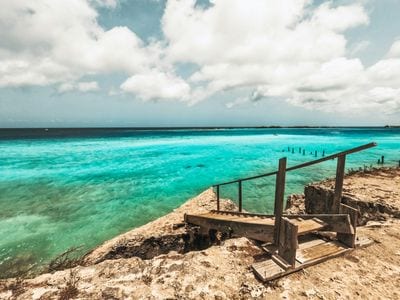
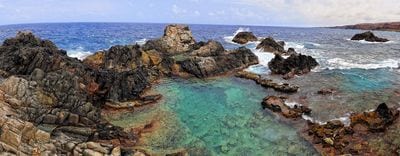
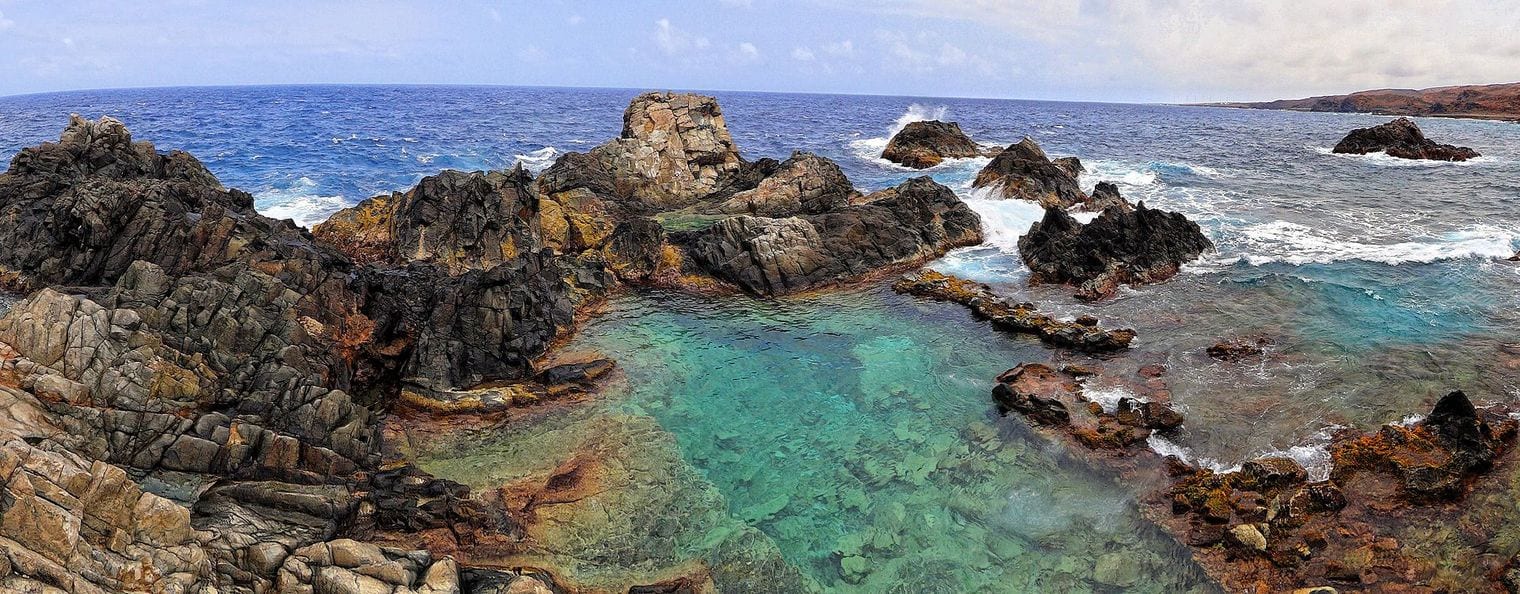
The Natural Pool — Conchi in Papiamento — is a circle of calm water on Arikok's windward coast, walled off from the open Atlantic by a ring of volcanic rock. Waves break over the rim and refill it, so you swim in clear, sheltered water a few metres from a sea far too rough to enter.
Getting there is the whole experience. There is no paved road: you arrive by four-wheel drive over a long, jolting track, on horseback, or on foot across about an hour of rough ground. Rental agreements generally forbid taking an ordinary car, so most people book a jeep or UTV tour and treat the drive as part of the day out.
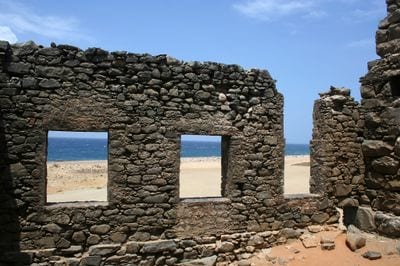
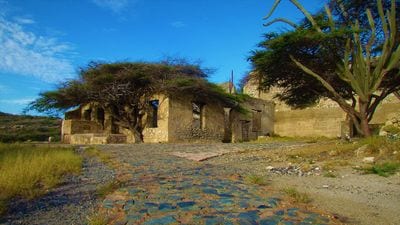
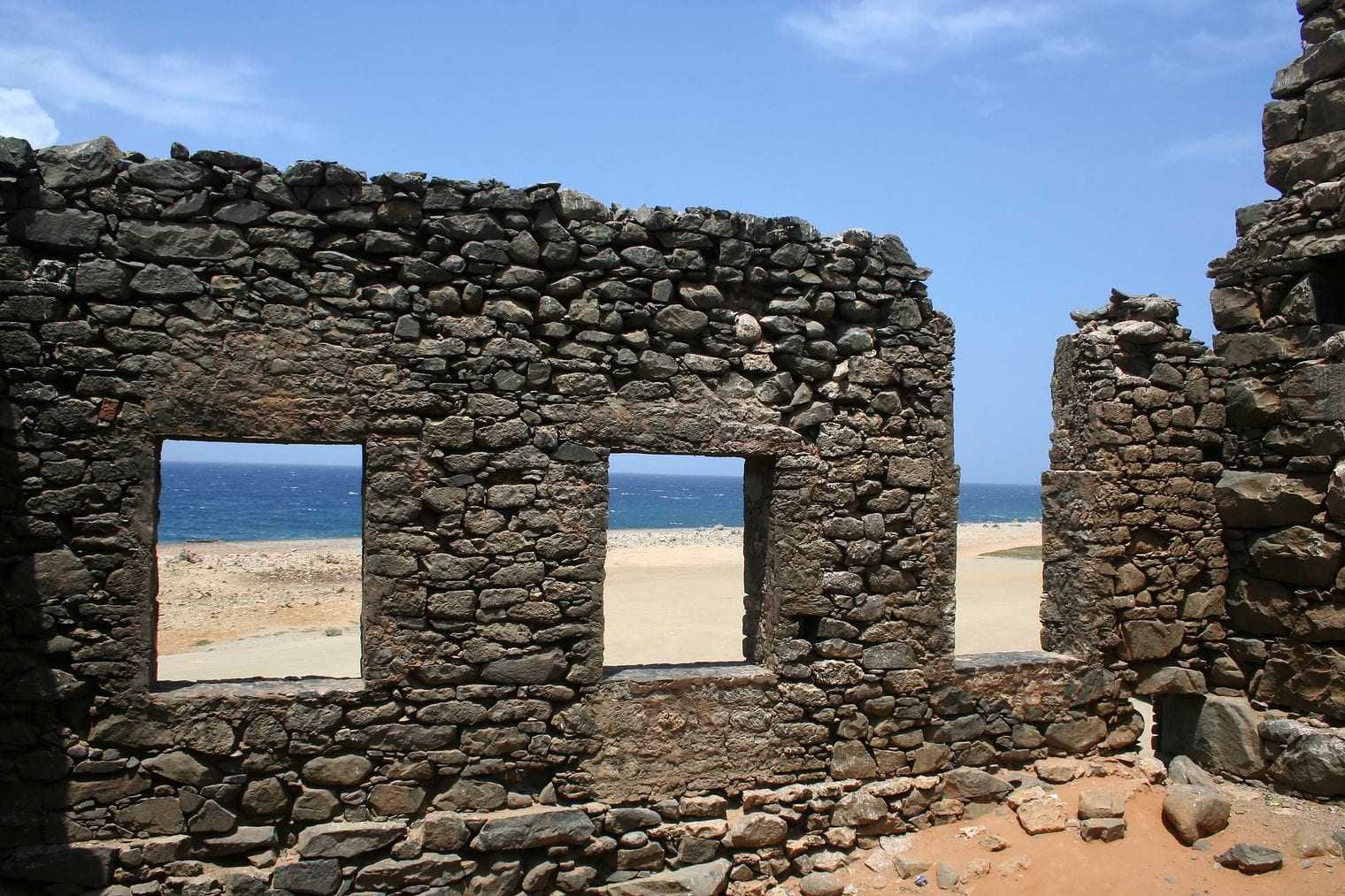
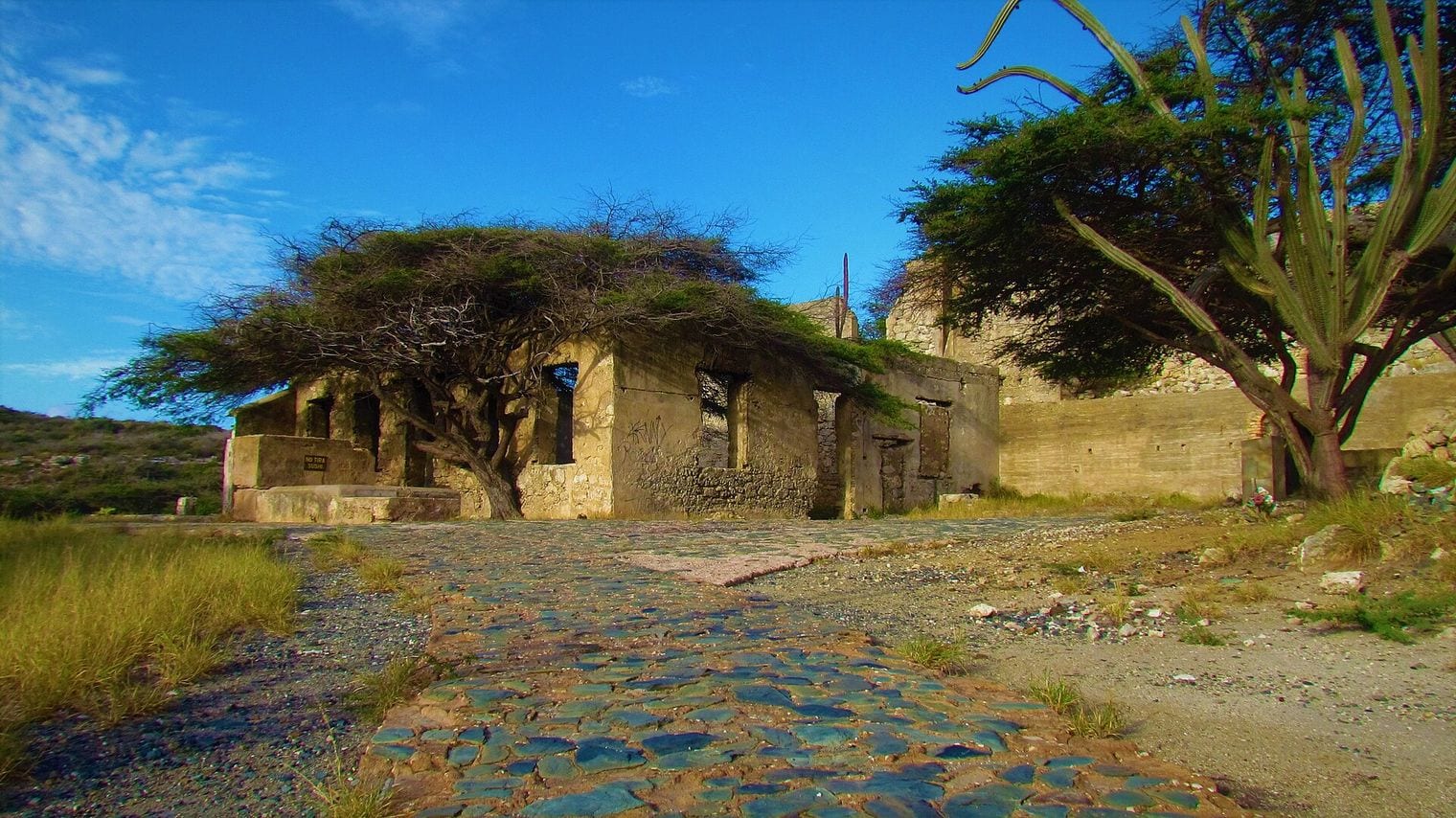
Gold was found on Aruba in the 1820s, and the roofless stone shell of the Bushiribana Gold Mill Ruins is what remains of the smelter built to process it on the north coast. The walls stand open to the wind with the Atlantic breaking directly behind them.
You can walk through the arches and up onto the remaining levels for a view along the coast. There is no visitor centre and almost nothing is fenced off, which is part of the appeal — a ruin met on its own terms, halfway along the wild north shore between the Natural Bridge site and Alto Vista.
Boca Catalina is a small sheltered cove on the north-west shore that appears on every snorkelling list for a simple reason: you walk in from the sand and are over fish within a minute. The water is calm, clear and shallow, and the rocky edges hold sergeant majors, parrotfish and the occasional turtle.
There is very little beach and almost no shade, so most people come for an hour rather than a day, usually as one stop on a run up this coast. Bring your own gear — there is nothing to hire at the cove itself.
Philip's Animal Garden began as one man taking in unwanted exotic pets and confiscated animals, and has grown into the island's best-known animal rescue. Monkeys, kangaroos, macaws, tortoises and big cats live here because there was nowhere else for them to go.
It is a rescue rather than a zoo and is candid about the difference — the guides explain how each animal arrived, which lands better than any signage would. Feeding and hands-on encounters are part of the visit, and the place runs on what visitors bring through the gate.
Ayo is the second of Aruba's two boulder fields, quieter than Casibari and more interesting historically: the Caquetio people used these rocks, and faded petroglyphs survive on sheltered faces among them. Short paths thread between the blocks and through the gaps.
The scale is what stays with you — the boulders sit on open ground with nothing else around them, which makes the flat, scrubby interior feel stranger than it looks from the road. The Ayo Rock Formations are a short drive from Casibari, and doing both back to back takes little more than an hour.
Zeerovers is a fishermen's shack on a pier in Savaneta and it is about as close as Aruba gets to a required meal. You queue at a counter, the day's catch is weighed out in front of you, and it comes back fried with plantain and a wedge of lime.
There is no menu in any meaningful sense — you eat what the boats brought in, usually wahoo, snapper or shrimp. Seating is picnic benches over the water, the boats tie up alongside, and the whole thing is loud, plastic-plated and entirely unpretentious. Go early: when the fish runs out, the day is done.
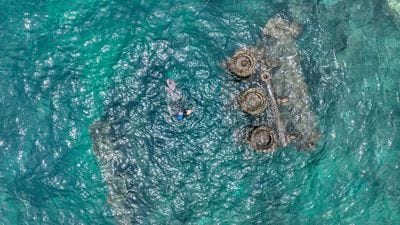
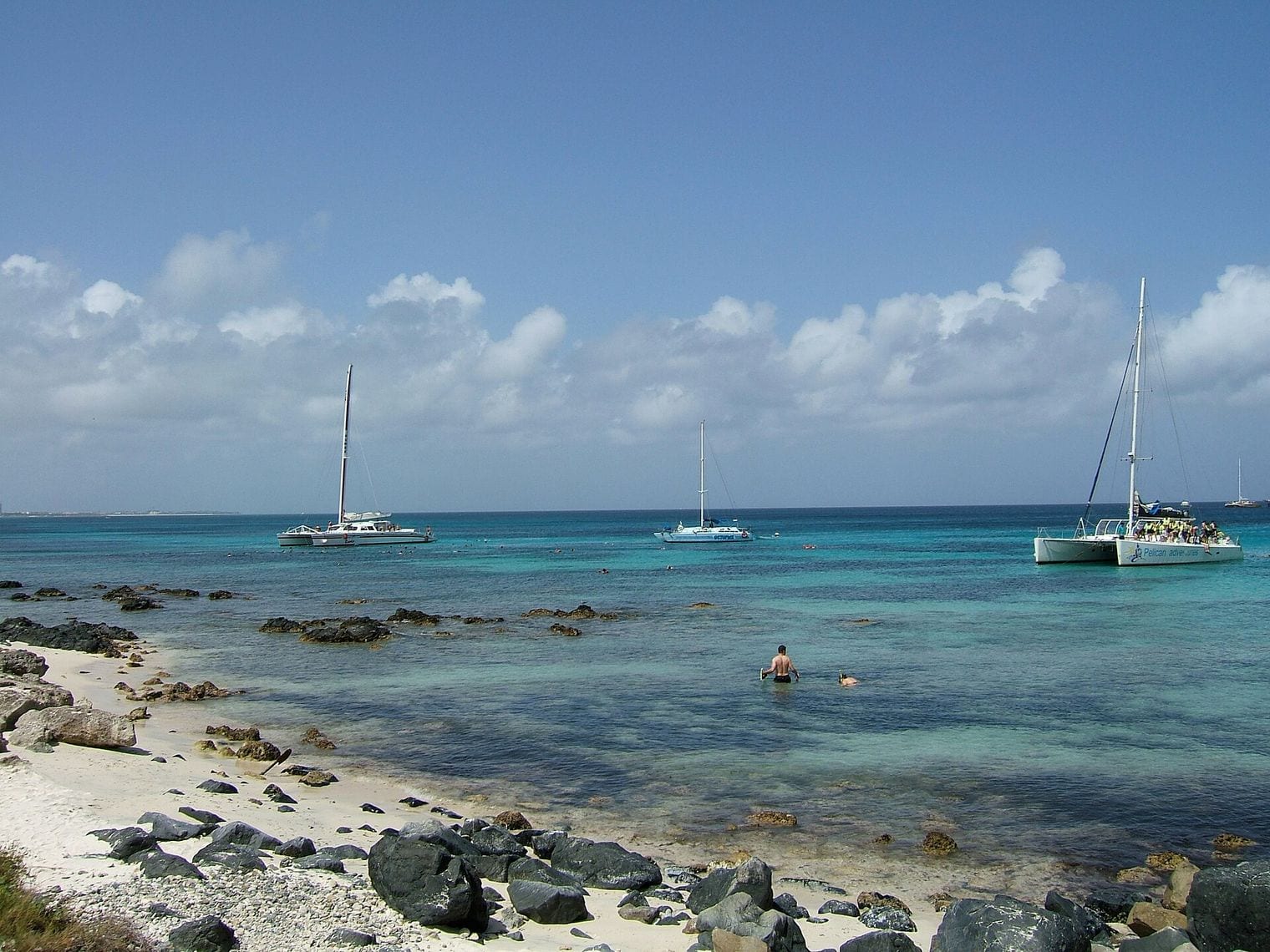
The Jolly Pirates catamarans run the standard west-coast snorkel circuit, and the standard circuit happens to be very good: three stops that usually take in the Antilla, a large German freighter scuttled in shallow water in 1940 and now one of the Caribbean's more accessible wrecks.
The boats are wooden-hulled and rigged for the part, with a rope swing off the side that most passengers end up using at least once. It is a sociable, mildly boisterous half-day rather than a serious dive trip, and the wreck sits shallow enough that you see a great deal of it from the surface.
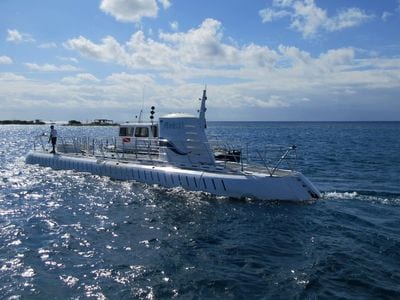
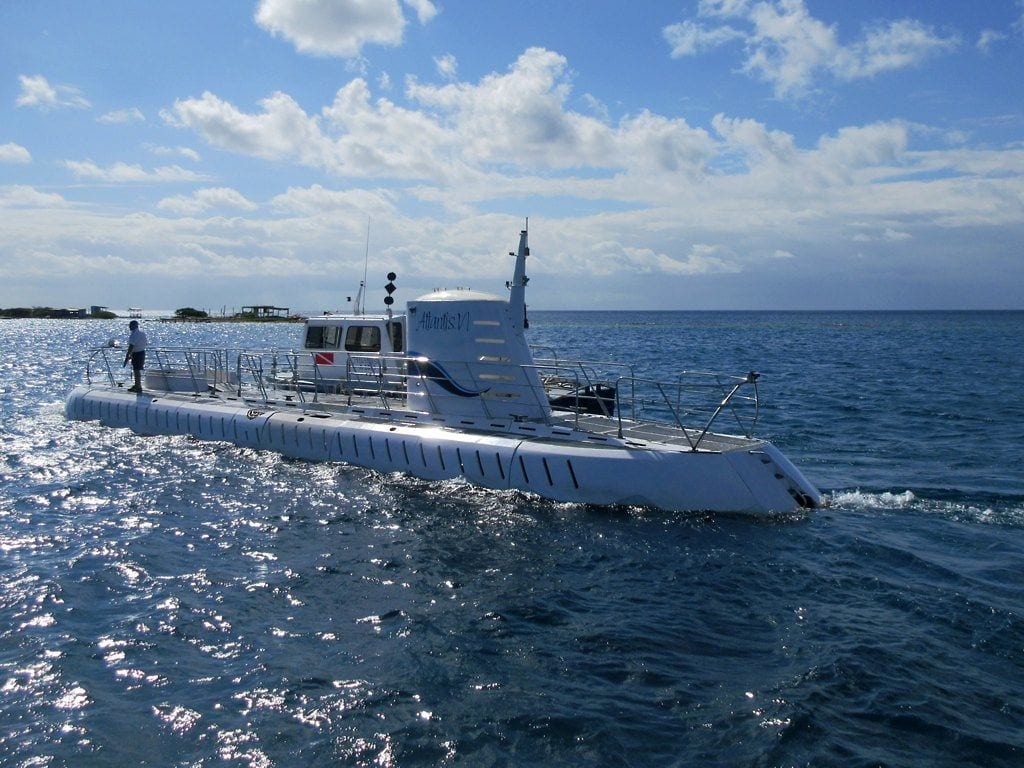
Atlantis Submarines runs a genuine passenger submarine out of Oranjestad — not a glass-bottomed boat. You transfer to it offshore and descend along a reef wall to look at coral, fish and a wreck through your own porthole.
It is the one way to see Aruba's underwater side without getting wet, which makes it the answer for anyone who cannot dive or snorkel, and for a family with a range of ages and nerves. The dive itself lasts under an hour, and the descent past the reef wall is the part people describe afterwards.
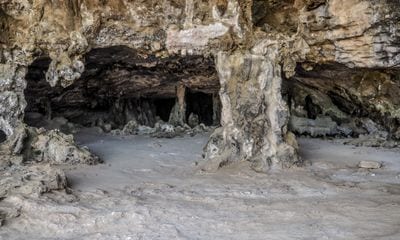
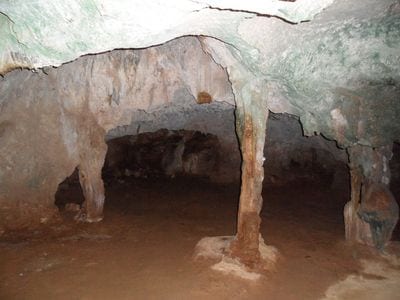
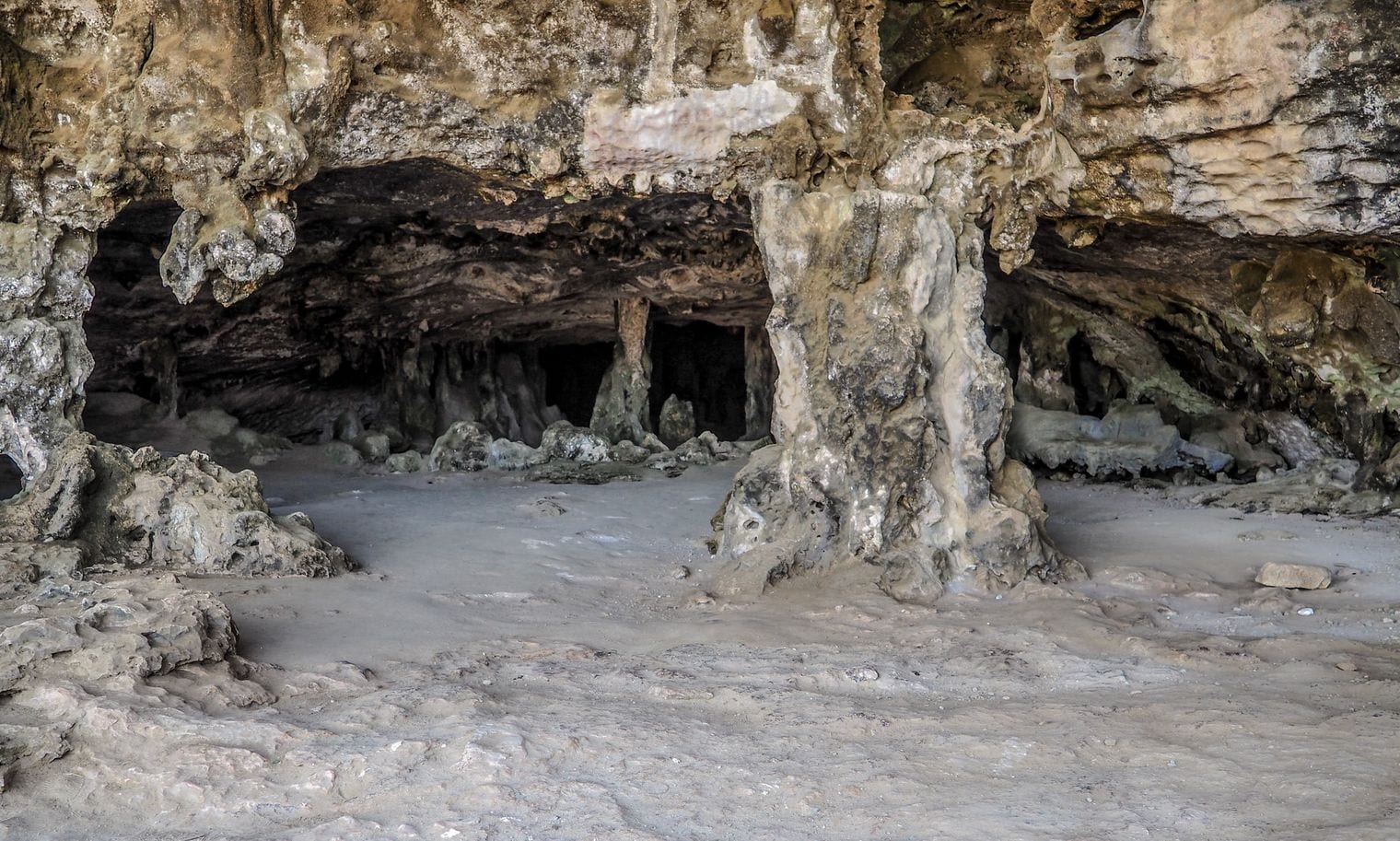
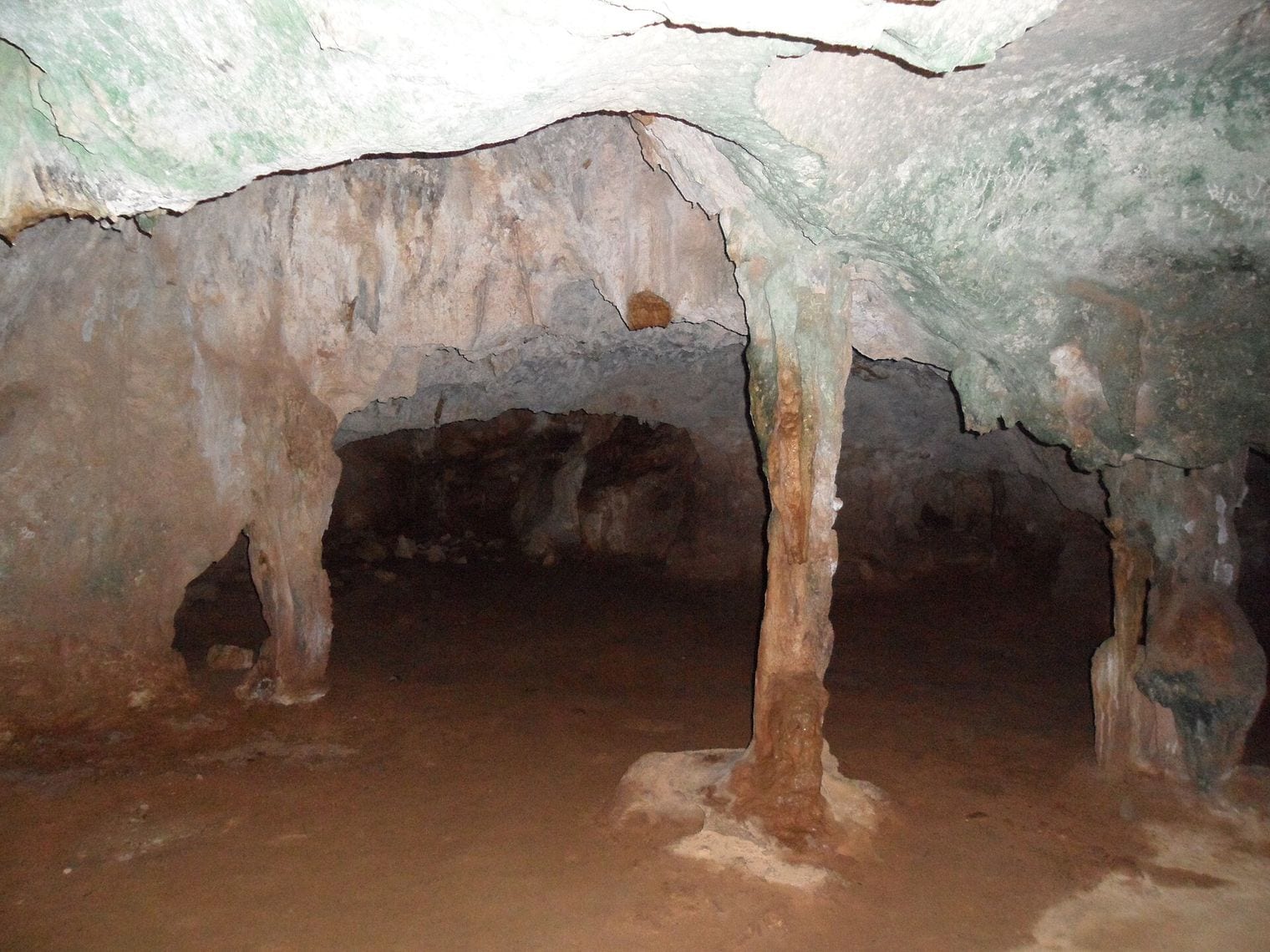
Fontein Cave, inside Arikok National Park, is the cave best known for its Arawak drawings — reddish-brown figures on the low limestone ceiling, left by the island's Caquetio inhabitants long before Europeans arrived. A ranger walks you through and points out what is easy to miss.
The cave is shallow and lit well enough to need no equipment, and there are bats overhead that you will hear before you see. It takes about a quarter of an hour and sits on the same park road as the other caves, so it is normally combined with them rather than visited on its own.
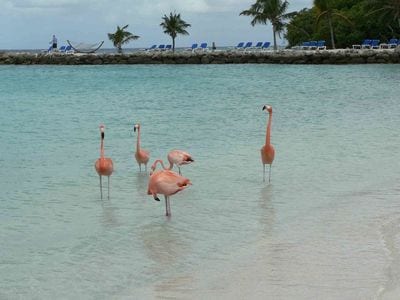
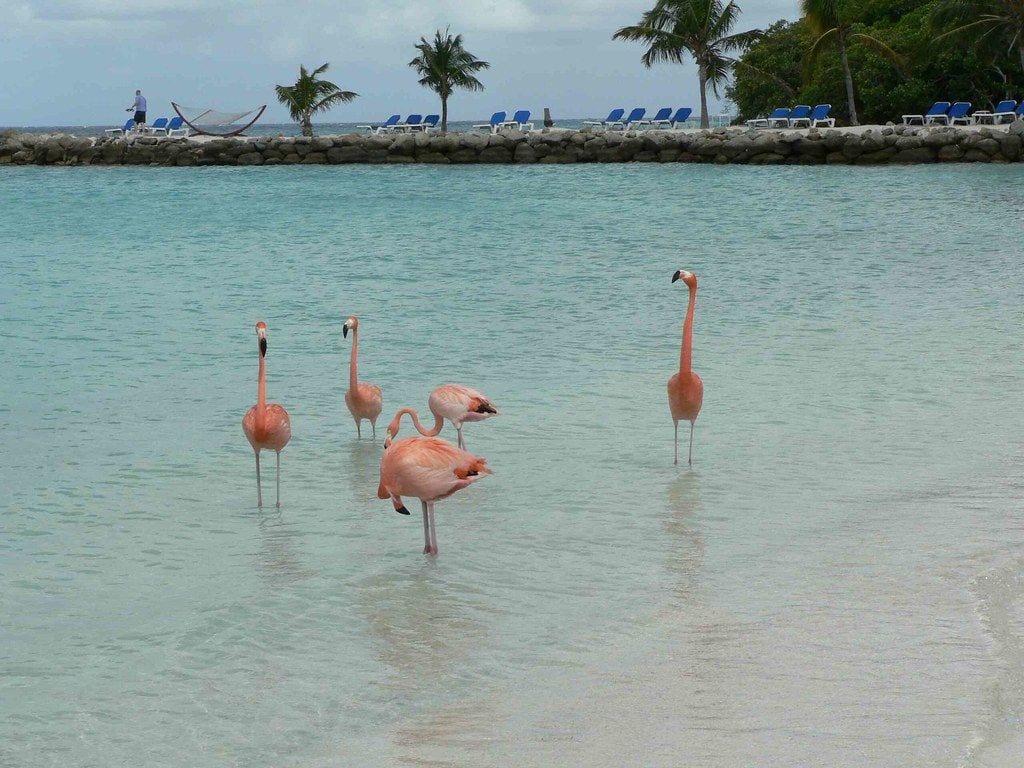
Renaissance Island is a private island offshore from Oranjestad, reached by a boat that runs from inside the Renaissance resort. It divides in two: Iguana Beach on the family side, and Flamingo Beach, the adults-only half where a small group of Caribbean flamingos wanders the shallows and the sand.
Those flamingos are the reason the island appears on nearly every Aruba list, and they are entirely unbothered by people. Access is limited — you need to be a resort guest, or to secure one of the day passes, which go quickly — so it takes some planning rather than a spontaneous morning.
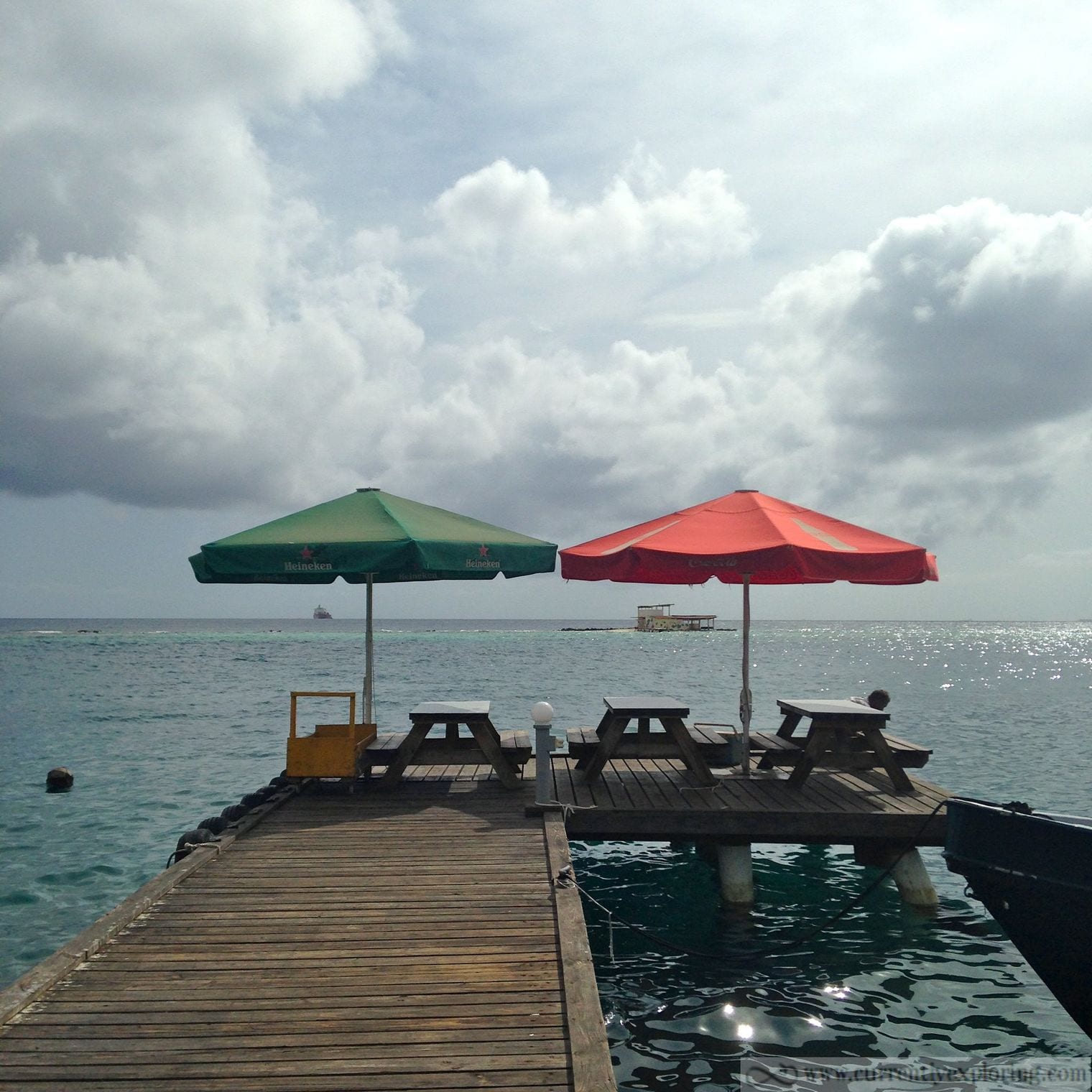
Mangel Halto is a mangrove-fringed inlet on Aruba’s calm south coast, and it is the island’s best shore snorkel. Wooden steps drop you into a channel between the mangroves; follow it seaward and the seagrass shallows give way to a reef shelf that falls off into deeper blue.
The mangrove roots work as a nursery, so the shallows are thick with juvenile fish, while turtles and rays turn up along the drop-off. It is also the launch point for kayak trips along this coast. There are palapas and a scrap of beach behind the mangroves, but nothing to hire — bring your own mask and fins.
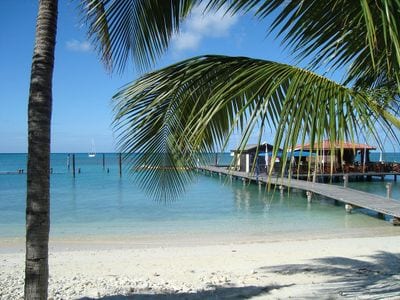
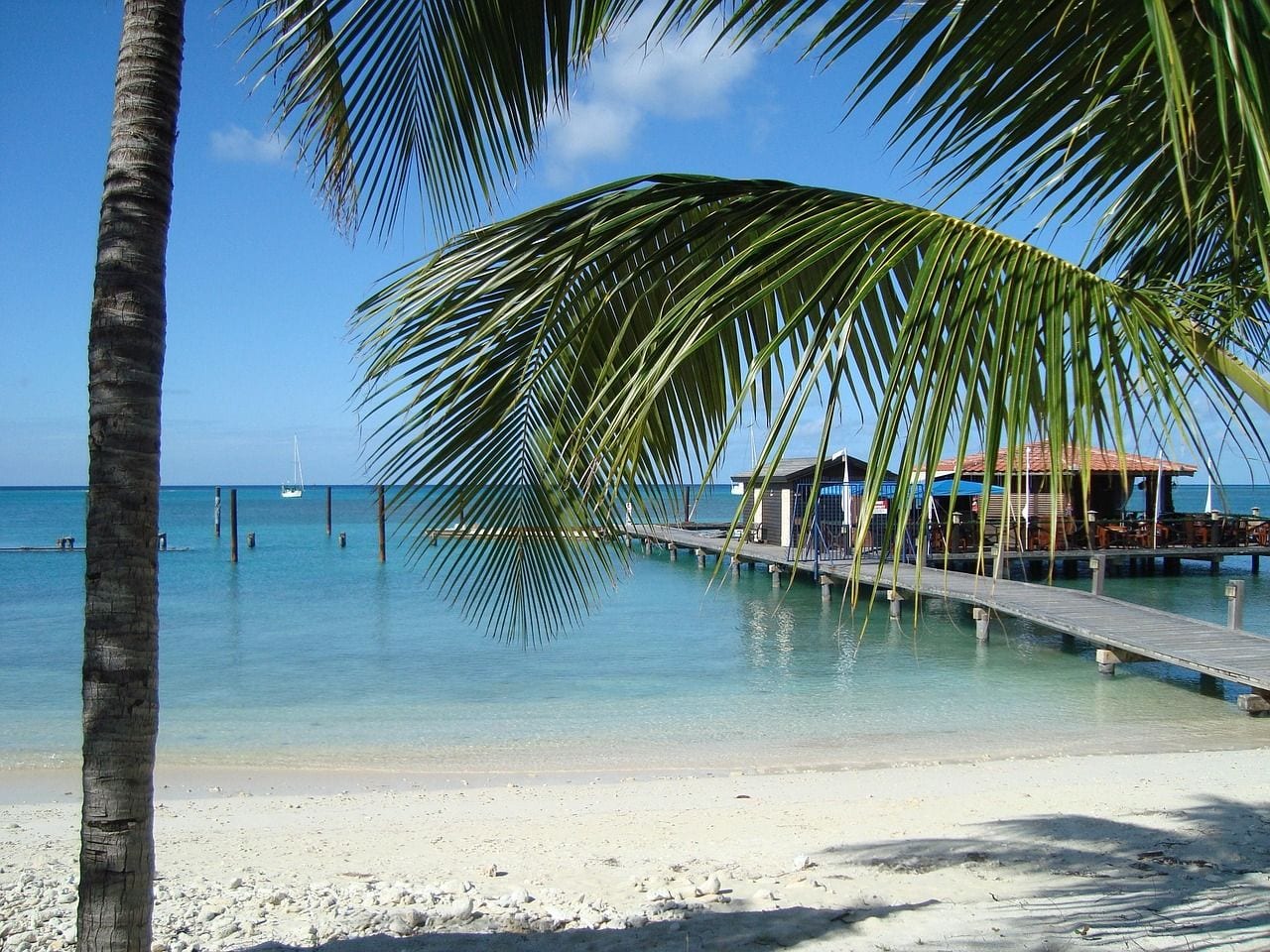
If Eagle Beach is the beach Aruba puts on its postcards, Palm Beach is the one it actually built a resort strip on. Two kilometres of white sand north of Eagle, backed by the island's high-rise hotels, it is the busiest stretch of coast on Aruba and the only one with a genuine promenade behind it — bars, restaurants, dive shops and two piers running out over water that stays flat and shallow a long way out.
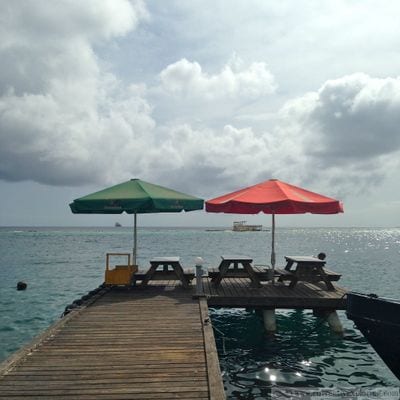
That calm is the point. Trade winds blow across this coast rather than into it, so the swimming is easy, and every watersport on the island launches from here — parasailing, jet skis, banana boats, and the catamarans that run the Jolly Pirates snorkel and sunset trips.
Come early if you want a palapa; they go by nine. The De Palm Pier at the northern end is the best spot on the beach at sunset, and the tarpon that gather under its lights afterwards are worth staying for.
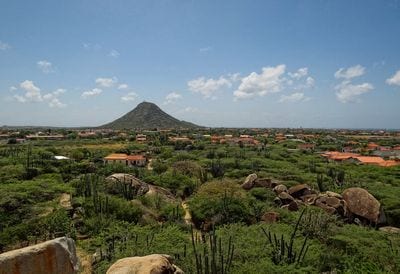
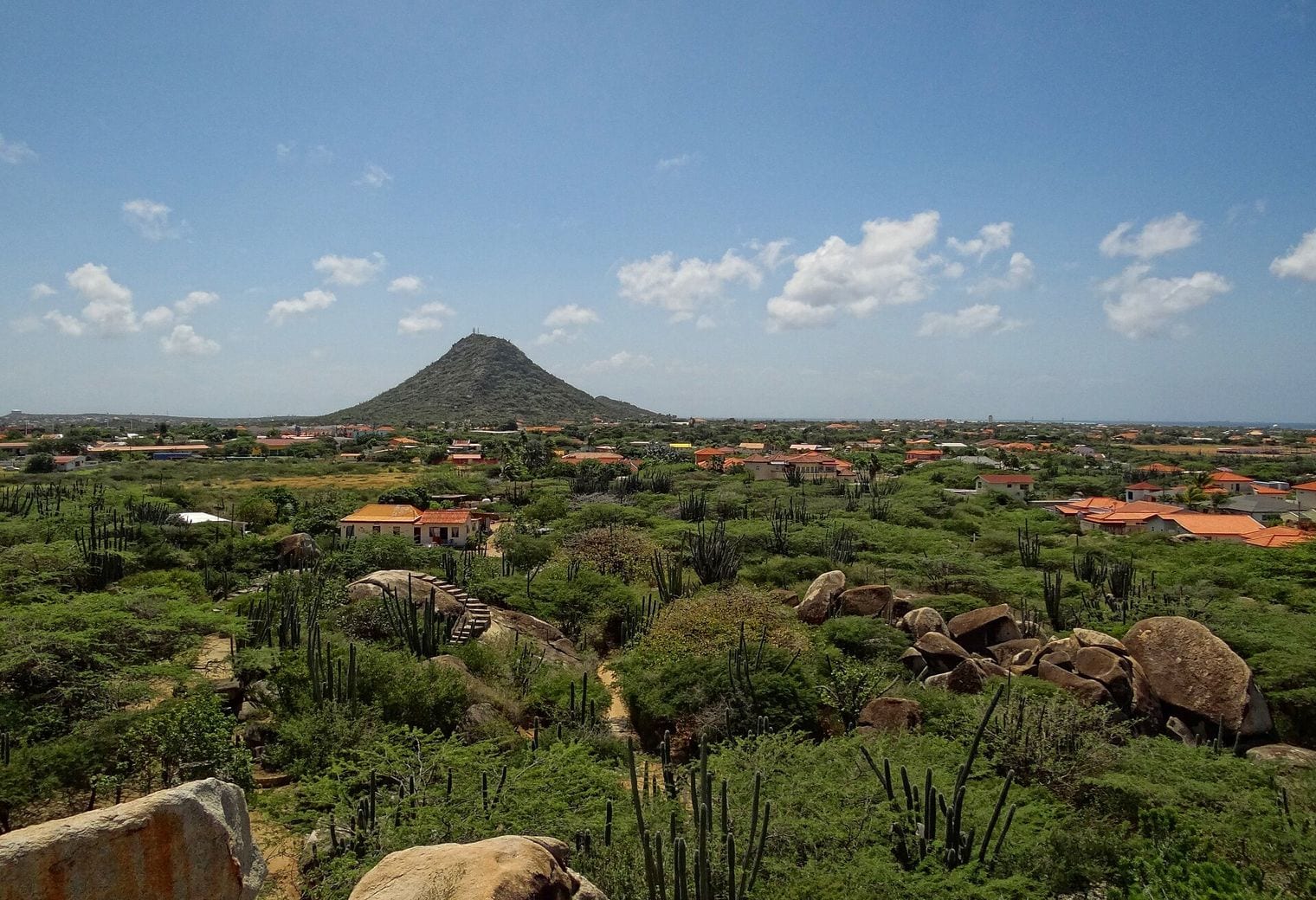
Hooiberg is Dutch for haystack, and the name does the describing: a conical volcanic hill rising 540 feet straight out of the middle of a flat island, visible from almost anywhere on Aruba and used as a landmark long before anyone thought to put steps on it. A concrete stairway of about 600 of them now runs to the summit from a small car park at the base.
The climb takes twenty to thirty minutes at an unhurried pace and is genuinely steep in the last third, so go early or late — there is no shade on the staircase and very little at the top.
What you get for it is the whole island at once: Eagle Beach and the resort coast to the west, Arikok's scrub to the east, and on a clear day the mountains of Venezuela low on the southern horizon, about 29 kilometres off. Wild goats, parakeets and whiptail lizards are usually on the steps with you.
The largest of Arikok National Park's caves, and the one worth the drive if you only do a single cave on Aruba. Quadirikiri runs roughly 490 feet into the limestone as three big domed chambers linked by tunnels — some tall enough to walk through upright, others a low scramble.
What makes it is the roof. Openings in the limestone drop shafts of daylight into the two main chambers, so the cave lights itself and you can see the walls without a torch, although you will want one for the connecting passages. Bats live in the dark sections and Amerindian petroglyphs survive on the walls.
The Arawak legend attached to it is of a chief's daughter shut in here over a forbidden love, her spirit escaping through those same holes in the roof. It sits on the park road with Fontein Cave, so the two are normally done together on one park ticket.
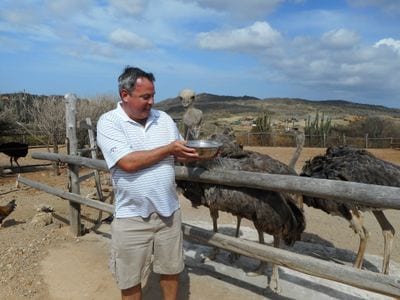
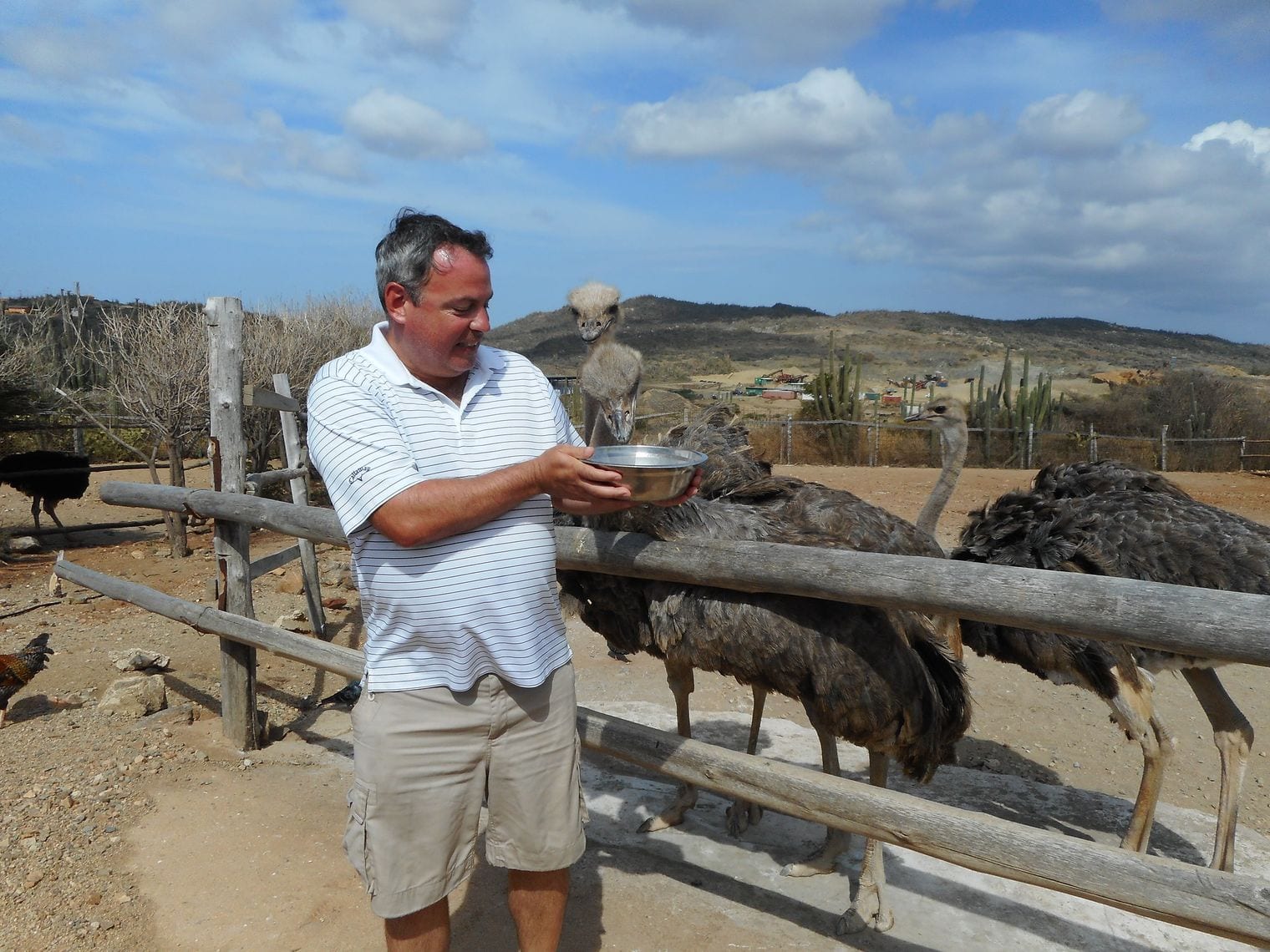
An ostrich farm on a Caribbean island sounds like an invention, but the Aruba Ostrich Farm has been running on the dry inland plain at Paradera for decades, and the climate suits the birds better than most places that keep them. It holds ostriches and emus, and the guided tour is the whole visit — half-hourly from mid-morning, about forty minutes, and small groups do not need to book.
The guides are good on the biology and blunt about the birds, which are large, fast and not remotely tame; you feed them from a bucket held at arm's length and stand where you are told.
There is an African art shop stocked out of Zimbabwe and the Savanna Lodge restaurant under a thatched roof if you want lunch. It sits on the road out to Bushiribana and the Natural Bridge, which is exactly how most people end up here — as the middle stop on the northern loop.
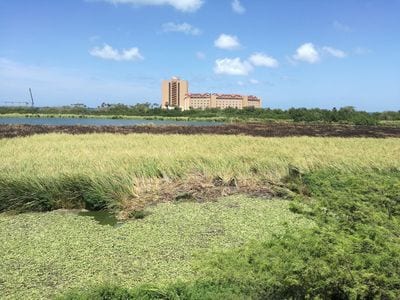
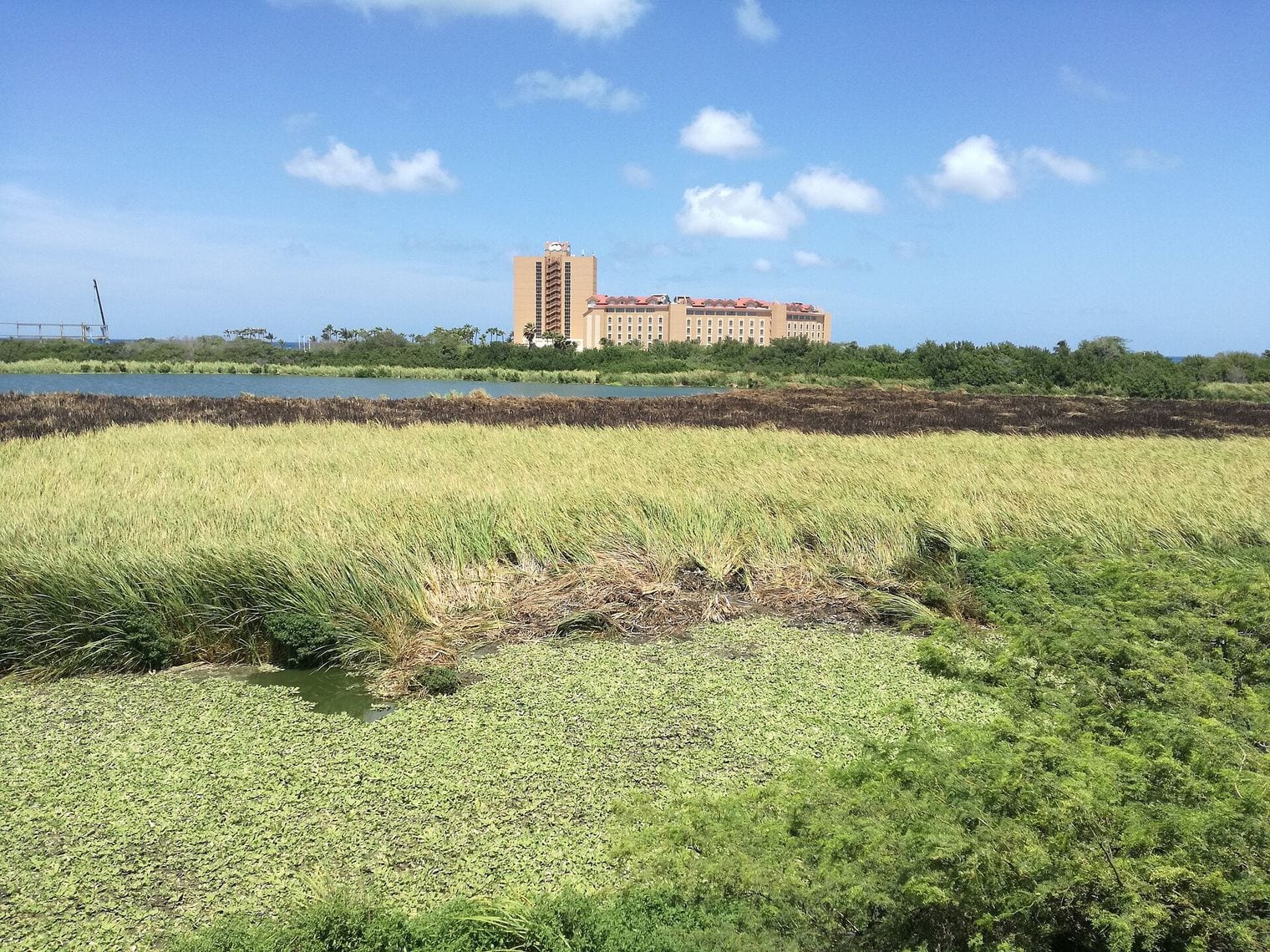
Two man-made lakes a few hundred metres inland from the resort strip, and one of the better free things to do on Aruba. The Bubali Bird Sanctuary is fed by the island's treated wastewater, which sounds unpromising and is precisely why it works — permanent fresh water on a desert island pulls in birds that have nowhere else to go.
More than eighty species use the wetland, most of them migratory: herons, egrets, cormorants, coots, skimmers, terns and ducks, with the numbers highest between roughly October and January. A wooden observation tower at the north end gets you above the reeds, which is the only way to see much of the water.
Bring binoculars and something for mosquitoes, go at first light or late afternoon, and pair it with The Butterfly Farm — the two are a three-minute walk apart, on opposite sides of the road behind the old Dutch windmill.
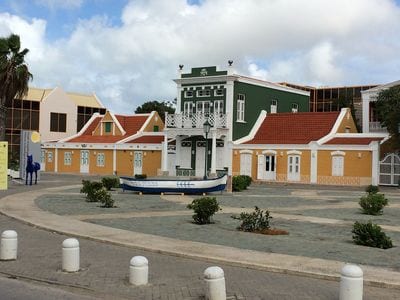
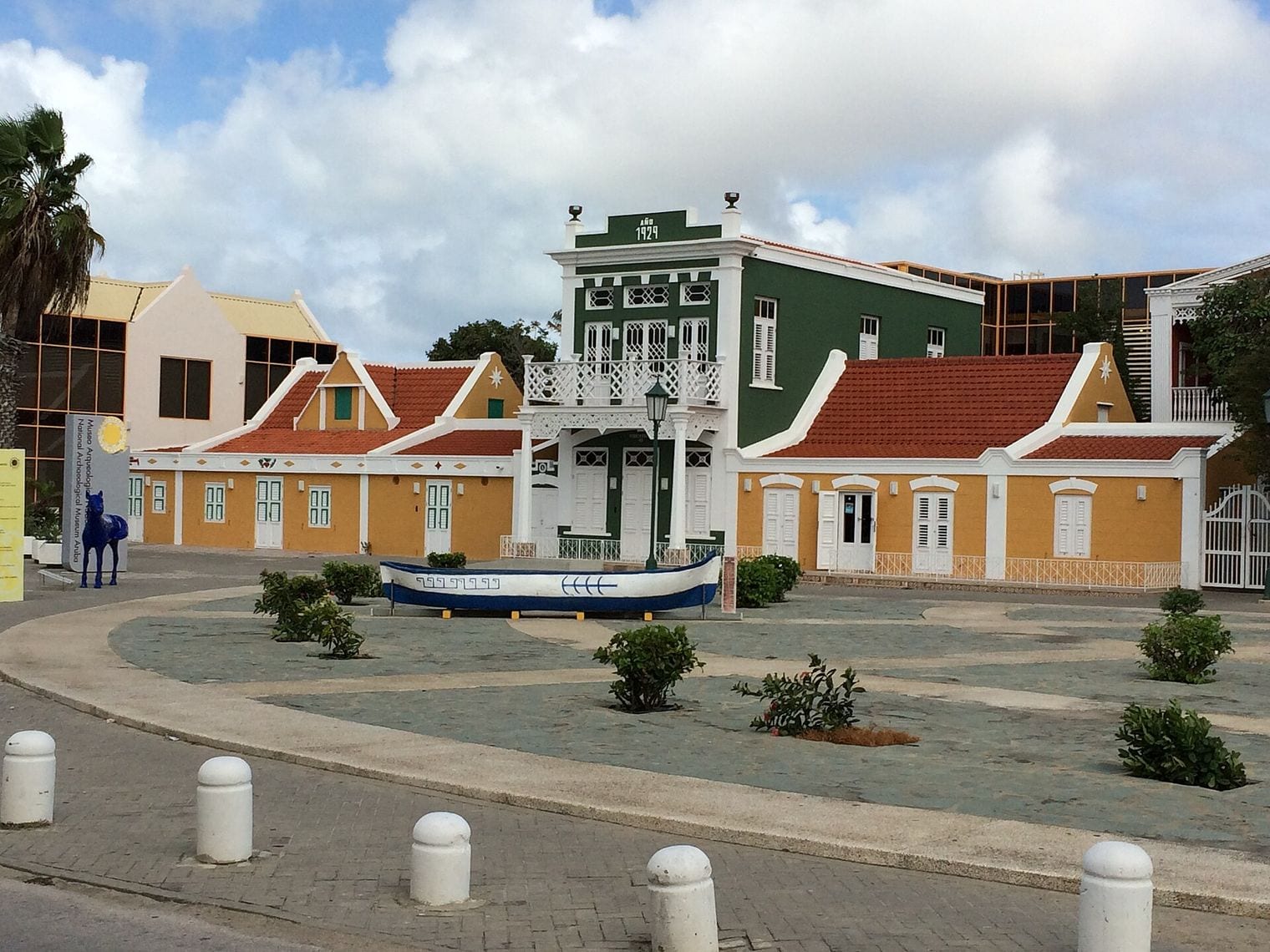
Aruba was settled some four thousand years before the Dutch arrived, and the National Archaeological Museum Aruba is where that half of the island's story is kept. It occupies the restored Ecury family complex on Schelpstraat, a block of nineteenth-century Oranjestad houses knitted together with modern galleries, and the building is worth a look in its own right.
The permanent display runs from the earliest Archaic hunter-gatherers through the Caquetío period — pottery, burial urns, shell tools, stone axes and human remains recovered from sites across the island, with the reasoning behind each dating laid out rather than assumed. Admission is free, it opens on weekdays only, and an hour covers it comfortably. It is a five-minute walk from the Renaissance Marketplace, and the obvious rainy-afternoon answer on an island that does not have many.
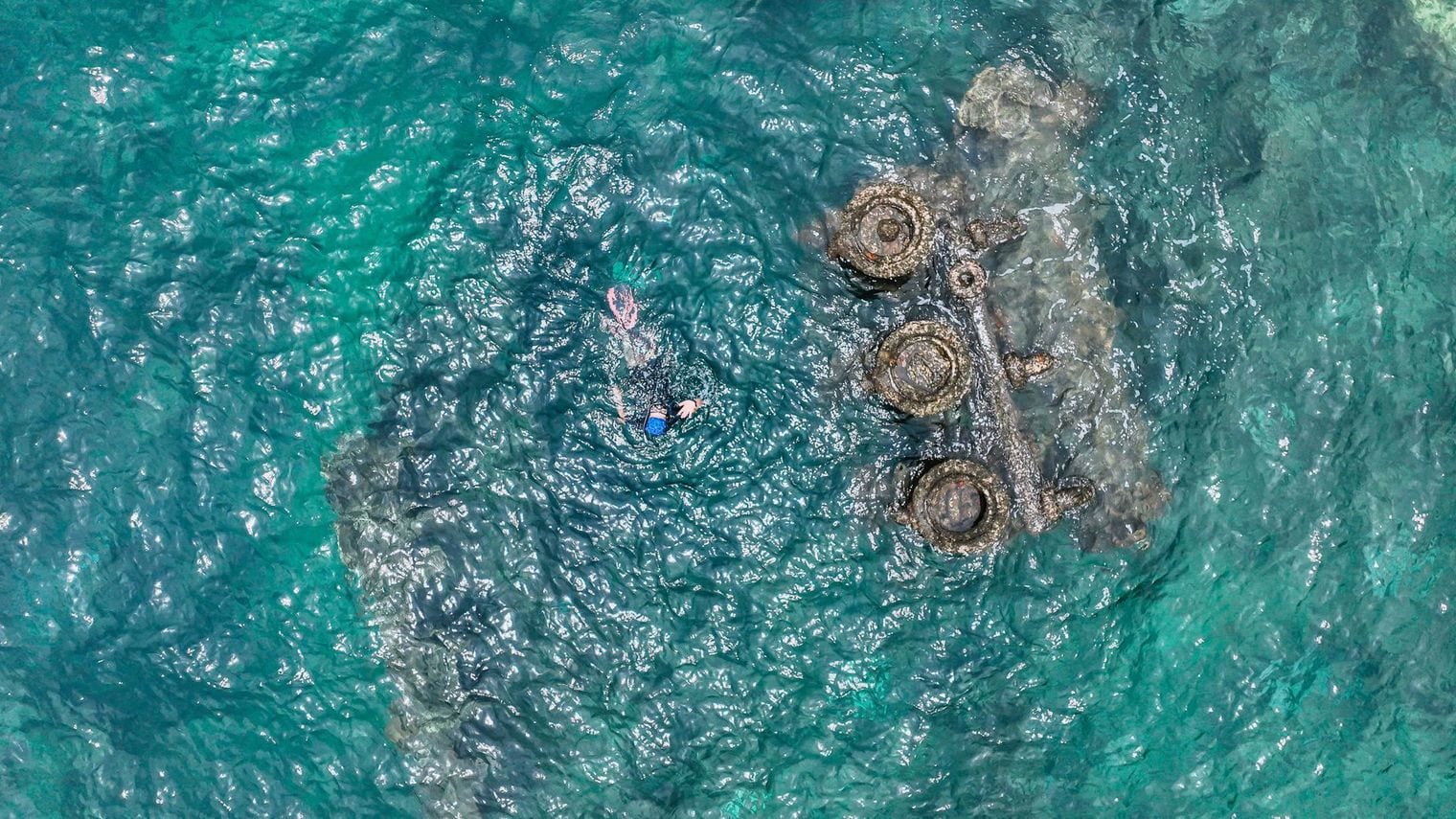
One of the largest wrecks in the Caribbean lies just off Malmok Beach, and it got there by choice. The Antilla was a 400-foot German freighter built in Hamburg in 1939 and sitting at anchor off neutral Aruba when Germany invaded the Netherlands in May 1940. Rather than surrender her to Dutch marines, the captain opened the sea valves and blew the boilers.
She settled on her port side in about 60 feet of water and has been there ever since, broken into sections and thickly grown over with coral, sponges and tube worms.
Divers get the holds and the propeller at around 55 feet; snorkellers get more than you would expect, because parts of the hull rise to within 15 feet of the surface and the water here is clear. Every boat trip out of Palm Beach stops on it, and it is the one Aruba snorkel that is about history as much as fish.
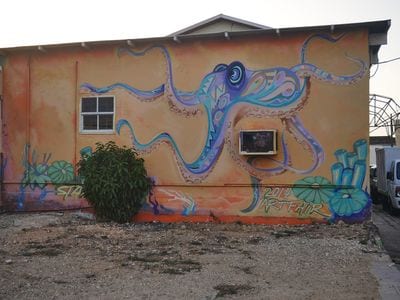
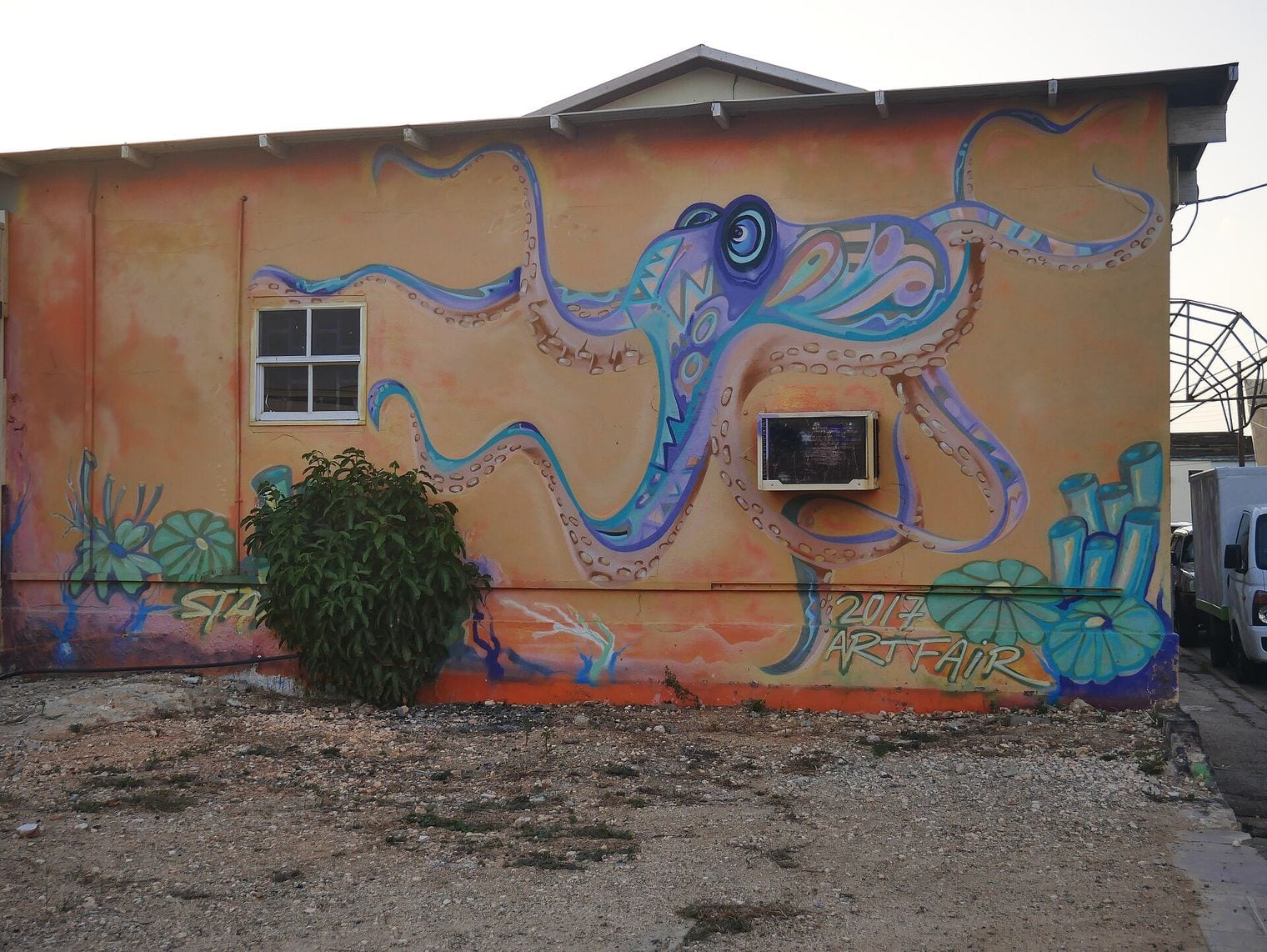
San Nicolas was Aruba's refinery town, and when the oil work thinned out so did the town. What turned it around was paint. After a 2015 trip to Colombia, the Aruban artist Oscar "Tito" Bolivar started the Aruba Art Fair here in 2016, inviting local and international muralists to work on the blank walls; there are now more than sixty large-scale murals across the centre, and more arrive each autumn when the fair returns.
The work ranges from photorealistic portraits several storeys high to abstract colour fields and scenes out of Aruban folklore, and it is genuinely good rather than municipally decorative.
Most of it sits in a six-block grid between Piet Heinstraat and Caya Dick Cooper, which takes about an hour to walk properly; the tourist office on Main Street hands out a self-guided map. San Nicolas is half an hour from Oranjestad by car and served by regular buses, and it pairs naturally with Baby Beach at the island's southern tip.
Malmok is barely a beach — a limestone shelf on the north-west coast with small pockets of sand between the rock and a row of villas behind. Nobody comes here to lie down. They come because the water is the clearest on the island and the reef starts within a few metres of the shore.
Entry is over rock, so reef shoes earn their place, and once you are in there is a shallow shelf of coral heads, sea fans and parrotfish before the bottom drops away. Turtles are common. The Antilla lies a short swim or a shorter boat ride north, which is why every snorkel cruise on Aruba stops off this stretch.
There are no facilities at all — no palapas, no bar, no lifeguard — so bring water and your own kit, and note the current picks up past the shelf. Tres Trapi is ten minutes down the same road if you want steps instead of rocks.
The widest beach on Aruba, and the quietest of the west-coast big three. Manchebo curves for about 800 metres immediately south of Eagle Beach and runs to some 90 metres deep at its widest, which is an enormous amount of sand for the handful of low-rise hotels sitting behind it.
That width is the whole character of the place. The low-rise hotels behind it are two or three storeys rather than a wall of towers, there is none of the jet-ski traffic of the strip further north, and the palapas are spread thinly enough across the sand that the beach still reads as open — a steady breeze off the south-west point, and a shoreline that flows straight on into Druif Beach without a break.
It has become the island's yoga and sunrise beach for exactly that reason, and it is the one stretch of the developed coast where you can put a towel down well away from anyone else in high season. Swimming is calm and shallow; there is little shade, so bring your own.
Aruba's trade winds blow at 15 to 25 knots almost every day of the year, and this is where the island puts them to work. Hadicurari — everyone calls it Fisherman's Huts — is the shallow, flat-water beach just north of Palm Beach, and it is the windsurfing and kitesurfing centre of the southern Caribbean.
The water stays waist-deep a long way out, which is why beginners learn here and freestylers train here; several schools rent gear and teach on the sand. Every June or July it hosts Aruba Hi-Winds, the largest windsurfing event in the Caribbean, and the island's own Sarah-Quita Offringa — a multiple freestyle world champion — grew up sailing this stretch.
Even if you never touch a board it is worth half an hour: on a windy afternoon the sky above the shallows fills with kites and sails, over water the colour of a swimming pool.
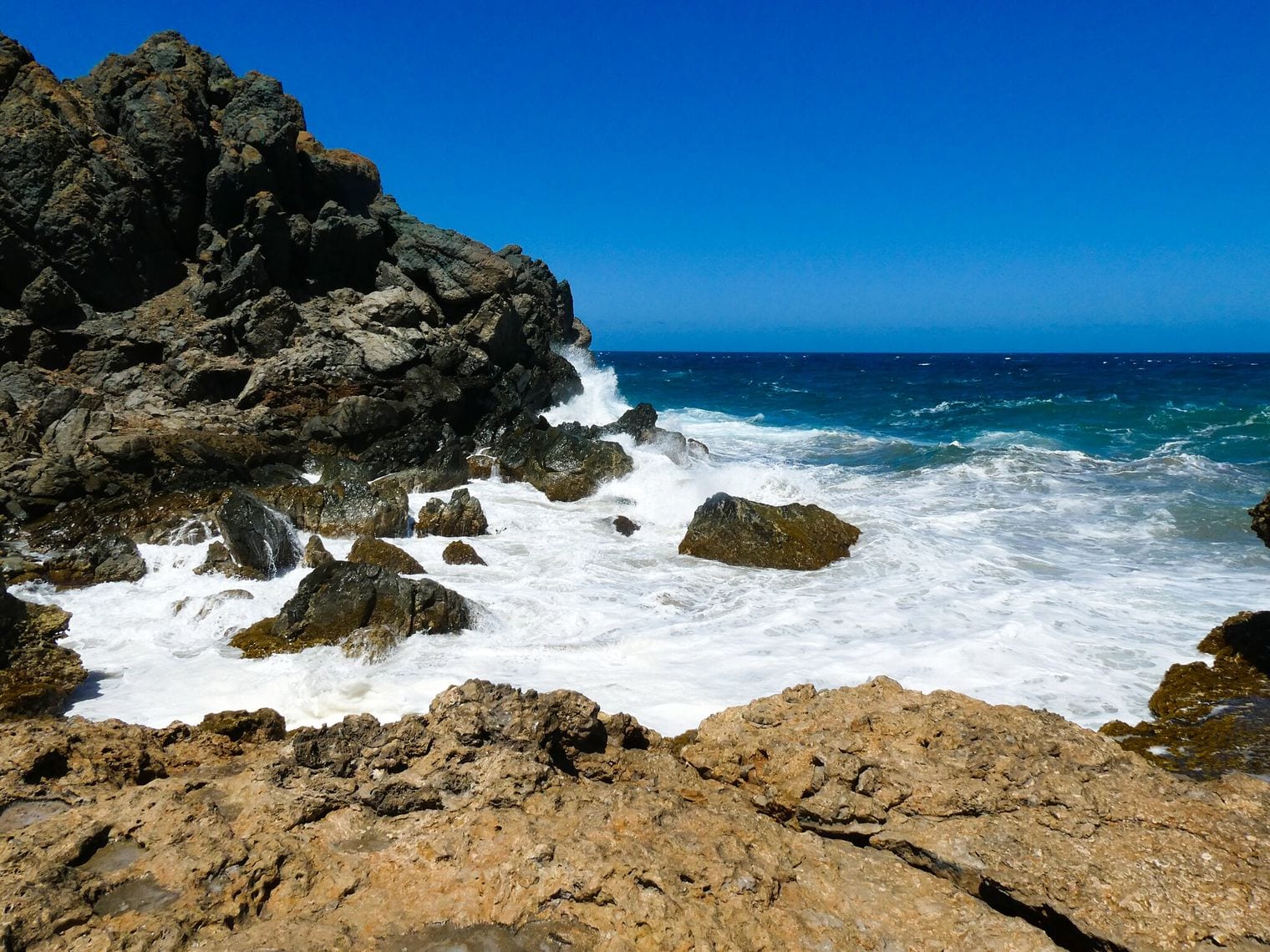
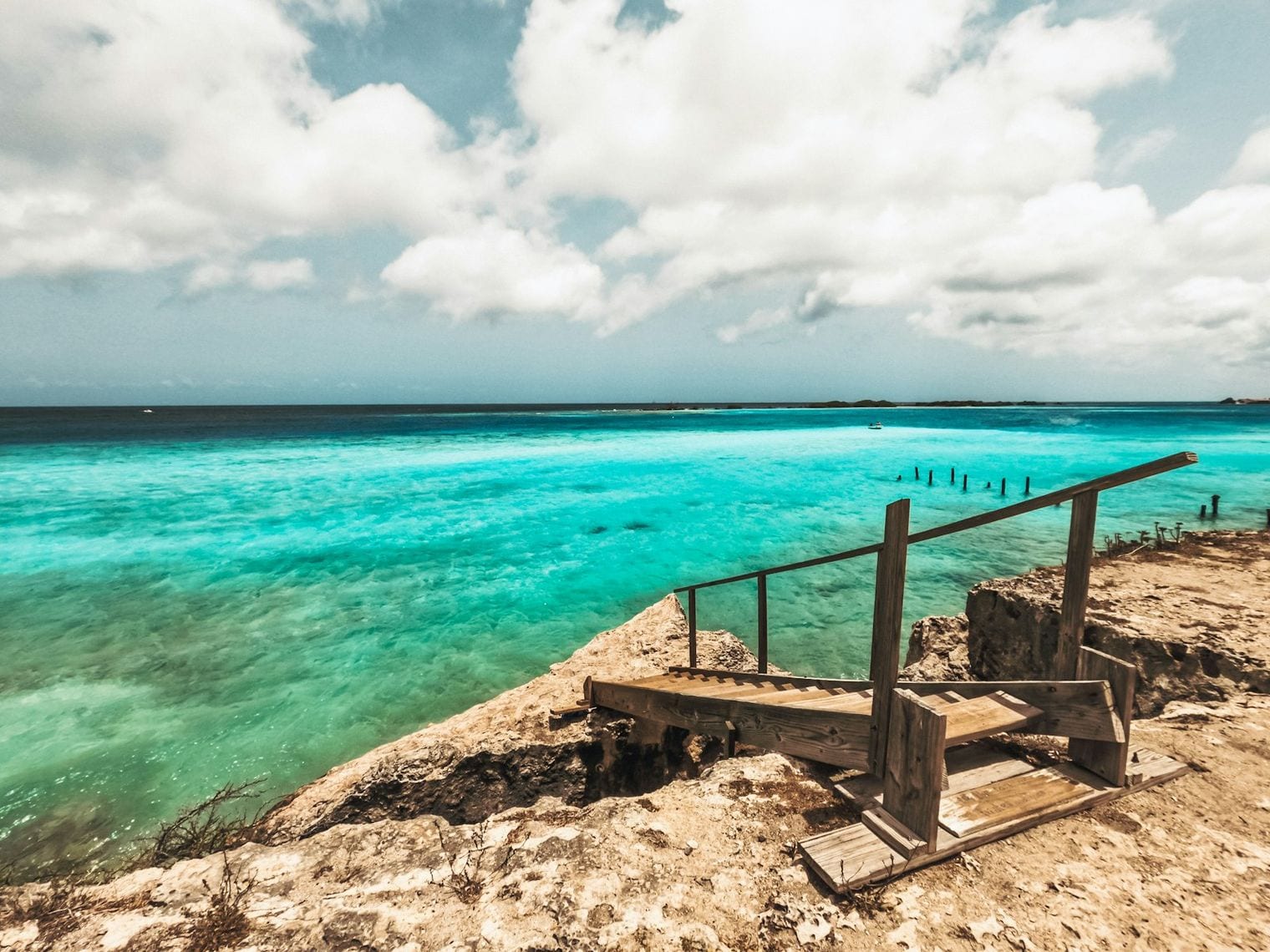
The windward coast is the opposite of everything the west side sells, and Boca Prins is the best place to stand in it. It is a small cove inside Arikok National Park, reached down a wooden staircase, where the Atlantic comes in hard against limestone cliffs and a set of white sand dunes rolls back from the shore into the scrub.
Do not swim. The undertow here is genuinely dangerous and signed as such — this is a beach for looking at, walking the dunes above and photographing, not for getting into. The track in is rough enough that a 4x4 is the sensible way to arrive, which is part of why it stays empty even in season.
It is named for the old Prins plantation nearby, there is a small restaurant at the top of the stairs, and it sits on the same park road as the Natural Pool and the caves.
3838. Balashi Gold Mill Ruins
Historical Landmark~3.6 km (2.2 miles) from centre
Aruba's gold rush left two sets of ruins, and this is the one most visitors miss. Where Bushiribana stands exposed on the windward coast, the Balashi Gold Mill sits inland in the green of the Spanish Lagoon, built in 1899 by the Aruba Gold Concessions company to smelt ore from the mines around Frenchman's Pass.
It ran for seventeen years and closed in 1916, when the First World War cut off the German-made spare parts it depended on. What survives is a set of roofless stone walls, arches and machinery mounts standing among divi-divi trees and cactus, with a stream bed alongside — a far more atmospheric ruin than the coastal one precisely because it is being taken back by vegetation.
It is free, unstaffed and rarely busy, about ten minutes' drive from Oranjestad, and the shaded lanes around it are among the better birdwatching spots on the island.
3939. Rancho Notorious
Horseback Riding Service~11 km (7 miles) from centre
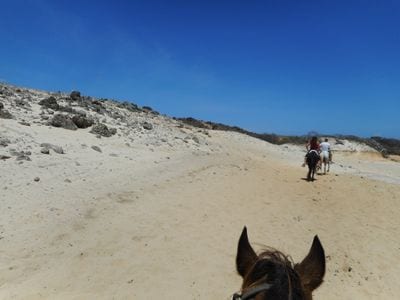
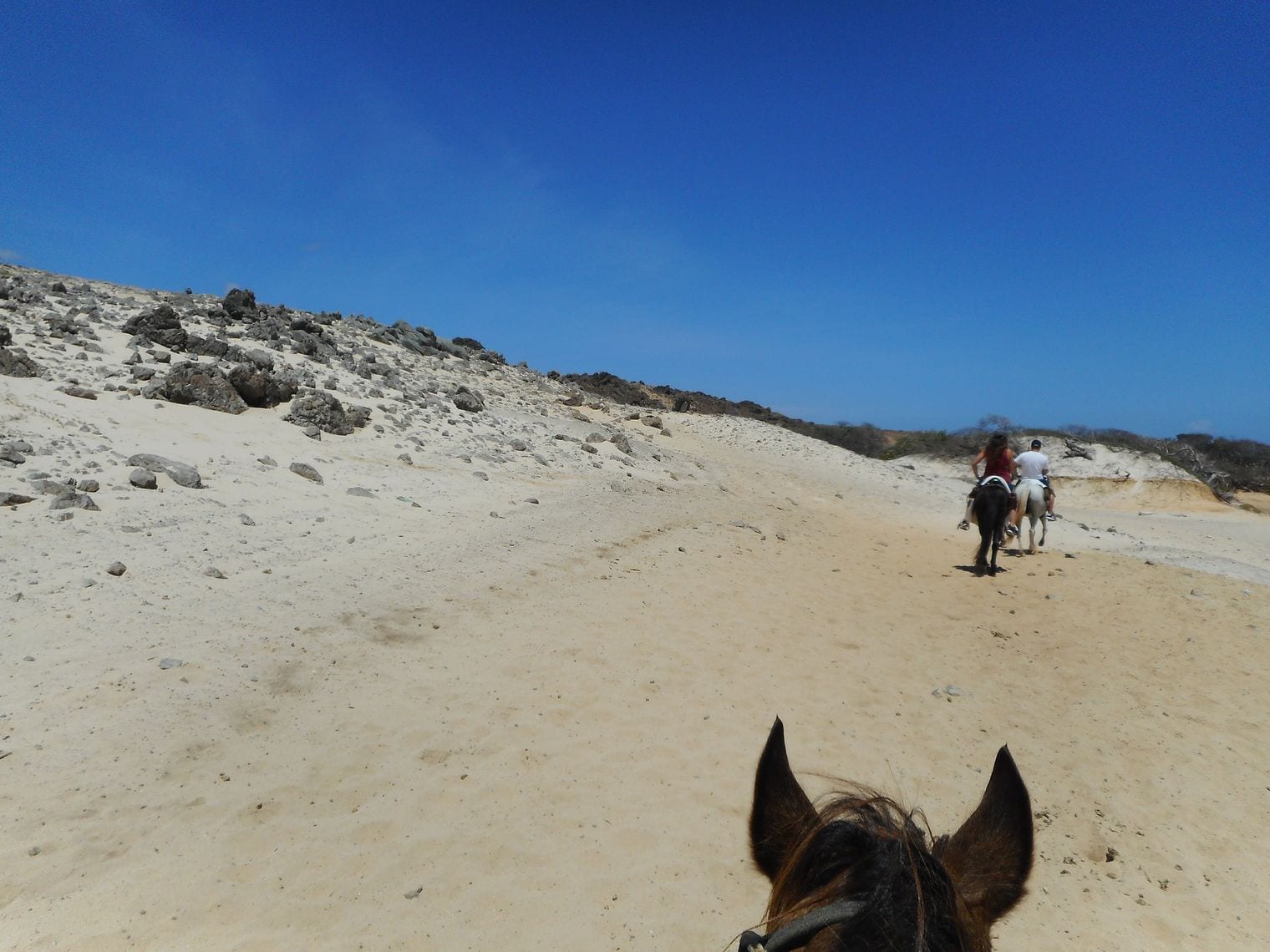
Horseback is the oldest way to cross Aruba's interior and still one of the best, because the cunucu — the dry scrub of cactus, divi-divi and boulder that fills the middle of the island — has more tracks than roads. Rancho Notorious, on the Boroncana road above Noord, runs the rides that most visitors end up on.
The standard trip is a couple of hours out to the north coast, with a stop to swim the horses at a beach on the way back; longer rides reach Alto Vista Chapel and the country north of it.
Horses are matched to experience and complete beginners are taken, which is not true everywhere. Ride in the early morning or late afternoon — midday on this island is hot and shadeless — wear long trousers, and book ahead, because group sizes are deliberately small.
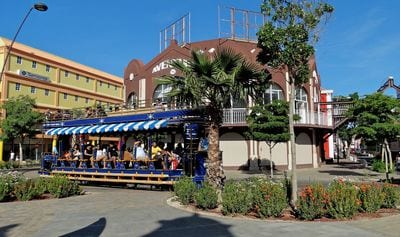
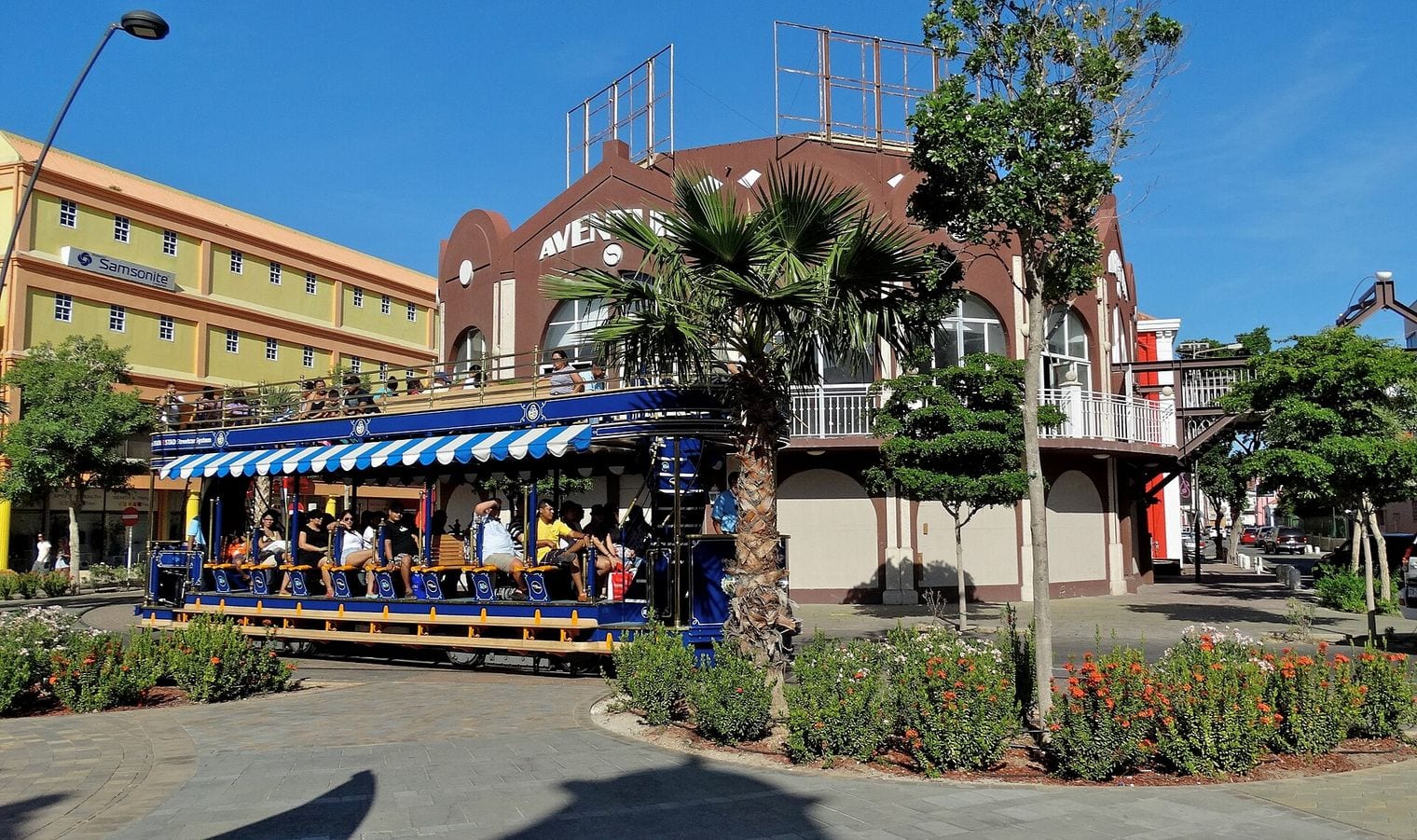
Aruba has one railway, it is 1.9 kilometres long, and riding it costs nothing. The Aruba Streetcar opened in March 2013 and loops from the cruise terminal along Caya G.F. Betico Croes — Main Street — and back, stopping ten times. Its four cars are modern replicas of open-sided trams, two single-deck and two double-deck, and they run on batteries charged from the sun.
It is free, it needs no ticket or booking, and it is the easiest way to see downtown Oranjestad without walking it in the heat — the top deck of the double-decker is the seat to want.
Service runs roughly from mid-morning to late afternoon, Monday to Saturday, every fifteen to thirty minutes depending on how many ships are in; rain stops it. Get off at the Renaissance Marketplace end for the harbour, or ride the full loop in twenty minutes for a free orientation tour of the capital.
Free Things to Do in Aruba
Every beach on Aruba is public, which makes the best of the island free by law. Eagle Beach costs nothing to walk onto, and the same goes for Arashi Beach at the northern tip, the snorkelling cove at Boca Catalina and the shallow lagoon at Baby Beach in the south — bring your own mask and a towel and the day is already paid for.
Mobile dataAn eSIM gives your phone local data when you land, with no SIM card to swap.via AiraloGet an eSIM
Airport transferA driver meets you at arrivals and takes you to your hotel, at a price fixed when you book.via Welcome PickupsBook a transfer
We may earn a commission when you buy through these links, at no extra cost to you. How we make money.
FAQ: Visiting Aruba
What is Aruba best known for?
Beaches first: Eagle Beach appears on world-best lists most years. But the island is equally known for being dry rather than tropical — the cactus desert and caves of Arikok National Park, the boulder field at Casibari, the California Lighthouse above the northern dunes, and an aloe industry running since the nineteenth century.
How many days do you need in Aruba?
Five to seven days is comfortable. Allow two or three for the west-coast beaches and shore snorkelling, one for the northern loop of boulders, ruins and the lighthouse, one for Arikok and the Natural Pool, and one for Oranjestad. Three days covers the beaches plus a single inland day if that is all you have.
When is the best time to visit Aruba?
Any month works. Aruba lies outside the hurricane belt and stays warm and dry year-round, so there is no season to avoid outright. December to April is driest and busiest; September to November is quietest, slightly more humid, and cheapest. The trade winds blow hardest around May to July, which suits windsurfers.
Not if you are staying on the Palm Beach or Eagle Beach strips and mainly want sand — buses link them with Oranjestad and taxis are straightforward. You do need one for the rest of the island, and the track to the Natural Pool requires genuine four-wheel drive or a booked tour rather than an ordinary rental.
What is the best beach in Aruba?
It depends what you want. Eagle Beach is the widest and most photographed, Baby Beach is the calmest and shallowest for young children, and Arashi Beach and Boca Catalina are the two to pick if you would rather snorkel straight off the sand than sunbathe.