A country where the flight between two of its own cities can take longer than crossing Europe — and where the reward for that distance is a reef, a desert and a coastline that look like nowhere else.
Australia is a continent you travel in chapters: a chain of harbour and beach cities down the east coast, a red desert interior with Uluru at its heart, the world's largest coral reef off Queensland, and a cool, green island at the bottom in Tasmania. Distances are the thing to plan around — Sydney to Perth is farther than London to Moscow — so most first trips pick one or two regions and fly between them rather than driving the lot. English is the language, traffic keeps left, and the seasons run opposite to the northern hemisphere, which makes December a beach month and July the time to ski the Alps or see the Top End at its driest.
Arguably the best all-round window. The southern cities warm up without the summer crowds, the wildflowers of Western Australia put on one of the country's great natural displays, and the tropical north is still dry and comfortable before the build-up to the wet.
SummerDec–Feb
Peak beach season and the school holidays — Sydney, Melbourne and the surf coasts are at their busiest and priciest. It is glorious in the south and in Tasmania, but the tropical north is hot, humid and in its wet season, with stinger nets up along the Queensland coast.
FallMar–May
A quiet, forgiving shoulder. The heat drops out of the southern cities, the sea is still warm enough to swim into April, and the Top End dries out towards May — the start of the good window for Kakadu and the Kimberley.
WinterJun–Aug
The best time for the north and the outback: warm, dry days in Queensland, Darwin and the Red Centre, when Uluru is walkable rather than punishing. The south turns cold and wet, though it is also when the Australian Alps get their ski season and whales move up both coasts.
Regions
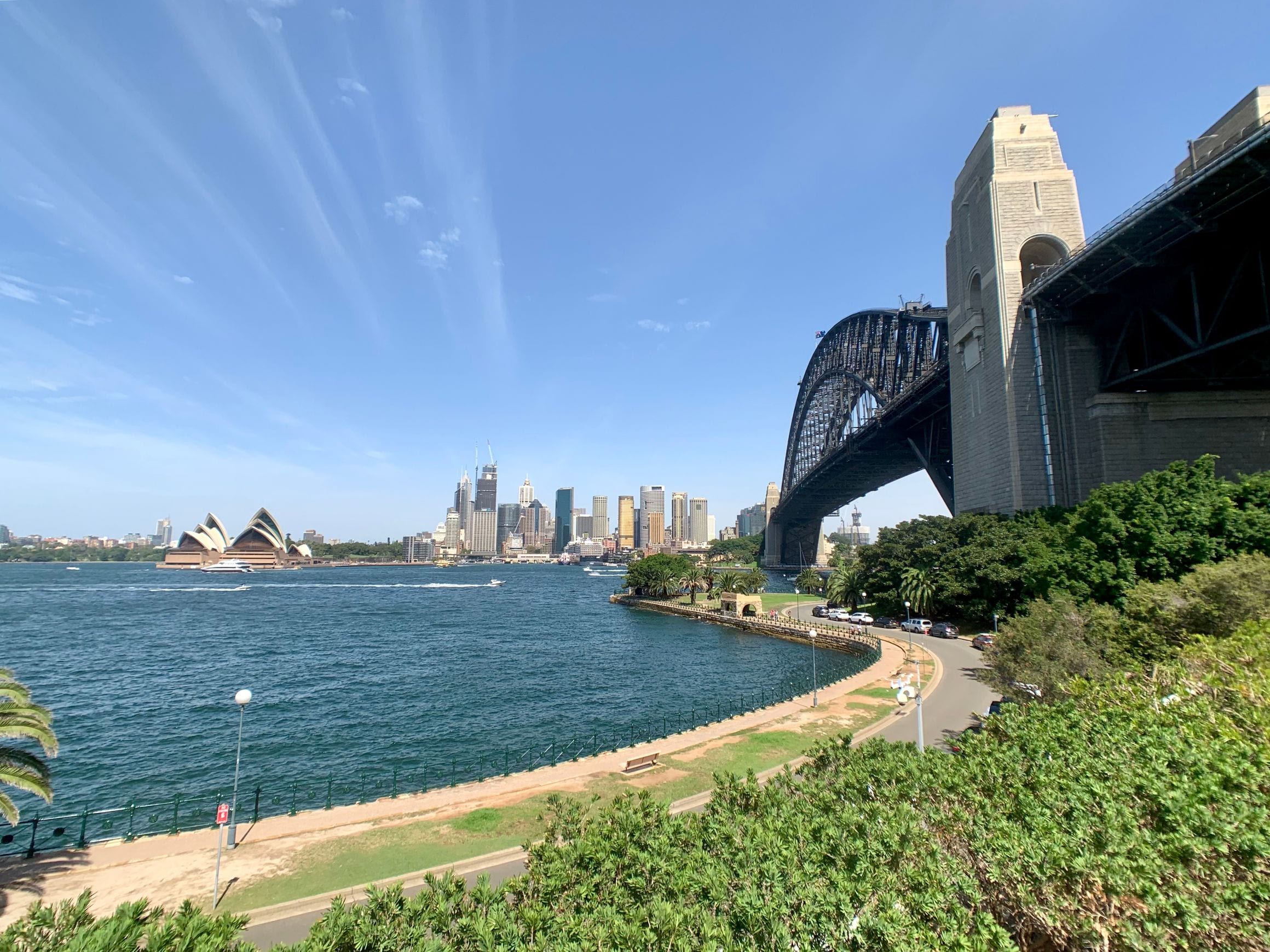
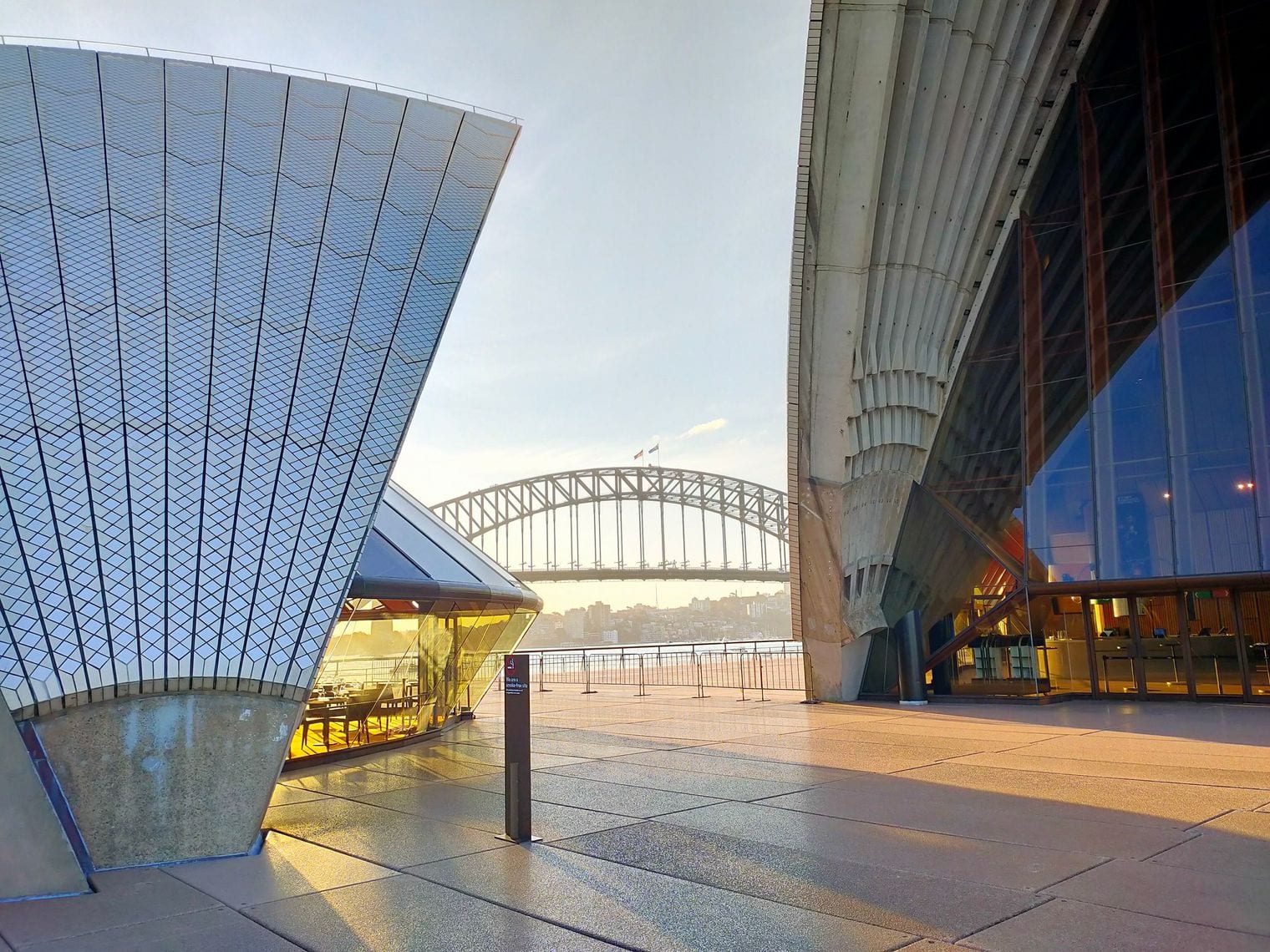
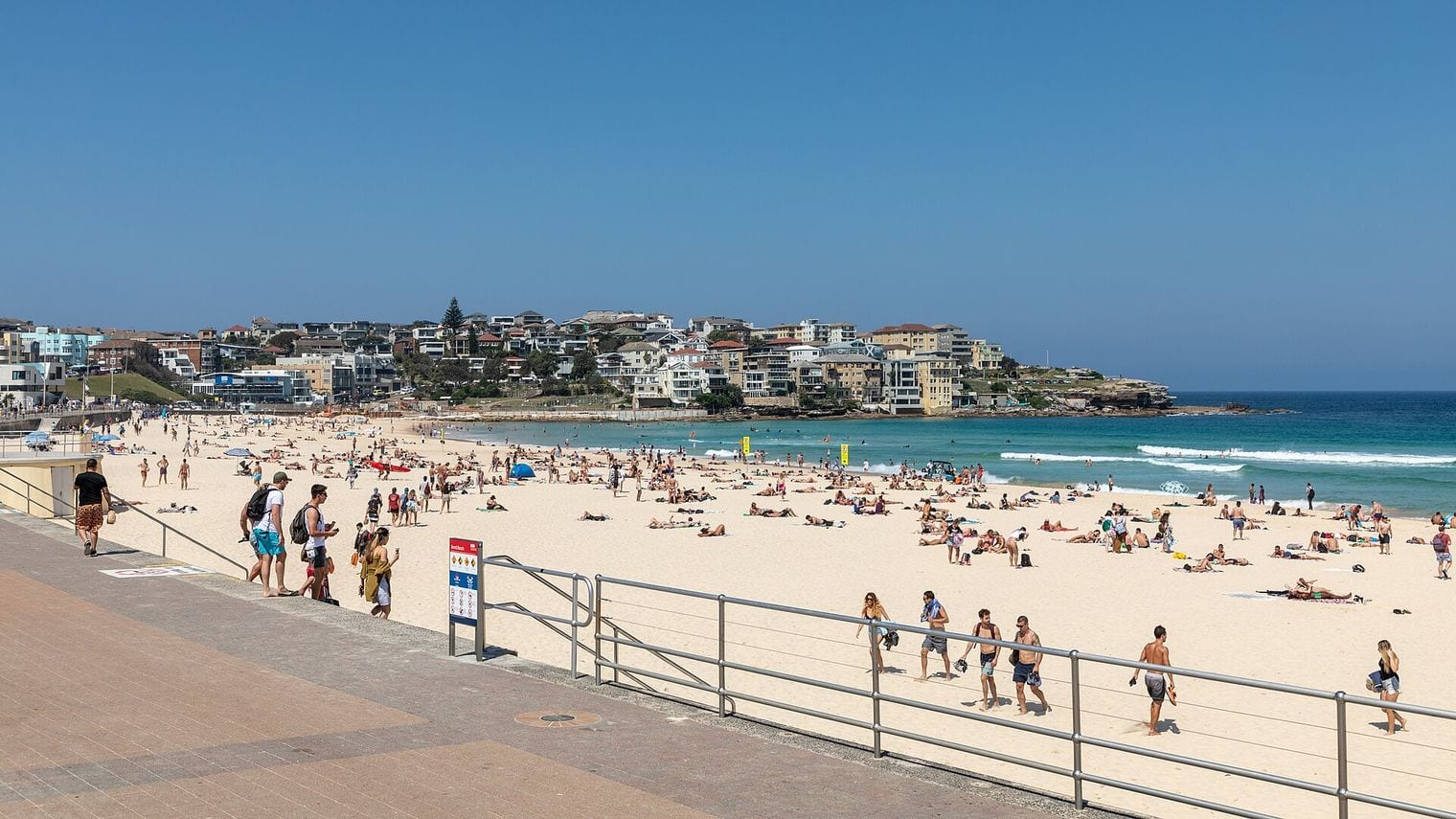
Sydney & New South WalesThe arrival point for most visitors, built around one of the world's great harbours, with the Opera House and the Harbour Bridge at its centre and a chain of ocean beaches from Bondi to Manly on either side. Beyond the city the Blue Mountains rise an hour or two west, and the coast runs north through Newcastle and Byron Bay and south towards Jervis Bay.
Melbourne & VictoriaThe country's arts, coffee and sport capital, a grid of laneways, galleries and bars that rewards wandering more than ticking off sights. Victoria packs a lot into a small state: the Great Ocean Road and the Twelve Apostles to the west, the Yarra Valley and Mornington Peninsula wine country on the doorstep, and the ski fields of the Australian Alps to the northeast.
Queensland & the Great Barrier ReefThe tropical east — reef, rainforest and islands. Cairns and Port Douglas are the gateways to the northern reef and the Daintree, the Whitsundays sit further south, and the Gold Coast and Brisbane anchor the busier, more built-up southern end. The dry winter months are the reliable time to come.
The Red Centre & the Top EndThe Northern Territory delivers the Australia of the imagination: Uluru and Kata Tjuta rising out of the desert near Yulara, Kings Canyon and the MacDonnell Ranges around Alice Springs, and, a long way north, the wetlands and rock art of Kakadu behind Darwin. This is deep-winter country — visit in the dry, not the wet.
Western AustraliaA state the size of Western Europe with a fraction of the people. Perth and Fremantle sit at the bottom with Rottnest Island offshore, the Margaret River wine and surf country below them, and a coast running north past Ningaloo Reef — where you can snorkel with whale sharks — to the gorges of Karijini and the Kimberley.
South Australia & TasmaniaThe two quieter southern picks. Adelaide is the launchpad for the Barossa and Kangaroo Island, while Tasmania — a short flight or ferry from Melbourne — offers the country's best compact wilderness, with Cradle Mountain, Freycinet, the Bay of Fires and Hobart's MONA all within easy reach of each other.
The Great Barrier ReefThe largest coral reef system on earth, stretching some 2,300 km along the Queensland coast — snorkelled and dived from Cairns, Port Douglas and the Whitsunday islands.Basecamp: Cairns & Port Douglas
Uluru & Kata TjutaThe vast sandstone monolith at the country's centre, sacred to the Anangu traditional owners, walked around rather than climbed — and best seen at sunrise or sunset when the rock changes colour.Basecamp: Yulara & Alice Springs
The Great Ocean Road & the Twelve ApostlesA cliff-edge coastal drive west of Melbourne past surf beaches and rainforest to the limestone stacks standing offshore in the Southern Ocean.Basecamp: Melbourne
Tasmania's wildernessCradle Mountain, the pink granite and white sand of Freycinet, and the Bay of Fires — a compact island of temperate rainforest and empty coast, with Hobart and MONA as the urban counterweight.Basecamp: Hobart & Launceston
Suggested routes
The classic east coast
~2–3 weeks
The trip most first-time visitors take: start in Sydney and work north through beach towns and reef country, flying the longer legs rather than driving them all. Runs comfortably in either direction.
5Cairns & Port Douglas — the northern reef and the Daintree
The Red Centre & the Top End
~1–2 weeks
The desert-and-wetlands run through the Northern Territory, best done in the dry season. Fly into Alice Springs or Uluru and out of Darwin so you never backtrack.
1Uluru & Kata Tjuta — base at Yulara for sunrise and sunset
2Kings Canyon — the rim walk above Watarrka
3Alice Springs — the MacDonnell Ranges either side of town
4Darwin — harbour city and the launchpad north
5Kakadu National Park — wetlands, waterfalls and rock art
The southern loop
~10 days–2 weeks
The cooler, greener half of the country — coastal drives, wine regions and wilderness, all within short hops of Melbourne. Add the Tasmania leg by short flight or the overnight ferry.
1Melbourne — laneways, galleries and coffee
2The Great Ocean Road — two days to the Twelve Apostles
3Adelaide & the Barossa — wine country and Kangaroo Island
It depends which Australia you mean, because the country spans the tropics and the temperate south. For the southern cities — Sydney, Melbourne, Adelaide — and for Tasmania, spring (September–November) and autumn (March–May) are the sweet spots: warm enough to swim, quiet enough to enjoy. For Queensland, Darwin and the Red Centre, come in the dry winter months of June to August, when the humidity drops and Uluru and Kakadu are at their most comfortable. Remember the seasons are reversed: December and January are high summer, and the busiest, most expensive weeks of the year.
How many days do you need in Australia?
Two weeks is a realistic minimum for a first trip, and three is better. The country is roughly the size of the continental United States, so a fortnight buys you one region done properly — the east coast from Sydney to Cairns, say, or Melbourne with the Great Ocean Road and Tasmania. Trying to add Uluru, the reef and Perth to the same two weeks means spending most of it in the air. If you only have a week, pick a single city and its surrounds.
Do you need a car in Australia?
Between regions, no — fly. Within them, usually yes. The distances between cities are too great to drive comfortably on a short trip, but the best of Australia sits between the towns, and a car is what unlocks the Great Ocean Road, Tasmania, the wine regions and the national parks. The exception is the big cities: Sydney, Melbourne and Brisbane all have good public transport and expensive parking, so pick the car up on the way out of town rather than at the airport on arrival.
What is Australia best known for?
Its coastline and its wildlife, above all — thousands of beaches, the Great Barrier Reef, and animals found nowhere else, from kangaroos and koalas to wombats, quokkas and platypus. Beyond that: the Sydney Opera House and Harbour Bridge, Uluru rising out of the desert at the country's centre, a strong coffee and brunch culture in Melbourne, surfing, cricket and Australian Rules football, and the world's oldest continuous living cultures, with Aboriginal and Torres Strait Islander history stretching back more than 60,000 years.
Do they speak English in Australia?
Yes — English is the national language and you will have no difficulty being understood anywhere a visitor is likely to go. The accent and the slang take a little tuning: arvo is afternoon, brekkie is breakfast, thongs are flip-flops, and a servo is a petrol station. Australia is also genuinely multilingual at home, with large Mandarin, Arabic, Vietnamese, Italian and Greek speaking communities, and more than 100 Indigenous languages still spoken.
What currency does Australia use, and is tipping expected?
The Australian dollar (AUD, written $). Cards and phone payments are accepted almost everywhere, including on buses, in taxis and at market stalls, and cash is increasingly rare. Tipping is not expected — hospitality staff are paid a full wage, and menu prices include tax — so anything you leave is a genuine bonus rather than an obligation. Rounding up a taxi fare or leaving ten per cent after a very good restaurant meal is as far as most people go.
What food is Australia known for?
Modern Australian cooking leans on superb seafood, lamb and produce filtered through Southeast Asian and Mediterranean influence — the result of decades of immigration, and the reason a suburban food court can be genuinely excellent. Expect barramundi and Moreton Bay bugs, meat pies and sausage rolls, lamingtons and pavlova for pudding, and Vegemite scraped thinly on buttered toast rather than spread like jam. Coffee is taken seriously, especially in Melbourne, where the flat white is closer to a civic institution than a drink.
What kind of trip is Australia best for?
Coastal road trips, diving and big-sky landscapes.
We use cookies to analyse site traffic and improve your experience.
You can accept or reject analytics cookies. See our Cookie Policy.