Seven hundred islands, one shallow turquoise bank — and the water is the reason you came.
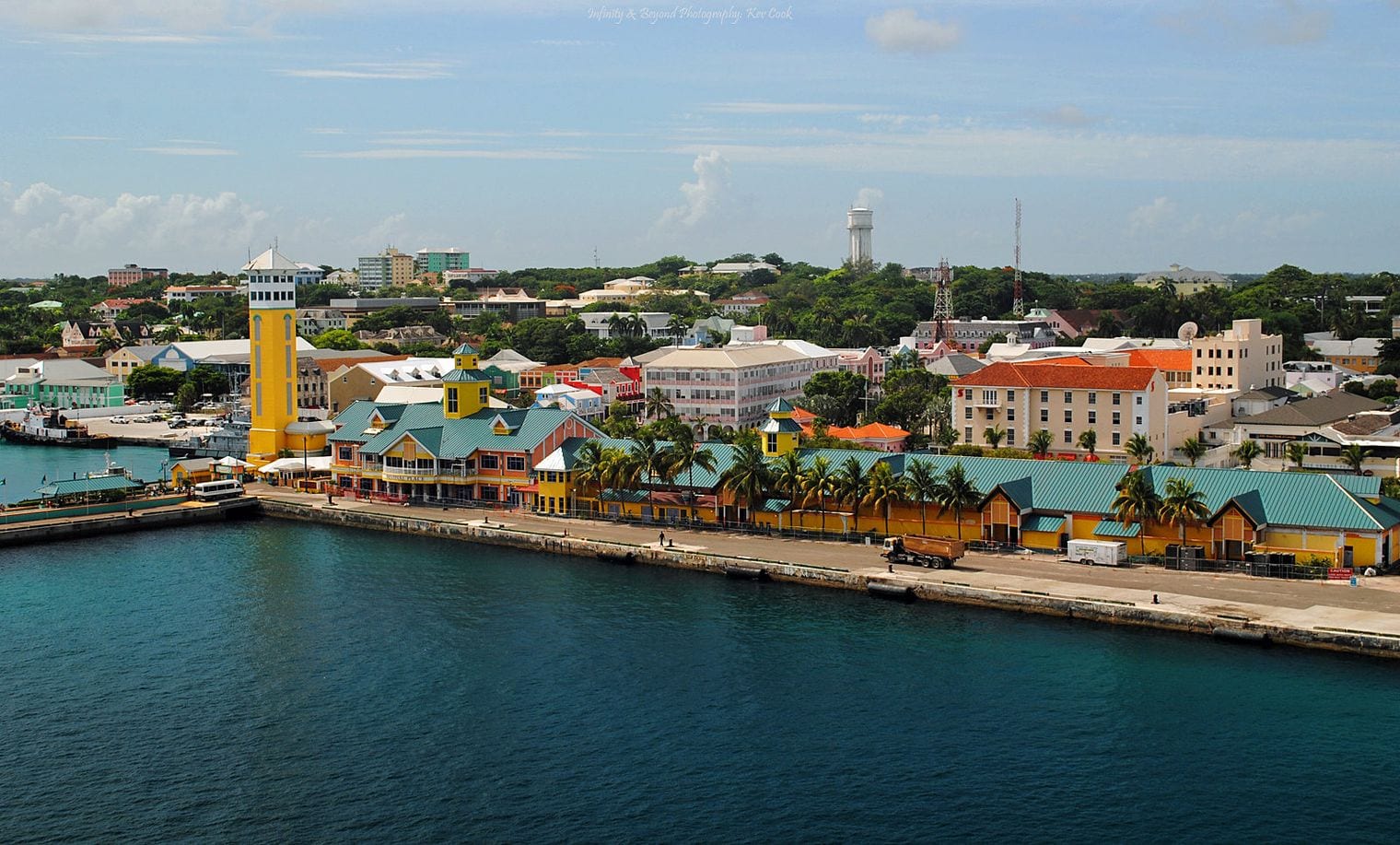
The Bahamas is an archipelago of some 700 islands and 2,400 cays scattered across 100,000 square miles of shallow, luminous sea southeast of Florida. Most visitors land in Nassau, the colonial-era capital on New Providence, where pastel government buildings and 18th-century forts sit a few streets from the cruise wharf. Beyond it lie the quieter Out Islands — the Exumas with their swimming pigs and sandbars, Harbour Island's pink sand, Andros and its barrier reef. It is an easy, English-speaking, US-dollar-friendly introduction to the Caribbean, and a country that rewards anyone who travels past the capital.
Arguably the best window of the year: reliably dry, warm without the summer humidity, and the sea has warmed back up for snorkelling. It overlaps with US spring break, so Nassau and Paradise Island get busy in March, but the Out Islands stay calm.
SummerJun–Aug
Hot, humid and increasingly wet, with short heavy afternoon showers rather than all-day rain. The sea is at its warmest and calmest for diving, and prices drop. This is also the opening of hurricane season, which runs June to November.
FallSep–Nov
The quietest and cheapest season, and the riskiest — September and October are the statistical peak of hurricane season, and some Out Island hotels and restaurants close for part of it. Travel insurance matters more here than at any other time of year.
WinterDec–Feb
Peak season. Dry, sunny and pleasantly warm by day, cooler after dark, with occasional brisk northerly winds that can flatten boat trips for a day or two. Book flights, hotels and Exuma day trips well ahead, especially around Christmas and Junkanoo.
Regions
New Providence & Paradise IslandThe busy heart of the country, and where almost every visitor starts. Nassau holds the forts, museums, markets and colonial streets; Cable Beach and Paradise Island hold the big resorts, water parks and casinos just across a bridge.
Grand BahamaThe northernmost large island, closest to Florida. Freeport and Lucaya offer beaches and a marina district, while the east end stays wild — Lucayan National Park protects one of the longest underwater cave systems on earth.
The ExumasA 120-mile chain of 365 cays and the country's most photographed water. Home to the swimming pigs of Big Major Cay, Thunderball Grotto, endless sandbars, and the protected Exuma Cays Land and Sea Park.
The AbacosA sheltered boating and sailing region built around the Sea of Abaco. Marsh Harbour is the hub; the loyalist settlements of Hope Town and New Plymouth, with their candy-striped lighthouse and clapboard cottages, are the draw.
Eleuthera & Harbour IslandA long, thin sliver of an island where the Atlantic and the bank sit within sight of each other. Harbour Island, just off its north tip, has the famous three-mile Pink Sands Beach and a golf-cart-only village.
The Southern & Out IslandsAndros, Long Island, Cat Island, San Salvador and Inagua — the least developed and most rewarding of the country. Expect bonefishing flats, blue holes, empty beaches, and flamingos outnumbering people on Great Inagua.
The swimming pigs of Big Major CayA colony of feral pigs that swims out to meet arriving boats in waist-deep turquoise water — the single most recognisable image the country exports.Basecamp: The Exumas
Pink Sands BeachThree miles of genuinely blush-coloured sand on Harbour Island, tinted by crushed foraminifera shells and best seen in low, early light.Basecamp: Harbour Island
Dean's Blue HoleA near-circular sinkhole plunging some 200 metres just steps from the shoreline — one of the deepest blue holes on earth and a world free-diving venue.Basecamp: Long Island
Thunderball GrottoA hollow limestone cay you snorkel into through an underwater opening, lit from above by shafts of daylight; it appeared in two James Bond films.Basecamp: Staniel Cay, Exumas
Lucayan National ParkMangrove creeks, a pristine crescent of beach at Gold Rock, and access to one of the longest surveyed underwater cave systems in the world.Basecamp: Grand Bahama
Suggested routes
Nassau & Paradise Island long weekend
~3–4 days
The easy introduction, and the one most flights suit. Base yourself once, see the historic capital on foot, and give a day each to a beach and a boat trip.
2Great Exuma — fly or ferry down; base at George Town
3Staniel Cay — Thunderball Grotto and the swimming pigs
4Exuma Cays Land and Sea Park — sandbars and protected reef by boat
Island-hopping the Out Islands
~2 weeks
For a second visit, or anyone who wants the country rather than the capital. Distances are short but connections are not always daily, so build in slack.
2Harbour Island — pink sand and a golf-cart village
3Eleuthera — the Glass Window Bridge and empty beaches
4The Abacos — sailing the Sea of Abaco from Marsh Harbour
5Andros — blue holes, bonefishing and the barrier reef
Bahamas travel FAQ
Eight questions travellers ask before they go.
When is the best time to visit the Bahamas?
December to April is the dry, sunny high season, and March to May is the sweet spot — warm, reliably dry, and the sea has warmed for snorkelling. Summer is hotter and more humid with short afternoon showers, but cheaper and calmest for diving. Hurricane season runs June to November and peaks in September and October, which is when prices are lowest and the risk of disruption highest.
How many days do you need in the Bahamas?
Three to four days is enough for Nassau and Paradise Island — the historic centre is compact and walkable, leaving time for a beach and one boat trip. A week lets you add the Exumas or Grand Bahama. Two weeks is the point at which real island-hopping through the Out Islands becomes comfortable rather than rushed, since inter-island flights and ferries do not always run daily.
Do you need a car in the Bahamas?
Not in Nassau. The historic core is walkable from the cruise wharf, taxis run on fixed zone fares, and shared jitney minibuses cover the main roads cheaply. On the smaller islands a golf cart is usually the practical choice, and on a few of them it is the only one. If you do rent a car, note that the Bahamas drives on the left even though most vehicles are left-hand-drive imports from the US.
What is the Bahamas known for?
Water, above all — the shallow banks around the islands produce the vivid turquoise the country is famous for. Beyond that: 700 islands and world-class diving and snorkelling, the swimming pigs of the Exumas, pink-sand beaches on Harbour Island, Junkanoo (the exuberant street parade held on Boxing Day and New Year's Day), and Nassau's history as the capital of the pirate republic in the early 1700s.
Do they speak English in the Bahamas?
Yes. English is the official language and is spoken universally, a legacy of British rule that lasted until independence in 1973. You will also hear Bahamian Creole, a distinctive local dialect, in everyday conversation between Bahamians, and Haitian Creole within the country's Haitian community.
What currency does the Bahamas use, and are US dollars accepted?
The Bahamian dollar (BSD), which is pegged one-to-one with the US dollar. US dollars are accepted essentially everywhere and are often given as change interchangeably with Bahamian notes, so there is no need to exchange money before you travel. Cards are widely accepted in Nassau and the resorts, but carry cash for the Out Islands, small vendors, the Fish Fry and taxi fares.
What food should you try in the Bahamas?
Conch is the national ingredient — try it as cracked conch (battered and fried), in a fiery raw conch salad chopped to order with citrus and peppers, or as conch fritters. Alongside it: Bahamian rock lobster in season, fresh grouper and snapper, peas 'n' rice, johnnycake, and guava duff for dessert. Wash it down with a Kalik or Sands beer, or a rum punch. The best place to eat all of it in Nassau is the Fish Fry at Arawak Cay.
What kind of trip is Bahamas best for?
Beaches, boating, snorkelling and island-hopping.
We use cookies to analyse site traffic and improve your experience.
You can accept or reject analytics cookies. See our Cookie Policy.