We build and rank every list first. Booking links come after, and only where
a partner sells a ticket, tour or stay for that exact place, so a place with
nothing to book is listed exactly as prominently as one you can book.
So how do we earn? Some links on this page go to booking
partners, and if you book or buy through
one, we may earn a commission. It costs you nothing extra.
That commission never decides which places make the list, the order they
appear in, or what we write about them. No entry is sponsored or a paid
placement.
By the City Viking editorial teamPublished 35 places · 24 min read
Fact-checked Checked before launchOct 11, 202635 sources15 publishers8 tourism boards8 encyclopedias & research19 venues & other sitesPublished · Oct 11, 2026Researched and checked before it went liveClick for every source and the full change log.
Short answer
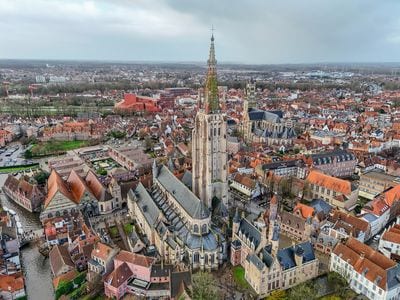
Bruges is known for the canals that make it the Venice of the North and the cobbled lanes and step-gabled houses of its UNESCO-listed medieval core. Start with the Belfry and the Markt below it, the Basilica of the Holy Blood and Michelangelo's Madonna in the Church of Our Lady, all a short walk apart. One full day covers the main sights, but two days is ideal, adding a boat tour, the Groeninge Museum and the Beguinage.
Bruges is the medieval Flanders you picture before you arrive: cobbled lanes, step-gabled houses, swans on quiet canals and a belfry that has watched over the market square for centuries. Its whole historic core is a UNESCO World Heritage Site, and it is small enough to explore entirely on foot, which makes it one of the most rewarding stops in Belgium.
This guide ranks 35 things to do, from the Belfry climb and the Michelangelo in the Church of Our Lady to canal boats, chocolate, a brewery tour, rampart windmills and the four surviving city gates. Give it two days to see the highlights without rushing.
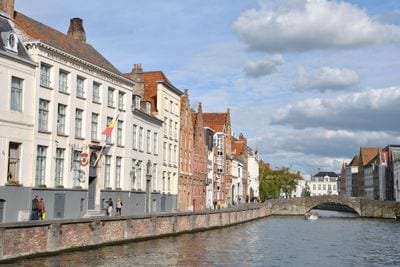
Like Amsterdam, Bruges is often called the Venice of the North for the canals that thread through its medieval centre.
Bruges had a money market as early as 1309, a bourse often described as most likely the first stock exchange in the world.
The Belfry leans about 87 centimetres to the east, and it lost its spire to a lightning strike in 1493, which is why it now stands 83 metres tall instead of 102.
Michelangelo's Madonna and Child in the Church of Our Lady was the first of his sculptures to leave Italy during his lifetime.
The De Halve Maan brewery pumps beer through a pipeline more than 3 kilometres long under the old town to its bottling plant.
The Procession of the Holy Blood, held every Ascension Day since the Middle Ages, is on UNESCO's list of the Intangible Cultural Heritage of Humanity.
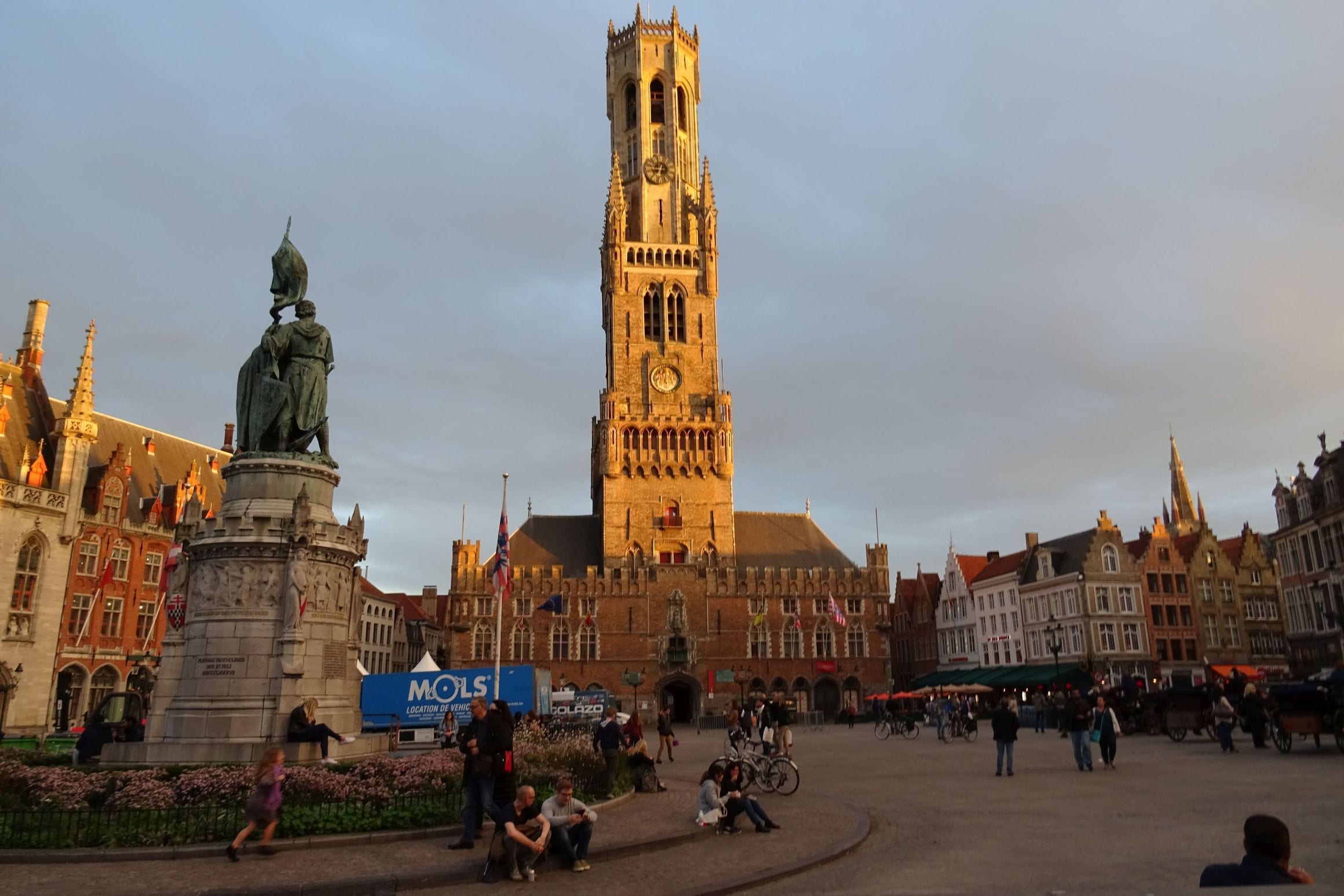
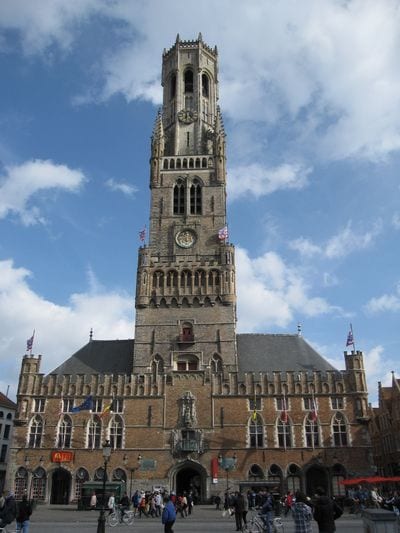
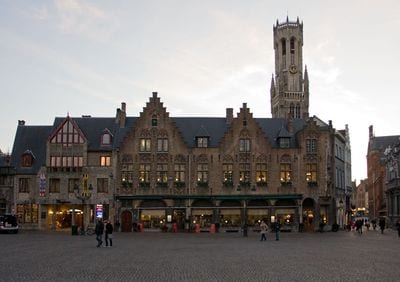
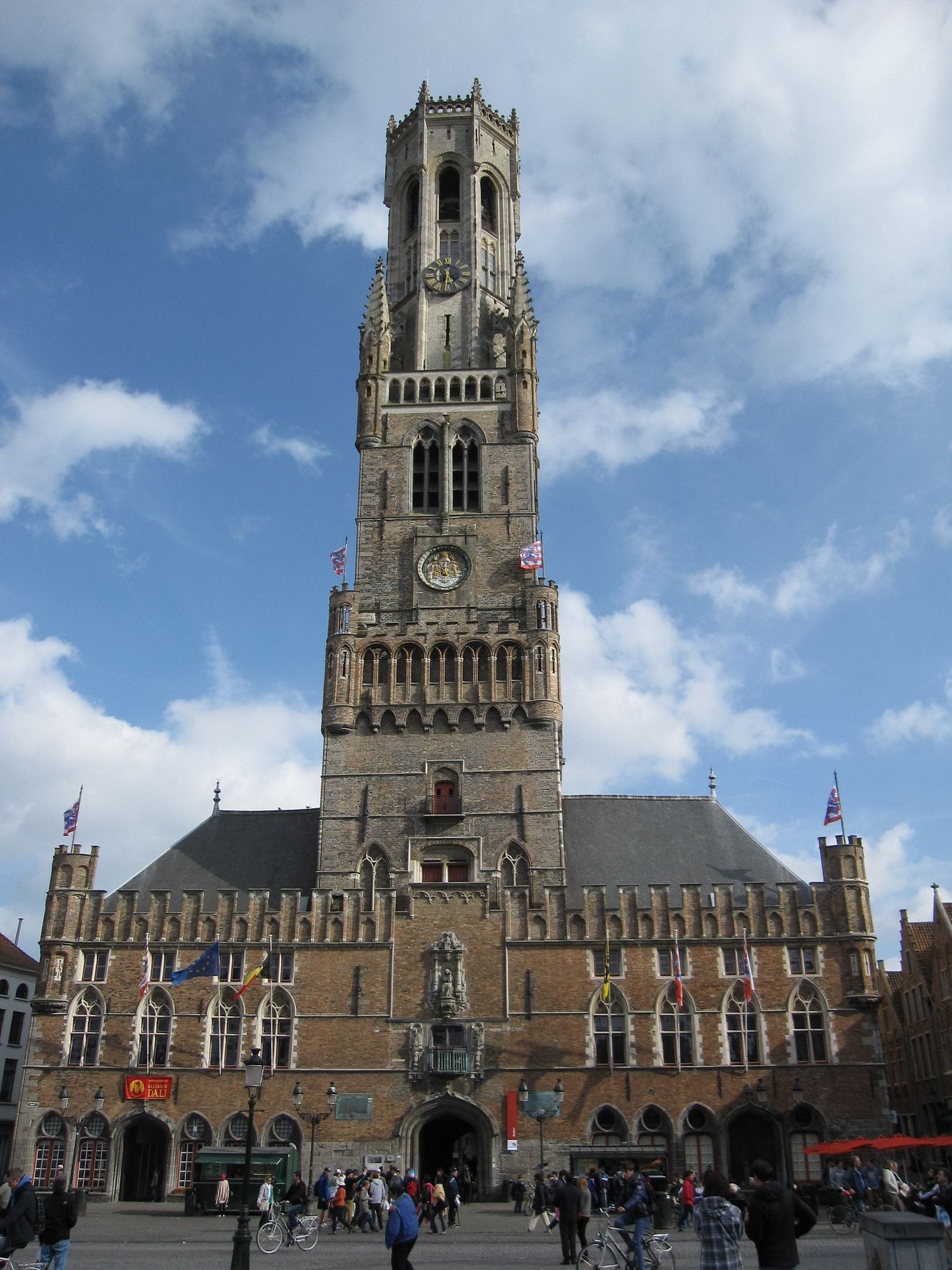
The Belfry of Bruges is the city's emblem, a medieval bell tower rising 83 metres over the south side of the Markt. It once held the town's treasury and archives and served as a lookout for fires and other dangers, and since 1999 it has been on UNESCO's World Heritage List as part of the Belfries of Belgium and France.
The climb is the reason to come: a narrow, steep staircase of 366 steps leads to the top, where the red rooftops, canals and church towers of the old town spread out below. Listen for the carillon, which has played over the square since the 16th century, and look closely at the tower from the Markt: it leans about 87 centimetres to the east.
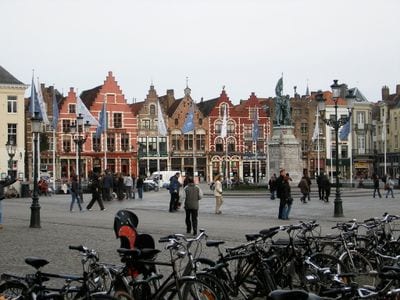
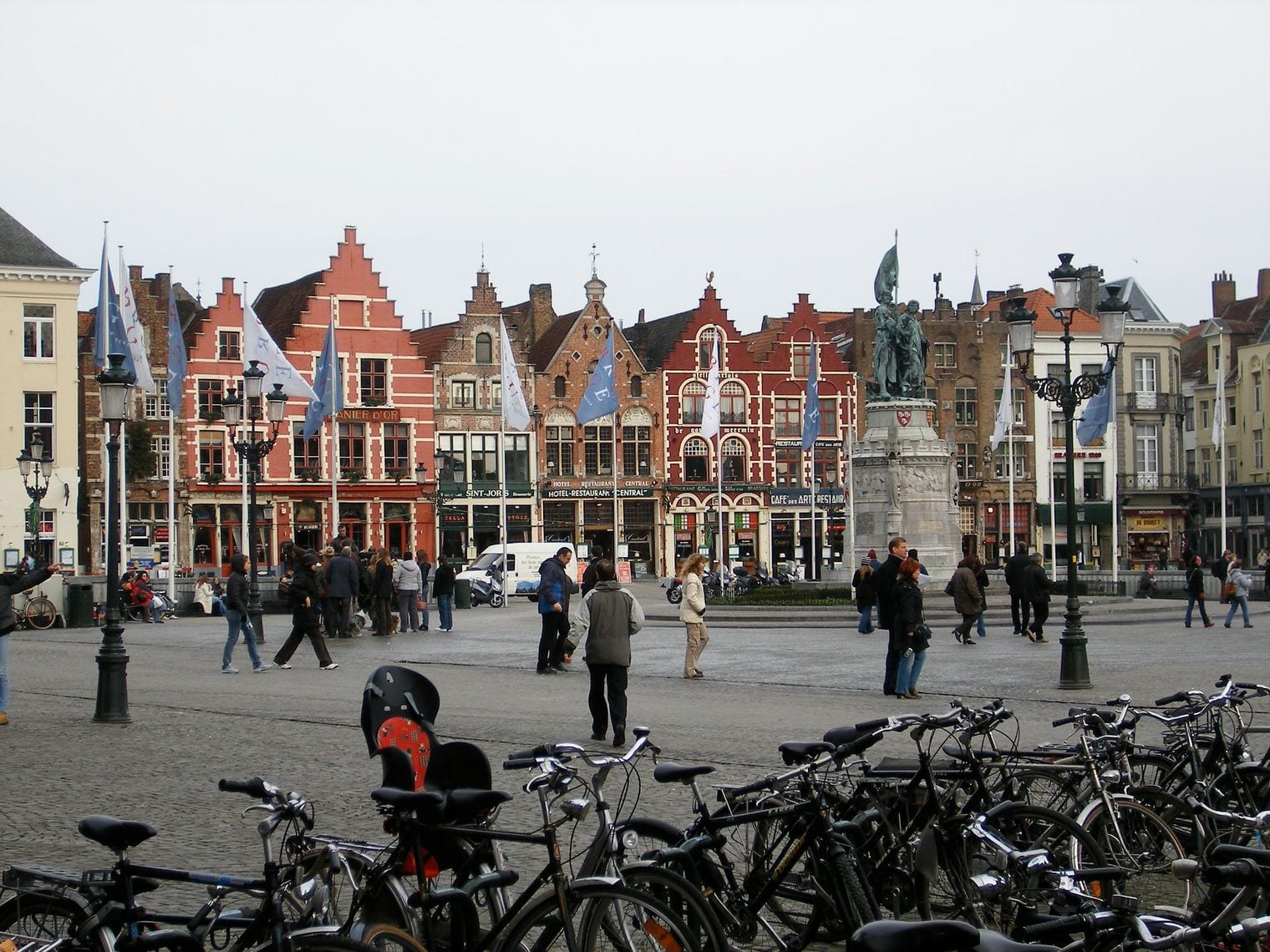
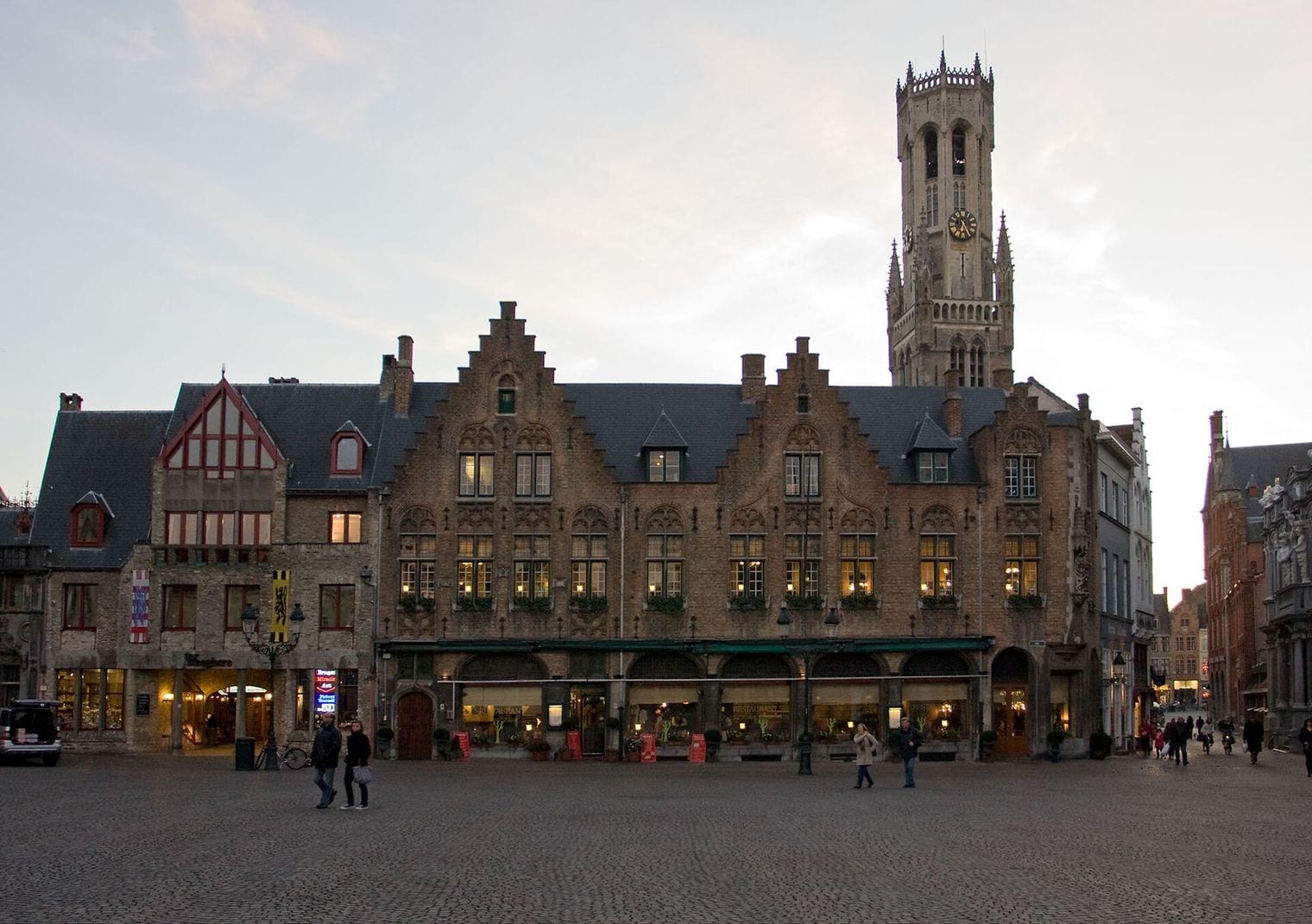
The Markt has been the commercial heart of Bruges since the Middle Ages, a square of about one hectare framed by colourful step-gabled houses, the Belfry on its south side and the grand Provincial Court. In the middle stands a statue of Jan Breydel and Pieter de Coninck, the local heroes of the Battle of the Golden Spurs in 1302.
Horse-drawn carriages wait for passengers here, café terraces spill out in front of the gabled facades, and almost every walk through town starts or ends on this square. Come early in the morning to see it nearly empty, or after dark when the old facades are lit; in December it usually hosts the city's Christmas market.
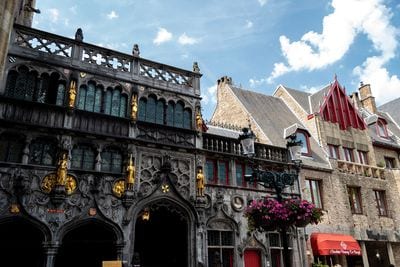
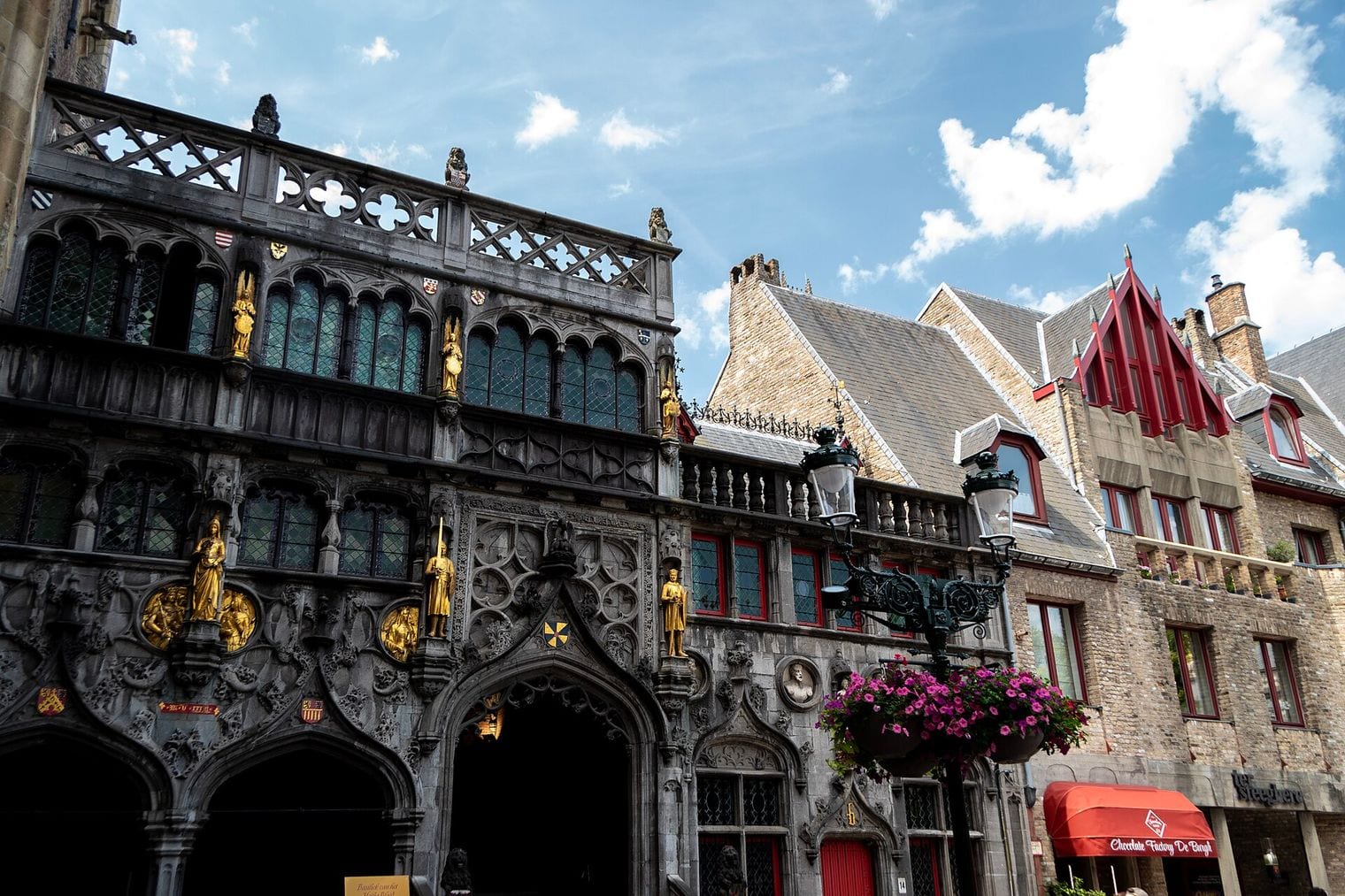
Tucked into a corner of the Burg, the Basilica of the Holy Blood is really two chapels stacked one on top of the other. The lower chapel, dedicated to St. Basil, is a dark Romanesque space built between 1134 and 1157 as the chapel of the Counts of Flanders, and it has barely changed since; the upper chapel was rebuilt in Gothic style and richly redecorated in the 19th century.
Upstairs is the relic that gives the church its name, venerated as drops of Christ's blood and, according to tradition, brought to Bruges from the Holy Land by Thierry of Alsace, Count of Flanders. Every Ascension Day it is carried through the streets in the Procession of the Holy Blood, a medieval tradition now on UNESCO's list of the Intangible Cultural Heritage of Humanity.
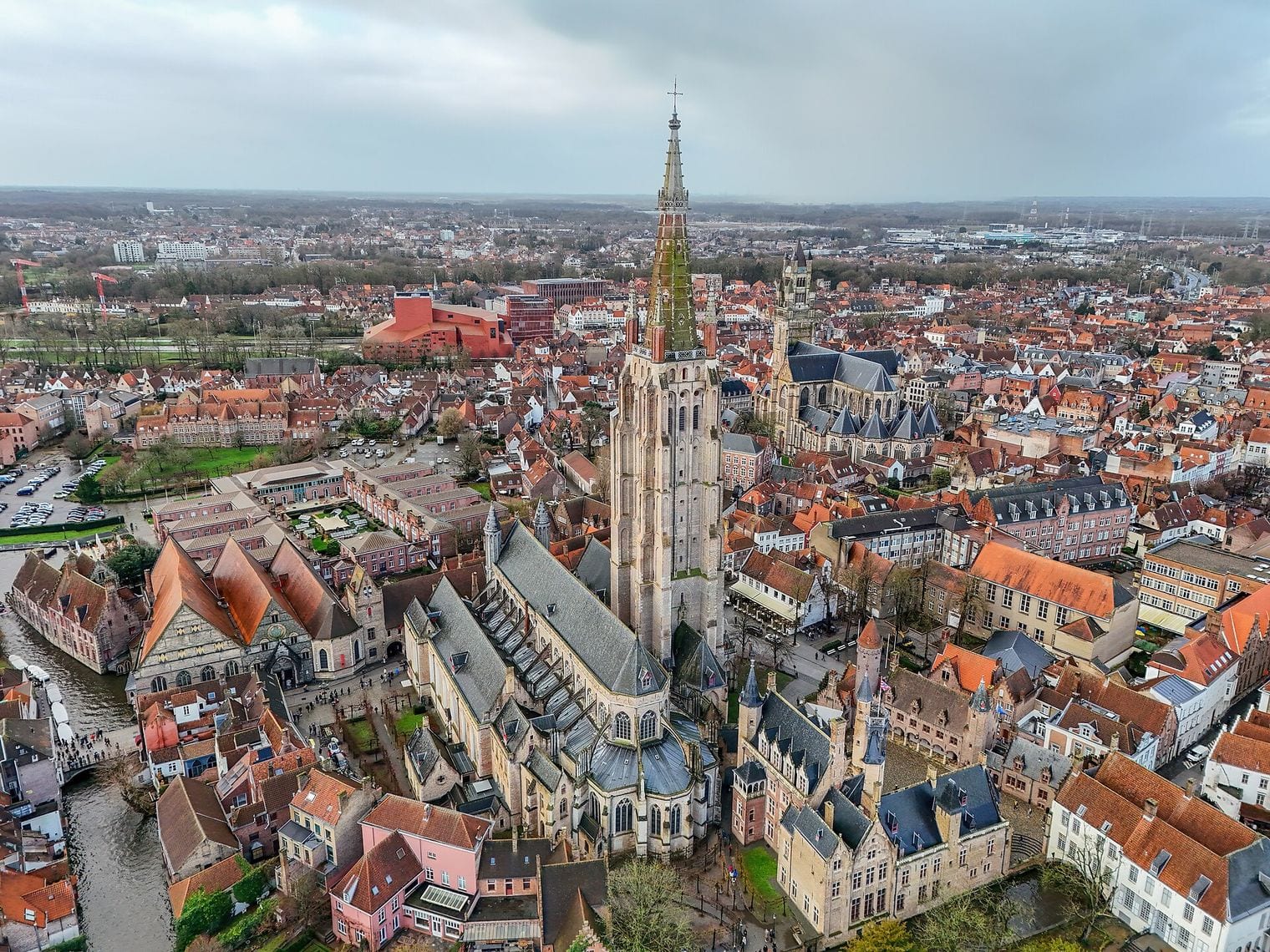
The brick tower of the Church of Our Lady, around 115 metres tall, is still the tallest structure in Bruges and one of the highest brick church towers in the world. The building dates mainly from the 13th to the 15th centuries, with Gothic flying buttresses outside and a more ornate Baroque interior in the side aisles and chancel.
Its greatest treasure is Michelangelo's white marble Madonna and Child, carved around 1504 and the first of his sculptures to leave Italy during his lifetime. In the choir lie the tombs of Charles the Bold, the last Valois Duke of Burgundy, and his daughter Mary of Burgundy, both part of the church's museum section.
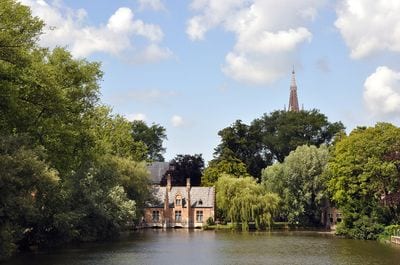
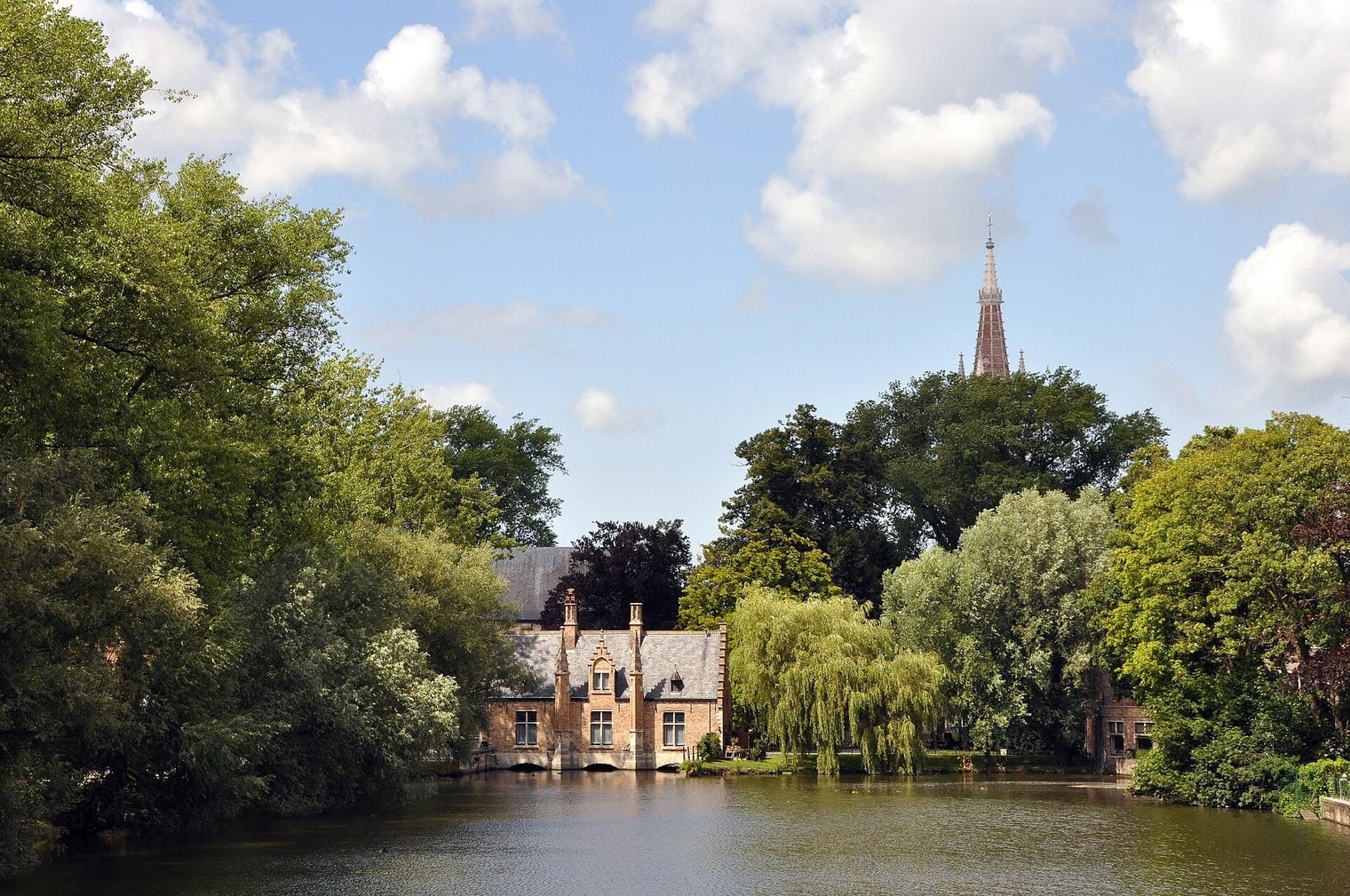
The Minnewater, a long, narrow lake on the southern edge of the old town, is Bruges at its most romantic: willows, still water and swans gliding past the old ramparts. Its English nickname, the Lake of Love, is a romantic reading of the Dutch name, and local lore links it to water spirits called 'minnen'; the park around it was laid out in the late 1970s.
Cross the Lovers' Bridge (Minnewaterbrug) for the classic view back over the lake, pass the old lock house (Sashuis), and walk on to the Poertoren, a round tower on the former city walls. The Beguinage is only a few steps away, so the two make a natural pair for an early-morning stroll.
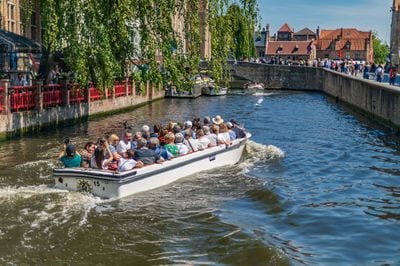
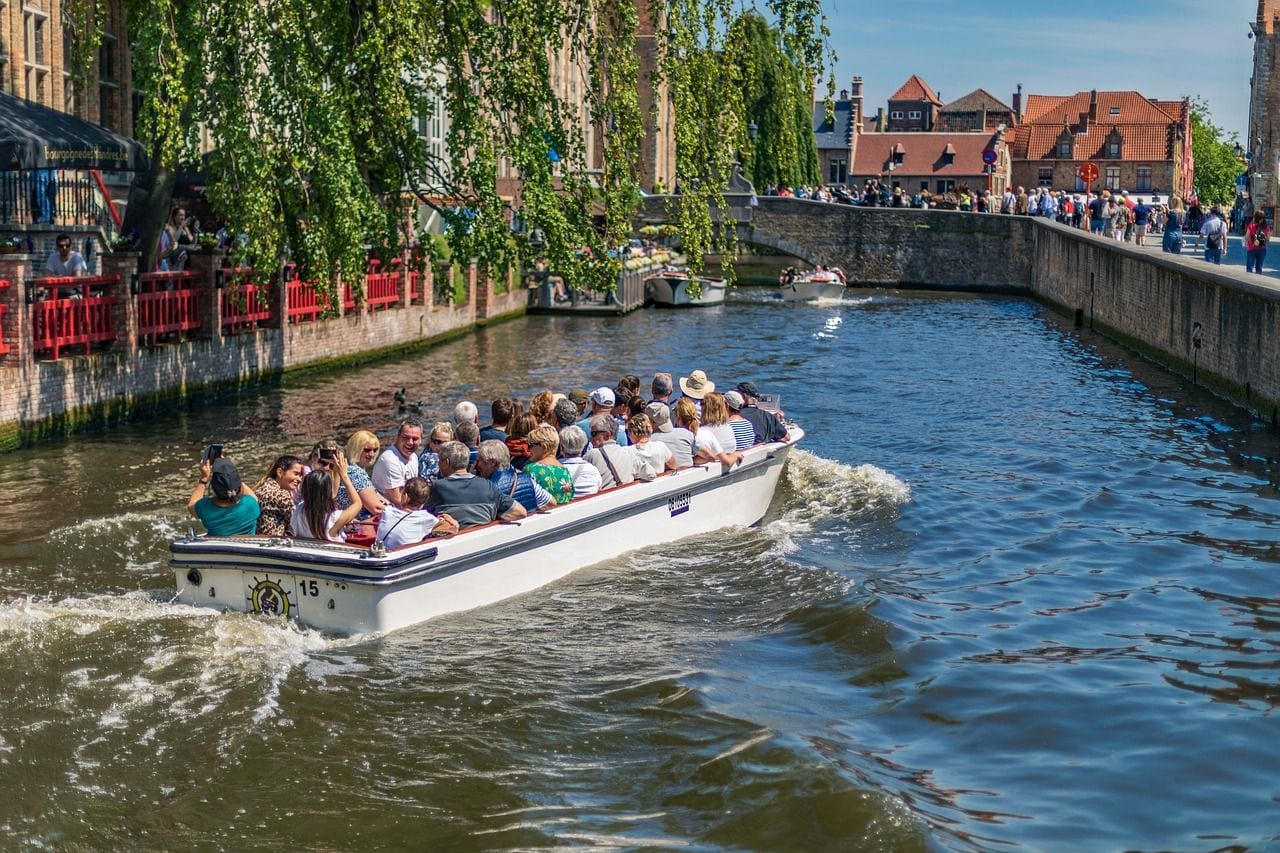
Seeing the city from a canal boat tour is a Bruges rite of passage, and for good reason: the old town turns its prettiest side to the water. Open boats leave from five landing stages in the centre, including the Rozenhoedkaai, and all follow the same half-hour route between Jan van Eyck Square and the Beguinage while the skipper points out the sights.
The boats run for most of the year, with a reduced service in winter and pauses in bad weather, and the queues are longest around midday in summer, so go early or late. Mind your head under the low bridges and keep your camera ready for the Belfry and the Church of Our Lady seen from water level.
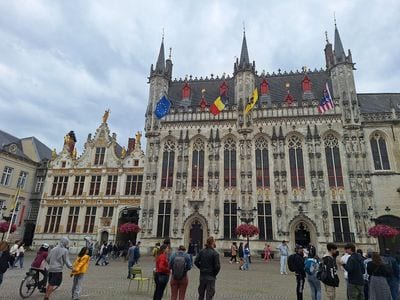
A couple of minutes' walk from the Markt, the Burg is the square around which medieval Bruges grew; its name means 'fortress', after the fortified castle that once stood here. Today it is the city's civic and religious heart, with the Gothic City Hall, the Basilica of the Holy Blood and the former courthouse of the Liberty of Bruges lining one compact space.
It is an architecture lesson in a single glance, with Romanesque, Gothic, Renaissance and classical facades side by side. The city's original cathedral, St. Donatian's, also stood here, opposite the City Hall, until the French occupiers demolished it at the end of the 18th century; from the square, a narrow arched lane leads down to the canals and the Fish Market.
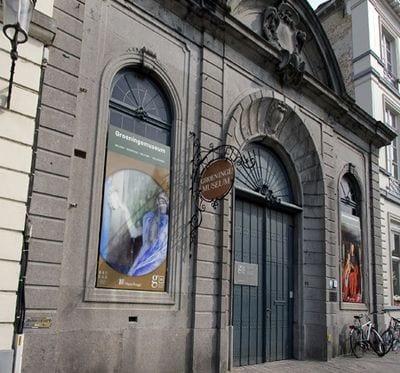
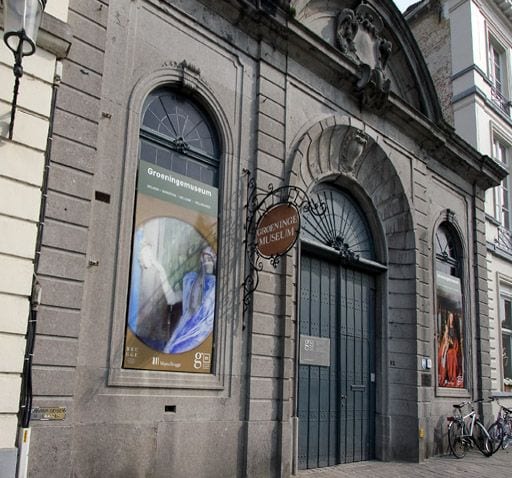
The Groeninge Museum is where you meet the Flemish Primitives on home ground. Built on the site of the medieval Eekhout Abbey, the city's fine-arts museum covers six centuries of Flemish and Belgian painting, from Jan van Eyck's Madonna with Canon van der Paele, Gerard David's gruesome Judgement of Cambyses and Hugo van der Goes's Death of the Virgin to Belgian symbolism, Flemish Expressionism and post-war art.
The collection is compact enough for an unhurried visit and pairs naturally with Saint John's Hospital and the Gruuthuse nearby. The museum building is closing for a multi-year renovation from 2027, and while the works last the heart of the collection is shown at BRUSK, the new exhibition hall in the same museum quarter, so check which building is hosting the paintings before you go.
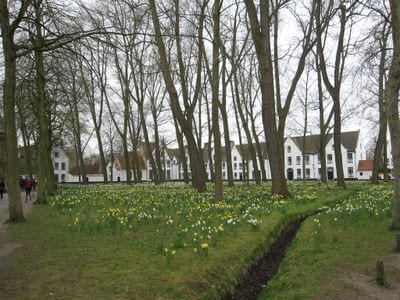
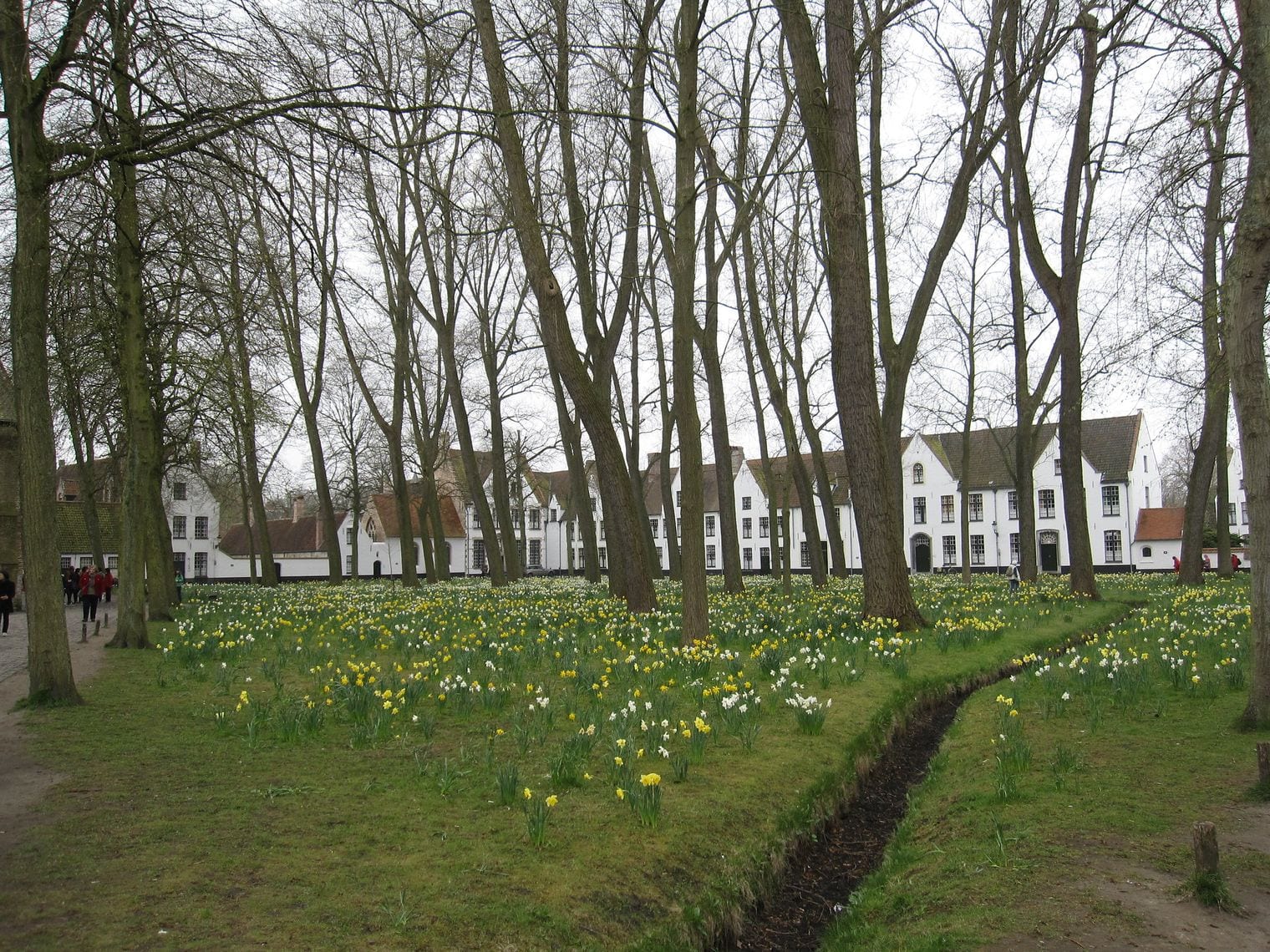
Through a gate off the little Wijngaardplein, the Beguinage Ten Wijngaerde is the most peaceful corner of Bruges: whitewashed houses around a lawn shaded by tall trees, a simple church, and a hush worth respecting. It was founded in the 13th century for beguines, religious laywomen who lived in community without taking vows, and it is the only beguinage in the city to survive.
No beguines live here any more; since 1927 it has been home to a community of Benedictine nuns. The beguinage is one of the Flemish Béguinages listed together by UNESCO in 1998, and it sits just north of the Minnewater, so come early, before the tour groups, to feel its stillness.
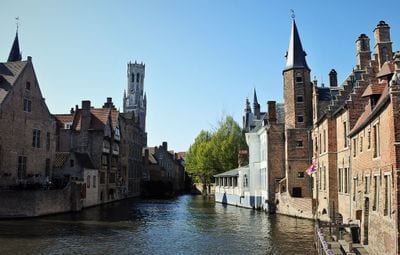
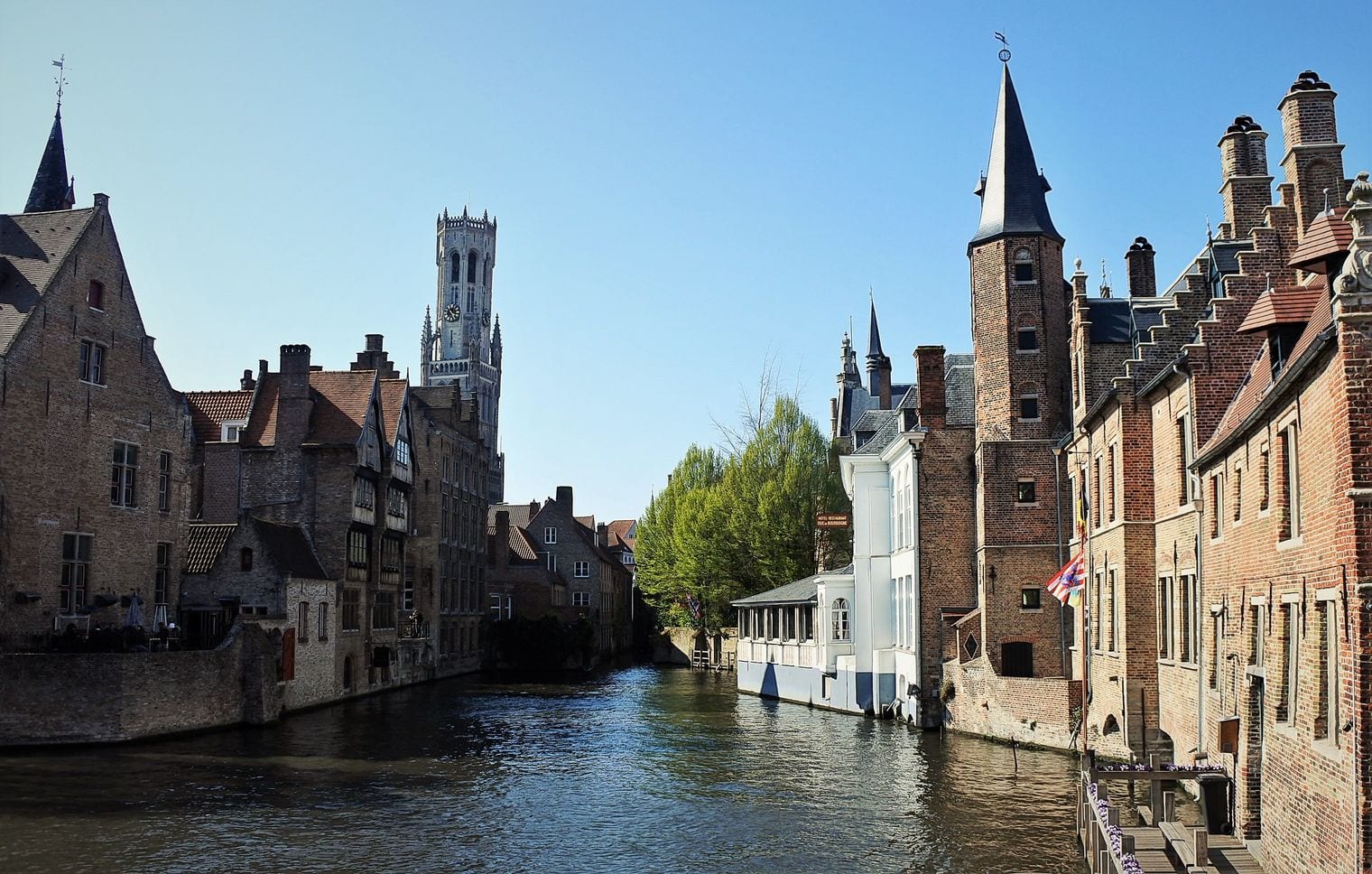
If one view sums up Bruges, it is the one from the Rozenhoedkaai, the Rosary Quay, where the canal bends beneath old brick houses and the Belfry rises behind them. The name recalls the rosaries that were once sold here, and the city's tourist office calls it the most popular spot in town for photographs.
Come at sunrise for still water and an empty quay, or at dusk when the lamps come on and the reflections turn gold. One of the canal boat landing stages sits right on the quay, so it is also an easy place to begin a boat trip.
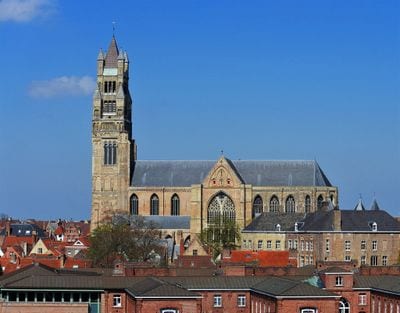
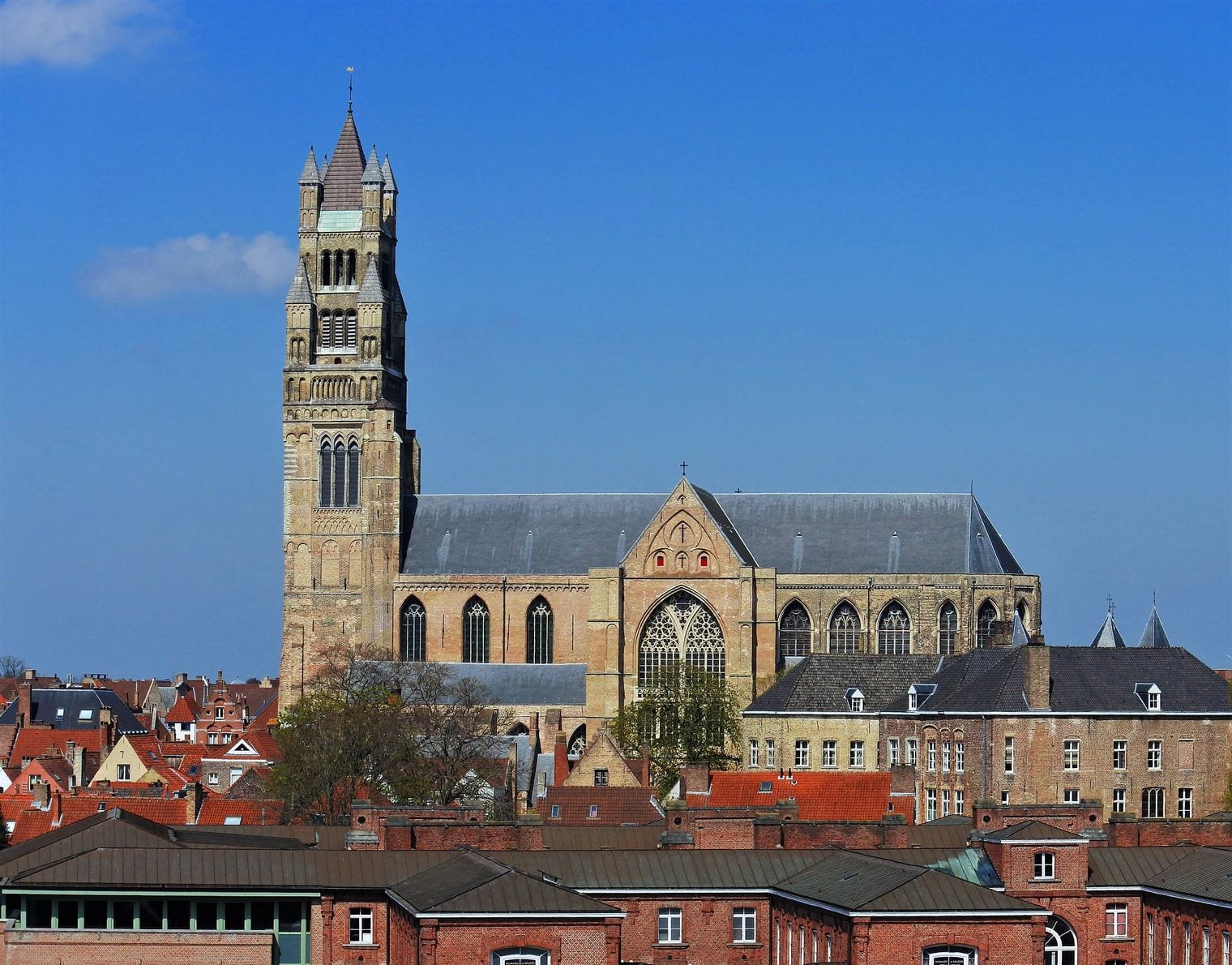
Sint-Salvatorskathedraal, St. Salvator's Cathedral, is a great brick church that only became the cathedral of Bruges in the 19th century, after French occupiers demolished the city's original St. Donatian's Cathedral on the Burg. It is dedicated to the Risen Saviour and to St. Donatian, and it is one of the few major buildings in Bruges that came through the centuries without serious damage.
Its massive tower is one of the three landmarks of the city skyline, alongside the Belfry and the Church of Our Lady, and the vast interior is filled with centuries of church art. It stands on the busy walk between 't Zand and the Markt, so it is easy to step inside on the way.
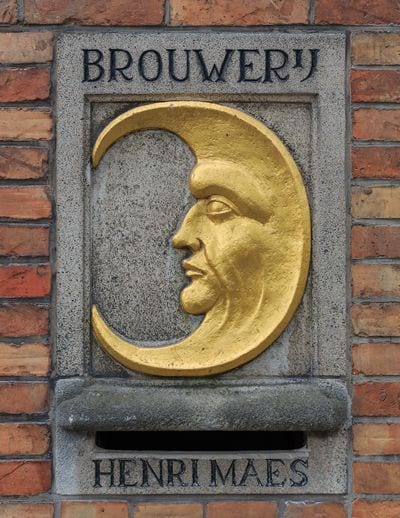
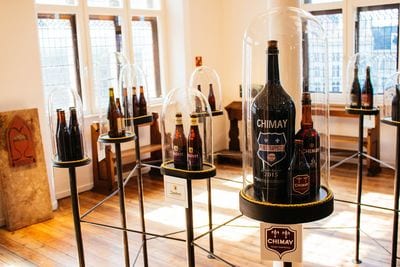
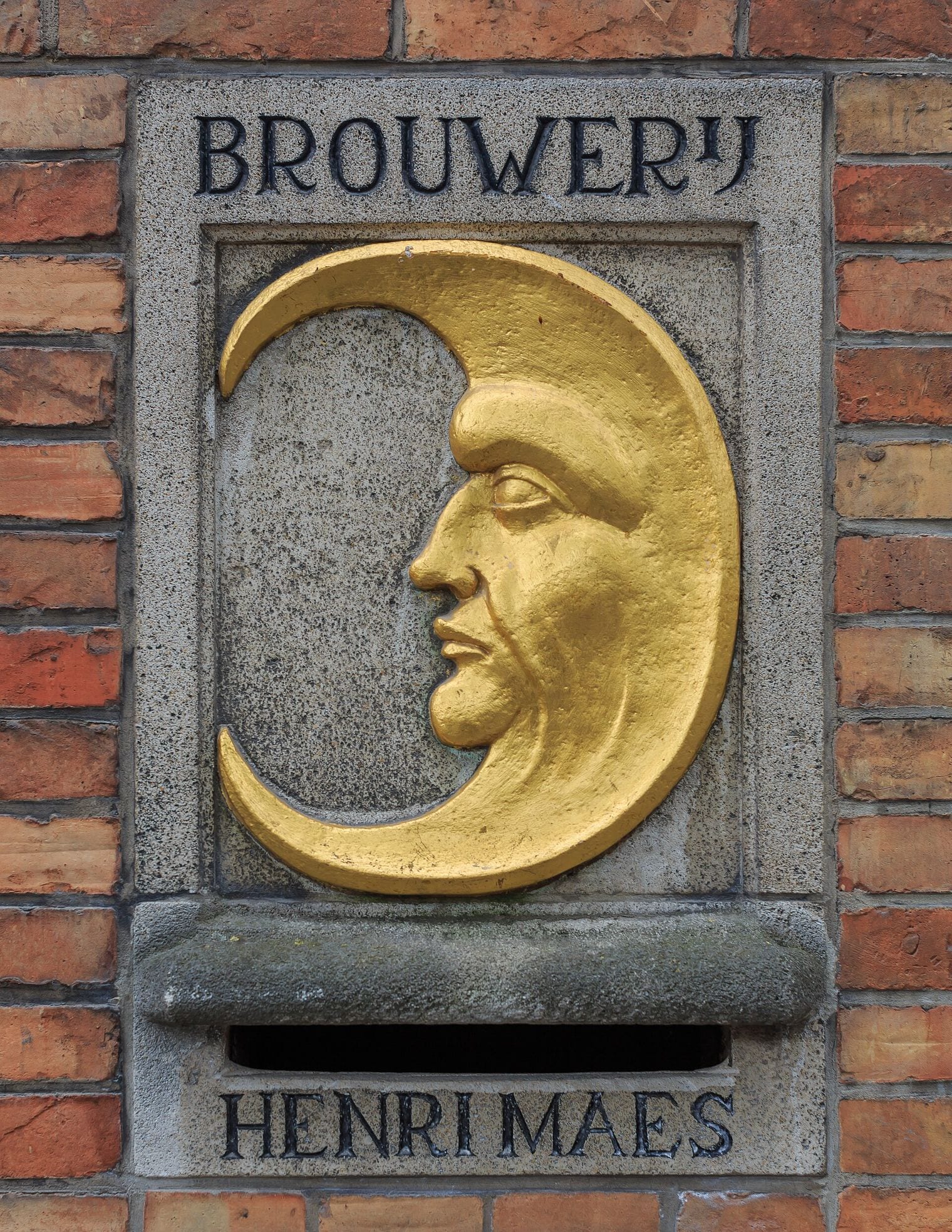
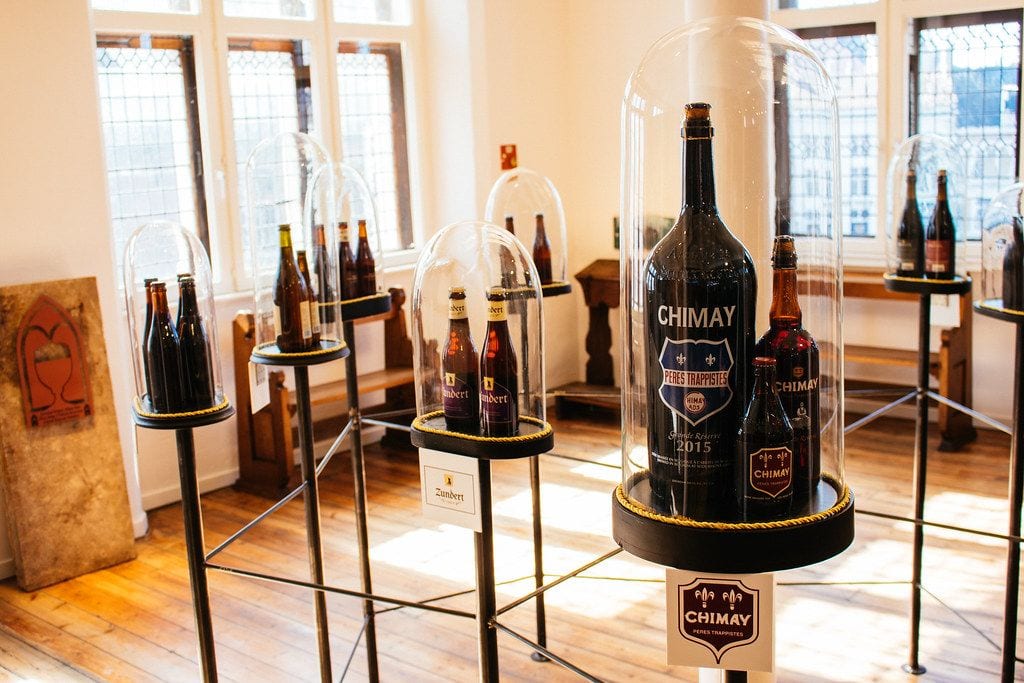
Beer has been brewed at the site of Huisbrouwerij De Halve Maan on the Walplein for around 500 years, and the current brewery has been operating since 1856, run by the same family for five generations. Its guided brewery tour is a favourite with beer lovers and one of the few chances to see a working brewery in the heart of the old town.
The brewery's best-known beers are Brugse Zot ('Bruges Fool') and Straffe Hendrik, and in 2016 it completed a beer pipeline more than 3 kilometres long, running up to 34 metres underground, to carry beer to its bottling plant without sending trucks through the cobbled streets. Book the tour ahead in busy seasons.
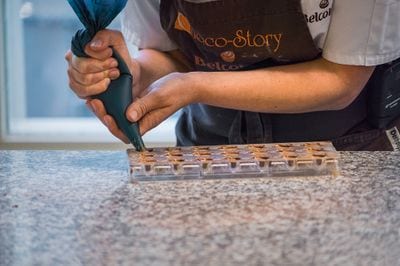
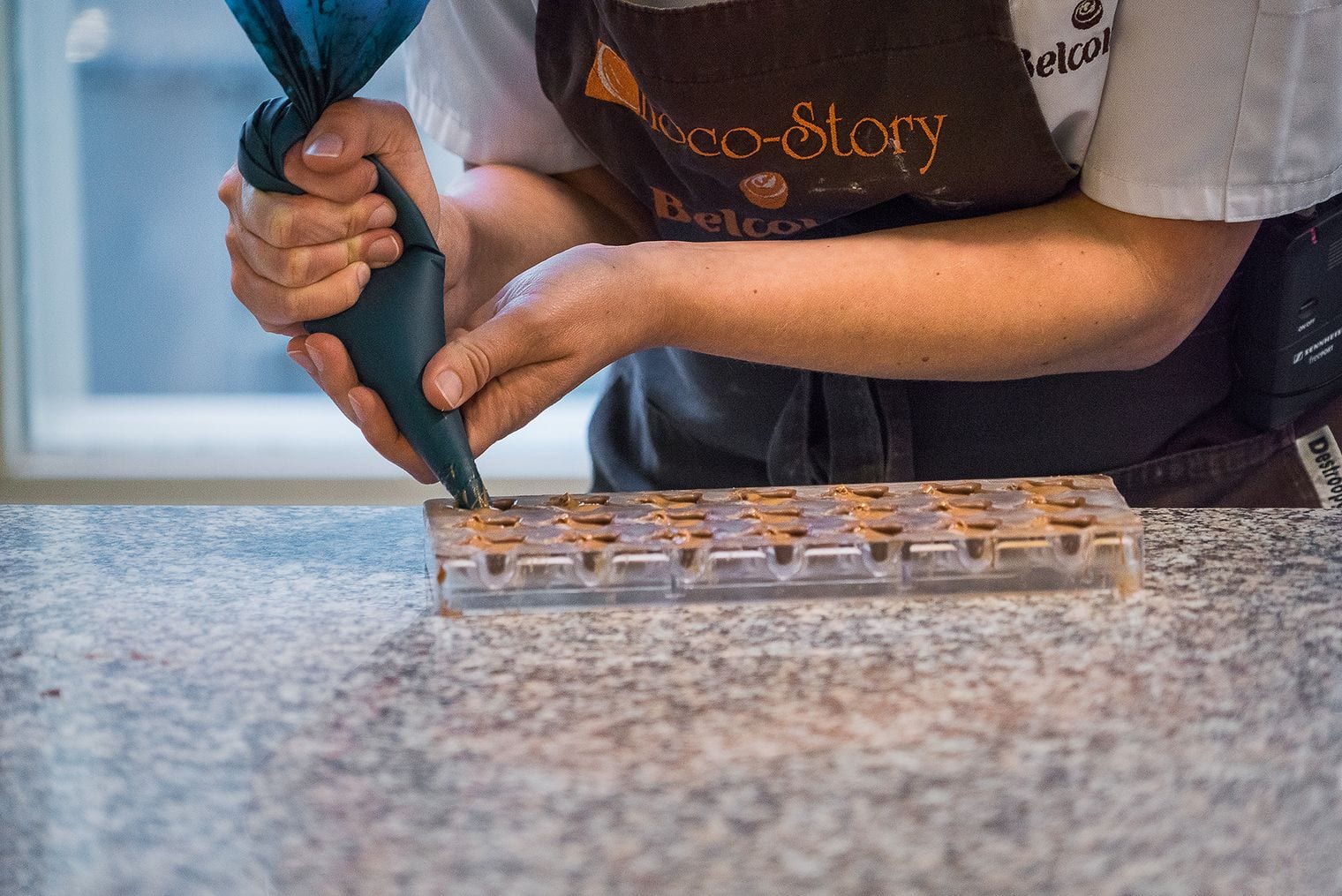
Belgium takes chocolate seriously, and Choco-Story, the chocolate museum of Bruges, tells its story from the cacao of Central America to the bars and pralines of today. It occupies Huis de Crone, a 16th-century building near Sint-Jansplein that began life as a wine tavern and later housed a bakery.
The visit includes a demonstration where you can watch chocolate being made, which makes it a hit with children. The same building houses Lumina Domestica, a collection of thousands of lamps from the same collector, so allow time for both if you like quirky museums.
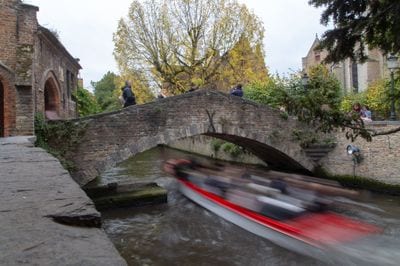
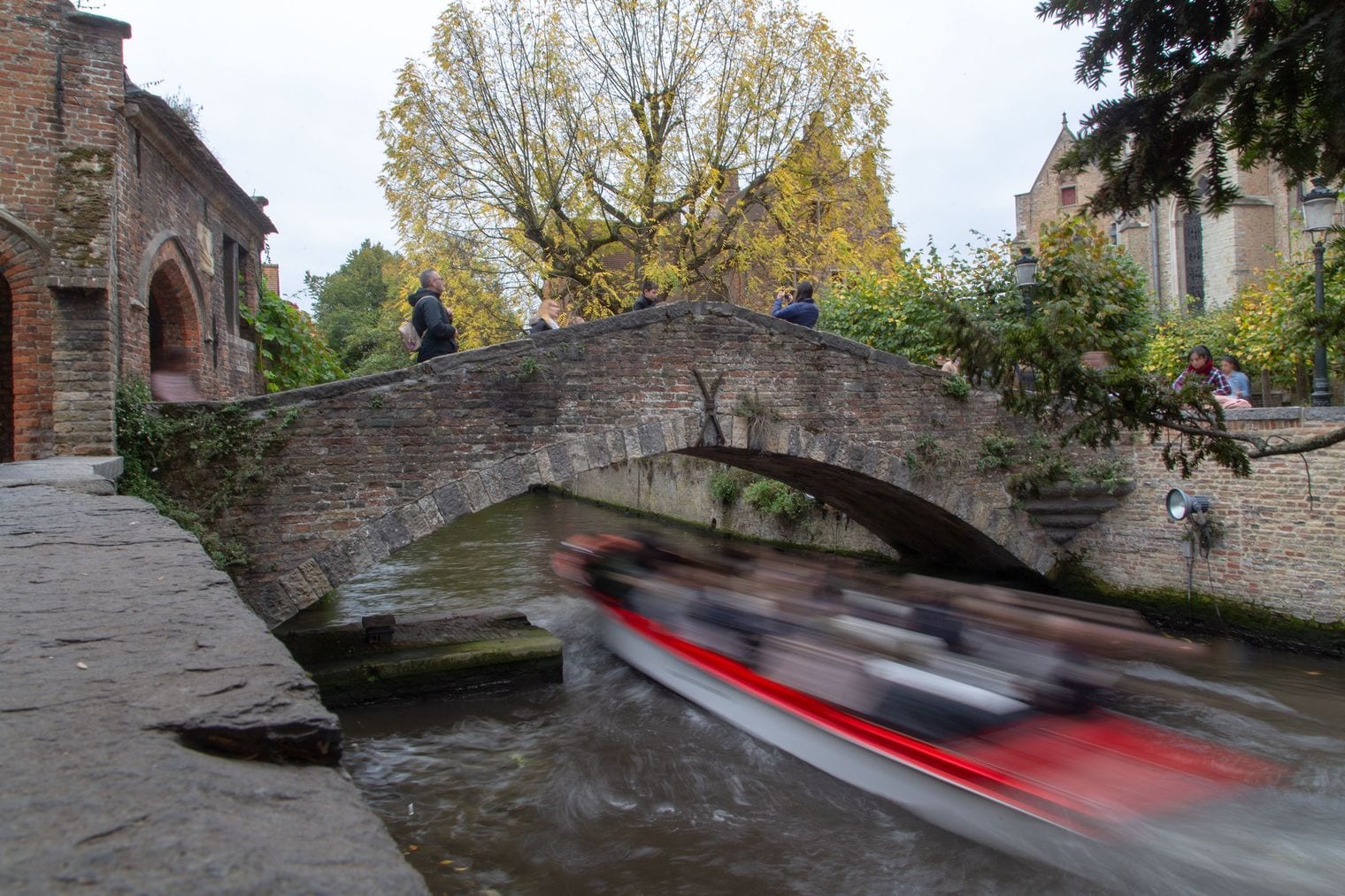
Hidden behind the Gruuthuse and the Church of Our Lady, the little brick Boniface Bridge (Bonifaciusbrug) crosses a narrow canal in one of the most atmospheric corners of Bruges, framed by overhanging half-timbered houses and the church tower above.
It looks as old as the city, but it is in fact one of the youngest bridges in Bruges. Come early in the morning to have it to yourself; it sits right in the museum quarter, so it is an easy detour between the church, the Gruuthuse and the Groeninge Museum.
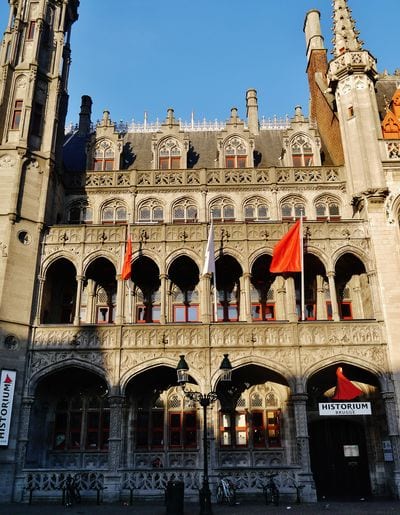
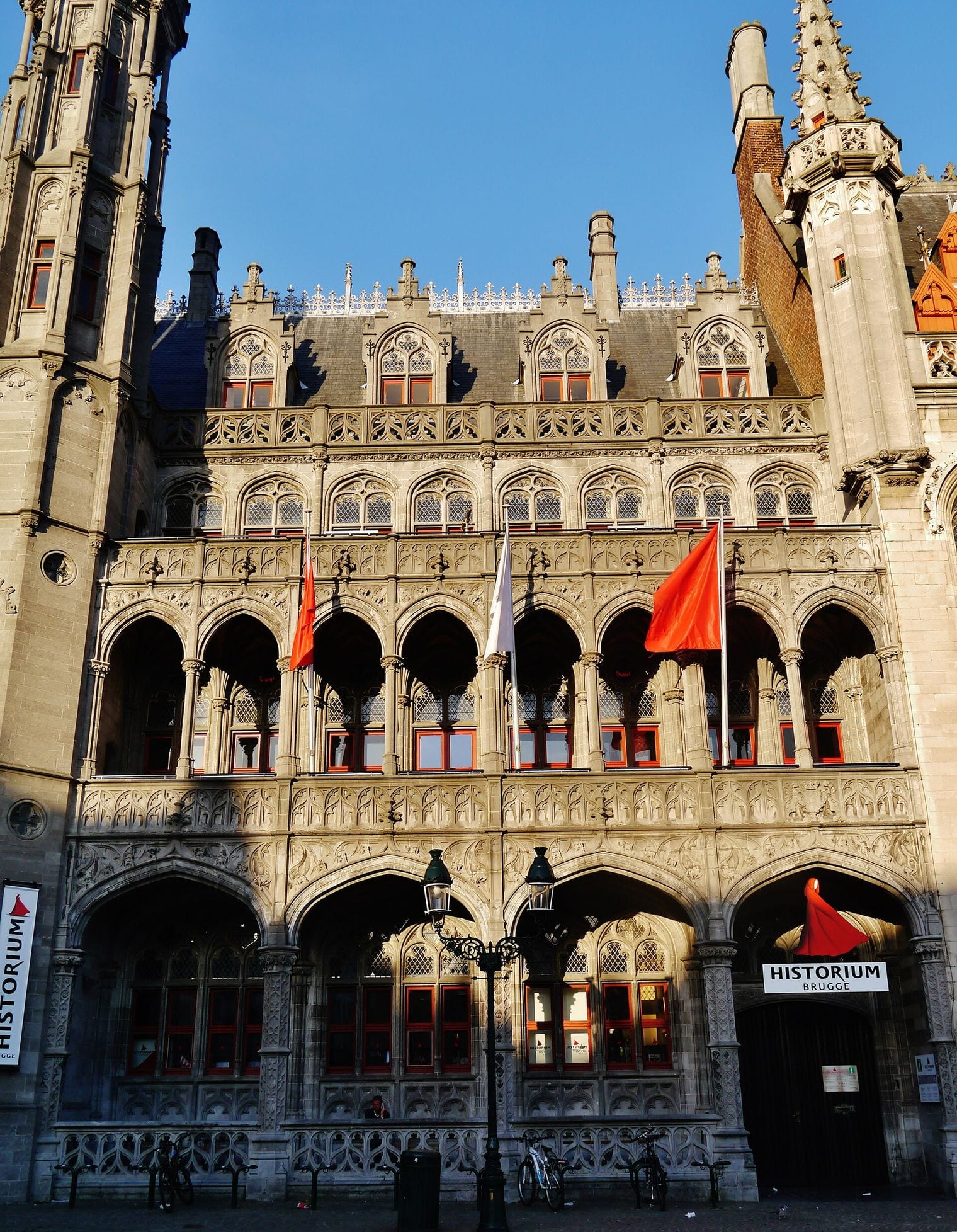
On the Markt itself, Historium Bruges is an immersive attraction that takes you back to the city's medieval Golden Age, the era of the painter Jan van Eyck, through a story told across a series of themed rooms.
Besides the story, there is a virtual-reality experience, an exhibition, a Gothic tower and a panoramic terrace over the square, plus the Duvelorium beer bar. It works well for families, or as a primer on the city's history before you go and see the real sights.
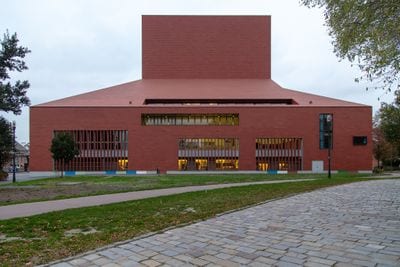
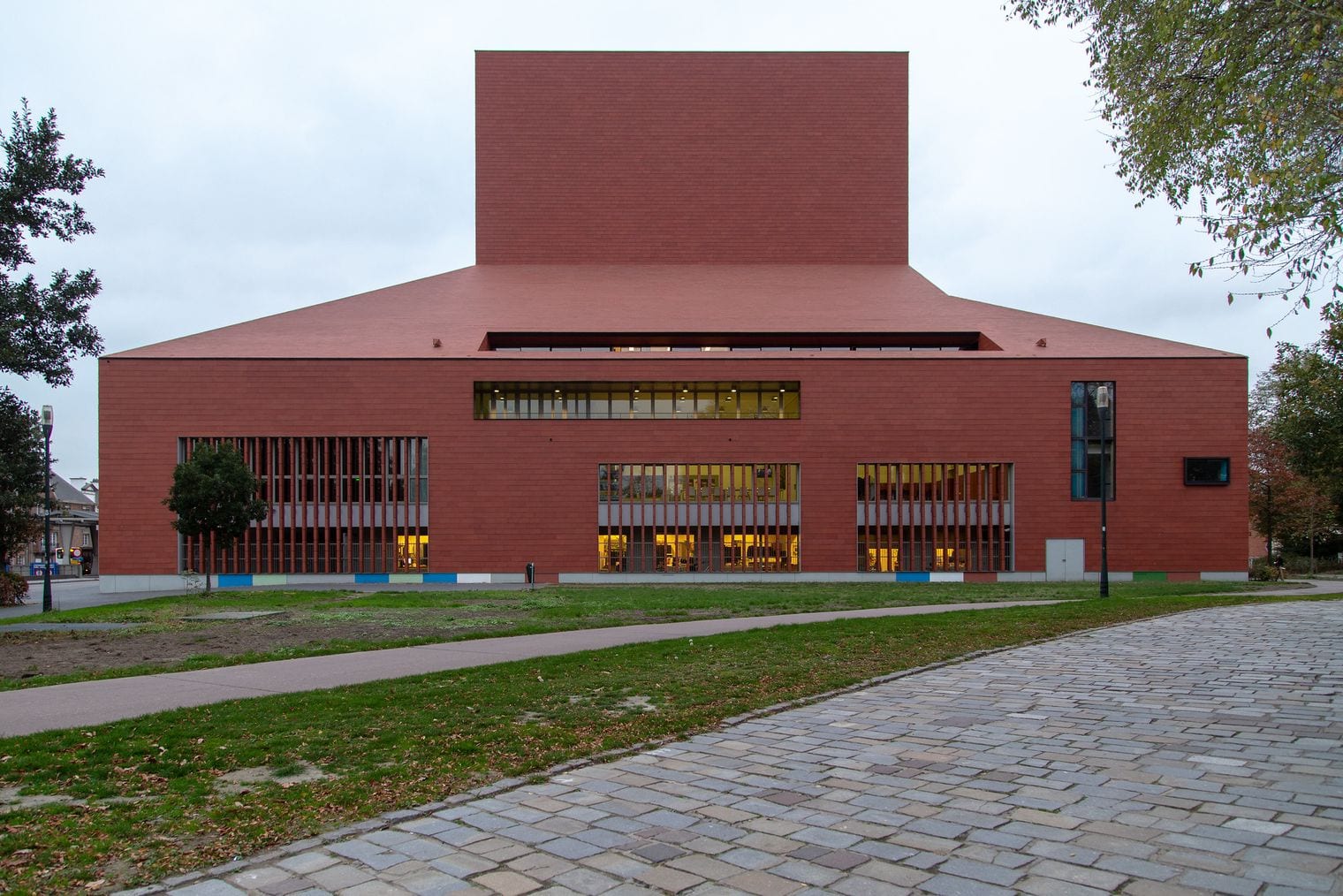
Built for Bruges' year as European Capital of Culture in 2002, the Concertgebouw Brugge on 't Zand is the city's boldest modern building. Architects Paul Robbrecht and Hilde Daem clad it in thousands of red terracotta tiles that echo the old town's brick, and its main hall and chamber music hall are known for excellent acoustics.
The building still divides opinion, but its glass Lantern Tower (Lantaarntoren) holds an exhibition space with views over the historic town. Catch a concert here if you can, then stroll on into the heart of the old town.
Free printable checklist of all 35 places
Tick them off as you go. Confirm your email to download it, plus one email every Thursday with new guides for the places you tick.
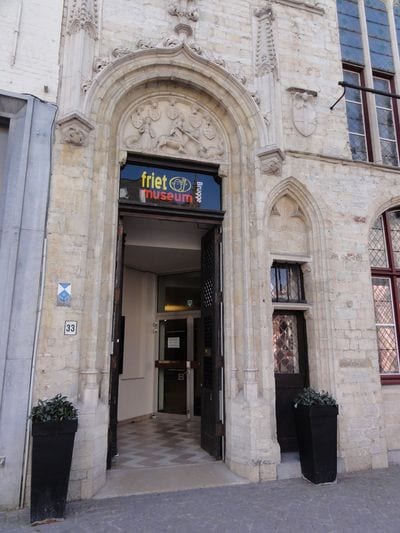
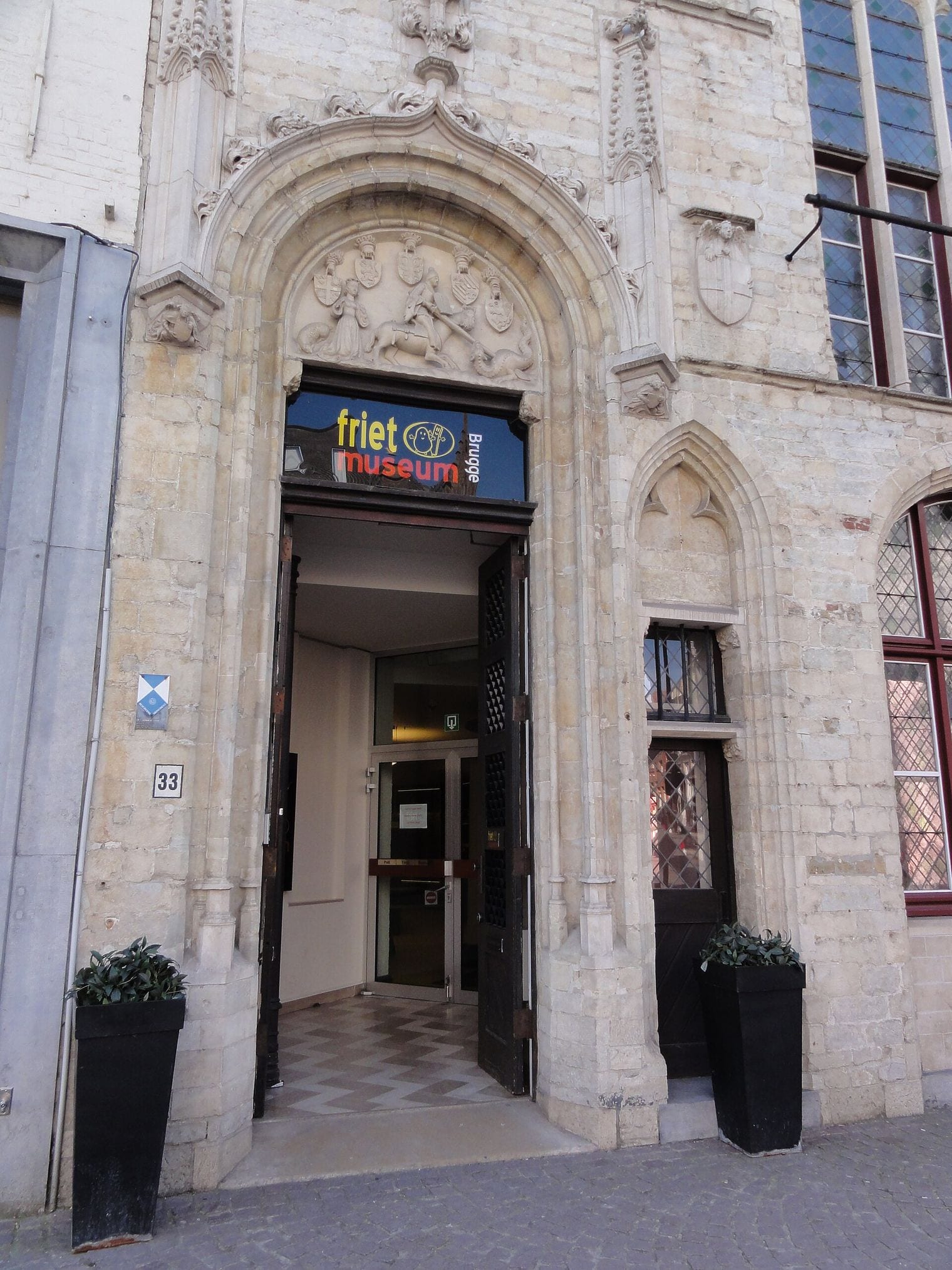
Belgians will tell you the fry is theirs, and the Frietmuseum makes a cheerful case for it. It bills itself as the first and only museum dedicated to potato fries, tracing the potato from South America to the Belgian frietkot, and it is housed in the Saaihalle, a Gothic former wool hall dating from 1399 that Genoese merchants used as their base in the 15th century.
It is a light-hearted, family-friendly stop on Vlamingstraat, a few minutes north of the Markt, and it was founded by the same collector who created Choco-Story. Afterwards, order a cone of fries from a frietkot and judge for yourself.
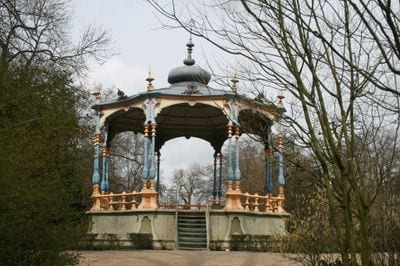
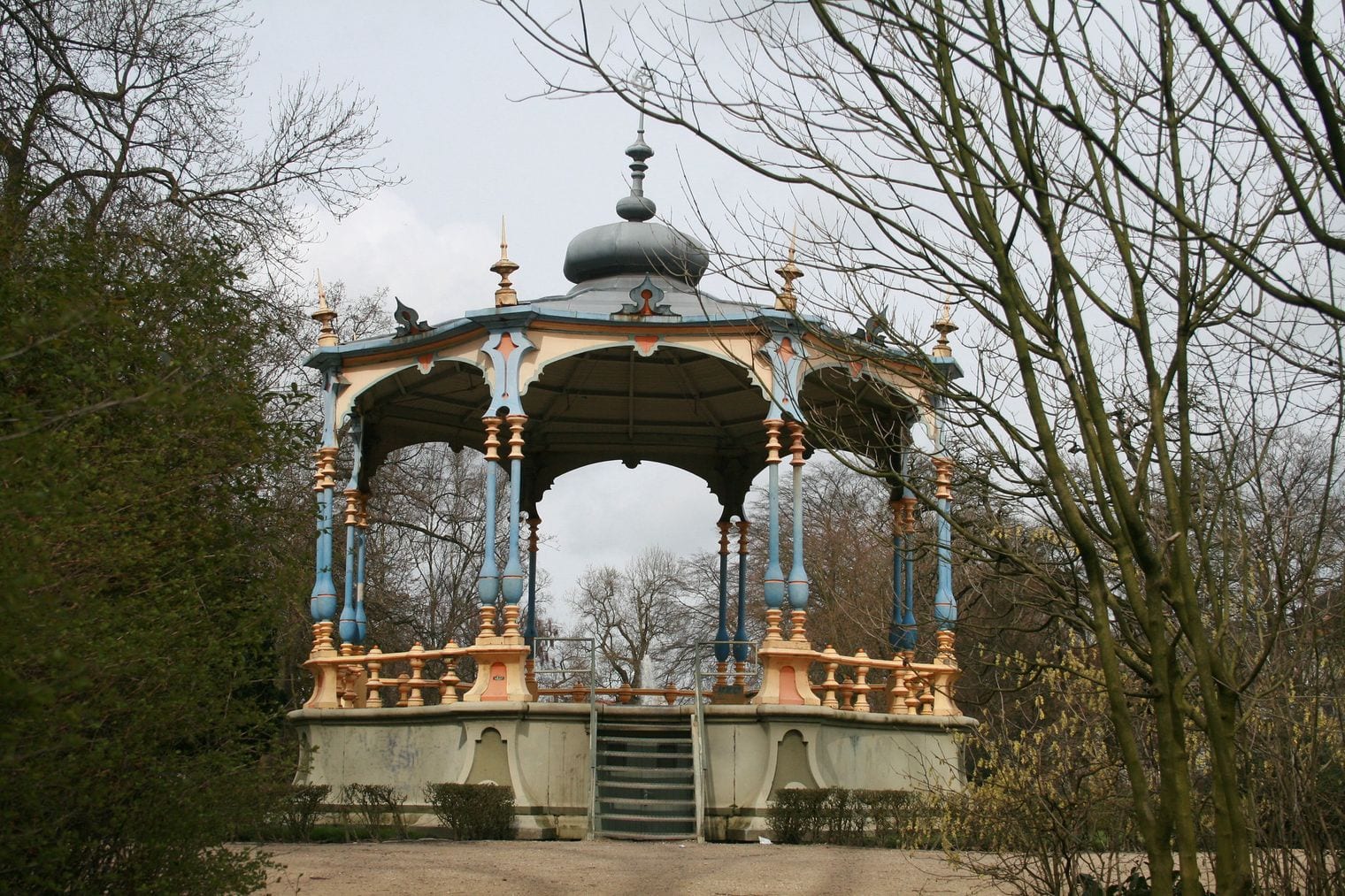
Named after Queen Astrid, Koningin Astridpark is a green pocket a few minutes from the Burg, with a pond and fountain, a colourful romantic bandstand, a big playground and rows of imposing old trees.
It is the place to sit with a waffle when the main squares are packed, with benches and chairs in every corner, and children can let off steam on the playground. The park sits on the edge of the quieter eastern side of the old town, so it makes a good break on a walk between the Burg and the Sint-Anna quarter.
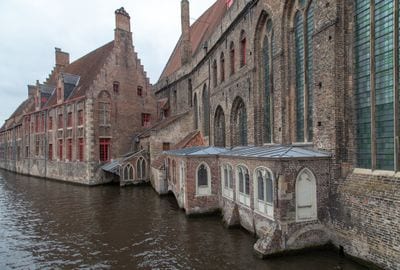
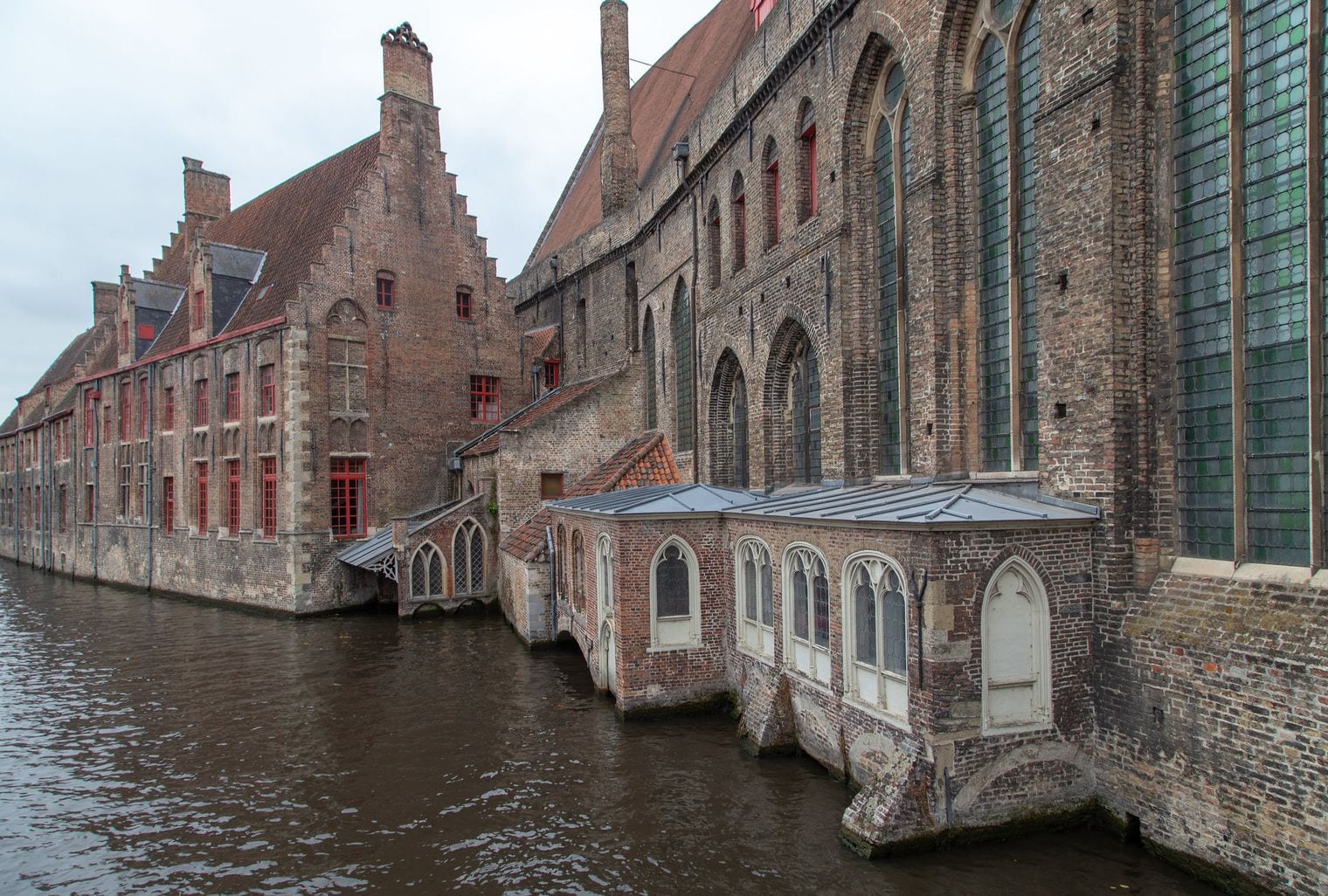
Founded in the mid-12th century, Saint John's Hospital (Sint-Janshospitaal) cared for sick pilgrims and travellers for centuries, and its buildings are among the oldest surviving hospital buildings in Europe. It stands next to the Church of Our Lady, in the heart of the museum quarter.
Today the old wards hold a museum of hospital history and the Memling collection, with works by the painter Hans Memling, including the St. Ursula Shrine, a gilded reliquary painted with scenes from the saint's legend. The rest of the old hospital site, Oud Sint-Jan, is used for events and exhibitions.
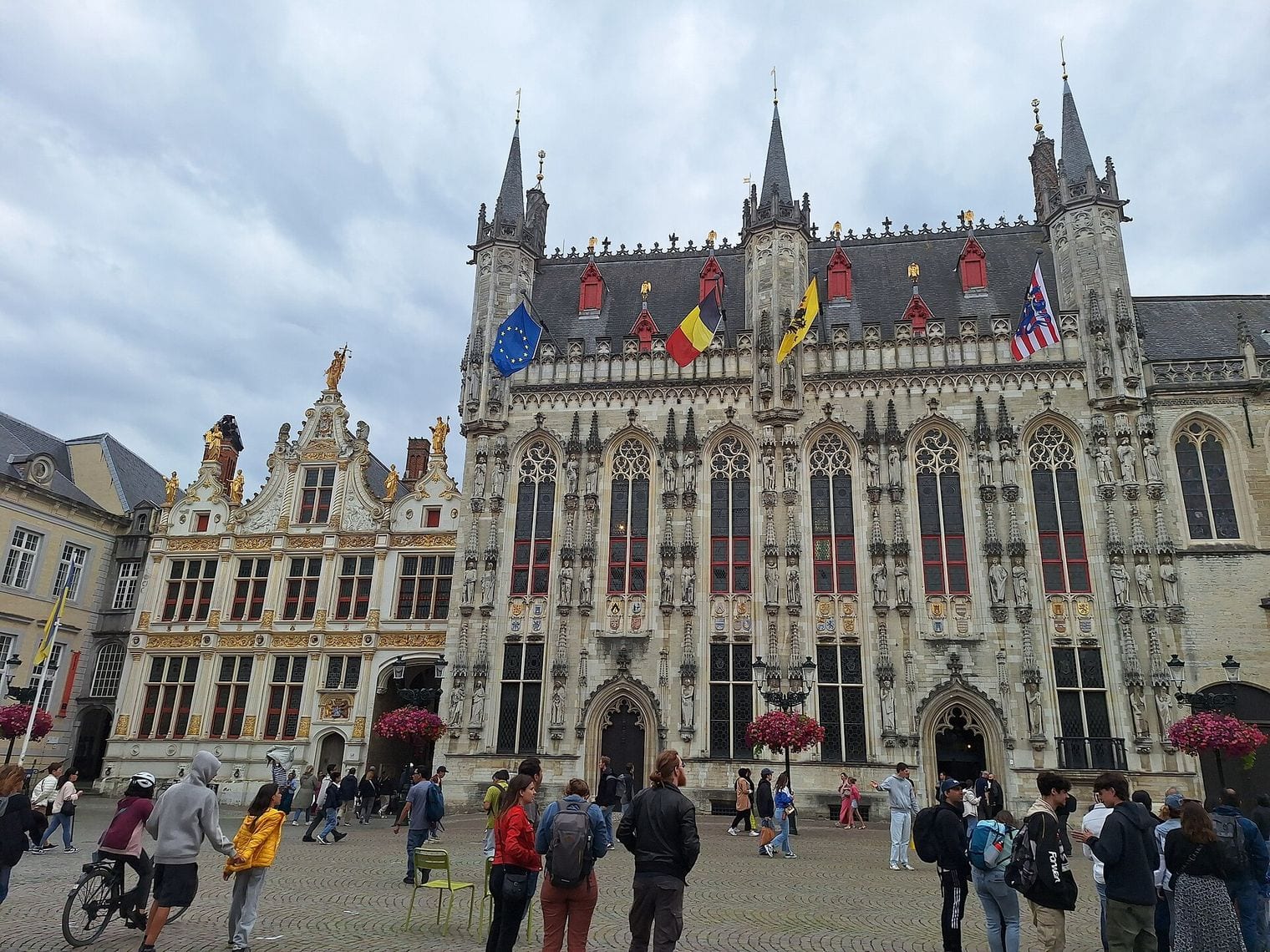
Bruges City Hall, built in a late-Gothic style between 1376 and 1421 on the Burg, is one of the oldest city halls in the former Burgundian Netherlands, its facade lined with statues under stone canopies. It is still the seat of the city government.
Inside, the showpiece is the Gothic Hall, a vast council chamber beneath a double-vaulted timber ceiling. The visit continues into the neighbouring Liberty of Bruges (Brugse Vrije), the old administrative seat of the surrounding countryside, with its Renaissance Hall.
On Breidelstraat, the short lane between the Markt and the Burg, the Bruges Beer Experience is an interactive museum about how Belgian beer is made, where you can smell, taste and touch the ingredients as you go.
Afterwards, the bar serves a long list of draught beers with a view over the Market Square, which is a good way to get to know Belgian styles before ordering in a café. It is a museum about beer in general rather than a working brewery, so it complements a tour of De Halve Maan rather than replacing it.
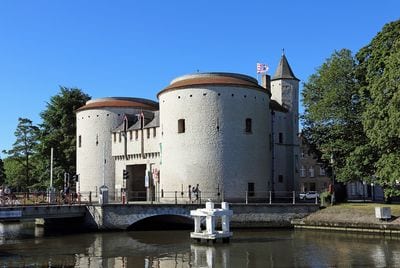
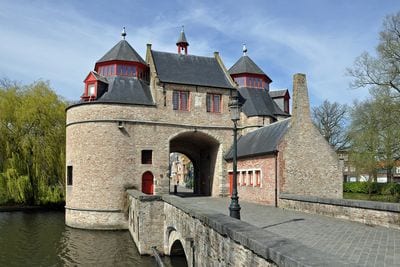
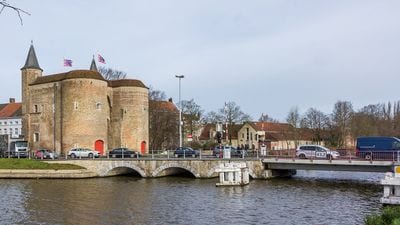
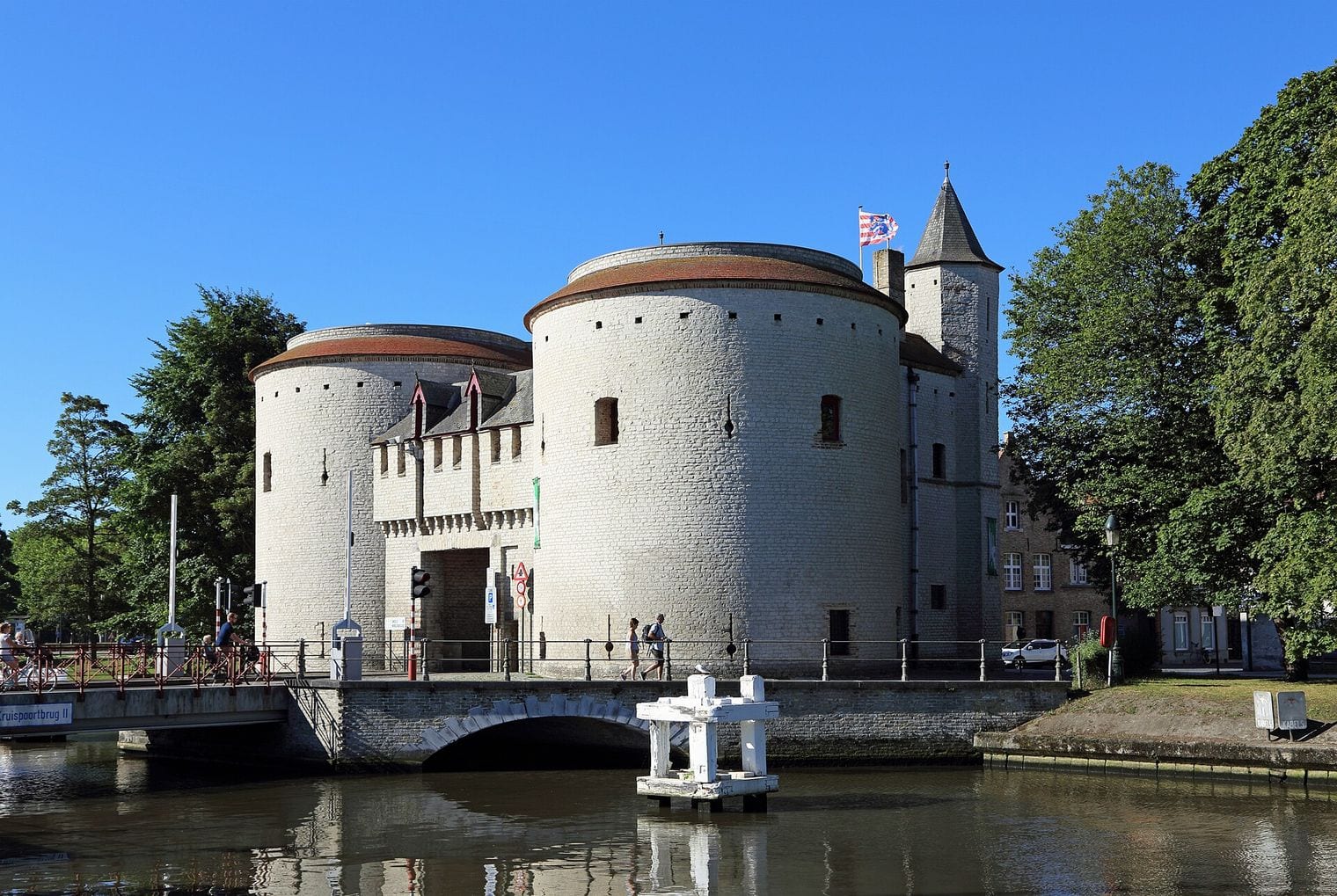
On the eastern edge of the old town, the Kruispoort is one of four medieval city gates still standing in Bruges. Work on it began around 1400 and it was finished by about 1406, and its sturdy brick bulk still guards the approach to the city where two bridges cross the ring canal.
The gate marks the start of the Kruisvest, a broad promenade on the old ramparts lined with four windmills, so it is the natural starting point for a rampart walk. Come in the late afternoon, when the low sun lights the brick and the mills.
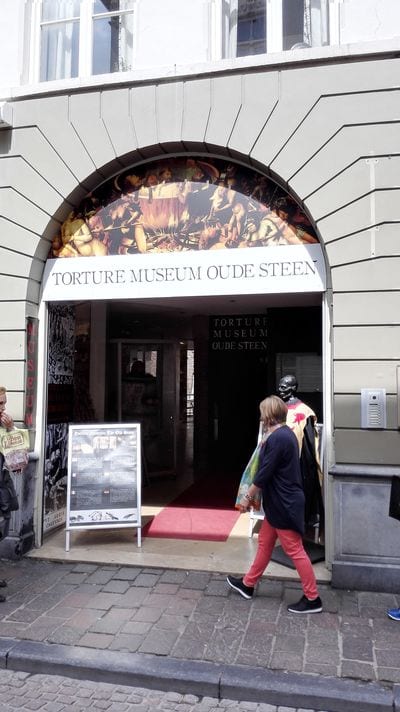
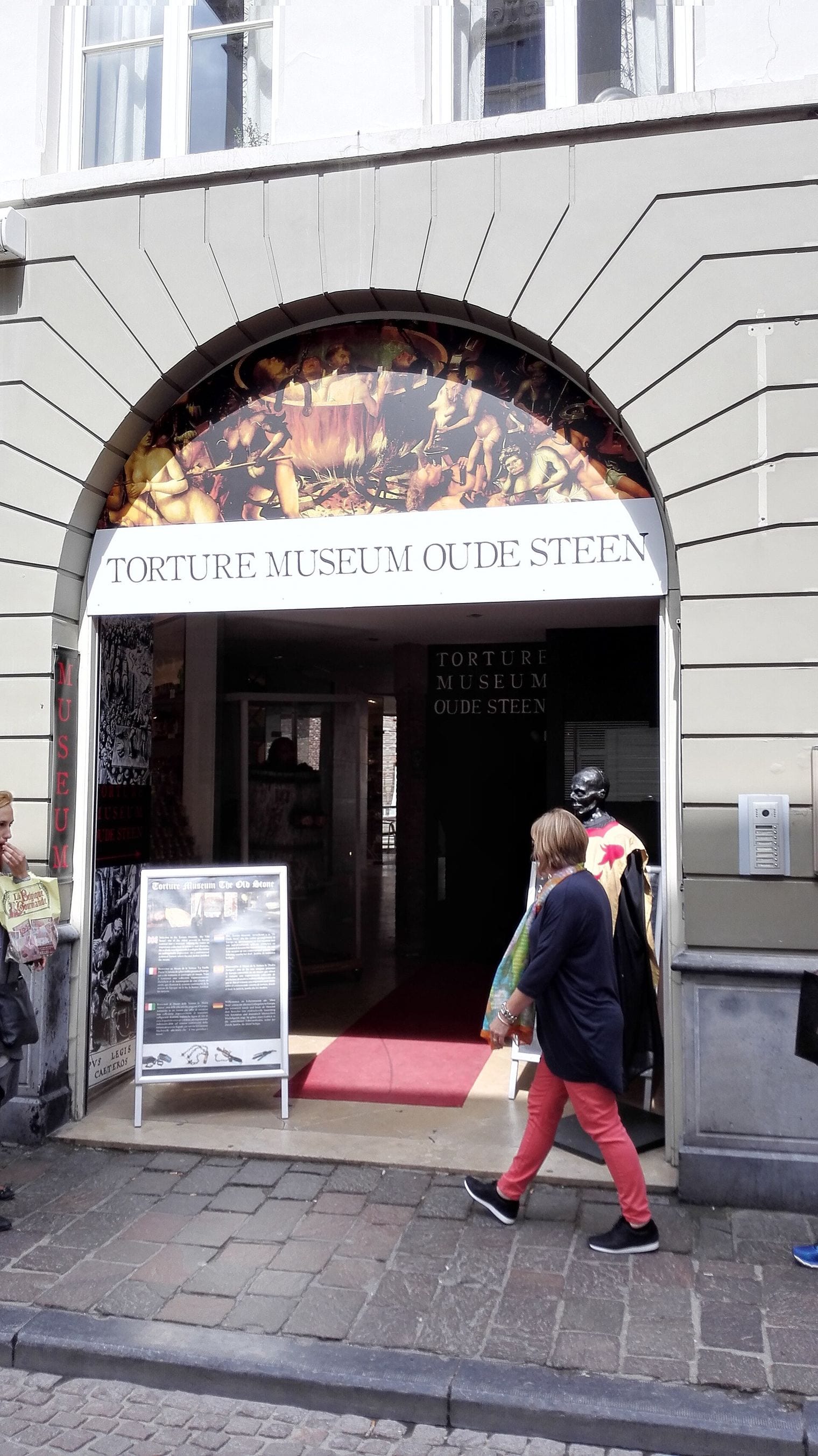
The Torture Museum Oude Steen is housed in the Oude Steen, the building that served as the city's oldest prison in the early Middle Ages, and it descends into the old cellars to explore one of the darkest chapters of European justice.
Dozens of wax figures and a collection of torture instruments, some authentic and some carefully made replicas, show how suspects were punished, and part of the medieval cellar has been turned into a dungeon with light and sound effects. It is not for young children or the squeamish, but it makes a memorable rainy-day stop.
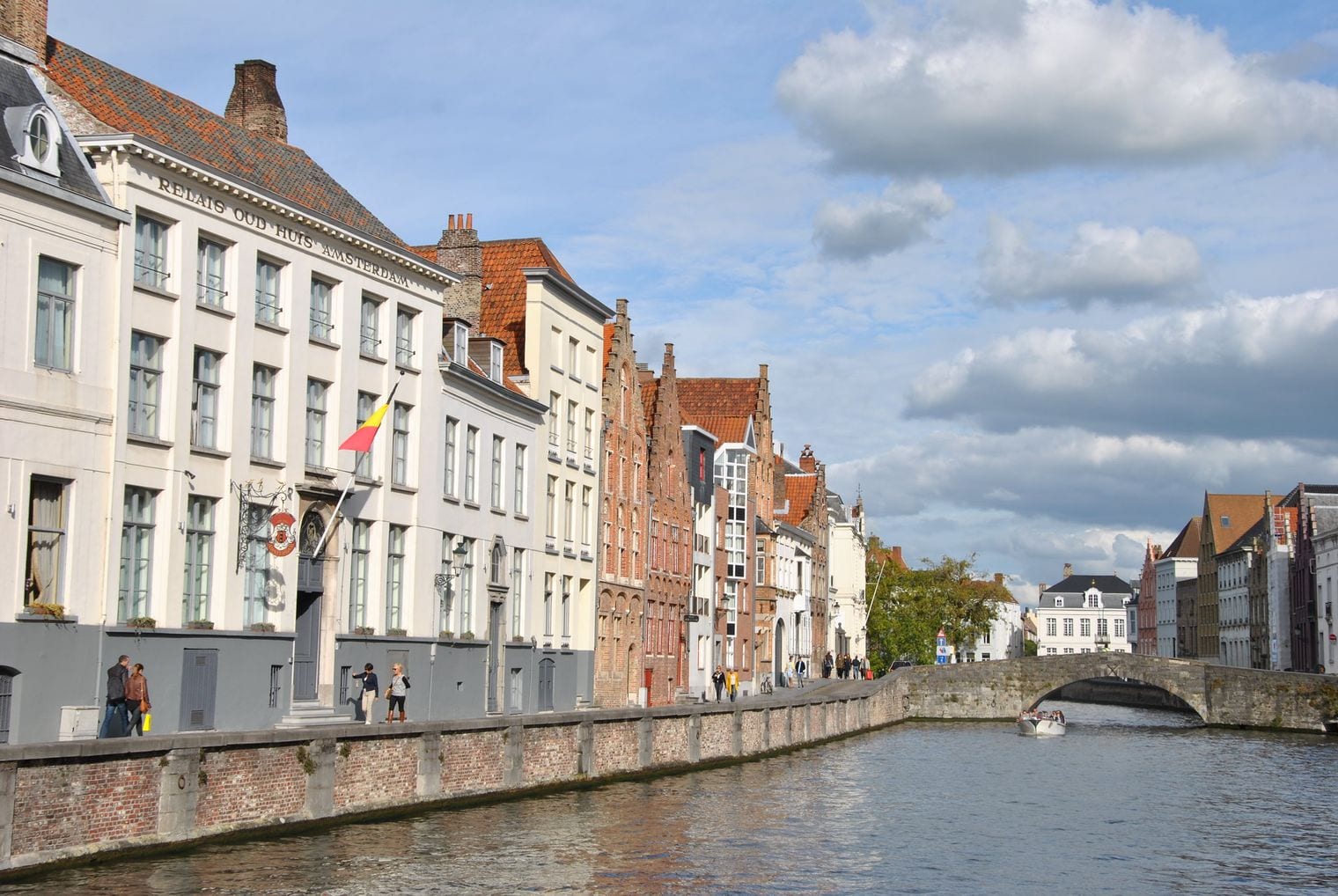
The whole Historic Centre of Brugge was inscribed by UNESCO in 2000, and the best way to appreciate it is to leave the big squares behind. Head north of the Markt to the old merchants' quarter around Jan van Eyckplein and the Spiegelrei canal, where traders from across Europe, including the Hanseatic League, once did business.
Bruges was one of medieval Europe's great commercial cities until its sea access silted up, and its quieter fortunes afterwards helped preserve the streets, which is why it is often called the Venice of the North. Follow the Langerei canal, explore the lanes of the quiet Sint-Anna quarter, and simply get lost; the old town is ringed by canals, so you can never stray far.
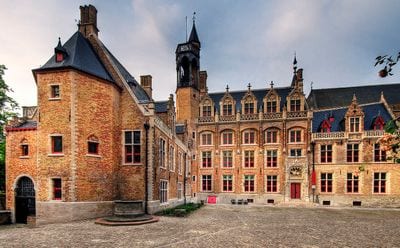
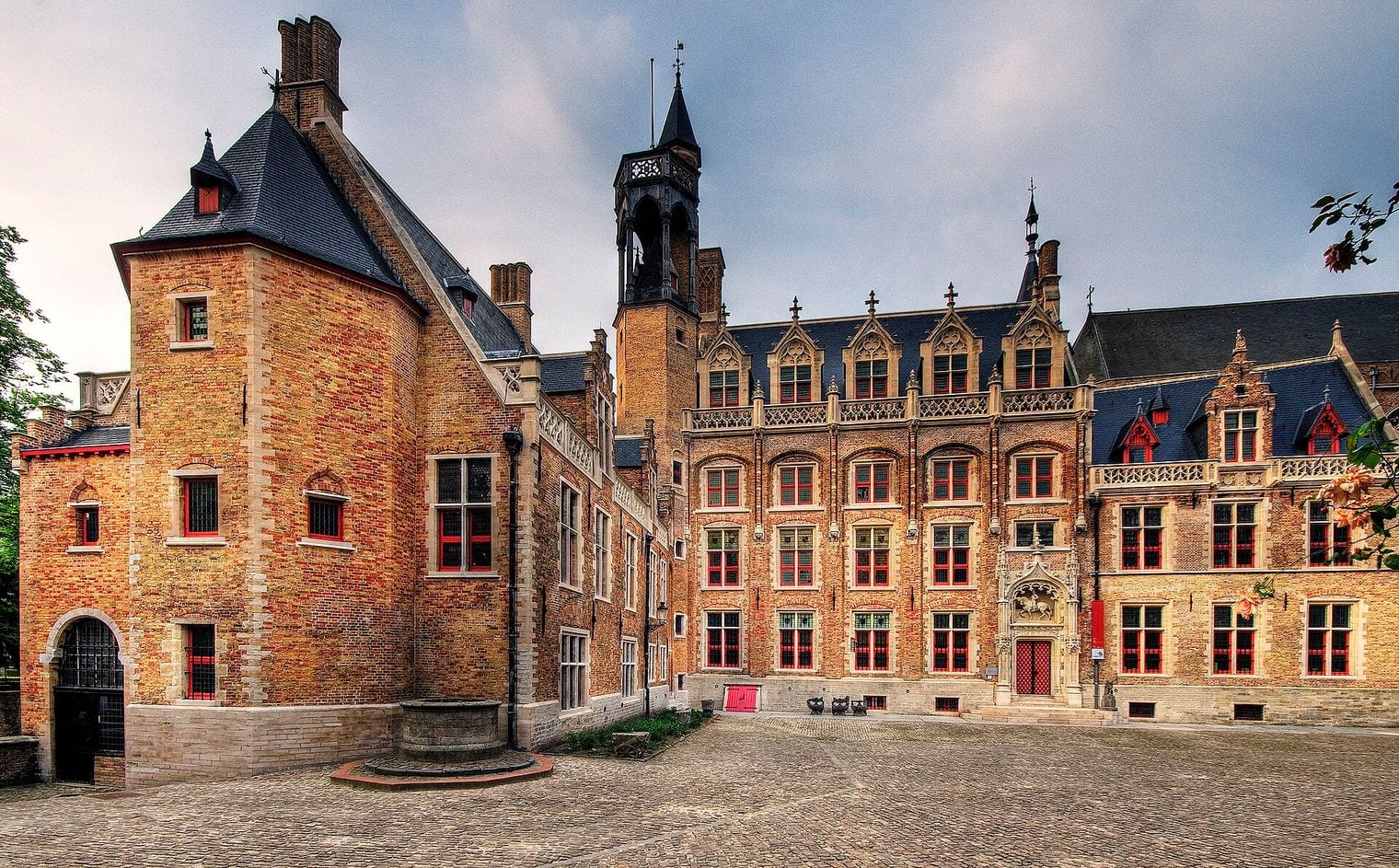
The Gruuthusemuseum fills the medieval palace of Louis de Gruuthuse, one of the great noblemen of Burgundian Bruges, with applied arts from the 15th to the 19th century. The city bought the house in 1875 and had it completely restored between 1883 and 1895.
The rooms show how a wealthy family lived in the late Middle Ages, alongside a collection of everyday tools and utensils. The family's ties to the Church of Our Lady next door ran deep: in 1482 a chapel inside the church was created as Lodewijk van Gruuthuse's private place of worship.
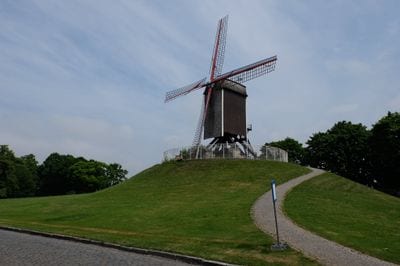
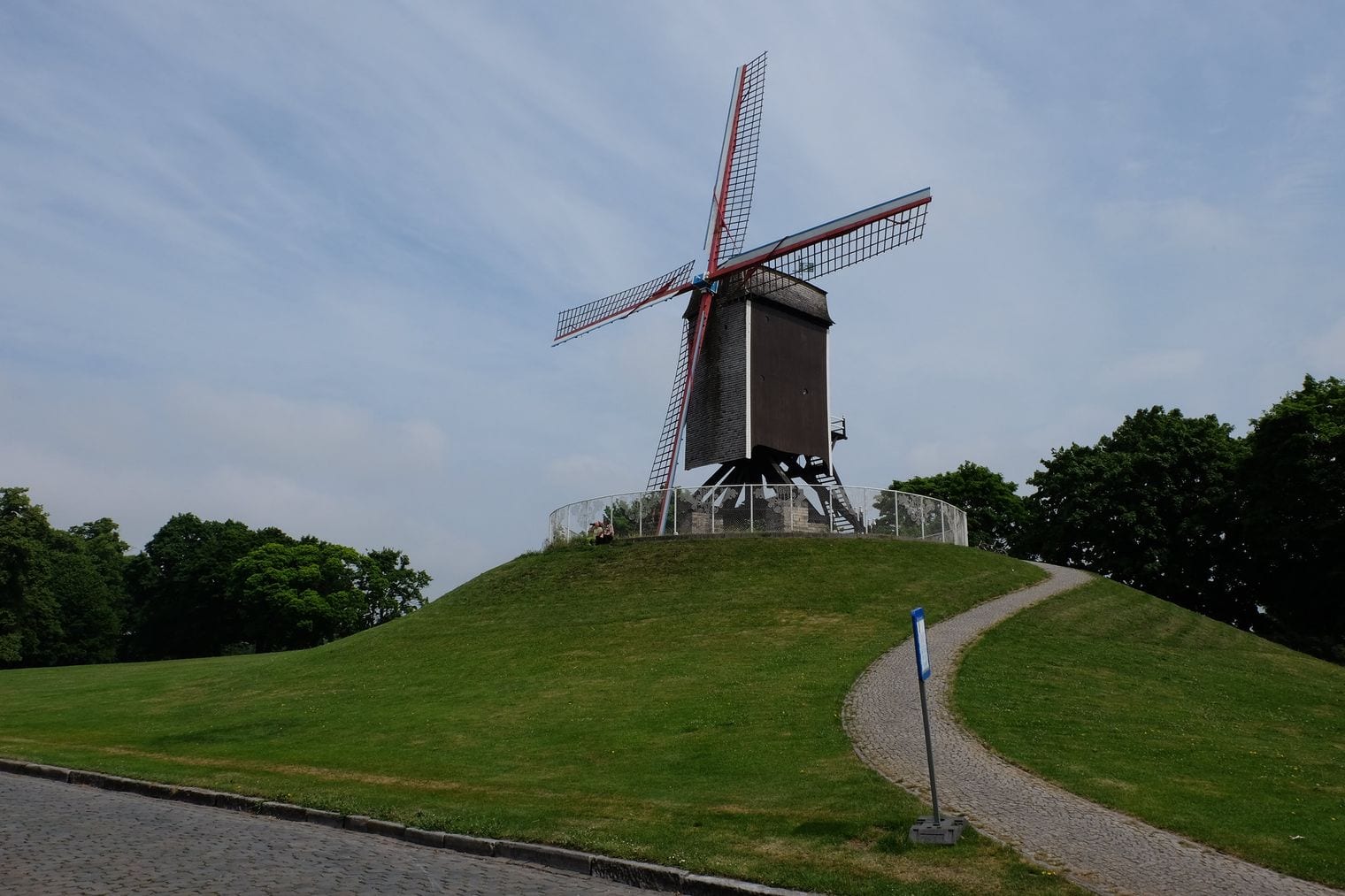
Four windmills stand along the Kruisvest, the grassy rampart on the eastern edge of the old town, and Sint-Janshuismolen is the one run as a visitable mill by the city's museums. The mill you see today was built in 1770, the third on this spot, and it still works as a corn mill.
Inside you can see the wooden machinery that turns wind into flour, and together with the Koeleweimolen it is one of two mills on the Kruisvest that can still grind. The rampart path between the mills makes one of the nicest short walks in Bruges, especially at sunset.
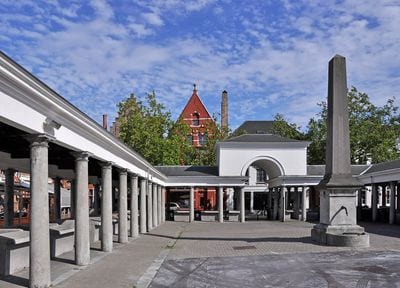
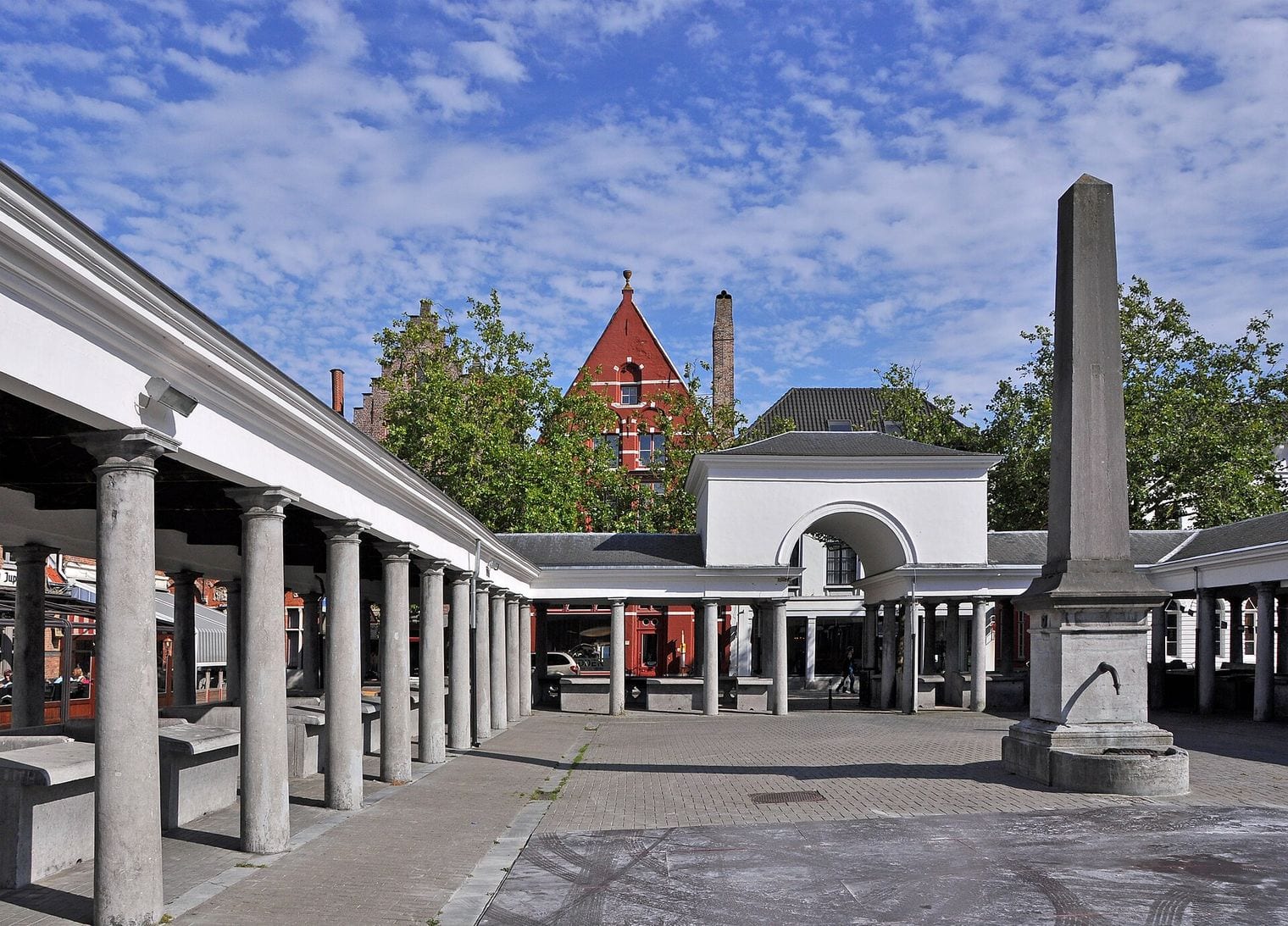
A few steps from the Burg, the Fish Market (Vismarkt) is a handsome square with a covered colonnade where fresh fish is still sold, as it has been for generations.
As the day goes on, the stalls also fill with crafts, small paintings and souvenirs aimed at visitors, and restaurants line the surrounding lanes. From here it is a short stroll along the Groenerei, one of the prettiest canal-side walks in town, or across to the neighbouring Huidenvettersplein.
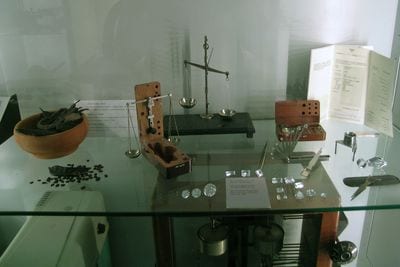
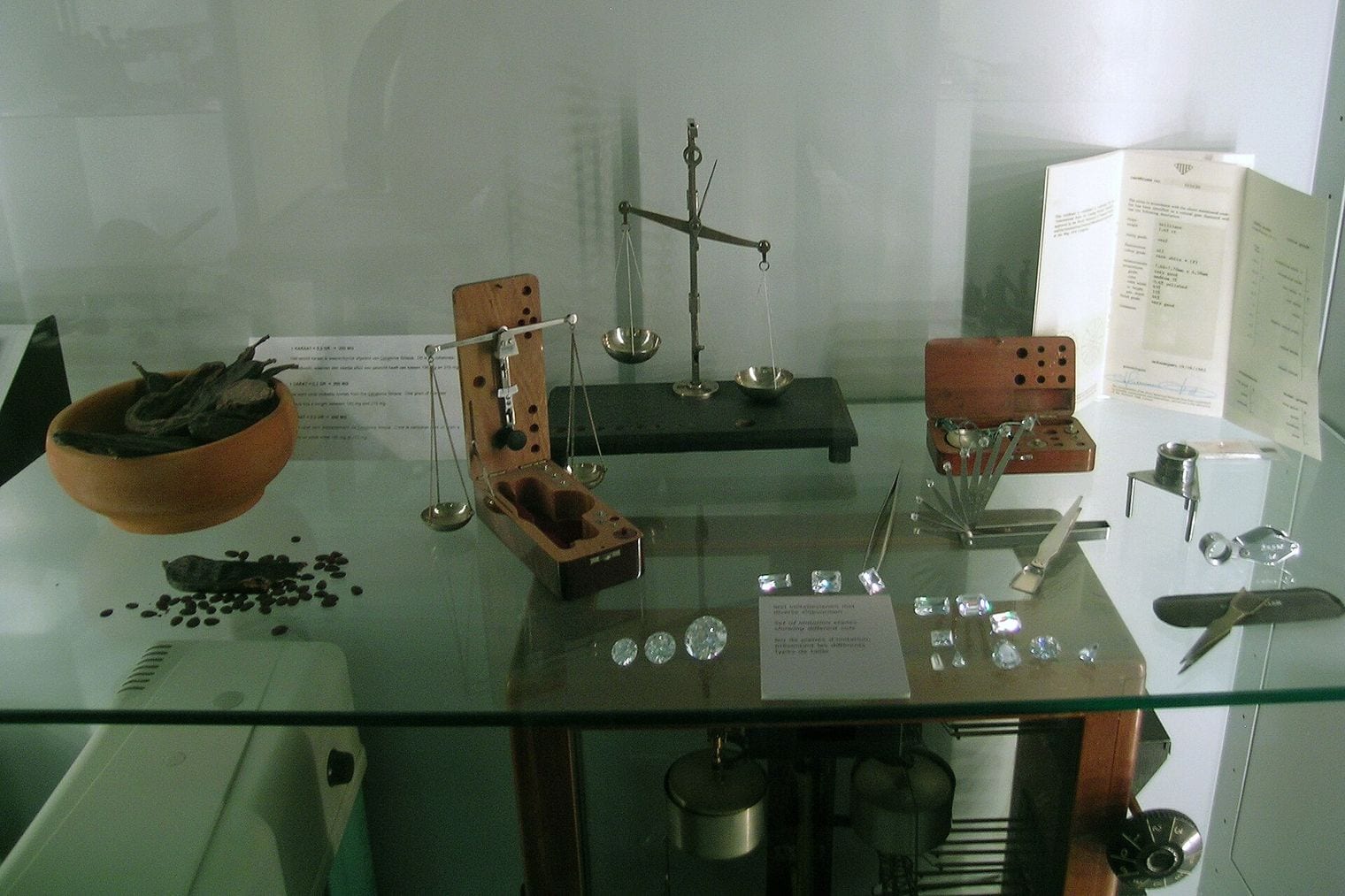
The Diamond Museum (Diamantmuseum) on Katelijnestraat explores the hardest natural material on Earth, from how diamonds form to how they are cut and polished into jewels.
Its highlight is the diamond-polishing demonstration, where you can watch the craft up close, and it is a good choice for families or on a rainy day. The museum is on the way south from the Church of Our Lady toward the Beguinage and the Minnewater, so it fits easily into a walk through that side of town.
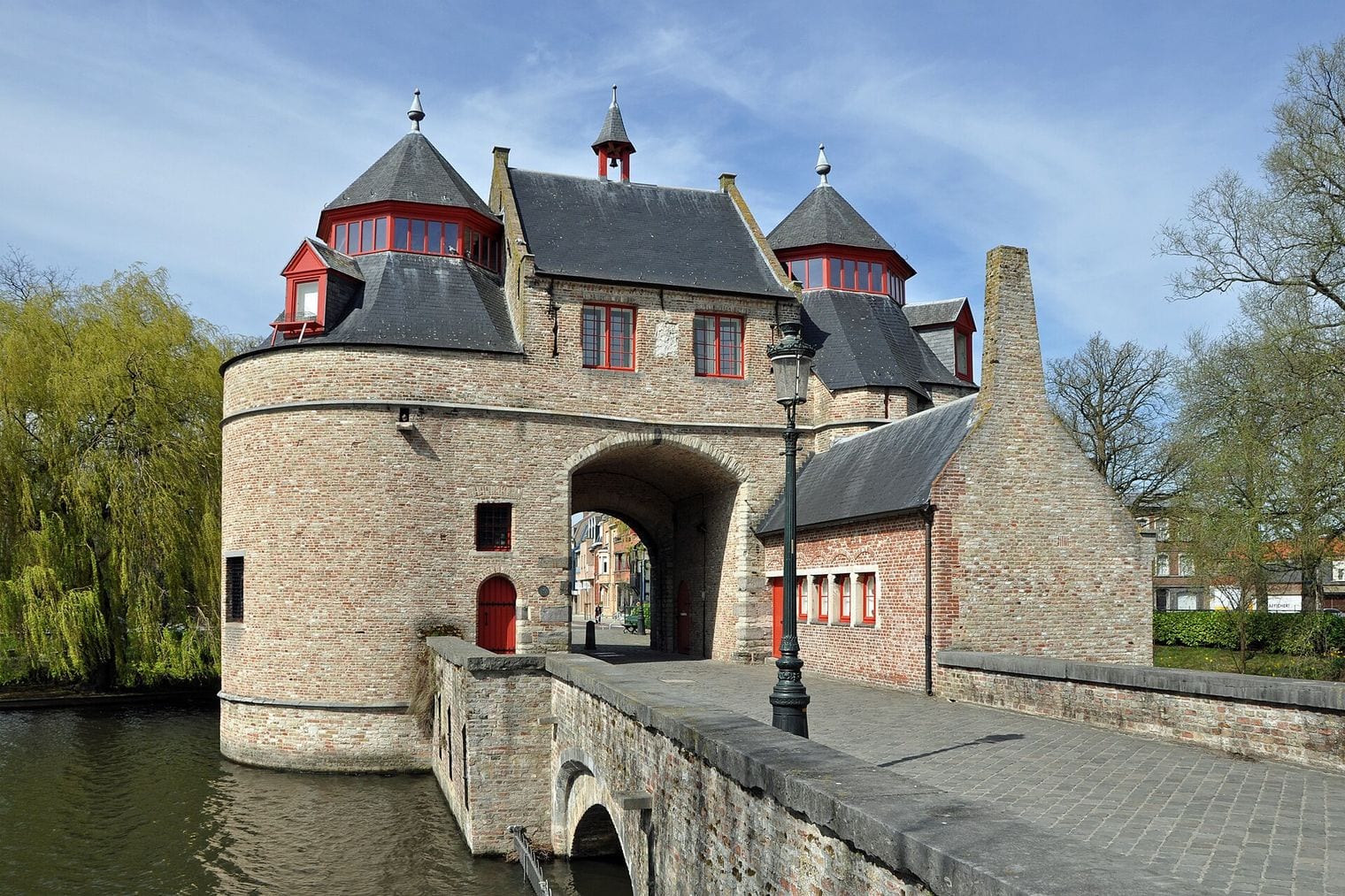
The Ezelpoort, the 'Donkey Gate', guards the northwest corner of the old town and is one of the four medieval city gates that survive in Bruges. Like the Smedenpoort, it stands completely surrounded by water.
It is one of the quietest and most photogenic spots on the ring canal, with reflections in the water and a park path along the ramparts in both directions. Combine it with the Smedenpoort on a walk along the western ramparts, then follow the canals back into town.
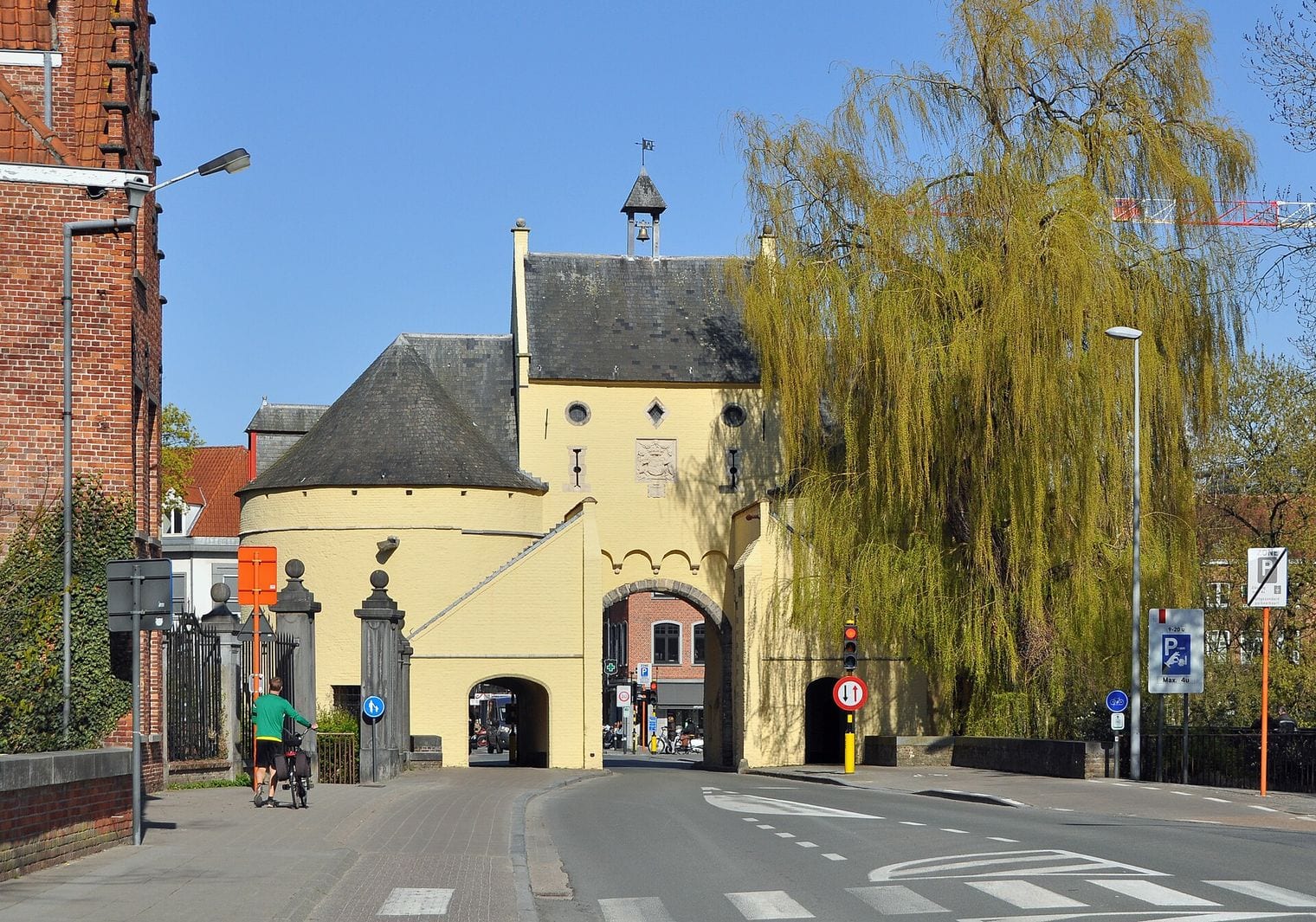
On the western side of town, the Smedenpoort goes back to a gate of 1297 to 1299 that was rebuilt in 1367 and 1368 and altered several times since. Like the Ezelpoort it is completely surrounded by water, and footbridges added on both sides let walkers circle the gate.
Look up for its grisliest detail: a bronze skull recalls a plot of 1691, when a traitor who had arranged to let French soldiers into the city through this gate was executed and his head displayed here. The real skull was eventually replaced by the bronze copy you see today.
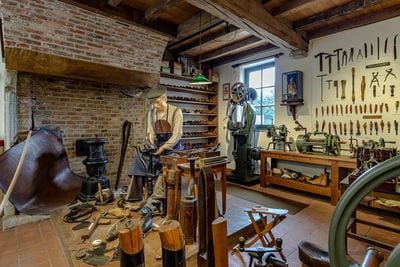
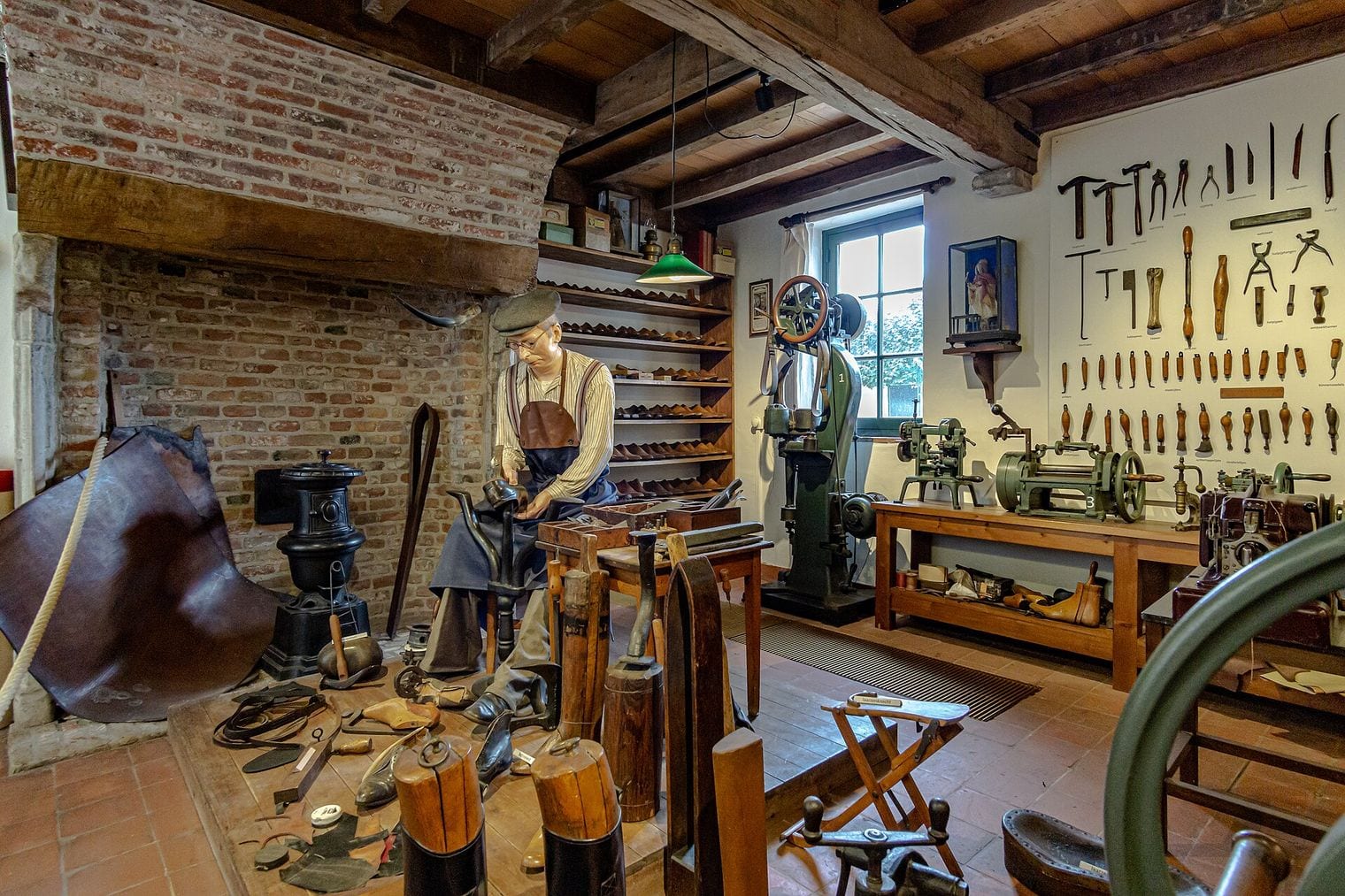
Tucked into a row of restored 17th-century workmen's houses on Balstraat, the Volkskundemuseum (Folklore Museum) offers a nostalgic look at everyday life in Bruges in the 19th and early 20th centuries, with recreated rooms including an old classroom, a pharmacy, a tailor's workshop and a sweet shop.
It is one of the most family-friendly museums in the city, and its own inn, De Zwarte Kat (The Black Cat), is a cosy place for a drink. The museum sits in the quiet Sint-Anna quarter, a few steps from the Jerusalem Chapel.
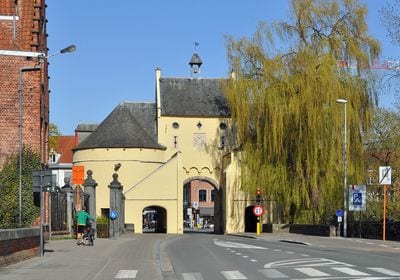
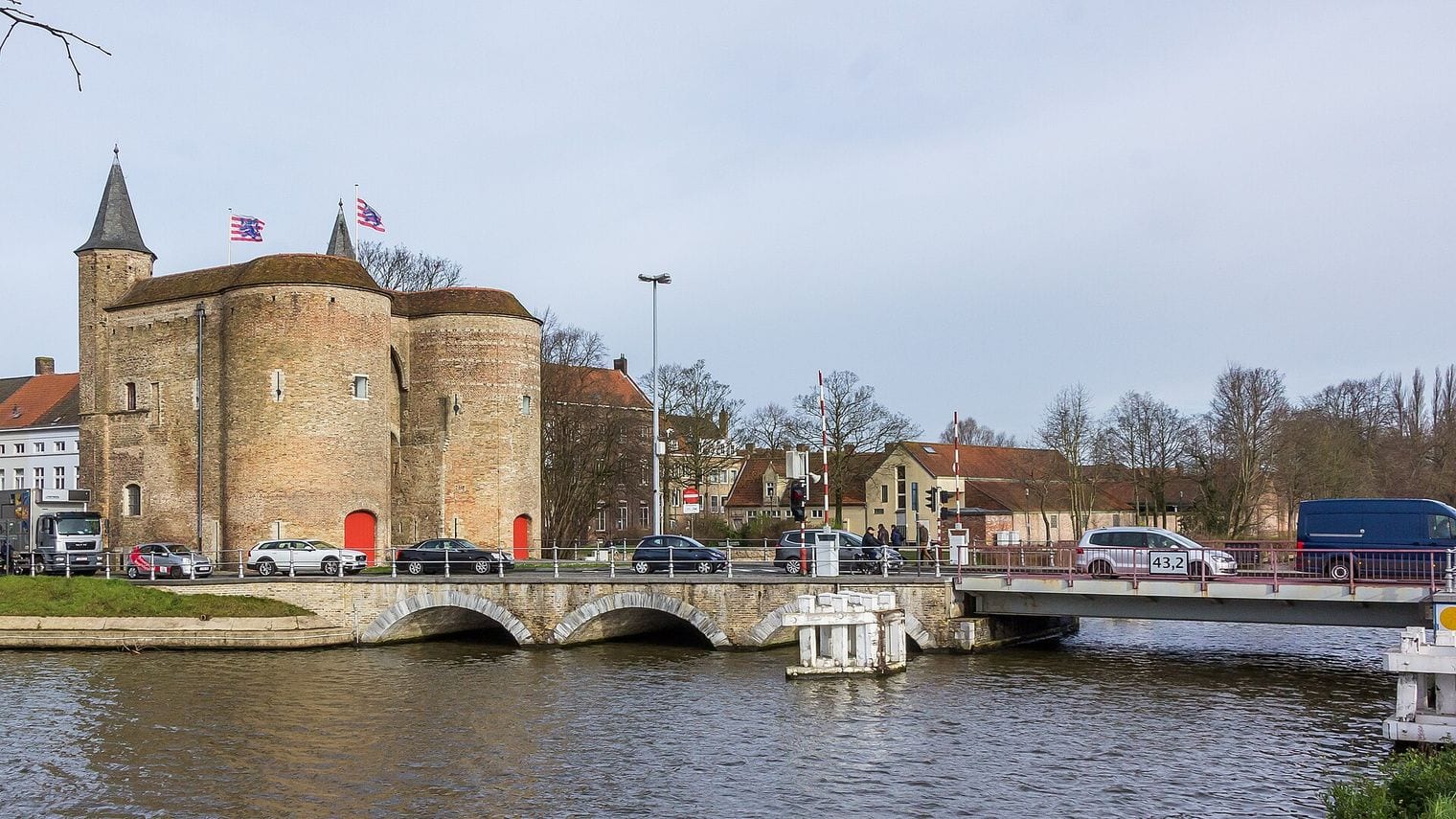
The Gentpoort, built around 1400 on the southeastern side of the old town, guarded the road to Ghent and is one of the four city gates still standing. Its builder, Jan van Oudenaerde, also worked on the Kruispoort.
The gate stands beside the ring canal, and the parkland along the old ramparts on either side makes it an easy stop on a walk or bike ride around the edge of town. It is a short walk from the Beguinage and the Minnewater.
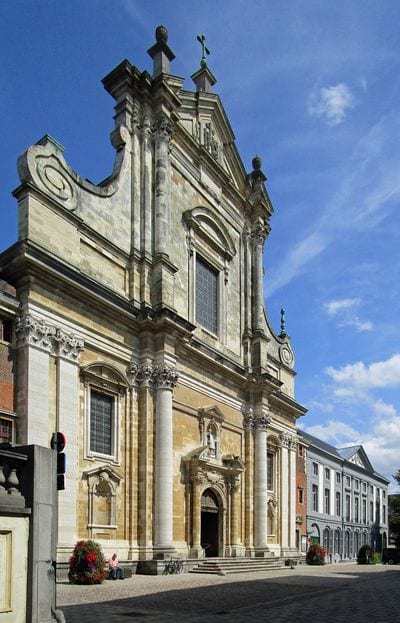
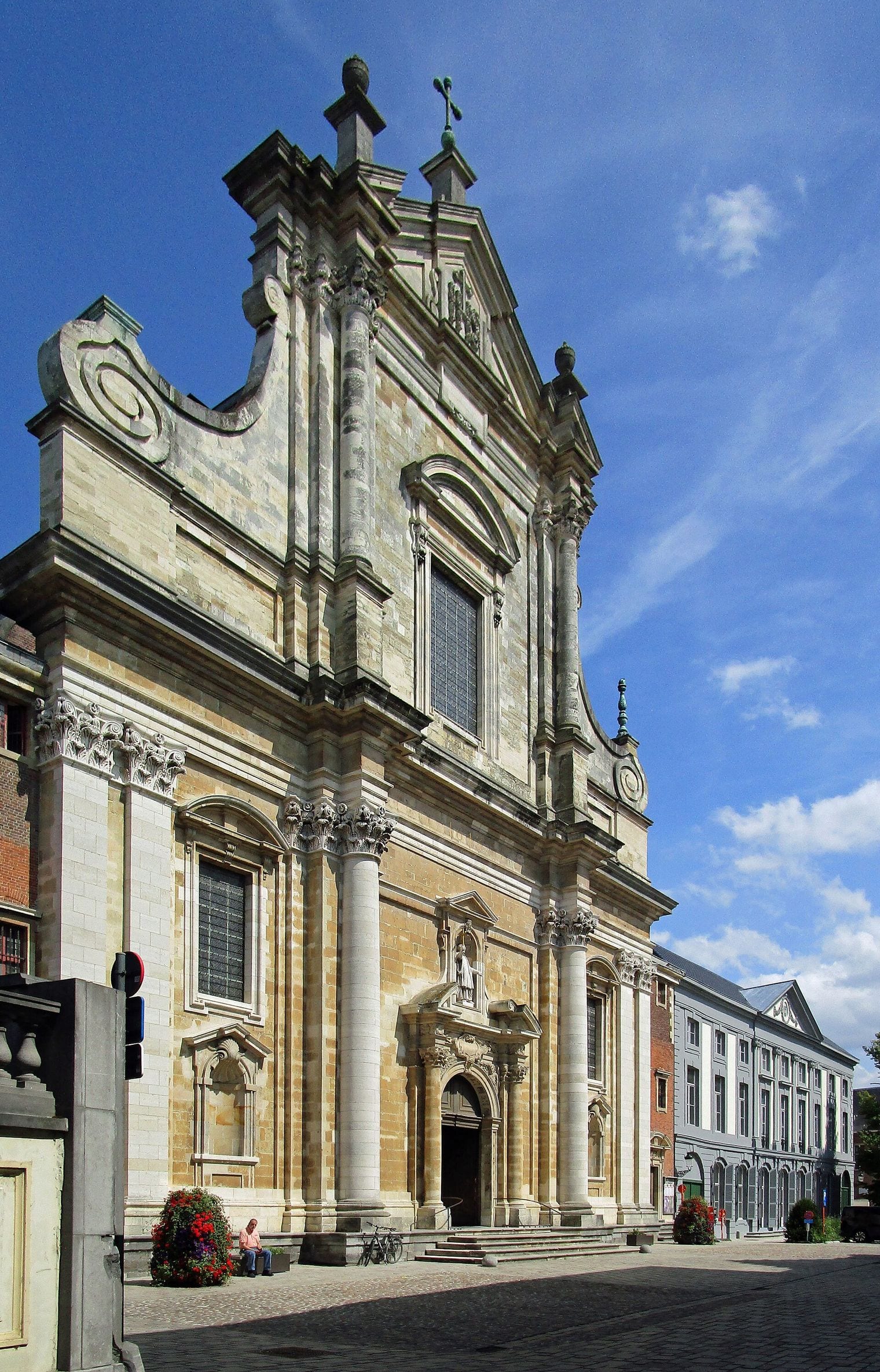
Saint Walburga Church (Sint-Walburgakerk) is the great Baroque church of Bruges, built by the Jesuits between 1619 and 1641 to a design by the Jesuit architect Pieter Huyssens. It closed when the Jesuit order was dissolved in 1773, and it is now a parish church.
Its lavish Baroque interior and many valuable works of art make a striking contrast with the city's Gothic brick churches. It stands a few minutes northeast of the Markt, on the way to the quieter Sint-Anna quarter.
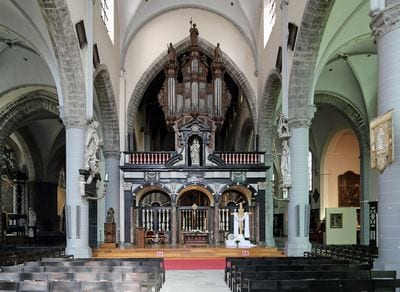
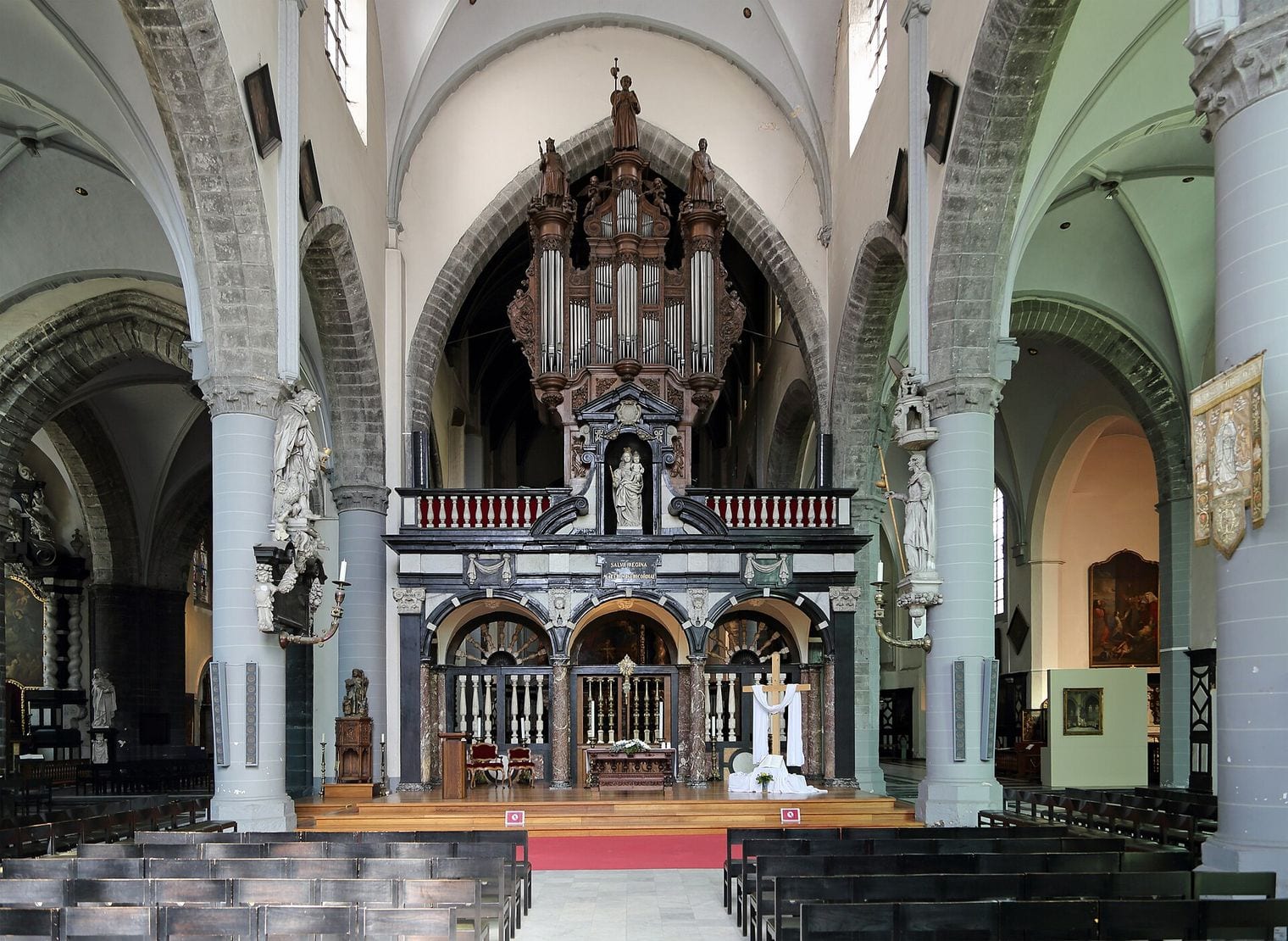
Sint-Jakobskerk (St. James's Church) was first built around 1240 and greatly enlarged in 1459, as Bruges grew rich with the patronage of the Duke of Burgundy. Its interior was remodelled in Baroque style in the late 17th and early 18th centuries.
Quieter than the headline churches, it rewards a look inside and lies a short walk west of the Markt. Don't be thrown if you see it called St. Jacob's: Dutch uses the same name for James and Jacob.
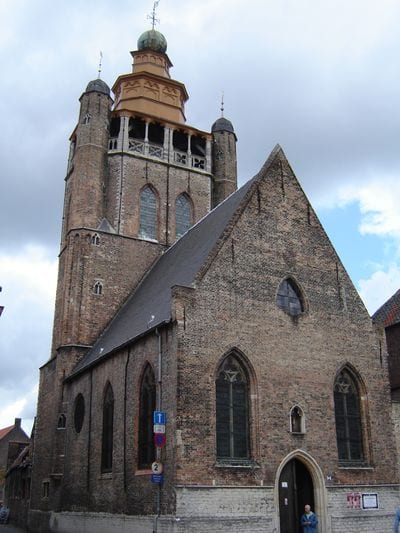
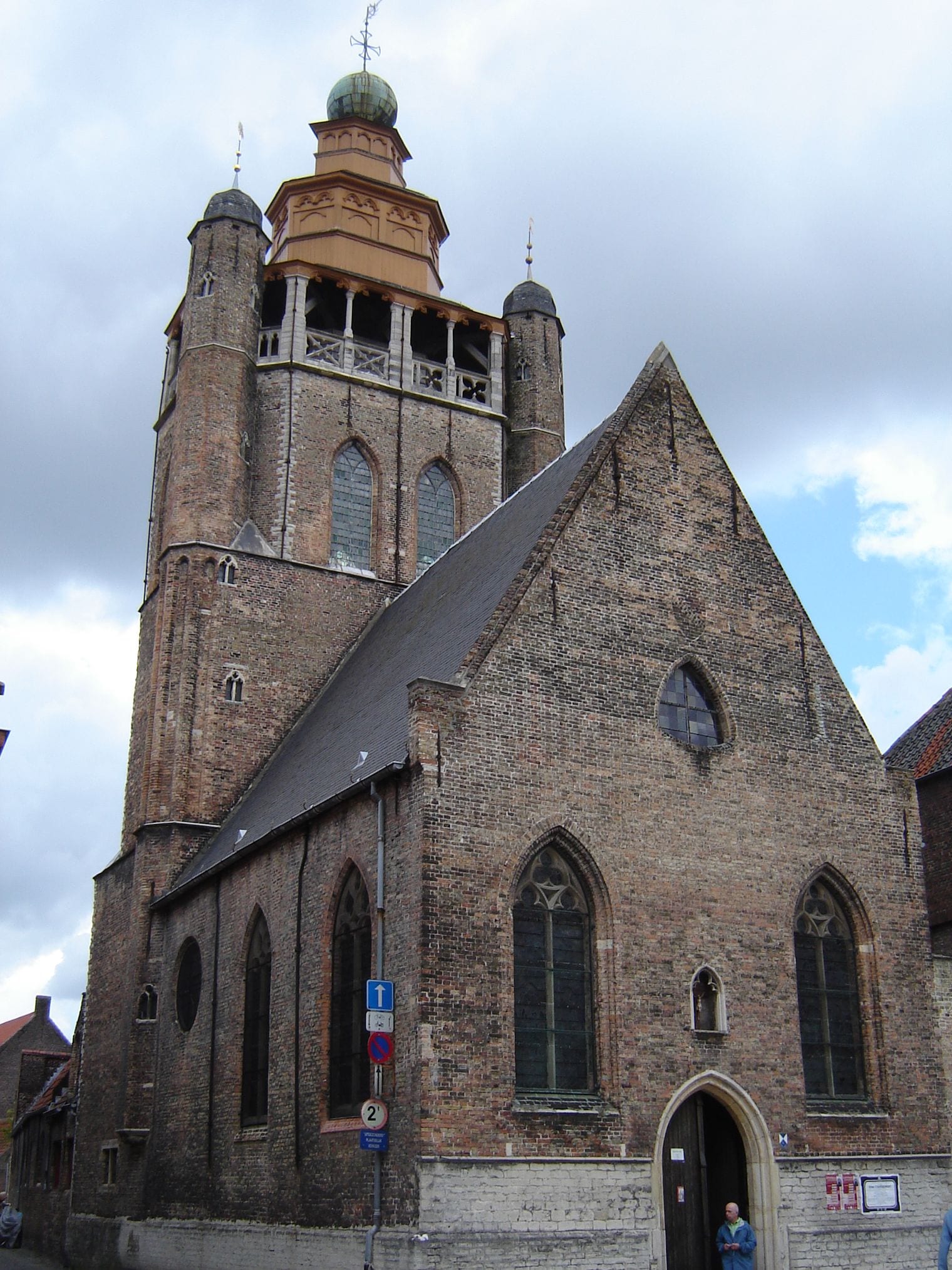
The Jeruzalem Church (Jerusalem Chapel) is one of the most unusual buildings in Bruges. It was built in the first half of the 15th century by the Adornes family, a wealthy merchant dynasty, and modelled on the Church of the Holy Sepulchre in Jerusalem, which members of the family had visited on pilgrimage.
Inside lies the tomb of Anselm Adornes and his wife Margareta van der Banck. The chapel is one of the few privately owned churches in Belgium, and the Adornes Domain around it includes a museum in the former almshouses, in the quiet Sint-Anna quarter beside the Folklore Museum.
Plan your trip
Best Time to Visit Bruges
Spring and early fall are the sweet spot: mild weather for walking, flowers in the parks and along the canals, and fewer crowds than in high summer, when day-trippers pack the Markt and the boat landings from late morning. Summer brings long evenings and the busiest canal season, while Ascension Day in late spring is the day of the Procession of the Holy Blood.
Winter is cold, damp and dark early, but the city is at its quietest, and in December the Markt hosts a Christmas market that is smaller and cosier than Europe's biggest Christmas markets. Whatever the season, the old town is busiest at weekends, so a weekday visit and an overnight stay let you enjoy it early and late.
Getting to Bruges
Bruges is easiest to reach by train. Direct trains run from Brussels in about an hour, stopping at Ghent on the way, and the city's station sits on the southwest edge of the old town, a pleasant walk or short bus ride from the Markt. Brussels Airport also has rail connections, and the coastal towns are a short train ride away.
From London, the Eurostar to Brussels makes a car-free trip simple, with a change onto a Belgian train; travellers from Paris usually come the same way via Brussels. Drivers arrive on the E40 motorway, which links Bruges with Ghent, Brussels and the coast.
Getting Around Bruges
The old town is compact, flat and ringed by canals, so walking is by far the best way to get around; most of the sights in this guide are within a few minutes of one another. Cycling is popular too, with bike rentals near the station and in the centre, and local buses link the station with the Markt.
Driving inside the old town is slow and parking is limited, so leave the car at the large car park by the station and walk or take the bus in. Horse-drawn carriages and canal boats are scenic extras rather than transport.
Where to Stay in Bruges
Staying inside the canal ring is the way to see Bruges at its best, early in the morning and after the day-trippers leave. The streets around the Markt and the Burg put you in the thick of things, while the quieter Sint-Anna quarter to the east and the lanes near the Beguinage and the Minnewater in the south feel calmer and more residential.
For better value and an easy train connection, look around 't Zand and the station, a short walk from the centre. Book well ahead for summer weekends and the December holiday season, when rooms in the old town fill up fast.
Where to Eat in Bruges
Flemish comfort food is the thing to try: mussels with fries, beef stewed in beer, waffles, and of course fries from a frietkot, best eaten on the move. Bruges is also a great place to taste Belgian beer, with cafés pouring long lists of Trappist and abbey ales and the local brews of De Halve Maan, and the city is full of chocolatiers selling pralines.
The terraces on the Markt are about the view more than the food; for better value, wander a few streets away into the lanes around Vlamingstraat, Langestraat and the Sint-Anna quarter, or around 't Zand, where locals eat.
Day Trips from Bruges
Ghent, about half an hour east by train, is the obvious day trip: a livelier university city with its own medieval waterfront, castle and cathedral. Brussels, about an hour away by train, adds the Grand-Place, the Atomium and big museums, while the village of Damme, a few kilometres northeast, makes a lovely bike ride along the tree-lined canal.
The Belgian coast is a short trip north, from the port of Zeebrugge, which is part of Bruges itself, to the beach resorts around it. History lovers can head southwest to Ypres and the First World War battlefields and memorials of Flanders Fields, roughly an hour away by car.
Before you go
Mobile dataAn eSIM gives your phone local data when you land, with no SIM card to swap.via AiraloGet an eSIM
We may earn a commission when you buy through these links, at no extra cost to you. How we make money.
Walk south through the Beguinage to the Minnewater as the light softens, then head back north past the Fish Market to the canals around Jan van Eyckplein in the historic centre, which are at their most atmospheric after dark.
Bruges is best known for its remarkably preserved medieval centre, a UNESCO World Heritage Site laced with canals. Its signature sights are the Belfry of Bruges and the Markt below it, the Basilica of the Holy Blood, Michelangelo's Madonna in the Church of Our Lady, and the romantic Minnewater, along with chocolate, lace and Belgian beer.
Is Bruges worth visiting?
Yes. Few European cities have kept their medieval streetscape so intact, and Bruges packs the Belfry, Flemish Primitive art, canals, a working brewery, windmills and city gates into an old town you can walk across easily. It gets crowded at midday, so staying overnight to enjoy it early and late makes it far more rewarding.
How many days do you need in Bruges?
One full day covers the main sights, the Belfry, the Markt and the Burg, a canal boat tour and the Church of Our Lady, but two days is ideal. A second day leaves time for the Groeninge Museum, Saint John's Hospital, a brewery tour and the quieter Sint-Anna quarter, windmills and city gates.
What can you do in Bruges for free?
Plenty: walk the Markt and the Burg, photograph the Rozenhoedkaai, visit the courtyard of the Beguinage, stroll around the Minnewater and over the Boniface Bridge, relax in Koningin Astridpark, browse the Fish Market, and follow the ramparts past the Kruispoort, the windmills and the surviving city gates. Simply wandering the canals is free and unforgettable.
Can you visit Bruges as a day trip from Brussels?
Yes. Direct trains link Brussels and Bruges in about an hour, so a day trip is easy, and it is the way many visitors first see the city. Arrive early, start at the Belfry and the Markt, and take a canal boat before the crowds peak; but if you can, stay a night to see Bruges at its quiet best.
Sources & updates
How this guide was checked
Checked before launch
Sources cited
35
Publishers
15
Every place on this list was confirmed open and pinned on the map before publication, and what we say about each one was checked against its own website or an official source.
A PDF with a box to tick for every place. Confirm your email to download it, and get one email every Thursday with our newest guides for the places you tick.
Free Bruges printable checklist
All 35 places in one PDF
Tick them off as you go. Confirm your email to download it, plus one email every Thursday with new guides for the places you tick.
We use cookies to analyse site traffic and improve your experience.
You can accept or reject analytics cookies. See our
May we use analytics cookies? See ourCookie Policy.