We build and rank every list first. Booking links come after, and only where
a partner sells a ticket, tour or stay for that exact place, so a place with
nothing to book is listed exactly as prominently as one you can book.
So how do we earn? Some links on this page go to booking
partners, and if you book tickets, tours or a stay through
one, we may earn a commission. It costs you nothing extra.
That commission never decides which places make the list, the order they
appear in, or what we write about them. No entry is sponsored or a paid
placement.
19 Best Things to Do in Stockton, California (2026)
By the City Viking editorial teamPublished 19 places · 16 min read
Fact-checked Checked before launchOct 23, 202619 sources13 publishers5 tourism boards6 encyclopedias & research8 venues & other sitesPublished · Oct 23, 2026Researched and checked before it went liveClick for every source and the full change log.
Short answer
Stockton is known for its Gold Rush roots, its working inland port and its Cambodian, Filipino and Mexican communities. Start with the Haggin Museum and Victory Park, then spend the evening on the downtown waterfront with a Stockton Ports game at Banner Island Ballpark or a show at the Bob Hope Theatre. One full day covers the highlights; give it a weekend to add Pixie Woods, Oak Grove Regional Park and Wat Dhammararam.
Stockton grew from a Gold Rush supply camp on the San Joaquin River into one of California's inland ports. Its story lives on in a 1930 movie palace, an 1861 garden cemetery, the first Sikh gurdwara in the United States, and Cambodian, Filipino and Mexican communities that shape how the city eats and celebrates.
This guide ranks 19 things to do, from the Haggin Museum and the downtown waterfront to oak-shaded parks, minor league baseball and a short-track speedway. One full day covers the highlights; give it a weekend to add a show, a ballgame and the temples on the city's edges.
Stockton is named for Commodore Robert F. Stockton and was the first community in California with a name of neither Spanish nor Native American origin.
The Caterpillar name was born here: in 1904 Stockton manufacturer Benjamin Holt tested the first workable continuous-track tractor, and a remark that it crawled like a caterpillar stuck.
Although it sits far inland, Stockton is a working seaport; the Port of Stockton lies about 75 nautical miles east of the Golden Gate Bridge, reached by a deepwater channel completed in 1933.
Stockton's Little Manila grew from what was historically one of the largest Filipino communities in the United States.
The Stockton Symphony, founded in 1926, is the third-oldest professional orchestra in California, after the San Francisco Symphony and the Los Angeles Philharmonic.
Stockton has been named an All-America City five times: in 1999, 2004, 2015, 2017 and 2018.
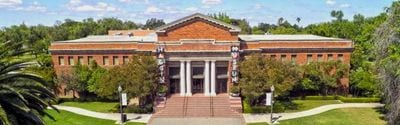
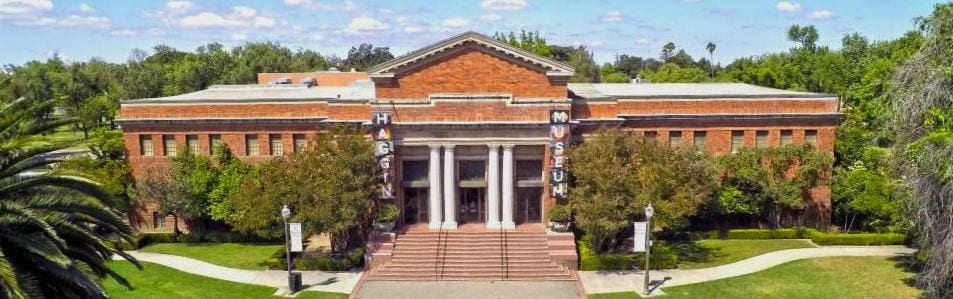
The Haggin Museum is Stockton's cultural anchor, an art and local history museum that opened in 1931 inside Victory Park. Its European galleries hold paintings by Rosa Bonheur, William-Adolphe Bouguereau, Jean-Léon Gérôme and Pierre-Auguste Renoir, hung alongside Hudson River School and California landscapes, including the region's largest group of works by Albert Bierstadt.
The museum also keeps the largest public collection in the country of original art by J. C. Leyendecker, the illustrator behind decades of famous magazine covers. Its history galleries trace the San Joaquin Valley from the pioneer years onward, and the Holt wing shows how Stockton-built track-type tractors changed farming, including a restored Holt Caterpillar tractor.
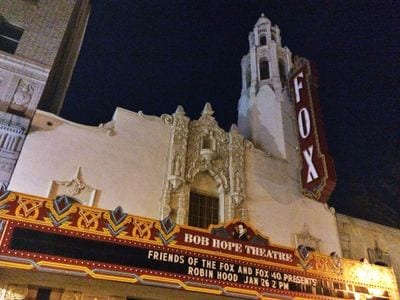
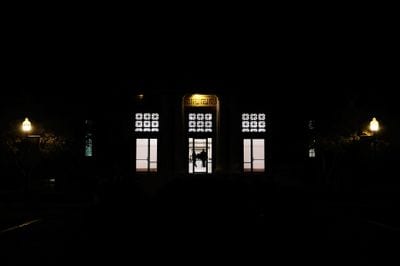
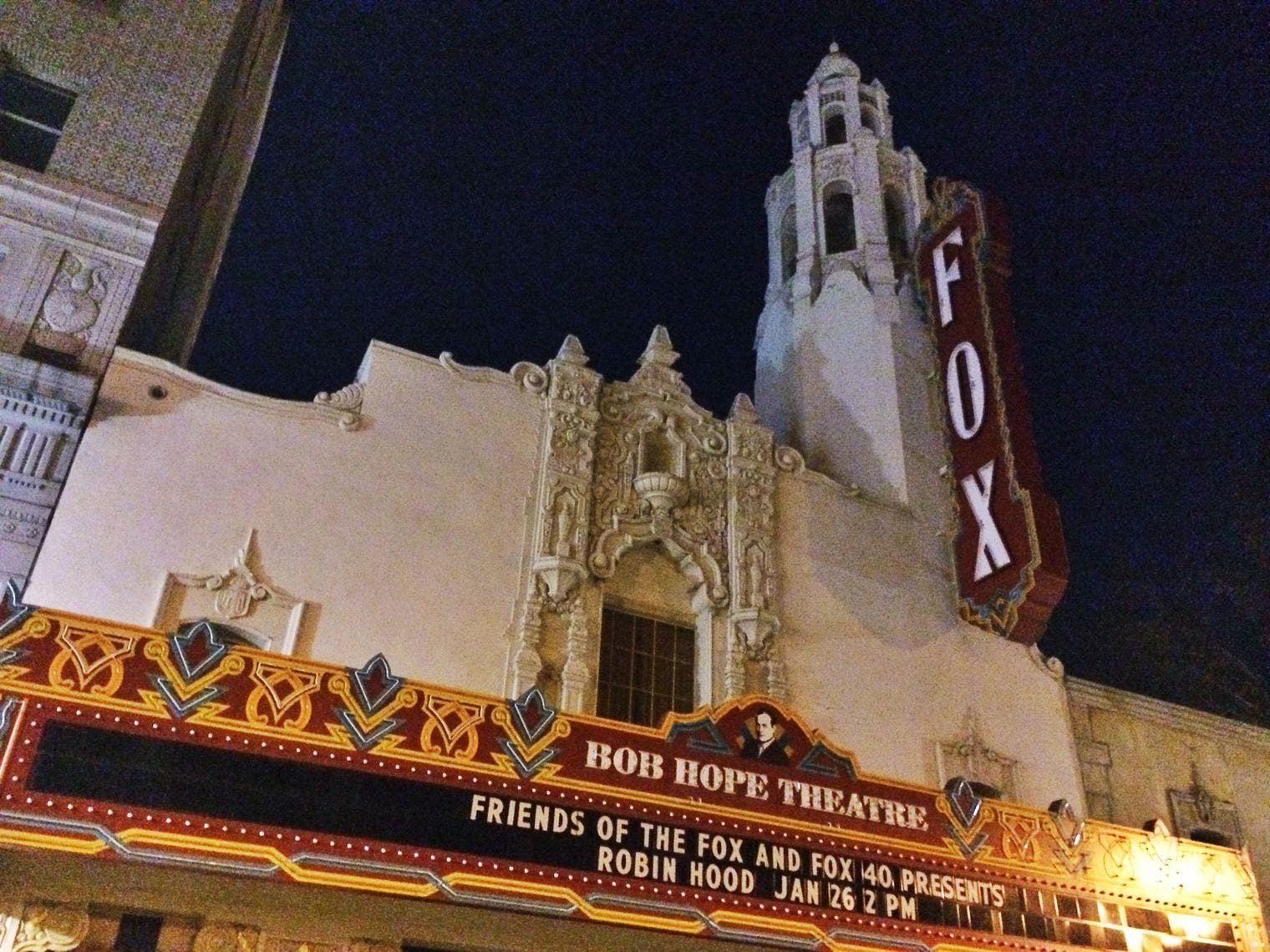
The Bob Hope Theatre opened in 1930 as the Fox California, a downtown movie palace with a two-story rotunda and seats for about 2,500. Restored and renamed in 2004 at the request of Stockton developer Alex G. Spanos, a close friend of the comedian, it is listed on the National Register of Historic Places.
Today it books touring concerts, comedy, local productions and classic film nights, and a restored 1928 Robert Morton theater organ, which once accompanied silent movies in Seattle, is played at classic film screenings. Arrive early whatever the show, because the rotunda and the auditorium are as much of the evening as the act on stage.
Pixie Woods has been a Stockton childhood ritual since 1954, a storybook-themed amusement park for small children tucked inside Louis Park on the city's west side. It was built with gifts from local businesses and clubs, is run by the Pixie Woods Foundation with the city, and opens seasonally from late spring into fall; more than a million visitors have passed through its rainbow gates.
The rides and play areas are sized for preschoolers and young grade-schoolers, so plan it around little ones rather than teenagers. Louis Park around it has room for a picnic afterward, and the Stockton Maritime Museum is on the same stretch of Monte Diablo Avenue, which makes the two an easy pairing.
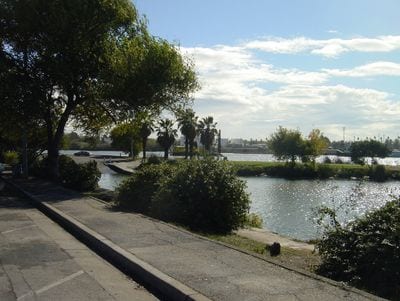
Victory Park is the leafy heart of central Stockton, a park from the 1910s that took its name from the Allied victory in World War I. Palm trees line its paths, there is a pond, and there are playgrounds, ball fields and picnic spots under the old trees.
It is the natural companion to the Haggin Museum, which stands within the park on Pershing Avenue, so a gallery visit and a walk here fill an easy afternoon. In summer the park hosts an evening concert series, when locals spread out blankets and picnic suppers on the lawn.
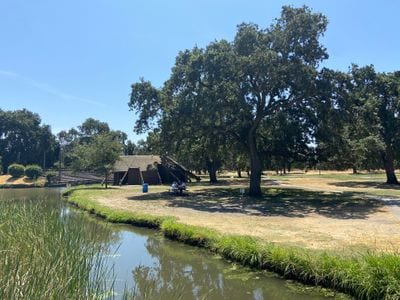
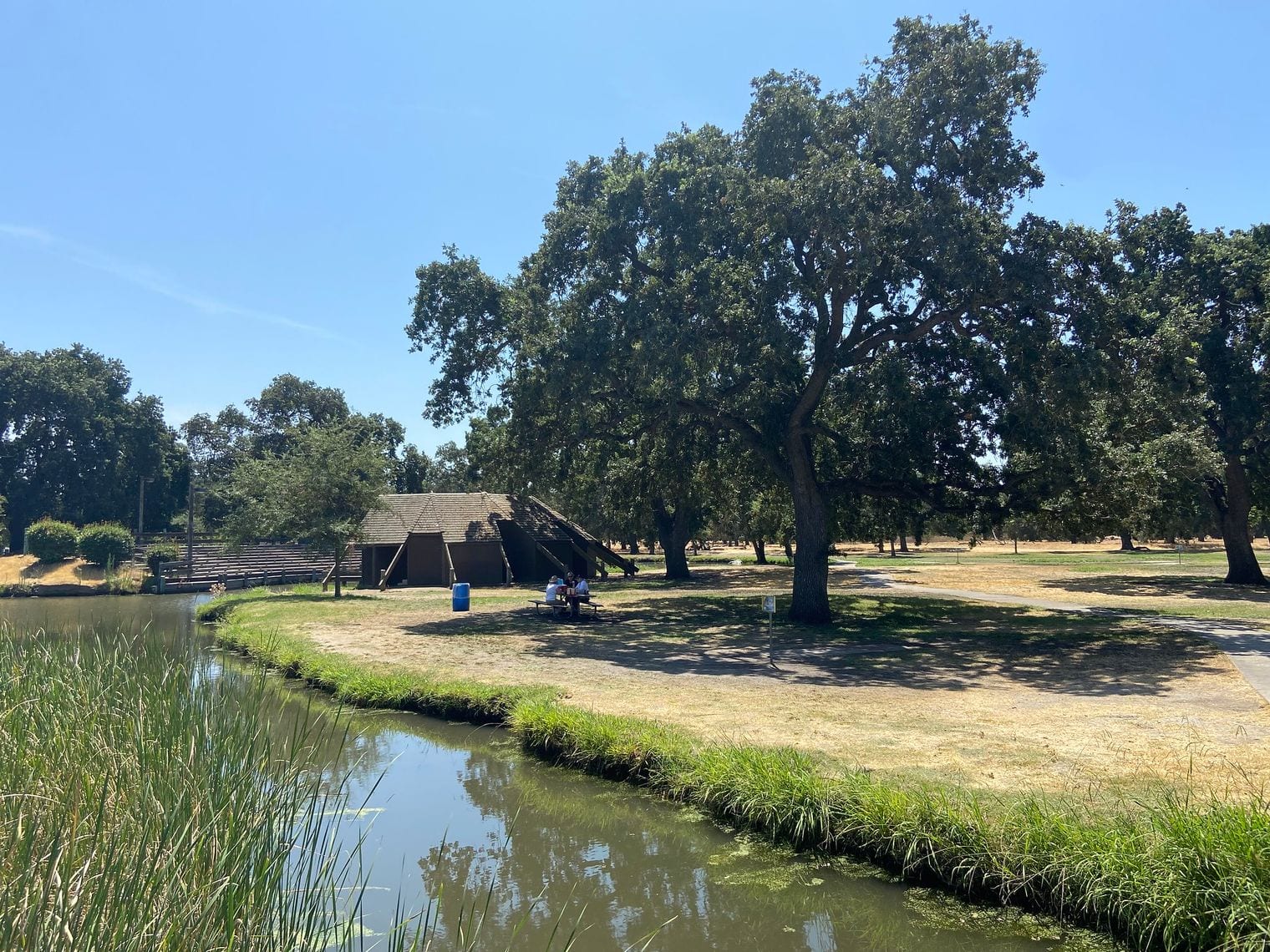
Oak Grove Regional Park, which San Joaquin County now calls Shumway Oak Grove Regional Park, protects about 180 acres of oak woodland on Stockton's northern edge off Eight Mile Road. It is the city's best quick escape into nature, with nature trails winding under the old trees and a nature center that runs weekend programs.
A small lake is stocked for fishing, and paddleboats come out on summer weekends. There is also a disc golf course, playgrounds and plenty of shaded picnic tables, so families can easily spend a slow half day here.
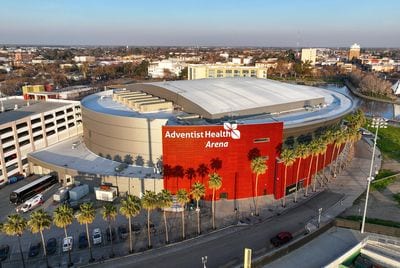
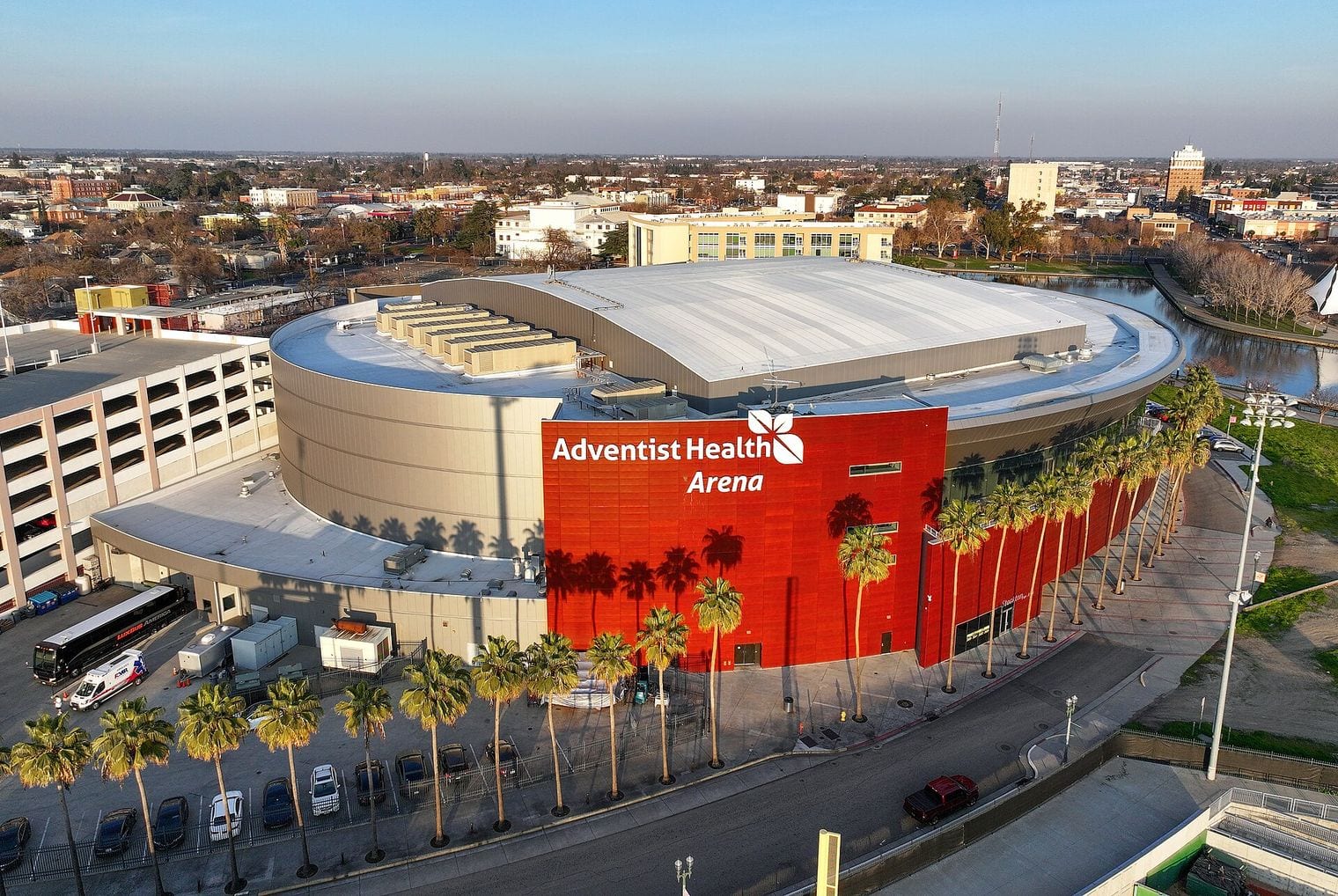
Adventist Health Arena opened on the downtown waterfront in 2005 as Stockton Arena and took its current name in 2023. With room for up to about 12,000 people, it is the city's big indoor stage and the home court of the Stockton Kings of the NBA G League.
Between basketball and hockey nights, the calendar fills with touring concerts, comedy, family shows and community events. Check what is on before you plan a visit; a game or a concert here pairs well with dinner downtown and a walk along the waterfront next door.
The Children's Museum of Stockton fills a downtown building on Weber Avenue with hands-on, interactive exhibits for young children, including Amazing Airways and a Health Lab. Everything is built to be touched and played with, which is the point.
It makes a good rainy-day or hot-afternoon stop, and it is a short walk from Weber Point, so families can follow it with a run through the waterfront fountain or a picnic on the lawn.
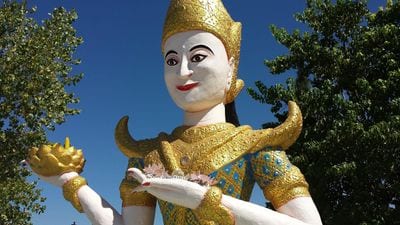
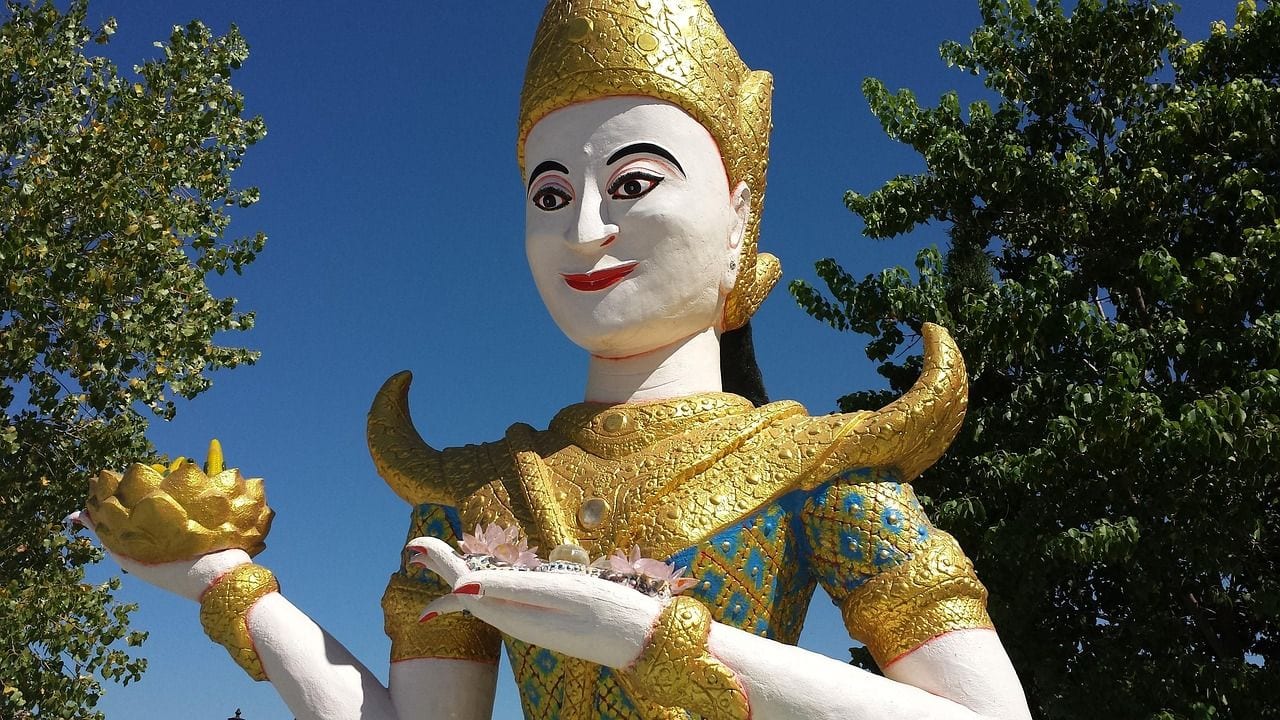
Wat Dhammararam, often called the Stockton Cambodian Buddhist Temple, was built by Cambodian refugees who settled in the city in the 1980s and raised the money for it themselves. Its grounds on Carpenter Road, just outside the city limits, are filled with dozens of larger-than-life, brightly painted statues that tell the story of the Buddha's life, a display Visit Stockton bills as the largest of its kind in California.
The grounds are free to explore. Remove your shoes and hat before entering any building and give the monks room, and if you can, come in April for Cambodian New Year, when the temple's celebration draws thousands.
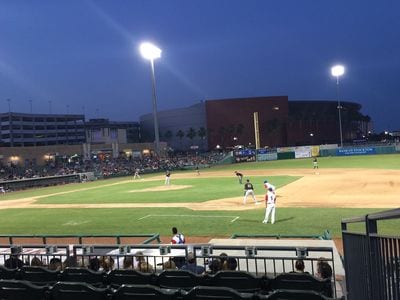
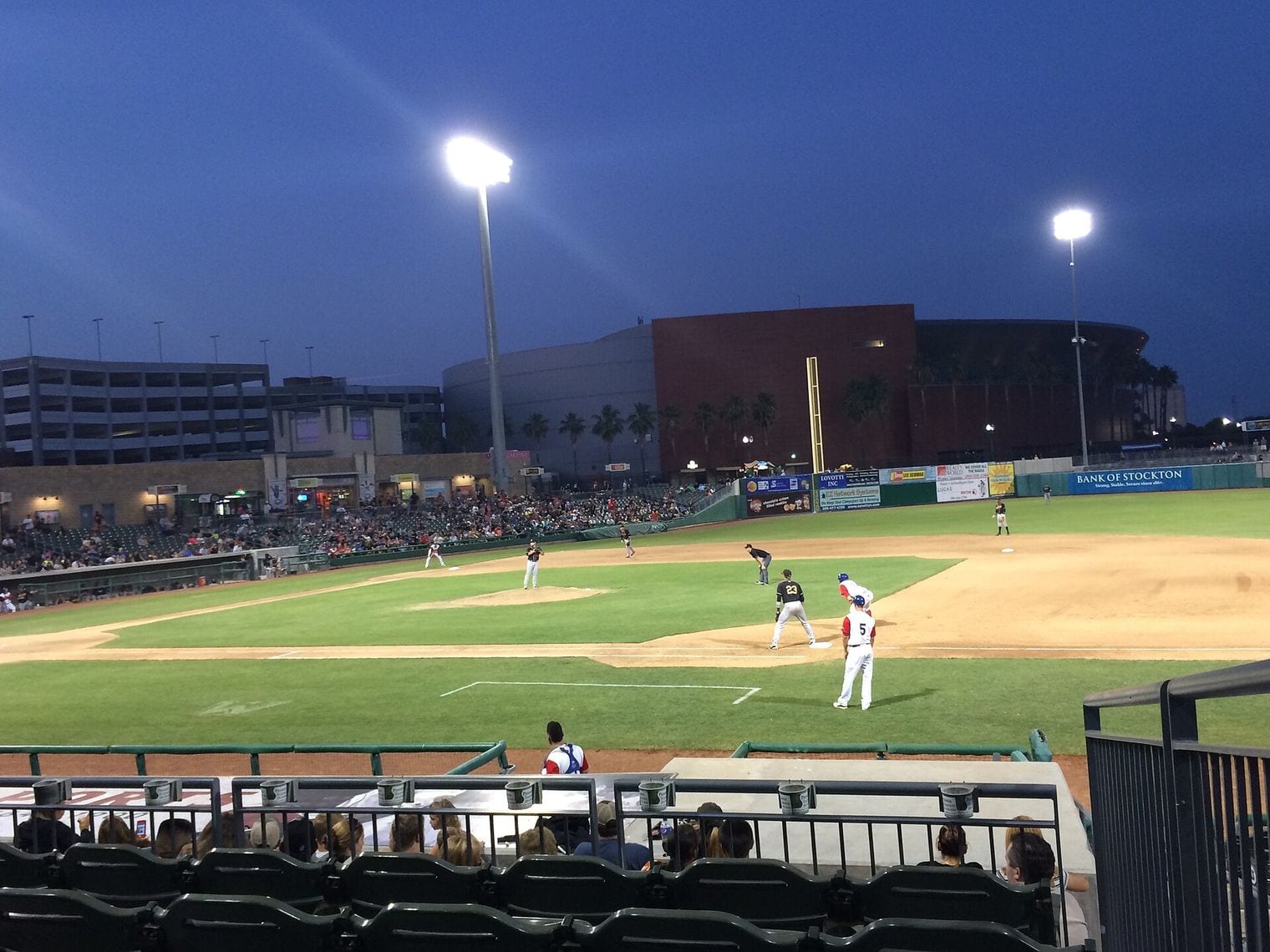
Banner Island Ballpark has been home to the Stockton Ports, the city's minor league team in the California League, since it opened on the downtown waterfront in 2005. It seats about 5,200, which keeps every seat close to the field.
Minor league baseball here is cheap, casual and easy to love, with promotions and theme nights through a season that runs from spring into early fall. Pair a game with a walk around the waterfront, since the arena and Weber Point are only a few minutes away on foot.
Free printable checklist of all 19 places
Tick them off as you go. Confirm your email to download it, plus one email every Thursday with new guides for the places you tick.
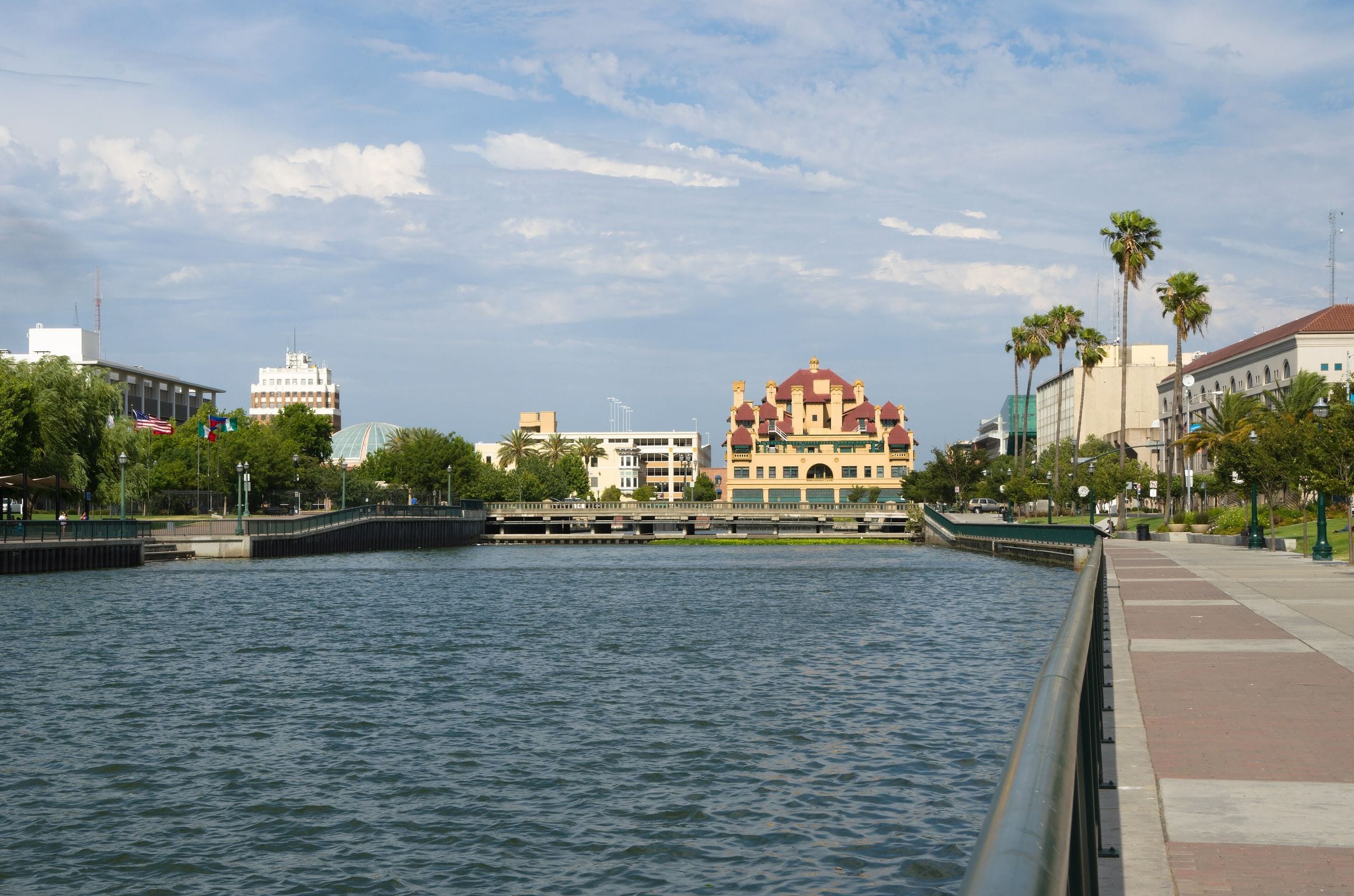
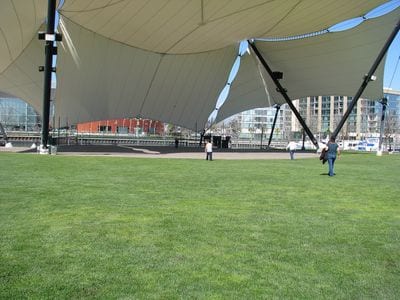
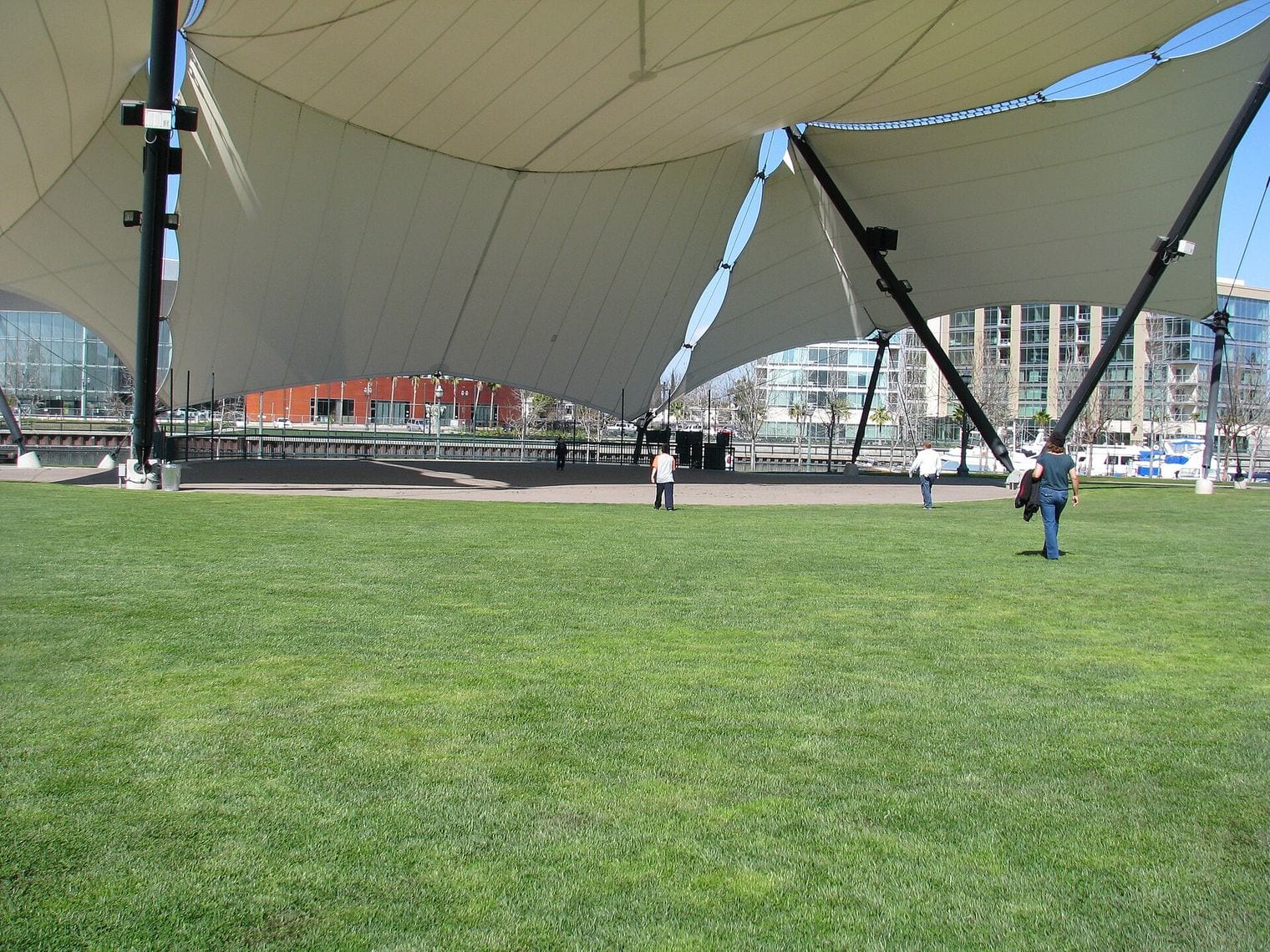
Weber Point is where Stockton began: the city's founder, Captain Charles Weber, built his house on this point at the head of the Stockton Channel in 1850, and the site is now a California Historical Landmark. Today the Weber Point Events Center has a broad lawn, a stage under a fabric shade canopy for festivals and concerts, and an interactive fountain that doubles as a summer splash pad.
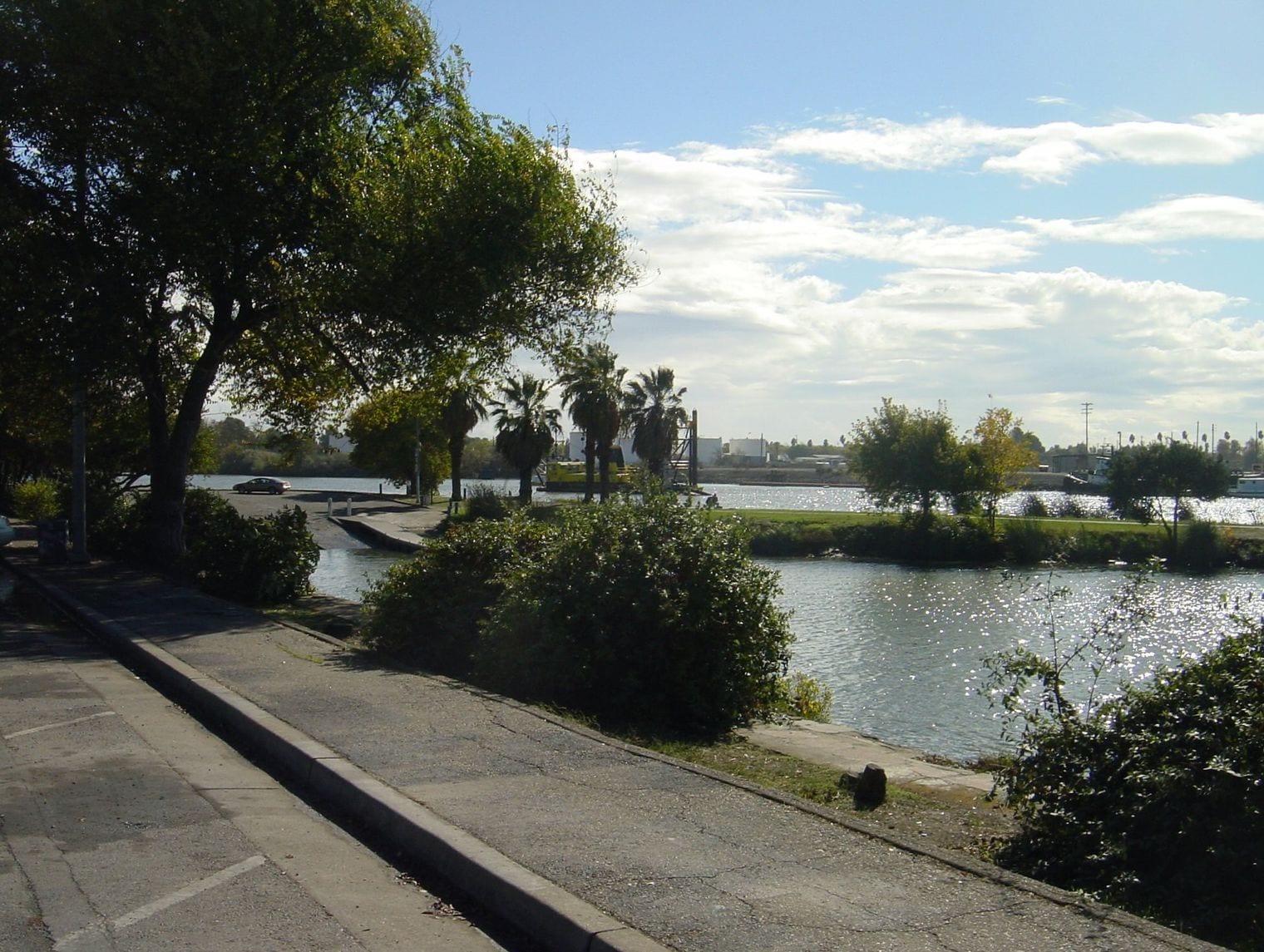
From the point, the Joan Darrah Promenade follows the water past the downtown marina, with stainless steel and bronze images set into the walkway that tell the area's story. It is the best stroll in the city at sunset, and it links the arena, the ballpark and the Waterfront Warehouse.
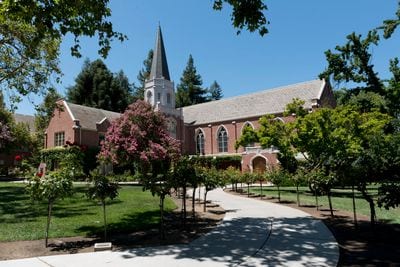
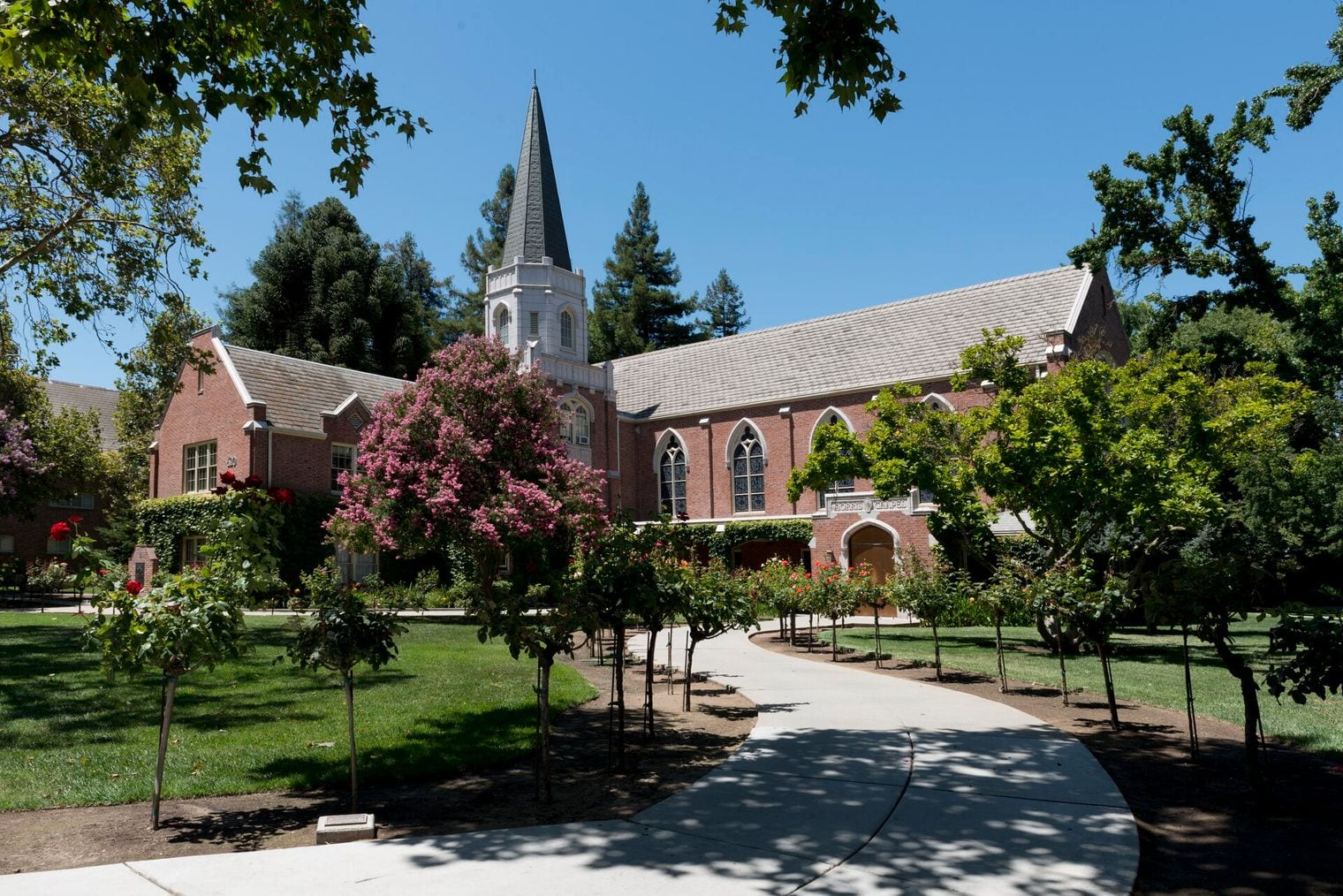
The University of the Pacific was the first university chartered in California, in 1851, and moved to Stockton in 1924. With its brick buildings, rose gardens, lawns and the landmark Burns Tower, the campus looks so much like an East Coast Ivy League school that Hollywood has filmed here many times, including scenes for Raiders of the Lost Ark.
Walk the grounds and look into Morris Chapel, then visit the Holt-Atherton Special Collections, home to the largest collections of John Muir's papers. Pacific also founded the first conservatory of music on the West Coast, and its Brubeck Institute honors alumnus Dave Brubeck, so check for a recital or a jazz night.
1212. Miracle Mile
Local Government Office~1.1 miles (1.8 km) from centre
Laid out in 1922, the Miracle Mile is Stockton's classic shopping street, a stretch of Pacific Avenue between Alpine Avenue and Harding Way. Developer Joe Plecarpo modeled it on a Wilshire Boulevard business district in Los Angeles and even bought palm trees from a Los Angeles nursery, some of which still line the street.
Today it is the city's best strip for browsing independent shops, coffeehouses, bistros and bars, and it sits right next to the University of the Pacific campus. Come for an unhurried lunch or an evening out, when the restaurants and nightlife bring the avenue to life.
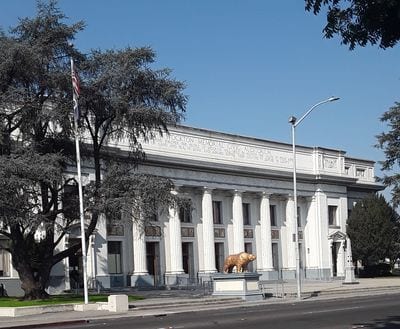
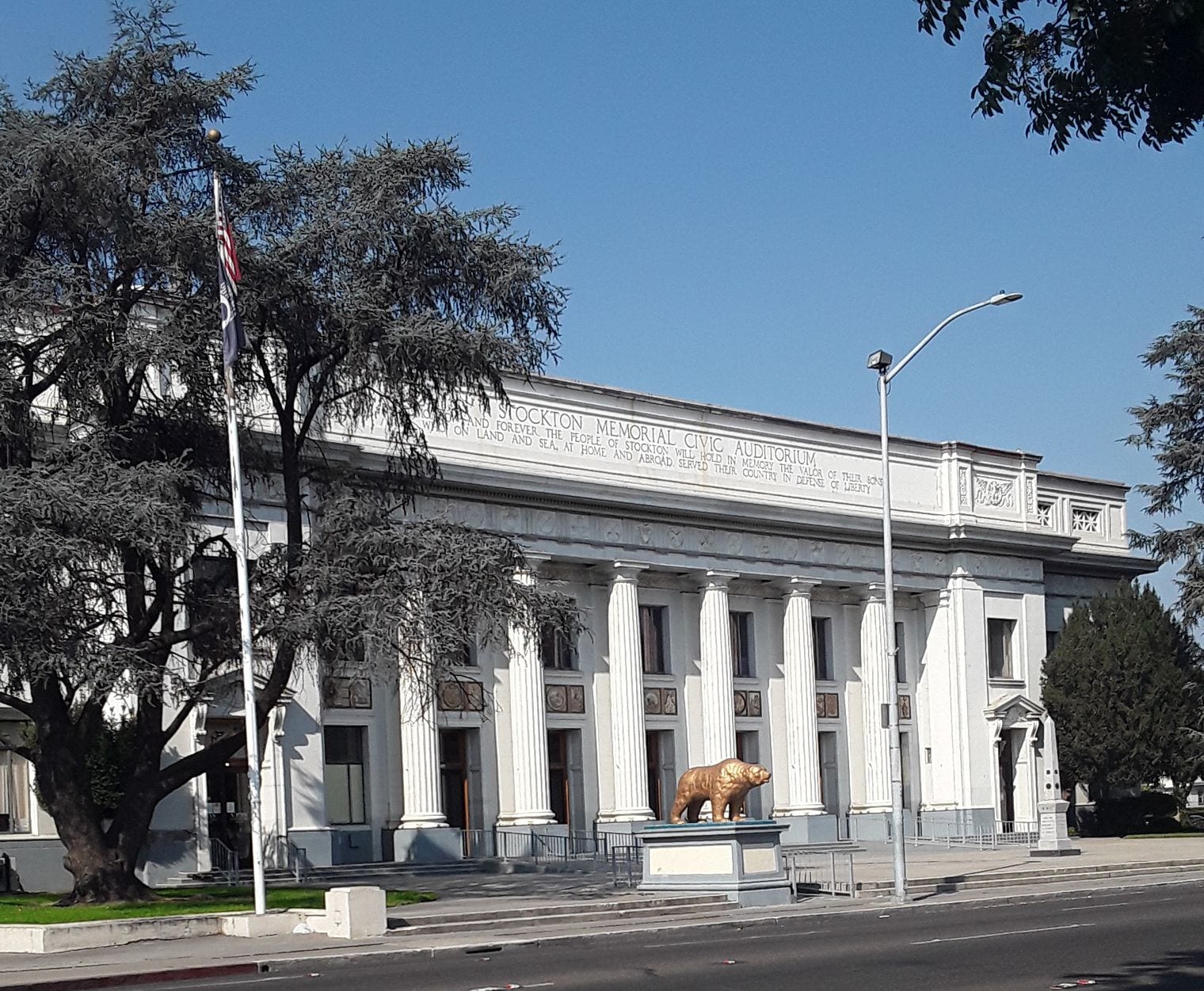
The Stockton Memorial Civic Auditorium opened in 1925, funded by Stocktonians through bond drives to honor local servicemen who died in World War I. It can seat about 5,000 and was designated a Stockton Historic Landmark in 1990.
It still hosts graduations, shows, expos and community events. The grand old building shows its age, and restoring it is a long-running local cause, so most visitors admire its facade and bear sculptures on a downtown walk unless an event brings them inside.
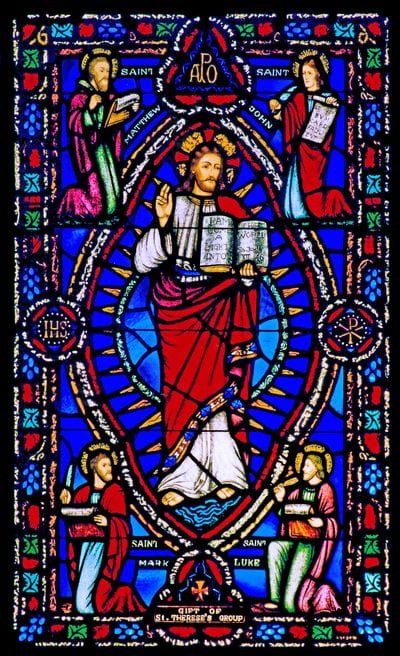
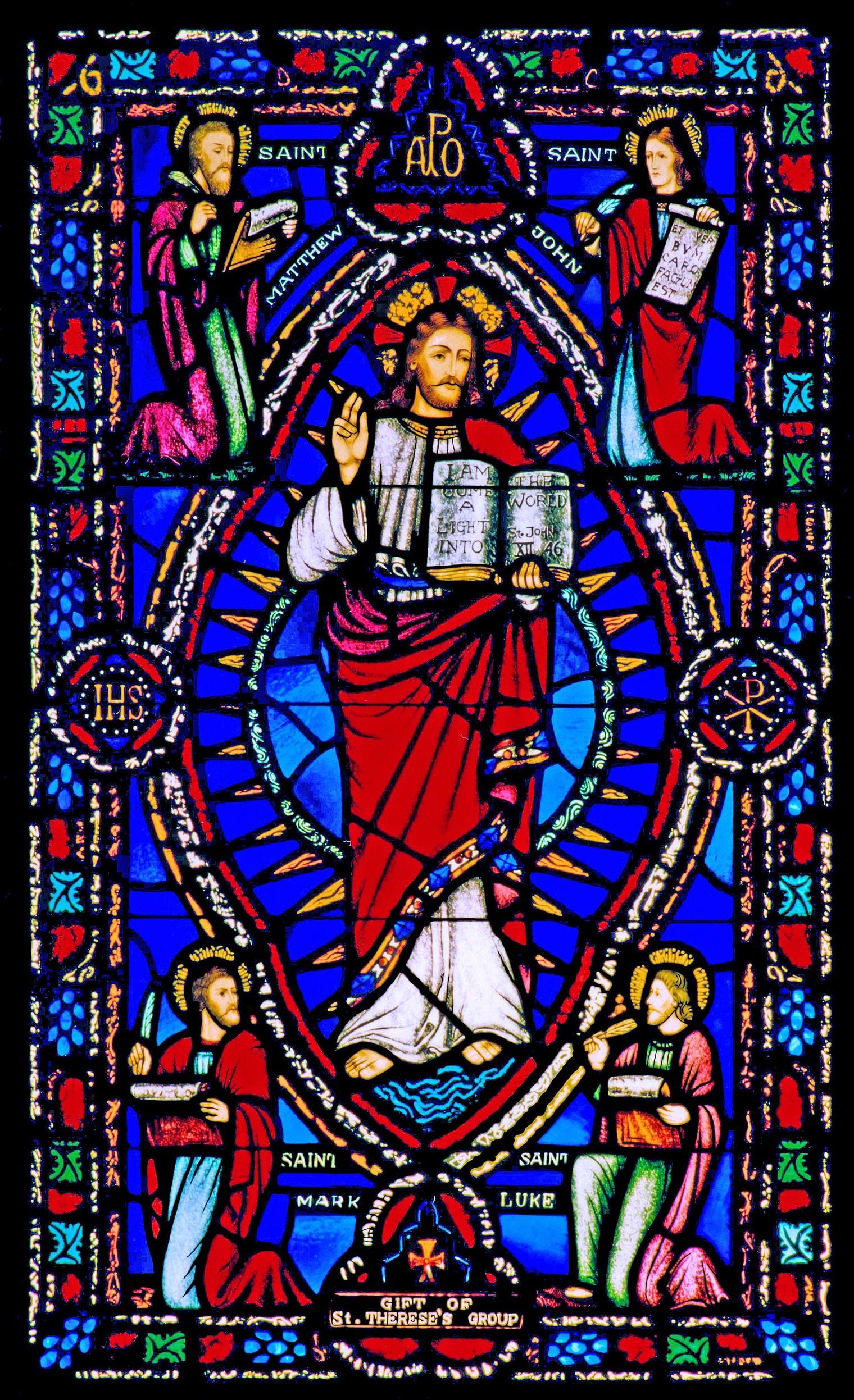
The Cathedral of the Annunciation, seat of the Catholic Diocese of Stockton, was dedicated in 1942 in a modified Gothic style, with a 92-foot belfry tower at its northeast corner. It stands in the older neighborhoods north of downtown, a short drive from Victory Park.
Inside, the draw is the stained glass, a set of windows on biblical themes that includes work by Carl Huneke. Step in quietly between services, and remember that it is an active parish first.
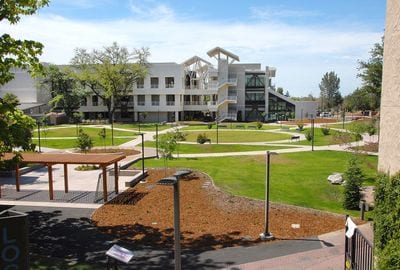
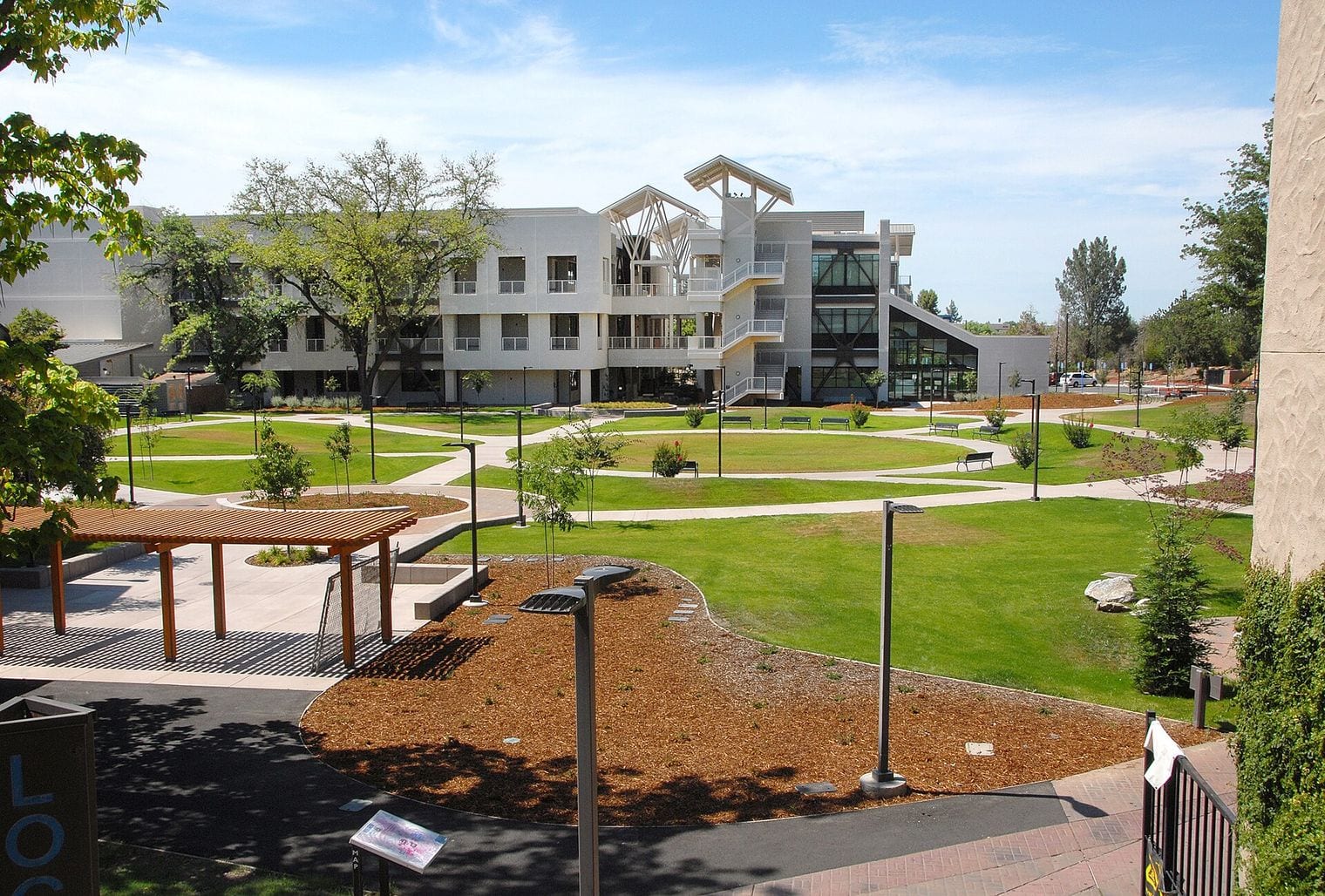
San Joaquin Delta College, founded in 1935, is worth a visit for its stages rather than its classrooms. The Delta Center for the Arts holds the Warren Atherton Auditorium, a theater of about 1,400 seats where the Stockton Symphony performs, plus the smaller Tillie Lewis Theater of about 400 seats.
The campus is also home to the Clever Planetarium and Earth Science Center, which has long opened its dome to the public for star shows alongside school field trips. Check the college calendar for public nights, concerts and festivals before you go.
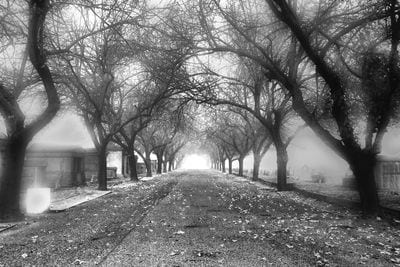
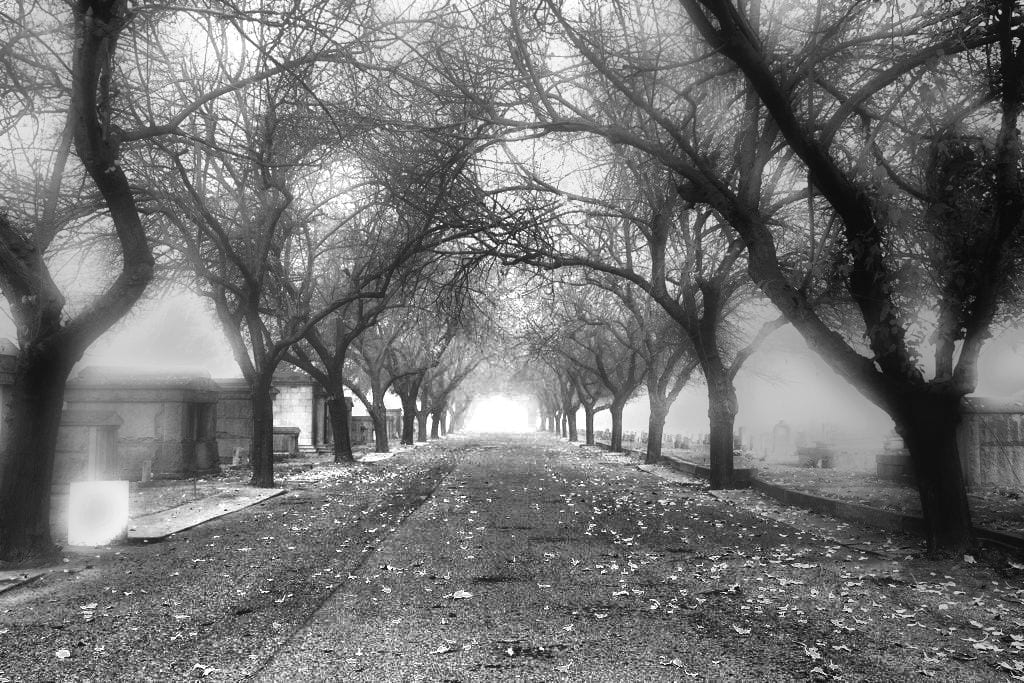
Stockton Rural Cemetery was founded in 1861 in the tradition of the garden cemetery, and its 75 acres are shaded by hundreds of oaks, pines and other trees. Pioneers, builders and everyday families of the city rest here, and the old monuments read like a who's who of the city.
It is a peaceful place for a slow walk and a good one for history lovers: the cemetery association publishes tour material and profiles of its notable residents, so you can trace the people behind Stockton's street and building names. Visit respectfully, since it is still an active cemetery.
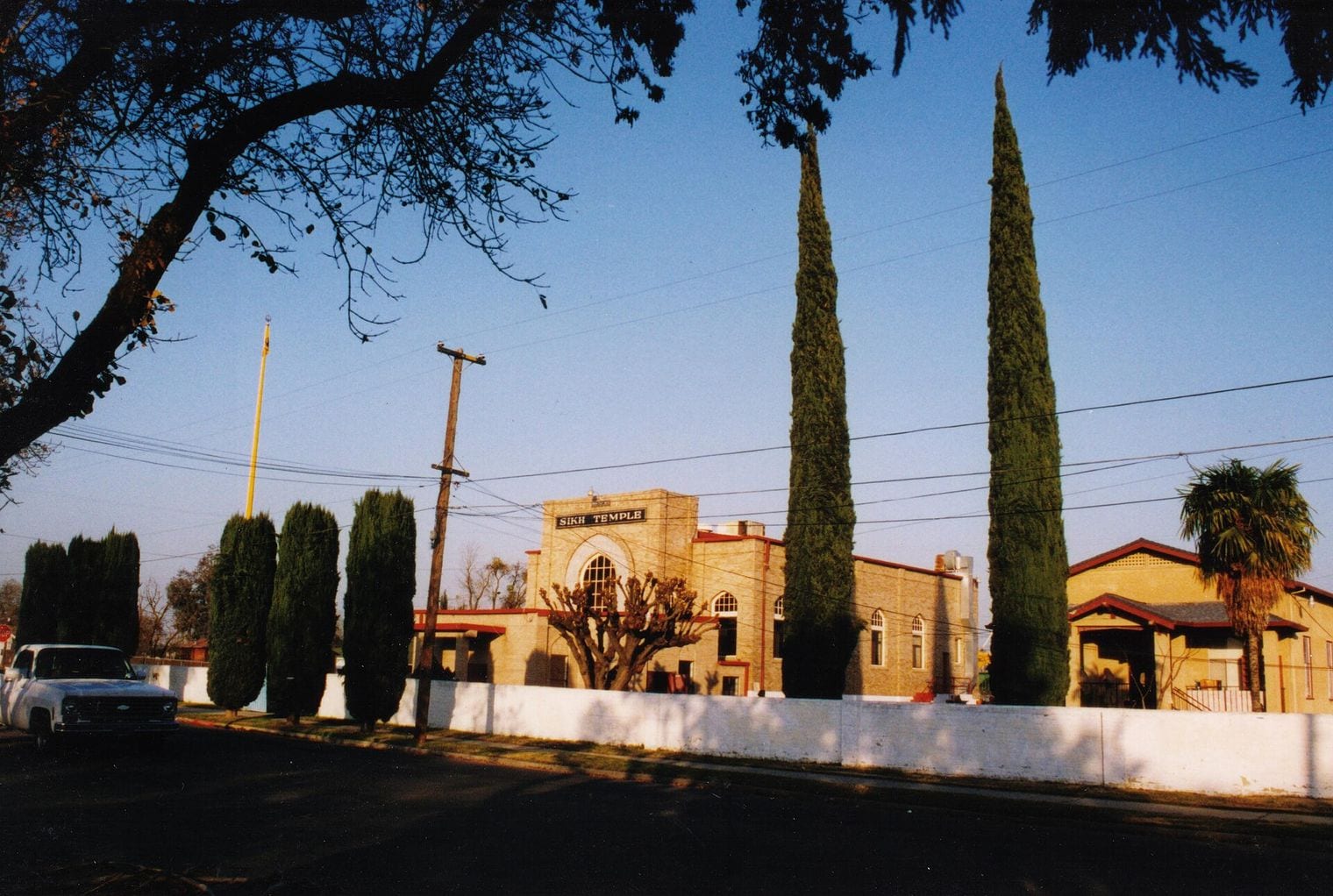
Gurdwara Sahib Stockton was founded in 1912 by the Pacific Coast Khalsa Diwan Society and is recognized as the first Sikh house of worship in the United States. It began in a house on South Grant Street, set up by Punjabi farmers who had settled in the San Joaquin Valley.
It also played a role in history beyond the faith, backing the Ghadar movement and sponsoring the first Punjabi-language newspaper in the country. Visitors are welcome as at any gurdwara: cover your head, remove your shoes and follow the lead of the congregation.
The USS Lucid is a wooden-hulled minesweeper launched soon after the Korean War that served four tours in Vietnam. After decommissioning she spent years as a houseboat and then as a scrap dealer's warehouse in the Delta, before being moved to Stockton in 2011 to become the centerpiece of the Stockton Maritime Museum.
Volunteers are still restoring her, and the ship opens to the public on tour days and open houses rather than on a daily schedule, so check the museum's calendar before you go. Aboard, you get a close look at how a Navy crew lived and worked on a Cold War-era minesweeper.
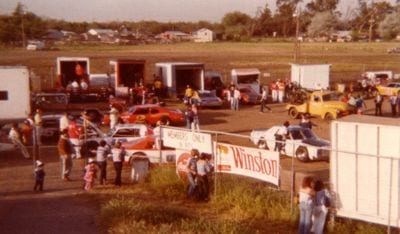
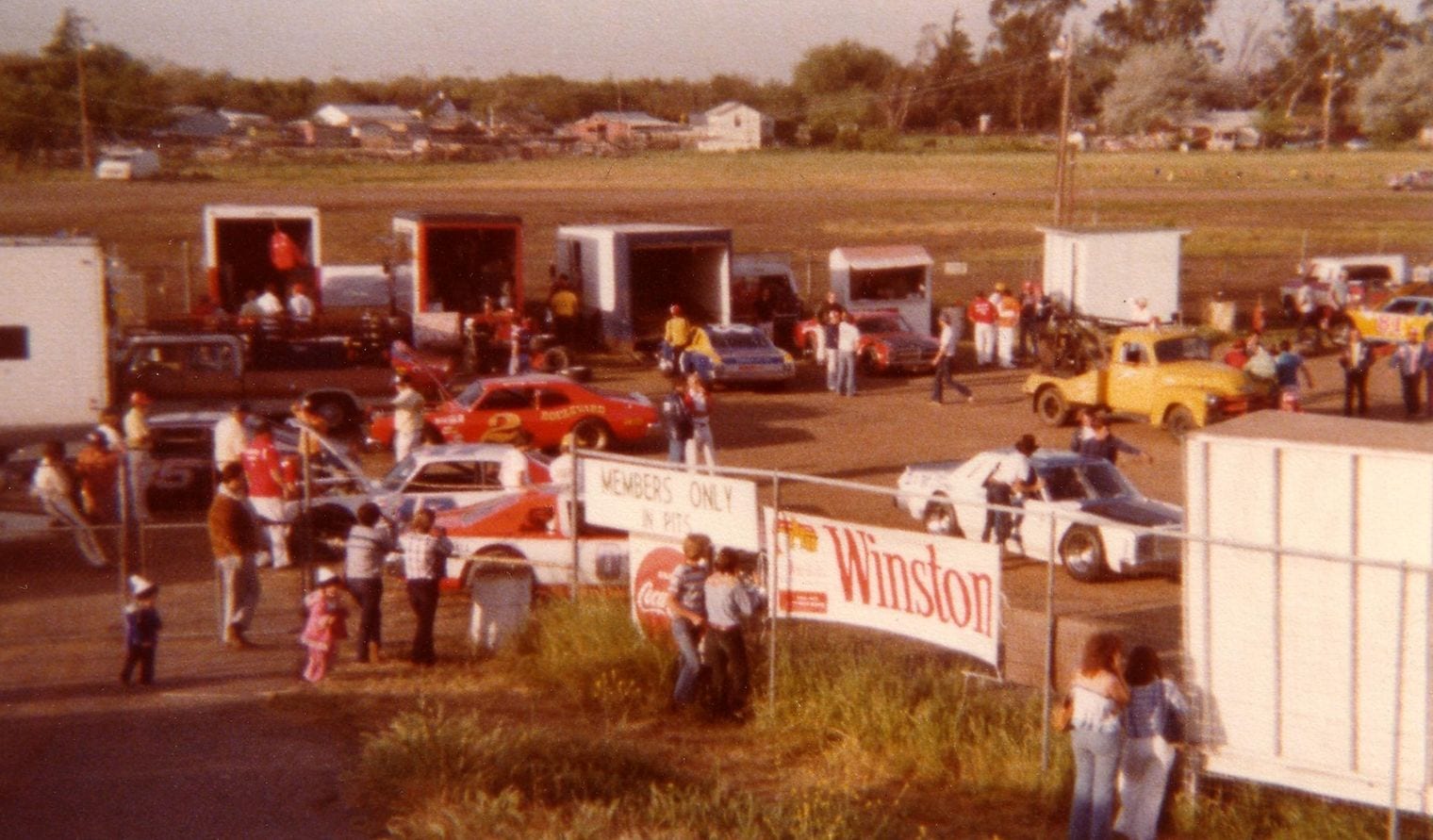
Stockton 99 Speedway opened in May 1947 as a dirt track and was paved the following year, and it has been racing ever since on a quarter-mile oval. Over the decades it has hosted events sanctioned by NASCAR and other series, making it one of the long-running short tracks of Northern California.
Race nights run from spring into fall, with late models and other local divisions trading paint close to the grandstands. It is loud, friendly and family-oriented, and a night here is a different side of Stockton from its museums and theaters.
Plan your trip
Best Time to Visit Stockton
Spring and fall are the sweet spots. From March to May the valley is green, the days are warm rather than hot, and April brings Cambodian New Year to Wat Dhammararam. September and October stay sunny and dry, the Ports are finishing their season, and the parks are at their most comfortable for walking.
Summer is hot, often well into the 90s or higher, but evenings cool off with the Delta breeze, and it is the season for Pixie Woods, the Weber Point fountain and concerts in Victory Park. Winter is mild and quiet, with occasional thick tule fog in the mornings, and it is the season for basketball at the arena.
Getting to Stockton
Stockton sits on two of California's main north-south highways, Interstate 5 and State Route 99, with State Route 4 running through the city toward the Bay Area. The local Stockton Metropolitan Airport has a small number of flights; most visitors fly into Sacramento International, about an hour's drive north, or Oakland International, a little over an hour west, with San Francisco International farther on.
Trains are a real option. Amtrak's San Joaquins route links Stockton with Sacramento, the East Bay and the Central Valley, and the Altamont Corridor Express commuter line runs between Stockton and San Jose.
Getting Around Stockton
Stockton is a driving city. The sights are spread out, from downtown and the waterfront to the Miracle Mile, the university and the parks on the city's edges, so a car is the easiest way to cover them, and parking is generally easy to find.
Downtown is the exception: the arena, the ballpark, Weber Point, the Children's Museum and the Bob Hope Theatre are close enough to walk between. Local buses run along the main corridors, and rideshare is widely available for evenings out.
Where to Stay in Stockton
Stay downtown near the waterfront if you are here for a game, a concert or a show, since the arena, the ballpark and the Bob Hope Theatre are all within walking distance. The Miracle Mile and the streets around the University of the Pacific suit visitors who want restaurants and coffee within a short stroll.
Brookside, on the west side near Interstate 5, is a quieter residential area with easy highway access, and north Stockton, along the main roads near Interstate 5 and Route 99, has the widest choice of chain lodging for road-trippers passing through.
Where to Eat in Stockton
Stockton's food reflects the communities that built it. Filipino cooking carries the legacy of Little Manila, Cambodian kitchens serve noodle soups and grilled dishes, Mexican taquerias and panaderias are everywhere, and Chinese restaurants continue a tradition that dates to the Gold Rush.
For a sit-down meal, the Miracle Mile has the densest mix of bistros, cafes and bars, and downtown fills up before games and shows. In spring, look for deep-fried asparagus, a San Joaquin County favorite.
Day Trips from Stockton
Lodi, about 20 minutes north, is the closest escape, with wine-tasting rooms among old-vine vineyards and Micke Grove Regional Park, home to a small zoo and a Japanese garden. About 35 minutes northwest, the Delta town of Locke is a National Historic Landmark district built by Chinese immigrants in the early 1900s, and the nearby Cosumnes River Preserve, about half an hour north, draws sandhill cranes in fall and winter. Sacramento, the state capital, is under an hour north.
Head east into the Sierra foothills for Gold Country: Murphys, about an hour and 20 minutes away, has a historic main street lined with tasting rooms, and Columbia State Historic Park, about an hour and a half away, preserves a Gold Rush town. For more foothill and Delta getaways, browse our guide to California's small towns. Going west, Berkeley is about an hour and 20 minutes away without traffic, with San Francisco about an hour and a half away.
One Day in Stockton
Morning
Start at the University of the Pacific, walking the rose gardens and lawns around Burns Tower, then cross over to the Miracle Mile for coffee, browsing and an early lunch.
Head to the Haggin Museum for the Leyendecker and Bierstadt galleries, then walk off the art in Victory Park. If you have time, drive east to the statue garden at Wat Dhammararam.
Stockton is best known for the Haggin Museum and its art collection, the restored 1930 Bob Hope Theatre, the Pixie Woods children's park, historic Victory Park and the oak woodland of Oak Grove Regional Park. It is also known for its downtown waterfront, the University of the Pacific and the first Sikh gurdwara in the United States.
Is Stockton worth visiting?
Yes, especially if you like history and culture without crowds. Stockton has a fine art museum, a 1930 movie palace, a working Delta waterfront and some of California's most interesting immigrant heritage, from the first Sikh gurdwara in the country to a Cambodian temple garden. It is also a convenient base for Lodi wine country and Gold Country.
How many days do you need in Stockton?
One full day covers the highlights: the University of the Pacific and the Miracle Mile, the Haggin Museum and Victory Park, and an evening on the waterfront with a game or a show. Give it a weekend to add Pixie Woods, Oak Grove Regional Park, the temples and a night at the speedway.
What can you do in Stockton for free?
Walk Victory Park and the Weber Point waterfront, explore the University of the Pacific campus, visit the statue garden at Wat Dhammararam and the historic Gurdwara Sahib Stockton, and stroll the tree-shaded paths of Stockton Rural Cemetery. Browsing the Miracle Mile costs nothing either, as long as you can resist the coffee.
When is the best time to visit Stockton?
Spring and fall are best, with warm, dry days and comfortable evenings. April adds Cambodian New Year at Wat Dhammararam, while late summer and early fall overlap with the Ports' baseball season. Summer afternoons are very hot, and winter can bring morning tule fog, though it is the season for basketball at the arena.
Sources & updates
How this guide was checked
Checked before launch
Sources cited
19
Publishers
13
Every place on this list was confirmed open and pinned on the map before publication, and what we say about each one was checked against its own website or an official source.
A PDF with a box to tick for every place. Confirm your email to download it, and get one email every Thursday with our newest guides for the places you tick.
Free Stockton printable checklist
All 19 places in one PDF
Tick them off as you go. Confirm your email to download it, plus one email every Thursday with new guides for the places you tick.
We use cookies to analyse site traffic and improve your experience.
You can accept or reject analytics cookies. See our
May we use analytics cookies? See ourCookie Policy.