We build and rank every list first. Booking links come after, and only where
a partner sells a ticket, tour or stay for that exact place, so a place with
nothing to book is listed exactly as prominently as one you can book.
So how do we earn? Some links on this page go to booking
partners, and if you book or buy through
one, we may earn a commission. It costs you nothing extra.
That commission never decides which places make the list, the order they
appear in, or what we write about them. No entry is sponsored or a paid
placement.
By the City Viking editorial teamPublished 30 places · 22 min read
Fact-checked Checked before launchOct 12, 202630 sources11 publishers7 government & parks8 tourism boards7 encyclopedias & research8 venues & other sitesPublished · Oct 12, 2026Researched and checked before it went liveClick for every source and the full change log.
Short answer
Banff is known for Canada's first national park, set aside around its hot springs, and the glaciers, turquoise lakes and limestone peaks of Alberta's Rocky Mountains. Start with Moraine Lake and Lake Louise, then ride the Banff Gondola up Sulphur Mountain and walk the catwalks of Johnston Canyon. Plan three to four days to cover the townsite, both lakes, the Bow Valley Parkway and a drive up the Icefields Parkway.
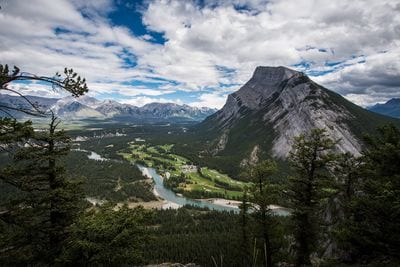
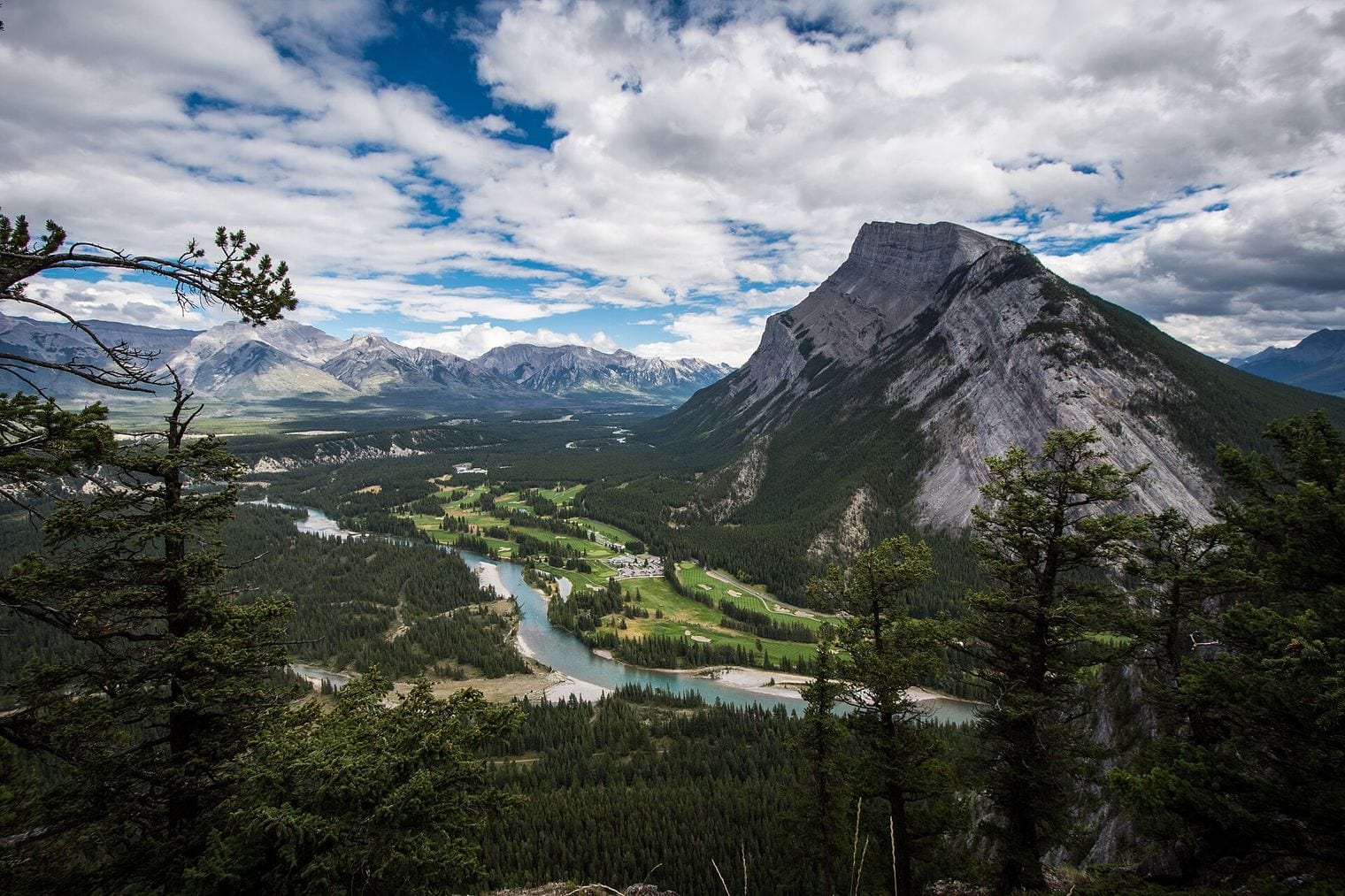
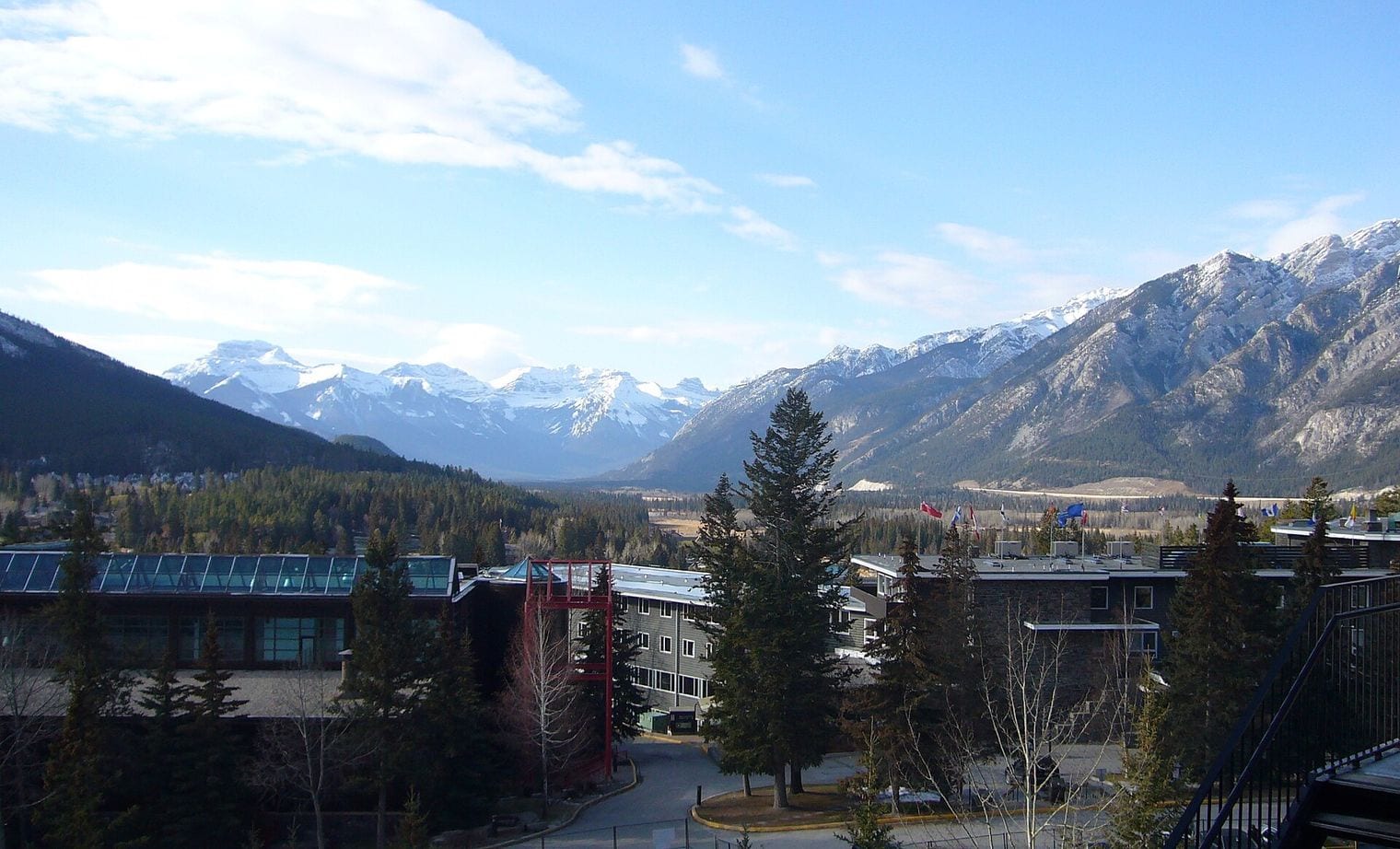
Banff is a small mountain town with a very big backyard. The townsite covers only a few square kilometres, yet it sits inside Banff National Park, the first national park in Canada, which spreads across 6,641 km² of glaciers, turquoise lakes and limestone peaks in Alberta's Rocky Mountains.
This guide ranks the park's 30 best sights, from Moraine Lake and Lake Louise, roughly 60 km northwest of town, to the hot springs and museums near Banff Avenue. Canmore, Yoho and Jasper lie outside the park, so they appear under day trips. Plan three to four days.
Banff is Canada's first national park, set aside in 1885 as a 26 km² reserve around the Cave and Basin hot springs and later expanded into Rocky Mountains Park.
The town is named after a town in Scotland — Canadian Pacific Railway president George Stephen chose the name in 1884, recalling his birthplace near Banff in Scotland.
Moraine Lake was on the money: the view across it to the Valley of the Ten Peaks appeared on the back of the 1969 and 1979 issues of Canada's twenty-dollar bill.
It is part of a UNESCO World Heritage Site: Banff, Jasper, Kootenay and Yoho were inscribed together as the Canadian Rocky Mountain Parks in 1984.
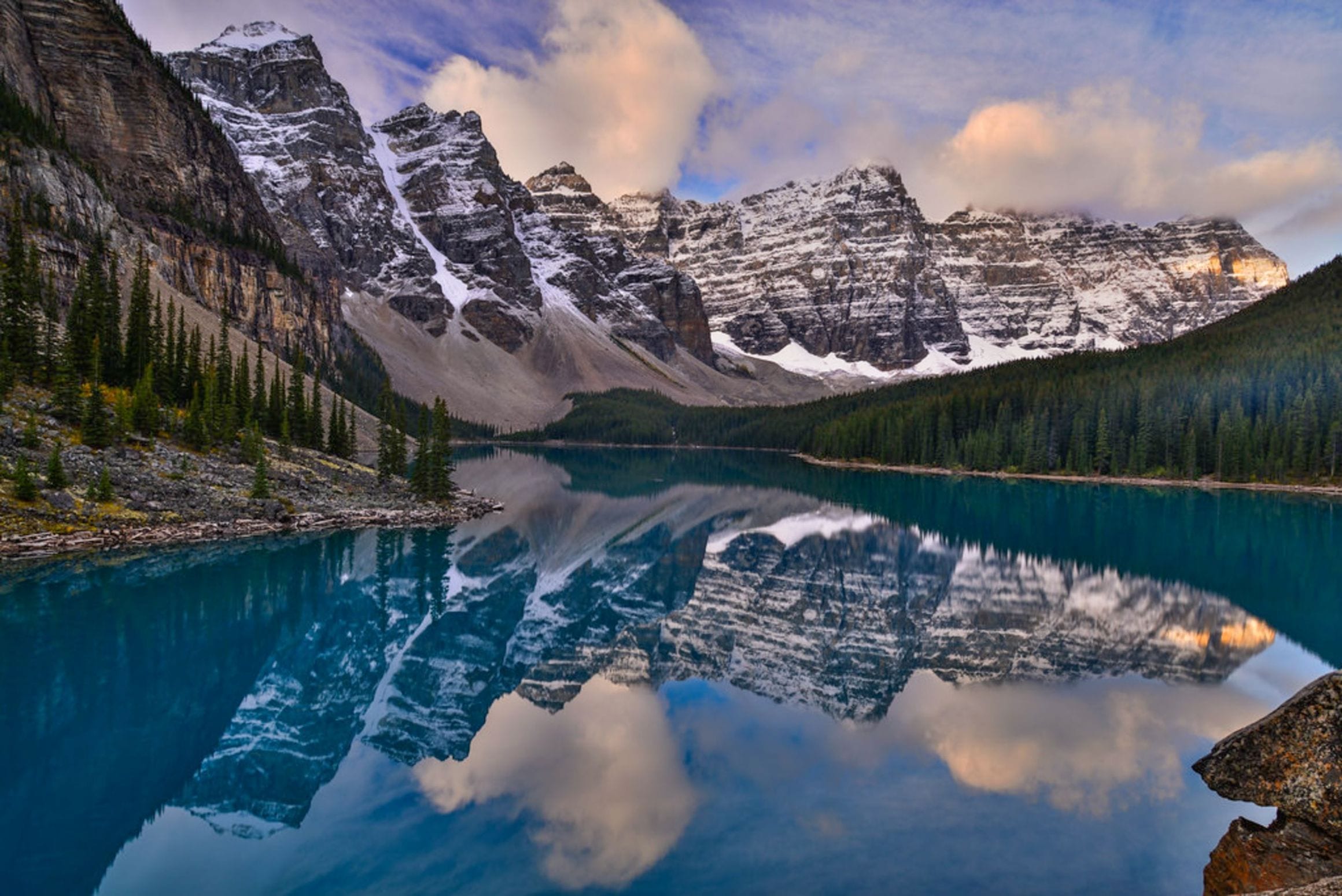
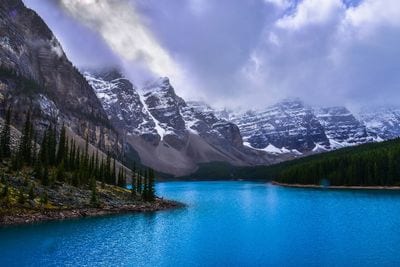
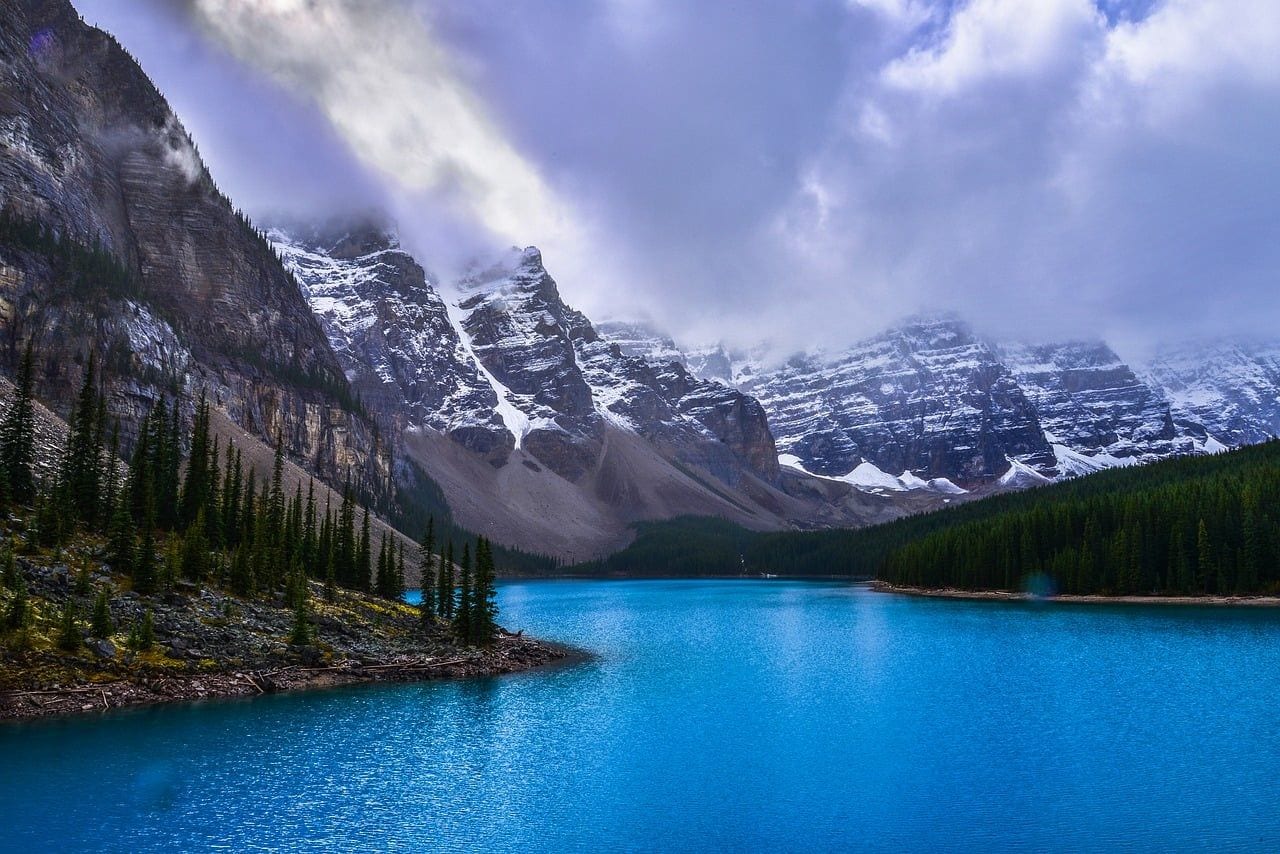
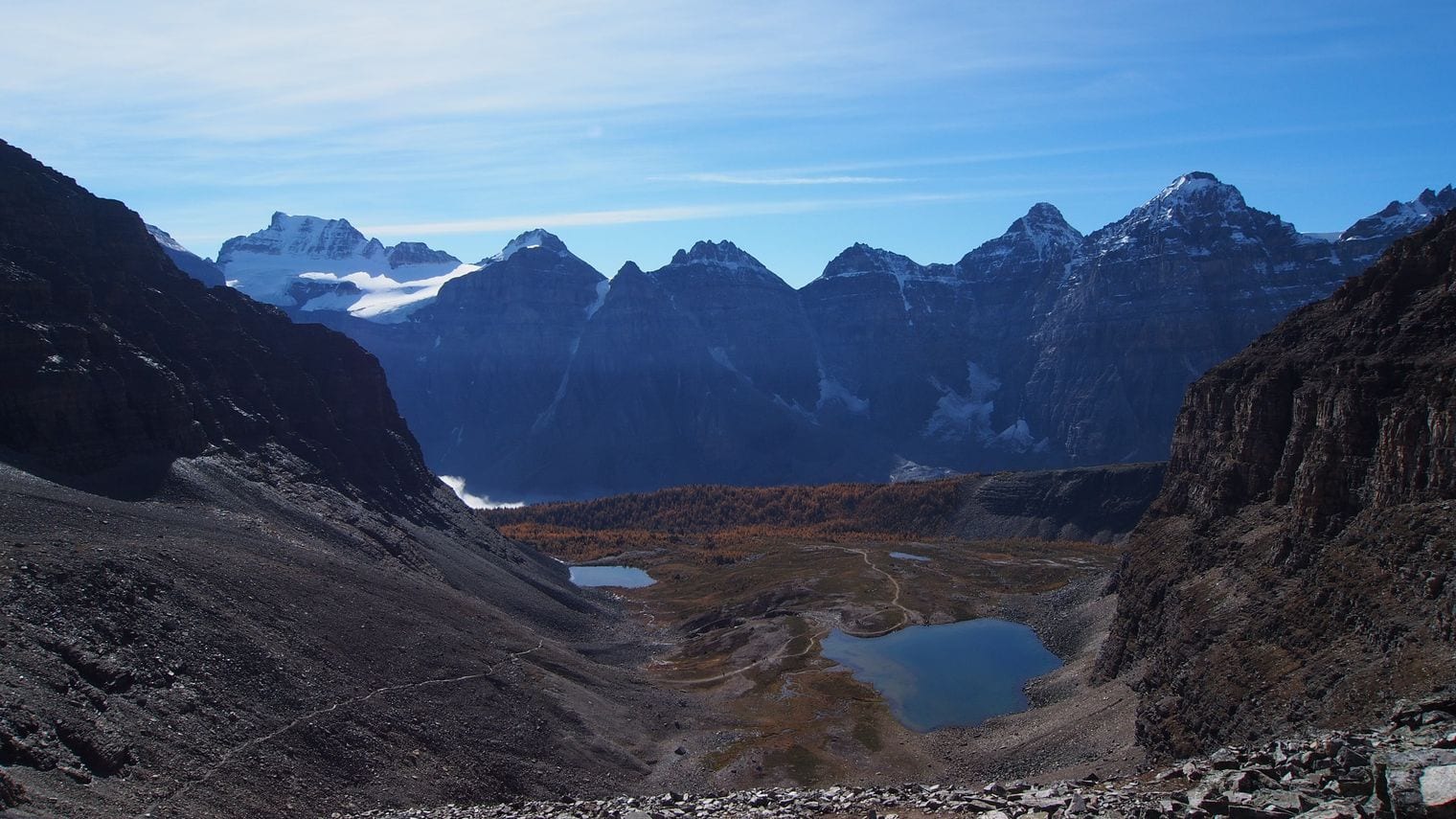
Moraine Lake is the view many people picture when they think of Banff: a glacier-fed lake of startling blue at the foot of the Valley of the Ten Peaks, about 14 km from the village of Lake Louise. Scramble up the short Rockpile Trail beside the outlet for the classic panorama, the scene printed on the back of Canada's twenty-dollar bill in its 1969 and 1979 issues.
The lake fills and takes on its full colour only from early summer, and the access road opens just for the summer and early-fall season. Private vehicles are no longer allowed on it, so plan on a Parks Canada shuttle, Roam transit or a licensed commercial bus, or cycle in. Come early and walk the flat lakeshore trail to leave the crowds behind.
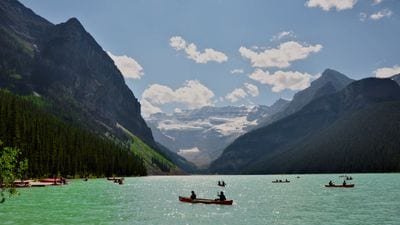
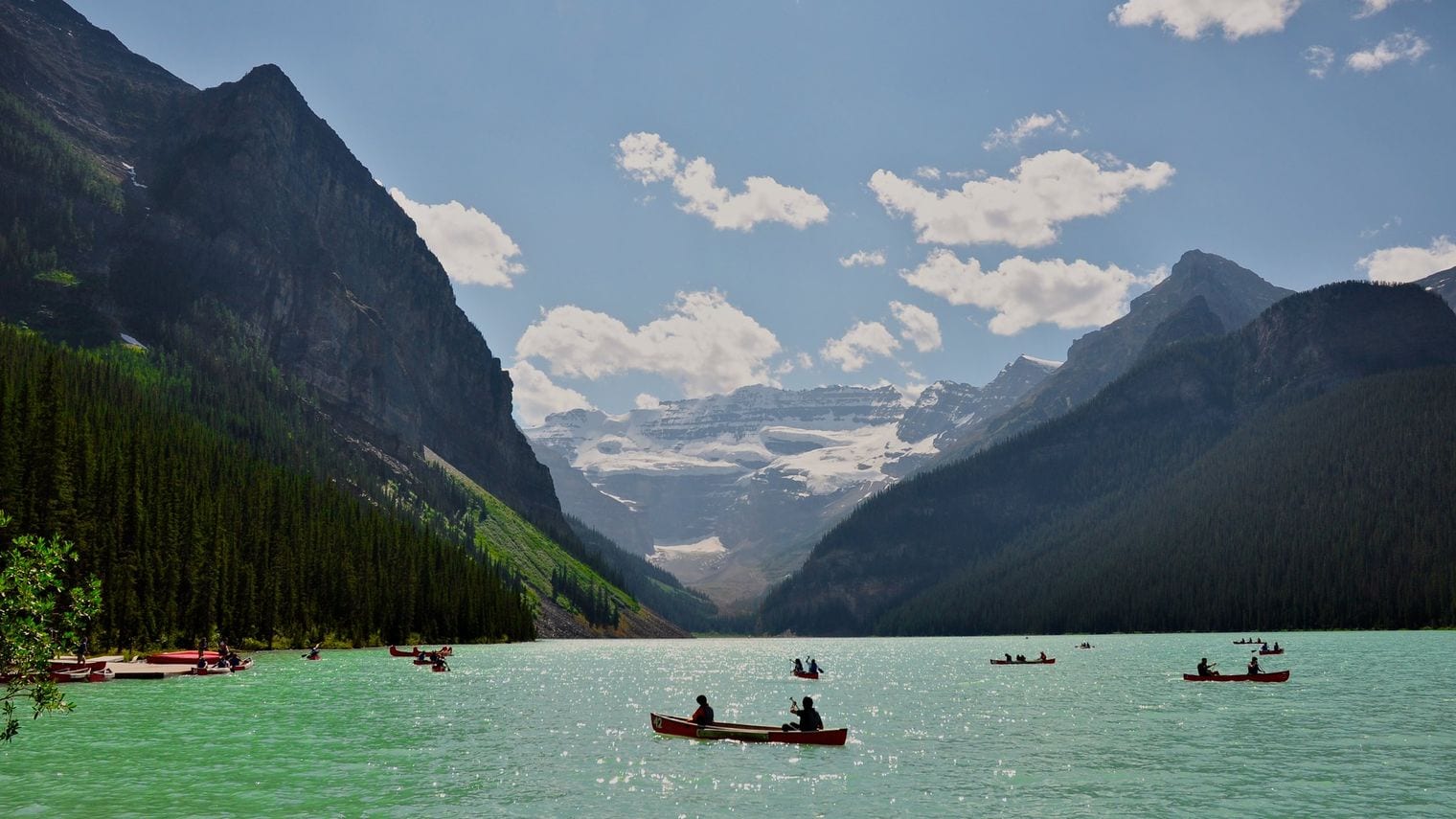
Lake Louise is the park's other great lake, a jade-green bowl beneath the Victoria Glacier, about 5 km above the hamlet of Lake Louise and the Trans-Canada Highway. The Stoney Nakoda called it Ho-run-num-nay, the Lake of the Little Fishes; it now carries the name of Princess Louise, a daughter of Queen Victoria, and the grand Fairmont Chateau Lake Louise stands on its eastern shore.
The flat lakeshore trail runs toward the far end, while the Fairview Lookout trail climbs through the forest for a view back over the water and the hotel. Canoes come out on the lake in summer, and in winter it freezes for skating. Parking fills early, so the Parks Canada shuttle and Roam transit are the easier ways in.
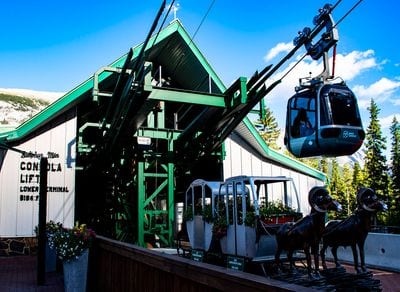
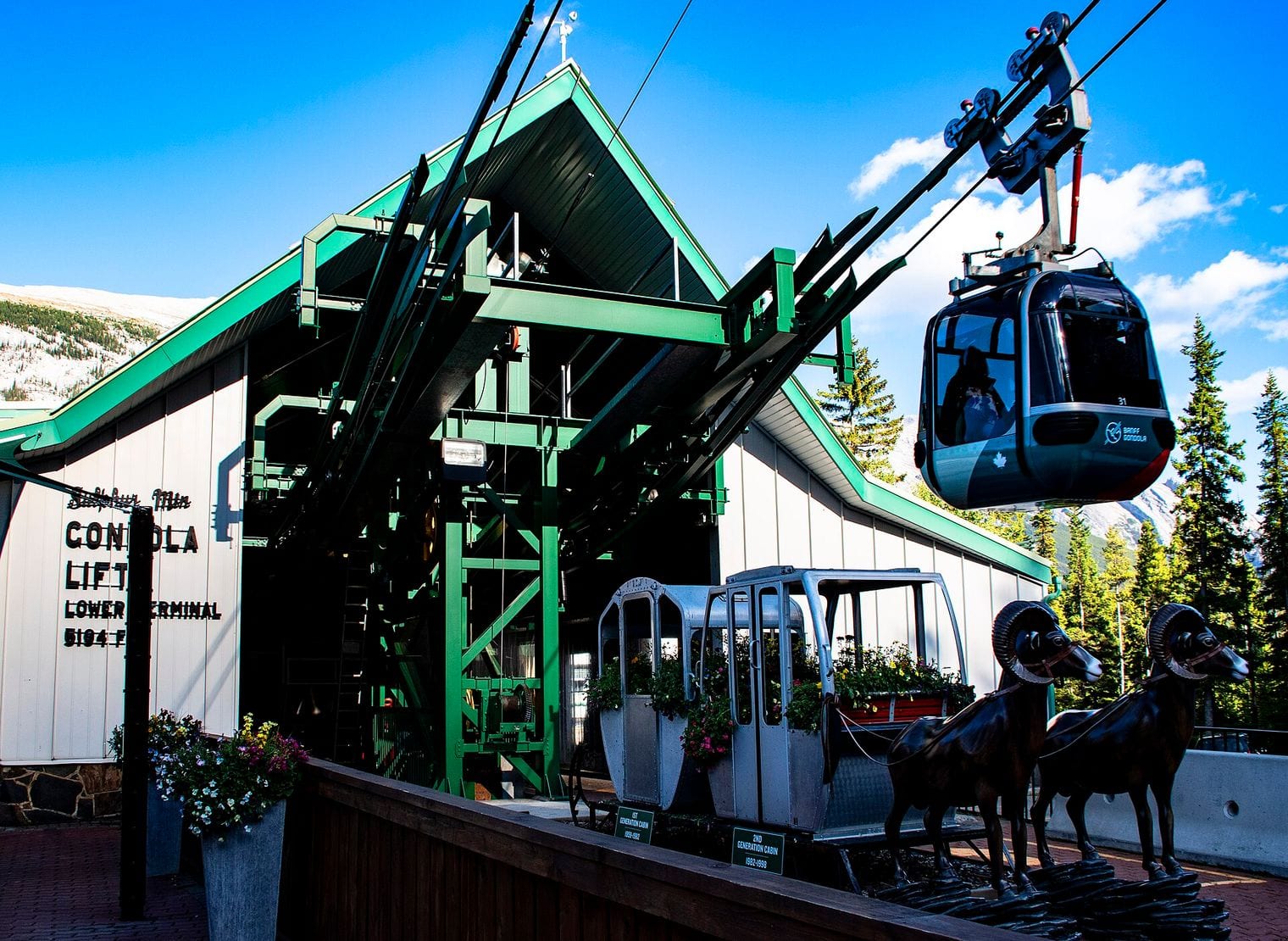
The Banff Gondola lifts you from the base of Sulphur Mountain, just above town, to the summit ridge in a matter of minutes, with the Bow Valley, Mount Rundle and the townsite falling away below. The upper terminal has restaurants and observation decks, and a ridge-top boardwalk leads on to Sanson's Peak.
That peak carries the Sulphur Mountain Cosmic Ray Station National Historic Site, where scientists studied cosmic rays in the 1950s, beside an old stone weather observatory. Hikers can earn the view instead by climbing the switchbacking Sulphur Mountain Trail from the Upper Hot Springs area and riding the gondola back down.
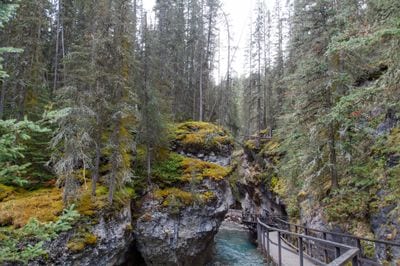
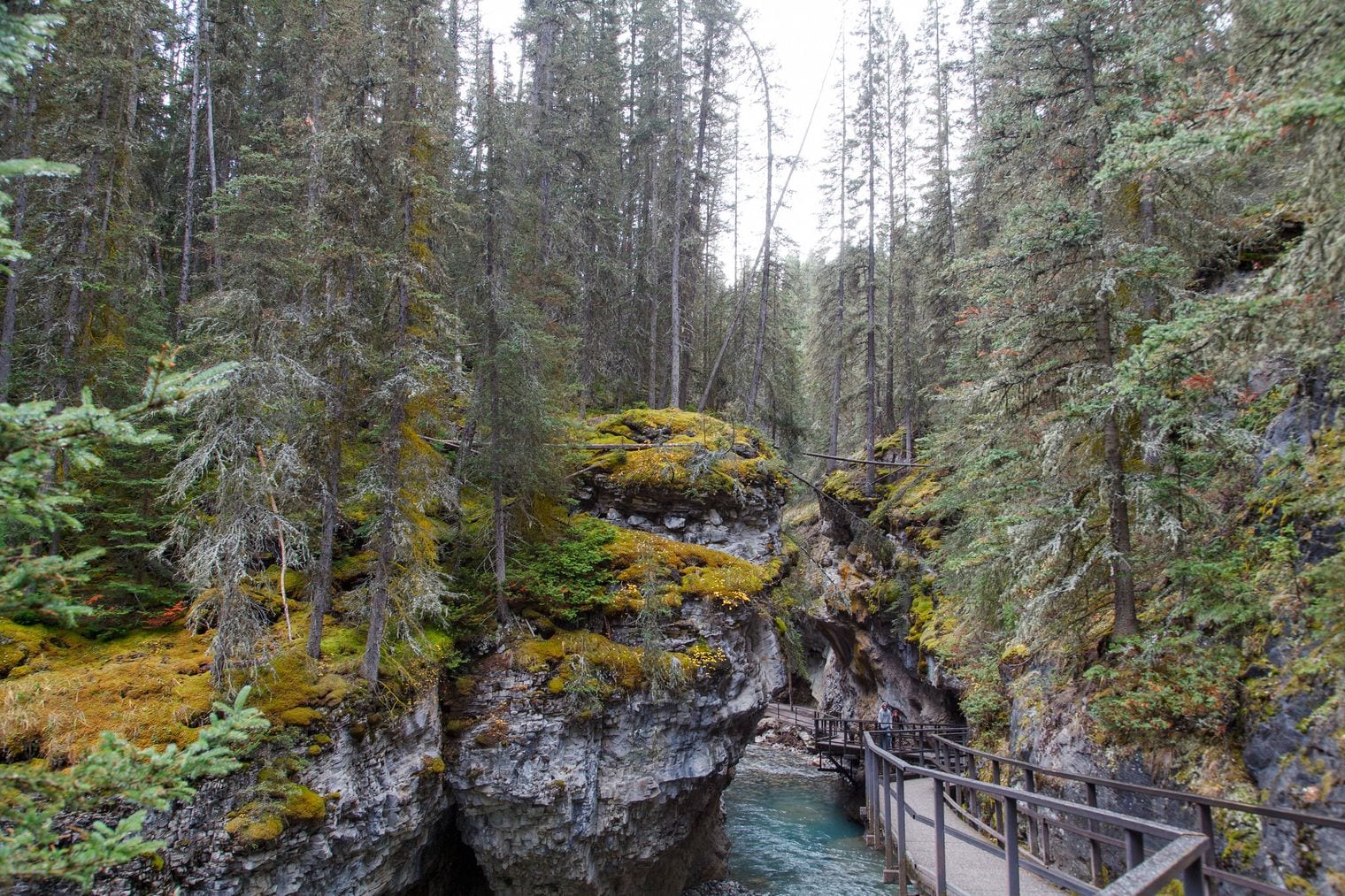
Johnston Canyon is Banff's most popular canyon walk, where Johnston Creek has cut sheer walls, pools and tunnels through the limestone on its way to the Bow River. Steel catwalks fixed to the canyon walls carry the trail above the churning water to the Lower Falls, where a short passage through the rock leads to a spray-soaked viewpoint.
The path climbs on to the taller Upper Falls, and keener hikers continue into an open meadow to the Ink Pots, six blue-green spring-fed pools. The trailhead is on the Bow Valley Parkway between Banff and Lake Louise. In winter the falls freeze into icy curtains that draw guided ice walks and ice climbers.
The Banff Upper Hot Springs pool sits on the slope of Sulphur Mountain at about 1,585 m, which makes it the highest hot spring in Canada. Mineral water rises through a fault in the rock into an outdoor pool kept at bath temperature, and from the water you look straight across the valley to Mount Rundle.
Europeans learned of the springs in 1883, and the bathhouse is now a federal heritage building with exhibits on its long history. The pool stays open through the winter, when snow on the peaks makes the soak most memorable, and closes for a short maintenance period each fall. It is a short hop from the Banff Gondola, so the two pair easily.
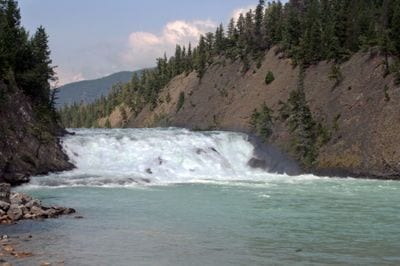
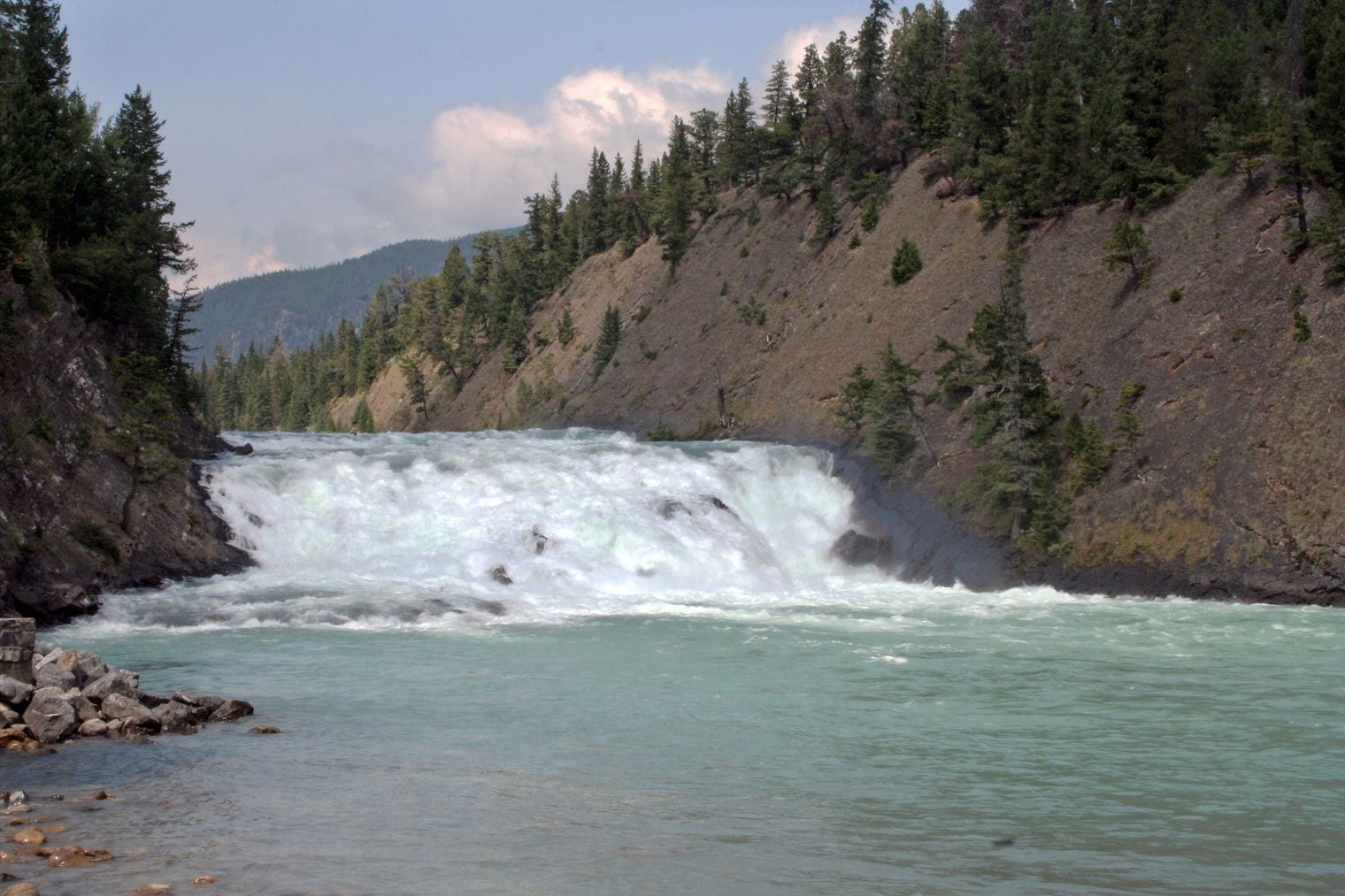
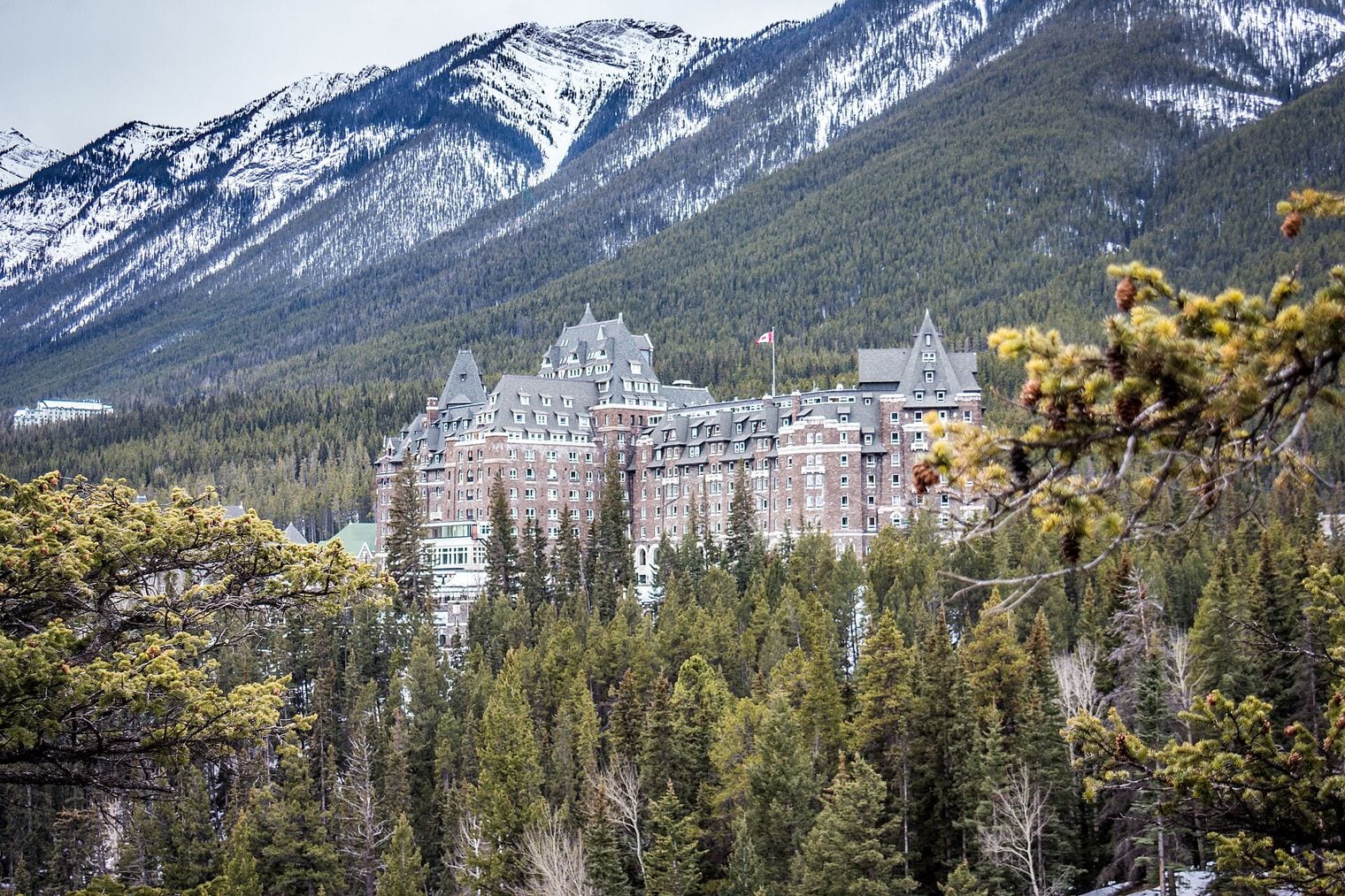
Bow Falls is a short, wide waterfall where the Bow River tumbles over a ledge just before it meets the Spray River, an easy walk from downtown Banff. It is not tall, but the rush of glacial water, the river-level viewpoint and the Fairmont Banff Springs hotel rising on the hill above make it one of the town's favourite stops.
Follow the riverside path from the Bow River bridge at the foot of Banff Avenue, or drive River Road to the parking area. The falls appeared in the 1953 Marilyn Monroe film River of No Return. The opposite bank, reached from Tunnel Mountain Drive, is Surprise Corner, the viewpoint for the classic shot of falls and hotel together.
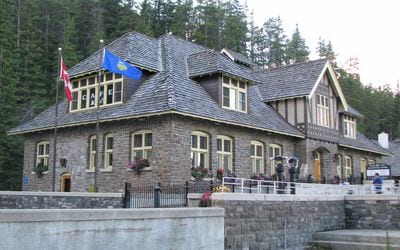
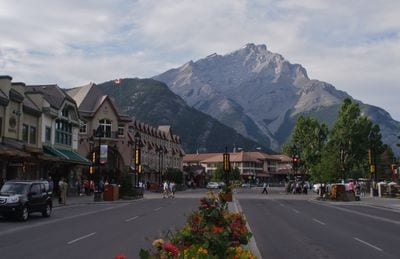
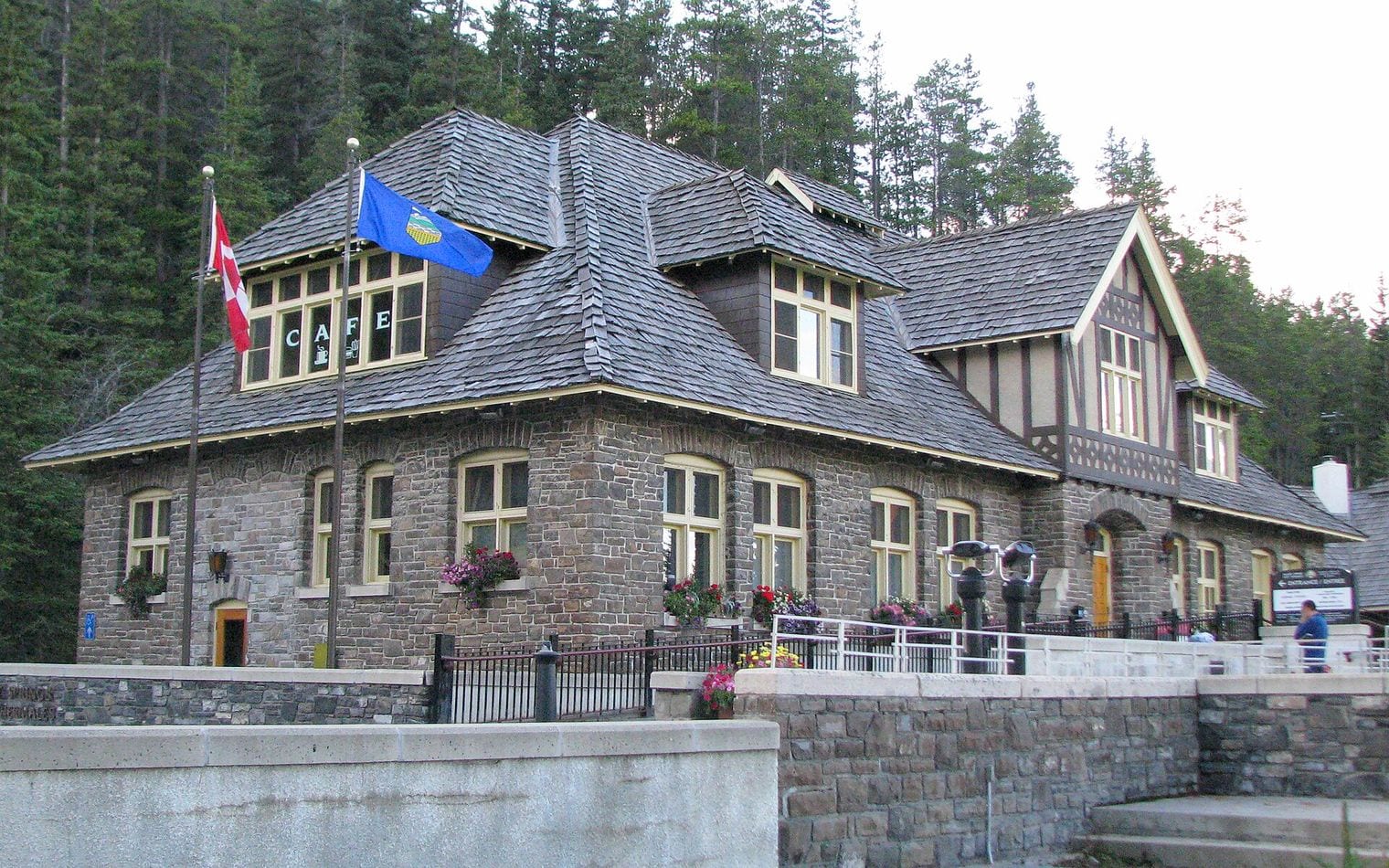
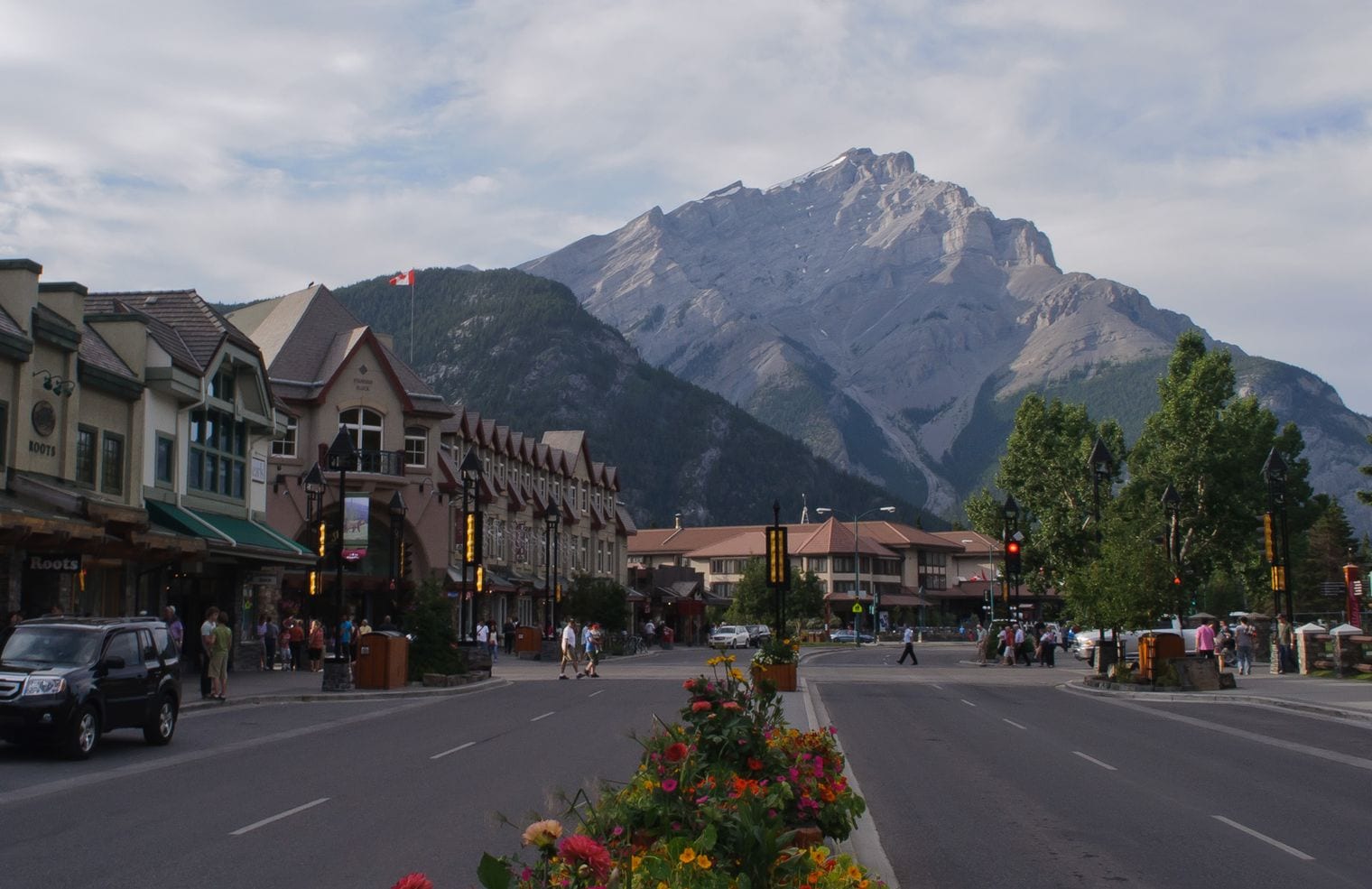
Banff Avenue is the townsite's main street, lined with shops, outfitters, cafés and galleries, with the bulk of Cascade Mountain filling the view to the north. It is the base for most of this list: shuttles and Roam buses leave from downtown, and the stone Parks Canada administration building and its Cascade of Time Garden close off the south end across the Bow River bridge.
Banff was the first municipality to incorporate within a Canadian national park, and it still lives by park rules, so don't be surprised to meet elk on the lawns at the edge of town. Walk Banff Avenue in the evening, when the light warms Cascade Mountain and the sidewalks fill with hikers back from the trails.
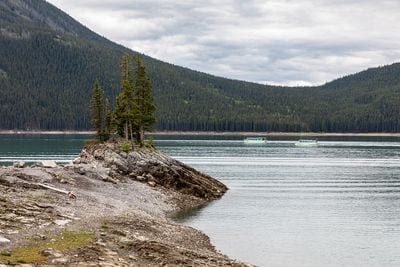
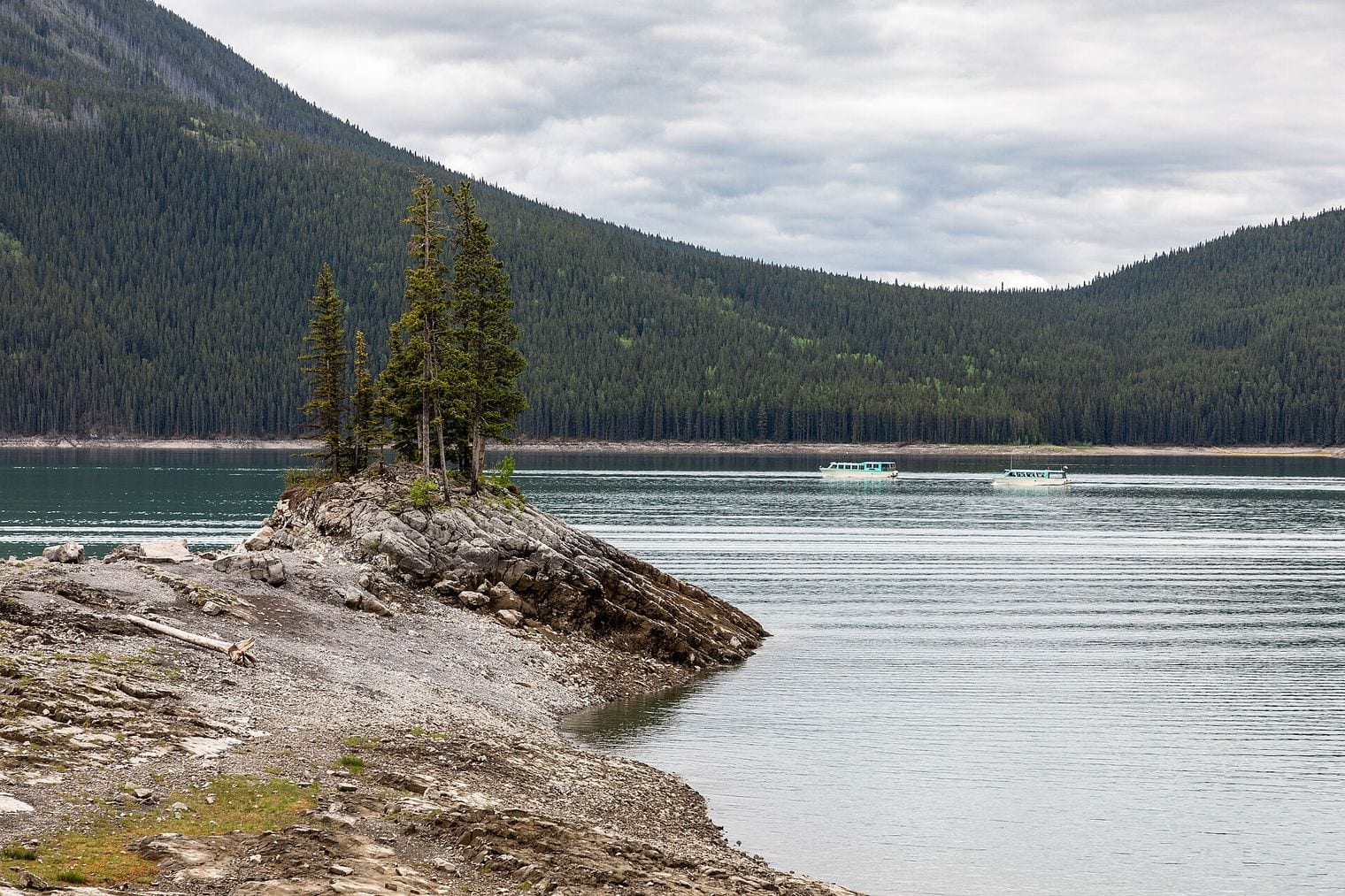
Lake Minnewanka, 'water of the spirits' in Nakoda, fills a long glacial valley about five kilometres northeast of the townsite. Dams at its western end raised it to about 21 km long and drowned the old resort village of Minnewanka Landing, whose remains make the lake a known spot for scuba divers.
Most visitors come for the summer boat cruise along the lake, the lakeshore trail to Stewart Canyon and the picnic areas by the water; watch for bighorn sheep on the approach road. Lake Minnewanka sits on the Minnewanka Loop, which also passes Two Jack Lake and Johnson Lake, so the three make an easy half-day circuit.
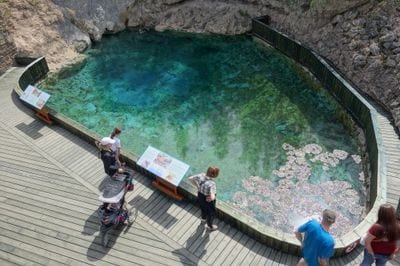
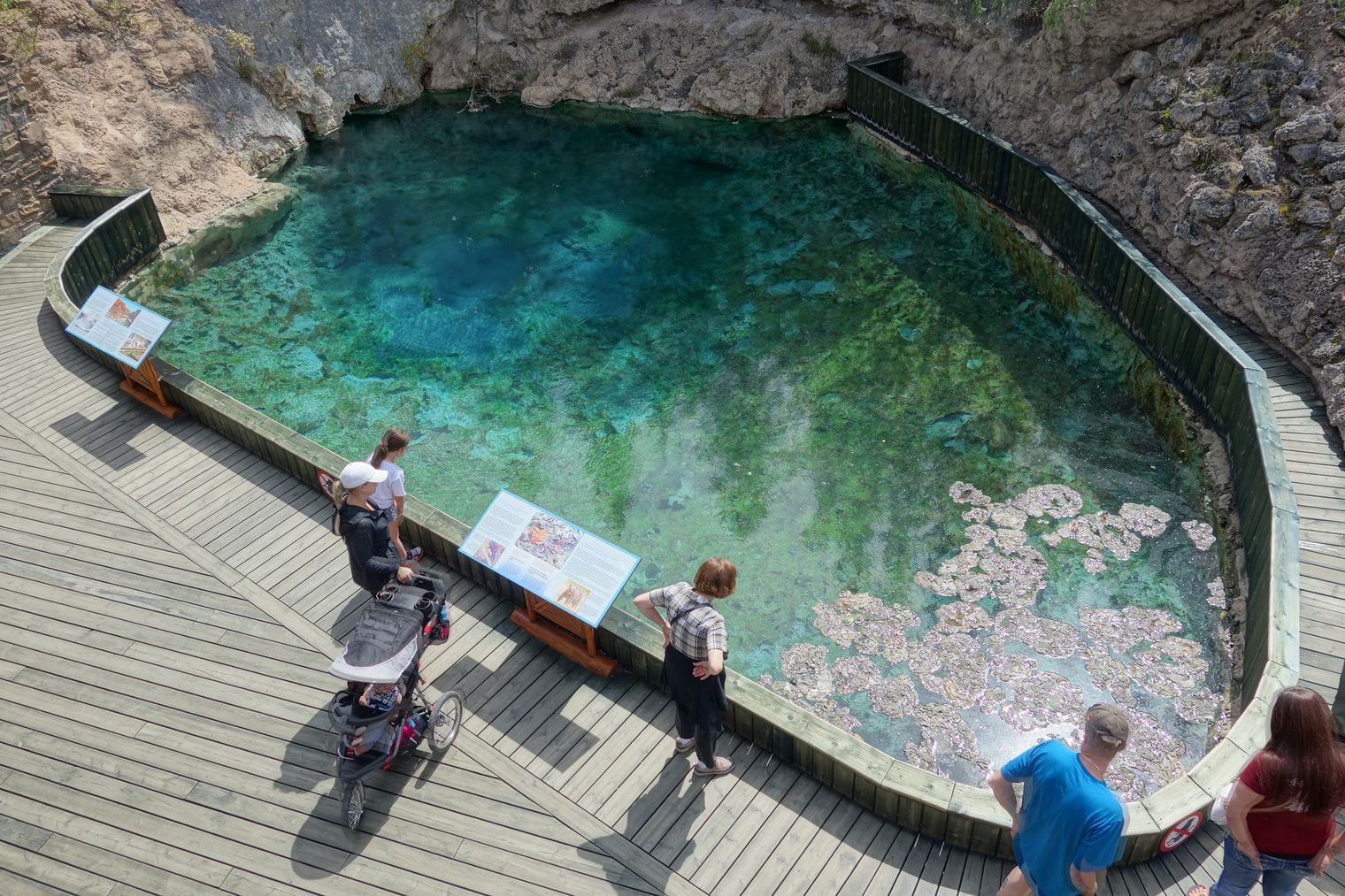
Cave and Basin National Historic Site is where Banff National Park began. In 1883 three Canadian Pacific Railway workers came upon warm springs on the side of Sulphur Mountain, and in 1885 Canada reserved 26 km² around them, the reserve that grew into the country's first national park.
A tunnel leads into the steamy cave grotto, and the restored historic pool building holds exhibits on the park's story, including the First World War internment camps whose prisoners were made to build park infrastructure. Outside, boardwalks and the Marsh Loop trail wind through warm-water wetlands, and the springs are the only home of the endangered Banff Springs snail.
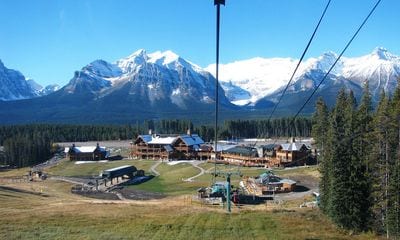
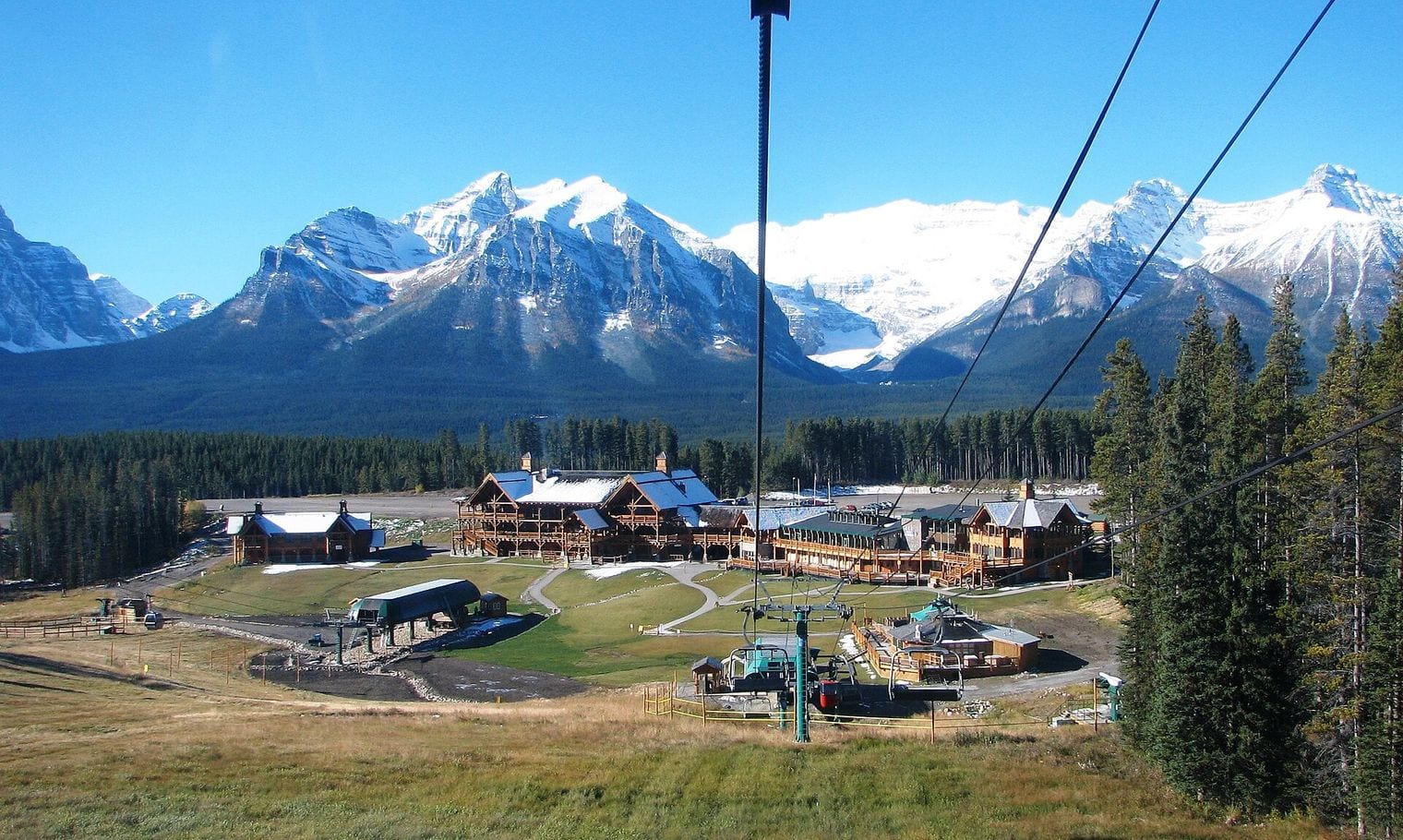
The Lake Louise Summer Gondola climbs the ski slopes of Whitehorn Mountain across the valley from the lake, in open chairs or enclosed cabins, with a view back toward Lake Louise and the Victoria Glacier from the top. Once the snow melts, the grassy runs below the lift become grizzly bear habitat, and riders sometimes spot bears feeding on the slopes from a safe height.
At the upper station, the Wildlife Interpretive Centre explains the park's animals with displays and short guided walks. The lift runs only in the summer and early-fall season; in winter the same mountain is the Lake Louise Ski Resort, one of three ski areas inside Banff National Park.
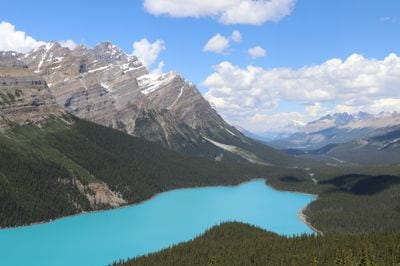
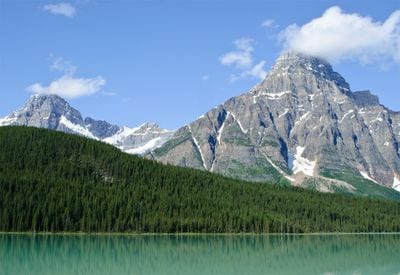
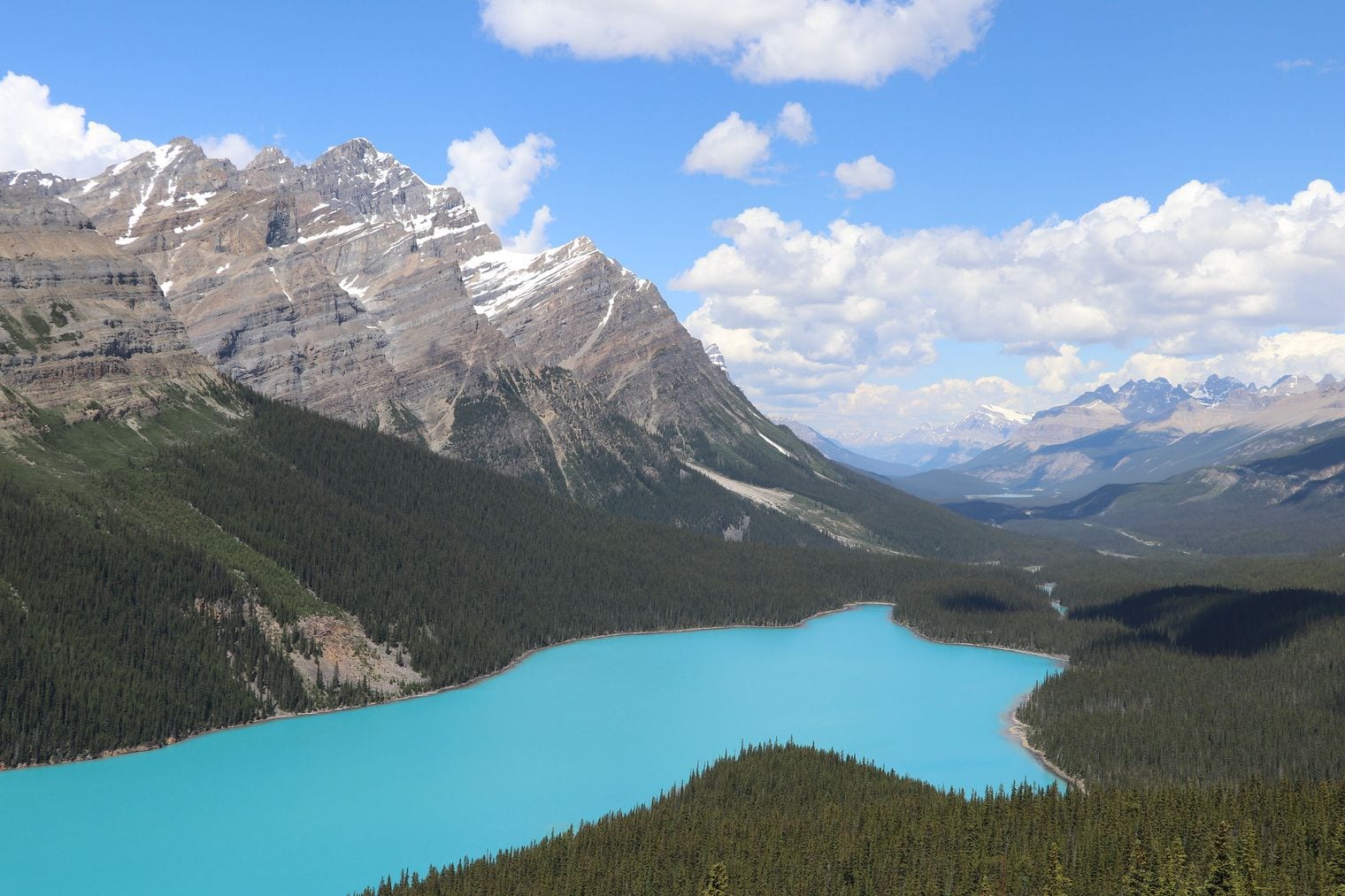
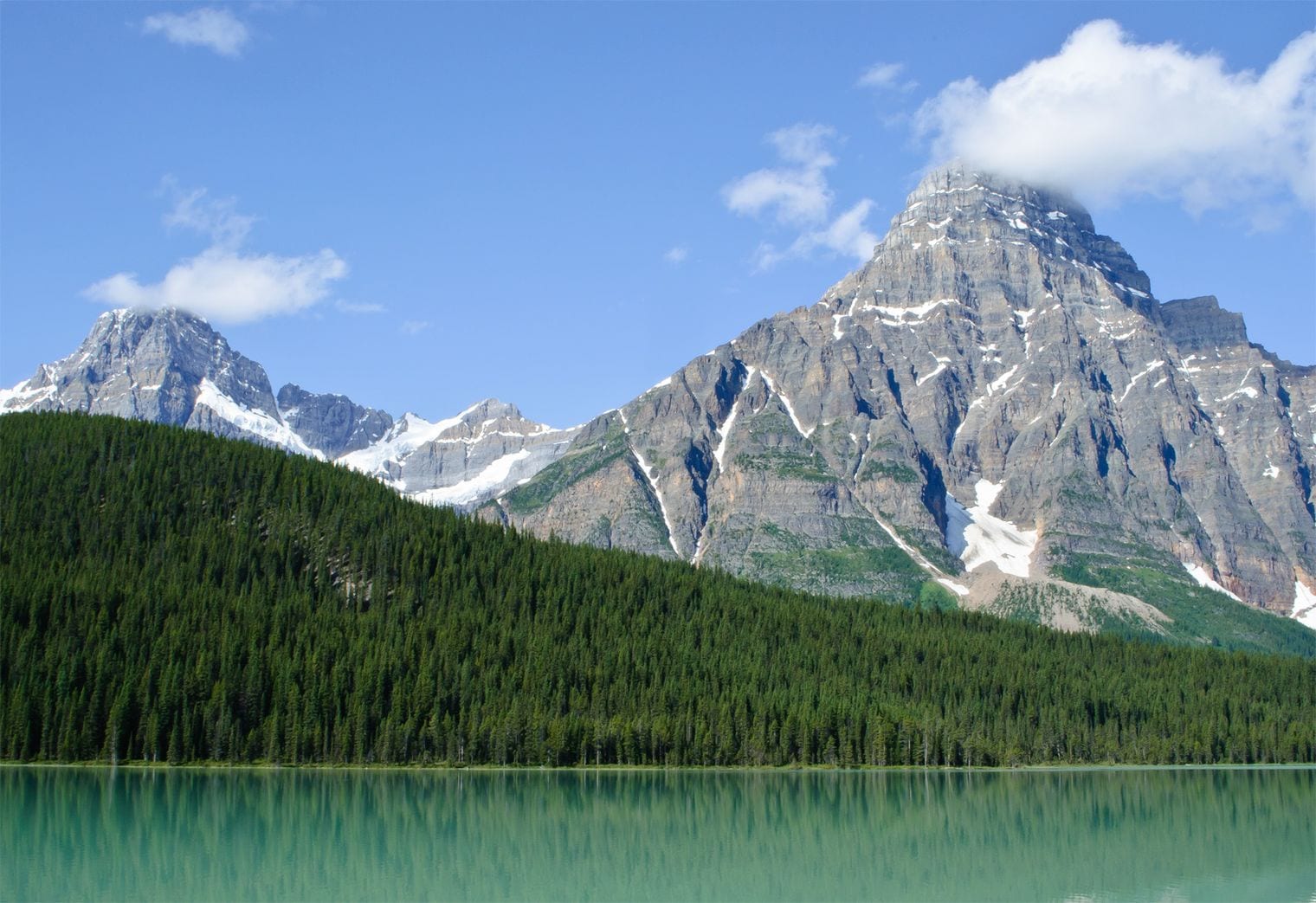
Peyto Lake is the vivid turquoise lake you see from above, best viewed from Bow Summit, the highest point on the Icefields Parkway. In summer, glacial rock flour washes into the water and gives it a colour so bright that photos of it fill guidebooks, and the viewing platform is a short, paved walk uphill from the parking area.
The lake is named for Bill Peyto, an early trail guide and trapper in the Banff area, and sits between Caldron Peak, Peyto Peak and Mount Jimmy Simpson. Go in the morning or late afternoon, when the light is softer and the tour buses thinner, and combine it with Bow Lake a few minutes down the road.
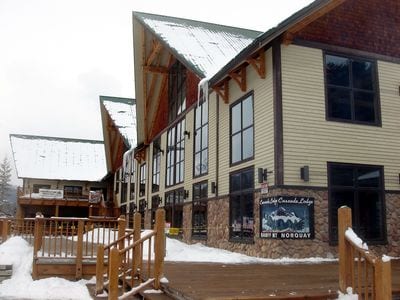
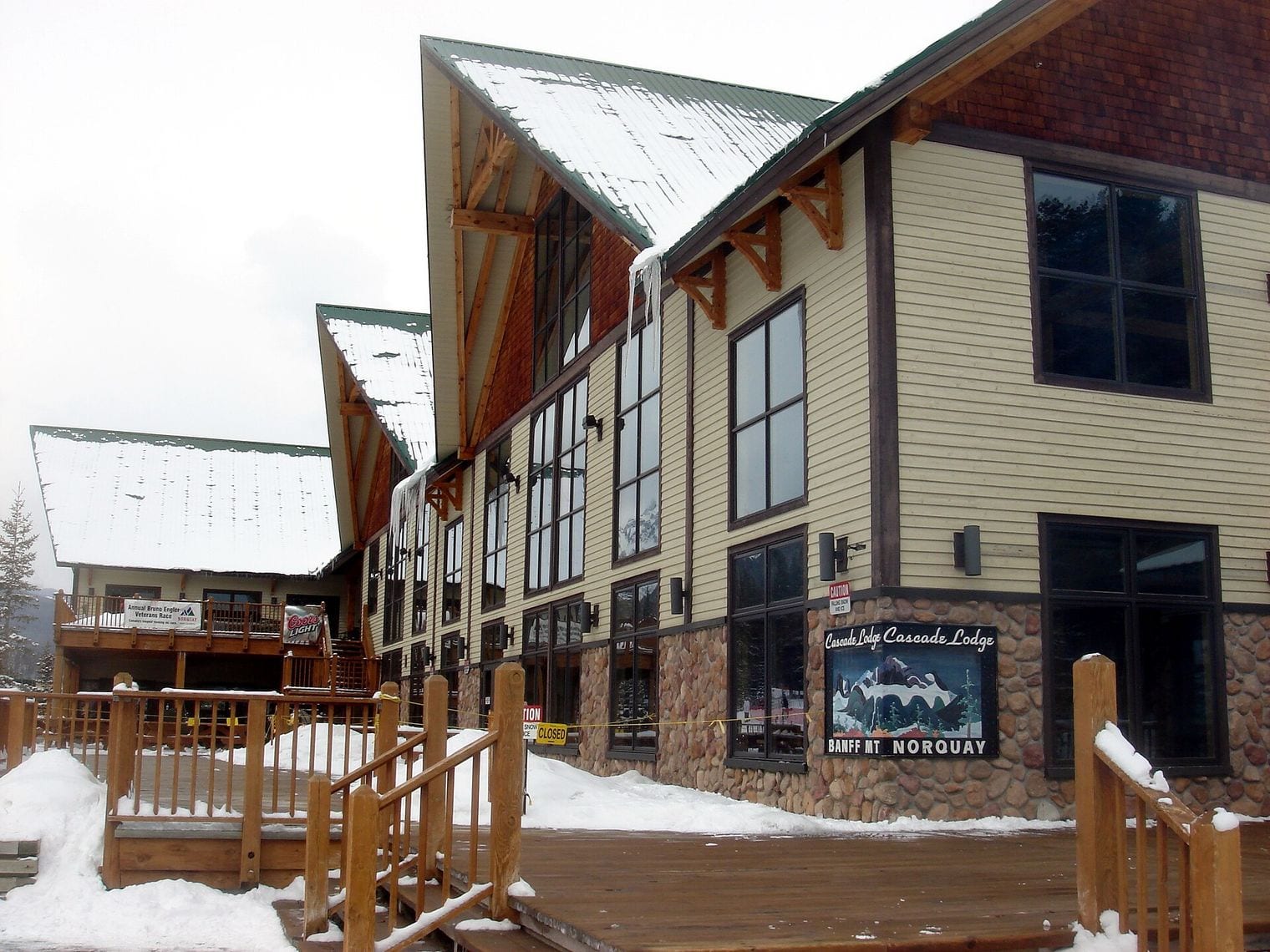
Mount Norquay rises directly above the north side of the townsite, and its ski hill is one of three inside Banff National Park. Skiing here has a long history: the mountain was the second in Canada to install a chairlift, in 1948.
In summer the sightseeing chairlift carries visitors up to a mountainside tea house, and Mount Norquay's via ferrata, the only one in Banff National Park, lets guided groups clip into steel cables along its cliffs. On the way up, the switchbacking Mount Norquay Road passes a free lookout known as the Green Spot, with a sweeping view over the town, the Bow Valley and Mount Rundle.
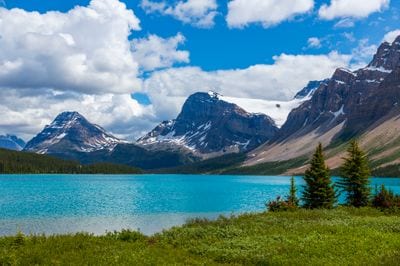
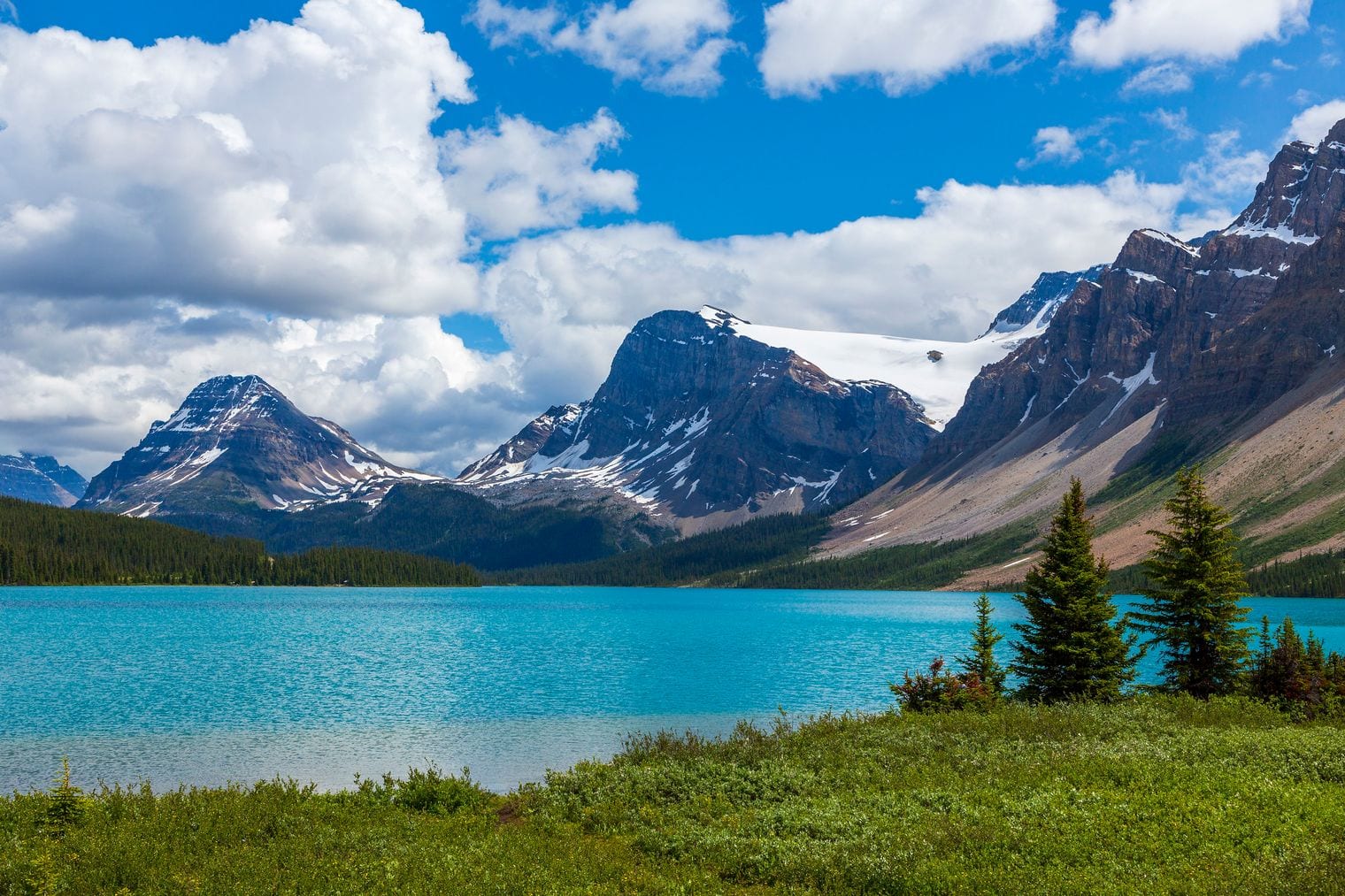
Bow Lake lies just south of Bow Summit on the Icefields Parkway, close to the source of the Bow River at about 1,920 m. Crowfoot Mountain, Bow Peak and the Wapta Icefield's Bow Glacier rise around it, and on calm mornings its surface mirrors the whole skyline.
A trail follows the shore and climbs toward the Bow Glacier Falls, while a historic red-roofed lodge on the shore has been a landmark of the parkway for generations. Bow Lake is one of the first big stops north of Lake Louise and pairs naturally with Peyto Lake, a few minutes farther up the road.
Free printable checklist of all 30 places
Tick them off as you go. Confirm your email to download it, plus one email every Thursday with new guides for the places you tick.
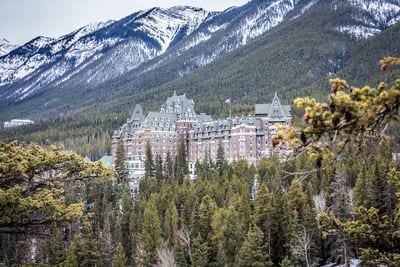
Surprise Corner is a roadside viewpoint on Tunnel Mountain Drive that frames the most famous postcard in town: the Fairmont Banff Springs, which the Canadian Pacific Railway opened in 1888, rising like a castle above the Bow River and Bow Falls with the mountains behind. It takes a minute from the car but rewards a longer stop, especially at sunrise or after fresh snow.
From Surprise Corner a trail drops to the river and follows the Bow beneath the cliffs of Tunnel Mountain to the Hoodoos Viewpoint, a moderate walk that links the two lookouts. The corner is a short drive, or a steep walk, from Banff Avenue.
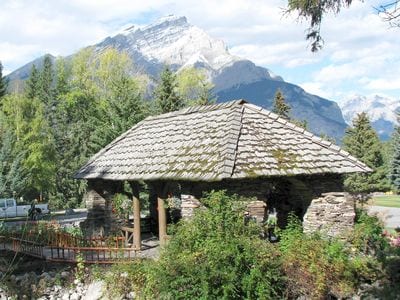
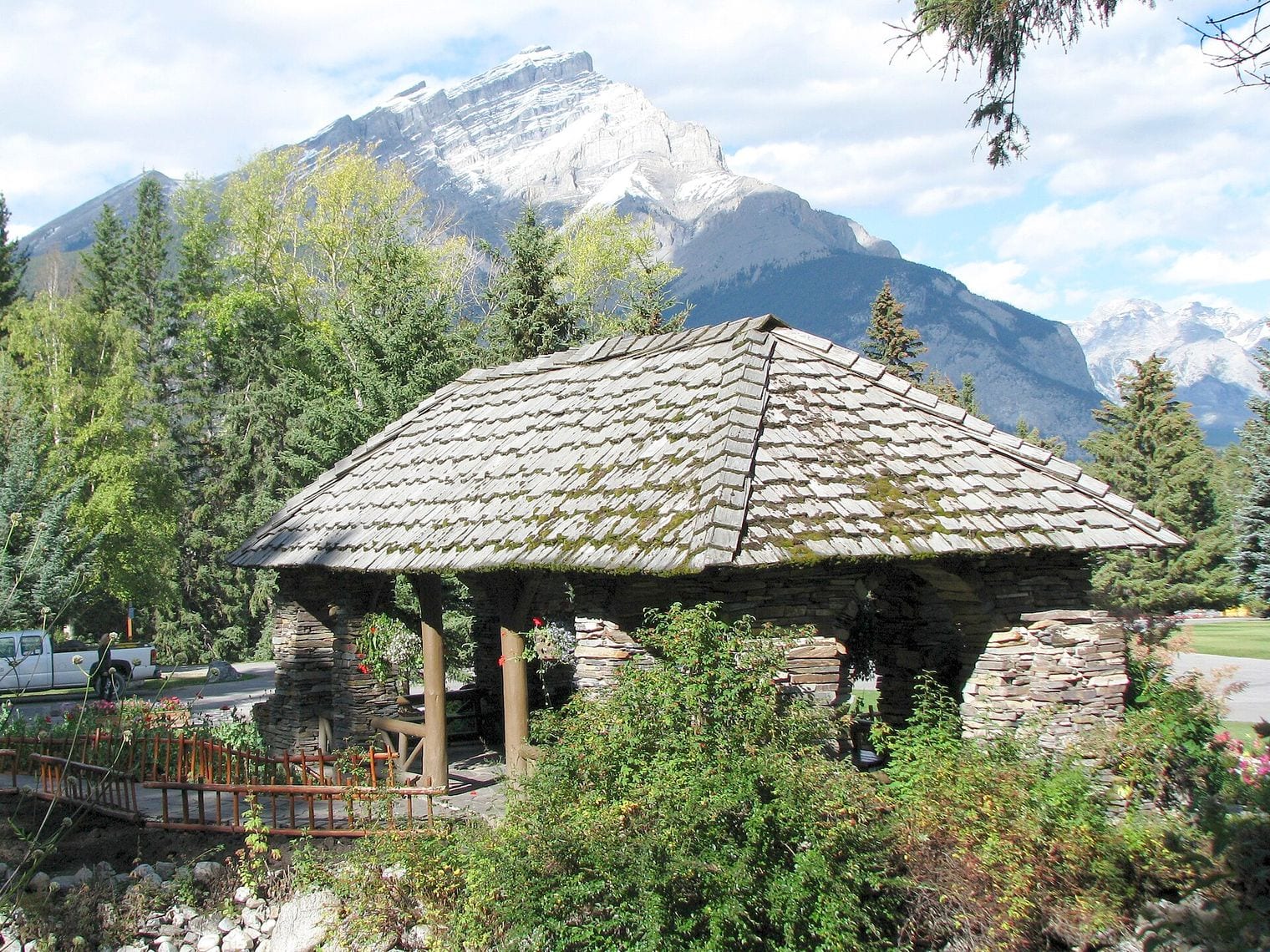
The Cascade of Time Garden spreads below the stone Parks Canada administration building at the south end of Banff Avenue, across the Bow River bridge. Laid out in the 1930s together with the building, its ponds, stone bridges and rustic pavilions step down the slope as a geological garden, the cascading water meant to represent the sequence of geological time.
In summer the tiered beds are full of flowers, and the lawns give a straight-on view up Banff Avenue to Cascade Mountain. The Cascade of Time Garden is free, quiet and only a few minutes' walk from the busiest street in town, which makes it an easy pause between museums.
Tunnel Mountain is the small, steep-sided peak that rises right out of the townsite, and its summit trail is one of the easiest real mountain hikes from downtown. Switchbacks climb through the forest from St. Julien Road to open cliffs with views over Banff Avenue, the Bow Valley, Mount Rundle and the Banff Springs hotel.
The name is a leftover from the 1880s, when Canadian Pacific Railway surveyors considered blasting a tunnel through the mountain for the tracks before finding another route. The Siksika and Stoney Nakoda know it as Sleeping Buffalo, a name that suits its long, humped outline.
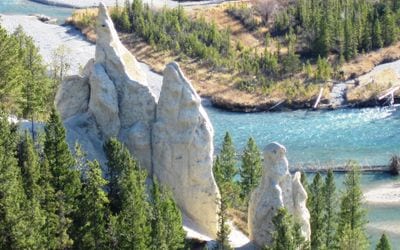
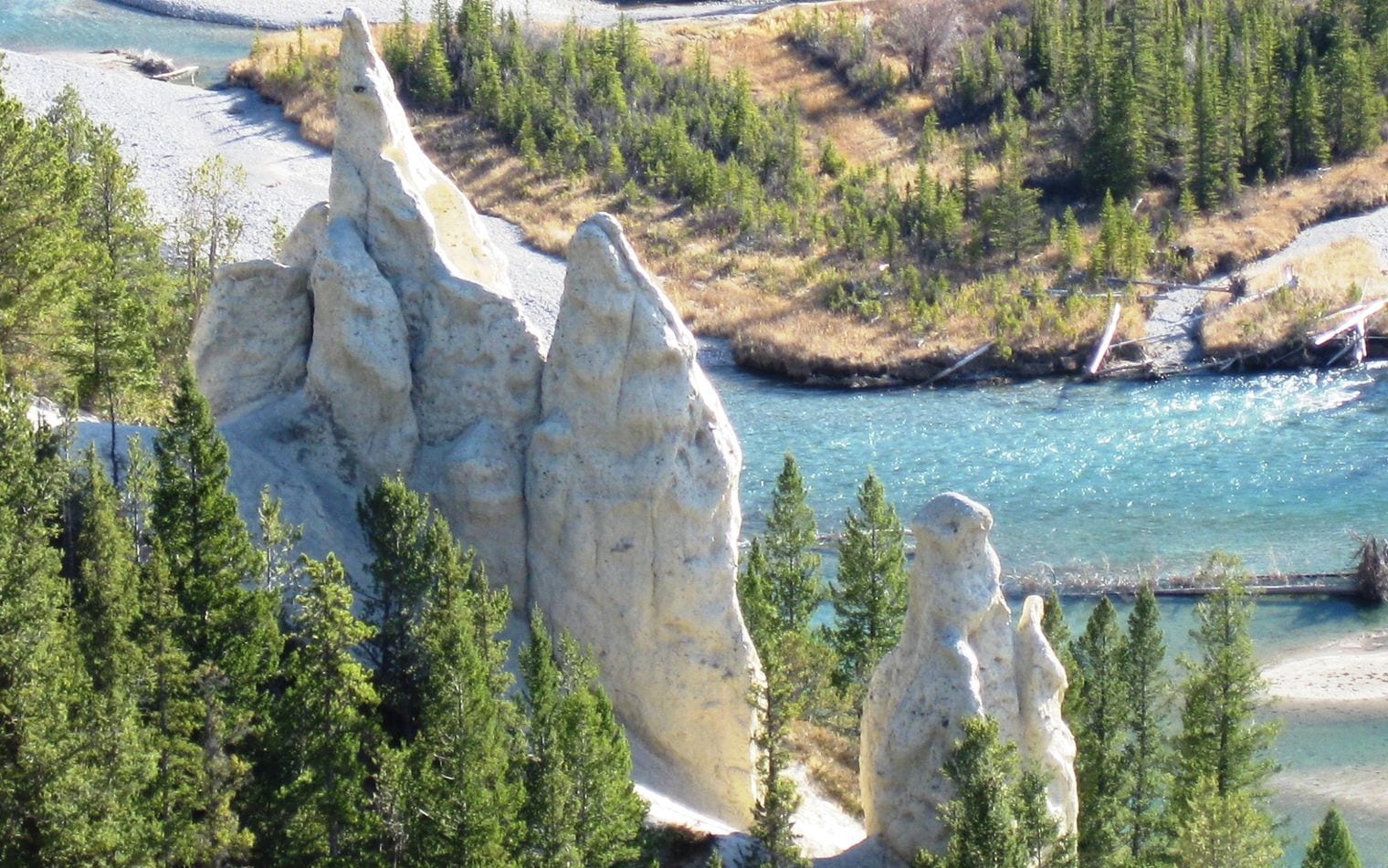
The Hoodoos Viewpoint, on Tunnel Mountain Road east of town near the campgrounds, looks down on a cluster of slender, pale pillars carved by erosion from glacial sediment on the bank of the Bow River. Behind them the valley opens toward Mount Rundle, which makes this one of the best short stops on the edge of town.
A short interpretive path runs along the rim, and the riverside trail from Surprise Corner arrives here after following the Bow beneath Tunnel Mountain. Walk one way and catch a ride back, or return along Tunnel Mountain Road. Cyclists often pair the Hoodoos Viewpoint with the climb up Tunnel Mountain Road.
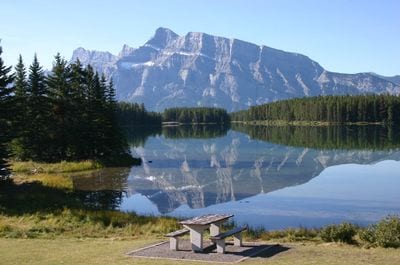
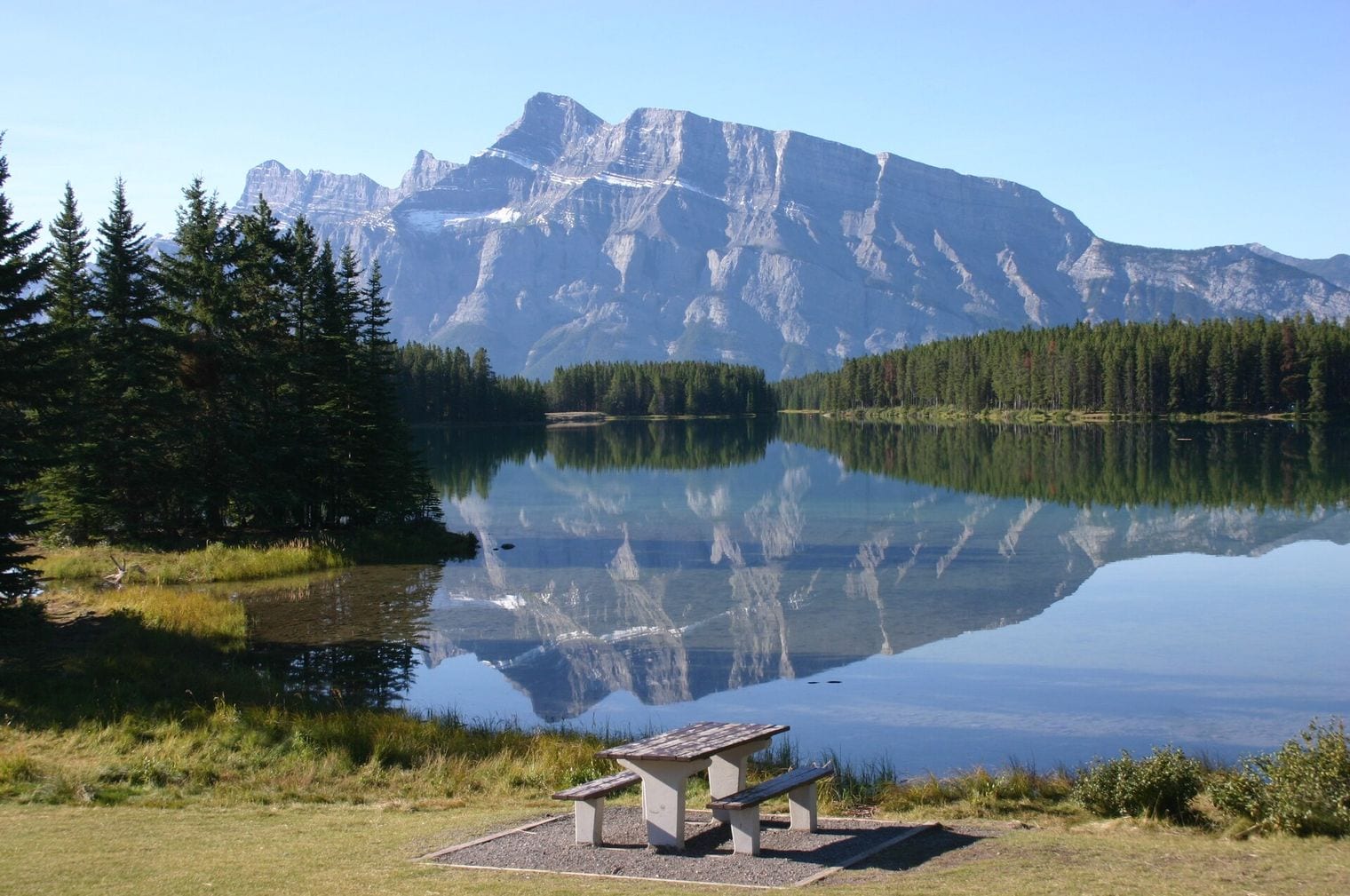
Two Jack Lake is the smaller, calmer neighbour of Lake Minnewanka on the Minnewanka Loop, and on still mornings it holds a near-perfect reflection of Mount Rundle. That dawn view, often with mist lifting off the water, has made Two Jack Lake a favourite of sunrise photographers.
Lakeside picnic areas, a campground and quiet water for canoes and paddleboards fill the rest of the day. The loop road's western section closes in winter to give wildlife room to move, but the lakes remain reachable from the eastern side, so Two Jack is a year-round stop.
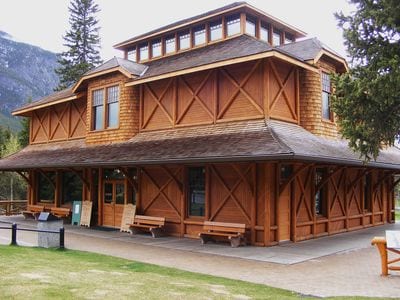
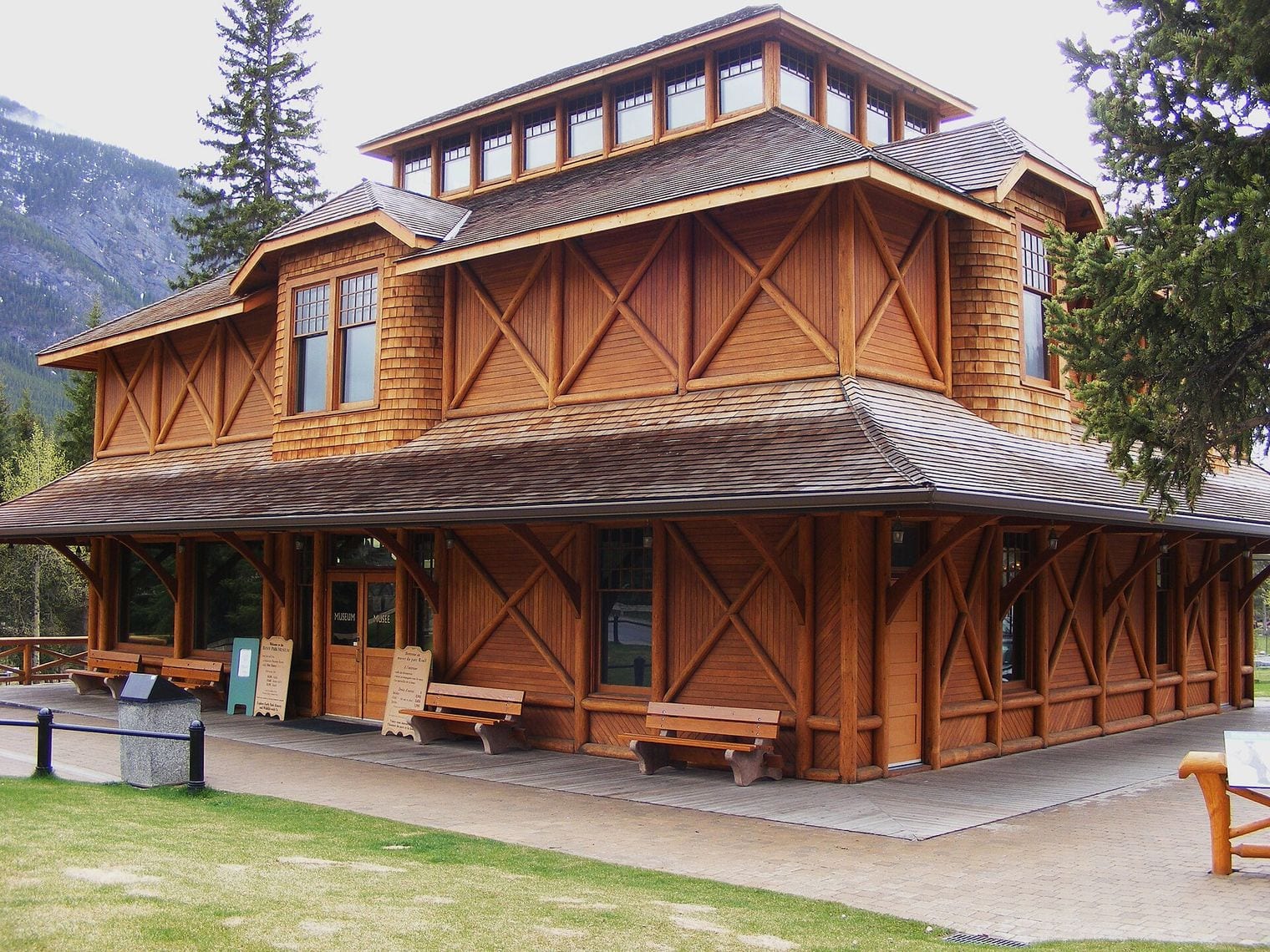
The Banff Park Museum, a log building beside the Bow River bridge at the foot of Banff Avenue, is a museum of a museum. Built in 1903, it is the oldest surviving federal building in any Canadian national park and an early example of the rustic architecture that later spread through North American parks.
Its wooden cases hold more than 5,000 vintage botanical and zoological specimens and show how natural history was understood near the end of the Victorian era. The museum opens seasonally and interior access has varied, so check with Parks Canada before planning around the exhibits; the riverside park around the Banff Park Museum is pleasant at any time.
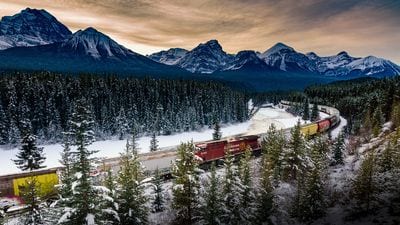
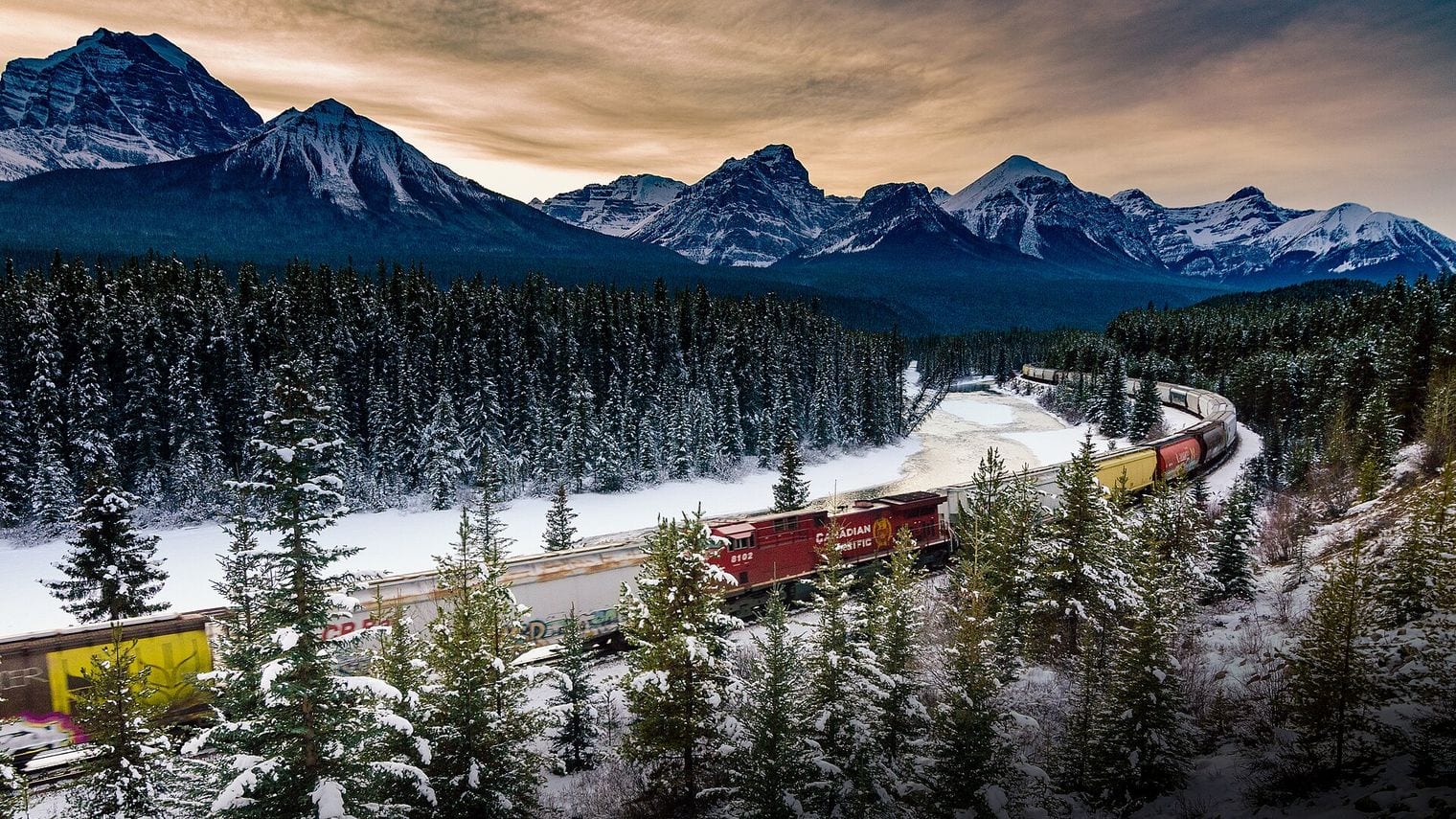
Morant's Curve is a roadside pullout on the Bow Valley Parkway near Lake Louise where the Canadian Pacific Railway tracks follow a sweeping bend of the Bow River beneath the peaks. It is named after Nicholas Morant, the railway's longtime special photographer, whose pictures of trains on this curve became classic images of the Canadian Rockies.
There is no hike: park, walk to the edge and wait. Trains pass irregularly, so photographers often linger for one to round the bend. The scene works in every season, from green summer water to a snow-covered winter valley, and it is an easy stop on the drive between Banff and Lake Louise.
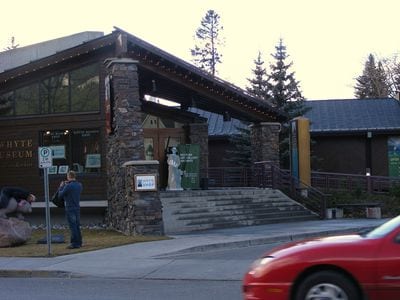
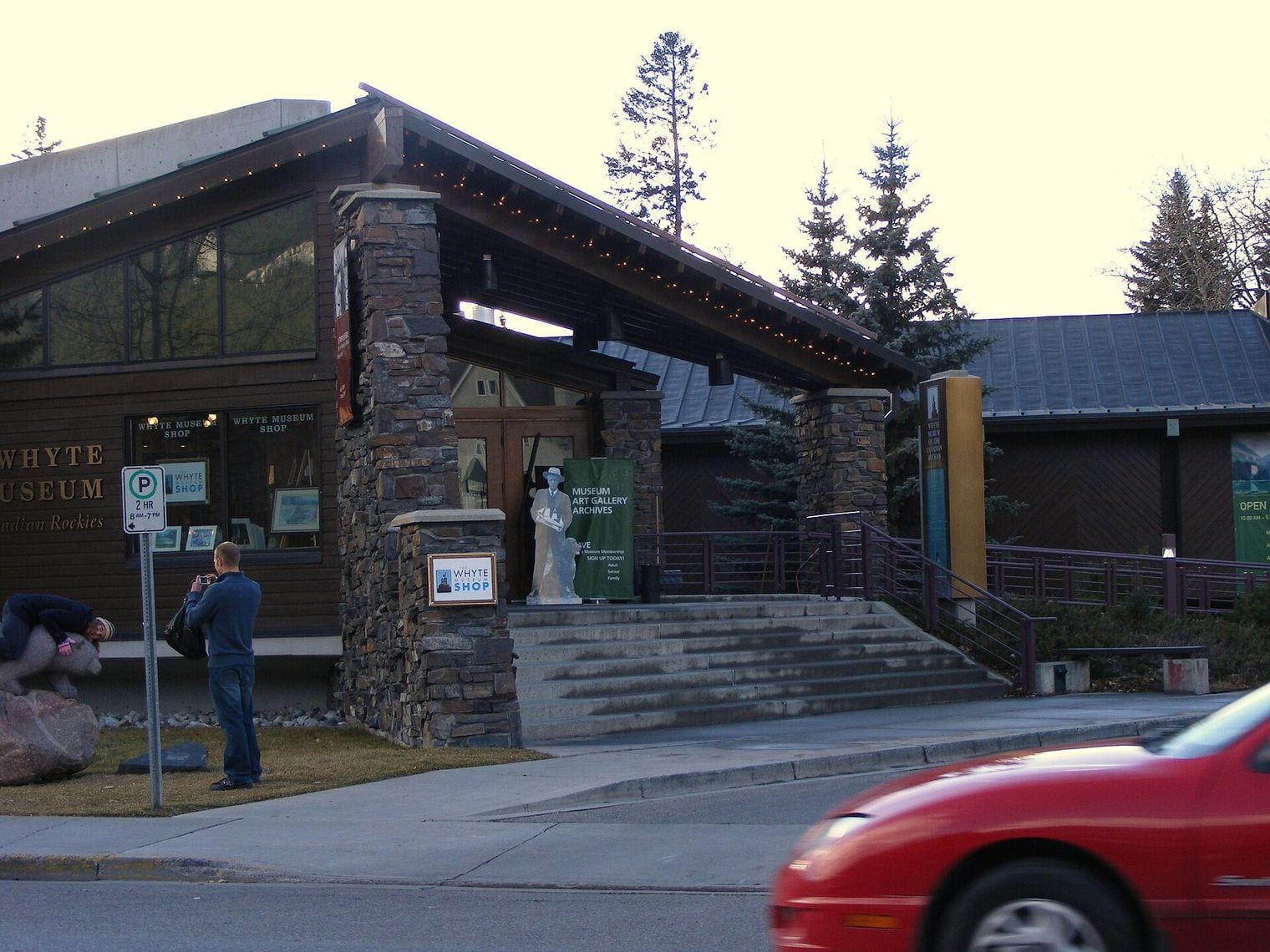
The Whyte Museum of the Canadian Rockies, on Bear Street a block from Banff Avenue, tells the human story of these mountains: Indigenous history, mountaineering, guiding, early tourism and the art the Rockies inspired. It grew from the vision of Banff artists Peter and Catharine Whyte and opened in 1968, with art galleries, a heritage gallery and a large archive and library.
The grounds include historic log homes and cabins, some of which can be visited in summer. Changing exhibitions make it worth a return visit, and it is the best choice in town for a rainy afternoon.
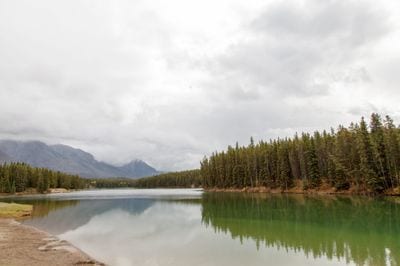
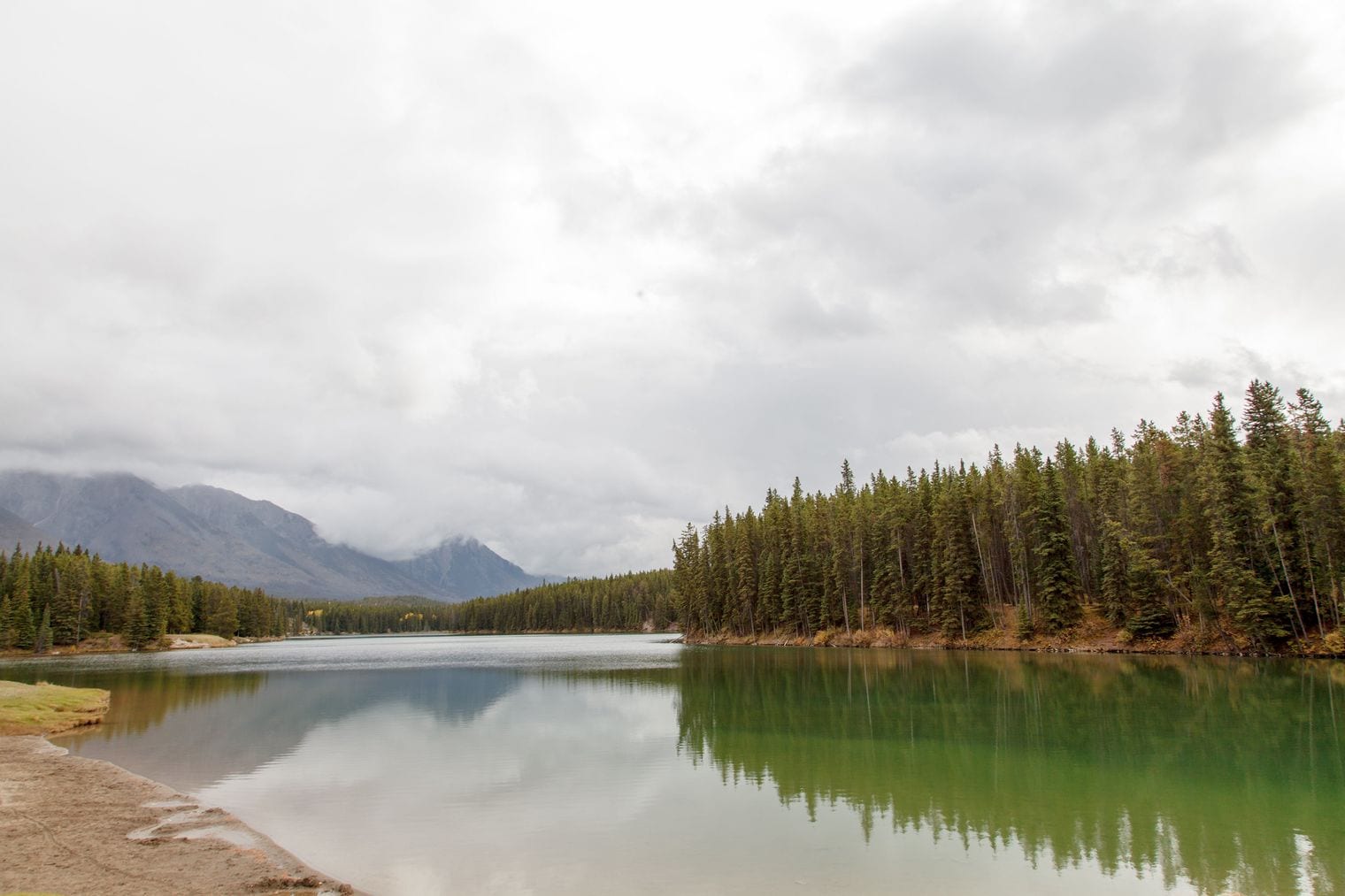
Johnson Lake is Banff's favourite swimming lake, a small, shallow lake off the Minnewanka Loop that takes the chill off its water by midsummer. Picnic tables and grassy shores fill on hot afternoons, and paddleboarders drift across the surface with the peaks of the Bow Valley in view.
An easy trail circles the lake through open montane forest, and in winter, when the ice is safe, Johnson Lake is a popular spot for skating on natural ice. It is a short drive from town and quieter than Lake Minnewanka on summer evenings.
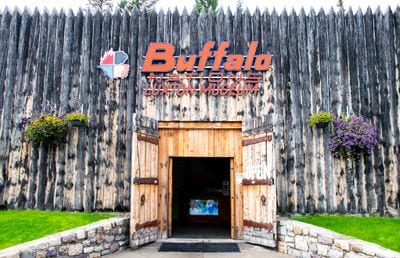
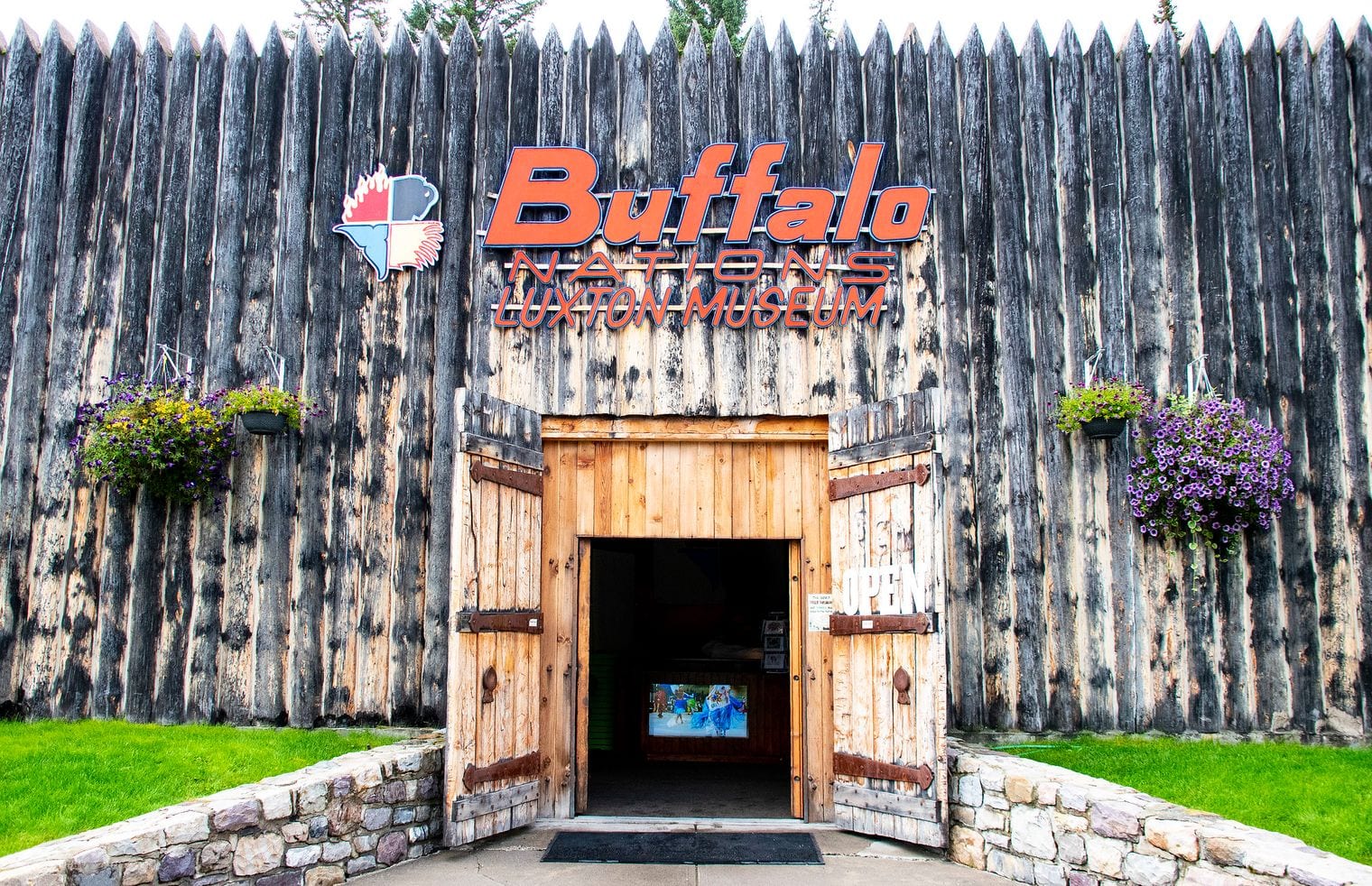
The Buffalo Nations Luxton Museum, in a fort-style log building just across the Bow River bridge from Banff Avenue, is devoted to the cultures of the Blackfoot Confederacy (the Siksika, Piikani and Kainai), the Îyârhe Nakoda and the Tsuut'ina. Banff entrepreneur Norman Luxton founded it with the Glenbow's Eric Harvie as the Luxton Museum of the Plains Indians, to house his collection.
Today its artifacts, artwork and historical displays interpret the traditions and values of the First Nations of the plains and foothills. It is a compact visit that adds real depth to a trip through land these nations have known for thousands of years.
The Icefields Parkway is the great road trip of Banff National Park, running north from Lake Louise alongside the Continental Divide past glaciers, waterfalls and turquoise lakes. Its Banff section ends at Sunwapta Pass, the boundary with Jasper National Park, though the road itself continues all the way to Jasper.
Beyond Bow Lake and Peyto Lake, stop at the Waterfowl Lakes, the short walk down to the carved limestone of Mistaya Canyon, and the Weeping Wall, where meltwater streams down the cliffs of Cirrus Mountain. Services are few, phone coverage is patchy and winter brings snow and closures, so fuel up before you leave and check road conditions.
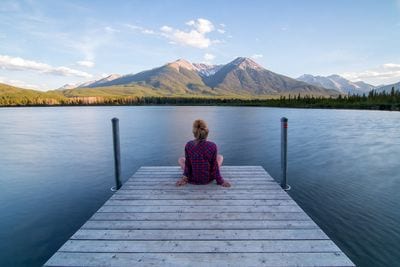
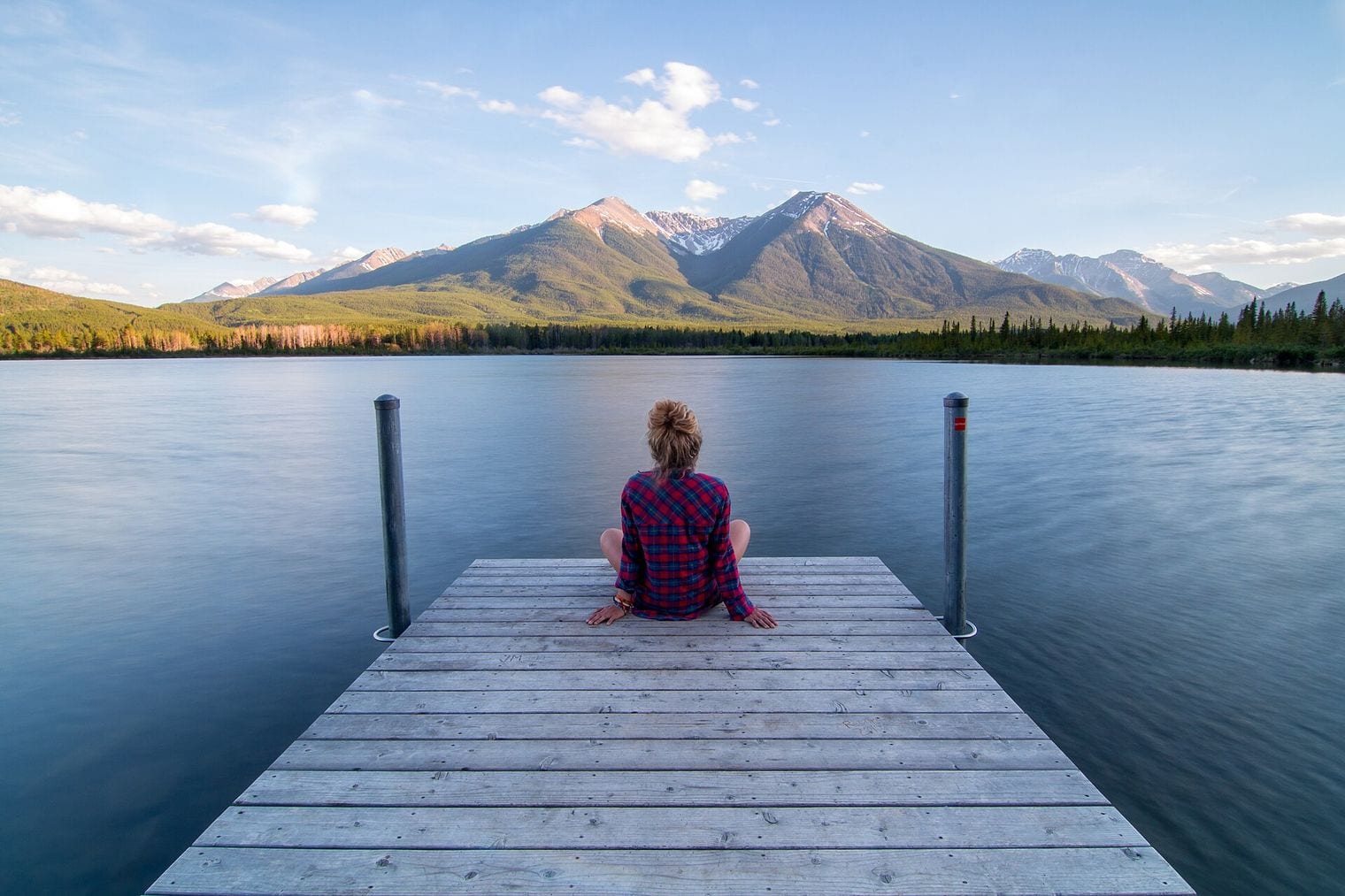
The Vermilion Lakes are a chain of three shallow lakes and wetlands just west of the townsite at the foot of Mount Norquay, reached along quiet Vermilion Lakes Drive. With Mount Rundle rising across the water, they are a favourite sunrise and sunset spot, and the marshes are good for birdwatching and wildlife.
Walk or cycle the drive from town, launch a canoe or paddleboard, and stop at the docks for the reflections. A hot spring rises at the third lake, a reminder of the same geothermal water that made Banff famous.
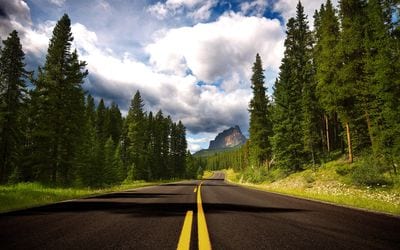
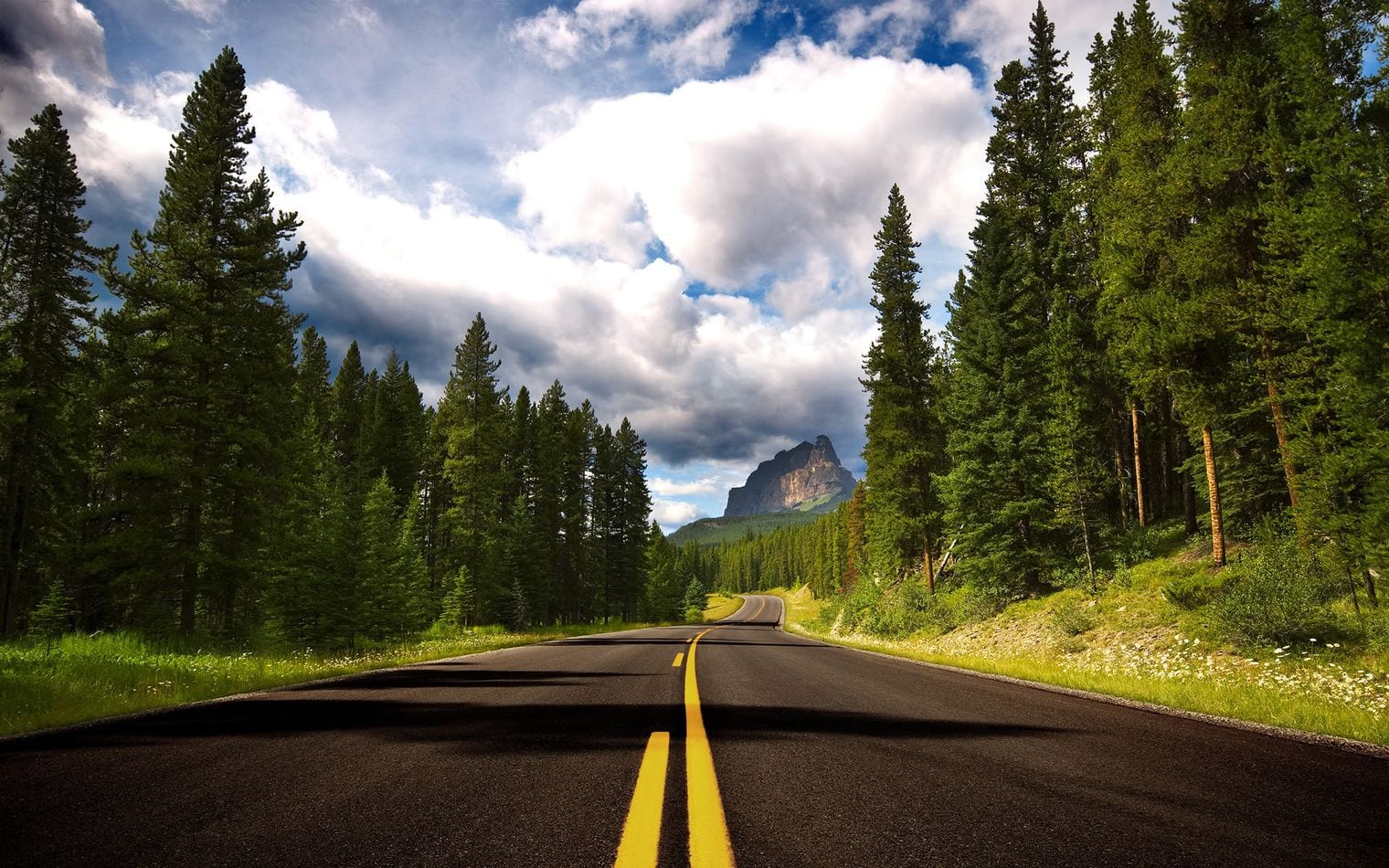
The Bow Valley Parkway (Highway 1A) is the slow, scenic alternative to the Trans-Canada Highway between Banff and Lake Louise, a two-lane road through forest and meadow with better odds of seeing wildlife. It passes Johnston Canyon, Morant's Curve and the great castellated wall of Castle Mountain, which carried the name Mount Eisenhower for a time after the Second World War.
To protect wildlife, the eastern section between the Fireside picnic area and Johnston Canyon is closed to all travel overnight each spring, and Parks Canada has also set aside spring and fall days when that section is closed to private cars for cyclists and walkers. Check current restrictions before you drive the Bow Valley Parkway.
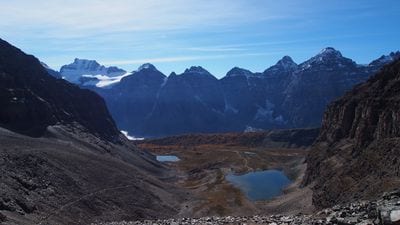
Sentinel Pass is the high point of one of Banff's great day hikes, a steady climb from the Moraine Lake shore up through Larch Valley to a notch between Pinnacle Mountain and the Sentinel peaks. At about 2,611 m it is among the highest points reached by a maintained trail in the Canadian Rockies, with the Valley of the Ten Peaks spread out below.
Larch Valley turns gold in September, when the trail is at its busiest. Grizzlies live in this area, and Parks Canada often requires hikers to travel in tight groups here, so check trail conditions first. With the Moraine Lake road closed to private cars, plan around the shuttle or an early commercial bus.
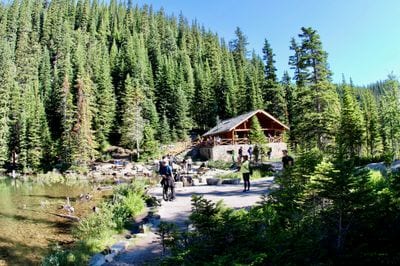
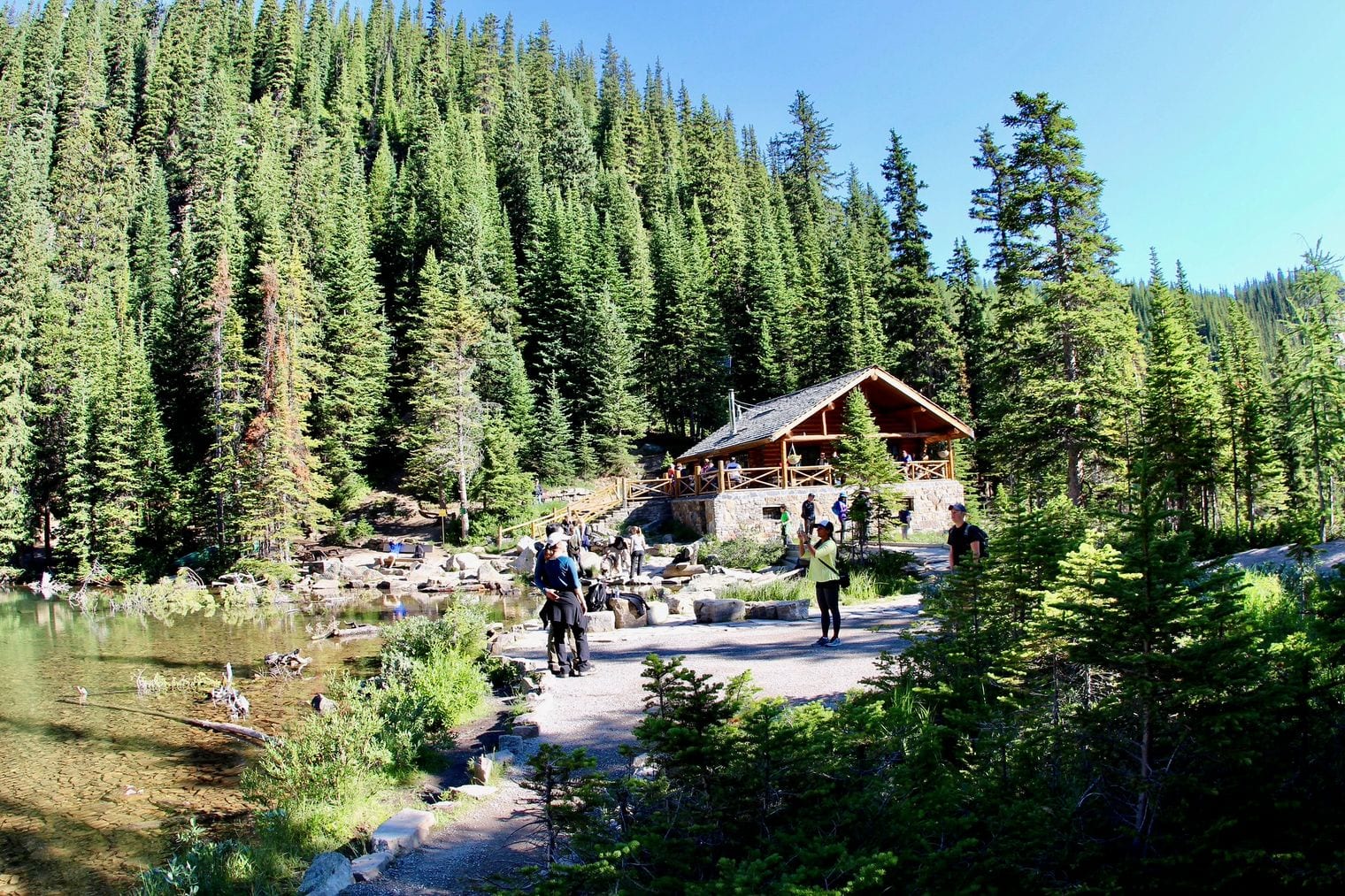
The Lake Agnes Tea House waits at the top of a classic hike from the Lake Louise shoreline, a steady climb through the forest past little Mirror Lake to a hanging lake at about 2,135 m. The Canadian Pacific Railway built a hikers' refuge here in 1901 and it began serving tea in 1905; the log building was rebuilt in 1981, and it is often called the oldest tea house in Canada.
The Lake Agnes Tea House opens only in the summer and early-fall season and keeps its menu simple: pots of tea, soups and baked goods. Continue to the Big Beehive for a view straight down to Lake Louise, or link with the trail to the Plain of Six Glaciers.
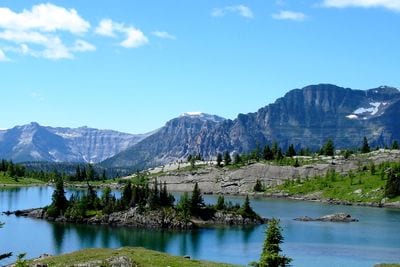
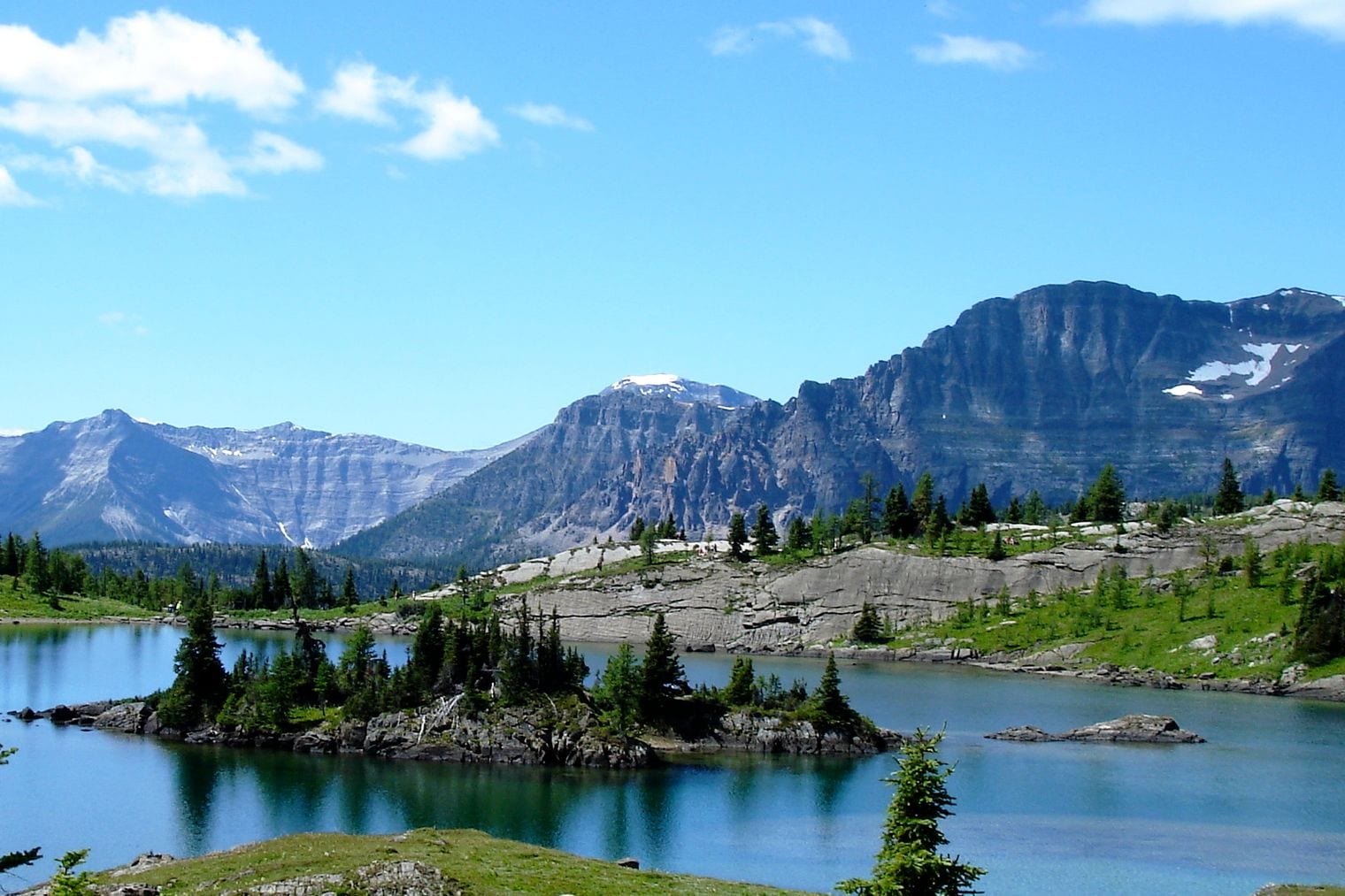
Sunshine Meadows is a sweep of high alpine meadow at about 2,300 m that straddles the Continental Divide between Alberta and British Columbia, partly in Banff National Park and partly in Mount Assiniboine Provincial Park. In summer the sightseeing gondola from the Sunshine Village base and a chairlift beyond it lift you to the Standish Viewing Deck, with views to Mount Assiniboine, at 3,618 m the highest peak in the region.
From the top, easy trails loop past Rock Isle, Grizzly and Larix lakes through meadows that burst with wildflowers in midsummer. In winter the same terrain becomes Banff Sunshine's ski area.
The Banff Centre for Arts and Creativity, on the slopes of Tunnel Mountain above town, began in 1933 as the Banff School of Drama and has grown into a campus of studios, theatres and residencies for artists from around the world. Visitors can catch concerts, theatre, talks and exhibitions, and the Walter Phillips Gallery shows contemporary art.
Outdoor lovers know it as the home of the Banff Centre Mountain Film and Book Festival, held each fall since 1976, whose films then tour the world. Even without a ticket, the campus paths have fine views of the Bow Valley and Mount Rundle.
Plan your trip
Best Time to Visit Banff
Summer is the classic season. The high lakes thaw and take on their famous colours, the Moraine Lake road and the sightseeing lifts open, and wildflowers fill Sunshine Meadows. It is also the busiest time, so book shuttles and rooms early and start each day at dawn. September brings cooler days, thinner crowds and the golden larches of Larch Valley.
Winter turns Banff into a ski town, with three resorts inside the park, skating on the frozen lakes and frozen waterfalls in Johnston Canyon. Spring is the quietest season, but the high lakes stay frozen into June and some roads and trails remain closed for snow or wildlife. Late fall brings the Banff Centre Mountain Film and Book Festival.
Getting to Banff
Most visitors fly into Calgary International Airport and drive about an hour and a half west on the Trans-Canada Highway (Highway 1) to the park gates; airport shuttles also run to the townsite. Every vehicle stopping in the park needs a Parks Canada pass.
From the west, the Trans-Canada climbs from British Columbia over Kicking Horse Pass, and a road trip from Vancouver takes a long day or two. There is no regular passenger train to Banff, though seasonal scenic rail tours link it with Vancouver.
Getting Around Banff
The townsite is compact and easy to walk, and Roam public transit links it with Sulphur Mountain, the Minnewanka Loop, Lake Louise and Canmore. In summer, Parks Canada shuttles are the only practical way to reach Moraine Lake and the easiest way to reach Lake Louise without hunting for a parking space.
A car is still the best way to explore the Bow Valley Parkway and the Icefields Parkway, where transit does not reach and services are few. Downtown parking fills on summer days, so leave the car at your hotel and walk or take transit within town. Drive slowly and never stop on the road for wildlife.
Where to Stay in Banff
Downtown Banff, around Banff Avenue, is the most convenient base: restaurants, shops and transit stops are on the doorstep, and the hot springs, gondola and museums are minutes away. The lodges and campgrounds along Tunnel Mountain Road are quieter and closer to the Hoodoos, with a shuttle or short drive into town.
For early starts at Lake Louise and Moraine Lake, stay in the small village of Lake Louise, about 60 km northwest. Rustic lodges and hostels along the Icefields Parkway suit road-trippers, and Canmore, just outside the park to the east, offers a wider choice of rooms.
Where to Eat in Banff
Banff Avenue and the side streets around Bear Street and Caribou Street hold most of the town's dining, from bakeries and coffee shops to steakhouses, pubs and fine dining. Alberta beef is the local pride, and bison and other game often appear on menus.
After a day outdoors, the après-ski and pub scene on Banff Avenue is lively year-round. Lake Louise village has a much smaller choice, so on Icefields Parkway days pack a picnic and eat at a lakeshore stop.
Day Trips from Banff
Several famous sights often grouped with Banff lie just outside the park. Canmore, about 25 km east down the Trans-Canada, is a relaxed mountain town with the Three Sisters peaks as its skyline. About an hour west over Kicking Horse Pass, Yoho National Park in British Columbia holds Emerald Lake and the towering Takakkaw Falls. Highway 93 South from Castle Junction leads into Kootenay National Park, where Marble Canyon is a short walk from the road.
North on the Icefields Parkway, the Columbia Icefield and the Athabasca Glacier sit just over Sunwapta Pass in Jasper National Park, about two and a half hours away, and Jasper town lies farther on. To the east, Calgary is about an hour and a half by road, and a long road trip west leads to Vancouver. For more destinations across Canada, start with our country guide.
Before you go
Mobile dataAn eSIM gives your phone local data when you land, with no SIM card to swap.via AiraloGet an eSIM
We may earn a commission when you buy through these links, at no extra cost to you. How we make money.
One Day in Banff
Morning
Start early at Moraine Lake on the first shuttle, when the water is calm, then ride across to Lake Louise and walk the lakeshore trail or climb to the Lake Agnes Tea House if your legs are fresh.
Both. The Town of Banff covers only a few square kilometres inside Banff National Park, which spreads across 6,641 km² of the Rockies. Lake Louise and Moraine Lake are about an hour from town but still inside the park. Canmore, Yoho, Kootenay and Jasper, including the Columbia Icefield, lie outside it.
What is Banff best known for?
Banff is best known for its glacier-fed lakes, above all Moraine Lake and Lake Louise, and for easy access to the high Rockies from a walkable town. The Banff Gondola up Sulphur Mountain, the catwalks of Johnston Canyon and a soak in the Banff Upper Hot Springs round out most first visits.
How many days do you need in Banff?
Plan three to four days. That covers the townsite sights, Lake Louise and Moraine Lake, the Bow Valley Parkway and a drive up the Icefields Parkway to Peyto Lake and Bow Lake. A full week leaves time for longer hikes such as Sentinel Pass and for day trips to Yoho or Kootenay.
Can you drive your own car to Moraine Lake?
No. Moraine Lake Road is closed to private vehicles, except for visitors with an accessible parking permit, and the road itself opens only for the summer and early-fall season. Reach the lake on a Parks Canada shuttle, Roam transit or a licensed commercial bus, or cycle the road.
What can you do in Banff for free?
With a park pass, many of Banff's highlights are free: Bow Falls, Surprise Corner, the Cascade of Time Garden, the Tunnel Mountain summit trail, the Hoodoos Viewpoint, Vermilion Lakes and Johnston Canyon. Walking Banff Avenue and scenic drives such as the Bow Valley Parkway and the Minnewanka Loop cost nothing extra either.
Sources & updates
How this guide was checked
Checked before launch
Sources cited
30
Publishers
11
Every place on this list was confirmed open and pinned on the map before publication, and what we say about each one was checked against its own website or an official source.
A PDF with a box to tick for every place. Confirm your email to download it, and get one email every Thursday with our newest guides for the places you tick.
Free Banff printable checklist
All 30 places in one PDF
Tick them off as you go. Confirm your email to download it, plus one email every Thursday with new guides for the places you tick.
We use cookies to analyse site traffic and improve your experience.
You can accept or reject analytics cookies. See our
May we use analytics cookies? See ourCookie Policy.