We may earn a commission if you book or buy through a link on
this page, at no extra cost to you. It never affects which places we list or how
we rank them (how we make money).
Short answer
Vancouver's three essentials are Stanley Park, a thousand acres of coastal rainforest wrapped in a seawall ten minutes from downtown, the Capilano Suspension Bridge swaying 140 metres over a rainforest canyon, and Grouse Mountain looking back over the city. Three days covers it: one for downtown, Gastown and the harbour, one for Stanley Park and the beaches, one for the North Shore mountains.
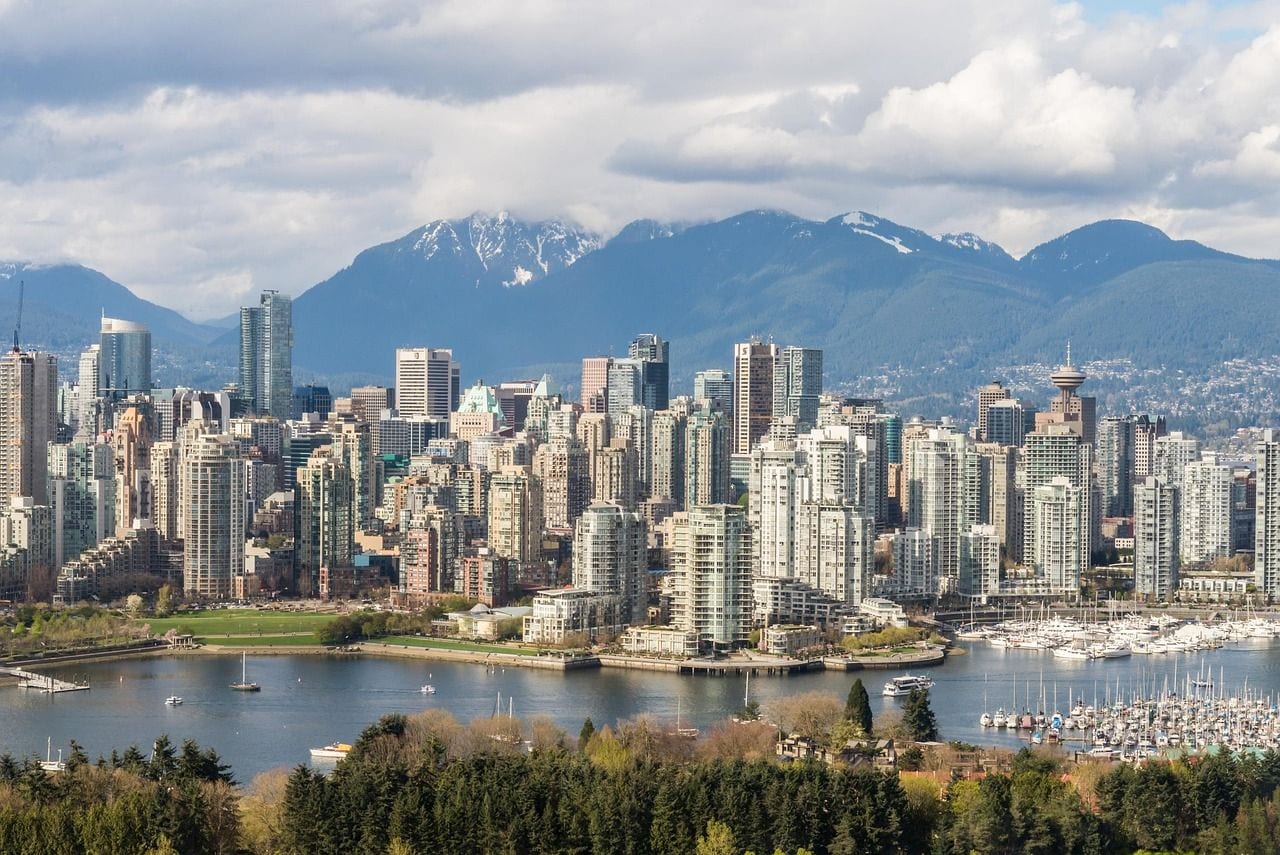
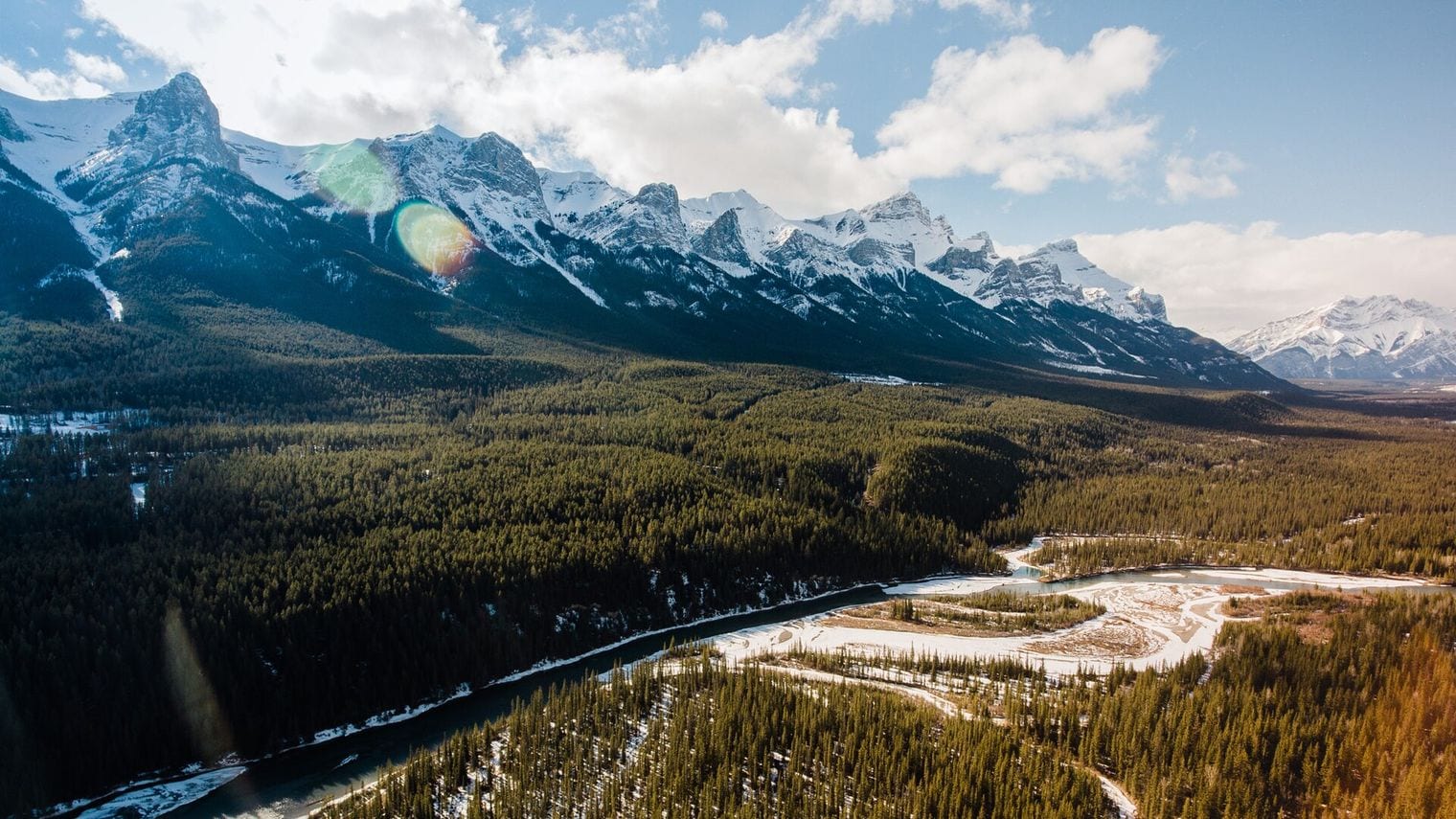
Vancouver is hemmed in by the things that make it beautiful: ocean on three sides, the North Shore mountains rising straight out of the water, and a temperate rainforest a short walk from the office towers. It is young, green, properly rainy, and more outward-looking than any other big Canadian city.
This guide runs through the 40 best things to do in Vancouver, from the seawall and Granville Island to the bridges and gondolas of the North Shore. Give the city three or four days, and save one of them for the mountains.
The city is named after a British naval officer — Captain George Vancouver, who explored the inner harbour of Burrard Inlet in 1792 while charting the Pacific coast.
Stanley Park is larger than New York's Central Park — it covers about 1,001 acres to Central Park's 843, and unlike most great city parks it was never landscaped from scratch but left largely as standing forest.
Greenpeace was founded in Vancouver — the campaign against nuclear testing in the North Pacific that began here grew into one of the best-known environmental organisations in the world.
It is nicknamed Hollywood North — Vancouver and the surrounding region make up one of the largest film and television production centres in North America.
The 2010 Winter Olympics were held here — shared between the city itself and the mountain resort of Whistler, up the coast highway to the north.
It has one of the mildest climates in Canada — winters are wet rather than frozen, which is why the gardens flower early and the seawall stays walkable all year.
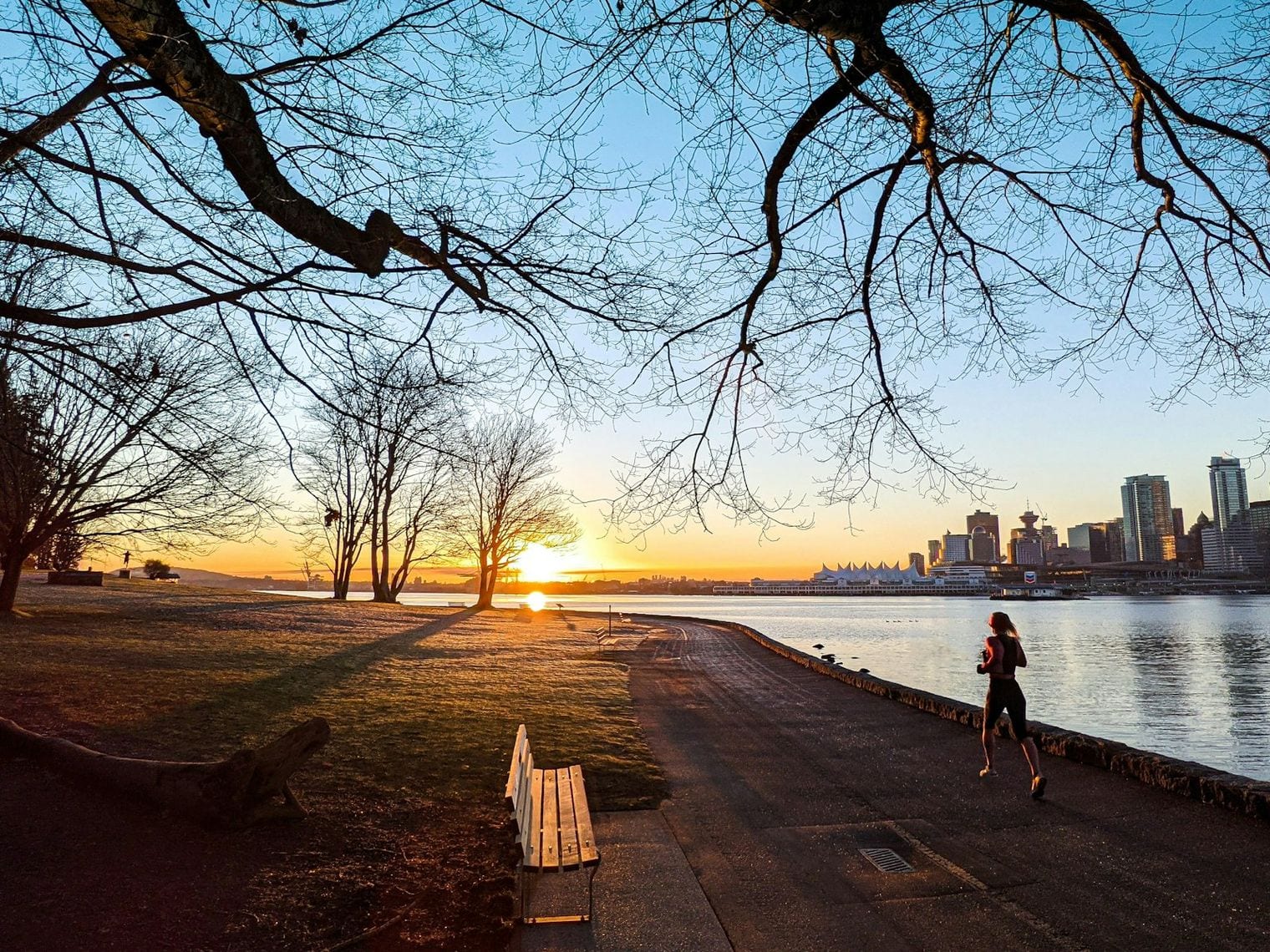
Stanley Park is the reason so many visitors fall for Vancouver on the first afternoon. Roughly a thousand acres of coastal rainforest sit on a peninsula at the edge of downtown, close enough to walk to from the West End, and dense enough that ten minutes along an interior trail puts you under cedar and hemlock with no city in sight. It is a working public park rather than a manicured one, and that is the charm.
Most people ride or walk the seawall around the outside, but the interior is where the park hides its best corners: Lost Lagoon and its heron colony, Beaver Lake under a lid of lilies, and quiet forest paths that barely see a crowd. The western beaches catch the sunset, the Brockton Point side looks across to the harbour, and there is a small train that loops through the trees. Come early if you want it to yourself.
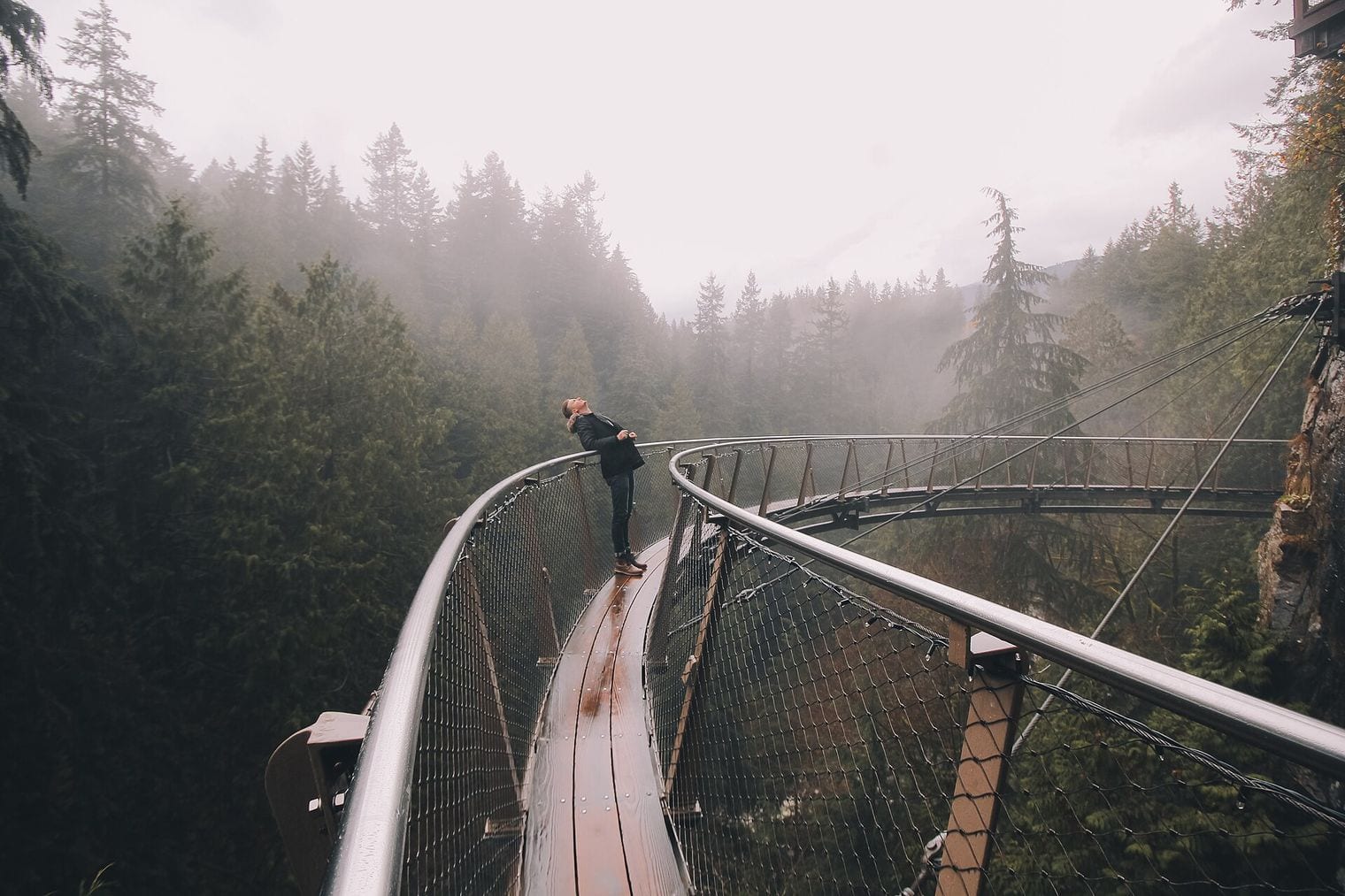
Capilano Suspension Bridge Park is the North Shore excursion nearly every visitor makes, and it earns the trip. A cedar-plank footbridge hangs high above the Capilano River, and it moves underfoot the whole way across — enough to make the first few steps genuinely unnerving before the canyon opens up on either side and the nerves turn into a grin.
A bridge has crossed this canyon since the 1880s, and the modern park has grown a good deal around it. On the far bank a treetop walkway threads between Douglas firs on suspended platforms, and a glass-floored walkway is bolted to the granite cliff back on the near side. There are First Nations totem poles near the entrance and a rainforest interpretive trail, so it fills a half-day comfortably rather than the twenty minutes you might expect.
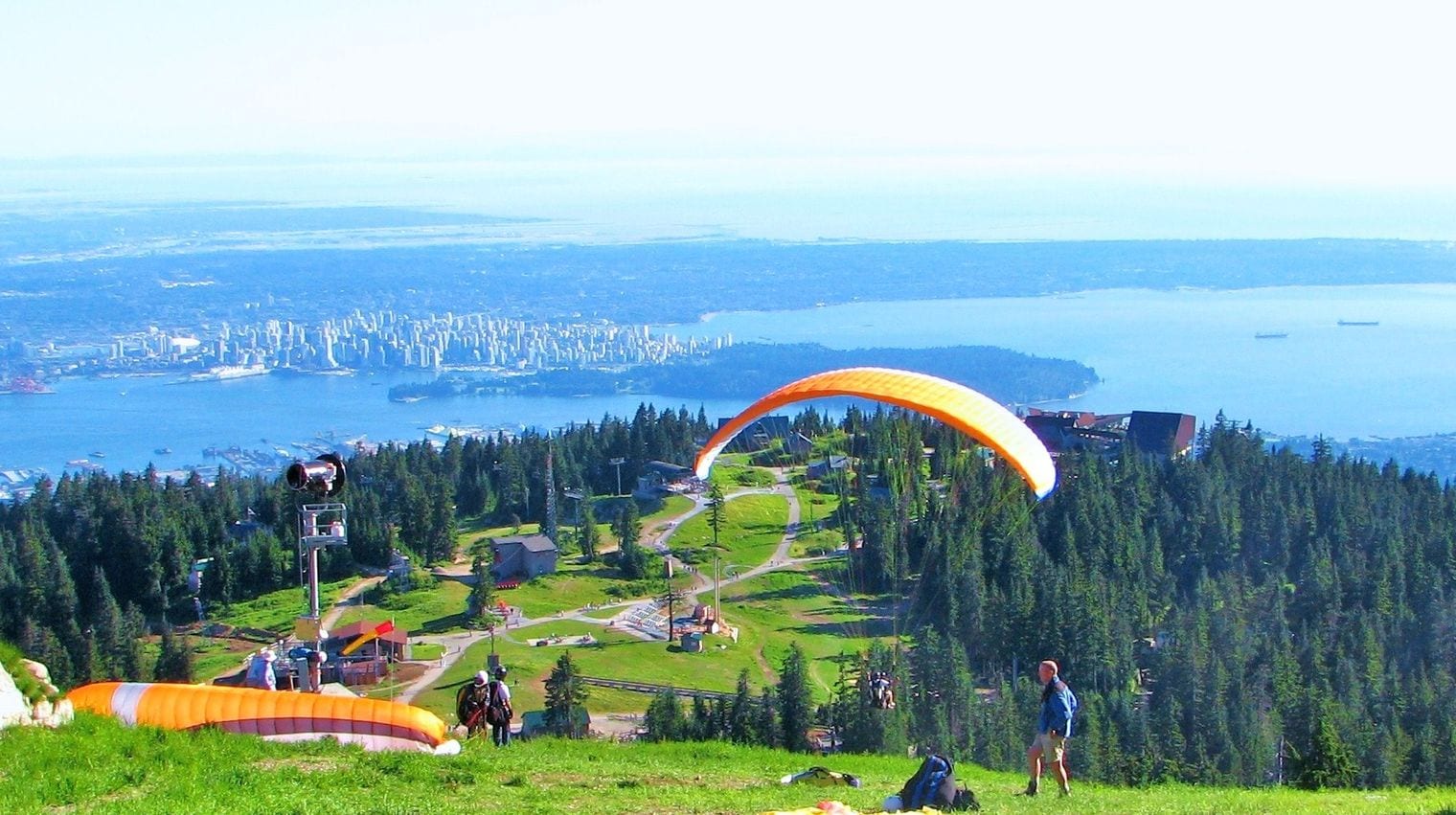
Grouse Mountain is the peak that looks back down at Vancouver from the North Shore, and the aerial tramway up it climbs fast enough that the city shrinks to a model within a couple of minutes. On a clear day the view runs across Burrard Inlet, over the downtown peninsula and out to the delta and the islands beyond.
The summit is set up as a year-round resort rather than a viewpoint alone. In winter it is a functioning ski hill with night skiing and a skating pond, close enough to town that locals go after work. In summer there are lumberjack shows, a mountaintop wildlife refuge best known for its rescued grizzly bears, ziplines and alpine trails. The very fit walk up instead, on the punishing staircase of a trail known as the Grouse Grind.
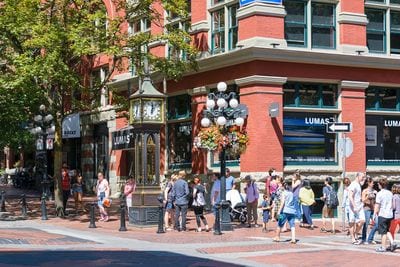
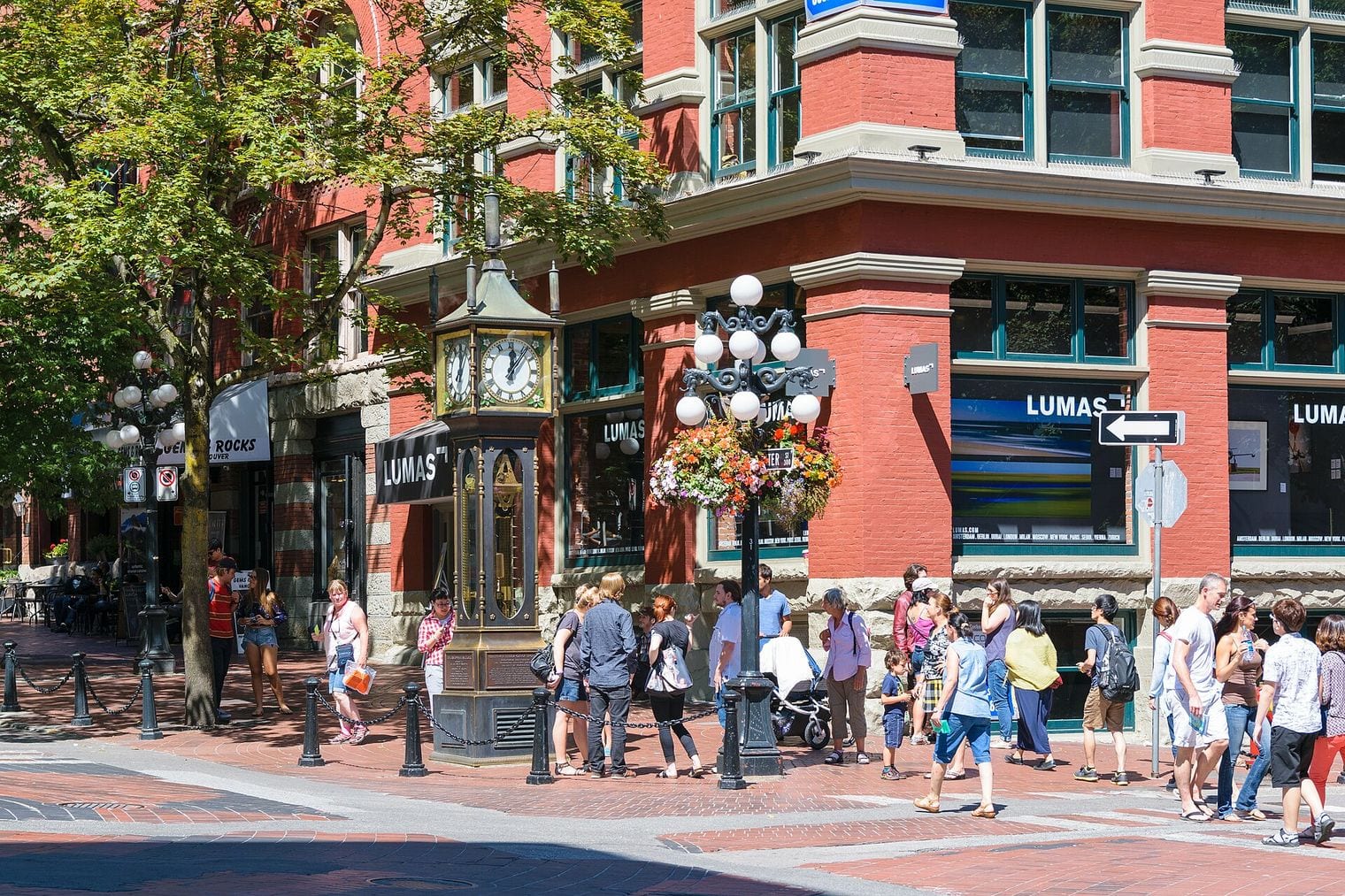
The Gastown Steam Clock stands on the corner of Water and Cambie streets, and it does exactly what visitors hope: it sounds the Westminster chime on the quarter hour, lets go a larger blast of steam on the hour, and draws a small crowd every single time.
It is a genuine steam clock rather than a period antique — built in 1977 by the horologist Raymond Saunders, deliberately in Victorian style, and fed from the district's underground steam system, though the hands themselves now turn on an electric motor.
The clock is really an excuse to be in Gastown, which is where Vancouver started. The cobbled streets and cast-iron lamps are restored rather than original, but the red-brick warehouse blocks are the real thing and now hold some of the city's better restaurants, design shops and galleries. It is a compact district and an easy walk from Canada Place or Chinatown.
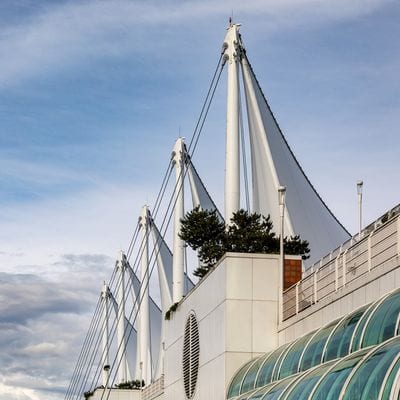
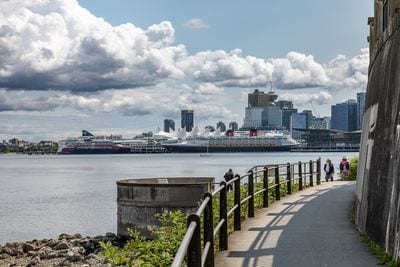
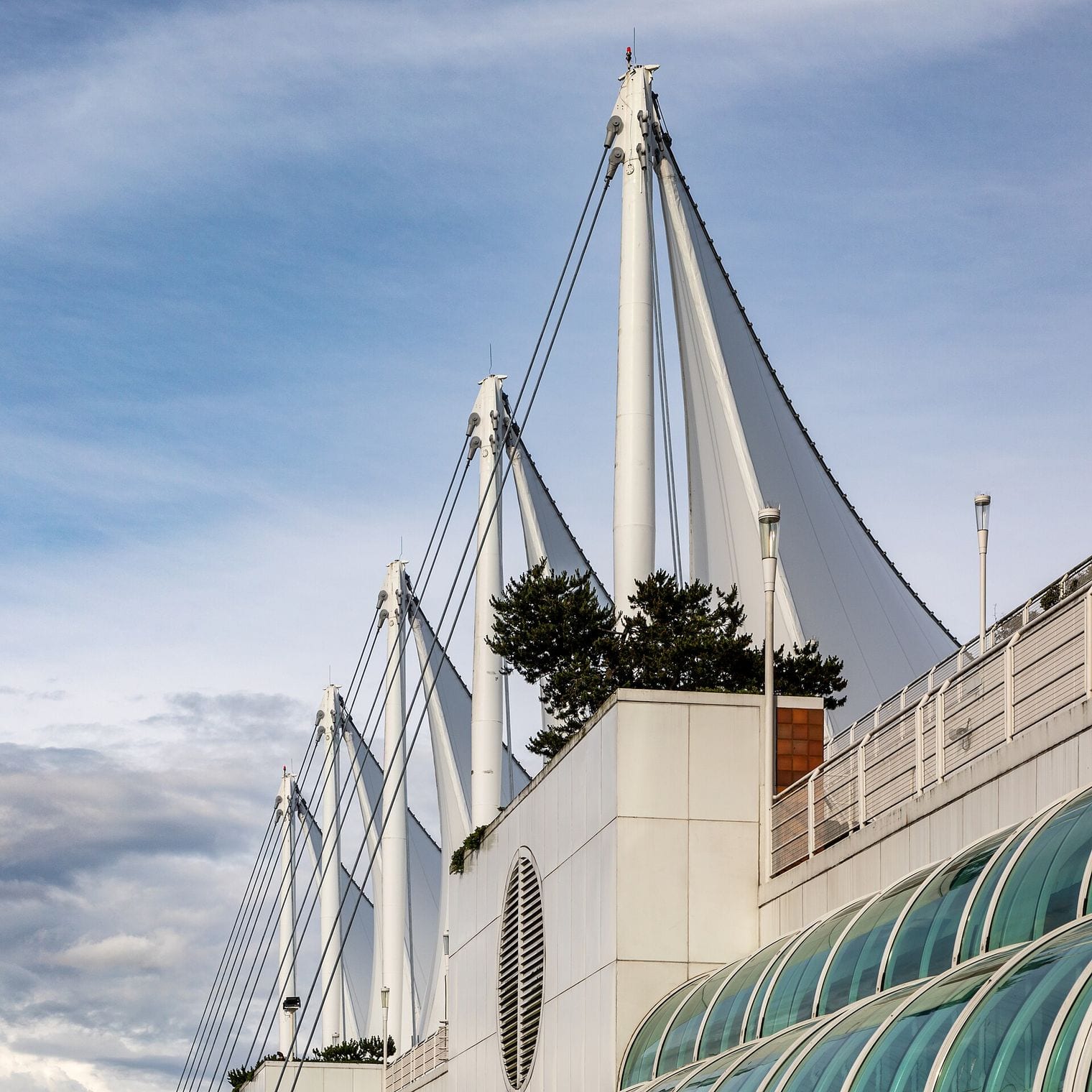
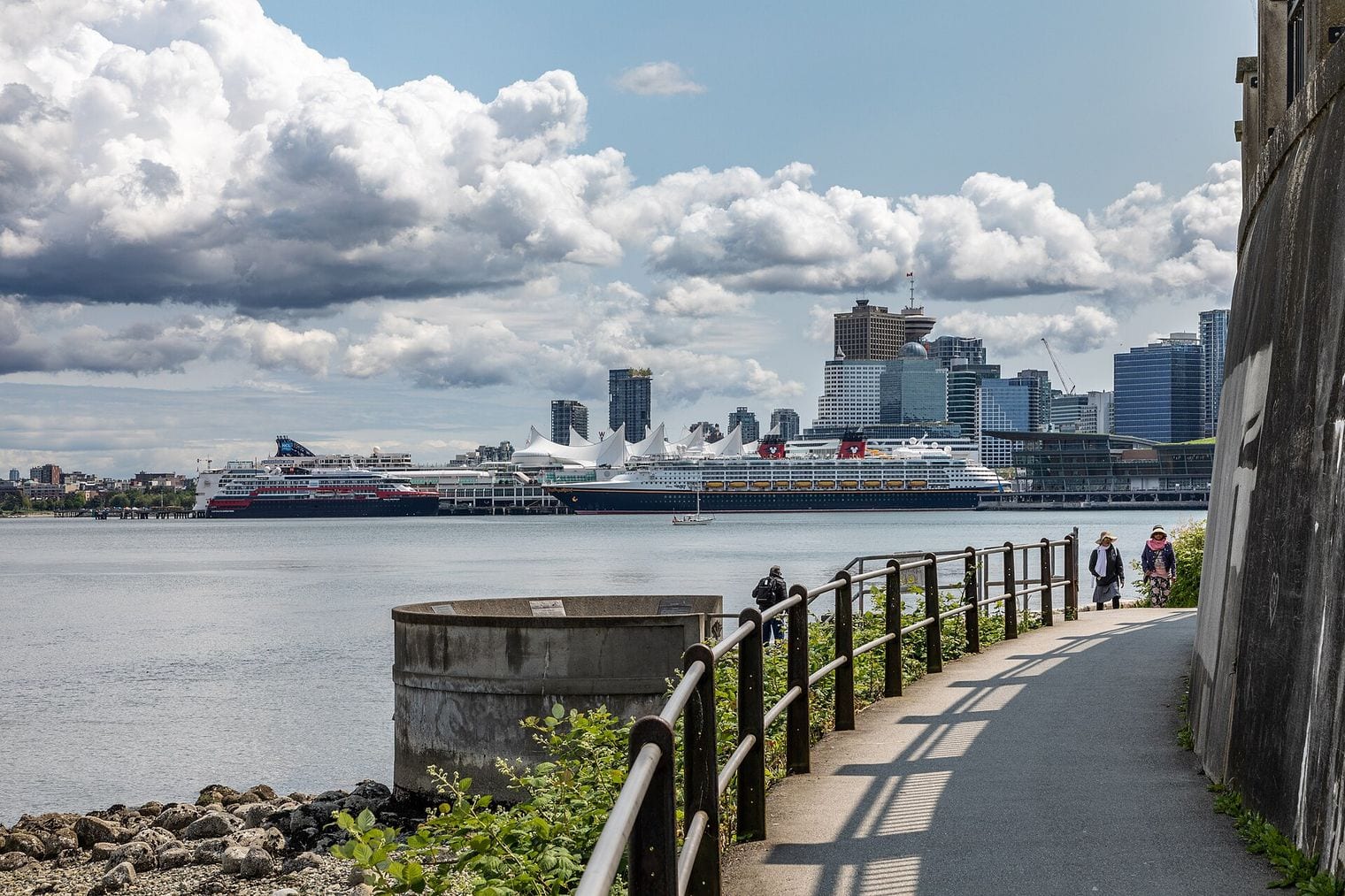
Canada Place juts into the harbour on the downtown waterfront under five white sails, a silhouette so tied to the city that it turns up on postcards and coins alike. Built as the Canada Pavilion for the 1986 world's fair, it now works as a cruise terminal and convention centre, and the outer promenade is free and open to anyone.
Walk the full circuit for the best free view in central Vancouver: floatplanes landing in the inlet, cruise ships loading in summer, and the North Shore mountains filling the horizon behind them. Interpretive panels along the deck cover the port and the city's history, and the Canadian Trail runs the length of it. It is also the most convenient starting point for a harbour tour or a floatplane flight.
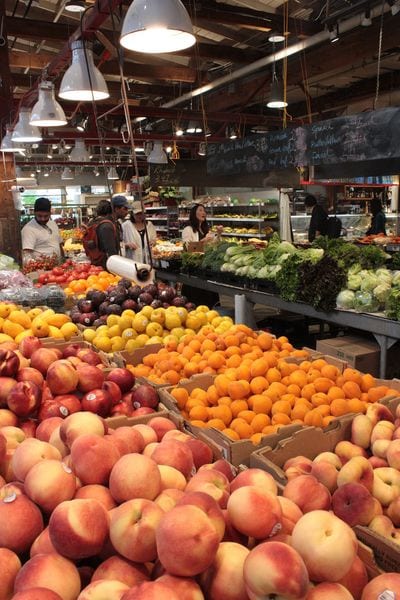
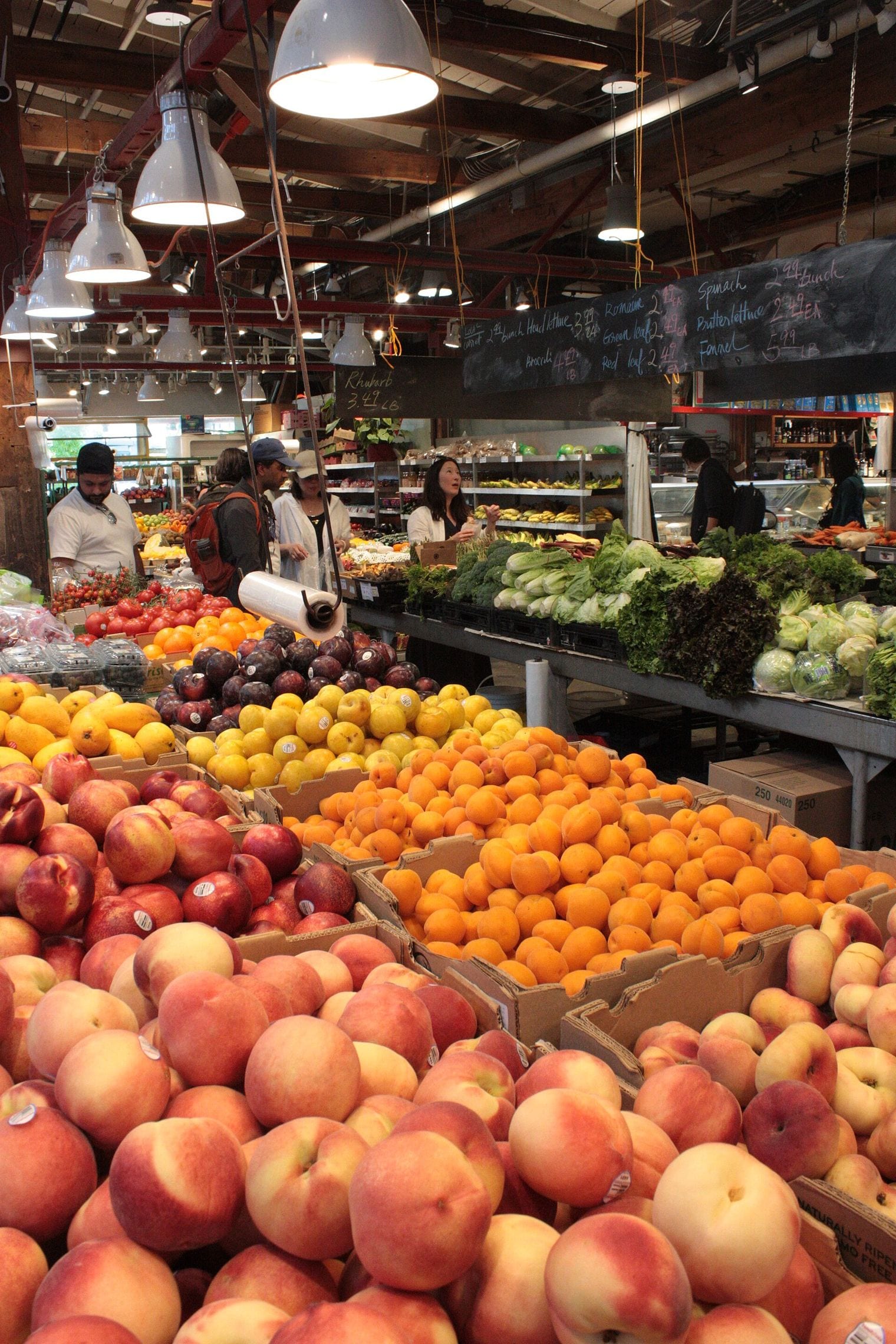
Tucked under the south end of the Granville Street Bridge, the Granville Island Public Market is the anchor of a peninsula that was heavy industry within living memory. The market hall is a working food market rather than a souvenir hall — produce stacked by the crate, salmon and spot prawns on ice, cheese counters, bakeries and a doughnut queue that never seems to shorten.
Eat as you go and take it outside: the docks along False Creek look back at the downtown towers, and buskers work the boardwalk most of the year. The rest of the island is worth the wander too, with artisan studios, a brewery, theatres and a children's market in the old sheds. The most enjoyable way to arrive is on one of the small passenger ferries that putter across False Creek.
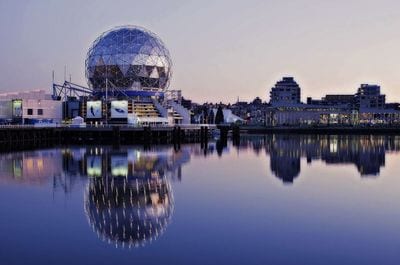
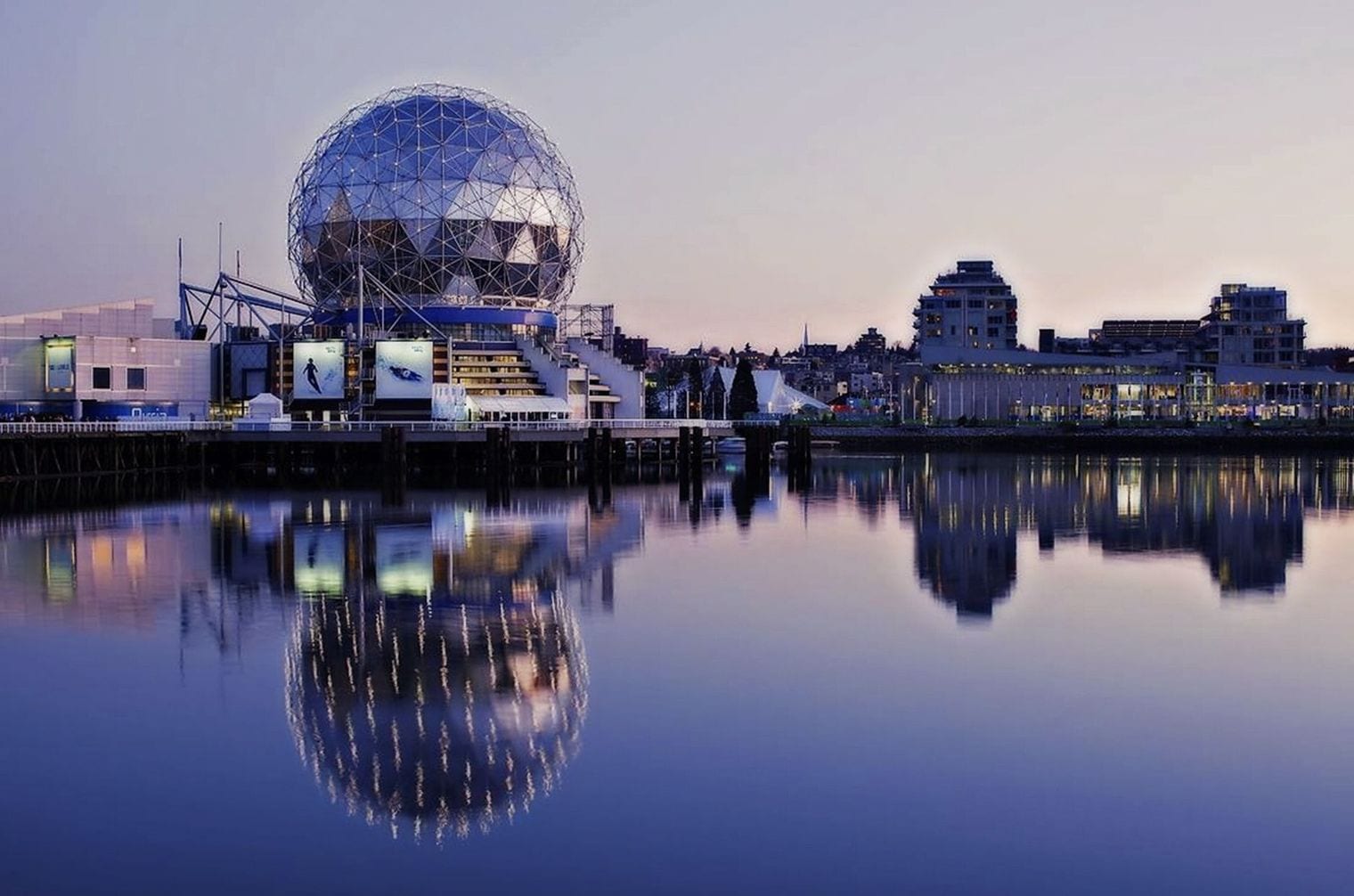
You will spot Science World long before you reach it — a geodesic dome of steel triangles sitting at the head of False Creek, lit up at night and visible from most of the seawall. Like Canada Place it is a survivor of the 1986 world's fair, and it has been the city's science centre ever since.
Inside it is unapologetically hands-on and aimed squarely at families: exhibits you crank, drop, build and stand inside, a live demonstration stage with the reliably popular experiments, and galleries covering the body, water, sound and the natural history of British Columbia. There is a large-format theatre under the dome and an outdoor science park. Adults without children in tow tend to enjoy it more than they expect to admit.
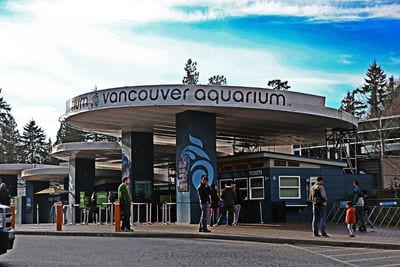
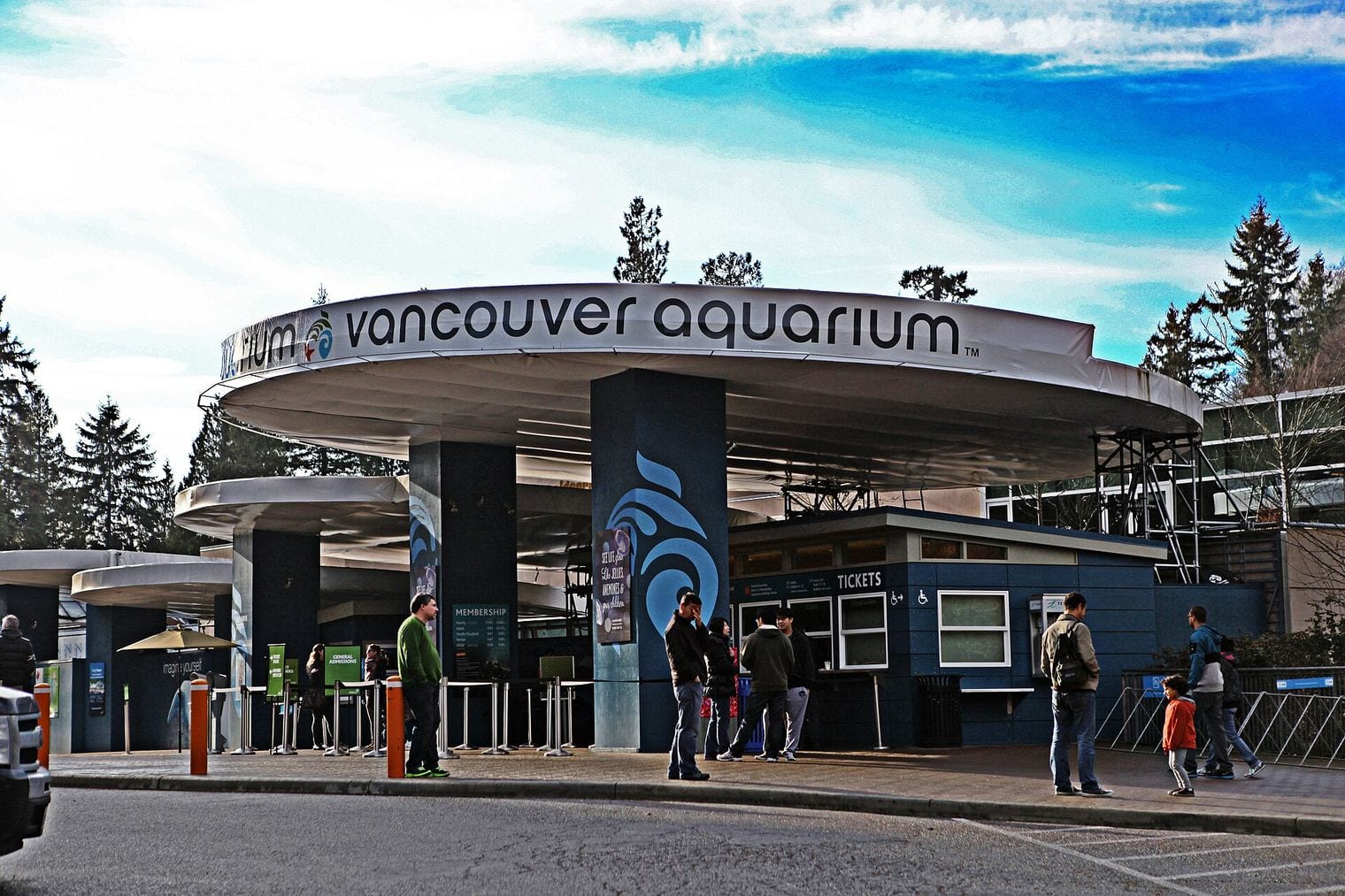
The Vancouver Aquarium sits inside Stanley Park and concentrates on the cold, dark, extraordinarily productive waters off British Columbia. That local focus is what makes it worth an hour or two: kelp forests, giant Pacific octopus, wolf eels, jellyfish and rockfish are the marine life actually out there beyond the seawall, and seeing them first makes the coastline read differently afterwards.
Beyond the Pacific galleries there is an Amazon rainforest house complete with free-flying birds, a tropical zone and outdoor pools for sea otters and sea lions. It is also a working rescue and rehabilitation centre for stranded marine mammals, and the interpretation leans hard into conservation and ocean plastics. Combine it with the park itself and you have an easy half-day.
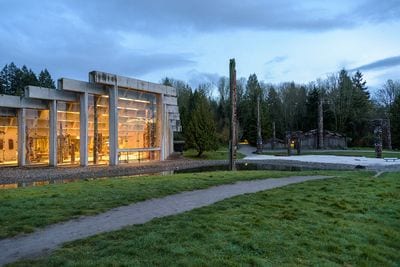
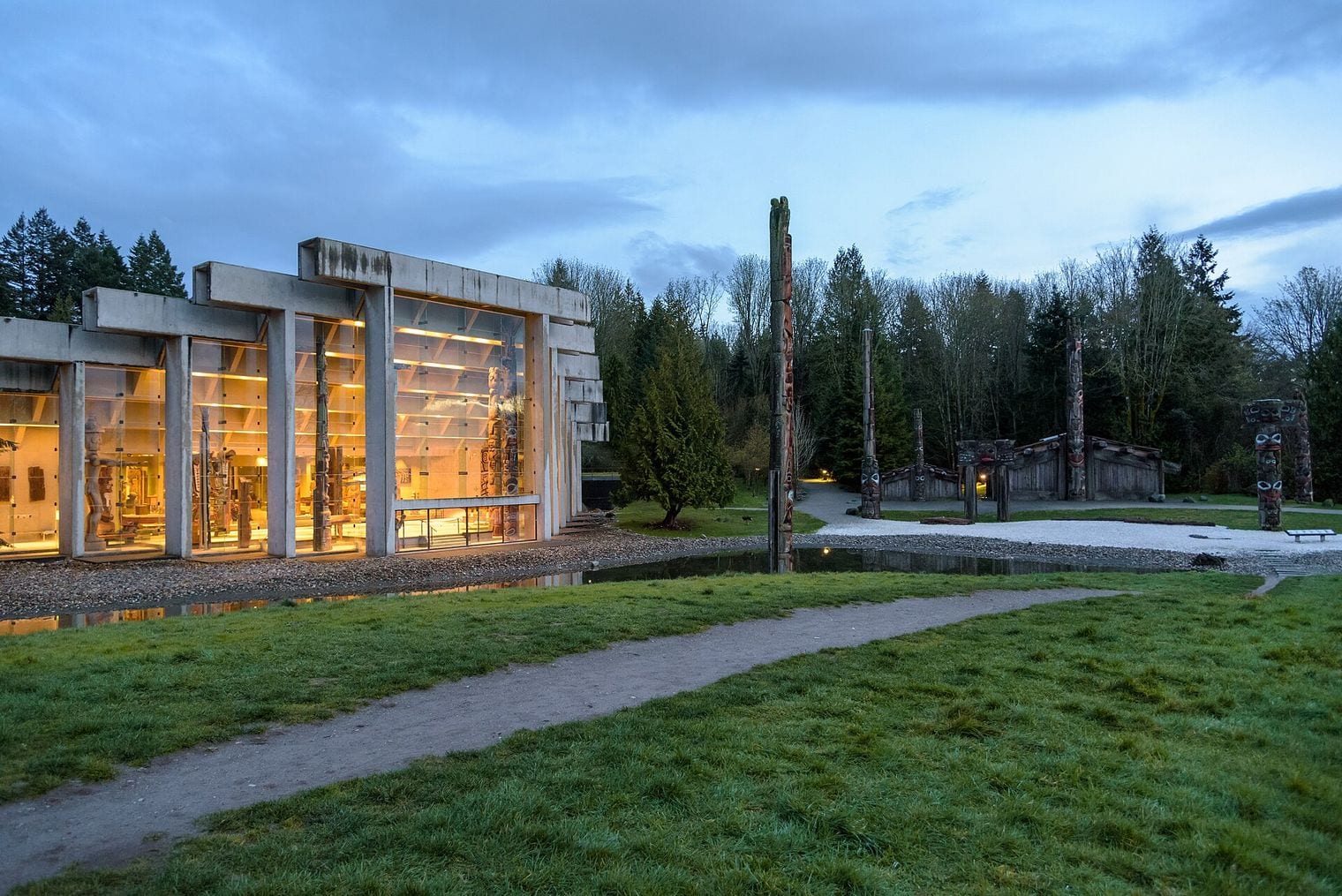
The Museum of Anthropology at UBC is the single best reason to make the trip out to Point Grey, and it would be a landmark even if it were empty. Arthur Erickson designed the concrete-and-glass building to echo the post-and-beam structures of Northwest Coast peoples, and its Great Hall rises to a wall of glass that puts monumental house posts and totem poles against the sea and sky behind them.
The collections centre on the art of the First Nations of this coast, with carving, weaving and contemporary work shown alongside the historic pieces, plus objects from around the world in the visible-storage galleries. Bill Reid's sculpture The Raven and the First Men is here. Outside, house posts and a reconstructed Haida dwelling stand on the bluff above the water.
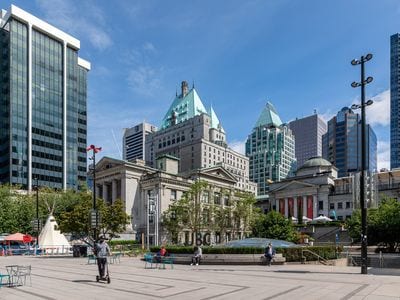
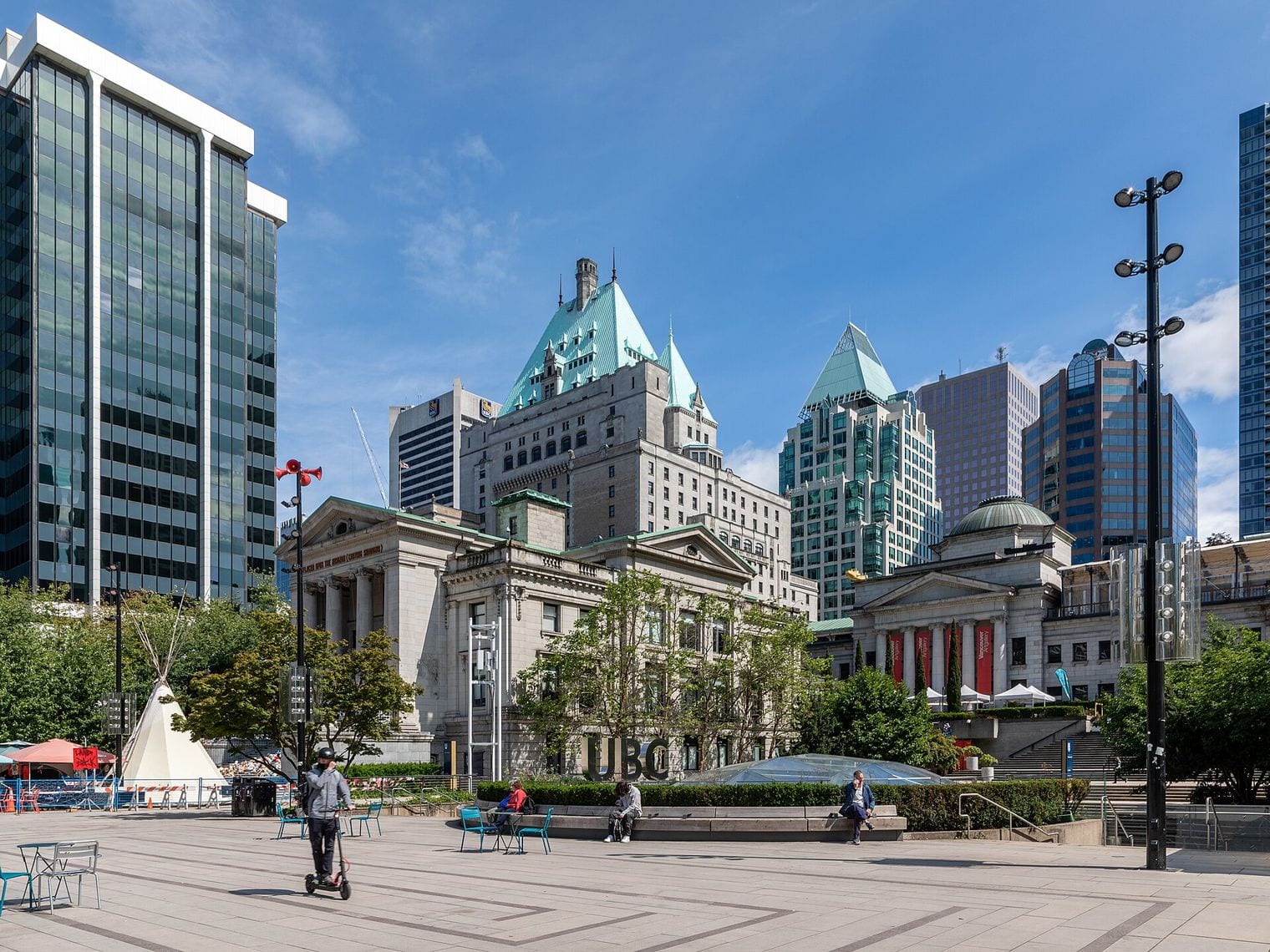
The Vancouver Art Gallery occupies the old provincial courthouse in the middle of downtown, a neoclassical pile with a domed rotunda and lions on the steps that is a good deal grander than the art-gallery conversion suggests from outside. The building alone justifies a look, and the north plaza is one of the city's regular gathering and protest spots.
The collection's real strength is British Columbian, and above all Emily Carr, whose forest and totem canvases the gallery holds in depth. Rotating exhibitions cover contemporary international work, photography and Indigenous artists, and the top floor usually holds the most interesting show. It is centrally placed enough to slot into a rainy afternoon without rearranging the day around it.
FlyOver Canada is inside Canada Place, and it is the closest thing the city has to a theme-park ride. You are strapped into a seat that lifts and tilts in front of a wraparound spherical screen, feet dangling, while the film sweeps across the country — over Newfoundland sea stacks, prairie grain fields, Rocky Mountain glaciers and finally back down the coast.
Wind, mist and scent effects are piped in, and the whole thing lasts only a few minutes, but it is very well made and lands especially well with anyone who is only seeing one corner of a very large country. It is a sensible rainy-afternoon option and sits directly under the sails, so it pairs neatly with a walk round the Canada Place promenade.
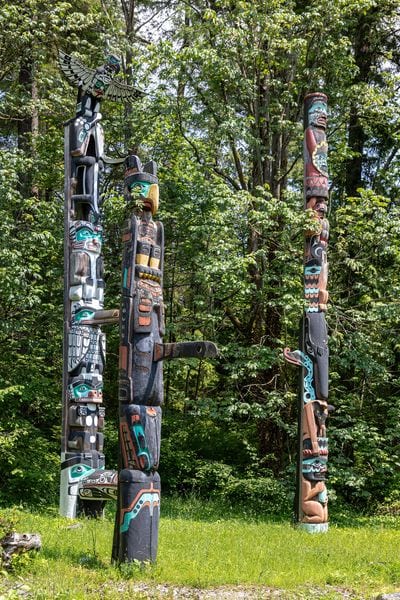
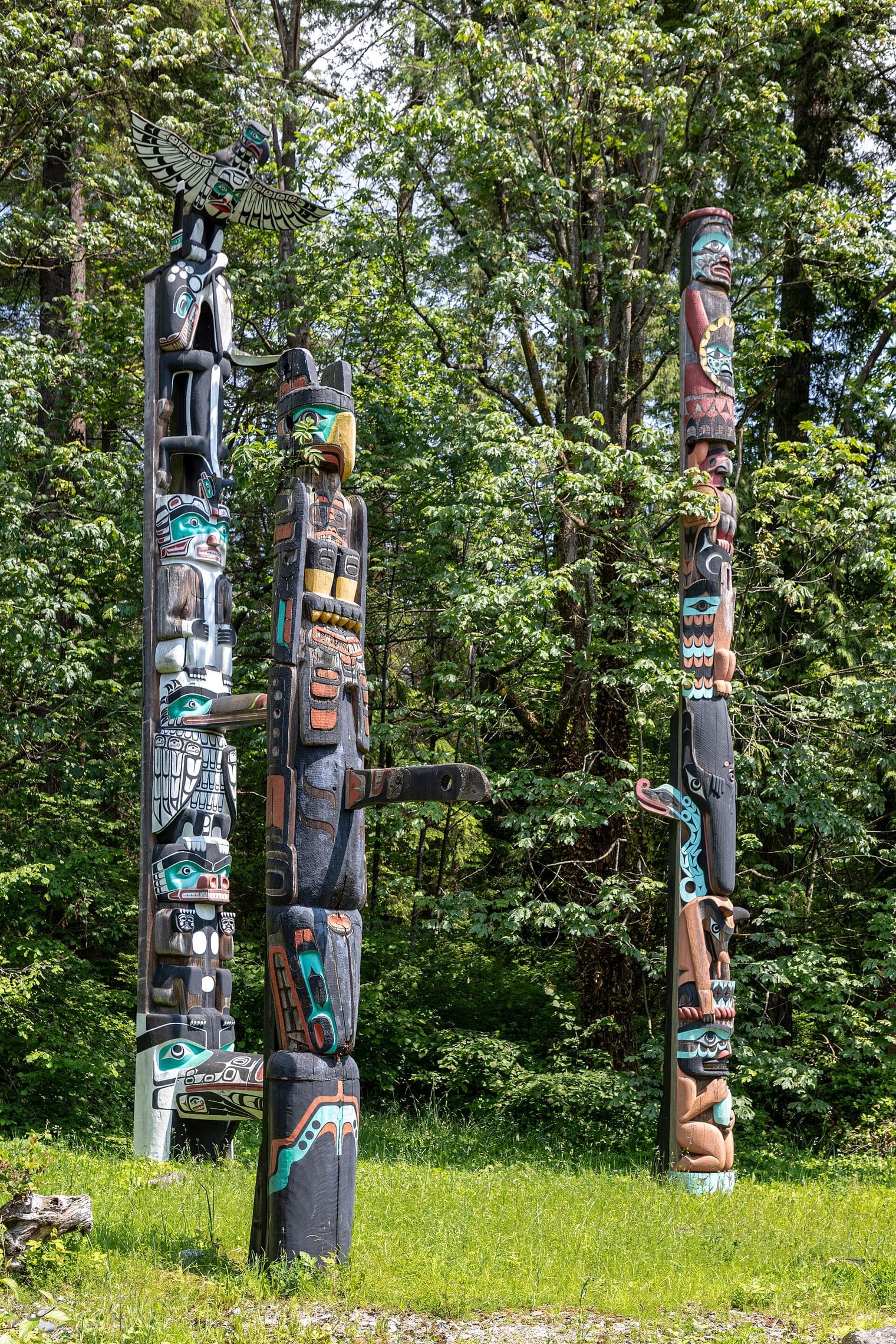
The Brockton Point Totem Poles stand in a clearing on the eastern side of Stanley Park, a group of carved poles set against the water with the harbour and the North Shore behind them. They are among the most visited sights in the province, and they are far more striking in person than photographs suggest — tall, boldly painted, and each one telling a specific family or clan story.
The poles here were carved by artists from several different nations, and the site has changed over the decades as originals were moved into museum care and new commissions took their place. Interpretive panels explain what the figures mean and who carved them, which is worth reading rather than skipping. Two welcome gateways by a Coast Salish artist stand nearby.
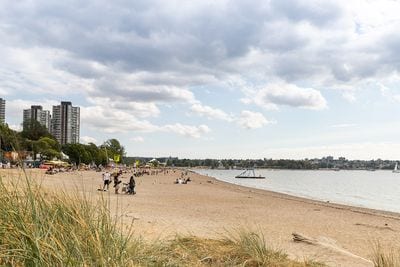
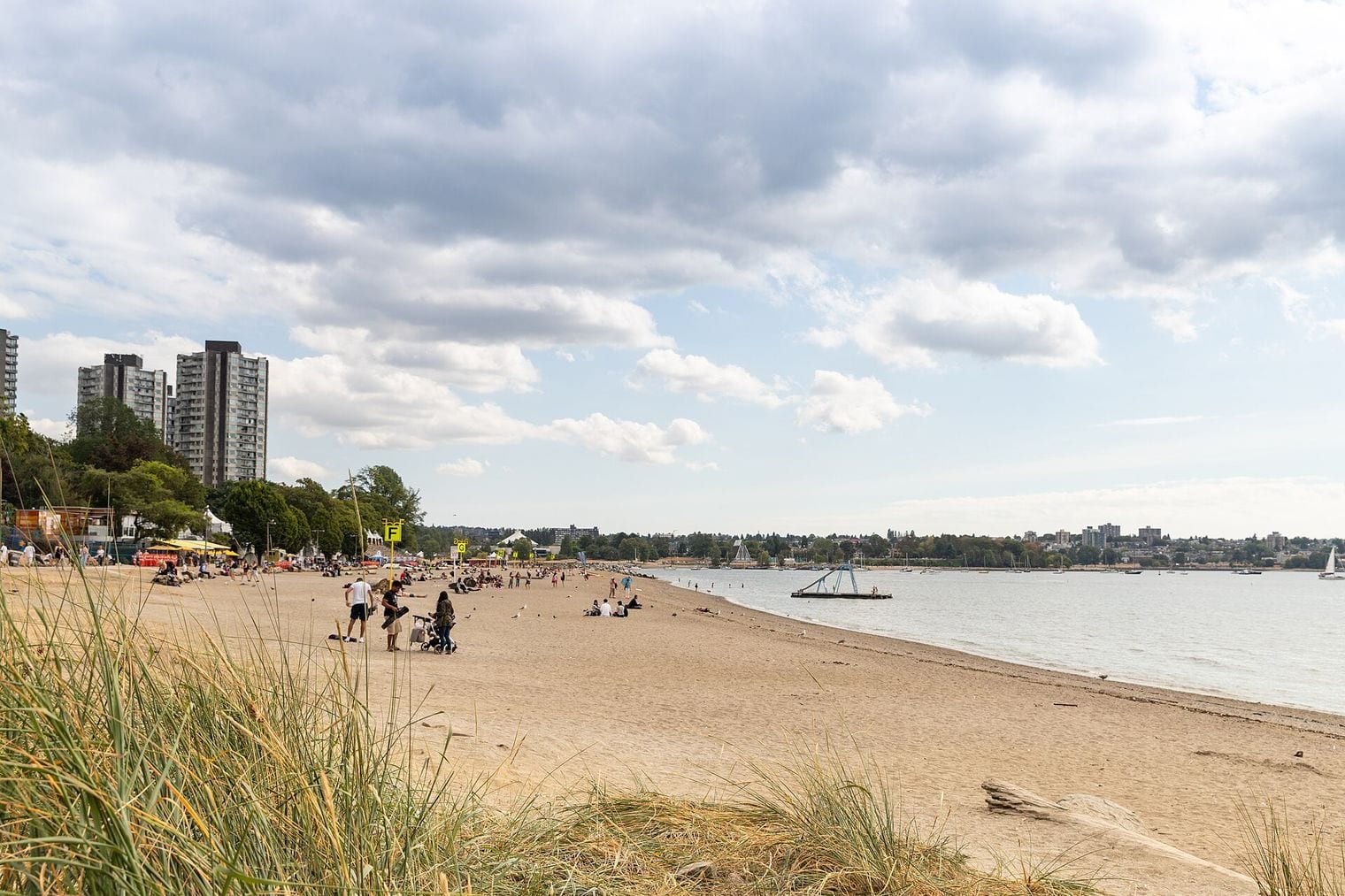
English Bay Beach is the West End's front garden and the city's default place to watch the sun go down. The sand curves along the bay with freighters at anchor offshore, the beach faces almost due west, and on a clear summer evening the whole neighbourhood drifts down to sit on the logs and watch it happen.
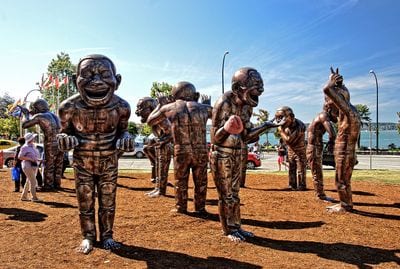
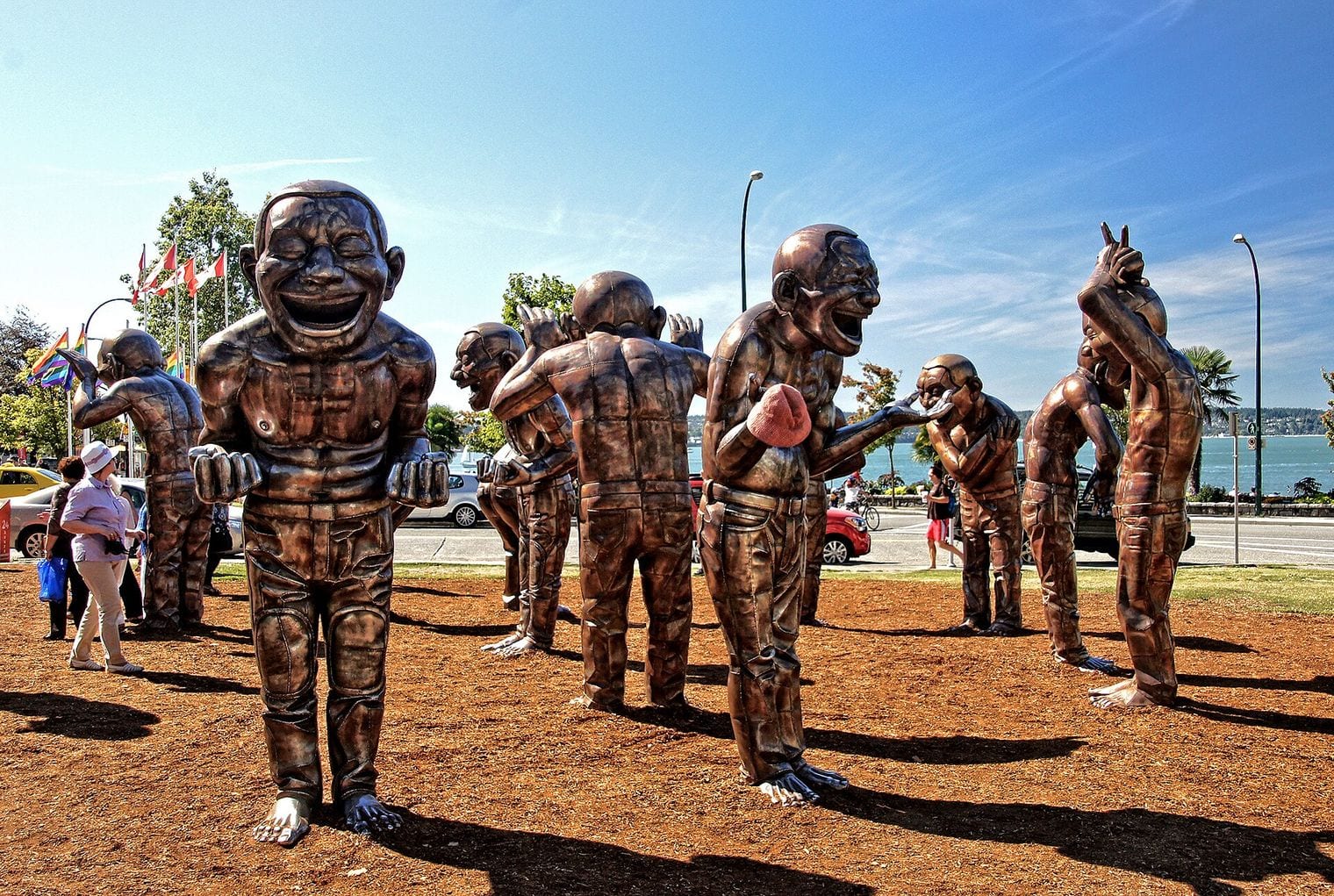
It is swimmable in high summer, there is a bathhouse and concession, and the seawall runs straight through so you can walk on to Stanley Park in one direction or the Burrard Bridge in the other. A cluster of oversized bronze laughing figures stands at the edge of the sand and is the most photographed public art in the city. In late summer the bay hosts an international fireworks competition.
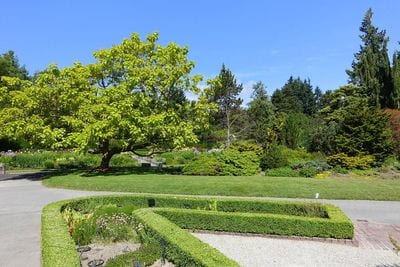
Queen Elizabeth Park occupies the highest ground in Vancouver, and the payoff is a clean view north over the whole city to the mountains behind it — the shot most people end up using. It sits on a former basalt quarry, which is exactly why the gardens work: the old workings were landscaped into sunken beds, so you look down into flowers rather than across them.
The Quarry Garden is the centrepiece and is at its best from late spring through summer, with an arboretum, rose garden and formal plantings around it. There are tennis courts, pitch and putt, and a plaza where wedding parties queue for photographs most weekends. The Bloedel Conservatory dome sits at the top of the hill, so the two are almost always visited together.
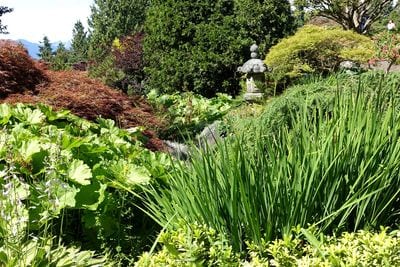
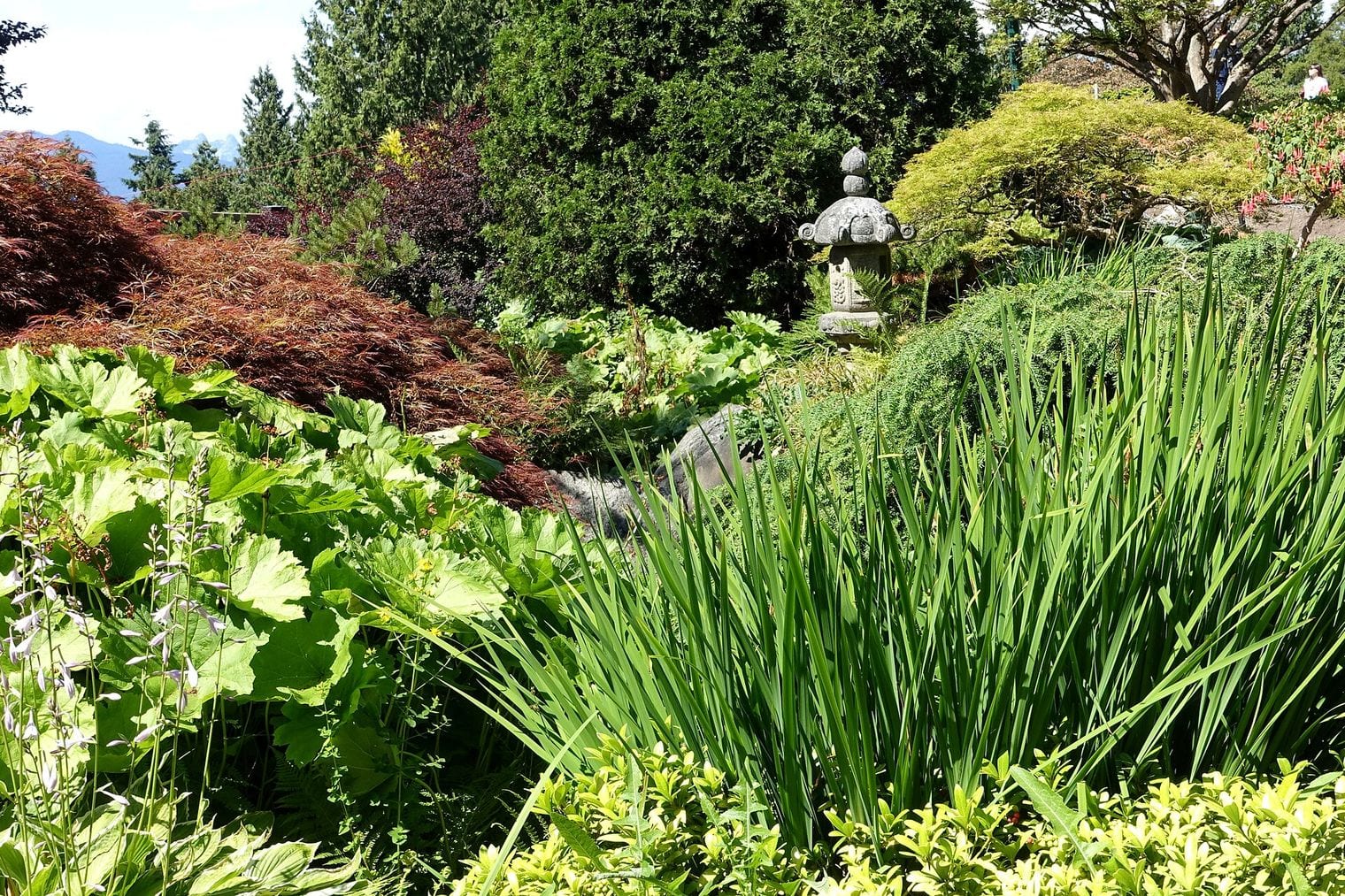
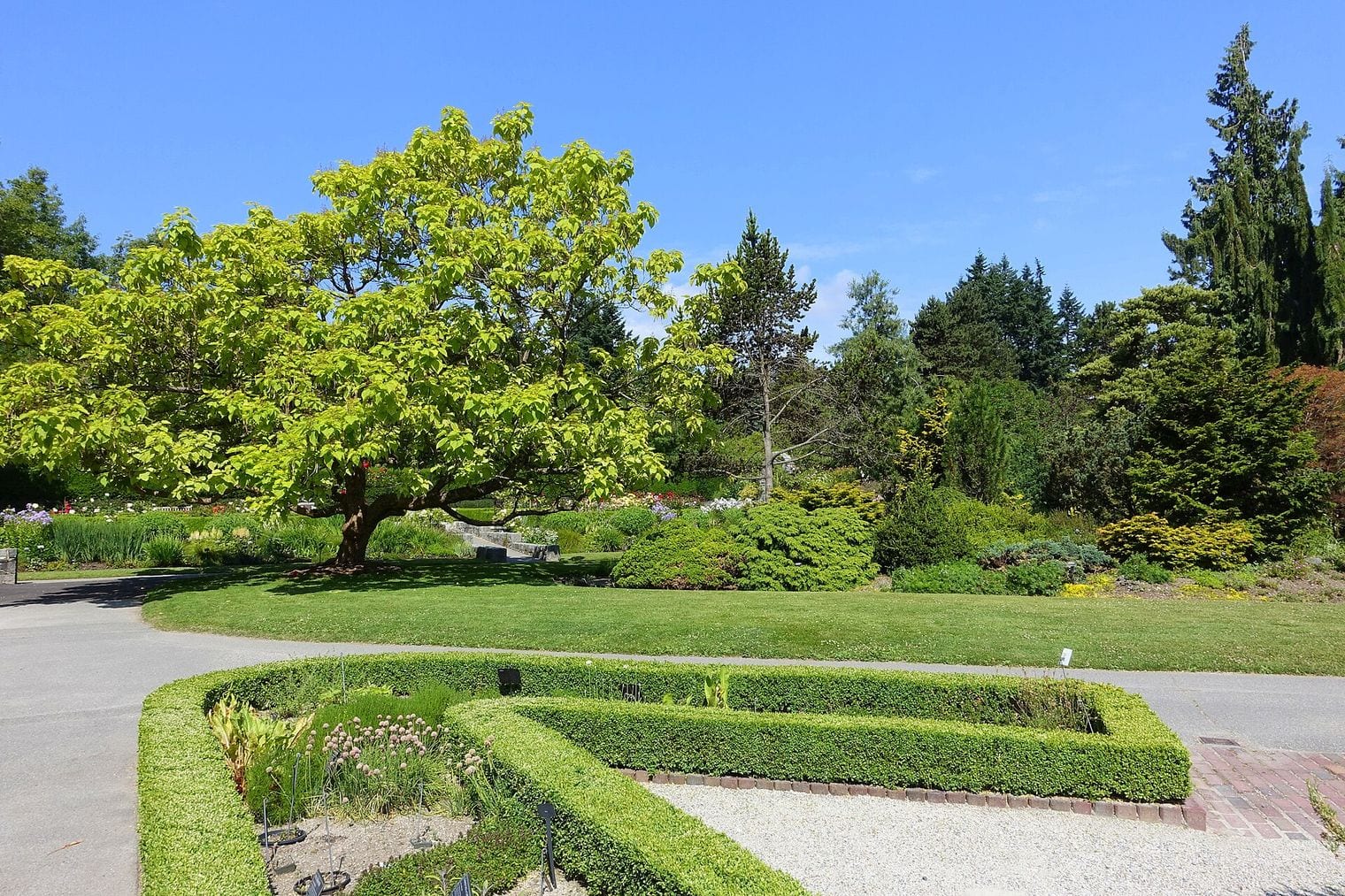
VanDusen Botanical Garden is a large, genuinely absorbing garden on the city's west side, laid out across a former golf course into distinct plant collections arranged loosely by region and habitat. Paths wander between Mediterranean beds, a rhododendron walk, a Canadian Heritage Garden and lakes with a stone bridge that is the garden's signature view.
It rewards slow walking rather than a lap. There is an Elizabethan hedge maze that children make straight for, sculpture placed through the grounds, and a striking undulating-roofed visitor centre at the entrance. Something is in flower for most of the year, and the garden is best known in winter for a large festival of lights that turns the whole site over to illuminated displays.
The Bloedel Conservatory is the domed glasshouse at the summit of Queen Elizabeth Park, and it is the best-value hour in the city on a wet day. Under the triodetic dome the climate is kept tropical, and the planting runs from rainforest to desert in a single loop that takes only a few minutes to walk but rather longer to actually leave.
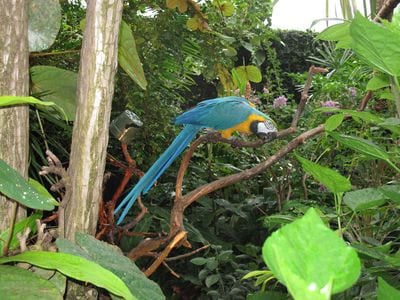
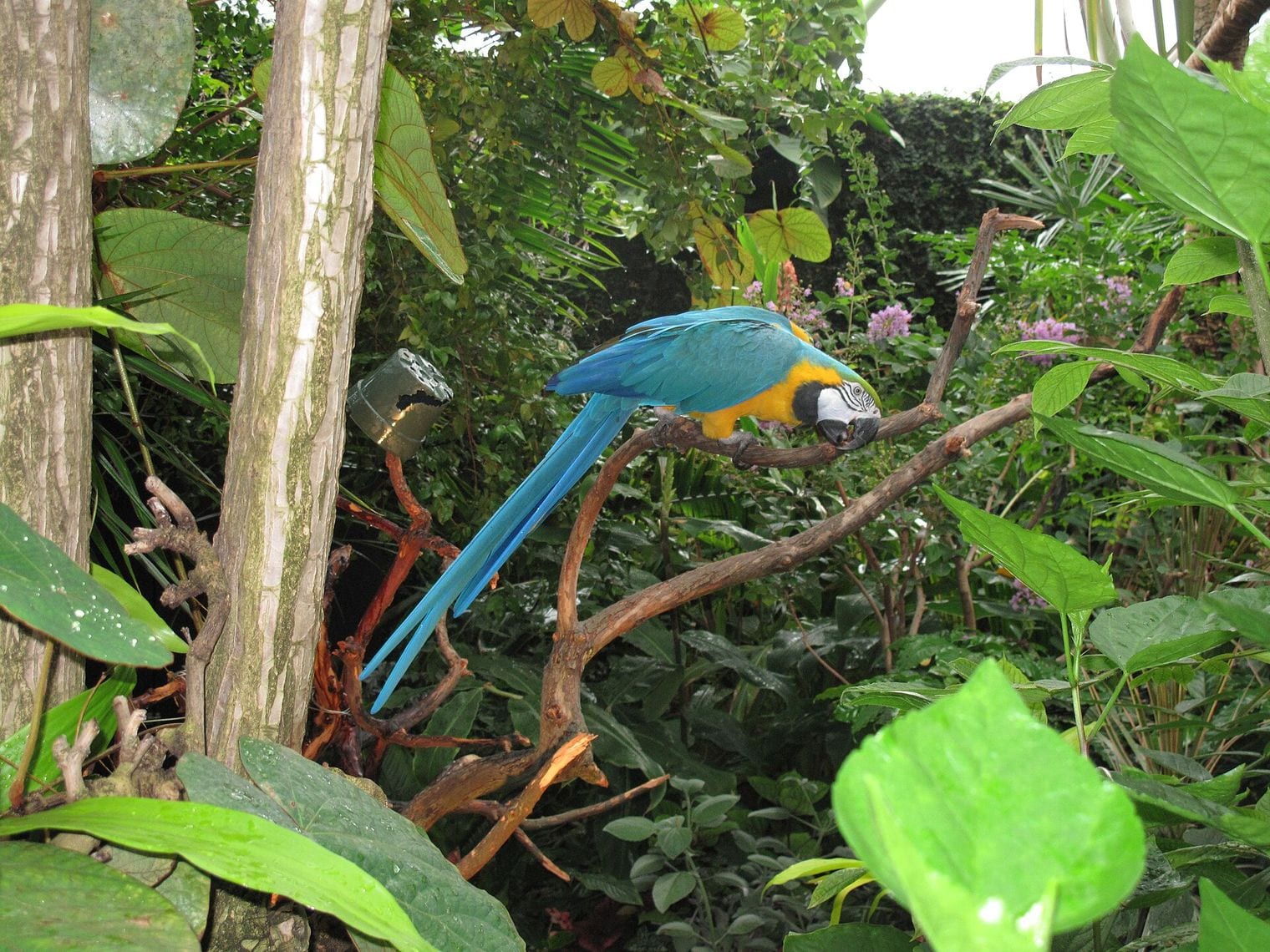
The birds are the reason to linger. More than a hundred free-flying tropical birds live inside — parrots, macaws, finches and a very vocal resident population that will land near you if you stand still — along with koi in the pools below. Because it sits on the highest point in Vancouver, the walk to and from the door comes with the city's best skyline view thrown in.
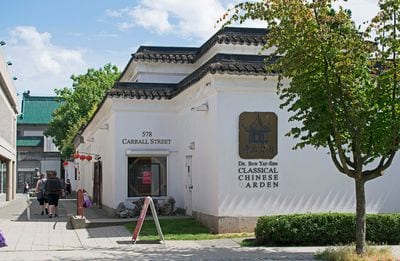
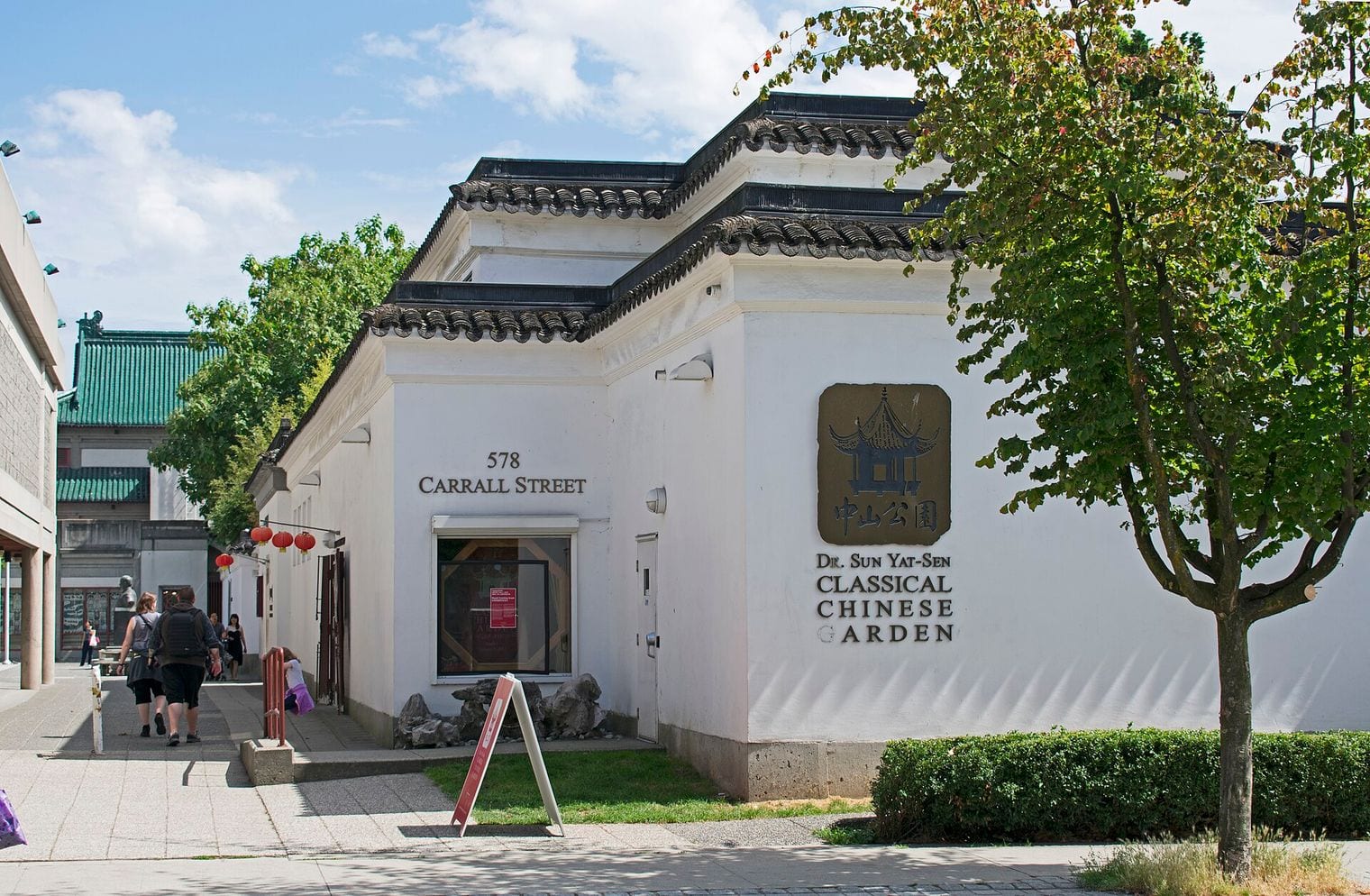
The Dr. Sun Yat-Sen Classical Chinese Garden is a walled scholar's garden in Chinatown, built in the Ming style by artisans from Suzhou using traditional materials and methods, and completed in the mid-1980s. It was the first full classical Chinese garden built outside China, and the craftsmanship shows in the details — hand-fired roof tiles, pebble mosaic paths and latticed windows that frame a different composition from every angle.
It is small and deliberately so. The design balances rock, water, plants and architecture, with jade-green water, weathered limestone from Lake Tai and covered walkways looking back across the courtyard. Guided tours explain the symbolism, which is most of the point. A free public park sits alongside the ticketed garden if you only want a short look.
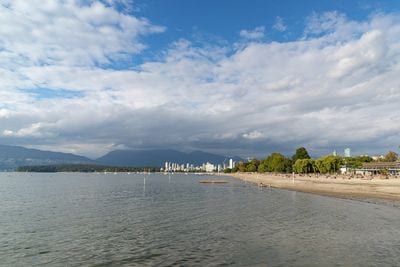
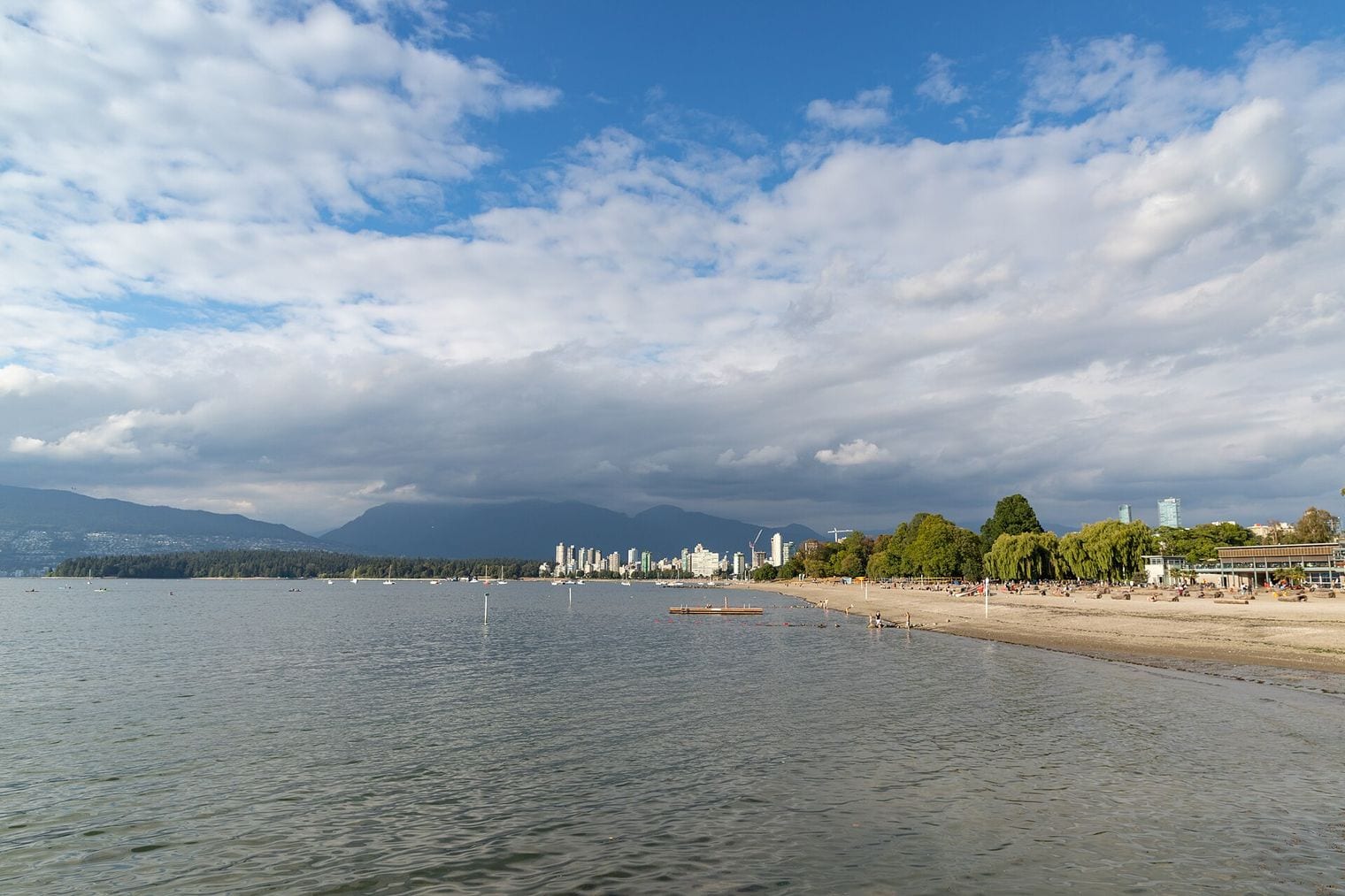
Kitsilano Beach — Kits, universally — is the city's most sociable stretch of sand, facing back across English Bay to the downtown skyline and the mountains behind it. Volleyball nets run the length of the beach through summer, the grass behind fills with picnics, and the whole thing has a settled, unhurried feel that says a great deal about how Vancouver lives.
The outdoor saltwater pool alongside is the real draw and one of the longest in the country, heated and open through the warmer months with the same view from the water. The seawall path continues past it toward Jericho and the western beaches, and the Kitsilano neighbourhood immediately behind has the cafés, patios and shops to make an afternoon of it.
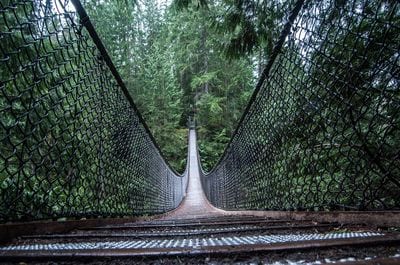
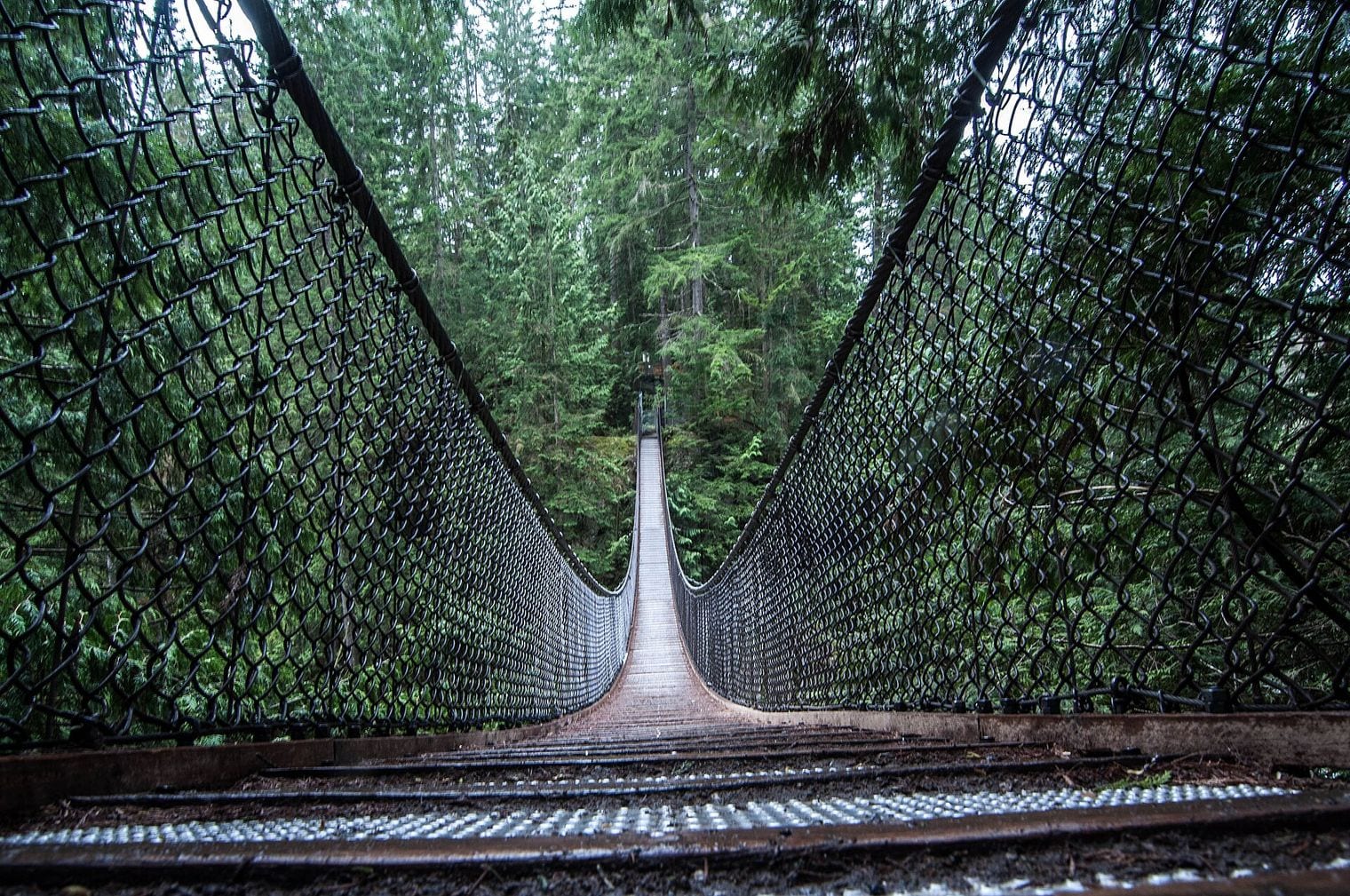
The Lynn Canyon Suspension Bridge is the North Shore's free alternative to Capilano, and for a lot of visitors it is the better half-day. The bridge crosses a narrow, deep gorge high above Lynn Creek in a park of second-growth rainforest, and because there is no admission gate the whole experience feels more like a walk in the woods than an attraction.
Trails run out from both ends of the bridge to Twin Falls, a pool below the canyon that draws swimmers in high summer, and longer routes deeper into the forest. There is a small ecology centre at the entrance and a café. It is genuinely wild in places — the rocks are slick and the current is strong — so signage about staying out of the canyon is worth heeding.
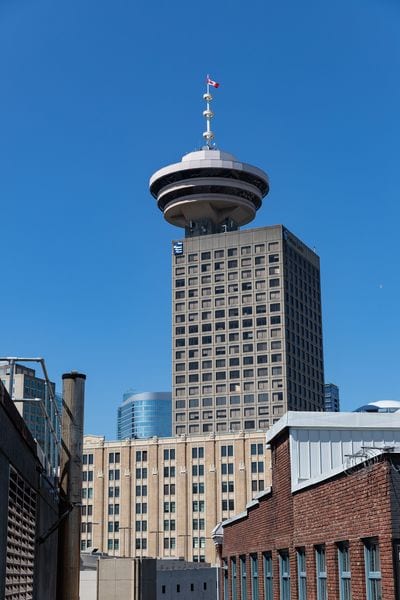
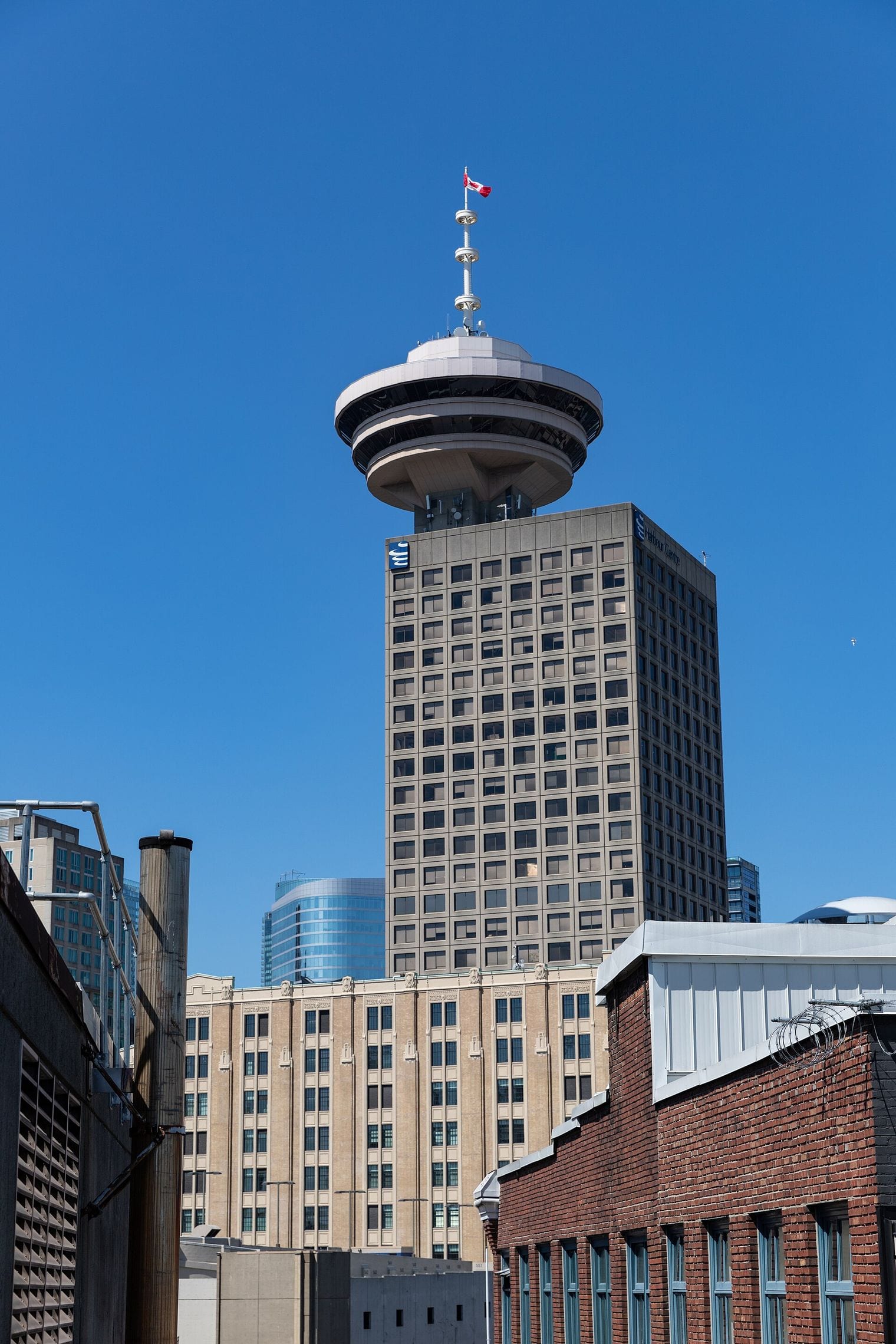
The Vancouver Lookout is the glass-walled observation deck at the top of the Harbour Centre tower downtown, reached by an exterior glass lift that climbs the outside of the building and is half the fun on its own. The deck is fully enclosed and circles the tower, so you get an unbroken 360-degree view without weather being a factor.
It is the clearest way to make sense of the city's geography in one go: the downtown peninsula and Stanley Park below, the harbour and the North Shore mountains to one side, False Creek and the residential grid running south to the river on the other. Tickets are typically valid all day, so the standard move is to go up once in daylight and again after dark.
The Vancouver Seawall is less an attraction than the way the city is meant to be experienced. It is a continuous waterfront path — separated lanes for walkers and cyclists — running from Coal Harbour around Stanley Park, along the West End beaches, up and around False Creek and out west past Kitsilano, and it is among the longest uninterrupted waterfront routes anywhere.
You do not need to do all of it. The Stanley Park loop is the classic and takes a couple of hours on foot or under an hour by bike, always with the water on your right. The False Creek section is flatter and more urban, passing the Olympic Village and Granville Island. Rental bikes are easy to find at the park entrances and along Denman Street.
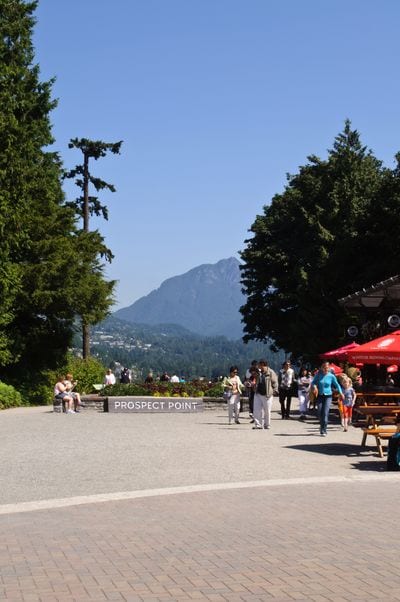
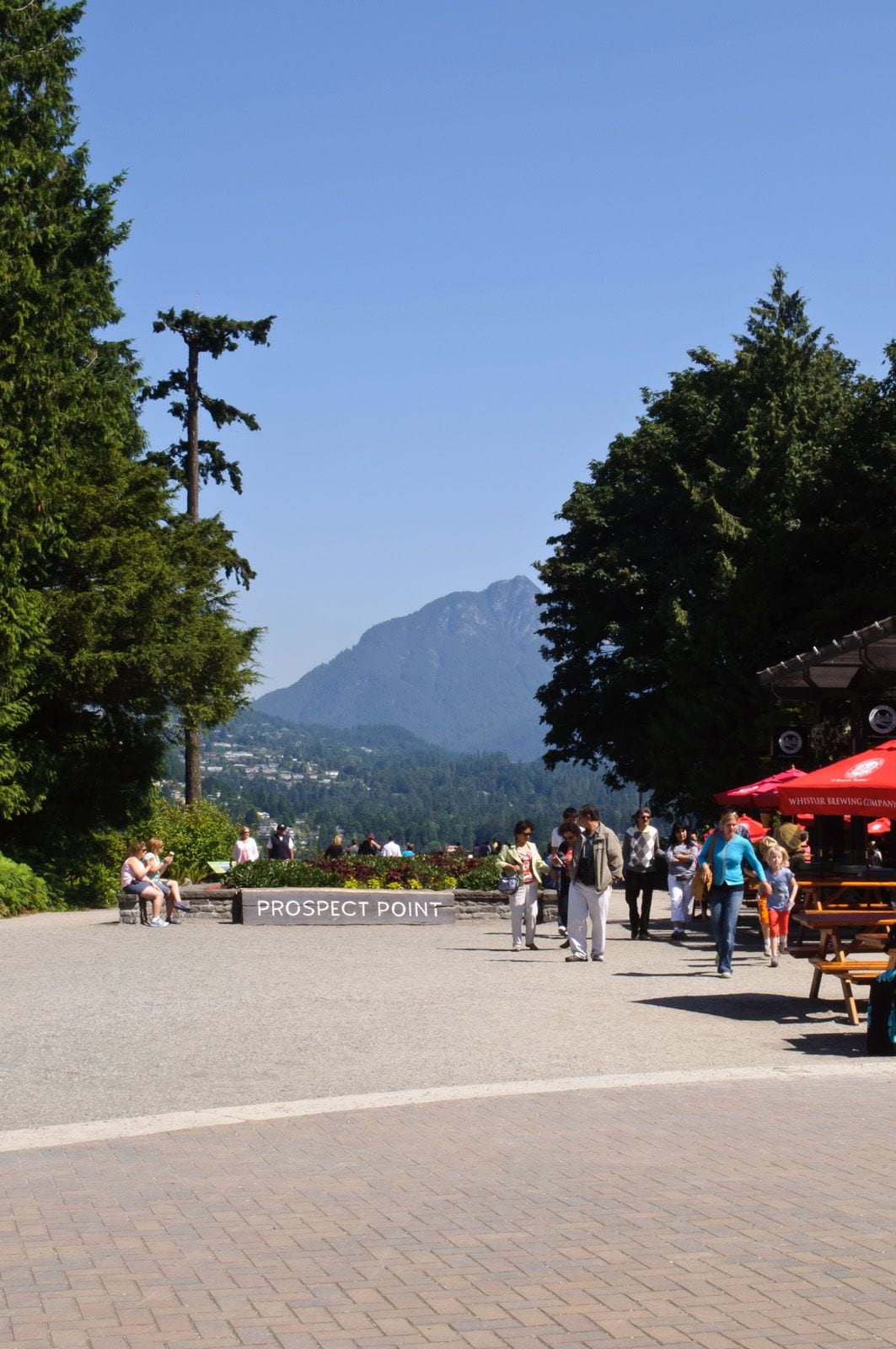
Prospect Point is the highest spot in Stanley Park, on the bluff at the park's northern tip where the land drops away to the First Narrows. The Lions Gate Bridge sweeps out below and across to the North Shore, freighters wait in the inlet, and on a clear day you can see well up Howe Sound past the mountains.
It is a standard stop on the seawall circuit and on the park drive, with a lookout terrace, a café and parking. Bald eagles nest in the trees nearby and are often visible from the railing, and there is a totem pole and a small memorial on the point. Come toward the end of the day, when the light is behind the bridge rather than in front of it.
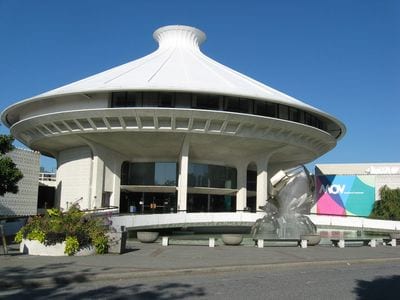
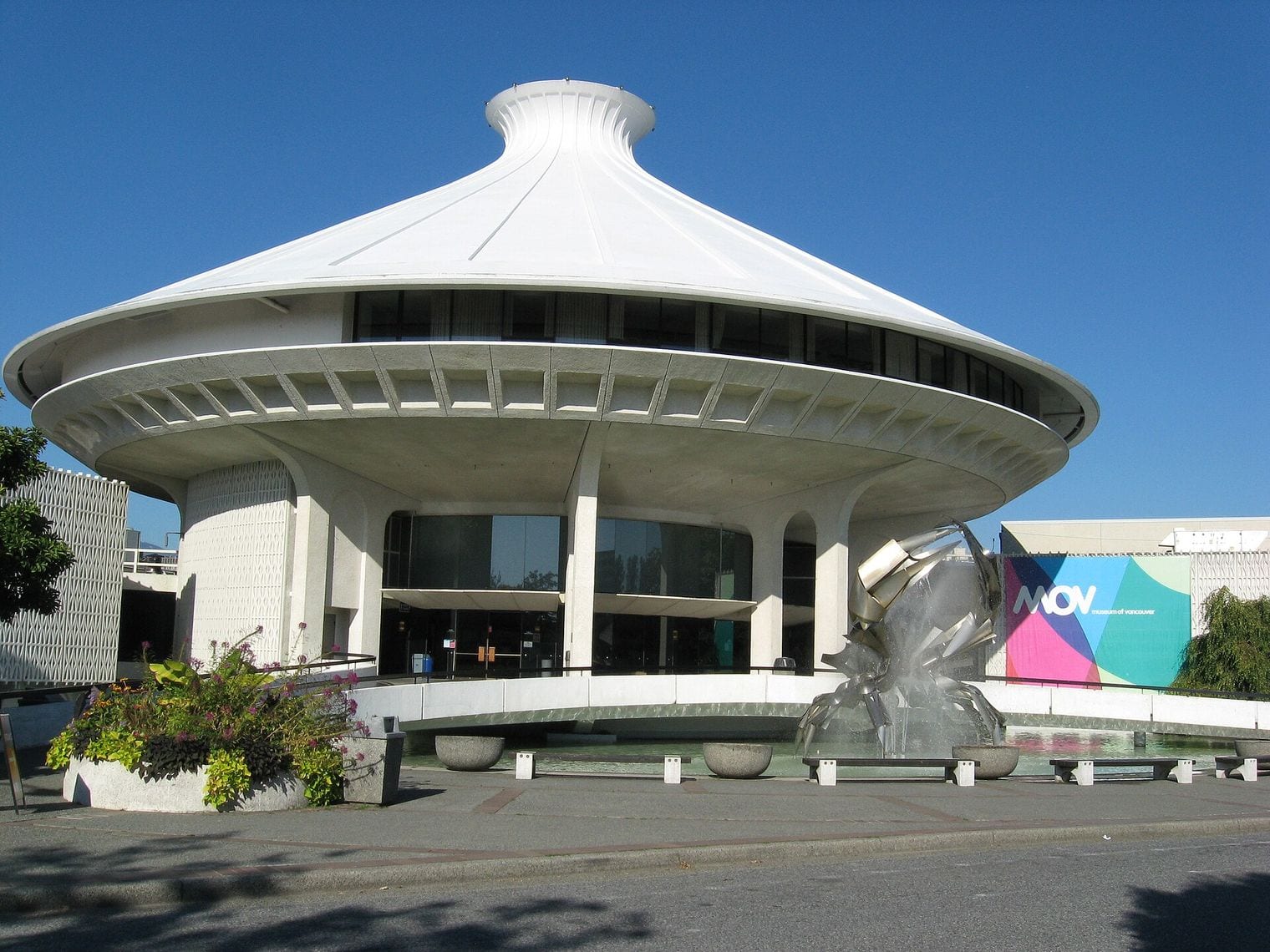
The Museum of Vancouver is in Vanier Park in Kitsilano, under a domed roof shaped like a woven cedar hat, and it tells the story of the city itself rather than the region or the country. The permanent galleries walk through the decades — early settlement and displacement, the boom years, the 1950s living room, the counterculture of the 1960s and the fight to save the neighbourhoods.
Its best-loved holding is a collection of salvaged neon signs from the era when Vancouver had thousands of them lighting the downtown streets. Temporary exhibitions tend to be sharp and city-specific, tackling housing, migration and Indigenous history head-on. It shares Vanier Park with a maritime museum and a planetarium, so the three make an easy afternoon together.
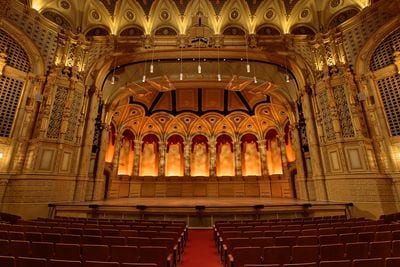
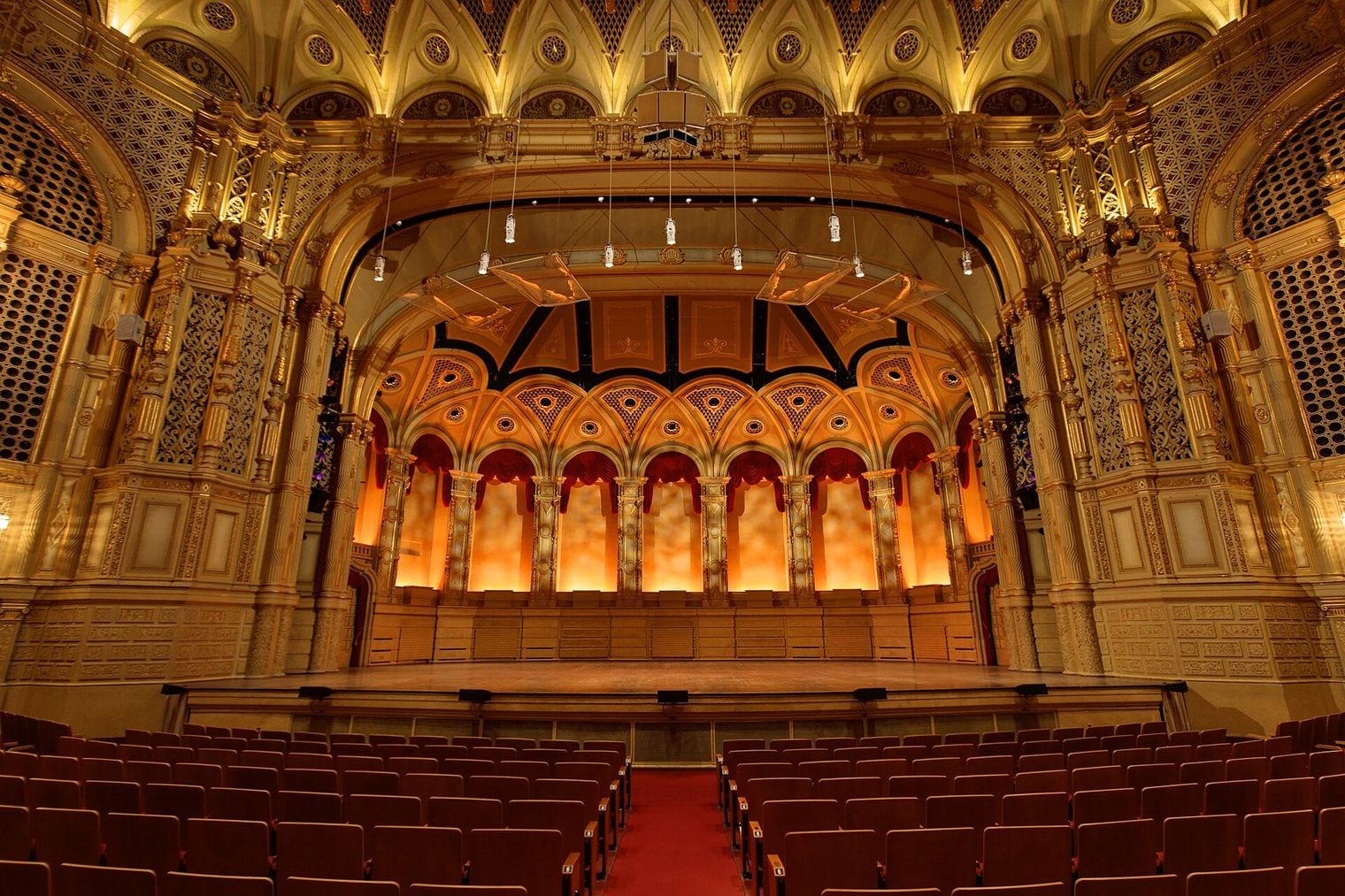
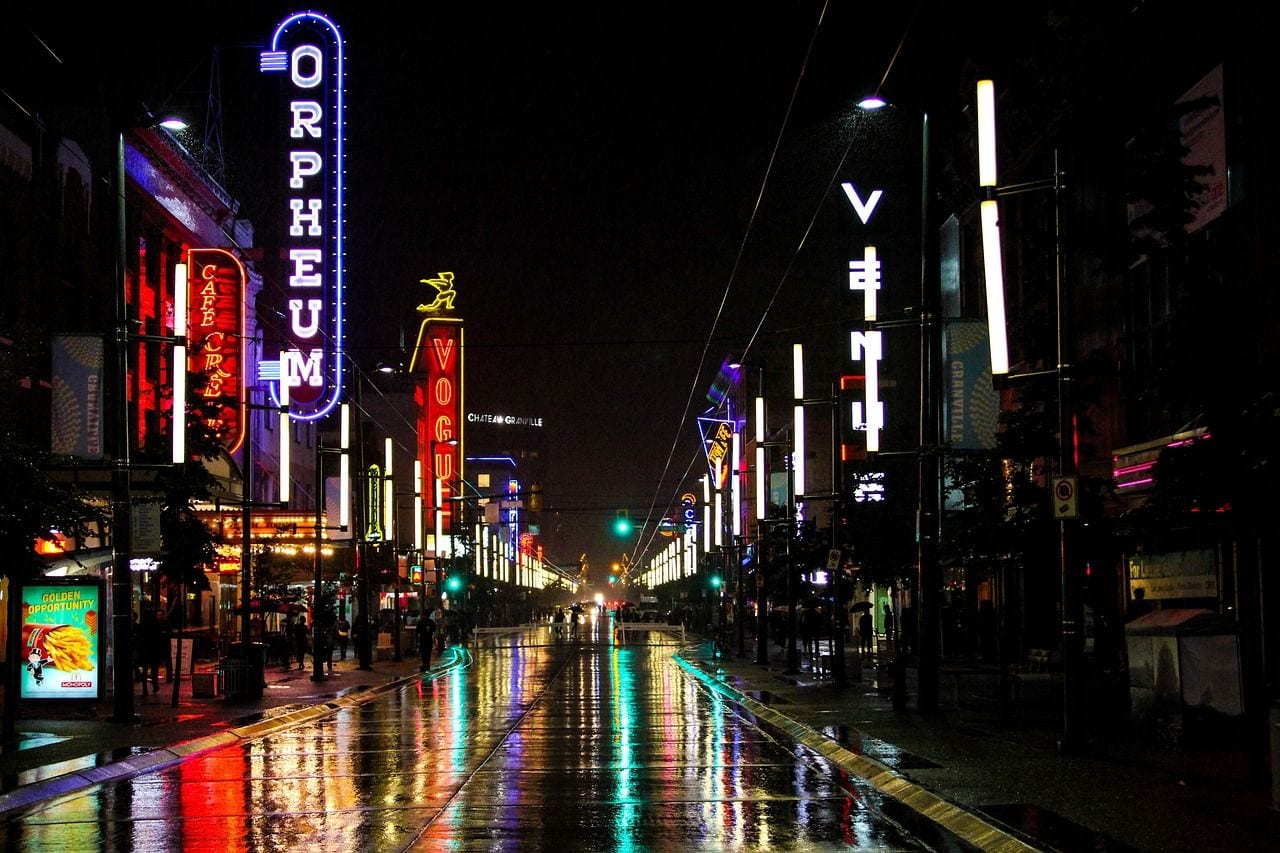
The Orpheum Theatre opened in 1927 as a vaudeville house, and it survives as one of the most lavish interiors in western Canada — gilt plasterwork, a vaulted and painted ceiling, chandeliers and a grand staircase that belong to an era of theatre-building that almost entirely disappeared. It is a designated National Historic Site.
It was very nearly lost to a multiplex conversion in the 1970s and was saved by a public campaign, restored, and turned over to the city. Today it is the home of the Vancouver Symphony Orchestra and hosts touring concerts, film screenings and recordings. The straightforward way to see it is to book any performance, but guided tours of the building run periodically.
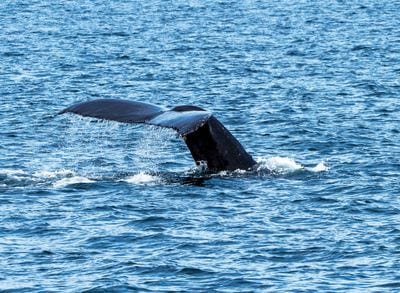
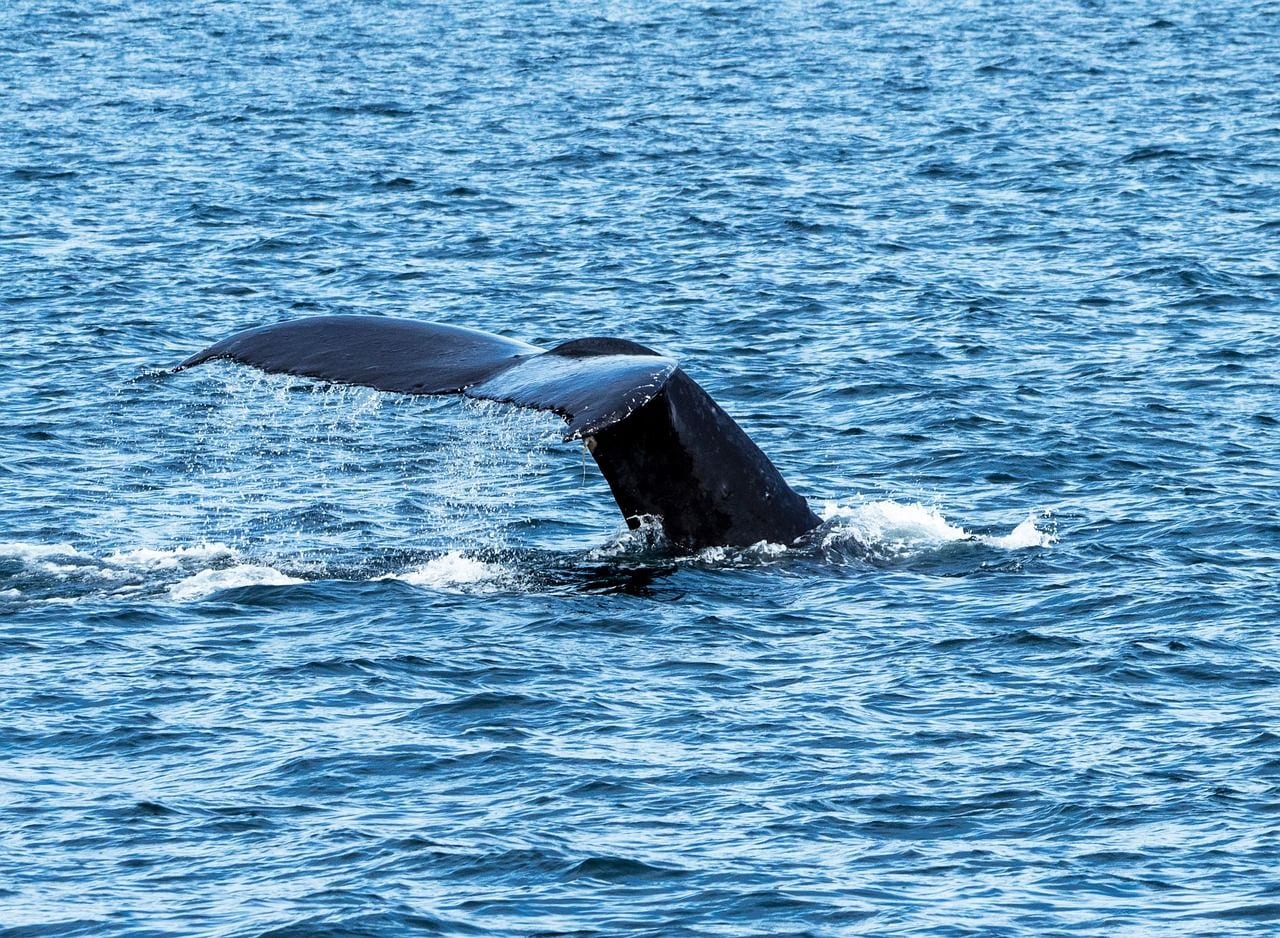
Getting out on the Salish Sea is the one Vancouver activity that has no substitute, and Prince of Whales Whale Watching runs trips from the downtown waterfront through the season. Boats head out into the strait among the Gulf Islands, where orcas, humpbacks, seals, sea lions and porpoises are all regular sightings and the naturalist on board explains what you are looking at.
There is a choice of vessel: open inflatables that are fast, exposed and exhilarating, or covered boats with heated cabins and a viewing deck that suit families and cold days. Trips run several hours, sightings are never guaranteed, and warm layers matter far more than you expect on the water. The scenery alone — islands, lighthouses and the Coast Mountains behind — would justify the trip regardless.
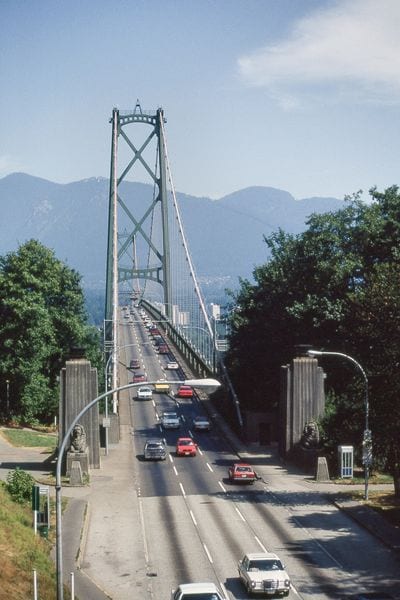
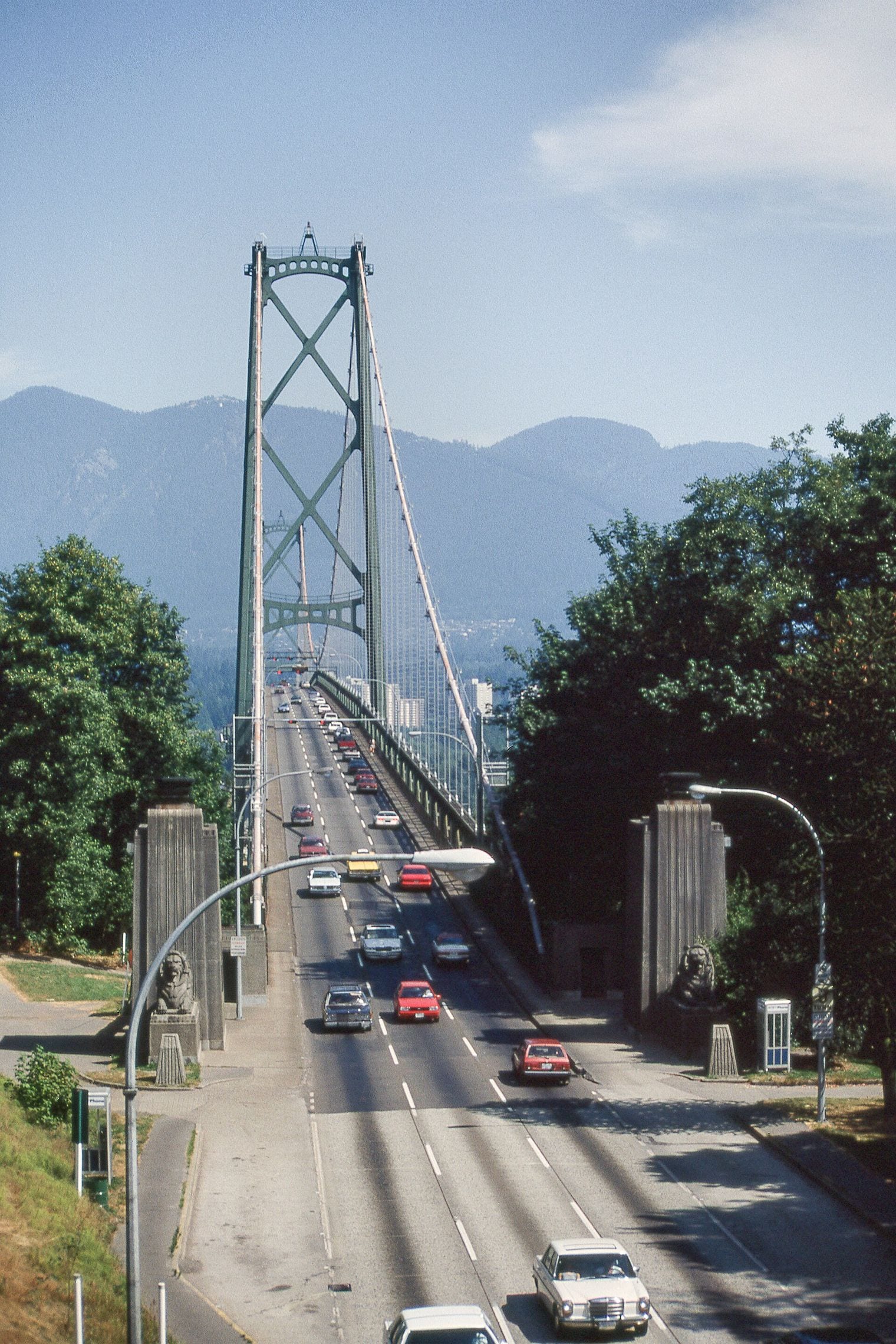
Lions Gate Bridge is the green suspension span that carries traffic out of Stanley Park and across the First Narrows to the North Shore, and it is one of the shapes people picture when they picture Vancouver. Slender, three lanes wide and strung between two towers, it looks almost delicate against the mountains behind it, and it is named for the twin peaks known as The Lions that rise beyond the far end.
You can drive it, but the better move is to walk or cycle the separated path along its edge, which puts you out over the shipping channel with the harbour on one side and the open water of the strait on the other. From below, the classic view is from Prospect Point inside the park. After dark the whole span is outlined in lights, which is when it photographs best from the seawall.
Sunset Beach sits at the southern end of the West End, on the last stretch of sand before the seawall turns into False Creek, and it is the quieter alternative to English Bay a few hundred metres north. The name is not marketing: it faces west across the water toward Kitsilano and the Point Grey headland, and the sunsets are the reason people drift down here with a blanket in the evening.
It is a working piece of the city rather than a resort beach — a bathhouse, a grassy slope for sitting, an outdoor pool nearby, and the little Aquabus dock where the ferries leave for Granville Island. The seawall runs straight through, so it is an easy stop on a walk between Stanley Park and the Burrard Bridge rather than somewhere you make a special trip to.
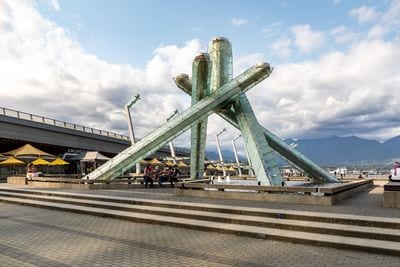
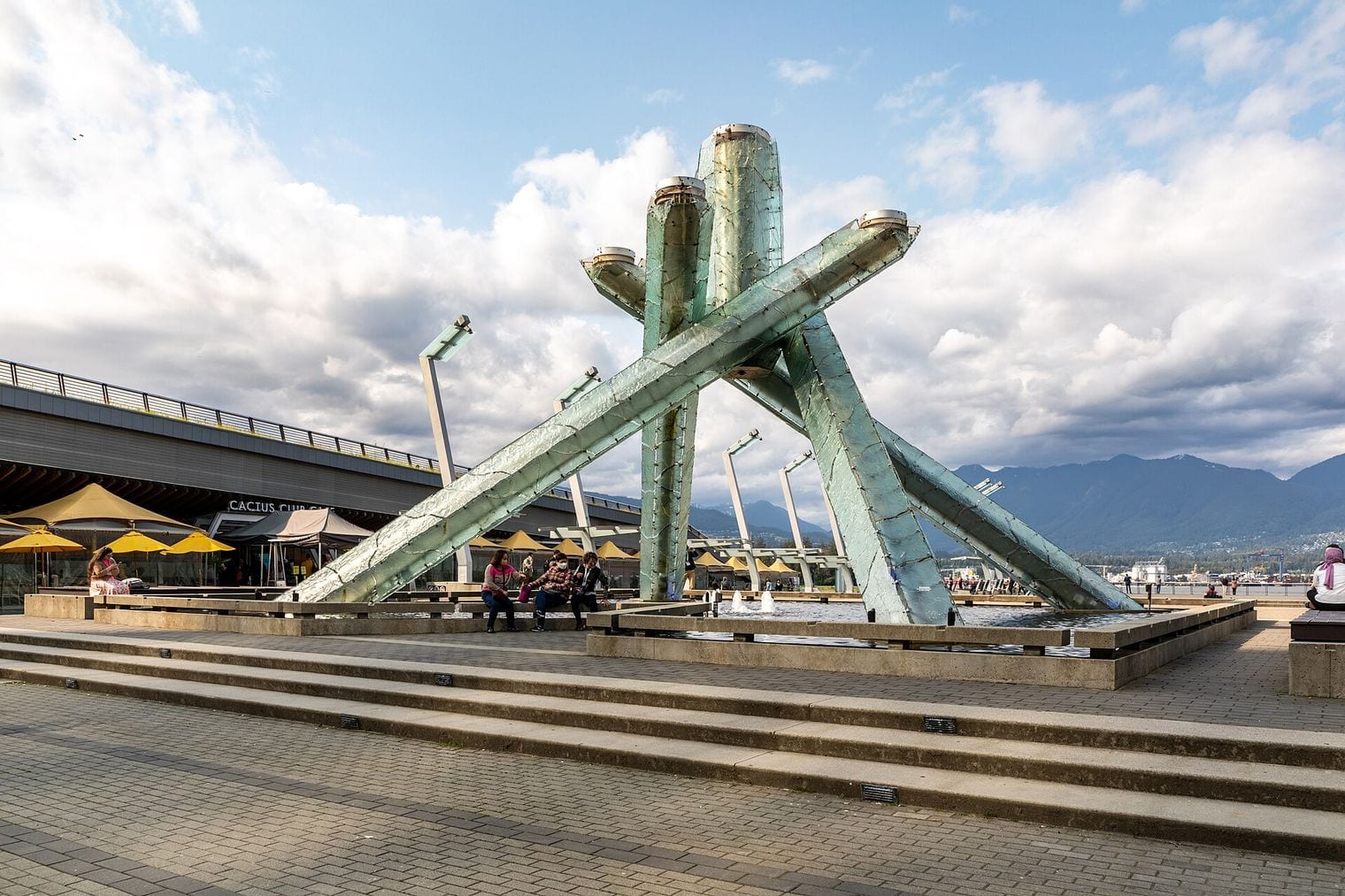
The Olympic Cauldron stands on the waterfront at Jack Poole Plaza, beside the convention centre, and it is the most tangible thing left in the city from the 2010 Winter Olympics. Four angled arms of steel and glass lean together over a central column, and the whole structure is far bigger up close than photographs suggest — people stand under it to get the scale.
It is lit at night and fired on special occasions rather than continuously, so most of the time you are looking at the sculpture rather than a flame. The plaza around it is free and open, the harbour is right there, and it sits directly between Canada Place and the convention centre's living roof, so it costs nothing to fold into a waterfront walk.
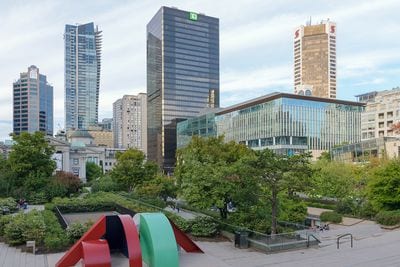
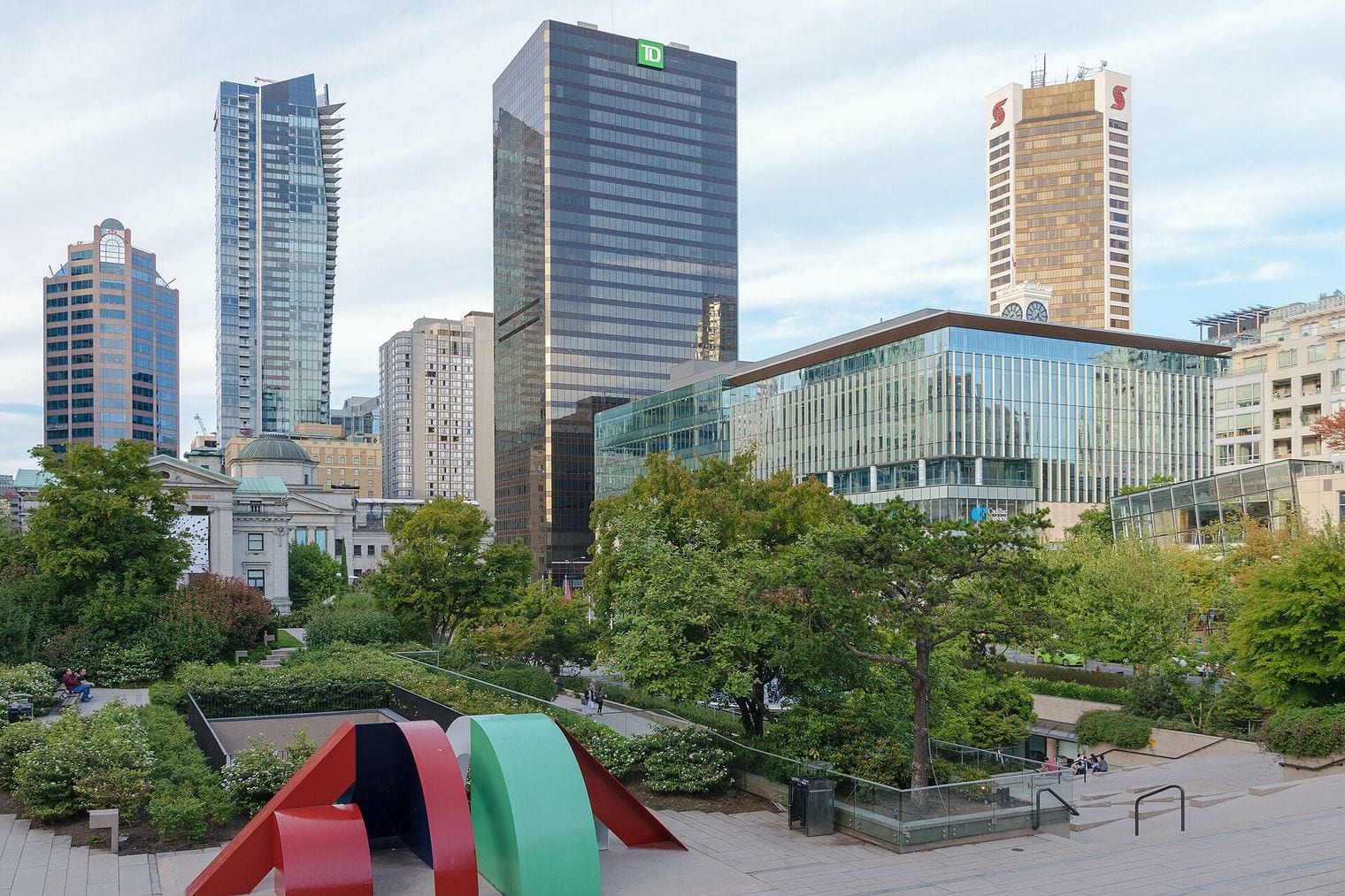
Robson Square is the civic heart of downtown Vancouver — a stepped, terraced public space cut into the block between the Law Courts and the Vancouver Art Gallery, planted with trees and threaded with water features and ramps. It was designed by Arthur Erickson, the same architect behind the Museum of Anthropology, and it has his signature trick of making concrete feel like landscape.
In winter the sunken plaza becomes a covered outdoor ice rink. The rest of the year it is a place to sit, and the gallery steps on its north side are the city's default spot for rallies, buskers and people watching the street go by. It is a short walk from almost anywhere downtown.
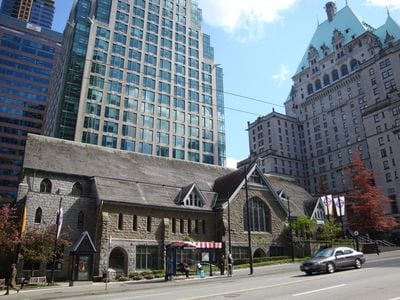
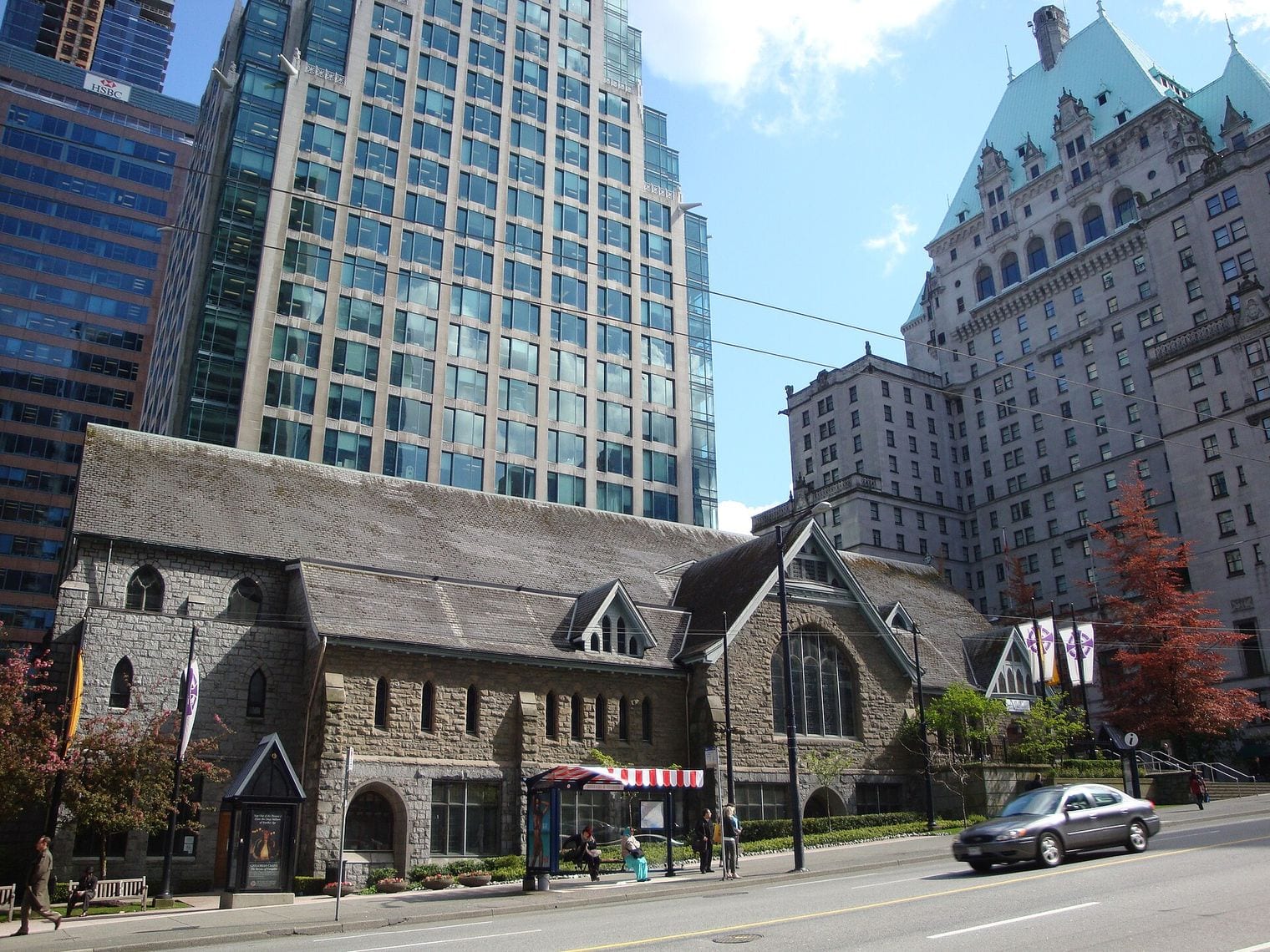
Christ Church Cathedral is the Anglican cathedral at the corner of Burrard and Georgia, and it is a genuine surprise: a low sandstone Gothic Revival church with a steeply pitched roof, hemmed in on all sides by glass office towers. The contrast is the point — it is among the oldest surviving churches in the city, and everything around it arrived decades later.
Inside, the roof is the thing to look up at: heavy old-growth Douglas fir trusses, dark and exposed, over stained glass that includes work by contemporary artists as well as traditional panels. It is an active parish and a working concert venue with good acoustics, so it is often open during the day and free to step into for a few minutes of quiet.
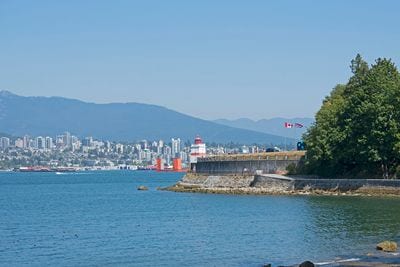
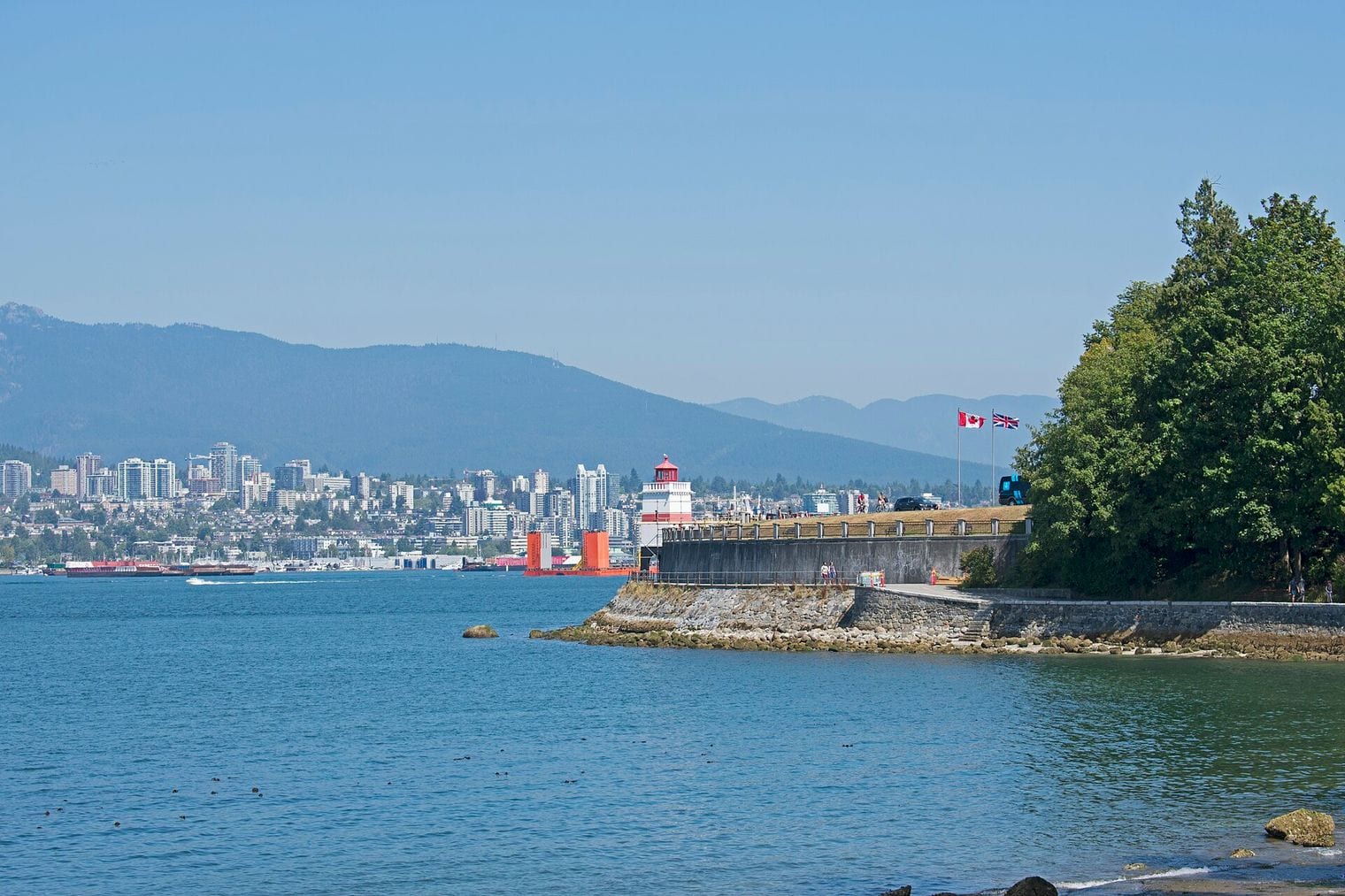
Brockton Point Lighthouse marks the eastern tip of Stanley Park, where the seawall swings around to face the harbour entrance. It is a small early-twentieth-century light on a concrete base, painted white with a red band and set on an arched pier you can walk beneath — an unusually pretty piece of working navigation furniture rather than a grand tower.
The reason to make the short detour is the view rather than the building: freighters at anchor, floatplanes lining up on the water, and the North Shore mountains stacked behind them. It is a natural pause on the seawall circuit, a few minutes past the totem poles, and it costs nothing.
The Beaty Biodiversity Museum is UBC's natural-history collection, and it announces itself before you are through the door: a blue whale skeleton hangs the full height of the glass atrium, visible from the street outside. It is the kind of object that stops people mid-step, and it makes the museum worth the trip out to Point Grey even if natural history is not usually your thing.
Downstairs the collection is unusually open — millions of specimens in visible storage, with fossils, shells, insects and birds arranged in pull-out drawers you are invited to open. The focus is on the biodiversity of British Columbia and the Pacific, which pairs well with the Museum of Anthropology a few minutes' walk away on the same campus.
The Bill Reid Gallery is a small downtown gallery devoted to the art of the Northwest Coast, named for the Haida artist whose carving and goldwork did much to bring that tradition to a wider audience. It is a single well-judged room and a mezzanine rather than a sprawling museum, which makes it easy to absorb properly in an hour.
The permanent holdings include Reid's own jewellery, bronze and cedar work, shown alongside rotating exhibitions of contemporary Indigenous artists from the coast. A long carved and painted frieze runs the length of the upper level. It sits on Hornby Street a block from the Art Gallery, so the two make an easy pairing on a wet afternoon.
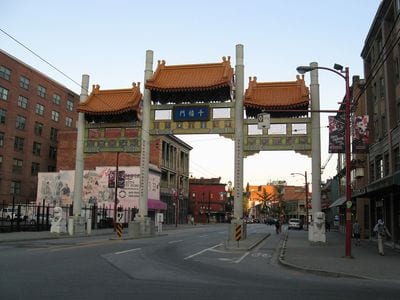
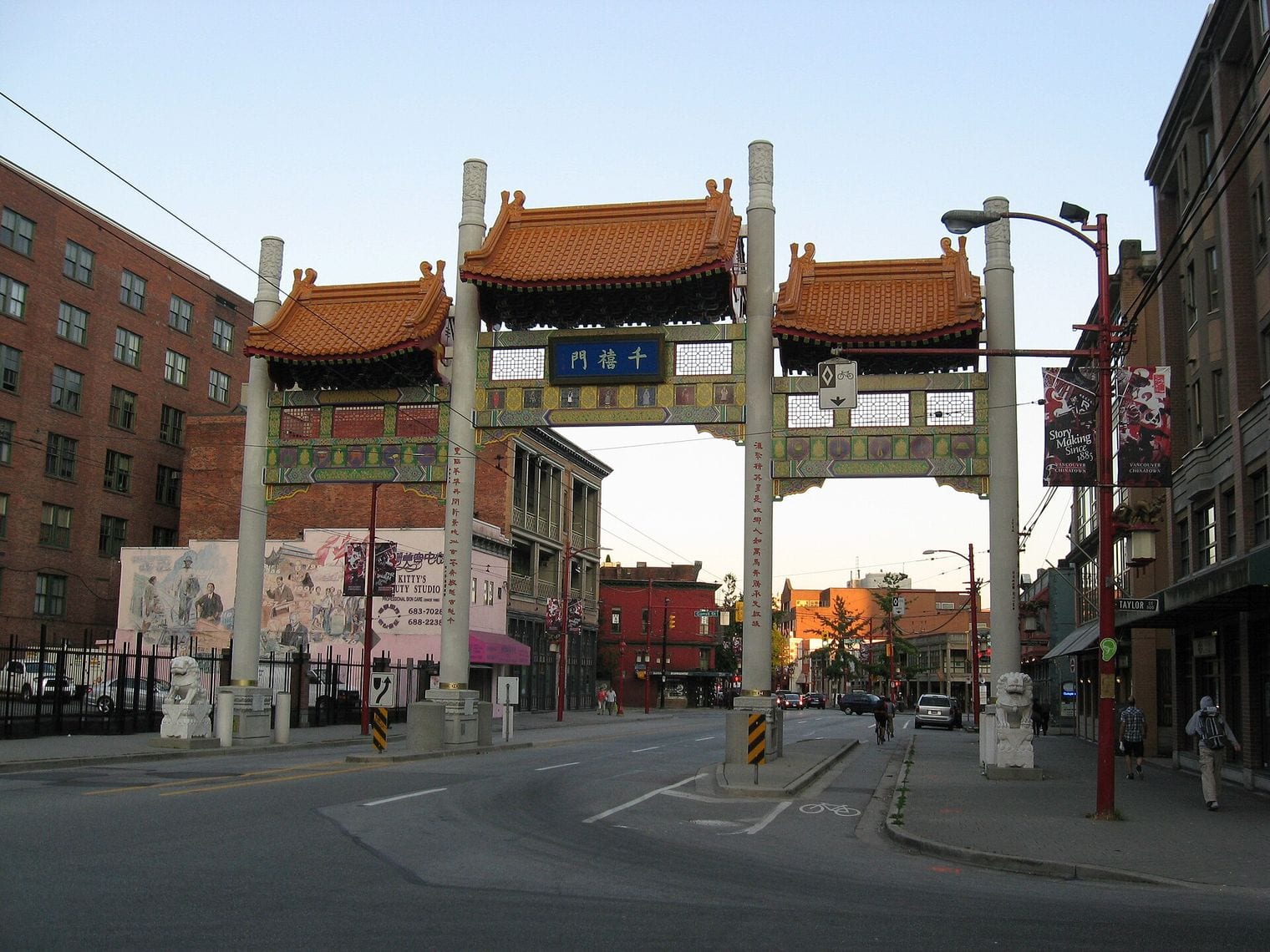
The Millennium Gate spans Pender Street at the entrance to Chinatown, a tiled and brightly painted ceremonial arch raised at the turn of the millennium to mark the neighbourhood's history. Its four columns carry inscriptions on both faces, and the roofline is layered with glazed tile in the traditional style, which makes it a far more substantial structure than the word "gate" suggests.
It is the natural place to start a walk through one of the oldest Chinatowns in North America. From here the street runs east past herbalists, bakeries and the narrow Sam Kee Building, with the Dr. Sun Yat-Sen Classical Chinese Garden a couple of blocks away. The gate itself takes two minutes; the neighbourhood behind it takes an afternoon.
A-maze-ing Laughter is the crowd of oversized bronze figures at Morton Park, just back from the sand at English Bay, all of them caught mid-laugh with their eyes screwed shut and mouths wide open. It is probably the most photographed public artwork in Vancouver, and the reason is simple: it is very hard to walk past without smiling.
The figures are arranged loosely enough that you can wander between them, which is what most visitors do before giving in and imitating one for a photograph. It is free, always accessible, and sits directly on the seawall between the West End and Stanley Park, so it needs no detour at all — you will pass it on the way to the beach.
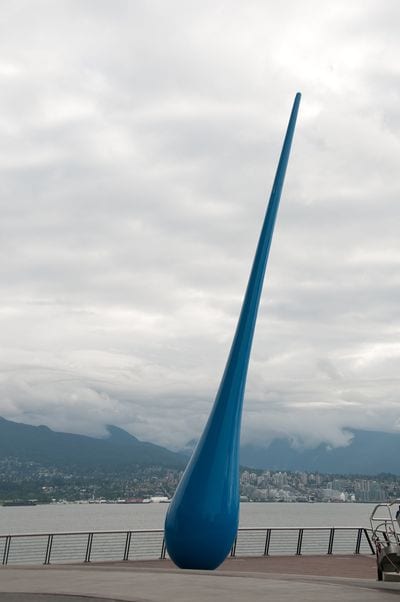
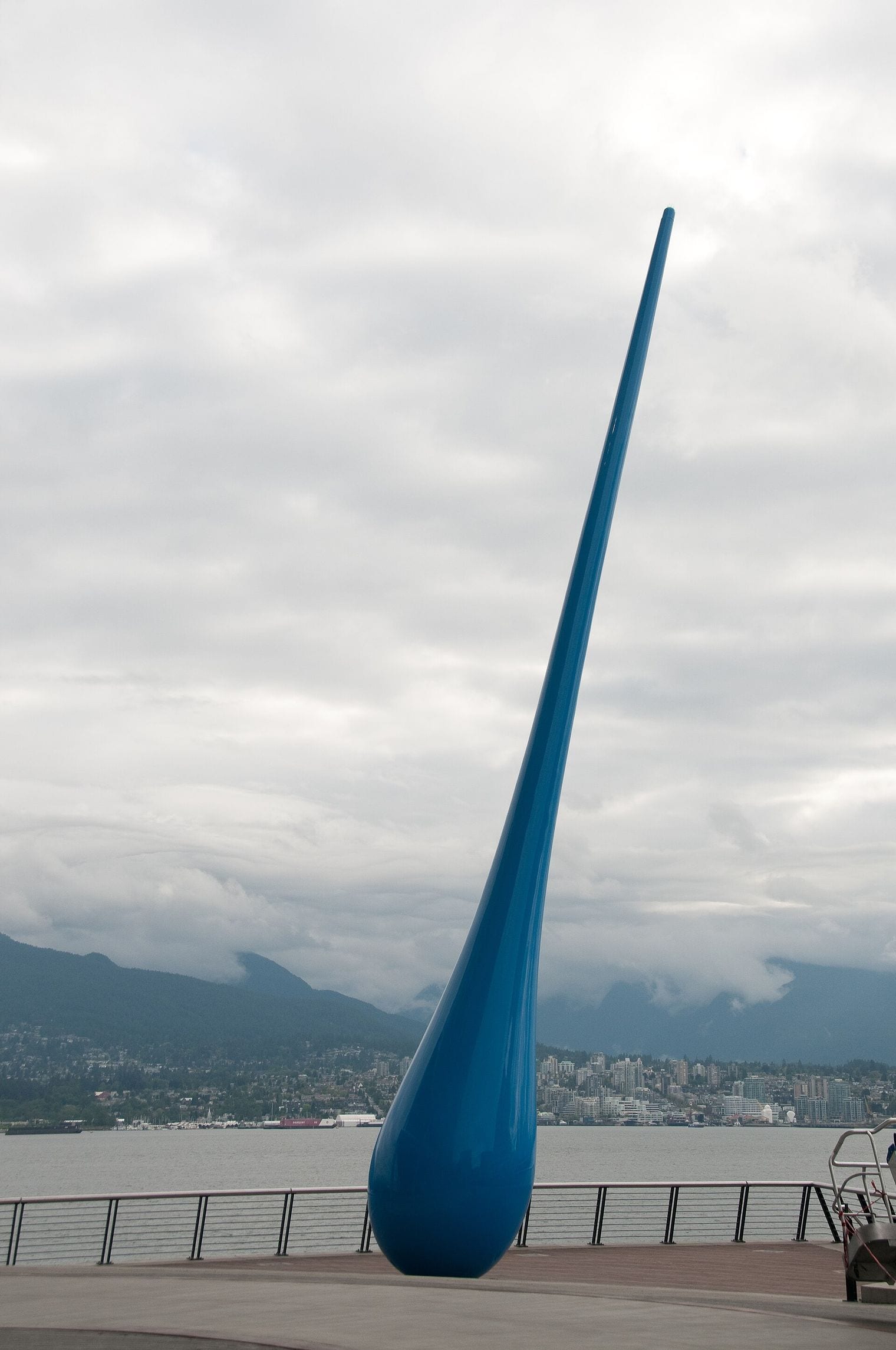
The Drop is the enormous blue teardrop that leans over the walkway beside the Vancouver Convention Centre, angled as though it is about to land on the plaza. Up close it is far larger than it photographs, a smooth monolith of blue against the glass of the building and the grey of the harbour behind it.
It works best as part of the waterfront stroll rather than a destination of its own: Canada Place is a couple of minutes east, the Olympic Cauldron is right there, and the convention centre's six-acre living roof rises above you. Free, permanently in place, and a reliable landmark for arranging to meet someone on that stretch of the seawall.
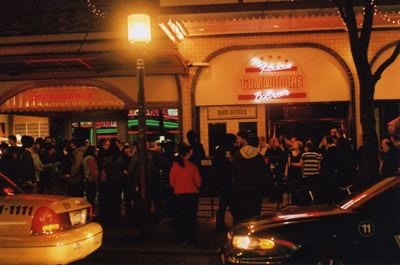
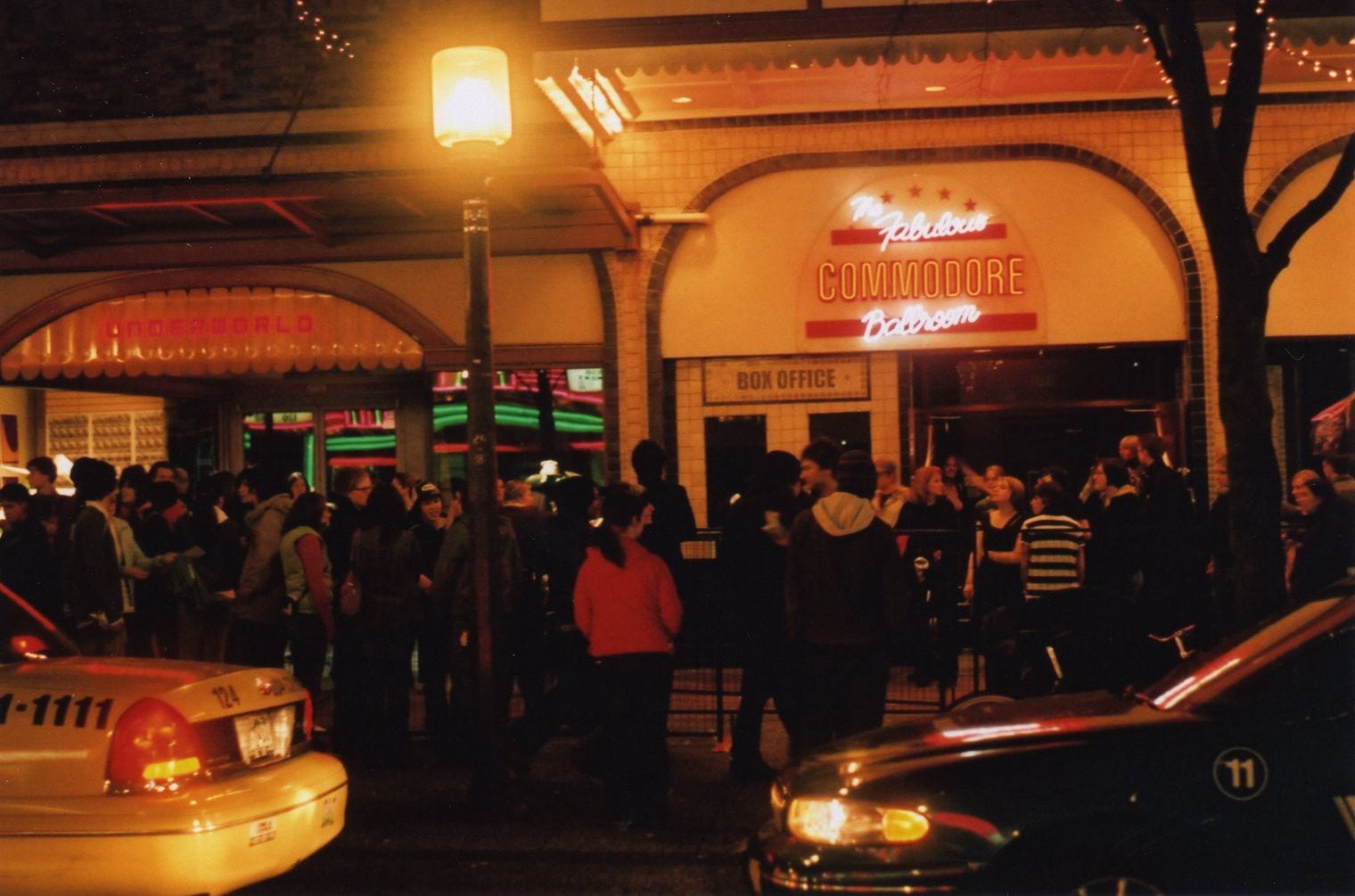
The Commodore Ballroom on Granville Street has been Vancouver's best mid-sized music venue for the better part of a century, and its reputation rests on something you feel rather than see: the dance floor is sprung, built on a cushioned base, so the whole room moves gently underfoot when a crowd is going. Bands talk about it, and audiences notice it within a song.
It holds roughly a thousand people, which puts it in the sweet spot between a club and an arena — big enough to attract touring acts on the way up, small enough that the back of the room still has a view. The art-deco interior and the long bar have been kept through successive refurbishments. Check what is on and book ahead; it sells out often.
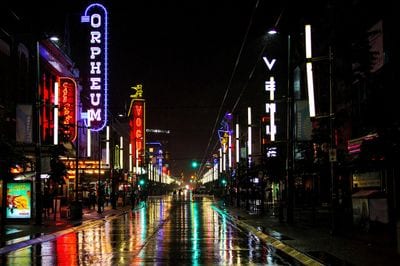
The Vogue is the art-deco theatre halfway down the Granville Street entertainment strip, and its tall neon sign — the name in vertical letters under a stylised figure — is one of the last survivors of the era when this street was lined with them. It is a designated heritage building and one of the most recognisable pieces of streetscape in the city.
Inside it is a single steeply raked room seating around a thousand, used for touring bands, comedy, film festivals and one-off screenings rather than a fixed programme. The sightlines are good and the sound is better than the age of the building suggests. Even if you do not go in, walk this block after dark to see the sign lit.
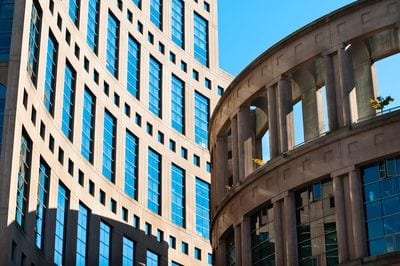
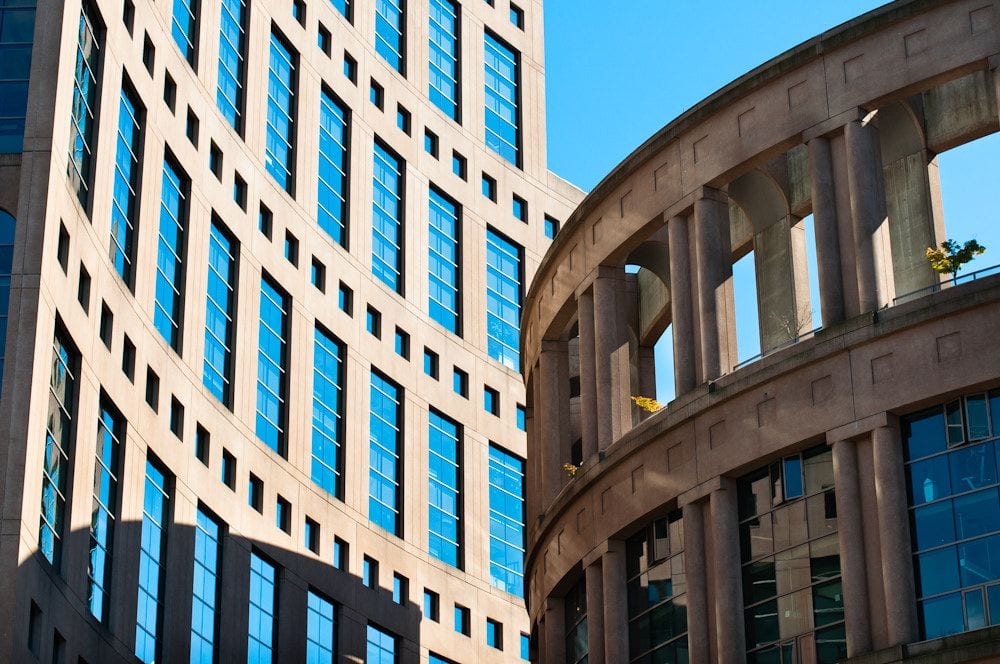
The Vancouver Public Library's Central Branch is the building people photograph without realising it is a library: a great elliptical drum of pinkish precast concrete wrapped by a freestanding colonnade, so that it reads from the street as a modern Colosseum dropped into downtown. Moshe Safdie designed it, and it has divided opinion in the city since it opened without ever being ignored.
The curving glazed concourse between the drum and the outer wall is open to anyone, lined with cafés and benches, and is one of the better places downtown to sit out a rainstorm. Above it, a rooftop garden was added later and is free to visit for the view back over the towers. You do not need a card to walk in, look up, and see the atrium rise the full height of the building.
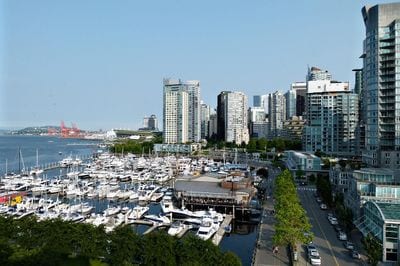
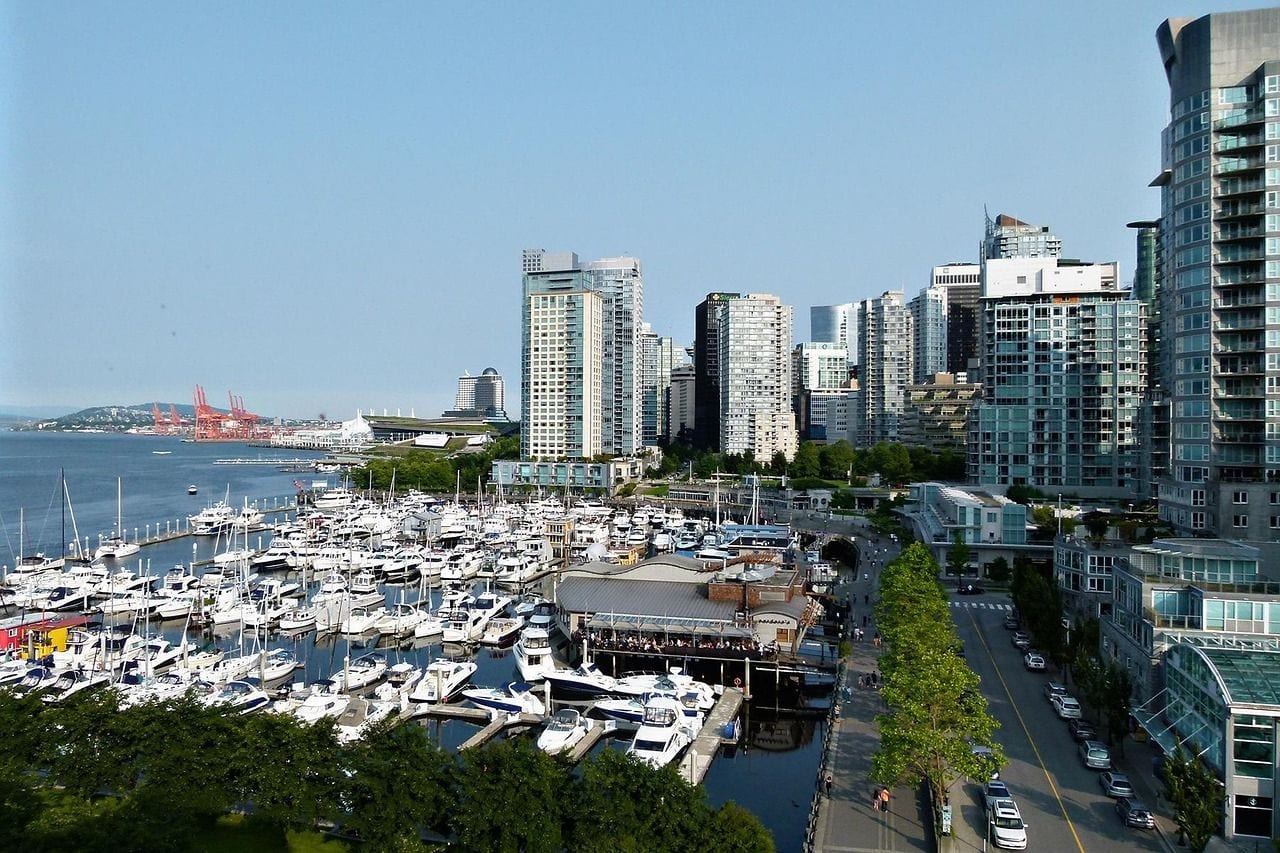
Seeing Vancouver from the water rearranges it. Harbour Cruises runs sightseeing trips out of Coal Harbour, just west of the convention centre, and the standard tour loops the inner harbour past the container terminals, under the Lions Gate Bridge and along the northern edge of Stanley Park — the side of the park you cannot reach on foot.
The boats are covered with open upper decks, there is commentary on the port and the shoreline as you go, and sunset departures are the ones worth timing your day around. It is a gentler alternative to the fast inflatable tours, and the departure dock is a short walk from Canada Place along the seawall.
Plan your trip
Best Time to Visit Vancouver
Late spring and early autumn are the sweet spots. May and June bring long days, gardens in full flower and mountains still holding snow on the tops, all before the summer crowds arrive. September is arguably better still — the weather often holds warm and dry into early October, the seawall and the North Shore trails empty out, and the light on the water is at its best.
July and August are the driest, warmest and busiest months, and the only reliable window for swimming and for the alpine trails above the tree line.
Winter is grey, mild and genuinely wet rather than frozen, which is the trade-off that makes Vancouver unusual in Canada: the ski hills on the North Shore run a full season while the city below rarely sees lasting snow. Autumn and winter are the wettest stretch, so a proper rain jacket matters more than a heavy coat.
Getting to Vancouver
Vancouver International Airport sits on Sea Island in Richmond, a short hop south of the city, and is the main gateway for both international and domestic arrivals. It connects directly to downtown by a rapid-transit line that runs in well under half an hour, which makes a taxi or rideshare optional rather than necessary. Smaller floatplane and helicopter services fly into the harbour itself, landing beside Canada Place.
By road, the Trans-Canada Highway (Highway 1) is the main artery in from the east and across to the North Shore, while Highway 99 runs north as the Sea-to-Sky Highway and south to the United States border, roughly 45 minutes away. Passenger rail arrives at Pacific Central Station from eastern Canada and from Seattle, and BC Ferries links the mainland terminals at Tsawwassen and Horseshoe Bay to Vancouver Island and the Sunshine Coast.
Getting Around Vancouver
You do not need a car in Vancouver, and downtown you are better off without one. The central peninsula is compact and flat enough to cross on foot in half an hour, and the driverless SkyTrain, the bus network and the SeaBus passenger ferry across the harbour cover most of what is further out on a single fare card. The small foot ferries that cross False Creek to Granville Island are a genuine pleasure in their own right.
Cycling is the city's real strength. Protected bike lanes run through downtown and connect to the Vancouver Seawall, so it is possible to ride from the office towers to the beaches almost entirely separated from traffic, and rental bikes cluster around the park entrances.
Downtown and Coal Harbour put you on the waterfront within walking distance of the harbour, the shopping streets and the eastern edge of Stanley Park, and they are the most convenient base for a short first visit.
The West End, immediately west of the centre, is quieter and more residential, sits between the park and the beaches, and has the best concentration of casual restaurants in the city — it is the choice if you want to walk to English Bay Beach for the sunset each evening.
Yaletown and Gastown both trade on converted warehouse character, with Yaletown the more polished of the two and Gastown the more atmospheric and closer to Chinatown. Across the water, Kitsilano is the low-key option: beachside, leafy, full of cafés, and a short bus ride or a long walk from the centre. Anywhere in these districts keeps you off the highways and inside the transit network, which matters more here than proximity to any one sight.
Where to Eat in Vancouver
Vancouver eats extremely well, and the reason is geography — a working Pacific fishery on the doorstep and generations of migration from across Asia. Seafood is the thing to prioritise: wild Pacific salmon, Dungeness crab, oysters from the surrounding coast, and spot prawns in their short late-spring season. The city is also widely regarded as one of the best places for sushi outside Japan, and the pressed, flame-seared style served here is a local signature worth seeking out.
For districts, start at the Granville Island Public Market and simply graze. Chinatown and the neighbouring streets are the historic heart of the city's Cantonese cooking, while the suburb of Richmond, out towards the airport, has arguably the best concentration of Chinese food in North America.
Commercial Drive keeps its Italian cafés, Main Street and Mount Pleasant hold the independent kitchens and breweries, and the West End's Denman and Robson streets are lined with Japanese izakayas and ramen counters. Look out for Japanese-topped hot dogs from the downtown street carts, and for Nanaimo bars, the province's own layered no-bake sweet.
Day Trips from Vancouver
The Sea-to-Sky Highway north is the classic run, climbing along the fjord of Howe Sound with pull-offs the whole way. Squamish is about an hour up it, at the foot of a granite monolith and with a gondola of its own, and Whistler is roughly two hours — a ski resort in winter and a mountain-biking and hiking base the rest of the year. Both make comfortable single days, though Whistler rewards an overnight.
West and south the trips go by water. Victoria, the provincial capital, is a ferry crossing plus a drive from the Tsawwassen terminal and is a long but very doable day, with harbour, gardens and a distinctly British air.
Bowen Island is a much shorter hop from Horseshoe Bay for forest walks and a village pub, and the historic fishing village of Steveston, about forty minutes south in Richmond, has a working boat dock, a cannery museum and the best fish and chips in the region. Further east, the restored fur-trade fort at Fort Langley makes an easy hour's drive up the Fraser Valley.
Before you go
Mobile dataAn eSIM gives your phone local data when you land, with no SIM card to swap.via AiraloGet an eSIM
Airport transferA driver meets you at arrivals and takes you to your hotel, at a price fixed when you book.via Welcome PickupsBook a transfer
We may earn a commission when you buy through these links, at no extra cost to you. How we make money.
One Day in Vancouver
Morning
Start on the water at the Granville Island Public Market, early enough to have the stalls to yourself — coffee, pastries and a wander through the produce and seafood halls. Cross False Creek afterwards on one of the little rainbow-coloured passenger ferries, which takes minutes and is the single best-value boat ride in the city.
Head into the centre and get your bearings from the top of the Vancouver Lookout, then walk down to the sails of Canada Place and along the harbour. Carry on east into Gastown for the red-brick streets and the Gastown Steam Clock, timing your arrival for the top of the hour if you want the full blast of steam.
For the collision of city and wilderness. Stanley Park, a thousand acres of rainforest at the edge of downtown, is the defining sight, followed by the market on Granville Island, the swaying Capilano Suspension Bridge Park, the cobbled streets and steam clock of Gastown, and Grouse Mountain rising directly behind the skyline.
How many days do you need in Vancouver?
Three days covers the city comfortably: one for downtown, Gastown and the harbour, one for Stanley Park and the beaches, and one for the North Shore mountains. A fourth day lets you add the museums and gardens, or push out to Squamish or Whistler. Any less than two and you will spend it downtown.
September is the pick — warm, often dry, and much quieter than high summer, with the mountains and the seawall at their best. May and June are the other strong window, with long days and gardens in flower. July and August are warmest but busiest, and the winter months are mild, grey and genuinely wet.
Do you need a car in Vancouver?
Not for the city. Downtown is walkable, the SkyTrain and bus network reach almost everything else, and the seawall connects the beaches by bike. A car helps for the North Shore attractions and becomes worthwhile for day trips up the Sea-to-Sky Highway or out to the Fraser Valley. Downtown parking is expensive.
Is Vancouver worth visiting?
Yes, particularly if you like your cities within reach of real wilderness. Few places let you walk from a downtown tower into old-growth forest in twenty minutes, ski and sit on a beach in the same day, or eat this well for the money. It rains a lot from autumn to spring, which is the honest caveat.