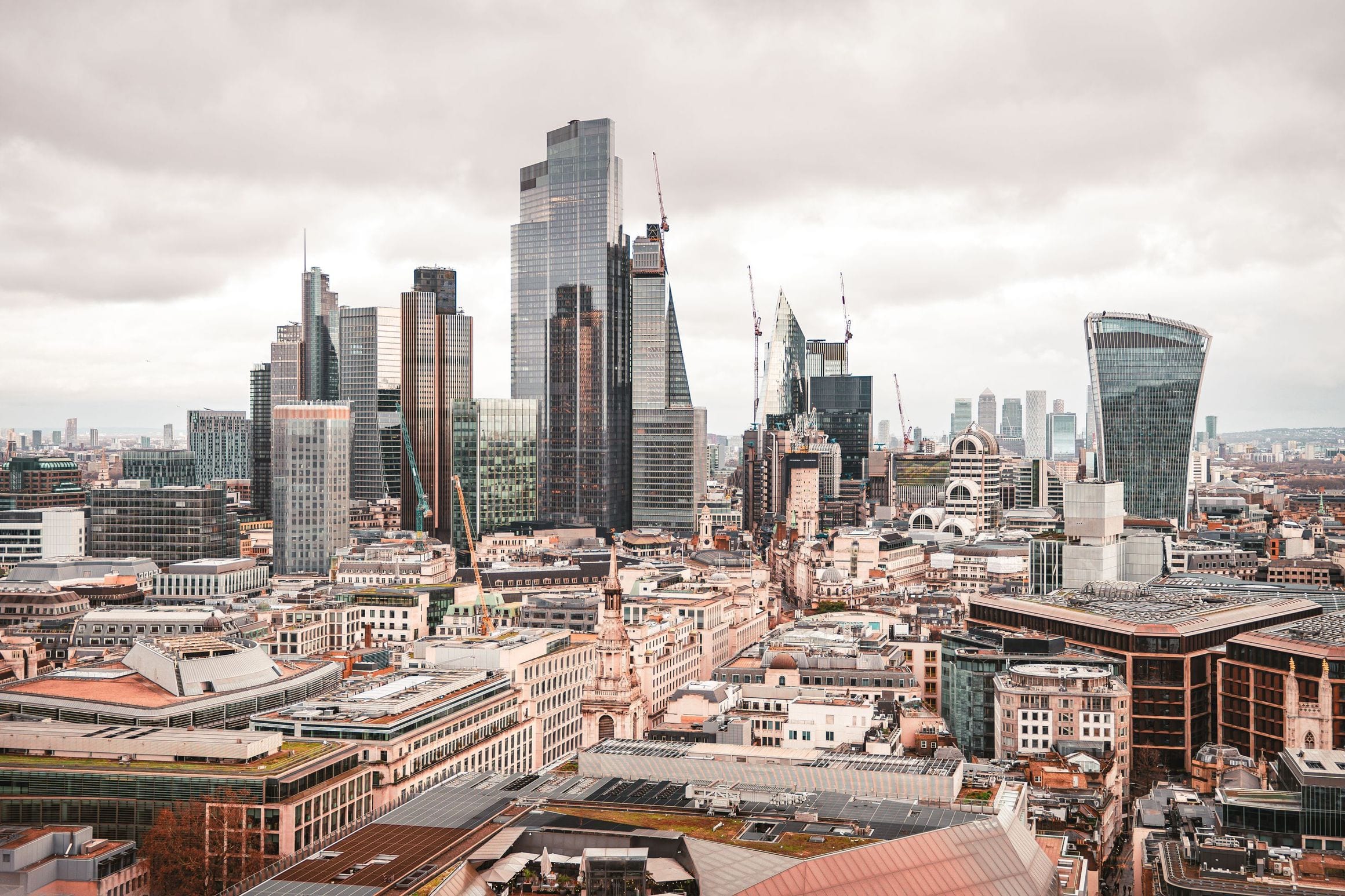
Stone circles, cathedral closes and Victorian railway cities — and almost all of it an hour or two apart by train.
England fits three thousand years of history and a startling range of landscape into a country smaller than Alabama. London anchors it — a global capital of museums, theatre and royal ceremony — but the pleasures multiply as you travel: Roman baths and Georgian crescents in the west, university quads and cathedral cities in the east, Hadrian's Wall along the old northern frontier, and the fells of the Lake District beyond. Fast trains link almost all of it, which makes England unusually easy to see without a car. Use this hub to plan your trip: browse our English city guides below, or read on for the regions, seasons and rail routes that tie the country together.
Arguably the loveliest season to travel: gardens and parkland come into bloom, daffodils give way to bluebells in the woods, and the days lengthen quickly. Showers are frequent and early spring stays cool, but crowds are thinner than summer and the light is at its best.
SummerJun–Aug
The warmest, busiest and greenest stretch, with daylight running past 9pm. This is festival season and the most reliable window for the coast and the national parks — but book ahead, since the honeypot villages of the Cotswolds and the Lake District fill up completely.
FallSep–Nov
A quietly excellent shoulder season. September often holds summer's warmth with a fraction of the crowds, the great estates and the moors turn gold and russet, and city hotel rates soften. By November the light is short and the weather turns properly wet.
WinterDec–Feb
Cold, damp and dark by mid-afternoon, but the cities are at their cosiest — this is the season for museums, galleries, theatre and pubs with a fire going. Christmas markets and lit-up streets run through December, and the great cathedrals are at their most atmospheric.
Regions
London & the southeastThe capital and its orbit — world-class museums, royal palaces, theatre and markets — with Windsor, Canterbury, the Brighton seafront and the white cliffs all inside a day trip. The fastest, densest corner of the country, and where most visitors start.
The South WestGeorgian Bath and its Roman baths, prehistoric Stonehenge and Avebury, and beyond them the moors and cliffs of Devon and Cornwall — surf beaches, fishing harbours and England's mildest weather.
The Cotswolds & Thames ValleyHoney-coloured stone villages, market towns and manor gardens across the limestone hills, with Oxford's college quads and Blenheim Palace on the eastern edge. Best explored by car, or on foot between villages.
The MidlandsShakespeare's Stratford-upon-Avon, the canal network and industrial museums of Birmingham, the Peak District's gritstone edges and show caves, and the great houses of Chatsworth and Warwick.
East AngliaFlat light and big skies — Cambridge's colleges and punting, the Norfolk Broads and their windmills, a string of medieval wool towns in Suffolk, and a long quiet coast of shingle and salt marsh.
Northern EnglandRoman Hadrian's Wall, the walled city of York and its minster, the music and maritime history of Liverpool and Manchester, and the lakes, fells and stone villages of the Lake District and Yorkshire Dales.
StonehengeThe most famous prehistoric monument in Europe — a ring of colossal standing stones raised on Salisbury Plain some 4,500 years ago.Basecamp: Salisbury
The Roman Baths & Georgian BathBritain's best-preserved Roman bathing complex, set in a honey-stone city of crescents and terraces that is a World Heritage Site in its own right.Basecamp: Bath
York Minster & the city wallsThe largest Gothic cathedral in northern Europe, ringed by two miles of medieval walls and the narrow lean of the Shambles.Basecamp: York
The Lake DistrictEngland's highest ground and deepest lakes — Scafell Pike, Windermere and the fells that Wordsworth and Beatrix Potter made famous.Basecamp: Windermere
Hadrian's WallThe Roman Empire's northwest frontier, running 73 miles coast to coast, with forts, milecastles and the best-preserved stretch on the crags above Housesteads.Basecamp: Hexham
Suggested routes
The classic England rail trip
~1–2 weeks
The standard first-visit run, and the strongest argument for leaving the car at home — every leg below is a direct or near-direct train, and the whole route can be done on advance fares booked ahead.
1London — fly in; three to four days in the capital
2Bath — Roman baths & Georgian crescents
3The Cotswolds — stone villages; easiest with a hire car for a day
4Oxford or Cambridge — college quads and punting
5York — city walls, the minster and the medieval Shambles
6The Lake District — change at Oxenholme for Windermere
The West Country by car
~1 week
A loop through England's mildest, most maritime corner, where the appeal is the driving as much as the stops — high hedged lanes, moorland crossings and a different fishing harbour every few miles.
1Bath — pick up the car here after the train from London
2Wells & Glastonbury — England's smallest cathedral city, then the tor
3Dartmoor — open moorland, tors and wild ponies
4Cornwall's south coast — St Ives, Penzance and the far west
5The north Cornish coast — Tintagel, surf beaches and cliff paths
6Exeter — drop the car and take the train back
The North by rail
~5–7 days
The industrial north and the country behind it, on one of the best-connected corridors in England. Manchester and Liverpool are 35 minutes apart, and the Settle–Carlisle line is worth a day for the viaducts alone.
1Manchester — music, museums and the Victorian centre
2Liverpool — the waterfront, the Beatles and two cathedrals
3The Yorkshire Dales — the Settle–Carlisle line and Ribblehead
4York — minster, walls and the railway museum
5Hadrian's Wall — via Newcastle; the crags around Housesteads
England travel FAQ
Nine questions travellers ask before they go.
When is the best time to visit England?
May, June and September are the sweet spots — long days, gardens at their best, and thinner crowds than July and August. High summer is warmest and busiest, and the Cotswolds and Lake District book out well ahead. Winter is dark and damp but suits London and the cathedral cities, and hotel rates drop sharply.
How many days do you need in England?
Three to four days covers London properly. A week lets you add Bath and the Cotswolds, or York and the north. Ten days to two weeks is enough for the classic rail circuit — London, Bath, Oxford or Cambridge, York and the Lake District — without moving hotel every night.
Do you need a car in England?
Not between cities. The rail network is dense and fast, and city-centre driving means expensive parking, congestion charges and clean-air zones. A car pays for itself the moment you want the countryside — the Cotswolds, the Lake District, the Yorkshire Dales, the Peak District and the Cornish coast are all much easier with one. Renting for two or three days mid-trip is a common compromise.
What is the difference between England, Britain and the UK?
England is one country of four. Great Britain is the island holding England, Scotland and Wales. The United Kingdom is the sovereign state made up of all three plus Northern Ireland. So every part of England is in Britain and in the UK, but Edinburgh and Cardiff are not in England, and Belfast is in neither England nor Britain.
What currency does England use, and is it in the EU?
The pound sterling (GBP, £), not the euro. The UK left the European Union in 2020, so most visitors now need a passport valid for the whole stay, and many nationalities need an Electronic Travel Authorisation before arriving — check the current rules for your country before booking. Cards and contactless are accepted almost everywhere, including on London buses, which take no cash at all.
What food should you try in England?
A Sunday roast with Yorkshire pudding is the one to plan around, ideally in a country pub. Beyond it: fish and chips at the coast, a full English breakfast, a proper afternoon tea with scones and clotted cream, pork pies and regional cheeses, and — genuinely — some of the best Indian food outside India, in Birmingham, Bradford and east London.
Is London worth more than a few days?
Yes. The major national museums — the British Museum, the National Gallery, the V&A, the Tates and the Natural History Museum — are all free to enter and each would fill a day. Add the Tower, Westminster, a West End show and a couple of the parks and markets, and four days fills easily without leaving Zone 2.
What is England known for?
Royal history, museums, cathedrals and pub culture.
What kind of trip is England best for?
Cities, history and countryside by rail.
We use cookies to analyse site traffic and improve your experience.
You can accept or reject analytics cookies. See our Cookie Policy.