We may earn a commission if you book or buy through a link on
this page, at no extra cost to you. It never affects which places we list or how
we rank them (how we make money).
Short answer
Tallinn's essentials are the Town Hall, the only surviving Gothic town hall in northern Europe, the onion-domed Alexander Nevsky Cathedral facing the seat of Estonian government on Toompea, and the Seaplane Harbour, whose 1917 hangars are among the world's first large-scale reinforced concrete shells. Two full days sees the Old Town properly plus either Kadriorg or the Seaplane Harbour; three fits in Telliskivi and a tower climb.
Tallinn packs a walled medieval town, a tsar's palace park and a submarine parked inside a concrete hangar into a capital you can cross on foot. The Old Town is among the best preserved in Europe, but the city beyond the walls — Kadriorg, Telliskivi, the seafront — is where Estonians actually spend their weekends.
This guide runs through 50 of the best things to do in Tallinn, from tower climbs and viewing platforms to art museums, parks and the occupation-era history that shaped the country. Two days covers the essentials; three or four lets you slow down.
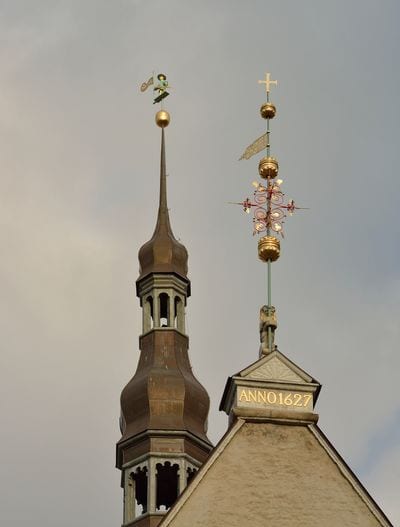
Tallinn Town Hall is the oldest town hall in the Baltic Sea region and Scandinavia — it was completed in 1404, and a weather vane of the soldier Old Thomas has stood on its spire since 1530.
The Town Council Pharmacy on Raekoja plats is the oldest pharmacy in Europe still trading on its original premises, first recorded in April 1422 — and one family, the Burcharts, ran it for ten generations.
Estonia has only two UNESCO World Heritage sites, and Tallinn's Old Town is one of them, inscribed in 1997. The other is the Struve Geodetic Arc, a chain of survey points shared with nine other countries.
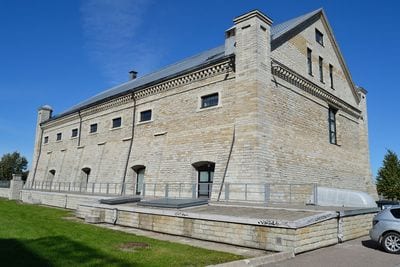
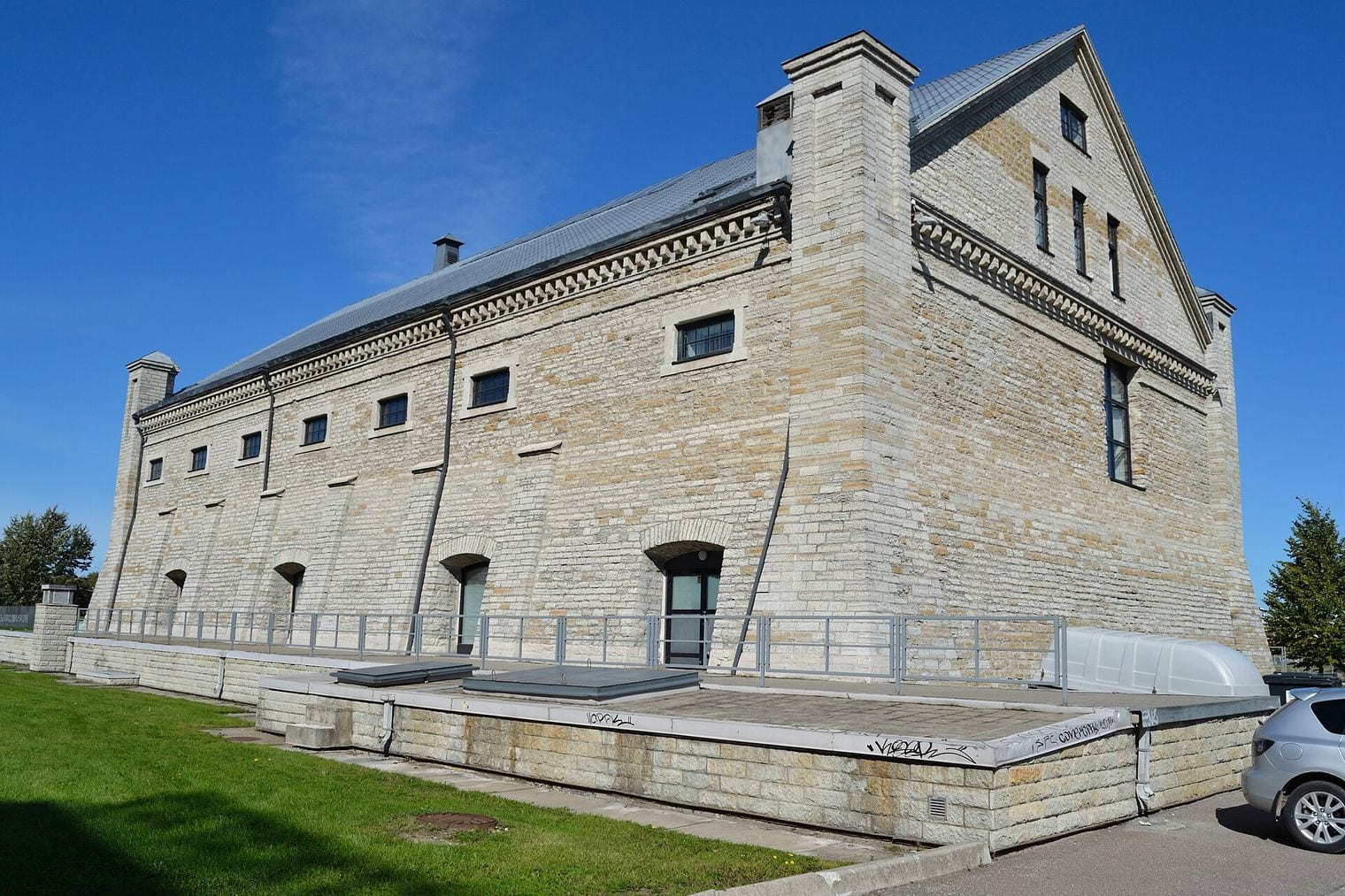
The concrete hangars at the Seaplane Harbour, built during the First World War, were among the world's first large-scale reinforced concrete shell domes — an engineering experiment that had never been attempted at that scale.
The 314-metre Tallinn TV Tower was built for the sailing events of the 1980 Moscow Olympics, which were held at Pirita just along the coast.
The Estonian Song Festival has gathered choirs since 1869 and is held roughly every five years, drawing tens of thousands of singers. It is inscribed on UNESCO's intangible cultural heritage list, and the mass singing it inspired gave the Singing Revolution its name.
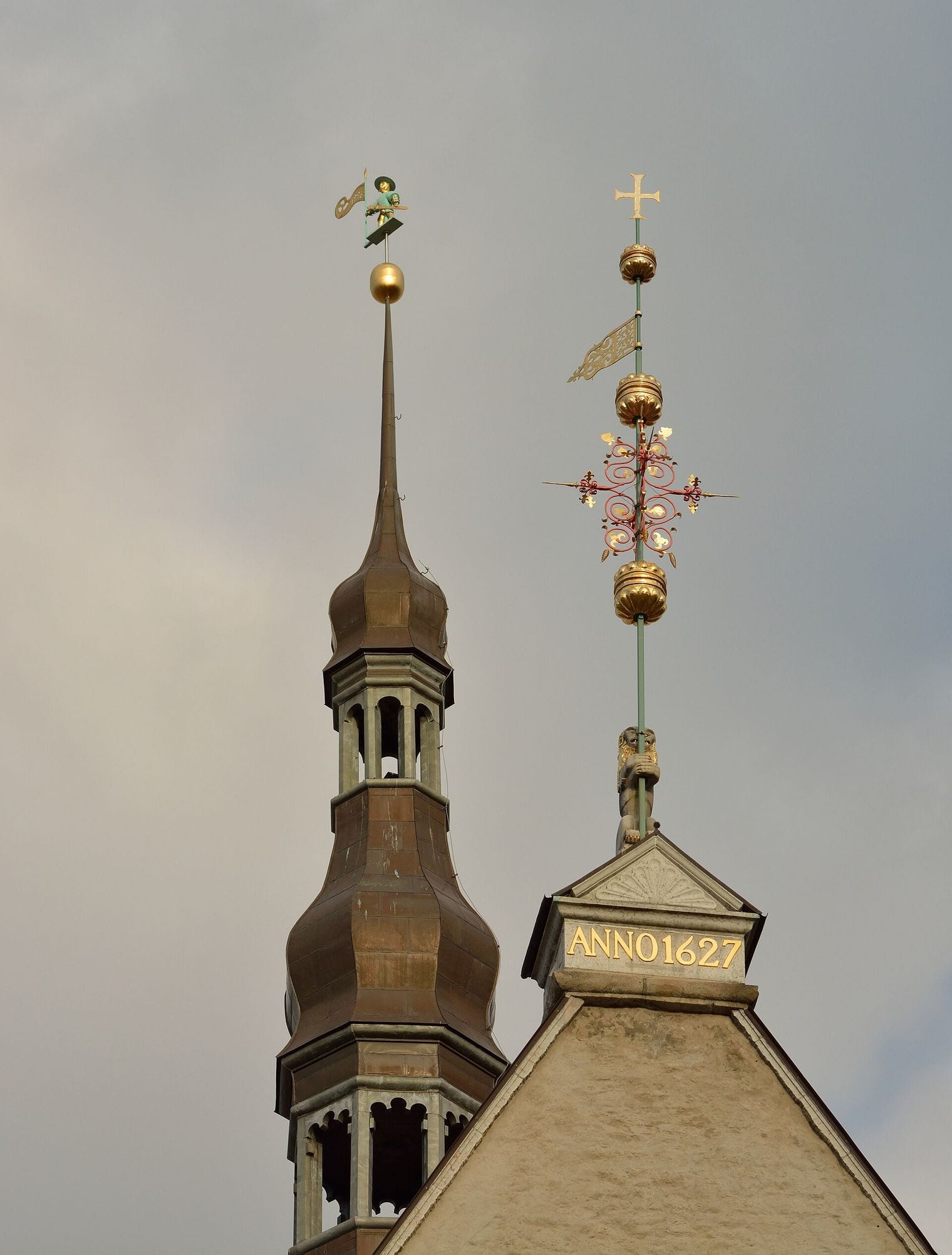
Standing over Raekoja plats since the early 15th century, Tallinn Town Hall is the oldest surviving town hall in the Baltic and Nordic region and the building the whole Old Town arranges itself around. Its long arcaded façade, steep roof and slender octagonal spire have barely changed in six hundred years, and the weather vane on top — a helmeted figure known as Old Thomas — has become an unofficial emblem of the city.
Inside, the vaulted council chamber and citizens' hall are open to visitors in season, hung with the kind of carved benches and painted friezes a wealthy Hanseatic trading town commissioned to impress its guests. The real reward is the tower: a tight spiral staircase climbs to a narrow gallery with a clear view over the square, the surrounding rooftops and the spires of Toompea beyond.
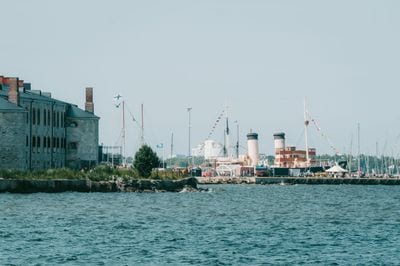
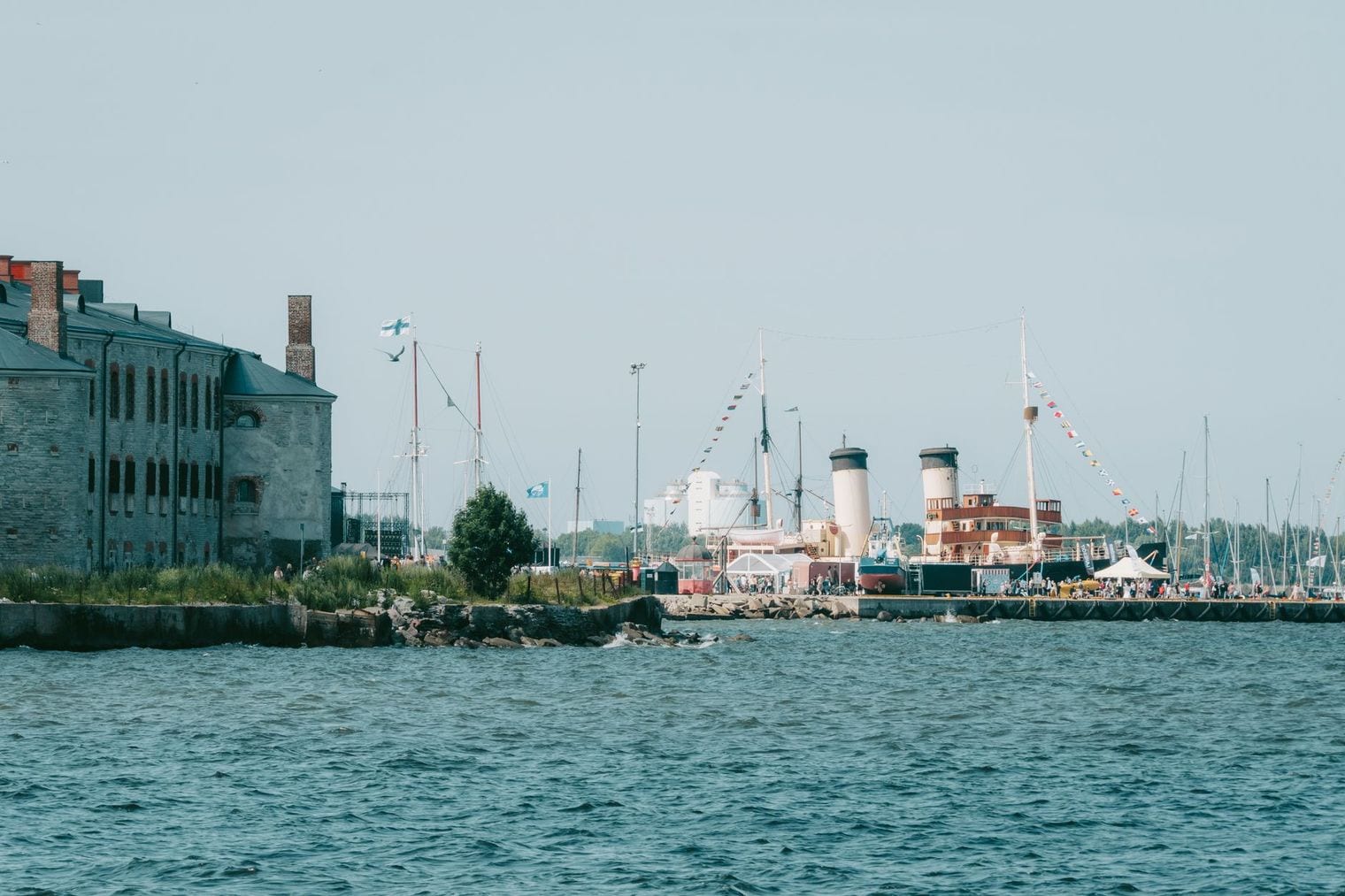
Lennusadam is the most extraordinary building in Tallinn and one of the most unusual museum spaces anywhere. Built during the First World War as hangars for seaplanes, its trio of thin reinforced-concrete shell domes were an engineering experiment of a kind nobody had attempted at that scale before, and they were left derelict for decades before the Estonian Maritime Museum moved in.
The collection is arranged across three levels — in the air, on the water and below it — with aircraft hung overhead and the submarine Lembit sitting on the floor of the hangar, open so you can walk through its cramped interior. Outside on the quay the steam icebreaker Suur Tõll is moored and can be boarded, and the harbour walk gives a fine view back along the coast toward the city.
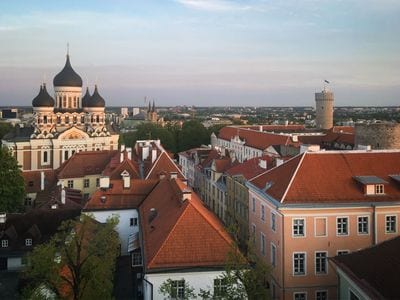
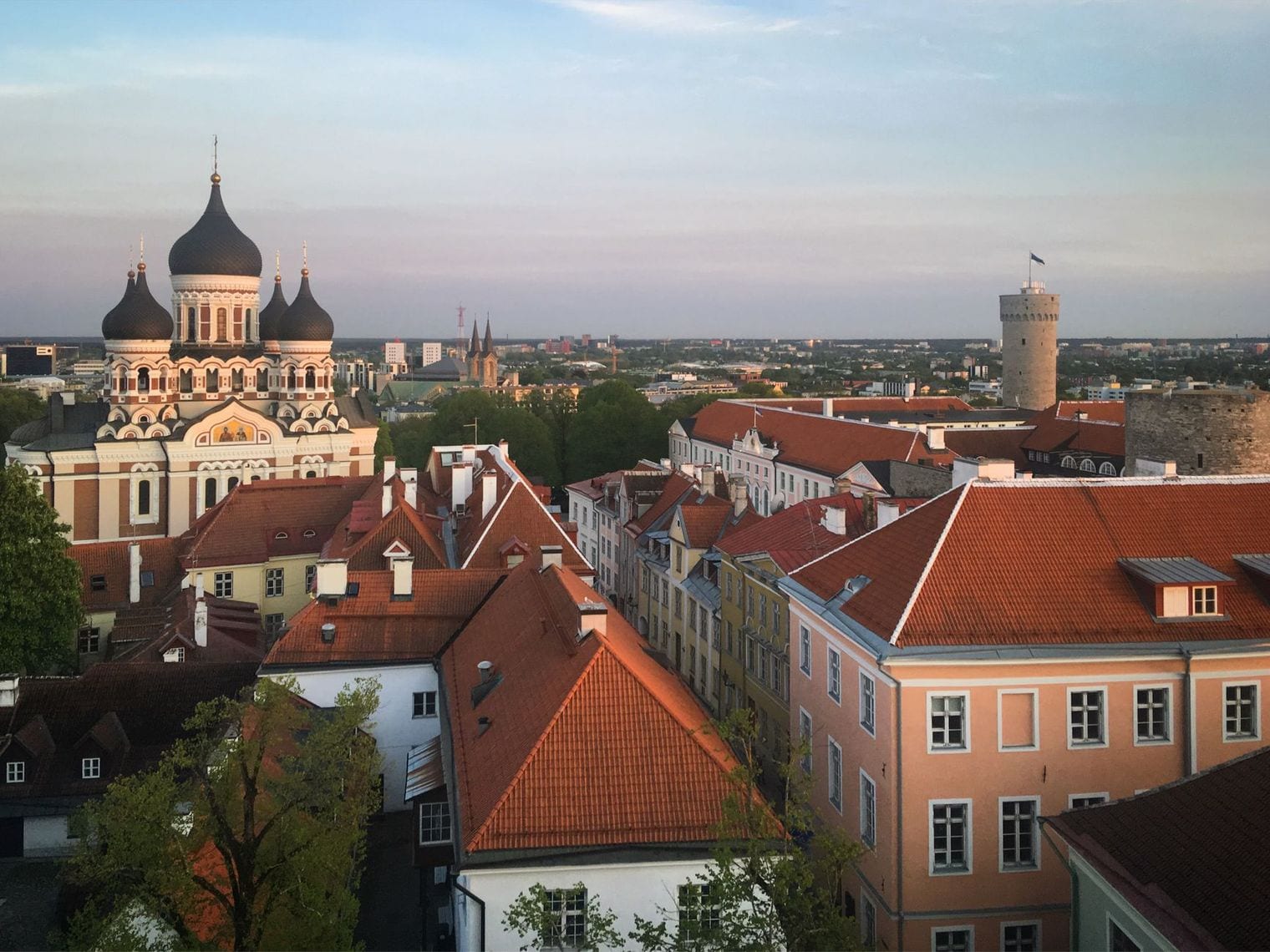
Few buildings state their politics as plainly as Alexander Nevsky Cathedral. Built at the turn of the twentieth century, when Estonia was part of the Russian Empire, this Russian Orthodox cathedral was planted at the top of Toompea hill directly facing the seat of government — a deliberate piece of architecture as argument, and one that Estonians have had mixed feelings about ever since.
Aesthetically it is hard to argue with: five black onion domes, elaborate mosaic panels above the entrance and one of the most powerful sets of church bells in the city. Step inside and the interior is dim, incense-heavy and thick with gilt icons and mosaics. It remains an active place of worship, so services run throughout the week and modest dress is expected.
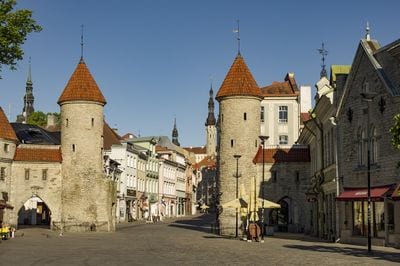
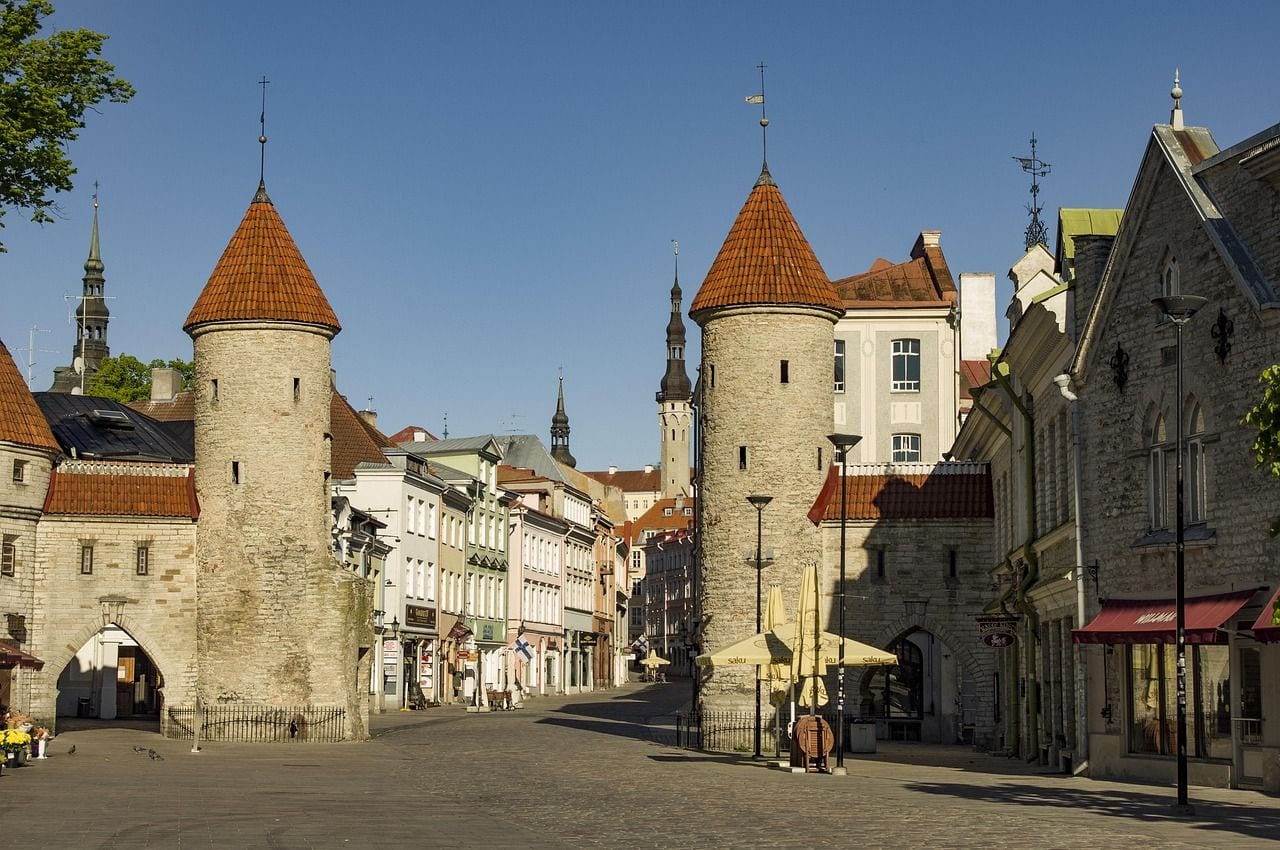
The twin round towers of Viru Gate are the postcard shot of Tallinn, and for most visitors they are the moment the city changes character. Walk up from the modern shopping streets and the flower sellers, pass between the pointed conical roofs, and you are suddenly on cobbles inside a walled town — the towers are the surviving fragment of a much larger 14th-century gate complex that once guarded this approach.
The rest of the barbican was demolished in the 19th century to let traffic through, which is why the gate now reads as two picturesque towers rather than a fortification. Either side of them the town wall runs on, and the little garden and flower market that has grown up around the entrance makes this one of the busiest and most photographed corners in Estonia.
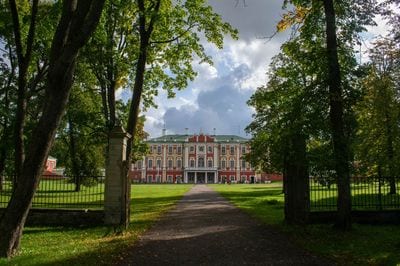
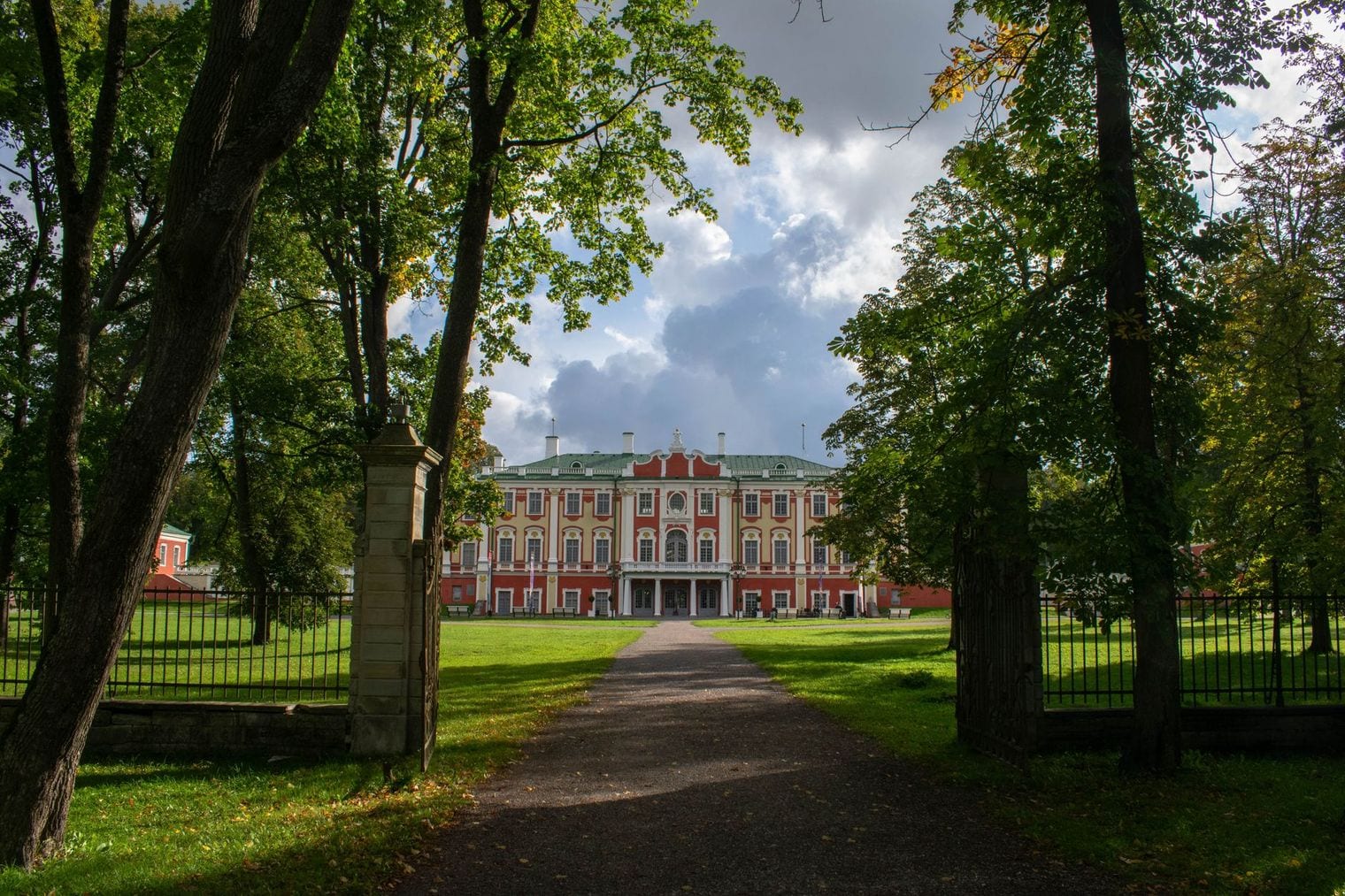
Kadriorg Palace was commissioned by Peter the Great shortly after his forces took Tallinn from Sweden, and named for his wife Catherine — Kadriorg means Catherine's valley. The result is a compact Italianate baroque palace of pink stucco and white plasterwork, set at the head of a formal garden, with a main hall that is one of the most ornate baroque interiors in northern Europe.
Today the palace holds the foreign art collection of the Art Museum of Estonia: Dutch, German, Italian and Russian painting hung in rooms that are half the exhibit themselves. The flower garden behind the palace, with its clipped hedges and fountain, is free to walk through, and the Mikkel Museum in the former kitchen building sits a few steps away.
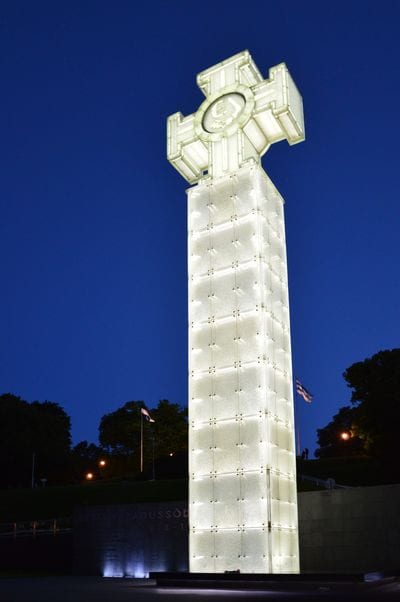
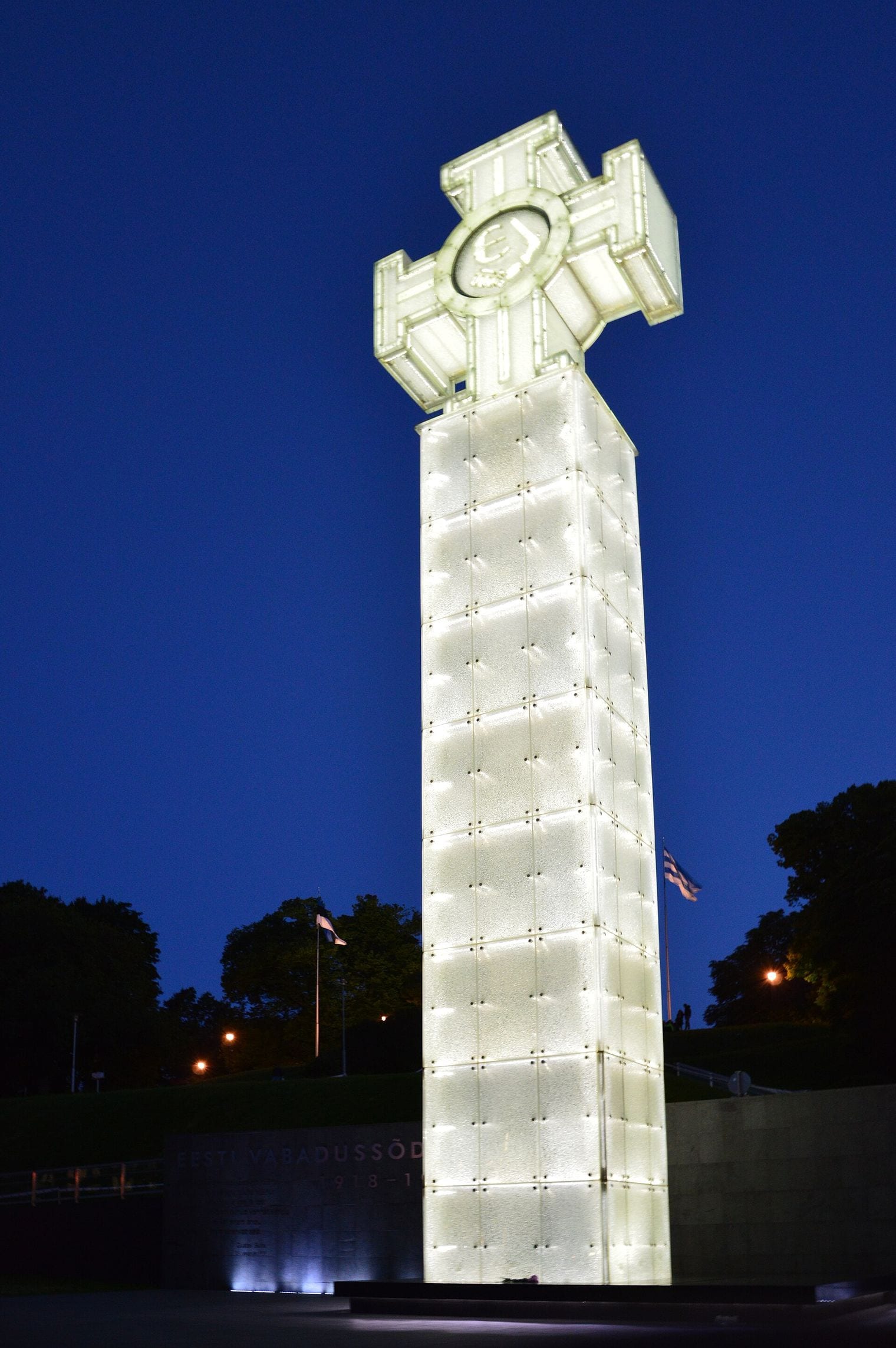
Freedom Square is where modern Tallinn does its remembering. The wide, deliberately empty plaza at the southern edge of the Old Town is dominated by the Victory Column, a tall glass-clad cross lit from within that commemorates the Estonian War of Independence, and the square has been the natural gathering point for national celebrations and protests alike.
It is also a useful orientation point. The limestone bulk of St John's Church stands on one side, the wooded slope of Harjumägi rises behind, and the steps up to Toompea and the Kiek in de Kök tower begin at the far corner. Beneath the paving, glass panels reveal excavated remains of the medieval Harju Gate that once stood here.
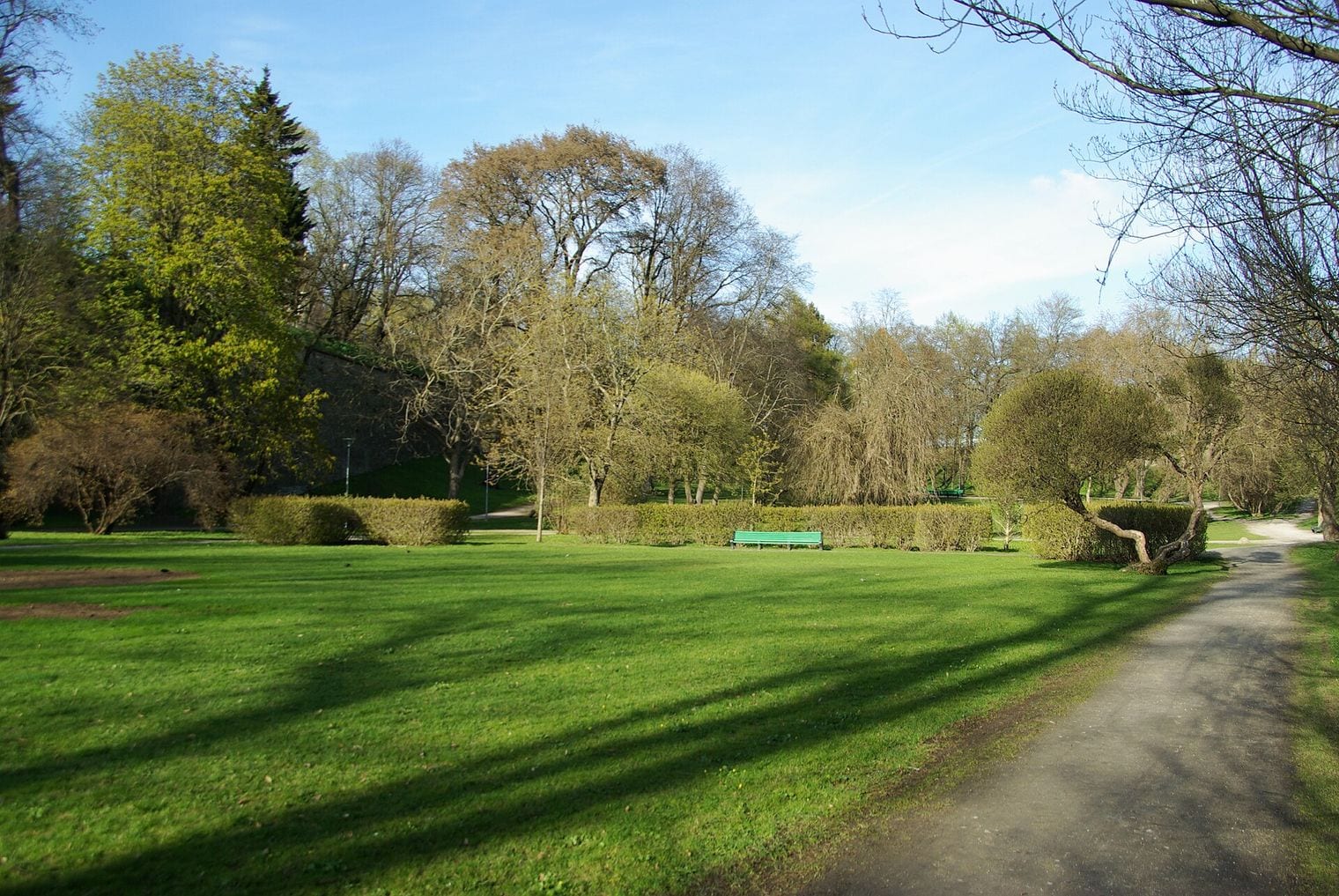
Kadriorg Park is the green lung of Tallinn — a large, gently landscaped park of oak, lime and horse chestnut laid out around the palace, and the place the city goes to walk, run and sit out a long summer evening. Paths wind between formal flower gardens, open lawns and pockets of denser woodland, and the whole thing runs downhill toward the sea.
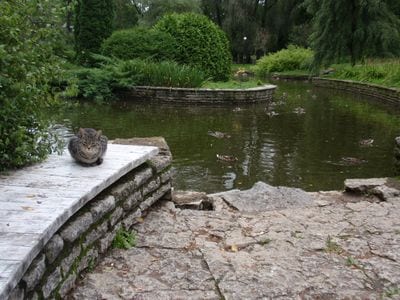
The set pieces are easy to string together: the Swan Pond with its little wooden pavilion near the main entrance, a serene Japanese garden of raked gravel and maples, the modest cottage where Peter the Great stayed while the palace was being built, and the children's museum Miiamilla. The Kumu art museum sits at the park's upper edge, so a walk here pairs naturally with a gallery visit.
Tallinn Zoo spreads over a large wooded site west of the centre and has built its reputation on cold-climate and mountain species rather than trying to show a bit of everything. Its collection of wild goats and sheep is among the most complete anywhere, and the polar bears, Amur tigers, brown bears and snow leopards are all well suited to an Estonian winter, which makes this a genuinely year-round attraction.
The layout rewards a slow visit: enclosures are generously sized and separated by woodland paths, and the Elephant House and tropical sections give somewhere warm to retreat on a cold day. There is a large children's zoo with domestic animals to meet, and the whole site is easy to reach by tram and bus from the centre.
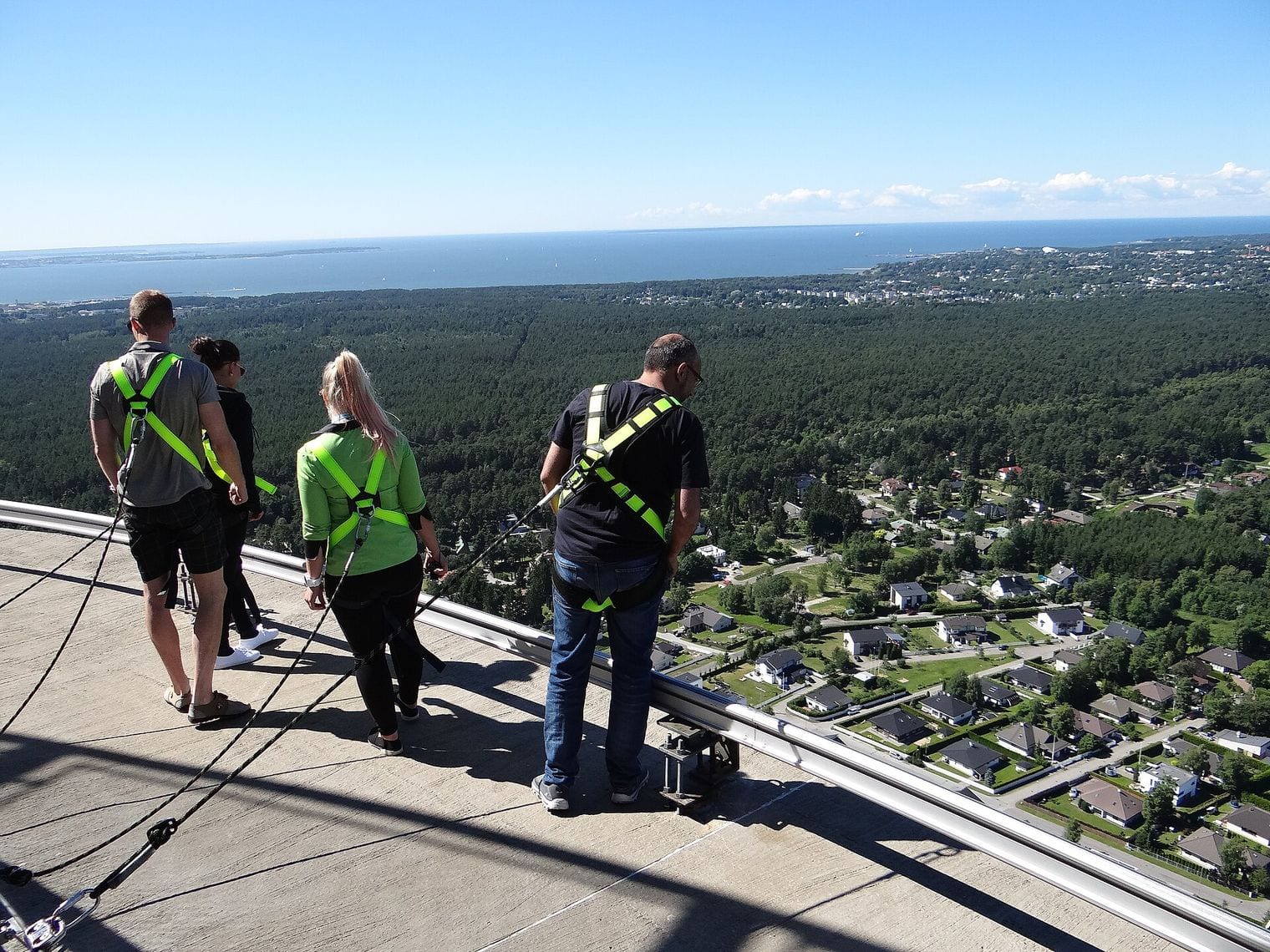
The Teletorn rises out of the forest on the north-eastern edge of the city and is comfortably the tallest structure in Estonia. Built for the sailing events of the 1980 Moscow Olympics, which were held at Pirita, it is a lean concrete column topped by a disc, and it earned a place in Estonian memory in 1991 when defenders held it against Soviet troops to keep the country's broadcasts on air.
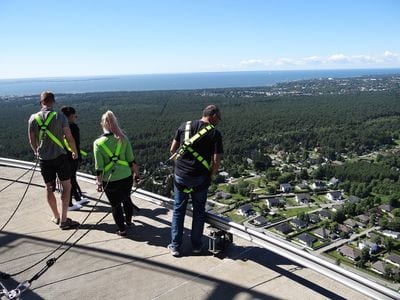
A lift runs up to the observation floor, where windows give a huge view over Tallinn, the bay and, on a clear day, a long way out to sea. Circular glass panels set into the floor let you look straight down, there is a café at the top, and the more adventurous can book an open-air walk on the edge of the platform.
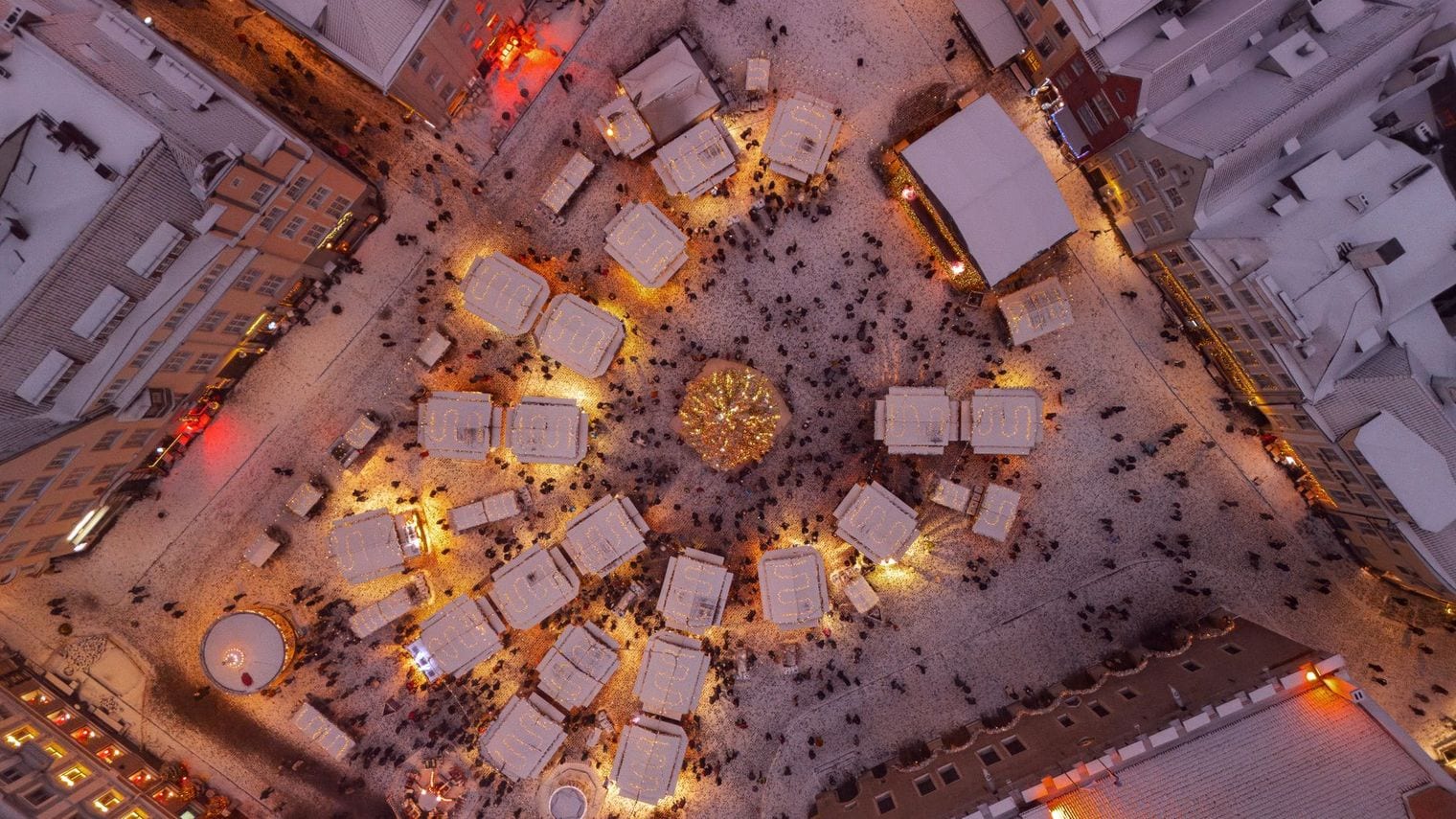
Raekoja plats has been the centre of Tallinn for the best part of eight centuries — a market, a meeting place, a site of public punishment, and now the square where most visits to the Old Town begin and end. Gabled merchant houses in ochre, cream and green enclose it on all sides, café tables spill across the cobbles in summer, and the Town Hall anchors the southern edge.
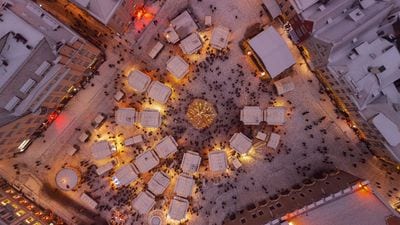
On one corner stands the Town Council Pharmacy, which has been trading on this spot since the early 15th century and keeps a small free room of historic remedies and instruments. In December the square fills with the wooden huts, spruce tree and mulled wine of the Christmas market, a tradition the city traces back to the market tree raised here in the 15th century.
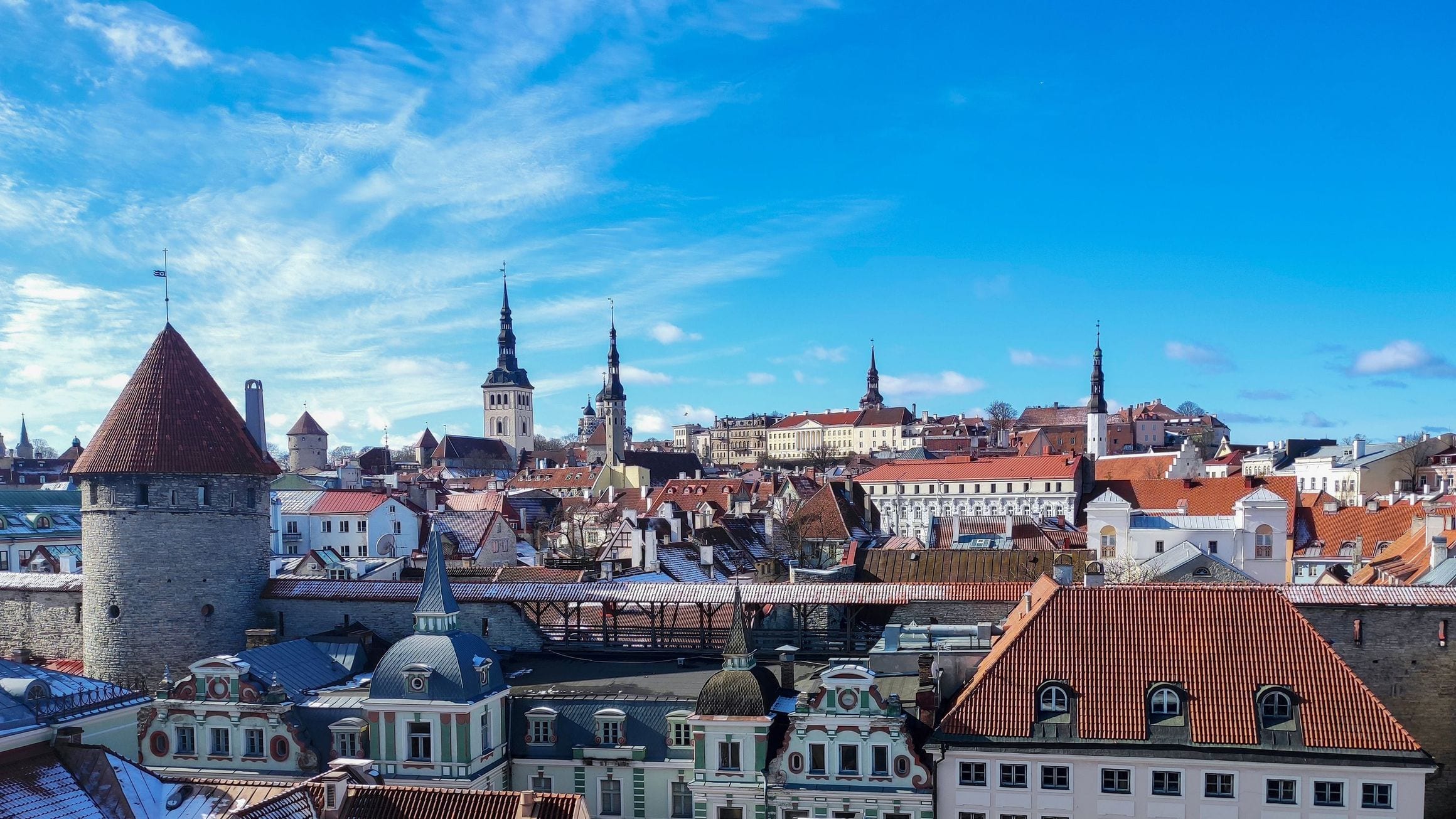
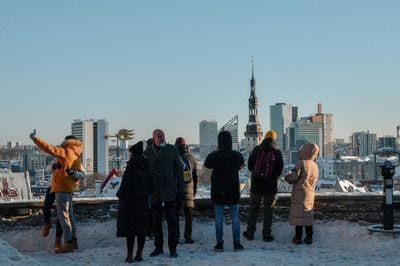
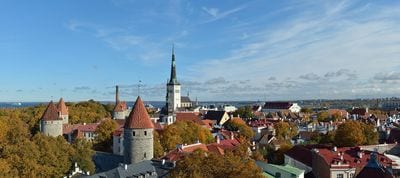
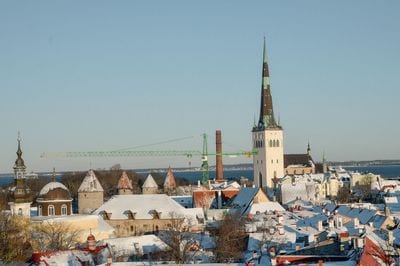
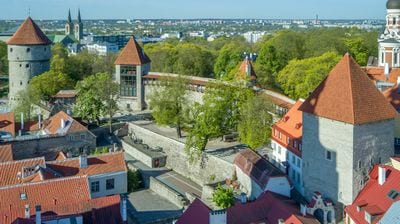
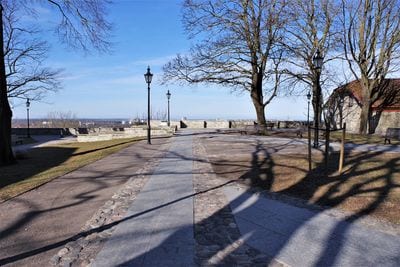
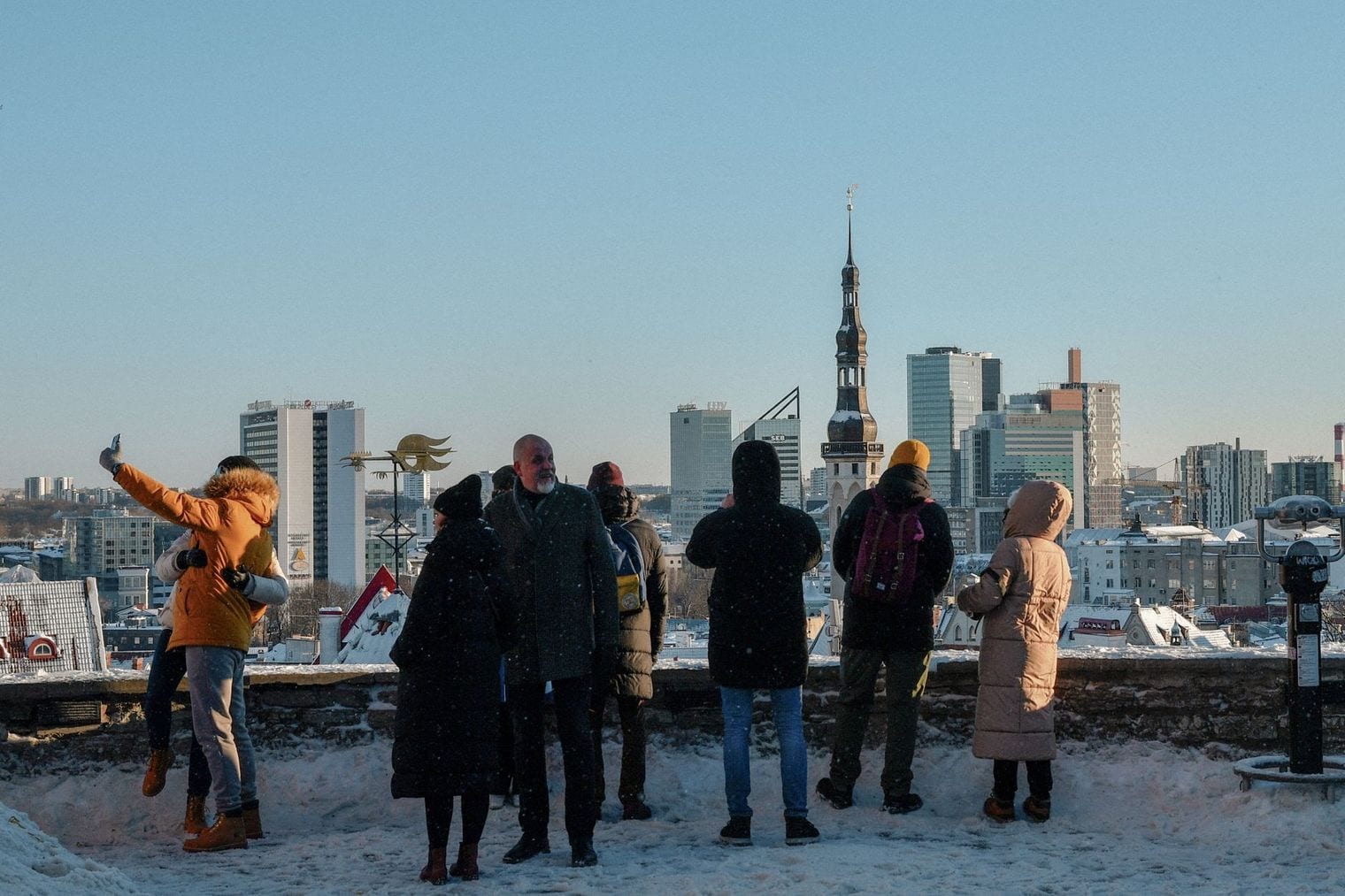
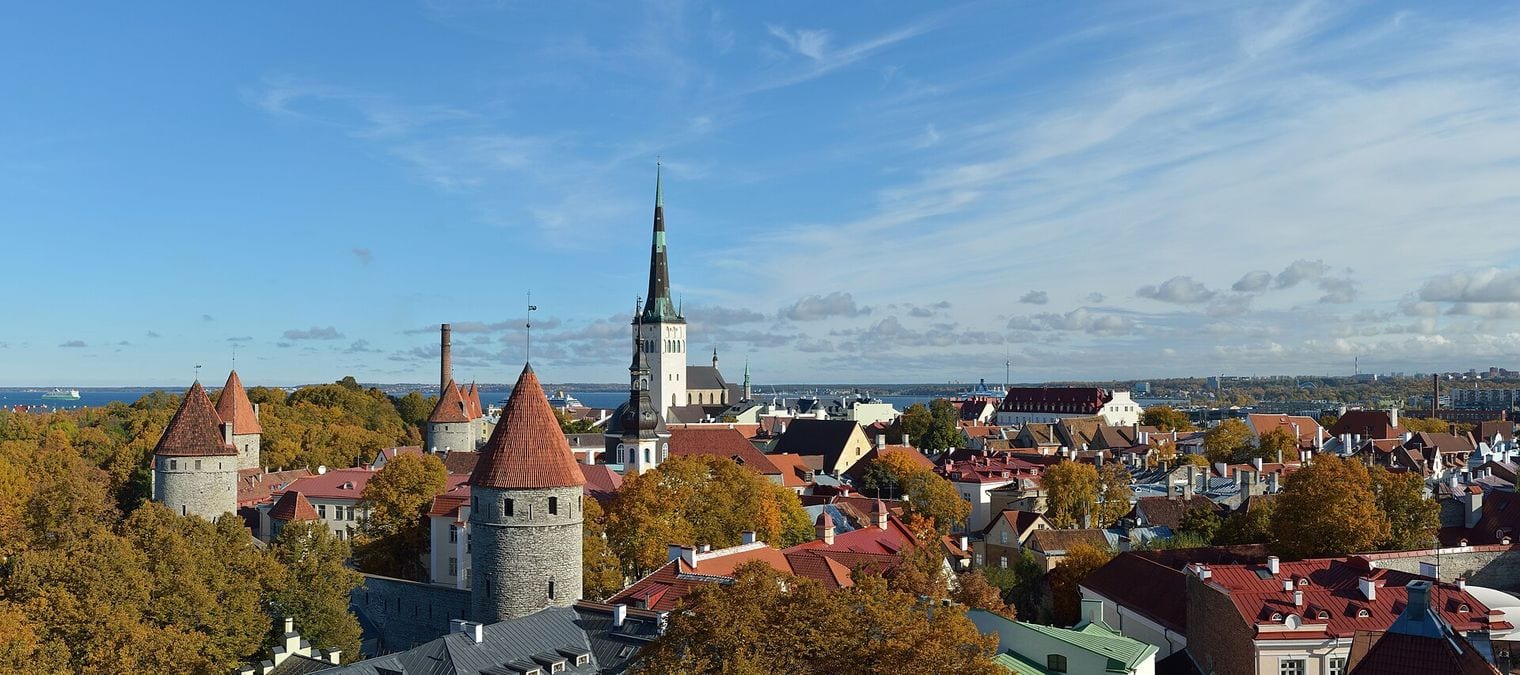
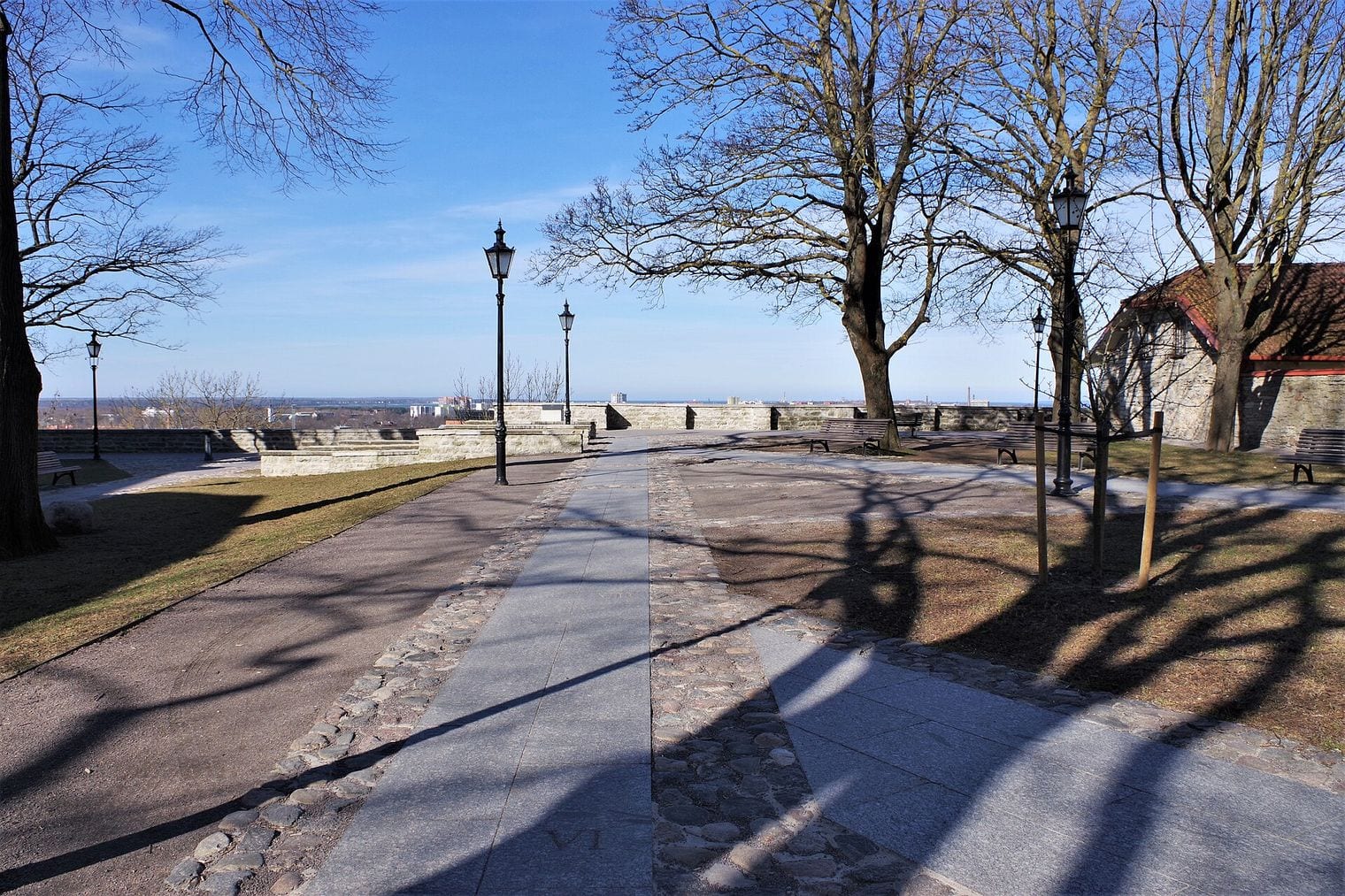
If you have seen one photograph of Tallinn, it was almost certainly taken from Kohtuotsa. This free terrace on the eastern edge of Toompea looks straight out over the red-tiled roofs of the lower town, the spires of St Olaf's and the Holy Spirit Church, the medieval wall towers and, behind them, the cranes and ferries of the port and the modern towers of the business district.
It is a remarkably efficient bit of sightseeing — the whole layered history of the city in one frame. A wall beside the platform carries a painted slogan that has become a photo fixture in its own right, and the terrace is a short, well-signed walk from Toompea's cathedral. Come early or late if you want it without a crowd; the light is better then too.
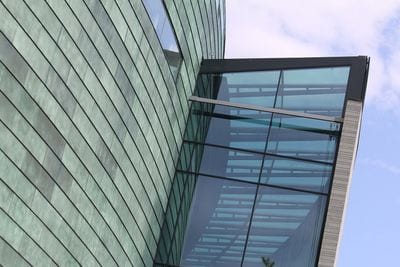
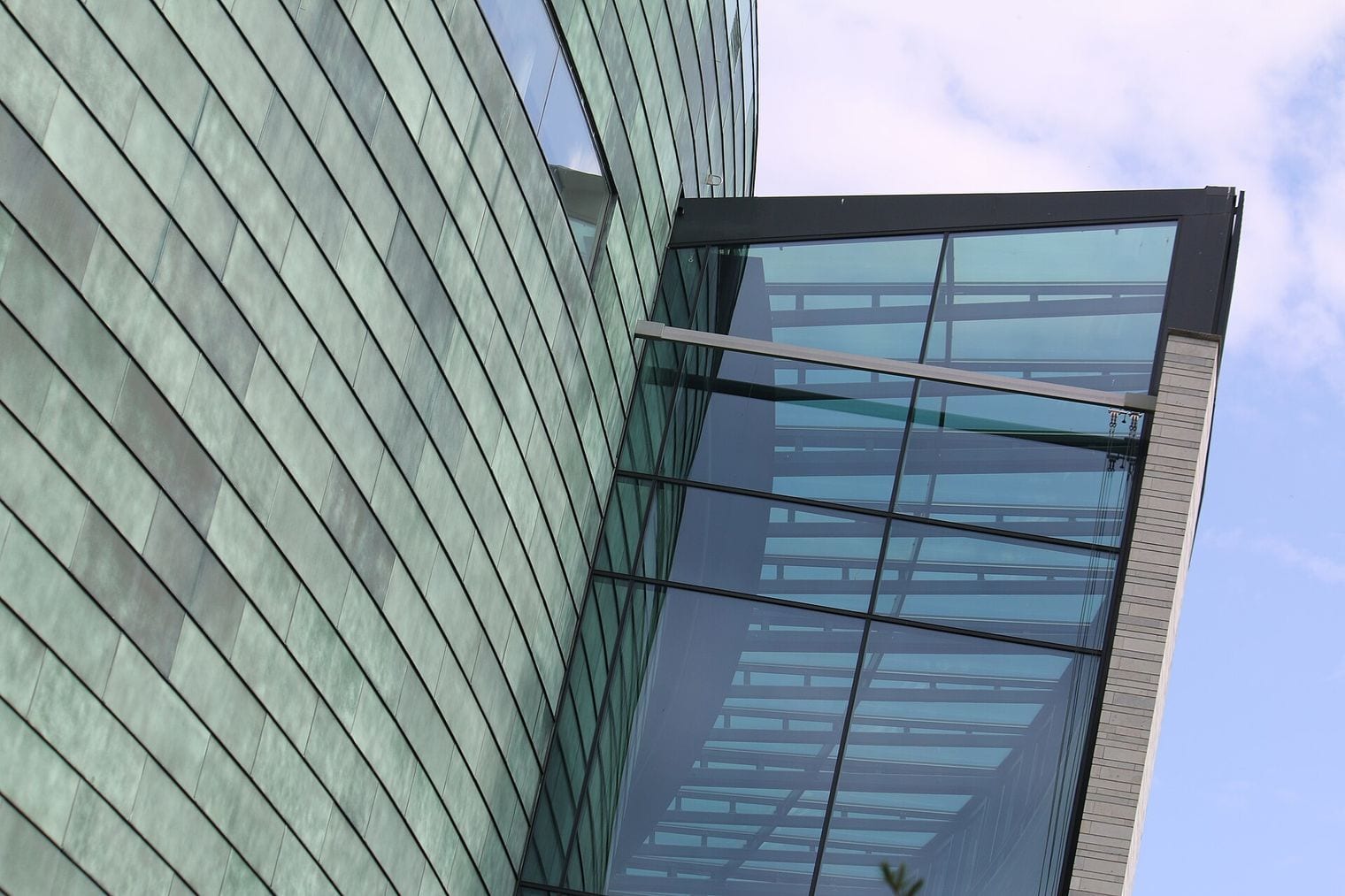
Kumu is the main building of the Art Museum of Estonia and the country's flagship gallery, cut into the limestone slope at the top of Kadriorg Park. The building itself is the first thing you notice: a curved drum of patinated copper, stone and glass by the Finnish architect Pekka Vapaavuori, cut into the hillside, with a soaring internal atrium that pulls daylight down through the floors.
The collection is the best single account of Estonian art there is, running from 18th-century Baltic German portraiture through national romanticism and the interwar avant-garde to the difficult decades of Soviet socialist realism and the nonconformist work made alongside it. Upper floors hold contemporary and temporary exhibitions, and there is a good café and a fine view back over the park.
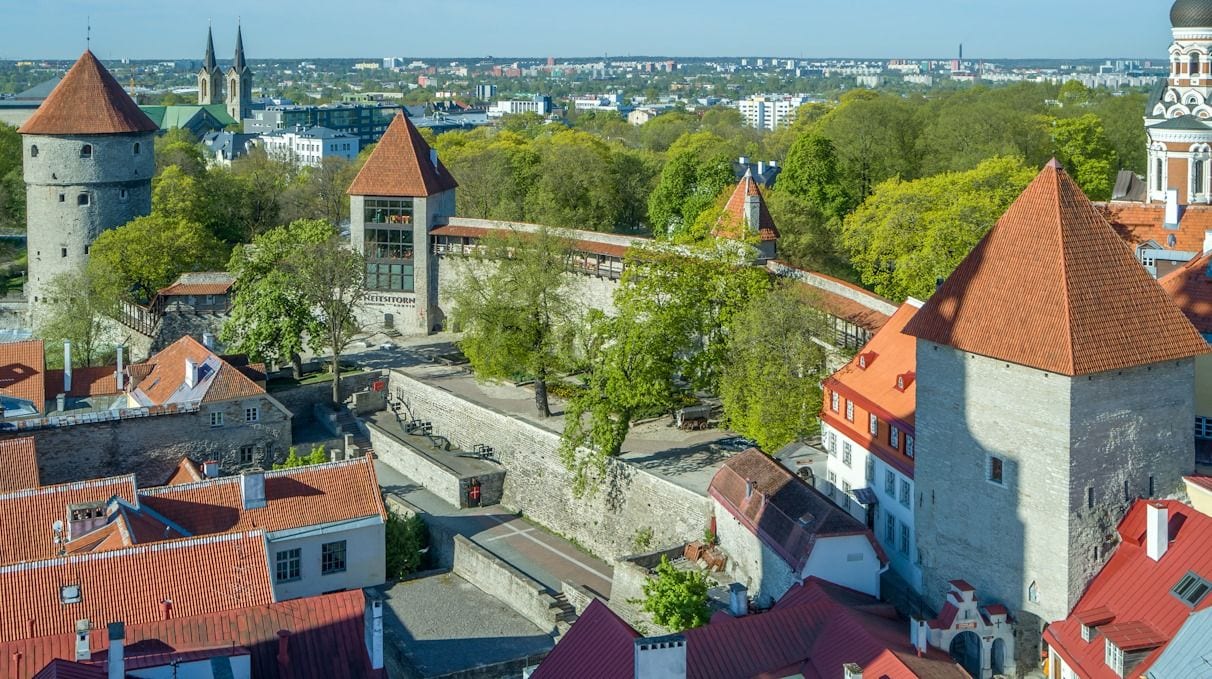
Patkuli is the other great Toompea viewpoint, and the one that shows you the walls. Where Kohtuotsa looks across the rooftops, Patkuli faces north-west over a long surviving run of the medieval town wall, so the foreground is a line of red-roofed towers marching downhill, with the harbour, the bay and the ferries beyond.
It is quieter than its neighbour and a little more effort to reach: a long flight of stone steps climbs the hillside from the park below, or you can walk round the top of Toompea and arrive without the climb. The platform is open at all hours and free, and the view is particularly good in the low light of a northern evening.
At Rocca al Mare, a short bus ride west of the centre, the Estonian Open Air Museum has reassembled a whole rural landscape in a pine wood by the sea. Farmhouses, barns, windmills, a wooden church, a village school, a fire station and an inn have been moved here from across the country and set out along sandy lanes, giving a picture of how Estonians lived from the 18th century to the 20th.
It works because it is not static: costumed staff work the farmsteads, animals are kept, and craft demonstrations, folk dancing and seasonal festivals run through the year. Plan on a couple of hours at least — the site is large and wooded, bicycles can be hired, and the tavern serves traditional Estonian dishes if you want to make an afternoon of it.
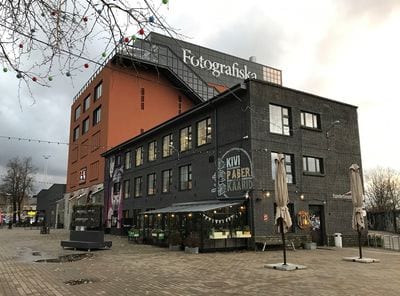
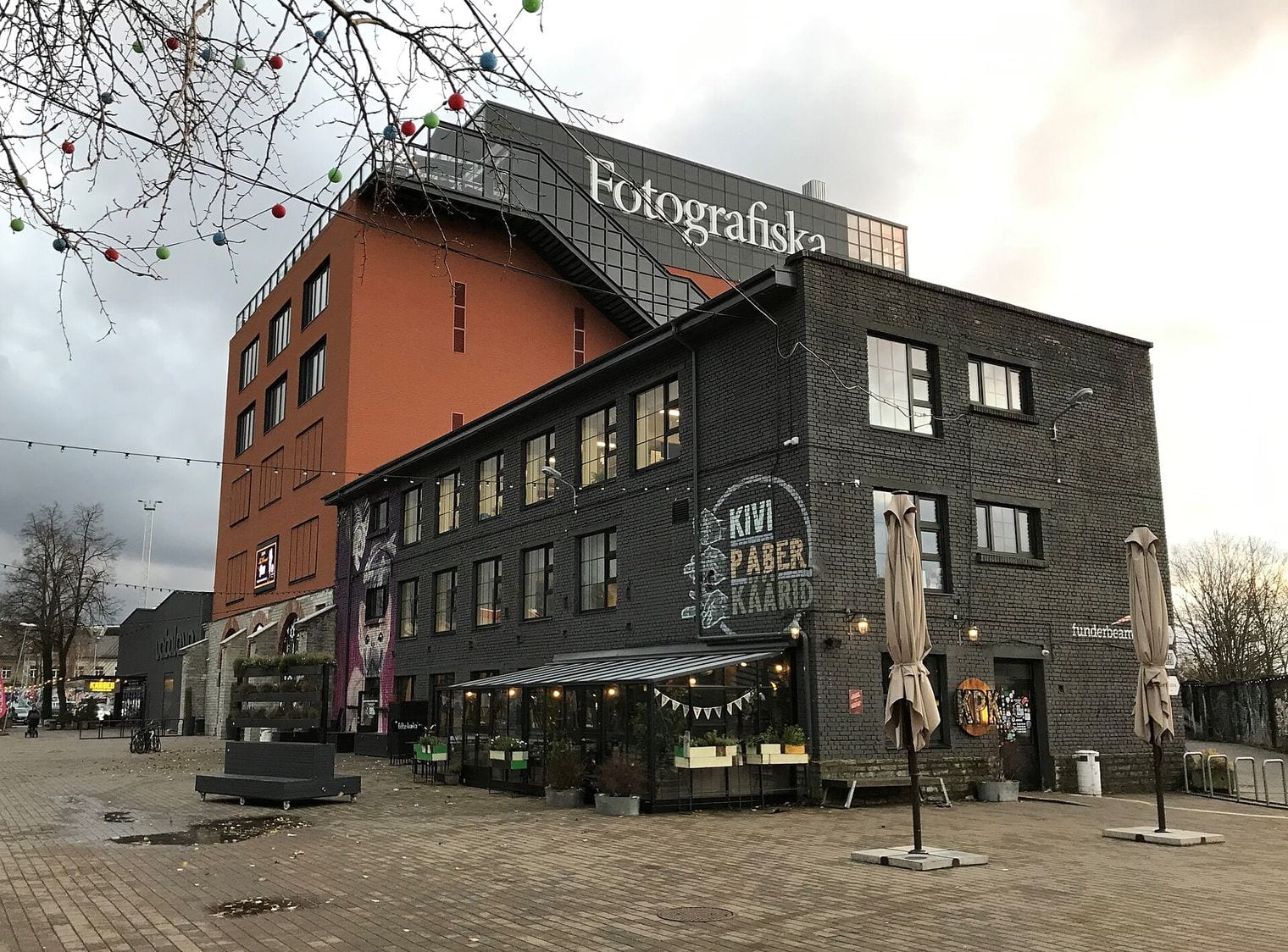
Telliskivi is the clearest sign that Tallinn is more than a preserved medieval core. A sprawl of former railway workshops just outside the Old Town has been taken over by design studios, independent shops, record stores, bars, street food and some of the city's better restaurants, and the brick and corrugated-iron buildings have been left rough rather than polished up.
The walls are covered in large-scale street art that changes regularly, there is a flea and food market on the site, and the Fotografiska photography museum occupies one of the larger halls. It sits directly behind the Balti Jaam station and market, so it pairs well with a wander through Kalamaja, the wooden-house district next door, and it is at its liveliest in the evening.
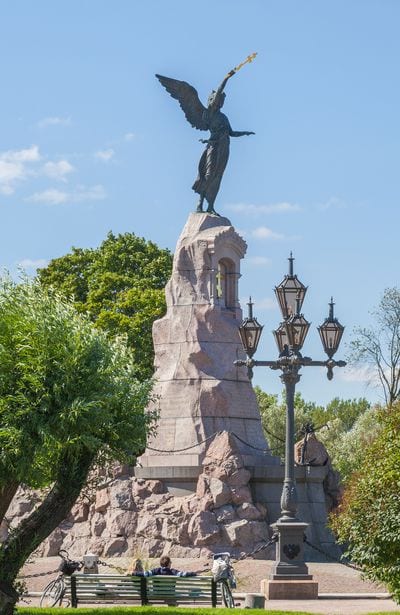
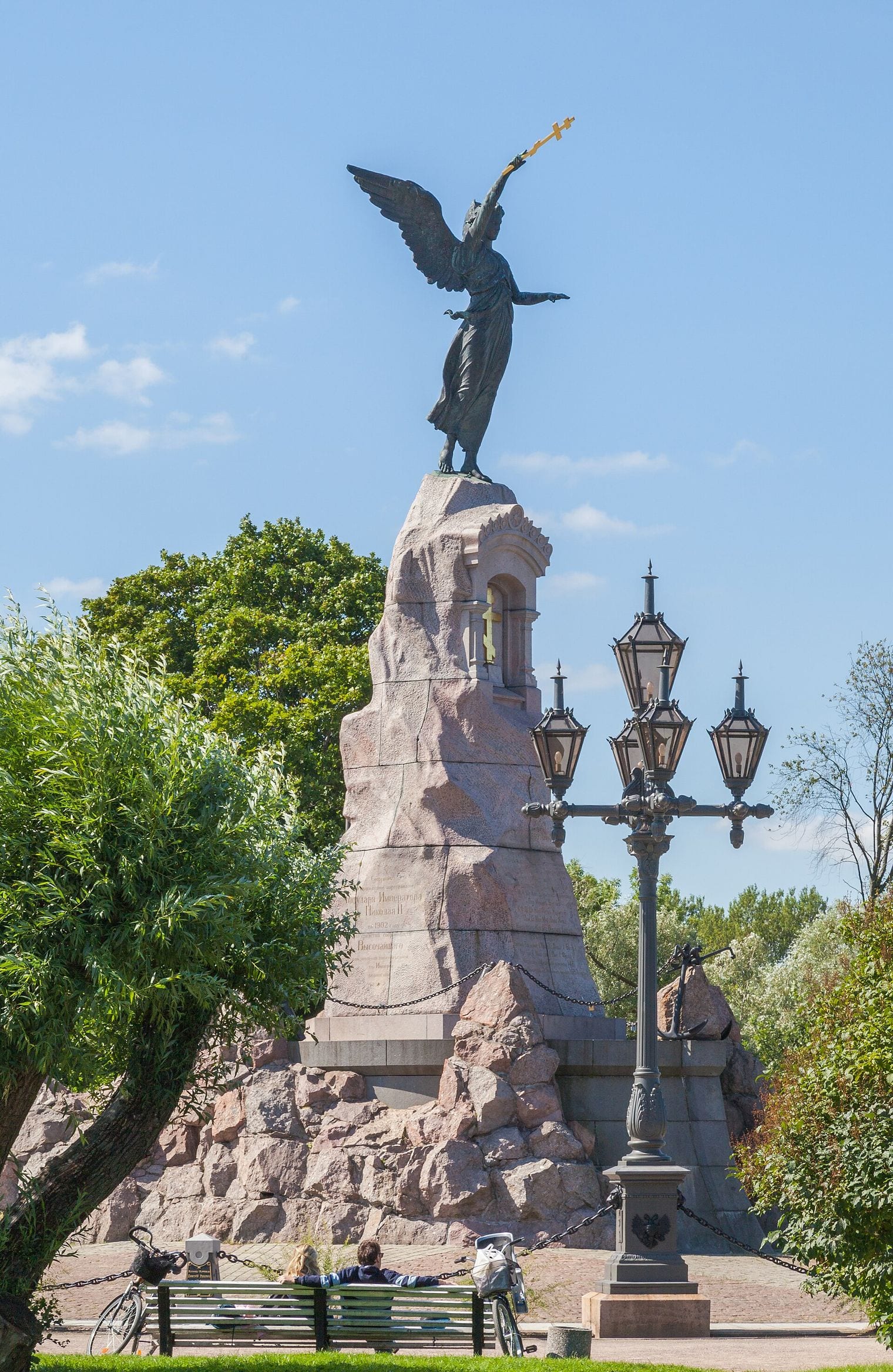
Halfway along the seafront promenade between the city and Pirita, a bronze angel stands on a granite plinth holding a gilded cross out toward the water. The Russalka Memorial commemorates the crew of a Russian warship of that name which went down in a storm crossing to Finland in the 1890s, taking all hands with it, and it was sculpted by Amandus Adamson, one of Estonia's best-known sculptors.
It is a genuinely affecting monument and a good excuse for the walk. The promenade runs past it in both directions — back toward Kadriorg and the city, or on toward Maarjamäe and Pirita beach — and the open sea, low horizon and big northern sky are a useful counterweight to a day spent among cobbles and church towers.
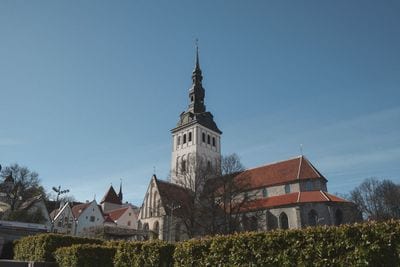
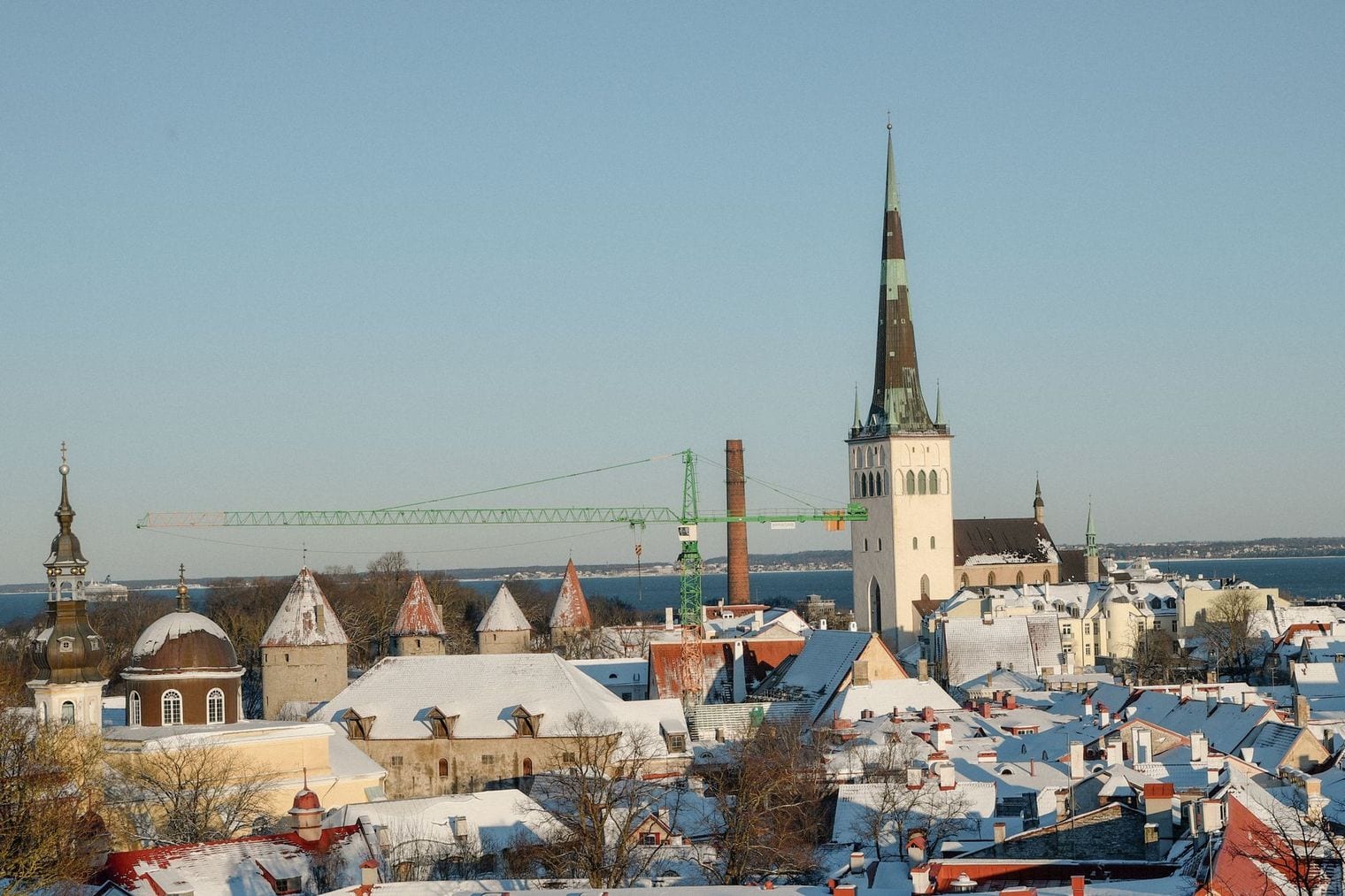
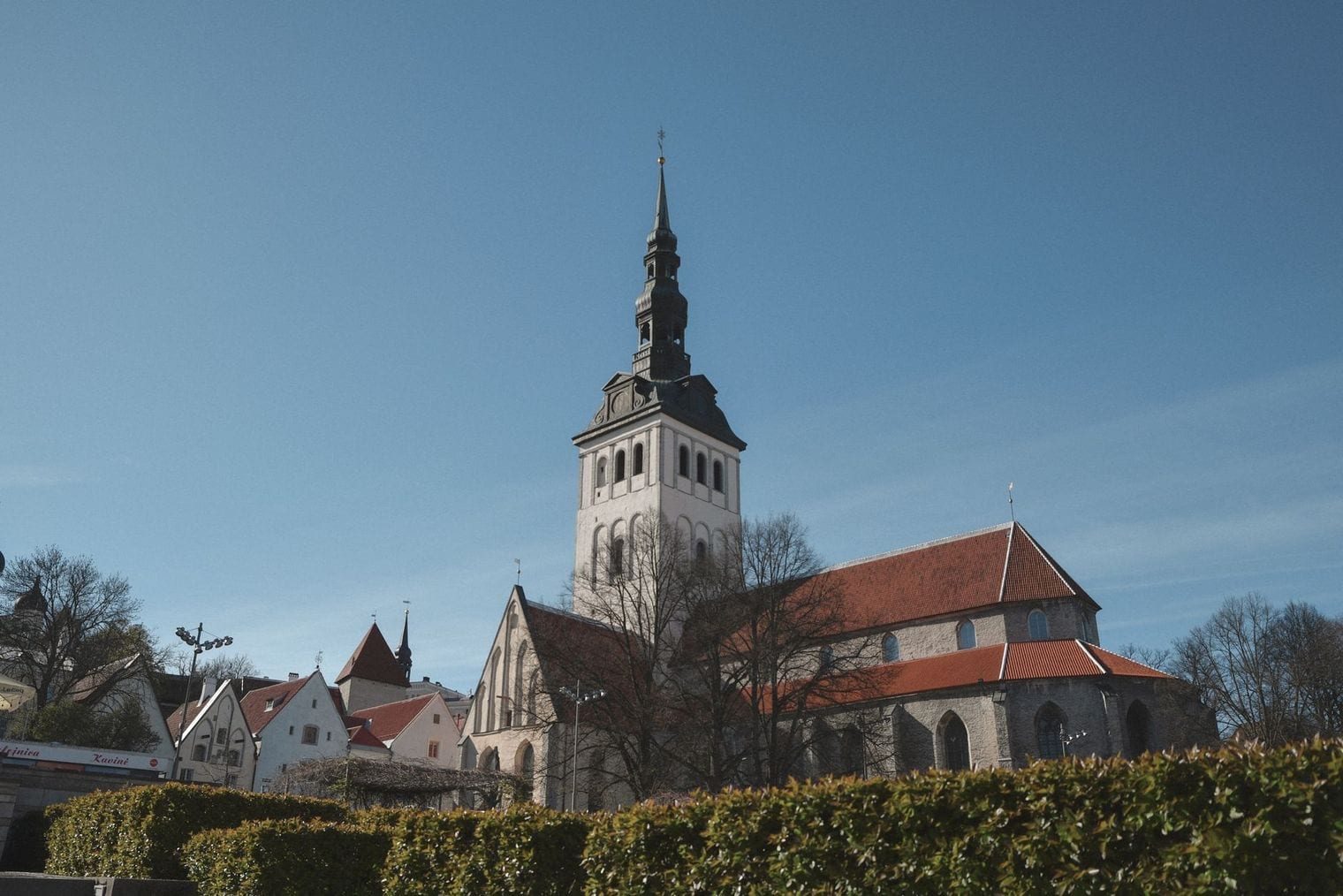
Oleviste's spire is the great vertical of the Tallinn skyline, a needle of green-black copper visible from almost everywhere in the lower town and from far out at sea.
The church has medieval origins and its tower was rebuilt after repeated lightning strikes and fires; in its medieval form the spire was long claimed to be the tallest building in the world, though scholars still dispute how tall it actually stood, and it was built deliberately high as a landmark for approaching ships.
The interior is austere, whitewashed and largely free of ornament, in keeping with the Baptist congregation that uses it now. The reason most visitors come is the climb: a long, narrow, worn stone staircase spirals up inside the tower to an external gallery that wraps the spire, giving the highest and most exhilarating view in the Old Town.
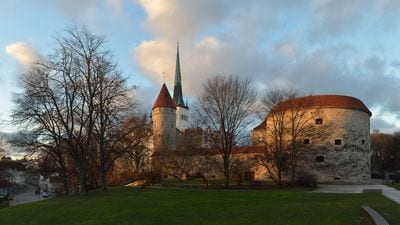
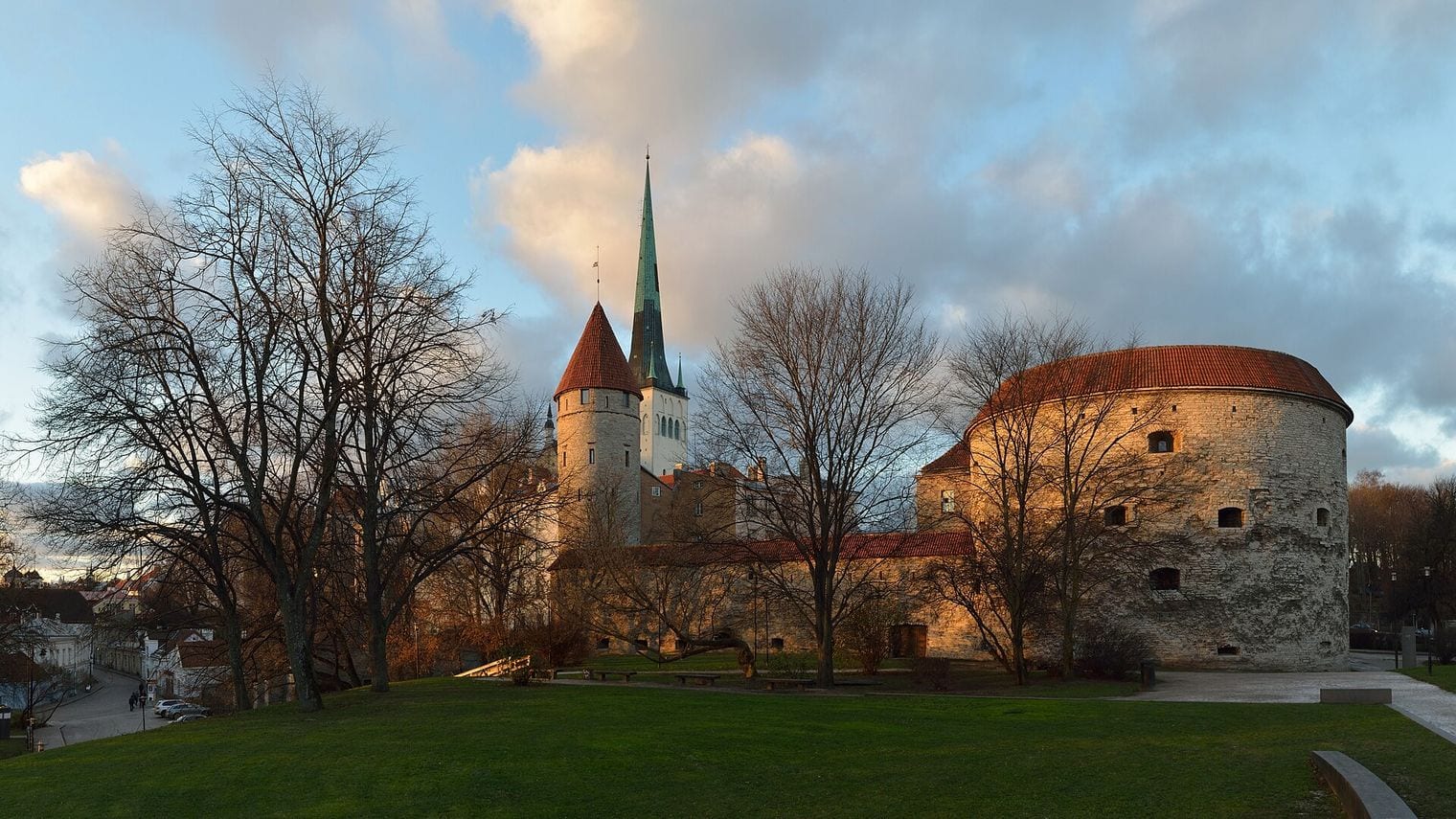
Paks Margareeta is the squat artillery tower guarding the Great Coastal Gate, the seaward entrance to the walled town. Built in the early 16th century with walls several metres thick, it was designed to hold heavy cannon and to make an impression on anyone arriving by ship — a reminder that Tallinn's wealth and its defences both came from the water.
It now houses the main branch of the Estonian Maritime Museum, whose displays run from medieval Hanseatic trade and shipbuilding through navigation, diving and the country's seafaring century, with plenty of hands-on exhibits for children. The best part is saved for last: a rooftop terrace with a wide view over the port, the passenger terminals and the strip of sea between Estonia and Finland.
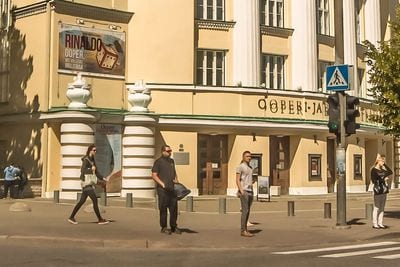
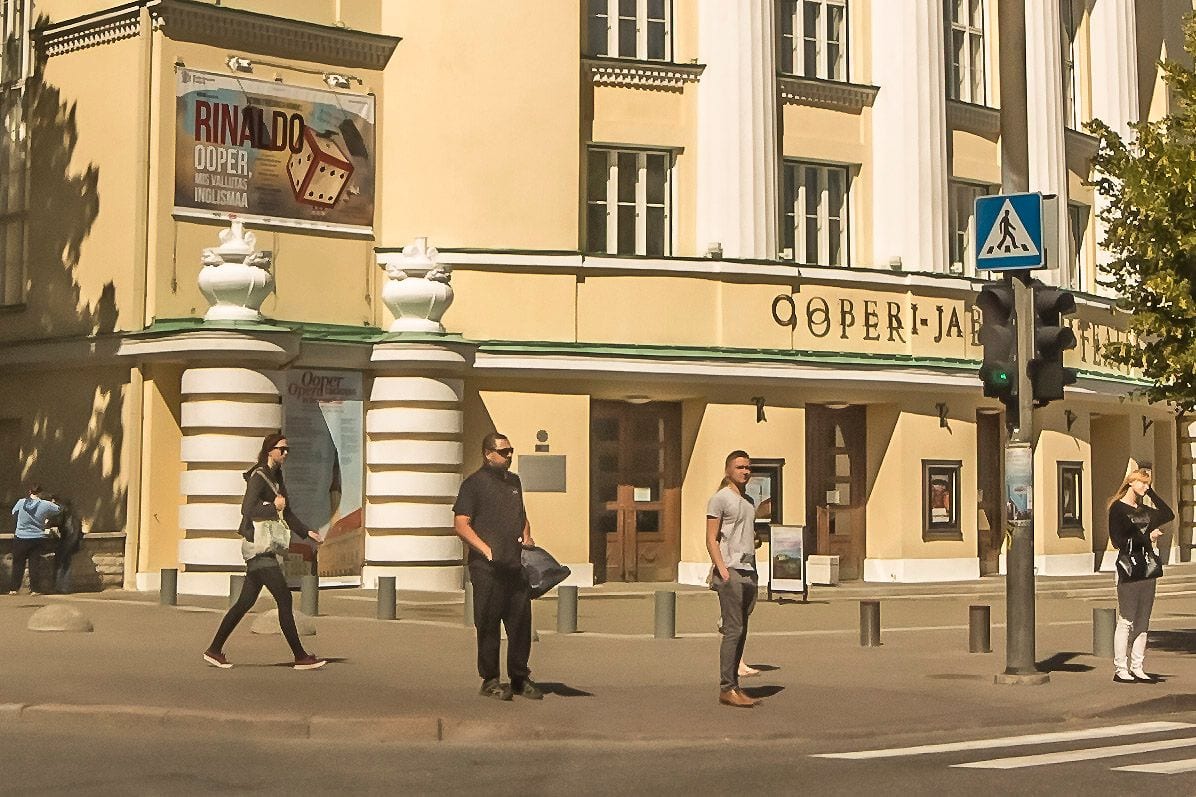
The Estonia Theatre is the home of the national opera and ballet companies and one of the most important buildings in the country's cultural life. Its early 20th-century limestone bulk sits between the Old Town and the modern centre, and it carries real historical weight: the building was gutted by bombing in the Second World War and rebuilt, and Estonian independence was declared from a stage in this city in 1918.
The programme mixes opera, ballet, operetta and concerts, drawing on Estonia's unusually deep choral and musical tradition, and tickets are markedly cheaper than in most European capitals. Even without a performance the exterior and the surrounding Tammsaare park are worth a look, and guided tours of the building run at set times.
Fotografiska brought a Stockholm photography institution to a former factory hall in Telliskivi, and the Tallinn outpost has become one of the most consistently interesting exhibition spaces in the Baltics. The programme changes frequently and leans contemporary and international — documentary reportage, fashion, portraiture and conceptual work, usually several shows running at once across the raw industrial floors.
It is deliberately not a hushed gallery. The building stays open late, there is a well-regarded restaurant and a bar with a rooftop terrace looking back at the Old Town skyline, and talks, workshops and music events run alongside the exhibitions. Combined with the rest of Telliskivi it makes an easy half-day away from the medieval streets.
Kiek in de Kök is Low German for 'peek into the kitchen', a joke about how the guards in this tall artillery tower could see down the chimneys of the houses below. Built in the late 15th century on the slope of Toompea and later thickened against heavier guns, it is one of the most powerful surviving pieces of Tallinn's defences, and cannonballs from the Livonian War are still lodged in its outer wall.
The tower now holds a museum of the city's fortifications, climbing floor by floor through the story of its walls, sieges and weaponry. The same ticket usually opens the Bastion Passages beneath it — a cold, damp network of 17th-century tunnels dug through the earthworks and used in later centuries as shelters and, for a while, as a refuge for the city's homeless.
The Botanic Garden shares the wooded Kloostrimetsa valley with the TV Tower, and the two make an obvious pair for a half-day out of the centre. The grounds run to well over a hundred hectares of arboretum, rose garden, rock garden and open collections threaded with walking paths along the Pirita river, and in a country this forested the point is as much the setting as the plantings.
Indoors, a run of connected greenhouses holds palm, cactus and tropical collections that come into their own in the Estonian winter, when they are among the few genuinely warm and green places in the city. Seasonal shows, a butterfly house in summer and a quiet café make it an easy, unhurried stop.
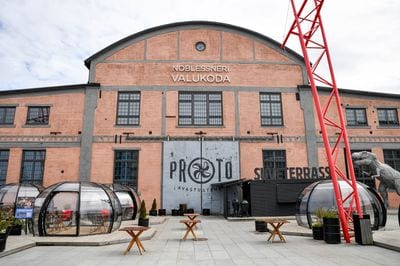
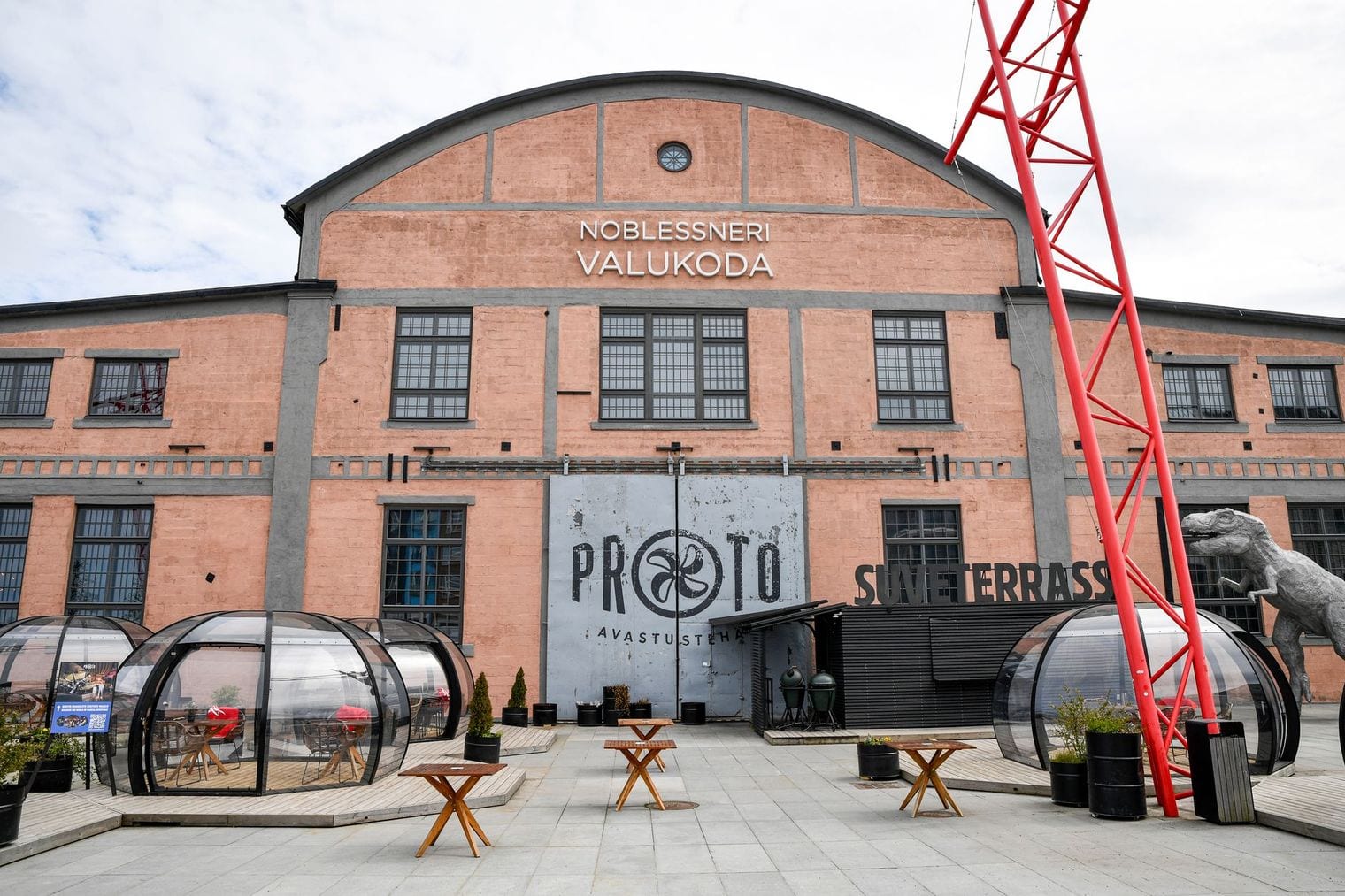
PROTO occupies a cavernous former foundry hall in Noblessner, the old submarine shipyard on the seafront, and is best described as a science centre built almost entirely out of virtual reality. The conceit is a steampunk one — the exhibits imagine machines the 19th century dreamed of but never built — and nearly every station is a VR experience rather than a display case.
You can fly an early flying machine, ride a submersible, take a hot-air balloon or drop down a lift shaft, all inside the raw brick and iron of the industrial building. It is aimed at families but genuinely absorbing for adults, and one ticket covers unlimited goes on everything. The surrounding Noblessner quarter has waterfront restaurants and a sea-bathing spot for afterwards.
St Nicholas' was the church of the German merchants who ran medieval Tallinn, and after it was badly damaged in the Second World War it was rebuilt not as a parish church but as a museum and concert hall. It now holds the medieval ecclesiastical art collection of the Art Museum of Estonia, displayed in the tall whitewashed nave it was made for.
The outstanding piece is a surviving fragment of a Danse Macabre — Death leading pope, emperor and cardinal away in a line — attributed to the Lübeck painter Bernt Notke and one of the most important medieval artworks in northern Europe. Carved and gilded altarpieces fill the side chapels, and the church's acoustics are used for regular organ recitals and concerts.
Vabamu covers the half-century in which Estonia was occupied — by the Soviet Union, then Nazi Germany, then the Soviet Union again — and the long, largely non-violent effort to get free of it. Rather than leading with hardware and statistics, it builds the story from personal testimony: recorded interviews, letters, everyday objects and the accounts of people deported, imprisoned or forced into exile.
The result is a museum about ordinary life under occupation, and it closes with the Singing Revolution, when mass choral gatherings became the vehicle for independence. Vabamu also runs the preserved KGB prison cells on Pagari street a short walk away, which share a combined ticket.
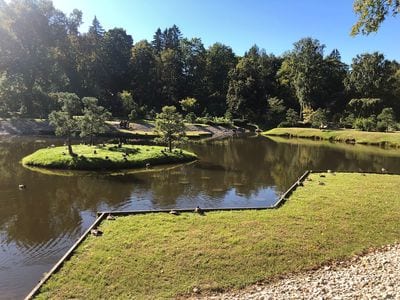
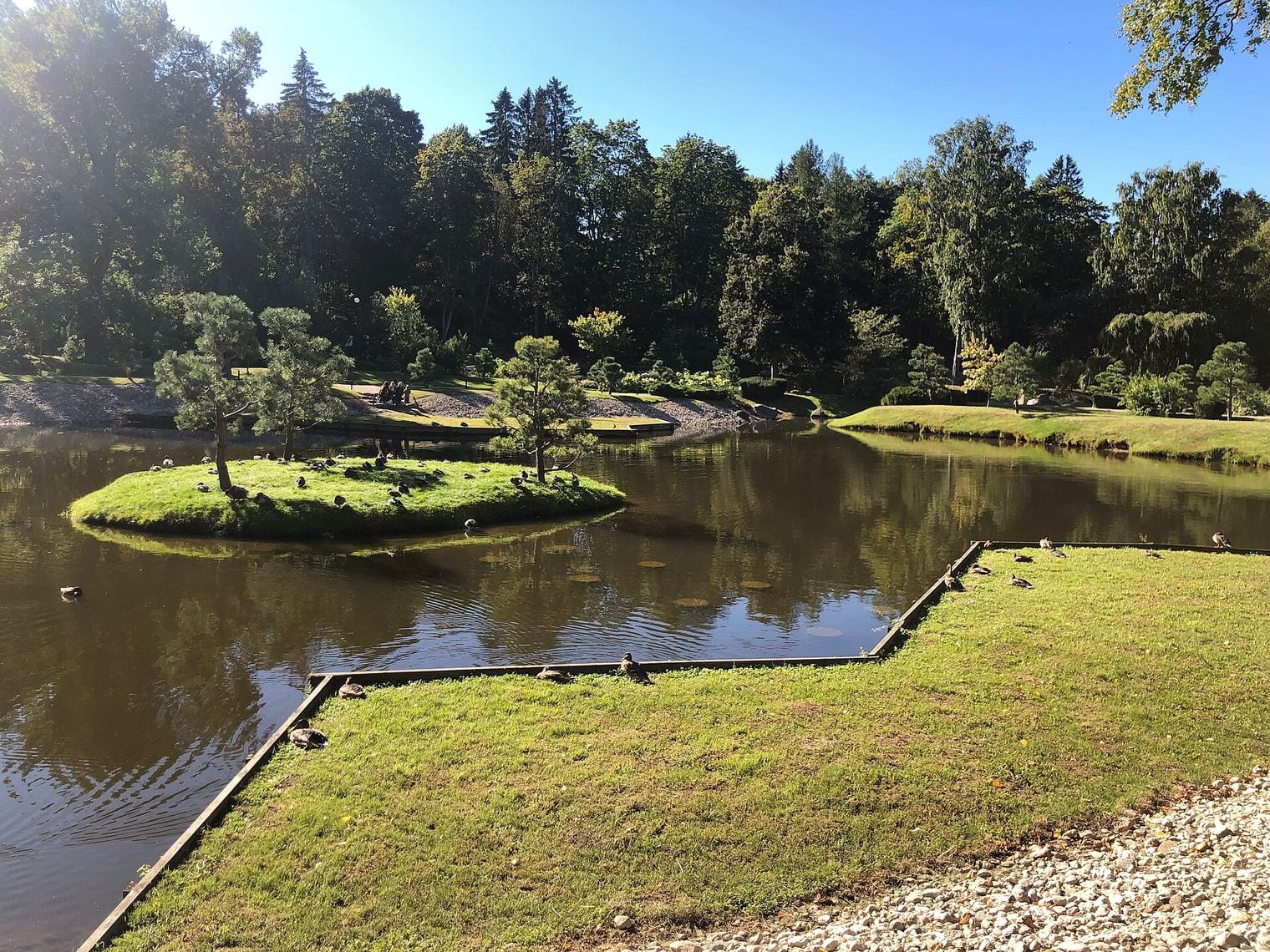
The Japanese Garden occupies the upper, wooded end of Kadriorg Park, and it is the work of one man: Masao Sone, a garden designer with a reputation in both Japan and Europe, who began laying it out in 2011.
Its stones are the point. Sone set them to echo the skyline below — the upright ones standing in for the Old Town's church spires, the flat ones for its gabled roofs — and had the stone bridges made in Japan and reassembled here.
The result is a slow garden rather than a showy one, walked over bridges and around water on a route designed to keep you from hurrying. Cherry blossom comes in spring, rhododendrons in early summer, irises later, and maples close the year in colour; the original all-Japanese planting had to be diluted with hardier local species after a few Estonian winters. Bikes, dogs and ball games are all barred, and the garden usually shuts for the winter months.
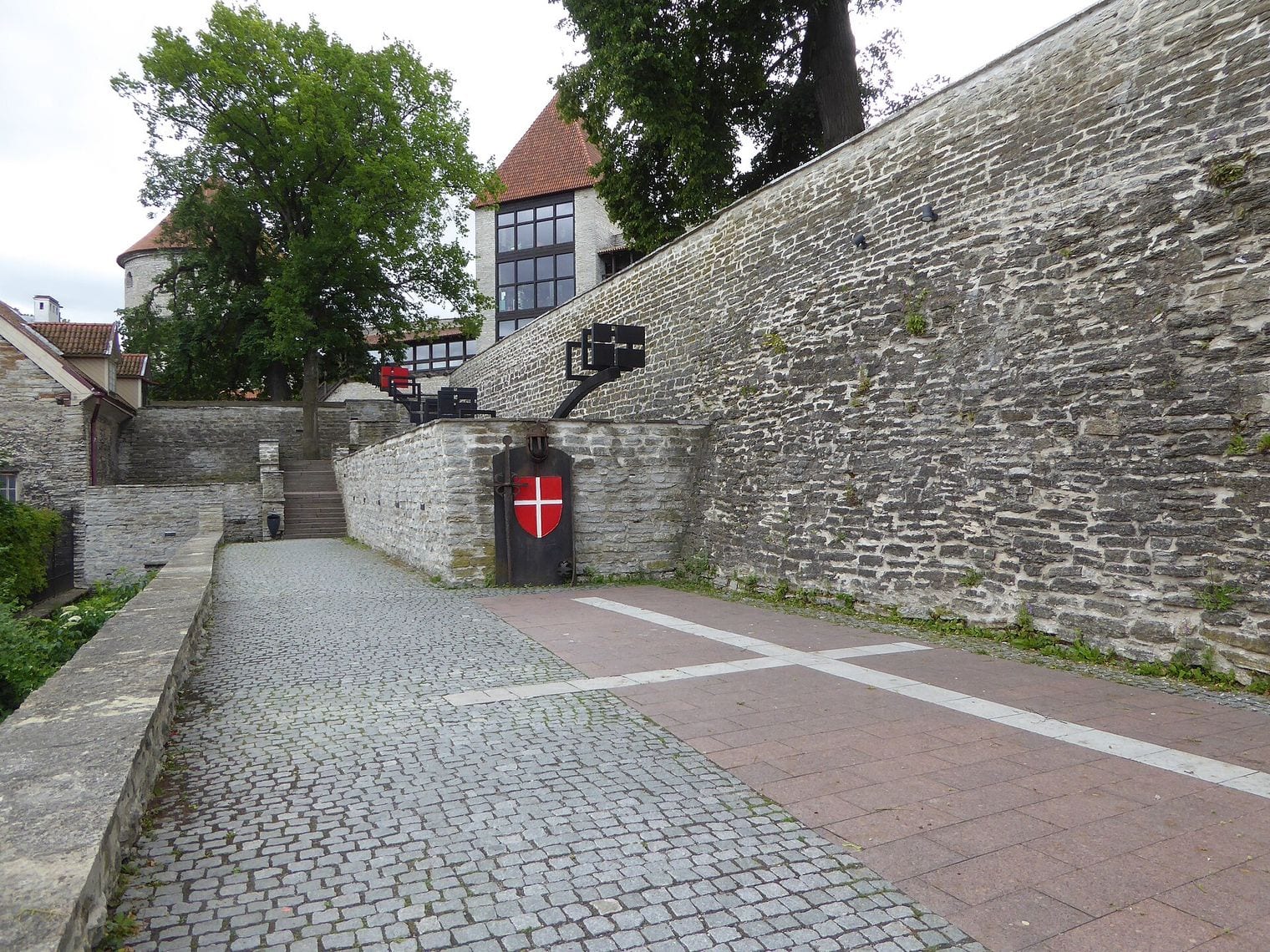
The Danish King's Garden is the terraced slope tucked under the western wall of Toompea, reached by the stepped lane of Lühike jalg.
Estonia was ruled from Denmark for over a century, and the legend attached to this spot is the founding story of the Danish flag: during Valdemar II's invasion in 1219 a red banner with a white cross is said to have fallen out of the sky and turned the battle. Denmark still marks Dannebrog day here every 15 June.
Two pieces of sculpture hold the garden. Tuli lipp — "the flag descended" — marks the legend itself, and a group of three hooded, faceless bronze monks stands along the wall, lit after dark and unnervingly good company on a winter evening. It is open around the clock and costs nothing, and the walk up through it is the quietest way onto Toompea from the lower town.
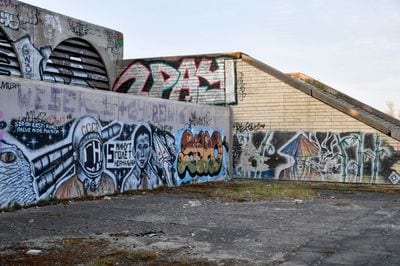
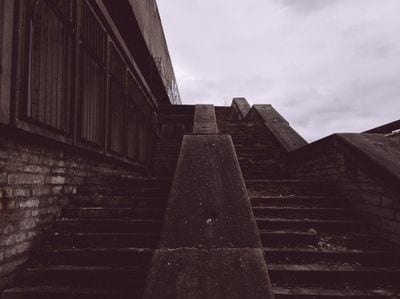
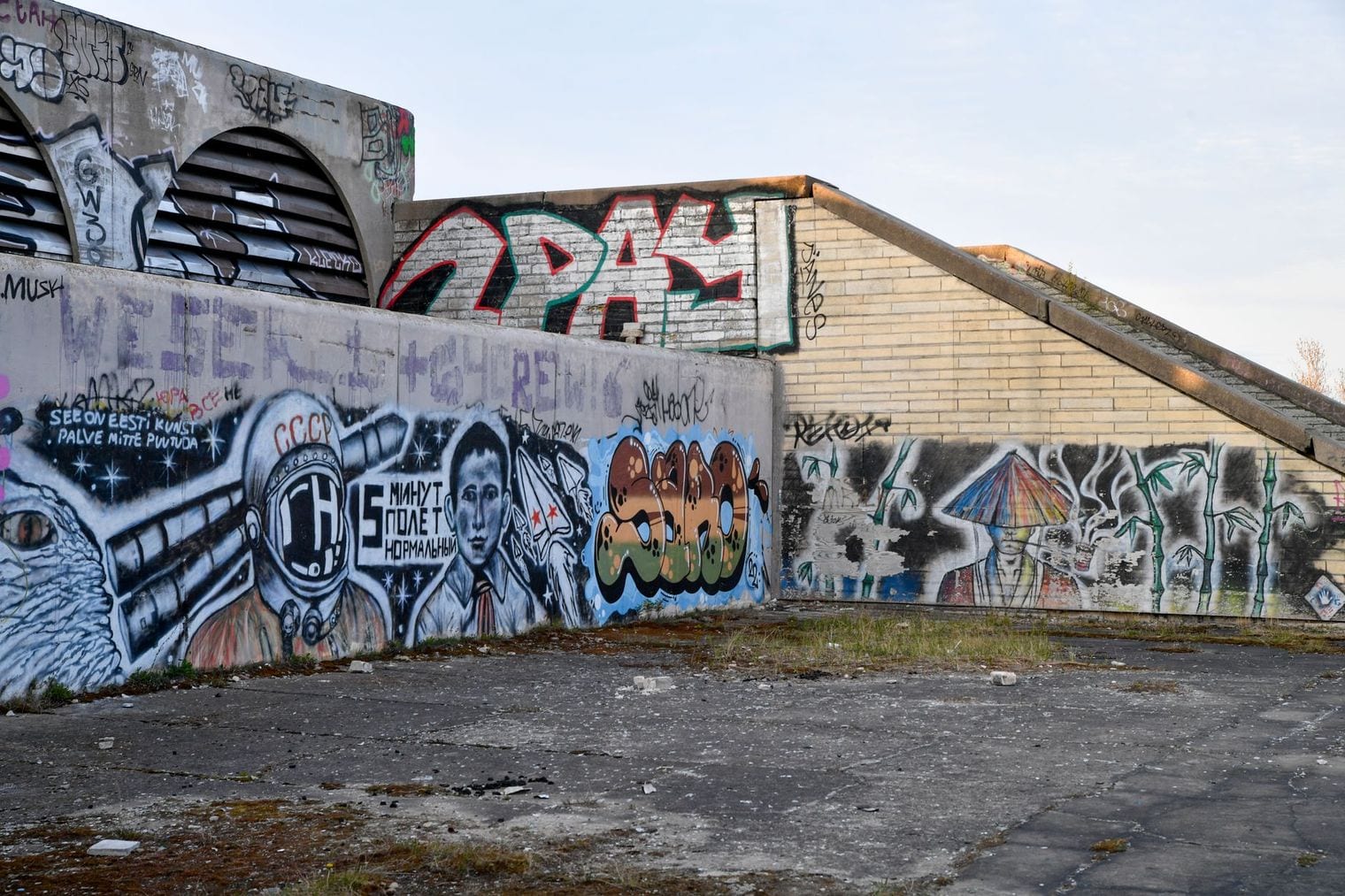
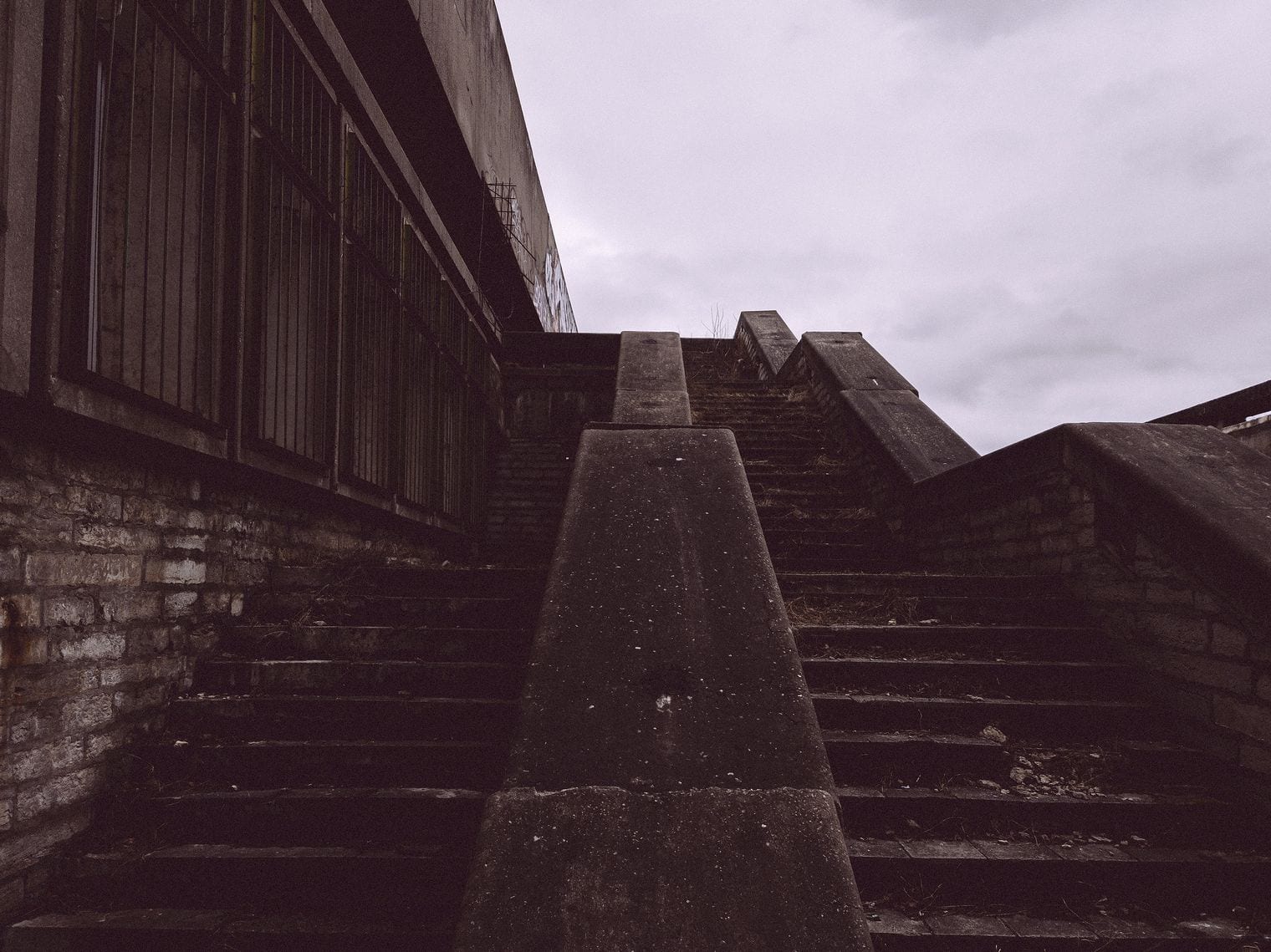
Linnahall was built for the 1980 Moscow Olympics, whose sailing events were held in Tallinn, and opened as the V. I. Lenin Palace of Culture and Sport. It is the most uncompromising building in the city: a low limestone ziggurat laid across the shoreline, deliberately kept below roof height so it reads as landscape rather than architecture, with broad staircases climbing straight over the top of it to the sea.
The interior has been closed since 2010 and its future is still unsettled, with conservation work holding the fabric together while the redevelopment argument runs on. The exterior is another matter — the rooftop promenade and the stepped terraces down to the water are freely walkable, and they give you the harbour, the ferries to Helsinki and the Old Town spires in one sweep. Sunset is the hour to come.
2929. St Birgitta's Convent Ruins
Historical Landmark~5.7 km (3.5 miles) from centre
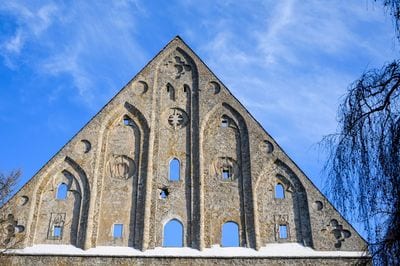
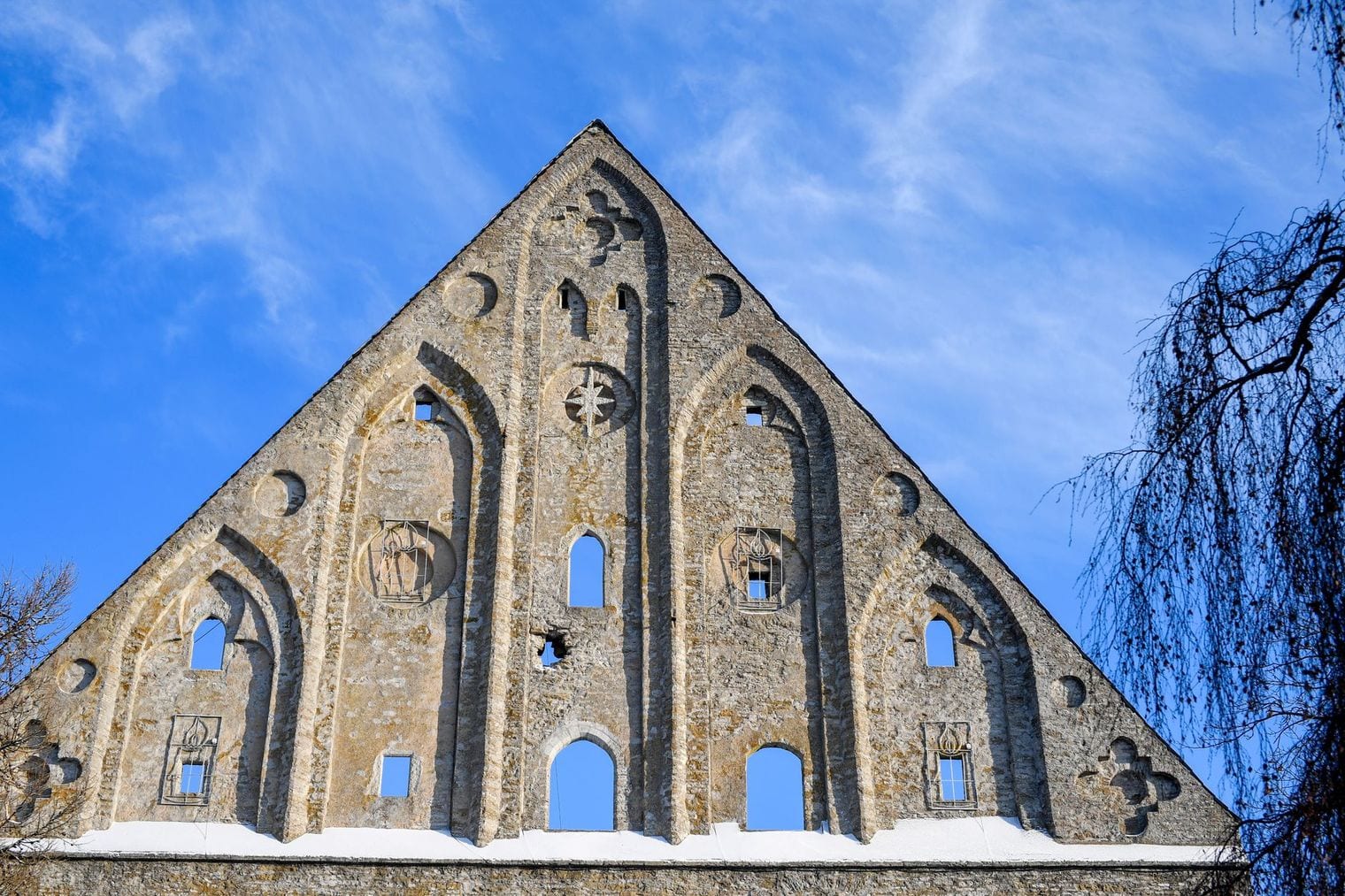
The convent at Pirita was the idea of Tallinn merchants around 1400, and its church — 24 by 56 metres inside — was consecrated in 1436, making it the largest in what was then Livonia. Ivan the Terrible's troops destroyed it during the Livonian War, and what survived is the gable end: a vast limestone west front standing on open grass by the river mouth, with the outlines of the cloister ranges at its feet.
It is a striking thing to come on, and the scale only registers when you walk under the doorway. The Bridgettine order returned to the site in 1994 and a working convent now stands alongside the ruins. The setting — river, beach and yacht harbour all within a few minutes — makes this the natural halfway point of a walk or cycle out along the Pirita promenade from the city.
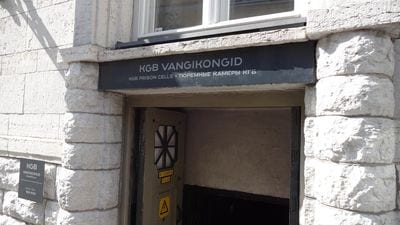
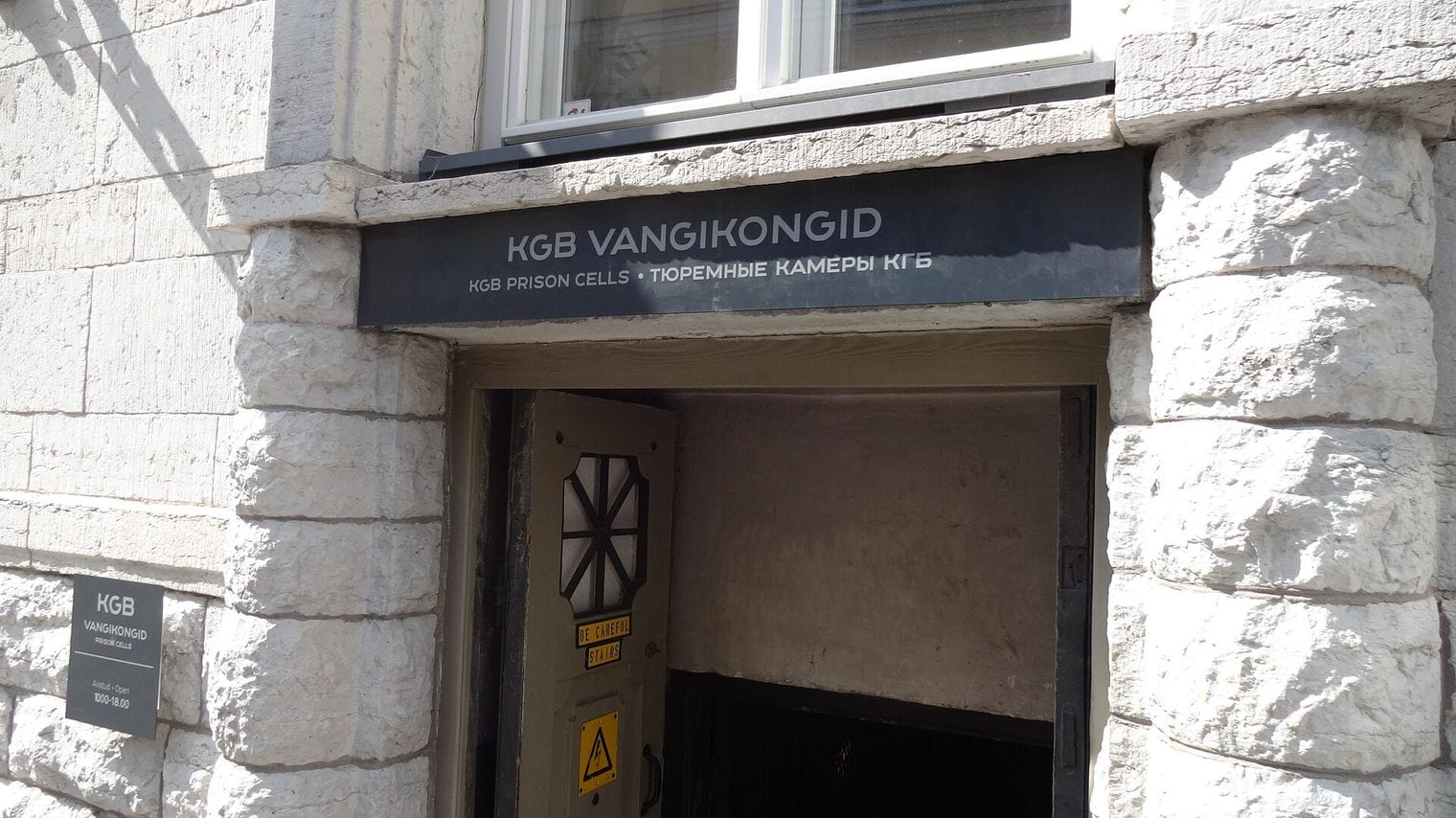
Pagari 1 was an ordinary apartment building before the Soviet security services took it, and it became the address that everyone in occupied Estonia knew and no one wanted to be sent to. The preserved cells in the basement are where the NKVD and later the KGB held, interrogated and killed prisoners. They are run today by Vabamu, and reached on the same combined ticket.
The permanent display, Stories Behind Locked Doors, is built from prisoner testimony rather than hardware — accounts of interrogation, and of how inmates kept contact between cells by tapping out Morse through the walls. It is a small site and a bleak one, and it takes under an hour, but it is the part of the occupation story that the larger museums cannot stage, because it happened in these rooms.
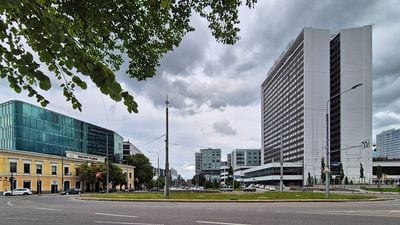
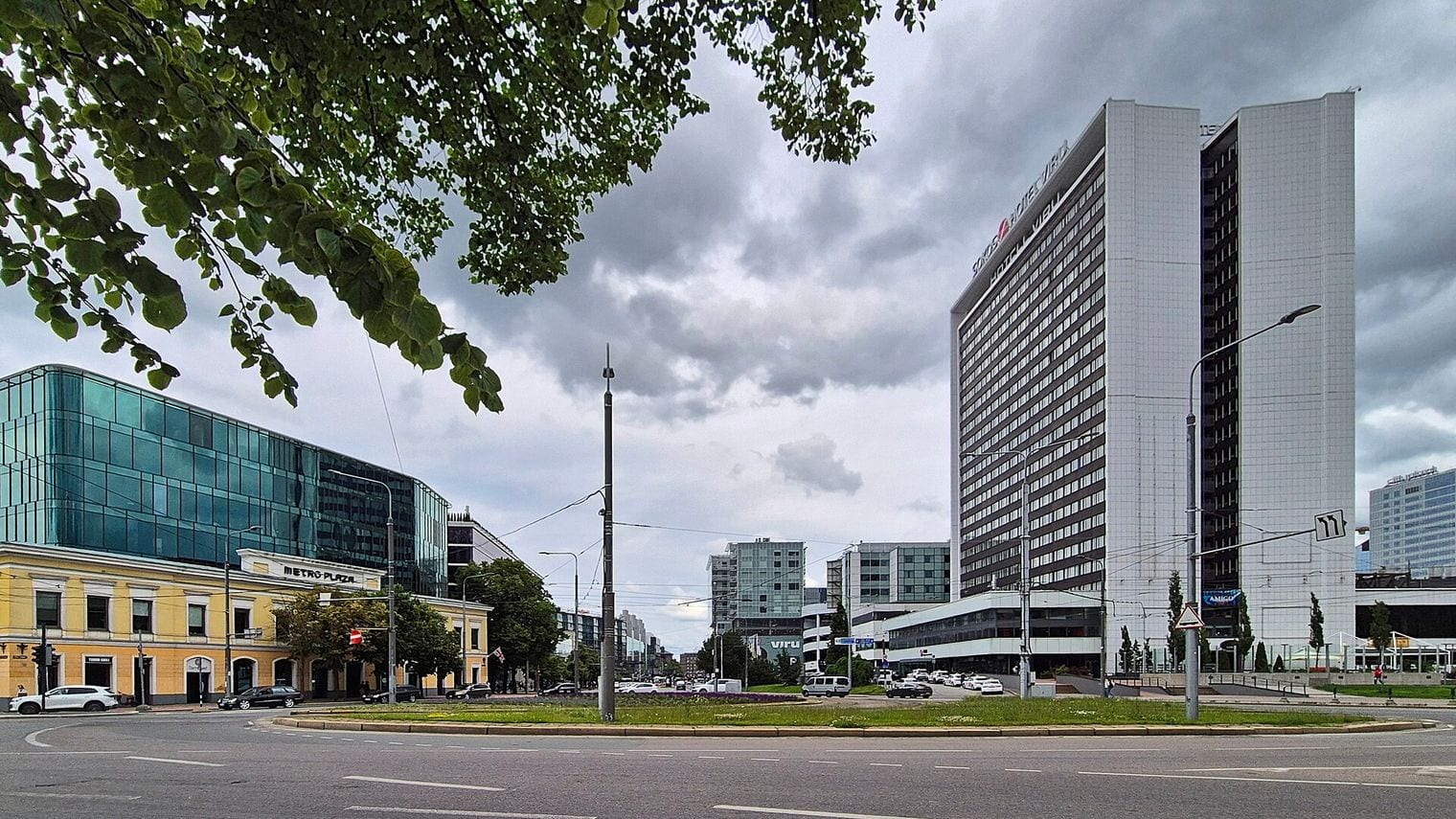
The Hotel Viru went up in 1972 as the Intourist hotel where foreign visitors were required to stay, and it was built with 22 floors and a lift that stopped at 22. The 23rd floor held a KGB radio room, abandoned in such a hurry in 1991 that the equipment, ashtrays and paperwork were simply left behind. It stayed shut and largely forgotten until the hotel opened it as a museum.
The guided tour is the whole point — it is the only way up, and the guides fold in how the surveillance actually worked: the bugged rooms, the microphones in the restaurant's bread plates, the staff who reported. It is funnier and stranger than a KGB museum has any right to be, and it books out, so reserve ahead rather than turning up. The tour runs in English several times a day.
Maarjamäe was one of the summer estates strung along the coast north-east of the city, first built up in the late 17th century by Christian von Geldern, a merchant of the Brotherhood of Blackheads. The neo-Gothic house now holds the modern half of the Estonian History Museum, whose permanent exhibition My Free Republic runs from the founding of the republic in 1918 to the present through objects, film and personal memory.
The grounds are as interesting as the house. The Estonian Film Museum shares the site, and behind it lies the strangest sculpture park in the country: the Soviet monuments removed from public squares after 1991, Lenins and generals lined up in a field, left to weather rather than destroyed. Between the two you get the twentieth century argued from both sides in one visit.
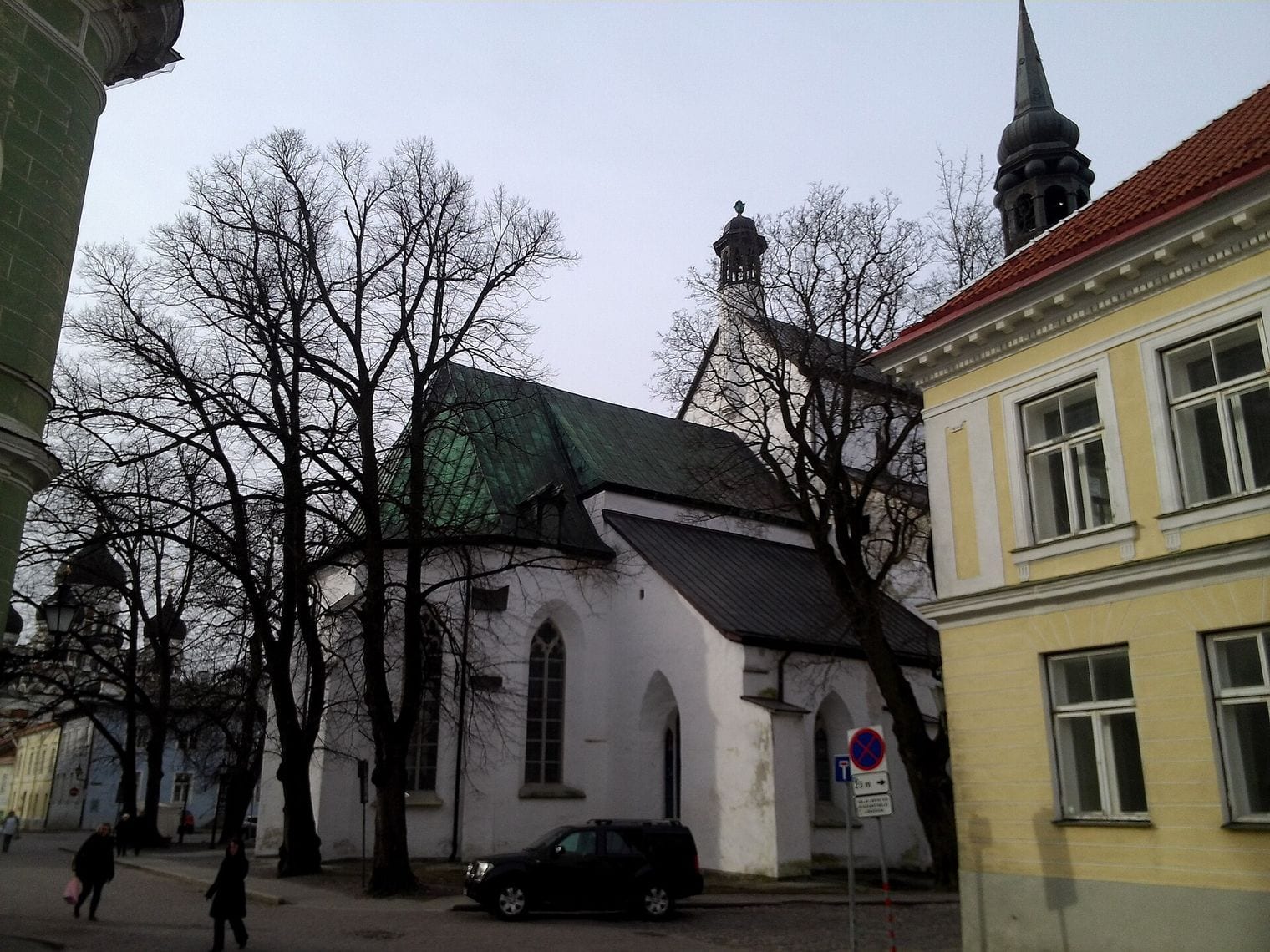
Toomkirik is the oldest church in mainland Estonia, founded by the Danes in the 13th century and rebuilt after the Toompea fire of 1684, which is why a medieval body carries a Baroque tower. It was the church of the German-speaking nobility rather than the merchant town below, and the difference is written across its walls: they are covered in carved and painted coats of arms, the densest collection of noble epitaphs in the country.
The floor is paved with tomb slabs and the burials include Adam Johann von Krusenstern, who led the first Russian circumnavigation, and Pontus De la Gardie, the Swedish commander. Climbing the tower is the extra reason to come: the stairs are narrow and the platform is small, but it looks down on Toompea's roofs from above rather than across at them, which none of the free viewing platforms can do.
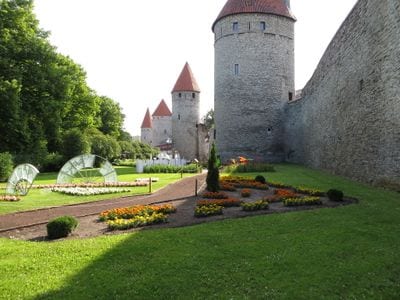
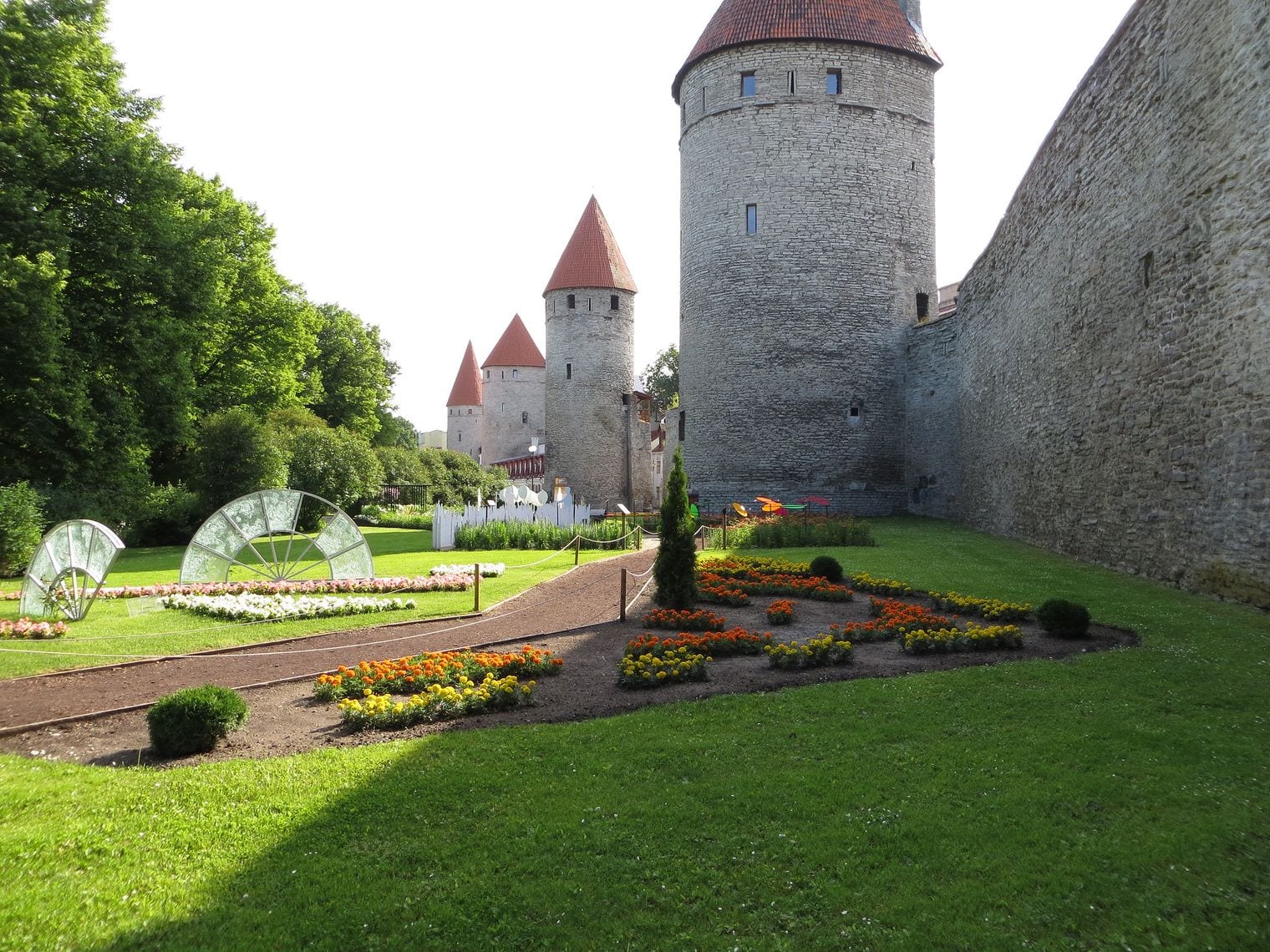
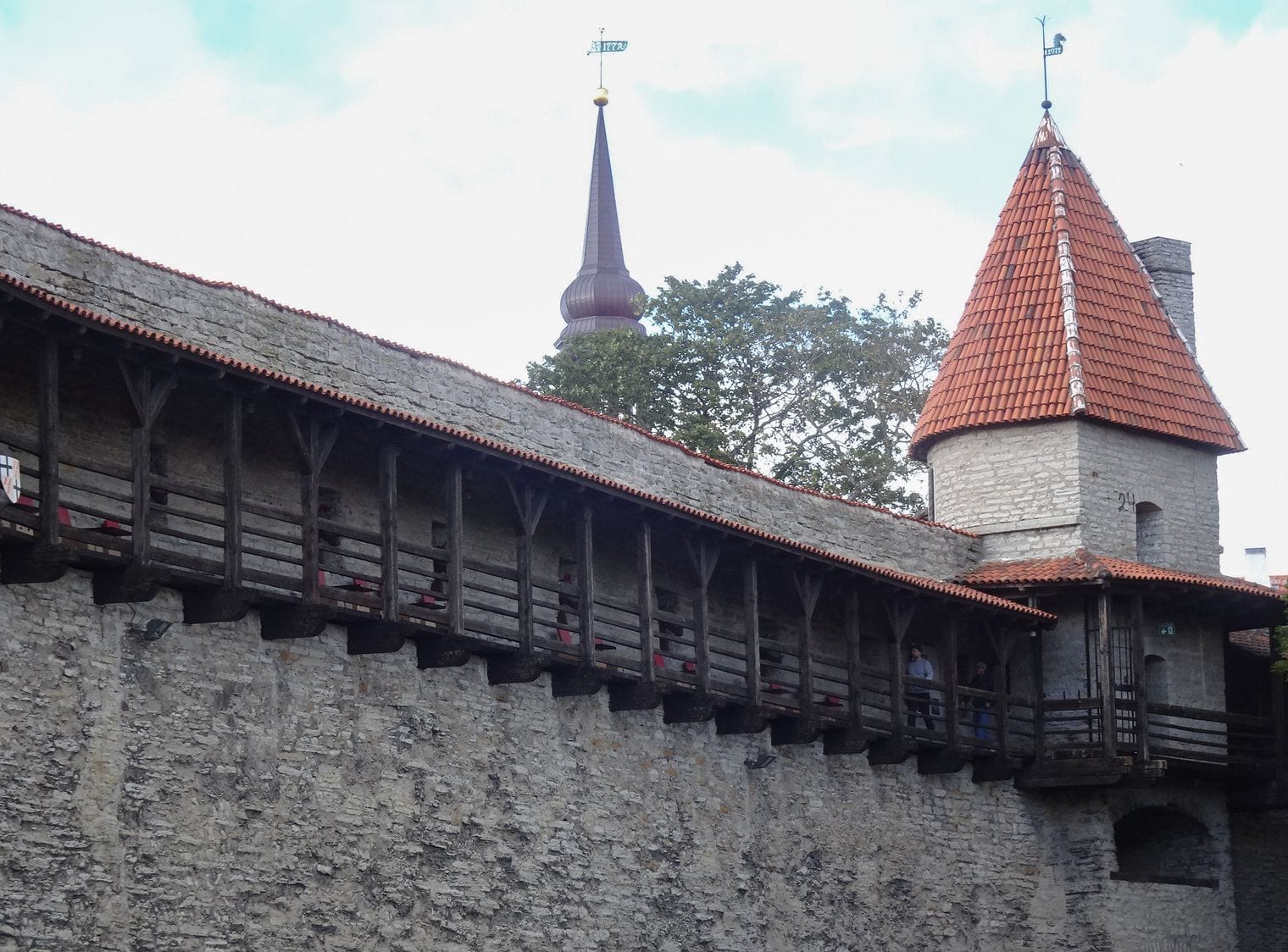
Towers' Square is the long green strip running outside the northern stretch of the city wall, and it gives you the single best view of the fortifications from the outside — a row of red-roofed towers along an unbroken run of limestone curtain wall. Medieval Tallinn called this ground the nunnery pasture, because it belonged to the convent whose site the Gustav Adolf Grammar School now occupies.
Today it is a proper city park rather than a monument: flowerbeds, a playground, outdoor fitness equipment, and a summer programme of open-air events and exhibitions staged against the wall. It is free, it is where the postcard photograph of Tallinn's ramparts is actually taken from, and it is a two-minute walk from the Old Town's northern gates.
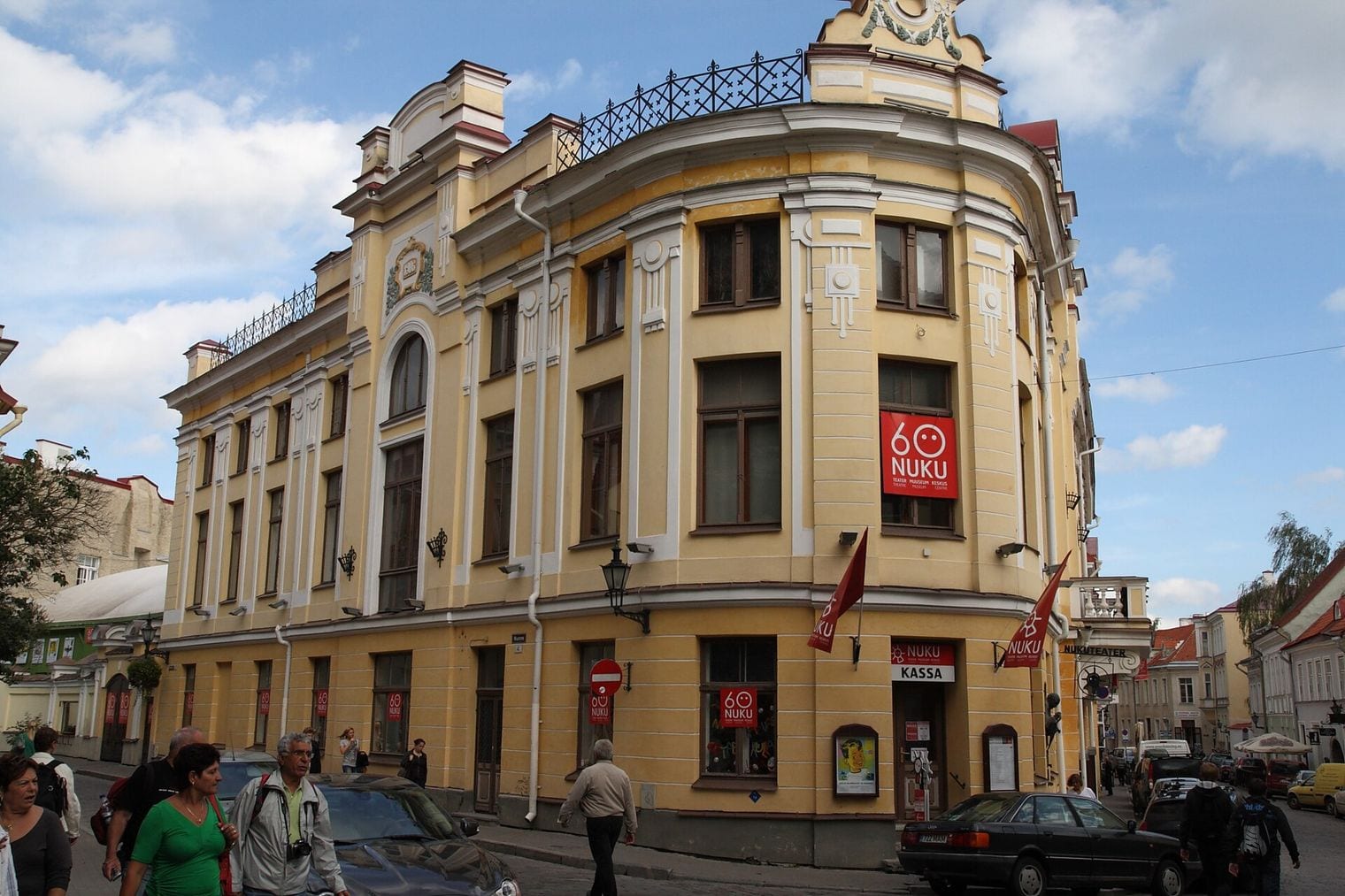
The puppet theatre museum occupies a medieval building on the corner of Lai and Nunne, in the same complex as the theatre company it belongs to — now the Estonian Youth Theatre, long known simply as NUKU. The collection is the working archive of Estonian puppetry: marionettes, rod and glove puppets, sets and mechanisms kept from productions going back decades.
It is handled far better than a store of retired props suggests. Cases open, puppets can be worked, and the route runs down into the cellars, where a deliberately unsettling section stages the ones with rather more character than a children's theatre would ordinarily admit to. It works for adults travelling without children, and the theatre upstairs still puts on shows most days.
Kalamaja means "fish house", and for most of Tallinn's history that is what it was — the town's fishing harbour, outside the walls.
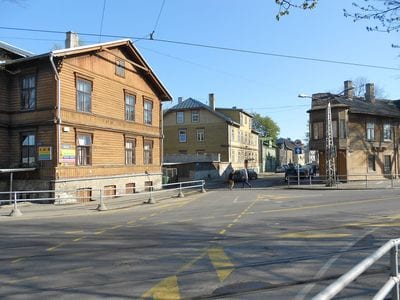
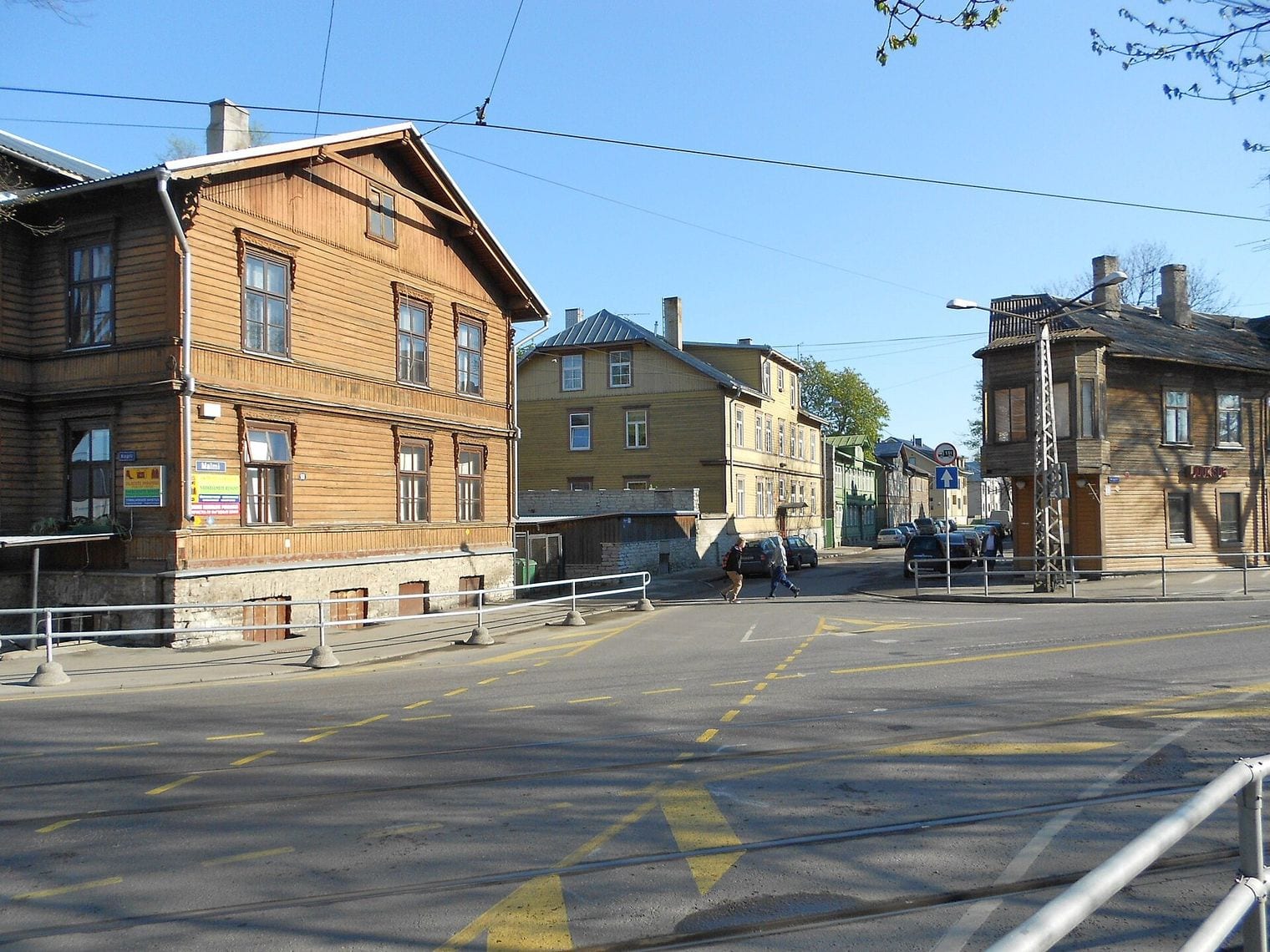
Factories arrived around 1900 and the district filled with the housing built for their workers, which is what you come to see: streets of wooden apartment buildings from the end of the 19th century and the 1920s and 30s, among them the "Tallinn house", two symmetrical wooden wings either side of a central stone stairwell. Roughly 500 survive across the city.
Valgevase, Kalju, Kungla, Köie and Niine have the best of them, painted in colours no planning committee would now approve and fronted by bright panelled doors. The district has also collected most of the city's newer attractions — Telliskivi, Fotografiska, the Seaplane Harbour and PROTO are all within it — so Kalamaja works as a day rather than a stop inside one. It is about fifteen minutes' walk from the Old Town.
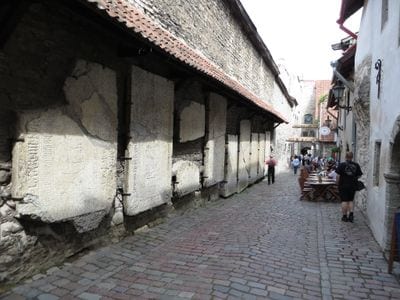
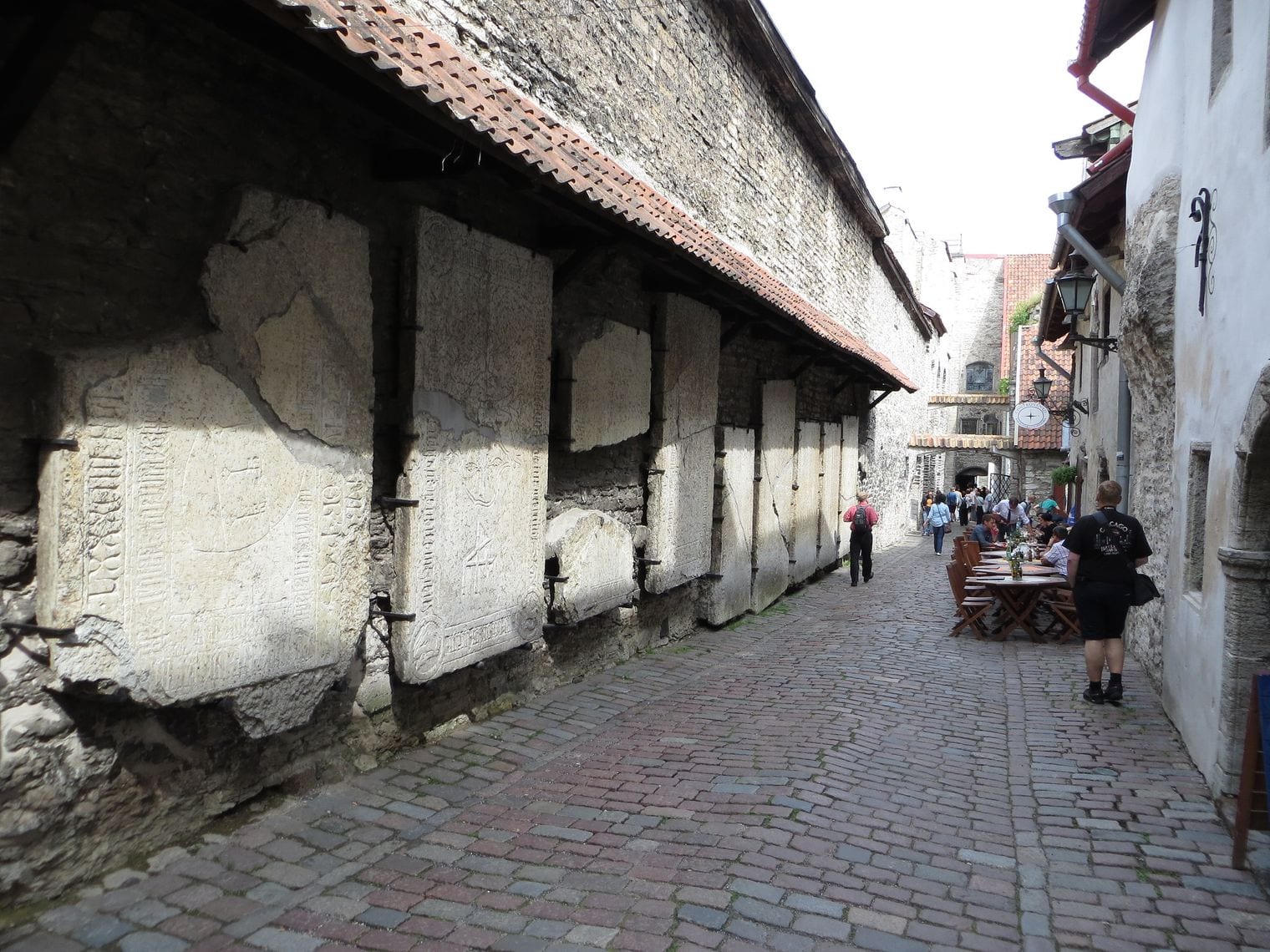
Katariina käik is the narrow lane running from Vene to Müürivahe along the south side of the old Dominican monastery, and it is the best-preserved medieval passage in Tallinn. It was Monk's Alley before it took the name of St Catherine's church, which is thought to be more than 700 years old; the buildings down its southern side are largely 15th to 17th century, and the whole lane was restored in 1995.
Ranged along the church wall are the Katariina Guild workshops, occupied since that same restoration by craftspeople working leather, glass, textiles, ceramics, hats and jewellery, with the studios open so you can watch the work rather than only buy it. Overhead, the stone grave slabs from the ruined church are set into the wall. It takes two minutes to walk and is worth doubling back through.
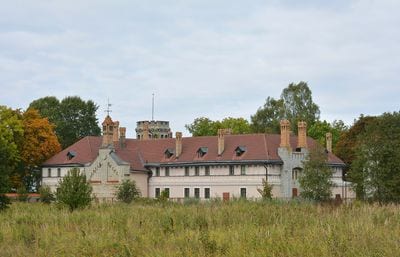
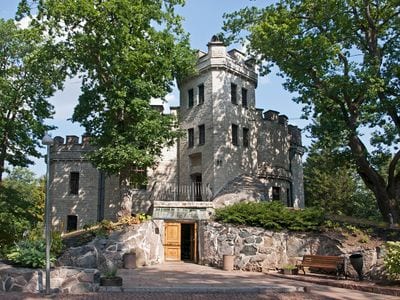
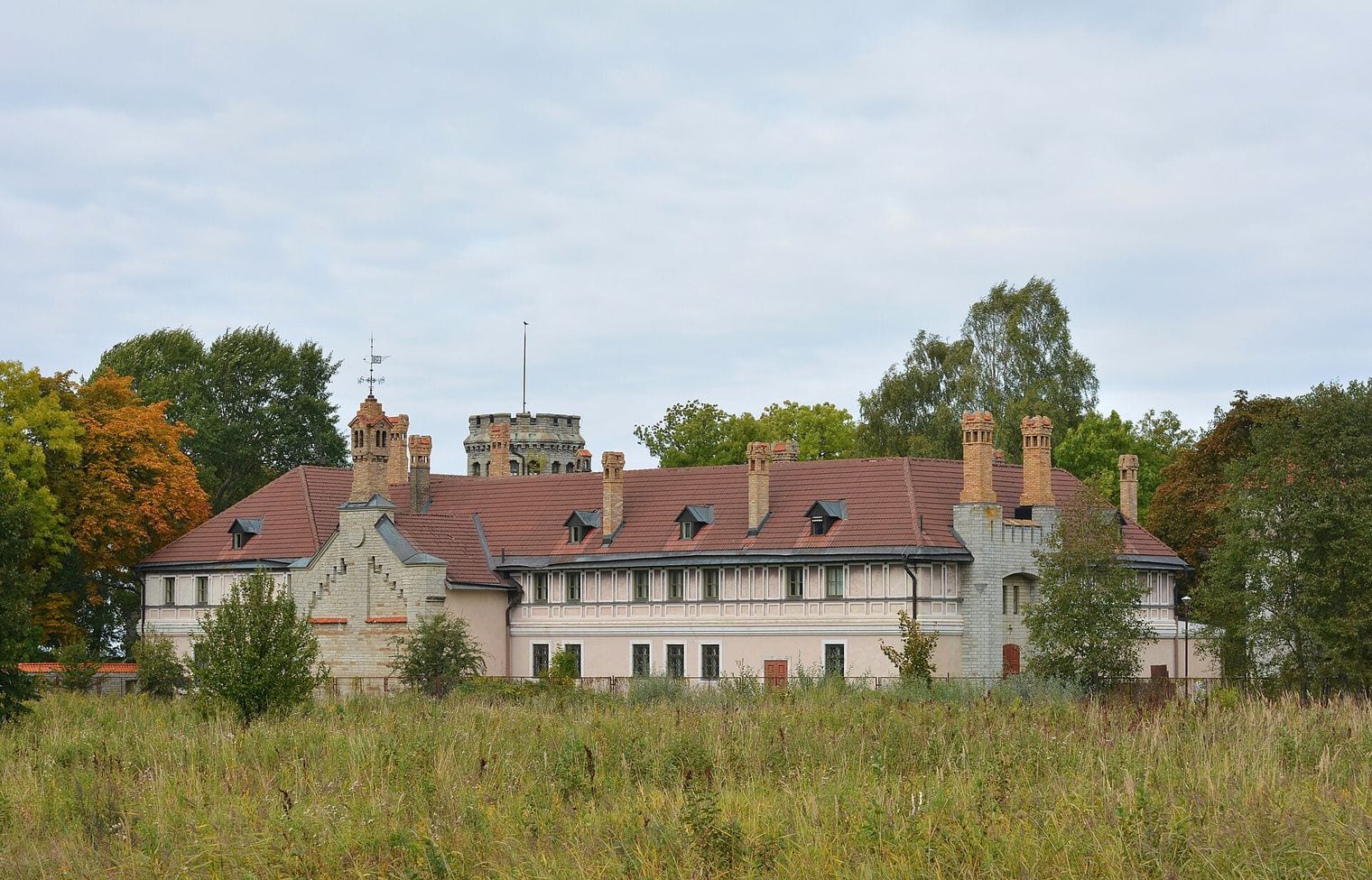
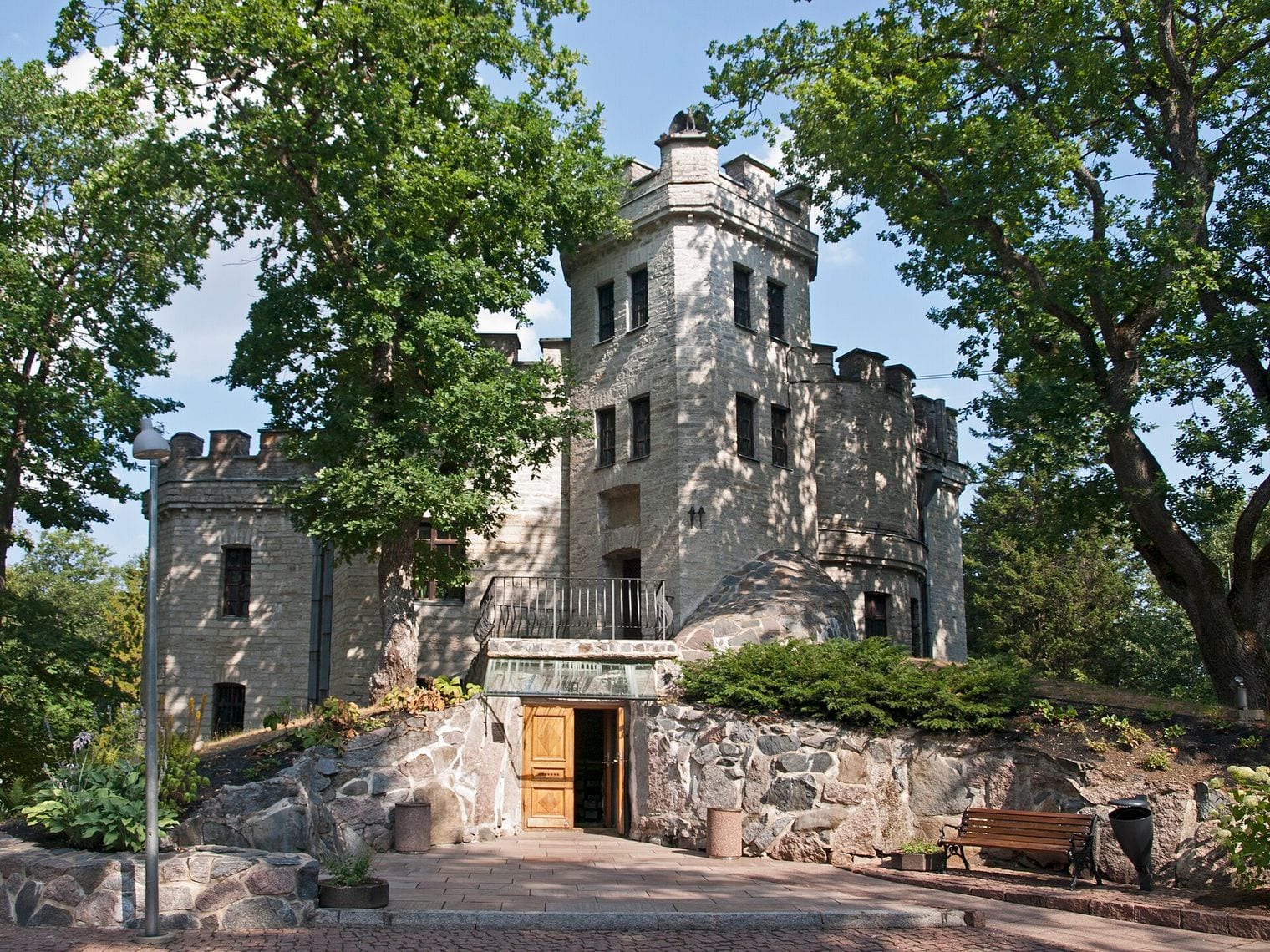
Nikolai von Glehn was a 19th-century landowner who founded the suburb of Nõmme and then built himself a castle on the hillside above it, laying out a park of imported trees and shrubs around it. He also made his own sculpture, badly and unforgettably: a lumpen concrete Kalevipoeg, the hero of the Estonian epic, and a dragon so misshapen that everyone in Tallinn calls it the Crocodile.
The grounds are now forest park inside the Mustamäe landscape protection area, free and open all year, with the castle, a palm house and an observatory among the trees, and paths that fill with runners in summer and skiers in winter. The castle itself is often shut, so treat it as a walk with an eccentric folly at the middle of it. It is about half an hour out from the centre.
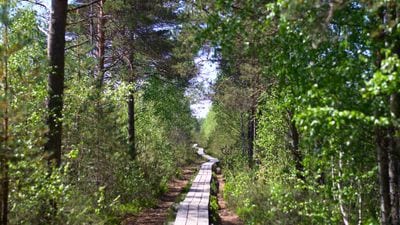
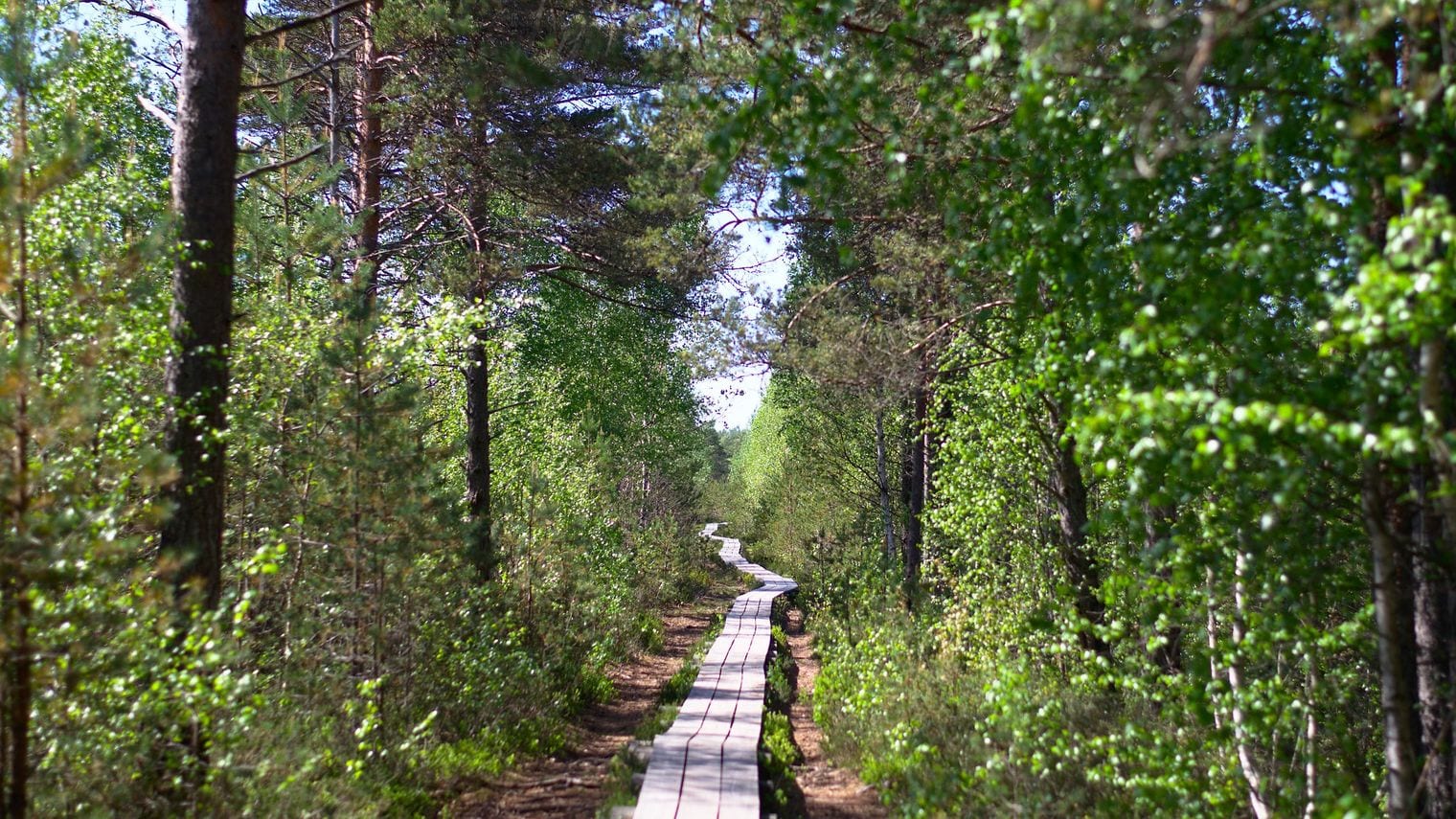
Tallinn has a raised bog inside the city limits, and a boardwalk laid across it. Pääsküla was cut for peat for decades and has been left to recover; the trail runs out over the open mire on planks, past pools and stunted pines, with a viewing tower partway round for the flat, treeless expanse that is the classic Estonian landscape and is otherwise a drive out of town.
It is a genuine bog rather than a park pretending to be one — cotton grass in early summer, cranberries in autumn, and completely still. The loop is a comfortable hour, boardwalked throughout, and the far end of the tram line puts you close enough to walk in. Bring something waterproof for your feet if you plan to step off the planks.
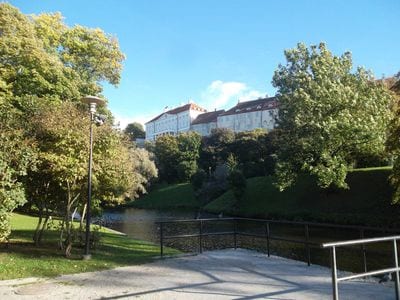
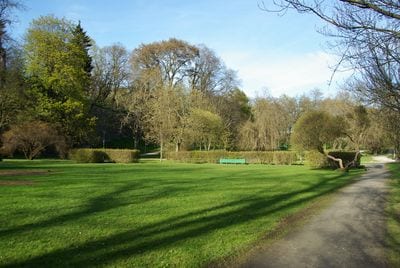
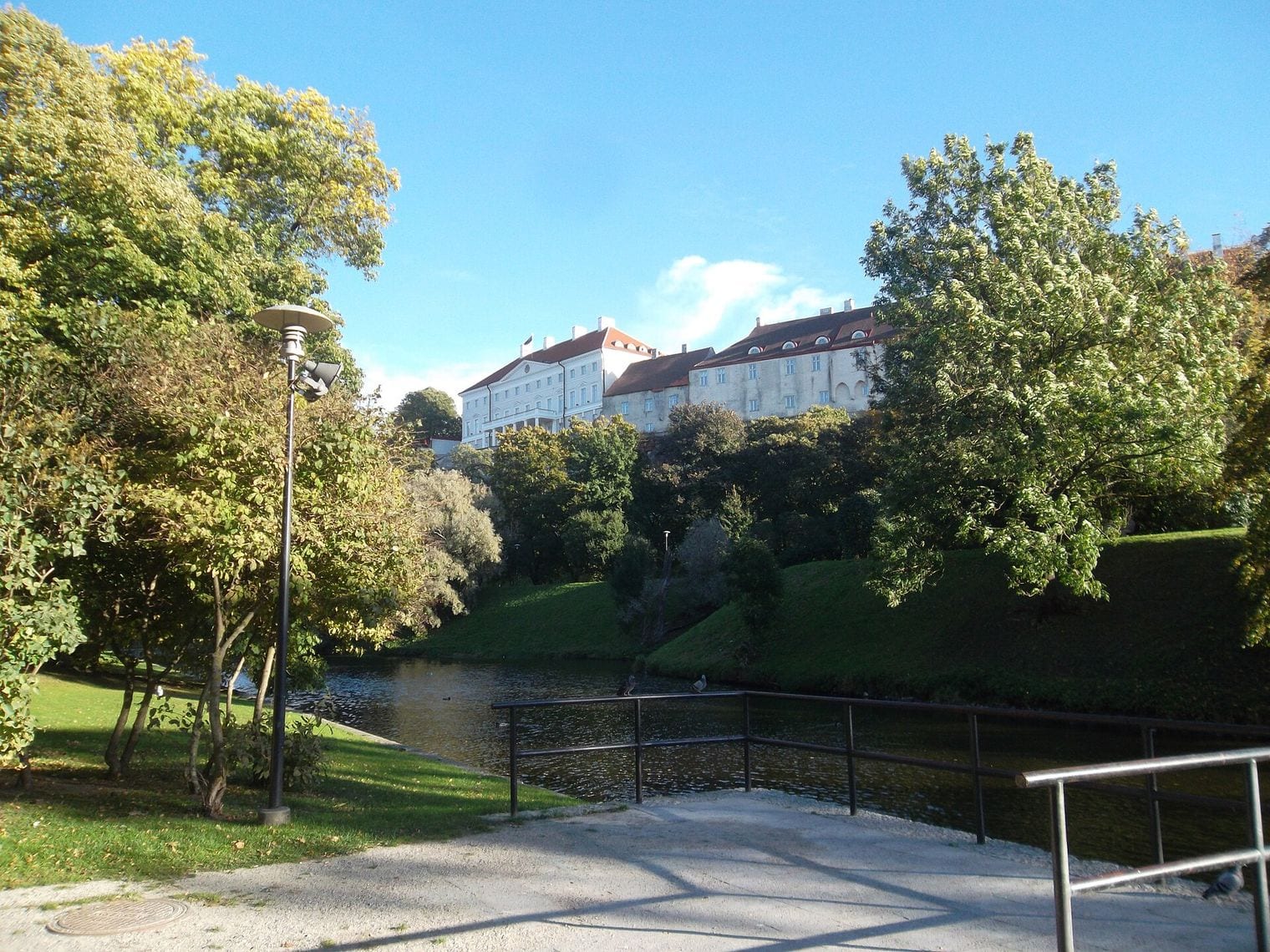
Toompark fills the ground where the town moat used to run, between the western wall and the Toompea escarpment, and it keeps the water: Snelli pond is the surviving stretch of the moat, with the wall and its towers rising directly behind it. It is the reflection shot of the fortifications, and the one place the defences read as defences rather than as a picturesque backdrop.
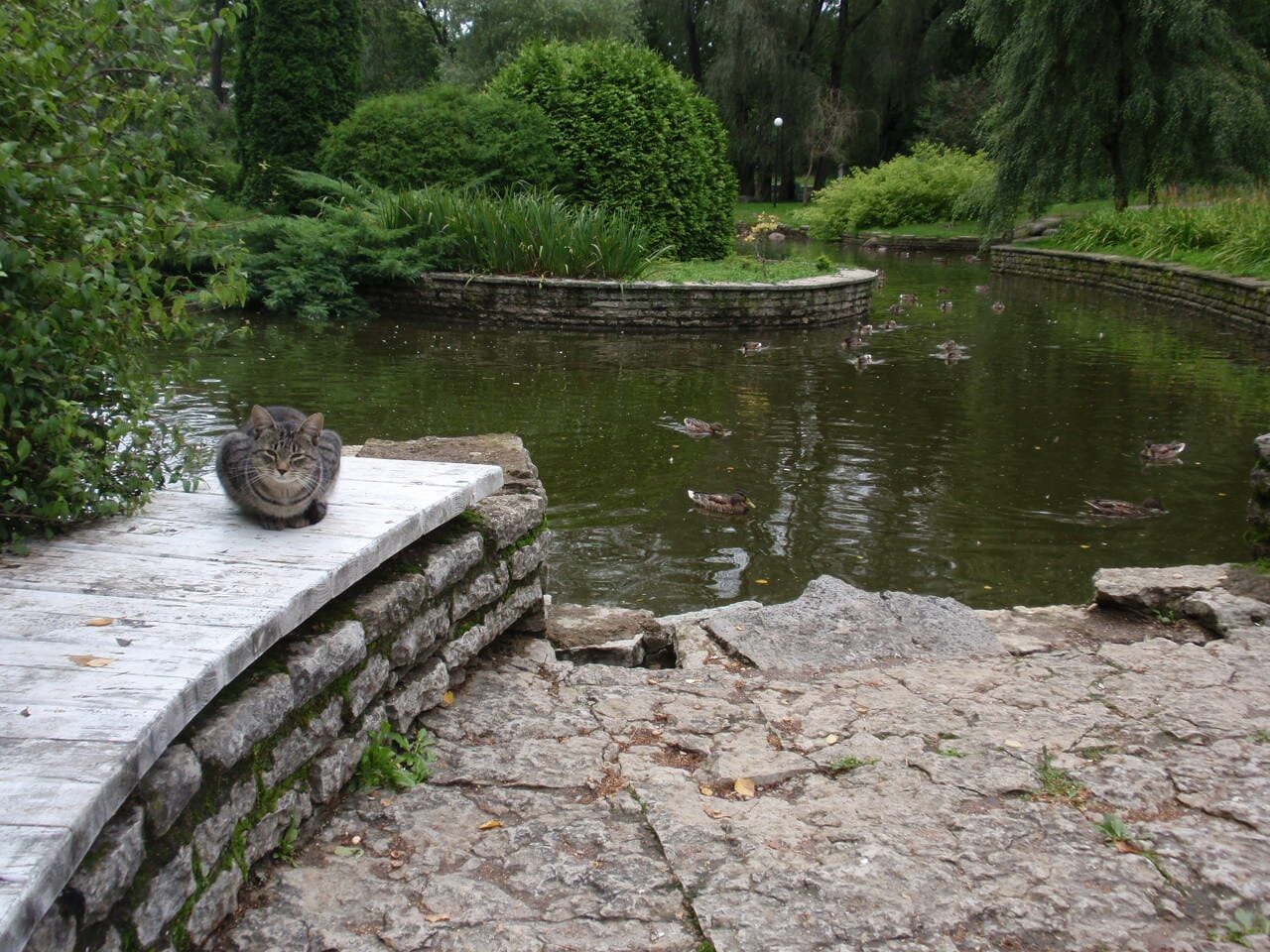
The park is a plain, well-used city green — benches, ducks, willows, a path round the pond and a playground — and in hard winters the pond is skated. It sits directly between the Old Town and the Baltic Station market and the Telliskivi district beyond, so it is on the natural walking line between the two rather than a detour.
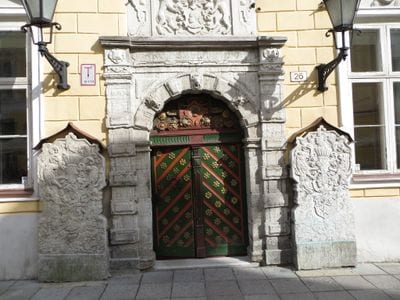
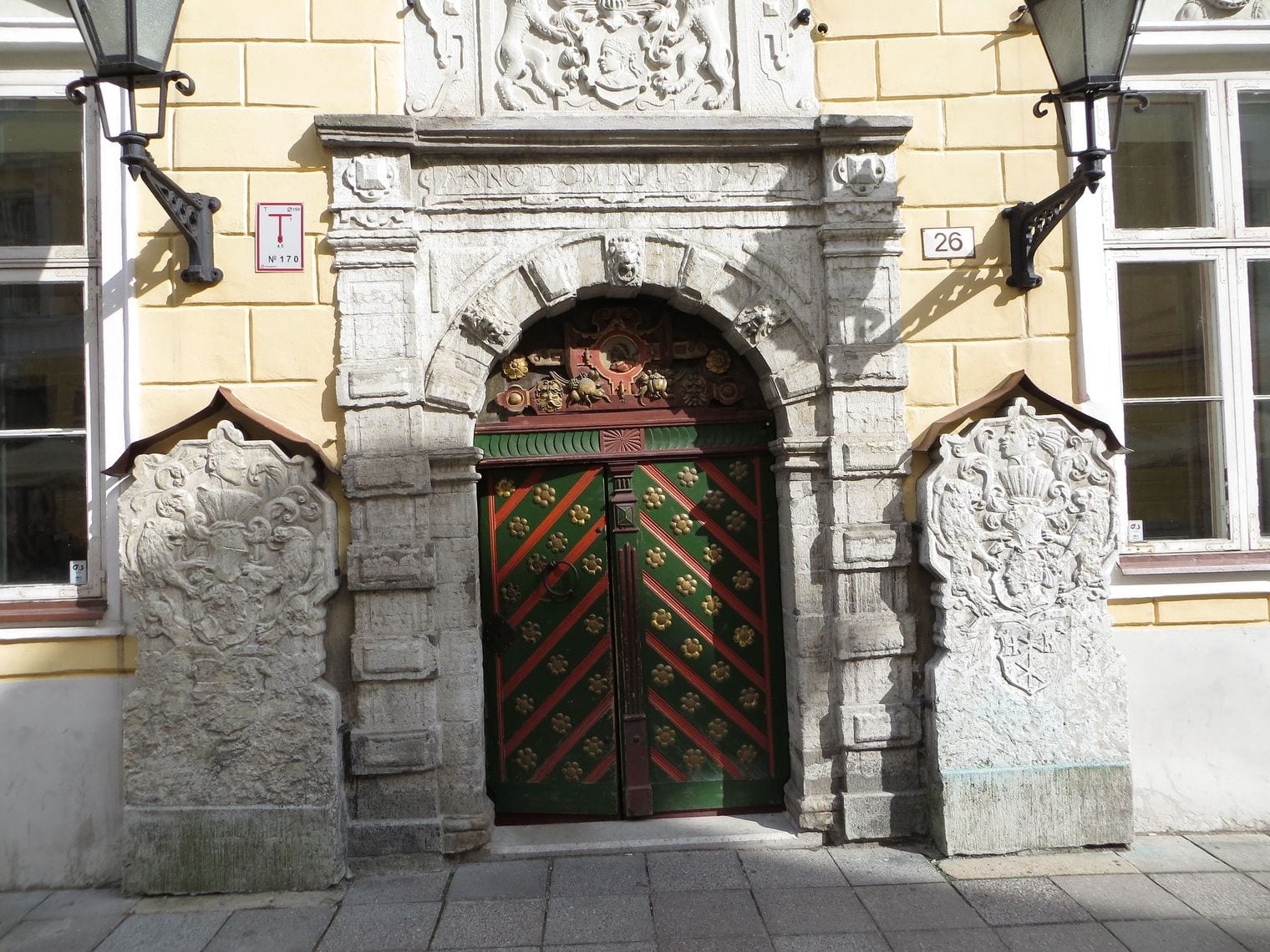
The Brotherhood of Blackheads was an association of unmarried foreign merchants in Hanseatic Tallinn — men not yet eligible for the Great Guild, who took St Maurice as their patron and put his head on their arms. Their house on Pikk carries the most elaborate Renaissance doorway in Estonia, dated 1597, flanked by carved figures and painted in deep colour against the plaster.
Inside it is now a concert hall run by the Estonian Concert organisation, and the medieval interiors — the Olaf Hall and the white hall above it — are best seen by going to something. The building's own story runs to 1940, when the Soviet occupation dissolved the brotherhood after more than six centuries. Even if you only stop on the street, the door is worth the walk up Pikk.
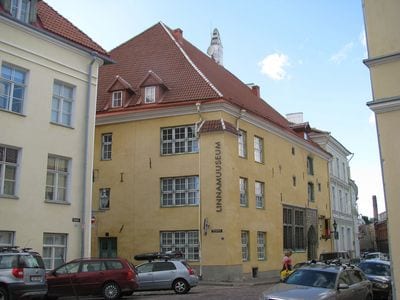
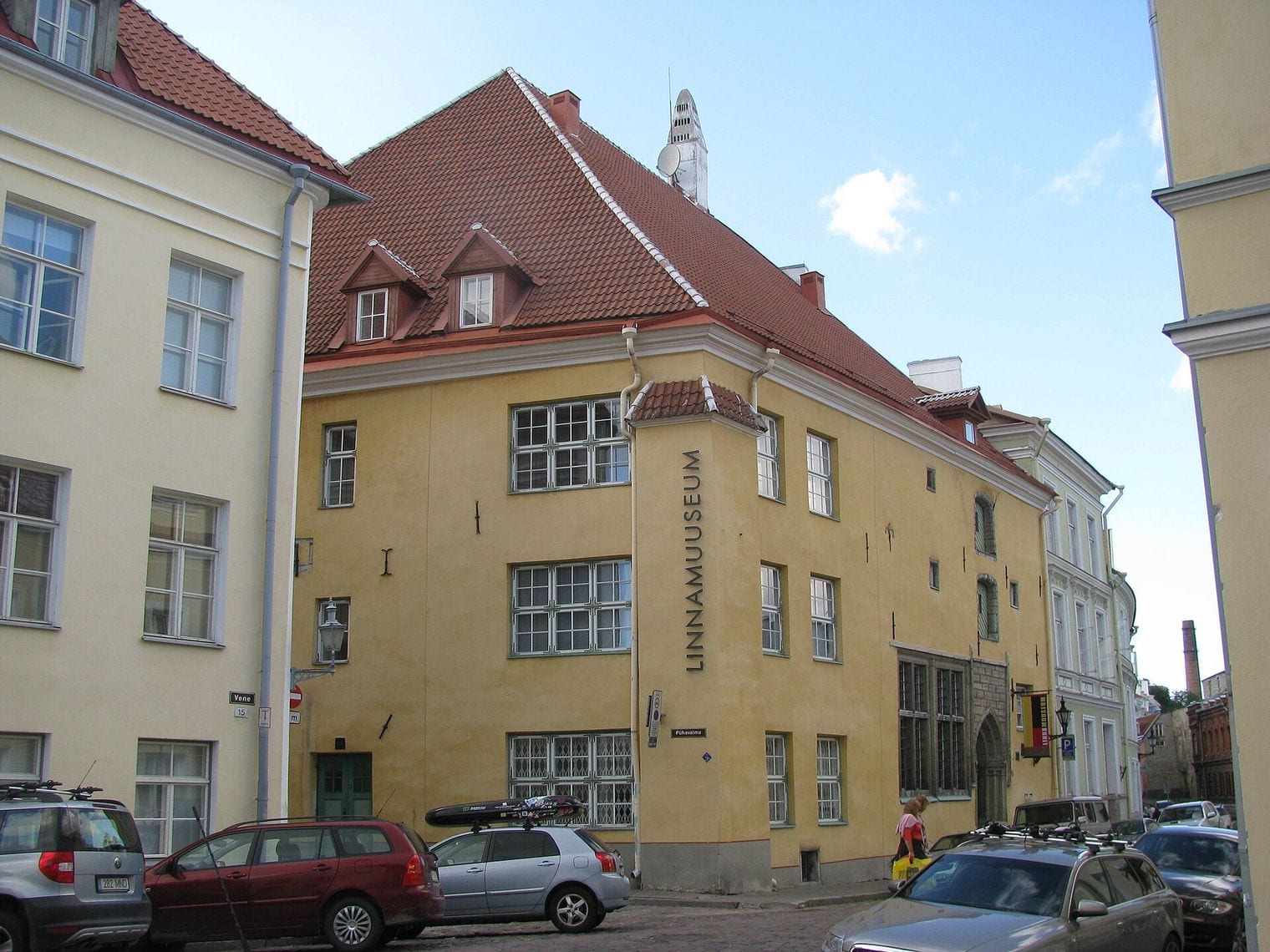
The city museum occupies a merchant's house on Vene, and its main exhibition — Lyndanise. Reval. Tallinn. — is organised around the city's three names, which is a neat way of saying that this place has been Danish, German, Swedish, Russian, Soviet and Estonian without moving. It follows daily life through each of those centuries rather than the politics.
The house is half the interest: a vaulted medieval cellar holds a permanent display of ceramics, dishes and candelabra, and the upper floors keep their merchant-house proportions. A companion exhibition covers the Blackheads brotherhood, which pairs it naturally with their house a few streets away. It is the most useful single museum for understanding the Old Town you are standing in.
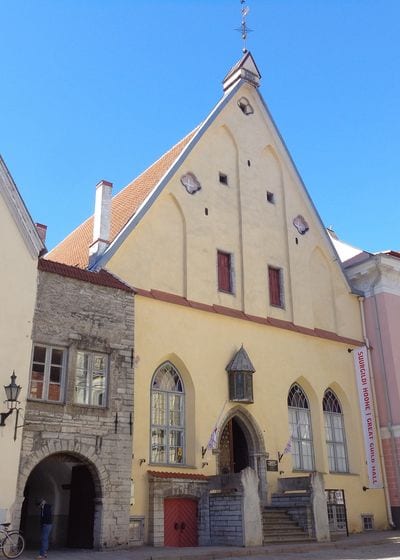
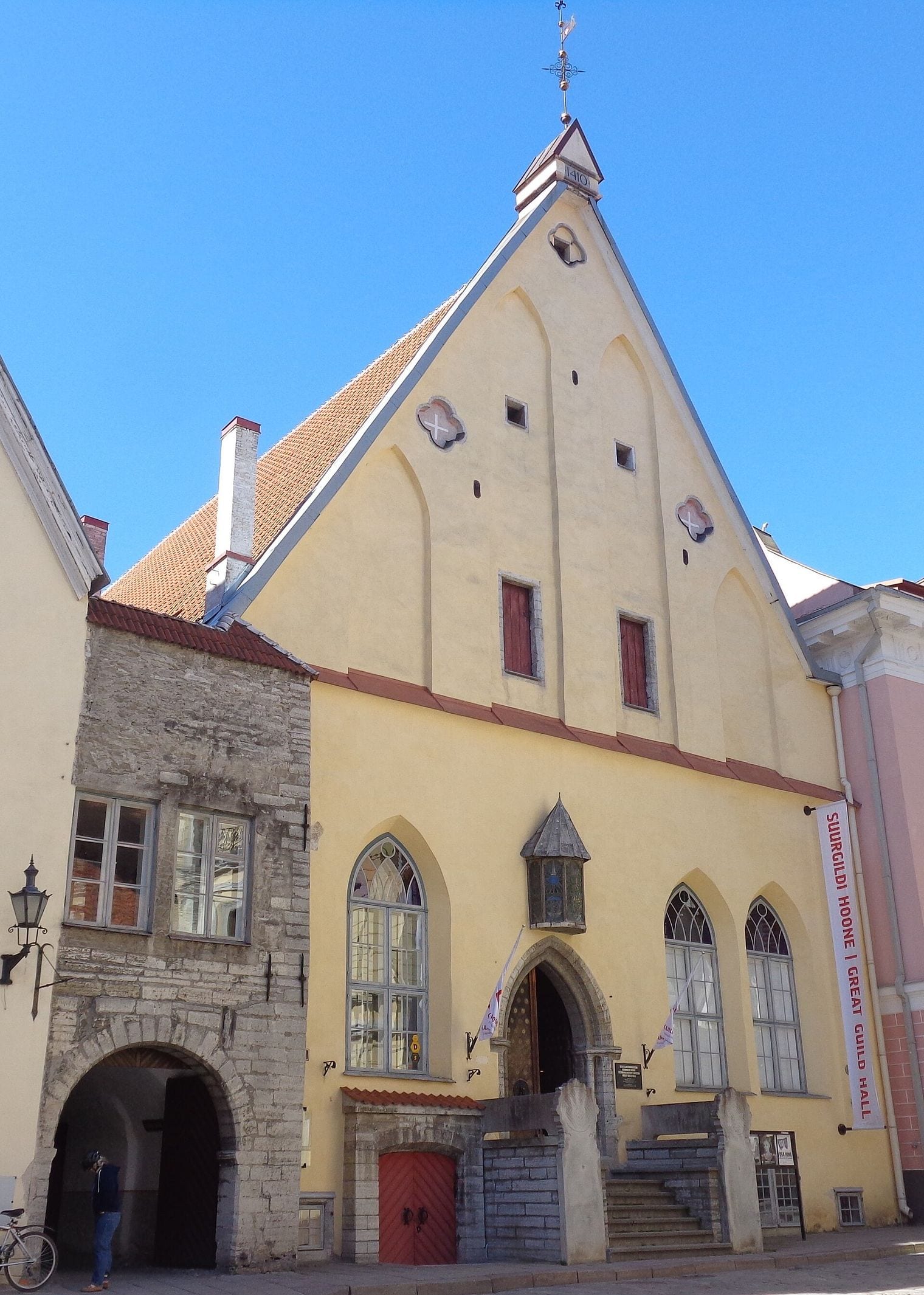
The Great Guild Hall was finished in 1410 for the wealthiest merchants in town — the guild that supplied Tallinn's councillors and mayors — and it is the best-preserved secular medieval building in the Old Town, with its stepped gable and vaulted hall largely intact. The guild used it for assemblies, weddings, services, plays and court sittings, which tells you how completely it ran the place.
The Estonian History Museum's exhibition here, Hansa Splendor, follows one merchant's career to explain how the Hanseatic system actually made money, using archaeological finds that had not been shown before. Others cover the guild elite, historic money, and weapons through Estonian history. Go for the room as much as the display — you are standing in the hall where medieval Tallinn was governed.
Hirvepark is a wooded slope below the western side of Toompea, and it looks like an ordinary neighbourhood park until you know what happened in it. On 23 August 1987 a crowd gathered here to mark the anniversary of the Molotov–Ribbentrop Pact and, for the first time in Soviet Estonia, said aloud in public that its secret protocols existed. The Hirvepark meeting is generally taken as the start of the Singing Revolution.
A memorial stone marks it now. The park itself is quiet and steep, with mature trees, paths climbing to the Toompea wall and a route up towards the Danish King's Garden, and it is a short walk from Freedom Square. Given how much of Tallinn's occupation story is told indoors in museums, it is worth standing on the ground where the public part of it began.
The architecture museum is housed in the Rotermann salt storage on Ahtri, an 1908 limestone warehouse converted so that the exhibition sits inside the raw industrial volume rather than against it — the building is the first exhibit, and the museum has staged a show about the conversion itself. It stands at the edge of the Rotermann quarter, the old industrial block now rebuilt as the city's most-photographed contemporary architecture.
The permanent exhibition, Living Space, covers a century of Estonian architecture: the interwar republic's functionalism, Soviet mass housing, and what came after 1991. There is a hands-on room for children, and the temporary programme is genuinely good. It is five minutes from the Old Town and pairs well with a walk through the Rotermann streets outside.
The Piiskopi platform is the third and quietest of Toompea's terraces, on the western edge where the cathedral gardens stood through the 18th and 19th centuries — hence its other name, the Bishop's Garden. It has been restored with medieval walling and period planting, including paradise apple trees and the two oldest oaks on Toompea.
Be clear about what it is: the view is narrower than Kohtuotsa's or Patkuli's, looking out over Pelgulinn, Kalamaja and the port rather than across the Old Town roofs. What it has instead is space — it is a small garden with somewhere to sit, and it is usually empty when the other two are three deep in tour groups. Come here for ten quiet minutes, not for the photograph.
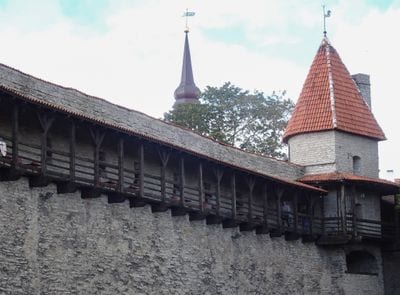
About 1.85 kilometres of Tallinn's city wall survives, along with 26 towers, which makes it one of the largest and best-preserved medieval defensive circuits in Europe. At Väike-Kloostri street you can get up onto it: a 14th-century stretch links the Nunna, Sauna and Kuldjala towers, and the ticket lets you walk the covered wall-walk between them.
It is the difference between looking at the wall and using it. The walkway is timber-floored and low-beamed, the arrow slits frame the Old Town roofs on one side and Towers' Square on the other, and the tower rooms have the stairs and fireplaces the guards used. It takes twenty minutes, costs a few euros, and is the only stretch of the circuit open to walk.
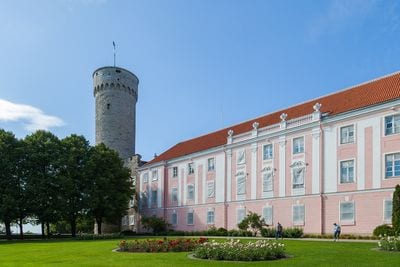
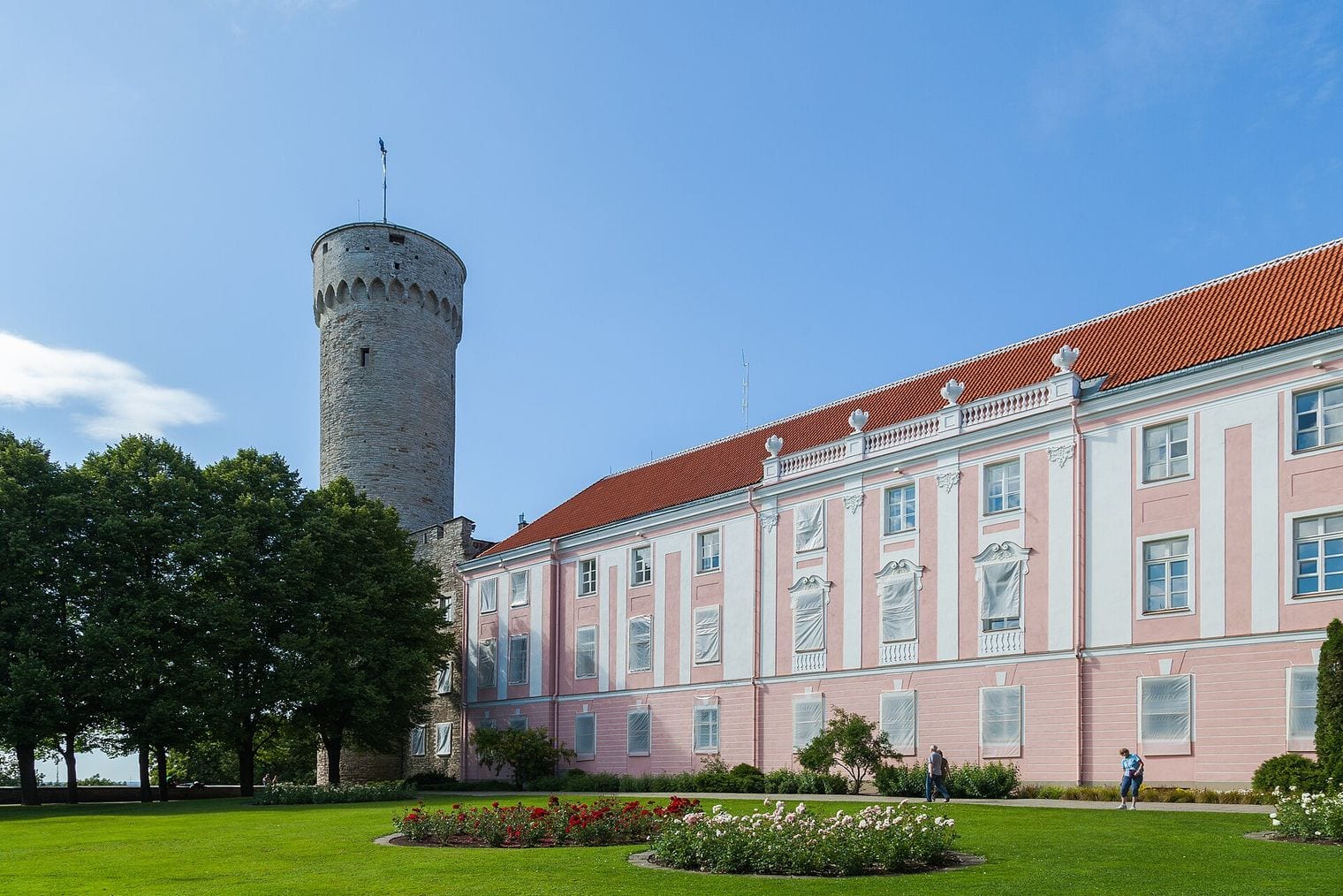
Pikk Hermann is the south-western tower of Toompea Castle, begun in the 14th century and raised to its present height in the 1500s. It is the flagpole of the Estonian state: the national flag is hoisted at sunrise and lowered at sunset, and whichever flag flew here has marked who held the country — Russian, Estonian, Soviet, German, Soviet again, and Estonian since 1989.
The tower is part of the parliament building and is not open for casual visits, but the Riigikogu runs free guided tours of Toompea Castle that include it, bookable in advance. Otherwise the thing to do is deliberate: stand on Lossi plats at sunrise, when the flag goes up to the national anthem. The pink Baroque parliament facade beside it is Catherine the Great's, wrapped around a Danish castle.
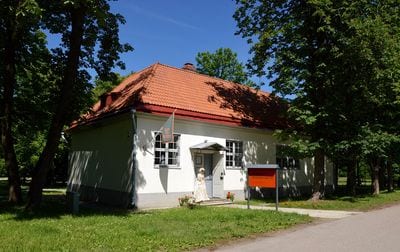
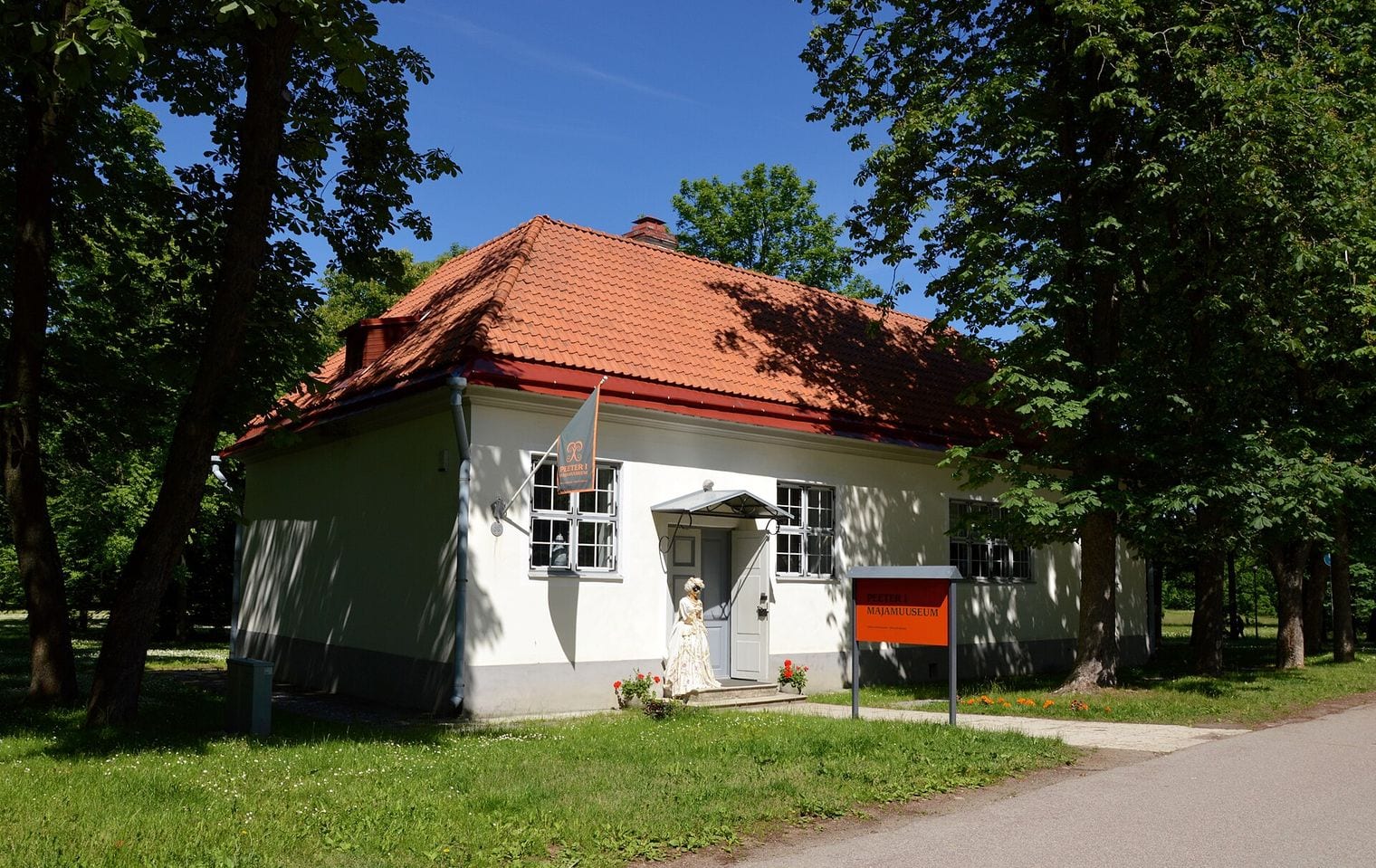
Before Kadriorg Palace existed, Peter I bought a modest house in the grounds and used it while the palace was building; he and Catherine stayed here on their visits to Reval from 1714. It opened to the public in 1806, which makes this small museum the oldest in Tallinn — a fact the city museum, which runs it, is fond of pointing out.
Inside are four low rooms kept close to how they were used, with the tsar's own furniture, clothing and personal effects, and there is something bracing about the contrast with the palace up the path: a ruler who did his own carpentry, lodged in a cottage while the grand house went up outside the window. It takes twenty minutes and is a natural add-on to Kadriorg.
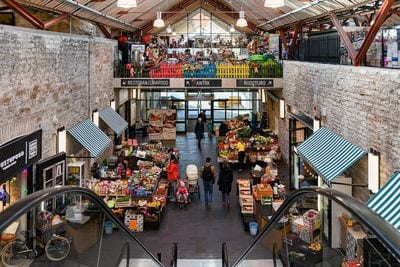
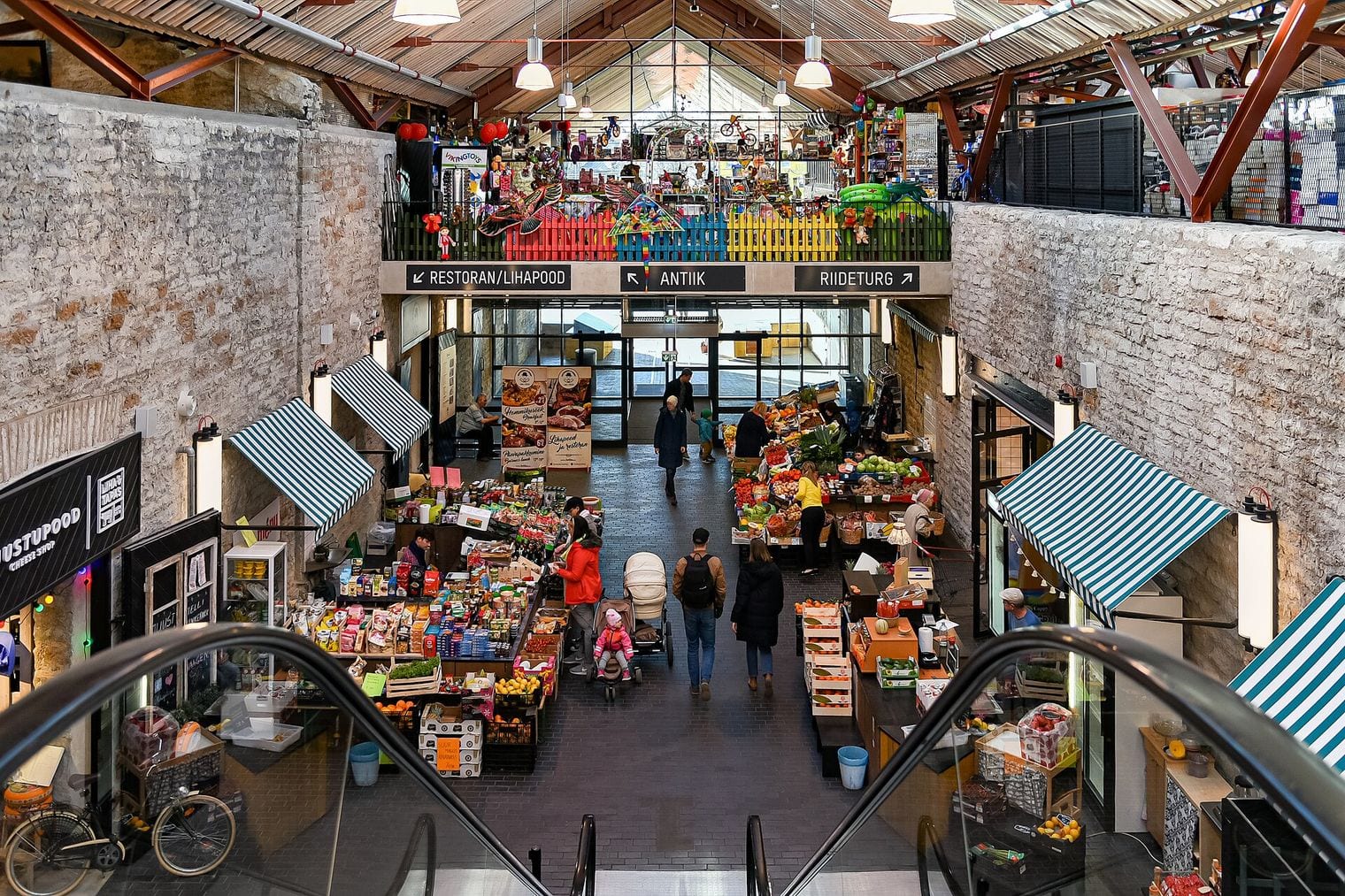
There has been a market behind the Baltic Station since 1993, but the one you walk into now opened in May 2017 after a rebuild by KOKO Architects. They kept three limestone warehouses of the 1870s and set a new volume among them under one unifying pitched roof, with a further floor dug in underneath. It has since collected Estonian and international architecture awards, and around 230,000 people came through in its opening week alone.
Nearly 300 traders work across the three floors: produce, meat and fish halls at the centre, a street-food avenue with more than twenty kitchens, and Estonian craft, vintage clothing and antiques around them. It sits between the station and Kalamaja, a couple of minutes from Telliskivi, and walking through costs nothing — which makes it the most useful free hour on this side of the Old Town.
Plan your trip
Best Time to Visit Tallinn
Late spring to early autumn is the comfortable window. June and July bring the white nights, when it barely gets properly dark this far north and the Old Town squares and seafront stay busy late into the evening; this is also when the open-air festivals, island ferries and beach season at Pirita all run. Late May and early September are the sweet spot if you want the same long days with thinner crowds and lower prices.
Winter is a genuine trade-off. From December the city is cold, snowy and dark by mid-afternoon, but the Christmas market fills Town Hall Square, the medieval streets look their best under snow, and the museums are all but empty. March and early April are the months to avoid if you can — the snow has gone grey, the trees are still bare, and the shoulder-season atmosphere has not yet arrived.
Getting to Tallinn
Tallinn Airport sits barely four kilometres from the centre, which makes it one of the closest airports to a European capital's core, and a tram runs from the terminal into town in around fifteen minutes. The other classic approach is by sea: fast ferries cross from Helsinki in about two hours, ferries from Stockholm run overnight, and both dock at the passenger terminals a short walk or tram ride north of the Old Town.
By road, the E20 runs east toward Narva and the Russian border, the E67 Via Baltica heads south through Pärnu to Riga, and the E263 cuts southeast to Tartu. Long-distance coaches use these same routes and are the cheapest way in from the other Baltic capitals. Domestic trains from the Balti jaam station just outside the Old Town reach Tartu, Narva and Pärnu.
Getting Around Tallinn
Tallinn is a walking city at its core. The Old Town is small, entirely walkable and largely closed to traffic, and the neighbouring districts — Rotermann, Kalamaja, Telliskivi — are all within fifteen or twenty minutes on foot of the walls. Cobbles are the main obstacle, so bring shoes with some grip rather than a wheeled suitcase you have to drag over them.
For anywhere further out, the tram, trolleybus and bus network is cheap, frequent and easy to use, and it covers everything in this guide including Kadriorg, Pirita, the TV Tower and the zoo. A car is more nuisance than help in the centre, where parking is limited and streets are narrow, and is only really worth hiring if you plan to leave the city for Lahemaa or the coast.
Where to Stay in Tallinn
Staying inside the Old Town puts you in the middle of the postcard, within a few minutes' walk of almost every medieval sight, though the cobbled lanes get busy by day and noisy around the bars at night. The Rotermann Quarter and the city centre just east of the walls are the practical compromise — modern, walkable, minutes from both the Old Town and the ferry terminals, and close to the main shopping streets.
For a quieter and more local base, Kalamaja is the obvious choice: wooden houses, small cafés, the Telliskivi complex on the doorstep and the sea a short walk away. Kadriorg suits anyone here for the museums and parks, with a leafy, residential feel and a direct tram into town, while Pirita is the pick if you want the beach and do not mind being a bus ride out.
Where to Eat in Tallinn
Estonian food is built on dark rye bread, smoked and marinated fish, pork, potatoes, sour cream and whatever the forest gives up in season. Look for sprats on black bread, marinated herring, elk and other game in autumn, blood sausage around Christmas, and kama — a toasted grain mixture stirred into buttermilk — for something genuinely local. Kalev marzipan and the herbal Vana Tallinn liqueur are the standard things to take home.
For where to actually eat, the Rotermann Quarter and the Telliskivi complex are the two strongest concentrations of modern Estonian cooking, with Noblessner on the seafront the more ambitious end. The Balti Jaam Market beside the station is the best place to graze cheaply across street food, bakery counters and produce stalls, while the Old Town runs from tourist-priced medieval-themed halls to a handful of serious restaurants tucked down side lanes.
Day Trips from Tallinn
Lahemaa National Park is the classic day out, about an hour east, with bog boardwalks, a boulder-strewn coast, fishing villages and a cluster of restored manor houses. Closer in, the waterfall and manor park at Keila-Joa are around forty minutes west, the ruined monastery at Padise a little beyond, and the Jägala waterfall roughly half an hour east. The former Soviet naval town of Paldiski and its coastal cliffs make a stark, unusual alternative on the same western road.
Further afield, Pärnu and its long beach are under two hours south on the Via Baltica, and Tartu, Estonia's university city, is about two and a half hours southeast by road or rail. In summer, small ferries run from Pirita out to the wooded island of Aegna and to Naissaar, with its ruined military railways. Helsinki is also a genuine day trip — roughly two hours each way by fast ferry.
Before you go
Mobile dataAn eSIM gives your phone local data when you land, with no SIM card to swap.via AiraloGet an eSIM
Airport transferA driver meets you at arrivals and takes you to your hotel, at a price fixed when you book.via Welcome PickupsBook a transfer
We may earn a commission when you buy through these links, at no extra cost to you. How we make money.
One Day in Tallinn
Morning
Start on Raekoja plats before the tour groups arrive, with coffee on the square and a look inside Tallinn Town Hall and the ancient pharmacy on its corner. Then climb the lane up to Toompea for Alexander Nevsky Cathedral, and walk the short loop between the Patkuli and Kohtuotsa viewing platforms while the light is still low over the rooftops.
Drop back into the lower town through the medieval lanes, pass out under Viru Gate, and give the afternoon to one big interior. The tower climb at St Olaf's Church is the most exhilarating option; Fat Margaret Tower is the easiest to fold into a walk toward the sea; and if you would rather be out of the centre, the tram to Kadriorg Palace and Kumu gives you a palace, a major gallery and a park in one stop.
Walk or take a tram out to Telliskivi Creative City, which is at its best once the light goes — street art, independent shops, and a run of bars and restaurants in the old railway workshops. If an exhibition appeals, Fotografiska stays open late and has a rooftop terrace looking back at the Old Town skyline you spent the morning standing on top of.
A surprising amount of the best of Tallinn costs nothing. Both great Toompea viewpoints — Kohtuotsa and Patkuli — are open terraces you can walk onto at any hour, and wandering Raekoja plats and the medieval lanes around it is free in itself.
Tallinn is best known for its walled medieval Old Town, a UNESCO World Heritage Site built around Tallinn Town Hall and entered through Viru Gate. Its other signatures are the onion-domed Alexander Nevsky Cathedral on Toompea, the palace and gallery at Kadriorg, and the seaplane hangars of the Seaplane Harbour.
How many days do you need in Tallinn?
Two full days is enough to see the Old Town properly and add either Kadriorg or the Seaplane Harbour. Three days lets you fit in Telliskivi, a tower climb and one of the occupation museums without rushing. Four or more makes sense if you want a day trip out to Lahemaa or the coast.
May to September is the most comfortable stretch, with June and July bringing white nights when it barely gets dark. Late May and early September give the same long days with fewer crowds. December is cold and dark but brings the Christmas market to Town Hall Square; March and early April are the bleakest months.
Is Tallinn walkable?
Very. The Old Town is compact, largely traffic-free and crossable on foot in about fifteen minutes, and Rotermann, Kalamaja and Telliskivi are all a short walk beyond the walls. Cobblestones and the climb up to Toompea are the only real obstacles. Trams and buses cover Kadriorg, Pirita and the TV Tower cheaply.