We build and rank every list first. Booking links come after, and only where
a partner sells a ticket, tour or stay for that exact place, so a place with
nothing to book is listed exactly as prominently as one you can book.
So how do we earn? Some links on this page go to booking
partners, and if you book tickets, tours or a stay through
one, we may earn a commission. It costs you nothing extra.
That commission never decides which places make the list, the order they
appear in, or what we write about them. No entry is sponsored or a paid
placement.
By the CityViking Research TeamPublished 30 places · 21 min read
Sources Checked before launchOct 5, 202630 sources24 publishers5 government & parks7 tourism boards6 encyclopedias & research12 venues & other sitesPublished · Oct 5, 2026Researched and checked before it went liveClick for every source and the full change log.
Short answer
Start with Dahlonega for its gold-rush square and gold museum, Helen for its Bavarian-style streets on the Chattahoochee River, and Madison for one of the largest antebellum historic districts in Georgia. Most towns on this list fill a relaxed day, while Dahlonega, Helen, Blue Ridge and the Golden Isles of St. Simons and Jekyll Island deserve a weekend.
Much of Georgia's story lives in its small towns: an 1829 gold rush in the mountains, antebellum squares that survived the Civil War, a president's hometown and old fishing towns on the Golden Isles. Between them lie apple orchards, a Bavarian-style village, a gorge nearly 1,000 feet deep and miles of coastal marsh.
This guide ranks 30 of the best, from Dahlonega and Helen in the North Georgia mountains to Thomasville in the south and Tybee Island on the coast, many an easy drive from Atlanta. Most fill a relaxed day, and the bigger names deserve a weekend.
The dome of the Georgia State Capitol in Atlanta is covered with gold leaf from Dahlonega, where an 1829 strike set off the Georgia Gold Rush two decades before California's.
In November 1910, some of America's leading financiers met in secret at the Jekyll Island Club to draft the central-bank plan that shaped the Federal Reserve Act.
The old phrase "From Rabun Gap to Tybee Light" sums up Georgia's range, from a mountain pass near its northern edge to the lighthouse on Tybee Island, the state's easternmost point.
Paratroopers who trained at Camp Toccoa in World War II ran up and down nearby Currahee Mountain, which gave them the motto "Three miles up, three miles down" later made famous by Band of Brothers.
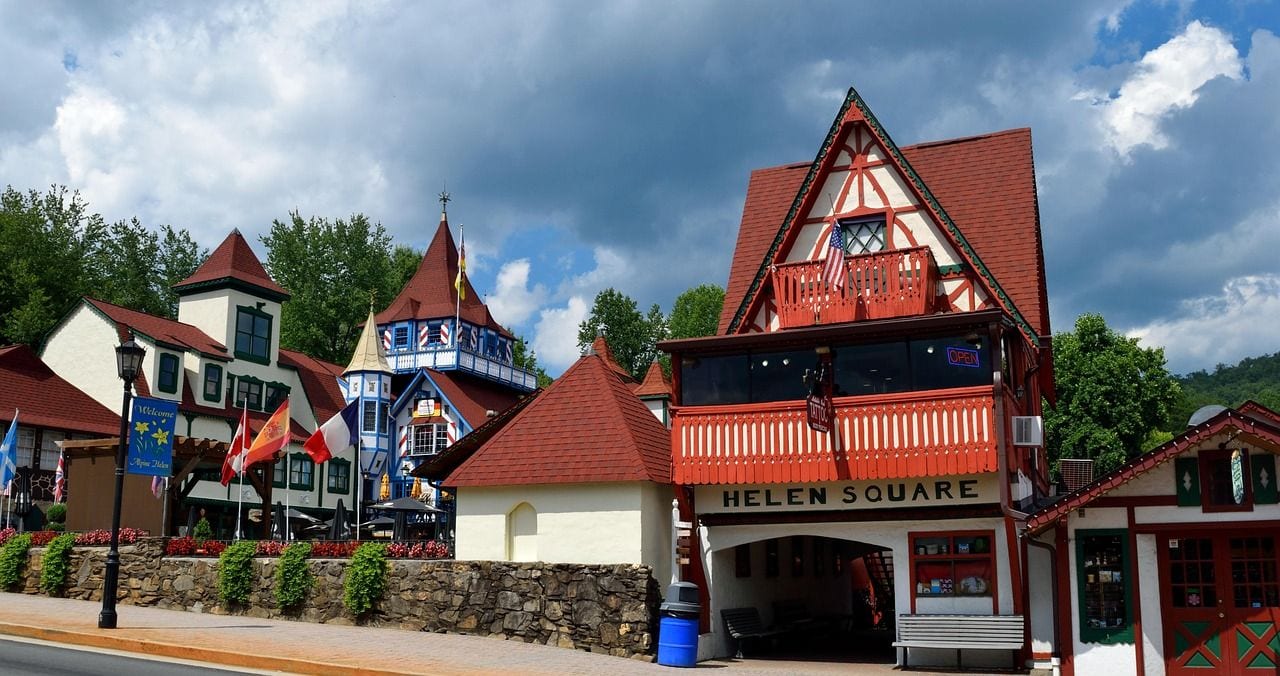
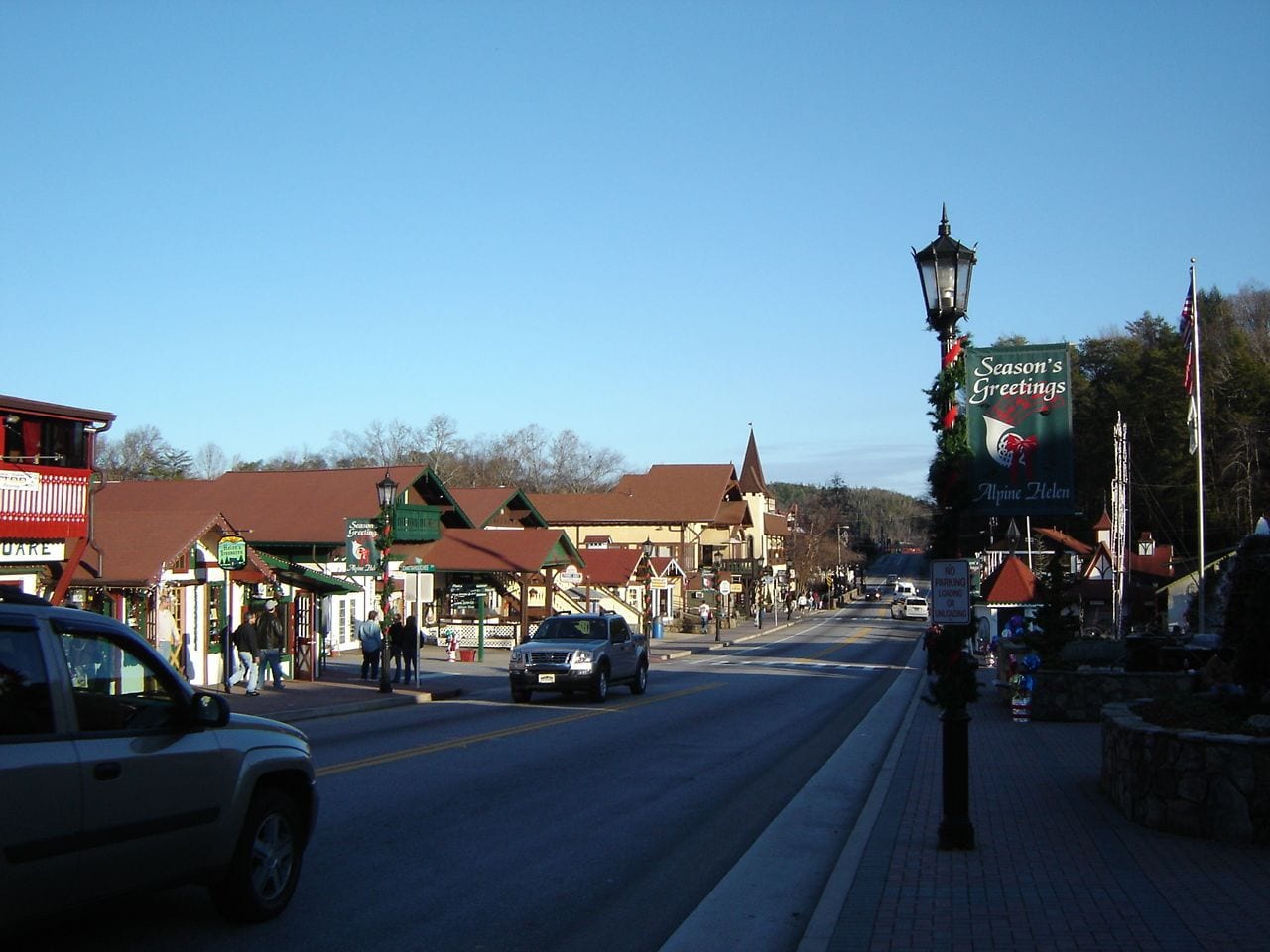
Helen was a fading logging town until it remade itself as a Bavarian Alpine village; the zoning that keeps its look was first adopted in 1969.
A wall in downtown Cartersville carries a Coca-Cola advertisement painted in 1894, said to be the first outdoor Coca-Cola sign in the world.
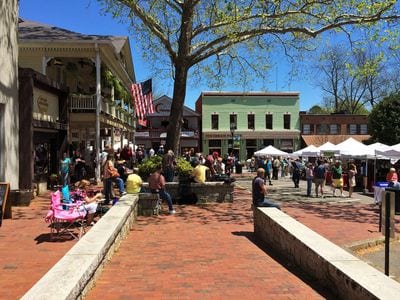
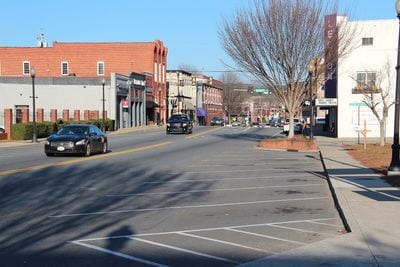
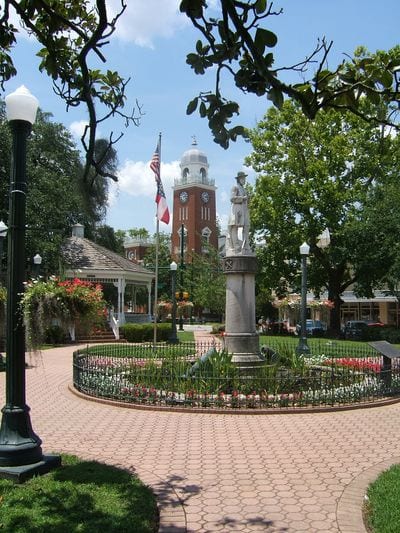
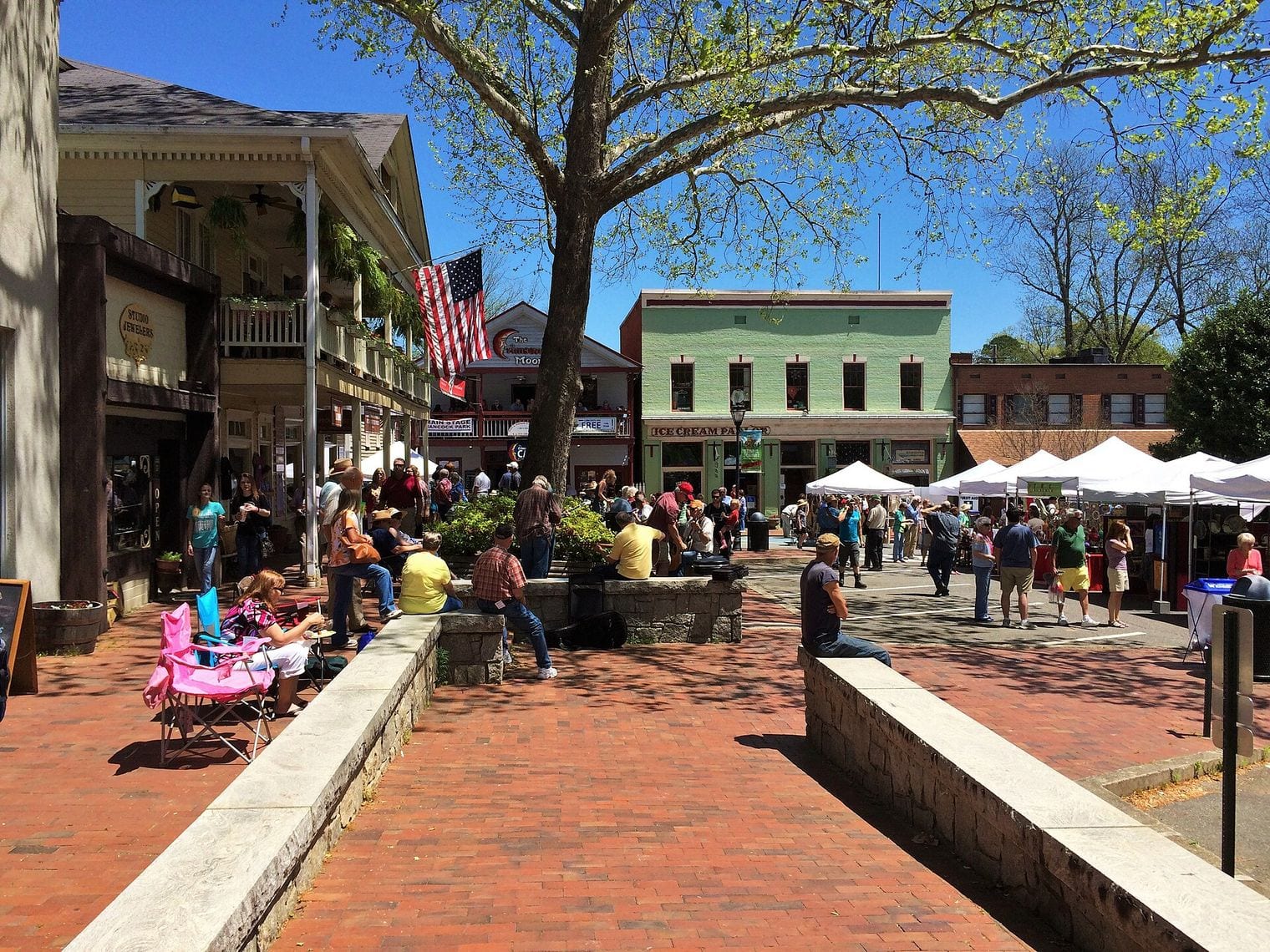
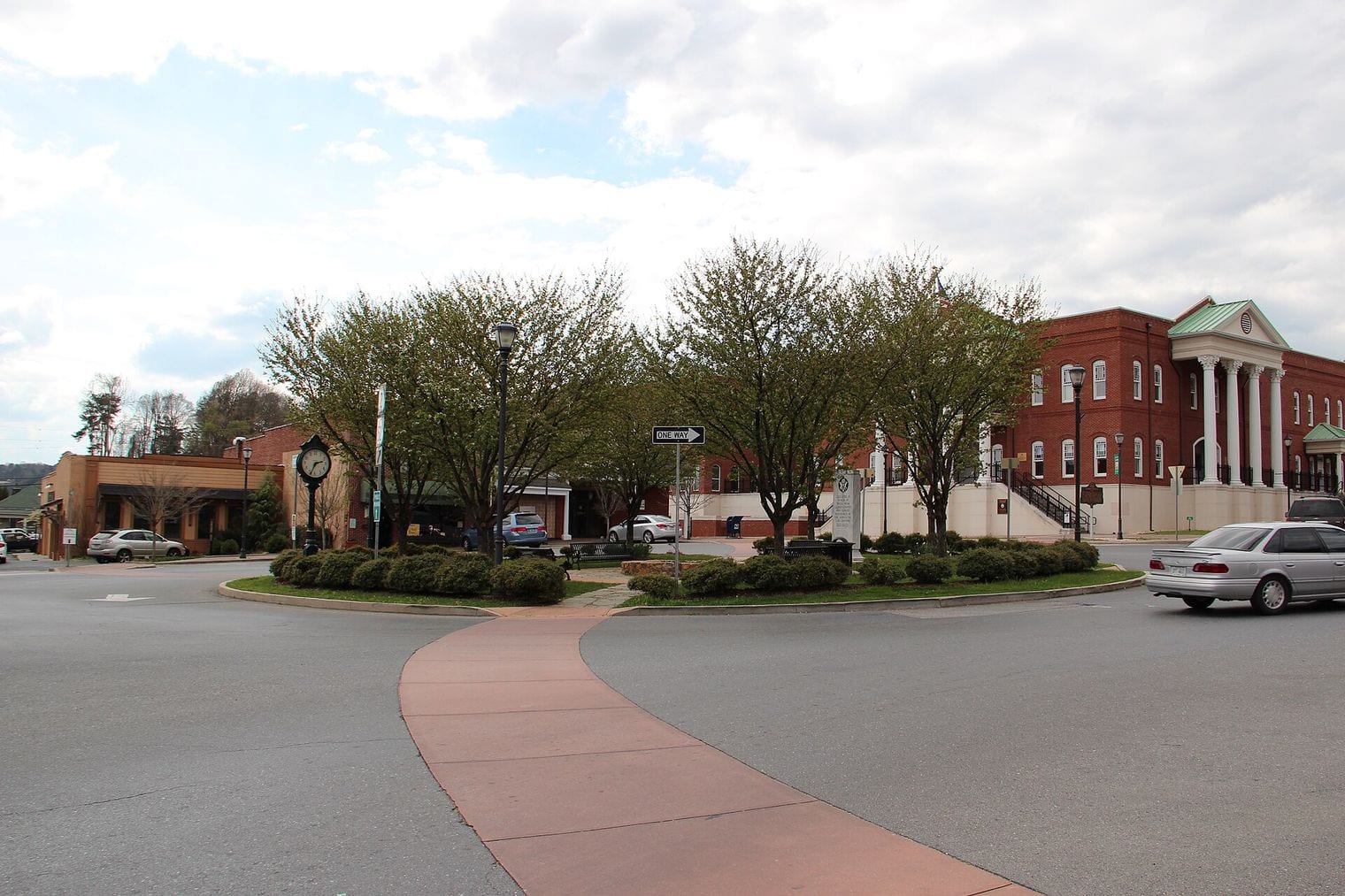
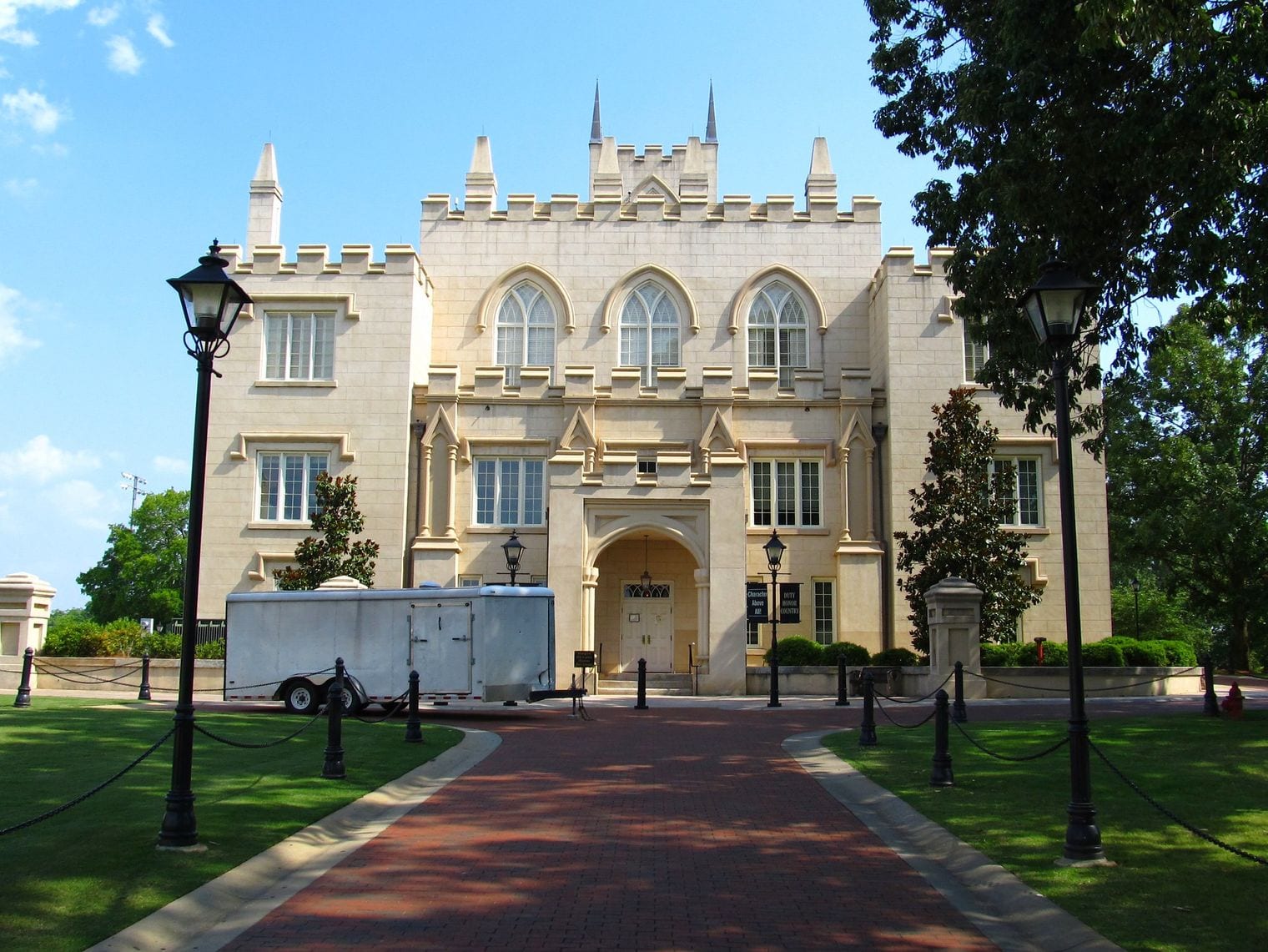
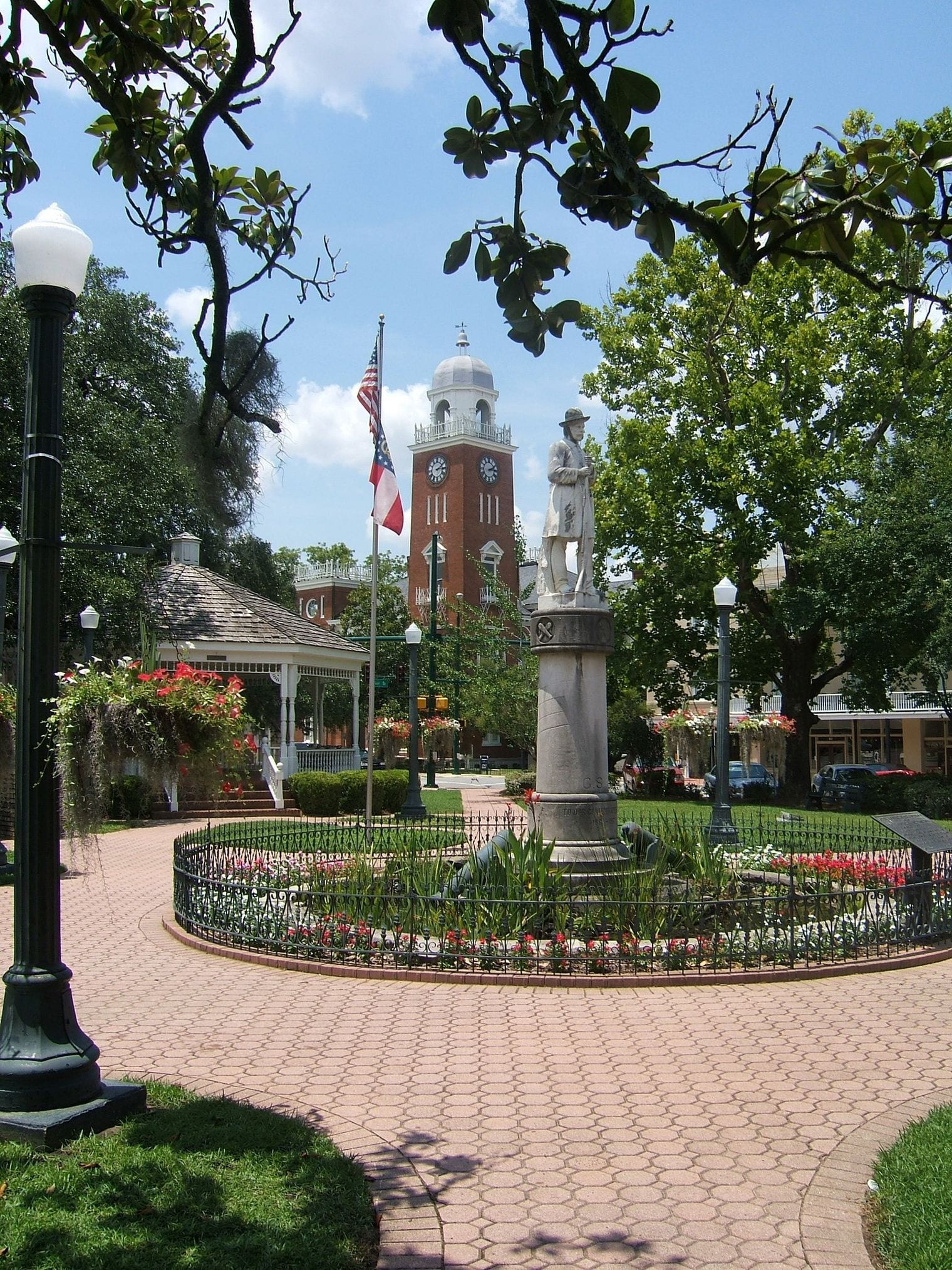
Gold put Dahlonega on the map. In 1829 prospectors struck it in the hills of Lumpkin County, setting off the Georgia Gold Rush two decades before California's, and in 1838 the federal government opened a branch mint here to coin the local gold. Today the county seat is also a college town, home to the main campus of the University of North Georgia, with a public square ringed by shops, tasting rooms and old brick storefronts.
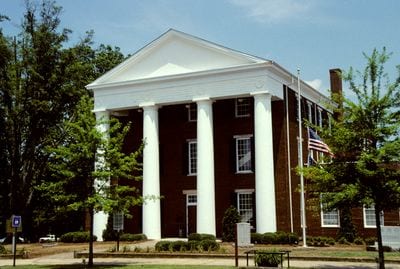
At the center of the square, the Dahlonega Gold Museum fills the old Lumpkin County Courthouse, built in 1836, with the story of the rush and the coins struck at the mint. Nearby gold mines offer underground tours and the chance to pan for flakes yourself, and the vineyards and wineries in the surrounding foothills have earned the area its reputation as the heart of North Georgia wine country.
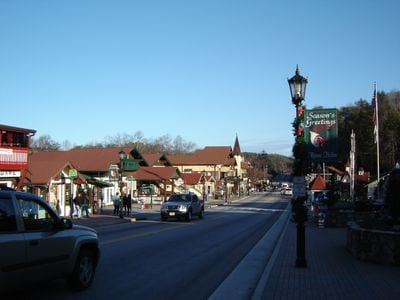
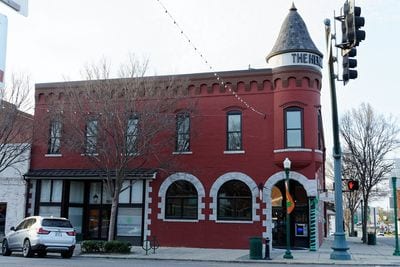
Few places in the South look quite like Helen, a former logging town on the Chattahoochee River that rebuilt itself as a Bavarian Alpine village. Zoning first adopted in 1969 requires its buildings to keep the look, so the tiny White County city, home to only a few hundred residents, is a fairy-tale strip of steep roofs, painted timbers and window boxes, filled with beer halls, sweet shops and German-themed festivals.
Helen's Oktoberfest stretches across the fall, when the leaves on the surrounding mountains also reach their peak. In summer, tubing down the Chattahoochee right through town is the classic outing, and Unicoi State Park, immediately northeast, has a mountain lake, mountain-bike trails and the way in to Anna Ruby Falls in the Chattahoochee National Forest.
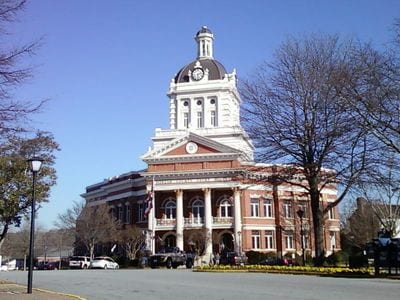
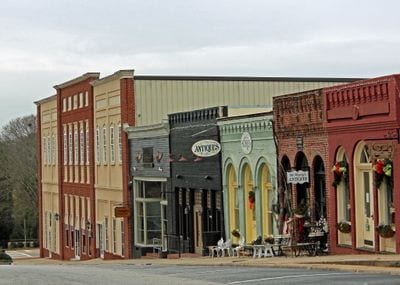
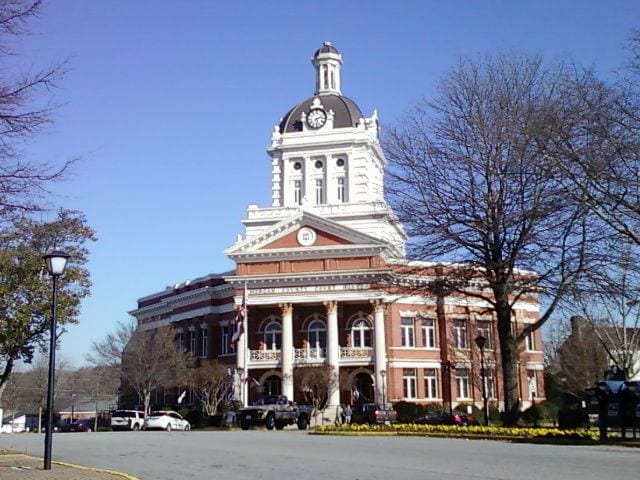
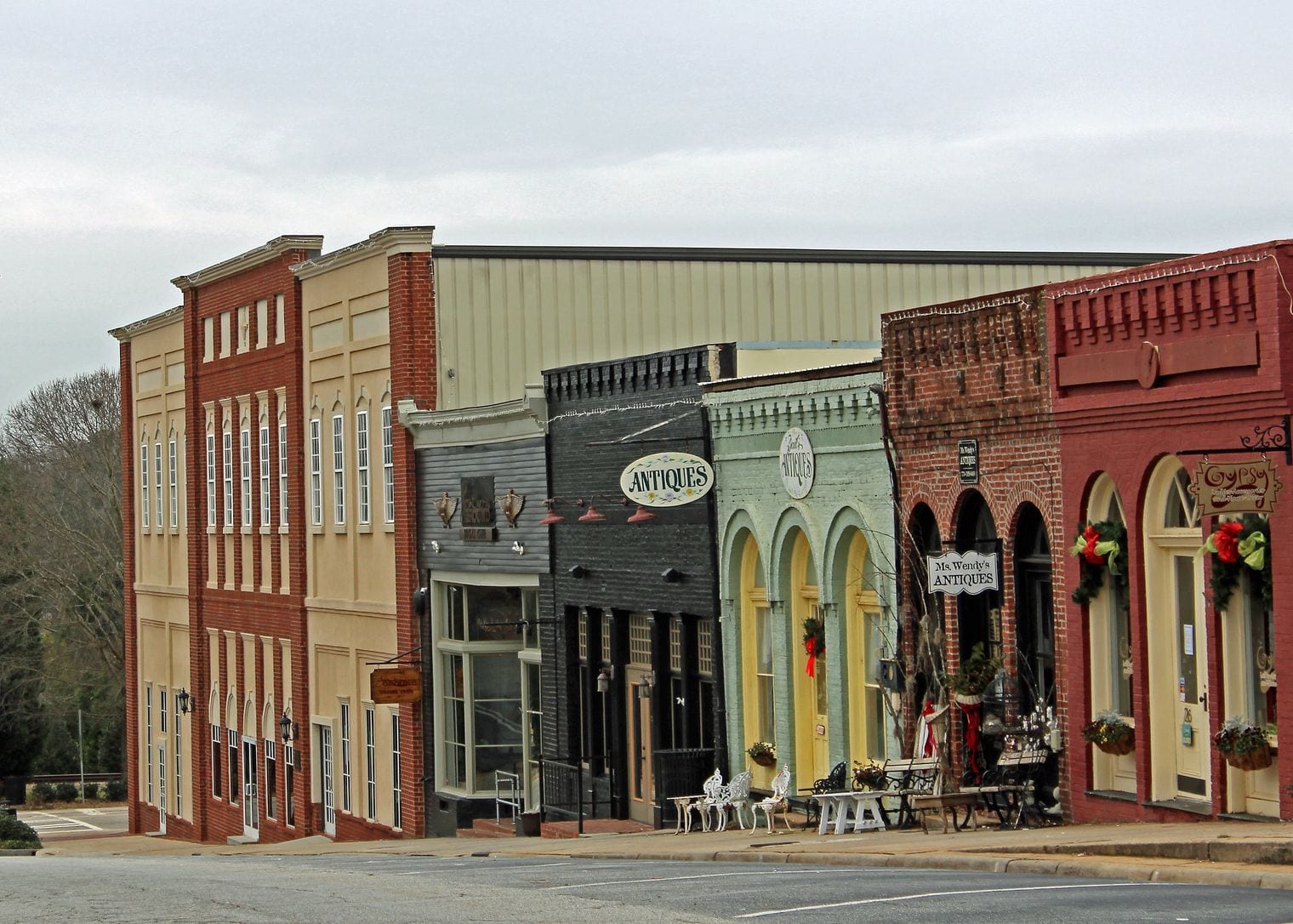
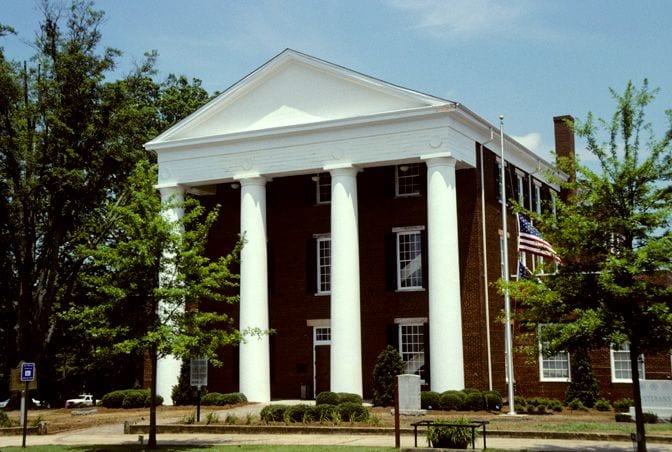
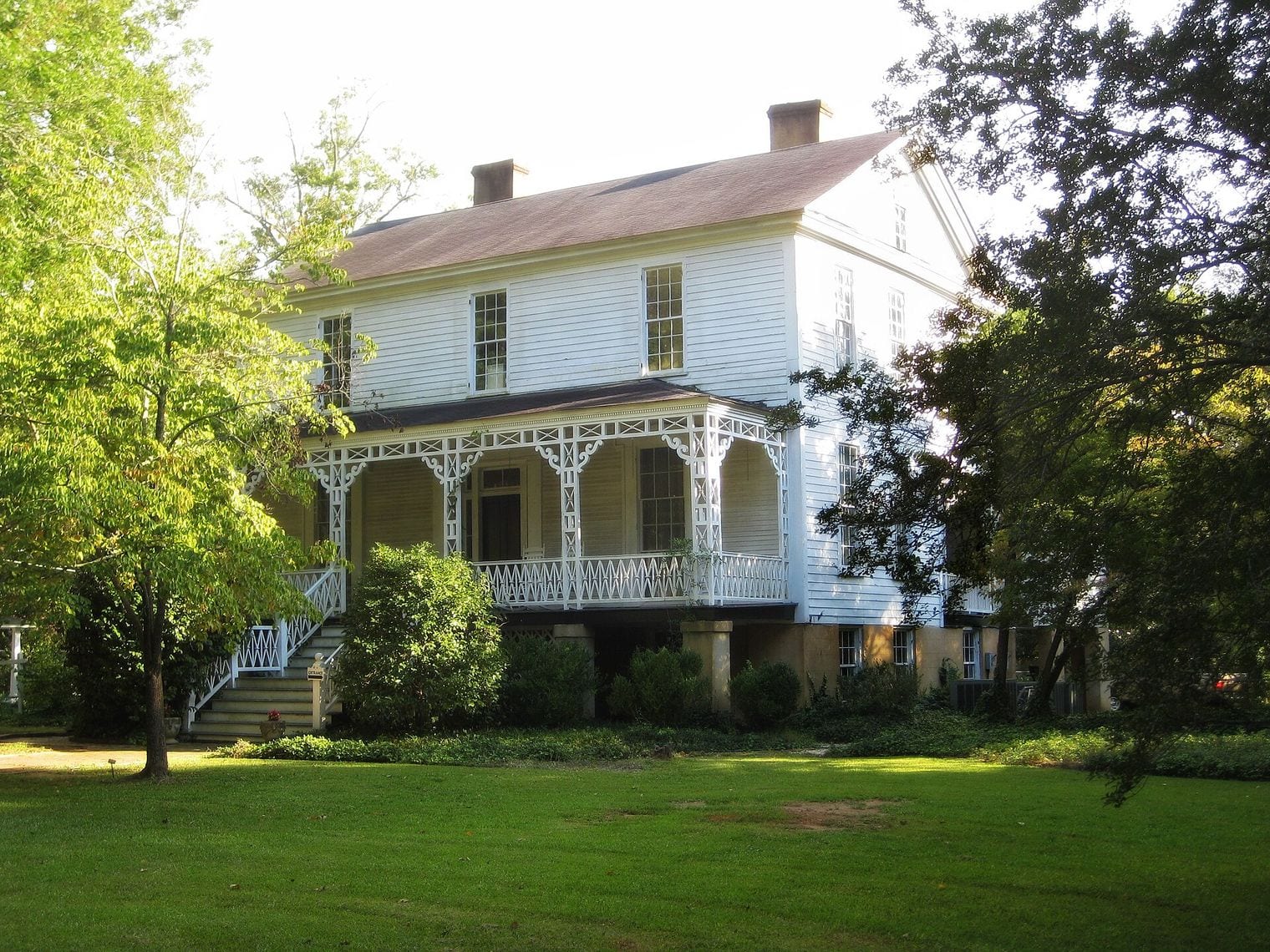
Madison is the antebellum Georgia many travelers picture, a Morgan County seat whose historic district is one of the largest in the state, with nearly 100 antebellum homes built during the cotton boom of the mid-1800s. Sherman's March to the Sea in 1864 passed the town by without burning it; local tradition credits its beauty, though historians point to the influence of the pro-Union congressman Joshua Hill.
Pick up a walking-tour map and wander past the columned houses, then step inside Heritage Hall, a restored house museum run by the Morgan County Historical Society, or the Morgan County African American Museum. The courthouse square is lined with antique shops, galleries and cafés, and Lake Oconee is a short drive away for an afternoon on the water.
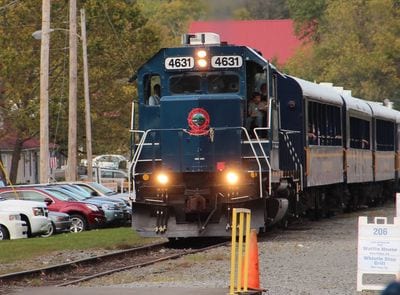
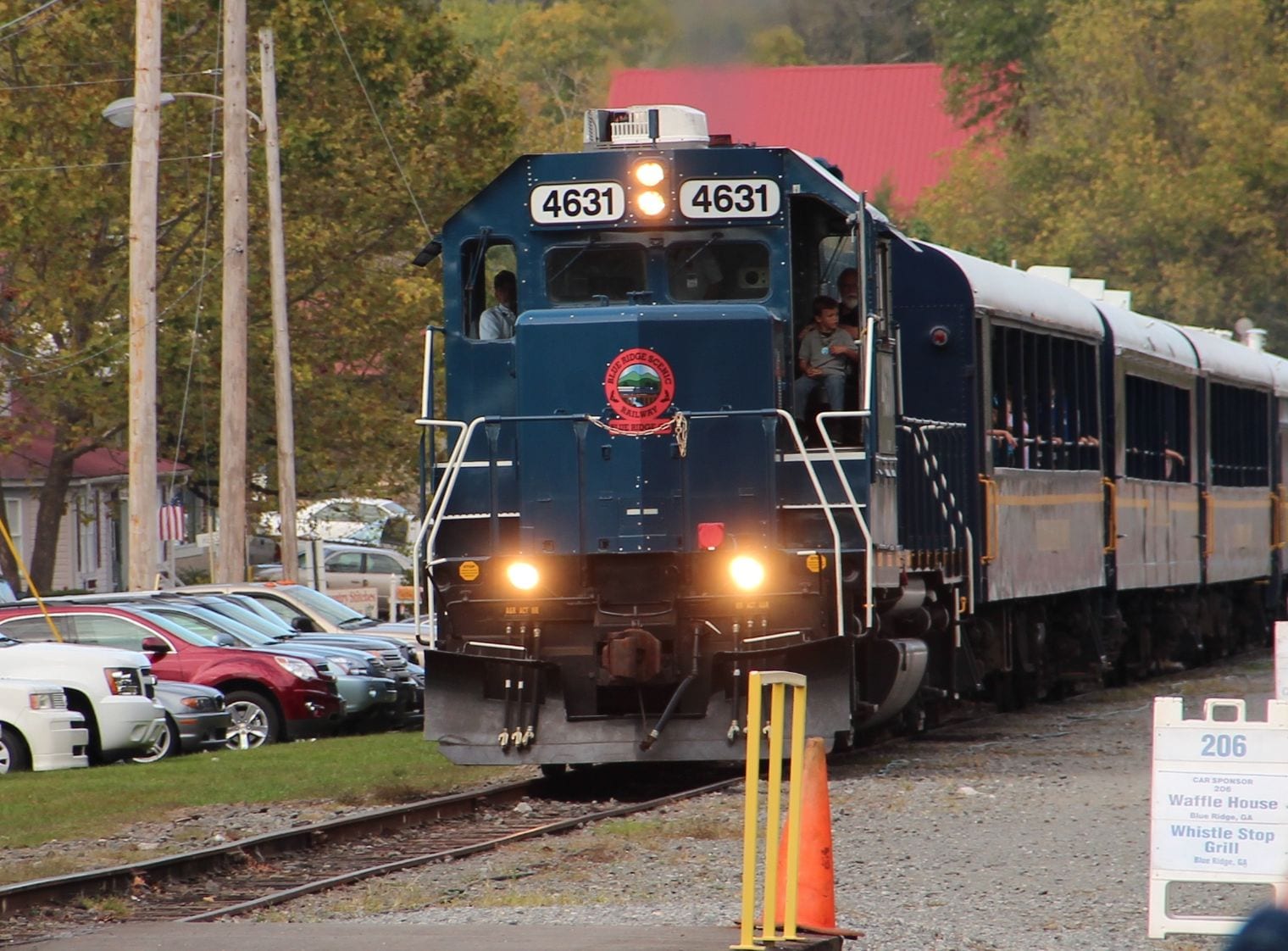
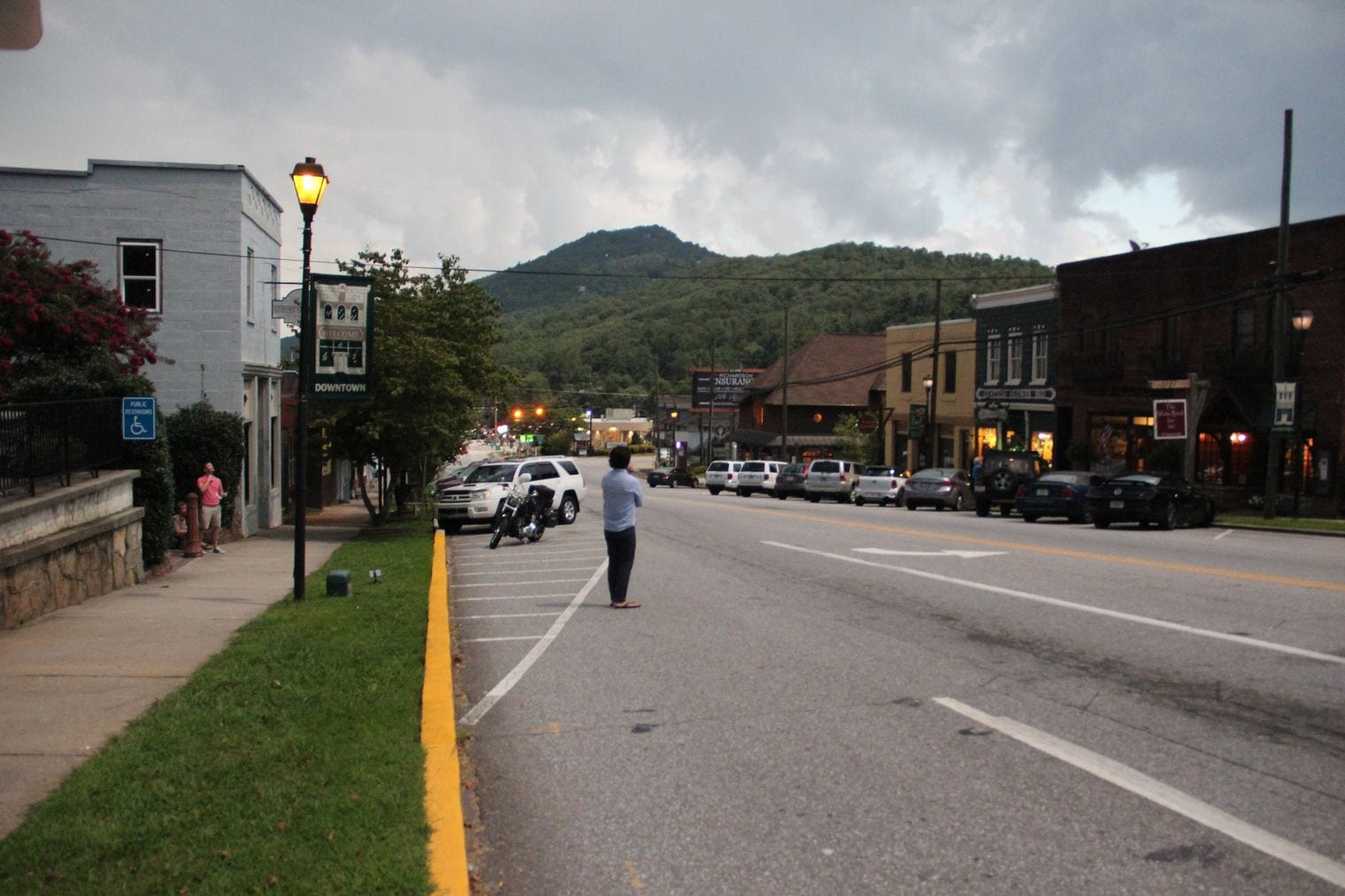
Blue Ridge, the seat of Fannin County, is the North Georgia mountain town many city dwellers escape to for a weekend, with a walkable downtown of galleries, outfitters and cafés set among forested ridges. Its signature ride is the Blue Ridge Scenic Railway, which follows the old Marietta and North Georgia Railroad line along the Toccoa River to McCaysville and its twin town of Copperhill, Tennessee.
Lake Blue Ridge, a mountain reservoir just outside town, is the place for paddling, swimming and fishing, while the Toccoa River draws trout anglers and tubers. Hikers head for the Benton MacKaye Trail and its long swinging bridge over the Toccoa, and fall brings apple stands and bright color to the hills around town.
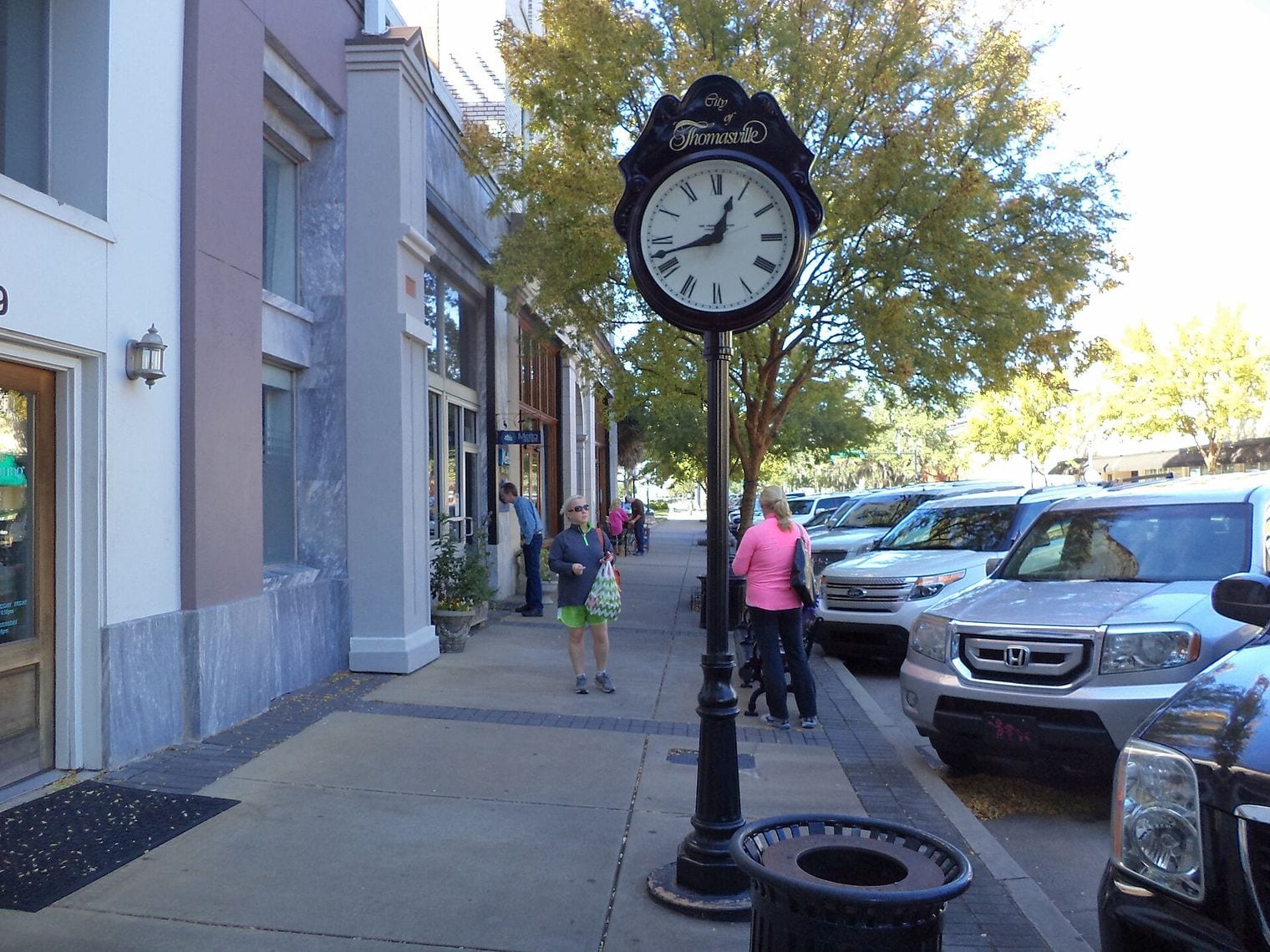
Deep in south Georgia, Thomasville became known in the 1880s as the Winter Resort of the South, when wealthy Northerners arrived by rail for the mild climate and pine-scented air, and many of their Victorian homes and hunting plantations survive. The self-styled City of Roses tends more than 1,000 rose bushes around town and celebrates them each spring with its Rose Festival.
Downtown's brick-paved Broad Street is lined with shops and restaurants in restored storefronts, and a few blocks away stands the Big Oak, a live oak dating from around 1680. Tour Pebble Hill Plantation, a grand hunting estate turned museum, or the Lapham-Patterson House, an eccentric 1885 winter cottage now owned by the state, and pair the town with Valdosta, less than an hour to the east.
Ellijay sits where the Ellijay and Cartecay rivers meet to form the Coosawattee, and the Gilmer County seat is the heart of what locals call the Apple Capital of Georgia. Orchards spread across the surrounding hills, and in late summer and fall roadside apple houses sell fresh-picked fruit, cider and baked goods.
The Georgia Apple Festival each October is the town's big event, drawing crafts vendors and crowds, while the historic downtown square has antique shops and cafés. Pick your own apples at a nearby orchard, paddle or tube the Cartecay River, or use Ellijay as a base for wineries and the mountain trails of the Chattahoochee National Forest.
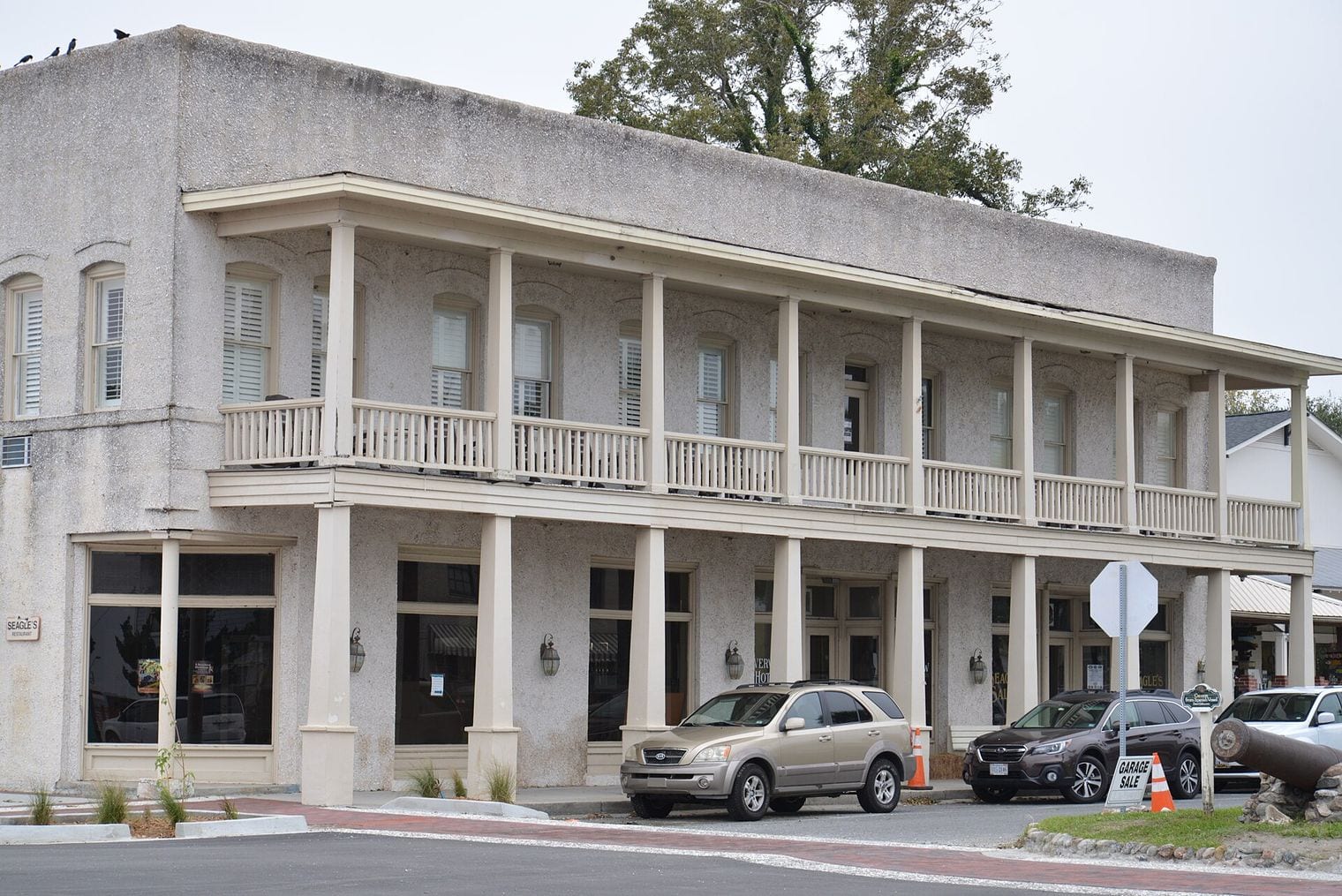
On a quiet bend of the St. Marys River, just across the water from Florida, St. Marys is a waterfront town chartered in 1787 and best known as the gateway to Cumberland Island National Seashore. There is no bridge to the island, so the passenger ferry from the town's docks is the way to reach its empty beaches, its free-roaming wild horses and the ruins of the Dungeness mansion.
Back on the mainland, the St. Marys Submarine Museum tells the story of the submarines based at nearby Kings Bay, and the waterfront park and the live-oak-shaded streets of the historic district invite an evening stroll. Crooked River State Park, just north of town, adds nature trails, campsites and wide marsh views.
Senoia, a Coweta County town south of Atlanta, has a main street so well restored that film and television crews keep coming back. Fans of The Walking Dead will recognize it as the walled town of Woodbury, and much of the downtown has appeared in the show over several seasons.
Stroll the main street's shops and cafés, look for the stores and tours devoted to the series, and wander the side streets lined with Victorian houses. Its small-town calm and easy drive from the city make Senoia a good half-day trip.
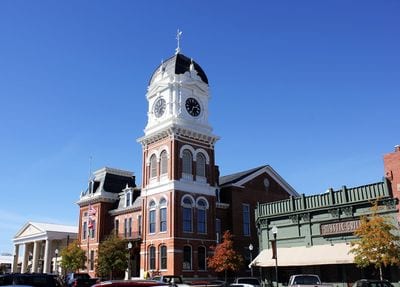
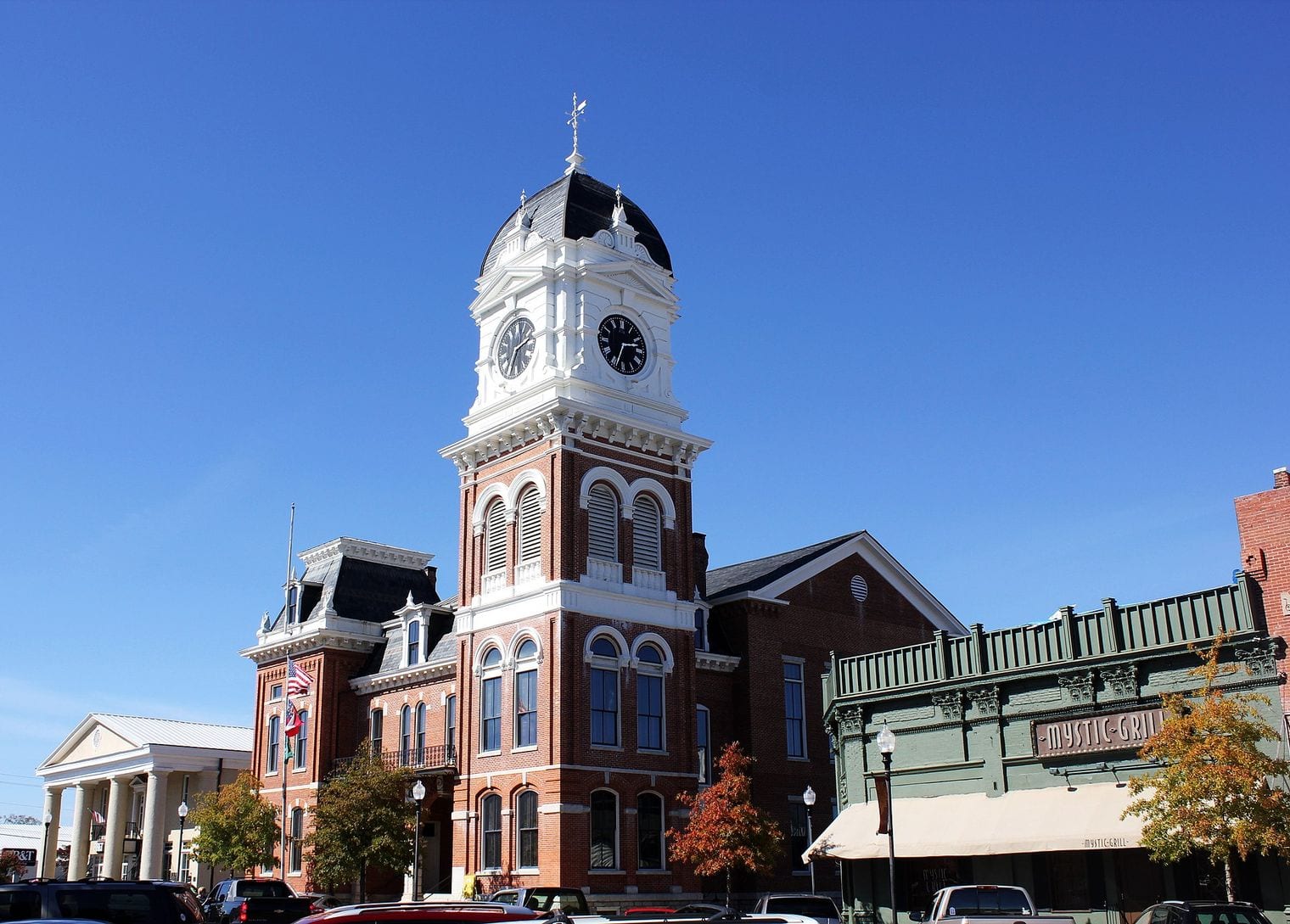
Covington's courthouse square is one of the most filmed in Georgia. The Newton County Courthouse, built in 1884, appeared in the opening credits of the TV series In the Heat of the Night, the square stood in for Mystic Falls throughout The Vampire Diaries, and the town's streets have turned up in many other films and shows.
Walk the square and its shops, pick up a self-guided tour of filming locations, then explore the Covington Historic District, where antebellum and Victorian homes line Floyd Street. The North Covington Historic District adds more grand houses, and the whole town makes an easy day trip east from the city.
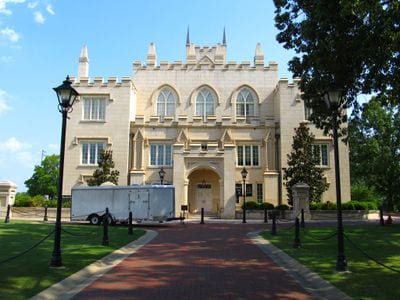
For more than six decades, from 1804 to 1868, Milledgeville was Georgia's capital, and the Baldwin County seat on the Oconee River still carries itself with an air of importance. The town was laid out on a grid modeled on Savannah and Washington, D.C., and the Old State Capitol now stands on the campus of Georgia Military College.
Tour the Old Governor's Mansion, an 1839 Greek Revival house museum run by Georgia College, then drive about 4 miles out to Andalusia, the farm where writer Flannery O'Connor lived, wrote and raised peacocks. Downtown has a lively college-town feel, and Lake Sinclair is close by for boating and fishing.
Halfway between Atlanta and Augusta on Interstate 20, Greensboro is the Greene County seat, a quiet town of brick storefronts and old homes that has also become the gateway to Lake Oconee and its lakeside resorts.
Its most unusual sight is the Old Gaol, a granite jail built in 1807 with walls 2 feet thick and a trapdoor gallows inside, among the oldest jails still standing in Georgia. Walk the downtown streets around the Greene County Courthouse, then head to the lake for boating, fishing and golf.
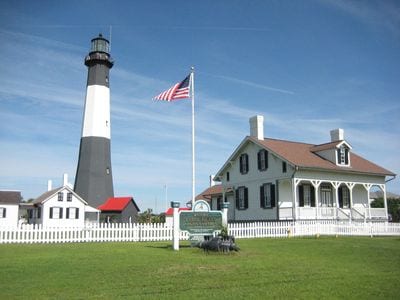
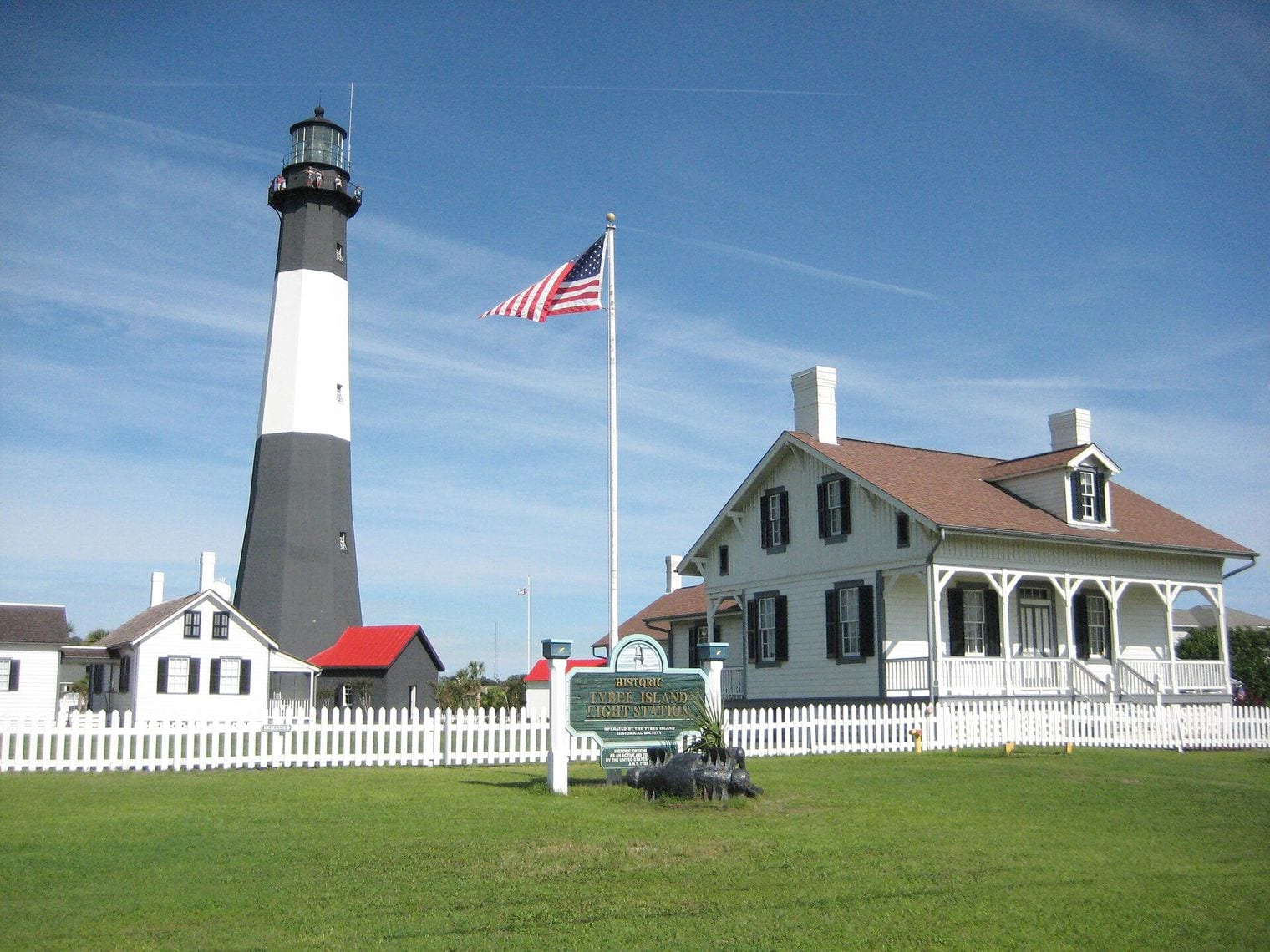
Tybee Island is Savannah's beach, a laid-back barrier-island town about 18 miles east of the city at Georgia's easternmost point. The black-and-white tower of the Tybee Island Light Station rises at the north end, on a site where the first lighthouse went up in 1736, and the current tower is one of only a few colonial-era lighthouses left in the country; you can climb it for views over the Atlantic and the mouth of the Savannah River.
Spend the day on the wide beaches, walk out on the pier and pavilion, or paddle the marshes behind the island looking for dolphins. On the drive in from Savannah, stop at Fort Pulaski National Monument, the brick fort that Union rifled cannon breached from Tybee in April 1862.
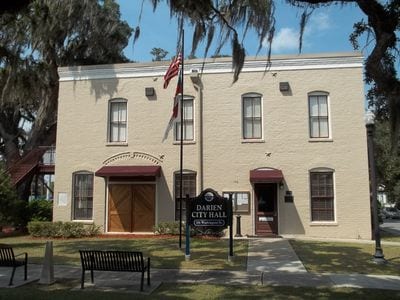
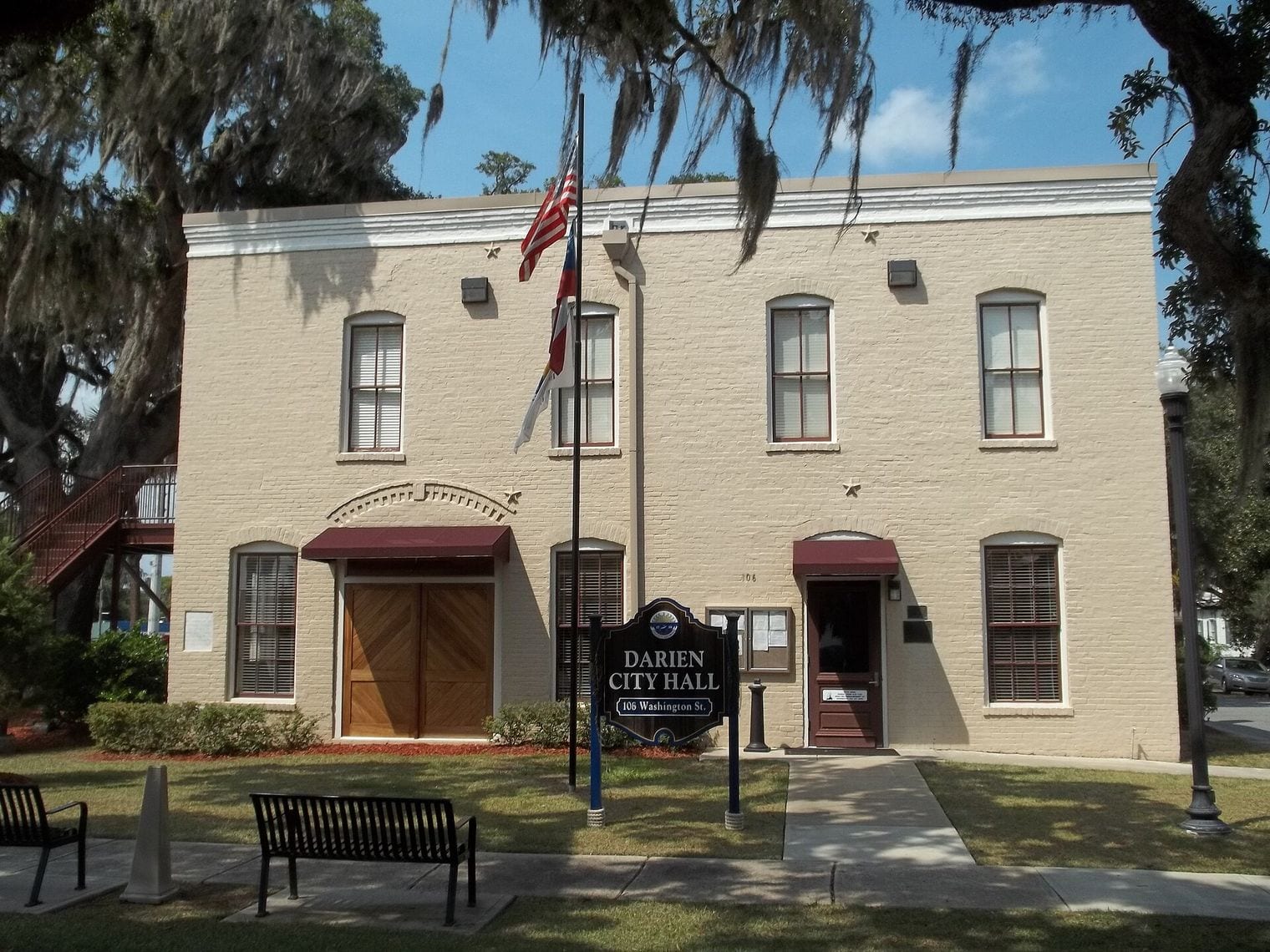
At the mouth of the Altamaha River, Darien was founded in 1736 by Scottish Highlanders recruited by James Oglethorpe and first called New Inverness, and it is the second-oldest planned city in Georgia. Shrimp boats still tie up along its waterfront, and the McIntosh County seat makes a peaceful base for exploring the vast marshes of the Altamaha delta.
Just outside town, Fort King George State Historic Site preserves a reconstructed blockhouse from the fort the British built in 1721, when it was the southernmost outpost of their empire in North America. Darien is also the closest town to the ferry dock for Sapelo Island, with its lighthouse, beaches and the Gullah Geechee community of Hog Hammock.
Free printable checklist of all 30 places
Tick them off as you go. Confirm your email to download it, plus one email every Thursday with new guides for the places you tick.
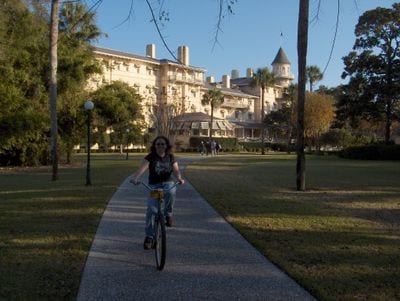
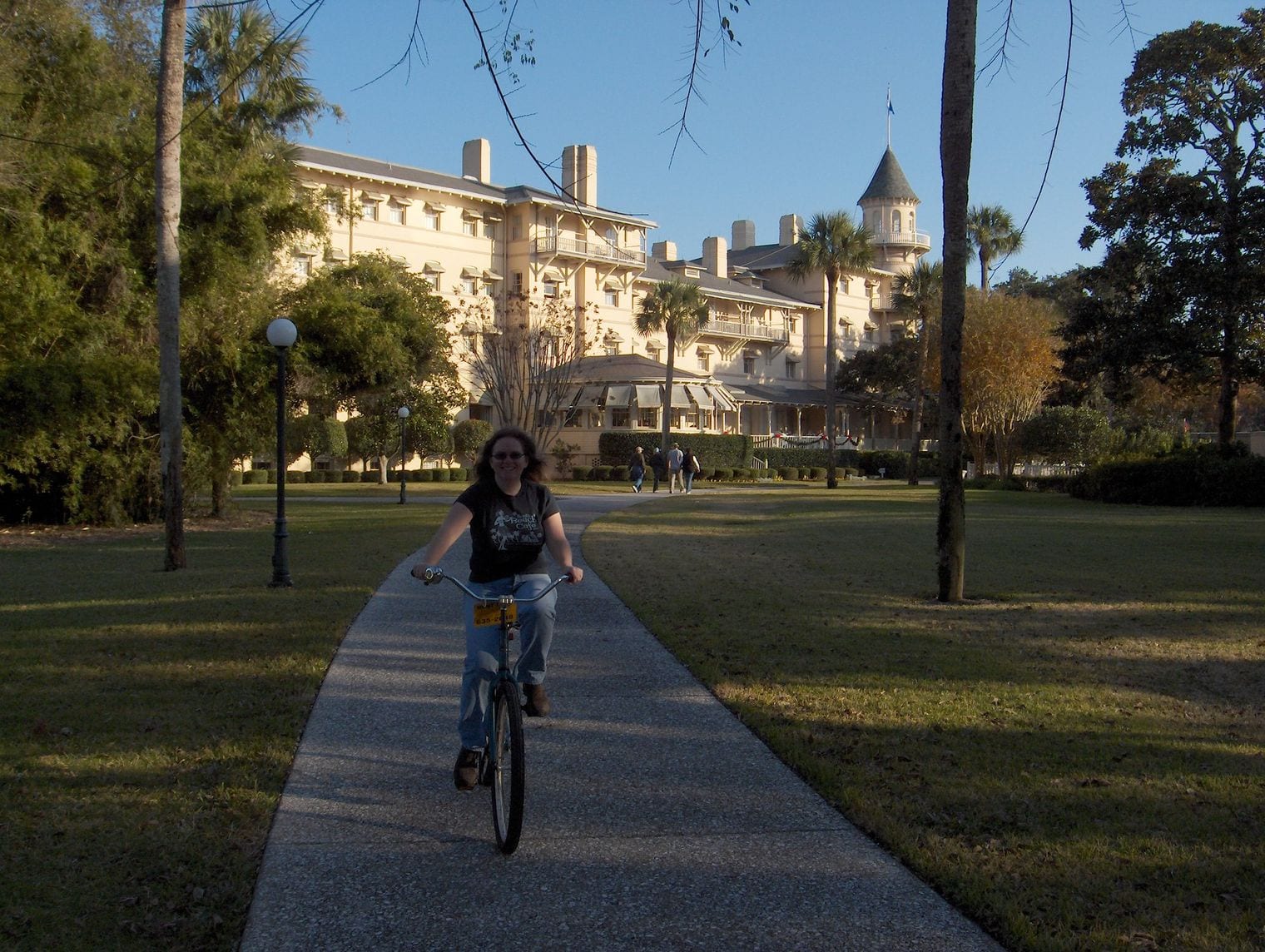
Owned by the State of Georgia and run by the Jekyll Island Authority, Jekyll Island is a barrier island of beaches, marsh and maritime forest with a small resort community. From 1886 it was the winter retreat of the Jekyll Island Club, whose members came from some of the world's wealthiest families, including the Morgans, Rockefellers and Vanderbilts, and in 1910 financiers met here in secret to draft the central-bank plan that shaped the Federal Reserve Act.
Tour the club's historic district, where the grand clubhouse and members' cottages line the riverfront, then ride the bike trails that loop the island. Driftwood Beach, a boneyard of bleached fallen trees on the north end, is a favorite with photographers, and the Georgia Sea Turtle Center nurses injured sea turtles back to health.
Brunswick is the mainland port of the Golden Isles, named after the German duchy of Brunswick-Lüneburg and laid out in 1771 on a grid of public squares much like Savannah's. Its Old Town Historic District is full of Victorian homes and shaded squares, and the restored Ritz Theatre anchors a revived downtown along Newcastle Street.
Brunswick is the center of Georgia's shrimping industry, and shrimp boats still tie up along the waterfront. During World War II its shipyards turned out Liberty ships for the war effort, and today the town makes a handy base for St. Simons and Jekyll islands just across the marshes.
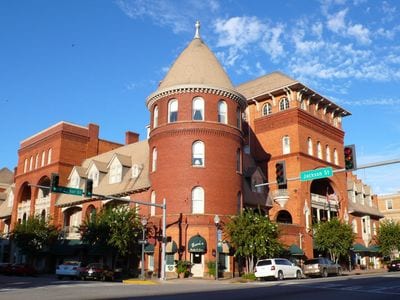
Americus, the Sumter County seat in southwest Georgia, is the town where Habitat for Humanity was founded, and the charity still keeps its international headquarters here. Its downtown is rich in Victorian and antebellum architecture, and Georgia Southwestern State University gives it a college-town energy.
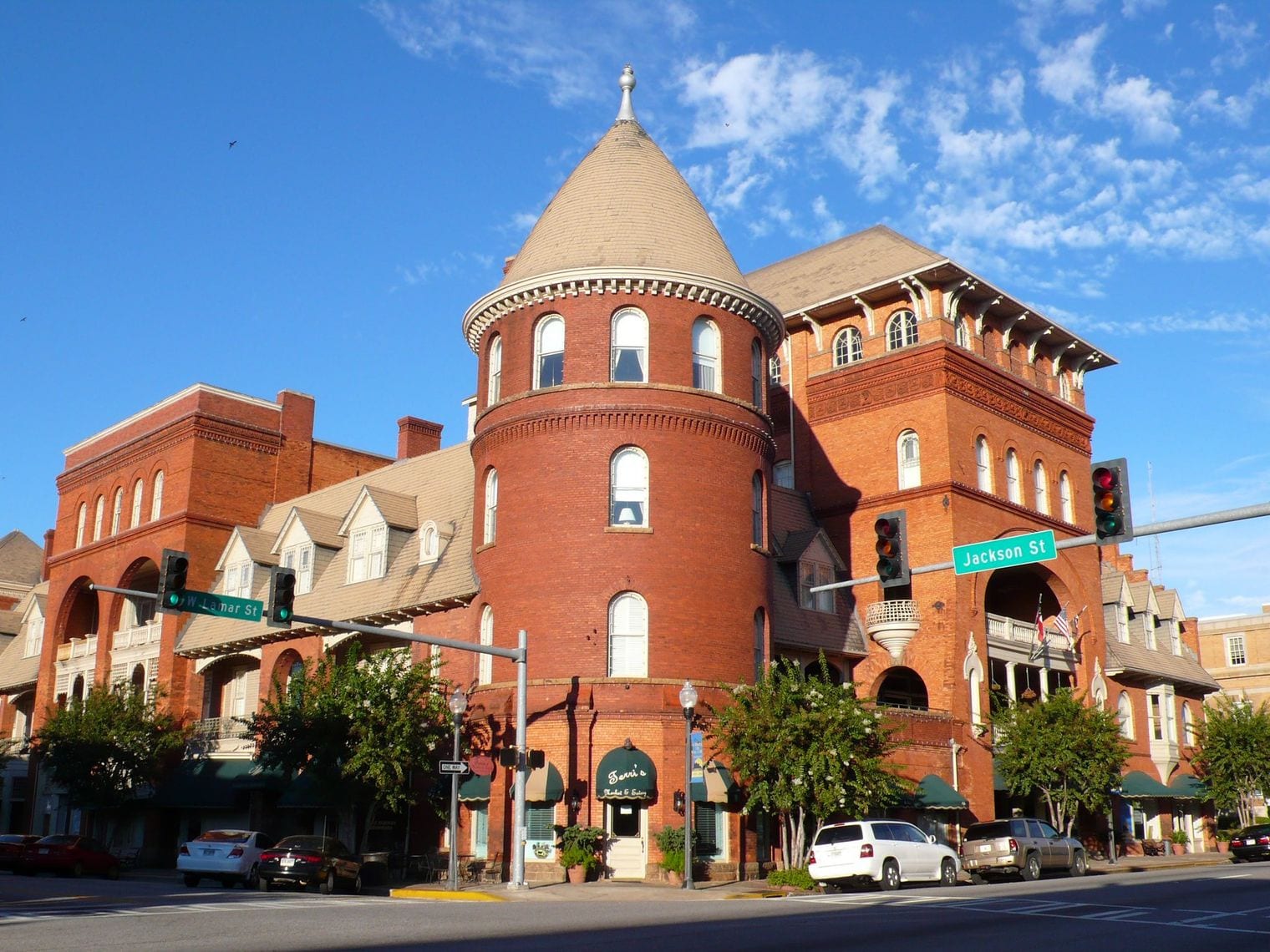
The Windsor Hotel, a five-story Queen Anne landmark built in 1892 to draw winter visitors from the North, anchors the historic downtown. Americus is also the natural base for two National Park Service sites: Andersonville National Historic Site, the Civil War prison camp to the northeast, and the Jimmy Carter National Historical Park in nearby Plains.
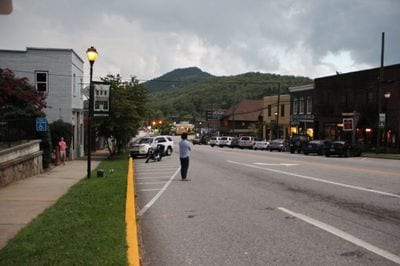
Clayton, the seat of Rabun County in Georgia's far northeast corner, is a mountain town with a lively main street of galleries, outfitters, shops and restaurants at the foot of Black Rock Mountain. It makes a handy base for some of the most dramatic scenery in the state, from waterfalls and lakes to the whitewater of the Chattooga River.
Black Rock Mountain State Park, just above town, is the highest state park in Georgia, and on a clear day its overlooks take in four states. Tallulah Gorge is a short drive south, and the Chattooga, a Wild and Scenic River made famous by the film Deliverance, draws rafters and paddlers along the South Carolina line.
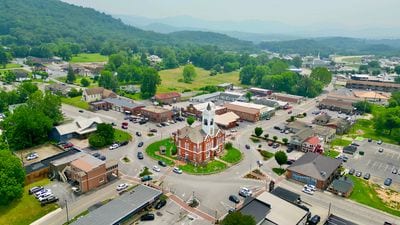
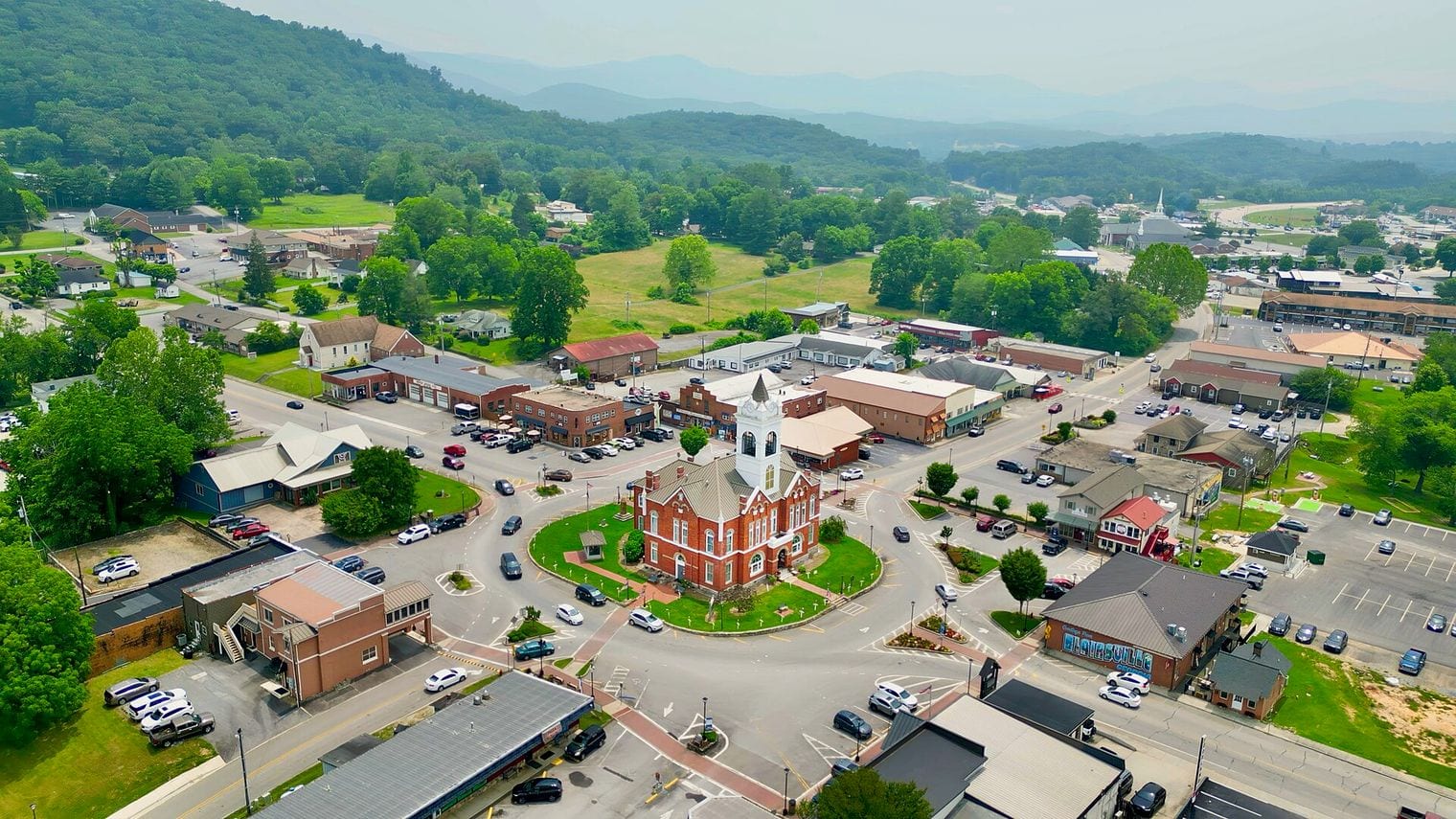
Blairsville, the Union County seat, is a small mountain town wrapped by the Chattahoochee National Forest near Georgia's northern border. Its courthouse square has shops and cafés, and each October the town hosts its Sorghum Festival, a celebration of the harvest with bluegrass music and clogging.
Brasstown Bald, the highest point in Georgia, rises east of town, with an observation tower near the summit. Vogel State Park, about 11 miles south, was one of Georgia's first two state parks and wraps around Lake Trahlyta at the foot of Blood Mountain, and Lake Nottely, formed by a Tennessee Valley Authority dam, is good for boating and fishing.
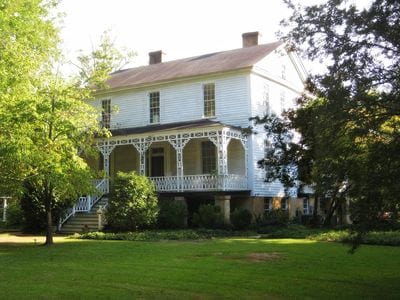
Often called Washington-Wilkes to tell it apart from the many other Washingtons, this Wilkes County seat has an unusually rich stock of antebellum homes. It was briefly Georgia's capital during the Revolutionary War, when it was still called Heard's Fort, and on May 5, 1865, Jefferson Davis met his Confederate cabinet here for the last time as he fled south.
Visit the Robert Toombs House State Historic Site, home of the Confederacy's first secretary of state, and the Washington-Wilkes Historical Museum, then stroll the streets around the courthouse square past columned houses. Augusta is about an hour's drive east, so Washington pairs well with a stay in the city.
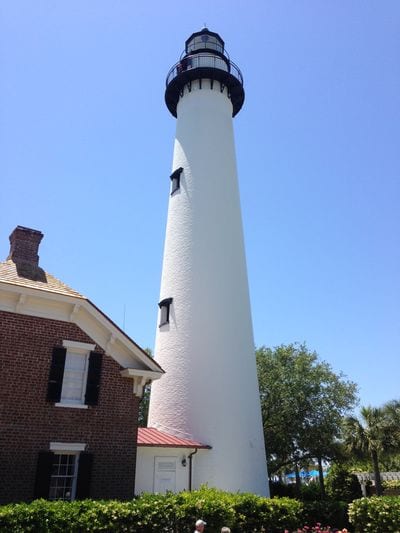
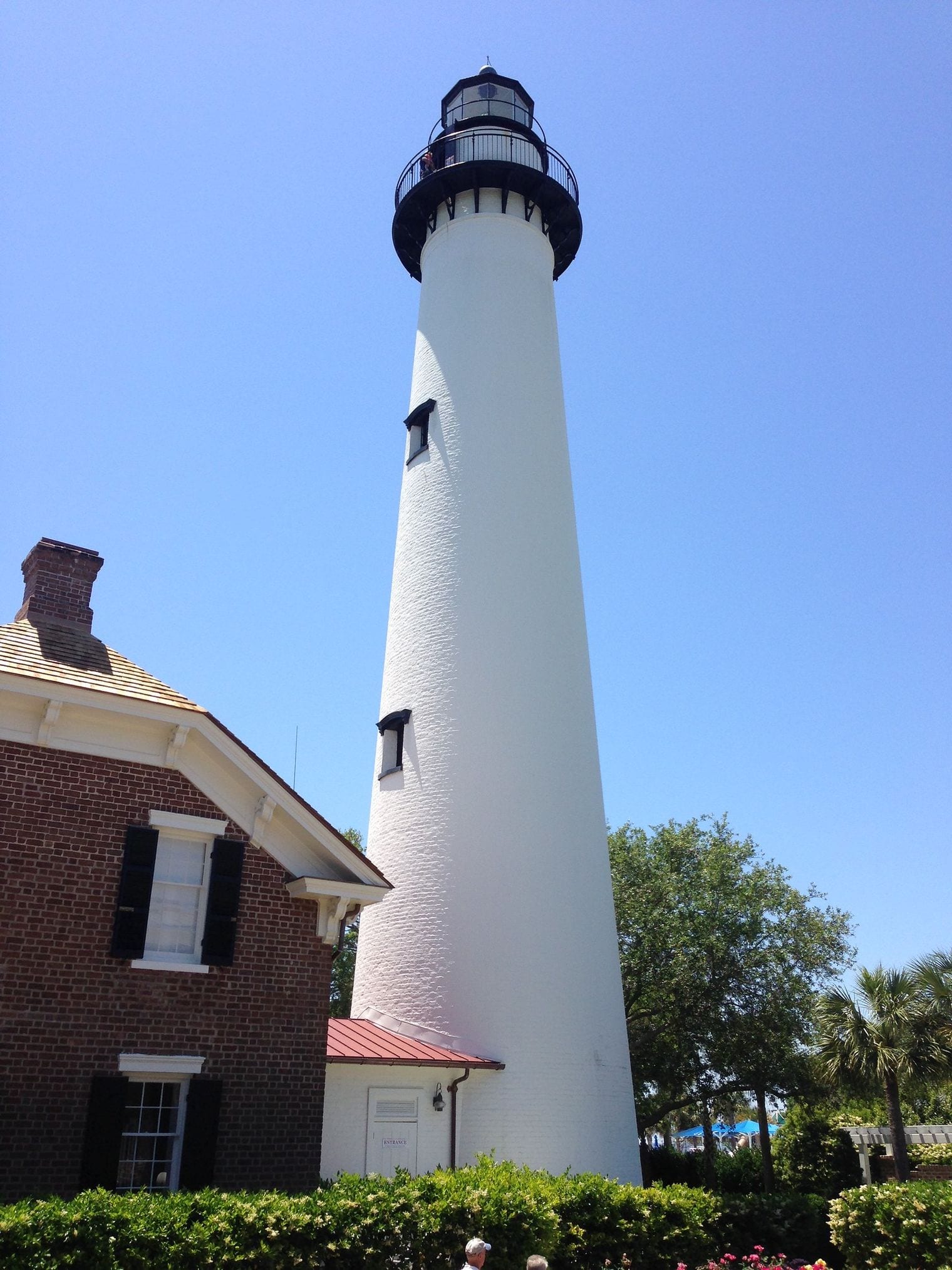
St. Simons, the largest of Georgia's Golden Isles, is an island community of live-oak-shaded roads, beaches and marshes, with a walkable village near the pier at its southern end. The St. Simons Lighthouse, completed in 1872, still has its working Fresnel lens, and you can climb its 129 steps for views over the sound; the Victorian keepers' cottage at its base is now a museum.
On the island's west side, Fort Frederica National Monument preserves the remains of the fort and town that James Oglethorpe built from 1736 to defend colonial Georgia against the Spanish. Nearby is the site of the 1742 Battle of Bloody Marsh, and the beaches and bike paths make it easy to fill a slow island day.
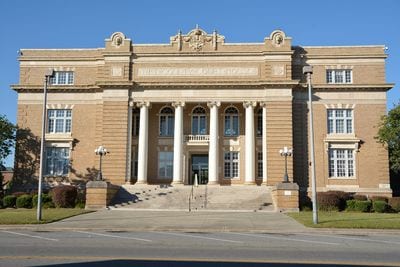
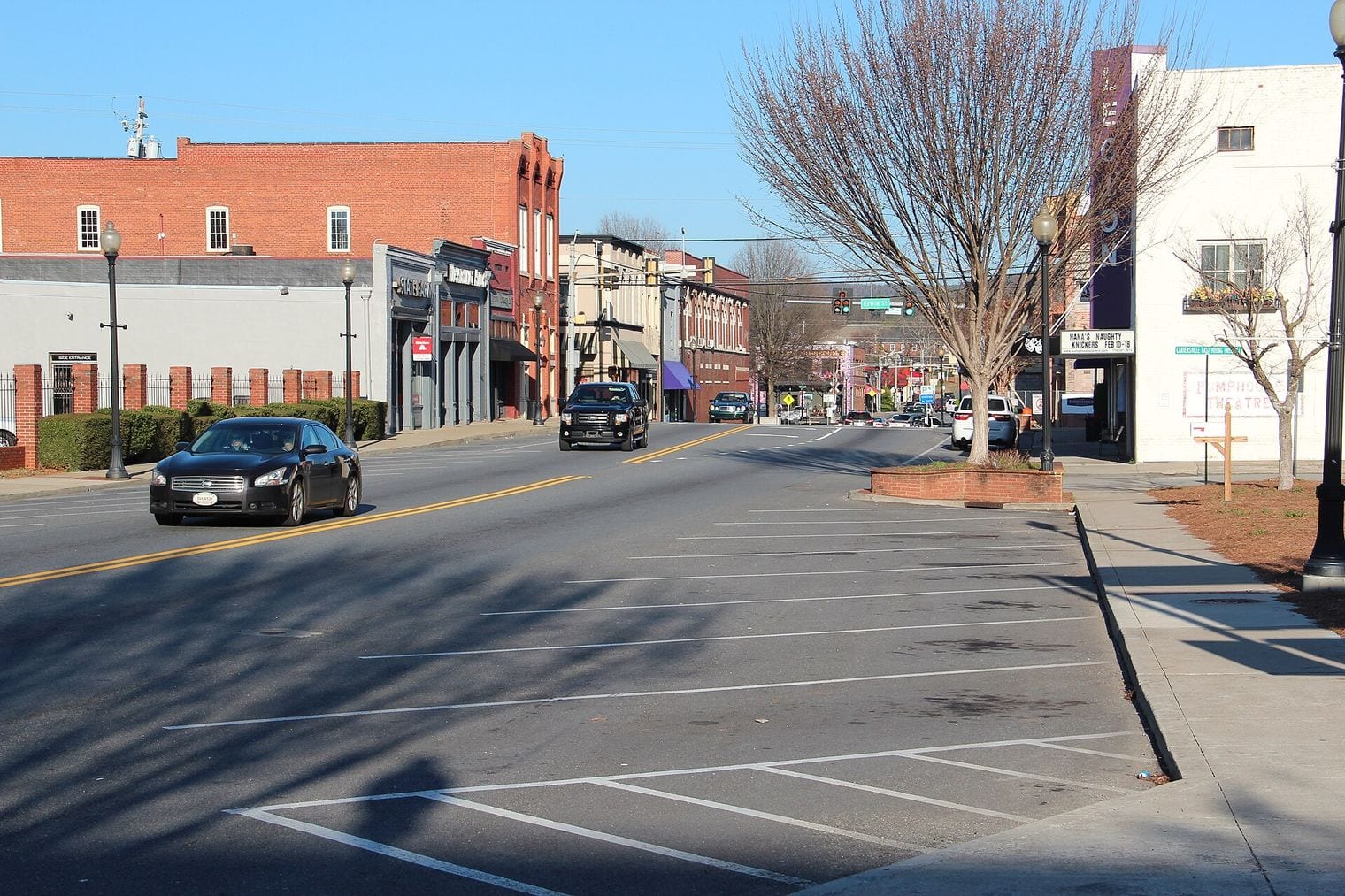
Cartersville, the Bartow County seat on the northwest edge of metro Atlanta, packs in more museums than most small towns. The Booth Western Art Museum, a Smithsonian affiliate, has one of the largest permanent exhibition spaces for Western art in the country, and the Tellus Science Museum, also a Smithsonian affiliate, has fossils, minerals and a digital planetarium.
South of town, Etowah Indian Mounds State Historic Site protects the earthen mounds of a Mississippian town occupied from about 1000 to 1550 AD. Downtown, look for the Coca-Cola sign painted on a pharmacy wall in 1894, said to be the first outdoor Coca-Cola advertisement, and head east to Lake Allatoona and Red Top Mountain State Park for time on the water.
Named by an Irish settler after the capital of his homeland, Dublin sits on the Oconee River and celebrates the link each March with a St. Patrick's festival. The Laurens County seat grew rich as a railroad and cotton town, and its historic downtown is anchored by Theatre Dublin, a restored 1934 Art Deco movie house.
Catch a show at the theatre, explore the Dublin-Laurens Museum for local history, and walk down to the river where the town began. Dublin sits just off Interstate 16 between Macon and Savannah, making it an easy stop on the road to the coast.
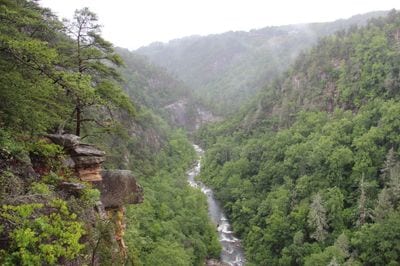
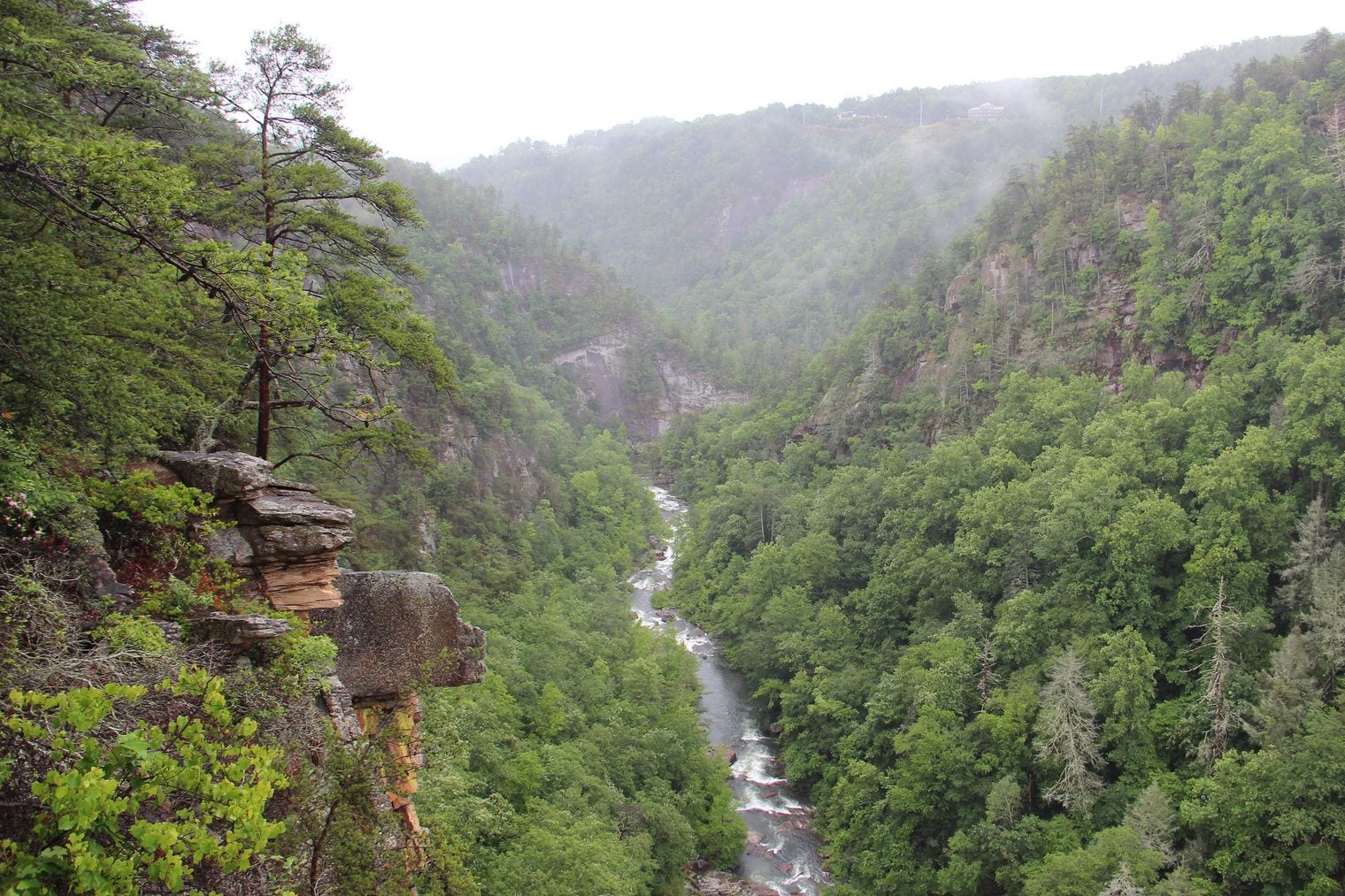
With fewer than 200 residents, Tallulah Falls is one of the smallest towns in this guide, but it sits on the rim of Tallulah Gorge, a canyon about 2 miles long and nearly 1,000 feet deep, where the Tallulah River drops over a string of six waterfalls.
Tallulah Gorge State Park has rim trails to a series of overlooks, a suspension bridge that sways 80 feet above the rocks, and a limited number of permits to hike down to the gorge floor. In 1970 the aerialist Karl Wallenda walked a high wire across the gorge, and the towers that held his cable still stand.
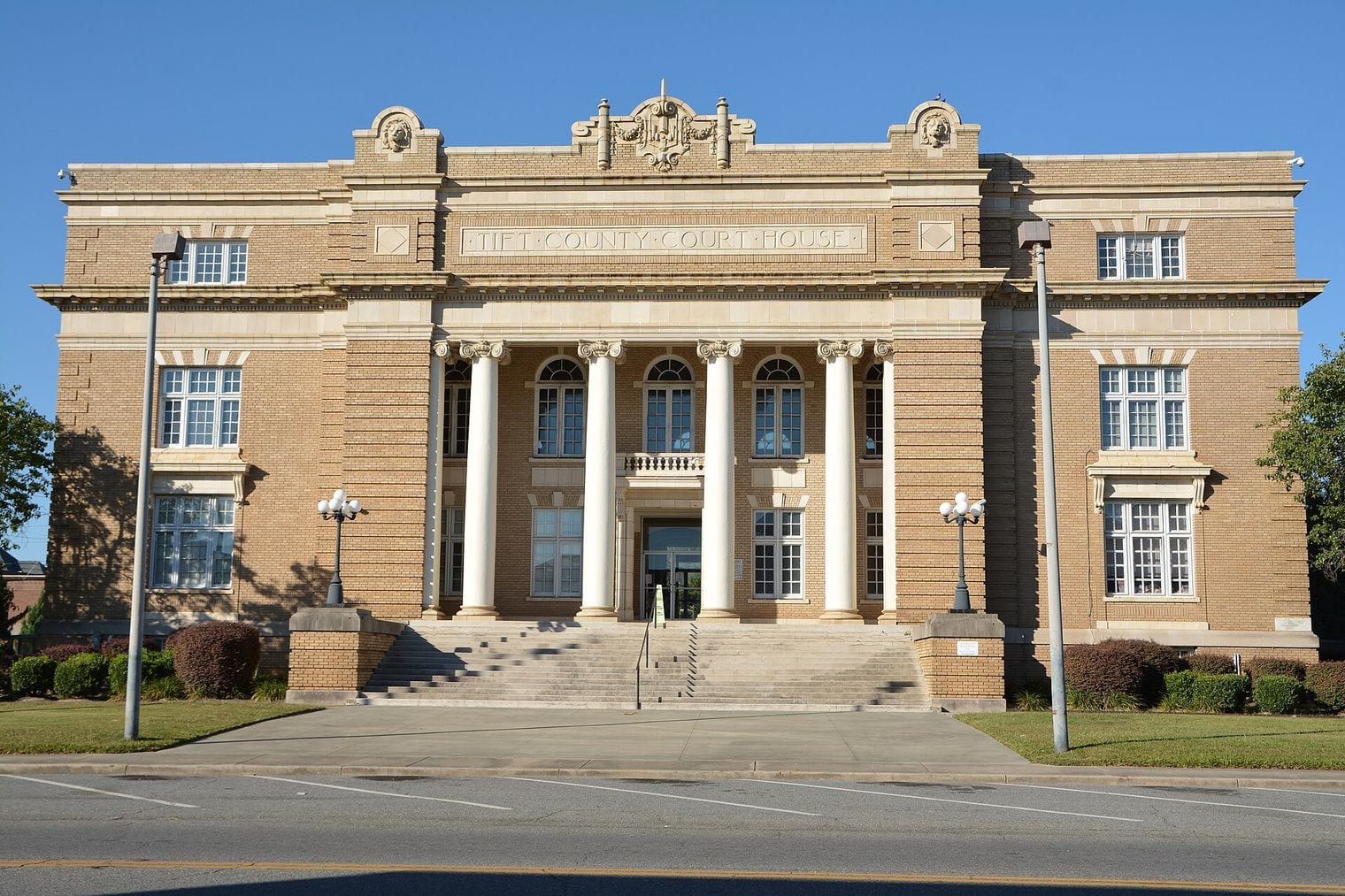
Tifton, the Tift County seat on Interstate 75, is a farm-country town whose downtown commercial district and nearby residential district are both listed on the National Register of Historic Places. It is also a college town, home to Abraham Baldwin Agricultural College and research campuses of the University of Georgia.
The big draw is the Georgia Museum of Agriculture & Historic Village, where more than 35 relocated buildings recreate rural life of the late 1800s, with costumed interpreters, a working farmstead and a narrow-gauge steam train. Plant lovers can also stroll the Coastal Plain Research Arboretum.
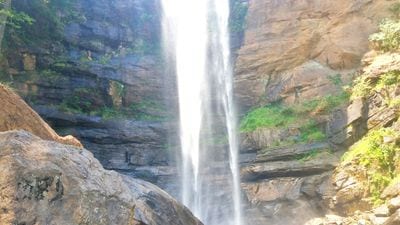
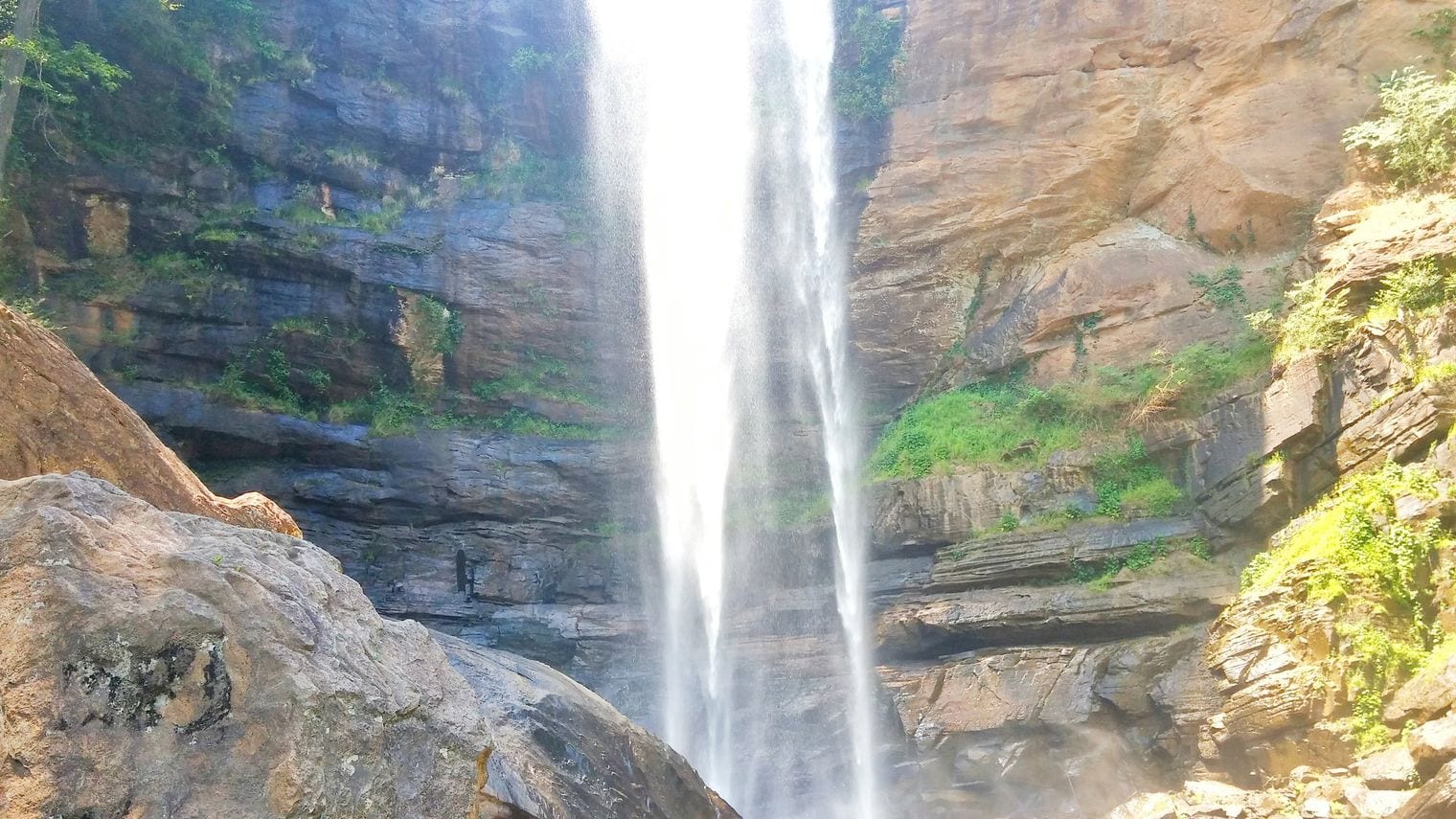
Toccoa, the Stephens County seat near the South Carolina line, is best known for Toccoa Falls, which plunges 186 feet on the campus of the University of Toccoa Falls. The town's restored downtown sits in the foothills, with Lake Hartwell a short drive east.
During World War II, paratroopers of the 506th Parachute Infantry Regiment trained at nearby Camp Toccoa, running up and down Currahee Mountain, a story made famous by Band of Brothers. The Currahee Military Museum, in the restored 1915 railroad depot where many of them arrived, tells their story, and Traveler's Rest State Historic Site, an antebellum inn, is just outside town.
Bainbridge sits on the Flint River in Georgia's southwest corner, a Decatur County seat whose downtown centers on Willis Park, a shady square surrounded by walkable blocks of shops, restaurants and cafés.
Down by the river, Earle May Boat Basin Park has walking trails, a beach, boat ramps and a campground, and it hosts bass fishing tournaments throughout the year. Just downstream, Lake Seminole, where the Flint and Chattahoochee rivers meet, is known for its largemouth bass, crappie and alligators.
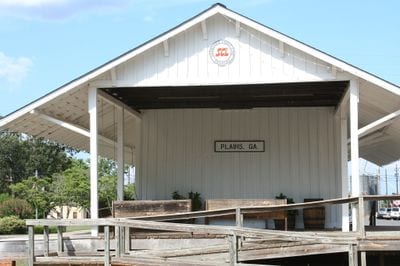
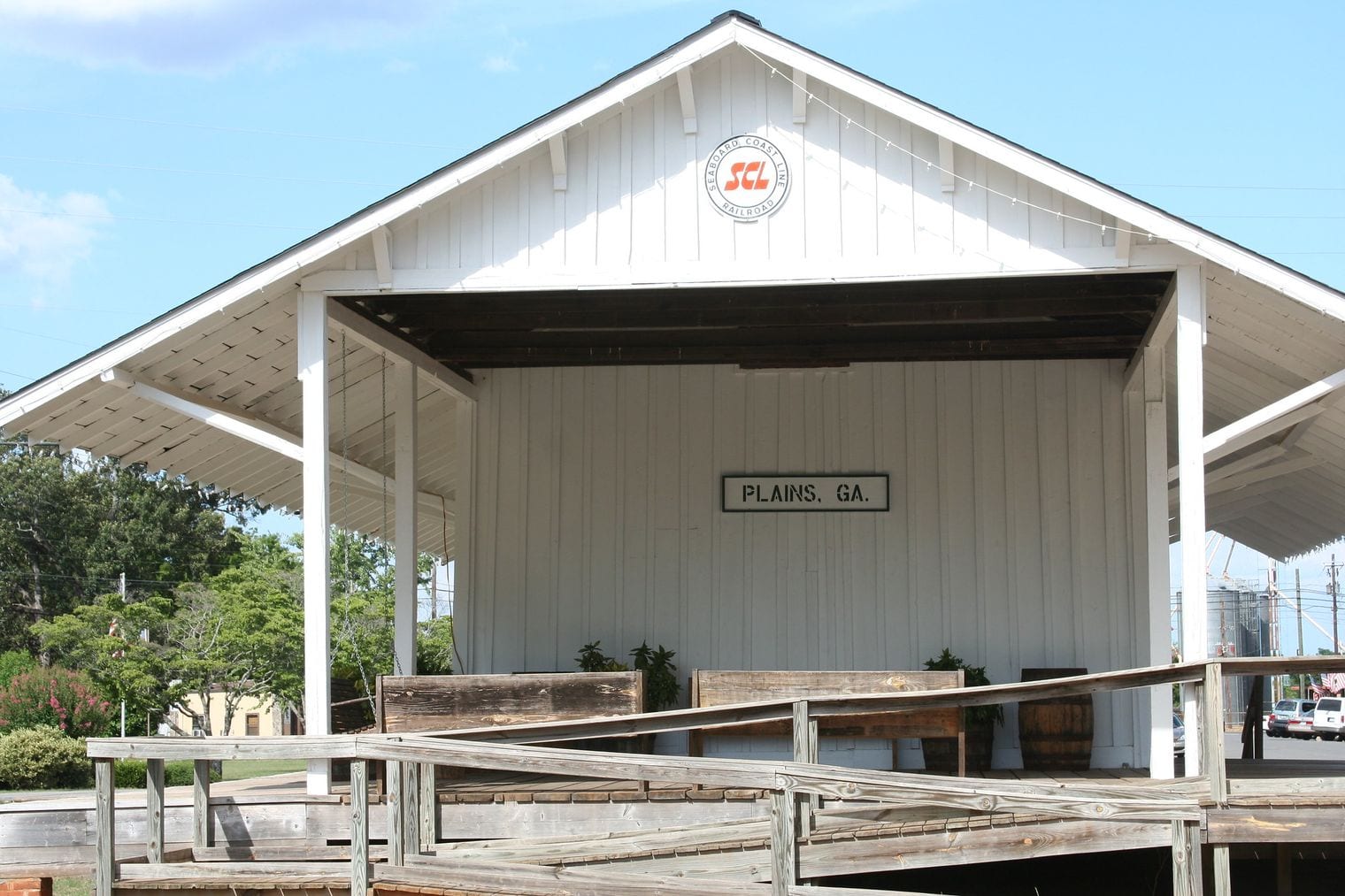
Plains is a farm town of a few hundred people, and it was home to Jimmy Carter, the 39th president, and to Rosalynn Carter for most of their lives; both were born here and both are buried here. Much of the town now belongs to the Jimmy Carter National Historical Park, which tells the story of how a peanut farmer from rural Georgia reached the White House.
Start at the visitor center in the old Plains High School, which both Carters attended, then see the railroad depot that served as campaign headquarters in 1976 and the Carter Boyhood Farm in nearby Archery. The Carter gravesite and memorial garden are open to visitors, and Maranatha Baptist Church, where Carter taught Sunday school, welcomes visitors too.
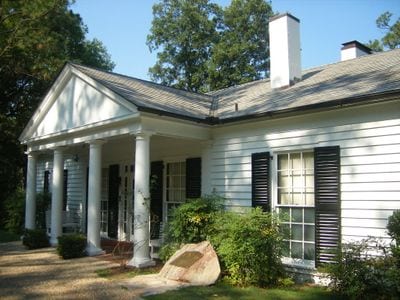
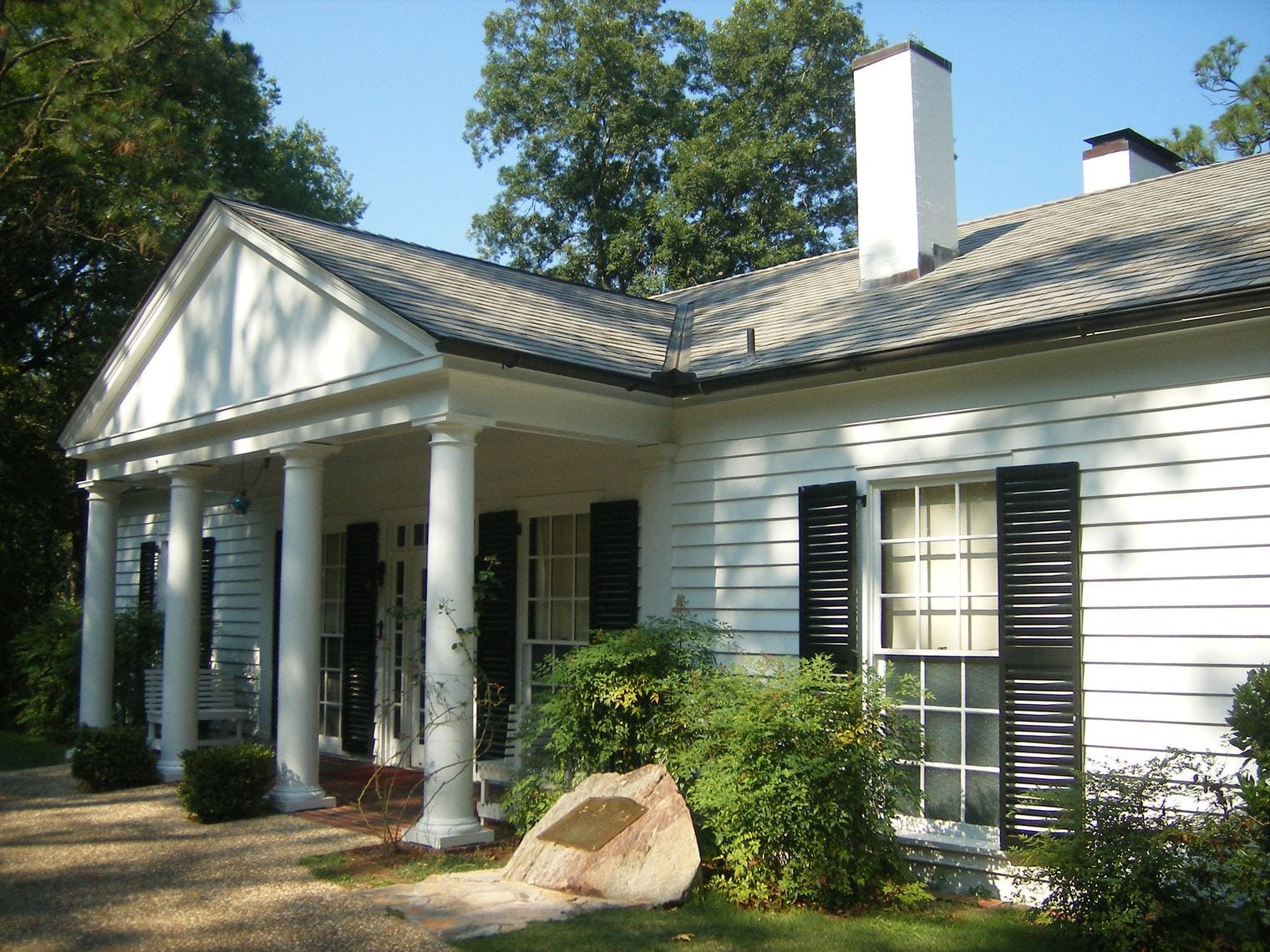
Warm Springs is a tiny Meriwether County town that found fame through Franklin D. Roosevelt, who first came in 1924 seeking relief for his paralyzed legs in a resort fed by an 88-degree natural spring. He bought the resort, founded a rehabilitation center for polio patients, and in 1932 built a six-room cottage of Georgia pine nearby.
Roosevelt died at that cottage, the Little White House, on April 12, 1945, and it is now a state historic site preserved much as he left it, along with the Unfinished Portrait he was sitting for that day and a museum of his life. The village's main street, a short drive away, has antique and gift shops.
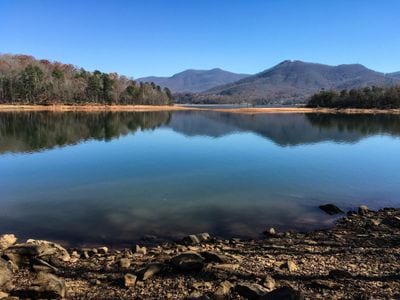
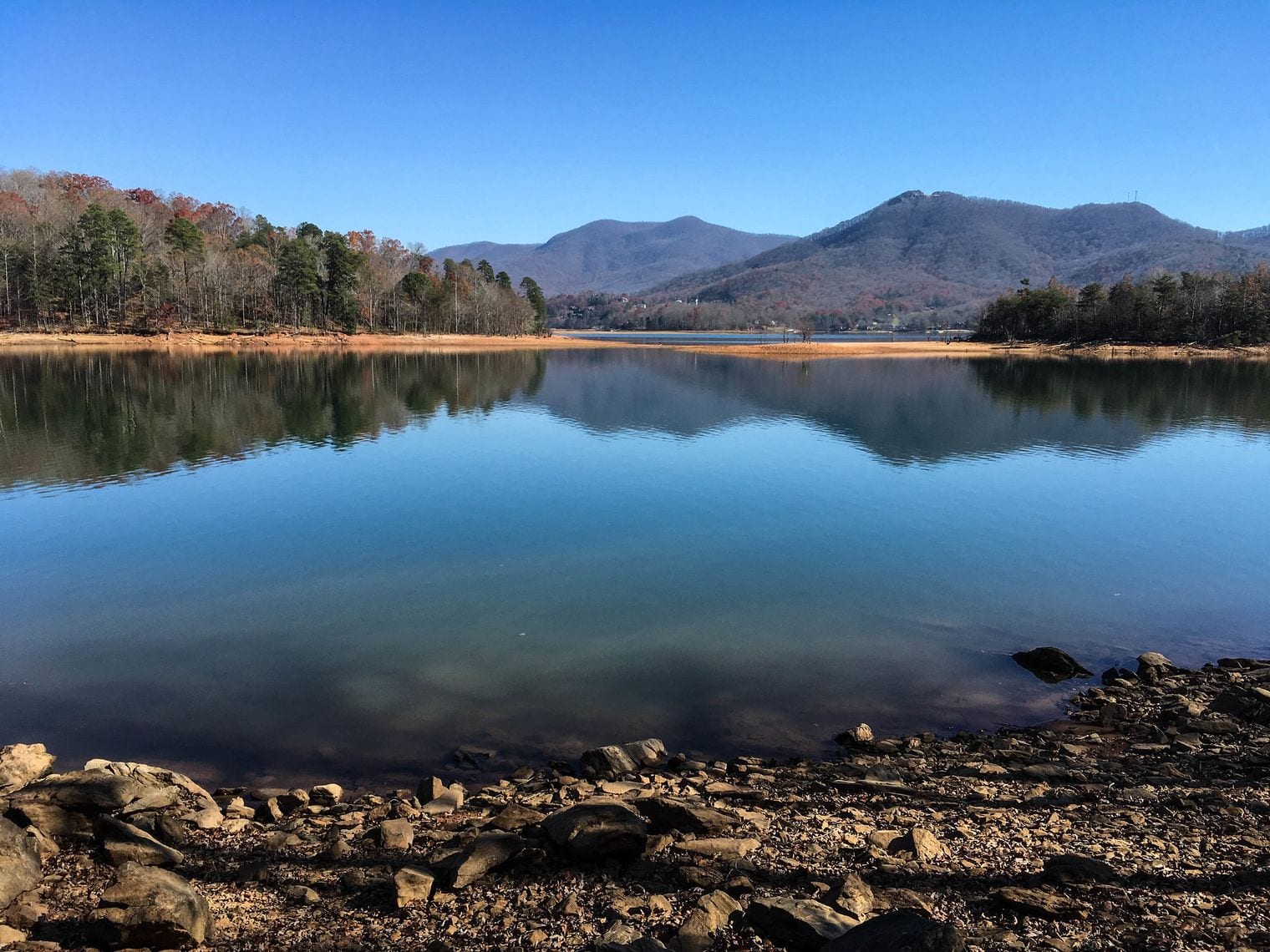
Hiawassee, the Towns County seat, sits on the shores of Lake Chatuge, a Tennessee Valley Authority reservoir created in 1942 that reaches across the North Carolina line and is ringed by the Blue Ridge Mountains. The town takes its name from a Native American word thought to mean meadow.
The Georgia Mountain Fairgrounds on the lakeshore hosts concerts, festivals and the Georgia Mountain Fair, and the lake is popular for boating, fishing and swimming. Brasstown Bald, the highest point in Georgia, is a short drive southwest, and the mountain roads around town blaze with color in fall.
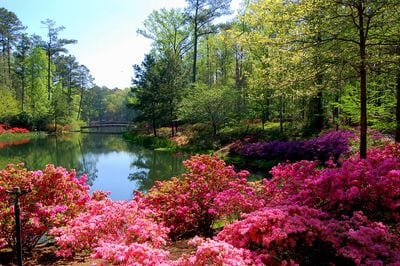
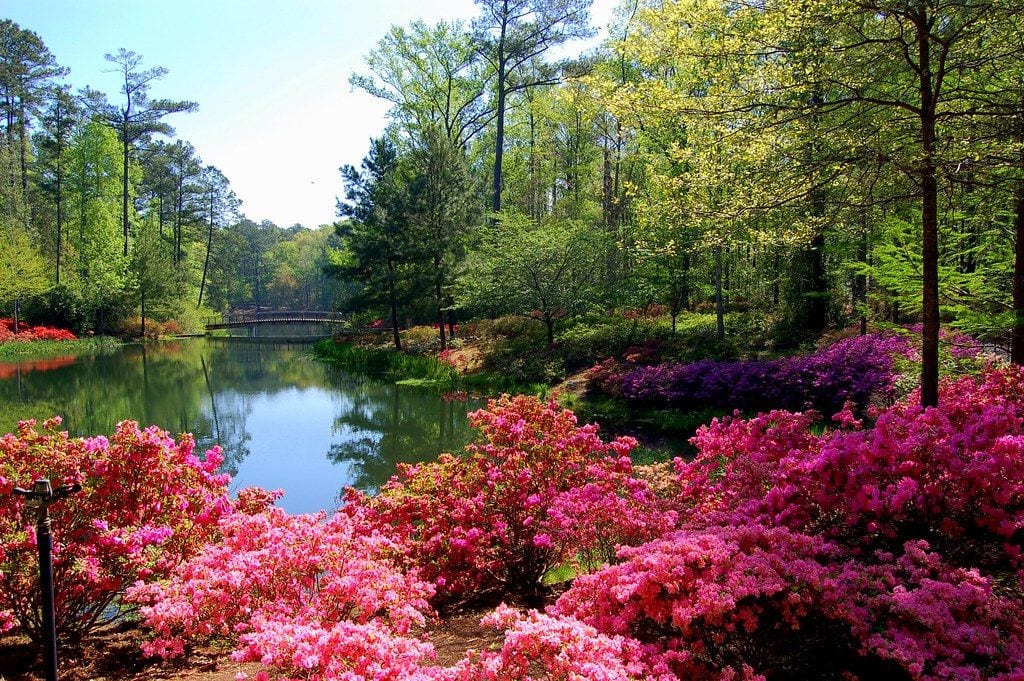
Pine Mountain is a small town on the ridge of the same name in west Georgia, and it is the gateway to Callaway Gardens, a sprawling resort and nature preserve of woodland gardens, lakes and trails that opened in 1952. The town was called Chipley until 1958, when it changed its name because of the gardens.
Callaway Gardens is famous for its spring azaleas and its butterfly conservatory, and next door F.D. Roosevelt State Park, the largest state park in Georgia, has the 23-mile Pine Mountain Trail and Dowdell's Knob, the overlook where Roosevelt liked to picnic. Roosevelt's Little White House in Warm Springs is a short drive east.
Plan your trip
Best Time to Visit Georgia's Small Towns
Spring and fall are the sweet spots. Spring brings azaleas and dogwoods to the antebellum towns of the Piedmont and to Callaway Gardens in Pine Mountain, and Thomasville holds its Rose Festival in late April. Fall is peak season in the mountains, when the leaves turn around Dahlonega, Blue Ridge and Clayton, Helen stages its long-running Oktoberfest and Ellijay celebrates the apple harvest each October.
Summer is hot and humid across the state, but it is the season for the beaches of Tybee Island, St. Simons and Jekyll Island, for tubing the Chattahoochee in Helen and for the mountain lakes around Hiawassee and Blairsville. Winters are mild in south Georgia and on the coast, while the mountain towns can see the occasional dusting of snow.
Getting Around Georgia's Small Towns
You will need a car: most of these towns sit well away from passenger rail and intercity bus routes, and the best way to see them is to pick a region and link several together.
In the North Georgia mountains, Dahlonega, Helen, Clayton, Tallulah Falls and Toccoa make a loop, with Blue Ridge, Ellijay, Blairsville and Hiawassee to the west and north. Madison and Greensboro sit side by side along Interstate 20 east of Atlanta, and Madison is about 30 miles south of Athens, while Washington is about an hour from Augusta.
On the coast, Tybee Island is a short drive from Savannah, and Darien, Brunswick, St. Simons, Jekyll Island and St. Marys string south along Interstate 95 toward Florida. In the southwest, Americus, Plains and Andersonville cluster together, Warm Springs and Pine Mountain pair up near Columbus, and Thomasville and Bainbridge lie within easy reach of Valdosta, with Tifton just up Interstate 75.
One Day in the North Georgia Mountains
Morning
Start in Dahlonega with the Dahlonega Gold Museum on the public square, then try your luck panning for gold at one of the mines just outside town.
Drive northeast to Helen for lunch among its Alpine-style streets, a walk along the Chattahoochee and a short detour to Unicoi State Park. Continue to Tallulah Falls to walk the rim trails and cross the suspension bridge in Tallulah Gorge State Park.
Finish a short drive north in Clayton, where the main street has restaurants and galleries and Black Rock Mountain State Park offers a sunset view over the mountains.
Many of the best moments on this list cost nothing. Stroll the gold-rush square in Dahlonega and the Alpine-style streets of Helen, follow a walking tour past the antebellum homes of Madison, and visit the Big Oak in Thomasville.
Walk the film-famous square in Covington and the main street of Senoia, see the visitor center, depot and Boyhood Farm of the Jimmy Carter National Historical Park in Plains, and relax in Willis Park in Bainbridge.
Dahlonega is the best small town in Georgia for most visitors, with its gold-rush history, courthouse gold museum and wineries in the foothills. Helen is the most distinctive, a Bavarian-style village on the Chattahoochee, while Madison, Blue Ridge and Thomasville round out the top five for antebellum homes, mountain scenery and Victorian south Georgia charm.
What are the best small towns near Atlanta?
Senoia, south of Atlanta, and Covington, to the east, are the easiest day trips, both famous as film and television locations. Madison and Greensboro lie farther east along Interstate 20, Cartersville is just northwest with its museums and Etowah Indian Mounds, and Dahlonega lies at the north end of Georgia 400.
What are the best small towns on the Georgia coast?
Tybee Island is the classic beach town near Savannah, while St. Simons and Jekyll Island are the best-known of the Golden Isles, with lighthouses, historic districts and Driftwood Beach. Darien and Brunswick add shrimp boats and colonial history, and St. Marys is the gateway to the wild beaches and horses of Cumberland Island.
What are the best mountain towns in North Georgia?
Dahlonega, Helen and Blue Ridge are the most popular North Georgia mountain towns, each with a walkable downtown and plenty to do nearby. Clayton and Tallulah Falls are the base for Tallulah Gorge and Black Rock Mountain, Ellijay is the place for apple orchards, and Blairsville and Hiawassee sit near Brasstown Bald, the highest point in Georgia.
How many days do you need to visit a small town in Georgia?
Most towns on this list fill a relaxed day, and several make easy day trips from Atlanta. Dahlonega, Helen, Blue Ridge and the Golden Isles of St. Simons and Jekyll Island deserve a weekend, while a week lets you link several towns in one region, such as the North Georgia mountains or the coast.
Sources & updates
How this guide was verified
Checked before launch
Sources cited
30
Publishers
24
Every town on this list was pinned on the map and checked against official and local sources before publication.
A PDF with a box to tick for every place. Confirm your email to download it, and get one email every Thursday with our newest guides for the places you tick.
Free Georgia small towns printable checklist
All 30 places in one PDF
Tick them off as you go. Confirm your email to download it, plus one email every Thursday with new guides for the places you tick.
We use cookies to analyze site traffic and improve your experience.
You can accept or reject analytics cookies. See our
May we use analytics cookies? See ourCookie Policy.