We may earn a commission if you book or buy through a link on
this page, at no extra cost to you. It never affects which places we list or how
we rank them (how we make money).
Short answer
Athens's essentials are the Acropolis and its museum, the Ancient Agora below it, and the lanes of Plaka wrapped around the hill. Two full days covers them plus one good viewpoint; a third lets you add the National Archaeological Museum and time in the city's newer neighbourhoods.
Athens wears its history in the open. The Acropolis stands over the rooftops from almost every angle, ancient marble surfaces between apartment blocks, and the city below is loud, warm and thoroughly modern — a capital of long lunches, rooftop bars and neighbourhoods that reward wandering more than planning.
This guide covers the best things to do in Athens, from the Parthenon and the Ancient Agora to the lanes of Plaka, the marble Panathenaic Stadium and the view from Philopappos Hill. Three days is enough for the essentials; a week lets you slow down.
The goddess may be named after the city, not the other way round. The myth says Athena won Athens by giving it the first domesticated olive tree, beating Poseidon, who struck the rock and produced salt water. Modern scholars, though, think the name ran the other way — that the goddess took her name from the city.
Its recorded history runs to more than 3,400 years, and the site has been continuously inhabited for at least five thousand — which makes Athens one of the oldest cities on earth still lived in rather than excavated.
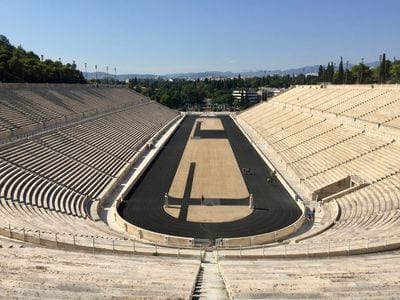
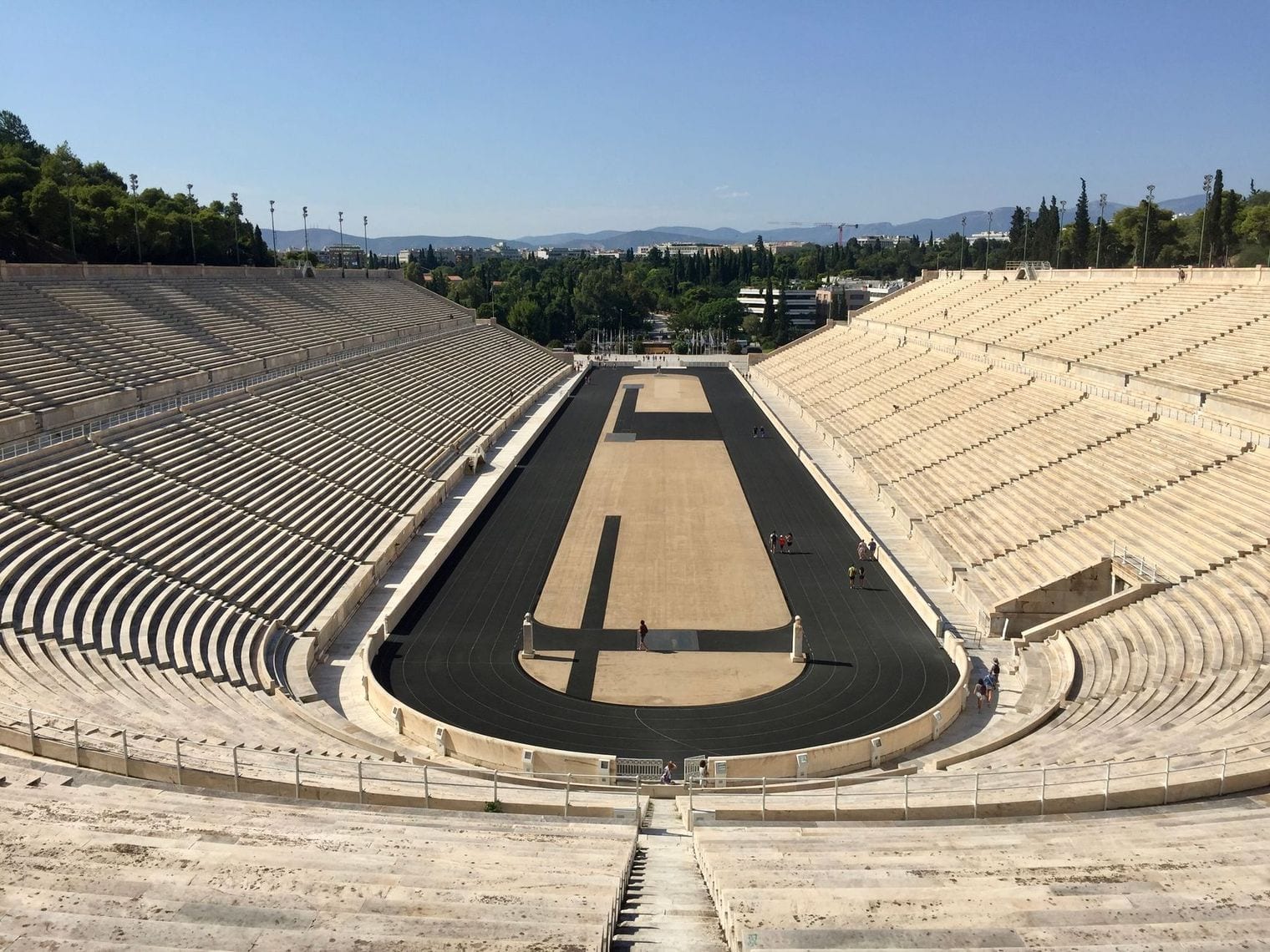
The Panathenaic Stadium is the only stadium in the world built entirely of marble, and Athens is one of just five cities to have hosted the Summer Olympics more than once, in 1896 and again in 2004.
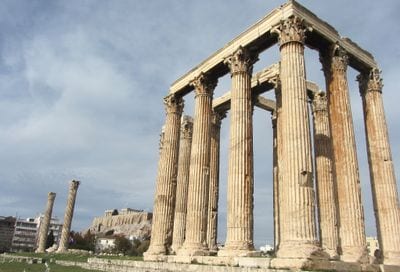
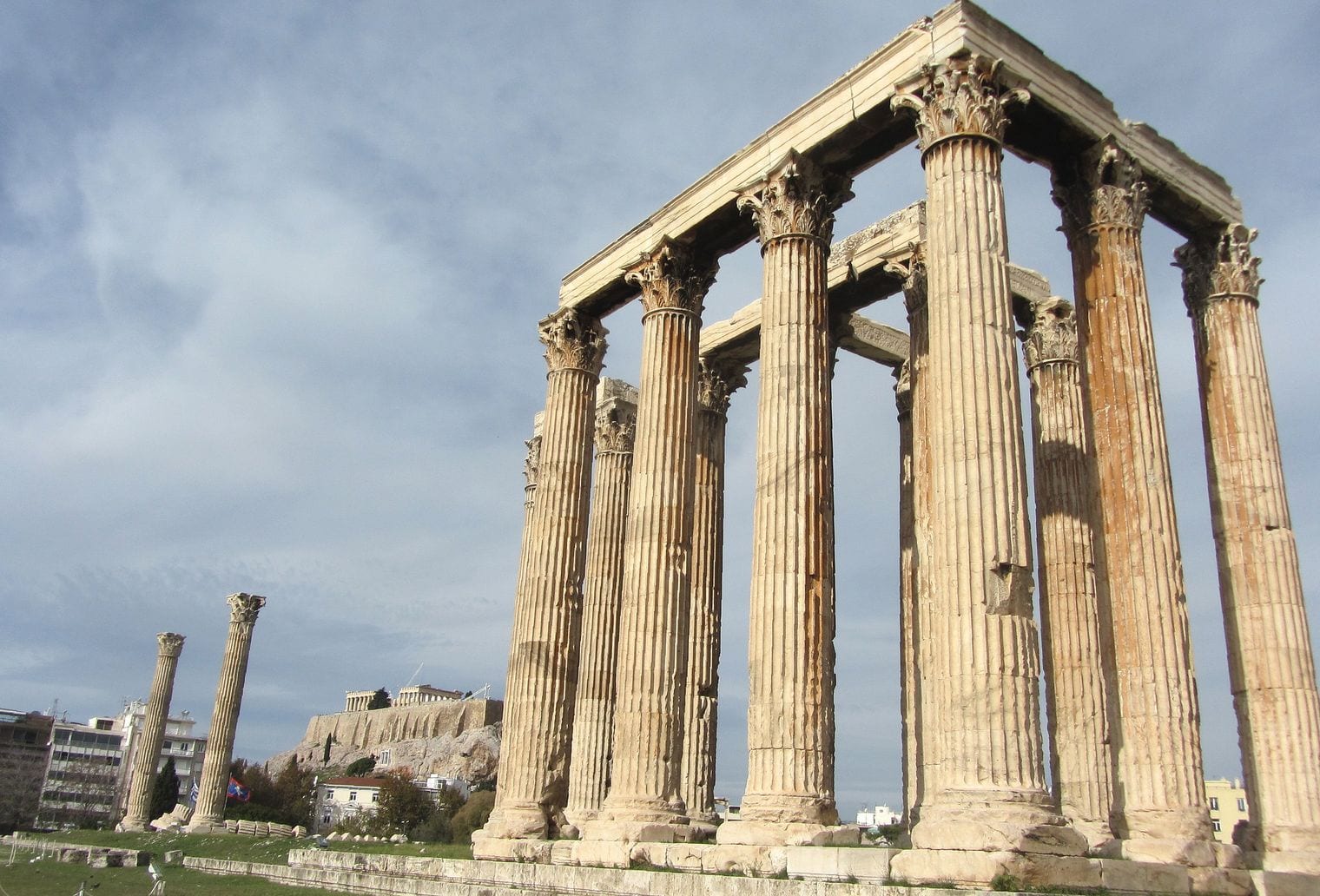
The Temple of Olympian Zeus took more than six centuries to finish. Work began in the sixth century BC, stopped, restarted, and was only completed under the emperor Hadrian in AD 131 — roughly 638 years from start to end.
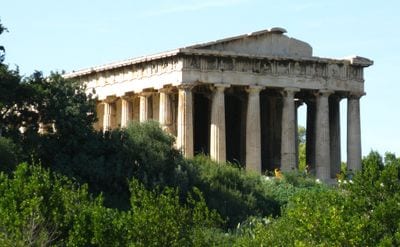
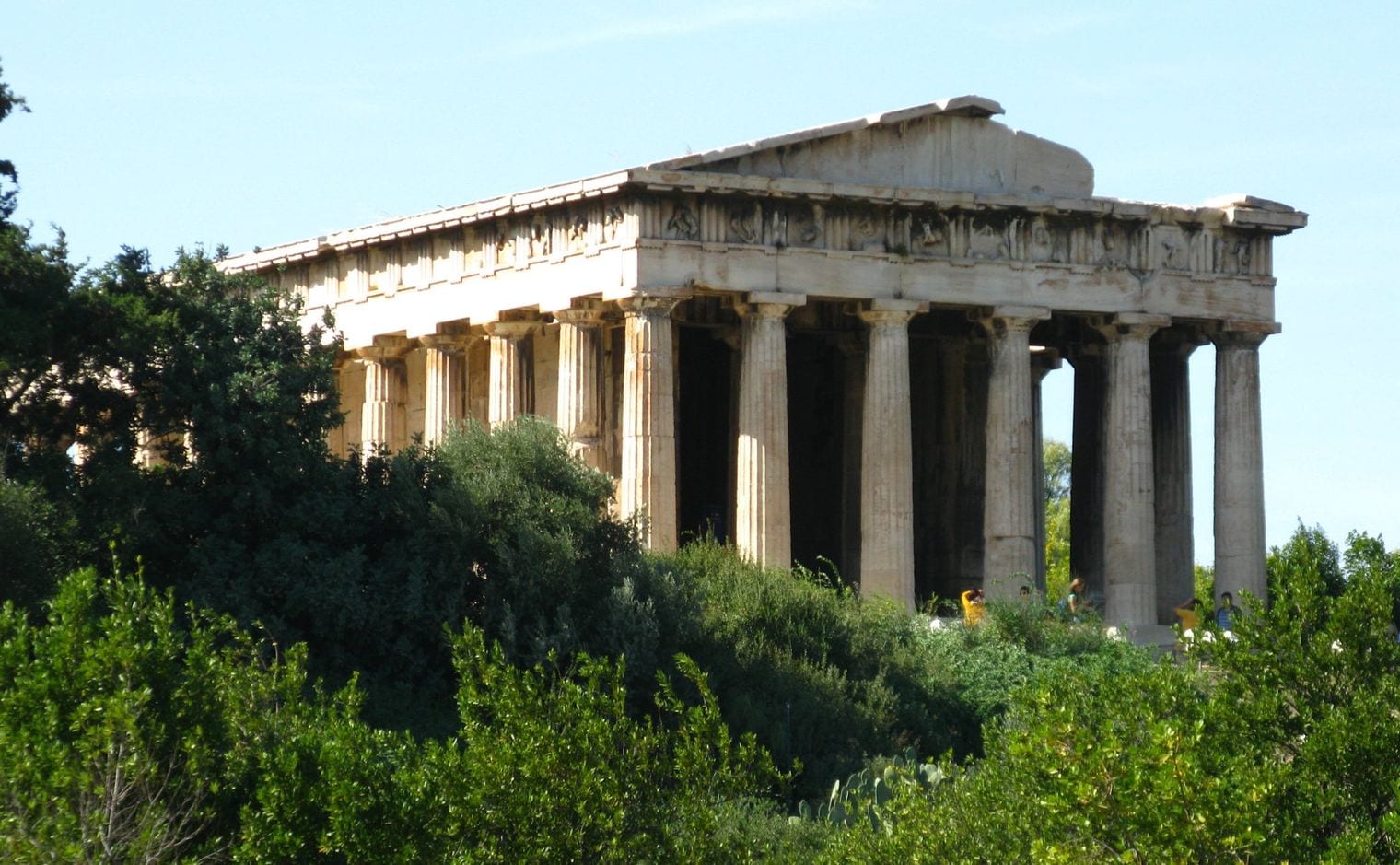
The best-preserved temple in the city survived by becoming a church. The Temple of Hephaestus above the Ancient Agora served as the church of Saint George from around AD 700 until 1834, which spared it the quarrying that flattened its contemporaries.
A sixteenth column is still lying where it fell. One of the giant columns of the Temple of Olympian Zeus was brought down by a storm in 1852 and has been left on the ground ever since, sliced into neat drums like a toppled stack of coins.
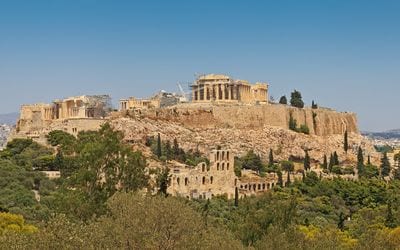
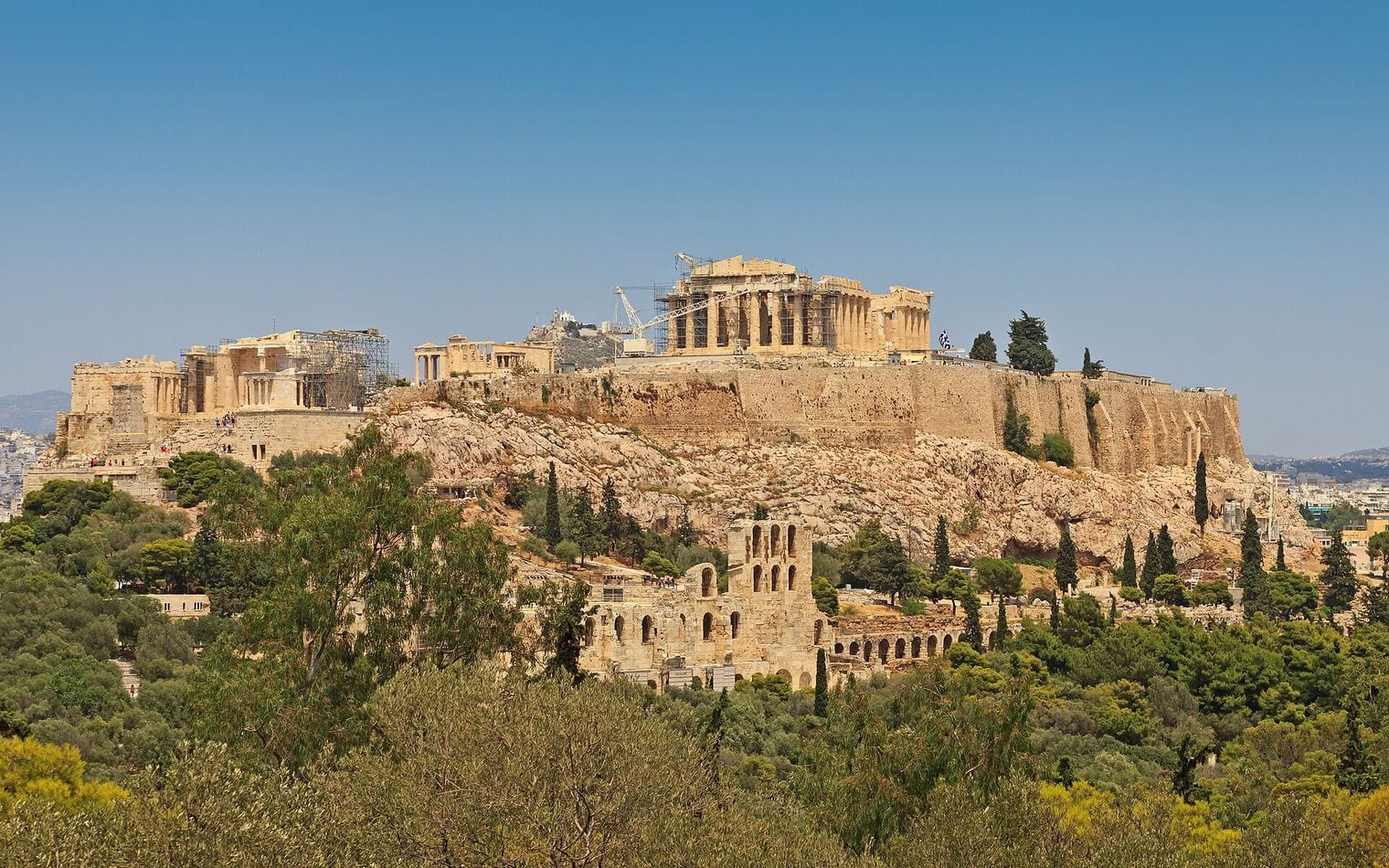
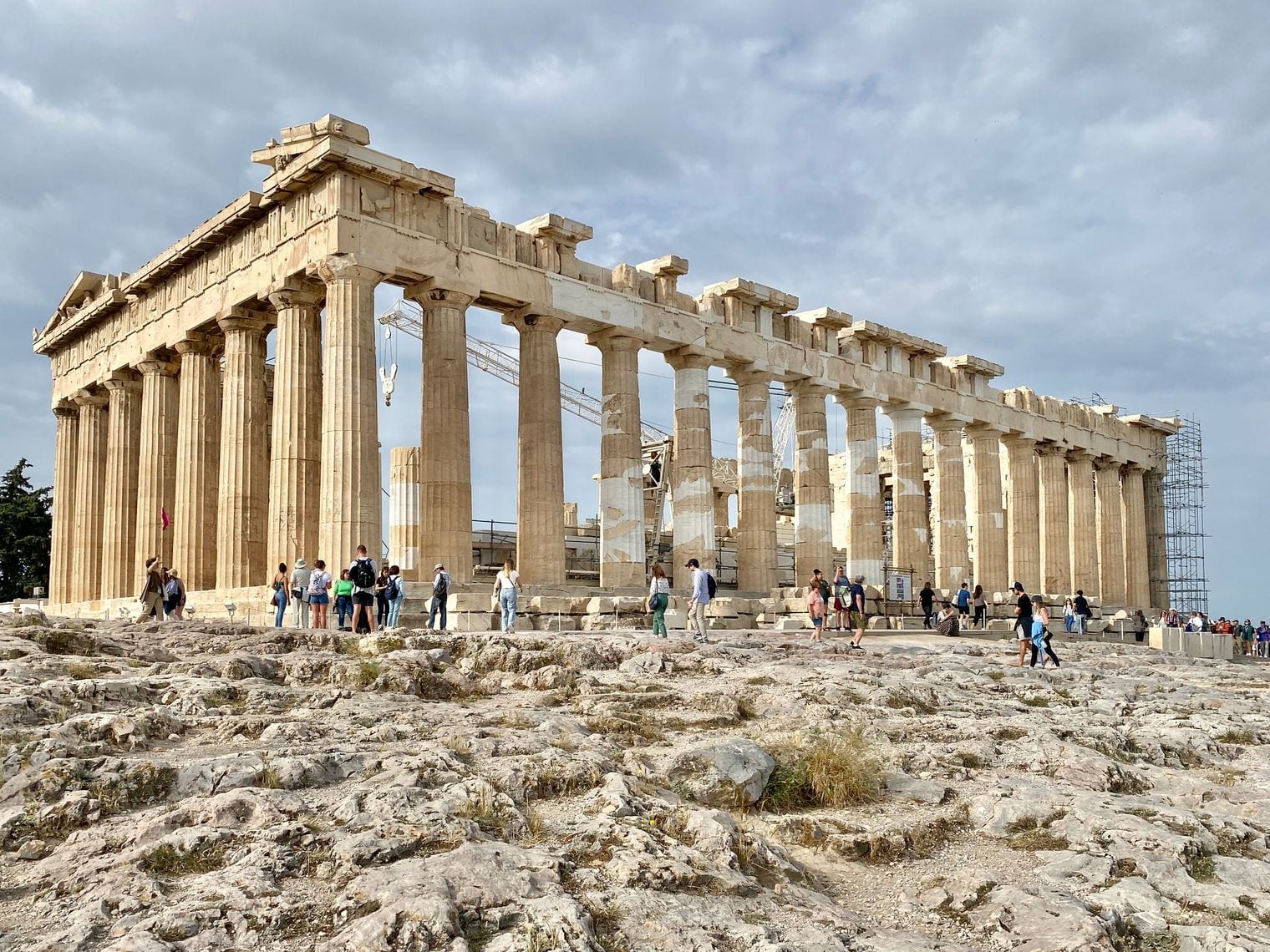
The Acropolis of Athens is the reason most people come, and it does not disappoint. The limestone outcrop rises sharply from the middle of the city, and the walk up through the Propylaea gateway delivers you onto a plateau of bare rock and standing marble with the whole capital spread out below.
The Parthenon dominates, but the Erechtheion with its porch of draped maiden figures, and the small Temple of Athena Nike perched on the bastion, are just as worth the time.
Go early or go late. The site opens in the morning before the heat builds and the tour groups arrive, and the last couple of hours before closing bring low golden light that makes the marble glow.
There is almost no shade on the rock, so bring water and a hat in summer, and wear shoes with grip — the worn stone underfoot is genuinely slippery. The ticket also covers a set of other ancient sites across the city, which makes it the best-value purchase in Athens.
Built at the foot of the rock and opened in 2009, the Acropolis Museum was designed by Bernard Tschumi to hold the sculpture taken down from the Acropolis for safekeeping. You enter over a glass floor suspended above a working excavation of an ancient Athenian neighbourhood, which sets the tone: the building is deliberately transparent, and the archaeology is never far under your feet.
The top floor is the payoff. It is built to the same cardinal orientation as the Parthenon itself, with its columns spaced to match, and glazed on all sides, so the surviving frieze is displayed in the light and alignment it was carved for — with the actual temple visible through the glass a few hundred metres away.
Where original panels are missing, pale casts stand in for the sculptures held in London — a quiet piece of argument that most visitors find more eloquent than a caption would be.
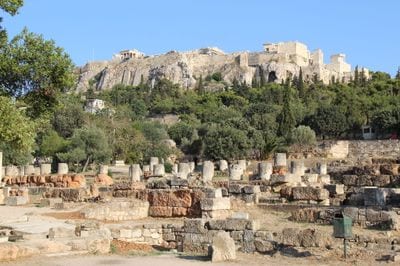
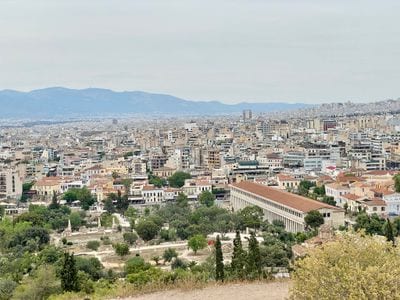
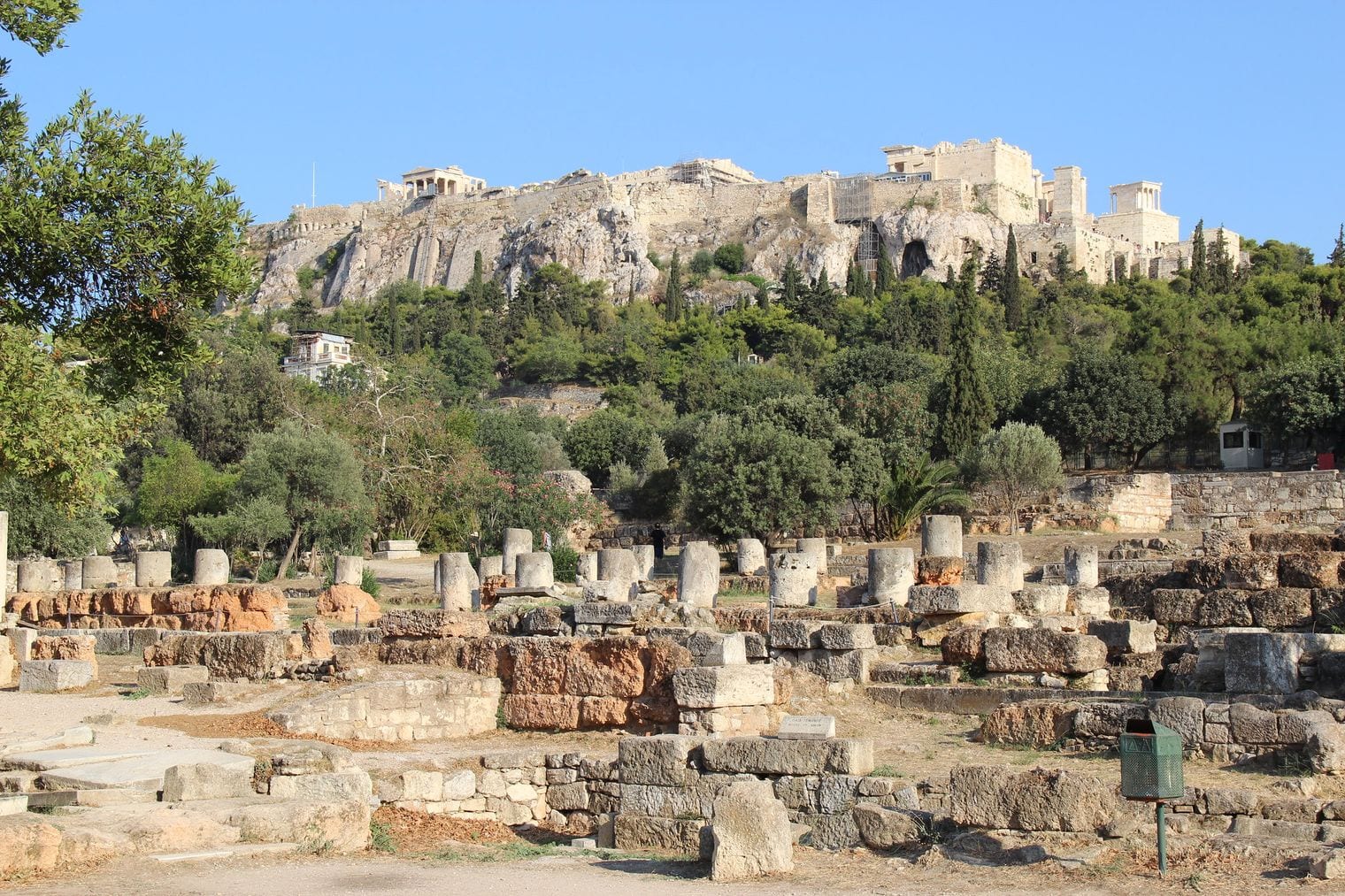
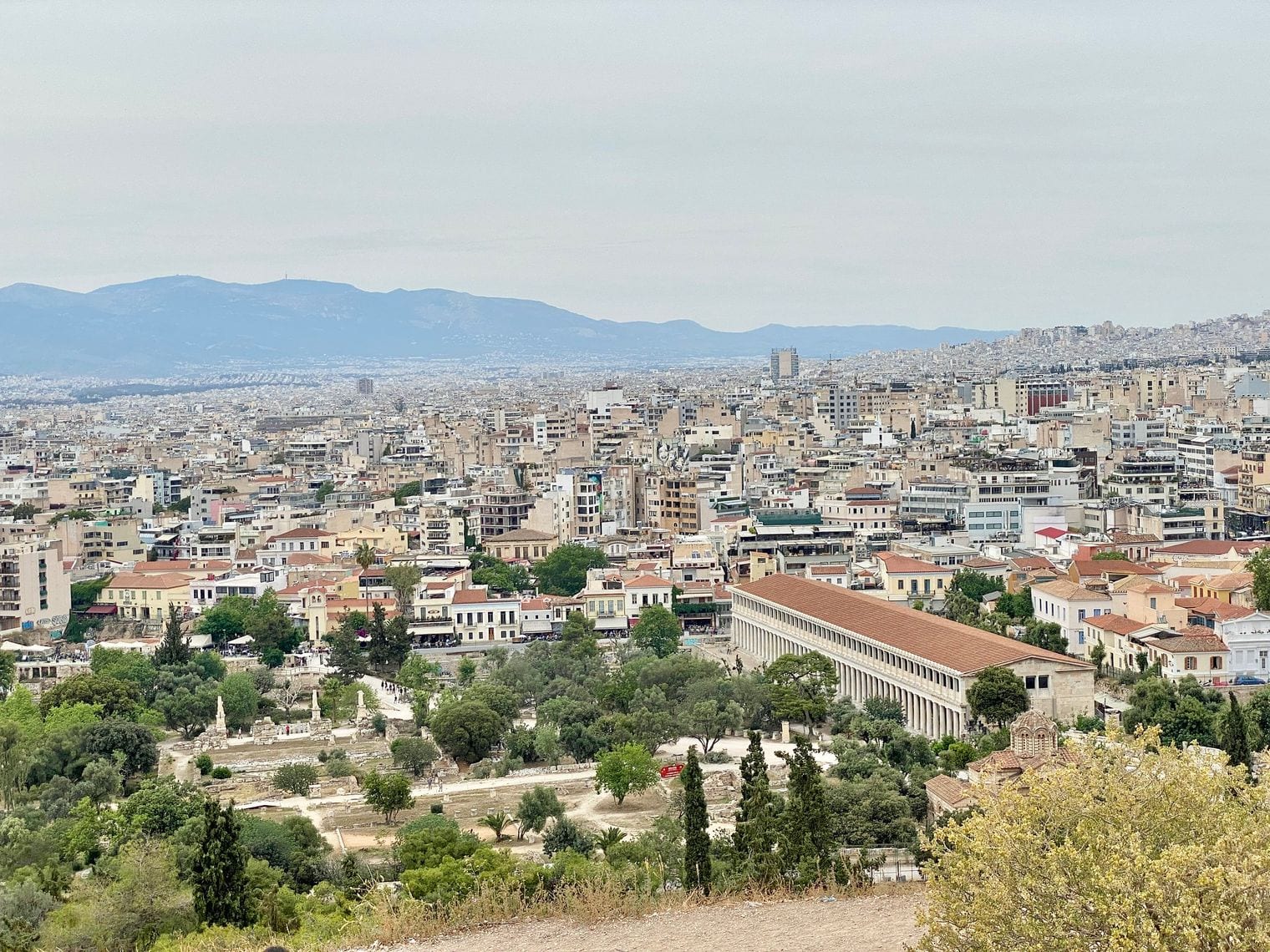
If the Acropolis was where Athens worshipped, the Ancient Agora of Athens is where it argued, traded and governed. This was the civic heart of the classical city — a broad open space ringed by law courts, workshops, colonnades and shrines, and the ground where Socrates questioned passers-by and the assembly's business was done. Today it is a green, quiet archaeological park threaded with footpaths, olive trees and tortoises.
Two buildings anchor a visit. The Stoa of Attalos has been fully reconstructed and now houses the site museum, giving you a rare sense of the scale and shade of an ancient colonnade rather than a floor plan. Above the ruins stands the Temple of Hephaestus, remarkably complete. Between them lie foundations you can actually read: the round Tholos where the city's executive committee ate and slept, and the Bouleuterion where the council met.
The Panathenaic Stadium is a horseshoe of white marble seating dug into a natural fold in the hills, and it is the only stadium in the world built entirely of marble. It sits on the site of an ancient stadium used for the Panathenaic Games, was excavated and rebuilt in the nineteenth century, and hosted the first modern Olympic Games in 1896. Athenians call it the Kallimarmaro, roughly the beautiful marble.
It is one of the few major monuments in Athens you are encouraged to walk right into. You can run a lap of the track, climb to the top tier for a view straight down the stadium and across to the Acropolis, and follow the vaulted tunnel the athletes still use. A small exhibition under the stands displays posters and torches from every modern Games, and the Olympic flame is handed over here before each one.
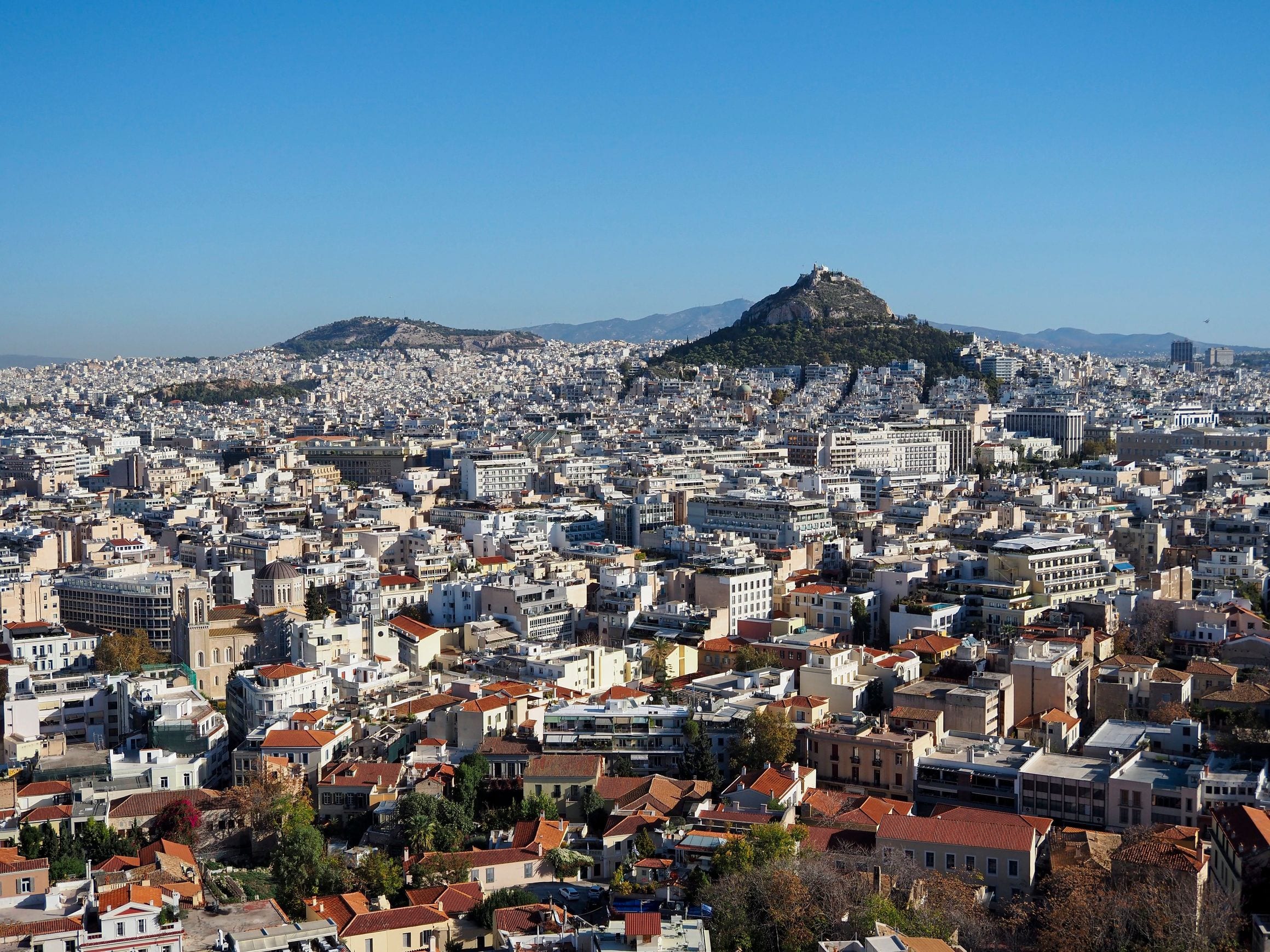
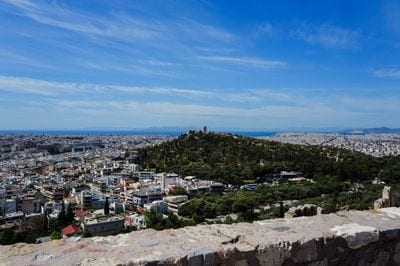
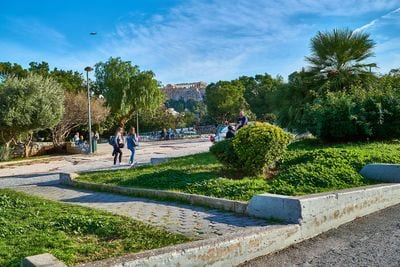
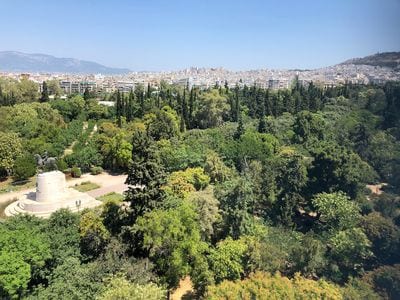
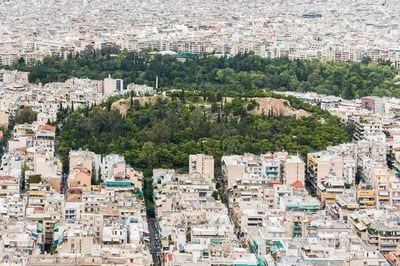
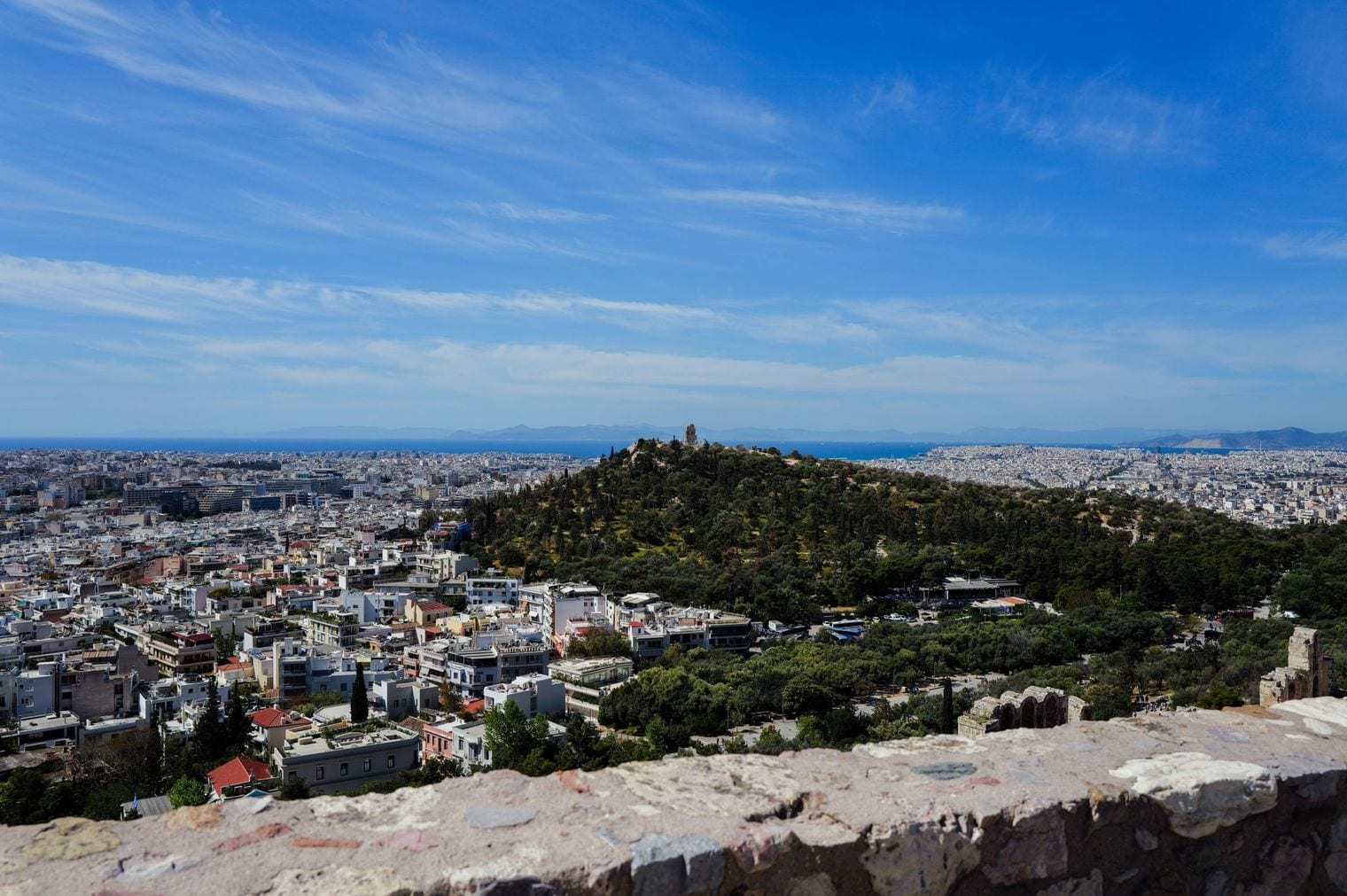
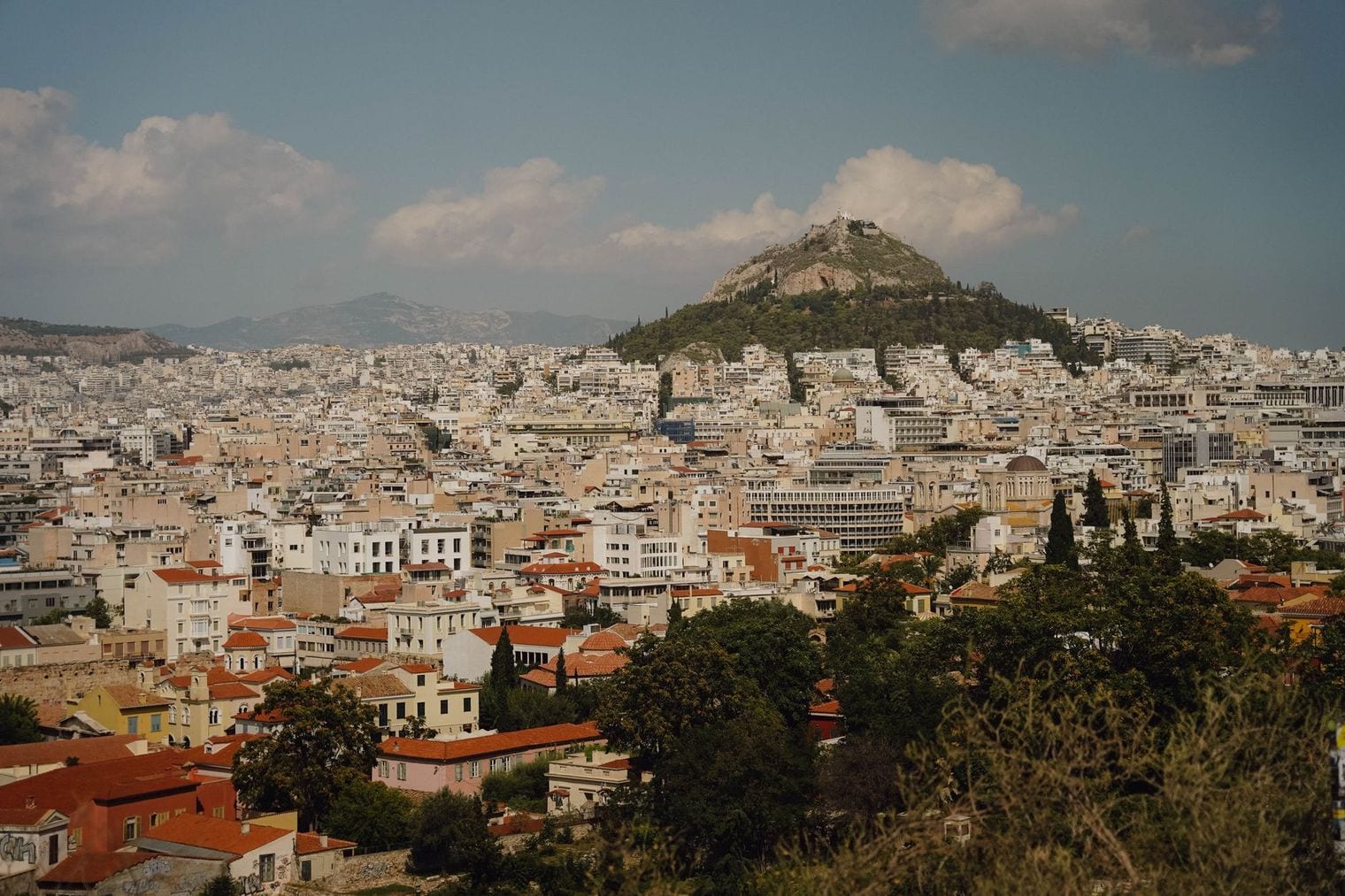
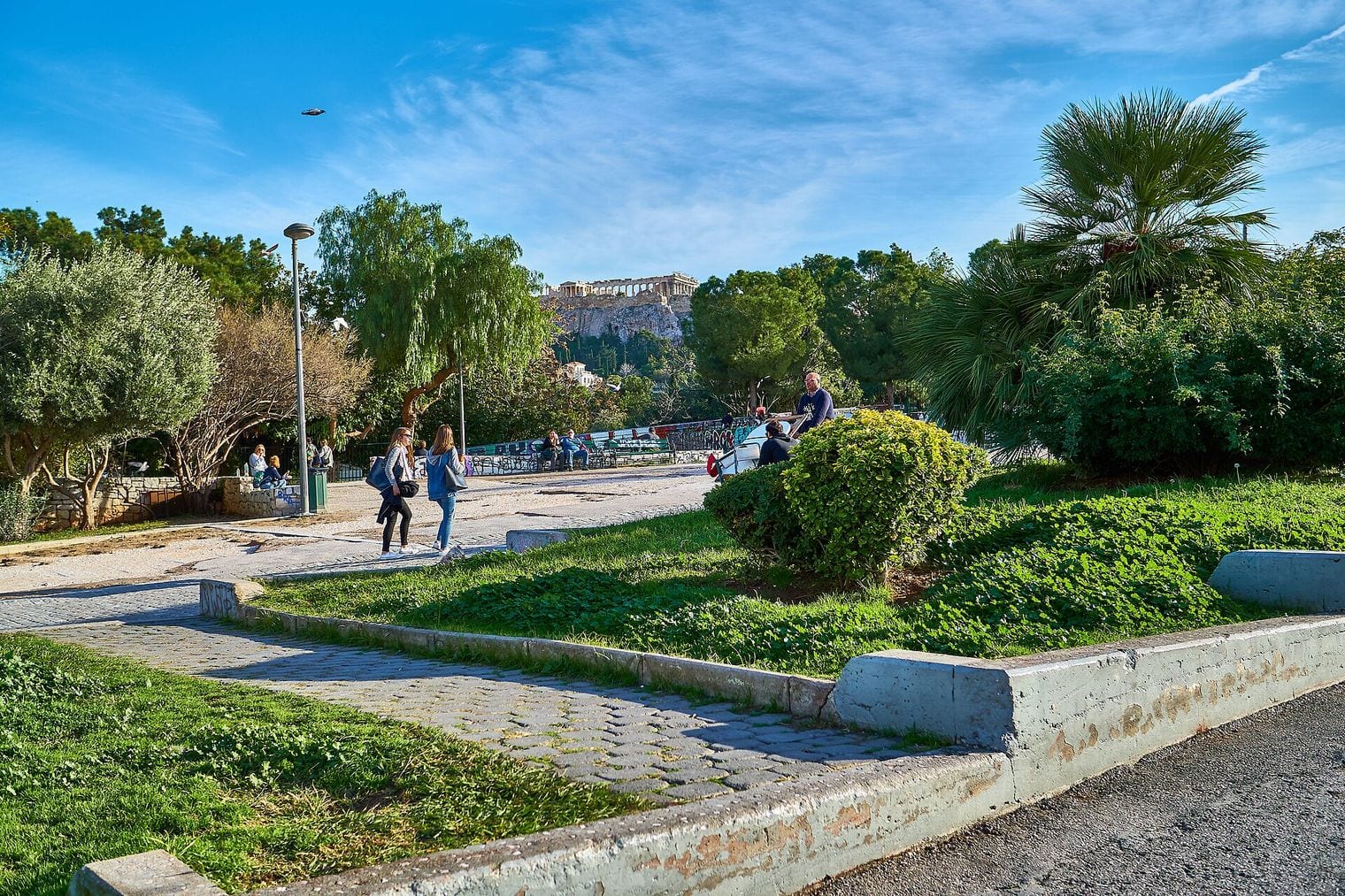
Philopappos Hill is the pine-covered rise directly opposite the Acropolis, and it is where you go to see the Parthenon whole. Paths of laid grey stone wind up through the pines, and the summit is crowned by the Philopappos Monument, a Roman mausoleum raised after AD 116 for Gaius Julius Antiochus Philopappos, a prince of Commagene who settled in Athens.
The hill is free, open and never as busy as it deserves to be. Sunset is the obvious time — the west face of the Acropolis catches the last light while the city switches on below — but early morning is cooler and quieter.
The neighbouring hills in the same archaeological park hold the Pnyx, the terraced slope where the Athenian assembly met to vote, and the Hill of the Nymphs with its nineteenth-century observatory, so a short walk here strings together several sites at once.
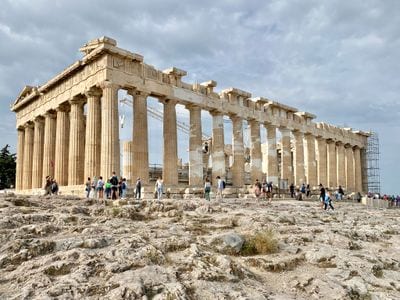
The Parthenon is the temple that crowns the Acropolis and the single most recognisable building of the ancient world. Built in the mid-fifth century BC as a temple to Athena, it is Doric in plan but full of deliberate optical refinements — columns that swell slightly and lean inward, a floor that curves gently upward — corrections designed so the building reads as perfectly straight to the eye.
Much of what you see is the result of decades of painstaking restoration. Original blocks are being catalogued and reset, with new marble cut from the same quarry on Mount Pentelicus used only where a piece is missing, so cranes and scaffolding are a permanent feature rather than a temporary inconvenience. You cannot go inside, and you should not expect to: the temple is viewed from the surrounding rock, which is where its proportions read best anyway.
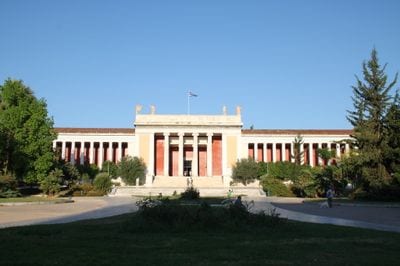
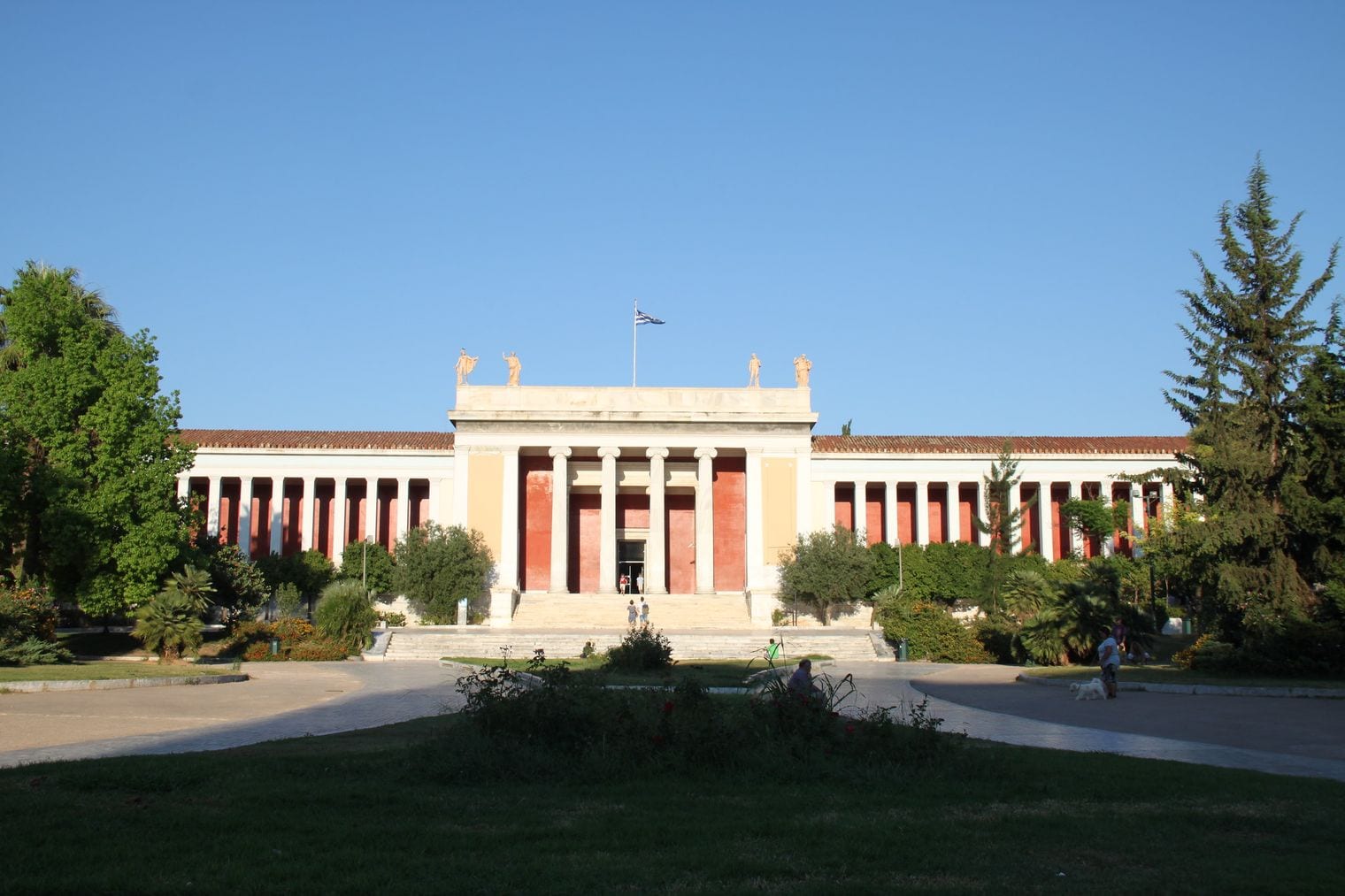
The National Archaeological Museum is the most important collection of ancient Greek art anywhere, and it covers the whole span from the Neolithic to late antiquity in one building. The Mycenaean gallery near the entrance holds the gold funerary masks Heinrich Schliemann excavated at Mycenae, including the one he famously identified as the mask of Agamemnon, alongside inlaid daggers and drinking cups.
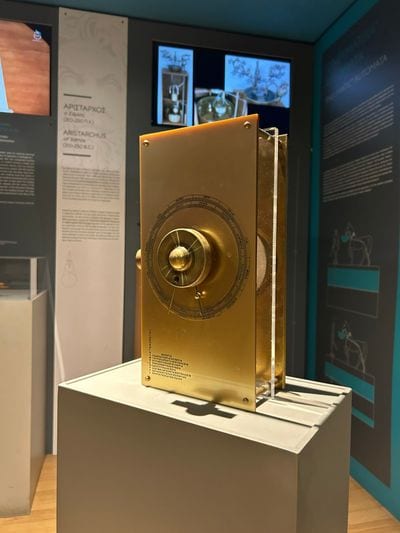
Beyond it the sculpture halls run chronologically, from stiff, archaic marble youths to the bronze Artemision figure hauled out of the sea, poised mid-throw. Do not skip the Antikythera Mechanism, a corroded geared device recovered from a shipwreck that turned out to be an astronomical calculator far more sophisticated than anything else surviving from the ancient world. The museum is large and cool, which makes it an excellent antidote to an afternoon on the Acropolis.
The Temple of Olympian Zeus was intended to be the largest temple in Greece, and its ruins still make the point. Construction began in the sixth century BC, stalled for centuries, and was finally completed under the emperor Hadrian in the second century AD — a project spanning more than six centuries. Fifteen of its enormous Corinthian columns are still standing, with a sixteenth lying where it fell in a storm, neatly sliced into drums like a stack of coins.
The scale is the whole experience. Standing at the base of a column and looking up gives you a sense of ancient ambition that a smaller, better-preserved building cannot. The site sits in open ground between the National Garden and the Acropolis, and the Arch of Hadrian stands at its edge on the pavement, marking the boundary between the old Greek city and Hadrian's new quarter.
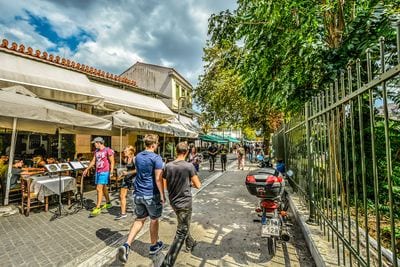
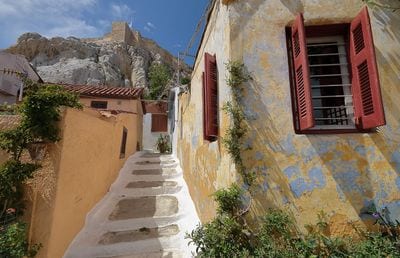
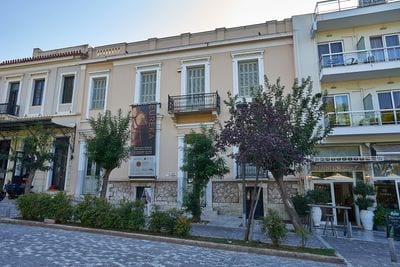
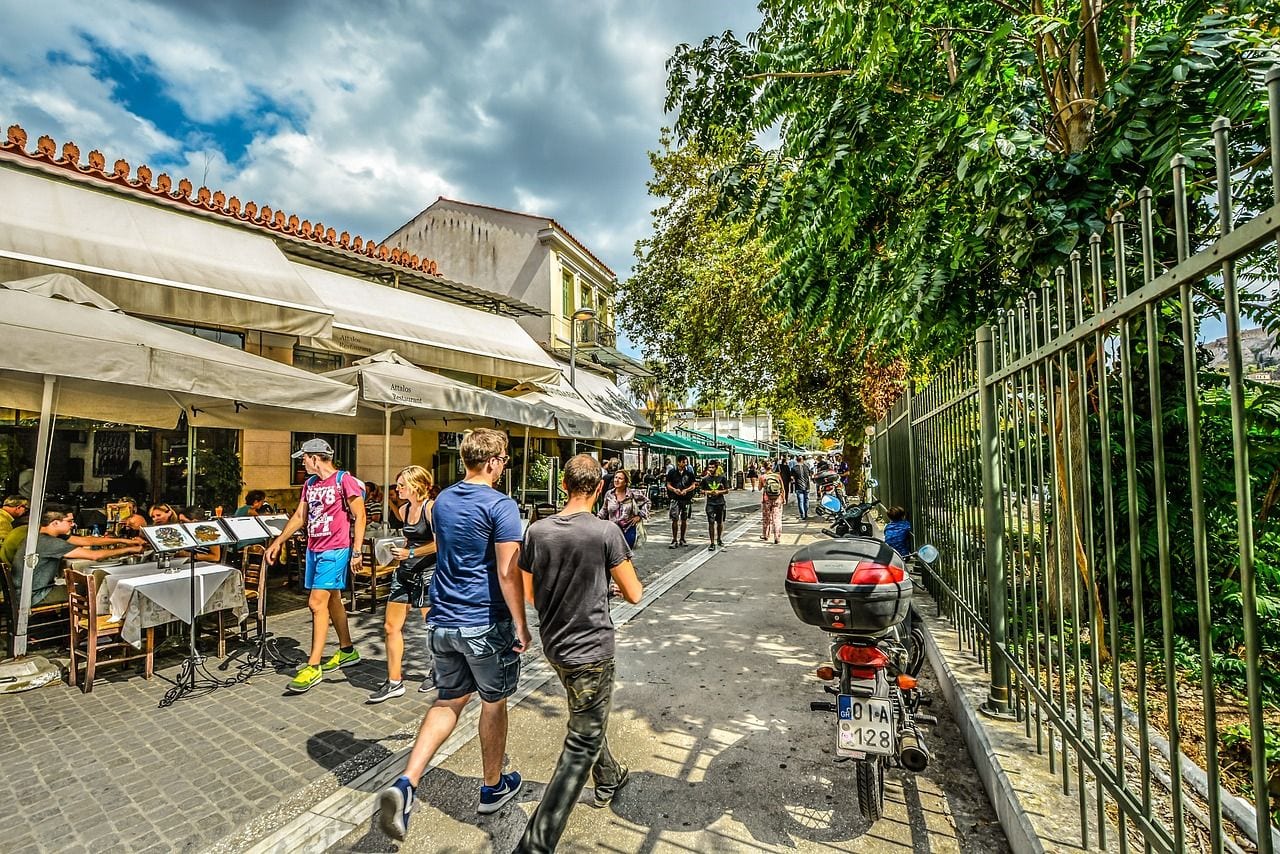
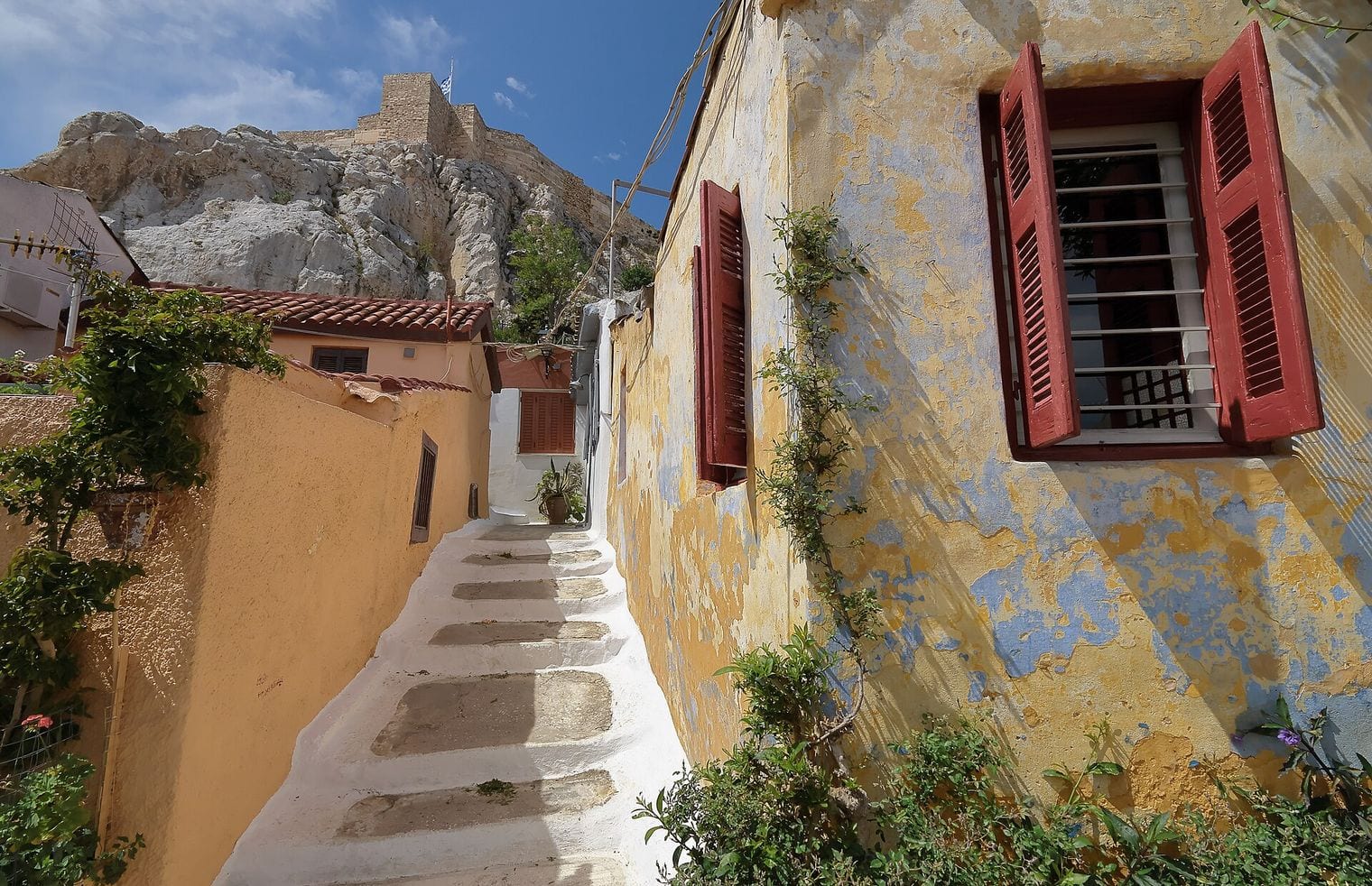
Plaka is the old town of Athens, a maze of narrow lanes, neoclassical houses and bougainvillea wrapped around the northern and eastern slopes of the Acropolis. Much of it is pedestrianised, and the pleasure is simply walking — stepped alleys open onto small squares, a Byzantine chapel turns up mid-street, and the rock looms above the rooftops at the end of the view.
Tuck into the highest corner and you reach Anafiotika, a pocket of whitewashed, flat-roofed cottages built by island craftsmen brought in to work on the royal palace in the nineteenth century, and which looks far more like a Cycladic village than a capital city. Plaka's main streets are frankly touristy, thick with souvenir shops and sandal makers, but a single turn off them puts you somewhere quiet almost immediately.
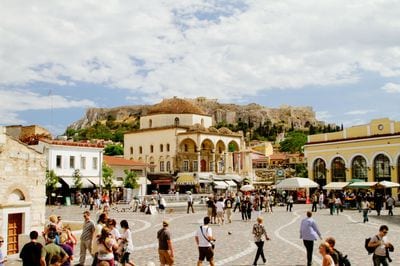
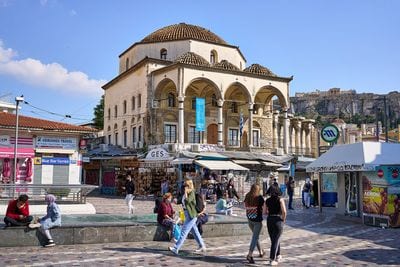
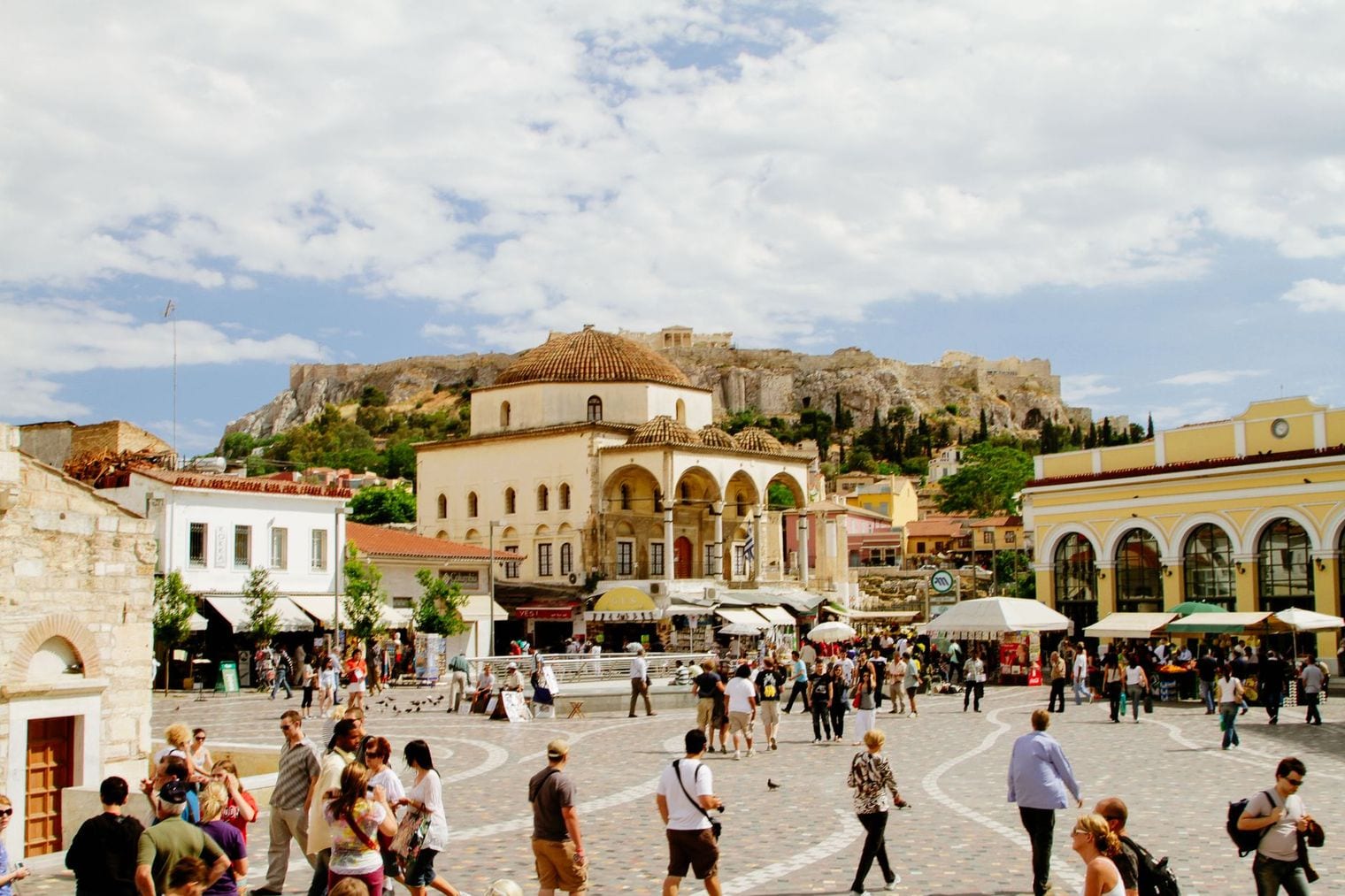
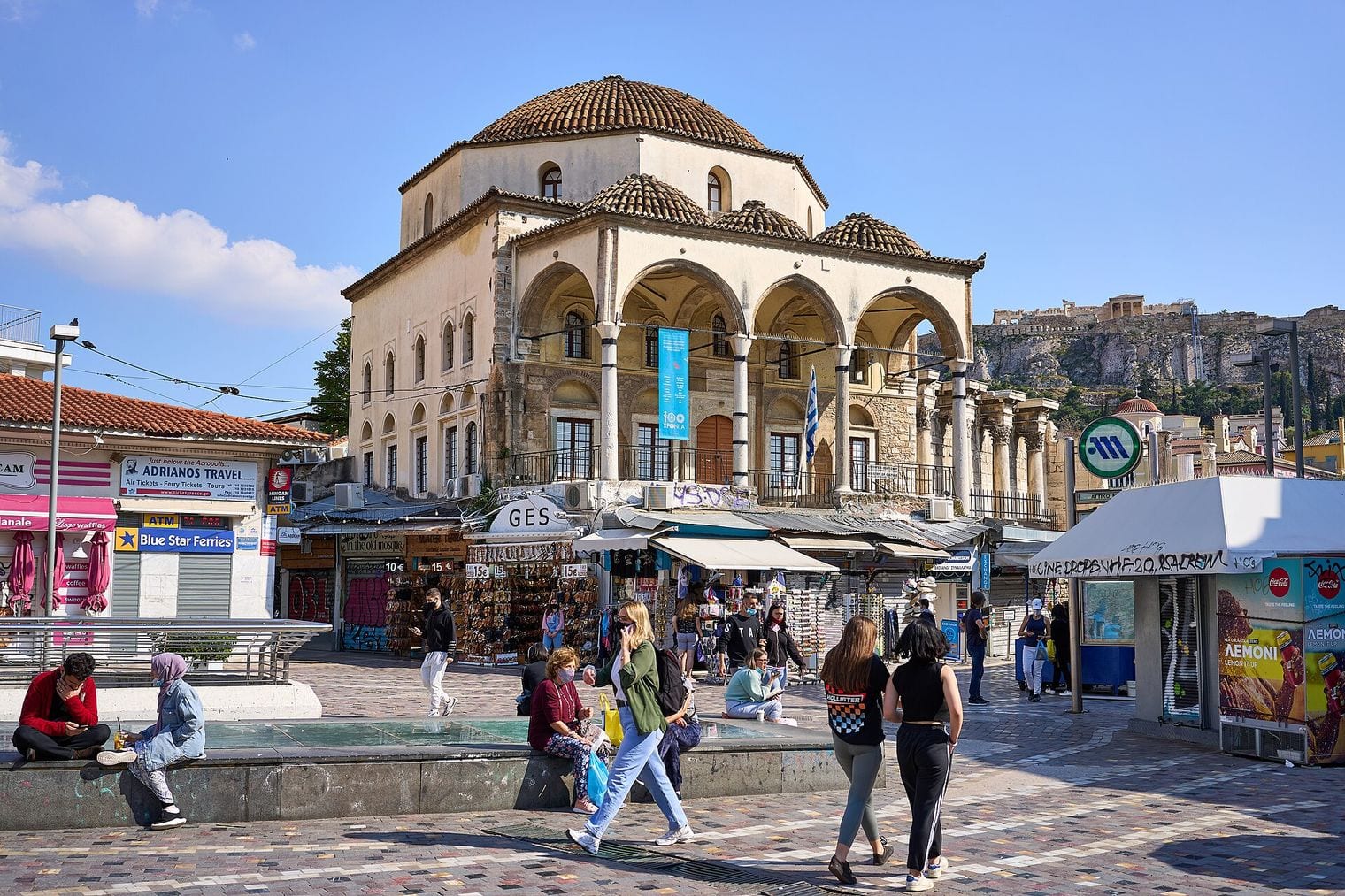
Monastiraki Square is where several versions of Athens collide at once. Standing in the middle you can see the Acropolis rising directly ahead, an Ottoman mosque, a Byzantine church, a busy metro entrance and the entrance to the flea market — layers of the city's history arranged in a single view, all of it still in use.
The surrounding streets are the reason to linger. The flea market spreads out around Avissinias Square into a warren of antiques dealers, second-hand records, army surplus and genuine junk, at its best and busiest on a Sunday morning.
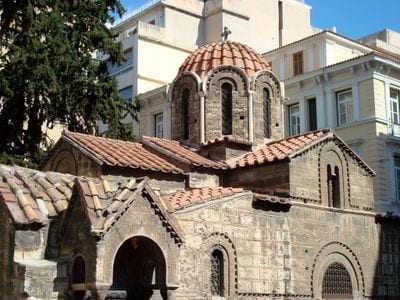
Rooftop bars along the square's edge offer one of the best Acropolis views in the city, and Ermou Street runs east from here toward Syntagma as the main shopping thoroughfare, with the little church of Panagia Kapnikarea marooned in the middle of it.
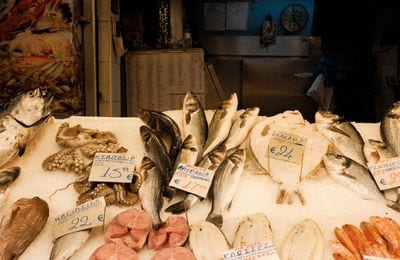
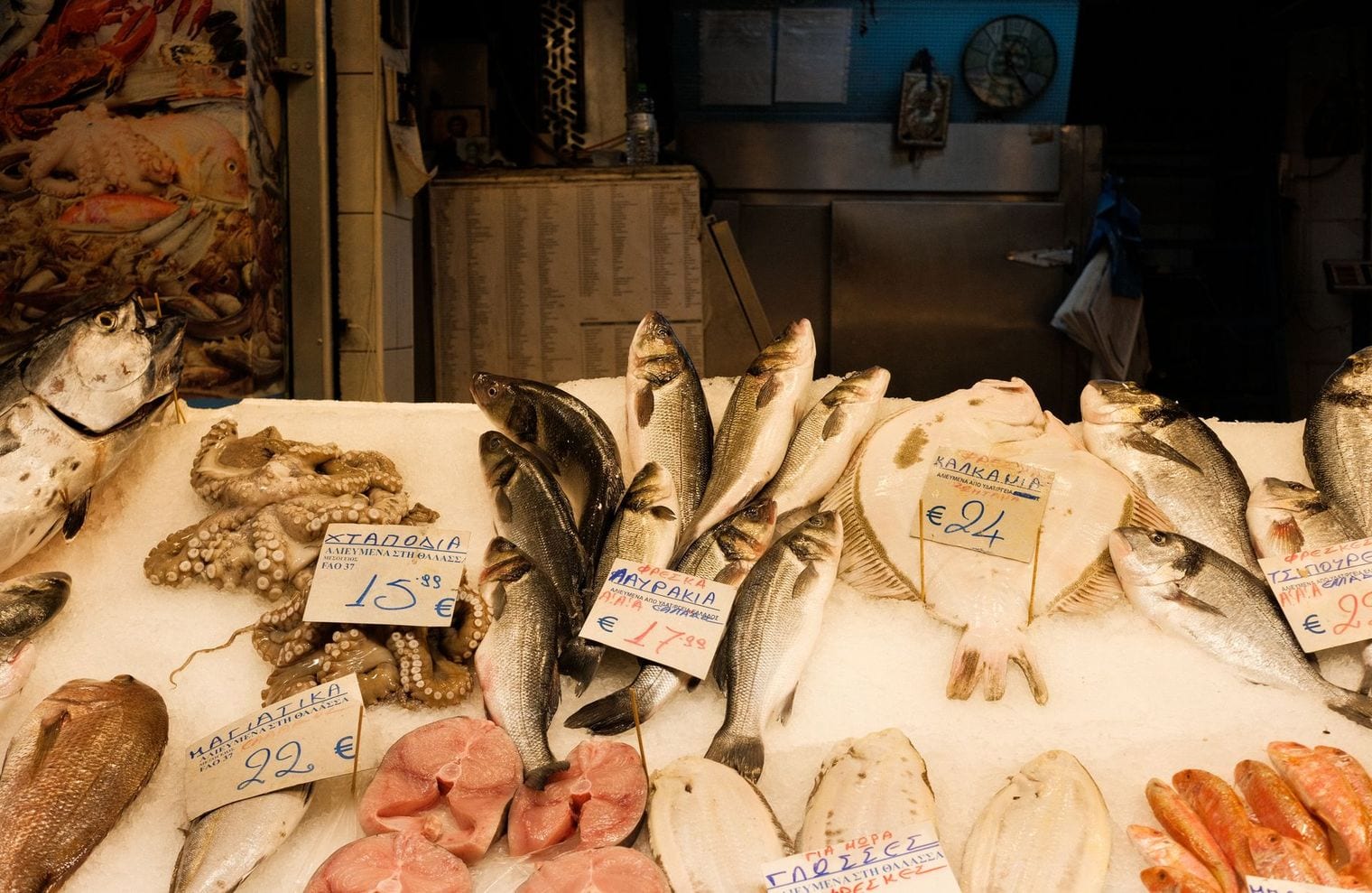
The Varvakeios Central Market is the city's central meat and fish hall, and it is a genuinely working market rather than a curated food experience. Under a high nineteenth-century iron roof, butchers shout across banked displays and the fishmongers' aisle glitters with ice and octopus. It is loud, wet underfoot and completely unsentimental, which is exactly what makes it worth walking through.
The streets around it are as good as the hall itself. Athinas Street outside is lined with shops selling cheese, cured meat, olives, herbs and coffee, while a neighbouring hall handles fruit and vegetables. Tucked into the market and its immediate surroundings are a handful of long-running cook shops and tavernas that serve the traders, keep unusual hours and produce some of the least fussy, most reliable food in central Athens.
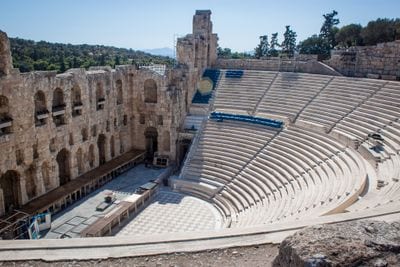
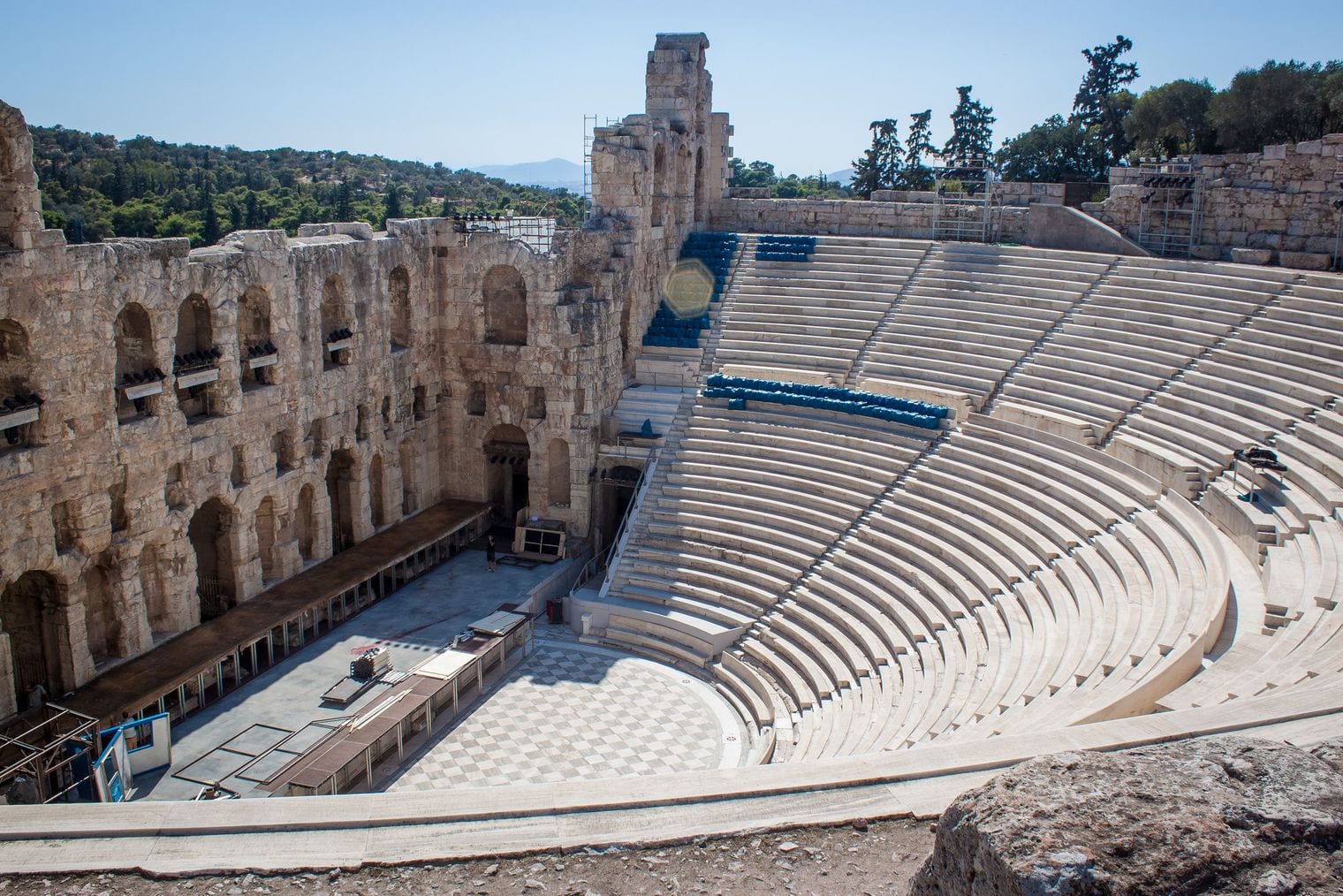
The Odeon of Herodes Atticus is the steep stone theatre built into the southwest slope of the Acropolis, raised in the second century AD by the wealthy Athenian Herodes Atticus in memory of his wife Regilla. Its towering arcaded stage wall is one of the most photographed structures in the city, and the tiers of seating have been restored in marble.
What makes it special is that it is still in use. Through the summer the Odeon is the principal venue of the Athens Epidaurus Festival, staging opera, classical concerts, ballet and Greek drama under the open sky with the floodlit Acropolis directly overhead. Outside performance times the interior is usually closed, but you can look down into the bowl from the Acropolis path above, which gives you the full sweep of the auditorium for nothing.
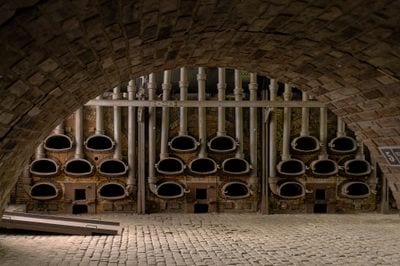
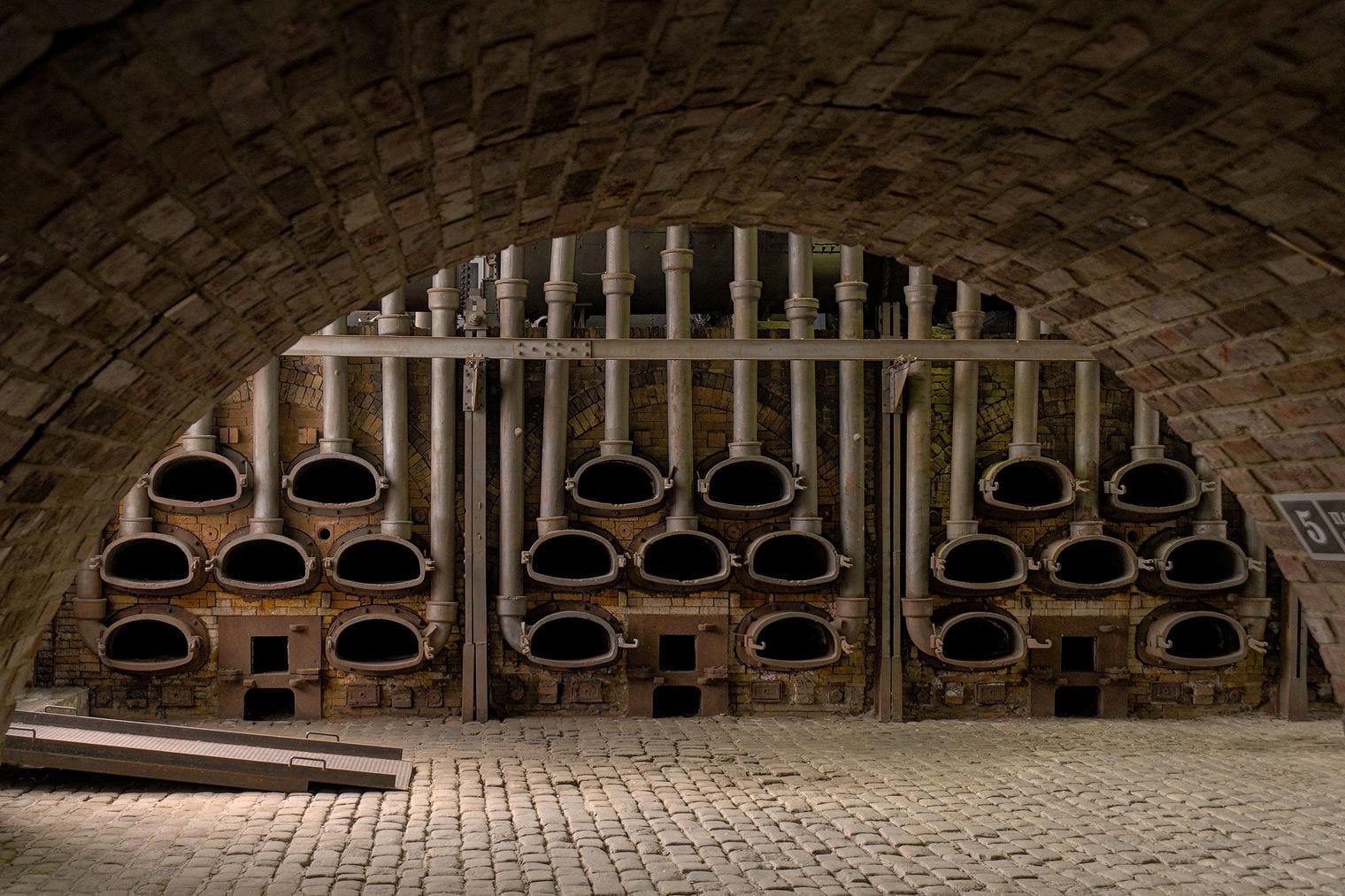
Technopolis City of Athens is the old Athens gasworks, decommissioned and turned into a cultural campus without scrubbing away what it used to be. Brick chimneys, gasholders and riveted ironwork have been kept and lit, and the yards between them now host concerts, festivals, markets and open-air screenings. It is the anchor of Gazi, the district that took its name from the gasworks and became one of the city's main nightlife quarters.
The Industrial Gas Museum occupies the surviving plant buildings, walking you through the retort houses and purification rooms where coal gas was made for the city's street lamps, with the original machinery in place. It is an unexpectedly absorbing counterweight to a week of classical antiquity, and the site is a short walk from Kerameikos, so the two combine easily into an afternoon.
Standing on a low hill above the Ancient Agora, the Temple of Hephaestus is one of the best-preserved ancient Greek temples anywhere. It kept its columns, its architraves and most of its roof structure because it spent centuries in continuous use as a Christian church, which spared it the quarrying and neglect that reduced so many others to foundations.
Dedicated to Hephaestus, patron god of metalworking, craftsmanship and fire, it sat above the district where the city's bronze and iron workshops clustered. Sculpted panels around the outside show the labours of Heracles and Theseus. Because it is complete you can read the whole Doric scheme at a glance — something even the Parthenon, half-scaffolded and famously refined, does not quite let you do.
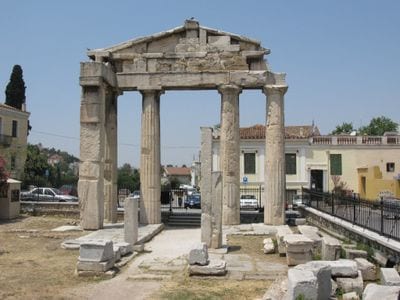
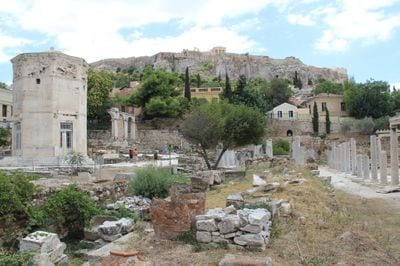
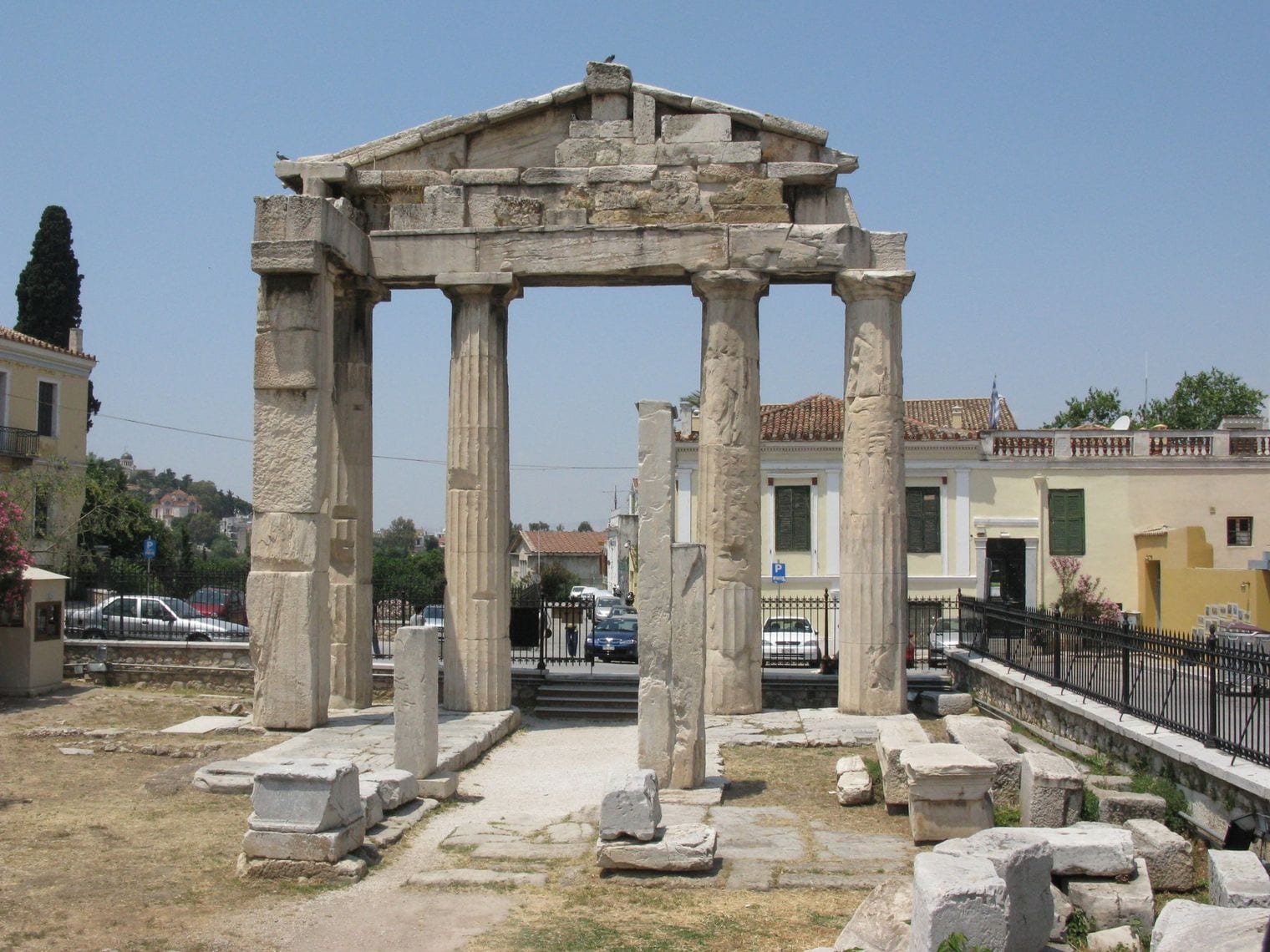
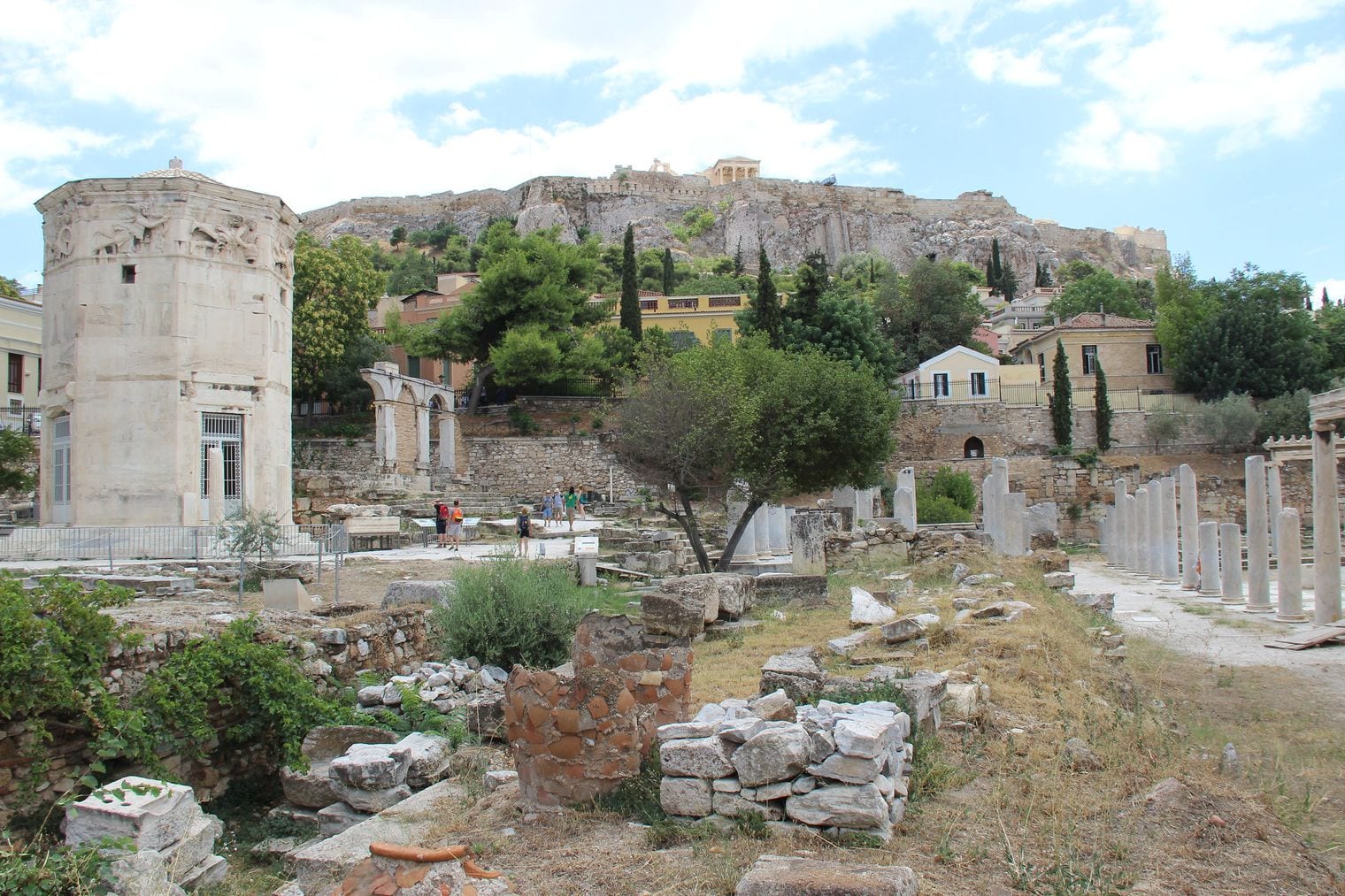
When the Romans took over, they built the city a new marketplace just east of the old one, and the Roman Agora of Athens is what survives of it: a rectangular walled courtyard entered through the Gate of Athena Archegetis, whose Doric columns still stand on the western side. It is a smaller, more contained site than the Greek Agora next door, and quicker to take in.
The reason to go is the Tower of the Winds in the corner — an octagonal marble tower carved with a personified wind on each face, which worked as a combined sundial, weathervane and water clock. It is the most complete surviving structure of its kind from antiquity, and the interior has been opened to visitors. The Fethiye Mosque, built here during the Ottoman period, stands on the same site and is sometimes used for exhibitions.
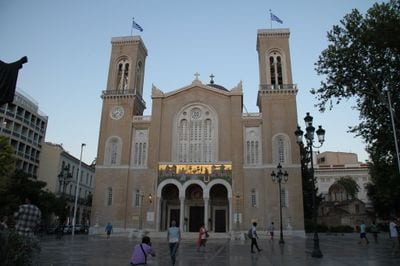
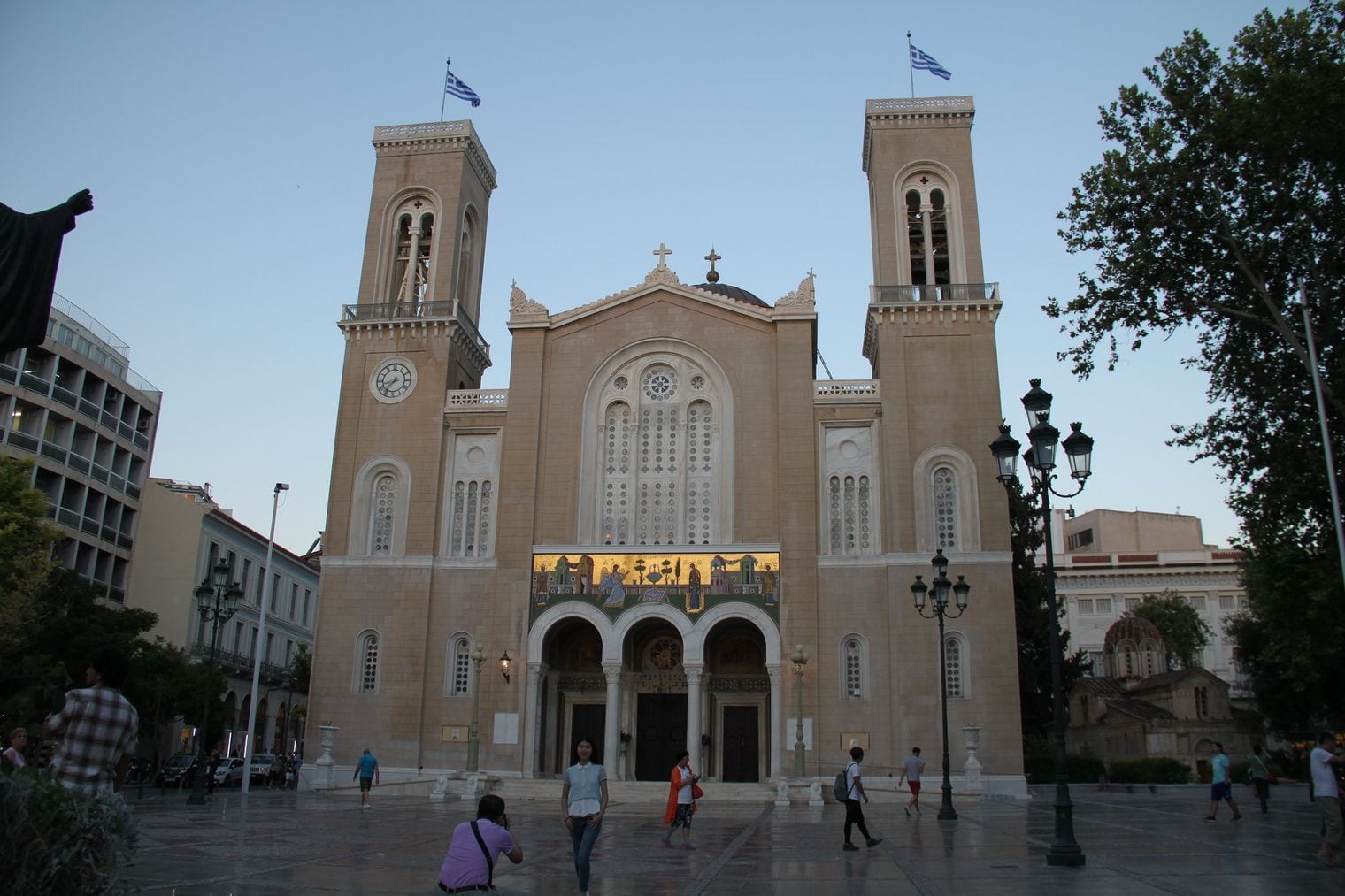
The Metropolitan Cathedral of Athens is the seat of the Archbishop of Athens and the setting for the country's state occasions — royal weddings in the past, and the funerals of national figures since. Its large nineteenth-century interior is dim, gold-heavy and thick with incense, and it is very much a working church rather than a museum piece, so you will usually find people lighting candles rather than taking photographs.
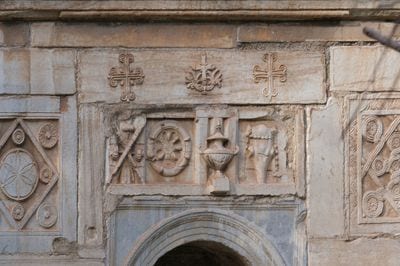
The real surprise is the tiny building standing beside it in the same square. Known as the Little Metropolis, it is a small Byzantine chapel assembled almost entirely from recycled ancient and early Christian marble — carved reliefs, inscriptions and fragments from older monuments set into its walls in no particular order. Reading the salvaged pieces in the stonework is more rewarding than anything inside either building.
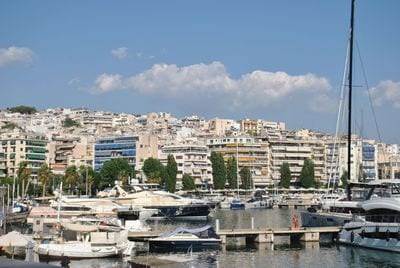
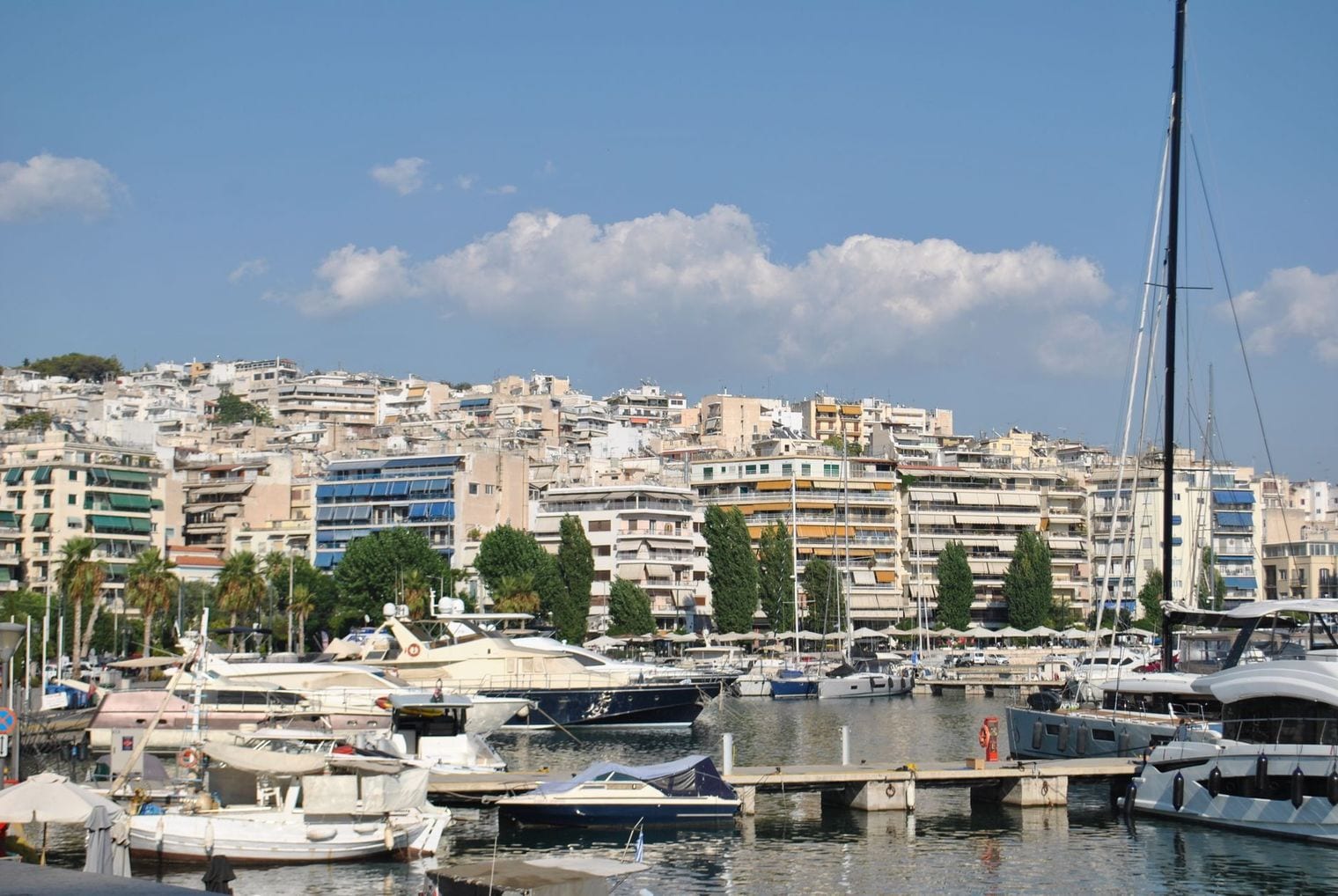
Mikrolimano is a small, near-circular harbour in Piraeus, ringed with moored yachts and fishing boats and lined along its curve with seafood tavernas. It is a complete change of register from the archaeology of central Athens: low buildings, masts, water, and tables set out along the quay a few metres from the boats. The name simply means small harbour.
Getting there is easy — the metro runs to Piraeus and the harbour is a short walk or taxi from the station — which makes it a straightforward evening out rather than an expedition. Eat grilled fish or octopus, sit facing the water, and expect the meal to take a while. The hill of Kastella rises directly behind the harbour, and the streets climbing it lead up to views back over the whole bay.
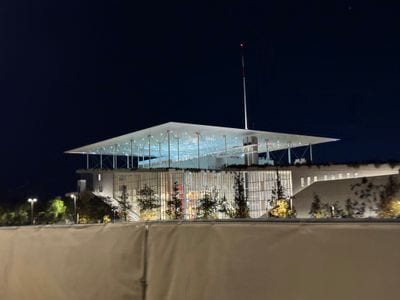
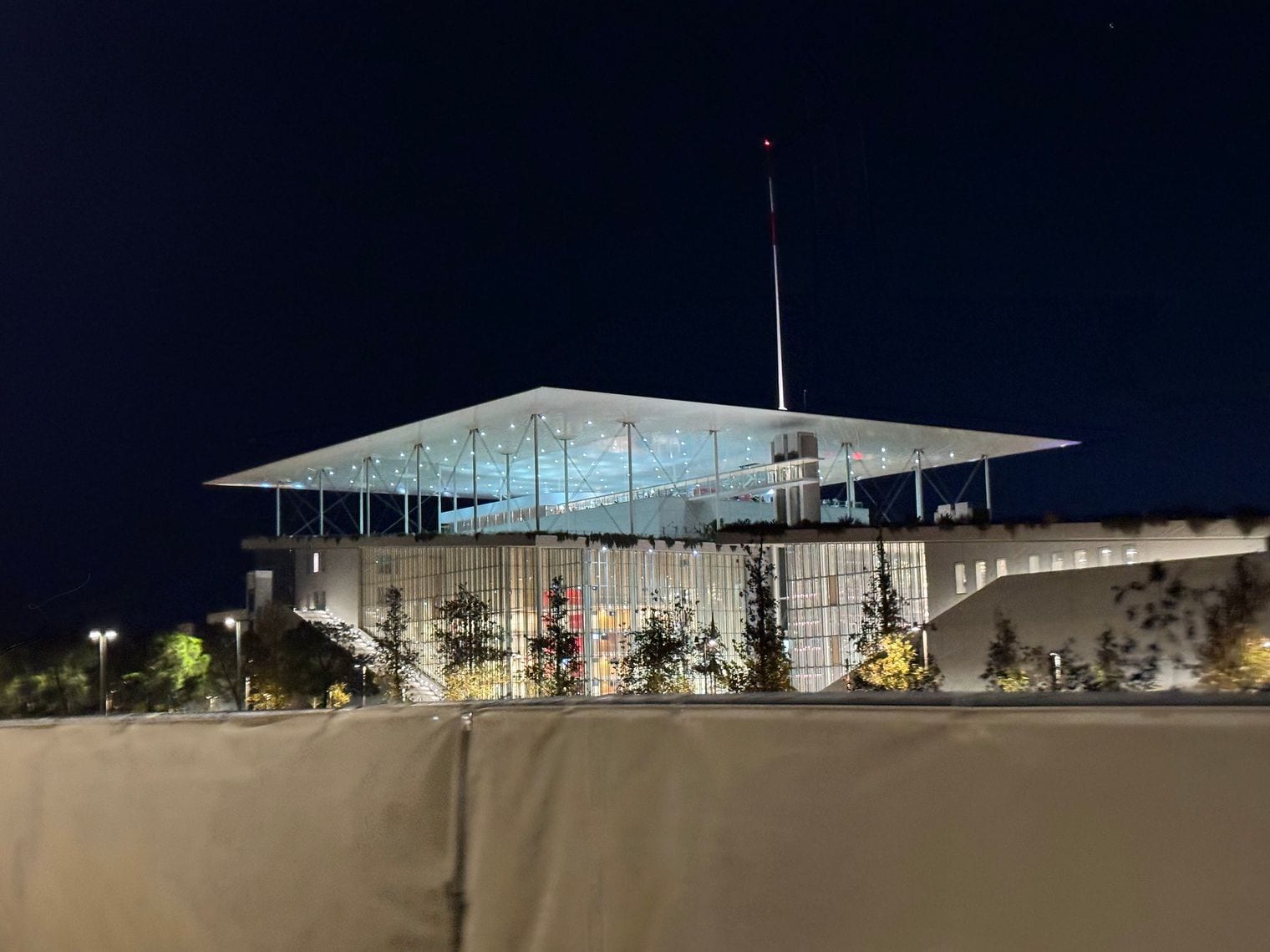
Stavros Niarchos Park is the sloping green roof and grounds of the Stavros Niarchos Foundation Cultural Center, a Renzo Piano complex on the coast at Kallithea that houses the Greek National Opera and the National Library of Greece.
The park climbs steadily from ground level to the top of the building, so you walk up a hillside of Mediterranean planting and end up looking back over the city to the Acropolis on one side and out to the Saronic Gulf on the other.
It has become one of the places Athenians actually spend their weekends. There is a long canal for kayaking, a running track, a playground, an outdoor gym and a wide lawn used for open-air films and concerts, and a great deal of it is free. Even if you have no interest in an opera or a library, the walk to the roof at sunset justifies the trip out from the centre.
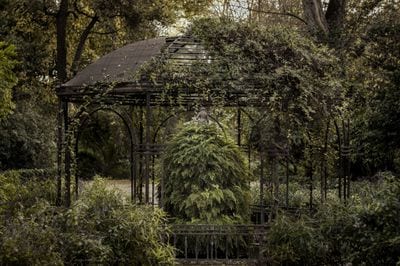
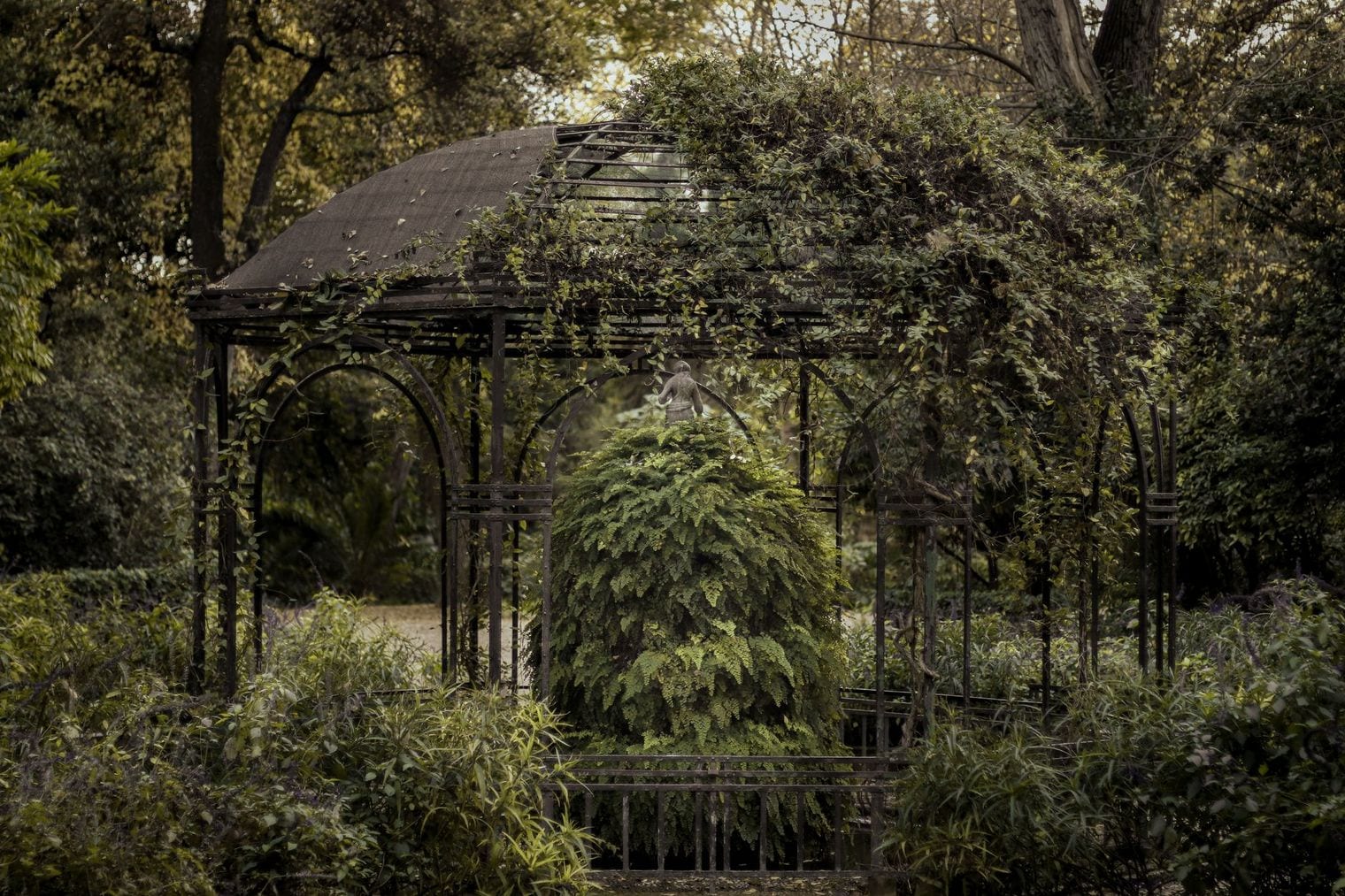
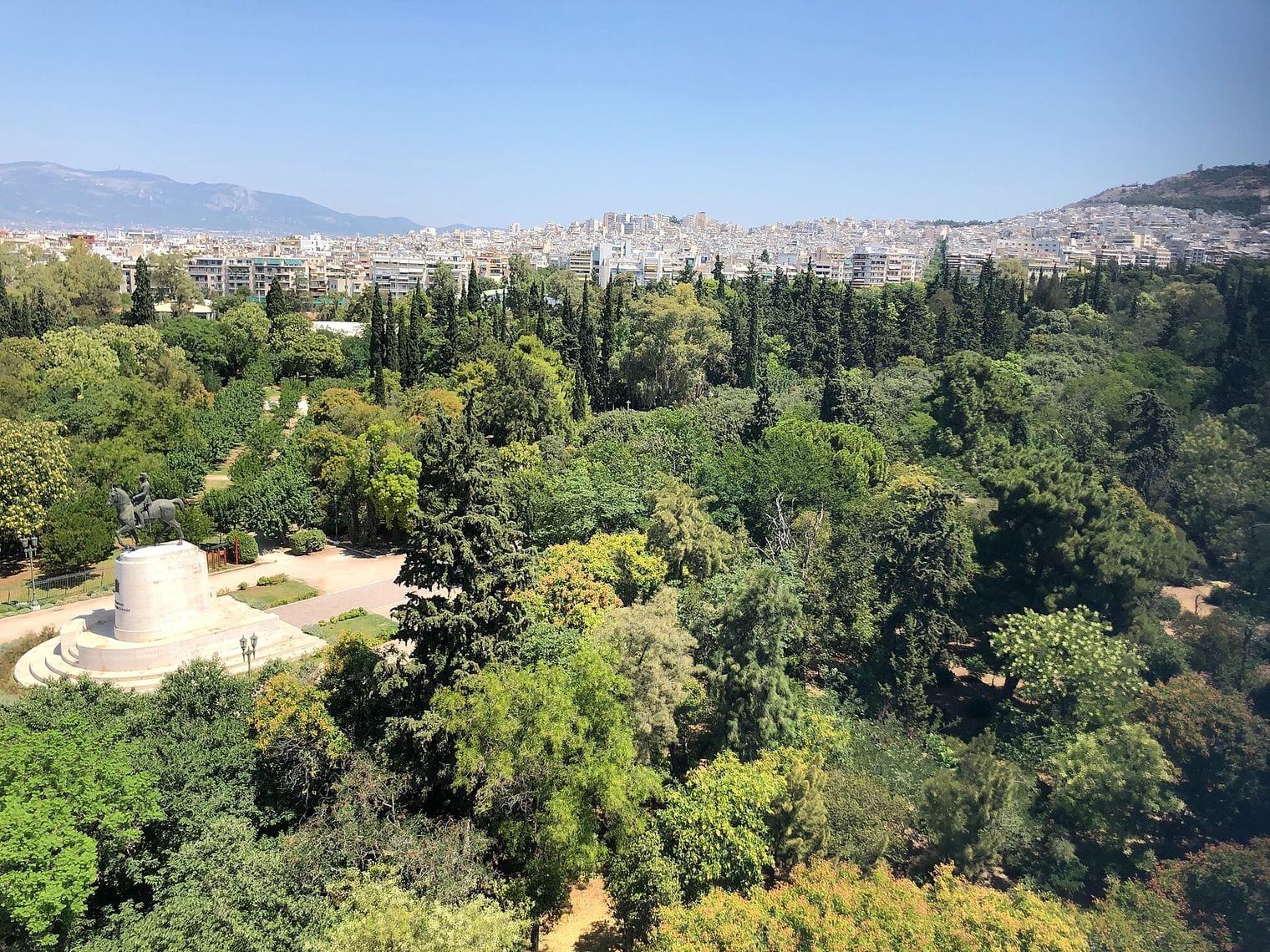
The National Garden of Athens is a dense, shaded park of about fifteen hectares directly behind the Greek Parliament, laid out in the nineteenth century as the private garden of the royal palace and opened to the public later. Its value in a hot city is simple: narrow paths under a heavy canopy of trees, ponds with ducks and turtles, and a drop of several degrees the moment you step inside.
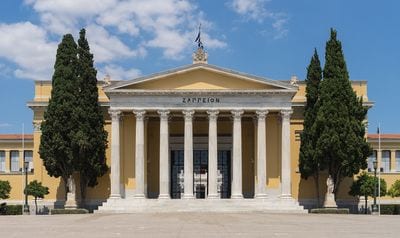
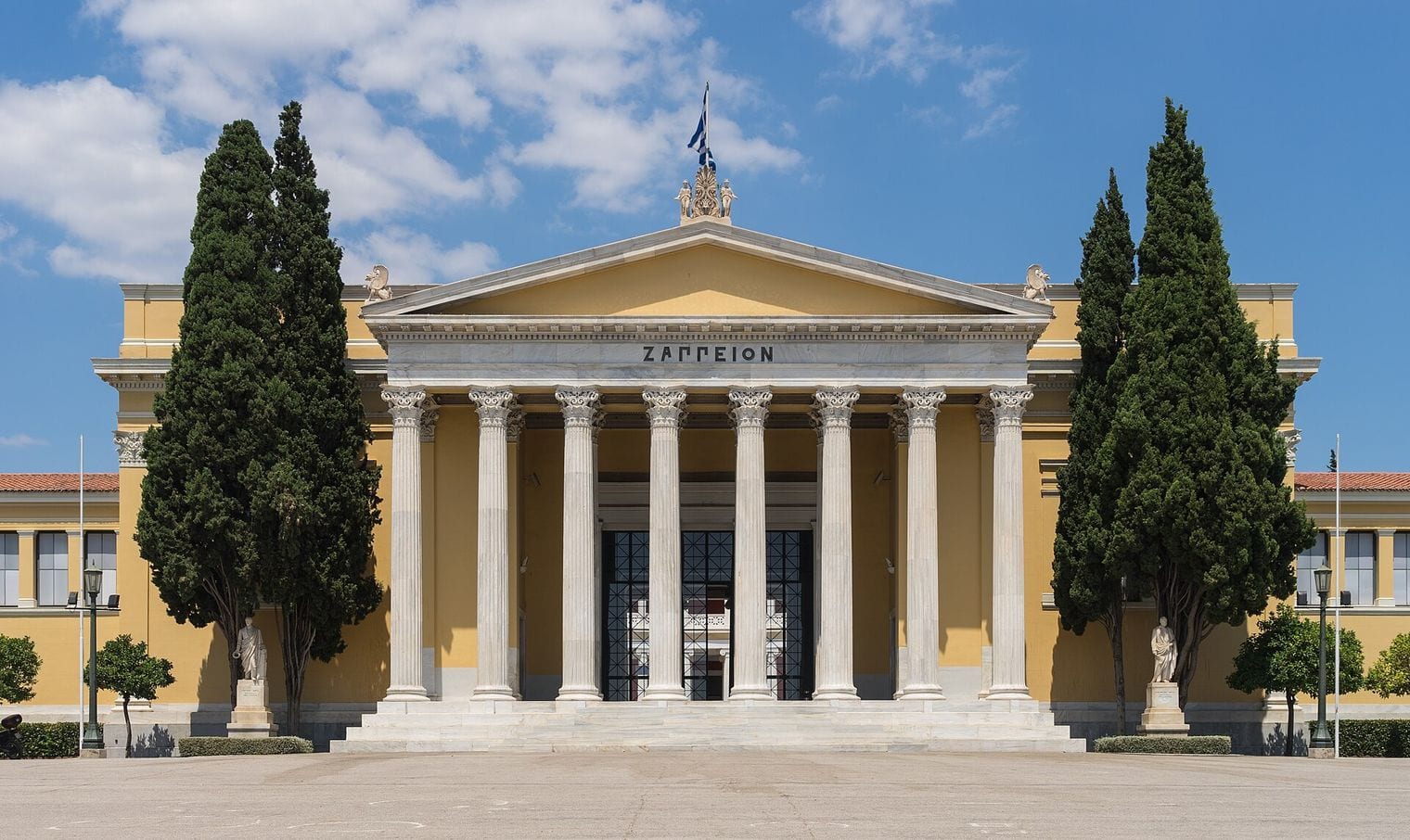
It is deliberately unmanicured in places, with ancient column fragments and mosaics scattered along the walks and a small duck pond, botanical museum and modest animal enclosure tucked into the grounds. The southern end opens onto the Zappeion, a colonnaded neoclassical exhibition hall with a wide forecourt, and continues from there toward the Temple of Olympian Zeus, making the garden the natural link between Syntagma and the ancient sites.
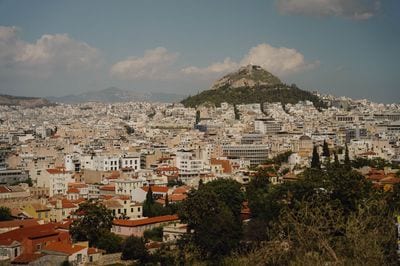
Mount Lycabettus is the steep, pine-covered cone that rises out of the middle of Athens and gives the city its widest view. From the summit you look down on the whole basin — the Acropolis below you rather than above, the sprawl running out to the mountains, and on a clear day the sea and the islands beyond Piraeus.
You can walk up in about half an hour on switchback paths from the Kolonaki side, or take the funicular railway that runs in a tunnel from the northeast foot of the hill to just below the top.
At the summit stands the small whitewashed Chapel of Saint George, a café terrace and an open-air theatre used for concerts. Sunset is the popular slot, and it is genuinely worth timing for, though the paths are unlit so bring a torch for the walk down.
The Benaki Museum grew out of the private collection of Antonis Benakis, who gave his family's neoclassical mansion and everything in it to the Greek state in the 1930s. The main building surveys Greek culture across the entire span of its history in one continuous sequence — prehistoric gold, Byzantine icons, Ottoman-era interiors, embroidery and folk costume, and material from the War of Independence.
It is the best single place in Athens to understand what happened between the classical period and the modern country, which most museums here skip over entirely. Two rooms of complete carved and painted wooden interiors, lifted whole from mansions in northern Greece, are the highlight for many visitors. The Benaki now runs several separate buildings across the city, including a museum of Islamic art overlooking Kerameikos and a large contemporary space in Pireos Street.
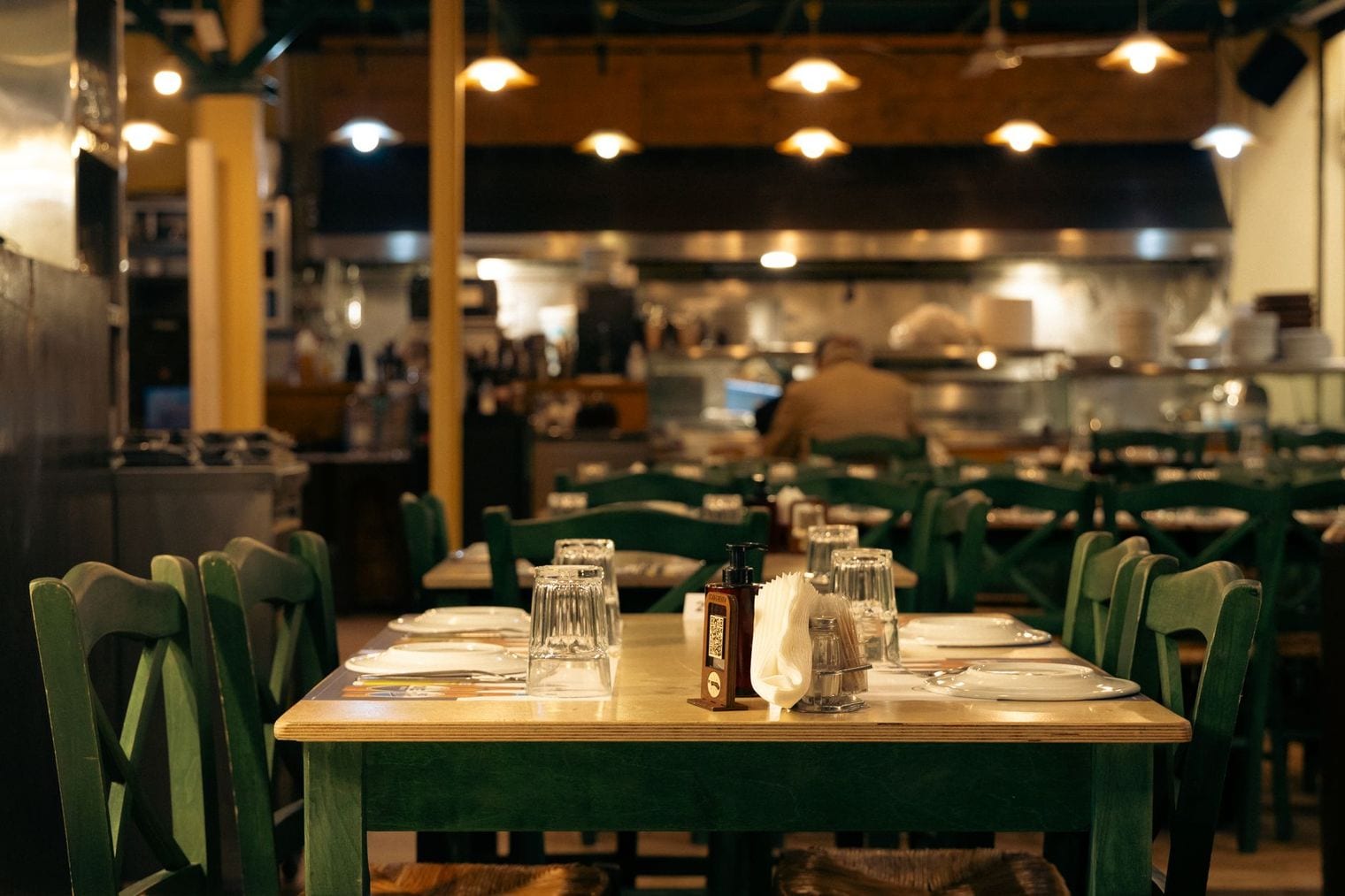
Tavern Klimataria is a long-running traditional taverna just off Theatrou Square in the old commercial quarter, occupying a vine-shaded building that has been serving food for some seventy years. It is the sort of place that has kept its tiled floor, its barrels and its handwritten menu while the streets around it changed several times over.
The draw is the combination of straightforward Greek cooking and live music. Wine comes from the barrel, the menu runs to mezedes, casseroles and grilled meat, and on most evenings musicians play rebetiko and traditional songs at close quarters while diners sing along. Book ahead for an evening table, go hungry, and be prepared to stay considerably longer than you planned — this is not a place designed for a quick meal.
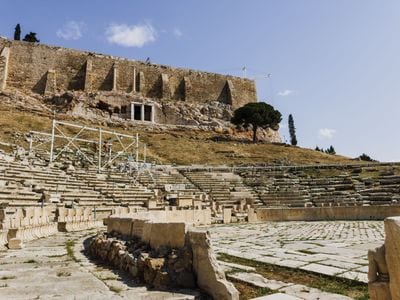
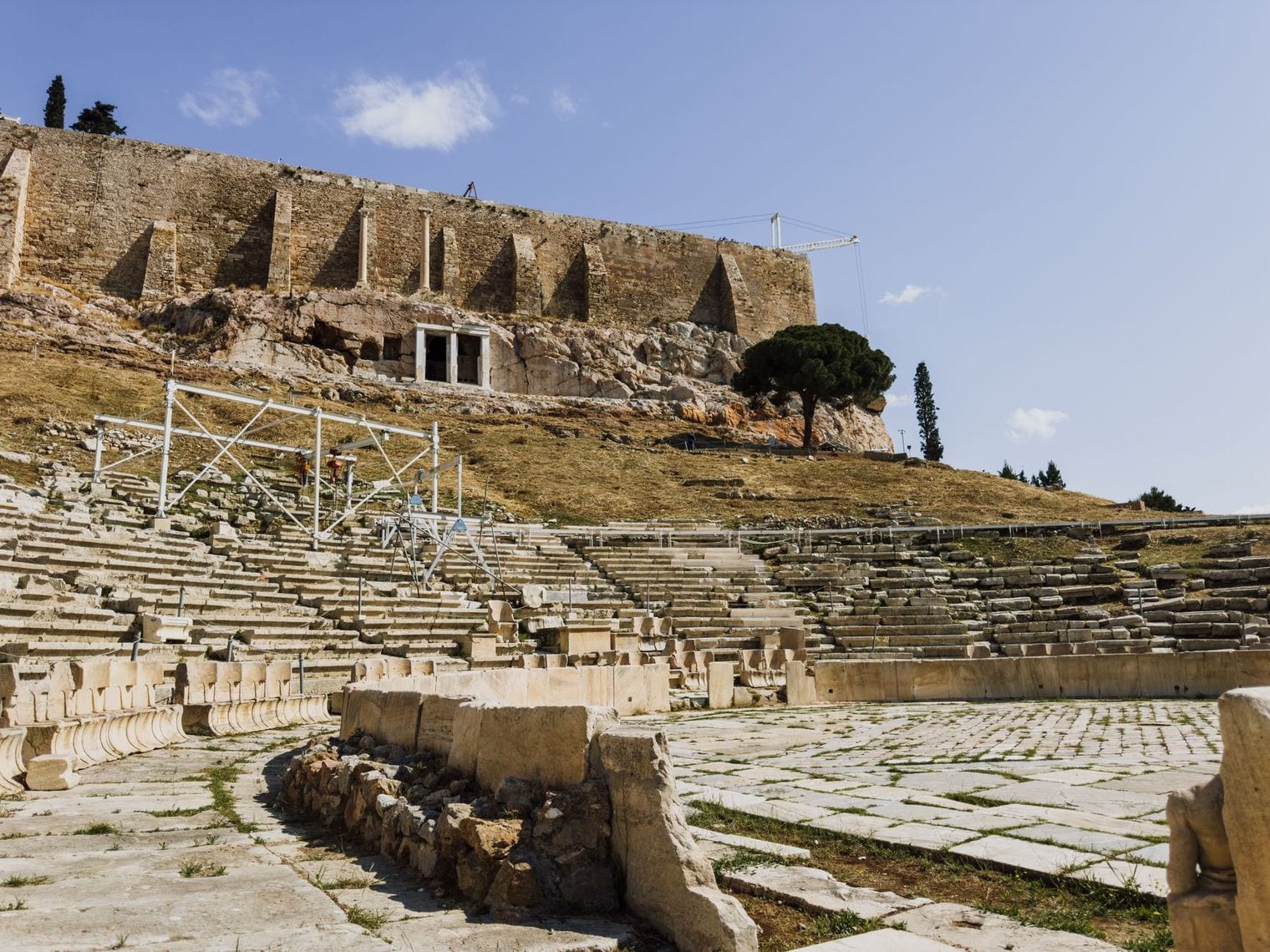
Cut into the southern slope of the Acropolis, the Theatre of Dionysus is where Western drama began. This is the theatre where the plays of Aeschylus, Sophocles, Euripides and Aristophanes were first performed, at the festival held in honour of Dionysus, in front of audiences drawn from across the city. The surviving stone seating and the carved thrones of the front row date from later rebuilding, but the ground itself is the original.
It is included in the Acropolis ticket and sits on the path up the south slope, yet a surprising number of visitors walk straight past it toward the summit. Take the time to sit in the tiers and look down at the orchestra — the semicircle of flat ground where the chorus performed — and out over the city. The Sanctuary of Asclepius and the Stoa of Eumenes lie along the same slope.
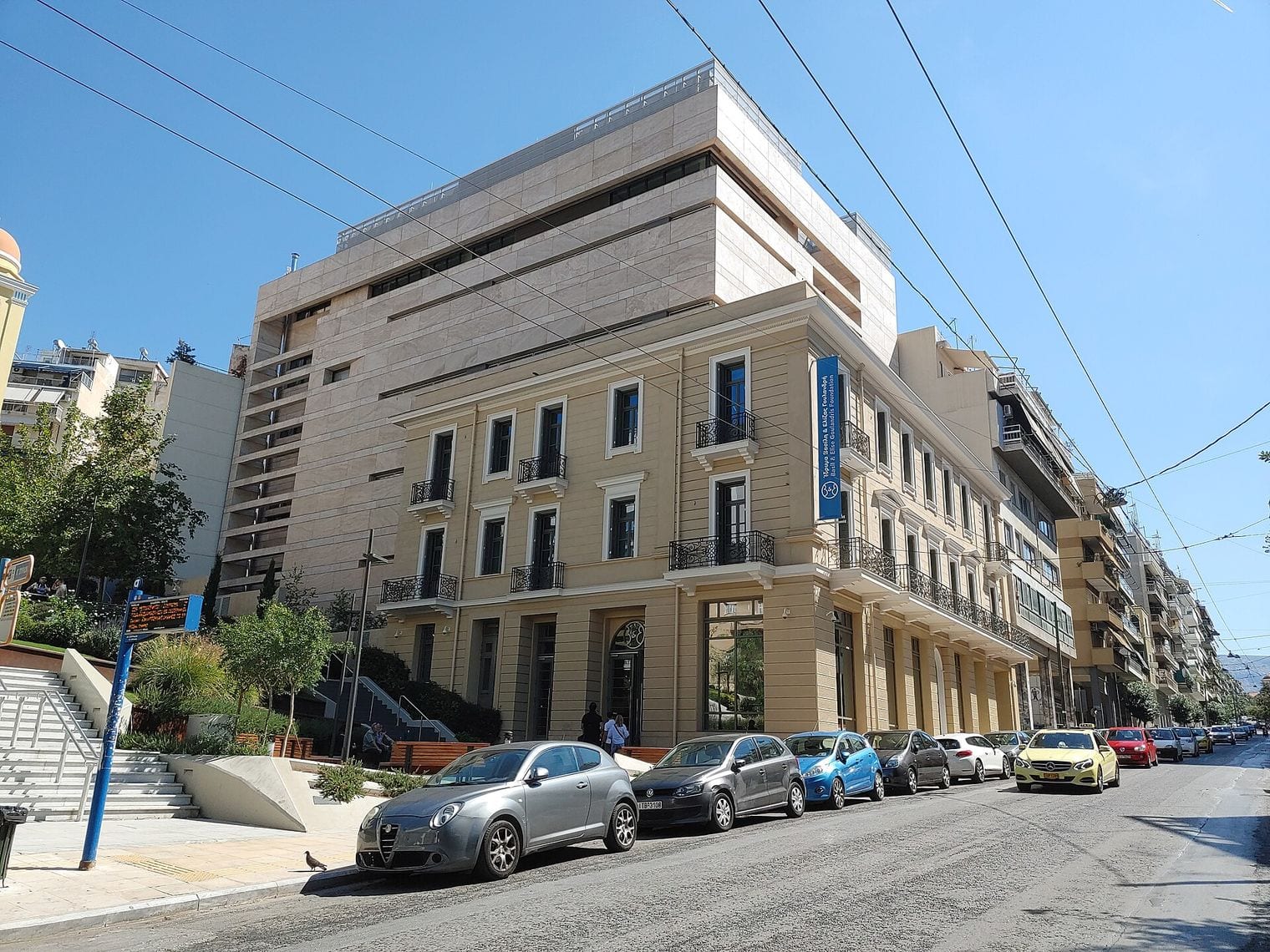
The Basil and Elise Goulandris Foundation opened in 2019 in Pangrati and holds one of the strongest private collections of modern art in Greece. The shipowning couple who assembled it bought consistently and well across the twentieth century, and the result is a compact museum where you move from Cézanne, Van Gogh, Picasso, Monet and Giacometti to the major Greek modernists in the same visit.
That pairing is the point, and it is unusual. Seeing Greek painters hung in the same building as the European artists they were responding to makes the connections obvious in a way a national gallery rarely manages. The building itself is modern and quiet, arranged over several floors with a rooftop restaurant, and it is small enough to see properly in an hour or two without the fatigue a larger museum brings on.
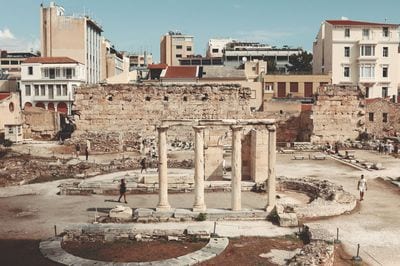
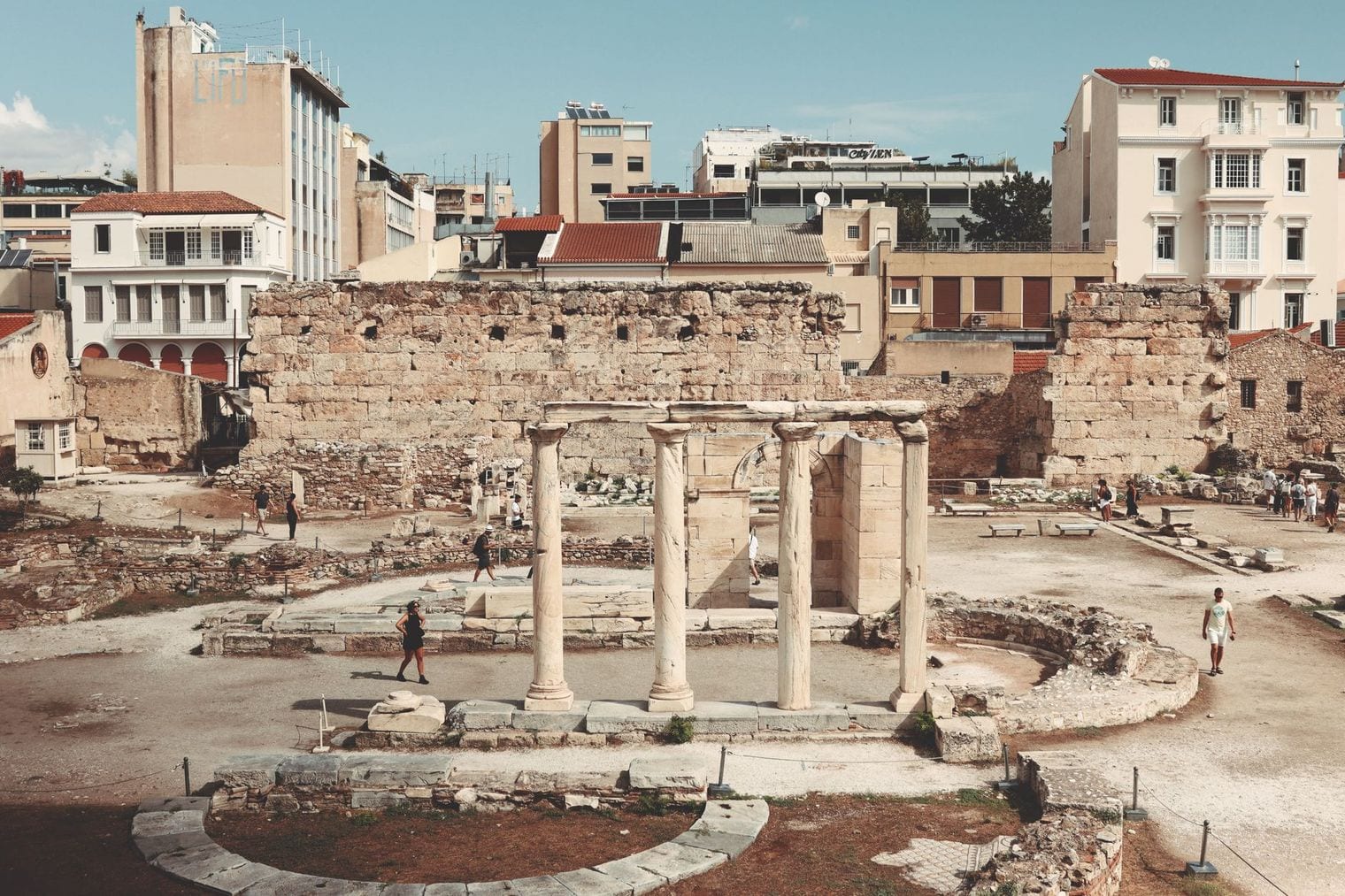
Hadrian's Library was built by the emperor Hadrian in the second century AD, and it was far more than a place to keep books. The complex enclosed a large rectangular courtyard with a central pool and garden, surrounded by a colonnade, with reading rooms and lecture halls ranged around it — closer to a cultural centre than a library in the modern sense.
A row of tall Corinthian columns from the western facade still stands along Areos Street, right beside the noise of Monastiraki, and they are among the most striking ancient remains you come across simply walking through the city. Inside the site are the foundations of several later churches built successively in the courtyard, which makes the enclosure a clear cross-section of Athens from the Roman period through the Byzantine centuries.
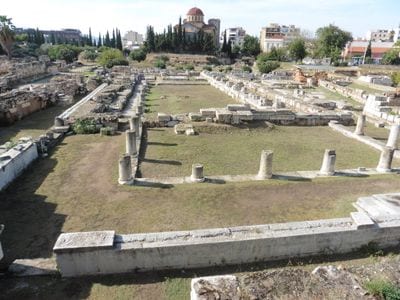
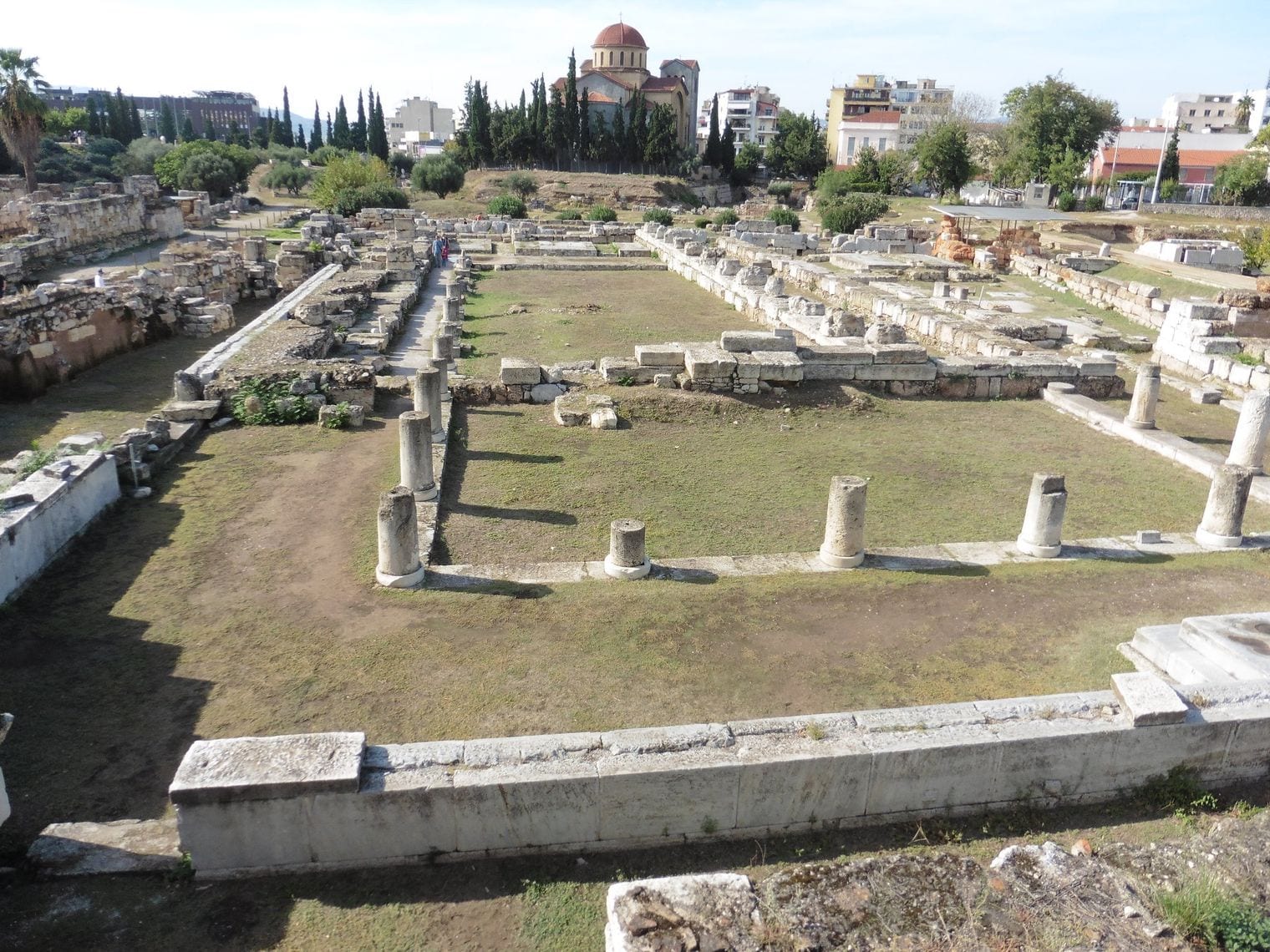
Kerameikos was the potters' quarter and, for a thousand years, the city's main cemetery — the ground outside the walls where Athenians buried their dead along the roads leading out of town. The site sits at the bottom of Ermou Street, a few minutes' walk from Monastiraki Square, and it is one of the quietest archaeological parks in central Athens.
Two of the classical city's gates stand here: the Dipylon, the largest gate in the Greek world, and the Sacred Gate where the road to Eleusis began. Between them ran the Pompeion, the building where the Panathenaic procession assembled.
The Street of Tombs still carries its marble grave markers — bulls, horsemen, mourning figures — with the finest originals moved into the small site museum, and a stream, reeds and tortoises make the enclosure feel more like a garden than a graveyard.
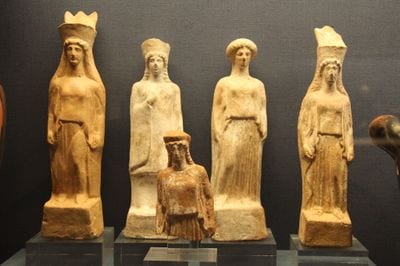
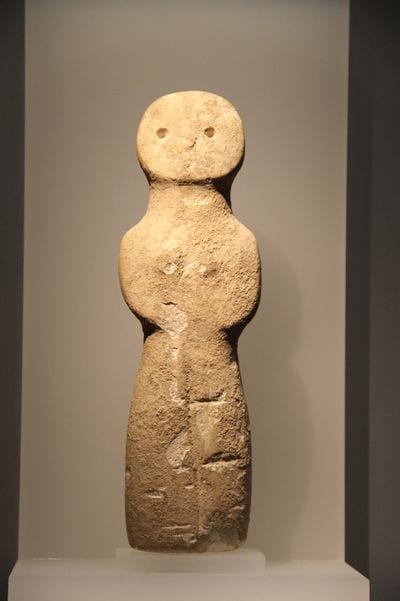
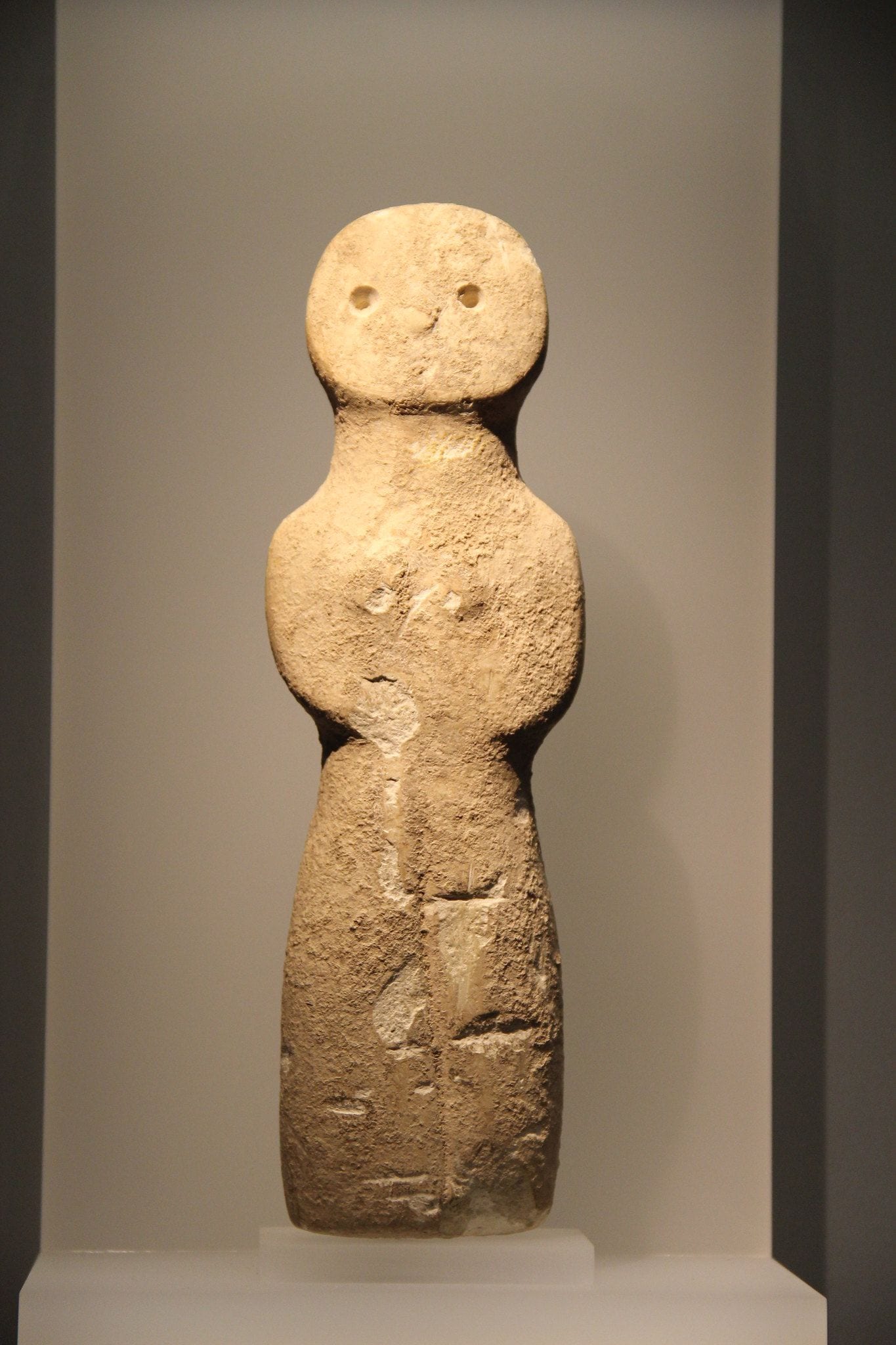
The Museum of Cycladic Art exists because of one collection: the marble figurines of the Cycladic islands, carved between roughly 3200 and 2000 BC, whose folded arms and blank faces look startlingly like twentieth-century sculpture. Nikolaos and Dolly Goulandris gathered them, and the museum they founded in 1986 holds the largest display of Cycladic art anywhere.
The main building on Neofytou Douka is joined by a glass corridor to the Stathatos Mansion, an 1895 Ernst Ziller house that takes the temporary exhibitions and is worth the walk on its own. Upper floors cover Cypriot antiquities and a section called Scenes from Daily Life in Antiquity, which reconstructs an ancient Athenian's life from birth to burial out of ordinary objects rather than masterpieces.
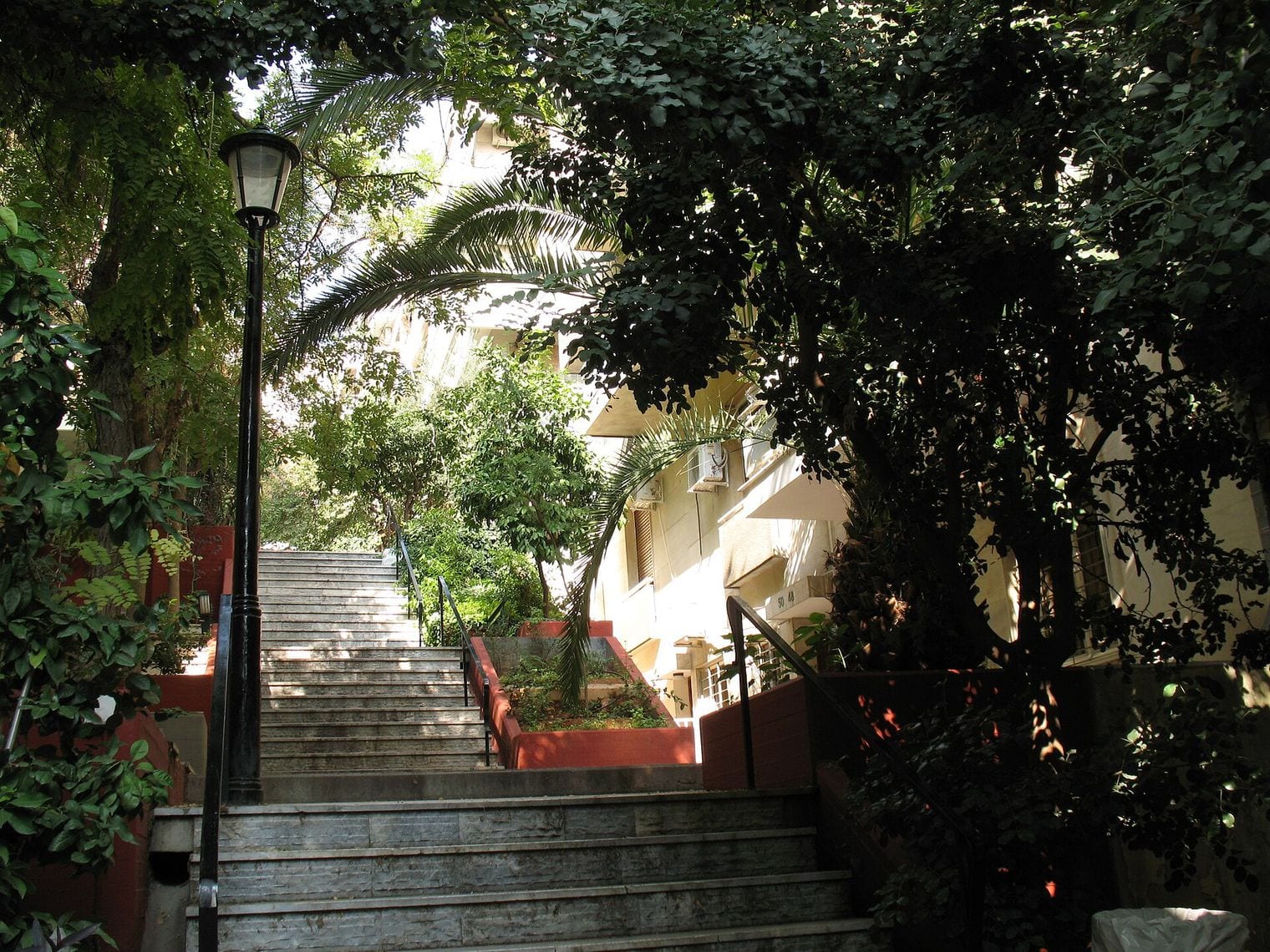
Tucked against the north-east flank of the Acropolis rock, Anafiotika is a pocket of whitewashed cottages, painted doors and bougainvillea that belongs on a Cycladic island rather than in a capital city. It was built in the 1840s by stonemasons brought from Anafi to work on King Otto's palace, who put up houses in the style they knew — overnight, exploiting an Ottoman-era custom that a roof raised between dusk and dawn could not be pulled down.
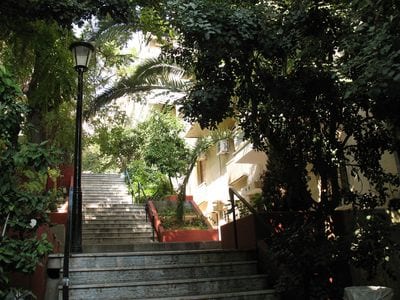
The lanes are barely shoulder-width and end in staircases, and there is nothing to buy: this is somebody's neighbourhood rather than an attraction, and it rewards a quiet wander instead of a crowd. Two seventeenth-century churches, Agios Georgios tou Vrachou and Agios Simeon, mark the eastern and western edges. Come early, keep your voice down, and follow the steps up for a view over the rooftops of Plaka.
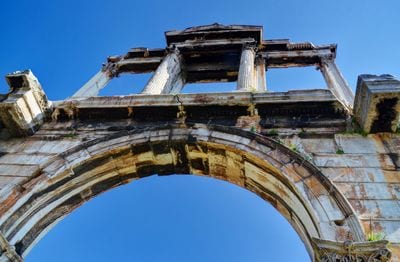
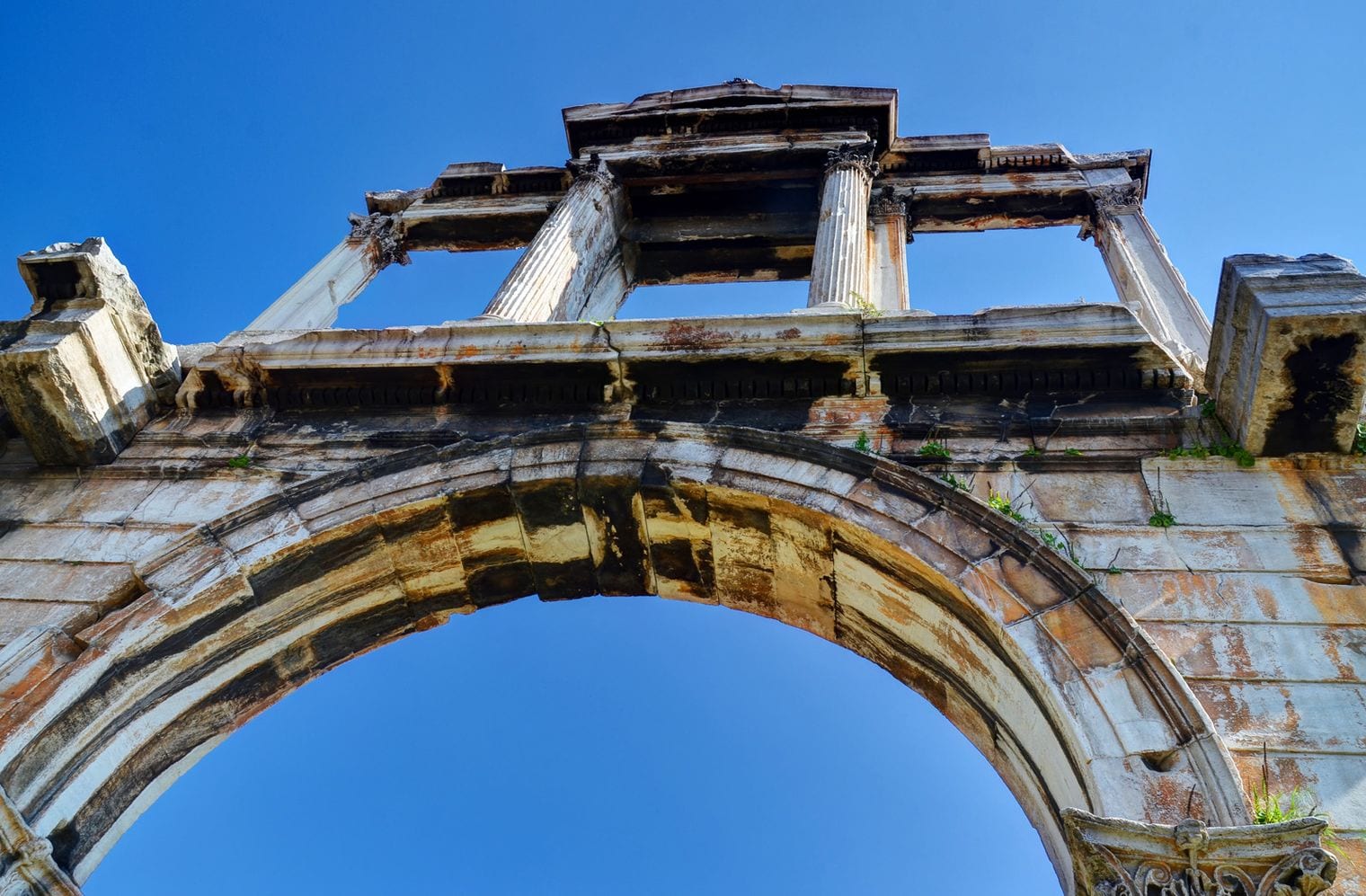
The Arch of Hadrian straddles the old road between the Acropolis and the Temple of Olympian Zeus, a free-standing gateway of Pentelic marble raised around AD 131 to mark the emperor's completion of the temple. It leads nowhere now — traffic runs past it on Amalias Avenue — but it stands almost intact, some eighteen metres of arch and Corinthian columns assembled without mortar.
The inscriptions are the interesting part. One face reads "This is Athens, the ancient city of Theseus"; the other, "This is the city of Hadrian, and not of Theseus". Whether the arch marked a boundary between the old town and Hadrian's new quarter or was simply flattering the emperor is still argued over. It costs nothing to look at, is floodlit after dark, and photographs best from the pavement opposite.
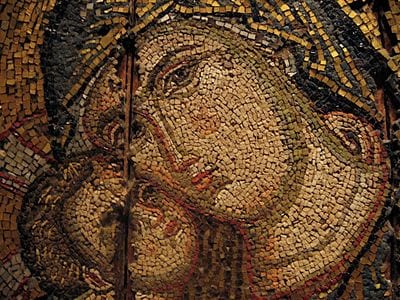
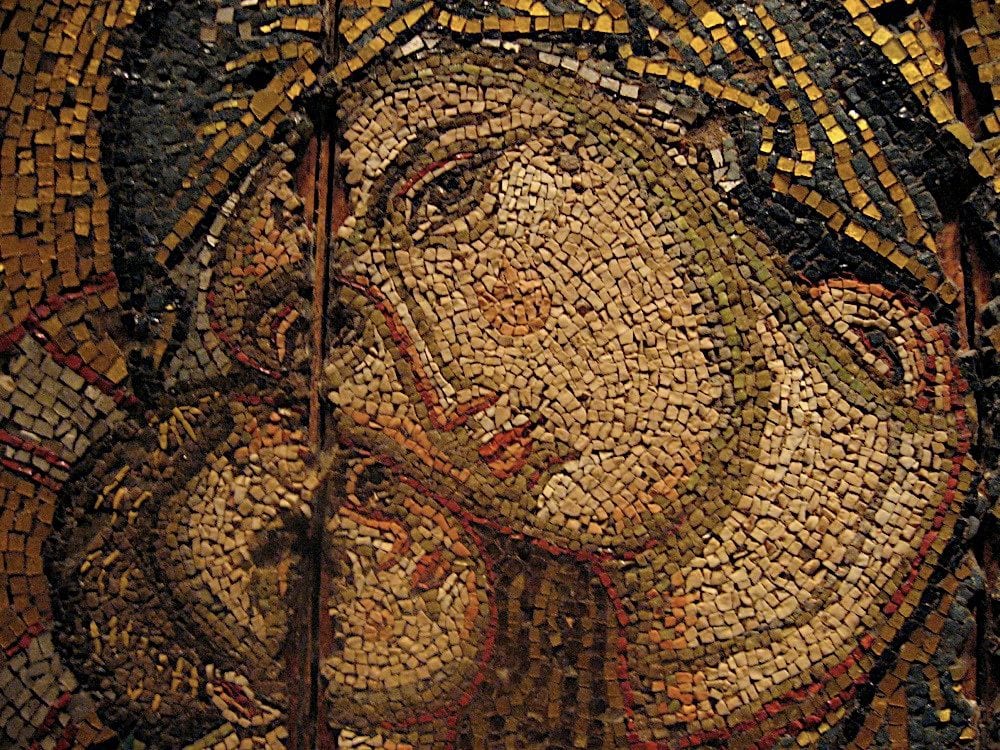
Between the fall of the classical city and the birth of modern Greece lie a thousand years most visitors skip entirely. The Byzantine and Christian Museum, in the grounds of the 1848 Villa Ilissia on Vasilissis Sofias, fills that gap with icons, mosaics, manuscripts, silverwork and carved marble drawn from across the Byzantine world.
The permanent display runs largely underground, arranged as a walk forward in time from the late Roman period to the fall of Constantinople and beyond, with reconstructed church interiors that show how the objects were actually used. Early Christian floor mosaics, the double-sided icons of the fourteenth century and a deep collection of post-Byzantine Cretan painting are the highlights. The courtyard garden and its café are a genuine relief from the avenue outside.
3131. Syntagma Square and the Changing of the Guard
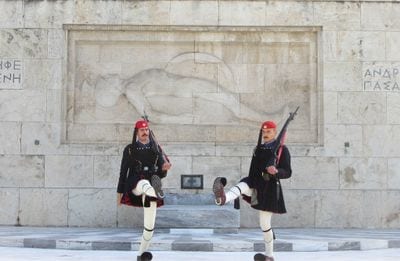
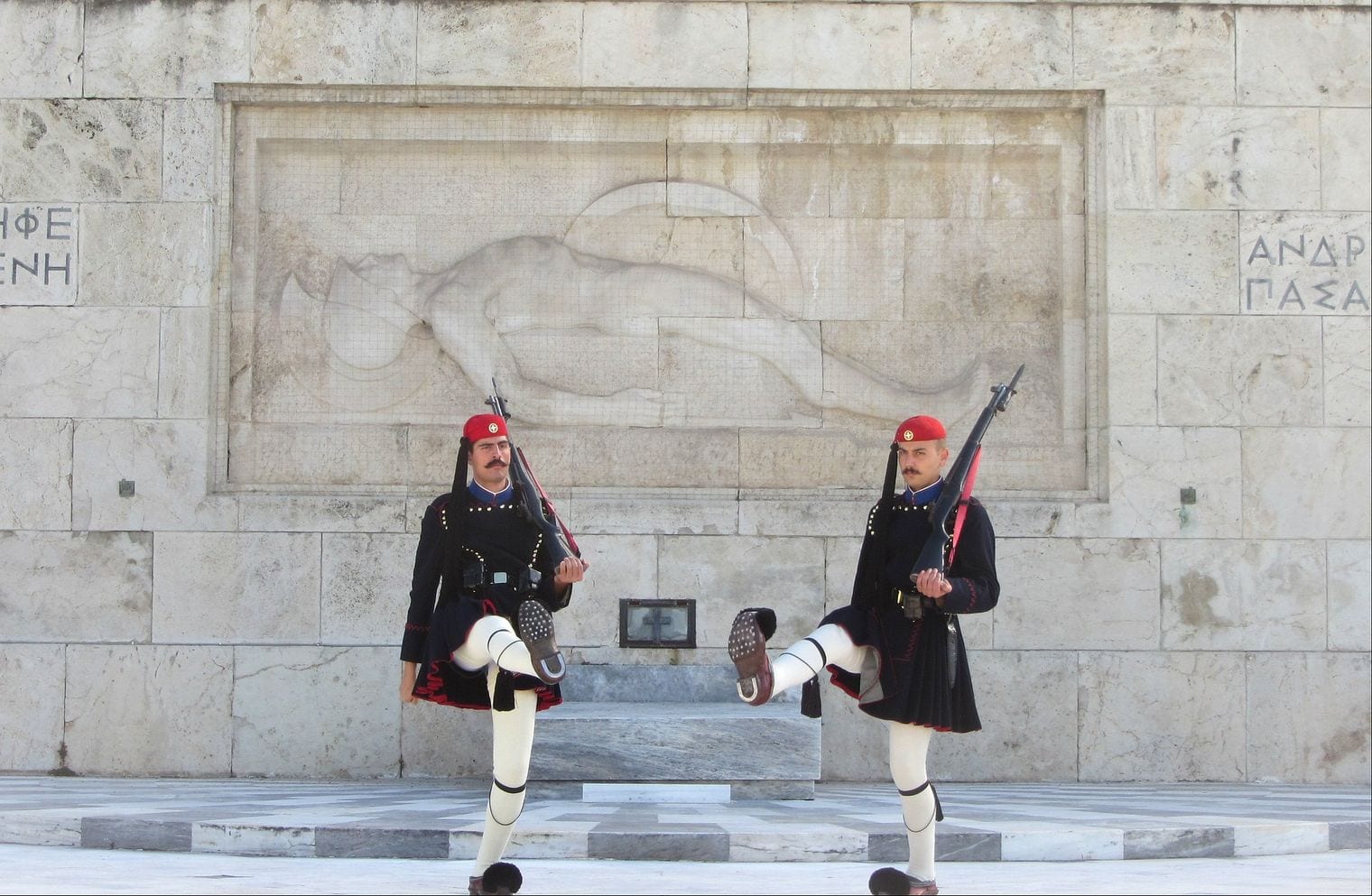
Syntagma Square is where modern Athens does its business: the metro interchange, the grand hotels, the demonstrations, and on the eastern side the Hellenic Parliament in what was King Otto's palace. Below its steps lies the Tomb of the Unknown Soldier, guarded around the clock by Evzones — the presidential guard, in pleated foustanella, woollen leggings and clogs with black pompoms.
The changing of the guard happens on the hour, every hour, and is worth timing a walk around: the movements are extraordinarily slow and deliberate, closer to ritual than to drill. The full ceremony is at 11am on Sunday, when a band leads a much larger detachment down Vasilissis Sofias. The metro station beneath the square doubles as a small museum, its excavation section left exposed behind glass on the concourse.
3232. National Gallery – Alexandros Soutsos Museum
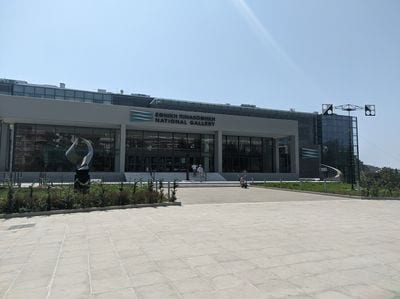
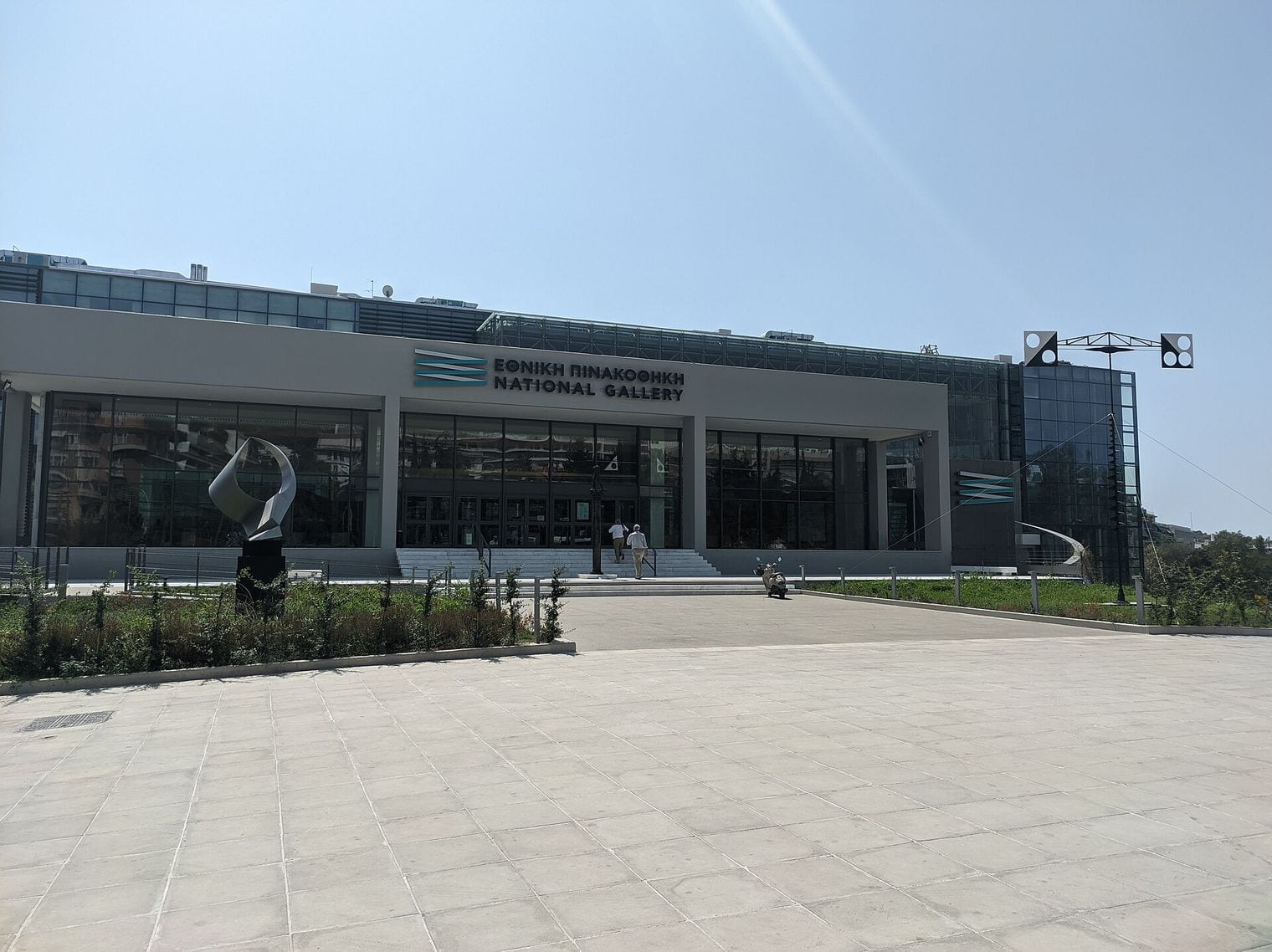
Reopened in 2021 after an eight-year rebuild that vastly enlarged it, the National Gallery holds the national collection of Greek art from the post-Byzantine period to the present. It is the place to see what Greek painters made of the nineteenth century — the War of Independence, island life, the Munich School — hung chronologically across three light-filled floors.
Nikolaos Gyzis, Nikiforos Lytras, Konstantinos Volanakis and Yannis Tsarouchis carry the Greek half; a smaller western European collection includes work attributed to Caravaggio and several El Grecos, claimed here as a native son. The building stands on Vasileos Konstantinou opposite the Hilton, a short walk from the Panathenaic Stadium, and the sculpture forecourt and top-floor café are open to anyone.
The bare limestone outcrop just below the Acropolis entrance is the Areopagus Hill — "the rock of Ares" — where the city's oldest council sat in judgement on charges of homicide, and where, in myth, the gods tried Ares himself for killing a son of Poseidon. It is a two-minute climb from the ticket gate and costs nothing.
It is also where the apostle Paul is said to have preached to the Athenians about their altar to an unknown god, an episode recorded on a bronze plaque at the foot of the steps.
The rock has been polished glassy by two and a half thousand years of feet, so take the modern staircase rather than the worn stone. Go at sunset: the view takes in the Ancient Agora, Thiseio and the whole city running west to the sea.
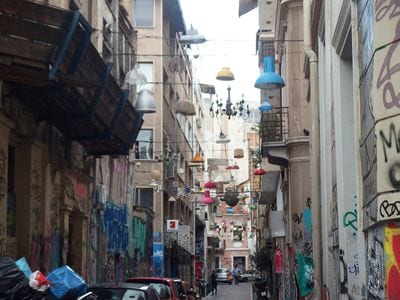
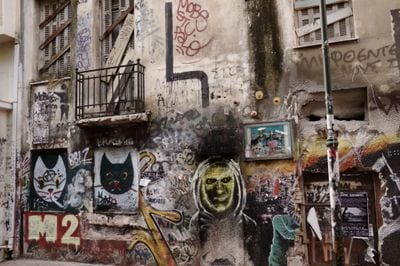
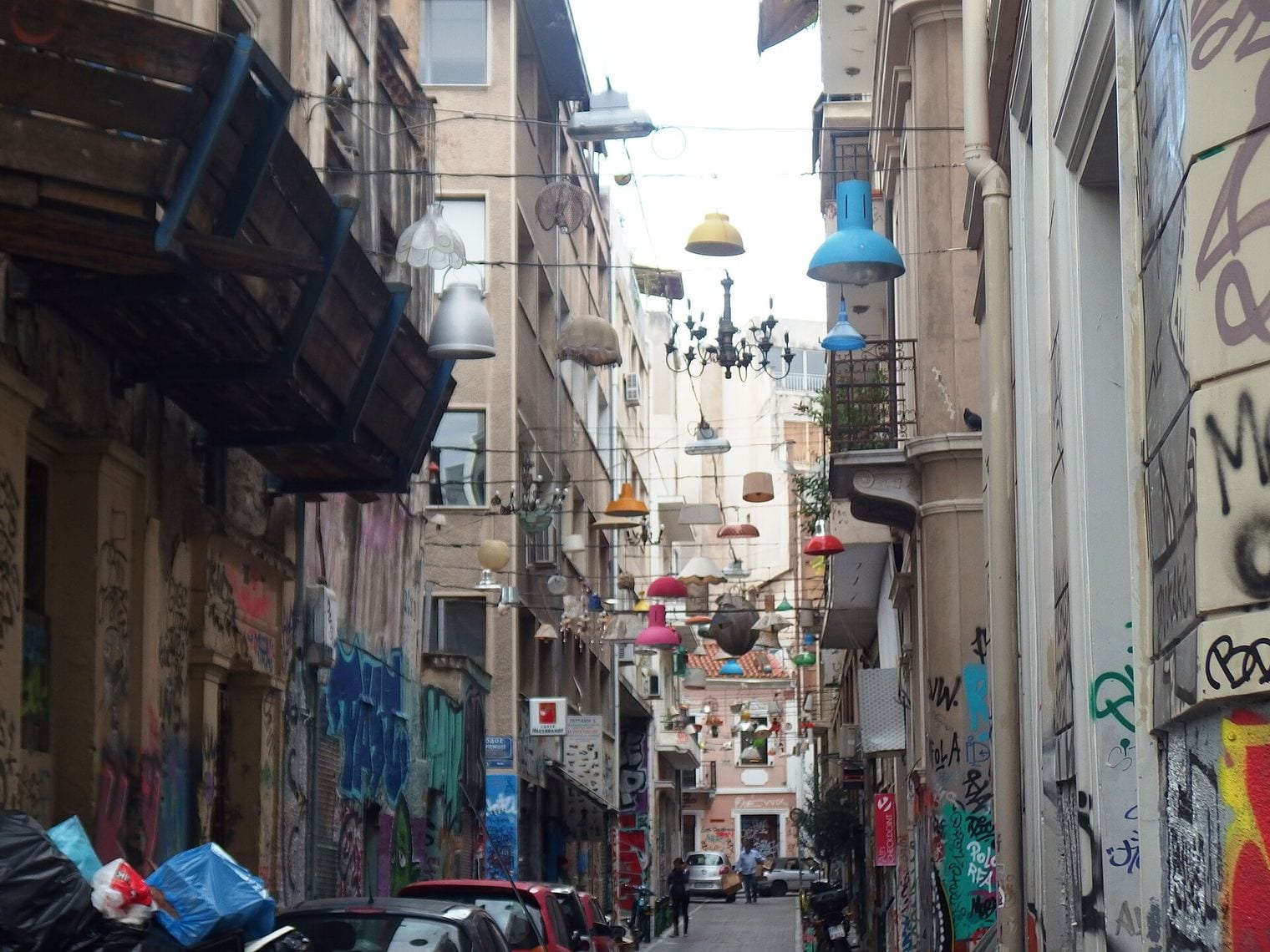
A generation ago Psyrri was warehouses and leather workshops. It is now the densest concentration of bars, mezedopoleia and street art in central Athens — and it has kept the workshops. The neighbourhood sits immediately north-west of Monastiraki Square, close enough to walk to from the Acropolis and just far enough that the prices drop.
Days here are quiet and industrial: key-cutters, rope merchants and the spice shops around Evripidou Street. The change after dark is abrupt, with tables spilling across Iroon and Agion Anargyron squares until very late. The murals are worth a lap on their own, particularly around Sarri and Karaiskaki streets, and the fantastically over-decorated café on Karaiskaki draws queues for an interior it rebuilds from scratch several times a year.
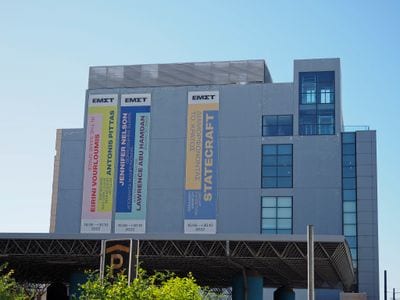
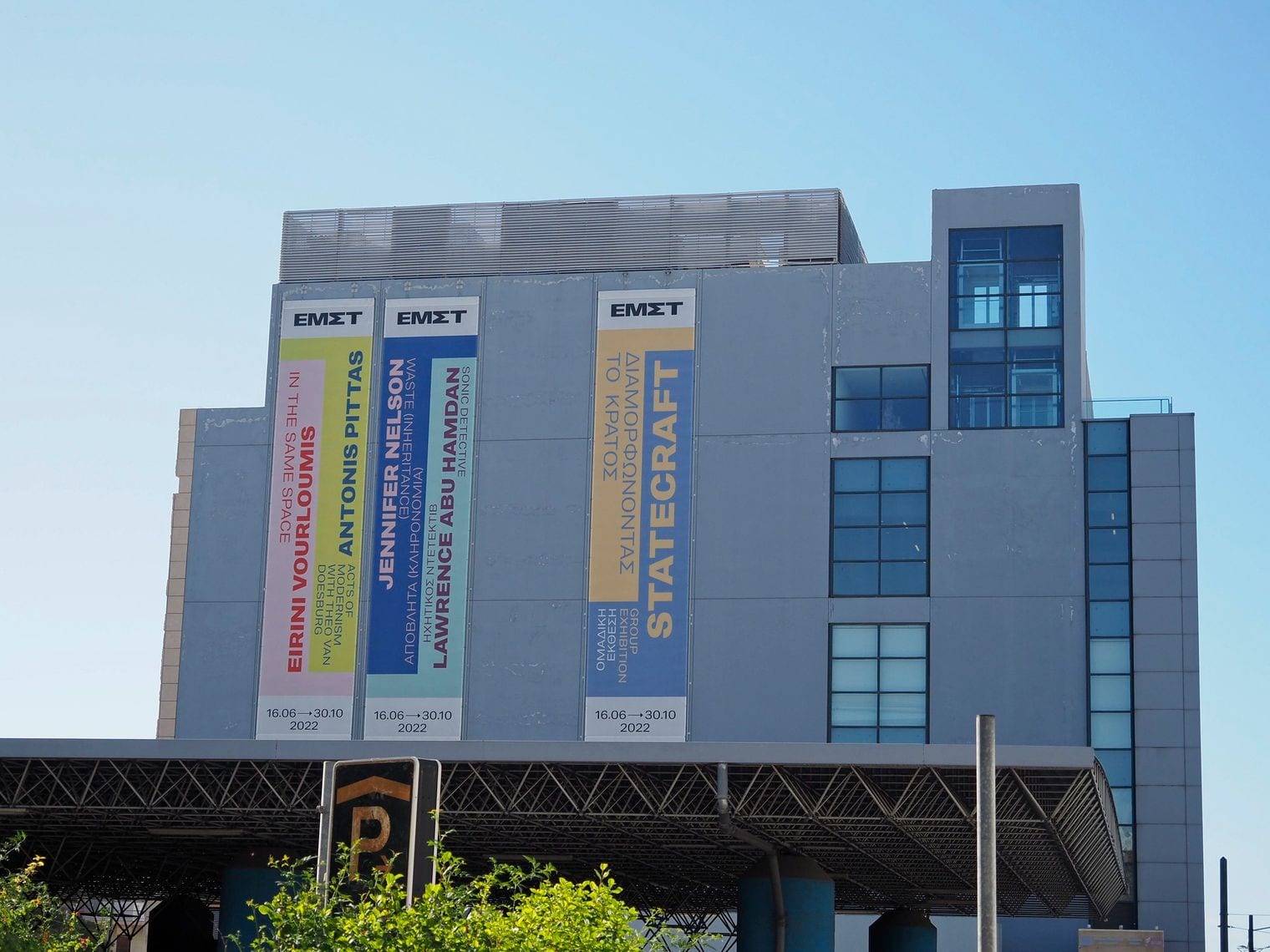
Housed in the converted Fix brewery on Syngrou Avenue, EMST — the National Museum of Contemporary Art — is a vast concrete box whose 1957 shell was stripped back to its frame and reopened as a gallery in 2020, after one of the longer waits in Greek cultural life.
The collection is strong on Greek artists from the 1960s onward and on international video and installation work, and the exhibition programme turns over often enough that it is worth checking what is showing before you go. The top-floor terrace has one of the better free Acropolis views in the city, and the building sits directly above Syngrou-Fix metro station, two stops from Syntagma.
The Zappeion is the domed neoclassical hall at the southern edge of the National Garden of Athens, paid for by a bequest from the Epirot benefactor Evangelis Zappas and finished by Theophil Hansen in 1888. It was the first building in the world put up specifically for a modern Olympic Games, and it served as the fencing hall in 1896.
Its circular colonnaded atrium is one of the loveliest interiors in the city and is often open when no conference is booked into it. The gardens around it are free and never close — palm-lined gravel walks, a small pond, an open-air cinema under the trees through the summer, and a straight avenue that frames the classic postcard view up to the Acropolis.
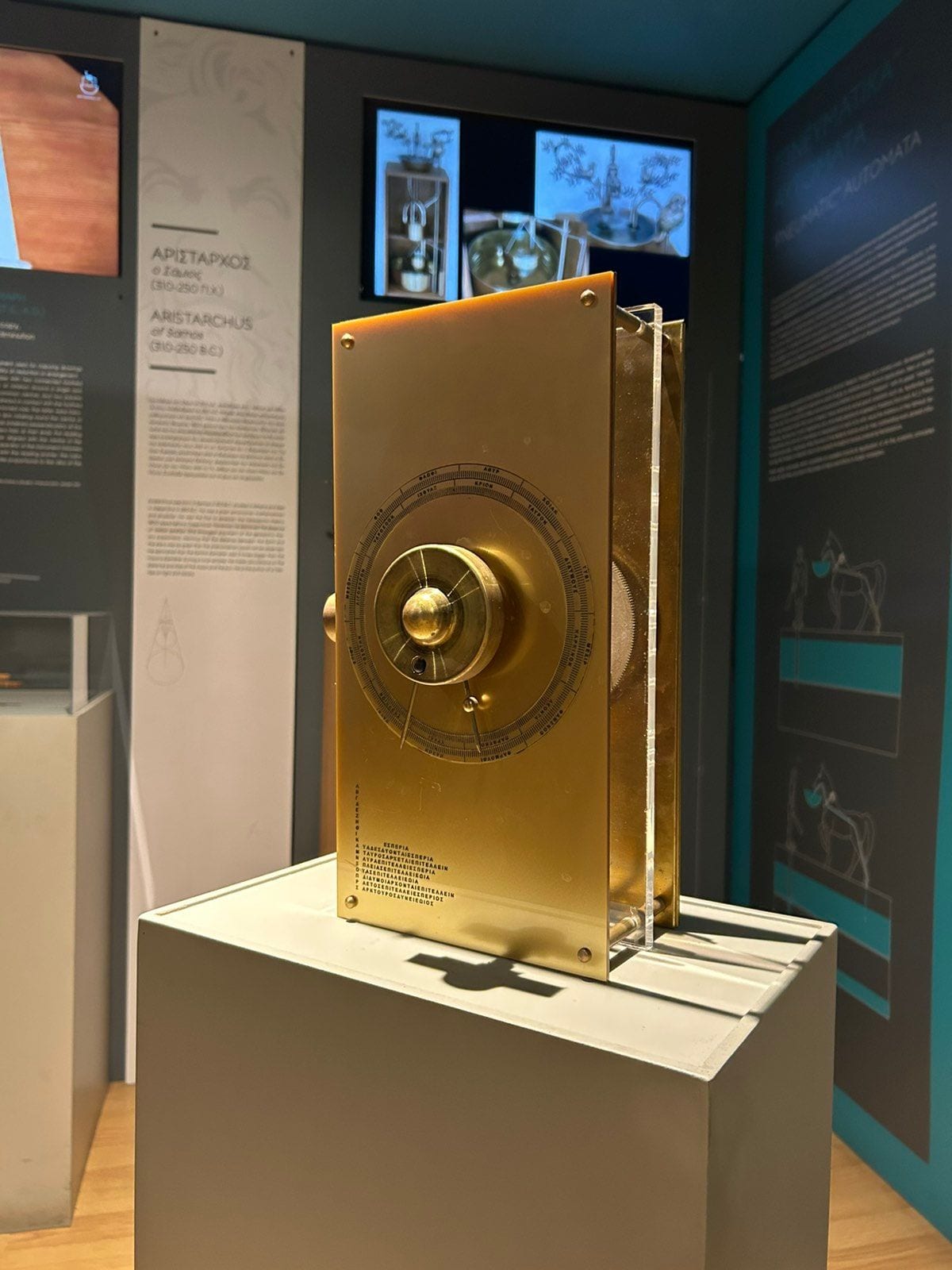
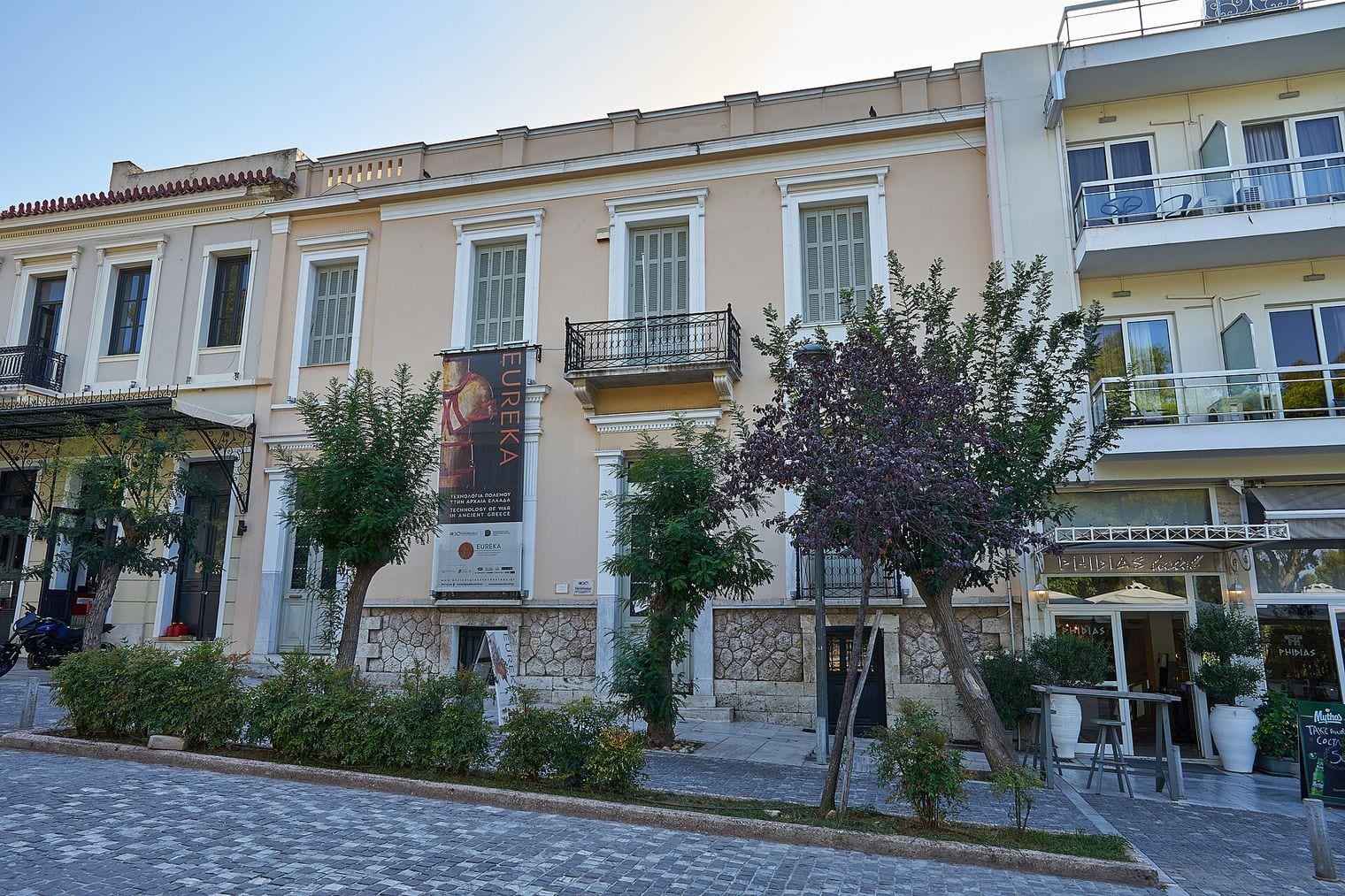
The Kotsanas Museum of Ancient Greek Technology is built on a single idea: that the ancient Greeks engineered far more than most people assume, and that the way to prove it is to build the machines. Kostas Kotsanas has spent decades reconstructing devices from ancient descriptions, and the Pindarou street museum displays around a hundred of them.
There are working models of Heron's automatic temple doors and his steam sphere, the Antikythera mechanism, water clocks, the hydraulic organ, cranes, an alarm clock and the cipher devices of the Spartan army. Most are demonstrated or hands-on, which makes this one of the few museums in Athens that genuinely holds children's attention, and the explanatory panels are unusually clear.
Kolonaki climbs the lower slope of Mount Lycabettus and is the smartest quarter in central Athens — designer shops along Skoufa and Voukourestiou, cafés spilling across the square, embassies and private galleries filling the blocks between. It is also the district most Athenians would name for an evening drink that doesn't involve queueing.
The cultural weight is real: the Museum of Cycladic Art, the Benaki Museum, the Byzantine and Christian Museum and a run of commercial galleries all sit within a few blocks. Walk up Loukianou to the funicular station for Lycabettus, or take the steps beside it if your legs are willing, and stop on the way back down at Dexameni — a shaded reservoir terrace with its own open-air cinema.
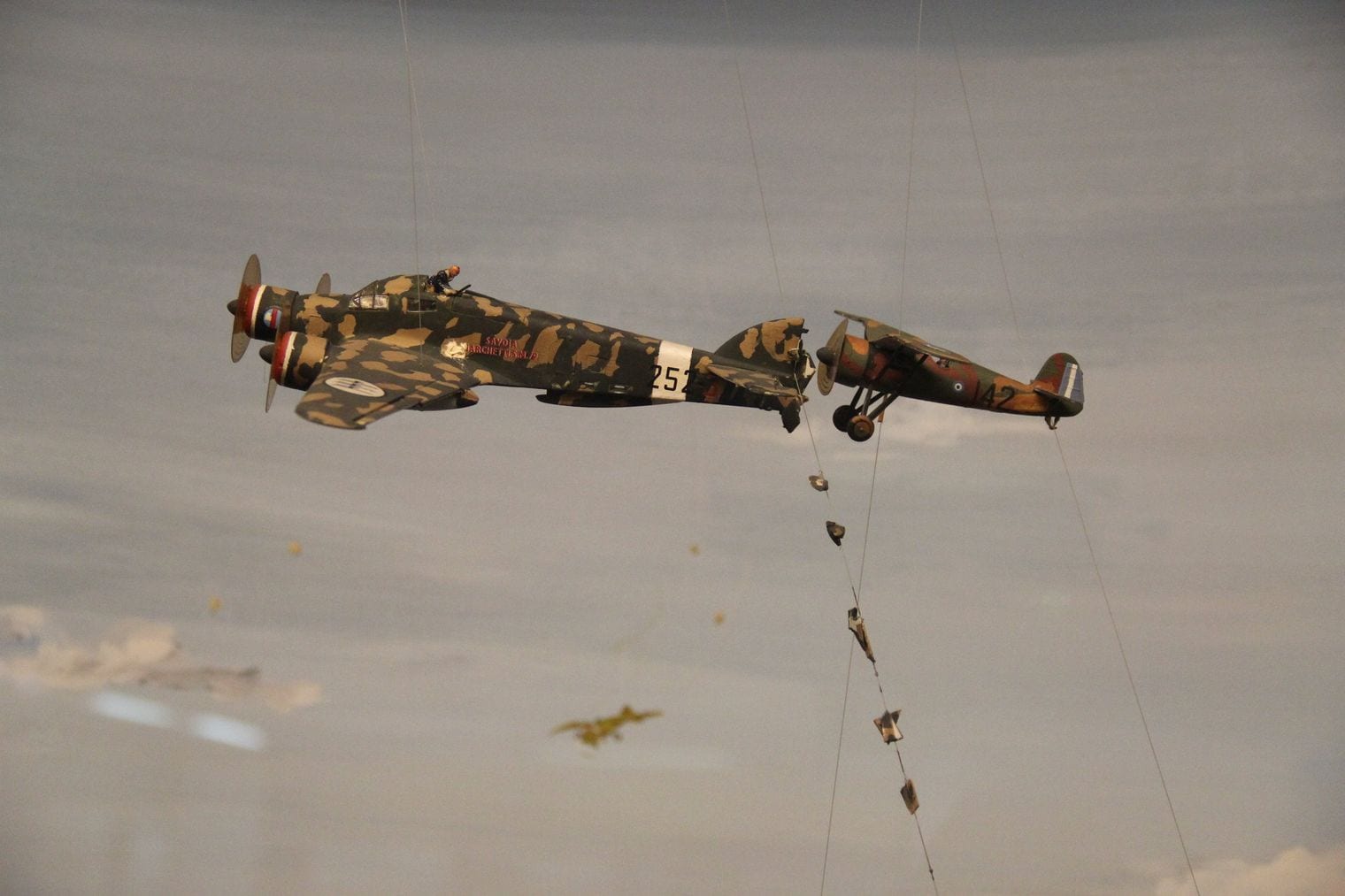
The War Museum occupies a stark 1975 concrete building on Rizari and covers Greek warfare from prehistory to the twentieth century across four floors. The early rooms — reconstructed ancient armour, siege engines, a section on the trireme — are considerably more engaging than the exterior leads you to expect.
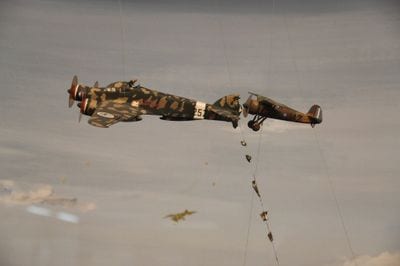
Most visitors come for the modern half: the Balkan Wars, the Asia Minor campaign, the Italian invasion of 1940 and the Albanian front, the occupation and the resistance, told through uniforms, weapons, maps and a great deal of photography. The forecourt is an open-air display of aircraft. It stands directly beside the Byzantine and Christian Museum, so the two pair easily into one afternoon.
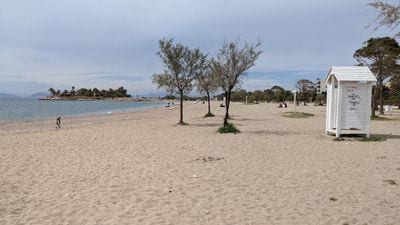
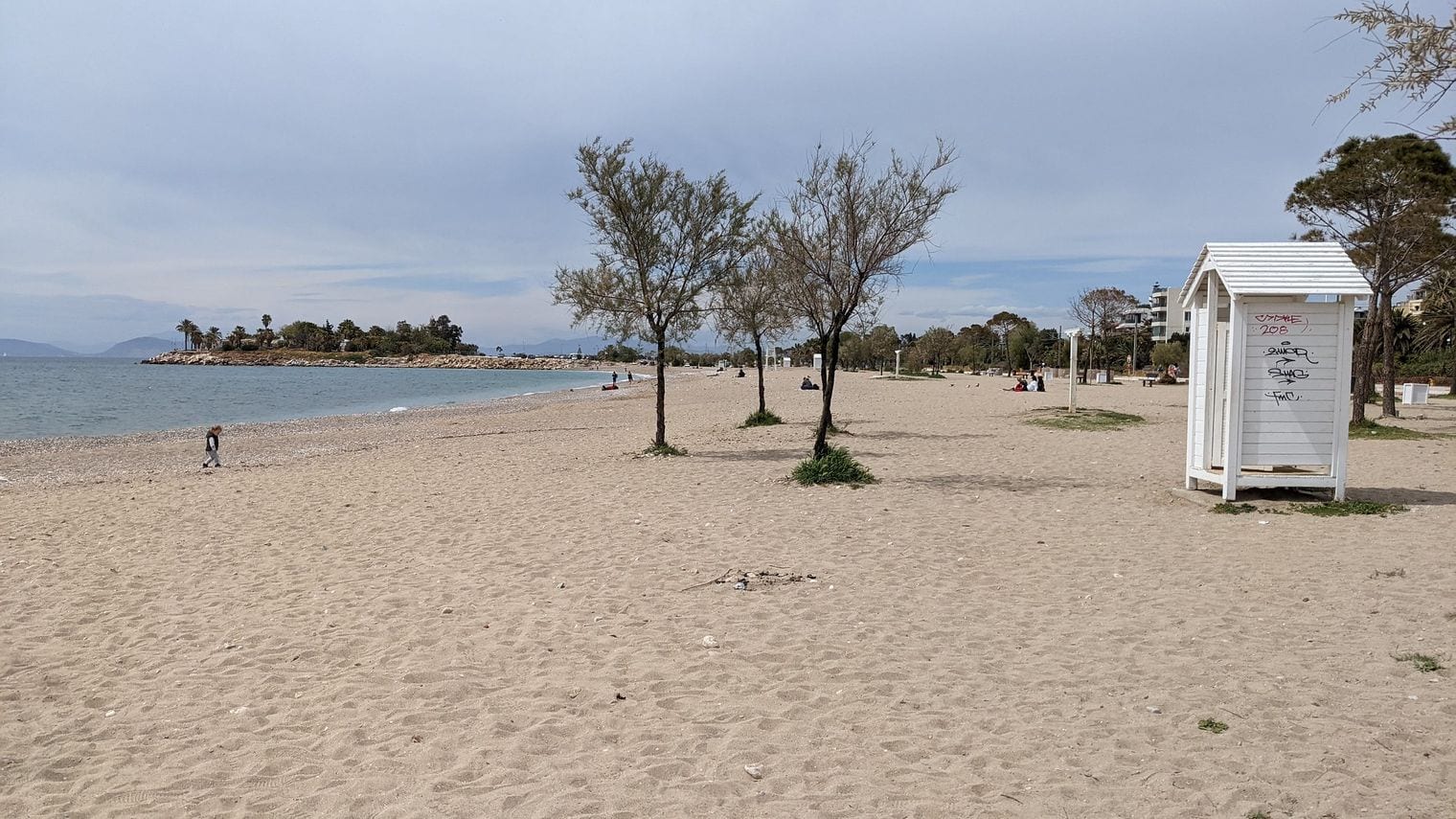
Athens is a coastal city and keeps forgetting to mention it. The Athens Riviera runs roughly fifty kilometres south from Piraeus through Palaio Faliro, Alimos, Glyfada and Voula to Vouliagmeni and on to Cape Sounion, and the tram from Syntagma reaches the first swimmable beaches in about forty minutes.
Free public beaches alternate with organised ones charging for a lounger and an umbrella: Glyfada is the busiest and the best served by shops and restaurants, the coves around Vouliagmeni are the prettiest, and Astir is the expensive end. Out of season it is still worth the trip for the coast road itself, which hugs the water most of the way and is the standard drive out to the Temple of Poseidon for sunset.
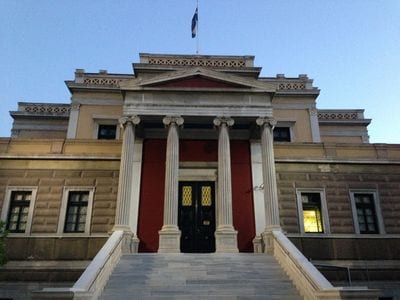
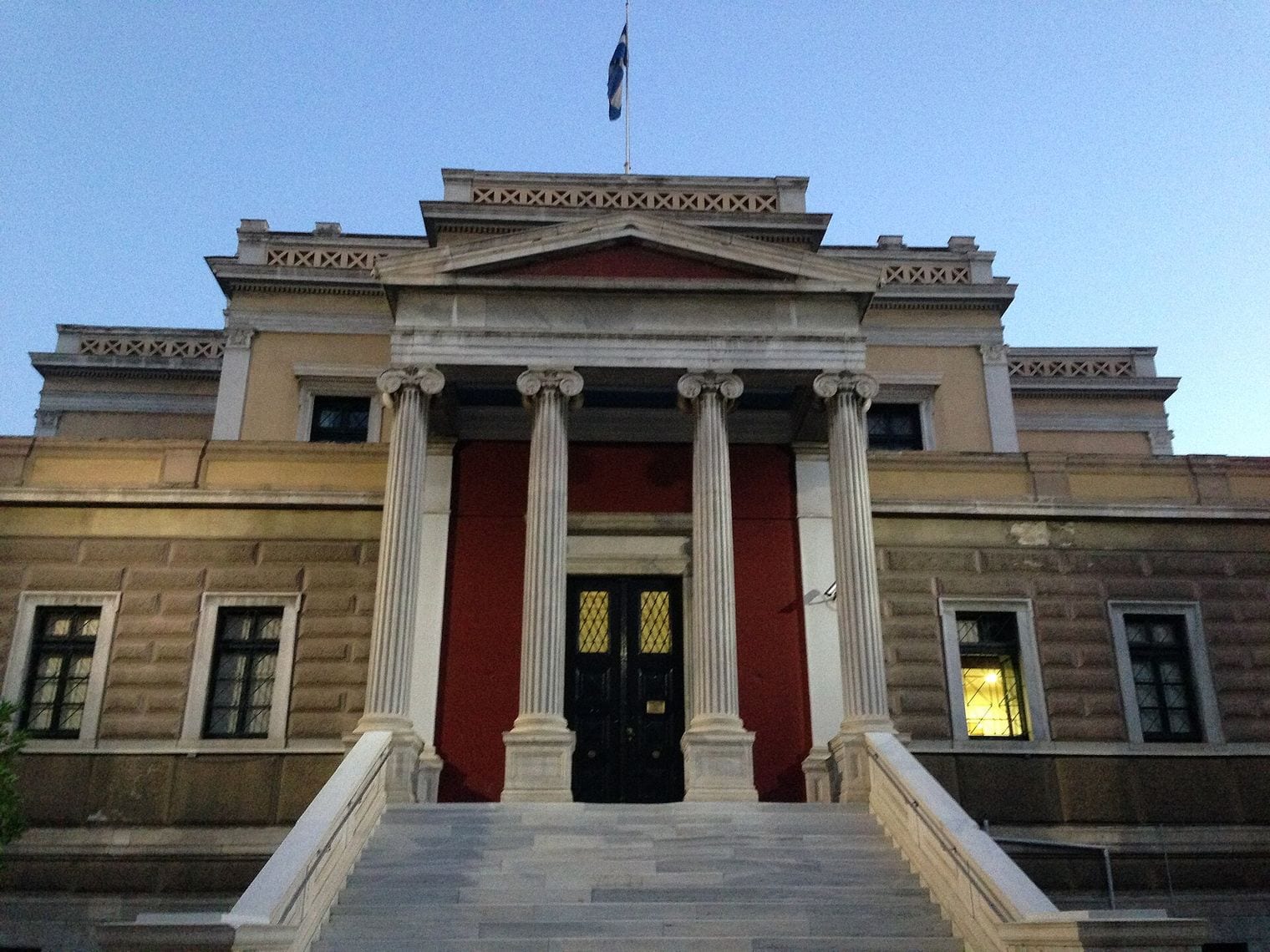
The National Historical Museum occupies the Old Parliament House on Stadiou, the chamber where Greek politics was conducted from 1875 to 1935 and where the prime minister Theodoros Deligiannis was stabbed on the steps in 1905. The debating chamber survives with its benches and press gallery intact, which is half the reason to go.
The collection runs from the fall of Constantinople to the Second World War and is at its strongest on the War of Independence: Byron's helmet and sword, the arms and dress of the klephts and captains, ships' figureheads, and the flags carried at Missolonghi. Kolokotronis sits on his bronze horse in the square outside, and the building is five minutes' walk from Syntagma Square.
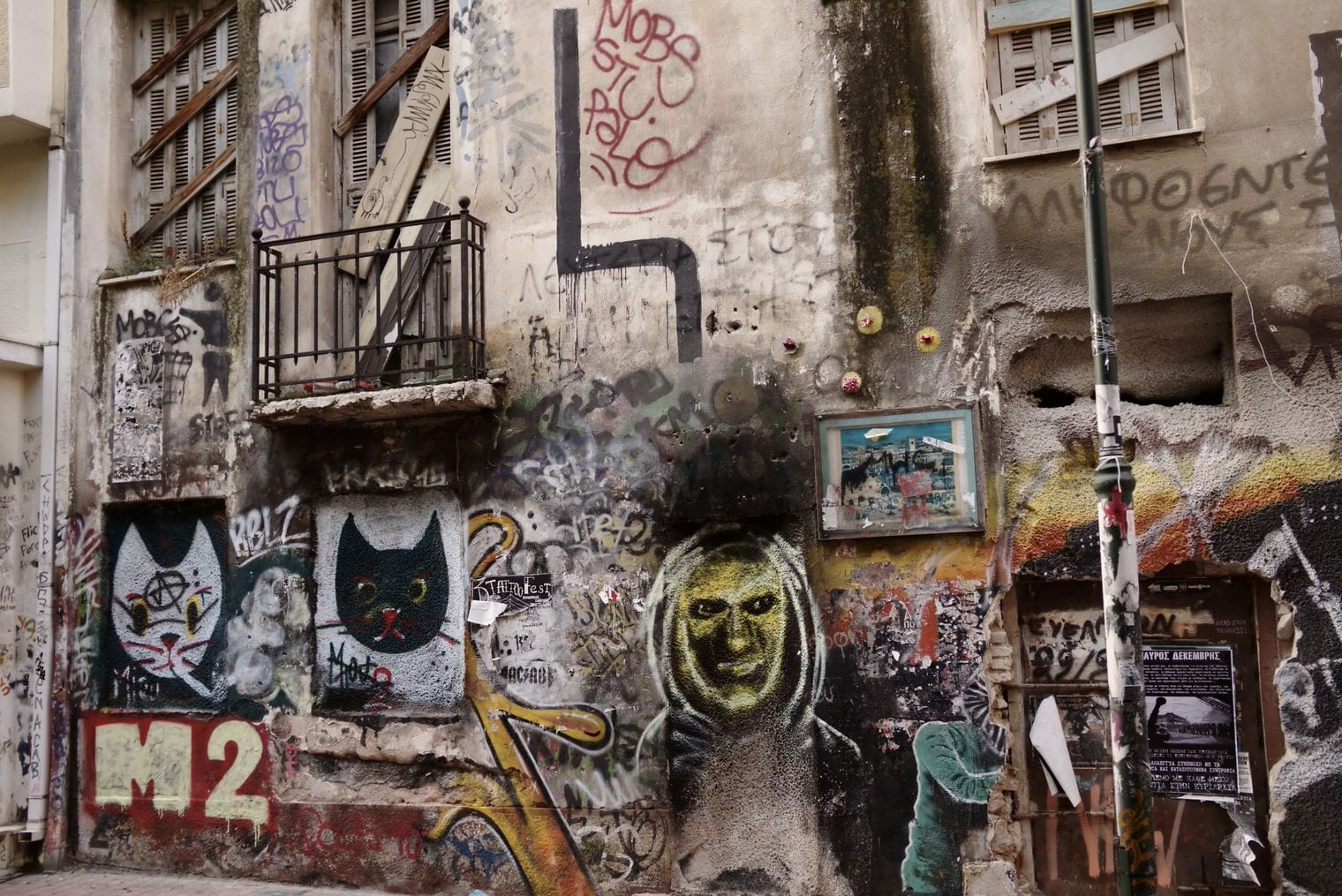
Exarcheia has a reputation that arrives well before you do — anarchist heartland, riot photographs, the 1973 Polytechnic uprising that helped bring down the junta. The reality on an ordinary afternoon is a dense student quarter of bookshops, record shops, rembetiko tavernas and the best-value bars in the centre, wrapped around a small square.
It is also the neighbourhood of the National Archaeological Museum and the excellent Epigraphic Museum beside it, and it carries more political mural work per street than anywhere else in Greece. The Saturday street market on Kallidromiou is among the liveliest in Athens. Use the ordinary city sense you would use anywhere after dark, and it is a rewarding place to spend an evening.
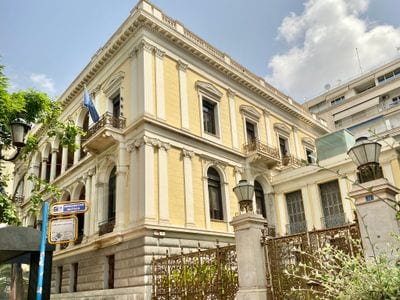
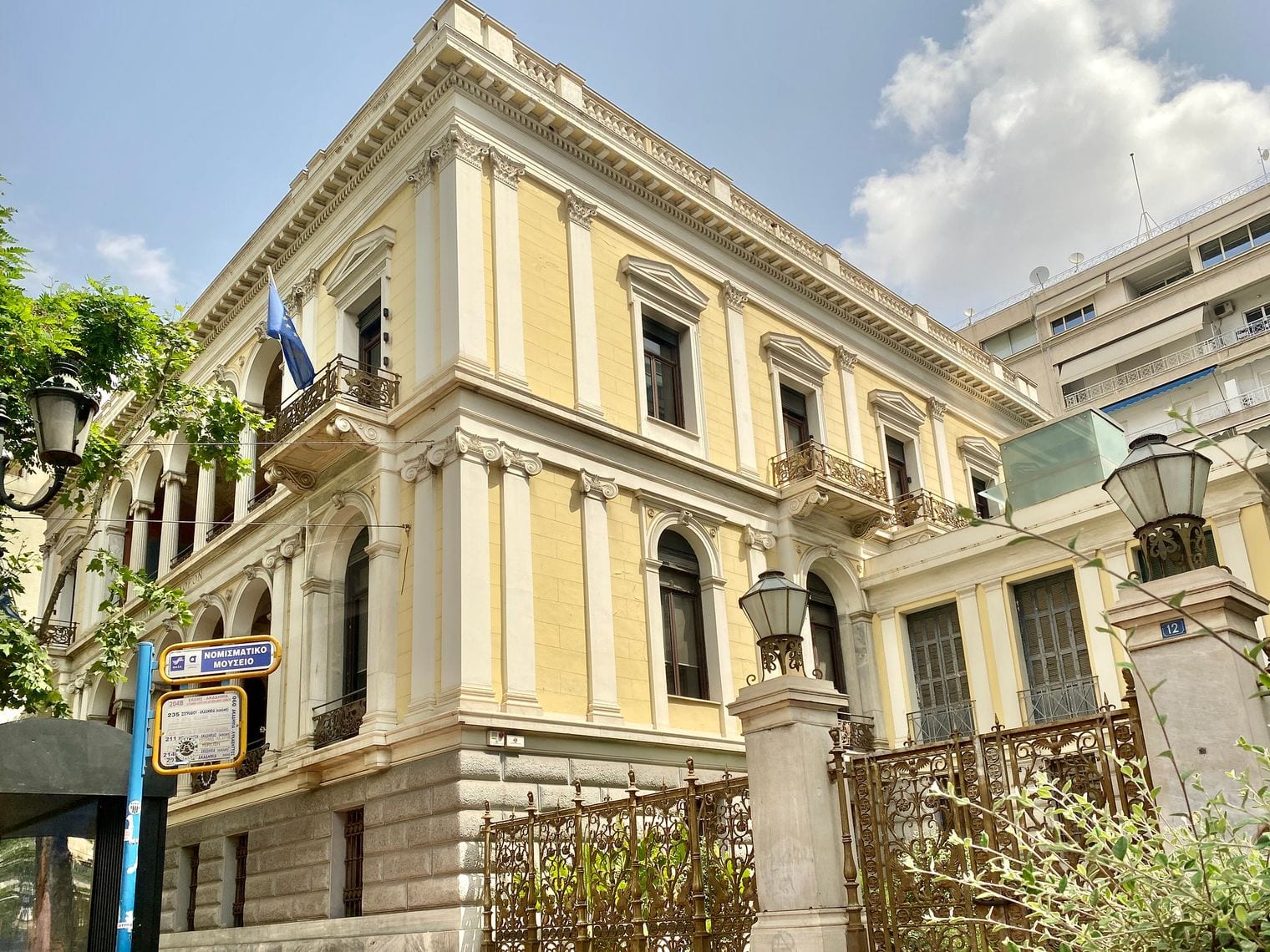
Go for the house as much as for the coins. The Numismatic Museum occupies the Iliou Melathron, the mansion Ernst Ziller built in 1880 for Heinrich Schliemann, the excavator of Troy — every wall, ceiling and floor painted or mosaicked with Pompeian motifs and Homeric mottoes, and among the most beautiful interiors open to the public in Athens.
The collection itself runs to some hundreds of thousands of pieces, of which a fraction is shown: archaic silver from Aegina, the owls of classical Athens, Alexander's coinage, Roman and Byzantine issues, and hoards displayed as they were found. One hall is closed for maintenance at the time of writing. The garden café at the back, screened from Panepistimiou by trees, is one of the quietest corners in the centre.
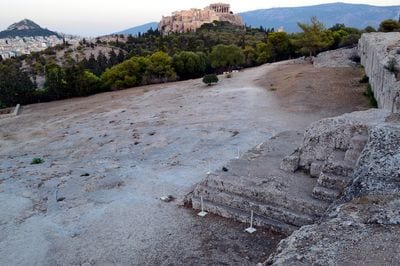
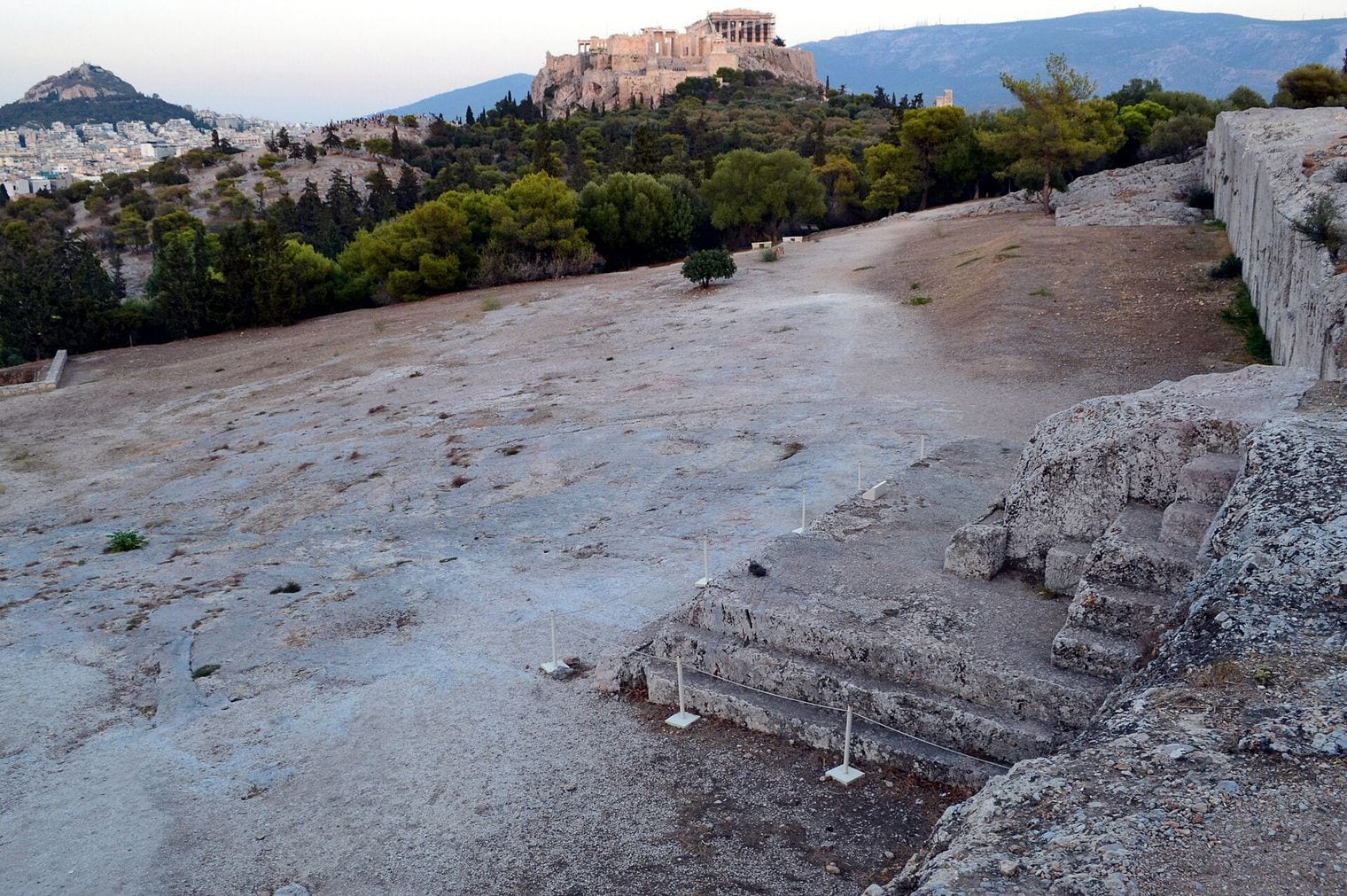
If the Acropolis is where Athens worshipped and the Ancient Agora where it traded, the Pnyx is where it voted. This terraced hillside west of the Acropolis is where the Ekklesia — the assembly of citizens — met around forty times a year to debate and decide by show of hands, with room on the slope for perhaps six thousand people.
The speaker's platform, the bema, is still there, cut from the living rock and facing inland because, so the story goes, the oligarchs turned it away from the sea to stop the crowd being swayed by thoughts of the fleet. Pericles, Themistocles and Demosthenes all spoke from it. The site is unfenced, free and almost always empty, and the Parthenon view from the bema is one of the best in the city.
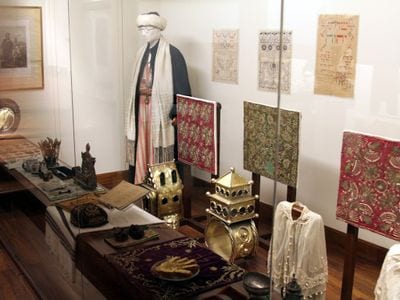
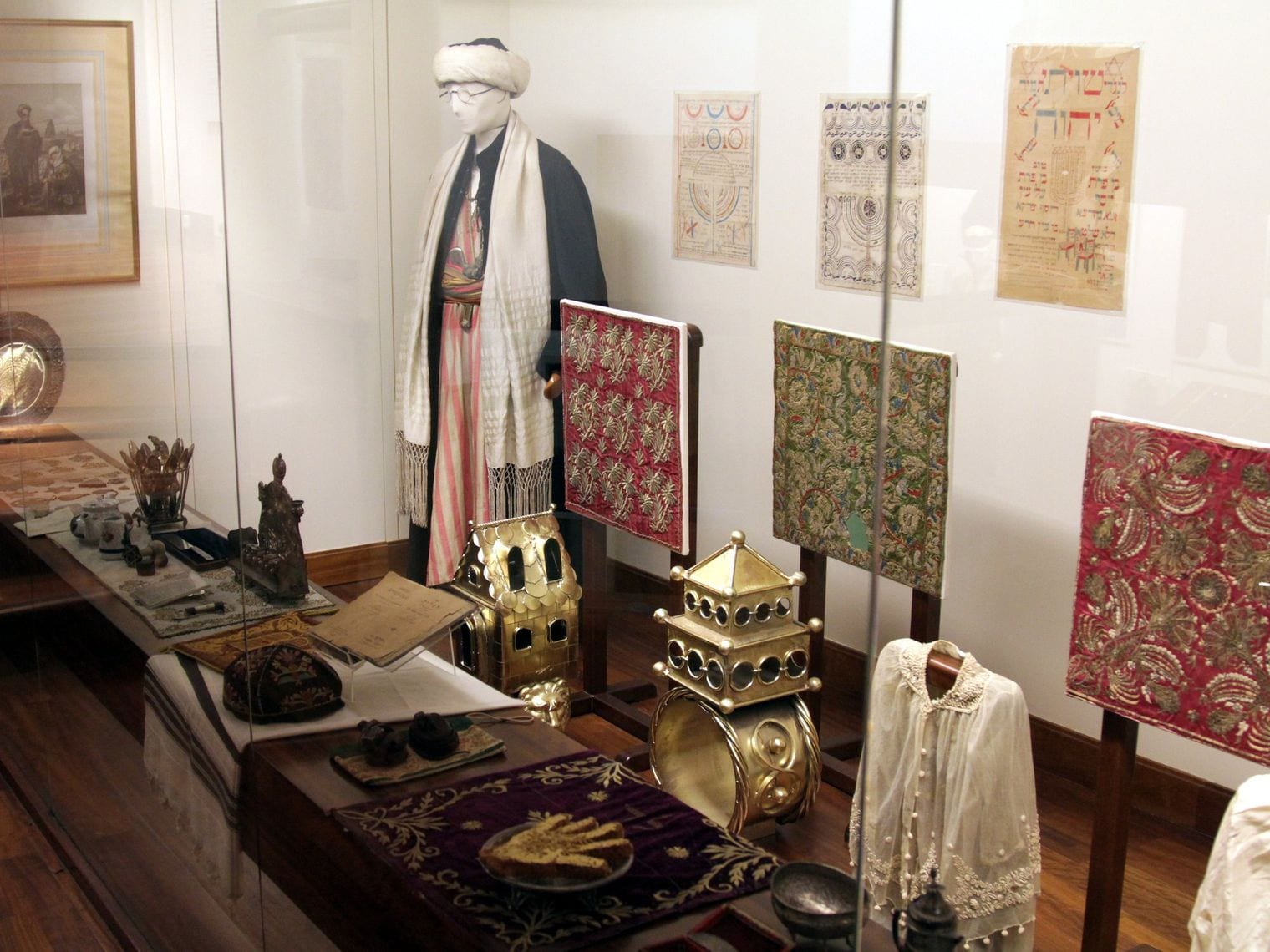
The Jewish Museum of Greece occupies a converted neoclassical house on Nikis, a few steps off Syntagma Square, and traces more than two thousand years of Jewish life in Greece — the Romaniote communities that predate the Roman empire, and the Sephardic ones that arrived after 1492 and made Thessaloniki a majority-Jewish city.
Textiles, ceremonial silver, costume and household objects fill the upper floors, and a reconstructed interior of the Patras synagogue occupies the centre of the building. The lower floor deals with the occupation and the deportations of 1943–44, in which the great majority of Greek Jewry was murdered, and with those who hid and rescued. It is small, carefully done and takes about an hour.
Thiseio sits below the western flank of the Acropolis, and the marble walkway of Apostolou Pavlou runs through it from the metro station past the Ancient Agora and the Hill of the Nymphs, joining Dionysiou Areopagitou to form a continuous car-free arc around the ancient city. It is the single best walk in Athens and costs nothing.
Cafés and tavernas line the northern side, buskers and street artists work the paving, and the view up to the Temple of Hephaestus and the Parthenon shifts every hundred metres. The neighbourhood behind it is low, neoclassical and quiet, with the nineteenth-century National Observatory on the hill above. Come an hour before sunset, when the marble turns gold and half the city seems to be out walking.
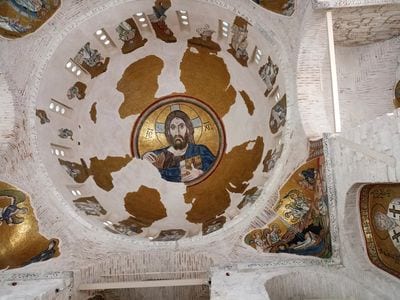
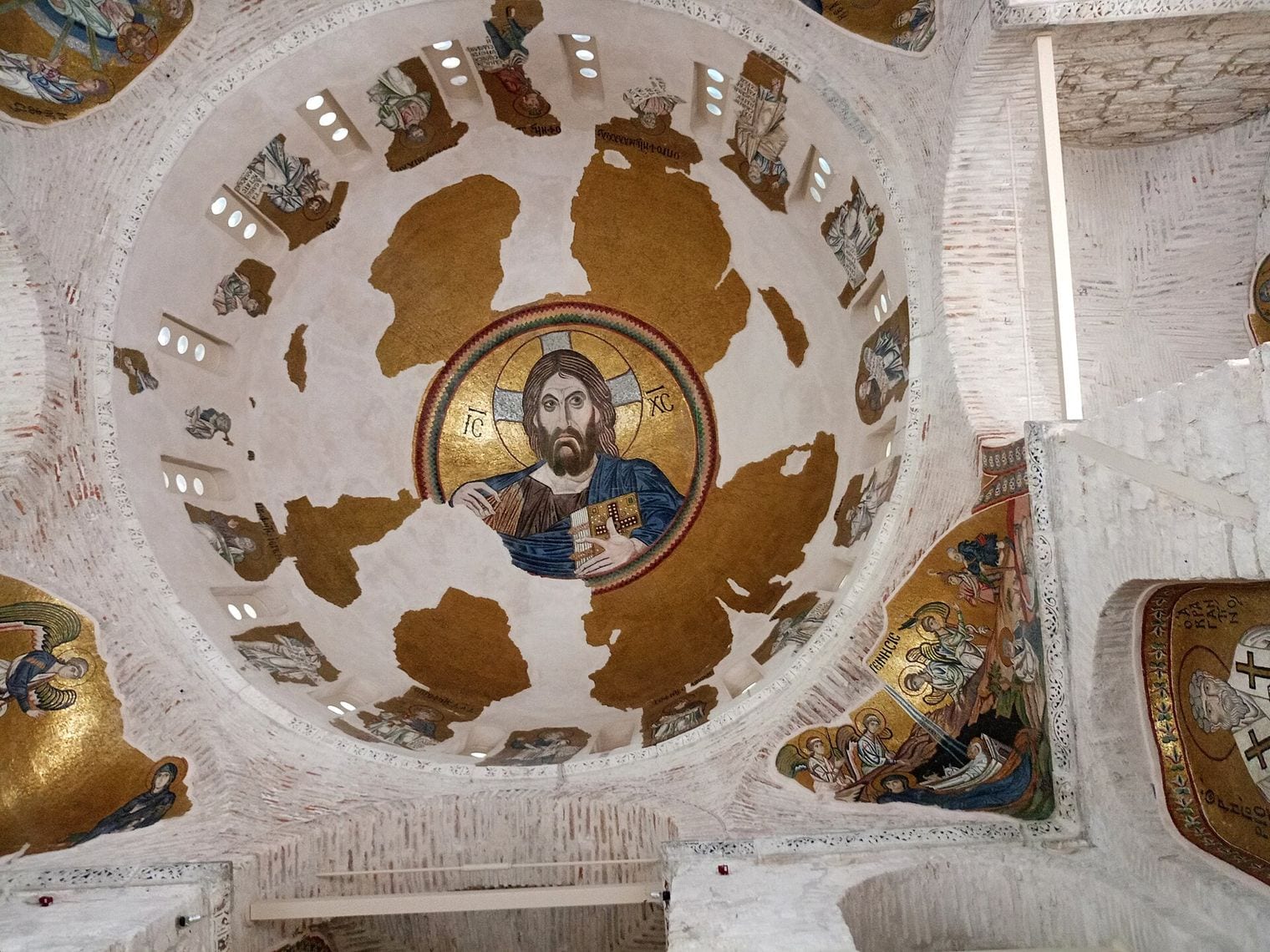
Eleven kilometres out along the ancient Sacred Way to Eleusis, Daphni Monastery holds some of the finest mosaics of the Byzantine world. The eleventh-century church is a UNESCO World Heritage Site alongside Hosios Loukas and Nea Moni of Chios, and the Christ Pantocrator in its dome is one of the defining images of Middle Byzantine art.
The monastery was raised over a sanctuary of Apollo — the name comes from daphne, the laurel sacred to him — and Ionic columns from that temple were built into the church. Long restoration followed the 1999 earthquake, and the building reopened with the mosaics cleaned. It is free, open most days except Tuesday, and reached by bus from Agia Marina metro station.
Pedion tou Areos — the Field of Mars — is the largest public park in central Athens after the National Garden, laid out in 1934 on the old parade ground of the military academy and dedicated to the heroes of the War of Independence, whose busts line its main axis.
It is a working local park rather than a sight: joggers on the circuit path, a playground, an open-air theatre used through the summer, a rose garden, and kiosks selling coffee around the central plaza. It lies between Exarcheia and Kypseli, a short walk north of the National Archaeological Museum, and makes a good half-hour of shade in the middle of a hot afternoon.
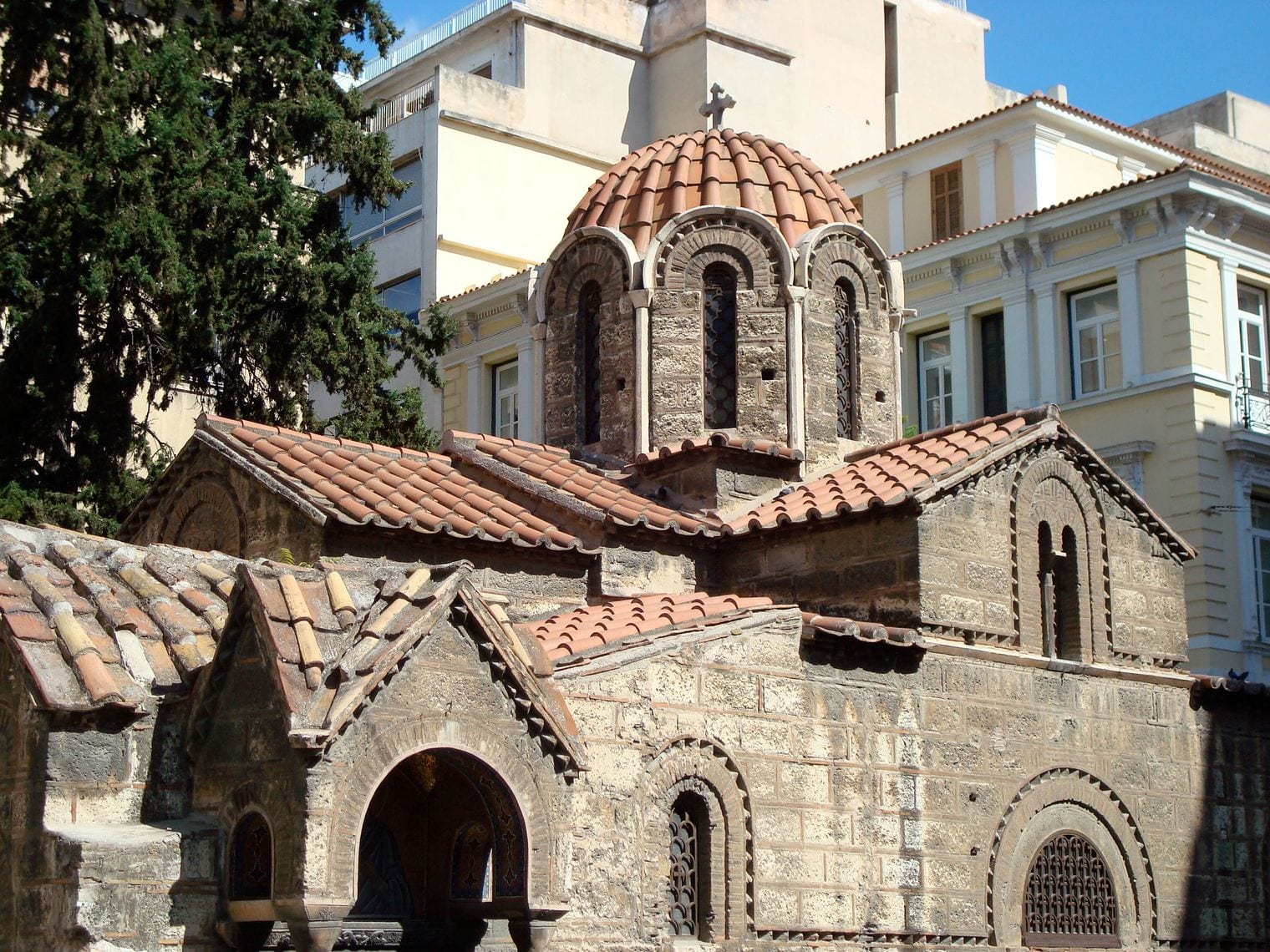
Ermou is the city's busiest shopping street, and sitting in the middle of it — marooned on its own island of paving several metres below the modern pavement — is Panagia Kapnikarea, a small cross-in-square Byzantine church of around 1050, built over the foundations of an ancient temple.
It survived the nineteenth-century replanning of Athens only because Ludwig of Bavaria intervened when the new street grid called for its demolition. The interior is dim and gilded, with mosaics and frescoes added by Fotis Kontoglou in the 1950s, and the church belongs to the University of Athens. It is free, usually open in the mornings, and takes five minutes — but nothing else in the centre shows so plainly how much older Athens is than its streets.
Spread across a cluster of restored buildings between Plaka and Monastiraki, including the eighteenth-century Tzistarakis Mosque on the square itself, the Museum of Modern Greek Culture is the national folk-life collection: embroidery, costume, shadow puppets, carnival masks, silverwork, woodcarving and the painted rooms of the naive artist Theophilos.
The museum has been reopening in stages, so what is on display varies and is worth checking before you go. The mosque alone justifies the ticket. Built in 1759 by the Ottoman governor — who, the story runs, demolished a column of the Temple of Olympian Zeus to burn for its lime — it is one of only two Ottoman mosques still standing in central Athens.
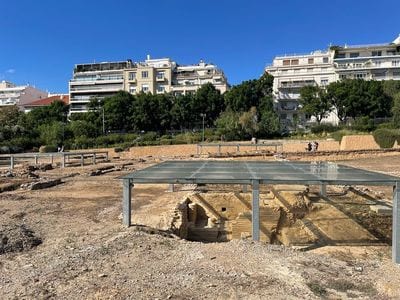
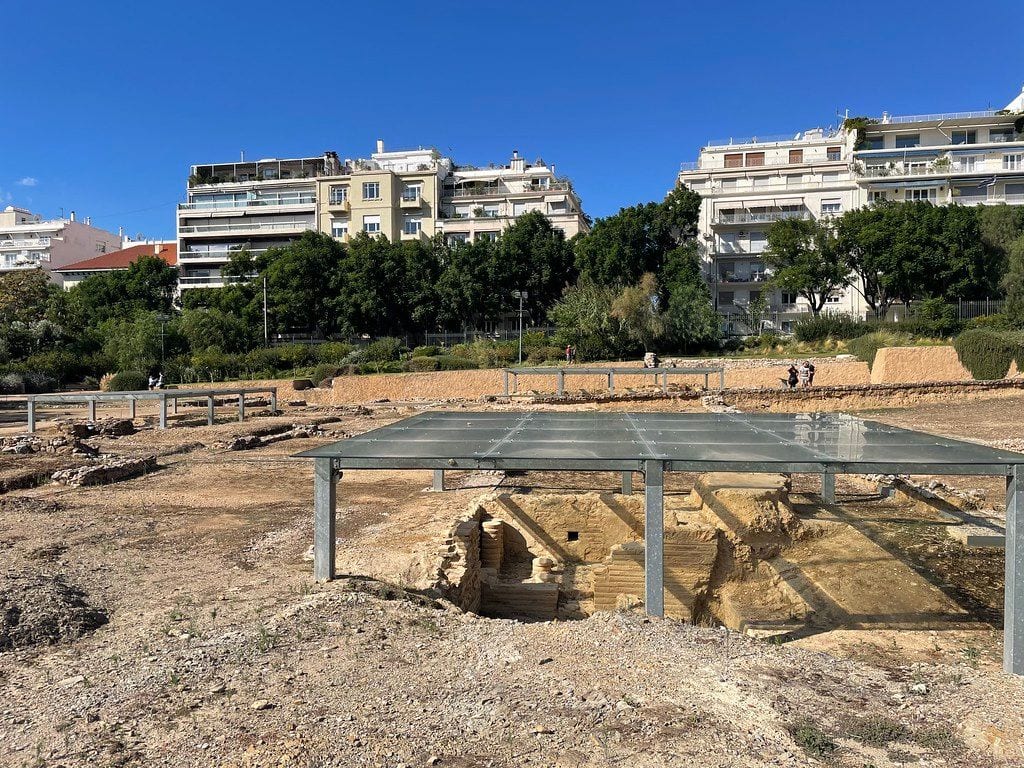
The Lyceum of Aristotle was found by accident in 1996, during excavation for a new museum, and it is the actual ground of the school Aristotle founded in 335 BC — the gymnasium where he taught while walking, which is how the Peripatetic school got its name. It sits behind railings on Rigillis, a couple of minutes from the Byzantine and Christian Museum.
What is visible are the foundations of the palaestra: a colonnaded courtyard, changing rooms, bathing rooms and the wrestling ground, laid out clearly enough to read without a plan. The site is small and takes twenty minutes, the signage is good, and it is included on the combined Acropolis ticket. It is also almost always empty.
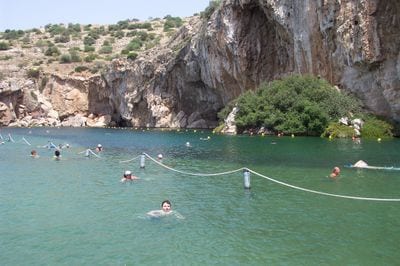
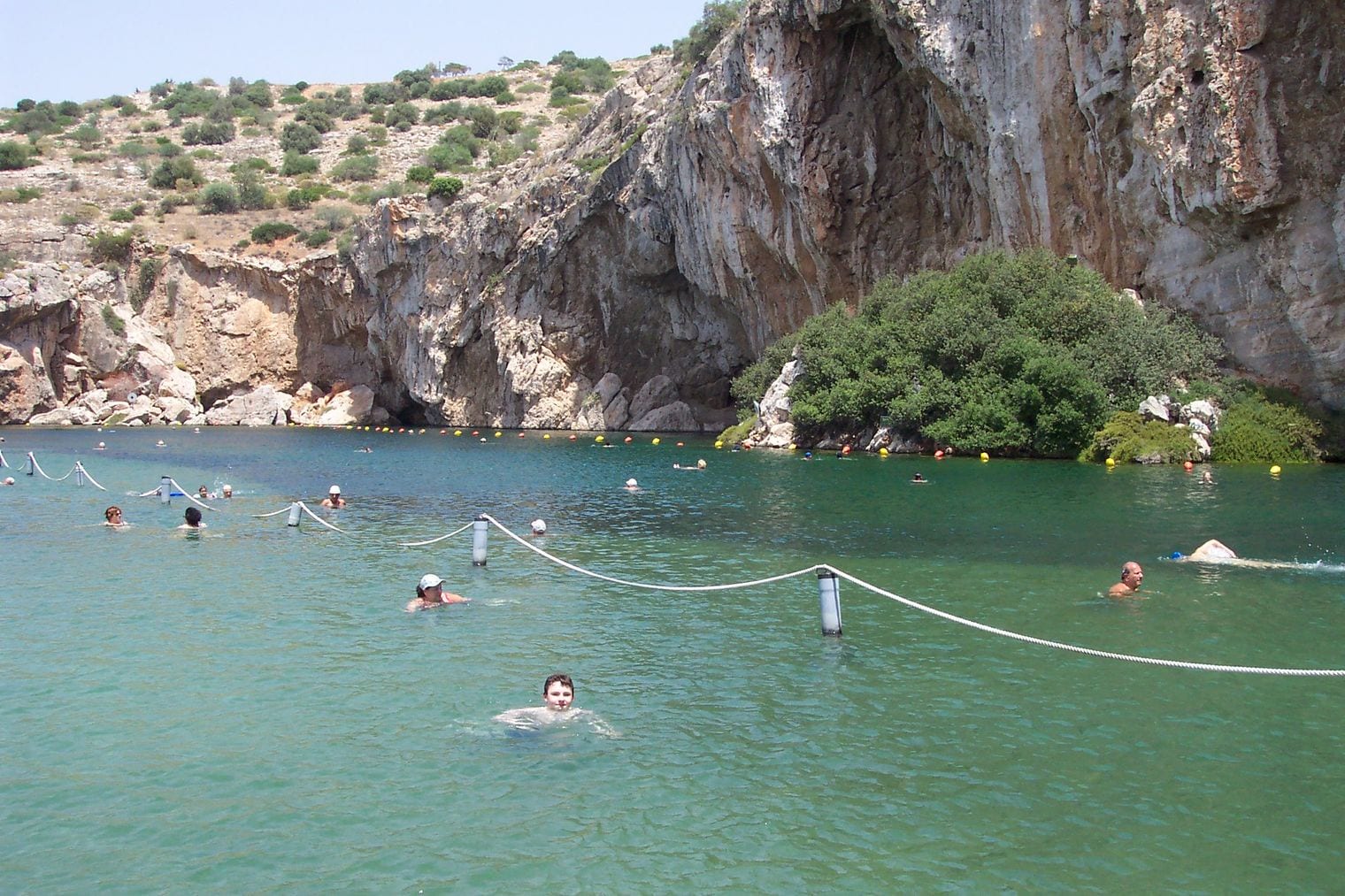
Half an hour down the coast road, Lake Vouliagmeni is a collapsed cave system fed by underground springs, its heavily mineralised water sitting at a constant temperature somewhere in the twenties all year. Athenians have treated it as a cure for skin and joint complaints for a century, and the small fish that clean swimmers' feet come as part of the arrangement.
A limestone cliff walls one side; the other is a landscaped terrace of loungers, a restaurant and a bar. Entry is ticketed and worth booking in summer. Divers have mapped kilometres of flooded passages beneath the surface without yet finding the end of them. Take a bus or taxi from Elliniko metro station; it pairs naturally with a run further along the Athens Riviera.
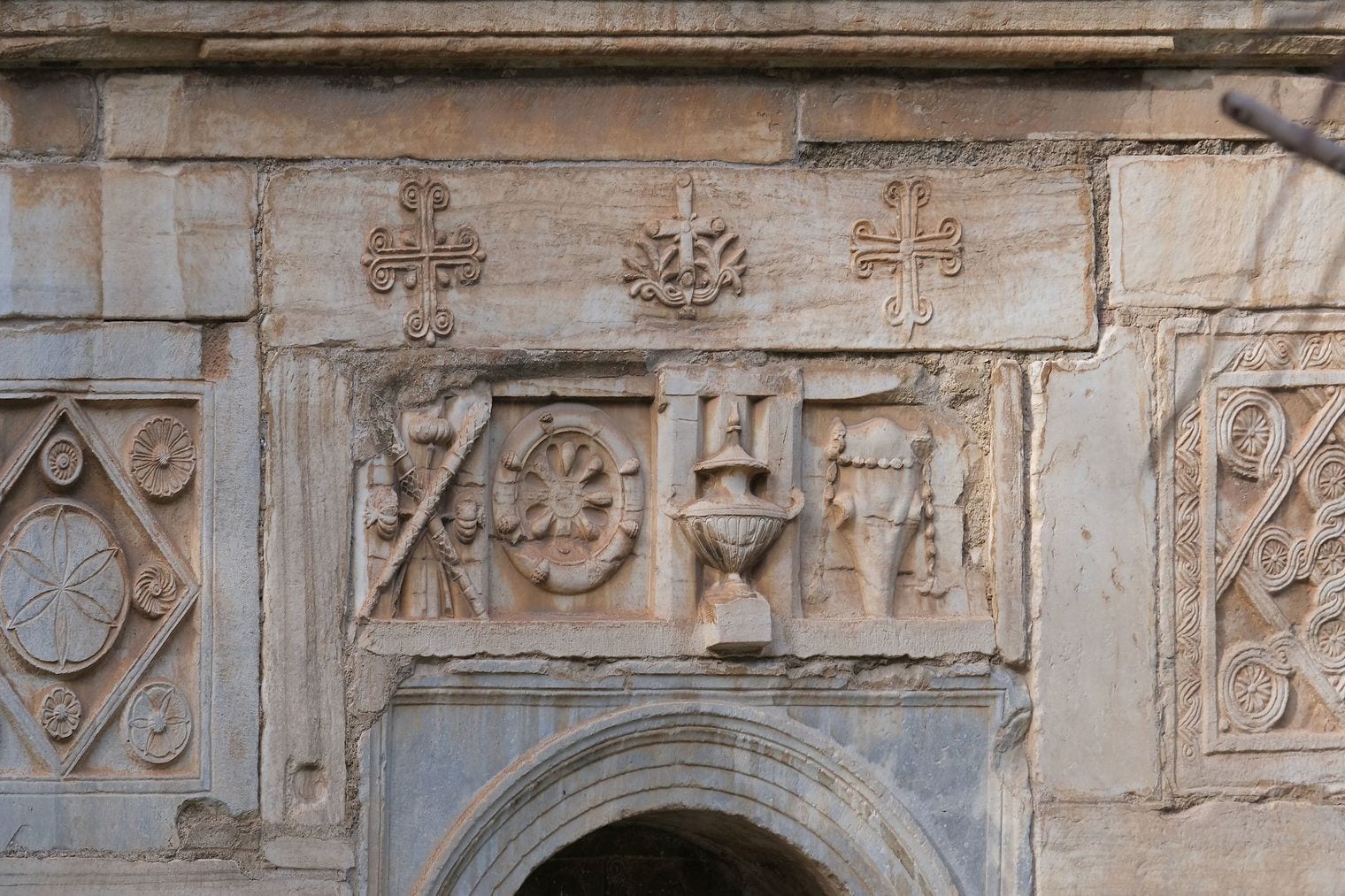
In the shadow of the nineteenth-century Metropolitan Cathedral of Athens, and about a twentieth of its size, stands the Little Metropolis — properly the church of Panagia Gorgoepikoos and Agios Eleftherios, and probably the most curious building in the city.
It is built almost entirely of salvage. Ancient and early Christian marble reliefs, cornices, inscriptions and a fourth-century BC frieze showing the Athenian festival calendar are set into its walls like a scrapbook, with crosses carved over the pagan parts. The date is argued over — twelfth or thirteenth century, possibly later still. It is tiny, free, and open most days.
In a restored neoclassical house on the Thiseio promenade, the Herakleidon Museum began as a private collection of M.C. Escher and Victor Vasarely prints and has since broadened into exhibitions on ancient Greek science, art and technology.
The displays include reconstructions of ancient shipbuilding and a room on the mathematics of tiling and perspective that follows naturally from the Escher holdings. It is small, rarely busy and open every day, and its position on Iraklidon means you walk straight out into the cafés of Thiseio afterwards.
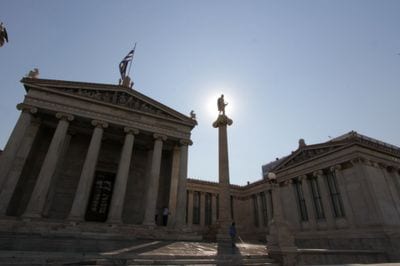
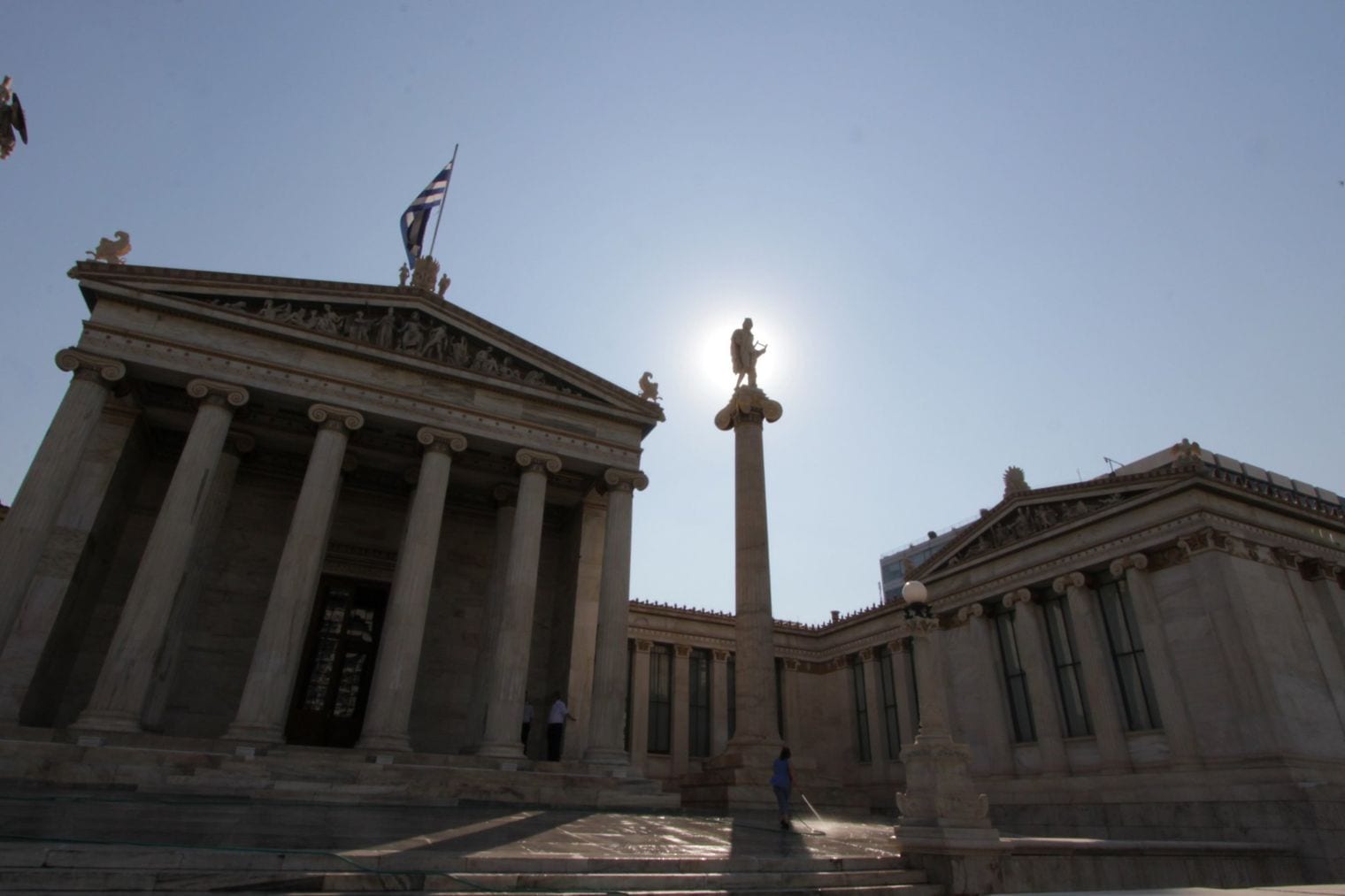
Three neoclassical buildings stand in a row along Panepistimiou — the Academy, the University and the National Library — designed from 1859 by the Danish architect Theophil Hansen and known collectively as the Athenian Trilogy. The Academy of Athens is the centrepiece, and in Pentelic marble with its painted Ionic porch it is often called the finest neoclassical building anywhere.
Columns carrying statues of Apollo and Athena flank the entrance, with seated figures of Socrates and Plato below. The pediment sculpture and the interior frescoes reproduce ancient polychromy at a moment when few people quite believed Greek temples had been painted at all. The Academy is a working research institution rather than a museum, so the exterior is the visit — but the trilogy is best seen as one from the opposite pavement.
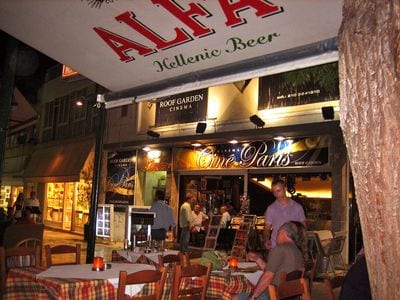
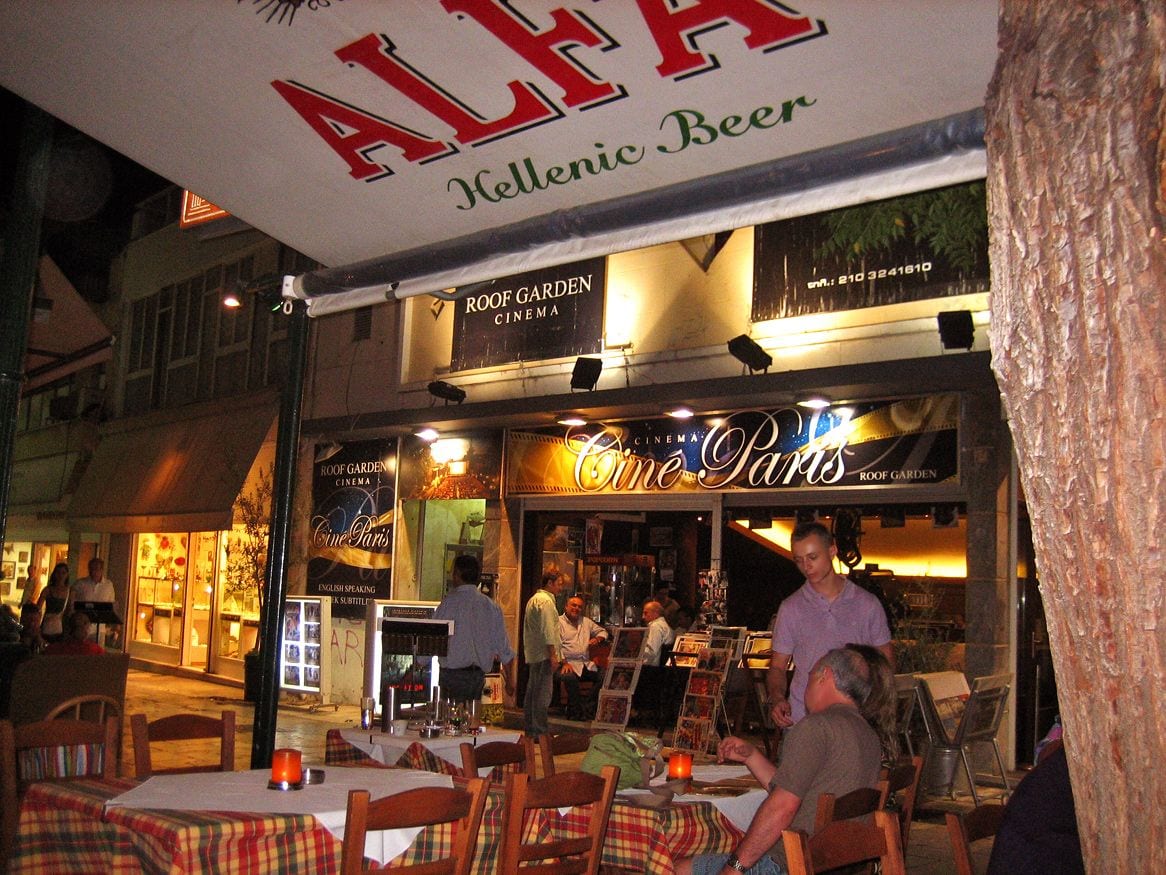
Athens has open-air cinemas the way other cities have parks, and Cine Paris — on a Plaka rooftop on Kidathineon since the 1920s — is the most photographed of them. Deckchairs, small tables for a drink, films subtitled rather than dubbed, and the floodlit Parthenon rising directly behind the screen.
The season runs roughly from May to October and screenings usually start after nine, with a later show on busy nights; the later one is worth booking if you would rather the film finished in full dark. Reserve ahead in high summer for the back rows, which have the clearest view of the rock. Tickets cost about what an ordinary cinema charges, and the shop downstairs sells vintage film posters.
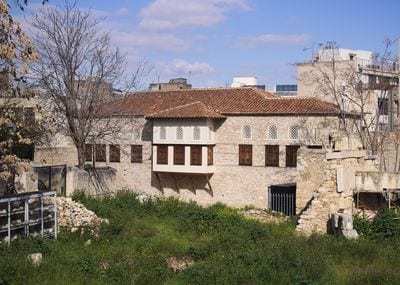
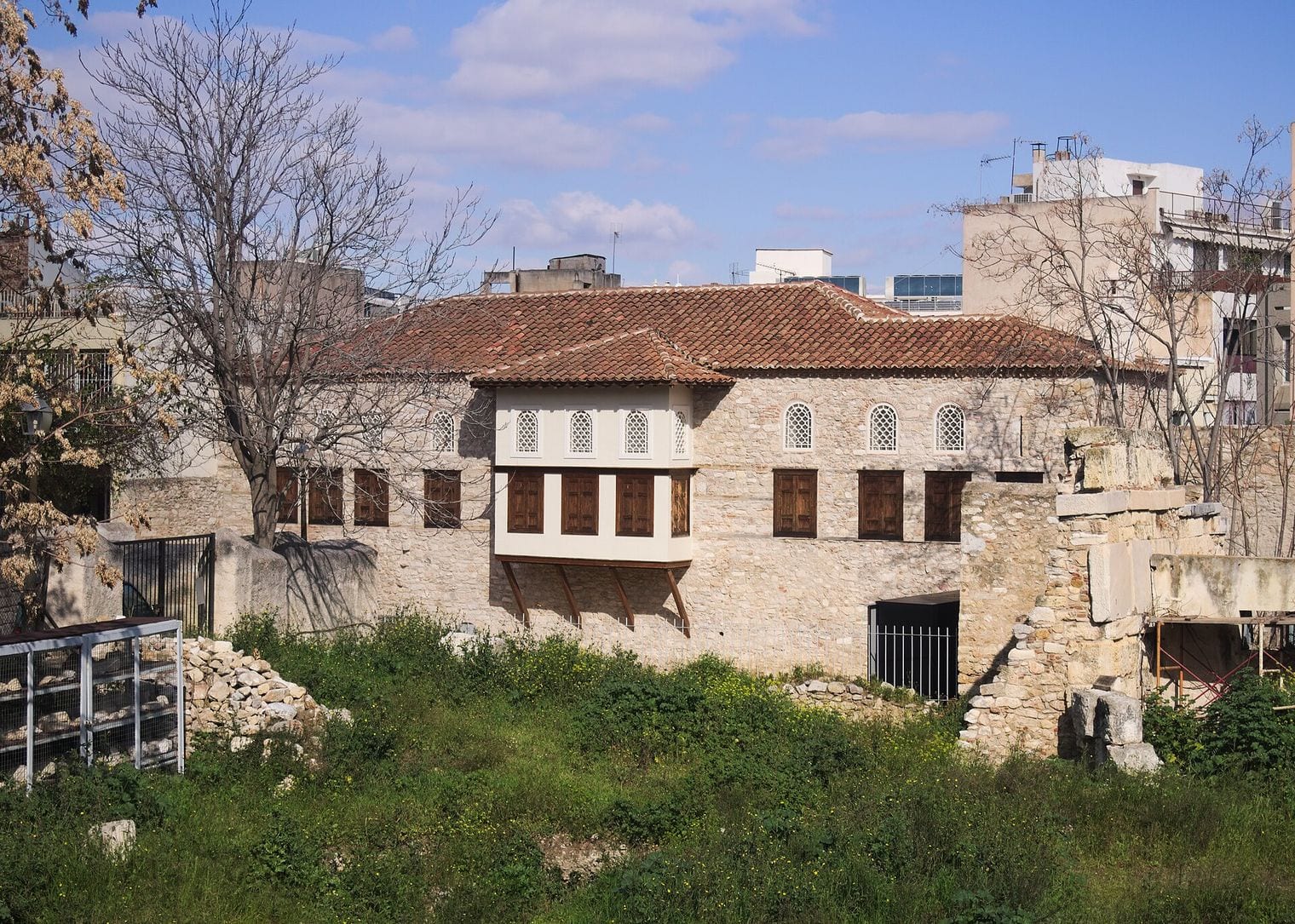
The Benizelos Mansion on Adrianou is the oldest surviving house in Athens — an Ottoman-era konaki of the seventeenth or eighteenth century, and the family home of Saint Philothei. It sits back behind a gate that thousands of people walk past every day without noticing.
Restored and opened to the public in 2017, it lays out the plan of an Athenian noble house: a stone ground floor with an olive press and wine cellar, a wooden gallery above, and a courtyard with a well. The displays are light-touch, with a short film on the house and on Philothei, who used it to shelter women escaping the Ottoman harems. Admission is free, and it takes half an hour.
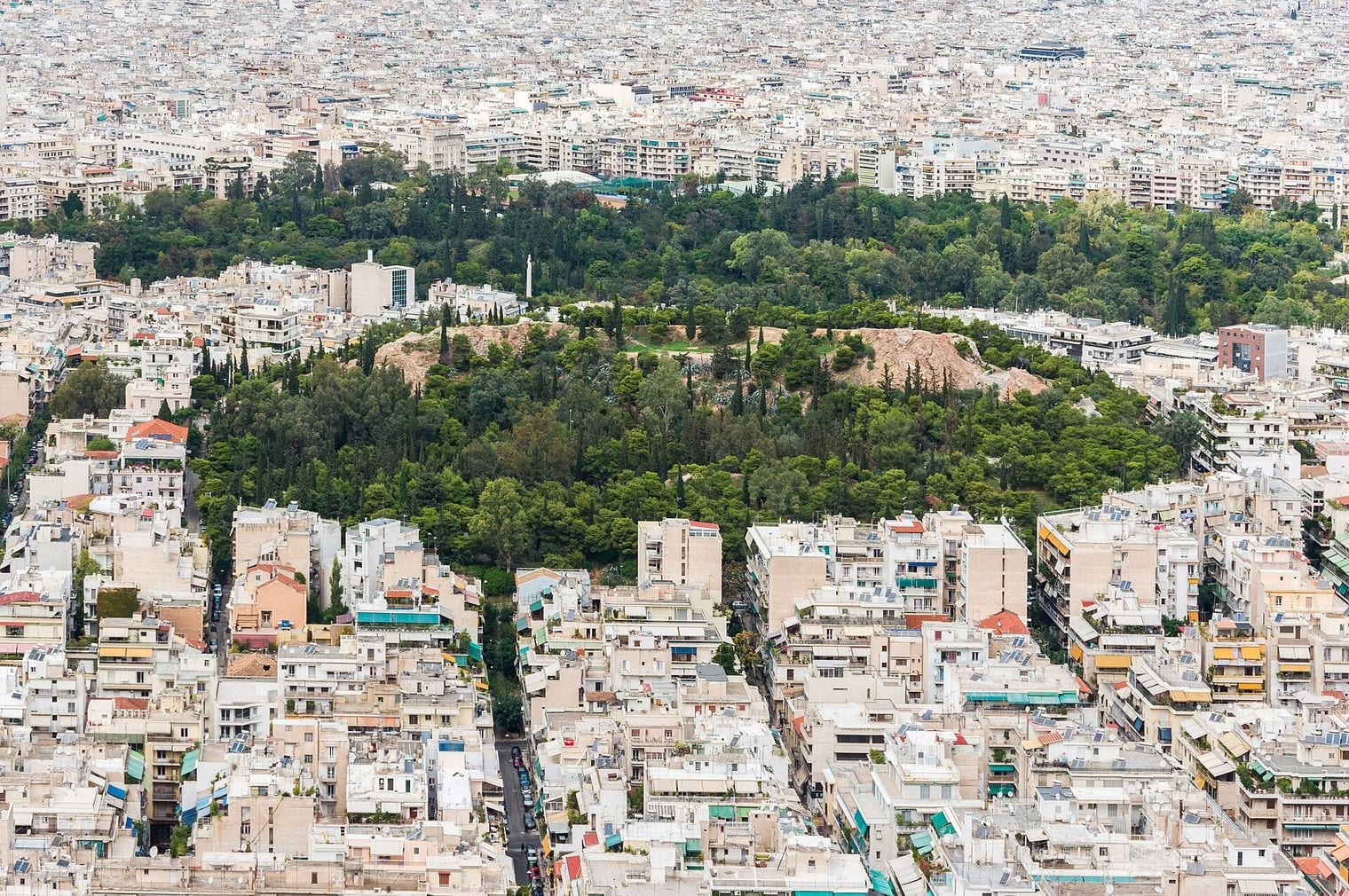
Strefi Hill rises directly behind Exarcheia — a limestone knuckle of pine and scrub with paths to a bare summit and one of the best free viewpoints in Athens: the Acropolis to the south, Mount Lycabettus close enough to seem within reach, and the city running out to the mountains that ring the basin.
Six entrances open off the west and north sides, and the climb takes about fifteen minutes from Kallidromiou Street. There is a small open-air theatre, a basketball court and a playground on the slopes. The hill has been the subject of a long and much-contested redevelopment, so parts of it may be fenced when you visit; the summit path and the view have stayed open throughout.
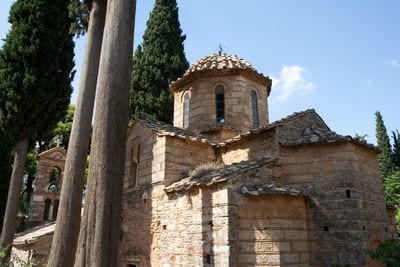
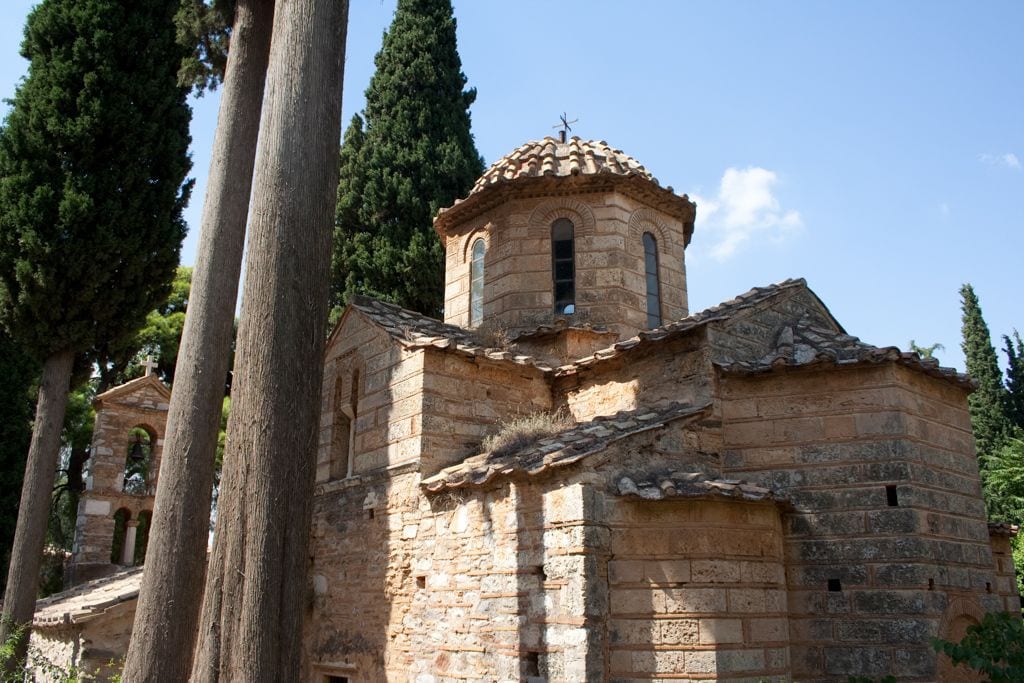
On the wooded lower slope of Mount Hymettus, twenty minutes east of the centre, Kaisariani Monastery is an eleventh-century Byzantine foundation set inside a walled compound of cypress and plane trees. A spring here was sacred in antiquity and still feeds the ram's-head fountain in the courtyard.
The domed church carries seventeenth-century frescoes over every interior surface, and the bath house, refectory, mill and cells around the courtyard survive well enough to read as a working monastery. Above and behind it stretches the Aesthetic Forest, replanted from bare hillside in the 1930s and now the closest proper hiking to central Athens, with paths up to the ridge and long views back over the city.
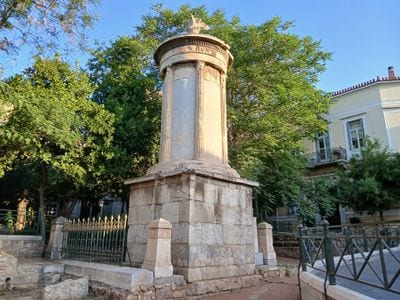
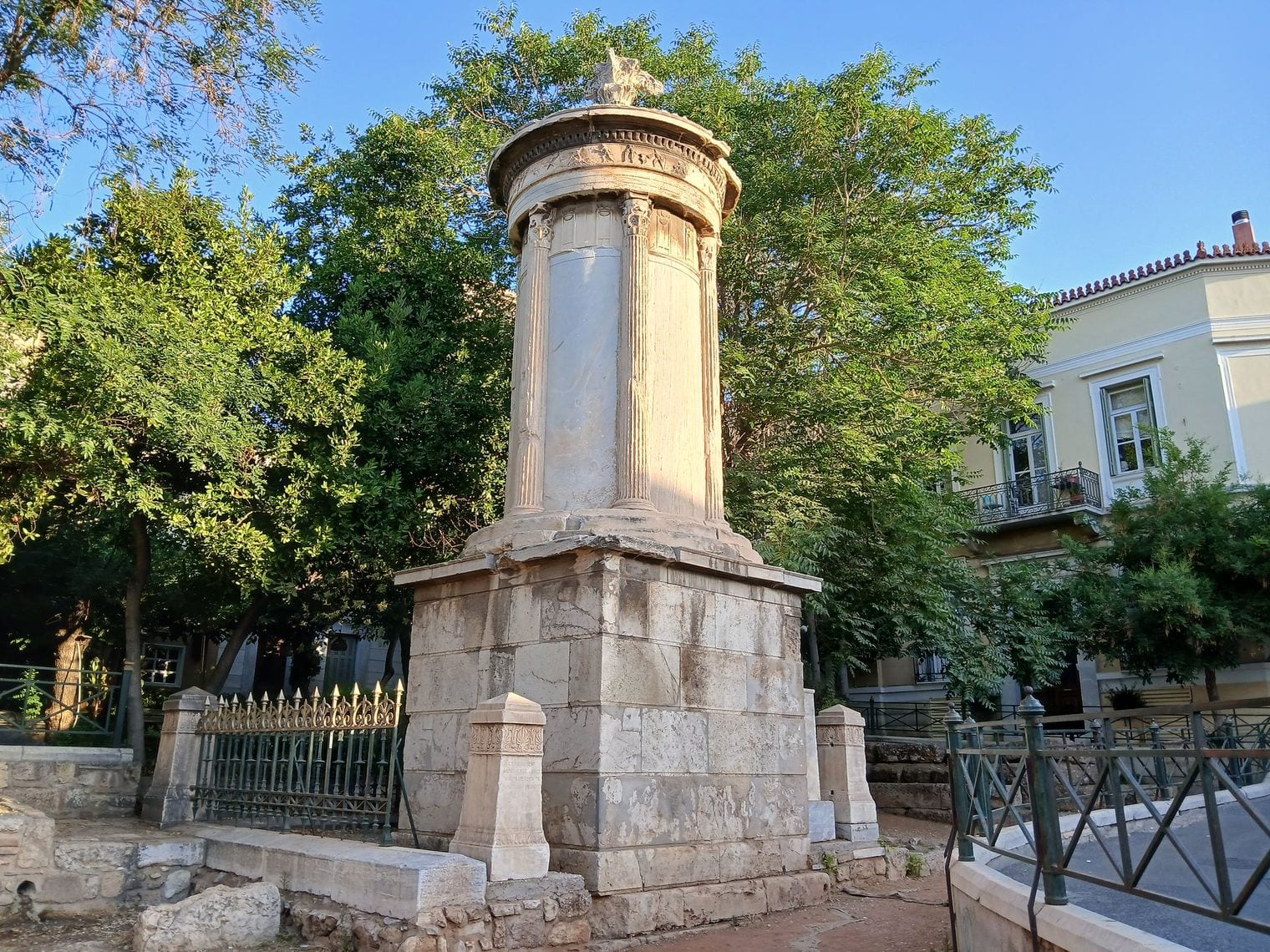
At the eastern edge of Plaka, on a small square where Tripodon Street meets Lysikratous, stands the Choragic Monument of Lysicrates — a marble rotunda a little over six metres high, put up in 335–334 BC by a wealthy Athenian to display the bronze tripod he had won as sponsor of a victorious chorus.
It carries the earliest known use of Corinthian columns on the outside of a building, and the frieze running round it shows Dionysus turning the pirates who kidnapped him into dolphins. It survived because Capuchin friars built it into their monastery in the seventeenth century; Byron lodged there in 1810 and is said to have worked on Childe Harold in a cell beside it. Free, floodlit, and a two-minute detour from the Arch of Hadrian.
Plan your trip
Best Time to Visit Athens
Spring and autumn are the two windows that make Athens easy. From late March into May the hills around the city are green, the archaeological sites are walkable without the heat, and café terraces are open in the evenings; from September into early November the sea is still warm enough to swim on the coast and the crowds on the Acropolis have thinned considerably. Both shoulder seasons give you long, mild days for a city that is best seen on foot.
Summer is hot and dry, and the exposed marble of the Acropolis is punishing by midday — if you come in July or August, start at opening time and save the museums for the afternoon.
Many Athenians leave for the islands in August, which quietens some neighbourhoods and closes a share of the restaurants. Winter is mild but often wet at sea level, and it is the cheapest and quietest time to have the ancient sites almost to yourself, with snow only on the mountains ringing the basin.
Getting to Athens
Athens International Airport, named after Eleftherios Venizelos, sits about 30 kilometres east of the centre and is the main gateway to Greece. It connects to the city in three straightforward ways: metro Line 3 runs directly to Syntagma and Monastiraki in the heart of the old town, an express bus service runs around the clock for those arriving late, and the Attiki Odos motorway puts the centre roughly 40 minutes away by taxi outside rush hour.
Arriving overland or by sea is equally simple. The national motorway network runs north toward Thessaloniki and west across the Corinth Canal into the Peloponnese, and the intercity rail line links Athens with Thessaloniki.
Most visitors meet the sea at Piraeus, the vast port a short metro ride southwest of the centre, from which ferries leave for the Cyclades, Crete and the Saronic islands; the smaller ports of Rafina and Lavrio, both closer to the airport, serve some of the same destinations.
Getting Around Athens
The historic centre is compact and best covered on foot. A wide pedestrian promenade runs along Dionysiou Areopagitou and Apostolou Pavlou beneath the Acropolis, linking the museum, the south-slope theatres, the Ancient Agora and Thiseio in one continuous traffic-free walk — which means most of the sites in this guide connect without any transport at all. Wear proper shoes: the marble paving and the worn stone on the archaeological hills are slick, especially after rain.
For everything beyond walking range, the metro is clean, cheap and quick, with three lines covering the airport, Piraeus, the centre and the northern suburbs, and several stations displaying the antiquities dug up during their own construction. Trams run down to the coast, and buses and trolleybuses fill the gaps.
Do not hire a car for the city itself — parking is scarce, the centre is a maze of one-way streets, and everything you want is either walkable or on the metro. Save the car for day trips out of town.
Where to Stay in Athens
For a first visit, base yourself within walking distance of the Acropolis. Plaka and Monastiraki put you in the middle of everything, with the ancient sites, the flea market and the rooftop bars on your doorstep, though they are also the busiest and noisiest parts of the city.
Koukaki, on the quieter south side below Philopappos Hill, has become the sweet spot for many visitors — residential, full of small cafés and a ten-minute walk from the Acropolis Museum. Thiseio offers the same proximity with a lower-rise, more local feel.
Elsewhere, Syntagma is the practical choice if you are arriving late or leaving early, since the airport metro and buses run from the square itself. Kolonaki, on the slopes below Lycabettus, is the upmarket district of galleries, boutiques and long lunches, while Pangrati next to the Panathenaic Stadium is genuinely residential and good value. Psyrri and Gazi are where the nightlife concentrates, which is a recommendation or a warning depending on how you sleep.
Where to Eat in Athens
Eating well in Athens is mostly a matter of picking the right district and then not over-thinking it. Psiri is dense with mezedopoleia, the small-plate places where you order a spread of dishes to share; Koukaki and Pangrati are where you find neighbourhood tavernas full of locals rather than menus in six languages; and the streets immediately around the central market on Athinas and Evripidou are the best hunting ground for cheap, honest cooking, spices, cheese and cured meat.
Kolonaki handles the smarter end, and the rooftops around Monastiraki trade a view of the Acropolis for a premium on the bill.
Order the obvious things, because they are done well here. Souvlaki and gyros wrapped in pita are the standard fast meal; a village salad with a slab of feta, grilled octopus, fried small fish, and slow-baked classics like moussaka and pastitsio fill out a taverna table.
Wine from the barrel is normal and usually good, and ouzo or tsipouro comes with mezedes rather than instead of them. For breakfast look for bougatsa, the custard pastry dusted with sugar and cinnamon, and finish an evening with loukoumades — honey-soaked doughnuts — or a freddo espresso, which is what the city actually drinks.
Day Trips from Athens
The easiest escape is Cape Sounion, about an hour and a half southeast along the coast road, where the columns of the Temple of Poseidon stand on a headland above the sea and the sunset is the reason people time the drive.
In the other direction, Delphi sits roughly two and a half hours northwest on the slopes of Mount Parnassos — the sanctuary where the ancient Greeks consulted the oracle, and comfortably a full day out. Closer to home, the battlefield at Marathon lies about 40 minutes northeast.
Cross the Corinth Canal and the Peloponnese opens up within two hours: the Lion Gate at Mycenae, the astonishing acoustics of the theatre at Epidaurus, and the Venetian harbour town of Nafplio, which is worth an overnight rather than a day.
The same corner of the Argolid holds the Arkadiko Bridge, a Mycenaean corbel-arch crossing that is still walkable and ranks among the oldest bridges in the world. If you would rather be on the water, ferries from Piraeus reach Aegina in about an hour and Hydra, which allows no cars at all, in under two.
Before you go
Mobile dataAn eSIM gives your phone local data when you land, with no SIM card to swap.via AiraloGet an eSIM
Airport transferA driver meets you at arrivals and takes you to your hotel, at a price fixed when you book.via Welcome PickupsBook a transfer
We may earn a commission when you buy through these links, at no extra cost to you. How we make money.
One Day in Athens
Morning
Be at the Acropolis of Athens when it opens, before the heat and the tour groups. Take the rock slowly — the Parthenon, the Erechtheion and the views in every direction — then come down the south slope past the Theatre of Dionysus, where Greek drama began, and the Odeon of Herodes Atticus. Finish the morning in the Acropolis Museum at the foot of the hill, which makes sense of everything you have just walked over.
Walk the promenade round to Philopappos Hill and climb it for sunset — this is the view back at the floodlit Acropolis that most visitors remember longest. Come down into Psiri or back into Plaka for dinner, and if you still have energy, take a rooftop bar near Monastiraki for a last look at the rock lit up over the rooftops.
Athens is best known for the Acropolis and the Parthenon, the marble citadel that has stood over the city for two and a half thousand years. Beyond it, the city is famous for the Acropolis Museum built at its foot, the Ancient Agora where democracy was practised, the all-marble Panathenaic Stadium that hosted the first modern Olympics, and the view back at the rock from Philopappos Hill.
How many days do you need in Athens?
Two full days covers the essentials — the Acropolis and its museum, the Ancient Agora, Plaka and one good viewpoint. Three days lets you add the National Archaeological Museum, the Panathenaic Stadium and an evening on the Athens Riviera without rushing. Four or more turns Athens into a base, with Cape Sounion, Delphi or the Saronic islands as day trips.
What can you do in Athens for free?
Plenty. Climbing Philopappos Hill and Mount Lycabettus costs nothing and gives you the best views in the city. Walking Plaka, Monastiraki Square and the Varvakeios Central Market is free, as are the National Garden, the roof-park at Stavros Niarchos Park, the harbour at Mikrolimano and the Metropolitan Cathedral. So is watching the Evzones change guard on Syntagma Square.
When is the best time to visit Athens?
Late spring and early autumn are ideal — roughly April to early June, and September into October. Temperatures suit walking the archaeological sites, the light is good, and the crowds are thinner than in high summer. July and August are hot enough that the Acropolis is genuinely uncomfortable by midday, while winter is mild, wet and by far the quietest.
Is the Acropolis ticket worth buying as a combined pass?
For most visitors, yes. The combined ticket covers the Acropolis and its slopes plus a set of other ancient sites across the centre, including the Ancient Agora, the Roman Agora, Hadrian's Library, Kerameikos, the Lyceum of Aristotle and the Temple of Olympian Zeus. If you plan to see even three of those it costs less than separate entries, and it stays valid over several days rather than a single visit.