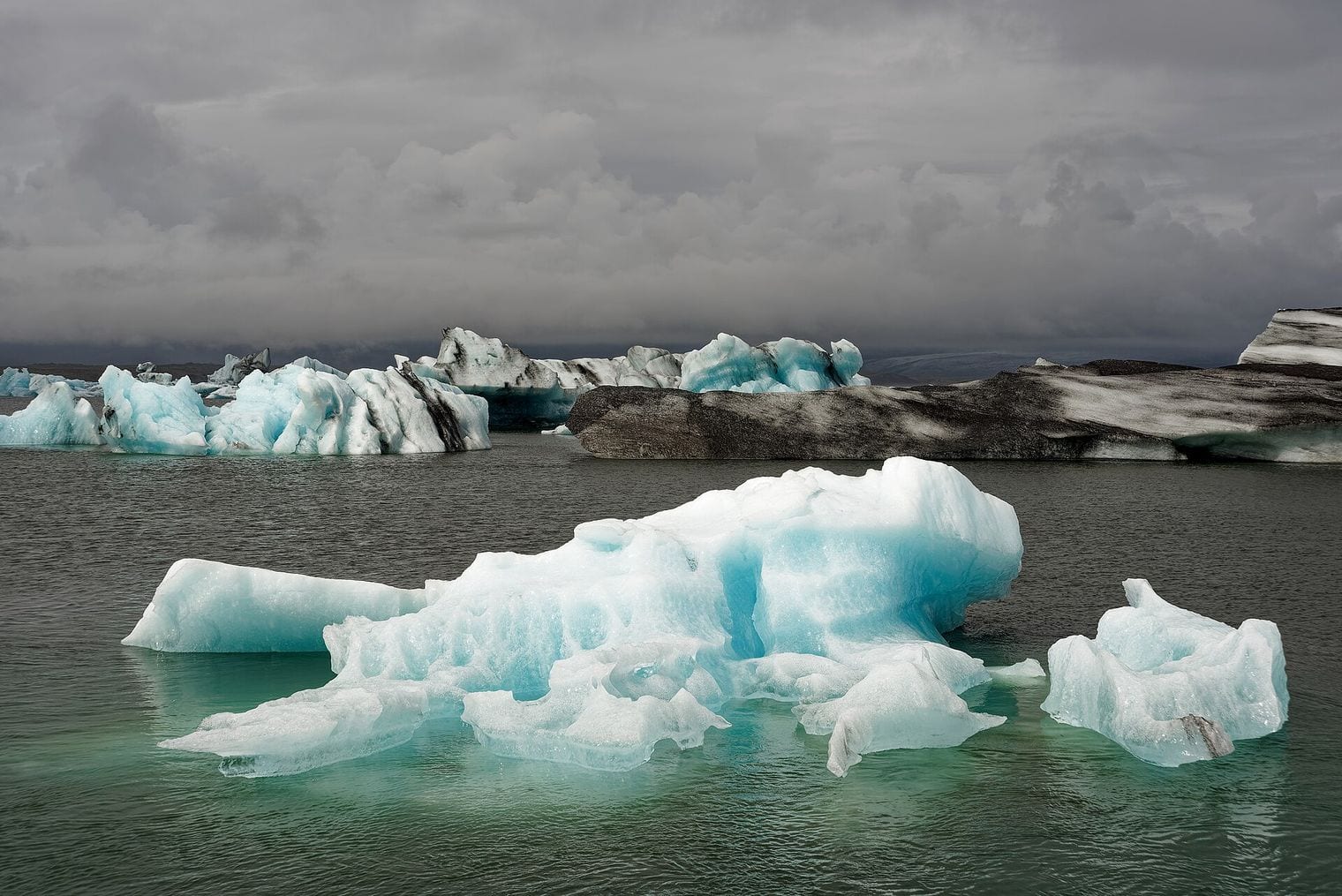
Fire, ice and hot water — a country where the landscape is still being made, and every town has a pool to soak in after a day out in it.
Iceland is a North Atlantic island of glaciers, volcanoes, waterfalls and geothermal lagoons, where a single day's drive can run from black-sand beaches to steaming lava fields and ice caps. Most trips begin in Reykjavík, the northernmost capital of a sovereign state — a compact, colourful city of museums, harbour-front food halls and naturally heated swimming pools. Beyond it, the Ring Road loops the whole country past the Golden Circle, the South Coast's waterfalls and glacier lagoon, and the fjords and whale-watching towns of the north.
Daylight grows fast, lambing starts on the farms and puffins return to the coastal cliffs from late April. Highland roads stay closed and the weather can swing from sleet to sunshine in an afternoon, but crowds and prices sit well below summer's.
SummerJun–Aug
Peak season and the midnight sun — near-round-the-clock daylight around the June solstice, the interior F-roads opening, puffin colonies busy and whale watching at its best. It is the mildest time of year rather than a warm one, and the busiest: book cars and rooms well ahead.
FallSep–Nov
The northern lights return with the dark nights from September while most roads are still clear, and the September sheep round-up fills the countryside. Days shorten quickly into November and Atlantic storms grow more frequent.
WinterDec–Feb
Four to five hours of daylight around the December solstice, but the best odds for the northern lights, guided ice-cave tours under the glaciers and snow-covered landscapes. The pools and lagoons are at their best in the cold; outside the capital region, roads close often and need care.
Regions
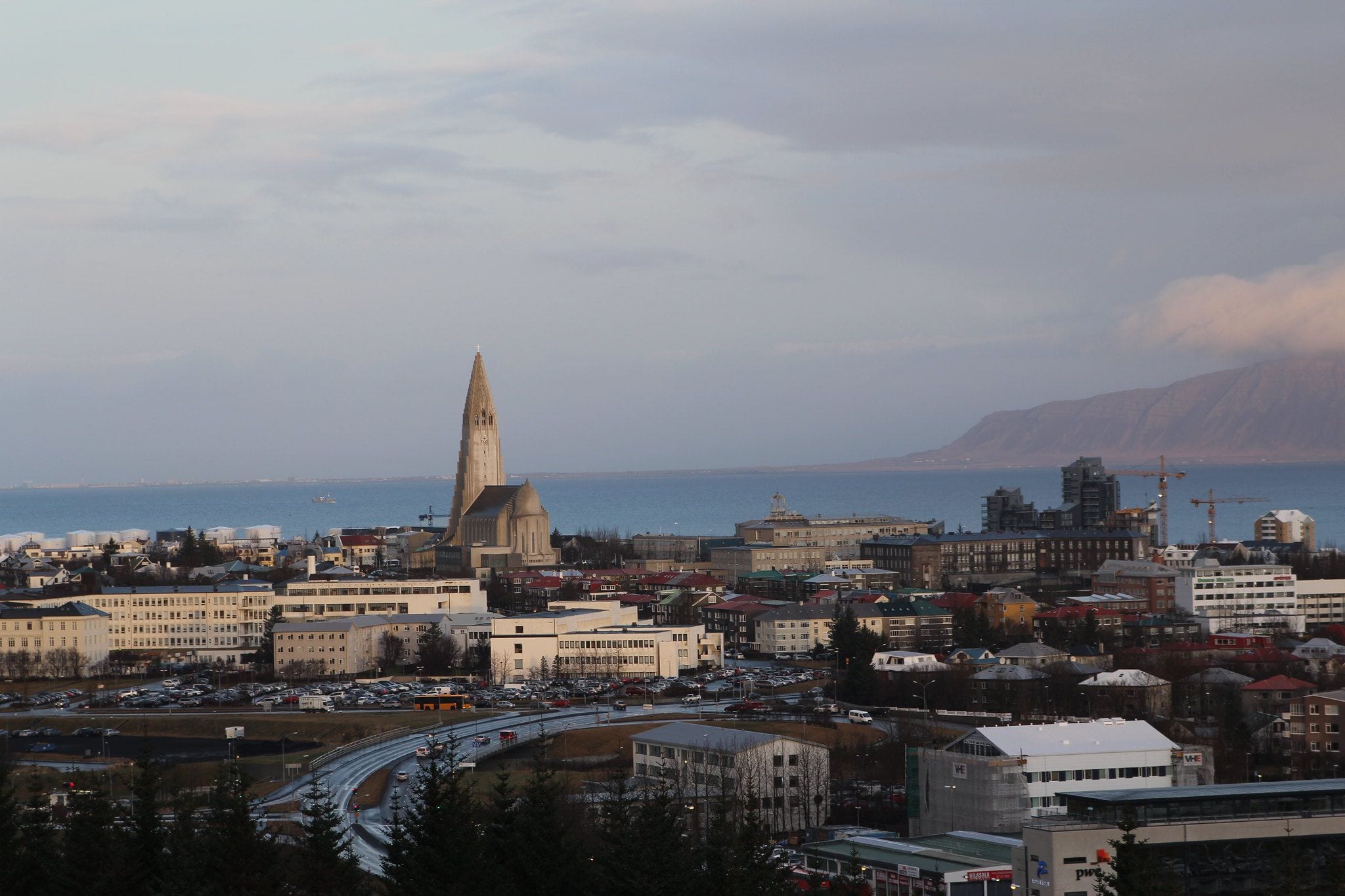
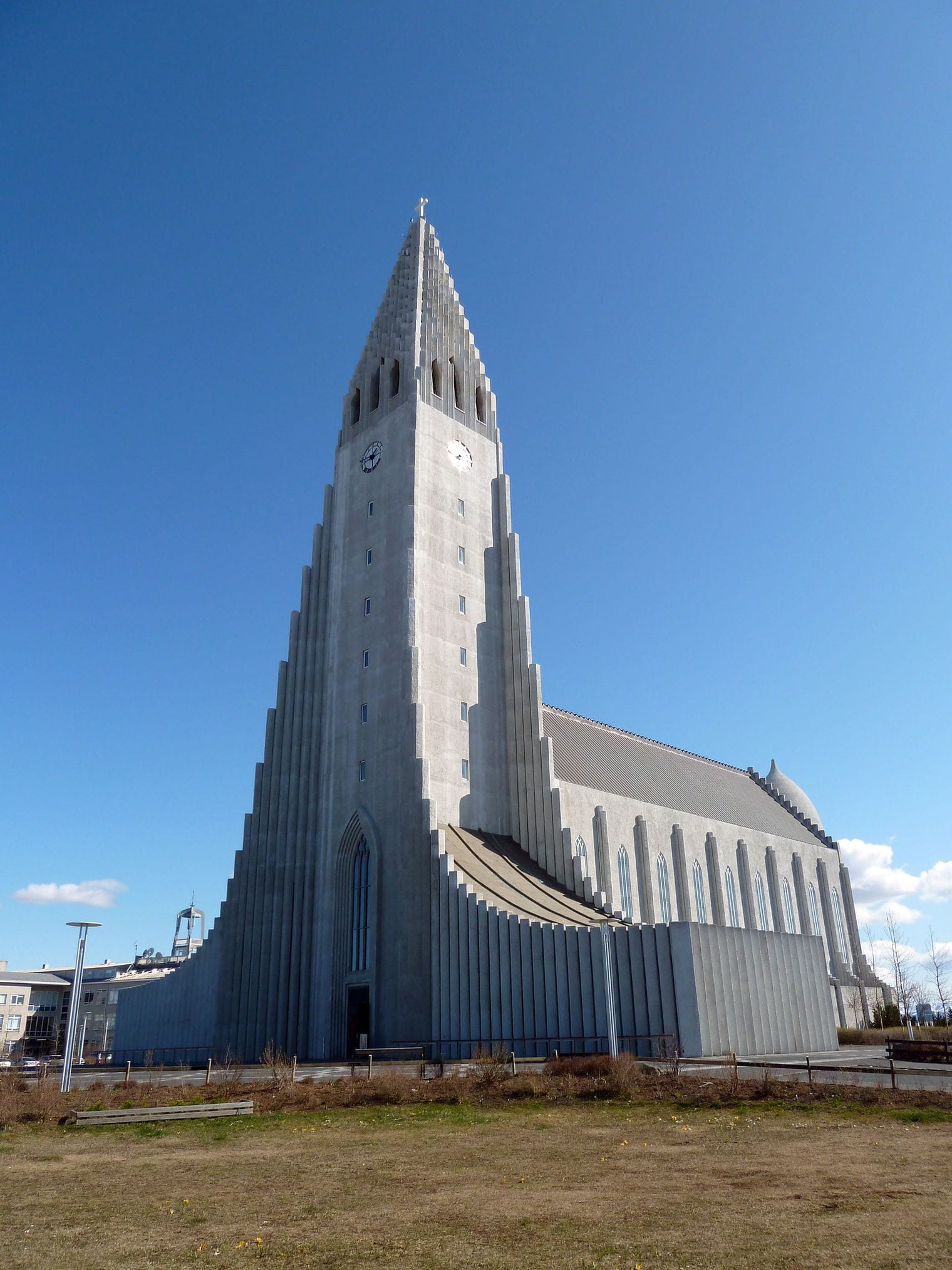
Reykjavík & the capital regionWhere most Icelanders live and every international flight lands: Hallgrímskirkja and Harpa, the harbour museums of Grandi, a ring of neighbourhood geothermal pools and the Sky Lagoon on the Kópavogur shore — all a short hop from each other.
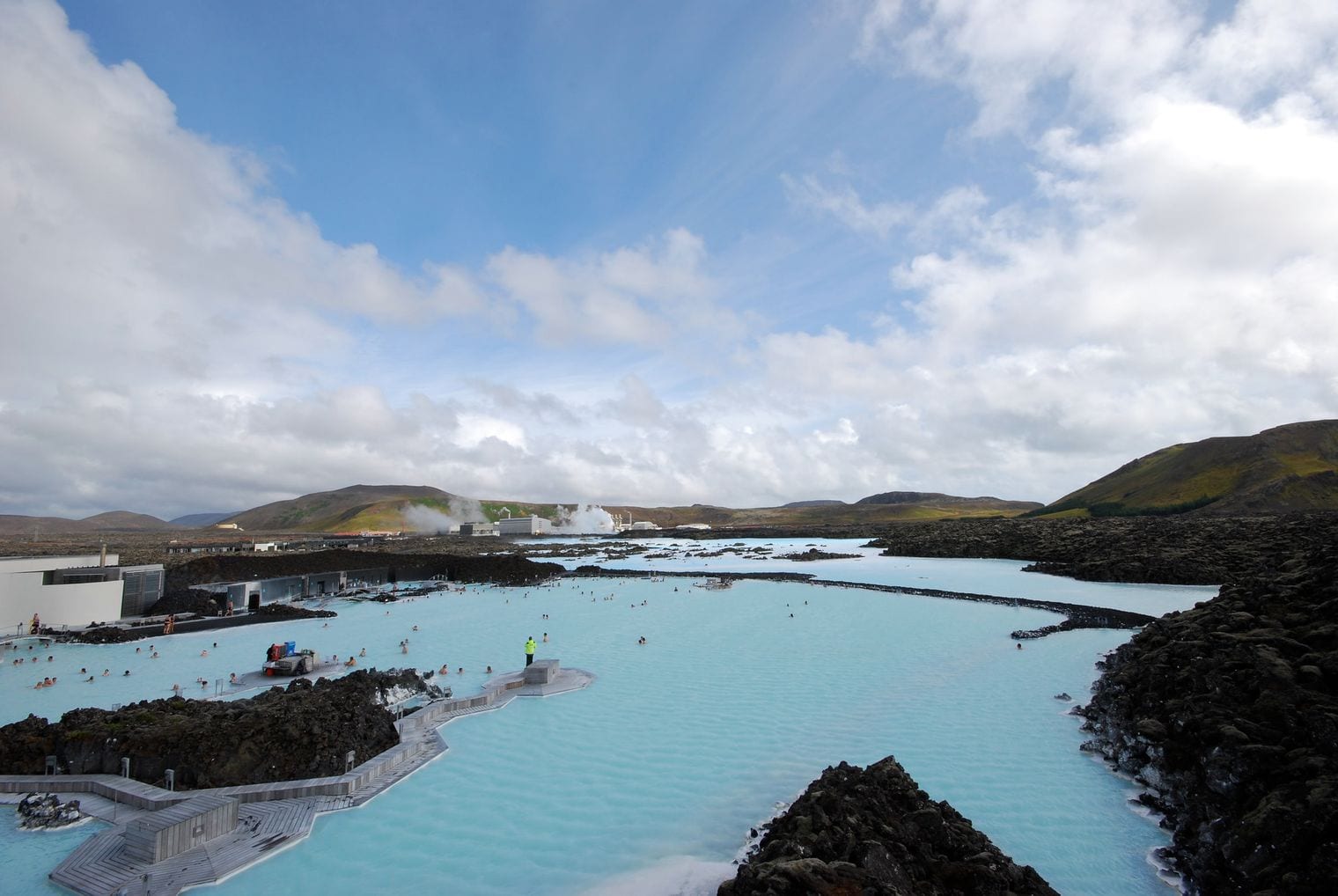
The Reykjanes PeninsulaThe lava-field peninsula between Keflavík airport and the capital — home to the Blue Lagoon, the Bridge Between Continents spanning a rift in the plates, and the Sundhnúkur crater row above Grindavík, scene of a run of eruptions from 2021 on.
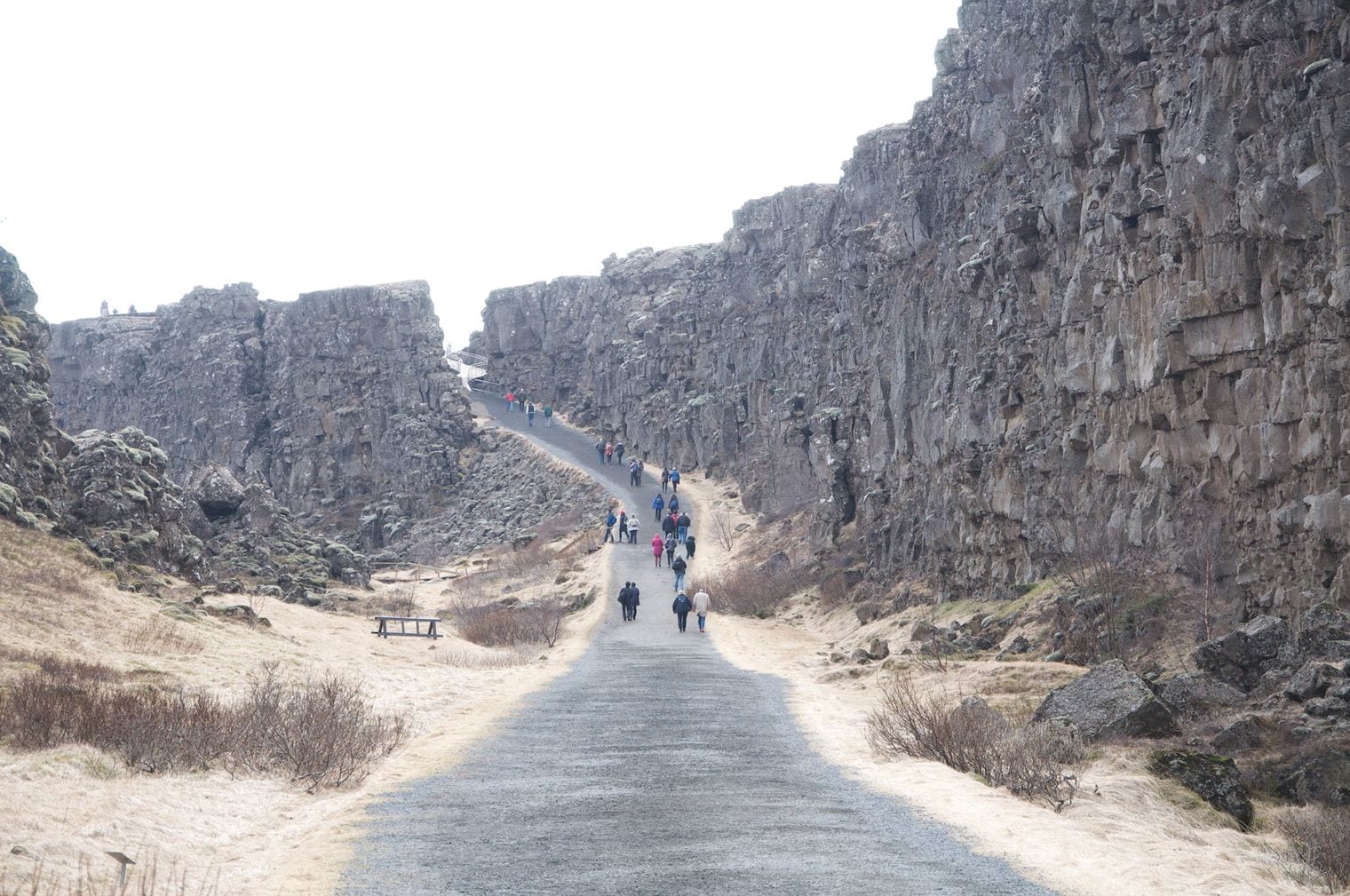
The Golden Circle & South IcelandIceland's classic loop: the rift valley of Þingvellir, the erupting Strokkur geyser at Geysir and the two-tier fall of Gullfoss — then east along the coast to Seljalandsfoss, Skógafoss and the black-sand beach at Reynisfjara by Vík.
Vatnajökull & the southeastThe country's greatest ice cap and the UNESCO-listed national park around it: the iceberg lagoon of Jökulsárlón and Diamond Beach, the glacier tongues and trails of Skaftafell, and the langoustine town of Höfn.
Snæfellsnes & the westA peninsula often called Iceland in miniature, crowned by the Snæfellsjökull glacier volcano — with the much-photographed Kirkjufell mountain, the sea arches of Arnarstapi and, inland, the lava-fed falls of Hraunfossar.
Akureyri & the northThe north's capital at the head of a long fjord, and the base for Lake Mývatn's craters and hot springs, the falls of Goðafoss and Dettifoss, and whale-watching boats out of Húsavík.
Getting around
Iceland has no railway, so a trip comes down to a hire car or organised tours. Route 1, the Ring Road, circles the island in roughly 1,300 km and is paved throughout — a two-wheel-drive car handles it and the Golden Circle in summer, while the interior F-roads need a 4x4 and open only in summer. Winter driving means short days, ice and frequent closures, so check the road administration's live conditions map and the weather service before every long drive. Without a car, Reykjavík is the hub for year-round day tours to the Golden Circle, the South Coast and Snæfellsnes; airport buses meet every flight at Keflavík, and public buses and domestic flights reach Akureyri and the regions. Central Reykjavík itself is small enough to walk.
The full loop of Route 1 around the island — glaciers and black beaches in the south, fjords in the east, volcanic lakes and waterfalls in the north. Drive it in summer; in winter it is possible but slow, with closures to plan around.
Iceland's greatest hits within reach of the capital — the Golden Circle's rift valley, geyser and waterfall, then east along Route 1 to the waterfalls, beaches and glacier lagoon of the south.
3Geysir & Gullfoss — the rest of the Golden Circle
4Seljalandsfoss & Skógafoss — waterfall stops on Route 1
5Vík — overnight by Reynisfjara
6Jökulsárlón — icebergs before the drive back
A Reykjavík stopover
~2–3 days
The classic short break between North America and Europe — a day in the city, a soak in the lagoons and a single day trip to the Golden Circle, with no car needed.
One email every Thursday with our newest guides for the places you tick.
Iceland travel FAQ
Eight questions travellers ask before they go.
When is the best time to visit Iceland?
June to August brings the midnight sun, open highland roads, puffins and the calmest seas for whale watching — and the biggest crowds. September to March is northern-lights season, with short days and winter driving to plan around. May and September are the best balance of daylight, open roads and lighter crowds.
How many days do you need in Iceland?
A long weekend covers Reykjavík with the Blue Lagoon and a Golden Circle day trip. Four to five days adds the South Coast as far as Jökulsárlón. The full Ring Road needs at least a week, and ten days lets you add Snæfellsnes or slow down in the north.
Do you need a car in Iceland?
Not for Reykjavík or the classic day trips — tours to the Golden Circle, the South Coast and the lagoons run all year from the city. For the Ring Road, the Westfjords or anywhere beyond Vík, a car gives far more freedom. A 4x4 is required on the interior F-roads, which open only in summer, and is worth having in winter.
What is Iceland known for?
Volcanoes and glaciers side by side, waterfalls almost everywhere, a geothermal bathing culture of hot pools and lagoons, the northern lights and the midnight sun — and the Alþingi, the assembly founded at Þingvellir in 930 and often called the world's oldest parliament.
Do people speak English in Iceland?
Yes — English is spoken widely and fluently, and menus, signs and tours in the tourist areas are almost always in English as well as Icelandic. A few words of Icelandic, like takk (thanks), are always appreciated.
What currency does Iceland use, and is it in the EU?
Iceland uses the Icelandic króna (ISK). It is not in the EU or the eurozone, though it belongs to the European Economic Area and the Schengen zone. Cards, including contactless, are accepted almost everywhere, so most visitors need little or no cash.
What should I eat in Iceland?
Lamb, above all in kjötsúpa (lamb soup); fresh cod, arctic char and langoustine; skyr; dark rye bread slow-baked in hot ground; and a hot dog ordered "with everything". The adventurous can try hákarl, fermented shark, usually with a shot of brennivín.
What kind of trip is Iceland best for?
Road trips, northern lights and whale watching.
We use cookies to analyse site traffic and improve your experience.
You can accept or reject analytics cookies. See our
May we use analytics cookies? See ourCookie Policy.