We may earn a commission if you book tickets, tours or a stay through a link on
this page, at no extra cost to you. It never affects which places we list or how
we rank them (how we make money).
Short answer
Start with Galena for its preserved Main Street and Ulysses S. Grant's home, Nauvoo for its rebuilt temple and restored 1840s historic district on the Mississippi, and Elsah for its stone cottages beneath the river bluffs. Most towns on this list fill a relaxed day, while Galena and Nauvoo deserve a weekend.
Beyond Chicago's skyline, Illinois is a state of small towns with outsized stories: lead-mining boomtowns in the northwest hills, stone villages under the Mississippi River bluffs, the squares where Lincoln and Douglas debated, Amish farm country on the central prairie and Fox River main streets at the edge of the suburbs.
This guide ranks 20 of the best, each home to fewer than 50,000 people at the 2020 census, from Galena to Grafton. Most fill a relaxed day, Galena and Nauvoo deserve a weekend, and many pair up neatly on a road trip.
Four towns on this list hosted Lincoln–Douglas debates in 1858: Ottawa held the first, Galesburg the fifth, Quincy the sixth and Alton the seventh and last, as Springfield lawyer Abraham Lincoln took on Senator Stephen Douglas.
Galena was home to Ulysses S. Grant and eight other Civil War generals, and in 1865 grateful residents presented Grant with a house in town.
Woodstock stood in for Punxsutawney in the 1993 comedy Groundhog Day, which was filmed almost entirely in the town.
Alton-born Robert Wadlow, who reached 8 feet 11.1 inches, is the tallest person in recorded history for whom there is irrefutable evidence.
George Ferris, who built the original Ferris wheel for Chicago's 1893 World's Columbian Exposition, was born in Galesburg in 1859.
The Boy Scouts of America was incorporated in 1910 by W. D. Boyce, a resident of Ottawa, who is buried in the town.
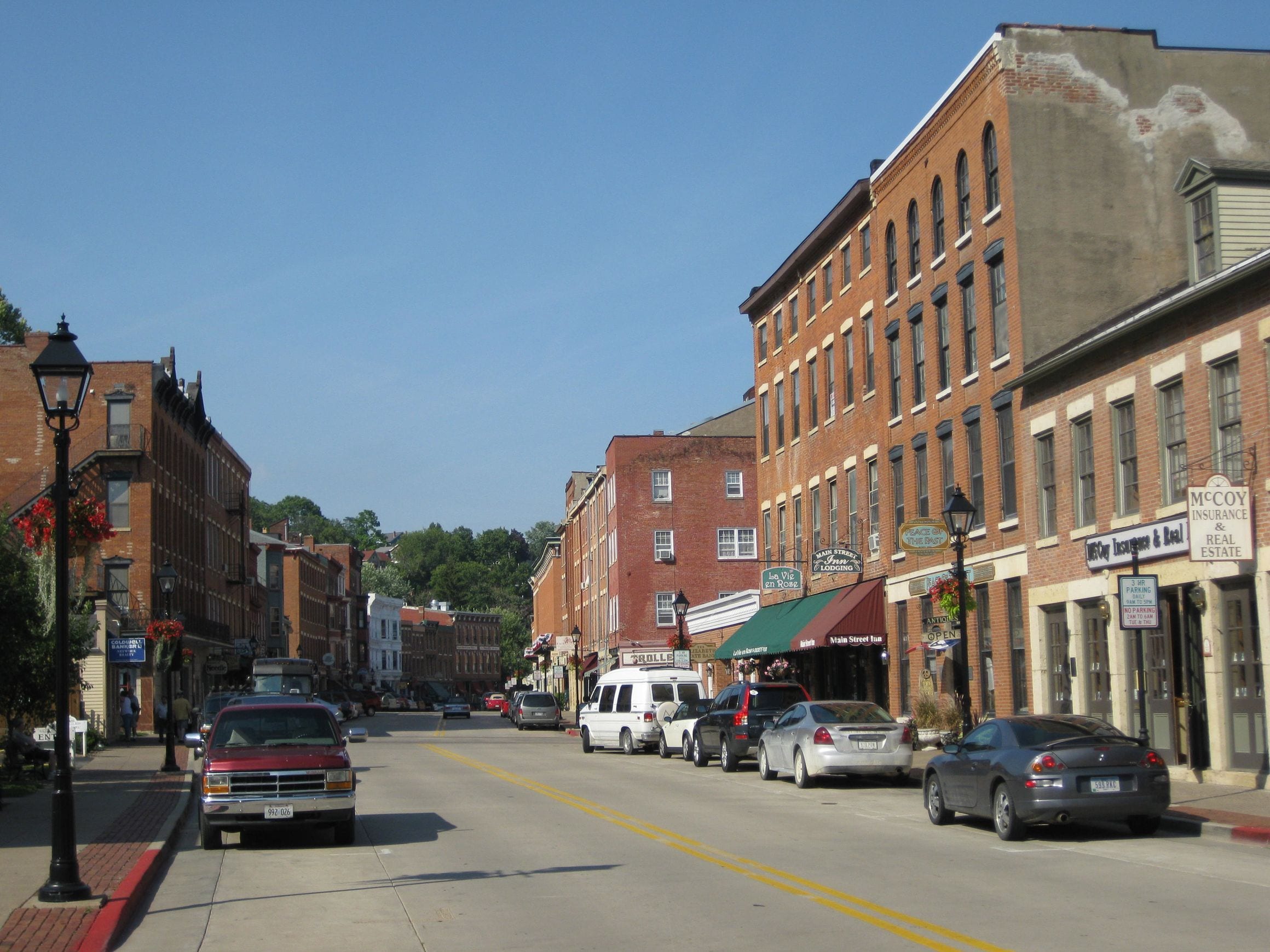
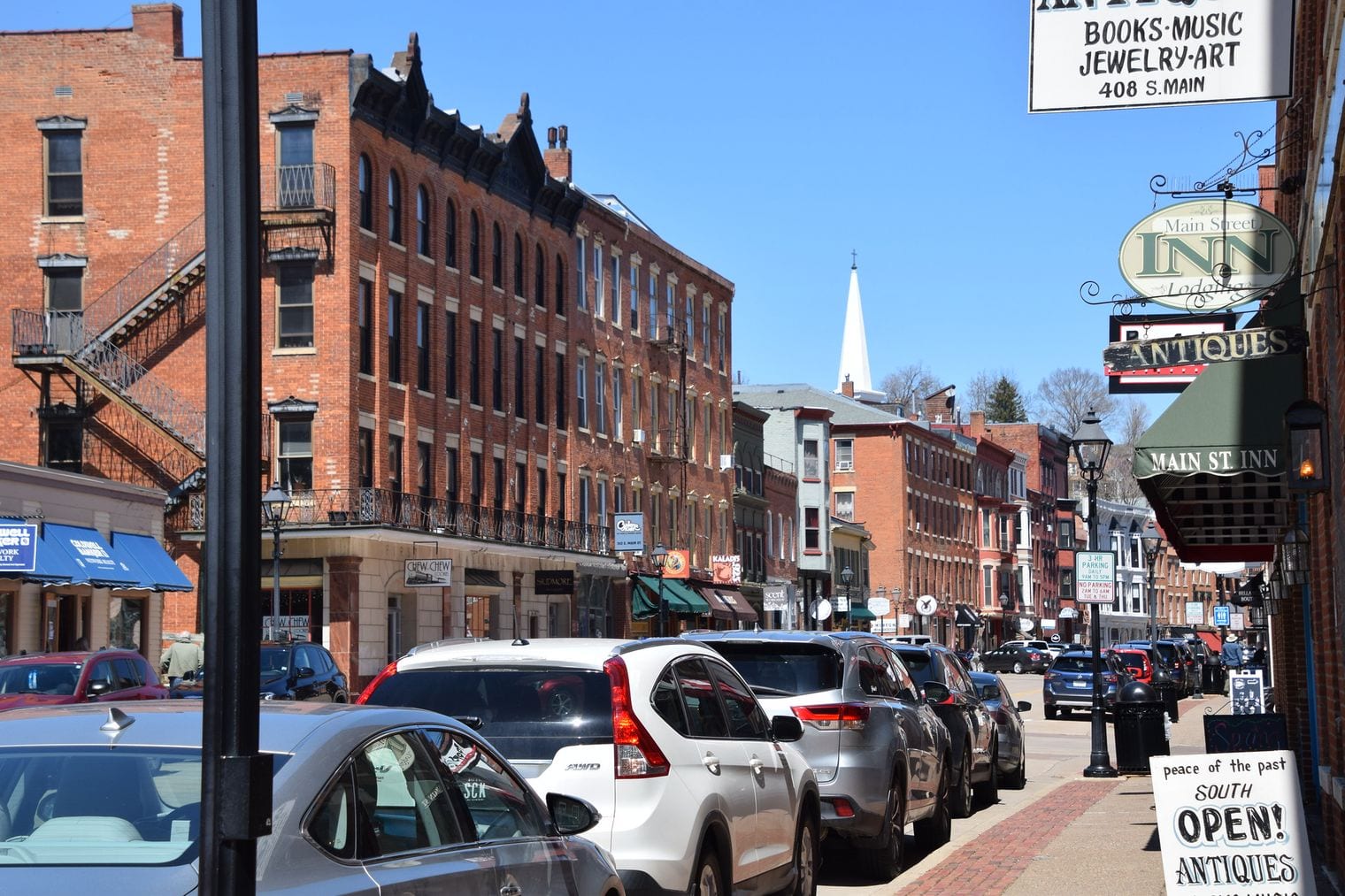
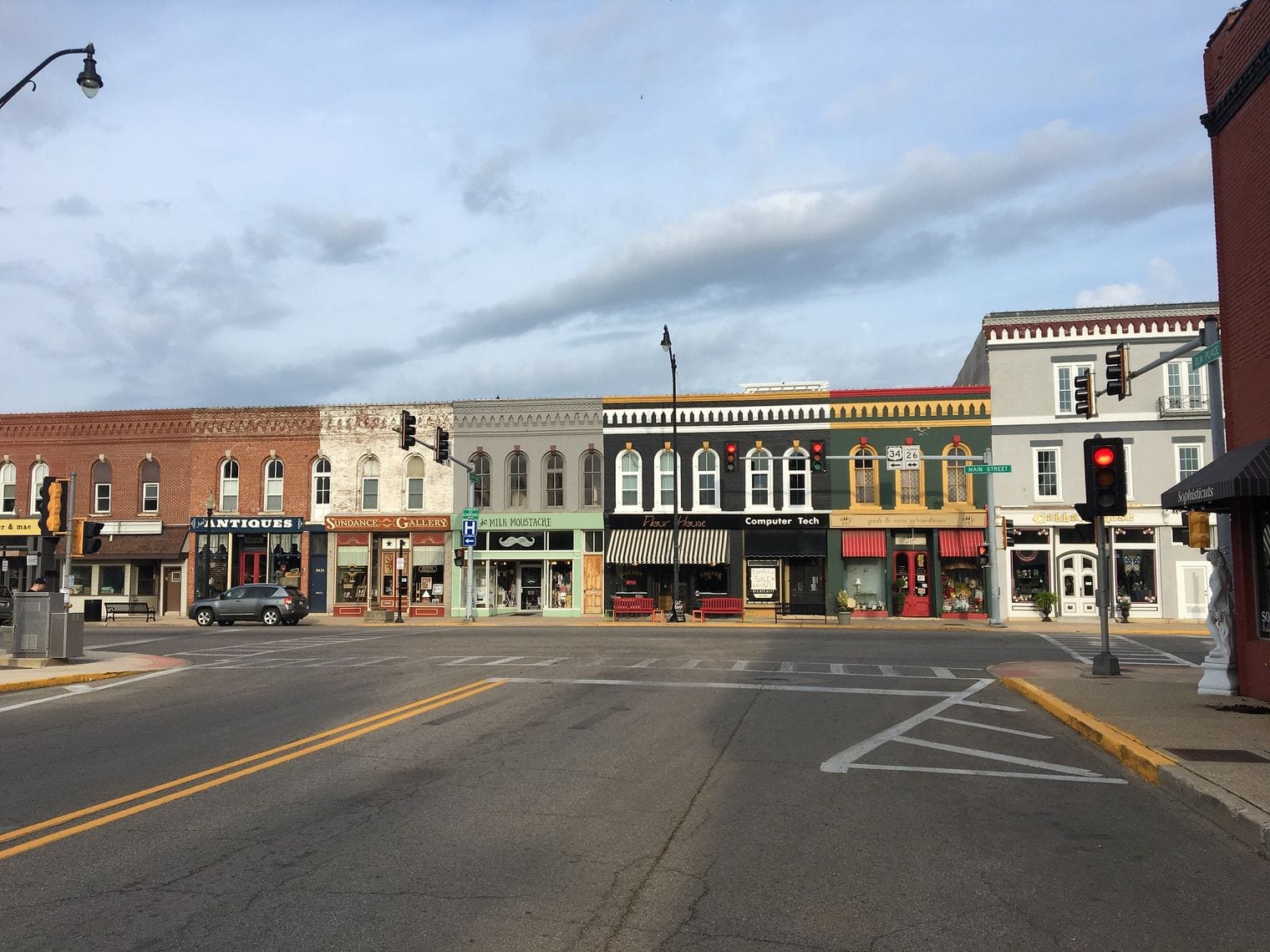
Tucked into the hills of the state's far northwest corner, Galena is the Illinois small town that nearly every list starts with, and one walk down Main Street explains why.
The town grew rich in the 1800s on the lead ore that gave it its name, in what became the first major mineral rush in the United States, and when the boom faded it largely stopped changing. Today about 85 percent of the city lies within the Galena Historic District, more than 800 buildings stacked in tiers above the Galena River.
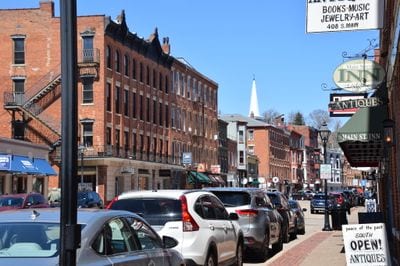
Browse the shops and galleries along curving Main Street, then climb the stairways to Bench and Prospect streets for views over the rooftops and church steeples. The Ulysses S. Grant Home, presented to the general by grateful residents in 1865, is kept as a memorial, and the home of his political ally Elihu B. Washburne stands nearby. Grant was one of nine Civil War generals who called Galena home, a story you meet all over town.
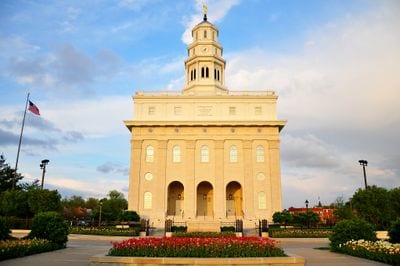
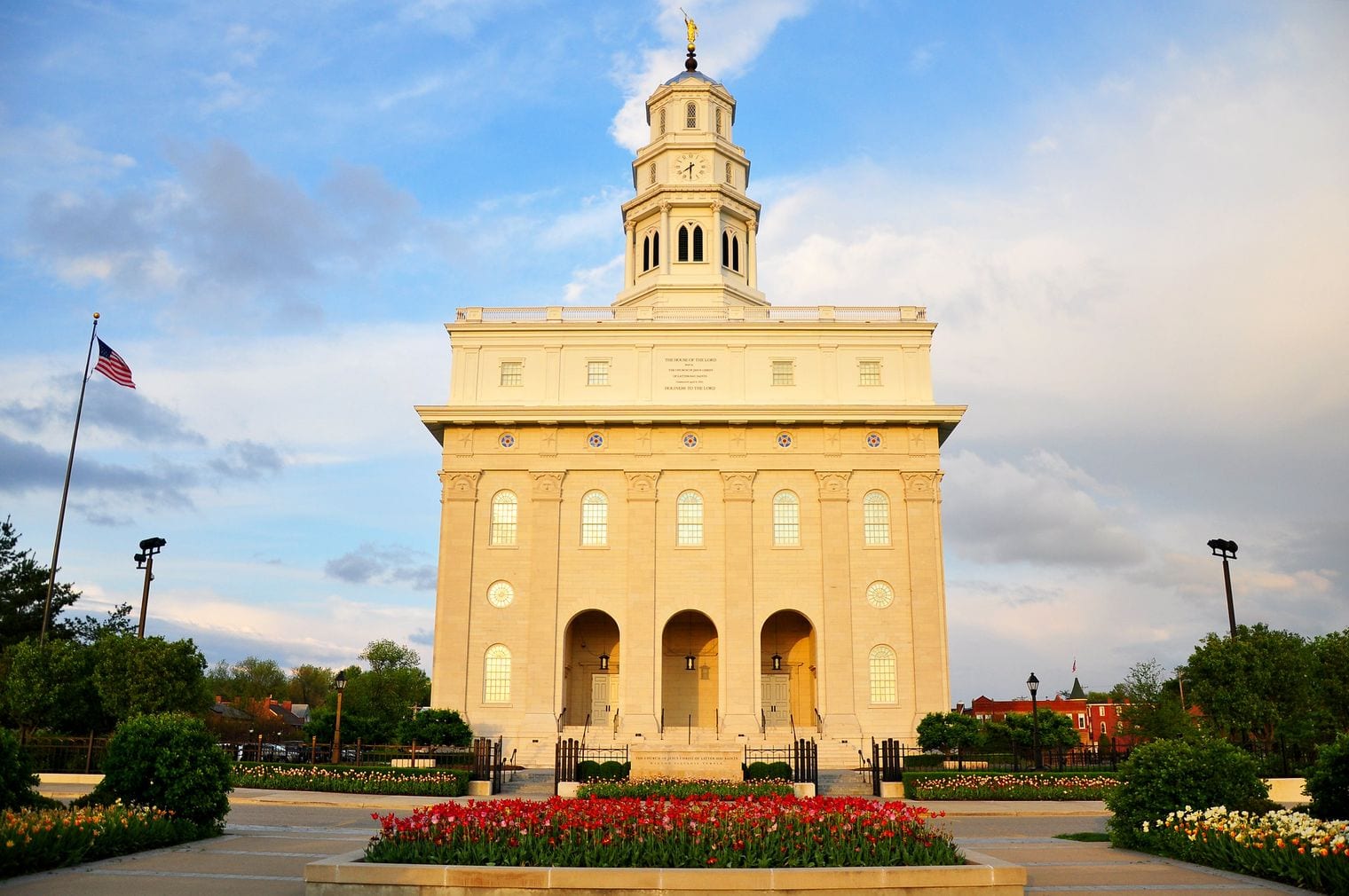
Few small towns carry as much history per resident as Nauvoo, a city of fewer than a thousand people on a broad bend of the Mississippi River. From 1839 to 1846 it was the headquarters of Joseph Smith and the Latter Day Saint movement, and for a brief time in the 1840s it ranked among the largest cities in Illinois before most of the faithful left for the West.
The Nauvoo Illinois Temple, dedicated in 2002, rises on the bluff where the original temple stood until it burned in 1848, and its design replicates the first building.
Below it, a restored district of brick homes, shops and workplaces from the 1840s tells the story of the early settlement, while the Community of Christ's Joseph Smith Historic Site preserves the family homestead by the river. Carthage Jail, where Smith was killed in 1844, is a short drive southeast in the town of Carthage.
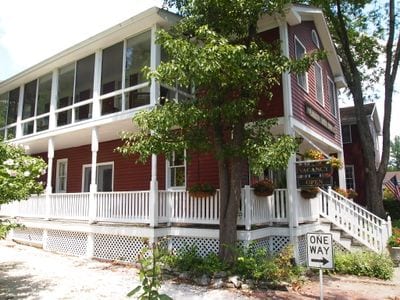
Hidden in a notch of the limestone bluffs along the Great River Road, Elsah still looks much as it did in 1861. Its founder, James Semple, offered free lots to anyone who built with stone from his quarry, and the result is a tiny village of stone and brick cottages, old taverns and Greek Revival homes that has barely changed since.
Most of the village is listed on the National Register of Historic Places as the Elsah Historic District, so the pleasure here is simply walking LaSalle and Mill streets and admiring the old stonework. Cyclists roll in on the Sam Vadalabene Bike Trail, and the campus of Principia College, with buildings designed by architect Bernard Maybeck, crowns the bluffs above the river.
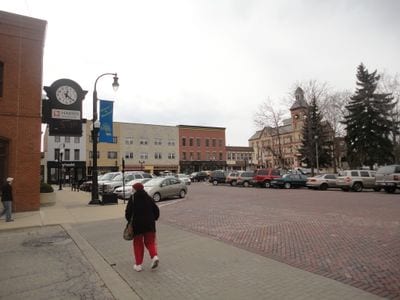
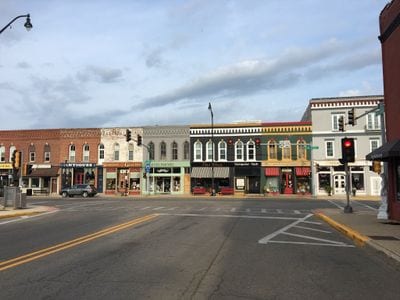
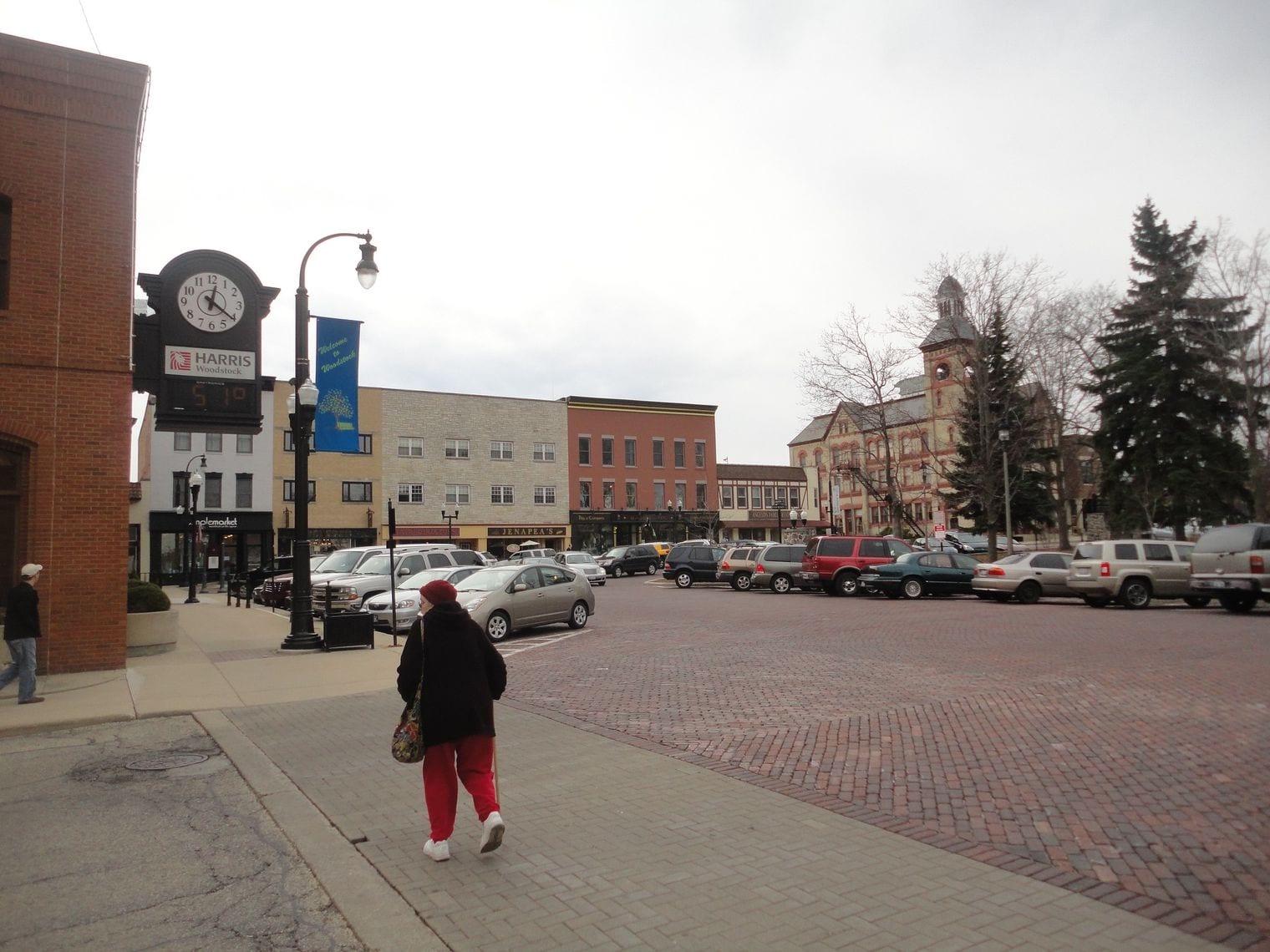
Woodstock has a town square that looks familiar to movie fans for good reason: this McHenry County seat, about 50 miles northwest of Chicago, stood in for Punxsutawney, Pennsylvania, in Groundhog Day, the 1993 Bill Murray comedy that was filmed almost entirely in town. Its Victorian storefronts, the park at the center of the square and the old county courthouse all look much as they did on screen.
The Woodstock Opera House, built in 1889, anchors the square; director Harold Ramis surveyed the town from its bell tower before choosing it, and a young Orson Welles, who went to school in Woodstock, performed on its stage. Each winter the Groundhog Days festival brings film-site walking tours and a forecast from Woodstock Willie, and the rest of the year the square's shops, cafés and theatres make an easy day out from the city.
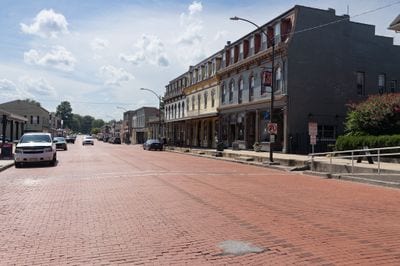
Arcola marks the eastern edge of Illinois Amish country, a railroad town founded in 1855 whose historic downtown still keeps its original brick street. It is also the birthplace of Johnny Gruelle, the artist and author who created Raggedy Ann and Raggedy Andy, and a colorful downtown mural of the pair honors him.
Horse-drawn buggies are a common sight on the back roads west of town, where Amish farms stretch toward Arthur, and local shops sell Amish-made furniture and baked goods. Arcola calls itself the broomcorn capital of the world and celebrates that heritage with its Broom Corn Festival each September, while the site of the old Rockome Gardens outside town is now a drive-through wildlife park.
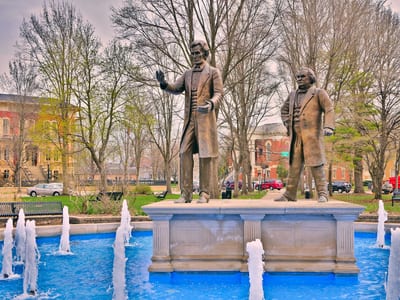
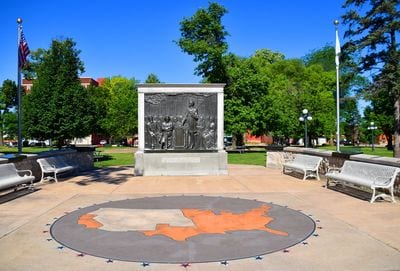
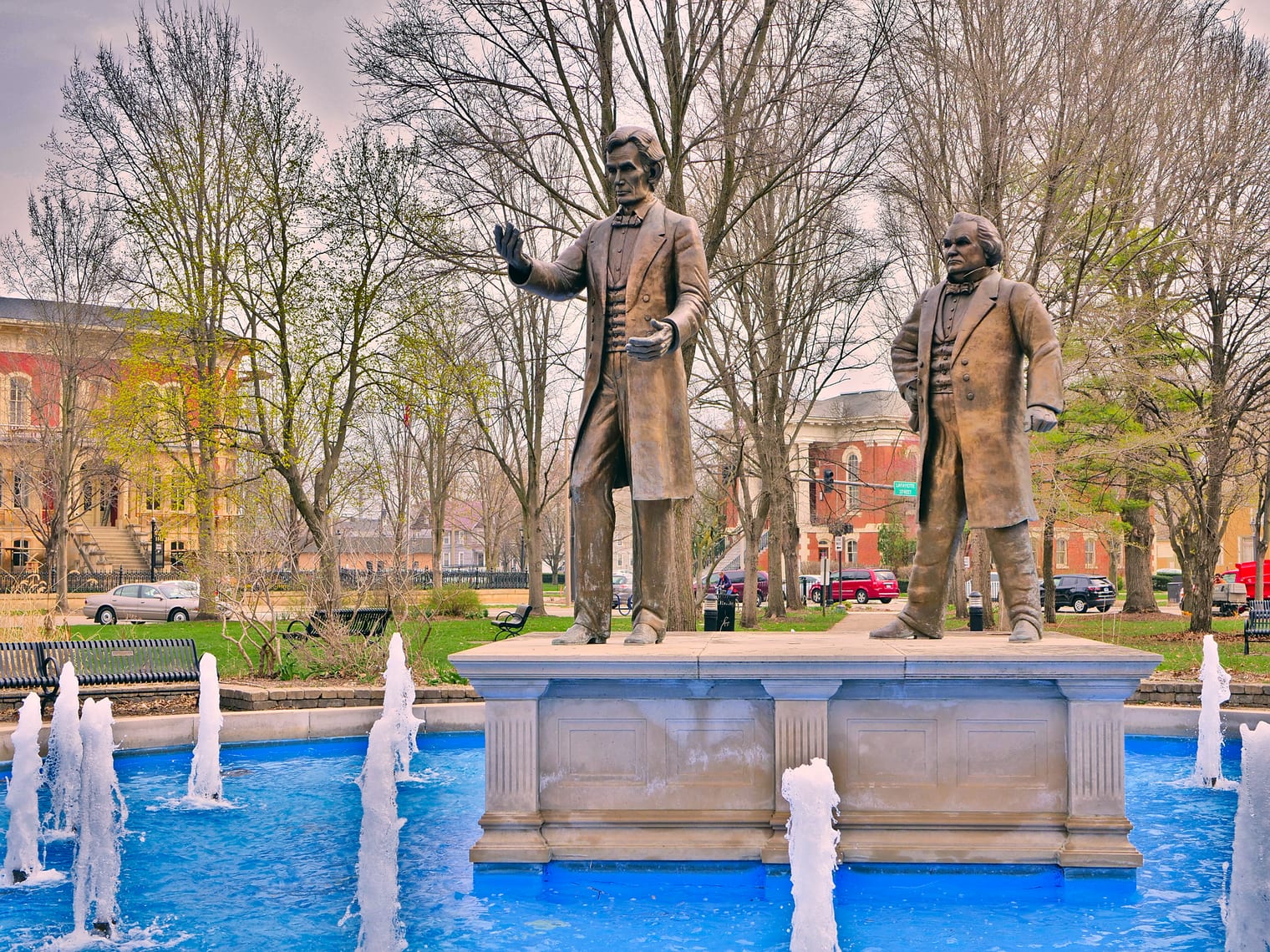
Ottawa sits where the Fox River flows into the Illinois, and on August 21, 1858, its Washington Square hosted the first of the Lincoln–Douglas debates before a crowd of thousands. Today bronze statues of the two rivals stand in a fountain at the center of the square, near the spot where the debate platform stood.
Most visitors know the town as the gateway to Starved Rock State Park, a short drive west near Utica, whose sandstone canyons and river bluffs draw some two million visitors a year. Back in Ottawa, the story of the Illinois and Michigan Canal runs through the town's history, and W. D. Boyce, who incorporated the Boy Scouts of America in 1910 while living here, is buried in the local cemetery.
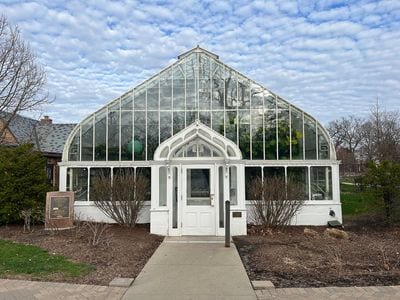
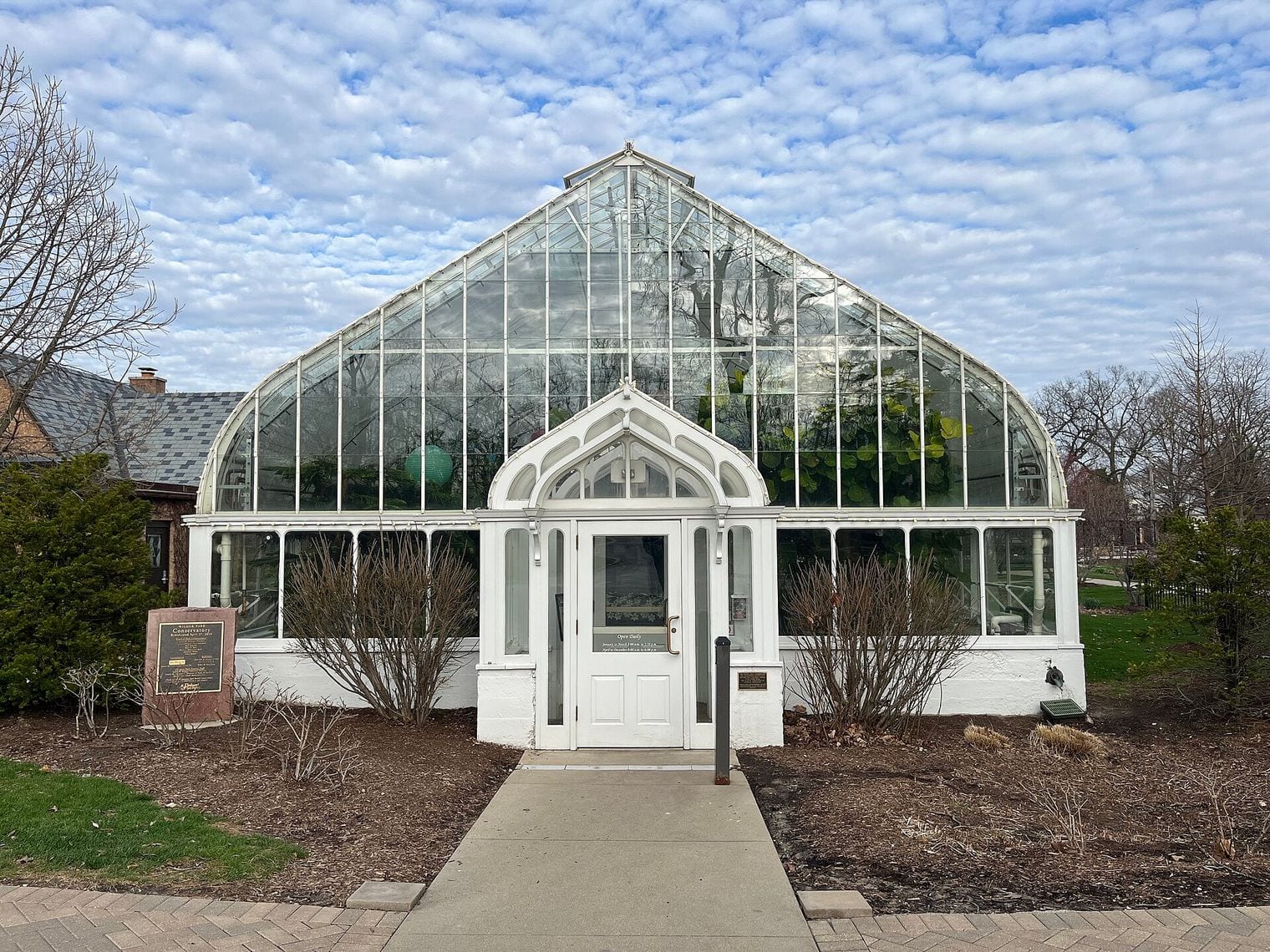
Elmhurst is the biggest town on this list and plainly a suburb, a leafy DuPage County city on Chicago's western edge, but it earns its place as an easy cultural day trip. Its heart is centrally located Wilder Park, home to the Elmhurst Art Museum, the Wilder Park Conservatory, the historic Wilder Mansion and the public library.
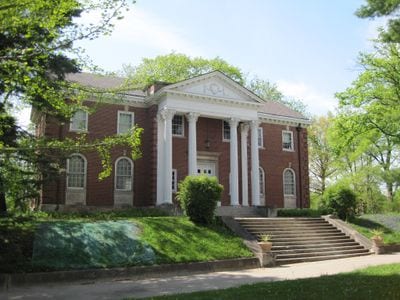
The museum's prize is the McCormick House, a steel-and-glass home designed in 1952 by Mies van der Rohe, one of very few houses he built in the United States, which was moved onto the museum's campus in 1994. Pair it with the conservatory's greenhouses and a stroll through the walkable downtown, and you have a relaxed afternoon within easy reach of the city.
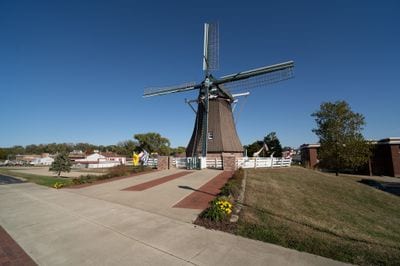
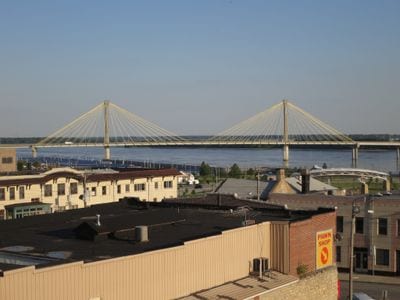
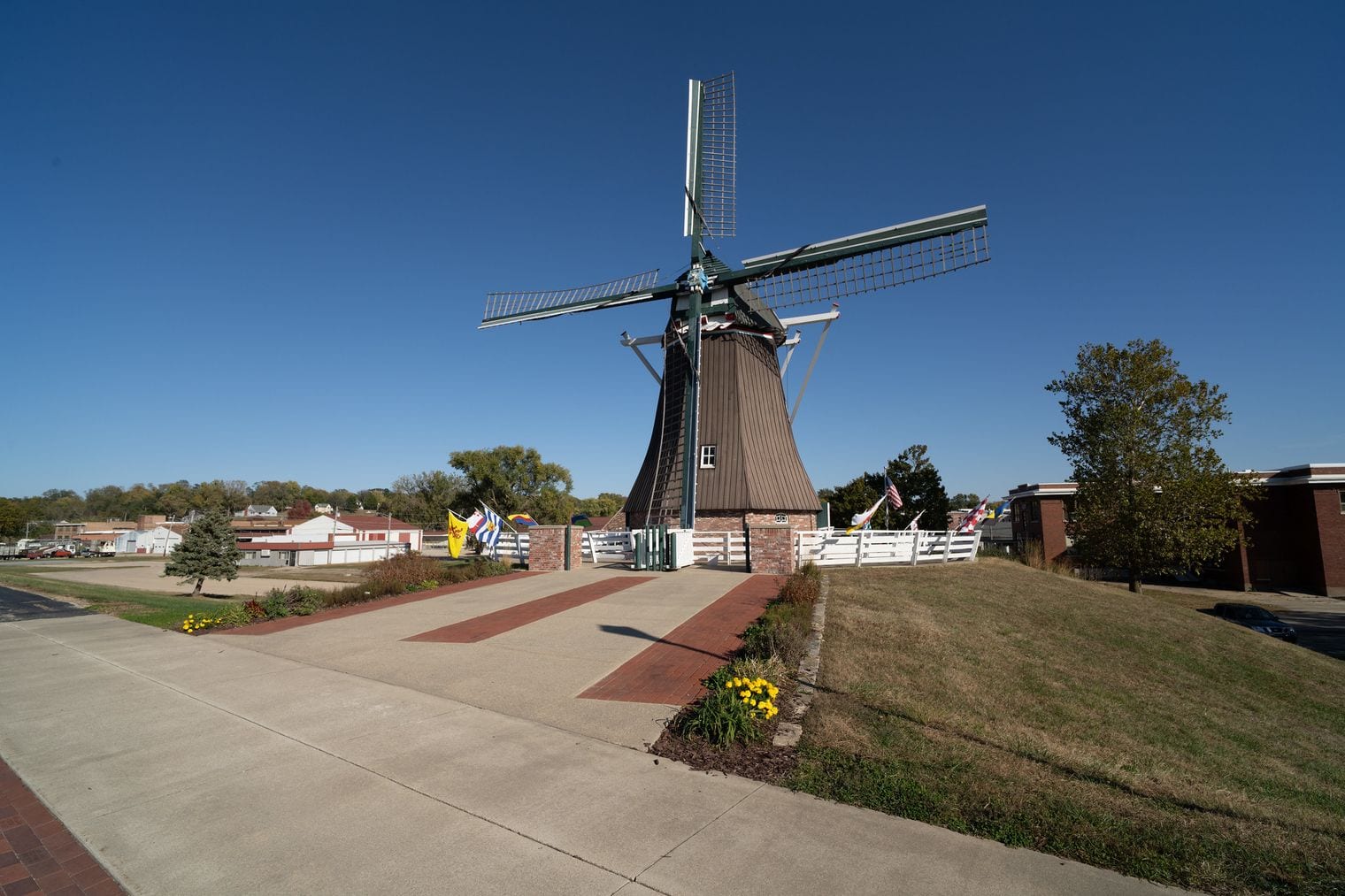
Fulton wears its Dutch heritage proudly, and nothing says so more clearly than De Immigrant, a working windmill that stands on the town's Mississippi River flood-control dike. The mill was fabricated by millwrights in the Netherlands, shipped across the Atlantic and assembled on the levee, and it has been grinding grain since 2001.
Watch the sails turn against the wide river, with Clinton, Iowa, on the opposite bank, then explore the Martin House Museum and Heritage Canyon. The town's Dutch Days festival fills the streets each spring, and nearby Lock and Dam 13 is a good place to watch barges working their way up and down the Mississippi.
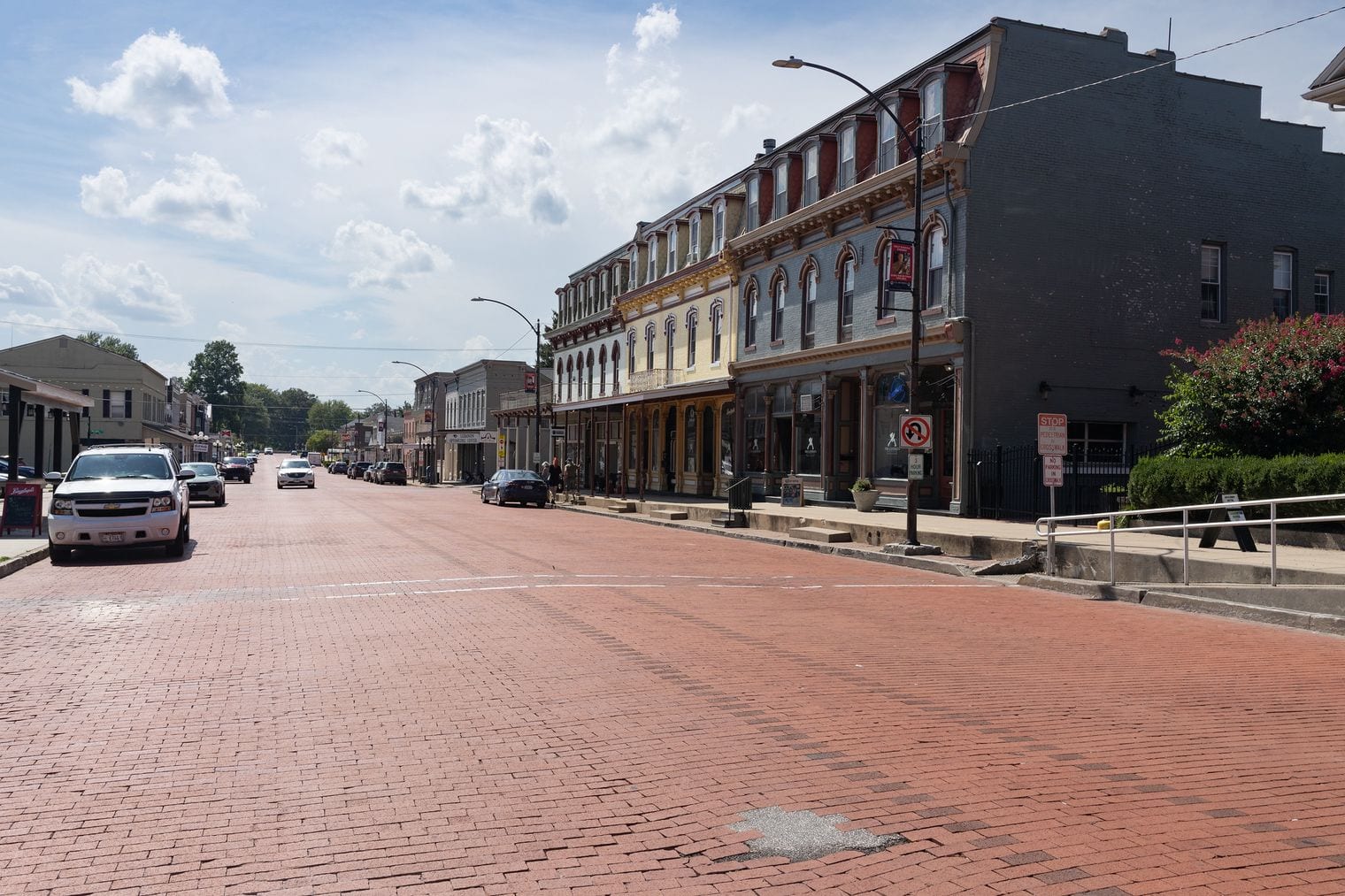
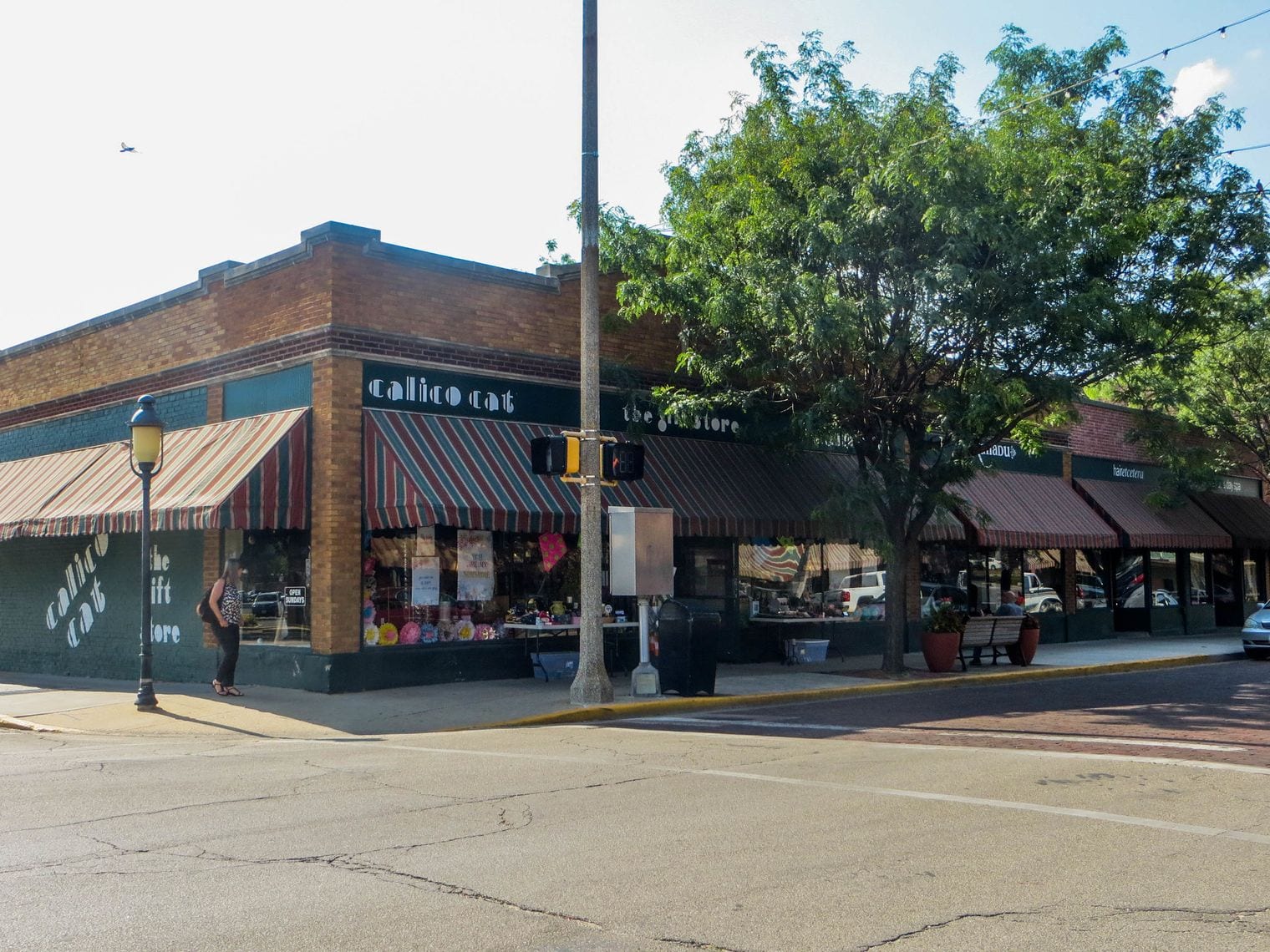
Lebanon is a quiet Metro East town east of St. Louis whose main street, St. Louis Street, is known locally as the Brick Street and is lined with antique stores and small shops. It is a college town too: McKendree University, founded here in 1828, is the oldest college in Illinois.
The star of the street is the Mermaid House, an old inn built in 1830 by a retired New England sea captain, Lyman Adams, who named it for the mermaids he claimed to have seen at sea. Charles Dickens stopped here in 1842 and praised its cleanliness and comfort in his travel book American Notes, and the building still stands on the street today as one of the town's proudest landmarks.
Princeton, the seat of Bureau County, pairs a long main street of shops and antique stores with a nationally significant Underground Railroad site. The Owen Lovejoy Homestead, built in 1838, was home to the abolitionist congressman Owen Lovejoy, who openly sheltered people escaping slavery; the house still has a concealed compartment where they could hide, and it is a National Historic Landmark.
Lovejoy's brother Elijah was the abolitionist printer killed by a mob in Alton in 1837, a link that ties Princeton to another town on this list. North of town, the Red Covered Bridge has spanned Big Bureau Creek since 1863 and is one of the few covered bridges left in Illinois, a favorite stop for photographers on a drive through the Bureau County countryside.
Set in the rolling farmland of northwest Illinois, Mount Carroll is a county seat of about 1,500 people with a remarkably intact 19th-century downtown. Most of the town's core, 118 acres of commercial blocks and older homes, is listed on the National Register of Historic Places as the Mount Carroll Historic District.
The former Shimer College campus on the south edge of town now houses the Campbell Center for Historic Preservation Studies, a fitting tenant for such a well-preserved place. In summer, the Timber Lake Playhouse, founded in 1961 and one of the longest-running summer theatres in Illinois, stages musicals and plays on a wooded campus a few miles southeast, and the Mississippi River at Savanna is a short drive west.
Quincy is the largest river city on this list, and in the 1800s it was one of the busiest, a steamboat and railroad hub that for a time ranked as the second-largest city in Illinois. That wealth left behind a remarkable stock of Victorian mansions and German brick neighborhoods, and several historic districts, including the South Side German Historic District, protect them today.
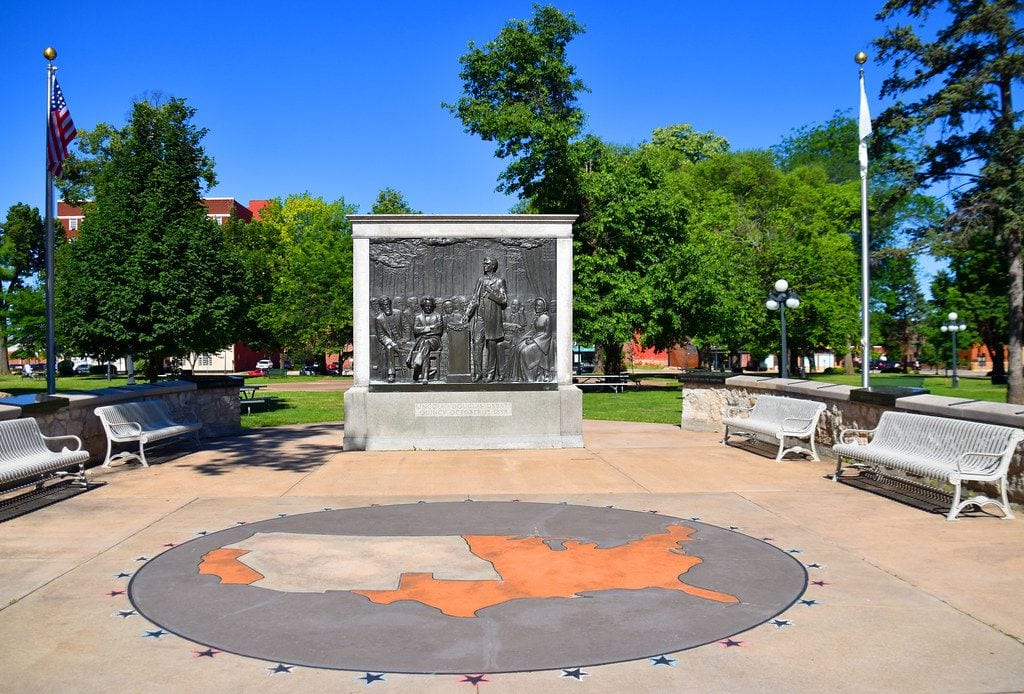
In downtown's Washington Park, Abraham Lincoln and Stephen Douglas held the sixth of their 1858 debates, remembered today with a bronze relief by the sculptor Lorado Taft. Drive the bluffs to see Villa Kathrine, a Moroccan-style home overlooking the Mississippi, and visit the mansion of John Wood, the city's founder, who later became governor of Illinois.
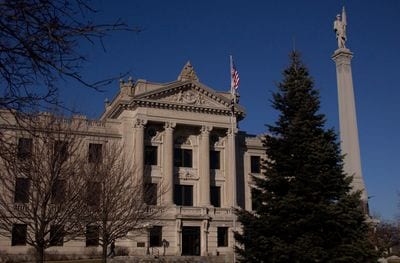
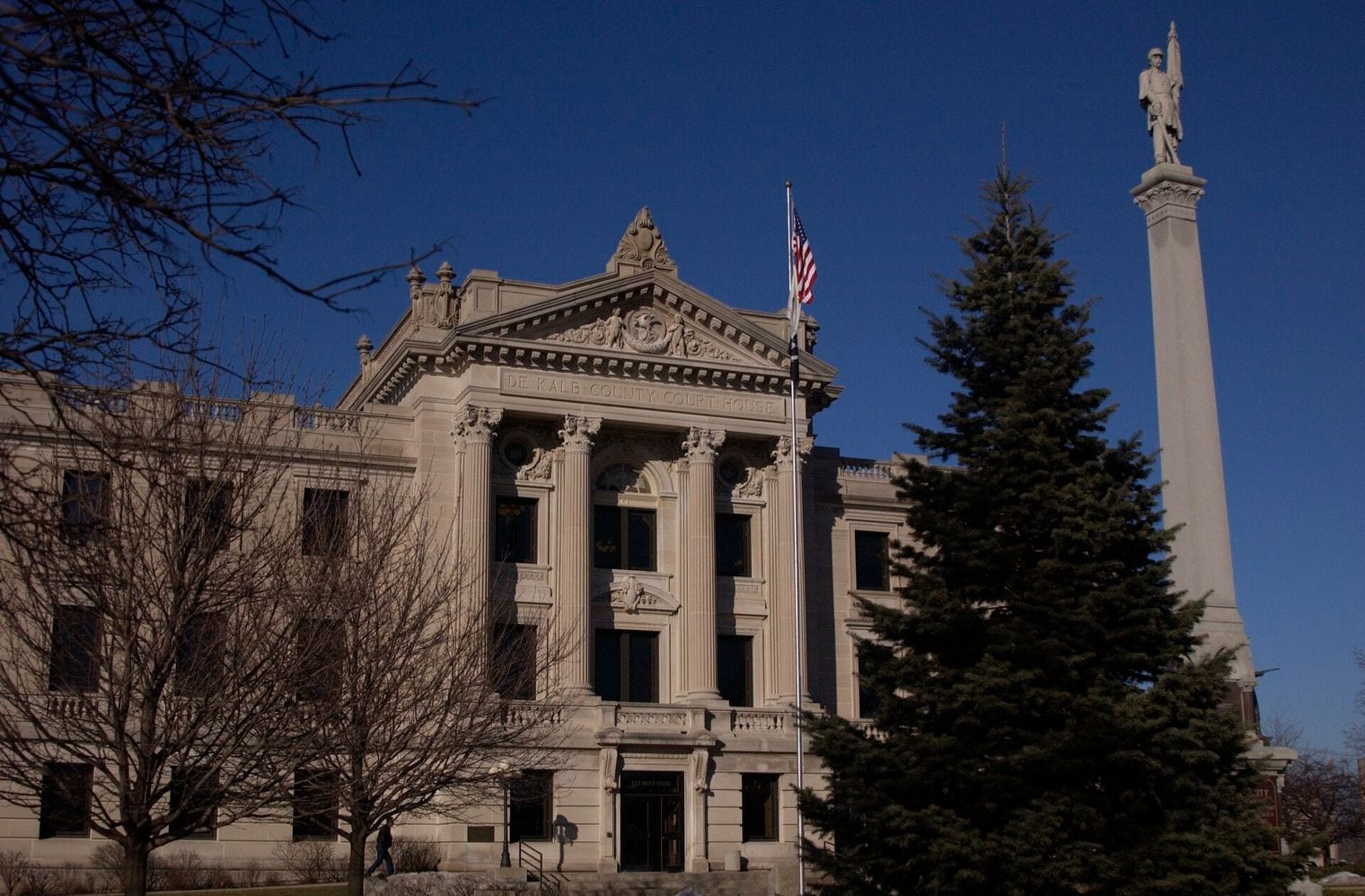
Sycamore, the DeKalb County seat, is a classic Illinois courthouse town, with a Victorian downtown strung along Route 64 and the columned DeKalb County Courthouse, completed in 1905, at its heart. Much of the center is protected as the Sycamore Historic District, and the courthouse's third-floor courtroom still has a stained-glass skylight.
The town's big moment comes each fall with the Sycamore Pumpkin Festival, which began in 1962 when a local resident, Wally Thurow, started displaying pumpkins on his front lawn. Today it turns downtown orange with carved and painted pumpkins, and the rest of the year Sycamore's shops, old storefronts and tree-lined streets make an easy stop west of Chicago.
Arthur is the heart of the largest and oldest Amish community in Illinois, a settlement founded in the 1860s whose farms spread across the prairie around the village. Its main street, Vine Street, even doubles as the line between Douglas and Moultrie counties.
Horse-drawn buggies share the roads with farm trucks, and the countryside is dotted with family-run Amish businesses selling handmade furniture, cheese and baked goods. Learn the settlement's story at the Illinois Amish Heritage Center just east of the village, then follow the back roads a few miles east to Arcola, and the two towns together make a full day in Amish country.
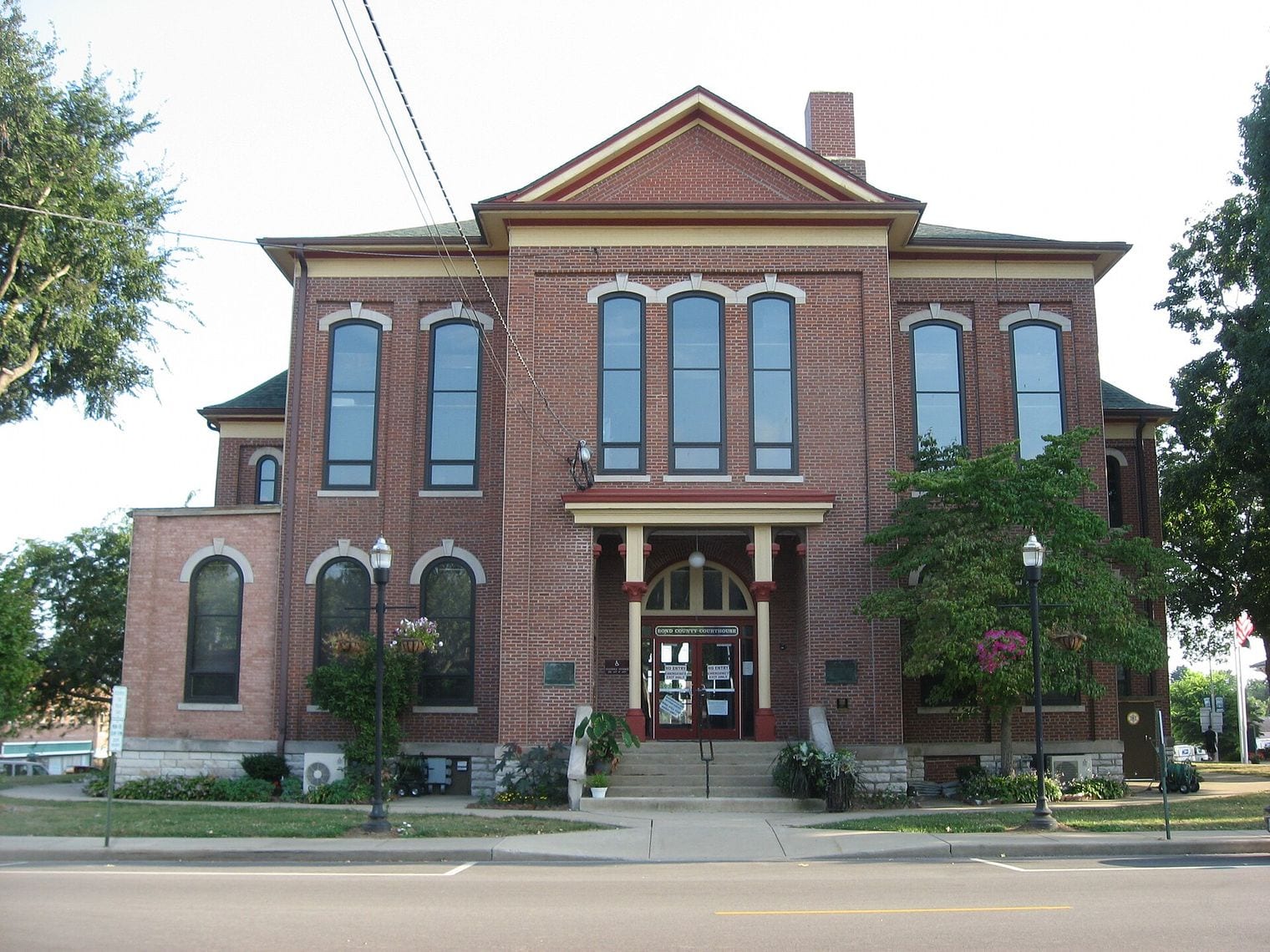
Greenville, the Bond County seat about 50 miles east of St. Louis, celebrated its bicentennial in 2015 as one of the oldest communities in Illinois. It is a small college town at heart, home to Greenville University and a compact downtown just off Interstate 70.
Its museums punch well above the town's size. The Richard W. Bock Sculpture Museum at the university displays the work of the German-born sculptor best known for his collaborations with Frank Lloyd Wright, the DeMoulin Museum is tied to the local company famous for its band uniforms, and the American Farm Heritage Museum celebrates the region's farming past.
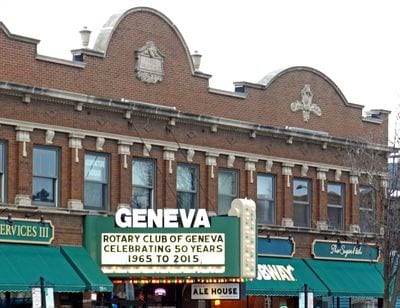
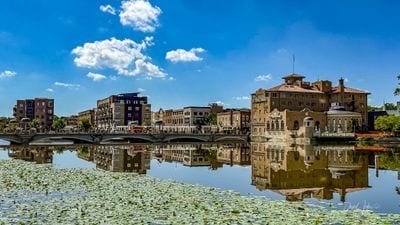
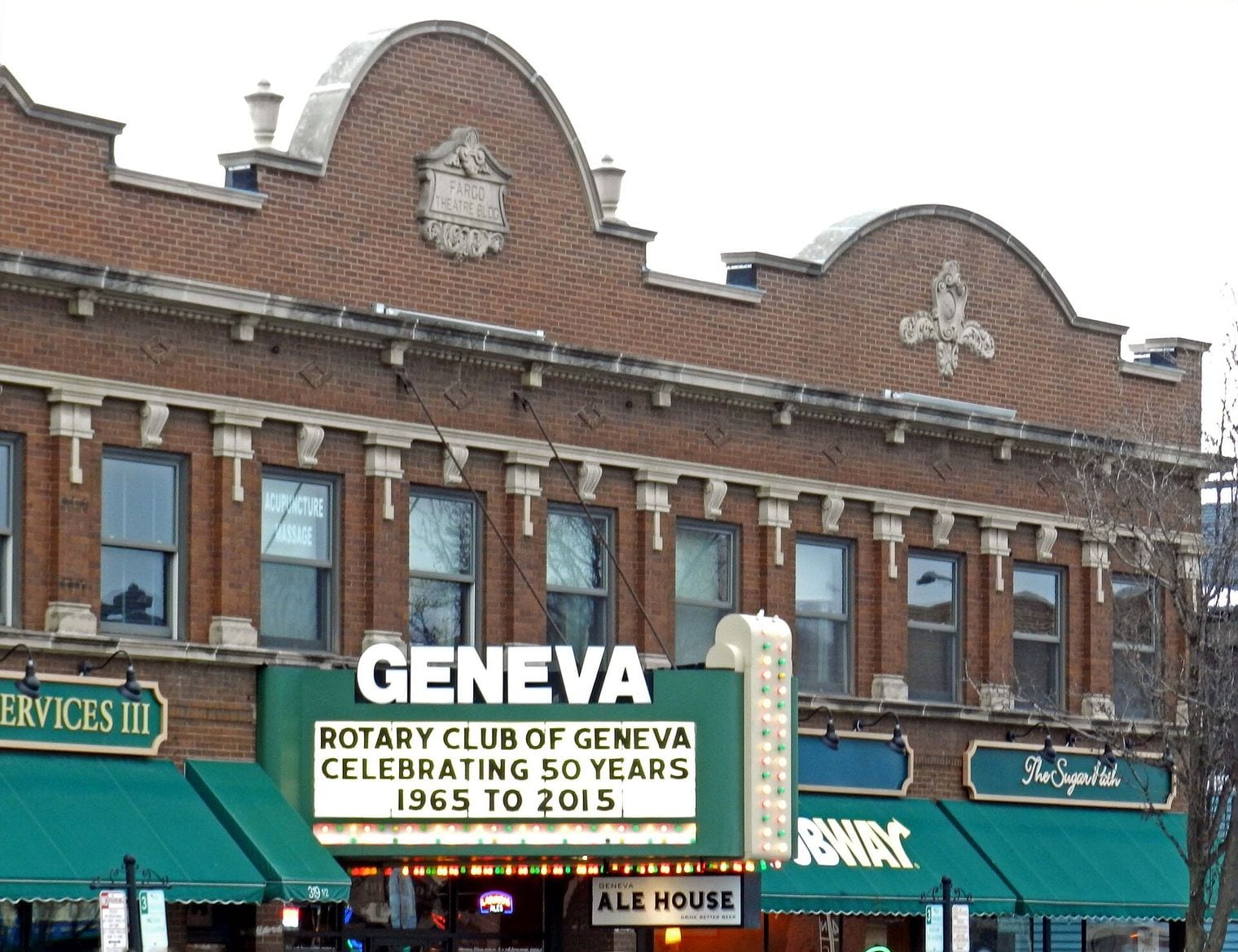
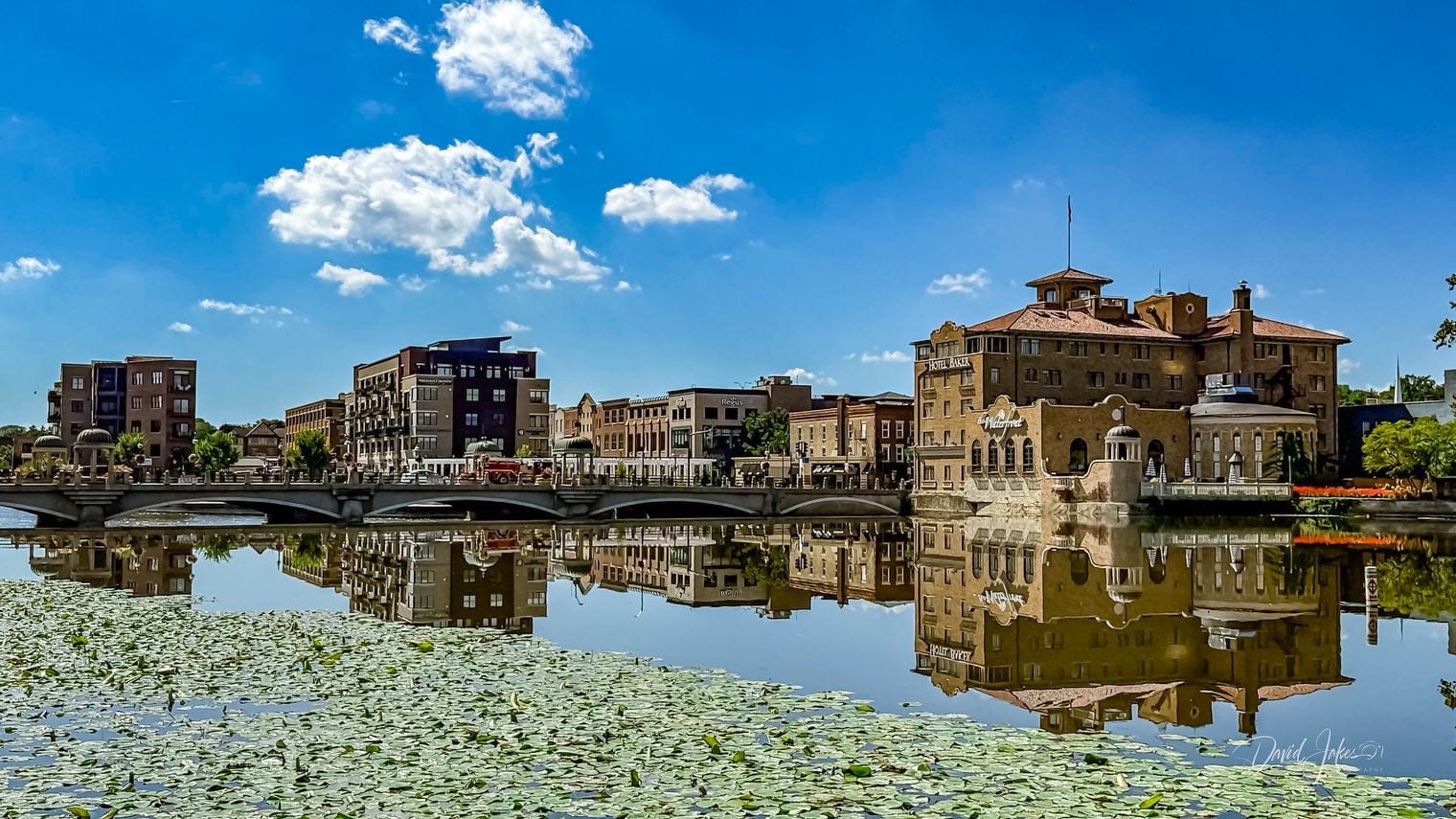
Geneva, the Kane County seat, sits on the Fox River between St. Charles and Batavia, a few miles upriver from Aurora. Swedish immigrants made up half the town by 1900, a heritage it still celebrates every June with Swedish Days, a long-running summer festival with a parade and carnival rides.
Downtown's Third Street is lined with boutiques and restaurants in old houses, and the Fox River Trail follows the water through town. On the south edge of Geneva, the Fabyan Forest Preserve holds three surprises: an authentic Dutch windmill from the 1850s that stands 68 feet tall, a villa remodeled by Frank Lloyd Wright in 1907 and a Japanese garden laid out around 1910.
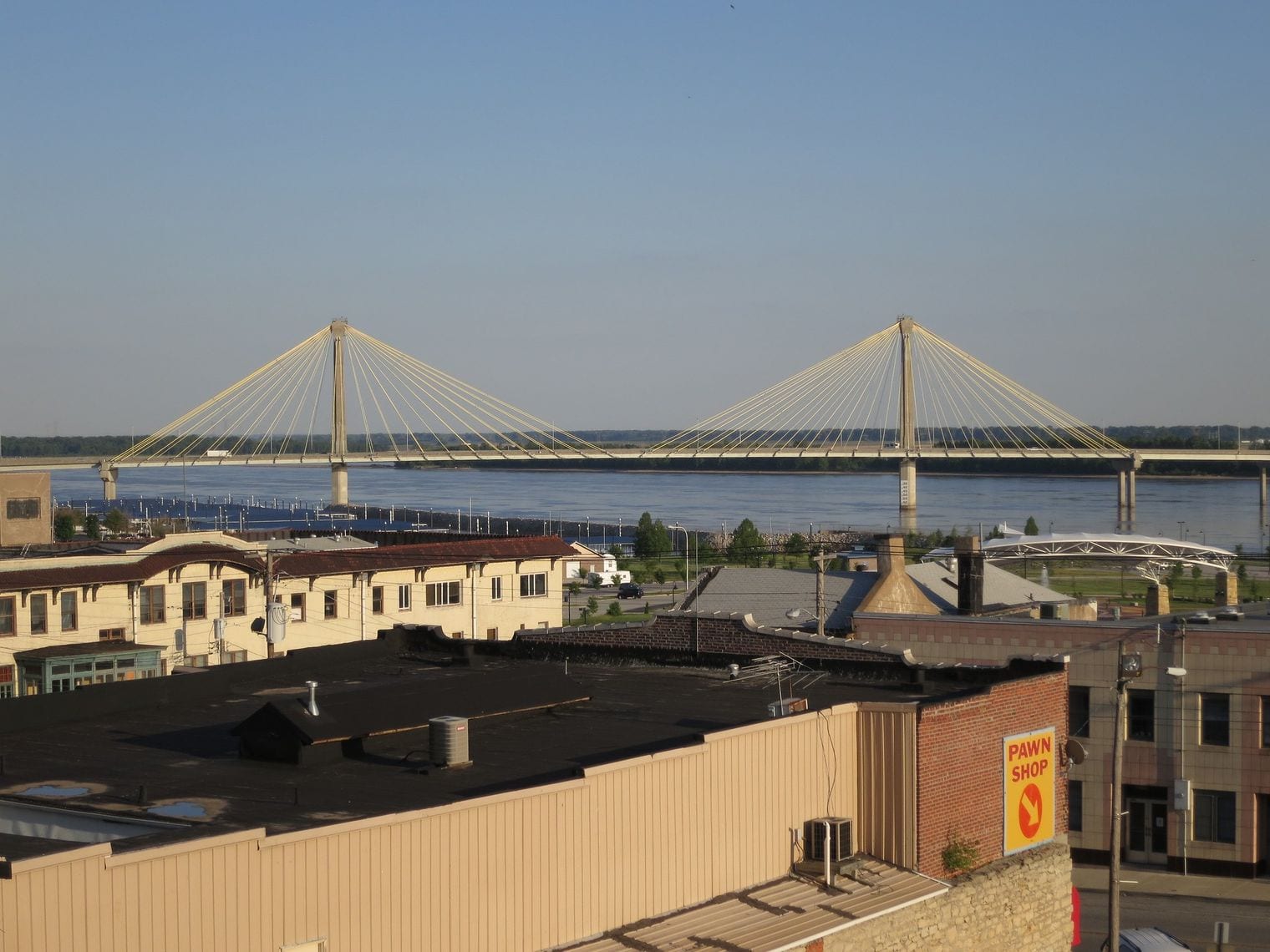
Alton spreads along the Mississippi beneath tall limestone bluffs, about 18 miles upriver from St. Louis, and it packs a remarkable amount of American history into its hilly streets. In 1837 the abolitionist printer Elijah Lovejoy was killed here defending his press from a proslavery mob, and in October 1858 the town hosted the seventh and last Lincoln–Douglas debate, marked downtown by oversized statues of the two men.
Antique shops fill the old downtown, and a life-size statue on College Avenue honors Robert Wadlow, the Alton-born giant who grew to 8 feet 11 inches. Just east, the National Great Rivers Museum at the Melvin Price Locks and Dam explains the river, and heading north the Great River Road runs beneath the bluffs past the painted Piasa Bird toward Elsah and Grafton.
St. Charles, not to be confused with its Missouri namesake, is a Fox River city about 35 miles west of Chicago that calls itself the Pride of the Fox. The river runs straight through downtown, lined with riverside paths and parks, including Pottawatomie Park, the largest in the city.
The Arcada Theatre on Main Street opened in 1926 for silent films and vaudeville and still hosts live shows, a grand old movie palace in a small-city downtown. Come in October for the Scarecrow Festival, or follow the Fox River Trail south to Geneva, the neighboring river town just downstream.
Galesburg, about 45 miles northwest of Peoria, was settled by anti-slavery reformers who also founded Knox College in 1837, and on October 7, 1858, the campus hosted the fifth Lincoln–Douglas debate. The platform stood in front of Old Main, and the candidates reached it by climbing through the building's windows; the hall is now a National Historic Landmark.
This is a railroad town to its core, where BNSF still works the big rail yard and the Galesburg Railroad Museum tells the story of the lines that built the city. The poet Carl Sandburg was born here in 1878, and his birthplace cottage is now a state historic site, where he and his wife are buried beneath a boulder on the grounds.
Grafton, the oldest town in Jersey County, sits where the Illinois River meets the Mississippi, with the Great River Road squeezed between the water and the bluffs. Main Street is lined with restaurants, antique stores, craft and wine shops, and despite the damage done by the Great Flood of 1993 it remains a favorite stop for cyclists and weekend visitors.
In winter, bald eagles gather along the rivers, and Grafton proudly calls itself the Winter Home of the Bald Eagle. Pere Marquette State Park, five miles west, has trails and overlooks high above the confluence, ferries cross to Missouri and Calhoun County, and the bike trail to Elsah and Alton makes Grafton the natural end point of a Great River Road day.
Free Things to Do in These Illinois Towns
Many of the best moments on this list cost nothing. Wander the stepped streets of Galena, the restored 1840s blocks of Nauvoo and the stone lanes of Elsah, then stand on the square in Woodstock where Groundhog Day was filmed.
The Lincoln–Douglas debate sites in Ottawa, Quincy, Galesburg and Alton are public squares, parks and campus lawns you can visit for free. Watch the windmill sails turn over the levee in Fulton, stroll the Brick Street in Lebanon, drive the Amish back roads between Arcola and Arthur, and in winter look for bald eagles along the rivers at Grafton.
Illinois is a long state, so the easiest way to see these towns is to pick one region and link several together. In the northwest, Galena, Mount Carroll and Fulton sit within an easy drive of one another near the Mississippi.
On Chicago's western fringe, Woodstock, Elmhurst and Sycamore make easy day trips, while St. Charles and Geneva line the Fox River just upstream from Aurora. Ottawa and Princeton pair naturally with a hike at Starved Rock State Park, and Galesburg is an easy add-on to a visit to Peoria. Farther west, Quincy and Nauvoo share the Mississippi shoreline across the river from Missouri and Iowa.
In the south, the Great River Road ties Alton, Elsah and Grafton into one memorable drive beneath the bluffs, with Lebanon and Greenville a short drive east in the Metro East. In the middle of the state, Arcola and Arthur make a natural pairing with Lincoln's hometown of Springfield, about 90 minutes to the west.
Fall brings color to the river bluffs and pumpkins to Sycamore, winter brings bald eagles to the Mississippi and Groundhog Days to Woodstock, and late spring and summer are festival season, from Fulton's Dutch Days to Geneva's Swedish Days and summer stock at Timber Lake near Mount Carroll.
FAQ: Visiting the Best Small Towns in Illinois
What is the best small town in Illinois?
Galena is the best small town in Illinois for most visitors, with its preserved 19th-century Main Street, stepped historic district and Ulysses S. Grant's home. Nauvoo follows for its rebuilt temple and restored Latter-day Saint district, then Elsah for its stone cottages, Woodstock for its Groundhog Day square and Arcola for the edge of Amish country.
Which small towns in Illinois are closest to Chicago?
Elmhurst, a western suburb, is the closest, and the Fox River towns of St. Charles, about 35 miles west of the city, and neighboring Geneva are easy half-day trips. Woodstock lies about 50 miles northwest, and Sycamore is a little farther west. For a longer day, Ottawa pairs its debate square with the canyons of nearby Starved Rock State Park.
Which small towns in Illinois are near St. Louis?
Alton sits about 18 miles upriver from St. Louis, and the Great River Road continues north past Elsah to Grafton, where the Illinois River meets the Mississippi. To the east, Lebanon and its Brick Street are an easy drive into the Metro East, and Greenville, home to a sculpture museum and a small university, lies about 50 miles east of the city.
Where can you see Amish country in Illinois?
Head to Arthur, the heart of the largest and oldest Amish community in Illinois, and neighboring Arcola, a few miles east. Horse-drawn buggies share the back roads with farm traffic, family businesses sell handmade furniture, cheese and baked goods, and the Illinois Amish Heritage Center just east of Arthur tells the story of the settlement.
When is the best time to visit small towns in Illinois?
Late spring through fall is the easiest time, with festivals, summer theatre and scenic river drives, and fall adds color on the Mississippi bluffs and in Galena's hills, plus the Sycamore Pumpkin Festival. Winter has its own draws: bald eagles along the rivers at Grafton and Alton, and the Groundhog Days festival in Woodstock.
How many days do you need to visit a small town in Illinois?
Most towns on this list fill a relaxed day, and many make easy day trips from Chicago, St. Louis or Peoria. Galena and Nauvoo deserve a weekend to see properly, while a week lets you link several towns in one region, such as the Great River Road around Alton or the northwest corner around Galena.