We build and rank every list first. Booking links come after, and only where
a partner sells a ticket, tour or stay for that exact place, so a place with
nothing to book is listed exactly as prominently as one you can book.
So how do we earn? Some links on this page go to booking
partners, and if you book tickets, tours or a stay through
one, we may earn a commission. It costs you nothing extra.
That commission never decides which places make the list, the order they
appear in, or what we write about them. No entry is sponsored or a paid
placement.
By the City Viking editorial teamPublished 25 places · 19 min read
Fact-checked Checked before launchOct 5, 202625 sources23 publishers5 government & parks10 tourism boards2 encyclopedias & research8 venues & other sitesPublished · Oct 5, 2026Researched and checked before it went liveClick for every source and the full change log.
Short answer
Start with Madison for its 133-block National Historic Landmark downtown on the Ohio River, Nashville for the galleries of the Brown County art colony beside Indiana's largest state park, and New Harmony for its utopian history and Philip Johnson's Roofless Church. Most towns on this list fill a relaxed day, while Madison, Nashville and French Lick deserve a weekend.
Away from the interstates, Indiana is a state of courthouse squares and river towns: Ohio River ports with grand 19th-century mansions, an art colony in the wooded Brown County hills, Amish farm country in the north, Gilded Age spa hotels in the southern hills and a canal village in the Whitewater Valley.
This guide ranks 25 of the best, each home to fewer than 40,000 people at the 2020 census, from Madison to Greencastle. Most fill a relaxed day, a few deserve a weekend, and many make easy trips from Indianapolis, Louisville or Chicago.
Two towns on this list were capitals before Indianapolis: Vincennes governed the Indiana Territory from 1800 to 1813, and Corydon served as the territorial capital and then the first state capital until 1825.
The dome of the West Baden Springs Hotel, next door to French Lick, spans 200 feet and was the largest dome in the world from 1902 to 1913.
John Dillinger's biggest haul came from Greencastle's Central National Bank in October 1933, and in March 1934 he broke out of the Lake County Jail in Crown Point, reportedly brandishing a carved wooden gun.
Santa Claus got its name from the post office: the settlers' first choice, Santa Fe, was already taken in Indiana, and today the town's post office receives thousands of letters to Santa every year.
Louis Armstrong made his first recordings in Richmond, playing with King Oliver's Creole Jazz Band at the Gennett Records studio, where Hoagy Carmichael also first recorded "Stardust".
Wabash lit its courthouse square with electric arc lamps on March 31, 1880, making it one of the first towns in the world lit by electricity.
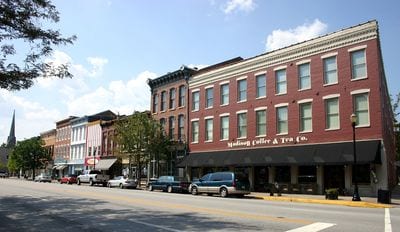
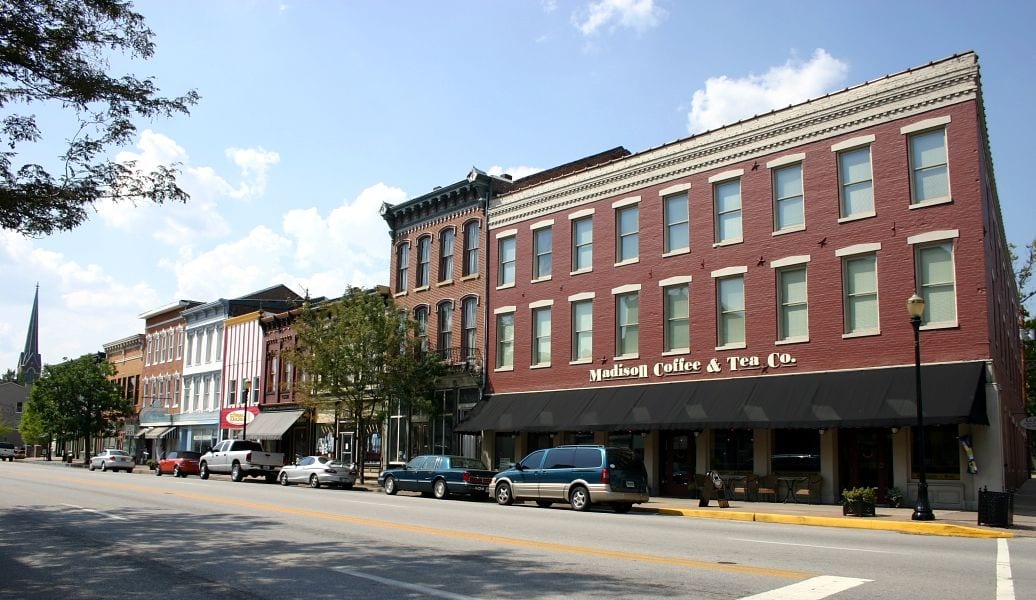
Strung along a broad bend of the Ohio River, Madison is the Indiana small town most lists put first, and its downtown shows why. By 1850 it was the third-largest city in the state, and its spot across the river from Kentucky made it an important stop on the Underground Railroad.
When the boom faded, much of the old town simply stayed put, and in 2006 some 133 blocks of downtown were designated a National Historic Landmark district, with buildings in every major style from Federal to Art Moderne.
Stroll Main Street's shops and the riverfront, then tour the Lanier Mansion State Historic Site, the Greek Revival home that banker James Lanier commissioned from architect Francis Costigan in 1840. On the bluffs west of town, Clifty Falls State Park follows a deep canyon past several waterfalls, the tallest more than 80 feet high, and each July the Madison Regatta brings unlimited hydroplane racing to the river.
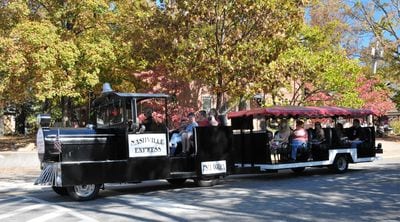
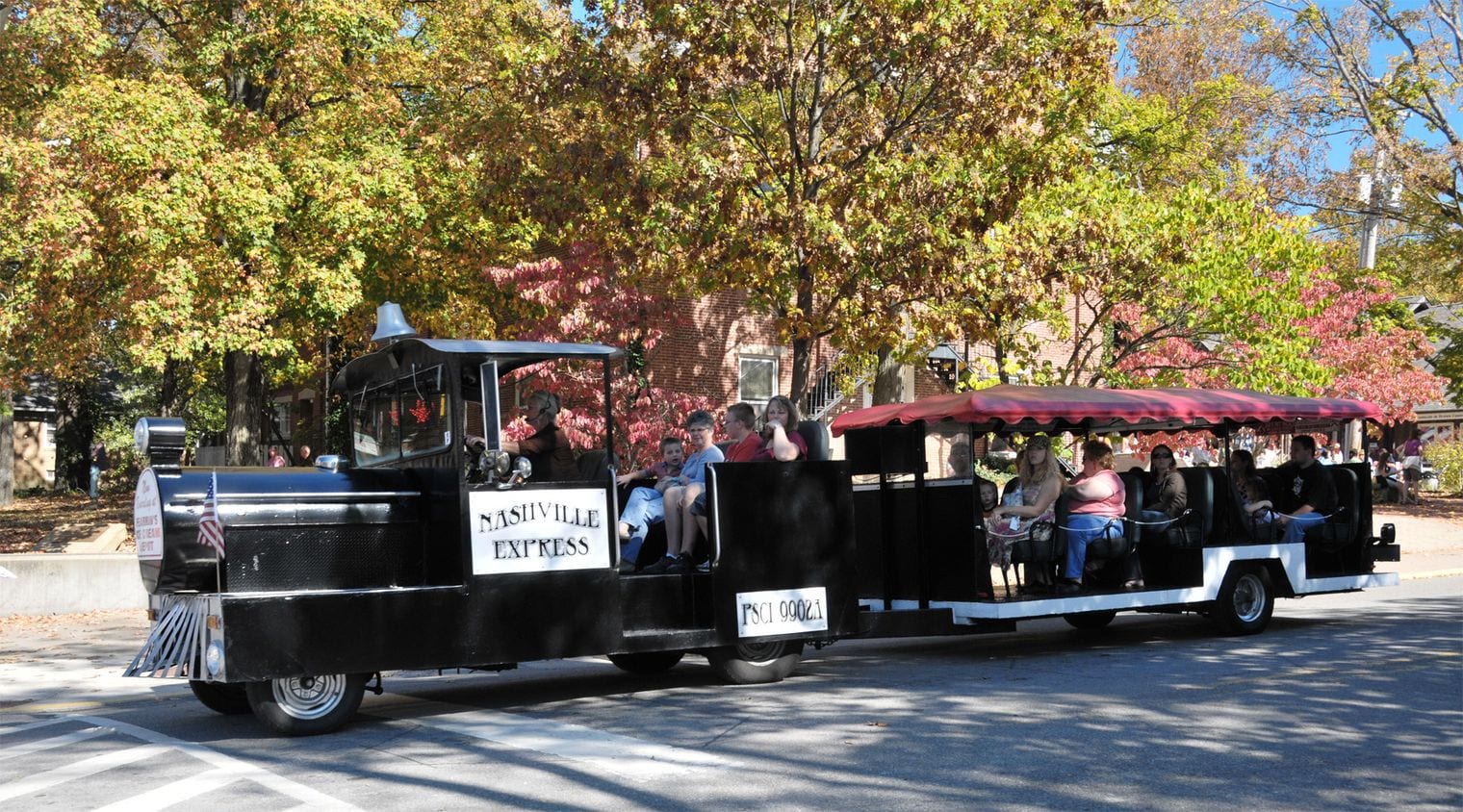
Tucked into the wooded hills of Brown County, Nashville has drawn artists since the early 1900s, when painters including the Impressionist T. C. Steele settled in the area and formed what became the Brown County Art Colony. The village still lives off that legacy: its few walkable blocks are packed with galleries, craft and antique shops, inns and rental cottages.
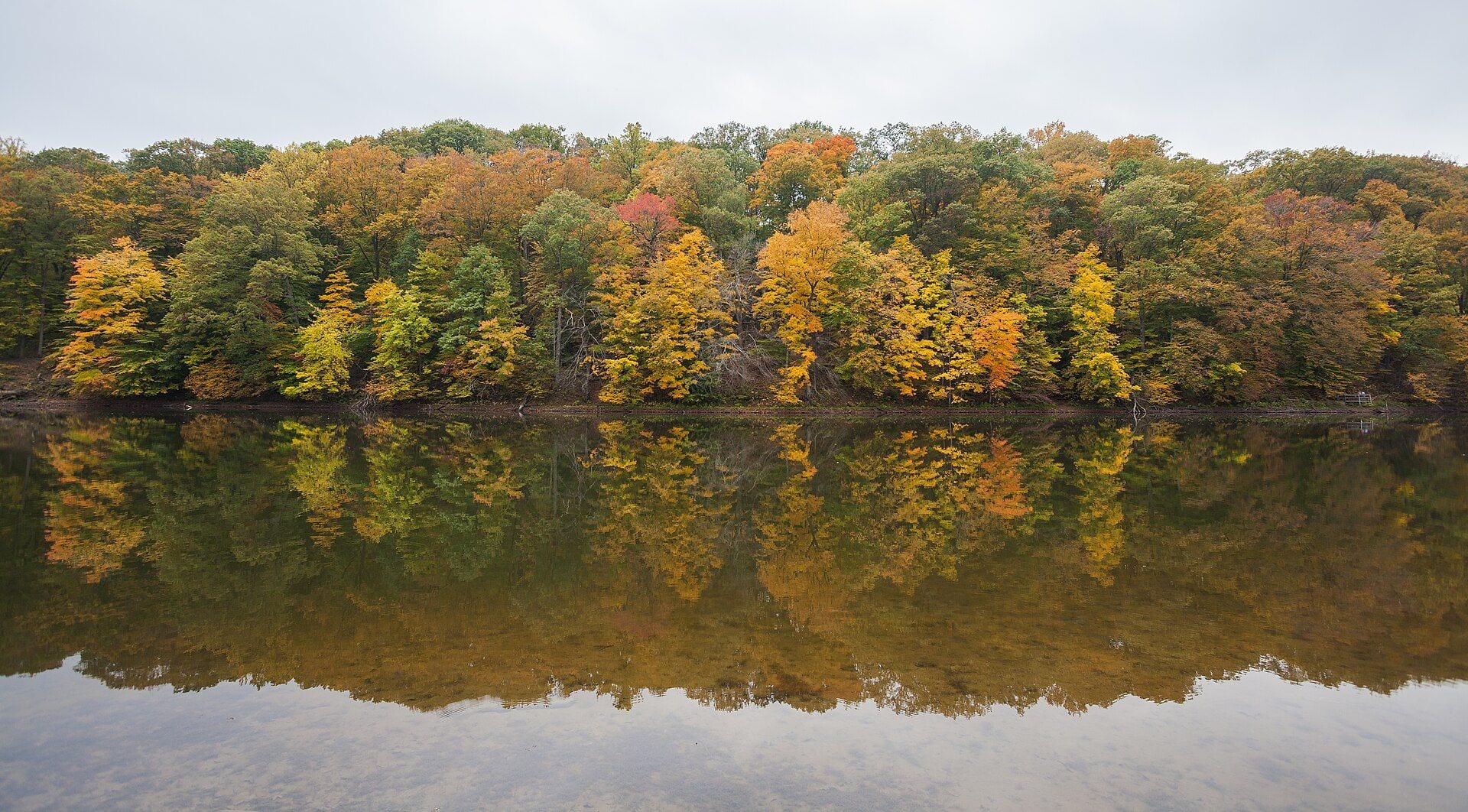
Just outside town, Brown County State Park is by far the largest of Indiana's state parks, nicknamed the Little Smokies for its forested ridges, with overlooks such as Hesitation Point and a historic covered bridge at its north entrance. Fall color brings the biggest crowds of the year, and the modern architecture of Columbus is about 20 miles east.
Few towns pack in as much history per resident as New Harmony, a quiet Wabash River town of fewer than 700 people that hosted two utopian experiments. The Harmony Society, led by the German pietist George Rapp, founded it in 1814, and in 1825 the Welsh reformer Robert Owen bought the whole town for a community that drew scientists and educators but lasted only a few years.
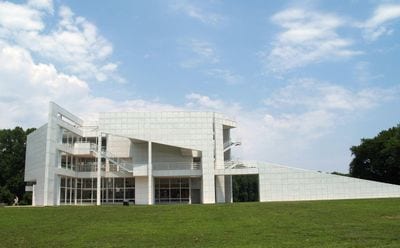
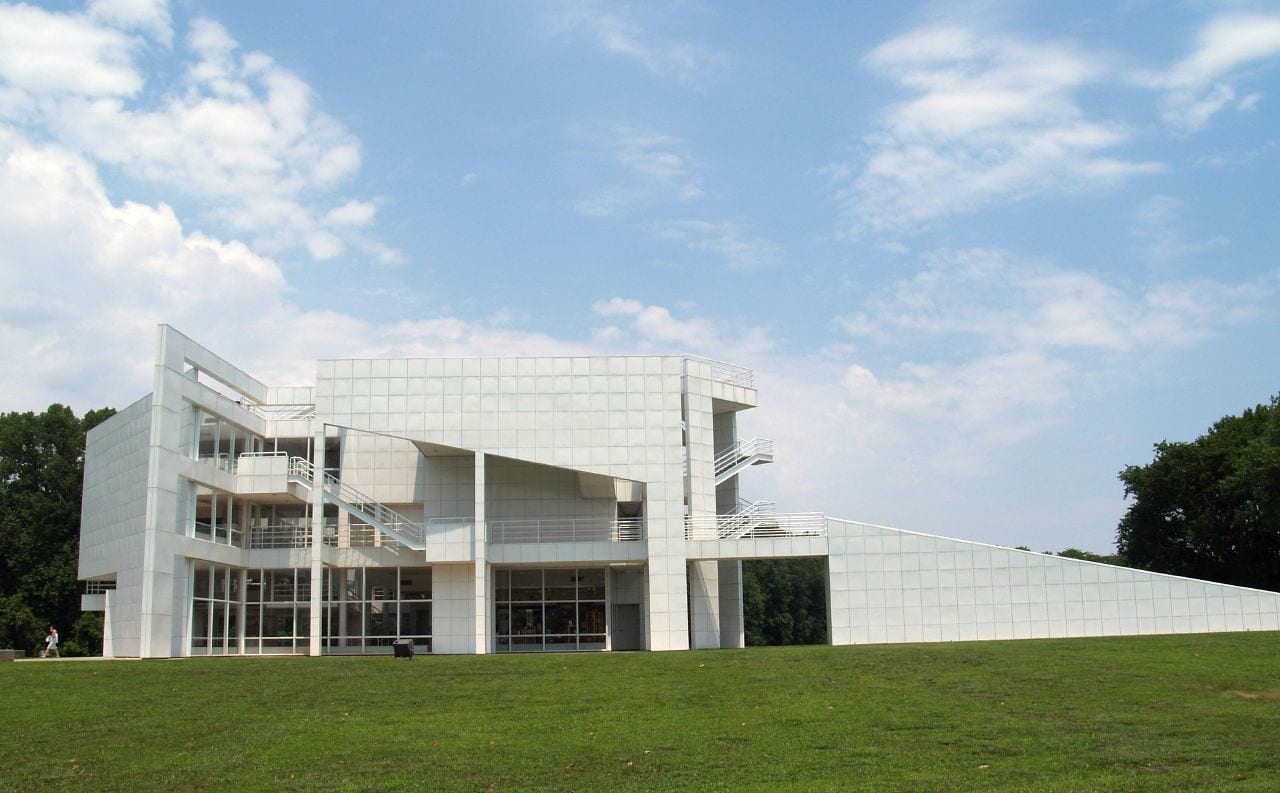
More than 30 buildings from those two eras survive in a historic district that is a National Historic Landmark, and Richard Meier's white Atheneum serves as the visitor center. Don't miss Philip Johnson's open-air Roofless Church, dedicated in 1960, or the Harmonist Labyrinth, concentric circles of privet hedge leading to a small stone temple. Evansville is an easy drive to the southeast.
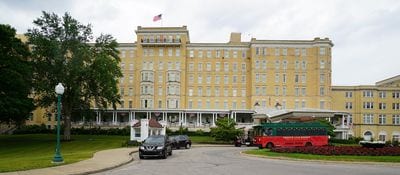
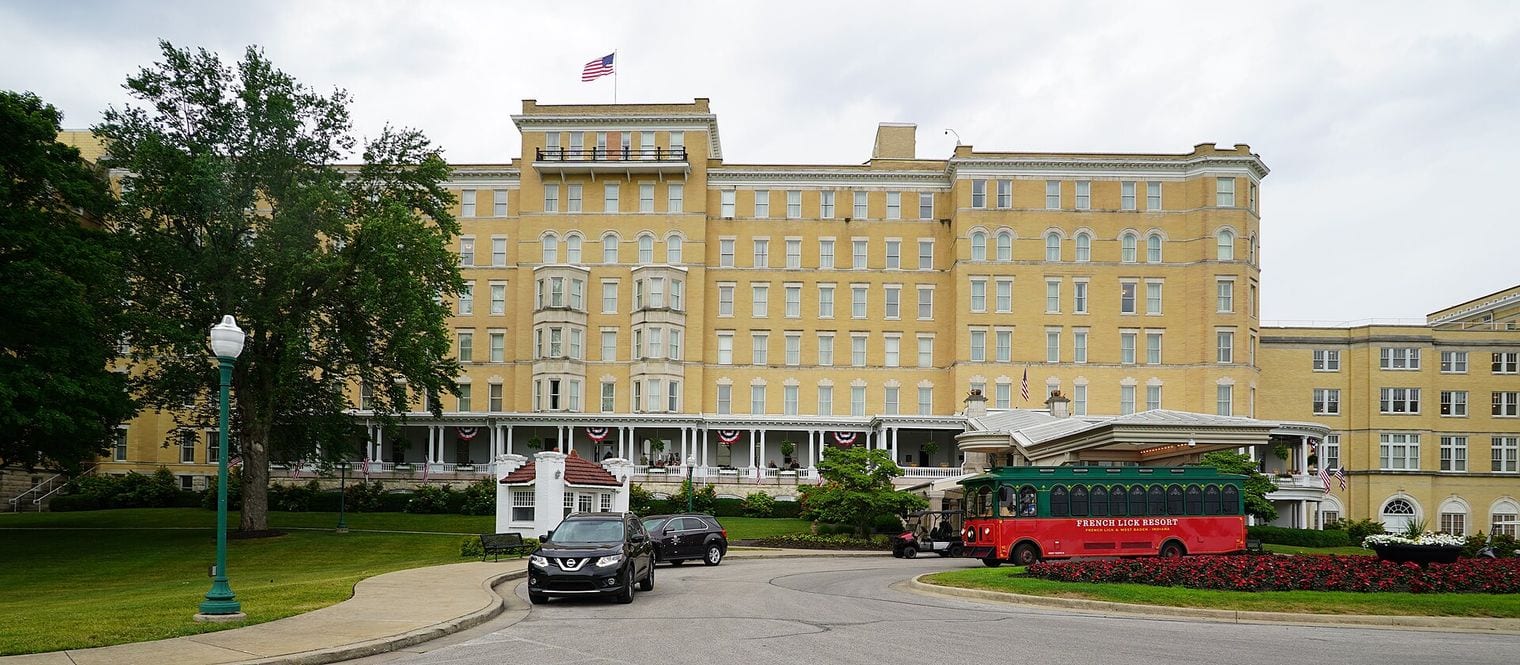
French Lick grew up around mineral springs in the hills of southern Indiana, and by the early 1900s its sulfur water, bottled as Pluto Water, and its grand hotel had made it a famous resort, with casinos that drew celebrities and gangsters alike. The restored French Lick Springs Hotel, where Franklin D. Roosevelt announced his intention to run for president in 1931, is again the heart of town.
Next door in the neighboring town of West Baden Springs, the West Baden Springs Hotel wraps around an atrium beneath a 200-foot dome that was the largest in the world when it opened in 1902. Between the two hotels you can ride the French Lick Scenic Railway, play the resort's Pete Dye Course, or simply walk the town where basketball great Larry Bird grew up.
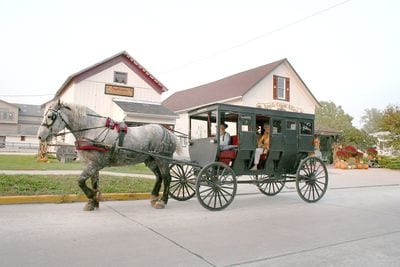
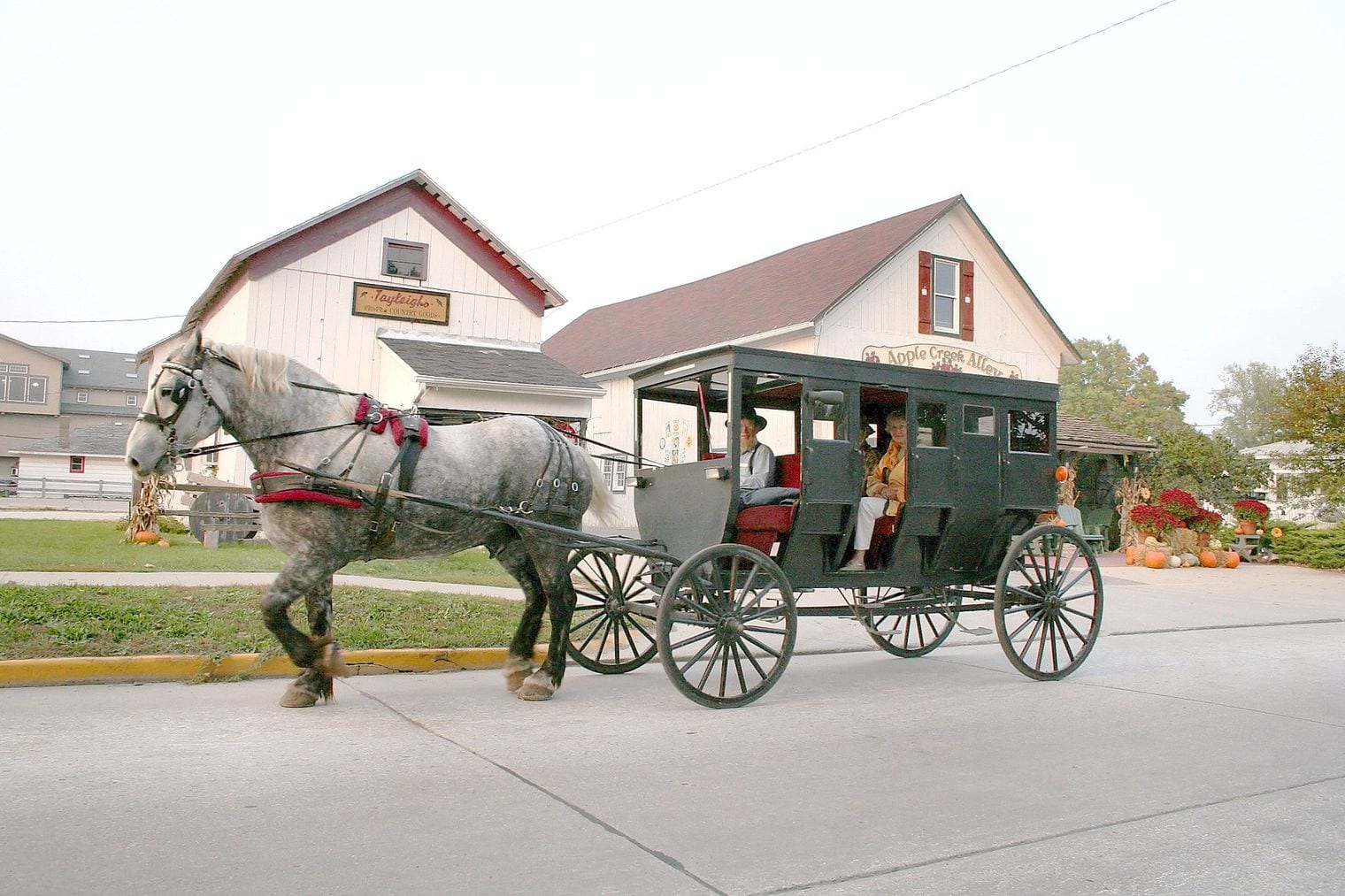
Horse-drawn buggies are an everyday sight in Shipshewana, a LaGrange County town of fewer than 900 people at the heart of northern Indiana's Amish country. The Amish settlement of Elkhart and LaGrange counties is the third-largest in the United States, and family farms, furniture makers and bakeries line the back roads around town.
In summer the Shipshewana Trading Place hosts what it bills as the Midwest's largest flea market, with hundreds of vendors spread across its grounds, and its antique auction runs year-round. To understand the culture behind it all, visit Menno-Hof, a museum that tells the story of the Amish and Mennonite peoples, then cycle the Pumpkinvine Nature Trail west toward Middlebury and Goshen.
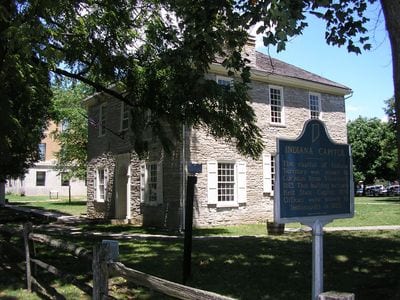
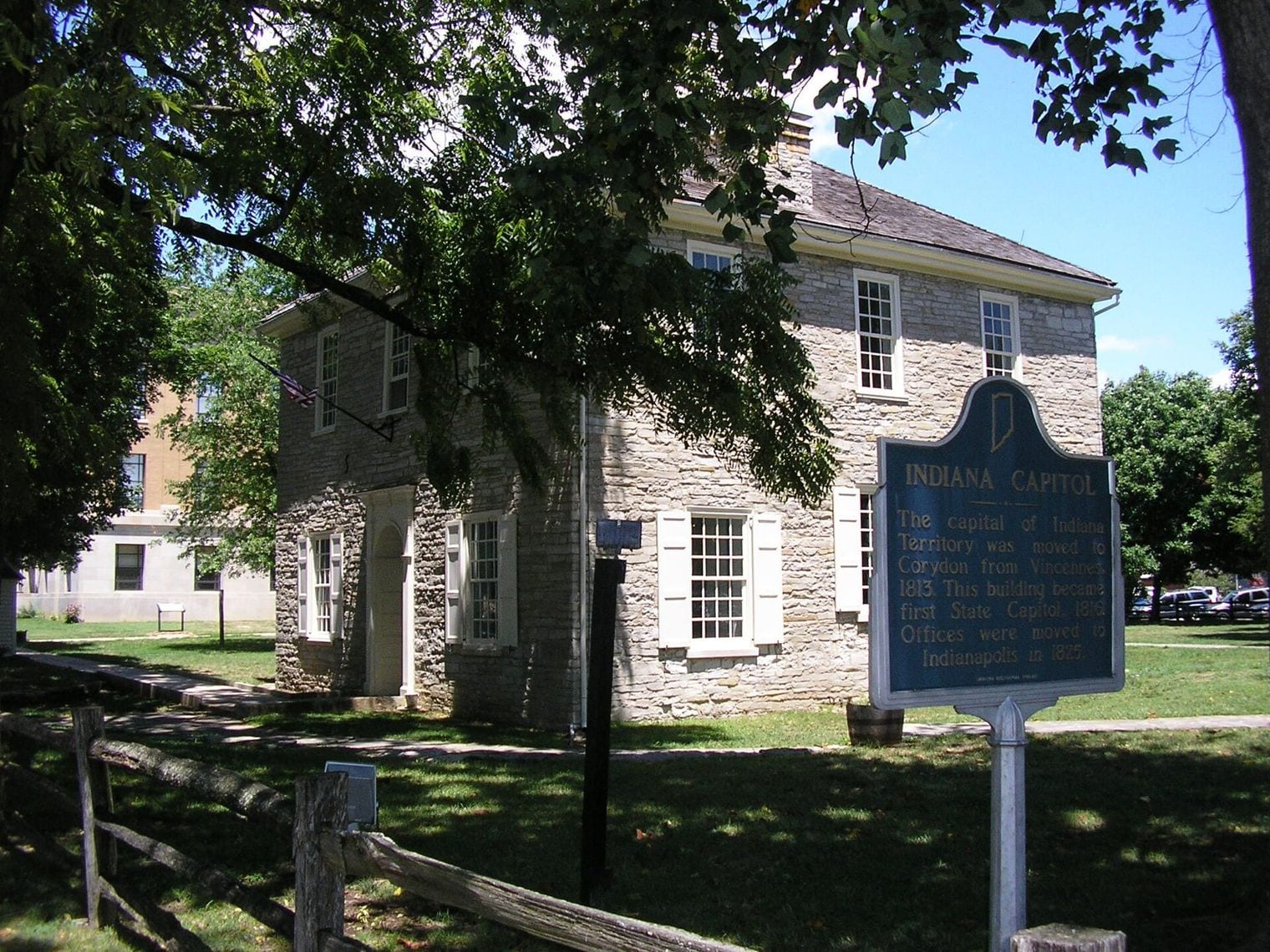
Before Indianapolis, there was Corydon. This Harrison County town in the hills north of the Ohio River served as capital of the Indiana Territory from 1813 and then as the first state capital from 1816 until 1825, and its limestone Old Capitol still stands downtown as the centerpiece of the Corydon Capitol State Historic Site.
Nearby, a preserved section of the Constitution Elm's trunk, set in a sandstone memorial, marks the tree whose shade the delegates sought while drafting Indiana's first constitution in the summer of 1816. Just outside town, Battle of Corydon Memorial Park recalls July 1863, when Confederate raiders under John Hunt Morgan routed the local home guard in the only pitched Civil War battle fought in Indiana.
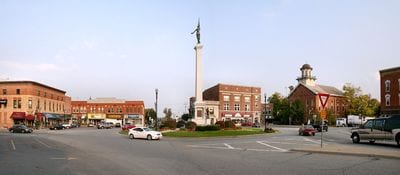
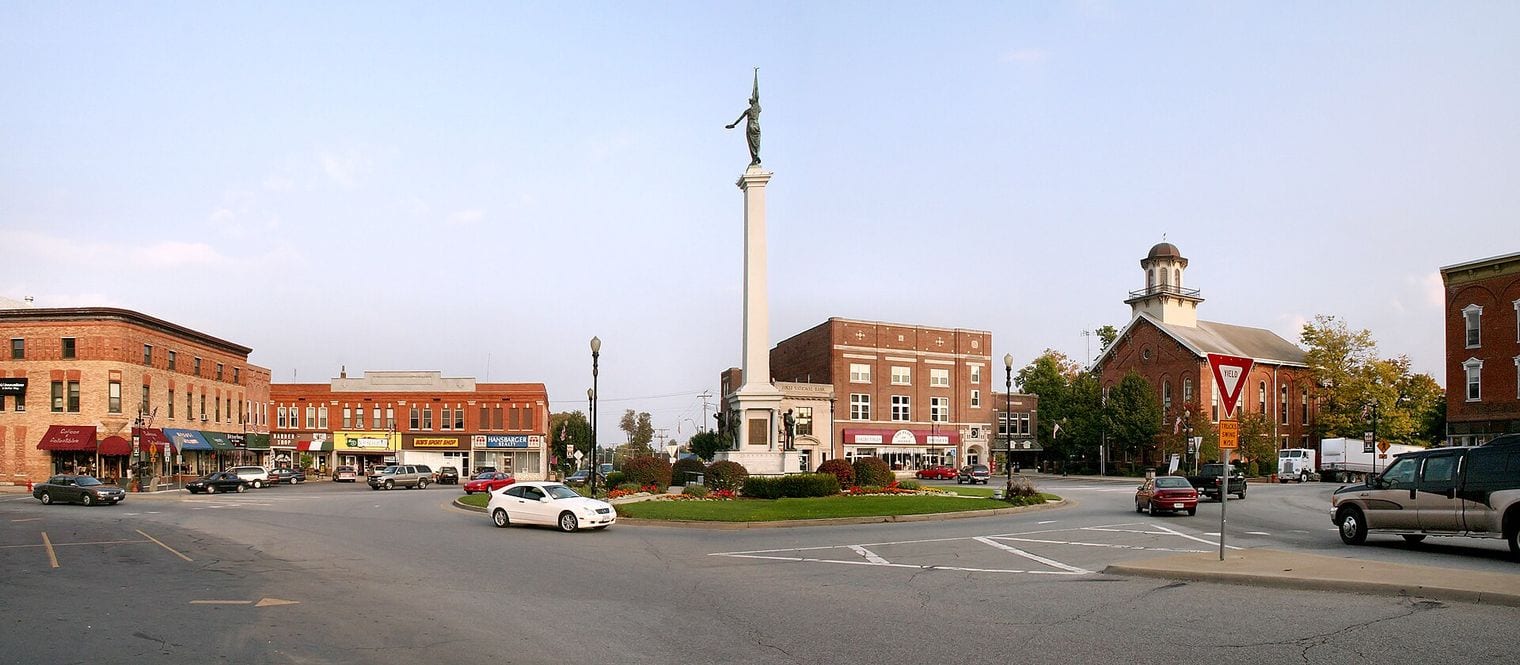
Angola is the gateway to Indiana's lake country. The Steuben County seat sits in the far northeast corner of the state, in a county with more than 100 lakes, and its compact downtown wraps around a traffic circle crowned by a Civil War soldiers' monument, dedicated in 1917 and topped by a bronze figure of Columbia.
A few miles north, Pokagon State Park borders Lake James and Snow Lake, with wooded trails, the lakeside Potawatomi Inn and, in winter, a refrigerated toboggan run that sends riders racing down the hillside. Summer means boating on Lake James and the other lakes around town, and Trine University gives Angola a lively college-town feel.
Goshen, the Elkhart County seat, is a Mennonite college town nicknamed the Maple City, and it makes a lively base for exploring Amish country. Its downtown historic district, listed on the National Register, is centered on the Elkhart County Courthouse and lined with brick storefronts, galleries and cafés, with Goshen College on the south side of town.
Walk or cycle the greenway beside the old millrace and hydraulic canal, then pick up the Pumpkinvine Nature Trail, a former railroad line that runs through Amish farmland to Middlebury and Shipshewana. Our Goshen guide covers the town in more detail.
Aurora, nicknamed the City of Spires, is an Ohio River town in Dearborn County, platted in 1819, with a downtown historic district of 19th-century brick commercial buildings, churches and an old opera house. It sits in the far southeast corner of the state, a short drive downriver from Cincinnati.
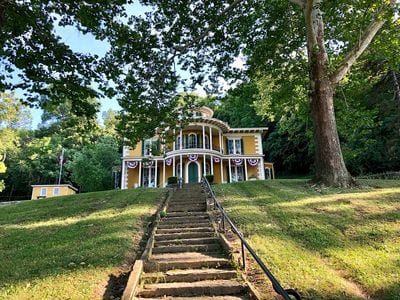
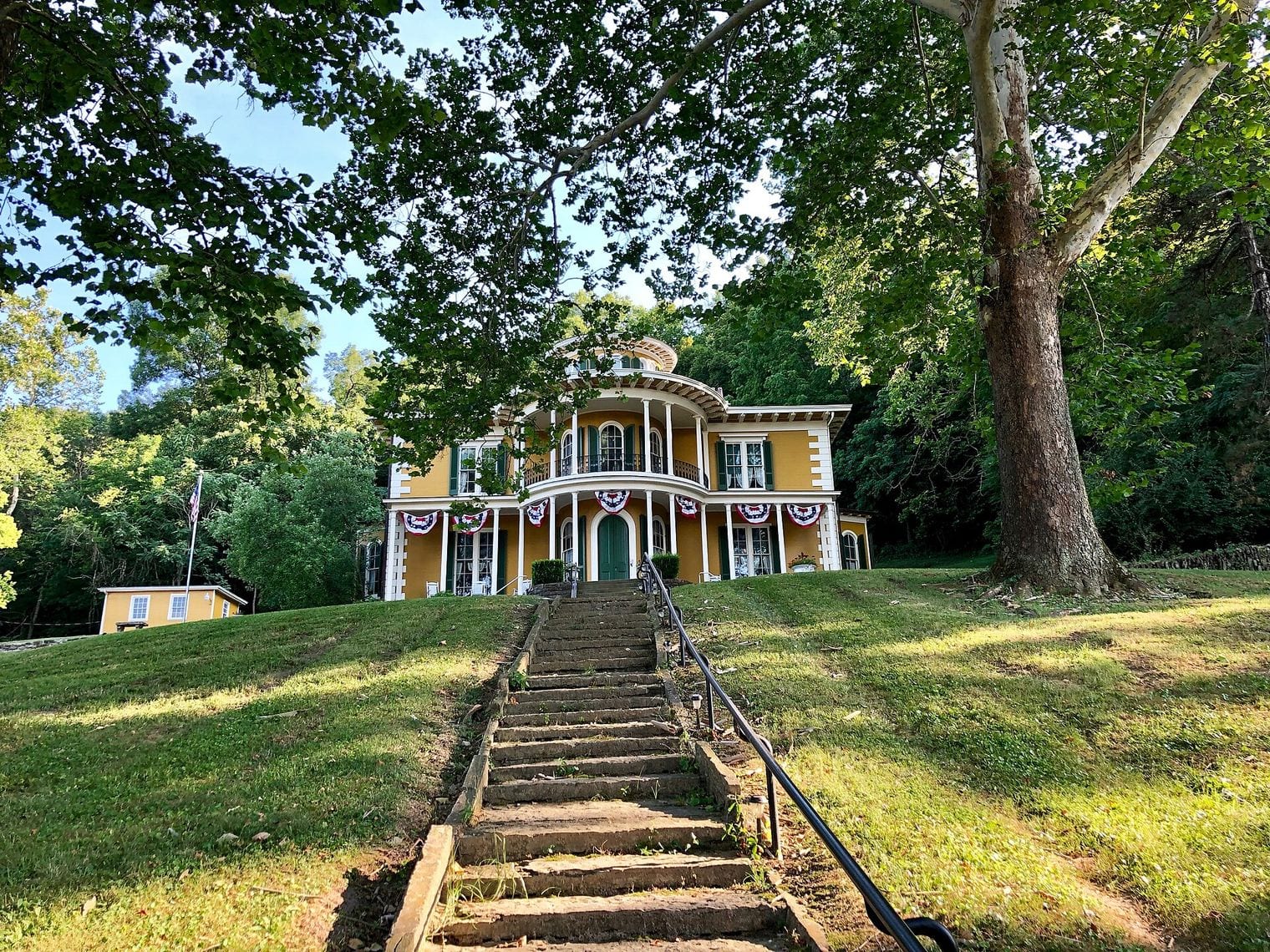
Its showpiece is Hillforest, the 1855 mansion of Thomas Gaff, who made his fortune shipping goods on the Ohio by steamboat, perched on a bluff above the river. Designed by architect Isaiah Rogers, it is one of the finest surviving examples of an Italian Renaissance estate house, a National Historic Landmark now run as a museum.
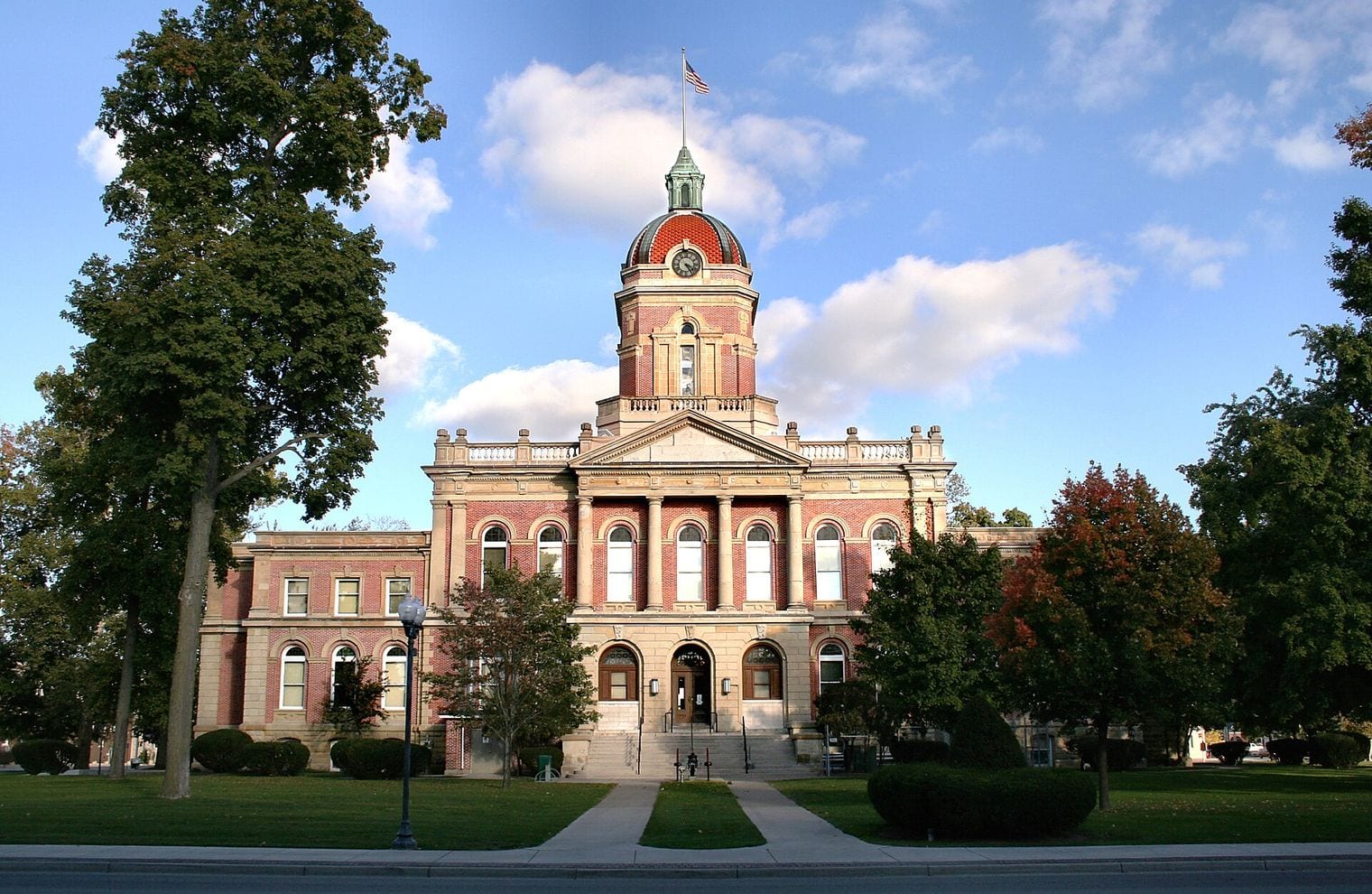
Greenfield, the Hancock County seat on the old National Road east of Indianapolis, is the hometown of James Whitcomb Riley, the best-selling Hoosier Poet whose dialect verse and children's poems made him a household name. His boyhood home is now a museum, and a statue of the poet stands in front of the Hancock County Courthouse.
Each October the Riley Festival fills the courthouse square with vendors, and schoolchildren parade to the statue to lay flowers around it. The Old Swimming Hole of his poems is now part of a park along Brandywine Creek on the east side of town, a pleasant place to finish a walk through the historic downtown.
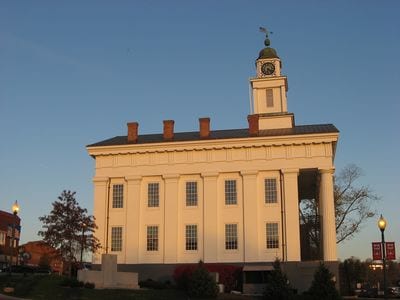
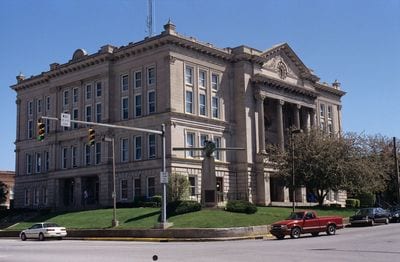
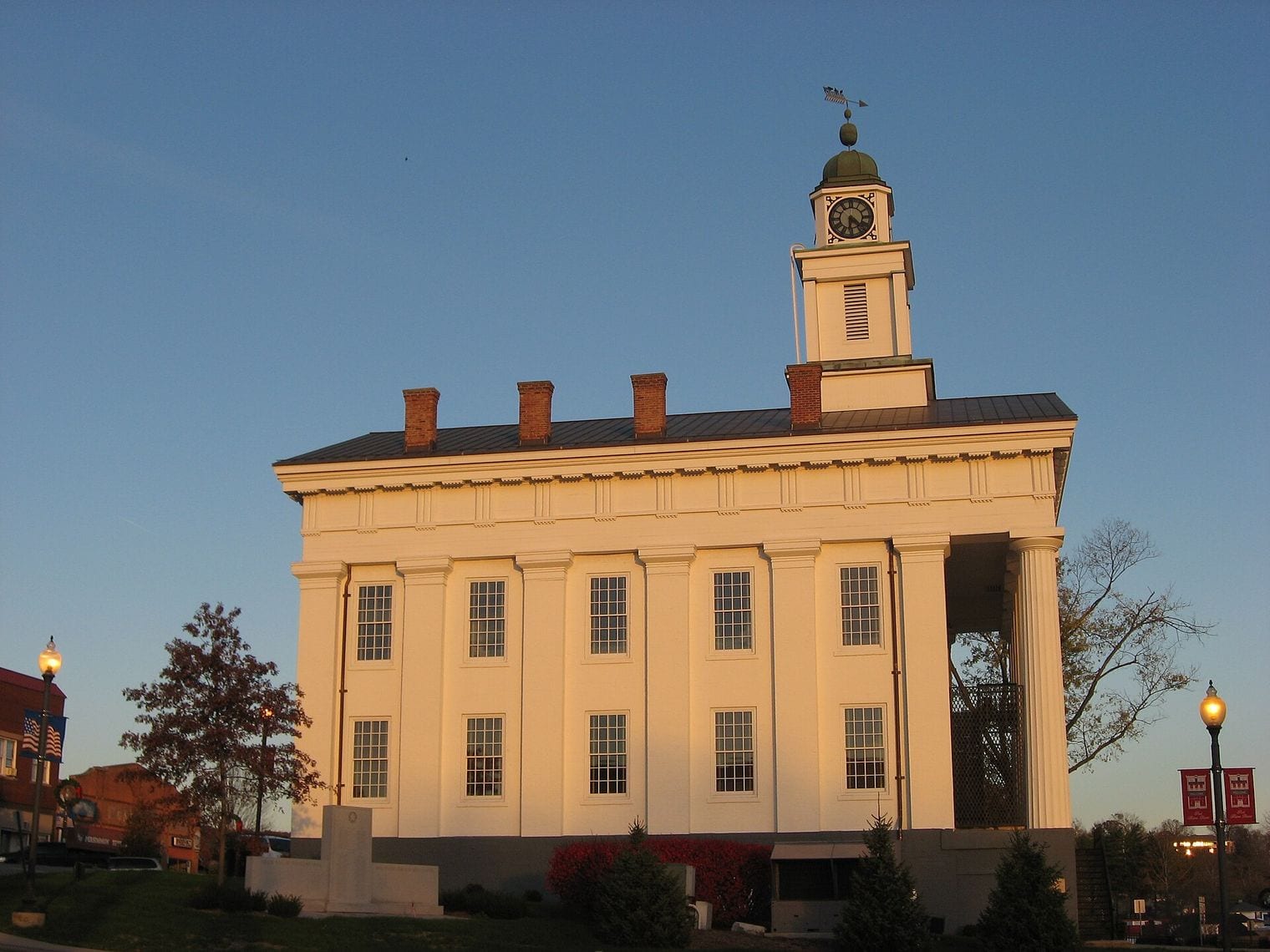
Paoli, the Orange County seat, is a classic Hoosier courthouse town, and its centerpiece is one of the finest in the state: the Greek Revival Orange County Courthouse, built between 1847 and 1850, with a portico of six fluted Doric columns facing the square. It is one of the two oldest courthouses in Indiana still in continuous use.
The town sits at the edge of the Hoosier National Forest, which makes it a handy base for hiking and scenic drives, and in winter the slopes of Paoli Peaks, just west of town, draw skiers and snowboarders. The spa hotels of French Lick are a short drive southwest, so the two towns pair neatly on a weekend.
Free printable checklist of all 25 places
Tick them off as you go. Confirm your email to download it, plus one email every Thursday with new guides for the places you tick.
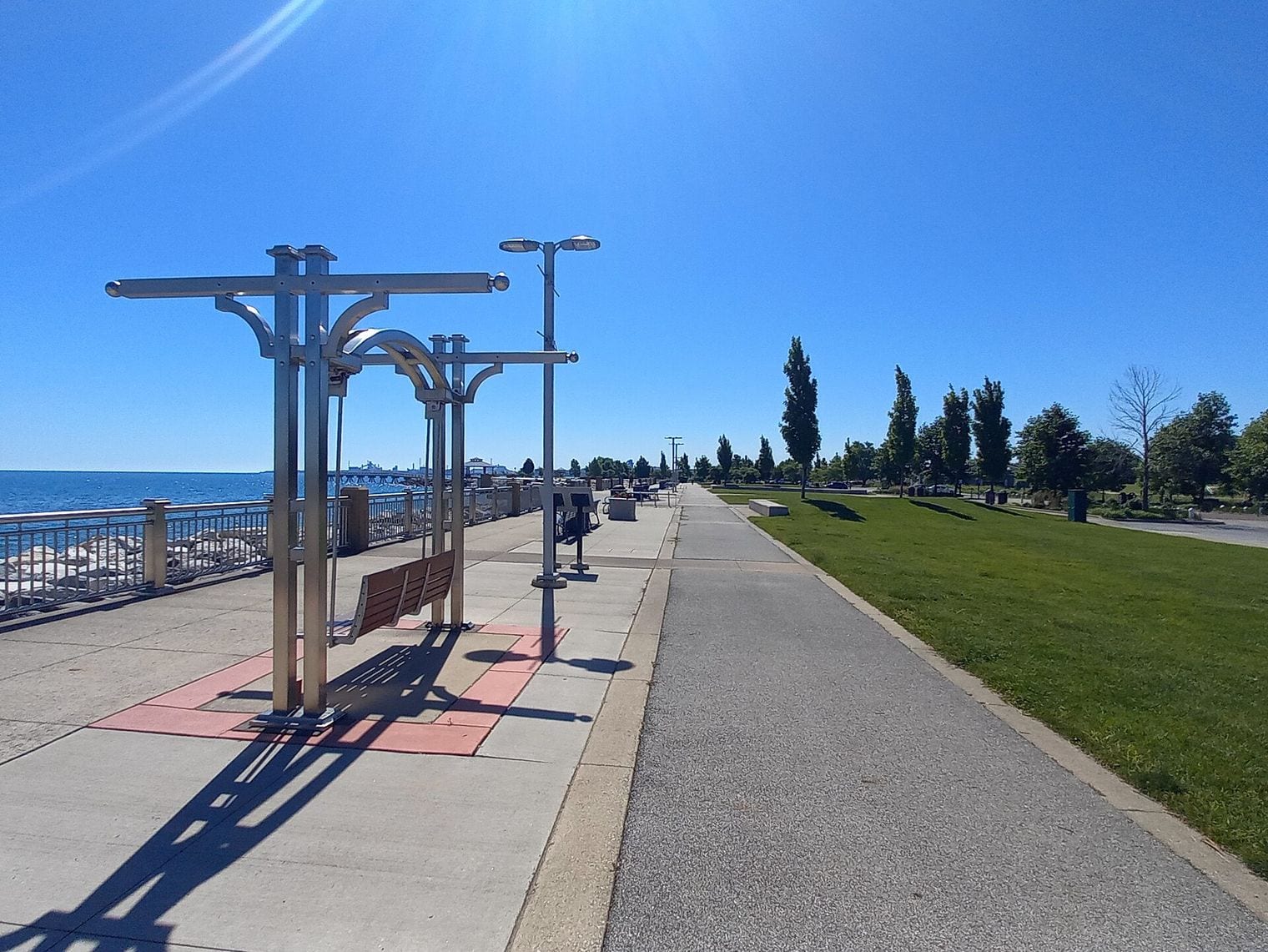
Whiting is a pocket-sized city of about 4,500 people on the southern shore of Lake Michigan, a few miles from the Illinois line, and it has far more charm than its industrial setting suggests. Standard Oil of Indiana was founded here, its sprawling refinery still borders the town, and the brick storefronts of 119th Street make a walkable small-town downtown.
Whiting Lakefront Park lines the shore, and neighboring Whihala Beach offers sand and swimming between Whiting and Hammond. Each summer, 119th Street is taken over by Pierogi Fest, a cheerfully offbeat festival founded in 1994 to honor the humble dumpling and the town's Eastern European roots.
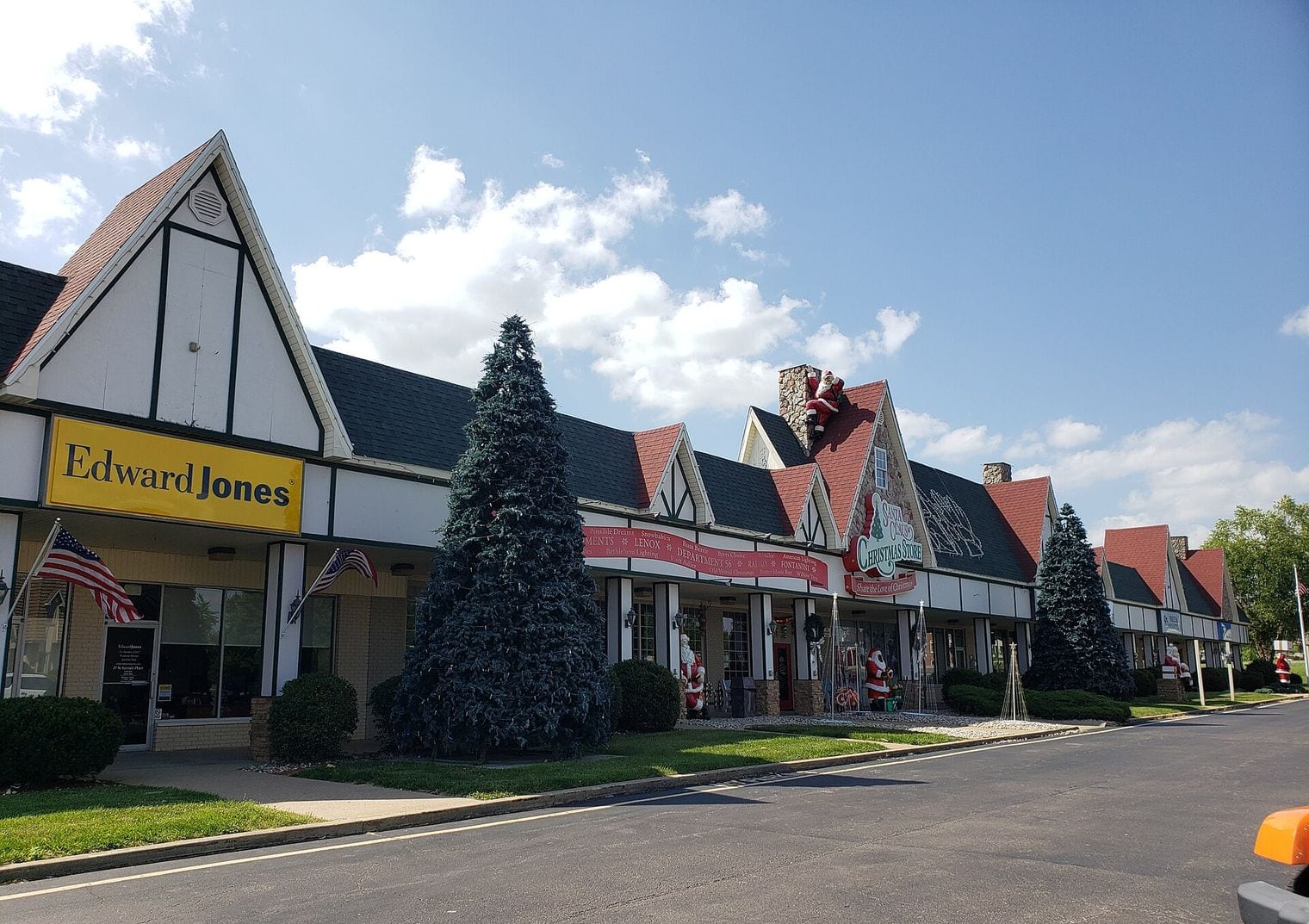
Yes, there really is a town called Santa Claus. Settlers first called their village Santa Fe, but Indiana already had a Santa Fe, so the post office needed another name, and in 1856 Santa Claus was accepted. Ever since, the Santa Claus post office has received thousands of letters to Santa from around the world each year, and Christmas-themed street names and attractions keep the holiday going all year.
The big draw is Holiday World & Splashin' Safari, which opened in 1946 as Santa Claus Land and pairs a theme park known for its three wooden roller coasters, including the highly ranked Voyage, with a water park. Santa's Candy Castle was the town's first tourist attraction, and Lincoln Boyhood National Memorial, where Abraham Lincoln spent his youth, is about five minutes away.
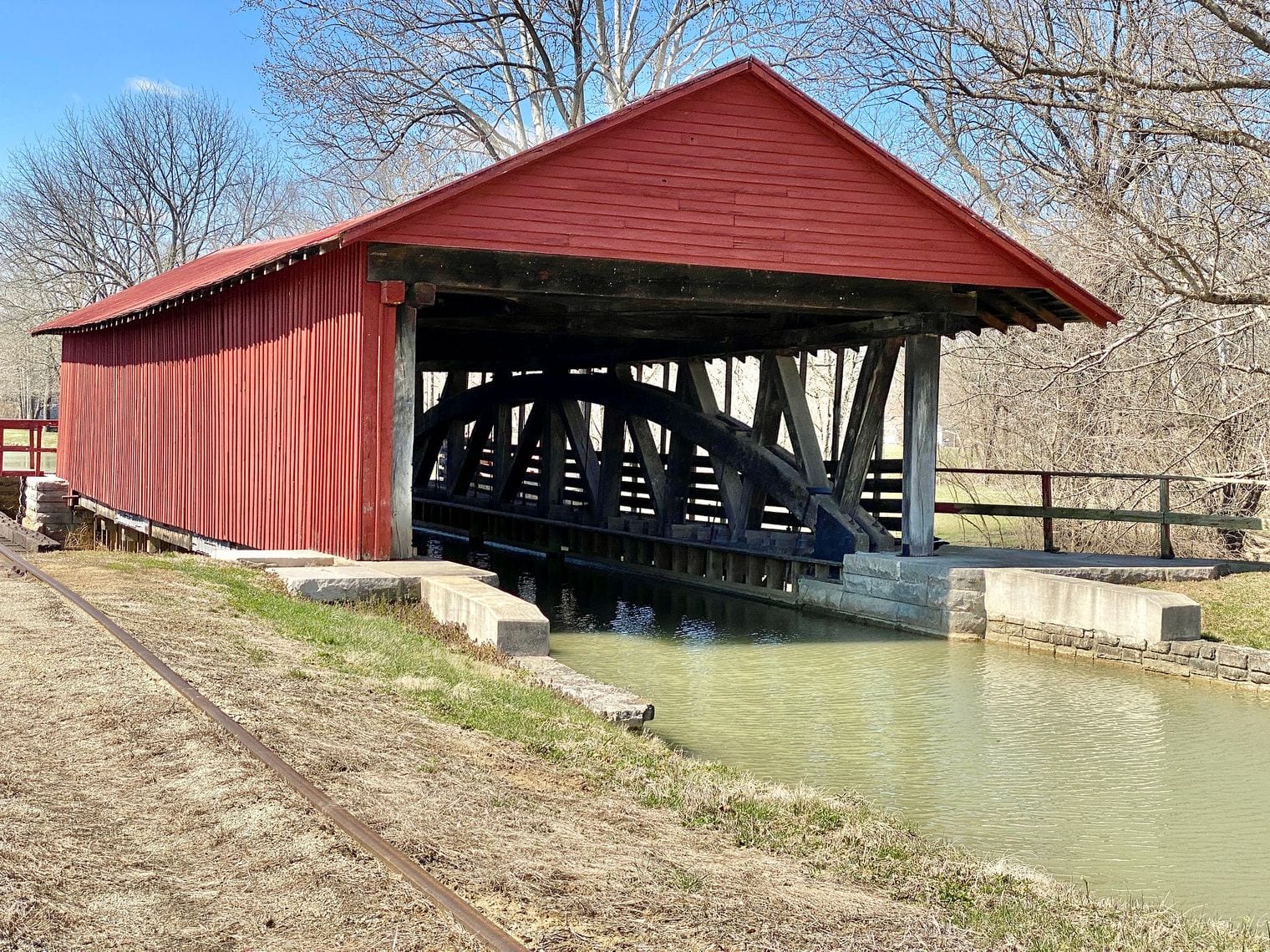
Metamora is a canal village in the Whitewater Valley of southeastern Indiana that still looks much as it did in its heyday. Platted in 1838, it grew up beside the Whitewater Canal, which carried boats only from 1839 to 1865, and today its few streets are lined with restored buildings and shops beside the water.
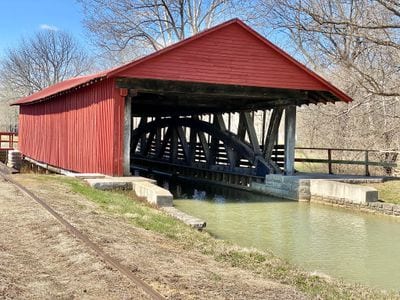
The Whitewater Canal State Historic Site preserves a stretch of the canal, where a boat pulled by draft horses carries passengers along the old towpath and the Metamora Grist Mill still uses water power to grind corn meal. Nearby, the covered wooden Duck Creek Aqueduct carries the canal over a creek, a rare survivor of its kind and a National Historic Civil Engineering Landmark.
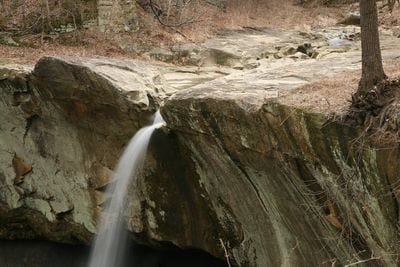
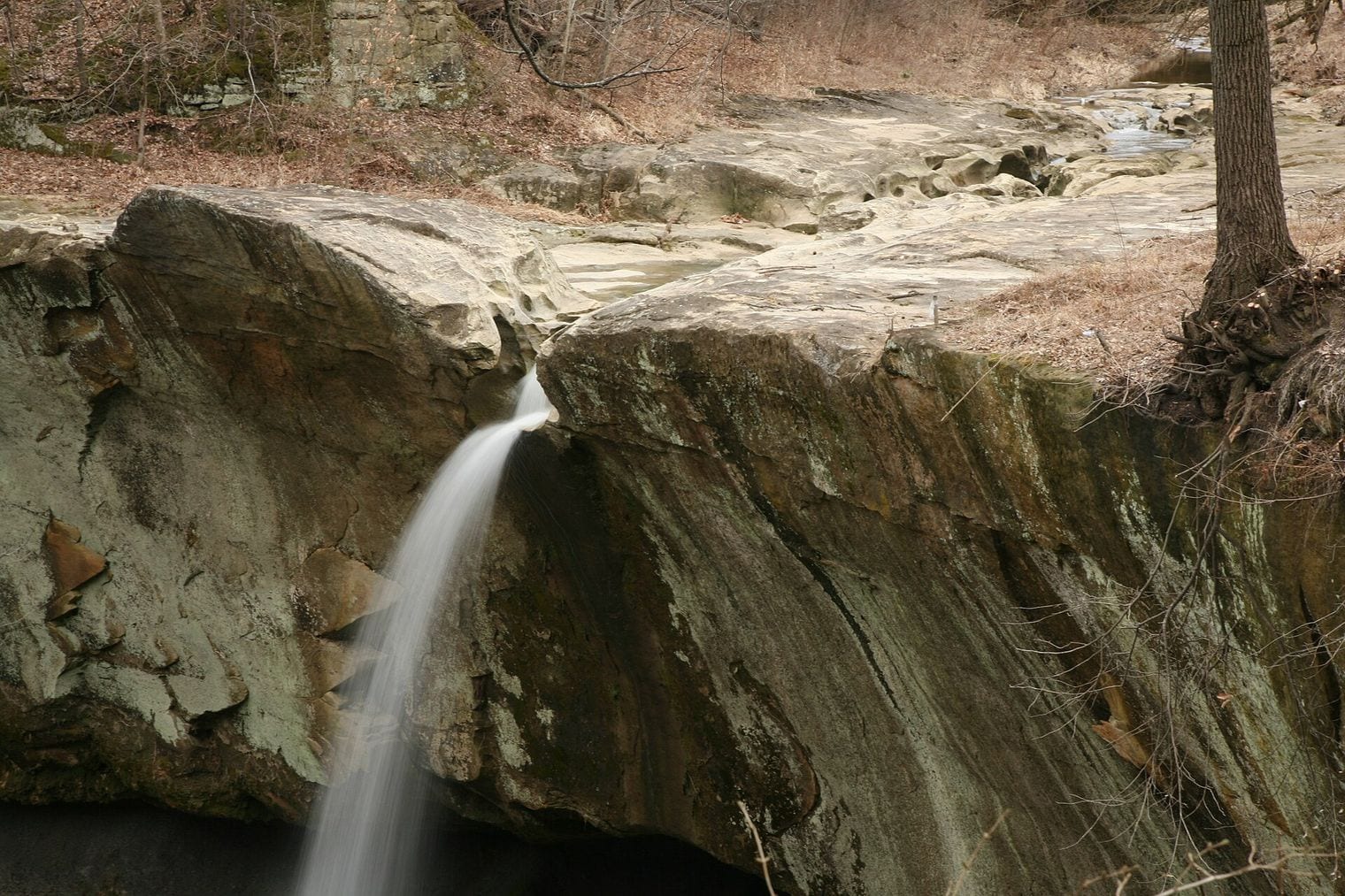
Williamsport, the Warren County seat on the Wabash River, is a quiet farm town with a surprise in the middle of it: Williamsport Falls, a waterfall of about 90 feet that is generally counted as the tallest in Indiana. It spills over a ledge near the center of town, an easy stop for anyone driving State Road 28.
Visit after a good rain, when the flow is strongest. Afterward, look in on the Warren County Courthouse, built in 1907 and 1908 and listed on the National Register of Historic Places, and walk down to the banks of the Wabash, which forms the eastern edge of the county.
About 20 miles south of Indianapolis, Franklin is the Johnson County seat and a college town, home to Franklin College, with a busy courthouse square and side streets of well-kept older houses and early brick streets. Its downtown commercial district is on the National Register of Historic Places, and it makes an easy half-day escape from the city.
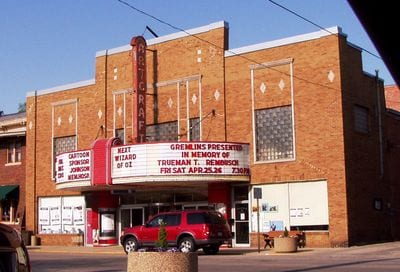
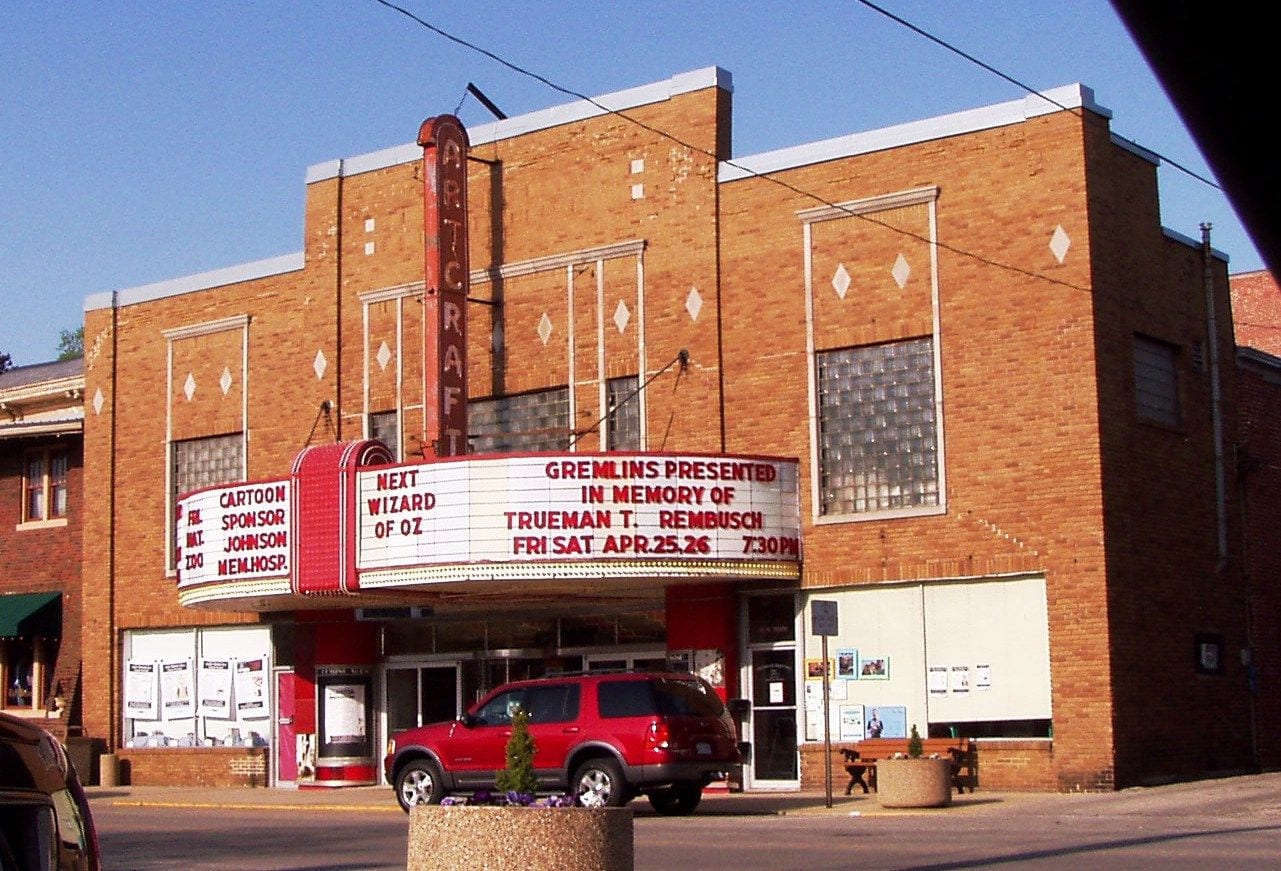
The anchor of downtown is the Artcraft Theatre, the first theater in Franklin built to show movies when it opened in 1922. Saved from demolition by the preservation group Franklin Heritage, it now screens classic films and hosts concerts, so browse the shops around the square and stay for a show.
Richmond, the Wayne County seat on the National Road near the Ohio line, is the biggest town on this list and has a real claim to musical fame: it is sometimes called the cradle of recorded jazz. In the 1920s the Gennett Records studio here made the first recordings of Louis Armstrong, with King Oliver's Creole Jazz Band, and Hoagy Carmichael first recorded "Stardust" here.
The Gennett Walk of Fame honors those artists along the Whitewater Gorge Trail, at the site of the old Starr Piano Company, and the Depot District's restored brick buildings make a good stroll. Settled by Quaker families in 1806, Richmond is still home to Earlham College and the Hayes Arboretum, and Dayton, Ohio, is under an hour east.
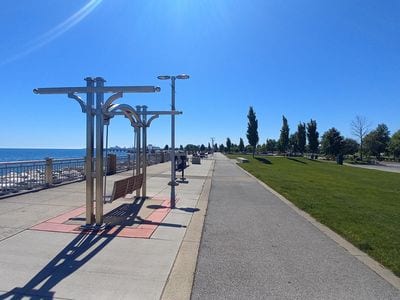
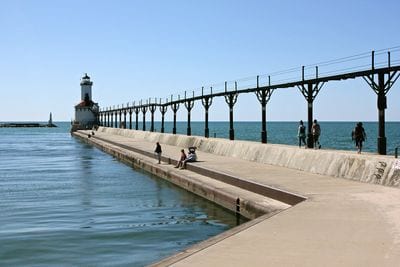
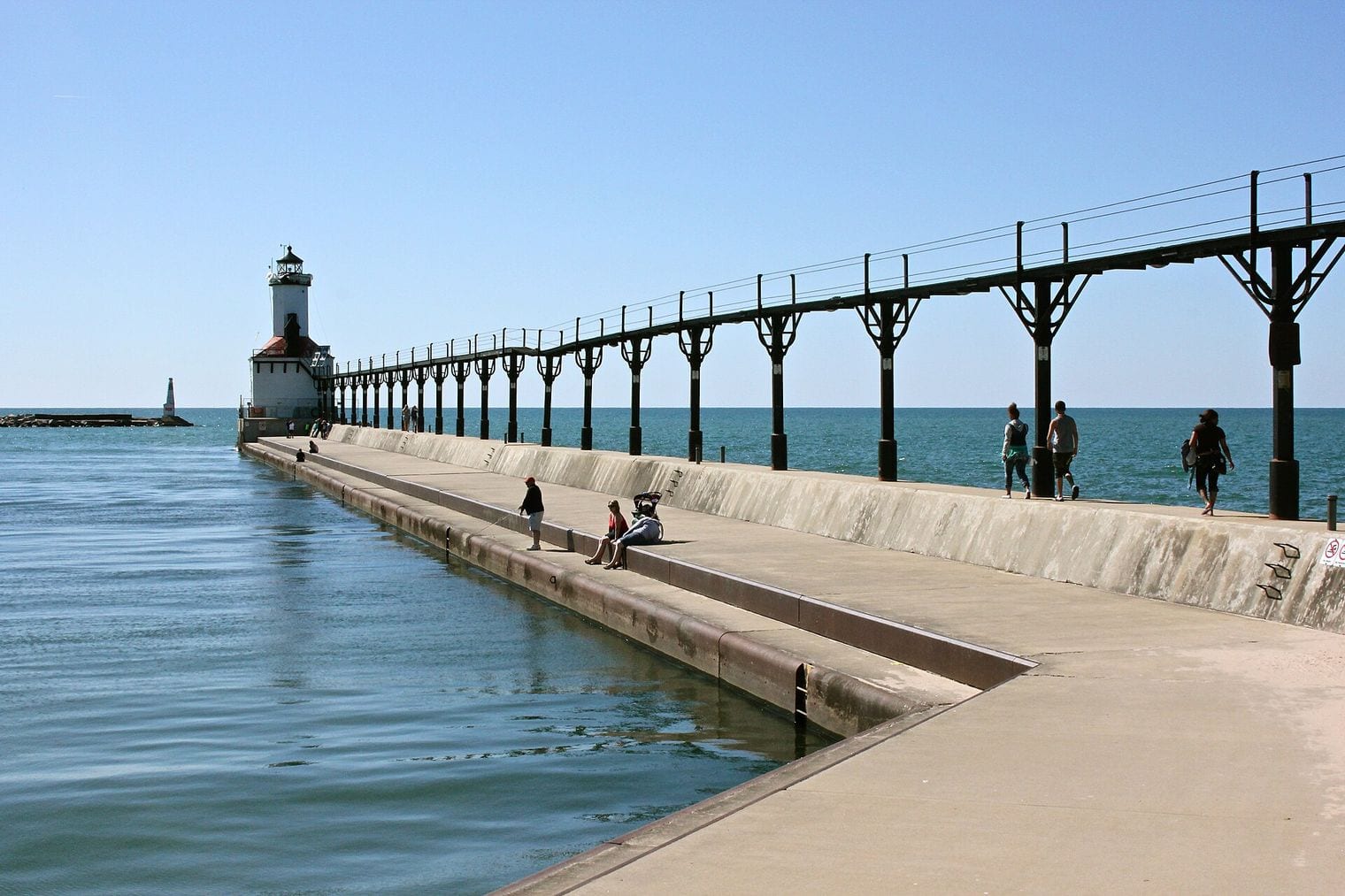
Michigan City is Indiana's classic Lake Michigan beach town, a harbor city at the eastern edge of Indiana Dunes National Park. Its lakefront Washington Park pairs a long sandy beach with a small zoo, and an elevated catwalk runs out along the pier to the East Pierhead Light, still the working beacon at the harbor mouth.
The Old Lighthouse Museum, in the 1858 lighthouse that served before the pier light, tells the harbor's story, and the Barker Mansion recalls the city's industrial-era wealth. Mount Baldy, a large wandering dune in the national park, rises at the edge of town, and the South Shore Line connects Michigan City with downtown Chicago by train.
Vincennes is where Indiana's written history begins. French fur traders founded the post on the Wabash River in 1732, making it the oldest continuously inhabited European settlement in the state, and from 1800 to 1813 it was the capital of the Indiana Territory under its first governor, William Henry Harrison.
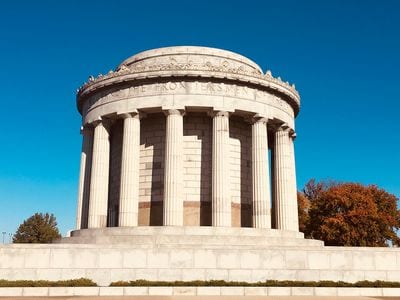
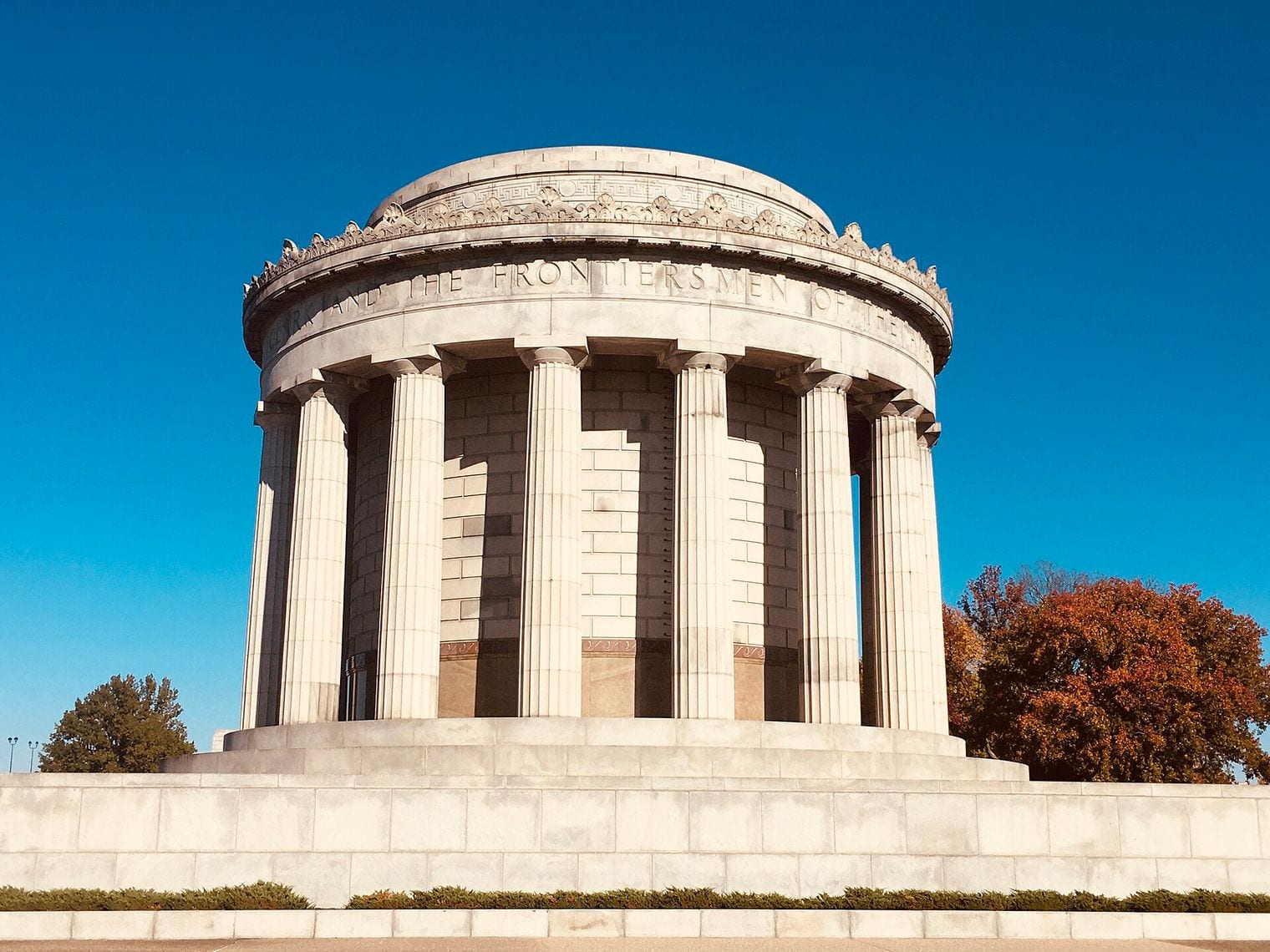
The classical rotunda of George Rogers Clark National Historical Park stands on the riverbank near the site of Fort Sackville, which Clark recaptured from the British during the Revolutionary War. Nearby you can tour Grouseland, Harrison's mansion, and the Indiana Territorial Capitol, in a town that is also the birthplace of comedian Red Skelton.
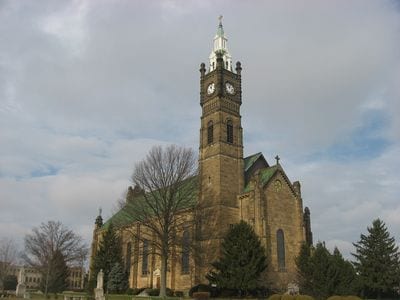
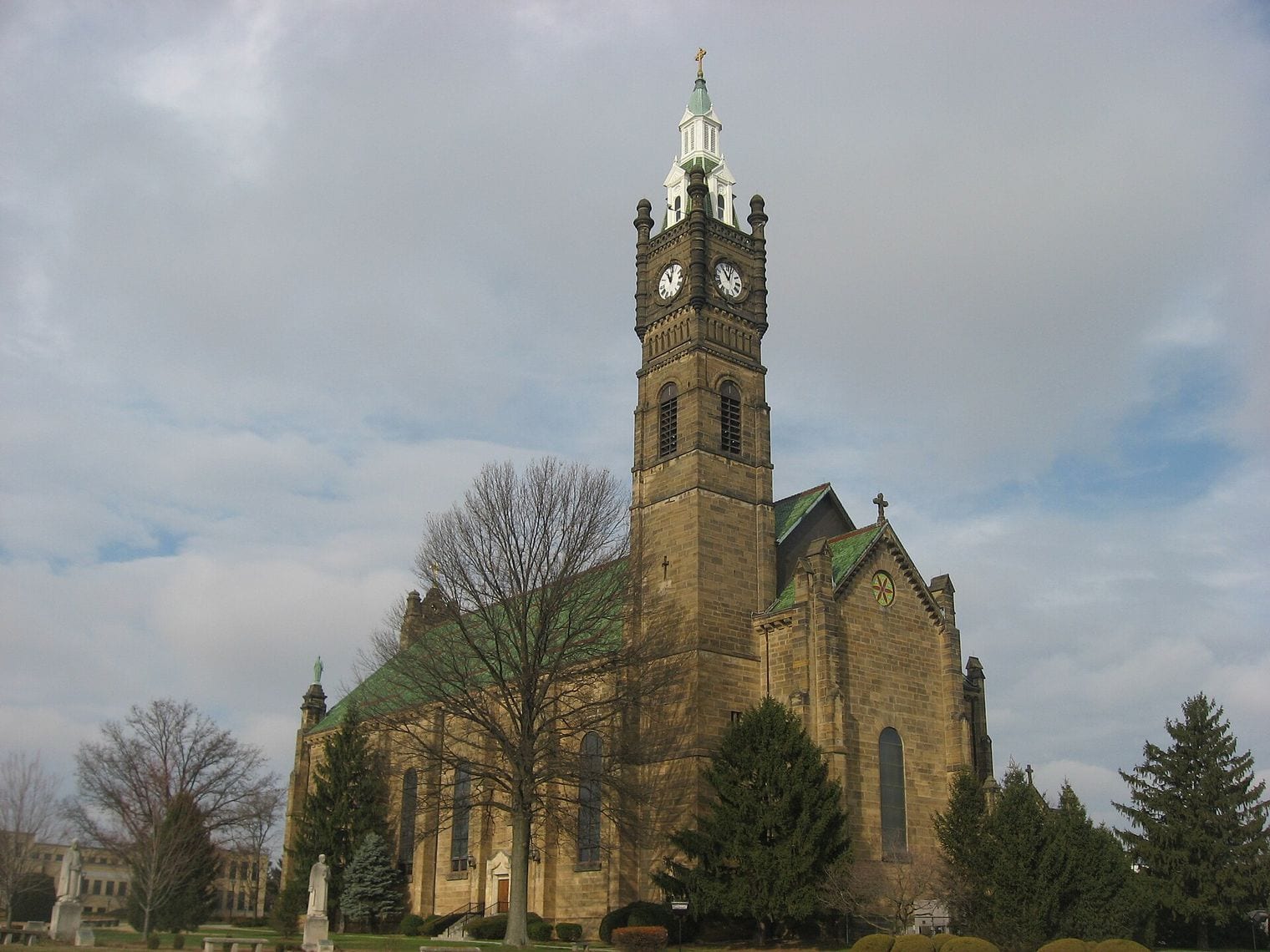
Jasper is a proud German-Catholic town on the Patoka River, so known for furniture making that it has been called the Wood Capital of the World. Its skyline belongs to St. Joseph Catholic Church, a Romanesque Revival landmark of solid sandstone built between 1867 and 1880, whose stone bell tower rises about 235 feet over town.
Browse the shops around the Dubois County Courthouse square, and if you visit in early August, join the Strassenfest, a four-day street festival that celebrates Jasper's ties with its German sister city, Pfaffenweiler. Huntingburg and its movie-famous ballpark are a short drive south.
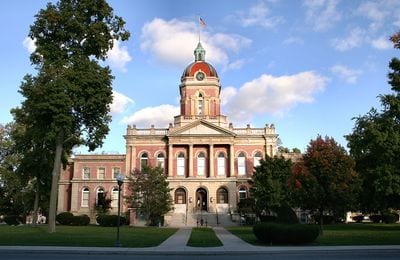
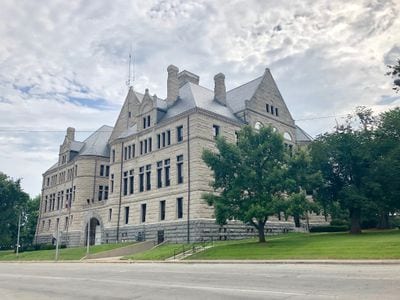
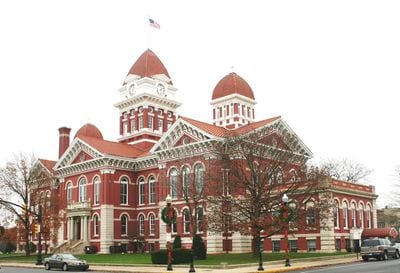
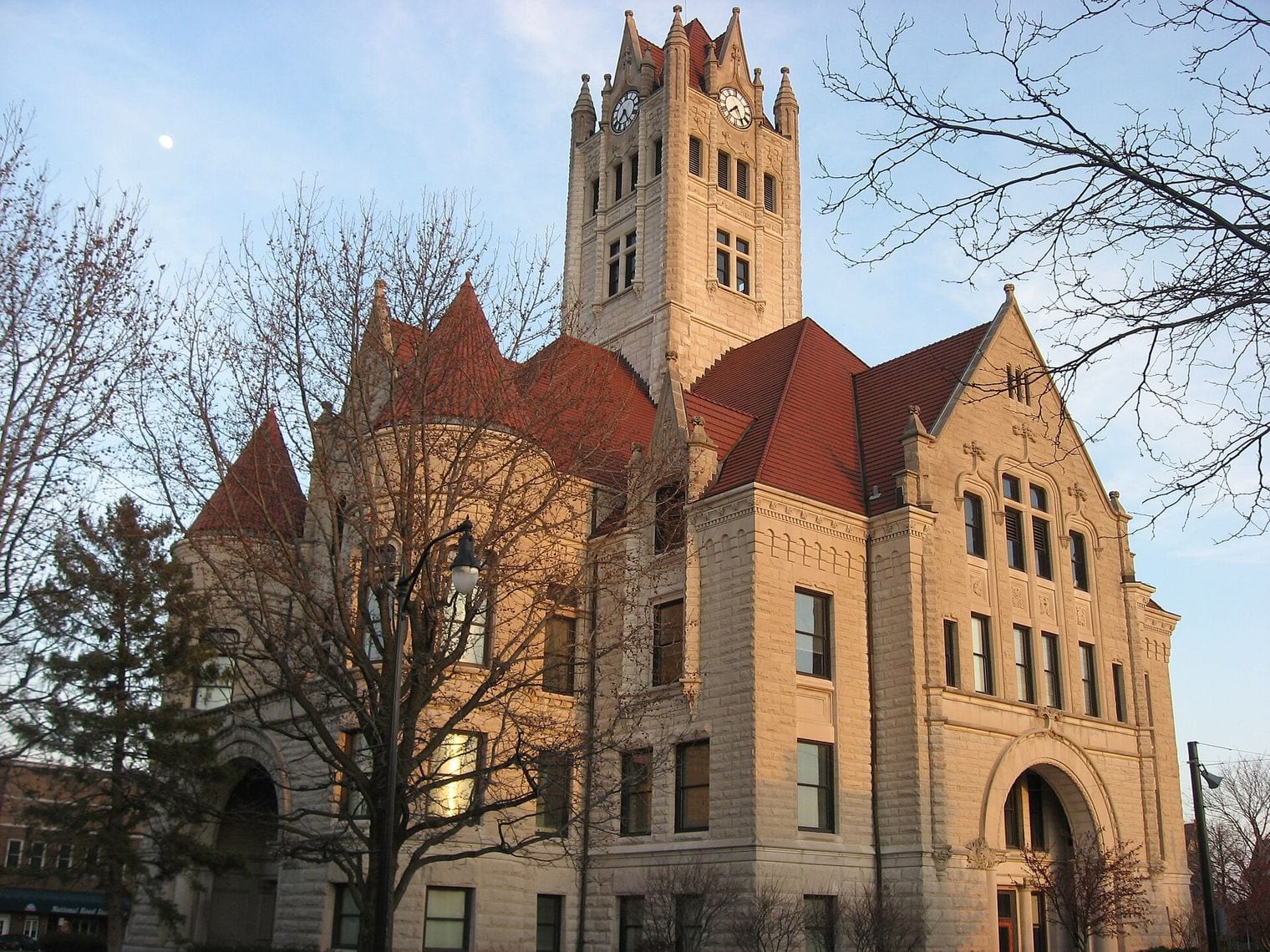
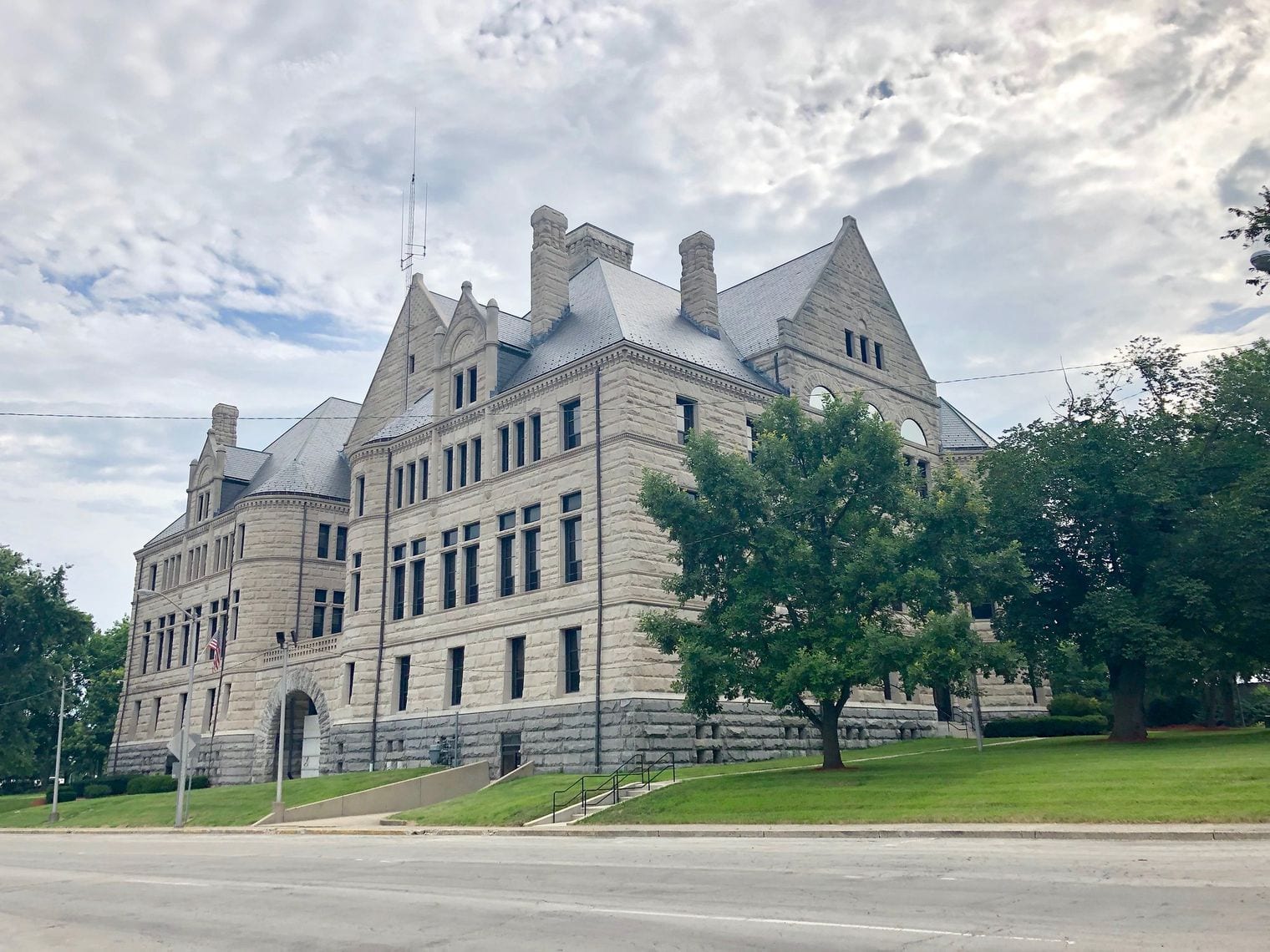
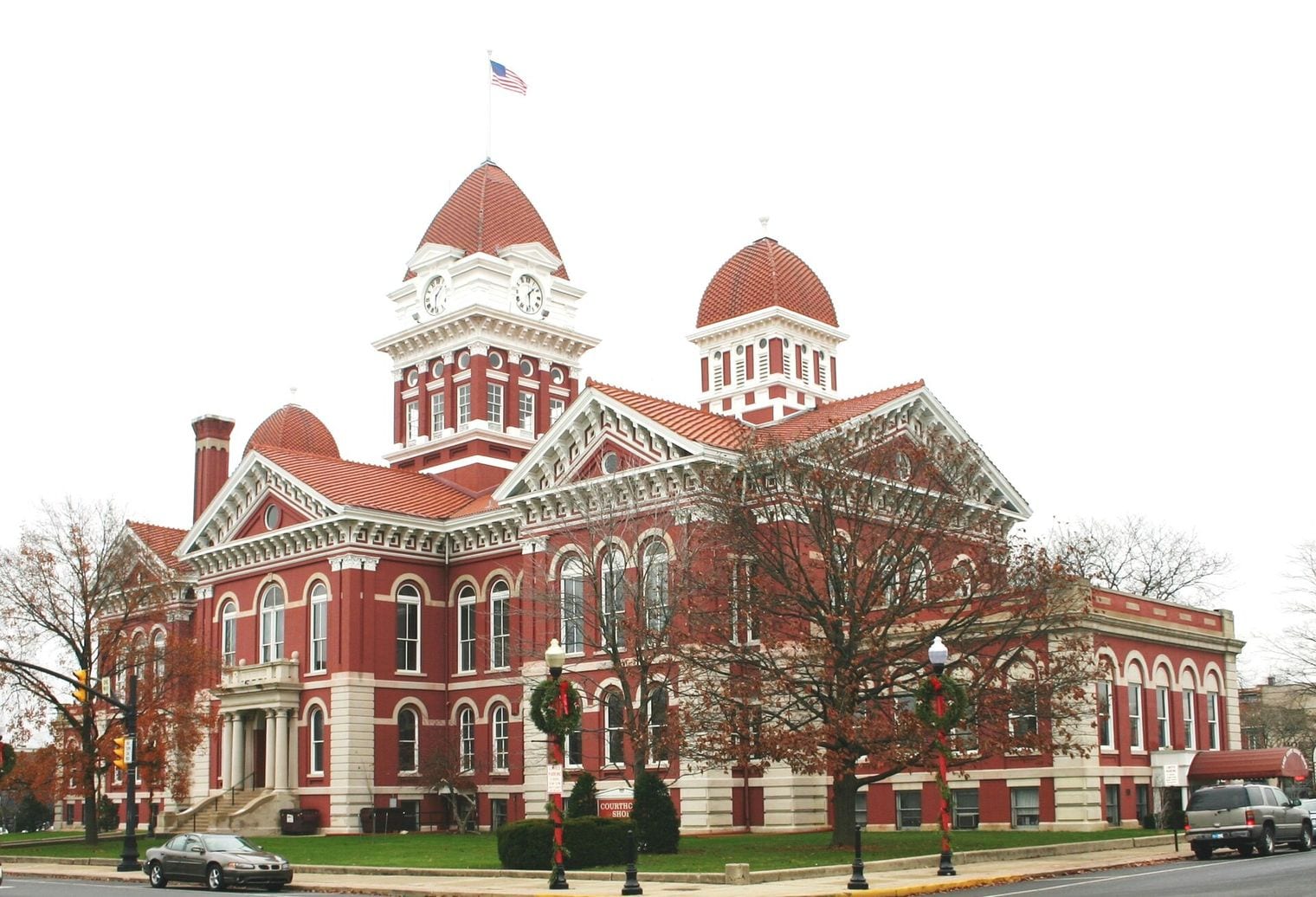
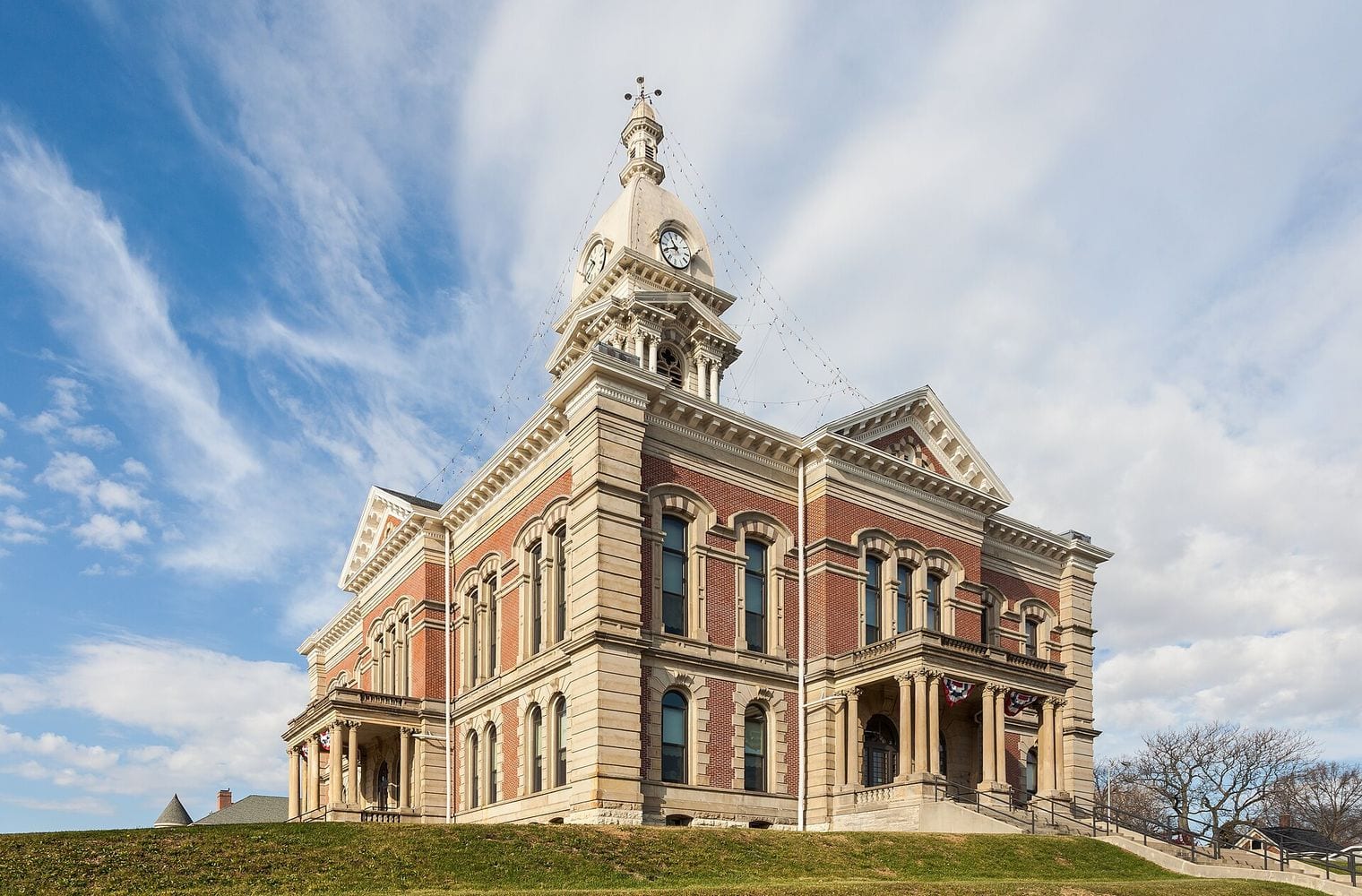
Crown Point, the Lake County seat known as the Hub of Lake County, is built around one of Indiana's handsomest courthouses: the Old Lake County Courthouse, begun in 1878 and affectionately called the Grand Old Lady, which still dominates the town square. William Jennings Bryan addressed a crowd from its steps during his 1896 presidential campaign.
The town has a colorful past. With no waiting period for marriage licenses, it became known as the Marriage Mill, where Rudolph Valentino and Muhammad Ali were among the famous names who wed, and in 1934 John Dillinger escaped from the supposedly escape-proof Lake County Jail, reportedly brandishing a carved wooden gun. The old Sheriff's House and Jail still stands.
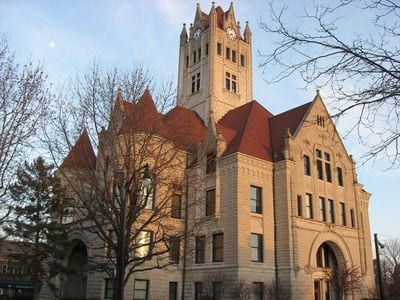
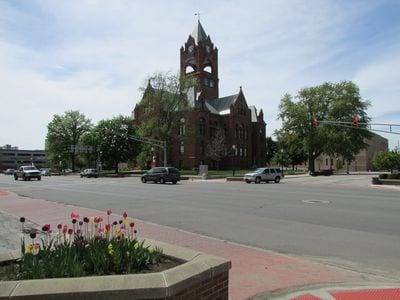
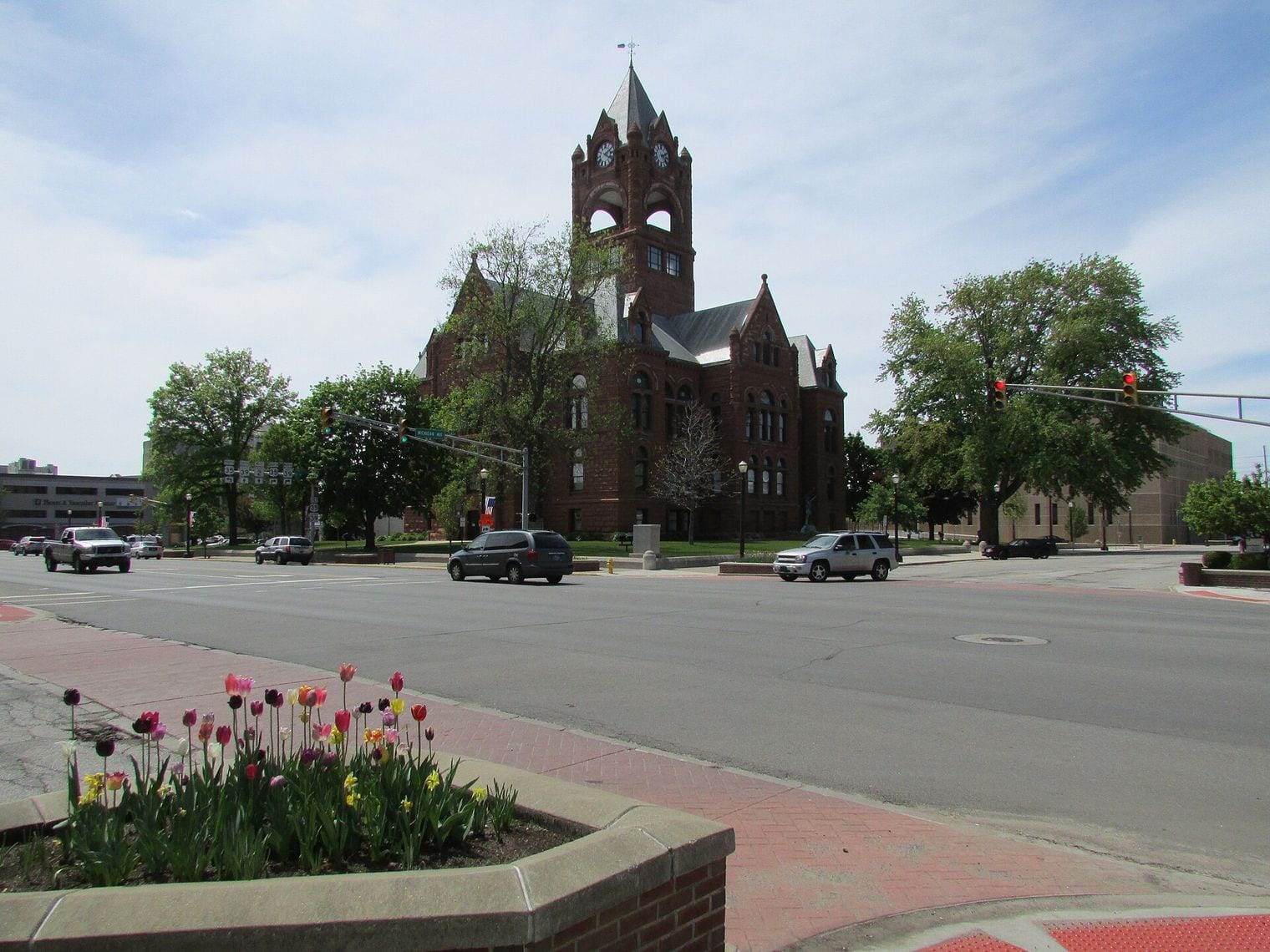
La Porte, the LaPorte County seat, is nicknamed the Maple City and has a string of lakes along its edge. Its downtown is anchored by a striking courthouse of red sandstone, built between 1892 and 1894 with stone from Lake Superior that was shipped by boat to Michigan City and then hauled by rail to town.
The La Porte County Historical Society Museum, in the former Door Prairie Auto Museum, shows more than 30 vintage cars, from a 1903 Winton to a DeLorean, alongside the county's history. Soldiers Memorial Park wraps around Stone Lake on the edge of town, and the Lake Michigan shore is a short drive north.
Wabash, the Wabash County seat on the Wabash River, has a bright claim to fame: on March 31, 1880, four electric arc lamps hung from the top of the courthouse lit up the town square, making it one of the first towns in the world lit by electricity. A statue of Abraham Lincoln now stands on the courthouse lawn.
The historic downtown holds the restored Eagles Theatre and the Honeywell Center, the town's stage for concerts and shows, while Charley Creek Gardens offers free strolls through its themed gardens. The Paradise Spring Treaty Grounds recall the 1826 treaty that opened the area to its first settlers.
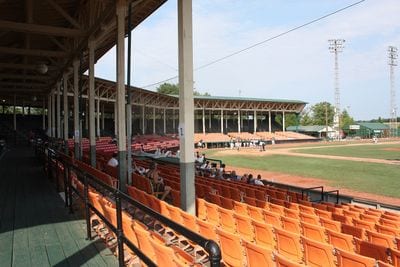
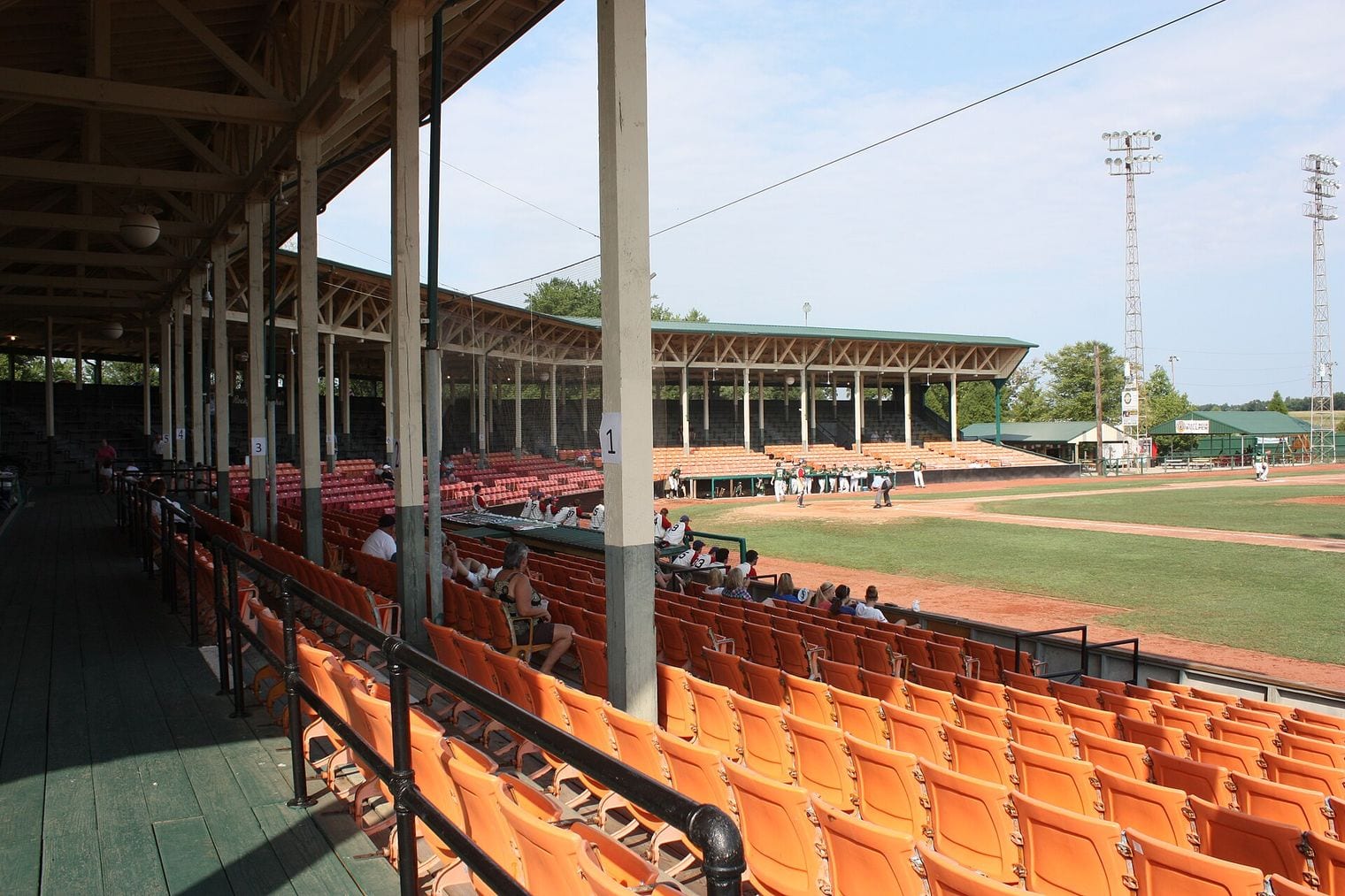
Baseball fans know Huntingburg even if they have never heard its name. League Stadium, a ballpark that opened in 1894, was renovated by Columbia Pictures to play the home field of the Rockford Peaches in A League of Their Own (1992), and with other films shot here since, the town has picked up the nickname Hollywood of the Midwest.
The old ballpark still hosts baseball, so you can catch a game where the movie was filmed, and the Huntingburg Commercial Historic District, listed on the National Register, makes a pleasant walk. Jasper and its towering St. Joseph Church are a short drive north.
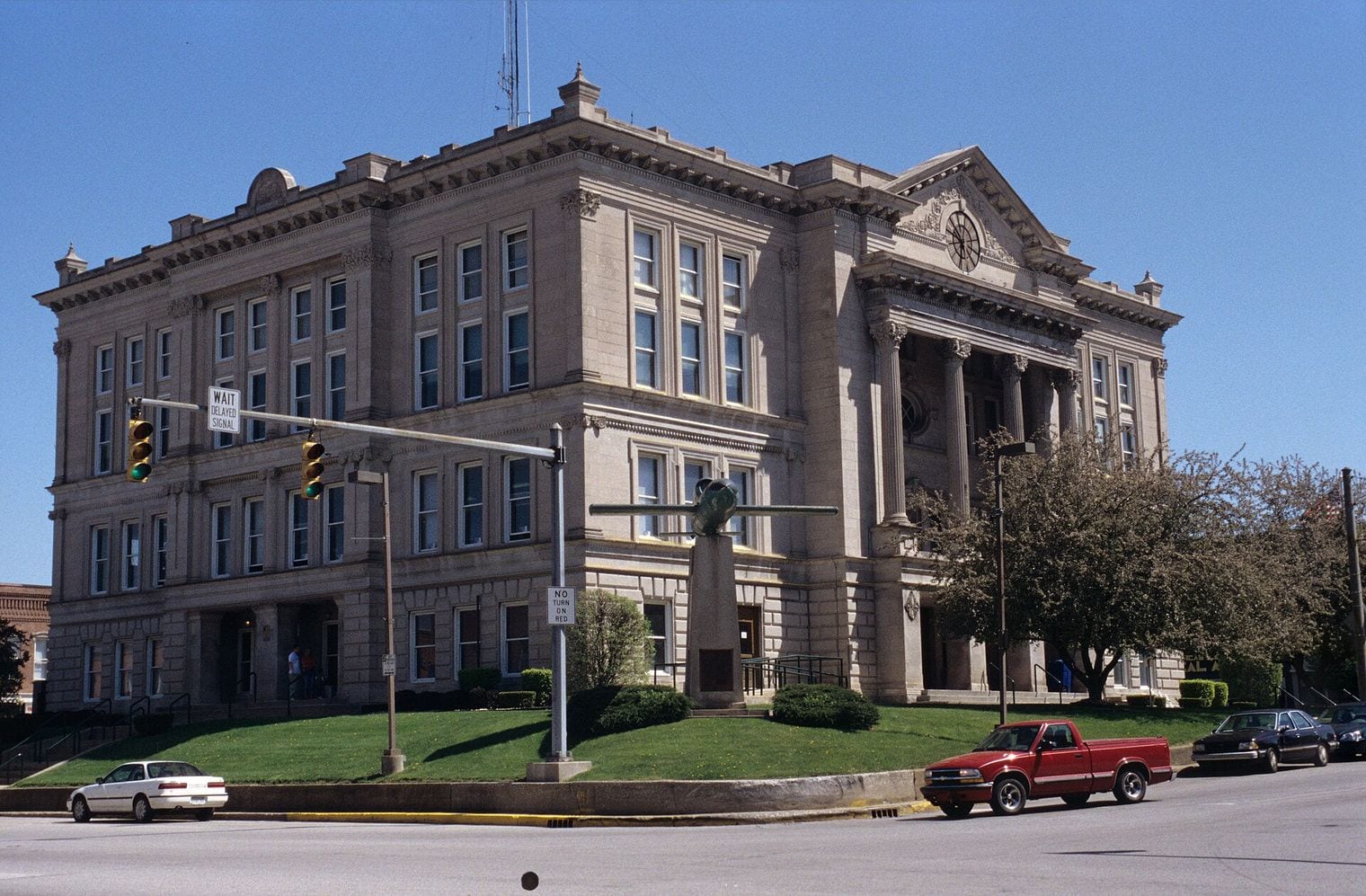
Greencastle, the Putnam County seat, is a leafy college town and the home of DePauw University. On the courthouse lawn stands an unusual war memorial: a German V-1 flying bomb from World War II, mounted on concrete pillars and dedicated in 1947 to Putnam County's veterans.
Greencastle also has a gangster story. In October 1933 John Dillinger's gang robbed the Central National Bank here, the biggest haul of his career. Beyond town, Putnam County's back roads lead to historic covered bridges and to the woods and waters of Big Walnut Creek and Cagles Mill Lake.
Free Things to Do in These Indiana Towns
Many of the best moments on this list cost nothing. Walk the historic downtowns of Madison and Aurora above the Ohio River, wander the Harmonist streets and hedge labyrinth of New Harmony, and see the Constitution Elm memorial in Corydon.
Catch the waterfall in Williamsport after a good rain, walk the pier catwalk toward the lighthouse in Michigan City, follow the Gennett Walk of Fame in Richmond and stroll Charley Creek Gardens in Wabash. Cycle the Pumpkinvine Nature Trail between Goshen and Shipshewana, and look for the V-1 memorial on the courthouse lawn in Greencastle.
The easiest way to see these towns is to pick one region and link several together. In the southeast, Madison and Aurora share the Ohio River, Metamora's canal village lies inland in the Whitewater Valley, and Richmond sits farther north on the National Road near the Ohio line.
Across the river from Louisville, Corydon makes an easy day trip, while French Lick and Paoli sit a few miles apart in the southern hills. Nashville pairs neatly with the modern architecture of Columbus, Jasper, Huntingburg and Santa Claus cluster close together in the southwest, and New Harmony and Vincennes follow the Wabash north and west of Evansville.
In the north, Shipshewana, Goshen and Angola fill a weekend in Amish and lake country, and Whiting, Crown Point, La Porte and Michigan City sit within easy reach of Chicago near the Lake Michigan shore.
Around Indianapolis, Greenfield, Franklin and Greencastle are short drives from the city and from northern suburbs such as Fishers, while Wabash and Williamsport make good detours on longer drives across the state. Fall color draws the biggest crowds to the Brown County hills, summer is festival season from Madison to Whiting, and winter brings skiing at Paoli Peaks and tobogganing at Pokagon State Park near Angola.
FAQ: Visiting the Best Small Towns in Indiana
What is the best small town in Indiana?
Madison is the best small town in Indiana for most visitors, with a 133-block historic landmark downtown on the Ohio River, the Lanier Mansion and Clifty Falls State Park on the bluffs. Nashville follows for its Brown County art colony, then New Harmony for its utopian history, French Lick for its grand spa hotels and Shipshewana for Amish country.
Which small towns in Indiana are closest to Indianapolis?
Greenfield, on the old National Road east of the city, and Franklin, about 20 miles south, are the closest and make easy half-day trips. Greencastle and its DePauw University campus lie west of the city, and Nashville and the Brown County hills are about an hour's drive south, a classic day out when the leaves turn.
Where can you see Amish country in Indiana?
Head to Shipshewana and the surrounding Elkhart–LaGrange settlement, the third-largest Amish community in the United States. Buggies share the back roads with farm traffic, Menno-Hof explains Amish and Mennonite history, and the Pumpkinvine Nature Trail links Shipshewana with Middlebury and Goshen, a lively base with its own historic downtown.
Which small towns in Indiana are near Lake Michigan?
Whiting and Michigan City sit right on the shore: Whiting with its lakefront park and Pierogi Fest, Michigan City with its beach, two lighthouses and the edge of Indiana Dunes National Park. La Porte is a short drive inland from Michigan City, and Crown Point, the Lake County seat, lies south of the lake within easy reach of Chicago.
When is the best time to visit small towns in Indiana?
Late spring through fall is the easiest time, with flea markets, festivals and outdoor sights in full swing. Fall color brings the biggest crowds to Nashville and the Brown County hills, and summer brings the Madison Regatta, Pierogi Fest in Whiting and Jasper's Strassenfest. Winter suits the slopes at Paoli Peaks and the toboggan run at Pokagon State Park.
How many days do you need to visit a small town in Indiana?
Most towns on this list fill a relaxed day, and many make easy day trips from Indianapolis, Louisville, Cincinnati or Chicago. Madison, Nashville and French Lick deserve a weekend to see properly, while a week lets you link several towns in one region, such as the Ohio River towns in the southeast or Amish and lake country in the north.
Sources & updates
How this guide was checked
Checked before launch
Sources cited
25
Publishers
23
Every town on this list was pinned on the map and checked against official and local sources before publication.
A PDF with a box to tick for every place. Confirm your email to download it, and get one email every Thursday with our newest guides for the places you tick.
Free Indiana small towns printable checklist
All 25 places in one PDF
Tick them off as you go. Confirm your email to download it, plus one email every Thursday with new guides for the places you tick.
We use cookies to analyse site traffic and improve your experience.
You can accept or reject analytics cookies. See our
May we use analytics cookies? See ourCookie Policy.