We build and rank every list first. Booking links come after, and only where
a partner sells a ticket, tour or stay for that exact place, so a place with
nothing to book is listed exactly as prominently as one you can book.
So how do we earn? Some links on this page go to booking
partners, and if you book tickets, tours or a stay through
one, we may earn a commission. It costs you nothing extra.
That commission never decides which places make the list, the order they
appear in, or what we write about them. No entry is sponsored or a paid
placement.
By the City Viking editorial teamPublished 30 places · 20 min read
Fact-checked Checked before launchOct 16, 202630 sources21 publishers3 government & parks8 encyclopedias & research19 venues & other sitesPublished · Oct 16, 2026Researched and checked before it went liveClick for every source and the full change log.
Short answer
Des Moines is known for being Iowa's capital and largest city, and for the Iowa State Fair, home of a life-size butter cow. Start with the gold-domed Iowa State Capitol, Pappajohn Sculpture Park and the Principal Riverwalk, plus the Downtown Farmers' Market on a summer Saturday. Two or three days covers the highlights: downtown and the East Village; the Des Moines Art Center, Gray's Lake and the zoo; then Living History Farms or Adventureland.
Des Moines is Iowa's capital and its largest city, and it packs more into its riverfront downtown than most visitors expect. A gold-domed Capitol looks over the brick streets of the East Village, a sculpture park fills a downtown lawn, and trails follow the Des Moines and Raccoon rivers out to lakes and wooded bluffs.
This guide ranks 30 things to do, from the State Fair and the Saturday market to historic mansions, gardens and ballgames, plus a few favorites just over the line in Altoona and Urbandale. Two or three days covers the highlights; add a day for one of Iowa's small towns.
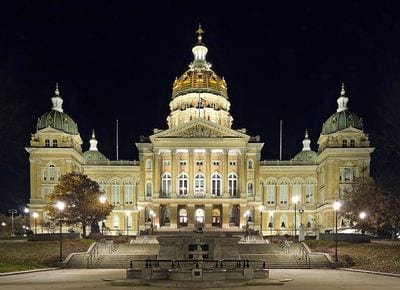
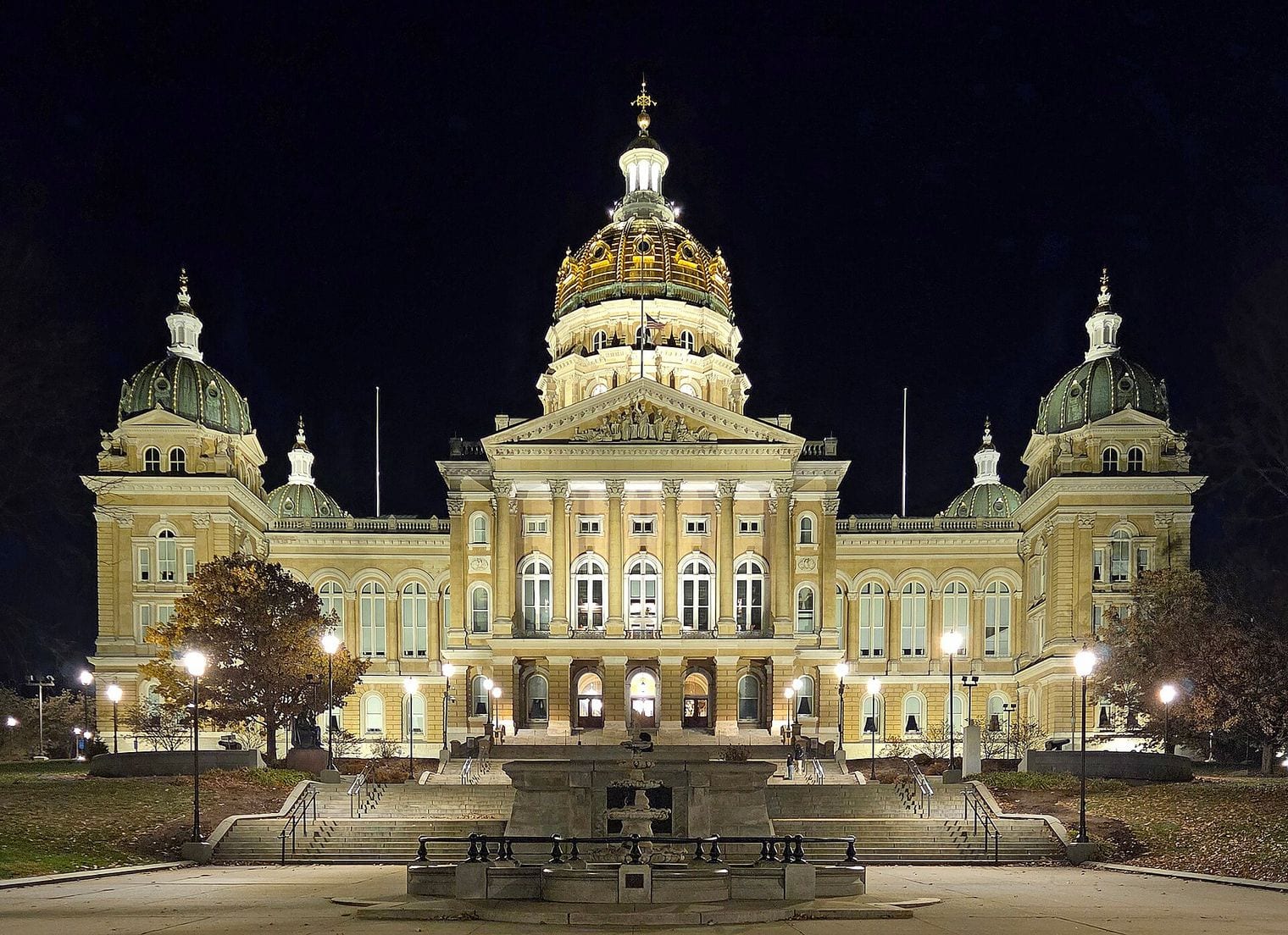
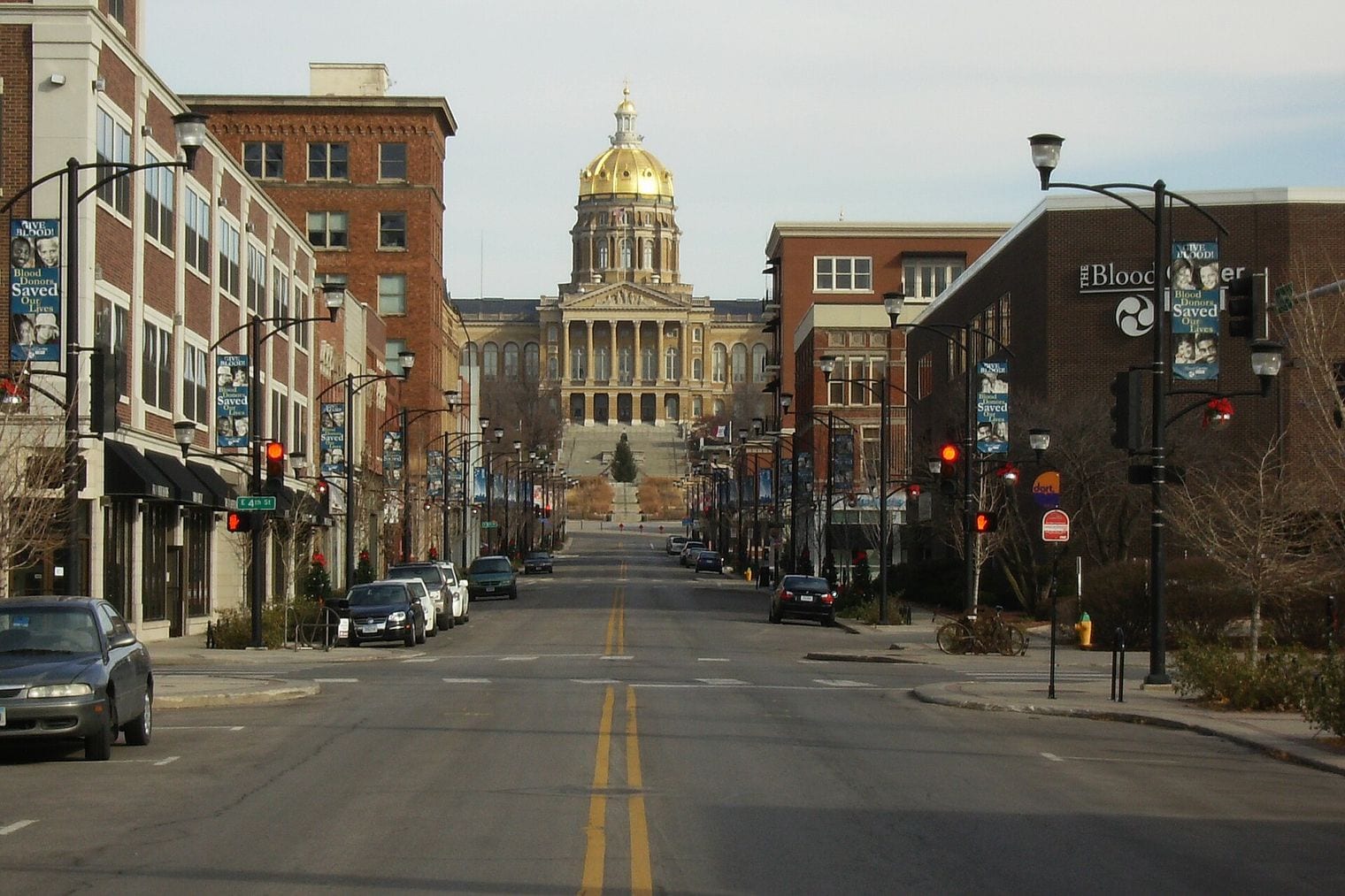
The Iowa State Capitol is the only state capitol in the country with five domes, and the central one is covered in gold leaf.
A life-size cow sculpted from butter has been a fixture of the Iowa State Fair since 1911.
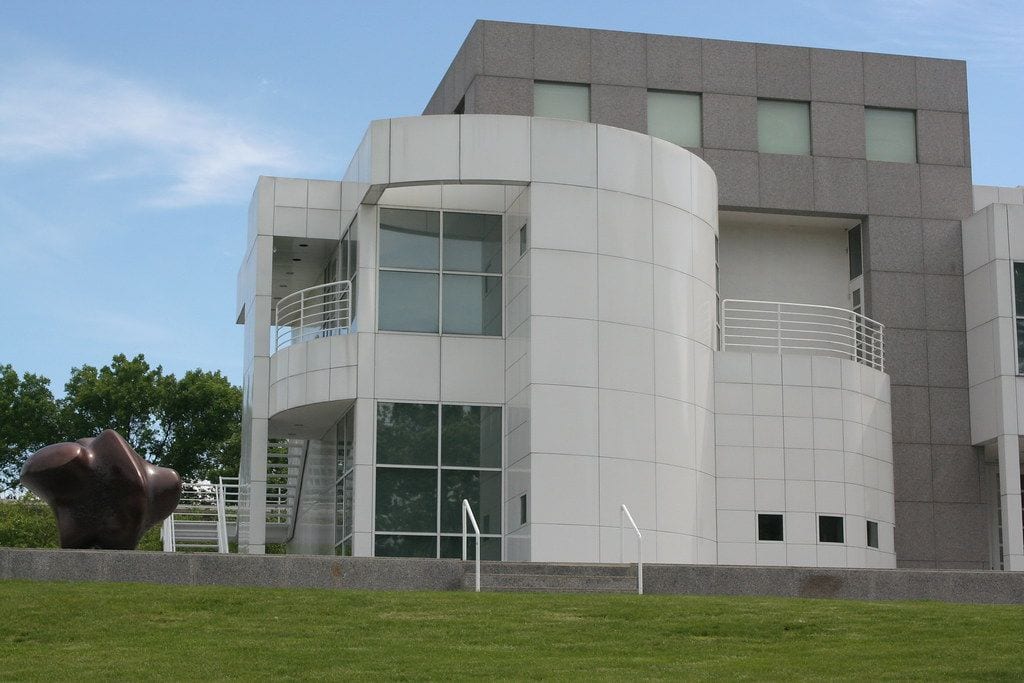
The Des Moines Art Center was designed by three famous architects: Eliel Saarinen, I. M. Pei and Richard Meier each added a wing.
The governor of Iowa lives in Terrace Hill, a Second Empire mansion with a 90-foot tower that is a National Historic Landmark.
The World Food Prize, founded by Iowa-born scientist Norman Borlaug, honors its laureates in the restored former Des Moines Public Library on the riverfront.
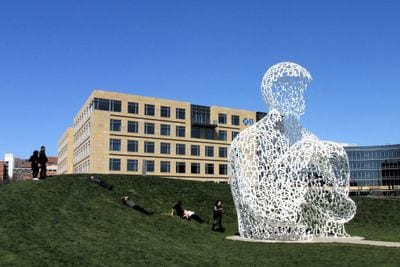
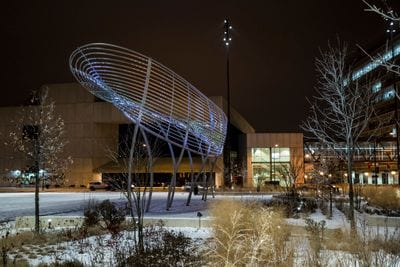
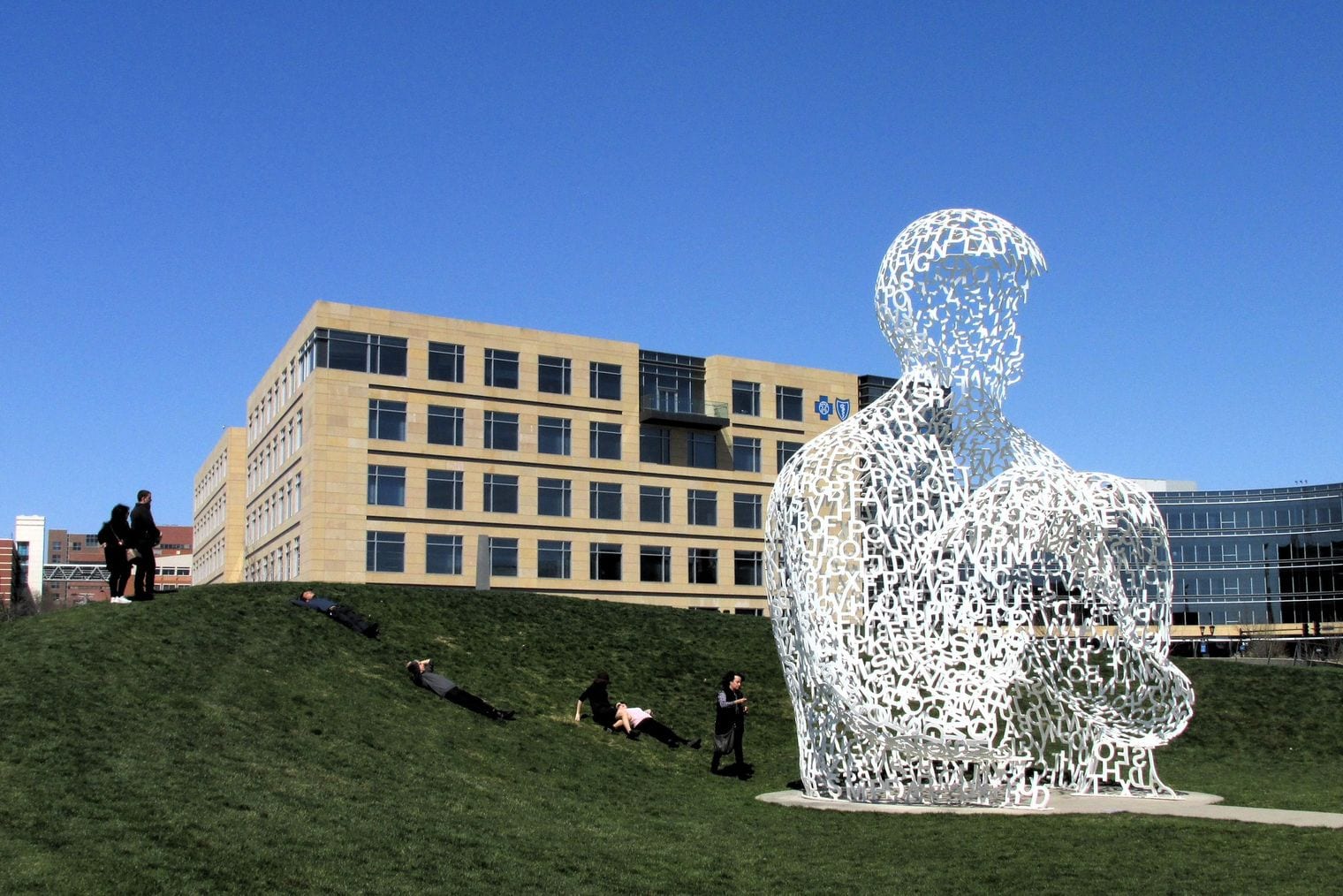
Pappajohn Sculpture Park turns a downtown lawn into an open-air gallery. Opened in 2009 inside Western Gateway Park, the 4.4-acre park is looked after by the Des Moines Art Center and shows large works by artists including Jaume Plensa, Louise Bourgeois and Ai Weiwei.
There is no gate and no ticket, so it works as a quick morning stroll or an evening walk when the office towers light up behind the sculptures. Plensa's Nomade, a seated figure made of white steel letters, is the photo everyone wants, but give the rest of the lawn time too: the pieces change character as you circle them.
22. Iowa State Capitol
Historical Landmark~1.1 miles (1.8 km) from centre
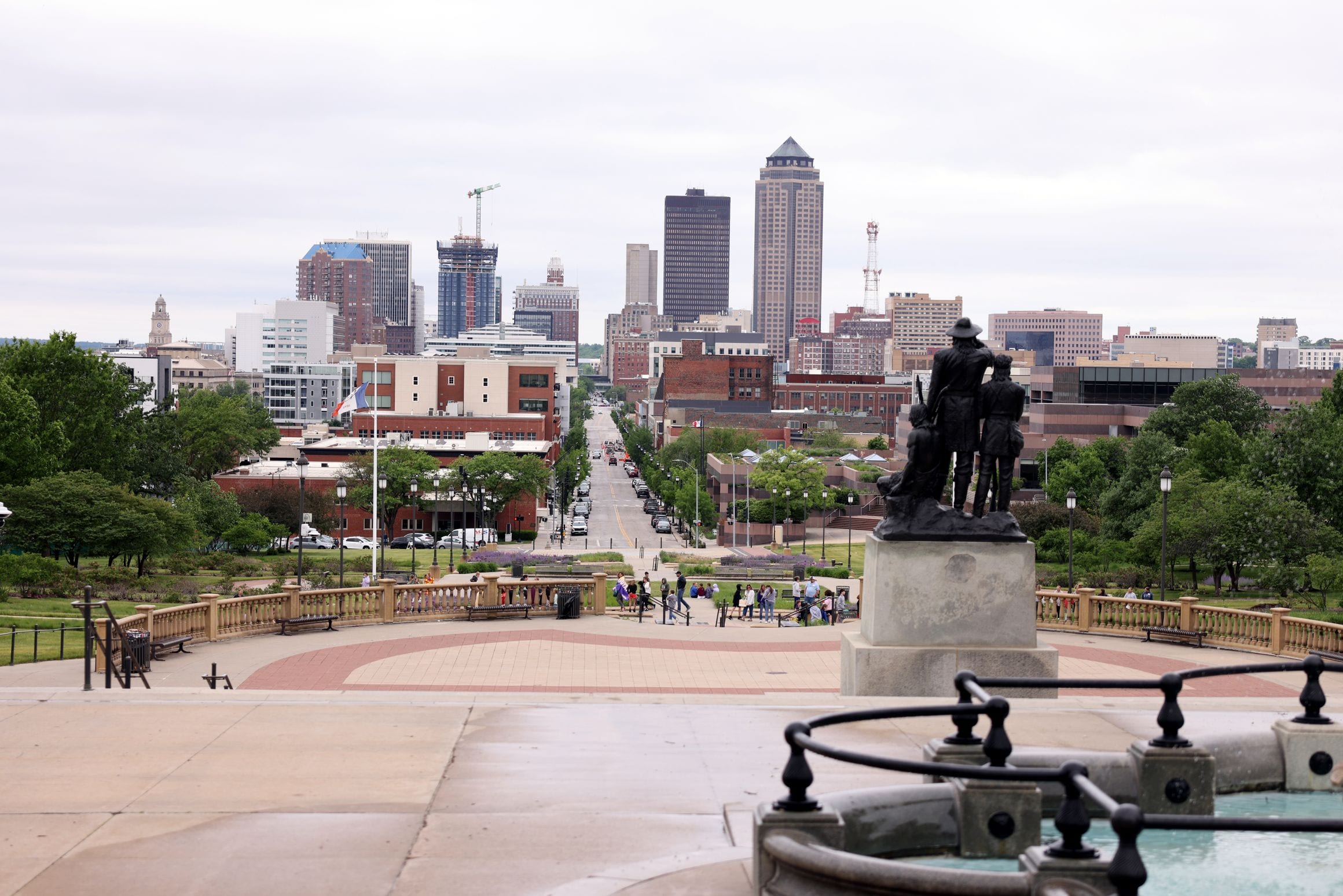
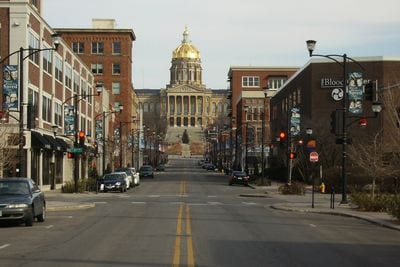
Built between 1871 and 1886, the Iowa State Capitol is the only state capitol in the country with five domes, and its central dome is covered in gold leaf. It is still a working building, home to the Iowa Senate, the House and the governor's office, set on a hill with a broad view back over downtown.
Free guided tours take in the chambers, the ornate law library and the rotunda. Afterward, walk the grounds past the Soldiers' and Sailors' Civil War Monument and the statue of Lincoln and his son Tad, then drop down the hill toward the river.
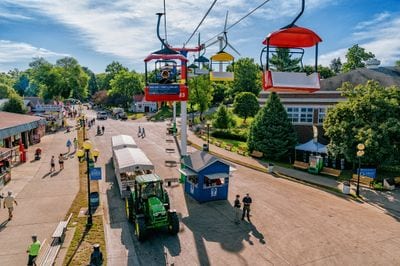
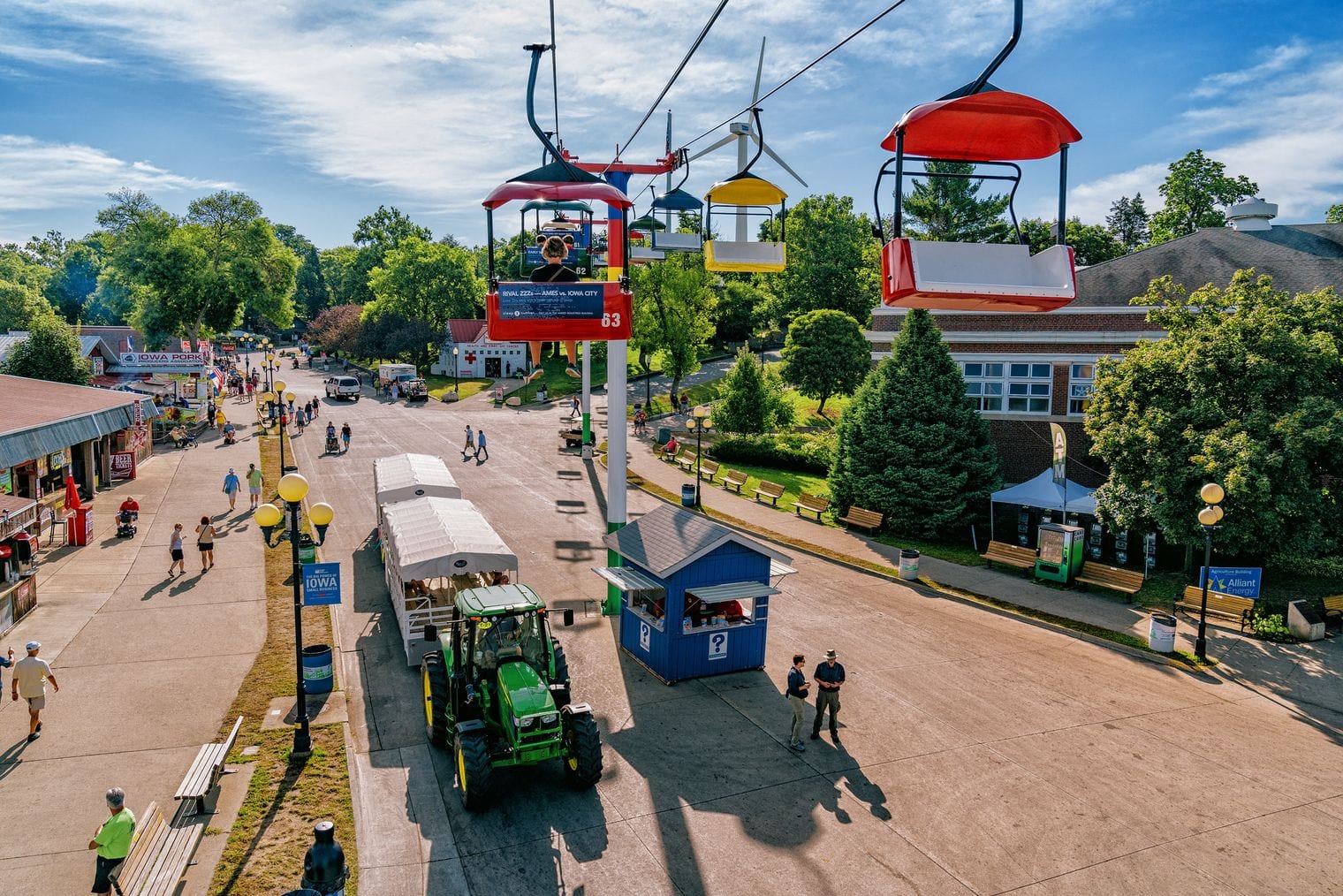
Every August the Iowa State Fairgrounds on the city's east side host the Iowa State Fair, one of the great summer gatherings of the Midwest: livestock barns, grandstand concerts, food on a stick and a life-size cow sculpted from butter, a fair tradition since 1911.
The fair has been held on these grounds since 1886, and the site is listed on the National Register of Historic Places, so the old barns and exhibition halls are part of the show. Other events use the grounds through the year, but plan around the August run if you want the full experience, and go early on a weekday to beat the crowds.
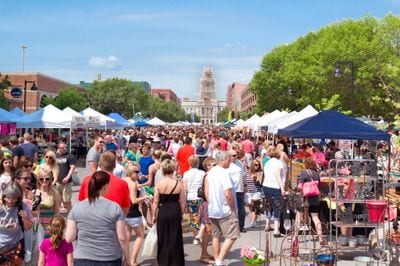
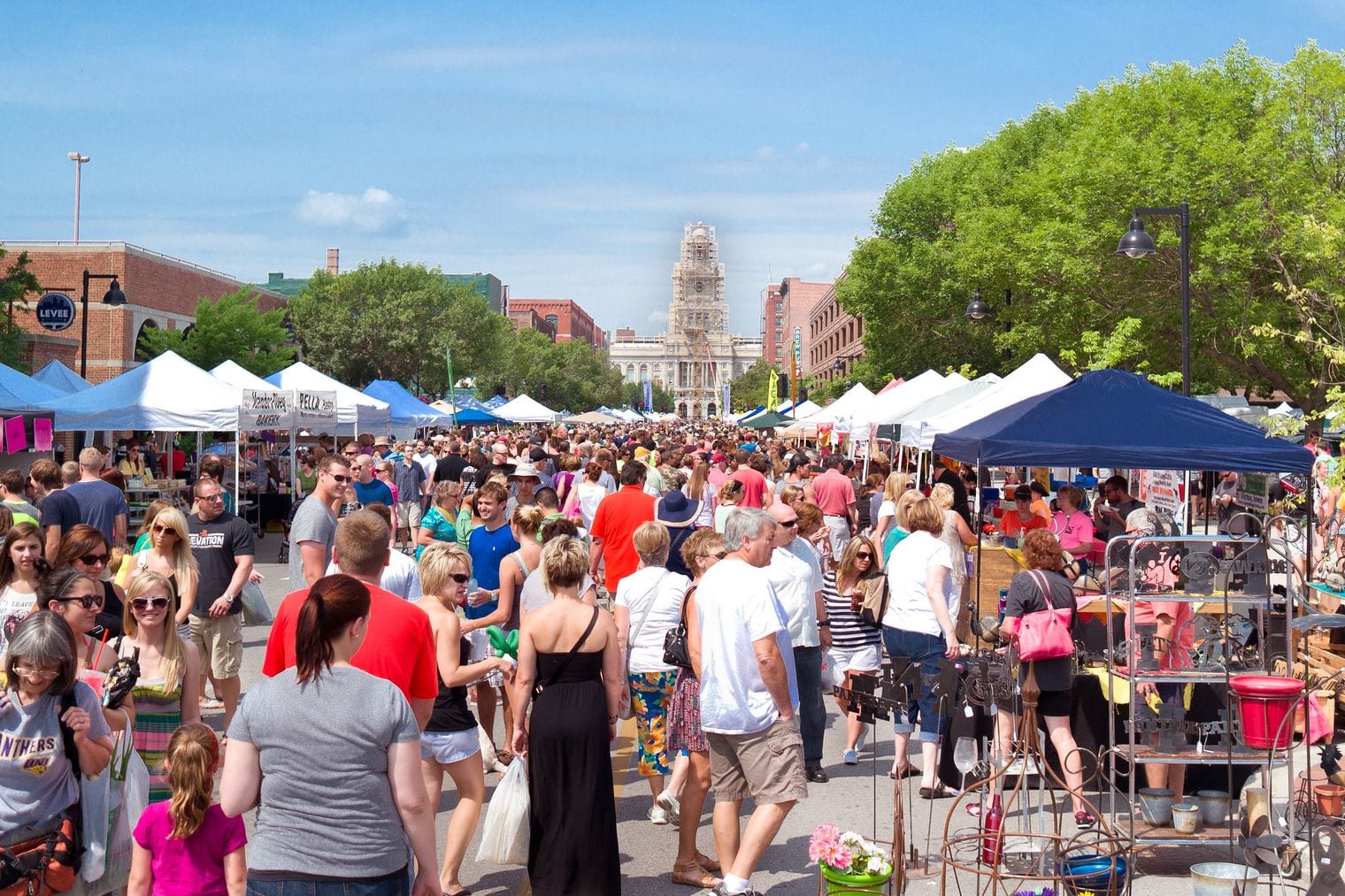
On Saturday mornings from spring into fall, the Downtown Farmers' Market fills the streets of the Historic Court District with hundreds of vendors selling Iowa produce, meat, cheese, baked goods, flowers and crafts.
The stalls stretch across about a dozen blocks west of the river, with street musicians and breakfast stands along the way, so come early with an appetite and an empty bag. It is one of the liveliest few hours in the city and a good way to see how much of Iowa's farm country ends up on downtown tables.
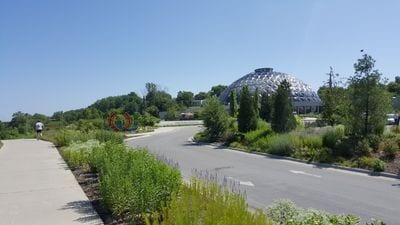
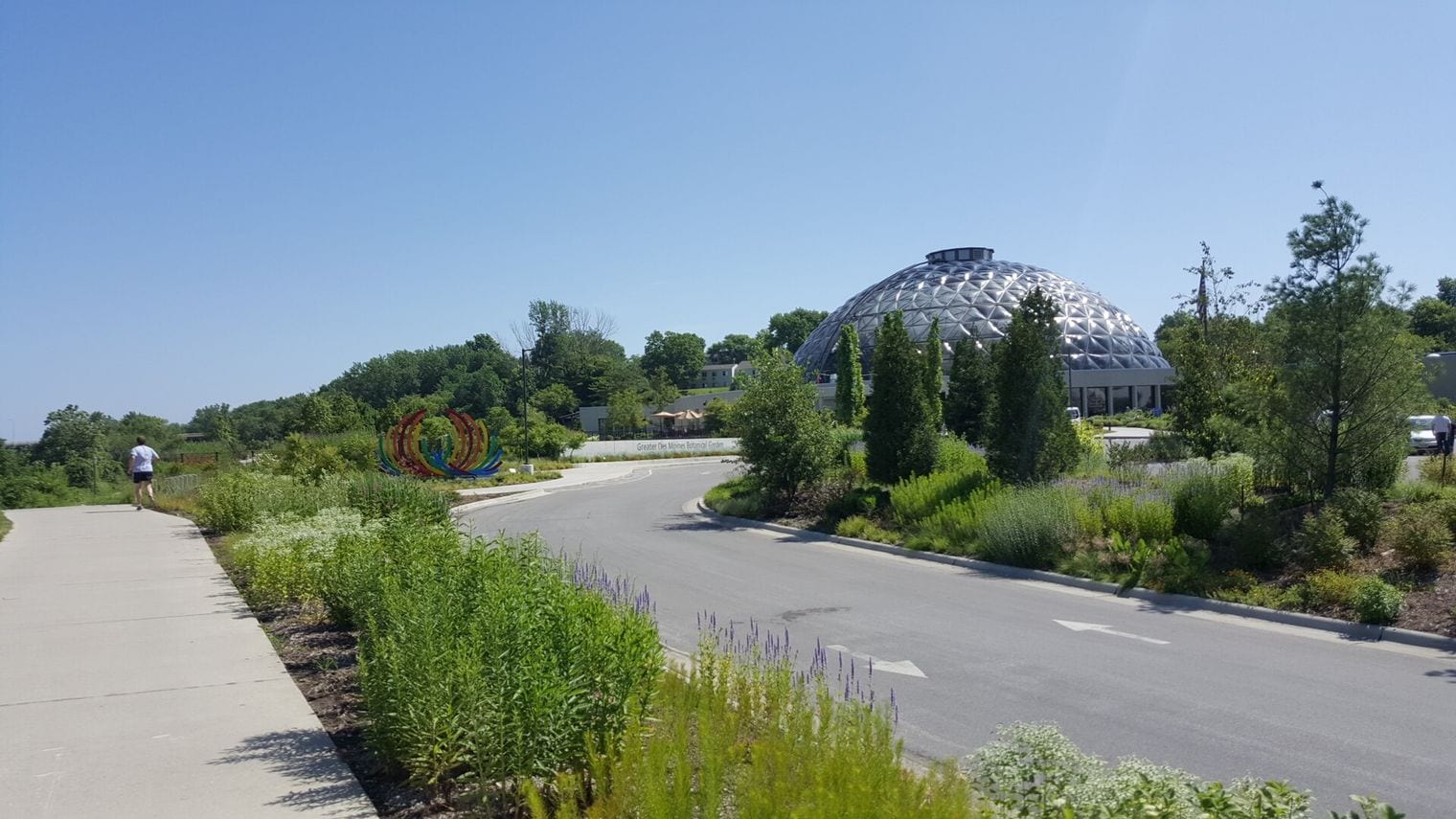
Under a geodesic dome 80 feet tall, the Greater Des Moines Botanical Garden keeps a tropical conservatory green right through the Iowa winter, while outdoor gardens spread along the east bank of the Des Moines River.
The garden opened in 1979 and covers about 12 acres, with indoor plant collections, seasonal outdoor beds and riverside paths. It sits beside the Robert D. Ray Asian Garden and the riverwalk trail, so it fits neatly into a walking loop of downtown, and the dome makes it a dependable stop on a cold or rainy day.
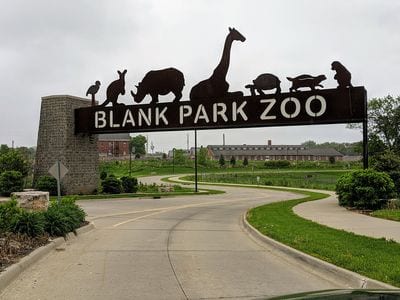
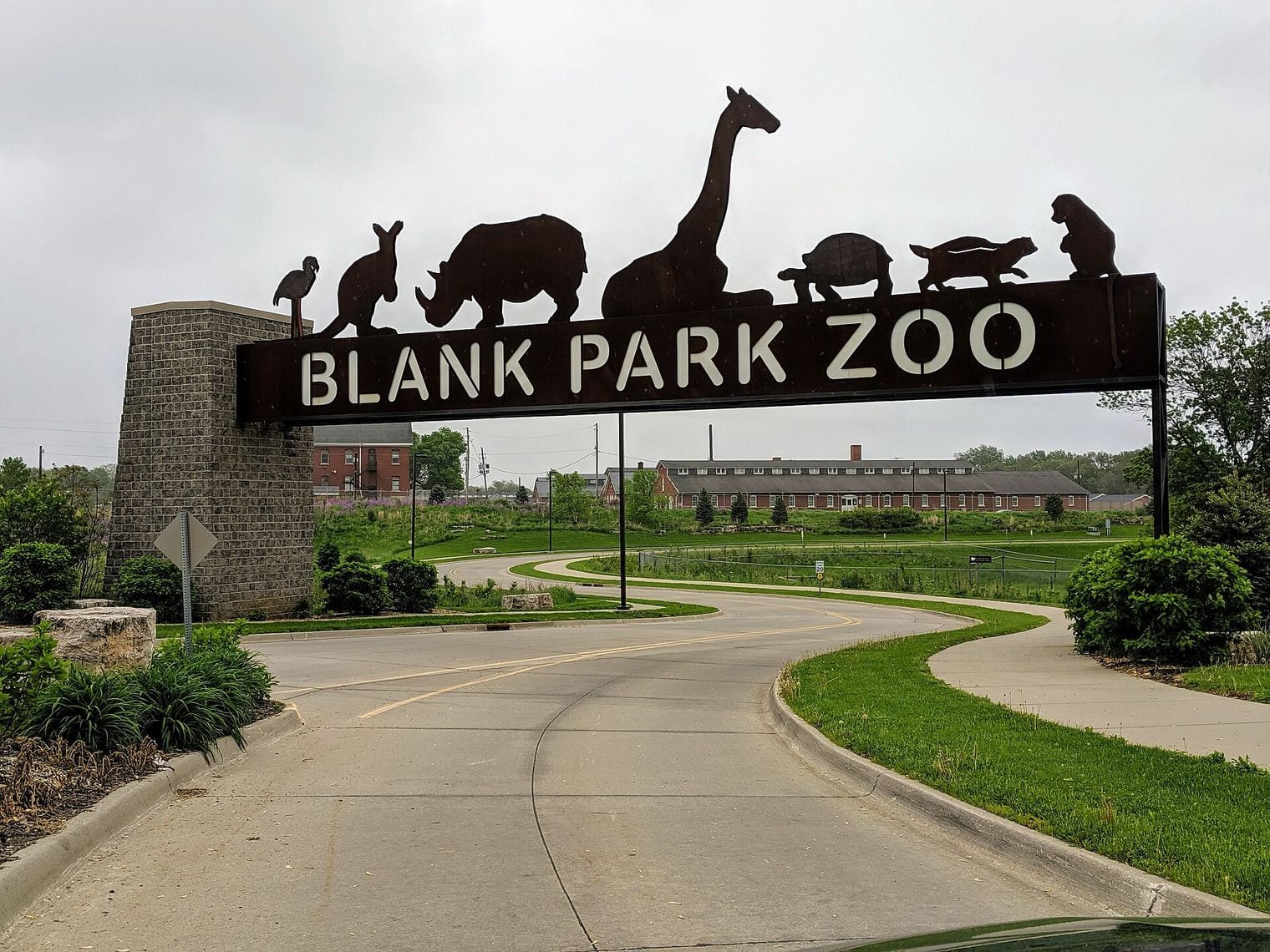
On the south side of the city, Blank Park Zoo covers 49 acres and is accredited by the Association of Zoos and Aquariums. It began as a children's zoo in 1966 and has grown into a full zoo with exhibits arranged by region of the world.
Highlights include the great cats, an Australia area home to cassowaries, a sea lion pool and an indoor Discovery Center with a coral reef tank. It is compact enough to see in a morning, which makes it an easy pick for families with younger children.
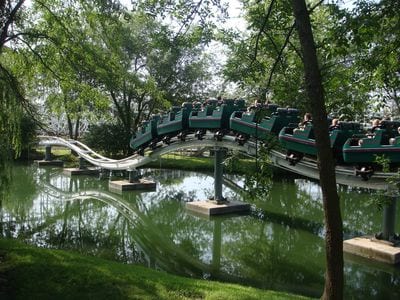
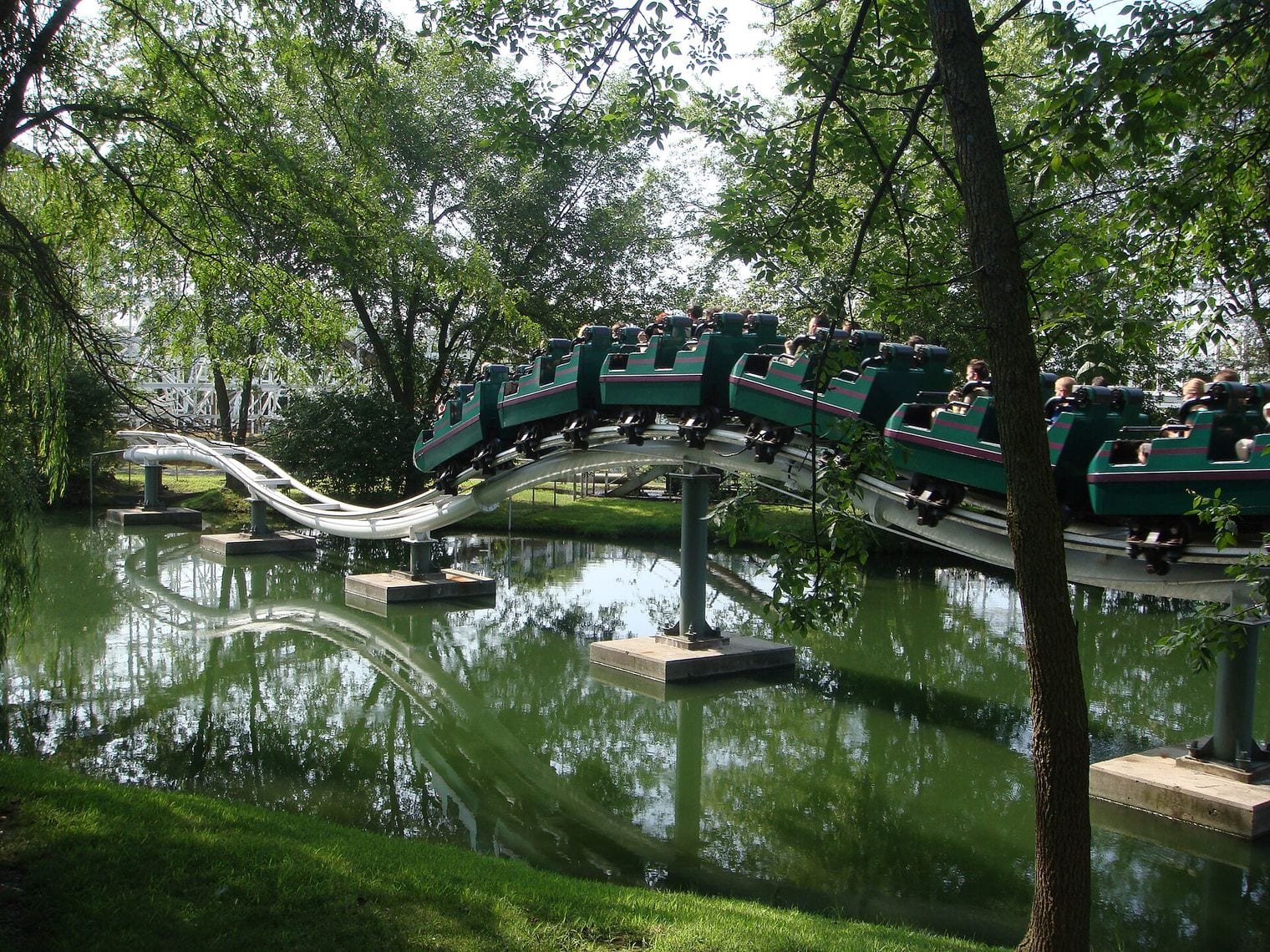
Just east of the city in Altoona, Adventureland Park is Iowa's best-known amusement park, with roller coasters, family rides and the Adventure Bay water park alongside. The Tornado, a wooden coaster that opened in 1978, has been named a Coaster Landmark by American Coaster Enthusiasts, while the Monster, a looping steel coaster added in 2016, is the park's big thrill ride.
The park runs seasonally, roughly from late spring through summer, with Halloween events on fall weekends, so check the calendar before you drive out. Pair it with the Iowa State Fairgrounds side of town, since both sit east of downtown.
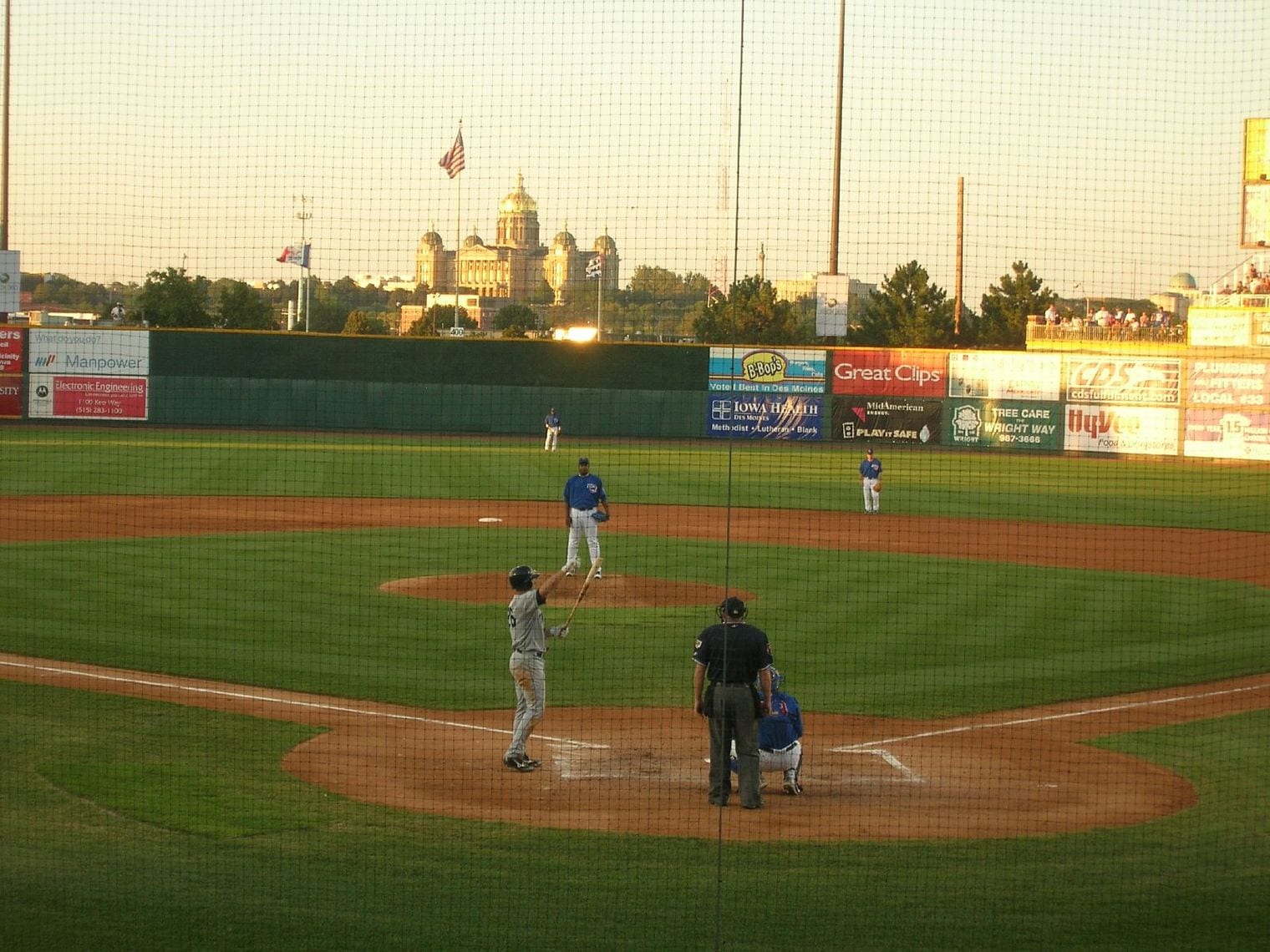
Principal Park, the home of the Iowa Cubs, sits where the Des Moines and Raccoon rivers meet, a short walk from downtown. The Iowa Cubs are the top minor league team of the Chicago Cubs, so many players on the field are a call-up away from the major leagues.
A summer evening game is one of the easiest and most local things to do in the city: affordable seats, the downtown skyline and Capitol dome in view, and fireworks on some nights. Walk over from the Court Avenue bars and restaurants before the first pitch.
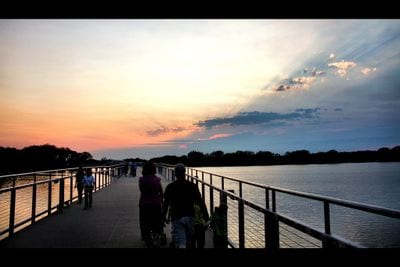
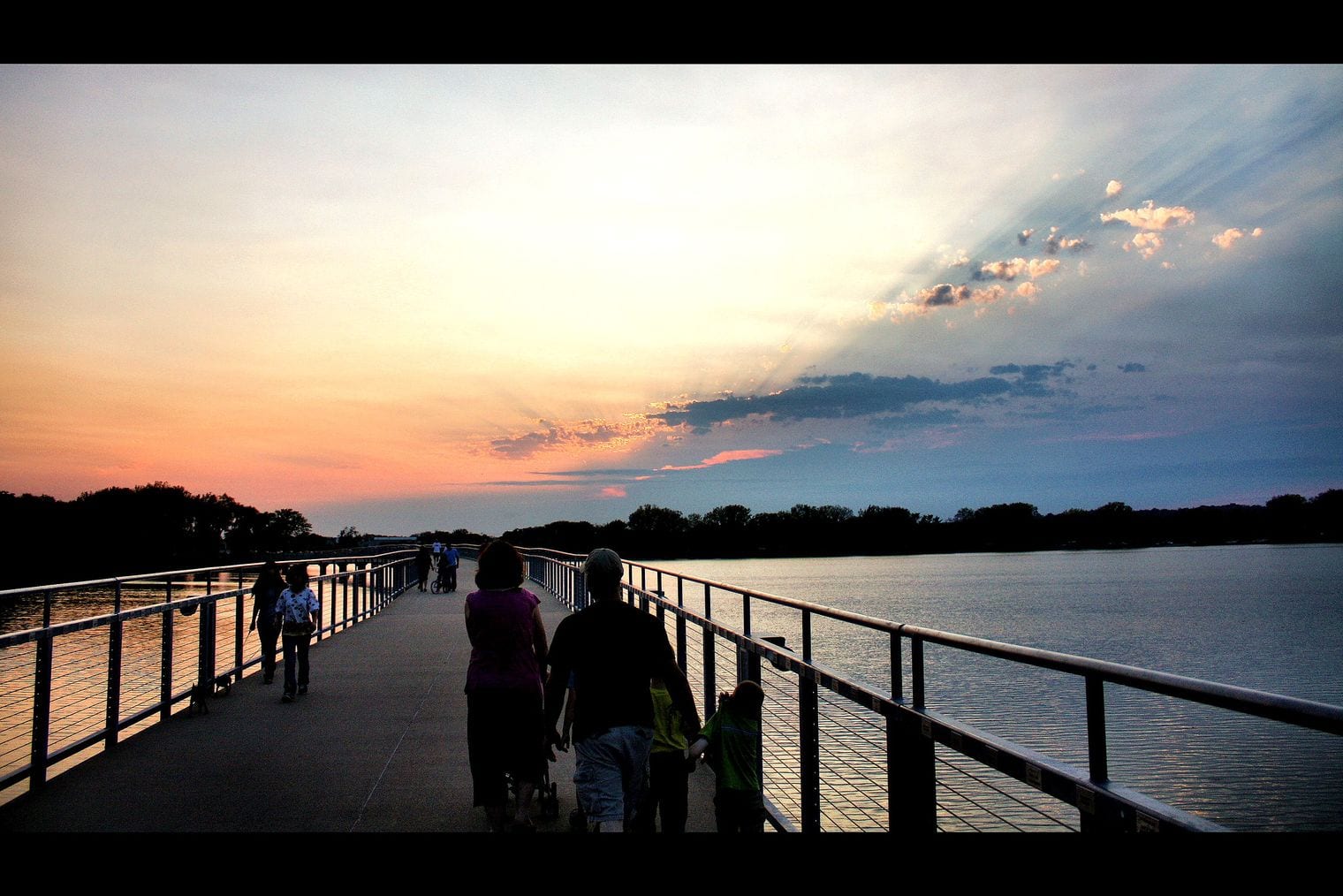
Just southwest of downtown, Gray's Lake Park wraps a 1.9-mile trail around its lake and draws more than a million visits a year, making it the city's favorite place to walk, run or cycle.
The centerpiece is the Kruidenier Trail bridge, a 1,400-foot pedestrian bridge that crosses the water and glows with colored lights after dark. Come at sunset for the light on the lake, then stay for the bridge, and use the connecting trails if you want to keep going toward Water Works Park or downtown.
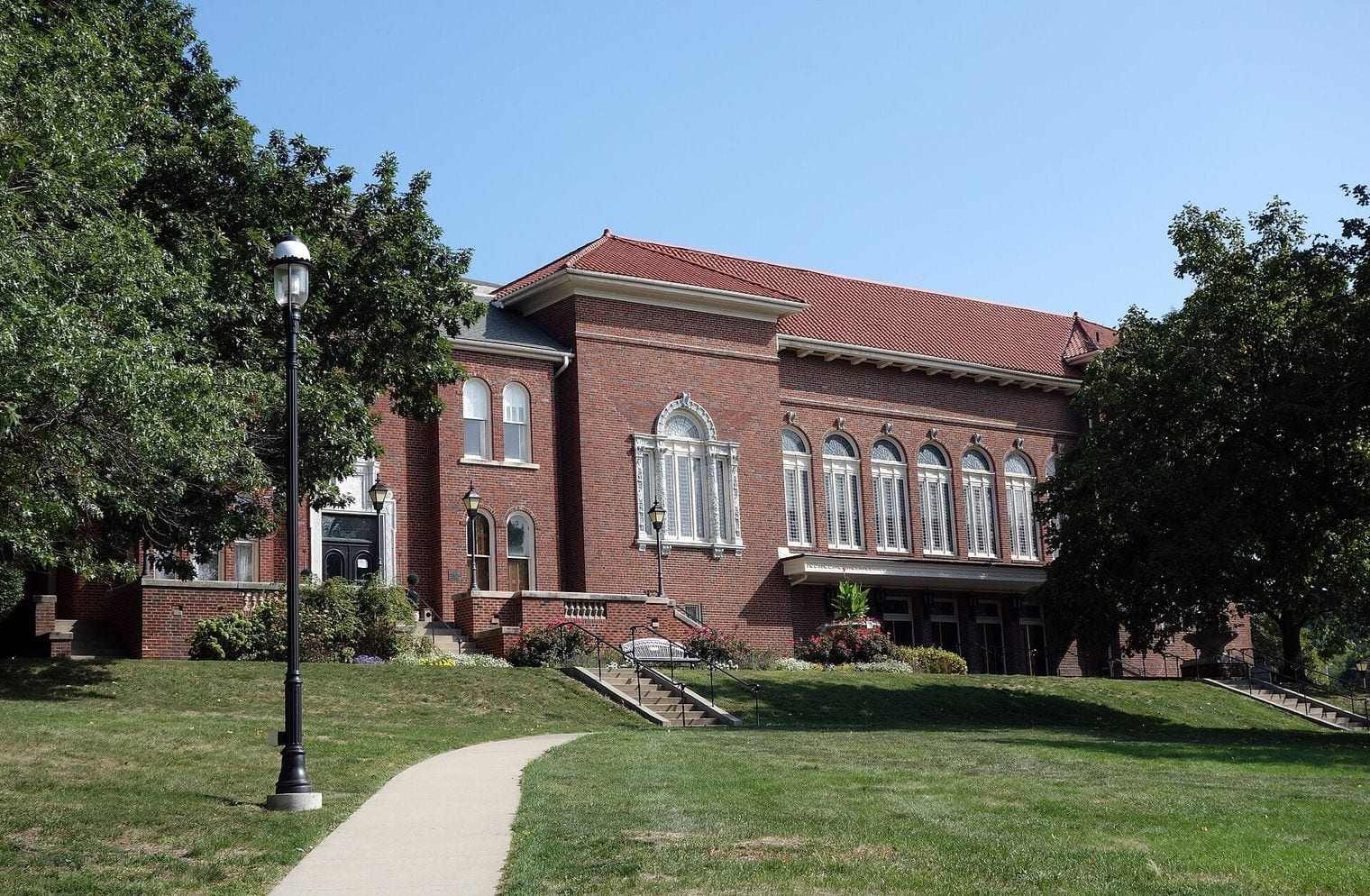
Hoyt Sherman Place began as the 1877 home of banker and politician Hoyt Sherman. After his death, the Des Moines Women's Club took it over, added an art gallery in 1907, said to be the city's first public art gallery, and opened a theater in 1923.
Today the mansion, gallery and restored theater work together as a museum and performing arts venue, with concerts and comedy in a hall of about 1,250 seats. Catch a show for the full effect, or tour the house to see its paintings, sculpture and carved period furniture.
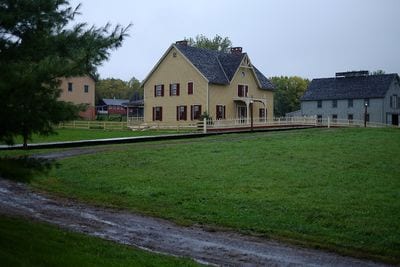
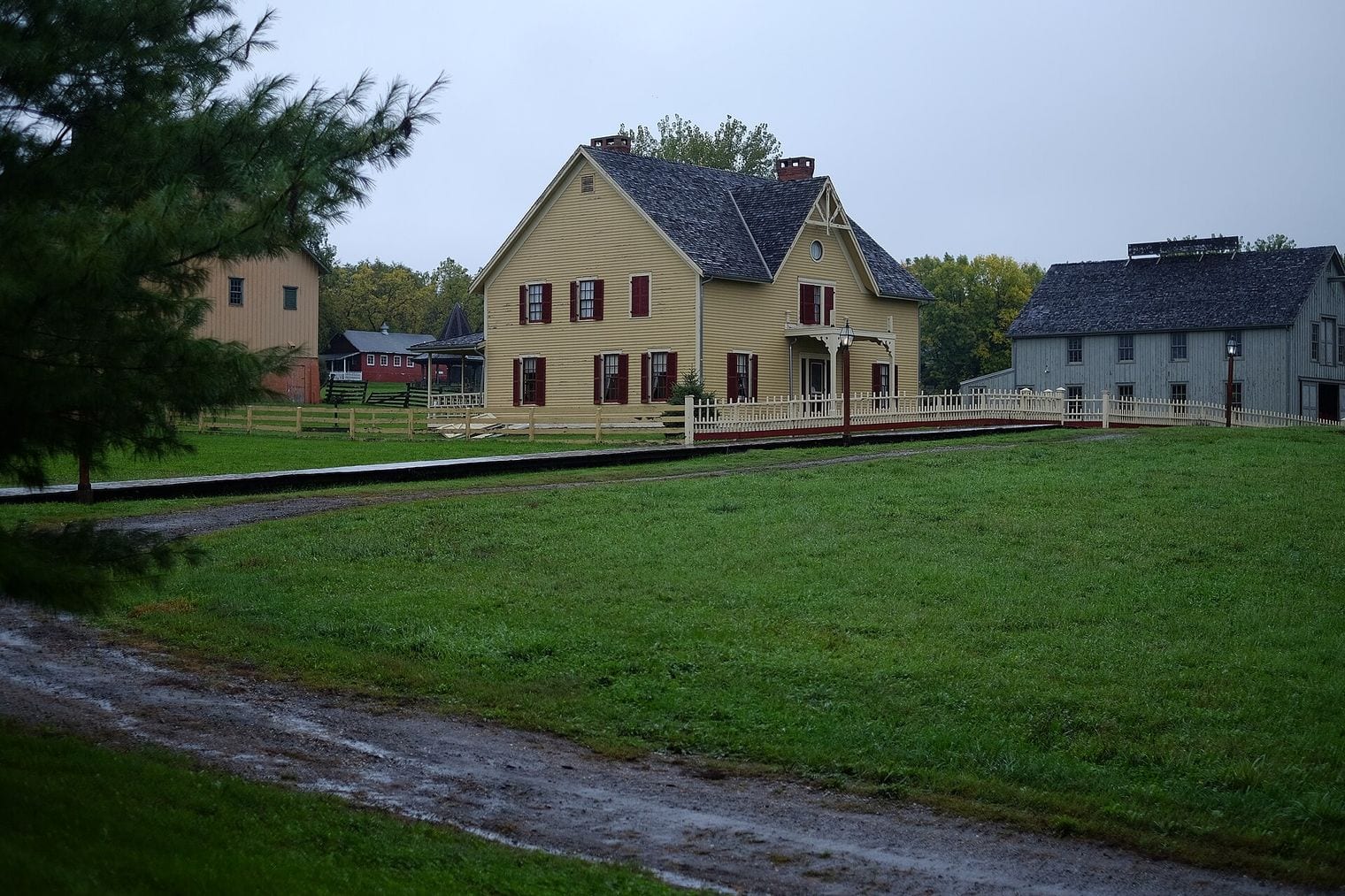
In Urbandale, on the northwest edge of Des Moines, Living History Farms is a 500-acre open-air museum about Midwestern rural life. Interpreters in period clothing work three farms set in 1700, 1850 and 1900, and an 1876 town called Walnut Hill.
Tractor-drawn carts and walking trails link the sites, and you can watch the farm chores, the crafts and the changing tools of each era. The farms are seasonal, open for general touring from about May through October, with programs by reservation in the colder months, so check before you go and allow most of a day.
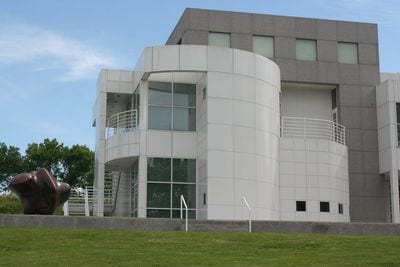
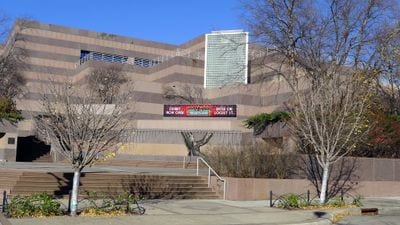
The Des Moines Art Center is worth the trip for the buildings alone: the original 1948 wing is by Eliel Saarinen, a 1968 addition is by I. M. Pei and a third wing, completed in 1985, is by Richard Meier.
Inside, the collection runs from paintings and sculpture to modern and contemporary art and mixed media, and the rose garden behind the museum makes a quiet stop. It also runs Pappajohn Sculpture Park downtown, so the two make a natural pairing on an art-focused day.
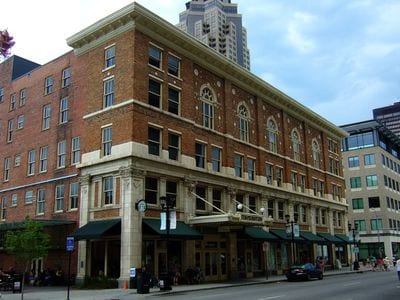
Below the Capitol and across the river from downtown, the East Village is Des Moines' most walkable shopping and dining district, with independent boutiques, cafes, bars and restaurants in restored brick commercial blocks.
The neighborhood was platted in 1854, and part of it was listed as a historic district on the National Register of Historic Places in 2019. Wander Locust Street and the cross streets for local shops and galleries, then stay for dinner or a drink; it is livelier on evenings and weekends.
Free printable checklist of all 30 places
Tick them off as you go. Confirm your email to download it, plus one email every Thursday with new guides for the places you tick.
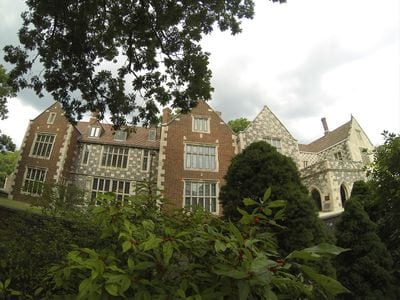
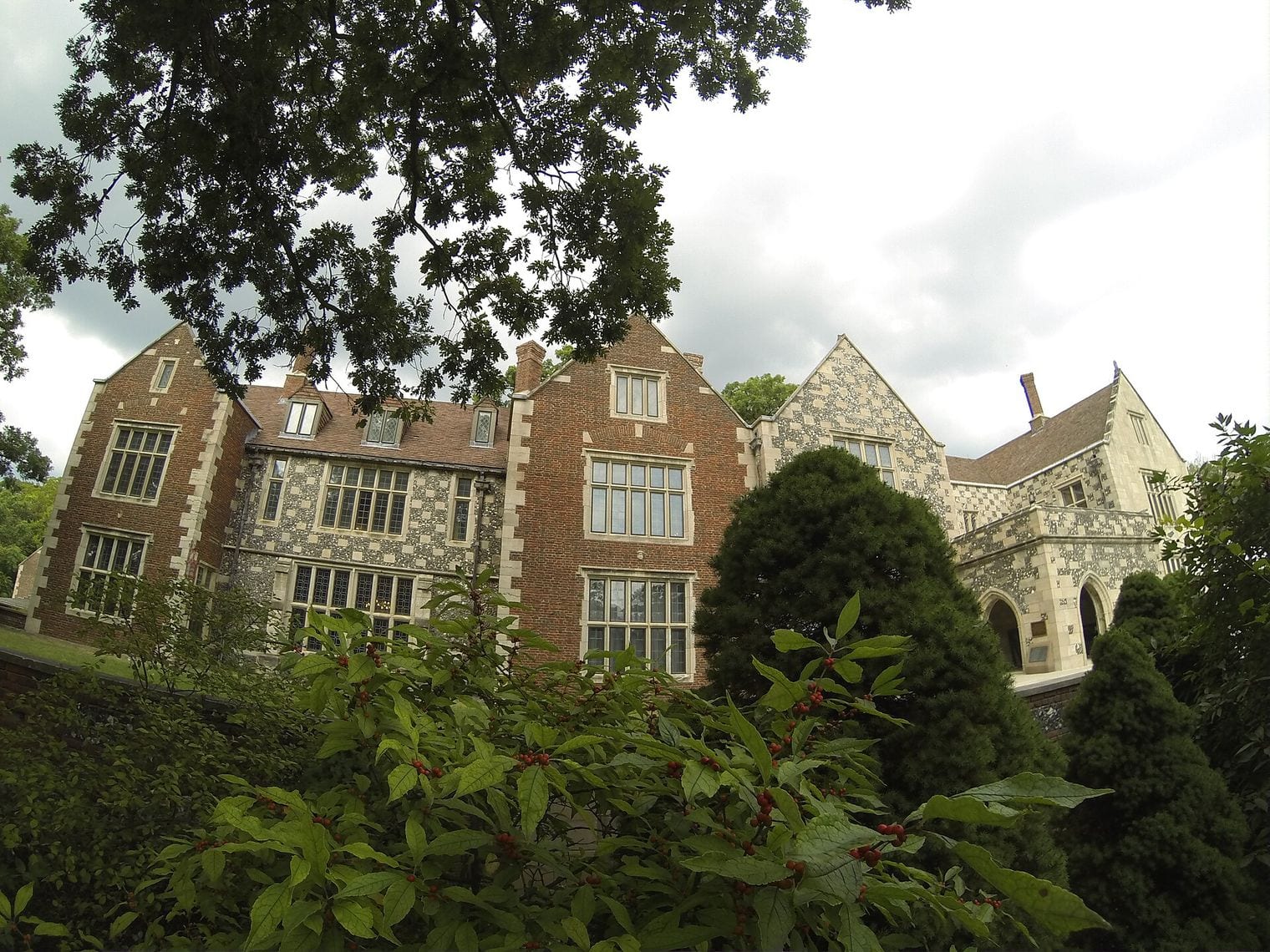
Salisbury House & Gardens is a Tudor-style manor on a wooded hill, built between 1923 and 1928 by cosmetics businessman Carl Weeks and his wife Edith. It was modeled on the King's House in Salisbury, England, and has 42 rooms.
Tours show off the paneled rooms, the collections the Weeks family gathered and the house's English details, while the grounds and gardens make a pleasant walk on their own. It is a good contrast to the Victorian mansions elsewhere in the city.
The State Historical Museum of Iowa is the main museum of the State Historical Society of Iowa, which was founded in 1857 and is now based near the Capitol in Des Moines.
Its galleries trace Iowa's story from its land and first peoples through farming, industry and politics, and the building also holds the society's library and archives for anyone researching Iowa roots. It fits easily into a morning at the Capitol and the East Village.
Southwest of downtown along the Raccoon River, Water Works Park covers about 1,500 acres and is one of the largest urban parks in the United States. It surrounds the city's water utility and offers trails, picnic areas and wide open fields.
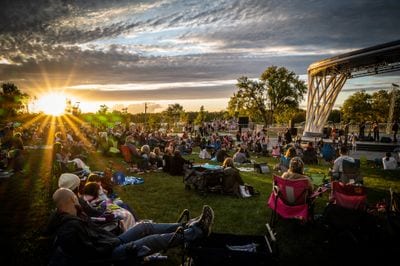
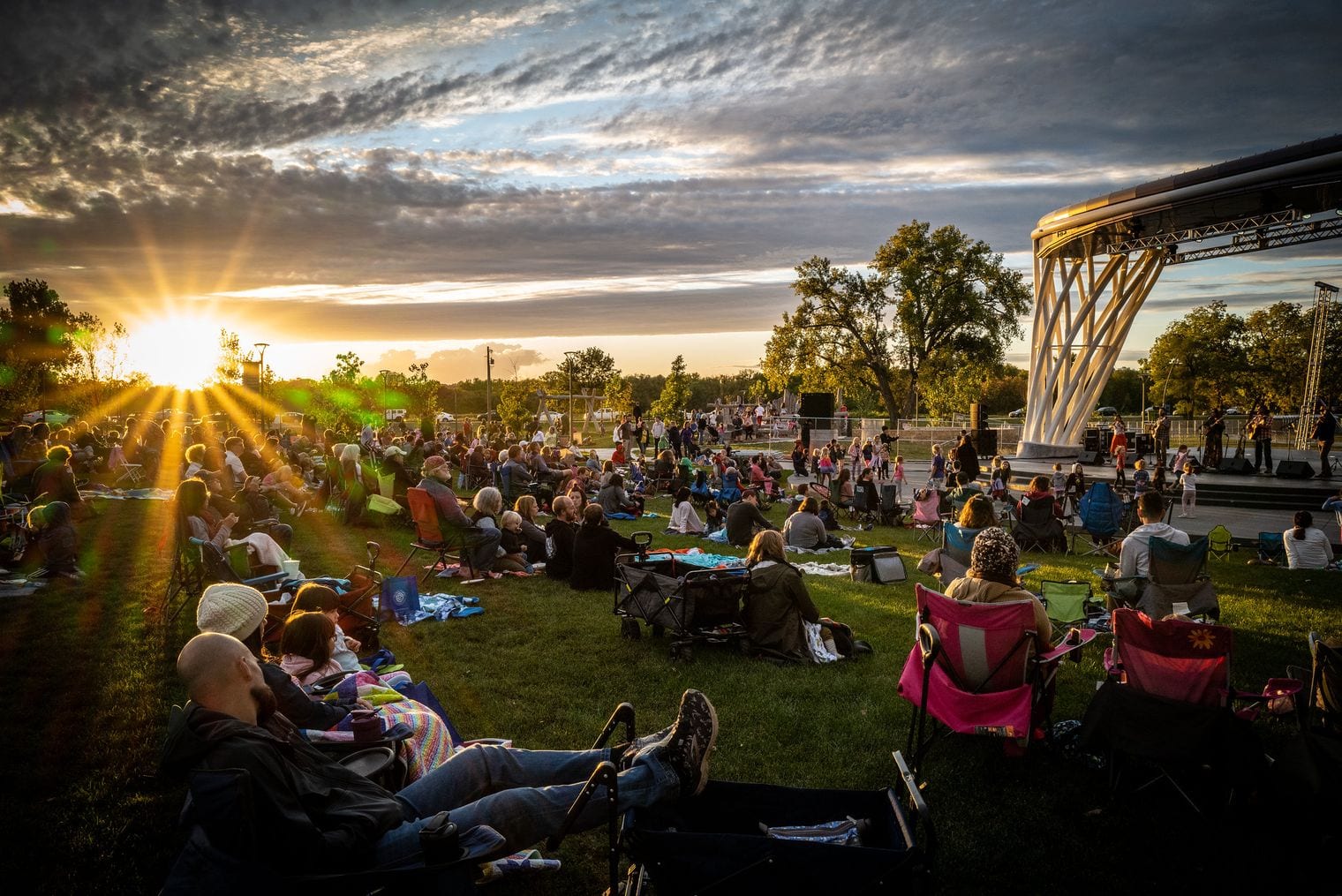
In summer the Lauridsen Amphitheater, opened in 2019, hosts concerts and festivals, and the park links by trail to Gray's Lake. On a quiet day it is simply a big green space for a bike ride or a long walk close to the city.
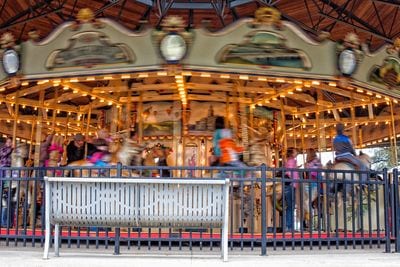
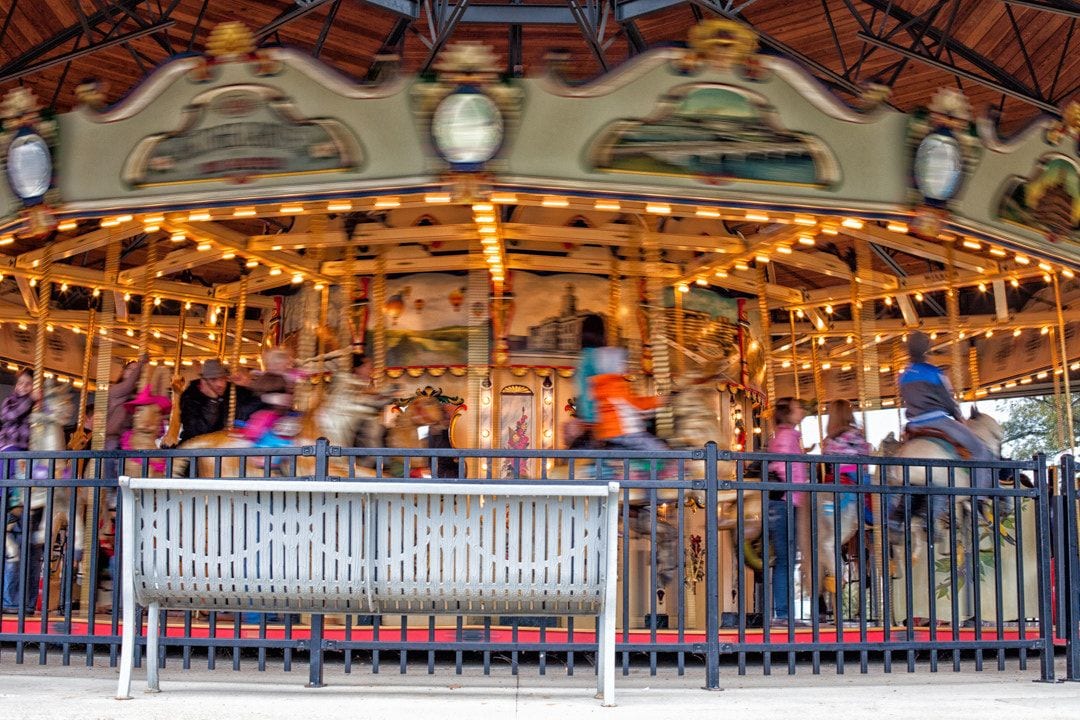
On the north side near the Des Moines River, Union Park is a classic neighborhood park with a playground, picnic spots and the Heritage Carousel, a carousel of hand-carved and painted animals that opened in 1998.
The carousel runs in the warmer months, and it is a small, old-fashioned treat for younger children. Bring a picnic, ride the carousel, then let the kids loose in the park before heading back downtown.
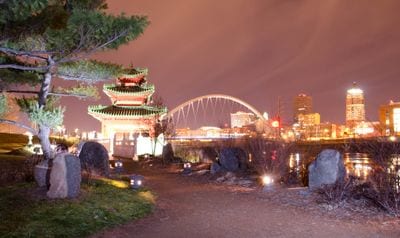
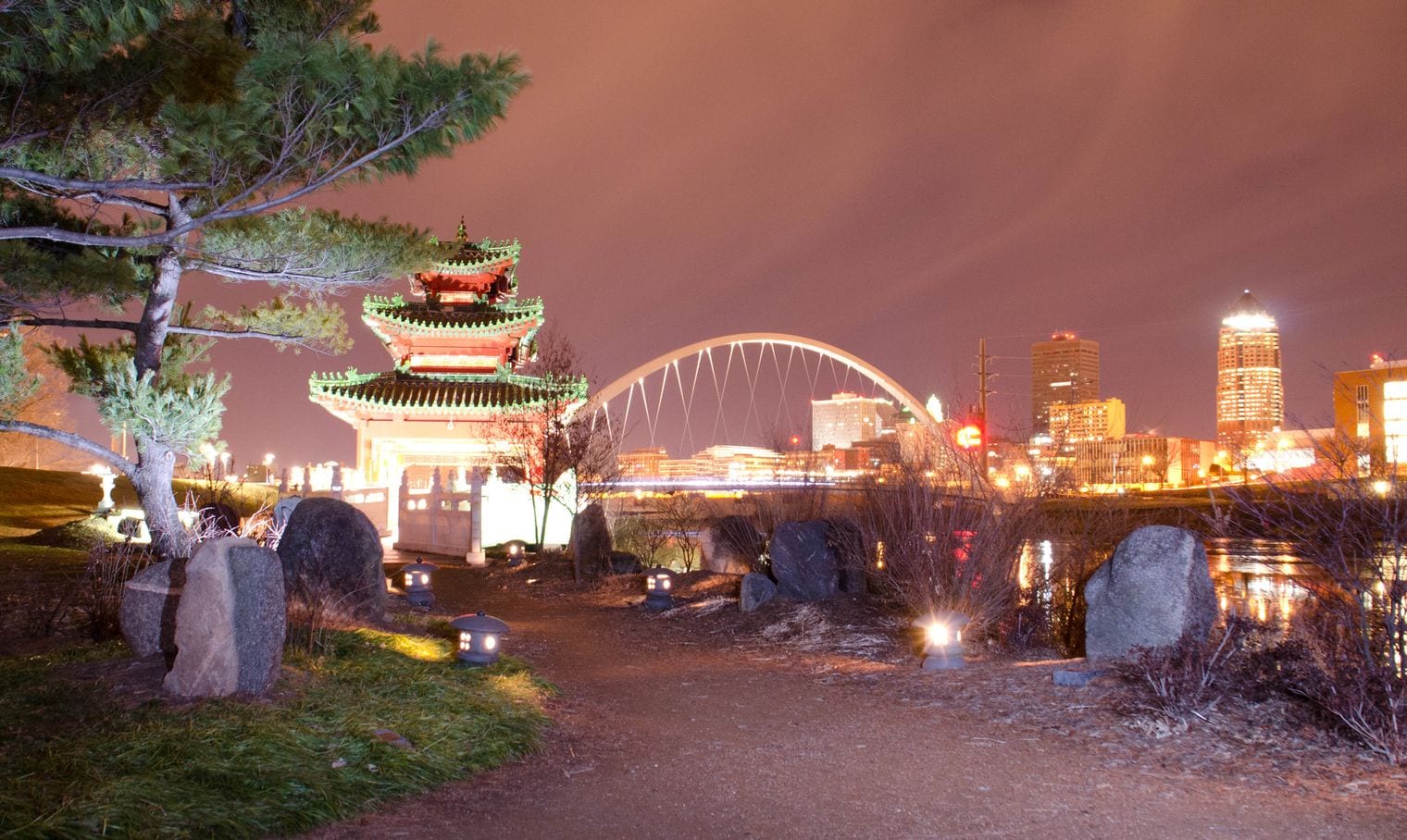
On the riverfront next to the Botanical Garden, the Robert D. Ray Asian Garden centers on a pavilion set on an arched bridge over a pond that spills toward the river in a series of waterfalls, with stone pagodas and lanterns around it.
The garden honors Robert D. Ray, Iowa's governor from 1969 to 1983, who welcomed refugees from Southeast Asia to the state, and a ring of carved granite boulders in its Character Garden spells out values such as respect and fairness. It is a calm spot for a few quiet minutes on a riverwalk loop.
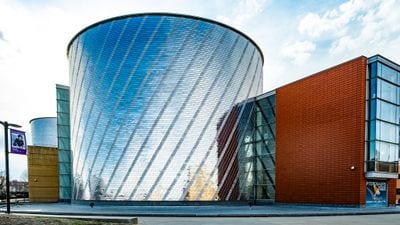
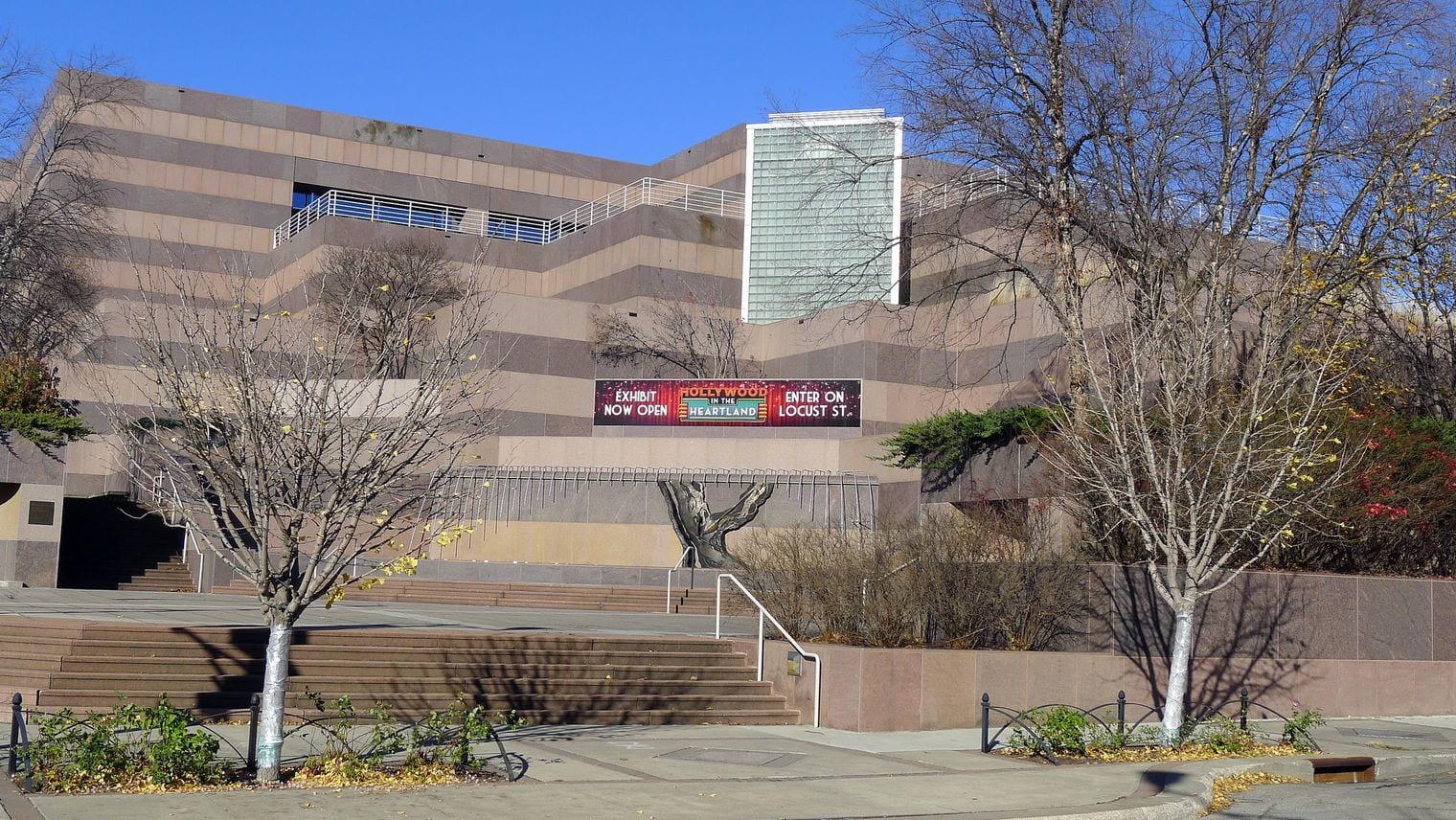
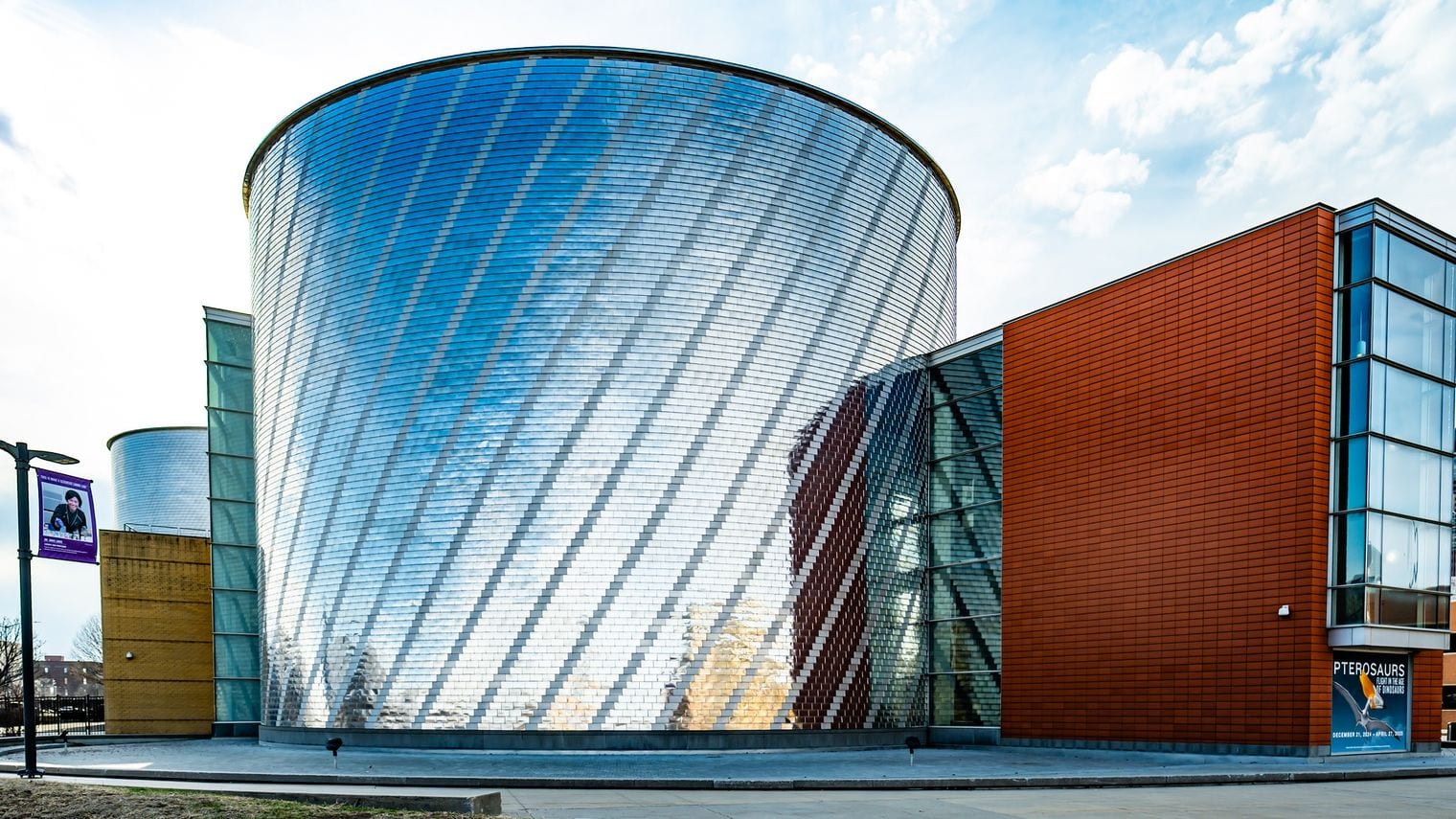
Downtown, the Science Center of Iowa fills its galleries with hands-on science exhibits, built for kids but enjoyable for curious adults too.
Its planetarium shows run on a large dome, and live science demonstrations add some noise and fun. The museum has been in its current downtown building since 2005, and it makes a reliable rainy-day or winter plan for families.
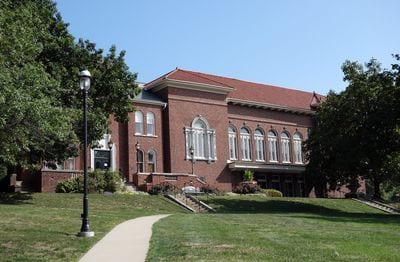
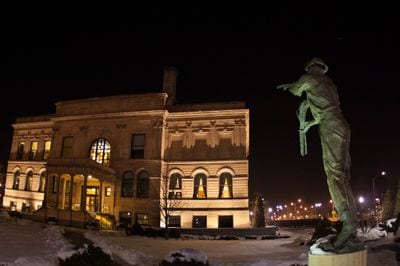
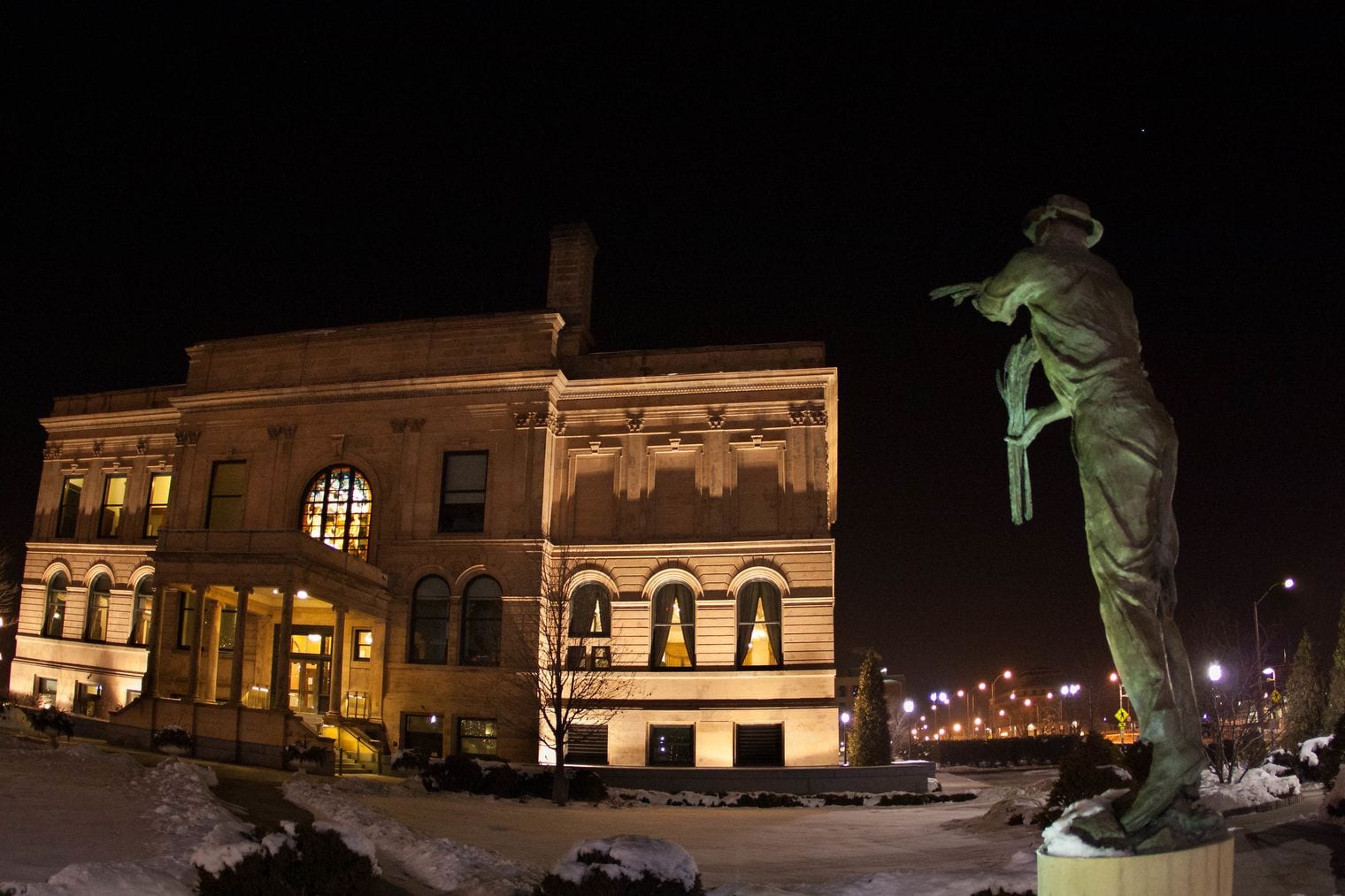
The World Food Prize Hall of Laureates occupies the restored former Des Moines Public Library, a century-old building on the riverwalk. It honors the laureates of the World Food Prize, the award founded by Iowa-born scientist Norman Borlaug for people who have improved the world's food supply.
Free guided tours show off the building's restored interiors, more than 100 works of art and exhibits on agriculture, food and Iowa's farm heritage. It is a quieter, unexpected stop that tells a story you will not hear elsewhere in the city.
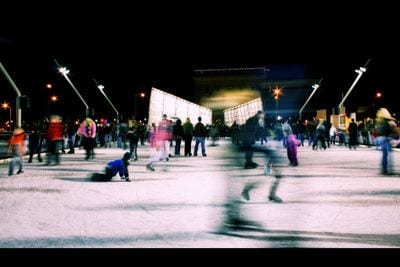
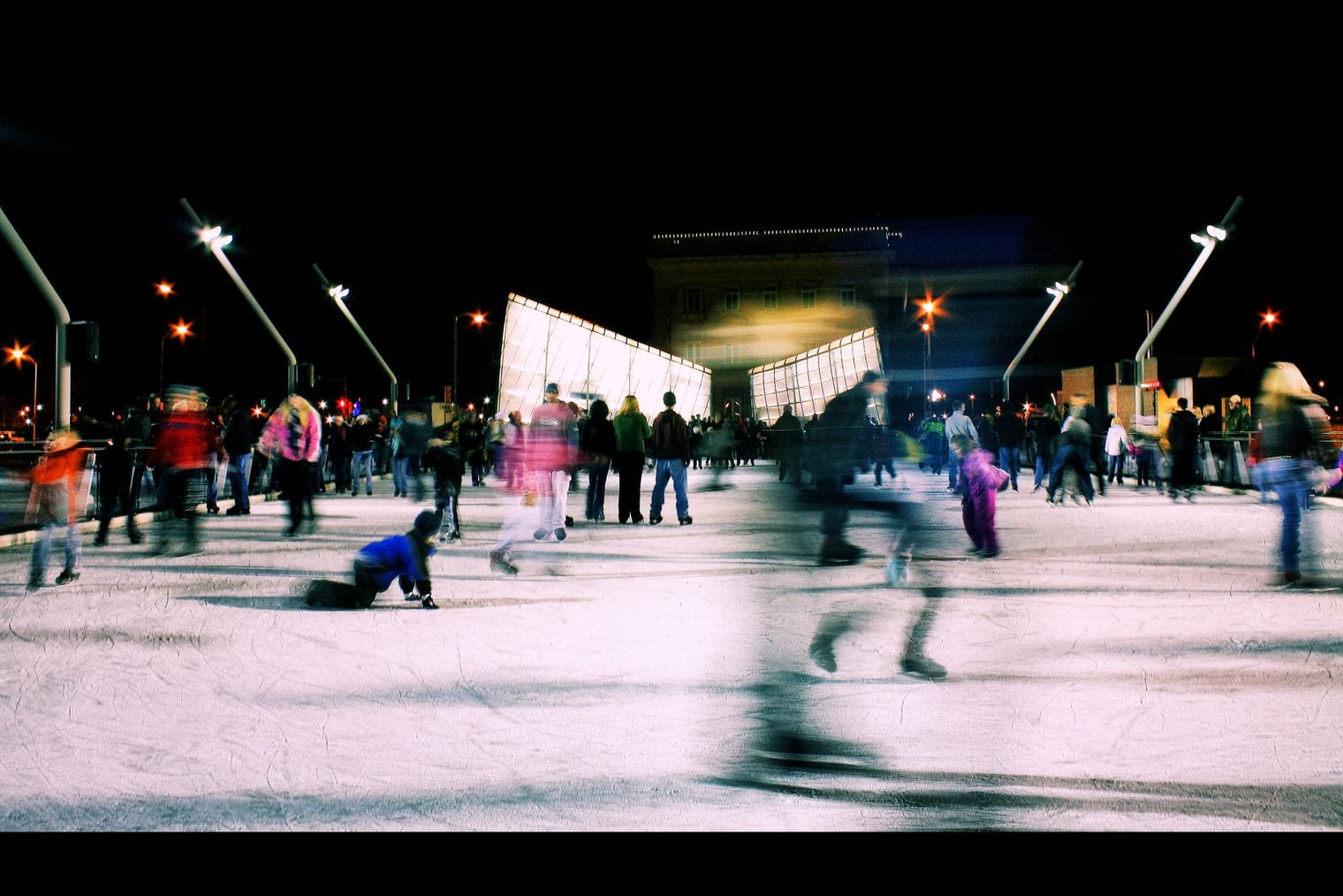
In winter, Brenton Skating Plaza turns a stretch of the riverfront into an open-air ice rink, usually from November into March, with skate rentals and the downtown towers lit up around you.
Evening skates are the most atmospheric. In the warmer months the plaza is simply part of the riverwalk, so look for it as you stroll the loop.
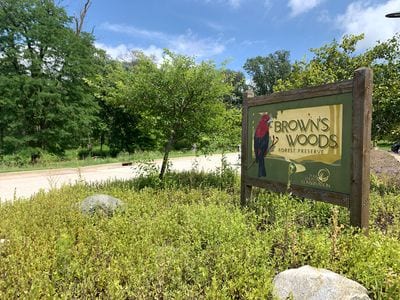
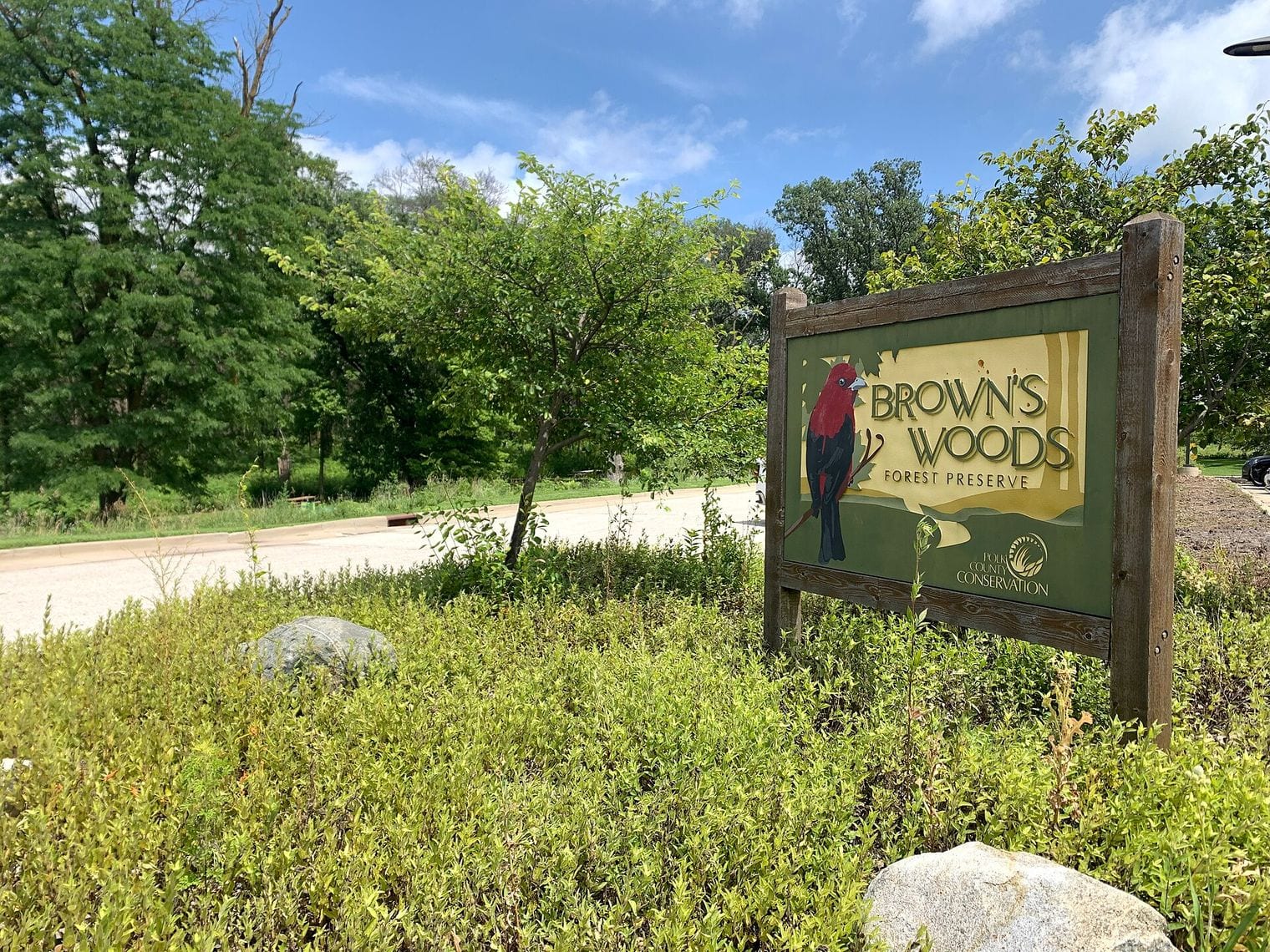
On the West Des Moines edge of the city, Brown's Woods is a Polk County forest preserve often described as Iowa's largest urban forest, with oak and hickory woods running down to bluffs above the Raccoon River.
More than four miles of hiking trails wind through it, and in spring and fall it is a stopover for migrating songbirds such as warblers and vireos, which makes it a favorite with birders. In winter the trails suit snowshoes and cross-country skis.
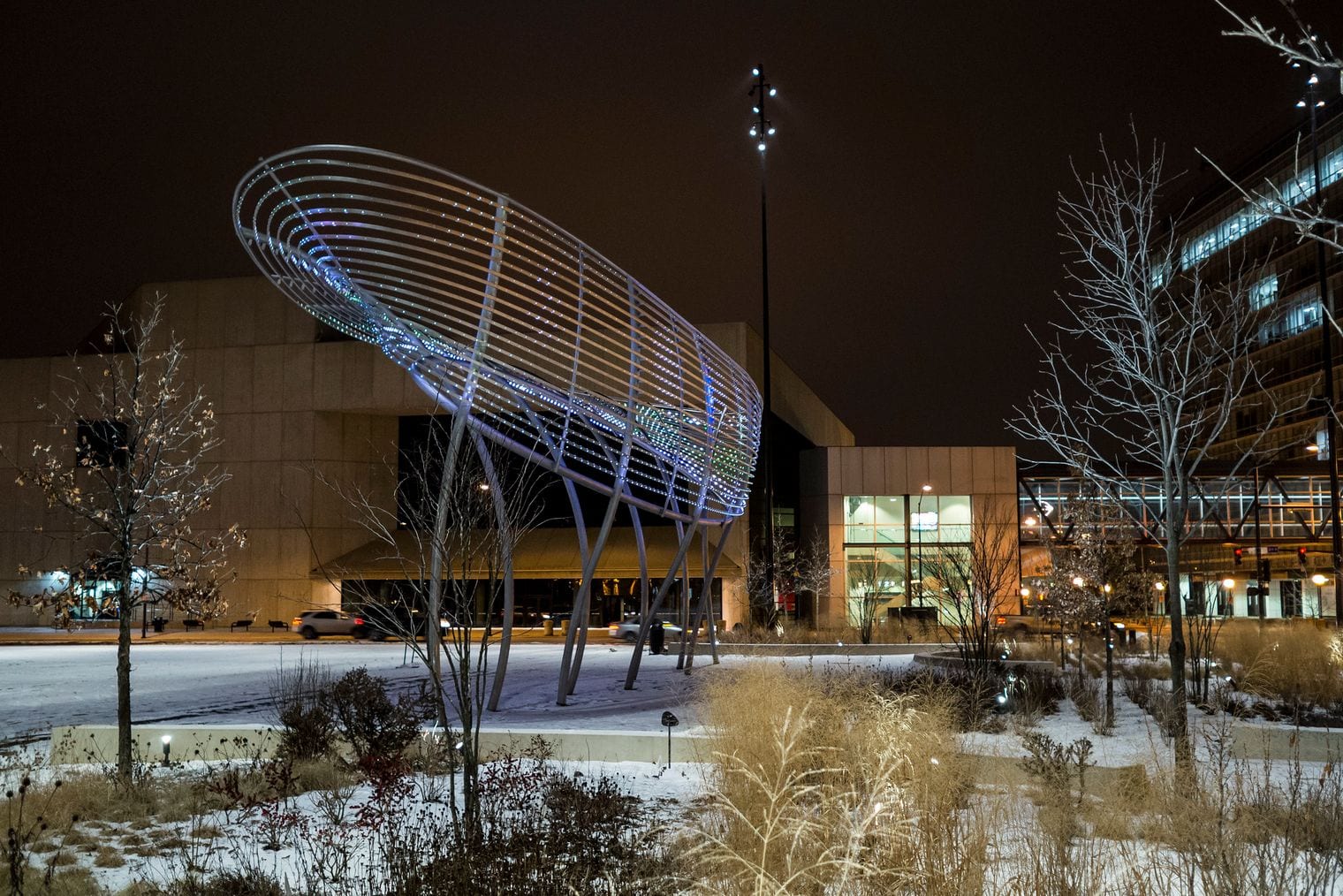
The Des Moines Civic Center has been Iowa's largest theater since it opened in 1979, with about 2,700 seats for touring Broadway musicals, concerts, ballet and other big productions, plus the smaller Stoner Theater on street level.
Out front, Cowles Commons is a public plaza that is home to the giant Crusoe Umbrella sculpture by Claes Oldenburg and Coosje van Bruggen. See a show if the dates line up, or just stop for a photo of the umbrella on a downtown walk.
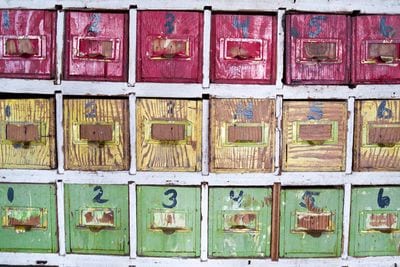
West End Architectural Salvage fills four floors of a downtown building with salvaged doors, mantels, signs, lighting, antiques and art, and it became known nationally through the HGTV series about the shop.
Even if you are not shopping for a project, it is a fun place to browse for an hour, with oddities around every corner. Allow time to climb all the way to the top floor.
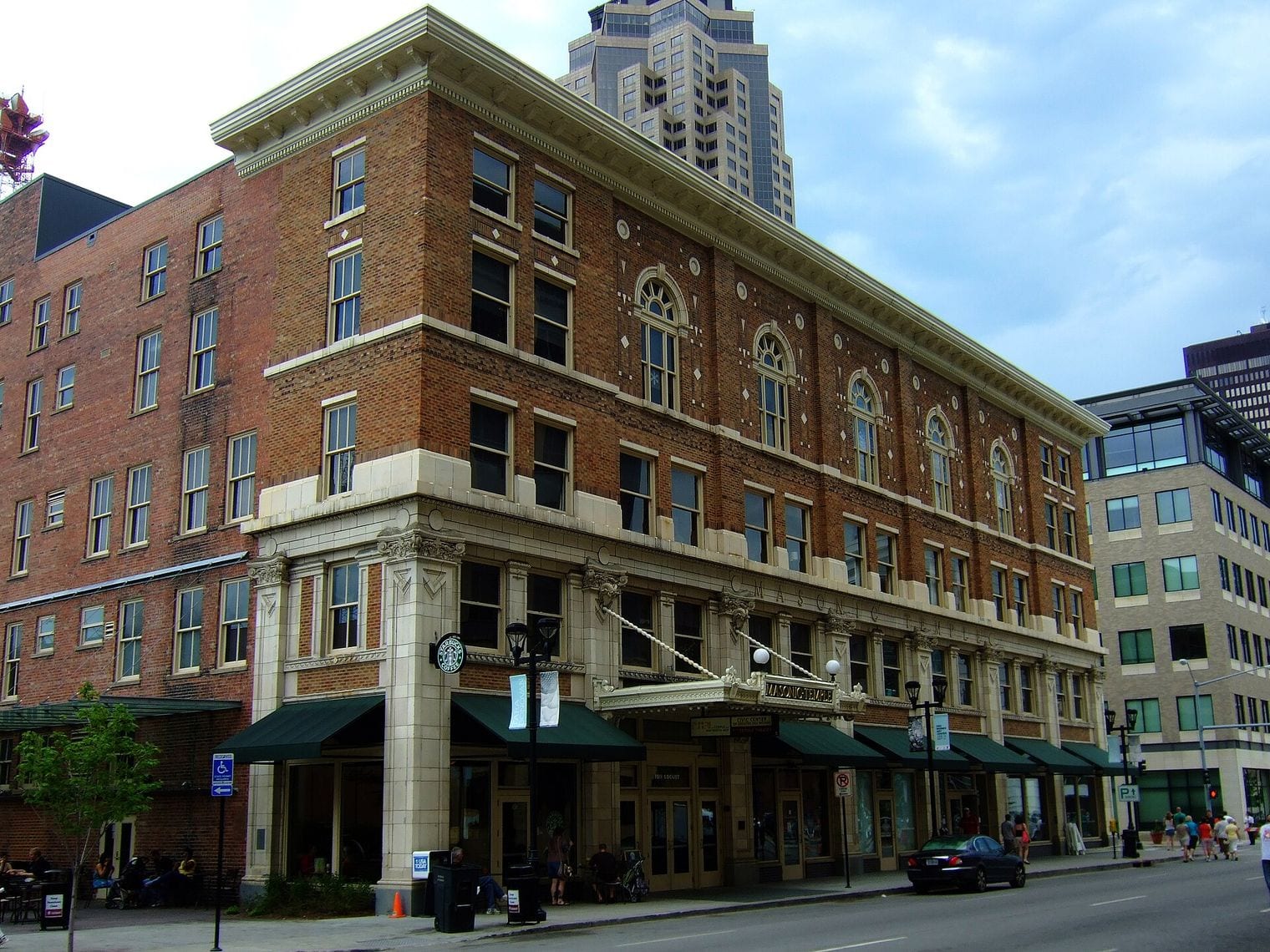
The Temple Theater is tucked inside the Temple for Performing Arts, a Beaux Arts building on Locust Street that opened in 1913 as Des Moines' Masonic Temple. After the Masons moved out, the building was restored and its upper-floor meeting rooms became performance spaces.
Run by the same organization as the Civic Center, the Temple hosts comedy, concerts and smaller productions in a more intimate setting. Look at the facade on your way past even if you do not have tickets.
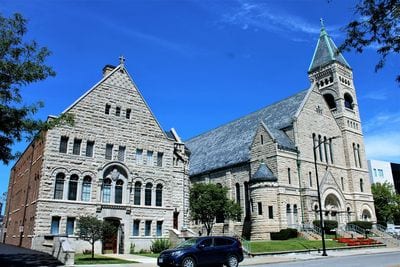
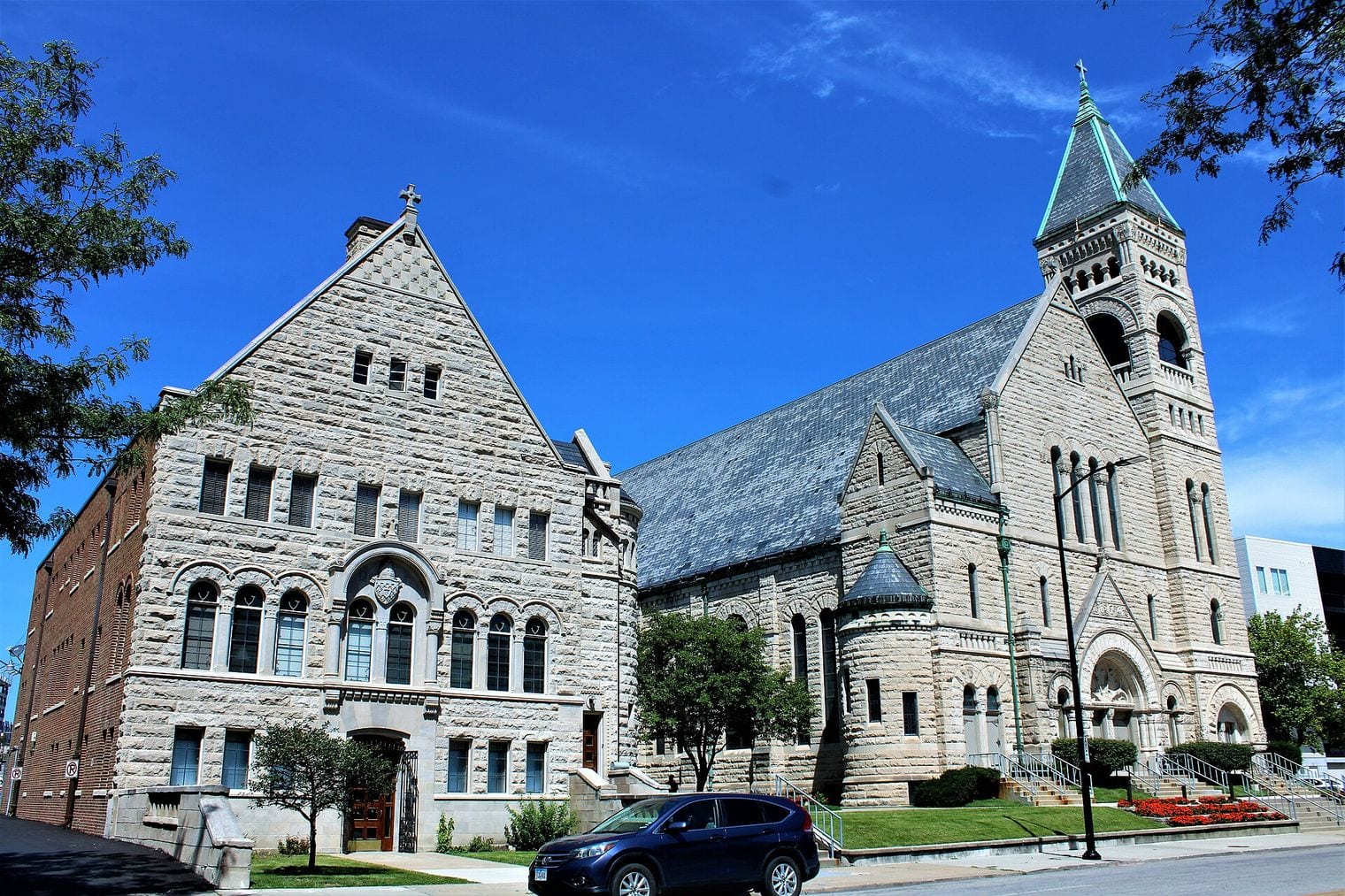
Completed in 1891, St. Ambrose Cathedral is the seat of the Catholic Diocese of Des Moines and one of downtown's landmark historic buildings, listed with its rectory on the National Register of Historic Places.
Step inside for the stained glass and the quiet of the nave, a contrast to the glass towers around it. It is a short walk from the Civic Center and Pappajohn Sculpture Park.
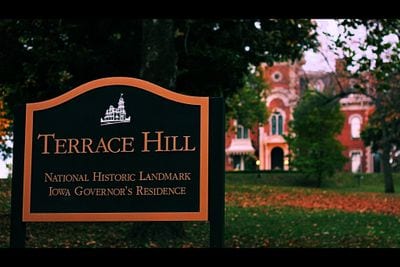
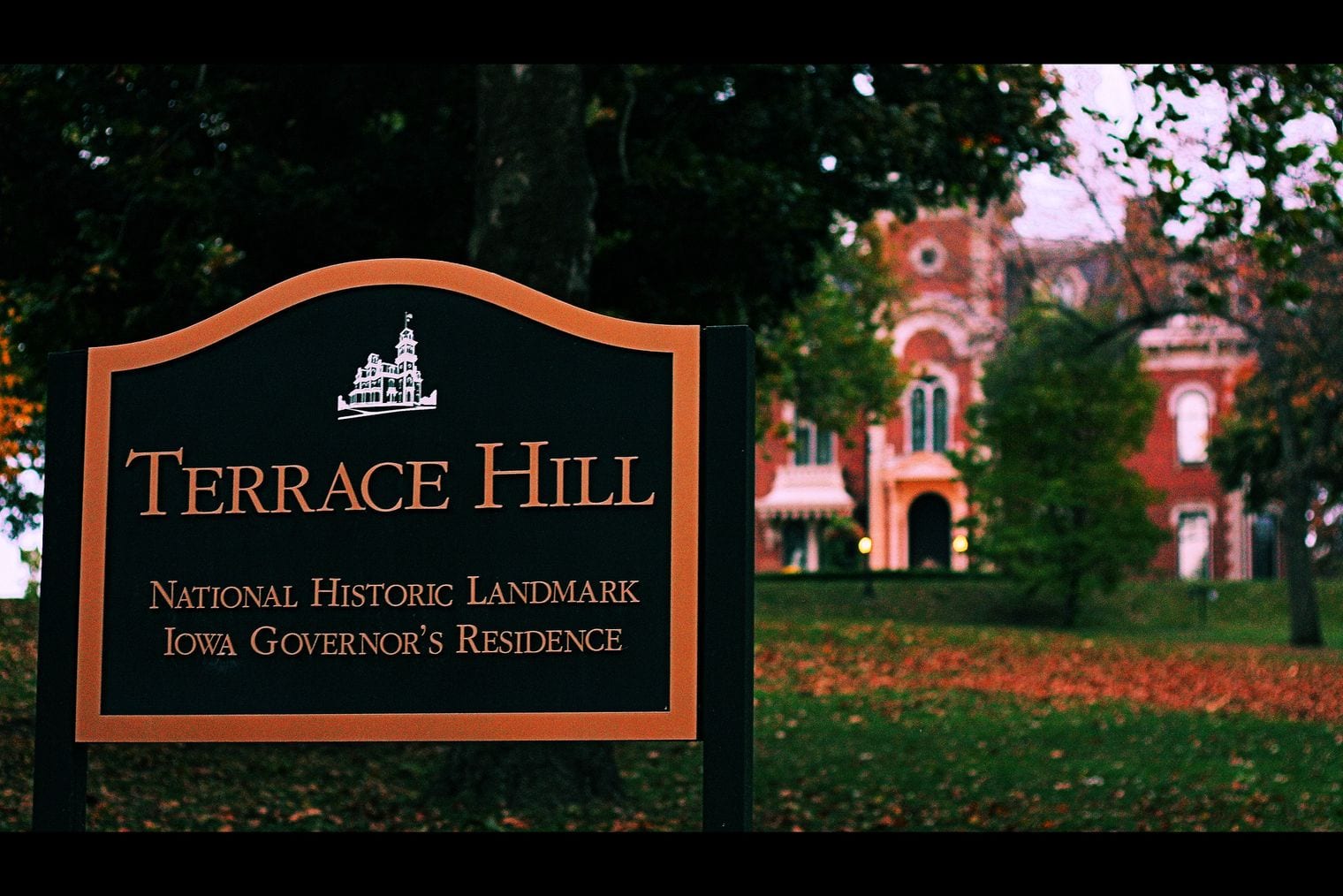
Terrace Hill, a Second Empire mansion with a 90-foot tower, is the official residence of Iowa's governor and a National Historic Landmark, set on a hill overlooking downtown.
Guided tours, offered for much of the year by reservation, show off the restored Victorian rooms on the public floors, while the grounds and gardens are a pleasant walk. Book ahead, since tour spots are limited.
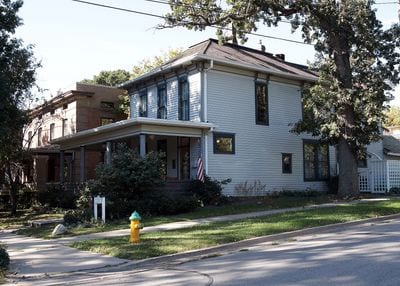
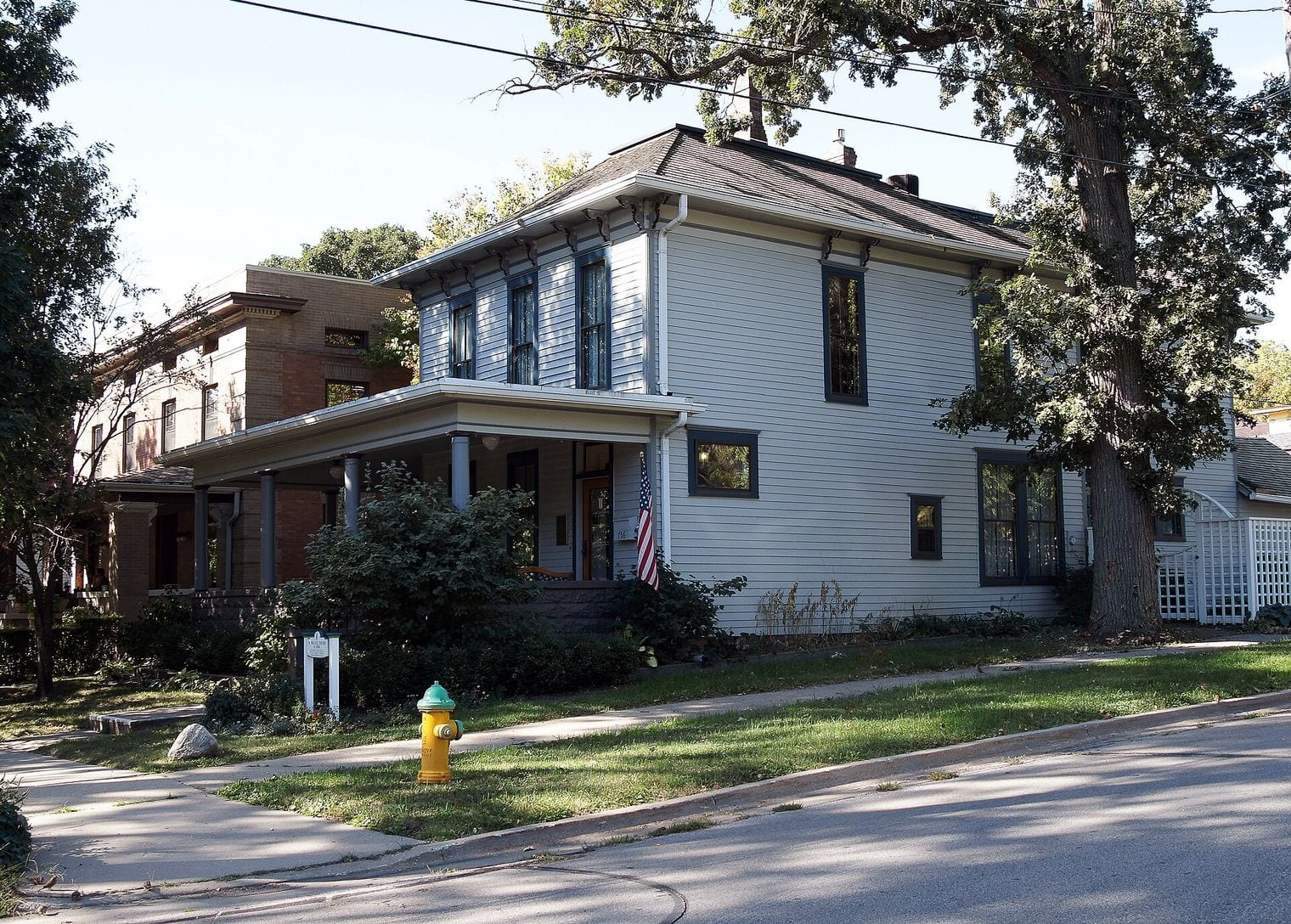
In the Sherman Hill neighborhood, the Henry Wallace House is the 1883 Italianate home of Henry Wallace, a minister turned farm editor who helped found the influential publication Wallaces' Farmer. His grandson, Henry A. Wallace, later served as U.S. vice president.
The house is run by the Wallace Centers of Iowa and can be visited by appointment, and an outdoor audio tour lets you explore the story from the street at any time. Take a walk around Sherman Hill's Victorian houses while you are there.
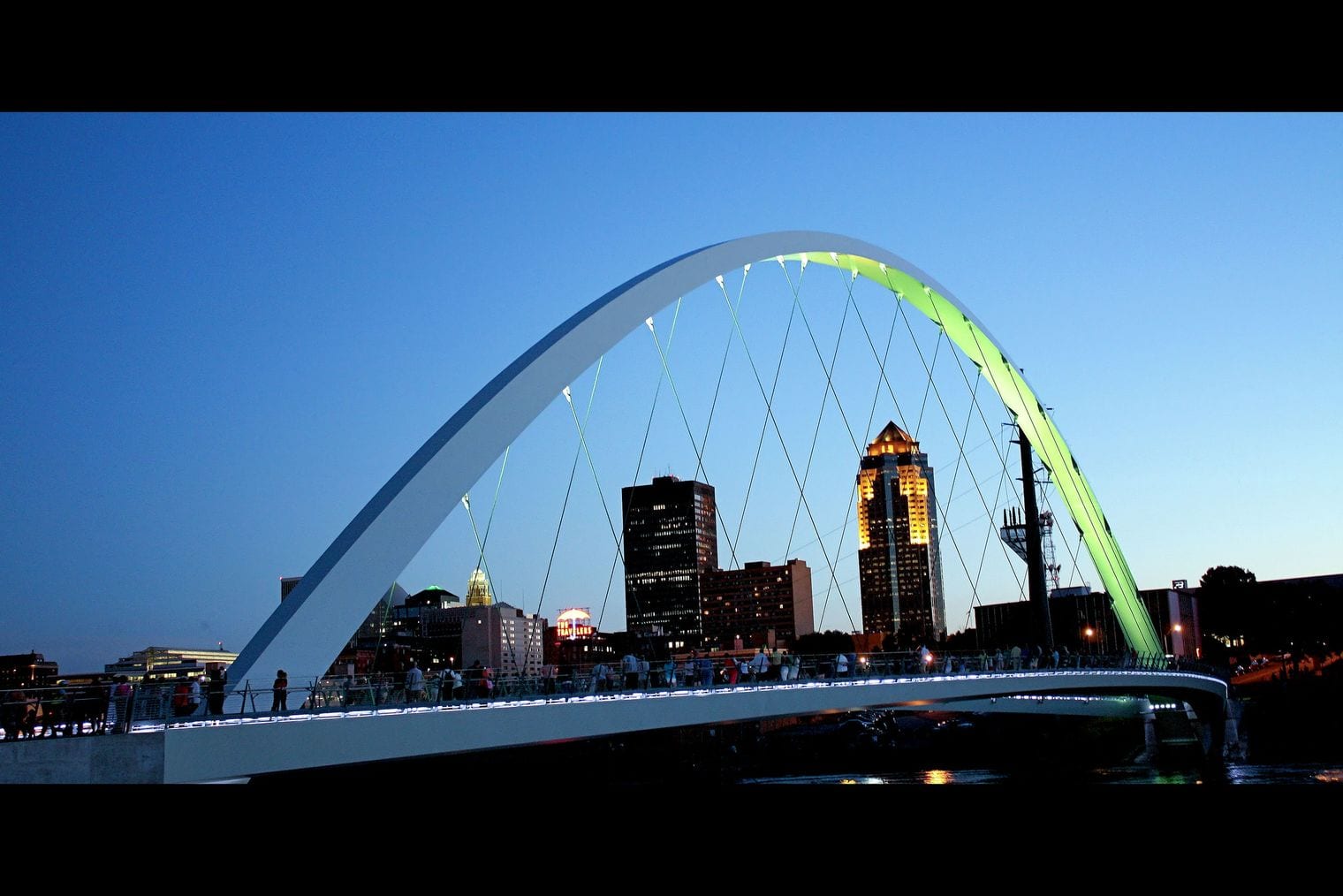
The Principal Riverwalk is a 1.2-mile loop along both banks of the Des Moines River, completed in 2013 and crossing the water on two pedestrian bridges, including the Iowa Women of Achievement Bridge.
Along the way you pass plazas, gardens and public art, and the trail links the Court Avenue District, the East Village and the Botanical Garden, with connections out to Gray's Lake. Walk it at dusk, when the bridges and skyline light up.
West of the river, Court Avenue is downtown's brick-street entertainment district, where restaurants, brewpubs and bars fill old warehouse and commercial buildings and the patios stay busy on summer nights.
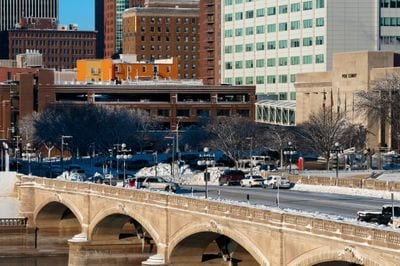
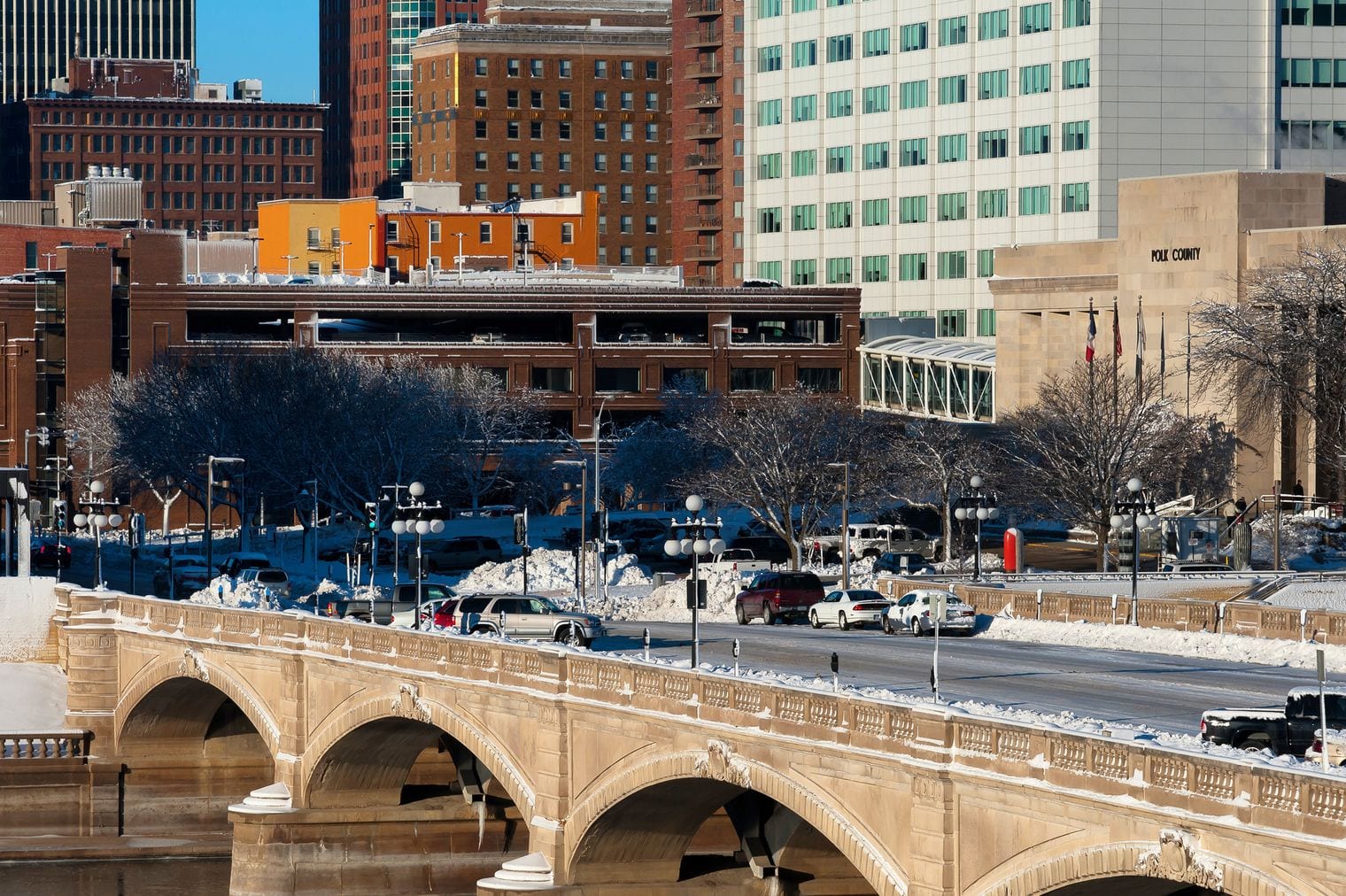
At its east end, the historic Court Avenue Bridge crosses the Des Moines River to the East Village, so it is easy to start dinner on one side and finish with a drink on the other. Come before or after a game at Principal Park, a short walk south.
Plan your trip
Best Time to Visit Des Moines
Late spring through early fall is the best time to visit Des Moines. The Saturday farmers' market runs from spring into fall, summer brings ballgames, outdoor concerts and the amusement park, and August belongs to the Iowa State Fair, when hotels fill and prices rise, so book early if you plan around it. September and October bring milder days and fall color on the trails at Brown's Woods.
Winters are cold and snowy, but the city does not shut down: the riverfront ice rink opens, the Botanical Garden's dome stays warm and green, and the downtown skywalk lets you move between buildings without stepping outside. Spring can be wet, though it is a good season for birding in the woods along the rivers.
Getting to Des Moines
Des Moines sits where Interstate 35 (north to Minneapolis, south to Kansas City) meets Interstate 80 (east to Iowa City and Chicago, west to Omaha), with Interstate 235 cutting straight through the city. That makes it an easy drive from much of the Midwest: Omaha is about two hours west and Kansas City about three hours south.
Des Moines International Airport, just south of downtown, handles domestic flights, often with connections through larger hubs. There is no passenger rail station in the city itself; long-distance buses serve Des Moines, and the nearest Amtrak stop is in Osceola, about 45 minutes south.
Getting Around Des Moines
Downtown, the East Village and Court Avenue are compact and walkable, and the Principal Riverwalk and the skywalk system tie them together in any weather. A network of paved trails also links downtown to Gray's Lake, Water Works Park and beyond, so a bike is a great way to explore in the warmer months.
For most other sights, from the Art Center and Salisbury House to the zoo, Adventureland and Living History Farms, you will want a car or rideshare. The city has a public bus system, but service is limited outside the core. Parking is generally easy to find, with garages downtown and lots at most outlying attractions.
Where to Stay in Des Moines
Downtown is the most convenient base for a first visit, with the riverwalk, the skywalk, the Civic Center and Court Avenue all within walking distance. The East Village suits travelers who want boutique shopping and dining on the doorstep, a short walk from the Capitol.
If you are driving and want easy highway access, the hotel clusters near the interstates in West Des Moines and Urbandale are practical, and the east side around Altoona is closest to Adventureland and the State Fairgrounds, especially handy during the August fair.
Where to Eat in Des Moines
The East Village, Court Avenue and the Ingersoll Avenue corridor west of downtown hold most of the city's restaurants, from casual brewpubs to chef-driven dining rooms, and the Saturday farmers' market is a meal in itself. Beaverdale and the neighborhoods around Drake University add relaxed local spots.
Try the Iowa classics while you are here: a breaded pork tenderloin sandwich bigger than its bun, a loose-meat sandwich, sweet corn in late summer and anything served on a stick at the State Fair. Local breweries and Iowa-raised beef and pork show up on menus all over town.
Day Trips from Des Moines
Within an hour of the city you can reach the Dutch-heritage town of Pella, about an hour southeast and known for its spring tulip festival; Winterset and the covered bridges of Madison County, about 45 minutes southwest; and Ames, home of Iowa State University, about 40 minutes north. For more ideas, browse the best small towns in Iowa.
With a longer day, drive about two hours east to Iowa City, the riverside college town around the University of Iowa, or a little farther to Cedar Rapids for its art museum and Czech and Slovak heritage. Heading west, Omaha is about two hours away across the Missouri River.
One Day in Des Moines
Morning
On a Saturday from spring into fall, start at the Downtown Farmers' Market and graze your way to breakfast. On other days, begin with a free tour of the Iowa State Capitol, then walk down the hill into the shops and cafes of the East Village.
Walk the loop at Gray's Lake Park as the sun sets and the bridge lights come on, or catch an Iowa Cubs game at Principal Park in summer. End with dinner and a drink on Court Avenue.
Des Moines is best known as Iowa's capital and as the home of the Iowa State Fair. Visitors come for the five-domed, gold-topped Iowa State Capitol, Pappajohn Sculpture Park, the Saturday Downtown Farmers' Market and the Greater Des Moines Botanical Garden, all close to a compact, walkable riverfront downtown.
How many days do you need in Des Moines?
Two or three days is enough to see the highlights of Des Moines. One full day covers downtown, the Capitol, the East Village, the riverwalk and the sculpture park; a second day adds the Art Center, Gray's Lake, the zoo or Salisbury House; a third suits Living History Farms, Adventureland or a day trip.
What can you do in Des Moines for free?
Plenty. Pappajohn Sculpture Park, the Des Moines Art Center, Capitol tours and the World Food Prize Hall of Laureates tours are free, and so are the Principal Riverwalk, the Robert D. Ray Asian Garden, Gray's Lake Park, Water Works Park and the hiking trails at Brown's Woods, a large forest preserve on the city's edge.
Is Des Moines worth visiting?
Yes, especially for travelers who enjoy art, history and food. Des Moines pairs a five-domed Capitol and a free sculpture park with museum wings by Eliel Saarinen, I. M. Pei and Richard Meier, riverfront gardens, lively districts such as the East Village and Court Avenue, and every August the Iowa State Fair.
What is there to do in Des Moines with kids?
Families can spend a morning at Blank Park Zoo, a rainy afternoon among the hands-on exhibits at the Science Center of Iowa and a summer day on the rides at Adventureland in nearby Altoona. Smaller treats include the Heritage Carousel in Union Park, the working farms at Living History Farms and winter skating at Brenton Skating Plaza.
When is the best time to visit Des Moines?
Late spring through early fall is best, when the Saturday farmers' market, ballgames, outdoor concerts and Adventureland are all running. August is the busiest month because of the Iowa State Fair. Winter is cold, but indoor sights, the Botanical Garden's dome and the riverfront ice rink keep the city lively.
Sources & updates
How this guide was checked
Checked before launch
Sources cited
30
Publishers
21
Every place on this list was confirmed open and pinned on the map before publication, and what we say about each one was checked against its own website or an official source.
A PDF with a box to tick for every place. Confirm your email to download it, and get one email every Thursday with our newest guides for the places you tick.
Free Des Moines printable checklist
All 30 places in one PDF
Tick them off as you go. Confirm your email to download it, plus one email every Thursday with new guides for the places you tick.
We use cookies to analyse site traffic and improve your experience.
You can accept or reject analytics cookies. See our
May we use analytics cookies? See ourCookie Policy.