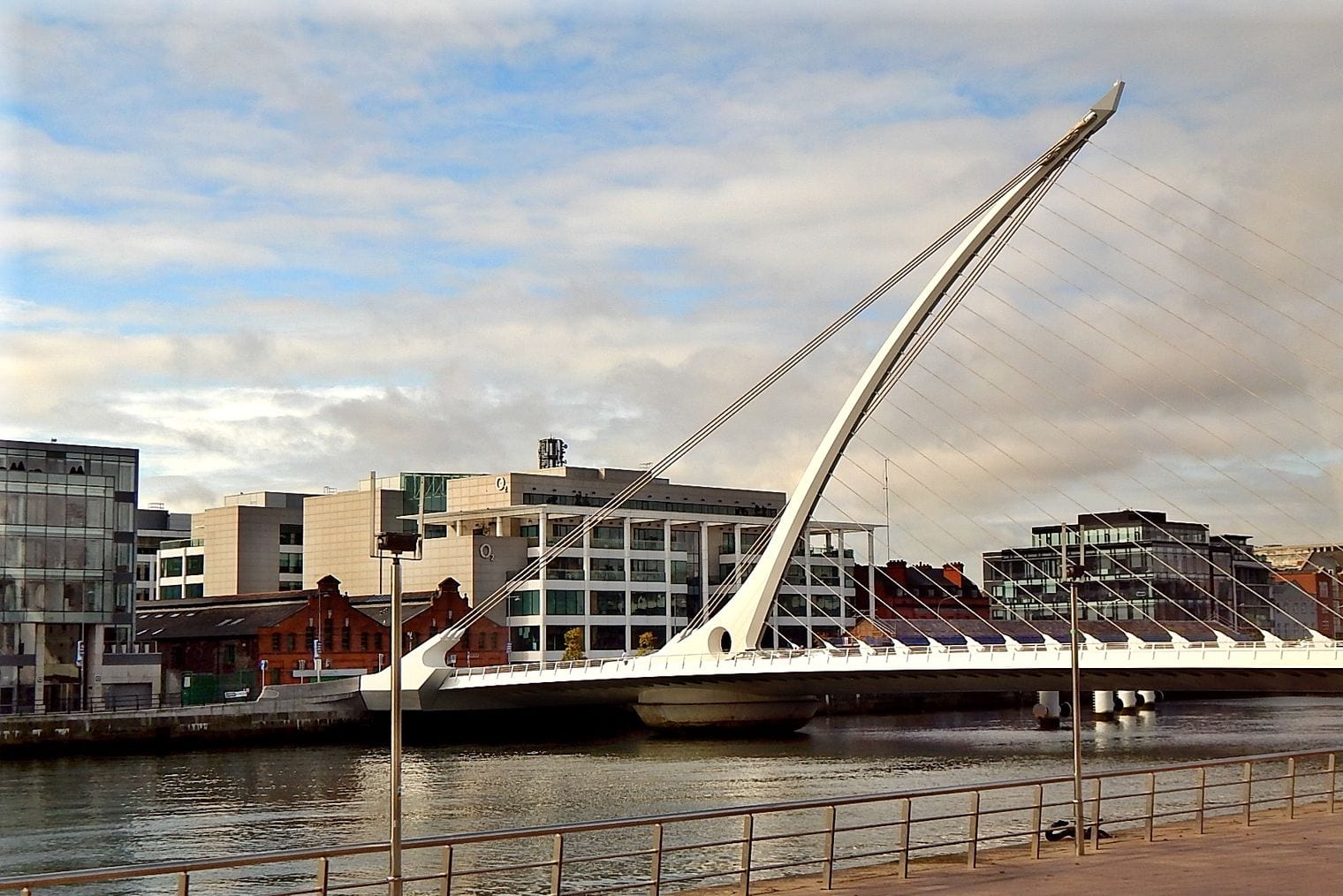
A small island that keeps changing its mind — Georgian squares, monastic ruins, Atlantic cliffs and a session in the corner of a pub, all within a day's drive.
Ireland packs an improbable amount into an island you can drive across in a morning — Georgian capitals and monastic ruins, sea cliffs that fall 200 metres into the Atlantic, and a pub-and-music culture that is genuinely lived in rather than staged. Dublin is the obvious way in, compact enough to walk and stocked with the national museums, but the country really opens up on the west coast, where the Wild Atlantic Way threads Cork, Kerry, Clare, Galway and Donegal together. Use this hub to plan your trip: browse our Irish city guides below, or read on for the regions, seasons and driving routes that tie the island together.
The island greens up and the days stretch out fast. Gardens and demesnes reopen, the west coast is still quiet, and May is reliably one of the driest, brightest months of the year. Bring layers — spring here swings between soft warmth and horizontal rain, sometimes in the same afternoon.
SummerJun–Aug
The warmest and busiest window, with daylight running past 10pm in the far west and festivals in almost every town. Temperatures are mild rather than hot, which makes it ideal walking weather. Book ahead for Kerry, Clare and Galway, where the coast road and the ferries fill up.
FallSep–Nov
Arguably the sweet spot: September keeps much of the summer light and warmth without the crowds, and the landscape turns copper across the bogs and uplands. Storms become more likely from late October, and coastal boat trips start winding down for the winter.
WinterDec–Feb
Short, dark and damp rather than deeply cold — snow is rare outside the hills, and the cities are at their cosiest, with fires lit and the pubs at their best. Daylight is limited to roughly eight hours, so this is a season for Dublin, Cork and Galway rather than for long drives on the Atlantic coast.
Regions
Dublin & the eastThe capital and its hinterland: Georgian squares, the national museums and the Guinness Storehouse in Dublin itself, with the fishing villages of the bay on the doorstep, the mountains and monastic valley of Wicklow to the south, and the prehistoric tombs of the Boyne Valley an hour north.
The southeastIreland's sunniest corner and its most compact run of medieval towns — Kilkenny's castle and cathedral, the Viking triangle in Waterford, and the long beaches and harbours of Wexford, all within easy reach of Dublin.
Cork & the southwestThe food capital and the country's most photographed coastline: Cork city and its English Market, the harbour town of Kinsale, then Killarney National Park, the Ring of Kerry and the Dingle Peninsula, where the road runs out at the edge of the Atlantic.
Clare, Limerick & the ShannonWhere the great river meets the ocean. The Cliffs of Moher and the bare limestone Burren are the headline acts, with traditional-music towns like Doolin and Ennis, King John's Castle in Limerick, and Shannon Airport as a second front door to the west.
Galway & ConnemaraThe west's cultural capital, a small harbour city of painted shopfronts and street music, opening onto the bogs, mountains and Atlantic inlets of Connemara and the ferry crossing out to the stone-walled Aran Islands.
The northwest — Mayo, Sligo & DonegalThe wildest and least-visited stretch of the island: the pilgrim mountain of Croagh Patrick, Yeats country around Sligo, the surf beaches of Bundoran and Strandhill, and Donegal's enormous sea cliffs and Gaeltacht headlands.
The Cliffs of MoherEight kilometres of sheer sandstone and shale dropping more than 200 metres into the Atlantic, with O'Brien's Tower at the high point.Basecamp: County Clare
Killarney National Park & the Ring of KerryIreland's first national park — lakes, oak woodland, red deer and Muckross House — and the circular coastal drive that loops the Iveragh Peninsula around it.Basecamp: County Kerry
Brú na Bóinne (Newgrange)A UNESCO-listed complex of passage tombs older than the pyramids, built so that the rising sun reaches the inner chamber at the winter solstice.Basecamp: County Meath
Connemara & the Aran IslandsBog, quartzite mountains and Atlantic inlets west of Galway, with a ferry out to three Irish-speaking limestone islands ringed by prehistoric stone forts.Basecamp: County Galway
Suggested routes
The classic Ireland loop
~10 days–2 weeks
The circuit most first-time visitors drive: out of Dublin through the medieval southeast, along the southwest coast for the national park and the peninsulas, up the Atlantic edge to Galway, then back across the middle. A car is essential for everything west of Cork.
1Dublin — fly in; two to three days in the capital
2Kilkenny — castle, cathedral and a compact medieval mile
3Cork & Kinsale — the English Market, then the harbour town
4Killarney & the Ring of Kerry — national park and the coastal loop
5Dingle — Slea Head, the westernmost road in Ireland
6The Cliffs of Moher & the Burren — sea cliffs and limestone pavement
7Galway — street music, then Connemara or the Aran Islands
Dublin & the east in a long weekend
~3–4 days
A no-car itinerary built around the capital, using the coastal rail line and a single day trip inland. Enough for the museums, the distilleries and a proper look at what surrounds the city.
2Howth or Dún Laoghaire — a cliff walk or a pier walk on the bay, by train
3Glendalough, Co. Wicklow — monastic ruins in a glacial valley
4Brú na Bóinne, Co. Meath — the Newgrange passage tombs
The Wild Atlantic Way, northern half
~1 week
The quieter, emptier end of the coastal route, for travellers who have already done Kerry or want the drama without the tour buses. Weather governs everything up here, so keep the schedule loose.
1Galway — start point; last big city on the route
2Connemara — Sky Road, Kylemore and the Twelve Bens
3Westport & Croagh Patrick — planned Georgian town below the pilgrim mountain
4Achill Island — cliffs, blue-flag beaches and a deserted village
5Sligo — Yeats country, Benbulben and surf beaches
6Slieve League, Co. Donegal — some of the highest sea cliffs in Europe
Ireland travel FAQ
Eight questions travellers ask before they go.
When is the best time to visit Ireland?
May, June and September are the sweet spot — long daylight, the driest months of the year and noticeably fewer people than July and August. Summer is warmest and busiest, with festivals everywhere and the west coast fully booked. Winter is short on daylight and wet rather than freezing, which makes it a city season: Dublin, Cork and Galway are at their most atmospheric, but long Atlantic drives are not much fun in the dark.
How many days do you need in Ireland?
Three or four days is enough for Dublin and one day trip. A week lets you add either the southwest — Cork, Killarney and the Kerry peninsulas — or the west coast around Galway and Clare. Ten days to two weeks is what the classic loop really wants, and even then you will be choosing between Kerry and Donegal rather than doing both properly.
Do you need a car in Ireland?
For the cities, no — Dublin, Cork and Galway are walkable and well served by buses and trams, and a car is a liability in Dublin in particular. For everywhere else, effectively yes. The scenery people come for is on rural coastal roads with sparse public transport, and the rail network is radial, so travelling between two provincial towns usually means routing back through Dublin. Remember you drive on the left, and that rural lanes are narrow, walled and often single-track.
What is Ireland known for?
Pub culture and live traditional music, an outsized literary tradition — Joyce, Yeats, Beckett, Wilde and Heaney all came from a country of about five million people — and some of the most dramatic coastline in Europe, from the Cliffs of Moher to the Donegal headlands. It is also known for Guinness and whiskey, for castles and monastic ruins in various states of ruin, and for weather that changes faster than any forecast can keep up with.
Is English spoken in Ireland?
Yes — English is spoken universally and is what you will use everywhere. Irish (Gaeilge) is constitutionally the first official language and appears on every road sign and public building, and it is still the everyday language in the Gaeltacht areas of Donegal, Mayo, Galway, Kerry, Cork, Meath and Waterford. You will never need it to get by, but you will see and hear it constantly.
What currency does Ireland use, and is it in the EU?
The Republic of Ireland uses the euro (€) and is a member of the European Union — it stayed in after the UK left. Cards are accepted almost everywhere, including on buses and in small rural pubs, and contactless is the norm. One thing that catches people out: Northern Ireland is part of the United Kingdom, so crossing that border means switching to pounds sterling, even though the border itself is unmarked and you can drive over it without noticing.
What food should you try in Ireland?
Seafood is the strongest card — oysters from Galway, mussels, crab and chowder along the whole Atlantic coast, and smoked salmon almost everywhere. Beyond that, look for soda bread, a full Irish breakfast with black and white pudding, boxty and colcannon, farmhouse cheeses, and slow-cooked lamb or bacon and cabbage. Cork's English Market is the best single place to eat your way around the country in one building.
What kind of trip is Ireland best for?
Road trips, coastal walks and city breaks.
We use cookies to analyse site traffic and improve your experience.
You can accept or reject analytics cookies. See our Cookie Policy.