We may earn a commission if you book or buy through a link on
this page, at no extra cost to you. It never affects which places we list or how
we rank them (how we make money).
Short answer
Montego Bay's three defining sights are Doctor's Cave Beach, the sheltered white-sand cove that started Jamaican tourism in the 1920s; Rose Hall Great House, the 1770s Georgian mansion behind the White Witch legend; and Rocklands Bird Sanctuary above Anchovy, where wild hummingbirds land on your finger to feed. Four or five days is the sweet spot: one for the beaches and the Hip Strip, one for the great houses and golf on the Rose Hall estate, and a third for a bamboo raft on the Great River, leaving room for a day trip east to Dunn's River Falls or Falmouth.
Montego Bay is where most people meet Jamaica: a working city of 110,000 wrapped around a curve of reef-sheltered water, with cruise ships on one side and the Blue Mountains' foothills climbing away on the other. It is a resort town that never stopped being a real town, and the two rub along on the same street.
This guide covers the twelve things worth your time in and immediately around the city — beaches, great houses, a bird garden, a river and a downtown that repays an afternoon on foot. Four or five days is the sweet spot.
The name probably comes from lard, not mountains — Columbus called the bay Golfo de Buen Tiempo, “Fair Weather Gulf”, and “Montego” is thought to derive from the Spanish manteca, after the port that shipped out lard, leather and beef.
The city’s tourist industry began with a doctor’s write-up of the sea water — Sir Herbert Barker, a celebrated British osteopath, visited Doctor’s Cave in the 1920s and published an article declaring the water curative. Cure-seekers came, and the hotels followed them.
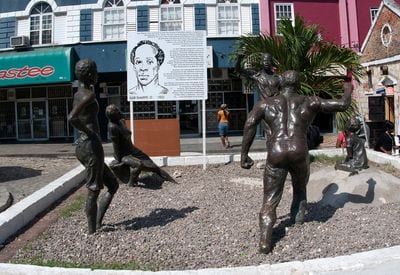
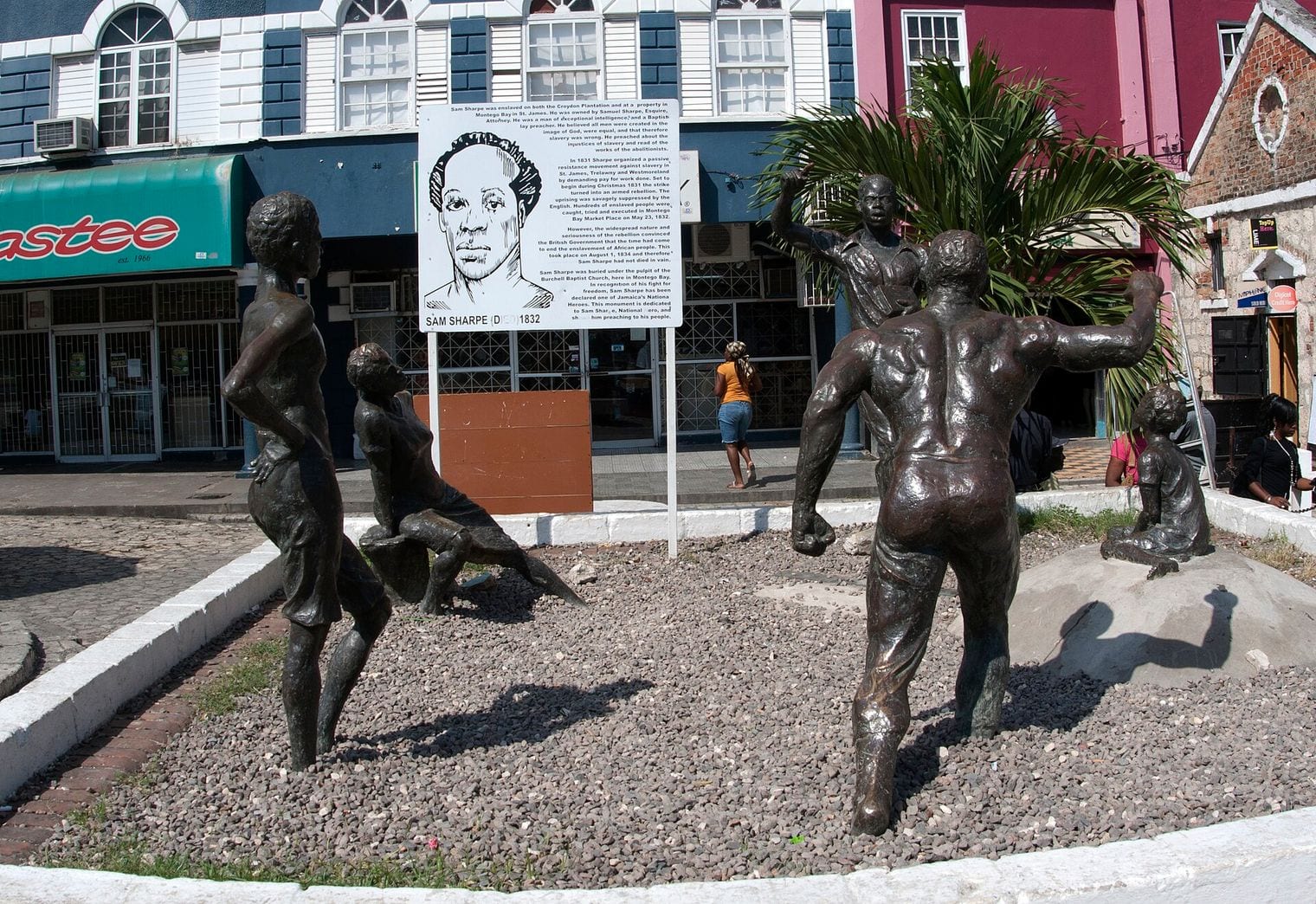
Samuel Sharpe was tried in what is now an art gallery. The 1803 courthouse on the square that carries his name is today the Montego Bay Cultural Centre, home to National Gallery West.
The airport is named for a Prime Minister who governed for seven weeks. Sir Donald Sangster became Jamaica’s second Prime Minister on 23 February 1967 and died on 11 April; Sangster International was renamed in his honour.
Jamaica’s first marine park is directly offshore. The Montego Bay Marine Park was designated on 8 June 1992 and takes in the reefs, seagrass and mangroves along the city’s own waterfront.
There is no longer a cave at Doctor’s Cave Beach. Bathers once reached the sand through one, which is how the beach got its name, but a hurricane destroyed it in 1932. The name stayed.
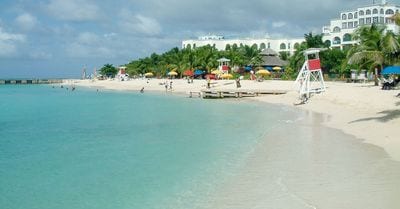
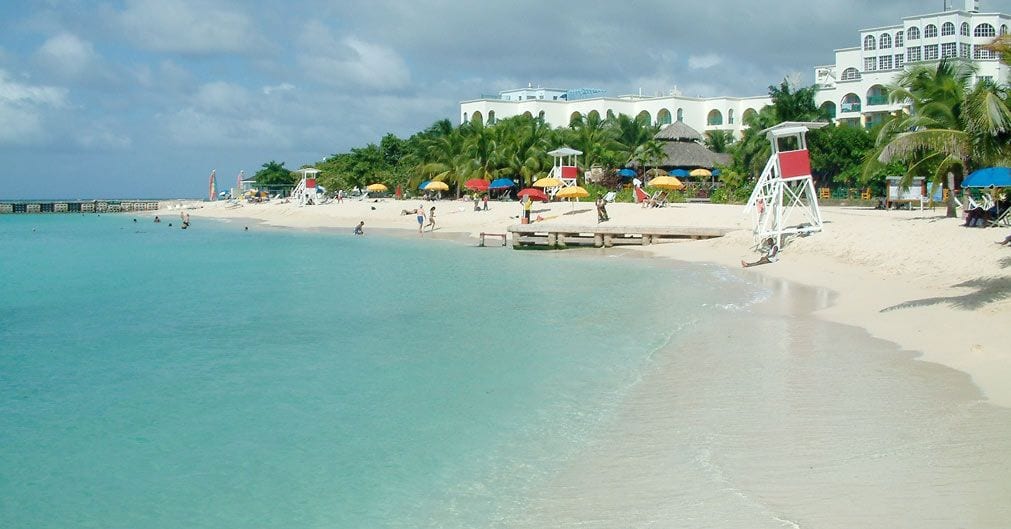
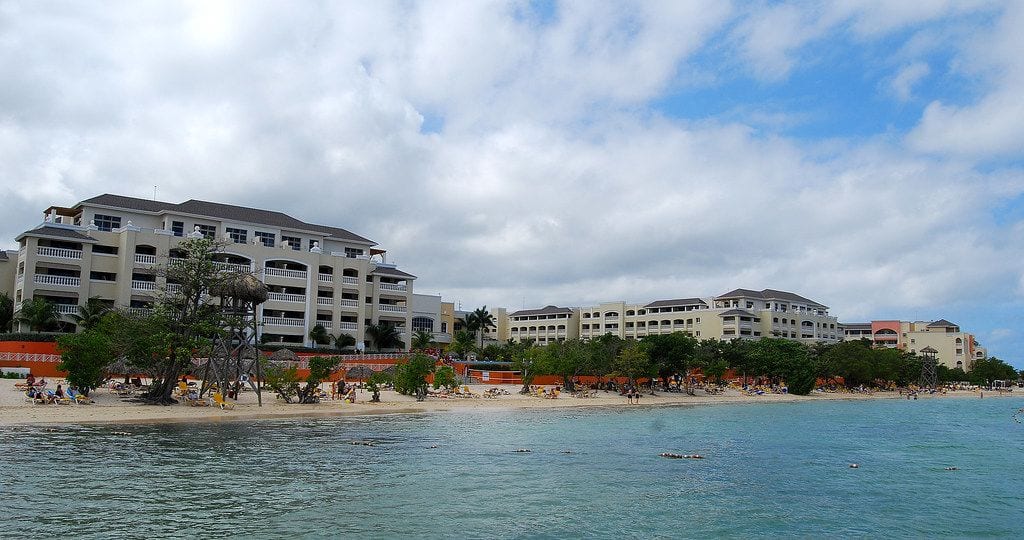
This is the beach that made Montego Bay. Alexander McCatty, a local doctor, opened a sanatorium here in 1880 and let friends bathe at the small cove below it, reached in those days through a cave — which is where the odd name comes from, and why the club that still runs it is called the Doctor's Cave Bathing Club. McCatty handed the property over in 1906 and it has been a members' bathing club ever since.
Its fame came two decades later, when the celebrated British osteopath Sir Herbert Barker visited and published an article declaring the water curative. Cure-seekers followed, hotels went up to house them, and Montego Bay's tourist industry started more or less on this sand.
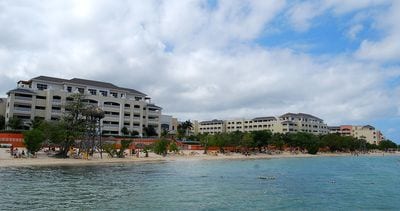
The cave itself was destroyed by a hurricane in 1932, but the beach is unchanged in the way that matters: a sheltered horseshoe of white sand and water so clear the reef reads from the surface. There is an entrance fee, and it buys you calm, groomed sand and proper facilities.
Rose Hall is the great house every visitor to Montego Bay is told about, and it earns the attention twice over.
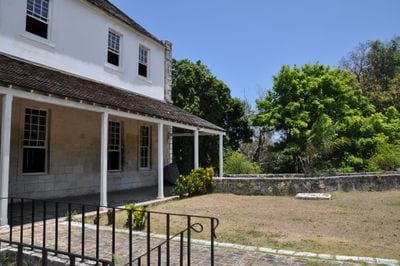
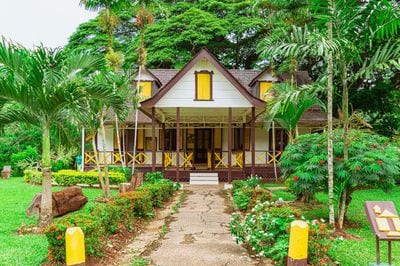
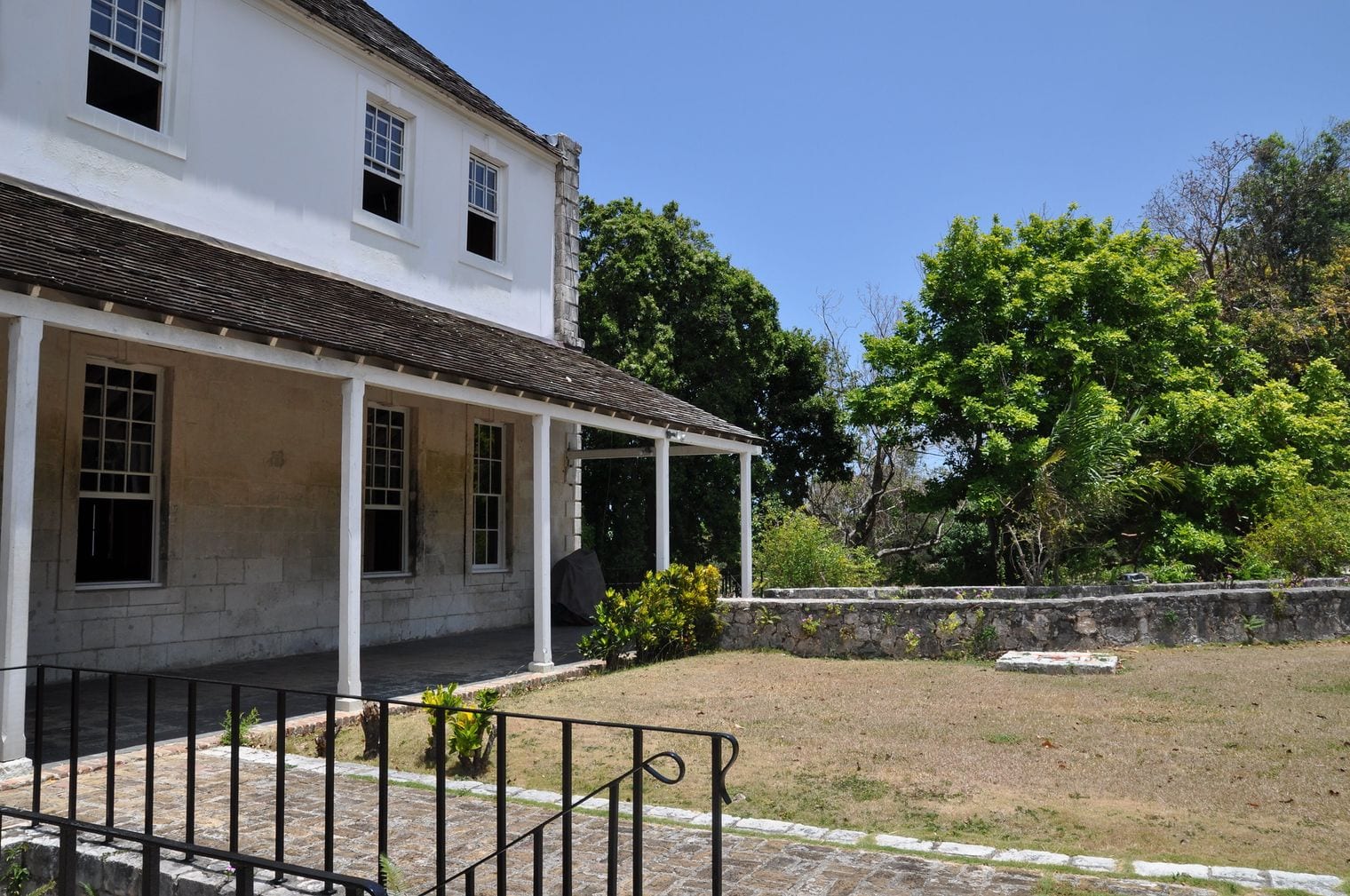
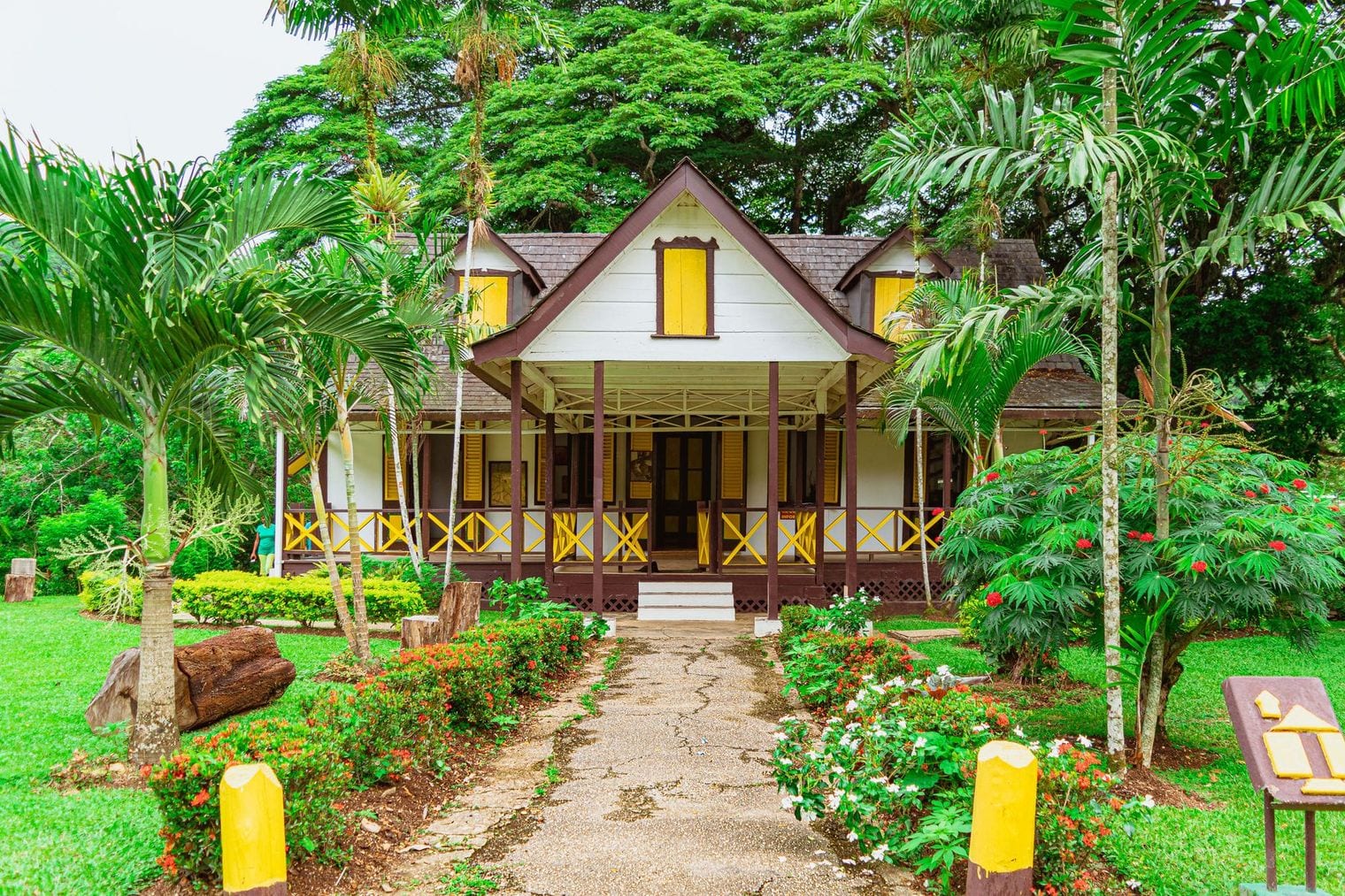
Built in the 1770s in Jamaican Georgian style, it sits high on a rise east of the city with the coast laid out below it, and after falling derelict it was bought and restored at great personal expense by the American businessman John Rollins and his wife Michele, who opened it to the public and built the tours and museum displays it runs today.
What draws the crowds is the legend of Annie Palmer, the White Witch of Rose Hall — a mistress said to have murdered three husbands and practised obeah before dying violently herself. It is a tremendous story, and it is a story: an investigation in 2007 concluded it was fictionalised, and the version everyone repeats comes from H. G. de Lisser's 1929 novel The White Witch of Rosehall, whose Annie is a young widow with three conveniently dead husbands.
The house is honest about that now, and the tour is stronger for it, moving between the legend, the restored Georgian interiors and the far harder history of the enslaved people whose labour built the estate. Go after dark if you can — the candlelit night tour leans into the ghost story properly.
Twenty minutes up into the hills above Anchovy, Rocklands does one thing and does it better than anywhere else on the island.
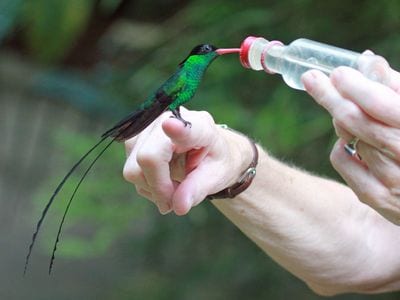
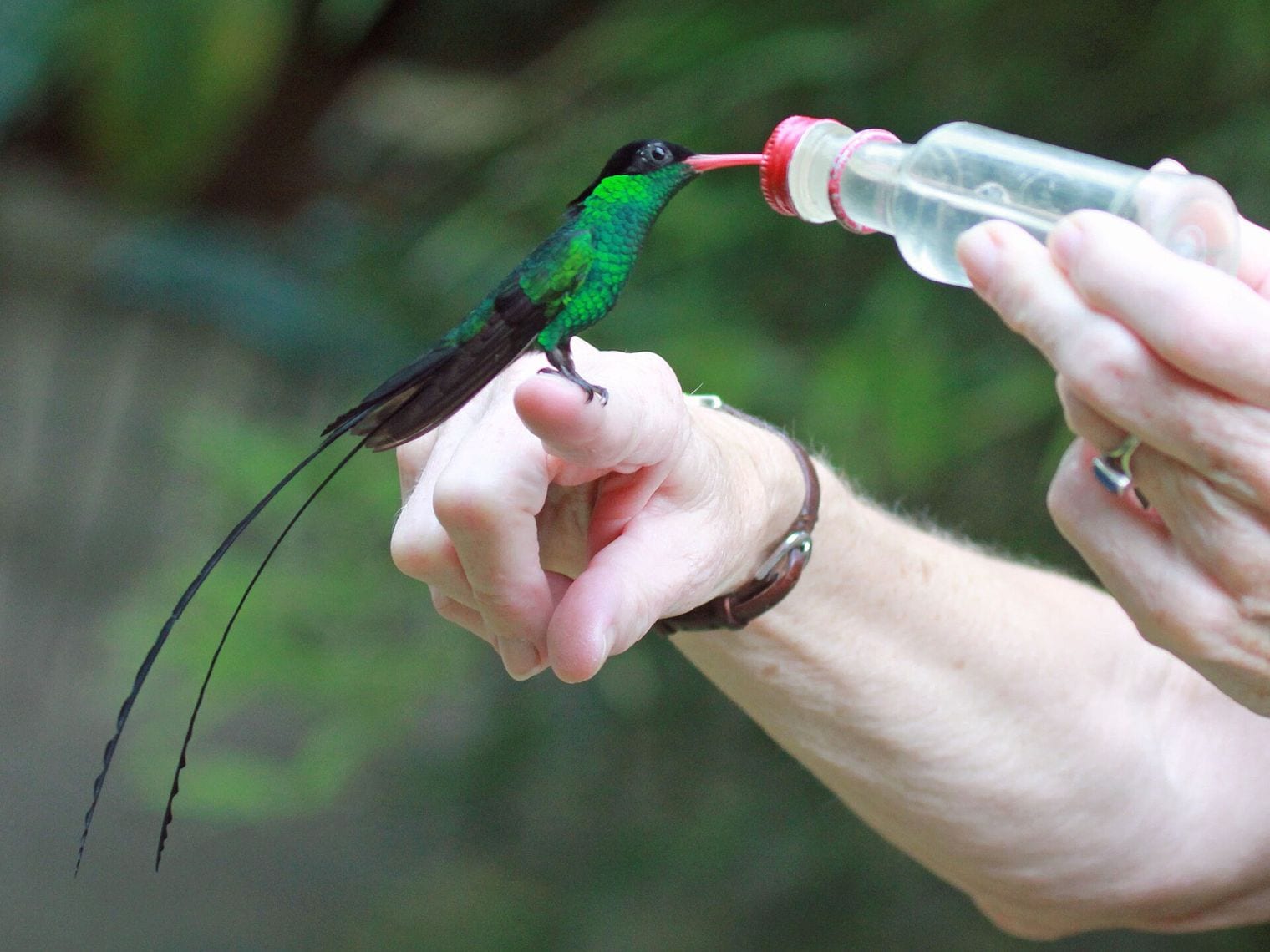
You sit on a shaded terrace, someone hands you a bottle of sugar water, and within a minute or two a wild doctor bird — Jamaica's national bird, a red-billed streamertail with two absurd tail feathers trailing behind it — lands on your finger to drink. Other hummingbirds queue behind it. Bananaquits and ground doves work the feeders around you.
The habit was patiently trained into the local birds by Lisa Salmon, the ornithologist who established the sanctuary here and spent decades observing and photographing western Jamaica's birdlife; she died in 2000, aged 92, and the work has been continued since.
It is a small, unpolished, entirely unslick place — a garden with chairs in it — and it is quietly one of the most memorable hours you can spend near Montego Bay. Go early in the day, when the birds are most active, and keep your voice down.
For most of Montego Bay's modern history, the good sand belonged to somebody: a club, a hotel, a fee. Harmony Beach Park changed that. Opened in 2021 on sixteen acres of reclaimed waterfront along Howard Cooke Boulevard, it gave the city a free, public, properly built beach park within a few minutes of both downtown and the airport, funded largely through the Tourism Enhancement Fund and developed by the Urban Development Corporation.
The result is the most purely local thing on this list and the busiest place in the pool by review count. There is a swimming beach, a jogging trail, lawns, shade, playgrounds, food vendors and a long boardwalk that catches the sunset straight down the bay.
Weekends are loud and family-heavy in the best way; weekday mornings are near-empty. If you want to see how the city actually spends its leisure time rather than how it packages it, come here first.
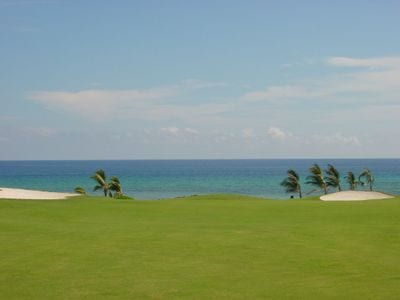
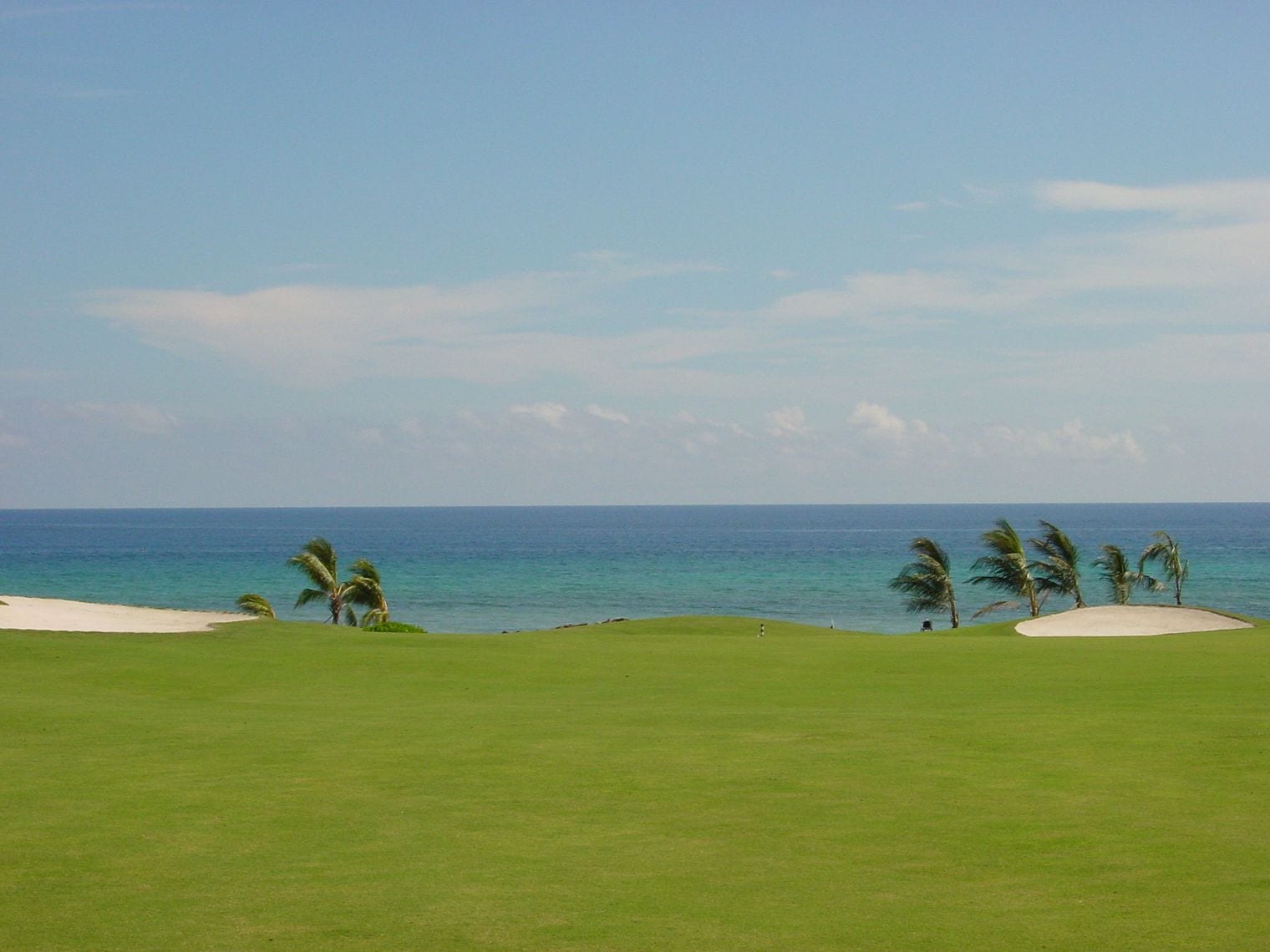
Jamaica is a serious golf destination and Montego Bay is its centre, with several championship courses inside twenty minutes of each other. Cinnamon Hill is the one to play if you only play one. Laid out on the historic Rose Hall estate, it opened to a Hank Smedley design in 1969 and was comprehensively redesigned by Robert von Hagge and Rick Baril in 2001, running 18 holes over roughly 6,800 yards at par 72.
The front nine works along the coast; the back nine is the reason people talk about it, climbing into the foothills through jungle past old stone aqueducts, estate walls and plantation ruins, with the sea below and the mountains above. The routing passes close to Cinnamon Hill Great House, an eighteenth-century property built by the Barrett family that later became Johnny and June Carter Cash's Jamaican home. Even non-golfers tend to notice the setting.
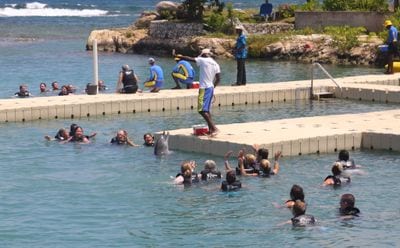
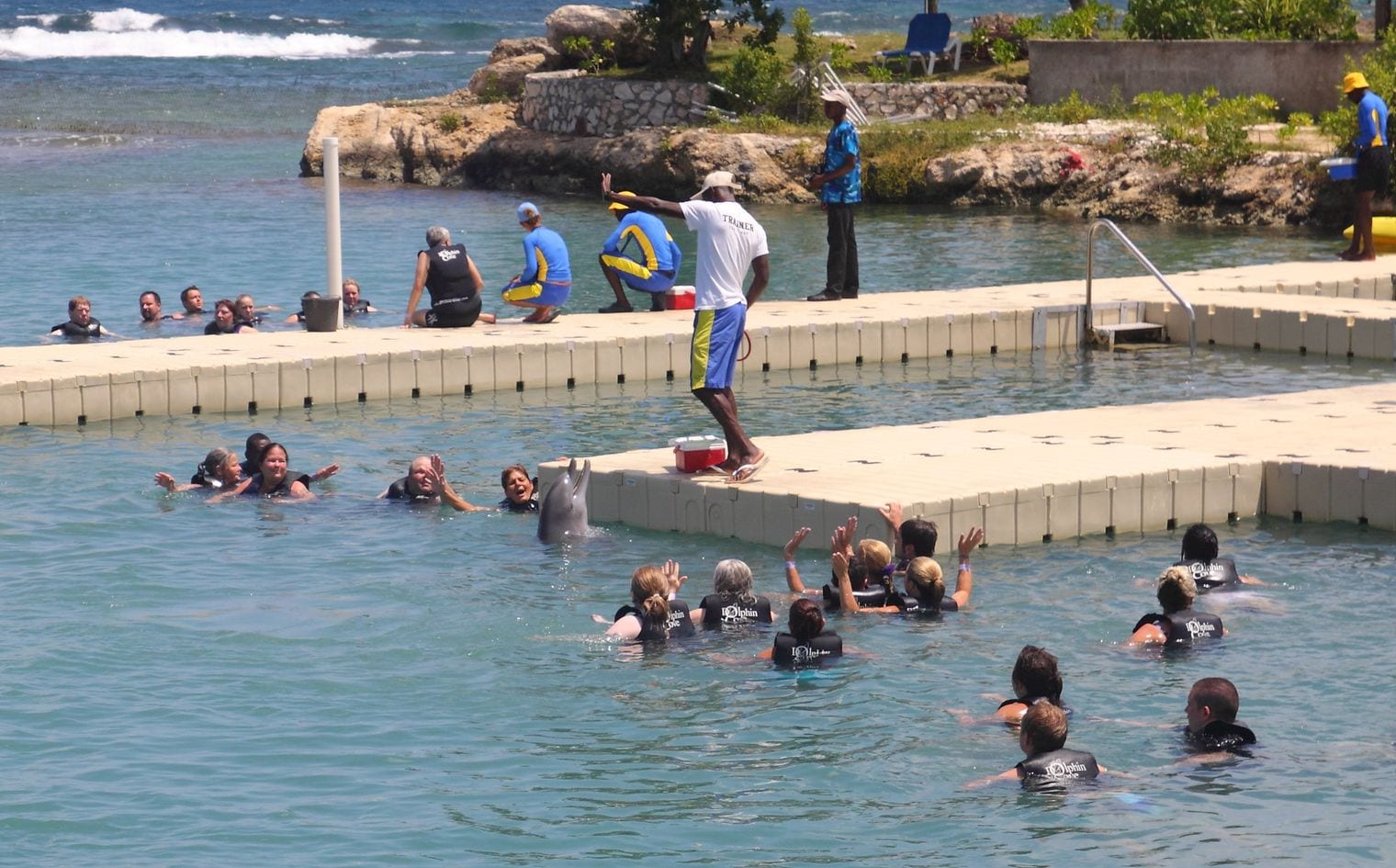
Dolphin Cove is the western outpost of Jamaica's best-known marine attraction, set on a sheltered cove out along the coast road from the city. The draw is the structured dolphin programme — encounters that range from standing waist-deep for a handshake and a photograph through to swimming out and being towed back by two dorsal fins — with the animals kept in a sheltered enclosure of open sea water rather than a pool.
The ticket covers considerably more than the dolphins, which is worth knowing before you decide. There is a small beach for snorkelling, kayaks and glass-bottom boats, a shark and stingray encounter, a jungle trail with iguanas and parrots, and a camp of Jamaican cultural displays.
It is unabashedly a day-out attraction rather than a wild-nature experience, and it is priced accordingly, but families consistently rate it the most reliable single fixture of a Montego Bay trip. Book the dolphin slot ahead; general admission alone is easy to walk into.
Dead End Beach has the worst name and one of the better views in Montego Bay. It is a narrow public strip of sand at the northern end of the seafront, where the road simply stops at the boundary of Sangster International Airport — which is the whole point, because the approach path runs directly overhead and jets come in low and loud enough to feel through your feet.
Beyond the spectacle it is a genuinely pleasant free beach: shallow, calm, clear water over a sandy bottom, a couple of casual bars behind it, and a west-facing outlook that makes it one of the city's best sunset spots.
It is small, it has minimal facilities, and it gets busy in the late afternoon when locals finish work. Come for an hour at the end of the day rather than as a destination in itself, and pair it with a drink at one of the shacks along the road.
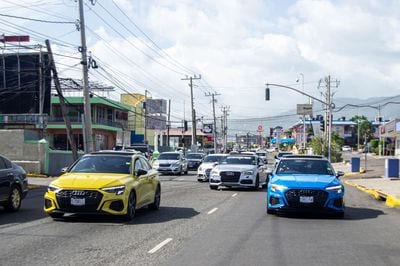
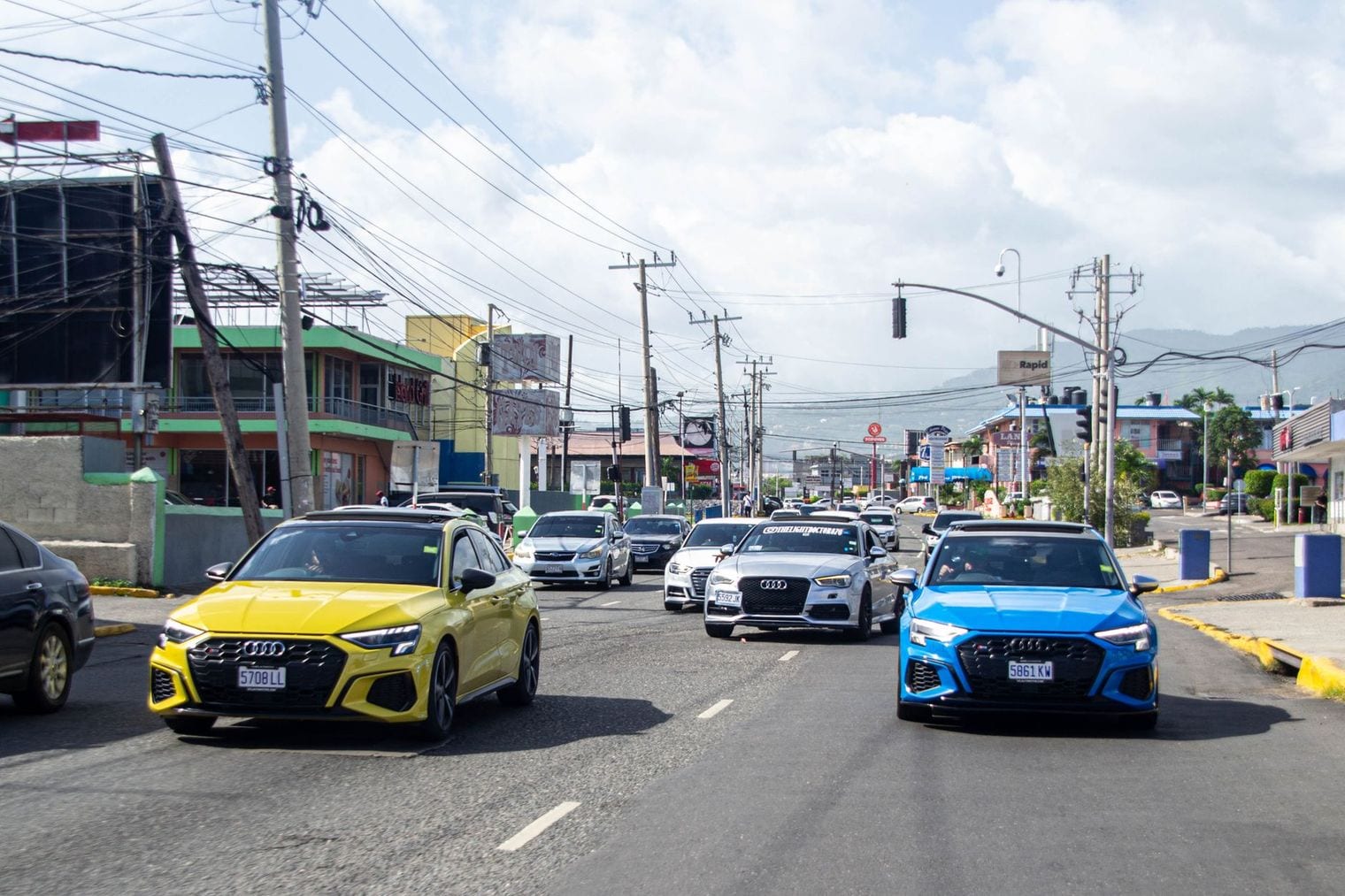
The Hip Strip is Gloucester Avenue, the mile or so of seafront road that functions as Montego Bay's promenade, high street and nightlife district at once. Along it, in no particular order: the entrances to Doctor's Cave and Cornwall beaches, craft markets, jerk stands, souvenir shops, dive operators, rum bars, a Margaritaville with a waterslide into the sea, and a steady flow of people selling you things with more persistence than menace.
It is not subtle and it is not trying to be. Walking it end to end is the fastest way to take the temperature of the city, and it is the one part of Montego Bay designed to be explored on foot.
The northern end near the beaches is the busiest and best lit; the strip quietens as it runs south toward town. Expect to be approached often, decide in advance whether you are buying, and a firm, friendly no works fine. After dark it is lively and generally well policed, but the usual sense applies.
If Rose Hall is the theatrical great house, Bellefield is the intimate one. Dating to 1735 and set on ten acres of gardens just south of the city, it belongs to the Barnett Estate — sugar and cane land held by the Kerr-Jarrett family since 1755, across eleven generations.
The visit is built around a small guided tour of the restored eighteenth-century interiors and the gardens, and then around lunch, which is really the reason to come: a spread of traditional Jamaican cooking served on the terrace, with the estate's own history of sugar and food as the through-line.
Groups are small, the pace is slow, and the guides are usually excellent on the domestic detail — what was cooked here, by whom, and how. It works well as a half-day paired with something in town, and it gives you the plantation-era story at a human scale.
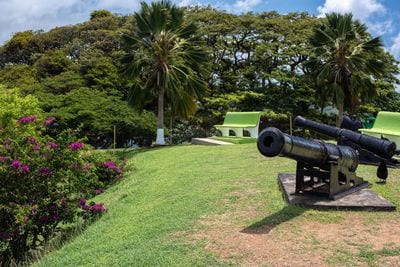
Fort Montego is a modest ruin in a commanding position, sitting on the rise just above the northern end of the Hip Strip.
It was raised around 1750 to guard the approaches to the harbour — known first as Fort Frederick and then as Fort George — designed by European engineers and built, like everything else of that era here, by enslaved Jamaicans. At its height it carried four twelve-pounder guns and five smaller pieces, with a barracks and an armoury behind.
Its military record is close to comic. The historian Edward Long inspected it, found it decaying and doubted it was worth repairing at all. One of its rusting guns burst while firing a celebratory salute, killing the gunner.
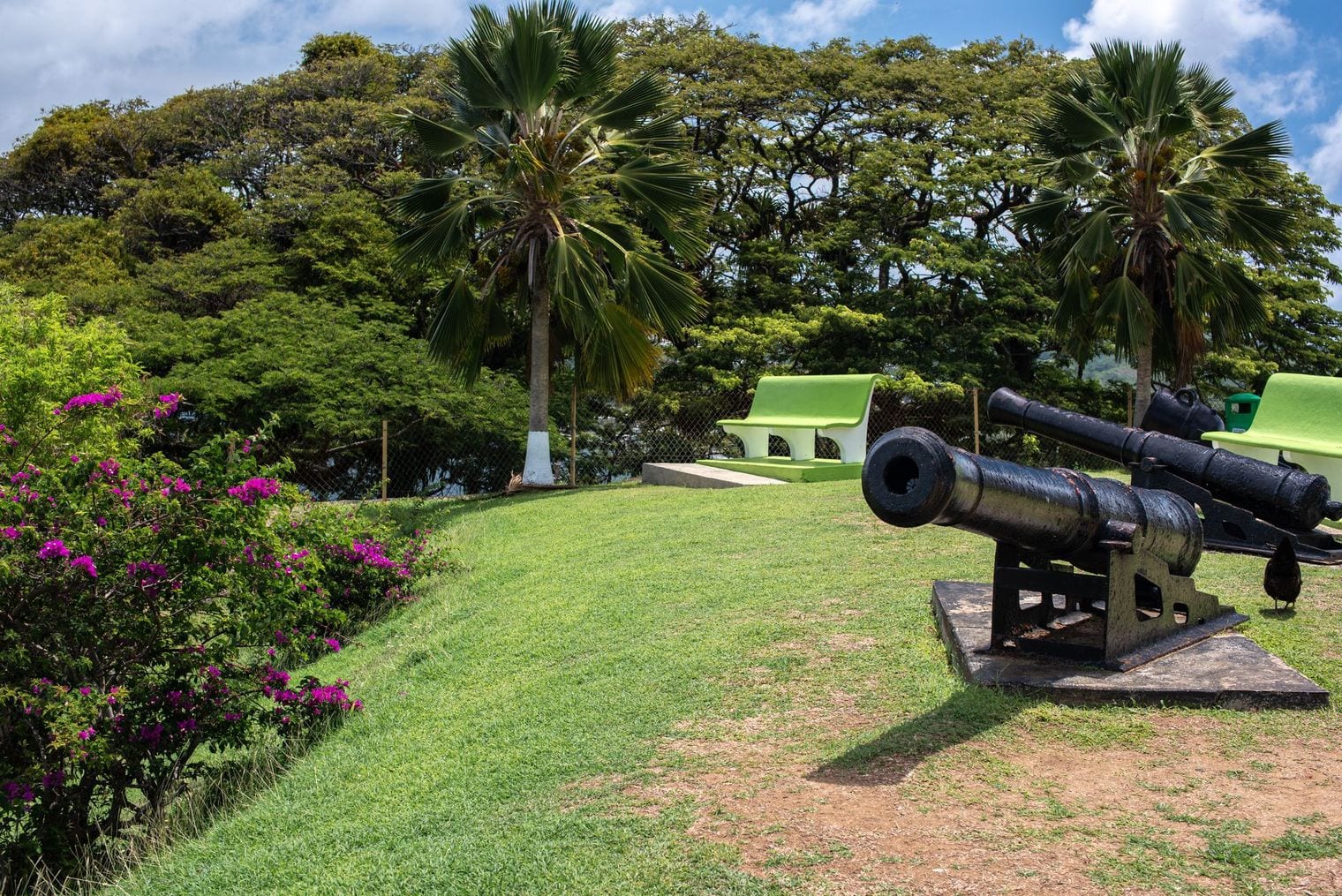
In 1795 its officers mistook an English ship for a French privateer and opened fire on it, happily without casualties. What survives today is the gun platform and its cannon, a few minutes' walk uphill from the beaches, with a good view back over the bay — and the craft market spread out immediately below it.
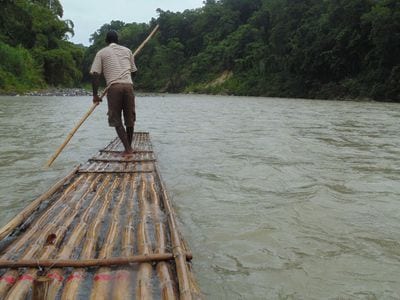
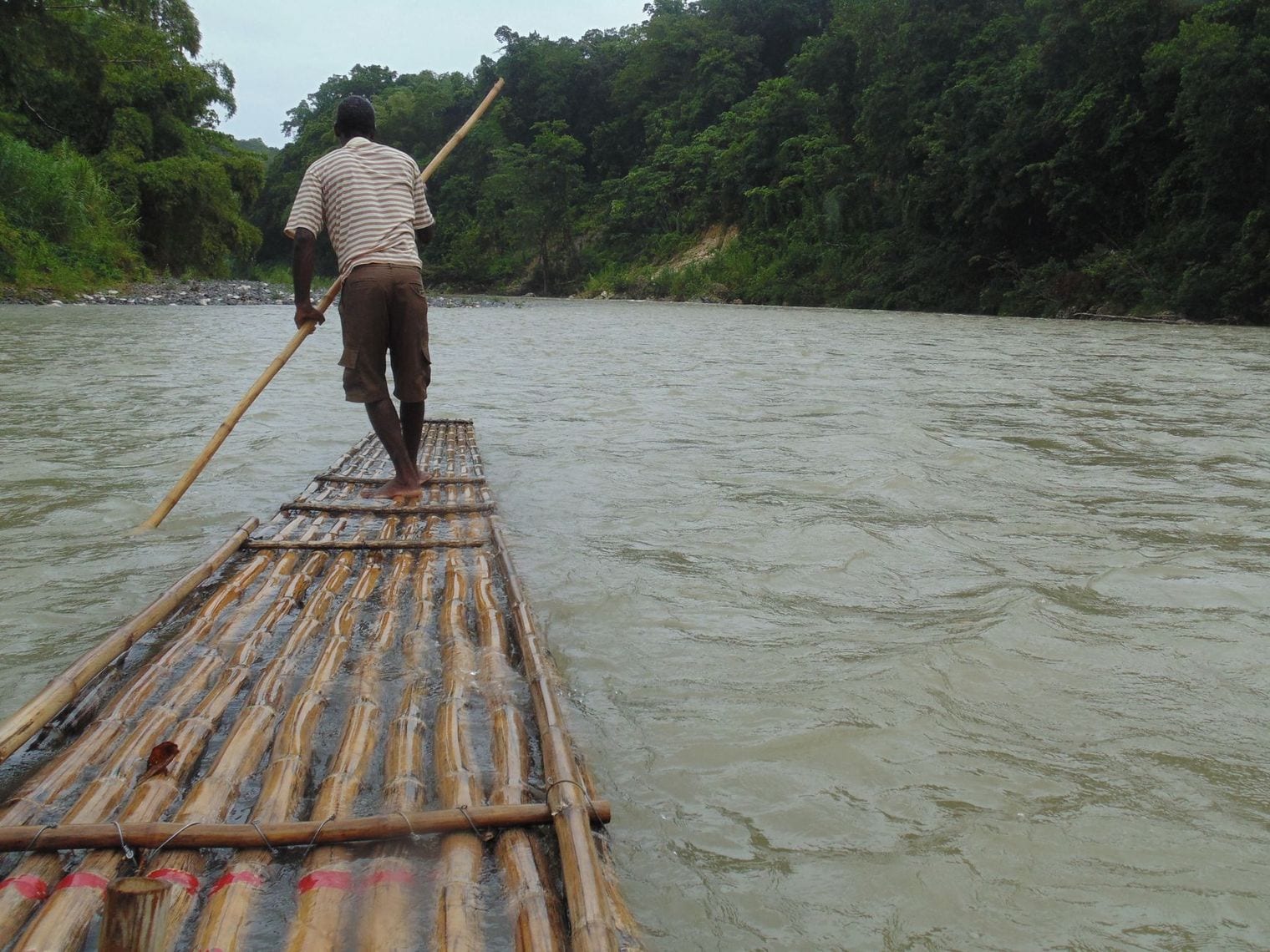
Bamboo rafting is Jamaica's signature slow pleasure, and the Great River at Lethe is where Montego Bay does it. Thirty feet of lashed bamboo, a bench seat for two, and a captain standing at the bow with a long pole, working the raft downstream through a green corridor of bamboo, tree ferns and overhanging branches for about three miles.
There is nothing to do and nothing much to look at beyond kingfishers, the occasional egret and people washing at the riverside.
That is the appeal. Lethe is a village in the hills a short drive inland from the city, on land that was once a working banana plantation, and the valley is genuinely quiet in a way the coast road never is.
Most trips add a limestone foot rub with smooth river stones at the end, and many bundle in lunch or a garden walk. Captains are paid partly in tips and will tell you so; bring small notes. If you have seen the Martha Brae mentioned elsewhere, this is the same idea an hour closer to Montego Bay.
The handsome cut-stone building on the north side of Sam Sharpe Square was built in 1803 as the parish courthouse, and it is the most historically weighted address in the city. It was here that many of the enslaved people who took part in the 1831 Christmas Rebellion were tried — among them Samuel Sharpe himself, the rebellion's leader, later proclaimed a National Hero of Jamaica and the man the square outside is named for.
Restored by the Urban Development Corporation in 2001 and reopened in its present form in July 2014, the Montego Bay Cultural Centre now houses National Gallery West, a museum of the city and parish, performance space and a café.
The art collection is the strongest reason to go — National Gallery West is the western home of Jamaica's national collection — but the building itself does a lot of the work, and the combination of the courtroom's history, the museum downstairs and the square outside makes it the natural place to start a walking tour of downtown.
Plan your trip
Best Time to Visit Montego Bay
The dry season runs roughly December to April and is the reason most people come — sunny days in the high twenties, cool evenings and very little rain on this coast. It is also the busiest and priciest stretch, with cruise ships in most days. Late spring, from March into May, is the sweet spot: the dry weather is still holding, the sea has warmed, and the winter crowds have thinned.
Summer is hot, humid and green, with short afternoon downpours and the calmest water of the year for diving and snorkelling; it is also when the city's big reggae festivals fill the north coast and the Hip Strip is at its loudest. Hurricane season runs June to November and genuinely peaks in September and October, which is when rates fall furthest and the risk of a washed-out week is highest. By late November the weather has usually settled again.
Getting to Montego Bay
Almost everyone arrives at Sangster International Airport, which sits right on the edge of the city — close enough that the approach path passes over Dead End Beach, and only a few minutes from the Hip Strip and the downtown hotels. It is Jamaica's busiest airport for visitors and the main gateway for the whole north and west coasts, so most international arrivals land here rather than at Kingston.
Overland, the A1 runs west along the coast towards Negril and south into the interior, while the north-coast highway heads east towards Falmouth and Ocho Rios and is fast, modern and toll-free for most of its length. Cruise passengers dock at the Freeport pier on the reclaimed peninsula south of downtown. The air-conditioned coach service that links Jamaica's main towns runs from Montego Bay to Kingston, Negril and Ocho Rios and is the practical alternative to driving yourself.
Getting Around Montego Bay
The tourist strip is walkable and that is the short answer for most visitors. Gloucester Avenue runs about a mile along the seafront and links the beaches, the craft markets and most of the restaurants, so a stay based there needs no transport at all. Downtown around Sam Sharpe Square is a further fifteen minutes on foot and is best walked in daylight.
Everything else wants wheels. Route taxis are the cheap local option and run fixed routes with shared seats; chartered taxis are the standard tourist choice and are worth agreeing a price for before you set off.
A hire car makes sense if you plan to reach the great houses, the golf courses at Rose Hall or the hill roads to Anchovy and Lethe under your own steam — bear in mind driving is on the left, the interior roads are narrow and steep, and rural stretches are unlit after dark. Many visitors split the difference and hire a driver for a day of out-of-town stops.
Where to Stay in Montego Bay
Gloucester Avenue and the Hip Strip put you within walking distance of the beaches, the craft markets and the nightlife, and it is the obvious base for a short first trip or anyone without a car. Immediately behind it, the streets climbing away from the seafront are quieter while staying in walking range. Downtown, around Sam Sharpe Square, is where the city actually works — cheaper, busier, far less geared to visitors, and a genuine option if you want that.
East along the coast, Ironshore and the Rose Hall estate hold the large resort properties, the convention centre and the golf courses; it is calmer and greener out here, with more space and better sea views, but you will drive or taxi for everything and the strip is a ten-to-fifteen-minute ride away.
Further east again towards Falmouth the development thins out into quieter, more isolated stretches of coast. West of the airport, the road towards Reading and the Great River is residential and low-key, and puts you closer to the hill attractions than to the beaches.
Where to Eat in Montego Bay
Jerk is the thing to prioritise and the roadside jerk pit is where to have it — pork or chicken smoked slowly over pimento wood, chopped on a board, served with festival or hard dough bread.
The pits along the road east of the city are the ones locals drive to. Beyond jerk, look for curry goat, oxtail, brown stew fish and ackee and saltfish, the national breakfast dish, and pick up a beef patty when you want a cheap lunch on the move.
The Hip Strip is the visitor dining district, running from casual beach shacks to seafront terraces, and it is where you will find the widest choice within walking distance. Downtown near Sam Sharpe Square the cook shops and patty counters are cheaper and far more local.
Out at the Rose Hall end the dining sits mostly inside the resorts. Wherever you eat, the drinks list barely changes: Red Stripe, rum, sorrel, ting, and Blue Mountain coffee if you want the island's other famous export.
Day Trips from Montego Bay
Falmouth is the easy one, about forty minutes east: a Georgian port town with more surviving eighteenth-century streetscape than anywhere else on the island, and the launching point for both the bamboo rafts on the Martha Brae and the night boats out onto the Luminous Lagoon, where the water lights up blue around a swimmer.
Carry on another hour east and you reach Ocho Rios and Dunn's River Falls, the terraced limestone staircase that people climb hand in hand straight up out of the sea — the single most photographed thing in Jamaica, and a full day out from Montego Bay rather than a half.
West, it is about an hour and a half to Negril for Seven Mile Beach and the cliffs at the island's western tip, where the sunset ritual is a genuine institution.
South, the roads slow right down but the reward is the quiet side of the island: the crocodile boat safari on the Black River, the terraced cascades at YS Falls, and the cane country around the Appleton estate, roughly two to two and a half hours out. All of these are long days from Montego Bay, so pick one rather than stacking two.
Before you go
Mobile dataAn eSIM gives your phone local data when you land, with no SIM card to swap.via AiraloGet an eSIM
Airport transferA driver meets you at arrivals and takes you to your hotel, at a price fixed when you book.via Welcome PickupsBook a transfer
We may earn a commission when you buy through these links, at no extra cost to you. How we make money.
One Day in Montego Bay
Morning
Start downtown while it is still cool. The Montego Bay Cultural Centre sits on Sam Sharpe Square in the 1803 courthouse, and an hour in National Gallery West gives you the city's history before you see any of it. Walk north from the square and climb the short rise to Fort Montego for the cannon and the view back over the bay, with the craft market spread out below.
Drop down to the water at Doctor's Cave Beach, the sheltered cove that started the city's tourist trade, and give it a couple of hours — the reef is close enough in to snorkel straight off the sand. Come out onto The Hip Strip and walk it end to end for the craft stalls, the jerk stands and the general noise of the place.
Head north to Dead End Beach for sunset, where the road stops at the airport fence and the aircraft come in low overhead. If you would rather have space and lawns, Harmony Beach and its boardwalk catch the same light a few minutes south, and the food vendors there run late.
A good chunk of this list costs nothing. Harmony Beach is a free public beach park with a swimming beach, lawns, a jogging trail and a boardwalk built specifically so the city could stop paying to reach its own waterfront.
Dead End Beach is free too, and is the pick for sunset and low-flying aircraft. Walking The Hip Strip end to end costs nothing beyond whatever you decide to buy, and the climb up to Fort Montego for the cannon and the view over the bay is open and free as well.
It is best known for Doctor's Cave Beach, the sheltered white-sand cove whose water a British osteopath declared curative in the 1920s, kicking off Jamaican tourism. After that: Rose Hall Great House and its White Witch legend, the hummingbirds that land on your finger at Rocklands Bird Sanctuary, the free waterfront at Harmony Beach, and championship golf on the Rose Hall estate at Cinnamon Hill.
How many days do you need in Montego Bay?
Four or five days is the sweet spot. One day covers downtown, Doctor's Cave Beach and the Hip Strip on foot. A second handles the great houses and golf east of the city at Rose Hall. A third gets you up to Rocklands and out to a bamboo raft on the Great River. Any longer and you should be taking day trips east or west.
Is Montego Bay worth visiting?
Yes, with a caveat. It is a working city of about 110,000 people that happens to be a resort town, so it is busier, louder and less polished than a purpose-built resort strip. That is exactly its appeal if you want somewhere real, with historic buildings, a proper downtown and beaches locals actually use. If you want seclusion, base yourself east towards Rose Hall or head to the south coast.
What can you do in Montego Bay for free?
Harmony Beach is a free public beach park with lawns, a jogging trail and a boardwalk. Dead End Beach is free and is the best sunset spot in the city, with aircraft passing low overhead. Walking the length of the Hip Strip costs nothing, and so does climbing to Fort Montego for its cannon and the view back across the bay.
Is Montego Bay walkable?
The tourist area is. Gloucester Avenue runs roughly a mile along the seafront and connects the beaches, craft markets and most restaurants, so a stay on the Hip Strip needs no transport. Downtown is a further fifteen minutes on foot and is fine in daylight. Anything beyond that — the great houses, the golf courses, Rocklands, Lethe — needs a taxi or a car.