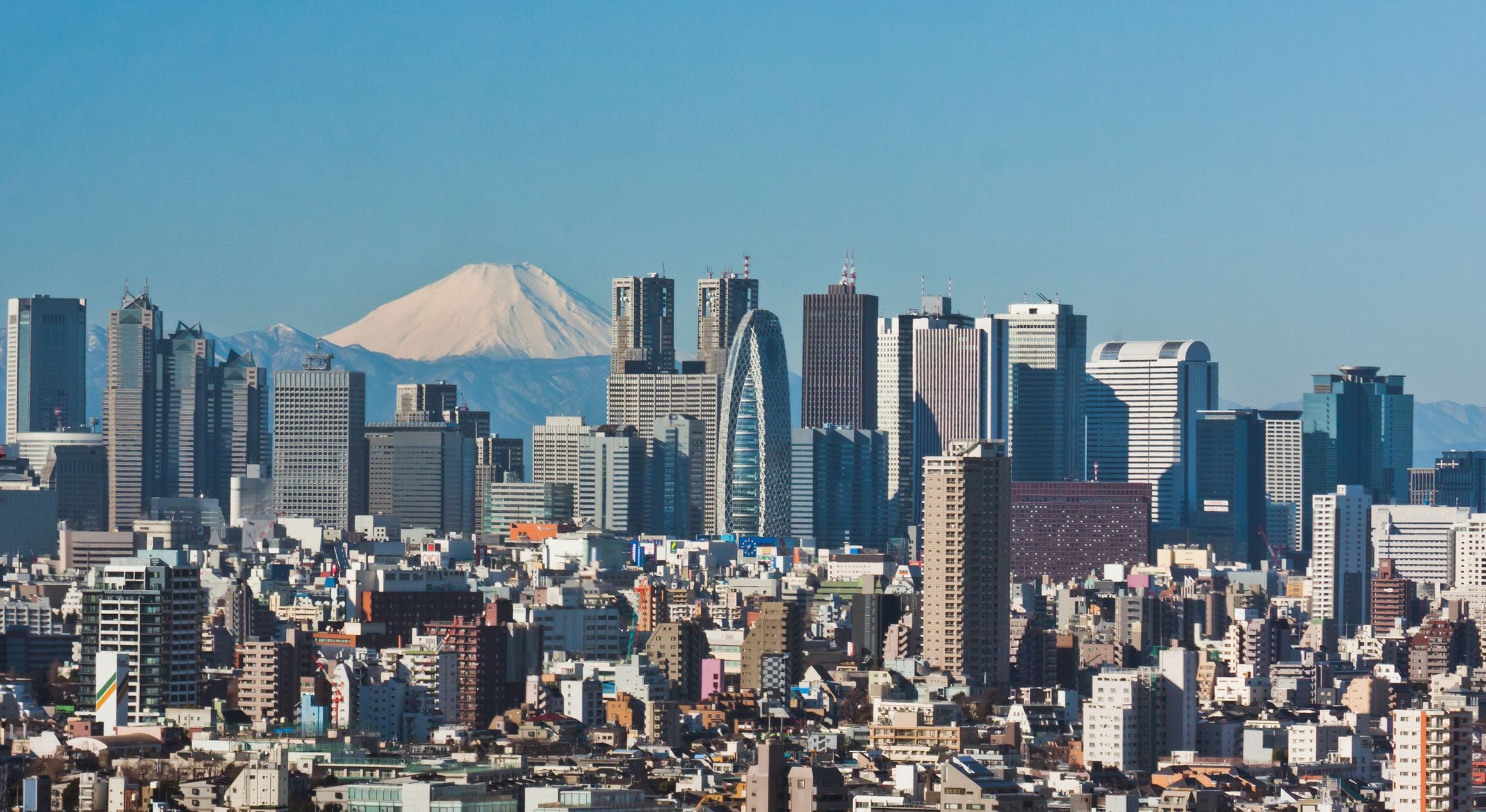
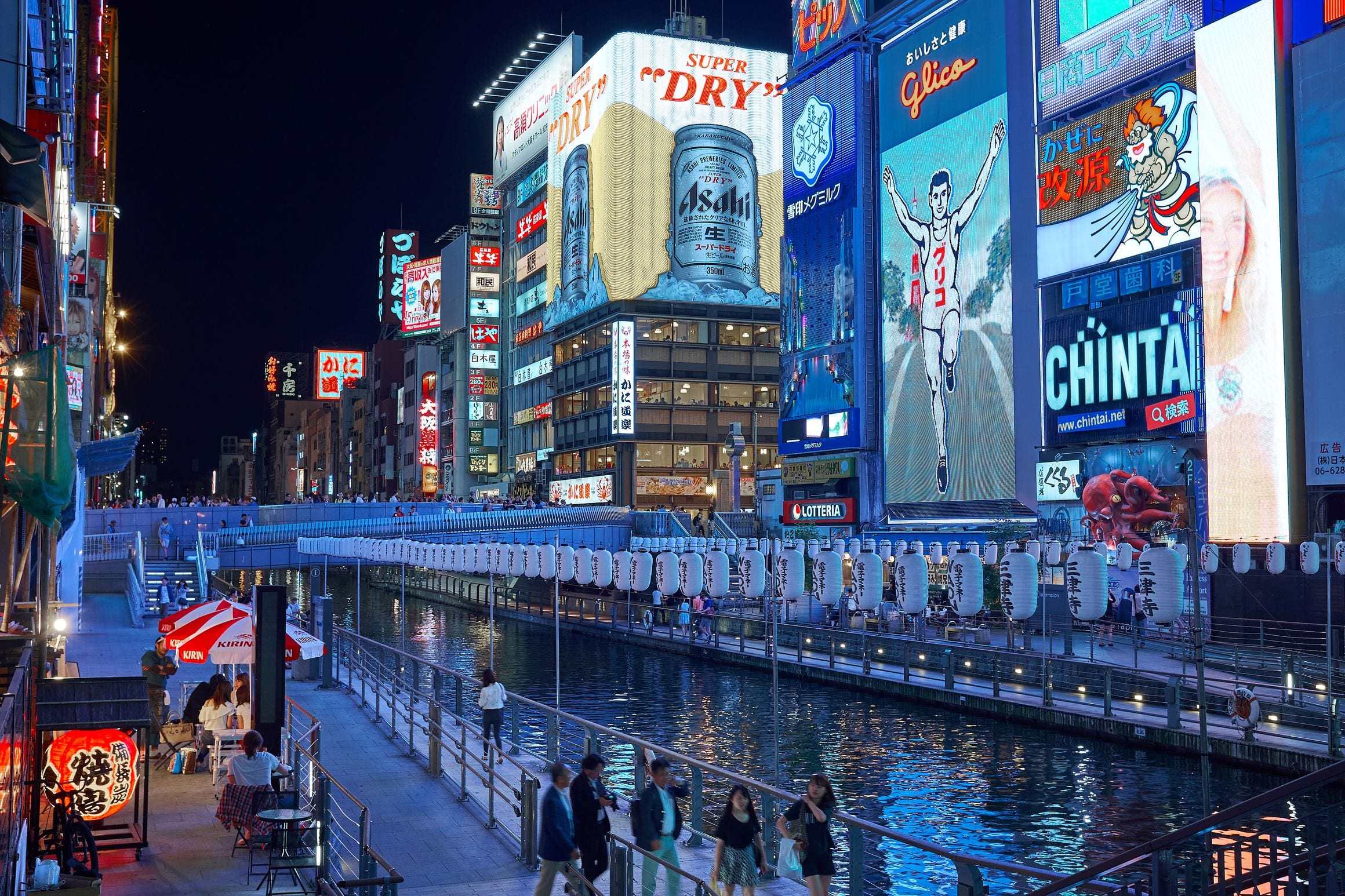
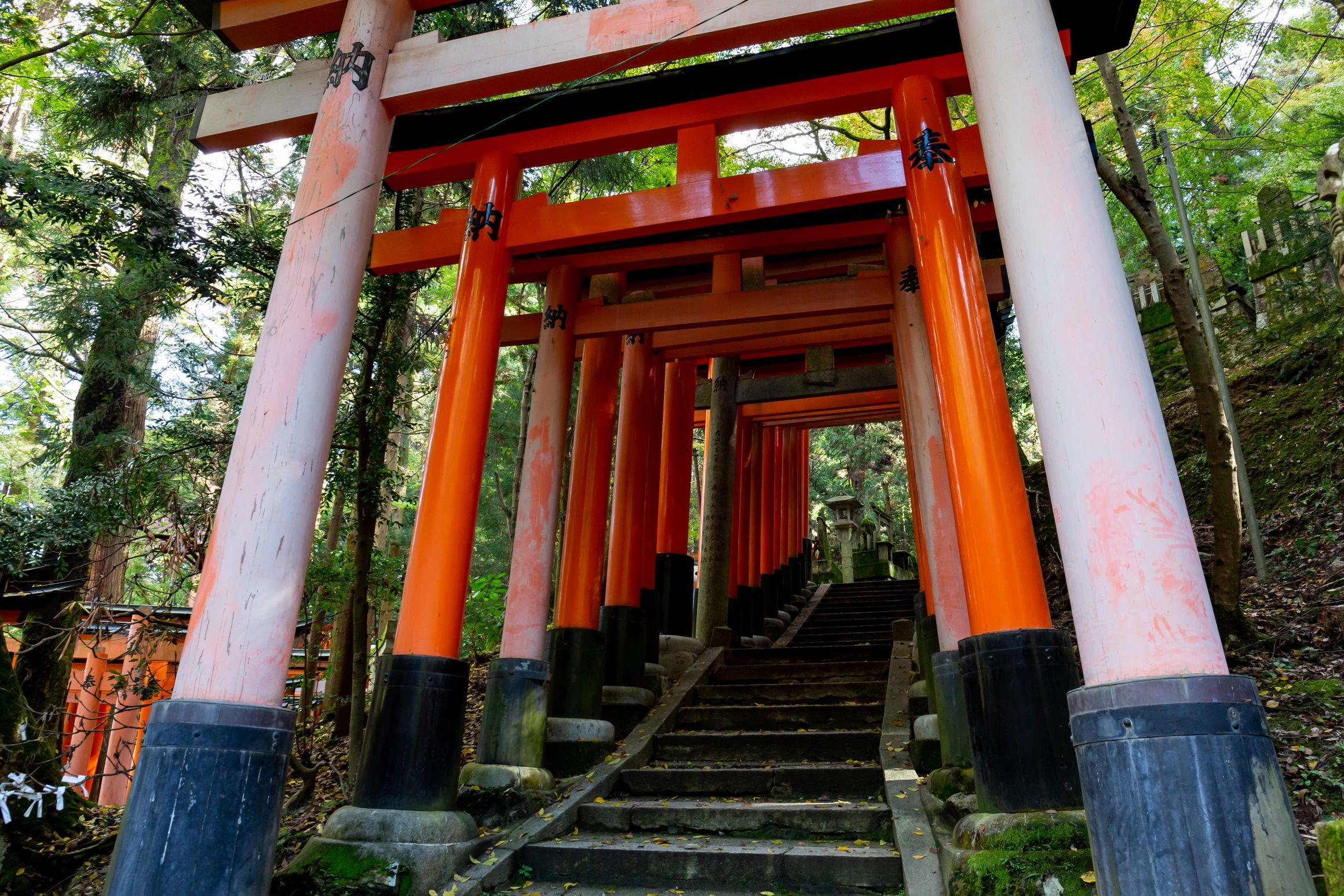
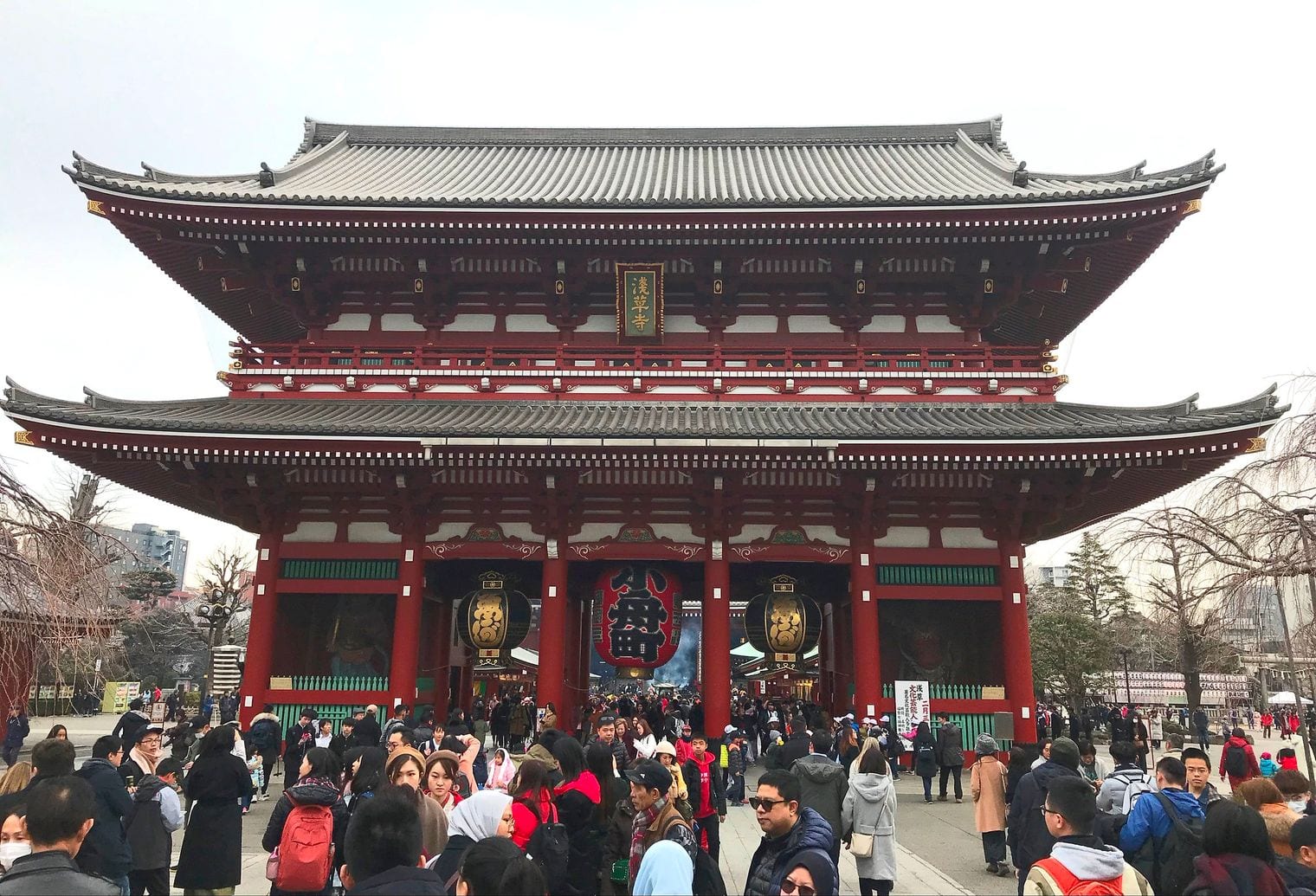
Nowhere else changes so completely from one train stop to the next — and nowhere else runs so precisely on time.
Japan packs an extraordinary amount into a chain of islands roughly the length of the US east coast: neon megacities and silent cedar forests, 1,200-year-old temples and bullet trains that leave to the second. It rewards travellers who slow down — a morning at a Kyoto shrine, an afternoon soaking in an onsen, a late night in a six-seat Tokyo bar. The rail network makes it one of the easiest countries in Asia to explore without a car, and the food is superb at every price. Come for the cherry blossom or the autumn maples, and stay for everything in between.
Photos: Photo by Morio / CC BY-SA 3.0 via Wikimedia Commons · Photo by Kristoffer Trolle / CC BY 2.0 on Flickr · Photo by Balon Greyjoy / CC0 via Wikimedia Commons
The headline season. Cherry blossom sweeps north from Kyushu in late March to Tokyo and Kyoto in early April, and Hokkaido weeks later, so the exact timing shifts with latitude and the year's weather. Temperatures are mild and the light is lovely — but blossom season is the busiest and priciest time to travel, and May is quieter and just as pleasant.
SummerJun–Aug
Hot and genuinely humid across most of the country, with a rainy season through much of June and early July, and a typhoon risk building into late summer. It is the season of fireworks and mountain hiking — the official Mount Fuji climbing window falls in July and August — and the time to head for Hokkaido or the Japan Alps, where the heat breaks.
FallSep–Nov
Arguably the best all-round season. The humidity drops, skies clear, and autumn colour moves the opposite way to the blossom — south from Hokkaido in late September to Kyoto and Tokyo in late November. Early September can still be hot and carries a typhoon risk, but October and November are reliably beautiful.
WinterDec–Feb
Cold and dry on the Pacific side, with crisp sunny days in Tokyo and Kyoto and the occasional dusting of snow on the temples. The Sea of Japan side and the mountains get enormous snowfall instead, which makes Hokkaido and Nagano among the most reliable ski destinations anywhere. Okinawa stays mild enough for a beach walk, if not for swimming.
Regions
Tokyo & KantōThe capital and the plain around it — the densest concentration of things to do in the country, from Sensō-ji and the Skytree to digital art museums and back-alley bars. Within easy reach lie the giant bronze Buddha at Kamakura, the shrines and cedar avenues of Nikkō, and the hot springs and Fuji views of Hakone.
Kansai — Kyoto, Osaka & NaraJapan's historic heart and the reason most first-timers come. Kyoto holds more than a thousand temples and shrines and the surviving geisha districts; Nara has the great Tōdai-ji Buddha and its free-roaming deer; and Osaka, an hour away, is the loud, funny, food-obsessed counterweight to both.
Chūbu & the Japan AlpsThe mountainous middle, and the country at its most scenic. Mount Fuji rises on the Tokyo side, while inland lie the thatched farmhouses of Shirakawa-gō, the old merchant streets of Takayama, the samurai and geisha quarters of Kanazawa, and the snow monkeys and ski resorts around Nagano.
Chūgoku & ShikokuThe western tail of Honshu and the smallest of the four main islands, wrapped around the calm Seto Inland Sea. Hiroshima and the floating torii of Miyajima anchor the region, with the contemporary-art islands of Naoshima and Teshima offshore and Shikoku's 88-temple pilgrimage circling behind.
Kyushu & OkinawaThe volcanic, subtropical south. Kyushu delivers the hot-spring towns of Beppu and Yufuin, the smoking cone of Sakurajima above Kagoshima, and Nagasaki's layered port history — while the Okinawan islands, closer to Taiwan than to Tokyo, offer coral reefs, white sand and a distinct Ryukyuan culture.
Tōhoku & HokkaidoThe wild north, and the emptiest part of the country. Tōhoku keeps deep snow, samurai towns and Japan's most famous summer festivals; Hokkaido beyond it is a different landscape altogether — national parks, lavender fields, drift ice, brown bears and the lightest powder snow in the world.
Fushimi Inari TaishaThousands of vermilion torii gates tunnelling up a wooded mountainside behind Kyoto, walkable in full in two to three hours and quietest at dawn.Basecamp: Kyoto
Mount FujiThe near-perfect volcanic cone that has shaped Japanese art for centuries — climbable in the short summer window, and visible from Tokyo on clear winter mornings.Basecamp: Hakone or Fujikawaguchiko
Itsukushima Shrine, MiyajimaThe great vermilion torii that appears to float at high tide, on a forested island of temples and wild deer a short ferry from Hiroshima.Basecamp: Hiroshima
Hiroshima Peace Memorial ParkThe skeletal A-Bomb Dome, left exactly as the blast of 6 August 1945 left it, and the museum beside it — sobering, essential and impeccably done.Basecamp: Hiroshima
Tōdai-ji & Nara ParkOne of the world's largest wooden buildings, sheltering a 15-metre bronze Buddha cast in the 8th century, in a park where more than a thousand deer roam free.Basecamp: Nara
Suggested routes
The Golden Route
~1–2 weeks
The classic first-timer's line down the Pacific side, entirely by train and the single best introduction to the country. Fly into Tokyo and out of Osaka (or the reverse) so you never double back.
2Hakone or Fujikawaguchiko — hot springs and Mount Fuji views
3Kyoto — three days of temples, gardens and old streets
4Nara — easy day trip for the Great Buddha and the deer
5Osaka — eat your way through Dōtonbori, then fly home
West to Hiroshima & the Inland Sea
~1 week
A shinkansen run west from Kansai that trades temple crowds for island scenery and modern art. Pairs naturally onto the end of the Golden Route if you have longer.
1Osaka or Kyoto — start point on the bullet-train line
2Himeji — a two-hour stop for Japan's finest surviving castle
3Hiroshima — the Peace Memorial Park and museum
4Miyajima — ferry across for the floating torii; stay overnight if you can
5Naoshima — the Inland Sea art islands, reached via Okayama
The northern loop: Tōhoku & Hokkaido
~1–2 weeks
For a second trip, or a first one in high summer when the south is sweltering. The shinkansen runs as far as Hakodate and Sapporo, but this is the one route where renting a car genuinely opens things up.
1Tokyo — fly in and take the northbound shinkansen
2Sendai & Matsushima — the pine-covered islands of Matsushima Bay
3Hirosaki or Aomori — castle town, orchards and deep-north festivals
4Hakodate — harbour city with a famous night view
5Sapporo & Furano — Hokkaido's capital, then national parks by car
Japan travel FAQ
Eight questions travellers ask before they go.
When is the best time to visit Japan?
Autumn (October–November) and spring (late March–May) are the two best windows. Autumn brings clear skies, comfortable temperatures and spectacular maple colour, and is generally the easier of the two to travel in. Spring has the cherry blossom, which is genuinely worth seeing but draws the largest crowds and the highest prices of the year — and shifts by a week or two depending on latitude and the season. Summer is hot and humid with a June rainy season, though the mountains and Hokkaido stay pleasant, and winter is cold, clear and excellent for both hot springs and skiing.
How many days do you need in Japan?
Ten days to two weeks is the realistic minimum for a first visit, which comfortably covers Tokyo, Kyoto, Nara and Osaka with a stop near Mount Fuji. A week is enough for Tokyo and Kyoto alone if you accept a fast pace. Three weeks lets you add Hiroshima and the Inland Sea, or push north into Tōhoku and Hokkaido. Japan is longer than it looks — Tokyo to Okinawa is a flight, not a train ride — so resist the urge to cover the whole country in one trip.
Do you need a car in Japan?
For most itineraries, no — and in the big cities a car is a liability, with expensive parking and excellent subways. The rail network reaches almost everywhere a visitor wants to go, and the shinkansen is faster than driving city to city. Rent a car only for the rural areas where trains thin out: Hokkaido, inland Tōhoku, Shikoku, Kyushu's interior, and the Japan Alps. If you do drive, note that Japan drives on the left and that you must carry an International Driving Permit alongside your home licence — Japan does not accept a foreign licence on its own.
What is Japan known for?
Temples and shrines, the bullet train, cherry blossom, hot springs and some of the best food on earth — but also the contrast between them. It is a country where a thousand-year-old wooden shrine sits a subway stop from a neon shopping district, where anime and tea ceremony coexist, and where public transport, service and cleanliness are held to a standard that surprises almost every first-time visitor.
Do people speak English in Japan?
Less than you might expect, but far more than you need to worry about. Station signage, train announcements and menus in tourist areas are widely bilingual, major museums have English information, and staff in hotels and big-city restaurants usually manage the essentials. Outside the cities English drops off sharply. A translation app, a few words of Japanese and a willingness to point will carry you comfortably — travellers rarely have real trouble getting around.
What currency does Japan use, and do you still need cash?
The Japanese yen (¥). Cards are now accepted almost everywhere in cities, and a rechargeable IC card such as Suica or Pasmo covers trains, buses, lockers and convenience stores. Even so, carry some cash: small restaurants, rural bus routes, shrine offerings, market stalls and older ryokan can still be cash-only. Convenience-store ATMs — 7-Eleven and Japan Post in particular — reliably accept foreign cards, which is not true of every bank machine.
What should you eat in Japan?
Far more than sushi. Ramen varies by region — rich tonkotsu in Fukuoka, miso in Sapporo — and so does almost everything else: okonomiyaki in Osaka and Hiroshima, kaiseki multi-course dining in Kyoto, fresh seafood and dairy in Hokkaido. Eat at least once at a standing noodle bar, once at a department-store food hall in the basement, and once from a convenience store, which in Japan is genuinely good. Vegetarians should know that dashi, a fish-based stock, is in a great many dishes that look meat-free.
What kind of trip is Japan best for?
Cities, culture, hiking and rail travel.
We use cookies to analyse site traffic and improve your experience.
You can accept or reject analytics cookies. See our Cookie Policy.