We may earn a commission if you book or buy through a link on
this page, at no extra cost to you. It never affects which places we list or how
we rank them (how we make money).
Short answer
Kyoto's three essential sights are Fushimi Inari Taisha and its tunnels of vermilion torii gates, the gold-leafed pavilion of Kinkaku-ji, and the hillside wooden stage of Kiyomizu-dera, all easily reached from a compact centre. Three days is the sweet spot: one for the Higashiyama temples and Gion, a second for Arashiyama's bamboo and river, and a third for the northern and southern temples such as Ryoan-ji and Tofuku-ji.
Kyoto was Japan's capital for more than a thousand years and still looks the part. Fourteen of the seventeen UNESCO-listed Historic Monuments of Ancient Kyoto stand inside the city, threaded together by temple gardens, stone lanes and geisha quarters, with wooded hills closing in on three sides.
This guide ranks the 40 best things to do in Kyoto, from the torii tunnels of Fushimi Inari to the bamboo of Arashiyama. Give the city three days if you can; four leaves room for the outer temples.
Kyoto's World Heritage listing covers seventeen monuments, but only fourteen stand in Kyoto itself — two are in neighbouring Uji, and Enryaku-ji is over the prefectural line in Otsu.
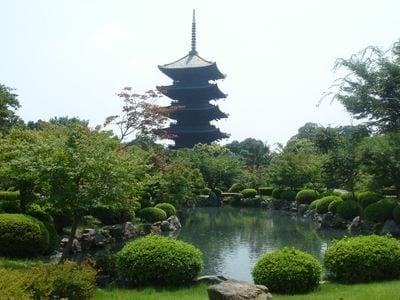
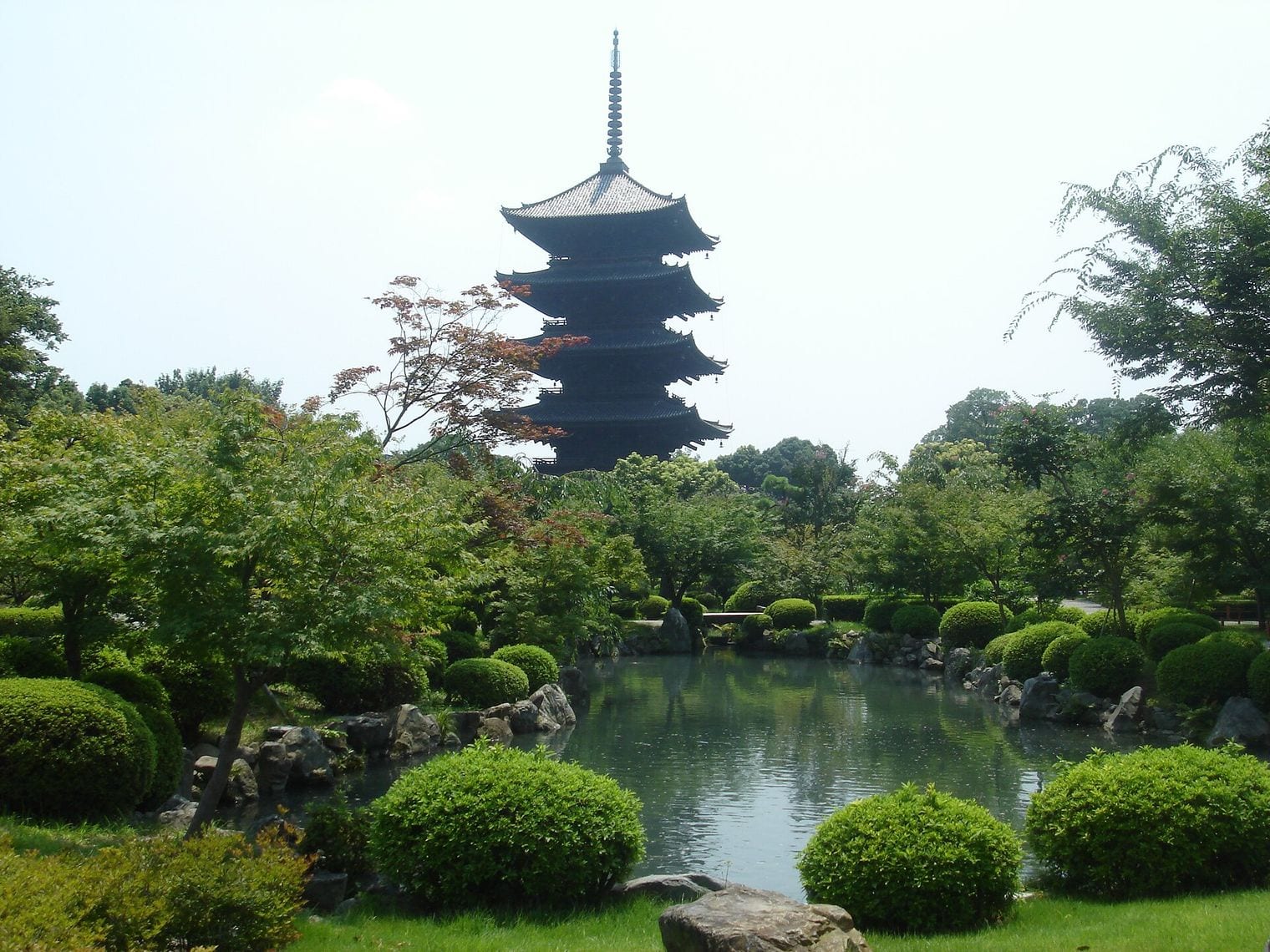
The five-storey pagoda at To-ji is the tallest wooden tower in Japan, and has served as an informal landmark for trains approaching Kyoto Station for generations.
When Higashi Hongan-ji was rebuilt in the nineteenth century the hauling ropes kept snapping, so female followers cut off their hair to be braided into new ones — coils of them are still displayed at the temple.
The Kyoto Botanical Gardens, opened in 1924, were the first public botanical garden in Japan, and were requisitioned as housing by the occupying forces for twelve years after the war.
At Ryoan-ji's rock garden, only fourteen of the fifteen stones are visible from any one point along the viewing veranda — whichever spot you choose, one stays hidden.
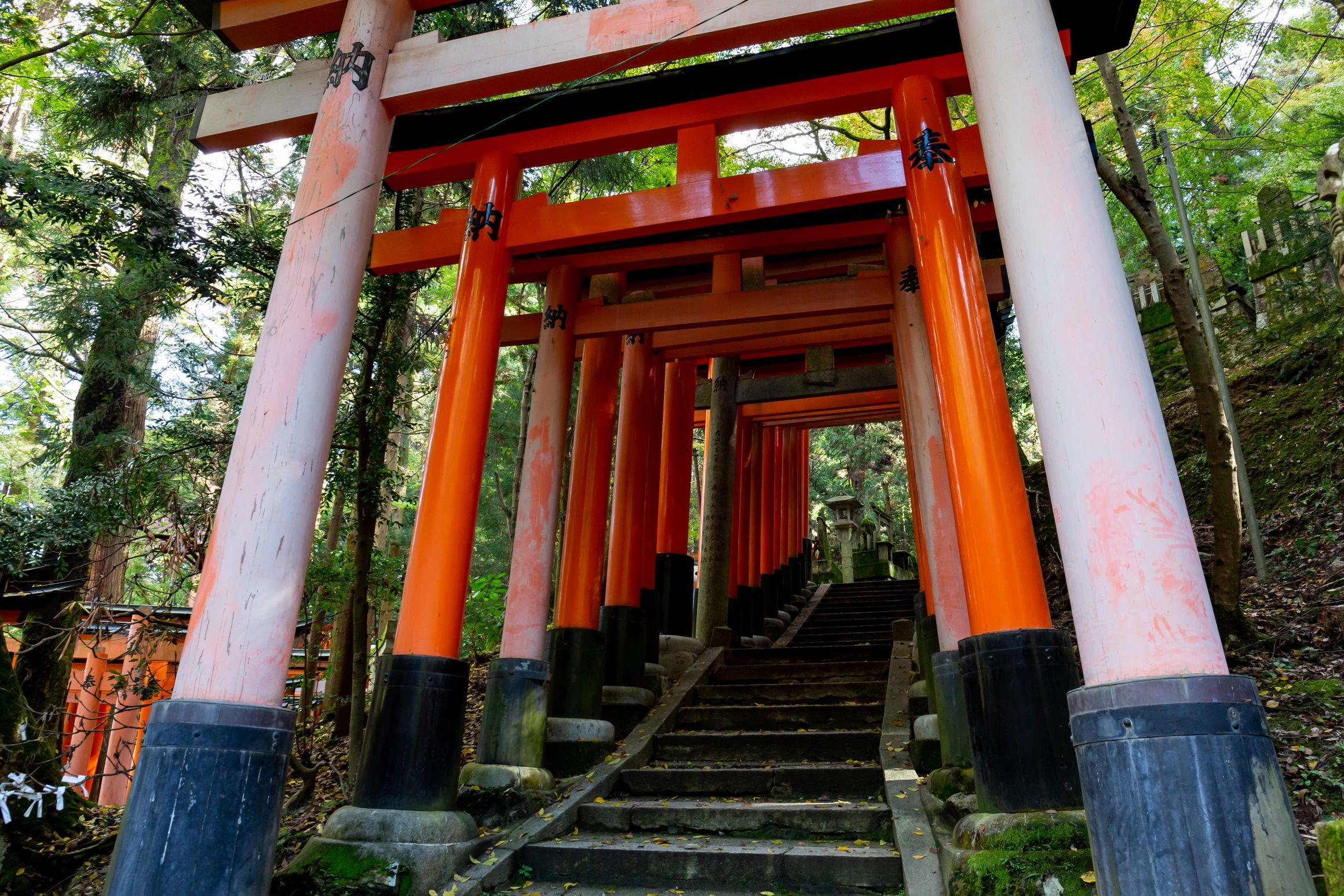
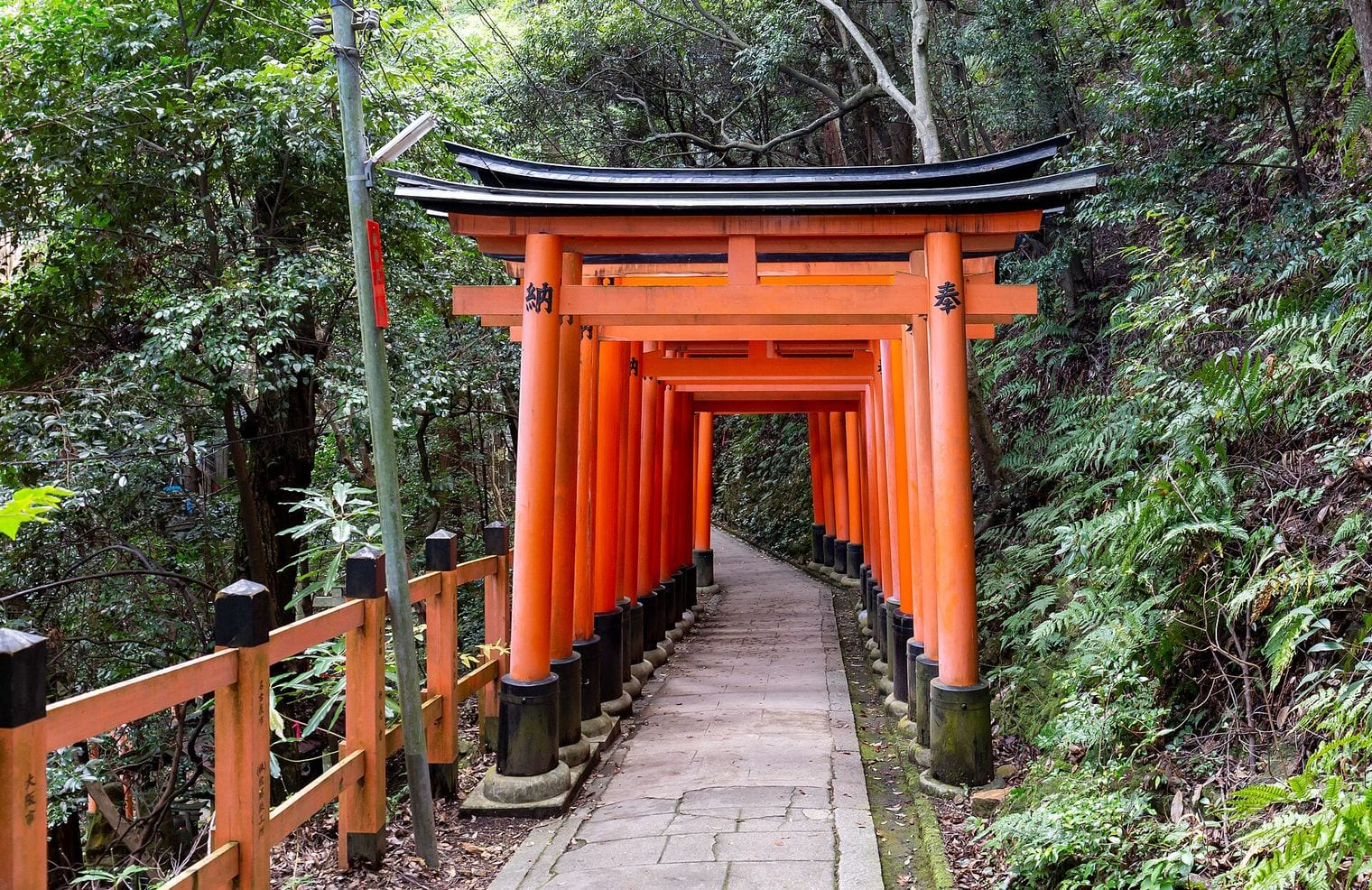
No image says Kyoto faster than the torii tunnels of Fushimi Inari Taisha. The shrine is dedicated to Inari, the Shinto deity of rice and prosperity, and the vermilion gates lining its paths were each donated by a business or individual hoping for good fortune — you can read the donors' names carved into the back of every one as you climb.
The gates are only the start. A trail winds up the wooded slope of Mount Inari past hundreds of smaller altars, stone foxes and moss-covered shrines, thinning out the higher you go. Most visitors turn back at the Yotsutsuji junction, where the view opens over southern Kyoto; carrying on to the summit takes a couple of hours round trip and leaves the crowds behind entirely.
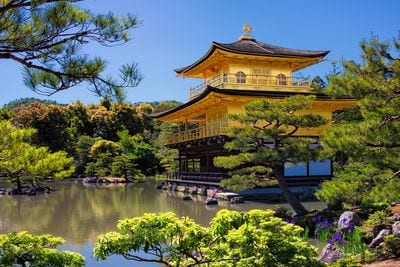
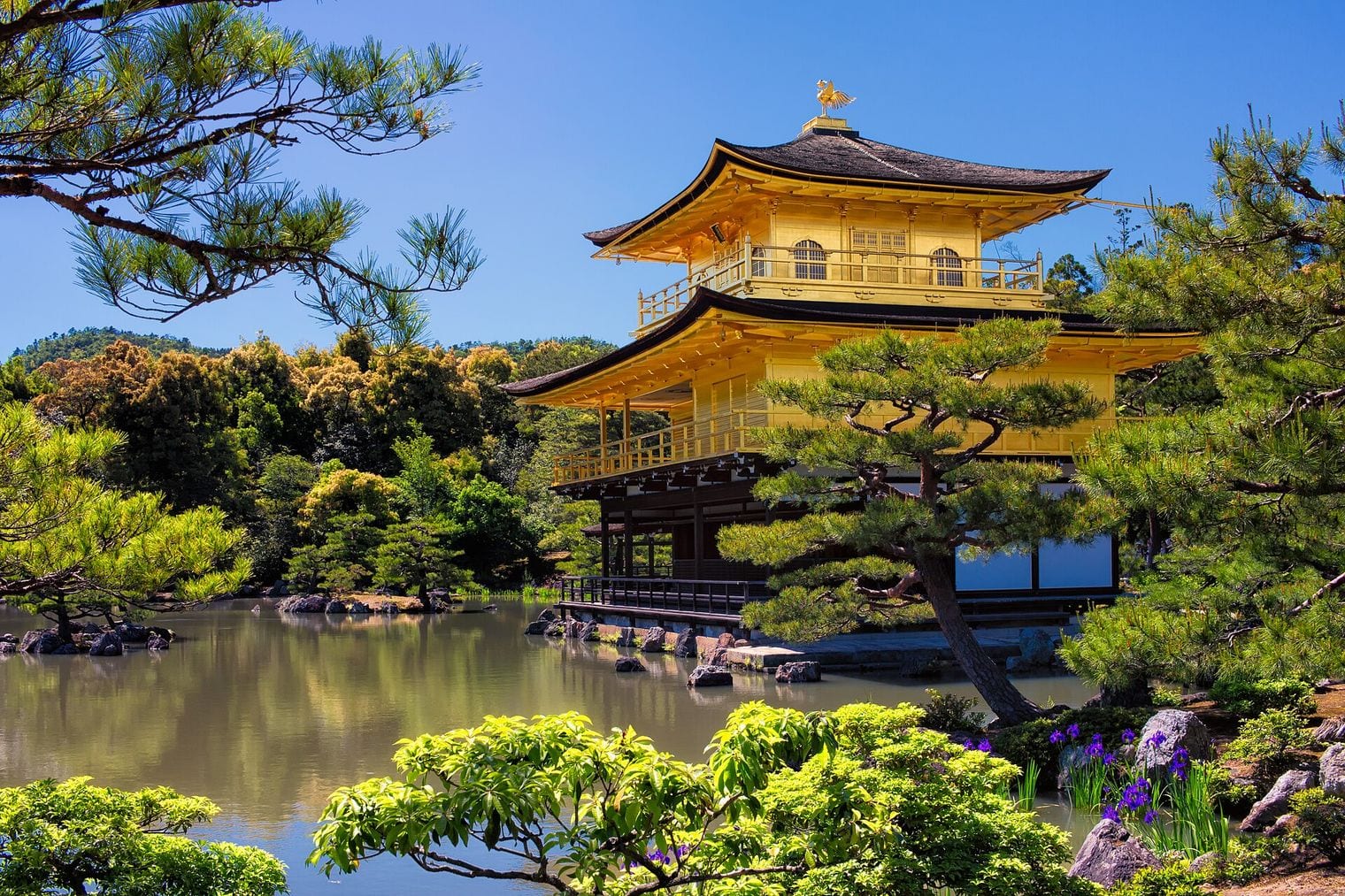
Kinkaku-ji, the Golden Pavilion, is the most photographed building in Kyoto and it earns the attention. The top two storeys are covered in gold leaf that throws a second pavilion across the surface of the pond in front of it, and the whole composition — water, islands, pines, hills behind — was designed to be read from a single viewpoint on the far bank.
It began as a shogun's retirement villa and became a Zen temple after his death. The pavilion you see is a faithful reconstruction: the original was destroyed by arson in 1950 and rebuilt within a few years. The walking route through the grounds is one-way and fairly short, so pair it with Ryōan-ji and Ninna-ji, both a walk or a short bus ride away.
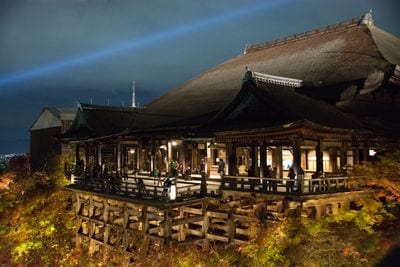
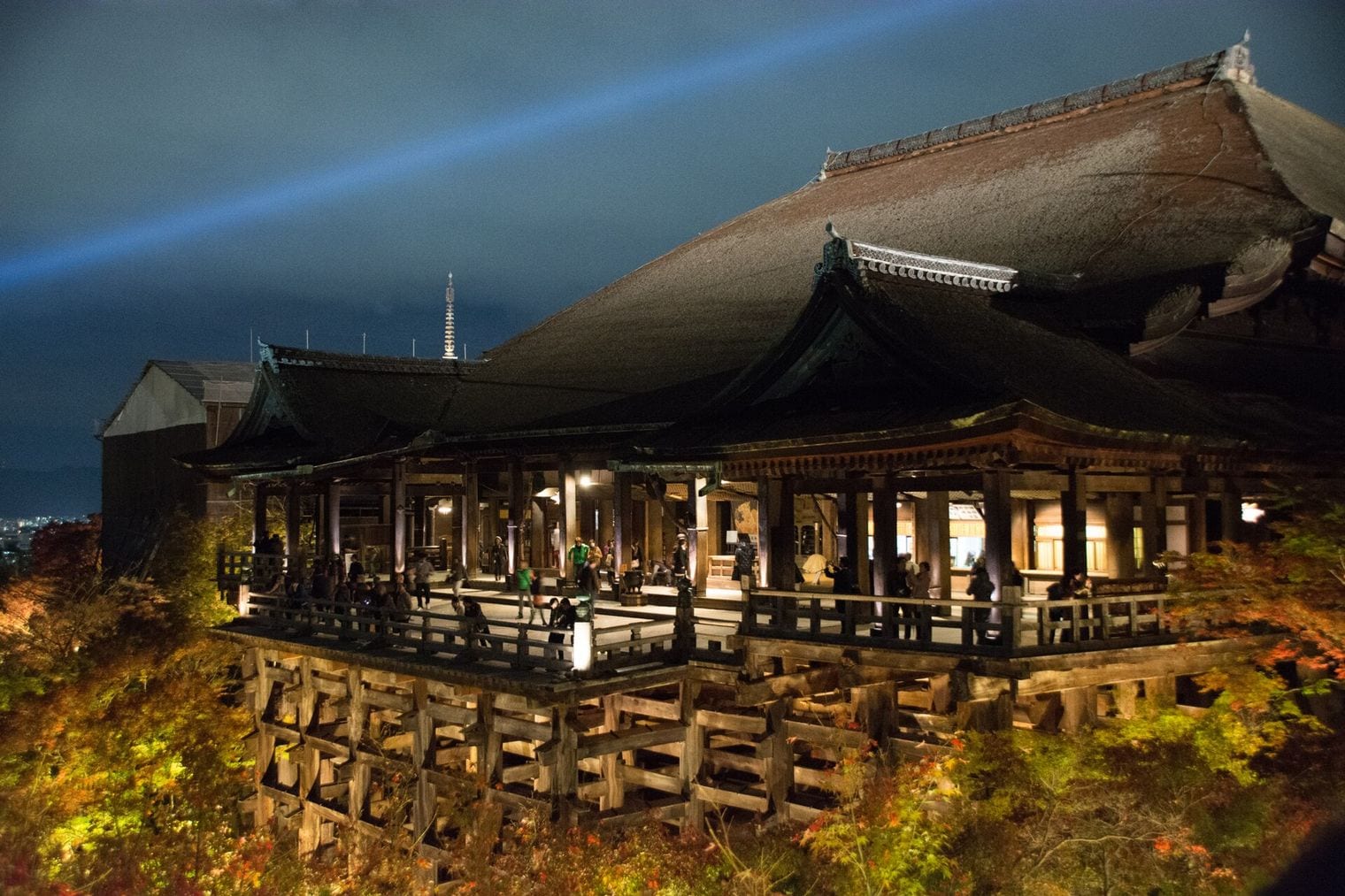
Kiyomizu-dera hangs off a hillside on a lattice of enormous wooden pillars, its main hall opening onto a broad stage that projects over the treetops. The framework holding it up is joined without nails, and from the terrace you get the classic view back across the valley to the pagoda, the city spread out beyond it.
The temple takes its name — roughly "pure water" — from the Otowa waterfall below the stage, where three channels of spring water fall into a pool and visitors queue to drink from long-handled cups. The approach is half the experience: the lanes of Matsubara-dōri climb steeply past pottery shops, pickle sellers and tea houses, and they are at their best early, before the coach parties arrive.
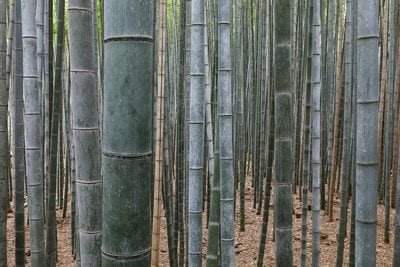
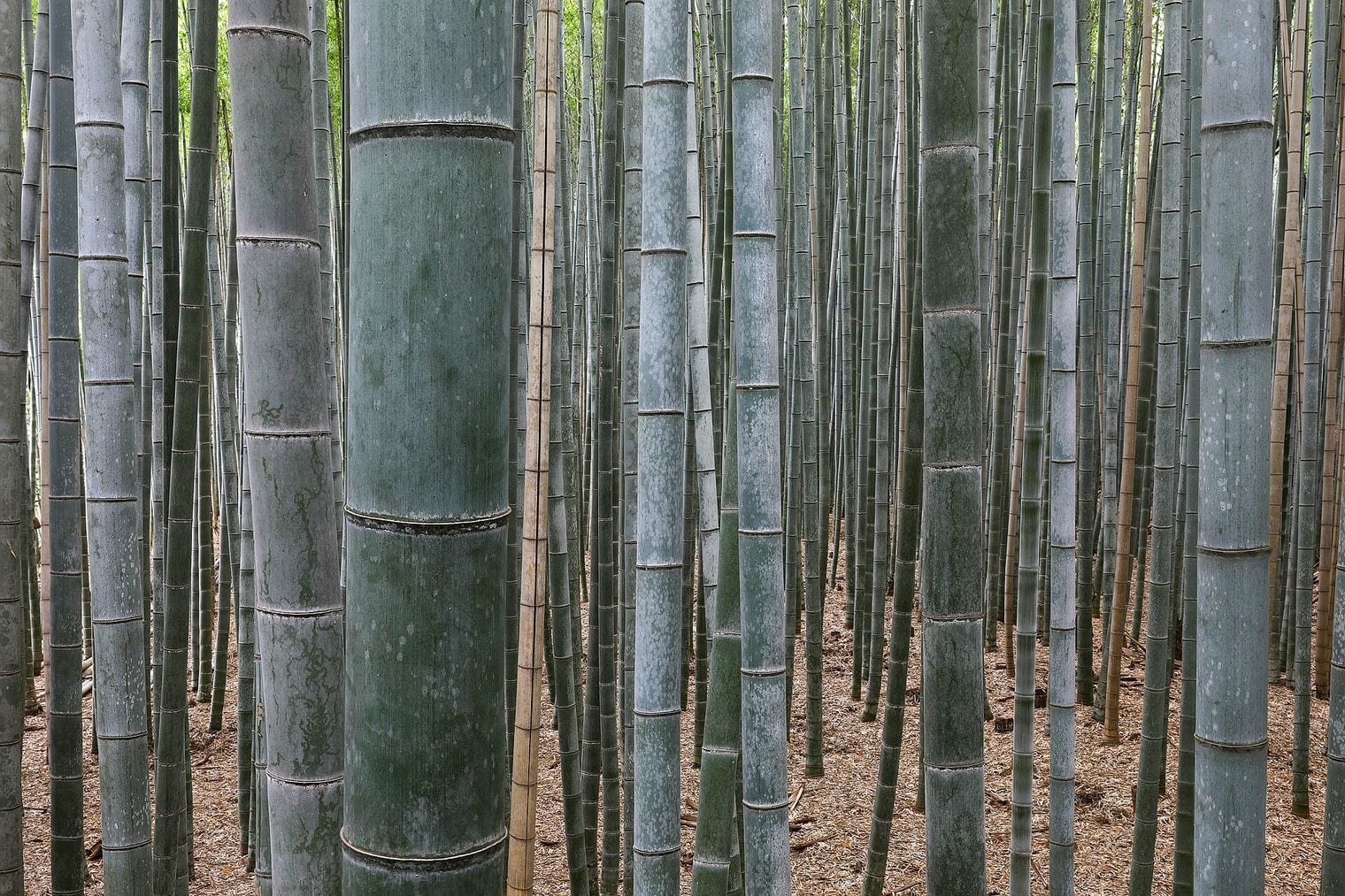
The Arashiyama Bamboo Forest is a single walked path between walls of green stems that run far enough overhead to close out the sky. The light down at ground level turns cool and dim, and when wind moves through the canopy the whole grove creaks and rattles — a sound distinctive enough that it has been catalogued among Japan's notable soundscapes.
The path itself is short, and by mid-morning it is genuinely crowded. Come at first light if you want it quiet, then use it as the front door to the rest of Arashiyama: Tenryū-ji's garden opens directly onto the grove's southern end, the Ōkōchi Sansō villa sits at the top, and the river and Togetsukyō Bridge are a few minutes downhill.
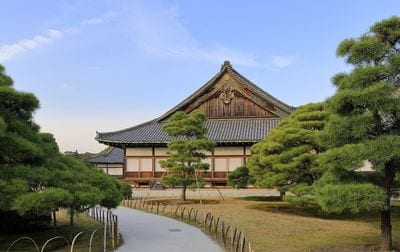
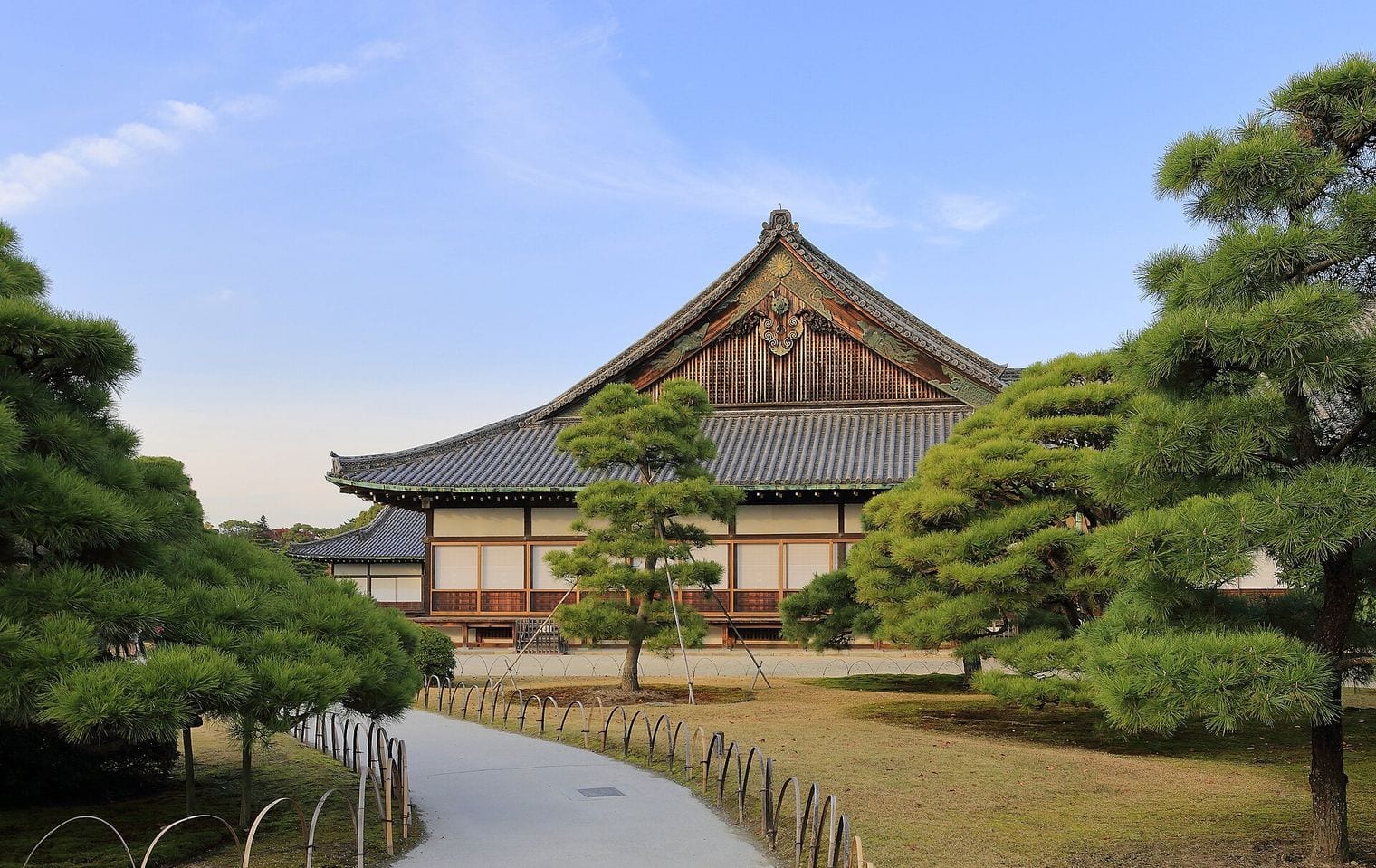
Nijō Castle is the shoguns' Kyoto rather than the emperors', built as the Tokugawa family's seat in a city where the imperial court still nominally reigned. Its Ninomaru Palace is the reason to come: a chain of audience chambers with painted screens of tigers and pines, the rooms growing more restricted the deeper in a visitor was permitted to go.
Walk the corridors and the floorboards chirp under every step. The effect is deliberate — nightingale floors, designed so nobody could approach unheard. The castle is also where the last shogun announced the return of power to the emperor in 1867, ending more than two and a half centuries of Tokugawa rule in the same rooms that had been built to display it.
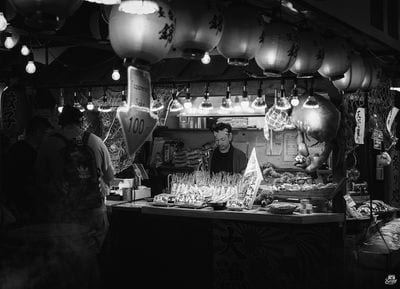
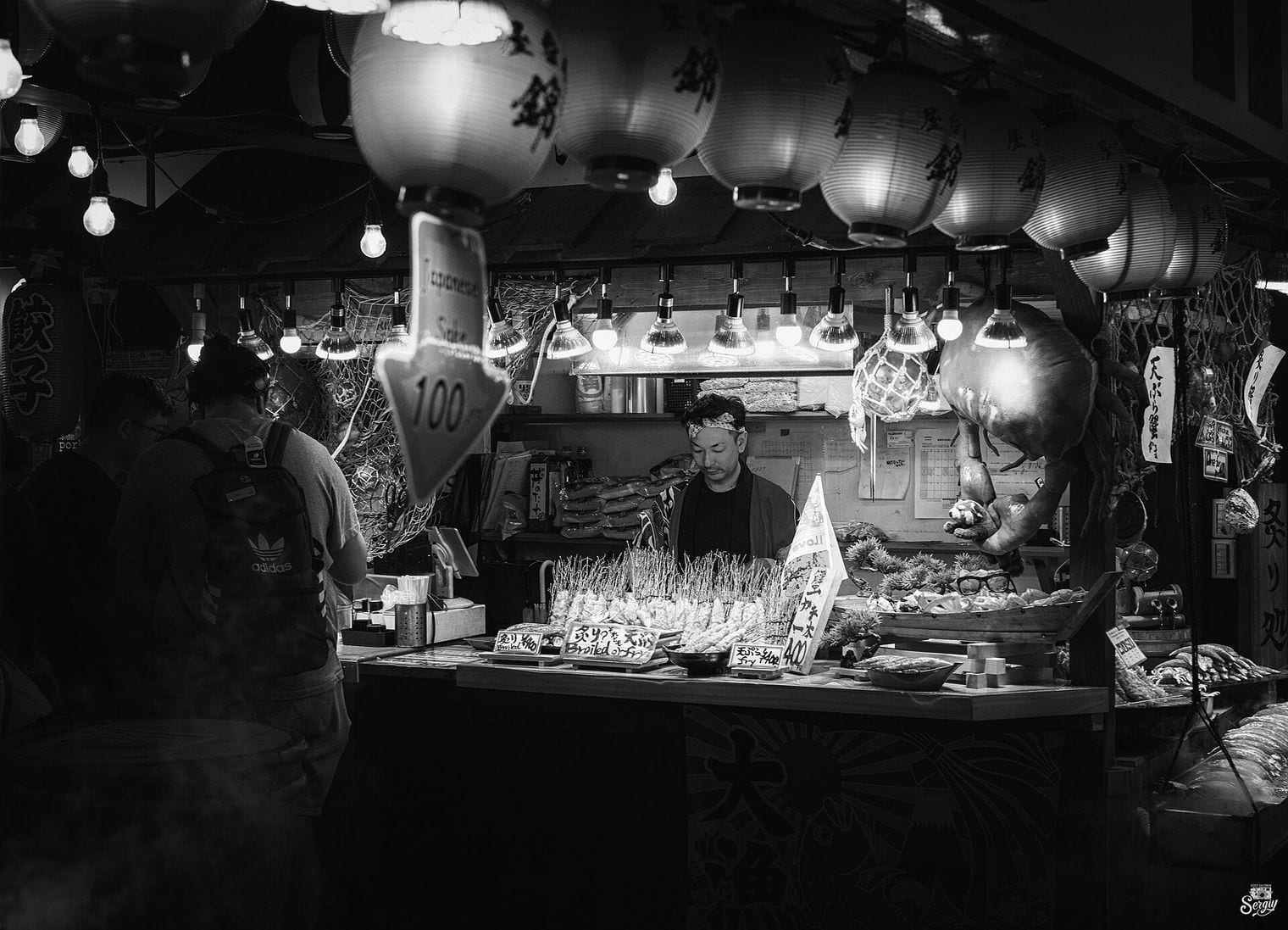
Nishiki Market is a covered lane five blocks long and barely wide enough for two people to pass with shopping bags, running parallel to Shijō in the centre of town. It has fed Kyoto for centuries and is still where the city's kitchens buy: pickles in wooden tubs, tofu skin, dashi stock, knives, sweet chestnuts, whole racks of dried fish.
It is nicknamed "Kyoto's Kitchen" and works best as a grazing route rather than a shopping trip. Many stalls sell single skewers or small cups to eat on the spot, though the polite convention is to eat where you buy rather than walking with food. At the eastern end the arcade runs straight into the Teramachi and Shinkyōgoku shopping streets.
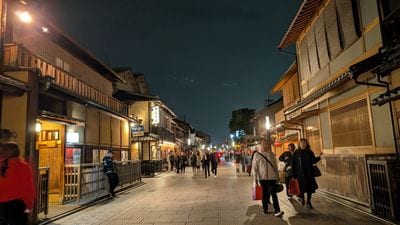
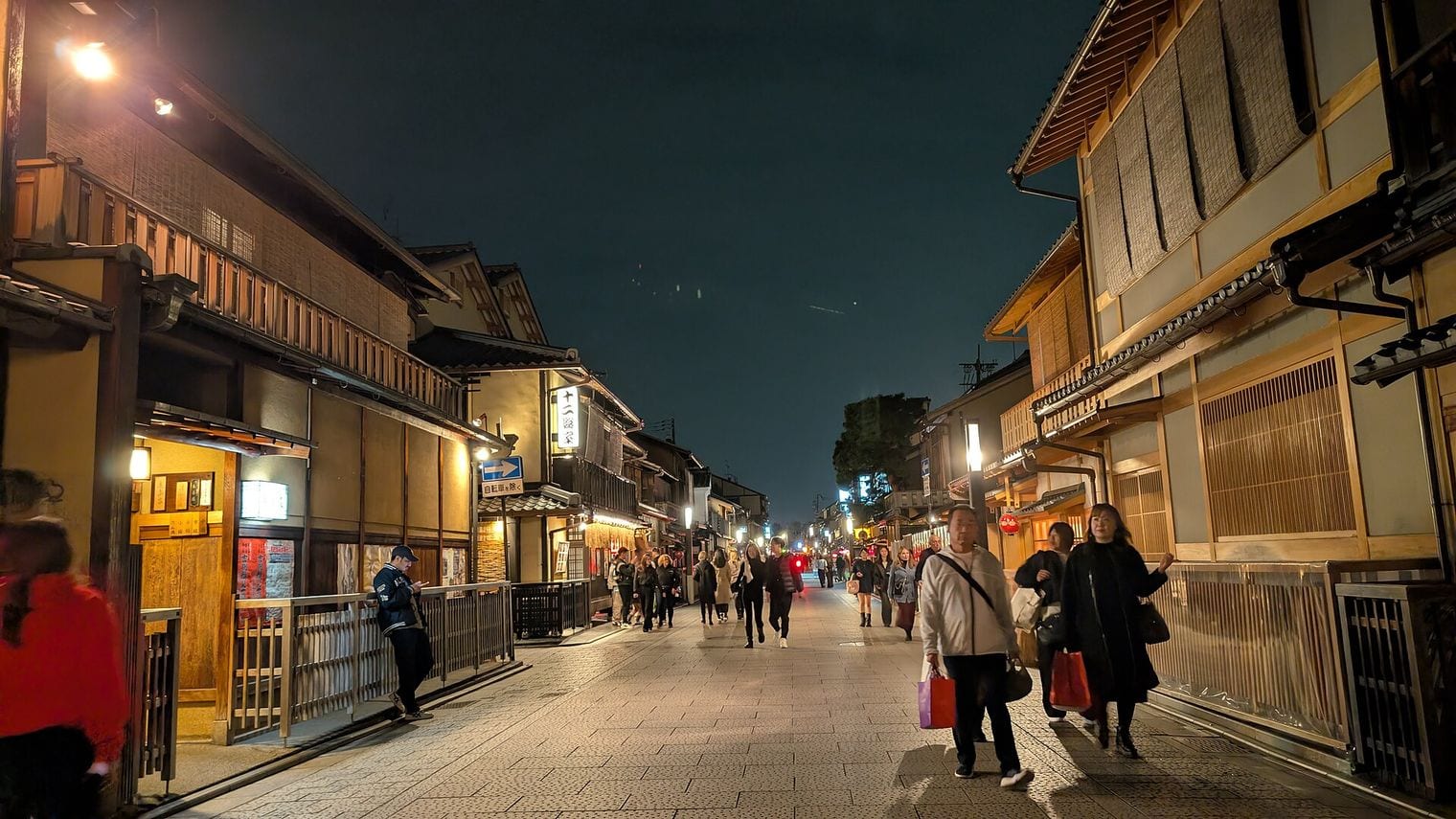
Gion is Kyoto's best-known geisha district, a grid of wooden machiya townhouses, latticed windows and lantern-lit lanes between the Kamo River and Yasaka Shrine. Hanamikōji is the street most people come for, but the quieter stretch along the Shirakawa canal — willows, low stone bridges, water running past the back doors of the teahouses — is the prettier walk.
Geiko and maiko still work here, moving between engagements in the early evening, and the district has posted rules against photographing them on the private lanes; treat it as a working neighbourhood rather than a set. If you want a guaranteed look at the arts they train in, Gion Kōrner runs short evening programmes covering dance, koto and tea ceremony.
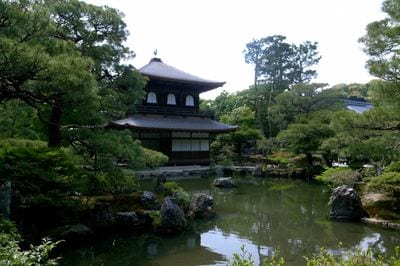
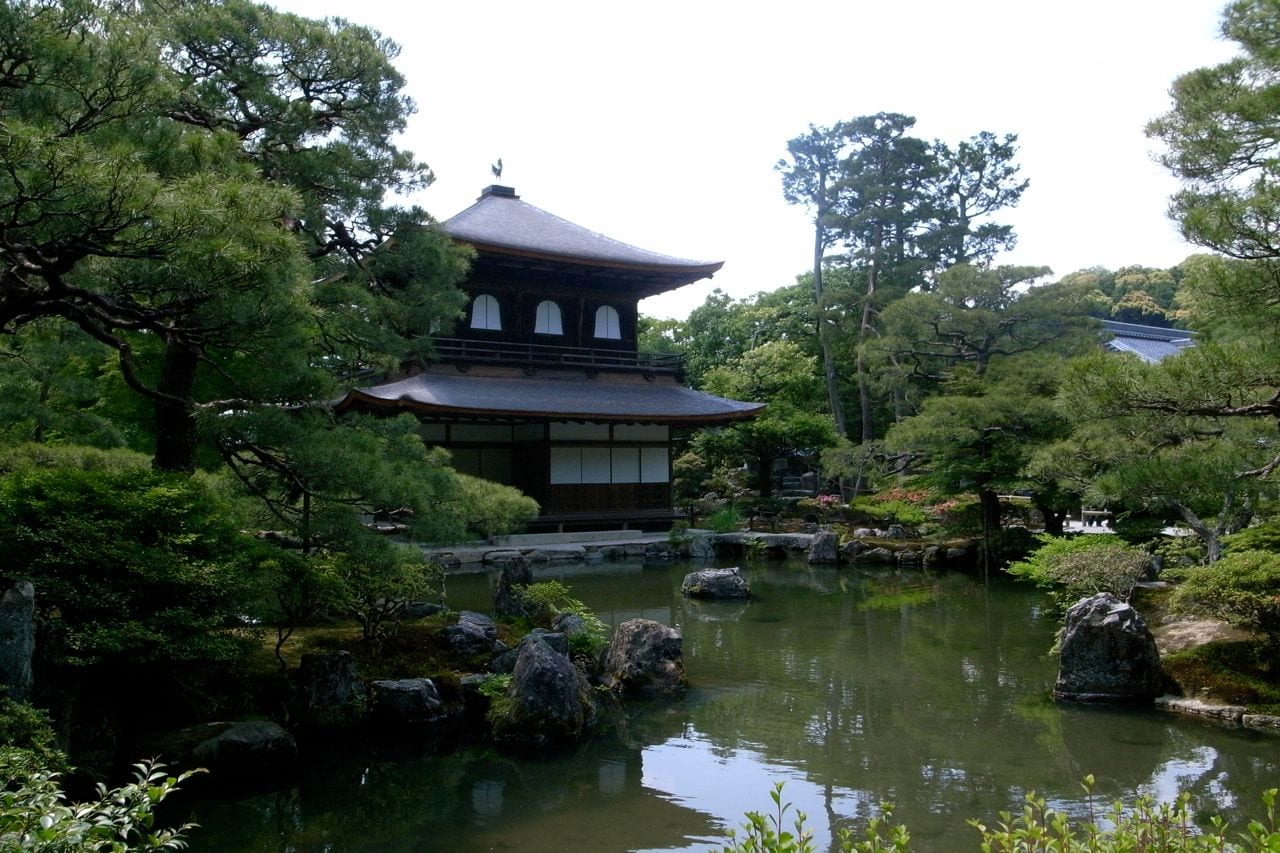
Ginkaku-ji is called the Silver Pavilion but was never silvered — the name is thought to have attached itself later, in contrast to its gilded cousin across the city. What it has instead is restraint: a dark two-storey pavilion, a pond, and one of the most quietly satisfying gardens in Kyoto.
The famous element is the sand. A raked expanse called the Sea of Silver Sand sits beside a precisely shaped cone, both maintained to sharp edges and both intended to be seen by moonlight. Behind them the garden climbs into moss and maple, and a short loop path rises to a viewpoint over the pavilion with the eastern hills behind it. The Philosopher's Path starts at the gate.
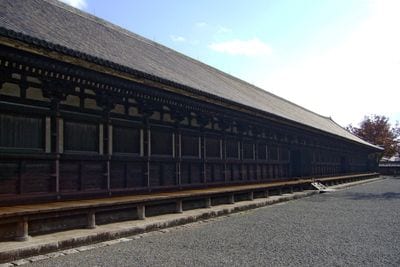
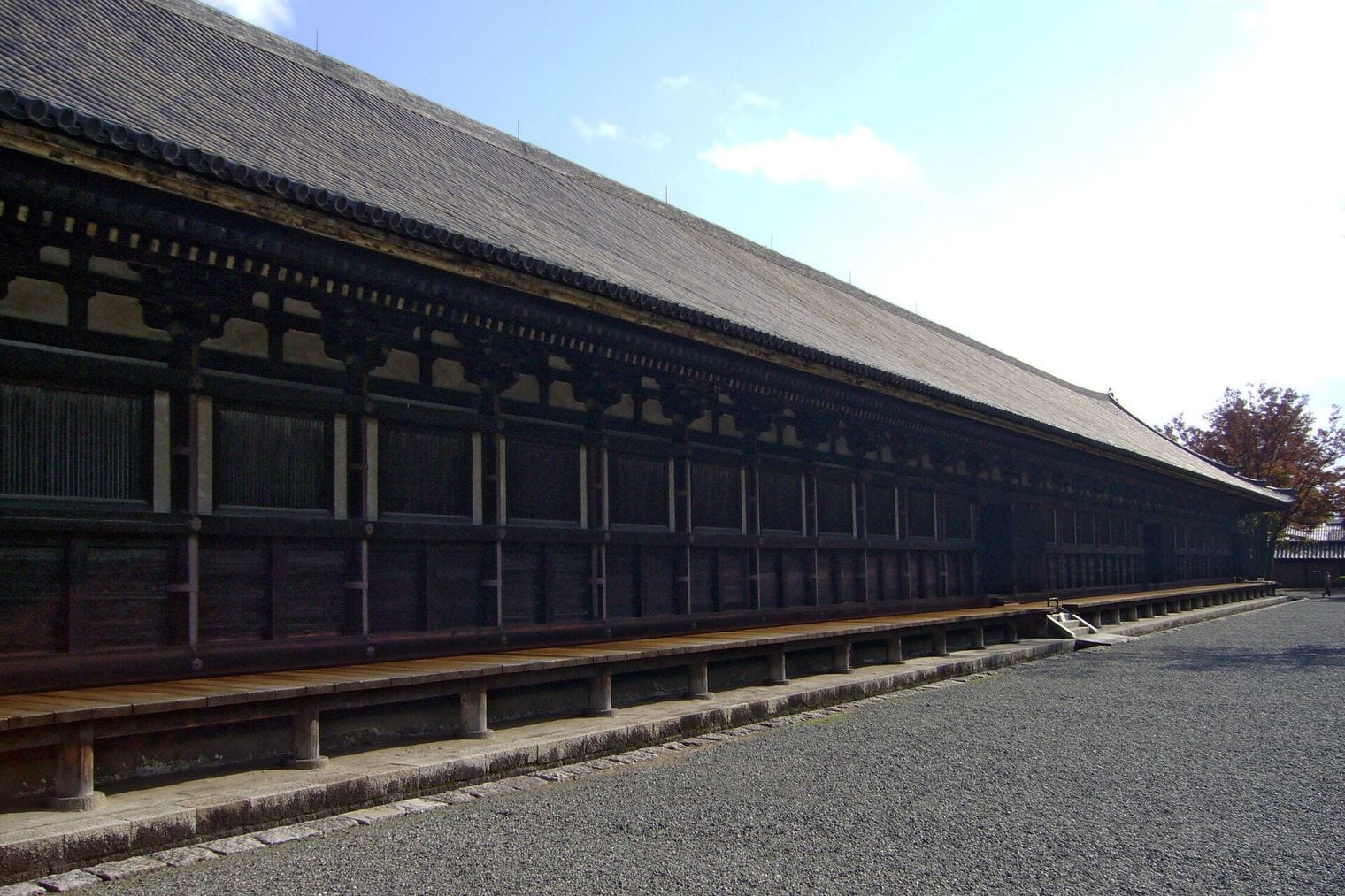
Sanjūsangen-dō is a single long wooden hall containing one thousand and one statues of Kannon, the bodhisattva of compassion, standing in tiered ranks the entire length of the interior. Each figure is carved from cypress and covered in gold leaf, each has its own arrangement of arms and attributes, and the effect of seeing them massed together in dim light is genuinely hard to describe.
The temple's name refers to the thirty-three bays between the pillars of the hall, and the building is among the longest wooden structures in Japan. Photography is not permitted inside, which turns out to be a mercy — it forces you to walk the length of the hall slowly and actually look. It sits opposite the Kyoto National Museum, so the two pair naturally.
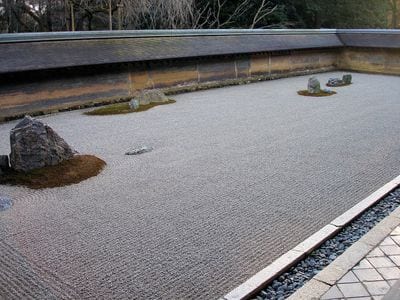
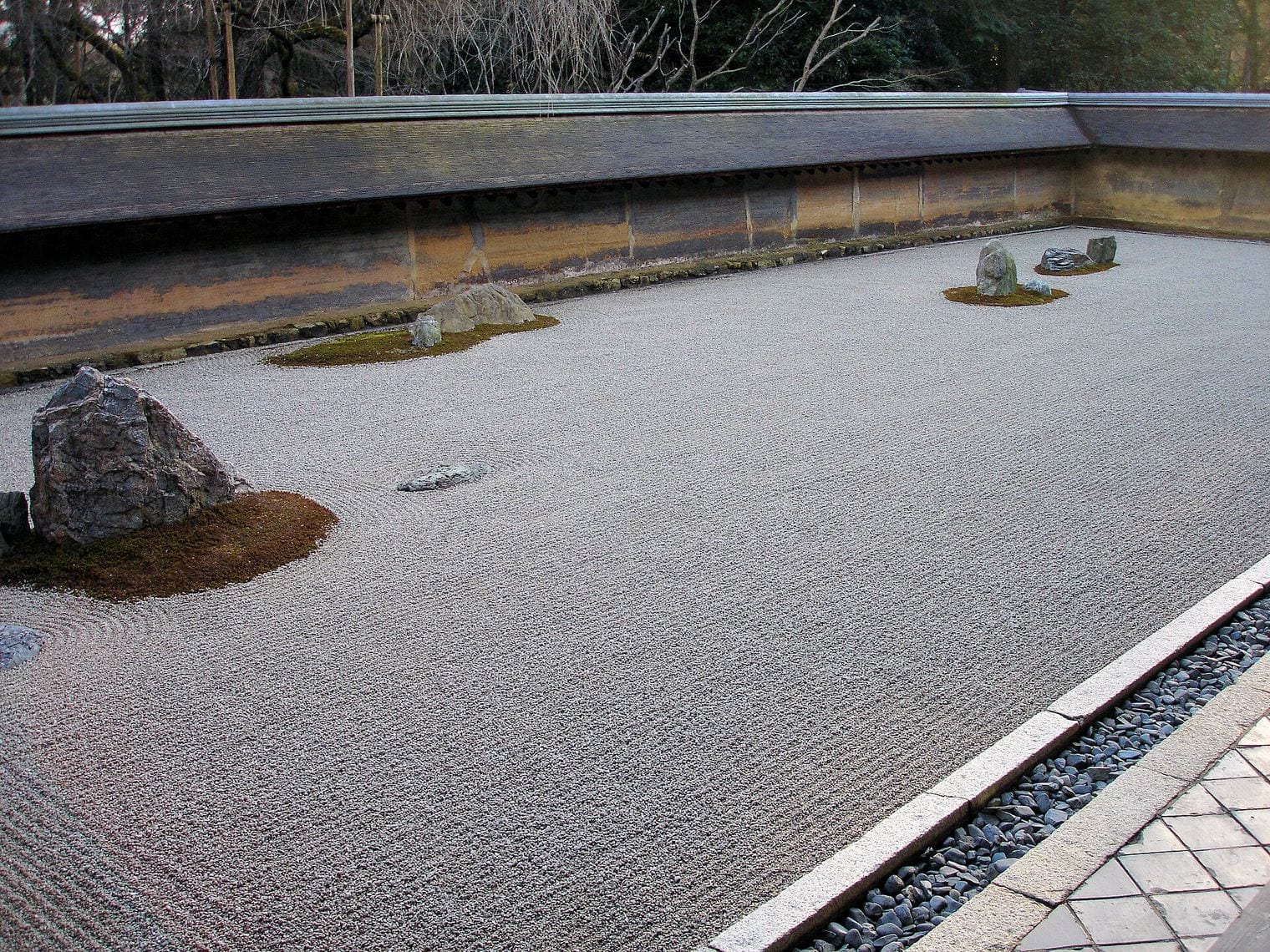
Ryōan-ji holds the most famous dry garden in Japan and possibly the least explicable. Fifteen stones sit in five groups on a rectangle of raked white gravel, enclosed by a low earthen wall, with nothing planted inside it at all. Nobody knows for certain who laid it out or what, if anything, it depicts.
The detail everyone repeats is that from any point along the viewing veranda, only fourteen of the fifteen stones are visible at once. Sit on the boards, let the tour groups cycle through, and it becomes a genuinely absorbing twenty minutes. Beyond the garden the temple grounds open onto a large pond that predates it, and the walk around the water is quiet even when the rock garden is not.
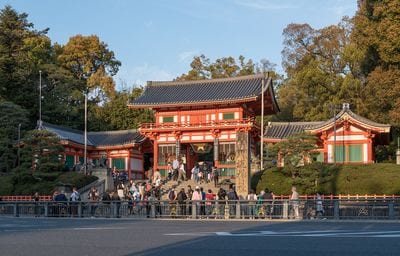
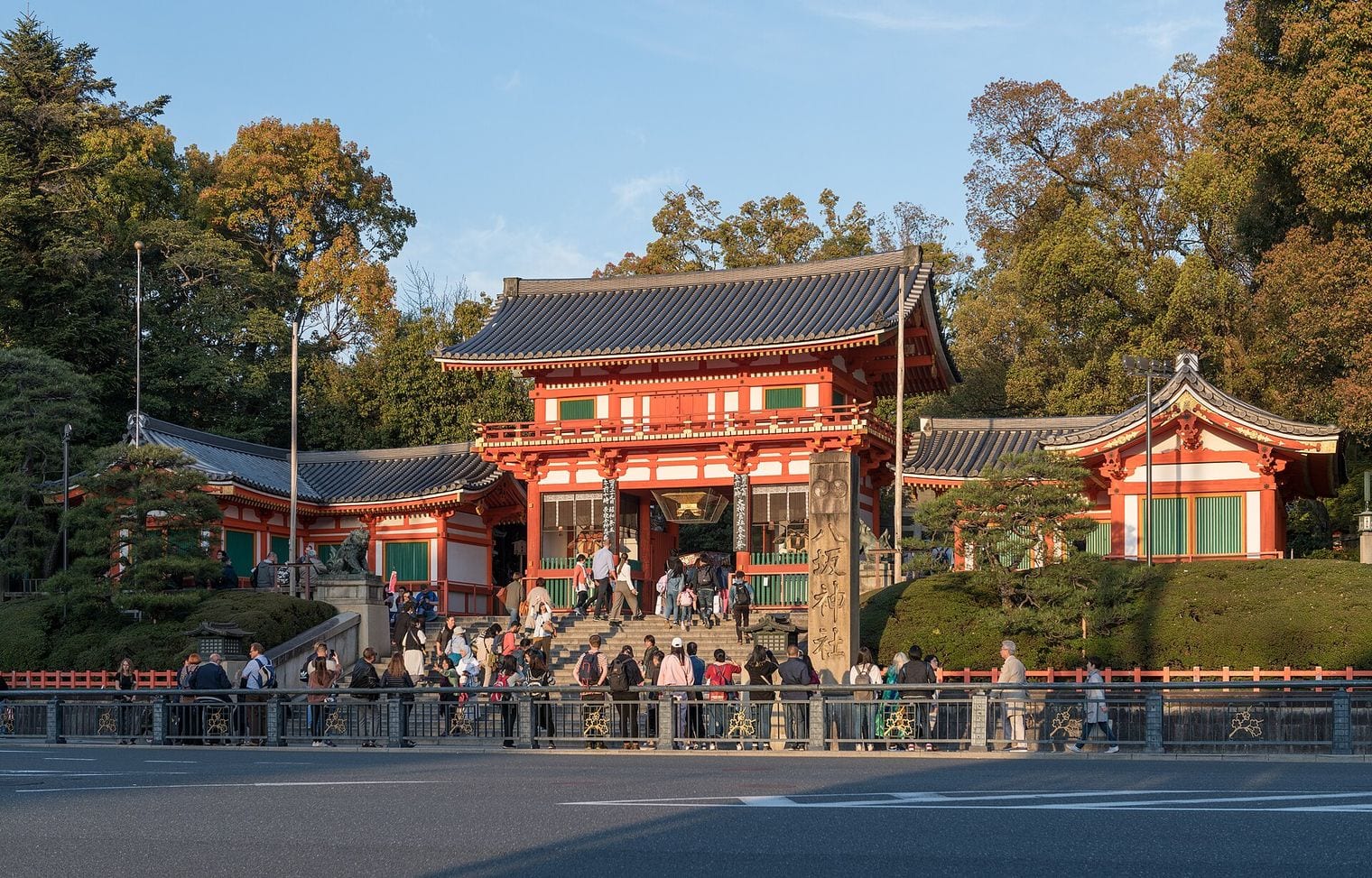
Yasaka Shrine closes the eastern end of Shijō street with a vermilion gate at the top of a short flight of steps, and functions as Gion's front door. It stays open through the night, and the stage in the middle of the grounds is hung with hundreds of paper lanterns bearing the names of local businesses — lit after dark, they make this one of the best evening walks in the city.
The shrine is the focus of Gion Matsuri, Kyoto's biggest festival, held across July. It also backs directly onto Maruyama Park, which makes the pair a natural route: through the shrine, into the park for the weeping cherry, and on up into the Higashiyama lanes towards Kōdai-ji and Kiyomizu-dera.
Tenryū-ji is the head temple of its branch of Rinzai Zen and the anchor of Arashiyama. Its Sōgenchi garden is the thing to see: a pond laid out so that the borrowed scenery of the Arashiyama and Kameyama hills reads as part of the composition, a design that has survived in essentially its original form since the fourteenth century even as the buildings around it burned and were rebuilt.
View it from the tatami rooms of the main hall, where the garden fills the open doorways like a series of framed paintings, then walk the pond circuit. The temple's north gate opens straight into the bamboo grove, which makes Tenryū-ji the sensible first stop of an Arashiyama morning rather than an afterthought.
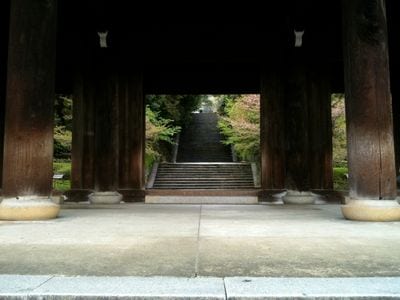
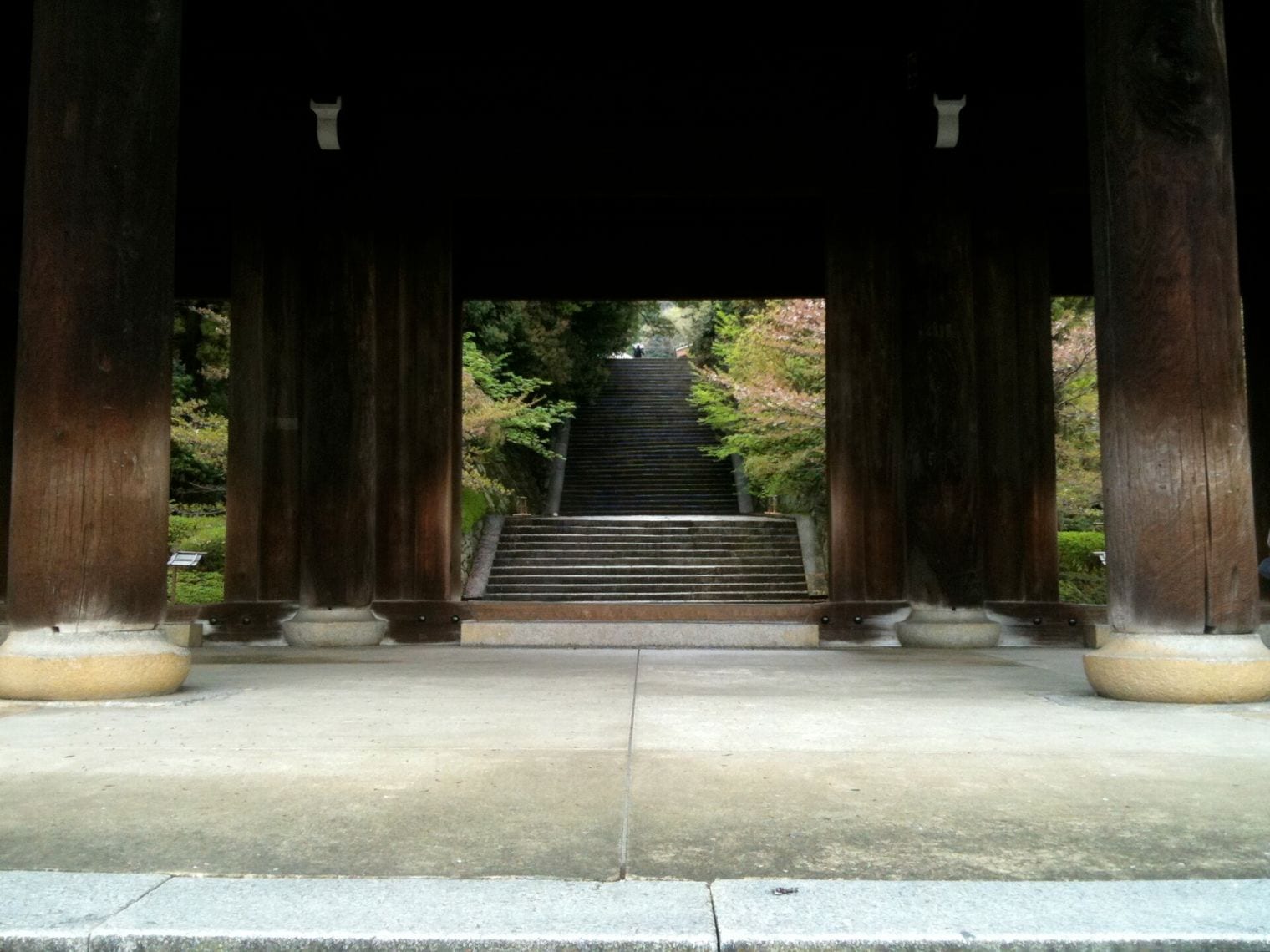
Nanzen-ji spreads across the foot of the eastern hills as a complex of sub-temples rather than a single building, and entry to the grounds is free — you pay only for the parts you choose to enter. The enormous Sanmon gate is worth the climb for a view out over the treetops towards the city.
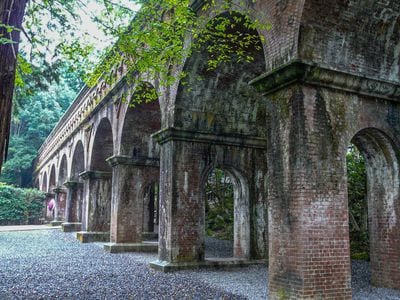
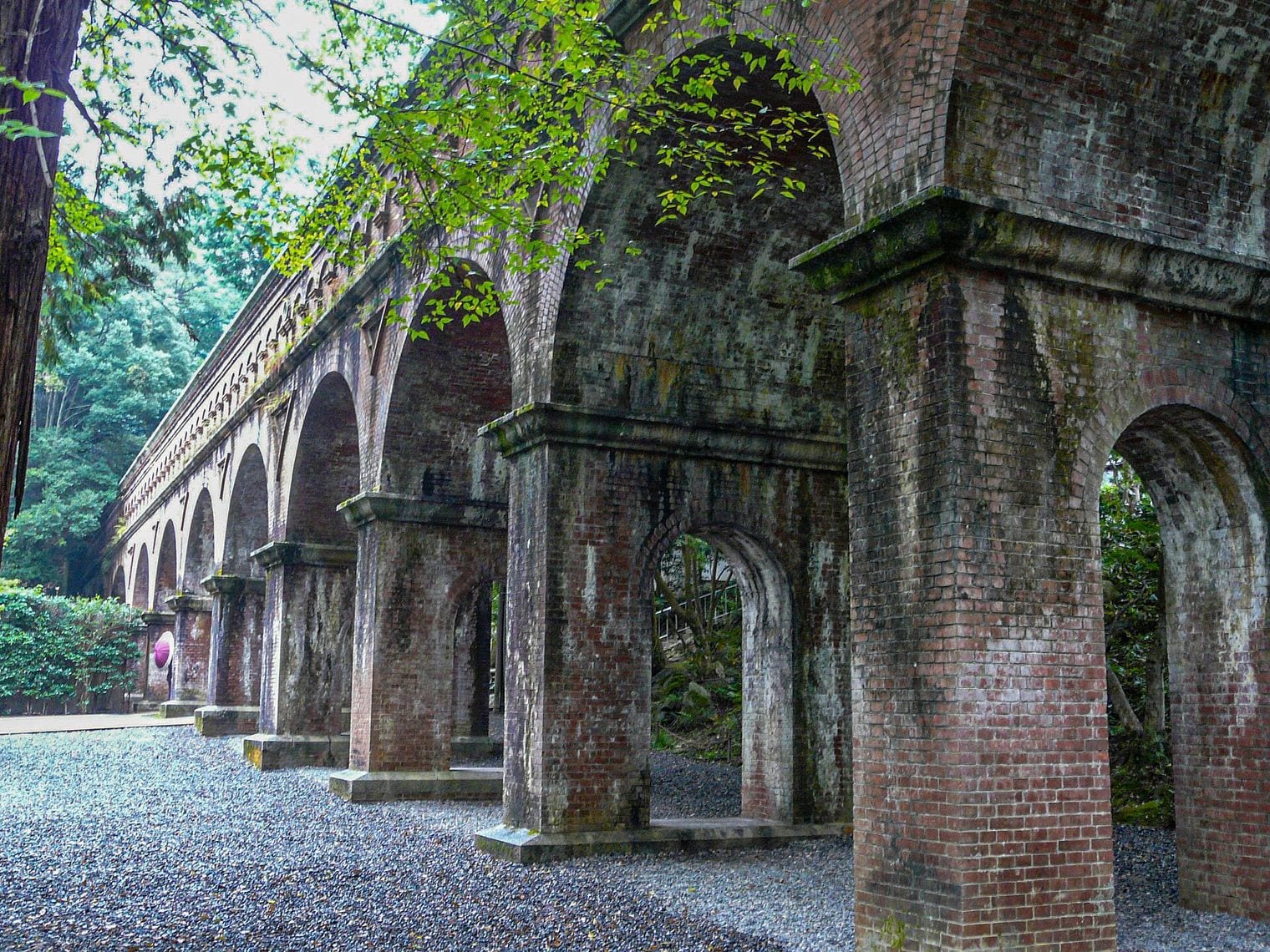
The unexpected sight here is Suirokaku, a red-brick arcaded aqueduct striding straight through the temple grounds. It was built in the Meiji era as part of the canal bringing water from Lake Biwa, and the collision of Roman-looking brick arches with Zen temple architecture is one of the odder and better things in Kyoto. Follow the water uphill and you reach the quiet sub-temple garden of Nanzen-in.
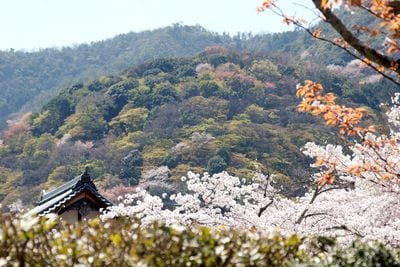
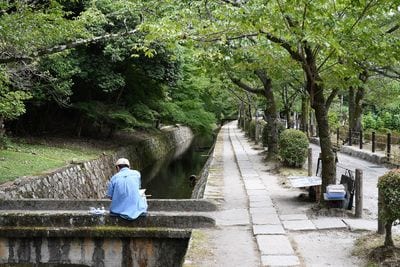
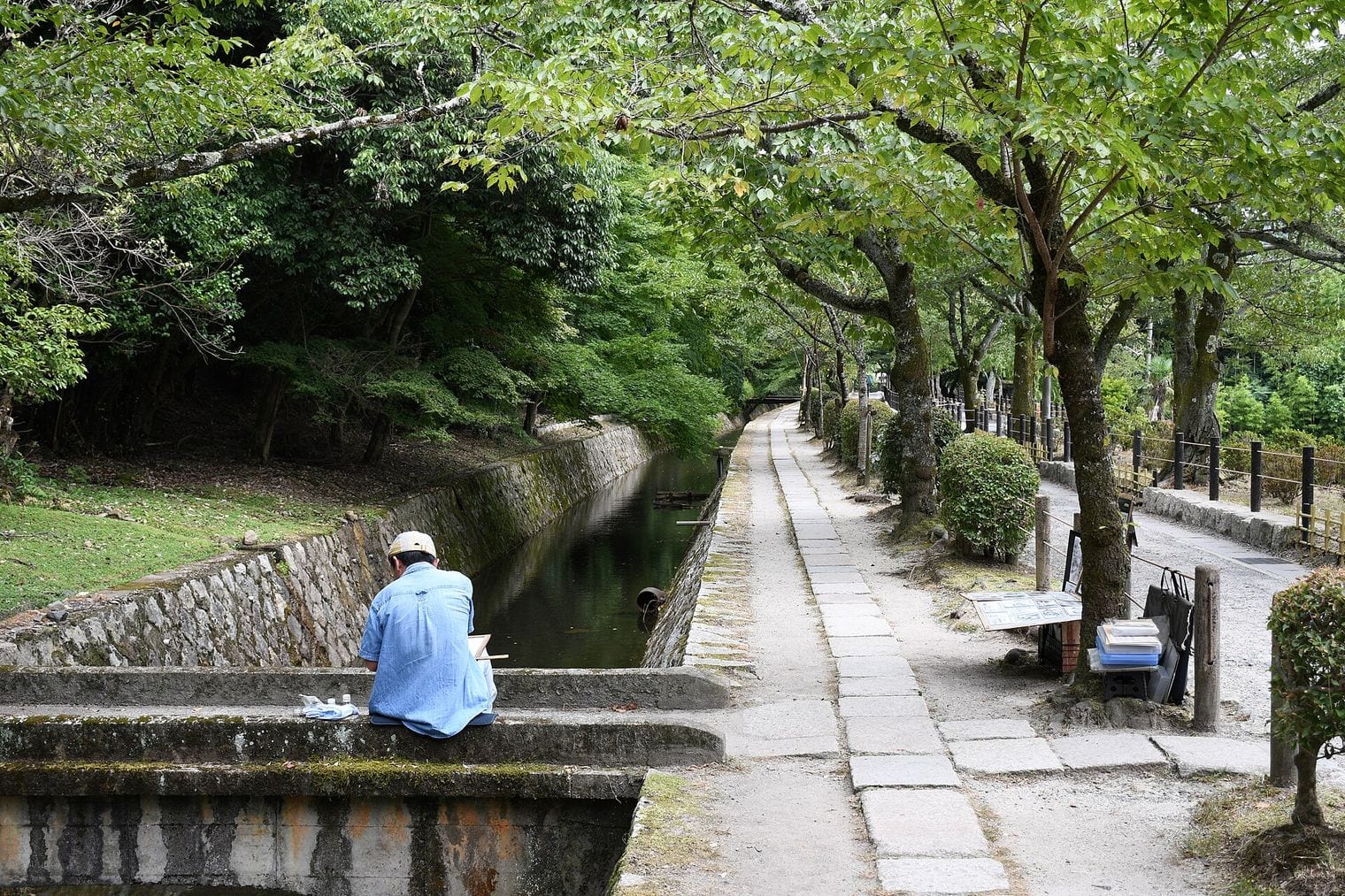
The Philosopher's Path is a walking route that follows a narrow canal for roughly two kilometres along the base of the eastern hills, linking Ginkaku-ji at its northern end with the Nanzen-ji area to the south. Cherry trees lean over the water for almost its whole length, which makes early April spectacular and extremely busy.
It takes its name from a Kyoto philosopher said to have walked it daily on his way to the university. Out of blossom season it is simply a pleasant, largely traffic-free stroll past small cafés, craft shops and the entrances to temples most visitors never reach — Hōnen-in with its thatched gate and sand mounds, Anraku-ji, and the hillside grounds of Shinnyo-dō a little further north.
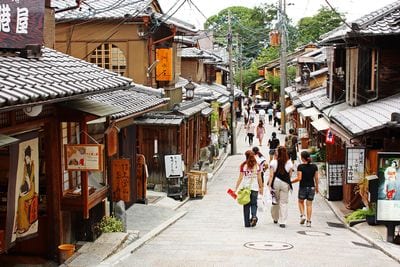
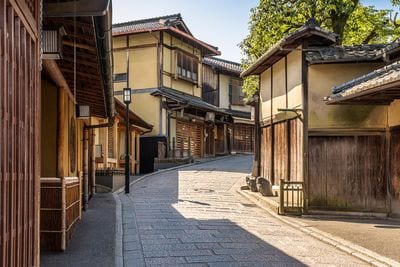
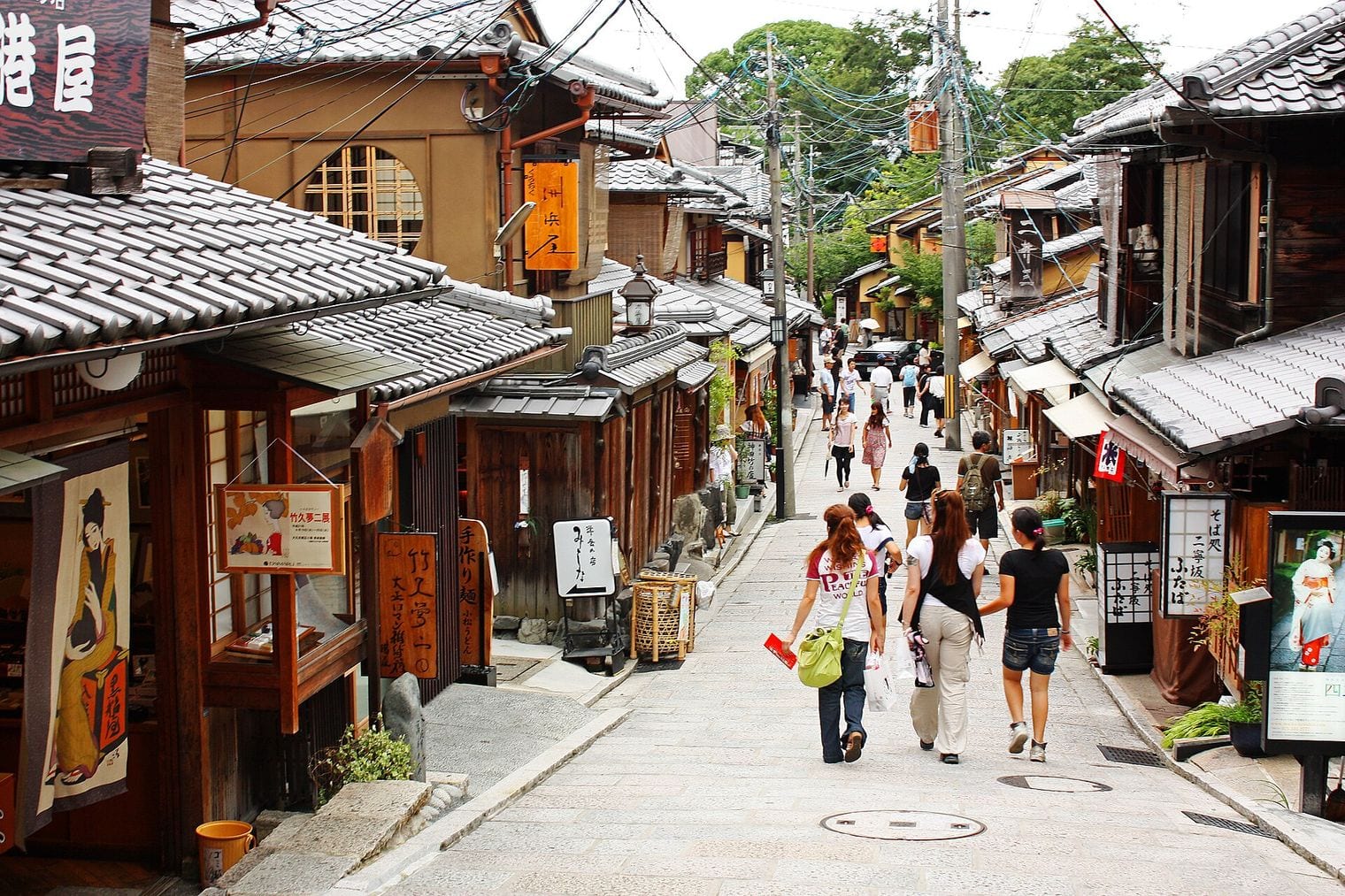
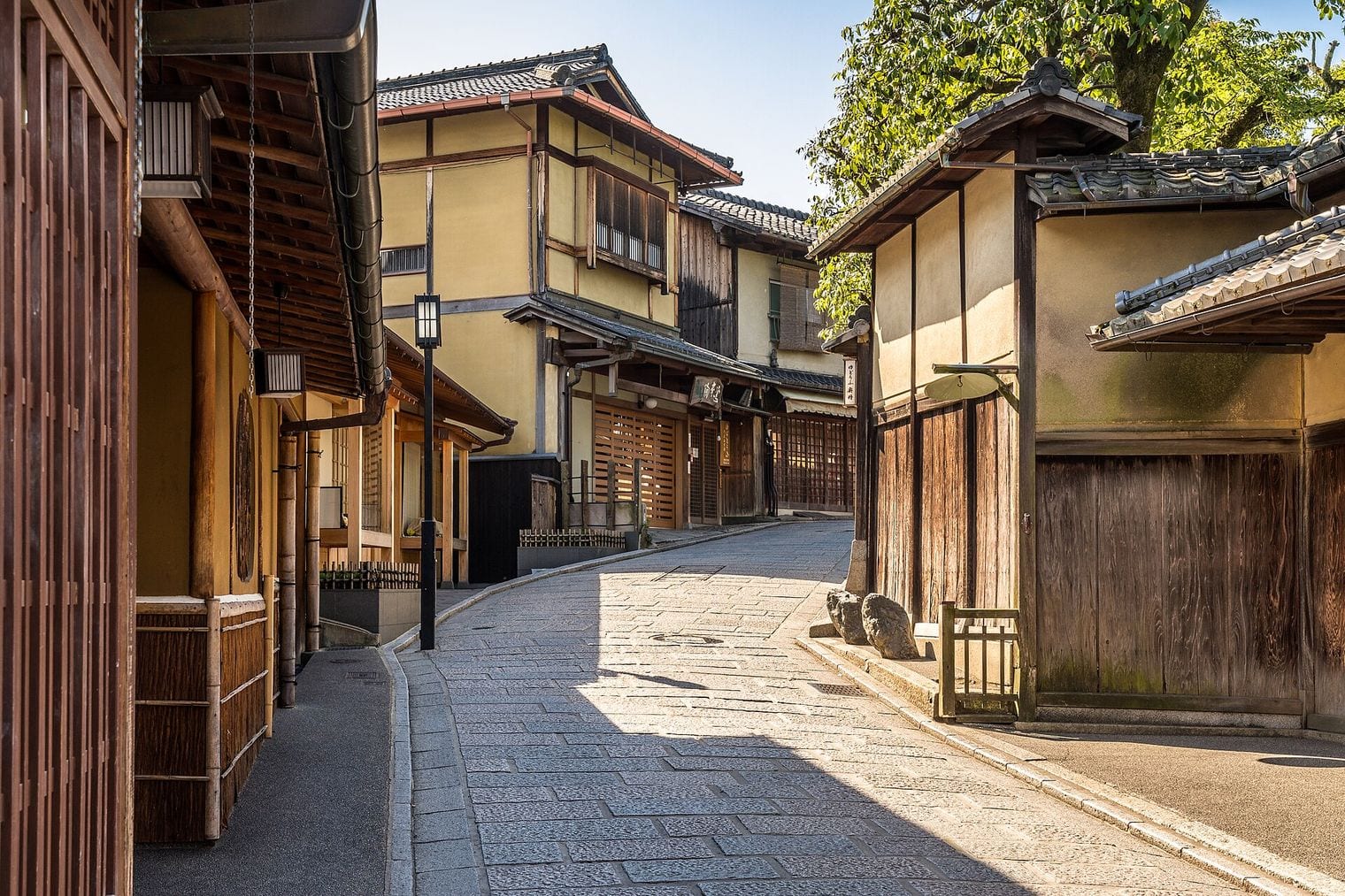
Sannenzaka is a stepped, stone-paved lane climbing towards Kiyomizu-dera between two-storey wooden shopfronts, and it is one of the streets that make Higashiyama feel like a preserved quarter rather than a museum. The buildings are protected, the overhead cables are buried, and the whole slope reads as a single piece of townscape.
The shops sell what they have sold for generations — Kiyomizu pottery, hand-made combs, pickles, sweets, roasted tea — with plenty of modern additions in between. It runs directly into Ninenzaka below it, so the two are walked as one. Come early or late: by lunchtime it is shoulder to shoulder, and the rented-kimono photo queues form at every good corner.
Ninenzaka continues the slope below Sannenzaka, gentler and slightly wider, lined with the same low wooden buildings and latticed frontages. Together the two lanes form the spine of Kyoto's best-preserved historic district, and walking them from the bottom up delivers you to Kiyomizu-dera by the most atmospheric route available.
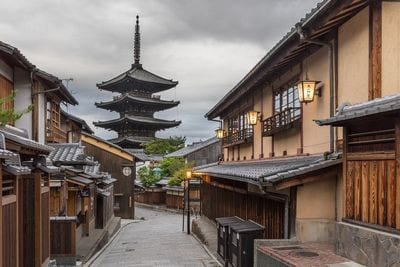
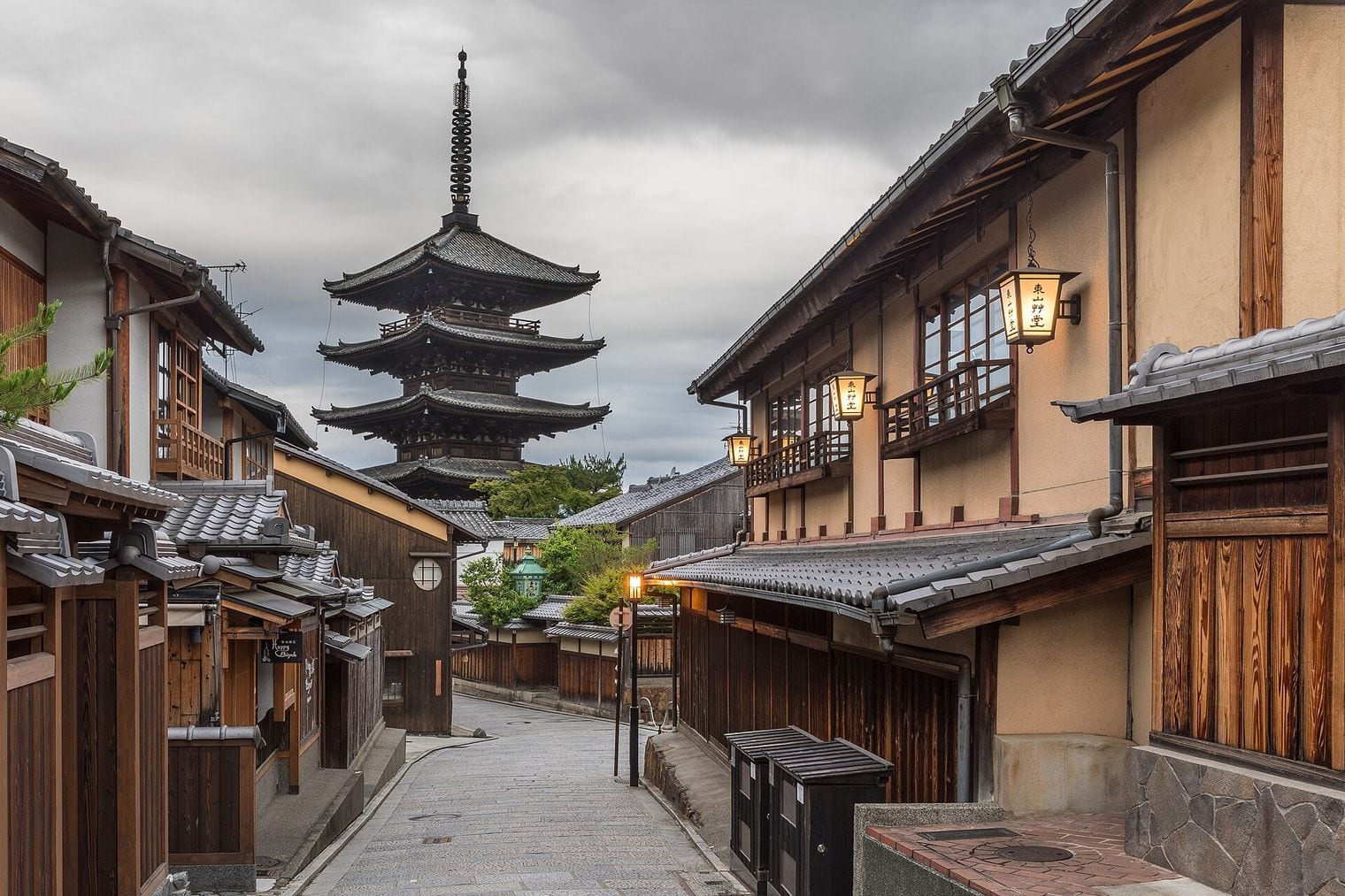
Side alleys off Ninenzaka are where it gets interesting — narrow stone passages, the Yasaka Kōshin-dō with its walls of coloured cloth balls, and sudden framed views of the five-storey Yasaka Pagoda rising above the rooftops. There is an old superstition that stumbling on these steps brings bad luck for a set number of years, which is really just good advice about the paving.
Hōkan-ji is usually known simply as the Yasaka Pagoda, and it is the structure that terminates almost every photograph taken in Higashiyama. A five-storey wooden pagoda rising straight out of a residential lane, framed by tiled roofs and, on a clear day, backed by the hills — it is the single most recognisable street view in Kyoto.
Most visitors photograph it from the corner of Yasaka-dōri and never go in, which is a small mistake: the pagoda opens on an irregular basis and, when it does, you can climb part of the way up inside its timber frame, something almost no other pagoda in Japan permits. Even from outside, it is worth walking the full length of the lane for the changing angles.
Tō-ji stands just south-west of Kyoto Station and carries the tallest wooden pagoda in Japan, a five-storey tower that has become an informal landmark for arriving trains. The temple was founded at the very beginning of Kyoto's life as capital, guarding the eastern side of the main southern gate into the city.
Inside the halls are ranks of ninth-century sculpture arranged as a three-dimensional mandala — one of the most important groupings of Buddhist statuary anywhere in the country, and far less visited than it deserves. On the twenty-first of each month the grounds fill with Kōbō-san, a large flea market of antiques, tools, kimono and food stalls that is worth planning a day around.
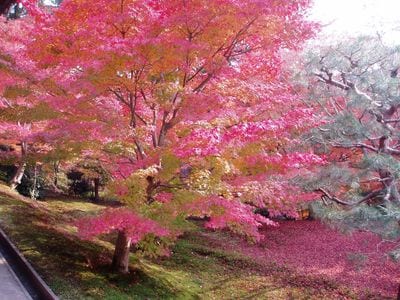
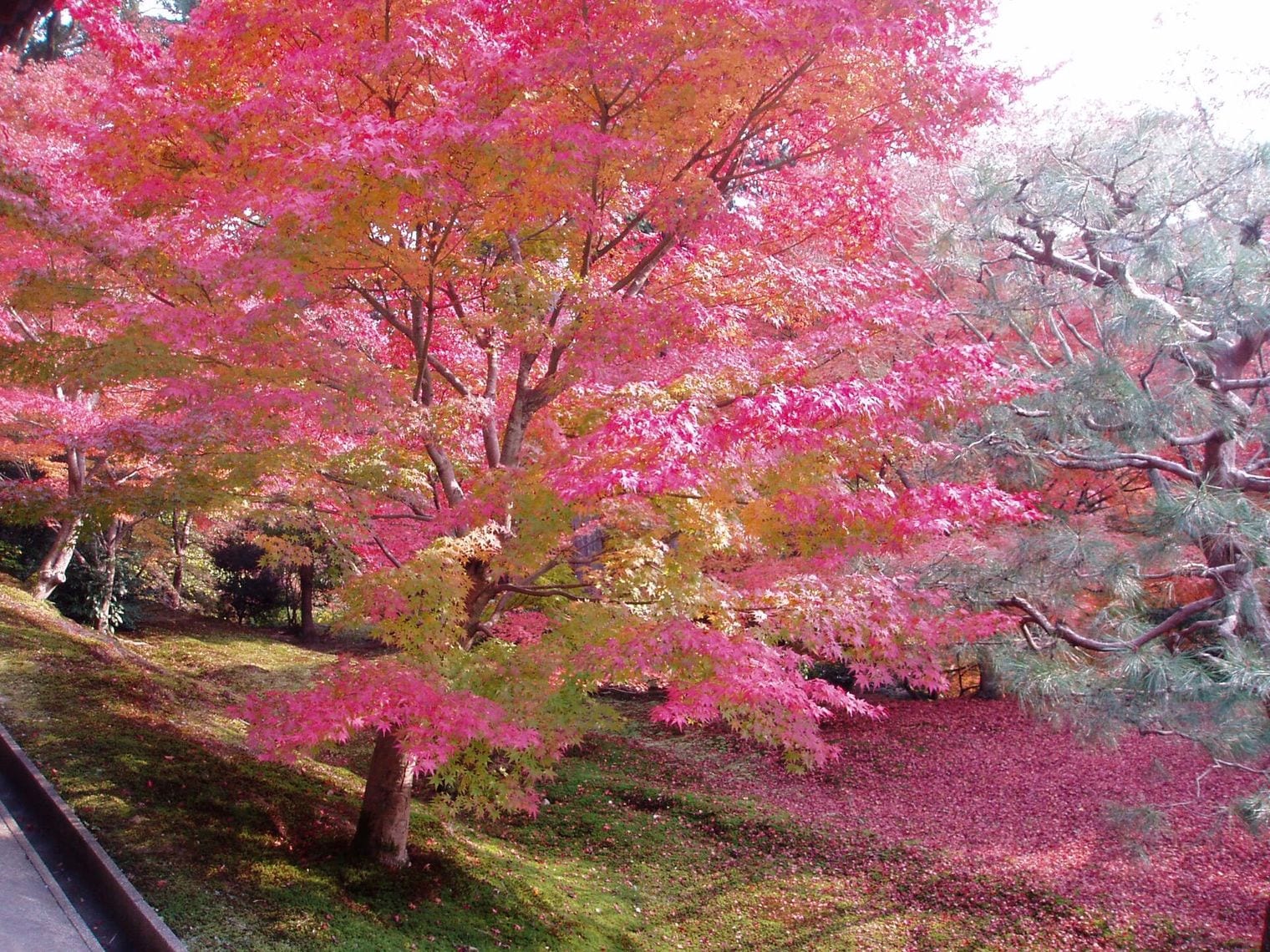
Tōfuku-ji is a large Zen complex south-east of the centre, and its signature is the Tsūtenkyō, a covered wooden bridge thrown across a ravine packed with maples. In late November the view from the bridge into the gorge is one of the most concentrated displays of autumn colour in Japan, and the temple limits the crush accordingly.
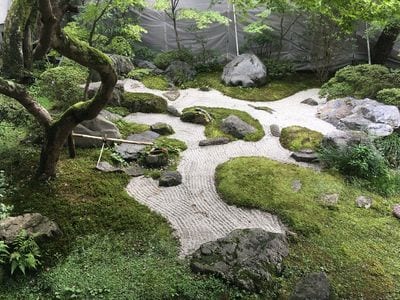
Out of season it is quiet and the gardens carry the visit. The Hōjō is surrounded on all four sides by dry landscape gardens laid out in the twentieth century by Shigemori Mirei, including a checkerboard of square stones and moss that looks startlingly modern against the temple's medieval gates. The sub-temple of Reiun-in nearby is usually almost empty.
Heian-jingū is a bright, oversized vermilion shrine built in the late nineteenth century to mark eleven hundred years since the founding of the capital. Its main buildings are a reduced-scale reconstruction of the original imperial palace complex, and the enormous free-standing torii on the approach avenue is among the largest in the country.
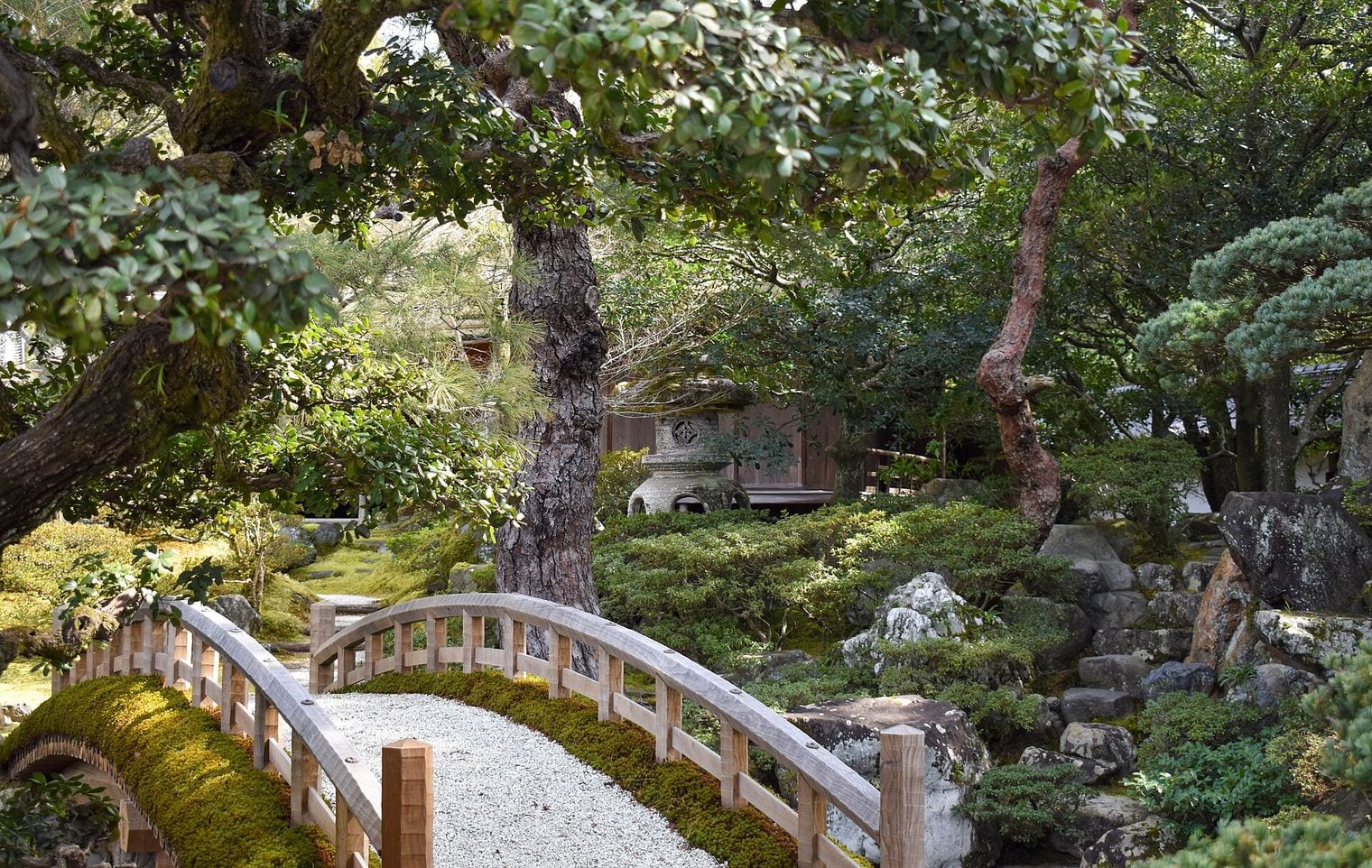
The reason to pay the entry fee is the garden behind the halls. It rings the buildings on three sides as a circuit of ponds, irises, weeping cherries and a covered bridge you can sit inside, and it is much quieter than the open forecourt suggests. The shrine sits in Okazaki alongside the Kyocera Museum of Art, the modern art museum and the city zoo.
Kōdai-ji was founded by Nene, widow of the warlord Toyotomi Hideyoshi, as a temple in which to pray for her husband after his death, and it retains an air of being someone's private garden rather than a public monument. The buildings carry lacquerwork with gold decoration, and a covered corridor climbs the slope to a small hilltop hall.
It is best known now for its seasonal night openings, when the gardens, bamboo grove and pond are lit after dark and the dry garden is used for projected light displays. Even by day the bamboo path behind the main buildings is a quieter alternative to Arashiyama's, and the lane outside — Nene-no-Michi — is one of Higashiyama's better strolls.
Chion-in is the head temple of Jōdo-shū, the Pure Land school, and it announces itself with a colossal wooden gate — the Sanmon — that ranks among the largest temple gates in Japan. The stone staircase behind it climbs to a main hall on a scale that makes the surrounding Higashiyama temples look domestic.
The temple's great bell is one of the heaviest in the country and takes a team of monks to sound, hauling on ropes in a choreographed sequence; the New Year ringing is broadcast nationally. Look for the corridors that squeak like Nijō Castle's, and for the deliberately unfinished details the builders are said to have left, a traditional guard against the arrogance of a perfect building.
Eikan-dō, formally Zenrin-ji, is widely held to be the finest maple-viewing temple in a city with serious competition. Its grounds stack up a hillside in a sequence of halls linked by covered wooden walkways and stairs, with a pond garden below and a small pagoda at the top looking out over the city.
The temple's treasure is an unusual statue of Amida shown glancing back over his shoulder — the Mikaeri Amida, or looking-back Amida — attached to a story about a monk who found the figure walking ahead of him. It sits at the southern end of the Philosopher's Path next to Nanzen-ji, and in late autumn the two together make the best half-day walk in eastern Kyoto.
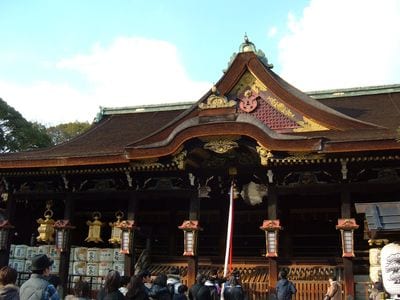
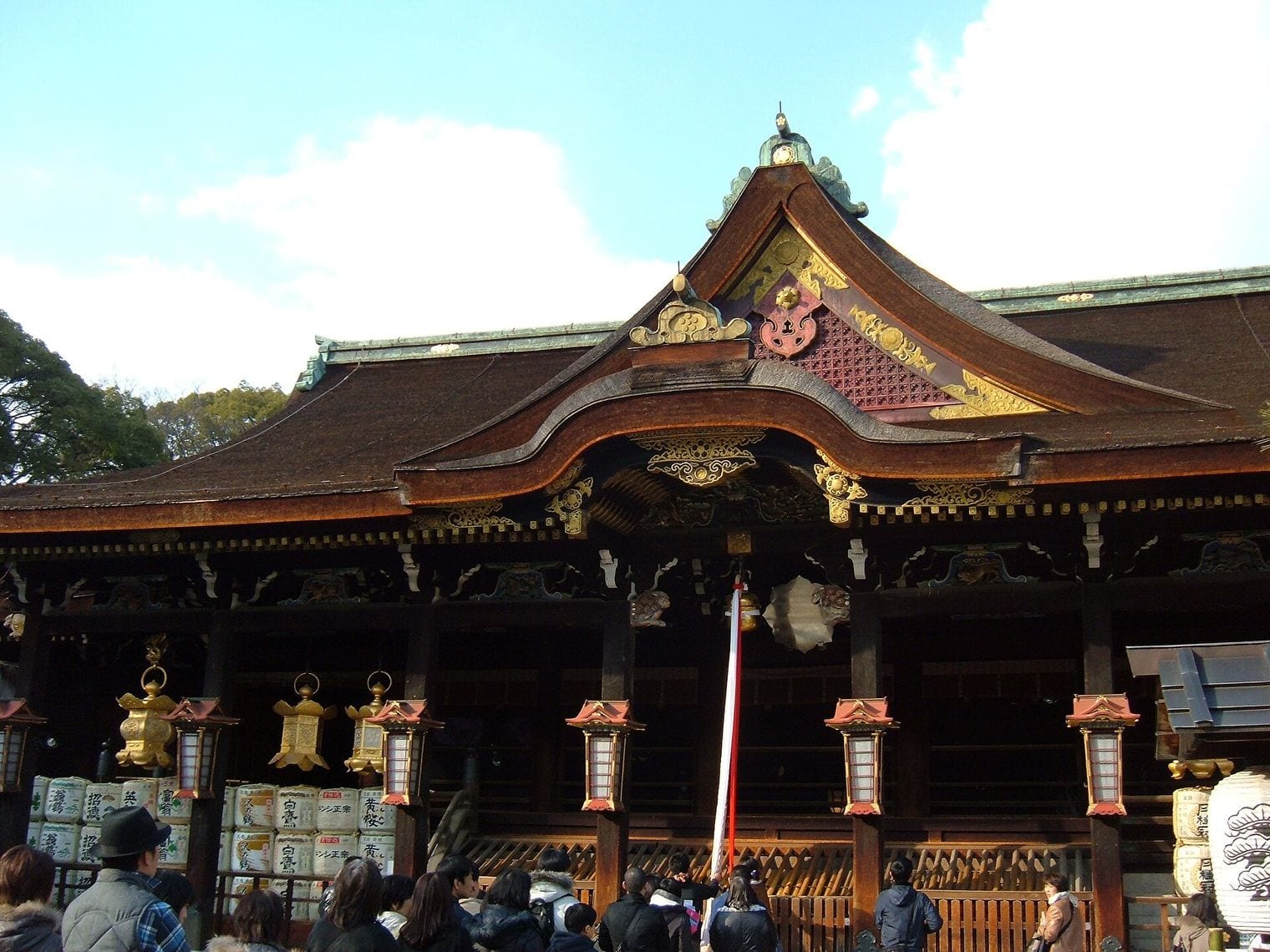
Kitano Tenman-gu is dedicated to Sugawara no Michizane, a Heian-era scholar and courtier revered as the deity of learning, and in exam season its grounds fill with students buying charms and writing wishes on wooden plaques. Stone and bronze oxen lie all over the site; visitors rub them for luck.
The shrine's orchard of plum trees flowers in late winter, weeks before the cherries and with a fraction of the crowds, and there is a tea gathering held among them. On the twenty-fifth of each month the precincts host Tenjin-san, a sprawling market of antiques, second-hand kimono, tools and food. The old geisha district of Kamishichiken is immediately next door.
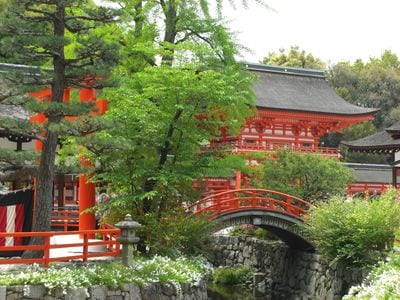
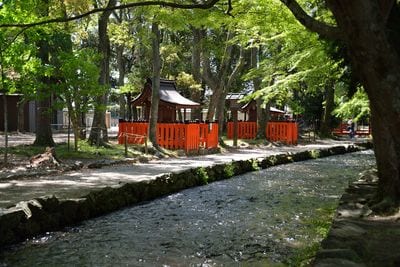
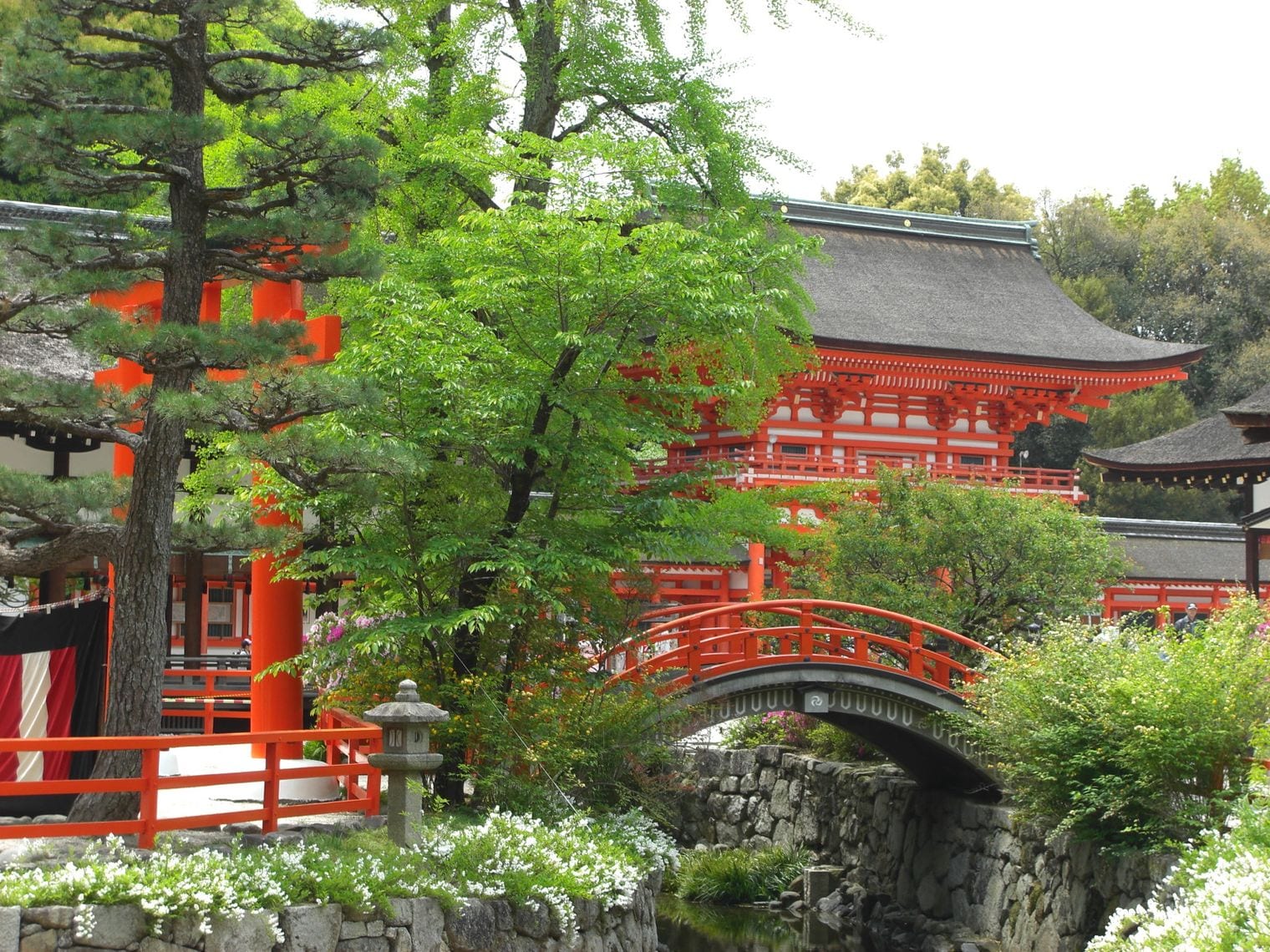
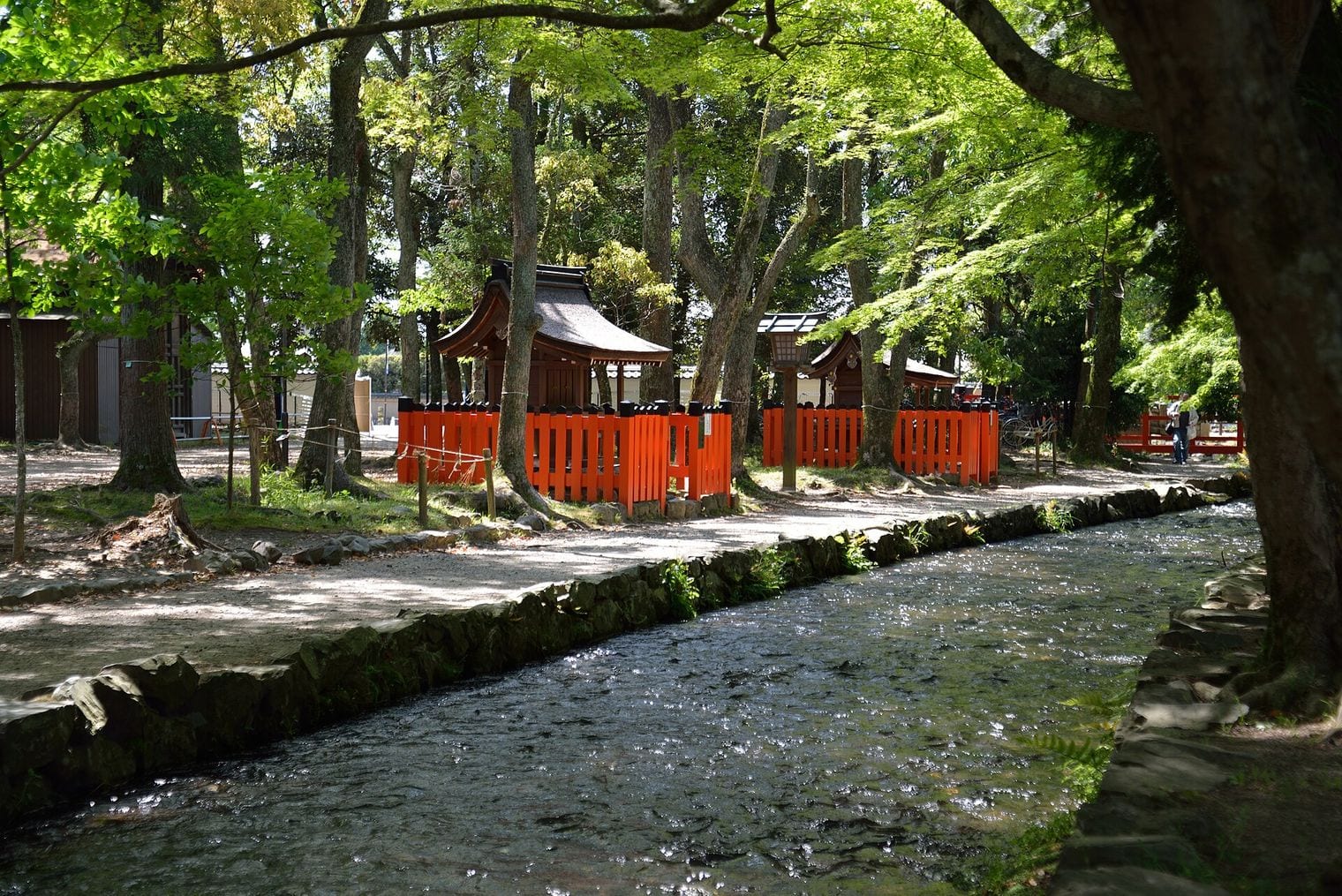
Shimogamo is one of the oldest shrines in Kyoto, predating the city's foundation as capital, and it is approached through Tadasu no Mori — a surviving remnant of primeval broadleaf forest in the middle of the modern city. The walk in under the old trees, along a gravel path with a stream running beside it, is as much the point as the buildings.
The vermilion halls at the end are arranged around a courtyard, with a row of small shrines corresponding to the years of the zodiac where people pray at their own. Shimogamo shares the Aoi Matsuri with Kamigamo each May, a procession in Heian-period costume. The shrine sits just north of the fork where the Takano and Kamo rivers meet.
Kamigamo is the northern half of the Kamo shrine pair and, like its partner, is older than the capital itself. Its wide gravel forecourt is dominated by two precisely raked cones of white sand, standing in for the sacred mountain to the north and thought to be an ancestor of the purification sand mounds used at shrines across Japan.
Beyond the main halls a clear stream runs through the grounds past the preserved houses of the shake — the hereditary priestly families who lived at the shrine — which makes for an unusually peaceful walk in a residential quarter few visitors reach. It is a genuine trip north from the centre, best combined with the botanical gardens rather than done alone.
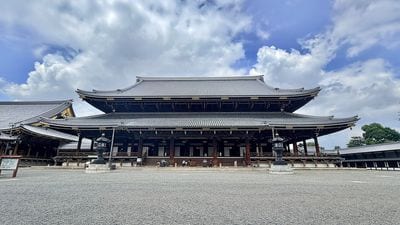
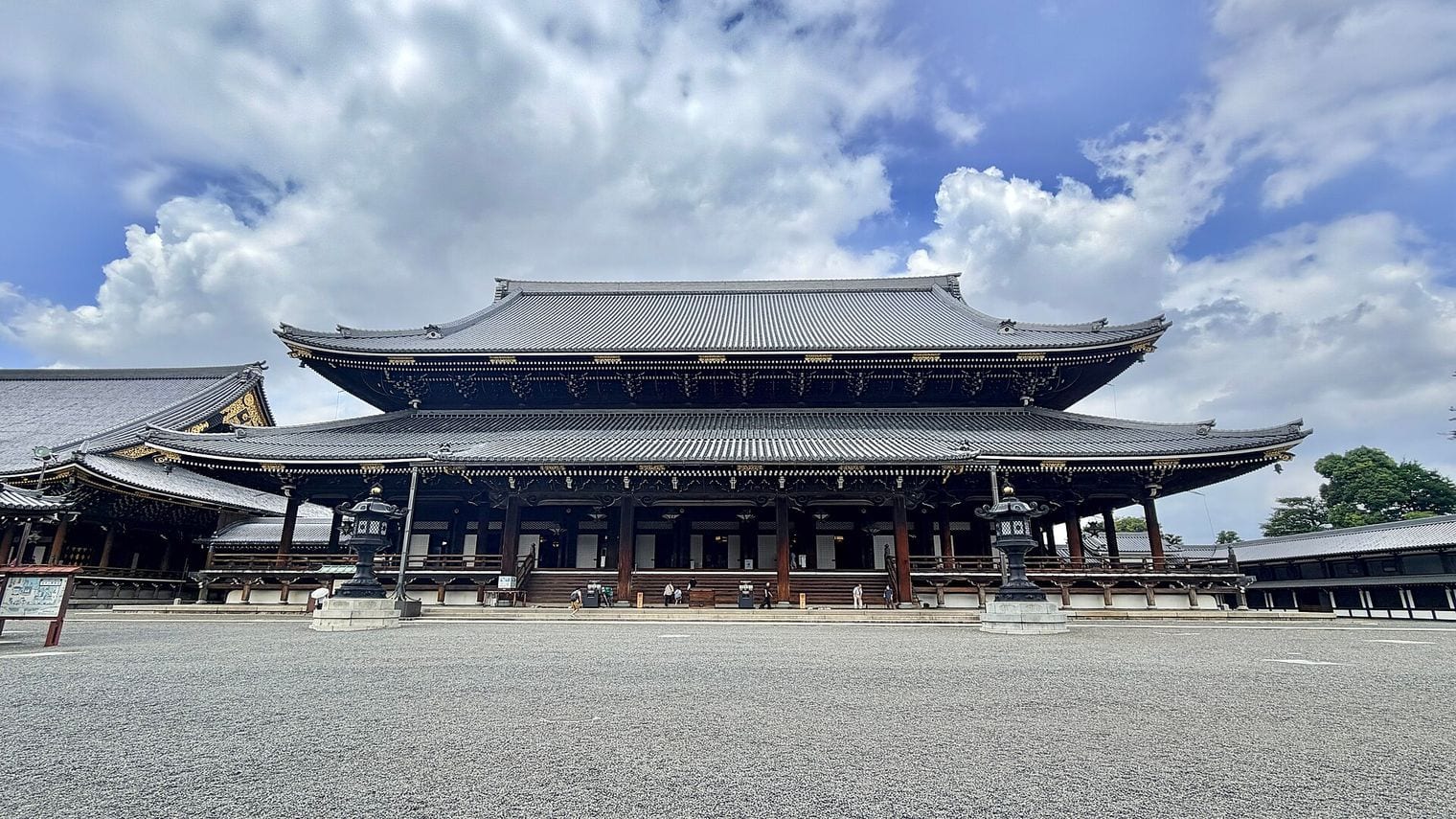
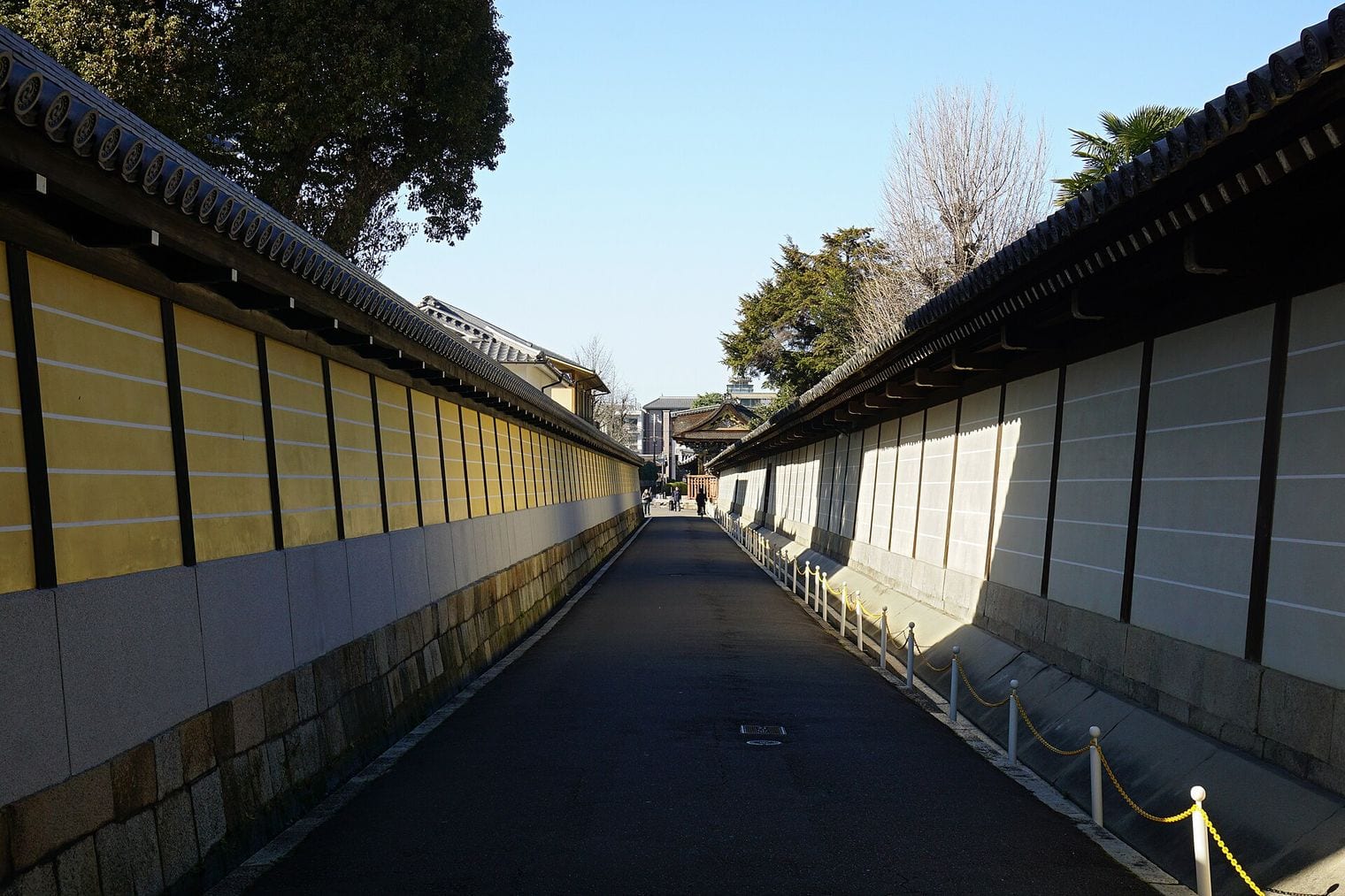
Higashi Hongan-ji sits a few minutes' walk north of Kyoto Station and is the easiest great temple in the city to underestimate, partly because it is free to enter and partly because it looks like a stop rather than a destination. Its Founder's Hall is one of the largest wooden buildings in the world, and stepping inside it is a genuine shock of scale.
Among the objects displayed are coils of rope braided from human hair, donated by female followers when conventional ropes broke during nineteenth-century reconstruction work. A short walk east brings you to Shosei-en, the temple's detached garden — a walled pond garden that is one of the calmest places anywhere near the station.
Nishi Hongan-ji is the head temple of the largest branch of Jōdo Shinshū Buddhism and a UNESCO-listed site, with two vast halls facing a gravel courtyard and a pair of ancient ginkgo trees that turn brilliant yellow in autumn. Like its eastern counterpart it costs nothing to enter, and the main halls are open to walk through.
What sets it apart is its Momoyama-period architecture — carved and gilded transoms, painted sliding screens, and the elaborate Karamon gate, whose decoration is dense enough that it was traditionally nicknamed the gate you could look at all day. Parts of the complex, including a famous nō stage, open only on limited schedules, so check what is accessible before you go.
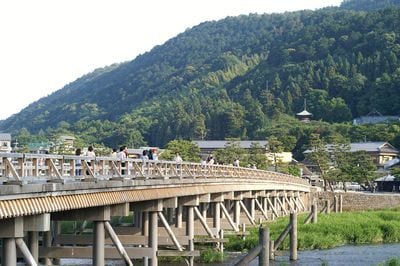
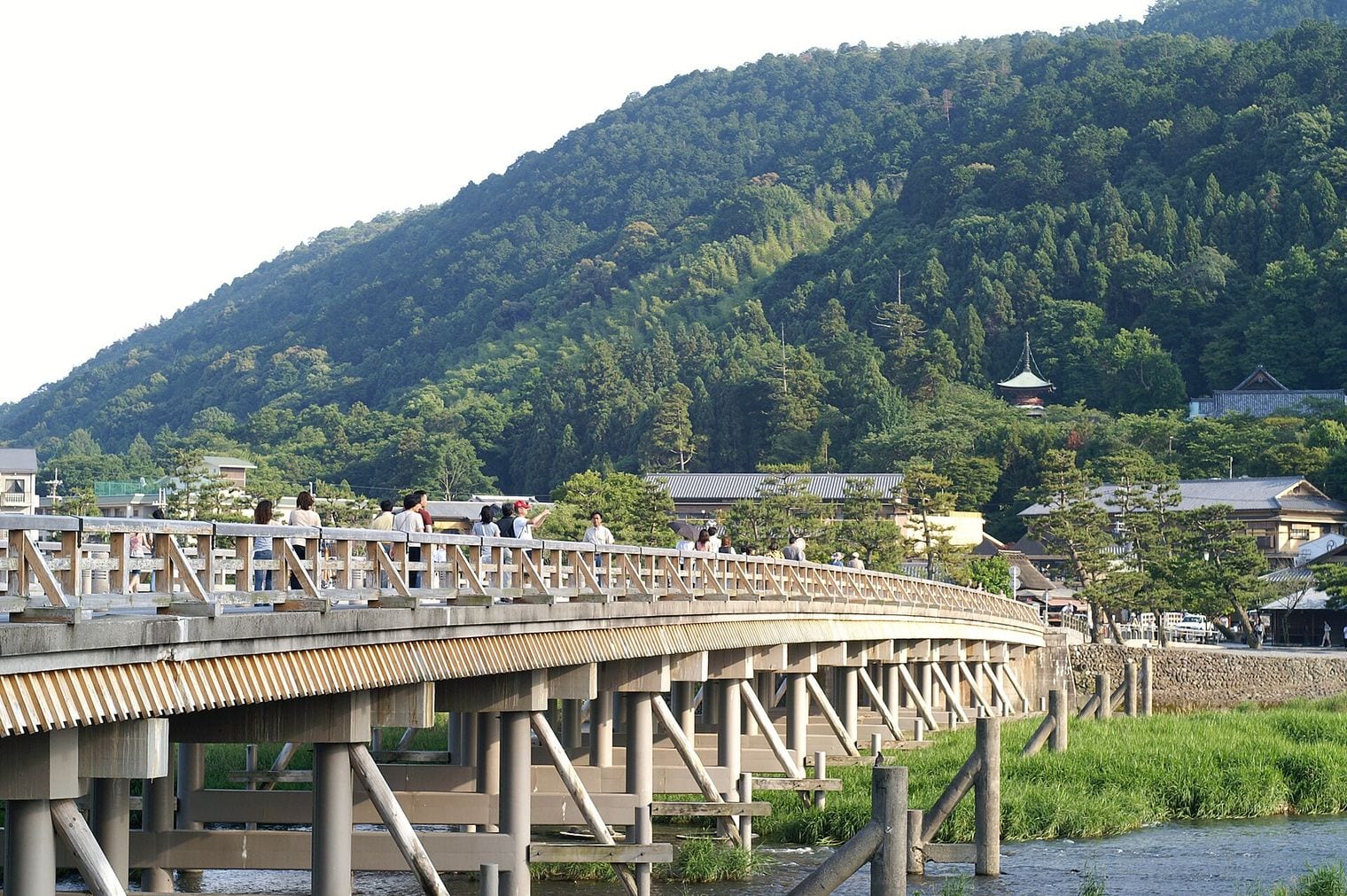
Togetsukyō spans the river at the foot of the Arashiyama hills and gives the district its centrepiece view: a long low bridge, wooded slopes rising directly behind it, and boats working the water below. The name translates roughly as "moon-crossing bridge", from a medieval emperor's remark about the moon appearing to walk across it.
The modern structure is concrete with a timber-clad balustrade, designed to keep the historic profile, and the banks either side are the best place in Arashiyama to simply sit. Rowing boats can be hired upstream, the Hozugawa river cruise finishes here after its run down the gorge, and the riverside path north leads towards Kameyama Park and its viewpoints over the ravine.
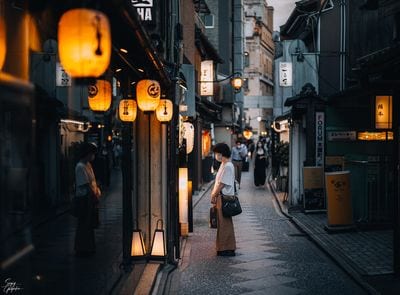
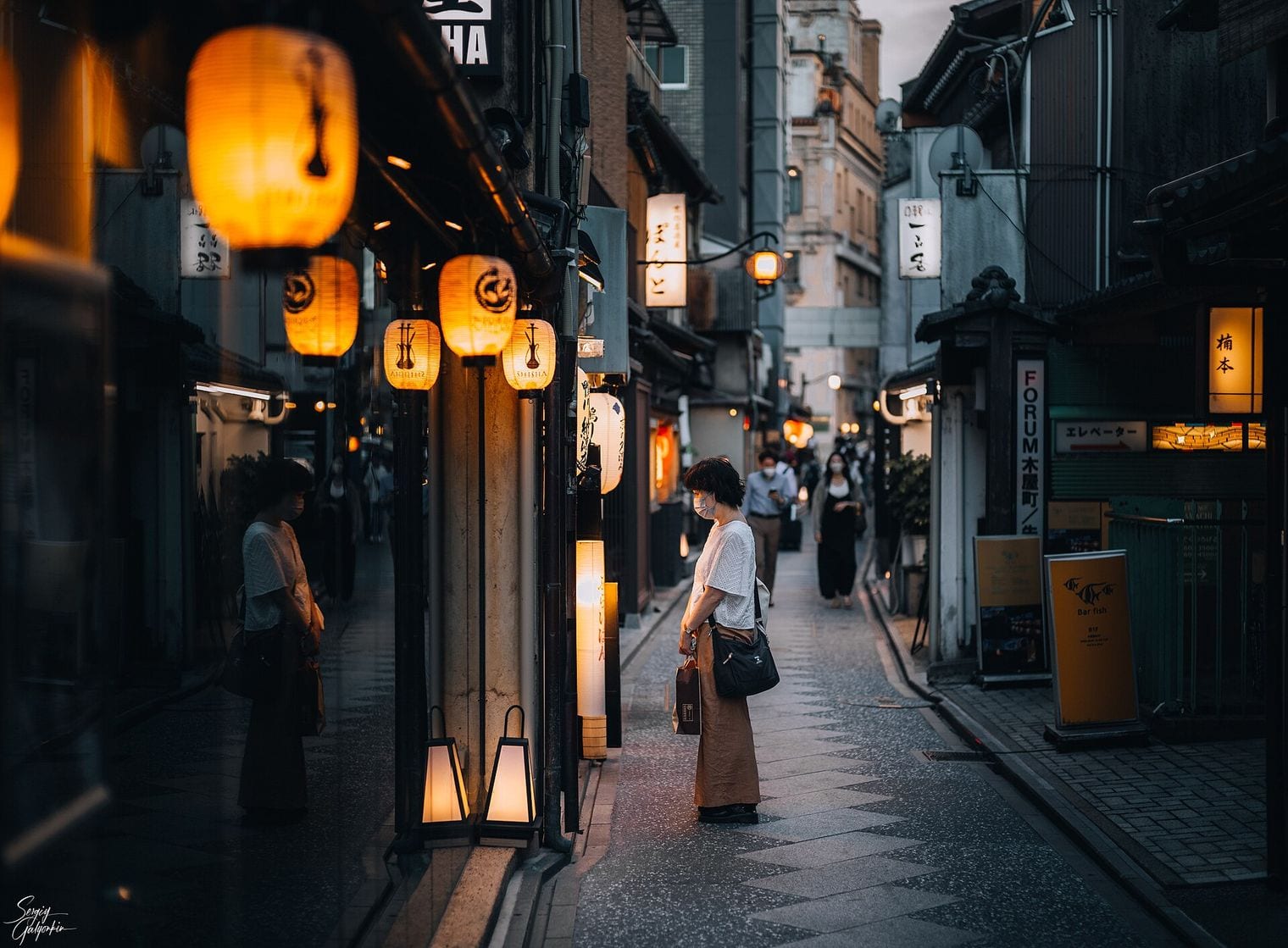
Pontochō is a single pedestrian alley running north to south between Shijō and Sanjō, one building deep, wedged between a shopping street and the Kamo River. It is barely wide enough for two people and lit after dark by lanterns and the glow from doorways — the most atmospheric stretch of night-time Kyoto that does not require an introduction to get into.
Restaurants here range from unreachable traditional establishments to perfectly approachable places with English menus in the window, so read before you commit. In the warmer months the buildings on the river side put out kawayuka — wooden dining platforms built out over the bank — which is one of Kyoto's genuinely distinctive seasonal experiences.
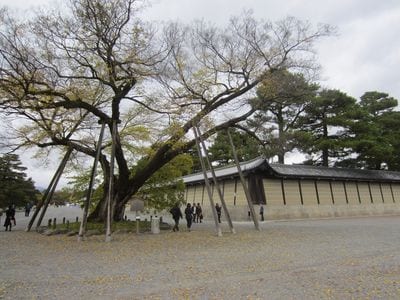
The Kyoto Imperial Palace was the residence of Japan's emperors until the court moved to Tokyo in the nineteenth century, and it is now open to walk through without a booking or a fee — a change from the guided-tour-only arrangement of years past that many guidebooks still describe.
The route takes you past the ceremonial Shishinden with its raked gravel courtyard and single cherry and citrus tree, the smaller Seiryōden, and a series of garden courts. The buildings are reconstructions, faithful to Heian-period style, and the effect is less overwhelming than a castle and more like reading a floor plan at full size. Sentō Imperial Palace, in the same grounds, still requires an advance tour.
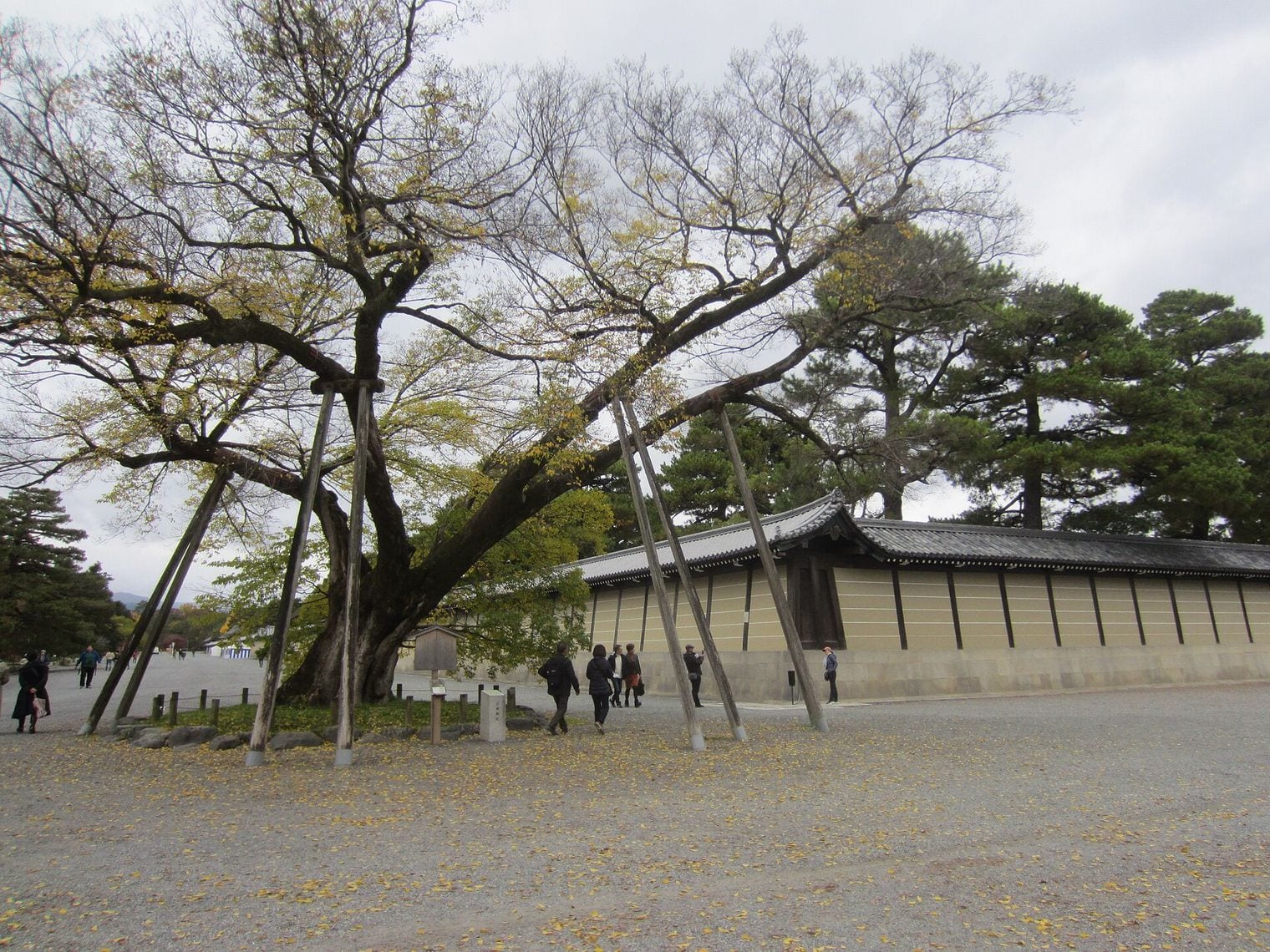
Kyoto Gyoen is the enormous walled park surrounding the Imperial Palace, and it functions as the city's central green space — wide gravel avenues under old pines, cyclists cutting through, locals walking dogs, and almost none of the pressure of the temple sites a few kilometres away.
It rewards a slow diagonal crossing rather than a tour. There are groves of weeping cherries that flower earlier than most of Kyoto's, a plum orchard, a small pond garden at Kyoto Gyoen's southern end, and the preserved Kaninnomiya residence showing how a court noble's household was arranged. It is free, open from dawn, and the most useful piece of the city to have on your route between north and centre.
Maruyama Park is Kyoto's oldest public park, tucked behind Yasaka Shrine at the point where the city runs into the Higashiyama hills. It is laid out in a loose Japanese style around a central pond, with tea houses and food stalls scattered along the paths and a steady flow of people passing between the shrine and the temple lanes above.
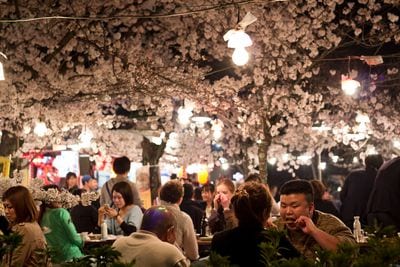
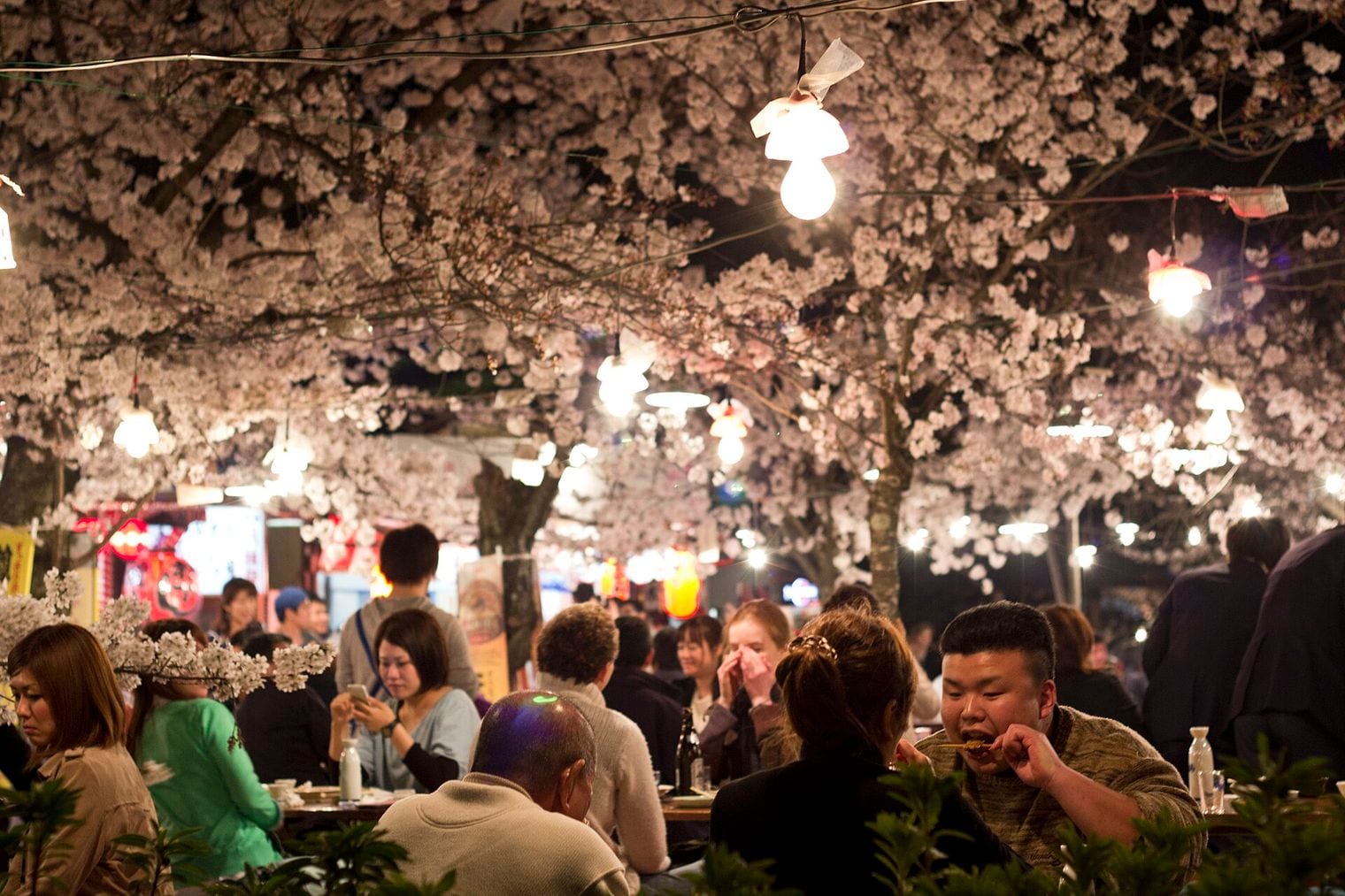
Its celebrity is a single enormous weeping cherry, floodlit at night during blossom season, around which the park becomes the most boisterous hanami site in the city — tarpaulins down, food stalls in rows, and a party atmosphere quite unlike the hush of the temples. Outside those two weeks it reverts to being a pleasant, ordinary park with an excellent location.
The Kyoto Botanical Gardens sit north of the centre beside the Kamo River and were the first public botanical garden to open in Japan. The scale is generous — broad lawns, a long cherry avenue, formal beds, a bamboo collection and a substantial conservatory holding tropical and desert houses under glass.
It is a locals' place more than a tourist one, which is precisely its appeal: on a weekday you can walk it in near-solitude for a modest entry fee. The wooded northern section preserves a stand of old trees, the seasonal displays run right through the year rather than peaking once, and Kamigamo Shrine is a walk further north if you want to combine the two.
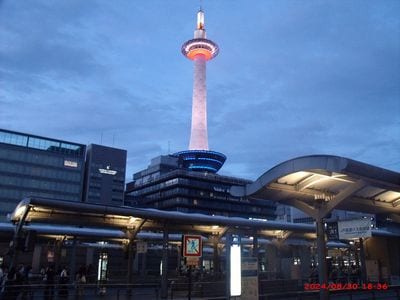
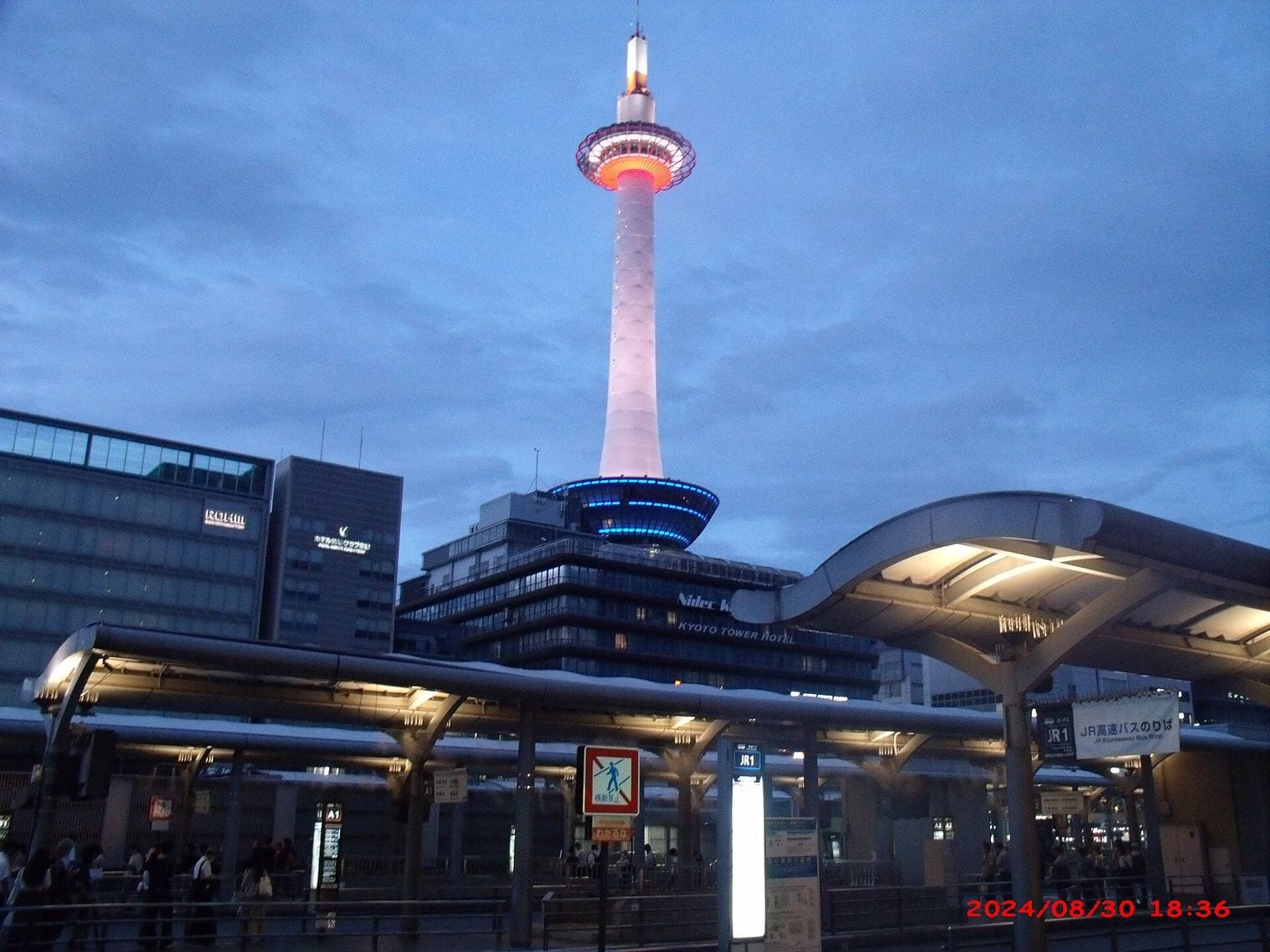
Kyoto Tower rises directly opposite the station and remains mildly controversial — a white steel tube on a concrete base, put up in the 1960s in a city of low wooden roofs. Whatever you make of it, its observation deck delivers something no temple can: the whole basin at once, ringed by mountains, with the grid of the old capital laid out below.
Free-to-use binoculars pick out Kiyomizu-dera on its hillside, the pagoda of Tō-ji to the south and the Higashiyama ridgeline, and the view is at its best at dusk when the city lights come up. The base of the tower holds shops, a food hall and a public bath in the basement, which makes it a practical first or last stop around a train.
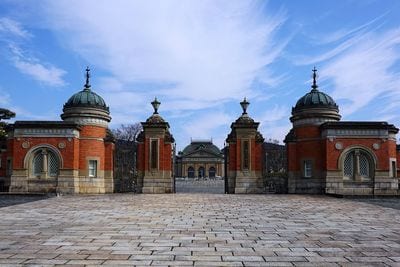
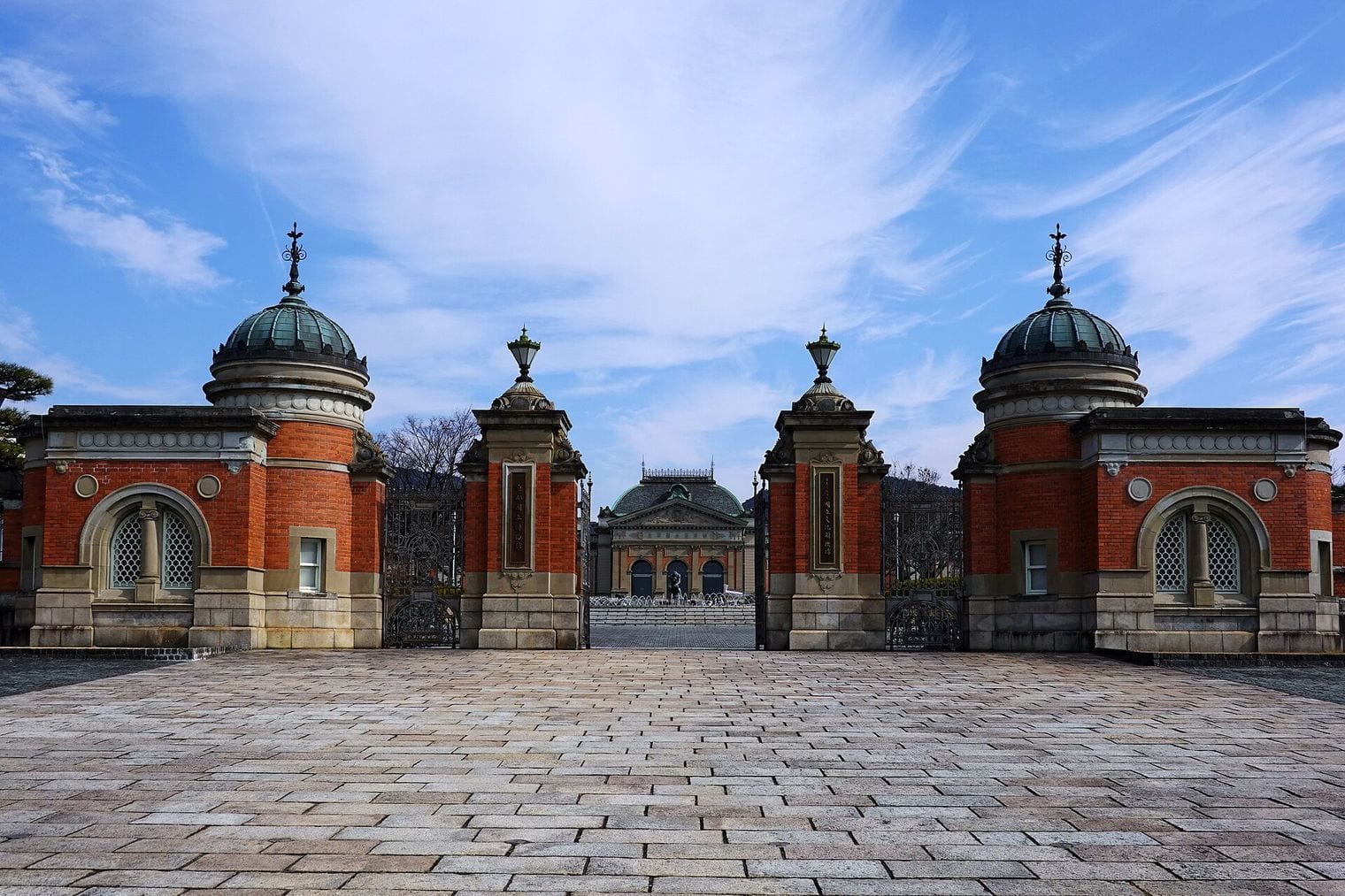
The Kyoto National Museum holds the major public collection of pre-modern Japanese art in the city — Buddhist sculpture and painting, calligraphy, ceramics, textiles and archaeological material, much of it drawn from the temples and shrines around it and a good deal of it designated at national level.
The site pairs two very different buildings: a red-brick Meiji-era hall with a French-influenced façade, now used for special exhibitions, and a restrained modern wing housing the permanent displays across three floors. It stands directly opposite Sanjūsangen-dō, so the thousand-and-one Kannon and the museum's own sculpture galleries can be seen in a single afternoon without moving the car.
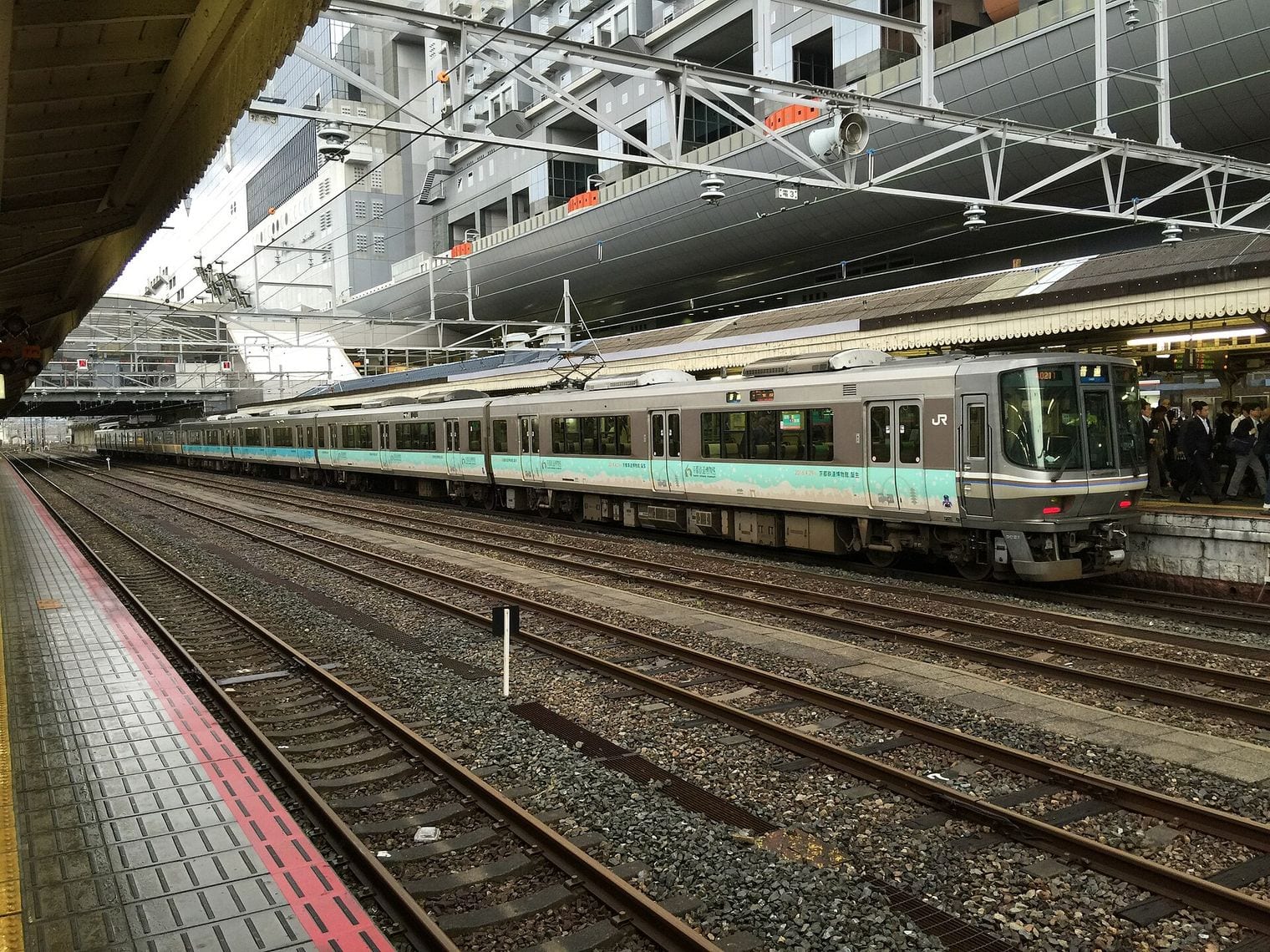
The Kyoto Railway Museum is among the largest railway museums in Japan and considerably more engaging than that description suggests. It runs from a Meiji-era steam locomotive through to the first-generation Shinkansen, with cab interiors you can sit in, a large working diorama and cutaway sections showing how the machinery actually functions.
The centrepiece is the preserved roundhouse, a fan of stalls around a working turntable holding a line-up of steam locomotives, several still in operating condition — the museum runs short rides behind one of them. There is a rooftop terrace overlooking the live main lines into Kyoto Station, and the whole thing sits inside Umekōji Park alongside the aquarium.
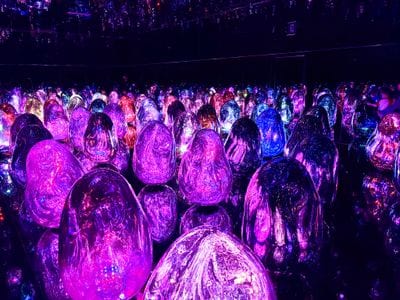
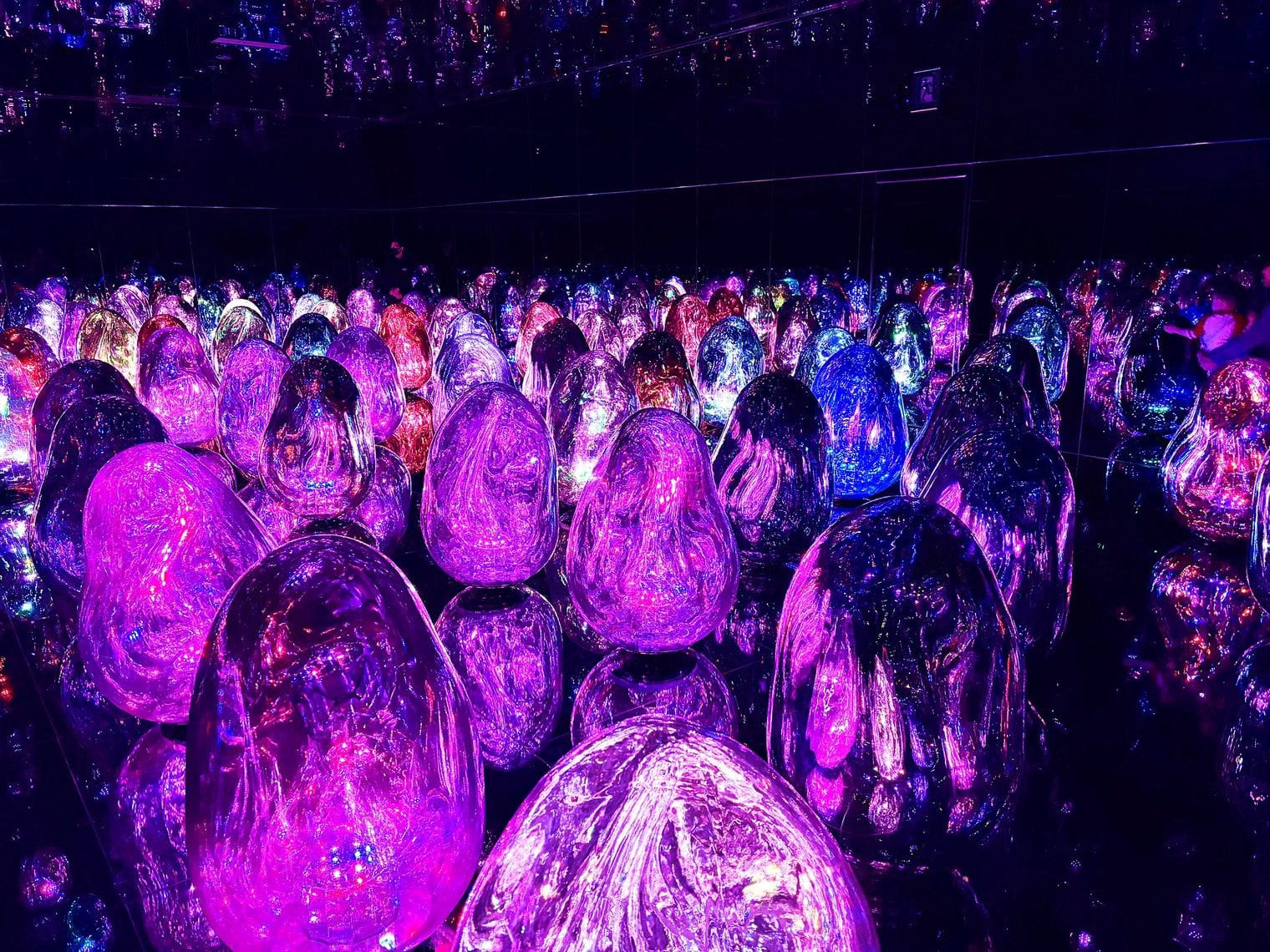
teamLab Biovortex Kyoto is a permanent digital art venue from the collective whose immersive installations have drawn very large audiences in Tokyo and elsewhere. Its rooms are built from projected light, sound and responsive imagery, with works that shift as visitors move through and around them rather than hanging still on a wall.
It is the sharpest possible contrast with the rest of this list, and that is a reasonable argument for going: a day of temple gardens followed by an hour inside something with no fixed surfaces resets the palate. Entry is by timed slot and the interiors are dark, mirrored and often wet underfoot, so flat shoes are sensible and long mirrored floors are best avoided in a skirt.
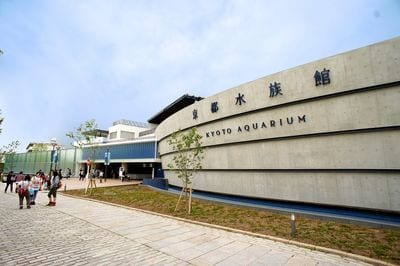
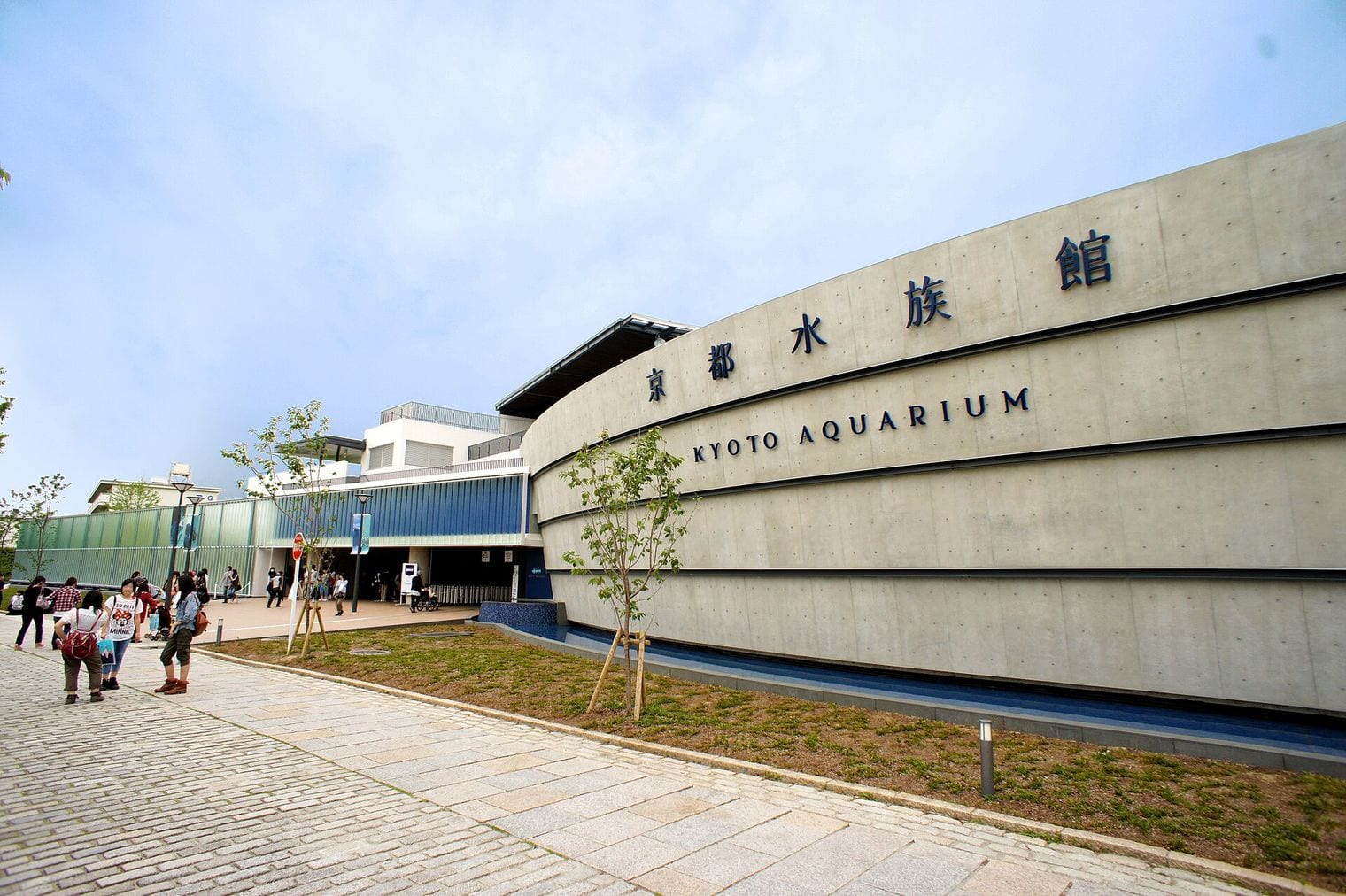
Kyoto Aquarium is an inland aquarium built around the wildlife of the Kamo and Yura river systems as much as the sea, and its opening tanks are given over to Japanese giant salamanders — enormous, mottled, largely motionless amphibians native to these rivers and genuinely startling at close range.
Beyond them the route runs through seal and penguin enclosures, a large tank of sardines kept in constant motion, jellyfish galleries and a dolphin stadium. It is compact enough to see properly in a couple of hours and is one of the few sights in central Kyoto pitched squarely at children. It shares Umekōji Park with the railway museum, so the two make an easy combined half-day.
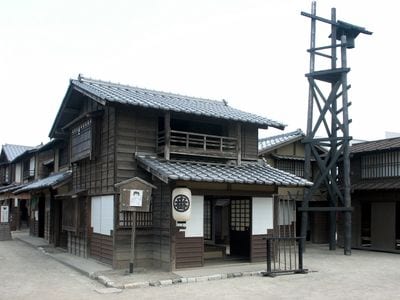
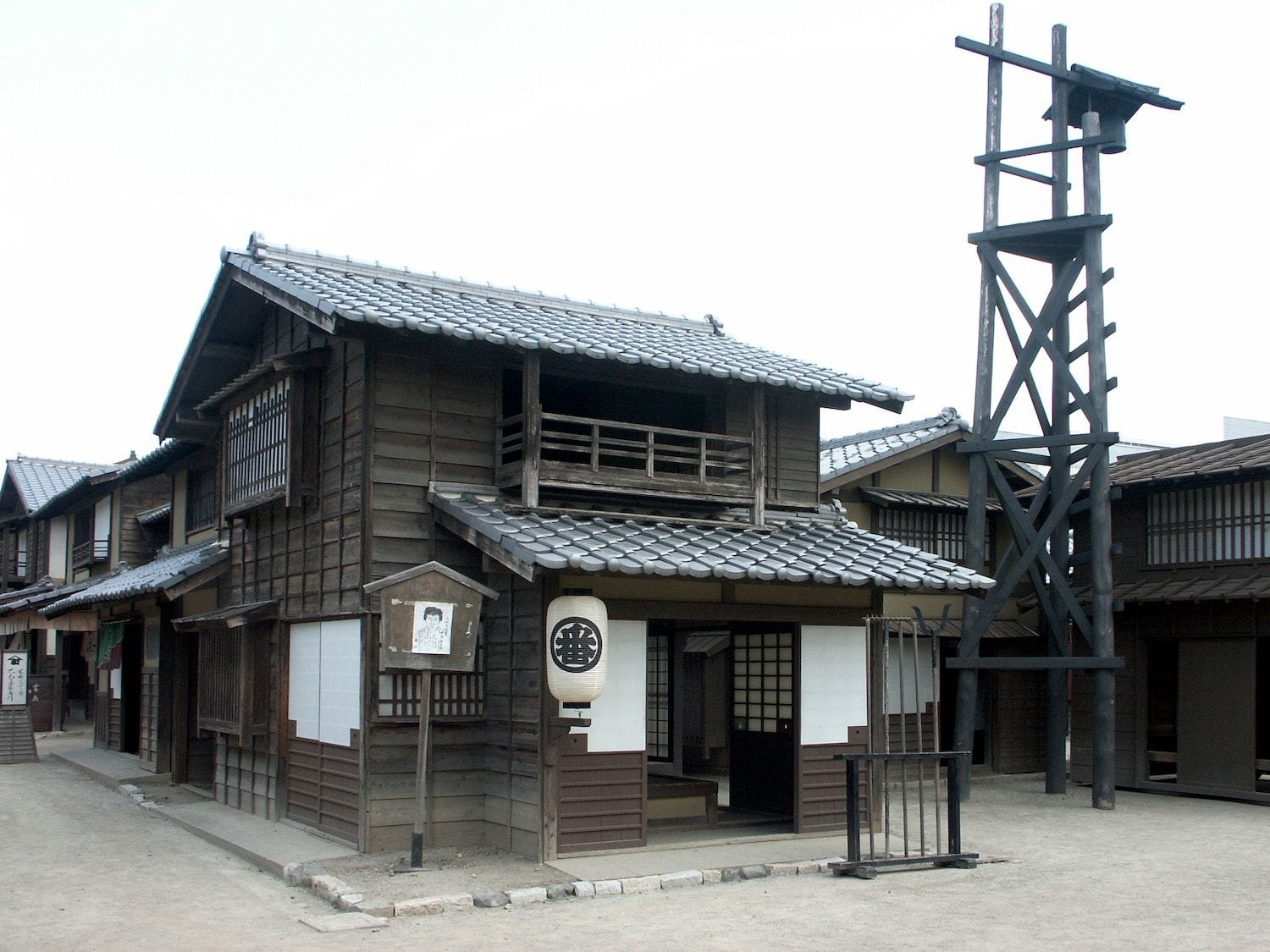
Toei Kyoto Studio Park is a working film backlot in Uzumasa that doubles as a theme park, and jidaigeki — Japanese period drama — has been shot on these streets for decades. You walk through a standing set of an Edo-period town: merchant frontages, a wooden bridge over a canal, a courthouse, an entire street of shopfronts with nothing behind them.
Actors in costume stage sword fights and comic routines through the day, you can be dressed as a samurai, ninja or geisha for photographs, and there are ninja-themed mazes, a haunted house and small indoor attractions aimed at children. If filming is under way you may find part of the set roped off, which is a fair trade for seeing the place do its actual job.
Plan your trip
Best Time to Visit Kyoto
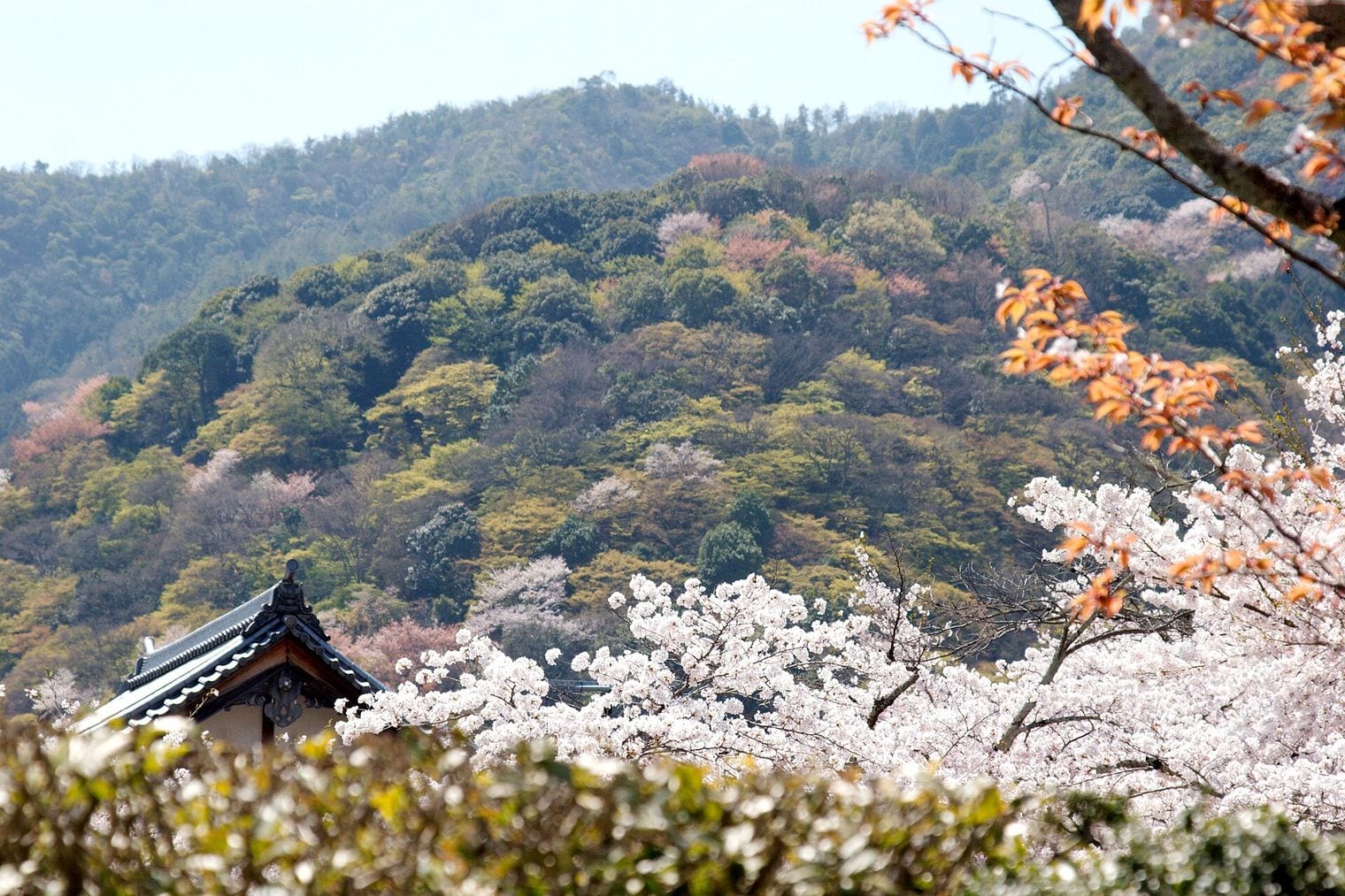
Kyoto has two peak seasons and they are peaks for good reason. Cherry blossom arrives in late March or early April and turns the canal banks, Maruyama Park and the Philosopher's Path into the busiest fortnight of the year. Autumn colour runs through November, when the maple ravines at Tofuku-ji and Eikan-do are at their best and several temples open at night. Both are spectacular and both are crowded enough that accommodation should be settled months ahead.
If you would rather have the gardens to yourself, come in late spring or early winter. May and early June are green, mild and far quieter, with irises in the shrine gardens; the rainy season follows in June, and July and August are genuinely hot and humid in a basin ringed by hills.
Winter is cold but clear, the temples are close to empty, and a light snowfall on the roof of Kinkaku-ji is the single most sought-after sight in the city.
Getting to Kyoto
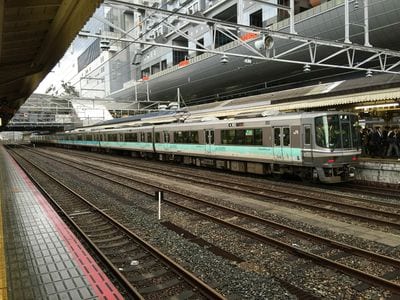
Most visitors arrive by train. Kyoto Station is a stop on the Tokaido Shinkansen, putting Tokyo a little over two hours away and Osaka around fifteen minutes; the line is frequent enough that you turn up rather than plan around it. The station is also the hub for local JR lines, the subway and the city bus network, so almost any onward journey starts there.
By air, the main gateway is Kansai International Airport, roughly an hour and a quarter from the city by direct limited-express train and a similar time by airport bus. Osaka's Itami airport handles domestic flights and is closer, about an hour by bus. There is no need to hire a car to reach Kyoto, and if you are travelling on to other Japanese cities the rail pass arithmetic usually favours the train anyway.
Getting Around Kyoto
Kyoto is laid out on a grid, which makes it unusually easy to navigate, and the central districts are comfortably walkable — you can cross from Nishiki Market to the foot of the Higashiyama hills on foot in half an hour. The two subway lines run north to south and east to west and are quick but limited; buses fill in almost everything else and reach the temples the subway misses, though they get slow and full in peak season.
Cycling is the local's answer and Kyoto is flat enough to make it genuinely pleasant, with rental outlets all over the centre and riverside paths along the Kamo. Arashiyama and Fushimi both have their own train stations and are better reached by rail than by bus. A car is more hindrance than help: parking is scarce, the historic lanes are narrow or pedestrianised, and nothing on this list needs one.
Where to Stay in Kyoto
Around Kyoto Station is the most practical base — every train and most buses start there, and it puts you within walking distance of the two Hongan-ji temples and Kyoto Tower. Downtown, around Kawaramachi and Karasuma, is the liveliest choice, close to Nishiki Market, the covered shopping arcades and the restaurants along the river, and still an easy walk into Gion.
For atmosphere over convenience, the Higashiyama side puts you among the lanes and temples and is remarkably quiet after the day visitors leave, though it is hillier and further from the station.
Arashiyama suits a slower stay with the bamboo and the river on the doorstep, at the cost of a train ride to everything else, and the Nishijin and Imperial Palace districts to the north are residential, calm and well connected by subway. Traditional inns and townhouse conversions are scattered across all of them.
Where to Eat in Kyoto
Kyoto's cooking is its own tradition. Kaiseki is the formal multi-course version, built around whatever is in season and presented as carefully as it is cooked; the everyday version is obanzai, the city's home-style side dishes. Look for yudofu, a simmered tofu hotpot that grew up around the temples and is still eaten near Nanzen-ji, and for shojin ryori, the vegetarian temple cuisine served at several monasteries. Uji matcha appears in everything from the tea itself to parfaits and noodles.
Nishiki Market is the obvious place to graze, and the Pontocho and Kiyamachi alleys along the Kamo River are the classic dinner districts — Pontocho especially, where the riverside restaurants build open-air dining platforms out over the bank in summer. Gion holds the highest-end establishments, many of them introduction-only; the streets around Kyoto Station and the downtown arcades cover everything more casual, from standing sushi counters to ramen.
Day Trips from Kyoto
Nara is the classic half-day, about forty-five minutes south by train, with its own enormous bronze Buddha and a deer park in the middle of town. Uji is closer still, twenty minutes down the line, and pairs Japan's most famous matcha with Byodo-in — the temple on the back of the ten-yen coin.
Otsu and the shore of Lake Biwa are barely ten minutes east, and the mountaintop monastery of Enryaku-ji above them completes the UNESCO group that Kyoto's own fourteen monuments belong to.
Further out, Osaka is half an hour away and makes an easy evening as much as a day, with a food culture that is the opposite of Kyoto's restraint. Himeji, about an hour and a half west, holds the finest surviving castle in Japan, and Kobe sits between the two.
Tokyo is a little over two hours by shinkansen — too far for a day trip in any relaxed sense, but close enough that many visitors pair the two cities in one itinerary.
Before you go
Mobile dataAn eSIM gives your phone local data when you land, with no SIM card to swap.via AiraloGet an eSIM
We may earn a commission when you buy through these links, at no extra cost to you. How we make money.
One Day in Kyoto
Morning
start before dawn at Fushimi Inari Taisha, which never closes and is genuinely transformed by an empty trail — climb at least as far as the Yotsutsuji viewpoint. Take the train back north and spend the rest of the morning at Kiyomizu-dera, walking down afterwards through Sannenzaka and Ninenzaka past the Yasaka Pagoda.
carry on north along the lanes to Yasaka Shrine and through Maruyama Park behind it. Cut west into the centre for a late lunch grazing your way along Nishiki Market, then walk off the food at Nijo Castle and its nightingale floors if you still have the legs for it.
come back east as the light goes and walk Gion when the lanterns come on, taking the canal-side Shirakawa stretch rather than the main street. Finish with dinner in Pontocho Alley, one building deep between the shopping street and the river.
One day means choosing a side of the city. This route covers the south and east and deliberately leaves out Kinkaku-ji in the north-west and the whole of Arashiyama in the west — they are too far apart to add without spending the day on buses. Give Kyoto a second day and those two fill it comfortably.
Kyoto is best known for its temples and shrines, and above all for four sights: the tunnels of vermilion torii gates at Fushimi Inari Taisha, the gold-leafed pavilion of Kinkaku-ji, the hillside wooden stage at Kiyomizu-dera and the bamboo groves of Arashiyama. Nijo Castle, the shoguns' seat with its nightingale floors, completes the set. Fourteen of the city's monuments are UNESCO World Heritage listed.
How many days do you need in Kyoto?
Three days is the sweet spot. One covers the eastern Higashiyama temples, the historic lanes and Gion; a second takes in Arashiyama's bamboo, river and temples; a third reaches the north-west for Kinkaku-ji and Ryoan-ji, or the south for Tofuku-ji and To-ji. A fourth day lets you slow down or add a trip to Nara or Uji. Two days is workable but rushed.
What can you do in Kyoto for free?
Plenty. Fushimi Inari Taisha, Yasaka Shrine and both Hongan-ji temples charge nothing, and neither does walking Gion, Pontocho, Sannenzaka and Ninenzaka, the Philosopher's Path, the Arashiyama Bamboo Forest, Togetsukyo Bridge, Maruyama Park or the grounds of the Kyoto Imperial Palace. In most cases it is only the temple interiors and their walled gardens that carry an entry fee.
When is the best time to visit Kyoto?
Cherry blossom in late March and early April and autumn colour through November are the two spectacular windows, and also the two most crowded. Late spring and early winter are the quiet alternatives: May is green and mild, and January and February are cold and clear with near-empty temples. Avoid the June rainy season and the humid heat of July and August if you can.
Is Kyoto walkable?
The centre is very walkable and laid out on a grid, and the Higashiyama temple lanes are best seen on foot. The city is spread out, though, so most visitors combine walking with buses, the two subway lines and short train hops to Arashiyama and Fushimi. Cycling is popular and the terrain is flat. A car is not needed and is more trouble than it is worth.