We may earn a commission if you book or buy through a link on
this page, at no extra cost to you. It never affects which places we list or how
we rank them (how we make money).
Short answer
Osaka's three defining sights are the Dotonbori canal with its Glico sign, Osaka Castle on its vast stone platform, and the Kaiyukan aquarium out on the bay, with the retro Shinsekai district beneath Tsutenkaku close behind. Three days is the sweet spot: one for the castle and the central districts, a second for the southern cluster of Shitennoji, Tennoji and Shinsekai, and a third for the bay or a full day at Universal Studios Japan.
Osaka does not do understatement. Japan's third-largest city runs on neon, street food and a broad, teasing humour that sets it apart from Tokyo's polish and Kyoto's restraint. Its castle keep looks out over a merchant port that has always traded first and apologised later.
This guide covers 35 of the best things to do in Osaka, from the Dotonbori canal and Shitennoji Temple to the Kaiyukan aquarium and the Umeda Sky Building. Three days is comfortable, with the wider Kansai region an easy train ride beyond.
Osaka was known in the Edo period as tenka no daidokoro, the nation’s kitchen — the port through which rice, sake and goods from across Japan were traded and redistributed.
The city’s Dojima Rice Market is widely regarded as the forerunner of organised futures trading, running from 1697 and formally authorised by the shogunate in 1730.
Osakans stand on the right of escalators and walk on the left — the opposite of Tokyo and most of the rest of the country.
Osaka served as Japan’s capital in the seventh century, when the court sat at Naniwa, long before Kyoto or Tokyo held the role.
The local word kuidaore describes eating yourself into ruin, and the city wears it as a compliment rather than a warning.
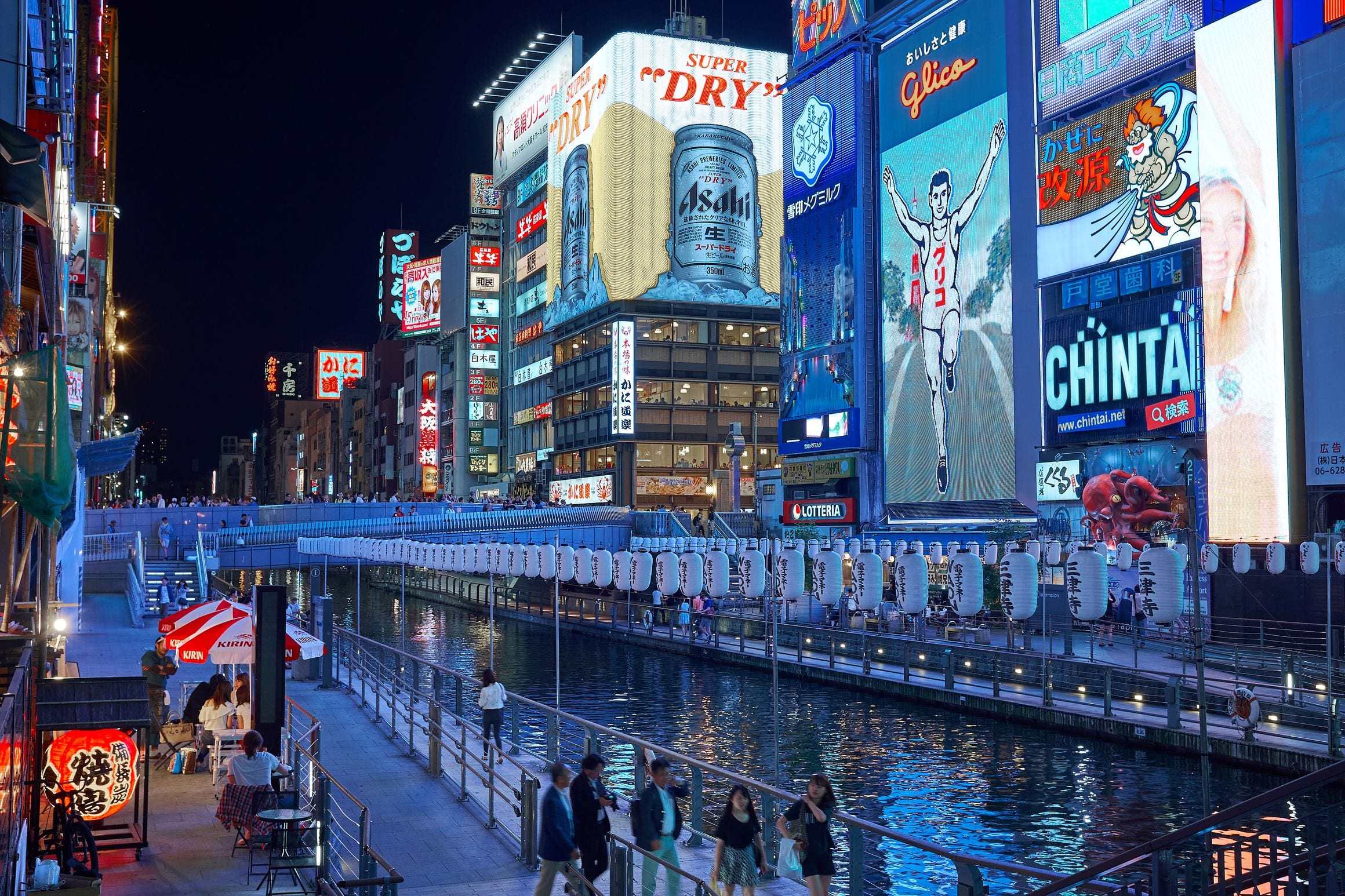
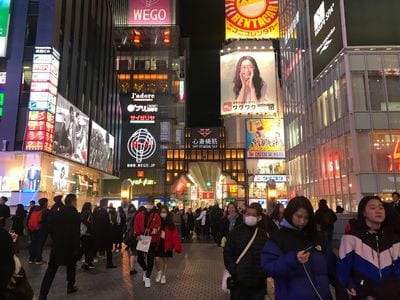
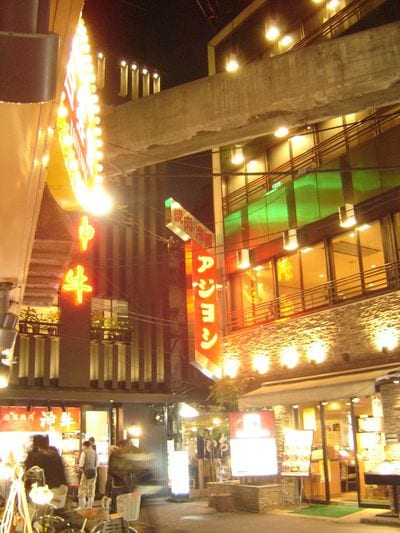
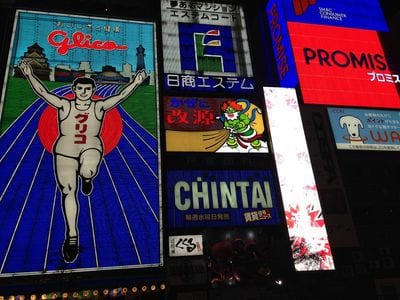
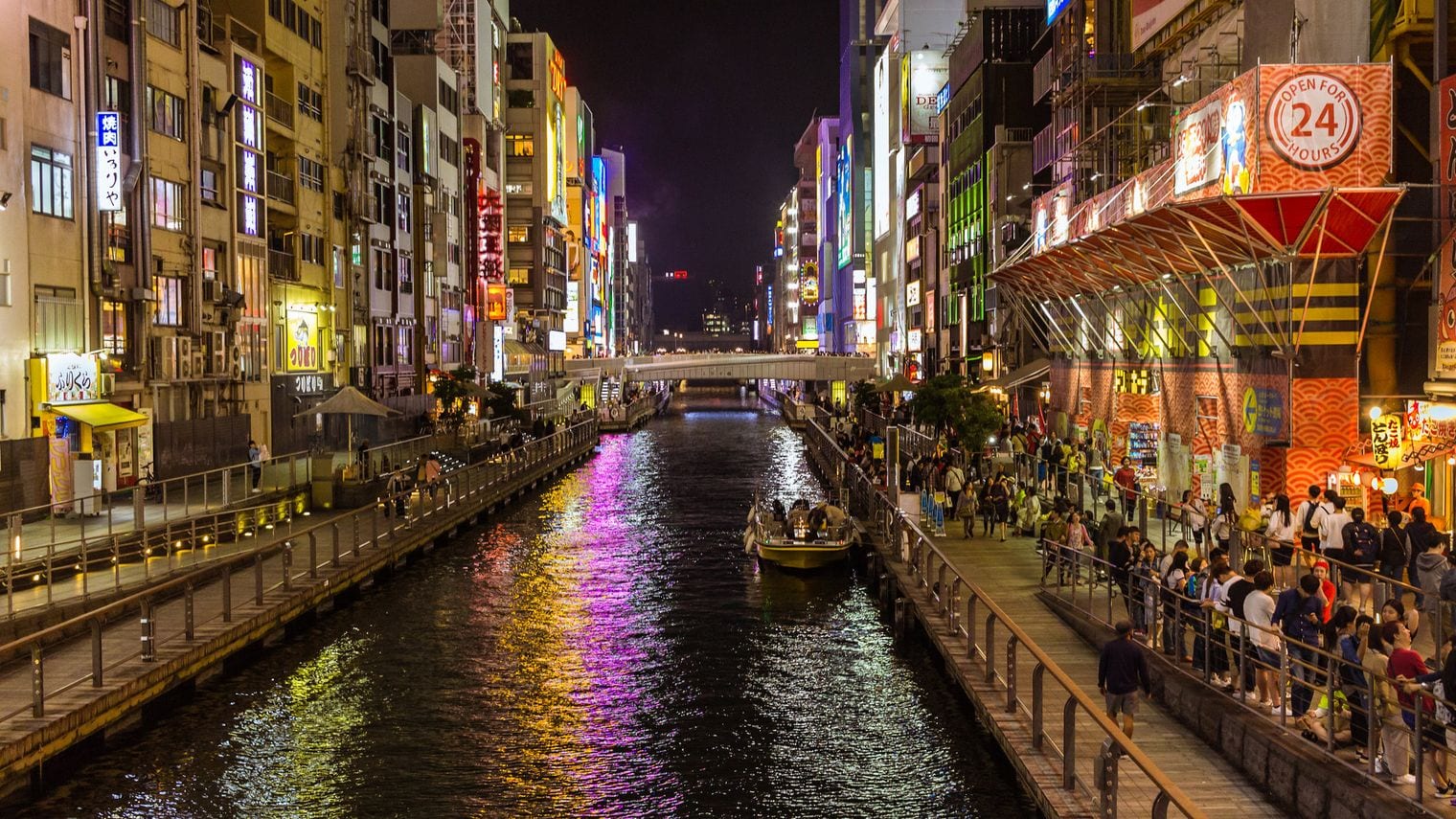
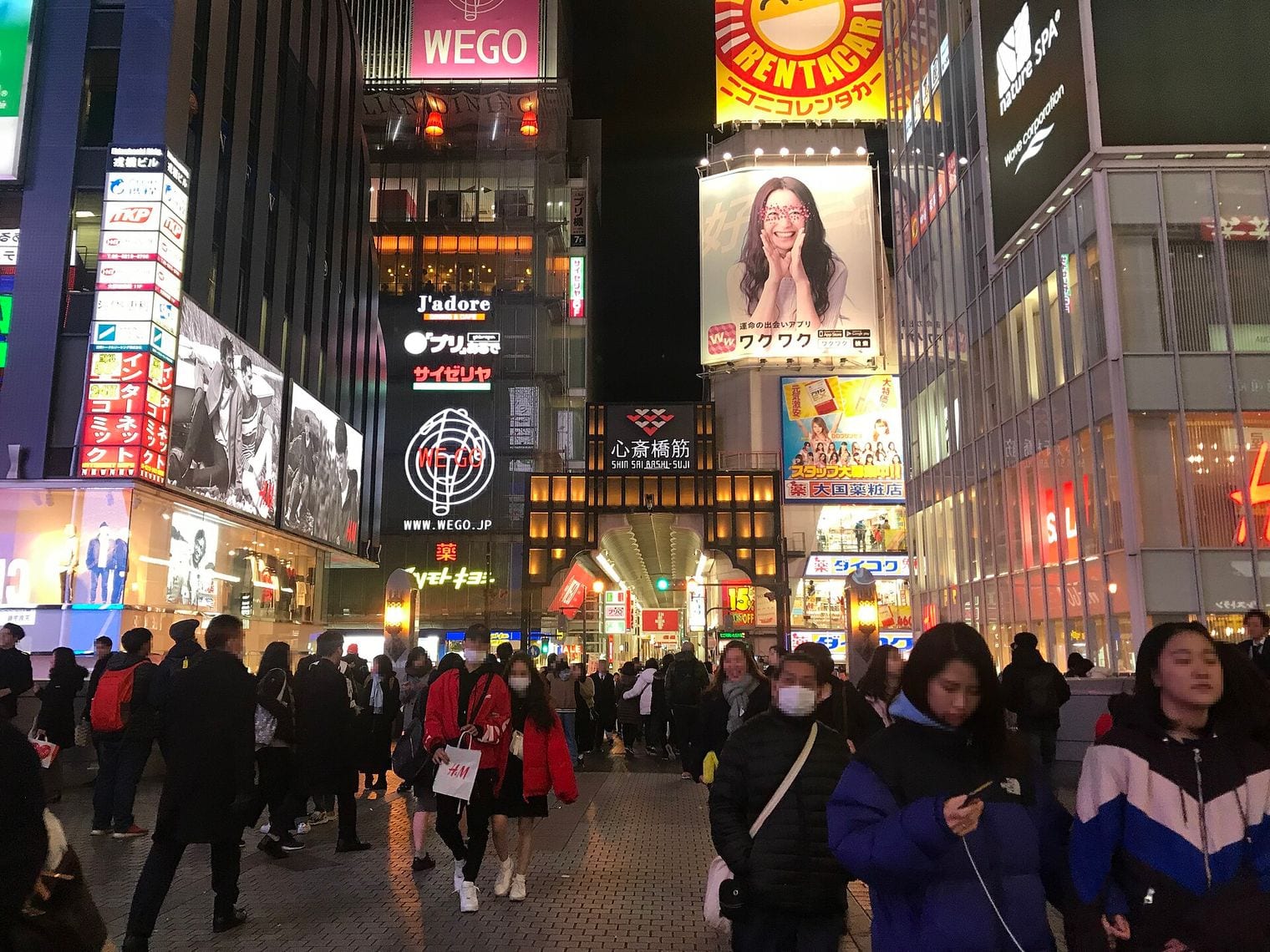
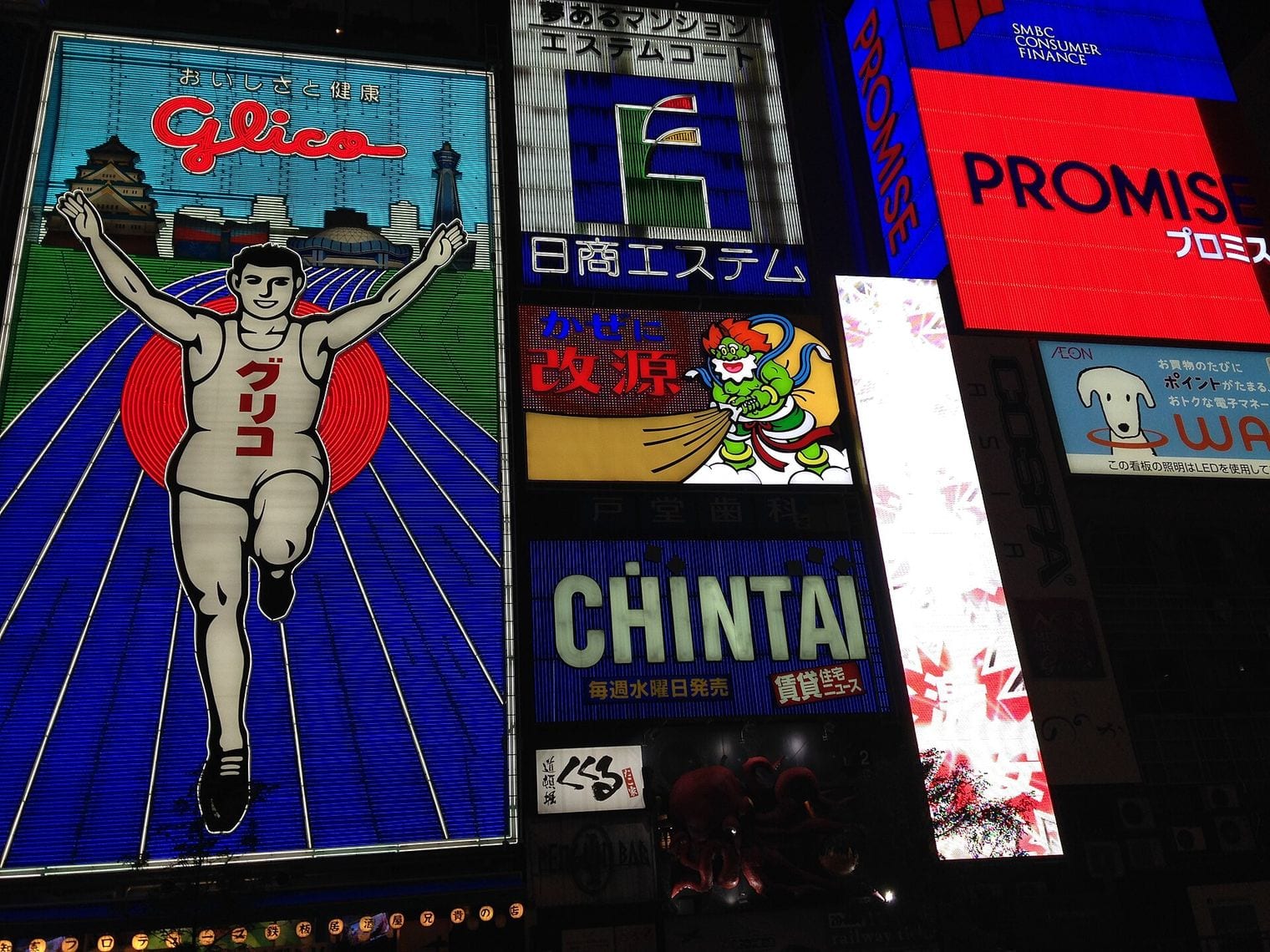
Dotonbori is the stretch of canal that most people picture when they picture Osaka. Signs the size of buildings hang over a few hundred metres of pavement, a mechanical crab works its legs above one doorway, and the smell of takoyaki batter hangs in the air until well past midnight. It is loud, crowded and entirely unbothered about it.
Come after dark, when the signs are lit and the reflections break up in the water. The Glico running man, up since the 1930s, is the photograph everyone takes from the bridge at the centre of the strip. Walk the canal-level promenade for a quieter angle on the same lights, then dive into the side lanes where the eating actually happens.
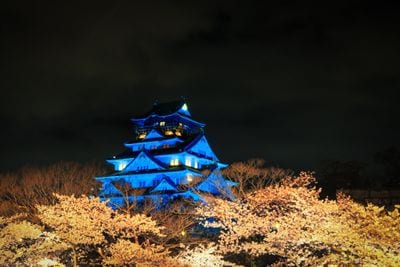
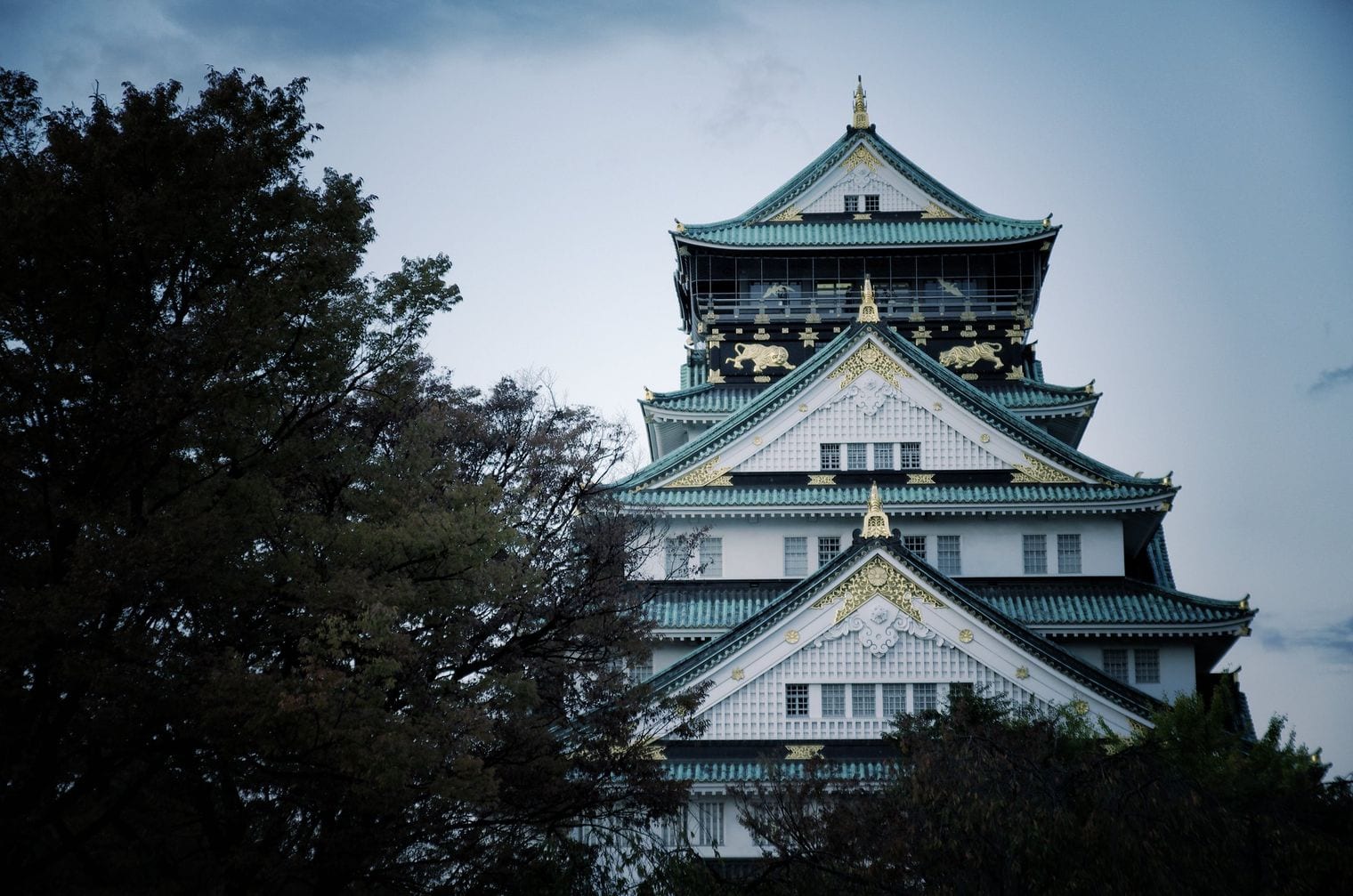
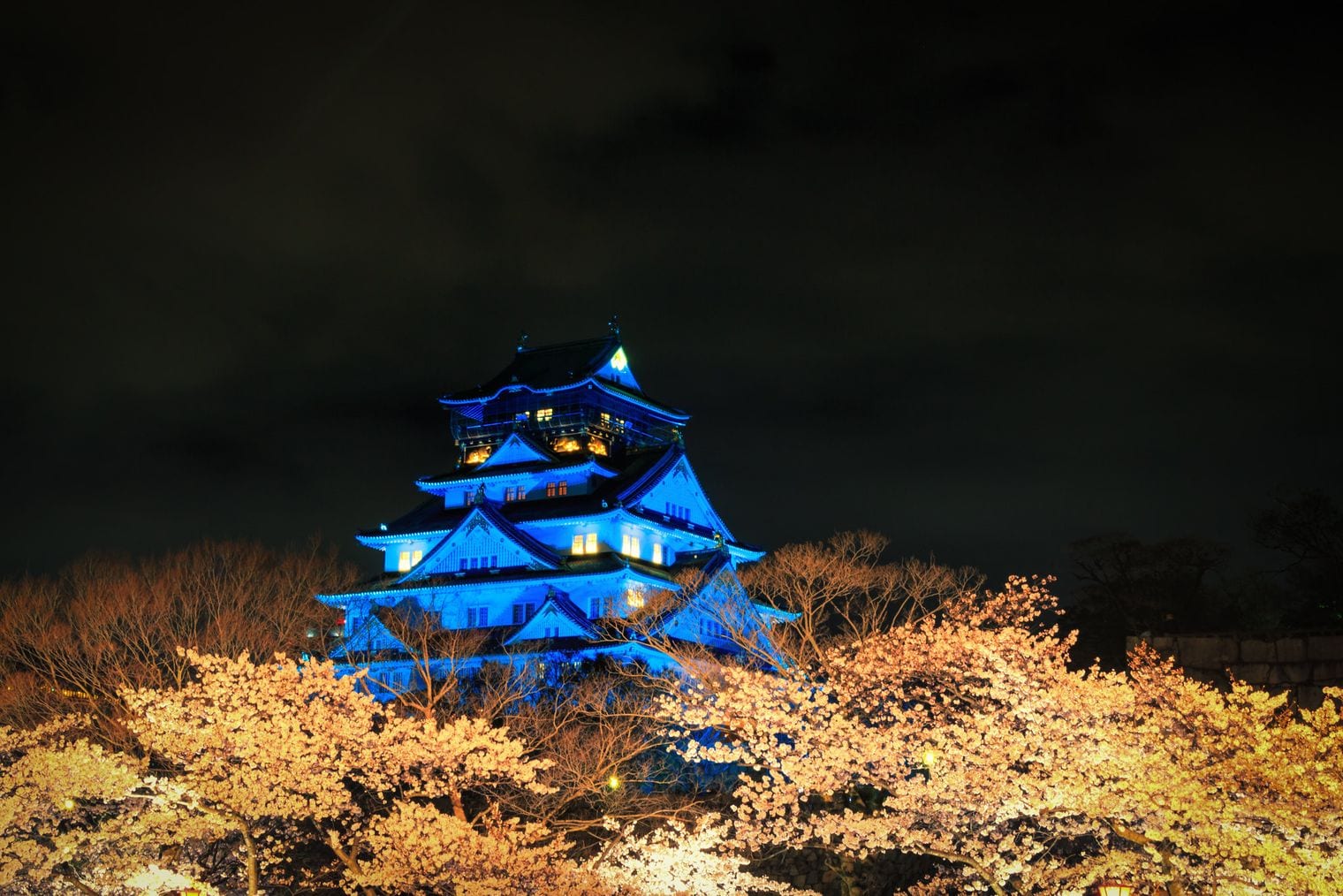
Osaka Castle sits on a broad platform of cyclopean stone blocks, ringed by moats wide enough to feel like rivers. Toyotomi Hideyoshi raised the original in the 1580s as the seat of a man who had just unified the country; what stands now is a 1931 reconstruction, and it makes no secret of it.
Inside, the keep works as a museum climbing floor by floor through the castle's sieges and rebuildings, ending at an observation gallery with the city laid out below. The grounds are the real pleasure, though — the stonework, the turrets and the plum and cherry groves reward a slow lap without a ticket.
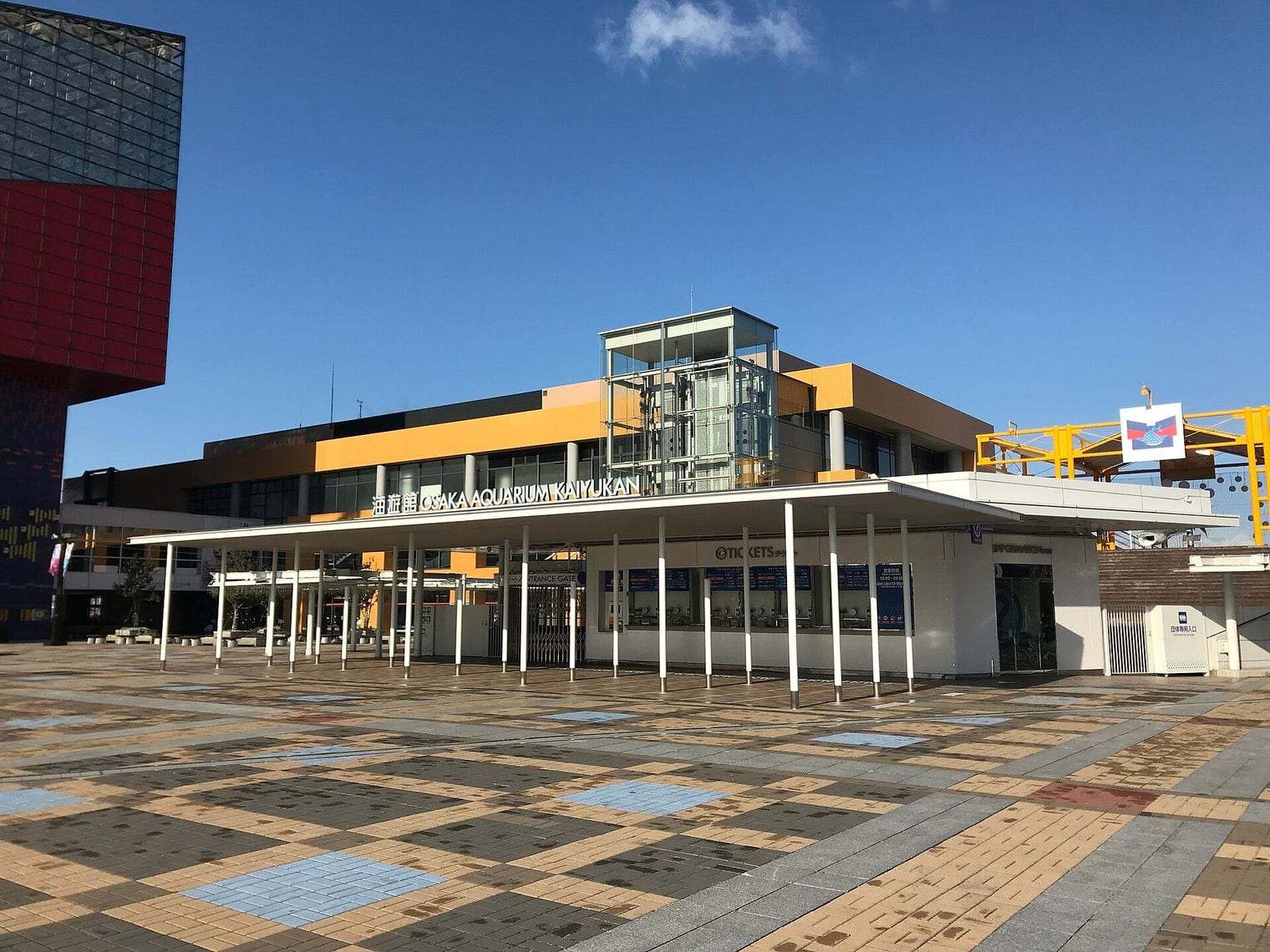
Osaka Aquarium Kaiyukan is built around one enormous central tank representing the Pacific, and the route through it is unusual: you ride to the top and spiral slowly down, meeting the same body of water again and again at different depths. Whale sharks cruise through the middle of it.
The surrounding tanks follow the rim of the Pacific, from otters and puffins to jellyfish drifting in lit columns near the end. It sits on the bay beside the Tempozan ferris wheel, so it pairs naturally with a harbour afternoon rather than a city-centre one.
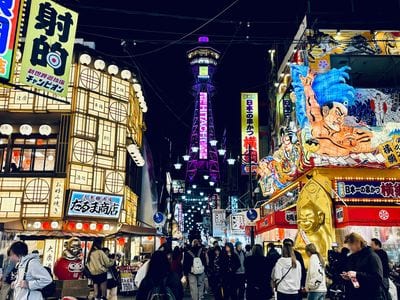
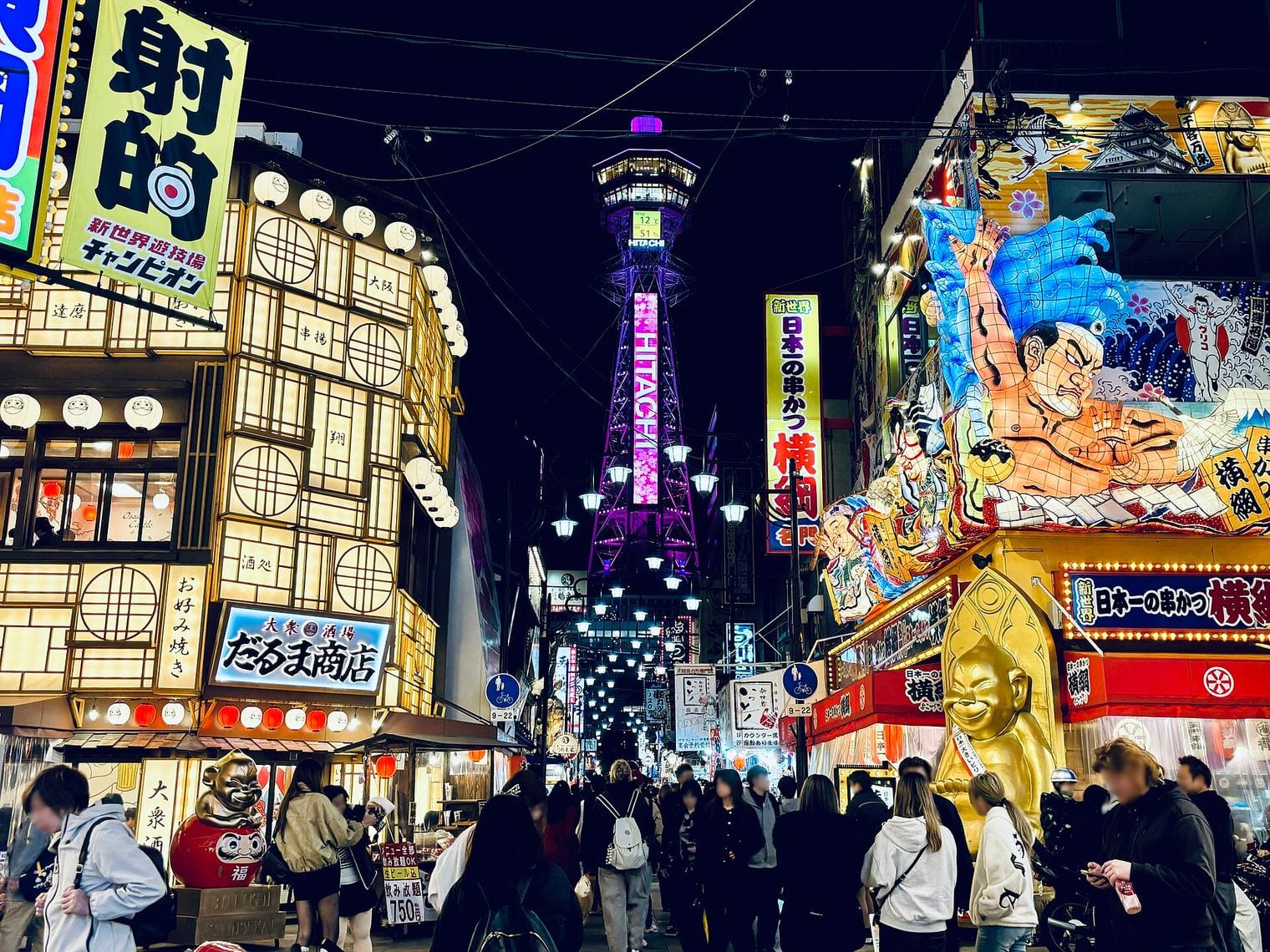
Tsutenkaku rises out of Shinsekai like a piece of a different century, which is roughly what it is. The tower is the district's anchor and its mascot, and the current structure dates from the 1950s after the original was lost during the war.
Up top there is an observation deck and Billiken, a grinning good-luck figure whose feet visitors rub on the way past. The views are good, but the tower earns its place mostly by being the thing every street in Shinsekai points at — a landmark that tells you exactly where you are.
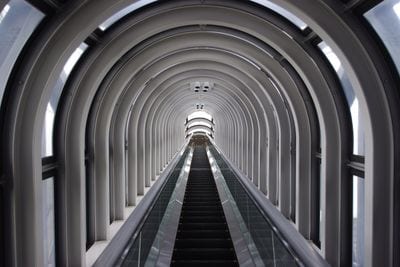
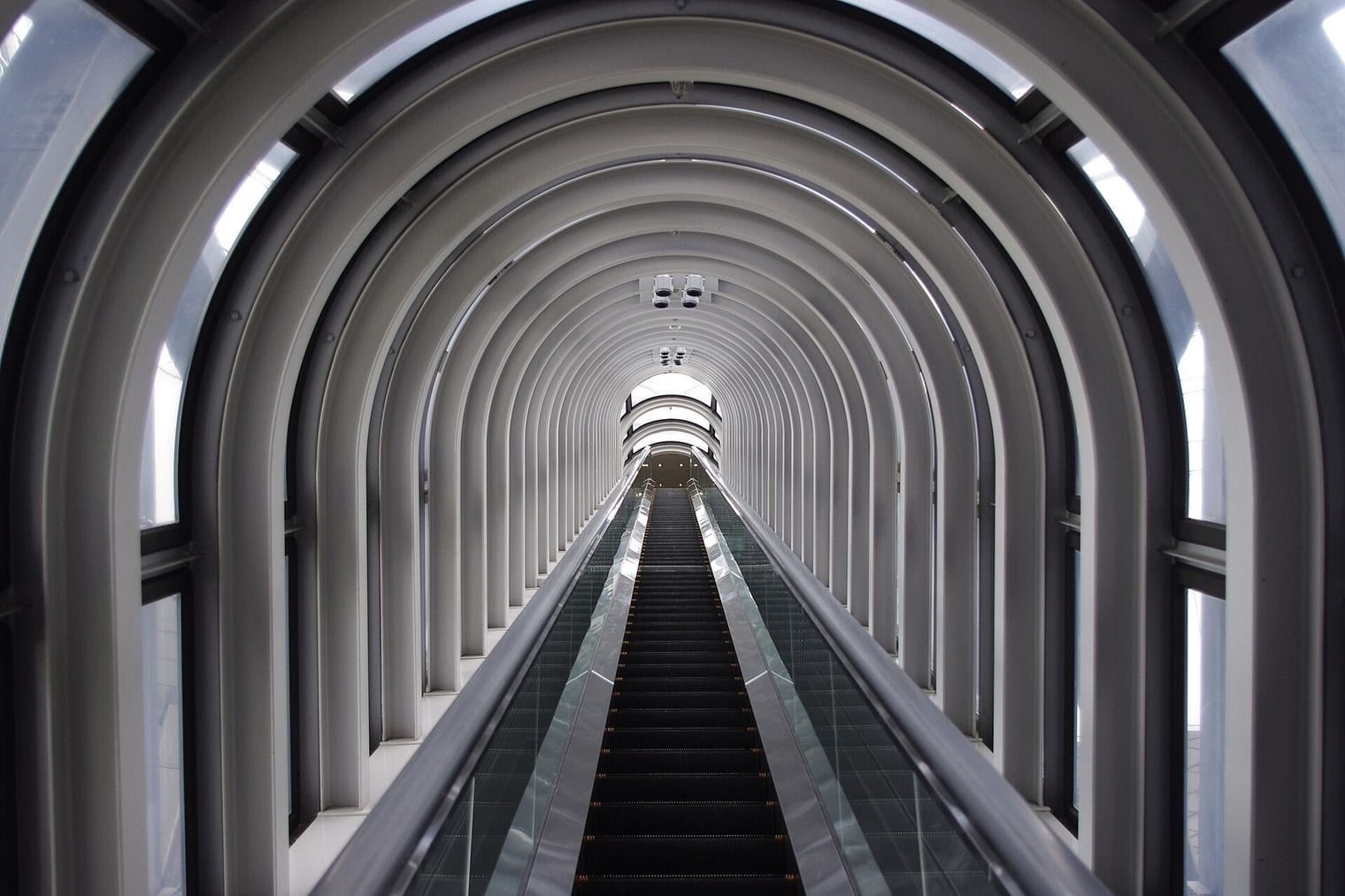
Two towers, joined near the top by a ring suspended in mid-air: the Umeda Sky Building is the most architecturally interesting thing in the city, and it looks faintly implausible from the street. An escalator crosses the open gap between the towers on the way to the Floating Garden Observatory.
The rooftop deck is open to the sky rather than glassed in, which changes the experience entirely — you get wind, noise and an uninterrupted sweep across the north of the city. Go towards sunset and stay for the lights.
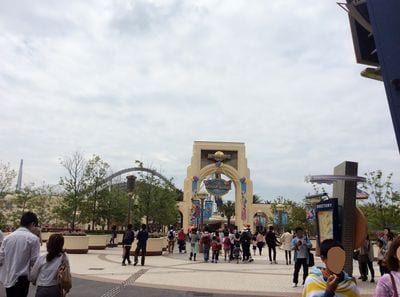
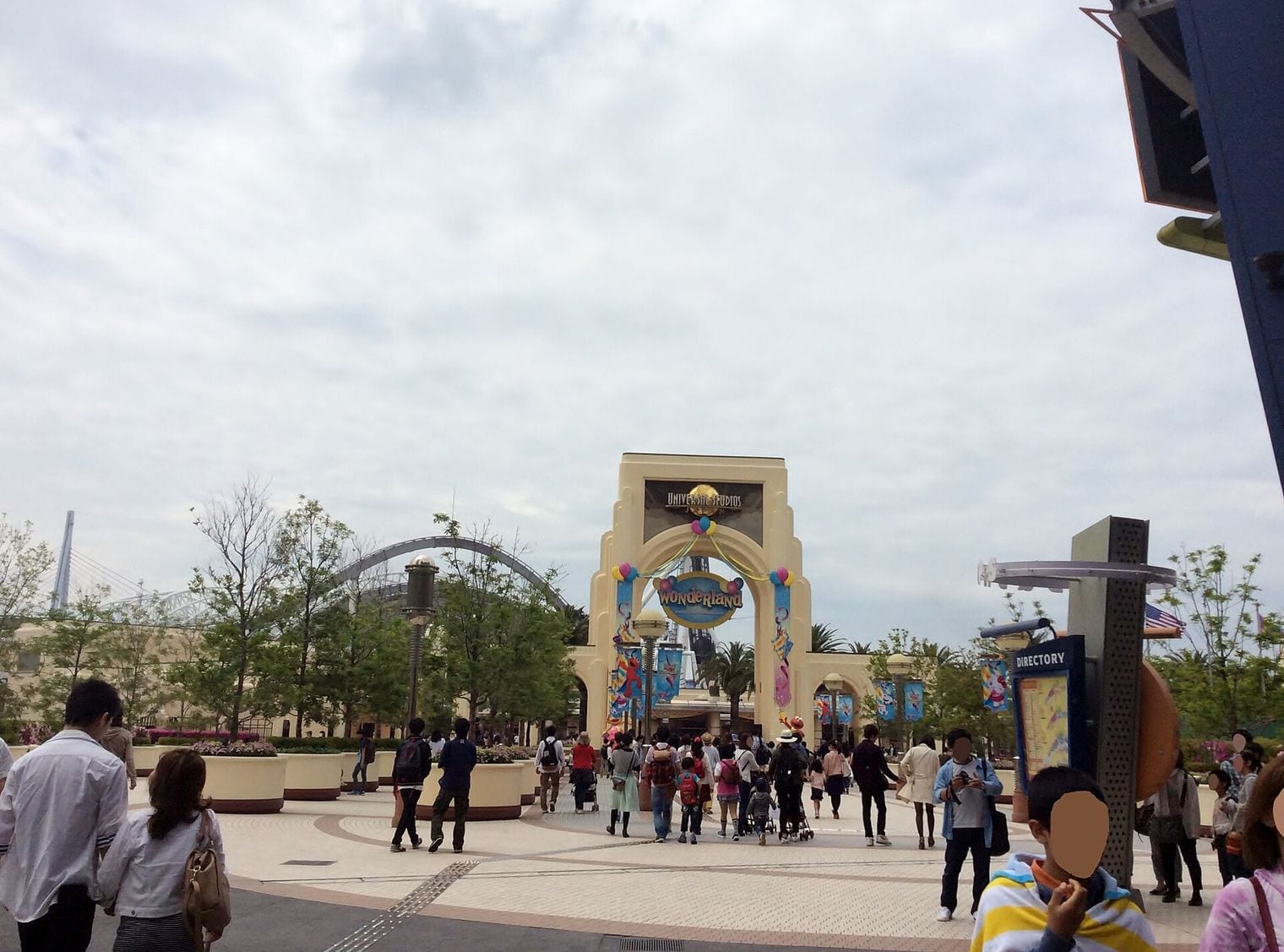
Universal Studios Japan is the reason a good number of visitors book Osaka at all. The park does the expected film-franchise rides well, but the two areas that draw the crowds are the Wizarding World of Harry Potter and Super Nintendo World, the latter a walk-in recreation of the Mushroom Kingdom with interactive elements built into the scenery.
It is a full day and then some, and it sits west of the centre on its own rail stop rather than in the middle of town. Treat it as its own outing rather than something to fold into a day of sightseeing.
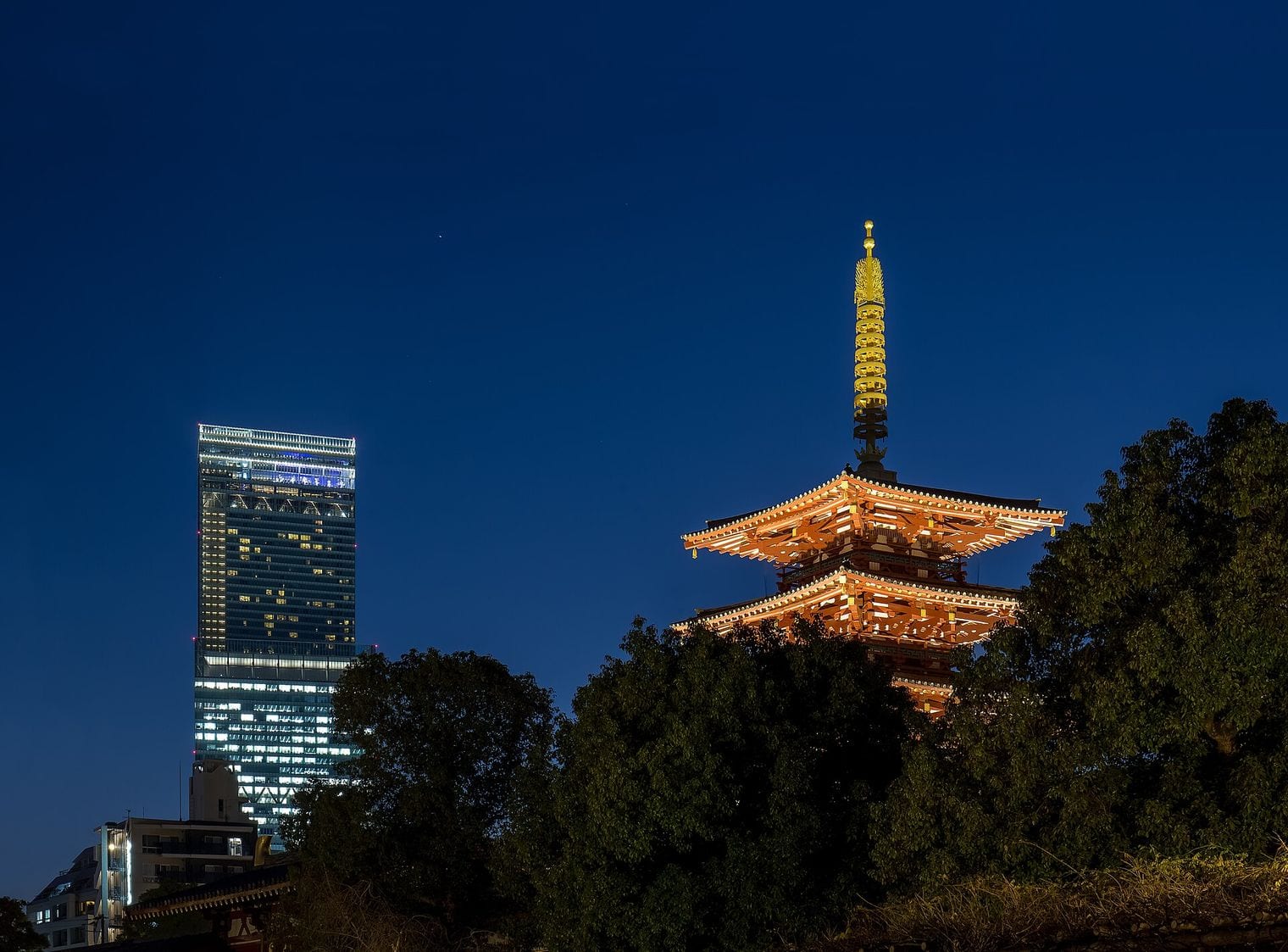
Abeno Harukas is one of the tallest buildings in Japan, a 300-metre tower over Tennoji that contains a department store, an art museum and a hotel beneath its observatory. The Harukas 300 deck occupies the top three floors and wraps the whole way around.
On a clear day the view reaches across the Osaka plain towards the mountains, and the height gives you a genuinely useful sense of how the city is laid out — the castle, the bay, the ridge of towers at Umeda. The atrium below, open to the sky, is worth a look on the way out.
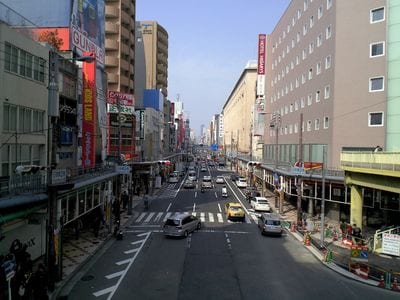
Shinsaibashi-Suji Shopping Street is a covered arcade running north from Dotonbori, and it has been the city's main shopping spine for a very long time. The roof means it works regardless of weather, which is half the appeal in a humid summer or a wet week.
The mix runs from international flagships to small local shops that have not changed hands in decades, with department stores anchoring the northern end. It is best treated as a route rather than a destination — the walk between Namba and the Shinsaibashi crossing takes you past most of what central Osaka sells.
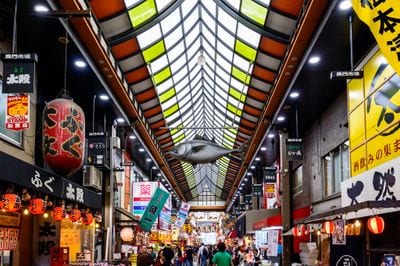
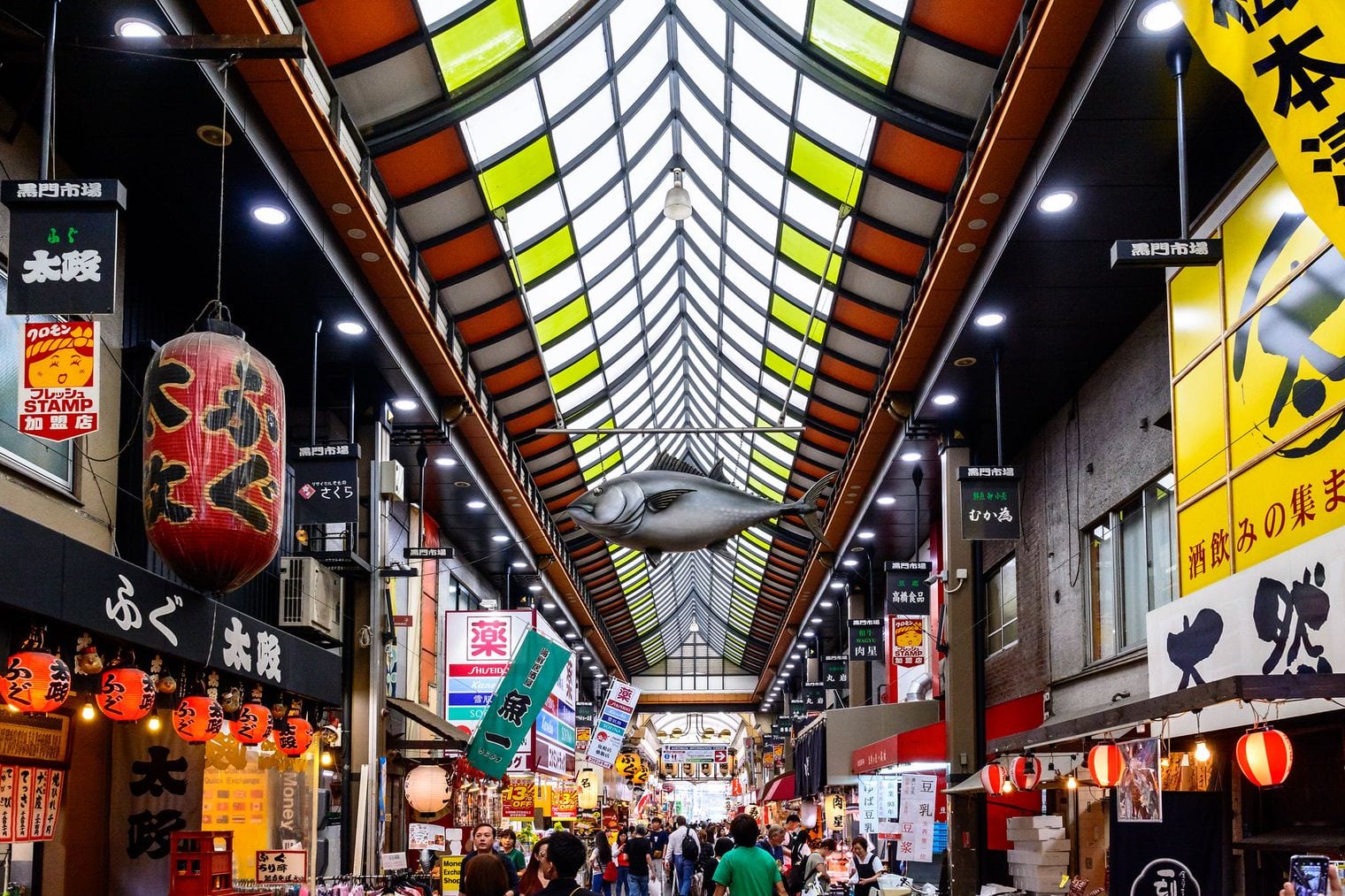
Kuromon Market has been feeding Osaka for well over a century and calls itself the city's kitchen without much argument from anyone. A covered lane runs a few hundred metres with fishmongers, fruit stalls, knife shops and small counters where things are grilled in front of you.
Much of it now caters openly to visitors, which means more skewers eaten standing up and fewer restaurant buyers than there once were. Go in the morning for the market at its most functional, and eat as you walk rather than looking for somewhere to sit.
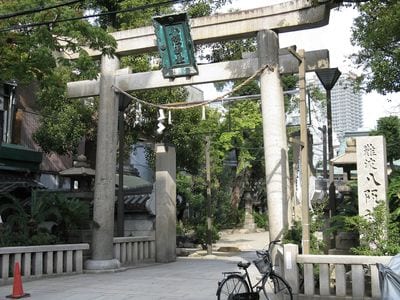
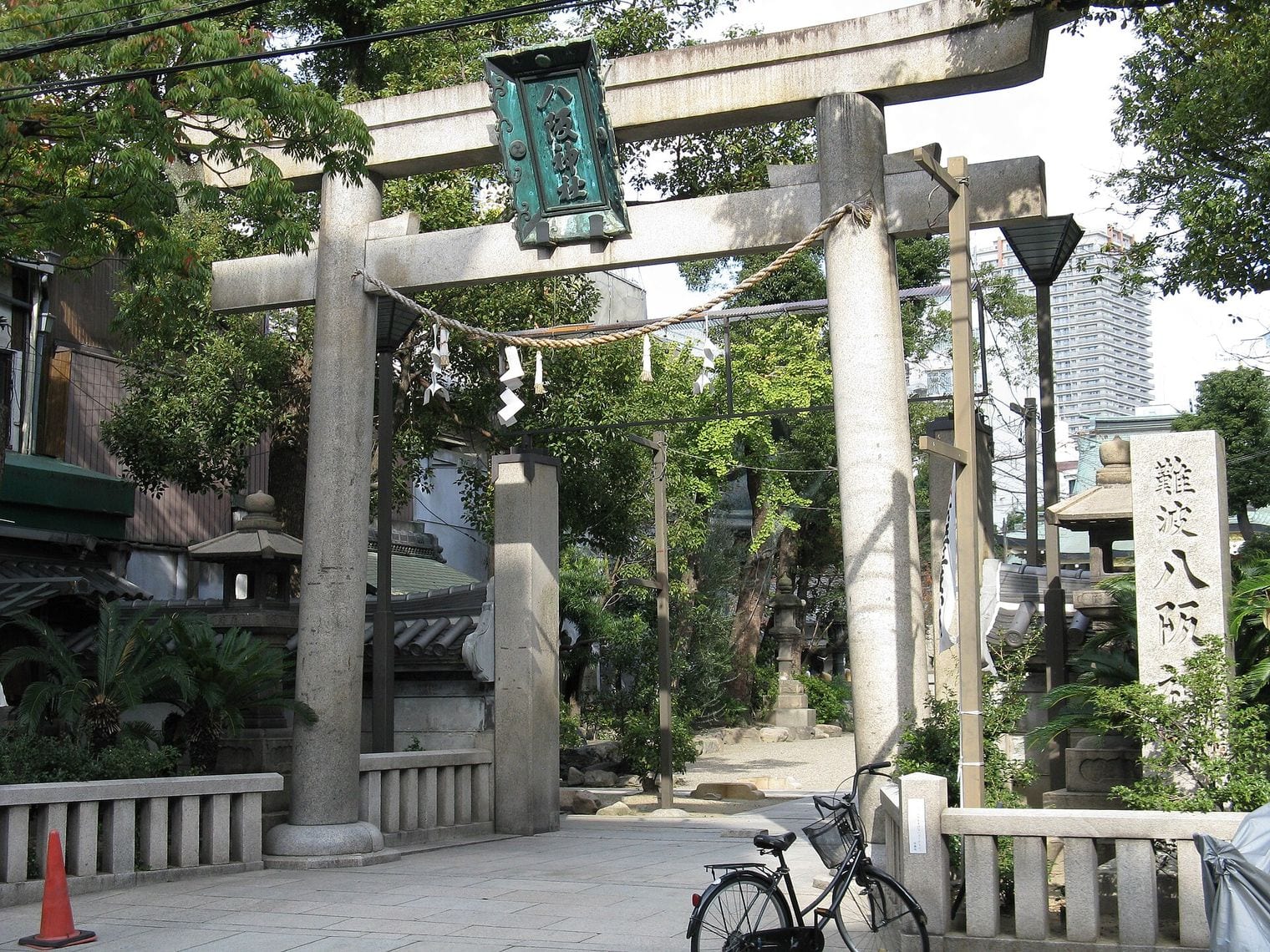
Namba Yasaka Jinja is a small shrine with one very large idea: a stage built in the shape of an open lion's head, jaws spread wide, eyes fixed on the courtyard. It is said to swallow bad luck and draw in good fortune, and it makes for a startling first impression in an otherwise ordinary residential block.
The rest of the grounds are quiet and take only a few minutes to walk. It sits close enough to Namba to fold into an afternoon there, and the contrast — a giant lion's head a short walk from the shopping arcades — is very Osaka.
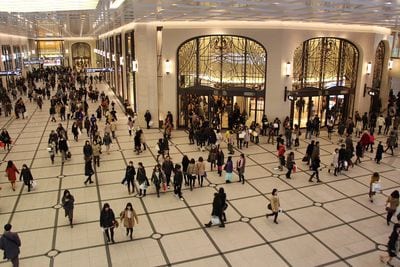
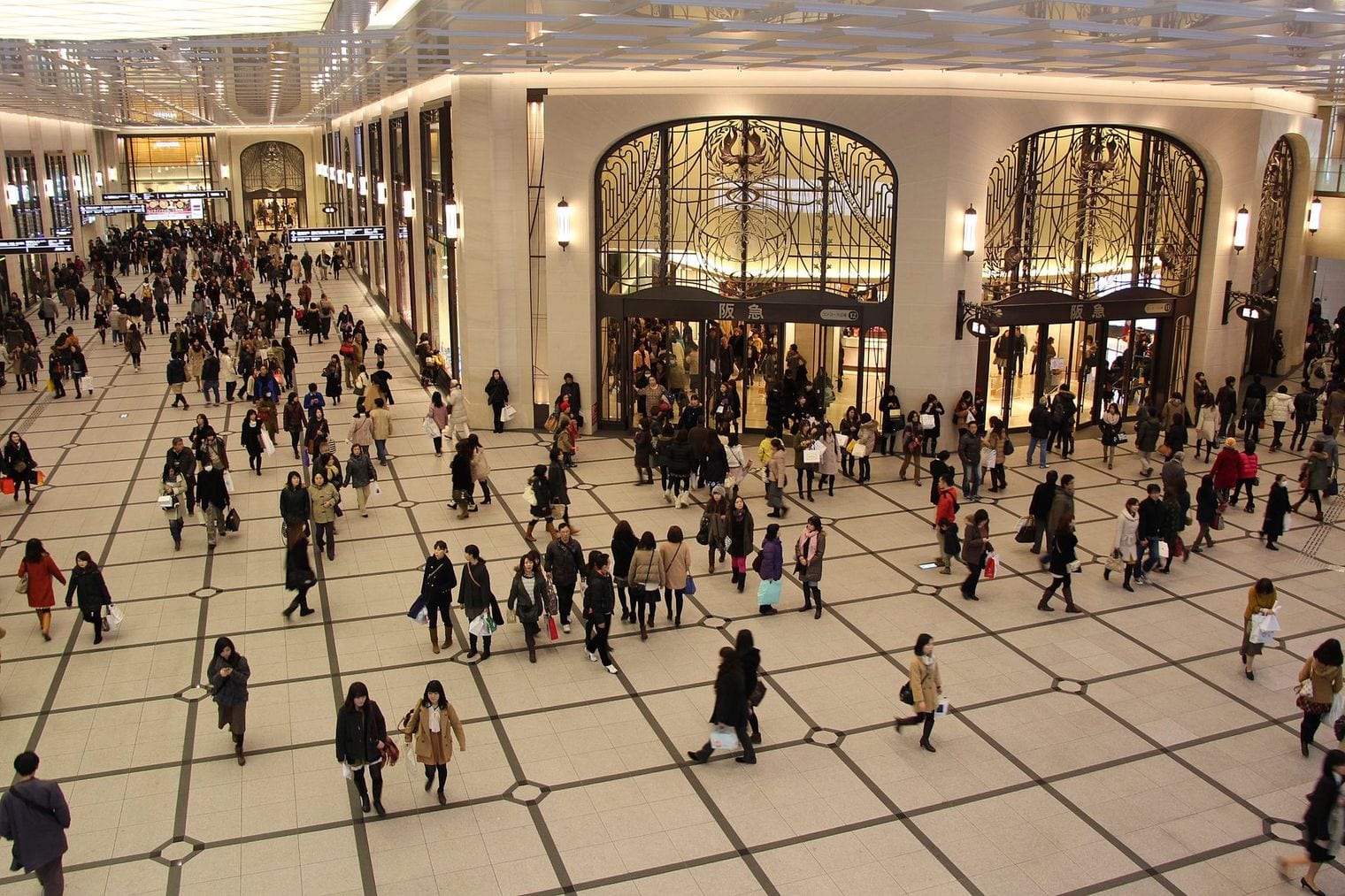
Hankyu Umeda Main Store is a department store on a scale that turns shopping into an event. It fills a block above the Hankyu railway terminal in Umeda, and its ground-floor cosmetics hall and multi-storey atrium are designed to be walked through slowly.
The part most visitors end up remembering is the food floor in the basement, a dense grid of confectioners, bento counters and regional specialities laid out with a jeweller's care. Even if you buy nothing, it is a useful window into how seriously the city takes what it eats.
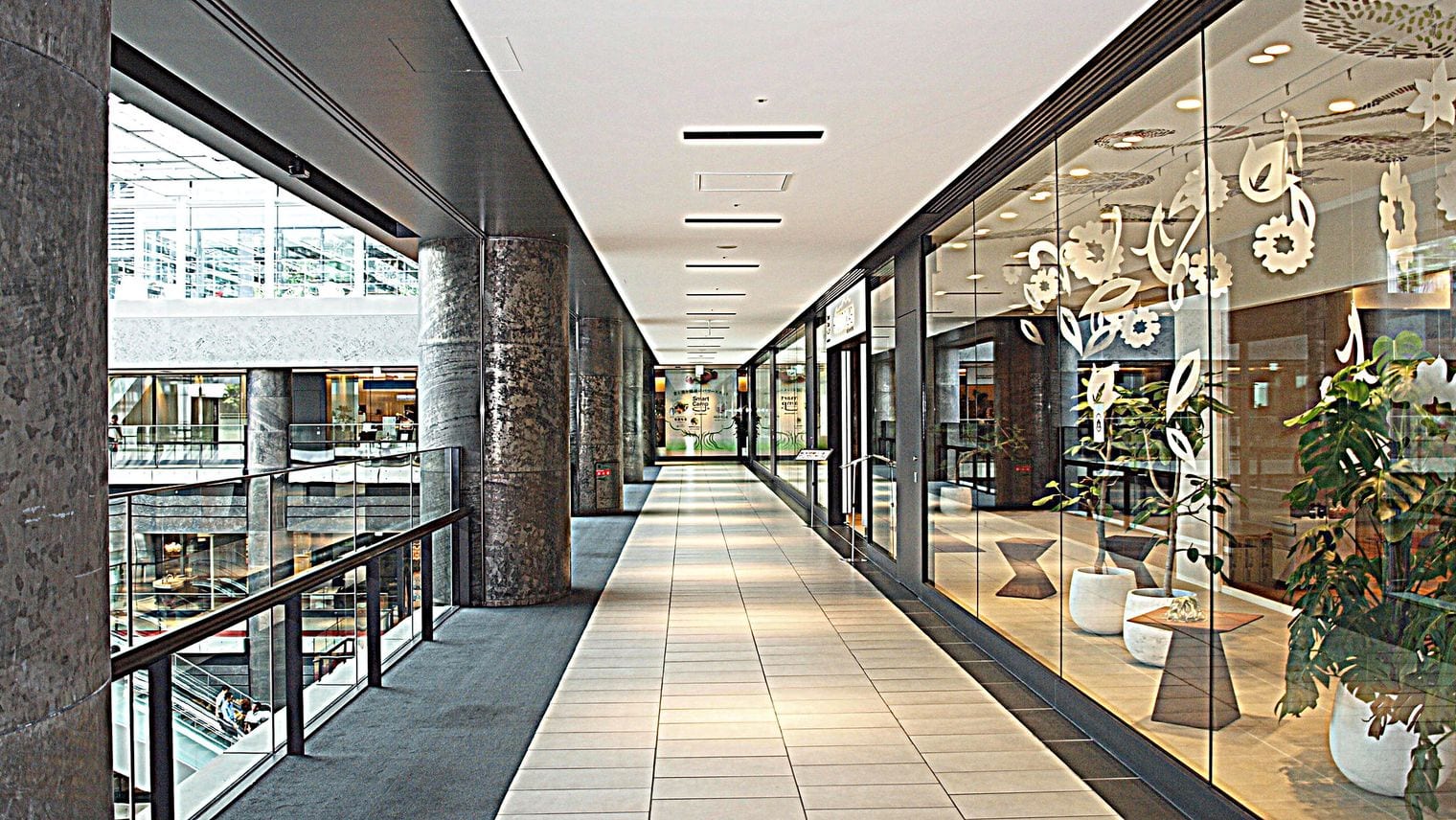
Grand Front Osaka is the large mixed-use complex immediately north of Osaka Station, and it functions as the modern face of the Umeda district. Shops and restaurants fill the lower levels, with showrooms and offices above and a canal-side terrace linking the buildings.
It is a shopping and dining destination rather than a sight in the traditional sense, but it is genuinely useful — a place to eat, shelter or regroup between trains without leaving the station complex. The upper-floor restaurants look out over the rail yards and the towers beyond.
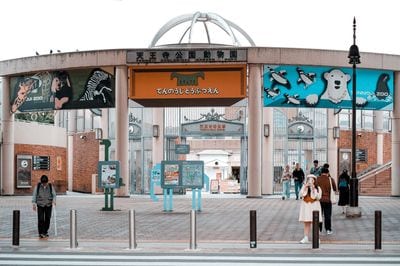
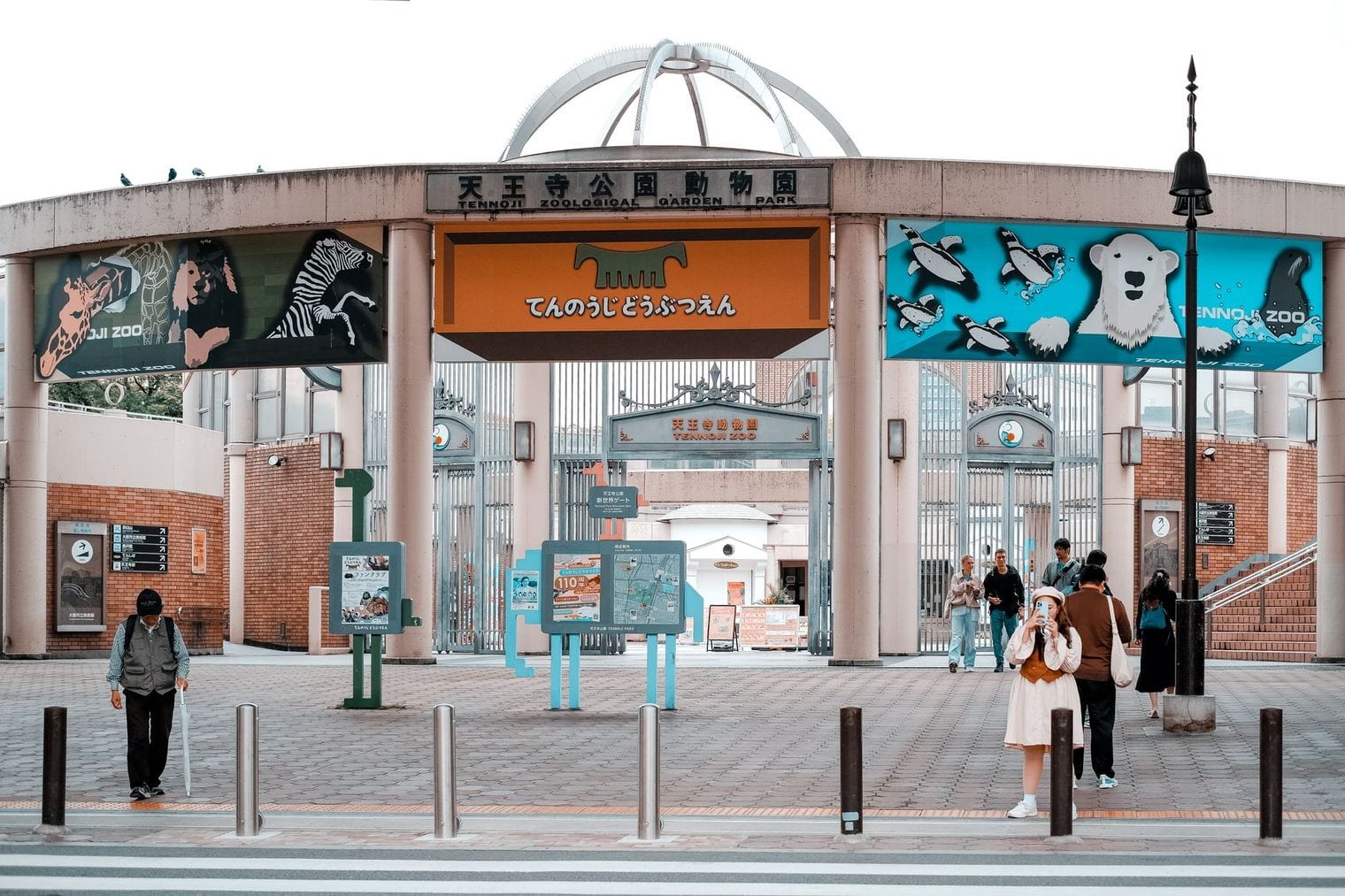
Tennoji Zoo opened in the 1910s and is one of the oldest zoos in Japan, occupying a green block between Tennoji Park and the Shinsekai district. Its older enclosures show their age, but a long programme of rebuilding has produced some genuinely good naturalistic habitats.
The African savanna section and the nocturnal house are the highlights, and the whole site is small enough to cover comfortably in a couple of hours. Combined with the park and Shinsekai next door, it makes an easy half-day in the south of the city.
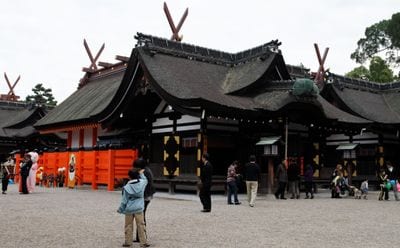
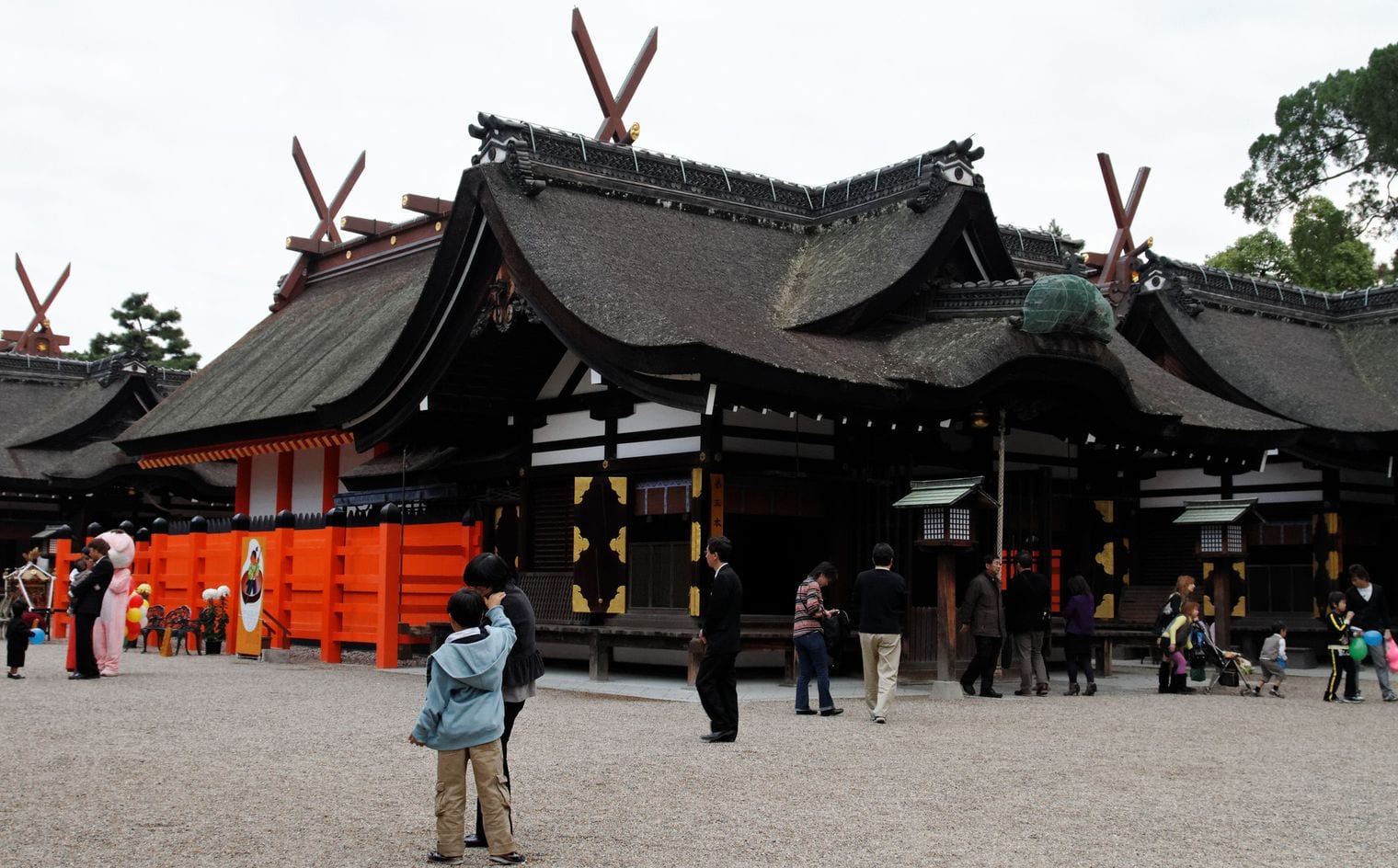
Sumiyoshi Taisha is the head shrine of a network that spans the country, and its buildings follow an architectural style that predates the arrival of Chinese influence in Japan — straight roofs, no curve, no vermilion elaboration. That plainness is precisely the point, and it makes the place feel much older than most shrines a visitor sees.
The steeply arched Sorihashi bridge over the pond is the image everyone photographs, and climbing it is more of a scramble than it looks. It is a short ride south of the centre on the old Hankai tram line, which is half the pleasure of going.
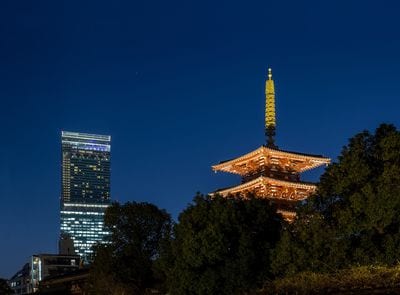
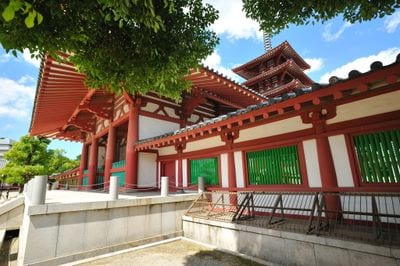
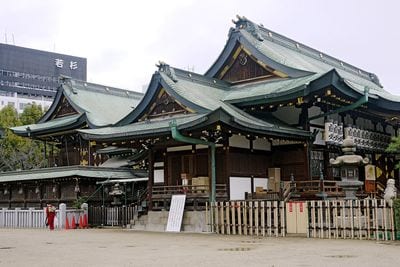
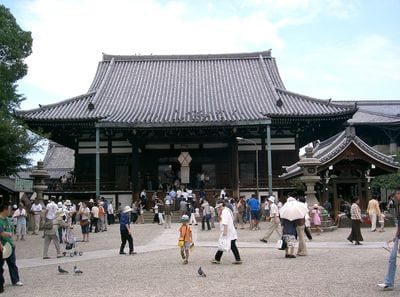
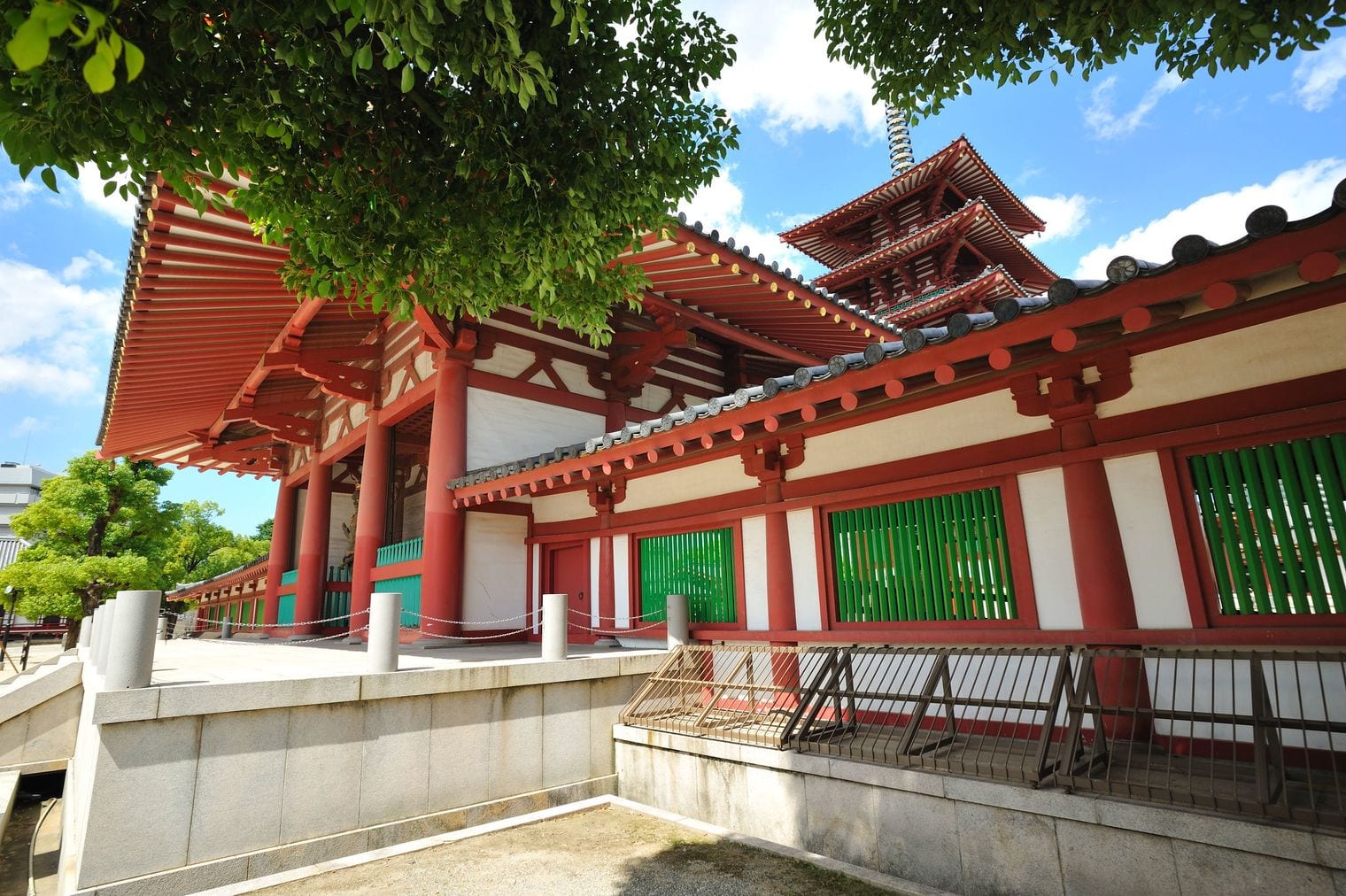
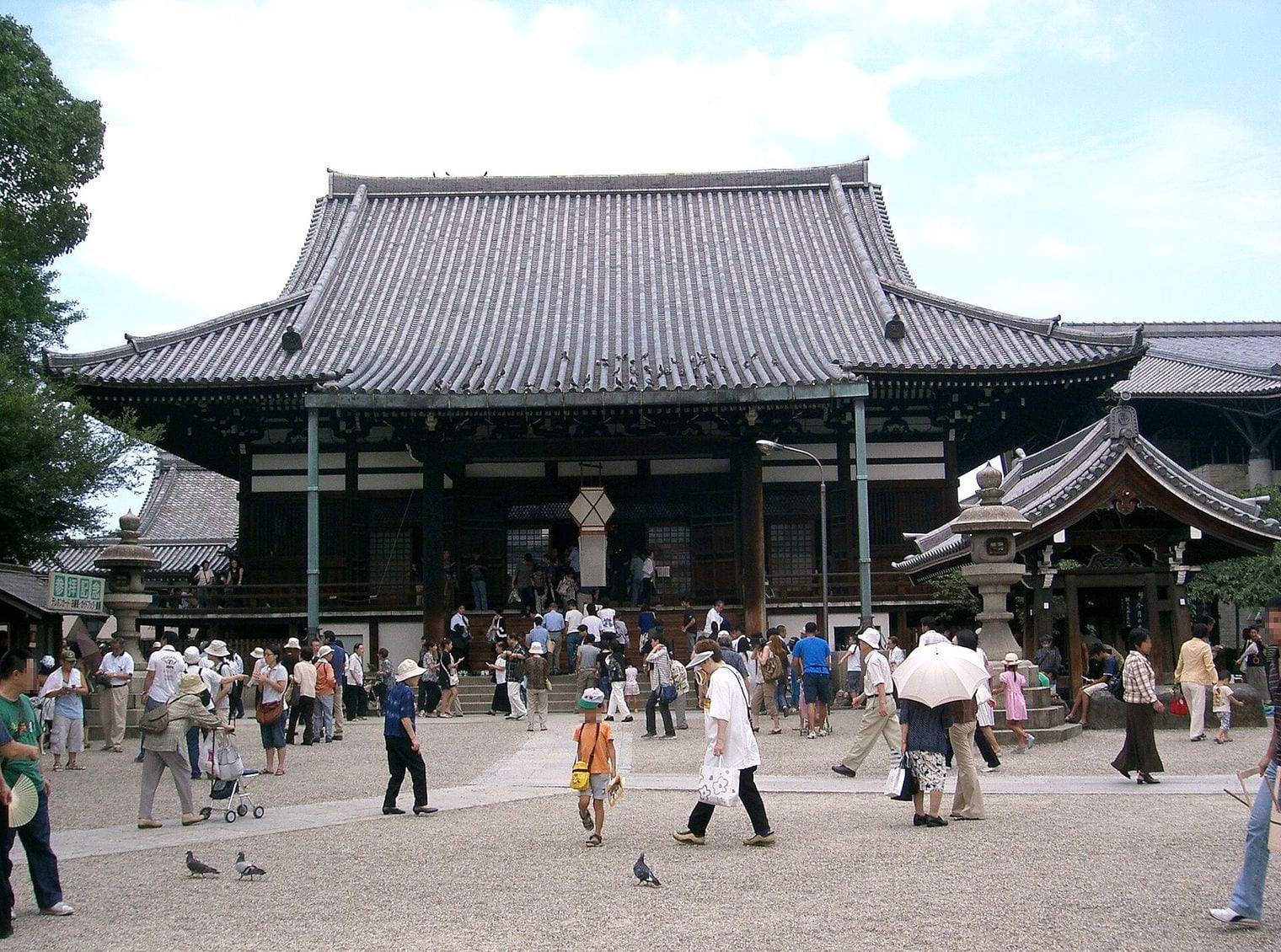
Shitennoji was founded in 593 and is among the oldest officially administered Buddhist temples in Japan, established by Prince Shotoku as Buddhism was taking root in the country. The buildings have burned and been rebuilt many times over; the layout they follow has not changed.
The central precinct holds a five-storey pagoda and a main hall arranged in a strict line, and there is a separate garden to the side that repays the small extra ticket. A flea market fills the grounds on set days each month, turning a quiet temple into something much busier.
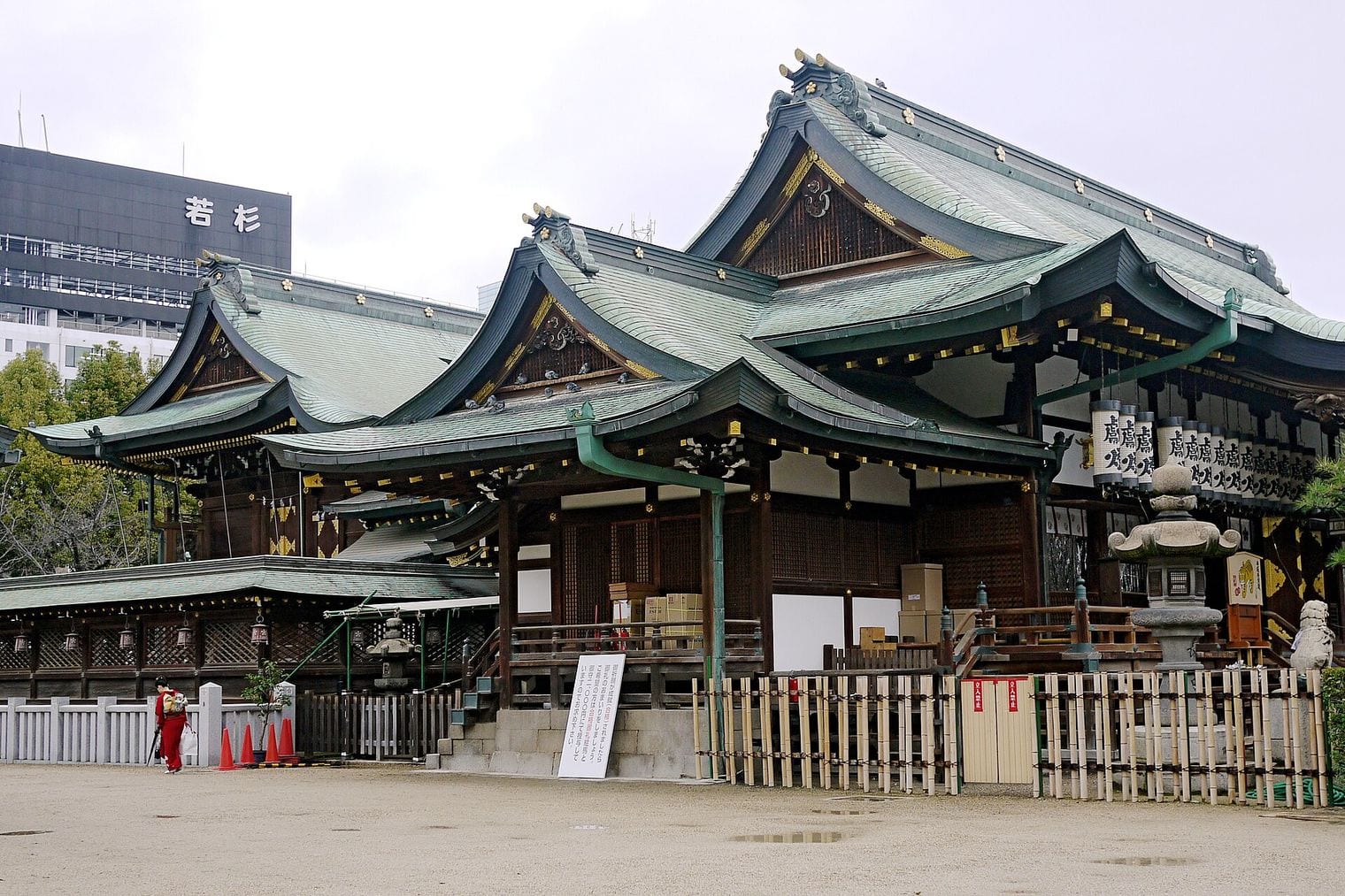
Osaka Tenmangu is dedicated to Sugawara no Michizane, the scholar-official venerated as a deity of learning, and students arrive year-round to leave wooden plaques asking for help with exams. The grounds are compact and unshowy for a shrine of its standing.
Its real fame comes in July, when it stages the Tenjin Matsuri — one of the country's major festivals, with a procession that moves onto the river in boats and finishes with fireworks. Outside festival season, the covered shopping street running north from the shrine is a good reason to linger.
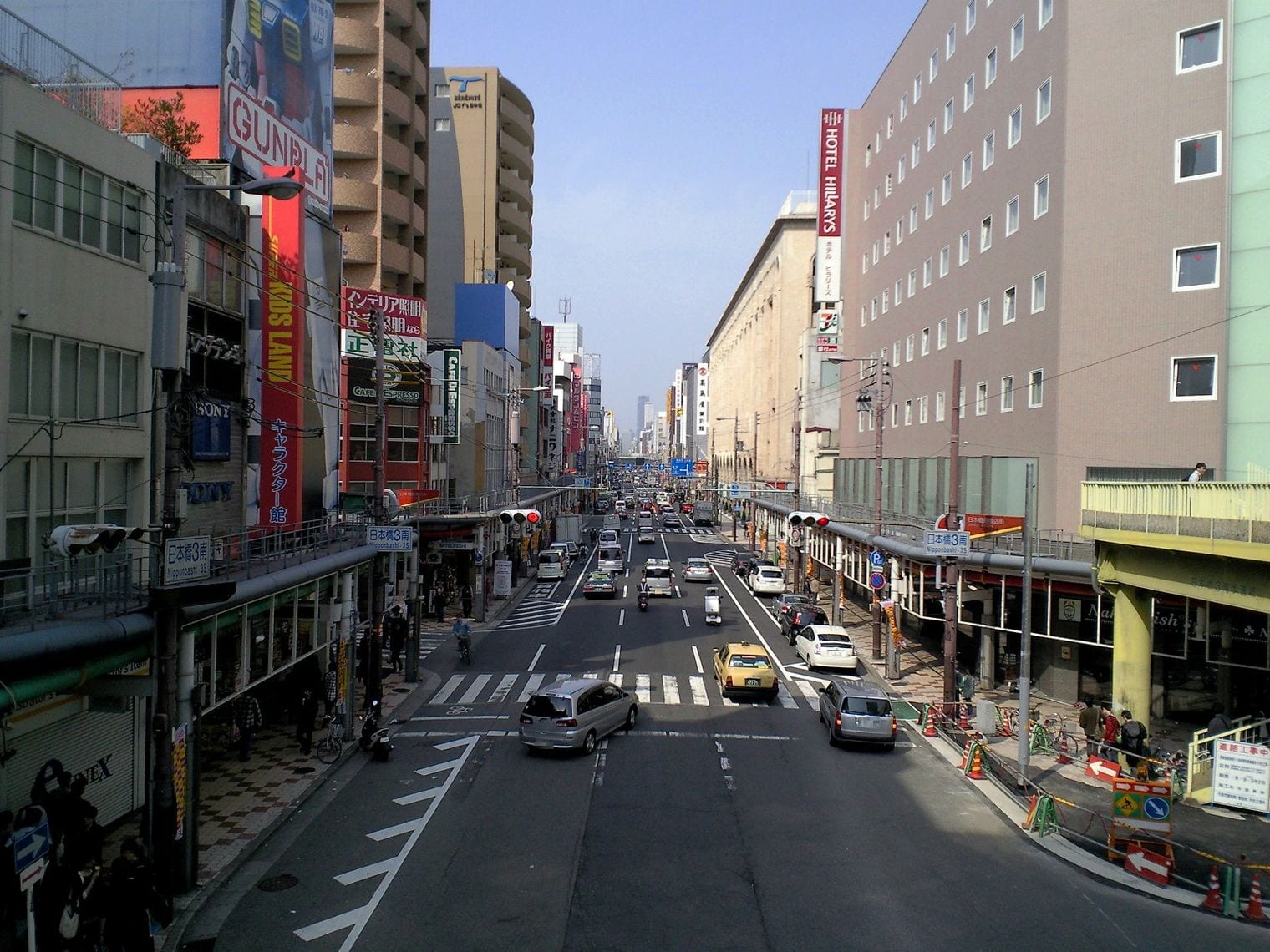
Nipponbashi Den Den Town is Osaka's electronics and hobby district, the southern counterpart to Tokyo's Akihabara and rather less polished for it. Shops stack anime figures, retro games, model kits, second-hand components and cosplay supplies floor above floor.
The interest is in the specialist end rather than the chain stores — shops dealing in one narrow thing very seriously, where the stock has clearly been accumulated over decades. It runs south from Nipponbashi station and is an easy walk from Kuromon Market and Dotonbori.
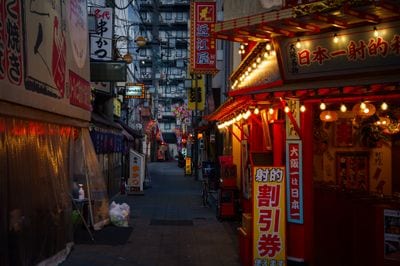
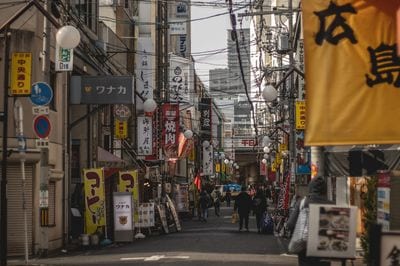
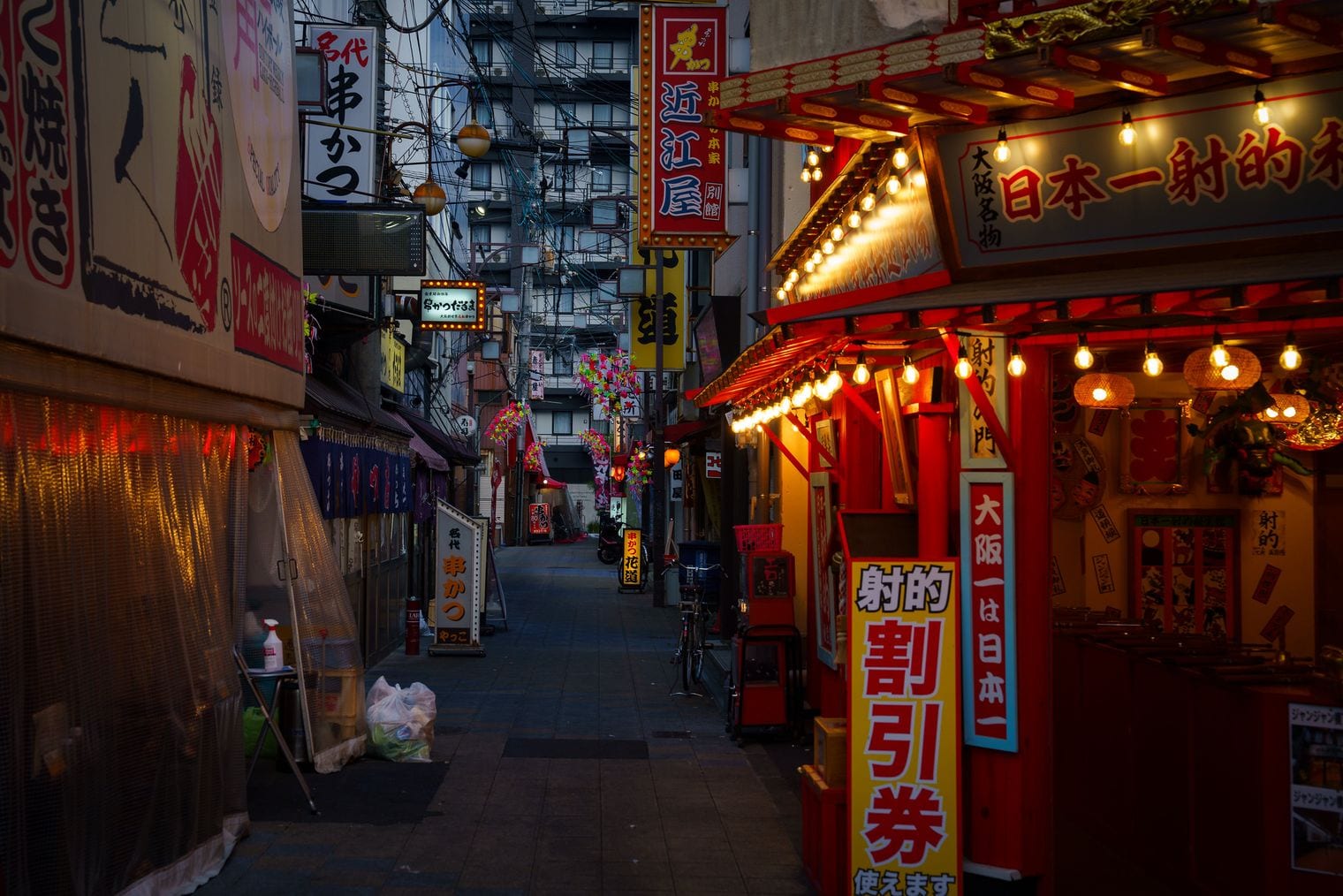
Shinsekai was laid out in the early twentieth century as a vision of the future, and the future it imagined has aged into something far more interesting. Streets radiate out from Tsutenkaku beneath a dense canopy of signs, most of them advertising kushikatsu — skewers, breaded, deep-fried, dipped once in a communal sauce.
The atmosphere is rougher and more good-humoured than central Osaka, with shogi parlours, standing bars and arcade machines under the same awnings. Janjan Yokocho, the narrow alley cutting through the district, is the concentrated version of all of it.
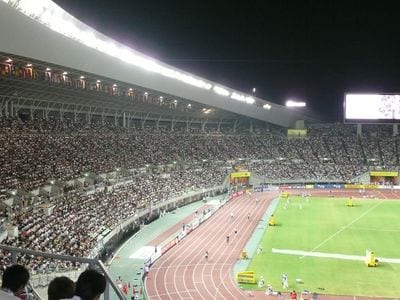
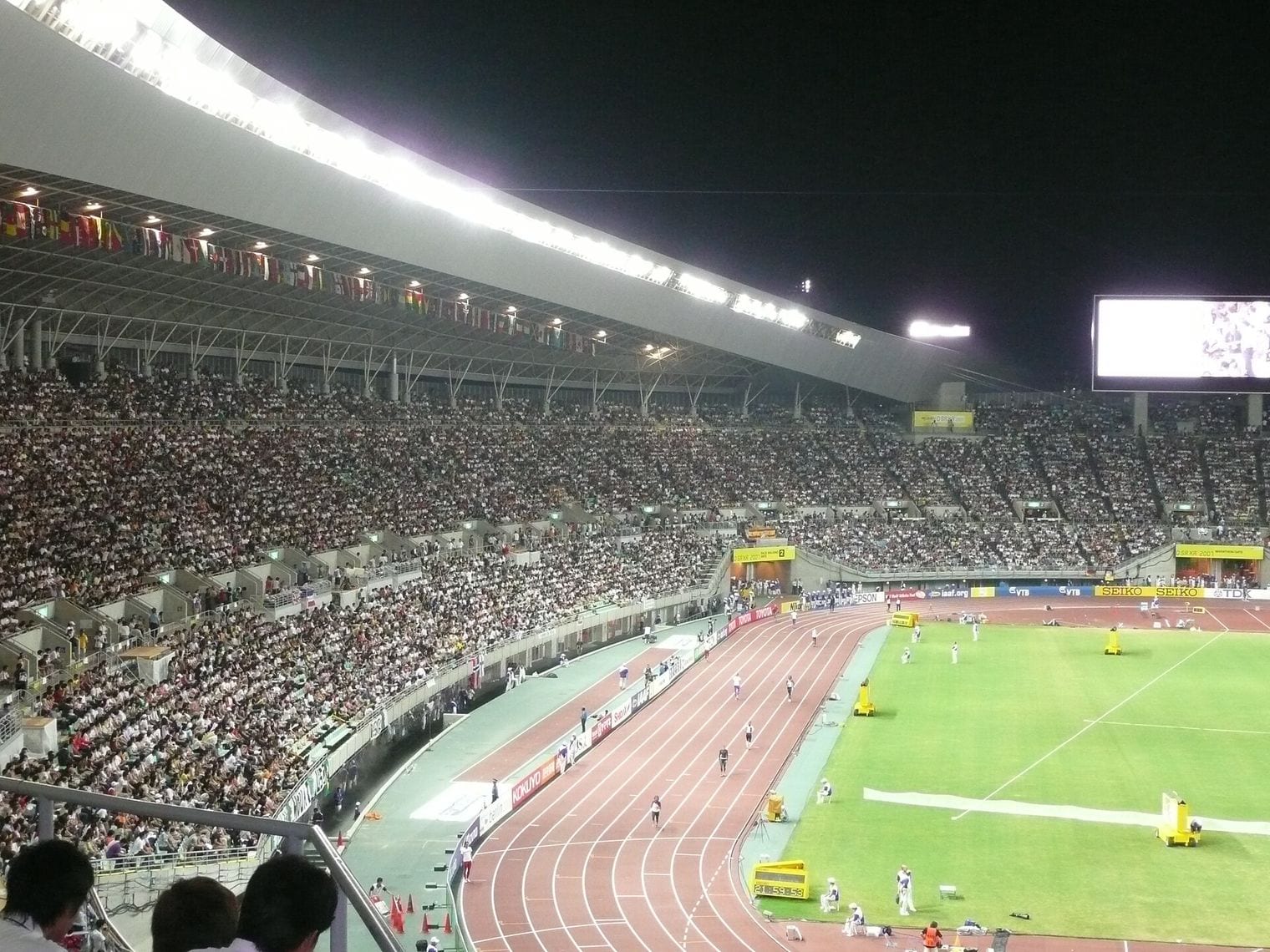
Nagai Park is a large green expanse in the south of the city, built around a stadium and containing a botanical garden, sports grounds and a natural history museum within its boundaries. It is a working local park rather than a manicured one, and it is used accordingly.
For a visitor it is most rewarding as a change of pace — broad lawns, running paths and space that central Osaka simply does not have. If you are coming this far south for Sumiyoshi Taisha or the zoo, it slots in naturally.
Tennoji Park ties together several of the city's southern attractions in one green block, with the zoo, the fine arts museum and a landscaped Japanese garden all inside its grounds. The lawn area at the northern end, opened up in recent years, has become a genuinely popular place to sit.
Abeno Harukas rises directly above it, which gives the park an unusual backdrop — clipped hedges and a pond in the foreground, a three-hundred-metre tower behind. It works well as the middle of a day that starts at Shitennoji and ends in Shinsekai.
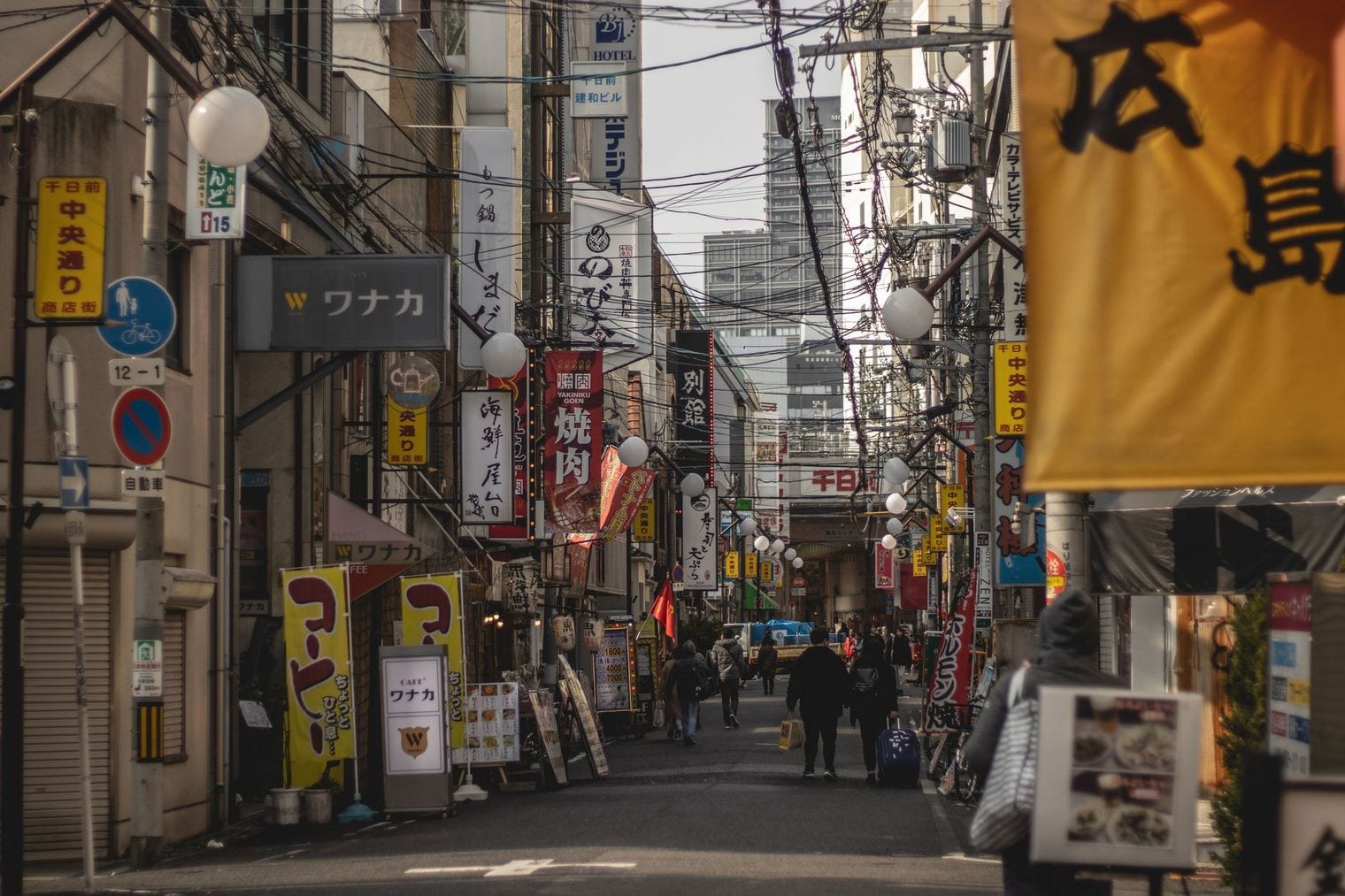
Osaka is home to one of the largest Korean communities in Japan, and Tsuruhashi is its heart — a dense grid of covered lanes around the station where the shops sell kimchi by the tub, Korean cosmetics, hanbok and grilled meat. The smell of yakiniku reaches you before the market does.
The main shopping street through Ikuno ward has become a destination in its own right, busy with visitors buying street food and pastries. It is an unvarnished, working neighbourhood rather than a themed quarter, which is exactly what makes it worth the trip east.
Isshinji is best known for a practice found almost nowhere else: statues moulded from the cremated remains of the faithful, donated over generations and recast periodically. They are displayed in a hall on the grounds, and the effect is quiet rather than macabre.
The temple's other surprise is its entrance — a starkly modern gate in steel and concrete, with fierce contemporary guardian figures, standing at the mouth of an otherwise traditional precinct. It sits directly beside Tennoji Park, so it costs almost nothing to add to a visit there.
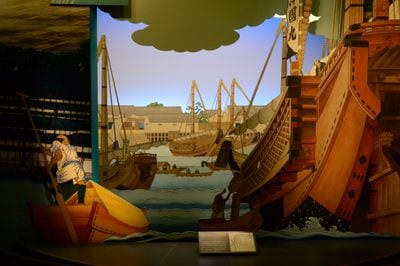
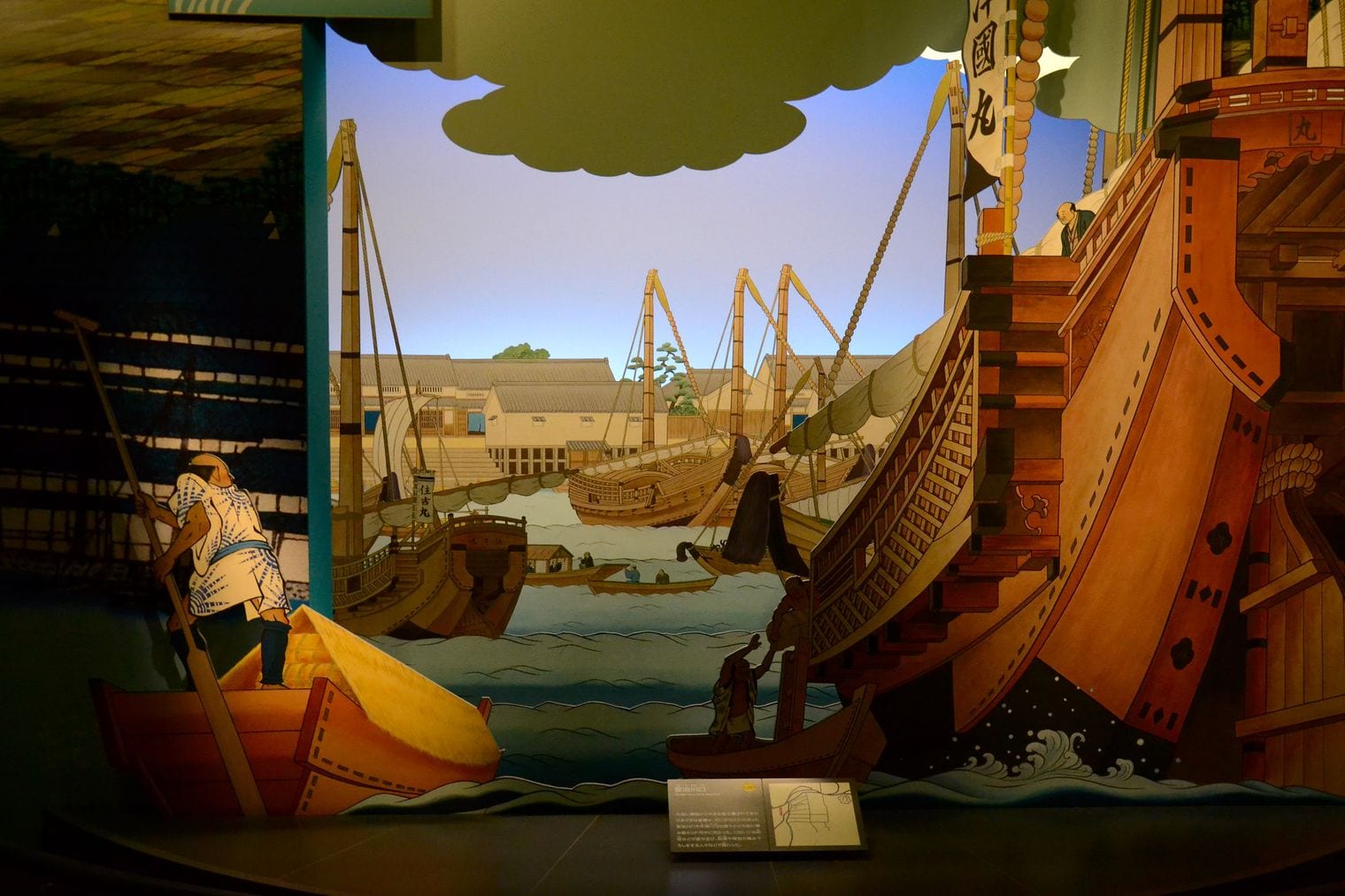
The Osaka Museum of History stands next to the castle and works downwards through time, starting on its upper floors with the ancient palace that once occupied this ground and descending through the merchant city of the Edo period to the modern one.
Each floor is built around full-scale recreations — a palace hall, a street of shopfronts, a mid-century apartment — rather than cases of objects, which makes it unusually easy to follow. The windows on the upper levels also give you one of the best straight-on views of Osaka Castle in the city.
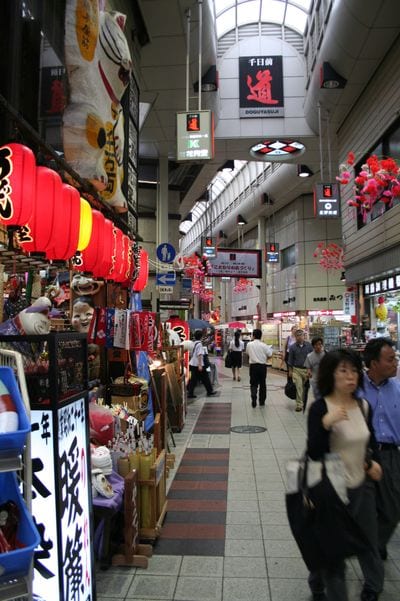
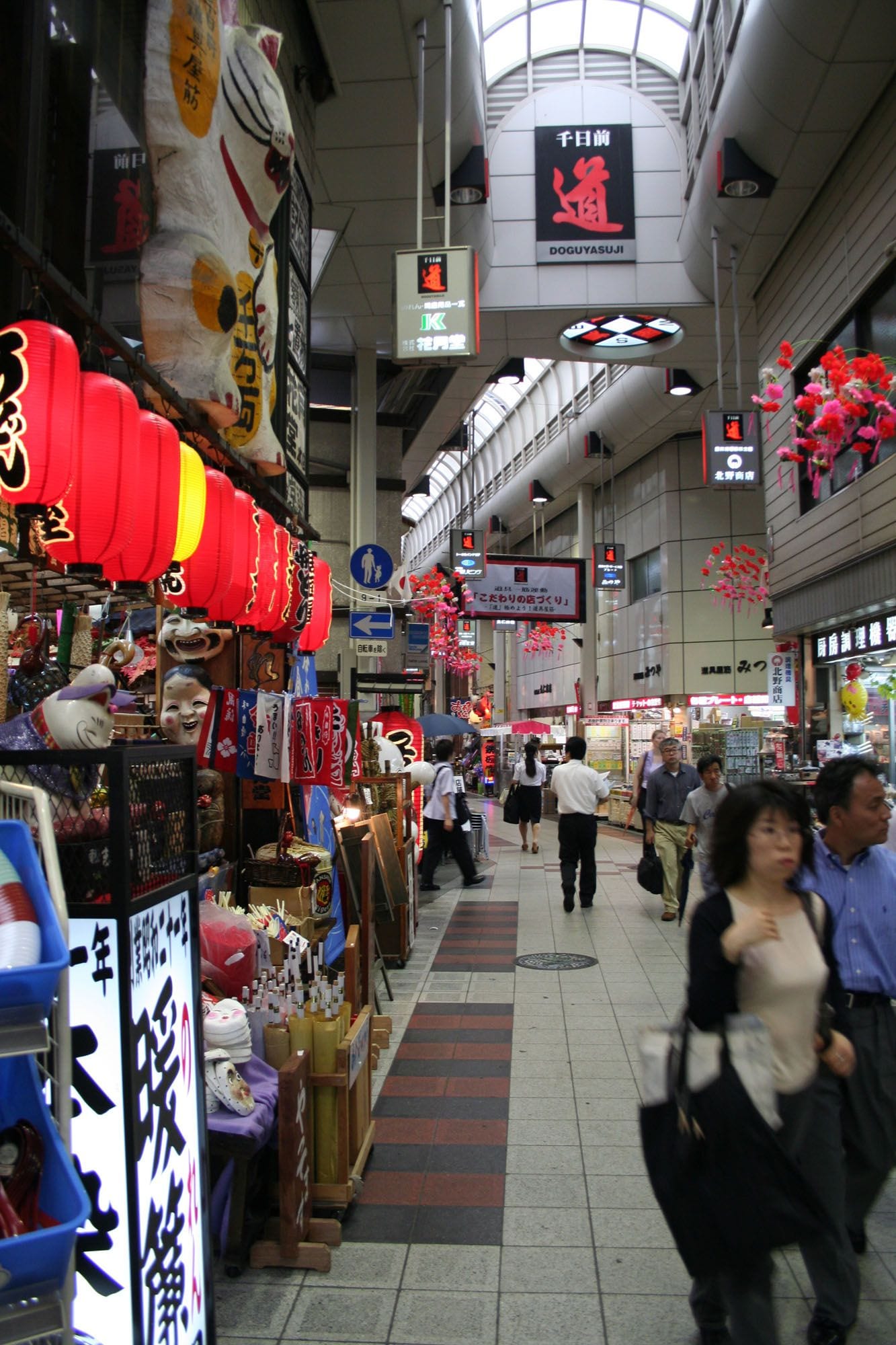
Sennichimae Doguyasuji is a covered arcade given over almost entirely to the tools of the restaurant trade. Knives, lacquerware, takoyaki pans, noren curtains, moulds, steamers and the startlingly realistic plastic food models that sit in windows across the country are all sold here by the specialist.
It is a working supply street for the city's kitchens rather than a souvenir strip, which is what makes browsing it interesting. A Japanese knife or a cast-iron takoyaki pan is among the more useful things you can carry home from Osaka.
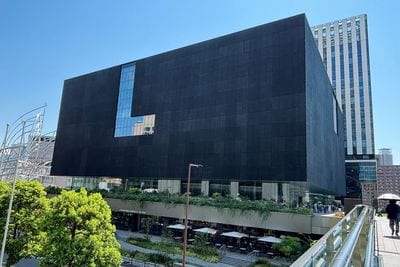
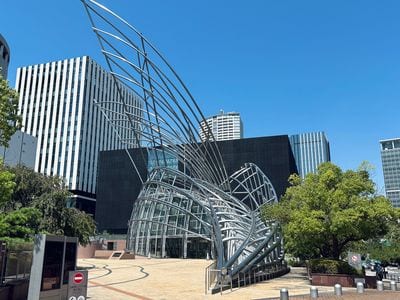
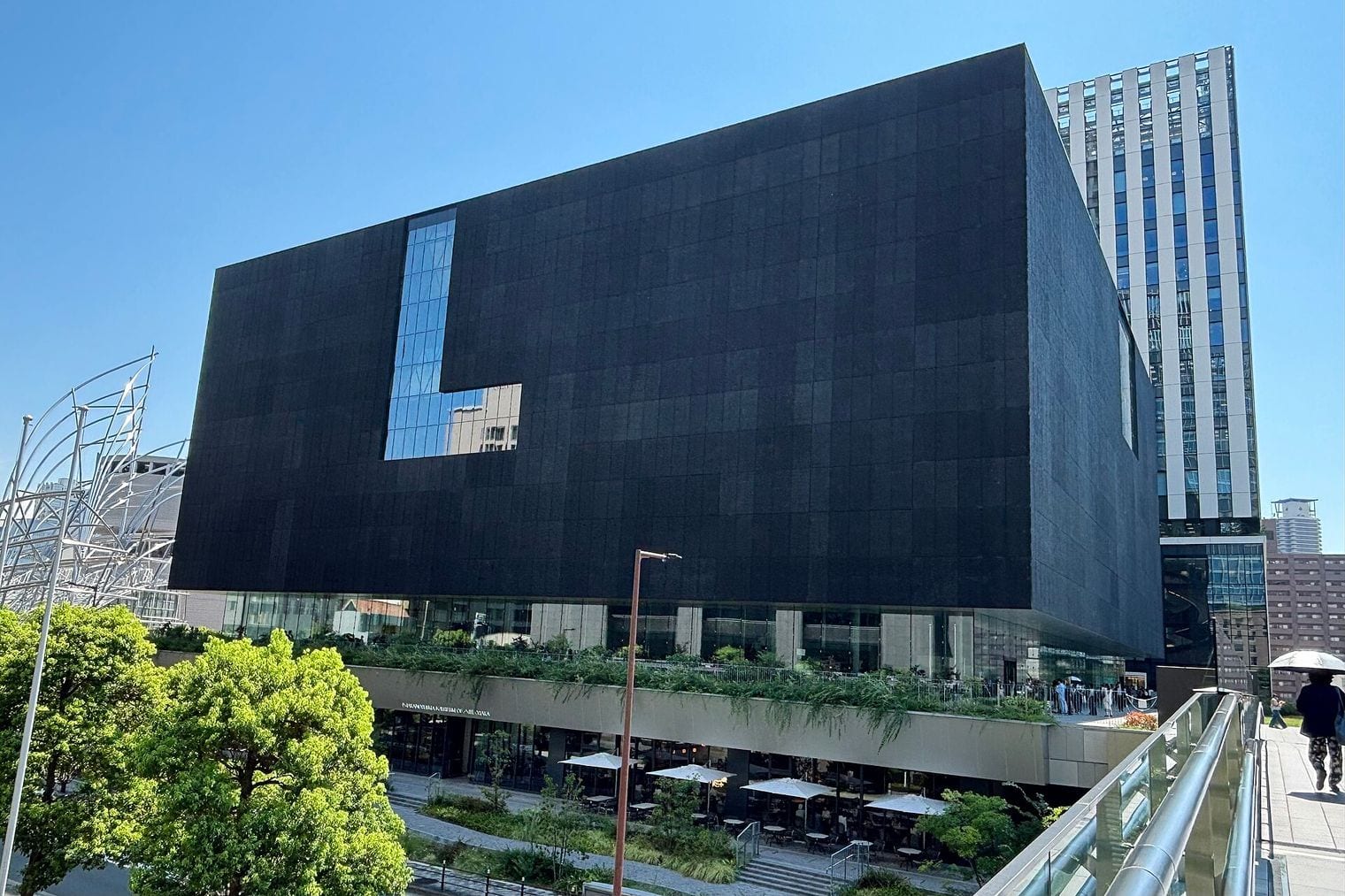
The Nakanoshima Museum of Art is a black cube raised above an open ground-level plaza on the island between Osaka's two central rivers. Escalators cut diagonally up through the void inside, and the building is as much of a draw as the collection.
The holdings concentrate on modern and contemporary work, Japanese and Western, with a strong showing of early twentieth-century painting and design. Its neighbours make the trip efficient: the science museum and the National Museum of Art are both a few minutes' walk along the same island.
Ebisubashi is the bridge at the centre of Dotonbori, and it is where the city goes to be photographed. It crosses the canal directly in front of the Glico sign, and on any given evening the parapet is three deep in people angling for the same shot.
It is also a piece of civic theatre in its own right — a natural meeting point, a spot where street performers set up, and the place the city's football crowds famously converge. Stand on it once for the photograph, then walk down to the canal path for a view without the scrum.
Miracle World is a trick-art attraction near Dotonbori built around perspective illusions — painted scenes and constructed rooms designed so that a photograph taken from exactly the right spot shows something impossible happening to you.
It is unashamedly a place to take pictures rather than to look at art, and it works best with a group willing to be silly about it. As an hour indoors on a wet afternoon in the middle of the Minami district, it does the job better than its modest exterior suggests.
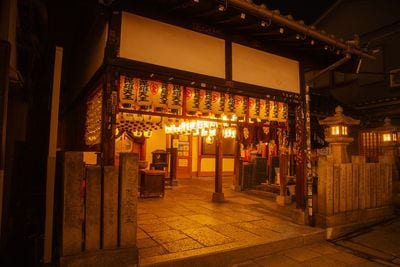
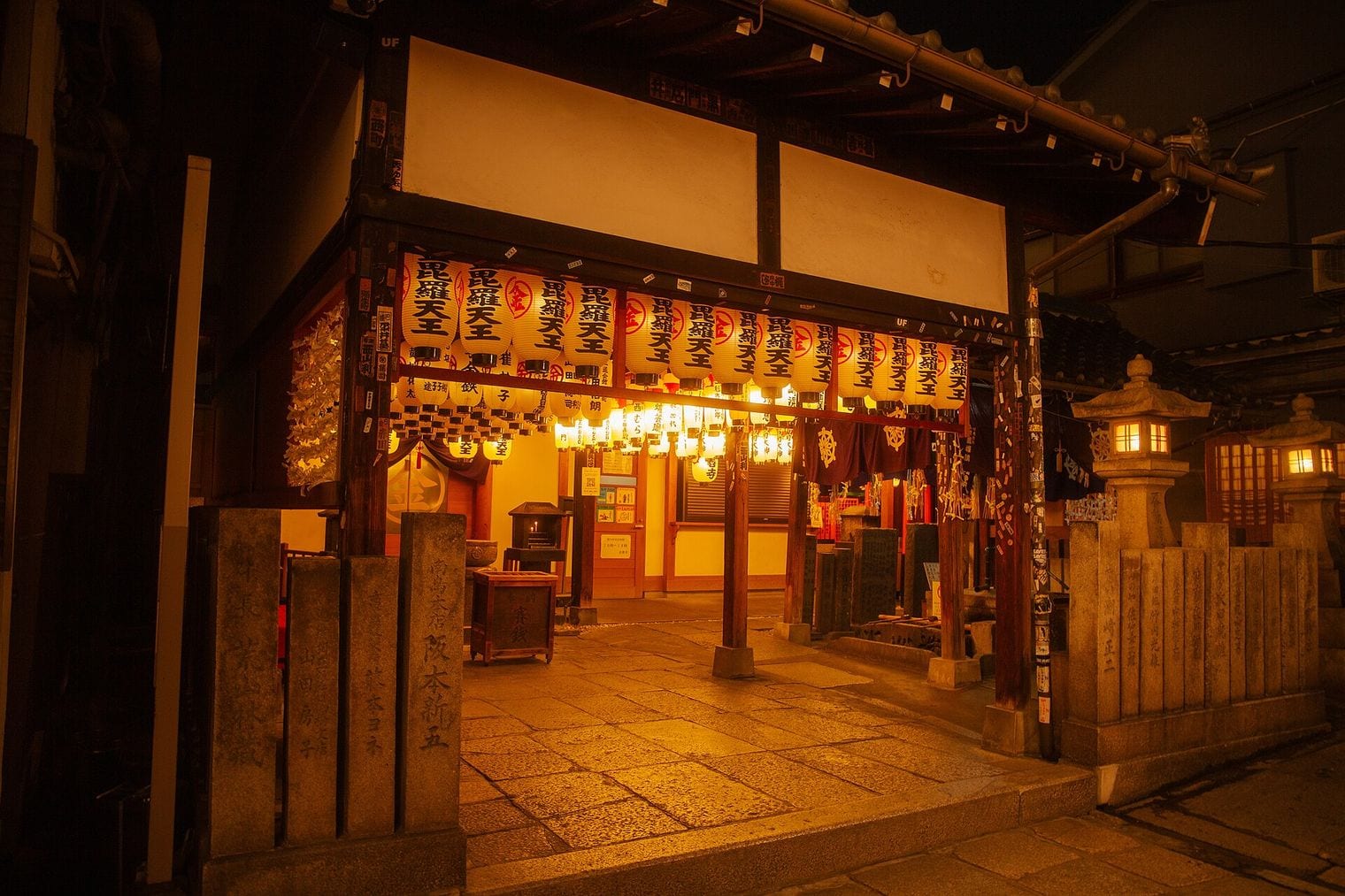
Hozenji is tiny, lantern-lit and tucked into a stone-paved lane a few steps off the noise of Dotonbori. Its statue of Fudo Myoo is completely covered in moss, the result of generations of visitors ladling water over it as they pray — a habit that has softened the figure's outline entirely.
The lane it sits on, Hozenji Yokocho, is two narrow alleys of small bars and old restaurants that survived the city's rebuilding. Visiting takes five minutes; staying for the atmosphere of the alley takes considerably longer.
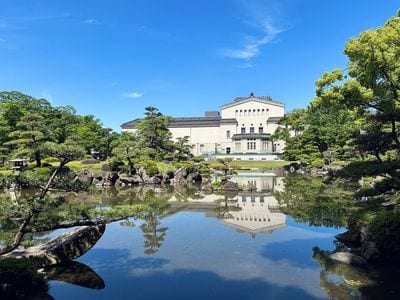
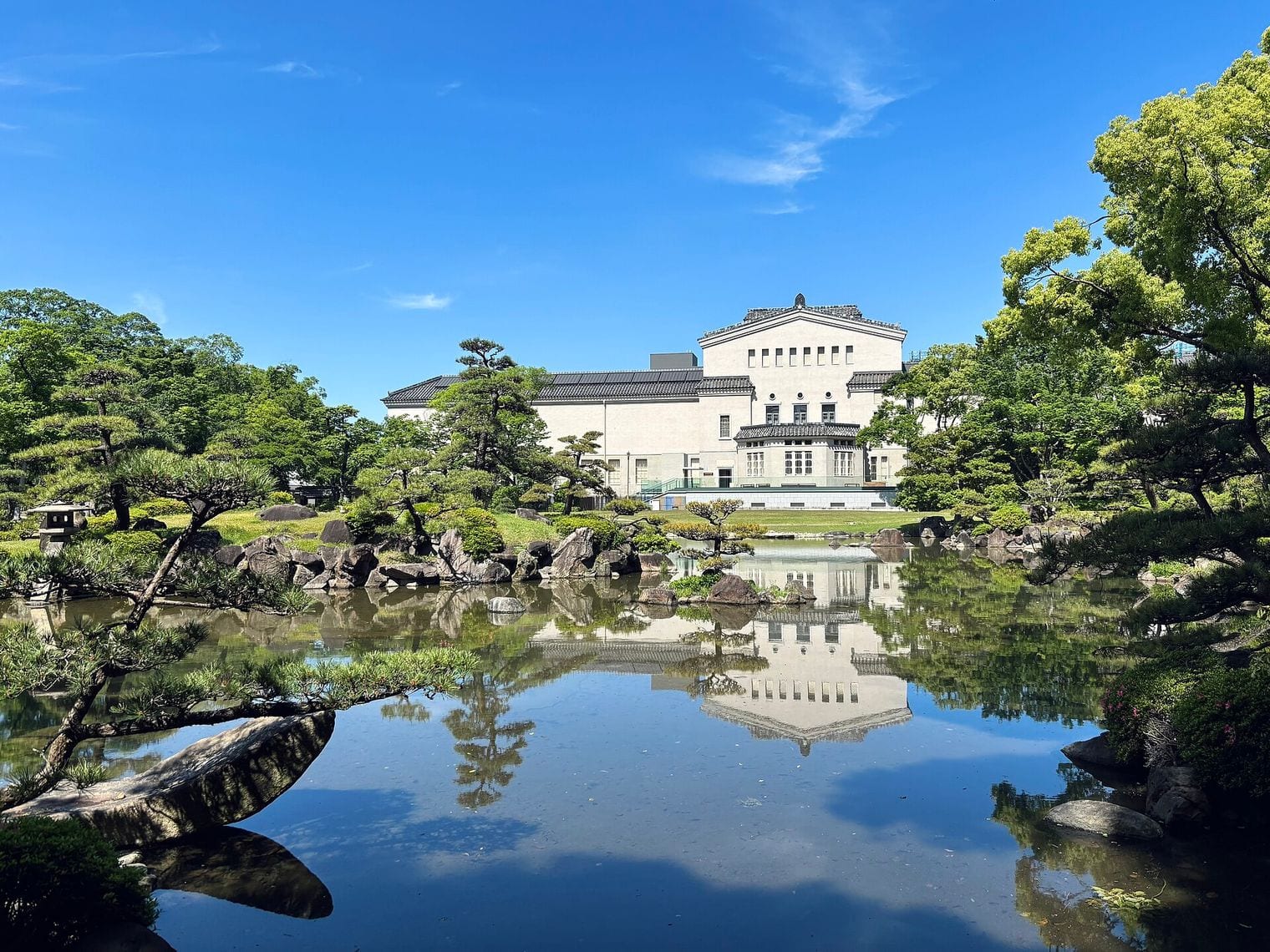
The Osaka City Museum of Fine Arts occupies a substantial pre-war building at the southern end of Tennoji Park, and its collection leans towards Japanese and Chinese art — painting, calligraphy, lacquer, Buddhist sculpture and ceramics accumulated largely from local merchant families.
The Chinese holdings are particularly strong and the building itself, with its formal staircase and high galleries, suits them. Keisho-en, the small landscaped garden beside it, is a quiet corner most visitors to the park walk straight past.
Round1 Stadium is a multi-storey amusement complex in the middle of Namba, stacking arcade floors, karaoke rooms, bowling lanes and a rooftop sports zone where you can bat, shoot hoops or ride a mechanical bull under netting.
It is a chain, and it makes no pretence otherwise, but it is a reliable answer to a rainy evening or a group with wildly different ideas about how to spend one. The rooftop, open late with the Namba signs glowing below, is the part that justifies the visit.
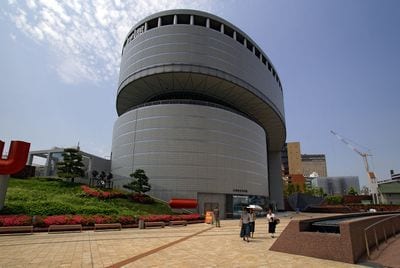
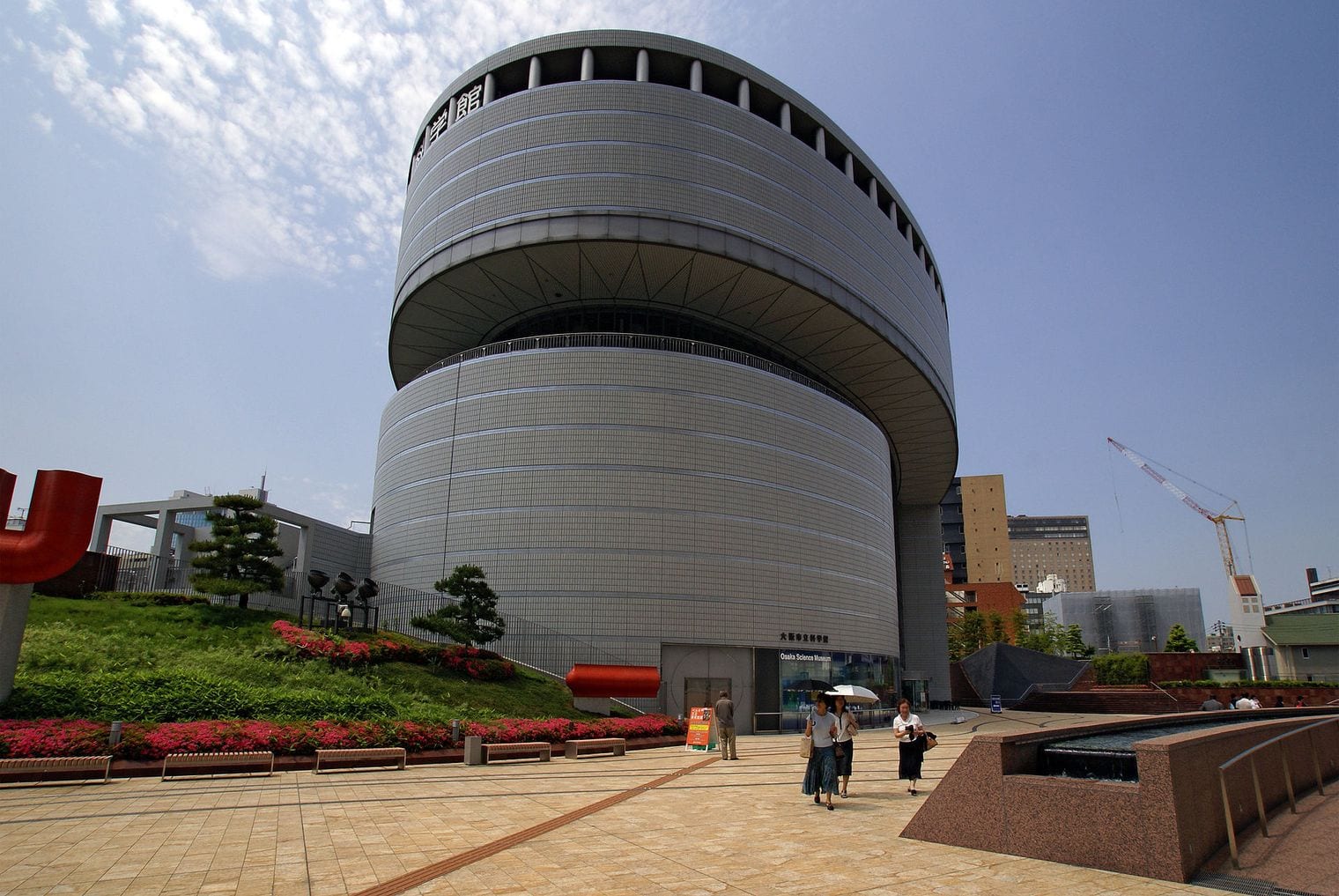
The Osaka Science Museum sits on Nakanoshima beside the National Museum of Art and is built around four floors of hands-on exhibits covering electricity, chemistry, space and the physics of everyday things. It is aimed squarely at children and entirely enjoyable without any.
Its planetarium is the main event, with a large dome and a programme that changes regularly. The museum's location makes it easy to combine with the island's other institutions, and the riverside walk between them is pleasant in its own right.
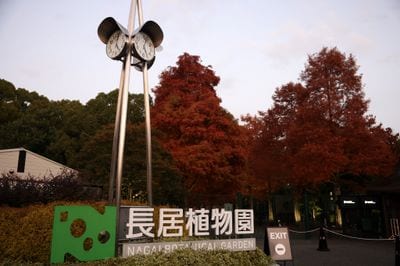
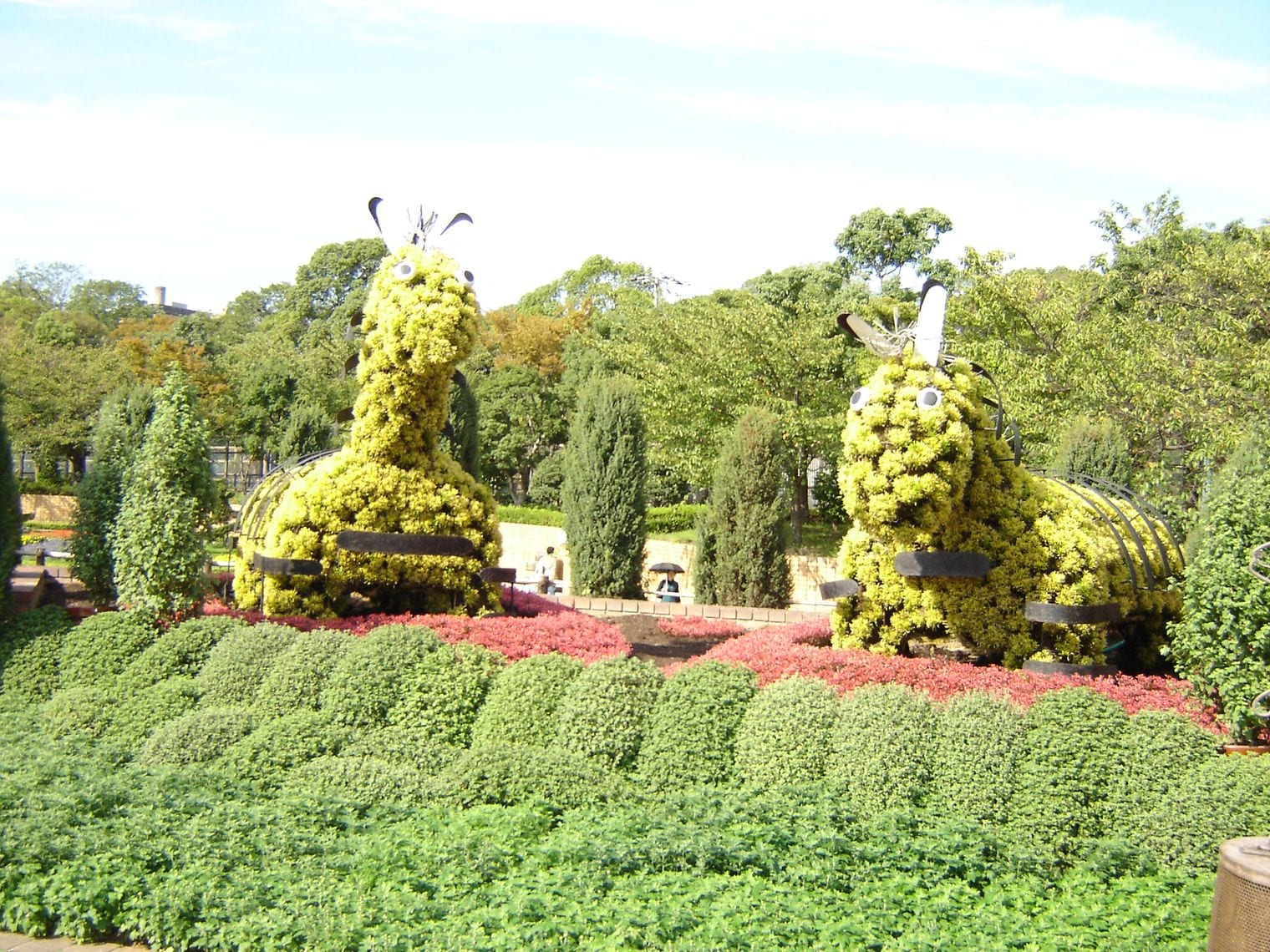
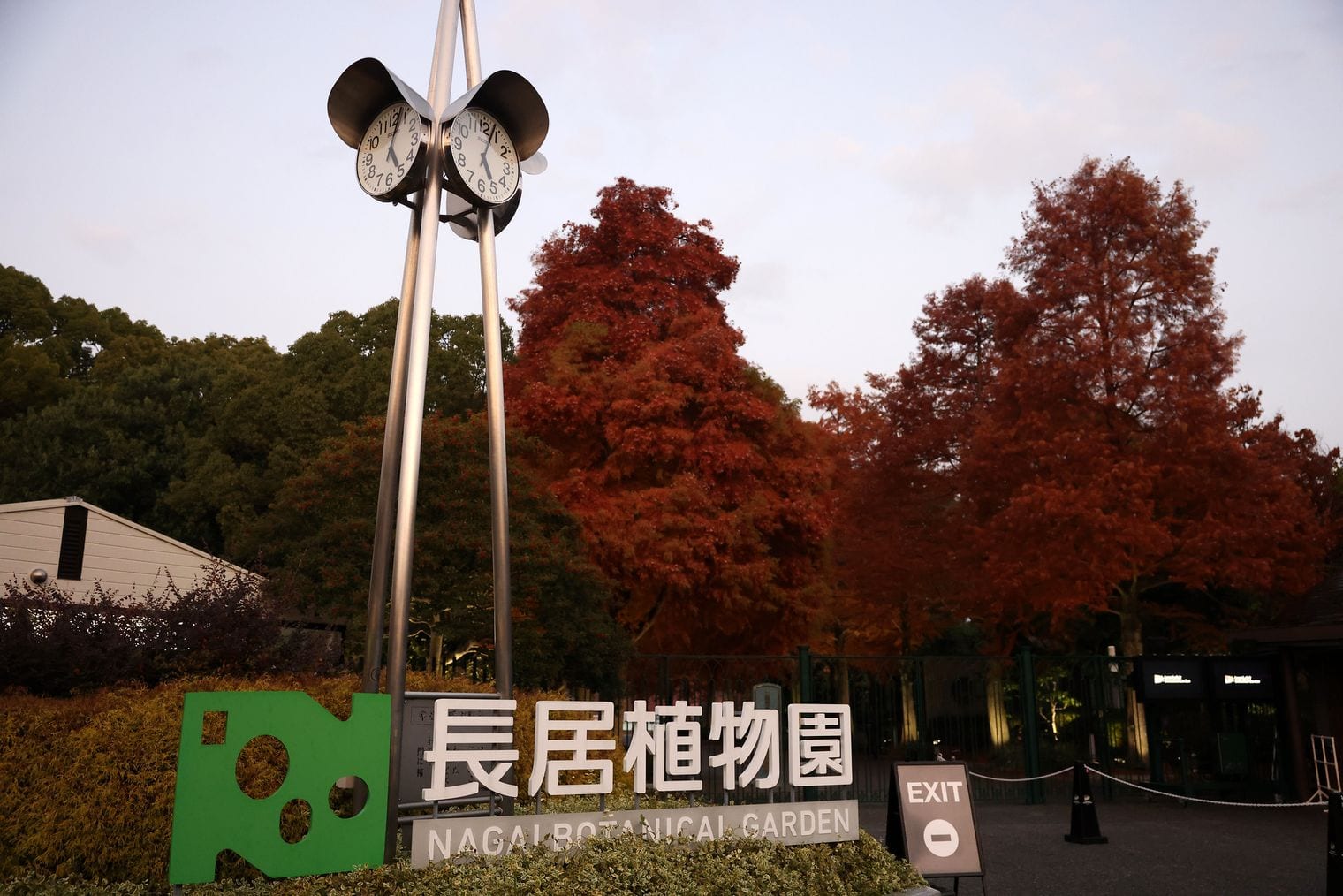
The Nagai Botanical Garden occupies a broad stretch of Nagai Park, with themed plantings, a large pond and seasonal displays that shift through cherry, rose, hydrangea and autumn colour across the year. It is laid out generously, with room to wander rather than follow a set path.
In recent years it has also hosted large-scale after-dark light installations that turn the planting into something quite different once the sun goes down. Even without them, it is one of the few places in Osaka that feels genuinely spacious.
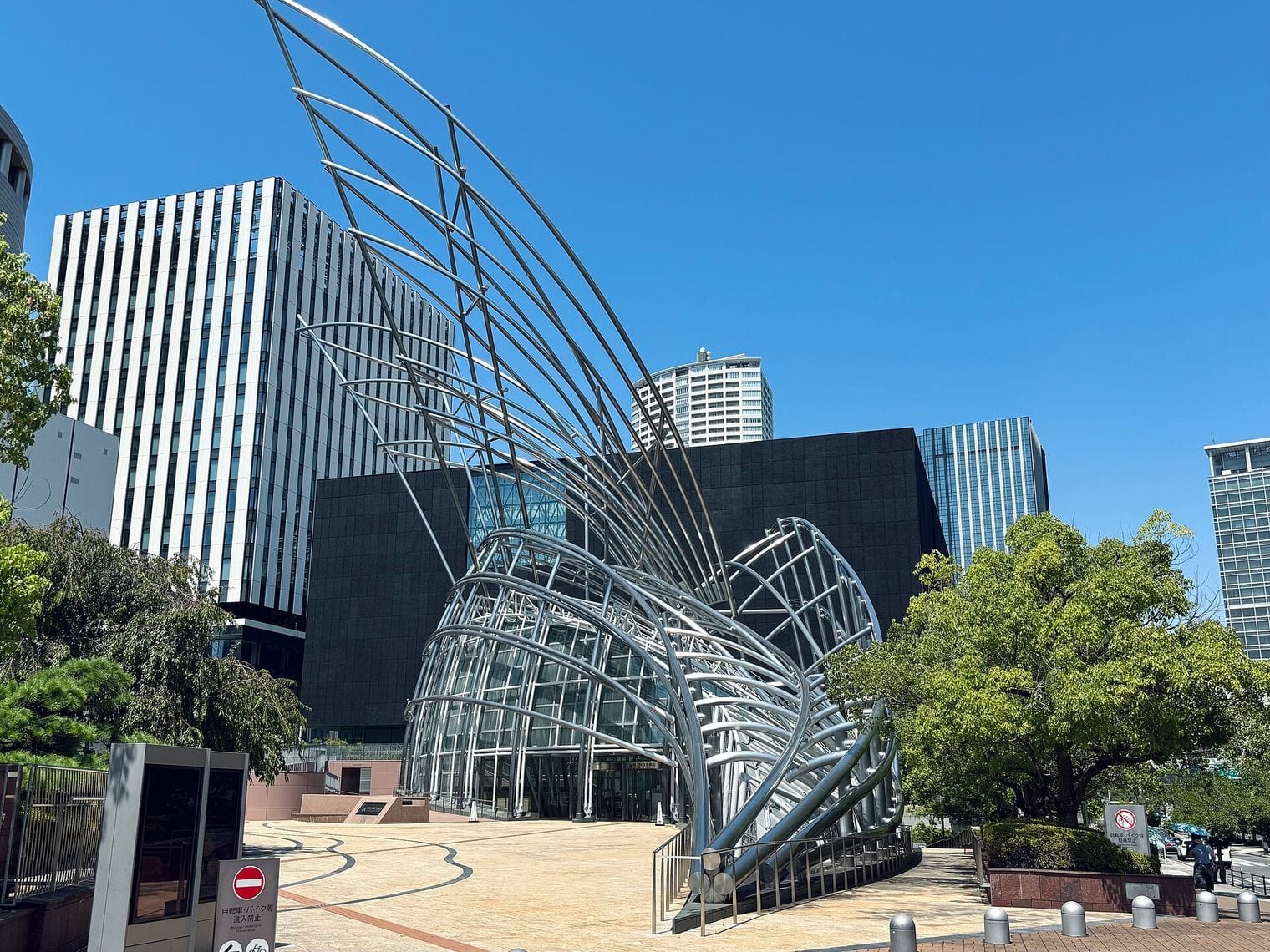
The National Museum of Art, Osaka is almost entirely underground, and its presence at street level is a sculptural steel facade curving up over the entrance in forms drawn from bamboo. Descending into the galleries is a deliberately theatrical piece of design.
The collection concentrates on post-war and contemporary art, Japanese and international, and the temporary exhibitions are consistently ambitious. It shares Nakanoshima with the science museum and the Nakanoshima Museum of Art, which makes a museum-heavy day here unusually easy to assemble.
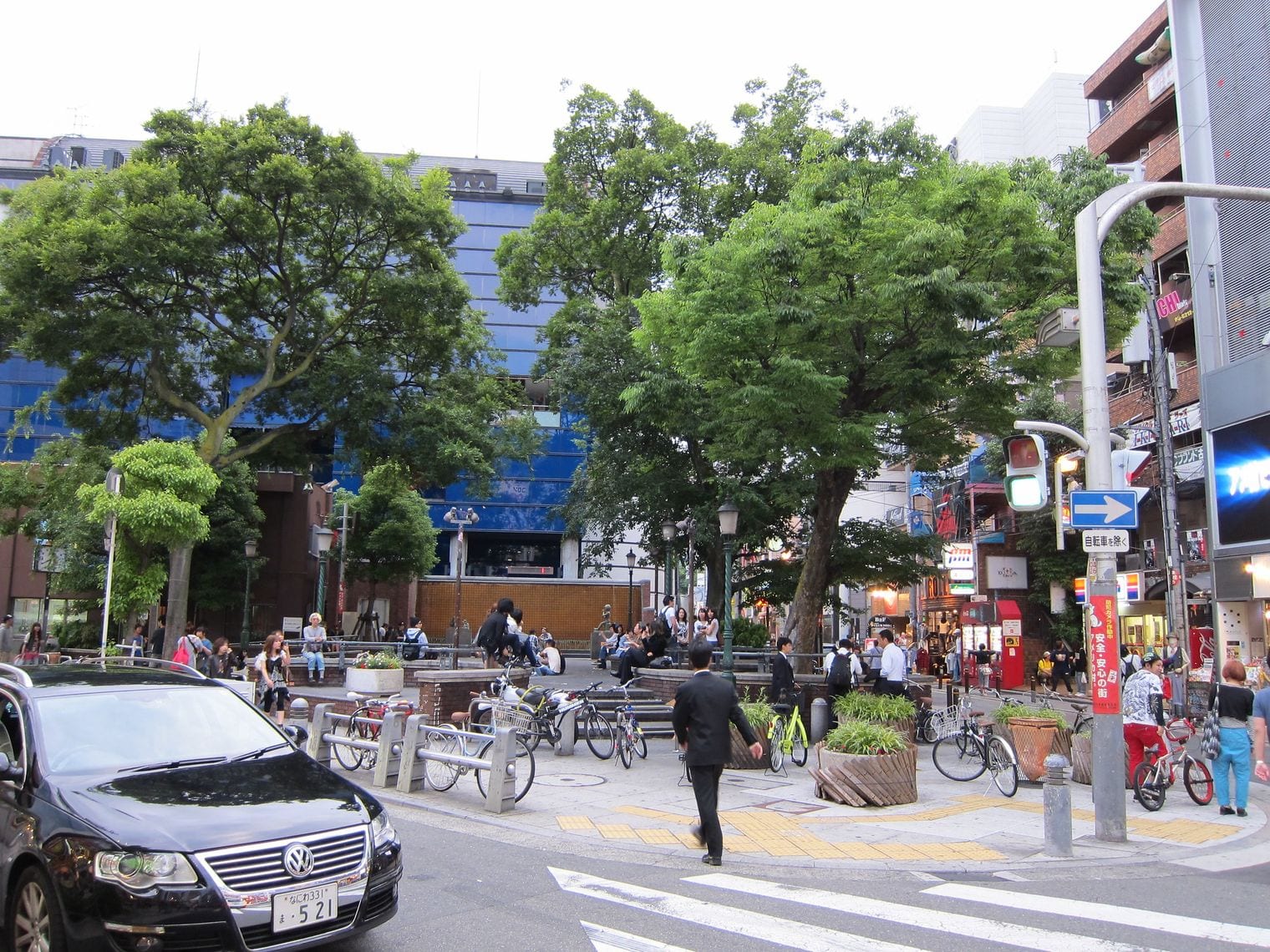
Amerikamura is the few blocks west of Shinsaibashi where Osaka's youth culture has clustered since the 1970s — vintage clothing, streetwear, record shops, tattoo studios and murals covering whatever wall is available. Locals shorten it to Ame-mura.
Triangle Park, a small paved plaza at its centre, functions as the district's living room and the best place to see who is wearing what. It is scruffier and more improvised than the arcades a street away, and considerably more fun for it.
Nishinomaru Garden occupies the western bailey of Osaka Castle, a broad walled lawn planted with hundreds of cherry trees and looking straight up at the keep across the inner defences. Unlike the surrounding park it is enclosed and ticketed, which keeps it calm.
In cherry blossom season it is one of the best viewing spots in the city and busy accordingly; the rest of the year it is a quiet green space with an exceptional backdrop. The old guardhouse and a stretch of surviving stone wall sit within the grounds.
Plan your trip
Best Time to Visit Osaka
Late March into early April is the headline season, when the cherry trees in Osaka Castle Park and along the Okawa river come out and the whole city moves outdoors. Autumn, roughly late October into November, is the quieter equal — dry, mild, and good for the long walking days this city rewards.
Summer is genuinely humid and best planned around, though it brings the Tenjin Matsuri river festival in July and a run of evening fireworks. Winter is mild by northern-Japan standards and rarely snowy, with illuminations strung through Nakanoshima and the Umeda district, the Tempozan ferris wheel lit above the bay, and far shorter queues at the observation decks.
Getting to Osaka
Kansai International Airport handles the long-haul arrivals, built on an artificial island in the bay and connected to the city by direct express train in roughly an hour. Osaka International Airport at Itami sits much closer to the centre and handles domestic routes, with a monorail and limousine bus link into town.
Most travellers arrive by rail instead. Shinkansen services stop at Shin-Osaka, one stop north of the main station on the Midosuji subway line, putting Tokyo around two and a half hours away and Hiroshima well under two. Long-distance buses use the terminals at Umeda and Namba, and the Meishin and Hanshin expressways carry the road traffic.
Getting Around Osaka
You will not need a car. The Osaka Metro is the backbone, and one line does most of the work: the Midosuji line runs north to south through Shin-Osaka, Umeda, Shinsaibashi, Namba and Tennoji, which strings together the bulk of this list. The JR Osaka Loop Line circles the centre and is the quickest way out to the castle or the bay.
Within the two downtown cores — Kita around Umeda in the north and Minami around Namba in the south — walking is faster than anything else, and much of it is under cover through the arcades and the vast underground shopping levels beneath the stations. The old Hankai tram is the pleasant slow route south towards Sumiyoshi. Day passes on the metro pay for themselves quickly.
Where to Stay in Osaka
Umeda and the wider Kita district put you on top of the shinkansen connection, the airport trains and the largest concentration of department stores, which suits a short trip or one that uses Osaka as a base for the region. Minami — Namba, Shinsaibashi and the streets around Dotonbori — is the opposite proposition: noisier, later, and within walking distance of most of the eating and nightlife.
Tennoji and Abeno in the south are the value option, well connected by both the loop line and the Midosuji, and handy for the temples and the zoo. Families heading for the theme park often base themselves in the bay area near the park's own station, which trades city atmosphere for a very short morning commute.
Where to Eat in Osaka
Osaka's reputation rests on street food and it is deserved. Takoyaki — octopus in a molten batter ball — and okonomiyaki, the savoury cabbage pancake cooked on a hotplate in front of you, are the two dishes to eat first. Shinsekai is the home of kushikatsu, breaded skewers deep-fried and dipped once in a shared sauce, and the one-dip rule is taken seriously. Kitsune udon and battera, a pressed mackerel sushi, are both local inventions.
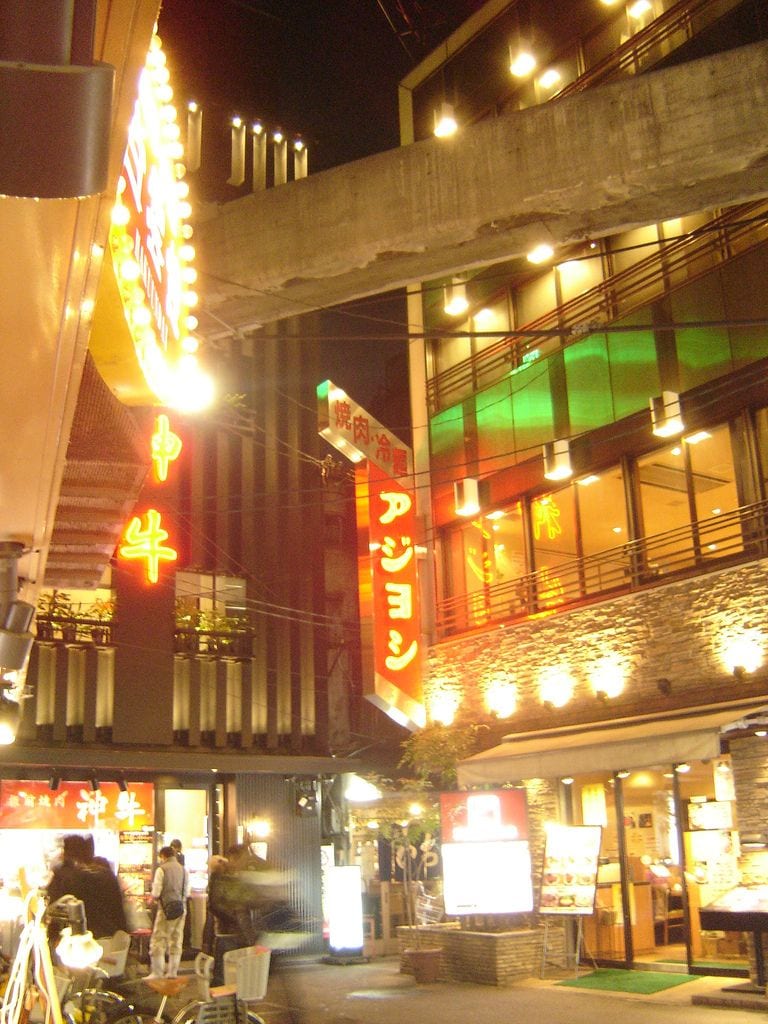
For districts, Dotonbori is the obvious and busiest hunting ground, but the backstreets of Ura-Namba behind it are better value and more fun. Tenma has the densest run of small izakaya in the city, Tsuruhashi is the place for grilled meat, and the counters inside Kuromon Market handle breakfast and lunch. The basement food halls under the big Umeda department stores are worth a browse even if you eat nothing.
Day Trips from Osaka
Osaka is the most practical base in the Kansai region, and the rail network makes short work of the distances. Kyoto is under fifteen minutes away by shinkansen and well under an hour on the ordinary lines, which makes a temple day genuinely easy. Nara, about forty minutes east, has the free-roaming deer of its park and the enormous bronze Buddha at Todaiji. Kobe sits roughly half an hour west, built on a narrow strip between mountains and harbour.
Further out but still comfortable in a day: Himeji, about an hour west by shinkansen, holds the finest surviving original castle in Japan, and Koyasan, a couple of hours south by train and cable car, is a working mountaintop monastery complex where you can stay overnight in temple lodgings.
Before you go
Mobile dataAn eSIM gives your phone local data when you land, with no SIM card to swap.via AiraloGet an eSIM
Airport transferA driver meets you at arrivals and takes you to your hotel, at a price fixed when you book.via Welcome PickupsBook a transfer
We may earn a commission when you buy through these links, at no extra cost to you. How we make money.
One Day in Osaka
Morning
start at Osaka Castle while the grounds are still quiet, walking in across the moats for the stonework before climbing the keep. Nishinomaru Garden gives you the best angle back at the tower, and the Osaka Museum of History next door sets up everything you will see for the rest of the day.
head south to Shitennoji, then cut through Tennoji Park to the observation deck at Abeno Harukas for the view that makes sense of the city's shape. Drop down into Shinsekai as the afternoon fades, when the signs start coming on under Tsutenkaku.
work north through Kuromon Market for something eaten standing up, then finish on Dotonbori after dark. Cross Ebisubashi for the photograph with the Glico sign, then lose an hour in the lanes either side of the canal.
Food and neon, above everything. Osaka is known nationally as the nation's kitchen and for the Dotonbori canal, with its Glico sign and wall of illuminated advertising. Its other signatures are Osaka Castle, the Kaiyukan aquarium on the bay, the retro Shinsekai district beneath Tsutenkaku tower, and the rooftop observatory of the Umeda Sky Building.
How many days do you need in Osaka?
Three days is the sweet spot. One covers the castle and the central districts, a second takes in the southern cluster of Shitennoji, Tennoji and Shinsekai plus an observation deck, and a third gives you either the bay and the aquarium or a full day at the theme park. Add a fourth if you plan to day-trip to Kyoto or Nara.
Is Osaka worth visiting?
Yes, and particularly as a counterweight to Kyoto and Tokyo. Osaka is less polished and considerably more direct, with a food culture that outranks both and a nightlife that runs later. It also works as the best-connected base in western Japan, putting several major destinations within an hour of your hotel.
What can you do in Osaka for free?
Walking Dotonbori and crossing Ebisubashi after dark costs nothing, and neither does exploring Shinsekai, Amerikamura or Den Den Town. The grounds of Sumiyoshi Taisha, Osaka Tenmangu and Hozenji are all open without a ticket, and Tennoji Park and Nagai Park are free public space. Browsing Kuromon Market and Doguyasuji is free until you buy something.
Is Osaka walkable?
The two downtown cores are very walkable. Minami — Namba, Shinsaibashi, Dotonbori and Amerikamura — is best covered entirely on foot, and Kita around Umeda is similar, much of it through covered arcades and underground concourses. For anything beyond those, the Midosuji subway line and the JR Loop Line connect nearly everything on this list.