We may earn a commission if you book or buy through a link on
this page, at no extra cost to you. It never affects which places we list or how
we rank them (how we make money).
Short answer
Riga's three defining sights are the Central Market in its converted Zeppelin hangars, the House of the Blackheads on Town Hall Square, and the Art Nouveau streets around Alberta iela — all an easy walk from a compact, UNESCO-listed old town. Three days is the sweet spot: one for the Old Town and the market, a second for Art Nouveau and the twentieth-century history museums, a third for the forest park or the coast at Jūrmala.
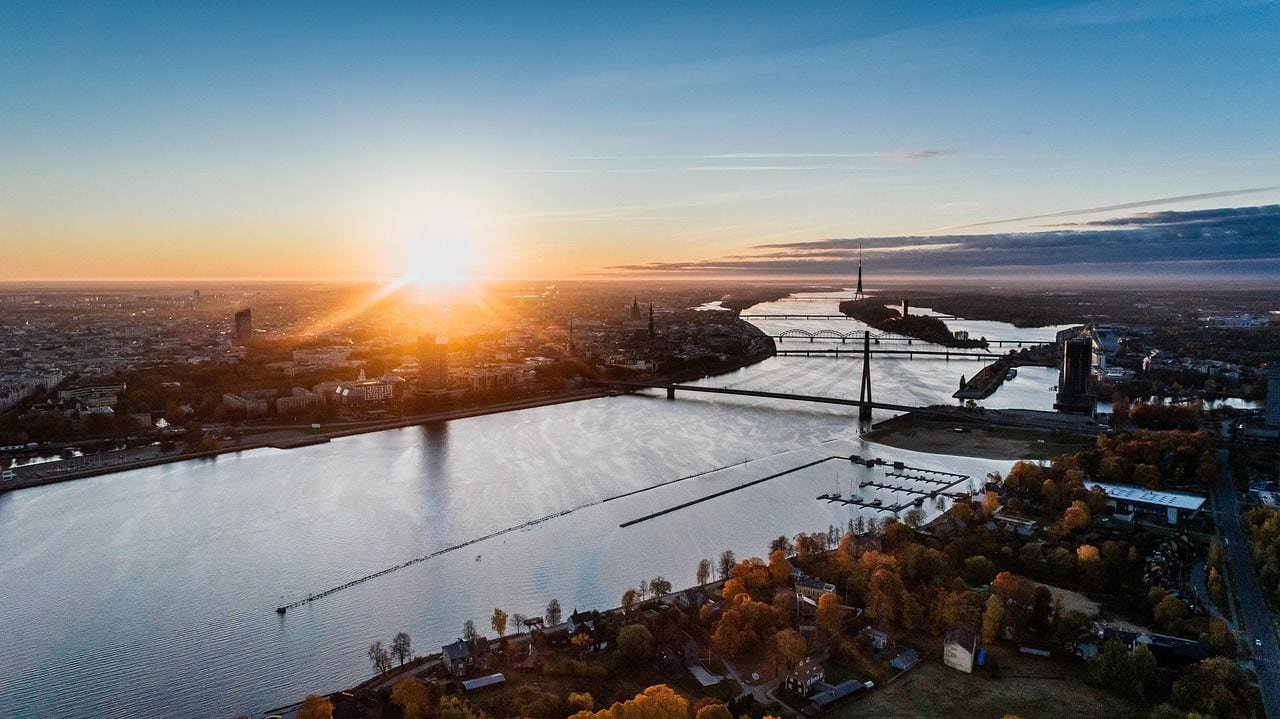
Riga wears its history on its facades. Bigger than Vilnius or Tallinn, the largest of the Baltic capitals stacks a UNESCO-listed medieval core against the greatest concentration of Art Nouveau architecture in Europe, then wraps both in pine forest, a wide river and market halls built out of Zeppelin sheds.
This guide runs through the 30 best things to do in Riga, from the Old Town's guild houses and cathedral organ to the KGB building preserved as it was found. Most sit within walking distance of Dome Square; give the city three days and you will still be finding streets worth a detour.
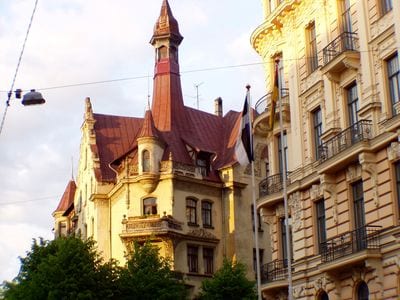
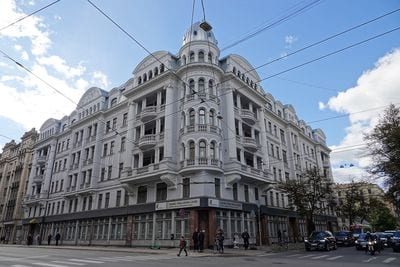
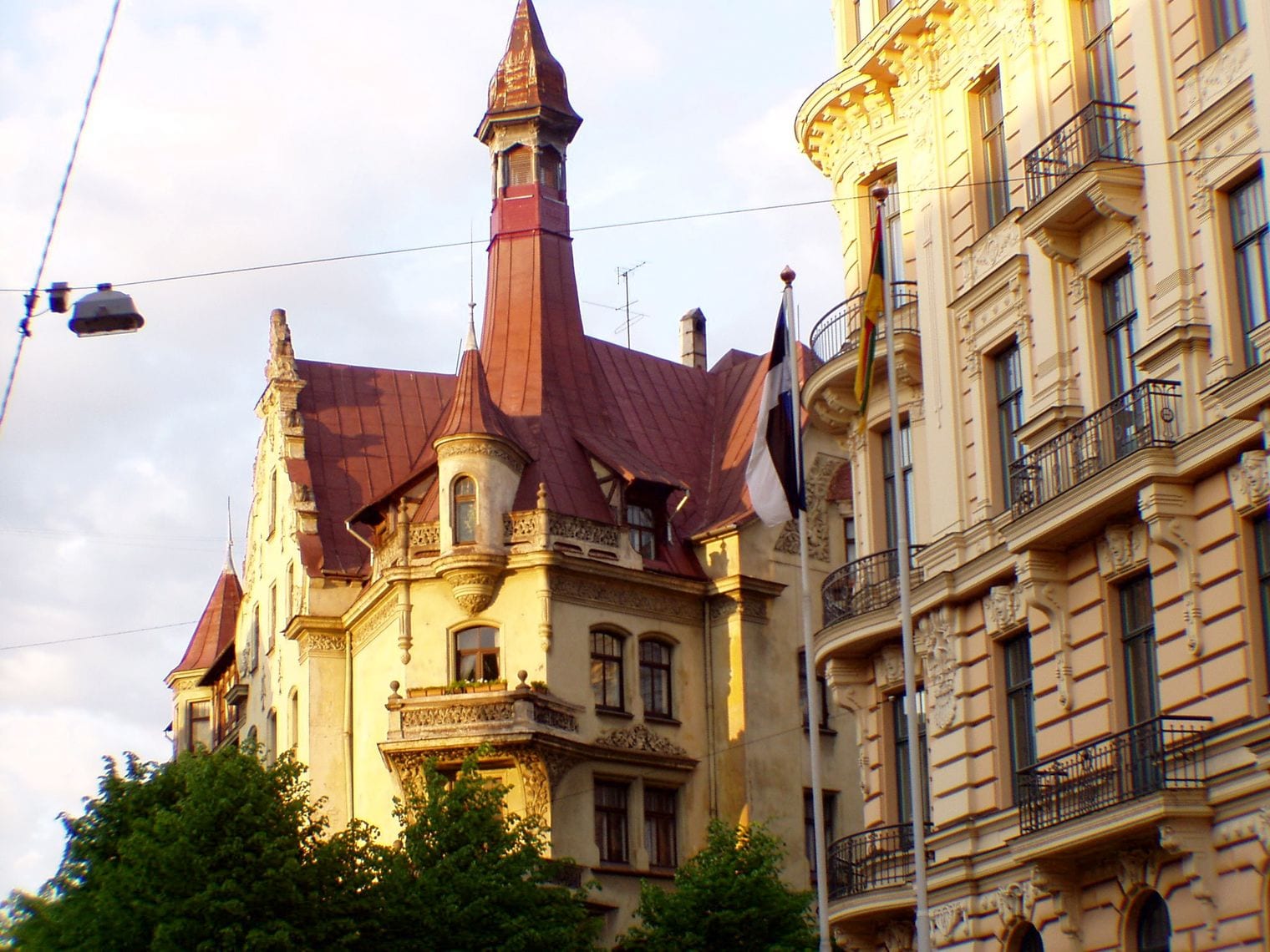
Riga holds the finest and densest collection of Art Nouveau architecture in Europe — it is one of the reasons UNESCO inscribed the historic centre on the World Heritage List, and roughly a third of the buildings in the centre are in the style.
The pavilions of Riga Central Market were built using the steel frames of German Zeppelin hangars left behind after the First World War, which is why the roofs arch the way they do.
The first written record of a decorated Christmas tree comes from Riga in 1510, when members of a local merchants' guild decorated a tree with artificial roses in the market square. A stone plaque set into Town Hall Square marks the spot.
When the Walcker organ in Riga Cathedral was completed in 1884 it was the largest in the world, with 124 stops and more than 6,700 pipes. It is still played at regular recitals.
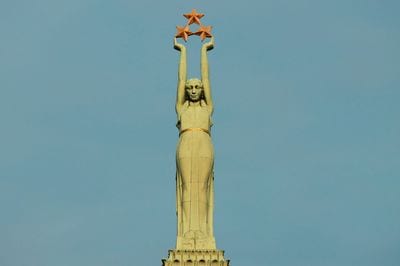
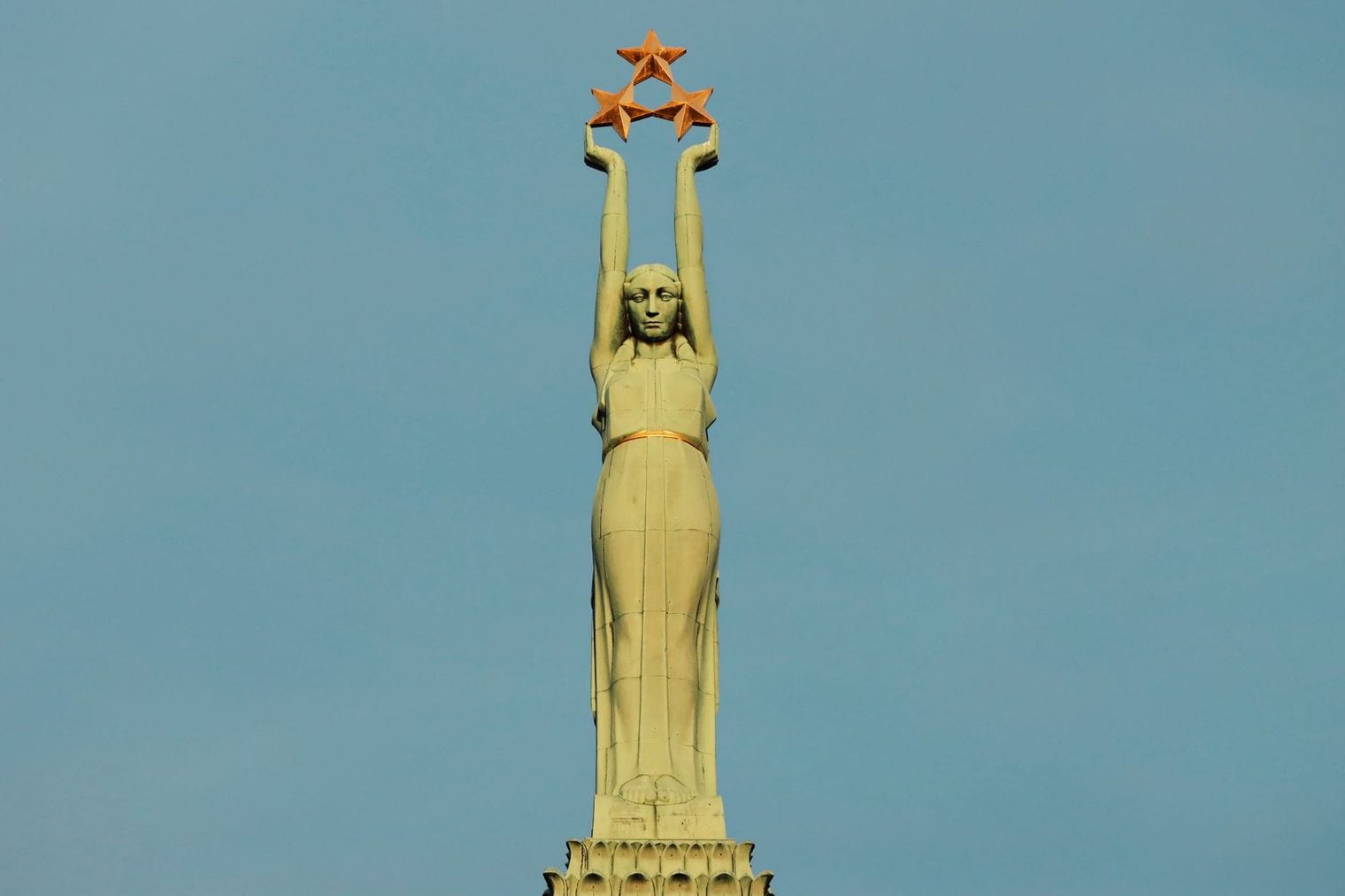
The three gilded stars held up by the Freedom Monument stand for Latvia's three historic regions — Kurzeme, Vidzeme and Latgale — and the figure herself is known to Latvians simply as Milda.
At 123.3 metres, the spire of St. Peter's Church makes it the twentieth-tallest church in the world — edging out its counterpart in Tallinn by just forty centimetres.
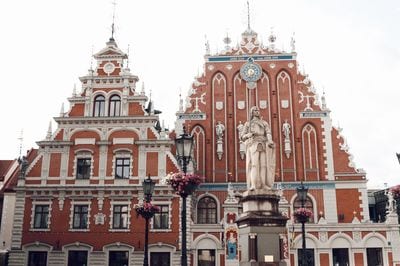
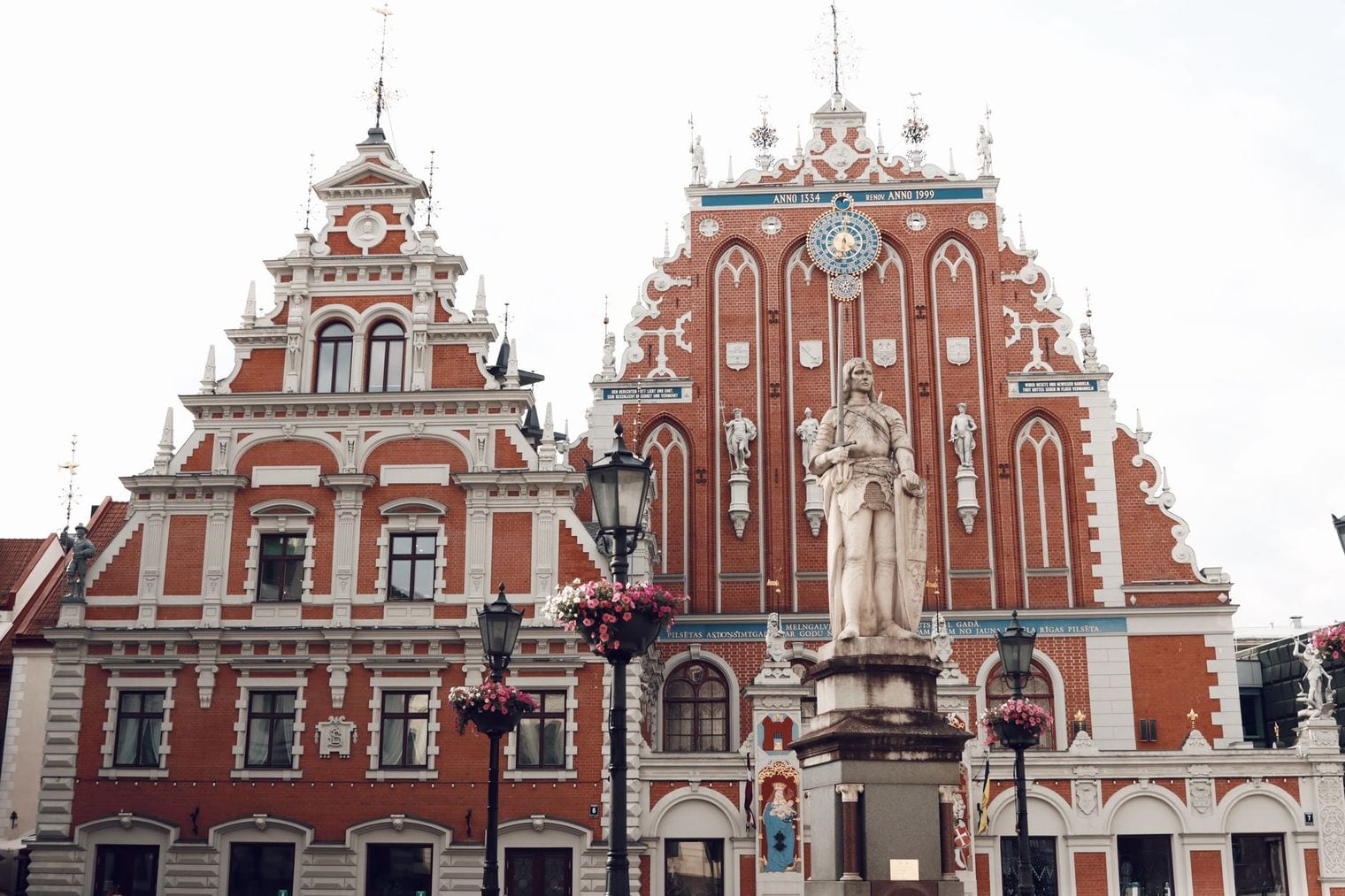
No building says Riga faster than the House of the Black Heads. Its elaborate stepped gable, clock and gilded figures face Town Hall Square, and the ornate Dutch Renaissance frontage is the image that ends up on most postcards home.
The house takes its name from the Brotherhood of Blackheads, a guild of unmarried foreign merchants who used it as their meeting and banqueting hall. What stands today is a reconstruction: the medieval original was wrecked during the Second World War and cleared away under Soviet rule, and the building was raised again from surviving plans and photographs in the 1990s. Inside you can visit the cellars and the restored halls, which host concerts as well as exhibitions.
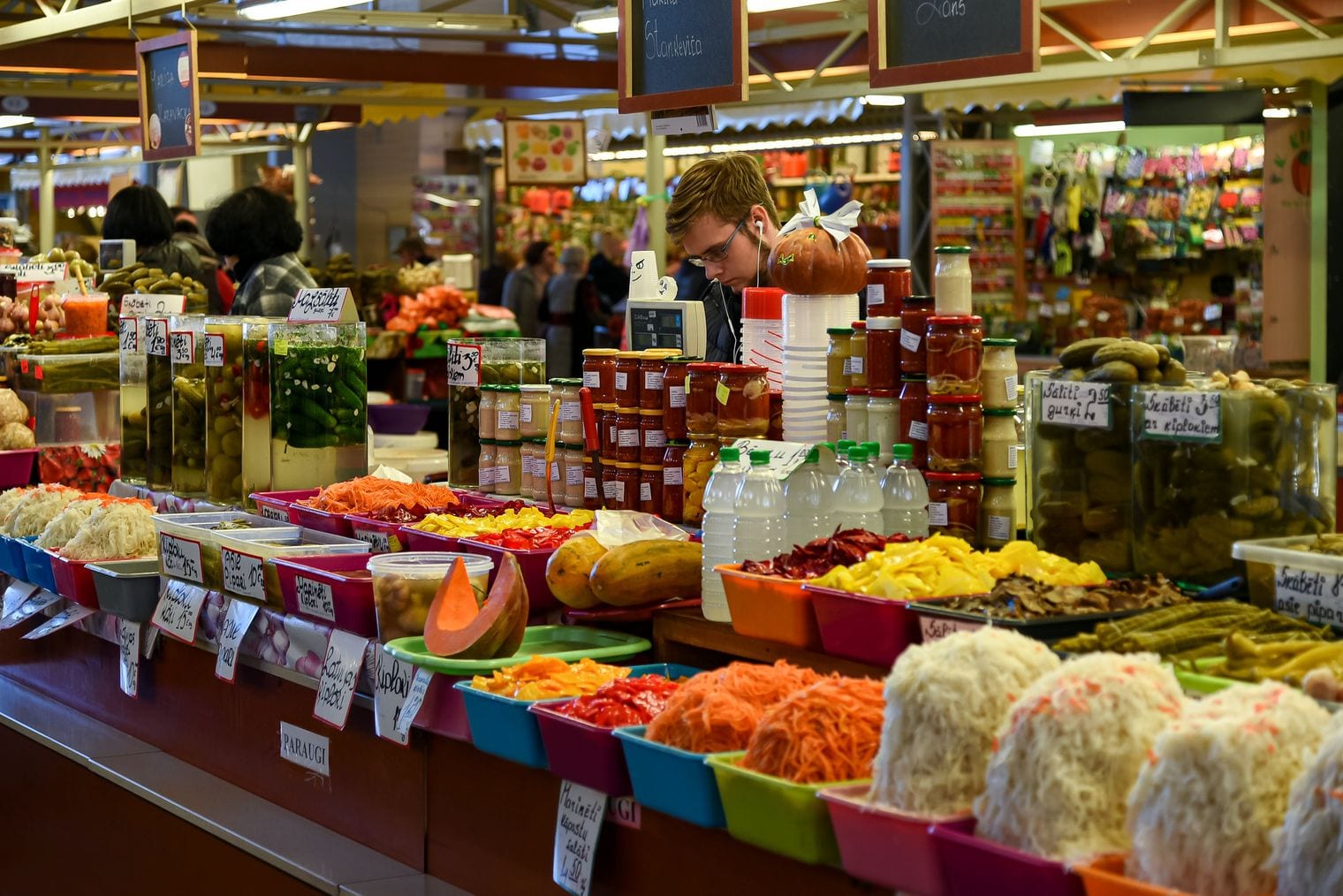
Riga Central Market is the city at its most unvarnished. Five vast pavilions, built using the frames of German Zeppelin hangars left over from the First World War, hold one of the largest markets in Europe, and they are still where the city actually shops rather than a heritage display put on for visitors.
Each hangar has a theme, so you move from dairy to meat to vegetables and finally into the fish pavilion, where smoked Baltic herring and eel hang in glass cases. Come hungry and graze: bread, curd snacks, pickles and smoked fish are all sold in quantities meant for lunch. The market sits just behind the railway station, and the outdoor stalls spilling around the hangars are worth as much of your time as the halls themselves.
The Freedom Monument is the emotional centre of Riga. A copper figure holding three gilded stars stands on a tall column between the Old Town and the newer city, and Latvians refer to her affectionately as Milda. The stars stand for the historic regions of Latvia.
Designed by the sculptor Karlis Zale and raised in the 1930s, the monument survived the Soviet decades intact and became the focus of the independence demonstrations of the late 1980s. A guard of honour stands at its base, and the changing of the guard draws a small crowd. It is the natural place to start a walk: the Old Town lies one way, the park belt and Art Nouveau streets the other.
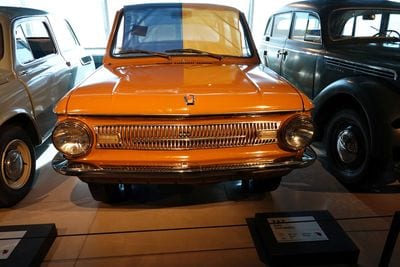
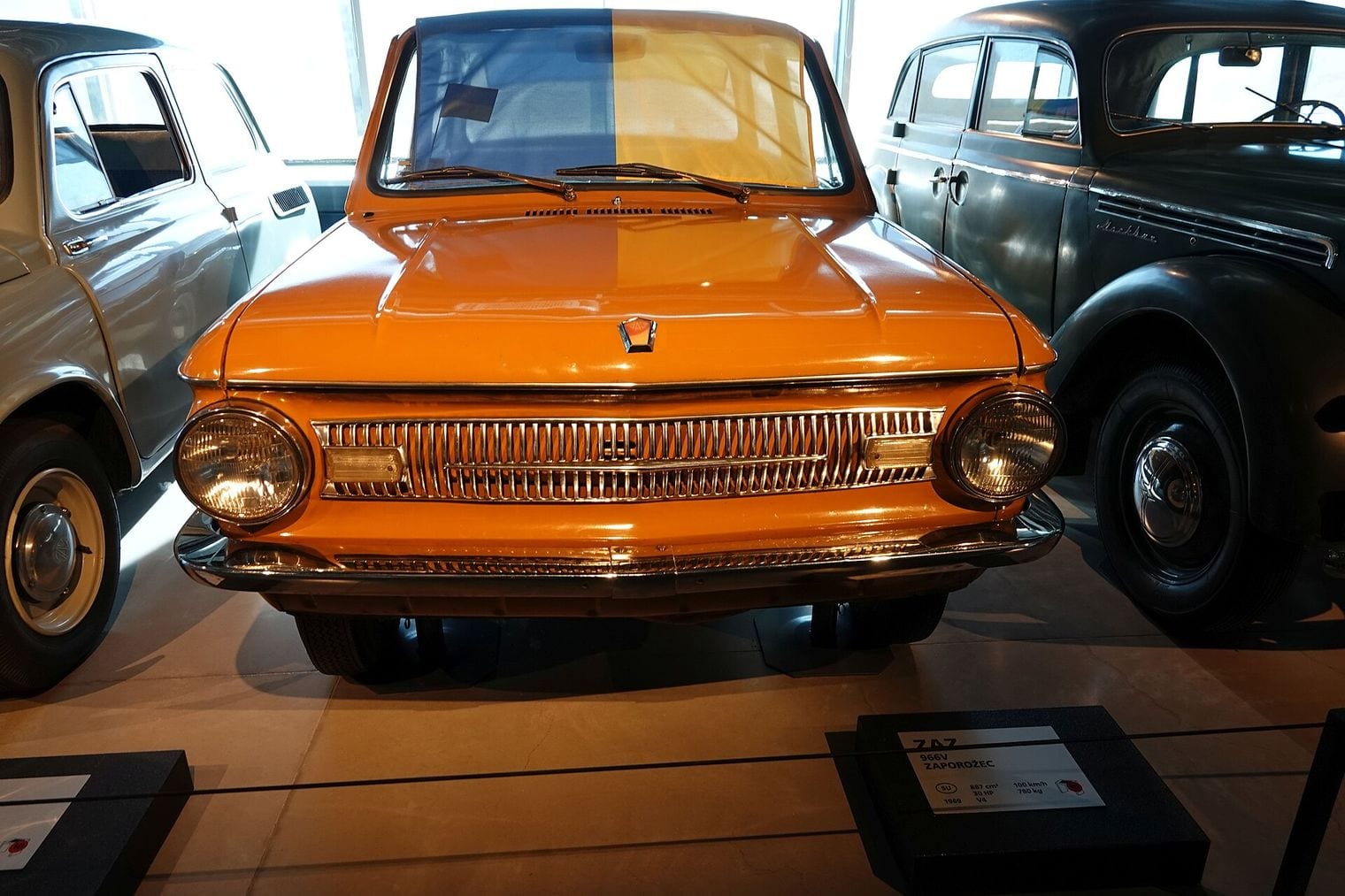
The Riga Motor Museum is far better than a car museum has any right to be, and it earns its place on a first visit even if vehicles leave you cold. The building itself is striking, and the collection is presented with real theatre rather than as rows of polished metal behind rope.
The draw is the Soviet section, where the state limousines of the Union's leadership are displayed with their occupants staged in place. Elsewhere the museum covers Latvian motoring history, fire engines and racing cars. It sits out to the east of the centre, a short bus or taxi ride away, and it is one of the few Riga attractions that comfortably absorbs a couple of hours in bad weather.
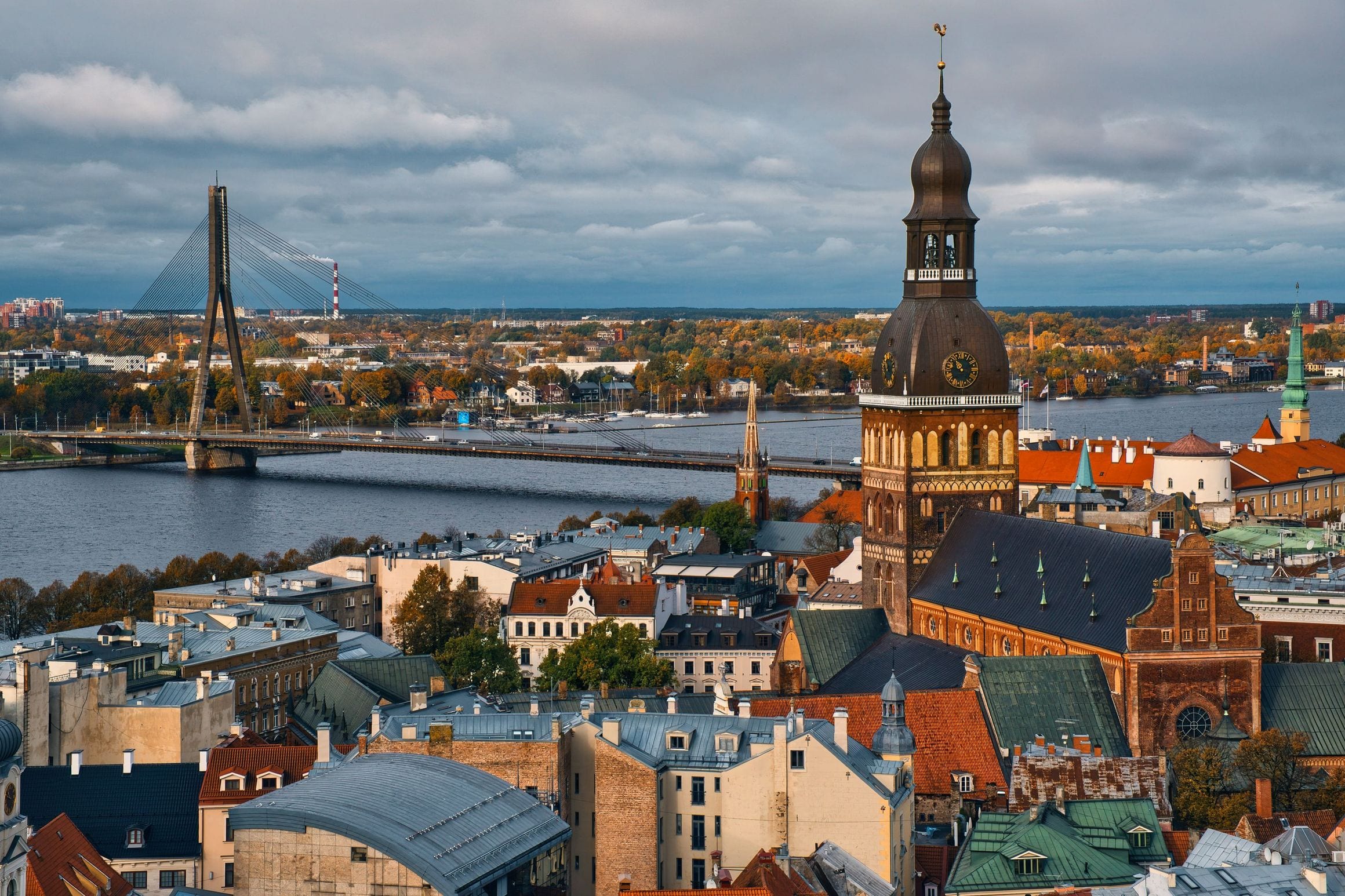
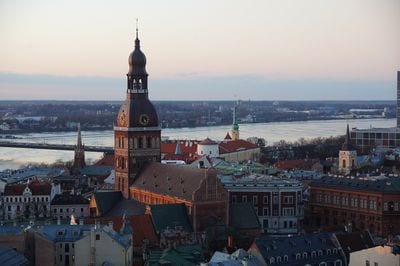
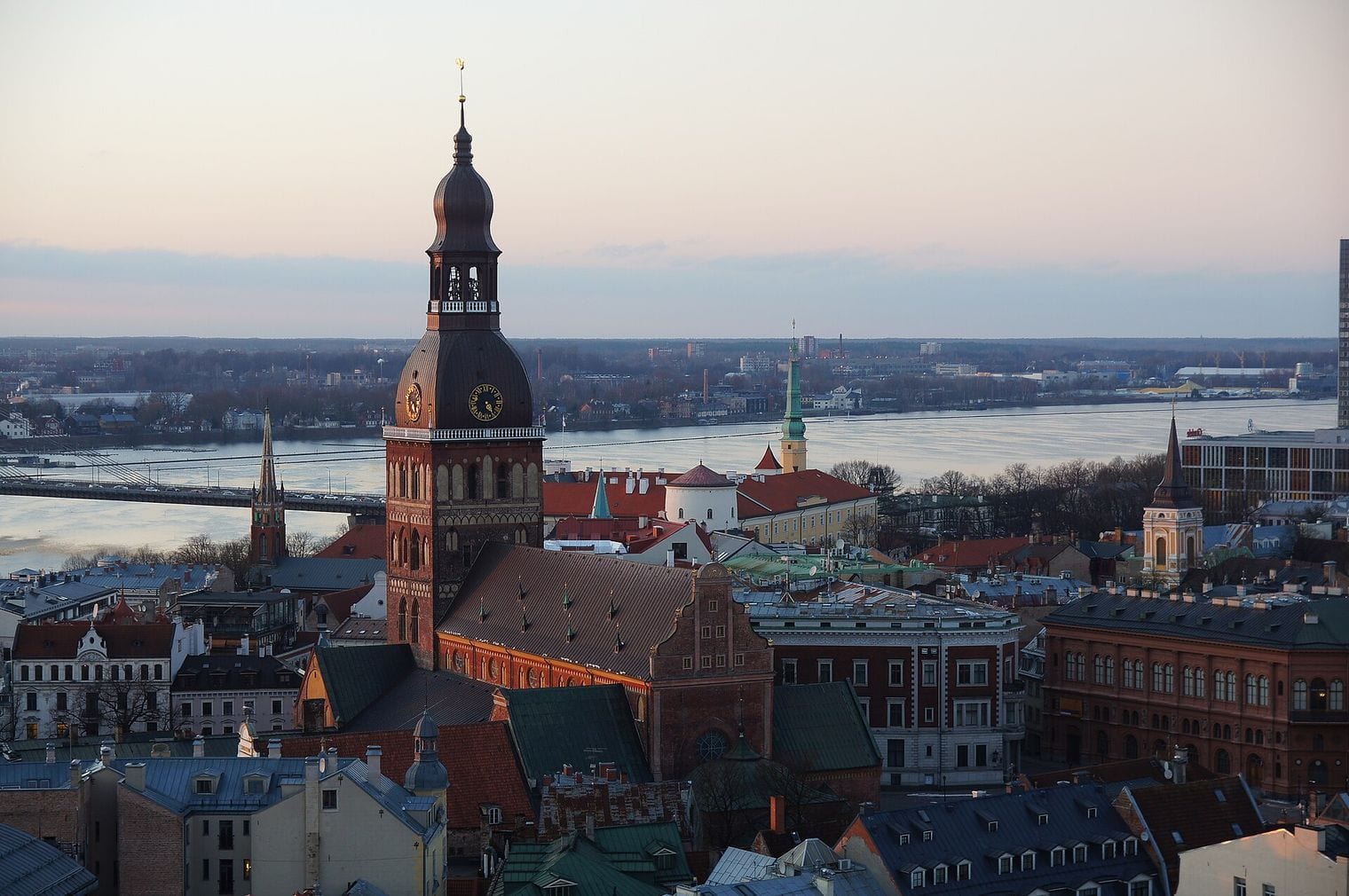
St. Peter's Church gives you the view that fixes Riga in your head. A lift runs up the spire to an observation gallery, and from it the red roofs of the Old Town, the Daugava, the Central Market hangars and the Academy of Sciences all lay themselves out at once.
The church below is worth time too. It is one of the oldest and most imposing brick buildings in the city, with a tall, spare Gothic interior that is used for exhibitions as well as services. The spire has been rebuilt more than once after fire and war. Go up early or late if you can, when the light across the rooftops is at its best and the gallery is least crowded.
Riga has more Art Nouveau architecture than any other city in Europe, and most visitors experience it entirely from the pavement, necking up at masks, sphinxes and stone faces. The Riga Art Nouveau Center is the fix for that — the one place where you go inside and see how people actually lived behind those facades.
The museum occupies a restored apartment in a house the architect Konstantīns Pēkšēns built for himself, furnished throughout in period style, from the tiled stove and painted ceilings to the kitchen. The spiral staircase alone is worth the entry. Afterwards, walk the surrounding streets: Alberta iela and Elizabetes iela carry the densest run of facades in the city and are a short stroll away.
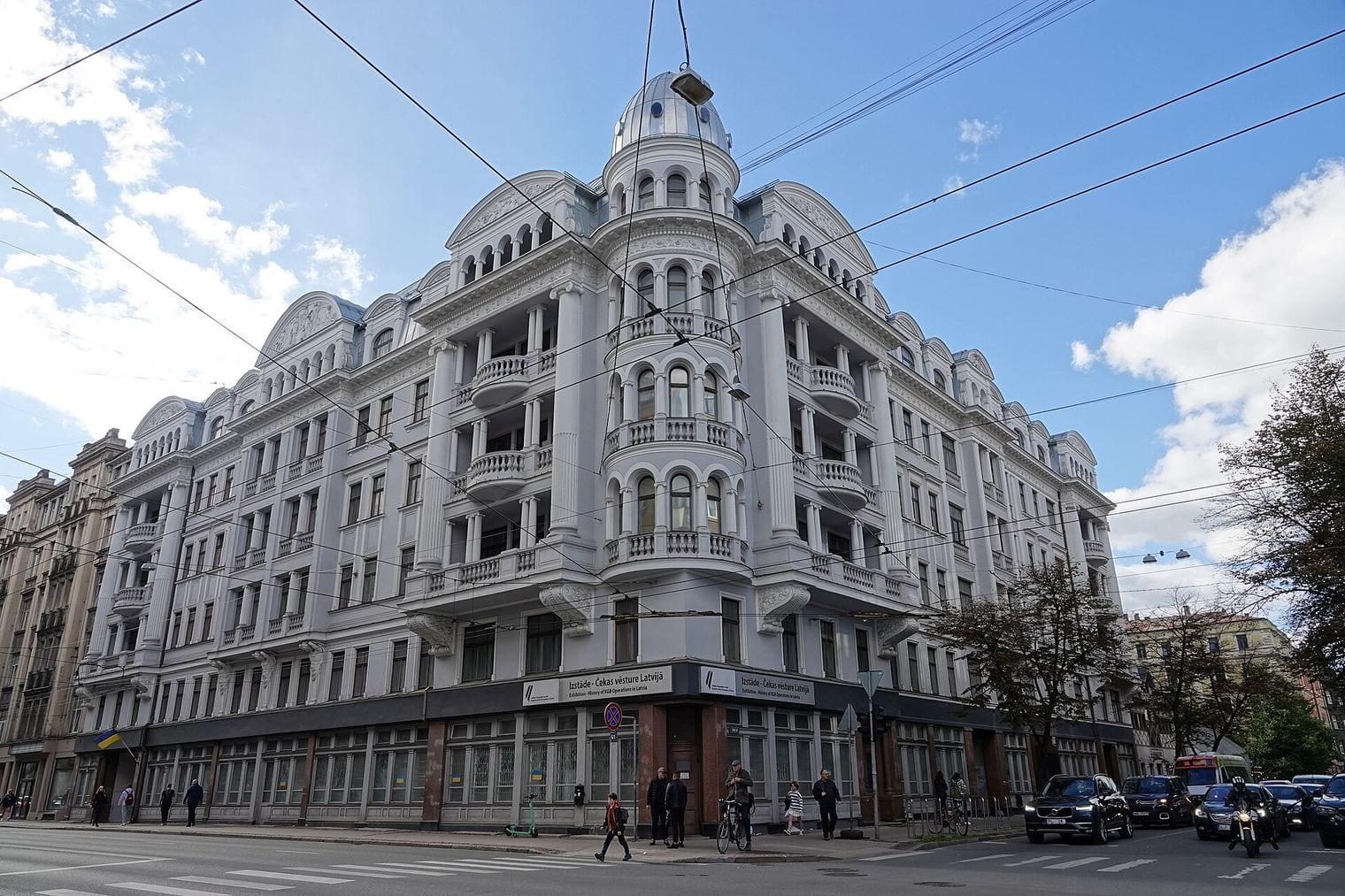
The Corner House is the least comfortable stop in Riga and one of the most necessary. This unremarkable apartment block on the corner of Brivibas and Stabu streets was the Latvian headquarters of the Soviet security services, and it is preserved much as it was left rather than smoothed into a conventional museum.
Guided visits take you through the cells, the corridors and the interrogation rooms, and the building's ordinariness is precisely the point: people were brought here from a normal street in a normal city. Displays cover surveillance, deportation and the machinery of informing on neighbours. It pairs naturally with the Museum of the Occupation of Latvia, and between them they explain more about modern Latvia than any other pair of buildings in the country.
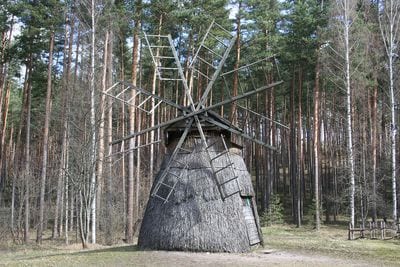
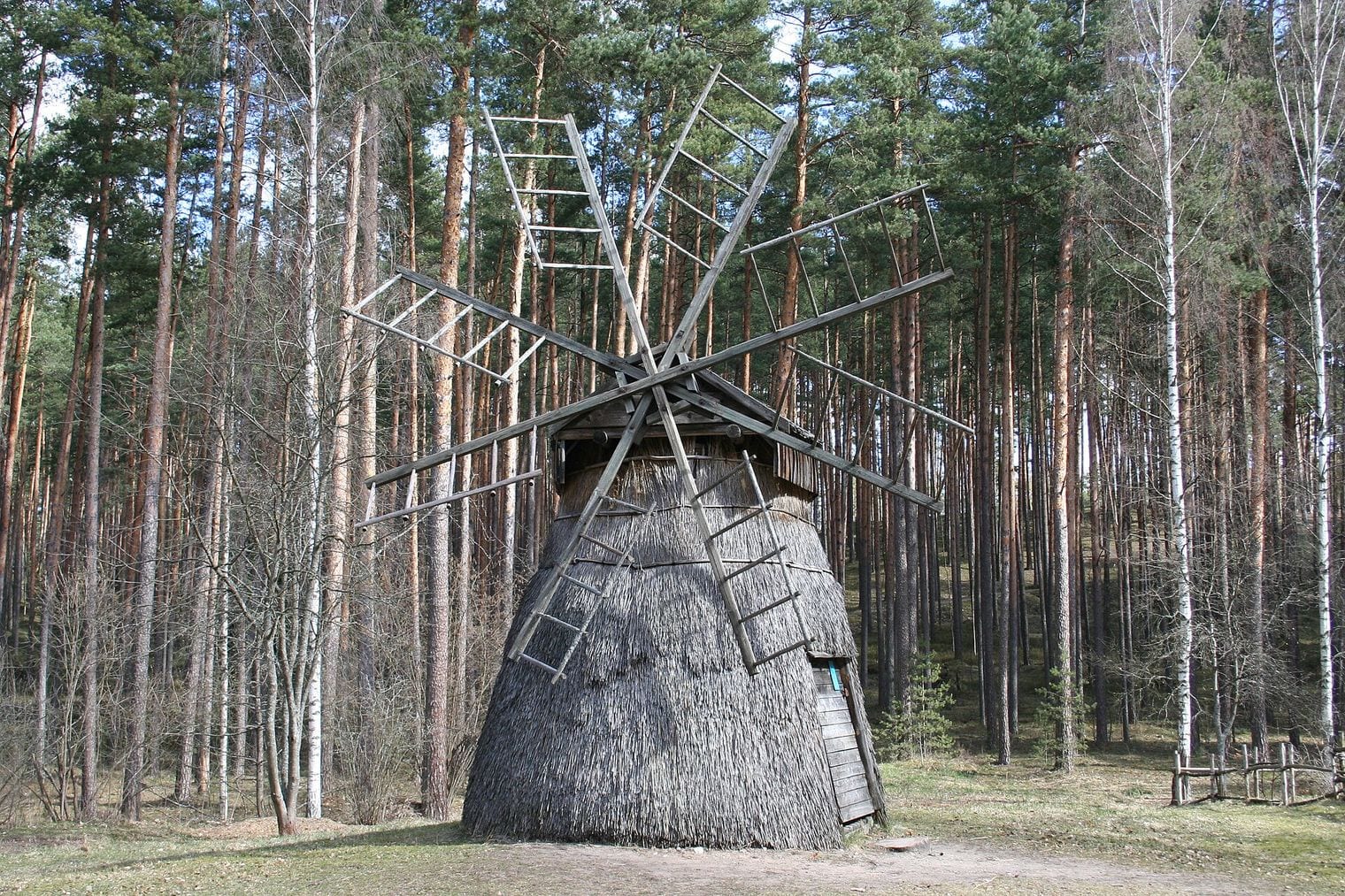
Spread through pine forest on the shore of Lake Jugla, the Ethnographic Open-Air Museum of Latvia gathers more than a hundred historic buildings brought in from every region of the country and rebuilt on site. Farmsteads, windmills, a fishing village and wooden churches stand along sandy paths, which makes it as much a walk in the woods as a museum.
Interiors are furnished as they would have been, and craft workers are often at work in the buildings. It is the best short course available in rural Latvia, and a useful counterweight to a trip otherwise spent among the merchant houses of the Old Town. It lies on the northeastern edge of the city, so allow half a day and wear shoes you can walk in.
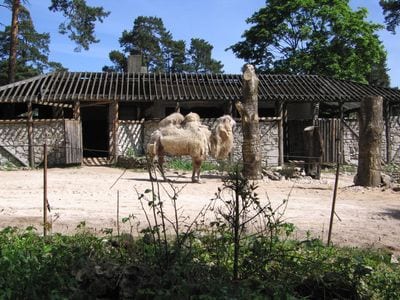
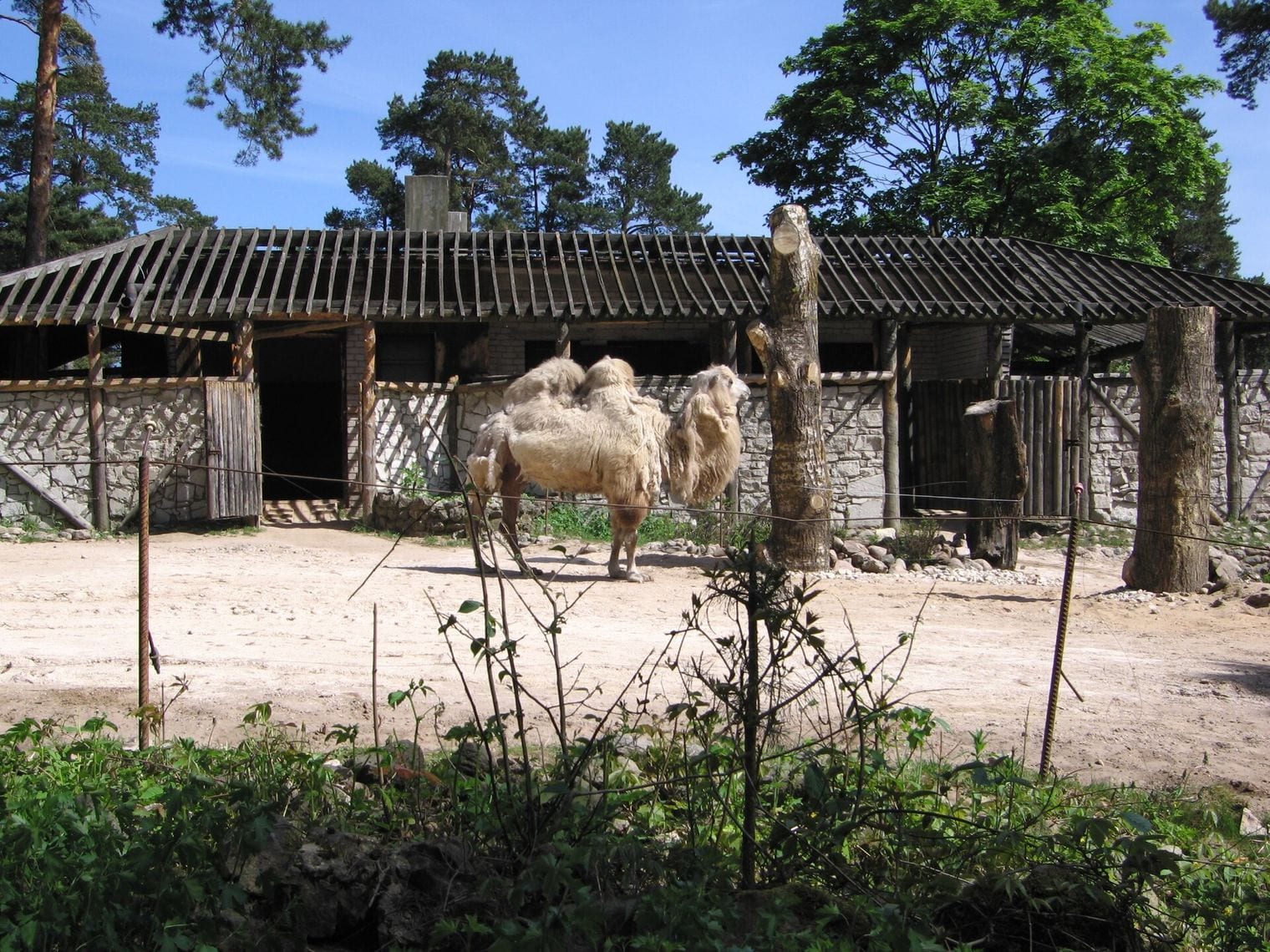
Riga National Zoological Garden sits inside the pine woods of Mezaparks, beside Kisezers lake, which gives it a setting most city zoos would envy — much of a visit is spent walking forest paths between enclosures rather than crossing concrete.
It is among the older zoos in northern Europe and holds a broad collection, with strong showings of northern and cold-climate species. The forest location makes it a genuinely pleasant walk in its own right, and it combines well with Mezaparks itself, where the Great Bandstand that hosts the Latvian Song and Dance Festival stands a short distance away. It is an easy tram ride from the centre and a reliable option with children.
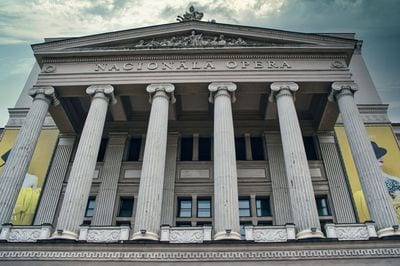
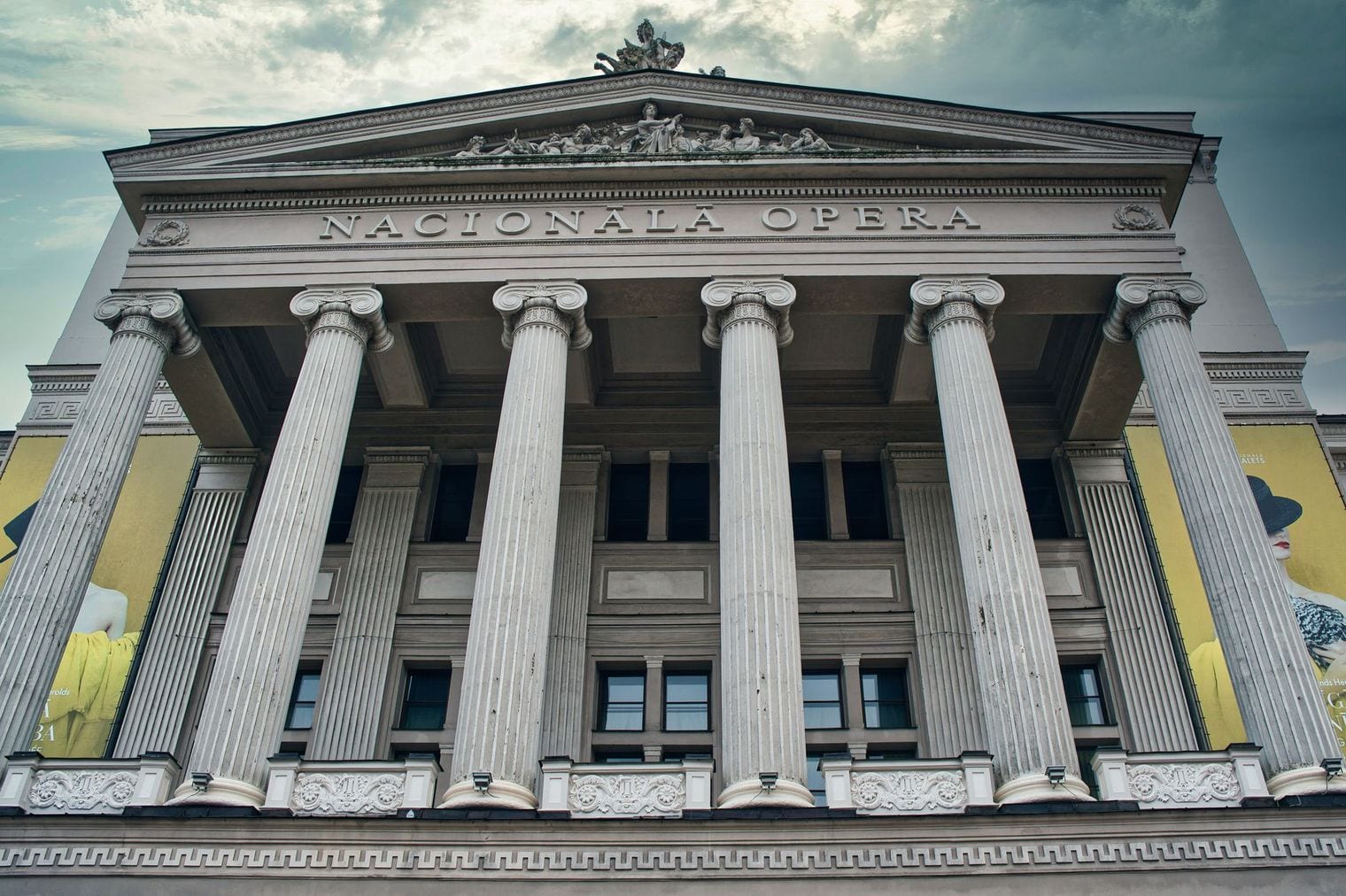
The Latvian National Opera occupies a handsome classical building at the edge of the park belt, looking out over the city canal, and it is one of the institutions Latvians are proudest of. Both opera and ballet perform here, and standards are high while ticket prices remain markedly gentler than in western European capitals.
Even without a performance the building rewards a look, and guided tours run through the auditorium and its chandeliered interiors. If you are in Riga for a few evenings, this is the easiest way to spend one well. The surrounding gardens and the canal make the approach part of the occasion, and there are plenty of places to eat within a few minutes' walk.
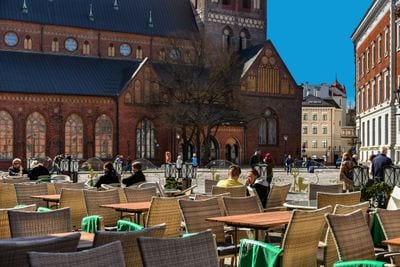
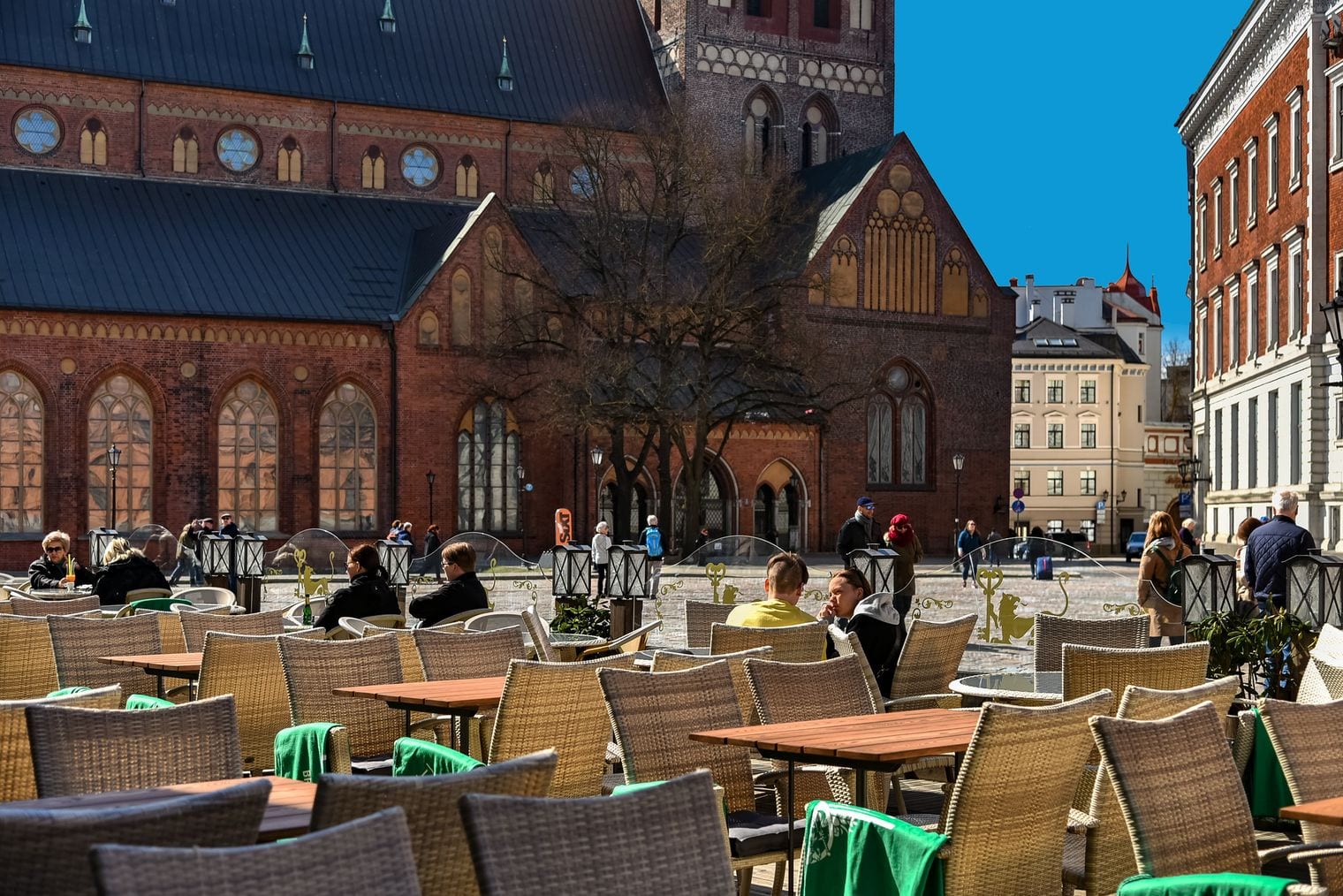
Dome Square is the largest open space in the Old Town and the point everything else radiates from. Riga Cathedral takes up one side, and the rest is ringed by merchant houses, the Stock Exchange building and cafe terraces that fill the moment the weather allows.
It functions as the city's living room. Markets and public events run here through the year, and in December it holds the Christmas market, with the square making a strong claim to a place in the history of the decorated Christmas tree. Arrive without a plan and you will still end up crossing it several times a day, which is the best argument for basing yourself somewhere within a few streets of it.
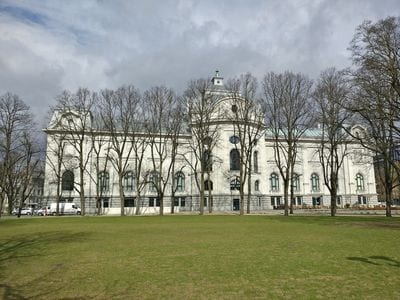
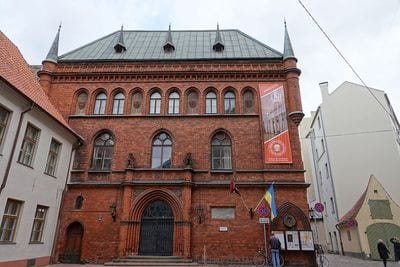
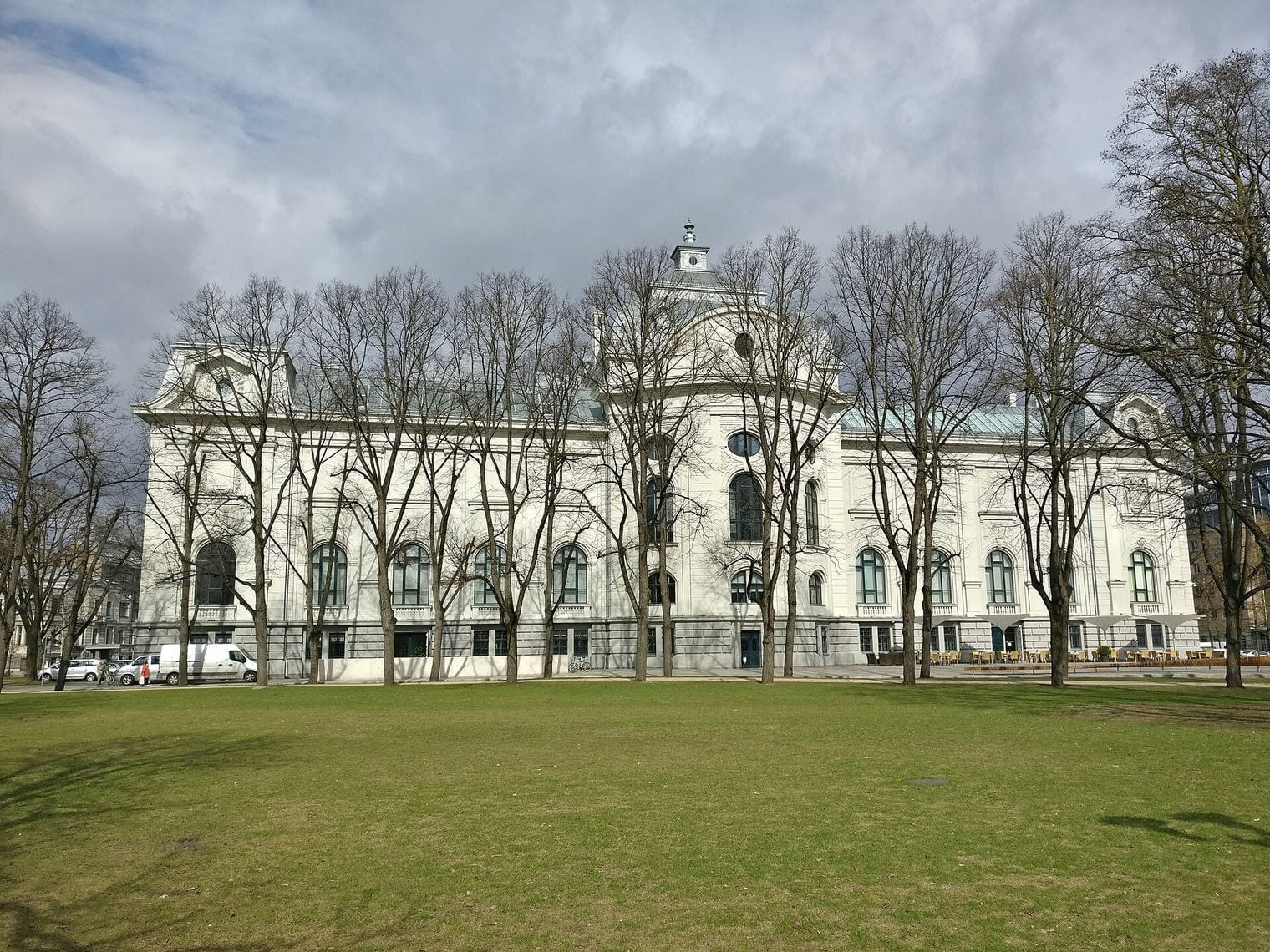
The Latvian National Museum of Art holds the country's principal art collection, and a thorough modern renovation gave it a grand restored interior above and generous new galleries excavated below. The building sits on the edge of the Esplanade park, a short walk from the Art Nouveau streets.
The permanent collection is the best available introduction to Latvian painting, and it repays a visit even if the names are unfamiliar: this is a national school that developed its own strong identity, and seeing it in bulk is genuinely rewarding. Temporary exhibitions occupy the lower galleries. The roof terrace, when open, offers a good view over the park and the Orthodox cathedral opposite.
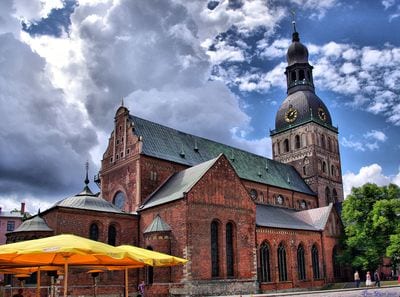
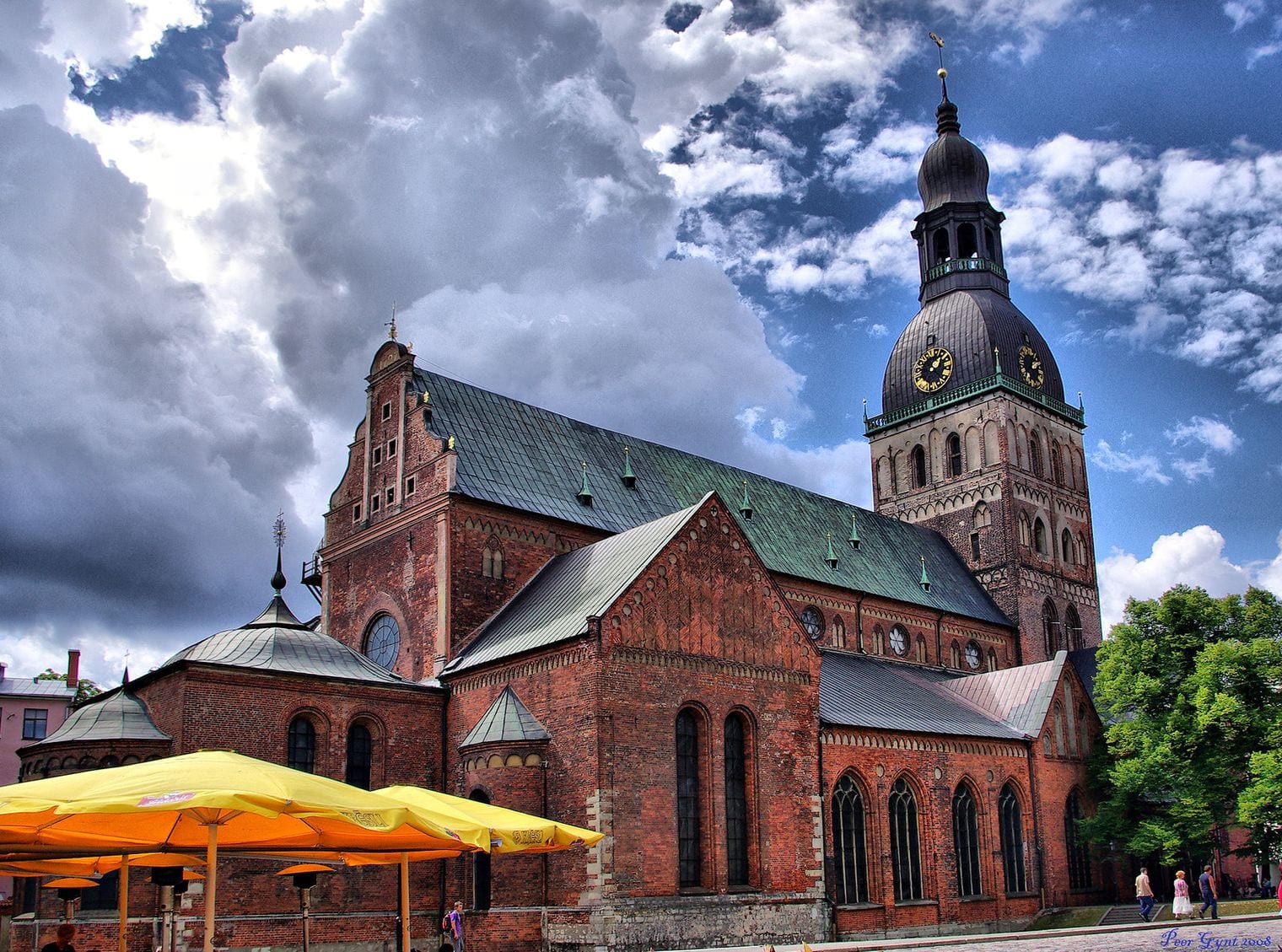
Riga Cathedral is the largest medieval church in the Baltic states and has stood at the heart of the city since the early thirteenth century. Centuries of rebuilding have left it a mixture of Romanesque, Gothic and Baroque, and the cloister alongside it is a quiet, arcaded refuge from Dome Square.
The cathedral is best known for its organ, a vast nineteenth-century instrument that was among the largest in the world when it was installed. Organ recitals are held regularly, and hearing it in the building it was designed for is one of the finest things you can do in Riga. Check the schedule when you arrive and plan the rest of your day around a performance.
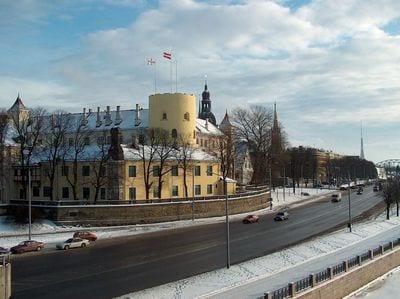
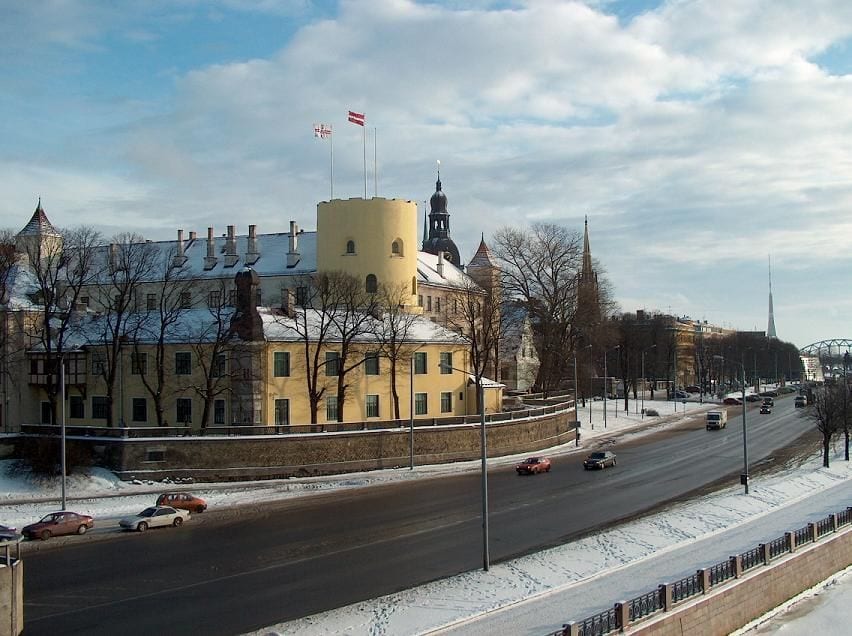
Riga Castle stands where the Old Town meets the Daugava, a low white fortress that has been rebuilt so many times it now reads as a palace. It began as a stronghold of the Livonian Order and has served nearly every power that has governed the city since.
Today it is the official residence of the President of Latvia, which limits how much of the interior you can see, though parts are opened to visitors and the exterior and its courtyard are freely approachable. The riverside walk beside it is one of the pleasanter routes out of the Old Town, and the castle makes a natural turning point on a loop that takes in the cathedral and the city walls.
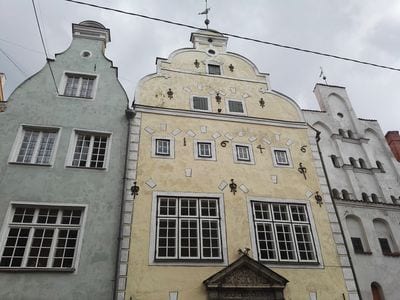
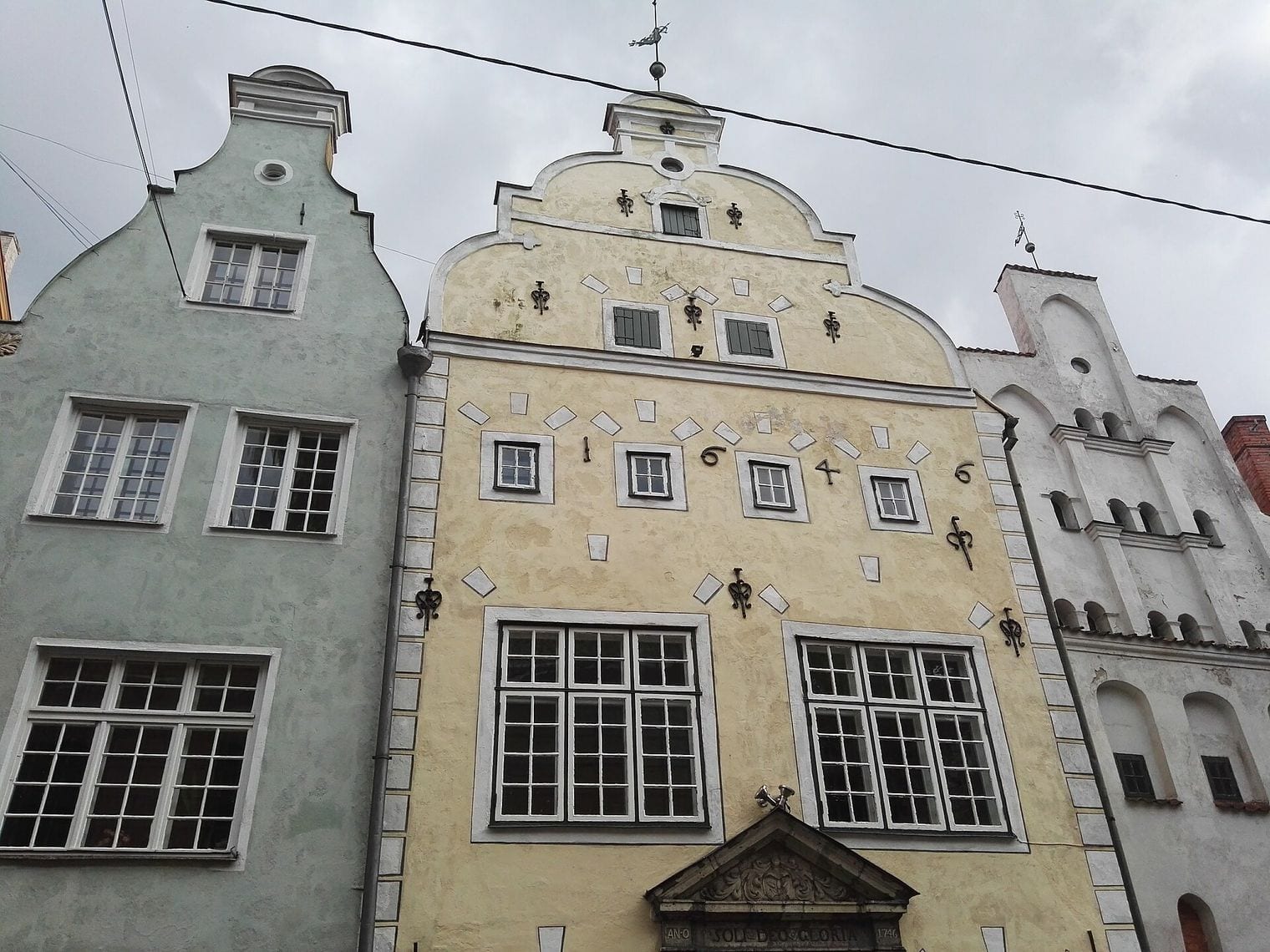
1515. Three Brothers, Latvian Museum of Architecture
The Three Brothers are the oldest complex of dwelling houses in Riga, standing shoulder to shoulder on narrow Maza Pils iela. Each was built in a different period, so the row reads left to right as a lesson in how domestic building changed over the centuries, from a plain medieval gable to more decorated later fronts.
The houses contain the Latvian Museum of Architecture, which means you can go inside rather than simply photographing the facades from the street. The interiors show the cramped scale of early Riga living, with steep stairs and small rooms. The lane is a couple of minutes from the cathedral and from Riga Castle, so it slots easily into any Old Town walk.
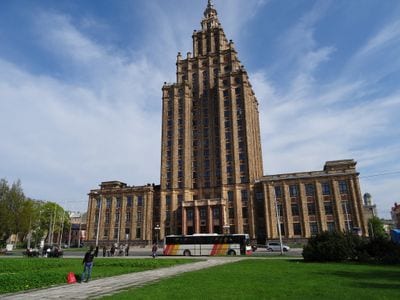
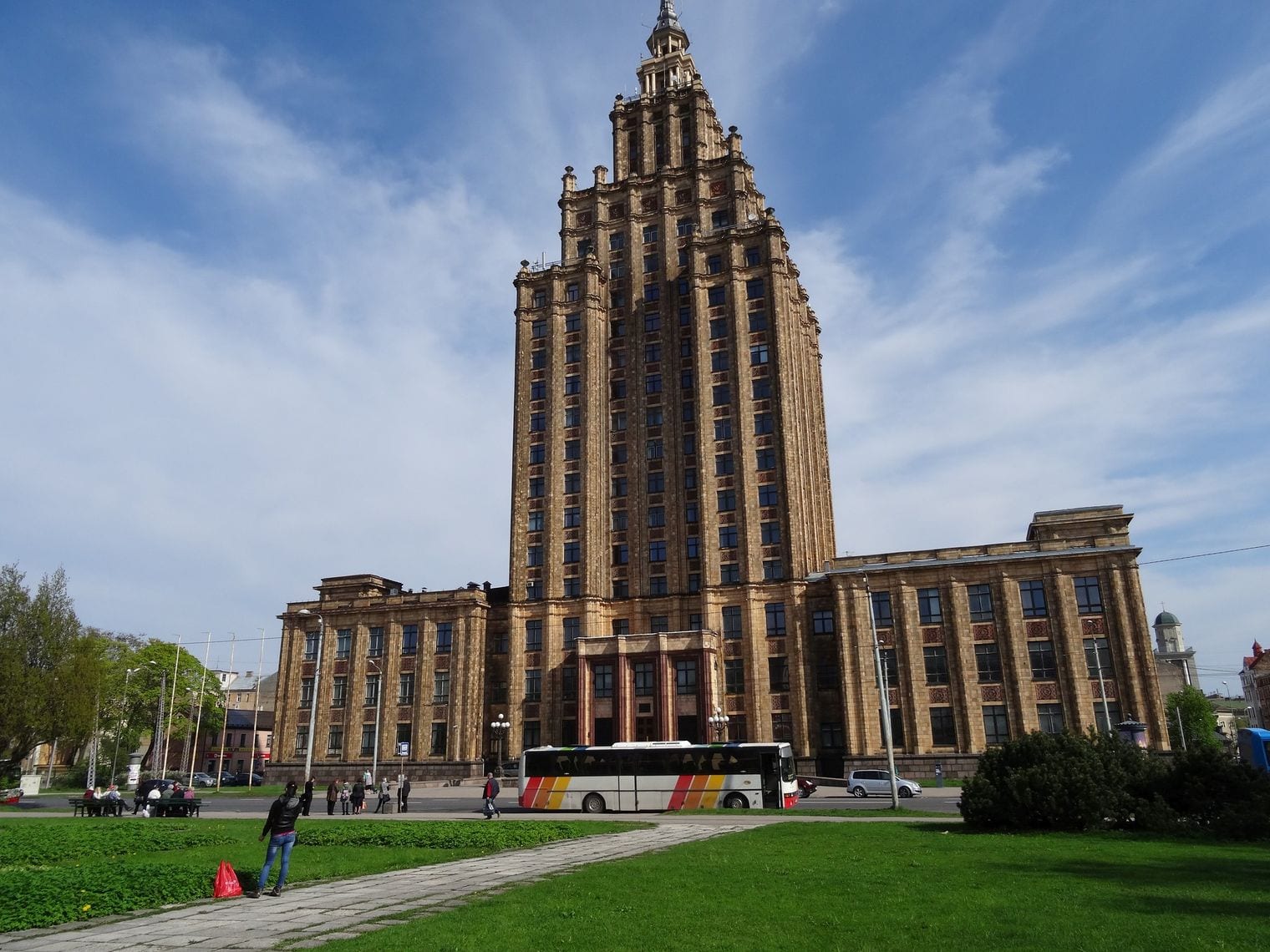
1616. Latvian Academy of Sciences Observation deck
The Latvian Academy of Sciences is a Stalinist tower that Riga has nicknamed the birthday cake, and its upper floors carry an open-air observation deck that is the best value view in the city. It looks straight across the Central Market hangars to the Old Town spires, with the Daugava beyond.
The deck is a genuine outdoor terrace rather than a glazed room, so you get clean photographs in every direction. The building stands in the Maskavas district, a part of Riga most short visits never reach, and the walk over from the market takes you through streets of wooden houses. Wrap up: it is exposed, and the wind at that height has a Baltic edge to it.
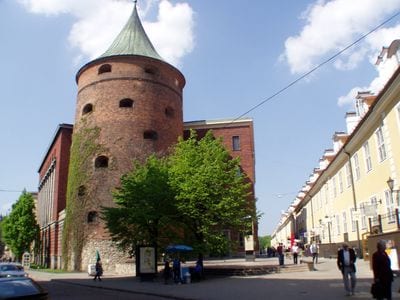
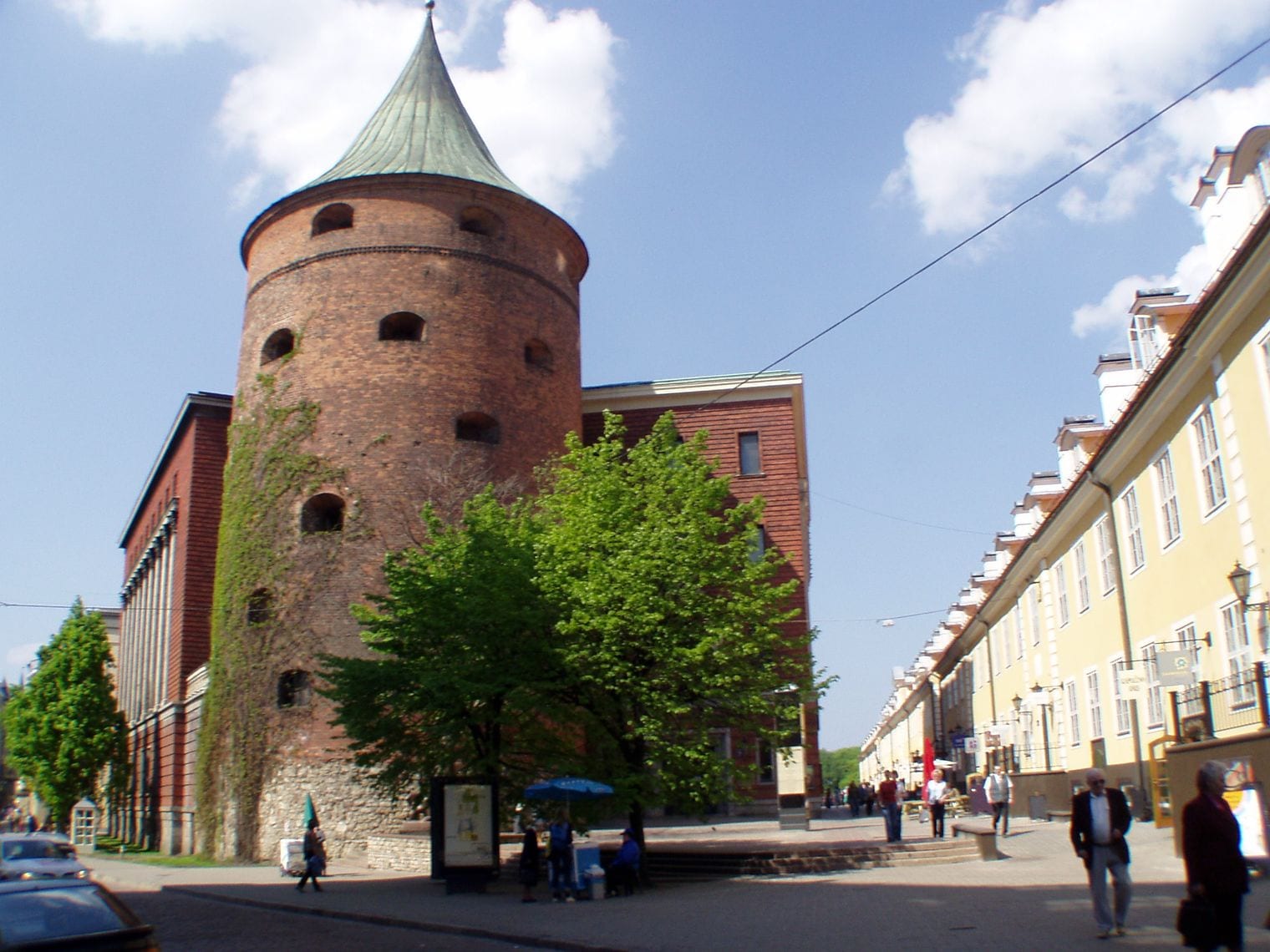
The Latvian War Museum occupies the Powder Tower, the last surviving tower of Riga's medieval defensive wall, which alone makes it worth stepping into. The round brick shell is one of the oldest structures in the city and the building and the collection reinforce each other.
The museum runs chronologically through Latvian military history, with strong coverage of the First World War, the Latvian Riflemen, the war of independence and the twentieth-century occupations. It is thoughtfully laid out over several floors and gives useful background to almost everything else you will see in Riga. It stands at the northern edge of the Old Town, next to the Swedish Gate and the surviving stretch of city wall.
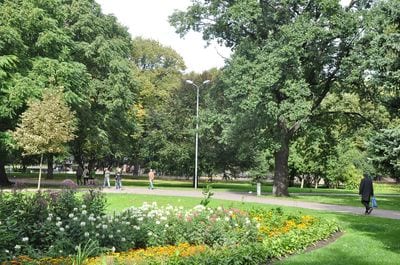
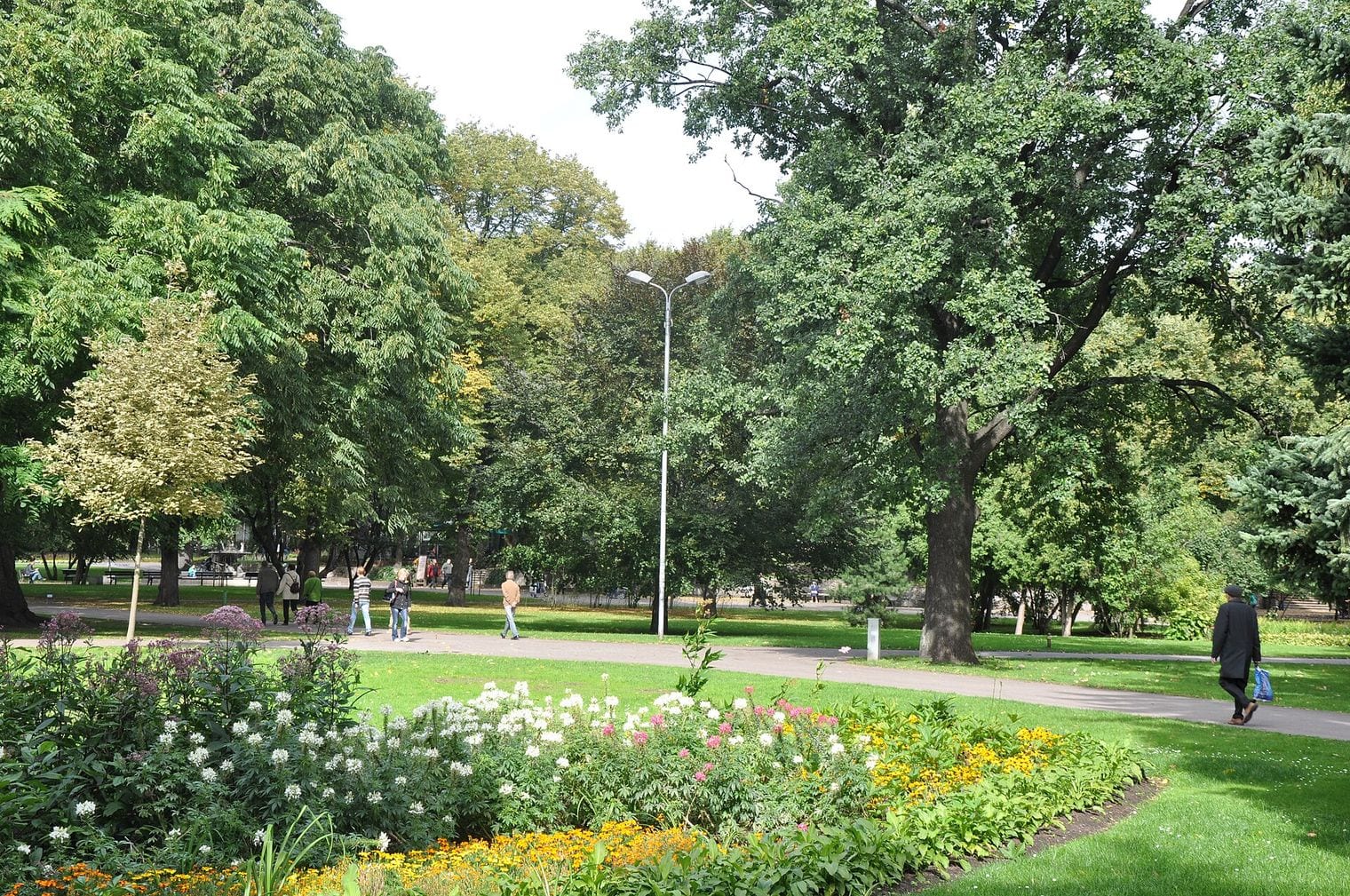
Vermane Garden is the oldest public park in Riga and remains one of the most used, a formal green rectangle just off the main shopping streets. Gravel paths, mature trees, flower beds and a bandstand make it the place the city centre goes to sit down.
It is busiest in summer, when concerts and open-air events run in the park and the chess tables fill with players. There is a playground for younger children and cafes around the edges. Sitting between the Freedom Monument and the main department stores, it is a natural pause in the middle of a day's walking rather than a destination you would make a special trip for.
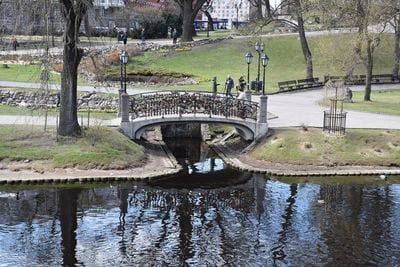
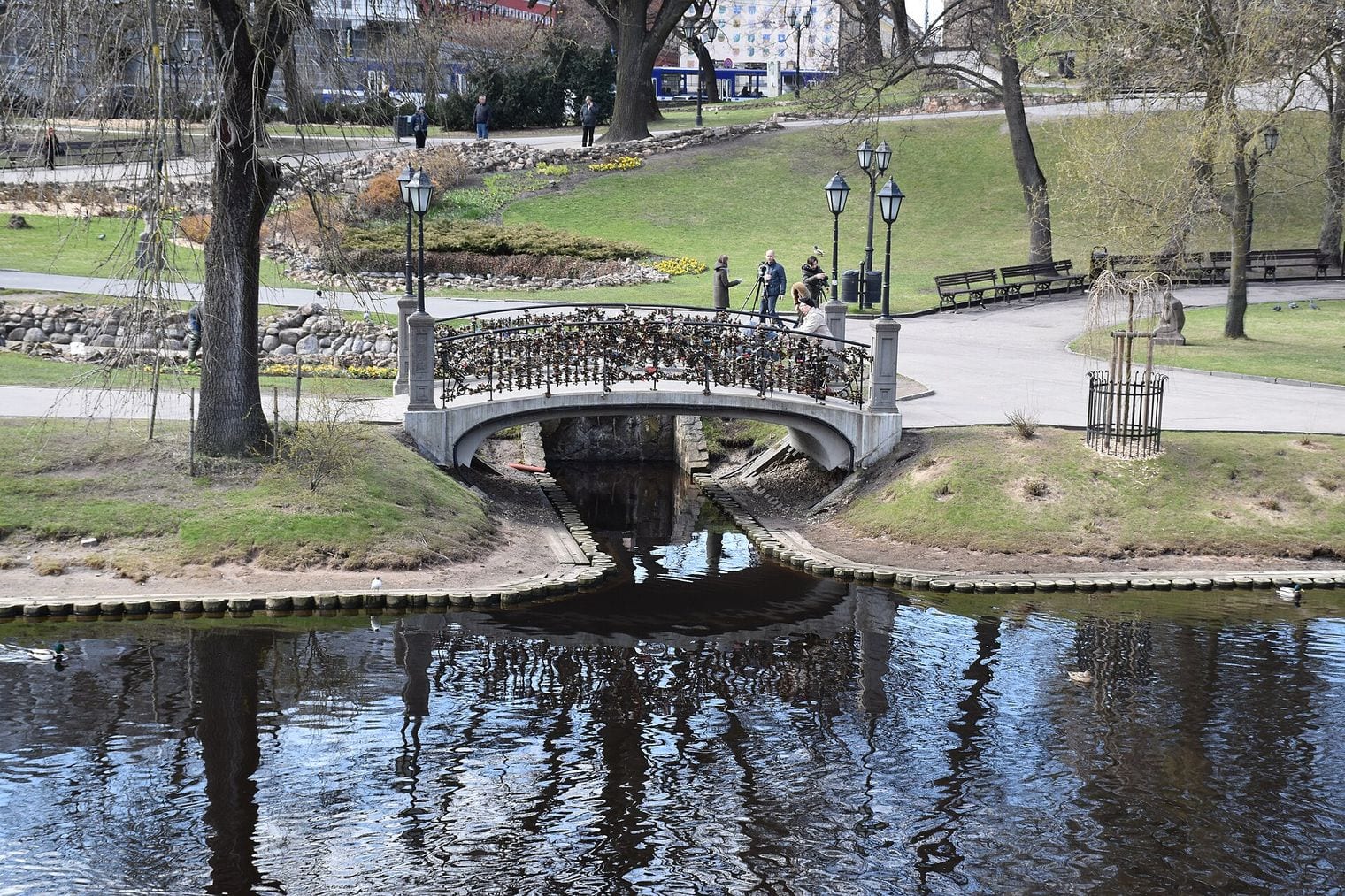
Bastejkalna Park follows the city canal along the line of the old fortifications, and the artificial hill at its centre is built from the earth of the demolished ramparts. Willows, bridges and lawns make it the prettiest of the central parks, and the canal boats that potter along it are a pleasant way to see the belt from the water.
The park also carries real weight in Latvian memory: stone memorials among the trees mark those killed during the barricades of January 1991, when Riga defended its independence movement. The Freedom Monument stands at one end and the National Opera at the other, so almost any walk through the centre passes through here at some point.
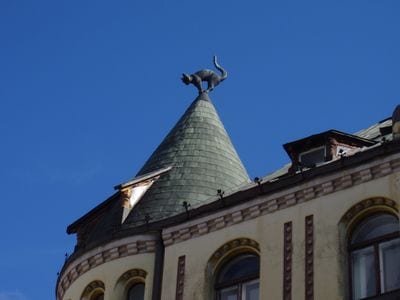
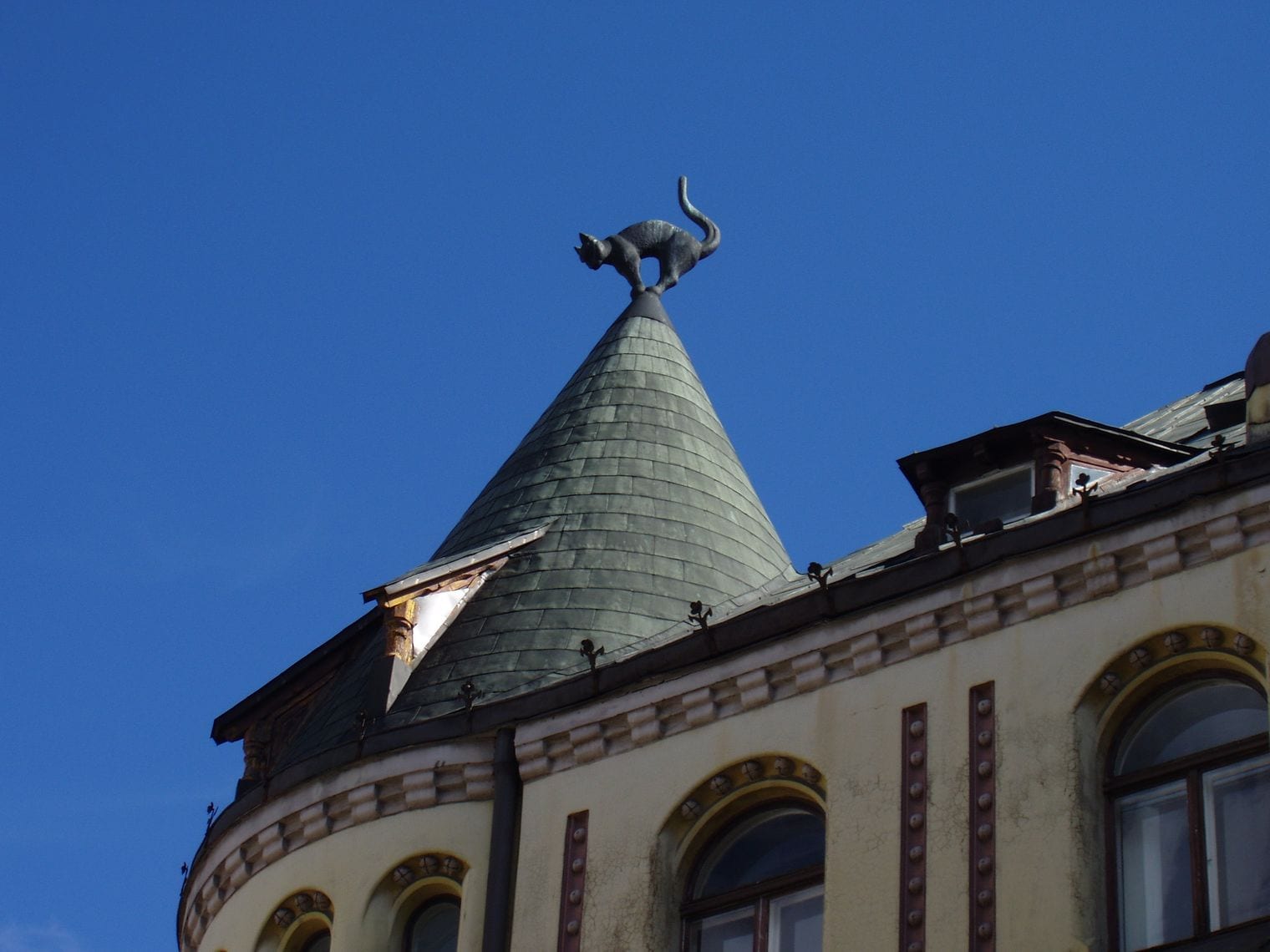
The Cat House is a small piece of Riga folklore that has become one of the Old Town's most photographed corners. A pale Art Nouveau building on Meistaru iela carries two black cat sculptures on its turrets, arched and unmistakable against the sky.
The story attached to it is that a merchant, aggrieved at being kept out of the Great Guild opposite, had the cats mounted with their tails turned rudely toward the guild hall, and only turned them around once the dispute was resolved. The building itself is private, so this is a two-minute stop rather than a visit, but it sits directly on the route between Livu Square and the guild houses and is easy to fold into a walk.
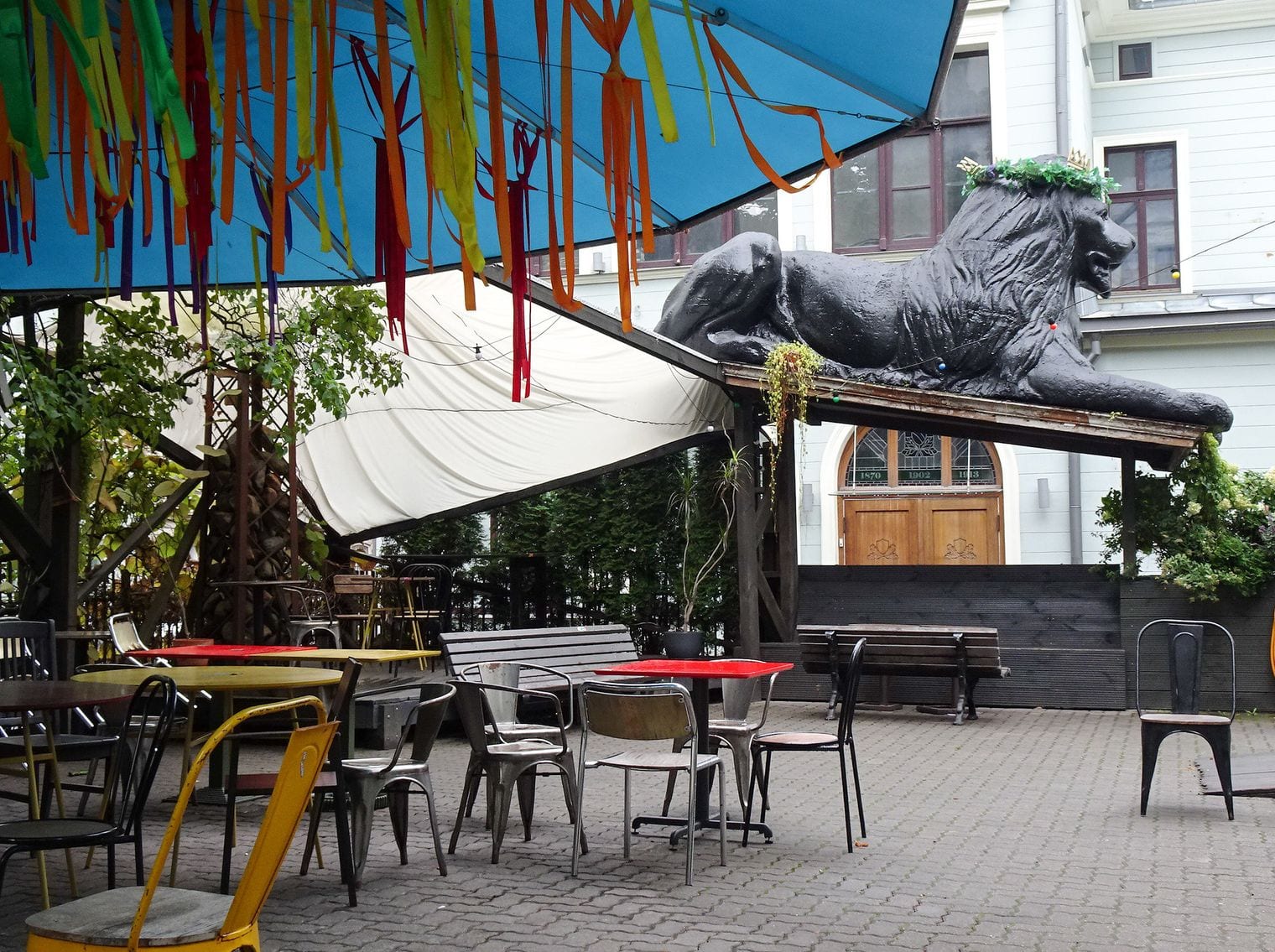
Kanepes Kulturas centrs is where Riga stops performing for visitors. Housed in a former music school on Skolas iela, it is a bar, cafe, concert room and general meeting point for the city's students, musicians and artists, with a scuffed, comfortable feel that no amount of design could manufacture.
The programme runs from live music and DJs to film screenings, talks and exhibitions, and the courtyard fills on warm evenings. Drinks are cheap by capital-city standards and nobody minds how long you sit. It is a short walk from the Art Nouveau streets, and it is the single easiest place to get a sense of contemporary Riga rather than the historic one.
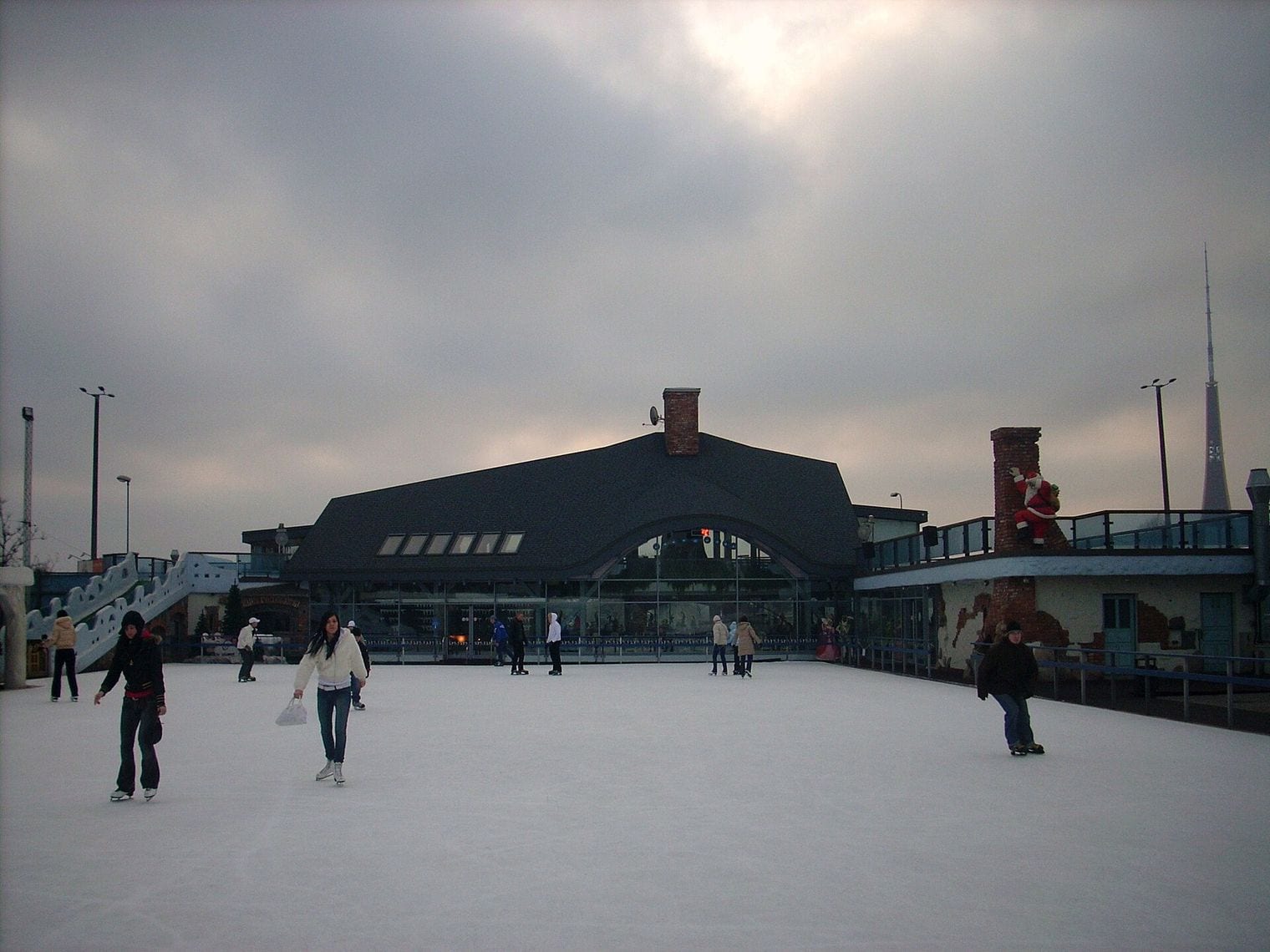
LIDO is a Latvian institution and the most painless introduction to the national kitchen there is. It is a self-service buffet, so you walk the counters and point: grey peas with bacon, pork with sauerkraut, cold beetroot soup in summer, rye bread, potato pancakes and a wall of desserts.
The flagship recreation centre on the eastern side of the city is the one to aim for, an enormous timber building done out like a wooden castle, with an ice rink outside in winter and a brewery on site. It is unashamedly a family destination and all the better for it. Prices are modest, portions are not, and it solves the problem of trying half a dozen Latvian dishes in one sitting.
The Skyline Bar sits high in the hotel tower on the edge of the park belt, and the view is the reason to come. Floor-to-ceiling glass wraps the room, so the Old Town spires, the Daugava and the Academy of Sciences are all laid out below with the sun going down behind them.
It is a cocktail bar rather than a viewing platform, and it has been a fixture of Riga nights out for years. Go early in the evening if you want the view and a seat by the window, later if you want the room at full tilt. There is no cheaper way to get this particular panorama in comfort, and no charge simply to ride up and look.
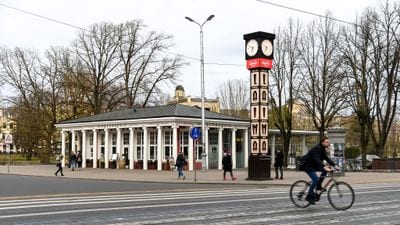
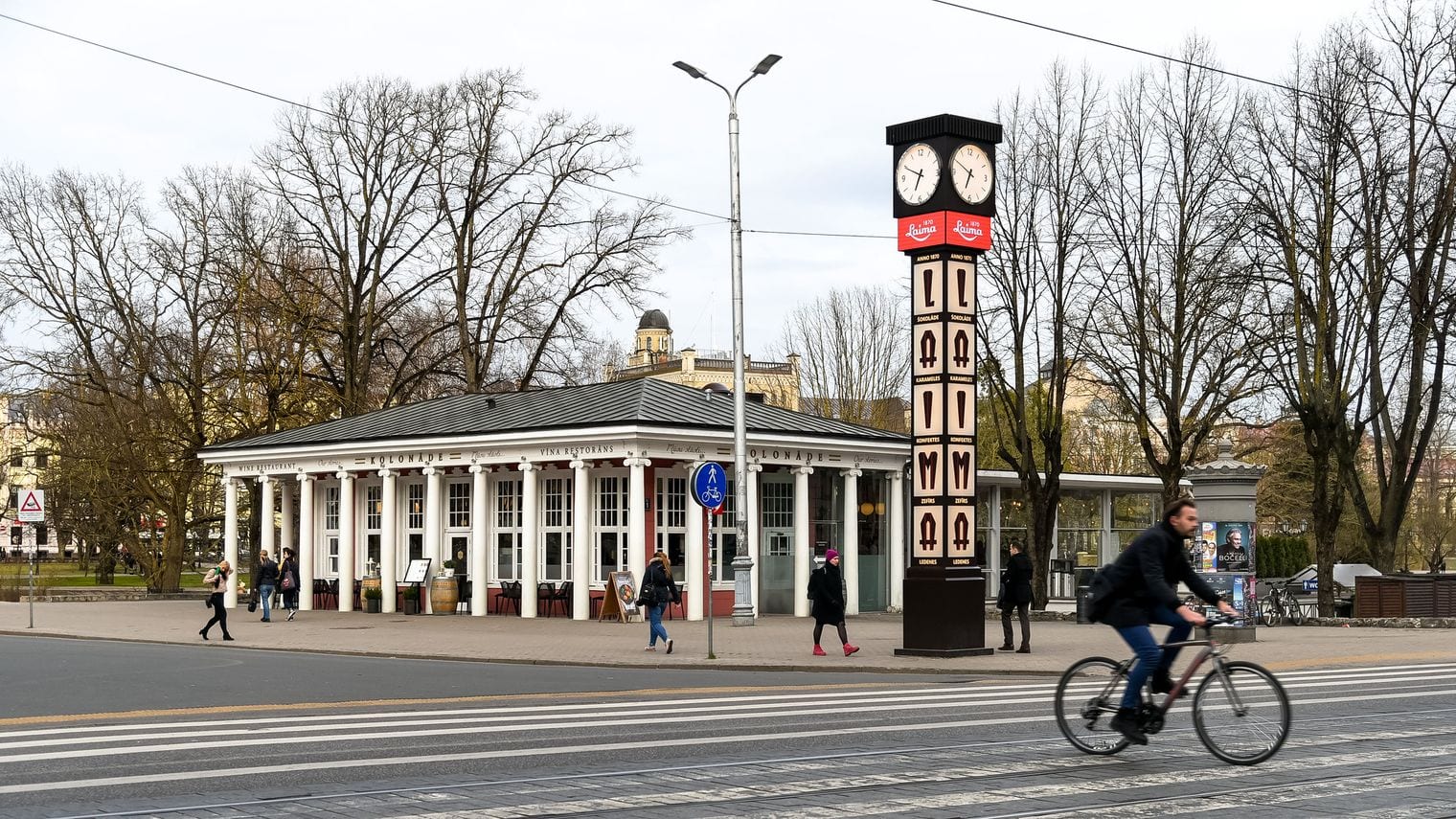
The Laima Clock is a small landmark that carries more weight in Riga than its size suggests. Standing at the edge of the park belt near the Freedom Monument, the free-standing clock has been the city's default meeting point for generations, and Latvians still arrange to see each other there.
It takes its name from Laima, the Latvian chocolate maker whose name it advertises, which makes it an unusually well-loved piece of commercial signage. There is nothing to do here beyond look, photograph it and use it as everyone else does — as the place you agree to meet before setting off into the Old Town or up Brivibas iela.
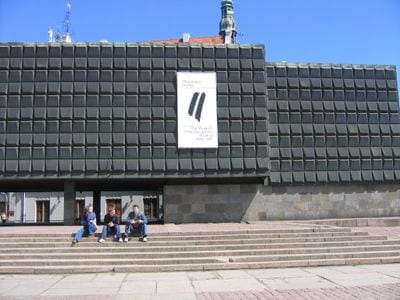
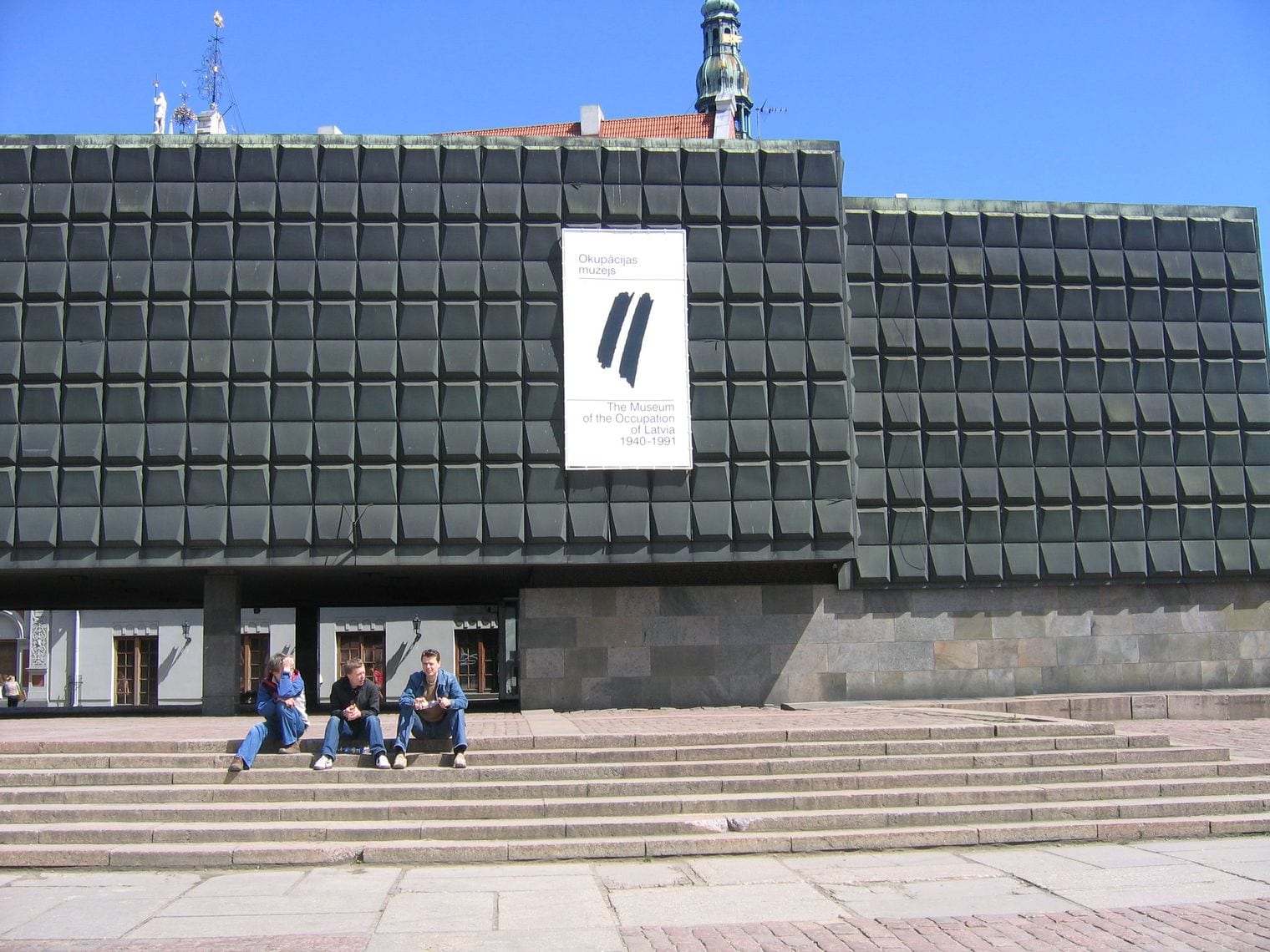
The Museum of the Occupation of Latvia sets out what happened to the country between 1940 and 1991, through Soviet and Nazi rule and the second Soviet occupation that followed. It is the essential context for a visit, and it is presented clearly enough to follow even if you arrive knowing nothing of Latvian history.
Displays cover deportation, resistance, exile and daily life under occupation, and a reconstructed Gulag barrack brings home what the statistics mean. The museum stands close to the House of the Black Heads in the Old Town, and it works best paired with the Corner House. Allow more time than you expect: this is a place people move through slowly.
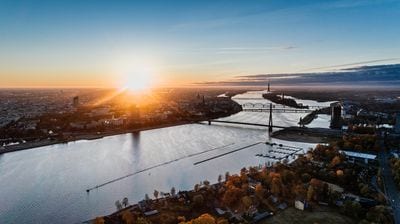
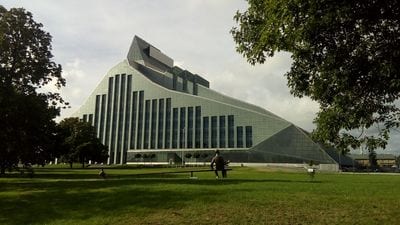
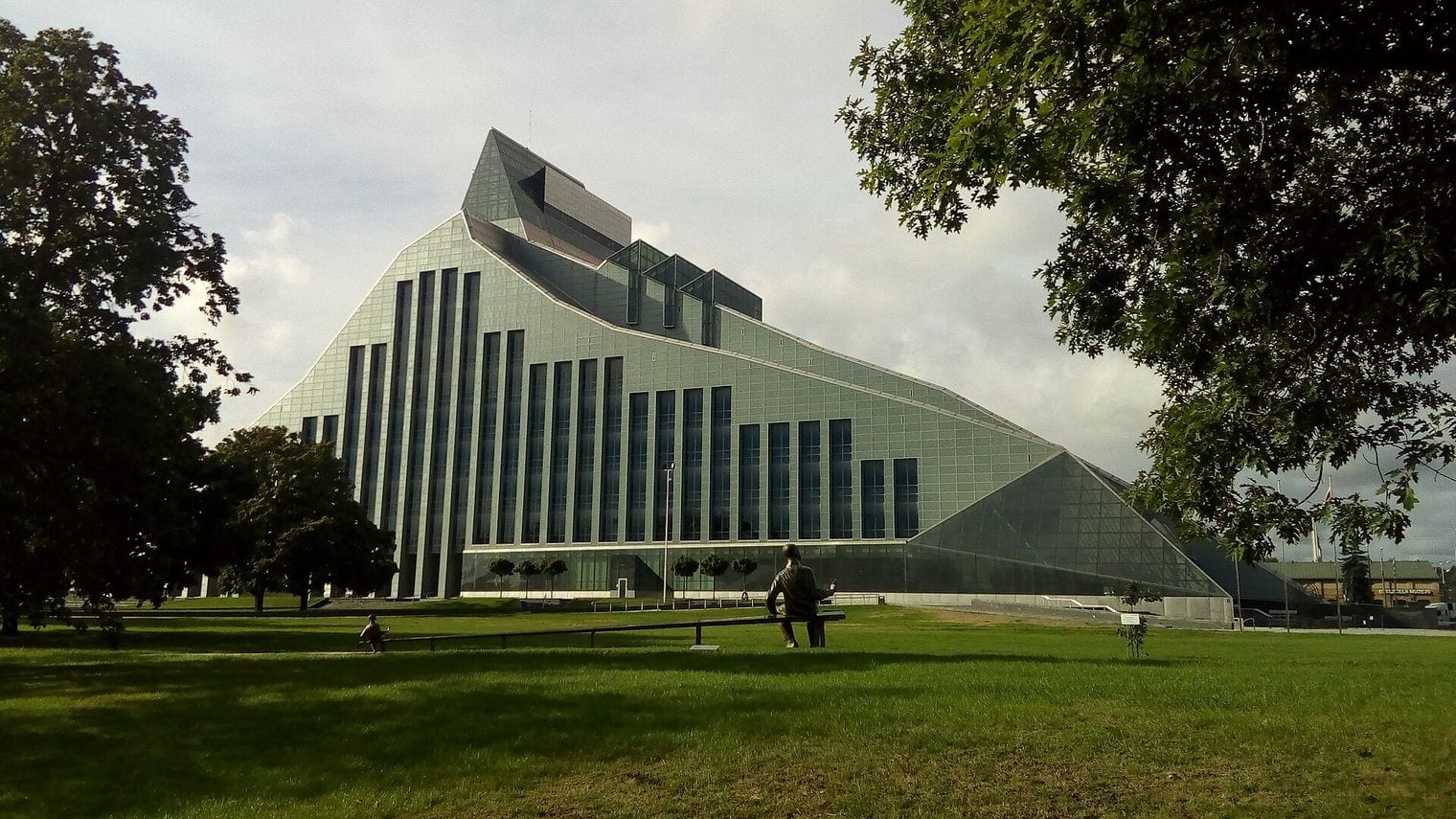
The National Library of Latvia is the one building on the Riga skyline that is neither medieval nor Art Nouveau, and it earns its place. Gunārs Birkerts — a Latvian architect who spent his career in Detroit — was commissioned in 1989, and the finished building opened in August 2014: 68 metres and thirteen storeys of angled glass on the left bank, directly opposite the Old Town across the Daugava.
Latvians call it Gaismas pils, the Castle of Light, after the folk tale of a castle that sinks into a hill and rises again when the nation does — which is why the profile is a mountain with a light on top. When the collection moved in, volunteers passed books hand to hand across the bridge in a human chain.
Inside, the atrium is lined with the People’s Bookshelf, a wall of volumes donated with inscriptions by the public, and the permanent exhibition on the Latvian book is free to walk into. Go up: the library publishes when its top levels are open, and the view back across the river to St. Peter’s Church and the spires is the best free one in the city.
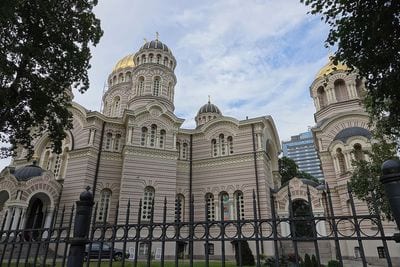
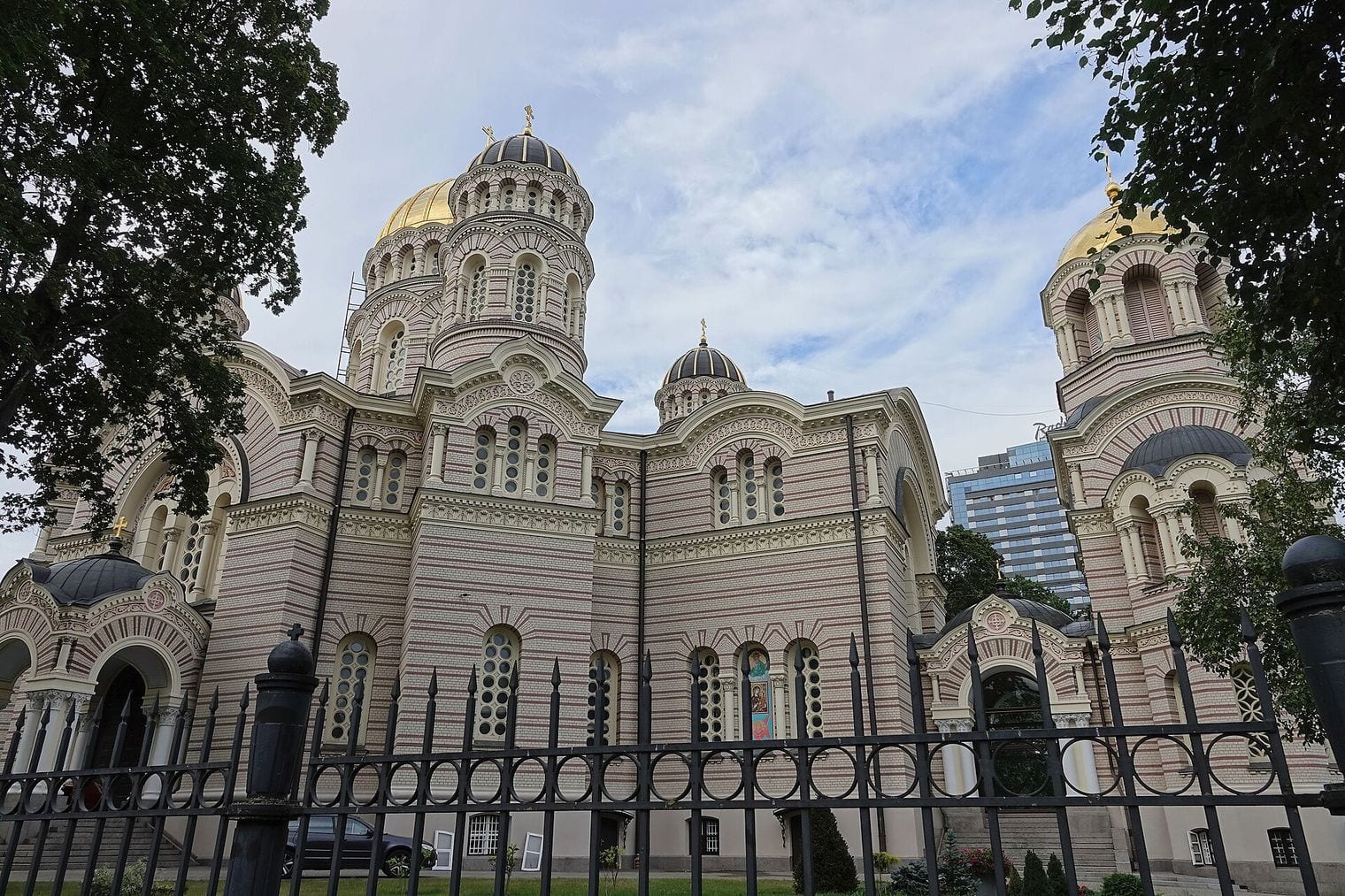
Five gold domes rise out of the trees on the Esplanade, a short walk up Brīvības bulvāris from The Freedom Monument. The Nativity of Christ Cathedral is the largest Orthodox church in Riga: its foundation stone was laid in 1876 and it was consecrated in 1884, built in the Neo-Byzantine manner the Russian empire used to mark its western provinces. The fifth dome was added mid-design, to carry twelve bells presented by Tsar Alexander II.
What happened next is the reason to come. Soviet authorities closed the cathedral, took down the crosses, melted the bells and converted the building into a planetarium and café renamed the Republic House of Knowledge.
Restoration began in the late 1990s and the new iconostasis was consecrated in 2000; work on the interior is still going, funded by donations. It is a working church rather than a museum, so services run through the day — cover your shoulders, women are asked to cover their heads, and leave the camera down inside.
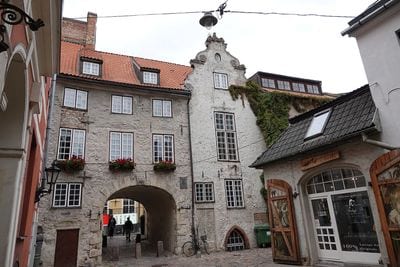
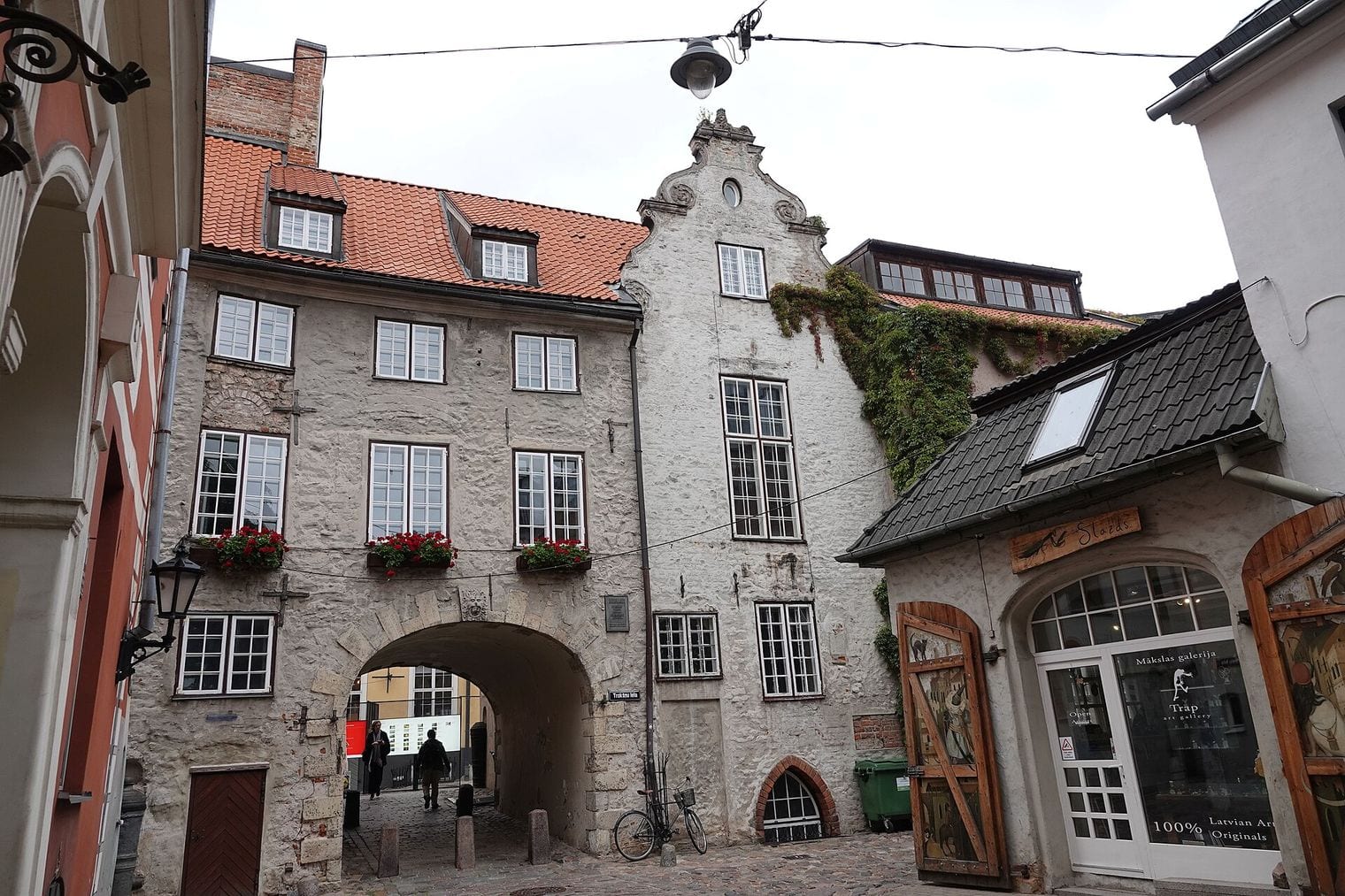
Riga once had eight gates through its city wall. The Swedish Gate on Torņa iela is the only one left, and it survives because it was never built as a monument: in 1698, under Swedish rule, an arch was simply knocked through the ground floor of a house standing against the wall so the garrison could reach its barracks outside. The passage is 3.75 metres wide, faced in dolomite from Saaremaa, with lions and the date carved into the keystone.
It is easy to walk straight past — there is no ticket, no queue and nothing to go into. Come in the evening, when the lane empties and the lamps come on under the arch, and walk the rest of Torņa iela while you are there: the long ochre range opposite is Jacob’s Barracks, the surviving stretch of medieval wall runs behind it, and the Latvian War Museum in the Powder Tower stands at the end of the street.
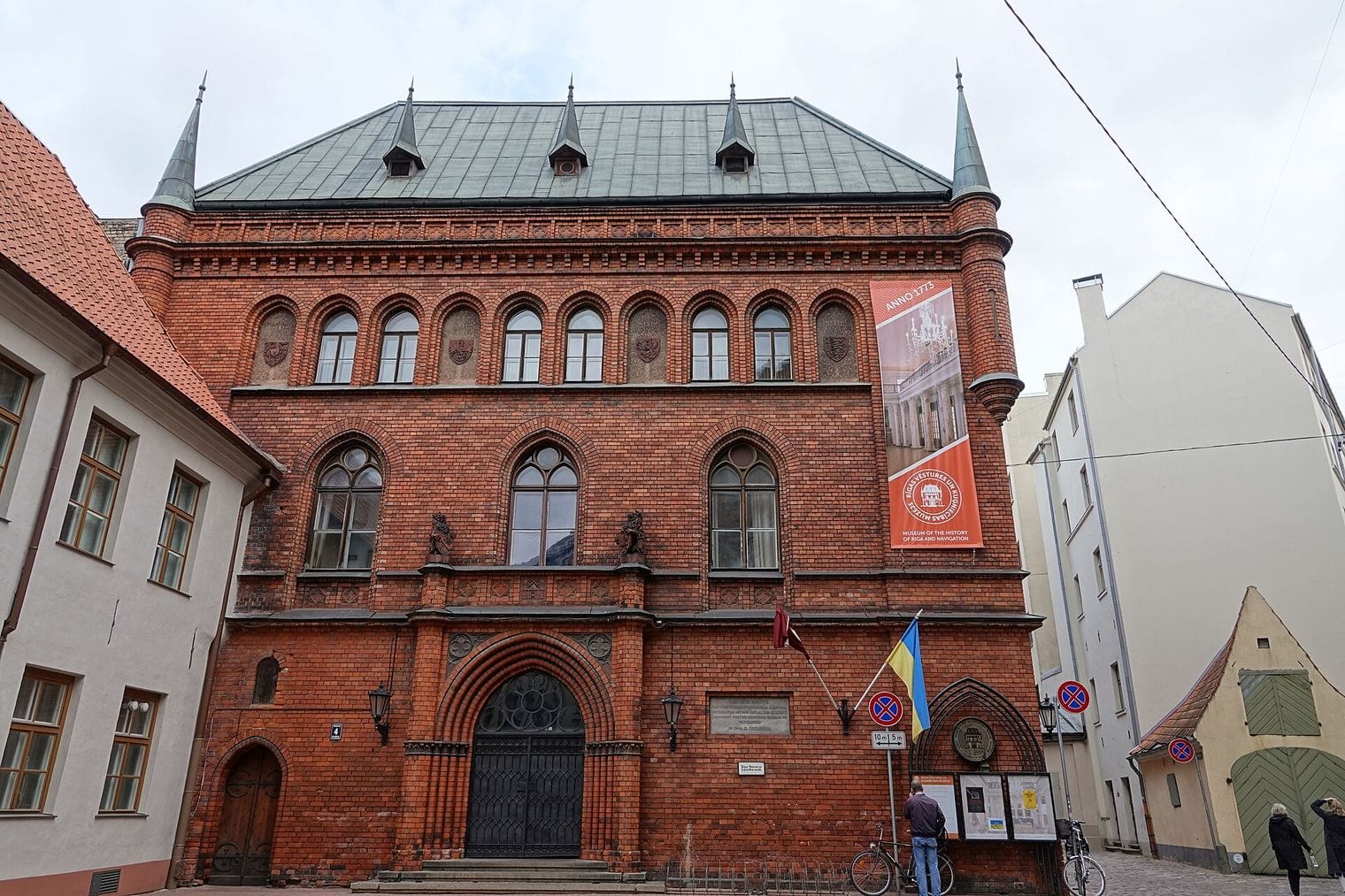
2929. Museum of the History of Riga and Navigation
Built into the cloister range of the cathedral complex and entered from Palasta iela rather than from Dome Square, the Museum of the History of Riga and Navigation was founded by the town council in 1773 around the cabinet of curiosities the physician Nikolaus von Himsel left to the city. That makes it the oldest public museum in Latvia and in the Baltics, and one of the oldest anywhere in Europe.
Roughly half a million objects sit in its collections, and the permanent display runs the city from its founding in 1201 through the Hanseatic centuries to the twentieth. Ship models, guild silver, weathervanes taken down off the spires and specimens out of Himsel’s original cabinet turn up in the same building.
The columned hall and the vaulted cloister walk would be worth the ticket on their own, and the museum also runs Mentzendorff’s House and the Latvian Museum of Photography as branches a few streets away.
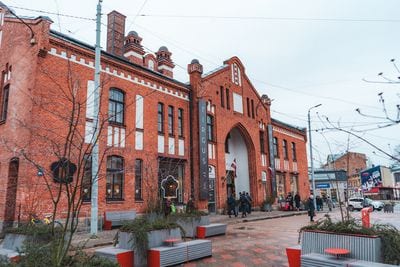
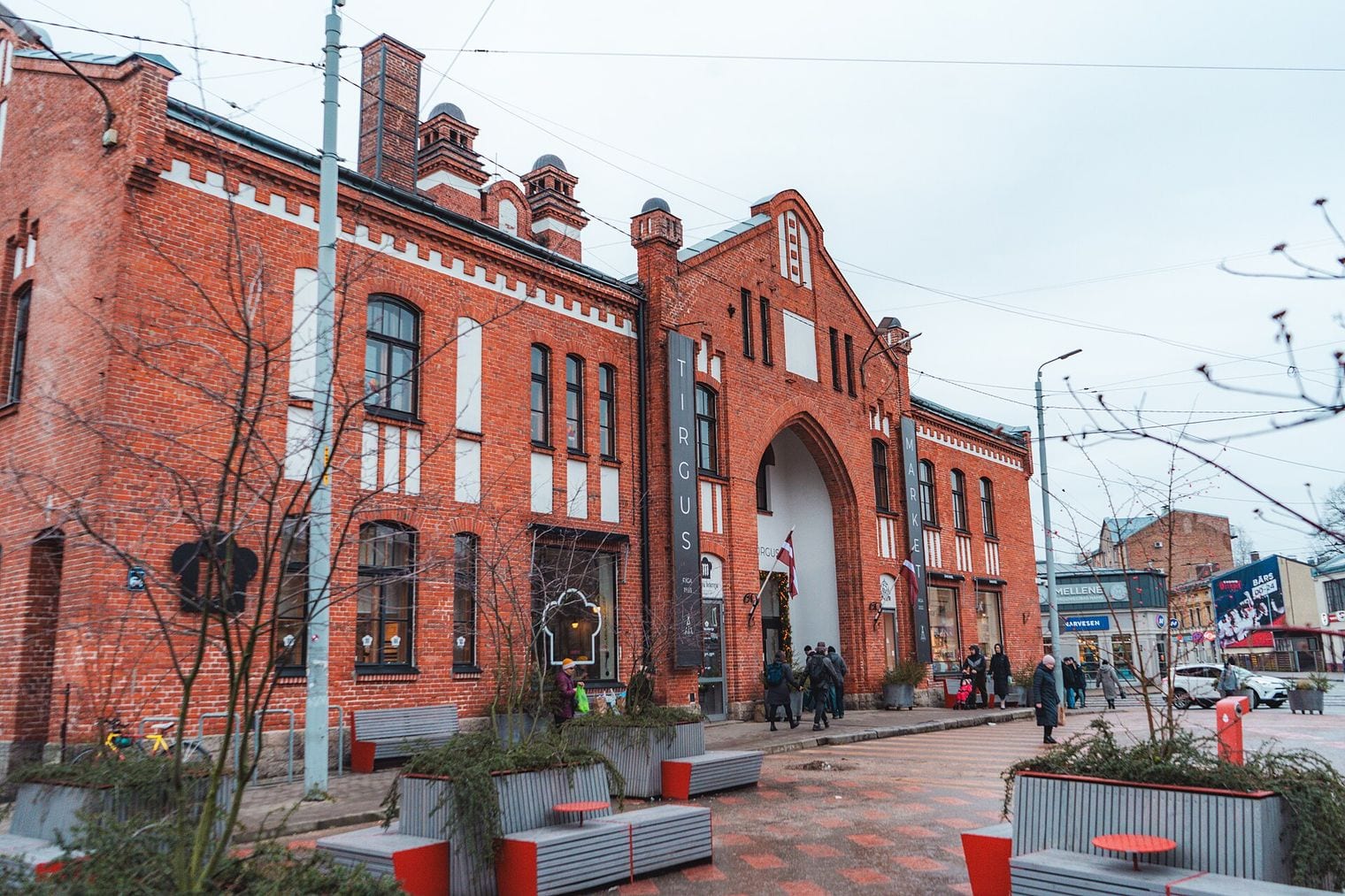
Cross the Daugava into the wooden-house districts of the left bank and you reach Āgenskalns Market, the oldest and largest market on that side of the river. Its red-brick pavilion went up in 1893 to a design by Reinhold Schmaeling, the city architect behind much of Riga’s public building stock, and traders have worked the site since 1898. It is a protected national monument.
The hall shut in 2018 when the structure was found to be failing, and reopened in 2022 after a four-year restoration. Downstairs is still a working market — around seventy growers and producers rather than a food court — while the upper floor holds a ring of small cafés and bars, with a bookshop and a weekend flea market alongside.
It makes a good pairing with Riga Central Market: the same job, a century of different architecture, and almost no other visitors.
Plan your trip
Best Time to Visit Riga
Late spring and early autumn are the sweet spots. May and June bring long northern daylight, open terraces and greenery in the park belt without the peak-summer crowds, while September stays mild and turns the parks gold. Midsummer is the loudest week of the Latvian year, with the solstice celebrated seriously and much of the city decamping to the coast. High summer is warm rather than hot and is the only realistic window for swimming.
Winter is cold, dark and frequently snowy, with short days that limit how much walking you will do. It has its own reward, though: the Old Town under snow is genuinely beautiful, and the Christmas market on Dome Square draws on a tradition the city traces back centuries. November and early spring are the two stretches to avoid if you can — grey, wet and short on daylight, with little compensation.
Getting to Riga
Riga International Airport is the busiest in the Baltic states and sits a short drive south-west of the centre, with a bus and shuttle link into town that takes around half an hour. That hub status is the practical reason to start a Baltic trip here rather than in Vilnius or Tallinn: far more routes land directly, and connections onward are easier.
Overland, Riga is the middle stop on the Vilnius-to-Tallinn run, and long-distance coaches along that corridor are frequent, cheap and reliable — and many travellers carry on from Tallinn by ferry to Helsinki, which is a little over two hours across the gulf.
The A1 runs north-east along the coast toward Estonia, the A2 north-east toward Sigulda and the Gauja valley, and the A8 and A7 head south toward Lithuania. Ferries connect the passenger terminal on the Daugava with ports across the Baltic, and the rail station sits directly beside the Central Market in the middle of town.
Getting Around Riga
Riga is a walking city at its core. The Old Town is compact, largely pedestrianised and crossable in twenty minutes, and the Art Nouveau streets, the park belt and the Central Market are all within an easy stroll of it — most visitors never board anything for the first day or two. A car is a liability rather than a help in the centre, where streets are narrow and parking is awkward.
For everything beyond that, the tram, trolleybus and bus network is dense, cheap and runs on a single ticket, and the trams in particular reach the places a short visit would otherwise miss — the forest park and zoo to the north, the left-bank districts across the river, the buffet halls to the east. Commuter trains from the central station handle the coast and the Gauja valley. Taxis and rideshare are widely available and inexpensive by western European standards.
Where to Stay in Riga
The Old Town is the obvious base if it is your first visit and you have only a couple of nights: you wake up inside the sights, and everything in this guide's first half is on your doorstep.
The trade-off is noise, since the bar streets around Livu Square are lively late, and prices that run above the rest of the city. The Quiet Centre immediately north, where the Art Nouveau streets are, is the better compromise — a five-minute walk to the Old Town, far calmer at night, and architecturally the most rewarding place in Riga to stay.
For a longer or a second visit, look across the river to the left-bank districts of Kipsala and Agenskalns, where restored wooden houses face the Old Town skyline and rooms cost noticeably less, or to the streets around Miera iela on the north side, which is where the city's independent cafes and design shops have concentrated. Anywhere within the park belt keeps you walkable; anywhere on a tram line keeps you connected.
Where to Eat in Riga
Start at the Central Market, which is both the cheapest and the most interesting meal in the city: the fish pavilion for smoked herring and eel, the dairy hall for curd snacks and the bread stalls for dark, sour rye.
Latvian cooking is hearty and seasonal, and the dishes worth seeking out are grey peas with bacon, cold beetroot soup in the summer months, potato pancakes, smoked Baltic fish and the pickles and wild mushrooms that appear in autumn. Riga Black Balsam, a bitter herbal liqueur the city has produced for centuries, is the drink to try at least once.
For sit-down eating, the Old Town lanes carry the highest concentration and the highest prices, and the quality varies with how close you are to the main squares.
The streets around Miera iela and the Quiet Centre are where the independent cafes, bakeries and modern Latvian kitchens have clustered, and the restored warehouse quarter behind the market has become a reliable spot for a longer dinner. Latvian buffet halls are a category of their own and the fastest way to try six dishes at once.
Day Trips from Riga
Jurmala is the easy one: a long white-sand Baltic beach backed by pine woods and ornate wooden spa villas, roughly 25 kilometres west and about half an hour by commuter train, which makes it a genuine half-day rather than an expedition. Slightly further west, Kemeri National Park offers a boardwalk across a raised bog that is one of the most photographed landscapes in Latvia, particularly at sunrise.
Inland, Sigulda sits about an hour north-east in the Gauja valley, where sandstone cliffs, a cable car across the gorge and the red-brick castle at Turaida make the best day out from the capital; the medieval castle town of Cesis is another half-hour beyond it. South, about an hour and a half away, the Baroque palace and formal gardens at Rundale are the grandest building in the country and pair naturally with the castle at Bauska on the same run.
Before you go
Mobile dataAn eSIM gives your phone local data when you land, with no SIM card to swap.via AiraloGet an eSIM
Airport transferA driver meets you at arrivals and takes you to your hotel, at a price fixed when you book.via Welcome PickupsBook a transfer
We may earn a commission when you buy through these links, at no extra cost to you. How we make money.
One Day in Riga
Morning
Start on Dome Square, where seven streets meet and the Old Town makes most sense, and go straight into Riga Cathedral — check the recital schedule as you go in, because hearing the organ is worth rearranging a day for.
From there it is a two-minute walk up Maza Pils iela to the Three Brothers and on to Riga Castle on the riverside. Double back and climb the spire at St. Peter's Church, which puts the whole plan in front of you before you walk it.
Head south-east to Riga Central Market and eat there rather than looking for a restaurant — smoked fish, rye bread and curd snacks from the hangars make a better lunch than most menus in the Old Town.
Come back down through the park belt past the The Freedom Monument and into Bastejkalna Park, which is at its best in low light. Eat in the centre — or take the tram out to LIDO if you want the full Latvian buffet — and finish upstairs at the Skyline bar, where the spires you walked between that morning are lit up below you.
A good deal of Riga costs nothing at all. Dome Square and the Old Town lanes around it are free to wander, the The Freedom Monument and its changing of the guard cost nothing to watch, and both Bastejkalna Park and Vērmane Garden are open public parks with benches, bandstands and canal frontage.
Add the Cat House, the Laima Clock and the Swedish Gate, and you can fill most of a day on foot without paying an entry fee — and the Art Nouveau facades on Alberta iela are, of course, free to stand and stare at.
Two of the best interiors cost nothing either: the Nativity of Christ Cathedral is a working church open to visitors, and the permanent exhibition inside the National Library of Latvia is free, as is the view from its upper floors.
Riga is best known for having the densest collection of Art Nouveau architecture in Europe and a UNESCO-listed medieval old town. The defining experiences are the Central Market in its converted Zeppelin hangars, the House of the Blackheads on Town Hall Square, the restored Art Nouveau apartment on Alberta iela, the preserved KGB building known as the Corner House, and the open-air Ethnographic Museum on the city's edge.
How many days do you need in Riga?
Three days is the sweet spot. One covers the Old Town core and the Central Market comfortably, a second adds the Art Nouveau streets and the twentieth-century history museums, and a third gives you either the forest park and zoo to the north or a train out to the coast at Jurmala. Two days is enough for a first look; a week lets you reach the Gauja valley and Rundale as well.
What can you do in Riga for free?
Plenty. Dome Square, the Old Town lanes, the Freedom Monument and its guard, Bastejkalna Park, Vermane Garden, the Cat House and the Laima Clock all cost nothing, and the Art Nouveau facades on Alberta iela and Elizabetes iela are best experienced from the pavement anyway. A self-guided walk taking in all of them fills most of a day without an entry ticket.
Is Riga walkable?
Very. The Old Town is compact, largely pedestrianised and crossable on foot in about twenty minutes, and the Art Nouveau district, the park belt and the Central Market all sit within an easy walk of it. A car is more hindrance than help in the centre. For the forest park, the left bank and the outlying museums, the tram and trolleybus network covers the gaps cheaply.
When is the best time to visit Riga?
Late spring and early autumn. May, June and September give you long daylight, open terraces and mild walking weather without peak crowds, and September in particular turns the parks gold. High summer is warm and busiest, and is the only realistic season for the Baltic beaches. Winter is cold and dark but delivers the Old Town under snow and the Christmas market on Dome Square.