A country you can cross in an hour, with a thousand years of fortress history stacked up in its capital's cliffs.
Luxembourg packs a startling amount into 2,586 square kilometres: a capital built on a gorge and ringed by UNESCO-listed fortress tunnels, castle-topped ridges in the wooded Ardennes north, sandstone canyons in the Mullerthal, and Riesling terraces stepping down to the Moselle. It is the world's only remaining Grand Duchy, a founding member of the EU, and small enough that almost nowhere is more than an hour's drive from anywhere else. Public transport across the whole country is free, which makes it one of Europe's easiest places to travel without a car.
The gorges and forests green up and the Moselle vineyards come into leaf. Cool and changeable early on, but by May the terraces on Place d'Armes are open and the Mullerthal trails are at their freshest, with wild garlic underfoot and the waterfalls still running strongly.
SummerJun–Aug
Warm and long-evening'd, with open-air concerts in the capital's parks and the Grund's riverside bars at their best. It is the busiest stretch and the only time the Grand Ducal Palace opens its interior to visitors, but the country is small enough that the Ardennes and Mullerthal still feel quiet on a weekday.
FallSep–Nov
Arguably the finest season: grape harvest along the Moselle, beech woods turning copper across the Éislek, and the fortress viewpoints at their clearest. September still carries summer warmth; by November it turns grey and damp and the upland trails get muddy.
WinterDec–Feb
Cold, often overcast and dark by late afternoon, but the capital lights its squares for the Christmas markets and the casemates and museums are blessedly uncrowded. Snow dusts the Ardennes some years, though this is not a reliable ski country — it is a season for interiors, cellars and short daylight walks.
Regions
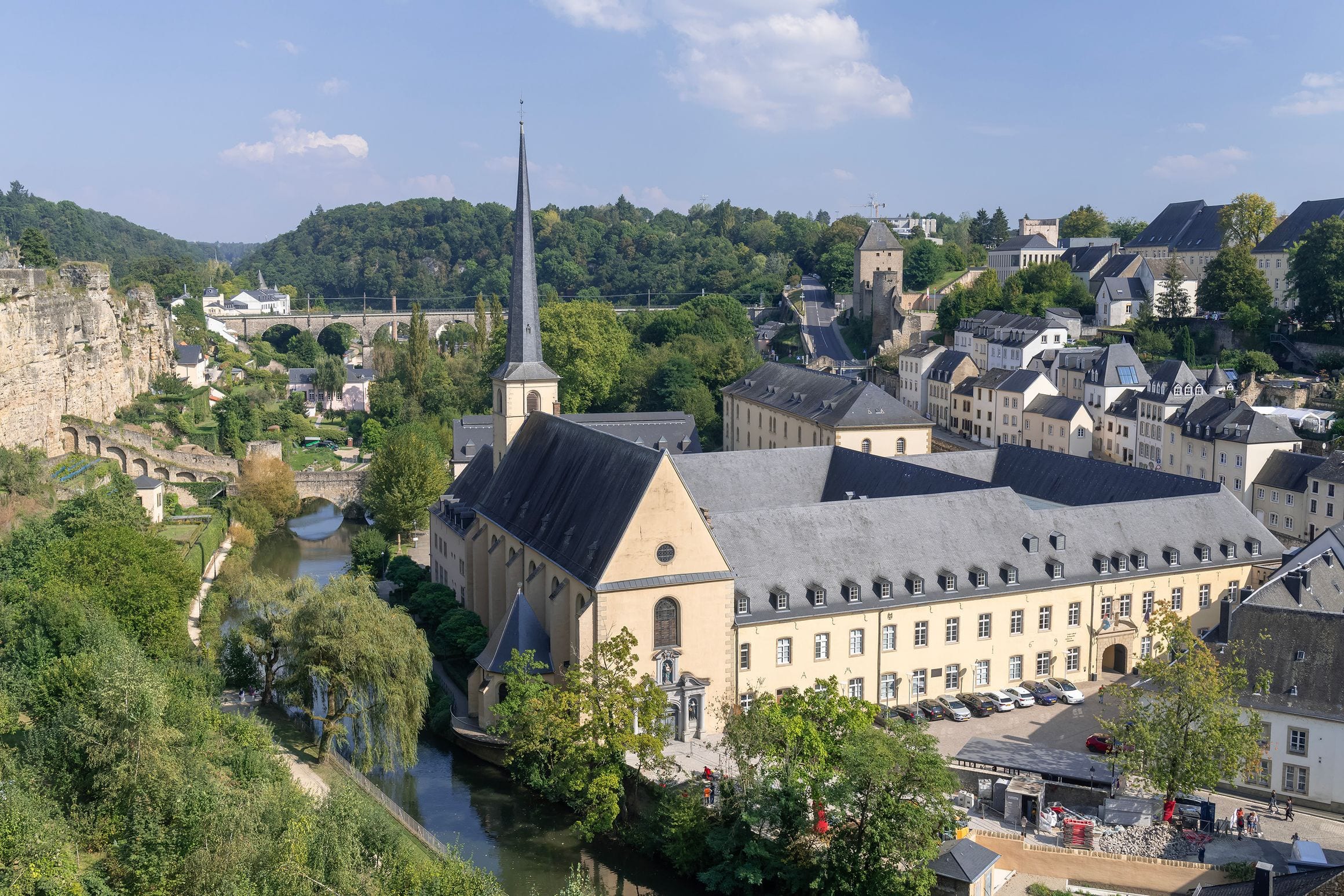
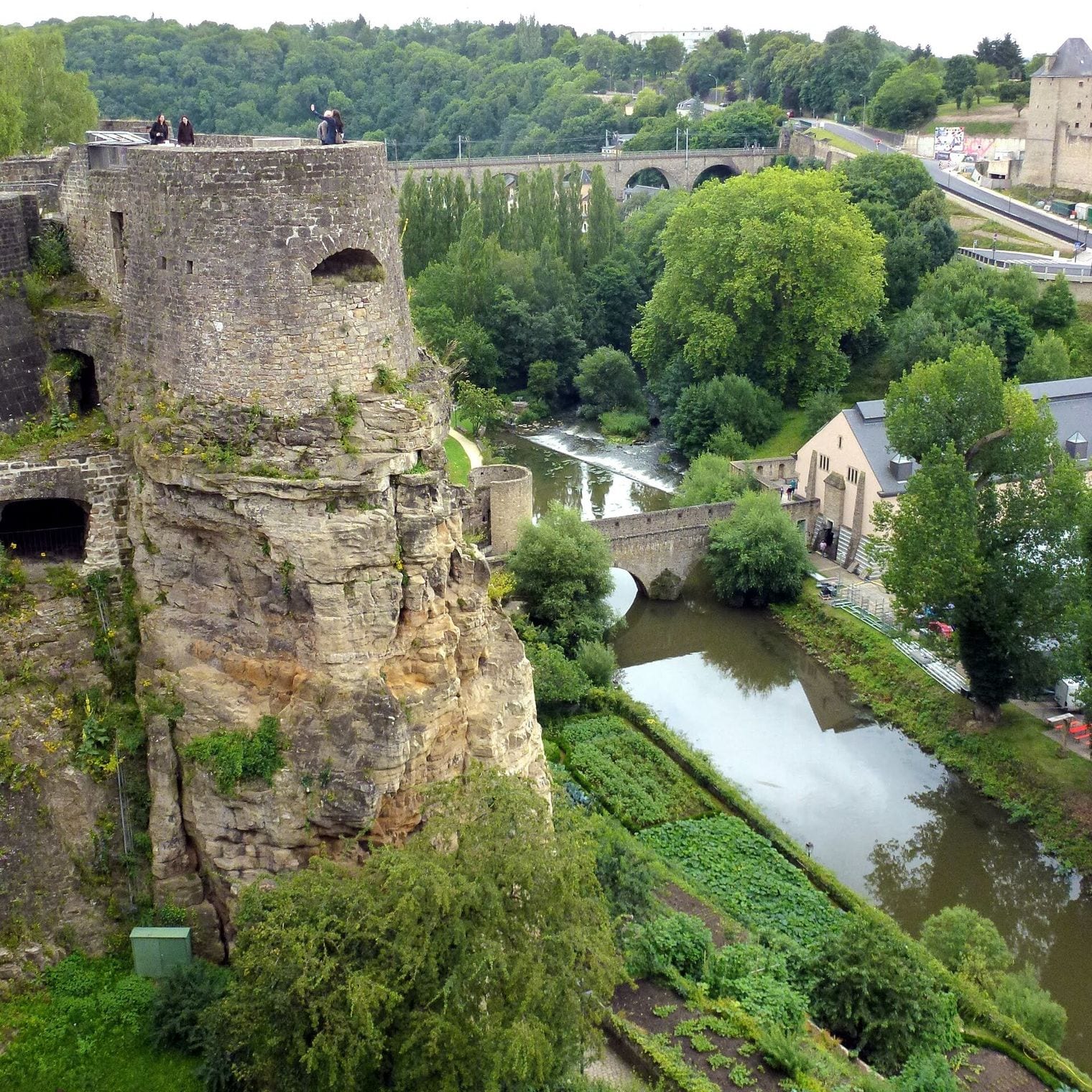
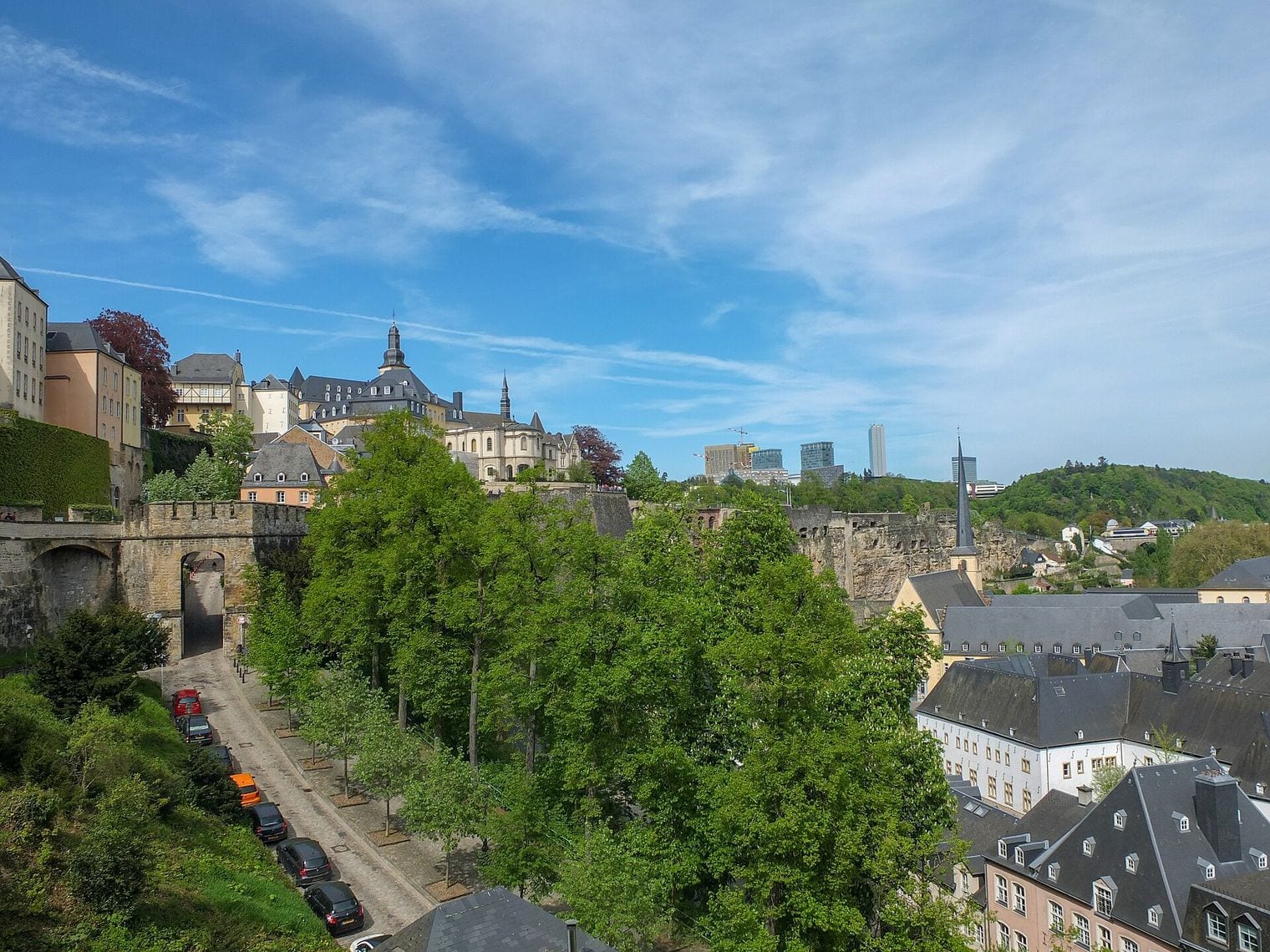
Luxembourg City & the centreThe capital sits astride the Alzette and Pétrusse gorges, its old town and fortifications inscribed by UNESCO and its cliffs honeycombed with the Bock casemates. Below the ramparts the Grund and Clausen quarters hold the riverside bars and the abbey; above them, the Kirchberg plateau carries the EU institutions, the modern art museum and the concert hall.
Éislek — the Ardennes northWooded hills and deep river valleys crowned by the country's great castles, Vianden and Bourscheid among them. Clervaux holds The Family of Man photography collection in its château, and the whole region is laced with hiking routes and quiet villages where the Battle of the Bulge is still remembered.
Mullerthal — Little SwitzerlandA maze of sandstone gorges, mossy staircases and cascades east of the capital, threaded by the long-distance Mullerthal Trail. Echternach, the country's oldest town, anchors it with a Benedictine abbey and a lake, and the walking here is the best in the Grand Duchy.
The Moselle ValleySteep terraced vineyards running along the river border with Germany, producing Riesling, Pinot varieties and the sparkling Crémant de Luxembourg. Remich and Grevenmacher are the tasting bases, and Schengen — where the border-free agreement was signed on a boat — sits at the southern end.
Minett — Land of the Red RocksThe industrial south, where iron ore once turned the soil red and fed the steelworks. Esch-sur-Alzette, the second city, has reinvented its blast-furnace sites as cultural venues, and the old mining landscapes are now nature reserves and heritage railways.
GuttlandThe gentle 'good land' of farm country, river valleys and small castles that fills the middle of the country between the capital and the northern hills. Larochette and Useldange hold the ruins worth stopping for, and it is the quiet green buffer most visitors drive straight through.
Vianden CastleA hilltop fortress restored to its Romanesque and Gothic prime above a slate-roofed river town, reached by chairlift for the best view of it.Basecamp: Vianden
The Mullerthal Trail112 km of waymarked walking through sandstone clefts, ladder-stairs and the triple cascade of the Schiessentümpel, in the region called Little Switzerland.Basecamp: Echternach
The Moselle wine routeTerraced Riesling and Crémant vineyards along the German border, with cellar tastings at Remich and Grevenmacher and the Schengen agreement monument at the southern tip.Basecamp: Remich
Enough time to work through the fortress city properly and still get out to one contrasting region. Everything here is walkable or free by train, so no car is needed at all.
2Kirchberg — modern art museum, concert hall and the EU quarter
3The Grund & Clausen — riverside quarters below the cliffs, by lift
4Echternach — day trip by train for the abbey and Mullerthal trailheads
Castles of the Éislek
~2–3 days
A loop north into the Ardennes, linking the three great castles with wooded river valleys between them. Doable by train and bus, but far easier with a car.
1Vianden — the showpiece castle and its chairlift
2Bourscheid — ruined ridge fortress above a bend in the Sûre
3Esch-sur-Sûre — village wrapped inside a river meander
4Clervaux — château, abbey and The Family of Man collection
The Moselle & the red-rock south
~2 days
Wine terraces along the German border, then west into the old iron-mining country for the industrial heritage and its reinvented cultural sites.
1Remich — riverside wine town and cellar tastings
2Schengen — where the border-free agreement was signed
3Esch-sur-Alzette — the second city and its blast-furnace arts district
4Fond-de-Gras — heritage railway through the former mining landscape
Luxembourg travel FAQ
Eight questions travellers ask before they go.
When is the best time to visit Luxembourg?
May to June and September are the sweet spots — mild, long days, open terraces and the countryside at its best, without high-summer crowds. September adds the Moselle grape harvest and October the autumn colour across the Ardennes. December is worth it for the capital's Christmas markets, while January and February are cold, grey and short on daylight.
How many days do you need in Luxembourg?
Two full days cover Luxembourg City comfortably: the casemates, the old town, the Grund and the museums. Three to four lets you add a region — the Mullerthal gorges or the castles of the north. A week is enough to see essentially the whole country at an unhurried pace, since nothing is more than about an hour from the capital.
Do you need a car in Luxembourg?
Not for the capital, and not for anywhere on the rail network — trains and buses reach Echternach, Clervaux, Vianden and the Moselle towns, and they are free to ride. A car helps for the Mullerthal trailheads, the smaller Ardennes villages and the wine route, where buses run only a few times a day. Many visitors do the cities by train and hire a car for a single day of touring.
What is Luxembourg known for?
Being the world's only remaining Grand Duchy, and one of the EU's founding members and institutional seats. Beyond that: the UNESCO-listed fortress capital built over two gorges, castles out of proportion to the country's size, the Mullerthal's sandstone walking country, Moselle white wine and Crémant, and — since 2020 — free public transport nationwide.
Is English widely spoken in Luxembourg?
Yes, especially in the capital, where a large international workforce means English is routine in hotels, restaurants and museums. The country runs on three languages of its own — Luxembourgish, French and German — with French most visible on menus and signage. Visitors rarely need more than a few polite words.
What currency does Luxembourg use, and is it in the EU?
The euro. Luxembourg is a founding member of both the European Union and the eurozone, and is in the Schengen area — the agreement itself was signed in the Luxembourg village of Schengen. Cards are accepted almost everywhere, and there are no border controls arriving from Belgium, France or Germany.
What food is Luxembourg known for?
Hearty dishes shaped by its German and French neighbours: Judd mat Gaardebounen, smoked pork collar with broad beans, is the national plate. Also look for Bouneschlupp green bean soup, Gromperekichelcher potato fritters at markets, the pungent spreadable Kachkéis, and Quetschentaart plum tart in late summer. Drink the Moselle Rieslings and the sparkling Crémant de Luxembourg.
What kind of trip is Luxembourg best for?
Short breaks, castle drives and hiking.
We use cookies to analyse site traffic and improve your experience.
You can accept or reject analytics cookies. See our Cookie Policy.