We build and rank every list first. Booking links come after, and only where
a partner sells a ticket, tour or stay for that exact place, so a place with
nothing to book is listed exactly as prominently as one you can book.
So how do we earn? Some links on this page go to booking
partners, and if you book tickets, tours or a stay through
one, we may earn a commission. It costs you nothing extra.
That commission never decides which places make the list, the order they
appear in, or what we write about them. No entry is sponsored or a paid
placement.
By the City Viking editorial teamPublished 20 places · 20 min read
Fact-checked Checked before launchOct 8, 202620 sources19 publishers8 government & parks2 tourism boards10 venues & other sitesPublished · Oct 8, 2026Researched and checked before it went liveClick for every source and the full change log.
Short answer
Start with Camden for the view over its harbor from Mount Battie, Bar Harbor for Acadia National Park and the low-tide walk to Bar Island, and Kennebunkport for Dock Square and the shore road to Walker's Point. Most towns on this list fill a relaxed day, while Bar Harbor deserves two or three days for Acadia and Monhegan is best with a night on the island.
Maine keeps its character in its small towns: lobster harbors and windjammer ports along a coast of granite and spruce, sea captains' villages and college towns, and lake towns at the edge of the North Woods. Beyond Bangor and Augusta, this is where most travelers find the state they came for.
This guide ranks 20 of the best, each home to fewer than 50,000 people at the 2020 census, from Camden on Penobscot Bay to Lubec at the country's eastern edge. Most fill a relaxed day, Bar Harbor and Monhegan deserve longer, and many pair neatly on a coastal road trip.
Camden's shipyards launched the first six-masted schooner ever built, the George W. Wells, at the H.M. Bean yard on the harbor.
Rockport lime helped rebuild the U.S. Capitol: in 1817, 300 casks were shipped to Washington after the British damaged the building in the War of 1812.
York was home to the first incorporated city in America: a royal charter made the settlement of Gorgeana a city in 1642, a decade before it was reorganized as the town of York.
Rangeley sits halfway between the Equator and the North Pole, and a sign in town says so.
Harriet Beecher Stowe wrote Uncle Tom's Cabin in Brunswick, while her husband taught at Bowdoin College; the house is now a National Historic Landmark.
West Quoddy Head in Lubec is the easternmost point of the contiguous United States, and its red-and-white striped lighthouse tower has marked it since 1858.
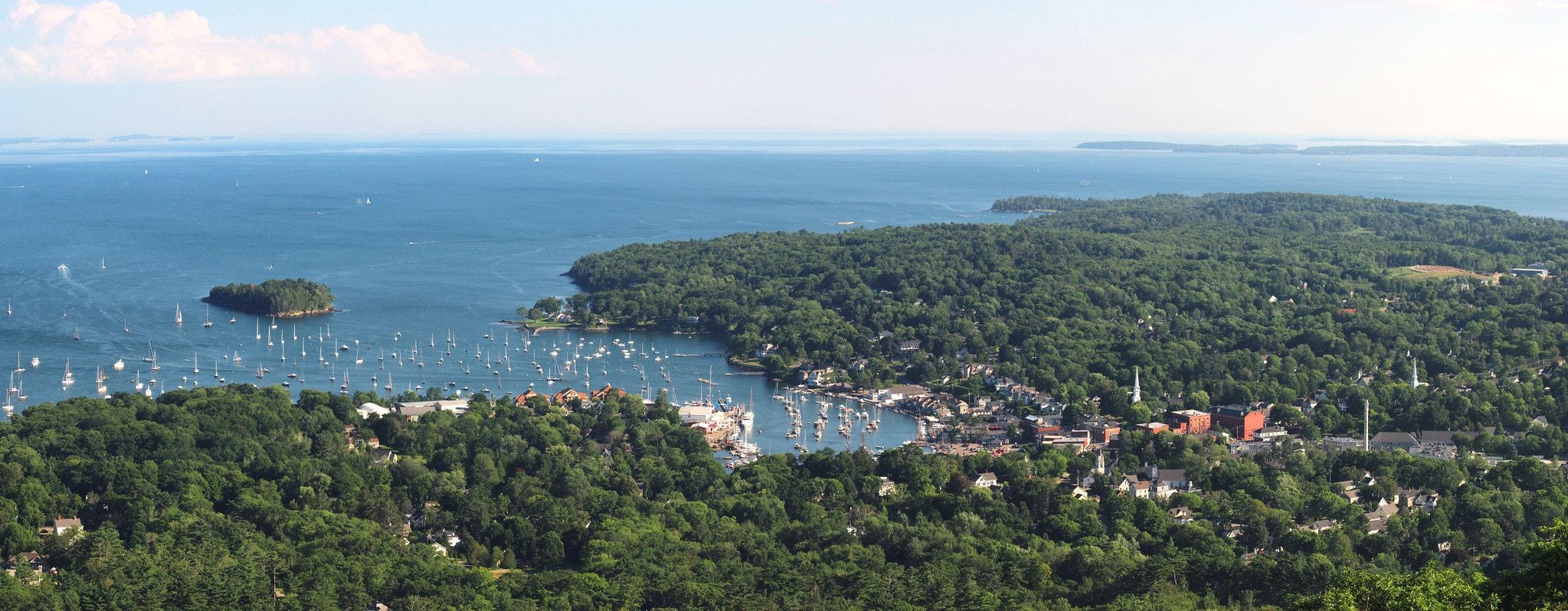
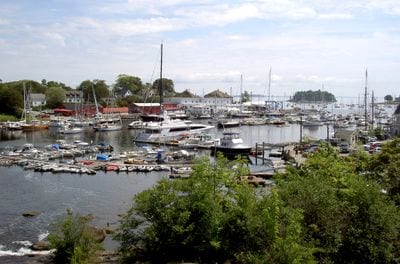
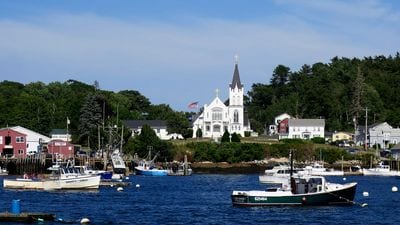
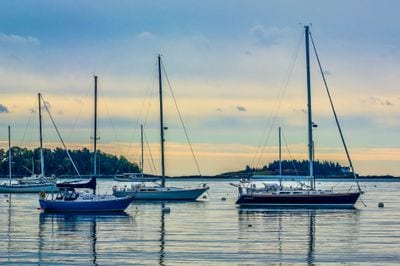
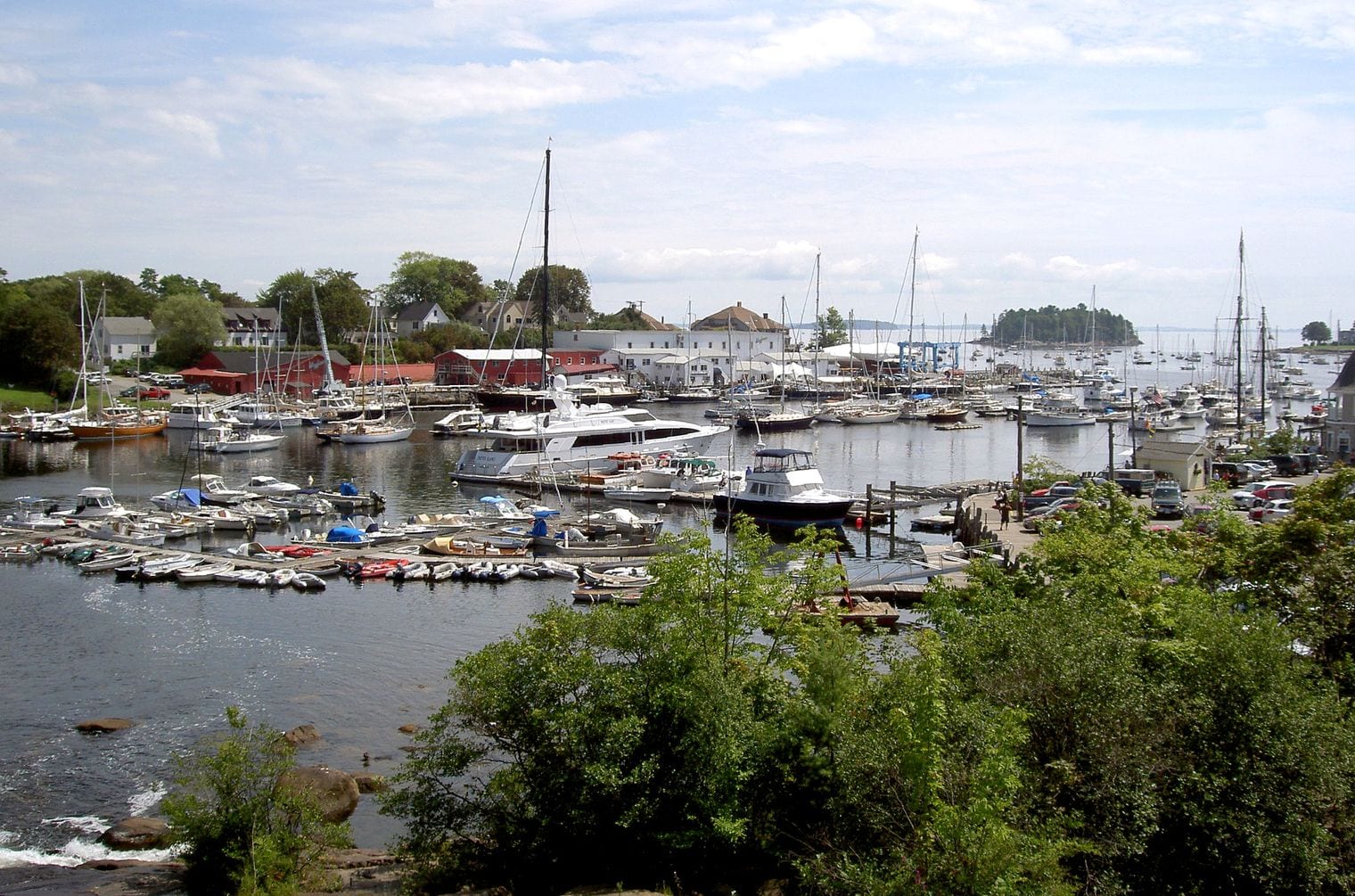
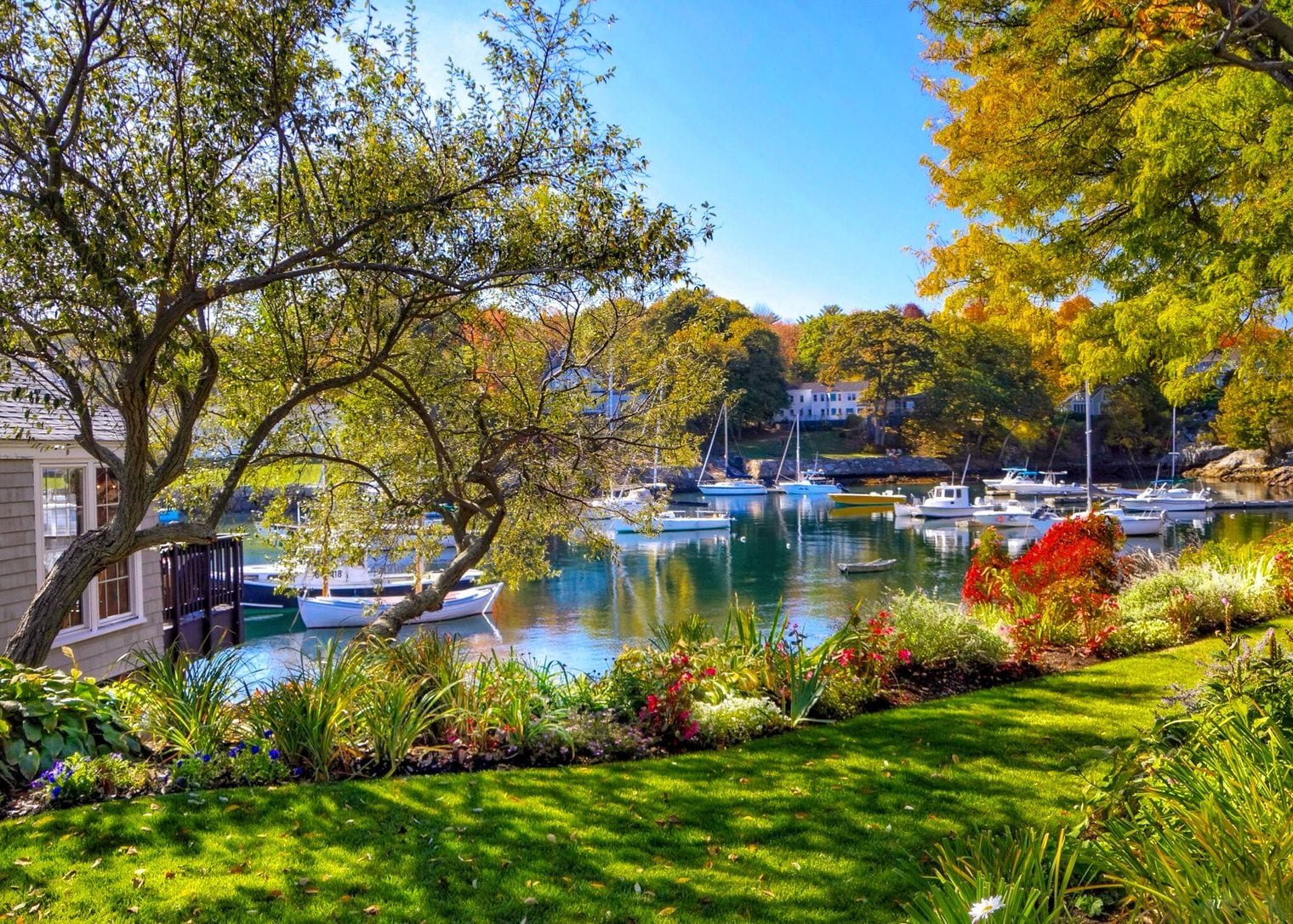
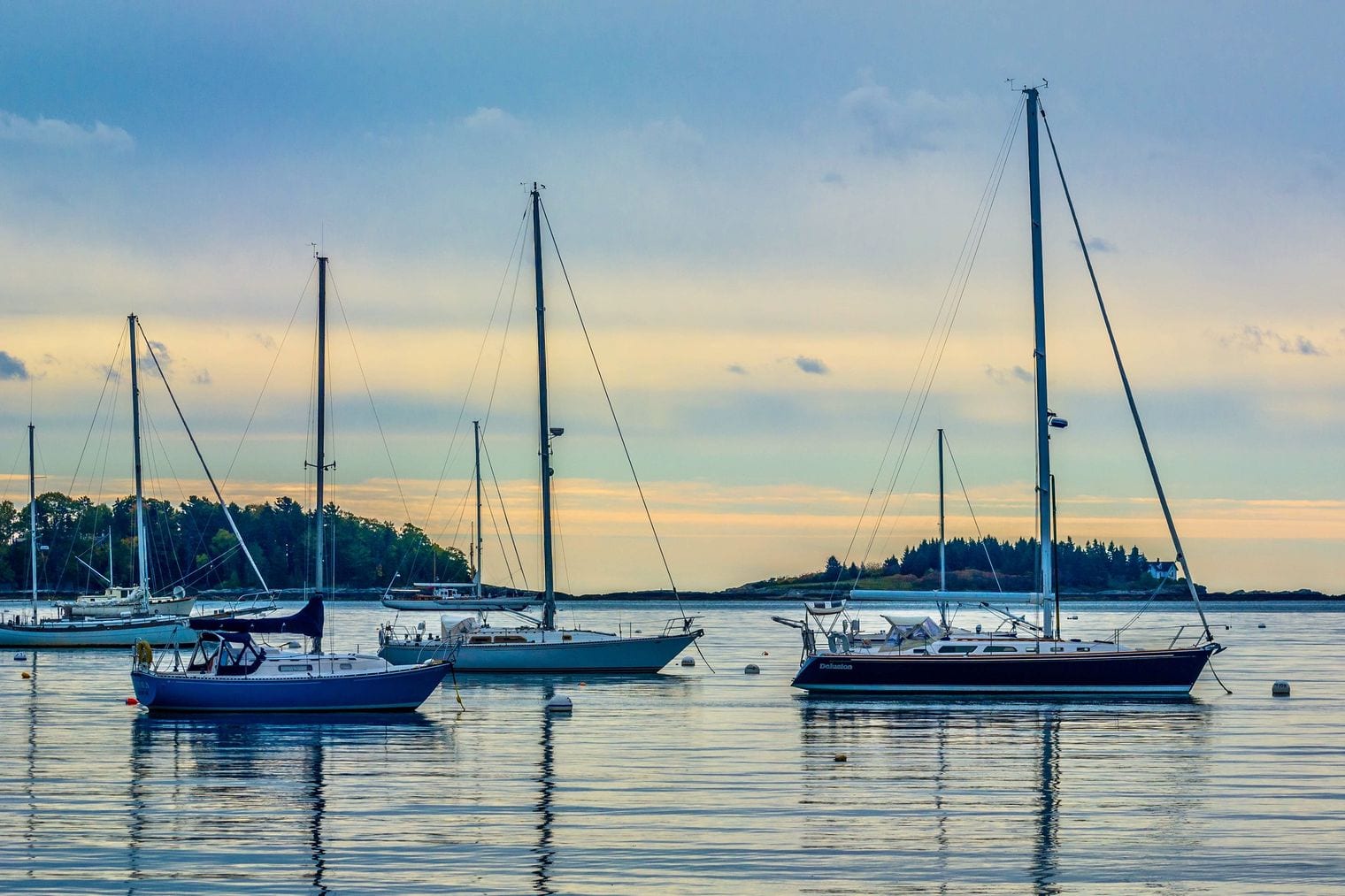
Camden is the small town most people picture when they think of coastal Maine: a harbor full of masts on Penobscot Bay, with the Camden Hills rising almost straight out of the water behind it.
It is one of the few places on the Atlantic seaboard where mountains meet the sea, and the best place to see that is the summit of Mount Battie in Camden Hills State Park, reached on foot or by the auto road, with a stone tower on top. Edna St. Vincent Millay wrote her poem "Renascence" from that summit, and the view over the harbor and the islands of the bay explains why.
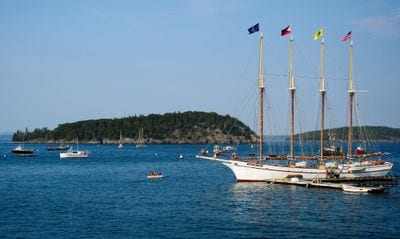
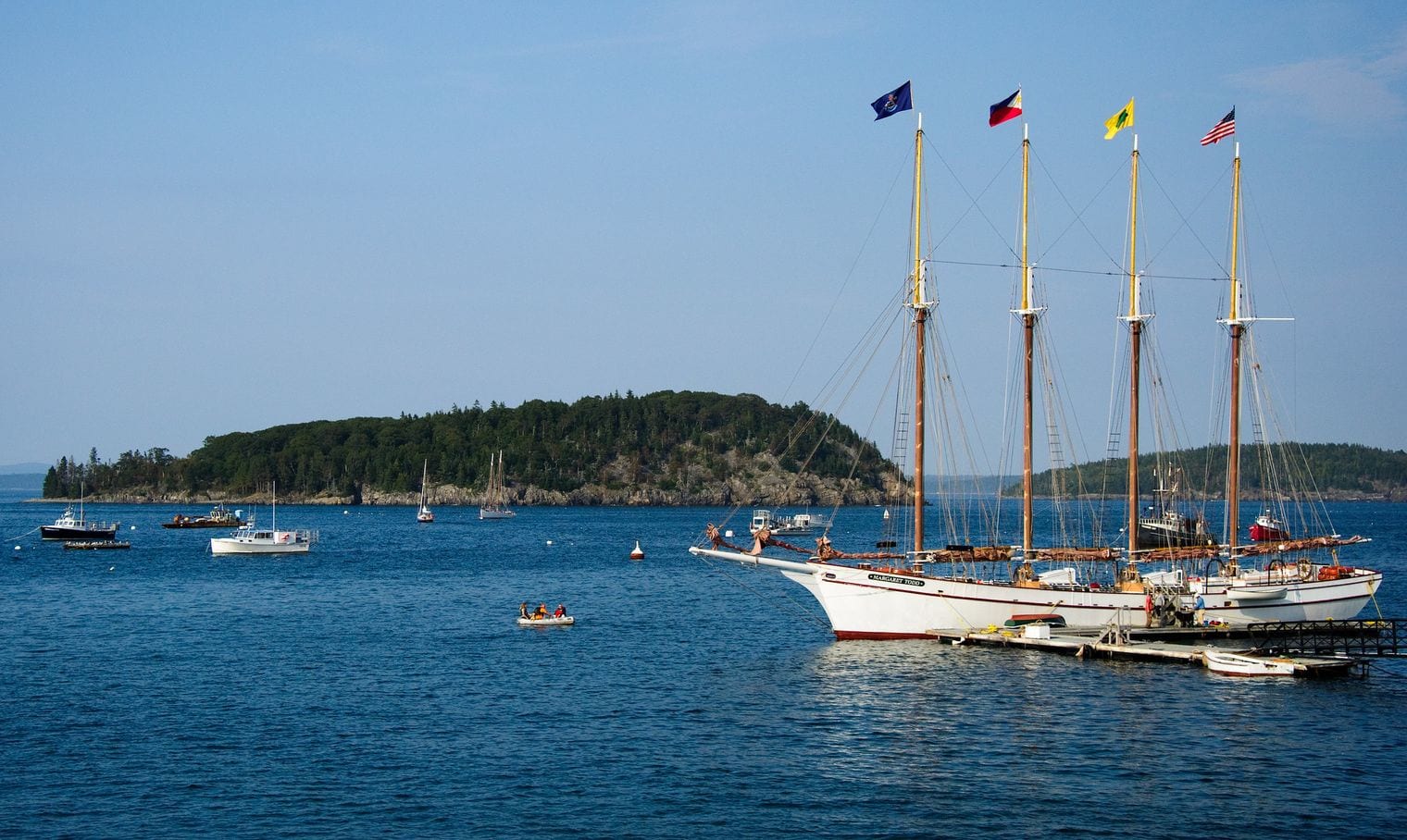
Down in the village, Camden is home port to a fleet of windjammers, traditional sailing schooners that take passengers out on the bay, a trade that began here in the 1930s. Browse the shops and galleries around the harbor, then sit for a while in Harbor Park, designed by the Olmsted Brothers, or in the amphitheater beside the public library, the work of landscape architect Fletcher Steele. Rockport, the quieter harbor town next door, is a short drive south.
Bar Harbor is the front door to Acadia National Park, a resort town on Mount Desert Island whose streets run down to the edge of Frenchman Bay. The largest parts of the park lie within the town, including Cadillac Mountain, the highest peak on the U.S. Atlantic coast, and the carriage roads financed by John D. Rockefeller Jr. are still used by walkers and cyclists.
In the Gilded Age, Bar Harbor was a summer resort to rival Newport, and some of the grand shingled "cottages" of that era still stand along the shore.
The Shore Path follows the water past several of those estates, and at low tide a gravel bar appears off Bridge Street that you can walk across to Bar Island, the bar that gave the town its name.
Watch the clock, because the bar is exposed for only a couple of hours before the sea covers it again. Back in town, the Abbe Museum is devoted to the heritage and living cultures of the Wabanaki Nations, and the Village Green anchors a busy grid of shops and restaurants. Summer and fall are the peak seasons.
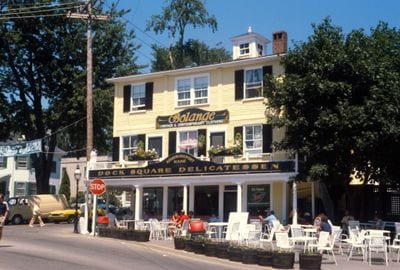
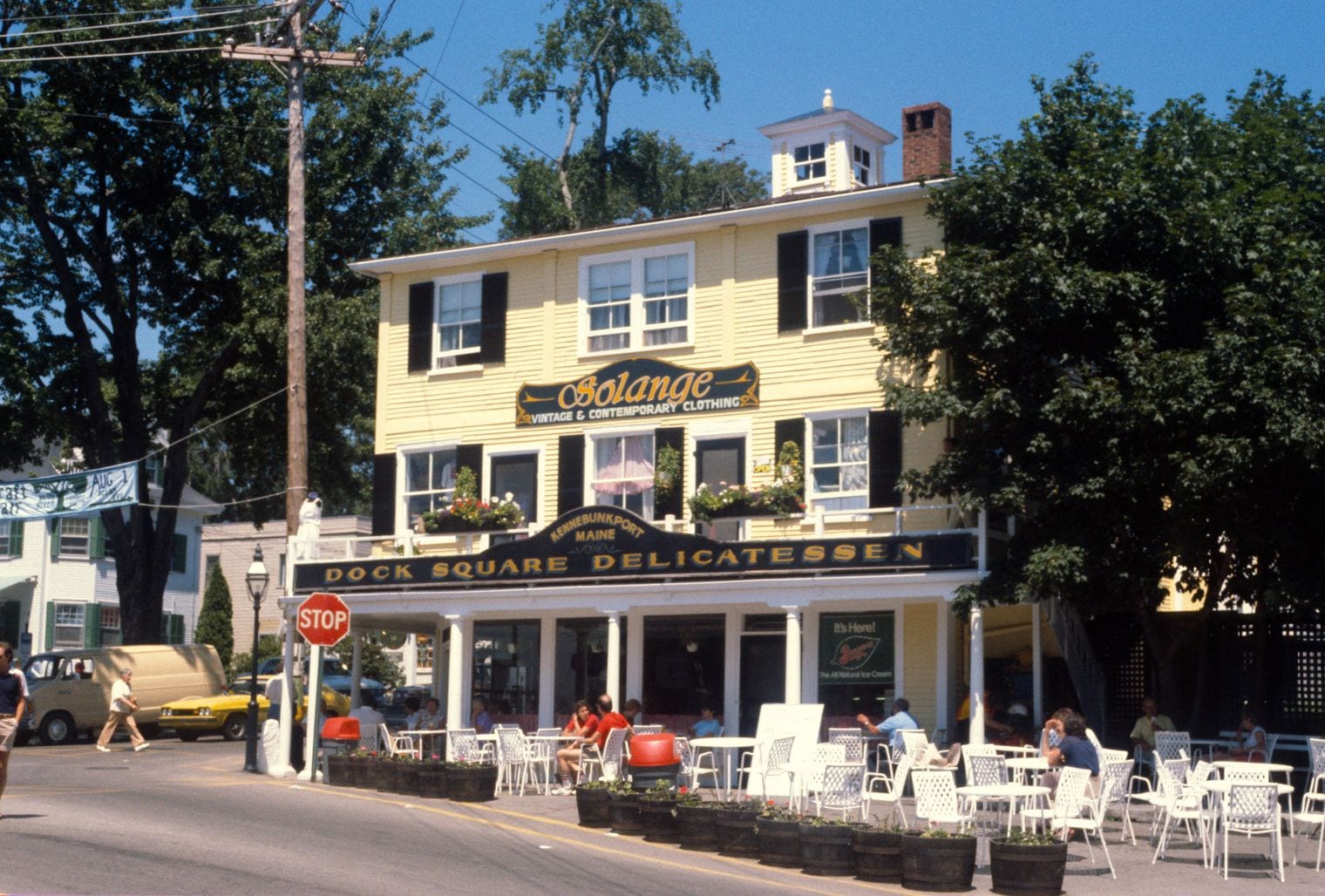
Kennebunkport has been a summer colony for well over a century, and its center, Dock Square, still fills each summer with galleries, shops, seafood restaurants and schooner trips on the Kennebunk River.
From the square, Ocean Avenue follows the shore past the shingle-style cottages of the Cape Arundel summer colony to Walker's Point, the Bush family estate that served as the Summer White House during George H. W. Bush's presidency. It remains a private family home, but the drive along the rocky shore to reach it is one of the town's great pleasures.
Northeast of Dock Square, Cape Porpoise was the town's original English settlement and is still a working fishing harbor, sheltered by more than a dozen islands, with Goat Island Light at its entrance.
Beyond it lies the sand of Goose Rocks Beach, and inland the Seashore Trolley Museum, in town since 1939, keeps one of the largest collections of trolleys and transit vehicles anywhere. Kennebunkport is a separate town from neighboring Kennebunk, though the two share a stretch of coast and a chamber of commerce.
Few places in New England have a more tangled history than Castine, a quiet peninsula town on Penobscot Bay that calls itself the "battle line of four nations." A French trading post was set up here in 1613, and over the next two centuries the peninsula was held in turn by the French, the English, the Dutch and finally the Americans.
In 1779 the British built Fort George on the high ground and held it against the Penobscot Expedition, a disaster that cost the Americans their entire fleet, and the fort's earthworks survive in a public park above the town.
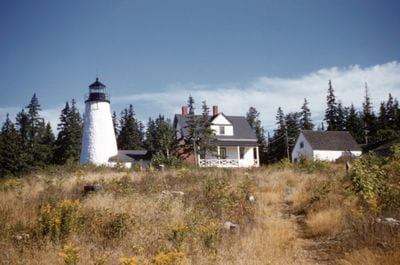
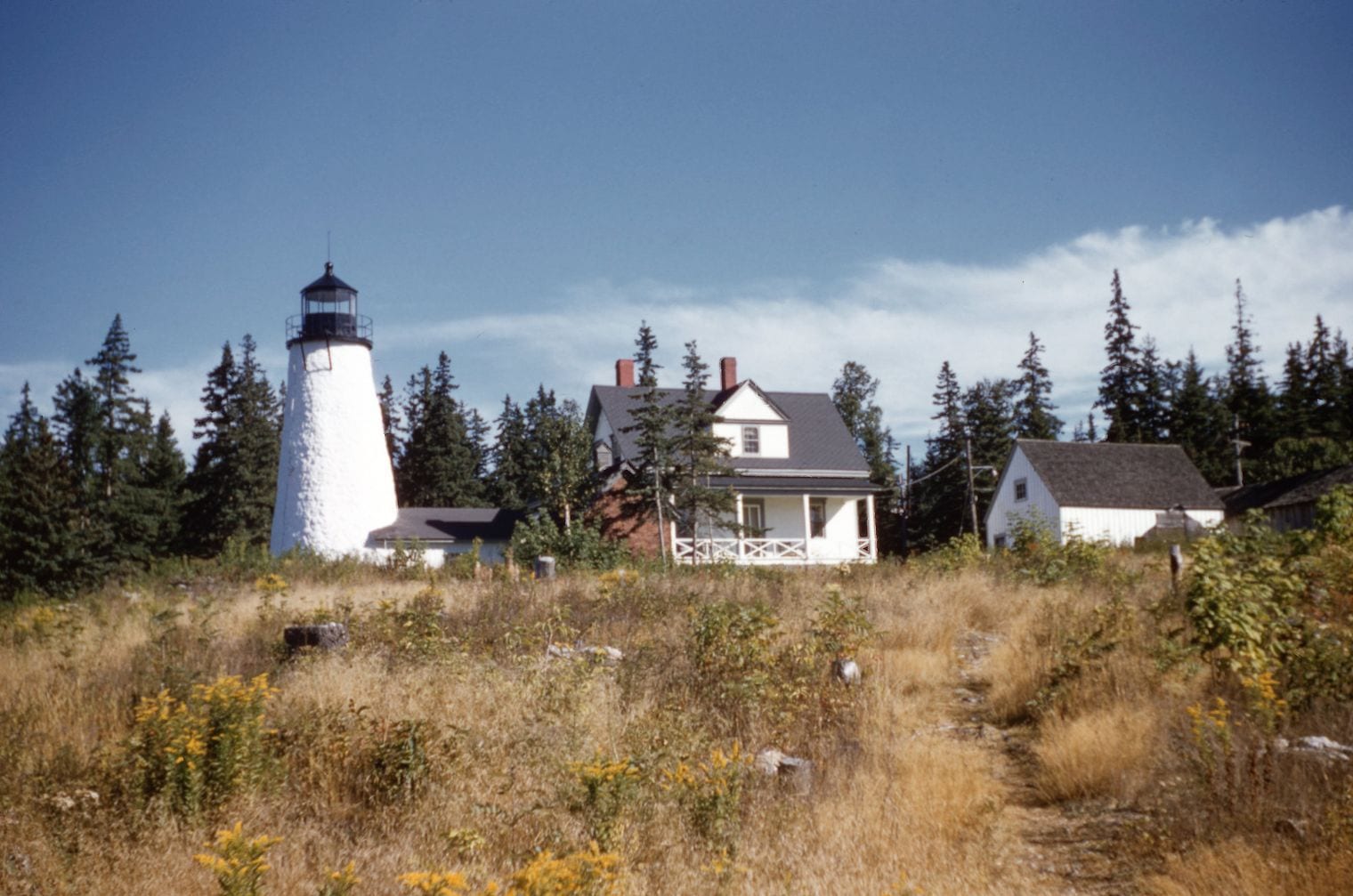
Peace brought prosperity from shipbuilding, fishing and the lumber trade, and the handsome Federal and Greek Revival houses of that era still line the streets, with the whole southern tip of the peninsula now a historic district. Bypassed by the railroads, the town kept the feel of an early 19th-century village. Maine Maritime Academy, which trains officers and engineers for the merchant marine, is based here, and Dyce Head Light, built in 1829, stands at the peninsula's southern tip.
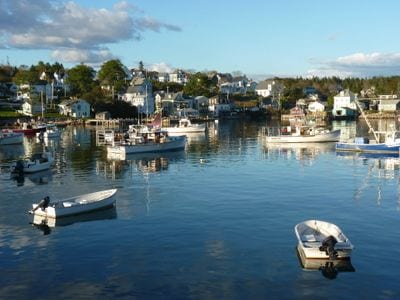
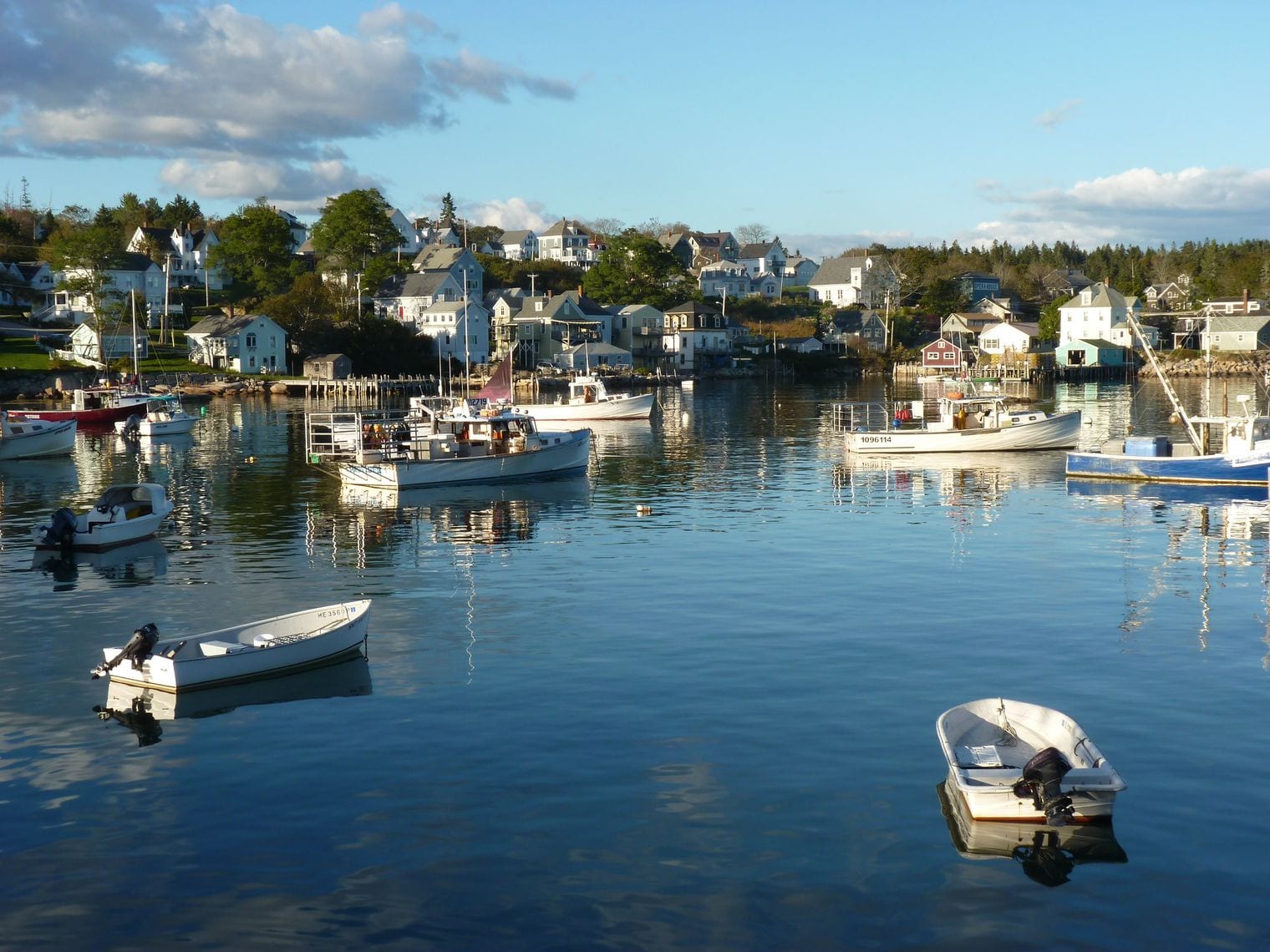
At the southern end of Deer Isle, linked to the mainland by bridge and causeway, Stonington is a working fishing town first and a tourist stop second. It is one of Maine's leading lobster ports, and its harbor is crowded with lobster boats, with granite islands scattered across the bay beyond.
The town is named for its stone: from around 1870, granite quarrying turned the little settlement of Green's Landing into a boom town, drawing stonecutters, many of them from Italy, to quarries in town and on the offshore islands.
Today the village is a short main street of shops and galleries above the water, anchored by the Stonington Opera House, built in 1912 and now home to a nonprofit arts group that keeps it alive as a community hall. Stonington is also where the year-round passenger ferry leaves for Isle au Haut, the island outpost of Acadia National Park. Elsewhere on Deer Isle, the Haystack Mountain School of Crafts sits on the island's wooded coast.
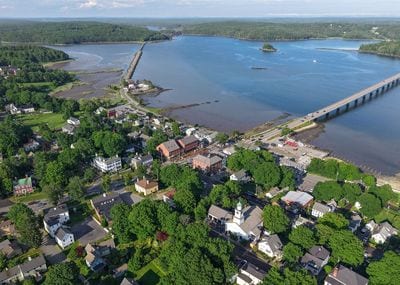
Damariscotta is Maine's oyster town. The tidal Damariscotta River grows most of the farmed oysters produced in the state, and oysters have been gathered here for a very long time: on the river's east bank, the Whaleback Shell Midden, now a state historic site, preserves the remains of oyster-shell heaps that Indigenous people built up over roughly a thousand years, from about 200 BC. Other middens line the estuary on both sides of the river.
The town sits at the head of navigation on the river, linked by the Main Street bridge to Newcastle on the far bank; together the two are known as the Twin Villages. In the 1800s its shipyards launched clipper ships, and brickyards along the river supplied much of the brick for Boston's Back Bay.
Today Main Street is a compact run of independent shops and places to eat oysters from the river, and the town's name comes from an Algonquian word for a place of abundant alewives, the small fish that still spawn in Damariscotta Lake upstream.
Blue Hill is a quiet, cultured village on Blue Hill Bay, overlooked by Blue Hill Mountain, a landmark that also carries the Abenaki name Awanadjo. Much of the mountain is conserved land, and a small network of trails, the Osgood and Hayes trails among them, climbs through the woods to the summit and its views over the bay and its islands.
The village punches above its size in music and history. Kneisel Hall runs a summer chamber music festival and school here, and the Jonathan Fisher House, built in 1814 by the town's first settled minister, is a museum to a man who kept a lifelong journal and illustrated his own books with woodcuts.
At the end of each summer, the Blue Hill Fair brings a traditional agricultural fair to town; E.B. White, who lived in nearby Brooklin, drew on it for the county fair in Charlotte's Web, and the fair now keeps a barnyard exhibit in the book's honor.
Boothbay Harbor is a boating town through and through, built around a harbor so well sheltered that in the 19th century it could hold several hundred fishing vessels riding out a storm.
A wooden footbridge, first built in 1901, crosses the inner harbor between downtown and the east side, and from the piers, excursion boats head out on puffin-watching cruises and ferries run to Monhegan Island. Out in the harbor, Burnt Island Light, built in 1821, is the second-oldest surviving lighthouse in Maine and is now a living-history museum run by the state.
The area's biggest draw, though, is next door in Boothbay: Coastal Maine Botanical Gardens, the largest botanical garden in New England, with 17 acres of gardens and nearly a mile of tidal shoreline. Boothbay Harbor sits at the southern end of a peninsula between the Sheepscot River and Linekin Bay, and Route 27 runs north to Wiscasset and U.S. Route 1. Like most coastal towns, it is liveliest from late spring through fall.
Ogunquit is a beach town with an artist's eye. Its main beach is the headline, a broad stretch of sand that locals walk year-round, but the town's signature is the Marginal Way, a paved 1.25-mile path along the rocky shoreline from Shore Road to Perkins Cove, listed on the National Register of Historic Places in 2022. Perkins Cove has been a fishing harbor since the late 19th century, and today it is a cluster of boats, shops and seafood spots.
Artists soon followed the fishermen, drawn by the rugged coast, and the Ogunquit Art Association has organized exhibitions here since the late 1920s. The Ogunquit Museum of American Art, founded by painter Henry Strater and opened in 1953, looks out over the Atlantic from three acres of sculpture gardens near Perkins Cove, and the historic Ogunquit Playhouse stages summer theater. Ogunquit is busiest in summer, but the cliff walk is just as good in the quieter months.
Free printable checklist of all 20 places
Tick them off as you go. Confirm your email to download it, plus one email every Thursday with new guides for the places you tick.
Rangeley is the hub of Maine's western lakes, a small town on the northeastern shore of Rangeley Lake, about 1,500 feet above sea level and ringed by the Western Maine Mountains. Logging opened the region, and once the railroad arrived in 1891, visitors from Boston, New York and Philadelphia followed, turning it into a resort of camps, cabins and inns. A sign in town notes that Rangeley lies halfway between the Equator and the North Pole.
This is fly-fishing country: the trails at nearby Saddleback, the ski area on Saddleback Mountain, are named after fishing flies created by Rangeley anglers such as Carrie Stevens. In summer, get out on Rangeley Lake, whose waters drain west through the Rangeley River into Mooselookmeguntic Lake, or stop at Smalls Falls, just south of town on Route 4. Fall foliage, then snowmobiling and skiing, keep the town busy well beyond the summer season.
Brunswick is the largest town on this list, a college town at the head of tide on the Androscoggin River, where the river's falls once powered the sawmills that fed local shipyards.
Bowdoin College, chartered in 1794, sits at its heart, and two of its museums are worth the stop: the Bowdoin College Museum of Art, where admission is free, and the Peary–MacMillan Arctic Museum, named for two Arctic explorers who studied at Bowdoin and the only museum in the lower 48 states devoted entirely to the Arctic.
History runs deep here. Harriet Beecher Stowe wrote Uncle Tom's Cabin while living in Brunswick, in a house on Federal Street that Bowdoin now owns, where her writing room is open to the public, and the home of Civil War general Joshua Chamberlain is now a museum. Cross the Androscoggin on the pedestrian swinging bridge, and in summer catch a show at Maine State Music Theatre.
Next door to Camden, Rockport is its quieter twin, a small harbor village and arts community. The two were one town until 1891, when a quarrel over the cost of a bridge split them apart.
In the 19th century Rockport burned local limestone into lime around the clock, and the restored kilns at Rockport Marine Park are the last multiple-kiln group left on the Maine coast; Rockport lime was even shipped to Washington in 1817 to help rebuild the U.S. Capitol after the War of 1812.
By the harbor stands a statue of Andre the Seal, the harbor seal raised by the town's harbormaster from the 1960s, who spent his winters in aquariums in Boston and Connecticut and returned to Rockport Harbor each spring, drawing crowds, books and a feature film. The village is also home to the Maine Media Workshops, an international school for photographers and filmmakers, and to the Rockport Opera House, which stands beside little Mary Lea Park in the village center.
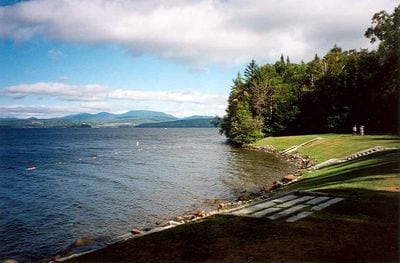
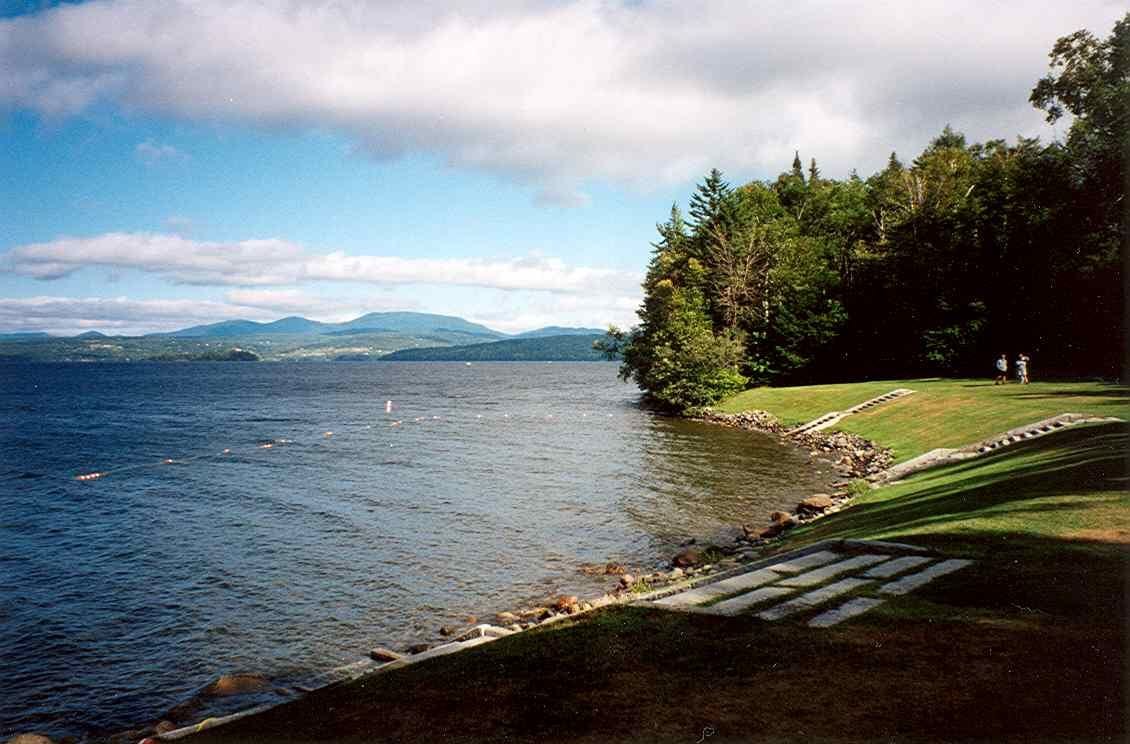
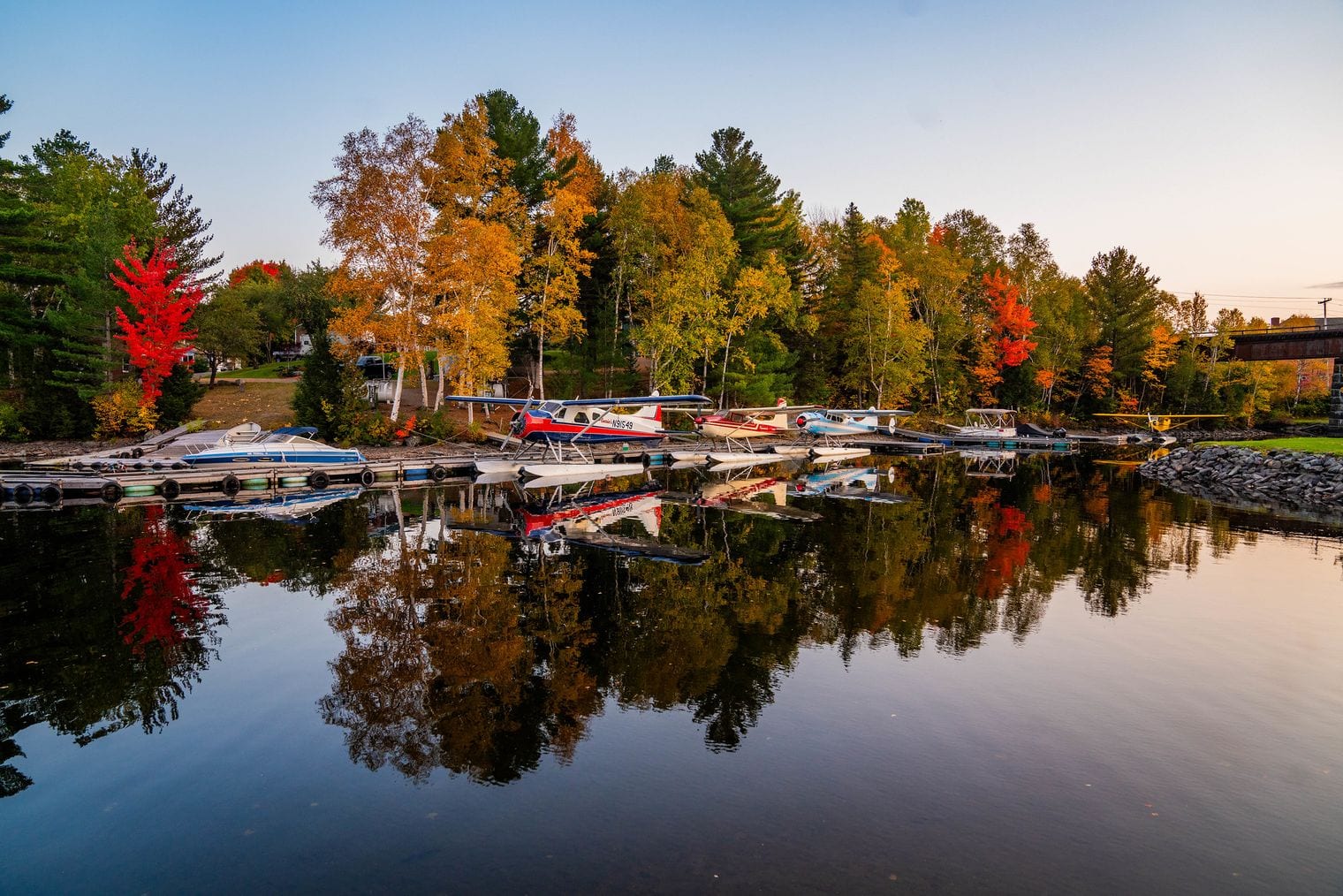
Greenville sits at the southern end of Moosehead Lake, the largest lake in Maine and the largest mountain lake in the eastern United States, a sprawling body of water with more than 80 islands, surrounded by the forested Longfellow Mountains. The town is the historic gateway to Maine's North Woods and by far the largest community on the lake, with a small downtown at the water's edge and floatplanes coming and going from the bay.
The classic outing is a cruise aboard the Katahdin, a steamboat built at Bath Iron Works in 1914 that later towed logs across the lake and now carries passengers again, restored by the Moosehead Maritime Museum.
Farther up the lake, Mount Kineo rises in sheer 700-foot cliffs straight out of the water from a peninsula on the eastern shore, the centerpiece of a state park. Greenville is a long drive north of the coast, and it is at its best from summer on the lake through the fall foliage.
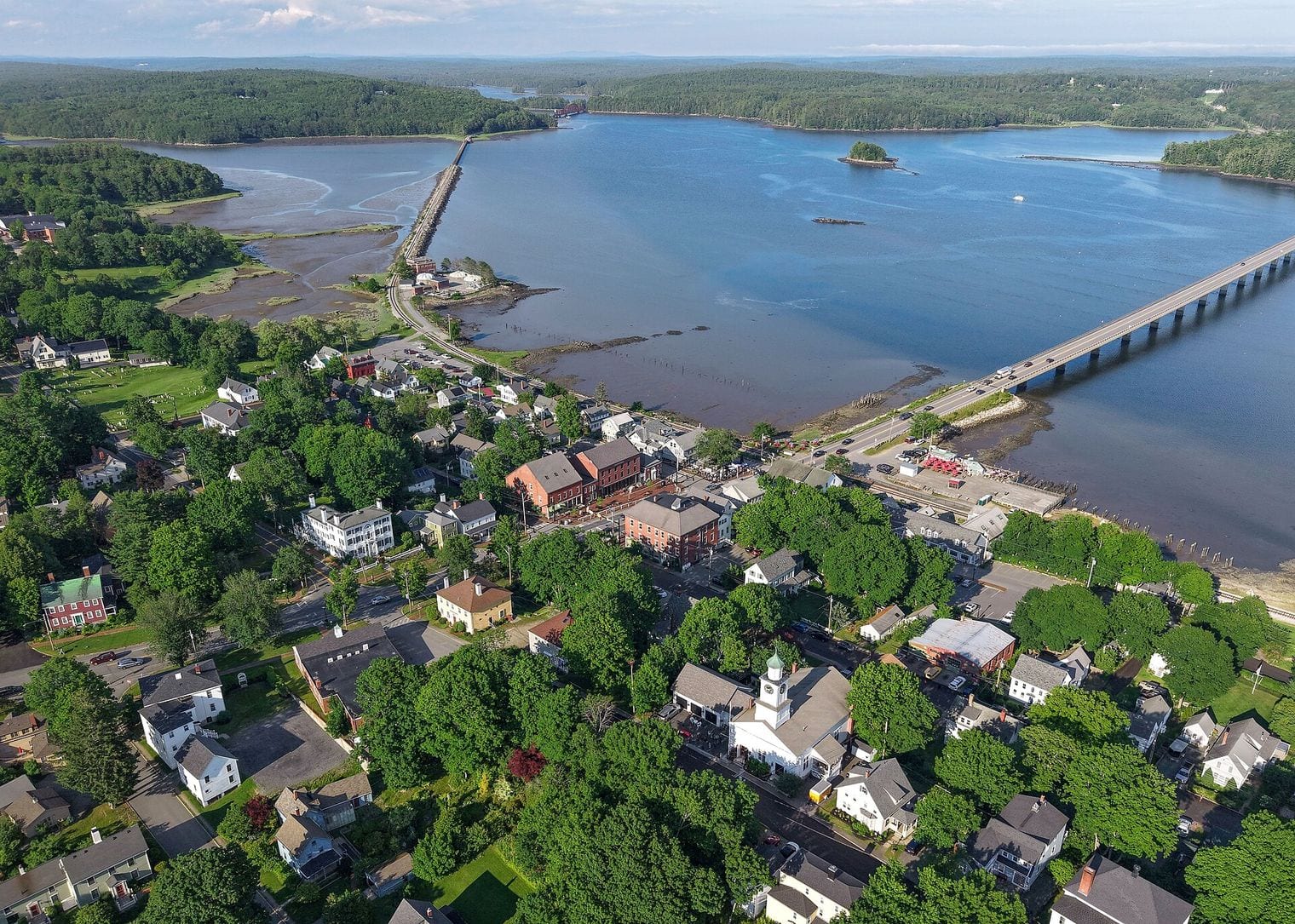
Wiscasset calls itself the prettiest village in Maine, and its streets of early houses make a good case. Set on the tidal Sheepscot River, it prospered as a seaport of shipbuilders, traders and privateers, and that wealth left behind fine Federal-style architecture, much of it still standing around the village.
Two houses of the period are museums run by Historic New England: the Nickels-Sortwell House, built in 1807 by a wealthy ship's captain and now a National Historic Landmark, and Castle Tucker, a historic mansion.
The old Lincoln County jail is a museum too, and across the river, Fort Edgecomb was built in 1808 to guard the harbor. U.S. Route 1 runs straight through the village, so Wiscasset is an easy stop on the drive between Brunswick and Damariscotta, and Route 27 leads south from here to Boothbay Harbor.
York is really several villages in one, York Village, York Harbor, York Beach and Cape Neddick among them, spread along the coast near Maine's southern tip.
Its history runs deep: in 1642 the settlement of Gorgeana here became the first incorporated city in America, and in York Village the Old York Historical Society cares for a cluster of historic buildings open as museums, among them the John Hancock Warehouse. Like Bar Harbor, York became a fashionable summer resort in the Gilded Age, and shingle-style houses from that era survive.
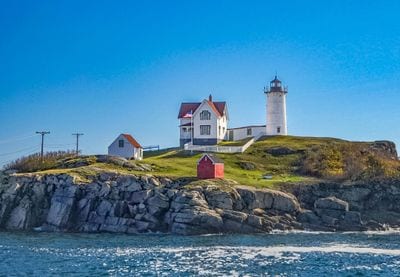
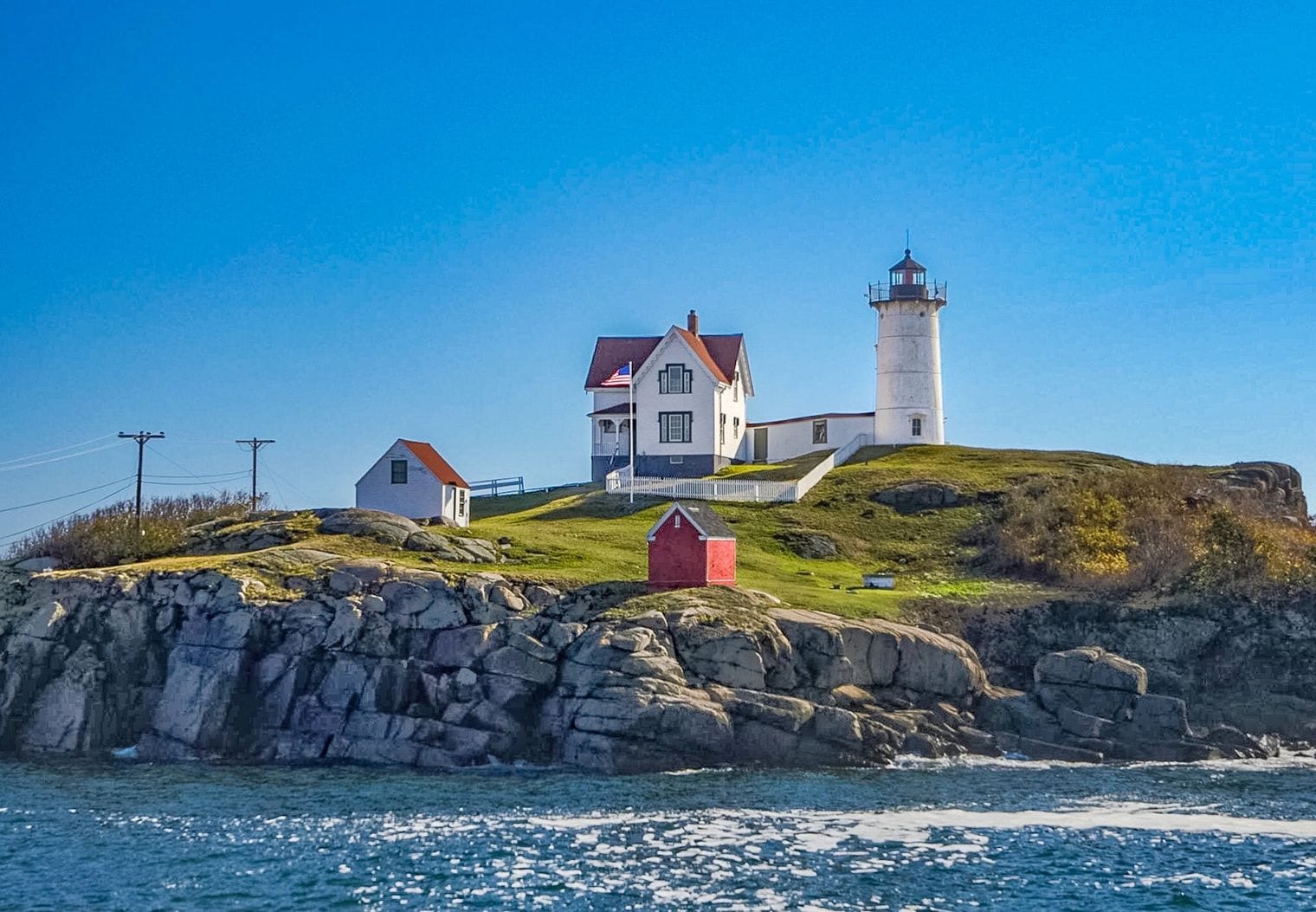
The town's best-known sight is Cape Neddick Light, better known as Nubble Light, which has stood on a steep, rocky islet just off the point since 1879; the railing around its lantern is decorated with tiny brass replicas of the lighthouse itself.
Long Sands Beach runs for more than a mile between York Beach and York Harbor, Short Sands sits among the arcades and souvenir shops of York Beach, and inland, the trails of Mount Agamenticus climb a low summit that was long a landmark for sailors.
Bethel is western Maine's classic mountain town, a village on the Androscoggin River at the southern edge of the Mahoosuc Range, built around a town common. Between the Civil War and World War I it was a fashionable summer resort, with hotels facing the common, and Gould Academy, a private preparatory school, still anchors the village. The Maine Mineral and Gem Museum, with its collection of rocks, minerals and meteorites, makes a good rainy-day stop.
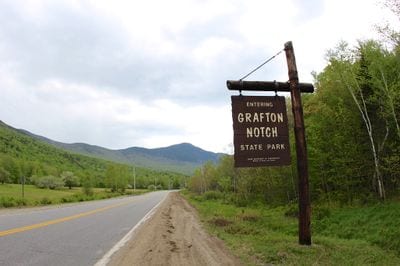
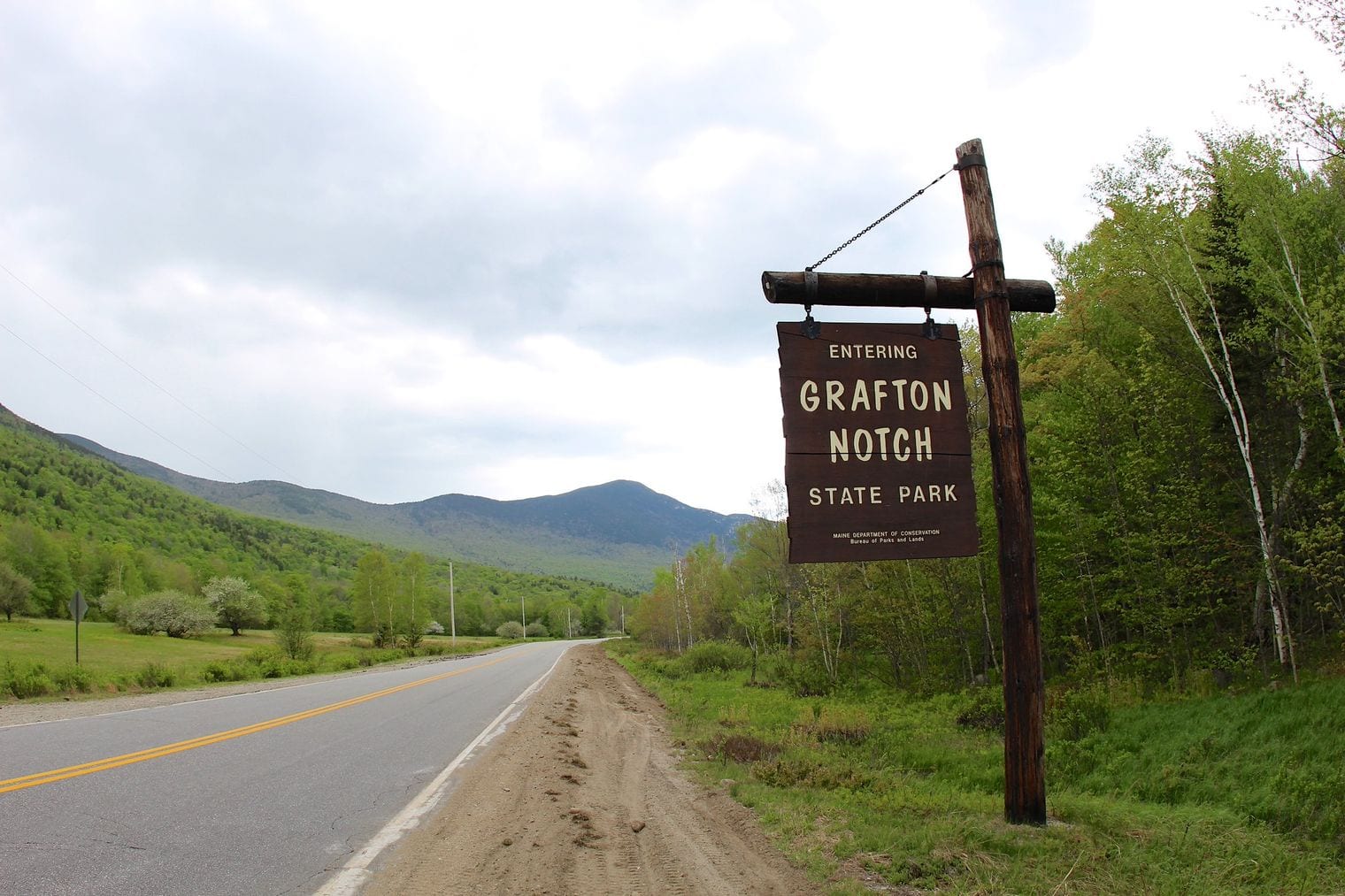
The mountains are the real draw. In winter, skiers come for Sunday River, one of Maine's largest ski resorts, just up the road in Newry. In summer and fall, drive north on Route 26 to Grafton Notch State Park, the pass between Old Speck and Baldpate mountains, where short walks from the road lead to Screw Auger Falls and Moose Cave, a narrow gorge where the stream slips out of sight beneath a huge boulder.
Rockland is a small city rather than a town, a working harbor that is also the base for the state ferries to the Penobscot Bay islands of Vinalhaven, North Haven and Matinicus.
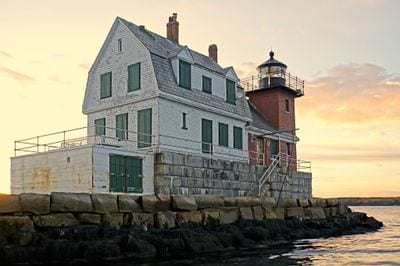
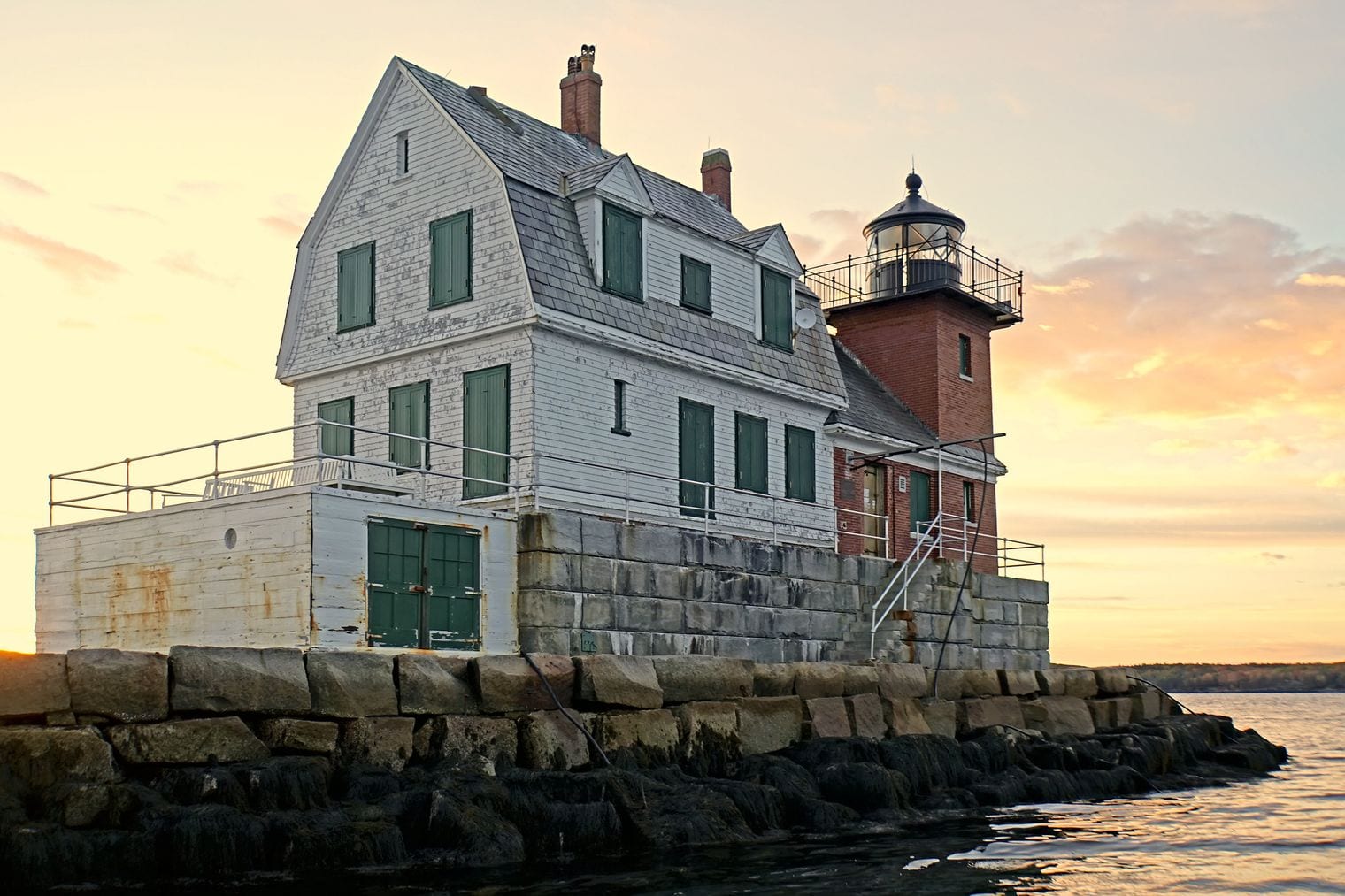
It was built on lime: by the 1850s it was the leading lime producer in the United States, shipping it out on hundreds of vessels. Its harbor is sheltered by the Rockland Breakwater, more than 4,000 feet of granite blocks completed around 1900, and you can walk its whole length out to the lighthouse at the end.
The city is also a serious art town. The Farnsworth Art Museum holds one of the nation's largest collections of work by N.C., Andrew and Jamie Wyeth, and it owns the Olson House in nearby Cushing, the setting of Andrew Wyeth's Christina's World. The Center for Maine Contemporary Art occupies a building designed by architect Toshiko Mori, and every summer the Maine Lobster Festival brings crowds to town for several days of lobster.
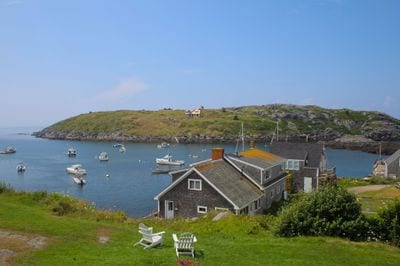
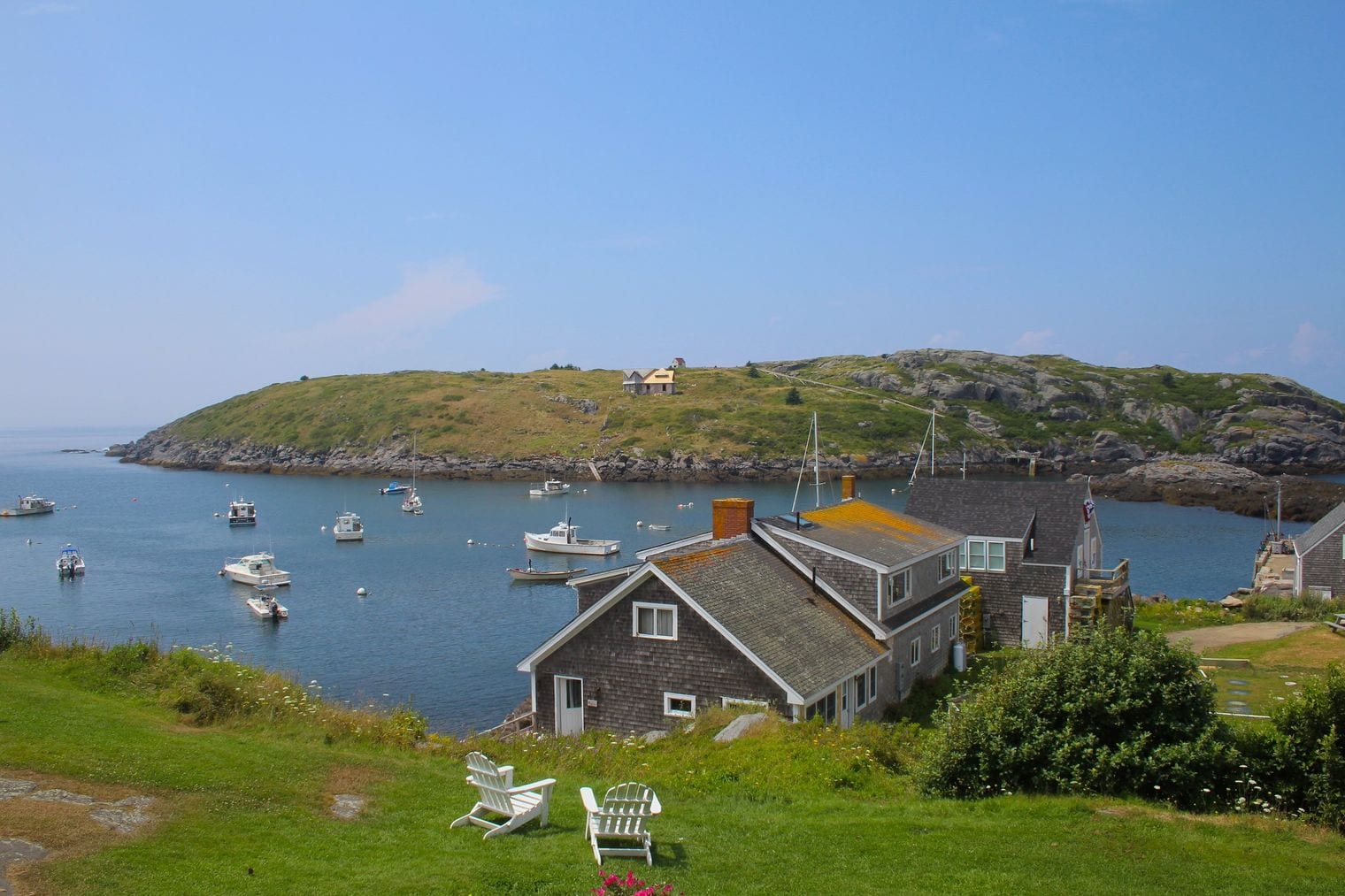
Monhegan is a different kind of small town: a car-free island about a dozen nautical miles out in the Gulf of Maine, with a year-round population of a few dozen and a small village by the ferry landing.
Ferries run from Port Clyde, New Harbor and Boothbay Harbor, visitors' cars stay on the mainland, and much of the island is uninhabited land laced with walking trails that lead through the woods to sea cliffs, including the roughly 150-foot heights of Blackhead.
Artists have come here since the 19th century, and the colony was firmly established by 1890; Edward Hopper, George Bellows, Rockwell Kent and Jamie Wyeth all painted the island.
On the hill above the village, Monhegan Island Light has stood since 1850, and beside it the Monhegan Museum tells the story of the island's history and art. Most visitors come on summer day trips, but the island is at its most peaceful once the last boat has left, so consider staying the night.
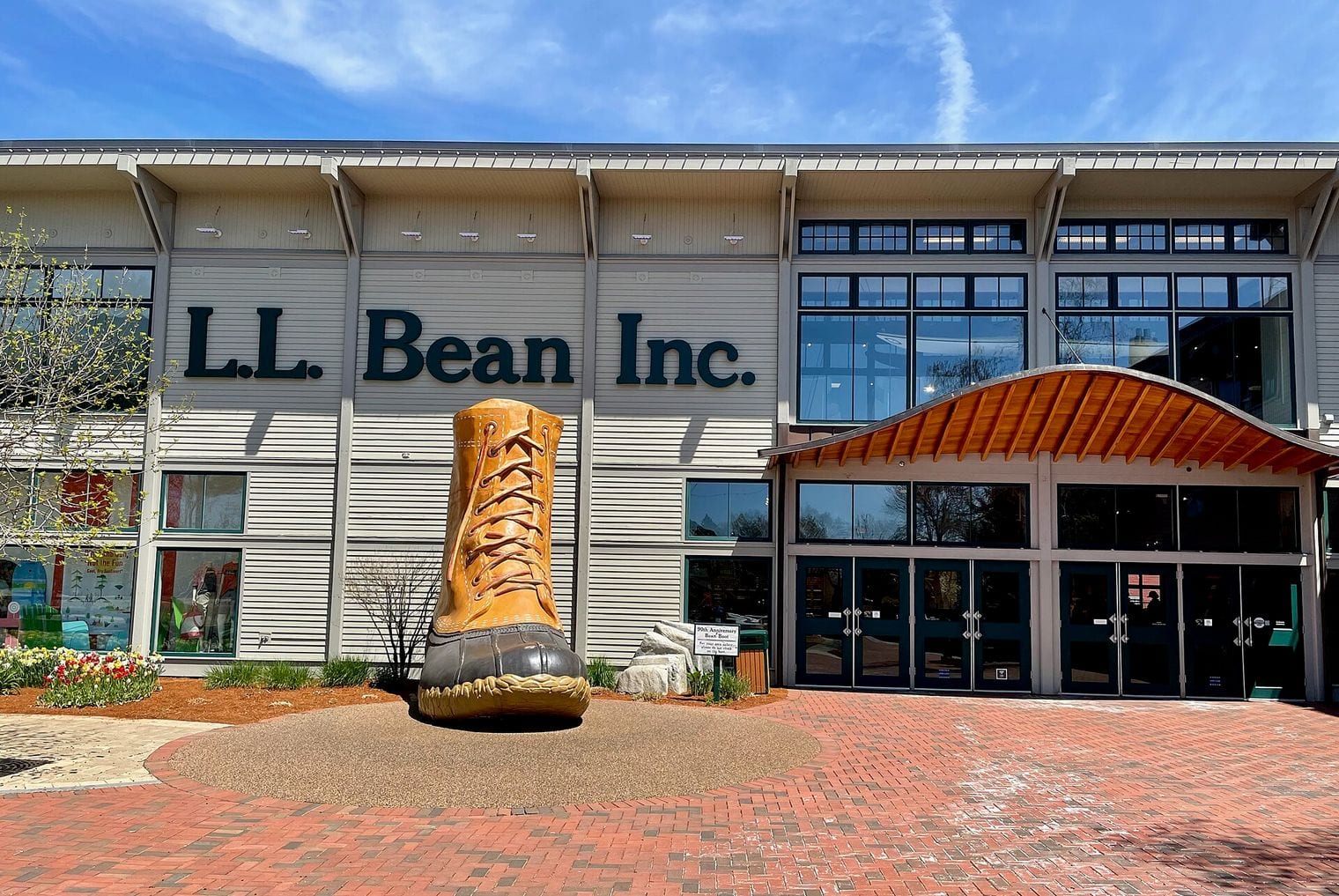
Freeport is Maine's shopping town, built around the flagship store of L.L.Bean, which Leon Leonwood Bean founded here in 1912 selling his Maine Hunting Shoe, the original Bean Boot. The company is still headquartered in Freeport, and its flagship and the town's many outlet stores bring in shoppers from all over. Behind the shopping streets, the town grew from older villages that built ships and shipped timber on the Harraseeket River.
Freeport also has a quieter, greener side. Wolfe's Neck Woods State Park covers a narrow peninsula of pine and hemlock forest, salt marsh and rocky shore between Casco Bay and the Harraseeket River, and the Desert of Maine is a 20-acre expanse of bare glacial sand, the result of poor farming in the 19th century, that has become a roadside curiosity. Portland, the state's largest city, is a short drive south.
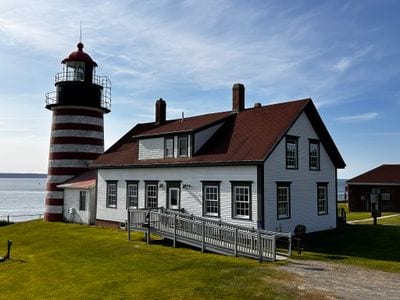
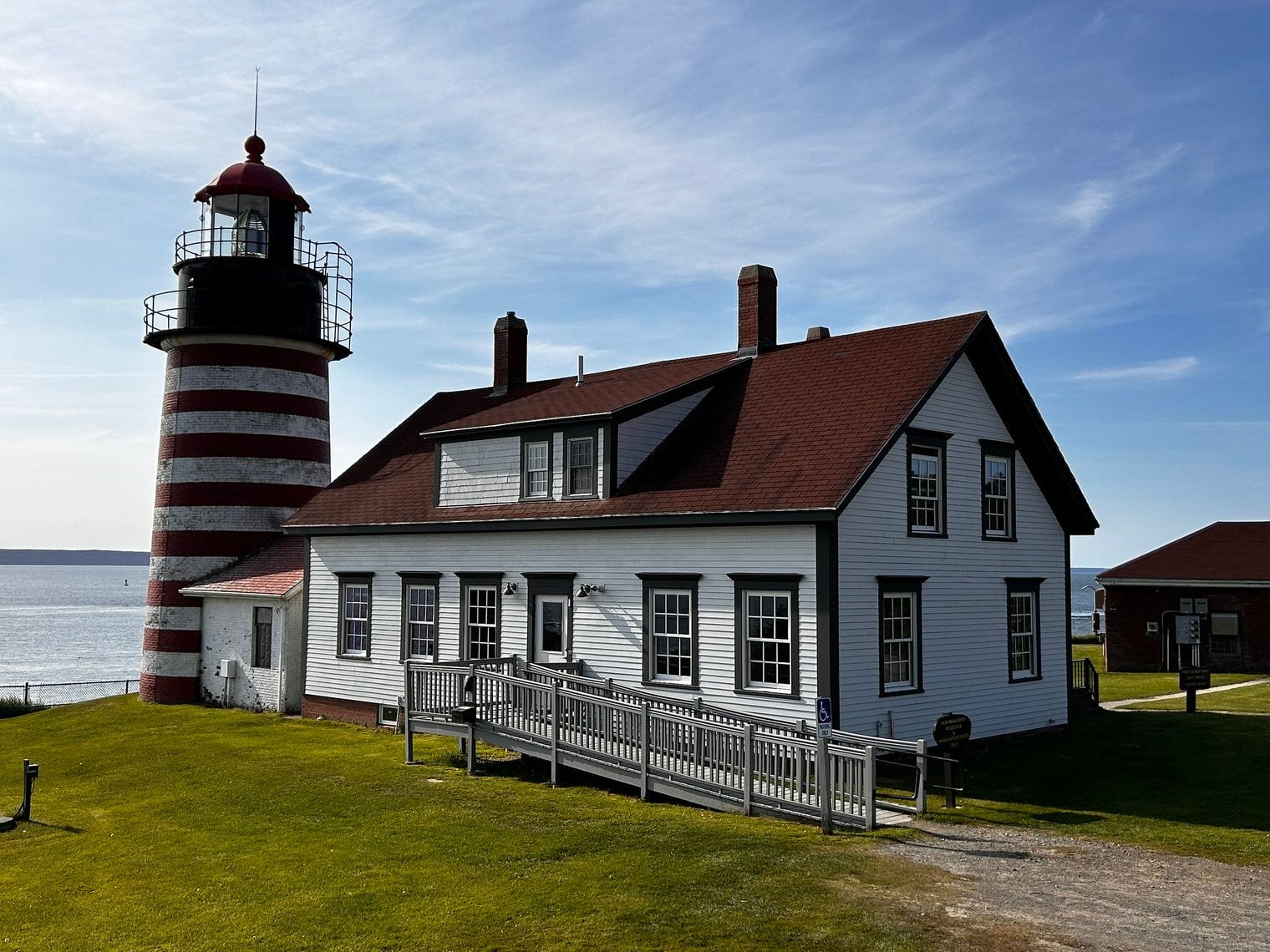
Lubec is the easternmost town in the contiguous United States, a small community on a peninsula in Passamaquoddy Bay at the far end of Downeast Maine. At Quoddy Head State Park, the red-and-white striped tower of West Quoddy Head Light marks the easternmost point of the contiguous U.S.; a lighthouse has stood here since 1808 and the present tower since 1858, and about 5 miles of trails follow the cliffs and bogs around it.
From the village, the Franklin Delano Roosevelt Bridge crosses into Canada to Campobello Island, New Brunswick, where Roosevelt Campobello International Park preserves the shingle-style summer cottage of Franklin and Eleanor Roosevelt, so bring a passport. Across the water lies Eastport, the easternmost city in the country, and the surrounding coast is a quiet, uncrowded stretch of Maine's shoreline. Plan around the season, since many businesses close for the winter.
Free Things to Do in These Maine Towns
Some of the best moments on this list cost nothing. Walk the Marginal Way in Ogunquit, the Shore Path in Bar Harbor and the footbridge across the inner harbor in Boothbay Harbor, or stroll the length of the breakwater in Rockland out to its lighthouse.
Watch Nubble Light from the shore at Cape Neddick in York, follow Ocean Avenue past Walker's Point in Kennebunkport, and find the statue of Andre the Seal and the old lime kilns in Rockport. In Castine, the earthworks of Fort George stand in a public park, and in Brunswick the Bowdoin College Museum of Art is always free to visit.
Maine's small towns fall into distinct regions, so the easiest plan is to choose one and link its towns together. U.S. Route 1 is the spine of the coast: from the New Hampshire line it runs through York and Ogunquit, then beyond Portland through Freeport, Brunswick, Wiscasset, Damariscotta, Rockland, Rockport and Camden.
Kennebunkport, Boothbay Harbor, Castine, Blue Hill and Stonington each lie a short detour off Route 1, down their own rivers and peninsulas. The southern towns are an easy drive north from Boston, so many visitors begin there and work their way up the coast.
Farther north and east, Bar Harbor and the Downeast coast are within reach of Bangor, and Greenville and Moosehead Lake lie to its north. Route 1 continues Downeast toward Lubec, with Route 189 making the final run out to the town.
Inland, Augusta, the state capital, sits between the Midcoast and the western mountains, where Rangeley and Bethel pair well on a lakes-and-mountains loop. Summer is high season on the coast, fall brings the foliage, and many island and Downeast businesses close for the winter, so plan the remote towns for the warmer months.
FAQ: Visiting the Best Small Towns in Maine
What is the best small town in Maine?
Camden is the best small town in Maine for most visitors, with Mount Battie rising above a harbor full of windjammers. Bar Harbor follows as the gateway to Acadia National Park, then Kennebunkport for Dock Square and Walker's Point, Castine for its layered colonial history and Stonington for one of Maine's leading lobster ports.
What is the prettiest small town in Maine?
Camden appears on more best-small-town lists than any other Maine town, thanks to the Camden Hills rising straight from its harbor. Wiscasset bills itself as the prettiest village in Maine, Castine has streets of Federal and Greek Revival houses, and Stonington and Monhegan offer the rugged beauty of working harbors and sea cliffs.
Which small towns in Maine are closest to Boston?
York, Ogunquit and Kennebunkport are the closest, all in southern Maine a short way up the coast from the New Hampshire line, and each makes an easy weekend escape. Freeport and Brunswick lie a little farther north, past Portland, while the Midcoast towns from Wiscasset to Camden are a longer but rewarding drive up U.S. Route 1.
Which small towns are near Acadia National Park?
Bar Harbor is the gateway, with the largest parts of the park, including Cadillac Mountain, inside its town limits. West of Mount Desert Island, Blue Hill, Castine and Stonington make quieter bases, and from Stonington a year-round passenger ferry reaches Isle au Haut, the remote island outpost of Acadia.
When is the best time to visit small towns in Maine?
Summer is peak season on the coast, when the windjammers sail, the island ferries run most often and the beaches at York, Ogunquit and Kennebunkport are busiest. Fall brings foliage to Camden, Rangeley, Bethel and Greenville, winter belongs to skiers at Sunday River near Bethel and Saddleback near Rangeley, and many island and Downeast businesses close for the winter.
How many days do you need to visit small towns in Maine?
Most towns on this list fill a relaxed day, and several pair easily, such as Camden and Rockport or York and Ogunquit. Bar Harbor deserves two or three days to explore Acadia National Park, Monhegan is best with a night on the island, and a week lets you follow Route 1 from York up to Camden and beyond.
Sources & updates
How this guide was checked
Checked before launch
Sources cited
20
Publishers
19
Every town on this list was pinned on the map and checked against official and local sources before publication.
A PDF with a box to tick for every place. Confirm your email to download it, and get one email every Thursday with our newest guides for the places you tick.
Free Maine small towns printable checklist
All 20 places in one PDF
Tick them off as you go. Confirm your email to download it, plus one email every Thursday with new guides for the places you tick.
We use cookies to analyse site traffic and improve your experience.
You can accept or reject analytics cookies. See our
May we use analytics cookies? See ourCookie Policy.