We may earn a commission if you book or buy through a link on
this page, at no extra cost to you. It never affects which places we list or how
we rank them (how we make money).
Short answer
Valletta's essentials are St John's Co-Cathedral, the Knights' conventual church and the one thing the city is known for worldwide, the Upper Barrakka Gardens framing the Grand Harbour, and Fort St Elmo at the tip of the peninsula. One full day covers the headline sights — the walled city is small enough to cross on foot in about fifteen minutes — and two days is the comfortable amount.
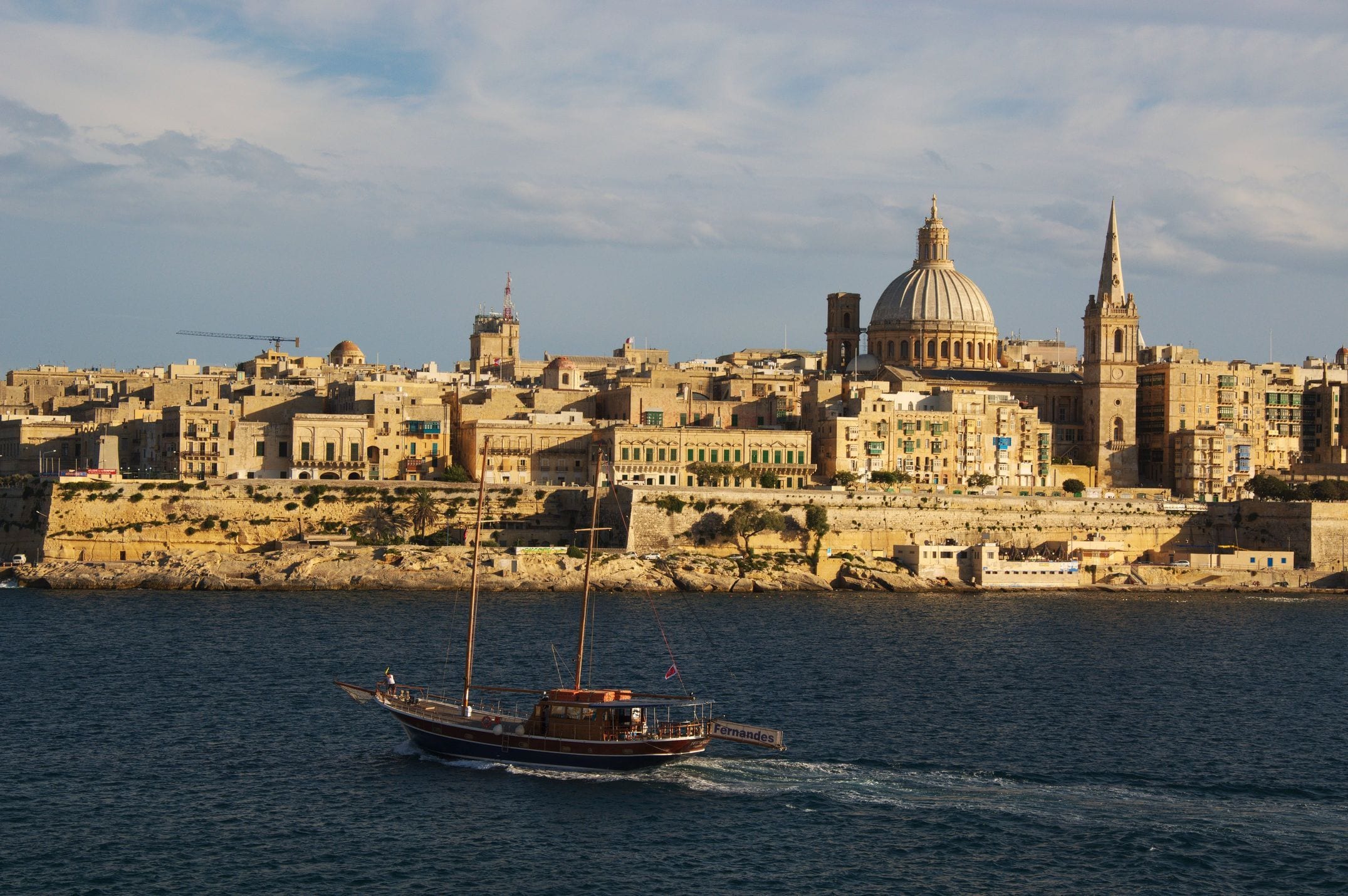
Valletta packs more history into half a square kilometre than most capitals manage in a hundred. Built by the Knights of St John after the Great Siege of 1565, it is a walled grid of honey-coloured limestone on a peninsula between two harbours, where Baroque palaces, gilded churches and bastion gardens sit within a ten-minute walk of one another.
This guide covers 25 of the best things to do in Valletta, from Caravaggio's masterpiece to underground war tunnels and the fortresses across the Grand Harbour. Almost all of it can be done on foot across two unhurried days.
Valletta is the smallest capital city in the European Union — the whole walled city covers about 0.8 square kilometres and fewer than 6,000 people actually live in it.
UNESCO counts 320 monuments within 55 hectares, which it calls one of the most concentrated historic areas in the world. The entire city has been a World Heritage Site since 1980.
The city was built from scratch in about 15 years after the Great Siege of 1565 — a planned Renaissance grid laid out on an empty peninsula, and one of Europe's earliest purpose-built capitals.
It is named after Jean Parisot de Valette, the Grand Master who led the Knights through the 1565 siege and laid the foundation stone of the new city the following year.
Malta was awarded the George Cross in 1942 for its endurance under wartime bombing, and the medal still appears in the canton of the Maltese flag.
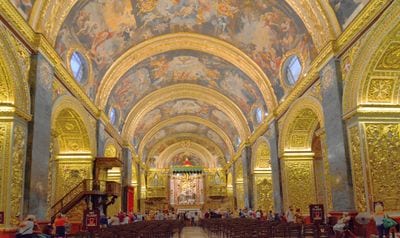
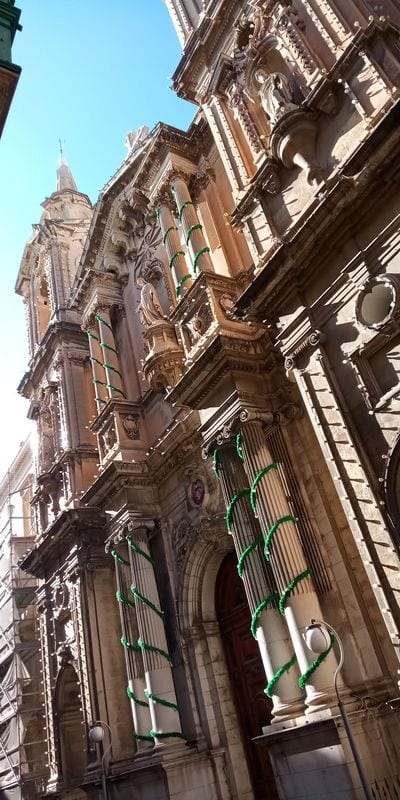
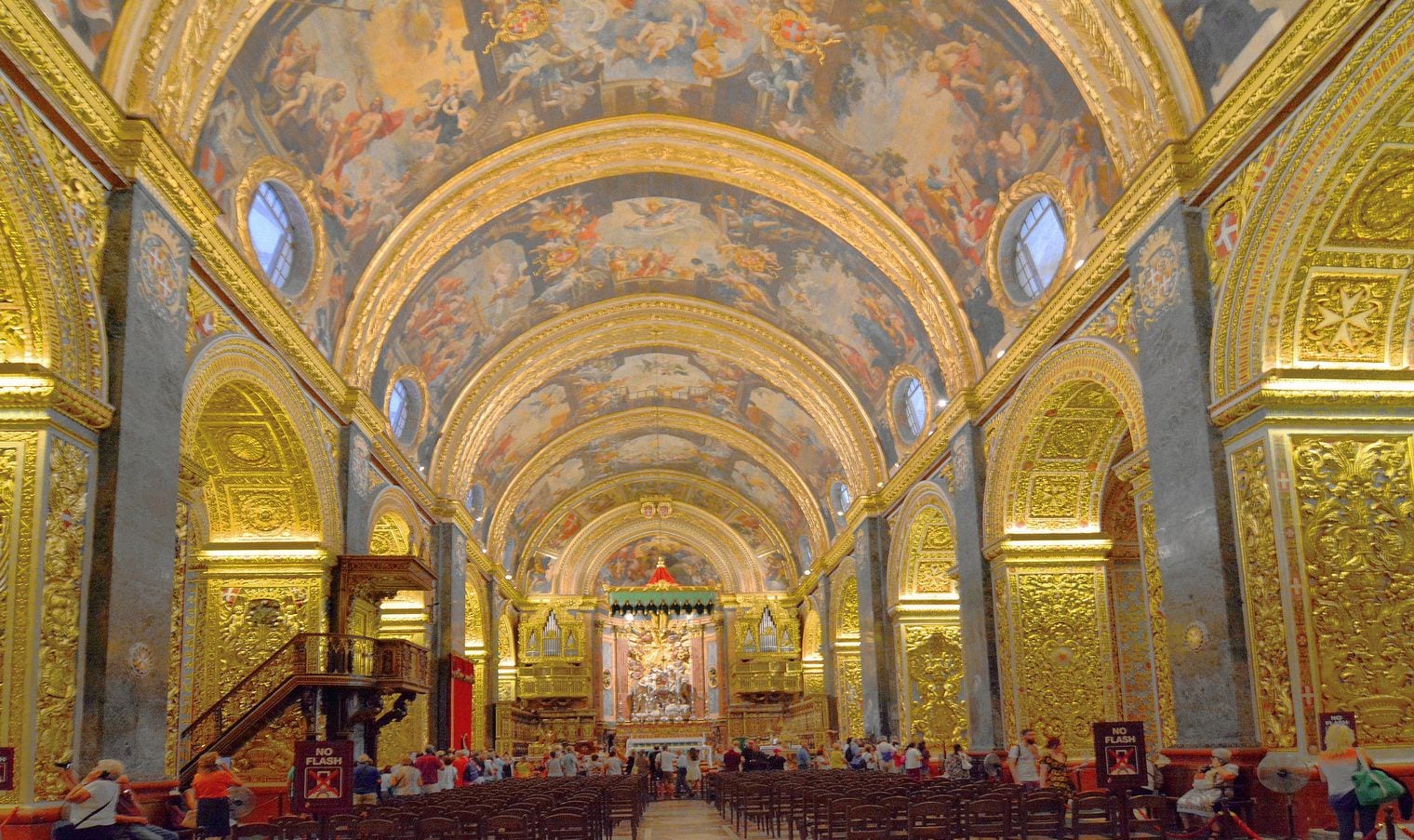
From the street, St John's Co-Cathedral gives almost nothing away — a flat, fortress-plain facade by Girolamo Cassar, built for the Knights of St John in the 1570s. Step inside and the restraint vanishes. Every surface is carved, gilded or painted, Mattia Preti's vault cycle runs the length of the nave overhead, and the floor is a carpet of roughly 400 inlaid marble tombstones marking the graves of knights.
The Oratory holds the reason many visitors come to Malta at all. Caravaggio's The Beheading of Saint John the Baptist is the largest canvas he ever painted and the only one he signed, hanging in the room it was made for. His Saint Jerome Writing is a few steps away. Allow longer than you expect, and take the audio guide.
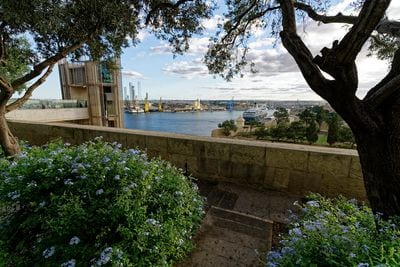
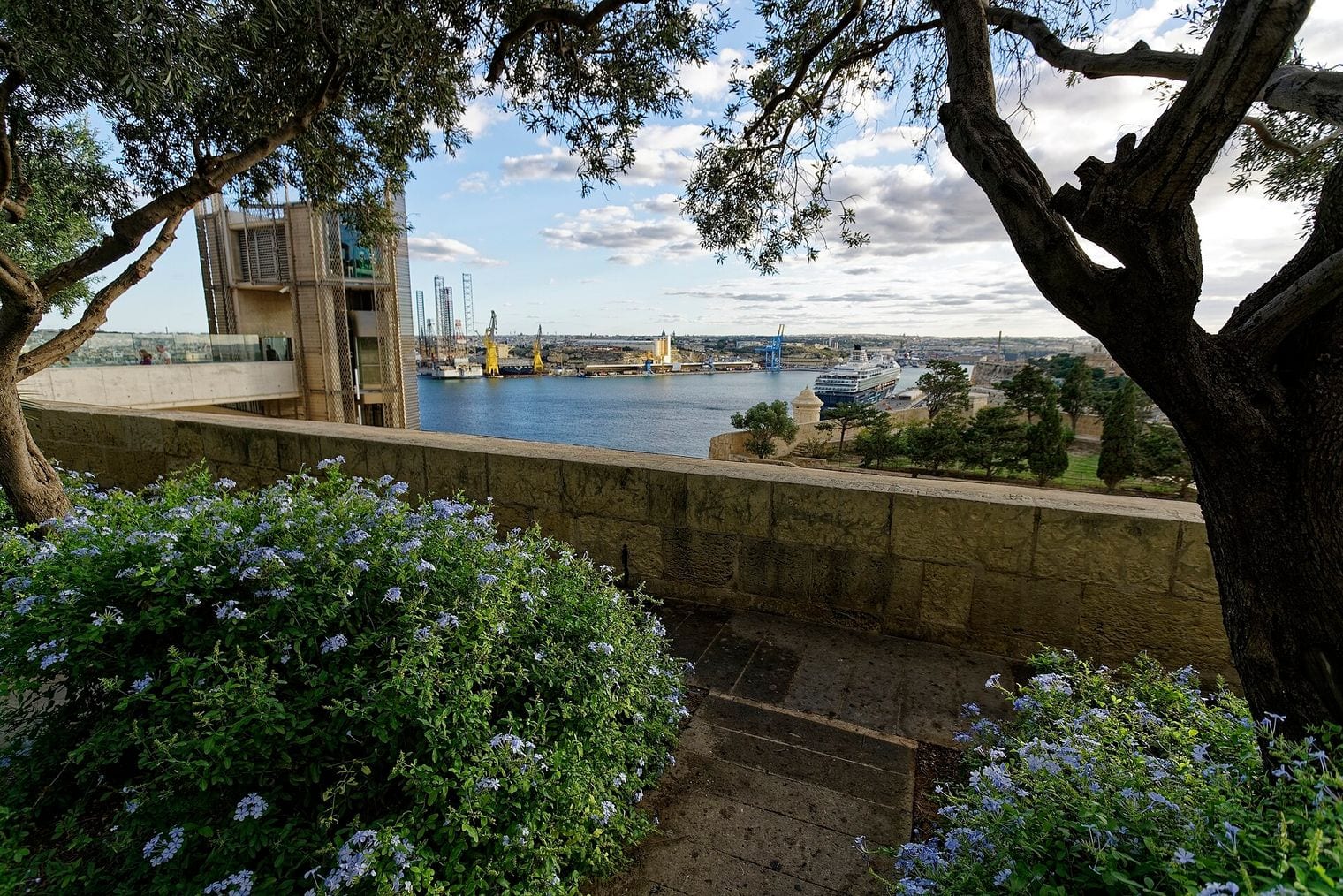
The Upper Barrakka Gardens are Valletta's balcony. Laid out in 1661 as a private garden for the Italian knights and opened to the public in 1824, the colonnaded terrace sits on top of St Peter and Paul Bastion with the whole Grand Harbour below — the Three Cities opposite, the dockyards beyond them, and ships easing in under your feet.
It is free, it opens early, and it is the single best orientation point in the city. Come at opening for soft light and room at the railing, or late in the afternoon when the limestone turns gold. A panoramic lift drops from the garden down to the waterfront in seconds if you are heading for a harbour boat.
Fort St Elmo guards the tip of the peninsula, and its story is the reason Valletta exists at all. In 1565 the star fort held out against the Ottoman siege for weeks before falling, and the delay cost the attackers the summer they needed. Rebuilt and extended over the centuries that followed, it is now walked as a fortress in its own right, with drawbridges, ditches and gun platforms.
Inside, the National War Museum runs from Bronze Age tools through the era of the Knights to the Second World War, when Malta was among the most heavily bombed places on earth. Its centrepieces are the George Cross awarded to the island in 1942 and the fuselage of Faith, one of the Gloster Gladiator biplanes that defended the skies in the first months of the siege.
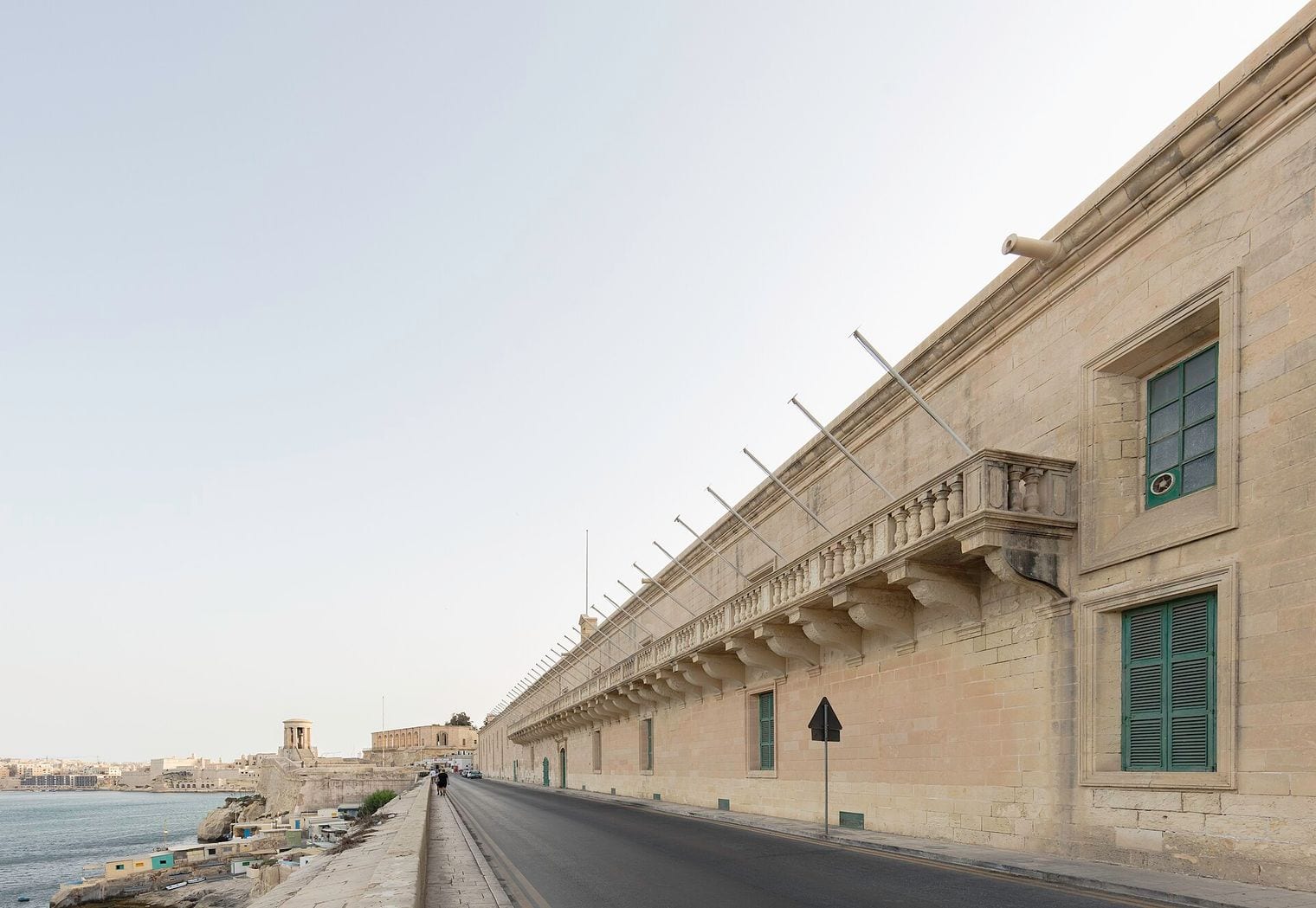
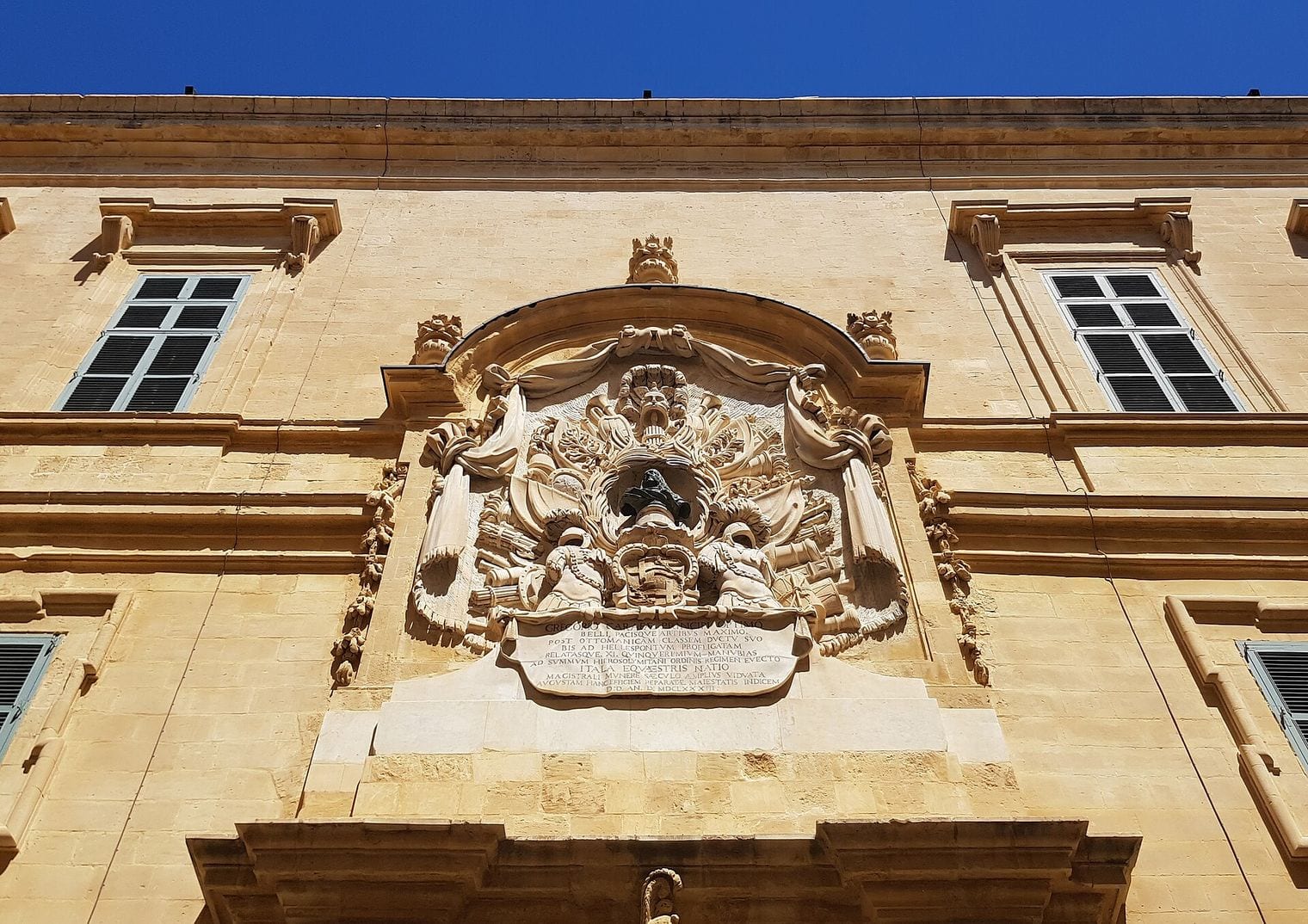
For more than two centuries the Grand Master's Palace was where Malta was governed. Begun in 1571 to Girolamo Cassar's design, it housed the Grand Masters of the Order, then the British governors, then Malta's parliament — and it remains the Office of the President, which is why parts of it still feel like a working building rather than a museum.
The State Rooms reopened in 2024 after a long restoration. The draw is the Council Chamber, hung with the Gobelins tapestries known as Les Tentures des Indes, and the corridors of frieze paintings recording the Great Siege scene by scene. The Palace Armoury occupies the old arsenal at the rear of the same building and is ticketed separately.
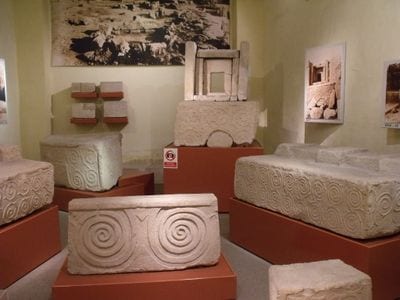
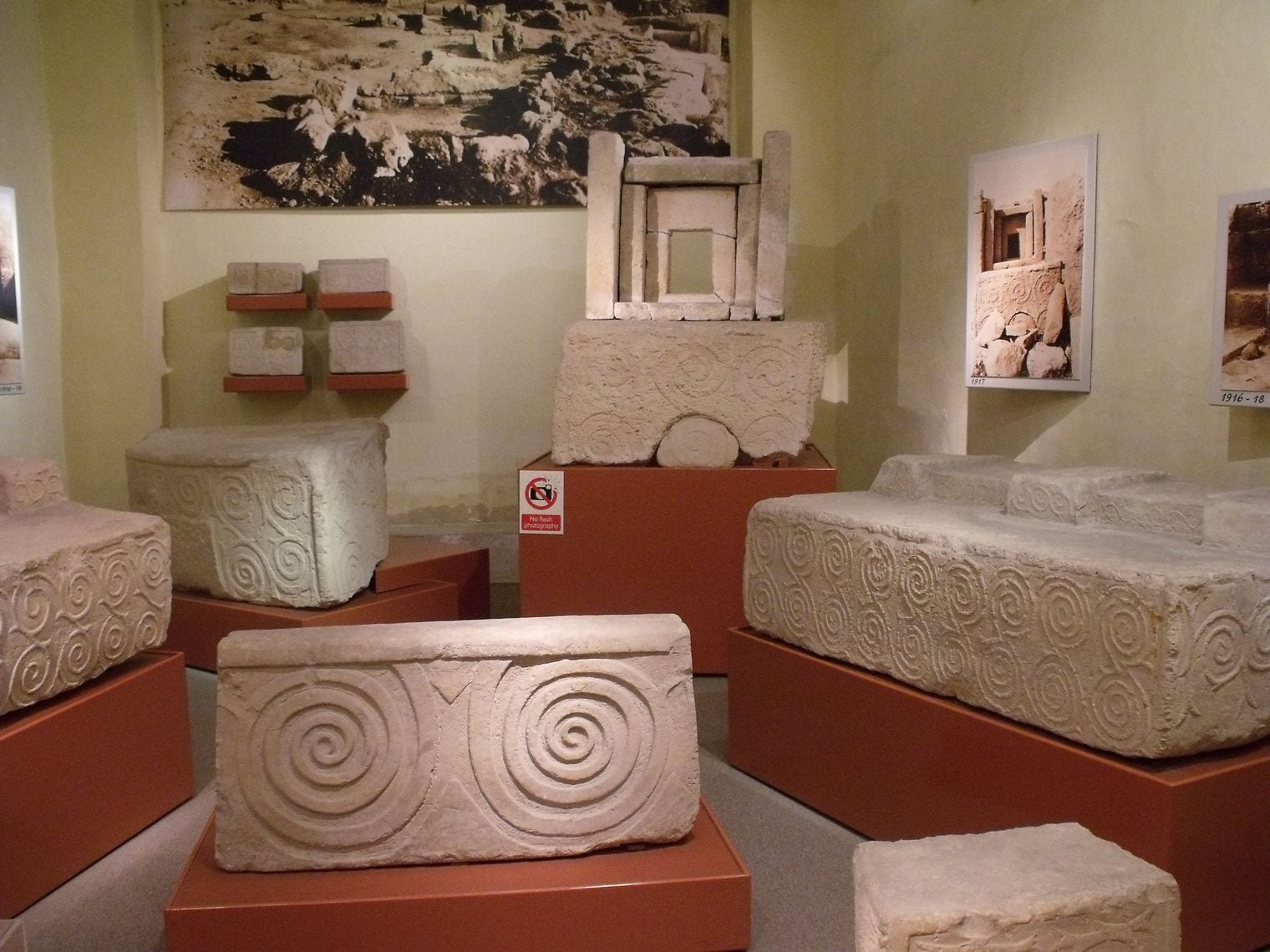
Malta's prehistory is older than the Pyramids, and the National Museum of Archaeology is where you get your head around it. It occupies the Auberge de Provence, the 1571 inn of the French knights, and its rooms move through the temple period with pottery, tools and carved stonework lifted from sites across the islands.
Two small figures justify the ticket on their own. The Sleeping Lady, recovered from the Ħal Saflieni Hypogeum, is a palm-sized clay woman asleep on a couch; the Venus of Malta came out of Ħaġar Qim. See them before you visit the temples themselves and the sites make far more sense when you get there.
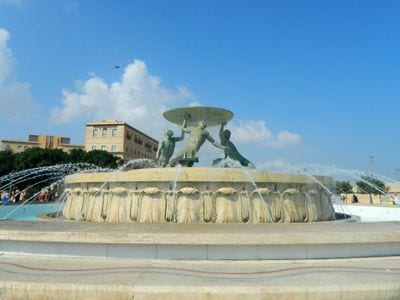
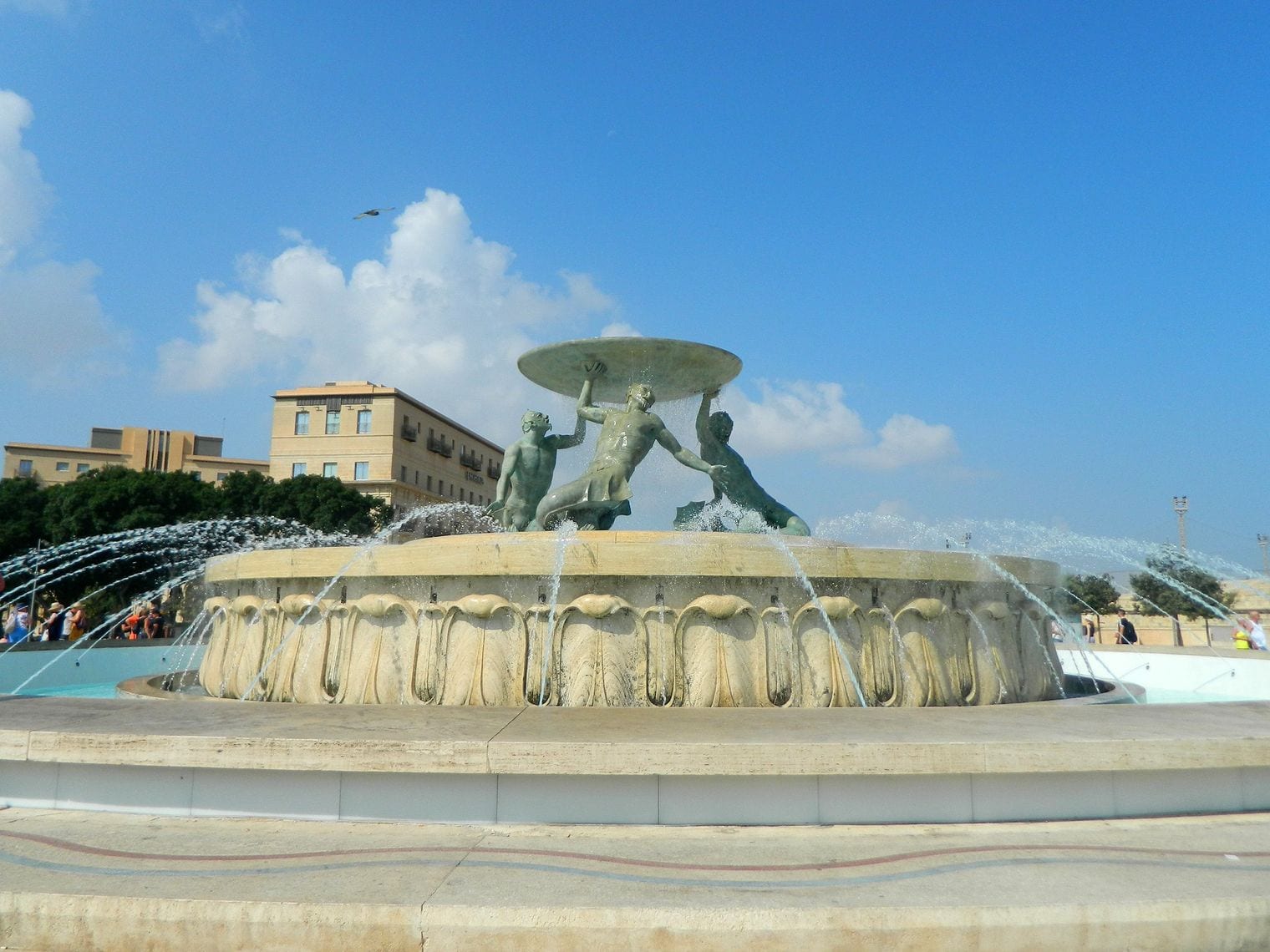
You meet the Triton Fountain before you meet Valletta. It sits on the open square just outside City Gate, where the bus terminus delivers most of the island to the capital's doorstep, so almost every visit begins or ends beside it. Three bronze tritons strain to hold a wide basin above their heads, sculpted by Vincent Apap with engineering by Victor Anastasi and unveiled in 1959.
A thorough restoration completed in 2018 returned the bronzes to their proper finish and got the water running as it was meant to. It makes an easy meeting point and a natural first photograph, with the bastions and the modern City Gate rising behind it.
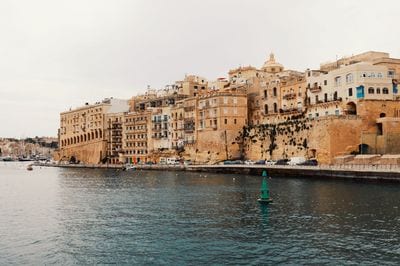
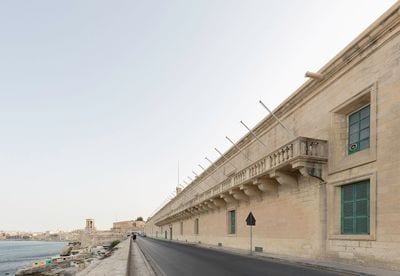
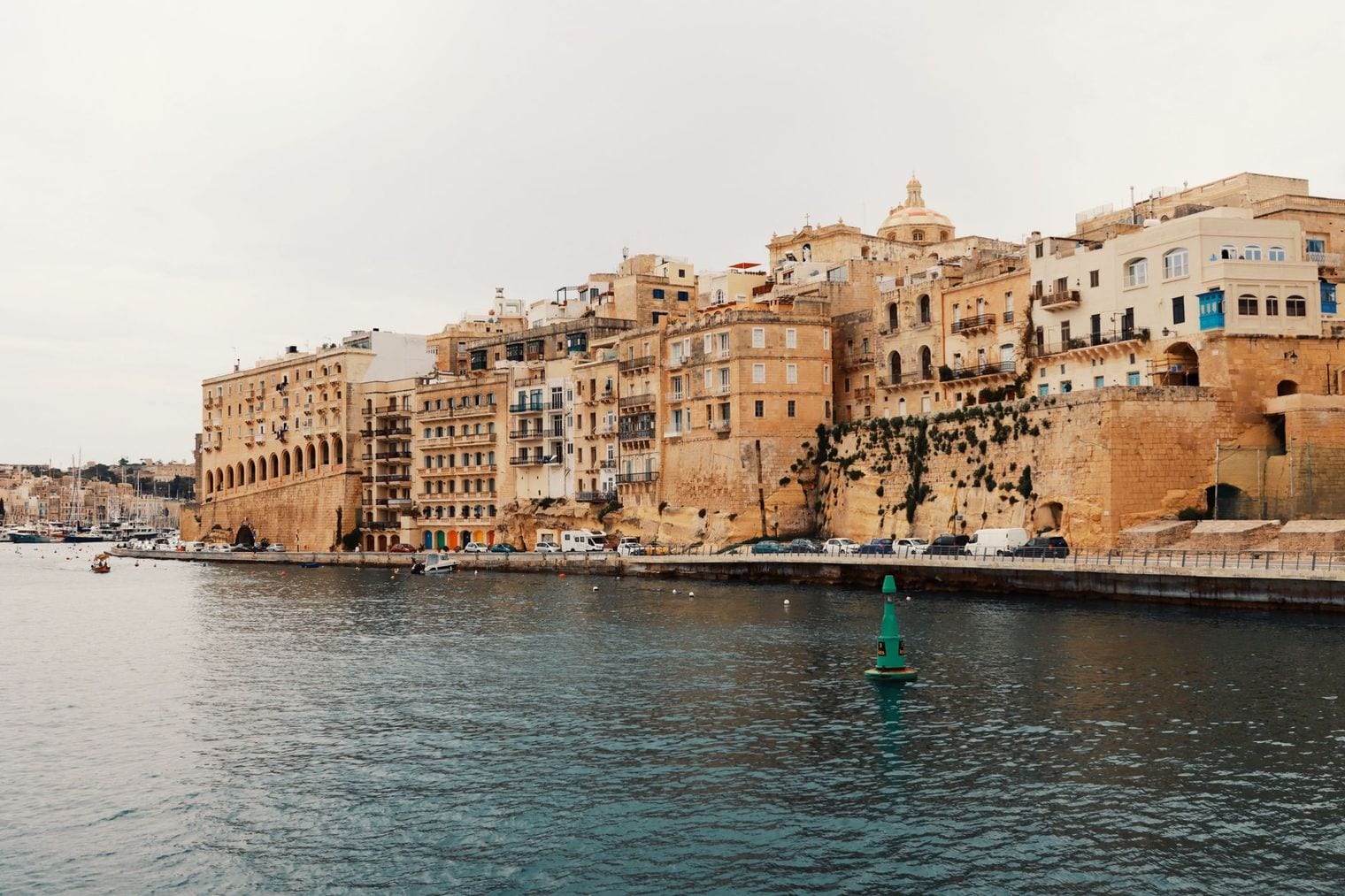
The Valletta Waterfront is the long parade of warehouses along Pinto Wharf, at water level below the bastions. Built in the 18th century under Grand Master Manuel Pinto da Fonseca to store goods coming off the quay, the stores were restored in the 2000s and now hold restaurants and cafés behind their tall, colour-coded doors.
This is where cruise ships berth, so it swings between busy and near-empty depending on what is in port. The appeal is the setting rather than the shopping: a flat, shaded promenade at the harbour's edge, looking up at the same fortifications you were standing on top of in the Upper Barrakka Gardens.
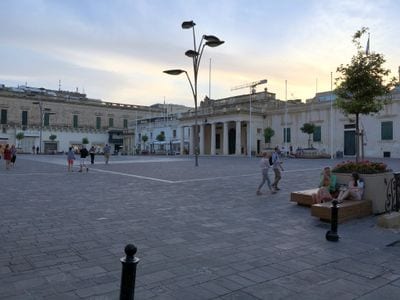
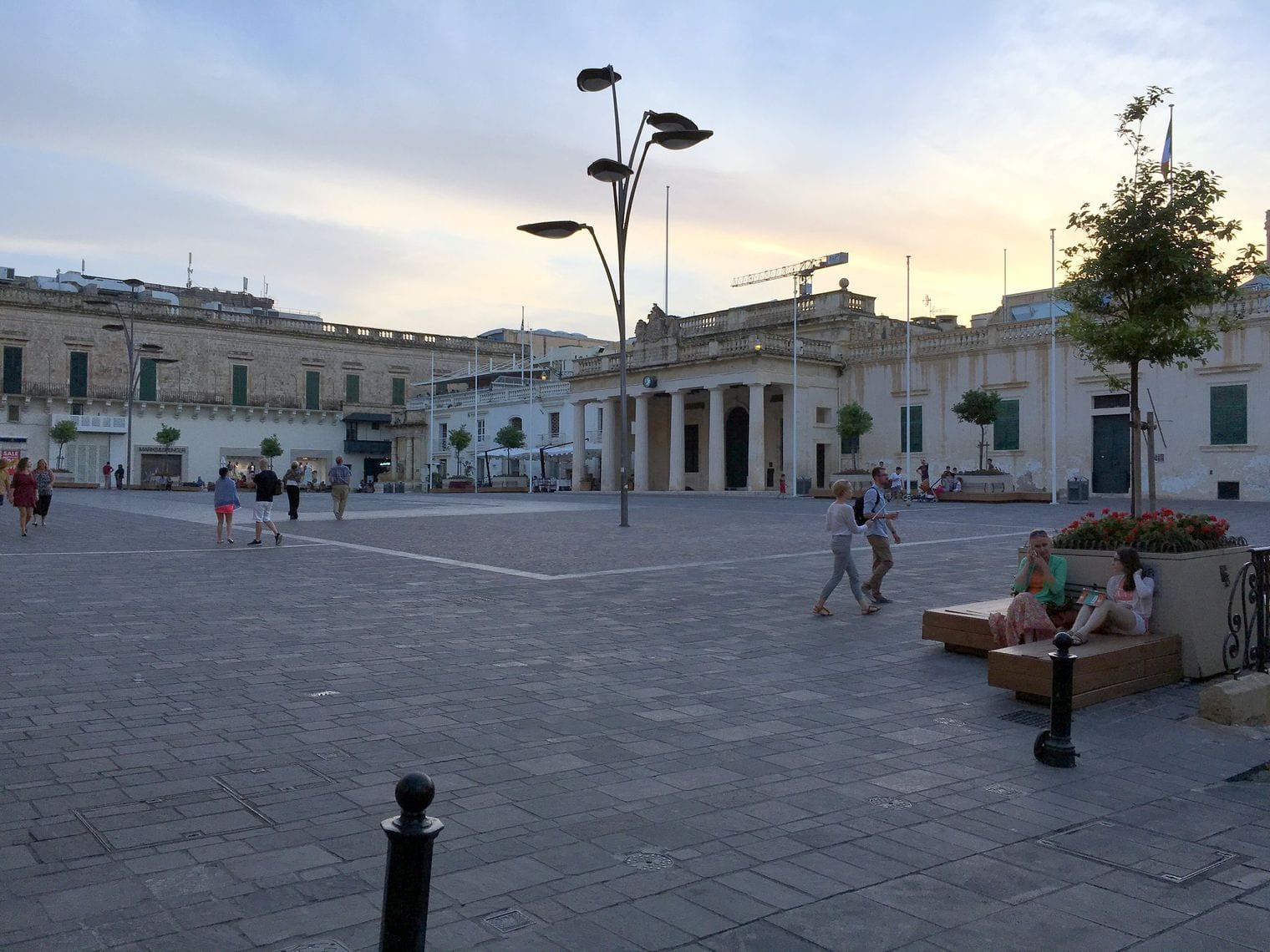
St George's Square is Valletta's front room — the wide paved space in front of the Grand Master's Palace where the Order held its parades and the British held theirs afterwards. It was pedestrianised in 2009, and the change turned it from a car park back into somewhere people actually linger.
Jets of water rise straight out of the paving in a grid, which children treat as a splash pad on hot afternoons. Cafés line one side and the palace's long facade the other, and the square is the natural place to begin or end a walk down Republic Street.
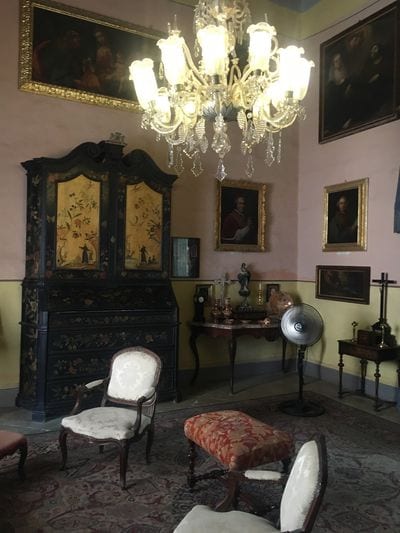
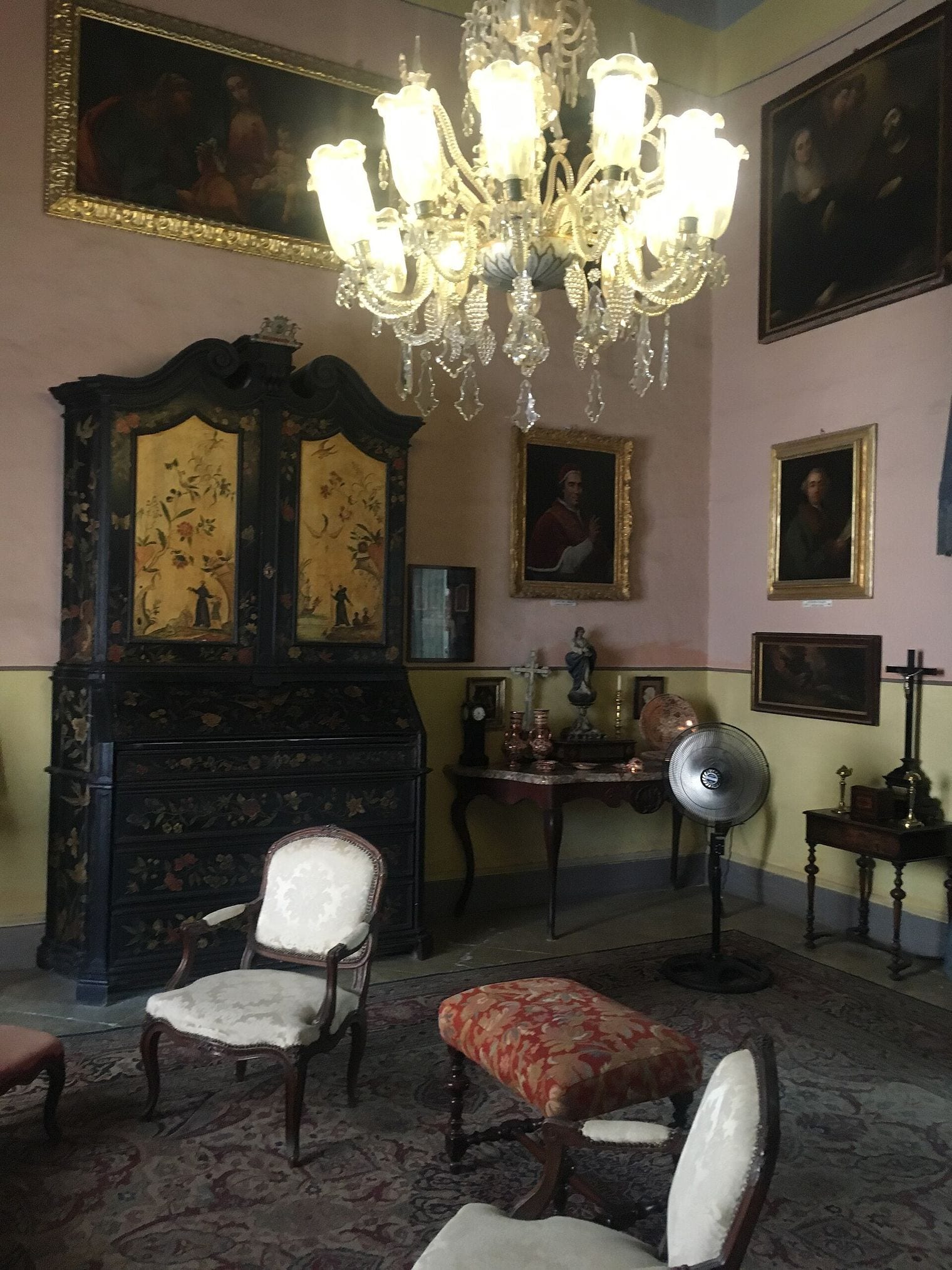
Casa Rocca Piccola is a 16th-century palace that is still somebody's home. The de Piro family have lived here for generations and open around fifty rooms to guided tours, so you walk through drawing rooms, a chapel, a library and a dining room laid as though guests were expected, rather than past roped-off displays.
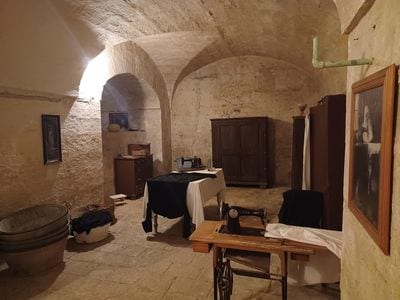
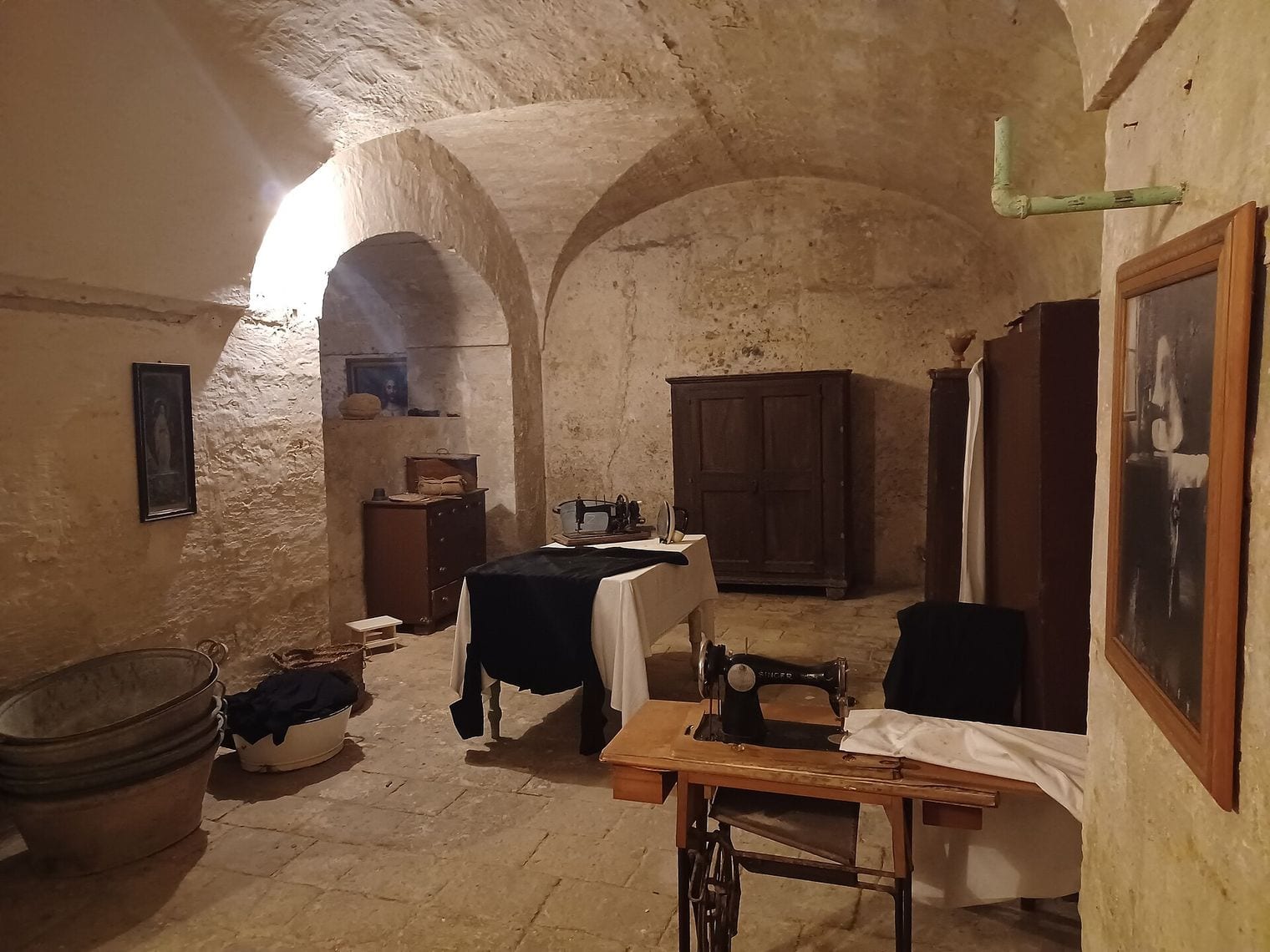
The best part is underneath. A network of rooms cut into the rock served as the family's air-raid shelter during the Second World War, and the tour goes down into them. It is the clearest picture in Valletta of how the city's nobility actually lived — and of where they went when the bombing started.
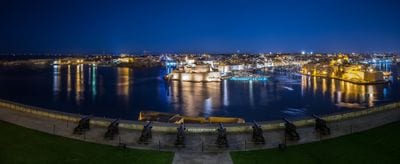
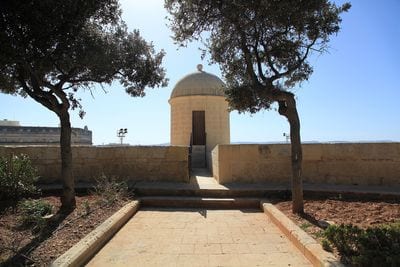
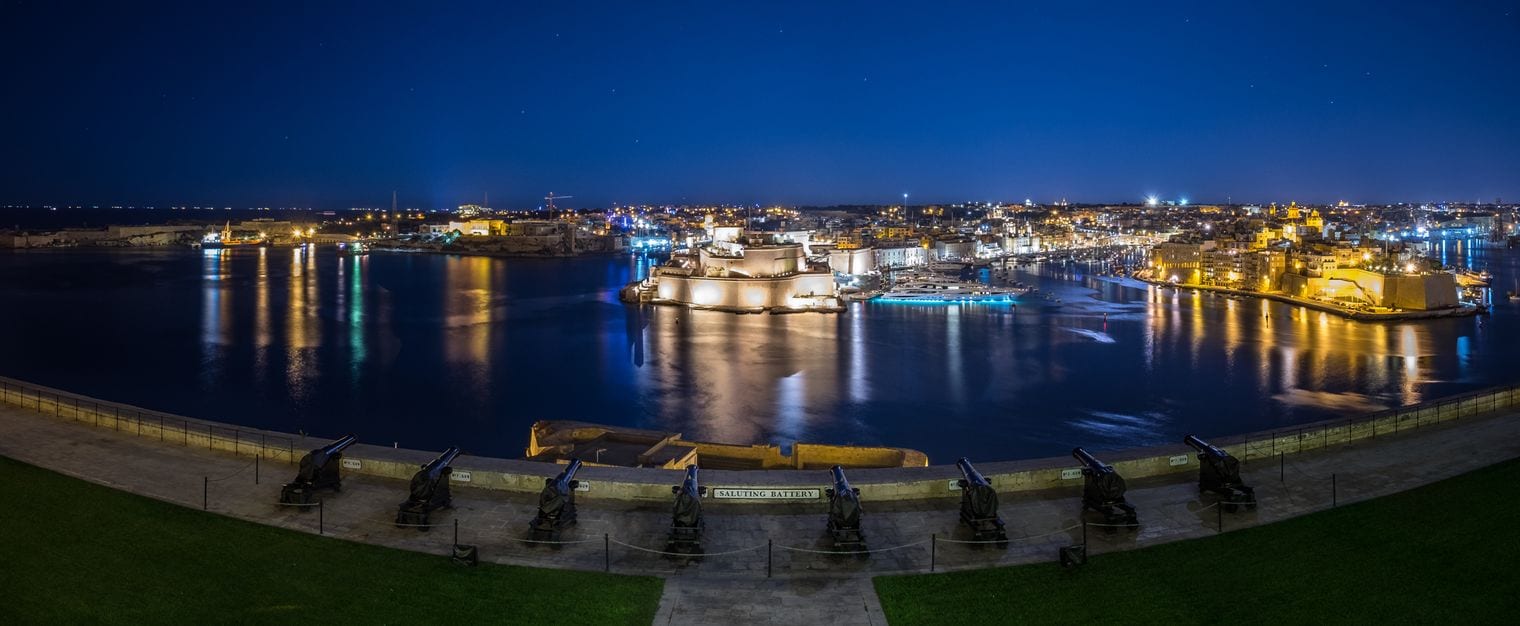
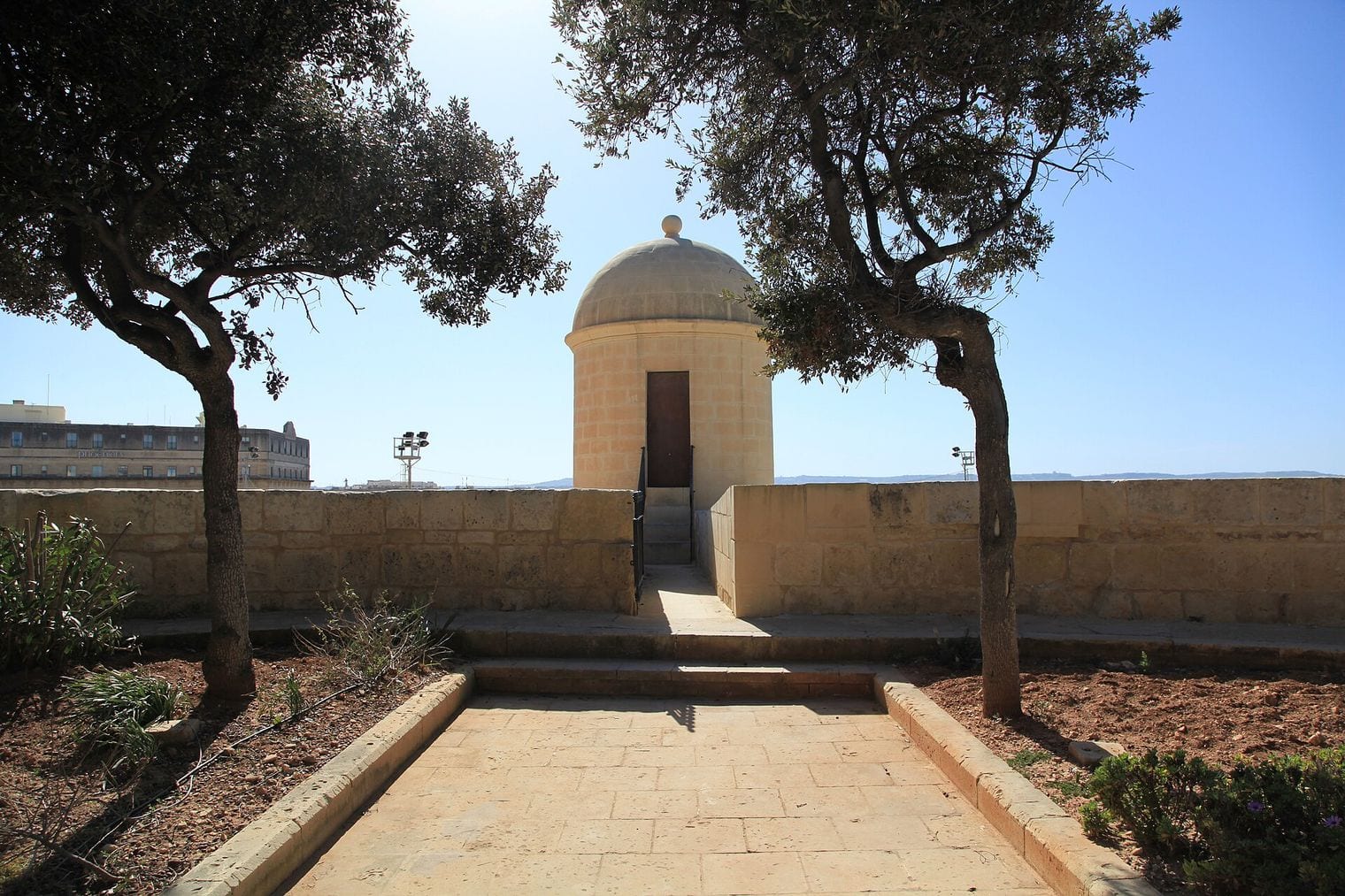
Below the Upper Barrakka Gardens, a line of cannon points out over the water from the Saluting Battery. For centuries this was the working clock of the harbour: a gun fired at a fixed hour so that ships below could set their chronometers, and salutes returned to arriving vessels and visiting dignitaries.
The battery has been restored and is fired daily by gunners in period uniform, with a short talk before the shot. You can watch for free from the garden railing above, but a ticket puts you on the gun deck itself, at eye level with the barrels and considerably closer to the noise.
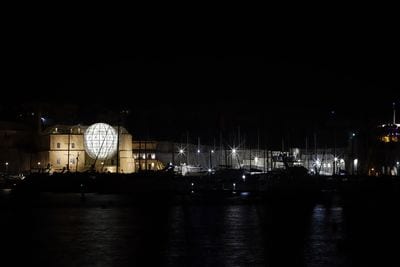
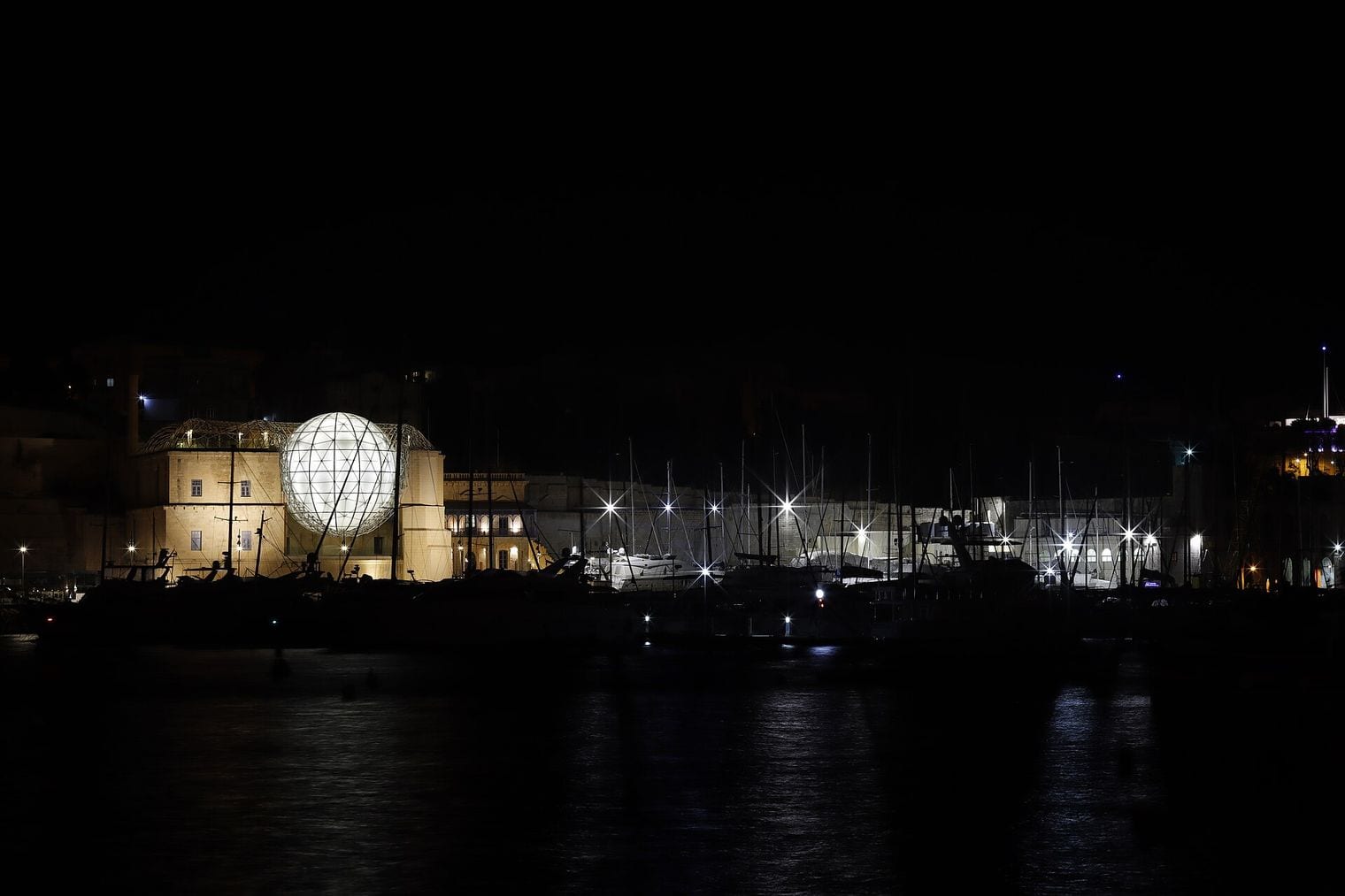
Esplora sits across the water in Kalkara, in the buildings of the former Bighi naval hospital, and it is the one stop on this list aimed squarely at children. Several floors of hands-on exhibits let visitors pull, spin and build their way through physics, biology and engineering, and there is a planetarium under the dome.
The grounds are the surprise. Terraced gardens run down towards the water with the Valletta bastions directly opposite, so even the walk between buildings comes with a view. Crossing the Grand Harbour by ferry to get here turns the journey into part of the outing.
The Malta Experience is a wide-screen audiovisual show that compresses several thousand years of Maltese history into well under an hour — temple builders, Phoenicians, Romans, Arabs, Knights, Napoleon, the British and the wartime siege, in order and with maps to hold it together.
It runs inside the Sacra Infermeria, the Order's great hospital ward, which is worth seeing in its own right. Watch it early in a trip: it supplies the chronology that makes every fort, church and museum afterwards fall into place, and it is air-conditioned and easy on legs that have been walking on limestone all morning.
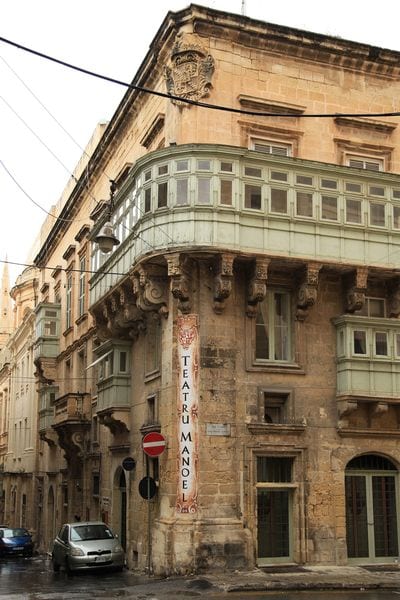
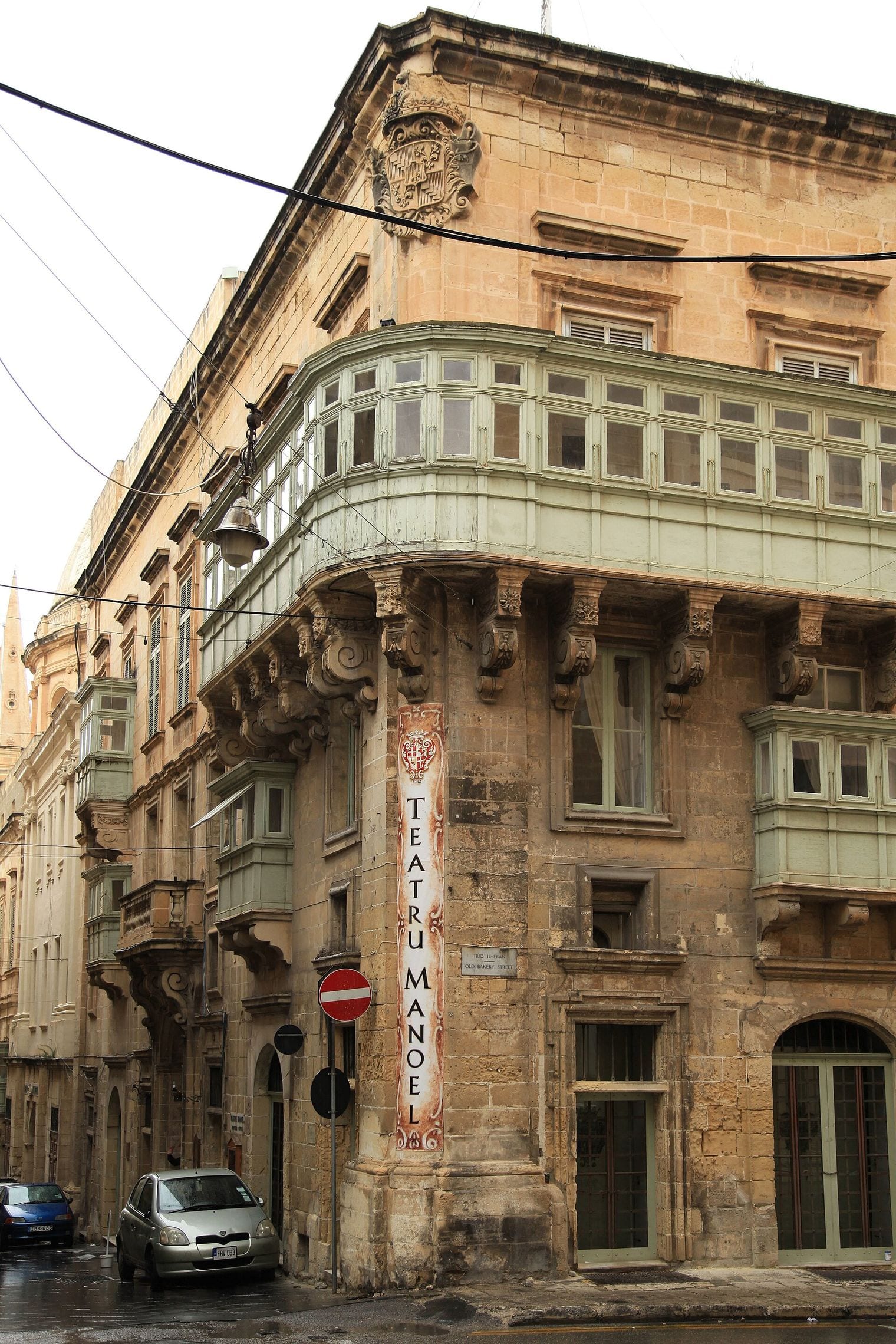
Teatru Manoel was built in 1731 on the orders of Grand Master António Manoel de Vilhena, who paid for it out of his own pocket so the knights would have somewhere respectable to be entertained. It is among the oldest theatres in Europe still in regular use, and it is tiny — an oval auditorium of gilded boxes stacked in tiers beneath a painted ceiling.
Daytime guided tours take you into the boxes and backstage when nothing is being rehearsed, which is the only way to appreciate how small and how ornate the room really is. If the programme suits your dates, a ticket to an actual performance is the better version of the same visit.
Across the Grand Harbour in Birgu, the Inquisitor's Palace is one of very few palaces of the Roman Inquisition anywhere in Europe to survive largely intact. Built in the 1530s as the Order's law courts, it became the seat of the Inquisition in Malta in 1574 and stayed in use until the tribunal was expelled in 1798.
You move from the inquisitor's own well-appointed apartments down to the tribunal room, the prison cells and the graffiti that prisoners scratched into the walls, and the shift in atmosphere is abrupt. The upper floors now hold Malta's national ethnography collection, which uses the building to trace everyday religious life on the islands.
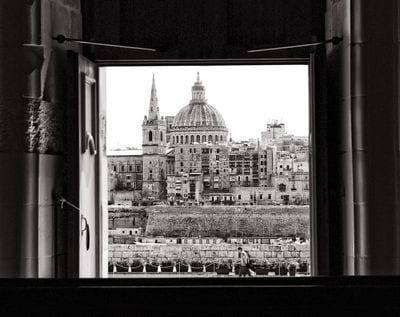
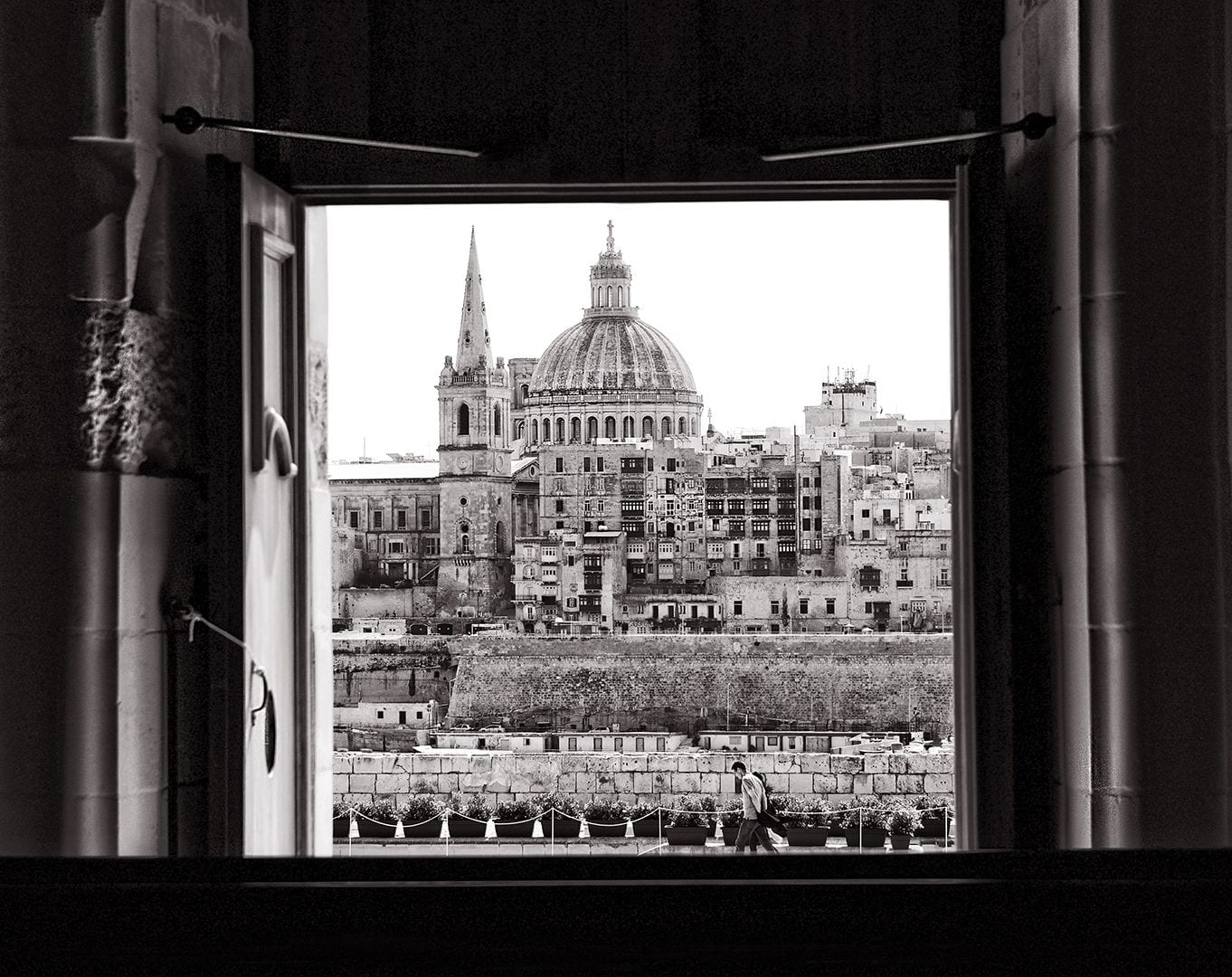
The great oval dome of the Basilica of Our Lady of Mount Carmel is the shape that fixes Valletta's skyline from almost every angle, in the city and from across both harbours. The Carmelites' original church on this site was designed by Girolamo Cassar around 1570; it was wrecked by bombing in the Second World War, and the rebuilding that followed ran from 1958 to 1981.
Its architect, Ġużè Damato, was self-taught, and the dome he produced is deliberately vast — a pale, ribbed hemisphere that dwarfs the rooftops around it. Inside, the sheer scale comes as a shock after Valletta's narrow streets, with light dropping from the drum onto a broad marble floor.
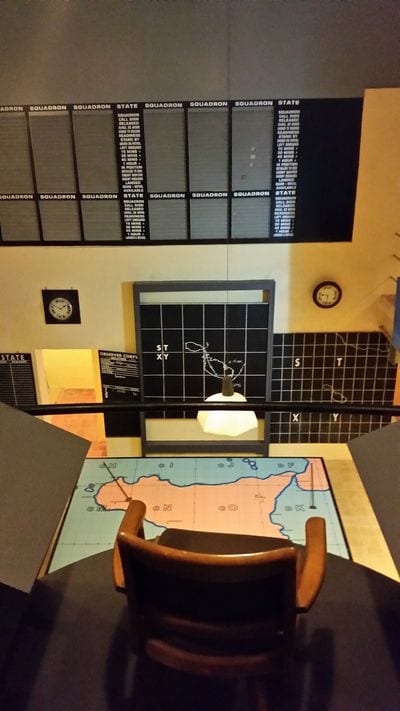
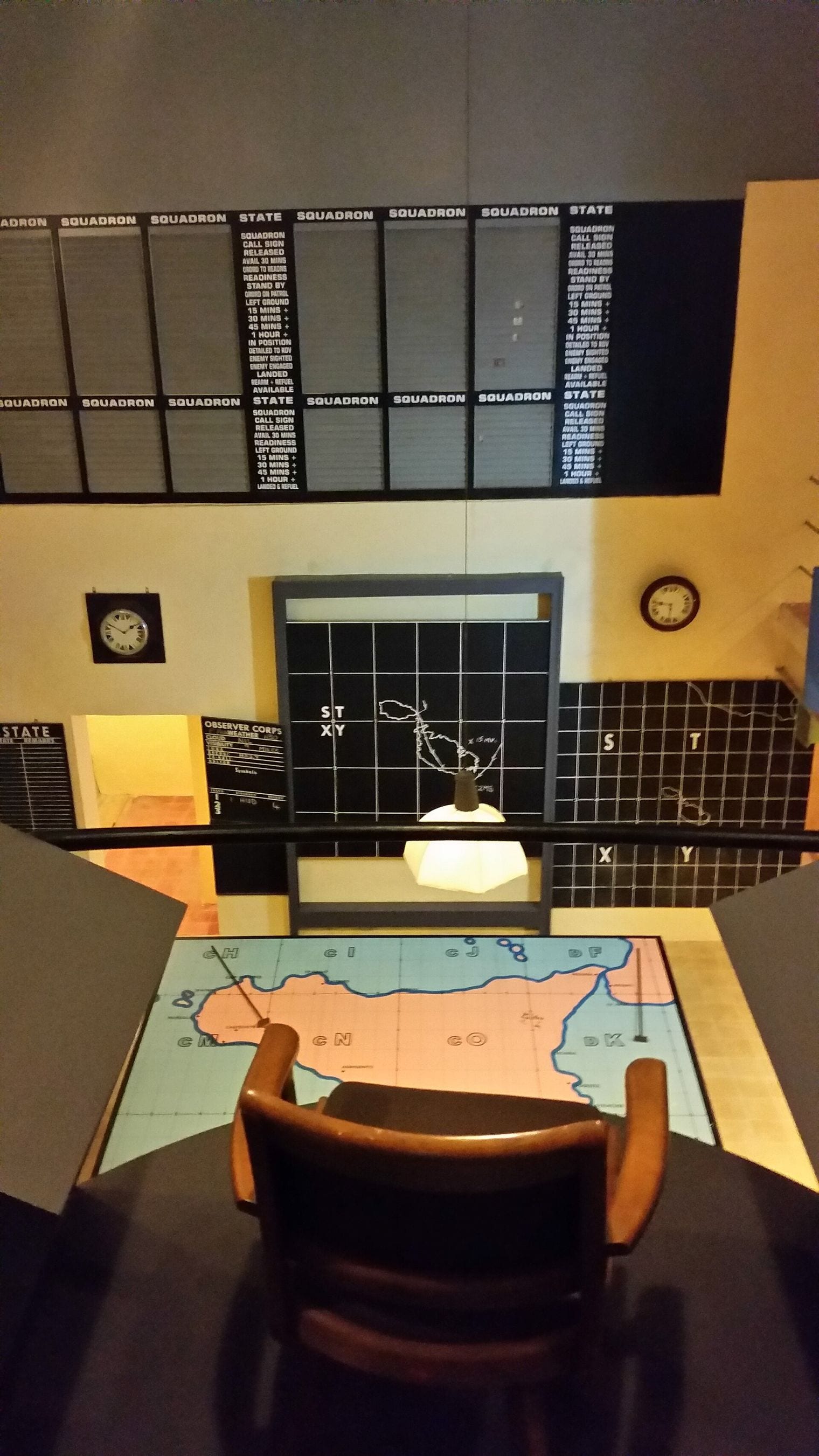
Cut into the rock beneath the Upper Barrakka Gardens, the Lascaris War Rooms were the underground nerve centre from which Malta's defence was directed during the Second World War. The tunnels have been restored to look as they did in operation, with plotting tables, wall maps, switchboards and the close, daylight-free air of a place designed to survive what was happening above it.
The complex's larger claim on history came in 1943, when the Allied invasion of Sicily was directed from these rooms. Later it served as a NATO communications post during the Cold War. It stays cool underground on the hottest day, and the guided route explains the machinery clearly.
Hastings Gardens run along the bastions at the landward corner of the city, and they are where to go when the Upper Barrakka is full. The outlook is different too: instead of the Grand Harbour you look over Floriana, Marsamxett Harbour, Manoel Island and the rooftops of Sliema across the water.
The gardens take their name from Francis Rawdon-Hastings, a governor of Malta who is buried here beneath a white monument set among the lawns. It is a plain, breezy, largely local space — benches, a path along the ramparts, and almost nobody in a hurry.
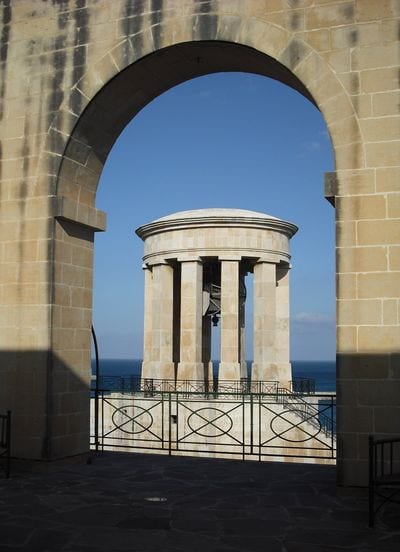
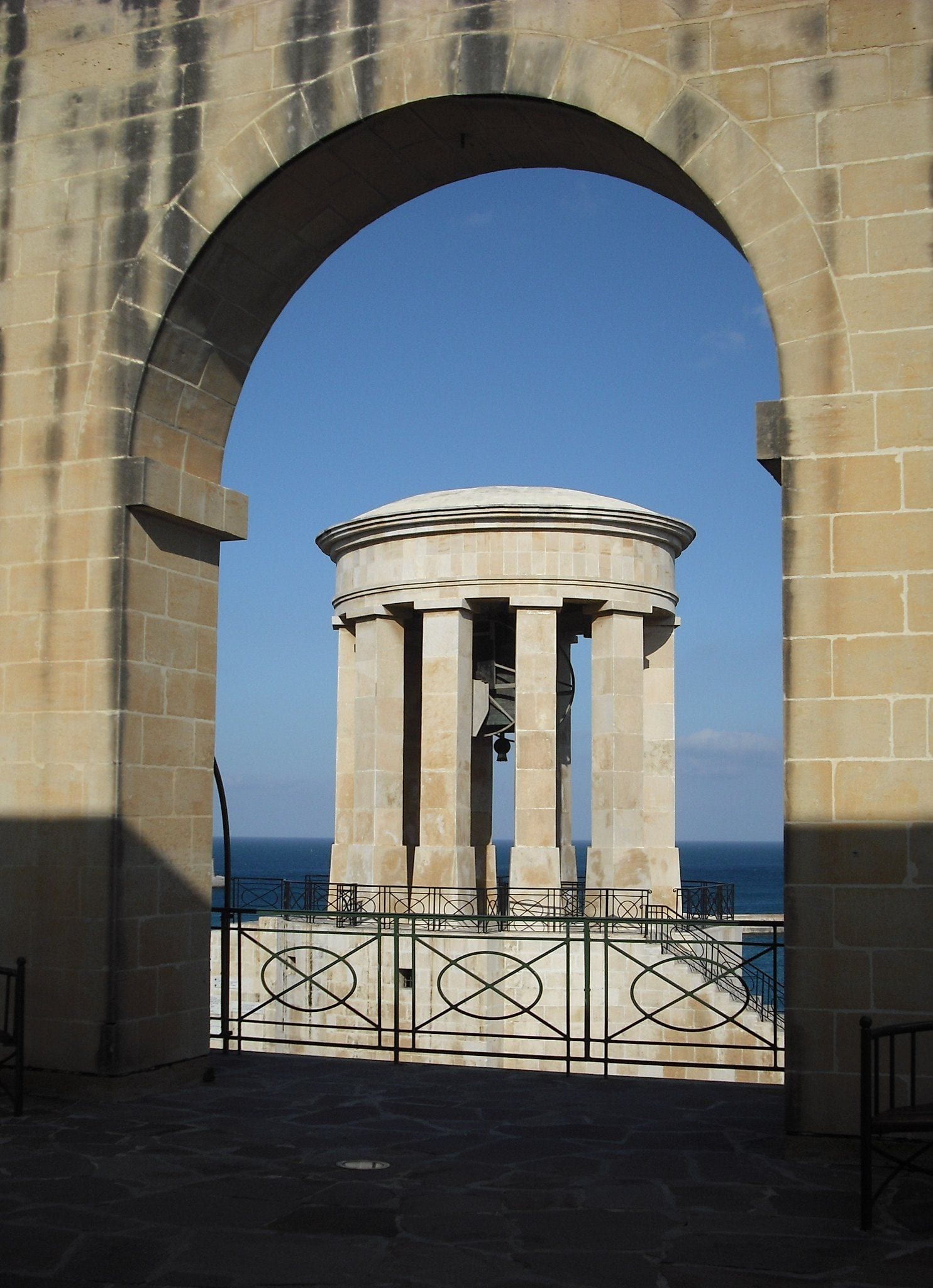
At the southern tip of the peninsula, the Siege Bell War Memorial commemorates the thousands who died in the siege of Malta between 1940 and 1943. A large bronze bell hangs in an open stone cupola above the harbour, and beside it a bronze figure lies on a catafalque, draped, facing out to sea.
It was inaugurated in 1992 by Queen Elizabeth II, and the bell is rung daily. The platform gives one of the cleanest views along the harbour mouth and out to the breakwater. It makes a quiet, sober end to a walk down the eastern flank of the city, and it is rarely crowded.
Malta 5D is a short cinema attraction that runs a whistle-stop animated history of the islands from moving seats, with wind, water spray and other effects timed to the film. It lasts a matter of minutes rather than an afternoon, and it makes no pretence of being anything more than fun.
It exists for families, and on those terms it works — it buys a good deal of goodwill from children who have been walked through several churches, and it costs almost no time. Treat it as a break between heavier stops rather than a headline attraction in its own right.
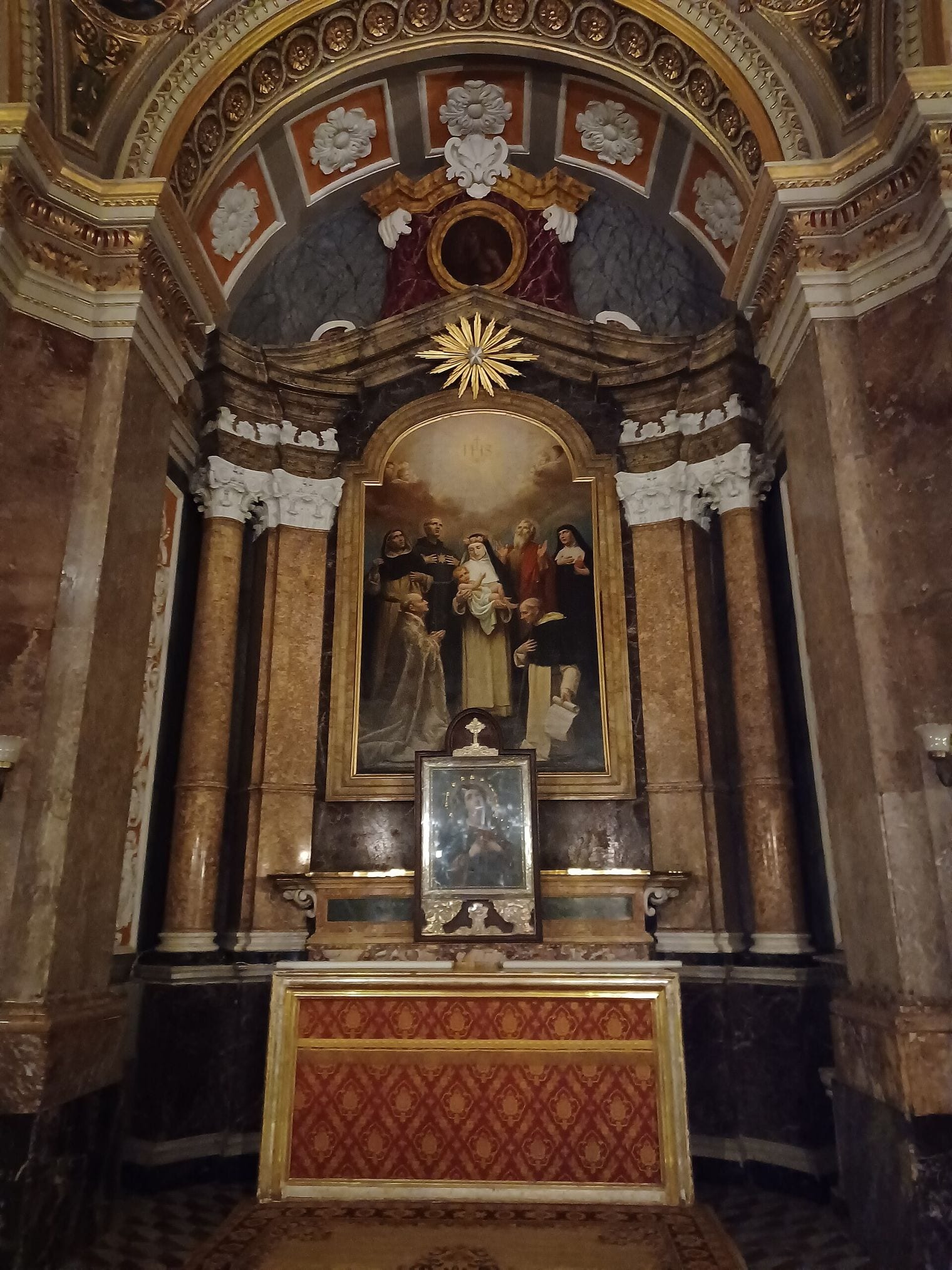
The Basilica of St Dominic — properly the Basilica of Our Lady of Porto Salvo and St Dominic — is among the oldest religious foundations in Valletta, established in the city's earliest years. The present church is large, dim and richly furnished, with side chapels endowed over the centuries by the guilds and confraternities of the surrounding quarter.
It sits just off Merchants Street, away from the main tourist current, and is often almost empty. That is the appeal: a working parish church of real scale where you can sit for a while rather than shuffle past. The Porto Salvo in its name refers to safe arrival by sea, which in a harbour city was never an abstraction.
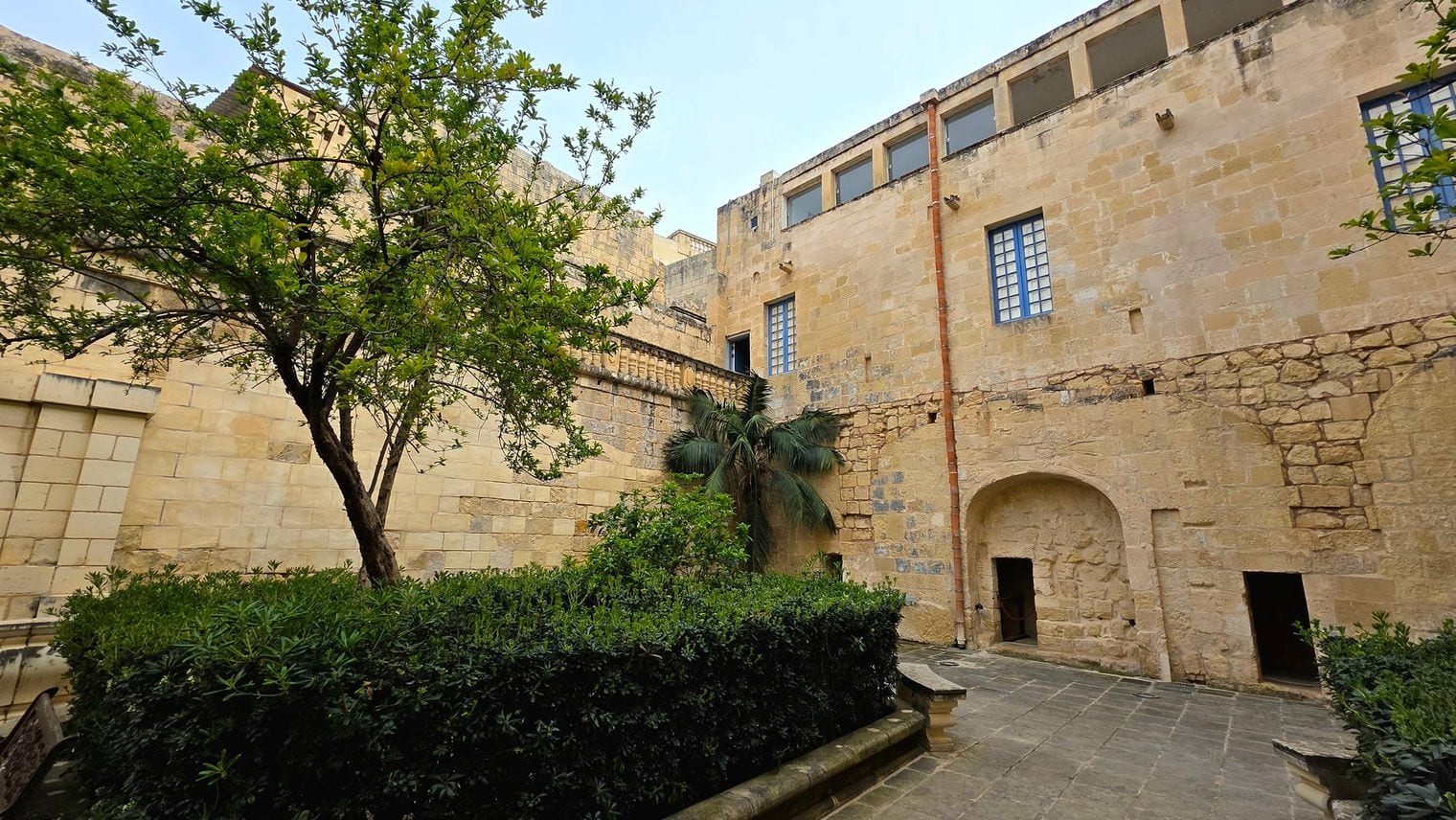
MUŻA, Malta's national community art museum, occupies the Auberge d'Italie, the 16th-century inn of the Italian knights. It opened in 2018, the year Valletta was European Capital of Culture, and it deliberately breaks with the usual chronological hang — works are grouped by theme, around ideas such as the Mediterranean, the artist, and empire.
The collection is strongest in Maltese painting and in the European works the Order accumulated, including pieces by Mattia Preti, whose ceiling you will already have craned at in St John's Co-Cathedral. The restored auberge courtyard is worth the walk in on its own, and the museum is rarely busy.
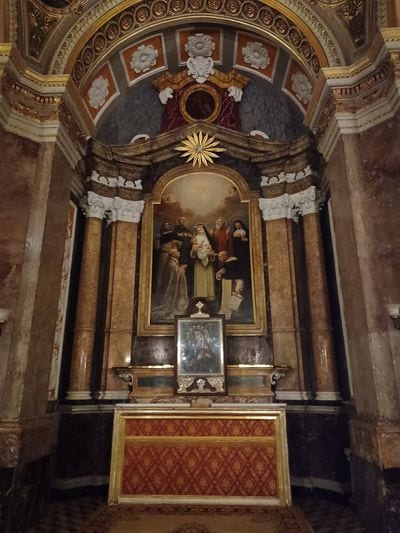
2222. St Catherine's Monastery and Mysterium Fidei Museum
St Catherine's Monastery was founded in 1575 and has housed cloistered nuns of the Second Order of St Augustine ever since — a closed community in the middle of a capital city, hidden entirely behind its walls. In 2023 the underground half of it opened to the public as the Mysterium Fidei museum.
The route goes down through rock-cut rooms, cloisters, crypts and a sunken garden that outsiders had not seen for centuries. Nuns still live in the enclosure above, and knowing that gives the visit an unusual charge: this is a working monastery that has opened a door, not a preserved one.
The National Library of Malta — everyone calls it the Bibliotheca — stands on Republic Square and was among the last buildings the Order of St John put up in Valletta before Napoleon arrived. Its reading room is a long, galleried hall of dark wood and tiered volumes, and you can look into it without paying.
The holdings are the real point: the archives of the Order run to thousands of volumes and remain a working resource for historians. Rotating displays put a handful of documents under glass for visitors, and the building's restrained neoclassical calm is a useful contrast to the Baroque everywhere else in the city.
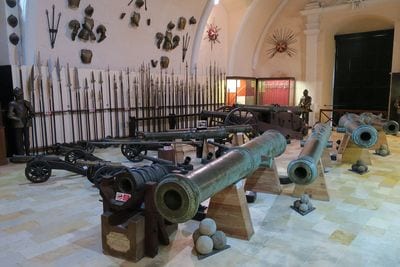
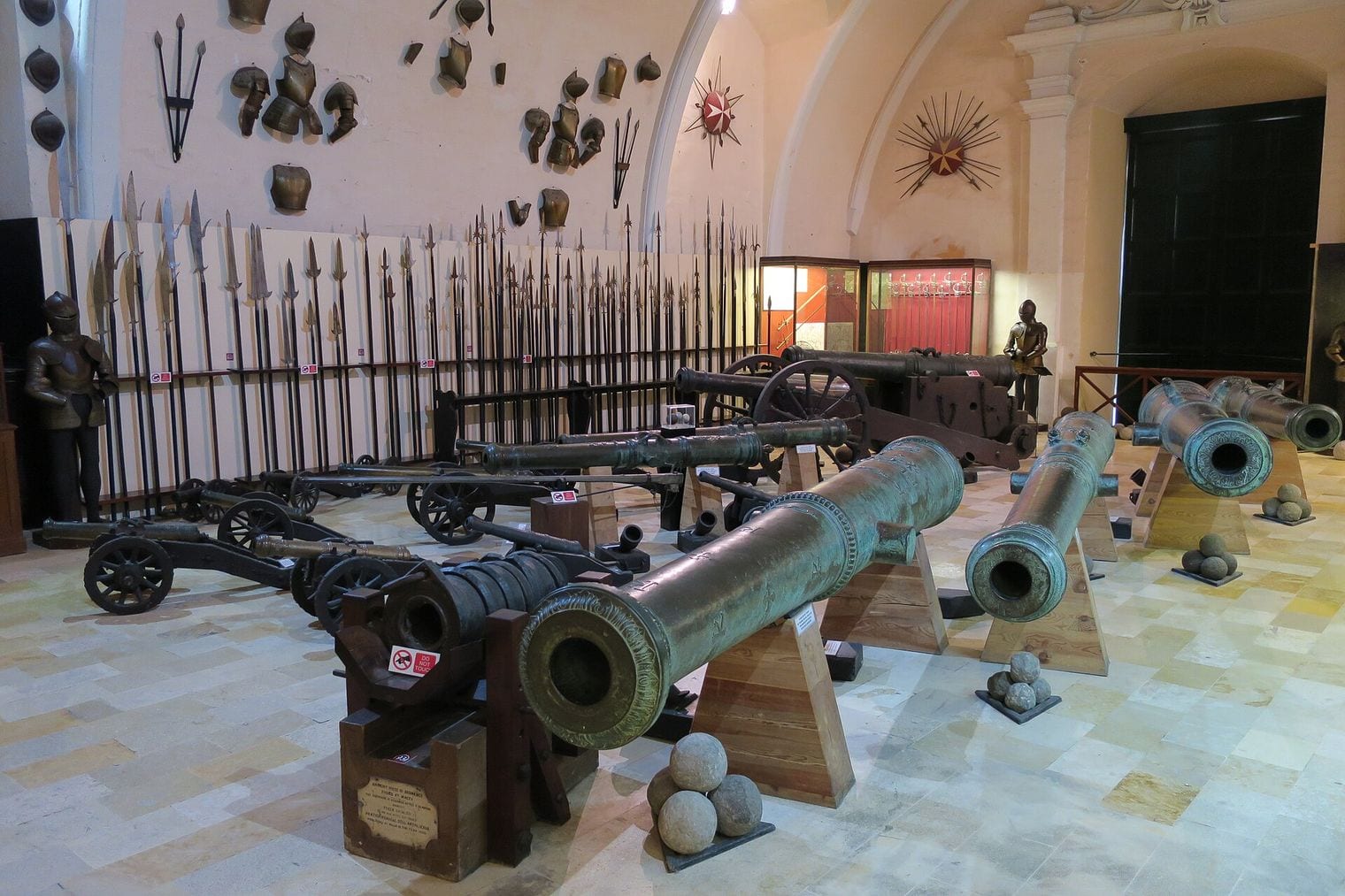
The Palace Armoury fills the old arsenal hall at the back of the Grand Master's Palace, where Alof de Wignacourt moved the Order's weapons in 1604. It is one of the world's largest collections of arms and armour still kept in the building it was made for, and it has been open to the public as a museum since 1860.
Ranks of breastplates, helmets and polearms line the hall, with the gilt parade armour of Wignacourt himself among the highlights, alongside pieces carried by the Knights and by Ottoman troops at the Great Siege of 1565. Firearms and artillery fill out the far end. It is ticketed separately from the State Rooms next door.
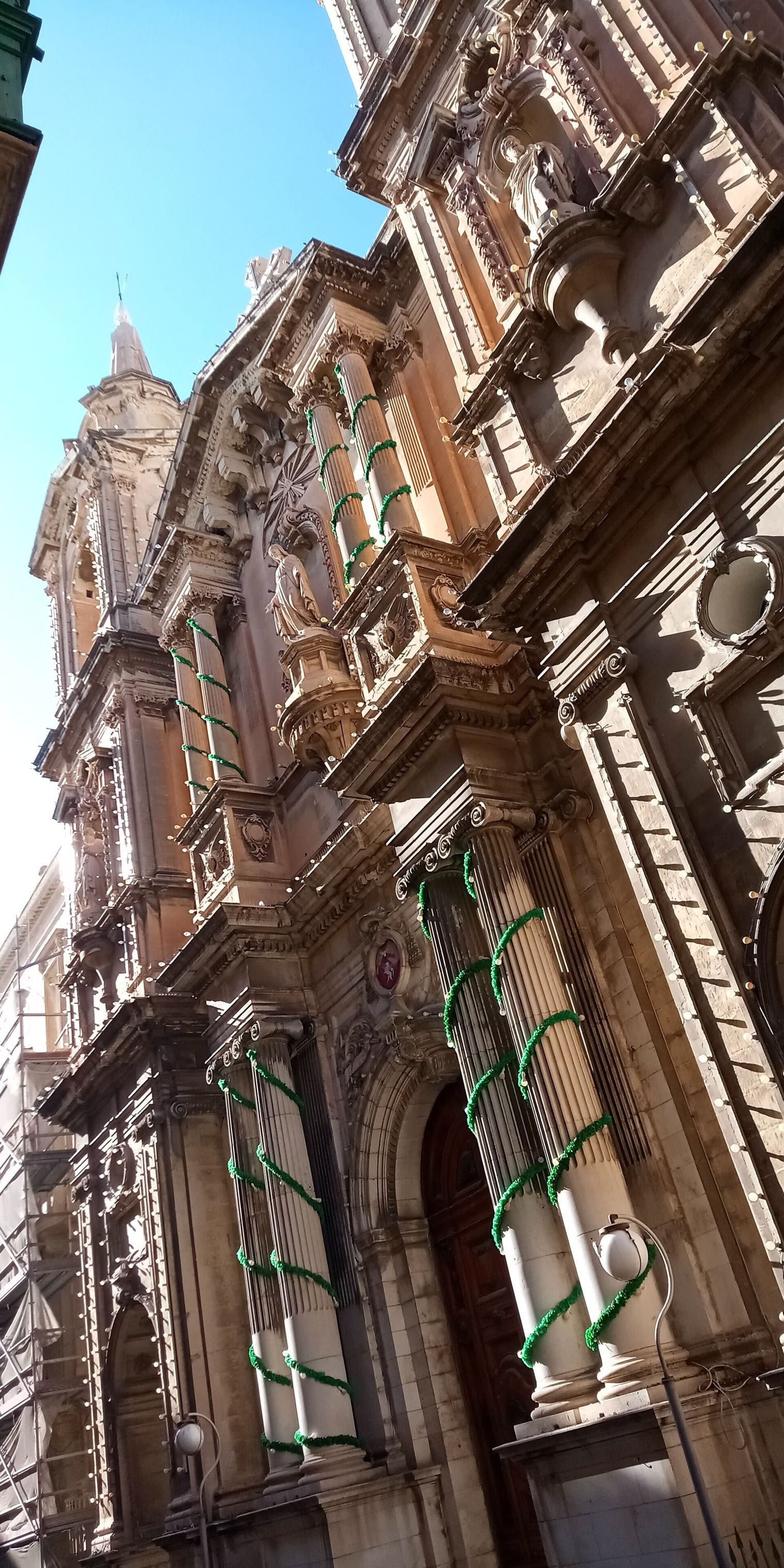
The Collegiate Parish Church of St Paul's Shipwreck marks the event Maltese identity is built on — the apostle's wreck on the island, as recounted in the Acts of the Apostles. Girolamo Cassar designed the church, which was completed in 1582, and its interior is among the warmest and most densely decorated in the city.
It holds two relics: part of the column on which St Paul was beheaded in Rome, and a bone from his right wrist. The wooden titular statue was carved by Melchiorre Cafà in 1659 and is carried through the streets every 10 February, when Valletta marks the feast of the shipwreck.
Plan your trip
Best Time to Visit Valletta
Spring and autumn are the sweet spots. From roughly April to June and again from September to November the heat is manageable, the sea is still warm at the end of the season, and you can walk the city's stepped streets in the middle of the day without suffering. These shoulder months also fall either side of the cruise peak, so the Co-Cathedral and the bastion gardens are noticeably calmer.
High summer is hot, bright and busy, with the sun bouncing off pale limestone and shade at a premium — start early, retreat indoors to the museums after lunch. Winter is mild, green and very quiet, with occasional rain and short days but the lowest prices of the year.
Malta's calendar is built around feasts: Carnival and the feast of St Paul's Shipwreck fall in February, Holy Week brings processions through the streets, and the summer months carry the island's open-air arts and music festivals.
Getting to Valletta
Malta International Airport sits at Luqa, a short drive south of the capital — typically well under half an hour by taxi or airport bus, and the island is small enough that no part of it is a long transfer. There is no railway on Malta, so buses do the work: nearly every route on the island converges on the terminus in the open square outside City Gate, right beside the Triton Fountain.
Arriving by sea is common too. A fast catamaran links Malta with Sicily, docking in the Grand Harbour, and cruise ships berth along Pinto Wharf at the Valletta Waterfront directly beneath the bastions. For Gozo, the car and passenger ferry runs from Ċirkewwa at the northern tip of the island.
Getting Around Valletta
Walk. The walled city is roughly a kilometre from end to end, its core streets are pedestrianised, and every attraction in this guide that sits inside the walls is within about ten minutes of the others. The one thing to plan for is the terrain: Valletta is built across a ridge, so the cross streets drop away in long flights of steps. Sensible shoes matter more here than a transport plan.
A car inside the walls is a liability rather than a help — parking is scarce and much of the grid is closed to traffic. Two short ferries do more useful work: one crosses Marsamxett Harbour to Sliema, the other crosses the Grand Harbour to the Three Cities, and both give you the city's skyline from the water for the price of a bus ticket.
The panoramic lift beside the Upper Barrakka Gardens saves the long climb up from the waterfront, and small electric cabs run through the pedestrian streets for anyone who would rather not tackle the steps.
Where to Stay in Valletta
Staying inside the walls is the atmospheric choice. The city's townhouses and old palazzi have been converted into small boutique properties, and the reward is a capital that empties in the evening once the day-trippers and cruise passengers have gone — you get the floodlit streets more or less to yourself. Floriana, just outside City Gate, offers the same walkability slightly cheaper and puts you next to the bus terminus.
Across Marsamxett Harbour, Sliema and Gzira give you a seafront promenade, a wider choice of places to sleep and eat, and a ferry that lands you under the Valletta bastions in minutes — a good compromise for a longer stay.
The Three Cities, over the Grand Harbour, are quieter and more residential, with marina frontage and a strong sense of the older Malta. If nightlife is the priority, St Julian's and Paceville sit further up the coast, though they are a different trip from a Valletta one.
Where to Eat in Valletta
Strait Street is the obvious place to start. Once the notorious entertainment lane of visiting sailors, it has been reinvented as a narrow strip of wine bars, bistros and tables spilling across the paving.
Merchants Street and the lanes running off it carry more of the same, while Is-Suq tal-Belt — the restored Victorian covered market — gathers stalls and counters under one roof and is the easiest place to graze. Down at harbour level, the Valletta Waterfront trades atmosphere and warehouse arches for a slightly more touristed menu.
Eat Maltese while you are here. Pastizzi, the flaky pastries filled with ricotta or mushy peas, are the national snack and cost almost nothing; ftira, a dense ring-shaped bread, turns up as a sandwich loaded with tuna, capers and tomato.
A fenkata — slow-cooked rabbit, first in gravy and then in wine and garlic — is the celebratory dish of the islands, and lampuki appears on menus when the fish is running in autumn. Finish with imqaret, warm date pastries sold from street carts, and try Kinnie, the bittersweet local soft drink, at least once.
Day Trips from Valletta
Nowhere on these islands is far. The Three Cities — Birgu, Senglea and Cospicua — are minutes away across the Grand Harbour by ferry, and they hold the Inquisitor's Palace and Fort St Angelo in a quarter of narrow lanes that predates Valletta itself.
Mdina, the silent walled former capital, is about half an hour inland to the west and pairs naturally with the catacombs at neighbouring Rabat. To the southeast, the fishing harbour at Marsaxlokk fills with painted luzzu boats and runs a large Sunday market.
For deeper history, the megalithic temples at Ħaġar Qim and Mnajdra stand above the southern cliffs, roughly forty minutes out, with the Blue Grotto sea caves close by; the Ħal Saflieni Hypogeum at Paola is nearer still but needs booking well ahead because daily numbers are strictly capped. Further afield, the ferry from Ċirkewwa crosses to Gozo, a slower, greener island with its own temples, citadel and beaches that is worth a full day or an overnight of its own.
Before you go
Mobile dataAn eSIM gives your phone local data when you land, with no SIM card to swap.via AiraloGet an eSIM
Airport transferA driver meets you at arrivals and takes you to your hotel, at a price fixed when you book.via Welcome PickupsBook a transfer
We may earn a commission when you buy through these links, at no extra cost to you. How we make money.
Take the short climb to Hastings Gardens for the sun going down over Marsamxett Harbour and the Sliema skyline. Then drop into the bars and tables of Strait Street for dinner — or, if the programme is right, book a seat at Teatru Manoel and end the day in one of Europe's oldest working theatres.
A good deal of Valletta costs nothing at all. The Upper Barrakka Gardens and Hastings Gardens are free public terraces with the two best views in the city, and you can watch the gun fired at the Saluting Battery from the railing above without a ticket.
Valletta is best known as the fortified Baroque capital the Knights of St John built after the Great Siege of 1565. Its landmarks are St John's Co-Cathedral, which holds Caravaggio's Beheading of Saint John the Baptist; the Upper Barrakka Gardens overlooking the Grand Harbour; Fort St Elmo and the National War Museum; the Grand Master's Palace; and the National Museum of Archaeology.
How many days do you need in Valletta?
One full day covers the headline sights, because the walled city is small enough to cross on foot in about fifteen minutes. Two days is the comfortable amount, letting you add the smaller museums, the churches and a ferry across the harbour. Using Valletta as a base for the wider island rewards three or four.
What can you do in Valletta for free?
The Upper Barrakka and Hastings Gardens are free public terraces with the best harbour views in the city, and the Saluting Battery can be watched from the railing above at no cost. The Triton Fountain, St George's Square, the Valletta Waterfront promenade and the Siege Bell War Memorial are open ground, and the city's parish churches are free to enter.
Is Valletta walkable?
Very. The whole walled city is about a kilometre end to end, its main streets are pedestrianised, and every sight in this guide inside the walls is roughly ten minutes from the others. The catch is the gradient: Valletta sits on a ridge, so cross streets descend in long flights of steps. A panoramic lift links the Upper Barrakka Gardens with the waterfront.
When is the best time to visit Valletta?
April to June and September to November are the most comfortable months, warm enough for the harbour ferries but without the full weight of summer heat or the peak of cruise-ship arrivals. July and August are hot and crowded, best handled with early starts and indoor museums after lunch. Winter is mild, quiet and the cheapest time to come.