We may earn a commission if you book or buy through a link on
this page, at no extra cost to you. It never affects which places we list or how
we rank them (how we make money).
Short answer
Cabo's three essentials are the granite sea arch at Land's End, the image the whole destination is built on, boat-only Lovers Beach wedged in the rocks beside it, and Medano Beach, the only genuinely swimmable stretch in town. Three to four days is enough: a boat trip to the arch, a beach day on Medano, a hill walk for the view and an evening on the marina.
Cabo San Lucas sits at the very tip of the Baja California peninsula, where the desert runs straight into the sea and the Pacific meets the Sea of Cortez. A granite arch marks the point, a busy marina fills the bay behind it, and the beaches range from party-loud to boat-access-only.
This guide covers beaches and boat trips, whale watching, a hilltop hike, a working glass factory and the nightlife that made the town famous. Three or four days is enough to see it unhurried, and to use the town as a base for exploring wider Mexico.
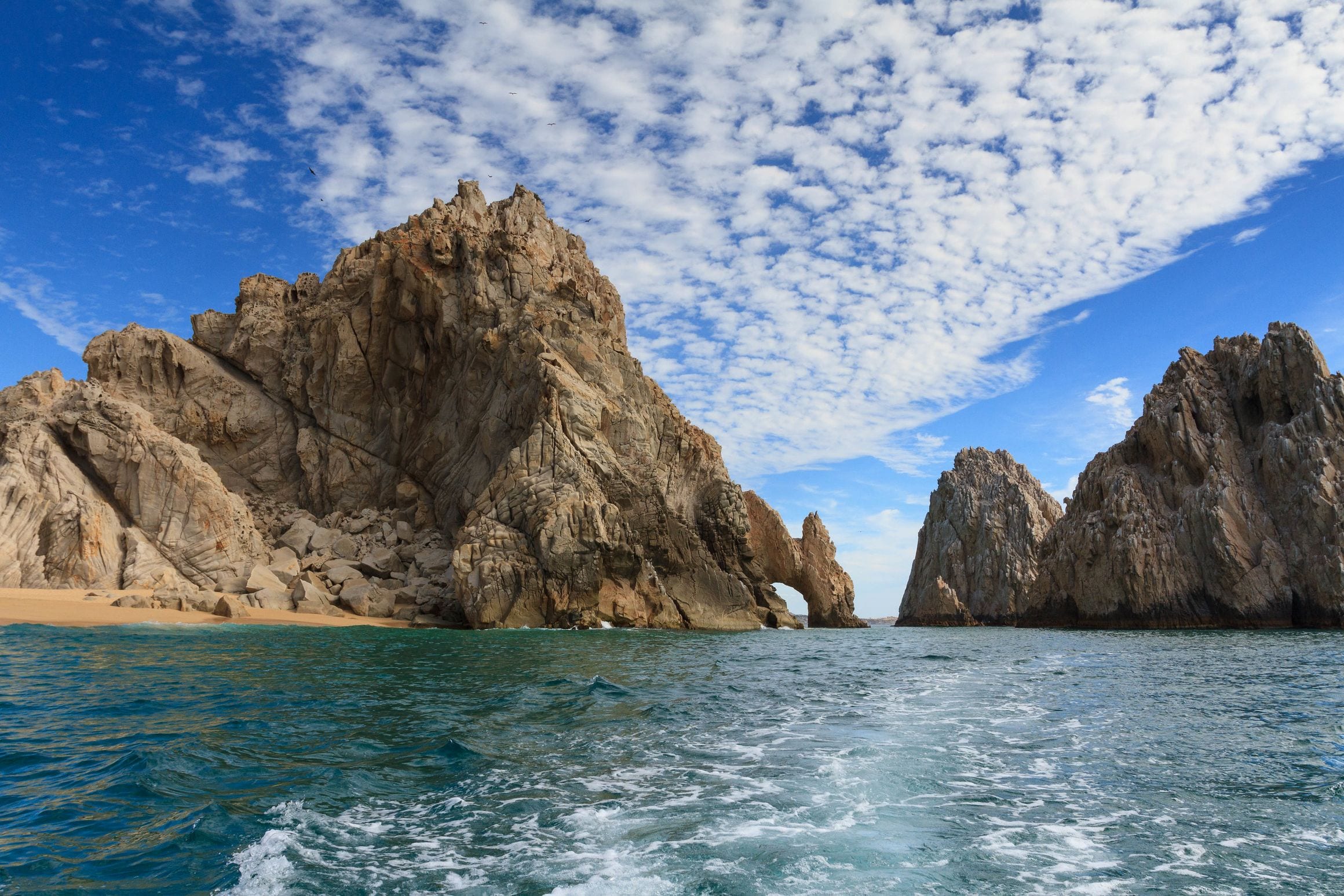
The granite arch at Land's End marks the tip of the Baja California peninsula, where the Pacific Ocean meets the Sea of Cortez — the two bodies of water that give the town its beaches and its fishing.
The Sea of Cortez is a UNESCO World Heritage Site, inscribed as the Islands and Protected Areas of the Gulf of California for its exceptional marine biodiversity and species found nowhere else.
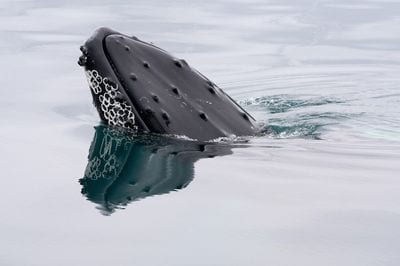
Grey and humpback whales migrate here each winter, roughly between December and April, travelling down the Pacific coast to calve in the warm water around the peninsula.
Bisbee's Black & Blue marlin tournament began in 1981 with six teams competing for a 0,000 purse and has grown into one of the richest sportfishing events in the world, held out of Cabo every October.
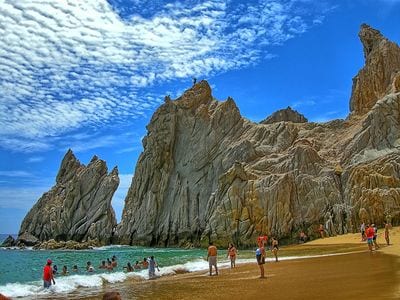
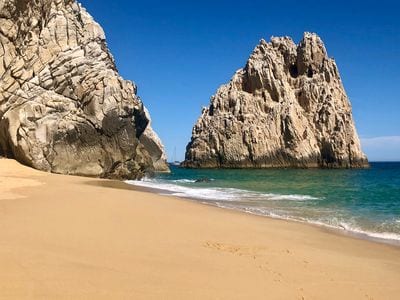
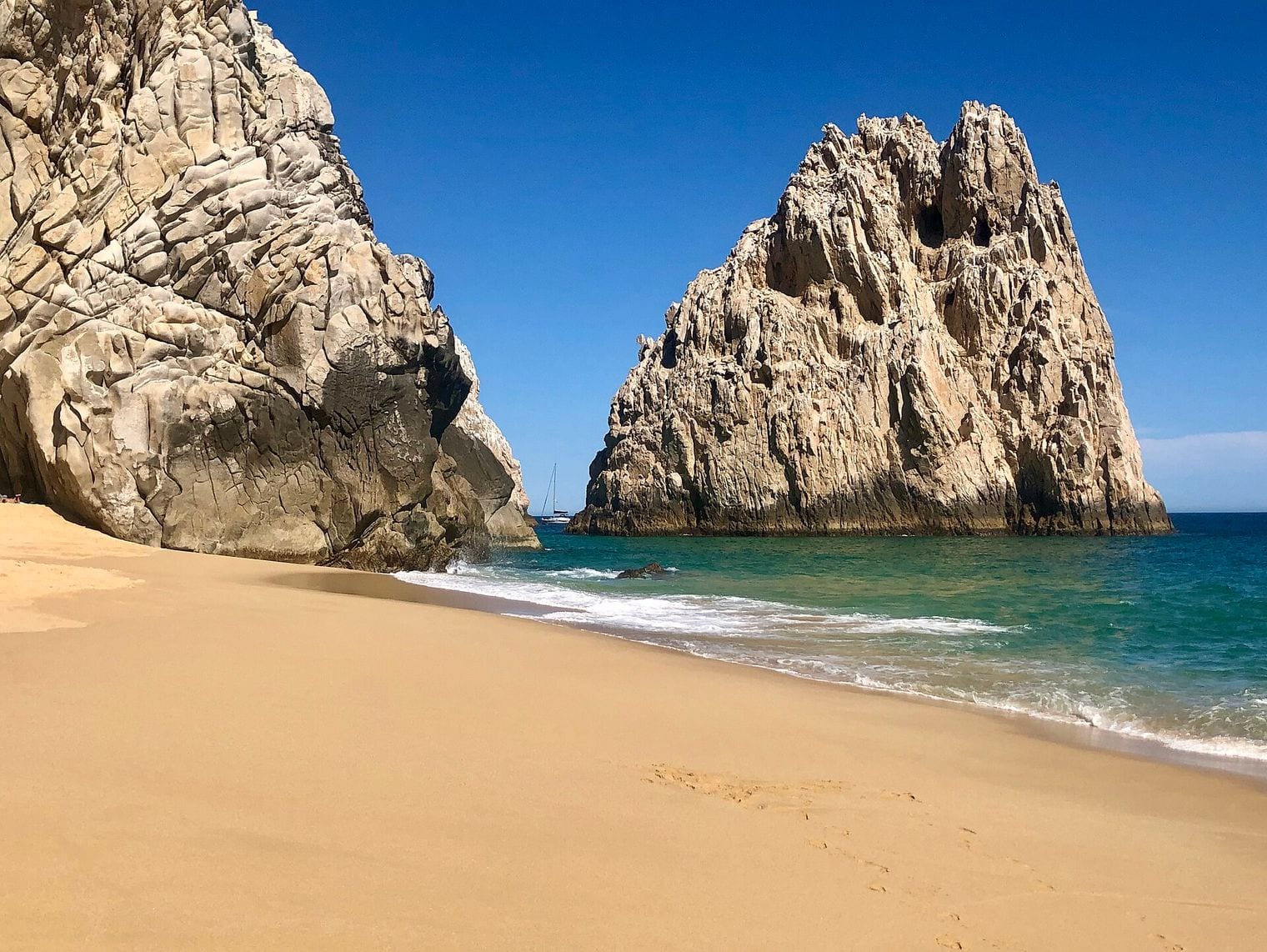
Lovers Beach and Playa del Divorcio are the two sides of a single sand spit — sheltered and swimmable on the Sea of Cortez side, heavy and dangerous surf on the Pacific side, a few dozen metres apart.
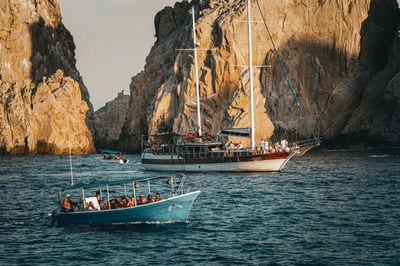
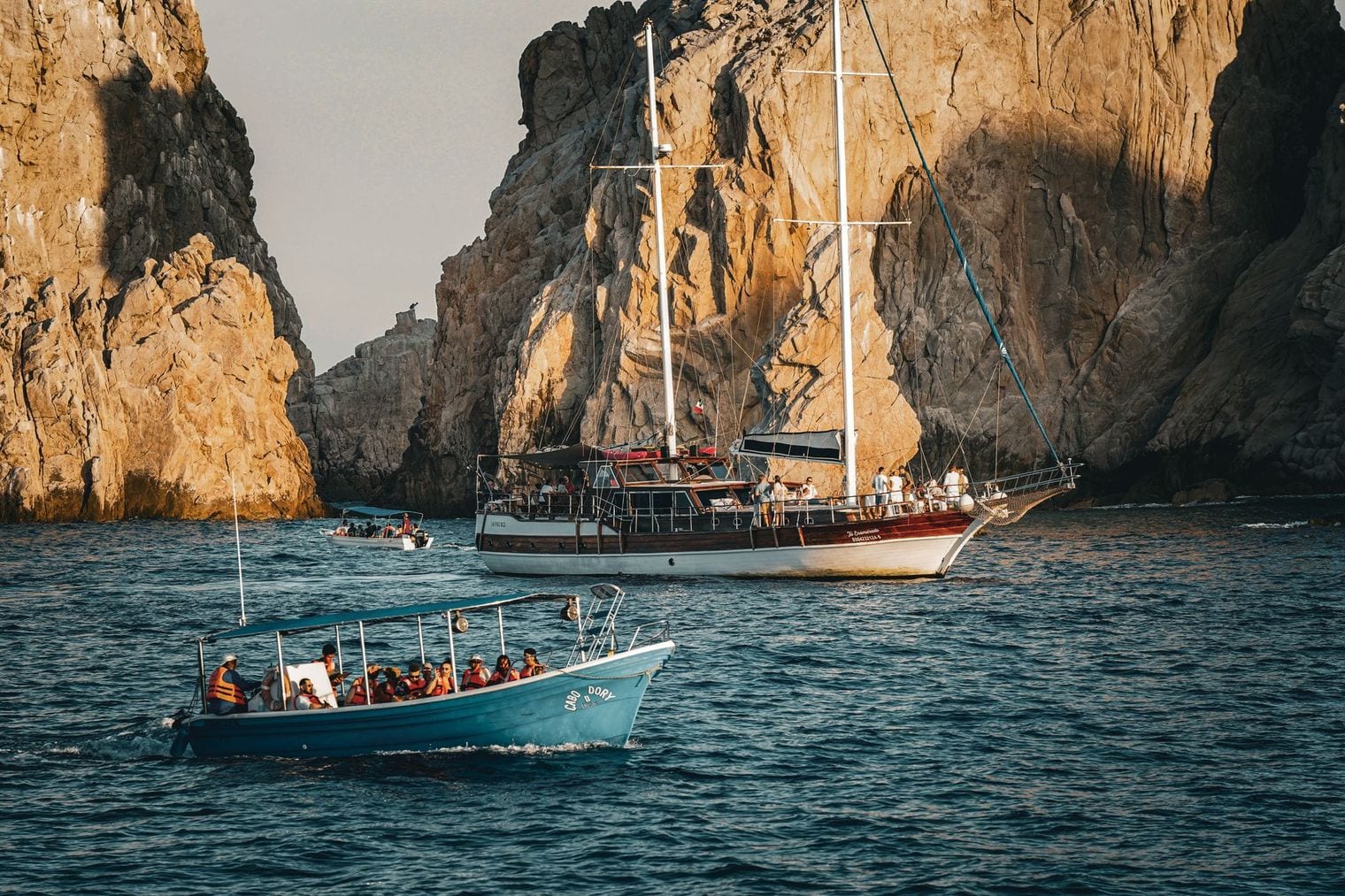
The Arch of Cabo San Lucas is the reason the town is on postcards. A wind- and wave-cut opening in the granite headland at the peninsula's southern tip, it frames the exact meeting point of the Pacific Ocean and the Sea of Cortez, with sea lions hauled out on the rocks below and pelicans working the water around it.
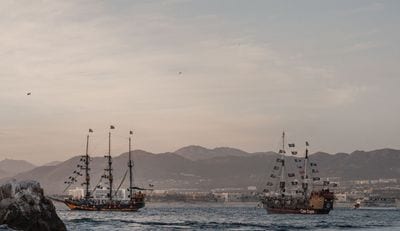
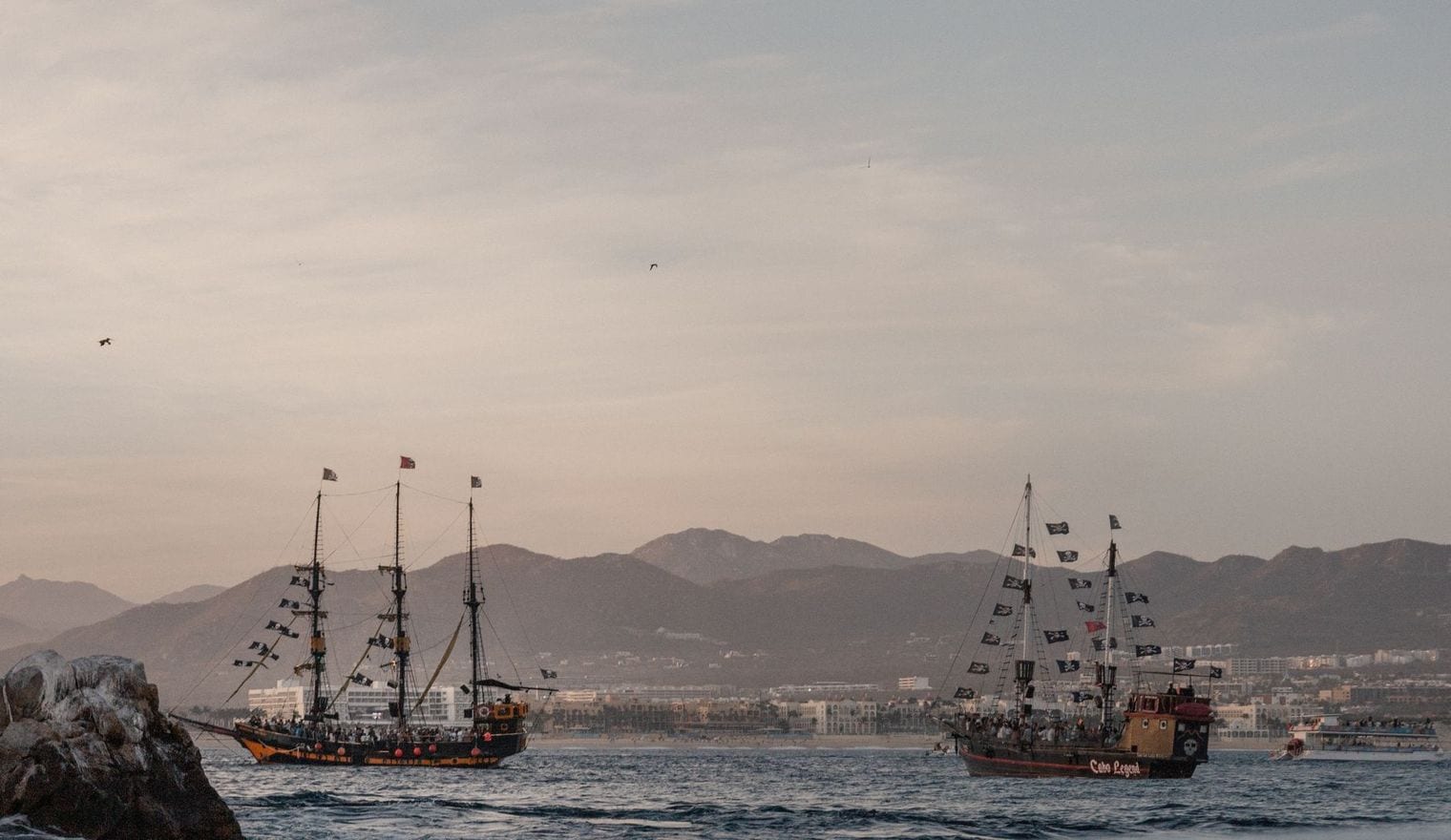
You cannot reach it on foot. Water taxis, glass-bottom boats and catamarans run out to it continuously from the marina and from Medano Beach, and the trip takes only a few minutes each way. Go early for calm water and soft light, and expect the boatman to nose in close enough that the arch fills your whole field of view.
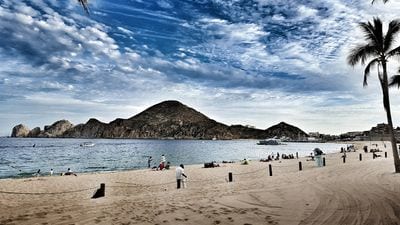
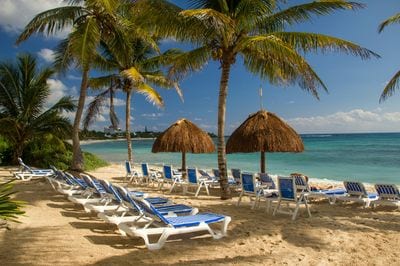
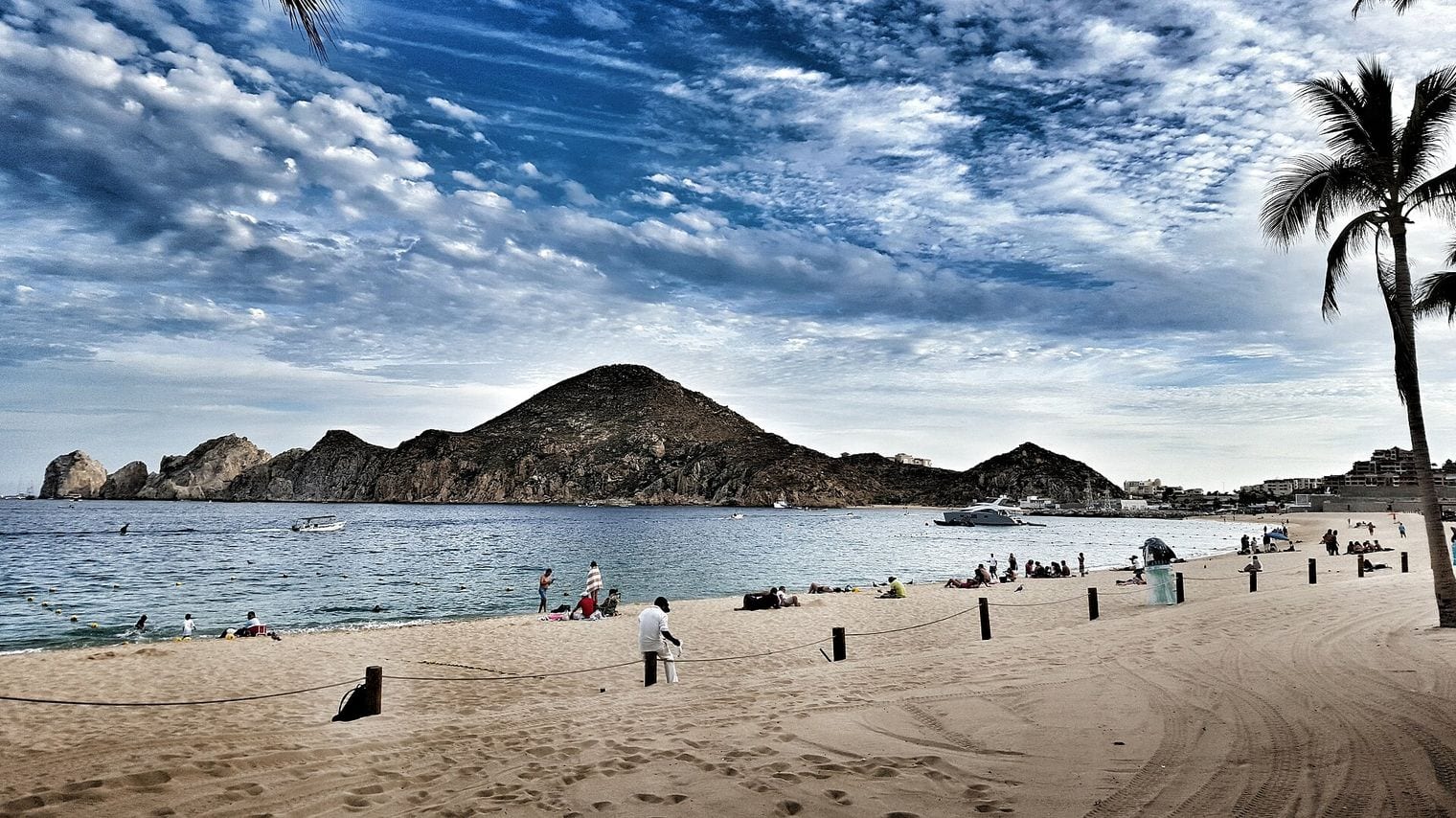
El Medano Beach is the town's main swimmable stretch of sand and its social centre of gravity. It curves for a couple of kilometres along the bay, facing the arch, and it is one of the few beaches in the area where the water is reliably calm enough to swim without worrying about undertow.
The sand is lined with beach clubs, loungers and vendors, and the shallows fill with kayaks, paddleboards, jet skis and parasail boats. It is lively rather than peaceful, so pick your spot deliberately: the western end near the marina is busiest, and the further east you walk, the quieter it gets.
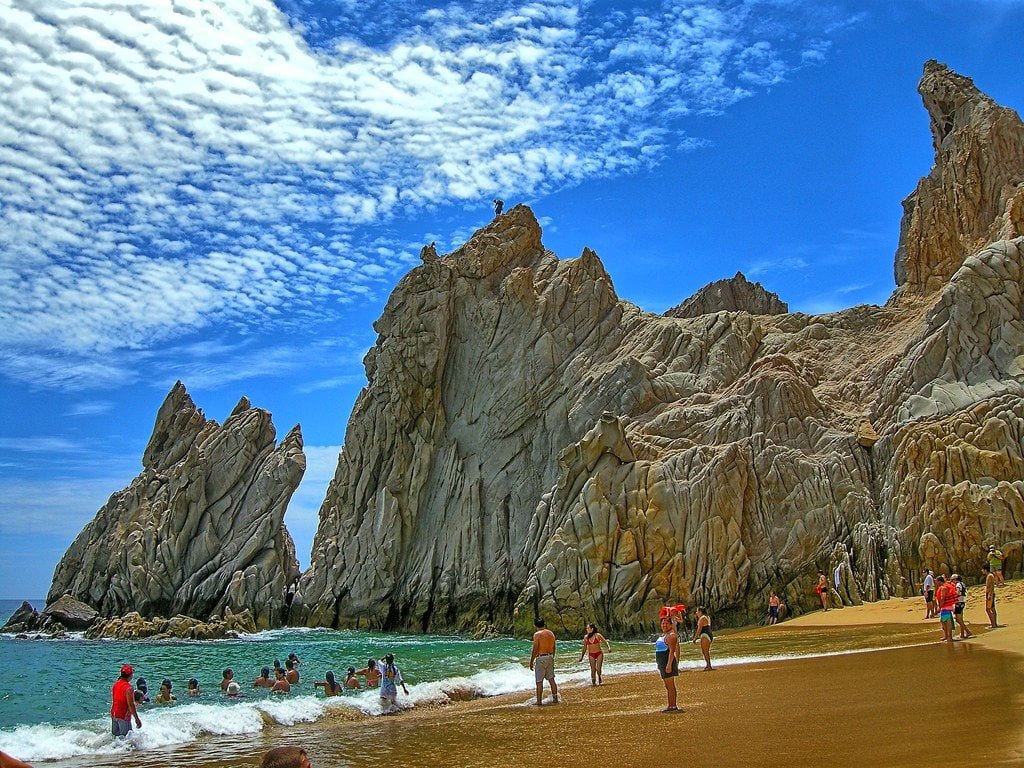
Tucked into the rocks at Land's End, Lovers Beach is a small crescent of pale sand wedged between granite spires and reachable only by boat. Water taxis run from the marina and from Medano Beach and will drop you off and collect you at an agreed time, which is the whole charm of it: for an hour or two you are on a beach with no road access at all.
The Sea of Cortez side is sheltered and good for swimming and snorkelling. Walk a few dozen metres across the sand spit and you are on the Pacific side, where the surf is violent and swimming is genuinely dangerous. Bring water and shade, because there is nothing on the beach itself.
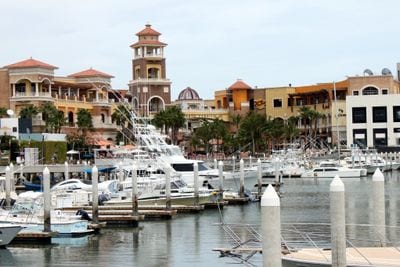
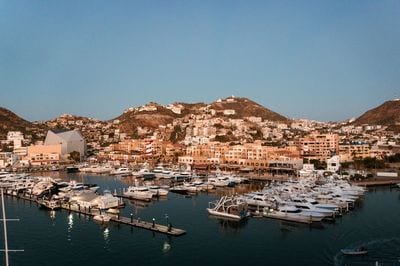
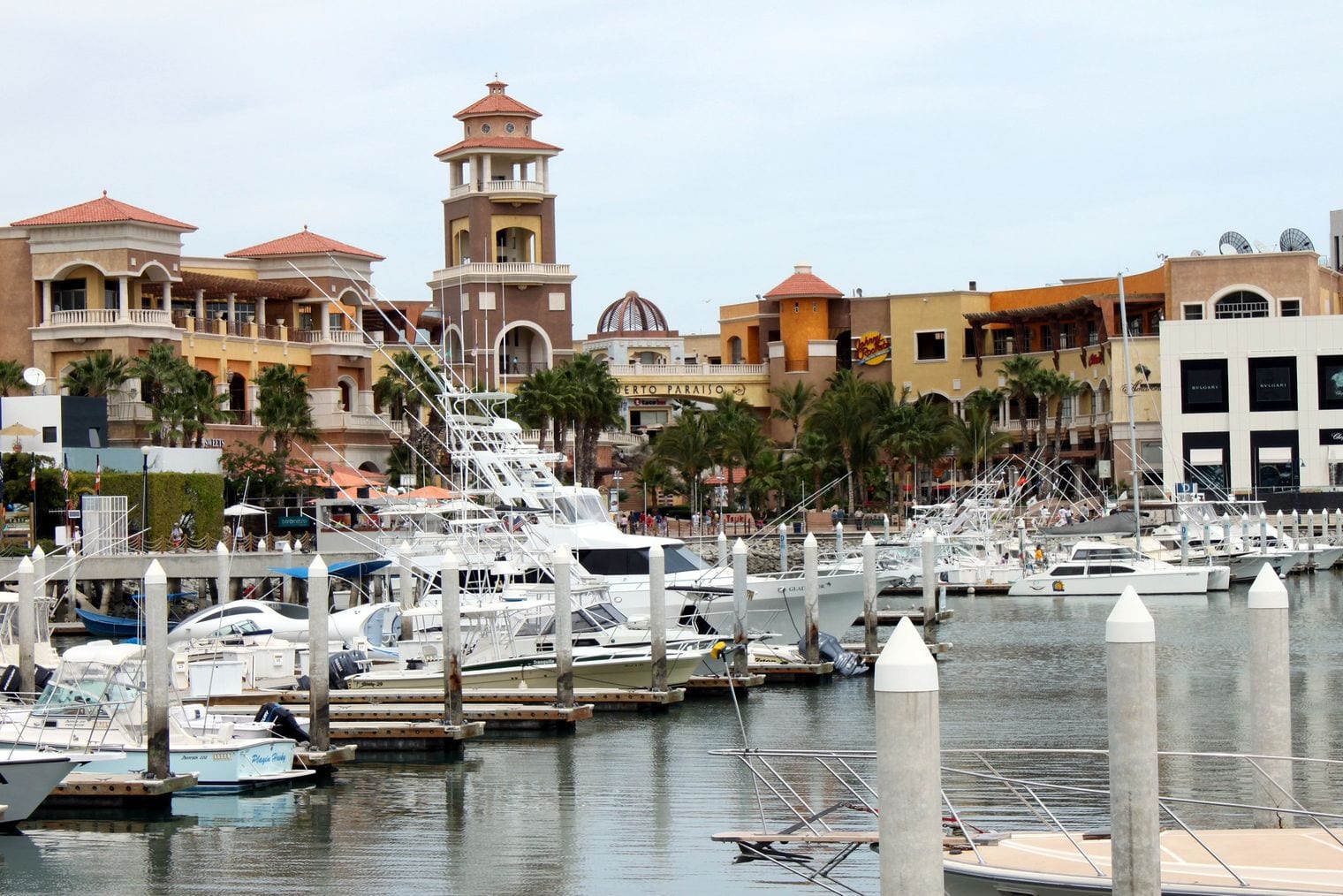
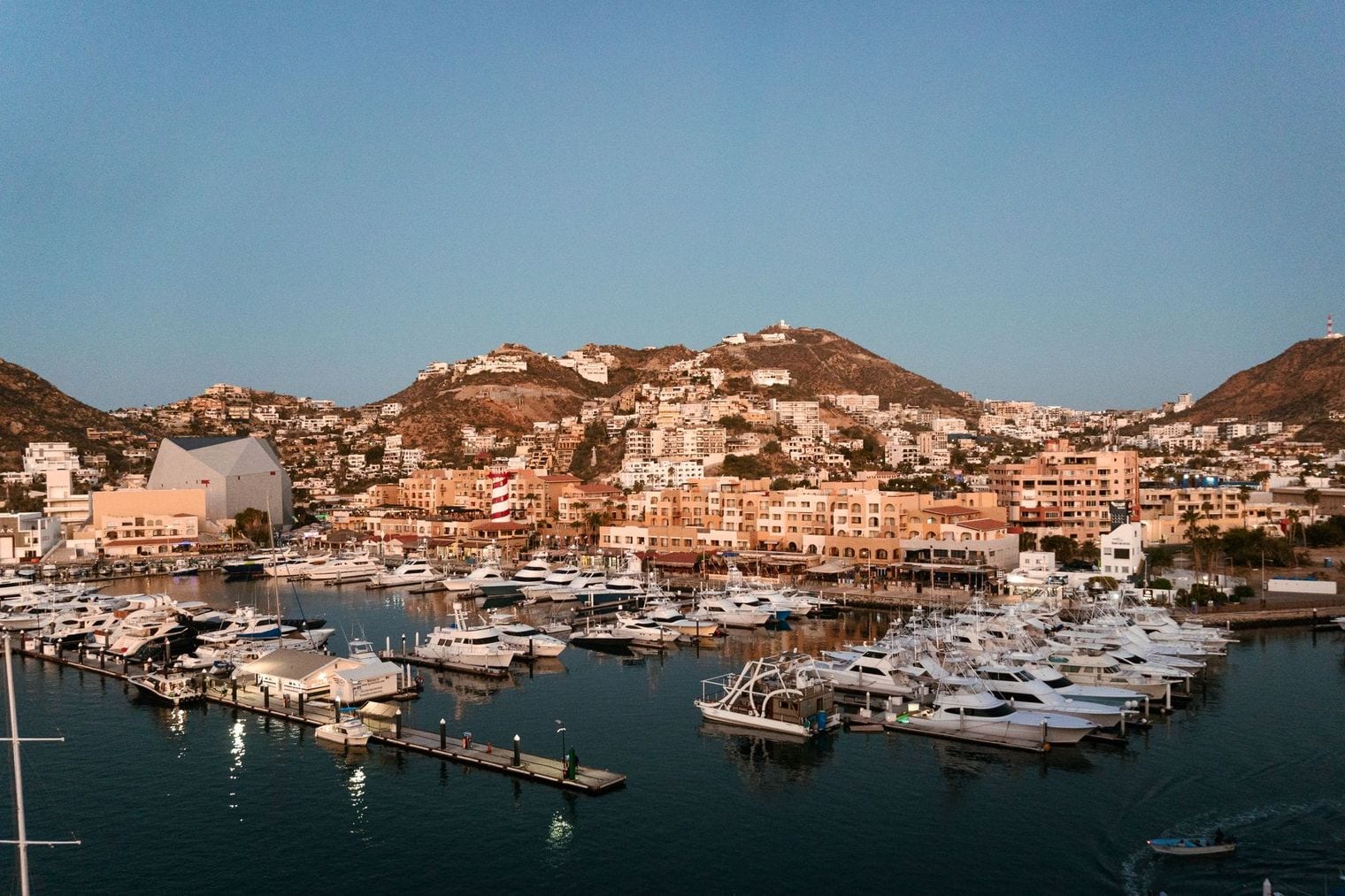
Everything in Cabo starts at the Marina Cabo San Lucas. The horseshoe of pontoons fills the inner bay with sportfishing boats, catamarans and yachts, and the boardwalk that wraps around it is where you book a trip, board it, and come back to eat afterwards.
It is worth walking the full loop even if you are not getting on a boat. Pelicans and sea lions patrol the water by the fish-cleaning stations in the afternoon, the dock numbers make an easy landmark for meeting a tour, and the marina is the most reliable place in town to orient yourself, with the arch visible at the mouth of the bay.
Cabo Wabo Cantina is the address that made Cabo San Lucas a byword for a night out. Opened in 1990 by rock musician Sammy Hagar and his Van Halen bandmates, it is part cantina, part live-music venue, and it has been drawing visitors a couple of streets back from the marina for decades.
The format is straightforward: a big open room, a stage, tequila, and a band most nights. It is unashamedly a tourist institution rather than a local secret, and it is busiest in the evening, but the live music is real and the courtyard is a good place to end a day that started on a boat.
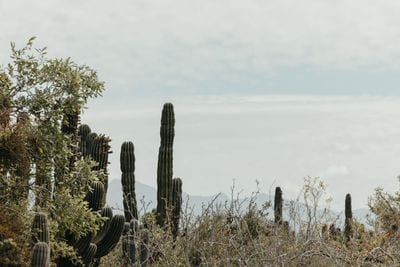
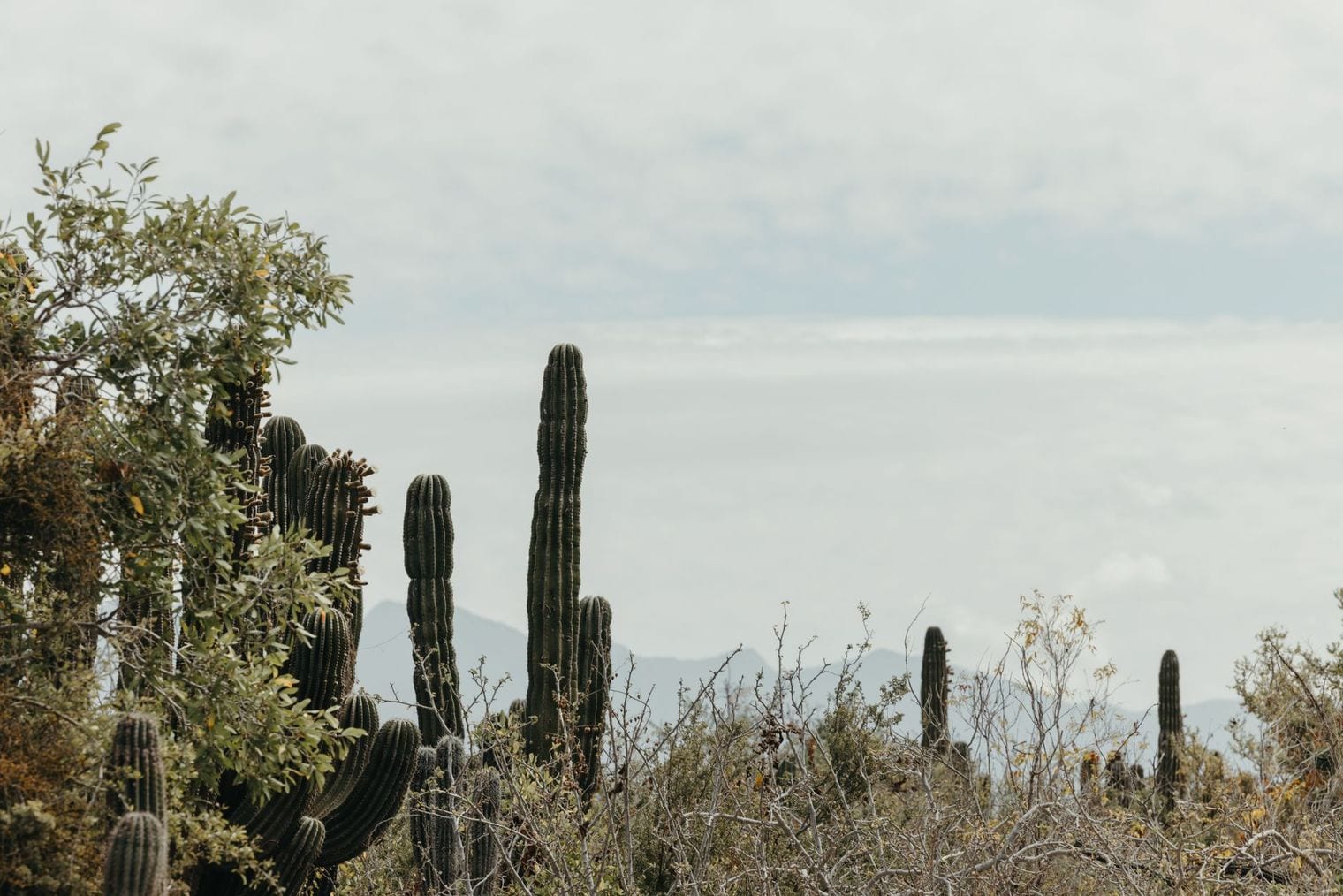
Cabo del Sol Golf Club sits along the coast road out of town and is one of the courses that built Los Cabos' reputation as a golf destination. The setting does most of the work: desert scrub and cardon cactus on one side, the Sea of Cortez on the other, and several holes played within sight of the water.
It is a resort course, so it is manicured and well served, and the wind coming off the sea is the main defence on the exposed holes. Book ahead in the cooler months, when demand from visiting golfers is at its highest, and take more water than you think you need.
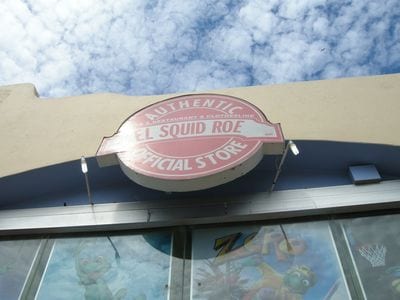
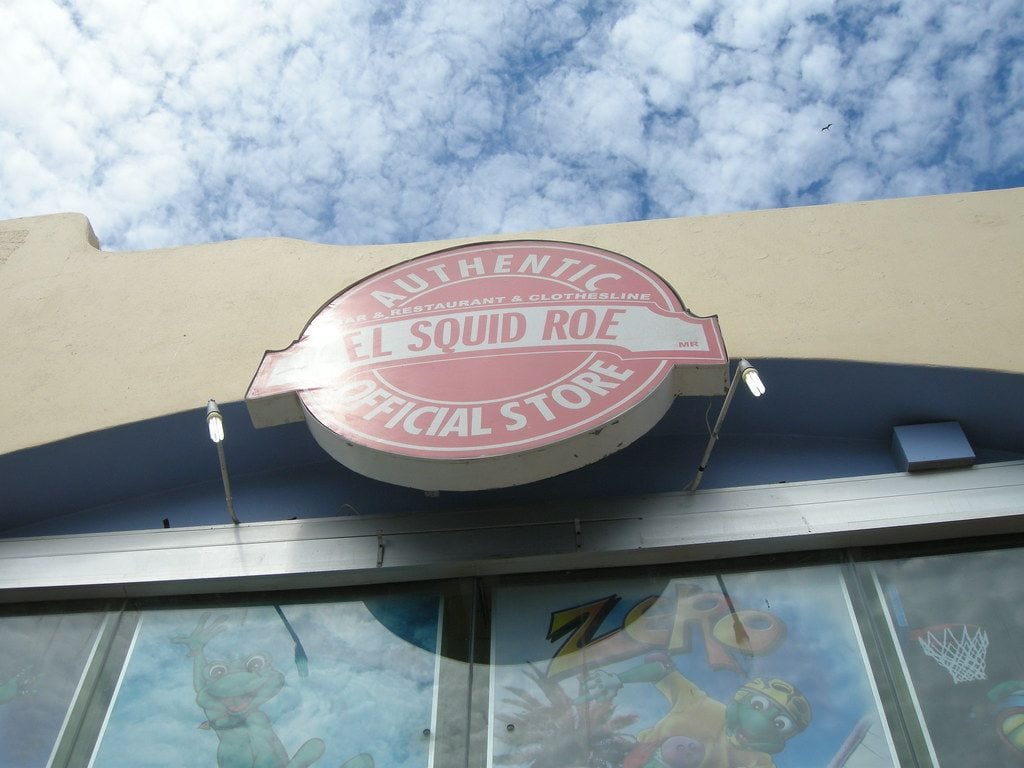
El Squid Roe is the other half of Cabo's nightlife reputation, and it has been going since long before the marina was smartened up. Spread over several floors just up from the water, it is loud, chaotic and entirely unserious, with dancing on the furniture treated as normal behaviour rather than a transgression.
It is not a place for a quiet drink, and it is at its most extreme during spring break. Go for the spectacle and the people-watching, keep an eye on your belongings in the crush, and treat the upper levels as the best vantage point over the whole room.
Quivira Golf Club occupies the Pacific headland on the far side of town, and it is the most dramatic golf setting in Cabo San Lucas. The routing climbs onto clifftops and drops back toward the dunes, and much of the round is played with open ocean filling the horizon.
Because the land is so broken, the course relies on cart paths that thread through the rock, which makes the round as much a sightseeing trip as a game. The Pacific wind is a constant factor, and the clifftop holes are where you will want a camera as much as a club.
Cerro de la Z is the hill immediately behind town, and climbing it is the cheapest good view in Cabo San Lucas. The path is short but steep and loose underfoot, gaining height quickly over scrub and rock until the whole bay opens up below you.
From the top you can see the marina, the sweep of Medano Beach and the headland at Land's End in a single view, which is hard to appreciate from sea level. Go at first light or late afternoon, take water, and wear shoes with grip: the descent on the loose stone is trickier than the climb.
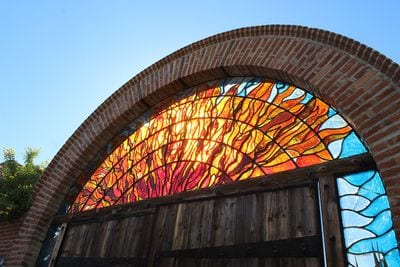
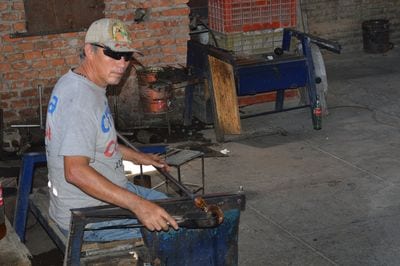
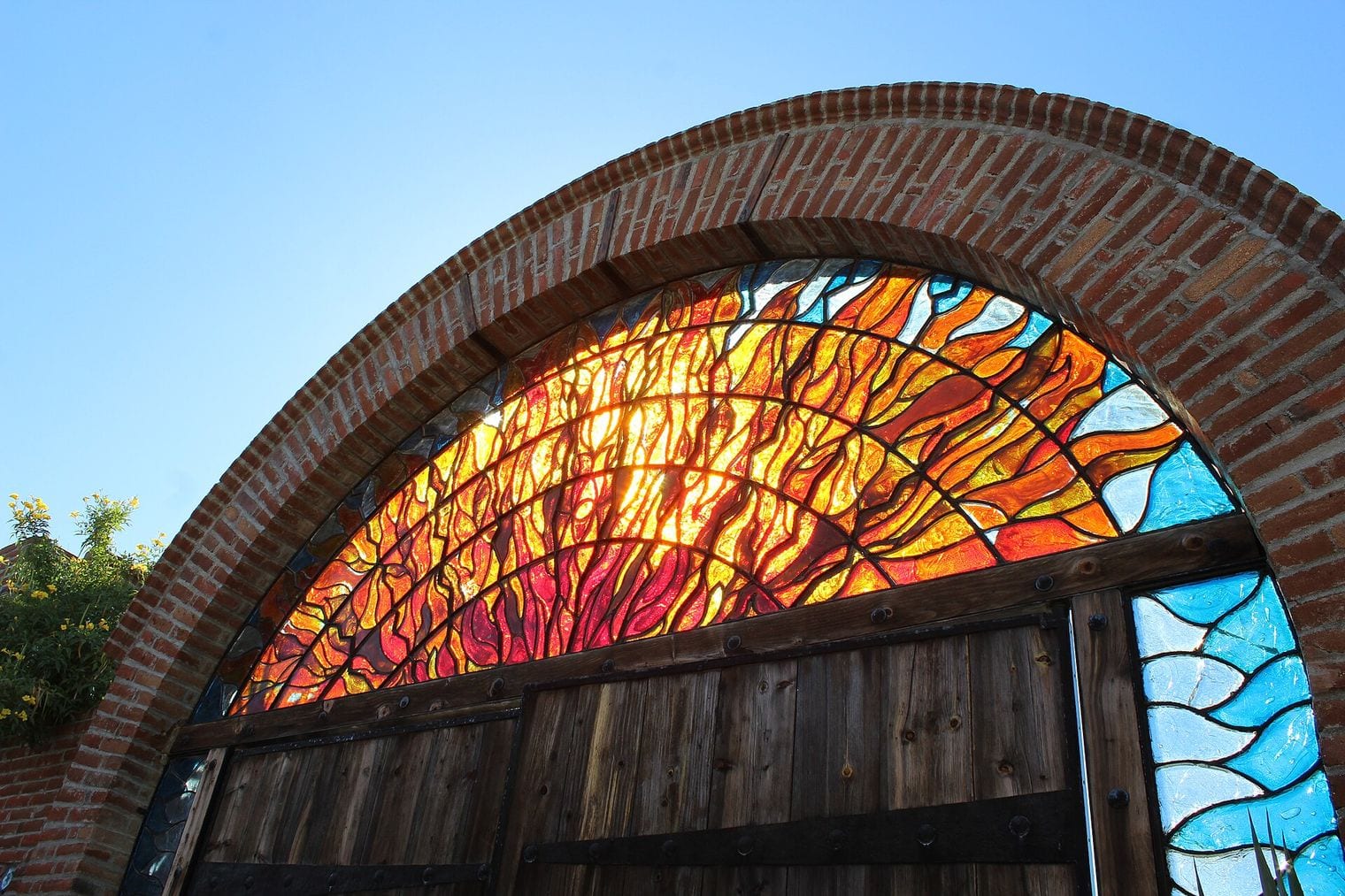
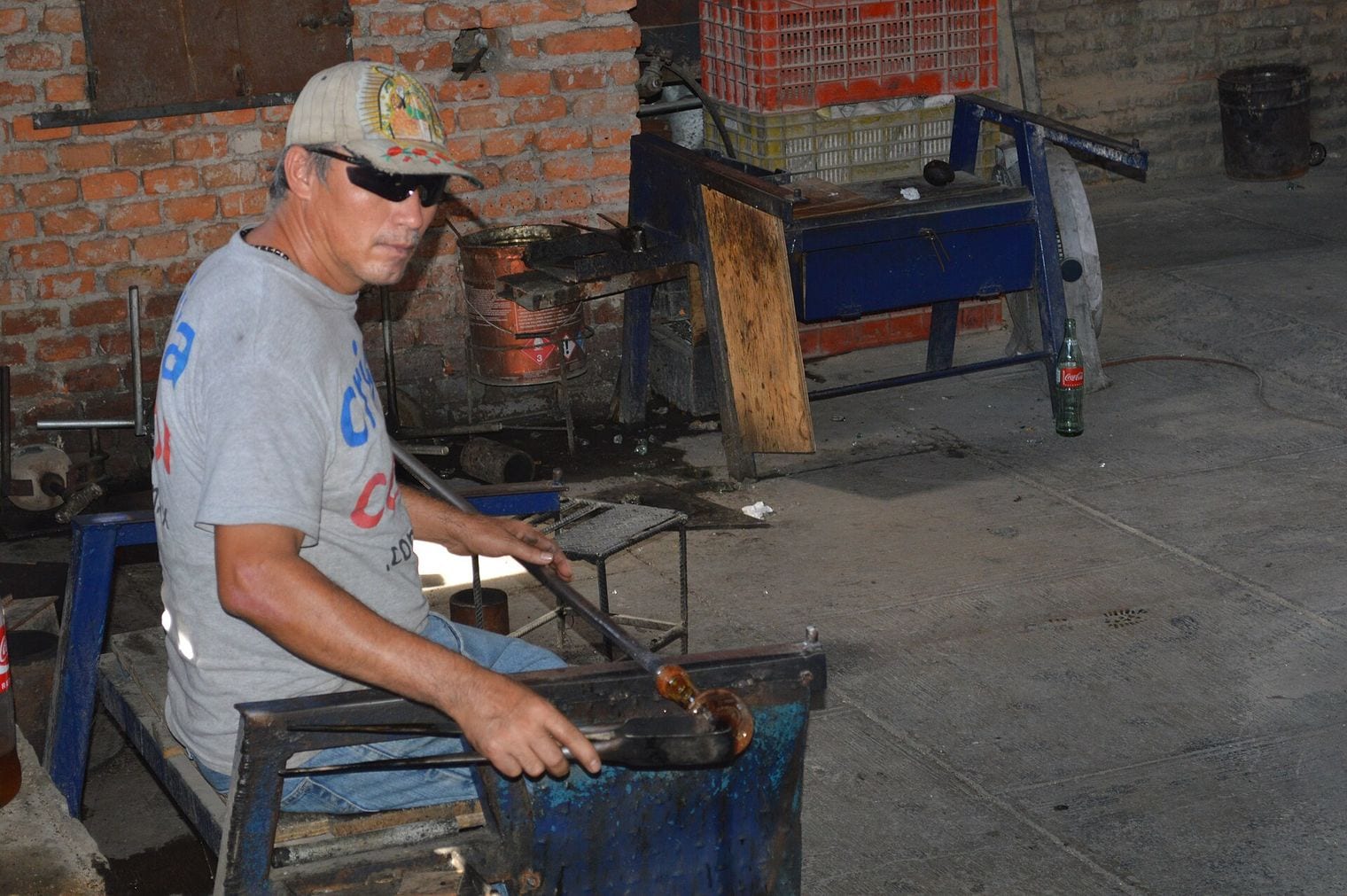
The Glass Factory is a working blown-glass workshop on the inland side of town, and watching it operate is genuinely absorbing. Glassblowers gather molten glass from the furnaces on the end of long pipes and work it into vases, glasses and figures while you stand a few metres away in the heat.
The factory works largely from recycled glass, and the adjoining shop sells what the workshop produces, so you can watch a piece being made and then buy something similar. It is a good option for the hottest part of the afternoon and one of the few places in Cabo that shows you a craft rather than a view.
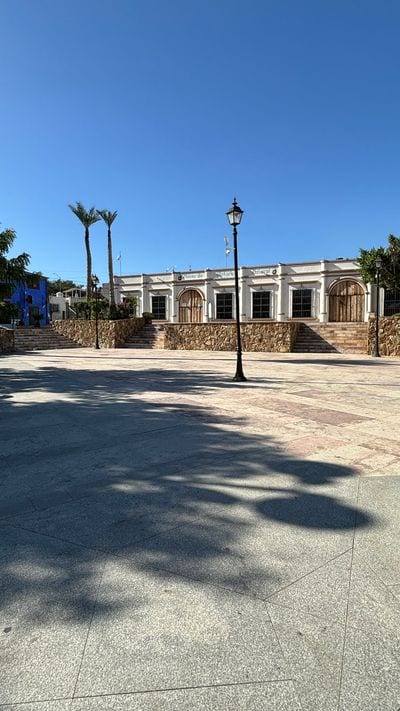
The Cultural Pavilion of the Republic is Cabo San Lucas's main arts venue, a modern building near the waterfront that hosts exhibitions, concerts and performances. It is a deliberate counterweight to a town whose reputation is built on boats and bars.
Programming changes through the year, so it is worth checking what is on rather than turning up blind, and the building itself is pleasant to walk through. For a town this size it is a serious cultural space, and it is one of the few indoor cultural options within easy walking distance of the marina.
Baja Brewing is the region's own craft brewery, and its Cabo San Lucas taproom pours beers made in Baja California Sur rather than shipped in. After a week of the same few national lagers, a proper hoppy pint is a genuine novelty here.
The location is rooftop, which is the real draw: tables in the open air with a view over the town, and a breeze that makes late afternoon comfortable. It works as a pause between the marina and the nightlife strip, and the food menu is substantial enough to make it a stop rather than a single drink.
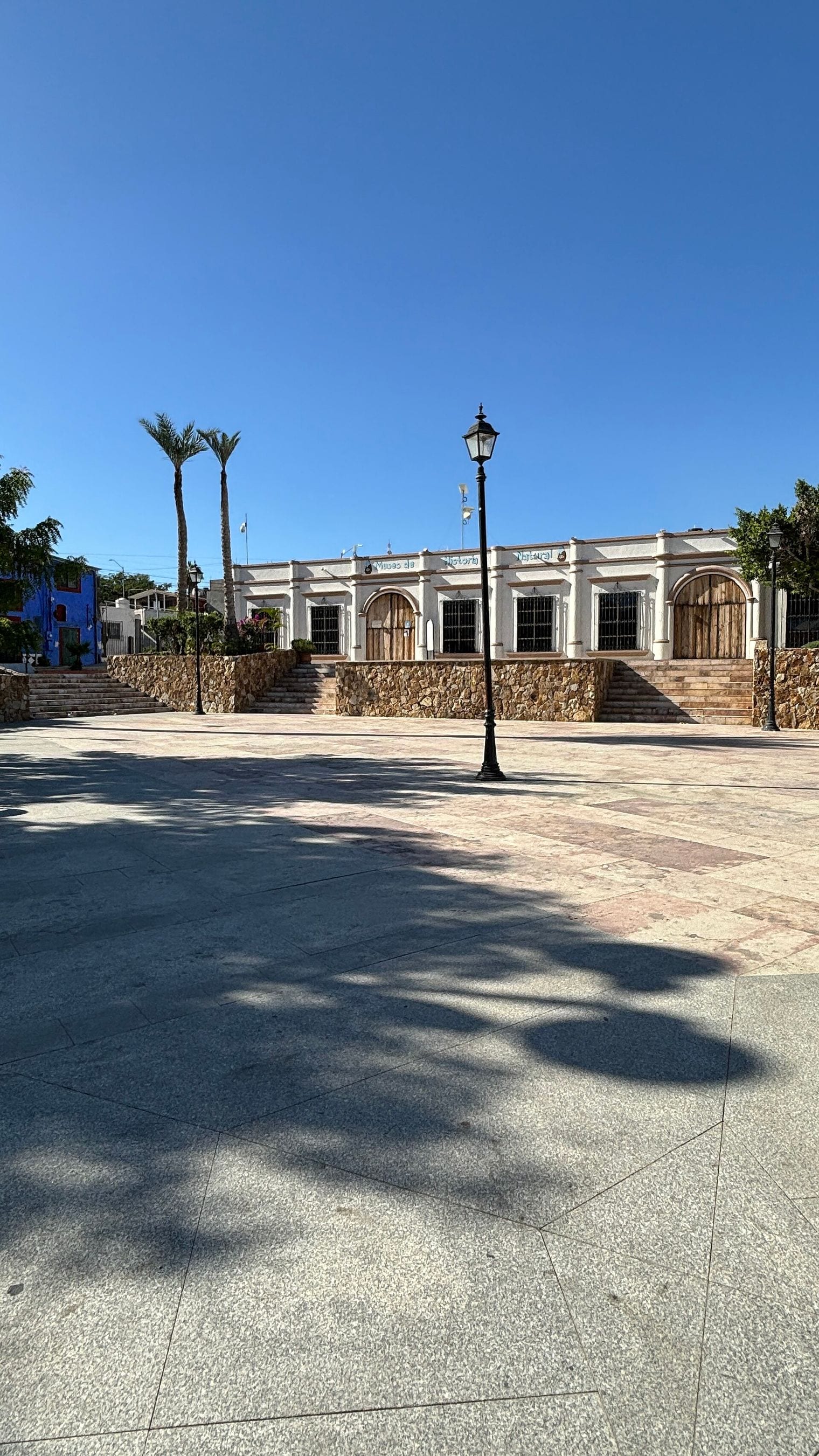
The Museum of Natural History in Cabo San Lucas is a small museum covering the geology, marine life and prehistory of the Baja peninsula. It is modest in scale, and it puts the landscape you have been looking at all week into context: why the granite at Land's End looks the way it does, and what lives in the water around it.
Exhibits cover the desert and the sea in roughly equal measure, including the region's rock art and its whales. Allow an hour rather than an afternoon, and treat it as useful background before a whale-watching trip rather than a headline attraction in its own right.
Mt. Solmar is the ridge on the Pacific side of town, and the walk up it is the most rewarding short hike in Cabo San Lucas. The trail climbs steadily through desert scrub to a high point looking out over the ocean on one side and the bay on the other.
The distinctive local way to do it is with company: the Los Cabos Humane Society runs a scheme where visitors take shelter dogs along for the walk, which gets the dogs exercised and gives you a hiking companion. Start early, because there is no shade at all on the ridge, and carry water for yourself and the dog.
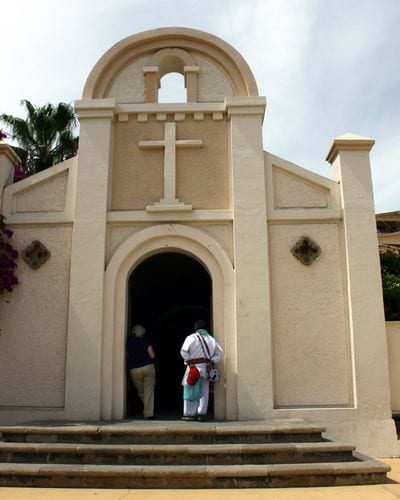
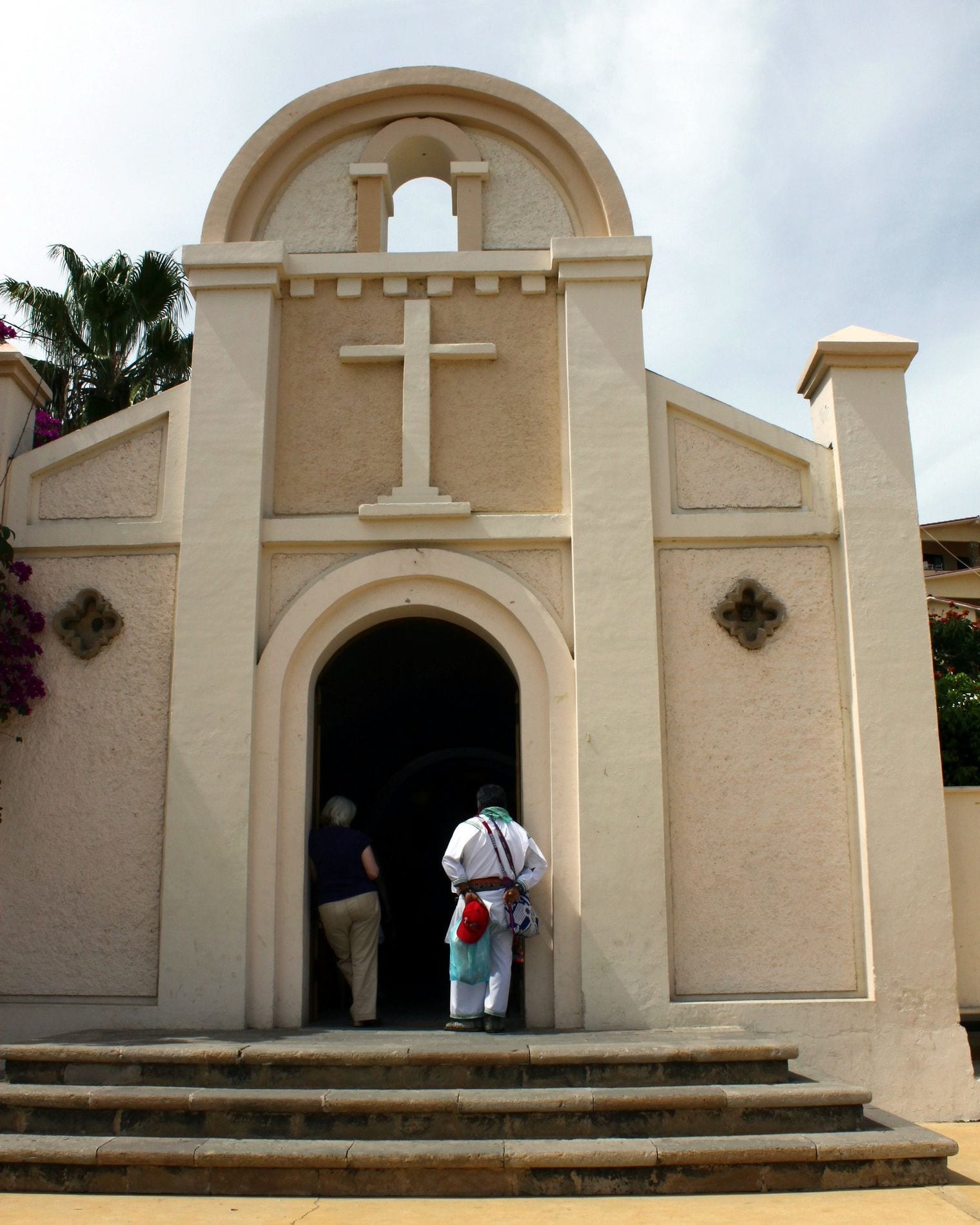
Parroquia San Lucas is the parish church on the old town square, a few streets inland from the marina and a world away from it. Its mission-era foundation makes it the historical anchor of a settlement that otherwise reads as entirely modern.
The white facade and bell tower front a shaded plaza where locals sit in the evening, and the interior is plain and cool. It takes ten minutes to look around, but the walk up from the water is the fastest way to see the difference between the resort strip and the town people actually live in.
Plaza Puerto Paraiso is the large air-conditioned mall built directly onto the marina, and in a town this hot that matters more than it sounds. It combines shopping with a cinema and a food court, and it is the obvious refuge in the middle of a summer afternoon.
The range runs from souvenir stalls to international brands, and the marina-facing side has restaurants looking out over the boats. It is not why you came to Cabo, but it is genuinely useful, and the waterfront terraces are a comfortable place to wait out the heat before the evening starts.
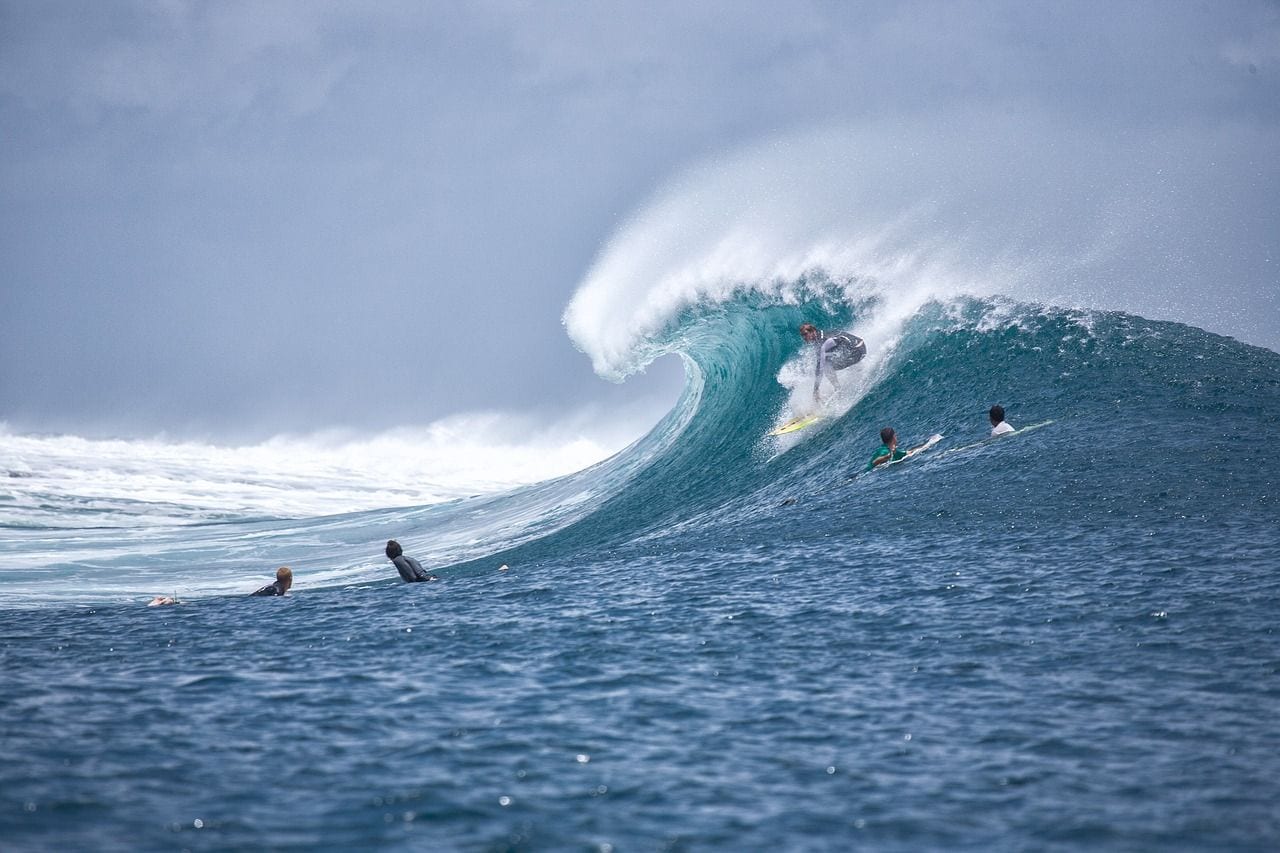
Playa del Divorcio, or Divorce Beach, is the Pacific-facing side of the same sand spit that carries Lovers Beach, and the contrast between the two is the point. Step across a few dozen metres of sand and the sheltered bay is replaced by open ocean and heavy surf.
It is a beach for looking, not swimming: the waves break hard onto a steep shore and the current is dangerous. What it offers instead is emptiness and scale, with big Pacific rollers and cliffs at either end, and it is usually far quieter than the cove on the other side.
Pelican Rock is a rock outcrop just inside the bay near Lovers Beach, and it is the most accessible snorkelling in Cabo San Lucas. The wall drops away steeply into clear water and gathers large numbers of tropical fish in a small area, close enough to shore that you do not need a dive qualification to enjoy it.
Water taxis and snorkel boats stop here constantly, and most trips combine it with the arch. Visibility is best in the calmer months, and because the drop-off is sudden it is worth staying near the rock rather than drifting out into the boat channel.
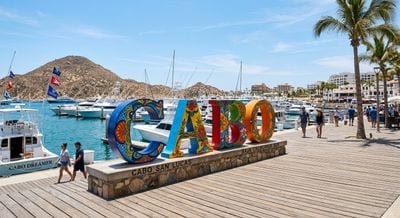
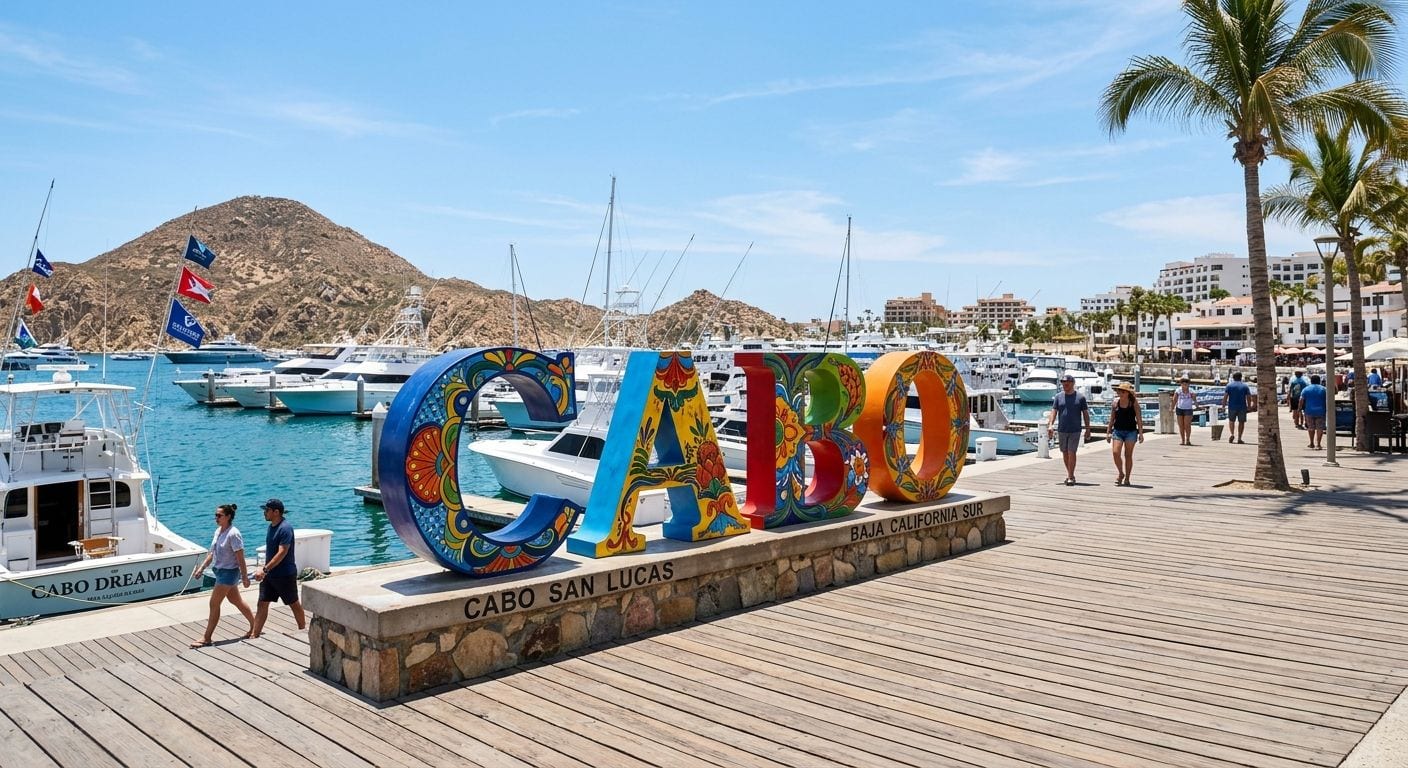
The #CABO Sign is the oversized letter sculpture on the marina boardwalk, and it is the town's default photograph. Like similar signs across Mexico, it exists purely to be stood in front of, and the queue for it is part of the experience.
It sits where the boardwalk meets the water, so the shot usually catches the marina and the hills behind it as well. Early morning is the only realistic time to get it without other people in the frame, and it makes a natural meeting point at the start or end of a walk around the marina.
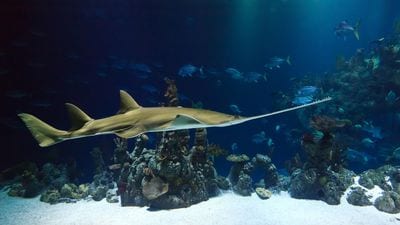
The Discovery Center Museo Inmersivo is an immersive museum on the marina dedicated to the Sea of Cortez, the body of water that gives the region its extraordinary marine life. Rather than cases of specimens, it uses large-scale projection and interactive displays to put you inside the ecosystem.
The subject is well chosen: the Gulf of California is one of the richest seas on earth, and the centre makes the case for why the water you have been swimming and boating in matters. It works particularly well with children, and it is a strong indoor option on a windy day when the boats are not running.
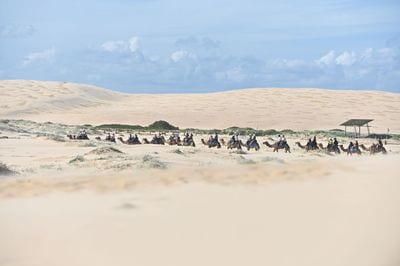
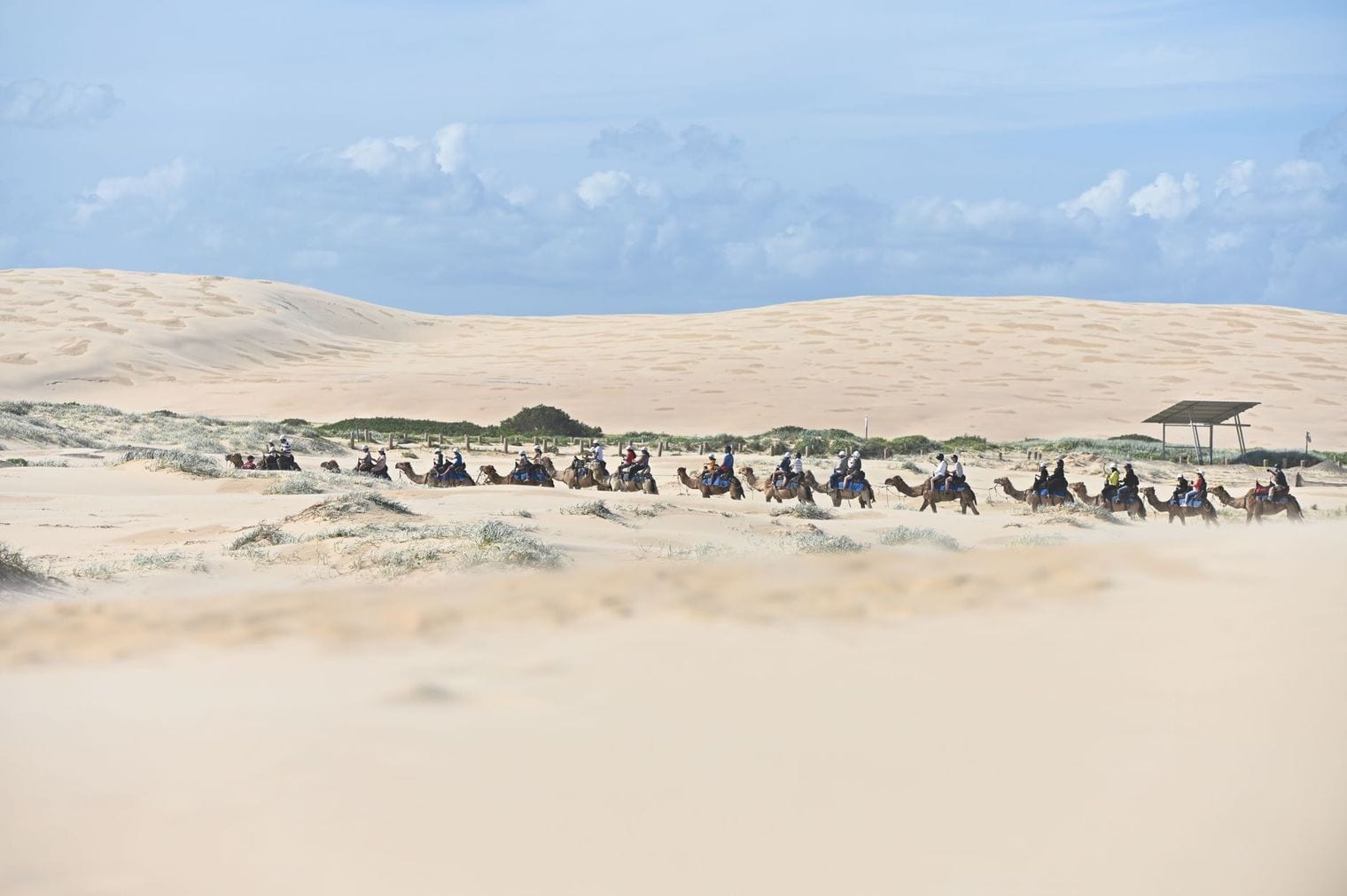
Cabo Adventures is the best-known of the town's activity operators, and a large share of the excursions visitors book in Cabo San Lucas run through it. From a base by the marina it runs the excursions people come here for: camel rides across the desert behind town, dolphin encounters, off-road trips into the backcountry and boat tours out to the arch.
The appeal is the range rather than any single trip, and the logistics are handled end to end, which matters when an activity starts an hour outside town. Book a day or two ahead in the busy winter months, and pick a morning slot for anything in the desert, when the heat is manageable.
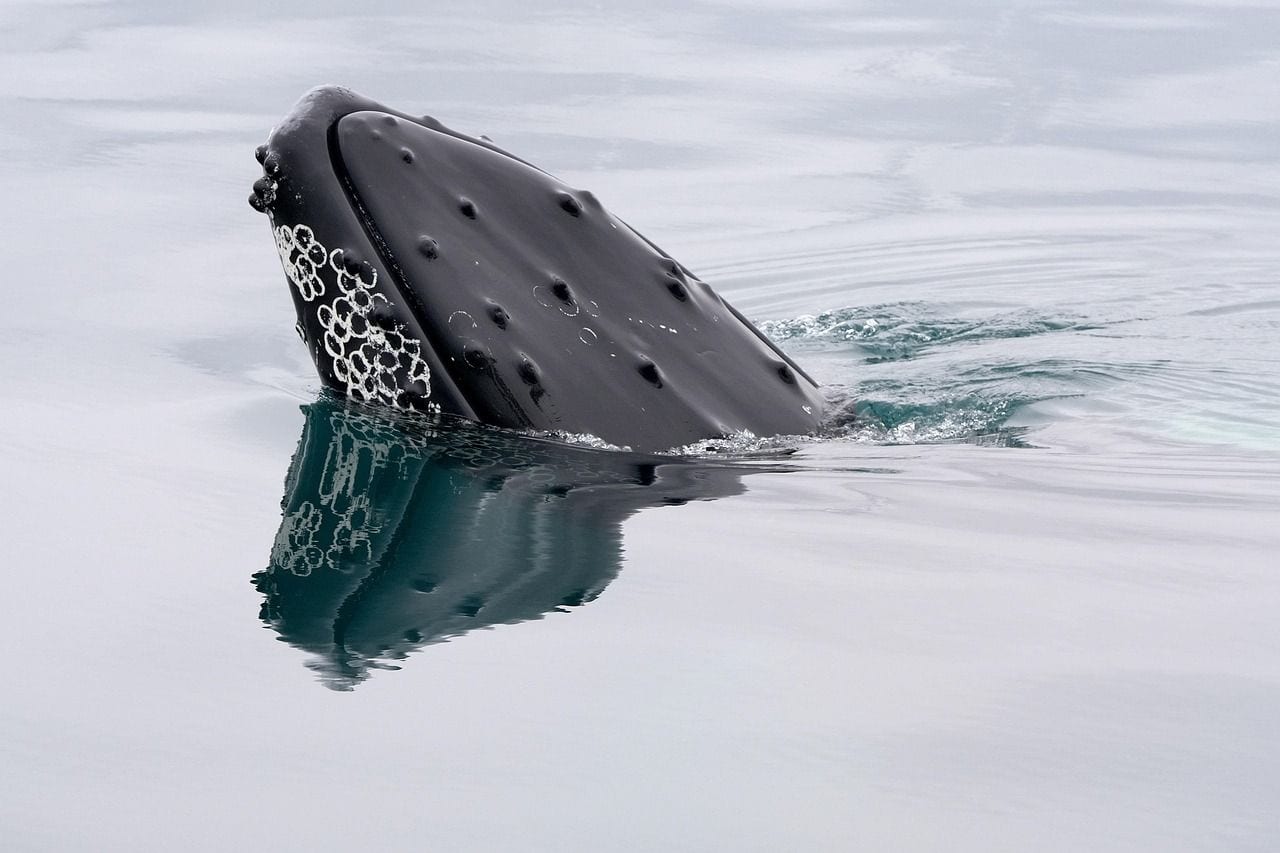
Between roughly December and April, grey and humpback whales migrate down the Pacific coast to the warm water around the Baja peninsula to calve, and Cabo San Lucas is one of the easiest places to go and see them. Whale Watch Cabo runs small-boat trips out of the marina with guides who work to keep the boat at a respectful distance rather than chasing a sighting.
Trips typically run two to three hours and combine the whales with the arch and Land's End on the way out. Smaller boats get you closer to the water, which makes for better photographs, and the earlier departures usually meet calmer sea. Outside the winter window there are no whales, so check the season before you plan around it.
2323. Sunset Monalisa
Fine Dining Restaurant~5.3 km (3.3 miles) from centre
Sunset Monalisa is built into the cliffs on the eastern side of the bay, and it exists for one reason: the view. Tables are terraced down the rock face looking back across the water toward the arch and Land's End, and the whole room is angled at the horizon.
The cooking is Mediterranean with a strong local seafood element, and it is the most formal dining in Cabo San Lucas. It is a special-occasion restaurant rather than a casual stop, so reserve well ahead and ask for a seating timed to the sunset, which is the entire point of the place.
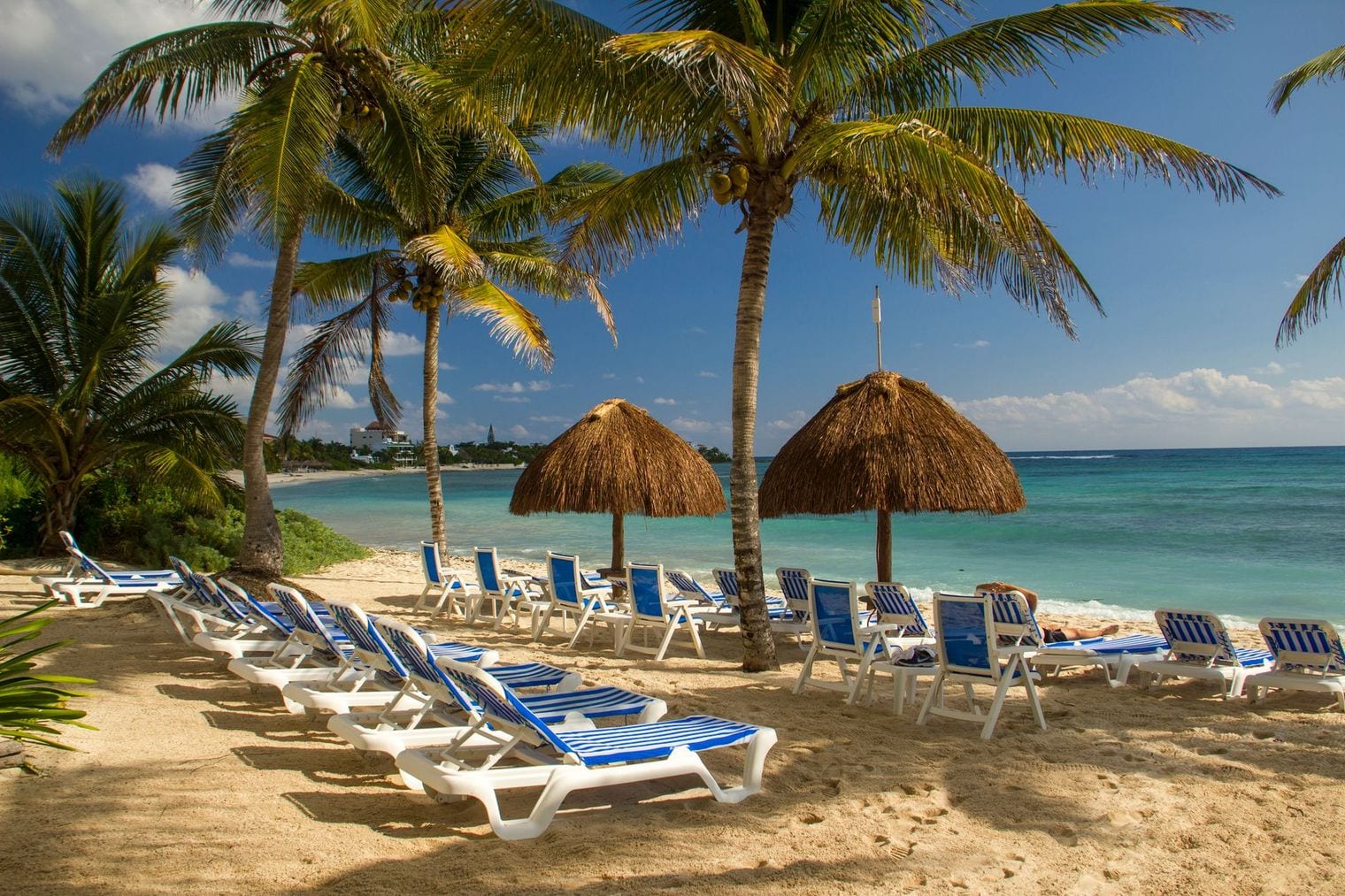
Mango Deck is the best-known beach club on Medano Beach, and it is where the town's daytime party happens. Loungers and umbrellas run down to the water, a bar sits behind them, and a compere keeps up a running programme of games, contests and music through the afternoon.
It is loud, boisterous and completely unpretentious, and it is the opposite of a quiet beach day. Come for the atmosphere and the swimming rather than a peaceful sunbathe, and if you want the same stretch of sand without the noise, walk a few hundred metres east along the beach.
2525. Playa Monumentos
Historical Landmark~5.3 km (3.3 miles) from centre
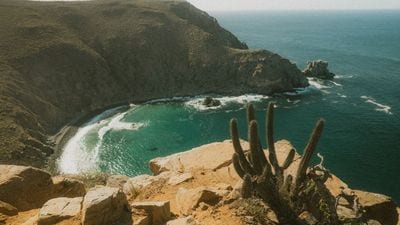
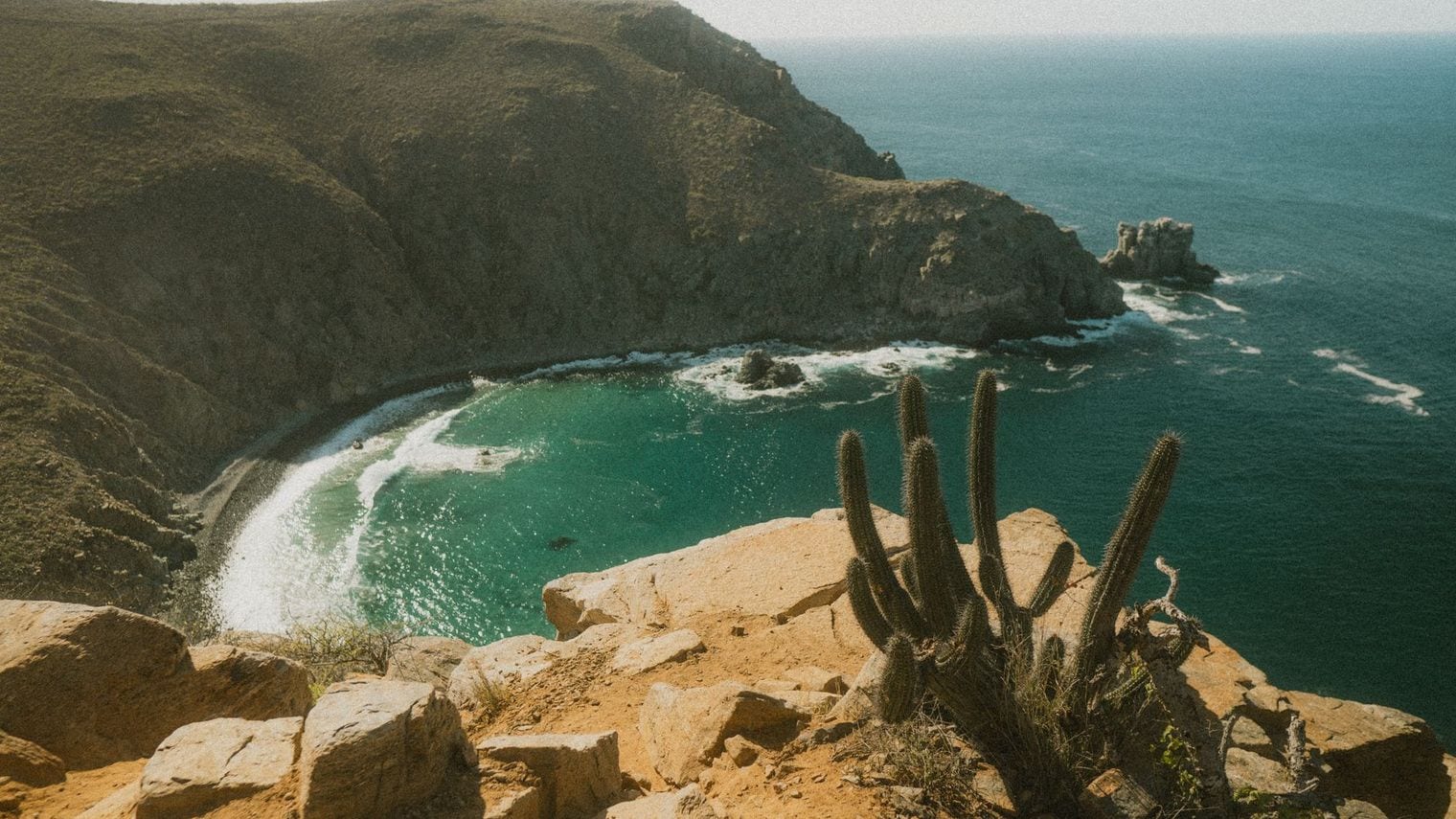
Playa Monumentos sits at the eastern edge of town below the coast road, and it is where local surfers go. A rocky point produces a reliable break in the right conditions, and the rocks at the northern end hold enough fish to make it a decent shore snorkel when the water is flat.
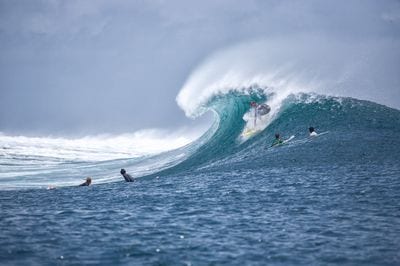
There are no facilities and access is down a path from the highway, which keeps the crowds away and makes it feel a long way from the marina. Swimming is not the draw here and the shore is rocky, so bring reef shoes and treat it as a place to surf, snorkel or simply sit and watch the swell.
Plan your trip
Best Time to Visit Cabo San Lucas
The comfortable stretch runs from late autumn through to late spring, when the desert heat eases, humidity drops and the sea stays warm enough to swim. This is also when the whales are here: grey and humpback whales arrive off the peninsula around December and stay into April, which makes the winter months the busiest and most expensive of the year.
Summer is hot, humid and much quieter, with sea temperatures at their warmest and the best underwater visibility for snorkelling. It overlaps with the Pacific hurricane season, which runs through late summer and early autumn, so late summer trips carry some weather risk. The shoulder weeks either side of the winter peak give you the best balance of warm water, thinner crowds and lower rates.
Getting to Cabo San Lucas
Almost everyone arrives through Los Cabos International Airport, which sits inland near San José del Cabo, roughly 50 kilometres northeast of Cabo San Lucas. It is the busiest airport in Baja California Sur and takes direct flights from across the United States, Canada and mainland Mexico. The transfer into Cabo San Lucas takes about 45 minutes to an hour along the corridor highway, by shuttle, taxi or rental car.
By road, Cabo San Lucas sits at the southern end of the Transpeninsular Highway, Mexican Federal Highway 1, which runs the length of the Baja peninsula from the United States border. Highway 19 provides the shorter western route up the Pacific coast toward Todos Santos and La Paz. Cruise ships anchor in the bay and tender passengers ashore at the marina, since there is no deepwater cruise berth.
Getting Around Cabo San Lucas
The centre of Cabo San Lucas is genuinely walkable. The marina, the downtown grid behind it, the old plaza and the western end of Medano Beach all sit within about twenty minutes on foot of each other, and most visitors never need transport for the core of a trip. Water taxis from the marina and from Medano Beach handle everything at Land's End, which has no road access at all.
Beyond that you will want wheels. The beaches along the corridor toward San José del Cabo, the Pacific-side golf courses and the desert behind town are all a drive away, and a rental car is the most flexible option. Taxis are plentiful but agree the fare before you get in, since meters are uncommon. Local buses run along the corridor and are cheap if you are not in a hurry.
Where to Stay in Cabo San Lucas
The marina and downtown district is the obvious base for a first visit: you can walk to the boats, the bars and the restaurants, and every tour leaves from within a few streets. Medano Beach puts you on the only reliably swimmable sand in town with beach clubs on your doorstep, at the cost of noise. Both are lively, and neither is the place for a quiet week.
For calm, look at the Pedregal district on the hillside above town, which is residential, steep and quiet while still walking distance from the marina, or the Pacific side beyond it. The tourist corridor running east toward San José del Cabo is where the large resorts sit, spread along the coast with their own beaches — good for a self-contained stay, less good if you want to wander into town in the evening.
Where to Eat in Cabo San Lucas
Eating splits along fairly clear lines. The marina boardwalk is the tourist-facing strip, with terraces looking out over the boats and menus pitched at visitors. The downtown grid inland, around the old plaza and the streets behind it, is where prices drop and the cooking gets more local. Medano Beach is where you eat with your feet in the sand, at places like Mango Deck.
What to order is easy: this is a fishing town, so seafood dominates. Fish tacos in the Baja style, battered and fried with cabbage and crema, are the regional staple, and smoked marlin turns up in tacos and empanadas across town. Look out for chocolate clams, a local speciality of the peninsula, along with ceviche and aguachile. For a special evening, Sunset Monalisa puts the arch in front of you while you eat.
Day Trips from Cabo San Lucas
The obvious half-day is San José del Cabo, about 30 kilometres east at the far end of the corridor. It is a genuinely different town — a colonial grid around a mission church, with an art district that is the region's cultural counterweight to Cabo's marina.
Further out, Todos Santos sits about an hour north on the Pacific side of the peninsula, a small artist and surf town with a very different pace, and the beaches around it are the best surf near Cabo.
With a full day you can reach La Paz, the state capital roughly two hours north on the Sea of Cortez, and the island reserves offshore from it. Cabo Pulmo, a hard-coral reef inside a national marine park on the East Cape, is a long drive but the best diving in the region.
If you are building a longer trip through Mexico, Cabo pairs naturally with the interior and the Caribbean coast — the desert and the sea here are nothing like either.
Before you go
Mobile dataAn eSIM gives your phone local data when you land, with no SIM card to swap.via AiraloGet an eSIM
Airport transferA driver meets you at arrivals and takes you to your hotel, at a price fixed when you book.via Welcome PickupsBook a transfer
We may earn a commission when you buy through these links, at no extra cost to you. How we make money.
One Day in Cabo San Lucas
Morning
Start on the water while it is calm. Walk down to Marina Cabo San Lucas, take a boat out to The Arch of Cabo San Lucas, and have the skipper drop you at Lovers Beach for an hour of swimming and snorkelling. If you are here in winter, swap the short trip for a whale-watching run with Whale Watch Cabo.
Climb Cerro de la Z in the late afternoon for the view back over the bay as the light drops, then walk down through the old town past Parroquia San Lucas. Finish with a beer on the roof at Baja Brewing, and if you have the energy for it, the night ends where everyone's does, at Cabo Wabo Cantina.
Cabo San Lucas is best known for El Arco, the granite sea arch at Land's End where the Pacific Ocean meets the Sea of Cortez, reachable only by boat. Beyond it, the town is known for Medano Beach, the boat-access-only Lovers Beach, its sportfishing marina, and a nightlife scene built around institutions like Cabo Wabo Cantina.
How many days do you need in Cabo San Lucas?
Three to four days is enough to see Cabo San Lucas properly. That covers a boat trip to the arch and Lovers Beach, a beach day on Medano, a hill walk for the view, an afternoon indoors at the museums or the glass factory, and an evening out, without rushing. Add days for golf, diving or day trips along the peninsula.
What can you do in Cabo San Lucas for free?
Plenty. Climbing Cerro de la Z or walking the Mt. Solmar ridge costs nothing and gives you the best views over the bay. So does walking the marina loop, photographing the #CABO Sign, visiting Parroquia San Lucas on the old town plaza, and swimming at Medano Beach or watching the surf at Playa Monumentos.
When is the best time to visit Cabo San Lucas?
Late autumn through spring is the most comfortable window, with lower humidity and warm sea temperatures. Whale season runs roughly December to April, which is also the busiest and priciest period. Summer is hot and humid with the best underwater visibility, but it overlaps the Pacific hurricane season, so late summer carries some weather risk.
Is Cabo San Lucas walkable?
The centre is. The marina, the downtown grid, the old plaza and the western end of Medano Beach are all within about twenty minutes on foot of each other, so most visitors walk the core of a trip. You will want a car, taxi or bus for the corridor beaches, the golf courses and the desert behind town, and a water taxi for Land's End.