We may earn a commission if you book or buy through a link on
this page, at no extra cost to you. It never affects which places we list or how
we rank them (how we make money).
Short answer
Mexico City's three essentials are the Museo Nacional de Antropología, the greatest museum in Latin America, the Zócalo, the ceremonial heart of the city since it was Tenochtitlan, and the marble and stained-glass Palacio de Bellas Artes. Four or five days is the realistic minimum for the historic centre, Chapultepec, Coyoacán and one major day trip.
Mexico City is built on a drained lake bed, directly over the Aztec capital, and it wears all of that at once: excavated temple foundations beside baroque stone, tree-lined avenues, and one of the densest concentrations of museums anywhere on earth. It is vast, high-altitude and far greener than most first-timers expect.
This guide runs through 40 of the best things to do across the capital, from the Zocalo and Chapultepec to the canals of Xochimilco and the pyramids beyond the city. Give it four or five days, and a week if you want the day trips too.
The city holds three separate UNESCO World Heritage sites — the Historic Centre together with the canals of Xochimilco, the Central University City Campus of UNAM, and the Luis Barragán House and Studio.
Every metro station has its own pictogram, designed by Lance Wyman for the system that opened in 1969. Around a third of the population could not read at the time, so each station was given an icon drawn from its own neighbourhood or history.
Mexico City is built on a drained lake bed and is still sinking. Pumping groundwater out of the soft clay beneath compacts it, which is why the cathedral floor slopes underfoot and the old basilica at Guadalupe leans.
The Aztecs founded Tenochtitlan on an island after seeing an eagle perched on a cactus, the sign they had been told to look for — the same image that sits at the centre of the Mexican flag today.
Three of the five longest cable car lines in the world are commuter routes in the Mexico City metro area. The Cablebus network was built as public transport for steep hillside neighbourhoods, not as a tourist ride, and it takes the same travel card as the metro.
The capital sits over 2,200 metres above sea level, high enough that visitors arriving from sea level often notice it on the first day of walking.
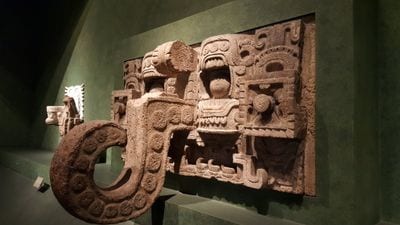
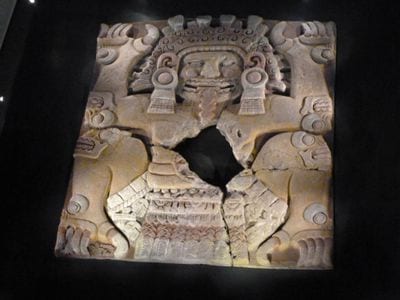
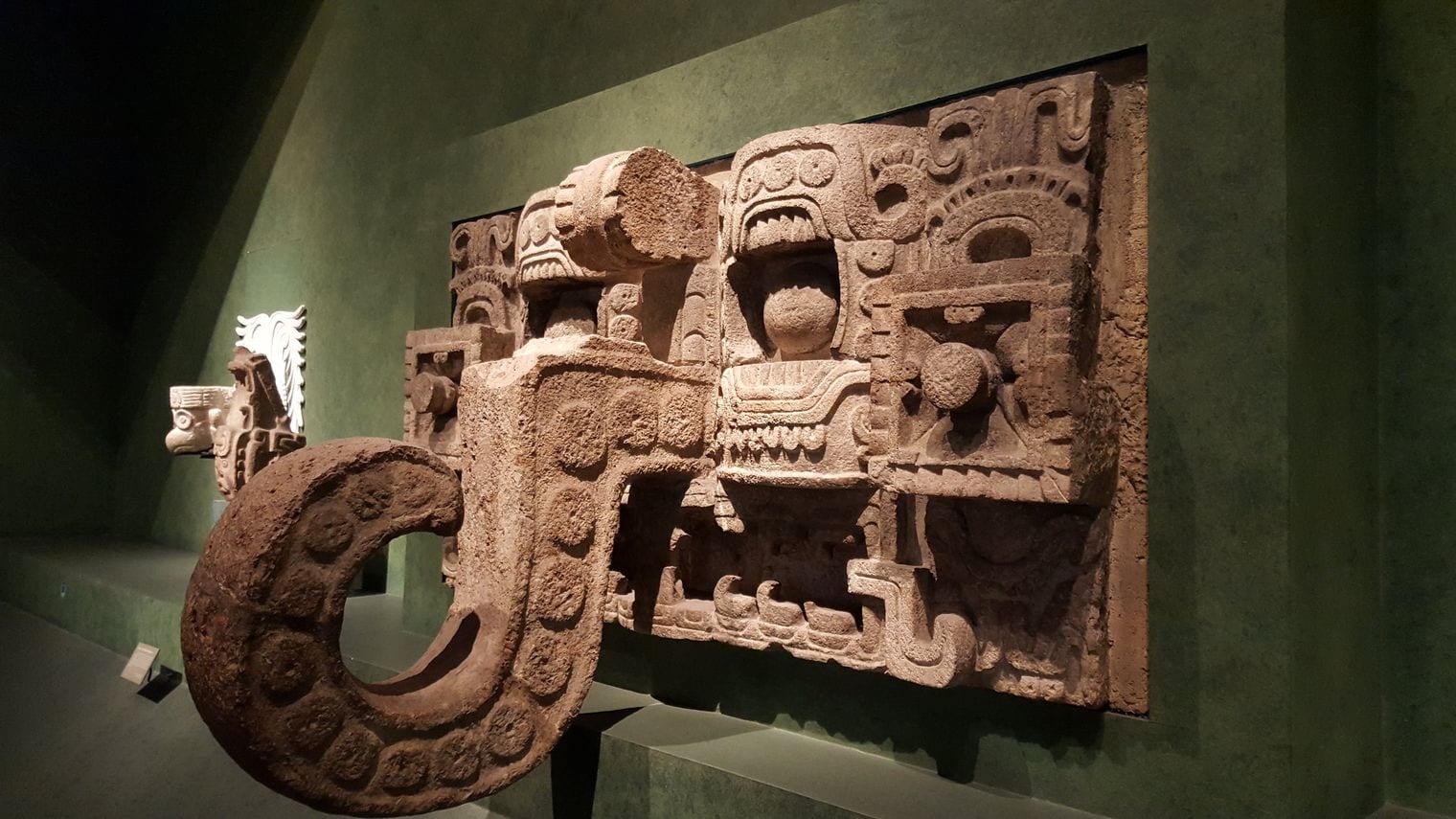
If you do one thing in the city, do this. The Museo Nacional de Antropología gathers the material culture of Mesoamerica under one roof, with ground-floor halls devoted to the Maya, the Mexica, the Olmec, Teotihuacan and Oaxaca, and ethnography of Mexico's living indigenous peoples upstairs. Its most famous single object is the Sun Stone, the carved basalt disc that has become shorthand for Aztec Mexico itself.
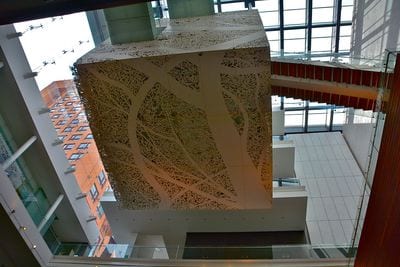
The building is as admired as the collection: halls open off a vast courtyard that is partly sheltered by a single enormous concrete canopy resting on one carved central pillar, with water falling from its rim. Give it half a day at minimum. Most visitors find they cannot do the whole thing in one visit and simply pick two or three halls to do properly.
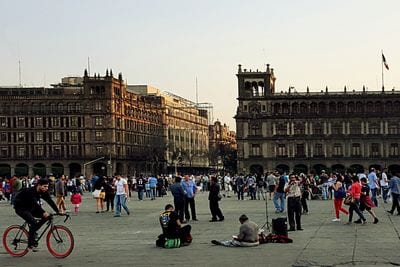
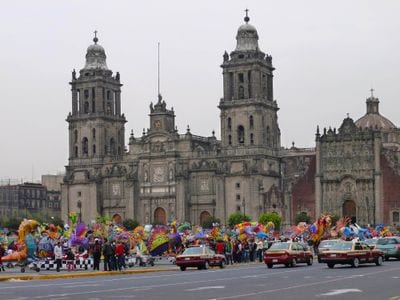
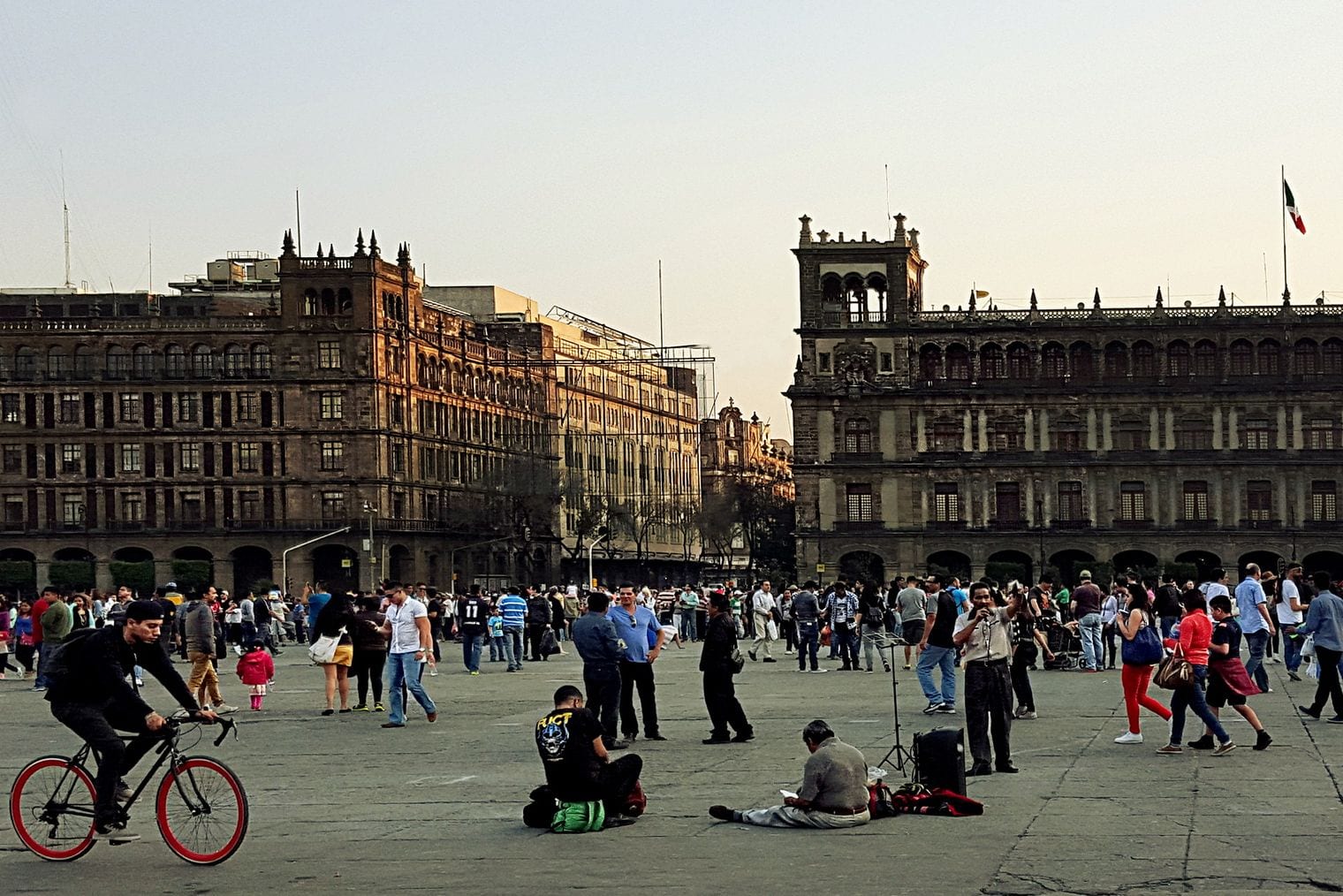
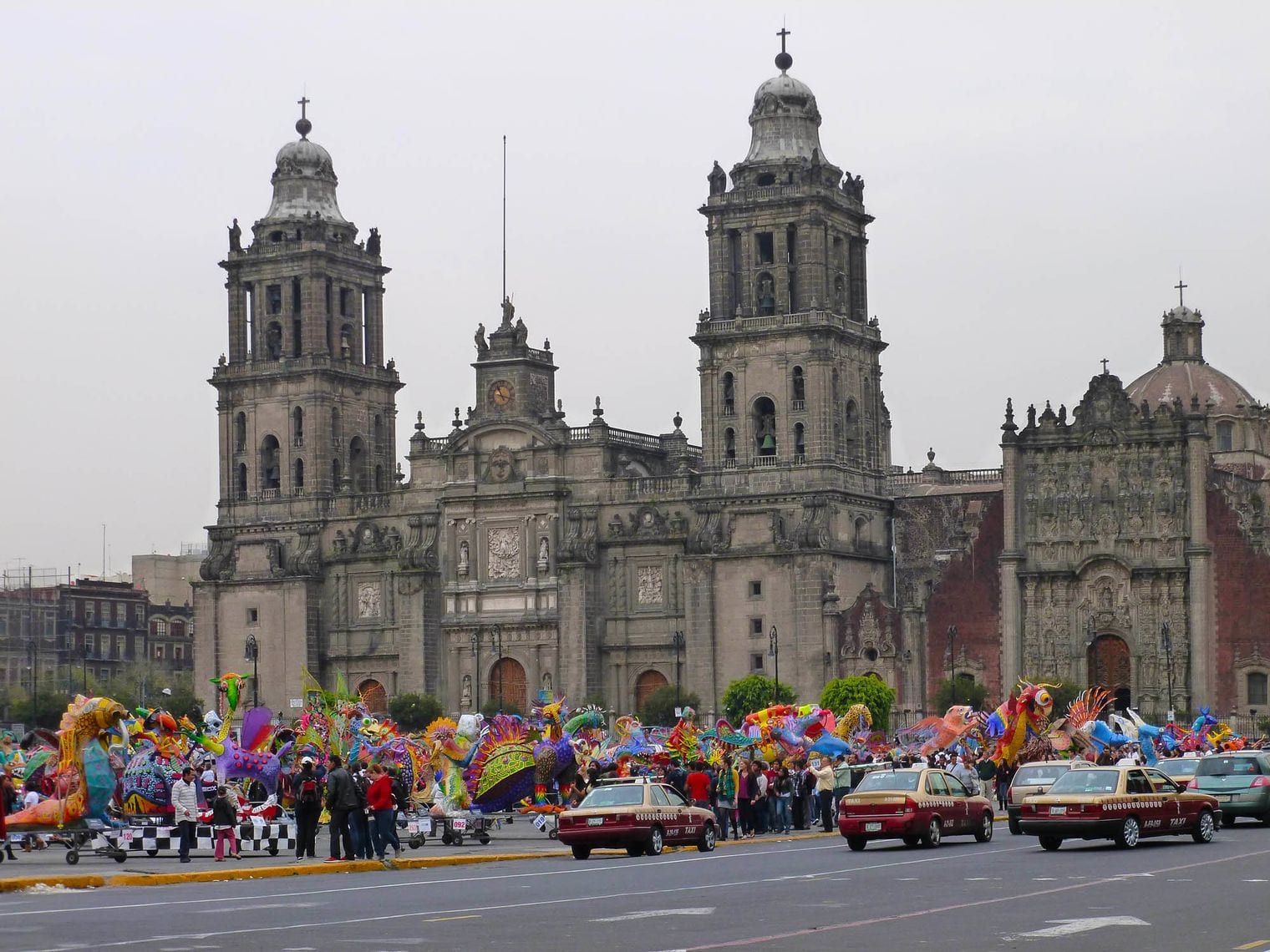
Officially the Plaza de la Constitución, the Zocalo is one of the largest city squares in the world and the ceremonial heart of Mexico. It occupies the same ground as the ceremonial precinct of Tenochtitlan, and the cathedral, the National Palace and the ruins of the Templo Mayor all open onto it, so a single stand in the middle takes in Aztec, colonial and modern Mexico at once.
A huge national flag is raised and lowered here each day by a military detail, which is worth timing your visit around. The square is also the city's stage: it hosts concerts, protests, installations and enormous seasonal displays, so what is standing in it changes constantly. Come early if you want the space empty enough to photograph.
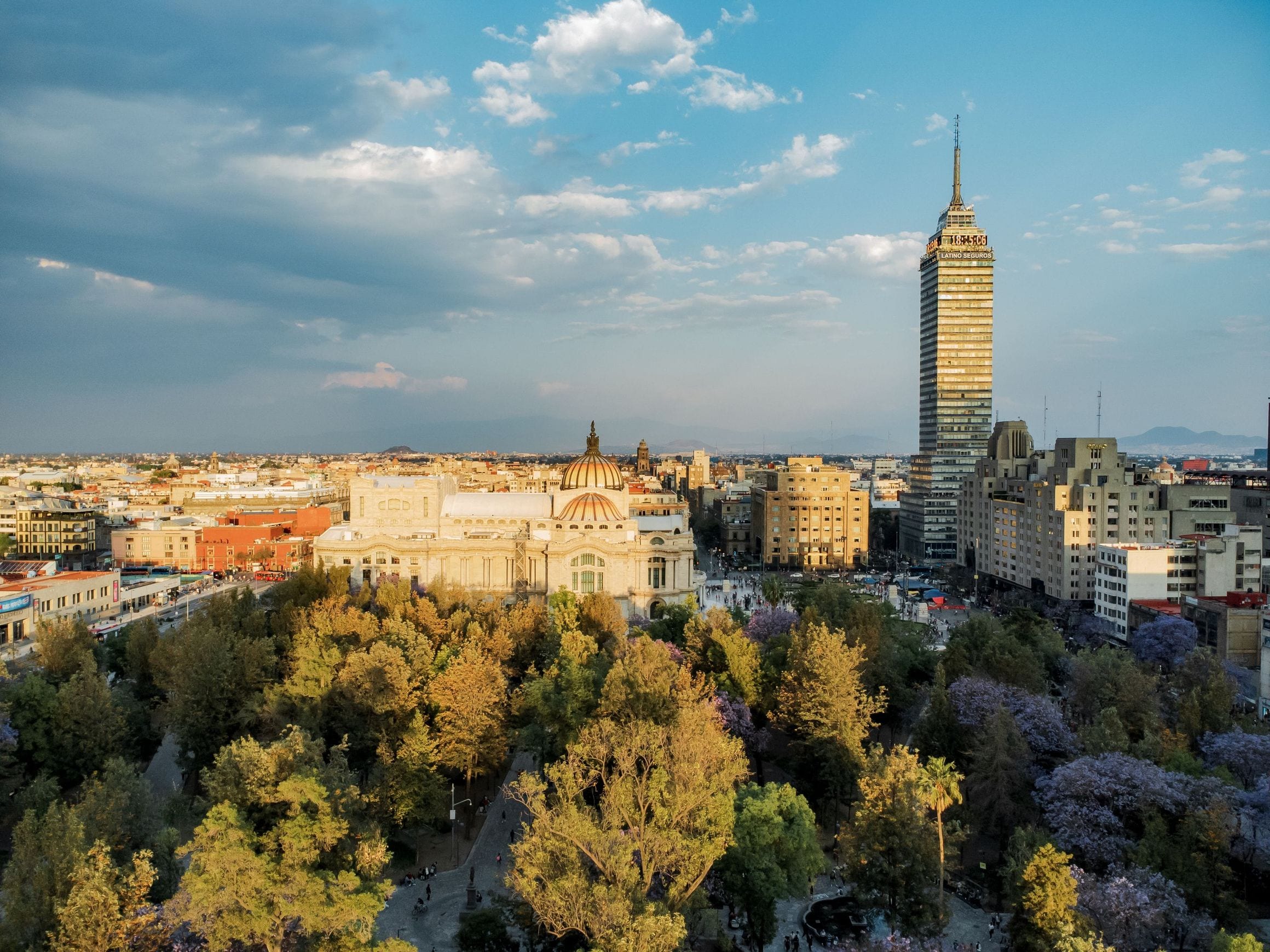
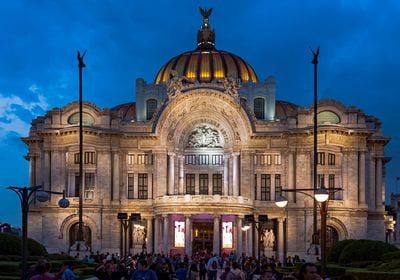
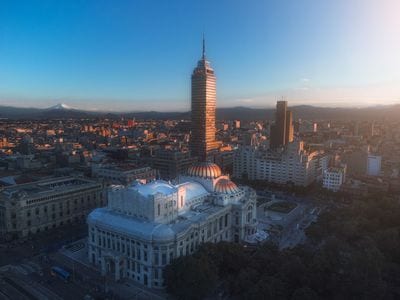
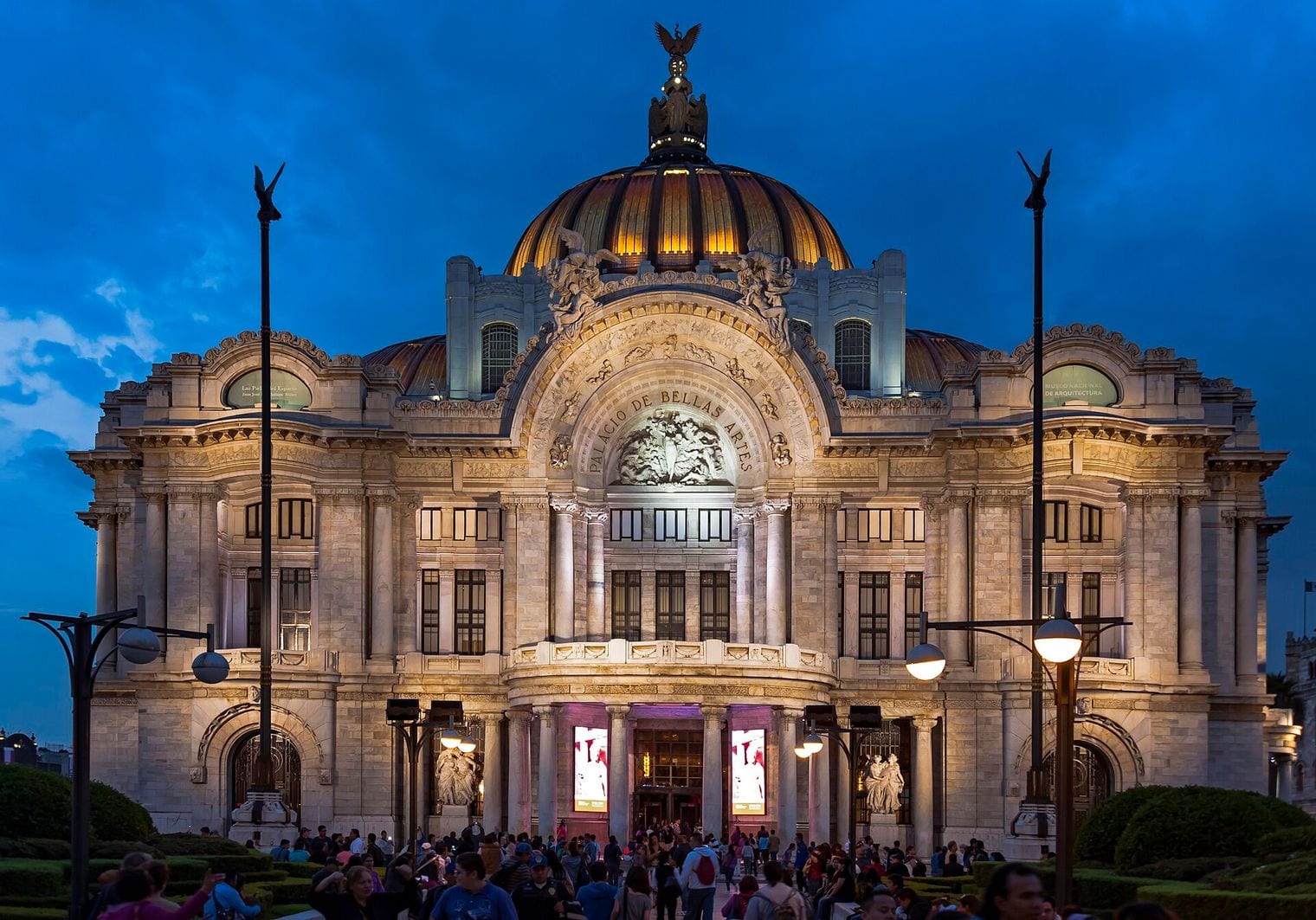
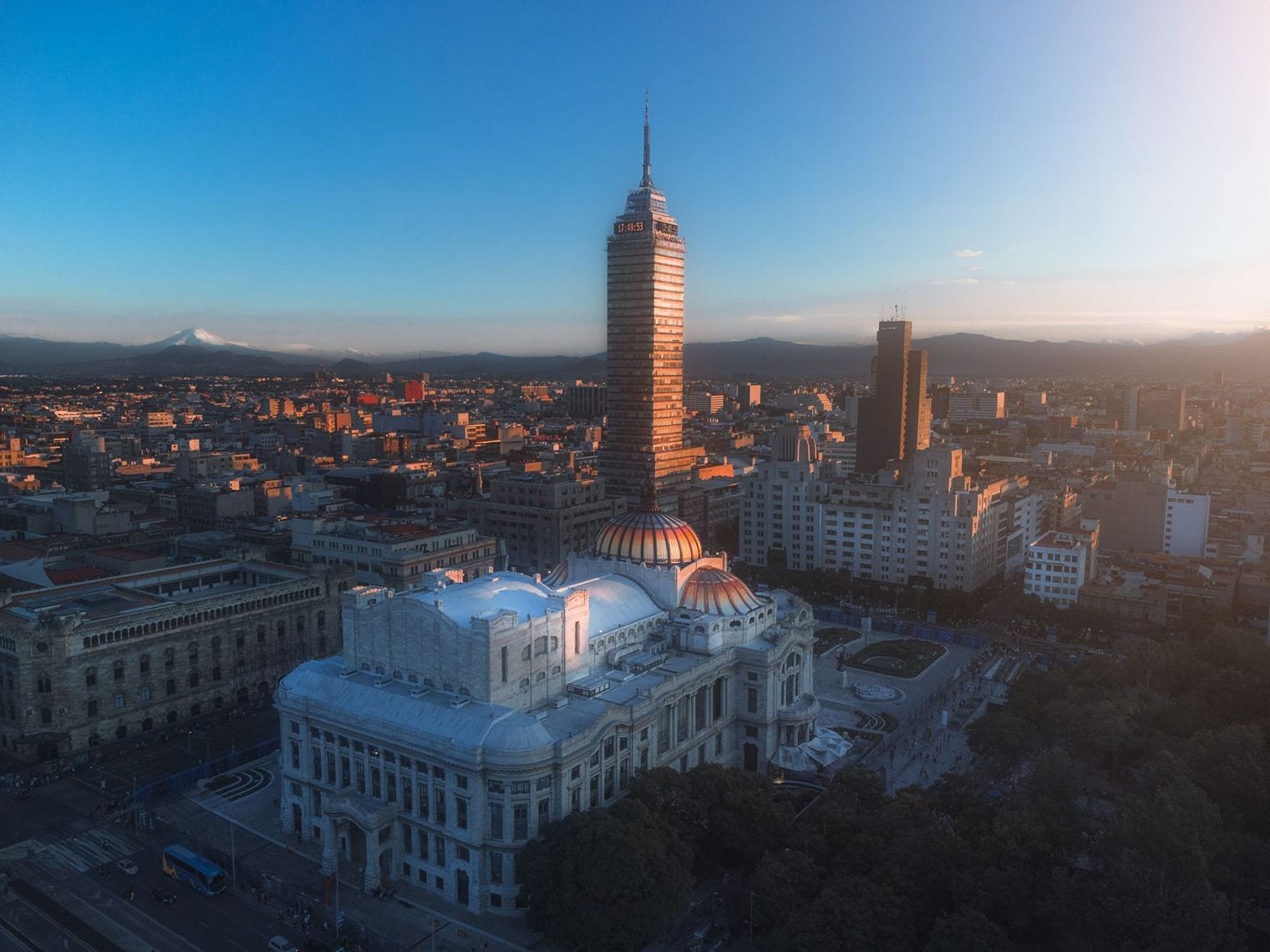
The Palacio de Bellas Artes is the most striking building in the historic centre, a white marble concert hall whose exterior is Art Nouveau and whose interior is Art Deco, the result of a construction period interrupted by revolution. It is the home of the Ballet Folklorico de Mexico and the national opera, and buying a ticket is the easiest way to see the auditorium.
Even without a performance, the upper floors are the draw: they hold major murals by Diego Rivera, Jose Clemente Orozco and David Alfaro Siqueiros, including Rivera's recreation of the work destroyed at Rockefeller Center. For the classic photograph of the tiled dome from above, cross the road to the Sears building cafe or go up the Torre Latinoamericana.
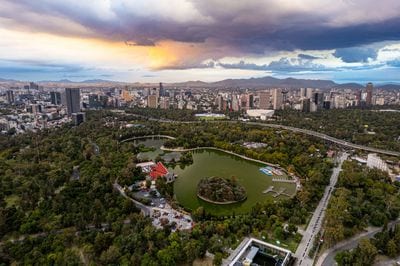
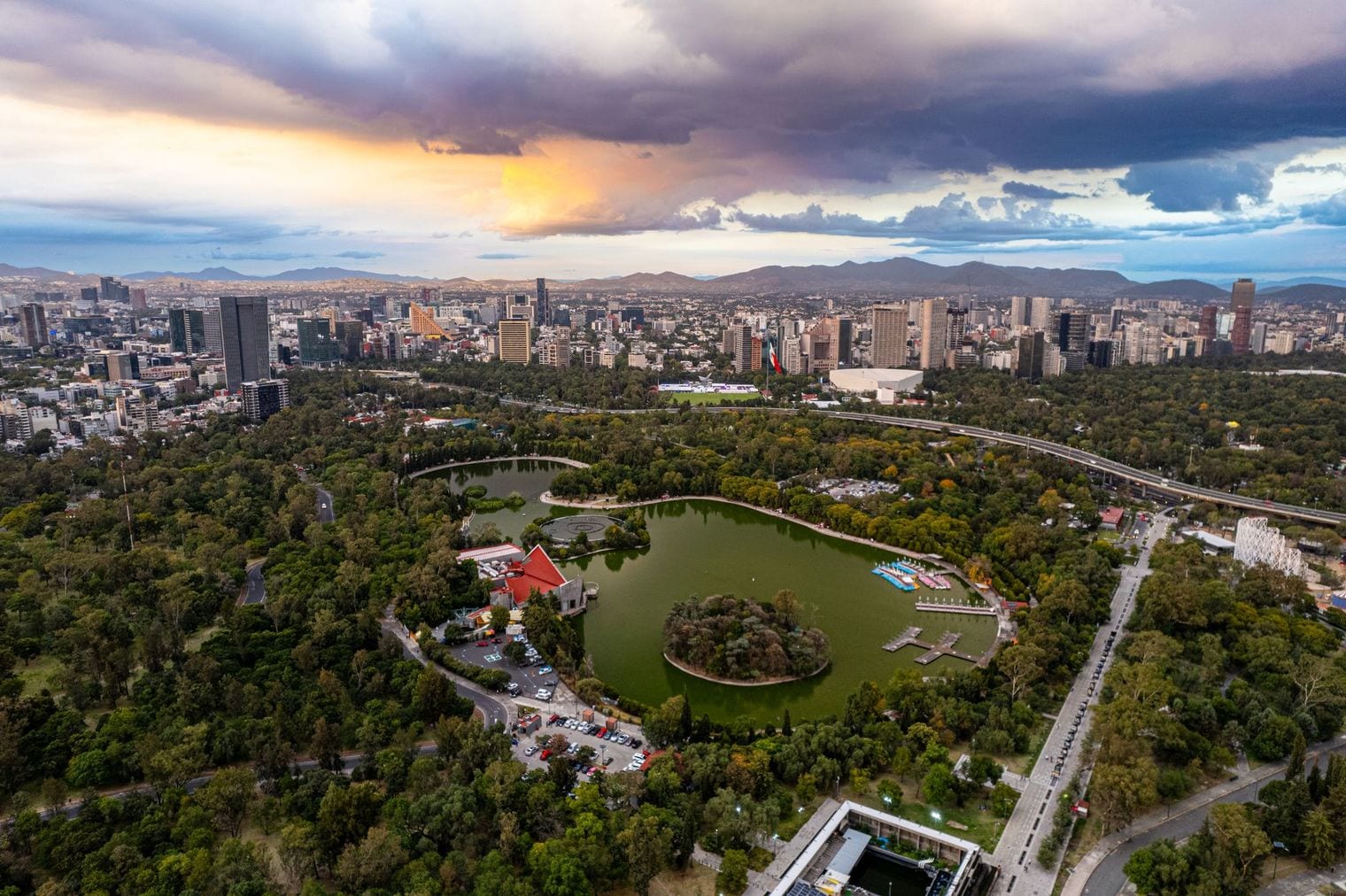
Bosque de Chapultepec is the green lung of the capital and one of the largest city parks in the Western Hemisphere, big enough that it is split into sections and impossible to exhaust in a day. The first section is the historic one, holding the castle on its hill, the zoo, the lake, the anthropology museum and the modern art museum, all within walking distance of each other.
On Sundays it fills with families, balloon sellers and food carts, and it is one of the best places in the city to simply watch Mexico City enjoy itself. The second section, further west, is where the children's museum and the big fountains are. Wear proper shoes; distances inside the park are longer than the map suggests.
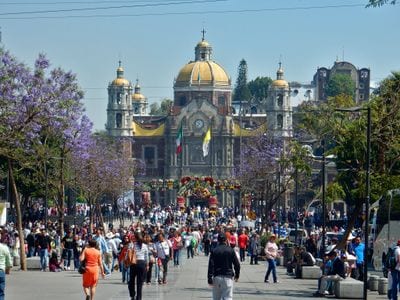
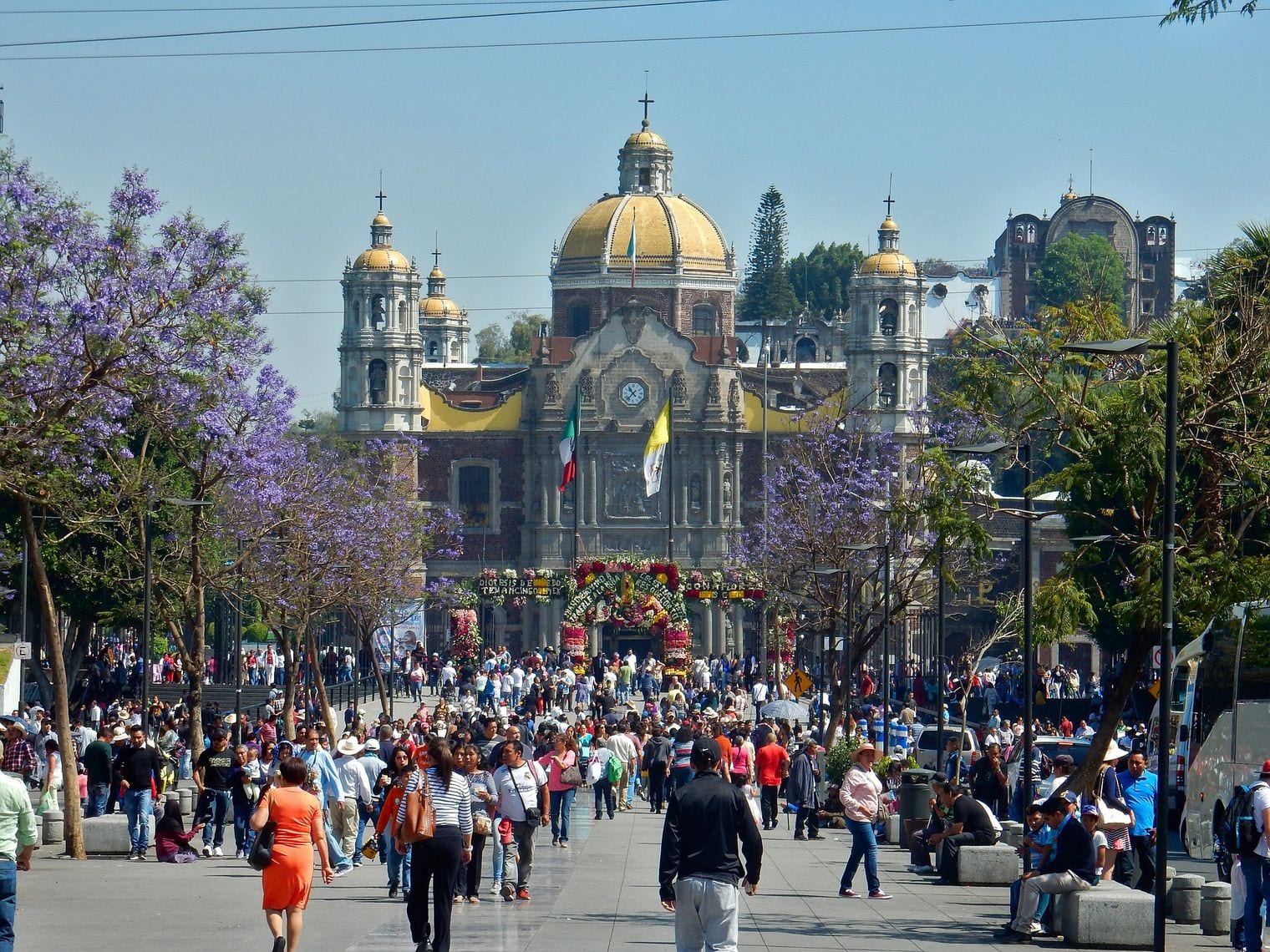
The Basilica of Our Lady of Guadalupe is the most visited Catholic shrine in the Americas and the spiritual centre of Mexican identity. The site holds the tilma bearing the image of the Virgin of Guadalupe, and the modern circular basilica was built to let very large numbers of pilgrims see it: a moving walkway runs beneath the image so that the queue never stops.
The complex is really several buildings on one hillside. The old basilica beside it leans visibly, a casualty of the soft lake-bed subsoil the whole city is sinking into, and steps climb the hill behind to smaller chapels and a garden with good views back over the city. Pilgrimage traffic peaks sharply in December.
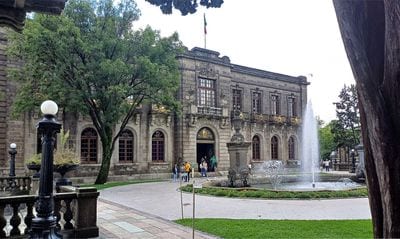
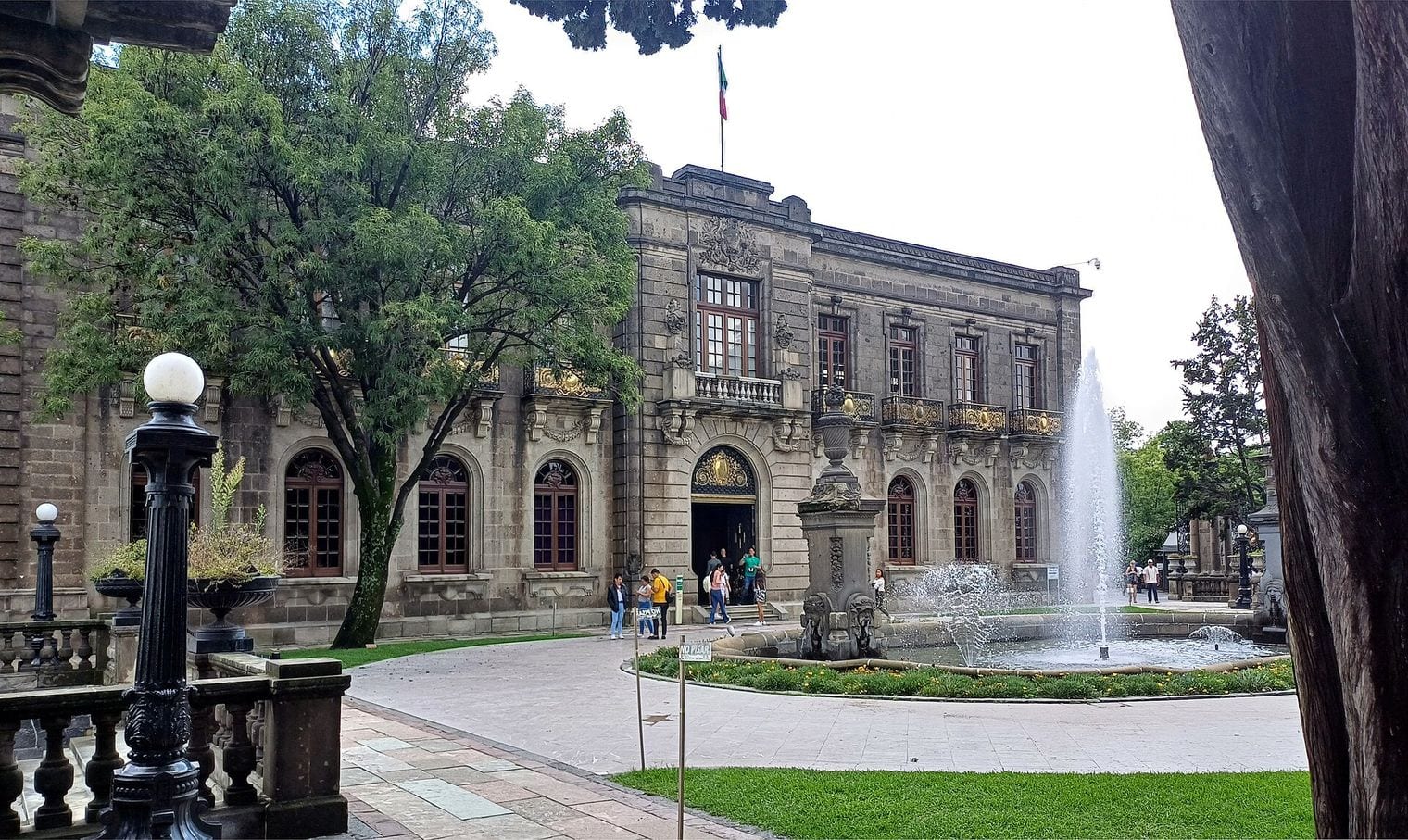
Chapultepec Castle sits on a rocky hill inside the park and is the only castle in the Americas to have housed sovereigns, having served as the residence of Emperor Maximilian and Empress Carlota. It later became the official presidential residence, and it is now the Museo Nacional de Historia, so the rooms swing between imperial apartments and galleries covering the sweep of Mexican history.
The upper terrace is the reason to make the climb: it looks straight down the length of Paseo de la Reforma, which is the single best orientation view of the modern city you can get. The walk up from the park gate is steep but short, and there is a small road train for those who would rather not.
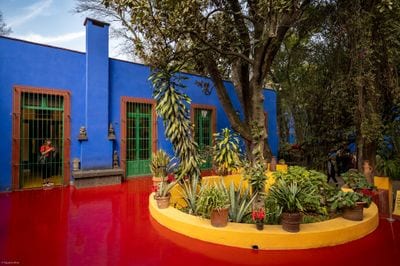
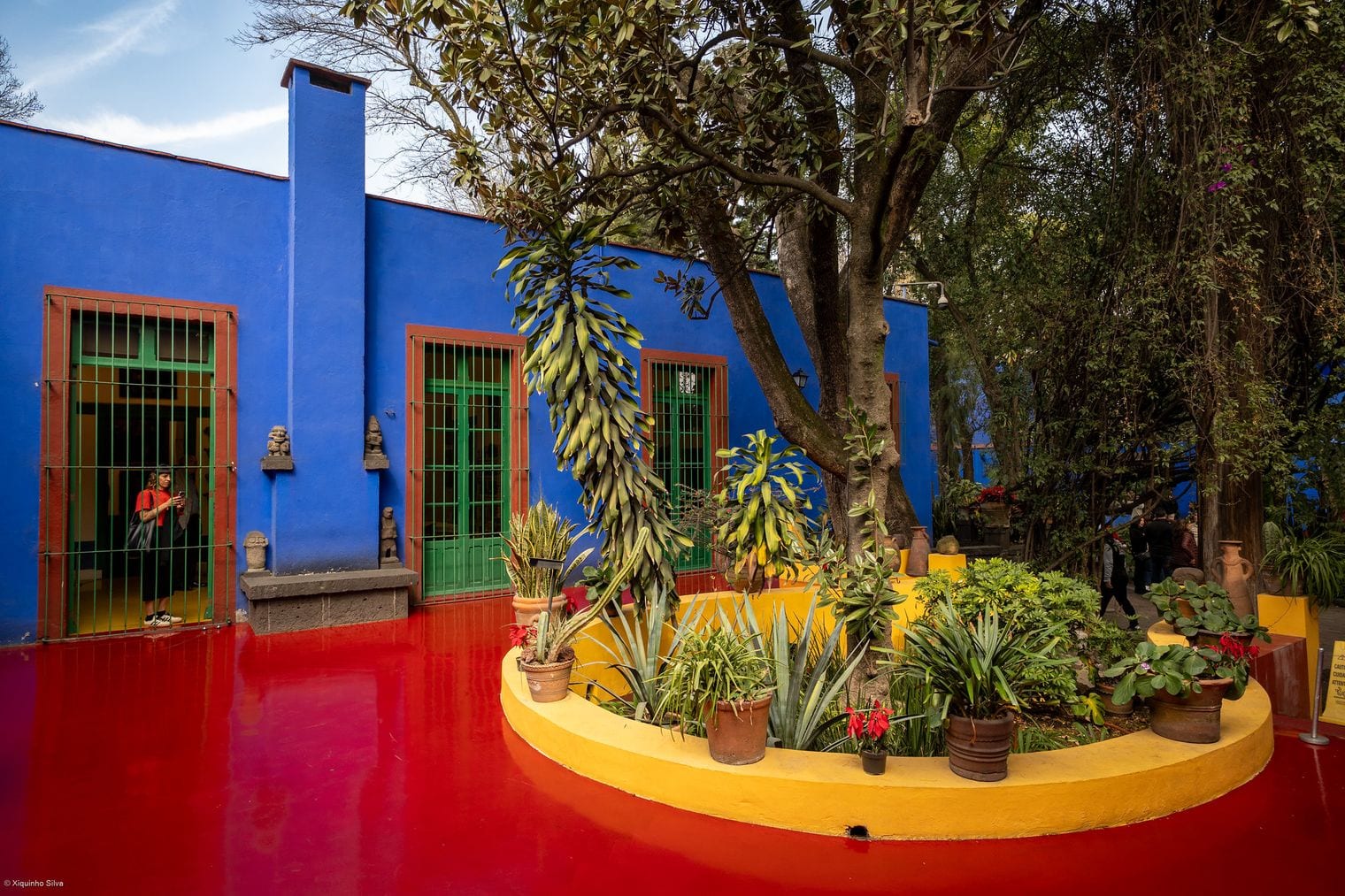
Known universally as the Casa Azul for its cobalt-blue walls, the Frida Kahlo Museum is the house in Coyoacan where the painter was born, lived with Diego Rivera and died. It is less a conventional gallery than a preserved home: the kitchen, the garden, her studio and the bed with its mirror overhead are all kept much as they were, alongside her clothing, her corsets and a selection of her paintings.
It is the most popular museum in the city and capacity is genuinely limited, so book a timed ticket online well in advance rather than turning up; walk-up queues are long and often futile. Pair it with a wander around Coyoacan, which is a short and pleasant walk away.
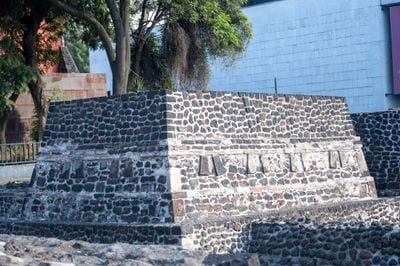
The Templo Mayor was the main temple of Tenochtitlan, and its remains sit in an open excavation immediately beside the cathedral, a few steps off the Zocalo. It came to light in the late twentieth century when utility workers digging in the street struck a huge carved monolith, prompting the demolition of the colonial buildings above and a full excavation of the site.
A raised walkway runs over the layered platforms, which were rebuilt repeatedly, one shell over another, so you are looking at several temples stacked inside one another. The attached museum holds what came out of the ground, arranged to mirror the temple's two shrines, and is the best possible primer before or after the anthropology museum.
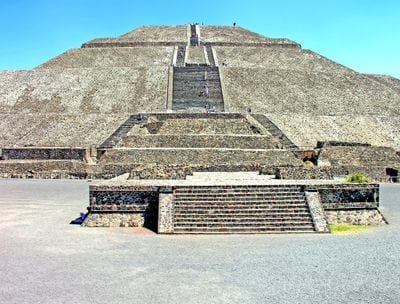
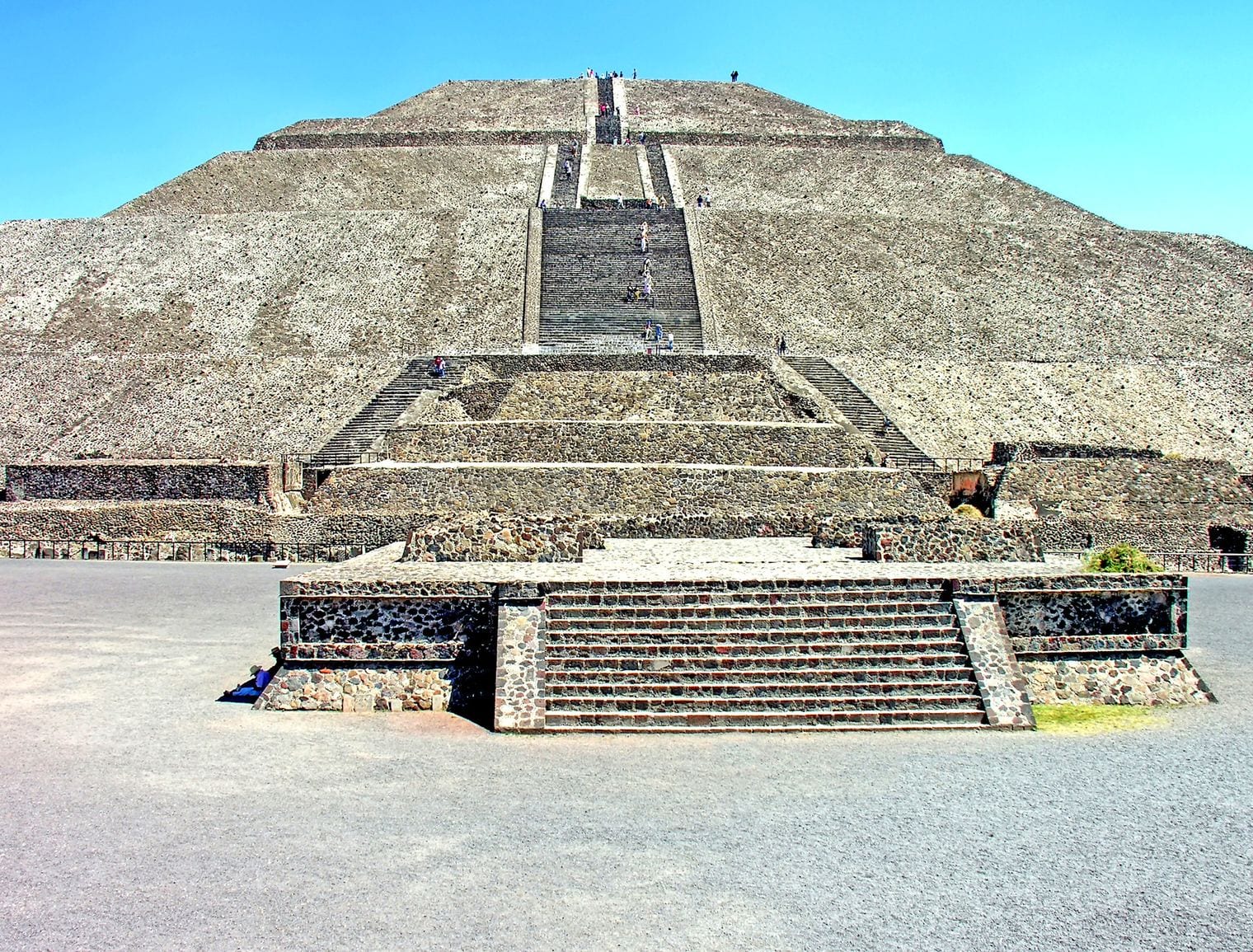
Teotihuacan is the great ruined city on the plain northeast of the capital, and the standard day trip from Mexico City. It was already ancient and long abandoned when the Aztecs found it and gave it the name we still use, meaning roughly the place where the gods were made; who actually built it remains unresolved. The scale is the thing that surprises people, since the Avenue of the Dead runs for kilometres between the monuments.
The Pyramid of the Sun and the Pyramid of the Moon anchor either end, with the Temple of Quetzalcoatl and its carved serpent heads at the southern end. There is very little shade, so go early, take water and a hat. Rules on climbing the pyramids have changed more than once in recent years, so check what access is currently permitted before you set out.
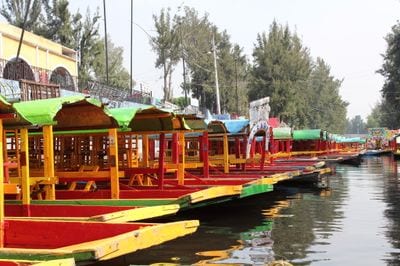
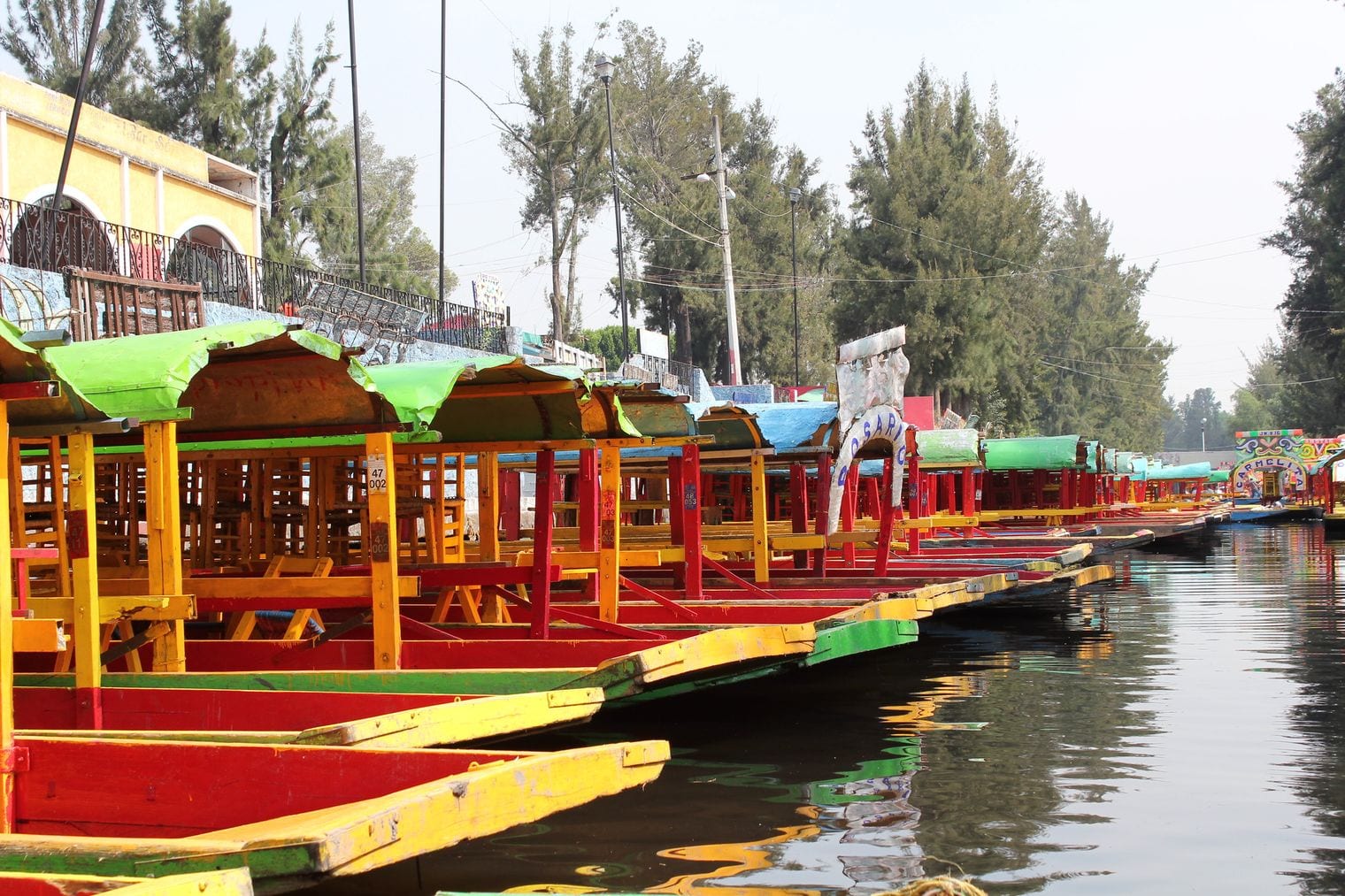
The canals at Xochimilco are the surviving fragment of the lake system the Aztecs farmed, and they are listed by UNESCO together with the city's historic centre. You hire a trajinera, a flat-bottomed barge painted in hard colours and named after a woman, and are poled slowly through a network of waterways between chinampas, the artificial garden islands that still grow flowers and vegetables.
Boats are hired by the hour at the embarcaderos, and the atmosphere depends entirely on when you come: weekends are a floating party, with mariachi boats and food boats pulling alongside, while a weekday morning is quiet enough to hear birds. Agree the hourly rate and the duration before you board, and bring cash.
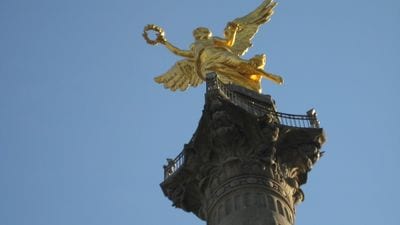
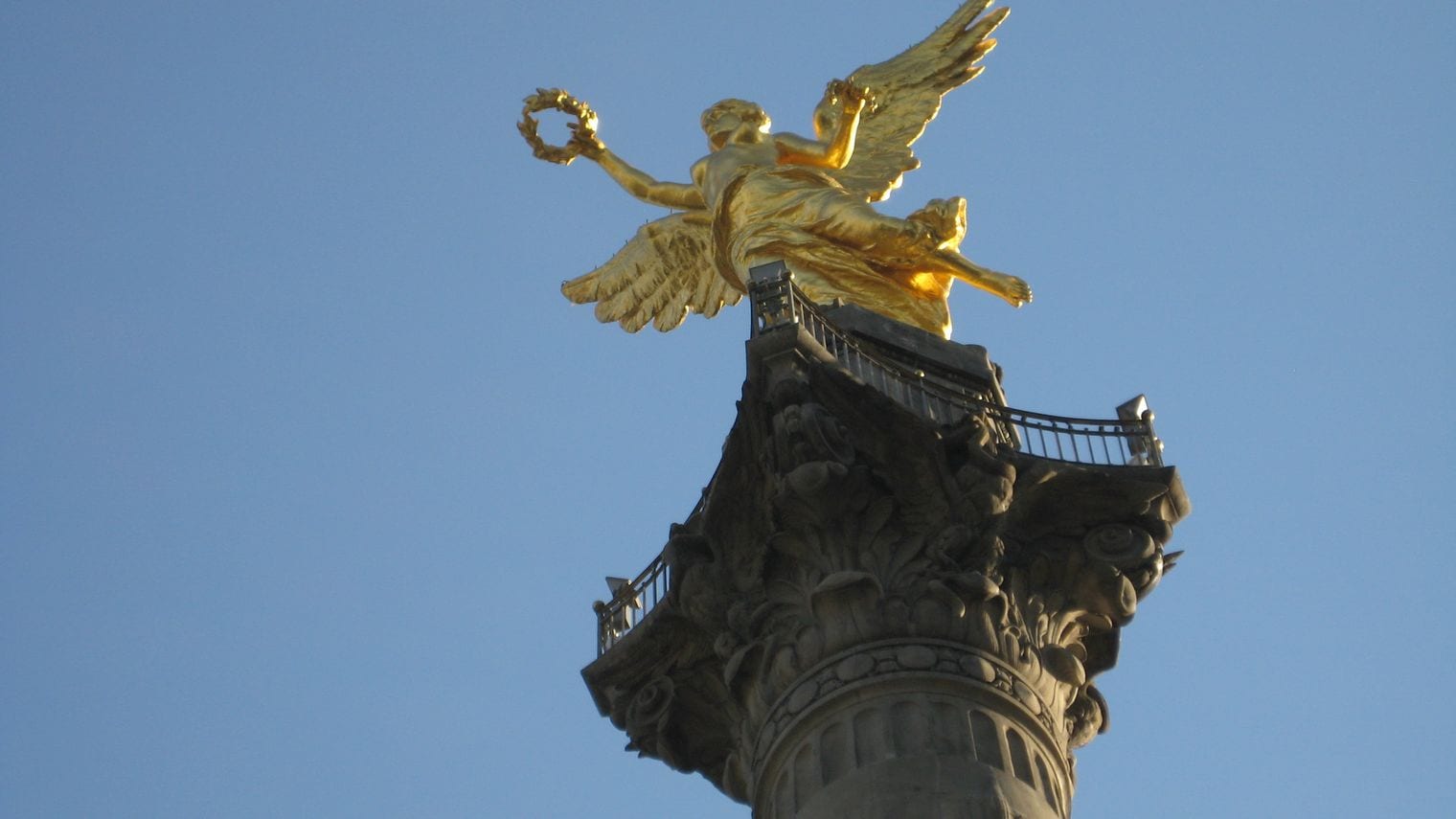
The Angel de la Independencia is the golden winged victory standing on a tall column in the middle of Paseo de la Reforma, and it is the monument the city gathers around. It was raised to mark the centenary of the start of the war of independence, and the mausoleum in its base holds remains of figures from that struggle.
It functions today as the capital's celebration point: when the national football team wins something, this roundabout is where the city comes. On Sundays the surrounding stretch of Reforma is closed to cars for cyclists and runners, which is by far the most pleasant time to walk up to it. The column is floodlit after dark and photographs well from the traffic islands.
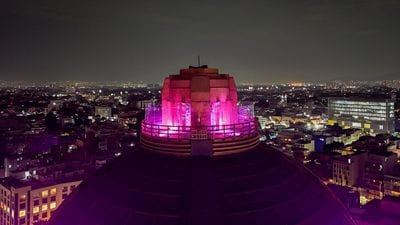
The Torre Latinoamericana was for years the tallest building in the city and remains its most useful viewpoint, because it stands right in the historic centre rather than out in the newer business districts. Its engineering is locally famous: it was designed for the soft, waterlogged subsoil and came through major earthquakes intact, which in this city is a genuine achievement.
The observation deck near the top is open-air, with a cafe and bar a floor or two below, and on a clear day the volcanoes are visible on the horizon. This is the vantage point for the classic overhead photograph of the tiled dome of the Palacio de Bellas Artes directly below. Air quality varies, so go on a bright, windy day if you can choose.
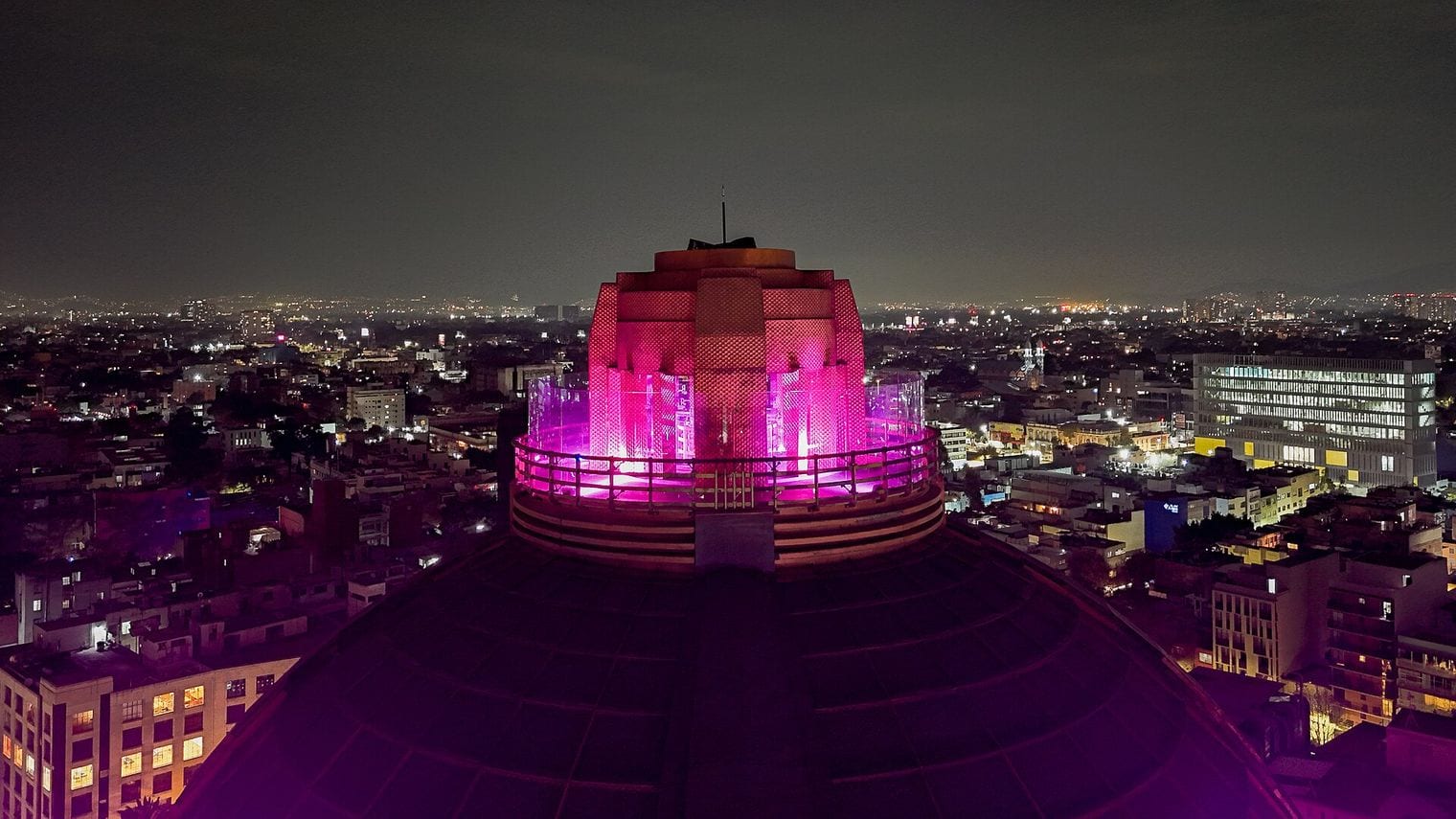
The Monument to the Revolution began life as something else entirely: it is the salvaged steel skeleton of a grand legislative palace begun under Porfirio Diaz and abandoned when the revolution swept him away. Rather than demolish the frame, it was recast decades later as an Art Deco triumphal arch commemorating the revolution that stopped its construction.
A glass lift runs up through the middle of the structure to a viewing platform on the roof, and you can walk out around the dome itself, which is an unusual and slightly vertiginous experience. The museum of the revolution occupies the space underneath, and the plaza in front has ground-level fountains that children run through on warm afternoons.
The Metropolitan Cathedral is the largest cathedral in the Americas and dominates the north side of the Zocalo. It was built and rebuilt over a very long period, which is why the facade mixes styles so freely, and it stands deliberately on the ceremonial precinct of the Aztec city, partly with stone taken from it.
Inside, the Altar of the Kings and the choir stalls are the set pieces, and there is usually a service going on somewhere in the vast interior. The building is sinking unevenly into the old lake bed, and the effort to stabilise it is visible: floors slope noticeably underfoot and a plumb line has long hung in the nave to track the tilt. Dress respectfully; it is a working cathedral.
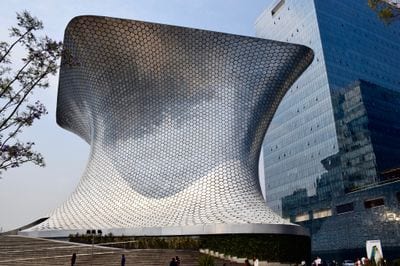
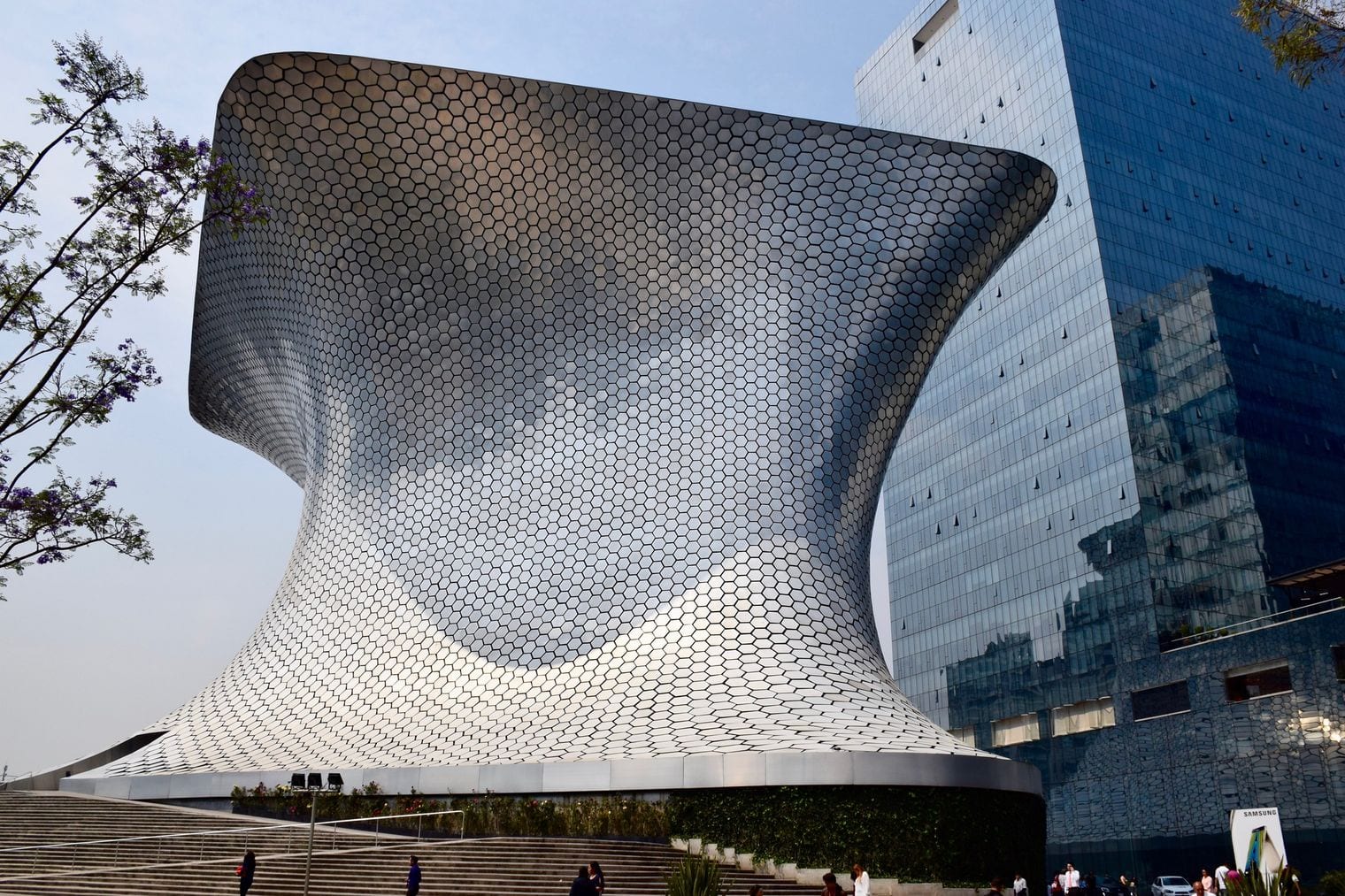
The Museo Soumaya is impossible to miss, a windowless shape clad in thousands of hexagonal metal tiles that shifts colour with the light, standing in the Plaza Carso development in Polanco. It houses a private collection assembled by the Slim family, and admission is free, which makes it one of the best-value hours in the city.
The collection is broad rather than specialised, spanning European old masters, Mexican painting and decorative arts, and it is particularly strong on Rodin, with a large gathering of his sculpture on the top floor. Visitors take the lift to the top and spiral down a continuous ramp. The neighbouring Museo Jumex is a two-minute walk away, so most people do both together.
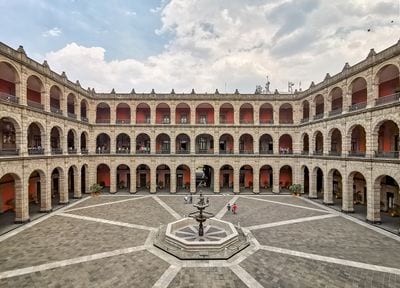
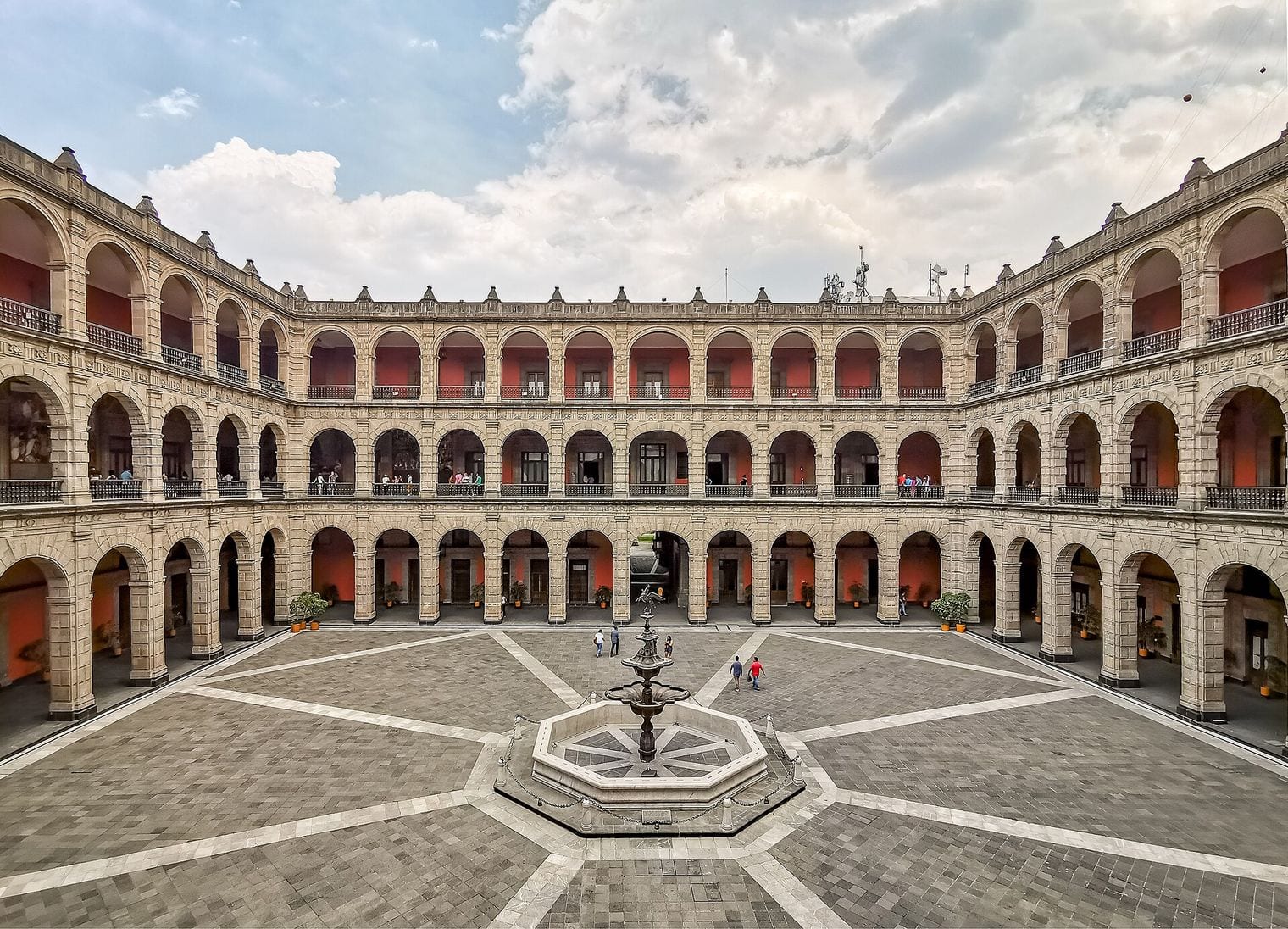
The Palacio Nacional occupies the whole eastern side of the Zocalo and is the seat of the federal executive, built on the site of Moctezuma's palace. The reason to go in is the main staircase, which carries Diego Rivera's enormous mural cycle on the history of Mexico, painted over many years and read as a single sweeping narrative from the pre-Hispanic world through the conquest to the revolution.
The corridor murals above continue with panels on indigenous life before the Spanish arrival, and they are more detailed and less crowded than the staircase. The bell rung by Miguel Hidalgo hangs above the central balcony, from which the president gives the independence cry each September. Bring photo identification and check current public access before travelling across the city.
Alameda Central is the oldest public park in the Americas, laid out in the sixteenth century on ground that had been an Aztec marketplace and later a site of executions. Today it is a formal park of paved walks, mature trees, benches and fountains, sitting immediately west of the Palacio de Bellas Artes.
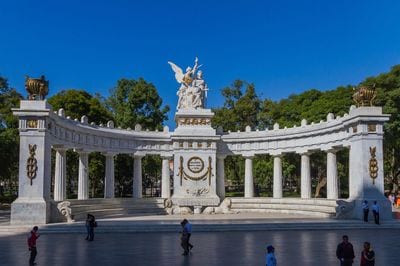
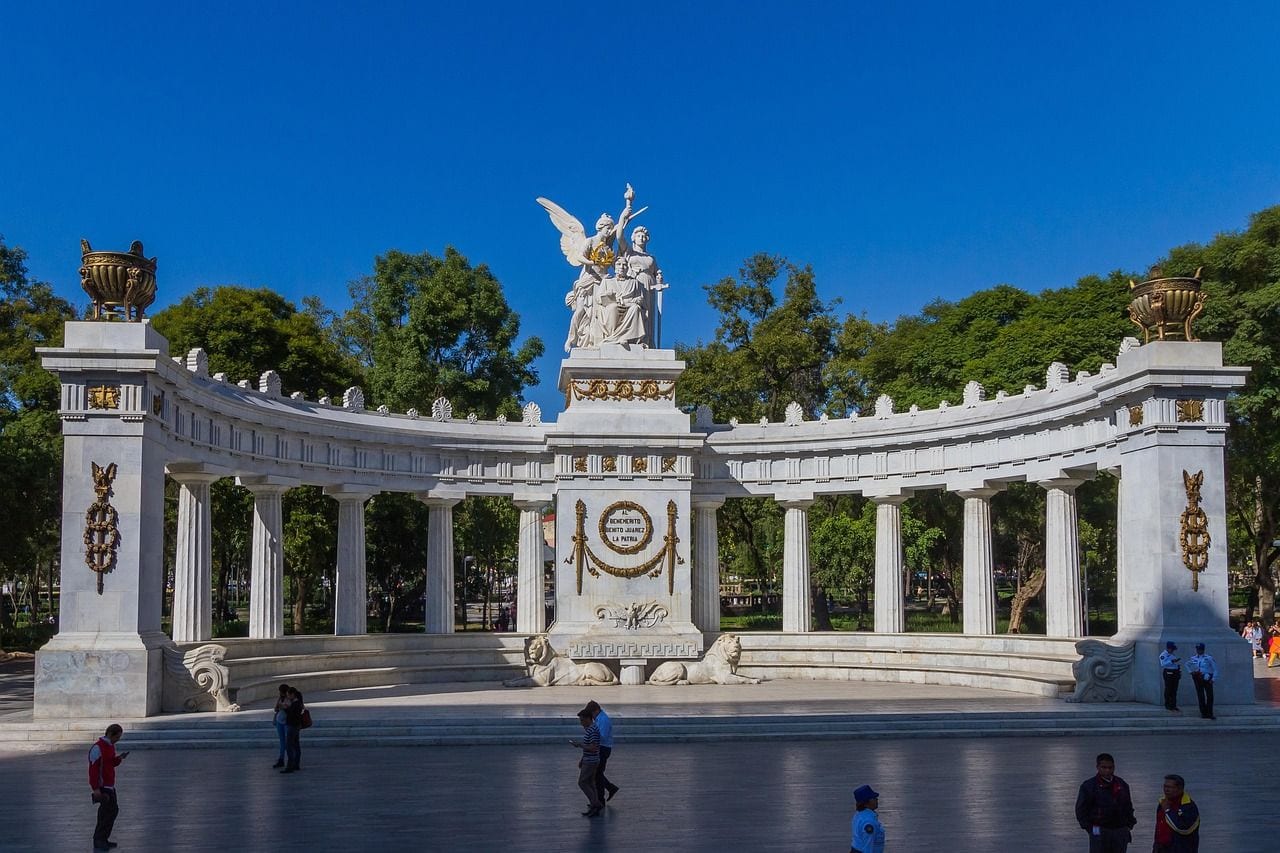
It is a genuinely useful place to stop rather than a destination in itself: it links several of the historic centre's museums, it is where office workers eat lunch, and the Hemiciclo a Juarez monument on its southern edge is a landmark in its own right. At weekends there are usually food stalls, buskers and, in December, one of the city's larger seasonal light displays.
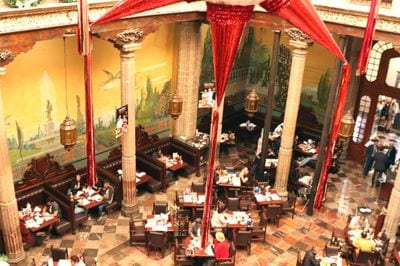
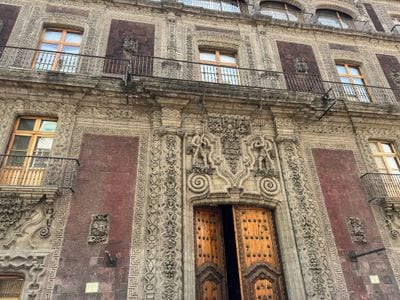
The Casa de los Azulejos, or House of Tiles, is an eighteenth-century aristocratic palace whose exterior is completely sheathed in blue and white Talavera tilework, which is why it stops people in the street on Calle Madero. It is one of the most photographed buildings in the historic centre and costs nothing to look at.
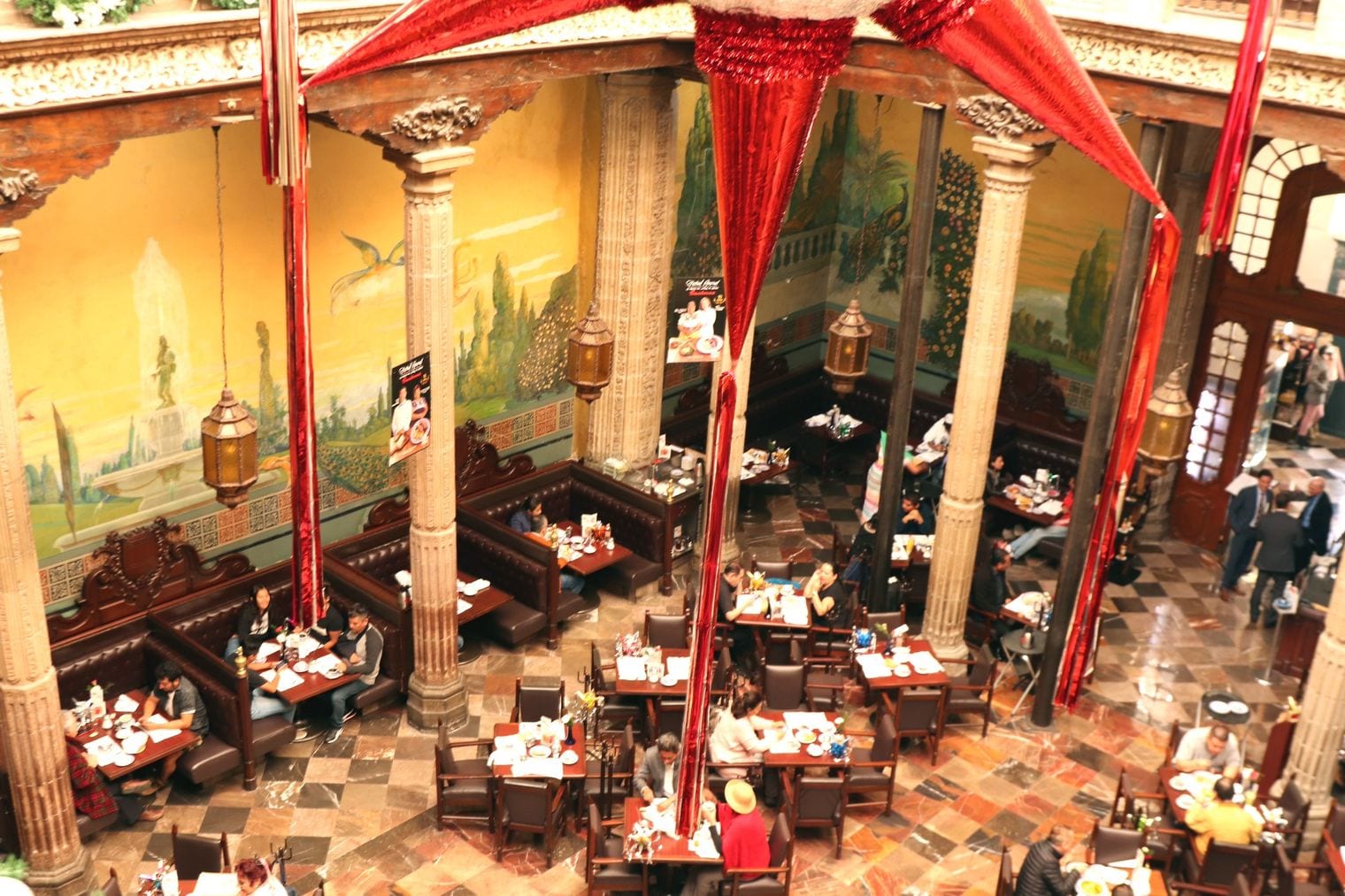
The interior is now occupied by a branch of a long-established Mexican restaurant chain, which means anyone can walk in and see the covered central courtyard, the tiled surfaces and the grand staircase with its mural by Jose Clemente Orozco. Treat it as a building to visit rather than a meal to plan around: step in, look up at the courtyard, and carry on down Madero.
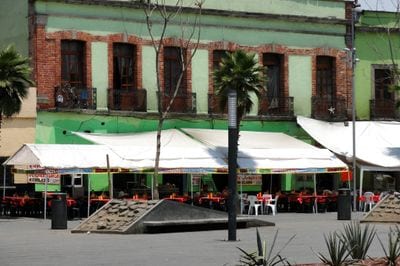
Plaza Garibaldi is where mariachi musicians have gathered for generations to be hired, and it remains the place to hear the music live rather than as a restaurant floorshow. Bands in full charro dress stand around the square waiting for work, and you pay per song, negotiated directly with the group before they play.
The square also holds a museum devoted to tequila and mezcal, which is a genuinely good primer on how the two spirits differ and where they come from, with tasting included. The atmosphere is boisterous and the surrounding streets can feel edgy late at night, so most visitors come in the early evening, take a taxi or rideshare to and from the square, and keep valuables out of sight.
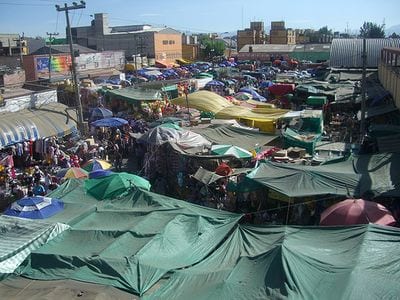
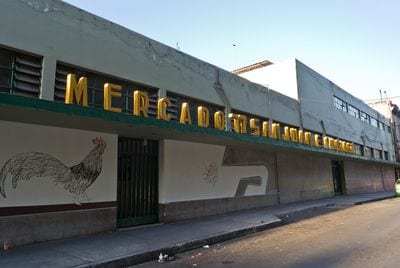
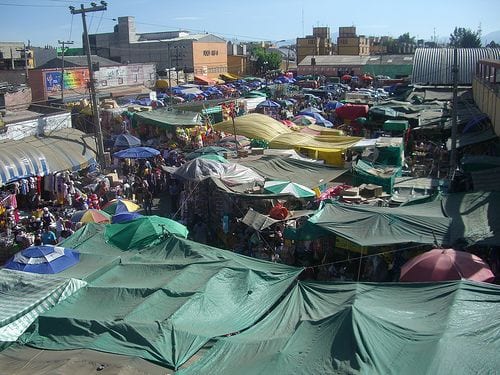
La Merced is the great traditional market of Mexico City, an enormous covered complex east of the historic centre that has supplied the capital for well over a century. It is a working wholesale and retail market rather than a tourist attraction, which is precisely the point: this is where you see the actual range of Mexican produce, from dozens of chillies and moles to fruit most visitors will not recognise.
The halls are divided roughly by trade, and the sheer volume moving through them is the spectacle. Go in the morning when it is busiest and freshest, eat something from one of the food stalls, and keep your bag in front of you in the crowds. It is several metro stops from the Zocalo and has its own station.
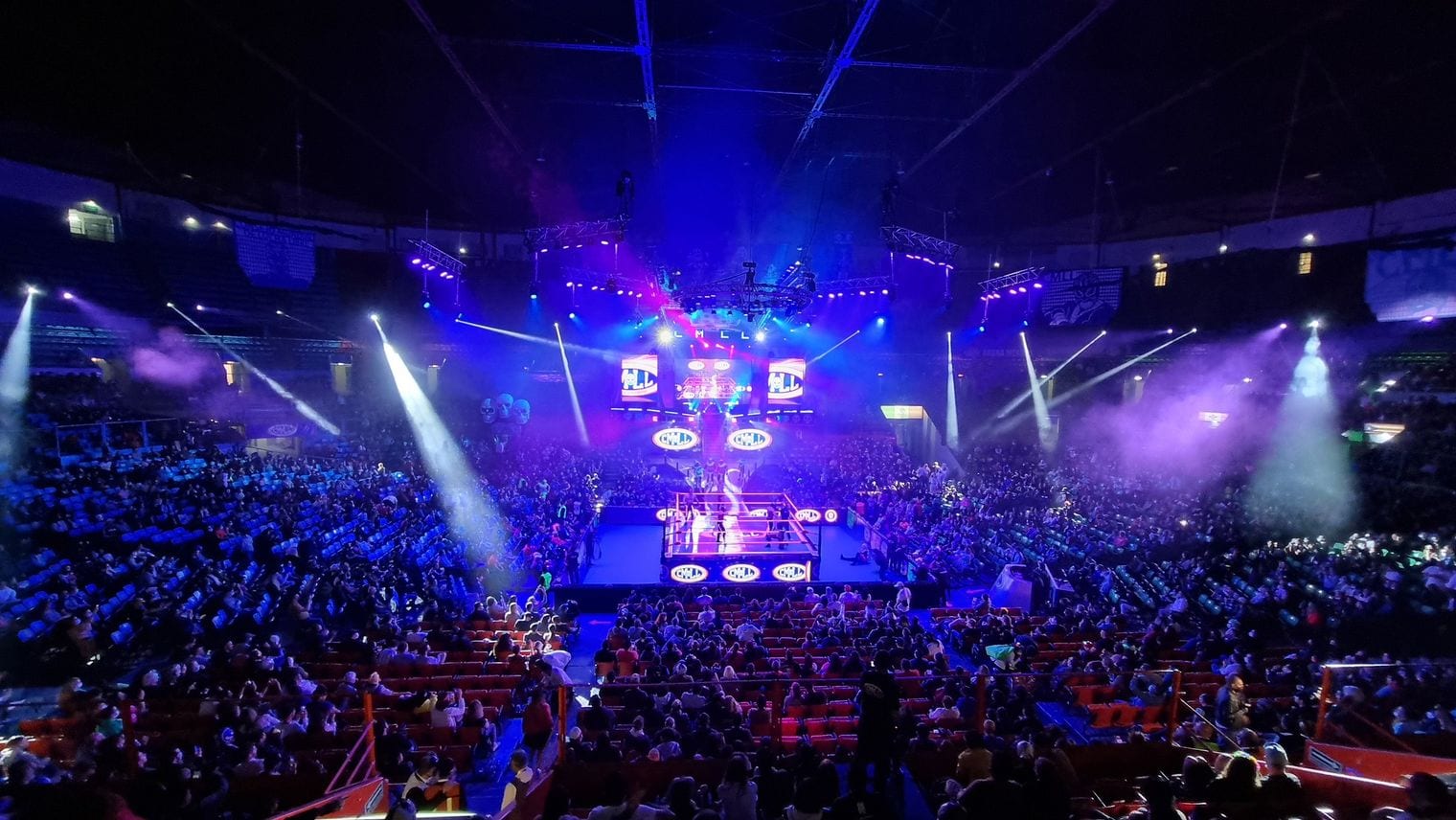
Arena Mexico is the home of lucha libre, Mexican professional wrestling, and is known without irony as the cathedral of the sport. Masked luchadores fight in tag teams and singles across an evening card, the technicos against the rudos, and the wrestling itself is fast, acrobatic and far more athletic than outsiders expect.
The crowd is the other half of the show: families, regulars and a great deal of enthusiastic abuse shouted at the villains. Buy tickets in advance for the main fight nights, sit far enough back to see the whole ring, and expect vendors selling beer, masks and snacks throughout. Photography rules vary, and it is worth checking what is permitted before you bring a camera.
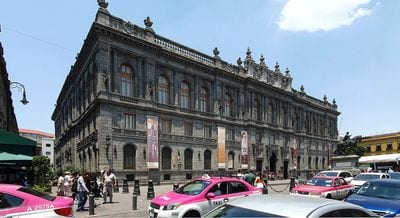
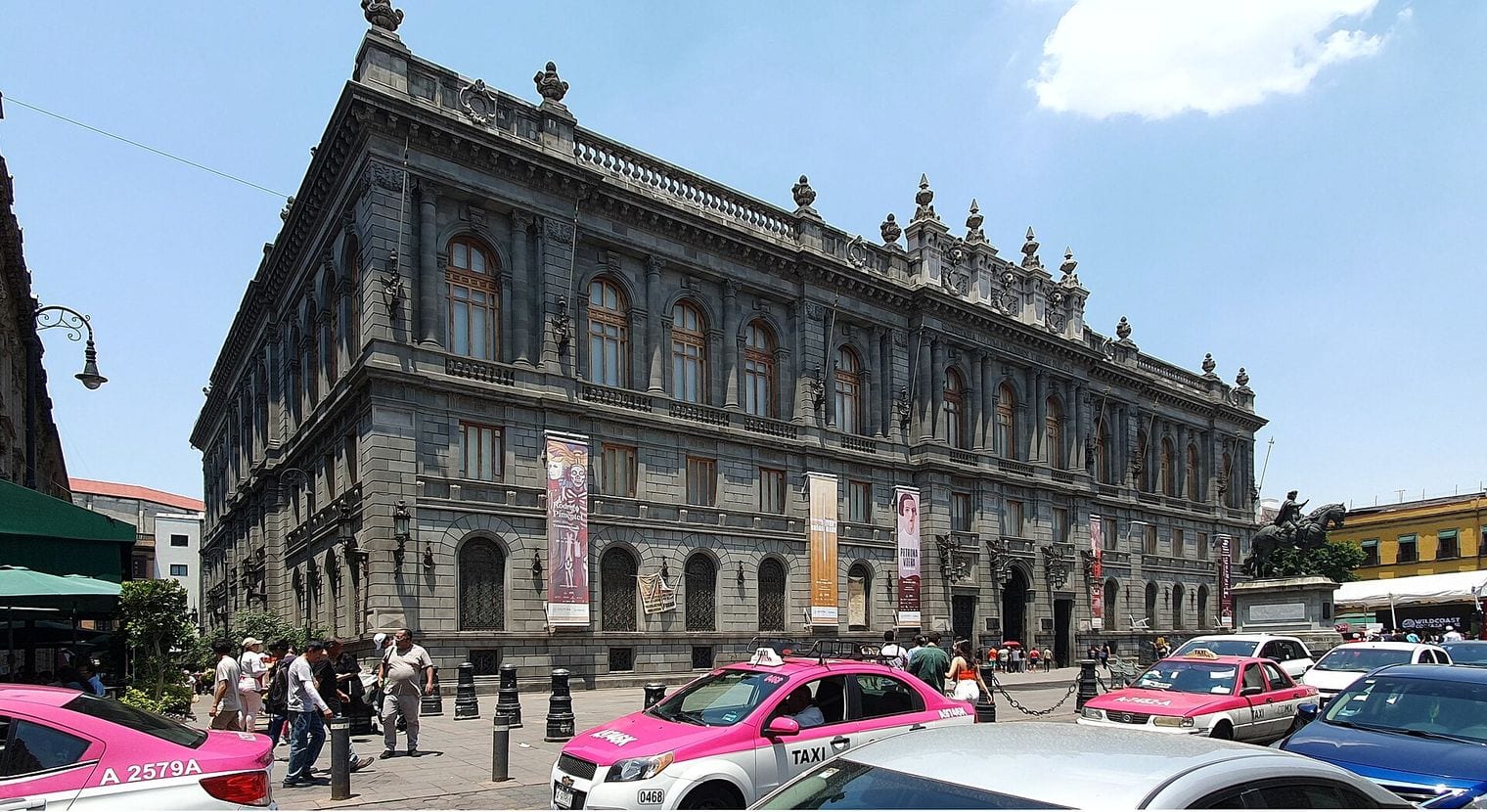
The Museo Nacional de Arte, universally shortened to MUNAL, holds the national collection of Mexican art from the colonial period through to the mid twentieth century, which makes it the place to understand what came before the muralists everyone already knows. Landscape painting is a particular strength, especially the nineteenth-century views of the valley of Mexico.
The building is half the pleasure: a monumental early twentieth-century palace originally built as a government communications ministry, with a grand staircase and ironwork worth the visit alone. It stands on Plaza Manuel Tolsa, where the equestrian bronze of Charles the Fourth known locally as El Caballito has been moved around the city for two centuries before settling here.
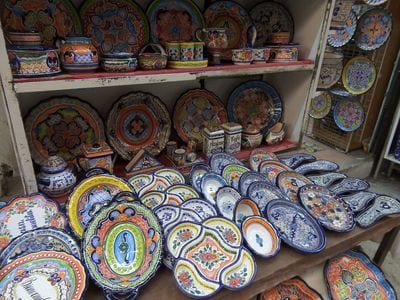
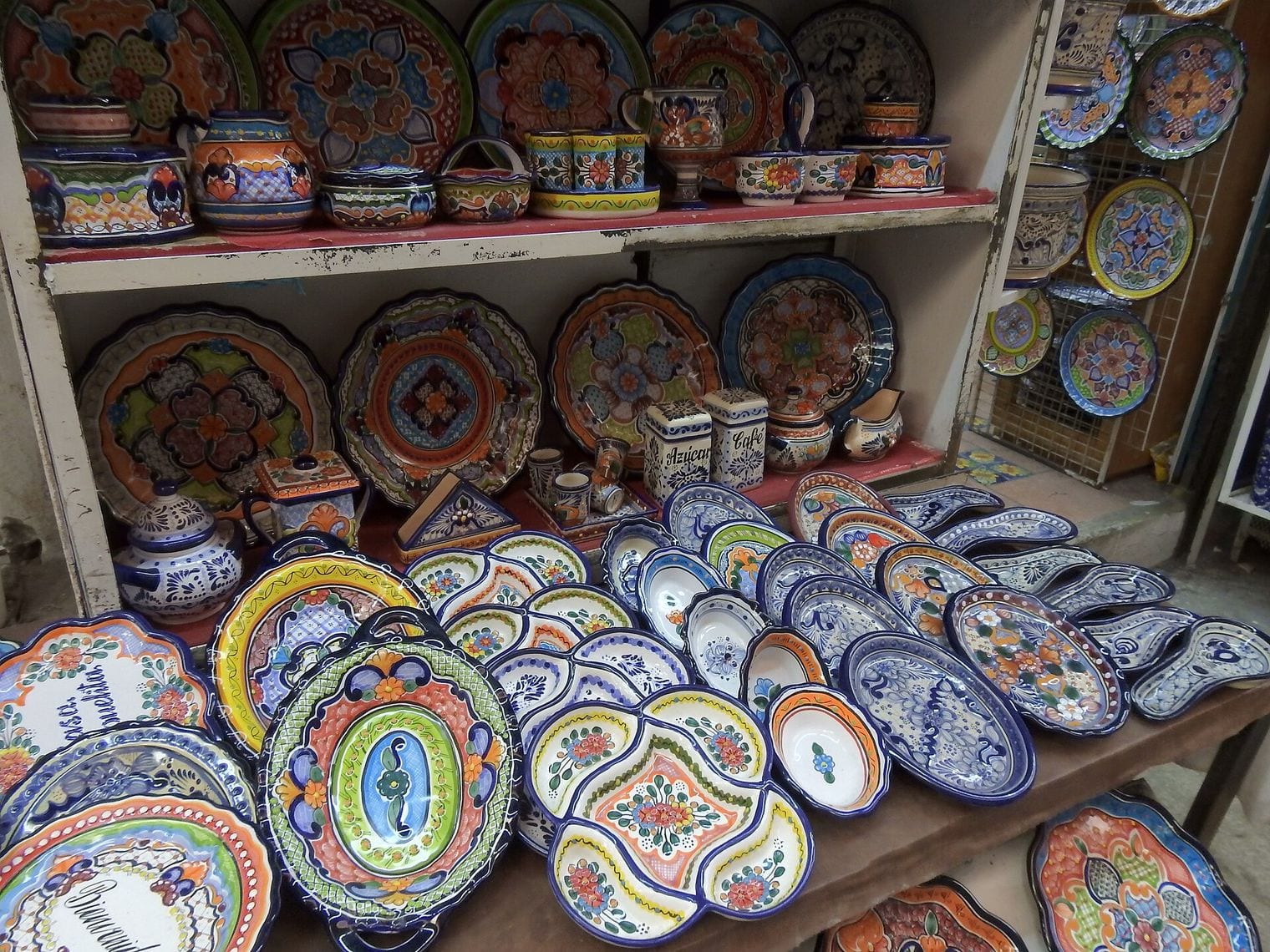
La Ciudadela is the handicraft market where most visitors end up doing their shopping, and with good reason: it gathers craft work from across the country in one place, so you can compare Oaxacan alebrijes, Talavera pottery from Puebla, Guerrero silver, textiles and leather without travelling to the states they come from.
It is a permanent market of small fixed stalls rather than a weekend affair, it is covered, and it is calm enough to browse properly. Prices are marked but there is usually some room to negotiate, particularly on multiples. Quality varies considerably from stall to stall, so it pays to walk the whole thing once before buying anything, and to bring cash for the smaller traders.
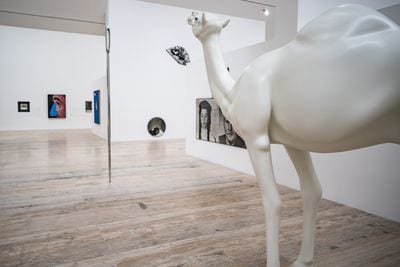
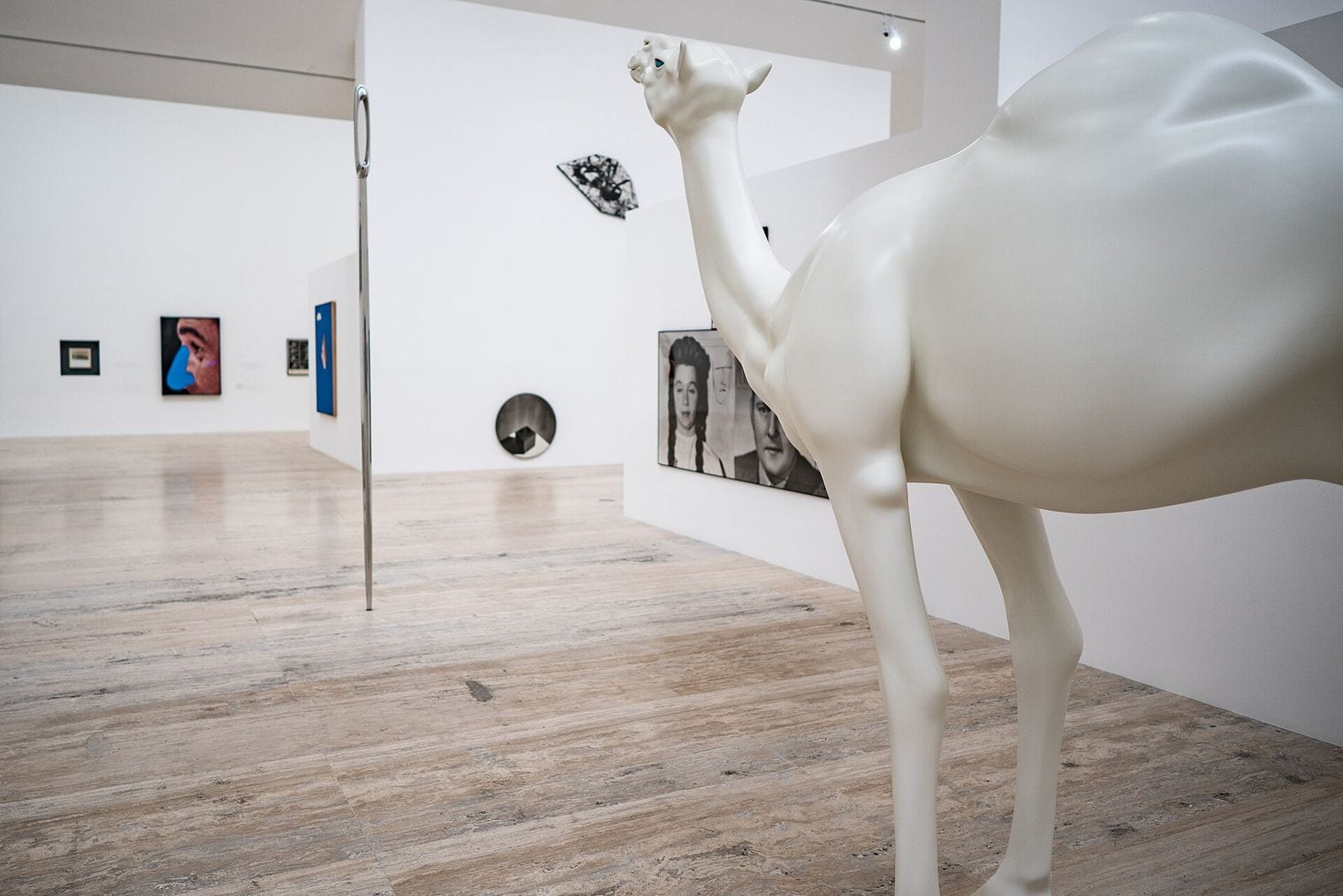
Museo Jumex is the city's leading contemporary art museum, holding one of the most significant private collections of contemporary art in Latin America and running an ambitious programme of temporary exhibitions from abroad. It is the counterweight to all the pre-Hispanic and muralist work elsewhere in this list.
The building, by the British architect David Chipperfield, is a travertine-clad block raised on columns with a distinctive sawtooth roof that pulls even north light into the top-floor galleries, and the open plaza underneath it is a public space in its own right. It stands directly opposite the Museo Soumaya in Plaza Carso, so the two are almost always visited in the same trip.
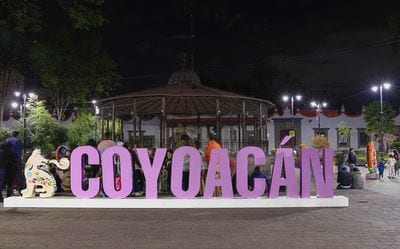
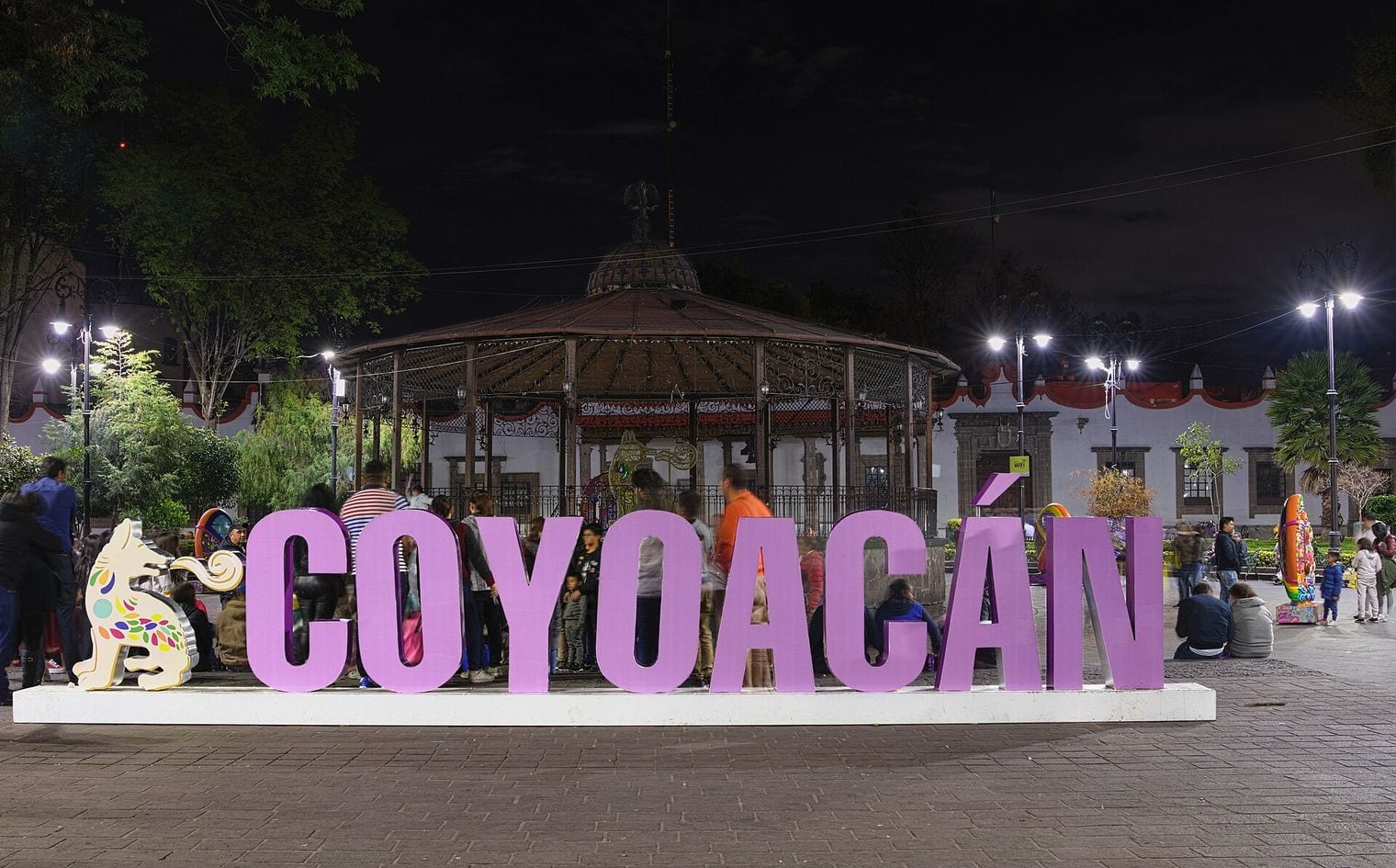
Coyoacan was a lakeside village long before the city swallowed it, and it still feels like a separate town: cobbled streets, low colonial houses in strong colours, and two linked squares at its centre, the Jardin Centenario with its fountain of coyotes and the Plaza Hidalgo beside it. It is the most pleasant place in the city simply to walk.
The neighbourhood is also dense with things to do, since Casa Azul, the Leon Trotsky house and the covered market are all within a few streets, and the church of San Juan Bautista faces the main square. Weekends bring craft stalls, buskers, balloon sellers and long queues for churros and ice cream. Come on a weekday if you would rather have the streets to yourself.
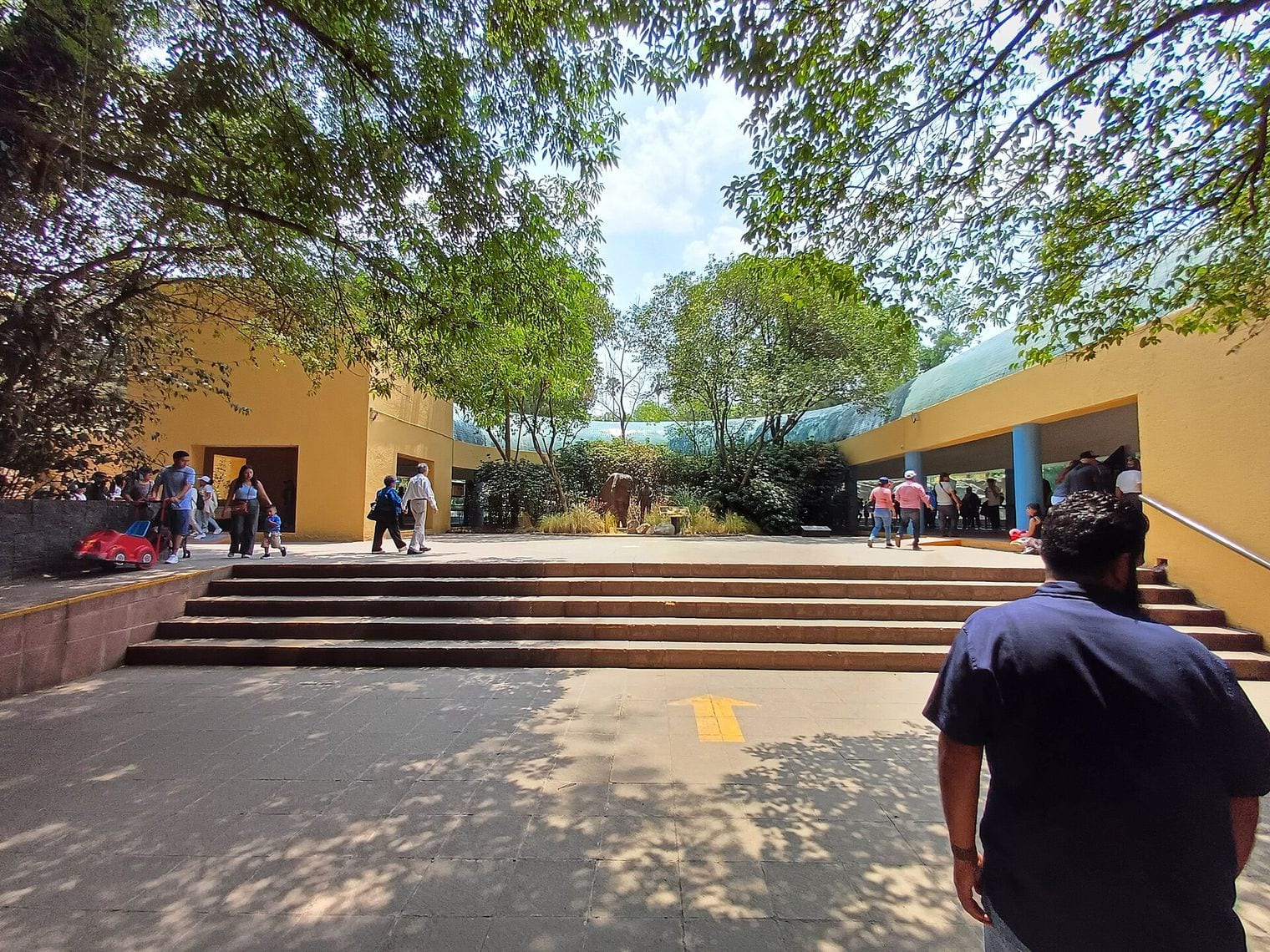
The Zoologico de Chapultepec sits inside the first section of the park and is free to enter, which makes it one of the busiest attractions in the city at weekends. It is best known internationally for its giant pandas, the result of a long-running breeding programme that produced cubs born outside China.
The collection is broad, with a strong emphasis on Mexican species, and the layout is a straightforward loop that can be walked in a couple of hours. Because it costs nothing and sits in the middle of the park, it works well slotted between the castle and one of the museums rather than as a whole outing. Expect crowds on Sundays, and check the closing day before you go.
Papalote Museo del Nino is the city's children's museum and the obvious answer to what to do in Mexico City with kids. It is built entirely around hands-on exhibits covering science, the human body, communication and the environment, on the principle that everything is there to be touched rather than read about.
It sits in the second section of Chapultepec park, has a large-format cinema attached, and is aimed squarely at primary-school ages, though younger children have their own dedicated area. Sessions can be busy with school groups on weekday mornings, so families visiting independently often do better in the afternoon or at the weekend. Allow at least half a day if your children are the right age.
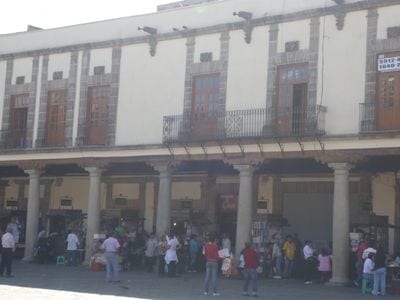
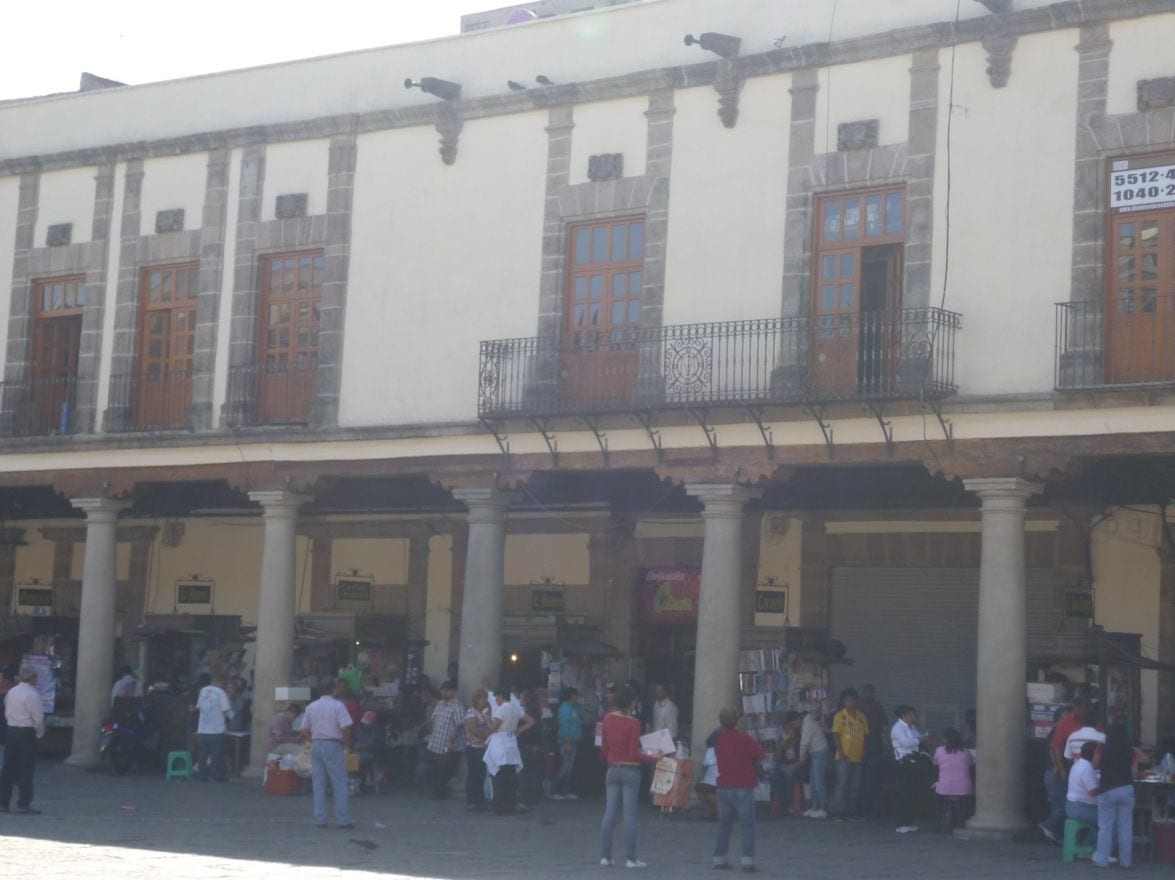
Plaza de Santo Domingo is a small colonial square a few blocks north of the Zocalo, and it is one of the most atmospheric corners of the historic centre precisely because it has stayed in use. The baroque church of Santo Domingo stands on one side, and the arcade opposite is the Portal de los Evangelistas.
Under that arcade sit the evangelistas, public scribes who have worked here for generations, once writing letters for customers who could not, and now filling in forms and printing documents on machines of every vintage. It is a genuinely unusual survival and worth ten minutes of watching. The square is quieter than the Zocalo and makes a good pause on a walk through the centre.
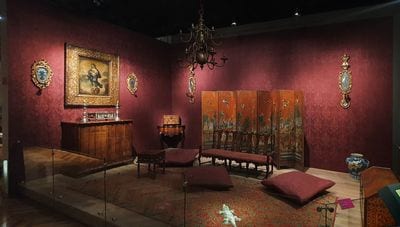
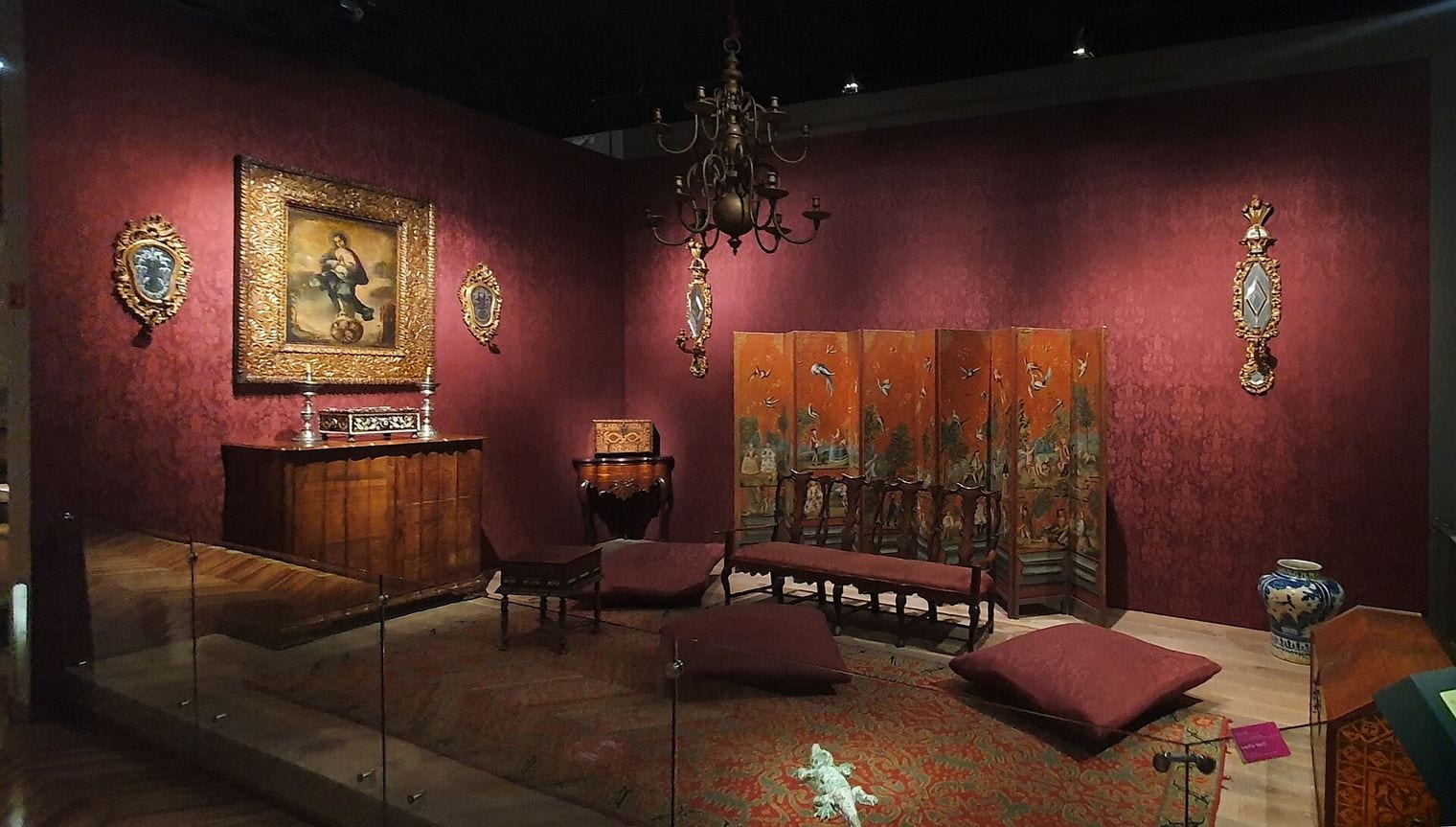
The Museo Franz Mayer holds the decorative arts collection assembled by the German-born financier whose name it carries, and it is the best place in the city to see how colonial Mexico actually furnished itself: ceramics, silver, textiles, furniture and a large body of Talavera pottery.
The setting does a great deal of the work. The museum occupies a former hospital building facing Alameda Central, and its arcaded cloister has been turned into a quiet courtyard cafe that is one of the calmest spots in the historic centre. Temporary exhibitions here often cover photography and design, and the museum is small enough to see properly in an hour or so.
The Museo Memoria y Tolerancia is a serious, carefully made museum about genocide and human rights, occupying a purpose-built space just off Alameda Central. The upper floors work through the Holocaust and other twentieth-century genocides in detail, using documents, objects and testimony rather than spectacle.
The second half of the museum turns the subject towards tolerance, discrimination and the mechanisms by which societies slide into violence, which is what distinguishes it from a purely historical museum. It is emotionally heavy and not suitable for younger children, and it deserves a couple of unhurried hours. Audio guides are available and are genuinely worth taking, because the labelling assumes some prior knowledge.
The Museo de Arte Moderno sits among the trees in Chapultepec park and covers Mexican modern art from the first half of the twentieth century onward, which places it neatly between the historic collections downtown and the contemporary work at Jumex. It is housed in a low pair of circular pavilions with a sculpture garden around them.
The collection's single most famous holding is Frida Kahlo's The Two Fridas, one of her largest and best-known canvases, and there is substantial work by Rivera, Siqueiros, Tamayo, Remedios Varo and Leonora Carrington. It is a manageable museum in a park you are probably already walking through, which makes it one of the easier ones to fit in.
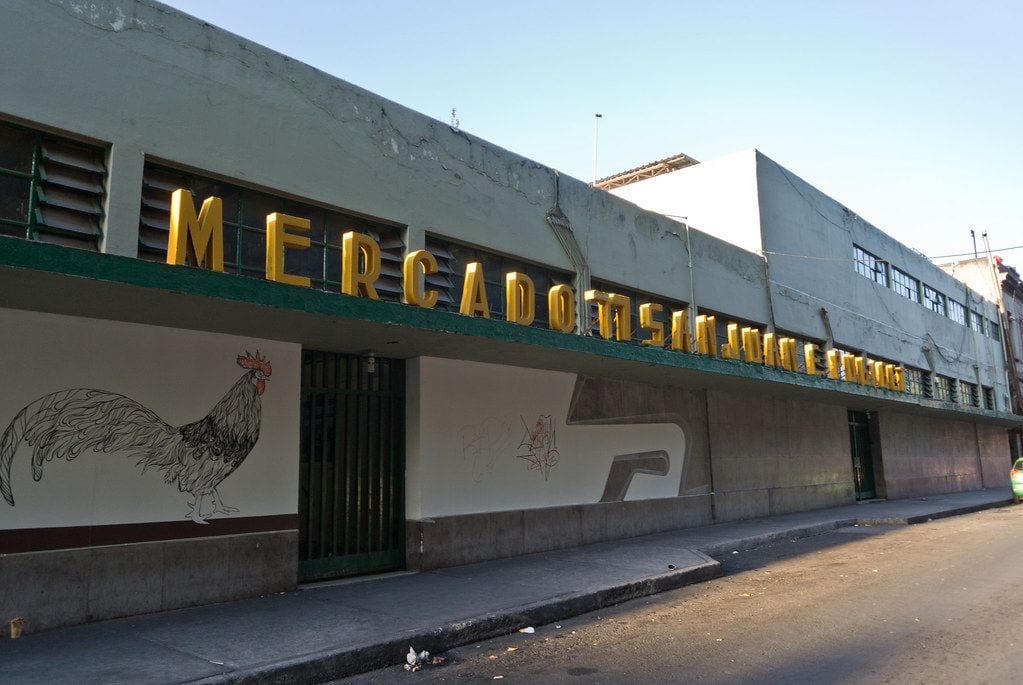
The Mercado de San Juan is the specialist food market of the historic centre, where the city's chefs shop, and it is completely different in character from the vast Merced. It is compact, and it deals in the unusual: imported cheeses and charcuterie, seafood, game and a well-known selection of exotic meats and insects.
Several stalls will make up a plate or a torta on the spot, and the traders are generally happy to hand across a taste, which turns a wander through the aisles into an informal tasting. It is the easiest place in the city to try chapulines or escamoles if you are curious, and it is a short walk from Alameda Central and the Torre Latinoamericana.
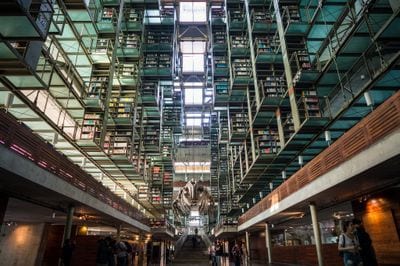
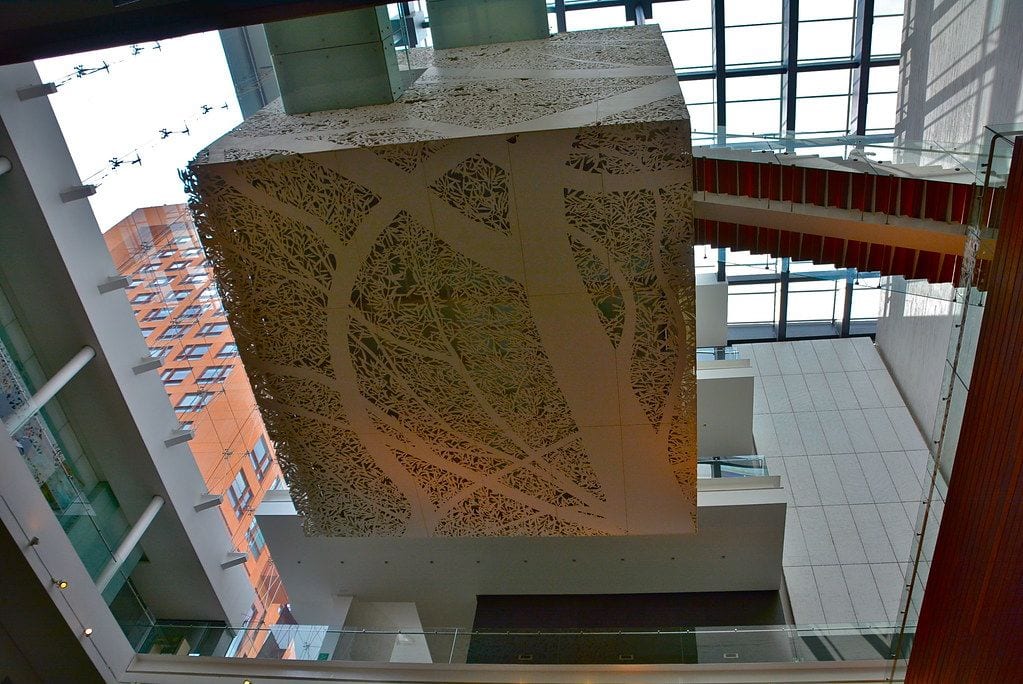
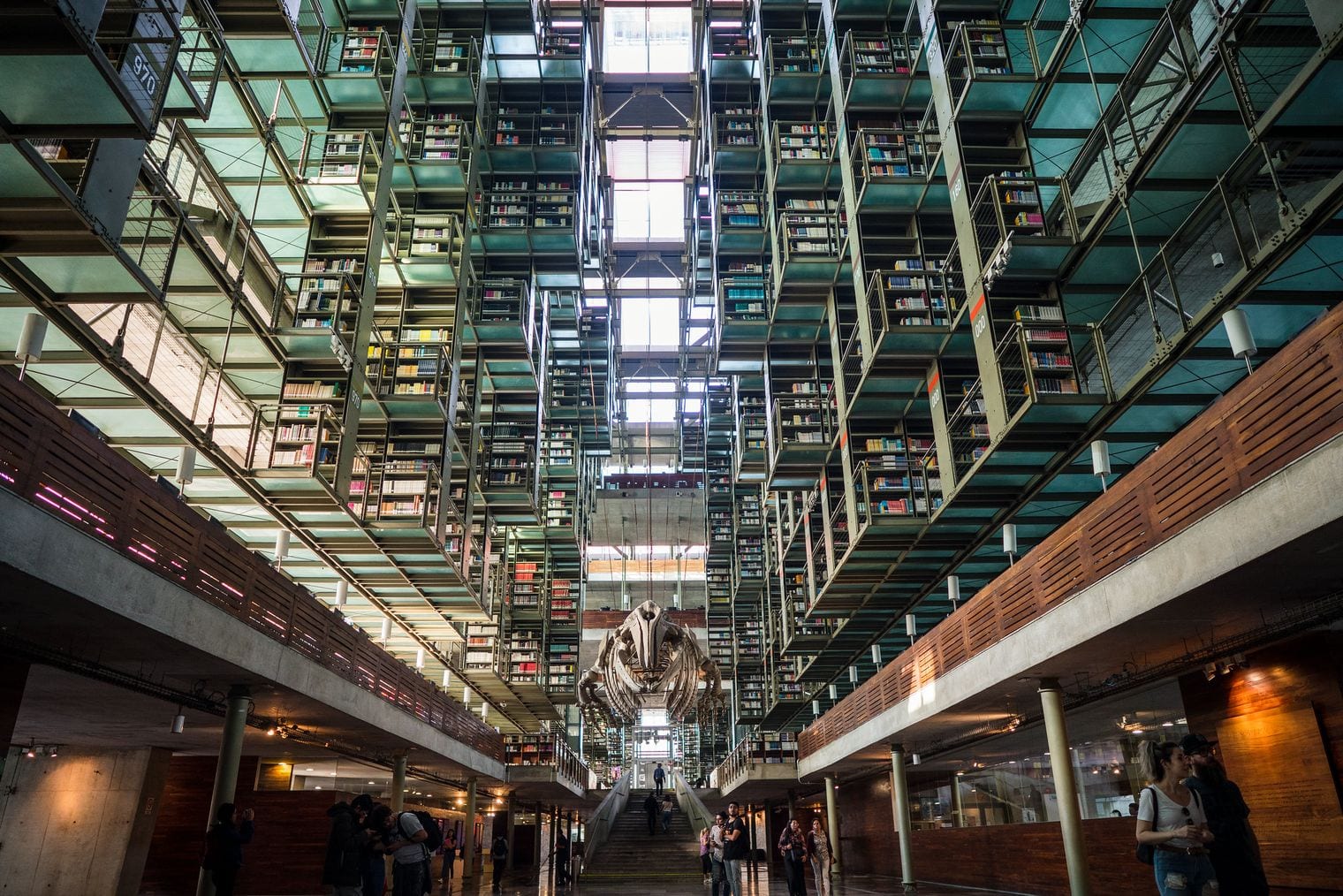
The Biblioteca Vasconcelos is a public library that people visit purely as architecture, and it is free to walk into. Steel bookstacks are suspended in tiers from the structure inside an enormous top-lit hall, so the shelves appear to float above a glass floor and the perspective down the length of the building is genuinely disorienting.
Hanging in the central void is Gabriel Orozco's Matrix Movil, the treated skeleton of a grey whale marked with graphite. Around the building is a substantial botanical garden that shields it from the traffic outside. It stands beside Buenavista station north of the centre, is easy to reach by metro, and needs no more than half an hour unless you intend to sit and read.
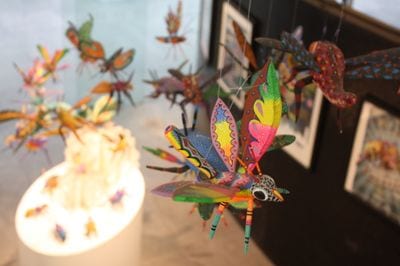
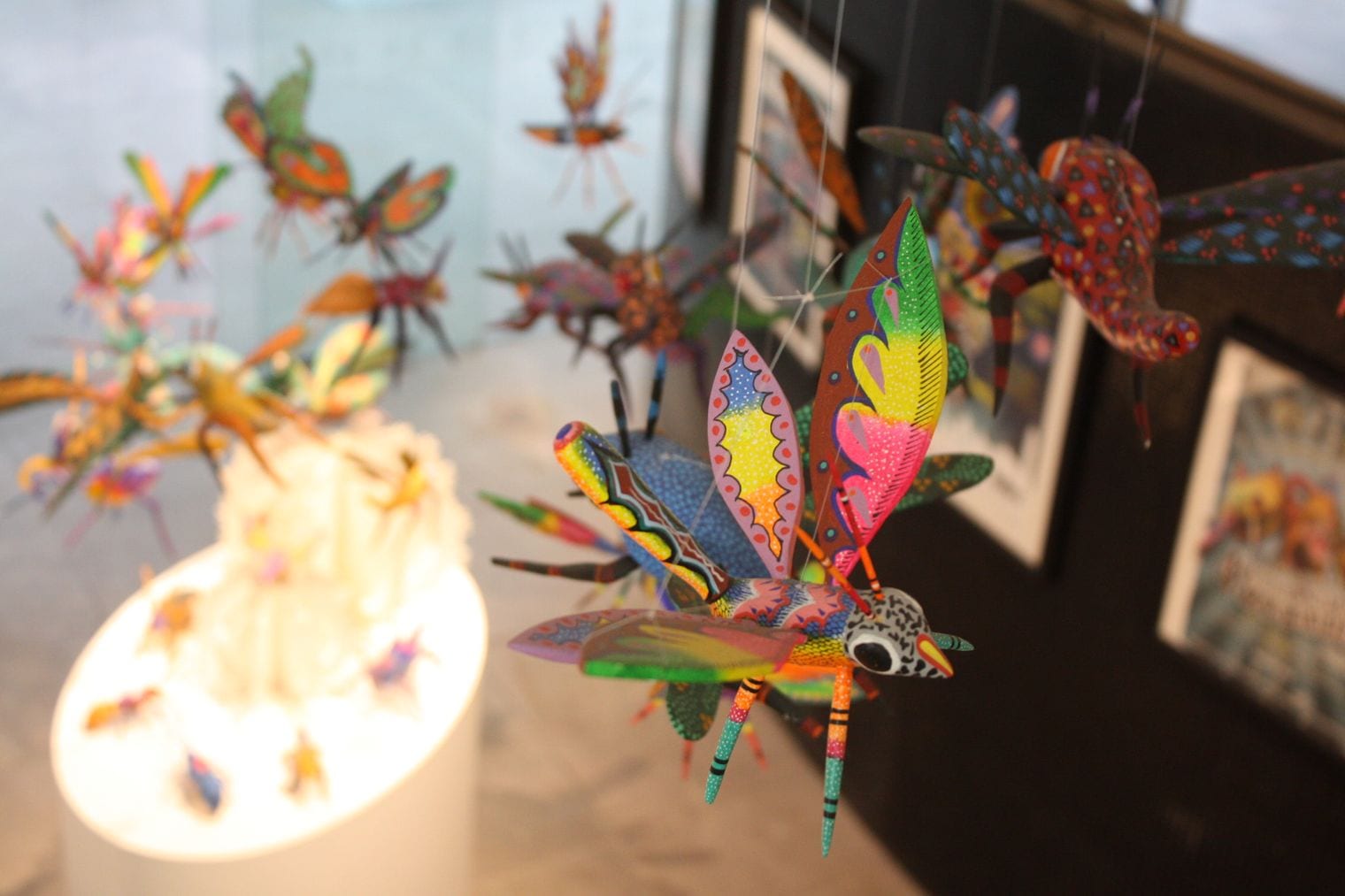
The Museo de Arte Popular is devoted to Mexican folk art, and it is the most colourful museum in the city: alebrijes, Tree of Life ceramics, textiles, masks, lacquerware and toys, presented as a living craft tradition organised by theme rather than by region.
It occupies a converted Art Deco fire station near Alameda Central, and its shop is one of the more reliable places to buy well-made craft work. The museum is also the organiser of the annual parade of monumental alebrijes, when enormous versions of these painted fantastical creatures are built and paraded along Paseo de la Reforma before being displayed there. It is an excellent stop with children.
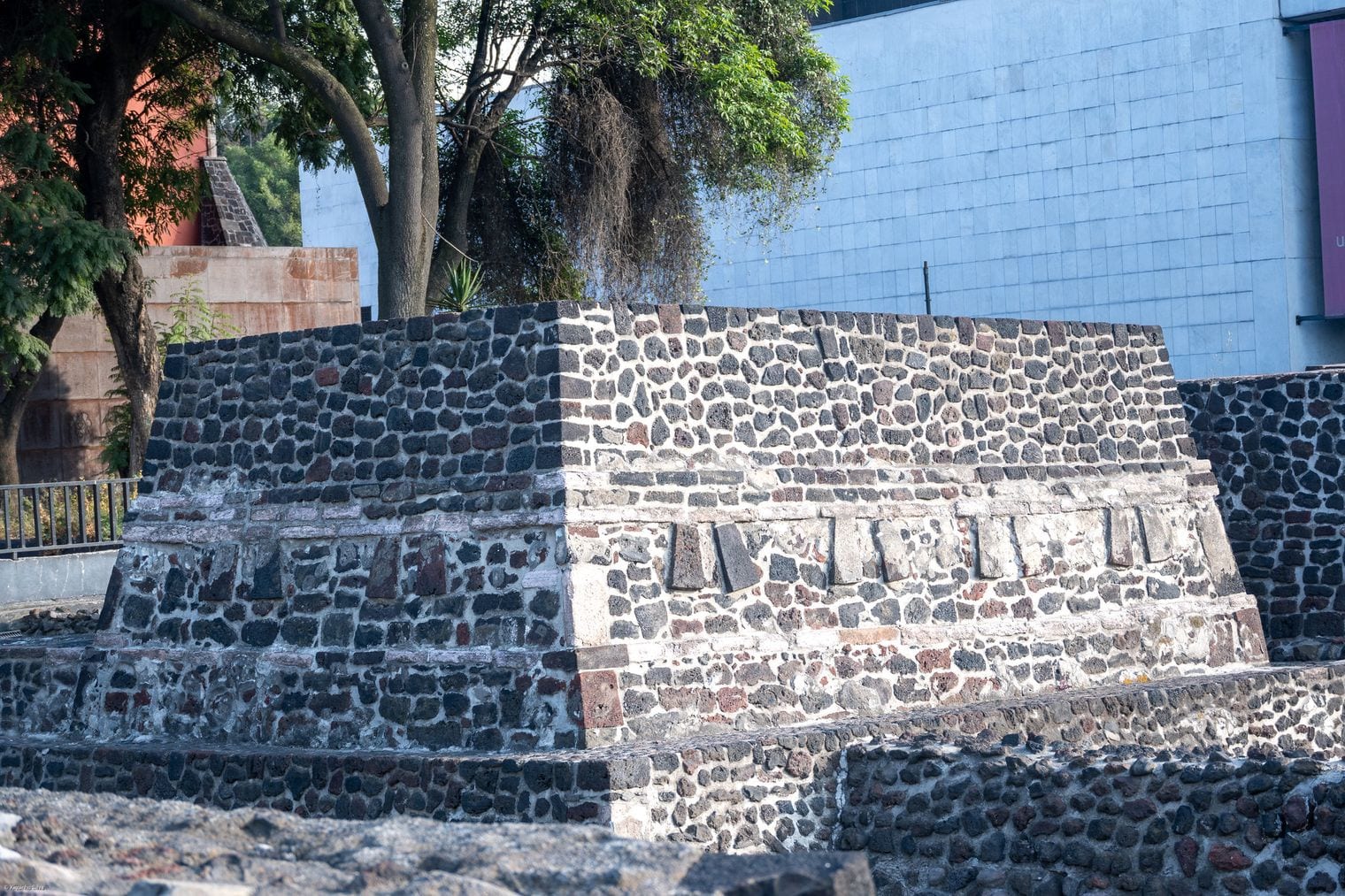
The Plaza de las Tres Culturas at Tlatelolco is the clearest single illustration of Mexican history anywhere in the city, and it is named for exactly that: excavated Aztec ruins on one side, the colonial church of Santiago built from their stone, and mid-century modern housing blocks rising behind, the three cultures in one view.
Tlatelolco was the twin city of Tenochtitlan and held its greatest market, and it was the site of the final defeat of the Aztecs. The square is also the site of the 1968 massacre of student protesters shortly before the Olympic Games, commemorated by a memorial here and by a museum in the surrounding complex. It is a sober place, and worth the trip north.
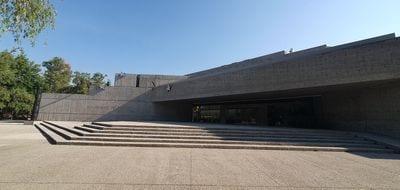
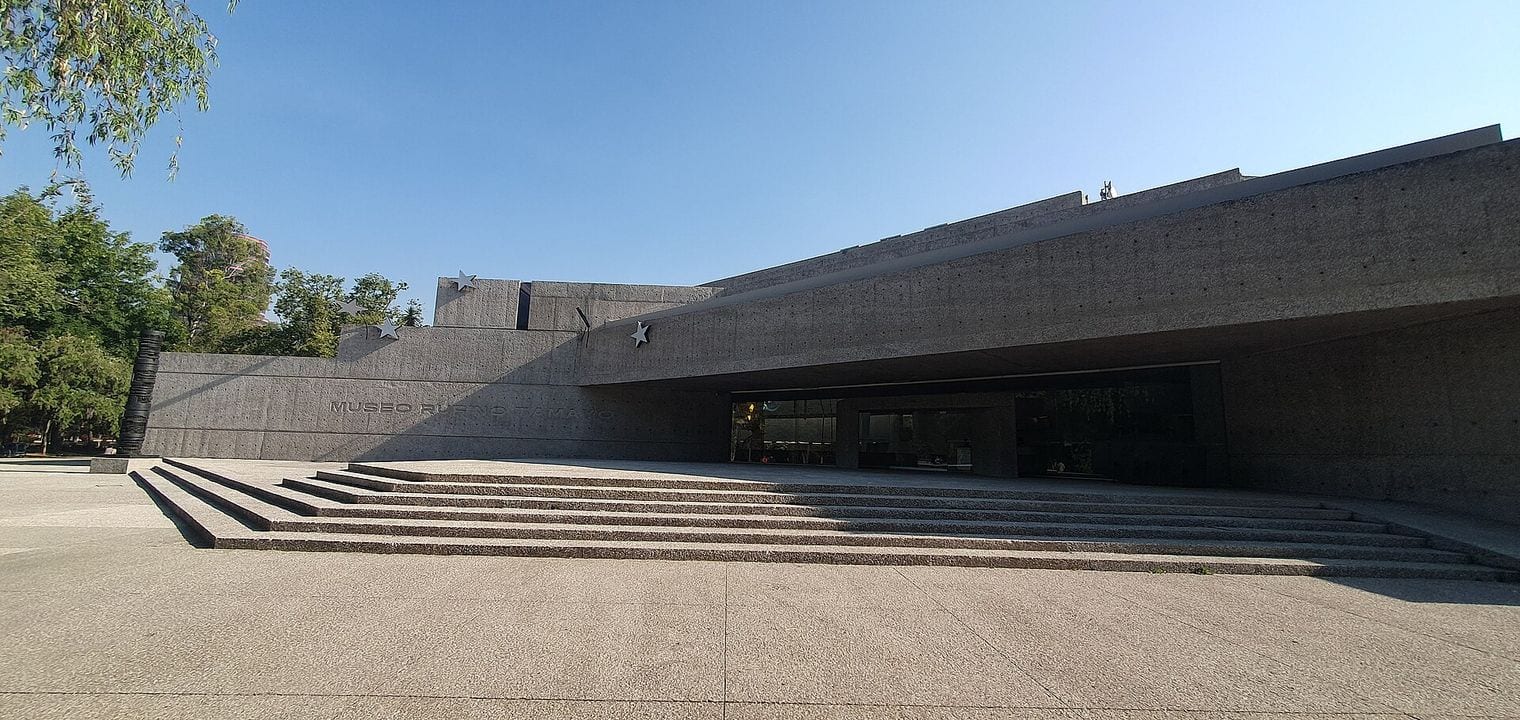
The Museo Tamayo was founded by the painter Rufino Tamayo to house the international modern and contemporary art he had collected, on the principle that Mexican audiences should be able to see it at home. That founding collection is still the core, and it is shown alongside a strong rotating programme.
The building is a low, angular concrete structure that steps down into the trees of Chapultepec park, designed so that the galleries are lit from above and the park is visible at the edges. It is a short walk from the anthropology museum along the same side of the park, which makes it easy to pair, though doing both properly in one day is ambitious.
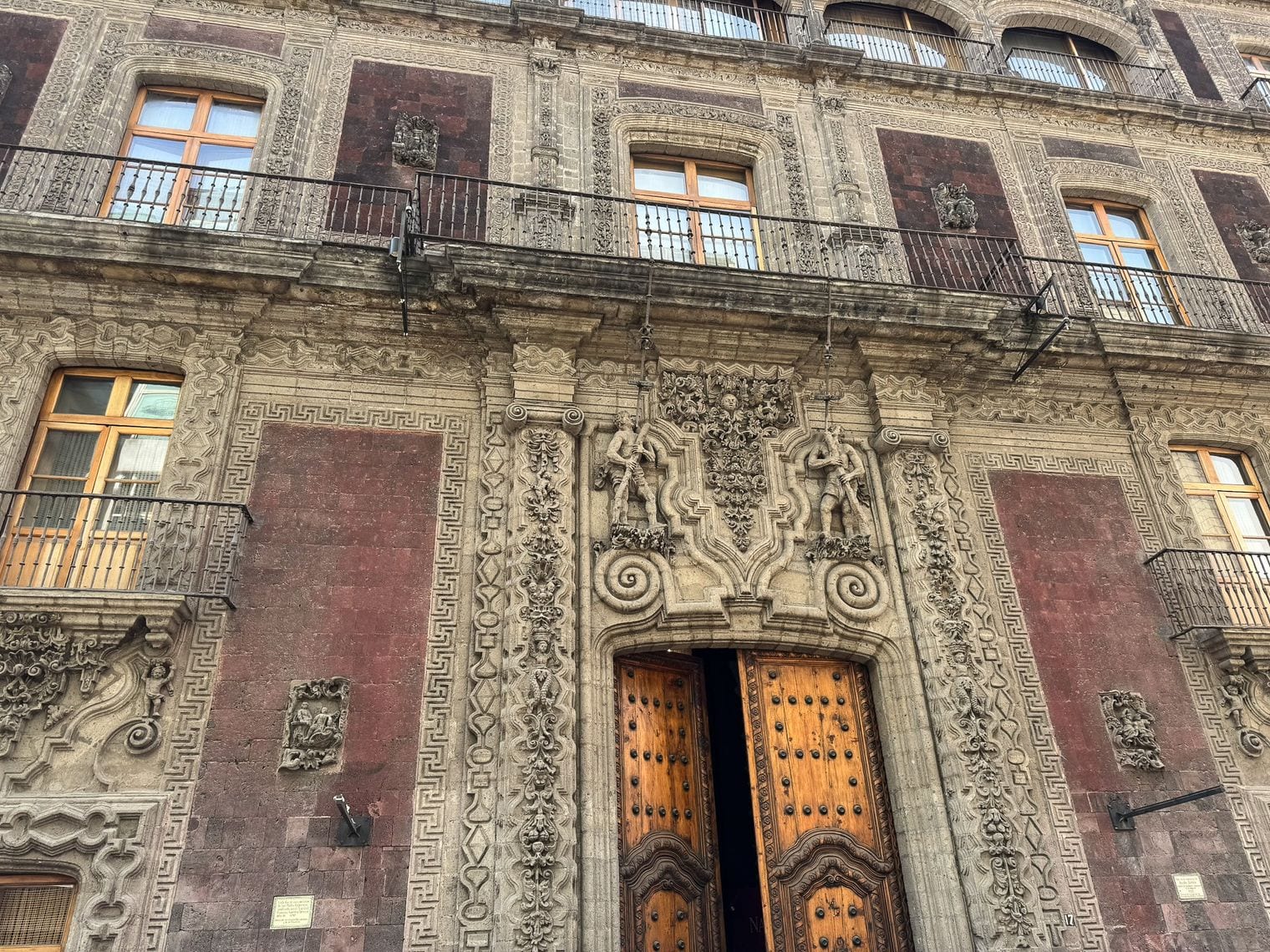
The Palacio de Iturbide is a baroque palace on the pedestrianised Calle Madero, built for a colonial noble family and later occupied briefly by Agustin de Iturbide during his short reign as emperor, which is how it got the name it carries today.
It now operates as a cultural centre and exhibition gallery run by a banking foundation, and entry is generally free. The real attraction is the covered central courtyard, a tall arcaded space in carved stone that is one of the finest colonial interiors you can simply walk into in the historic centre. Exhibitions rotate, so it is worth a look whenever you are walking down Madero between the Zocalo and Bellas Artes.
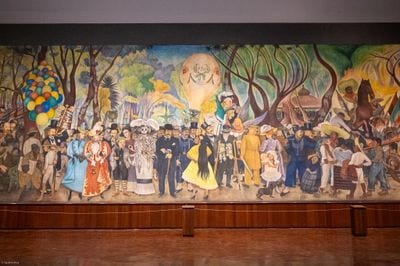
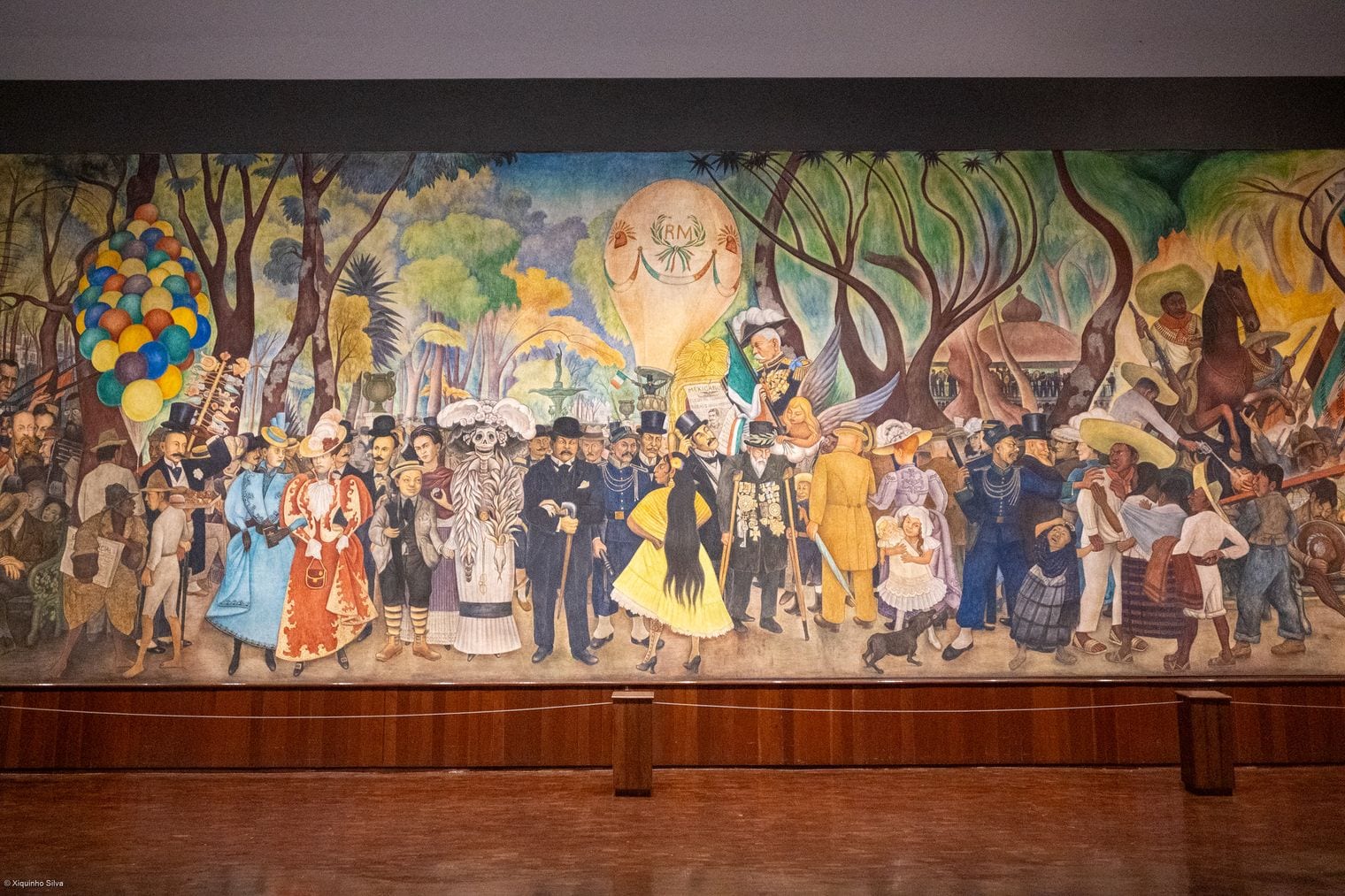
This small museum exists to house a single painting, and that is its appeal. Diego Rivera's Dream of a Sunday Afternoon in the Alameda Central is a wide panoramic mural populated by figures from four centuries of Mexican history, strolling together through the park, with Rivera himself as a boy and Frida Kahlo standing behind him.
The mural originally hung in a hotel nearby and was moved here after the building was damaged in the 1985 earthquake, with the museum built around it. Wall panels identify the figures, which is what turns it from a handsome picture into a very dense reading of Mexican history. It sits at the western end of Alameda Central and takes half an hour.
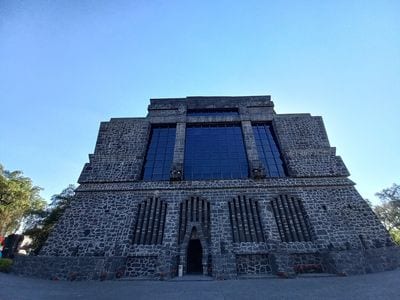
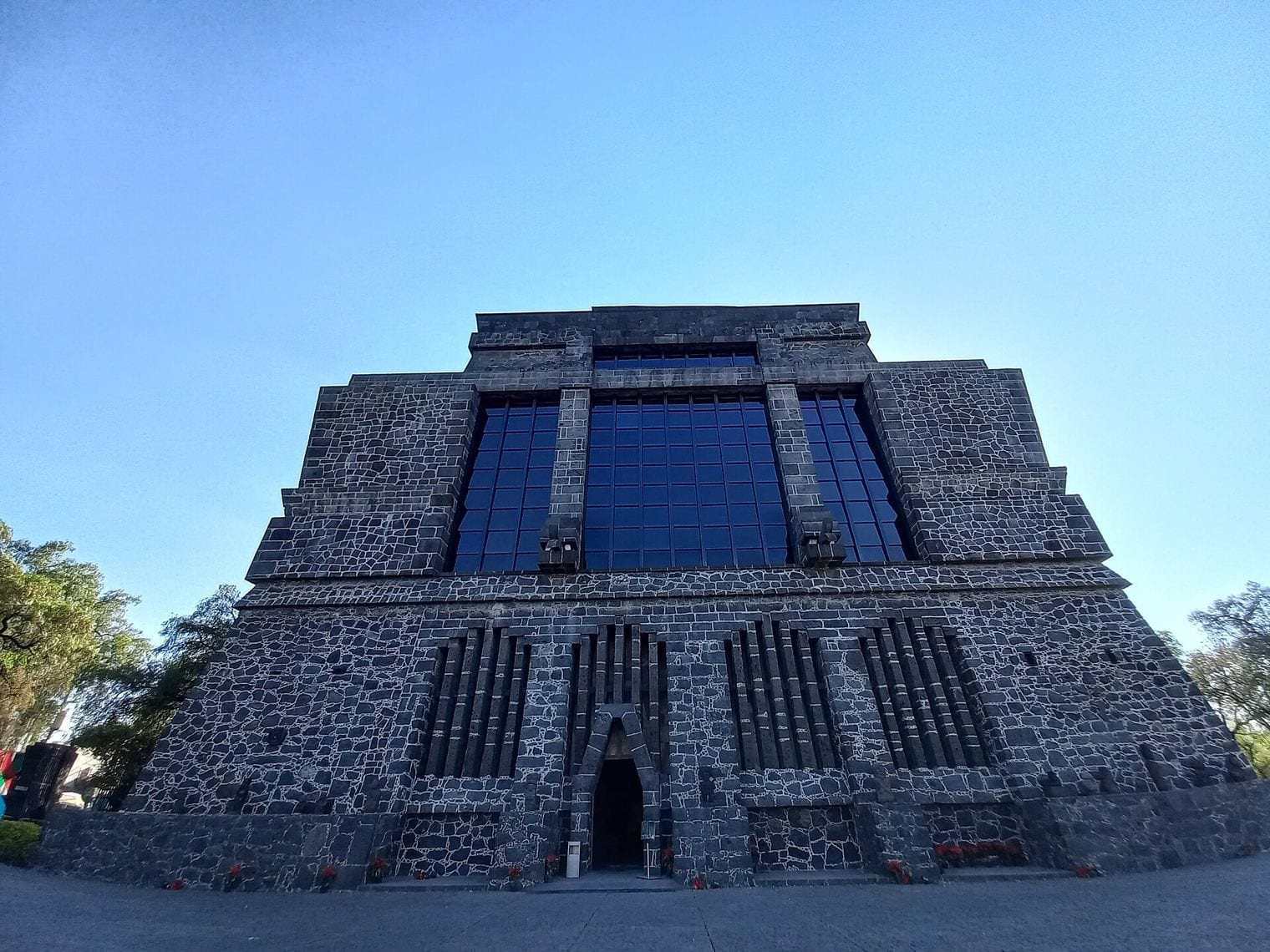
The Museo Anahuacalli is Diego Rivera's own building, raised from dark volcanic stone in the south of the city to house the enormous collection of pre-Hispanic objects he assembled over his lifetime. It is designed to look like a temple rather than a gallery, with low, cave-like ground-floor rooms opening into taller spaces above.
The collection is displayed densely, in built-in stone niches, and the mosaic ceilings and the studio space Rivera intended for himself are as much a part of the visit as the objects. It stands well south of the centre, so it is usually combined with Coyoacan or Xochimilco rather than visited alone, and it is at its best on a bright day when light reaches the upper rooms.
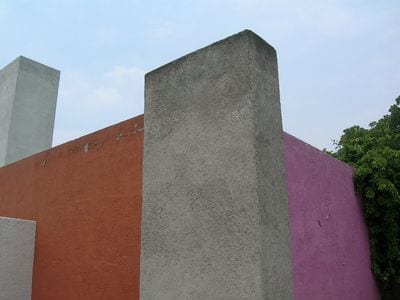
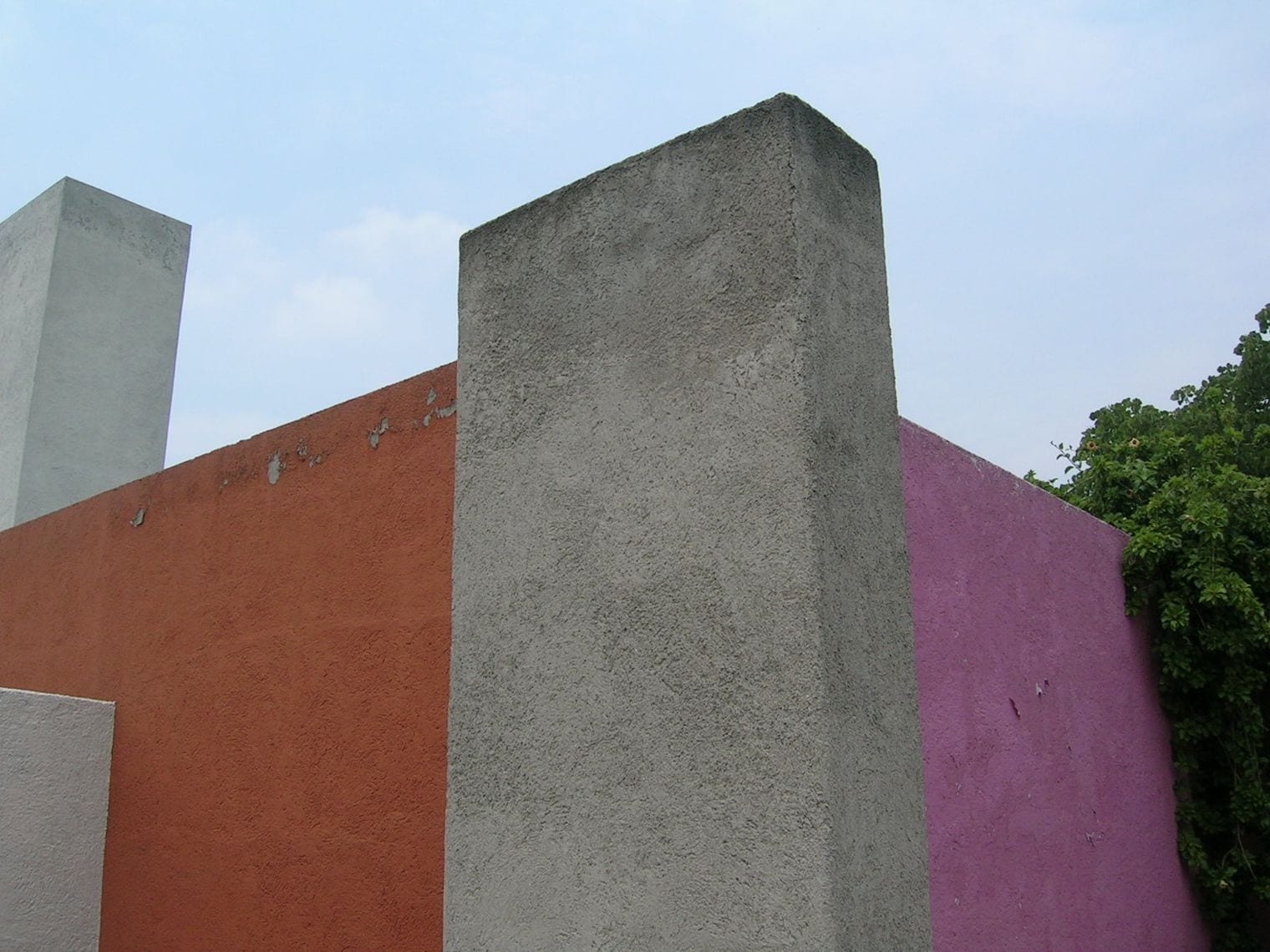
The Casa Luis Barragan is the house and studio of Mexico's most celebrated modern architect, kept as he left it, and it is inscribed on the UNESCO World Heritage list as an individual property. From the street it is a plain, almost blank wall, which is the point: everything is turned inward.
Inside it becomes a sequence of carefully controlled spaces where colour, light and level do the work, with a famous cantilevered staircase of plain wooden treads, roof terraces open only to the sky, and a garden allowed to grow wild against the glass. Visits are by guided tour on a timed ticket booked well in advance, numbers per tour are small, and photography is restricted.
Plan your trip
Best Time to Visit Mexico City
The city sits high on a plateau, so it never gets the coastal heat people expect of Mexico: days are mild most of the year and evenings are cool enough for a jacket whatever the season.
The clearest split is wet against dry rather than hot against cold. Rain falls mainly from late spring through early autumn, usually as a heavy afternoon downpour that clears by evening, which is easy to plan around if you keep mornings for the outdoor sights.
The dry months from late autumn to early spring bring the most reliable sunshine and the sharpest views of the surrounding volcanoes, and they are the best window for walking the historic centre. Two periods fill the city: the independence celebrations in September, when the Zocalo is the focus of the whole country, and the Day of the Dead season around the start of November. Both are extraordinary to witness and both mean crowds and higher demand for rooms.
Getting to Mexico City
Most visitors arrive at Benito Juarez International Airport, which sits unusually close to the centre for a city this size and is connected to it by metro, taxi and rideshare.
A second airport, Felipe Angeles, opened north of the city and handles a share of domestic and some international traffic, so check which one your flight actually uses before you plan the transfer — they are a long way apart. Use authorised airport taxis or a rideshare booked from inside the terminal rather than accepting offers in the arrivals hall.
By road, the city is the hub of the national motorway network, with toll roads running out to Puebla and the Gulf, north towards Queretaro and the Bajio, and south towards Cuernavaca and Acapulco. Long-distance coaches in Mexico are comfortable and genuinely good value, and they run from four main terminals placed roughly at the compass points of the city, so the one you use depends on where you are heading rather than where you are staying.
Getting Around Mexico City
The metro is cheap, extensive and by far the fastest way to cross the city, and every station carries its own pictogram as well as its name, which makes the network easy to navigate even without Spanish. It gets extremely crowded at peak times, and there are women-only carriages at the front of trains during those hours.
A rechargeable card covers the metro, the Metrobus rapid bus lines that run along the main avenues, and the light rail south towards Xochimilco. It also covers the Cablebus, the aerial cable car lines that climb to hillside districts on the northern and eastern edges of the city.
Above ground, individual neighbourhoods are very walkable even though the city as a whole is not: the historic centre, Roma, Condesa, Polanco and Coyoacan are all best explored on foot. Rideshare apps work well and are the usual choice after dark.
Driving yourself is rarely worth it, as traffic is heavy and parking is difficult. On Sundays a long stretch of Paseo de la Reforma closes to cars for cyclists and pedestrians, which is the most enjoyable way to see the avenue.
Where to Stay in Mexico City
The Centro Historico puts you within walking distance of the Zocalo, the Metropolitan Cathedral and most of the museums in this guide, and it is the most atmospheric base if you want to step straight out into the old city. It is busy and noisy by day and much quieter at night once the offices empty. Just west, the Alameda and Juarez area is a good compromise, close to the centre but calmer.
Roma and Condesa are the areas most visitors settle on: leafy, low-rise, full of cafes and independent shops, and an easy ride from the main sights. Polanco is the upmarket choice, close to Museo Nacional de Antropologia, Chapultepec and the Plaza Carso museums, and the quietest of the central options. Coyoacan is further south and feels like a village, which suits a longer, slower stay more than a first short visit.
Where to Eat in Mexico City
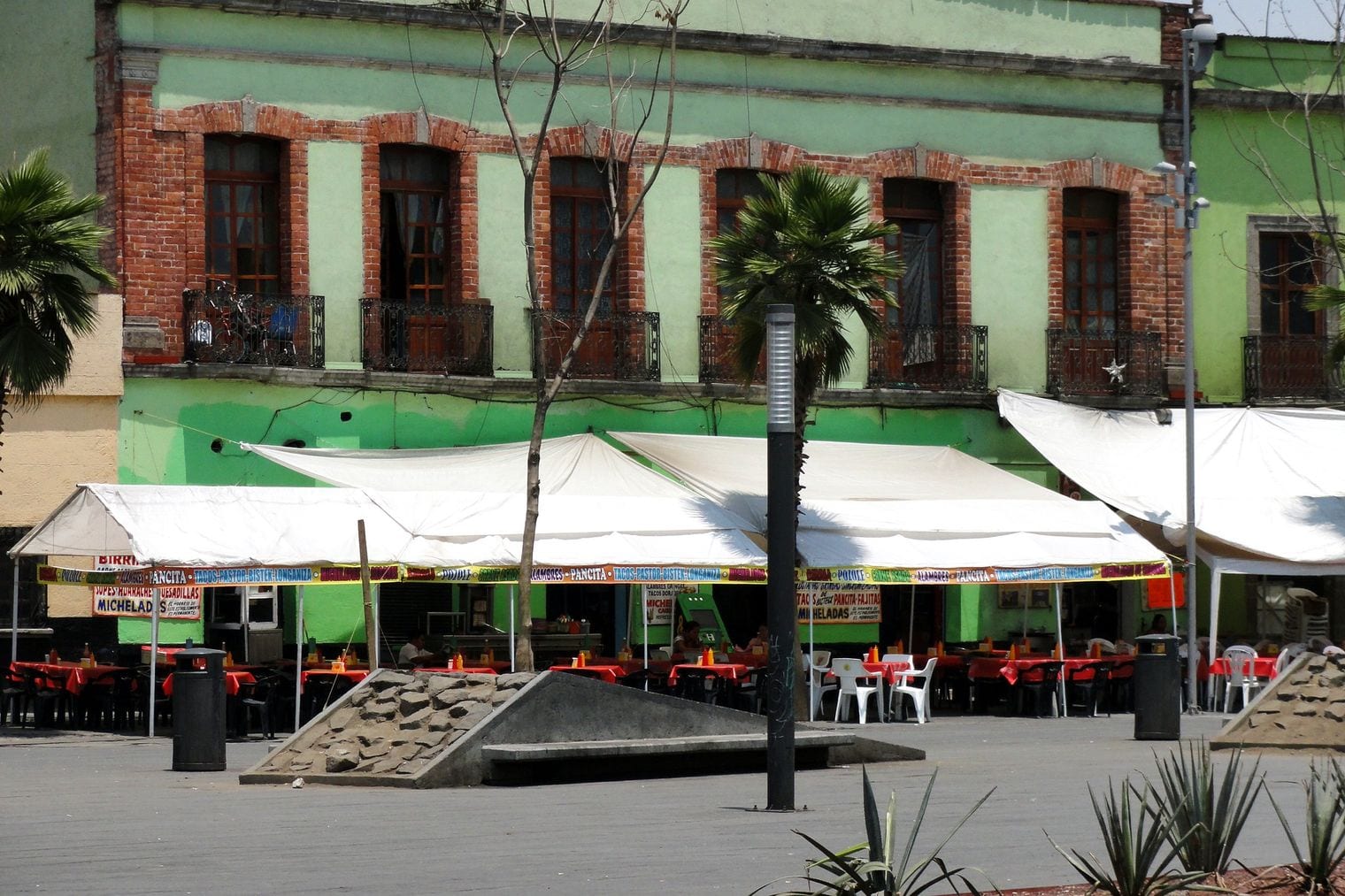
Eat on the street at least once: this is one of the world's great street-food cities, and the standard at a busy stall with a queue is usually higher than at a quiet restaurant.
Look for tacos al pastor carved from a vertical spit, tlacoyos and quesadillas from a comal, tamales in the morning, and the huge tortas and cemitas sold from stands near markets. Markets are the other essential stop — the food counters at Mercado de San Juan and the stalls inside La Merced are meals in themselves.
By neighbourhood, Roma and Condesa hold the densest concentration of contemporary restaurants and cafes, Polanco is where the formal fine-dining rooms cluster, and the Centro Historico is strongest for old cantinas and long-established lunch counters. Regional cooking from across the country is well represented, so it is worth seeking out Oaxacan moles and tlayudas, Yucatecan cochinita pibil, and Puebla's chiles en nogada when they are in season in late summer and early autumn.
Day Trips from Mexico City
The obvious one is already in this guide: Teotihuacan, about an hour northeast, and the single most rewarding half-day out of the city. South, roughly an hour and a half away, Cuernavaca and the hill town of Tepoztlan sit below a dramatic cliff line and are noticeably warmer than the capital, while Taxco, further south again, is a silver-mining town of whitewashed houses stacked up a hillside.
East, about two hours by toll road, Puebla is a colonial city famous for its tilework and its food, and it sits within sight of the volcanoes; the pyramid at nearby Cholula is the largest by volume anywhere. West, Valle de Bravo is a lakeside town popular for weekends, and in winter the monarch butterfly reserves in Michoacan and the State of Mexico are within reach on a long day, though most people give them an overnight.
Before you go
Mobile dataAn eSIM gives your phone local data when you land, with no SIM card to swap.via AiraloGet an eSIM
Airport transferA driver meets you at arrivals and takes you to your hotel, at a price fixed when you book.via Welcome PickupsBook a transfer
We may earn a commission when you buy through these links, at no extra cost to you. How we make money.
One Day in Mexico City
Morning
Start in the Zocalo early, before the square fills, and watch the flag ceremony if the timing works. Step into the Mexico City Metropolitan Cathedral, then walk round the corner to the excavated Templo Mayor Museum to see the Aztec city directly beneath the colonial one. If access allows, cross to the Palacio Nacional for Diego Rivera's staircase murals.
Walk west along Madero, pausing at the tiled facade of the Casa de los Azulejos, and go up the Torre Latinoamericana for the view back over everything you have just walked. Come down for the Palacio de Bellas Artes and its murals, then cross into Alameda Central to sit down for a while among the trees and fountains.
Head to Plaza Garibaldi to hear mariachi played live and hire a song, or trade it for a night at Arena Mexico if a lucha libre card is on. Either way, eat late and eat locally — tacos from a busy stall beat a sit-down meal on a single day in this city.
Mexico City is best known for being built directly on the Aztec capital of Tenochtitlan, and for the density of what that produced: the vast Zocalo, the excavated Templo Mayor, the world-class Museo Nacional de Antropologia, the murals of Diego Rivera, and one of the greatest street-food cultures anywhere. Chapultepec, Frida Kahlo's blue house and the canals of Xochimilco round out the picture.
How many days do you need in Mexico City?
Four or five days is the realistic minimum to see the historic centre, Chapultepec and its museums, Coyoacan and one major day trip without rushing. Three days covers the essentials if you are disciplined about geography. A week lets you add Teotihuacan, Xochimilco and the southern museums at a comfortable pace, and still leaves time to simply sit in a park.
Yes, and it tends to surprise people who arrive expecting only a stopover. It combines an archaeological site of world importance, an enormous museum culture, distinctive modern architecture and a food scene of real depth, at prices well below comparable European capitals. Most first-time visitors leave saying they underestimated how green, how walkable in parts, and how relaxed the city actually is.
Do you feel the altitude in Mexico City?
Some visitors do. The city sits over 2,200 metres above sea level, which is high enough that arriving from sea level can leave you short of breath on stairs or hills for the first day or two. The usual advice applies: take the first day gently, drink plenty of water, and go easy on alcohol until you have adjusted.