We build and rank every list first. Booking links come after, and only where
a partner sells a ticket, tour or stay for that exact place, so a place with
nothing to book is listed exactly as prominently as one you can book.
So how do we earn? Some links on this page go to booking
partners, and if you book or buy through
one, we may earn a commission. It costs you nothing extra.
That commission never decides which places make the list, the order they
appear in, or what we write about them. No entry is sponsored or a paid
placement.
By the City Viking editorial teamPublished 19 places · 18 min read
Fact-checked Checked before launchOct 12, 202615 sources14 publishers1 encyclopedias & research14 venues & other sitesPublished · Oct 12, 2026Researched and checked before it went liveClick for every source and the full change log.
Short answer
Playa del Carmen is known for being the Riviera Maya's liveliest town, its white Caribbean sand and its Maya roots as the canoe port of Xaman Ha. Start with a walk up Quinta Avenida from Parque Los Fundadores and its Portal Maya arch, then give a full day to Xcaret Park or Río Secreto's underground river. Three or four days covers the town and its parks; a week leaves room for Cozumel, Tulum or Chichén Itzá.
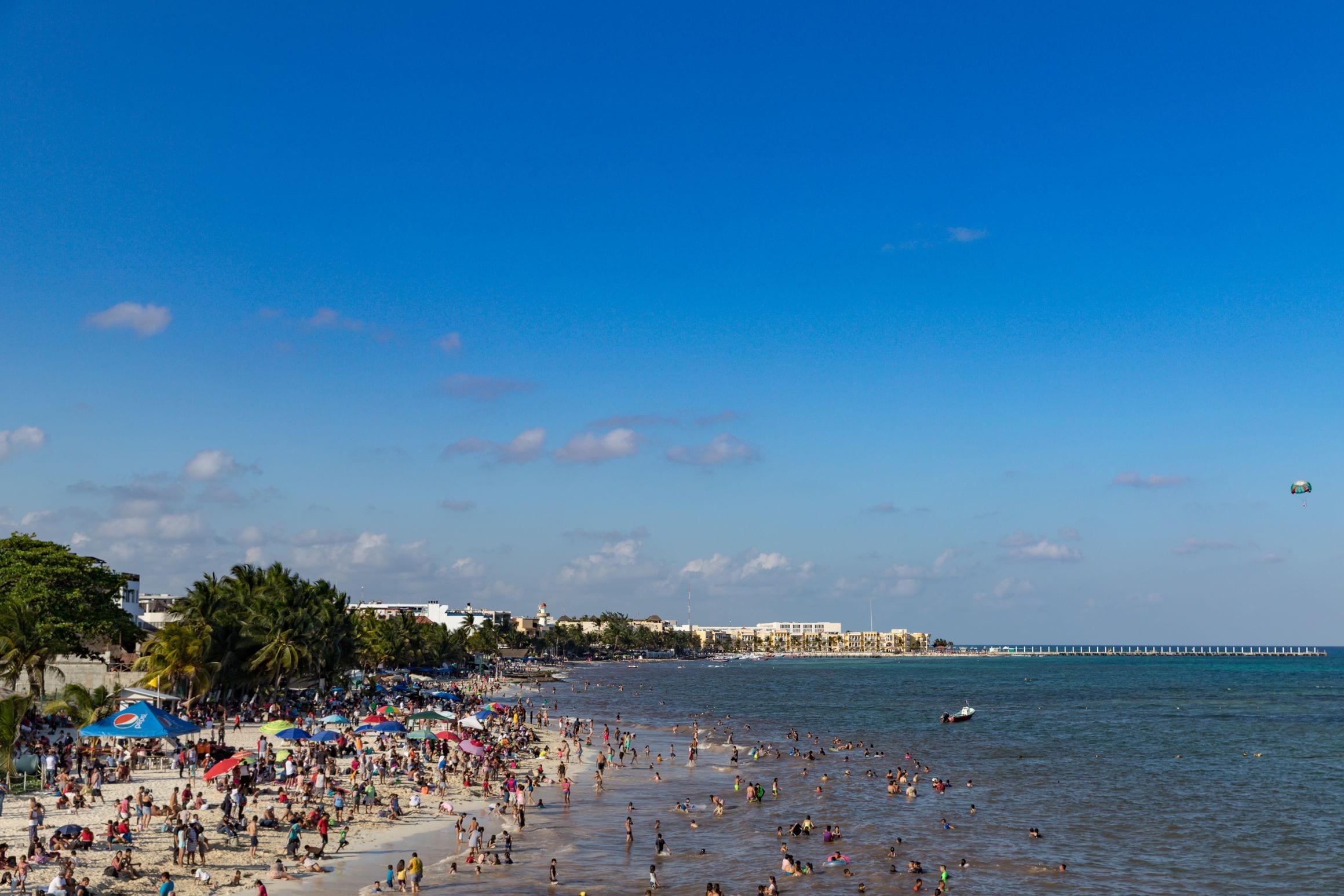
Playa del Carmen began as Xaman Ha, a Maya landing place for canoes bound for Cozumel, and stayed a small fishing village until the island ferry brought the first visitors. Today it is the liveliest town on Mexico's Riviera Maya, about an hour south of Cancún, with a pedestrian main street a block or two from white Caribbean sand.
This guide ranks 19 things to do in and just south of town, from 5th Avenue and the beach clubs to the cave rivers and theme parks along the highway. Three or four days covers the list; a week leaves time for Cozumel and Tulum.
The town began as a pilgrims' port. Its Maya name, Xaman Ha, means "water of the north", and from here pilgrims set out by canoe across the channel to the shrine of the goddess Ixchel on Cozumel. Remains of the settlement still stand in Playacar.
The Cozumel ferry made it a resort. Playa del Carmen was a small fishing village until the passenger ferry to Cozumel, an island prized by scuba divers, started bringing tourists through.
It is Quintana Roo's second city. The 2020 census counted 304,942 people in the city of Playa del Carmen itself, and about 333,800 in the wider municipality, second in the state only to Cancún.
Its municipality is one of Mexico's youngest. It was split off from Cozumel on 28 July 1993 under the name Solidaridad, and only took the name Playa del Carmen in March 2025.
The flyers at Fundadores perform a UNESCO-listed ritual. The Danza de los Voladores, most closely associated with Papantla in Veracruz, was recognised by UNESCO as Intangible Cultural Heritage in 2009.
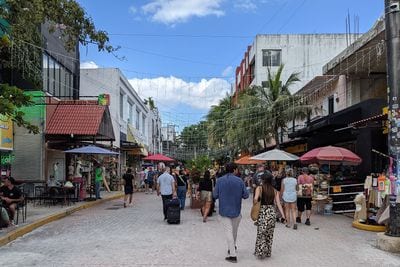
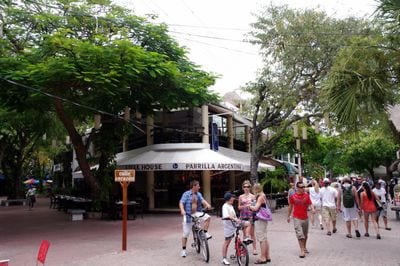
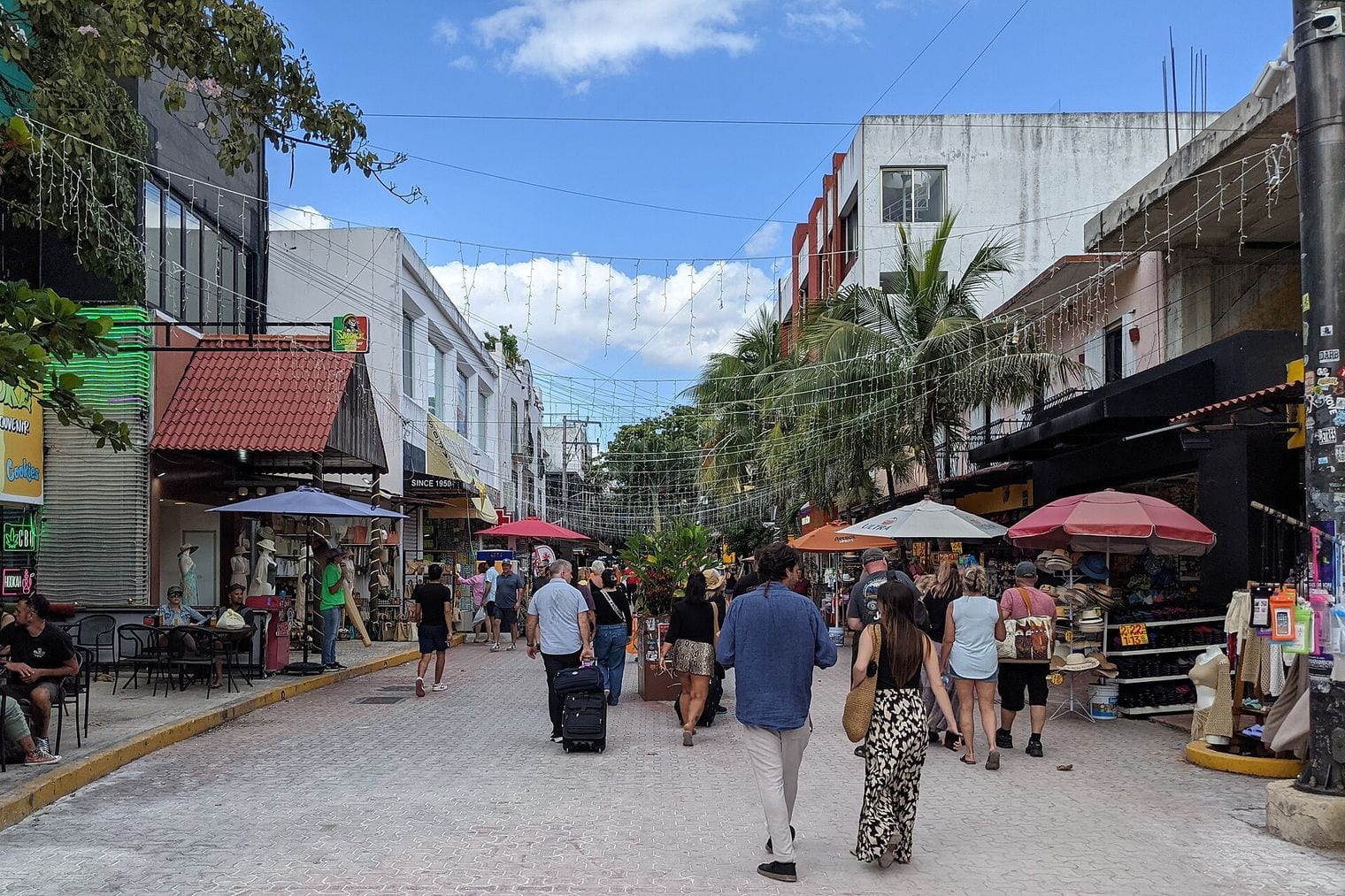
Quinta Avenida is the spine of Playa del Carmen, a pedestrian street that runs parallel to the beach a block or two inland, starting at Parque Los Fundadores and heading north through the centre. Shops, cafés, galleries, bars and street performers line it almost end to end, and a side street drops down to the sand at every block, so whatever else you plan, this is the route you will walk again and again.
The southern blocks near the ferry pier are the busiest and most touristy; further north the avenue grows leafier and calmer, and better suited to a long dinner. Small museums open off it too, among them a Frida Kahlo museum near Calle 8. It is at its best after dark, when the heat drops and the whole town comes out to stroll.
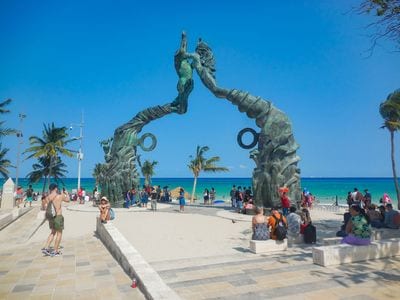
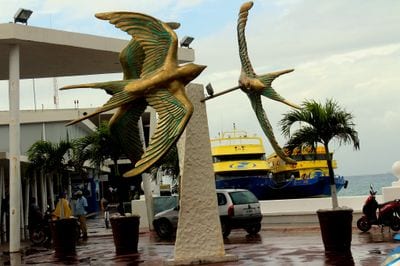
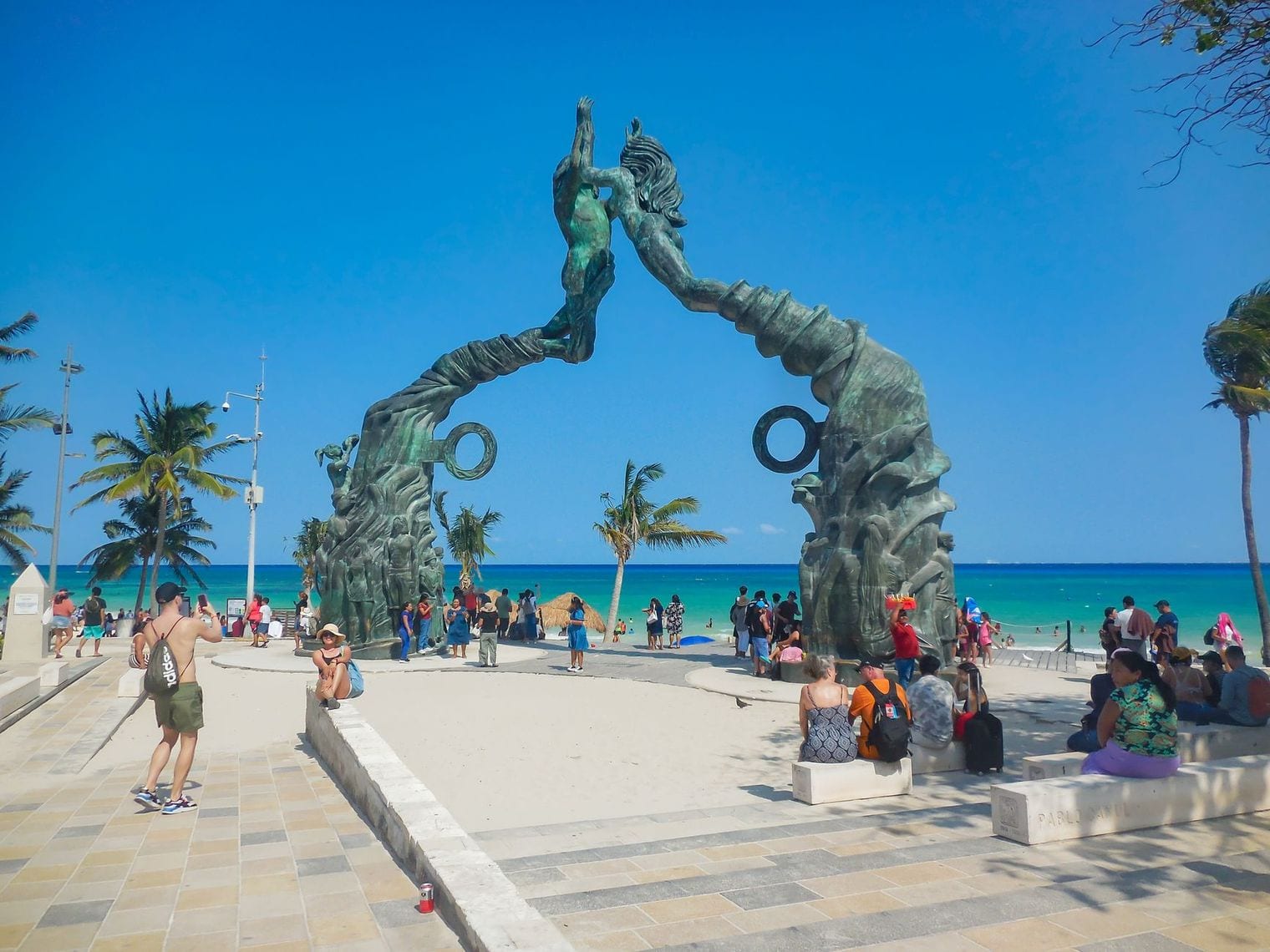
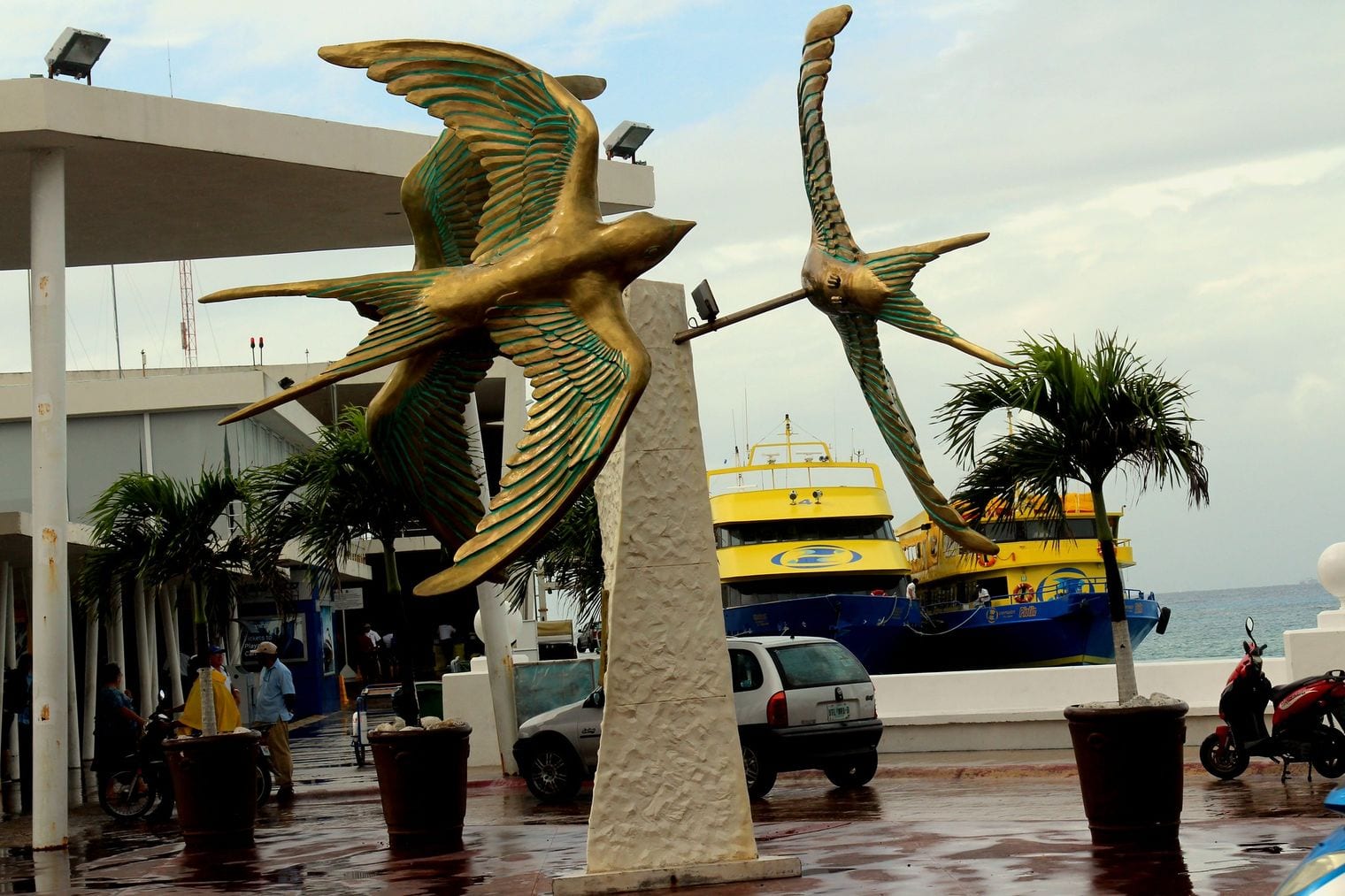
Parque Los Fundadores is the beachfront square where the town began, steps from the Cozumel ferry pier and the southern end of 5th Avenue. Its landmark is the Portal Maya, a towering bronze arch of two figures, a man carried by a spiral of wind and a woman by a spiral of water, who join hands at the top. It was raised in 2012 to mark the close of the Maya Long Count calendar cycle.
The big Playa del Carmen letters stand here too, and the square is where the Papantla flyers perform, climbing a tall pole and spinning down head-first on ropes in a ritual that comes from Veracruz. Come in the late afternoon, when the light softens over the water and the plaza fills with families, vendors and photographers.
Xcaret Park is the Riviera Maya's flagship theme park, a short drive south of the town centre, opened in 1990 on the site of a Maya settlement whose ruins still stand inside its grounds. Much of the day revolves around water and wildlife: swimming through underground rivers, a coral reef aquarium, a beach and inlet, a butterfly pavilion, an orchid and bromeliad greenhouse, and enclosures for jaguars, manatees and sea turtles.
The cultural side is just as big, with a re-created Maya village, a museum of Mexican folk art, a Mesoamerican ballgame and a traditional Mexican cemetery. Evenings end in the Gran Tlachco theatre with Xcaret México Espectacular, a show with a cast of hundreds that runs through Mexican history from pre-Hispanic times to the present. Dolphin programmes also run inside the park. Allow a full day, at least.
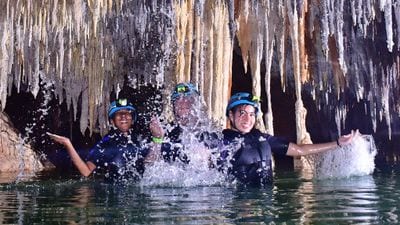
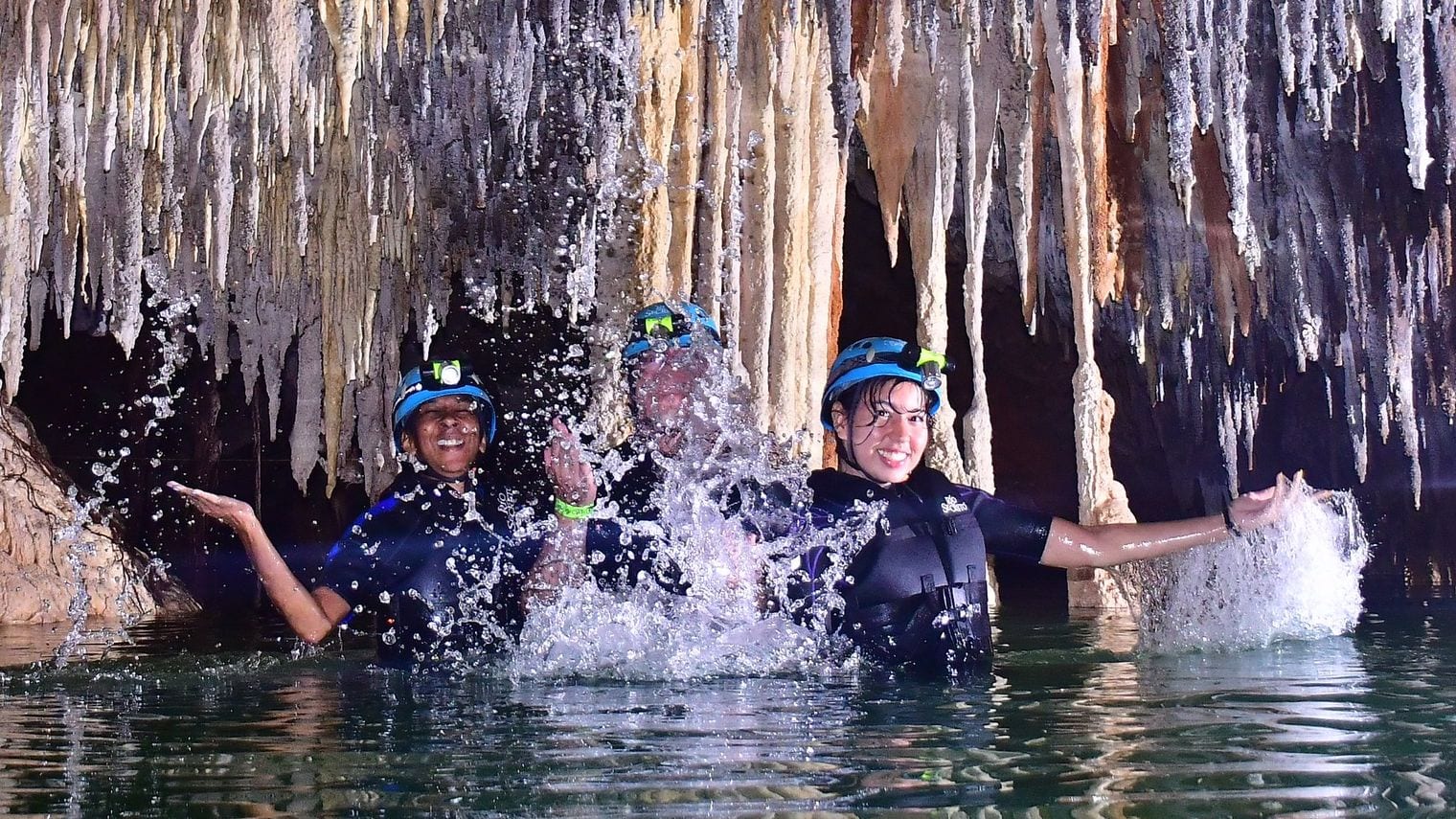
Río Secreto is a semi-flooded limestone cave system just south of town, and visiting means walking and swimming underground behind a guide, in a wetsuit and life jacket, past thousands of stalactites and stalagmites reflected in still, clear water. Only a small share of its roughly 38 kilometres of mapped passages is used for tours, and the system is protected as a nature reserve.
To keep the water clean, everyone showers before going in and leaves lotions and sunscreen behind; personal cameras stay outside too, and the reserve's own photographers take the pictures. The swimming stretches are short and shallow, so basic floating is enough. The whole Riviera Maya sits on some of the longest underwater cave systems ever mapped, and this is the most approachable way to see that hidden world.
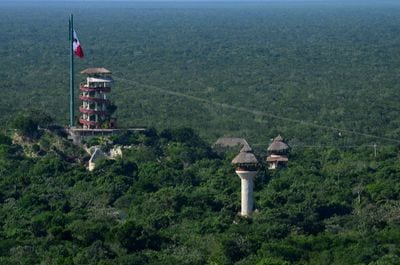
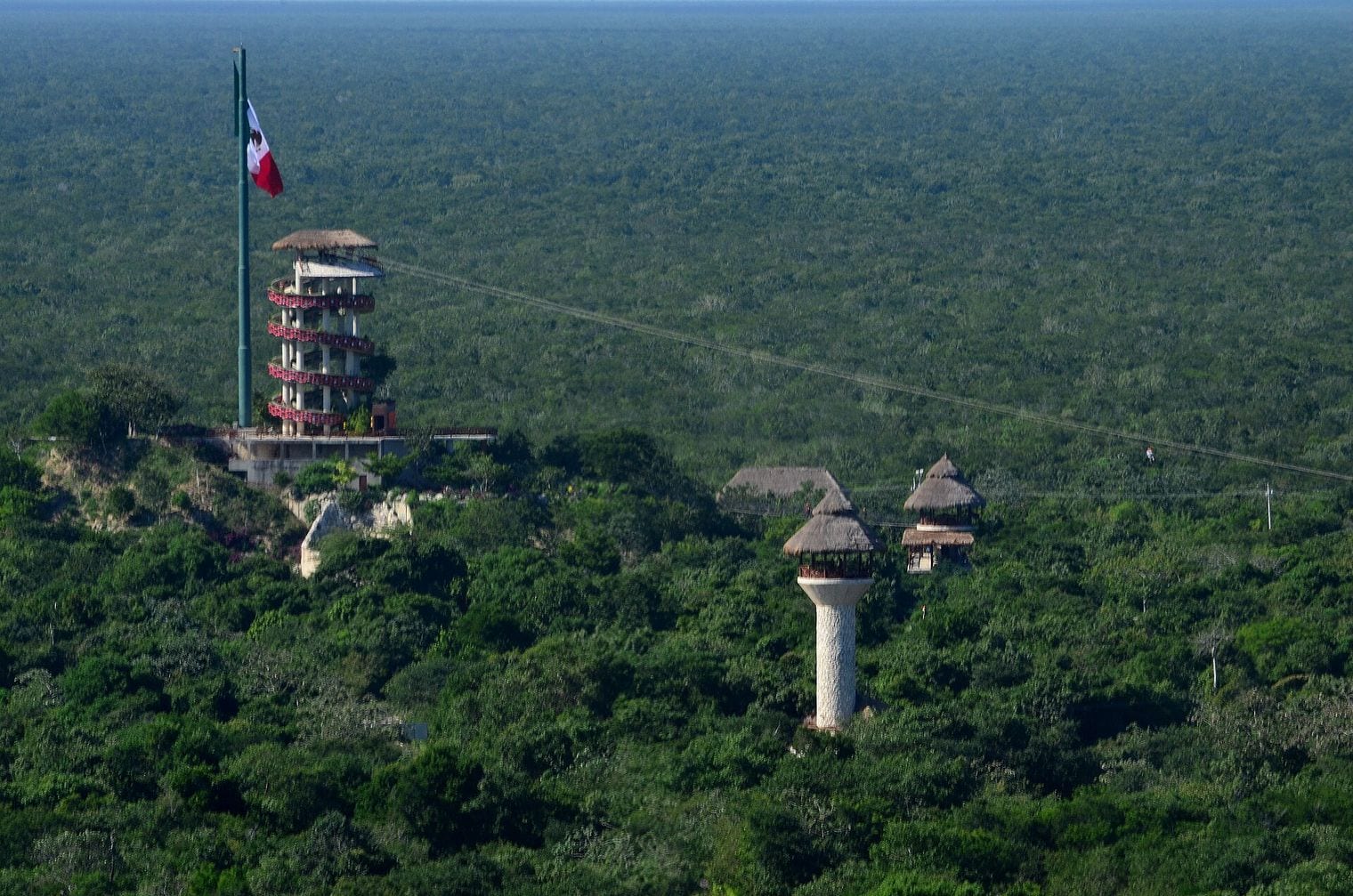
Xplor Park is the Xcaret group's adventure park, next door to Xcaret Park and built into the jungle and caverns south of town, where it opened in 2009. Two circuits of zip lines carry you over the treetops, one ride lets you fly in a hammock before splashing into a cenote, and amphibious vehicles grind along jungle tracks and through flooded caves.
Below ground, you paddle rafts by hand and swim along underground rivers under curtains of stalactites, a quieter counterpoint to the zip lines above. Where Xcaret is about culture and wildlife, Xplor is about adrenaline. Plan on a full day, and come ready to climb plenty of stairs and get thoroughly wet.
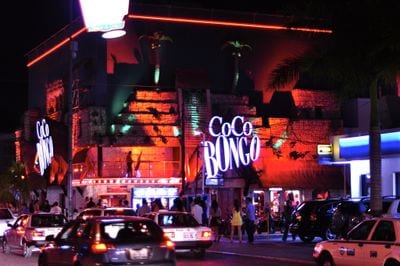
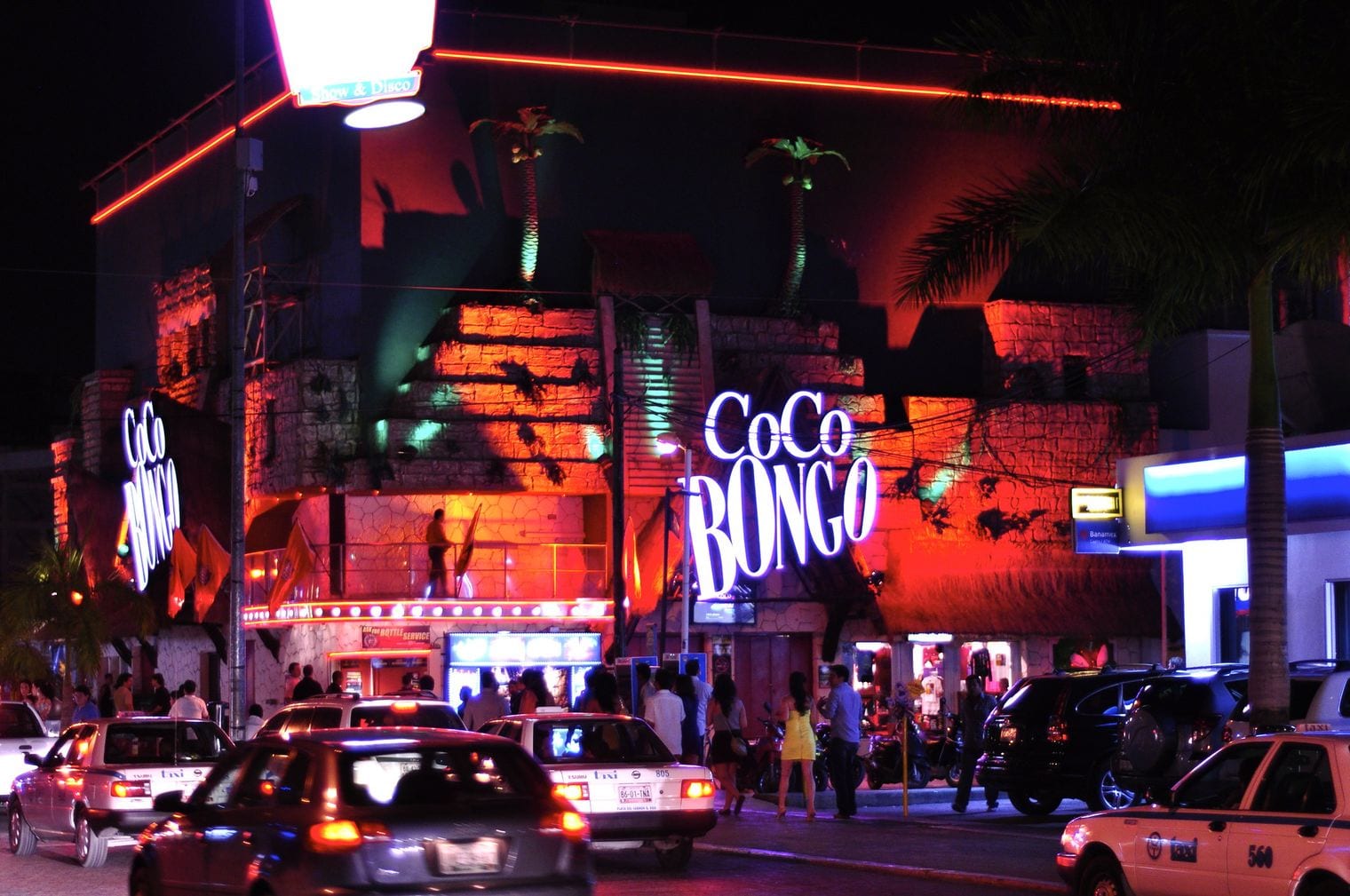
Coco Bongo Playa del Carmen is the town's branch of the show club made famous in Cancún, on Calle 12 Norte a block from 5th Avenue. It is less a nightclub than a late-night theatre: acrobats fly overhead, tribute acts and dancers cycle through pop and rock numbers, and between sets the floor turns into a dance party.
The show starts late and runs into the early hours, so this is a night to plan around rather than drop into on a whim. Calle 12 is the heart of Playa's nightlife, and an evening here pairs naturally with dinner on 5th Avenue or a drink on Calle Corazón first.
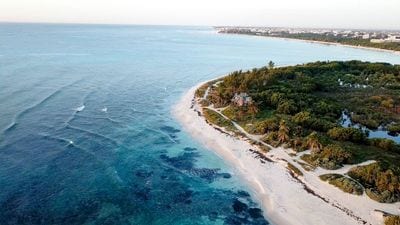
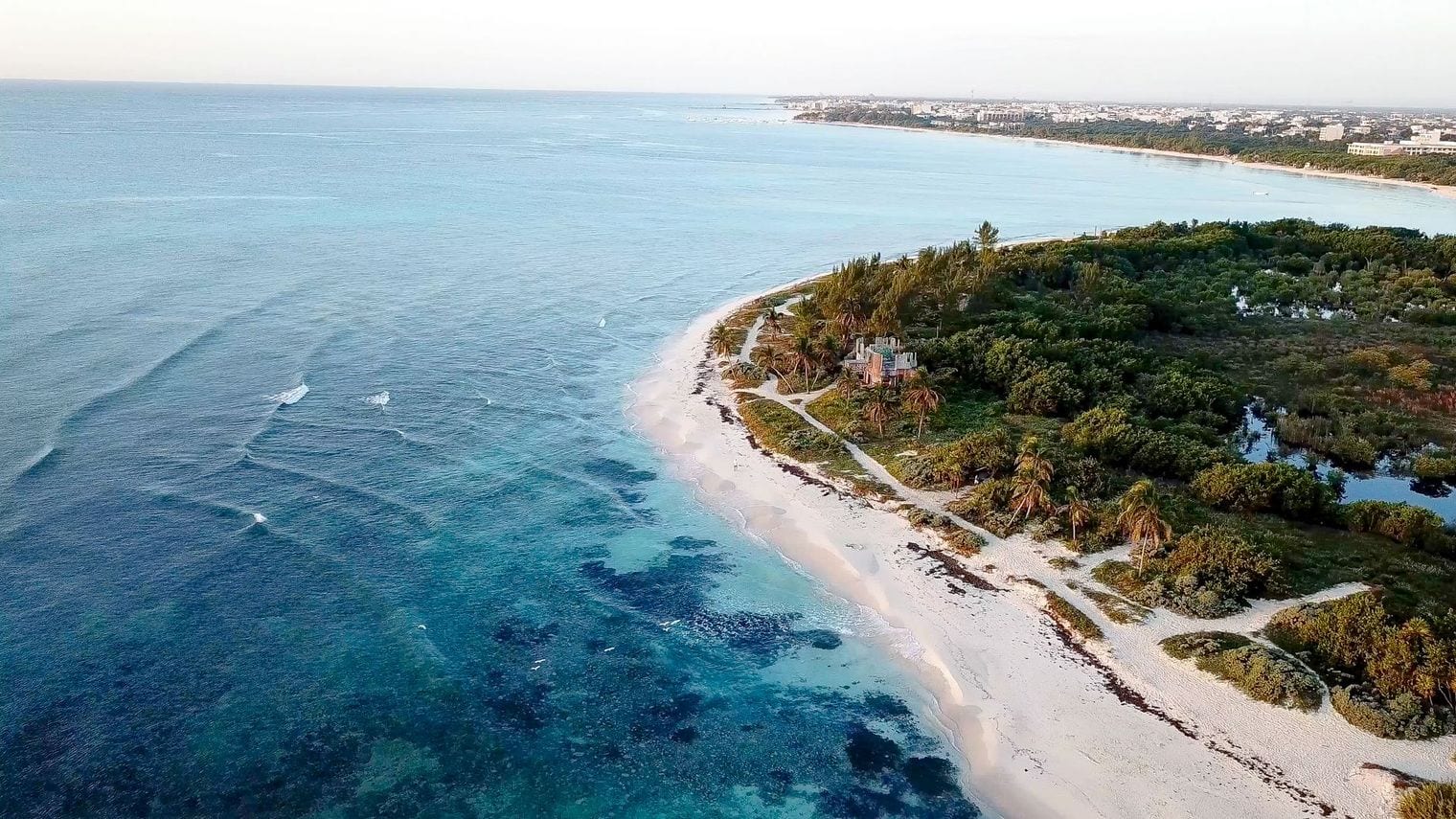
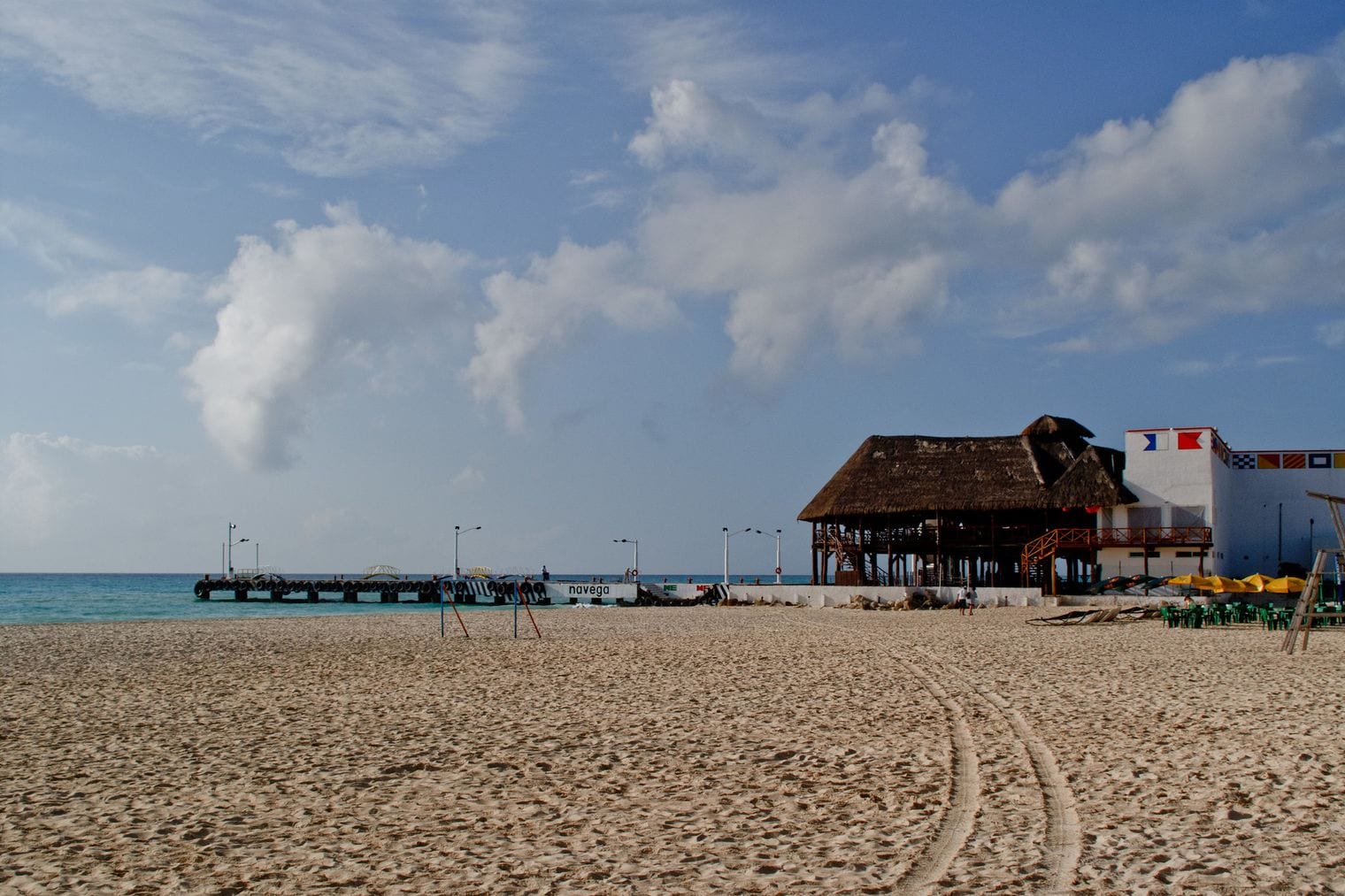
Playa 88 is a public beach at the end of Calle 88 Norte, in the quieter northern part of town, with showers, restrooms and accessible walkways, and it has held Blue Flag certification for water quality and environmental management. The sand is wide and soft, the water is usually calm, and it is popular with local families.
It makes a good change of pace from the busy central beaches, and Punta Esmeralda is a short walk north along the shore if you want to compare the two. Like every beach on this coast, it can see sargassum seaweed in the warmer months, so check conditions before you set out.
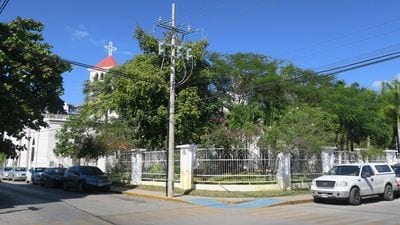
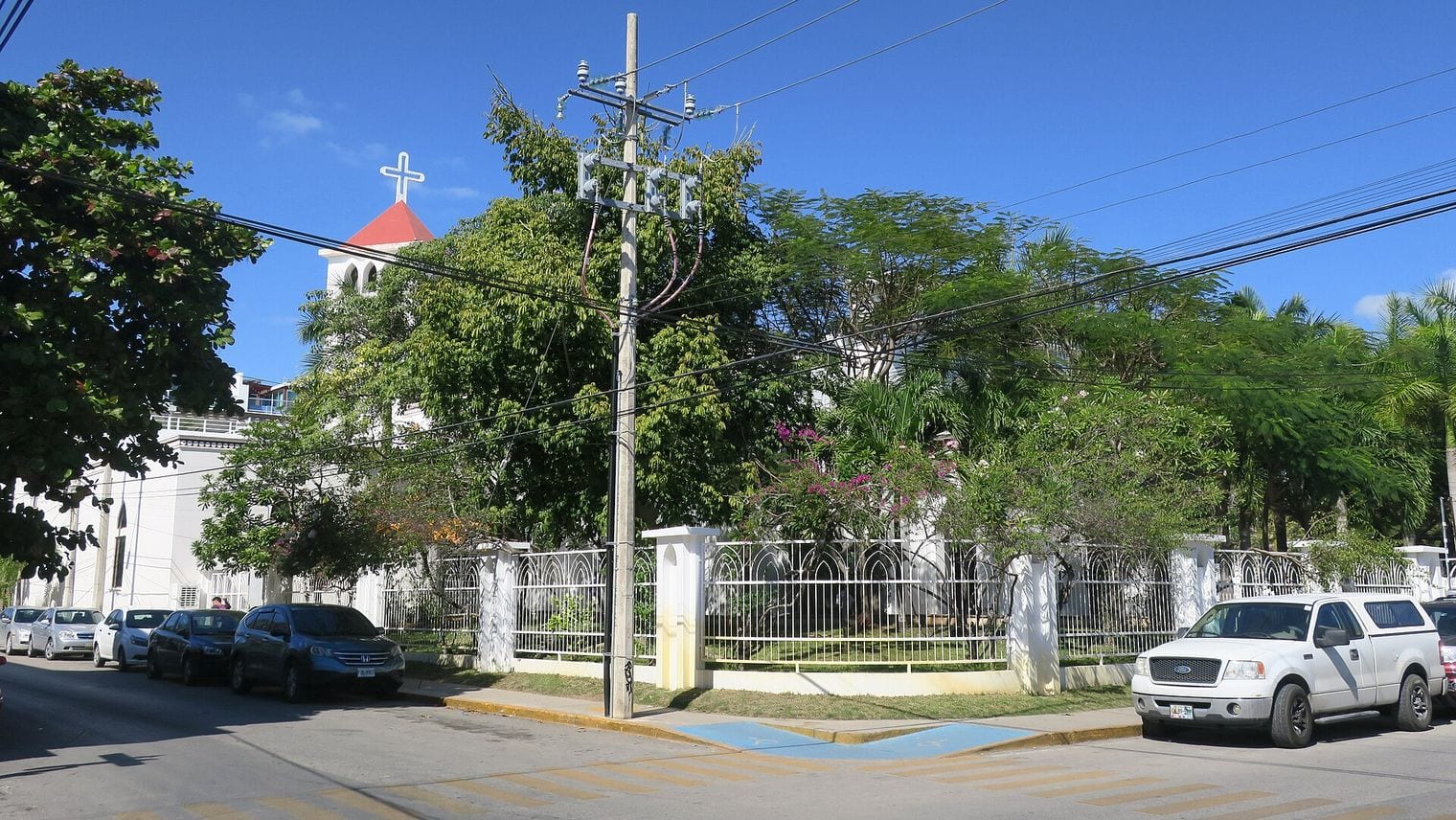
The Parroquia de Nuestra Señora del Carmen is the town's parish church, a few blocks inland from 5th Avenue at Calle 12 Norte, dedicated to Our Lady of Mount Carmel, whose name the town shares. Its white facade and bell tower are a landmark in the centre, and the airy, open interior is a cool, quiet break from the street outside.
It is a working parish rather than a historic monument, and that is much of the appeal: come for a few minutes of calm, or around a weekend Mass to see the town's residents rather than its visitors. It is a separate building from the small white chapel by Parque Los Fundadores, so don't mistake one for the other.
Playa Punta Esmeralda, on the northern edge of town, is the beach many locals name first. Its quirk is a small cenote whose fresh water flows out into a shallow, sheltered pool before meeting the sea, giving the shoreline bands of green and turquoise and a calm spot where children can paddle.
The beach is public, with showers, restrooms and accessible pathways at the entrance, and it has held Blue Flag certification. It has a more local, low-key feel than the central beaches, so bring shade and snacks, and expect it to fill with families at weekends.
Free printable checklist of all 19 places
Tick them off as you go. Confirm your email to download it, plus one email every Thursday with new guides for the places you tick.
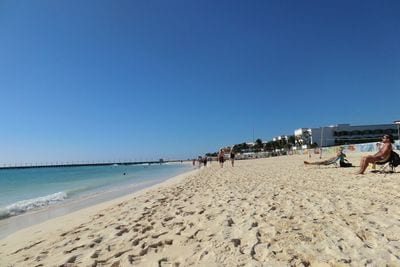
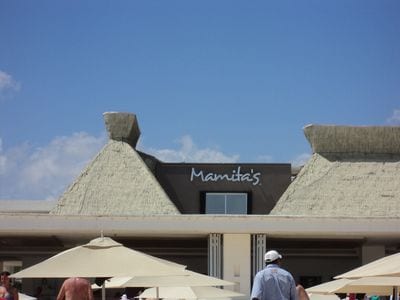
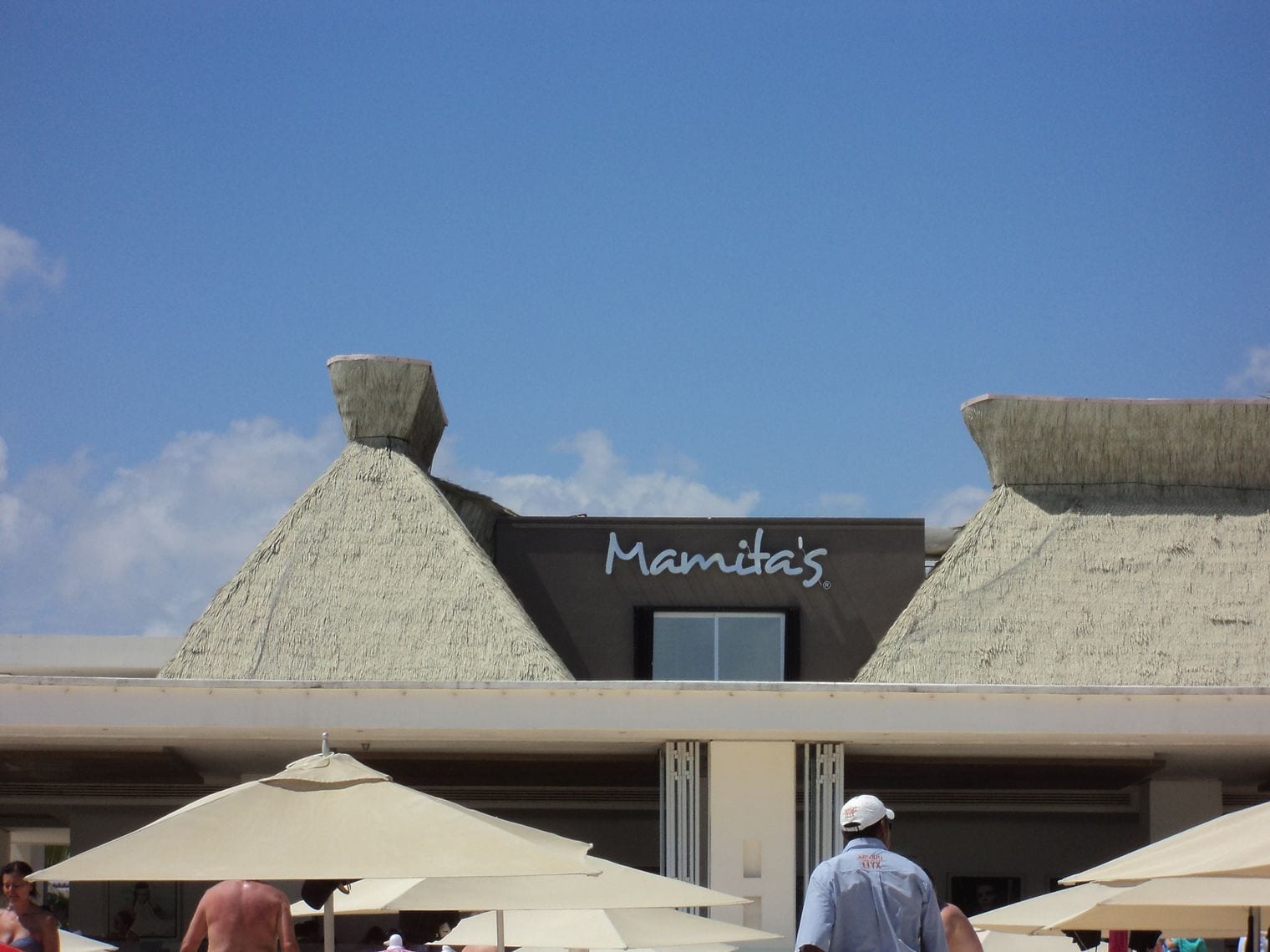
Playa Mamitas, at the foot of Calle 28 Norte, is Playa del Carmen's party beach and the one most visitors picture: a broad strip of white sand lined with beach clubs, sun loungers and DJs, a few minutes' walk from 5th Avenue.
Mamitas Beach Club is the best-known name here, but the sand itself is public and you can spread a towel anywhere. This is the place to see and be seen rather than to find a quiet patch, and it is at its liveliest on weekends and holidays.
Paseo del Carmen is an open-air shopping centre at the southern end of 5th Avenue, a short walk from Parque Los Fundadores and the Cozumel ferry pier. Fashion boutiques, wellness and lifestyle shops share its garden walkways with restaurants and cafés, in a Mediterranean-style setting that feels more like a courtyard than a mall.
It is a pleasant place to get out of the midday sun and an easy add-on to the stroll between the town centre and Playacar, which begins just to the south. Come in the late afternoon and you can browse, eat and then wander down to the pier to watch the ferries come and go.
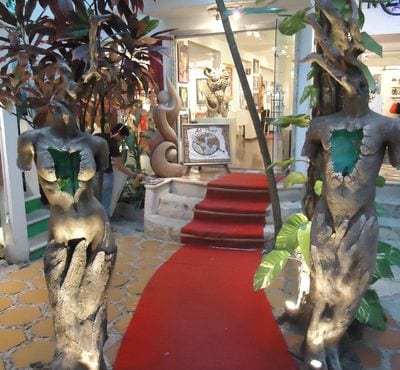
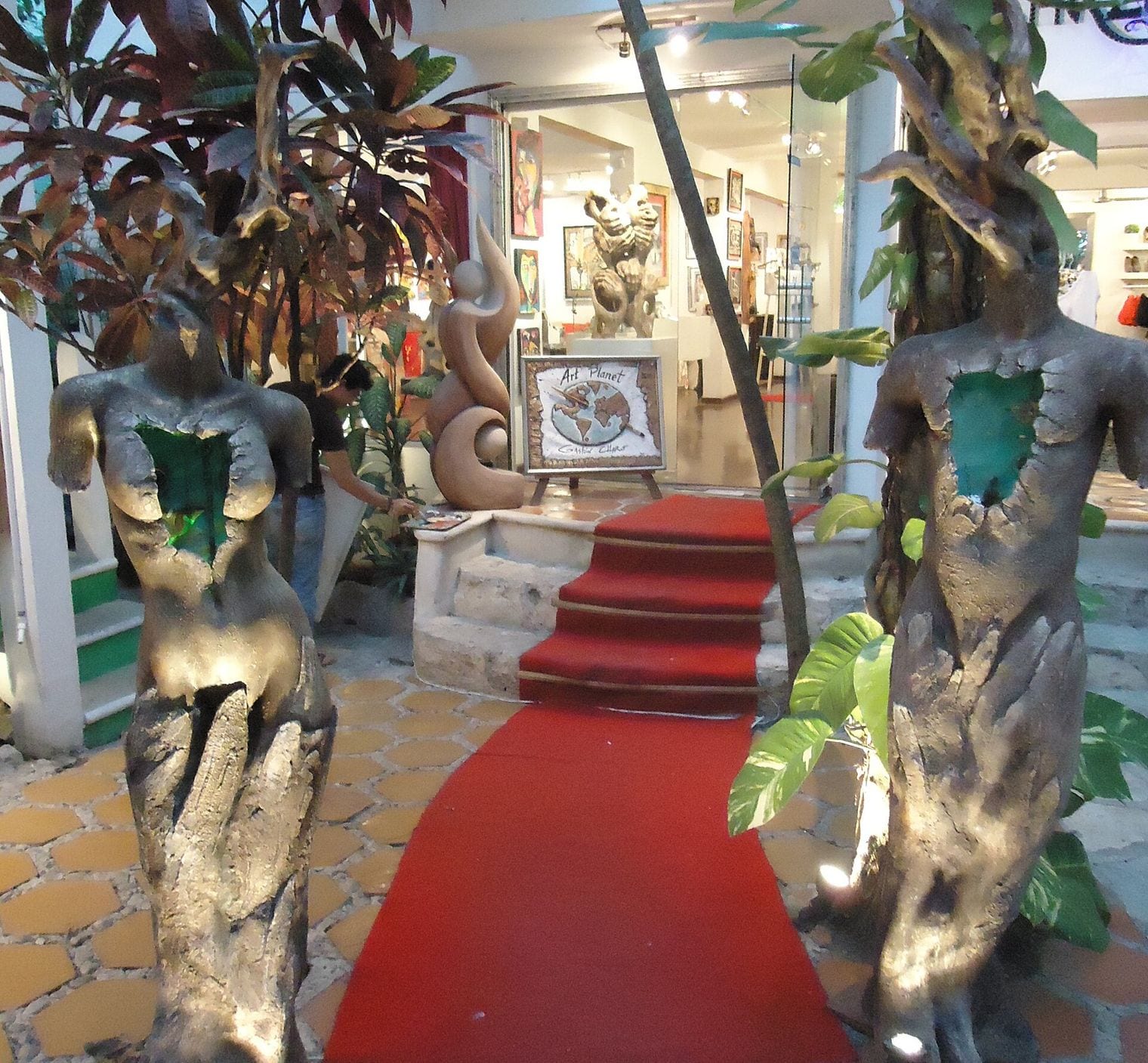
Gastón Charó Gallery is the studio and showroom of the artist Gastón Charó, set inside a garden courtyard on 5th Avenue between Calles 6 and 8. His work blends cubism, surrealism and expressionism into bright, instantly recognisable figures, on canvas but also painted on stone, in sculpture, furniture and jewellery, and in interactive paintings.
The space began as his own workshop, has been on the avenue since 2000, and now also shows work by other Mexican and international artists. It costs nothing to wander in, and it is one of the most rewarding stops on 5th Avenue for anyone who prefers original art to souvenirs.
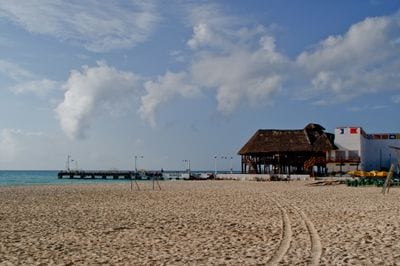
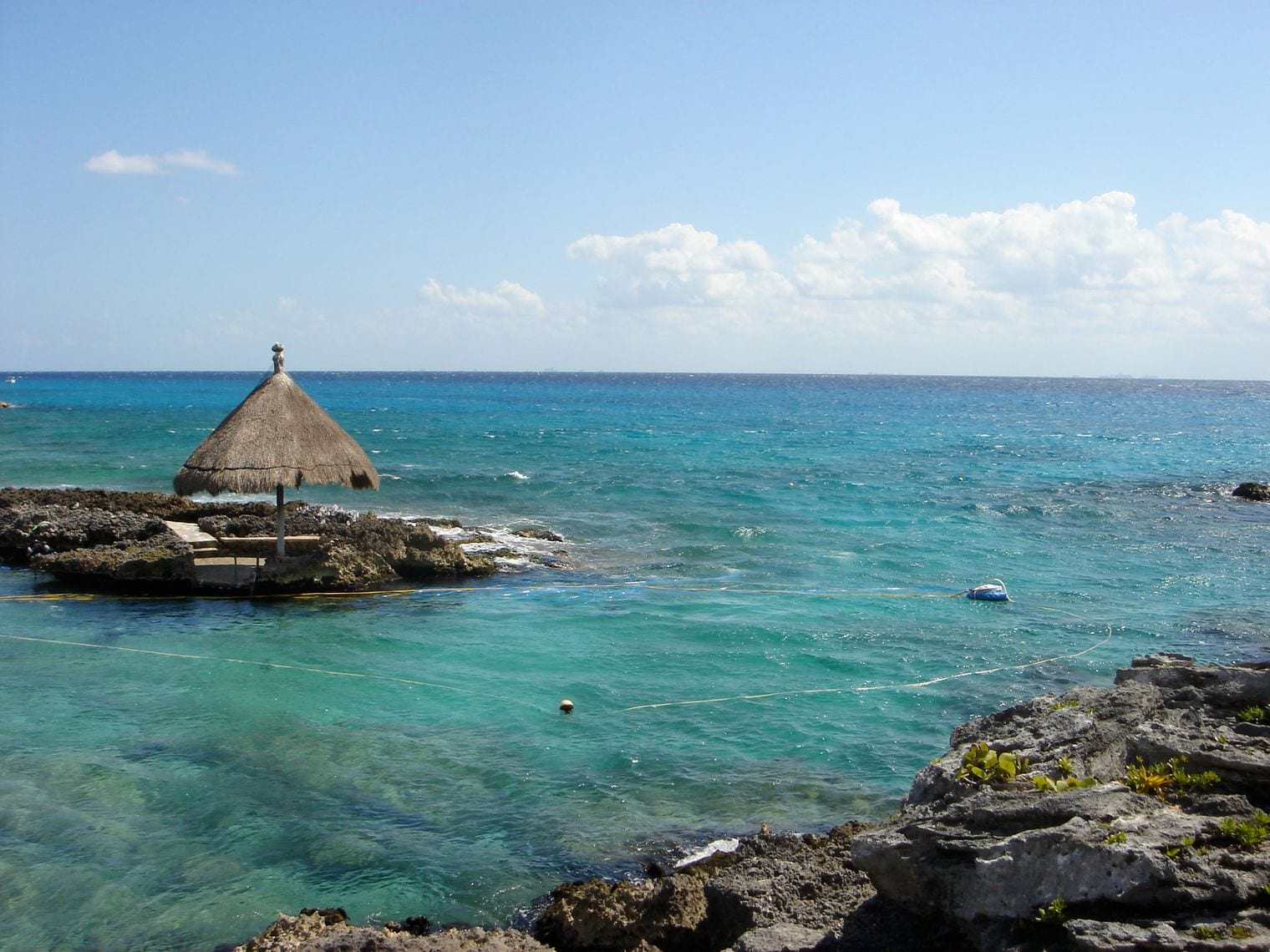
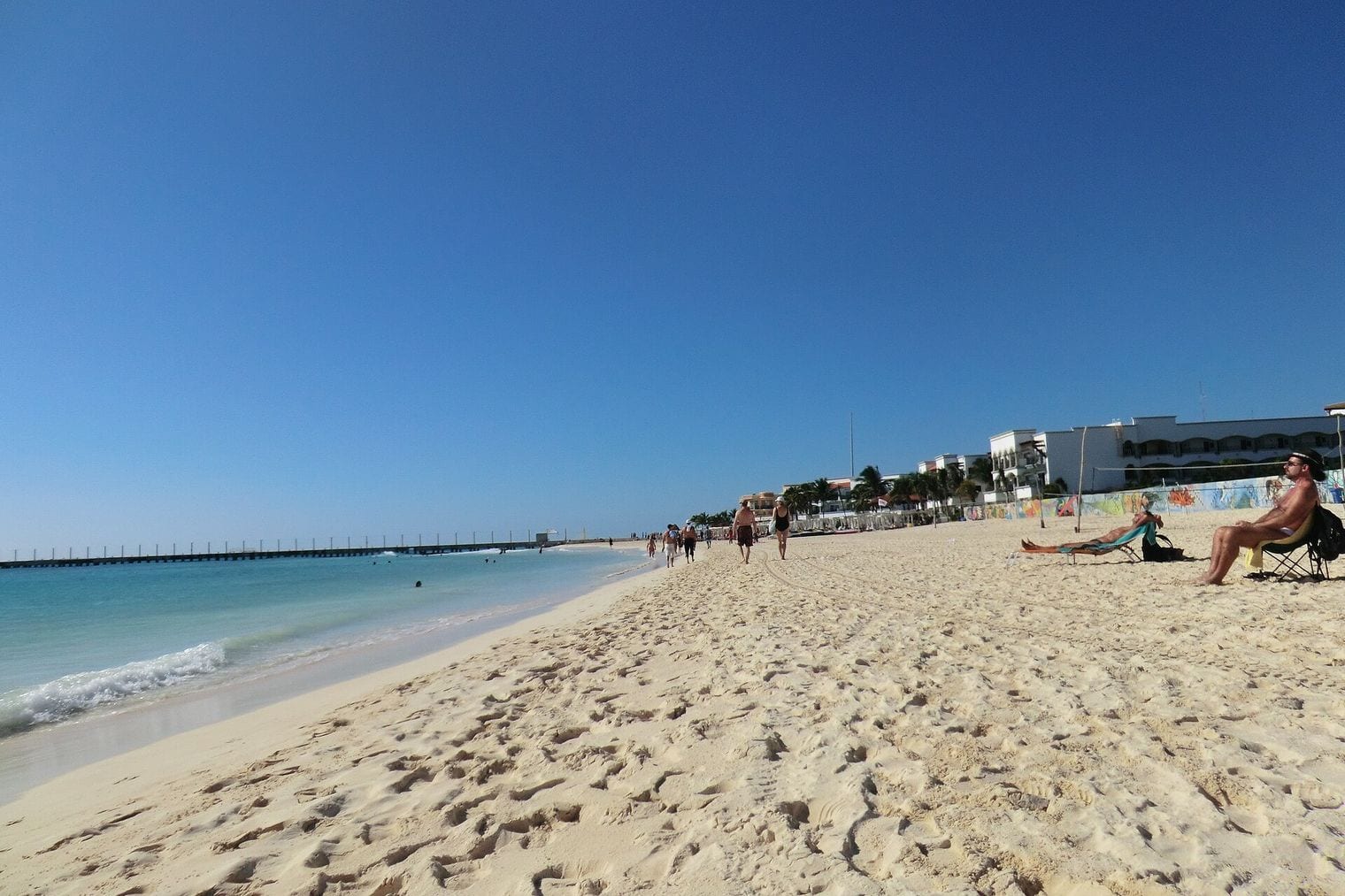
Playacar Beach runs along the shore of Playacar, the gated resort district that begins just south of the ferry pier, with villas along the sea in its first phase and resorts around a golf course in the second. The beach is long, the sand fine and the water calmer and less crowded than in the centre, with Cozumel on the horizon across the channel.
Like every beach in Mexico it is public, and you can walk onto it from the town end at Parque Los Fundadores and keep going south past the resorts. It is the easiest escape from the bustle of downtown, and pairs neatly with the aviary and the Maya ruins inside Playacar.
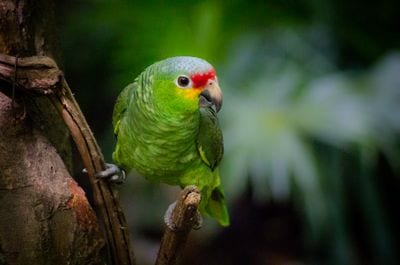
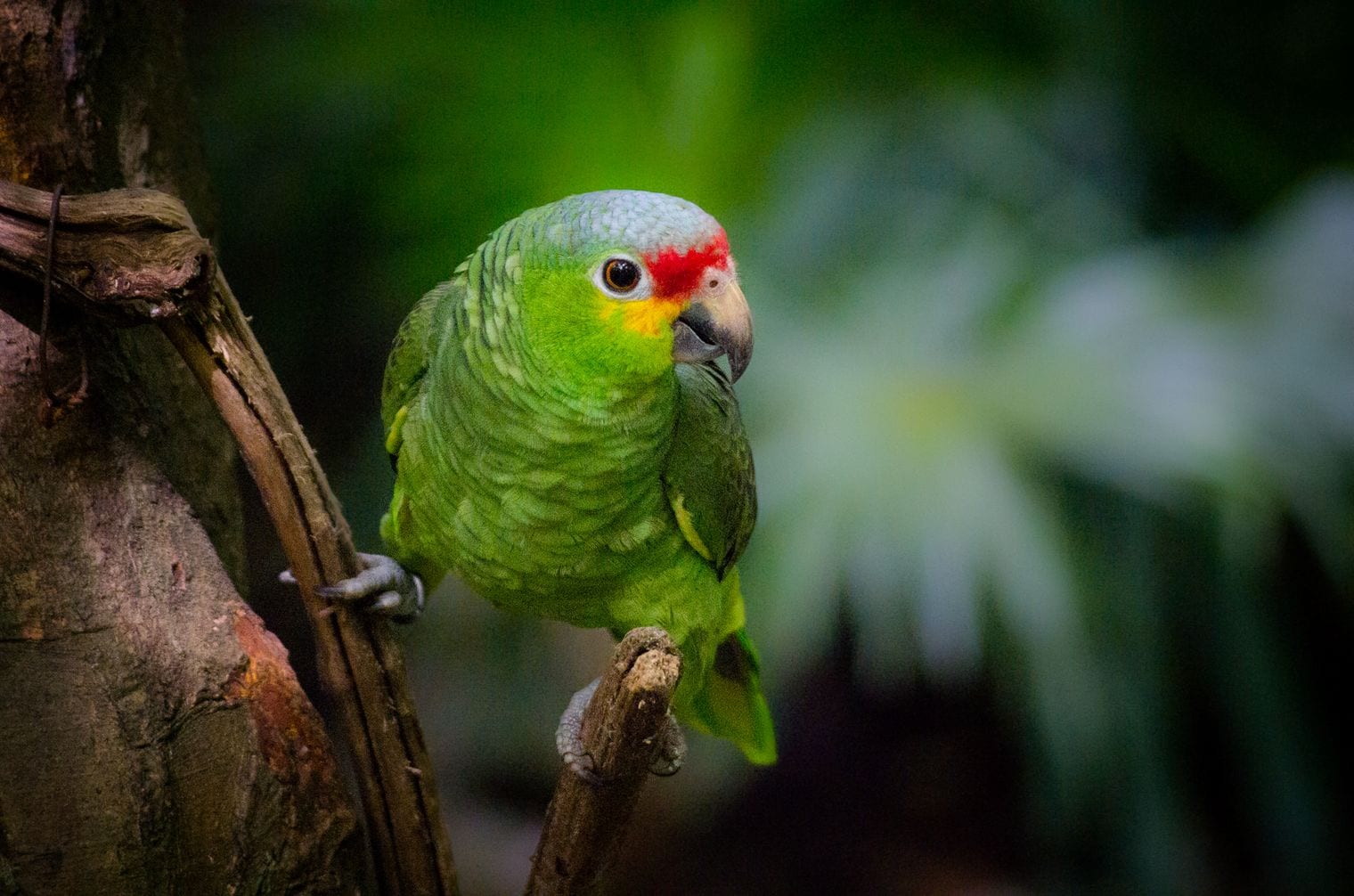
Xaman-Ha Aviary is a bird park inside Playacar, a patch of tropical forest where birds live in open, cage-free enclosures around ponds, rock pools and small waterfalls. Paths wind past flamingos, toucans, parrots and ibises, many of them species native to the Yucatán Peninsula.
It is small and low-key rather than a big-budget attraction, which suits families with younger children and anyone who wants an hour of shade between beach sessions. Go early in the day, when the birds are most active and the heat is still bearable.
Parque La Ceiba is a community park in the Ejidal neighbourhood, inland from the centre, run by the conservation group Flora, Fauna y Cultura de México. It mixes shaded jungle trails and botanical gardens with a library and a cultural centre, and it is one of the few real green spaces in a town built around the beach.
Locals use it for walks, workshops and cultural events, and it hosts a regular market of local crafts and produce, the best time to visit if you want to see the town's residents rather than its visitors. It makes a calm hour well away from 5th Avenue.
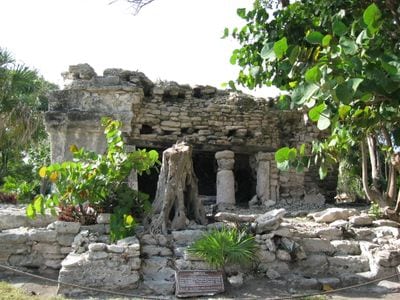
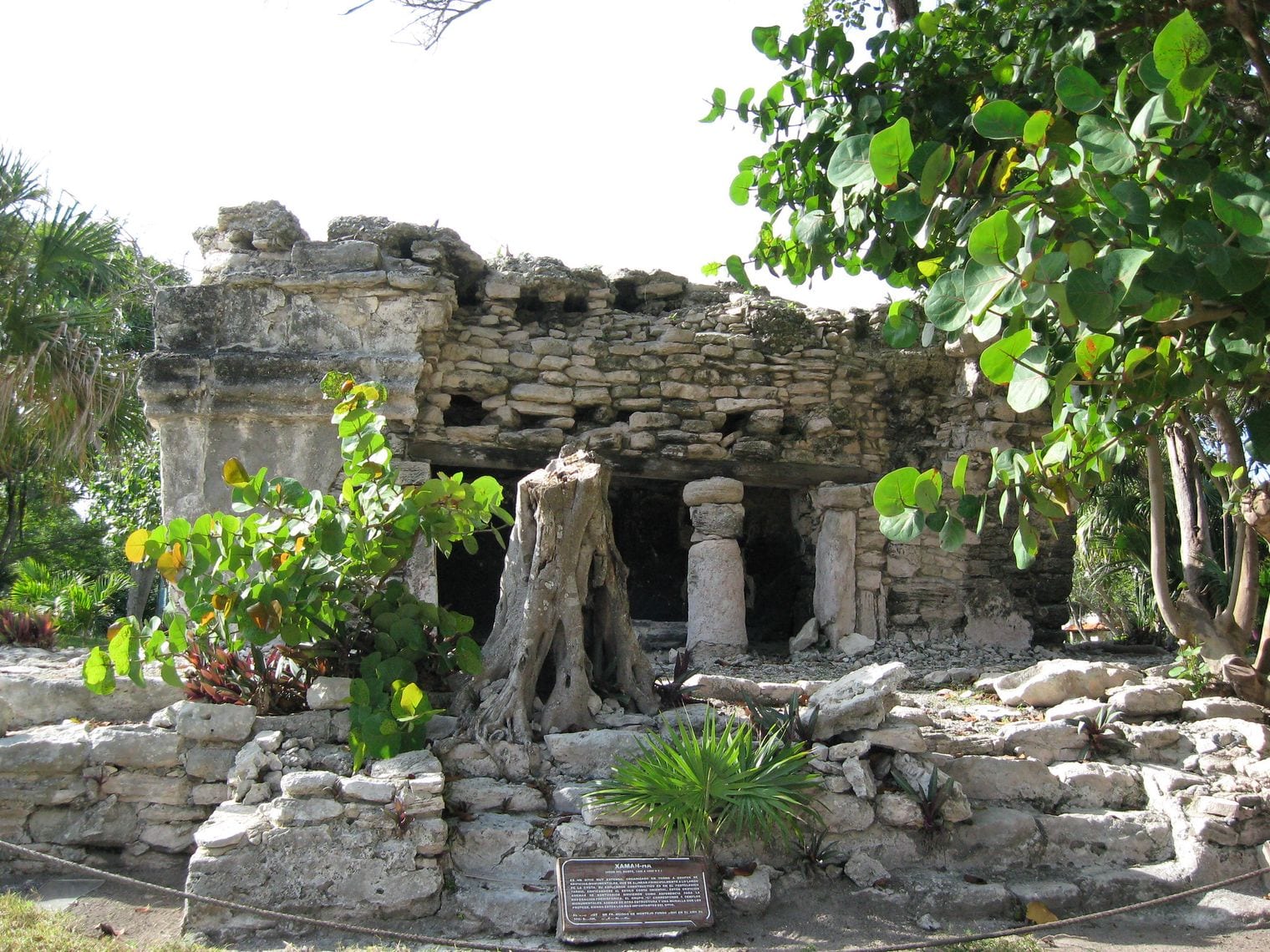
The Playacar Mayan Ruins are what remains of Xaman Ha, 'water of the north', the Maya port from which pilgrims set out by canoe across the channel to the shrine of the goddess Ixchel on Cozumel. A handful of small Postclassic stone structures stand in the open among the villas and lawns of Playacar, a few minutes' walk from the beach.
There is no grand pyramid here; the appeal is seeing the town's Maya origins in the middle of a modern resort district, in a short detour on the way to Playacar Beach or the aviary. Playacar is a gated district, so expect a security post on the way in.
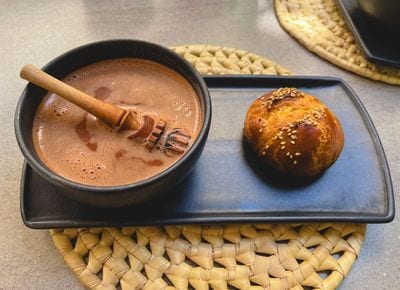
Museo Choco-Story tells the story of cacao from the Maya to the modern chocolate bar, in seven rooms on Avenida Constituyentes, a few blocks from 5th Avenue. The exhibits cover how the Maya grew and drank cacao, how its beans served as currency in their markets and the part it played in sacred ritual, then follow the bean through harvest, fermentation and processing.
The visit ends with a chocolatier's demonstration and a tasting, which makes it an easy win with children and a good choice for a hot or rainy afternoon. It belongs to a small family of Choco-Story museums in Mexico, with sister sites in Mexico City and the Yucatán.
Xenses Park is the oddest of the Xcaret group's parks, a short drive south of town beside Xcaret and Xplor, and it is built around tricking your senses. Open since 2016, it splits into two routes: one of sensory experiences such as the Sensatorium, and one of activities, including a 'bird flight' over the park and a village built on illusions and forced perspective.
Nothing is quite what it seems, and the photos are a big part of the fun. It asks for less stamina than Xplor, fills five or six hours, and suits families and anyone who has already done the bigger parks.
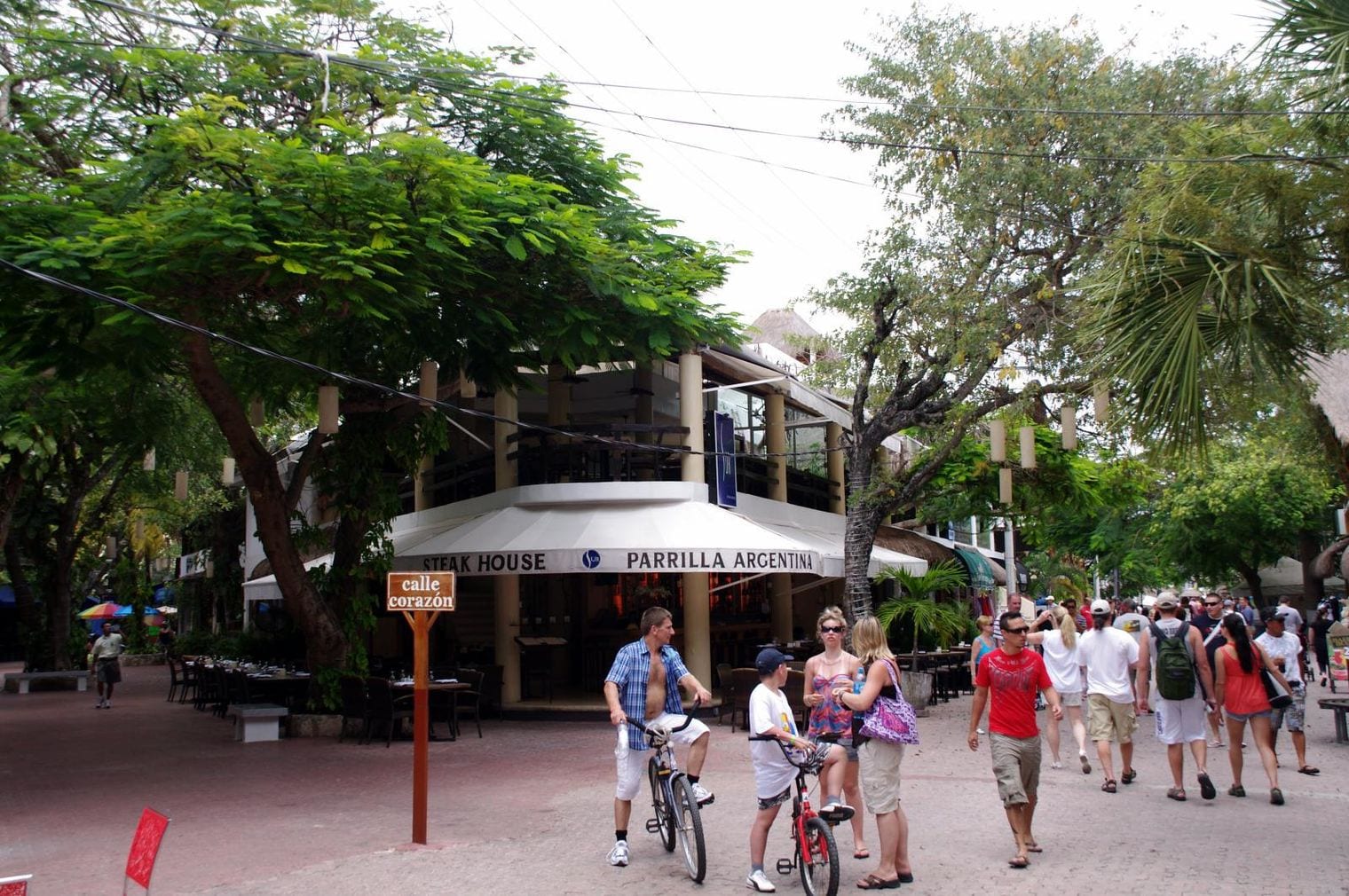
Calle Corazón, 'Heart Street', is a short pedestrian passage off 5th Avenue between Calles 12 and 14, shaded by trees and strung with lights that make it glow after dark. Boutiques, café terraces and restaurants line it, and it feels like a small plaza tucked away from the main avenue rather than another stretch of it.
It is a natural place to sit down for a coffee by day or dinner before a night out, with the clubs of Calle 12 and Coco Bongo a block away. Stop by in the evening, when the lights come on and the terraces fill.
Plan your trip
Best Time to Visit Playa del Carmen
The dry season, roughly December through April, is the classic time to come: warm, sunny days, lower humidity and calm, clear water for swimming and snorkelling. It is also the busiest stretch, especially around the winter holidays, Easter week and the spring-break weeks, when 5th Avenue and the central beaches are at their fullest. May brings more heat but thinner crowds, and is a fair compromise.
From June the rains arrive, usually as short afternoon downpours rather than washed-out days, and hurricane season runs through November, with the highest risk in September and October, the quietest months in town.
Sargassum seaweed can wash up on this coast in the warmer months, roughly spring through summer, so check beach conditions if sand time is the priority. Around the start of November, Xcaret Park marks the Day of the Dead with its own festival of altars, music and regional food.
Getting to Playa del Carmen
Most visitors fly into Cancún International Airport, around 50 kilometres north, and reach Playa del Carmen in roughly 45 minutes to an hour along Highway 307, the coastal road that runs the length of the Riviera Maya.
Shuttles, long-distance buses and pre-booked transfers all make the trip, and the bus drops you in the centre, a short walk from 5th Avenue. Cancún's airport has direct flights from across North America and Europe, as well as frequent domestic connections from Mexico City.
Cozumel's airport is the other option: from the island, the passenger ferry crosses the channel and docks beside Parque Los Fundadores in under an hour. The Tren Maya rail line also serves Playa del Carmen, from a station on the edge of town, which links it with Cancún and with the inland Maya sites and colonial towns of the Yucatán.
Getting Around Playa del Carmen
The centre is made for walking. 5th Avenue is pedestrian, the beaches are reached from the end of almost every cross street, and Parque Los Fundadores, Paseo del Carmen, Calle Corazón and the beach clubs around Calle 28 are all within a comfortable stroll of each other. Playacar, with its beach, aviary and ruins, begins just south of the ferry pier and is easy to explore on foot or by bike.
For the parks and caves south of town, colectivo minibuses run constantly along Highway 307 and will drop you at the turn-offs, and taxis are plentiful, though unmetered, so agree the fare first. A car is a burden downtown, where parking is scarce, but earns its keep for cenote-hopping and day trips down the coast.
Where to Stay in Playa del Carmen
Most first-time visitors stay in the Centro, within a few blocks of 5th Avenue, where everything is walkable and the beach is never more than a couple of blocks away. The southern end near Parque Los Fundadores is the liveliest and noisiest, the blocks around Calle 12 put you on top of the nightlife, and the stretch further north toward Calle 40 and beyond is calmer and leafier, with more apartments and small hotels.
Playacar, the gated district south of the ferry pier, is where the big all-inclusive resorts and holiday villas sit, quieter and greener but a walk or short ride from town. North of the centre, the area around Punta Esmeralda and Playa 88 is more residential, with condos and a local feel, and suits longer stays or anyone who would rather be near the quieter beaches.
Where to Eat in Playa del Carmen
5th Avenue is lined with restaurants from one end to the other, with international menus in the busy southern blocks and more relaxed, varied places further north and on the side streets around Calle Corazón. For everyday local food, head a few blocks inland, where taquerías and small family kitchens around Avenida 10, Avenida Juárez and the streets beyond serve the town's own residents at a fraction of the beachfront price.
The Yucatán has its own cuisine, and it is worth seeking out: cochinita pibil, pork slow-cooked in achiote and sour orange; sopa de lima, a lime-scented chicken broth; panuchos and salbutes, both piled on fried tortillas; and tikin xic, fish grilled in achiote. On the coast, ceviche and fresh fish tacos are everywhere, tacos al pastor fuel the late nights, and the marquesita, a crisp rolled crepe filled with cheese, is the classic street-cart dessert.
Day Trips from Playa del Carmen
The easiest escape leaves from the town centre: the passenger ferry from the pier beside Parque Los Fundadores crosses to Cozumel in under an hour, for the island's reefs, dive sites and slower pace.
Down Highway 307, Akumal, known for snorkelling with sea turtles, is around half an hour south, the Xel-Há water park a little further, and Tulum, with its clifftop Maya ruins above the sea and the cenotes behind it, about an hour away. North, Cancún is about an hour up the same road for its Hotel Zone beaches and downtown markets.
Inland, the jungle is dotted with cenotes, sinkholes of clear fresh water that make a cool break from the beach, and the ruins of Cobá, with a tall pyramid set in the forest, are around an hour and a half away. Chichén Itzá, the most famous Maya city on the peninsula, is a long day of roughly two and a half to three hours each way, usually combined with a stop in the colonial town of Valladolid.
Before you go
Mobile dataAn eSIM gives your phone local data when you land, with no SIM card to swap.via AiraloGet an eSIM
We may earn a commission when you buy through these links, at no extra cost to you. How we make money.
Watch the light fade over the sea, then eat on Calle Corazón and walk the northern blocks of 5th Avenue. If you have the energy for a late night, end it at Coco Bongo Playa del Carmen a block away. With a second day, give it entirely to Xcaret Park and its evening show, or split it between Río Secreto and Xplor Park.
Playa del Carmen is best known for Quinta Avenida, its pedestrian main street, and for Parque Los Fundadores with the bronze Portal Maya arch by the Cozumel ferry. It is also the base for the big parks just south of town, above all Xcaret Park and Xplor Park, and for the underground river at Río Secreto.
How many days do you need in Playa del Carmen?
Three or four days covers the town and its parks: a day for 5th Avenue, Parque Los Fundadores and the beaches, a full day at Xcaret Park, and time for Río Secreto or Xplor. A week leaves room for day trips to Cozumel, Tulum or Chichén Itzá without rushing, which is how many visitors use the extra time.
Yes, the centre is one of the most walkable on the Riviera Maya. 5th Avenue is pedestrianised, the beaches are reached from almost every cross street, and Playacar starts just south of the ferry pier. You will only need a colectivo, taxi or car for the parks and caves along the highway south of town, and for day trips.
Is Playa del Carmen close to Cancún?
Yes. Playa del Carmen lies about an hour south of Cancún along Highway 307, and most visitors arrive through Cancún International Airport, which is a little closer. The two make an easy pairing: Playa del Carmen is smaller and more walkable, with its life centred on 5th Avenue, while Cancún adds a long Hotel Zone and a larger downtown.
Sources & updates
How this guide was checked
Checked before launch
Sources cited
15
Publishers
14
Every place on this list was confirmed open and pinned on the map before publication, and what we say about each one was checked against its own website or an official source.
A PDF with a box to tick for every place. Confirm your email to download it, and get one email every Thursday with our newest guides for the places you tick.
Free Playa del Carmen printable checklist
All 19 places in one PDF
Tick them off as you go. Confirm your email to download it, plus one email every Thursday with new guides for the places you tick.
We use cookies to analyse site traffic and improve your experience.
You can accept or reject analytics cookies. See our
May we use analytics cookies? See ourCookie Policy.