We build and rank every list first. Booking links come after, and only where
a partner sells a ticket, tour or stay for that exact place, so a place with
nothing to book is listed exactly as prominently as one you can book.
So how do we earn? Some links on this page go to booking
partners, and if you book tickets, tours or a stay through
one, we may earn a commission. It costs you nothing extra.
That commission never decides which places make the list, the order they
appear in, or what we write about them. No entry is sponsored or a paid
placement.
By the City Viking editorial teamPublished 30 places · 25 min read
Fact-checked Checked before launchOct 7, 202630 sources24 publishers11 government & parks7 tourism boards3 encyclopedias & research9 venues & other sitesPublished · Oct 7, 2026Researched and checked before it went liveClick for every source and the full change log.
Short answer
Start with Hermann for its German heritage and hillside wineries, Ste. Genevieve for the French colonial houses of its national historical park, and Hannibal for Mark Twain's boyhood home and cave. Most towns on this list fill a relaxed day, while Hermann, Hannibal and Branson deserve a weekend.
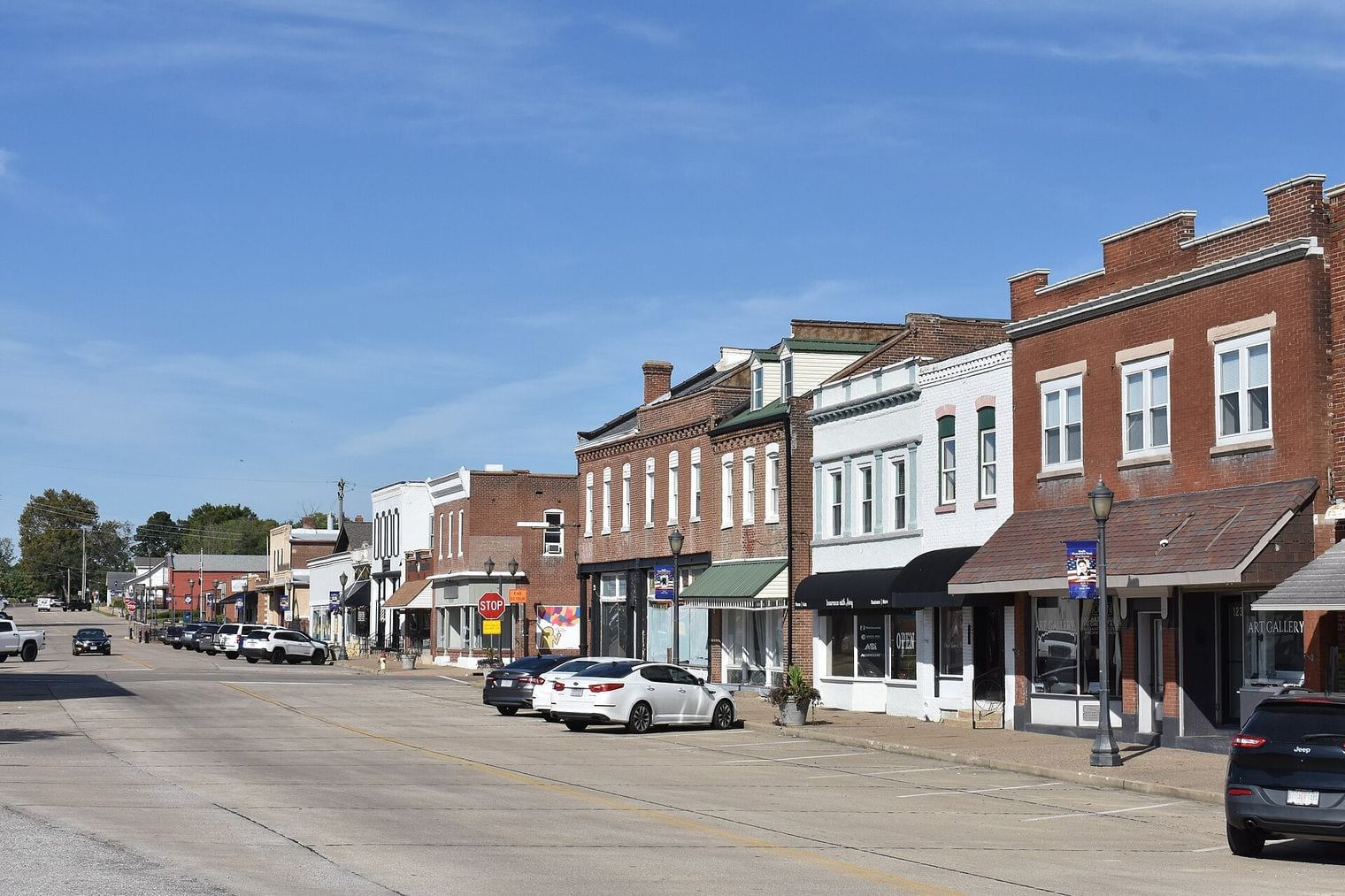
Missouri's best small towns tell the state's story along its rivers: French colonial houses on the Mississippi, German wine villages in the Missouri River valley, Santa Fe Trail stops in the Boonslick, Route 66 main streets, and Ozark river towns where cold, clear springs feed some of the best floating in the Midwest.
This guide ranks 30 of the best, each home to fewer than 25,000 people at the 2020 census, from Hermann and Ste. Genevieve to Pacific. Most fill a relaxed day, Hermann, Hannibal and Branson deserve a weekend, and many link up neatly along the Katy Trail or Route 66.
The nation's first American Viticultural Area was Augusta, Missouri, recognized in 1980, eight months before California's Napa Valley; the Hermann wine region followed in 1983.
The Katy Trail is the country's longest continuous rail trail, running 240 miles across Missouri on the old Missouri–Kansas–Texas Railroad line; its first segment opened at Rocheport, west of Columbia, in 1990.
Winston Churchill's “Iron Curtain” speech was delivered in Fulton on March 5, 1946, and a bomb-gutted Christopher Wren church from London was later shipped there as about 7,000 numbered stones to honor it.
Washington is the corncob pipe capital of the world: Missouri Meerschaum has made corncob pipes there since 1869 and is the oldest and largest maker of them anywhere.
The world's first school of osteopathic medicine opened in Kirksville in 1892, founded by Dr. Andrew Taylor Still.
Mark Twain Cave in Hannibal is the “McDougal's Cave” of Tom Sawyer, and it has been giving tours since 1886, making it the oldest operating show cave in Missouri.
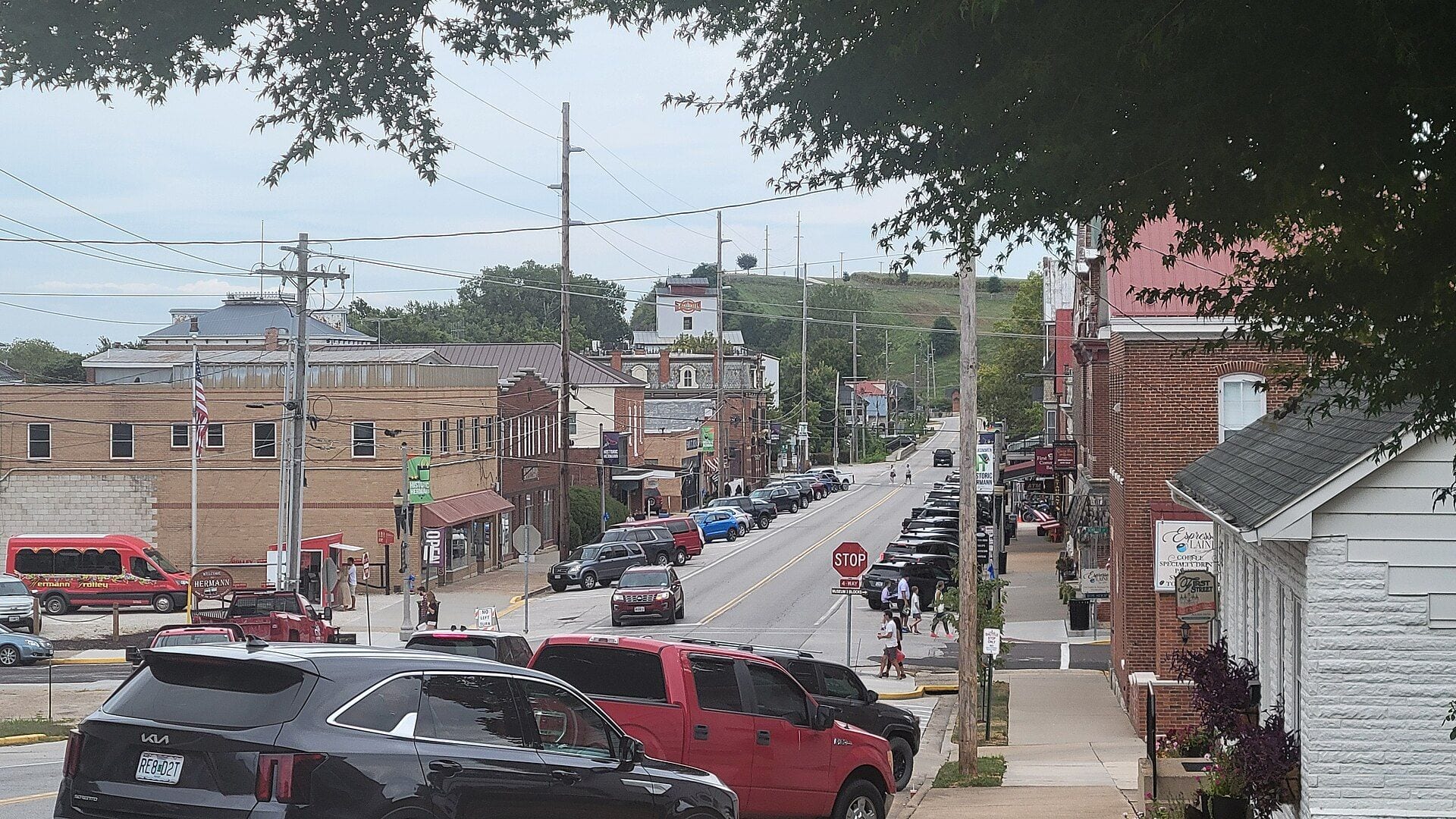
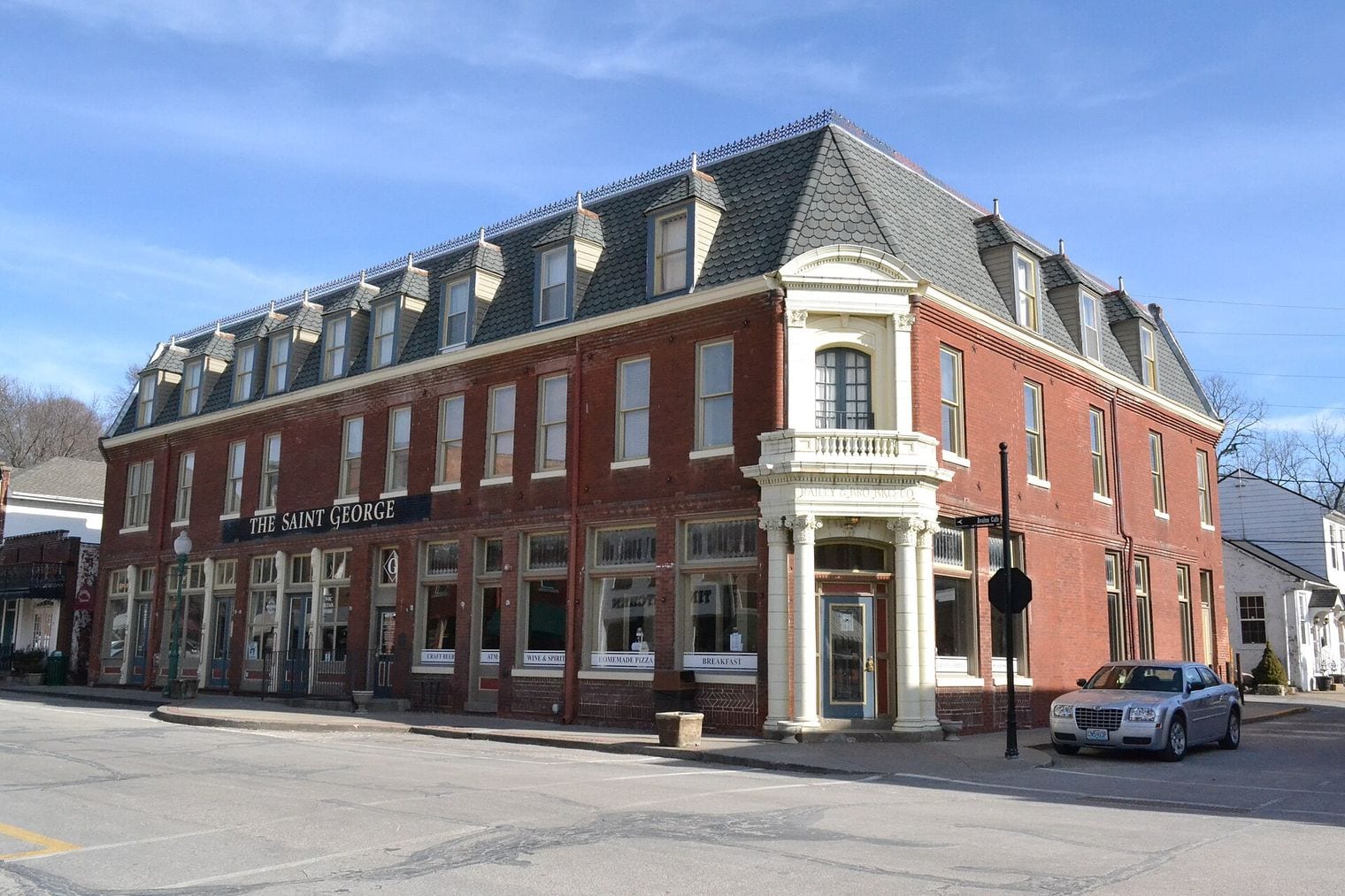
Set on the south bank of the Missouri River in the heart of the Missouri Rhineland, Hermann was founded in 1837 by the German Settlement Society of Philadelphia, which dreamed of building a “heart of German America” in the West. The town took its name from Hermann, the Germanic chieftain who defeated three Roman legions in the Teutoburg Forest, and its streets of 19th-century homes, churches and storefronts still feel like a Rhineland village set down beside an American river.
Wine is the main event. Stone Hill Winery, founded in 1847 and now the largest winery in the state, keeps its vaulted cellars on a hill above town, and around 1900 it ranked among the largest wineries in the world; Hermannhof is in town too.
The Deutschheim State Historic Site preserves the homes, barn and printing-press site of the German immigrants, with grapes still growing in one of their original vineyards, and the town fills up for Maifest in May and Oktoberfest on October weekends.
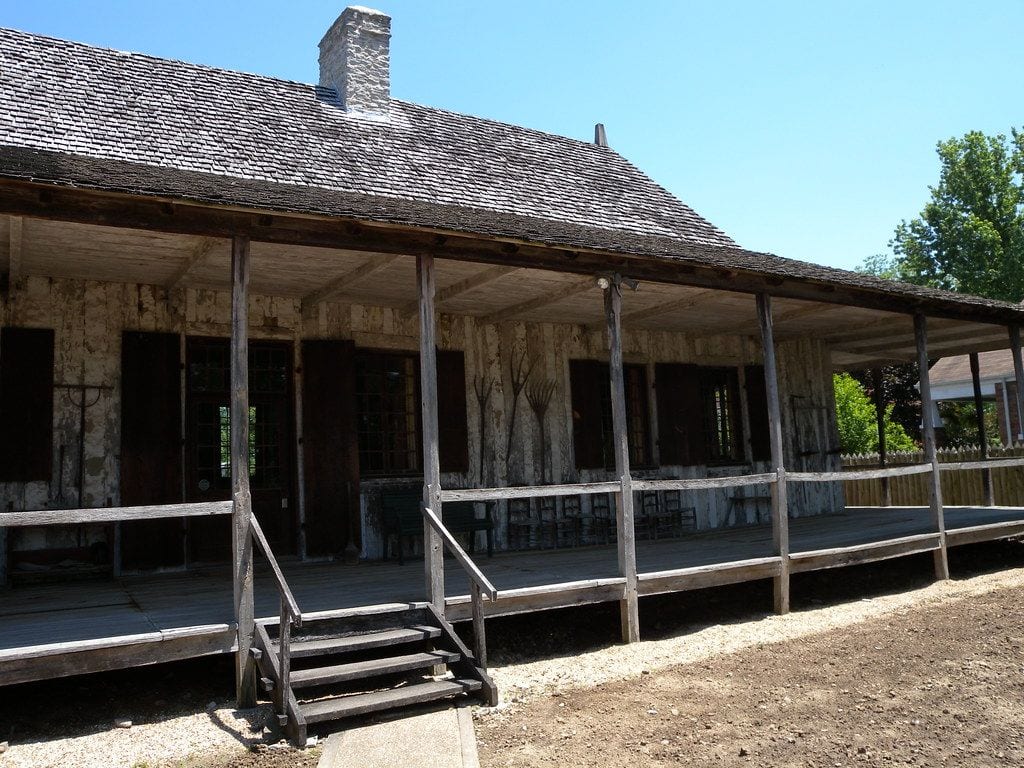
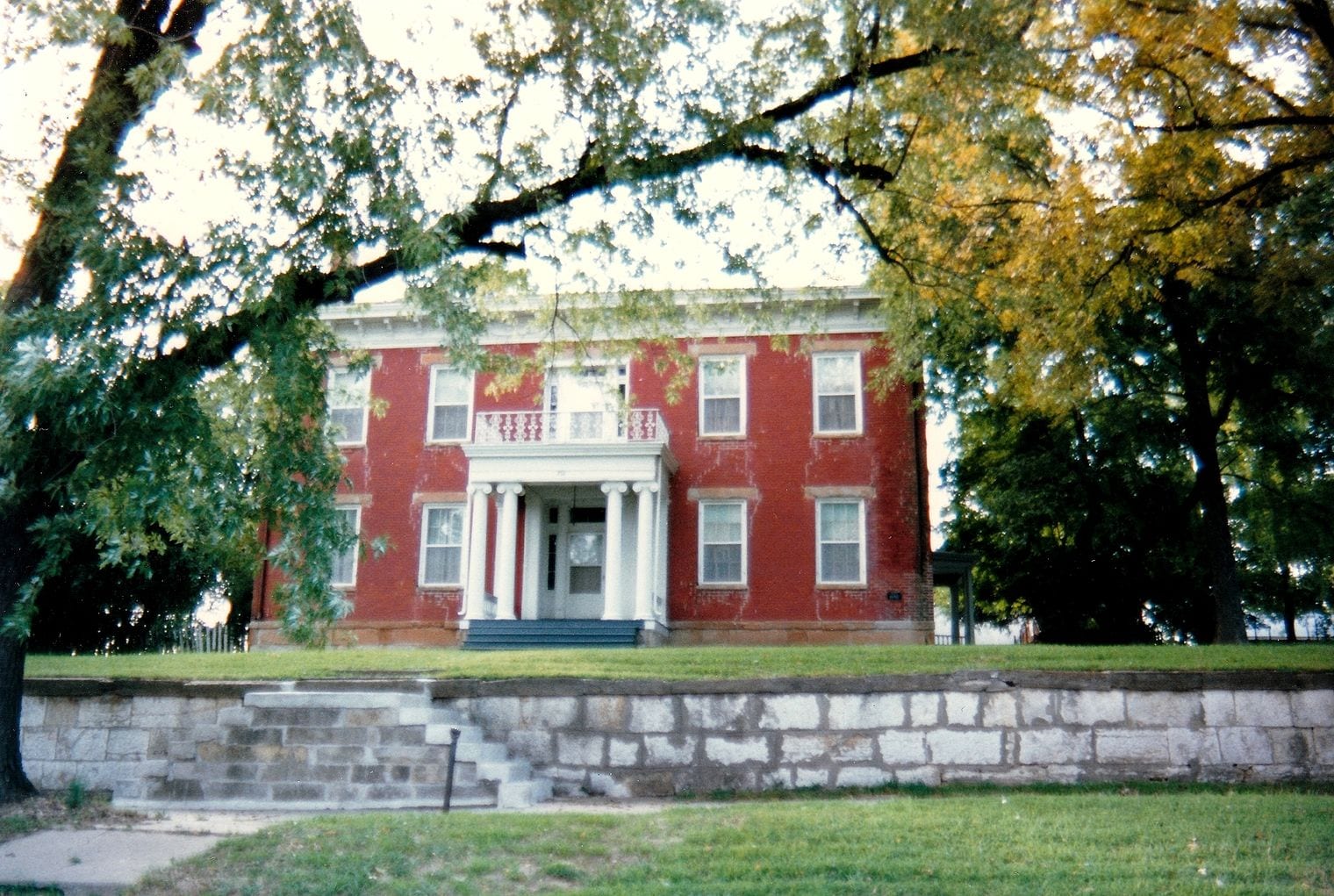
Ste. Genevieve is the oldest permanent European settlement in Missouri, founded by French colonists around 1750 on the west bank of the Mississippi (tradition long said 1735) and rebuilt on higher ground after a great flood in 1785. Its oldest surviving buildings date from that move, and the town holds one of the highest concentrations of French colonial vertical-log houses anywhere, built either poteaux-en-terre, with posts set straight into the ground, or poteaux-sur-sol, with posts standing on a sill.
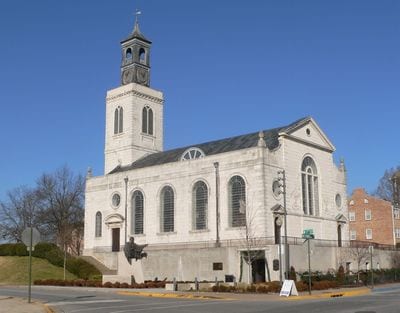
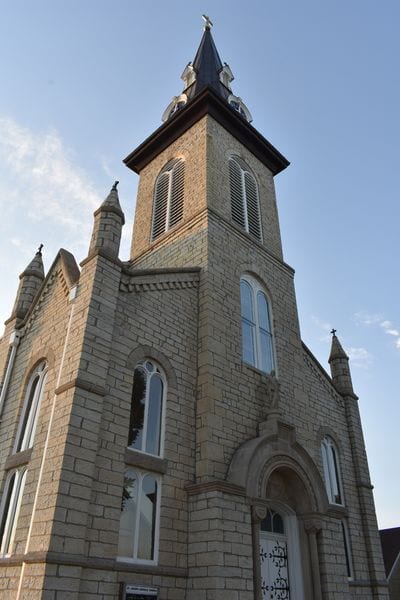
A walk takes in the Louis Bolduc House, a National Historic Landmark, the Beauvais-Amoureux House and the Felix Vallé House State Historic Site, while the Gothic-style Ste. Genevieve Catholic Church, built in 1876, anchors the square. The town keeps its French customs alive with traditions such as La Guiannée in the holiday season and the Jour de Fête festival.
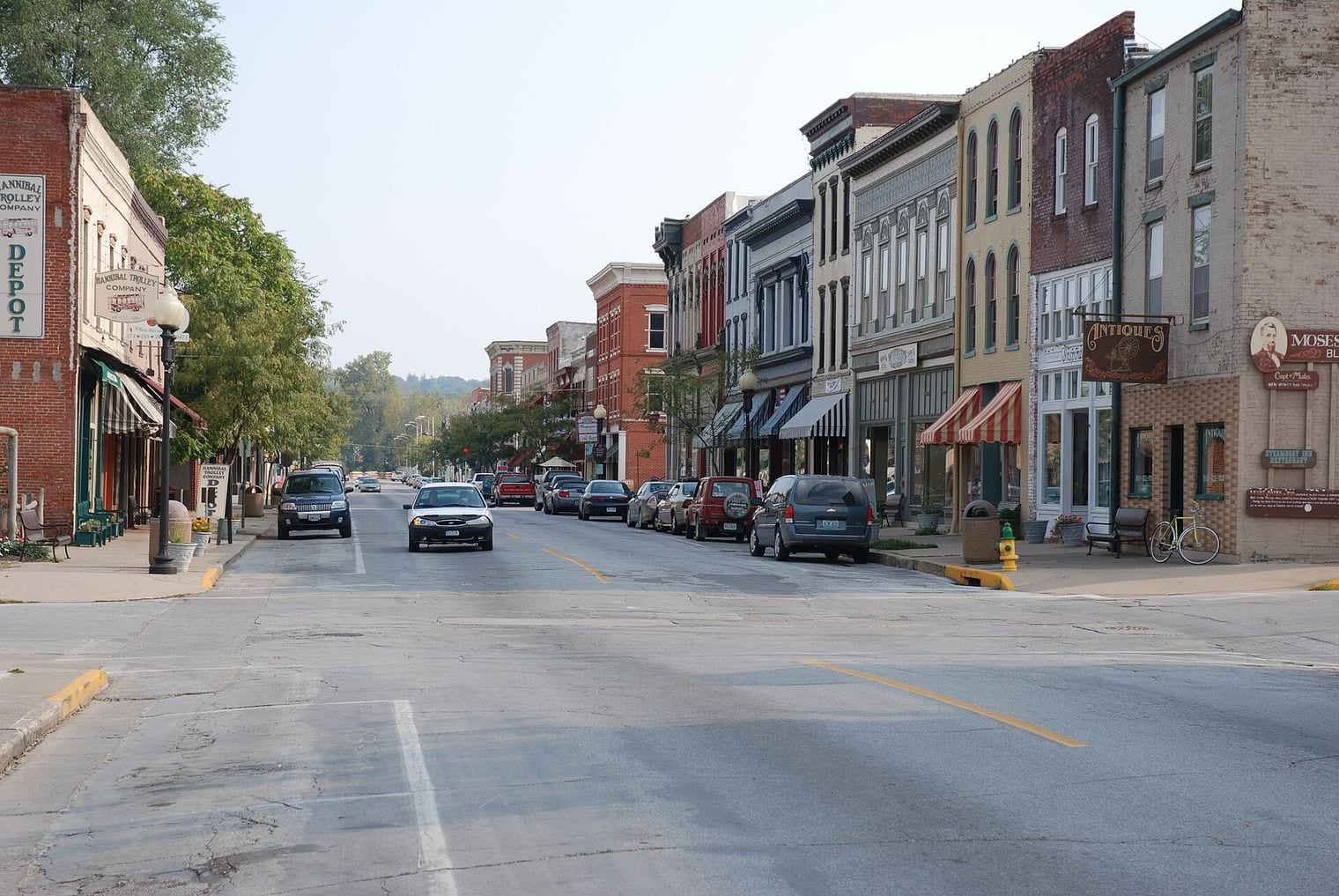
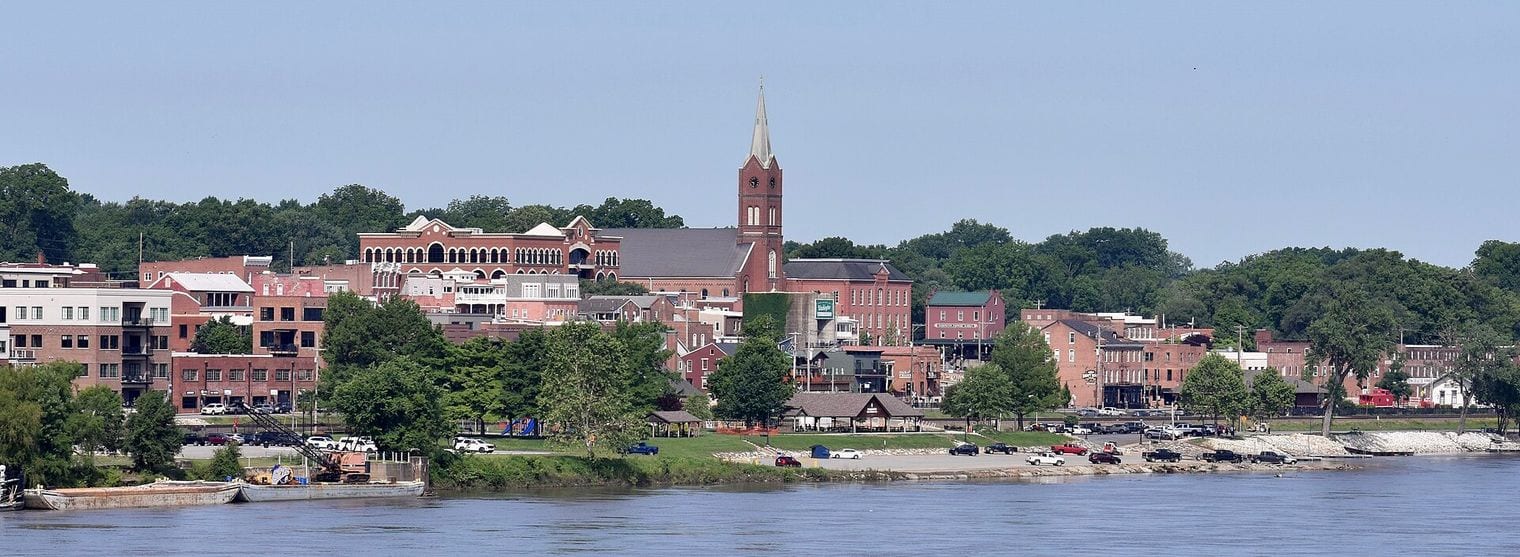
Samuel Clemens lived in Hannibal from 1844 to 1853, and as Mark Twain he drew on this Mississippi River town for The Adventures of Tom Sawyer and Adventures of Huckleberry Finn. The Mark Twain Boyhood Home & Museum, open to visitors since 1912 and a National Historic Landmark, spreads across a group of buildings downtown, including the Becky Thatcher House and a re-created Huck Finn House whose exhibits explore Hannibal's history of slavery.
Climb Cardiff Hill, where a statue of Tom and Huck stands at the foot and the Mark Twain Memorial Lighthouse looks out over the river, then tour Mark Twain Cave on the edge of town, the McDougal's Cave of Tom Sawyer, which has been giving tours since 1886. Hannibal is also the birthplace of Margaret Brown, the “Unsinkable” Molly Brown of Titanic fame, and each July National Tom Sawyer Days brings a fence-painting contest and a frog-jumping contest to town.
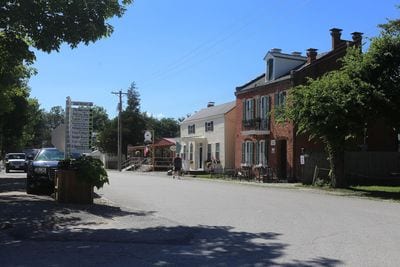
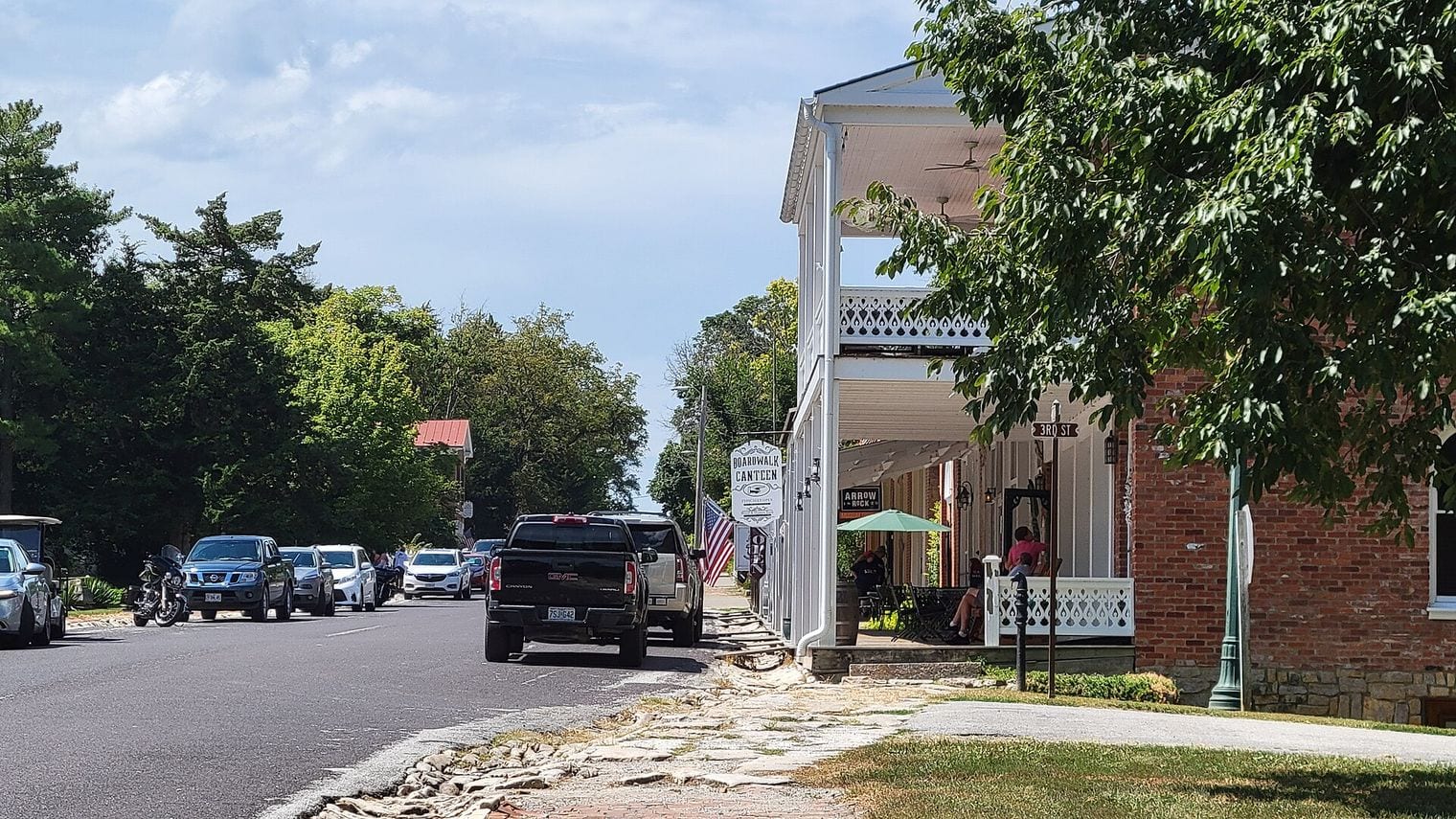
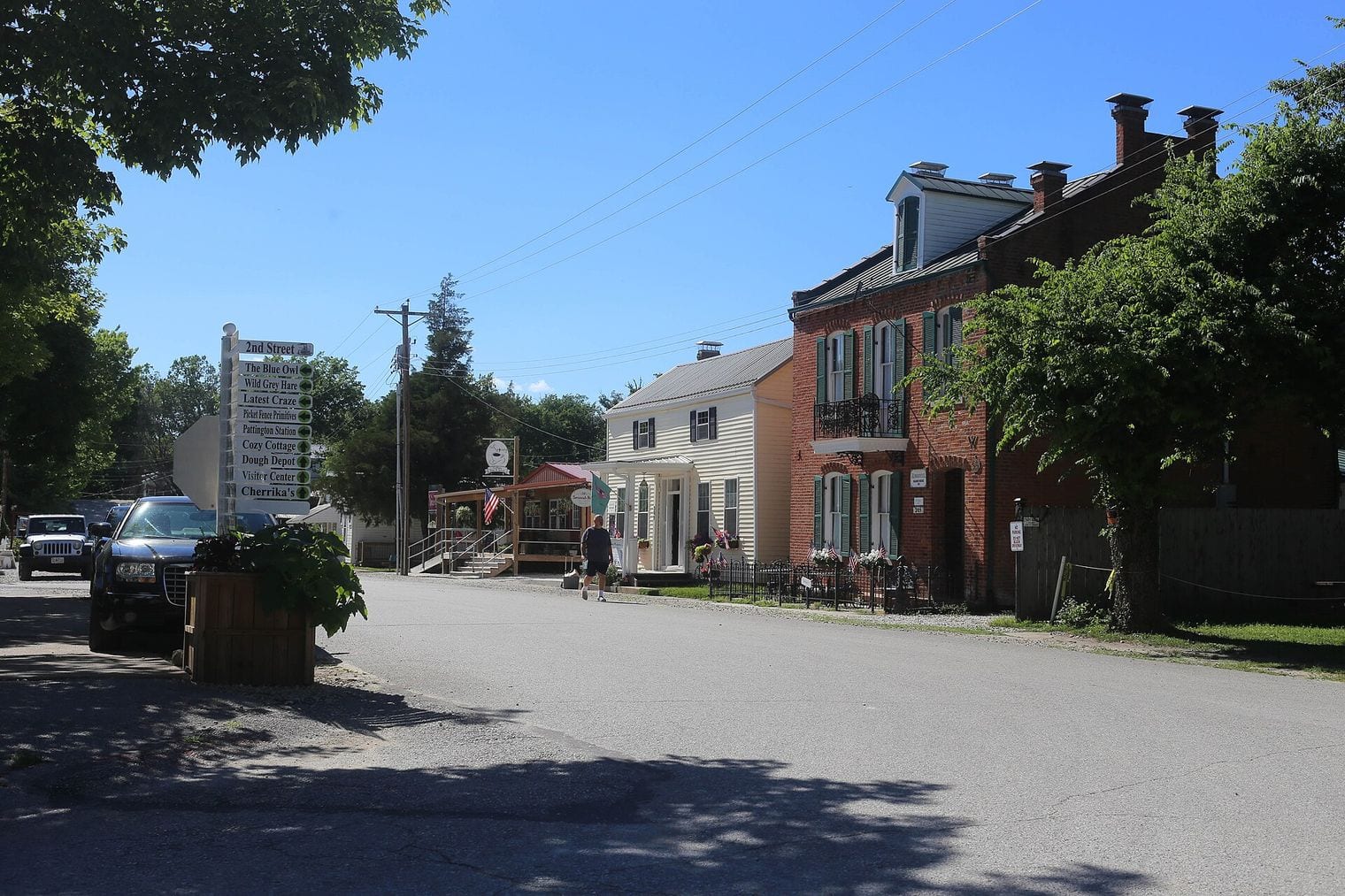
Arrow Rock takes its name from the Missouri River bluff where Native Americans once came for the stone they used to point their arrows, and the village laid out here in 1829 grew up beside a ferry crossing used by Santa Fe Trail traders. Today the entire village, home to fewer than a hundred people, is a National Historic Landmark district, and many of its 19th-century buildings are individually listed on the National Register of Historic Places.
Arrow Rock State Historic Site covers the bluffs and a portion of the village, with a visitor center on the Boone's Lick country, the 1834 Huston Tavern and the home built by the painter George Caleb Bingham. The tavern's restoration in 1923 marked the beginning of historic preservation in Missouri. In the evenings the Arrow Rock Lyceum Theatre, founded in 1961 in an 1872 church building, stages professional productions, which makes an overnight stay in the village well worth it.
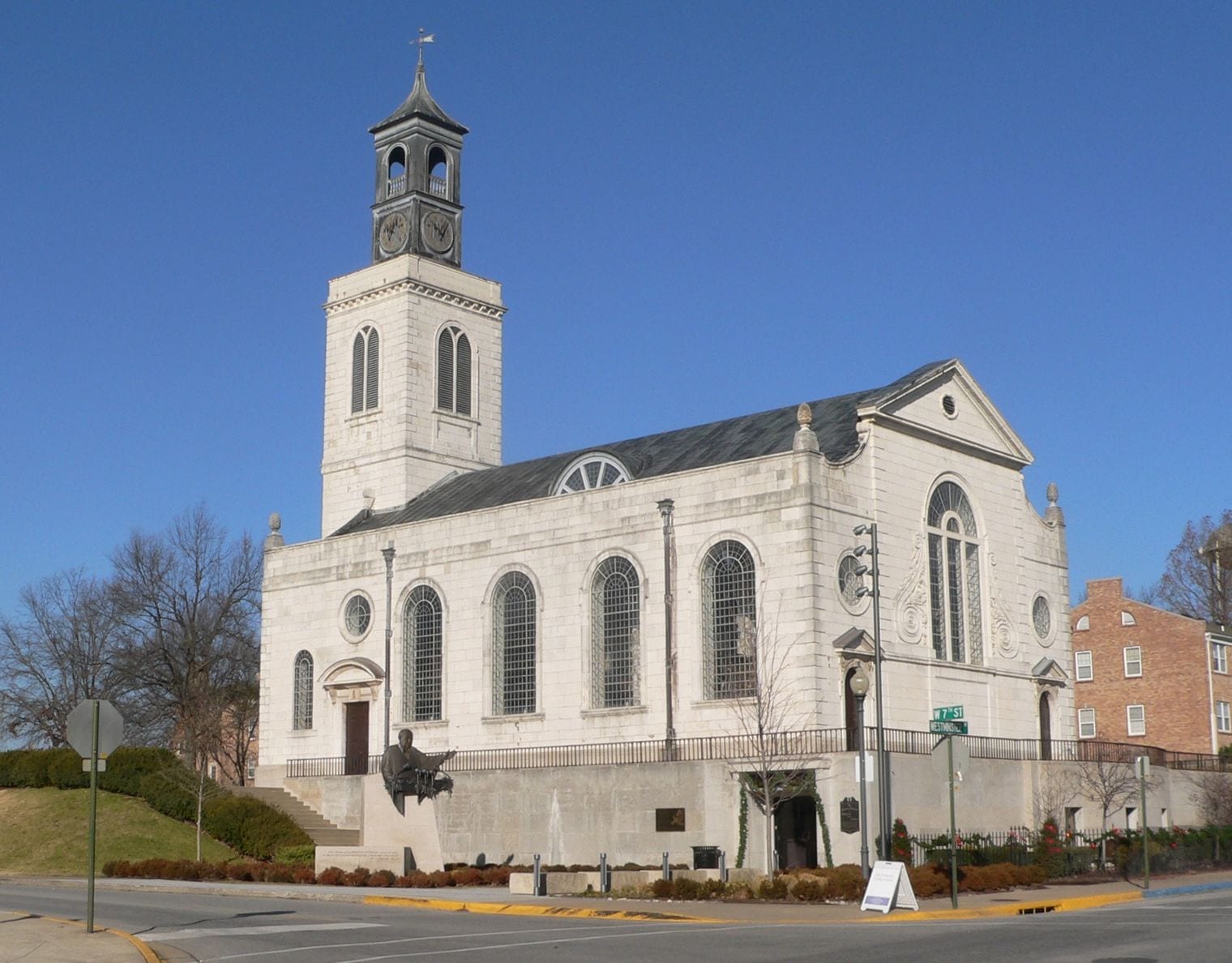
On March 5, 1946, Winston Churchill spoke at Westminster College in Fulton, introduced by President Harry Truman, and warned that an “iron curtain” had descended across Europe. That speech, formally titled “The Sinews of Peace,” is remembered at the National Churchill Museum, the centerpiece of this Callaway County seat about 20 miles east of Columbia, which is also home to William Woods University.
The museum sits beneath the Church of St. Mary the Virgin, Aldermanbury, a London church rebuilt by Christopher Wren after the Great Fire of 1666 and gutted in the Blitz in 1940; in the 1960s its stones were numbered, shipped across the Atlantic and reassembled on the Westminster campus.
Outside stands Breakthrough, a sculpture by Churchill's granddaughter Edwina Sandys made from eight sections of the Berlin Wall, and a short walk away the historic Brick District downtown is lined with shops and places to eat.
Boonville takes its name from Daniel Boone's sons Nathan and Daniel Morgan Boone, whose salt business worked the licks of the Boone's Lick country nearby in the early 1800s, and the town was formally laid out on the Missouri River in 1817. Its spot on the river and the trail west made it a busy frontier town, and in 1861 it saw one of the first Civil War battles in Missouri, a Union victory over the Missouri State Guard.
The town's pride is Thespian Hall, which opened in 1857 and is often described as the oldest surviving theater building west of the Alleghenies; it is still used for performances. Boonville also sits near the middle of the Katy Trail, the old Katy railroad bridge still spans the river at the edge of town, and the historic downtown and residential streets are rich in 19th-century buildings, many of them listed on the National Register of Historic Places.
Weston was the oldest settlement in the Platte Purchase of 1836, the corner of northwest Missouri bought from Native nations, and in the steamboat era it was one of the busiest ports on the Missouri River, until a flood in 1881 shifted the river about two miles away. Buffalo Bill Cody lived here for a time, and the 19th-century houses and storefronts of the Weston Historic District still line its Main Street.
Tobacco and whiskey made the town's fortune. Ben Holladay, later famous as the “Stagecoach King,” founded a distillery here in 1856 beside underground limestone springs, and it still distills on its original site, while Platte County was once a leading grower of twist tobacco. Just southeast of town, Weston Bend State Park has trails for hiking and biking, a campground and views over the river from the bluffs, with one old tobacco barn kept as a shelter.
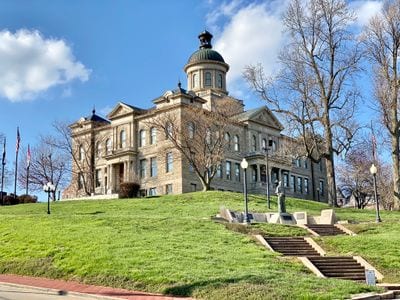
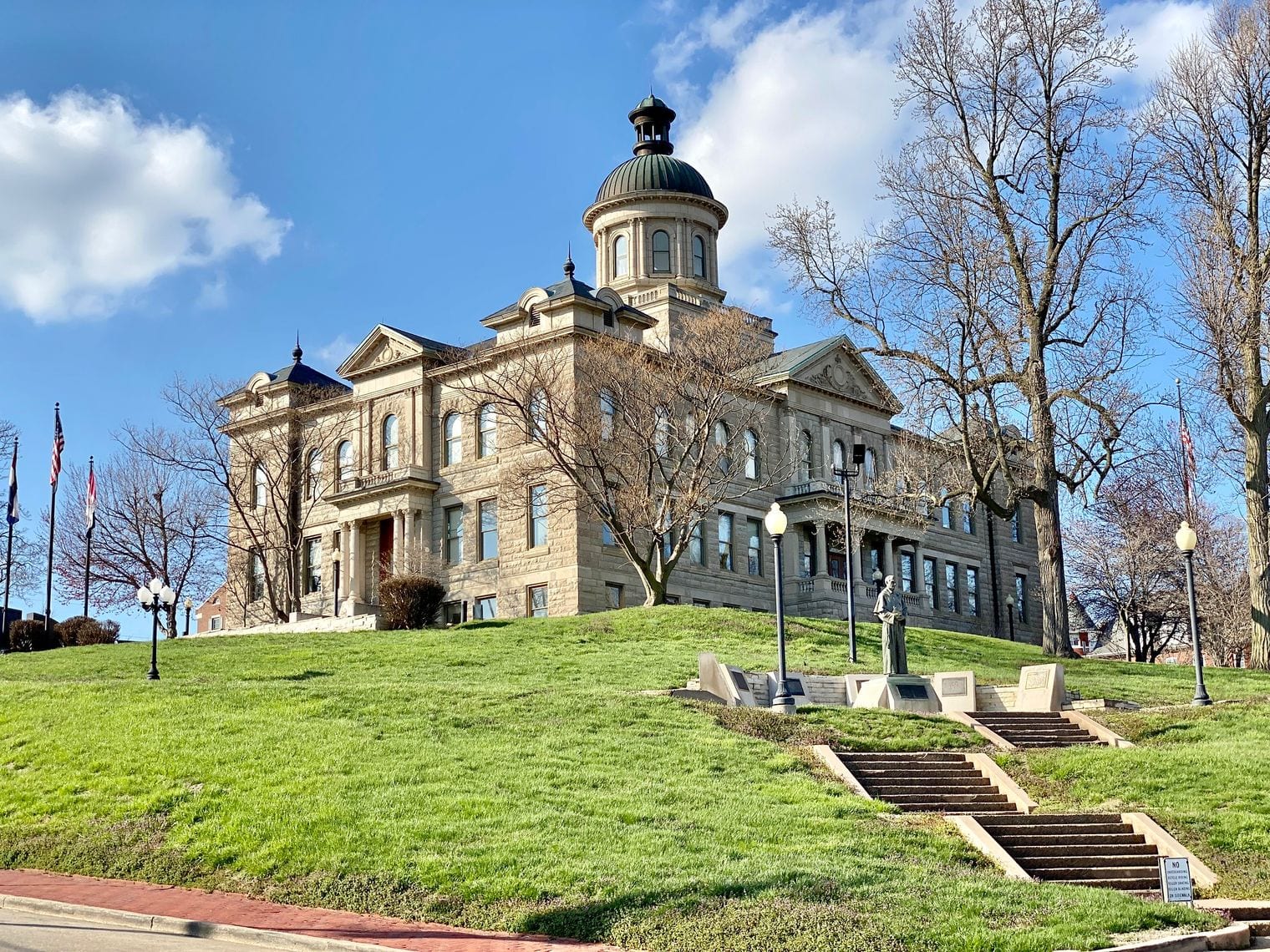
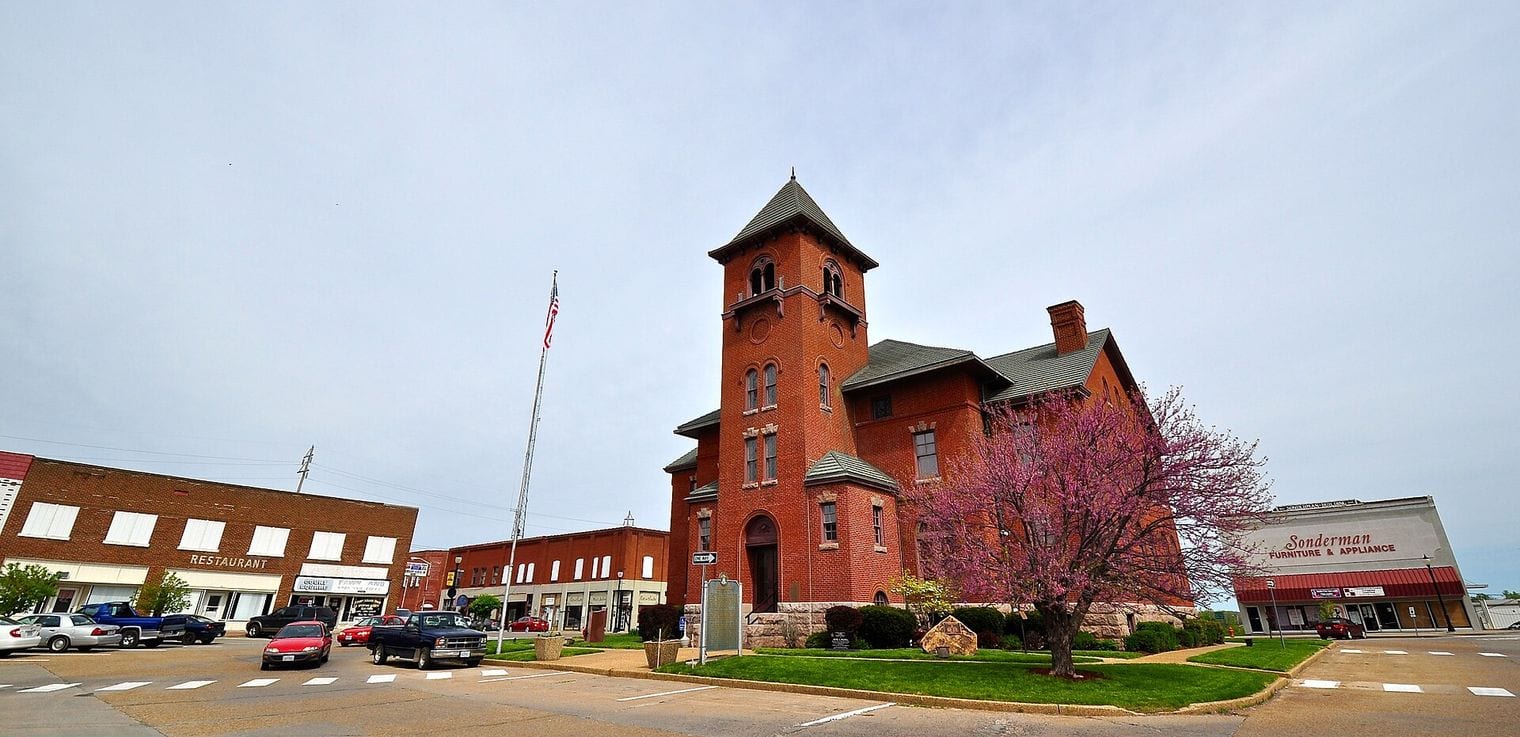
Carthage, the Jasper County seat in southwest Missouri, was largely burned by guerrillas during the Civil War, and it rebuilt with a flourish, pouring new wealth into ornate Victorian homes, many of them now in the Carthage South District. Its centerpiece is the Romanesque Revival Jasper County Courthouse, built in 1894–95 of local stone hard enough to be polished into “Carthage marble,” with a mural of county history inside.
The Battle of Carthage, fought on July 5, 1861, is remembered at a state historic site in town, and Route 66 once ran through here; the 66 Drive-In theater, opened in 1949, was revived in 1998. Carthage, nicknamed “America's Maple Leaf City,” also hosts Marian Days each summer, a large gathering of Vietnamese American Catholics that has been held here since 1978, and it makes a good stop on the way to Branson or the Route 66 towns farther east.
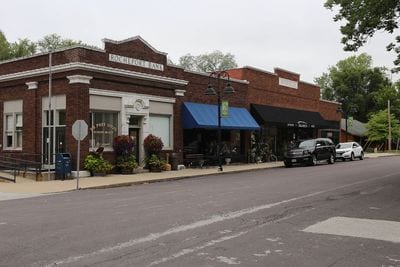
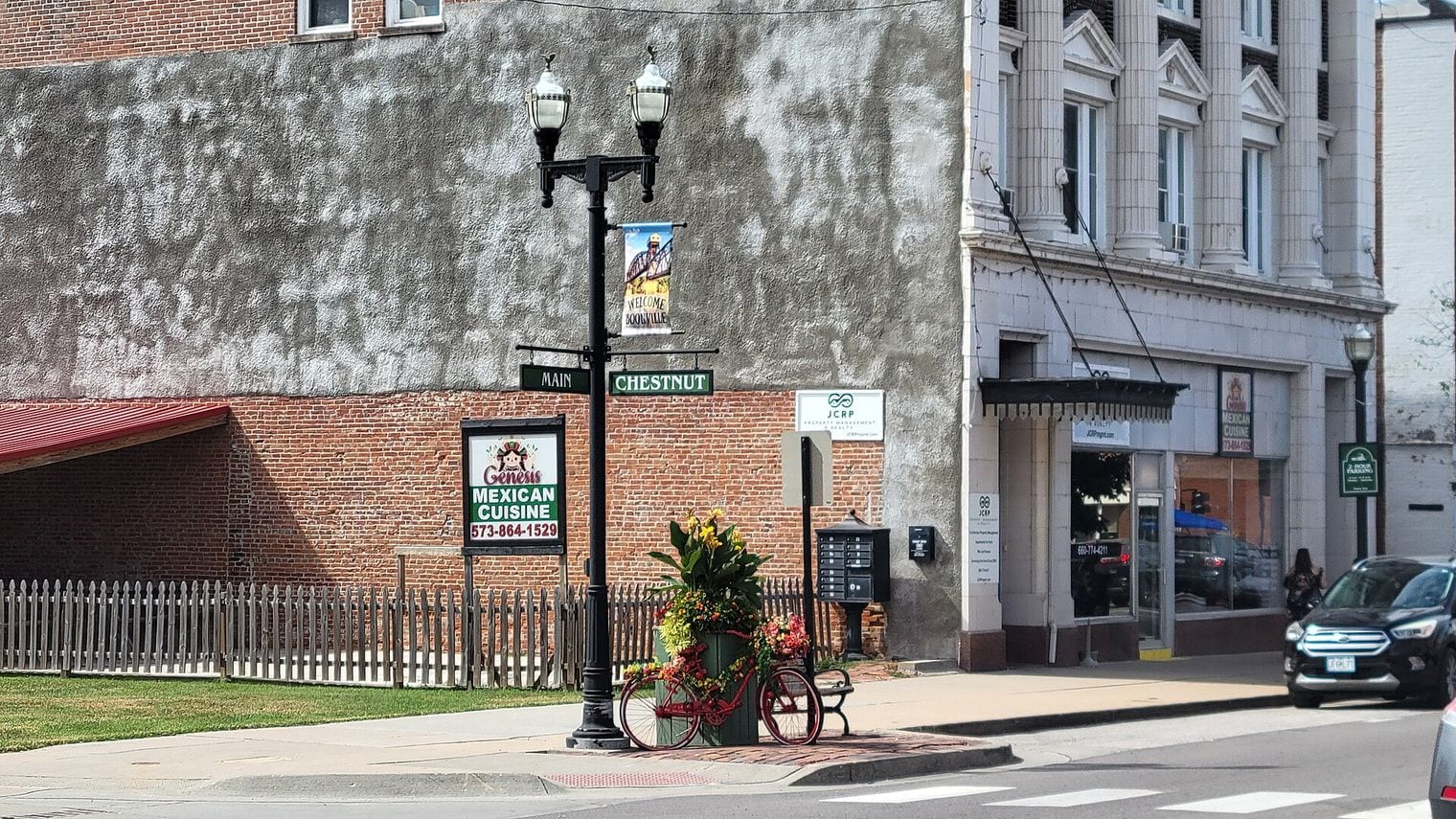
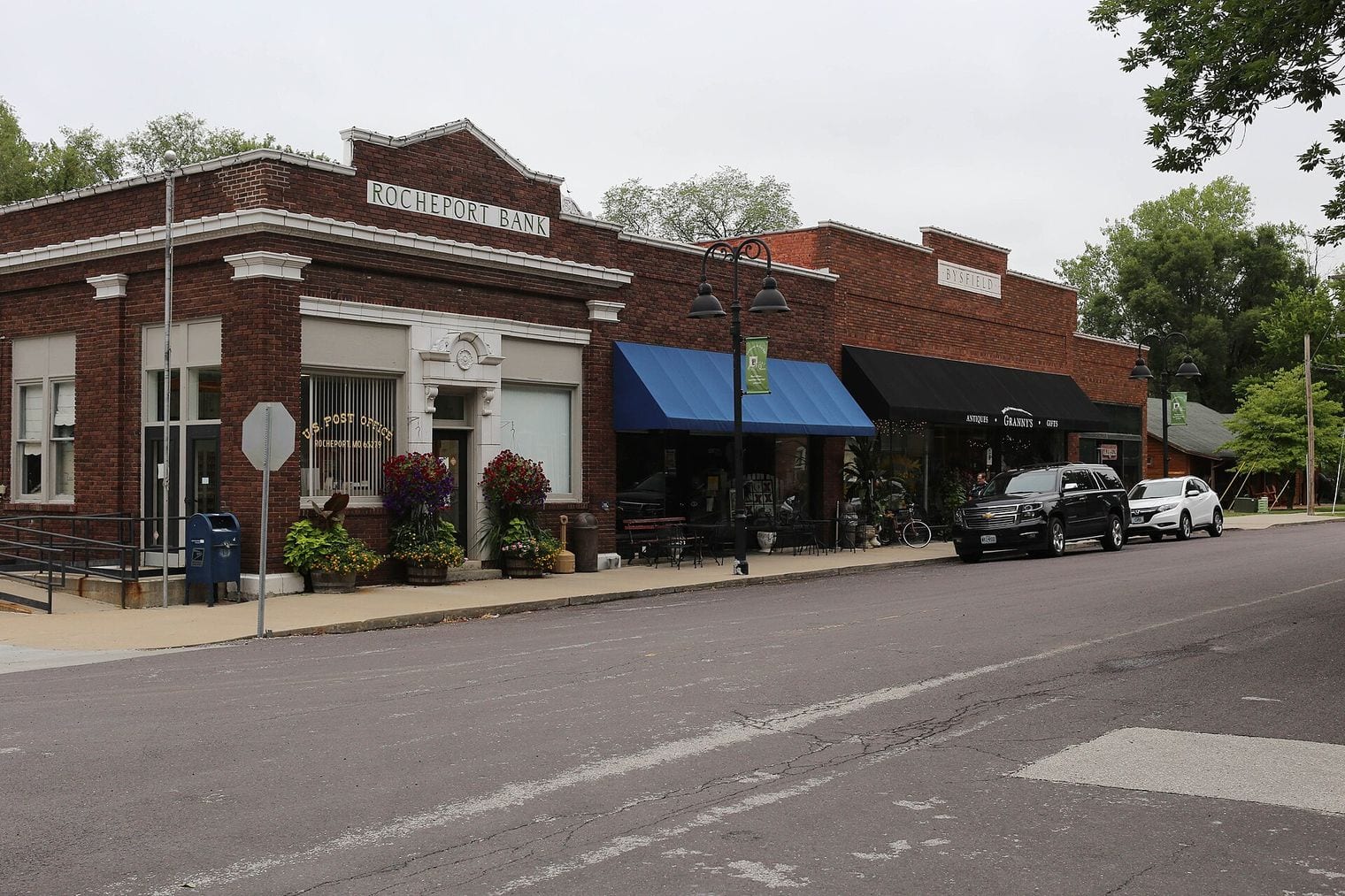
Rocheport, whose French name means “rocky port,” is a village of about 200 people tucked beneath the bluffs where Moniteau Creek meets the Missouri River. Lewis and Clark reached this spot in June 1804, and William Clark noted the Native American pictographs on the cliffs in his journal. The Rocheport Historic District preserves buildings dating from the 1830s, and the village's few small streets are made for an unhurried browse.
This is where the Katy Trail began: the first segment of the rail trail opened at Rocheport in 1990, and the route still runs along the river past the village and the old railroad tunnel, the only one on the line, blasted through the bluff in the early 1890s. Ride or walk the flat trail beside the water, then finish with a glass at the blufftop winery above the village, whose terraces look out over the Missouri River valley.
Theodore Kimm platted Kimmswick on the Mississippi River south of St. Louis in 1859, and the tiny town, home to little more than a hundred people, has kept much of its old look. The Kimmswick Historic District takes in dozens of homes and commercial buildings put up between the town's founding and the early 20th century, from 1850s houses to a brewery and the old post office.
Today those buildings hold antique stores, gift shops and cafés, and the town's biggest event is the Apple Butter Festival each October, when apple butter is cooked in kettles over wood fires and the streets fill with crafts and food. Nearby, Mastodon State Historic Site protects the Kimmswick Bone Bed, where in 1979 scientists found a stone spear point made by Clovis hunters alongside mastodon bones, and its museum makes an easy add-on to a visit.
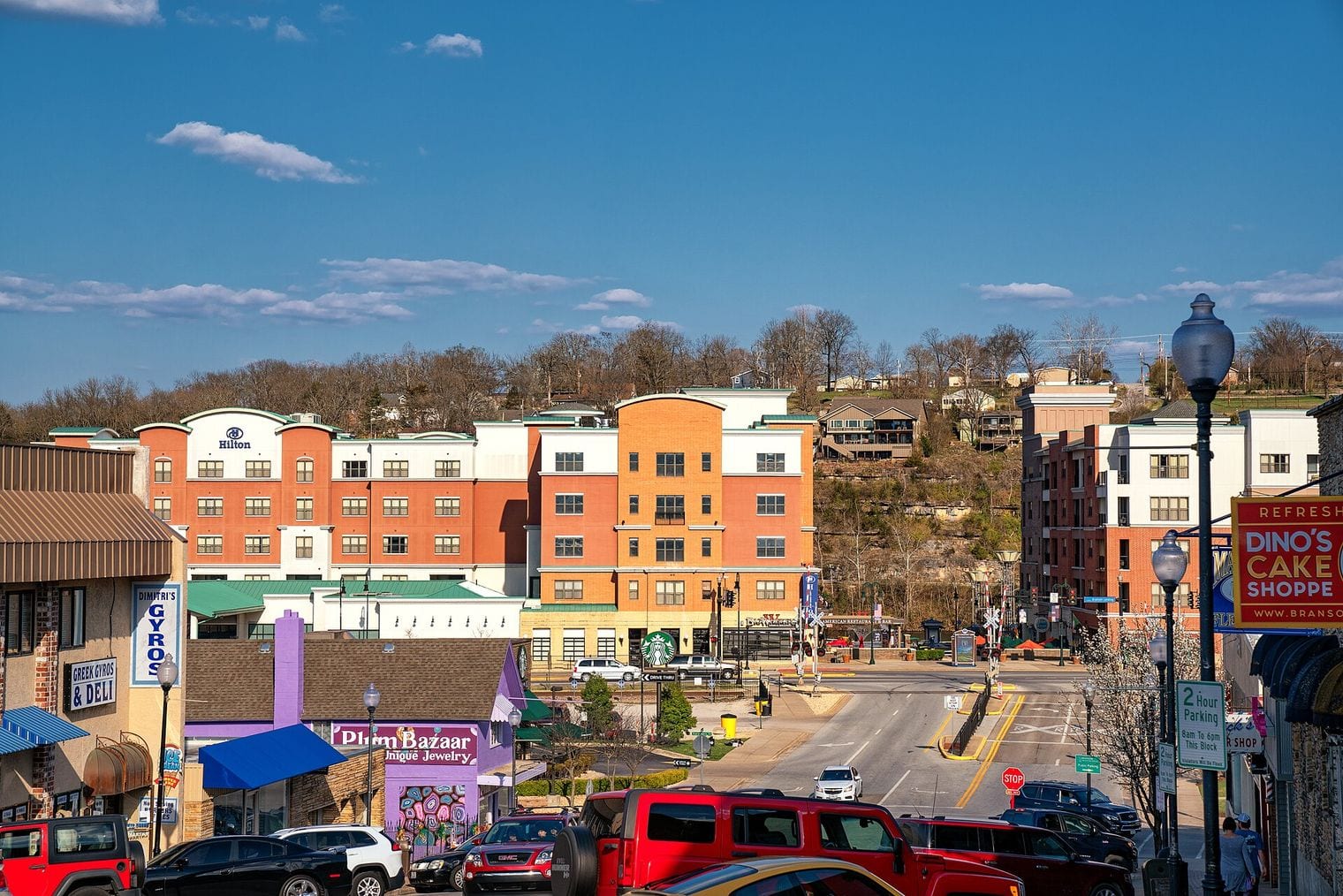
Branson has drawn vacationers to the Ozark Mountains for more than a century, first thanks to Harold Bell Wright's bestselling novel The Shepherd of the Hills and the lakes created by dams on the White River, then for its live music. The Baldknobbers started the town's first music show in the early 1960s, and theaters now line 76 Country Boulevard, the famous Strip, with variety, country and gospel shows.
Downtown, Branson Landing runs along the Lake Taneycomo waterfront with a boardwalk, shops and a fountain show, and the lake's cold water below Table Rock Dam is known for trout fishing. Silver Dollar City, an 1880s-themed park that opened in 1960 around the old Marvel Cave, lies west of town near Branson West, and Table Rock Lake is close by for boating and swimming. Branson suits families who want shows, rides and lake days in one trip.
Parkville was platted on the Missouri River in 1844 and named for settler George S. Park, who later donated the land for the college that bears his name, and today it sits just northwest of Kansas City. Its small historic downtown is known for antique shops and art galleries, and English Landing Park stretches along the river with walking trails and picnic spots.
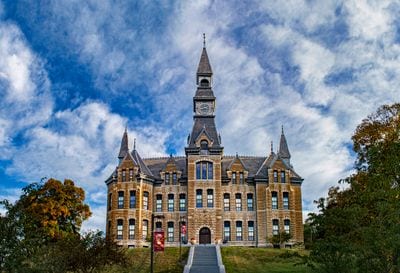
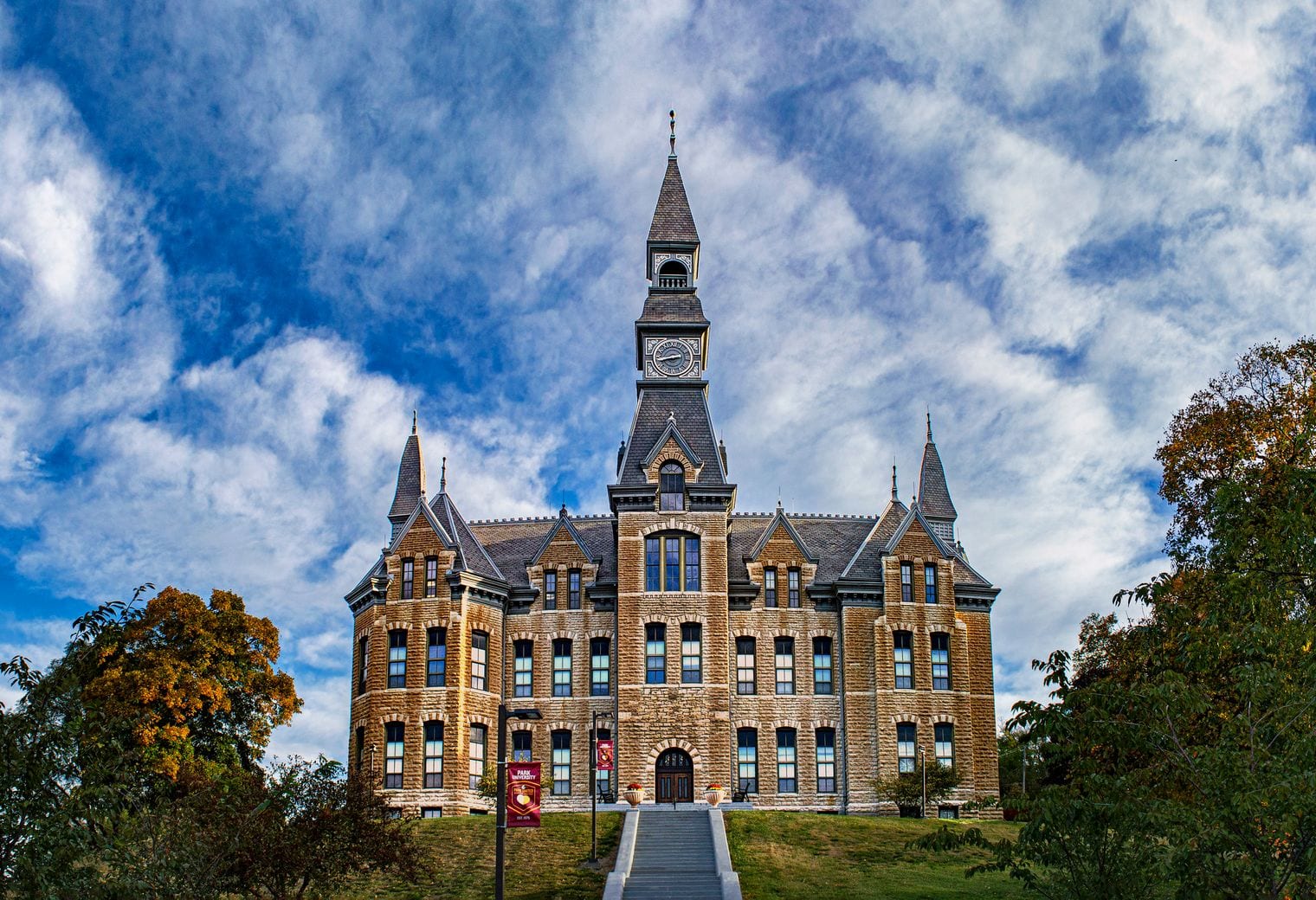
Above town, Park University's Mackay Hall dominates the hillside, built of limestone quarried on the campus and raised with the labor of students, who in the college's early years worked on the school's farm and in its shops in exchange for tuition and board. The campus makes a pleasant walk, and Parkville is an easy half-day out from downtown Kansas City for a riverside stroll and a browse through its shops.
Washington stretches along the south bank of the Missouri River about 50 miles west of St. Louis, and the German families who began arriving in the 1830s shaped the 19th-century architecture of its historic downtown, where hundreds of buildings are listed on the National Register of Historic Places.
The town also calls itself the corncob pipe capital of the world: Missouri Meerschaum, founded in 1869 and the oldest and largest maker of corncob pipes anywhere, still works from its factory on the riverfront.
Walk the riverfront and the downtown streets, then use Washington as a base for the wineries of the Missouri River valley, including the Augusta wine district on the north side of the river, which became the nation's first American Viticultural Area. Washington also has an Amtrak station, which makes it an easy car-free day trip from St. Louis.
Free printable checklist of all 30 places
Tick them off as you go. Confirm your email to download it, plus one email every Thursday with new guides for the places you tick.
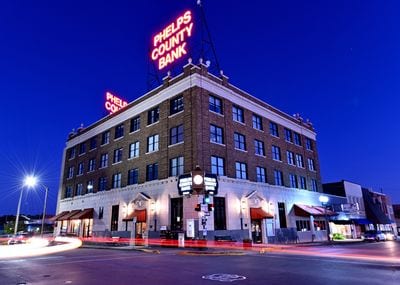
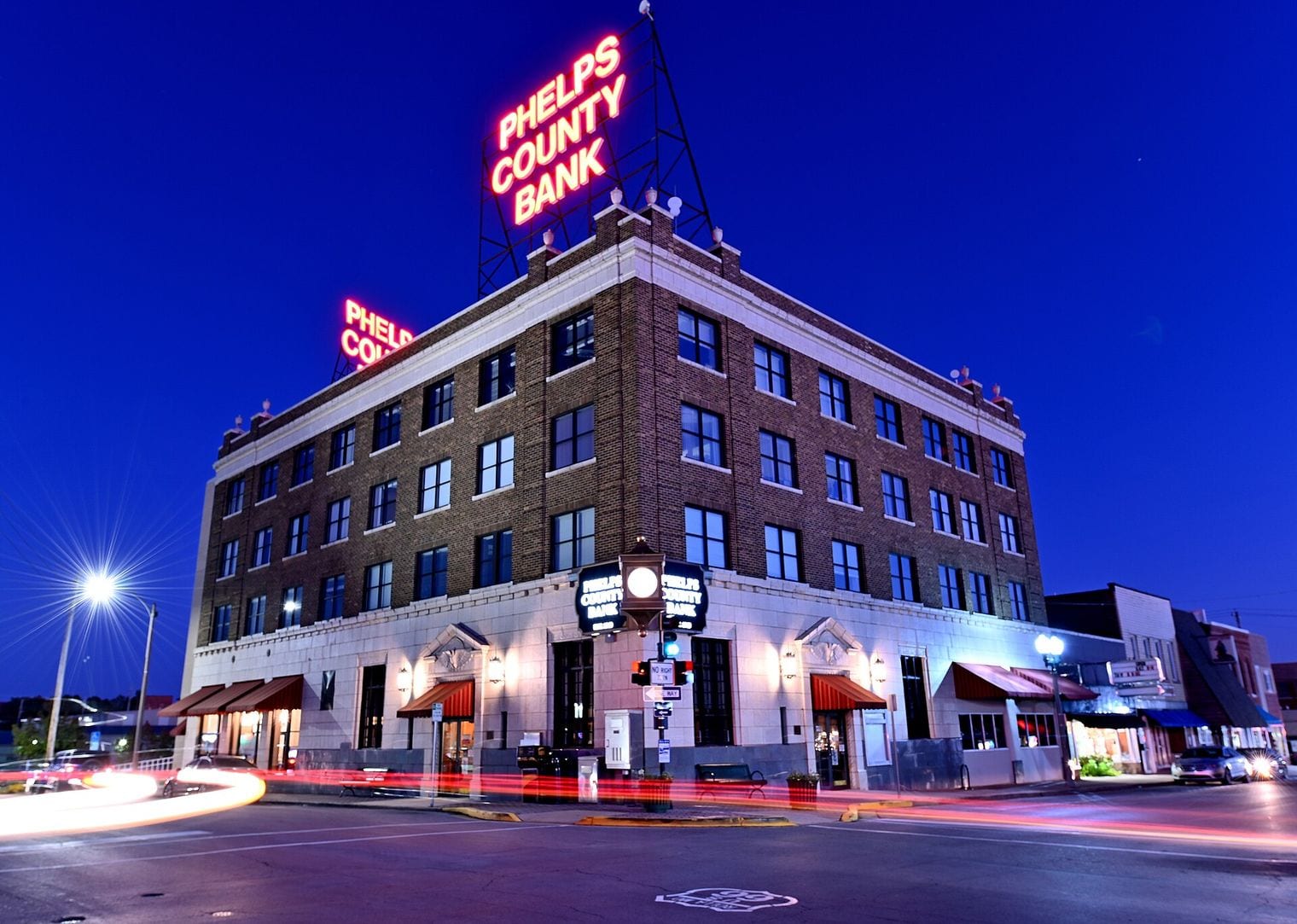
Rolla was established in 1858 as the railroad pushed southwest from St. Louis, and it later became a Route 66 town, roughly halfway between St. Louis and Springfield. Its identity comes from Missouri University of Science and Technology, founded in 1870 as the Missouri School of Mines and Metallurgy, and the Phelps County seat is also home to the headquarters of the Mark Twain National Forest, whose woods and rivers spread across the surrounding Ozarks.
The campus has a quirky landmark: a partial reconstruction of Stonehenge, dedicated on the summer solstice of 1984, with a ring of 30 granite stones around five trilithons, cut with the university's own high-pressure water jets. Rolla also lies in the Ozark Highlands wine region, where Italian immigrants planted the first vineyards, and it makes a practical stop for Route 66 travelers heading into the hills.
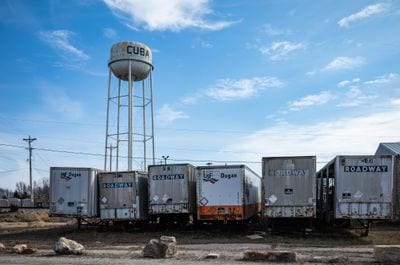
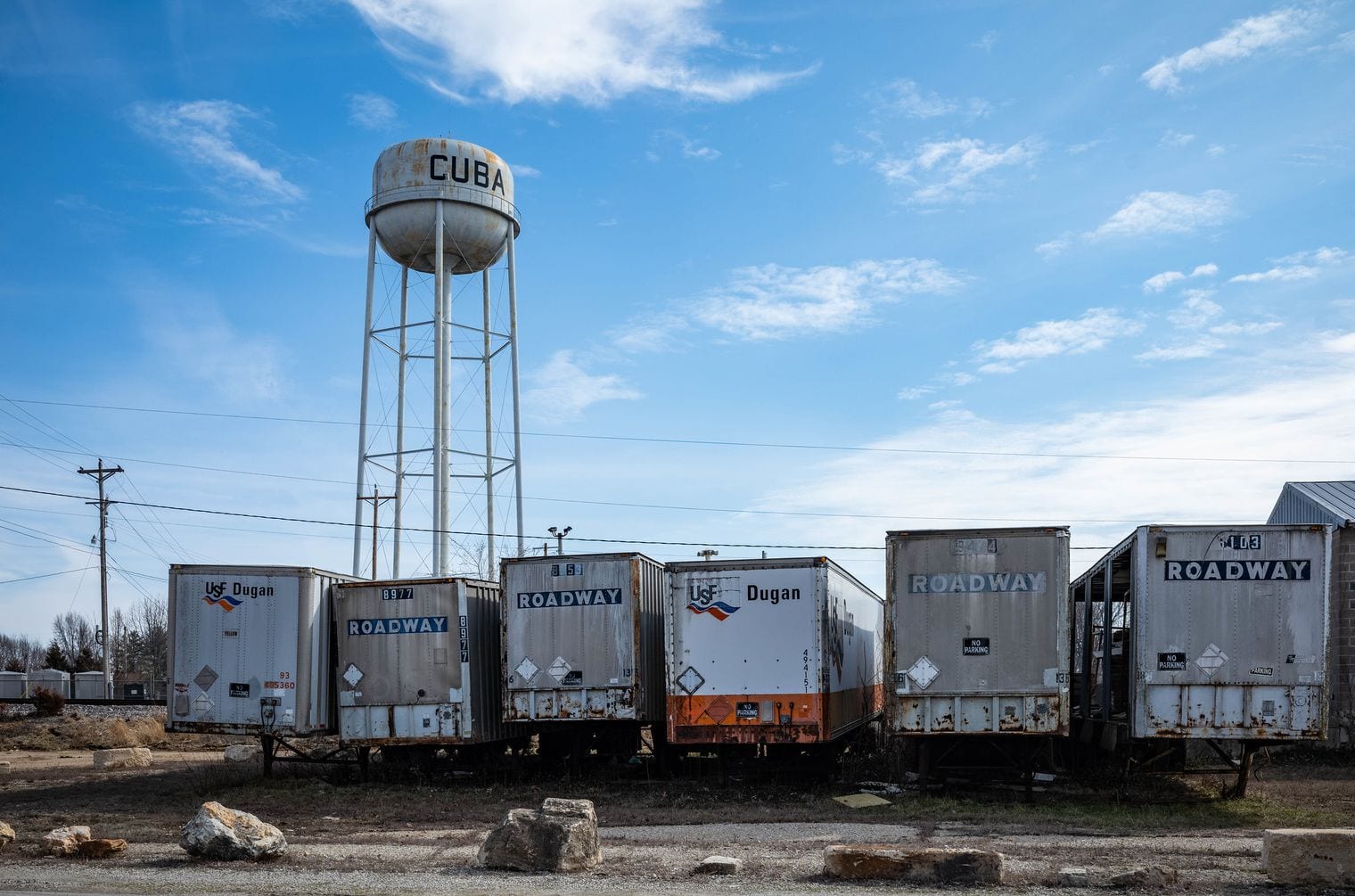
Cuba was platted in 1857, when it was clear the railroad was coming, and it later became a fixture on Route 66. The Missouri legislature designated it the Route 66 Mural City in recognition of the outdoor murals that the local Viva Cuba group commissioned along the old highway, and the paintings tell local stories, including visits to town by Amelia Earhart and Bette Davis.
Walk the murals downtown, then look for one of the oldest motor courts on Route 66 on the east side of town, a cluster of Tudor Revival cottages built of local Ozark sandstone in the 1930s that has served travelers ever since and is listed on the National Register of Historic Places. Cuba is the largest town in Crawford County and an easy stop between St. Louis and the Ozarks for anyone driving the Mother Road.
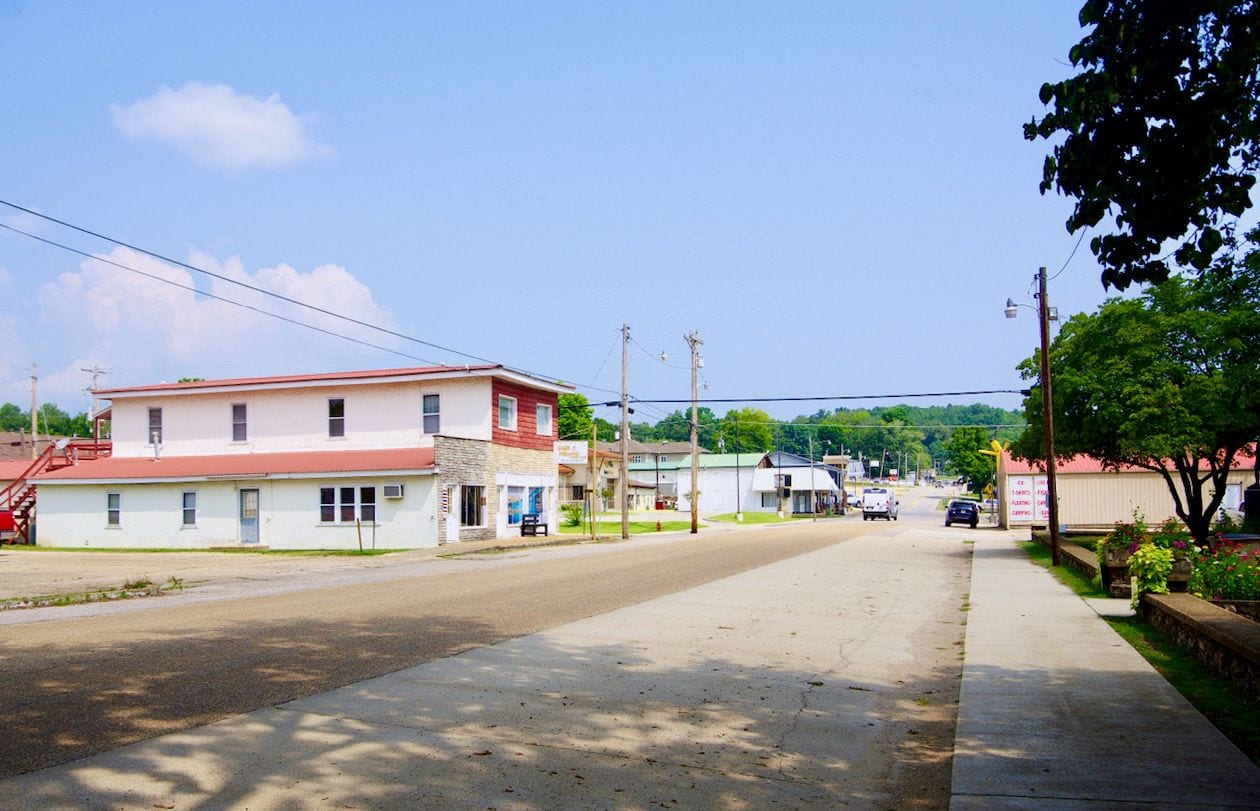
Van Buren, the Carter County seat with fewer than a thousand residents, sits on the Current River in the heart of the Ozarks, and it was founded in 1833 and named for Martin Van Buren, then vice president of the United States. The town is home to the administrative offices of the Ozark National Scenic Riverways, and it is a favorite starting point for floating the clear, spring-fed river by canoe, kayak or tube.
The great sight is nearby Big Spring, about four miles downstream, one of the largest springs in the United States, which wells up at the foot of a bluff and pours a torrent of cold water into the Current River. The Mark Twain National Forest surrounds the town with hiking, camping and scenic drives, making Van Buren a quiet base for a few days on the water.
Sedalia grew into a railroad hub after the Civil War, when it served as a railhead for the great Texas cattle drives, and in the 1890s its clubs gave a stage to the ragtime pianist Scott Joplin, whose Maple Leaf Rag of 1899 is forever tied to the town. The Scott Joplin International Ragtime Festival honors him, and since 1901 Sedalia has also been home to the Missouri State Fair, held each August.
Start at the Katy Depot, an 1896 Missouri–Kansas–Texas Railroad station restored as the town's welcome center, with heritage exhibits and a trailhead on the Katy Trail. From there, explore the historic commercial district downtown, and in late summer join the crowds at the state fairgrounds for livestock shows, concerts and fair food.
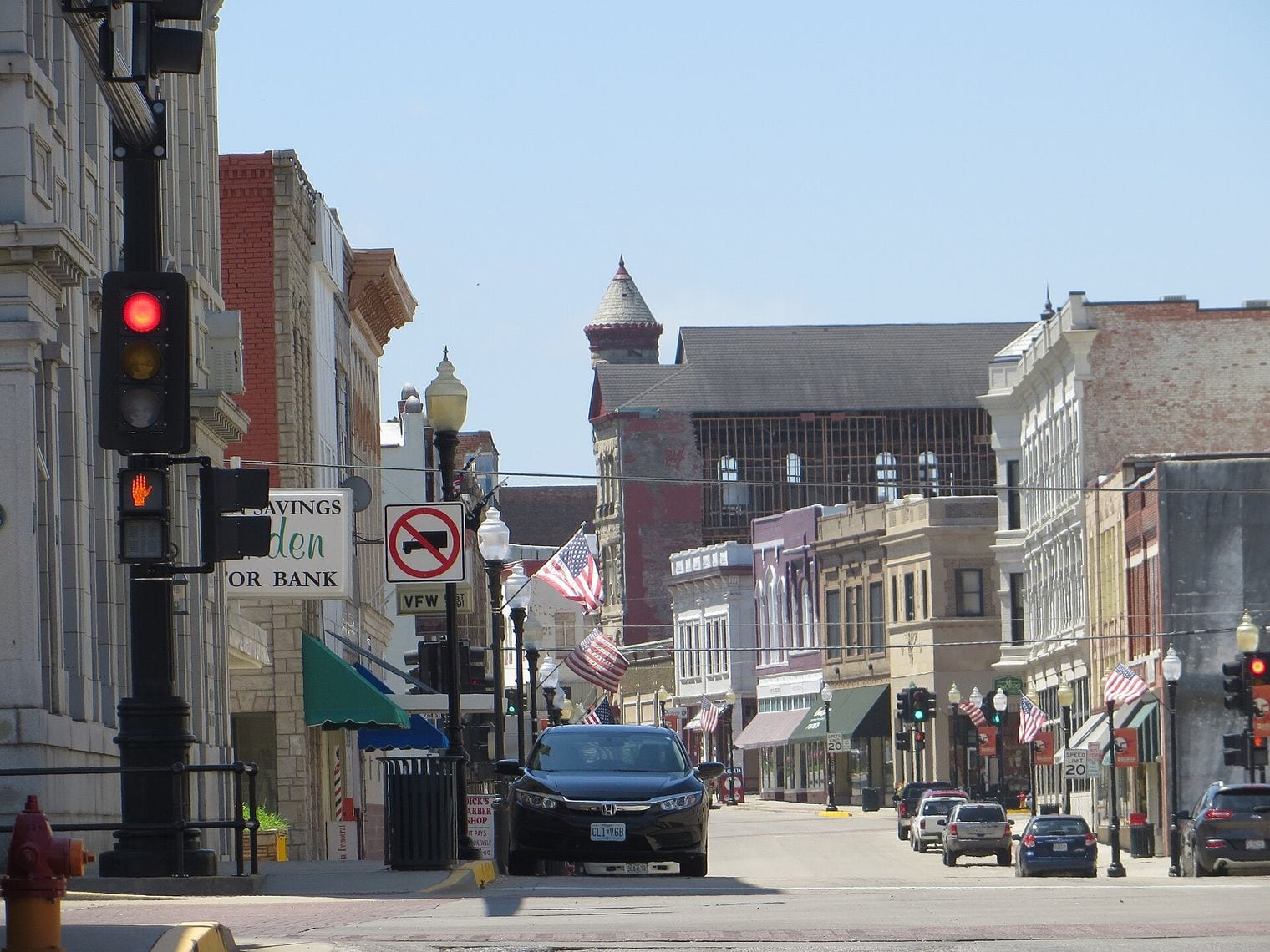
Lexington was platted in 1822 beside a Missouri River ferry about 40 miles east of Kansas City, and the hemp, tobacco and steamboat trade made it rich; the town still has more than 150 homes and public buildings that predate the Civil War. The Greek Revival Lafayette County Courthouse, built in 1847 and often called the oldest courthouse in continuous use west of the Mississippi, still has a Civil War cannonball lodged in one of its columns.
That cannonball dates from the Battle of Lexington in September 1861, also known as the Battle of the Hemp Bales, when Confederate troops pushed bales of hemp ahead of them as moving breastworks up the river bluffs. The Battle of Lexington State Historic Site preserves the battleground, with a short loop trail and tours of the Oliver Anderson mansion, and the town's historic streets reward a slow walk or drive.
New Haven began life as Miller's Landing, platted in 1855 on the Missouri River, and it sits in the Missouri Rhineland between Hermann, about 13 miles to the northwest, and Washington, about 11 miles to the east. Its commercial and residential historic districts preserve the buildings of a 19th-century river town, and the small downtown makes a quiet, unhurried stop.
New Haven lies within the Hermann wine region, with wineries in the hills nearby, so it makes a calmer base than its better-known neighbors for a wine-country weekend. The German heritage runs deep here too: the town is a sister city of Borgholzhausen in Germany, and the drive along the river valley between New Haven and Hermann is one of the prettiest in the region.
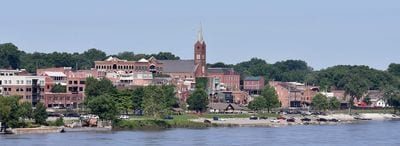
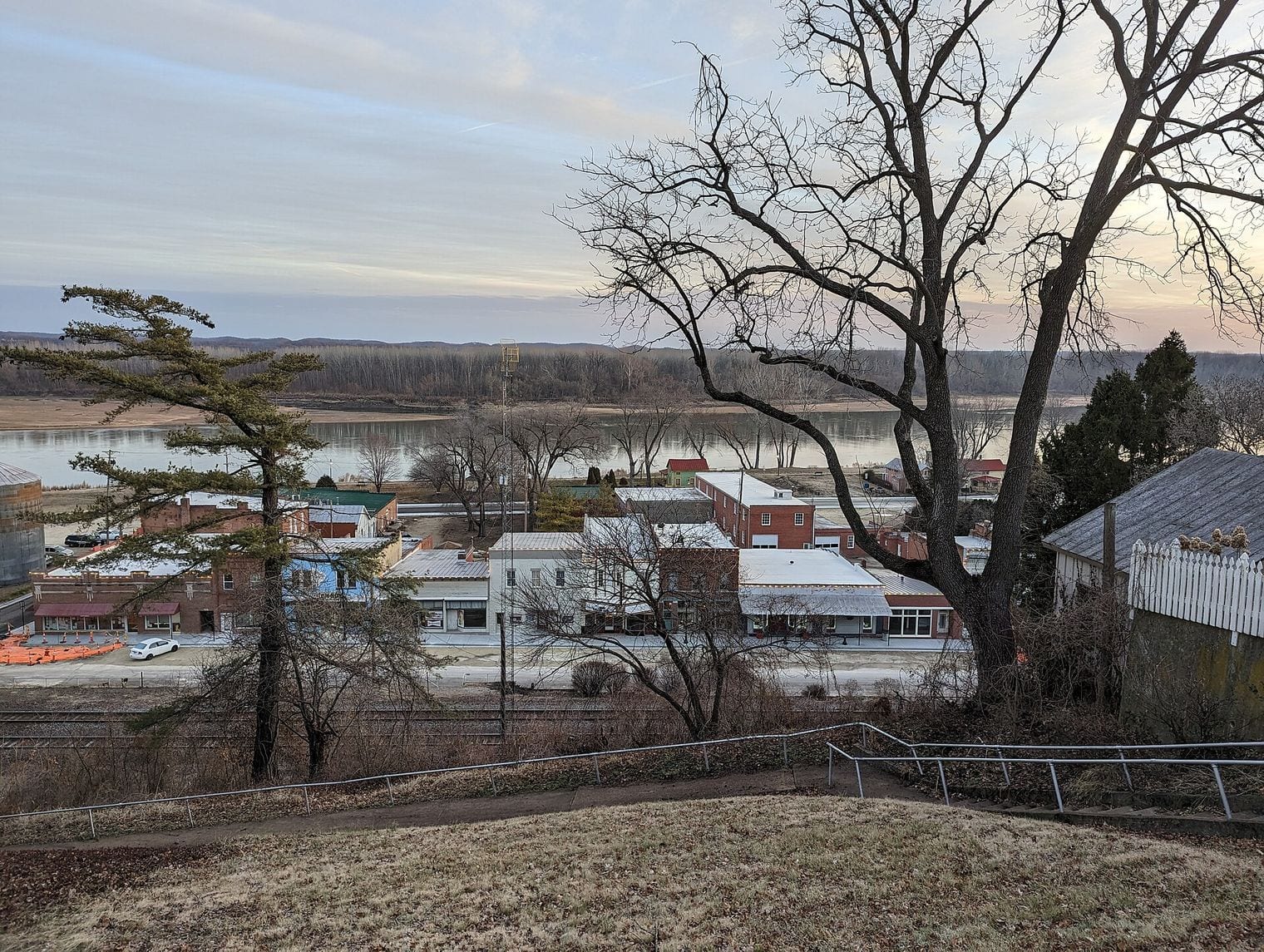
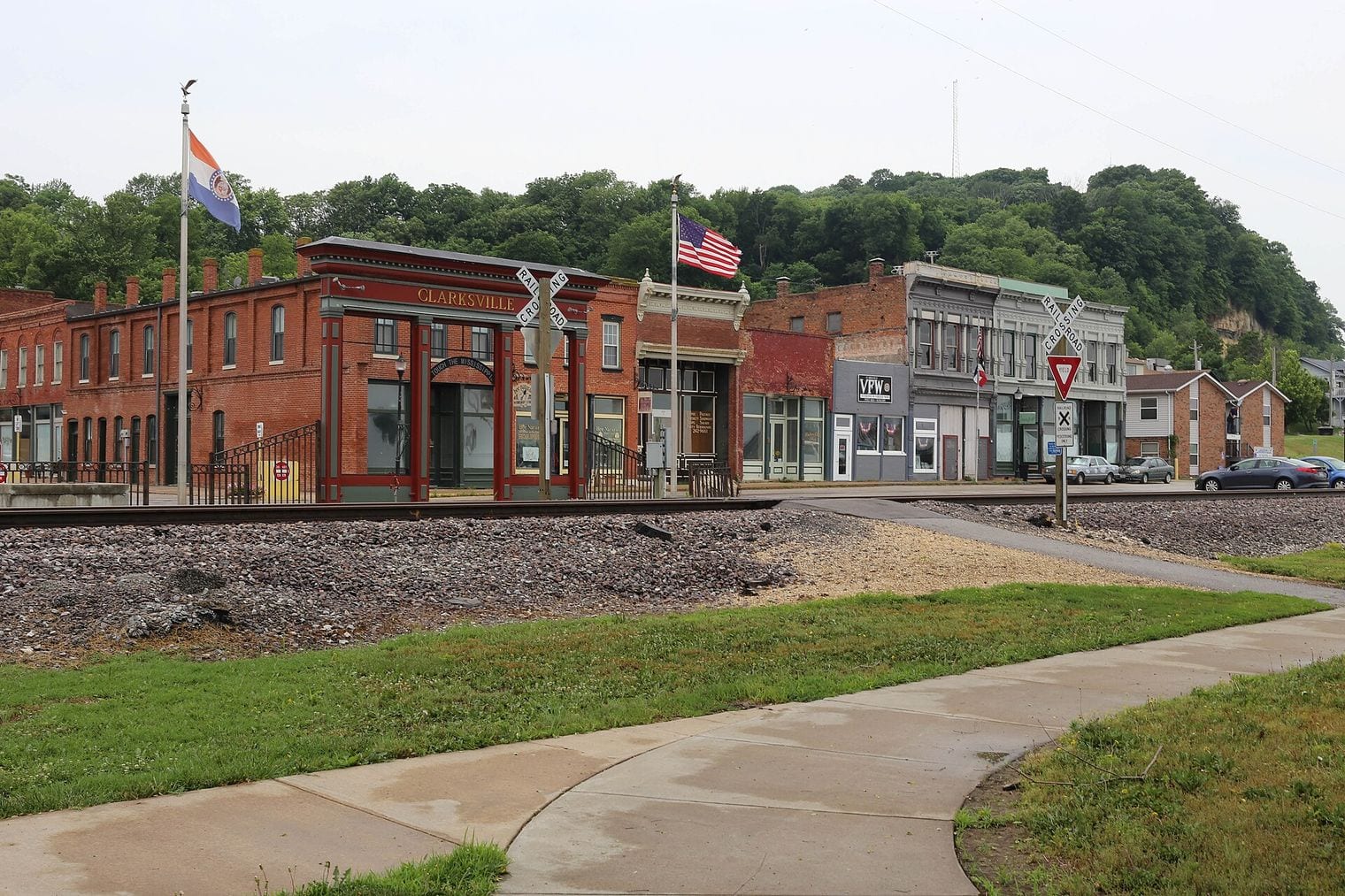
Clarksville, a Mississippi River town of fewer than 400 people in Pike County, was platted in 1819 and named for William Clark of the Lewis and Clark Expedition, who was then governor of the territory. Its 19th-century storefronts and homes, protected in the Clarksville Historic District, sit beside the river on Route 79, about nine miles southeast of Louisiana, Missouri.
Right by town, Lock and Dam No. 24 lifts river traffic around the dam, and the Army Corps of Engineers runs a visitor center beside it, where you can watch barges lock through. In winter, bald eagles gather along the river here, and the town celebrates with an annual Eagle Days weekend of eagle watching and bird programs, organized with the Missouri Department of Conservation.
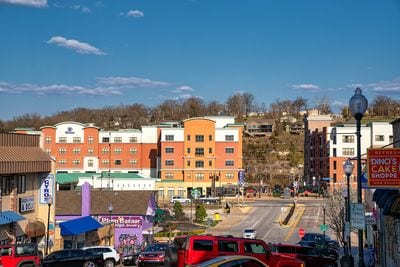
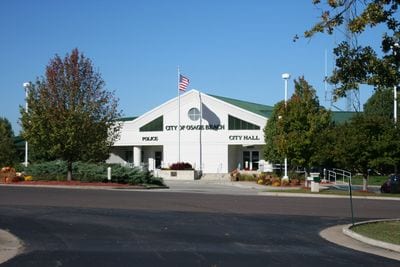
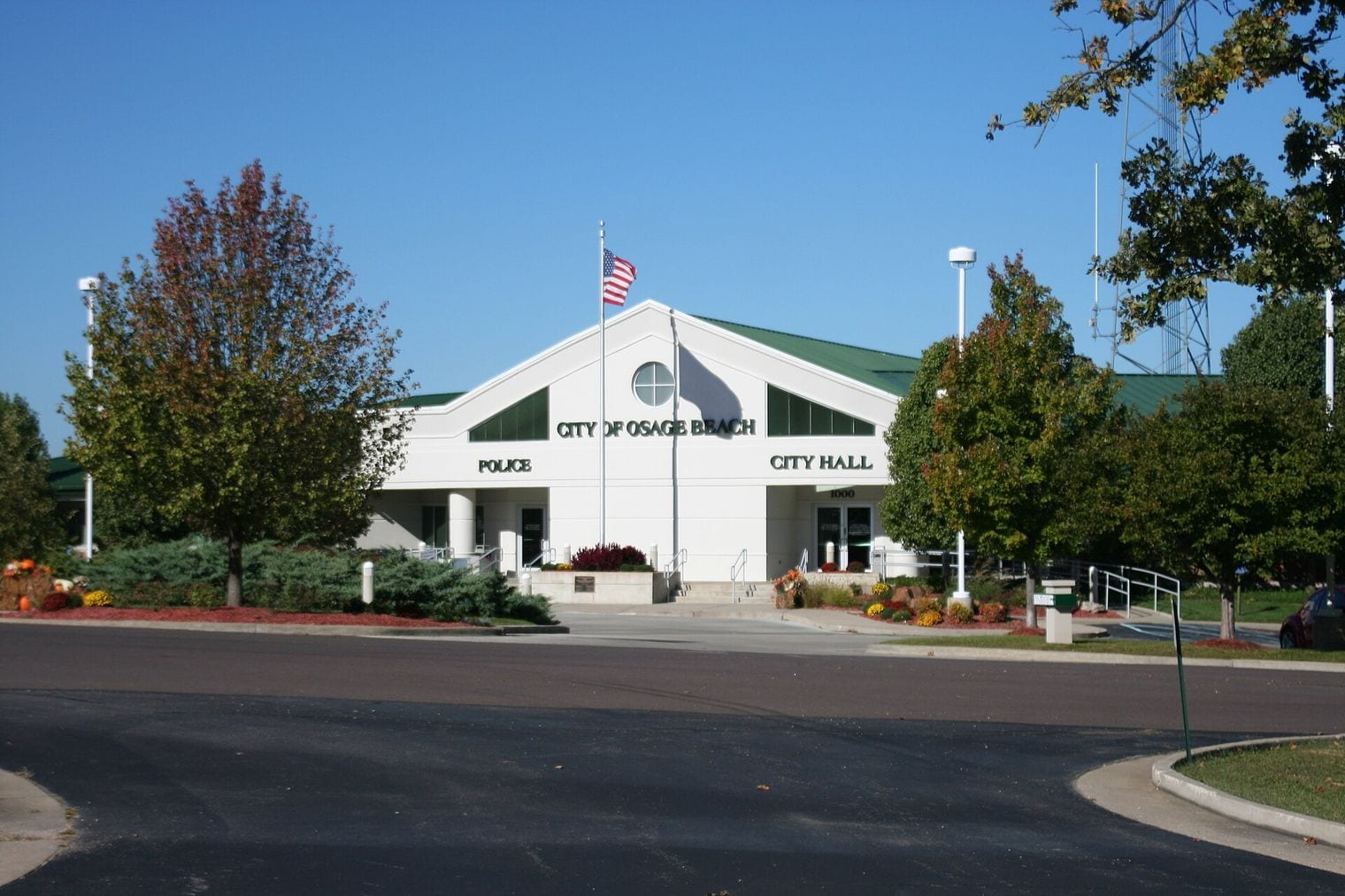
When Bagnell Dam was completed on the Osage River in 1931, it created the Lake of the Ozarks, a winding reservoir with about 1,150 miles of shoreline, and Osage Beach grew up in the middle of it as a resort town of marinas, lodges and lakeside restaurants. Incorporated in 1965, it is now a regional commercial hub as well, with outlet shopping and plenty of boat rentals.
Right next door, Lake of the Ozarks State Park is the largest state park in Missouri, with 85 miles of shoreline, two swimming beaches, a dozen trails and the Ozark Caverns. For a dramatic detour, Ha Ha Tonka State Park, about five miles south of Camdenton, preserves the stone ruins of an early 20th-century mansion modeled on European castles.
In 1892 Dr. Andrew Taylor Still opened the world's first school of osteopathic medicine in Kirksville, and this northeast Missouri town is still home to A.T. Still University, whose Museum of Osteopathic Medicine holds tens of thousands of artifacts, documents and books on the field. Kirksville is also a lively college town, home to Truman State University, and its courthouse square downtown is listed as a historic district.
Two miles west of town, Thousand Hills State Park wraps around Forest Lake, with swimming, fishing, boating and trails for hiking and biking, while an enclosed shelter protects a series of Native American petroglyphs carved into the rock. Kirksville makes a good base for exploring the farm country and small towns of northern Missouri.
Excelsior Springs owes its existence to water. In 1880 a farmer named Travis Mellion found that water from a spring by the Fishing River seemed to cure his ailing daughter, and within months a town was laid out to share the cure; its name comes from a popular Longfellow poem. For decades visitors came to drink and bathe in its mineral waters, and the town grew into a busy health resort.
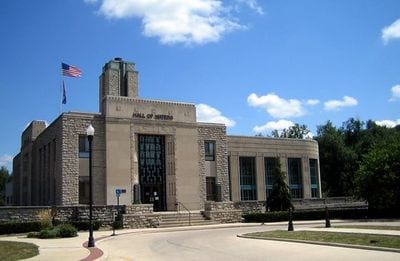
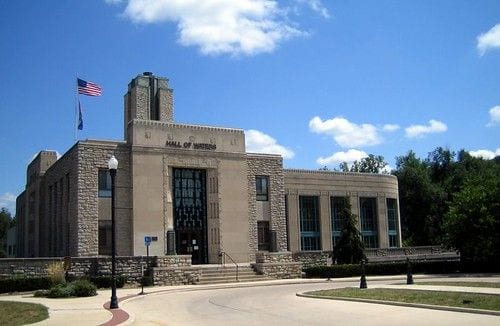
The Hall of Waters, built in 1936–37 as a Public Works Administration project, is its Art Deco showpiece, once home to mineral baths and a bottling plant and now serving as city hall, with a visitor center inside. The historic downtown around it, about 30 miles northeast of Kansas City, is a pleasant place for an afternoon and an easy half-day out from the city.
Perry, a farm town of about 650 people in Ralls County, was platted in 1866, and it calls itself the southern gateway to Mark Twain Lake, the large reservoir on the Salt River right on its doorstep. Its downtown has been restored, and its old buildings now hold a cluster of antique and specialty shops that have made Perry a destination for collectors since the lake opened in the 1980s.
Spend a morning browsing, then head for the water: Mark Twain Lake is popular for boating, fishing and camping, and Mark Twain State Park sits beside the Mark Twain Birthplace State Historic Site at Florida, where the two-room cabin in which Samuel Clemens was born in 1835 is preserved inside a museum. Hannibal and its Twain sites are within easy reach for a longer trip.
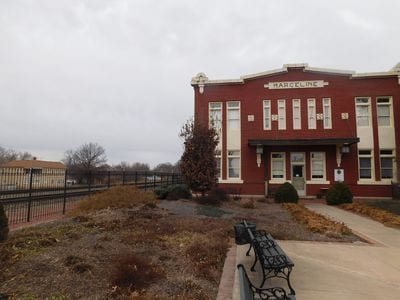
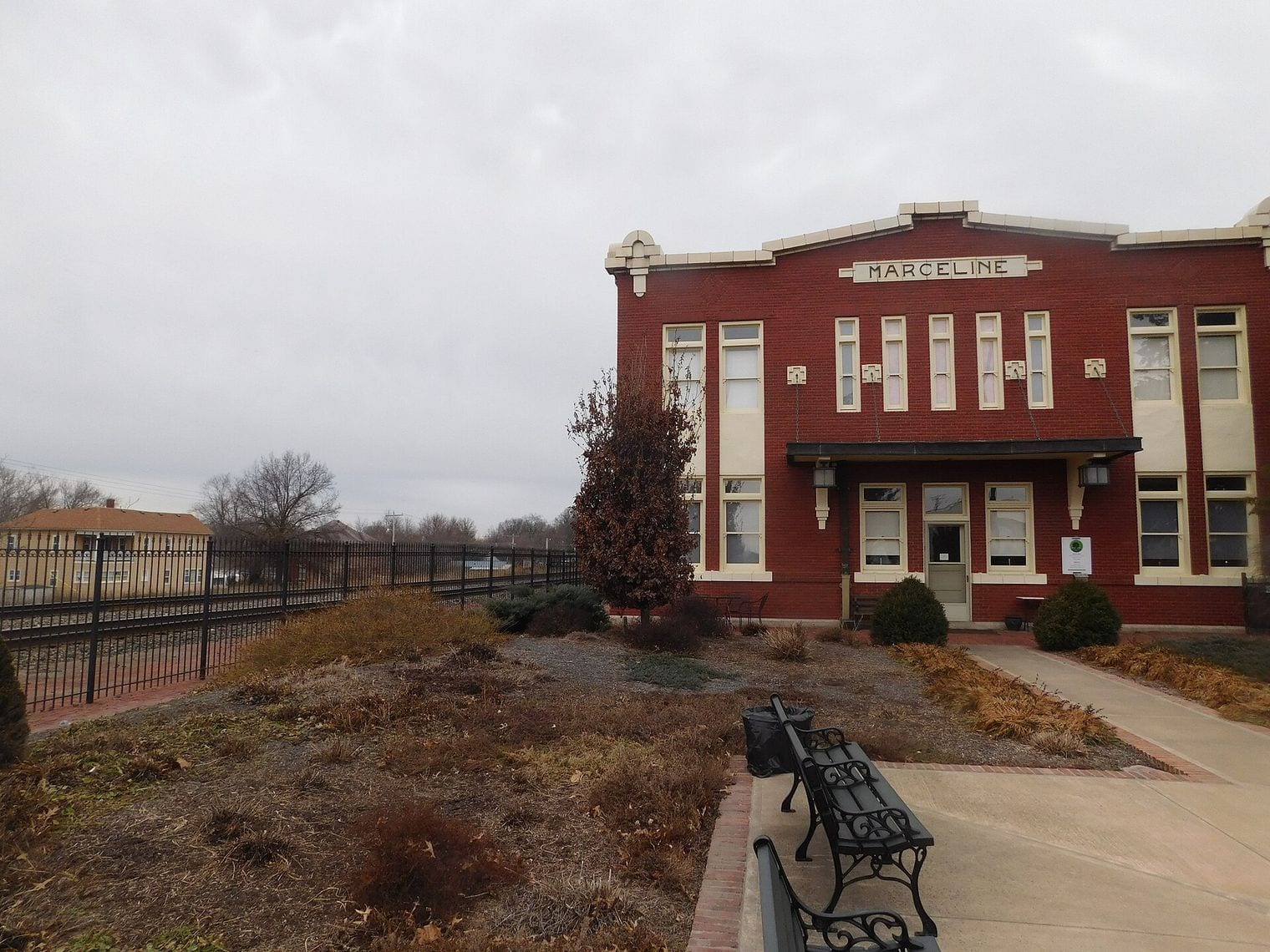
Walt Disney spent several boyhood years on a family farm near Marceline, a railroad town founded on the Santa Fe line in 1888, and he never forgot it. The town is widely credited as the inspiration for Main Street, U.S.A., the turn-of-the-century street that greets visitors at Disney parks around the world, and its own main street still has the look of a small Midwestern railroad town.
The Walt Disney Hometown Museum, in the restored Santa Fe depot, displays Disney family letters and photographs, Walt's wooden school desk and a car from the Midget Autopia ride that Disneyland donated to the town, which ran it in a local park for years. Walk the main street afterward and judge the resemblance for yourself.
Farmington, the St. Francois County seat, was established in 1822 as Murphy's Settlement and grew in the 19th century thanks to a plank road that ran from Pilot Knob to Ste. Genevieve, before lead mining shaped the surrounding Lead Belt. Its Courthouse Square Historic District keeps a classic county-seat downtown of shops and restaurants, and the town's parks make it an easy, comfortable stop.
Just outside the city limits, St. Joe State Park covers more than 8,000 acres of former mining land, with swimming, off-road vehicle trails, paths for hiking, biking and horseback riding, and the Missouri Mines State Historic Site, whose old mill buildings hold a museum of geology and mining. Farmington makes a handy base for the St. Francois Mountains, with Fredericktown, also on this list, about 18 miles to the south.
Eminence, the Shannon County seat with only about 500 residents, sits in the center of the Ozark National Scenic Riverways, which in 1964 became the first national park area created to protect a river system. The Jacks Fork runs past town and joins the Current River just downstream, and in summer Eminence turns into a small resort town and a base for canoeing, kayaking, tubing and horseback trail riding.
Six miles west on Route 106, Alley Spring pours out beside the bright red Alley Mill, now an Ozarks history museum, with a one-room schoolhouse and a general store nearby. Below Alley Spring the Jacks Fork is gentle enough to float all year, and the drive between the springs and Eminence is classic Ozark scenery of wooded hills and clear water.
Westphalia was platted in 1835 by German settlers, many of them from the Westphalia region of Germany, and the village about 12 miles southeast of Jefferson City has held on to its heritage. Many of its buildings show the influence of 19th-century German architecture, and its street signs are posted in both English and German.
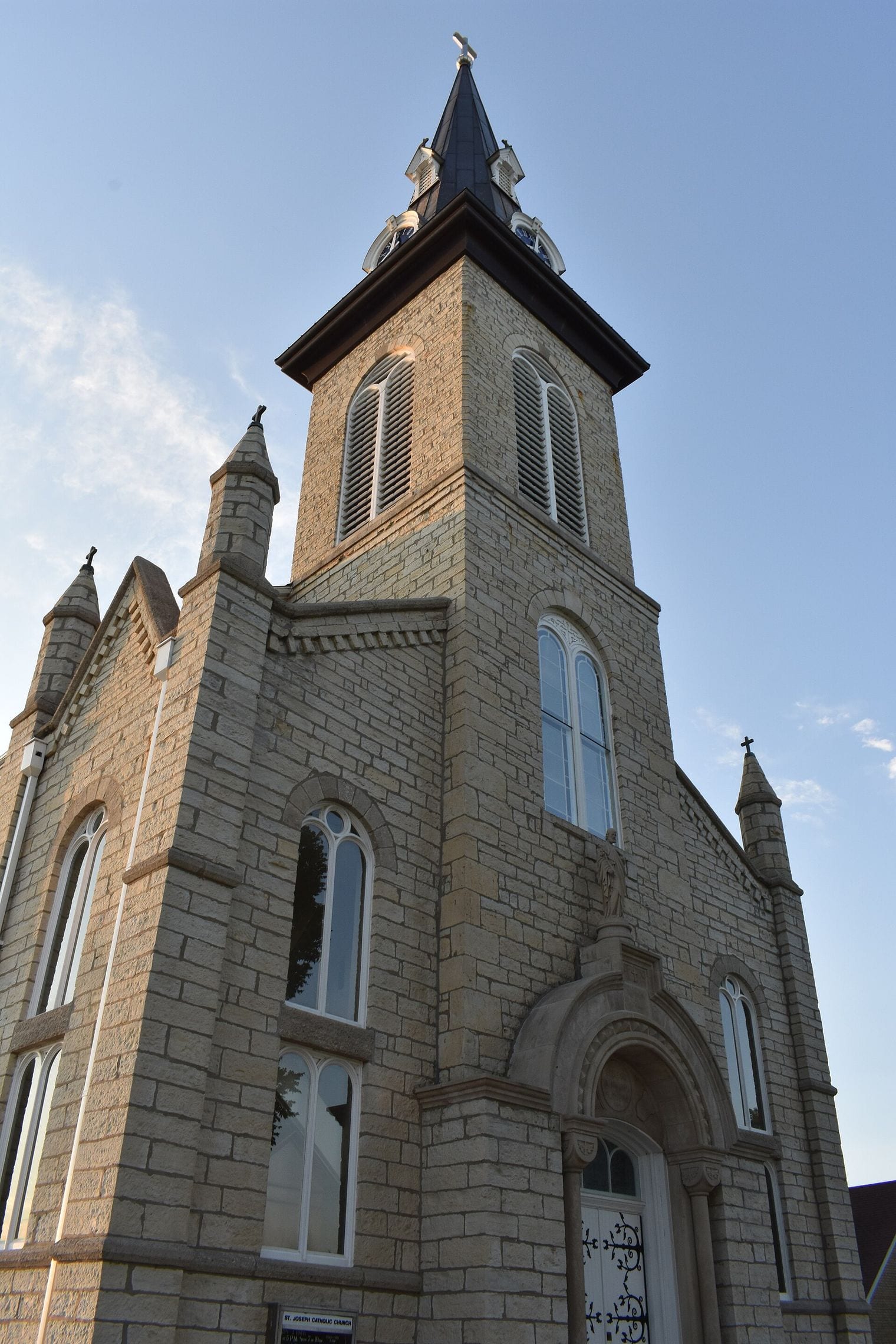
The heart of the village is St. Joseph Church, a Gothic-Romanesque landmark of limestone and cottonstone built in 1848, with a central steeple added in 1883; it served as headquarters of the Jesuits' central Missouri mission for decades and is listed on the National Register of Historic Places. With fewer than 400 residents, Westphalia is a quiet stop on a drive through the farm country and river valleys of Osage County.
Fredericktown, the Madison County seat, grew out of three centuries of mining. French explorers came here looking for silver around 1715, and nearby Mine La Motte, about six miles away, became one of the earliest European settlements in the interior of the continent as miners worked its lead. The area is unusual for the variety of metals mined over the years, from lead and iron to copper, silver, cobalt and nickel.
Today the town centers on its courthouse square, a historic district listed on the National Register of Historic Places, and the Mark Twain National Forest surrounds it on three sides. West of town, the Silver Mines Recreation Area follows a steep, rocky gorge of the St. Francis River with trails along the water, and Farmington lies about 18 miles to the north.
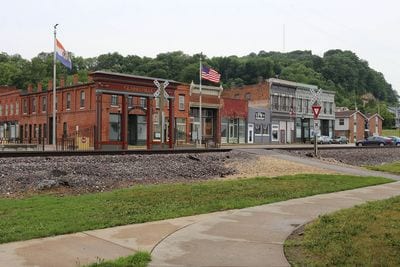
Pacific was platted as Franklin in 1852 and renamed in 1859 for the Pacific Railroad, whose tracks had reached the town in 1853. From 1933 Route 66 ran right through downtown, and cross-country motorists stopped here to eat and spend the night on their way between St. Louis and the Ozarks.
The town sits beneath sandstone bluffs on the Meramec River, and the best view is from Jensen's Point, a stone overlook built by the Civilian Conservation Corps in 1939 and restored by the city, with a panorama over downtown and the river. Nearby at Gray Summit, the Missouri Botanical Garden's Shaw Nature Reserve protects nearly 2,500 acres of natural landscapes with miles of walking trails, an easy add-on for a Route 66 day.
Free Things to Do in These Missouri Towns
Many of the best moments on this list cost nothing. Wander the French colonial streets of Ste. Genevieve and the 19th-century village of Arrow Rock, climb Cardiff Hill above the river in Hannibal, and see the Berlin Wall sculpture outside the Churchill museum in Fulton.
Look for the Civil War cannonball in the courthouse column in Lexington, walk the Route 66 murals of Cuba, and take in the view from Jensen's Point above the Meramec River in Pacific. The Katy Trail through Rocheport and Boonville is free to walk or ride, Big Spring near Van Buren costs nothing to visit, and in winter the bald eagles along the river at Clarksville put on a show for anyone with binoculars.
Missouri is a big state, so the easiest way to see these towns is to pick a region and link several together. West of St. Louis, Washington, New Haven and Hermann line the Missouri River wine country, with Westphalia farther west toward Jefferson City.
In the middle of the state, Rocheport, Boonville, Arrow Rock and Fulton cluster around Columbia, and the Katy Trail ties several of them together for cyclists. Around Kansas City, Parkville, Weston, Excelsior Springs and Lexington each make an easy day out, while Sedalia sits on the Katy Trail farther east.
Along the Mississippi, Hannibal pairs with Clarksville to the south and Perry and Mark Twain Lake to the southwest, and Lincoln's hometown of Springfield, Illinois, is about 100 miles east of Hannibal. South of St. Louis, Kimmswick and Ste. Genevieve line the river, with Farmington and Fredericktown inland near the St. Francois Mountains.
Pacific, Cuba, Rolla and Carthage string out along old Route 66, Kirksville and Marceline anchor the north, and the Ozarks hold Van Buren and Eminence on their rivers, Osage Beach on its lake and Branson on its Strip. Fall brings Oktoberfest to Hermann and the Apple Butter Festival to Kimmswick, winter brings bald eagles to Clarksville, and summer is float season on the Current and Jacks Fork rivers and state fair time in Sedalia.
FAQ: Visiting the Best Small Towns in Missouri
What is the best small town in Missouri?
Hermann is the best small town in Missouri for most visitors, with its German heritage, historic wineries and festivals on the Missouri River. Ste. Genevieve follows for its French colonial houses and national historical park, then Hannibal for Mark Twain's boyhood home and cave, Arrow Rock for its Santa Fe Trail village and Fulton for the National Churchill Museum.
Which small towns in Missouri are close to St. Louis?
Kimmswick sits on the Mississippi just south of the city, and Pacific lies to the southwest on old Route 66. Washington, about 50 miles west, opens up the Missouri River wine country, with New Haven and Hermann farther upriver. Ste. Genevieve, the oldest permanent European settlement in Missouri, makes a longer day trip south along the Mississippi.
Which small towns in Missouri are near Kansas City?
Parkville sits on the Missouri River just northwest of Kansas City, and Weston, farther north in Platte County, adds a historic distillery and a riverside state park. Excelsior Springs, about 30 miles northeast, is known for its Art Deco Hall of Waters, and Lexington, about 40 miles east, has its Civil War battlefield and the courthouse with the cannonball.
Which Missouri small towns are on Route 66?
Four towns on this list sit on the old Route 66 corridor across Missouri: Pacific, beneath the Meramec River bluffs west of St. Louis; Cuba, the Route 66 Mural City; Rolla, home of Missouri S&T and its campus Stonehenge; and Carthage, with its 66 Drive-In theater, Victorian homes and grand courthouse of Carthage marble.
When is the best time to visit small towns in Missouri?
Spring and fall are the most comfortable seasons, and fall brings color to the river bluffs and the Ozarks, plus Oktoberfest weekends in Hermann and the Apple Butter Festival in Kimmswick. Summer is the season for floating the Ozark rivers near Eminence and Van Buren and for the Missouri State Fair in Sedalia, while winter brings bald eagles to Clarksville.
How many days do you need to visit a small town in Missouri?
Most towns on this list fill a relaxed day, and many are easy day trips from St. Louis, Kansas City or Columbia. Hermann, Hannibal and Branson deserve a weekend to see properly, while a week lets you link several towns in one region, such as the Missouri River wine country or the Katy Trail towns around Columbia.
Sources & updates
How this guide was checked
Checked before launch
Sources cited
30
Publishers
24
Every town on this list was pinned on the map and checked against official and local sources before publication.
A PDF with a box to tick for every place. Confirm your email to download it, and get one email every Thursday with our newest guides for the places you tick.
Free Missouri small towns printable checklist
All 30 places in one PDF
Tick them off as you go. Confirm your email to download it, plus one email every Thursday with new guides for the places you tick.
We use cookies to analyse site traffic and improve your experience.
You can accept or reject analytics cookies. See our
May we use analytics cookies? See ourCookie Policy.