We build and rank every list first. Booking links come after, and only where
a partner sells a ticket, tour or stay for that exact place, so a place with
nothing to book is listed exactly as prominently as one you can book.
So how do we earn? Some links on this page go to booking
partners, and if you book tickets, tours or a stay through
one, we may earn a commission. It costs you nothing extra.
That commission never decides which places make the list, the order they
appear in, or what we write about them. No entry is sponsored or a paid
placement.
40 Best Things to Do in Kansas City, Missouri (2026)
By the City Viking editorial teamPublished 40 places · 28 min read
Fact-checked Checked before launchOct 17, 202640 sources33 publishers1 government & parks5 encyclopedias & research34 venues & other sitesPublished · Oct 17, 2026Researched and checked before it went liveClick for every source and the full change log.
Short answer
Kansas City is known for barbecue, the fountains behind its City of Fountains nickname and its tree-lined City Beautiful boulevards. Its essential sights are the free Nelson-Atkins Museum of Art with its giant Shuttlecocks, the National WWI Museum and Memorial beneath the Liberty Memorial tower, and the 1914 Union Station. Three days is the sweet spot, adding Country Club Plaza, downtown, the River Market and the jazz and Negro Leagues museums at 18th & Vine.
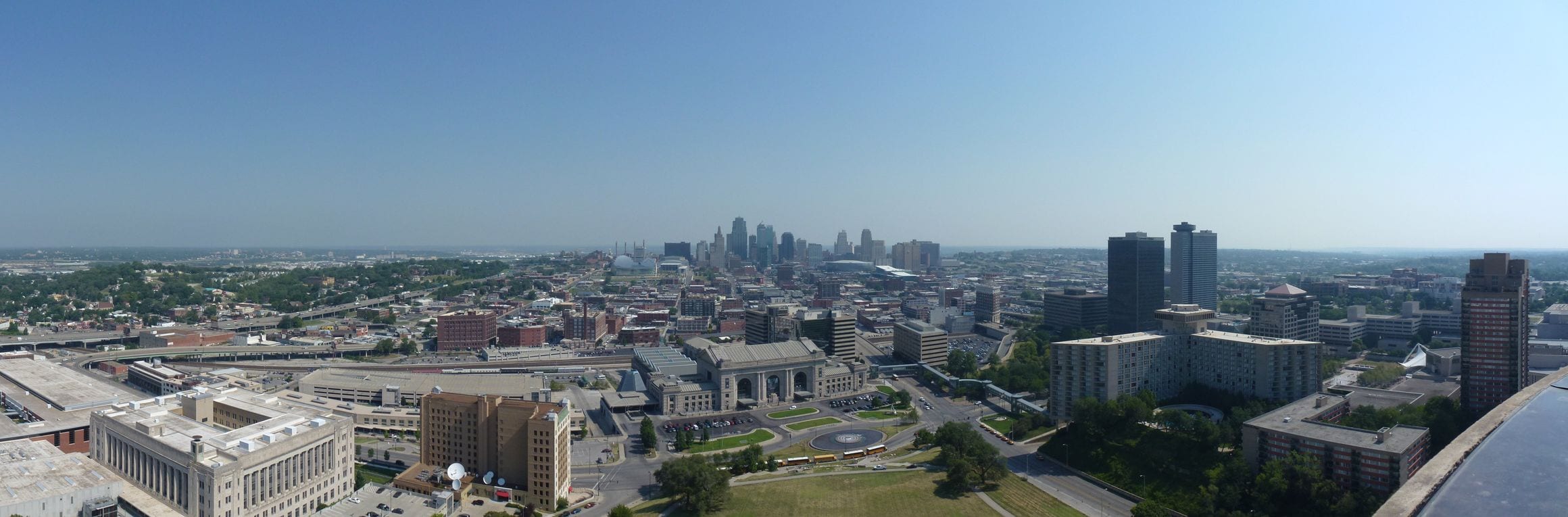
Kansas City, Missouri is the largest city in Missouri and one of the Midwest's most rewarding: a city of fountains and tree-lined boulevards, barbecue smoke and late-night jazz. Its best museums are free or close to it, its sports crowds are famously loud, and a free streetcar ties the riverfront to downtown, Midtown and the Plaza.
This guide ranks the 40 best things to do, from the Nelson-Atkins and the National WWI Museum to Union Station, 18th & Vine and the Truman Sports Complex. Three days covers the highlights; add a fourth for a drive west to Topeka, the Kansas capital.
Kansas City is the biggest city in the state by both population and area, even though its metro area spills across the state line into Kansas, where Kansas City, Kansas is a separate city.
It is nicknamed the City of Fountains: more than 200 fountains are switched on each spring and run into the fall.
The Negro National League was founded here on February 13, 1920, at a meeting of team owners at a Kansas City YMCA, a story told at the Negro Leagues Baseball Museum.
Walt Disney opened his first animation studio here, Laugh-O-Gram, in 1921; when it went bankrupt two years later he left for Hollywood.
Landscape architect George Kessler made the city a showcase of the City Beautiful movement, with a network of tree-lined boulevards and parks that still shapes how it looks today.
The city lends its name to a style of barbecue and a cut of beef: Kansas City-style barbecue and the Kansas City strip steak are both known far beyond Missouri.
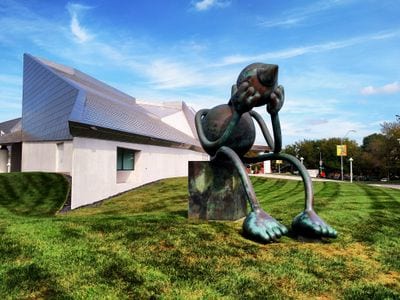
The Nelson-Atkins Museum of Art is Kansas City's cultural flagship, and general admission is free. The neoclassical building opened in 1933, and its galleries run from ancient and Asian art through European masters to American painting and photography. Steven Holl's Bloch Building, a row of glowing glass 'lenses' stepping down the east lawn, made Time magazine's list of the world's best new architecture in 2007.
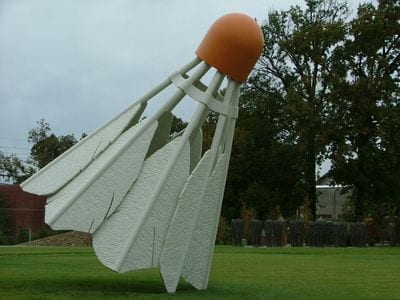
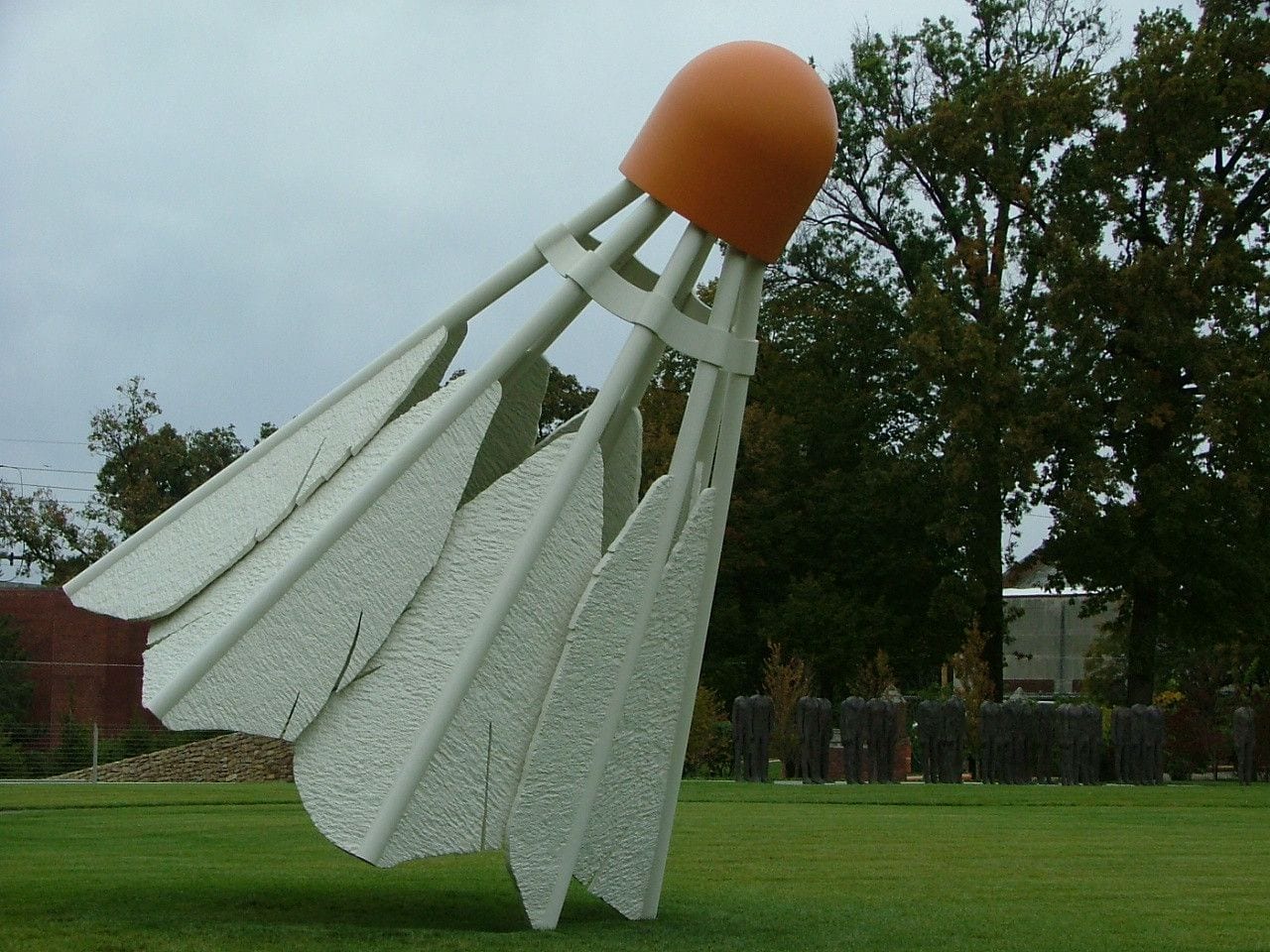
Outside, the Donald J. Hall Sculpture Park spreads across the grounds, and its stars are Shuttlecocks, four giant badminton birdies by Claes Oldenburg and Coosje van Bruggen, set out in 1994 as if a giant had just finished a game over the museum's roof. Come for an hour and you'll stay for three; the lawn alone makes a fine picnic stop on a warm day.
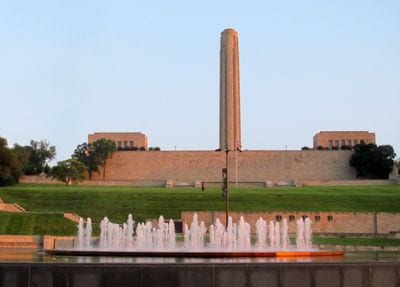
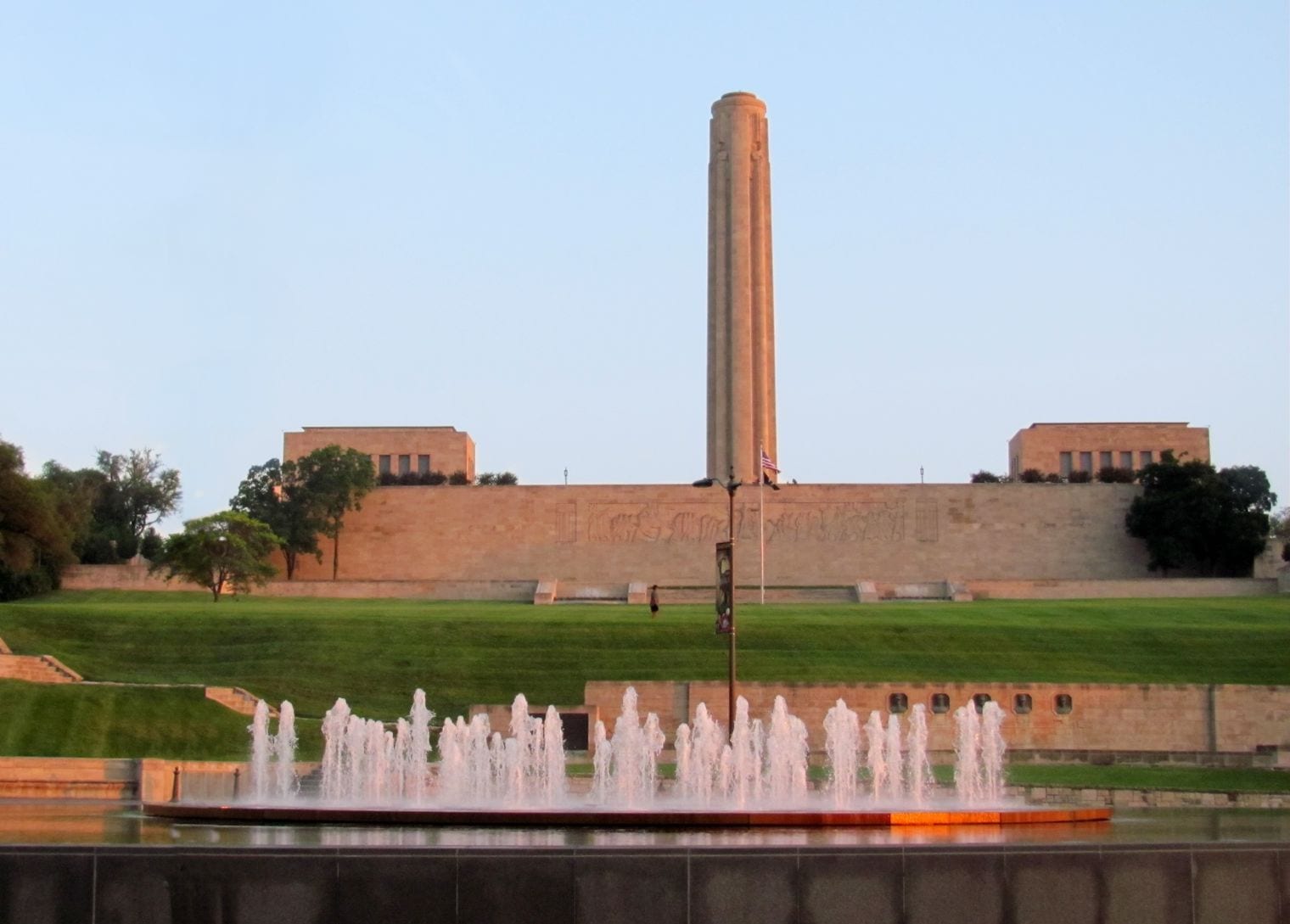
The National WWI Museum and Memorial began as the Liberty Memorial, dedicated in 1926, and Congress has since named it the country's official museum and memorial to the First World War. Visitors enter across a glass bridge above a field of 9,000 red poppies, each one standing for 1,000 combatant deaths, and the galleries below tell the story of the war from its origins to the peace with uniforms, weapons, letters and a walk-in trench.
Allow at least half a day, then take the elevator up the Liberty Memorial tower. The observation deck looks straight down Main Street to the downtown skyline and Union Station, one of the classic views of Kansas City, and the grassy hillside around the memorial is a favourite spot for sunsets and summer events.
33. Union Station
Historical Landmark~1.1 miles (1.8 km) from centre
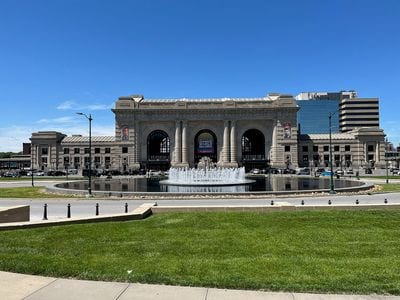
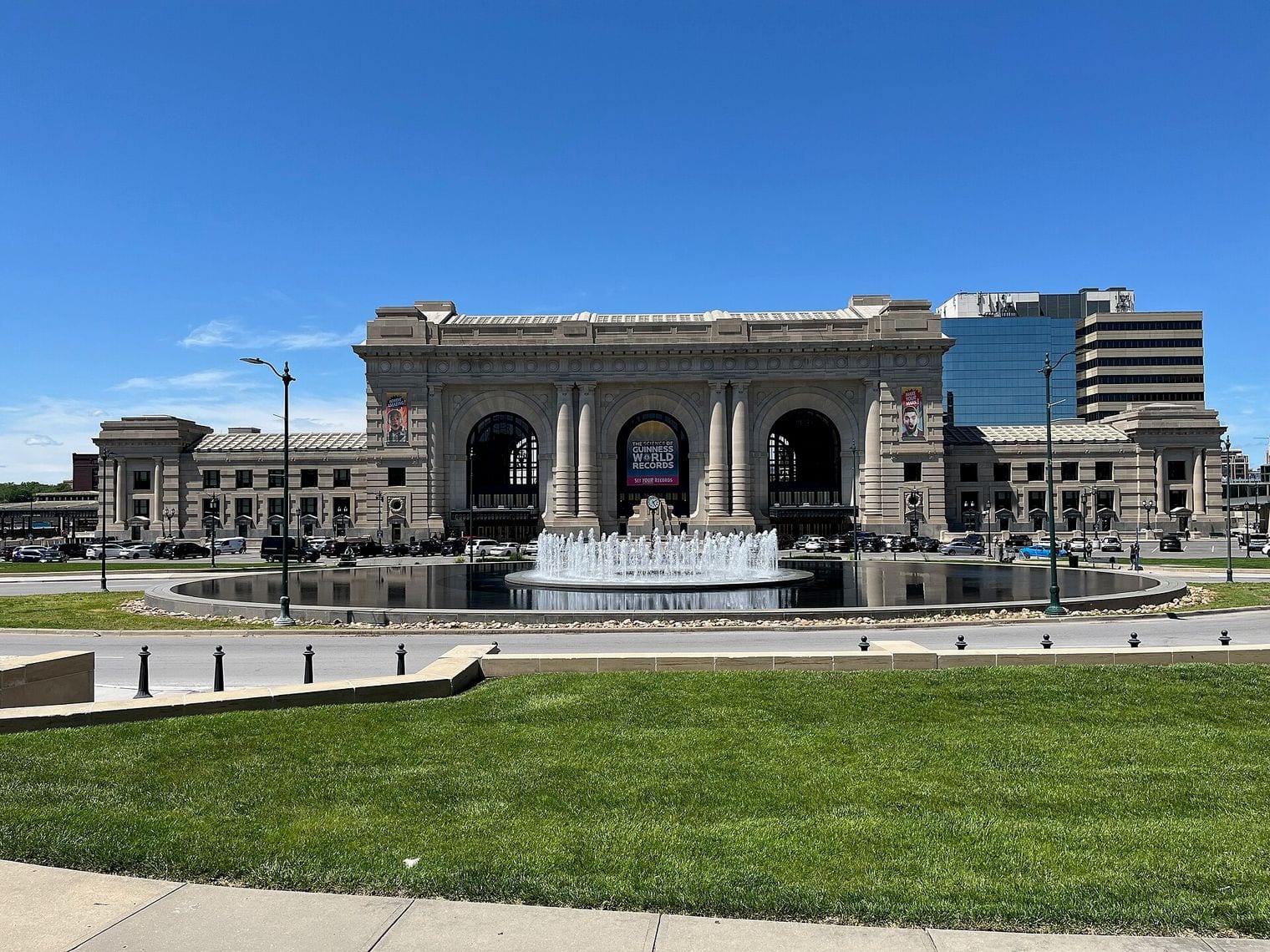
Union Station opened in 1914 as one of the great American rail terminals, and it still serves Amtrak trains today. Step into the Grand Hall to see why it is the city's living room: a 95-foot ceiling, three huge chandeliers and a Beaux-Arts scale that makes everyone look up. The building's east entrance was also the scene of the 1933 Kansas City Massacre, the gangland shooting that led to FBI agents being armed.
After years of decline it was restored and reopened in 1999 as a hub of attractions, with Science City, a planetarium, a giant-screen theater and touring exhibitions under one roof. Even without a ticket it is worth a wander, and walkways link it to Crown Center next door.
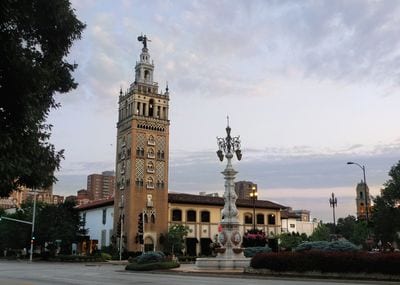
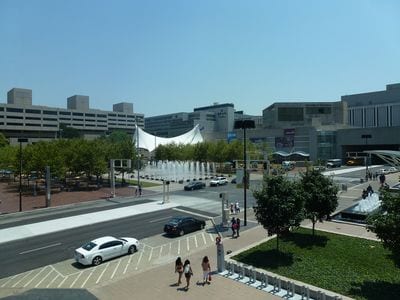
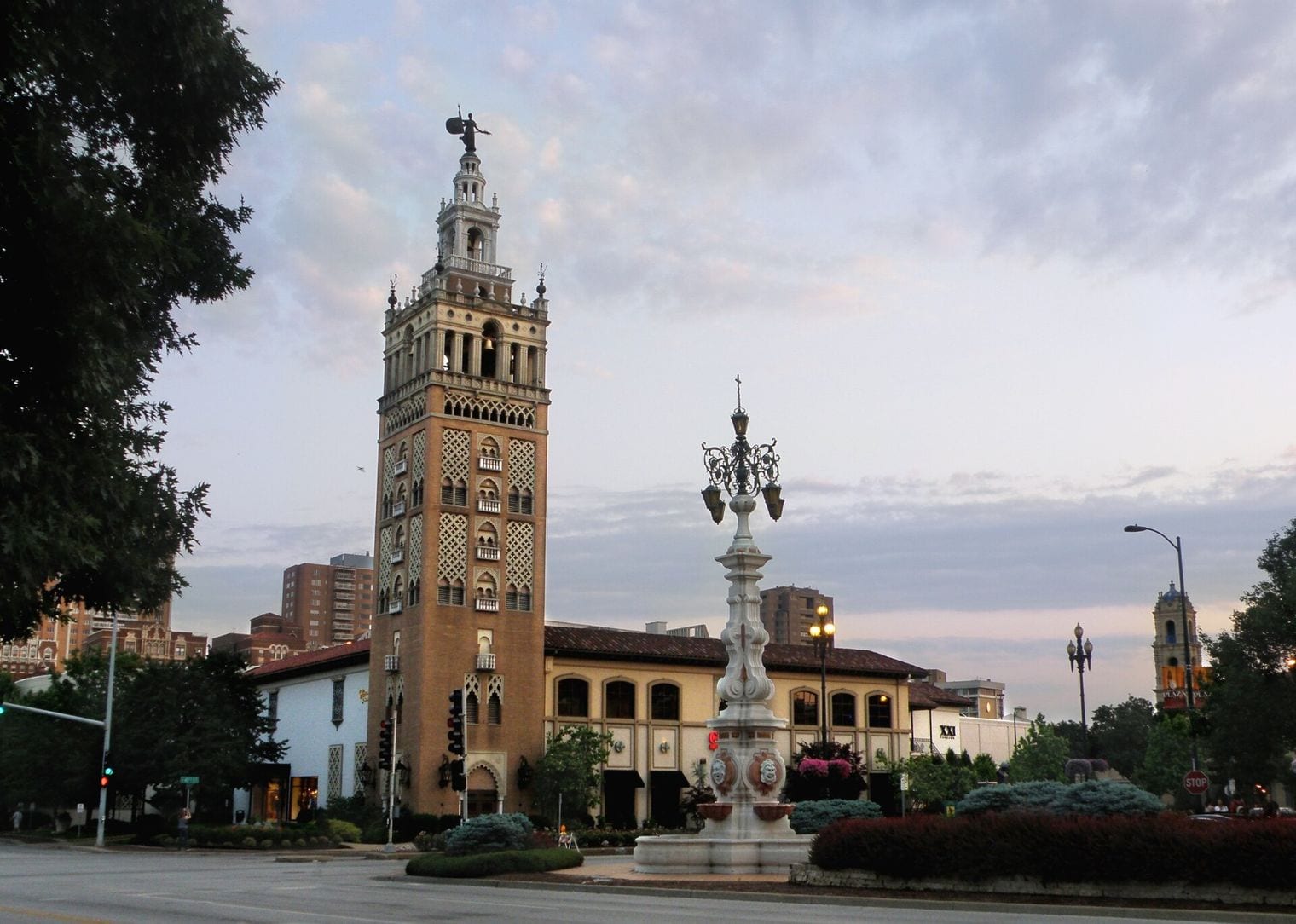
Country Club Plaza opened in 1923 and is considered the first planned outdoor shopping district in the United States built for shoppers arriving by car. Developer J.C. Nichols modelled it on Seville in Spain, so the walk is all tiled towers, wrought-iron balconies, courtyard fountains and statuary on every corner.
The Plaza is as much a place to stroll as to shop, and its fountains, outdoor dining and the creekside path along Brush Creek fill on summer evenings. In the holiday season the rooftops are outlined in colored lights, a Kansas City tradition, and the Nelson-Atkins, the Kemper and Loose Park are all within a short walk.
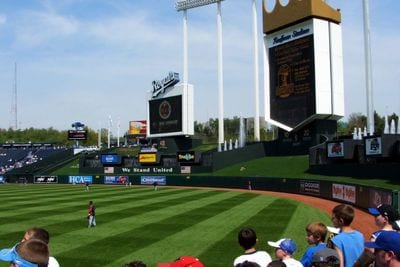
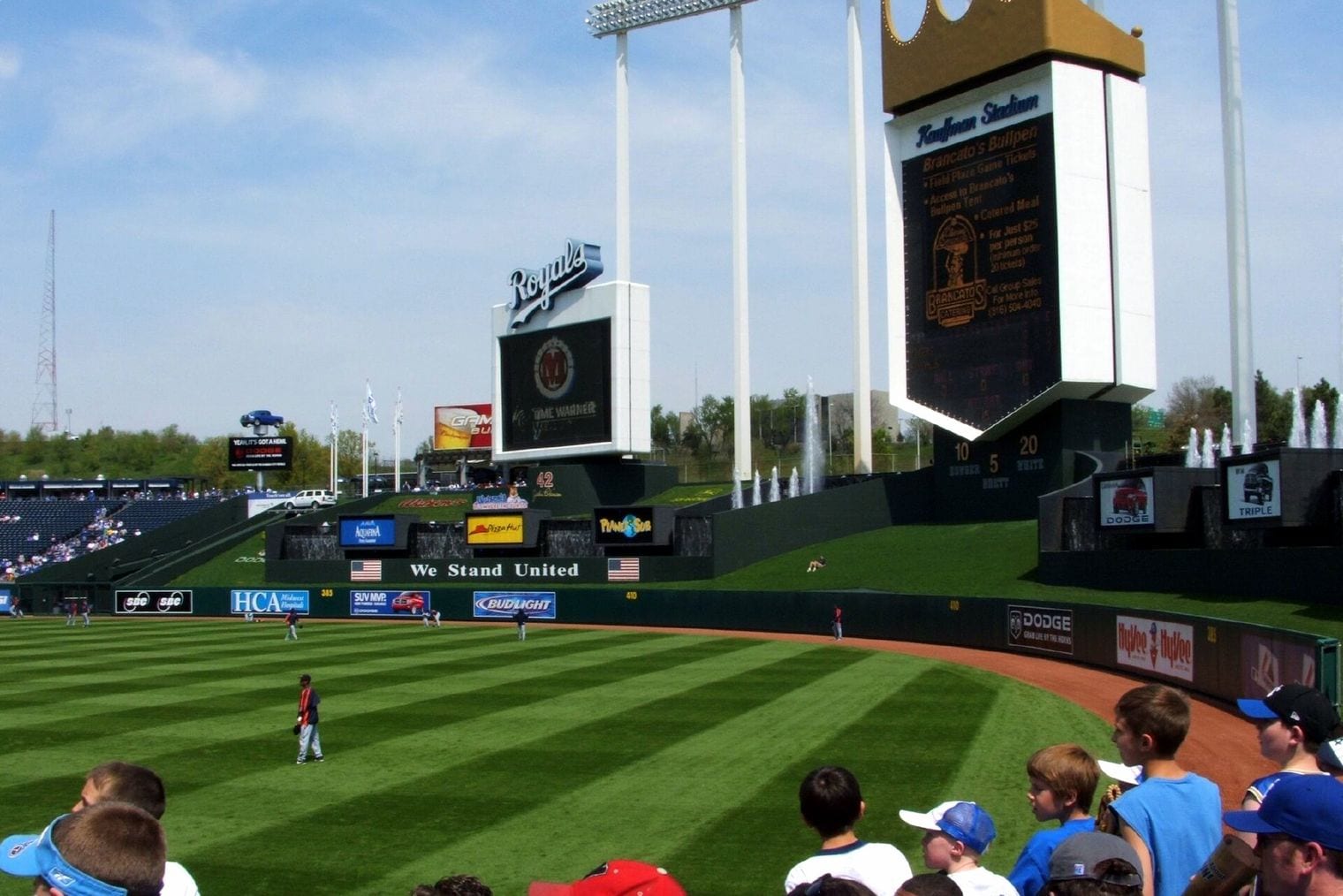
Kauffman Stadium has been home to the Kansas City Royals since it opened in 1973, and it hosted World Series games in the seasons the Royals won it all, 1985 and 2015. Its best-known feature is the Water Spectacular behind the right-field fence, the largest privately funded fountain in the world, with fountains that dance between innings and waterfalls that never stop.
A summer evening here, with barbecue in hand and the fountains lit, is one of the city's great simple pleasures. The Royals plan to move to a new downtown ballpark in the Crown Center district around the end of the decade, so a game at 'The K' is a chance to see a classic ballpark before it changes hands.
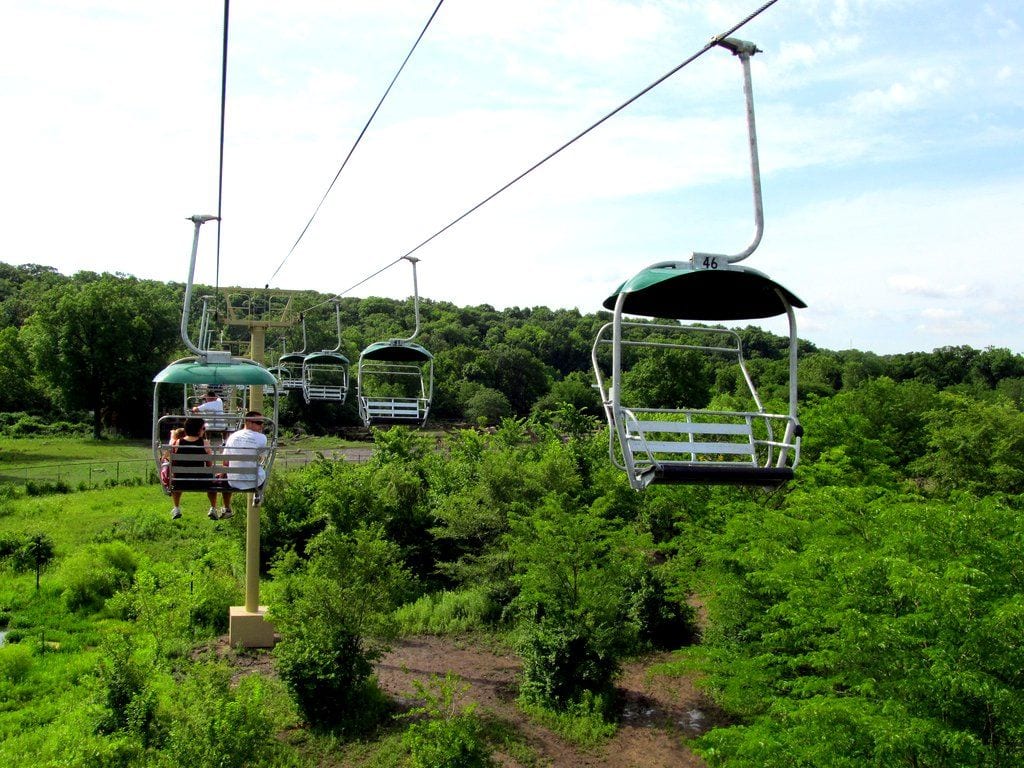
The Kansas City Zoo & Aquarium spreads over 202 acres of Swope Park and dates back to 1909. Its walk-through sections range from Africa to Australia, with nearly 1,700 animals in the zoo alone, so wear good shoes and give yourself time to cover the ground.
The Sobela Ocean Aquarium, which opened in 2023, added around 8,000 more animals, from sharks and rays to coral reefs and jellyfish, and it is the reason the zoo changed its name. Plan most of a day, especially with children, and combine it with a summer show at Starlight Theatre, which sits in the same park.
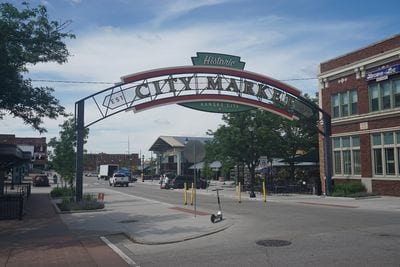
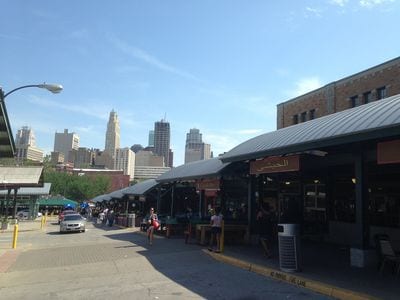
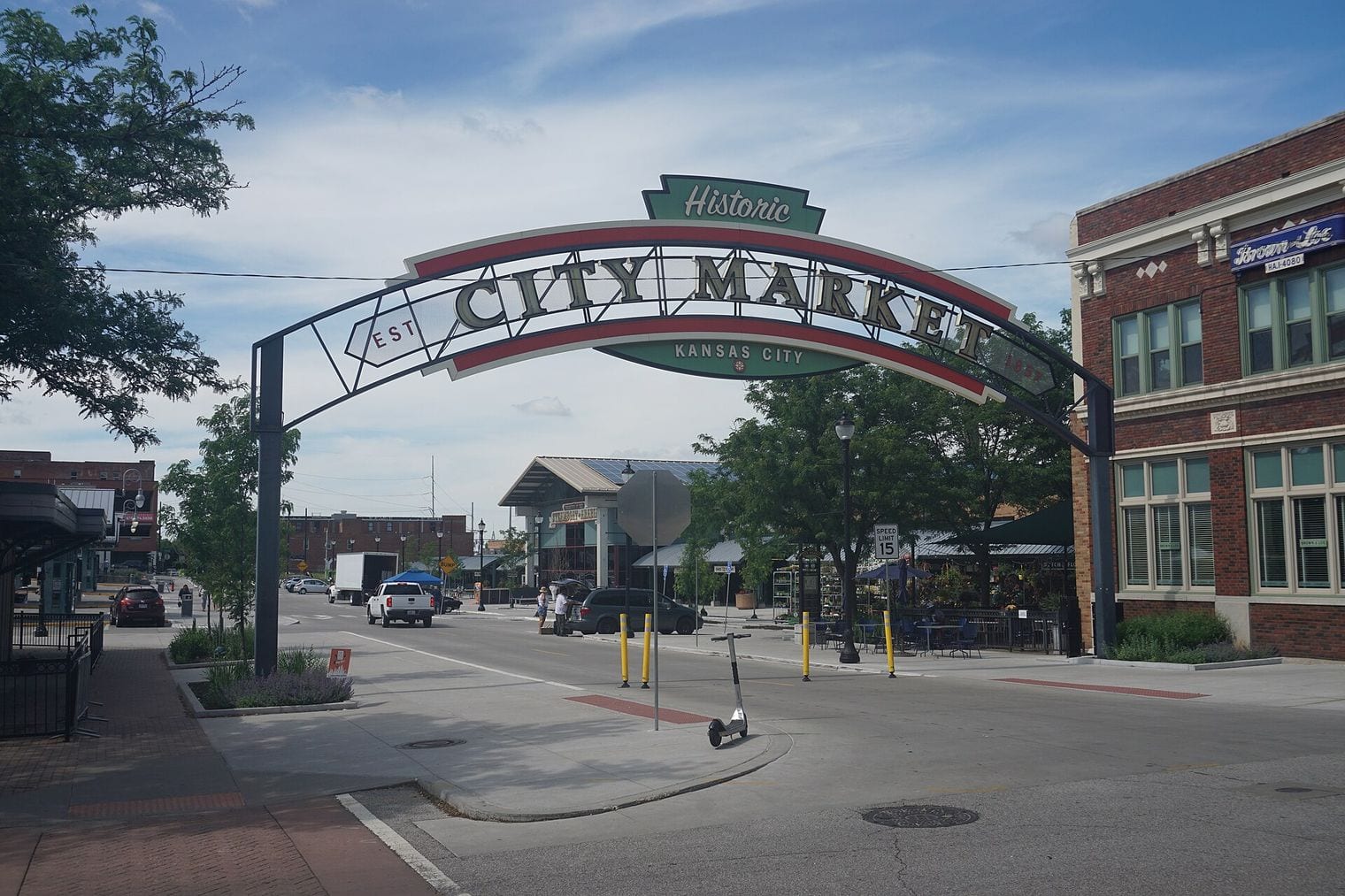
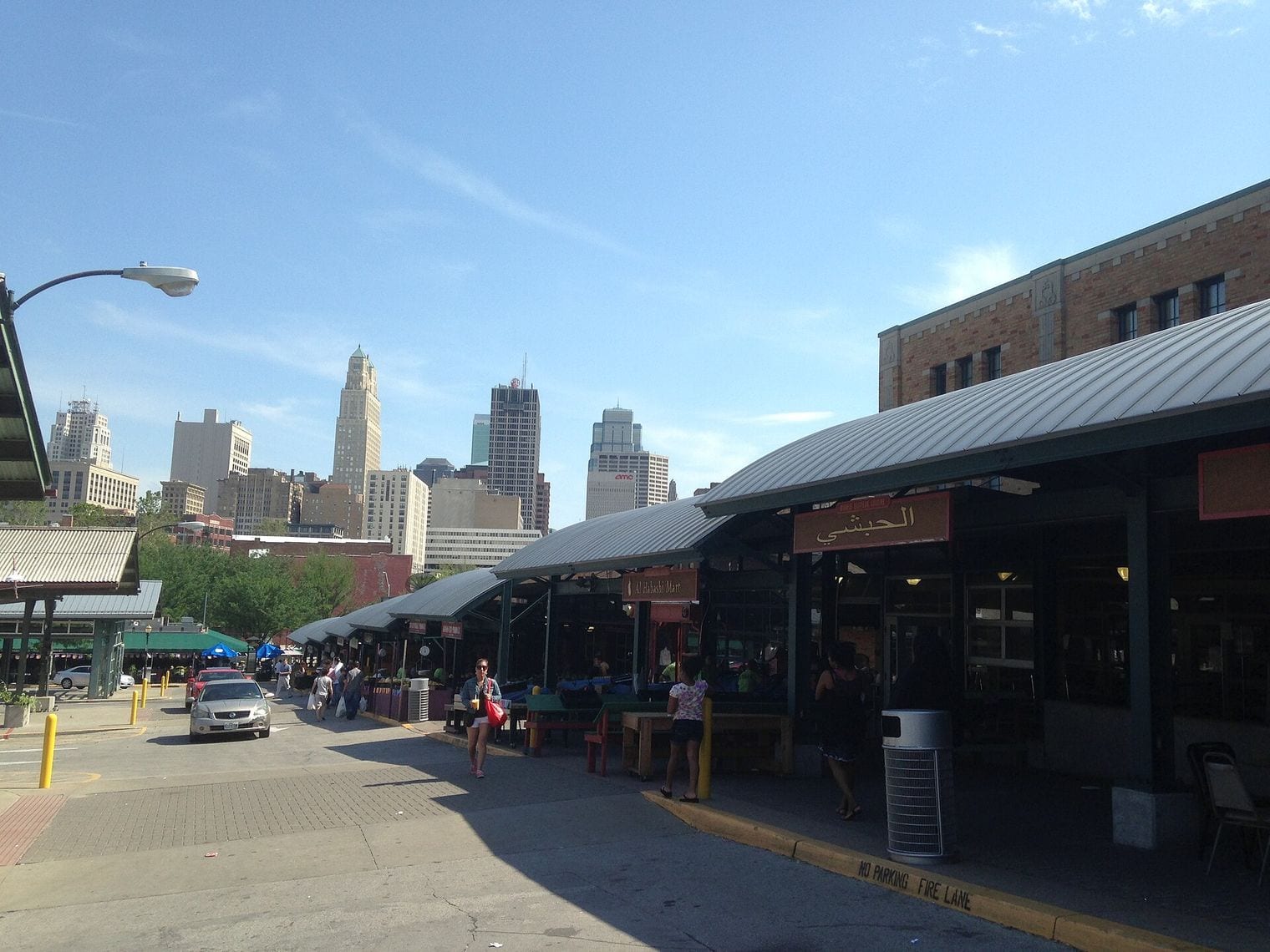
City Market has been a trading place since 1857, when farmers, settlers and westbound travellers bartered here near the bend of the Missouri River. Today it is the region's largest public farmers market, busiest on weekend mornings when produce stalls, bakers, flower sellers and food vendors fill the open-air sheds.
Around the square are year-round shops and international grocers selling spices, tea and imported treats, plus plenty of places to sit with a coffee. Arrive early on a Saturday for the full market buzz, then wander out into the rest of the River Market neighborhood or catch the streetcar south from its stop on the market's edge.
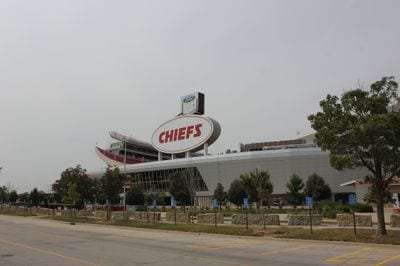
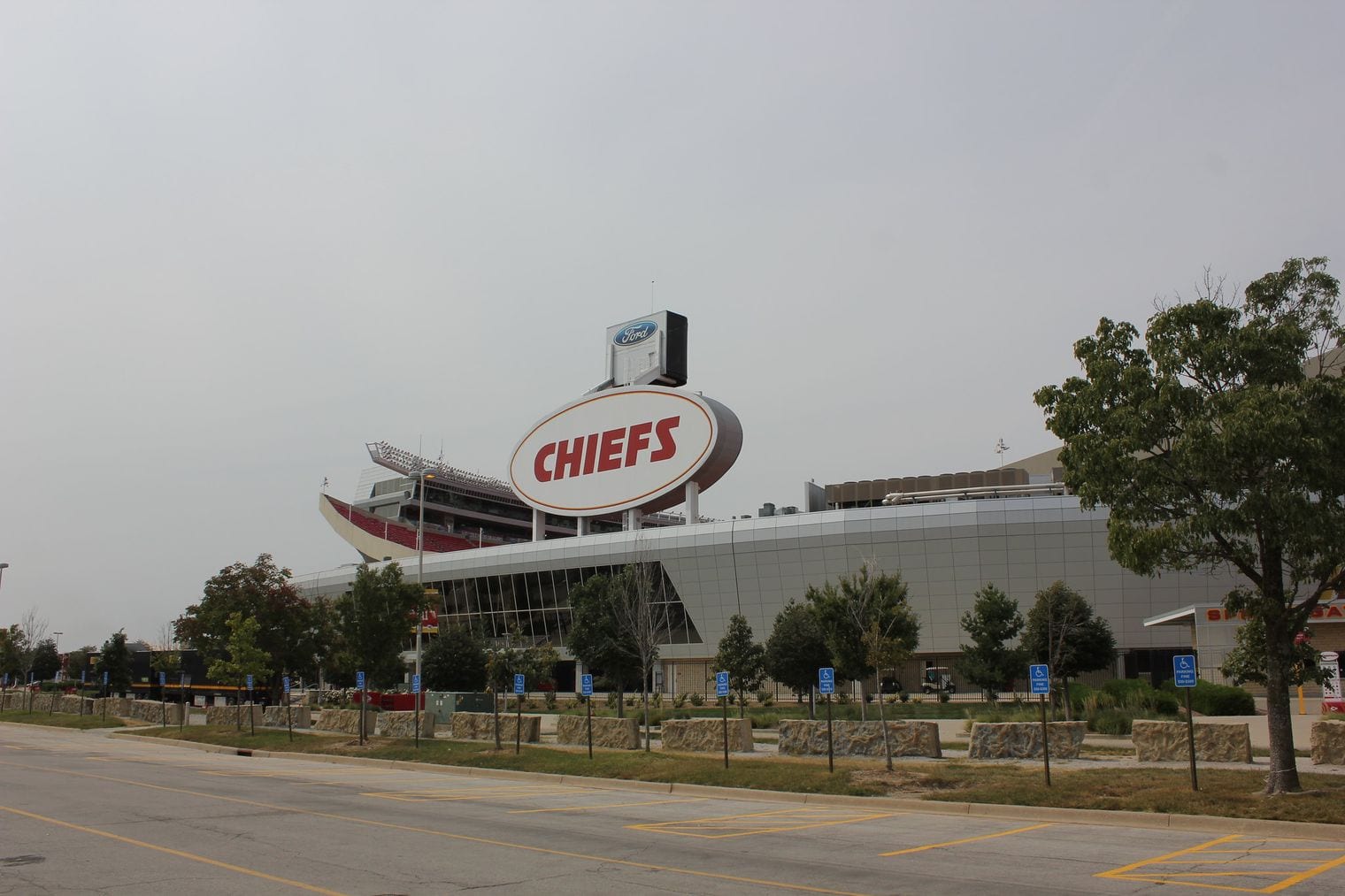
Arrowhead Stadium, home of the Kansas City Chiefs since it opened in 1972, is a temple of pro football and one of the NFL's largest stadiums. It is famous for noise: in 2014 the crowd set a Guinness World Record for crowd noise at 142.2 decibels, and the red-clad tailgates in the parking lots start hours before kickoff.
The Chiefs have announced a move to a new domed stadium in Kansas when their lease here runs out in 2031, which makes a game at Arrowhead a chance to see one of football's great old atmospheres while it lasts. It shares the Truman Sports Complex off I-70 with Kauffman Stadium, so sports fans can see both in a single trip.
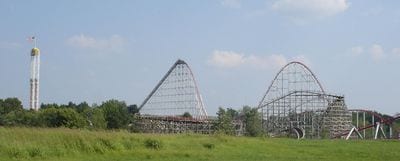
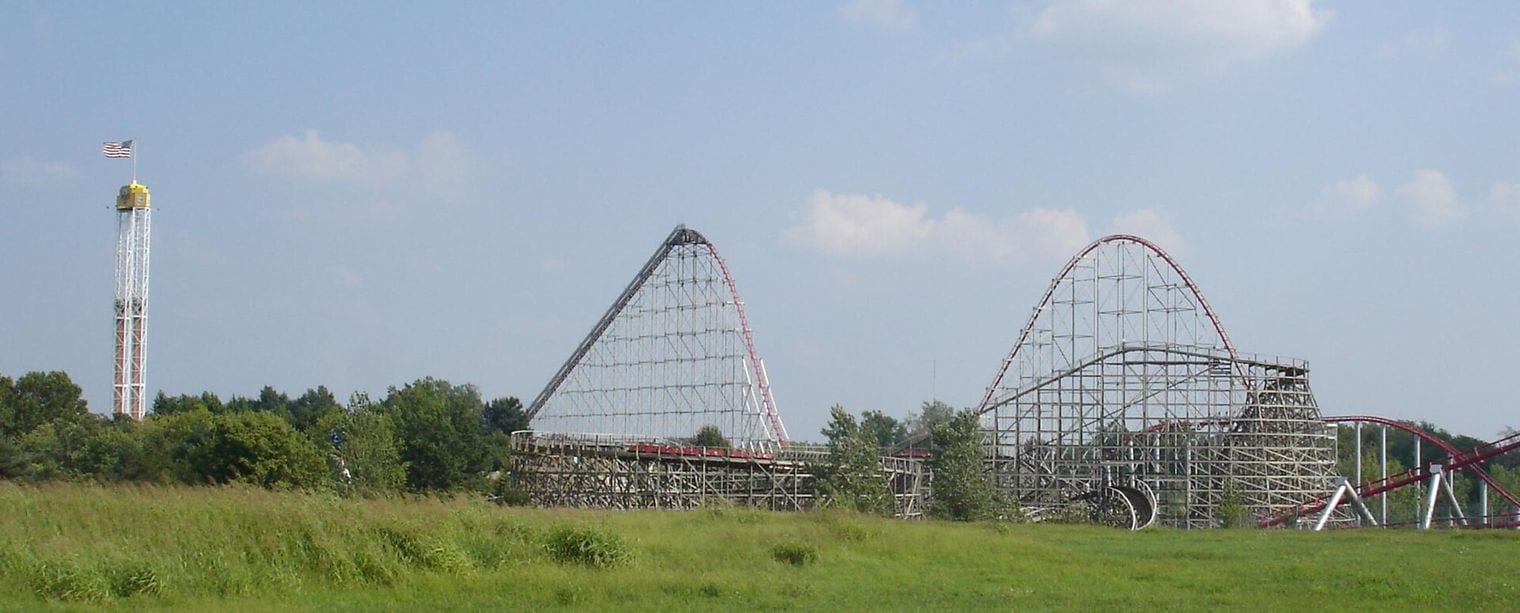
Worlds of Fun is Kansas City's big theme park, a 235-acre spread east of the city that opened in 1973 with a theme borrowed from Around the World in Eighty Days. Its themed areas are packed with roller coasters, from the towering steel hypercoaster Mamba to classic wooden rides, plus family rides and a gentler area for small children.
Next door, the Oceans of Fun water park adds wave pools, a lazy river and big slides for hot summer days. The parks are seasonal, opening in spring and closing for the winter, so check the calendar before you go and plan a full day for both.
The River Market is where Kansas City began: the Town of Kansas was laid out here on the Missouri River in 1850, making this the city's first and oldest incorporated district. Old brick warehouses now hold lofts, cafes, bakeries and shops, and the neighborhood wraps around the farmers market sheds of City Market.
It is one of the easiest areas to explore on foot, and the free streetcar runs through it, north to Berkley Riverfront Park and south to downtown. Walk out over the rail lines on the Town of Kansas Bridge for views of the river and its bridges, then come back for dinner, since the district stays lively into the evening.
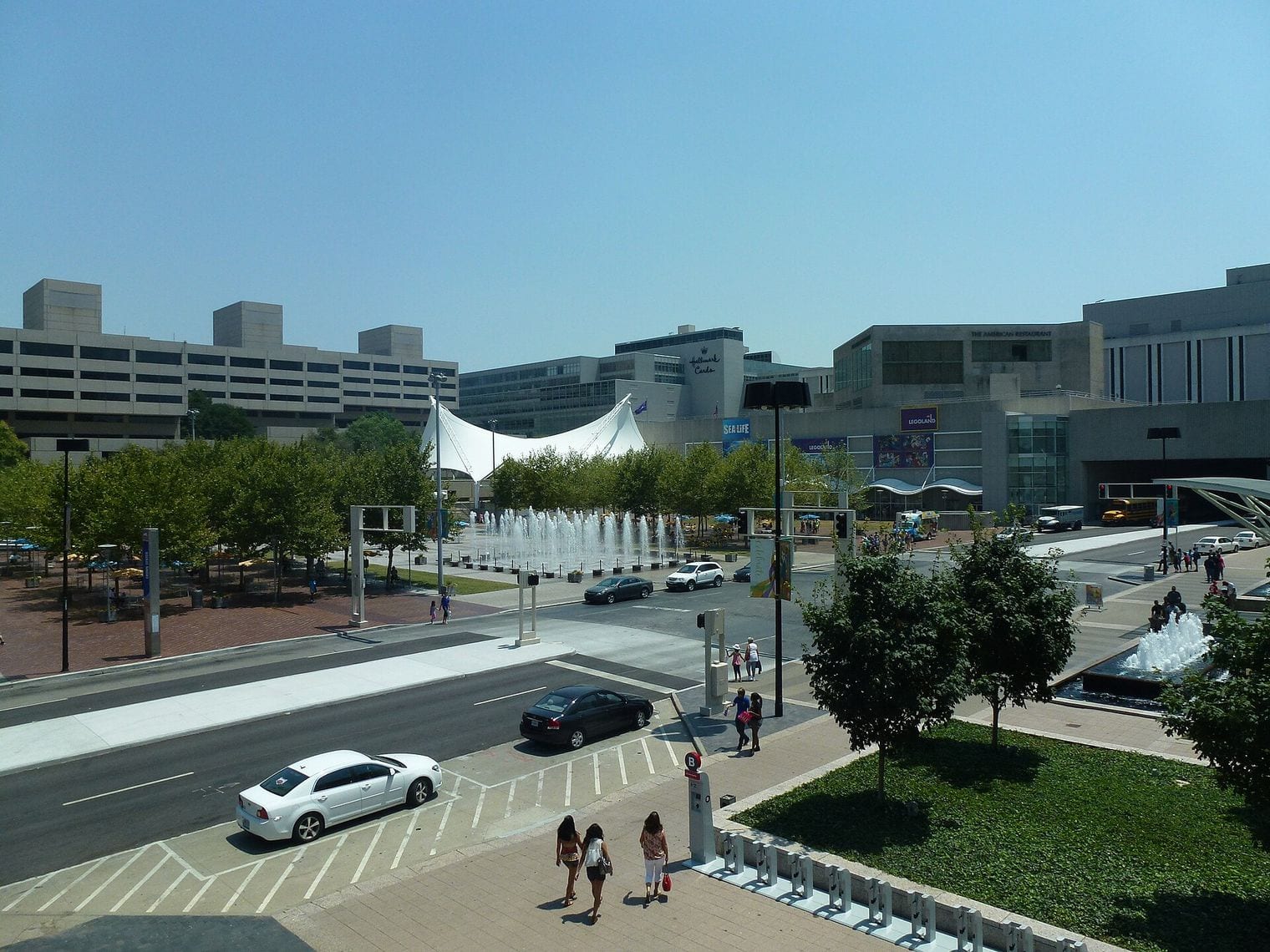
Crown Center is the shopping, hotel and office complex built around the headquarters of Hallmark Cards, linked by covered walkways to Union Station. Inside are three levels of shops and restaurants, live theaters including the Coterie, a family theater, plus an outdoor ice-skating rink in winter and open-air fountains in summer.
Families head for the LEGOLAND Discovery Center and the SEA LIFE aquarium, both in the complex, while the free Hallmark Visitors Center tells the story of the greeting-card company that built the district (reservations are required). The area is also set to become the site of the Royals' new ballpark district, so expect more change around it in the years ahead.
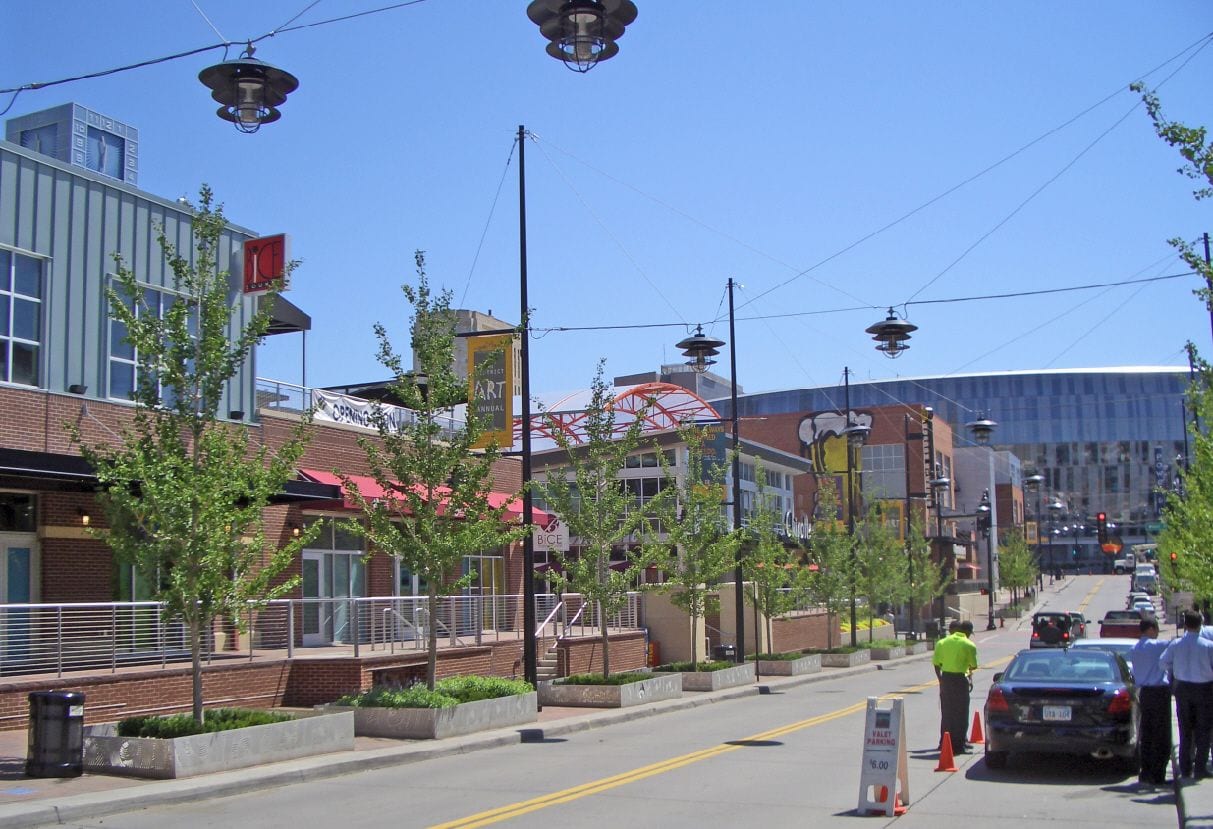
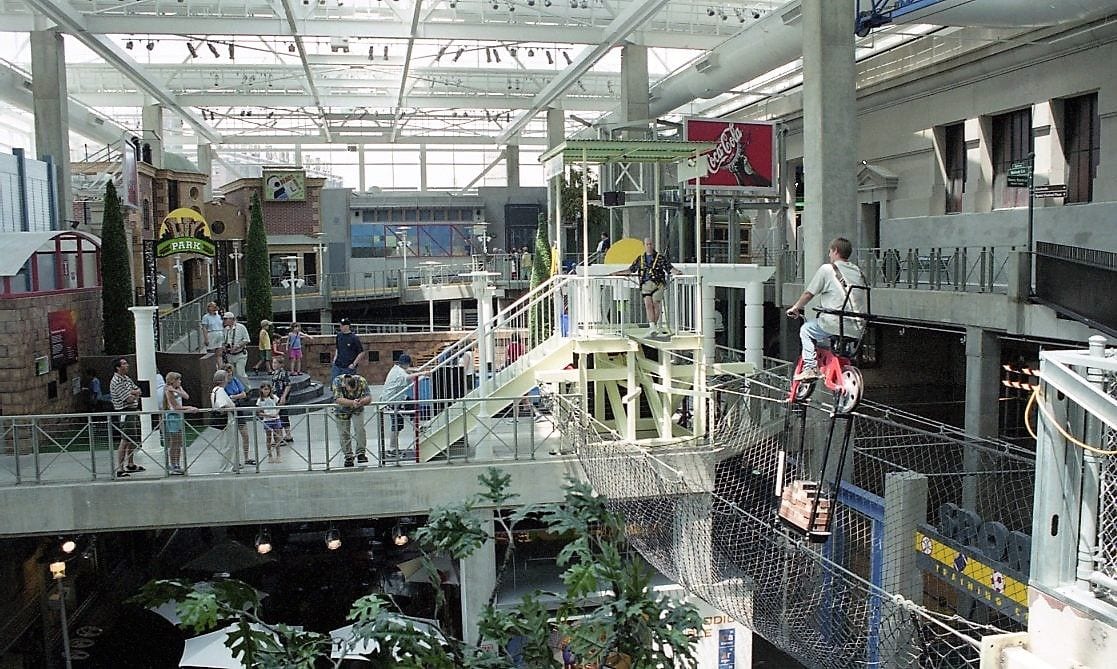
The Power & Light District is downtown Kansas City's nine-block entertainment district, packed with bars, restaurants, shops and live-music venues on the south side of the downtown loop. Its centre is KC Live!, a covered outdoor courtyard with a big screen that becomes the city's living room for big games, concerts and watch parties.
The district also holds the historic Midland Theatre and sits steps from the T-Mobile Center arena, so a show or game and a night out are easy to combine. It is busiest on weekend nights and game days; for a quieter look, come in the afternoon and walk on to the Crossroads Arts District just to the south.
Science City is the hands-on science center inside Union Station, opened in 1999, with more than 120 interactive displays that let children build, climb, experiment and pilot their way through physics, engineering and the natural world. It is separately ticketed from the station itself and is easily a half-day stop for families.
The Arvin Gottlieb Planetarium, part of the same complex, runs dome shows on the night sky and space, and the giant-screen theater and touring exhibitions add more to see on a rainy day. Pair it with lunch in the Grand Hall and a walk across to Crown Center, and you have a full family day without moving the car.
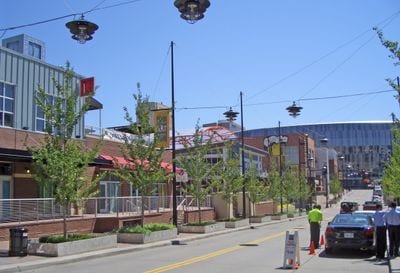
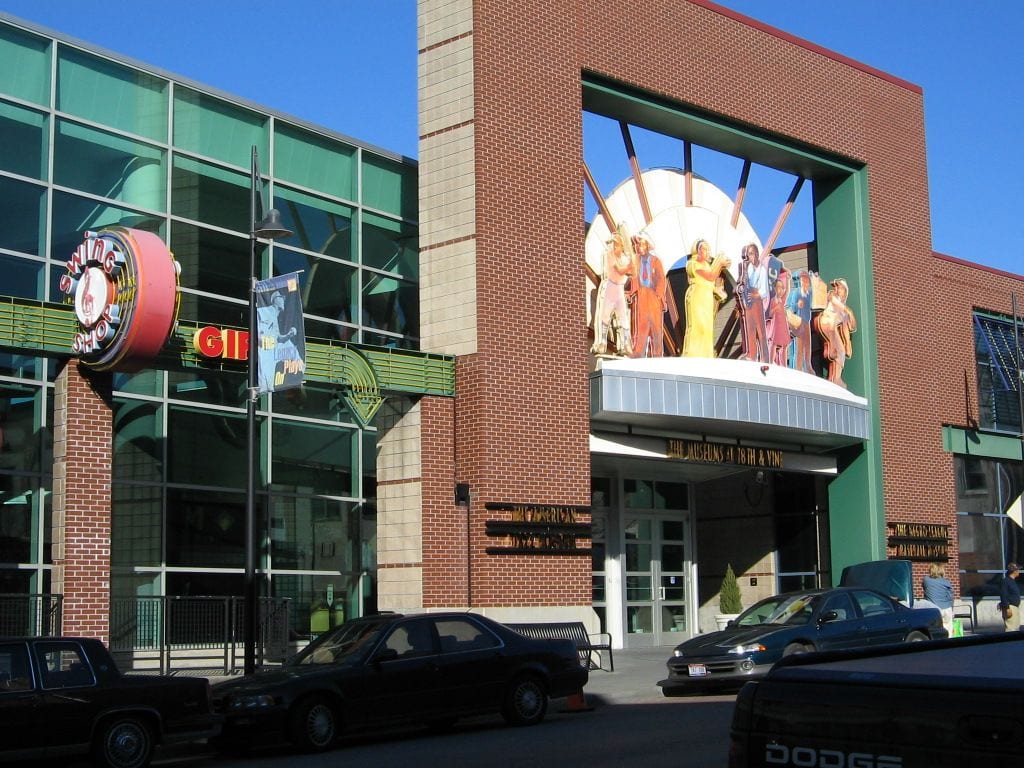
The Negro Leagues Baseball Museum, founded in 1990 in the historic 18th & Vine District, tells the story of the leagues that Black players built when the major leagues shut them out. Kansas City is the right place for it: the Negro National League was founded at a meeting in the city in 1920, and the Kansas City Monarchs were among its great teams.
The exhibits follow the players, teams and barnstorming tours through game-worn uniforms, photographs and memorabilia, and the visit ends on the Field of Legends, a baseball diamond set with nearly life-sized bronze statues of the game's stars. Allow at least two hours, and save time for the American Jazz Museum in the same building.
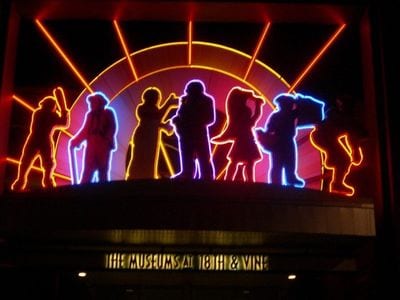
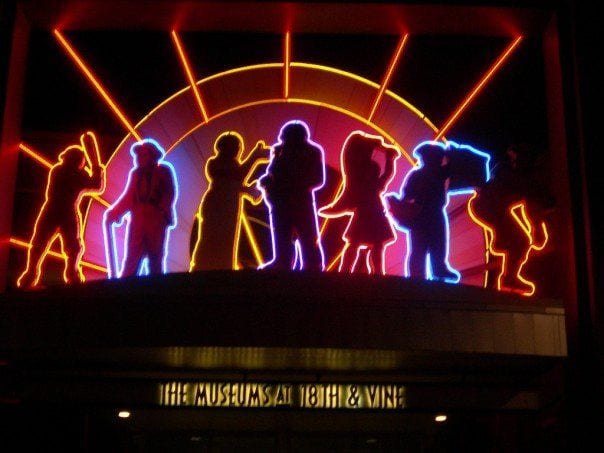
The American Jazz Museum celebrates the music that made Kansas City famous in the 1930s, when the clubs around 18th & Vine ran all night and players like Charlie Parker and Count Basie's band shaped a hard-swinging, blues-soaked sound. The exhibits cover Parker, Duke Ellington, Louis Armstrong, Ella Fitzgerald and others.
The museum's own club, the Blue Room, recreates a 1930s jazz room and hosts live music several nights a week, so time your visit for an evening set if you can. It shares a building with the Negro Leagues Baseball Museum, and the restored Gem Theater is just across 18th Street.
Loose Park is one of Kansas City's best-loved green spaces, a broad Midtown park with a duck pond, walking paths, tennis courts and wide lawns made for picnics. Its heart is the Laura Conyers Smith Municipal Rose Garden, which blooms from late spring through summer and is a favourite spot for weddings and photographs.
The park also has a place in history: Civil War markers recall the 1864 Battle of Westport, part of which played out on this ground. Loose Park is a short walk from Country Club Plaza, so it fits neatly into a Plaza afternoon, and it is especially lovely in early morning before the city wakes up.
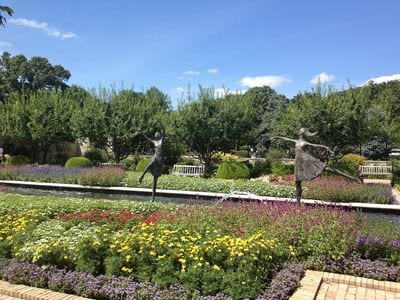
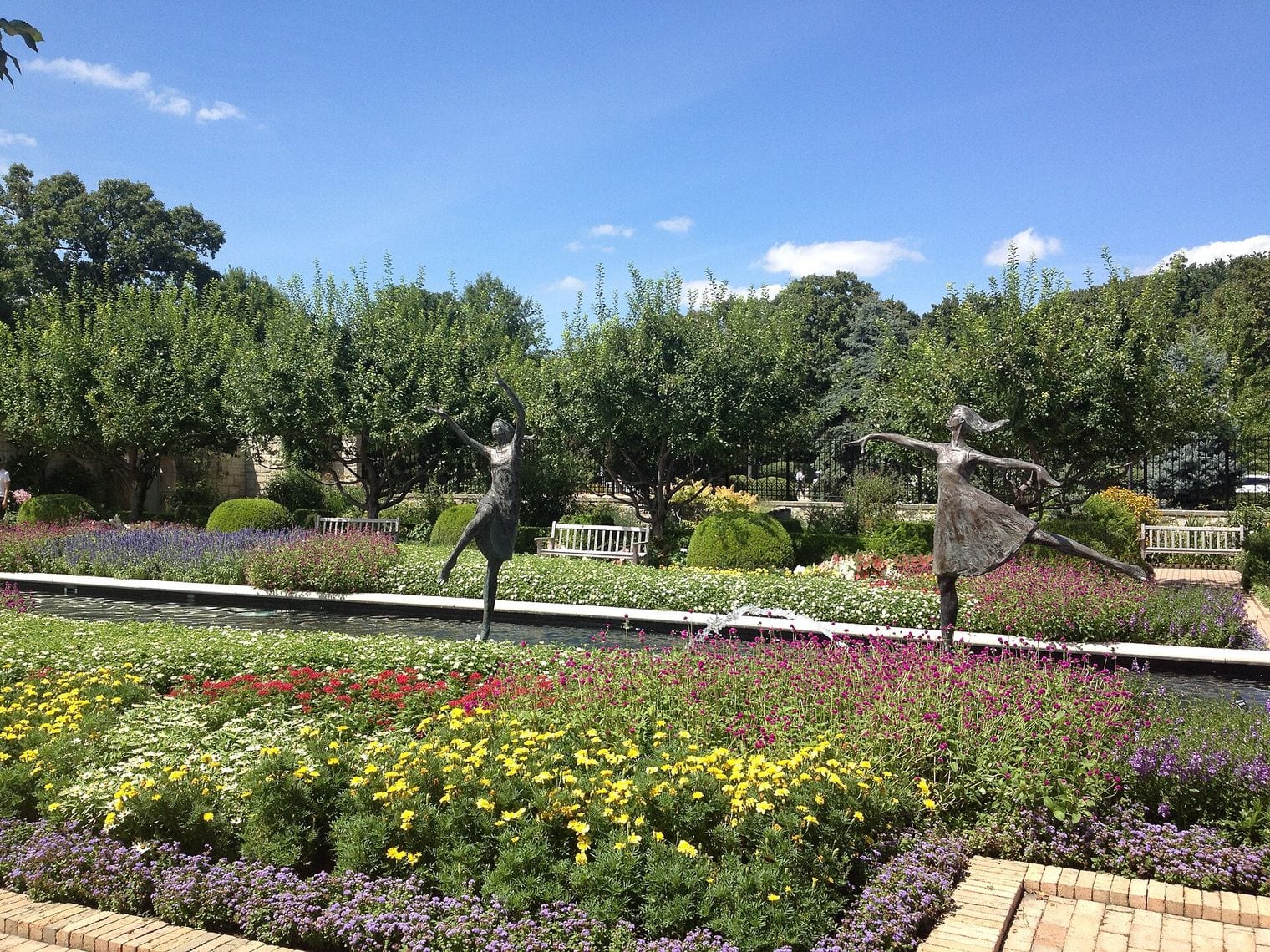
The Ewing and Muriel Kauffman Memorial Garden is a two-acre botanical garden honouring the Royals' founder and his wife, tucked behind the Kauffman Foundation near the Plaza. Formal rooms of flowers, fountains, sculpture and seasonal beds are arranged like a series of outdoor galleries, with a conservatory and a secluded Secret Garden behind it.
It is small enough to see in under an hour but restful enough to linger, and it is a popular spot for photographs. Combine it with the nearby Nelson-Atkins and Country Club Plaza for a relaxed half-day of art, gardens and shopping in the same corner of the city.
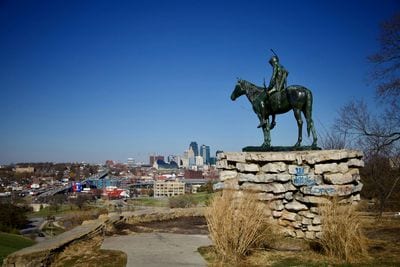
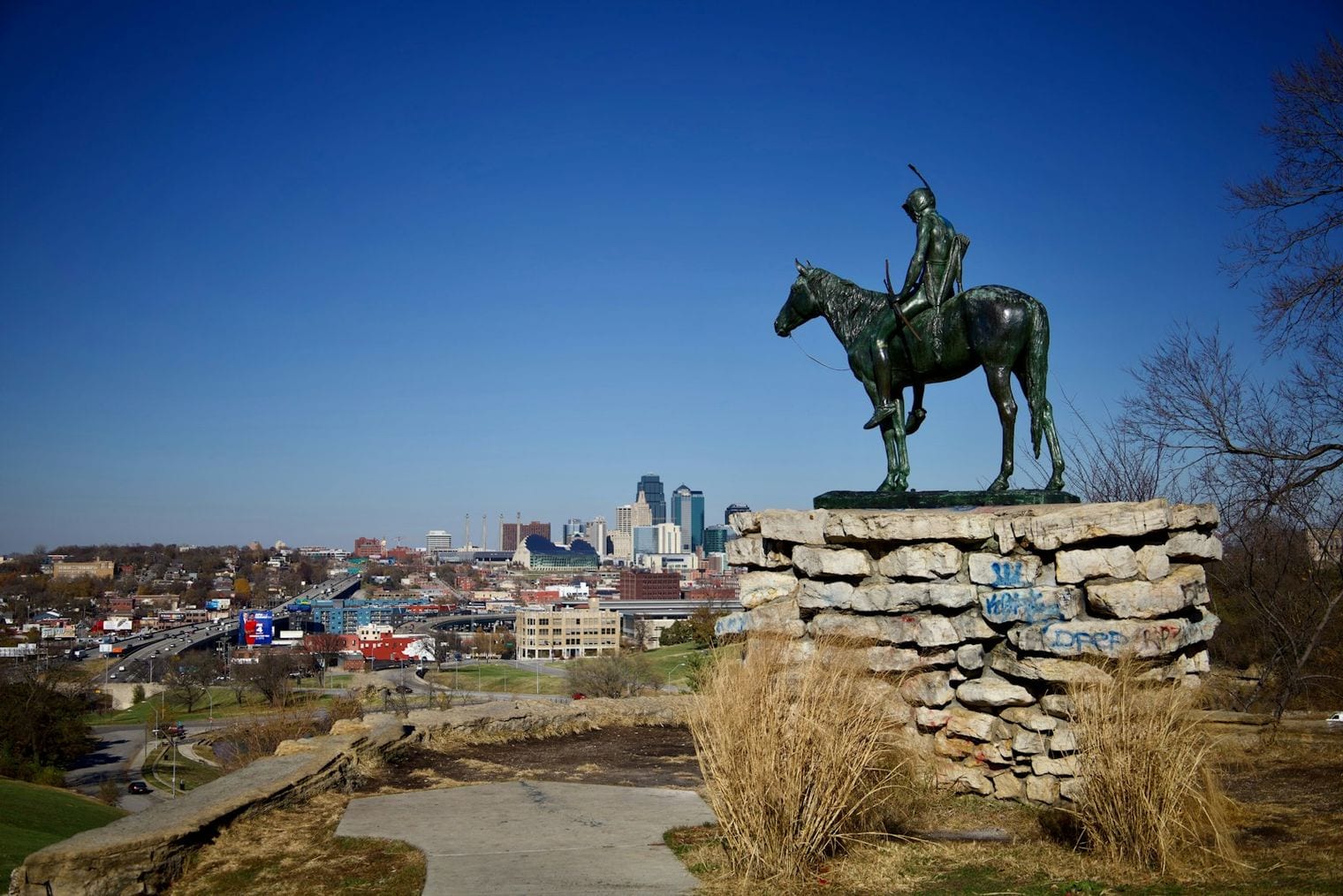
Penn Valley Park is a 176-acre park on the hills just south of downtown, laid out in 1904 on land the Santa Fe Trail once crossed. Its best-known landmark is The Scout, Cyrus Dallin's bronze of a Sioux scout on horseback looking out over the city, dedicated in 1922 after Kansas City children helped raise the money to buy it.
The statue's hilltop is one of the best free viewpoints over the downtown skyline, and the park's lawns, lake and trails surround the Liberty Memorial on its eastern edge. Come at sunset for the skyline glow, or walk the paths between the Scout and the memorial for a different angle on both.
Free printable checklist of all 40 places
Tick them off as you go. Confirm your email to download it, plus one email every Thursday with new guides for the places you tick.
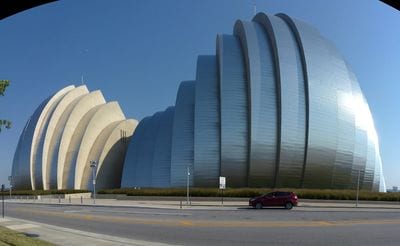
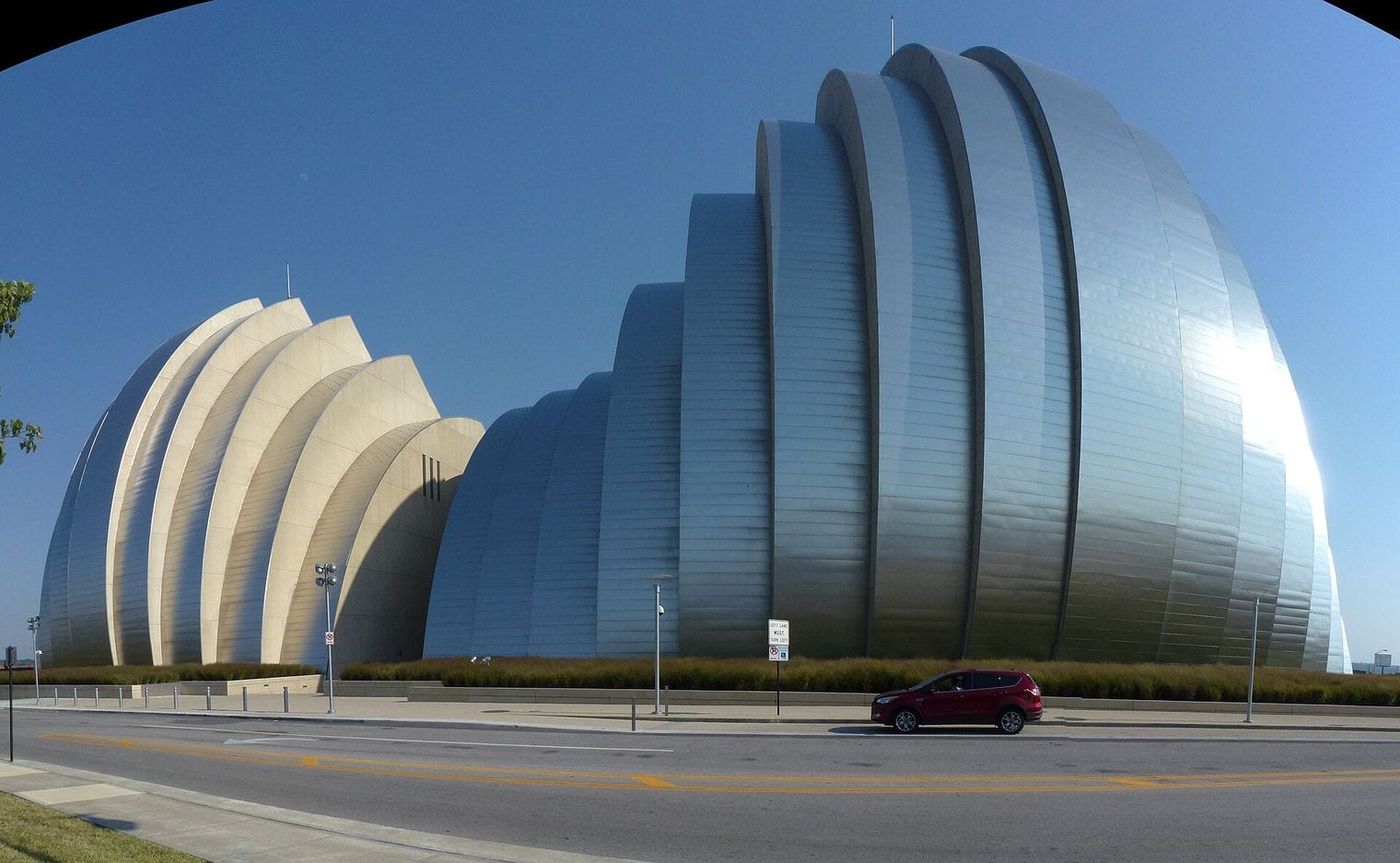
The Kauffman Center for the Performing Arts is the city's landmark concert hall, designed by Moshe Safdie and opened in 2011, with a striking shell-like exterior and a glass-walled lobby looking out over downtown. It has two venues: Helzberg Hall, home of the Kansas City Symphony, and the Muriel Kauffman Theatre, home of the Kansas City Ballet and the Lyric Opera of Kansas City.
The programme runs from symphony and opera to touring Broadway shows, comedy and big-name concerts, so there is usually something on during your stay. Even without a ticket, the building is worth seeing from the outside, especially at night when the glass lobby glows.
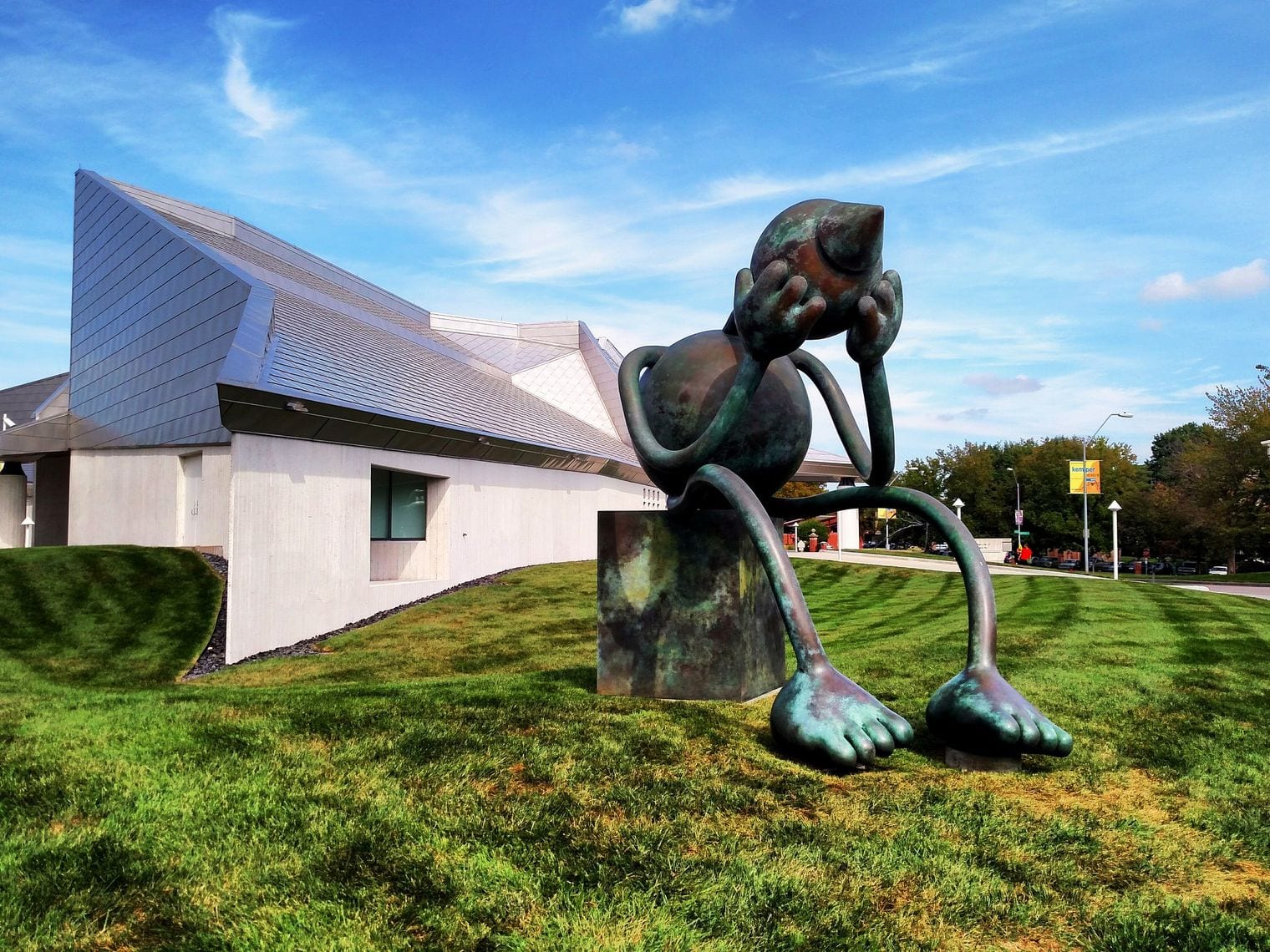
The Kemper Museum of Contemporary Art, opened in 1994, is a free contemporary art museum next to the Kansas City Art Institute, a short walk from the Nelson-Atkins. Its collection and changing exhibitions focus on modern and contemporary artists, from big names to regional talent, in bright and approachable galleries.
You can't miss the entrance: Louise Bourgeois's Spider, a bronze over 11 feet tall, stands guard outside. The museum is compact enough for an hour's visit, which makes it an easy add-on to a morning at the Nelson-Atkins or an afternoon on the Plaza.
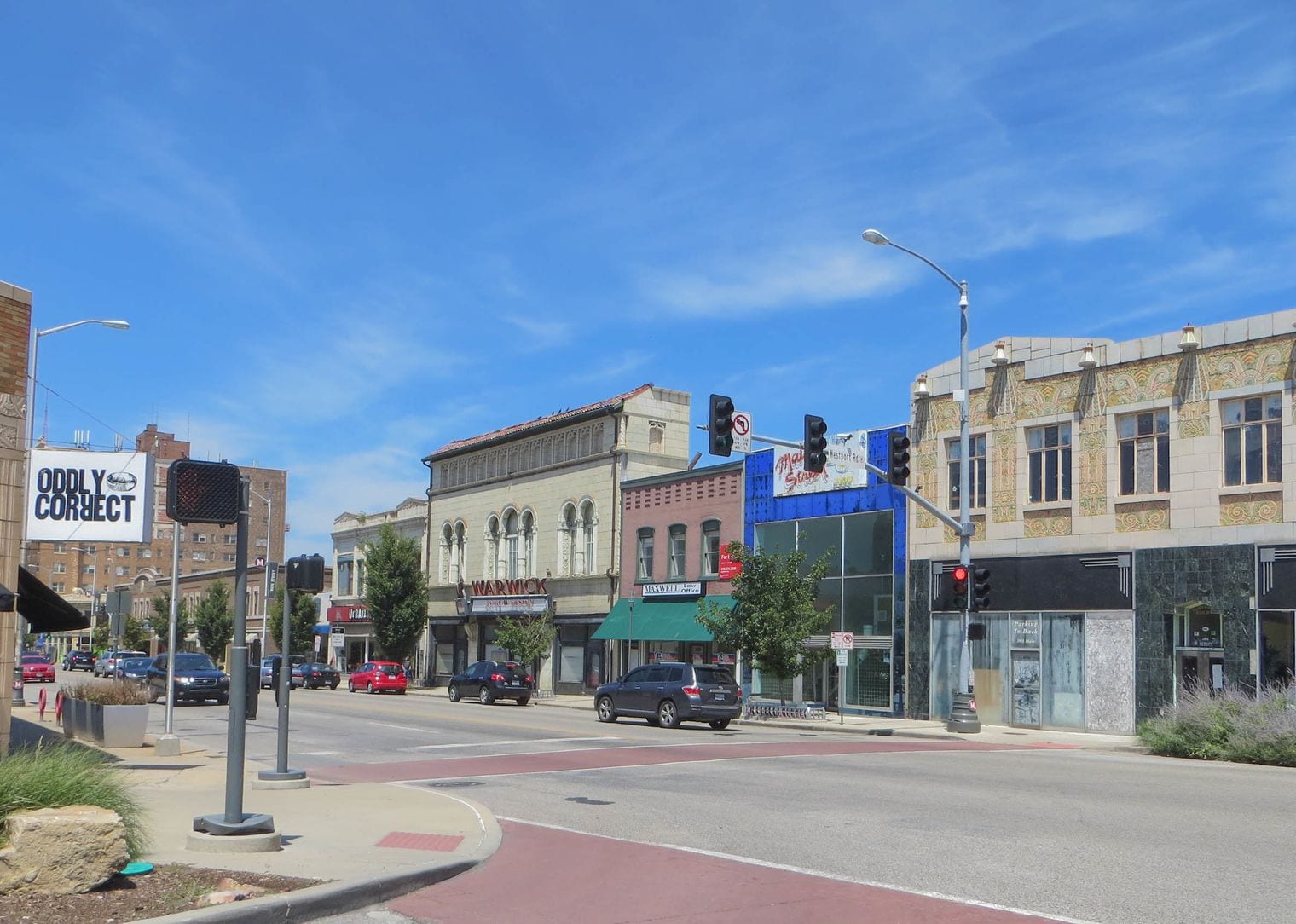
Westport is older than Kansas City itself, a frontier town laid out by John Calvin McCoy in the 1830s as an outfitting point for wagon trains heading west on the Santa Fe, Oregon and California trails. Its old brick buildings and side streets still carry that history, and the neighborhood saw fighting in the 1864 Battle of Westport.
Today Westport is Kansas City's classic nightlife district, with bars, live-music venues, independent shops and restaurants packed into a few walkable blocks. It is busiest on weekend nights; come by day to look for the historic markers and old storefronts, then return after dark for the music.
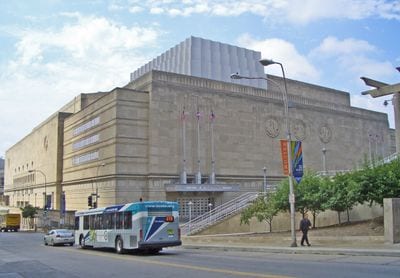
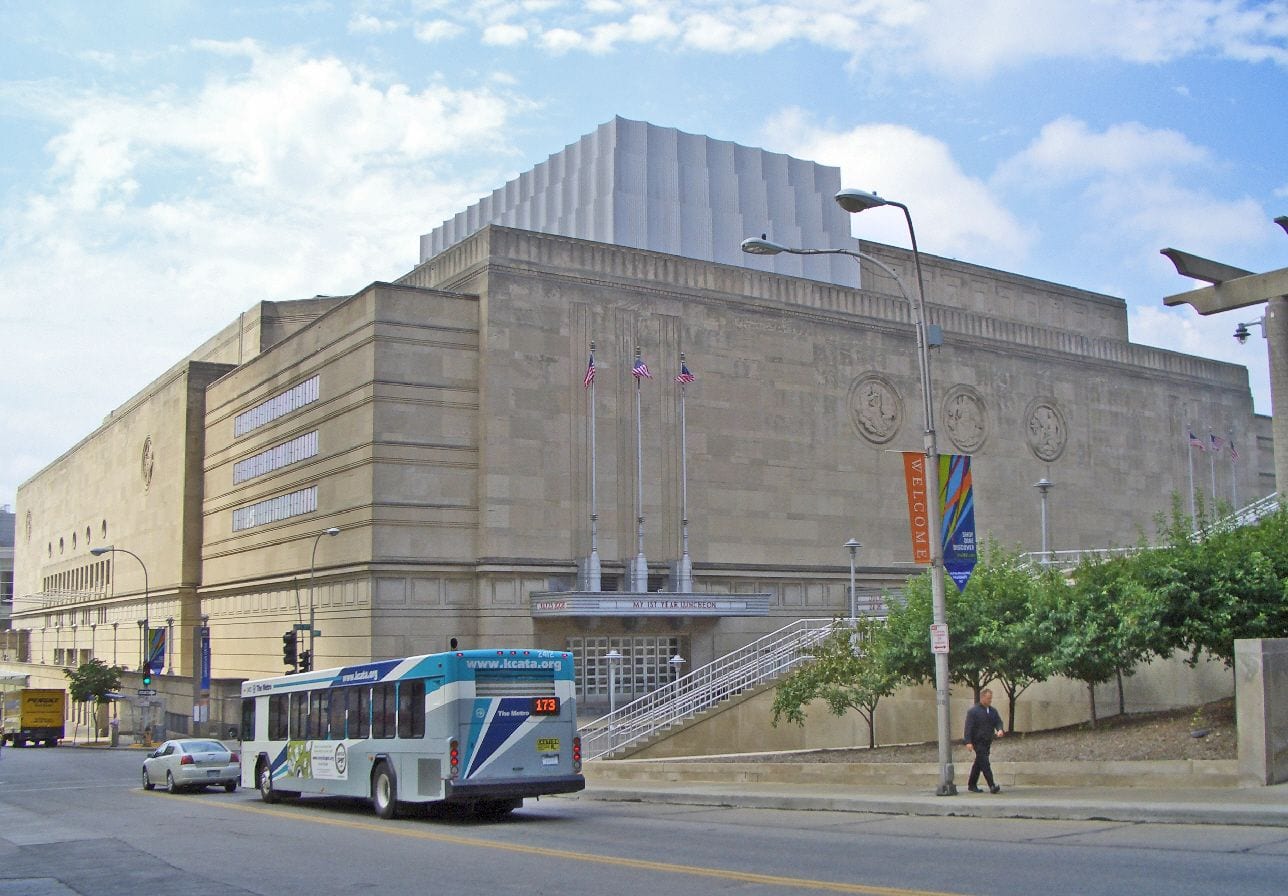
The Kansas City Music Hall is the grand theatre inside Municipal Auditorium, the downtown civic hall opened in 1935 and one of the city's showpieces of Art Deco and Streamline Moderne design. The auditorium's gilded, geometric interiors are a reason to go in their own right, with sweeping lobbies and a richly decorated hall.
Today the Music Hall hosts touring concerts, comedy, dance and theater, so check what is playing during your visit. It sits steps from the Power & Light District, which makes it easy to pair a show with dinner downtown.
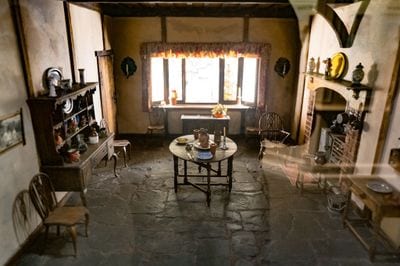
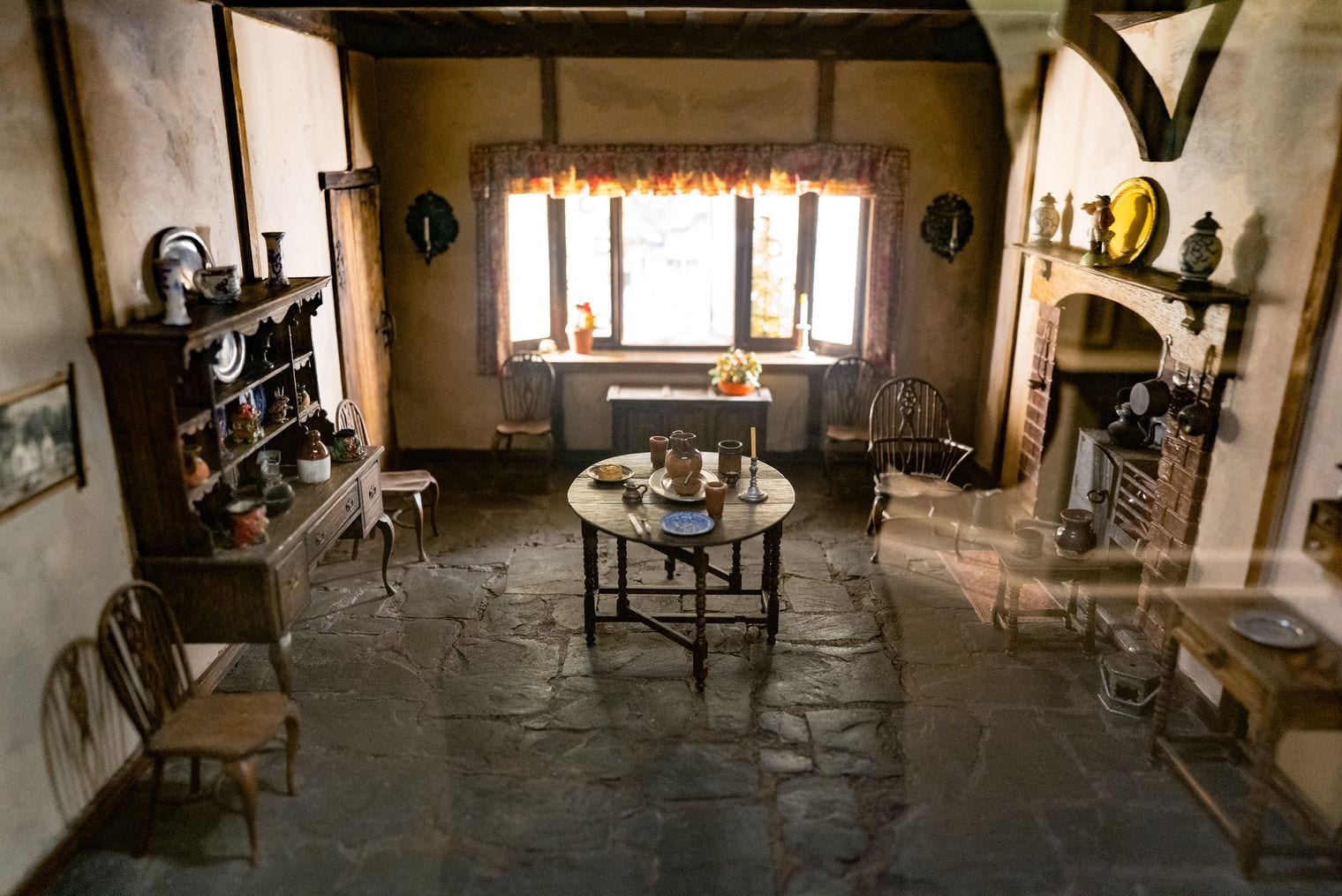
The National Museum of Toys and Miniatures, on the campus of the University of Missouri-Kansas City, holds what it calls the world's largest collection of fine-scale miniatures, alongside one of the country's biggest collections of antique toys. Tiny rooms, furniture and objects are made so precisely that you will find yourself leaning in close to take in the detail.
The toy galleries bring back childhood across generations, from dolls and dollhouses to marbles, trains and action figures, so grandparents and children tend to enjoy it equally. Allow about two hours, and combine it with the Plaza, which is a short drive or streetcar ride away.
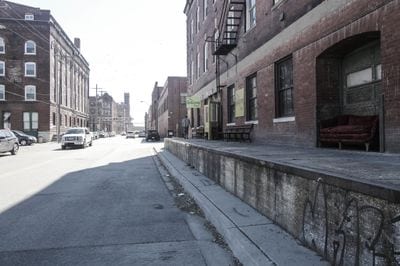
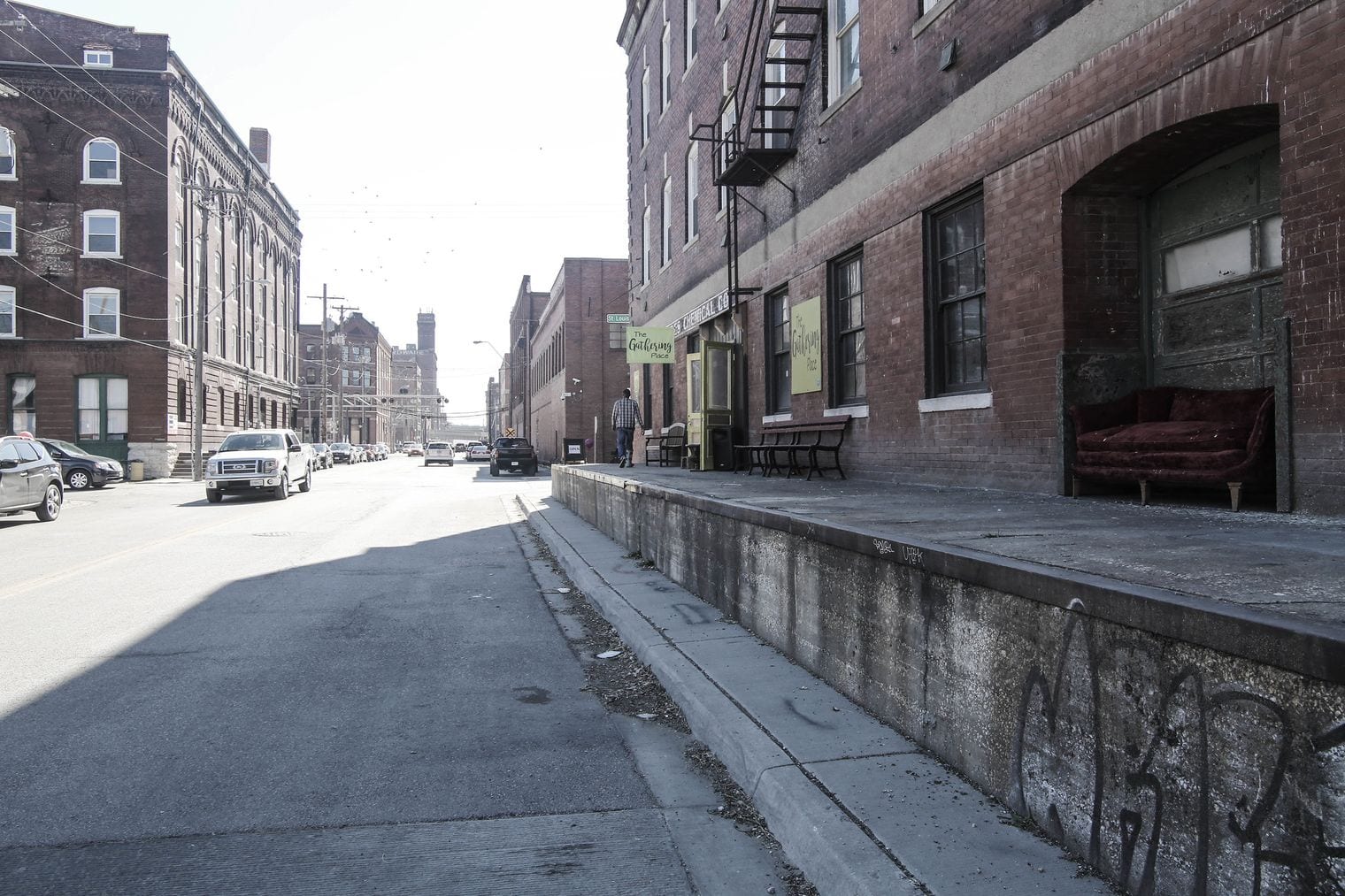
The West Bottoms sits on the low ground where the Kansas River meets the Missouri, below the bluffs west of downtown. Brick warehouses built in the early 1900s for the stockyards, rail yards and factories still line its streets, giving it a gritty, cinematic feel unlike anywhere else in the city.
Today those warehouses are full of antique and vintage dealers, and the district is busiest on the first weekend of each month, when shops open their doors and treasure hunters arrive from across the region. In fall the West Bottoms is also known for its elaborate haunted-house attractions, so it pays to check what is open before you go.
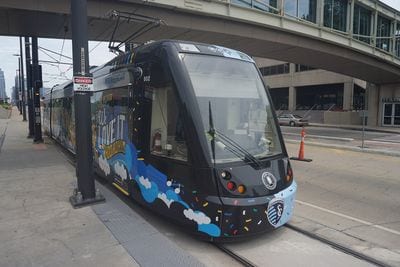
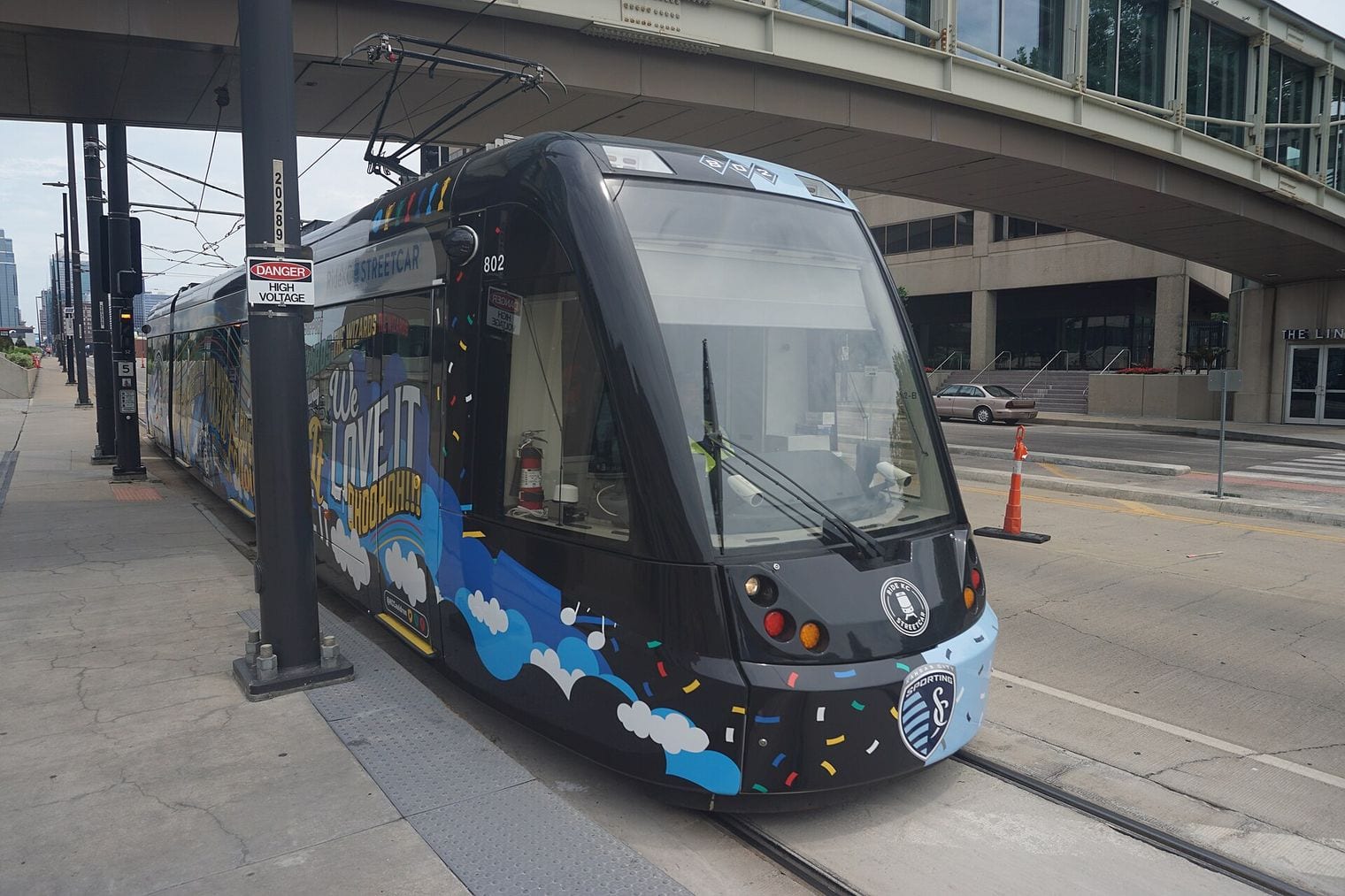
The KC Streetcar is free to ride and is the easiest way to get around central Kansas City. Since opening in 2016 the line has grown into a route of more than six miles, linking the riverfront and the River Market with downtown, Crown Center, Union Station, Midtown, the Plaza and the University of Missouri-Kansas City.
Riding it is an attraction in itself: you can hop on and off at the River Market, the Power & Light District and Union Station, and the extensions now reach Berkley Riverfront Park at the north end and the university at the south. Use it to string a day of sights together without worrying about parking.
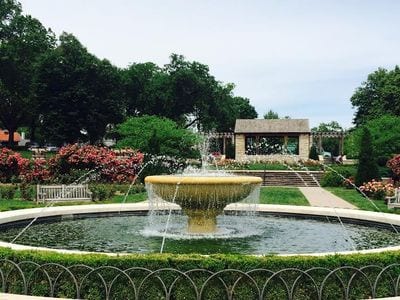
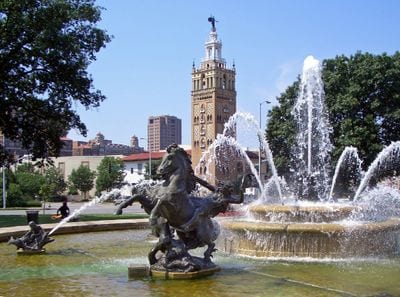
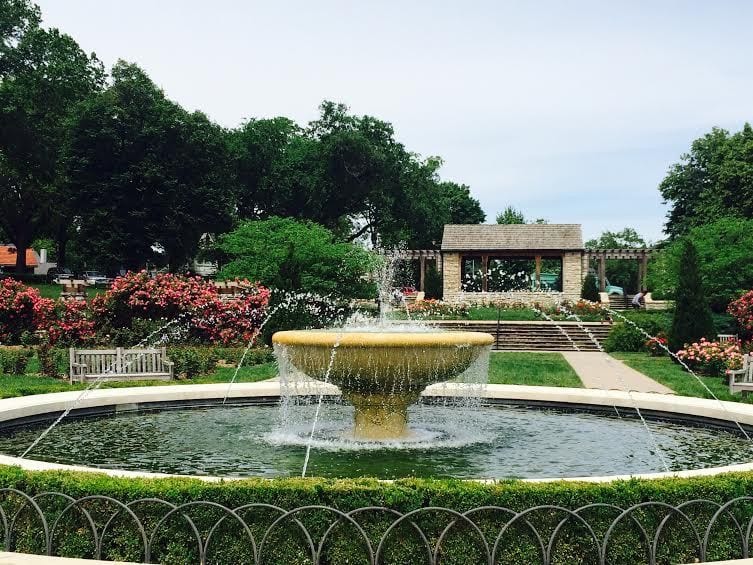
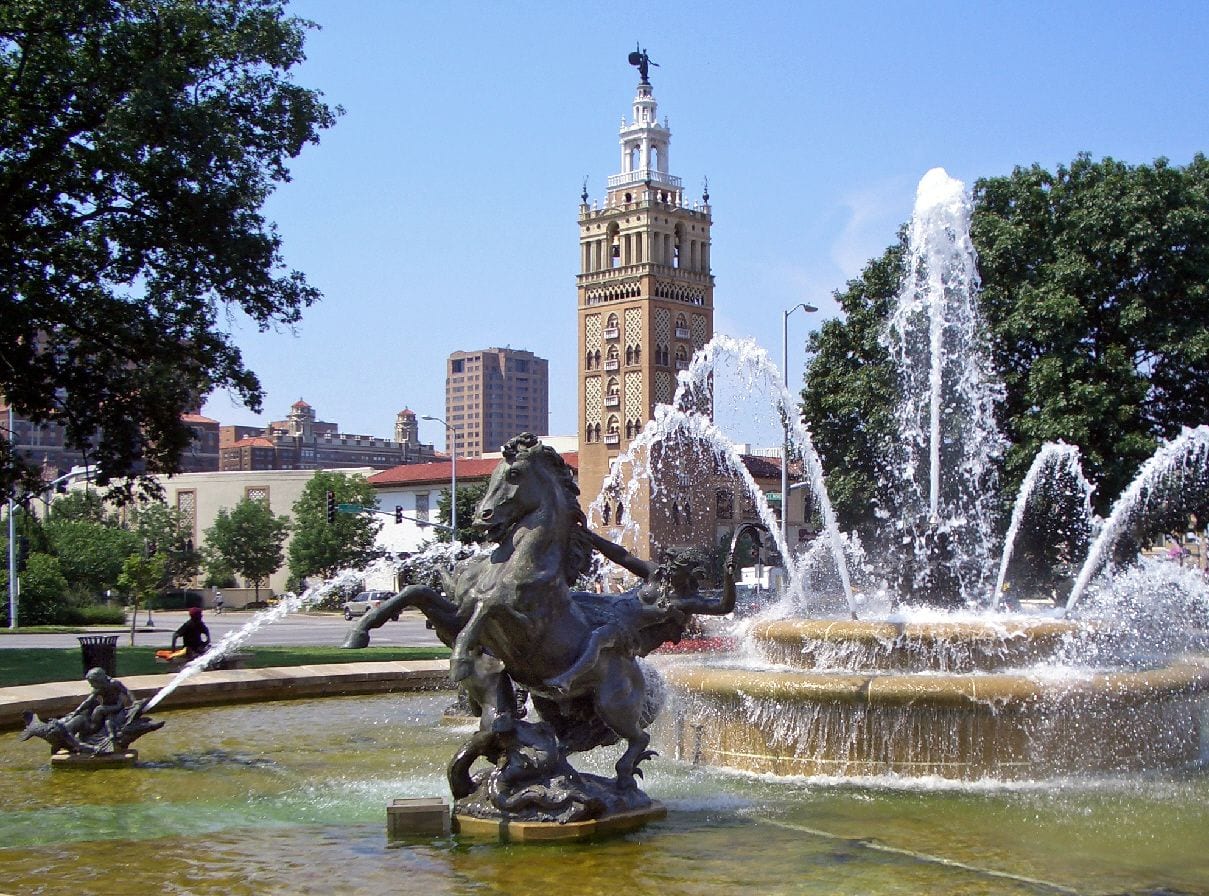
The J.C. Nichols Memorial Fountain, at the east edge of Country Club Plaza in Mill Creek Park, is one of Kansas City's most photographed fountains. Its four bronze horsemen, sculpted by Henri-Leon Greber in 1910, were made for a Long Island mansion and represent four of the world's great rivers, the Mississippi, Volga, Seine and Rhine, surrounded by children riding dolphins.
The fountain was dedicated here in 1960, and in 2020 the Parks Board voted to drop the Nichols name, though most locals still use it. Like the city's other public fountains it runs from spring into fall, and it is at its best on a summer evening when the jets are lit.
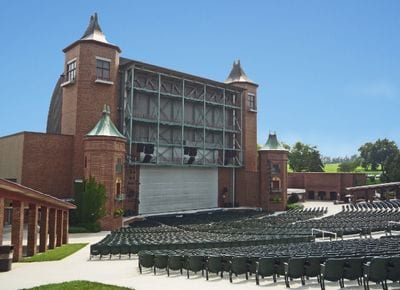
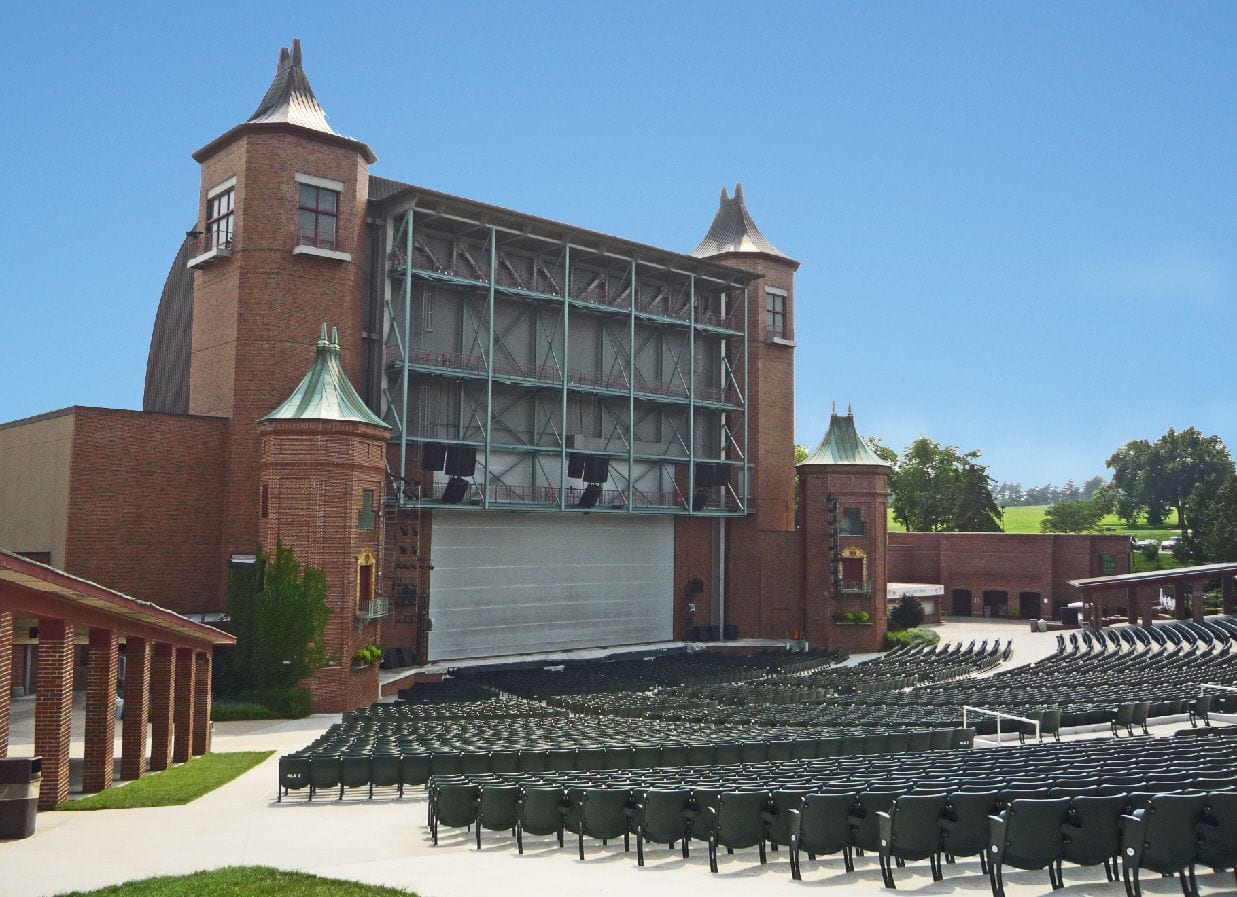
Starlight Theatre is a huge open-air theatre in Swope Park with more than 7,700 seats, and a summer night under the stars here is a Kansas City tradition. Its season is built around touring Broadway musicals, filled out with concerts from big-name artists, and the setting is at its best as the sun goes down.
Shows run in the warmer months only, so this is a summer plan; bring a light jacket for the later scenes and arrive early to find your seats and soak up the atmosphere. Starlight shares Swope Park with the Kansas City Zoo & Aquarium, so a zoo day can end with a show.
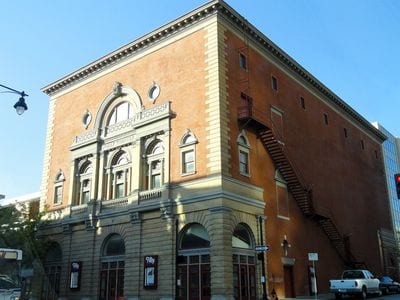
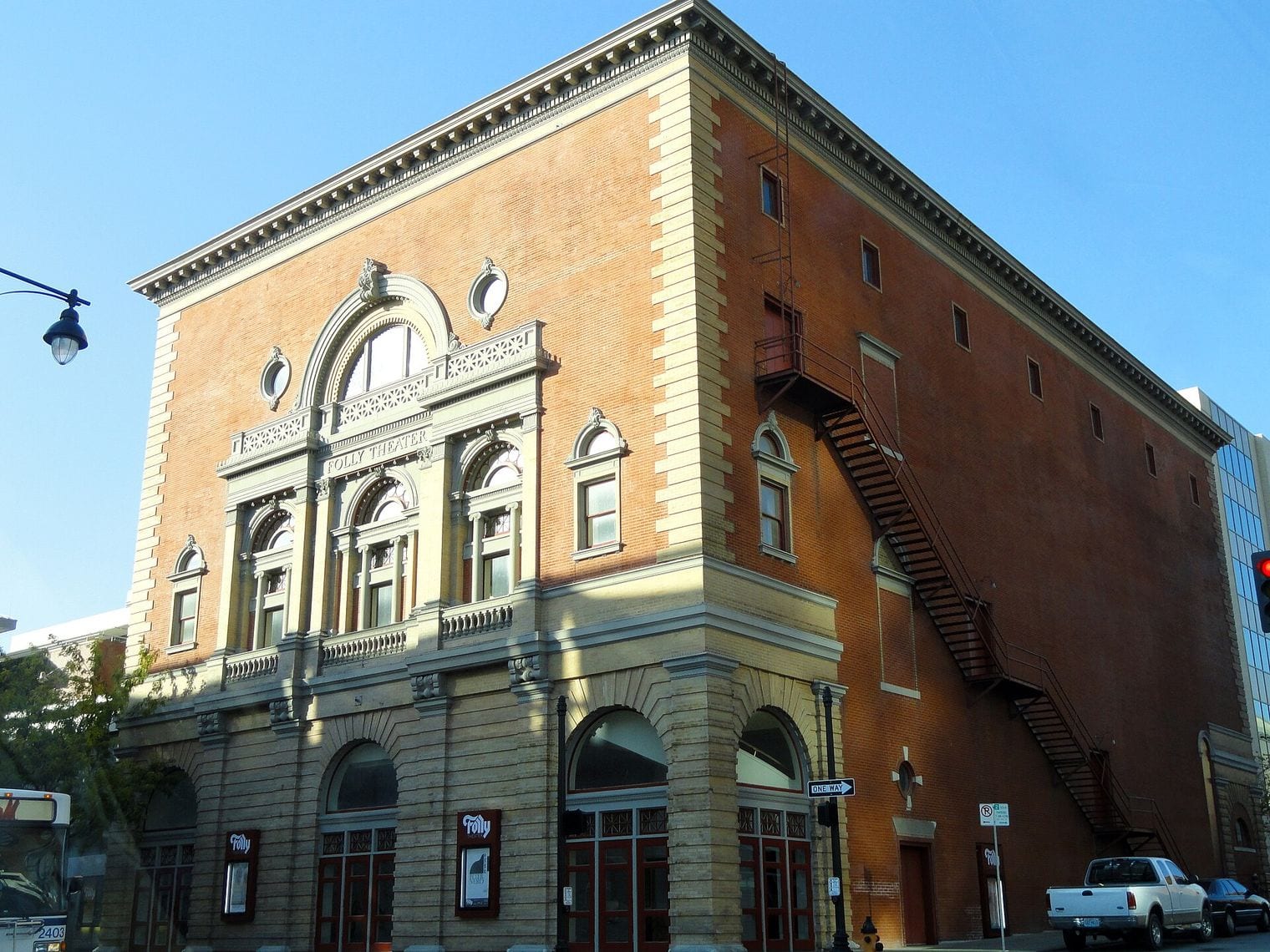
The Folly Theater opened in 1900 as the Standard Theatre, a vaudeville and burlesque house, and is now Kansas City's oldest historic theater. Rescued and restored by a nonprofit, its intimate auditorium has been returned to its original colour scheme, with a warm, old-fashioned glow.
The Folly hosts jazz, chamber music, classical recital series and theatre, so it is a fine choice for a smaller, more personal night out downtown. Even its burlesque history lives on, with revival shows returning to the stage where the form once played.
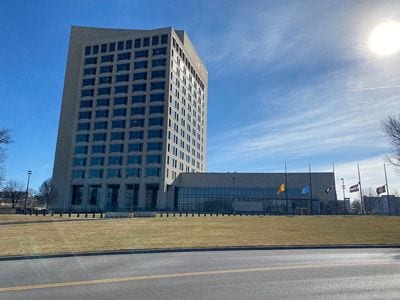
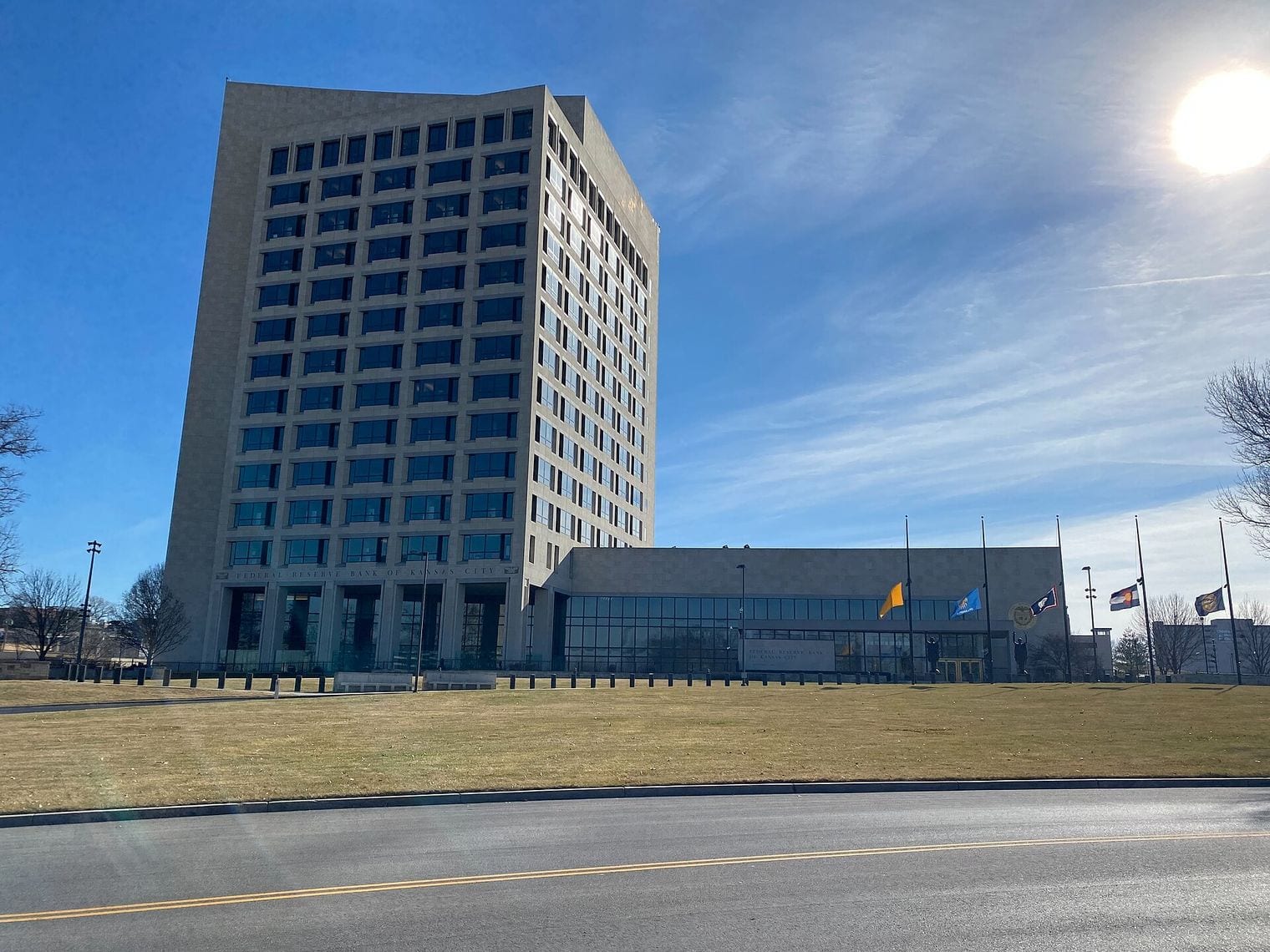
The Money Museum is inside the Federal Reserve Bank of Kansas City, overlooking the Liberty Memorial, and it is free to visit. You can lift a real gold bar, peek into the bank's multi-storey cash vault, and see the coin collection of Harry S. Truman, Missouri's own president.
Interactive exhibits explain how the Federal Reserve works and how money moves through the economy, and every visitor leaves with a bag of shredded currency as a souvenir. Bring photo ID, since there is airport-style security, and pair it with the WWI Museum across the street.
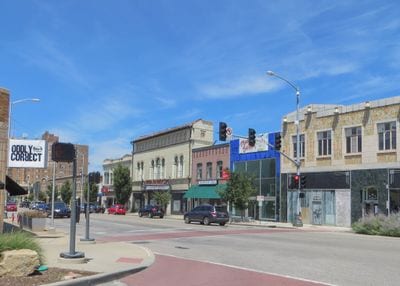
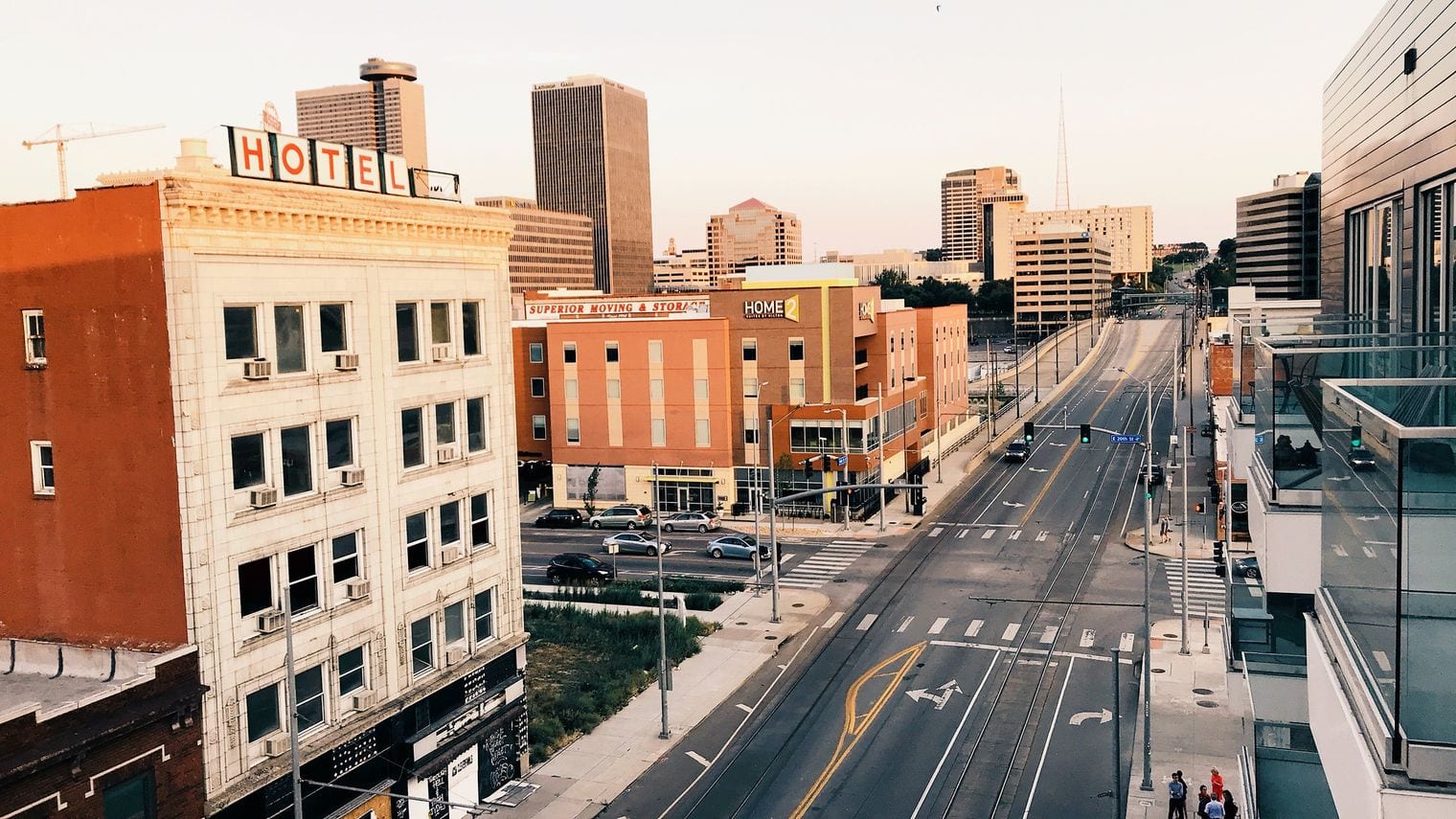
The Crossroads Arts District is Kansas City's main gallery quarter, with dozens of galleries, studios, design shops and cafes in the renovated warehouses and industrial buildings just south of downtown. Murals cover many walls, and Art Alley is lined with an ever-changing mix of street art.
The district is liveliest during First Fridays, when galleries open late, street performers and food trucks fill the sidewalks and crowds wander from door to door in the warmer months. Any day is good for a self-guided art walk, though, and the Crossroads is also one of the city's best areas for coffee, brunch and barbecue.
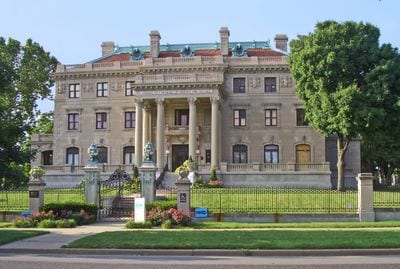
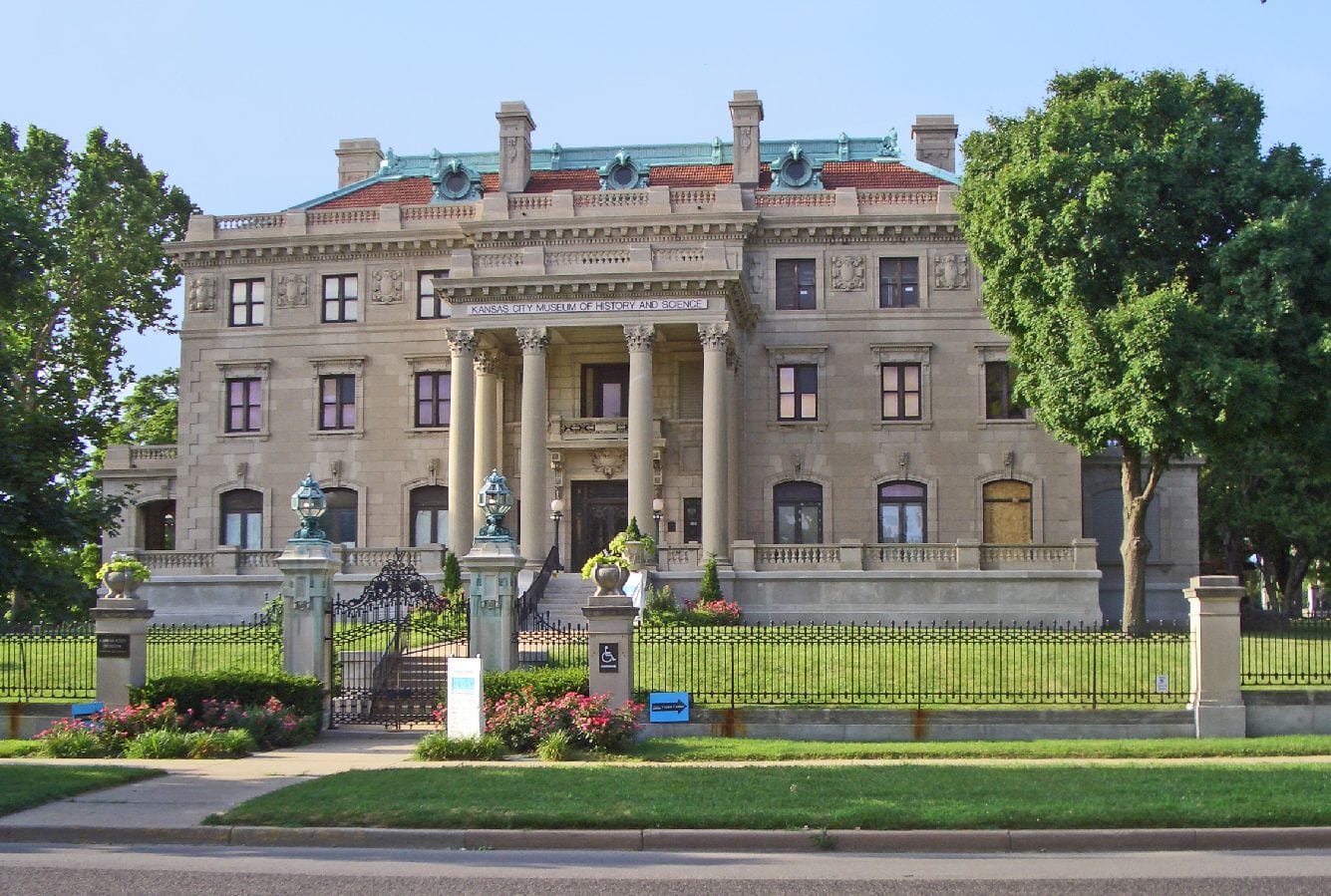
The Museum of Kansas City is housed in Corinthian Hall, the Beaux-Arts mansion lumber baron Robert A. Long built in 1910 on a bluff in the Northeast neighborhood. Long's heirs gave the estate to the city in 1940 to become a public museum, and its galleries tell the story of Kansas City from its river beginnings to its jazz-age boom.
The grand rooms, gardens and outbuildings give a feel for the lives of the city's early wealthy families, and the views from the estate are a bonus. It is a short drive east of downtown and pairs well with a visit to historic Union Cemetery or an evening at 18th & Vine.
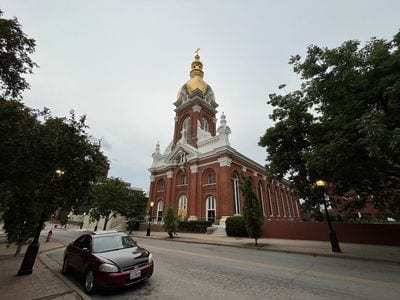
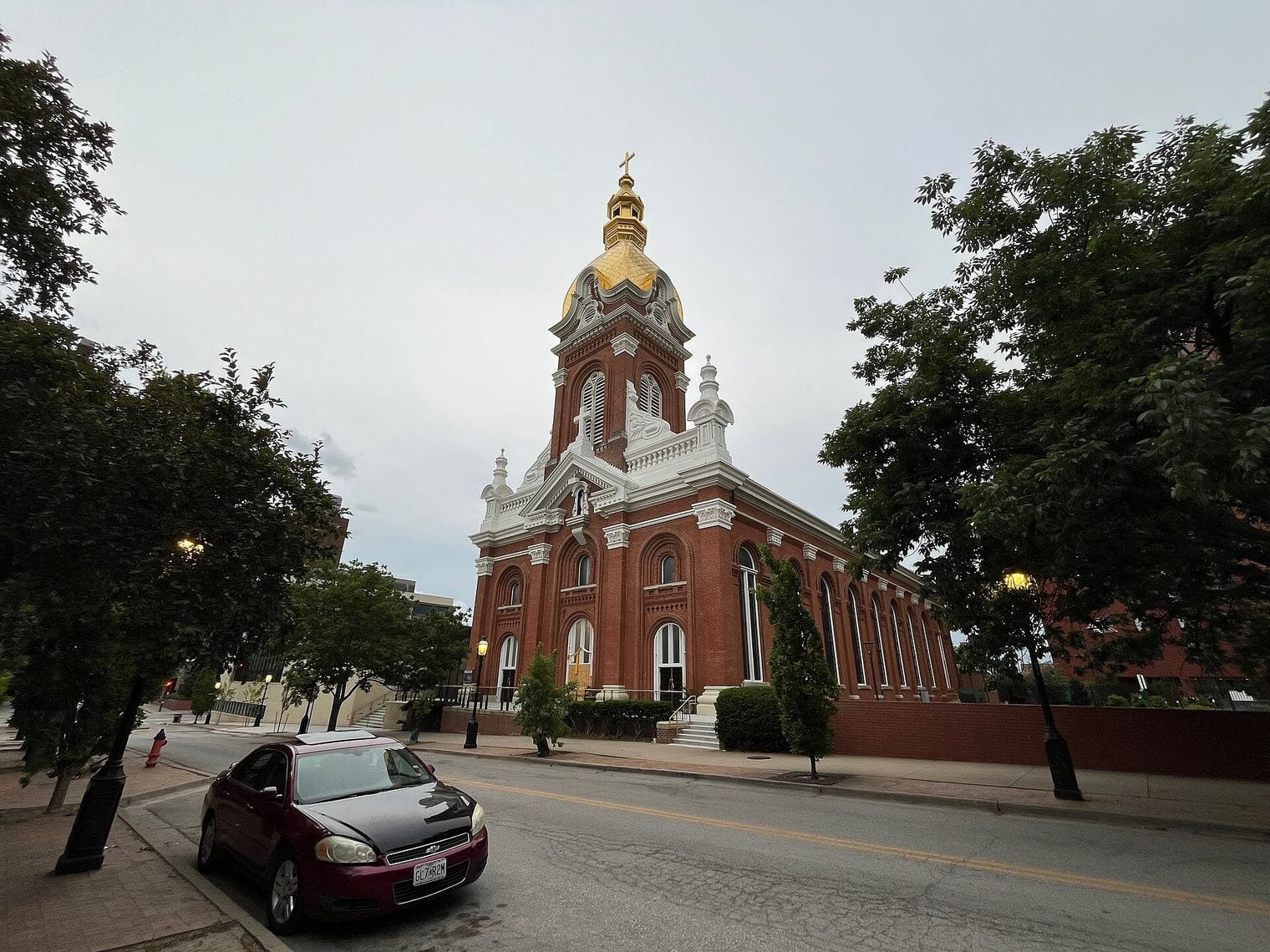
The Cathedral of the Immaculate Conception is the downtown seat of the Catholic Diocese of Kansas City-St. Joseph, dedicated in 1883. Its dome and cupola, covered in 23-carat gold leaf, shine above the skyline and give it its local nickname, the Gold Dome.
Inside, a major restoration has renewed the sanctuary, and the cathedral is open to visitors outside services. Even if you only see it from the street, it is one of the most recognisable landmarks downtown, and it makes a good stop on a walk between the Crossroads and the River Market.
3333. Gem Theater
Performing Arts Theater~1.1 miles (1.7 km) from centre
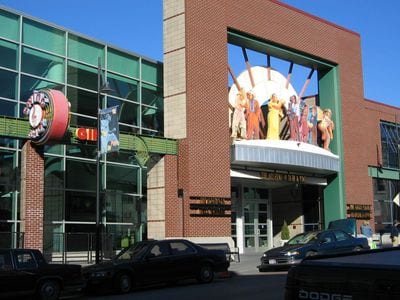
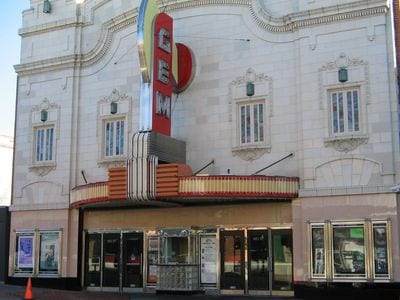
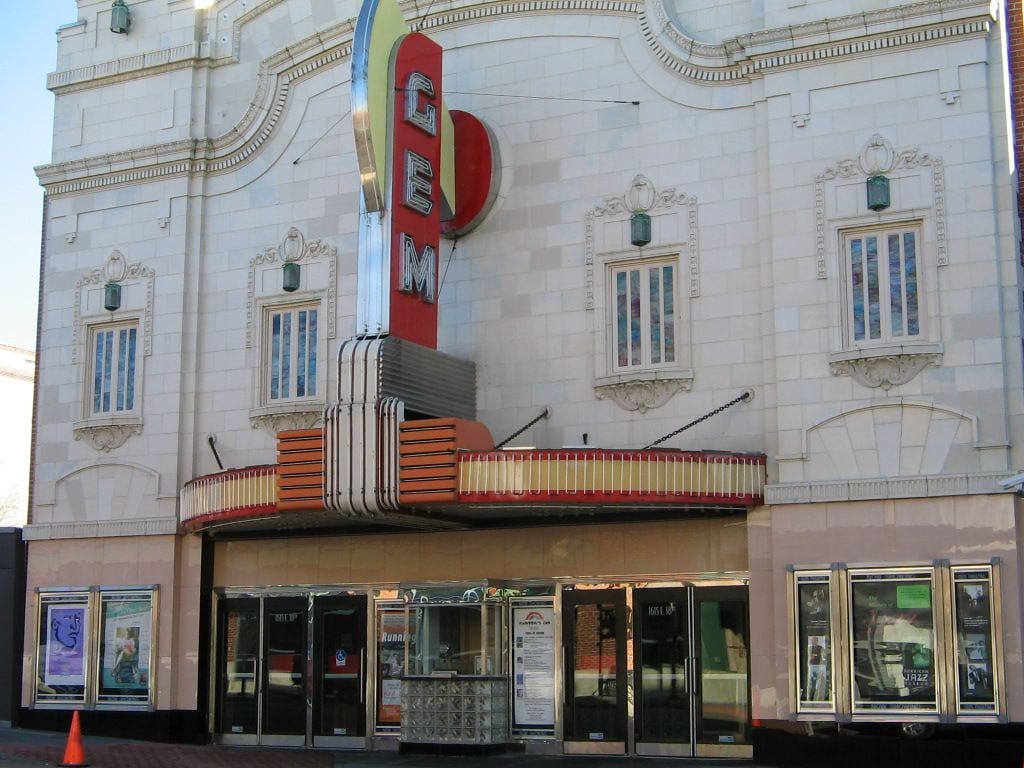
The Gem Theater is a restored 1912 theatre on 18th Street, its gleaming marquee one of the landmarks of the 18th & Vine District. Run together with the American Jazz Museum across the street, the 500-seat hall hosts jazz concerts, film screenings and community events.
The Gem was part of the district's heyday as the heart of Black cultural life in Kansas City, and its restoration helped bring the neighborhood back. Check what is playing during your visit, and at the very least stop for a photograph of the façade on your way to the museums.
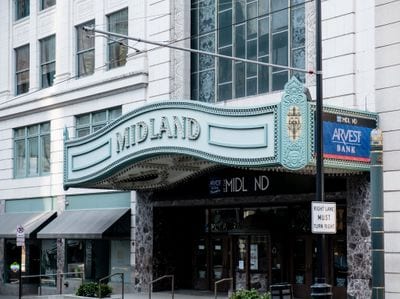
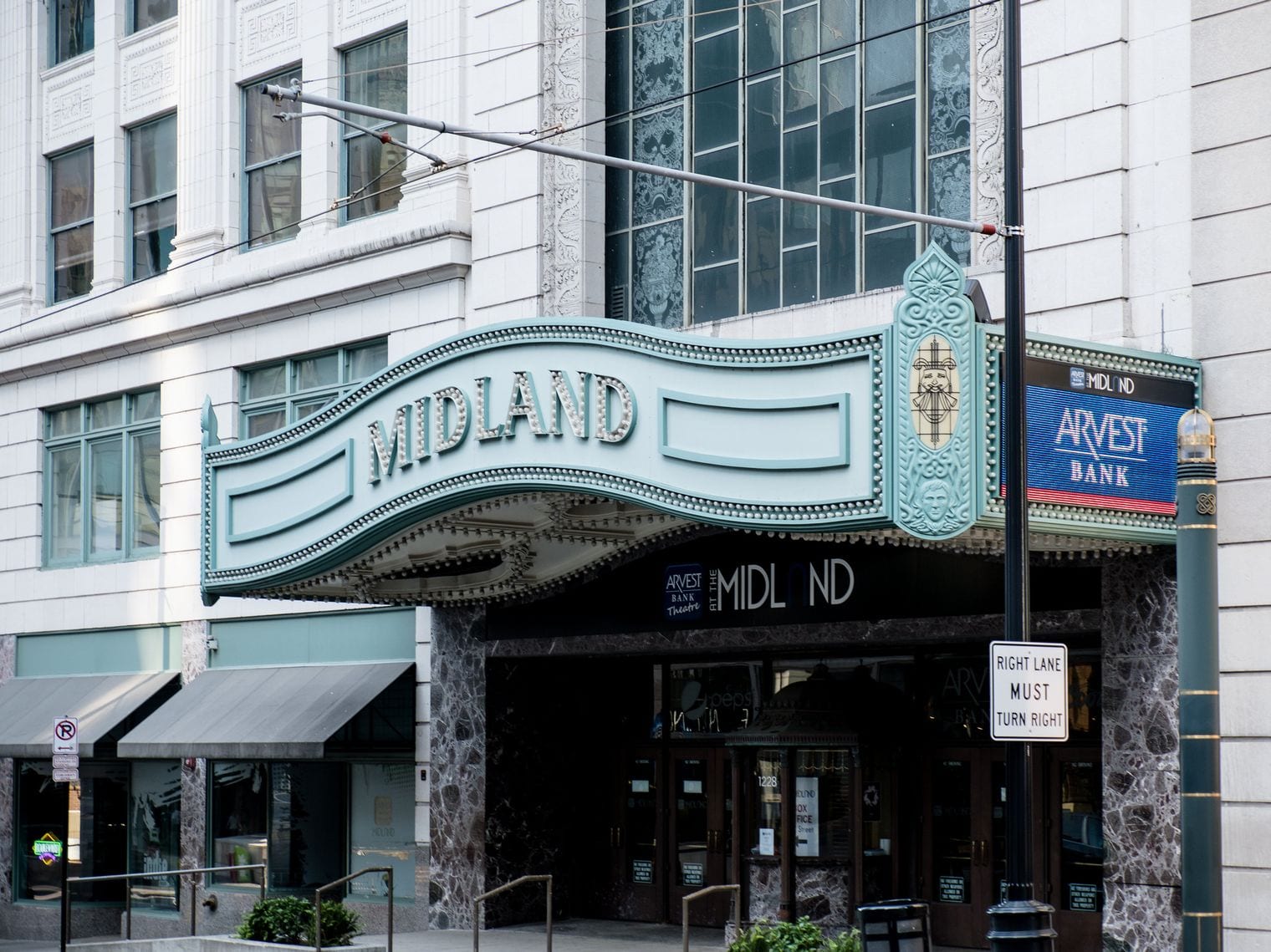
The Midland Theatre is a 1927 movie palace built by Marcus Loew and designed by Thomas Lamb, the master of the form, in an opulent French and Italian Baroque style. With around 3,000 seats, a towering lobby and a restored marquee, it was the largest historic theatre for some 250 miles around and remains one of the grandest in the region.
Today the Midland is a concert venue in the Power & Light District, hosting touring bands, comedians and shows of every kind, so check the listings during your stay. A concert here is the best way to see the interior, which is every bit as glamorous as the facade promises.
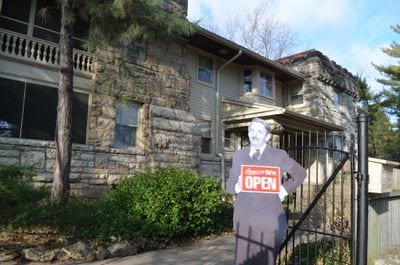
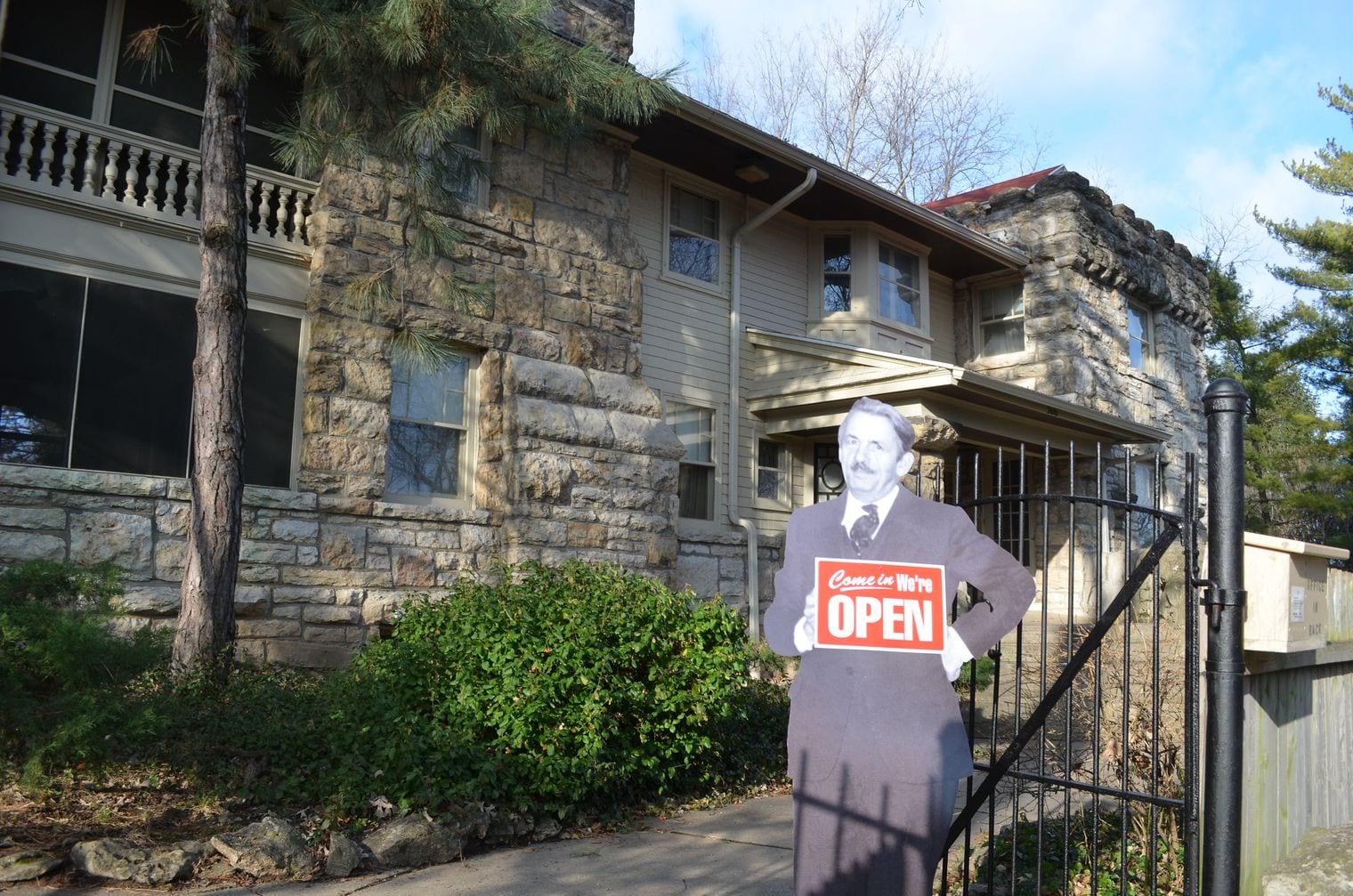
The Thomas Hart Benton Home and Studio State Historic Site preserves the house and studio of Missouri's most famous painter, the regionalist known for his swirling, muscular murals of American life. The house and studio have been kept much as Benton left them when he died in 1975.
Visits are by guided tour, which bring the house and Benton's working methods to life. It is a small, personal stop for art lovers, and it pairs well with the Nelson-Atkins, which holds works by Benton, and the nearby Westport district.
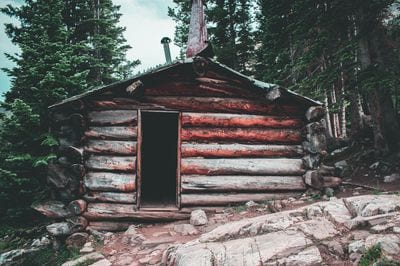
The Shoal Creek Living History Museum is a 19th-century village in Hodge Park in the Northland, assembled from log cabins and historic buildings brought in from the surrounding counties. Its streets include homes, a schoolhouse, a church and a mill, set among trees and meadows that make it feel far from the city.
The grounds are open for free self-guided walks, while the buildings open and costumed re-enactors bring the village to life during special-event weekends. It is a good outing for families, and it is worth checking the events calendar to time a visit for one of the living-history days.
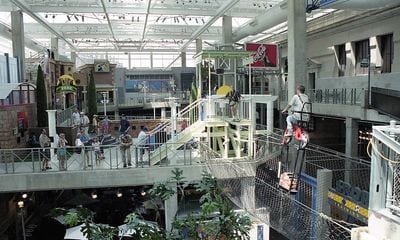
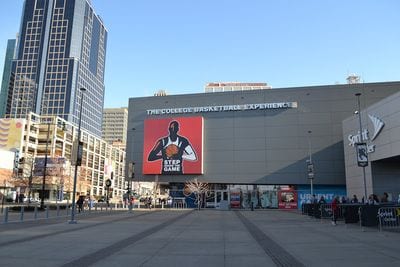
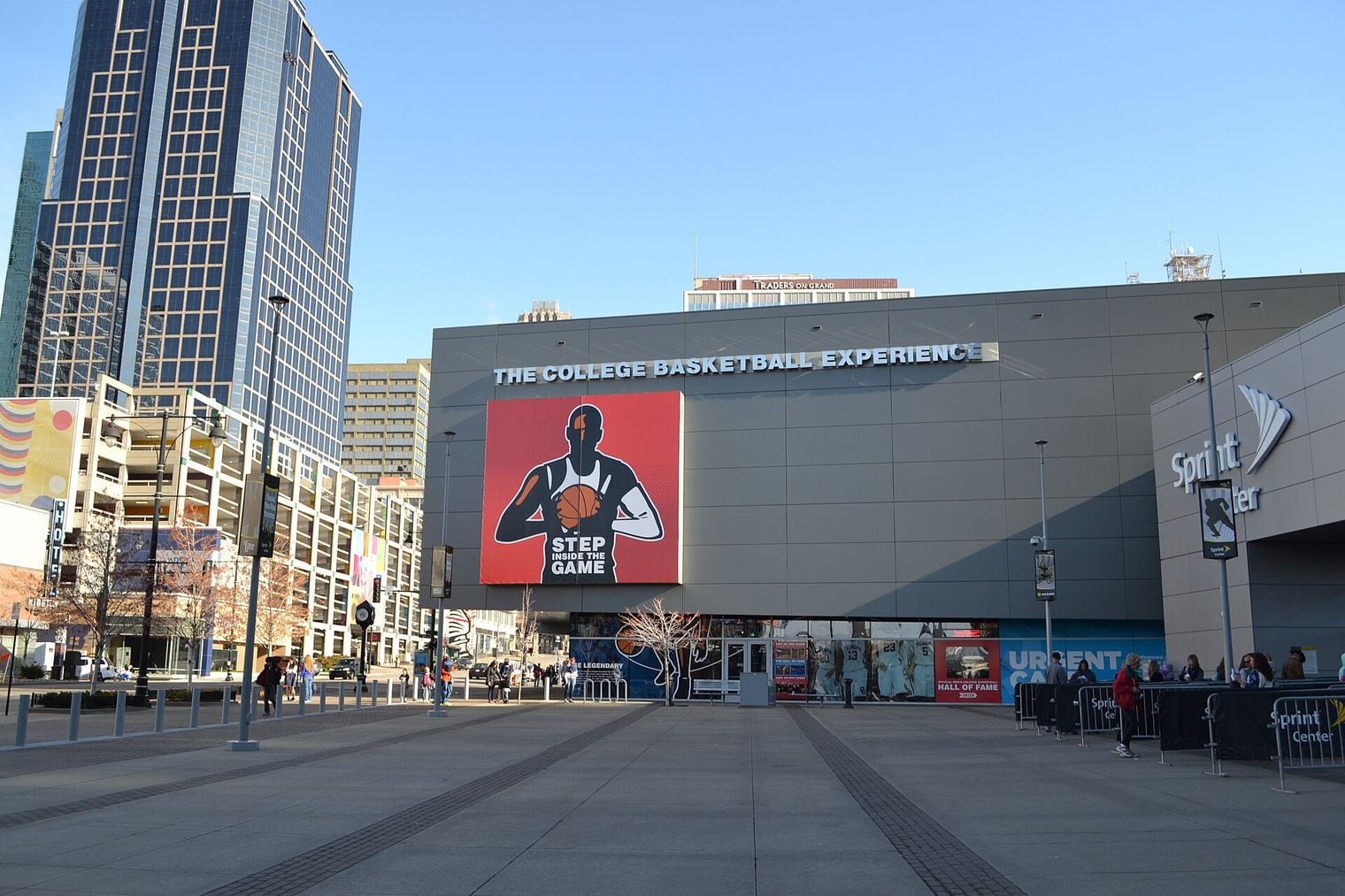
The College Basketball Experience is an interactive attraction attached to the T-Mobile Center downtown, home to the National Collegiate Basketball Hall of Fame. Opened in 2007, it is built for playing as much as looking, with hands-on courts and games that test your shooting and ball skills.
The Hall of Fame galleries honour the coaches and players who shaped the college game, a fitting tribute in a city that hosts so much college basketball. It makes a fun stop for families and fans, especially before a game or concert at the arena next door.
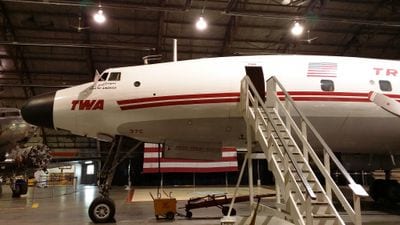
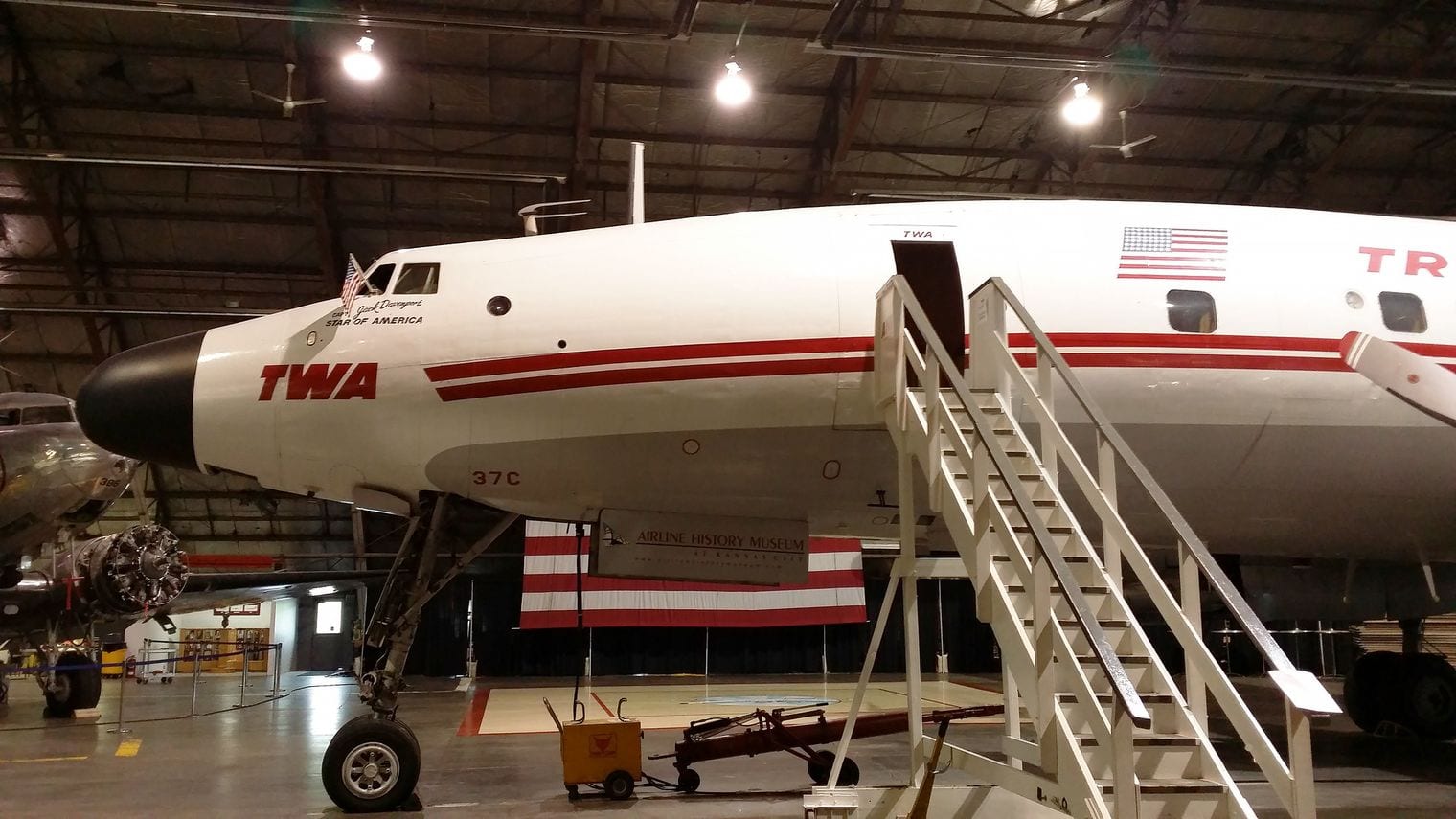
The TWA Museum tells the story of Trans World Airlines, which had its headquarters in Kansas City in its early decades, from its pioneering early flights to the glamour of the jet age. It is housed in TWA's original 1932 headquarters building at the Charles B. Wheeler Downtown Airport, just across the river from downtown.
Visits are by guided tour, often led by volunteers who once worked for the airline or flew with it, and their stories are the highlight. Exhibits of uniforms, models, posters and memorabilia fill out the history, and the airport setting adds to the atmosphere.
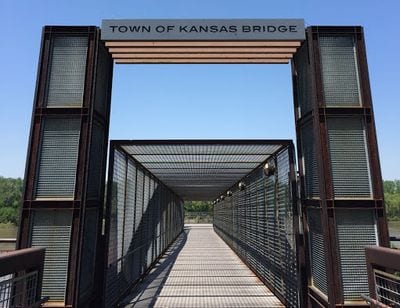
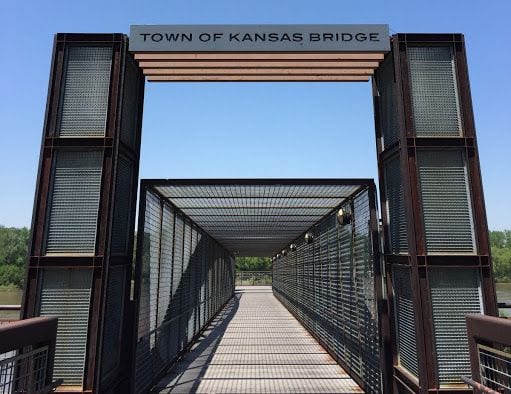
The Town of Kansas Bridge is a 650-foot pedestrian bridge that carries you from the River Market over the rail lines to the Missouri River, crossing the site of the original Town of Kansas settlement. Its observation deck looks out over the water, the river bridges and the old Municipal Wharf.
At the river end, stairs lead down to the Riverfront Heritage Trail and on to Berkley Riverfront Park, so it is the natural start for a riverside walk or bike ride. Come at sunset for the best light on the river, then head back up for dinner in the River Market.
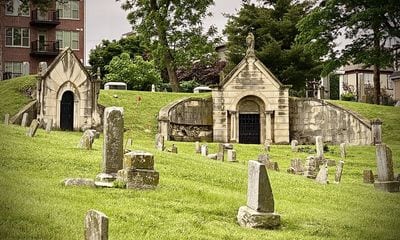
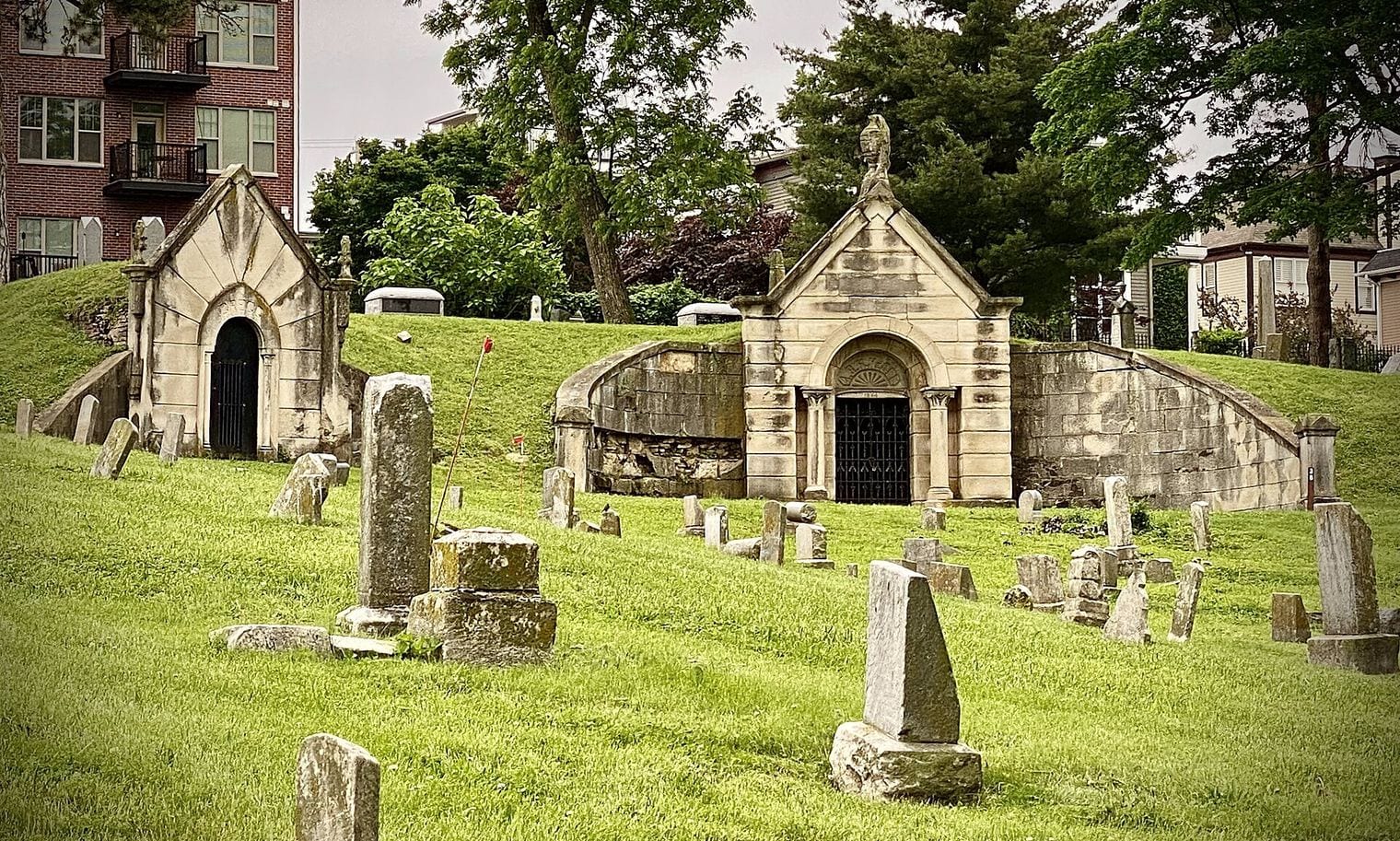
Union Cemetery, founded in 1857, is the oldest surviving public cemetery in Kansas City, a peaceful hillside of old trees and weathered stones just south of Crown Center. It holds an estimated 55,000 burials, including pioneers, city founders, Civil War veterans and the painter George Caleb Bingham.
A walk among the graves is a quiet lesson in the city's early history, and the cemetery's historical society works to keep those stories alive. Its gates open daily, and it is a good stop for history lovers looking for a calm hour away from the busier sights.
Plan your trip
Best Time to Visit Kansas City
Spring and fall are the most comfortable seasons. The city's fountains are switched on in spring and run into the fall, the rose garden in Loose Park blooms from late spring, and fall brings mild days, football Sundays at Arrowhead and the haunted houses of the West Bottoms. Summer is hot and humid, but it is also the season of baseball at Kauffman Stadium, Broadway under the stars at Starlight Theatre and long days at Worlds of Fun.
Winter is cold, with occasional snow and ice, yet it has its own appeal: the Plaza's holiday lights, ice skating at Crown Center and quieter museums. Hotel rates and crowds climb on big-game weekends and during major conventions, so check the sports calendar before you book.
Getting to Kansas City
Kansas City International Airport sits north of the Missouri River, roughly half an hour's drive from downtown, with nonstop flights to most major US cities. The city is also a crossroads of interstates: I-70 runs east to St. Louis and west across Kansas, I-35 links it to Des Moines and Wichita, and I-29 and I-49 run north and south along the state's western edge.
Amtrak trains still call at Union Station, with service east across Missouri and long-distance trains between Chicago and the Southwest, and intercity buses serve the city from across the region. Kansas City, Kansas, a separate city across the state line, sits immediately west of downtown.
Getting Around Kansas City
Kansas City is spread out, and a car is the easiest way to reach outlying sights such as the zoo, Worlds of Fun, the Truman Sports Complex and the Northland. Parking is generally easy to find, except around stadiums, arenas and the Power & Light District on event nights.
The central spine is a different story: the free KC Streetcar links the riverfront, the River Market, downtown, Crown Center, Union Station, Midtown, the Plaza and the university, so you can see much of the core without driving. City buses fill in the gaps, and rideshare is widely available for evenings out.
Where to Stay in Kansas City
Downtown and the Power & Light District put you closest to the arena, theatres, nightlife and the streetcar, while the Crossroads offers a more creative base among galleries and converted warehouses. Crown Center is the pick for families, with Union Station, Science City and the aquarium a short walk away.
Country Club Plaza is the most polished choice, with shopping, dining and the Nelson-Atkins on the doorstep, and nearby Westport suits travellers who want bars and live music within walking distance. If you are in town for a Chiefs or Royals game, staying east of downtown near the stadiums saves a drive, though there is far less to do there.
Where to Eat in Kansas City
Barbecue is the reason many people come. Kansas City-style means meats slow-smoked over wood, a thick, sweet tomato-based sauce and burnt ends, the crusty, smoky brisket ends that became the city's signature. The 18th & Vine District carries much of the city's barbecue heritage, and smokehouses are spread across Midtown, the Crossroads and the suburbs.
Beyond barbecue, the Crossroads has the most adventurous dining, Westport mixes casual spots with late-night bars, the River Market and City Market are best for international flavours and weekend brunch, and the Plaza leans toward upscale dining and steakhouses, a fitting place to try a Kansas City strip.
Day Trips from Kansas City
Independence, about 20 minutes east, is Harry S. Truman's hometown, with his presidential library and the family home, while Excelsior Springs and the river town of Weston, each well under an hour away, make easy half-day escapes. Head about an hour north to St. Joseph for the Pony Express story and grand old mansions, or about 45 minutes west across the state line to Lawrence, Kansas, a lively college town.
For a longer day, Topeka, the Kansas capital, is about an hour west along I-70, with the Brown v. Board of Education National Historical Park and the domed State Capitol. Heading east, Columbia, Missouri, is about two hours away, a college town with its own museums, trails and a buzzing downtown.
Kansas City is best known for barbecue, jazz, fountains and sport. Its headline sights are the free Nelson-Atkins Museum of Art, the National WWI Museum and Memorial, Union Station and the Spanish-styled Country Club Plaza, while Kauffman Stadium and Arrowhead Stadium host the Royals and the Chiefs in front of famously loud crowds.
How many days do you need in Kansas City?
Three days is the sweet spot. Spend one on the Nelson-Atkins, the Plaza and Midtown, a second on Union Station, the WWI Museum and downtown, and a third on 18th & Vine, the River Market and a game or show. Add a fourth day for the zoo, Worlds of Fun or a day trip.
What can you do in Kansas City for free?
Plenty. The Nelson-Atkins and the Kemper Museum have free general admission, the Money Museum at the Federal Reserve is free, and the KC Streetcar costs nothing to ride. Parks such as Loose Park and Penn Valley Park, the Town of Kansas Bridge and the Crossroads First Fridays are all free to enjoy.
Is Kansas City, Missouri, the same as Kansas City, Kansas?
No. They are two separate cities on either side of the state line, sharing one metropolitan area. Kansas City, Missouri is the larger of the two and holds most of the major sights, including the Nelson-Atkins, Union Station, the WWI Museum and both pro stadiums. Kansas City, Kansas sits just to the west.
When is the best time to visit Kansas City?
Spring and fall offer the most comfortable weather, with the fountains running, gardens in bloom and a full calendar of baseball and football. Summer is hot but packed with ballgames and outdoor shows, and winter brings the Plaza's holiday lights. See the Best Time to Visit section above for more detail.
Sources & updates
How this guide was checked
Checked before launch
Sources cited
40
Publishers
33
Every place on this list was confirmed open and pinned on the map before publication, and what we say about each one was checked against its own website or an official source.
A PDF with a box to tick for every place. Confirm your email to download it, and get one email every Thursday with our newest guides for the places you tick.
Free Kansas City printable checklist
All 40 places in one PDF
Tick them off as you go. Confirm your email to download it, plus one email every Thursday with new guides for the places you tick.
We use cookies to analyse site traffic and improve your experience.
You can accept or reject analytics cookies. See our
May we use analytics cookies? See ourCookie Policy.