We build and rank every list first. Booking links come after, and only where
a partner sells a ticket, tour or stay for that exact place, so a place with
nothing to book is listed exactly as prominently as one you can book.
So how do we earn? Some links on this page go to booking
partners, and if you book tickets, tours or a stay through
one, we may earn a commission. It costs you nothing extra.
That commission never decides which places make the list, the order they
appear in, or what we write about them. No entry is sponsored or a paid
placement.
By the CityViking Research TeamPublished 35 places · 29 min read
Sources Checked before launchOct 7, 202635 sources29 publishers6 government & parks4 tourism boards3 encyclopedias & research22 venues & other sitesPublished · Oct 7, 2026Researched and checked before it went liveClick for every source and the full change log.
Short answer
Start with Whitefish for its lake, ski mountain and easy access to Glacier National Park, Red Lodge for the Beartooth Highway climbing toward Yellowstone, and Livingston for its railroad-era downtown at the mouth of Paradise Valley. Most towns on this list fill a relaxed day; gateway towns such as Whitefish, West Yellowstone and Gardiner deserve two or three days, and a loop through one region takes about a week.
Montana's small towns grew from gold and silver strikes, copper smelters, steamboat landings and the railroads that carried early tourists to Yellowstone. Today they guard the doors to Glacier and Yellowstone national parks, line famous trout rivers and dot the wheat country of the Hi-Line, often hours apart under the state's big sky.
This guide ranks 35 of the best, from Whitefish and Red Lodge to Virginia City's gold-rush streets and an old Missouri River port within a drive of Great Falls. Most fill a relaxed day, the gateway towns deserve two or three, and many link into a weeklong road trip.
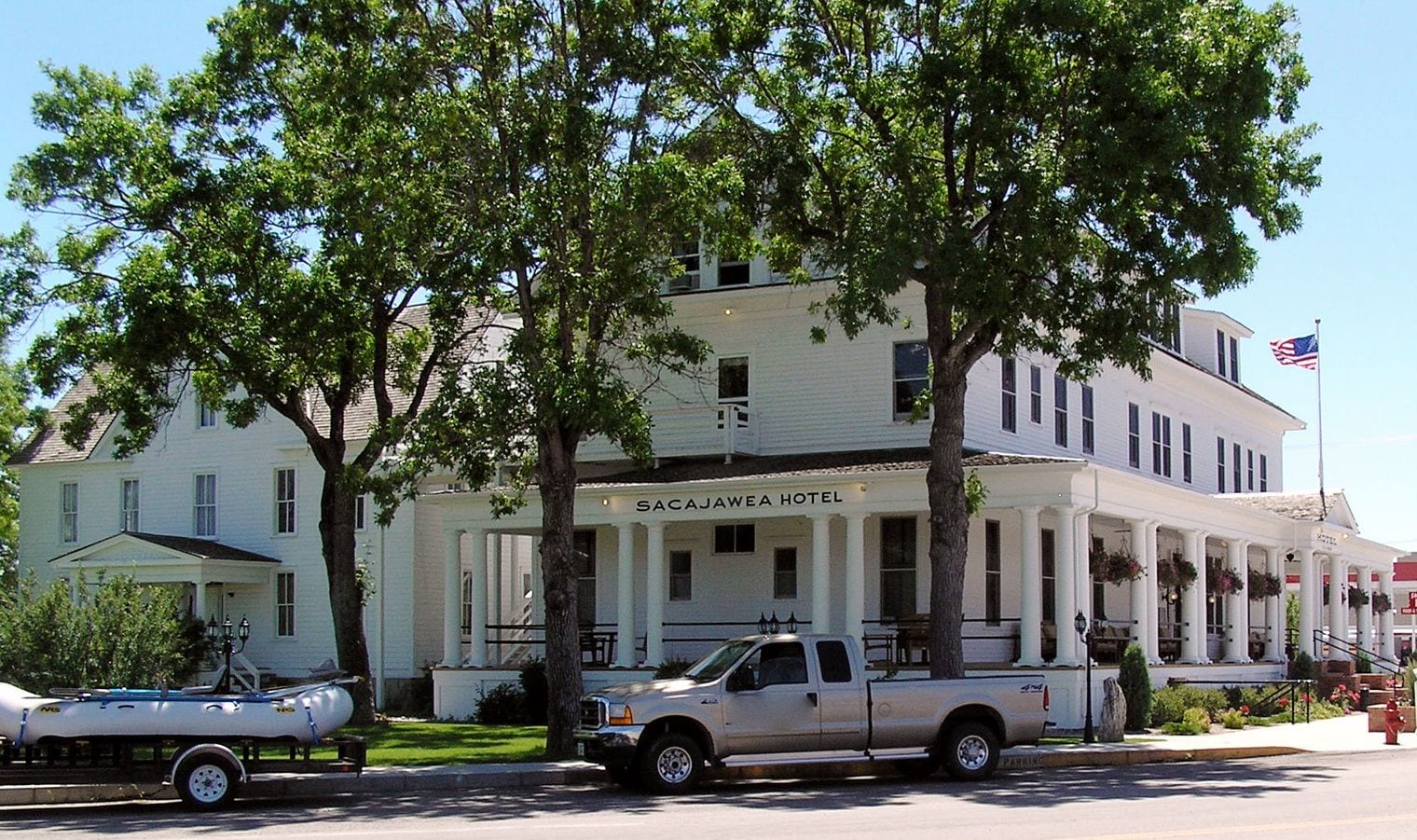
Fort Benton, founded as a fur-trading post in 1846, is the oldest continuously occupied settlement in Montana, and as the head of steamboat navigation on the Missouri it was once the most upstream port in the Mississippi River system.
St. Mary's Mission in Stevensville, founded by Jesuit missionaries in 1841 at the request of the Bitterroot Salish, was the first permanent settlement by non-indigenous people in what became Montana.
Montana Territory's first capital was the gold camp of Bannack; in 1865 the capital moved to Virginia City, which held it for a decade before it went to Helena.
Near Three Forks, about 30 miles west of Bozeman, the Jefferson, Madison and Gallatin rivers meet to form the Missouri River; Meriwether Lewis named the three in July 1805 for Thomas Jefferson, James Madison and Albert Gallatin.
The Anaconda Smelter Stack, completed in 1918, stands about 585 feet tall and is the tallest surviving masonry structure in the world.
On July 4, 1923, Shelby hosted the Jack Dempsey and Tommy Gibbons world heavyweight title fight, a promotion so costly that it nearly bankrupted the town.
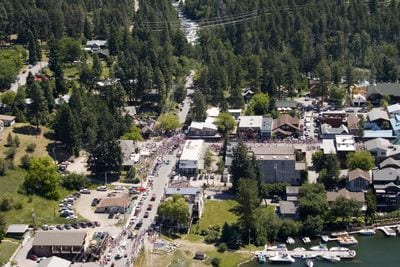
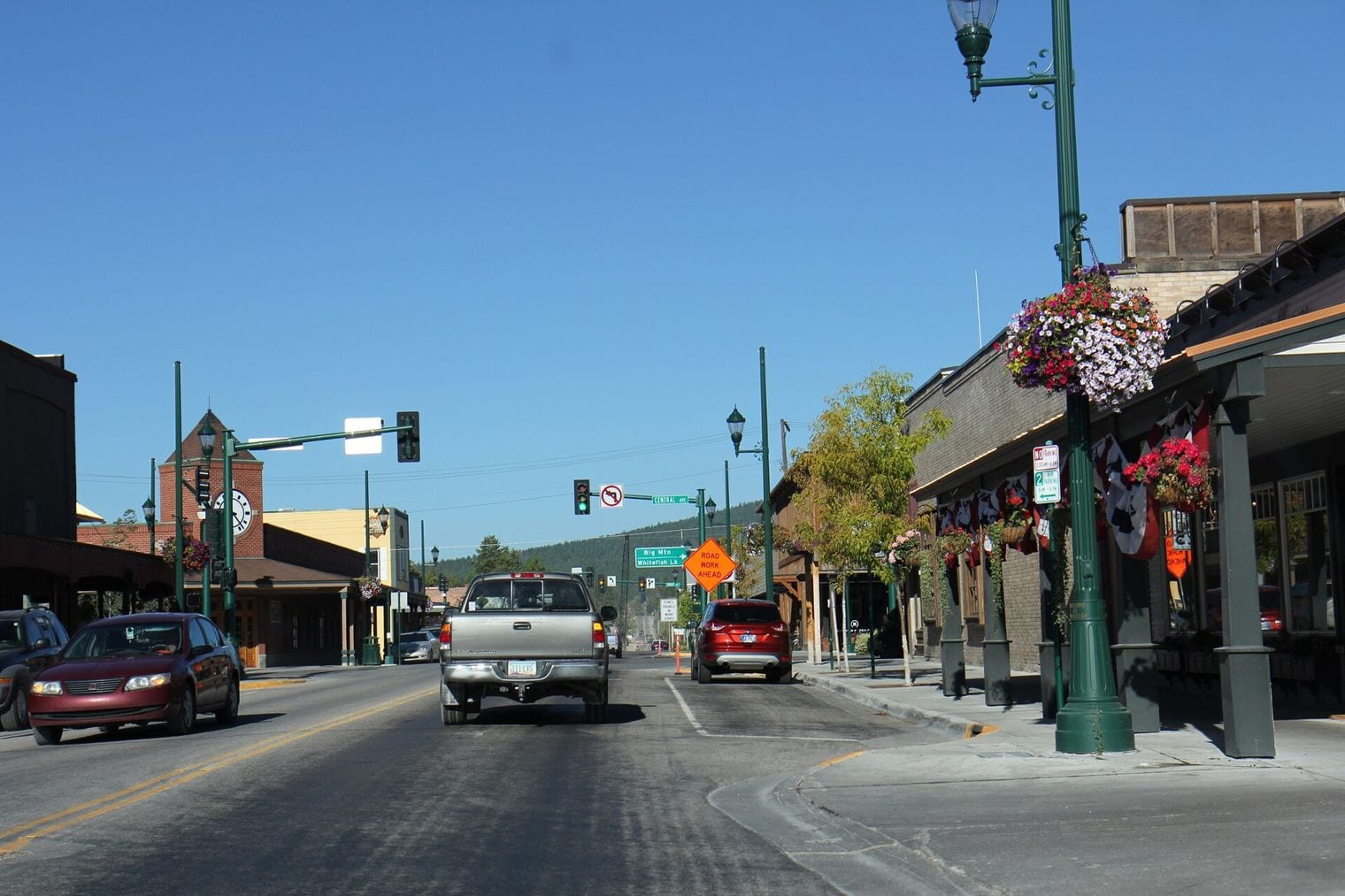
Whitefish is the small town most visitors picture when they think of Montana: a lively mountain town of nearly 7,800 people at the south end of Whitefish Lake, with a ski mountain rising above it and Glacier National Park's west entrance about half an hour's drive away. It grew up as a logging settlement and a Great Northern Railway town, and Amtrak's Empire Builder still stops at the old depot, which also houses a small local history museum.
Whitefish Mountain Resort on Big Mountain is the big draw in winter, while summer brings lift rides, mountain biking, paddling and swimming at City Beach. Central Avenue, the walkable heart of downtown, is lined with galleries, outfitters and places to eat, and the Whitefish Trail winds through the forests above the lake. Each winter, the Whitefish Winter Carnival fills the streets with a parade and snow sculptures.
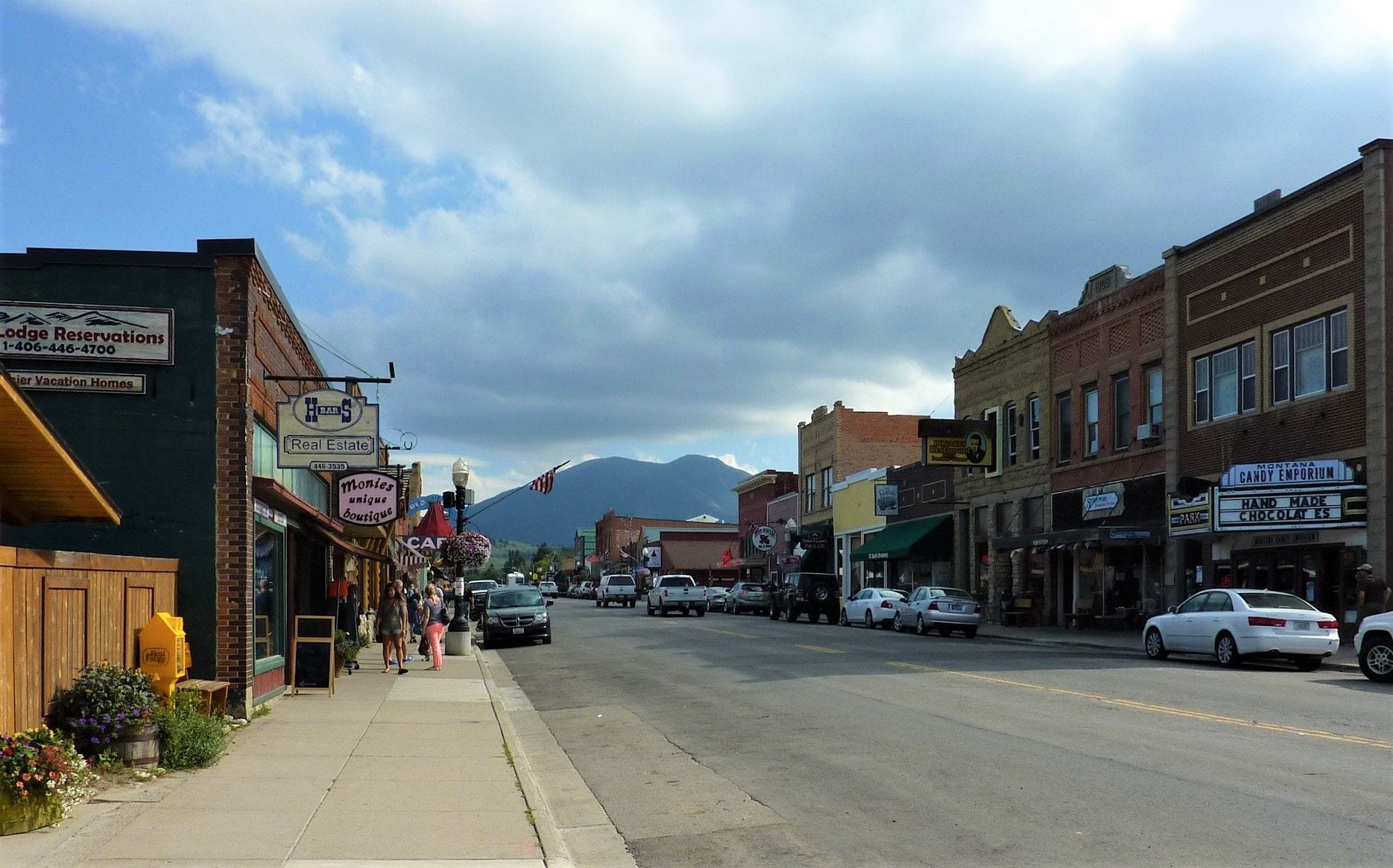
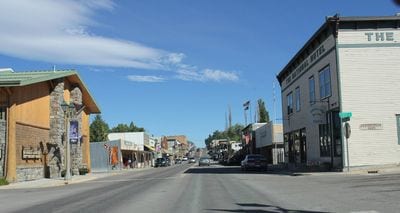
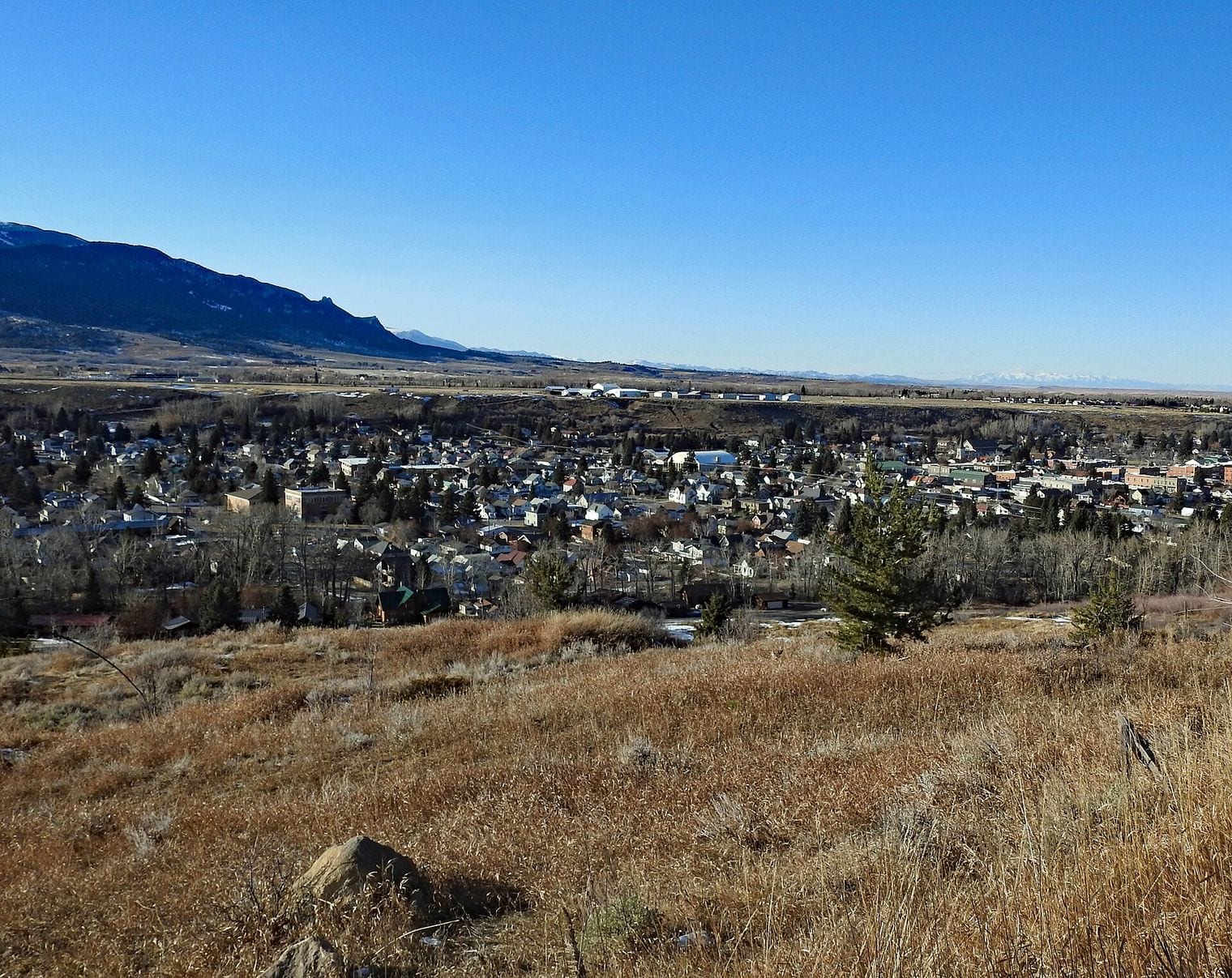
Red Lodge sits at the foot of the Beartooth Mountains about 60 miles southwest of Billings, a former coal-mining town whose miners came from Italy, Finland, Scandinavia and the British Isles. Coal mining defined the town until the 1930s, and the brick and stone storefronts along its historic Broadway Avenue now hold galleries, saloons, outfitters and cafés.
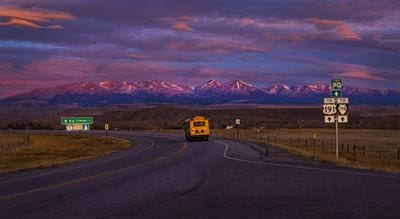
Broadway is also the start of the Beartooth Highway, a stretch of US 212 that climbs in a series of switchbacks to the 10,947-foot Beartooth Pass and on to Yellowstone's Northeast Entrance; CBS correspondent Charles Kuralt called it the most beautiful drive in America. The highway is open only from late spring to mid-fall, but Red Lodge Mountain keeps the town busy in winter, and summer brings mountain biking, fly fishing and hiking in the Absaroka-Beartooth Wilderness.
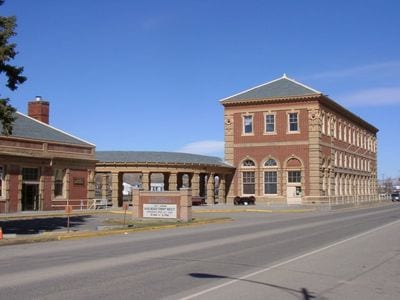
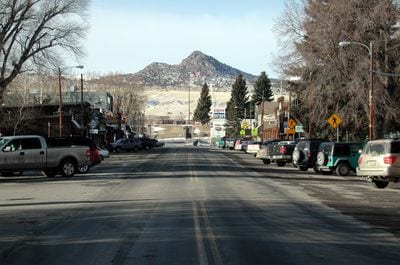
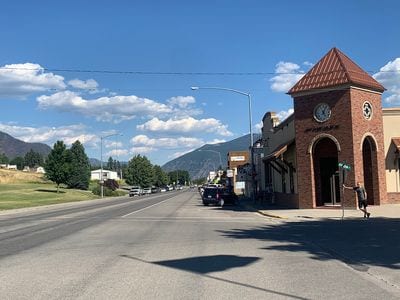
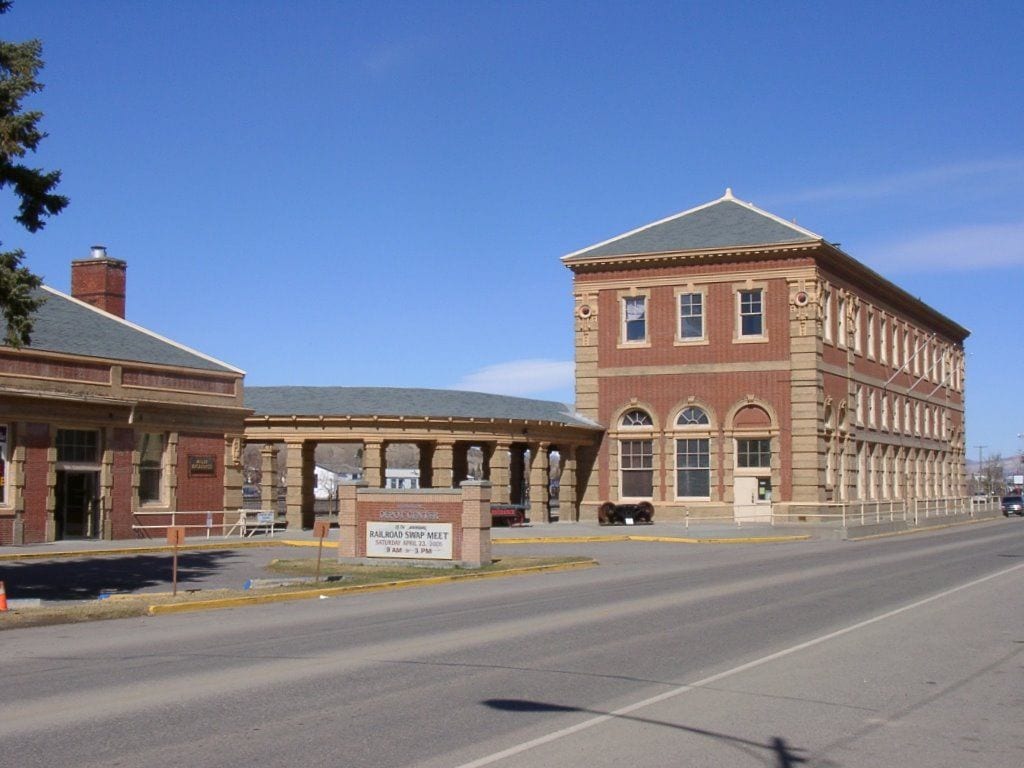
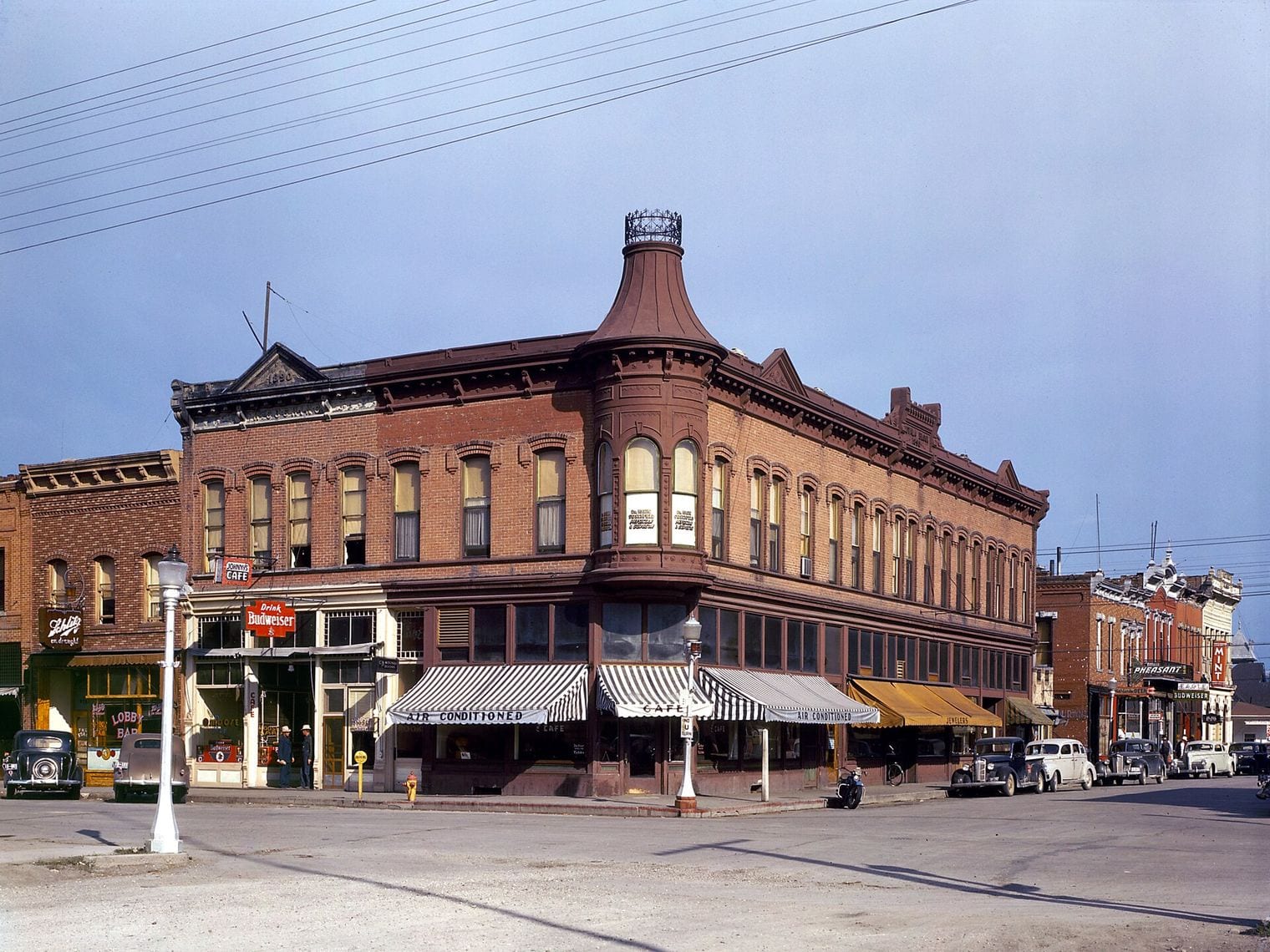
Livingston owes its existence to the Northern Pacific Railway, which built its shops here at the foot of Bozeman Pass and made the town the first gateway to Yellowstone, running a branch line south through Paradise Valley toward the park. The restored 1902 depot is now the Livingston Depot Center, a railroad museum, and the Yellowstone Gateway Museum traces the region's story from its earliest peoples to the Wild West and the park.
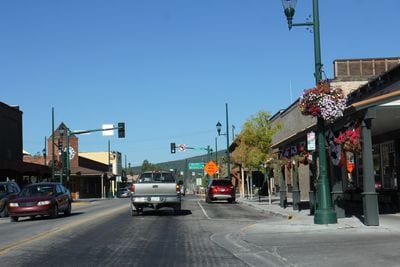
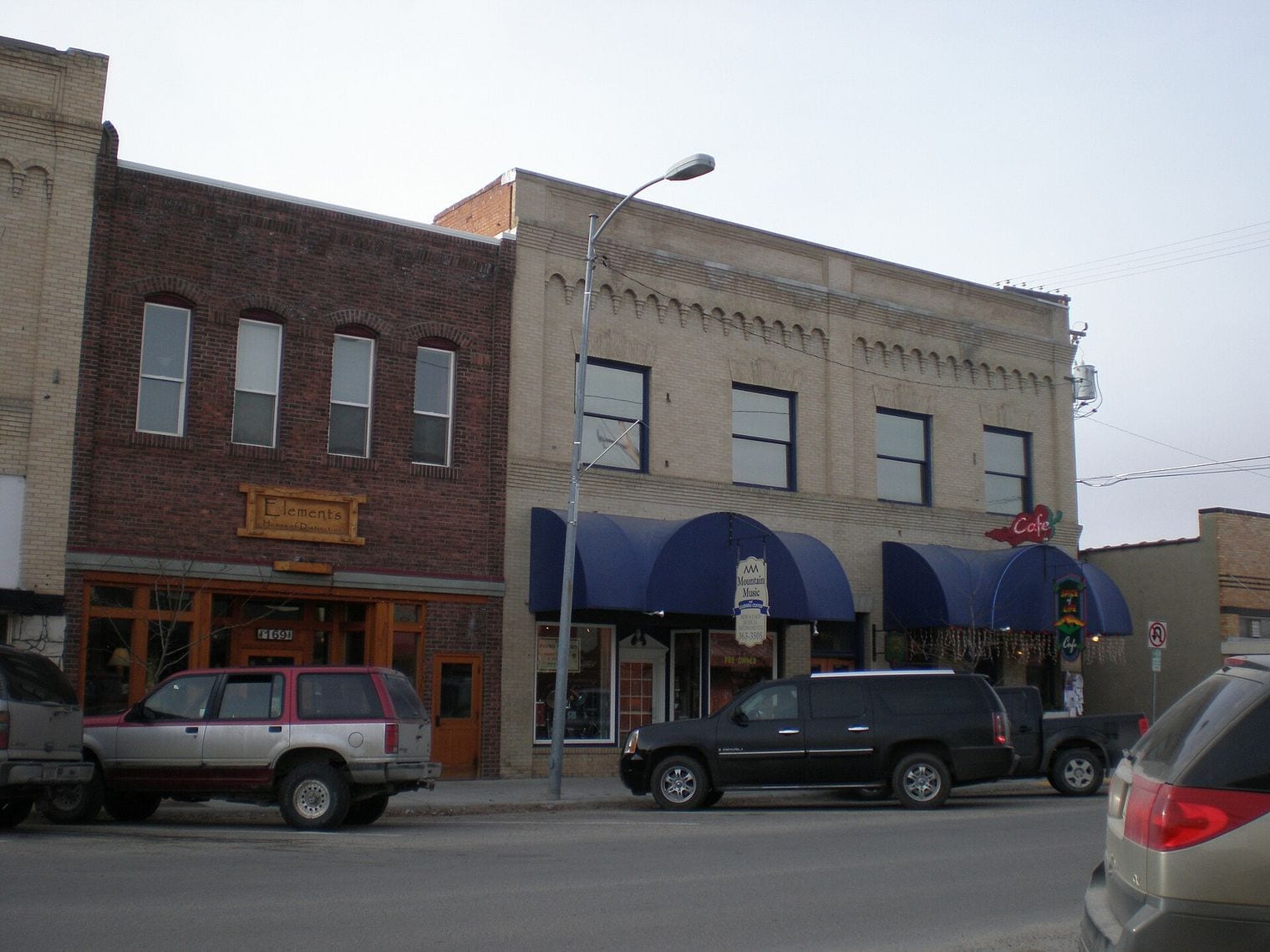
Downtown, a few blocks of brick buildings near the Yellowstone River are filled with art galleries, old western bars and fly shops, and the town is known for its wind. South of town, Paradise Valley runs between the Absaroka and Gallatin ranges toward Gardiner, with hot springs, river access and some of Montana's grandest scenery, while Bozeman is only about 25 miles west over the pass.
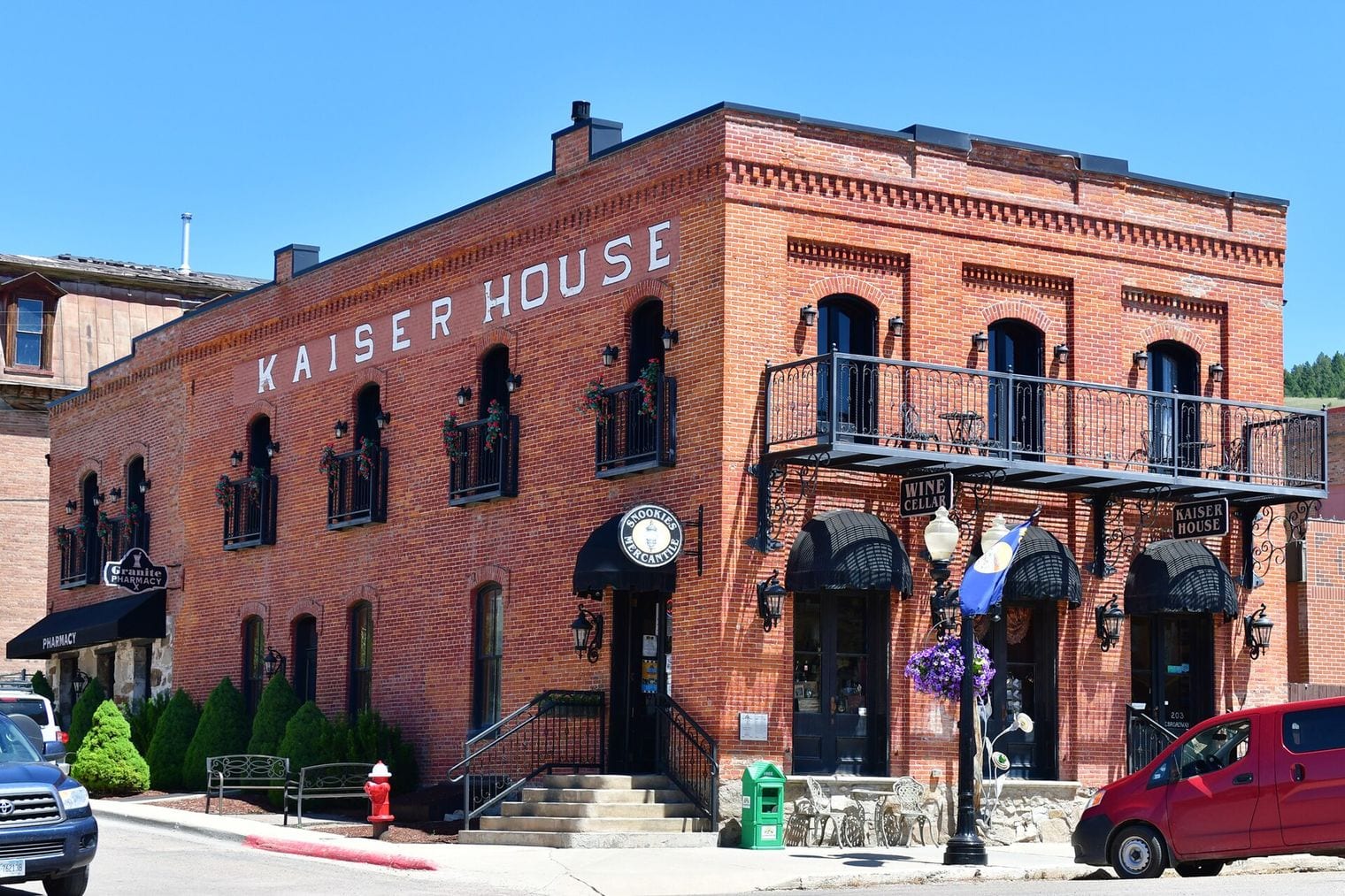
Few Montana towns have staged a comeback like Philipsburg, a Granite County silver-mining town of fewer than 900 people, laid out in 1867 and named for mining engineer Philip Deidesheimer. After its mines and sawmills closed, newcomers restored the Victorian storefronts along Broadway in the 1990s, and the brightly painted historic district now holds galleries, jewelry shops and an old-fashioned candy store.
Philipsburg is also the place to hunt for your own sapphires by washing buckets of gem-bearing gravel, and the Granite County Museum tells the story of the dozens of ghost towns in the surrounding county. Three miles east, the silver camp of Granite is preserved as Granite Ghost Town State Park, while Georgetown Lake and the Discovery ski area are a short drive away.
West Yellowstone was born in 1908, when the Union Pacific's Oregon Short Line railroad reached the western edge of Yellowstone National Park, and it has catered to park visitors ever since. Passenger trains stopped running in 1960, but the stone depot survives as the Museum of the Yellowstone, telling the story of the stagecoaches and railroads that carried early tourists into the park.
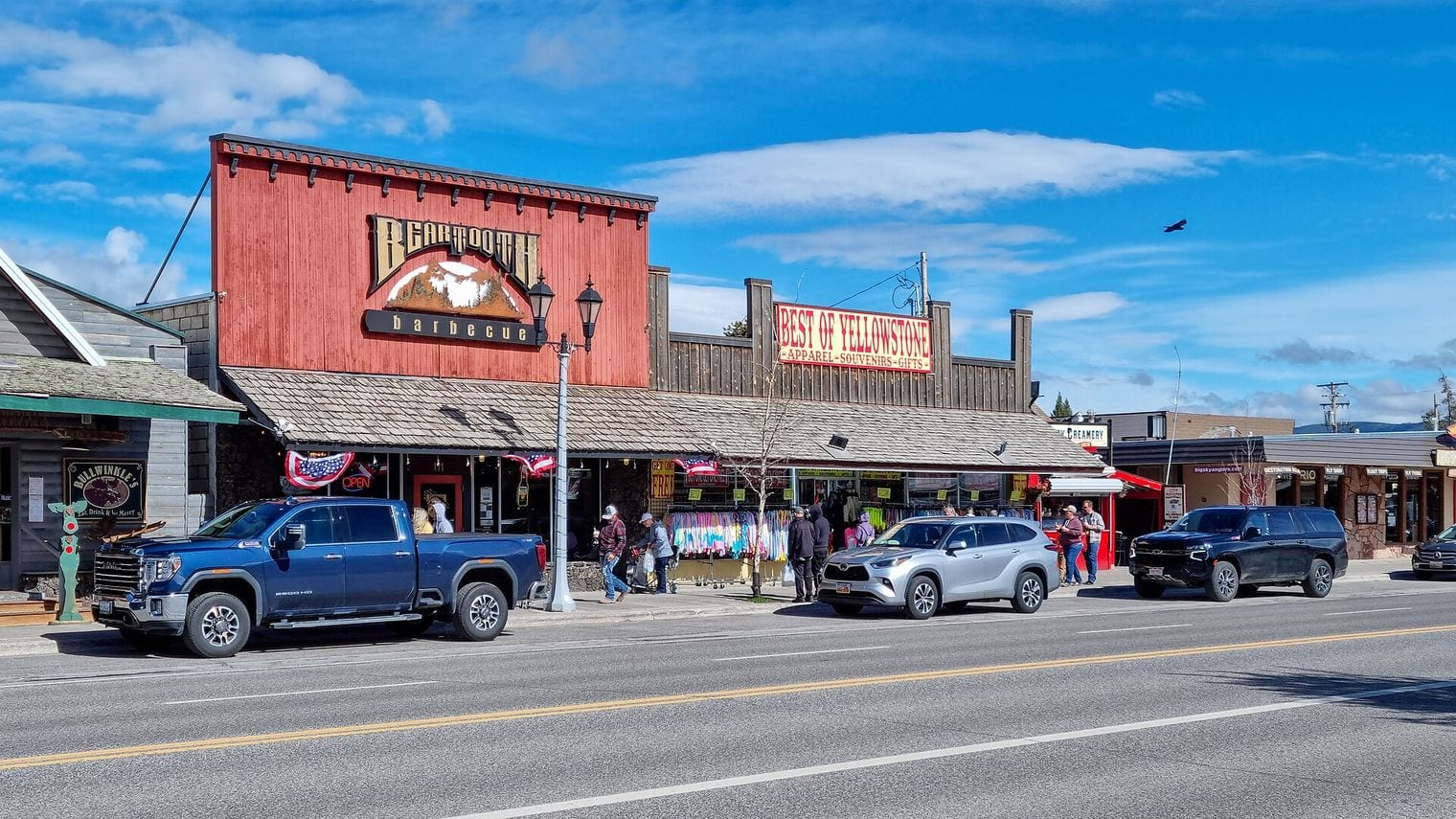
In town, the Grizzly & Wolf Discovery Center gives a close look at grizzly bears and gray wolves, and the West Entrance leads to the park's geyser basins, less than an hour's drive away. Fly anglers fish the Madison River and Hebgen Lake, about 11 miles northwest, and in winter West Yellowstone becomes a base for snowmobile and snowcoach trips into the park.
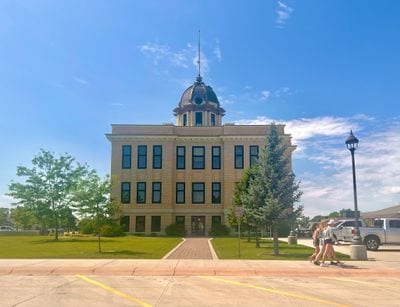
Hamilton, the Ravalli County seat, was founded by copper king Marcus Daly in the Bitterroot Valley, between the Bitterroot Range to the west and the Sapphire Mountains to the east. Daly's country estate, the Daly Mansion, stands on the edge of town with more than 50 rooms and broad lawns, and guided tours show how one of Montana's richest men lived.
The Ravalli County Museum fills the old county courthouse with local history, natural history and art, and Rocky Mountain Laboratories, the federal research lab that grew out of early 20th-century work on Rocky Mountain spotted fever, is based in town. Hamilton makes a good base for the Bitterroot River's trout water and for hikes into the canyons that cut into the mountains west of town.
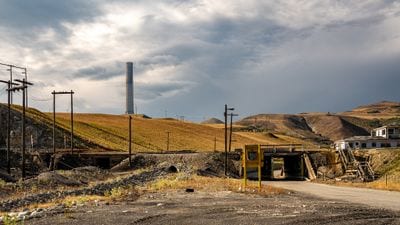
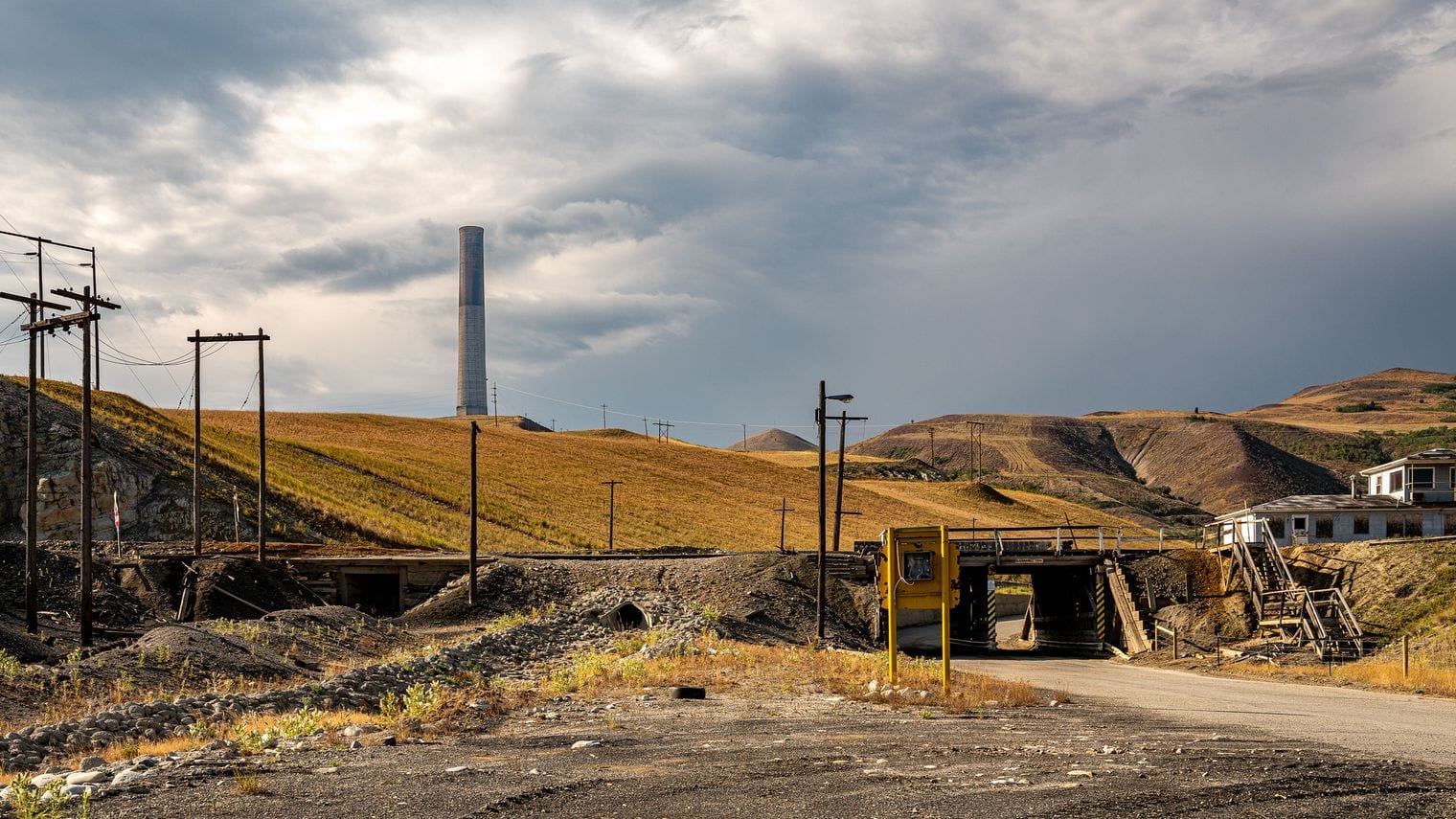
Copper king Marcus Daly founded Anaconda in 1883 to smelt ore from the mines of Butte, and the town is still dominated by the Anaconda Smelter Stack, built in 1918 and, at about 585 feet, the tallest surviving masonry structure in the world. The stack is preserved as Anaconda Smoke Stack State Park, with a viewing area just east of town.
On Main Street, the Washoe Theater, which opened in 1936, is a lavish Art Deco movie palace that still screens films, and the Old Works golf course, a Jack Nicklaus signature course, was built on reclaimed smelter ground. The peaks of the Anaconda Range rise south of town, and Georgetown Lake and the Discovery ski area are close by for fishing, boating and skiing.
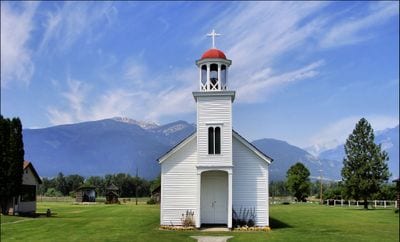
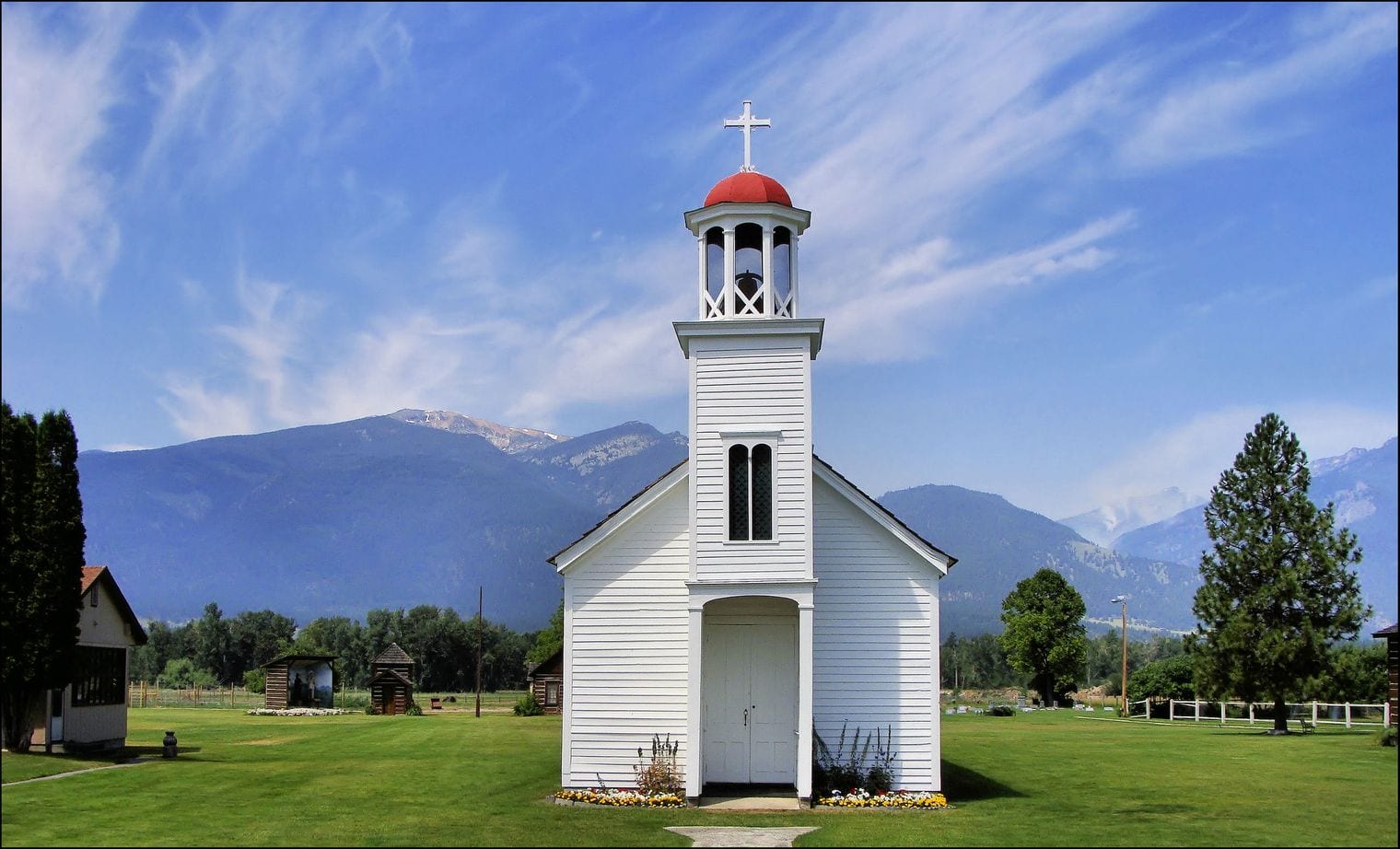
Stevensville calls itself the place where Montana began. In 1841, at the request of the Bitterroot Salish, Jesuit missionaries led by Father Pierre-Jean De Smet founded St. Mary's Mission here, the first permanent settlement by non-indigenous people in what became Montana. The mission church, rebuilt in 1866, still stands at the heart of a small historic complex in town.
On the town's northern outskirts, Fort Owen State Park preserves the remains of the trading post that trader John Owen built after buying the mission in 1850, and the Lee Metcalf National Wildlife Refuge, along the Bitterroot River north of town, has nature trails and wetlands where more than 200 bird species have been recorded. Stevensville's small Main Street is an easy stop on a drive up the Bitterroot Valley from Missoula.
Choteau, the Teton County seat, sits where the plains meet the Rocky Mountain Front, the wall of peaks that rises abruptly along the eastern edge of the Rockies. The town was named for fur trader Pierre Chouteau Jr., whose name, with its original spelling, also belongs to the county around Fort Benton, and it grew from an 1870s trading post into a quiet ranching town.
Choteau is a stop on the Montana Dinosaur Trail: west of town, Egg Mountain is where scientists found nesting colonies of Maiasaura, the duck-billed dinosaur that is now Montana's state fossil, and the Old Trail Museum displays one alongside exhibits on Blackfeet and Métis history. The Nature Conservancy's Pine Butte Preserve, a wetland stronghold for grizzly bears along the Front, is mostly closed to protect them, but a short public trail offers sweeping views.
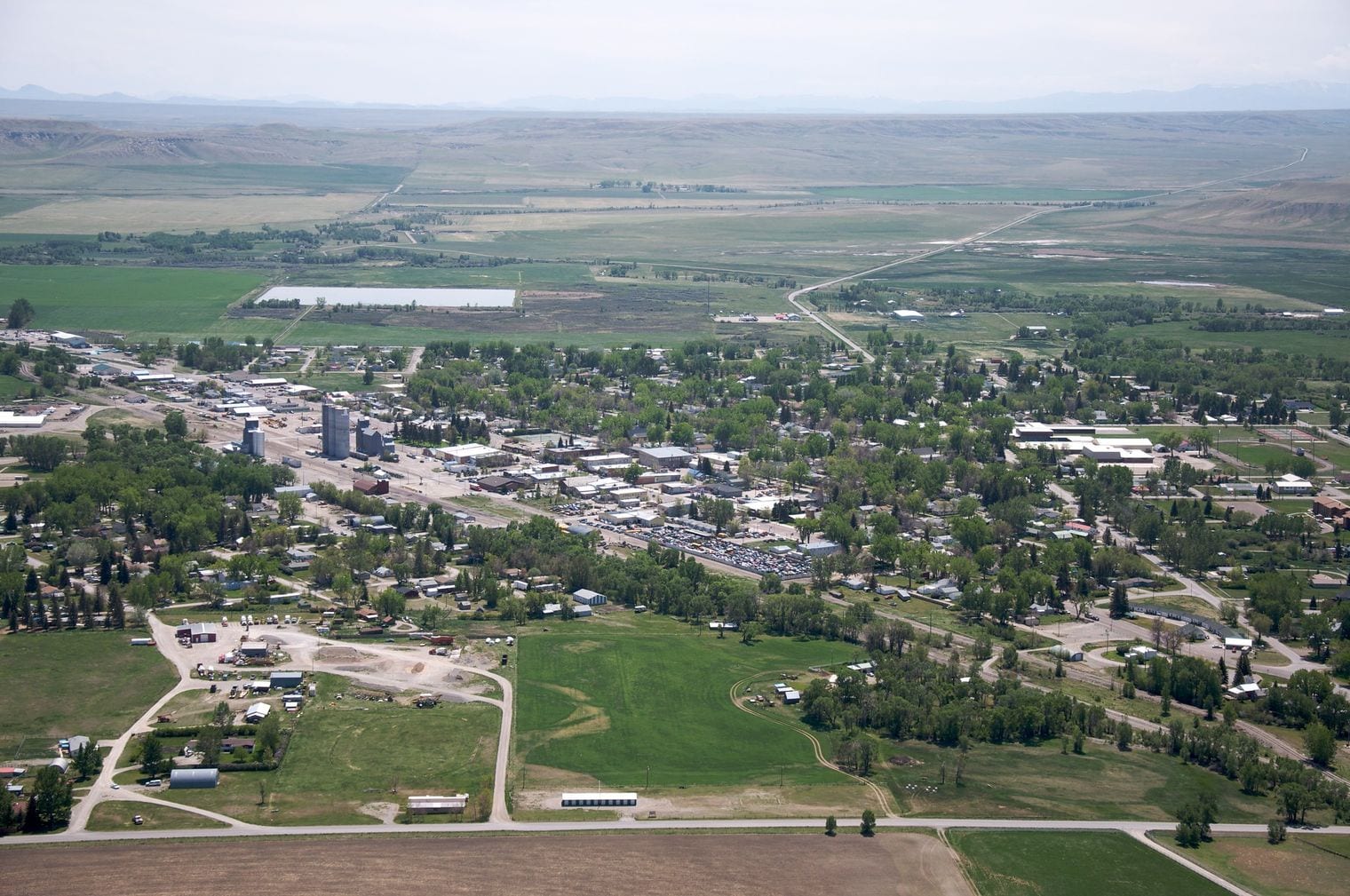
Founded as a fur-trading post in 1846, Fort Benton is often called the birthplace of Montana and is the state's oldest continuously occupied settlement. For three decades it was the head of steamboat navigation on the Missouri River, the most upstream port in the Mississippi system, where boats from St. Louis unloaded miners, merchants and settlers, and its riverfront is protected as a National Historic Landmark.
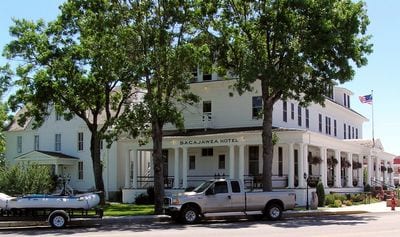
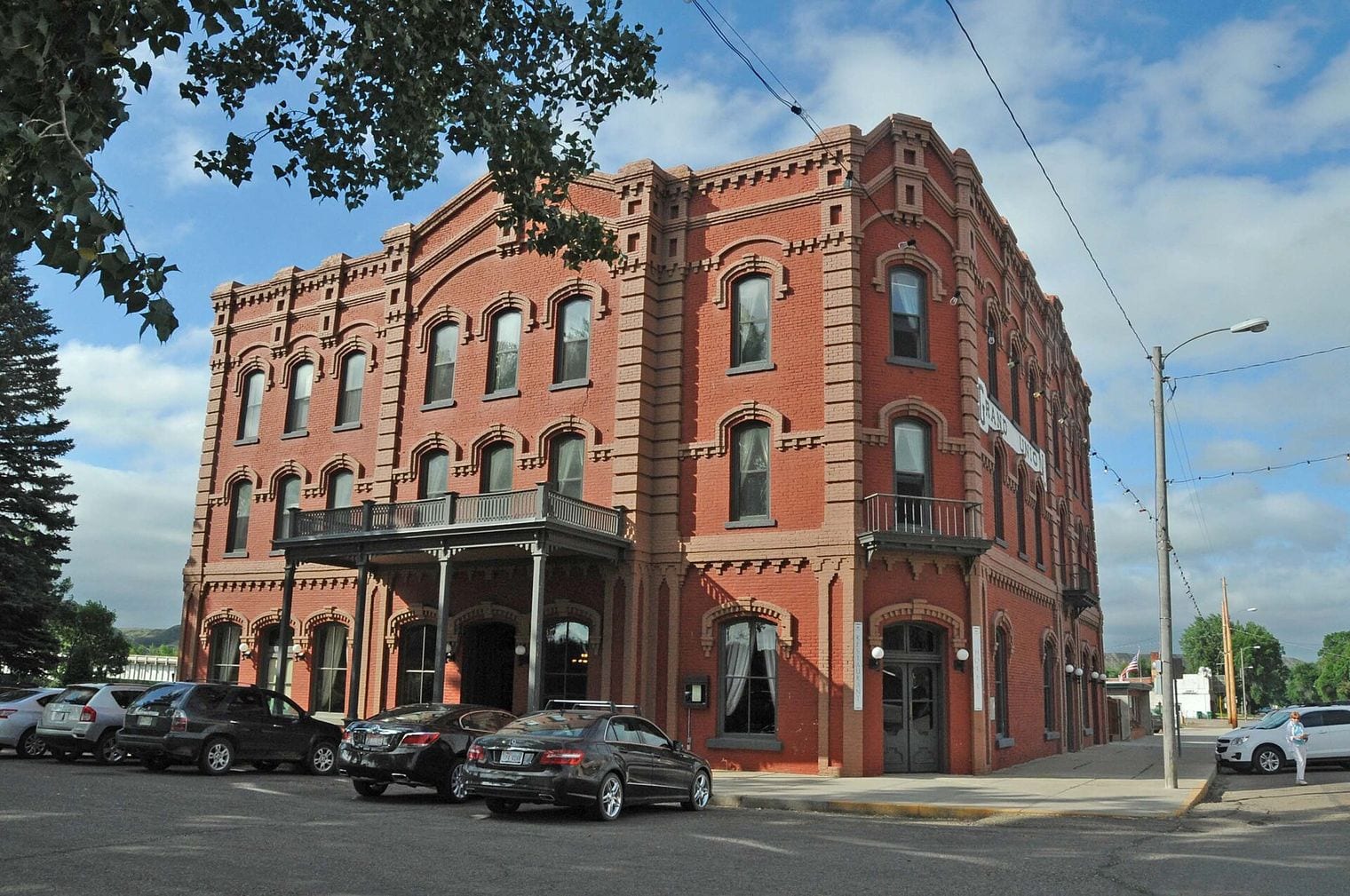
Walk the levee past interpretive signs, a restored 1882 hotel and the bronze statue of Shep, the sheepdog that waited at the depot for years after his owner's casket left by train in 1936, then cross the Old Fort Benton Bridge, the first bridge over the Missouri in Montana, now open to walkers. Old Fort Benton is being reconstructed beside the river, and the Missouri Breaks interpretive center introduces the wild river canyons downstream.
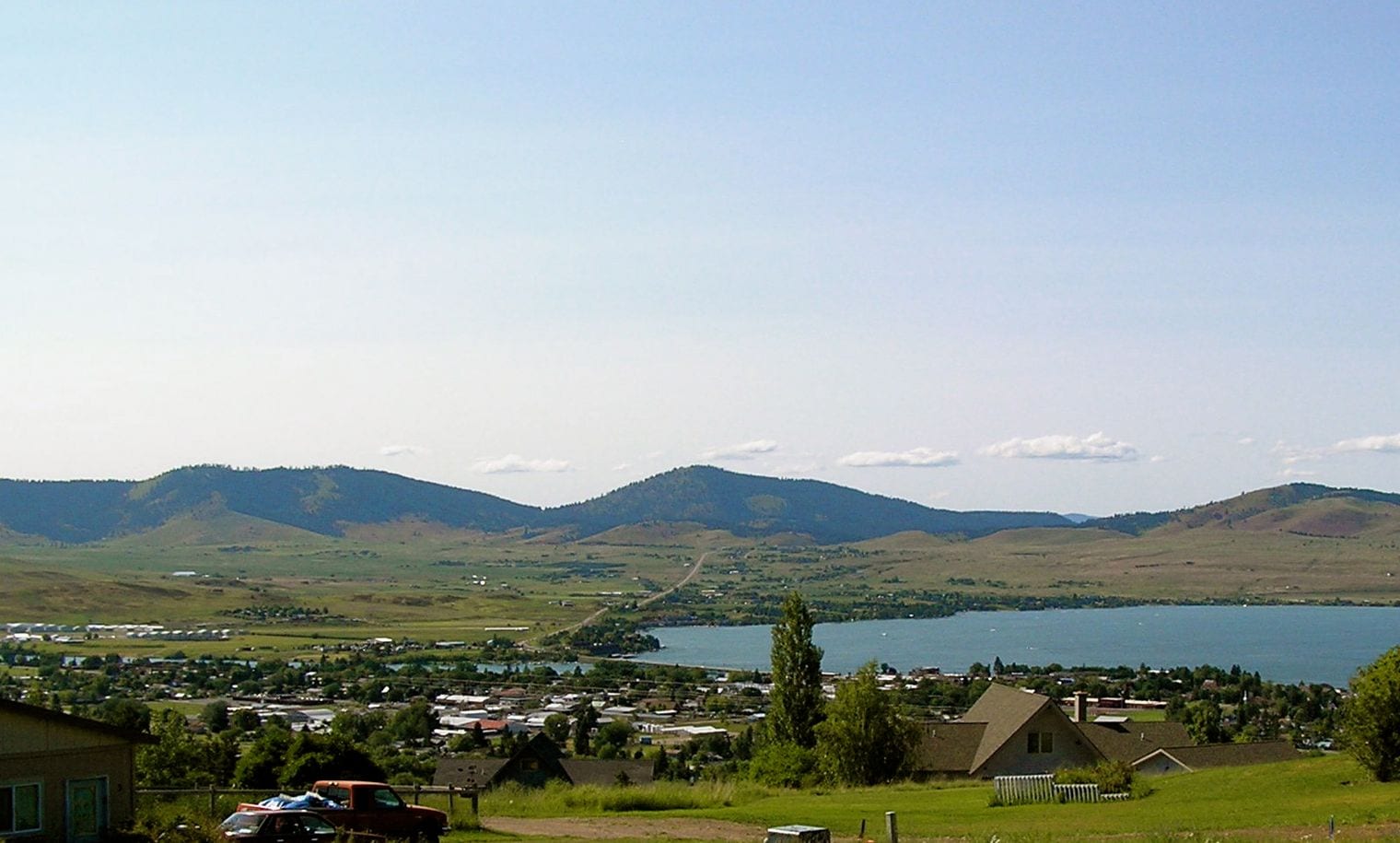
Polson spreads along Polson Bay at the southern end of Flathead Lake, one of the largest natural freshwater lakes in the West, with the Mission Mountains rising to the southeast. Named for pioneer rancher David Polson, it is the Lake County seat and lies within the Flathead Indian Reservation, home of the Confederated Salish and Kootenai Tribes, who own and operate the dam at the lake's outlet.
Summer is the season to be here, when boat tours, rentals and swimming beaches fill the waterfront and roadside stands sell Flathead cherries from the orchards along the lake's east shore. The Miracle of America Museum, a sprawling collection of Americana on the edge of town, rewards a rainy afternoon, and Wild Horse Island, a state park reached only by boat, lies offshore to the northwest.
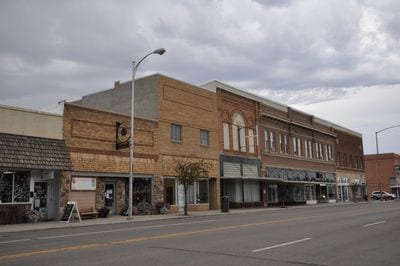
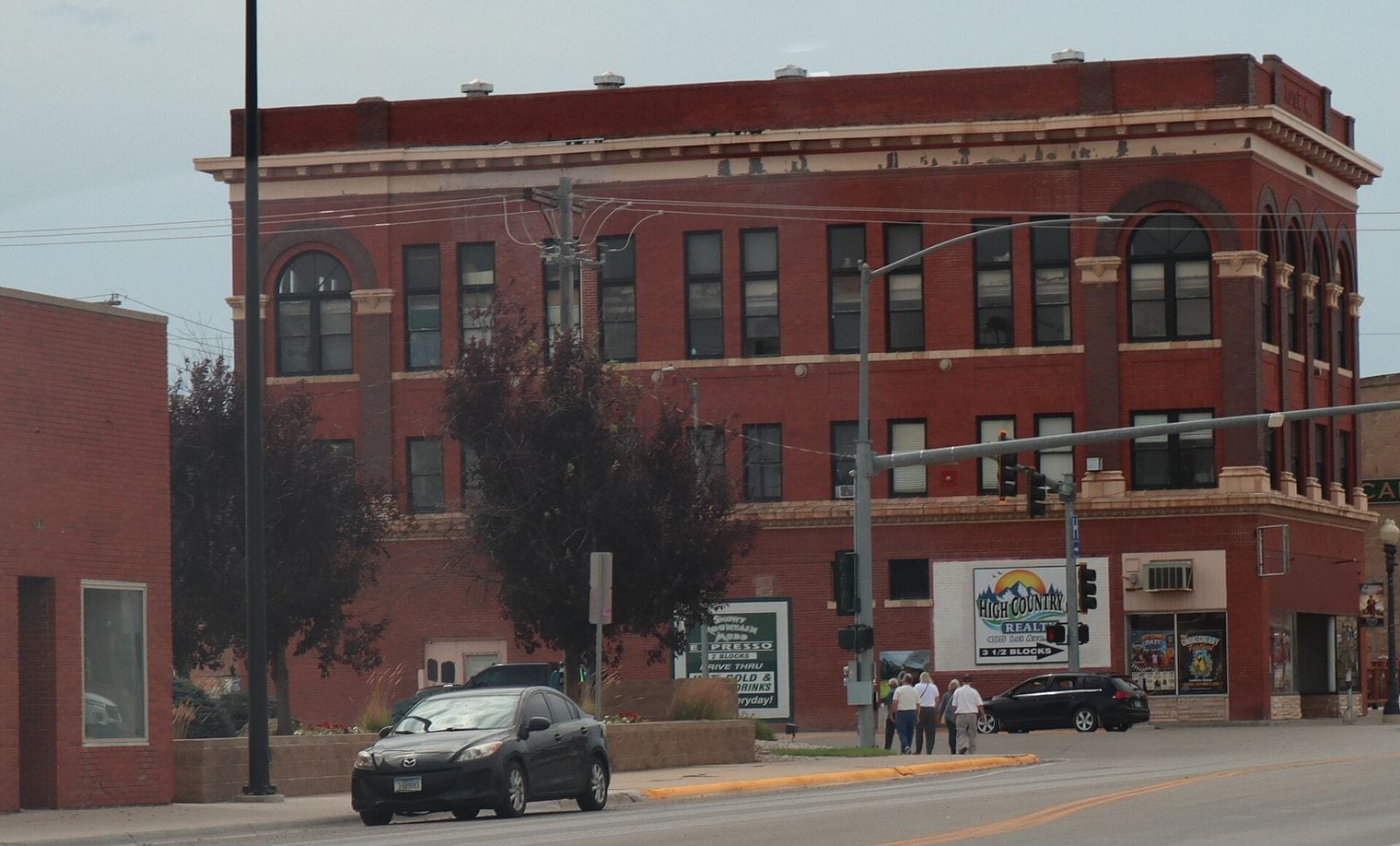
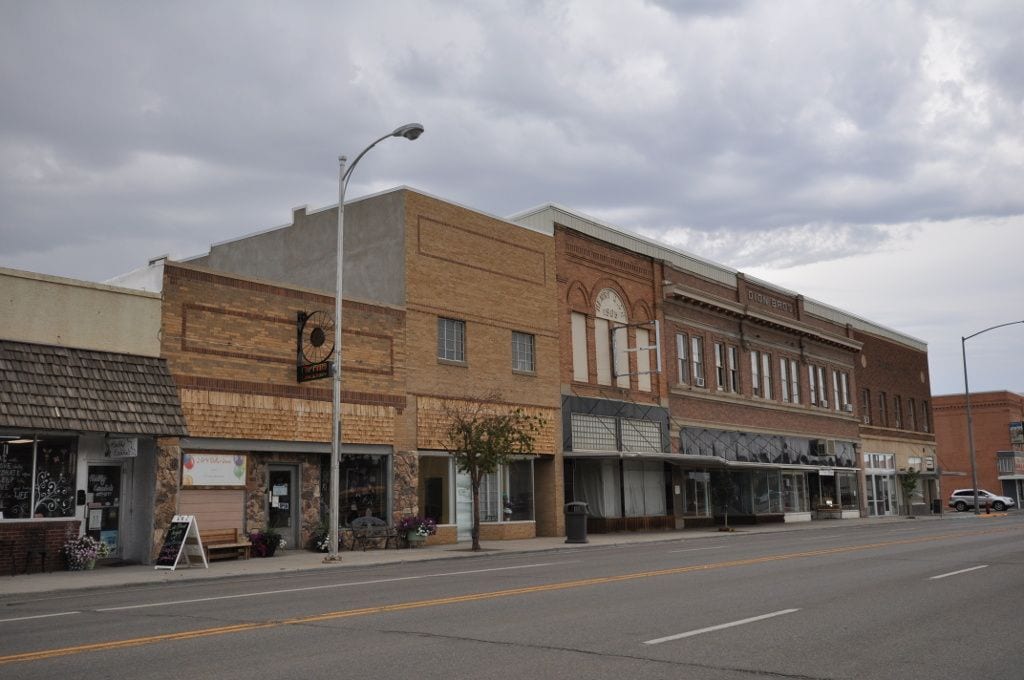
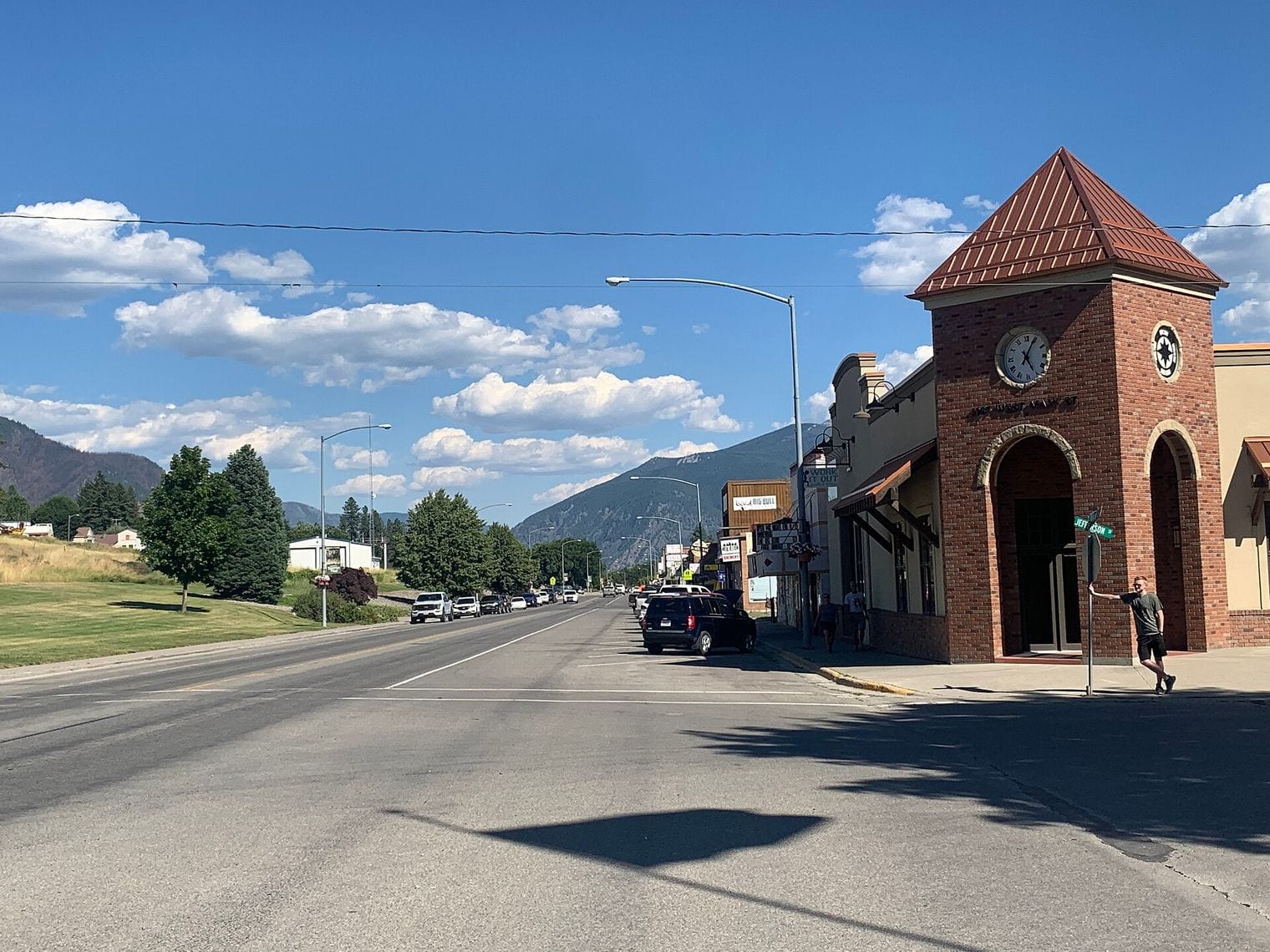
Lewistown sits close to the geographic center of Montana, ringed by the Judith, Moccasin and Big Snowy mountains, and its downtown is one of the handsomest in the state. Much of it was built between 1900 and 1920 from local sandstone by skilled Croatian stonemasons, many from the Adriatic town of Bribir, whose work shows in the library, the Masonic Temple and blocks of downtown storefronts.
Big Spring Creek, which rises from springs in the foothills of the Big Snowies and supplies the town's water, runs right through Lewistown and is a favorite with trout anglers. The town hosts a cowboy poetry gathering each August, one of the oldest in the country, and the surrounding hills hide ghost towns from the area's 1880s gold rush.
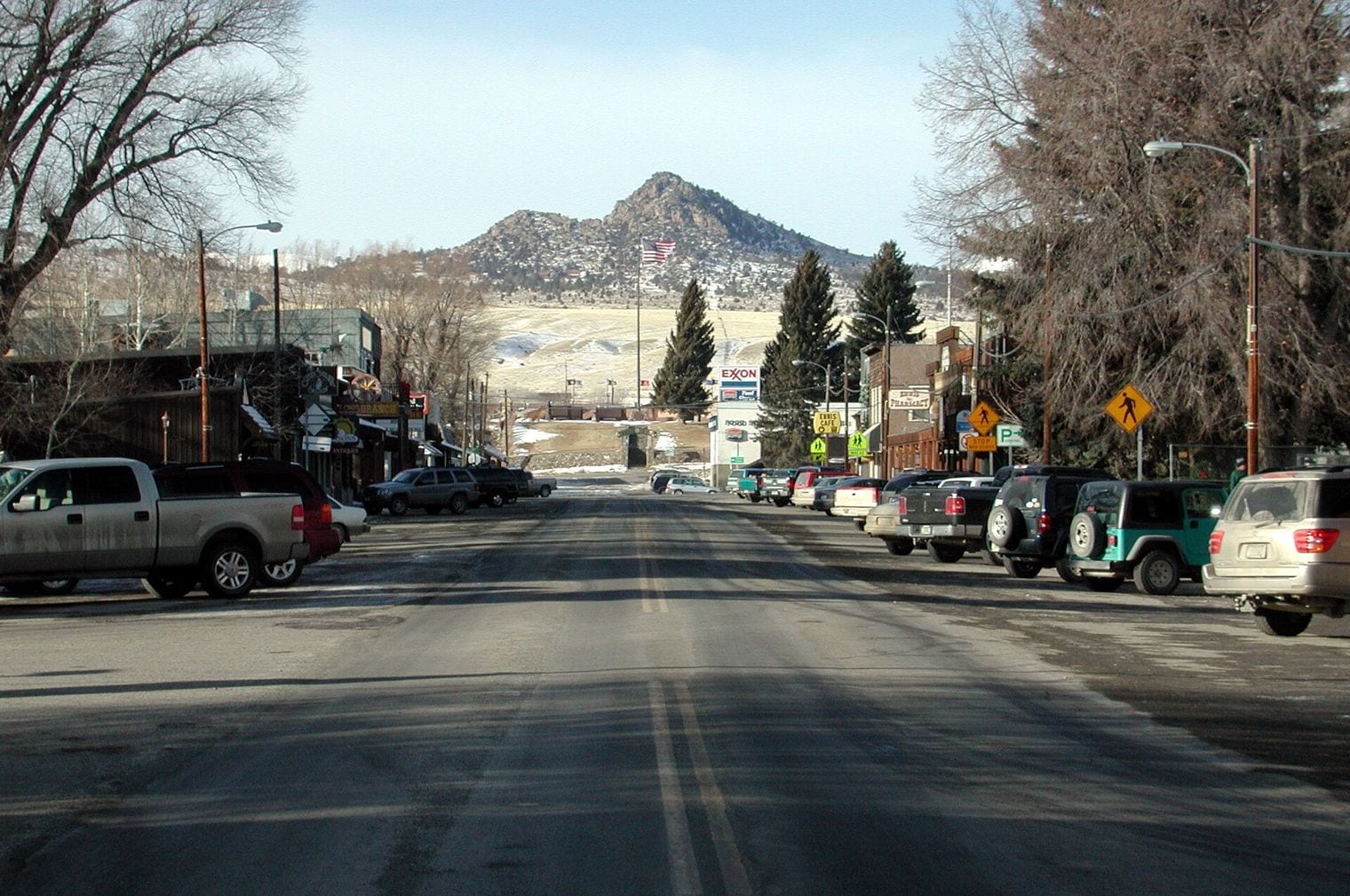
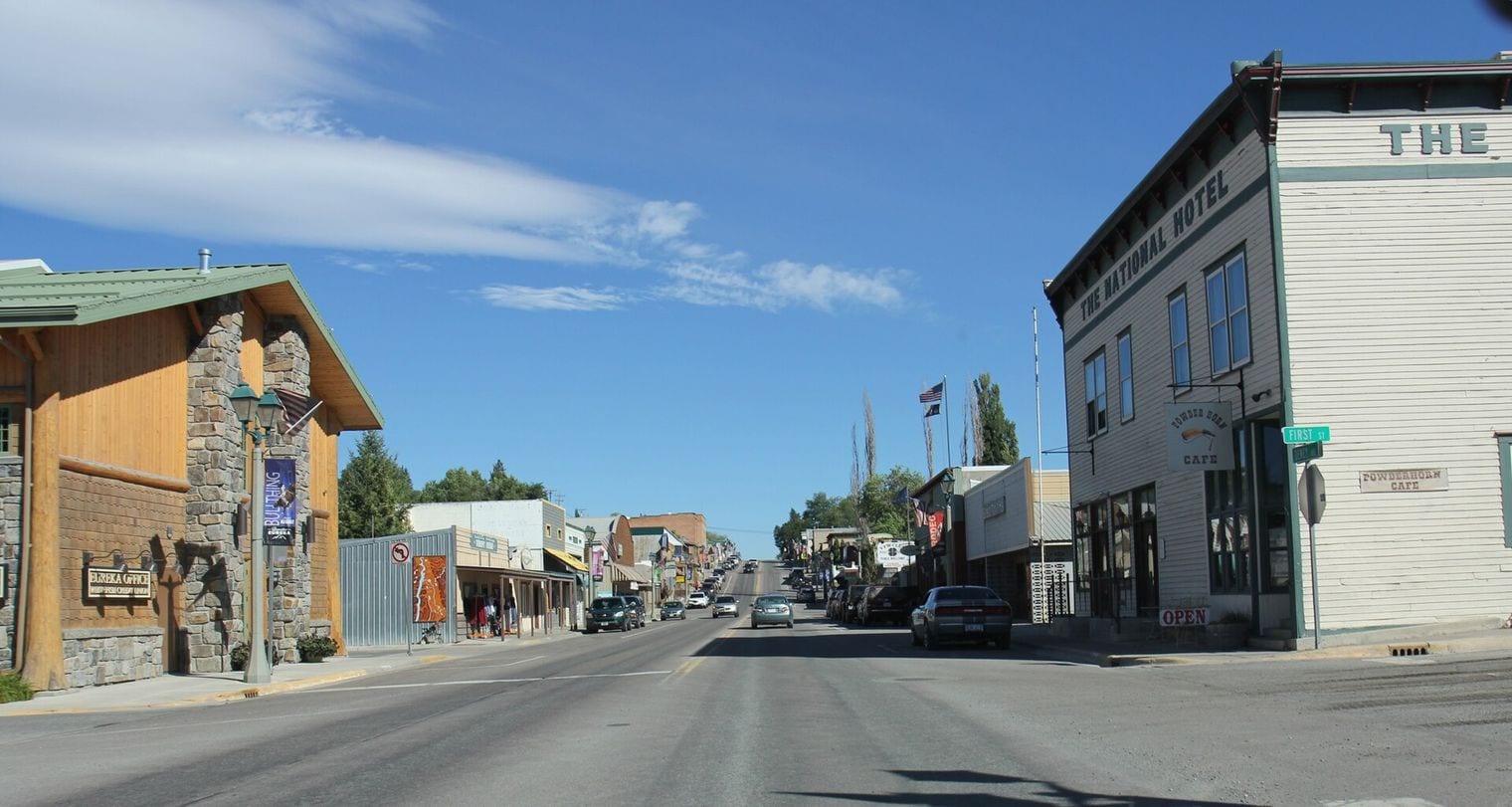
Ennis is a fly-fishing town through and through, a western main street of fly shops and outfitters on the Madison River, with the jagged Madison Range filling the view to the east. William Ennis homesteaded here in 1863, the year gold was found in nearby Alder Gulch, and big cattle and sheep ranches have anchored the Madison Valley ever since.
Anglers come to float and wade the Madison for rainbow and brown trout, and local guides run trips on the river and into Yellowstone National Park. Ennis is also a natural stop between Virginia City, a short drive west over the hills, and West Yellowstone to the south, and it celebrates the Fourth of July with a parade and rodeo.
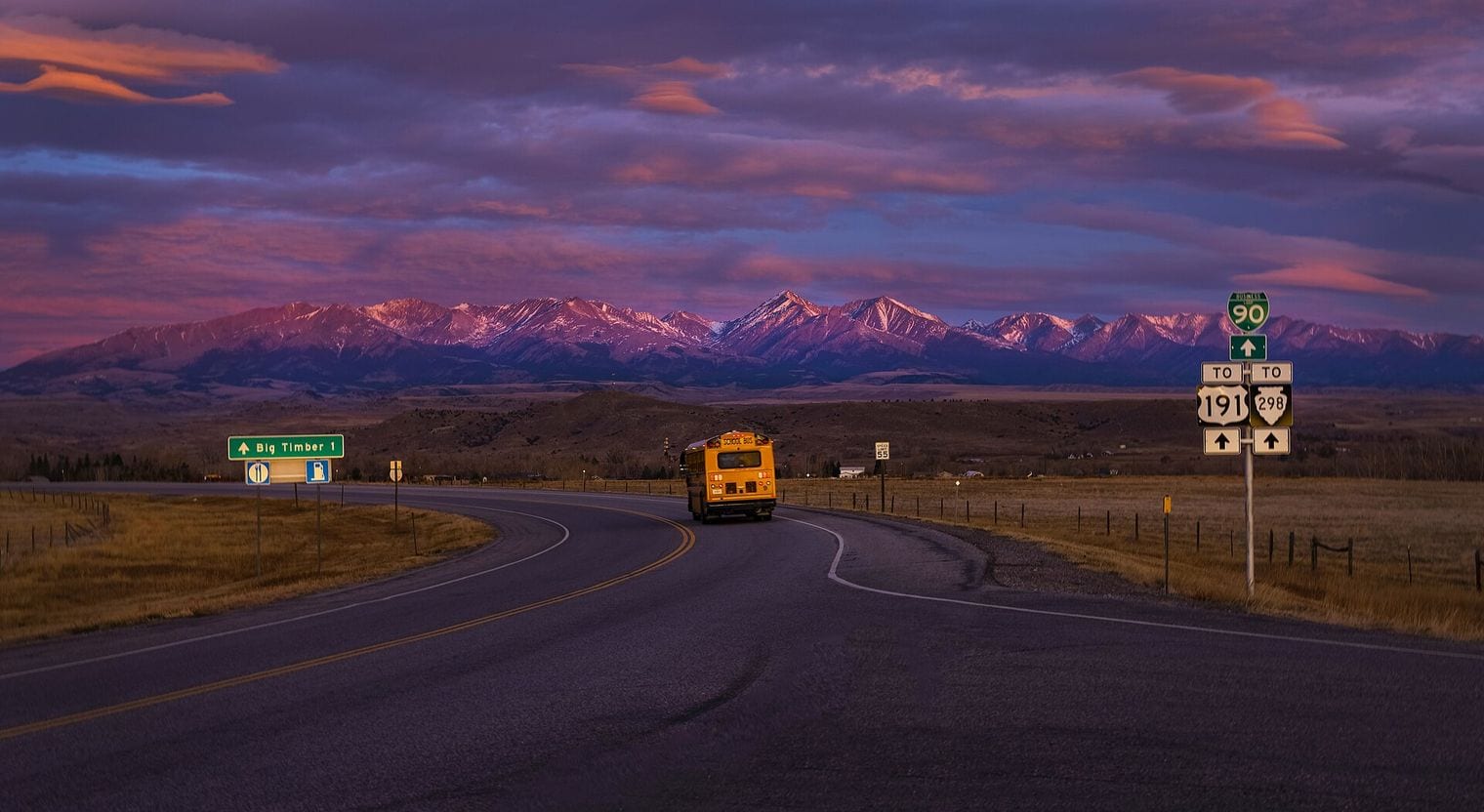
Big Timber takes its name from the tall cottonwoods William Clark noted along Big Timber Creek, and it grew as a Northern Pacific stop and a major wool-shipping depot on the Yellowstone River. Today the Sweet Grass County seat is a quiet ranching town below the Crazy Mountains, home to the Crazy Mountain Museum, which tells the area's story with a homestead cabin and a garden of plants described by Lewis and Clark.
The Yellowstone River here is prime water for trout fishing and floating, and the Boulder River valley leads south into the Absaroka Range. About 25 miles south of town, a paved trail at Natural Bridge follows the Boulder past a waterfall plunging through a limestone gorge, though the rock arch that gave the site its name collapsed in 1988.
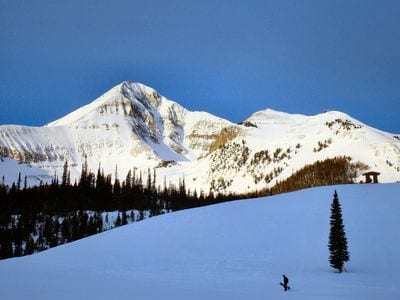
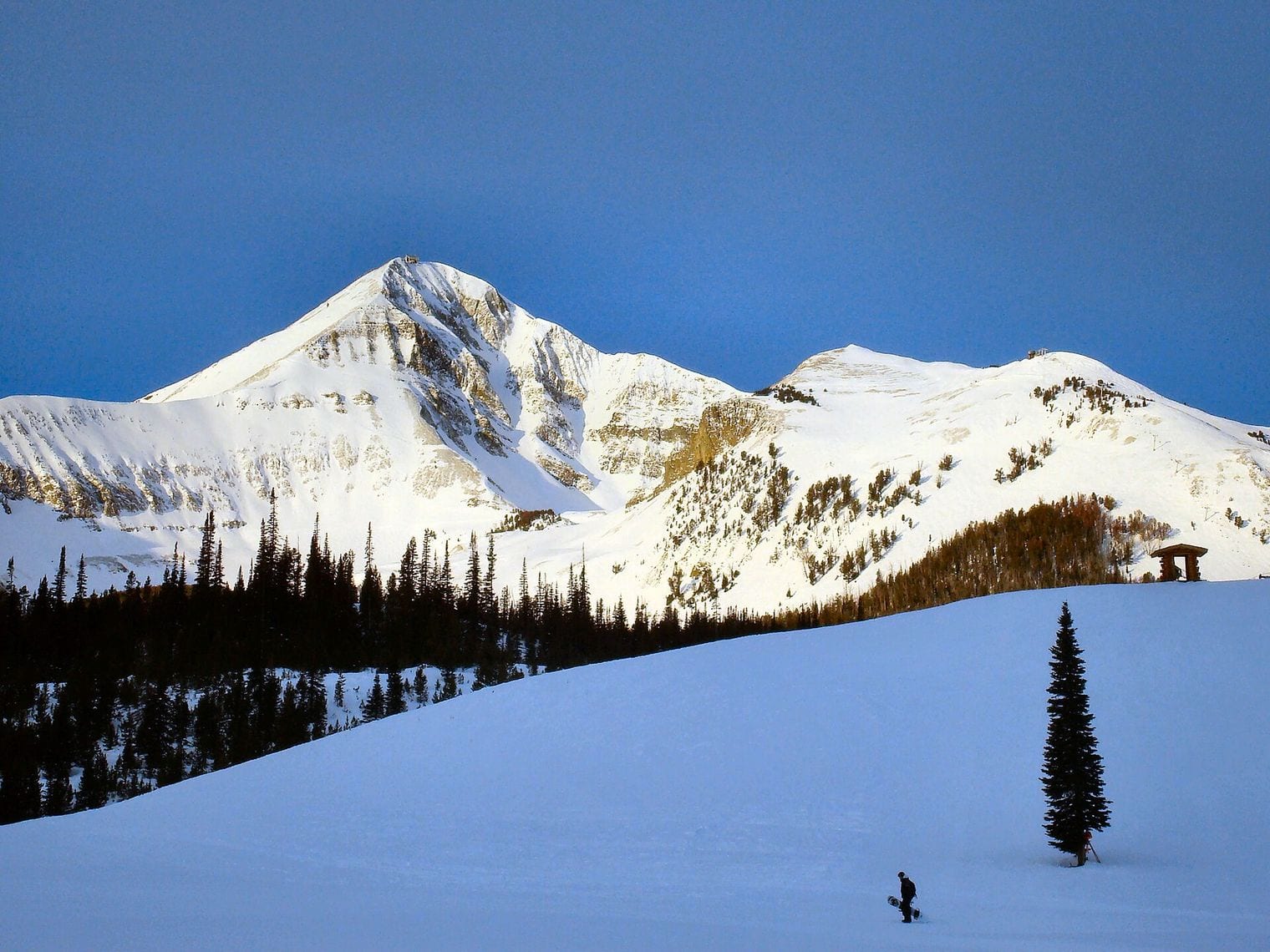
Big Sky is not a classic main-street town but an unincorporated resort community in the Madison Range, about 45 miles southwest of Bozeman by road. It grew up around Big Sky Resort, which NBC newsman Chet Huntley founded and which opened in 1973 on the slopes of 11,167-foot Lone Mountain, and its base villages and mountain homes have since become a year-round community.
Winter is all about skiing and snowboarding on Lone Mountain, one of the largest ski areas in the United States, while summer brings lift-served mountain biking, hiking and scenic lift rides. The Gallatin River rushes through the canyon below, a favorite for rafting and fly fishing, and the road south follows it toward West Yellowstone and the national park.
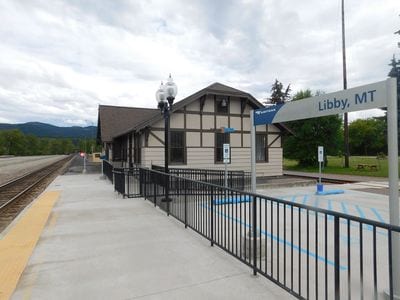
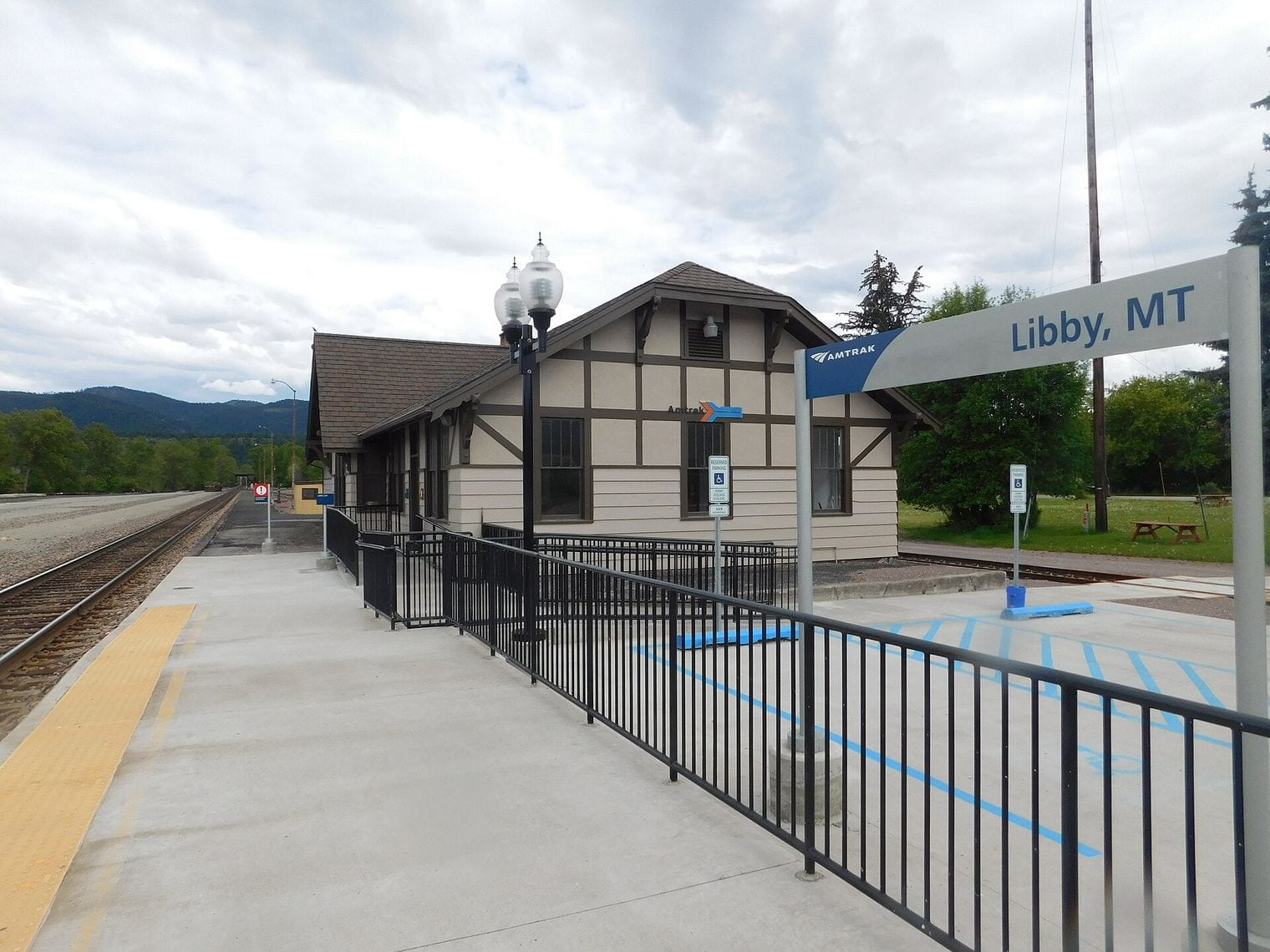
Libby, the Lincoln County seat, sits in the Kootenai River valley in Montana's forested far northwest, with the peaks of the Cabinet Mountains Wilderness rising to the south. Miners worked Libby Creek in the 1860s, the Great Northern Railway arrived in 1892, and timber and mining sustained the town for decades; it calls itself the City of Eagles, with giant eagle sculptures at both ends of town.
Kootenai Falls, west of town, is one of the region's great sights: a trail leads to the thundering falls, sacred to the Kootenai people, and to a swinging footbridge over the river, both seen in the films The River Wild and The Revenant. Upstream, Libby Dam holds back Lake Koocanusa, a long reservoir reaching into Canada that is popular for boating and fishing.
Free printable checklist of all 35 places
Tick them off as you go. Confirm your email to download it, plus one email every Thursday with new guides for the places you tick.
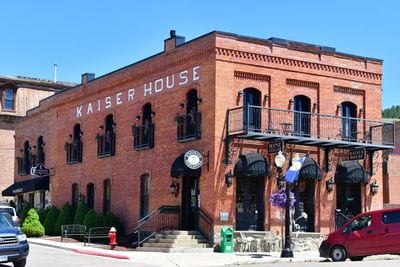
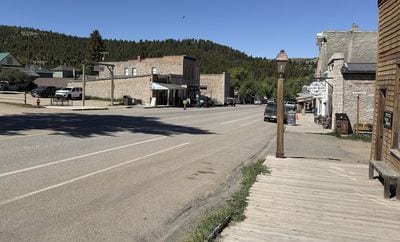
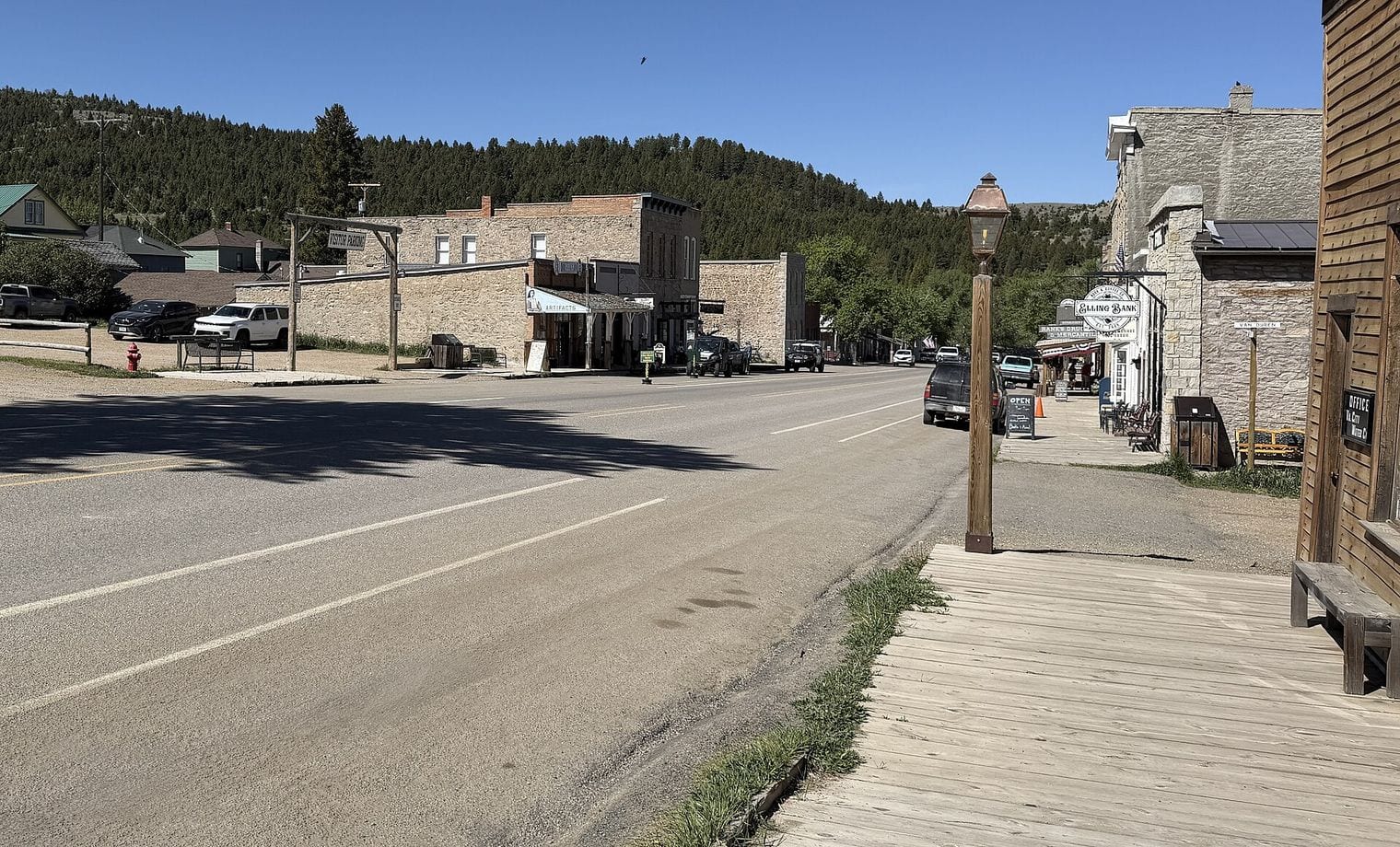
Virginia City boomed after gold was found in Alder Gulch in 1863, and it served as the capital of Montana Territory from 1865 to 1875. When the gold played out the town nearly emptied, but Charles and Sue Bovey began buying and restoring its buildings in the 1940s, and today Virginia City, home to only about 200 people, and neighboring Nevada City form one of the West's best-preserved gold-rush landscapes, protected as a National Historic Landmark.
Of the nearly 300 structures in town, almost half were built before 1900, and boardwalks lead past old storefronts with period displays alongside working shops and saloons. In summer, a narrow-gauge railroad runs the mile and a half to Nevada City, horse-drawn stagecoaches roll up Alder Gulch, and many businesses open only for the season, so plan a visit between late spring and early fall.
Glendive, the Dawson County seat, was founded by the Northern Pacific Railway on the Yellowstone River and became a ranching and farming hub for eastern Montana. It takes its name from the nearby creek that Irish sportsman Sir George Gore named in 1855, and its greatest asset sits right on the edge of town: Makoshika State Park, the largest state park in Montana.
Makoshika protects more than 11,000 acres of eroded badlands, where hiking trails and a scenic drive wind among pinnacles and hoodoos and fossils of Triceratops and other dinosaurs have been found; a Triceratops skull is on display at the visitor center. Each spring, anglers gather downstream at Intake to snag paddlefish, a prehistoric-looking fish whose roe the local chamber turns into caviar to raise money for community projects.
Dillon began in 1880 as a railroad town called Terminus, the temporary end of the Utah and Northern line, and was soon renamed for Union Pacific president Sidney Dillon. Today the Beaverhead County seat is a ranching and college town, home to the University of Montana Western, with a compact downtown, the Beaverhead County Museum and trout fishing on the Beaverhead River.
History lies all around. Clark's Lookout State Park, just north of town, is the hill William Clark climbed in August 1805 to map the valley, and about 25 miles southwest, Bannack State Park preserves the site of an 1862 gold strike, a ghost town that briefly served as the first capital of Montana Territory. Its empty streets of log and frame buildings are remarkably well preserved.
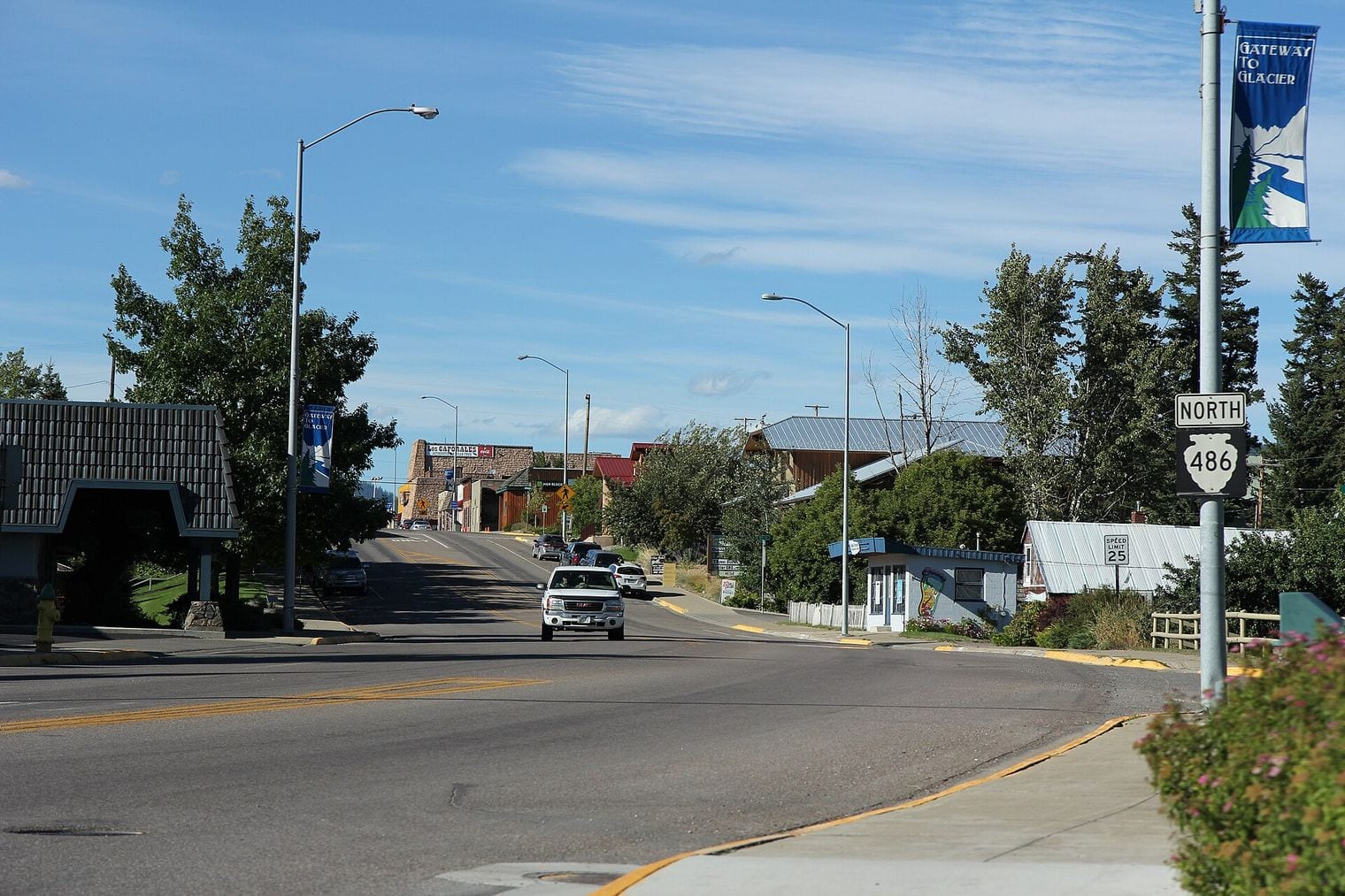
Columbia Falls grew up on the Flathead River in 1891, in anticipation of the Great Northern Railway, and today it is a down-to-earth gateway to Glacier National Park, whose west entrance is less than 20 miles east. Its friendly, unpretentious downtown is a handy place to stock up before heading into the park, and River's Edge Park has paved trails and a family fishing pond along the river.
On the way to Glacier, a side road leads to Hungry Horse Dam, a towering arch dam on the South Fork of the Flathead about 9 miles southeast of town, with views over the long reservoir behind it. Back in town, a summer community market and the Heritage Days celebration each July, with a parade and rodeo, show off its small-town spirit.
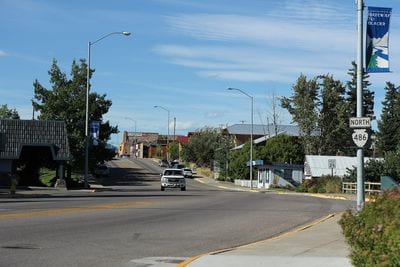
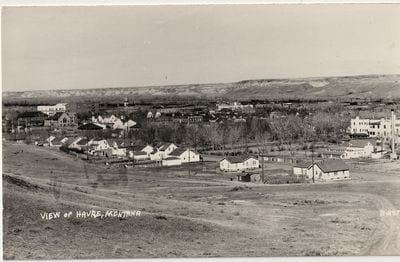
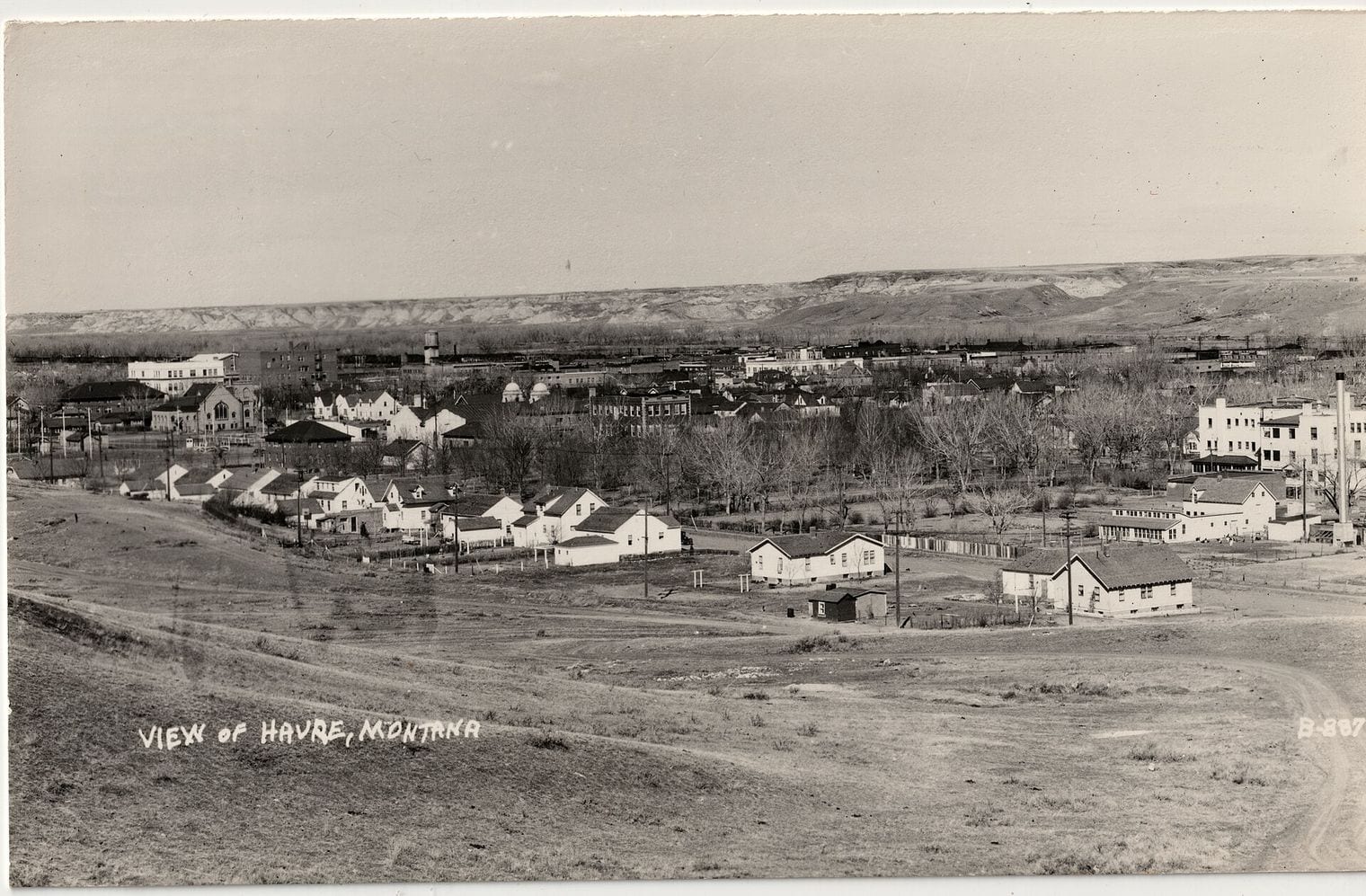
Havre, nicknamed the crown jewel of the Hi-Line, grew up around the Great Northern Railway on the Milk River and is said to be named for Le Havre in France. When fire destroyed much of downtown in 1904, businesses carried on underground while the town was rebuilt, and Havre Beneath the Streets now leads visitors through a recreated underground of shops, a saloon, a bordello and an opium den.
The H. Earl Clack Museum covers Native American history, pioneer life and the railroad, and nearby Wahkpa Chu'gn is a buffalo jump site open to visitors, where hunters once drove bison over a bluff. Fort Assinniboine, southwest of town, was one of the largest army posts in frontier Montana, and Beaver Creek Park, which claims to be the largest county park in the country, stretches into the Bear Paw Mountains.
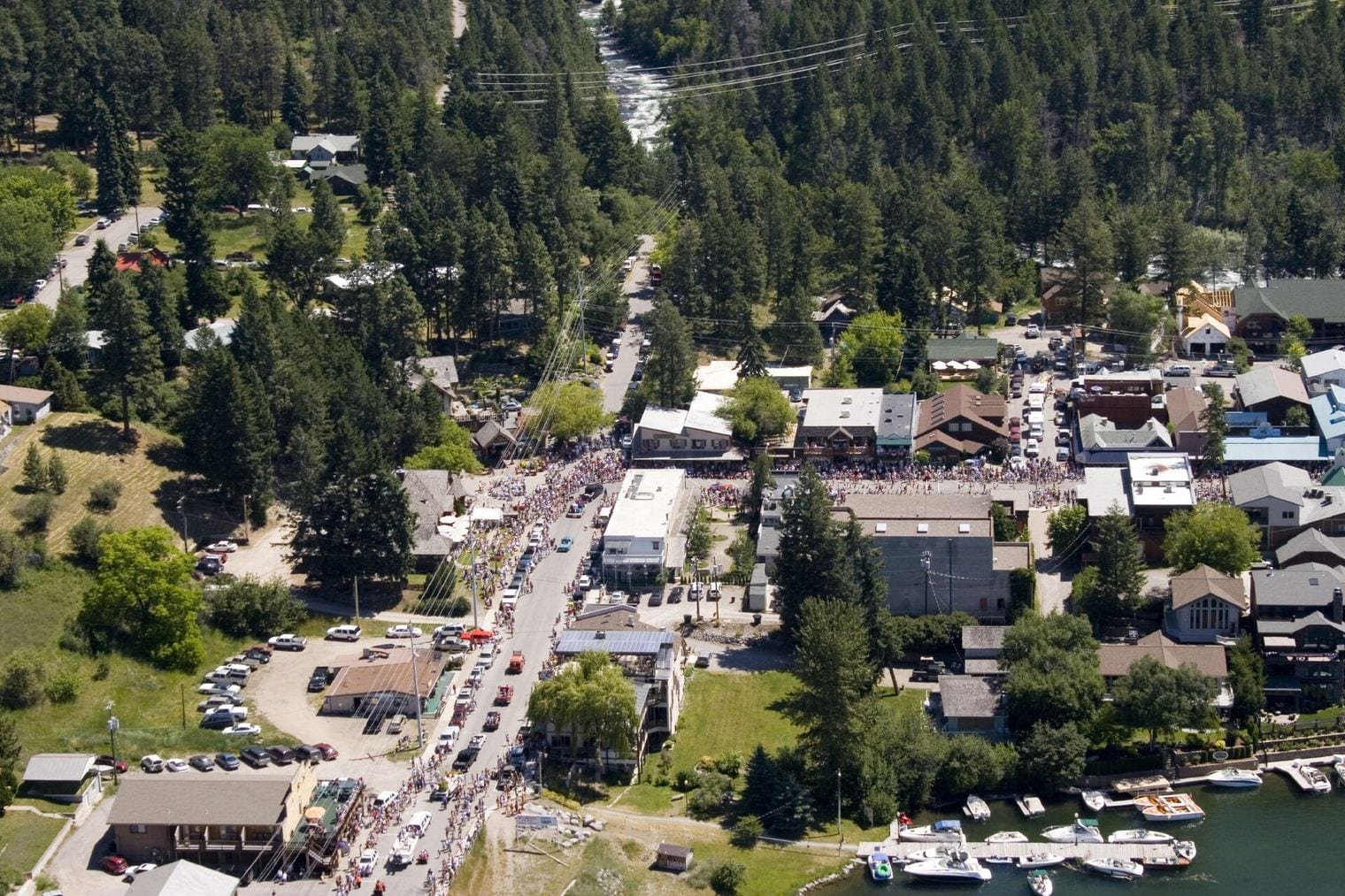
Bigfork is a village of galleries, restaurants and summer theater on Bigfork Bay, where the Swan River spills into the northeast corner of Flathead Lake. Everit Sliter planted fruit trees on the lake's east shore in 1892 and laid out the townsite a decade later, and the orchards that followed have made this stretch of shoreline famous for Flathead cherries.
Electric Avenue, the short main street, is lined with galleries and shops, and the Bigfork Summer Playhouse stages Broadway-style musicals each summer. The last mile of the Swan River, known as the Wild Mile, is a stretch of serious whitewater with a riverside trail for watching kayakers, while Wayfarers State Park, just south of town, and the Jewel Basin hiking area in the mountains above give plenty of room to roam.
Eureka, a Lincoln County town about 9 miles south of the Canadian border, sits in the Tobacco Valley, named by early explorers who found native people growing tobacco on the plains here. Logging sustained the town for decades, and it once billed itself as the Christmas Tree Capital of the World, shipping evergreens to cities across the country.
The Tobacco Valley Historical Village gathers a general store, a schoolhouse, a church, log cabins, a railway depot and a fire lookout from around the valley, some moved from the old town of Rexford before Lake Koocanusa flooded it. The long reservoir lies just to the west for boating and fishing, the Pacific Northwest Trail passes through town, and the Ten Lakes Scenic Area offers backcountry hiking in the mountains to the east.
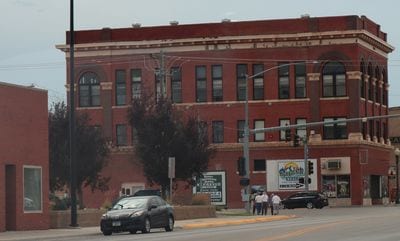
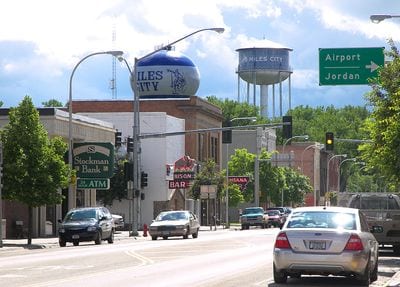
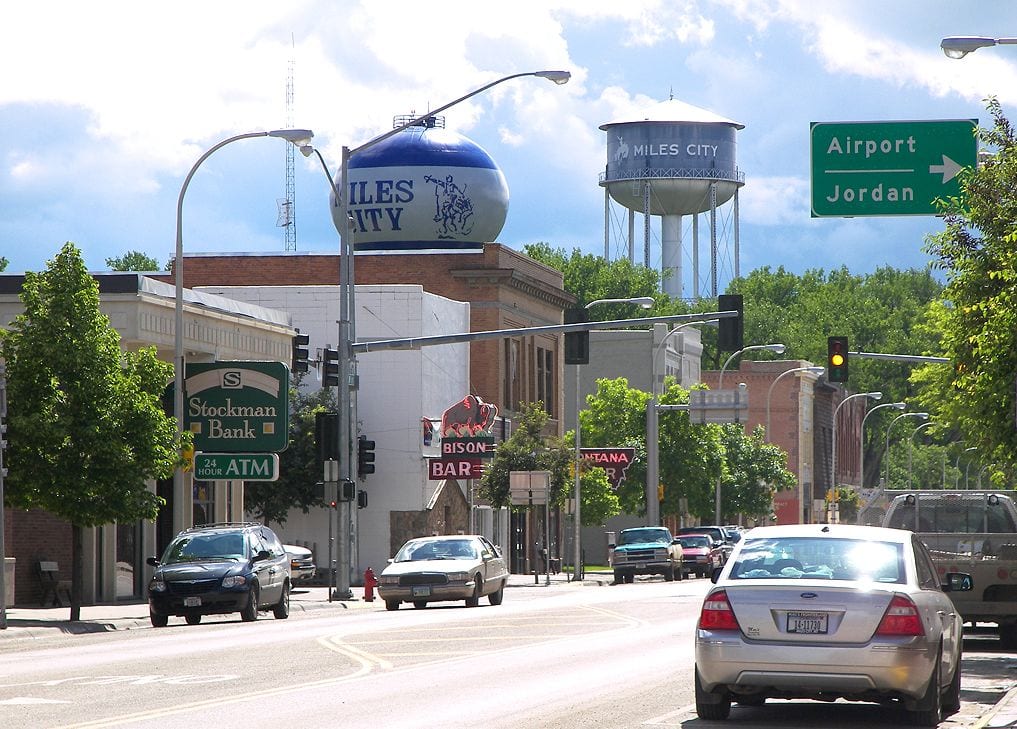
Miles City grew up beside Fort Keogh, the army post built where the Tongue River meets the Yellowstone after the Battle of the Little Bighorn in 1876, and it became a classic cattle town of the northern plains. The Custer County seat still feels like cow country, with western bars, ranch-supply stores and a downtown of brick storefronts.
The town's biggest weekend is the Miles City Bucking Horse Sale each May, a rodeo and auction of bucking stock held since 1951 that draws thousands of visitors. The rest of the year, the Range Riders Museum fills a cluster of historic buildings with exhibits on Plains Indians, ranching and Fort Keogh, and the WaterWorks Art Museum shows regional art in the town's old riverside water plant.
Three Forks takes its name from the spot just northeast of town where the Jefferson, Madison and Gallatin rivers come together to form the Missouri, three rivers that Meriwether Lewis named in July 1805 for President Thomas Jefferson and two members of his cabinet. Missouri Headwaters State Park protects the confluence and the place where the Lewis and Clark Expedition camped.
The town itself is small and easy to walk, anchored by a restored 1910 hotel built for passengers on the Milwaukee Road, and it makes a good base for Lewis and Clark Caverns State Park, Montana's first state park, where guided tours lead through limestone caverns above the Jefferson River. Bozeman is about 30 miles east along I-90.
Darby is a small town of fewer than 800 people in the upper Bitterroot Valley, established in 1889 and named for James W. Darby, who signed the post office application. Trapper Peak and the Bitterroot Range tower to the west, and the Darby Pioneer Memorial Museum and the historic Darby Ranger Station, now a museum and visitor center, tell the story of the valley's settlers and forest rangers.
The Bitterroot River runs past town and is known for fly fishing, Lake Como is only 7 miles away for kayaking and hiking, and Painted Rocks State Park and the Lost Trail Powder Mountain ski area lie farther south. Fans of the TV series Yellowstone may recognize the area: the nearby Chief Joseph Ranch, a private working ranch, stands in as the Dutton family home.
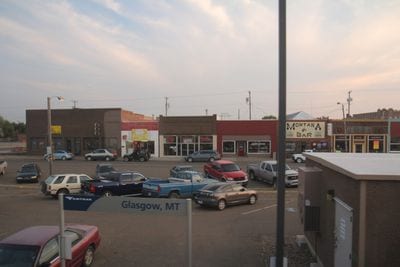
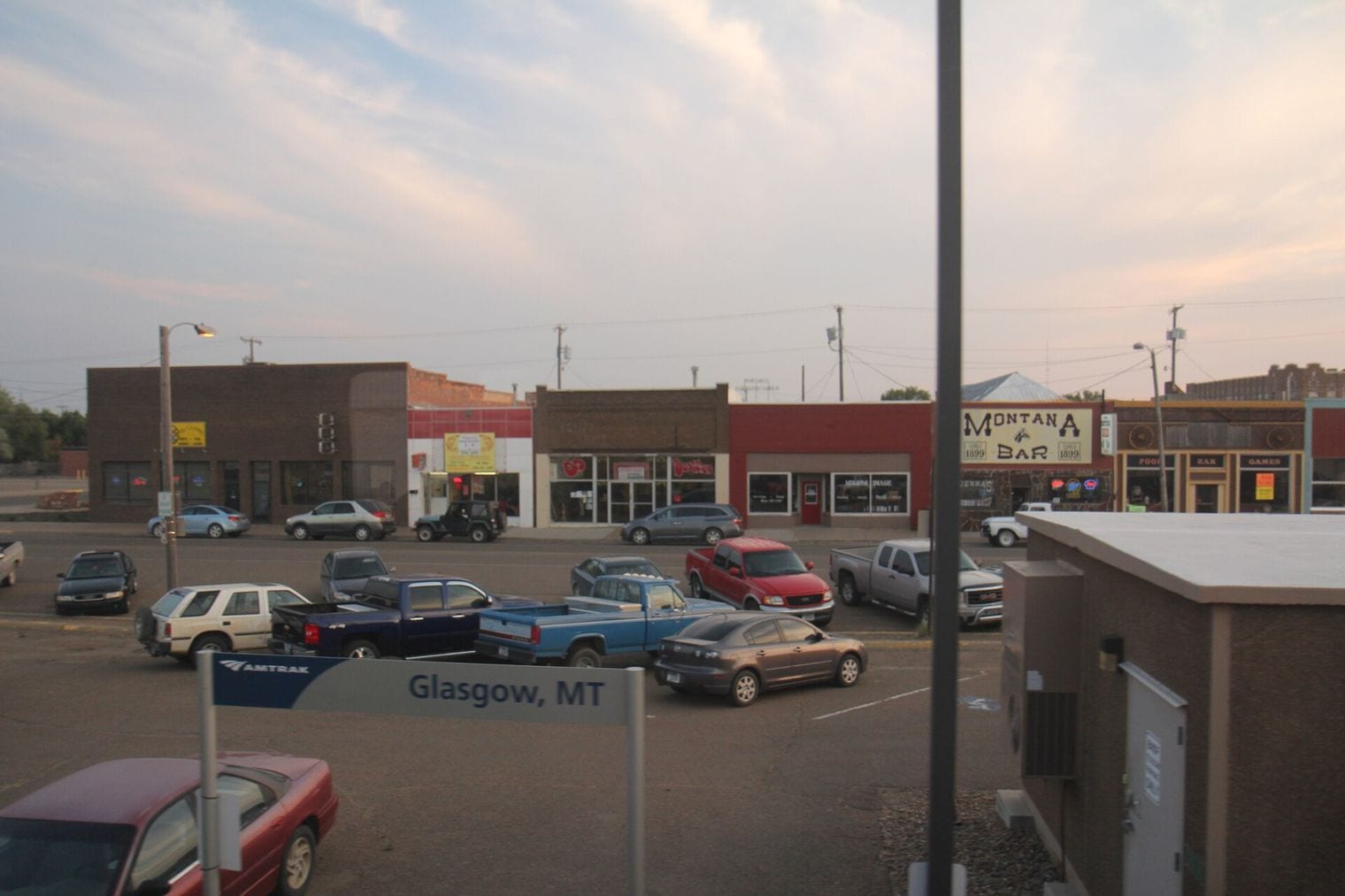
Glasgow, the Valley County seat on the Hi-Line, is the largest town for more than 100 miles across the prairies of northeastern Montana, and it grew in the 1930s when the building of Fort Peck Dam brought work to the area. Amtrak's Empire Builder still stops here, and the Valley County Pioneer Museum, with an ornate old cherry-wood bar and more than 200 animal and bird mounts, is a classic small-town museum.
Fort Peck Dam, about 20 miles away, is the largest hydraulically filled dam in the United States, and Fort Peck Lake stretches more than 130 miles through the Missouri River Breaks with a shoreline longer than California's coast. The lake is popular for walleye fishing, boating and camping, and the surrounding Charles M. Russell National Wildlife Refuge is fine country for wildlife watching.
Deer Lodge is home to the Old Montana Prison, a castle-like prison that opened in 1871 and held inmates until they were moved to a new facility outside town in the late 1970s. Today the complex is a cluster of museums, taking in the old cellblocks, the Montana Auto Museum and its large collection of classic cars, and exhibits on frontier life and vintage toys.
On the edge of town, Grant-Kohrs Ranch National Historic Site preserves a cattle ranch founded in 1862 by fur trader Johnny Grant and expanded by cattle baron Conrad Kohrs, and the National Park Service still runs it as a working ranch. Deer Lodge sits on the Clark Fork River along I-90 between Butte and Missoula, an easy stop on a southwest Montana loop.
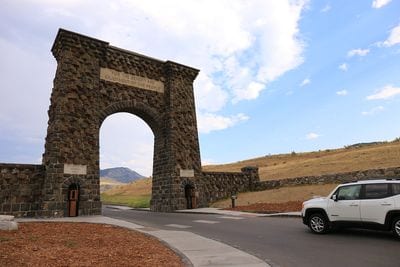
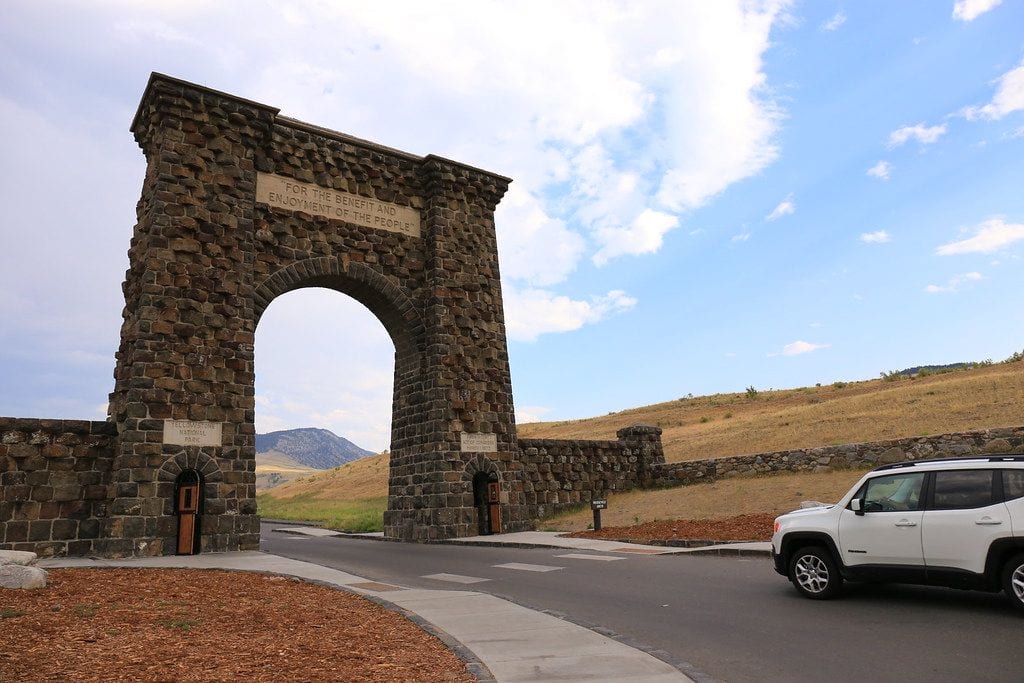
Gardiner has welcomed visitors to Yellowstone since the park's earliest days, and its landmark is the stone Roosevelt Arch at the North Entrance, whose cornerstone President Theodore Roosevelt laid in 1903. Inscribed with the words "For the Benefit and Enjoyment of the People" from the act that created the park, the arch frames the road into Yellowstone at the edge of town.
The North Entrance is the only one generally open to cars all year, and the road from here past Mammoth Hot Springs and through the Lamar Valley to Cooke City makes Gardiner a natural winter base for spotting wolves, bison and elk. The Yellowstone River runs right through town, with rafting and fishing in summer, and elk often graze on the lawns in town.
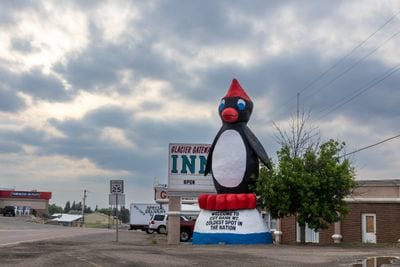
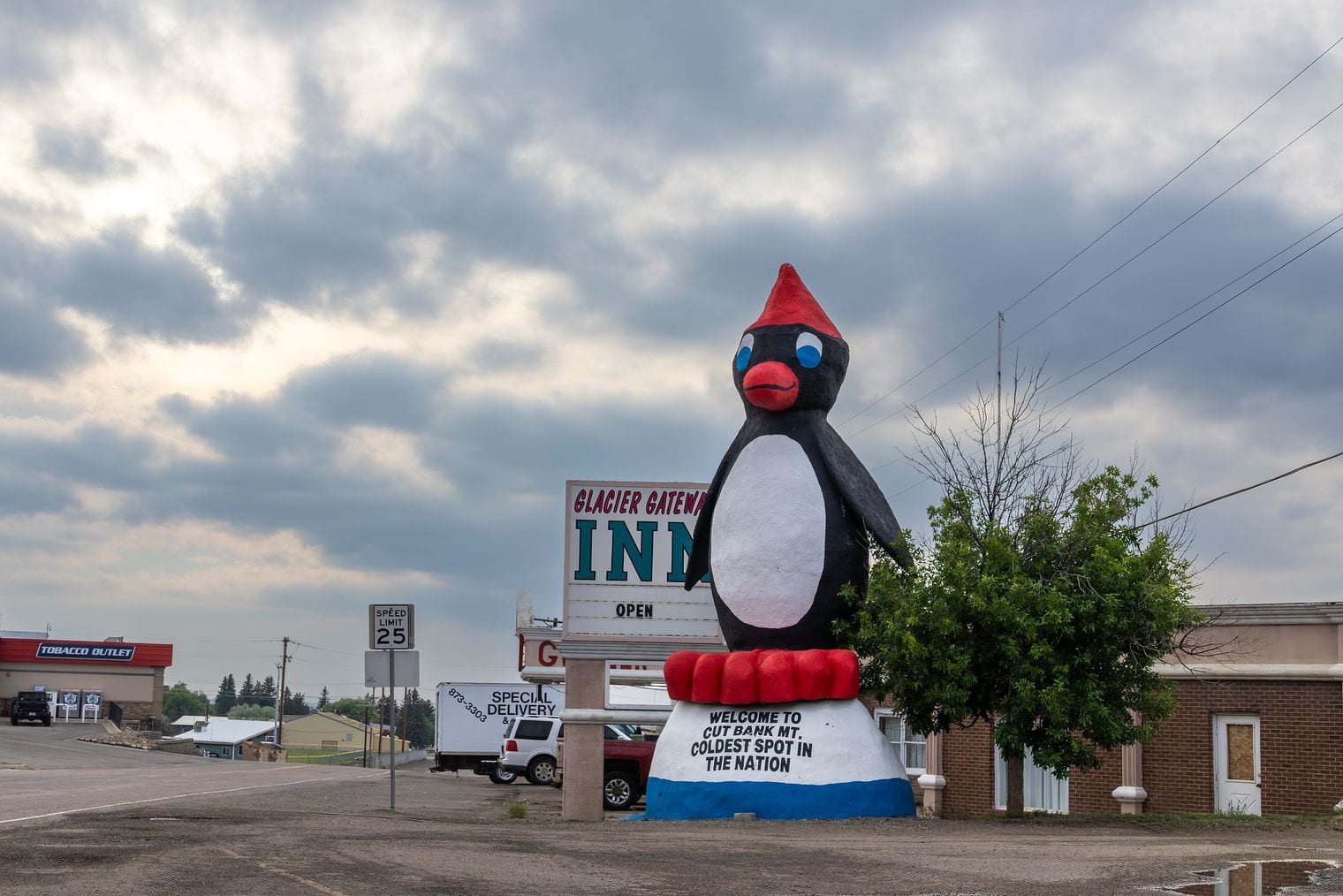
Cut Bank, the Glacier County seat, was founded in 1891 when the Great Northern Railway arrived, just east of the deep gorge along Cut Bank Creek that gave it its name. It is a working Hi-Line farming and oil town, and its most famous resident is a 27-foot penguin statue that greets drivers with a sign proclaiming Cut Bank the "Coldest Spot in the Nation," a boast that is open to debate.
The Glacier County Historical Museum covers homesteading, the Blackfeet, the railroad and the oil boom years, with historic buildings on its grounds, and Amtrak's Empire Builder stops in town on its way along the Hi-Line. Cut Bank also makes a practical base for the quieter east side of Glacier National Park, about an hour's drive west.
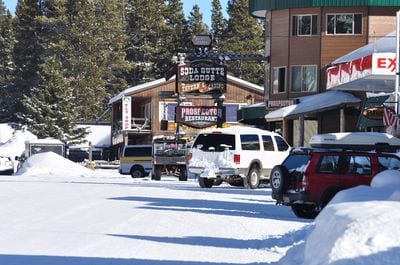
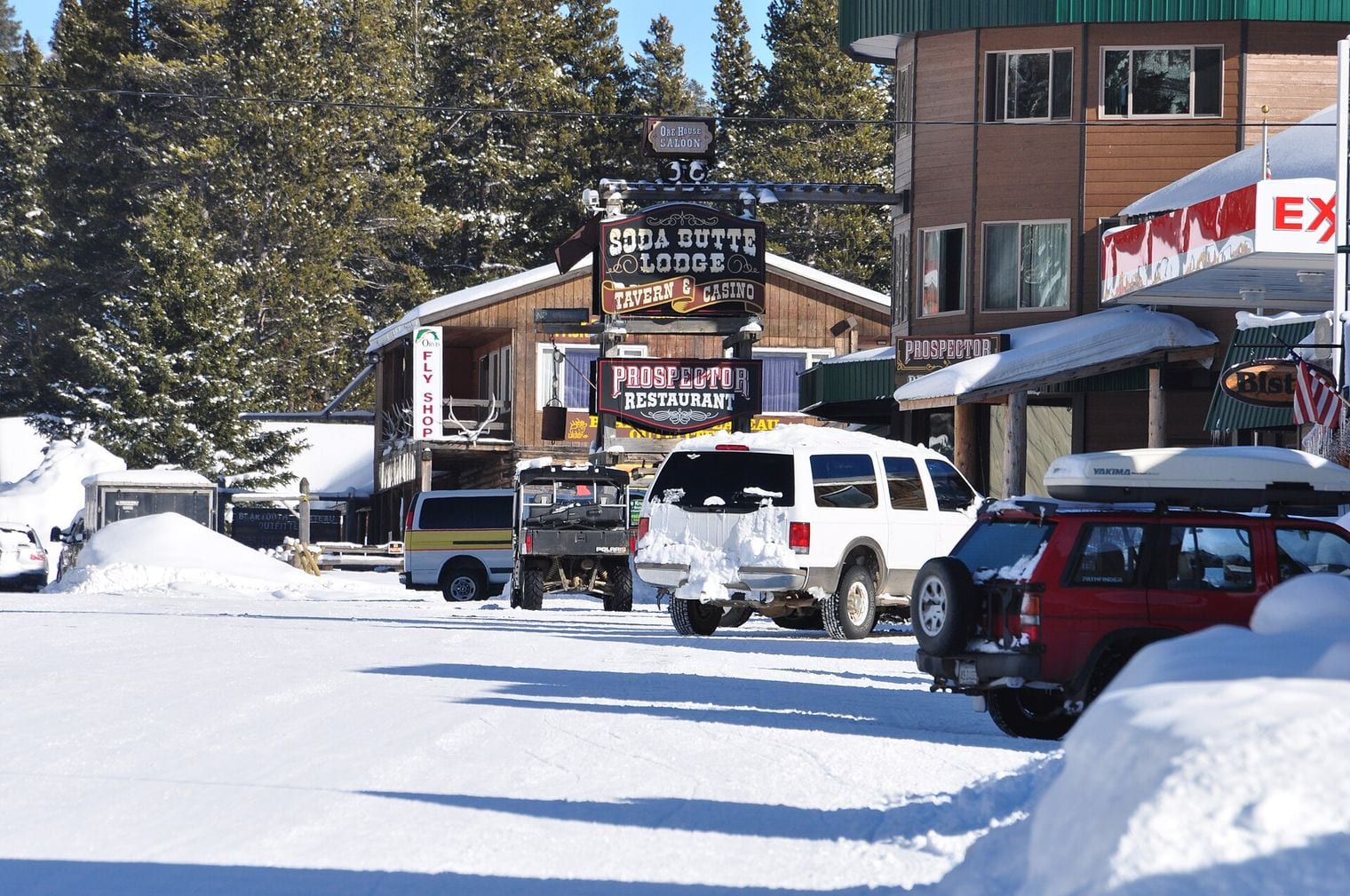
Cooke City is a tiny mountain town, home to fewer than a hundred people, just outside Yellowstone's Northeast Entrance at the western end of the Beartooth Highway. It began as a gold-mining camp in the 1870s and was named for Jay Cooke, the financier of the Northern Pacific Railroad, and its single main street of lodges, outfitters and cafés sits high in the mountains.
In summer, Cooke City is a stopover for drivers on the Beartooth Highway and wildlife watchers heading into the Lamar Valley. In winter, when the highway east is closed, the only road in comes through the park from Gardiner, and the town turns into a base for snowmobiling and backcountry skiing.
Thompson Falls, the Sanders County seat, is named for British explorer and fur trader David Thompson, who founded the Saleesh House trading post in the area in 1809, and it sits beside the falls on the Clark Fork River. The railroad arrived in 1881, and a gold rush over the mountains in Idaho's Coeur d'Alene country soon swelled the town.
Walk across the restored High Bridge, an early 20th-century steel truss bridge now open to pedestrians, for views of the river, and visit the fish ladder at Thompson Falls Dam, built so native fish such as bull trout can get past the dam. The Old Jail Museum, in the 1907 county jail, covers the fur trade, mining, logging and ranching history of the valley.
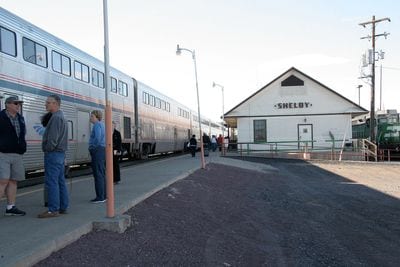
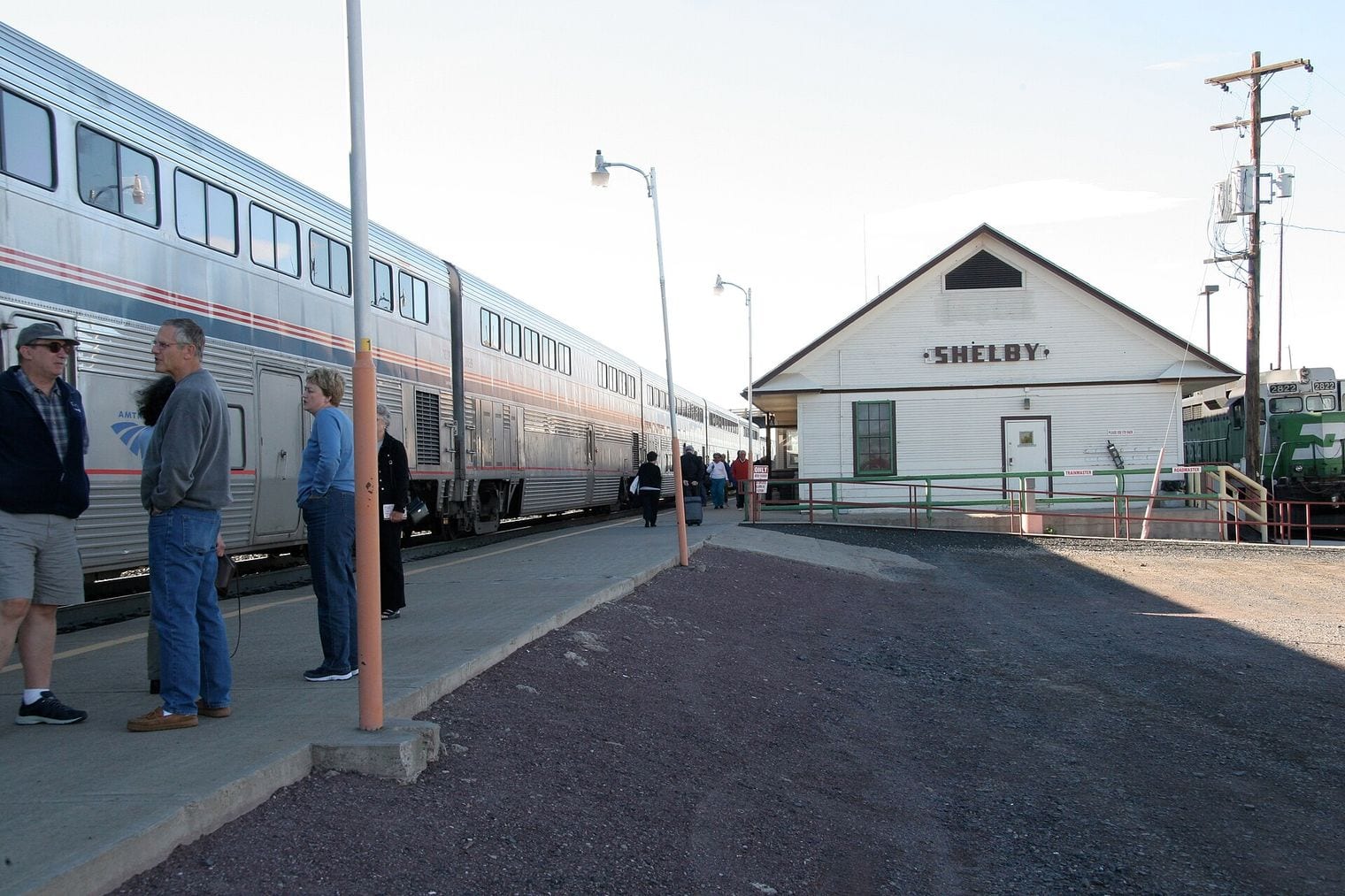
Shelby grew up at a Great Northern Railway junction in the 1890s and today sits where I-15 meets US 2, about 35 miles south of the Canadian border. Its claim to fame came on July 4, 1923, when the town hosted the Jack Dempsey and Tommy Gibbons fight for the world heavyweight championship, a promotion that nearly bankrupted Shelby.
Champions Park tells the story of the fight with an outdoor interpretive museum, and the Marias Museum of History and Art, in a historic home, covers local history, agriculture and Native American heritage. Shelby is a convenient stop on the Hi-Line, and the Sweet Grass Hills rise on the horizon to the northeast.
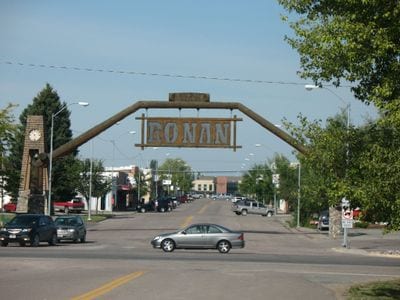
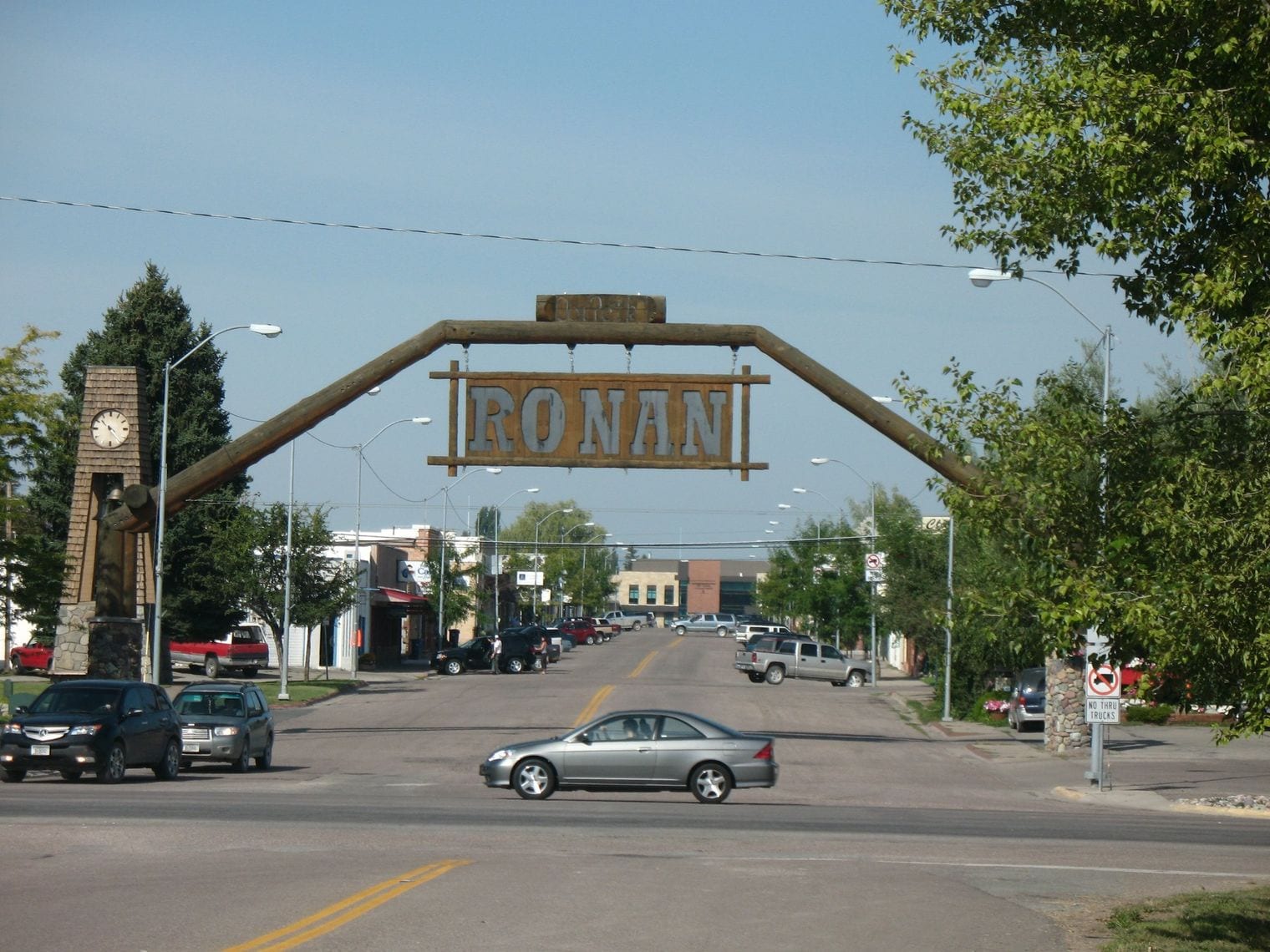
Ronan is a farm town in the Mission Valley on the Flathead Indian Reservation, home of the Confederated Salish and Kootenai Tribes, with the Mission Mountains rising steeply along the valley's eastern edge. Originally called Spring Creek, it was renamed in 1893 for Peter Ronan, the reservation's superintendent.
Ninepipe National Wildlife Refuge, about 5 miles south, is a favorite with birders, a reservoir and wetland where grebes, herons, ospreys and many kinds of ducks nest against the backdrop of the Missions. Ronan sits on US 93 between Polson and Missoula, so it pairs easily with a drive around Flathead Lake.
Sidney, the Richland County seat, lies in the lower Yellowstone Valley less than 10 miles from the North Dakota line, a farming and oil town whose fields have been irrigated since the Lower Yellowstone Irrigation Project was finished in 1909. It took its name from six-year-old Sidney Walters, whose family was staying with the local justice of the peace when the settlement needed a name.
The MonDak Heritage Center, founded in 1967, combines a regional history museum with an art gallery, covering life in eastern Montana and western North Dakota since the first pioneers. Fort Union Trading Post National Historic Site, near the confluence of the Yellowstone and Missouri rivers, is about 24 miles northeast of town.
Plan your trip
Best Time to Visit Montana's Small Towns
Summer is peak season. Glacier's Going-to-the-Sun Road typically opens all the way across Logan Pass in late June or July and stays open until mid-October, the Beartooth Highway above Red Lodge usually runs from late May to mid-October, and summer-only attractions such as the train and stagecoach rides at Virginia City are running. It is also when Whitefish, West Yellowstone and Gardiner are at their busiest, so book rooms well ahead.
September is a favorite, with cooler days, golden aspens and cottonwoods, thinner crowds and good fly fishing. Winter brings skiing at Whitefish, Big Sky and Red Lodge and snowmobiling out of West Yellowstone and Cooke City, while spring is a quiet, muddy shoulder season, though it brings paddlefish season at Glendive and, each May, the Miles City Bucking Horse Sale.
Getting to Montana's Small Towns
Montana's main airports put most regions within an easy drive. Fly into Glacier Park International near Kalispell for Whitefish, Columbia Falls, Bigfork, Polson and Eureka; Missoula for the Bitterroot Valley towns of Stevensville, Hamilton and Darby; Bozeman for Livingston, Big Sky, Three Forks, Ennis and West Yellowstone; and Billings for Red Lodge, Big Timber and Miles City. Great Falls serves Fort Benton, Choteau and Lewistown, while Helena and Butte are handy for Philipsburg, Anaconda, Deer Lodge and Dillon.
Amtrak's Empire Builder crosses northern Montana, stopping at towns including Libby, Whitefish, West Glacier, East Glacier Park, Cut Bank, Shelby, Havre, Malta, Glasgow and Wolf Point. By road, I-90 links Deer Lodge, Three Forks, Livingston, Big Timber and Billings, I-94 runs east to Miles City and Glendive, I-15 runs north through Dillon and Great Falls to Shelby, and US 2 follows the Hi-Line across the top of the state.
Getting Around Montana's Small Towns
A car is essential. Distances are long, public transportation between towns is limited, and many of the best sights, from Bannack and Makoshika to Kootenai Falls and the Beartooth Highway, lie well outside town. Once you arrive, most of these towns are compact enough to explore on foot, and Whitefish, Bigfork, Philipsburg and Virginia City all have main streets made for wandering.
Plan fuel stops on the long stretches of the Hi-Line and eastern Montana, where towns can be an hour or more apart, and watch for deer, elk and pronghorn on the road at dawn and dusk. In winter, carry chains or use snow tires, check the state's road reports before crossing mountain passes, and remember that the Beartooth Highway and the high section of Going-to-the-Sun Road close for the season.
Where to Stay in Montana's Small Towns
Choose a base by region rather than trying to cover the state from one place. Whitefish and Columbia Falls put you close to Glacier's west entrance, Bigfork and Polson suit a Flathead Lake stay, and Gardiner and West Yellowstone are the most convenient bases for Yellowstone, with Livingston a quieter option about an hour north of the park.
Red Lodge is the natural base for the Beartooth Highway, Ennis or Virginia City for the Madison Valley, and Philipsburg or Anaconda for the old mining country of the southwest. Beyond motels and historic downtown hotels, Montana is known for guest ranches, cabins and hot springs resorts, and in peak summer the gateway towns fill early, so reserve well ahead.
Free Things to Do in These Montana Towns
Many of Montana's small-town highlights cost nothing. Walk under the Roosevelt Arch at Gardiner, stroll the steamboat levee and visit the Shep statue in Fort Benton, and follow the trail to the swinging bridge at Kootenai Falls near Libby.
Watch whitewater kayakers on the Wild Mile in Bigfork, cross the restored High Bridge in Thompson Falls, walk the wetland trails of the Lee Metcalf refuge near Stevensville, browse the painted storefronts of Philipsburg and pose with the giant penguin in Cut Bank.
Montana is too big to see in one trip, so link towns region by region. In Glacier Country, Whitefish, Columbia Falls and Bigfork cluster around the Flathead Valley, with Polson and Ronan to the south along Flathead Lake and Eureka, Libby and Thompson Falls in the forested northwest.
Around Yellowstone, a loop from Bozeman takes in Three Forks, Livingston, Gardiner, West Yellowstone, Ennis, Virginia City and Big Sky, while Red Lodge, Big Timber and Cooke City link up over the Beartooth Highway, an easy drive from Billings.
In southwest Montana, Philipsburg, Anaconda, Deer Lodge and Dillon make a loop through the old mining country, and the Bitterroot Valley strings Stevensville, Hamilton and Darby along US 93. Fort Benton, Choteau and Lewistown are all within reach of Great Falls, the Hi-Line links Cut Bank, Shelby, Havre and Glasgow along US 2, and Miles City, Glendive and Sidney follow the Yellowstone River across the eastern plains.
FAQ: Visiting the Best Small Towns in Montana
What is the best small town in Montana?
Whitefish is the best-known small town in Montana, a lake and ski town about half an hour from Glacier National Park. Red Lodge, at the foot of the Beartooth Highway, and Livingston, Yellowstone's original railroad gateway, are close behind, while restored silver-boom Philipsburg and West Yellowstone, at the park's West Entrance, round out the top five.
Which small towns are closest to Glacier National Park?
Columbia Falls and Whitefish are the main towns near Glacier's west entrance, both within about half an hour of West Glacier, and Bigfork and Polson add Flathead Lake to a Glacier trip. Amtrak's Empire Builder stops at Whitefish and West Glacier, and on the quieter east side of the park, Cut Bank makes a practical base about an hour away.
Which Montana towns are gateways to Yellowstone?
Three of Yellowstone's five entrances are in Montana. West Yellowstone sits at the West Entrance on the road to the geyser basins, Gardiner's North Entrance is the only one generally open to cars all year, and Cooke City guards the Northeast Entrance at the end of the Beartooth Highway. Livingston, Big Sky and Ennis make good bases farther out.
When is the best time to visit Montana's small towns?
Summer is peak season, when the Beartooth Highway and Glacier's Going-to-the-Sun Road are open and summer-only attractions such as Virginia City's train and stagecoach rides are running. September brings fall color, fewer crowds and good fishing, winter suits ski towns such as Whitefish, Big Sky and Red Lodge, and spring is the quietest season of the year.
How many days do you need for a Montana small-town road trip?
Most towns on this list fill a relaxed day, while gateway towns such as Whitefish, West Yellowstone and Gardiner deserve two or three days for the national parks next door. Allow about a week to loop through one region, such as Glacier Country, Yellowstone's gateway towns or the southwest's mining towns, and two weeks or more to cross the state.
Which Montana small towns are best in winter?
Whitefish, Big Sky and Red Lodge are Montana's classic winter towns, each with a ski area on its doorstep. West Yellowstone and Cooke City are snowmobiling centers, Gardiner is the base for winter wildlife watching in Yellowstone's Lamar Valley, and Philipsburg and Anaconda sit close to the Discovery ski area and the ice fishing on Georgetown Lake.
Sources & updates
How this guide was verified
Checked before launch
Sources cited
35
Publishers
29
Every town on this list was pinned on the map and checked against official and local sources before publication.
A PDF with a box to tick for every place. Confirm your email to download it, and get one email every Thursday with our newest guides for the places you tick.
Free Montana small towns printable checklist
All 35 places in one PDF
Tick them off as you go. Confirm your email to download it, plus one email every Thursday with new guides for the places you tick.
We use cookies to analyze site traffic and improve your experience.
You can accept or reject analytics cookies. See our
May we use analytics cookies? See ourCookie Policy.