We may earn a commission if you book or buy through a link on
this page, at no extra cost to you. It never affects which places we list or how
we rank them (how we make money).
Short answer
Amsterdam's three essentials are the Rijksmuseum, purpose-built for its collection with the Night Watch in a room designed around it, the Van Gogh Museum next door, and the Anne Frank House at the canal address where the diary was written. Three full days covers the major museums, a canal trip and time to wander the Jordaan; two is enough if you are selective and book ahead.
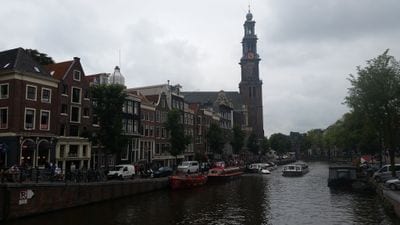
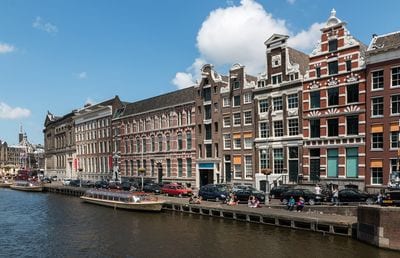
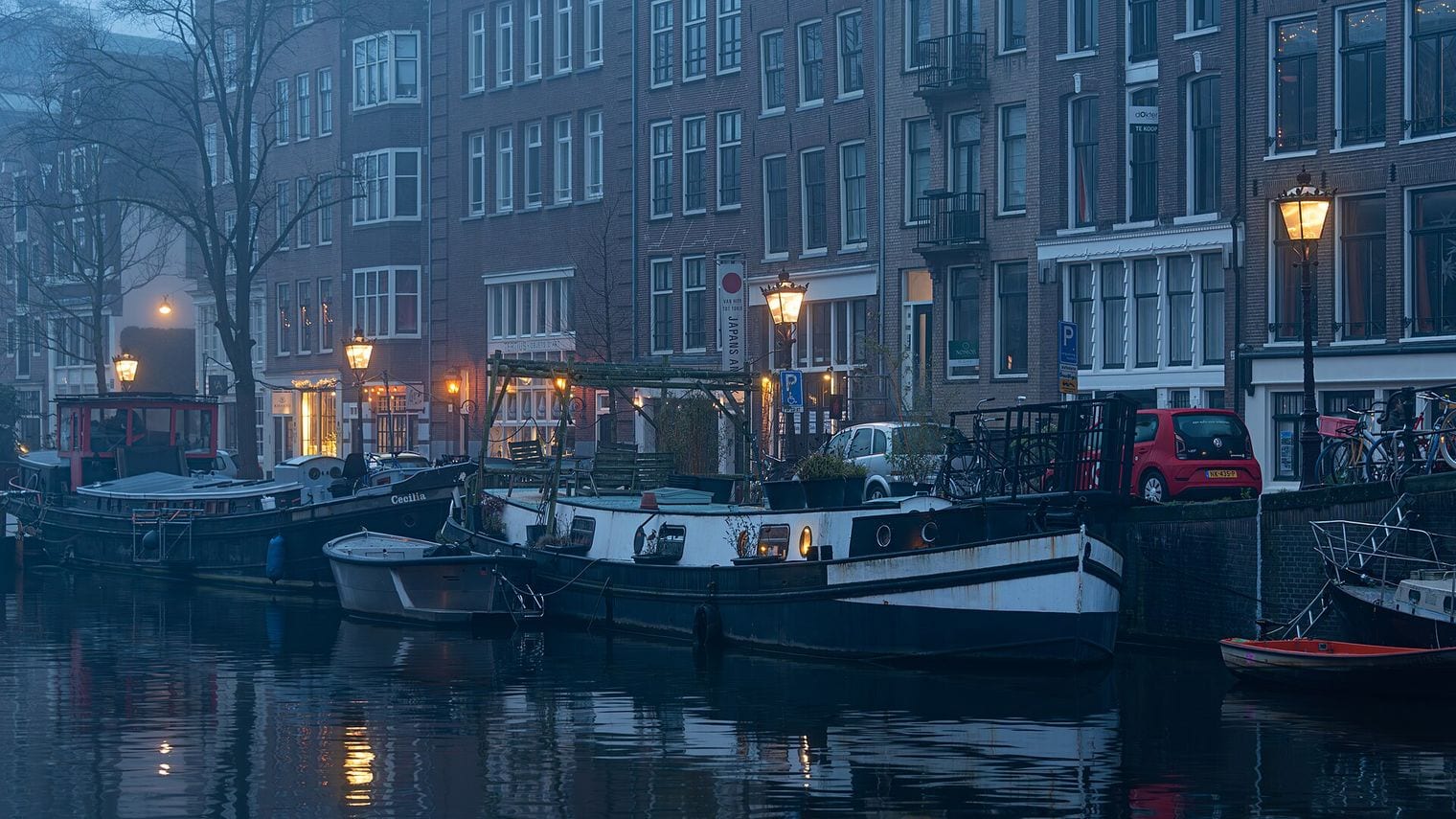
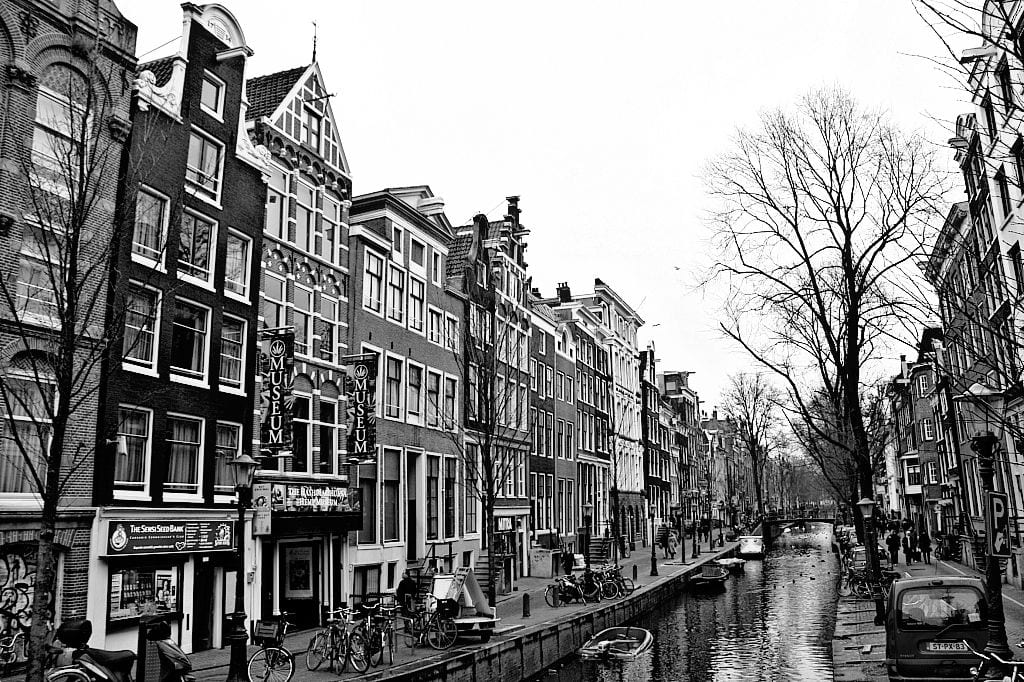
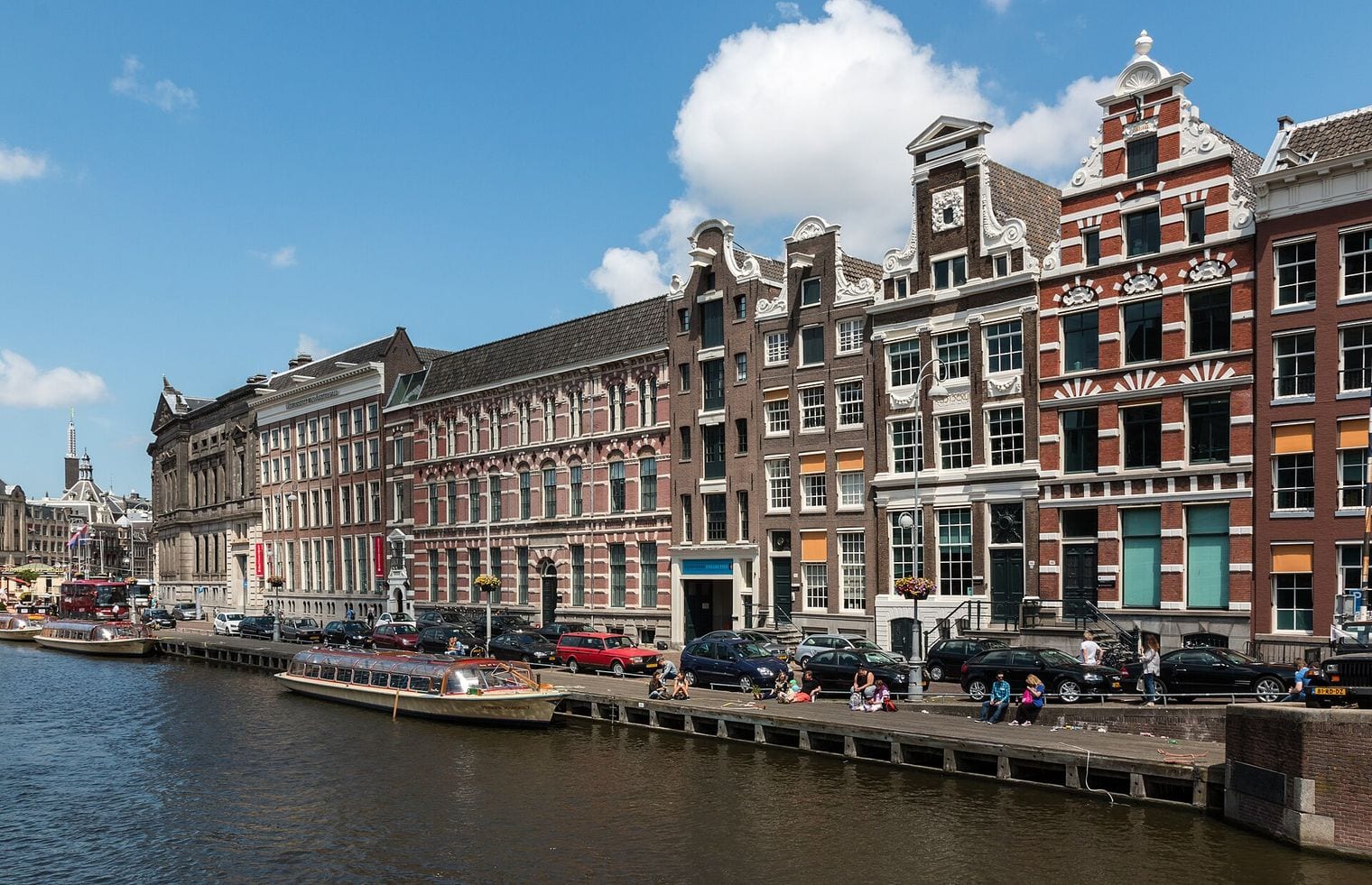
Amsterdam is a city built on water and trade: a 17th-century ring of canals lined with narrow gabled houses, wrapped around a centre small enough to cross on foot in half an hour. It holds some of the finest museums in Europe, and the bicycle still outnumbers the car.
This guide covers 45 of the best things to do in Amsterdam, from the great galleries to the markets, breweries and hidden courtyards. Three days is enough for the highlights; a week lets you slow down and wander.
The city is named after a dam on the river Amstel — the 13th-century barrier that Dam Square still marks today.
Amsterdam's 17th-century canal ring became a UNESCO World Heritage Site in 2010, listed as a masterpiece of large-scale hydraulic town planning.
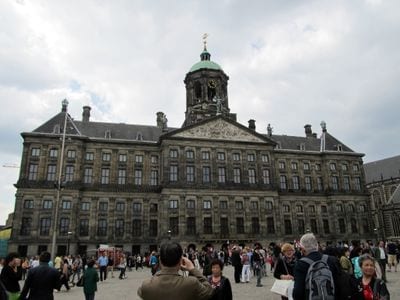
The whole city stands on timber: the Royal Palace alone rests on 13,659 wooden piles driven through soft peat to the sand beneath.
Amsterdam has well over a thousand bridges — comfortably more than Venice, the city it is endlessly compared to.
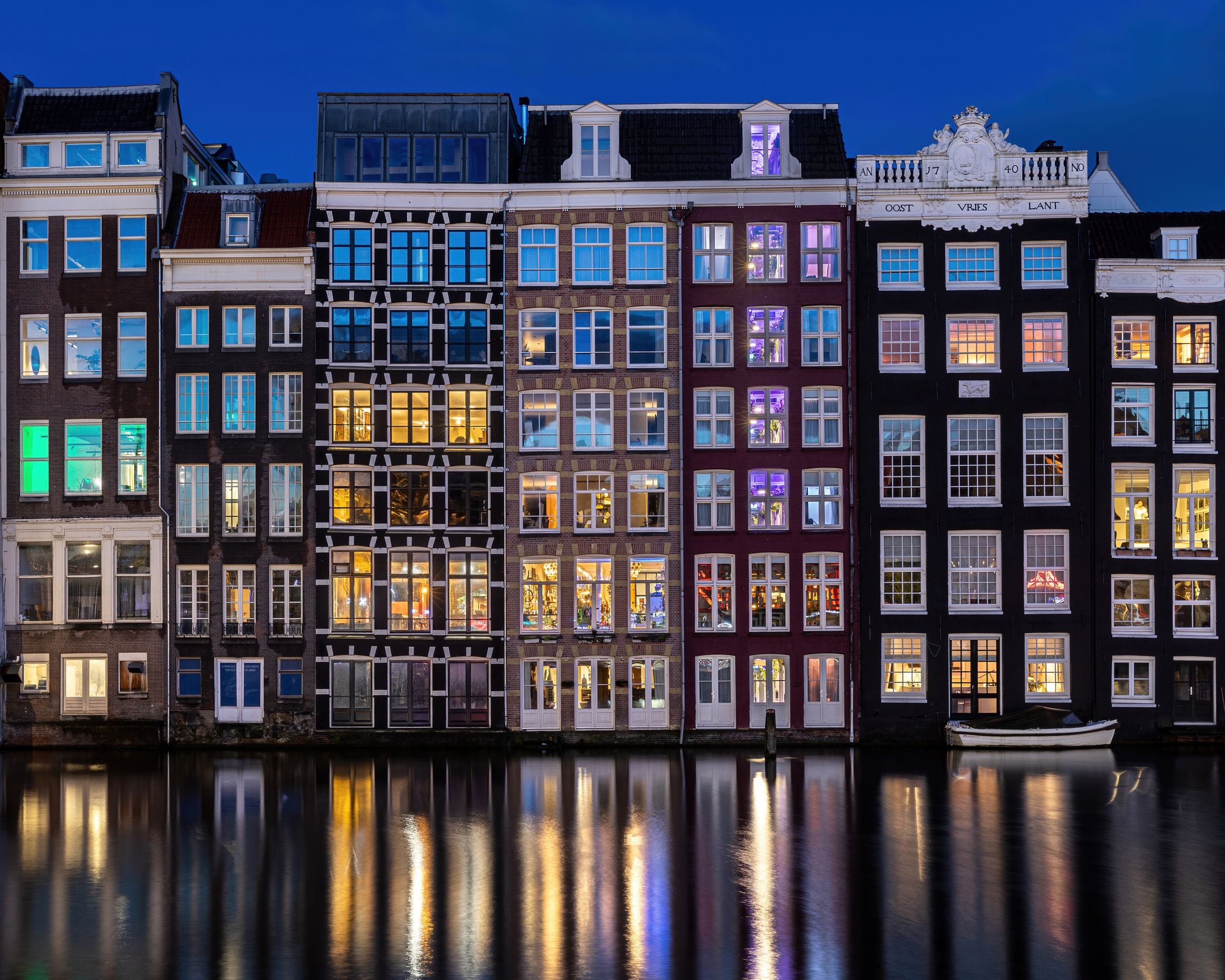
Many canal houses lean forward on purpose: the hoisting beam at the gable let goods be winched up the outside, clear of staircases too narrow to carry furniture.
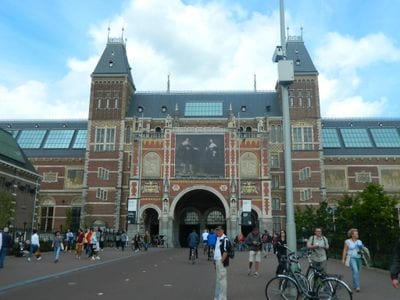
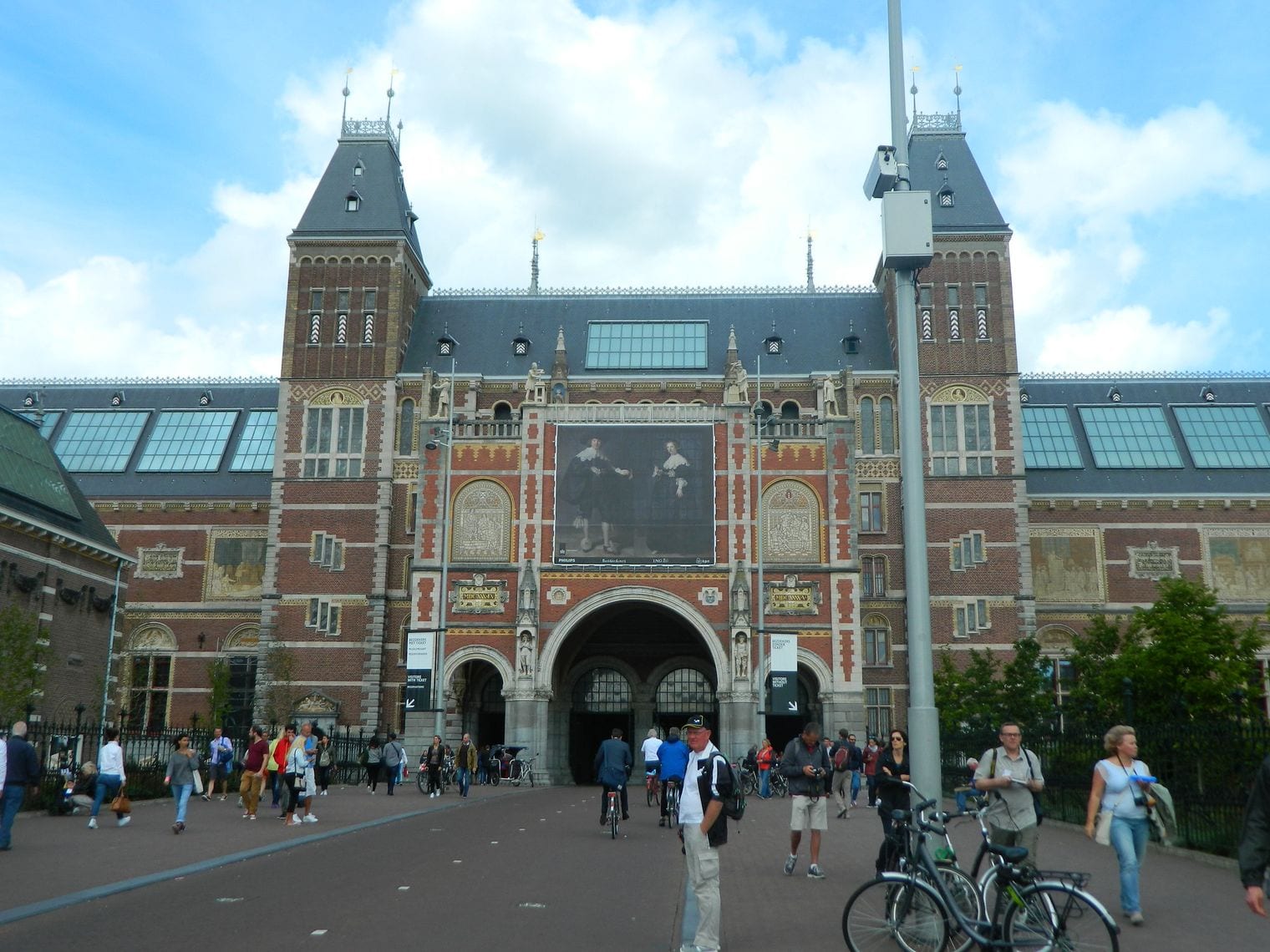
The Rijksmuseum is the Dutch national museum, and the single best introduction to the country's Golden Age. Pierre Cuypers designed the vast brick building that opened in 1885, and a decade-long renovation returned it to something close to his original vision. The collection runs from medieval altarpieces to Delftware, dolls' houses and ship models, but everything funnels toward the Gallery of Honour.
At the end of that gallery hangs Rembrandt's Night Watch, displayed in a room built around it. Vermeer's quiet interiors, Frans Hals's portraits and Jan Steen's chaotic households fill the rooms leading up to it. Give it at least three hours, start upstairs before the crowds thicken, and don't miss the cycle tunnel that runs straight through the building's ground floor.
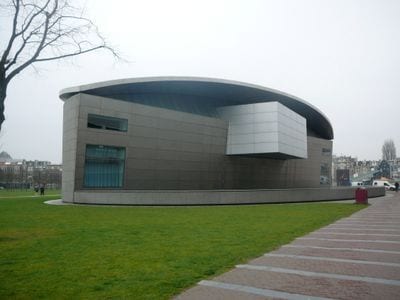
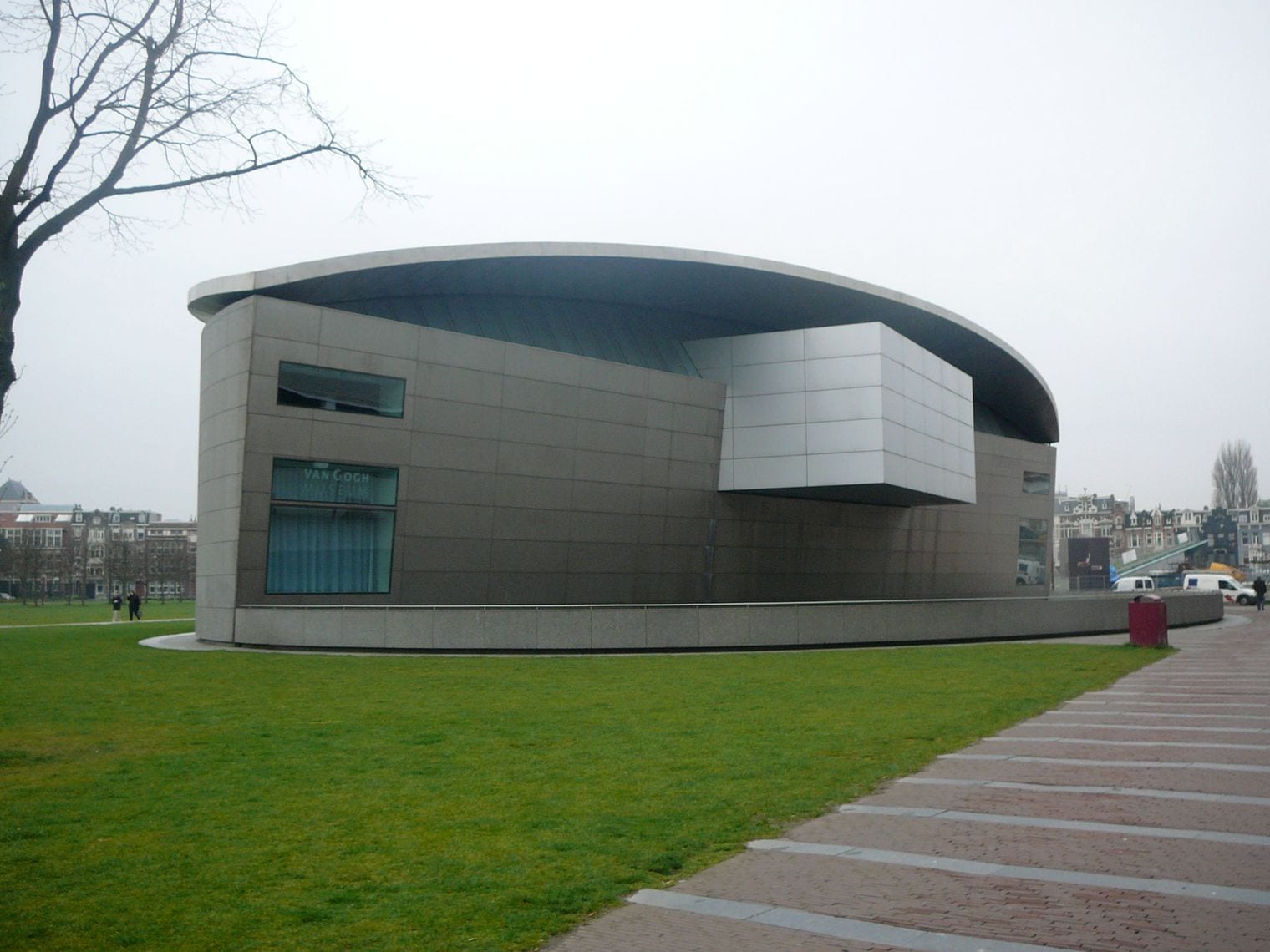
The Van Gogh Museum holds the largest collection of the artist's work anywhere — roughly two hundred paintings and hundreds of drawings and letters, nearly all kept together by his brother Theo's family and later given to the state. The permanent display runs chronologically, which turns a gallery visit into a biography.
You watch the palette shift from the muddy browns of The Potato Eaters to the blazing yellows of the Provence years, then darken again at the end. Sunflowers, The Bedroom and Almond Blossom are all here. Because it sits on Museumplein a few minutes from the Rijksmuseum, the two are easy to pair — though doing both in one day is a lot of looking.
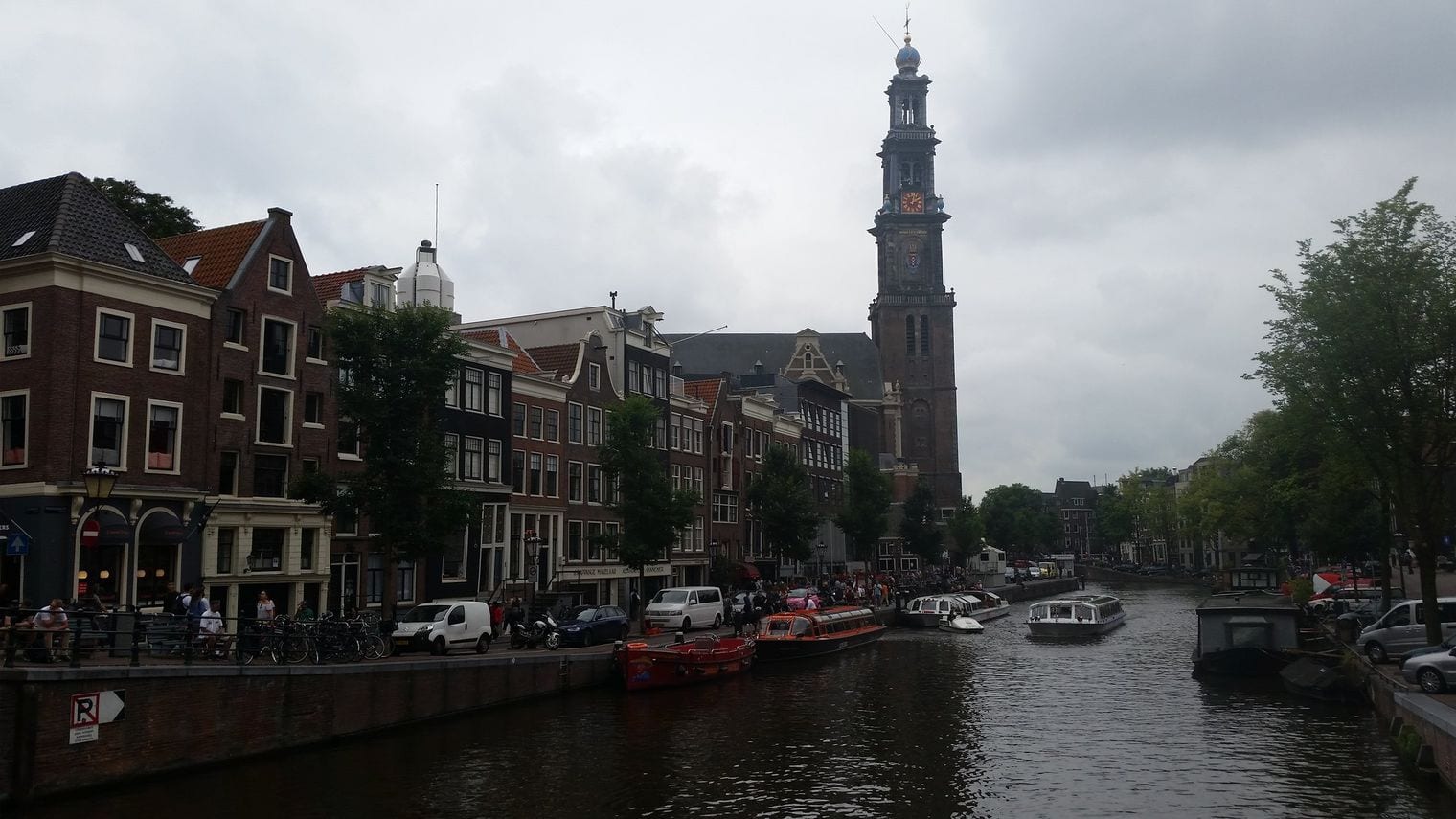
At Prinsengracht 263, the Anne Frank House preserves the canal-side building where Anne, her family and four others hid for just over two years before their arrest. The museum is deliberately spare: the rooms behind the hinged bookcase are left unfurnished, as they were found after the war, and the effect is far heavier than any reconstruction would be.
You climb the same steep, narrow stairs, pass the pencil marks tracking the children's height, and see the magazine pictures Anne pasted on her wall. The original diary is displayed near the end. It is the most affecting hour in Amsterdam, and the one place in this guide where booking ahead is genuinely essential rather than merely sensible.
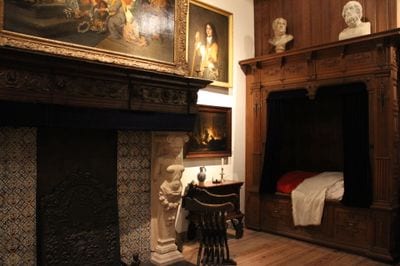
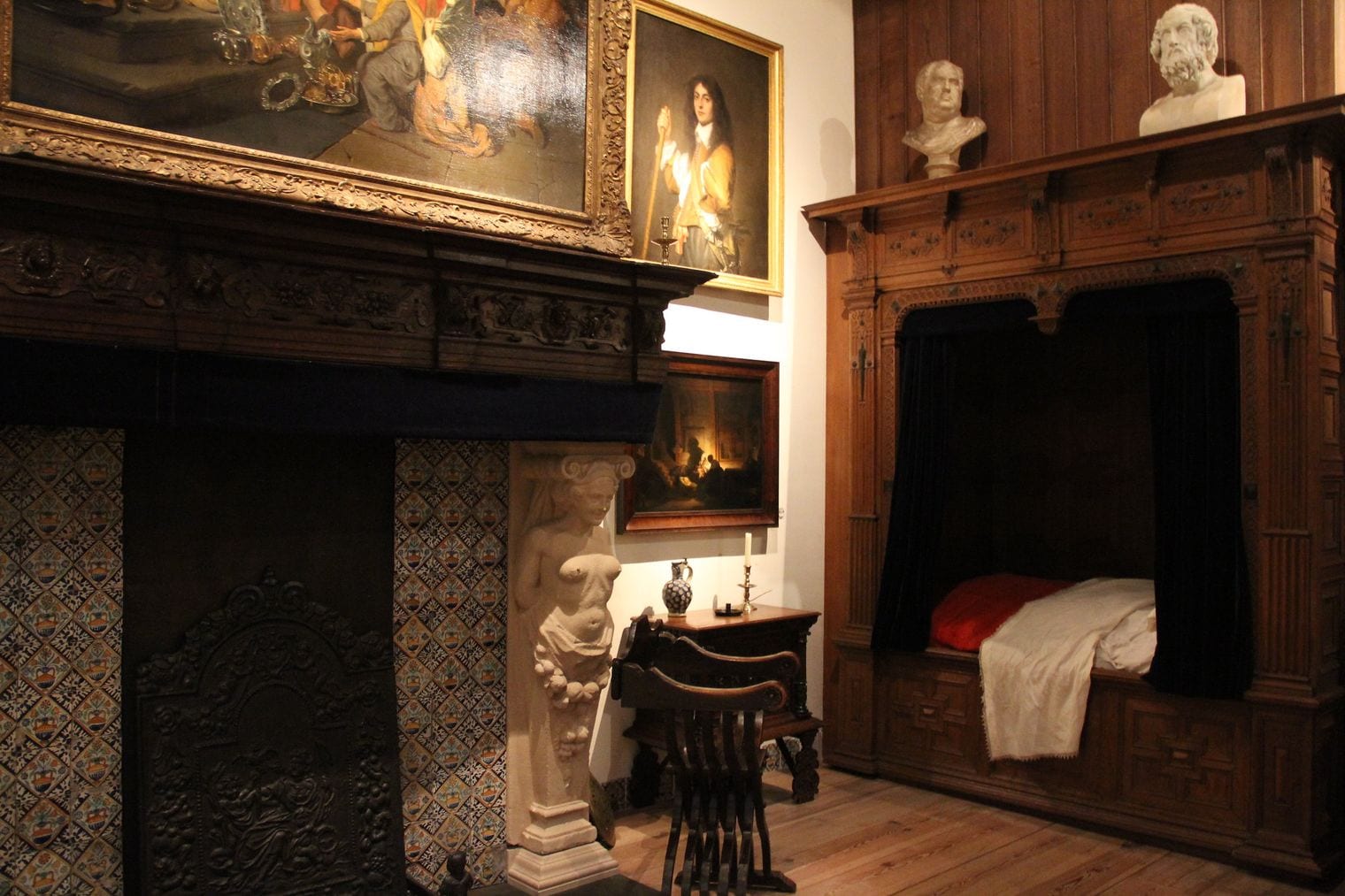
Rembrandt bought this handsome house on the edge of the old Jewish quarter at the height of his success and lived there for nearly twenty years, until debt forced him out. That misfortune is why the Rembrandt House Museum works so well: the inventory drawn up for his bankruptcy listed the contents room by room, so the reconstruction rests on documentary evidence rather than guesswork.
The result is a working house rather than a shrine. You see the cabinet of curiosities he collected, the grinding of pigments, and — best of all — the etching studio, where demonstrations show how he pulled prints from copper plates. It is a useful counterpoint to the Rijksmuseum: here you learn how the pictures were actually made.
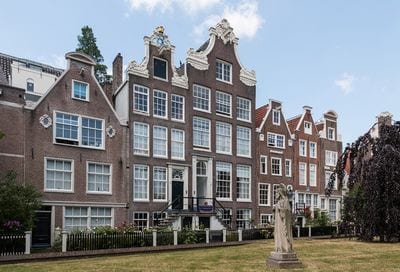
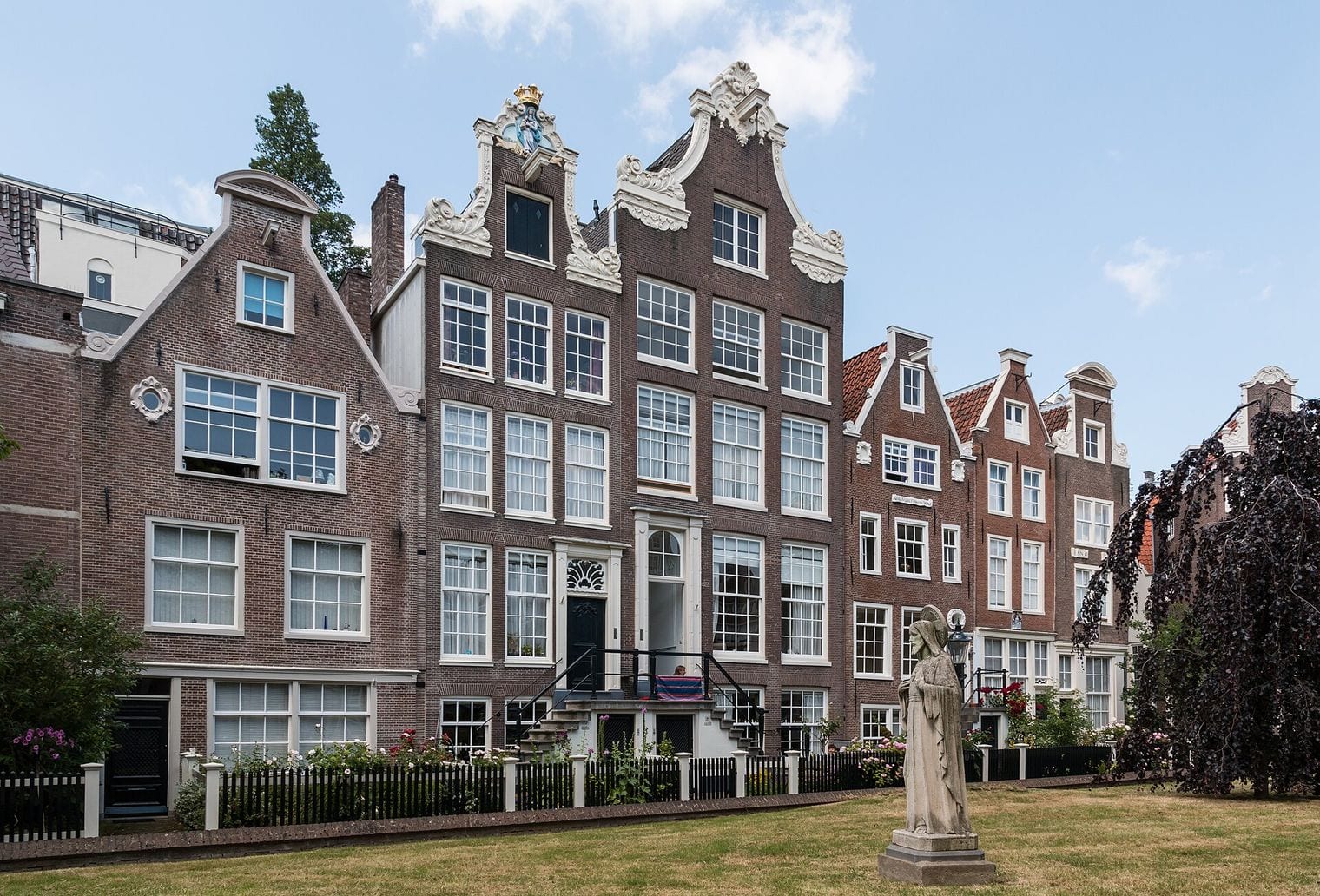
Step through an unremarkable door off the Spui and the traffic simply stops. The Begijnhof is a medieval courtyard of houses set around a lawn, founded for the Beguines — lay religious women who lived communally without taking full vows. It is still residential, which is why signs ask for quiet and the gates close in the evening.
Tucked among the houses is Het Houten Huys, one of the last timber-fronted houses left in the centre, and two churches facing each other across the grass: the English Reformed Church, and a clandestine Catholic chapel disguised behind an ordinary façade. Entry is free. Go early or late, keep your voice down, and treat it as somebody's front garden, because it is.
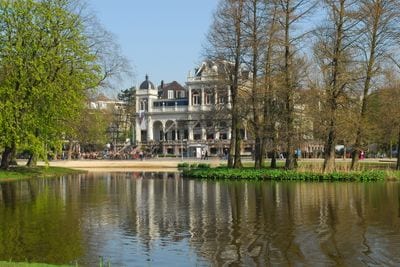
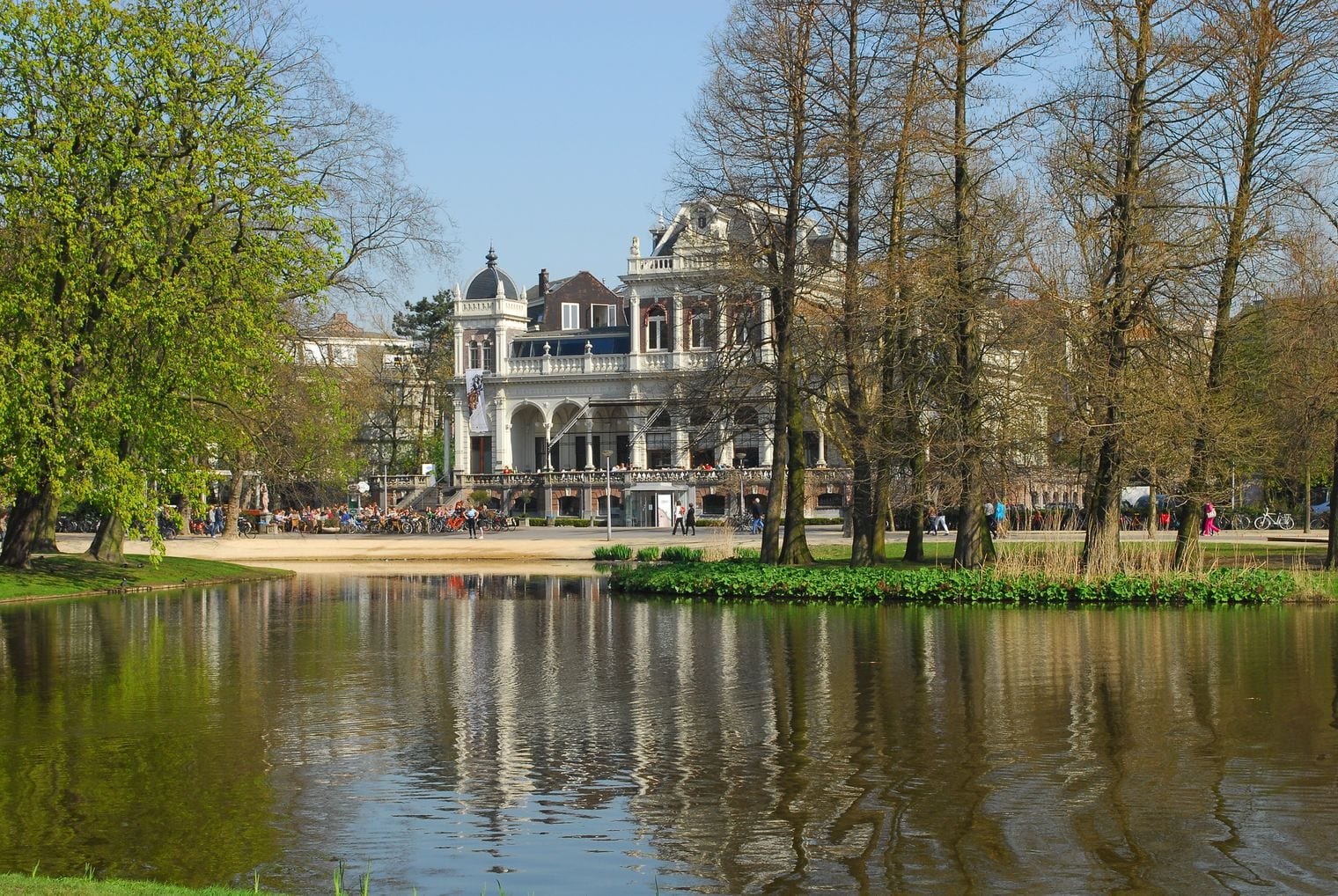
Vondelpark is Amsterdam's back garden — a long, informally landscaped strip of lawns, ponds and winding paths just west of the museum quarter, named after the poet Joost van den Vondel. On the first warm weekend of the year the whole city seems to arrive at once, with picnic blankets, portable speakers and barbecues going along every bank.
It is genuinely a park for using rather than admiring: cyclists cut through it, runners loop it, and the open-air theatre puts on free performances through the summer months. There are cafés at either end, a rose garden in the middle, and enough space that you can always find a quiet corner. Entry is free and it never really closes.
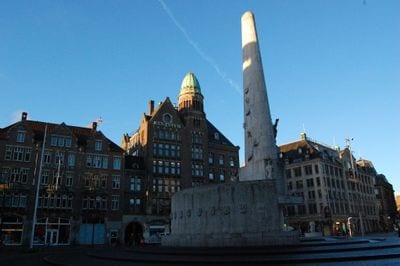
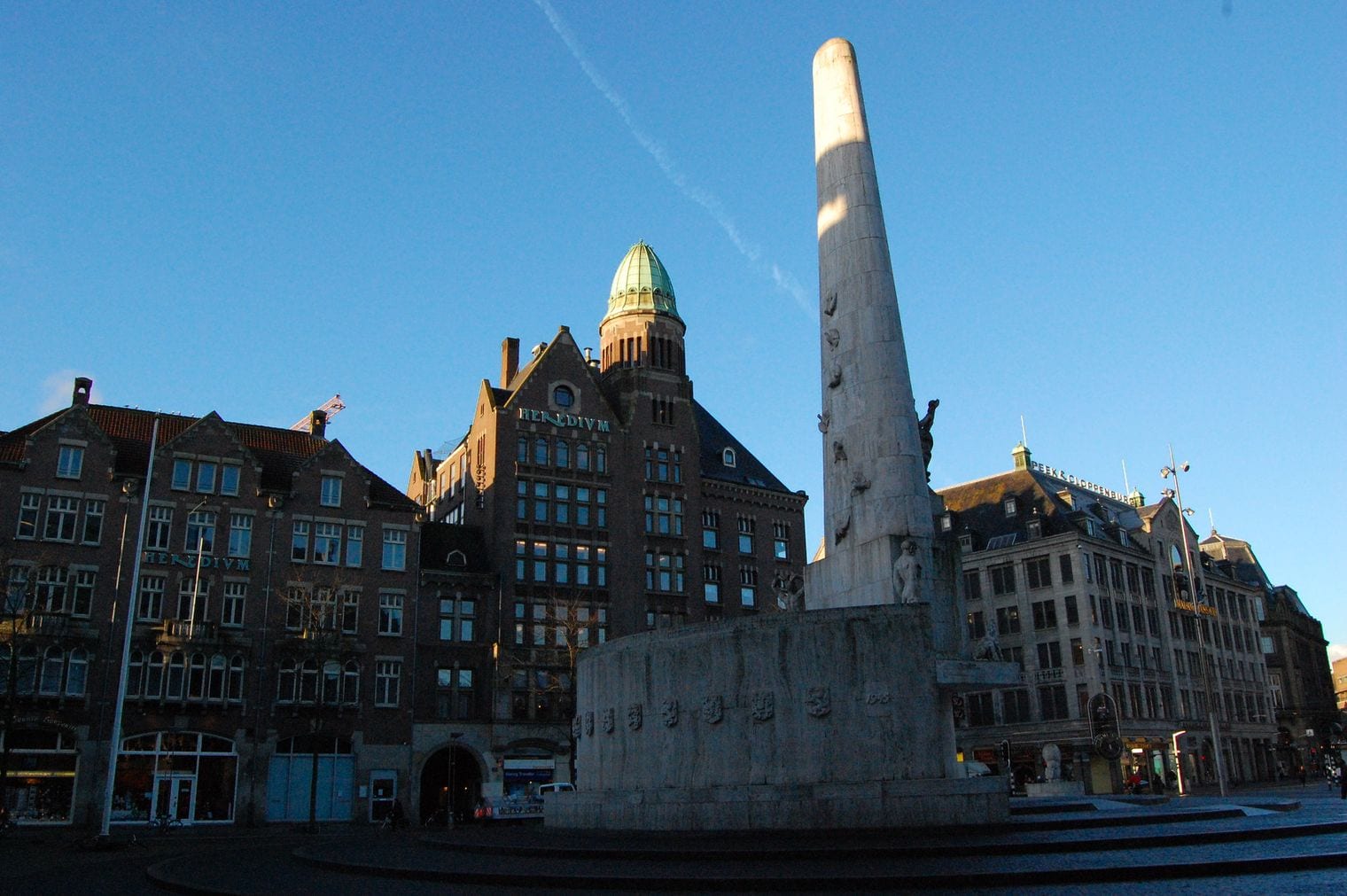
Dam Square is where Amsterdam began: the dam thrown across the Amstel that gave the city both its shape and its name. Today it is a broad, busy, slightly chaotic open space — pigeons, street performers, trams sliding past — ringed by the buildings that mattered most to the young republic.
The Royal Palace occupies the western side, the Gothic Nieuwe Kerk stands beside it, and the white stone National Monument to the war dead rises opposite. It is not a place you linger for its own sake so much as one you cross repeatedly, since almost every walking route through the centre passes over it. Come early in the morning to see it nearly empty.
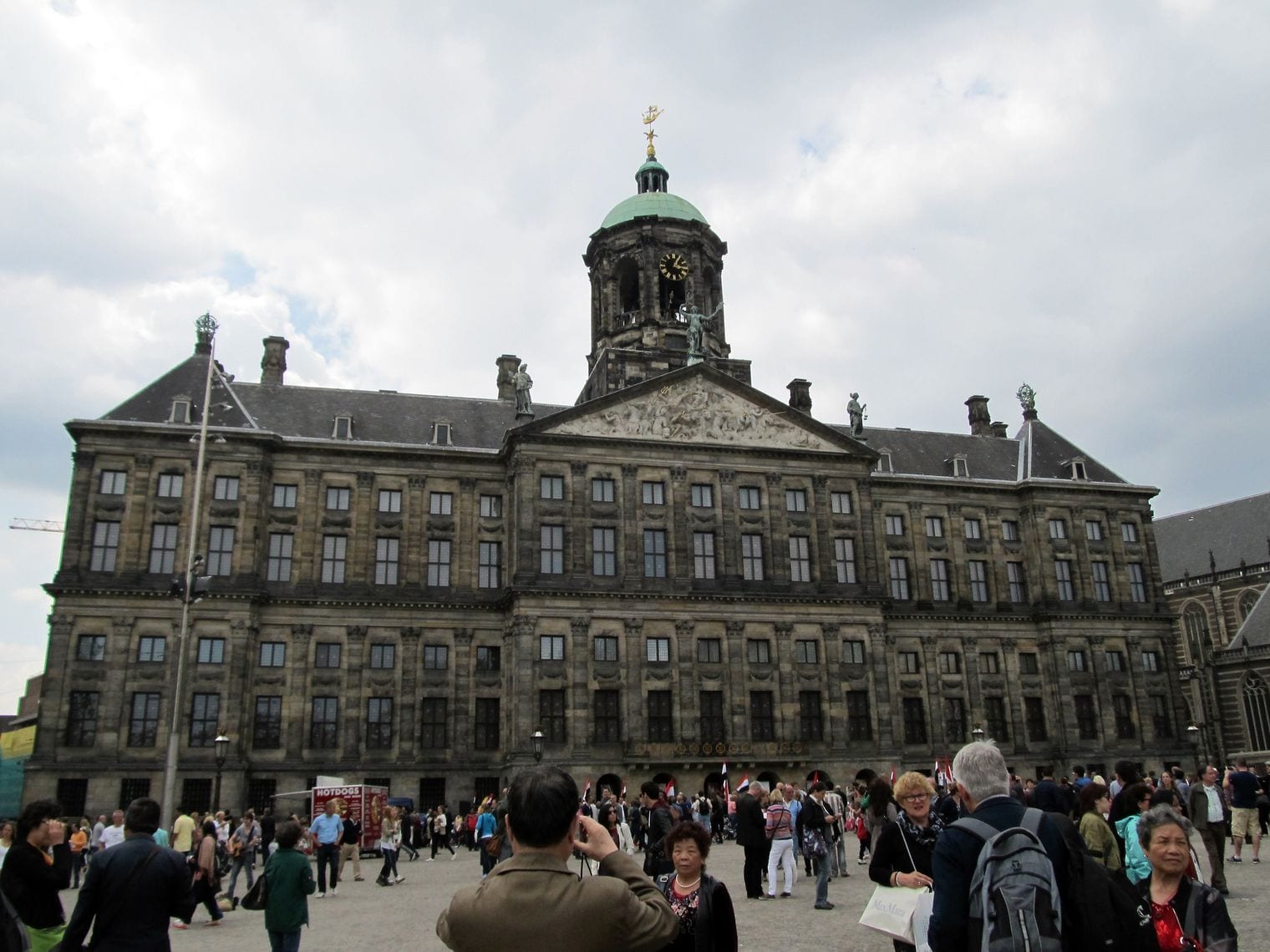
The Royal Palace was not built as a palace at all. Jacob van Campen designed it in the mid-17th century as Amsterdam's city hall, at a moment when the city was arguably the richest in the world, and the confidence shows: it rests on thousands of timber piles driven into the marsh, and its scale was meant to state the republic's case in stone.
It became a royal residence only under Napoleonic rule, and remains a working palace used by the Dutch monarch for state occasions, so opening depends on the calendar. Inside, the marble-floored Citizens' Hall is the showpiece — a vast room mapped with the heavens and the hemispheres, designed to place Amsterdam at the centre of the known world.
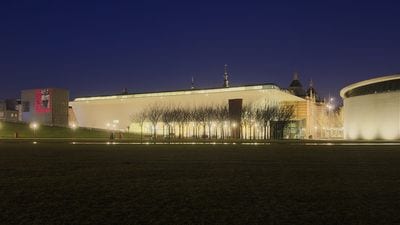
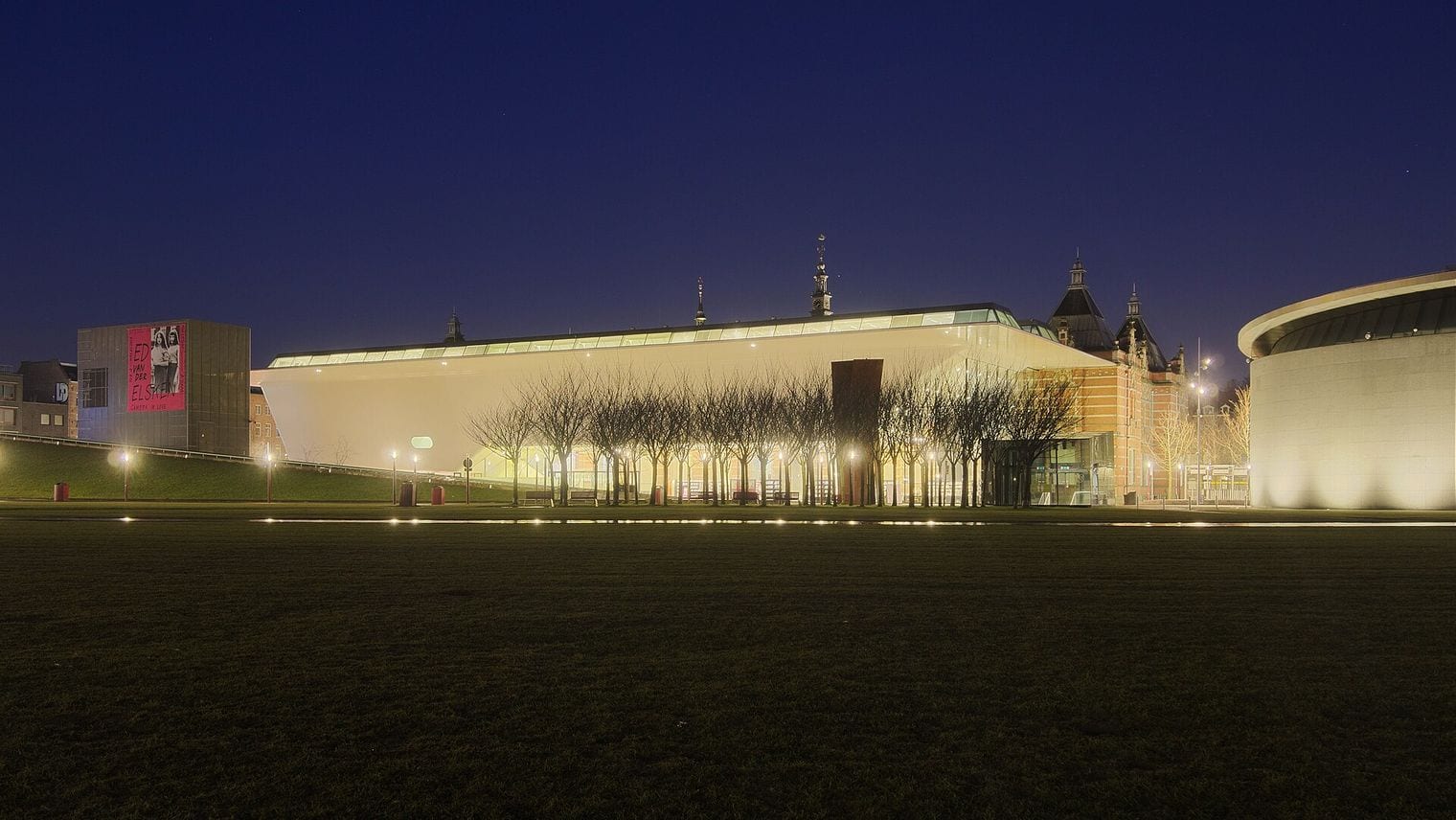
The Stedelijk Museum is the Netherlands' national museum of modern and contemporary art, and the third point of the Museumplein triangle. Its 19th-century building now wears a huge white extension that everyone in Amsterdam calls the bathtub — smooth, seamless and jutting out over the square in a way that people still argue about.
The collection is strongest where Dutch design and international modernism meet: Mondrian and De Stijl, Malevich, Rietveld's furniture, plus post-war American painting and a serious holding of graphic design. It is a calmer visit than its two neighbours, and if you have already spent a morning with Rembrandt and Van Gogh, it is a useful change of century.
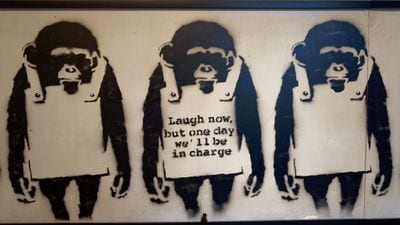
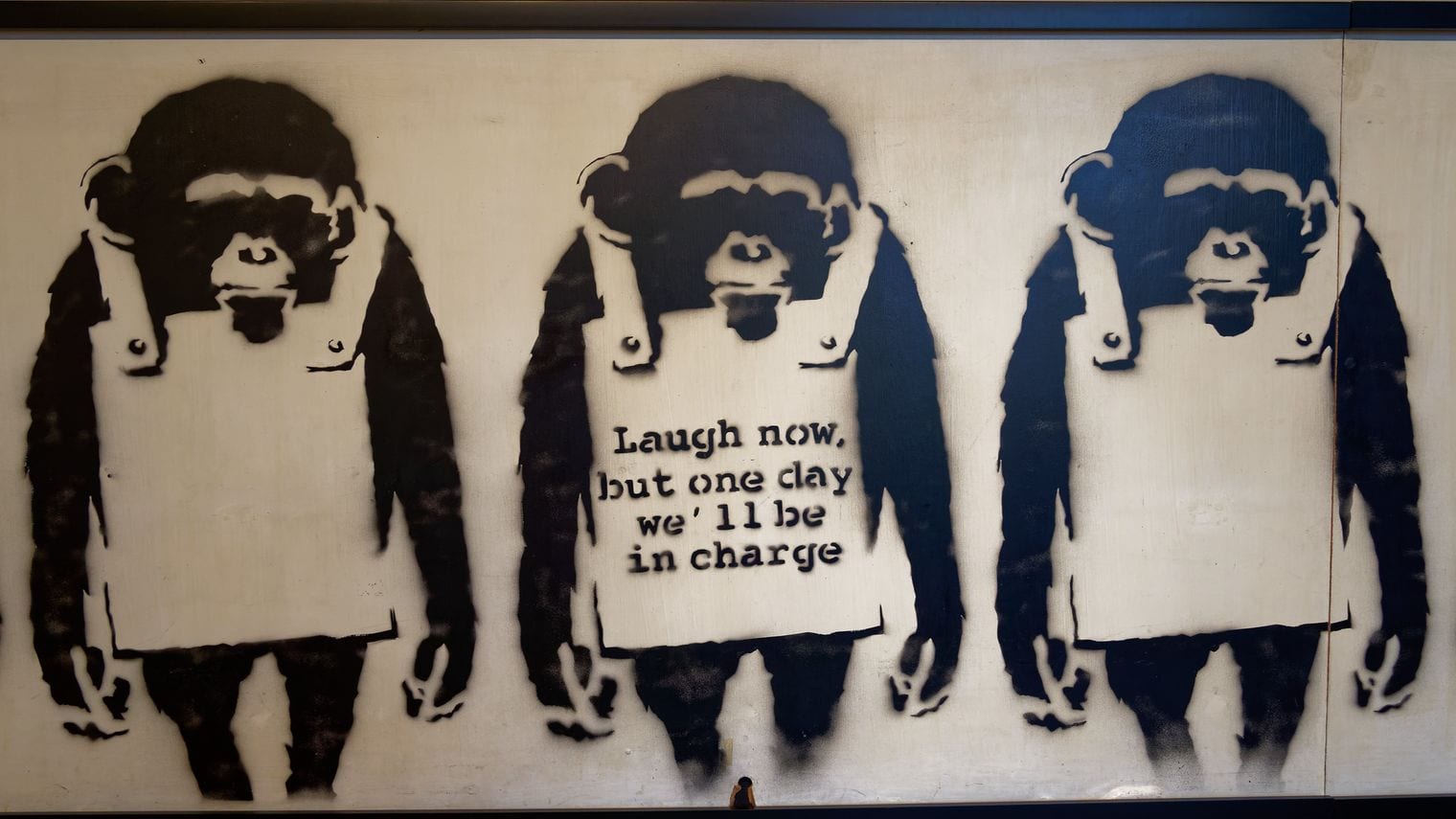
The Moco Museum occupies a small townhouse on Museumplein and takes a deliberately populist line: modern and street art, hung tight, with the wall text pitched at people who would not normally set foot in a gallery. Banksy is the anchor, alongside work by Warhol, Haring, Basquiat and a rotating cast of contemporary names.
The basement runs to immersive digital installations, which is either the best or the worst part depending on your tolerance for that sort of thing. It is a much shorter visit than the Stedelijk next door and it is unapologetically photogenic, so expect queues on the pavement and phones in the air. Book a timed slot and go at opening if you can.
Founded in 1838, ARTIS is the oldest zoo in the Netherlands, and it feels it — in the best way. This is a 19th-century city zoo of listed buildings, mature trees and monumental gates, laid out as a public park as much as an animal collection, and it sits right in the middle of a residential quarter east of the centre.
As well as the animals there is an aquarium, a planetarium, a butterfly house and a botanical garden, and the site also holds Micropia, a museum devoted entirely to microbes. It makes an easy half-day with children, and even without them the grounds are a pleasant place to walk. The old buildings alone justify the wander.
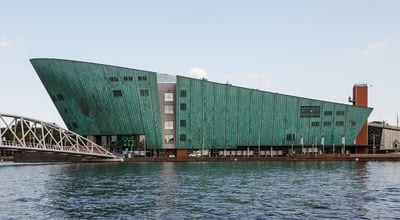
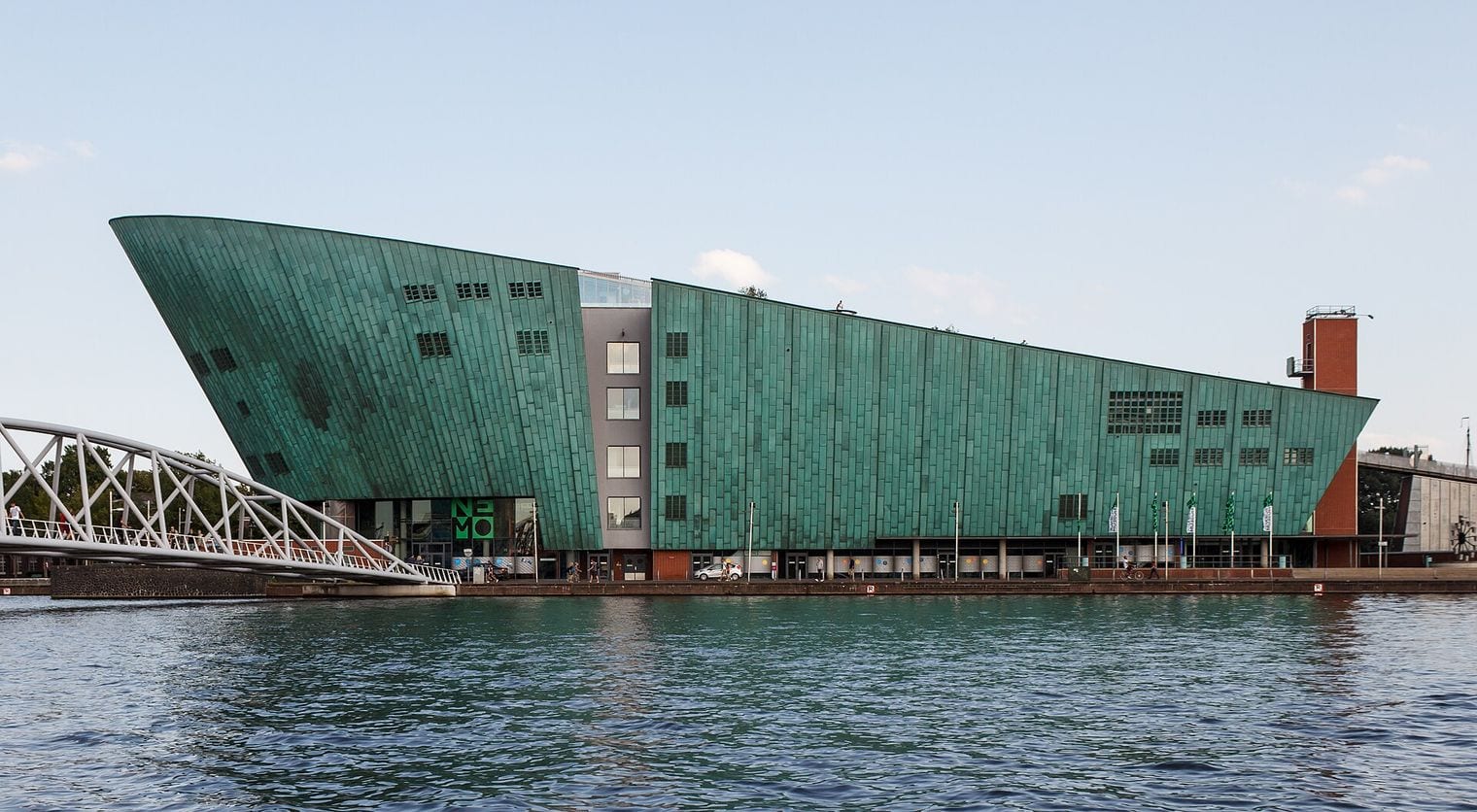
You will spot the NEMO Science Museum long before you reach it: Renzo Piano's green copper building rises out of the water east of Centraal Station like a ship's hull tipping up out of the harbour. Inside are five floors of hands-on science aimed squarely at children — chain reactions, soap bubbles, a laboratory where you can run your own experiments.
Adults get more out of it than they expect, but the real trick is the roof. The stepped terrace on top is a public square, free to walk up even without a museum ticket, and it delivers one of the best wide views over the old city, the harbour and the church towers. Go up at sunset.
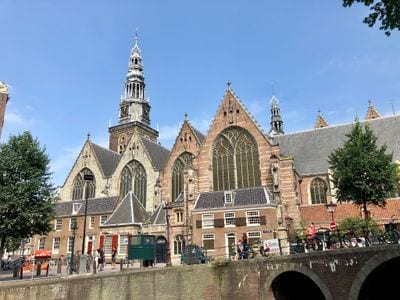
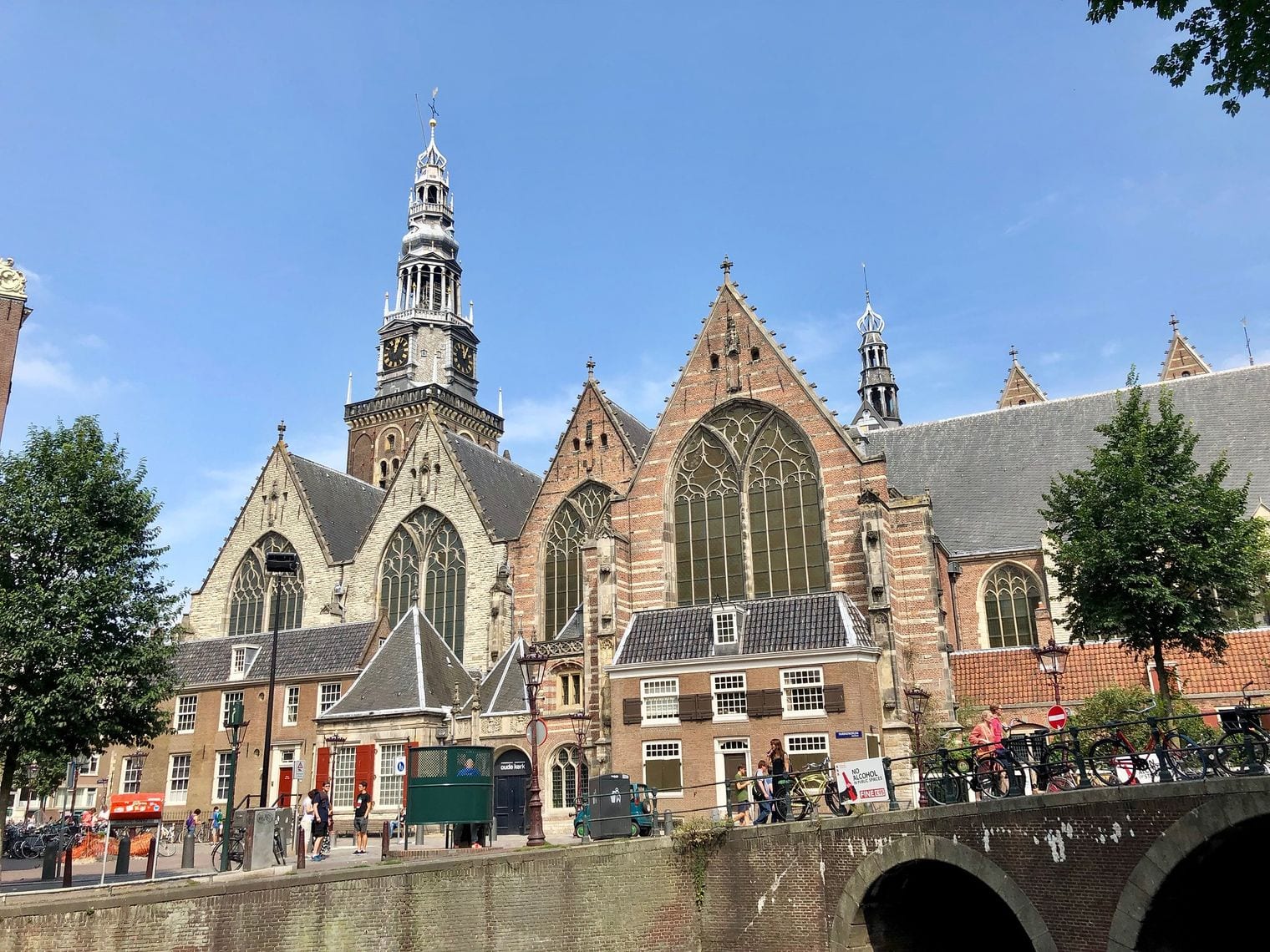
The Oude Kerk is the oldest building in Amsterdam, consecrated in the early 14th century and expanded piecemeal ever afterwards, which is why its floor plan is such a beautiful muddle of chapels and aisles. Its timber vaulted ceiling is among the largest medieval wooden roofs in Europe, and the stone floor is made of gravestones — thousands of them, including Rembrandt's wife Saskia.
What gives it its charge is the setting: the church sits squarely in the middle of De Wallen, the red-light district, surrounded by bars and windows. It now doubles as a contemporary art space, and installations are staged in and around the medieval fabric. The tower can be climbed on a guided visit for a fine view.
The 9 Streets are the nine short lanes that link the main canals between the Jordaan and Dam Square, and they are the most rewarding shopping in the city — not because the shops are grand, but because they are small, specific and largely independent. One street will have a vintage dealer, a cheese shop and a bookbinder in a row.
The grid makes them ideal for wandering: you cross a canal every hundred metres, so the views keep resetting even if you buy nothing. Cafés and brown bars are folded in among the shops for when you need a break. It is also one of the easiest places in Amsterdam to photograph the canal houses without a crowd in the frame.
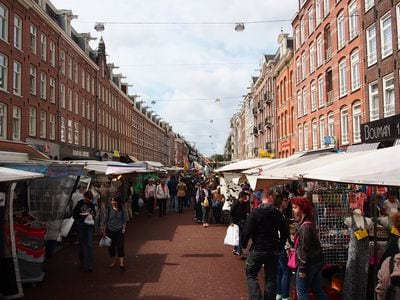
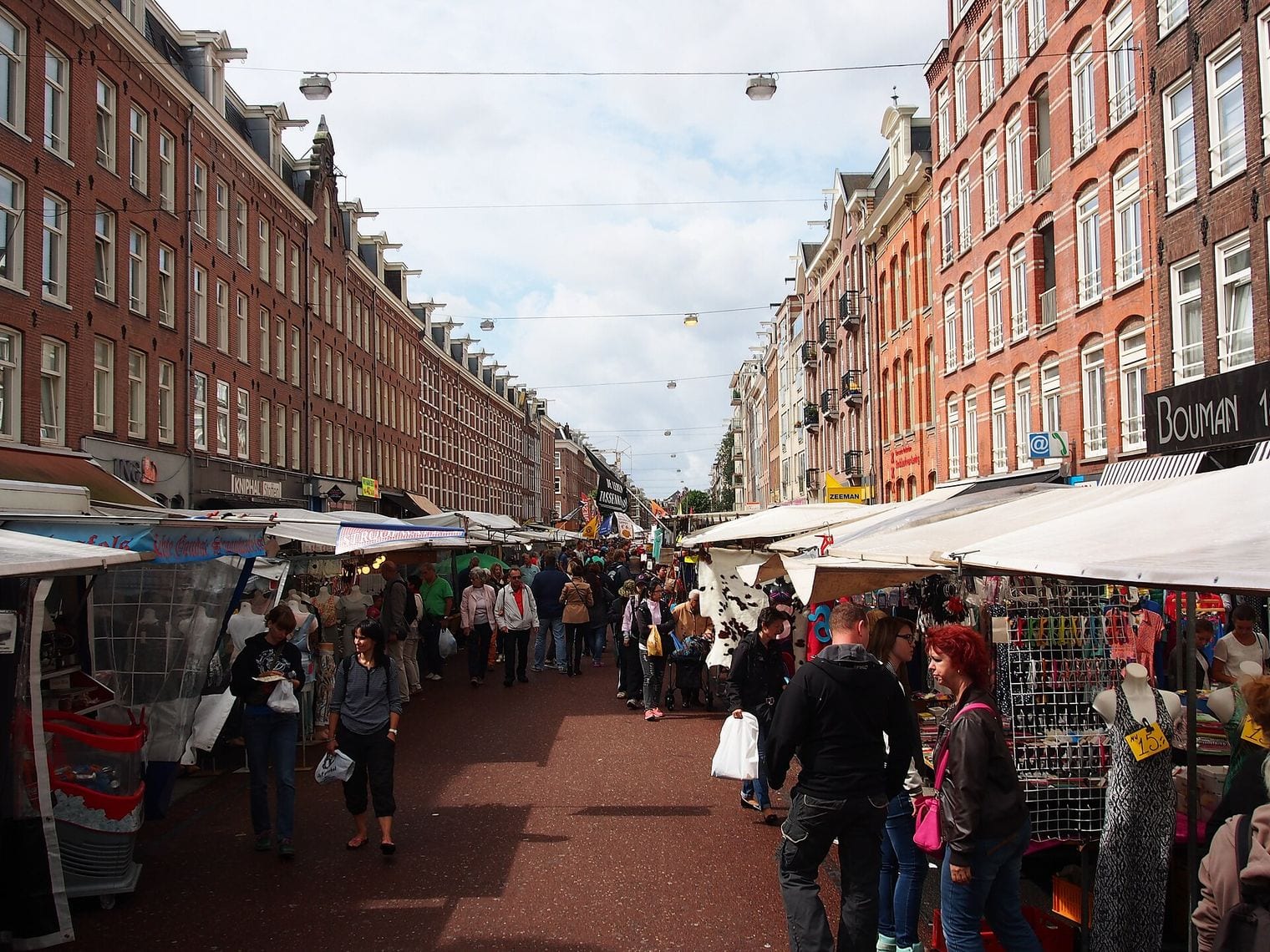
Running the length of a street in De Pijp, Albert Cuyp Market is the largest daily street market in the Netherlands and has been trading since the early 20th century. It is a working neighbourhood market rather than a tourist attraction: fruit and vegetables, fabric, flowers, bike parts, cheap electronics and household goods, sold to people doing their actual shopping.
Go for the food. Stroopwafels pressed hot to order are the obvious one, but there is also fresh herring, Surinamese and Indonesian snacks, and Dutch cheeses to taste before you buy. The surrounding streets of De Pijp are full of cafés and small restaurants, so it works well as the start of an afternoon rather than a quick stop.
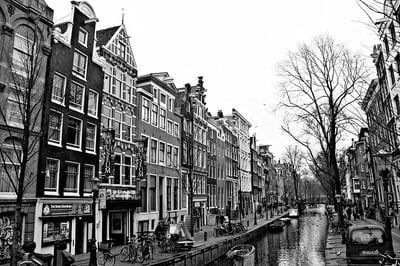
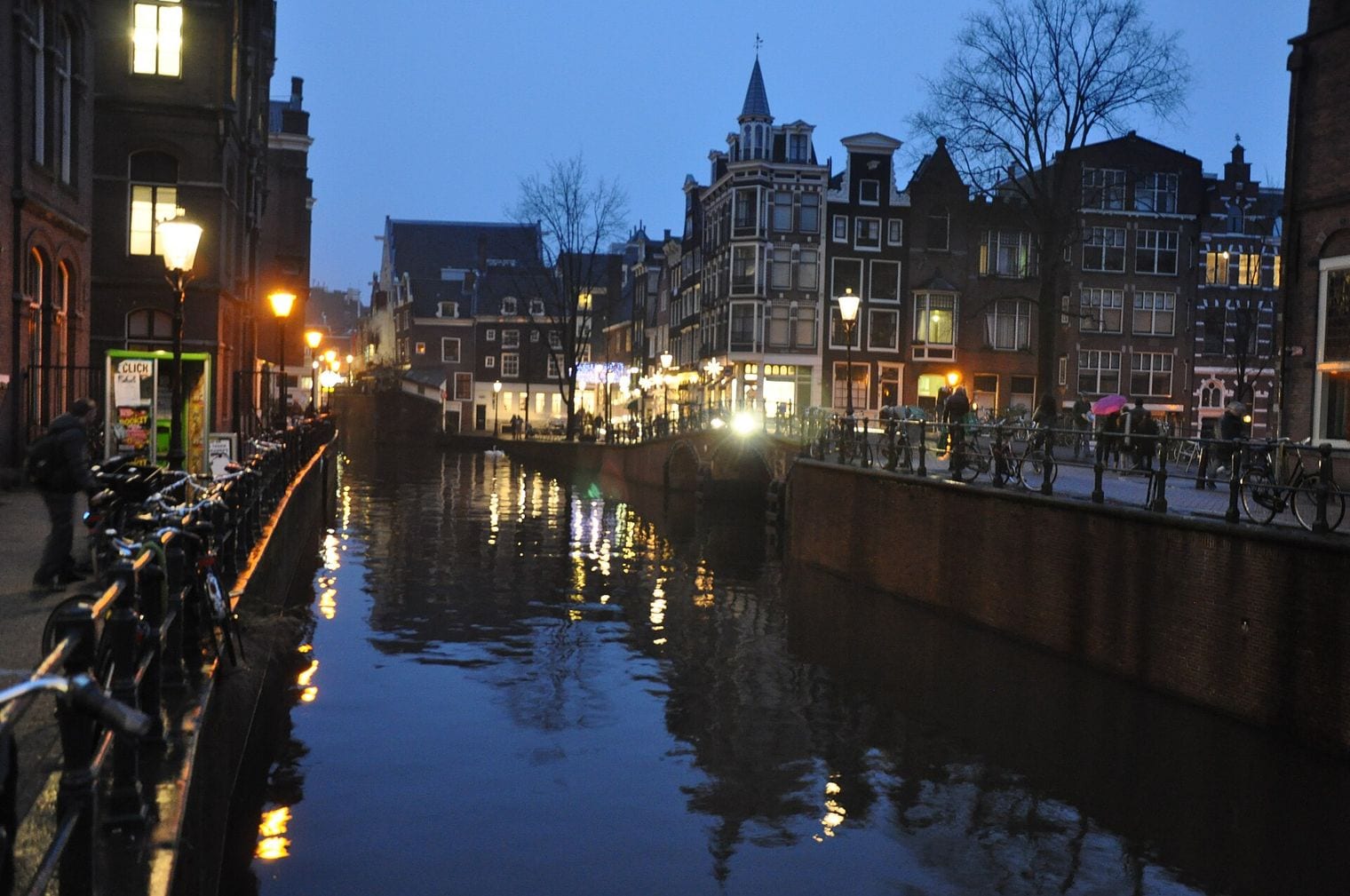
The Jordaan was built in the 17th century as a district for workers and immigrants, on a street grid that ignored the elegant curve of the main canals. Gentrification long ago turned it into one of the most desirable addresses in Amsterdam, but the scale survives: narrow streets, small houses, and canals that feel domestic rather than grand.
The pleasure here is aimless walking. Look for the hofjes — almshouse courtyards tucked behind street doors, some still open to quiet visitors — and the Saturday markets at Noordermarkt and Lindengracht. Galleries, brown cafés and small restaurants fill the ground floors. It is the best part of the city for an evening with no particular plan.
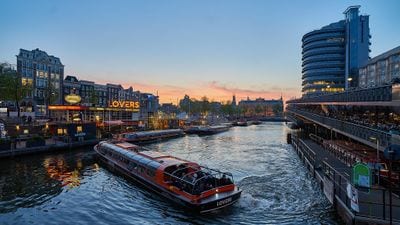
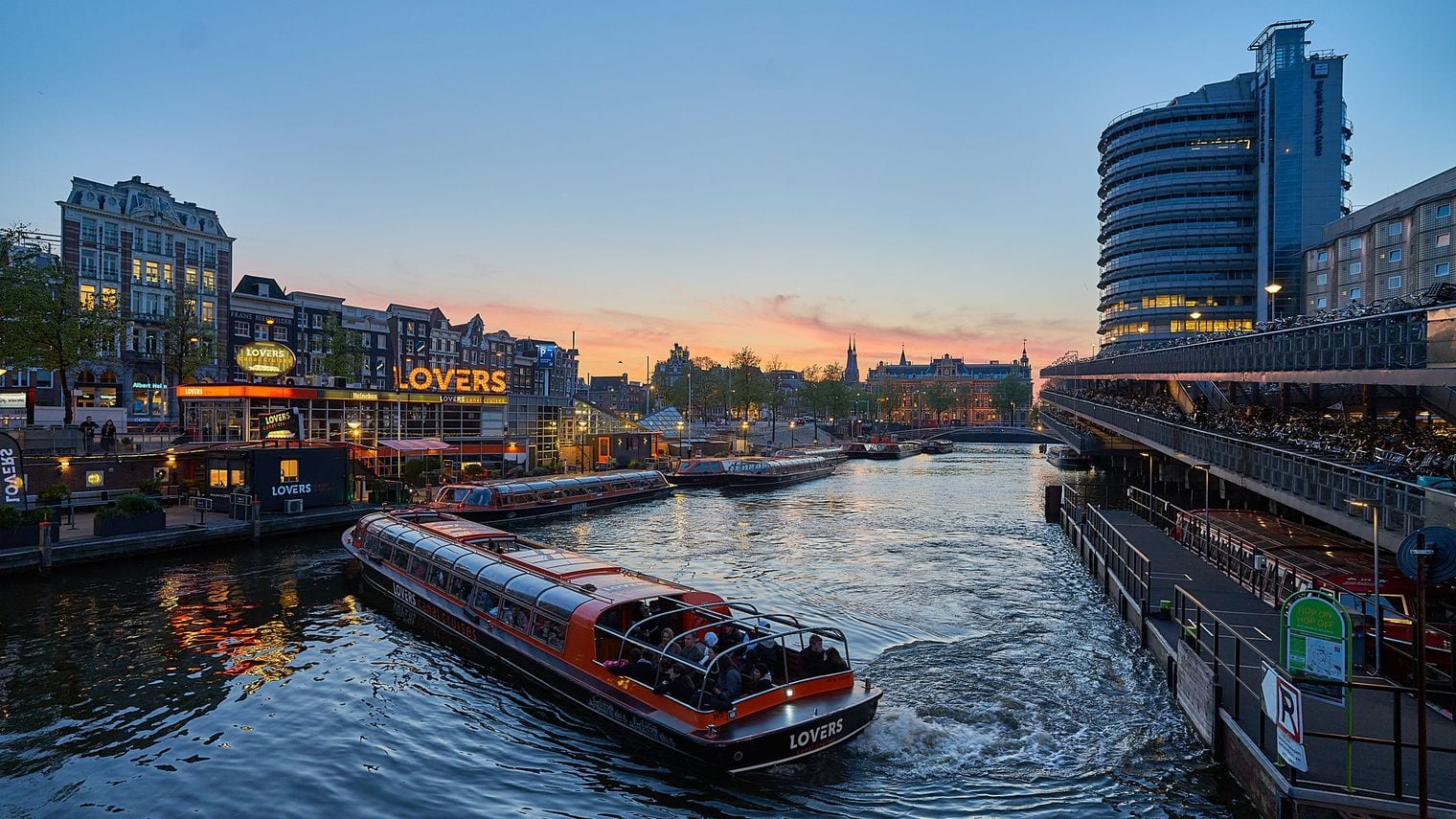
Seeing the canal ring from the water is not a tourist cliché so much as the point of the place: the houses were built to be approached by boat, and the gables, hoisting beams and bridges only line up properly from below. Lovers Canal Cruises is one of the long-established operators, departing from opposite Centraal Station on a frequent timetable.
Routes take in the main horseshoe of Herengracht, Keizersgracht and Prinsengracht, usually with a loop through the harbour. Boats are glass-roofed for the weather. If you prefer something smaller and quieter, plenty of operators run open sloops with a dozen seats, and pedal boats can be hired on the Singelgracht — the view is the same, and the commentary optional.
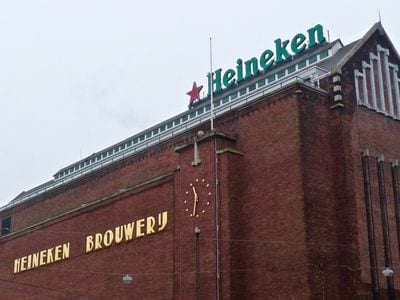
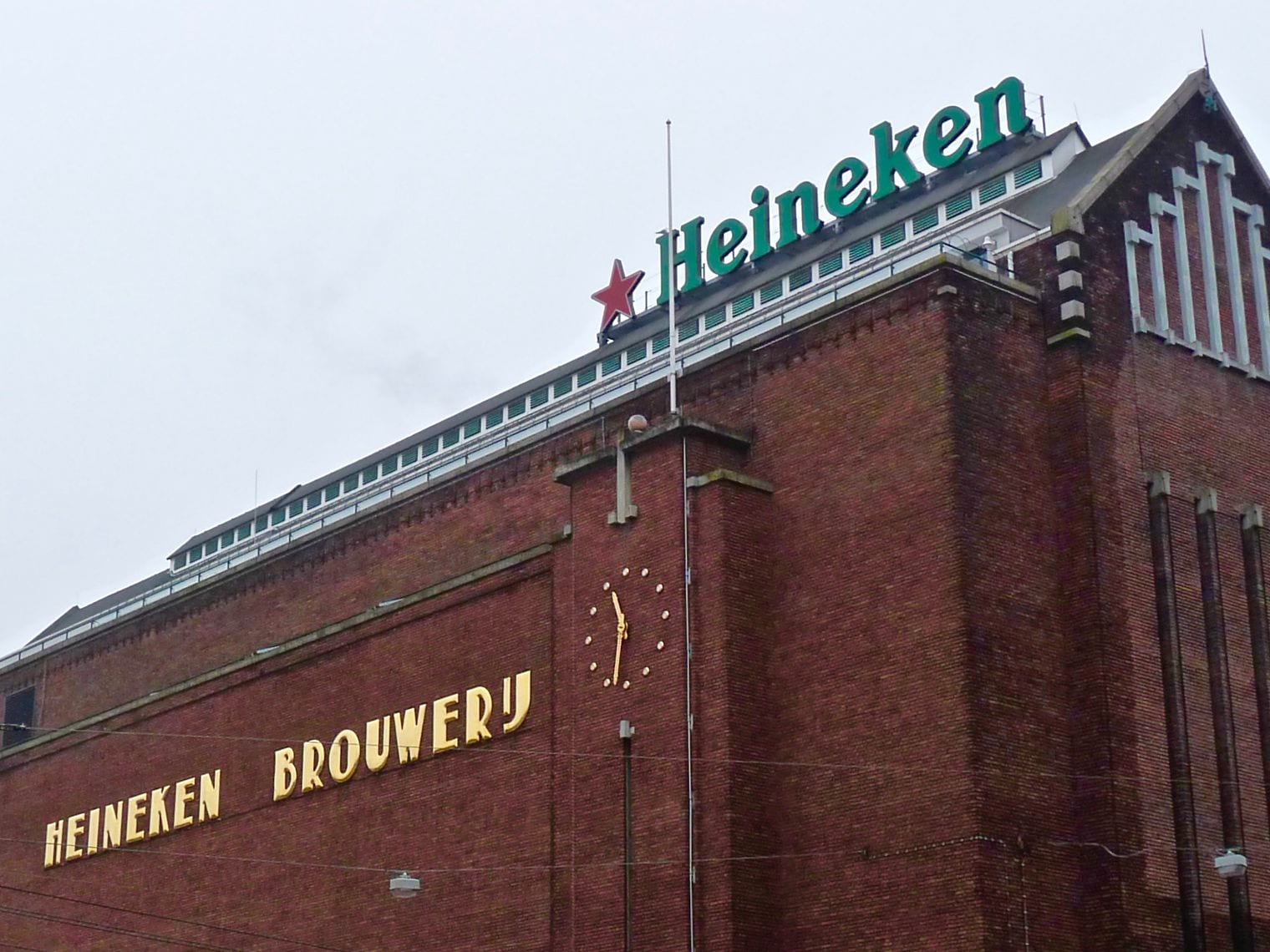
The Heineken Experience occupies the company's original Amsterdam brewery on the Stadhouderskade, which brewed its last batch in the 1980s and has been a visitor attraction ever since. Purists should be clear about what this is: a brand experience rather than a working brewery or a museum of Dutch beer.
Taken on those terms it is good fun. You walk through the old brick brewhouse with its copper kettles and stables, learn how the beer is made, and finish with tastings and a rooftop bar. Children are admitted, though the focus is obviously adult. For actual craft beer brewed in the city, pair it with a taproom visit somewhere like the eastern docks.
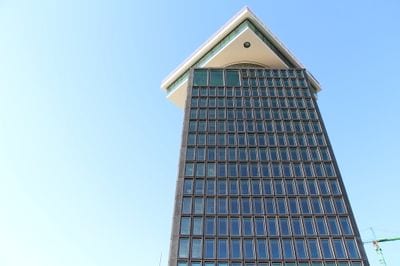
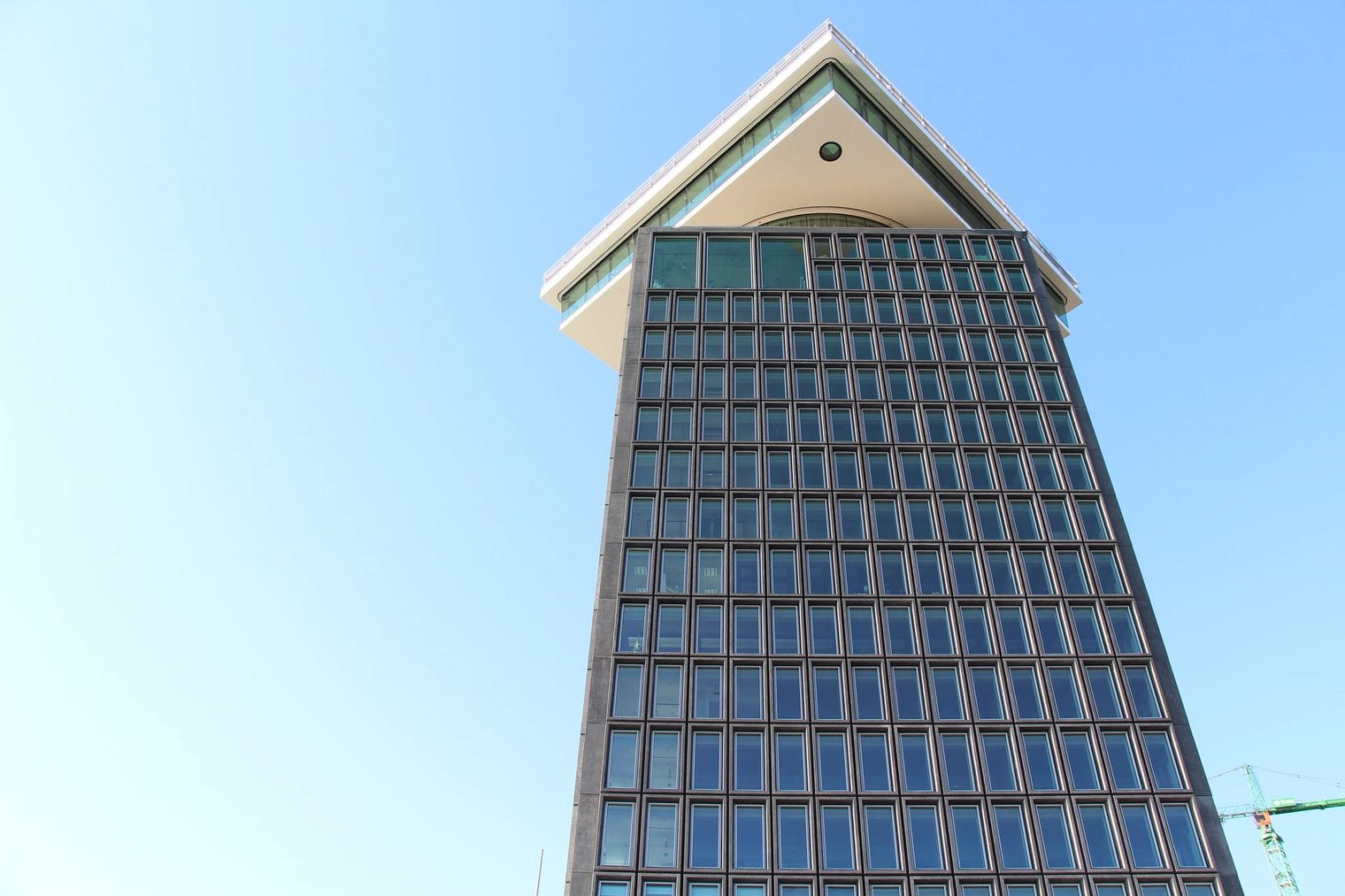
Across the IJ from Centraal Station, the A'DAM Lookout crowns a former Shell office tower that has been reinvented as a building of bars, studios and a hotel. A free passenger ferry runs across from behind the station every few minutes, so getting there is quick and costs nothing.
The observation deck is fully panoramic, taking in the canal ring, the harbour, the flat green polder beyond and, on a clear day, a long way north. There is a swing bolted to the roof that carries riders out over the edge of the building for those who want it, and a revolving restaurant below. It is the best single overview of how the city is laid out.
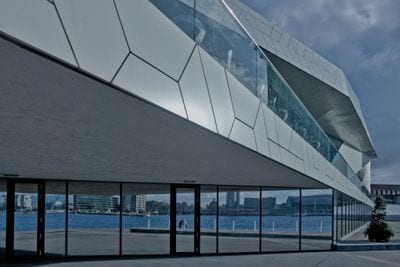
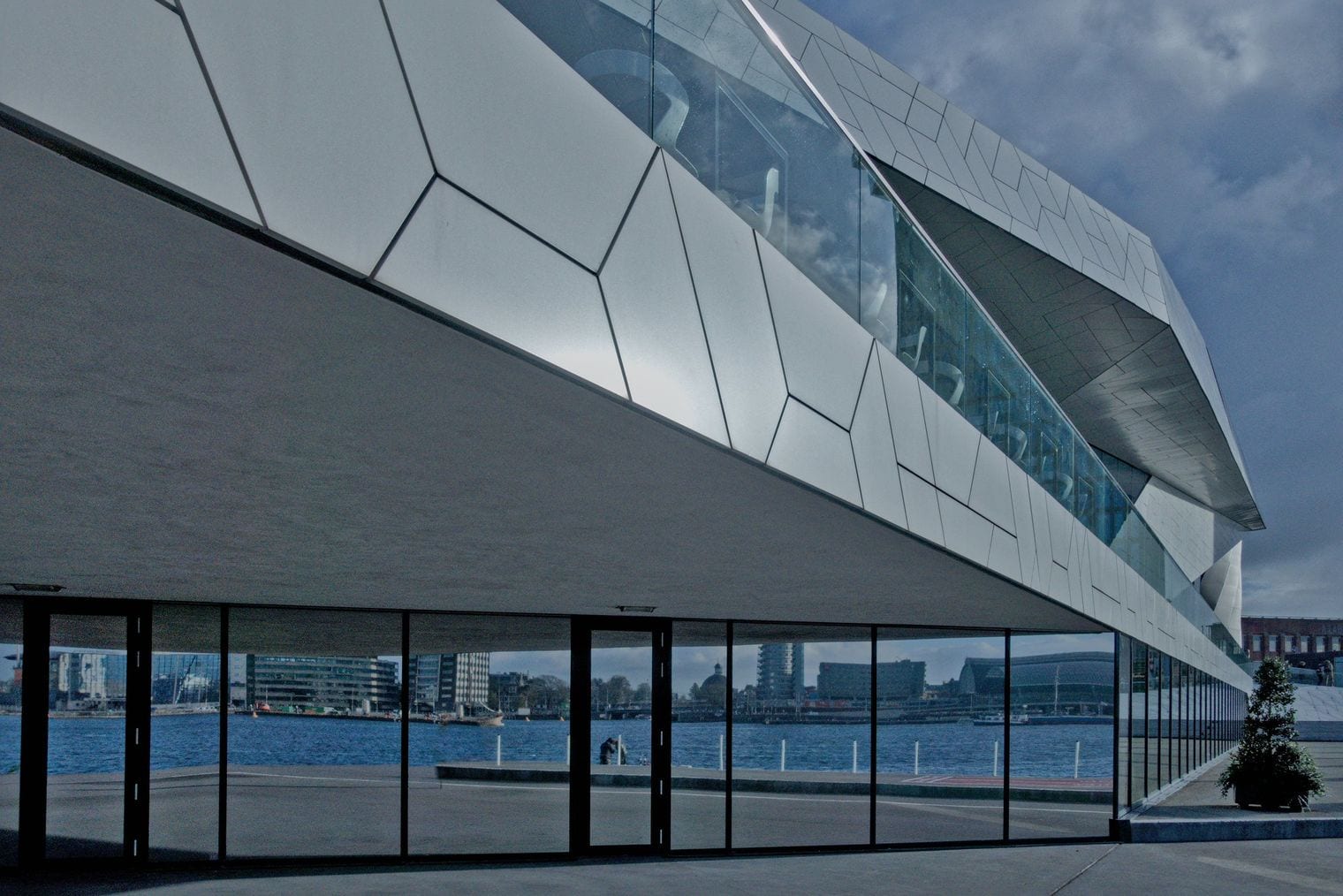
The Eye Film Museum is the Dutch national film institute, housed since 2012 in a startling angular white building on the north bank of the IJ. Like the A'DAM Lookout beside it, it is reached by the free ferry from behind Centraal Station, and the crossing takes about four minutes.
Four cinemas screen a programme that leans toward classics, restorations and world cinema, and the basement exhibition space lets you pull films from the archive at individual pods. There are usually one or two major exhibitions running on a director or a movement. Even if you see nothing, the café terrace facing back across the water toward the old city is one of Amsterdam's best.
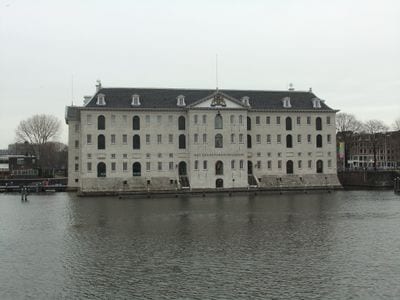
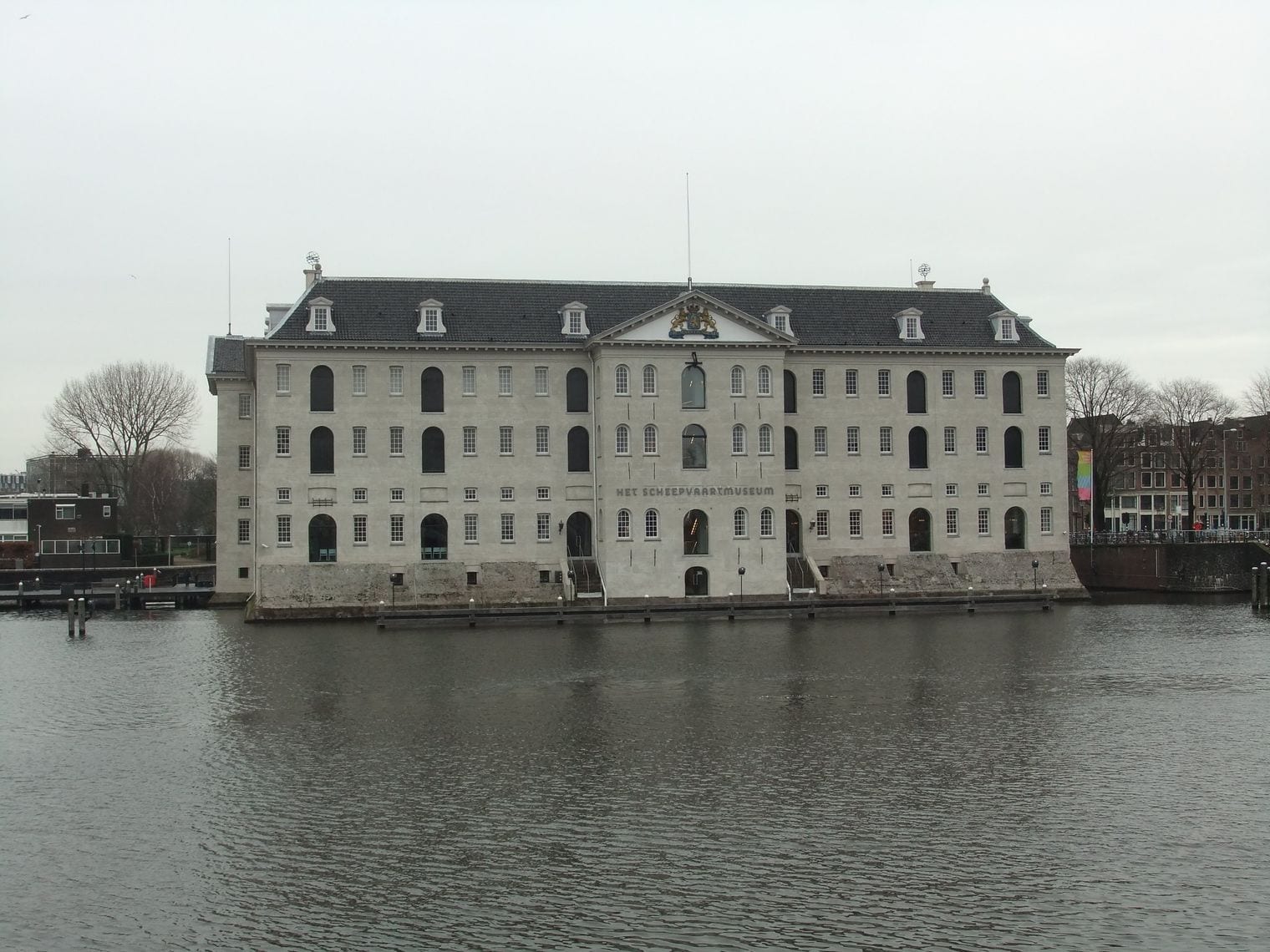
Het Scheepvaartmuseum — the national maritime museum — occupies the old naval storehouse on the eastern docks, a vast square 17th-century building set around a glass-roofed courtyard. Given that Amsterdam's wealth came almost entirely off ships, it is arguably the most explanatory museum in the city.
The galleries cover navigation, whaling, the Dutch East India Company and the human cost of that trade, with globes, charts and figureheads. The star exhibit is moored outside: a full-size replica of an 18th-century East Indiaman that you board and explore below decks. It is excellent with children, and it pairs naturally with NEMO, which sits a few minutes' walk along the same waterfront.
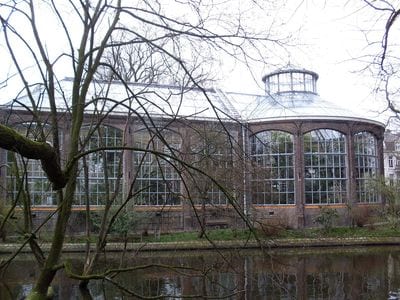
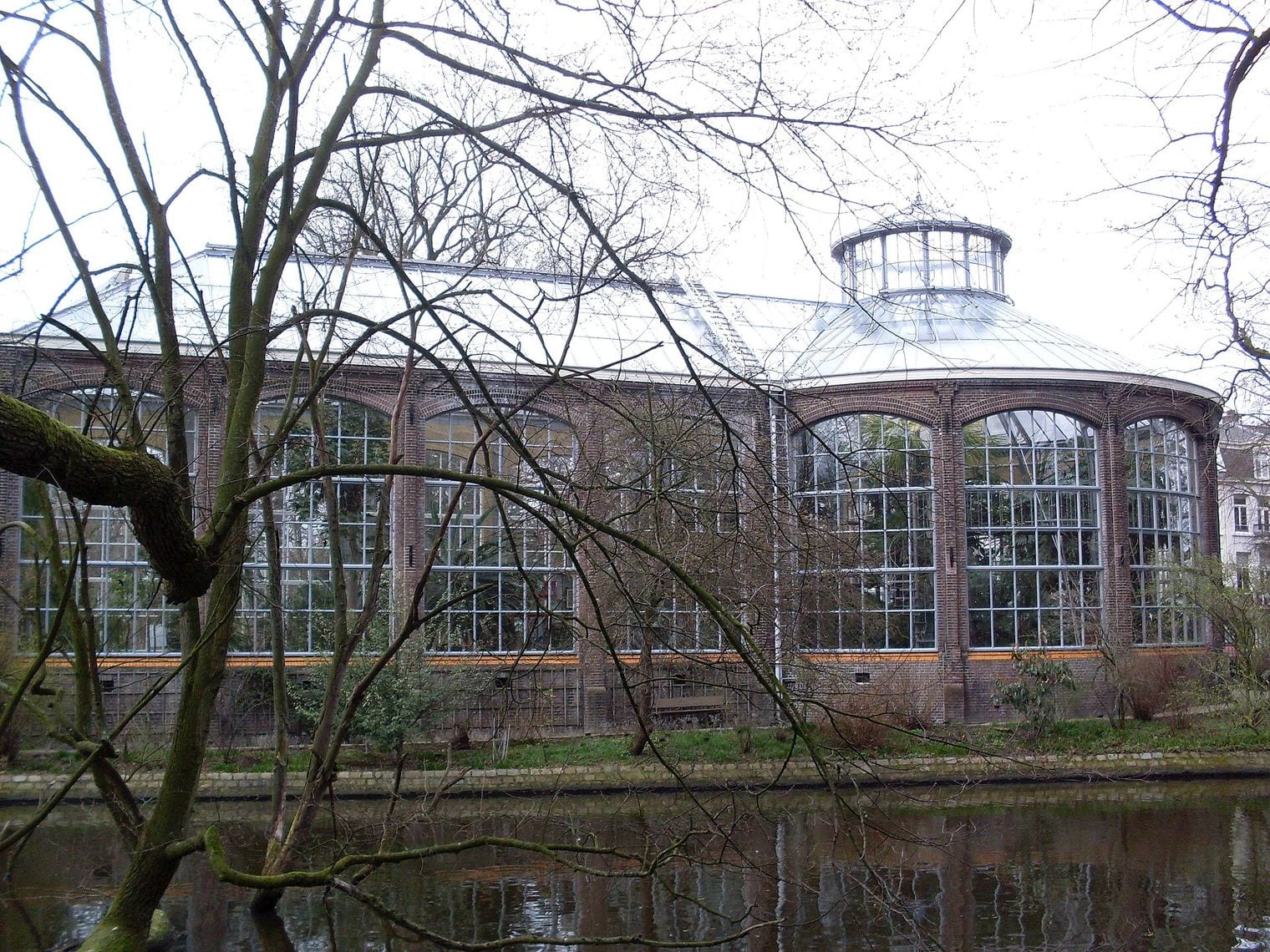
The Hortus Botanicus was laid out in the 1630s as a physic garden, supplying medicinal herbs to the city's doctors and apothecaries, which makes it one of the oldest botanical gardens in the world. It is small — a few hectares behind a wall near the Jewish Cultural Quarter — and all the better for it.
Glasshouses hold desert, subtropical and tropical collections, and a butterfly house runs warm and humid year-round. Outside, the beds are arranged by plant family and the old trees are labelled. It takes an hour, it is almost always calm even when the city is heaving, and the café in the orangery is a good place to sit out rain.
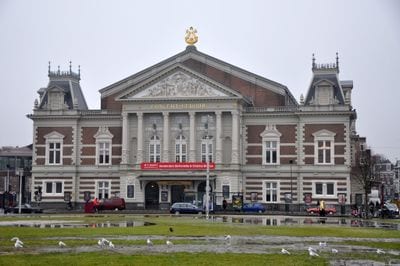
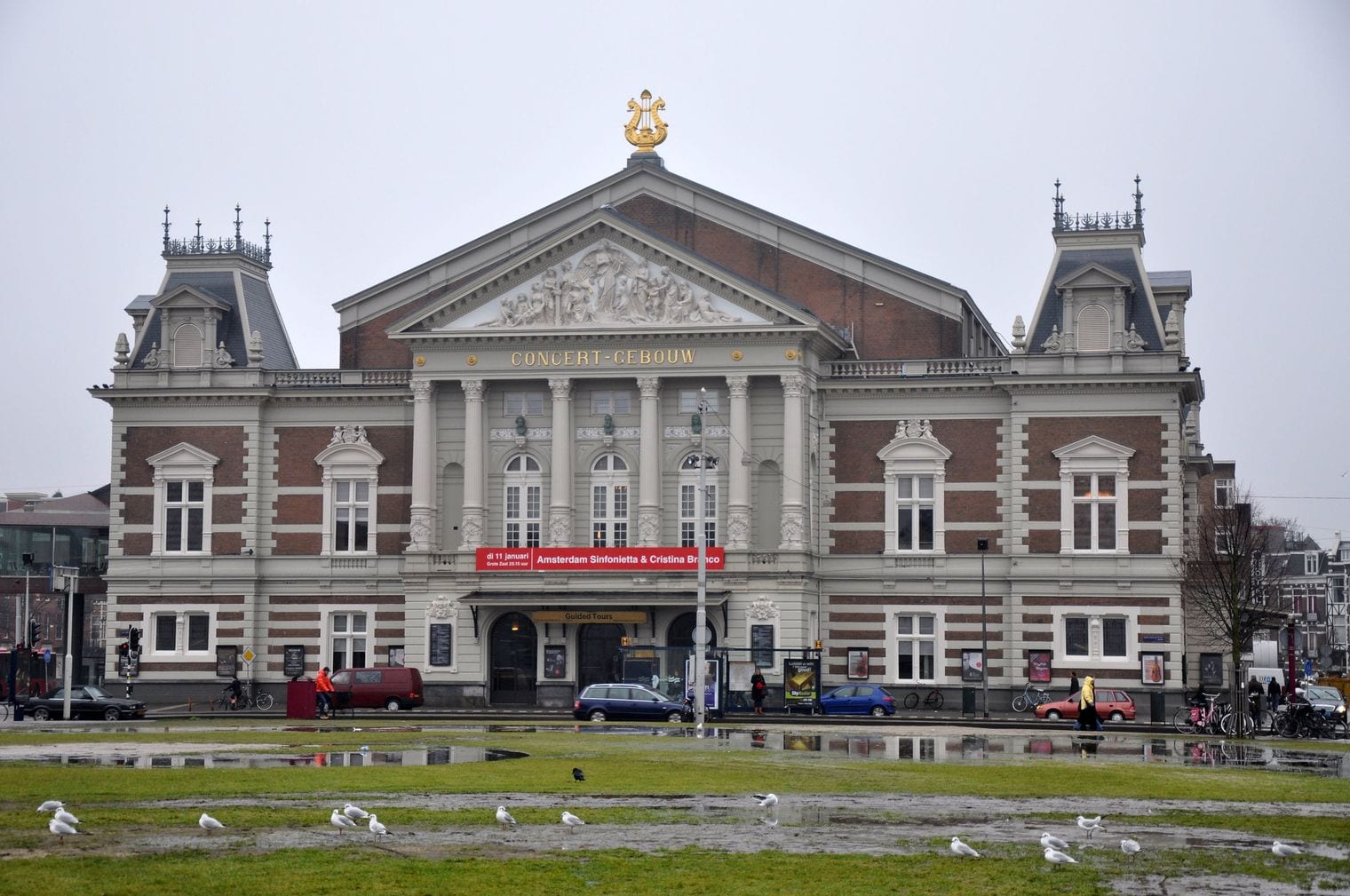
Opened in 1888, The Concertgebouw is regularly named among the finest concert halls in the world, and the reason is its acoustics — arrived at, by most accounts, more by luck than calculation. The Main Hall's long reverberation gives orchestral sound a warmth that recordings have made famous.
It is the home of the Royal Concertgebouw Orchestra and hosts hundreds of concerts a year, from full symphonic programmes to chamber music and jazz in the smaller Recital Hall. Free lunchtime concerts are staged regularly during the season, which is the easiest way in. It stands at the far end of Museumplein, so an evening here follows a museum afternoon without moving the car you don't need.
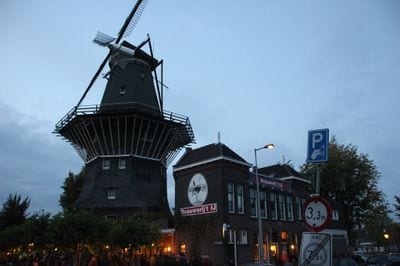
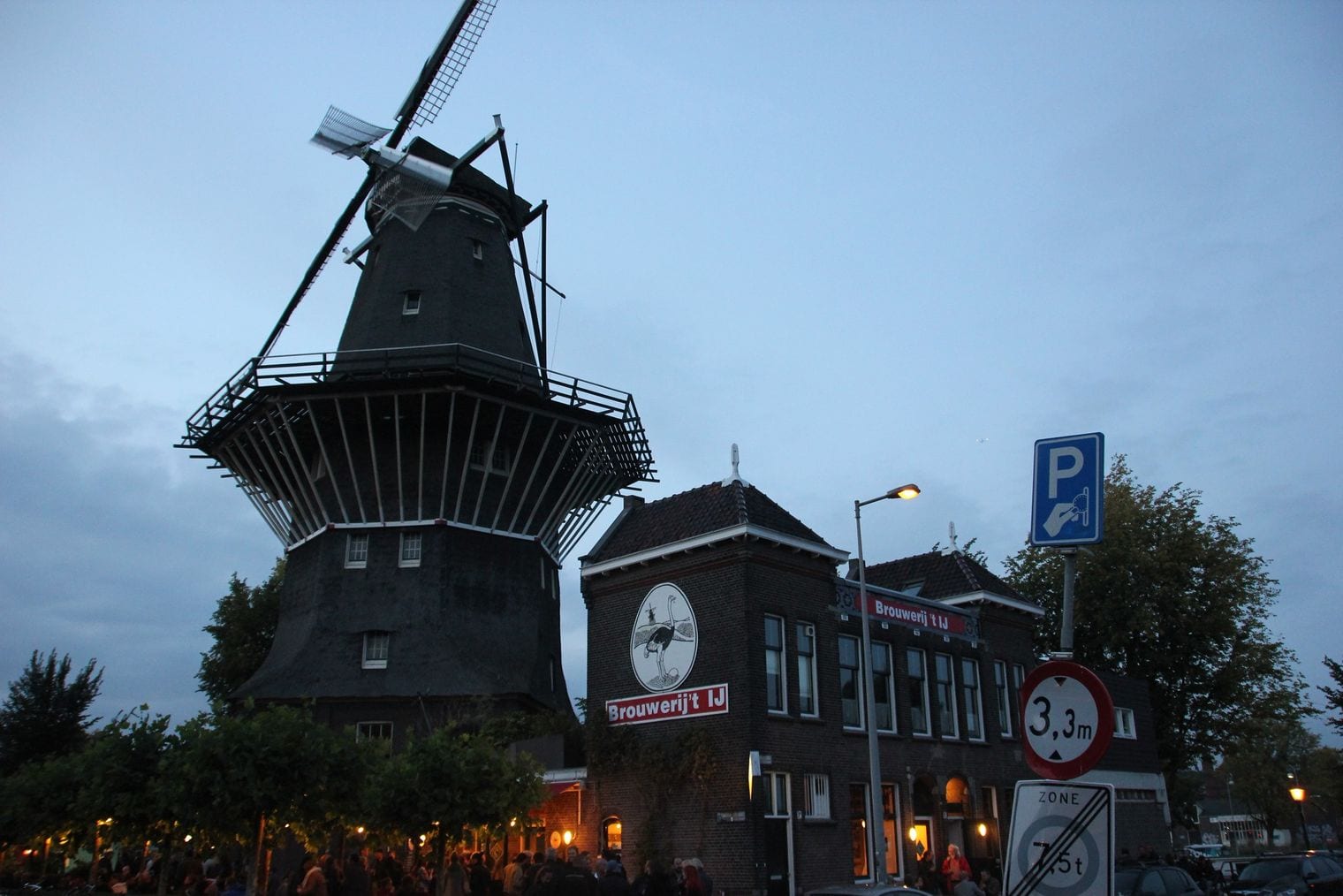
Brouwerij 't IJ began in the 1980s in a former bathhouse at the foot of De Gooyer, a tall wooden windmill on the eastern edge of the centre, and it did much to start the Dutch craft beer revival. The setting is the draw: a taproom under a working windmill, with a terrace that fills the moment the sun appears.
The beers are mostly Belgian-influenced — a strong blonde, a witbier, a dark seasonal — served in small measures because the alcohol content is not shy. Brewery tours run at set times. It is about a fifteen-minute walk or a short ride east from the centre, and it makes an obvious stop after the maritime museum.
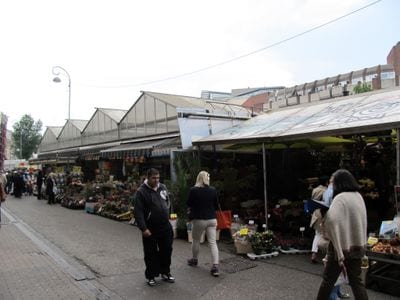
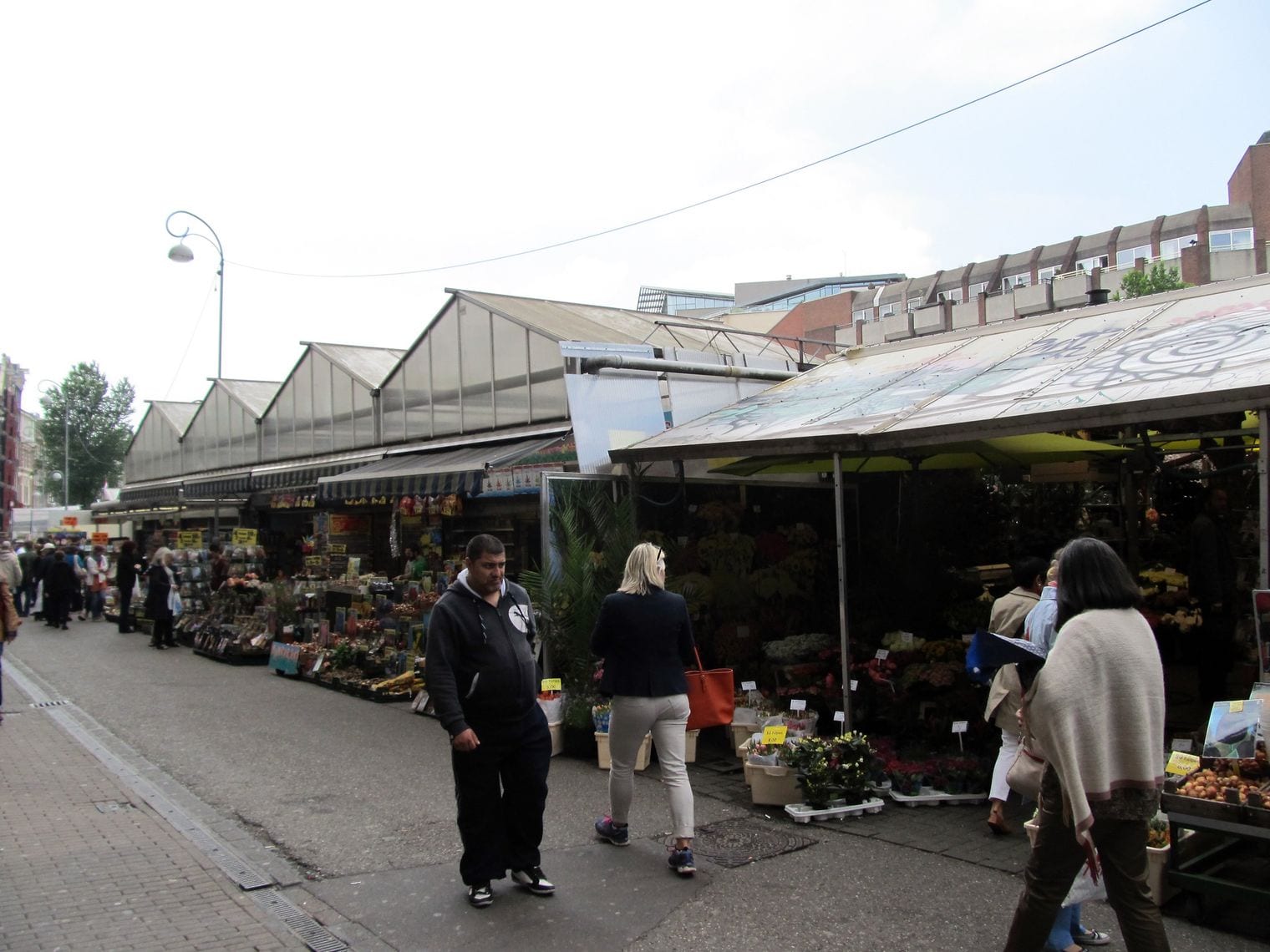
The Bloemenmarkt has traded flowers on the Singel since the 19th century, and it is often described as the world's only floating flower market — the stalls stand on barges permanently moored along the canal, though from the street you would barely know it. Tulip bulbs are stacked by the crate, alongside seeds, cut stems and a great deal of souvenir tat.
Be realistic about it: it is central, brief and heavily geared to visitors rather than gardeners. But it is genuinely pretty, it costs nothing to walk through, and if you want bulbs to take home it is the obvious place — check the packaging for export certification, since rules vary by country. It sits a few minutes from the Begijnhof.
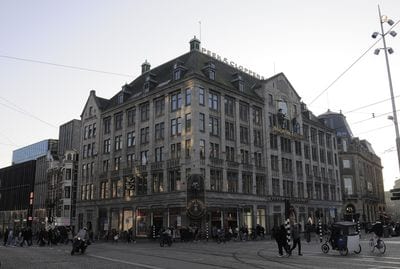
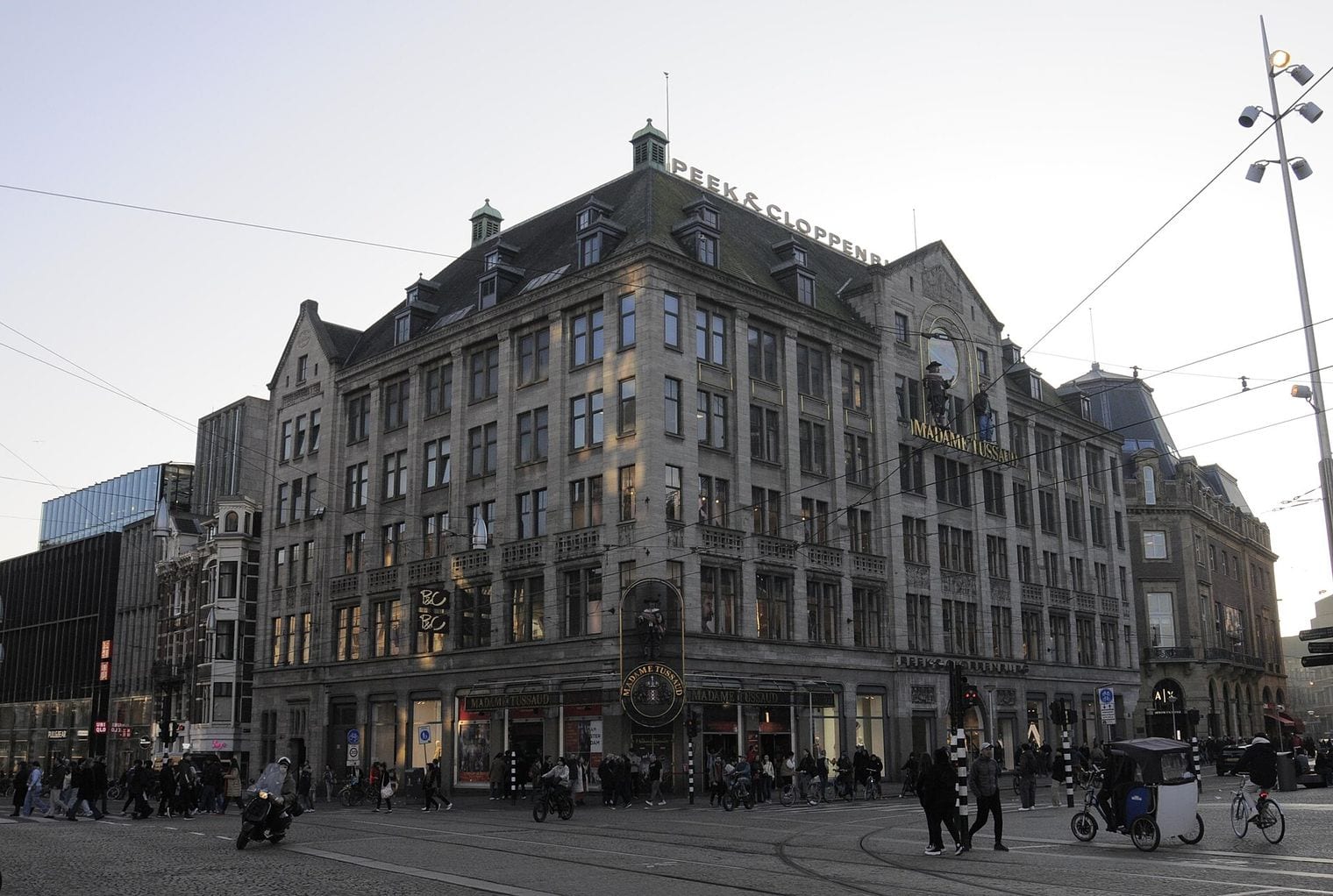
Madame Tussauds occupies several floors on Dam Square, a few doors along from the Royal Palace, and it is the most unashamedly commercial thing on this list. The line-up mixes the global roster every branch carries — actors, musicians, footballers, a handful of heads of state — with a Dutch contingent a visitor may not recognise at all: DJs, Eredivisie players, the royal family, and wax Rembrandt and Van Gogh standing in for the museums up the road.
Treat it as a photo attraction rather than a museum and it delivers exactly what it promises; the sets are built for the camera and nobody minds how long you spend posing. Book a timed slot online, because the Dam Square queue is the worst part of the experience. It shares an owner with the Amsterdam Dungeon five minutes away on the Rokin, and the combined ticket is a genuine saving if you intend to do both.
WONDR Experience fills 1,500 square metres on the Meeuwenlaan in Amsterdam-Noord with fourteen interactive rooms — a ball pit, mirrored corridors, a room built around a giant slide, a themed SpongeBob installation — plus the Galaxy Café and a shop at the end. It is one metro stop from Centraal, which makes it far easier to reach than its out-of-centre address suggests.
The whole thing is self-guided, so you set your own pace and generally need about ninety minutes. It is aimed squarely at adults who want to behave like children for an afternoon as much as at families, and the 4.8 average it holds across more than twenty thousand reviews is unusually high for an attraction of this kind. Go on a weekday if you would rather not queue at each room.
Housed in a former brothel at Oudezijds Achterburgwal 60, one of the oldest buildings in the district, Red Light Secrets bills itself as the world's only museum of prostitution. You walk through the working rooms as they were, and you can sit in an actual red-lit window and look out at the street the way the women who worked there did.
It is considerably more sober than the address suggests. The core of the visit is a set of twelve audio stories recorded with Inga, who worked the district for years, covering money, safety, regulars and the practical reality of the job; the written confessions left by previous visitors are the other half. It is open until one in the morning, which makes it one of the few things here you can do late.
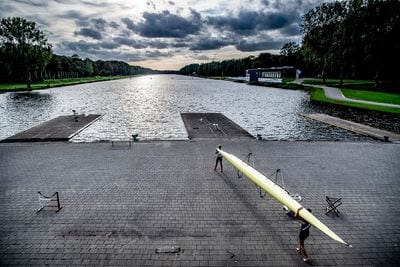
The Amsterdamse Bos is roughly 1,000 hectares — about three times the size of Central Park — and every tree in it was planted by hand. It was dug in the 1930s as a Depression-era work-relief scheme, designed by the planners Cornelis van Eesteren and Jakoba Mulder, and the war interrupted it so thoroughly that the last tree did not go in until the 1970s.
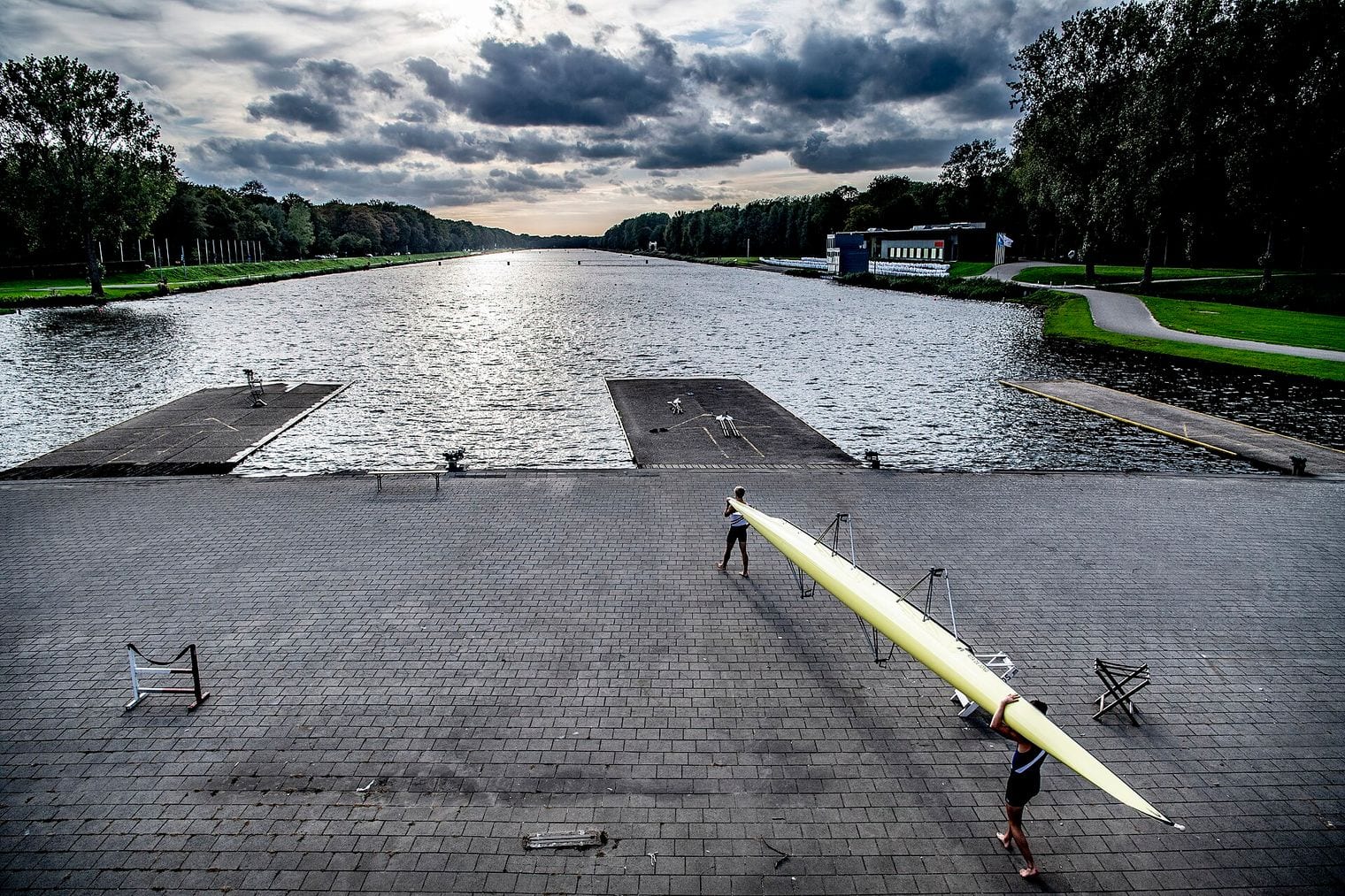
It is big enough that you should pick one thing rather than wander: the Bosbaan rowing course along the northern edge, the goat farm, the open-air theatre in summer, or simply a long flat cycle through the woods. It sits south-west of the city, mostly within Amstelveen, and the honest way to do it is by bike — it is around forty minutes from the centre, and the ride out is half the point.
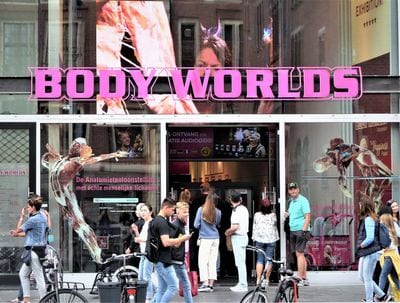
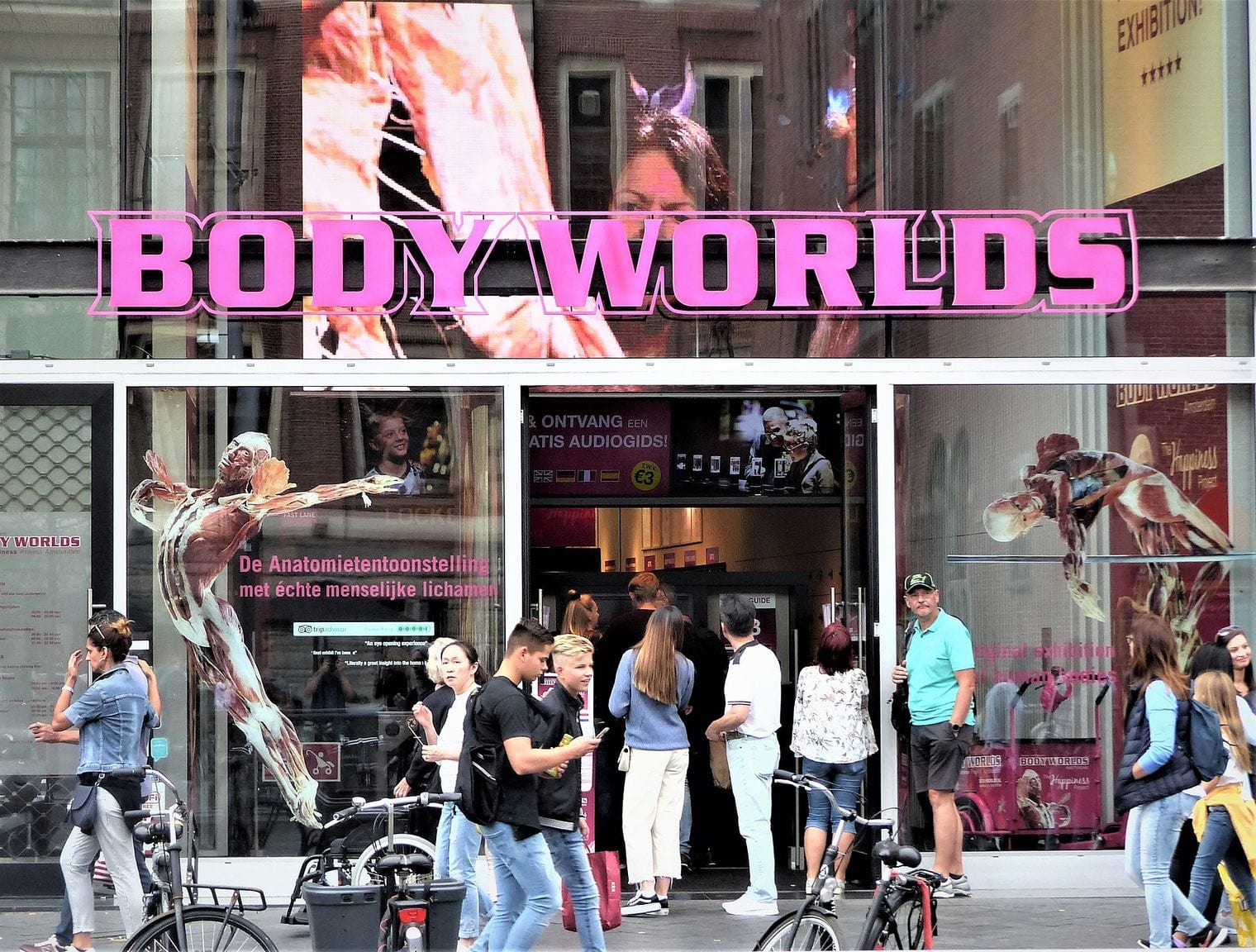
BODY WORLDS occupies a tall building at Damrak 66, minutes from Centraal, and shows real human bodies preserved by plastination — a process the German anatomist Gunther von Hagens invented in 1977, in which tissue fluid is replaced with a reactive polymer under vacuum. The Amsterdam edition is themed around happiness, tracing what contentment, stress and love actually do to the body.
The specimens all come from a donor programme in which people register during their lifetime for their body to be used in medical education, and the museum is direct about that on the way in. It is not for everyone, and small children will find it a lot. But it is genuinely instructive rather than ghoulish, and the vertical layout means you climb through it floor by floor as the argument builds.
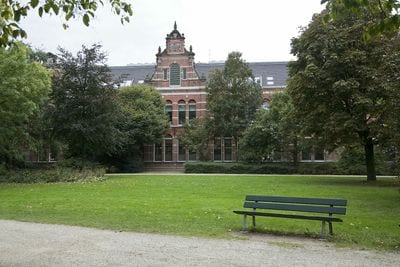
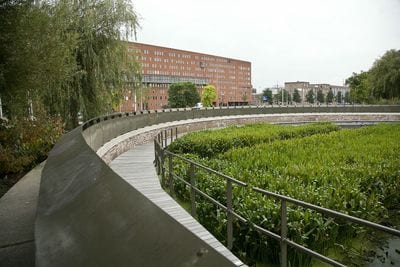
Westerpark wraps around the Westergasfabriek, the coal-gas works the British Imperial Continental Gas Association built here between 1883 and 1885 to light Amsterdam's streets. Isaac Gosschalk designed the buildings in Dutch neo-Renaissance brick, and they are the reason the park looks like nowhere else in the city — gasholders, a water tower and vast sheds standing in open grass.
Gas production stopped for good in 1967 and the soil took decades to clean. The park as it stands opened in 2003 to a design by the American landscape architect Kathryn Gustafson, and the old industrial buildings now hold bars, restaurants, a cinema and a near-constant festival programme. It is where Amsterdam goes on a warm weekend, and it costs nothing to walk in.
The Amsterdam Dungeon runs about eighty minutes and roughly a dozen live shows, performed by actors in built sets, through five centuries of the city's grimmer history — plague, torture, a Rembrandt-era dissection, a voyage on a Dutch East India Company ship, and the Miracle of Amsterdam of 1345 that turned the city into a pilgrimage destination.
It sits in a protected monument on the Rokin, five minutes' walk from Dam Square, and the tone is closer to pantomime than horror — jump scares and jokes rather than anything genuinely disturbing, though the actors will single you out. There is a minimum age guideline and it is worth respecting. Combined tickets with Madame Tussauds are sold, since both are run by the same operator.
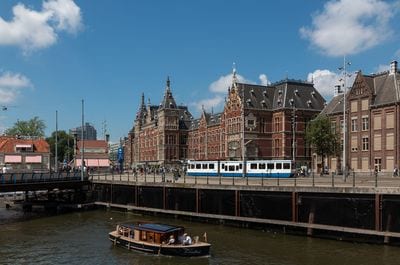
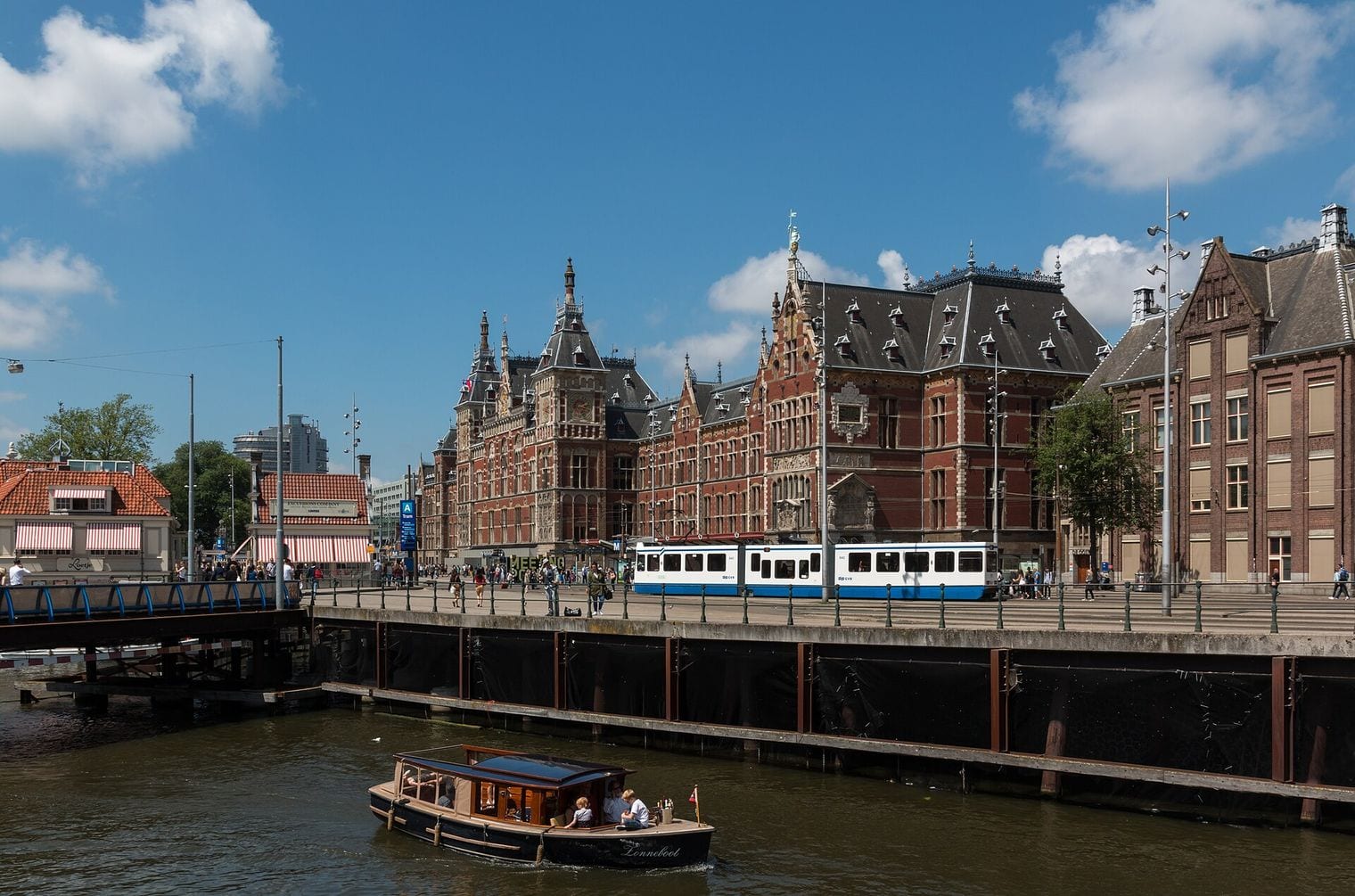
Most visitors arrive at Amsterdam Centraal and walk straight out without turning round to look at it, which is a mistake. Pierre Cuypers — the architect of the Rijksmuseum — designed it as a palace front in Gothic and Renaissance Revival brick, and it opened on 15 October 1889 on three artificial islands driven into the IJ on 8,687 wooden piles.
Around 192,000 people pass through daily, making it the second-busiest station in the country after Utrecht Centraal, so the concourse is not a place to linger. Cross to the far side of the water and look back for the facade instead. Behind the station, the free GVB ferries leave for Amsterdam-Noord — the crossings to NDSM and Buiksloterweg cost nothing and are the cheapest boat trip in the city.
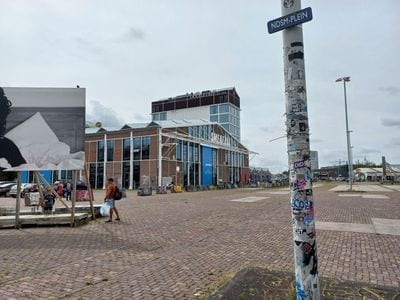
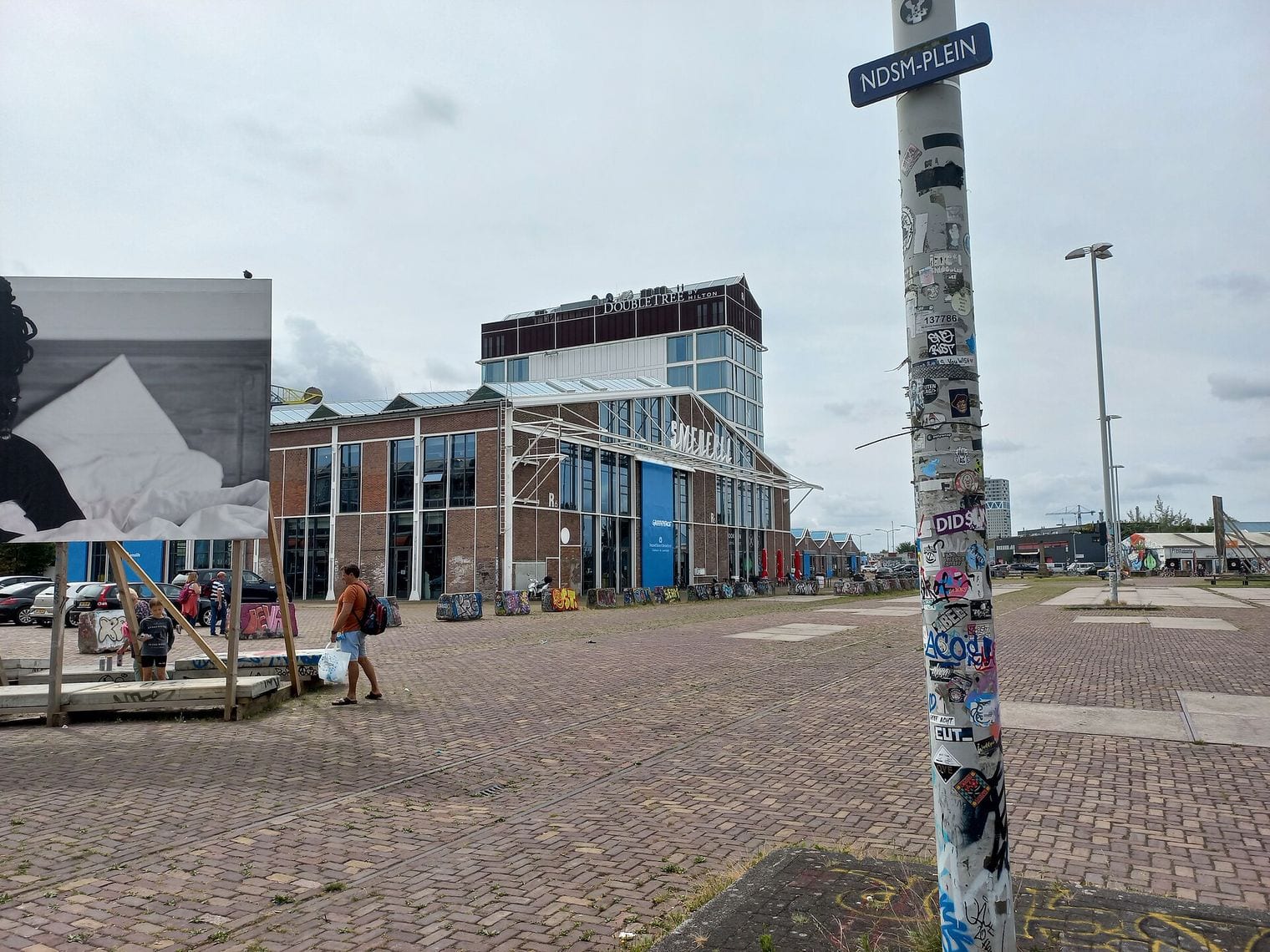
NDSM was the yard of the Nederlandsche Dok en Scheepsbouw Maatschappij, once one of the largest shipbuilders in Europe, and it closed in 1984. Squatters and artists moved into the empty sheds through the 1990s, and the cranes, slipways and rusting hulls were never tidied away, which is exactly why the place is worth the trip.
The free ferry from behind Centraal takes about fifteen minutes and runs late. Once there you have STRAAT's street-art warehouse, studios and galleries in the eastern sheds, a hotel built in an old crane, and IJ-Hallen — billed as Europe's largest flea market — on its monthly weekends. Corporate offices have arrived alongside the artists and thousands of homes are planned by 2034, so the raw version of NDSM has a finite life.
Fabrique des Lumières fills the Zuiveringshal, one of the old Westergasfabriek purification halls, with projectors that throw paintings across every wall, the floor and the pillars while a score plays. There is no fixed route: you walk in, find a spot, and the programme loops, so most people end up watching the same sequence from three different positions.
The exhibitions rotate and have covered Klimt, the Dutch Masters from Vermeer to Van Gogh, and the Renaissance painters, usually paired with a shorter contemporary piece. Purists will point out that a projection is not a painting, and they are right — but it is a genuinely enjoyable hour, and it sits inside Westerpark, so you can walk out into the park afterwards.
De Hallen is a former tram depot in Oud-West, converted into a covered complex that takes around 50,000 visitors a week and still feels like a neighbourhood building rather than an attraction. Under one roof are the Filmhallen cinema, a public library, Denim City, workshops and independent shops, arranged along a central passage anyone can walk through for free.
The reason most visitors come is the Foodhallen, an indoor street-food market with counters running from Vietnamese to Spanish to Dutch bitterballen, sharing long communal tables and a bar in the middle. It gets loud and full from about seven in the evening. Oud-West is twenty minutes' walk from the Jordaan and has almost none of the centre's crowding.
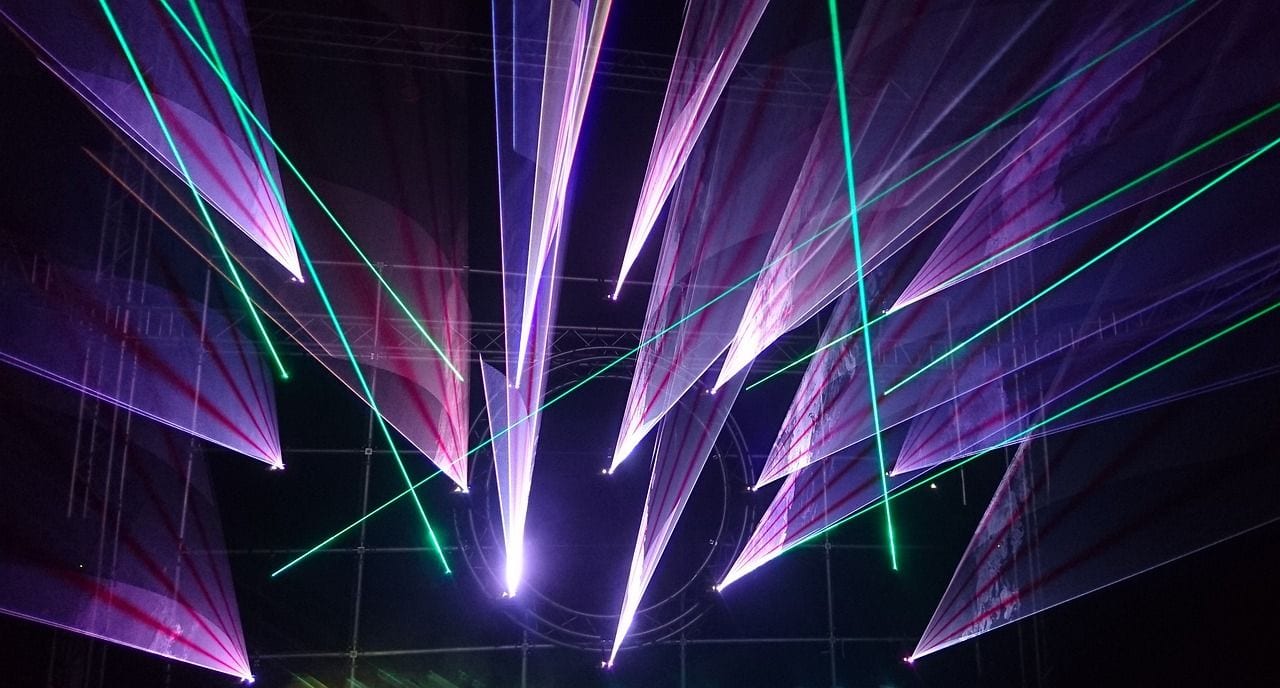
AMAZE was built by ID&T — the company behind Awakenings, Sensation, Defqon.1, Mysteryland and DGTL — and it shows. Opened in September 2021 inside a former nightclub in the West Port district, it runs to 3,000 square metres and seven rooms of lasers, projection, smoke, sound and performance, staged with festival production values rather than gallery ones.
It is the closest thing in the city to walking through a Dutch dance event in daylight, and it lands better if you go in expecting spectacle rather than meaning. It sits near Sloterdijk station, a few minutes by train from Centraal and well outside the tourist centre, so it rarely feels crowded even at weekends.
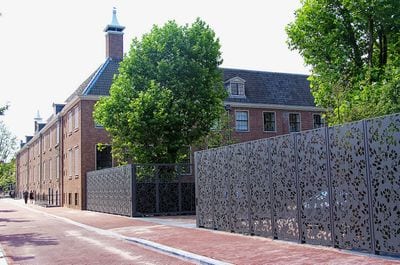
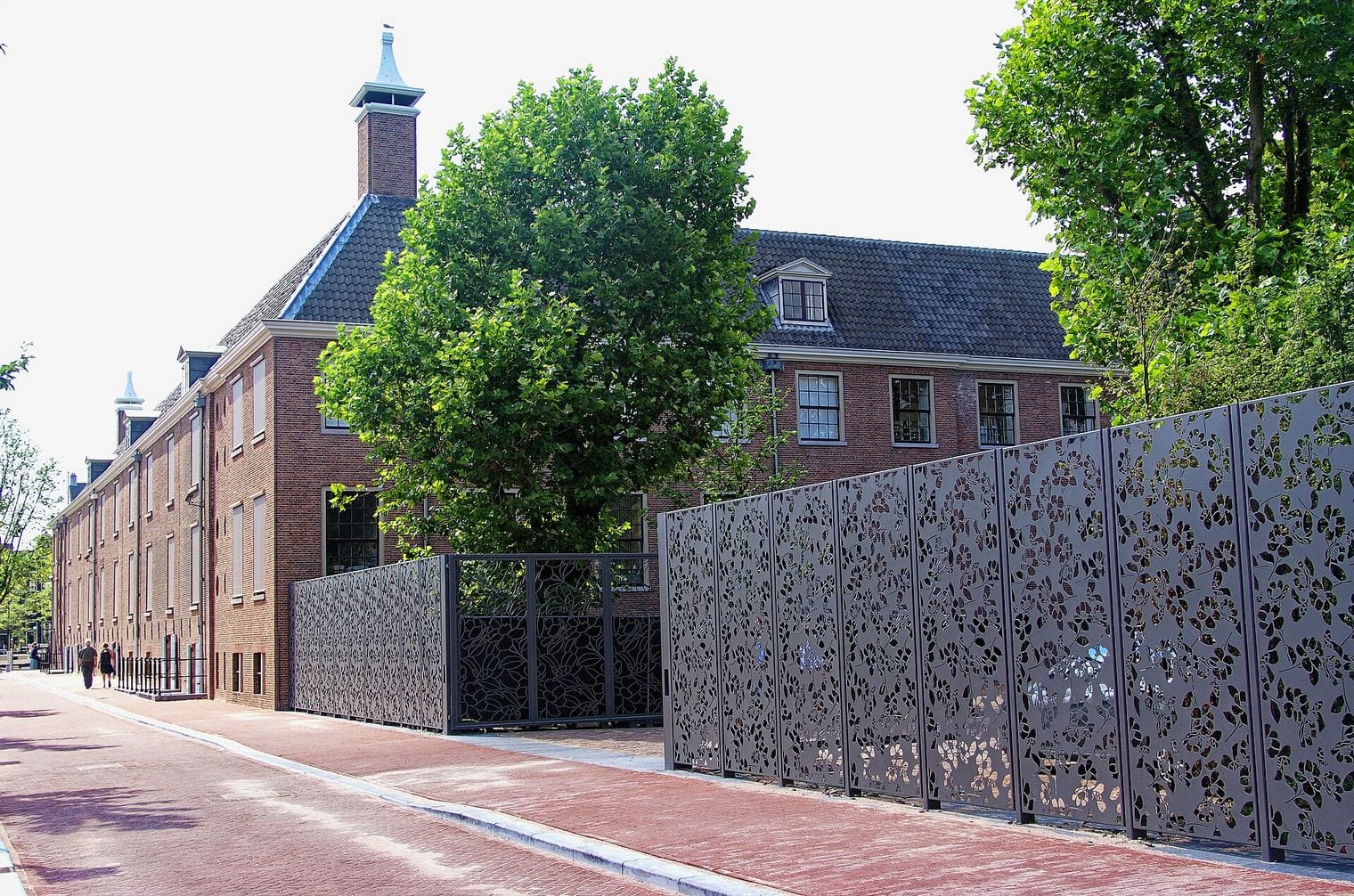
The H'ART Museum occupies the Amstelhof, a vast seventeenth-century almshouse on the bank of the Amstel, and it changed its name on 1 September 2023. It had spent years as the Hermitage Amsterdam, showing loans from St Petersburg; after Russia's invasion of Ukraine it cut those ties entirely and had to rebuild its programme from nothing.
What replaced them is a set of partnerships with the Centre Pompidou, the British Museum and the Smithsonian American Art Museum, so the museum works as a loan venue rather than a collection. That means there is no permanent display to fall back on and the quality depends on what is up — check the current exhibition before committing, then use the courtyard, which is one of the quietest spots in the centre.
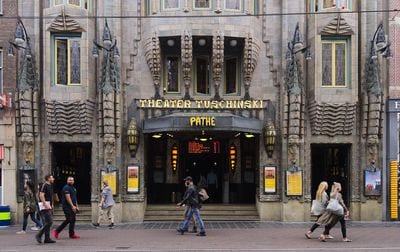
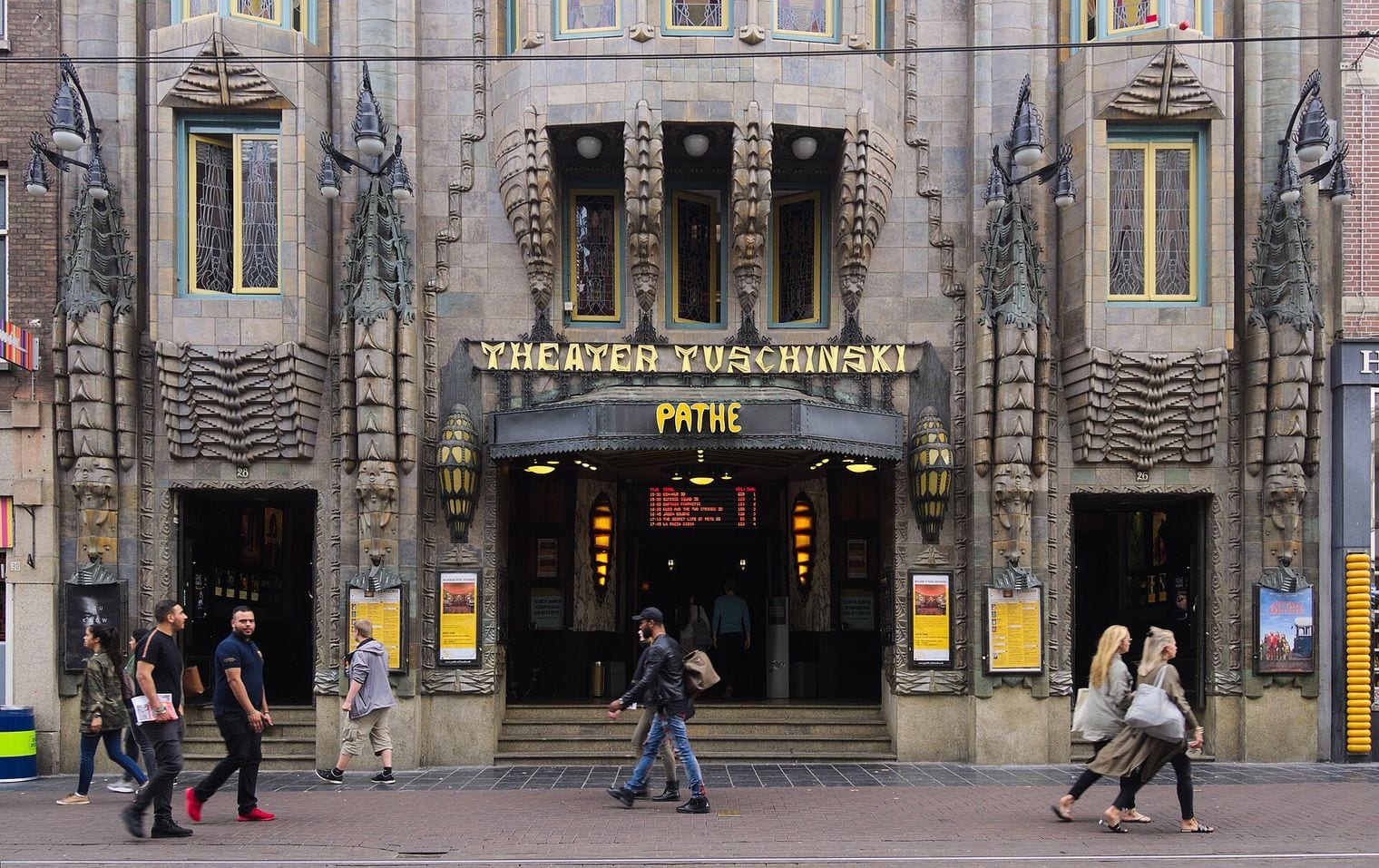
Tuschinski opened on 28 October 1921, built by Abraham Icek Tuschinski with his brothers-in-law Hermann Gerschtanowitz and Hermann Ehrlich, and it refuses to settle on a style — Art Deco, Jugendstil, Amsterdam School and a run of Asian motifs all collide across the facade, the ceramics and the leadlight windows. The carpeted main auditorium is the reason people come.
It has been a national monument since 1967 and was granted the royal prefix in 2021, on its centenary. It still works as a Pathé cinema with six screens, and the grand hall keeps its stage and organ for live performances. The cheapest way in is simply to buy a ticket for whatever is showing in auditorium one; guided tours of the building also run.
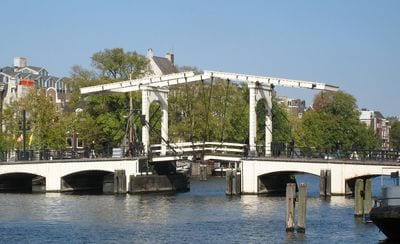
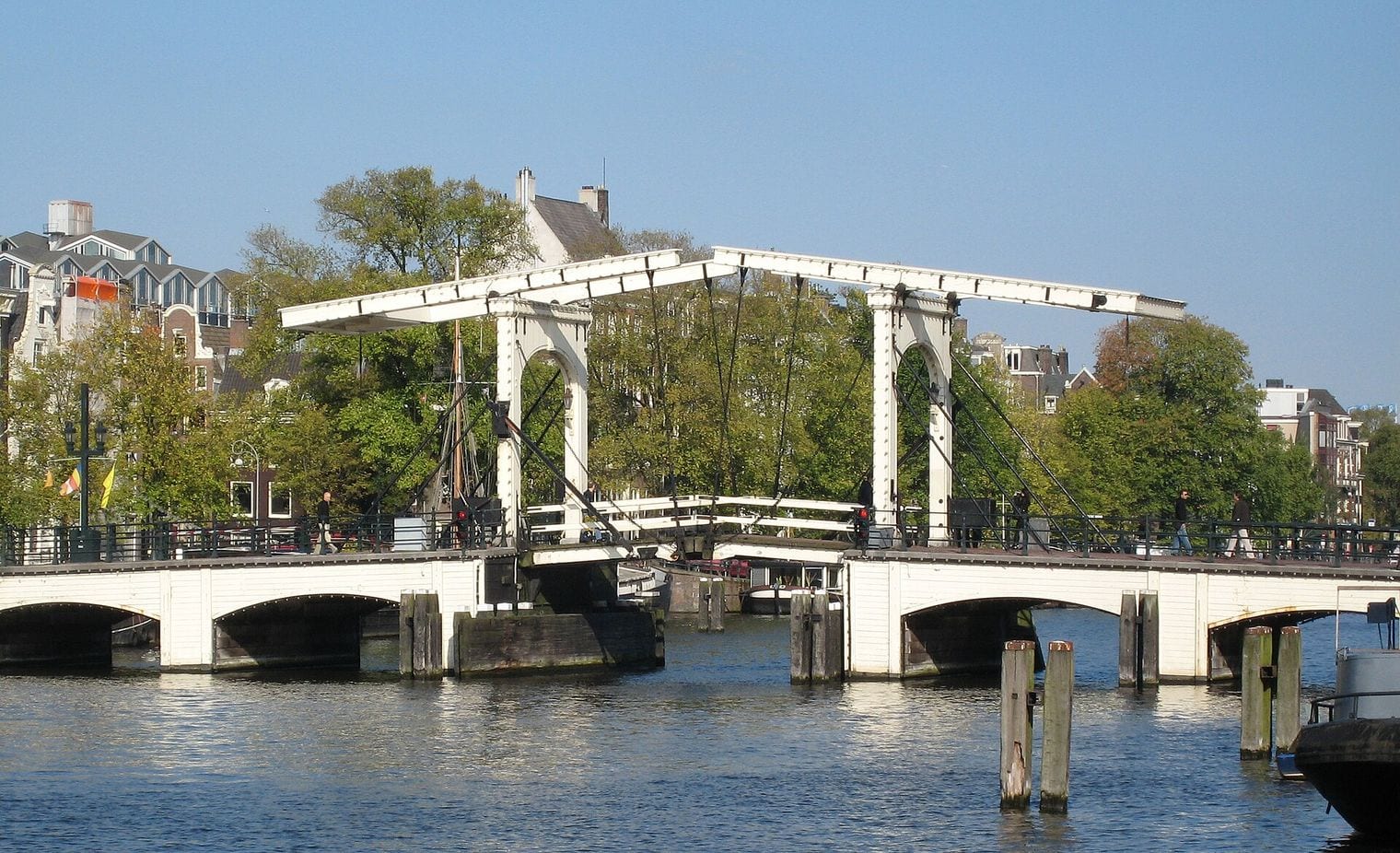
The Magere Brug is the white-painted wooden bascule bridge over the Amstel that appears on roughly every second postcard of the city. The present structure dates from 1934 and was designed by Piet Kramer, replacing bridges of 1691 and 1871 on the same crossing.
The name translates as “Skinny Bridge”, traditionally explained by how narrow the 1691 original was; more recent research points instead at the economic crisis of 1672, which forced the city to abandon its grander plan for something plain. The centre section still lifts many times a day for river traffic — it was raised by hand until 1994 and is automatic now. Come back after dark, when the outline is picked out in lights.
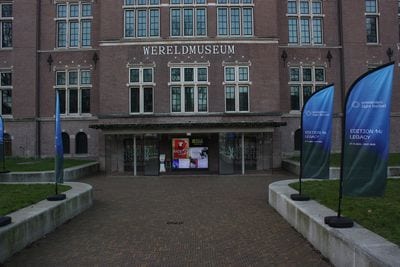
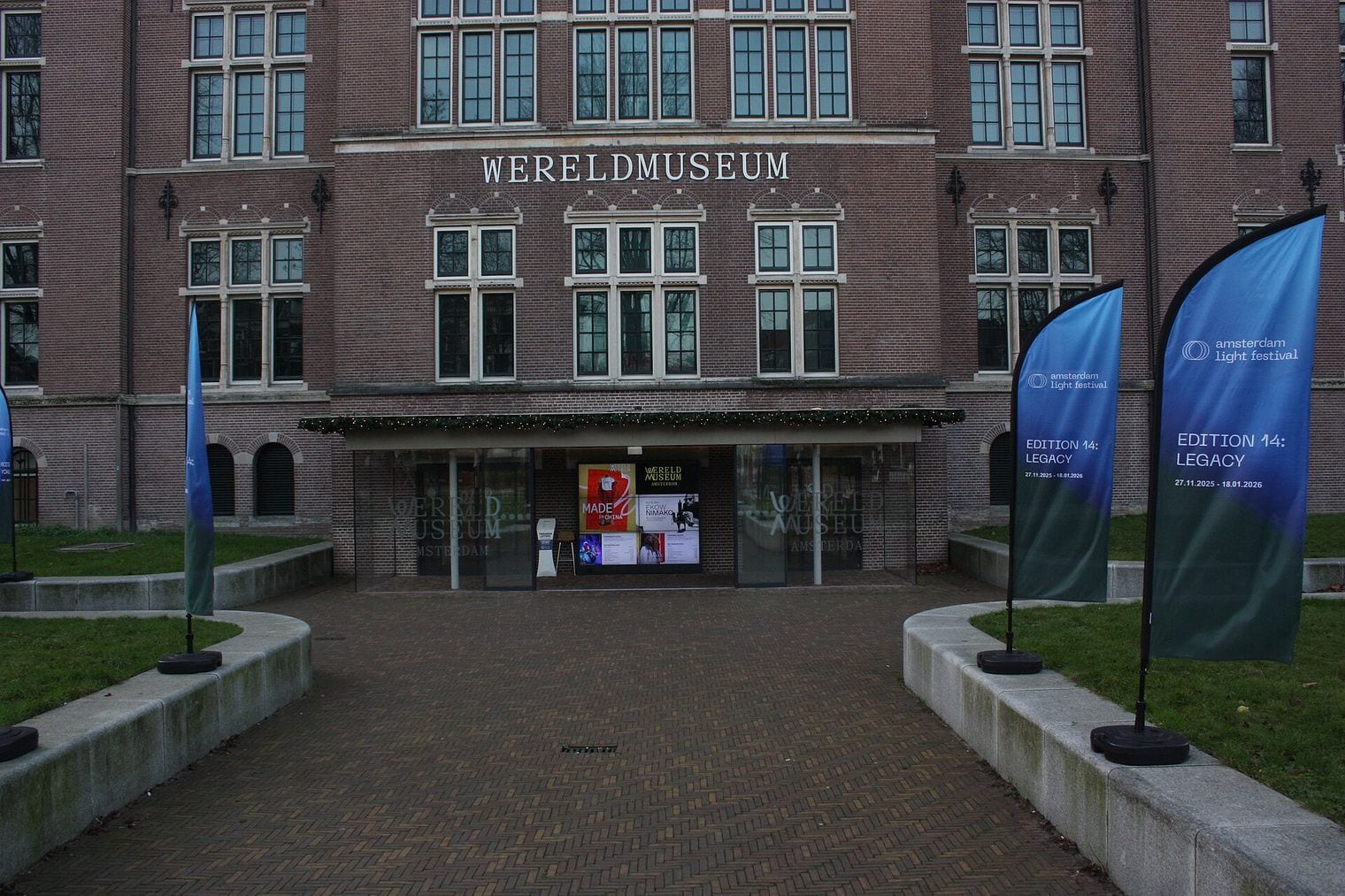
Long known as the Tropenmuseum and now the Wereldmuseum Amsterdam, this is a museum of world cultures in the monumental Royal Tropical Institute building on the edge of the Oosterpark. The hall alone justifies the ticket: galleries stacked around a skylit atrium, built at the height of Dutch colonial confidence.
That history is the museum's subject as much as its setting. Rather than presenting the collection as neutral, the displays deal directly with how the objects were acquired and what restitution means in practice. It is twenty minutes east of the centre and gets a fraction of the Museumplein crowds, which makes it one of the easier big museums to visit without booking weeks ahead.
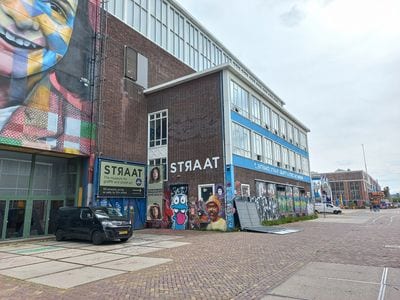
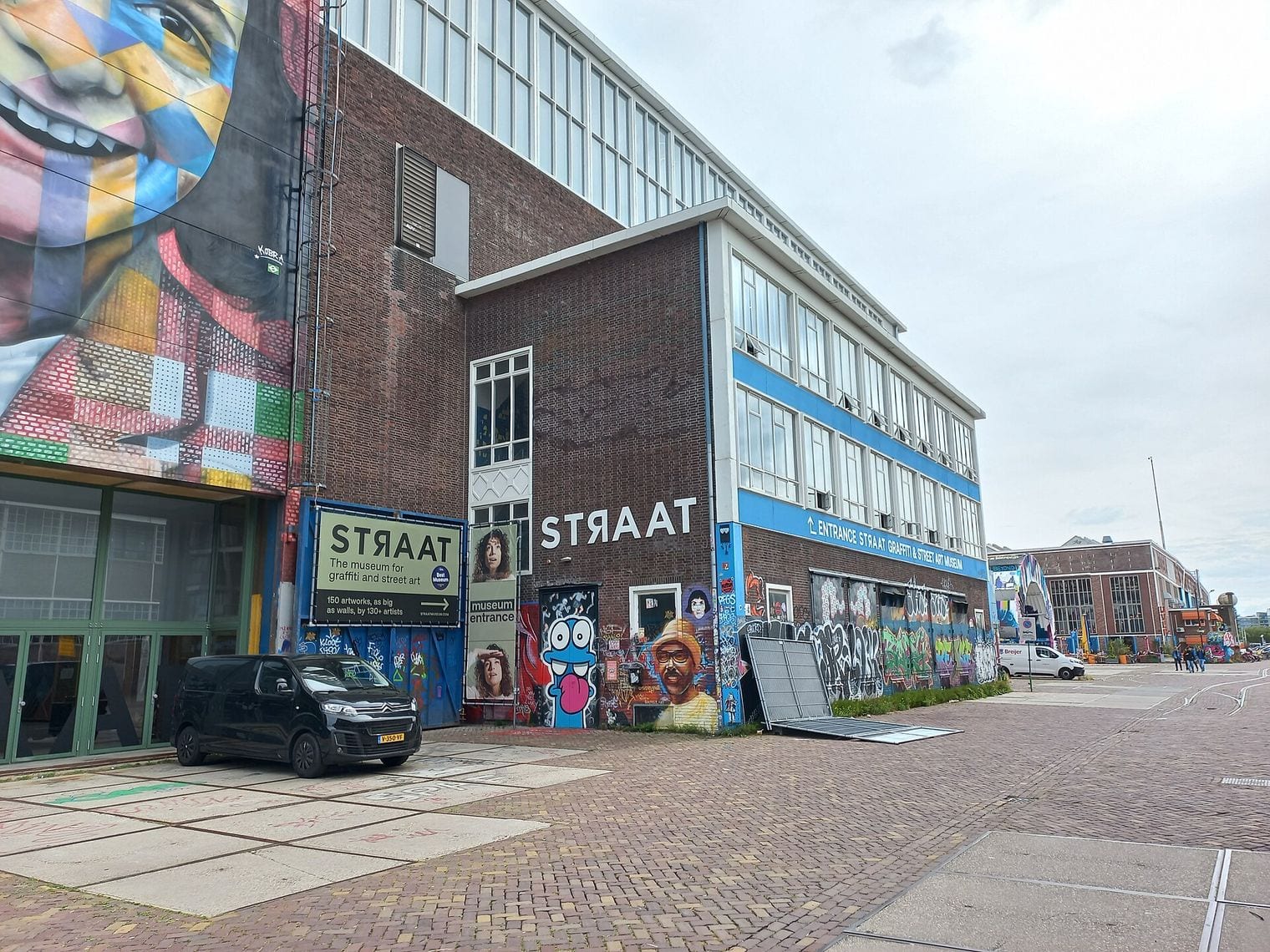
STRAAT opened on 9 October 2020 in the Lasloods, the former welding shed on the NDSM wharf, and it holds more than 180 large-scale works by around 170 artists across 8,000 square metres. The scale is the point — these are full walls hung in a shipyard hall, not canvases at eye level, and the building's gantries let you see them from above.
Every piece was painted in place on canvas, so the museum can rotate its walls in a way a painted building never could. Outside on the wharf stands Eduardo Kobra's 240-square-metre Anne Frank mural, “Let Me Be Myself”, from 2016. If street art is what you came to Europe for, pair it with our guide to things to do in Berlin.
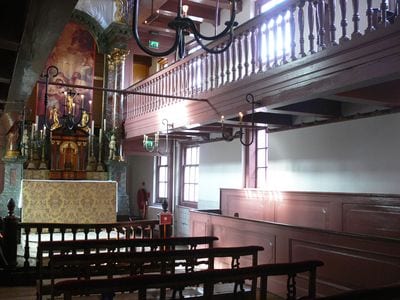
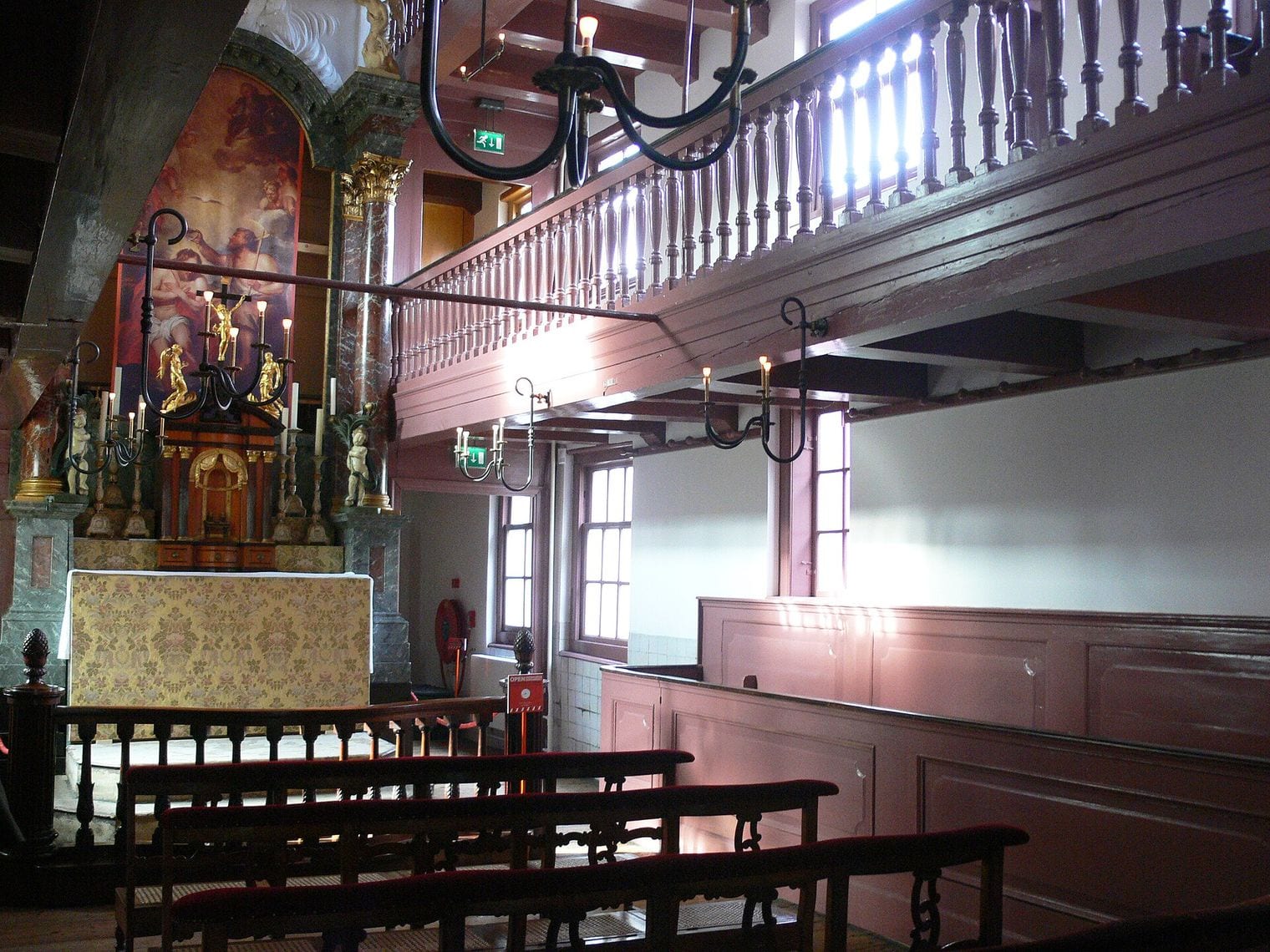
From the Oudezijds Voorburgwal, Ons' Lieve Heer op Solder — Our Lord in the Attic — is an ordinary canal house of 1630. Between 1661 and 1663 its top three floors were opened up into a full Catholic church, complete with galleries, an altar and an organ, because Catholics in Amsterdam were barred from worshipping in public under the Dutch Reformed order.
You climb through the seventeenth-century kitchen, the front room, a confessional and a Lady chapel before the attic church opens up above you, and the surprise still works. It became a museum on 28 April 1888, making it the second-oldest in the city after the Rijksmuseum, and it received a European Heritage Label in 2024. At around 85,000 visitors a year it stays quiet — a rare thing in this part of town.
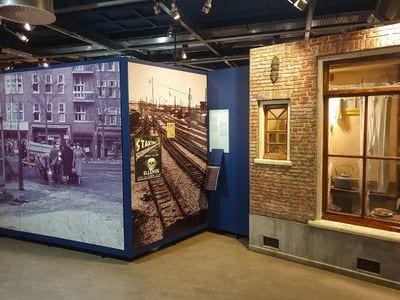
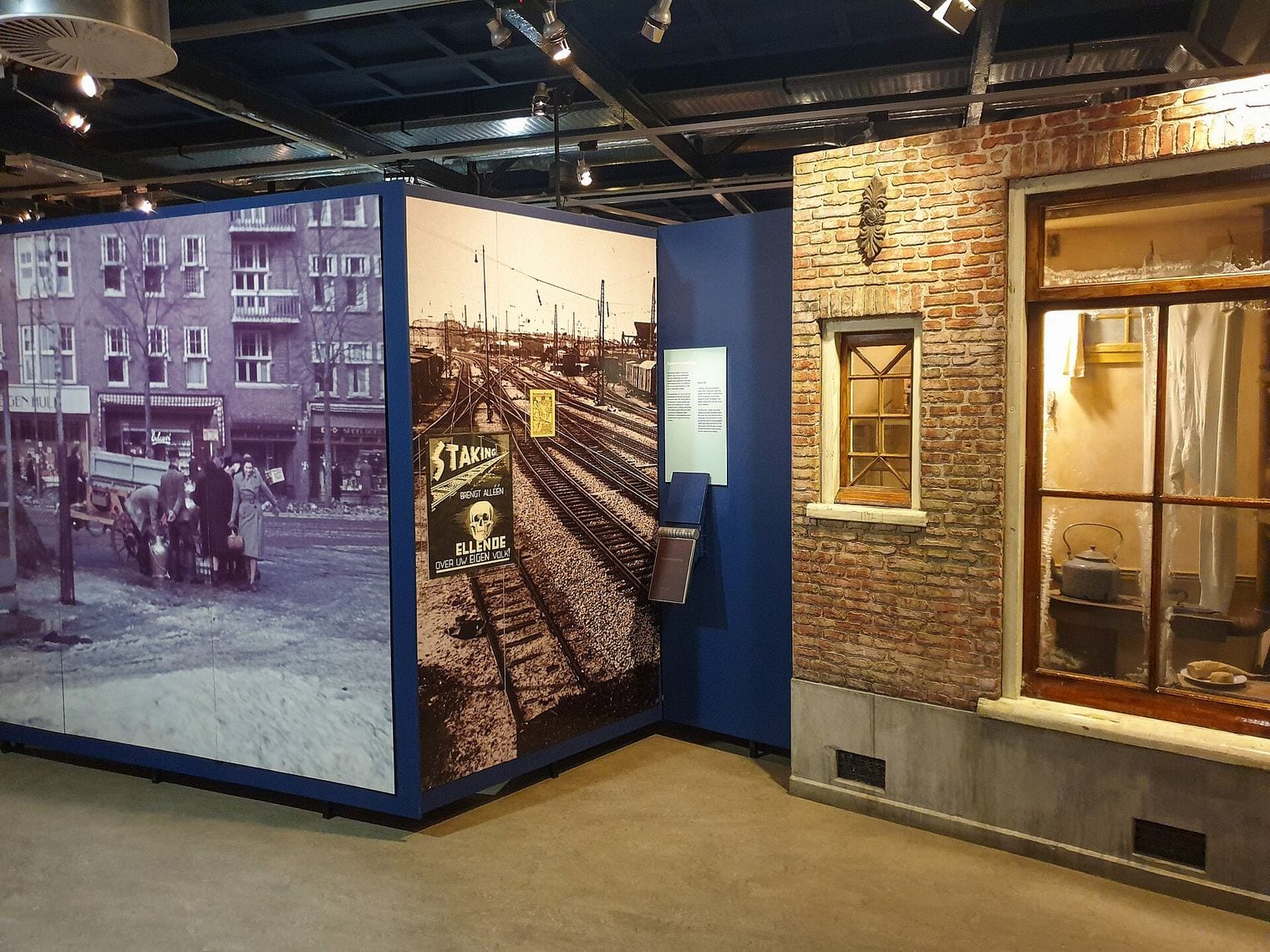
The Verzetsmuseum, the Dutch Resistance Museum, stands on Plantage Kerklaan almost opposite the ARTIS entrance and has occupied the building since 1999. It grew out of an exhibition that resistance members from opposing political traditions assembled in 1980, and was established as a museum in 1984; that origin shapes it, because the subject is ordinary people under occupation rather than heroes and villains.
The displays keep returning to the choices people actually faced — whether to sign, hide, inform, or do nothing — and they do not let the Dutch record off lightly. Verzetsmuseum Junior, in a newer wing, follows four real children, Jan, Eva, Nelly and Henk, through the war for visitors aged eight and up. It is the natural second half of a day that starts at the Anne Frank House.
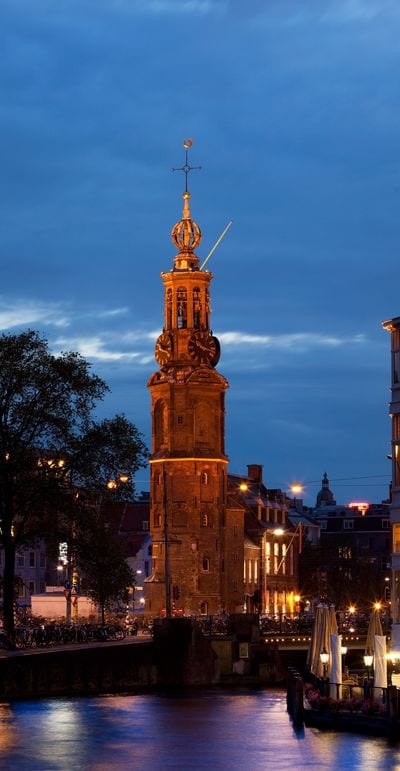
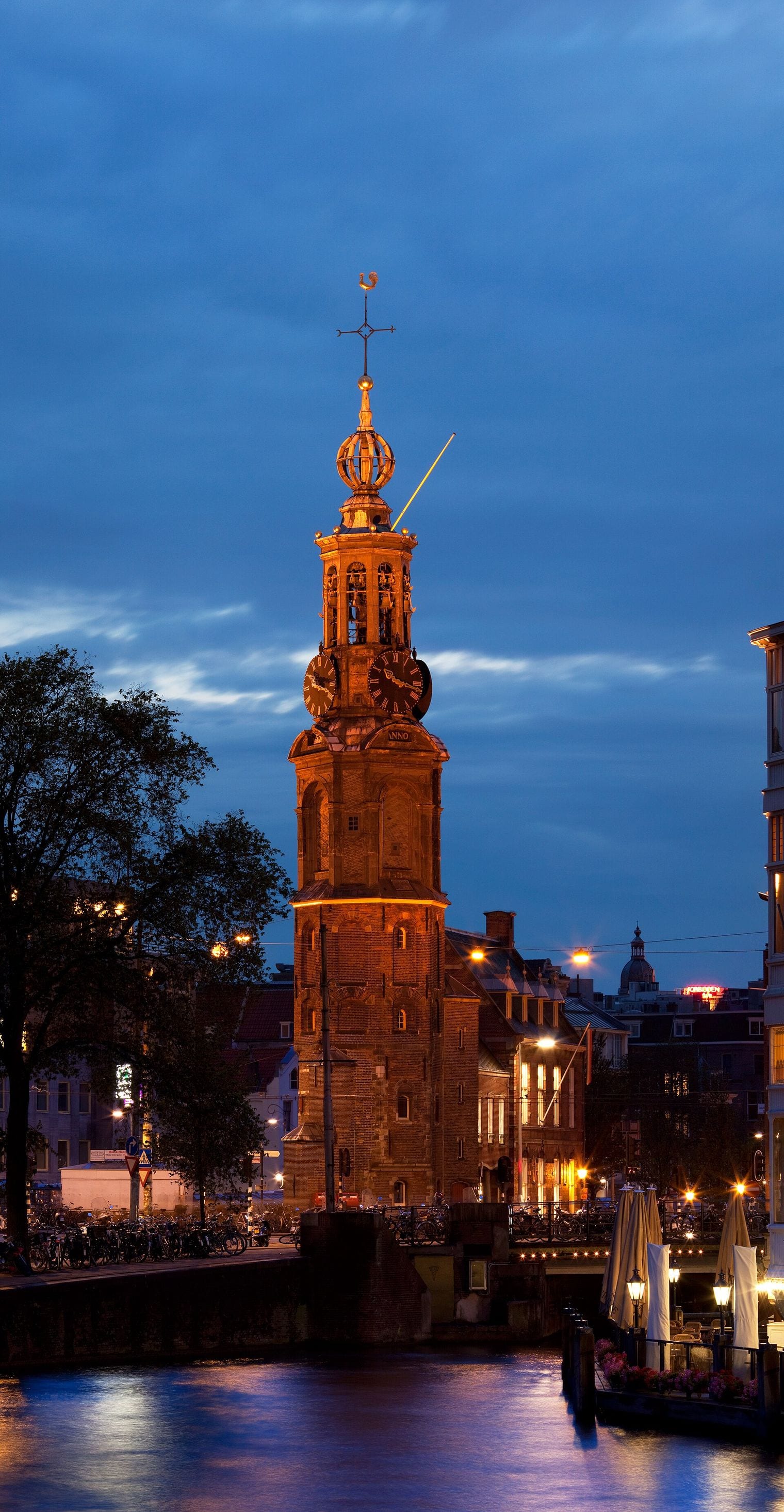
The Munttoren stands on Muntplein where the Amstel meets the Singel, and its base is older than almost anything around it: it is the surviving tower of the Regulierspoort, a city gate of 1480. Fire destroyed the rest in 1618, and the tower was rebuilt in 1620 in Amsterdam Renaissance style with an ornate spire by Hendrick de Keyser.
The name comes from the guard house beside it, which struck the city's coins during the crisis year of 1672 when the usual mints were unsafe. The carillon was cast by Pieter Hemony in 1668 and now runs to 38 bells, of which thirteen are still his; the city carillonneur plays it on Saturday afternoons. The tower is not open to climb, but it is two minutes from the Bloemenmarkt and hard to miss.
Plan your trip
Best Time to Visit Amsterdam
Late spring and early autumn are the sweet spots. From late April into June the city is at its best — long light evenings, terraces open along the canals, and the bulb fields inland at their most spectacular — while September keeps much of that warmth with noticeably thinner queues at the major museums. Both shoulder seasons suit the thing Amsterdam is really for, which is walking and cycling slowly between places.
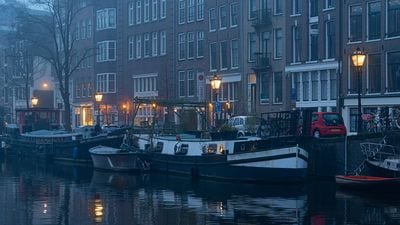
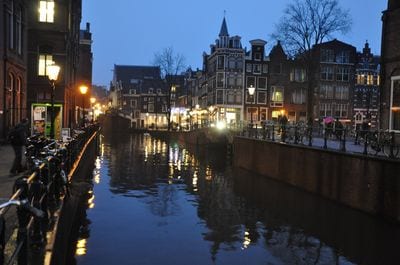
High summer is busiest and the canal-side bars are full, though the weather rarely turns oppressive and the days stay light until late. Winter is grey, damp and dark rather than deeply cold, and hard frosts that freeze the canals are now rare; the compensation is quiet museums, lit bridges reflected in the water, and the lowest room rates of the year. Whenever you come, pack a windproof layer — the weather here changes by the hour.
Getting to Amsterdam
Almost everyone arrives through Amsterdam Airport Schiphol, one of Europe's largest hubs, which sits a short way south-west of the city. Trains run from directly beneath the terminal into Amsterdam Centraal several times an hour and take roughly a quarter of an hour, which makes a taxi or transfer largely pointless unless you are heavily loaded or arriving very late.
By rail, Amsterdam is well connected to the rest of Europe: high-speed services link it to Brussels and Paris in a few hours, to London via the Channel Tunnel, and to Berlin on a slower direct line. Domestic intercity trains reach Rotterdam, The Hague and Utrecht in well under an hour.
Drivers come in on the A1, A2, A4 and A9 motorways, but be warned that parking in the centre is scarce and expensive by design — most visitors are better off using a Park and Ride on the ring road and taking transit in.
Getting Around Amsterdam
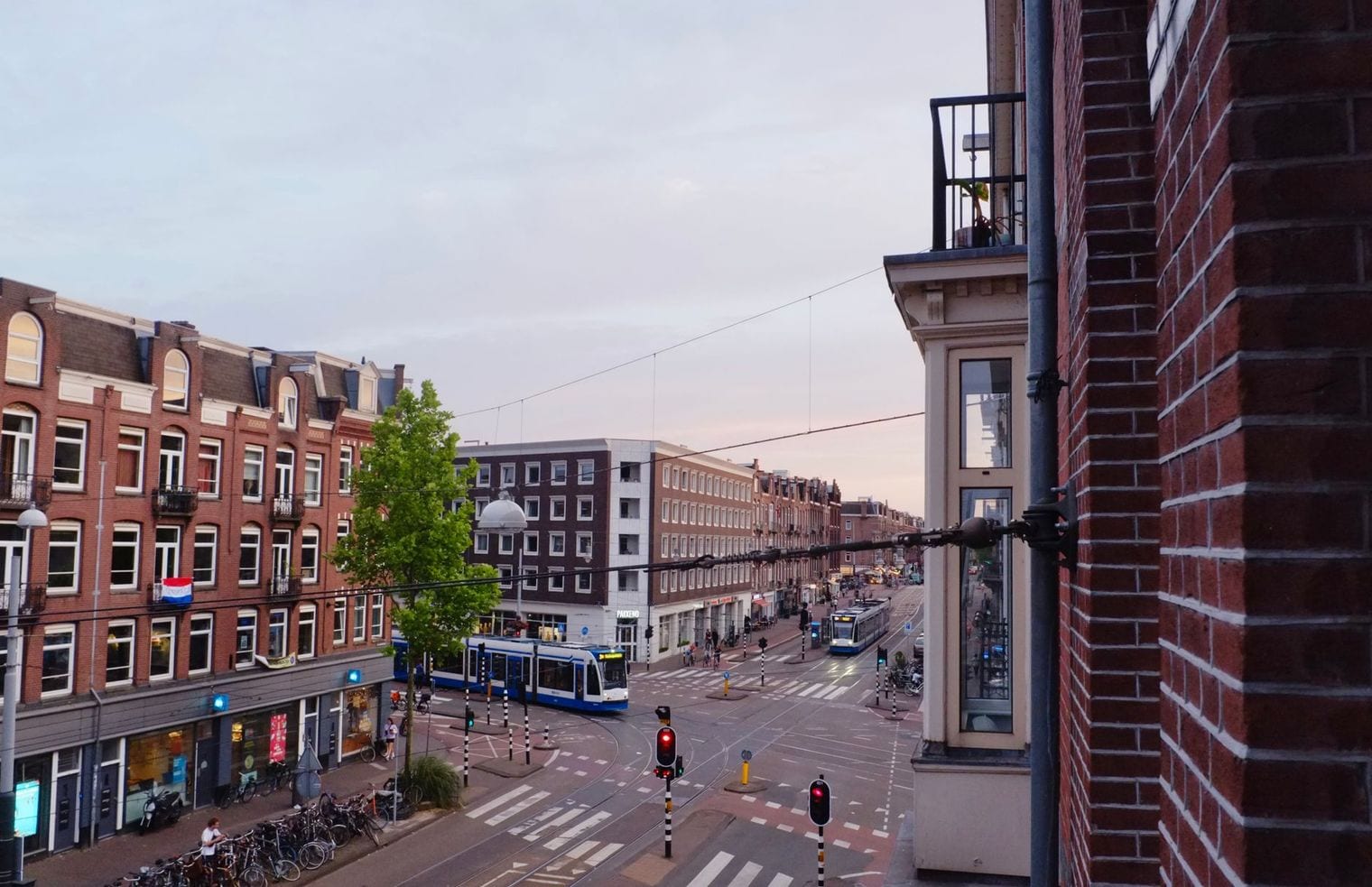
The centre is genuinely small, and walking is the default: you can cross the whole canal ring on foot in about half an hour, and most of the sights in this guide sit within that circle. Trams cover the longer hops elegantly, with a metro for the outer districts and free ferries running north across the IJ from behind Centraal Station. Tap a contactless bank card on the reader as you board and again as you leave.
Cycling is the local way and the network is fully separated from traffic, but be honest with yourself about confidence: Amsterdam's cycle lanes are fast, busy and unforgiving of hesitation, and the city is not the gentle introduction to Dutch cycling that quieter towns are. A car is a genuine liability here — narrow streets, bridges, scarce parking and a centre built long before anyone imagined one.
Where to Stay in Amsterdam
The canal ring itself — the Grachtengordel — puts you inside the postcard and within walking distance of nearly everything, at the highest prices and with the most noise on the busier stretches. The Jordaan just west is quieter and more residential while still being central, and is the pick if you want to feel like you live somewhere rather than visit it. The Museum Quarter around Museumplein is calm, green and handy for the big three galleries.
For better value, look at De Pijp, which trades a few tram stops for a livelier neighbourhood and the city's best street market, or Amsterdam Noord across the water, where the ferry is free and constant and the converted industrial buildings have become a scene in their own right. The Oud-West and De Baarsjes districts are similarly well connected. Wherever you land, check the tram or ferry link rather than the map distance — water makes short distances longer here.
Where to Eat in Amsterdam
Amsterdam's great culinary inheritance is Indonesian, a legacy of the colonial era, and a rijsttafel — a spread of many small dishes eaten together — is worth building an evening around. The other essentials are cheaper and eaten standing up: fresh herring from a street stall, hot stroopwafels pressed to order, chips with mayonnaise, and bitterballen with a beer in a brown café. Aged Gouda from a proper cheese shop bears no resemblance to the supermarket version.
For where to graze, De Pijp around the market is the strongest all-round eating district, with Surinamese, Turkish and Middle Eastern food alongside modern Dutch places. The Jordaan does small, characterful restaurants and old brown bars; the Nine Streets are good for lunch between shops; and Amsterdam Noord has the warehouse-scale places with waterfront terraces. Reserve for dinner where you can — the city is smaller than its visitor numbers suggest.
Day Trips from Amsterdam
The Netherlands is small enough that most of it is a day trip. Haarlem is fifteen minutes west by train and gives you a compact golden-age town with a great church and none of the crowds.
Utrecht, half an hour south, has canal wharves set a storey below street level with cafés along them. The Hague and Rotterdam are both under an hour and could not be less alike — one all government buildings, embassies and the Mauritshuis, the other a showcase of bold post-war architecture.
Closer to hand, the working windmills at Zaanse Schans are about twenty minutes north, and the former fishing villages of Marken and Volendam sit on the old sea wall beyond them. In spring the bulb fields and the great flower garden at Keukenhof, south-west near Lisse, are worth the trip on their own. All of these are reachable by train or bus without hiring a car.
Before you go
Mobile dataAn eSIM gives your phone local data when you land, with no SIM card to swap.via AiraloGet an eSIM
Airport transferA driver meets you at arrivals and takes you to your hotel, at a price fixed when you book.via Welcome PickupsBook a transfer
We may earn a commission when you buy through these links, at no extra cost to you. How we make money.
One Day in Amsterdam
Morning
Start at the Rijksmuseum when it opens, going straight upstairs to the Gallery of Honour before the crowds build, then walk five minutes across Museumplein to the Van Gogh Museum. Both are large; if you would rather not spend the whole morning indoors, do one properly and save the other.
Cut north through Vondelpark or along the canals to The 9 Streets for lunch and a browse, then continue to the Anne Frank House — booked in advance, since it does not admit walk-ups. Afterwards, wander the Jordaan immediately behind it, looking for the hidden almshouse courtyards.
Take a canal cruise as the light drops and the bridges come on, which is when the canal ring looks its best. Finish with dinner in the Jordaan or De Pijp, or cross on the free ferry to the A'DAM Lookout for a last panoramic view of where you have just spent the day.
A surprising amount of the city costs nothing. Vondelpark and Dam Square are free and always open, the Begijnhof asks only for quiet, and browsing The 9 Streets, the Jordaan, Albert Cuyp Market and the Bloemenmarkt costs nothing unless you buy something. The ferries across the IJ are free, and the roof terrace at NEMO Science Museum can be walked up without a ticket for one of the best views in the city.
Its 17th-century canal ring, a UNESCO World Heritage Site, and an extraordinary concentration of art — the Rijksmuseum, the Van Gogh Museum, the Anne Frank House and the Rembrandt House Museum all sit within a short walk of each other. Beyond that: bicycles, gabled merchant houses, brown cafés and hidden almshouse courtyards like the Begijnhof.
How many days do you need in Amsterdam?
Three full days covers the major museums, a canal trip and time to wander the Jordaan and the Nine Streets without rushing. Two is enough if you are selective and book the big sights in advance. A week lets you slow right down and add day trips to Haarlem, Utrecht or the windmills at Zaanse Schans.
What can you do in Amsterdam for free?
Plenty. Vondelpark, Dam Square and the Begijnhof cost nothing, as does wandering the Jordaan, the Nine Streets, Albert Cuyp Market and the Bloemenmarkt. The ferries across the IJ to Amsterdam Noord are free and run constantly, and you can walk up onto the roof terrace at NEMO for a wide view over the harbour without buying a ticket.
Is Amsterdam walkable?
Very. The historic centre inside the canal ring is roughly half an hour across on foot, and almost everything in this guide sits within or just beyond it. Trams and free ferries cover the longer hops. Watch for cyclists at every crossing — the bike lane is a road, and stepping into it without looking is the classic visitor mistake.
When is the best time to visit Amsterdam?
Late April to June and the month of September. Spring brings long light evenings and the bulb fields; September keeps the warmth with fewer queues. Summer is busiest but rarely too hot, and winter is grey and damp rather than freezing, which makes it a good season for the museums and the lowest room rates of the year.