

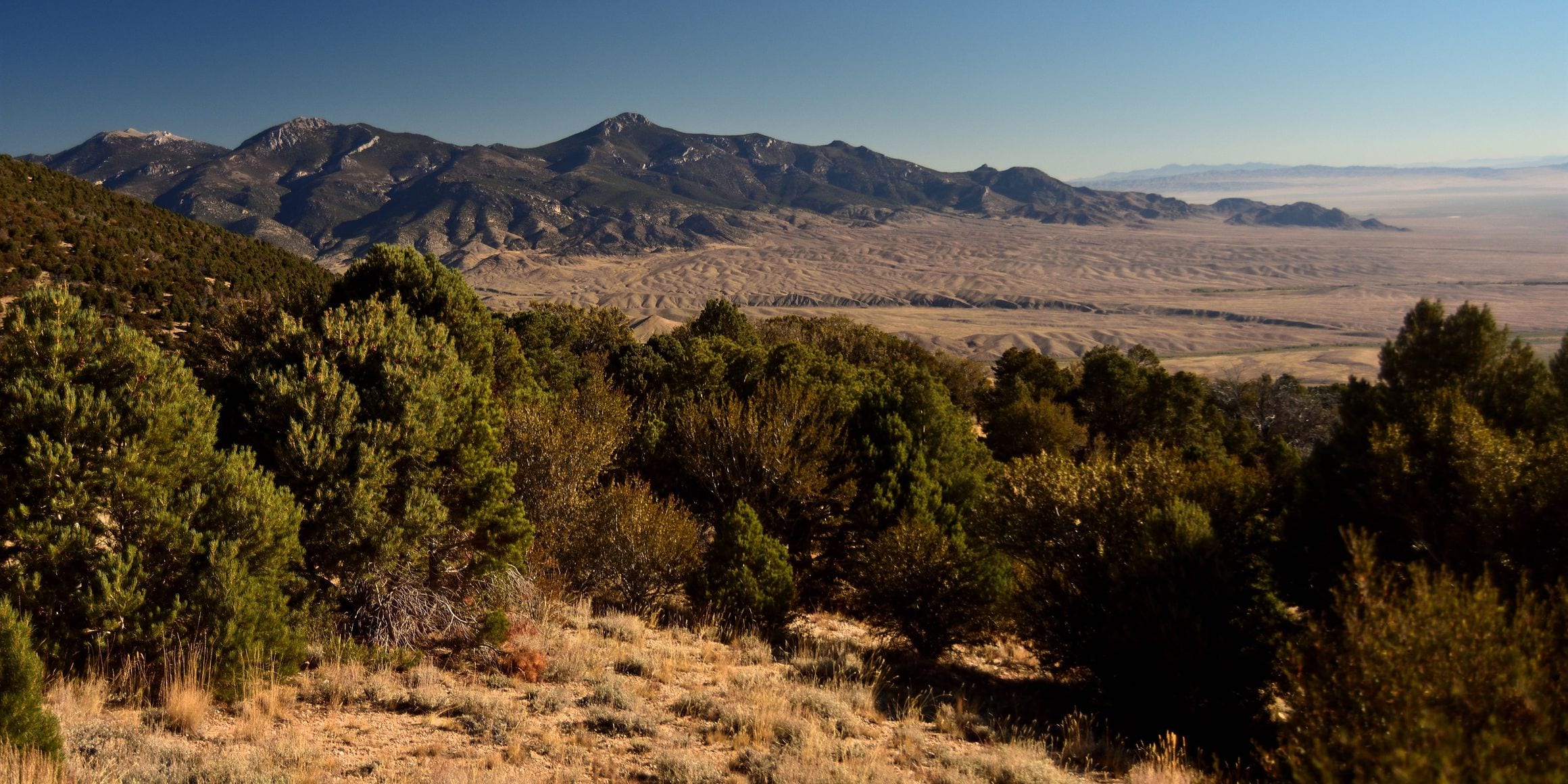
Nevada holds the smallest habitat on Earth containing an entire vertebrate species, a cavern over 500 feet deep whose bottom has never been mapped, and the oldest tree ever found — 4,862 growth rings, cut down in 1964. Four fifths of the state, 80.1%, belongs to the federal government.
Every fact below is sourced to an official register — the Park Service, the Bureau of Land Management, Reclamation, the USGS and Nevada State Parks — and hedged wherever the source hedges. For somewhere to put them to use, start with our guide to things to do in Nevada.
1. Wheeler Peak Is the Tallest Mountain All Nevada's
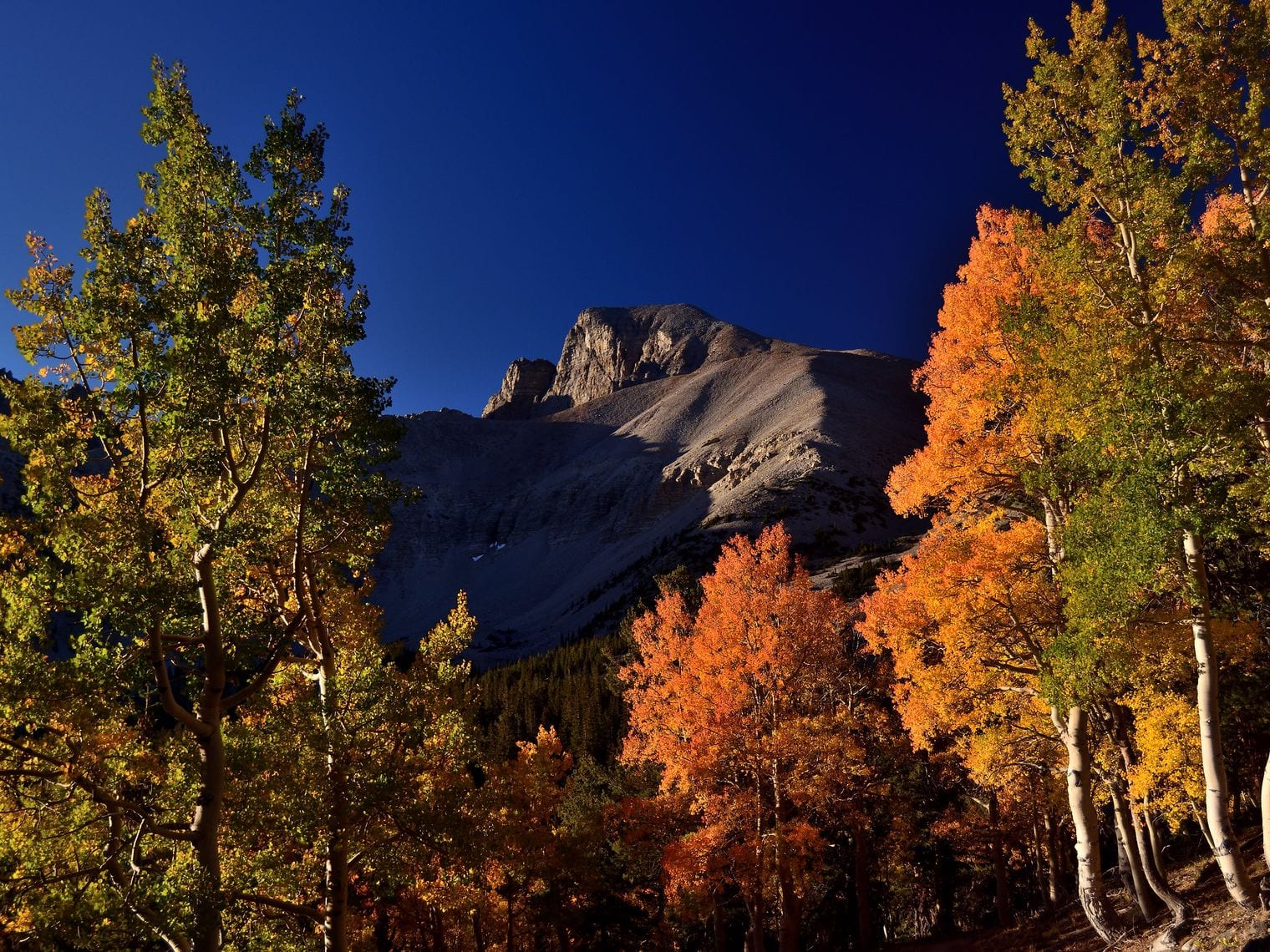
Nevada's highest point is Boundary Peak, but most definitions treat it as a subsidiary summit of a California mountain. That leaves 13,063-foot Wheeler Peak, rising at the heart of Great Basin National Park, as the highest mountain standing entirely within the state.
The distinction matters more than it sounds. Wheeler is a genuine free-standing massif with a glacial cirque, a bristlecone grove and a road that climbs high enough to put you at the treeline within an hour of leaving the highway. That was still the position as of 2026.
2. A Nevada Cavern's Bottom Has Never Been Mapped
Devils Hole is a water-filled limestone cavern in Nye County, a detached unit of Death Valley National Park administered from across the state line. Divers have followed it down over 500 feet, and its bottom has never been mapped.
What you can see from the viewing platform is a slot in the rock barely wider than a car. Everything of consequence happens below: a flooded fault system connected to a regional aquifer, warm and still, that reaches further than anyone has been able to survey.
3. One Fish Has the Smallest Range on Earth
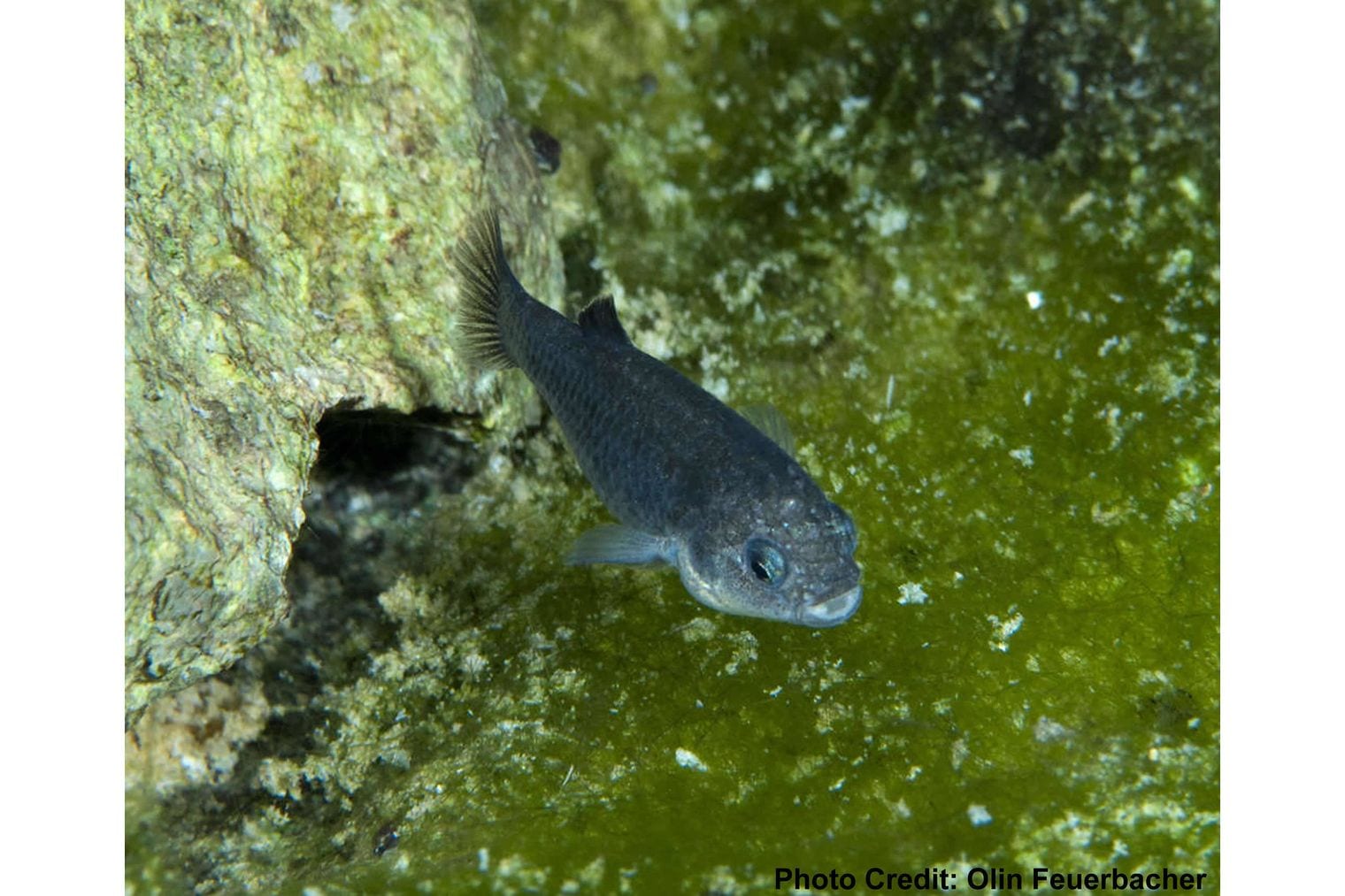
The Devils Hole pupfish occupies the smallest habitat in the world containing the entire population of a vertebrate species. Every one of them forages and spawns on a single shallow rock shelf near the surface of that one cavern.
No other backboned animal on the planet lives in so little space. The shelf is the whole world for the species, which is why a change in water level of a few inches is treated as an emergency rather than a curiosity. The figure here is the one on record as of 2026.
4. Nevada's Longest Cave Runs More Than Two Miles
Lehman Caves, inside Great Basin National Park, is the longest cave in Nevada at over 2 miles in length. It is a marble cave rather than the usual limestone, which is part of why its decoration is so unusual.
Rangers lead the walking tours through chambers hung with stalactites, cave popcorn and the rare shield formations the cave is known for. It stays cool year-round, which makes it the reliable option on a July afternoon when the valley outside is baking. It still stood that way as of 2026.
5. A President Made Lehman Caves a Monument in 1922
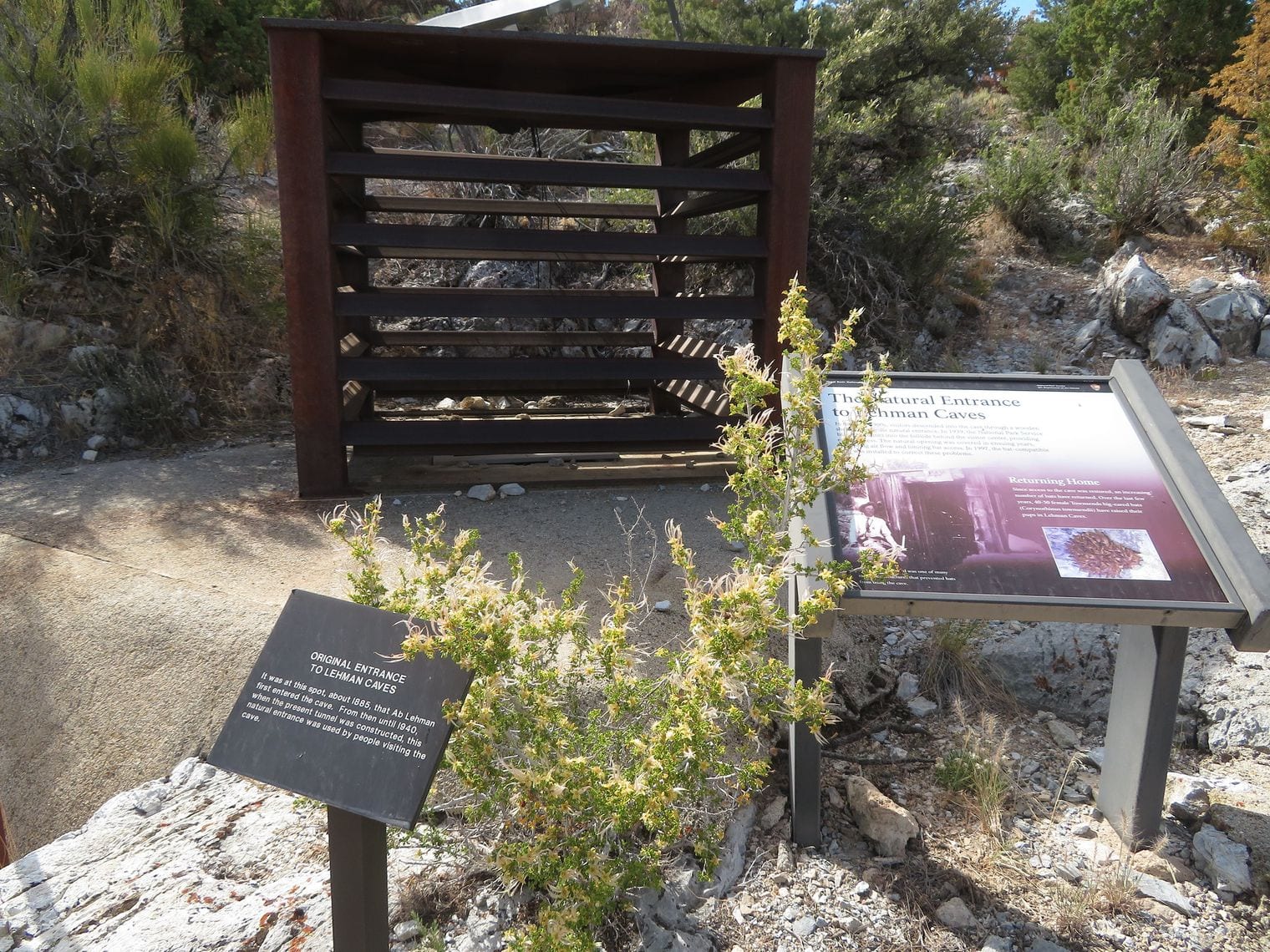
President Warren G. Harding declared Lehman Caves a national monument on January 24, 1922 — decades before the surrounding land became Great Basin National Park in the 1980s.
For most of the twentieth century the cave was the destination and the mountain above it was simply the backdrop. The modern park inverted that, folding the old monument into a much larger reserve that now protects the peak, the bristlecones and the night sky as well.
6. The Oldest Tree Ever Found Had 4,862 Rings
A Great Basin bristlecone pine near Wheeler Peak, known as Prometheus, contained 4,862 growth rings and was estimated to be 4,900 years old. It was the oldest nonclonal organism ever discovered.
Bristlecones survive by giving up. On the exposed slopes near the treeline they grow at a crawl, let most of their own bark die back and keep a thin strip of living tissue running to a handful of branches. The wood that results is so dense and resinous it barely rots. That remained true as of 2026.
7. That Ancient Tree Was Cut Down for Research
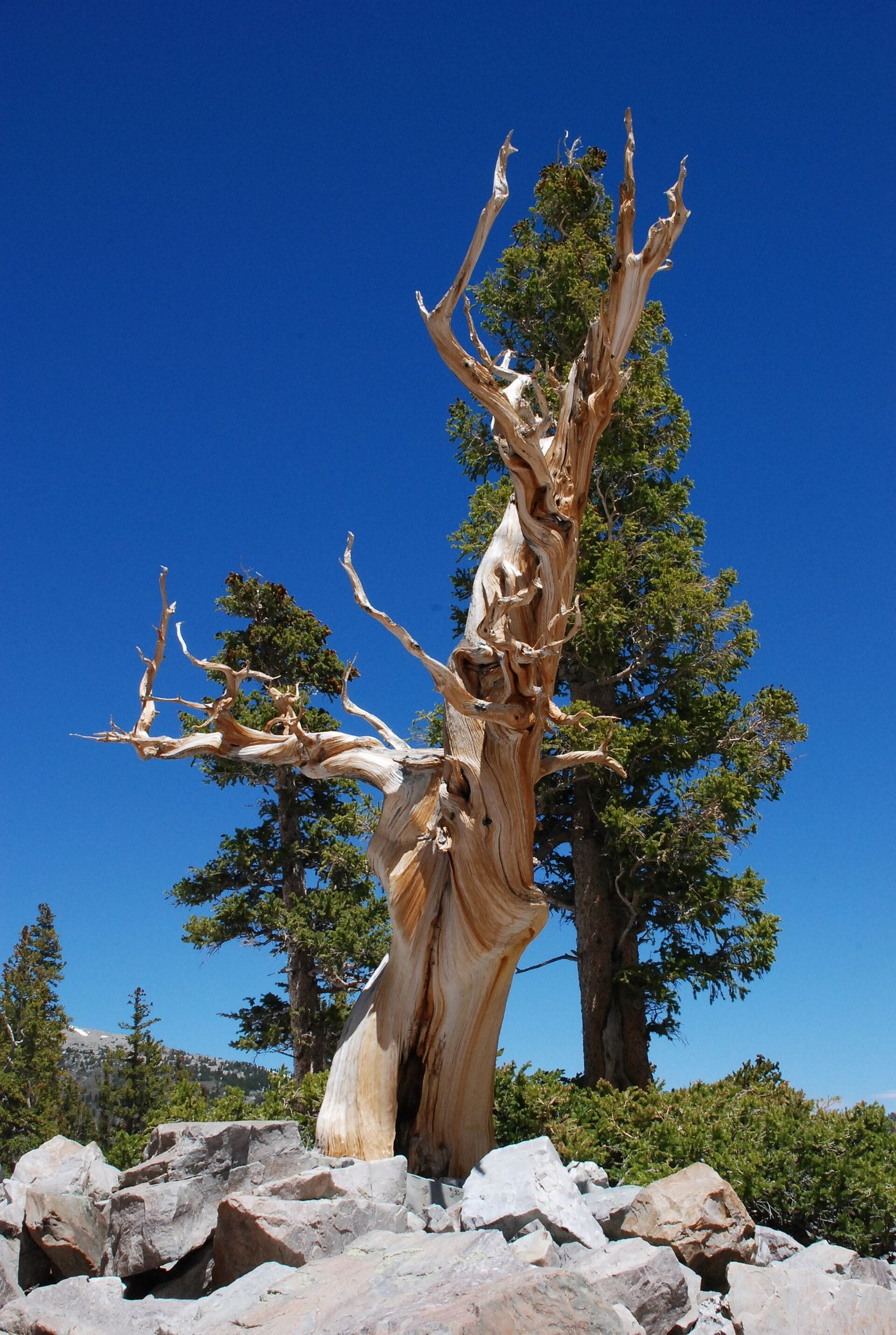
Prometheus was felled in the summer of 1964 by geographer Donald R. Currey, who had permission from the Forest Service to have the tree cut down. The area would not become a national park for another twenty-two years.
The circumstances are still argued over, and the Park Service's own account allows that nobody involved knew the tree's record age before the saw went in. The stump is still up there, and the episode is a large part of why the surviving grove is now so carefully protected.
8. Hoover Dam Rises 726 Feet From Bedrock
Hoover Dam measures 726.4 feet from foundation rock to the roadway on its crest, and the crest itself stretches 1,244 feet across Black Canyon. Those are the Bureau of Reclamation's own figures, measured from the rock the dam is keyed into rather than from the water.
Standing on the crest, the scale is hard to read because there is nothing familiar to compare it with. The intake towers that look modest from the road are the height of a tower block apiece, and the canyon walls swallow the whole structure from a mile away.
9. How Many Died Building the Dam Depends Who Counts
The National Park Service records that 96 men died during their work constructing Hoover Dam. The wider count of deaths reported as associated with the construction reaches 112, a difference that comes down to where you draw the line.
The lower figure counts deaths on the job at the dam site. The higher one takes in illness, heatstroke in the surrounding camps and incidents away from the works. Neither is wrong; they answer different questions, and the gap between them is worth knowing before quoting either.
10. Hoover Powerplant Runs on 2,080 Megawatts
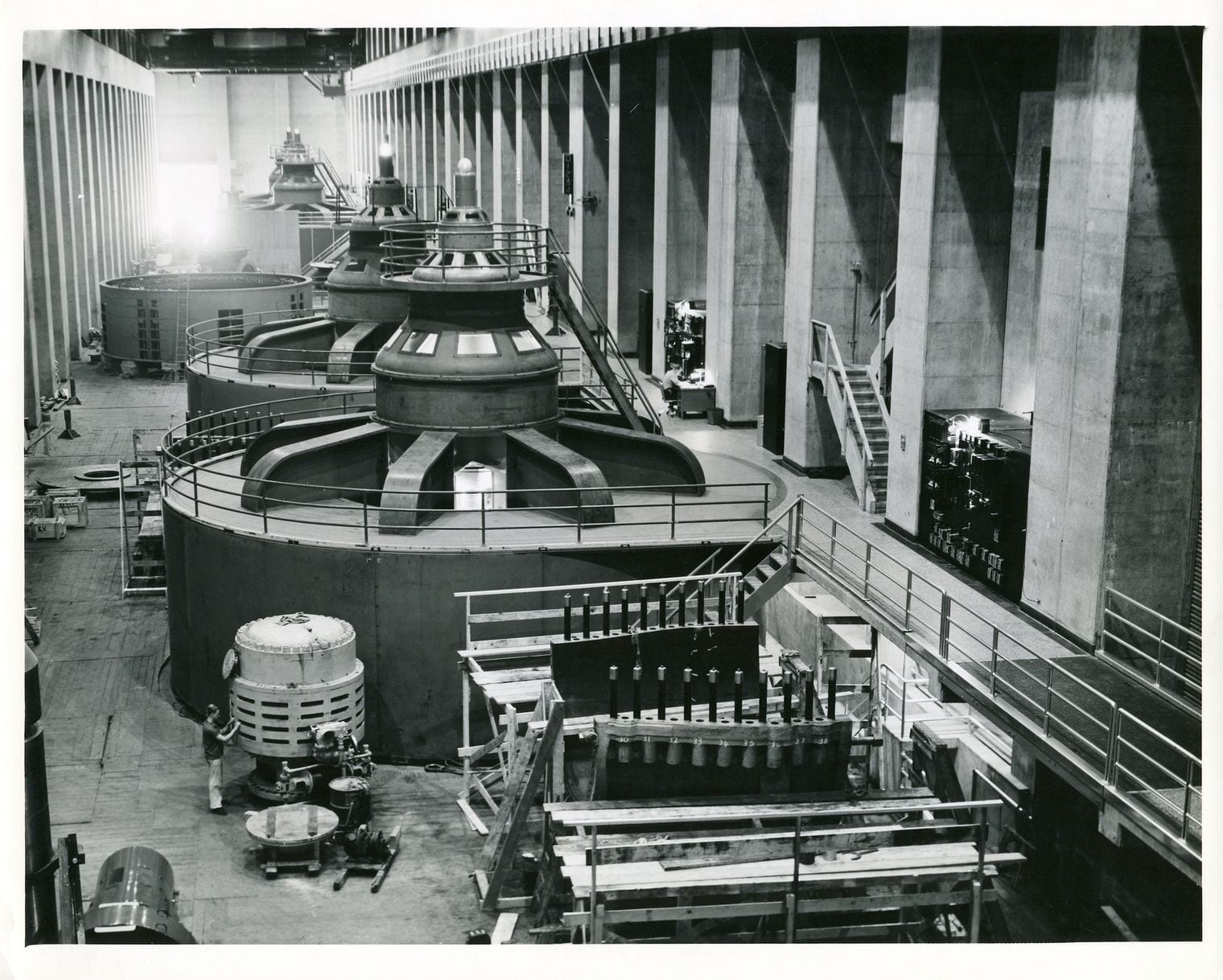
The Hoover Powerplant has a nameplate capacity of about 2,080 megawatts, drawn from seventeen generating units set into the canyon walls on either side of the river.
The plant is built in a U around the base of the dam, with the machine halls tucked in below the crest so that the whole installation is invisible from the road above. Power from it is apportioned between Nevada, Arizona and California under a formula set out in federal law.
11. Lake Mead Could Cover Pennsylvania a Foot Deep
At elevation 1,221.4 feet Lake Mead would contain 28,945,000 acre-feet — enough water, in Reclamation's own comparison, to cover the state of Pennsylvania to a depth of one foot.
That is the design figure rather than the present one; the reservoir has spent recent decades well below it, and the pale mineral band on the canyon walls marks where the water used to reach. It remains the largest reservoir in the United States by capacity.
12. The Black Rock Playa Runs About 200 Square Miles
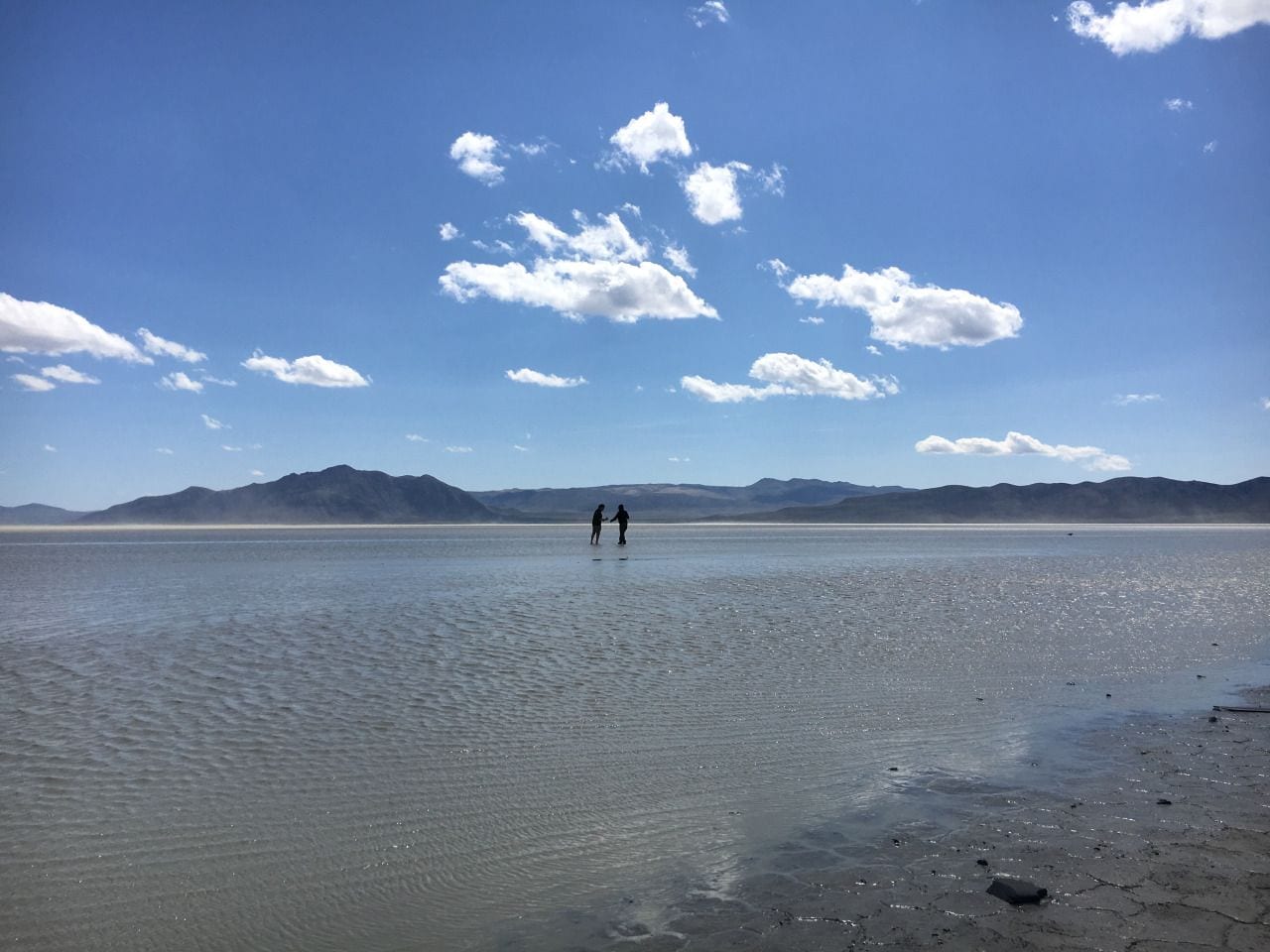
The Black Rock Desert playa is a flat expanse of about 200 square miles in northwestern Nevada, one of the largest and most level surfaces of its kind anywhere.
It is the dry bed of a Pleistocene lake, resurfaced every winter when shallow water spreads across it and settles the silt out again. That annual reset is what keeps it so flat, and why it has been used for land speed attempts and large temporary gatherings alike.
13. Washington Owns Four Fifths of Nevada
Nevada is the most federally owned state in the country, at 80.1% of its land. The Bureau of Land Management administers the majority of that — some 48 million acres, a larger share than in any other state.
The two figures answer different questions and are often confused. 80.1% counts every federal agency together; the BLM's own share is 67%. Either way, the practical effect is that most of Nevada is public land you can walk onto, which is unusual even by western standards. These are the figures as they stood in 2026.
14. Red Rock Canyon Draws Three Million People a Year
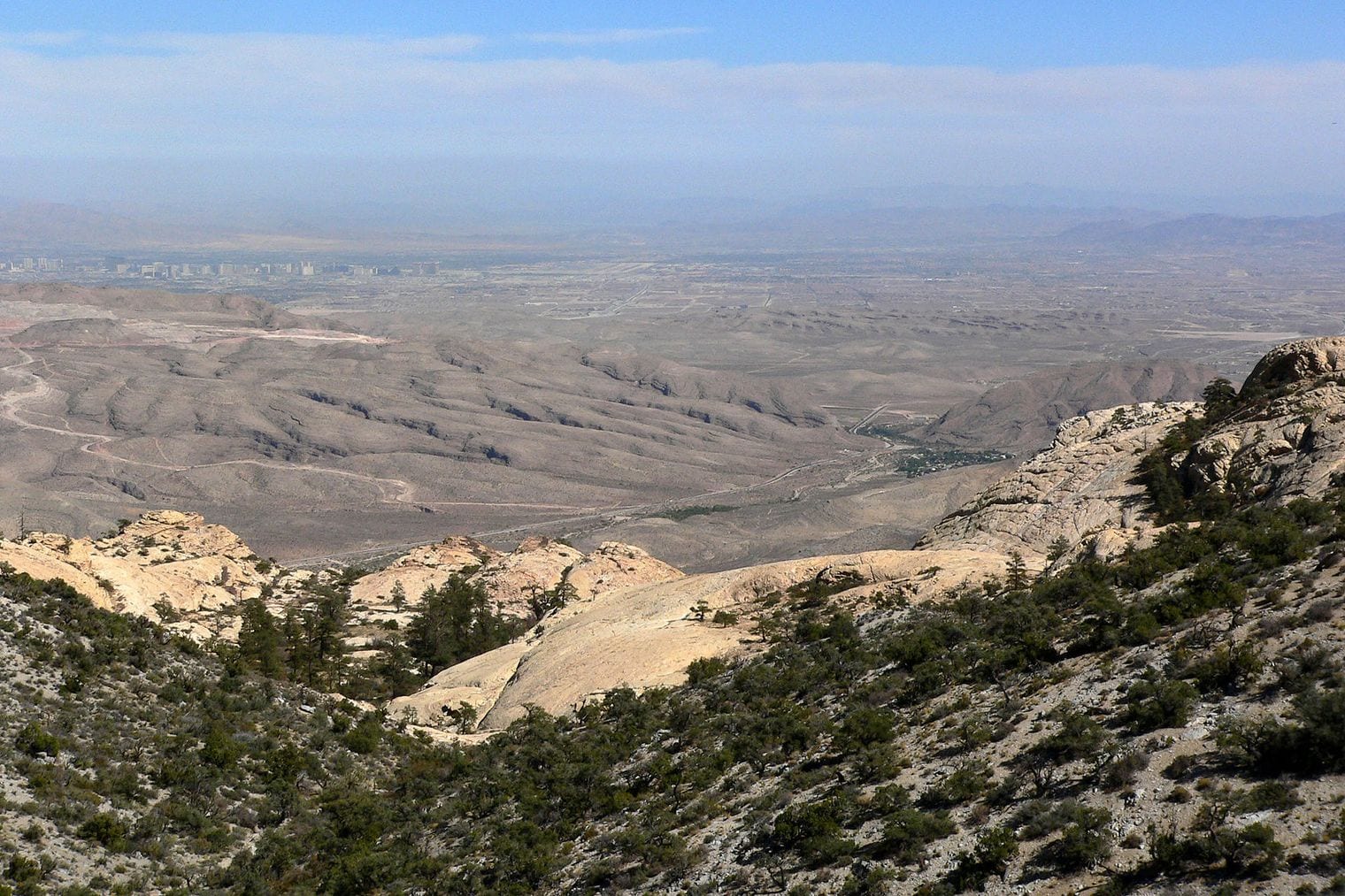
More than three million people visit Red Rock Canyon National Conservation Area each year, most of them driving its 13-mile one-way scenic loop.
The draw is proximity as much as scenery: the escarpment is close enough to the Las Vegas Strip that you can be among Jurassic sandstone within half an hour of leaving the casinos. The loop is one-way for a reason, and the pull-outs fill early on winter weekends. The record was unchanged as of 2026.
15. Lake Mead Was America's First Recreation Area
Lake Mead National Recreation Area spreads across 1.5 million acres of mountains, canyons, valleys and two reservoirs. In 1964 it became the first National Recreation Area to be designated as such by Congress.
The designation was invented to describe something that did not fit the existing categories — a reservoir landscape managed for boating and swimming rather than for wilderness. Everything the Park Service has since labelled a national recreation area follows from this one.
16. Only One River Runs Entirely Inside Nevada
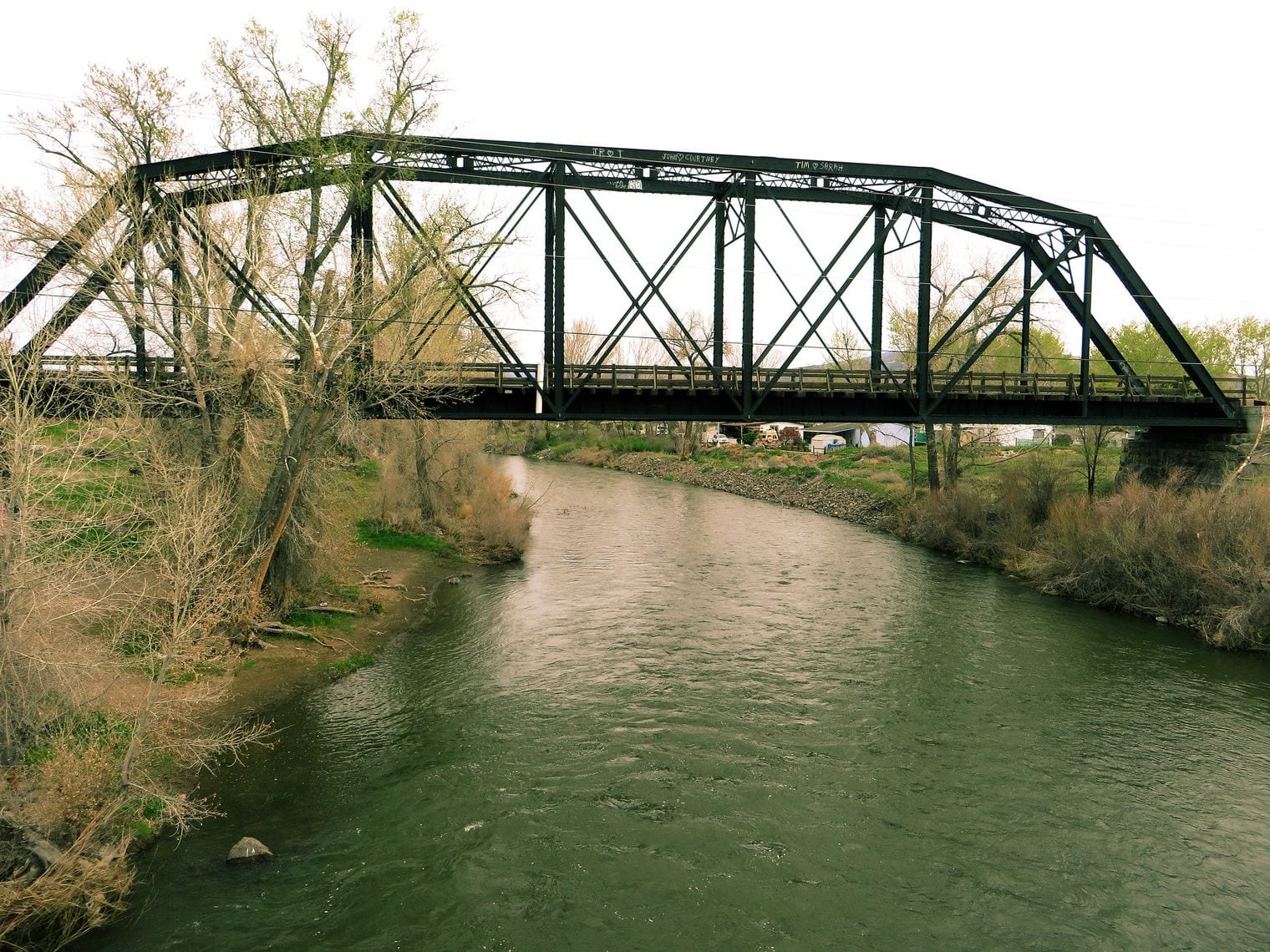
The Humboldt River runs about 330 miles east to west across northern Nevada, and its basin is the largest contained entirely within the state. It is the only major river system Nevada does not share with a neighbour.
Emigrant trains followed it west because it was the one reliable line of water across the Great Basin. It does not reach the sea, or any other river: it simply runs out in the Humboldt Sink, which is what a river does in a basin with no outlet. That was the state of it as of 2026.
17. Pyramid Lake Is What's Left of an Inland Sea
Pyramid Lake is a sacred remnant of prehistoric Lake Lahontan, the vast endorheic lake that once covered most of western Nevada.
At its greatest extent Lahontan filled valley after valley across the northwest of the state. What remains today are the deep pockets where its water lingered, and Pyramid Lake is the one that held on. The old shorelines are still legible as terraces cut into the hills hundreds of feet above the present water.
18. Nevada's First Settlement Was a Trading Post
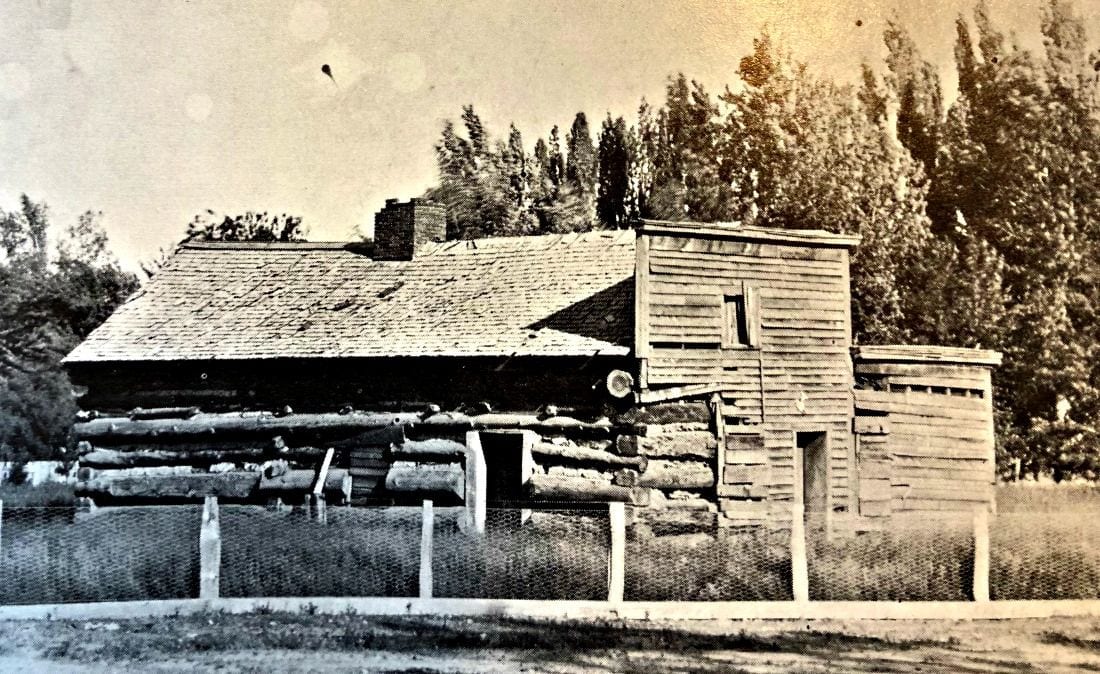
Genoa, founded in 1851 as Mormon Station, was Nevada's first permanent non-native settlement. It began as a trading post on the Carson Route of the California Trail, selling supplies to emigrants about to attempt the Sierra.
The location was chosen for the same reason travellers stopped there: it sits at the foot of the mountains with water and grazing, the last easy ground before the climb. A reconstructed stockade stands on the site today.
19. Nevada Joined the Union as the 36th State in 1864
Nevada was admitted to the Union as the 36th state on October 31, 1864, in the closing months of the Civil War. The date is still a state holiday.
The territory was thinly populated even by the standards of the day, and its admission owed as much to wartime politics as to population. The nickname that came out of it — Battle Born — is on the state flag, and Nevada is the only state that carries the phrase.
20. Nevada Wired Its Constitution East by Telegram
To reach Washington before the 1864 election, Nevada sent its entire draft constitution east as a 16,543-word telegram, transcribed at the other end onto 175 pages.
There was no direct wire from Carson City, so the text was relayed east in stages and re-keyed at each hop. Sending a founding document by telegraph was extraordinary and expensive, and the transcript survives in the National Archives as the longest telegram in its holdings.
21. Silver Peak Is America's Only Lithium Brine Mine
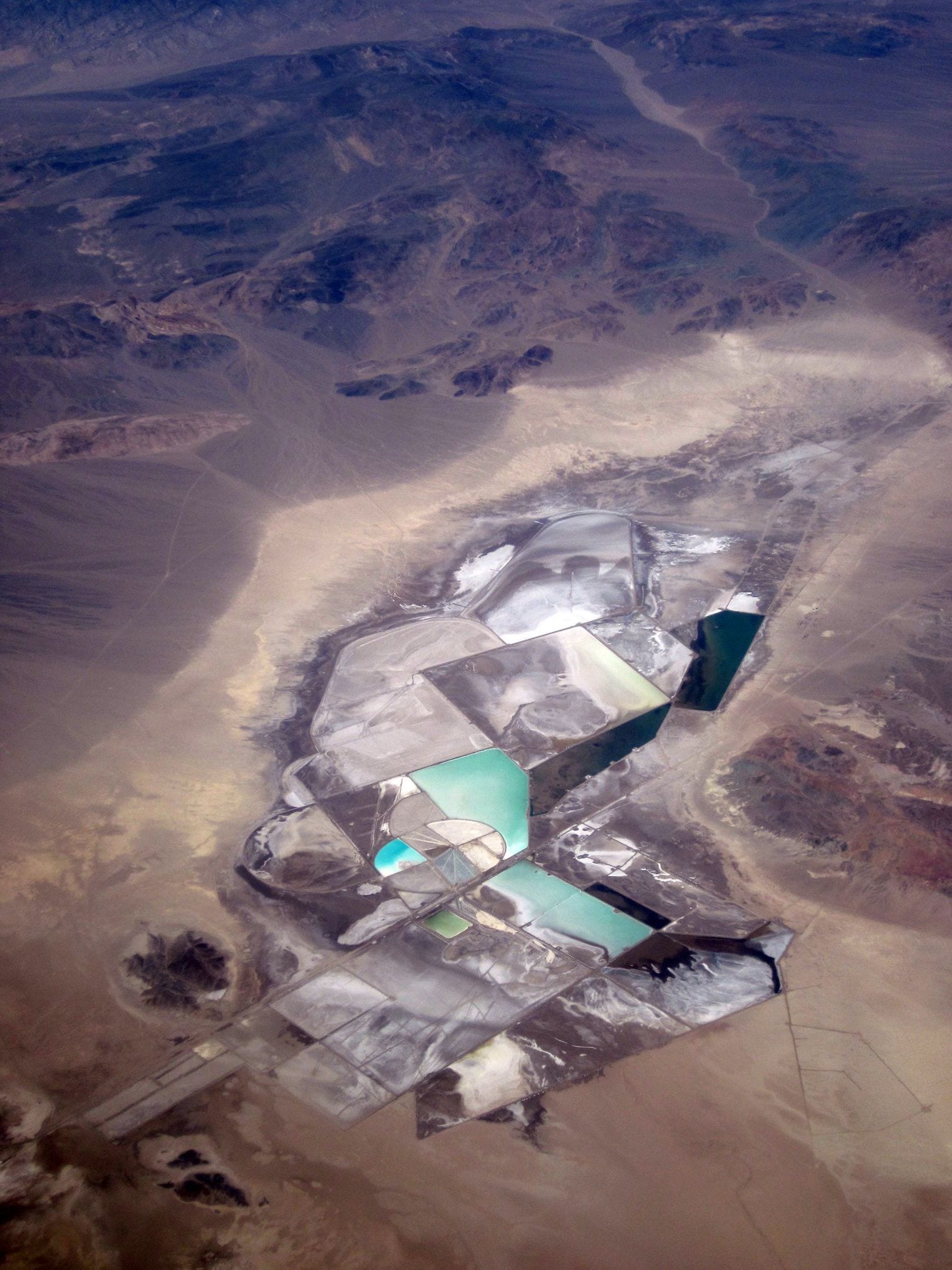
Nevada is the sole US producer of lithium carbonate, and the Silver Peak operation in Esmeralda County is currently the only operating source of lithium in the United States.
The method is old-fashioned and slow: brine is pumped from beneath a dry lake into evaporation ponds and left to concentrate in the desert sun over months. Newer Nevada projects are under construction, but as things stand the country's entire domestic lithium supply comes from this one valley. It held as of 2026.
22. 928 Nuclear Tests Were Detonated in One County
After conducting 928 nuclear tests, full-scale nuclear testing at the Nevada Test Site in Nye County came to an end in 1992.
The site occupies a stretch of desert larger than some states, and the ground still shows for it: the northern flats are pocked with subsidence craters where underground shots collapsed the rock above them. The land remains federal and closed, but the craters are visible from the air.
23. Most of Nevada Drains Nowhere Near the Sea
Nearly all of Nevada sits inside the Great Basin, a large area with no drainage to the ocean, whose rivers end in sinks and salt flats instead of reaching a coast.
This one condition shapes the landscape more than any other. Water that falls on Nevada has nowhere to go, so it evaporates and leaves its minerals behind. The playas, the alkali flats and the salt marshes are all the same process running for thousands of years.
24. Nevada's Mountains Come in Long Narrow Strips
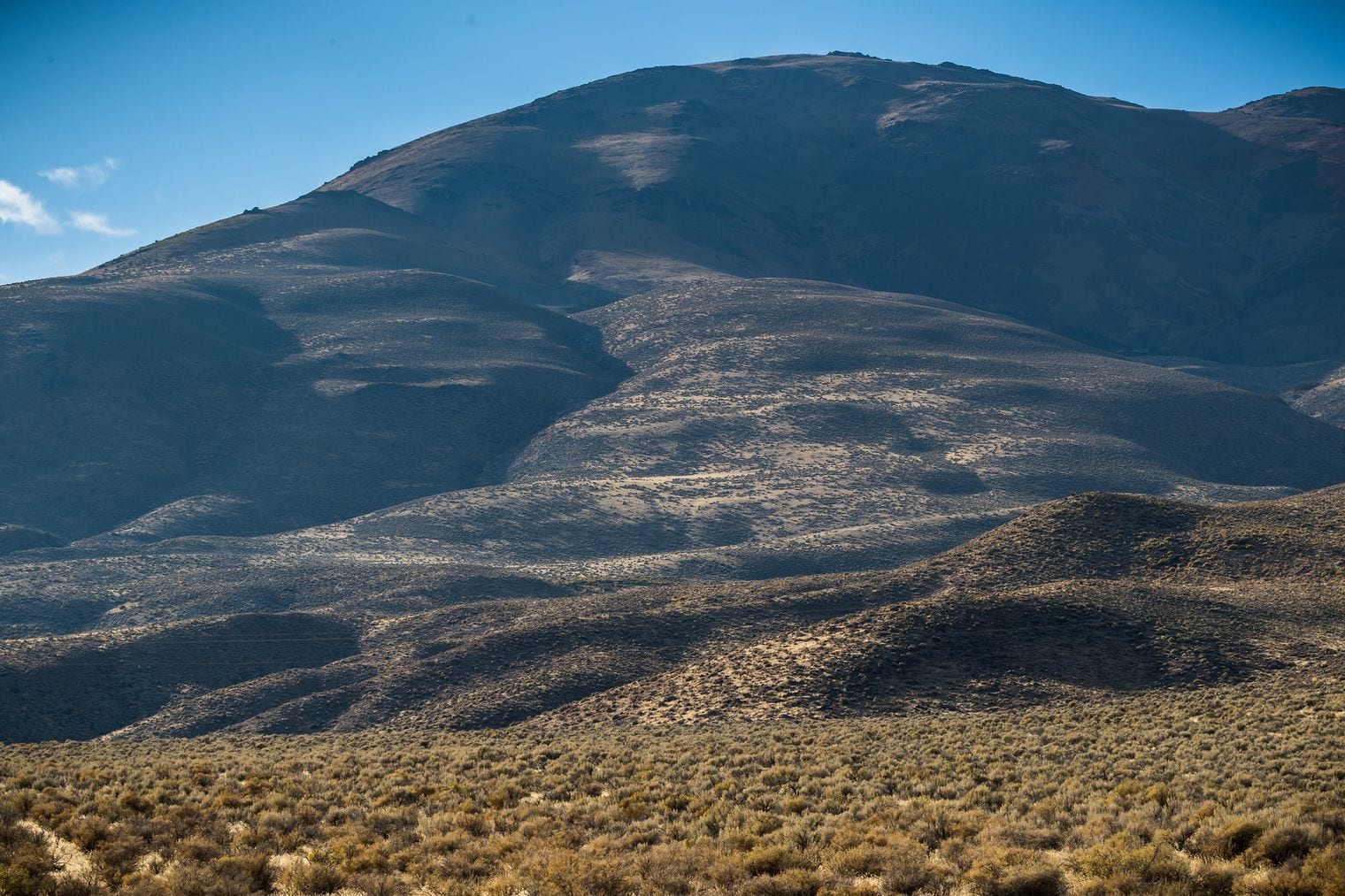
Nevada's mountain ranges are commonly about 10 miles wide and rarely longer than 80 miles, separated by wide valleys in the repeating pattern that gives the Basin and Range its name.
Driving east across the state, you climb a range, drop into a valley and climb another, over and over. The regularity is structural: the crust here is being pulled apart, and the ranges are the tilted blocks left standing between the faults.
25. Forty Ichthyosaurs Lie Where an Ocean Used to Be
Berlin-Ichthyosaur State Park sits above a bonebed where approximately 40 ichthyosaurs were found — marine reptiles from a warm ocean that covered central Nevada 225 million years ago.
Several specimens were left exactly where they were excavated and roofed over with a barn, so you see them lying in the rock rather than mounted in a hall. It is an odd thing to come across in the middle of the high desert.
26. Six Beehive Ovens Made Charcoal for Silver Smelters
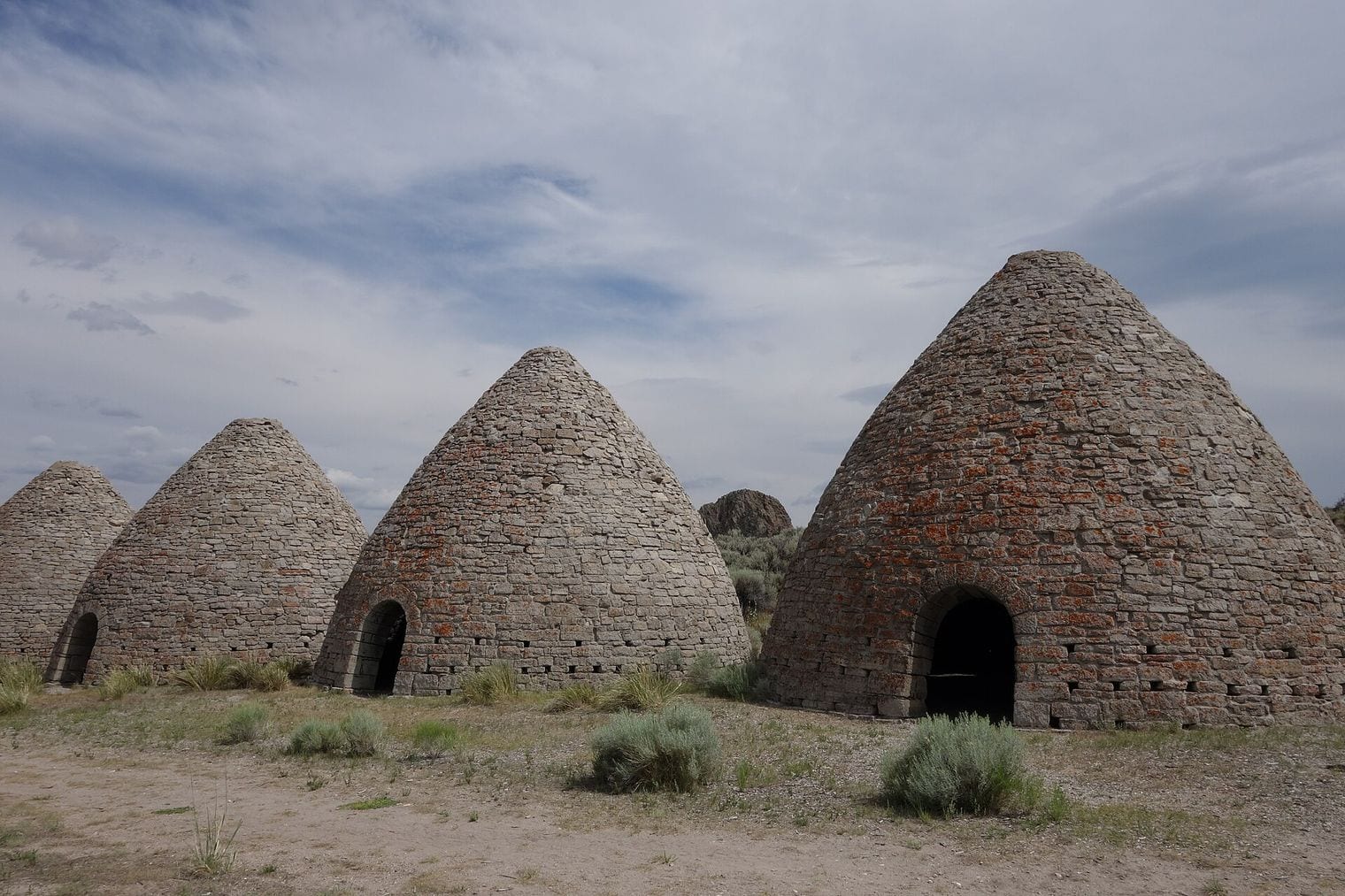
Six beehive shaped charcoal ovens near Ely, each 30 feet high and 27 feet across, were used from 1876 through 1879 to make charcoal for the silver smelters at Ward.
They worked for barely three years before the ore ran thin, and then found second careers as shelter for travellers and, by local account, a hideout for stagecoach bandits. The masonry is intact enough that you can walk inside and look up at the smoke hole.
27. Valley of Fire Is Nevada's Oldest State Park
Valley of Fire, established in 1935, is Nevada's oldest state park. Its red Aztec sandstone formed from shifting dunes some 150 million years ago.
The rock is the whole point: wind-bedded, iron-stained and eroded into fins, arches and slot canyons that turn a deep orange in low light. It sits close enough to Las Vegas to be a half-day trip, which is why it has stood in for other planets in more than one film.
28. Four State Parks Opened in Nevada in One Year
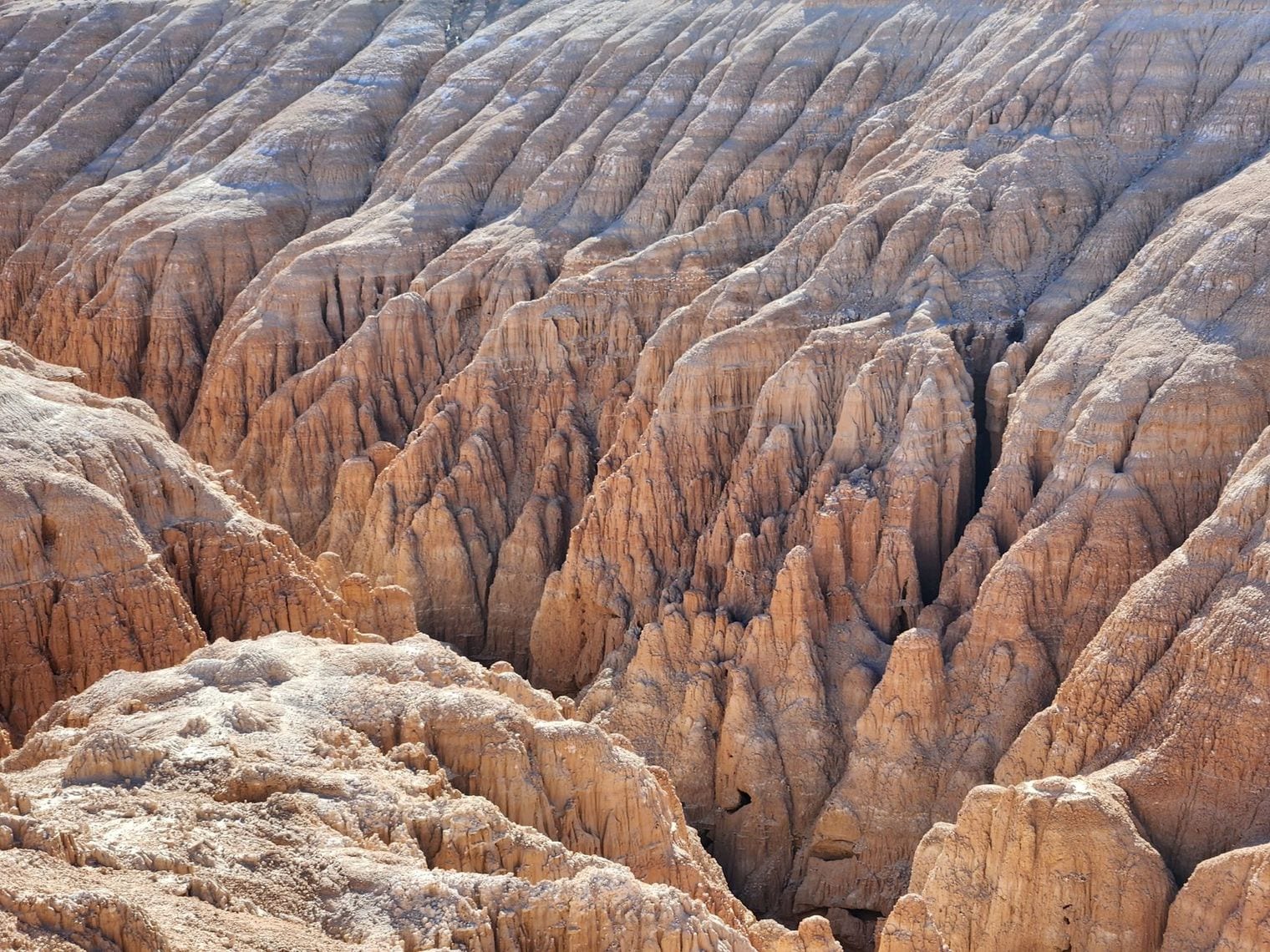
Cathedral Gorge, whose bentonite clay has eroded into cathedral-like spires and narrow slot canyons, became one of the four original Nevada state parks created in 1935.
Nevada did not ease into having a park system; it created one in a single legislative stroke in the middle of the Depression. Cathedral Gorge is the strangest of the four — soft clay rather than rock, cut into passages narrow enough to turn sideways in.
29. Ice Age Mammoths Roamed the Las Vegas Valley
Tule Springs Fossil Beds National Monument, established in 2014 on 22,650 acres at the edge of Las Vegas, preserves Ice Age deposits laid down over roughly the last 570,000 years.
The monument protects a stretch of pale badlands on the northern edge of the suburbs, where old spring channels are exposed in cross-section. It is one of the few national monuments you can reach on a city bus route.
30. Thirty Kinds of Big Mammal Vanished From Nevada
Over 30 types of large mammals went extinct in North America at the end of the last Ice Age, and Tule Springs holds the bones of many of them, from Columbian mammoths to dire wolves.
The deposits accumulated around spring-fed wetlands that drew animals in and then preserved what died there. What is now the driest corner of the state was, in that period, reliably wet enough to support a megafauna.
31. The Comstock Was the Biggest Silver Strike on Earth
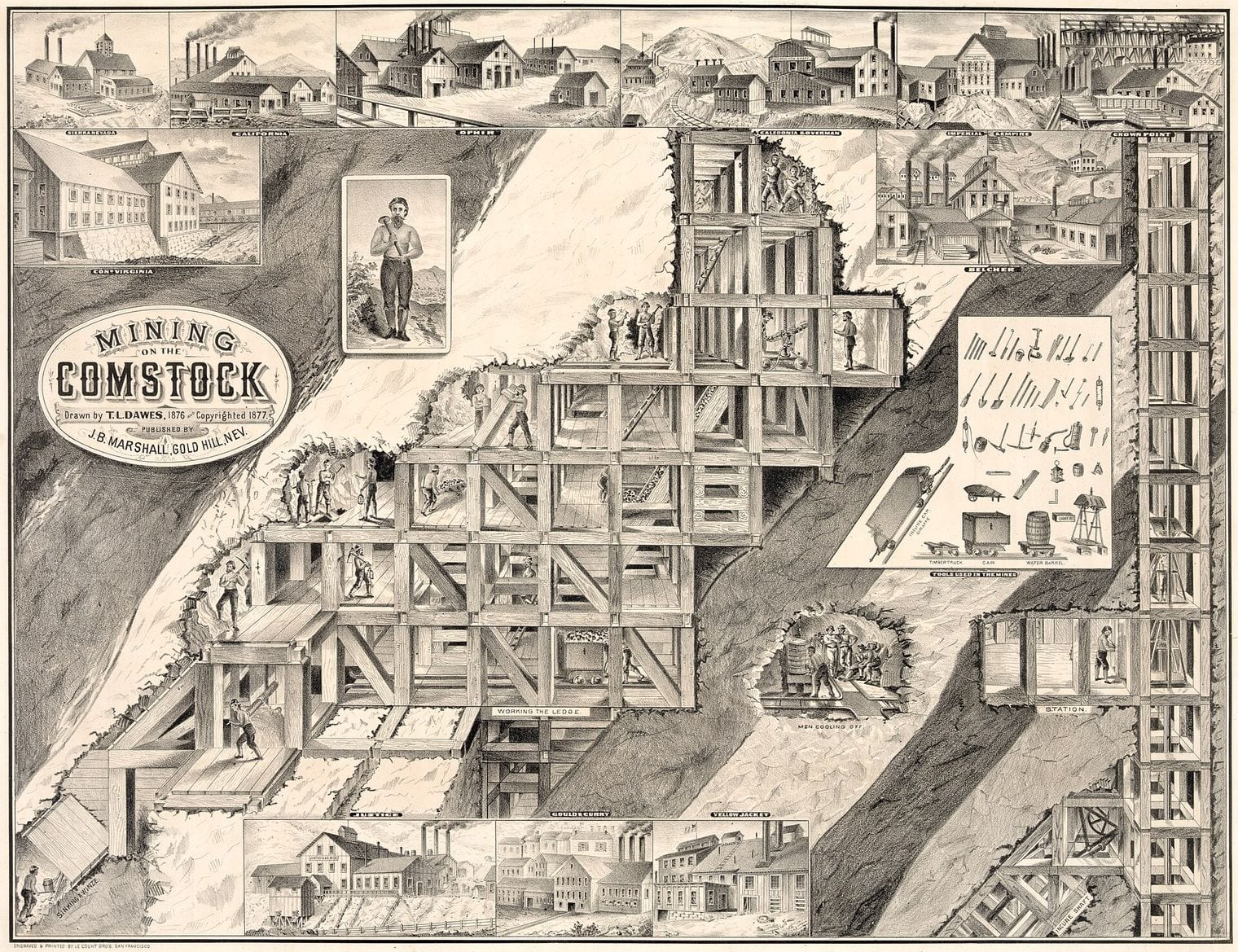
The Comstock Lode was the first major discovery of silver ore in the United States, and production from its mines between 1859 and 1878 came to $320,000,000.
The strike remade the region in a decade. It funded San Francisco, drew engineers from across the world to solve the problems of deep hot mining, and gave the territory the population and the argument it needed for statehood. That was still the position as of 2026.
32. The Hottest Air Ever Recorded Was Just Over the Line
The world record highest air temperature of 134 degrees Fahrenheit was recorded at Furnace Creek in Death Valley on July 10, 1913, in a national park that spills across the Nevada state line.
The reading itself is disputed by some modern climatologists, but it remains the official world record. The Nevada side of the park sits higher and sees fewer visitors than the California floor, and it is the way travellers from Las Vegas usually come in. The figure here is the one on record as of 2026.
33. Nevada's State Fossil Was a 49-Foot Sea Reptile
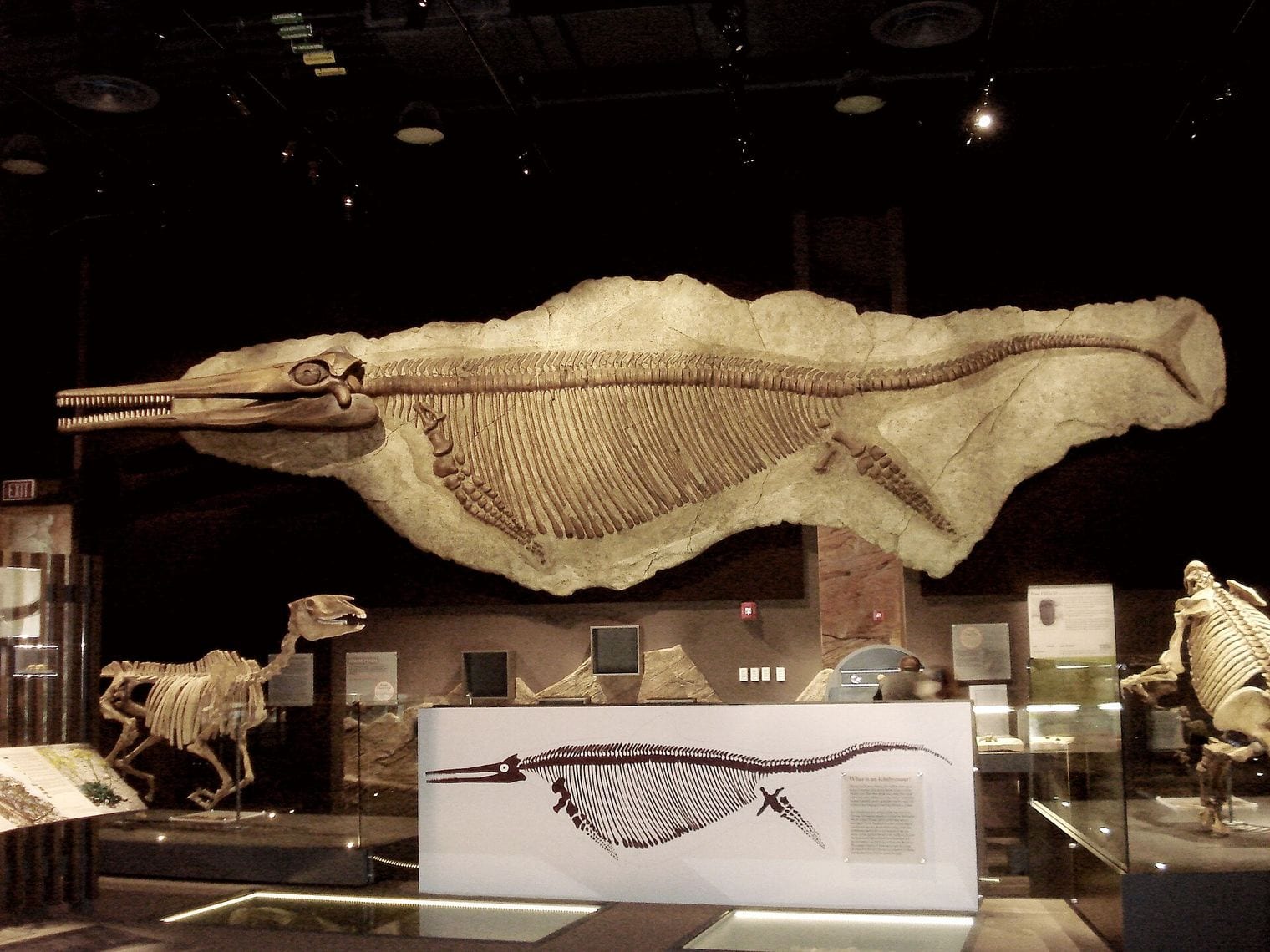
Shonisaurus popularis, the ichthyosaur preserved at Berlin-Ichthyosaur State Park, measured around 44 to 49 ft in length — among the largest ichthyosaurs ever found.
It was a deep-water animal shaped rather like a whale, with paddle limbs and a long tapering skull. Nevada adopted it as the state fossil, which makes it one of the few state symbols you can go and look at lying in the ground where it died. It still stood that way as of 2026.
34. Nevada Counted 3,282,188 Residents in 2025
Nevada's resident population was estimated at 3,282,188 in 2025. That is an estimate rather than a headcount — the decennial census counts heads, and the years in between are modelled from births, deaths and migration, so the figure moves a little each year.
What the total hides is how unevenly it sits on the map. Nevada is mostly public land and mostly empty, and its people are gathered into a couple of valleys at opposite ends of the state, which is why a drive across the middle can run for an hour without passing a town. That was the published estimate as of 2026.
35. Three Million Cubic Yards Went Into the Dam Alone
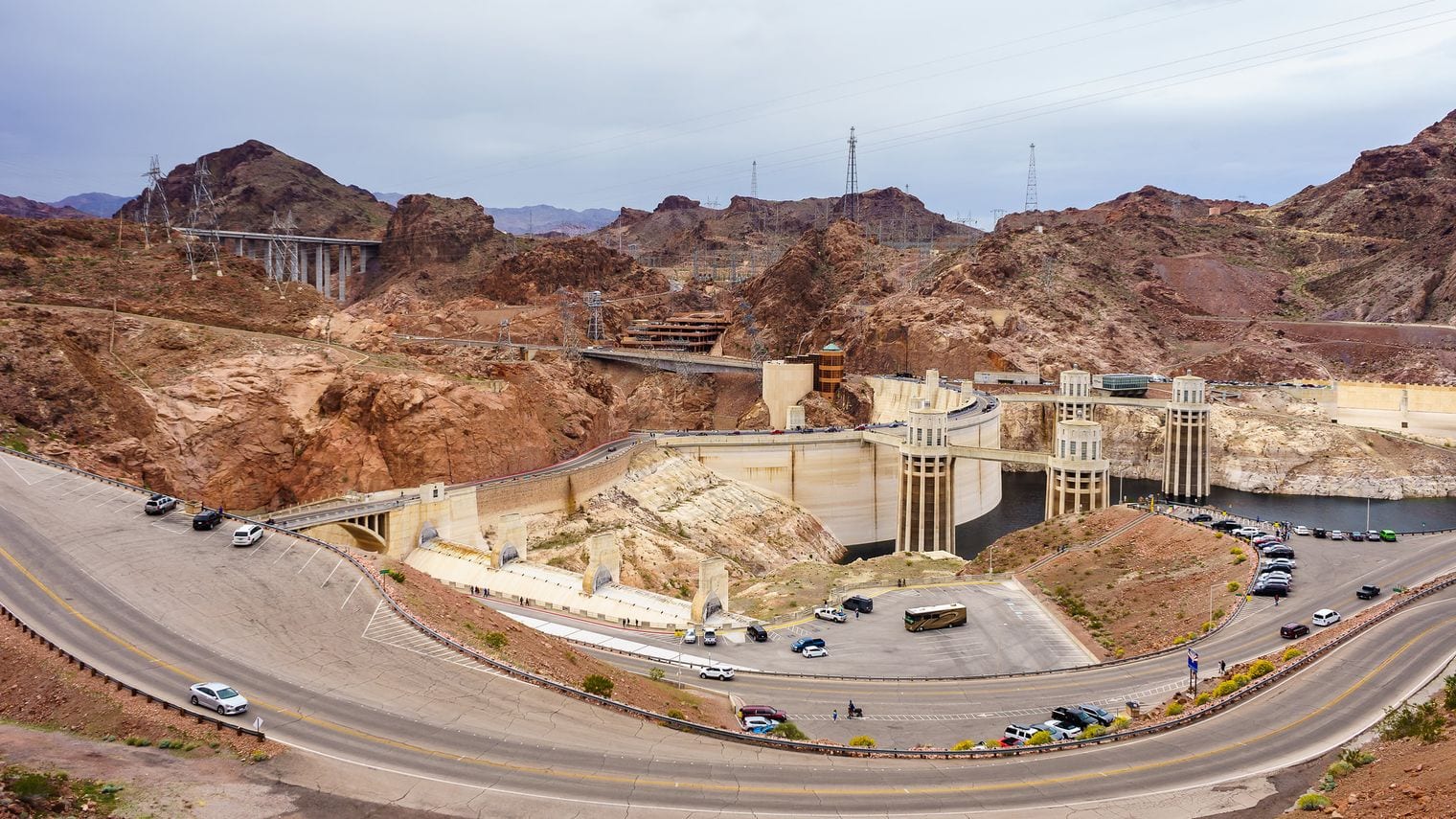
A total of 3,250,000 cubic yards of concrete went into Hoover Dam itself, part of 4,360,000 cubic yards across the dam, powerplant and appurtenant works.
It could not be poured as one mass. Concrete that size would have taken generations to cool and cracked as it went, so it was cast as interlocking blocks threaded with cooling pipes and grouted together once each had set.
36. Virginia City Peaked at 25,000 Residents
The mining camp at Virginia City grew into a full-on city with more than 25,000 residents at its peak in the mid-1870s. Today it holds a few hundred.
The town sits on a steep slope above the lode itself, which is why its streets are stacked in terraces. Enough of the boom-era buildings survive that the whole district, along with its neighbours, is a National Historic Landmark. That remained true as of 2026.
37. The Las Vegas Valley Was Once Wet and Green
At the peak of the last Ice Age, roughly 25,000 years ago, the Las Vegas area was wet and green — a wetland that is now Ice Age Fossils State Park.
Groundwater rose close enough to the surface to feed marshes and spring channels across the valley floor. The pale layers exposed in the park's low bluffs are those old wet deposits, stacked and then cut into by later erosion.
38. A 1962 Dig Outside Las Vegas Was a Record Breaker
The Big Dig of 1962-63 at what is now Ice Age Fossils State Park was the largest inter-disciplinary scientific expedition of its kind up to that point.
Crews cut a trench nearly two miles long across the deposits and brought geologists, palaeontologists and archaeologists to the same face of rock at the same time. That combination was novel then and is ordinary now, which is a fair measure of its influence. These are the figures as they stood in 2026.
39. Las Vegas's Oldest Building Predates the City
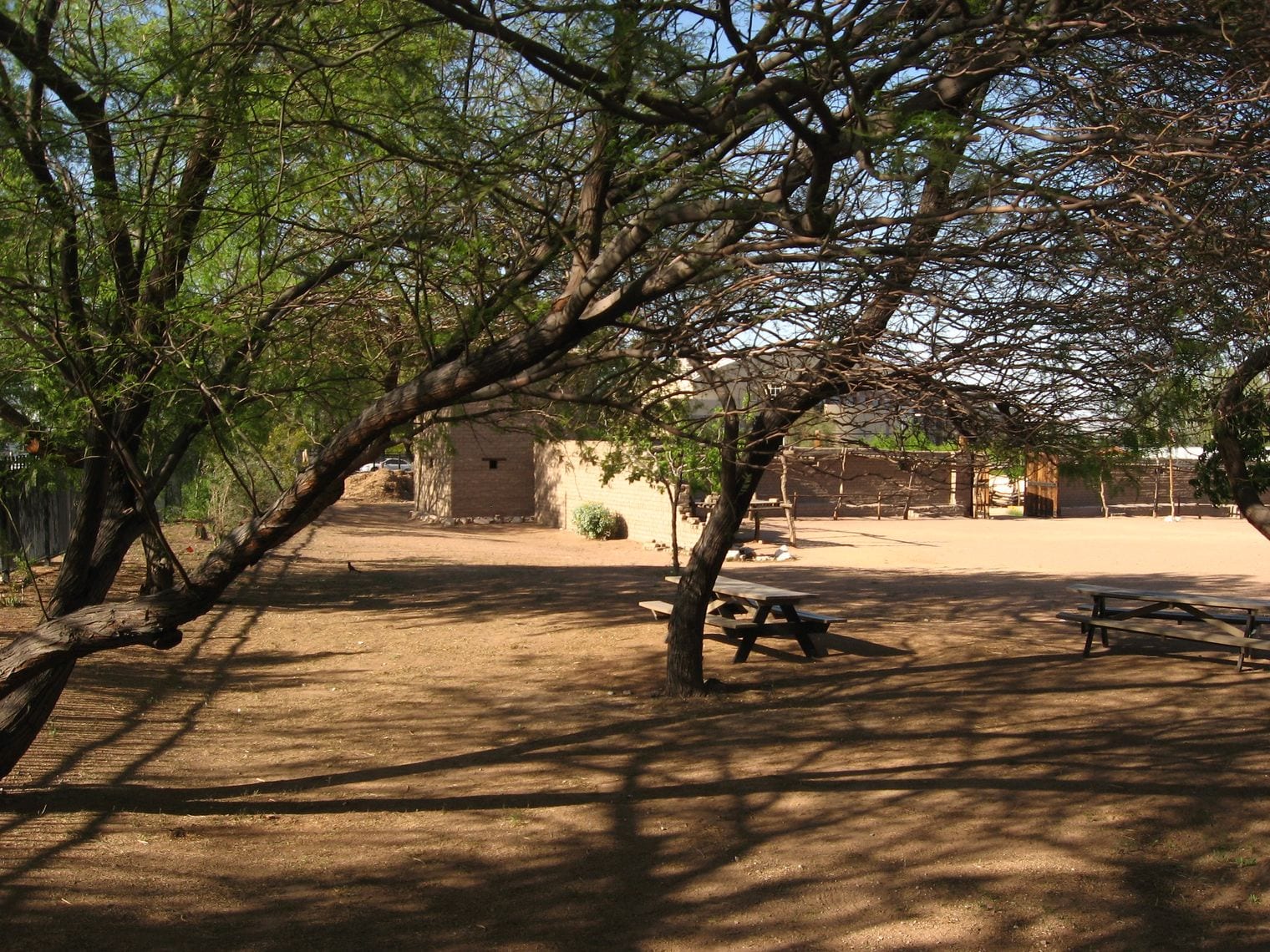
The Old Mormon Fort, completed in 1855, was the first permanent structure built in what would become Las Vegas fifty years later.
It was an adobe outpost on a spring-fed creek — the only free-flowing water for miles, which is what the name Las Vegas, the meadows, refers to. A remnant of the fort still stands a short walk from Fremont Street, hemmed in by the modern city.
40. Dayton Is Nevada's Second-Oldest Settlement
Dayton is the second-oldest Nevada settlement after Genoa, and became the first major milling centre of the Comstock because the Carson River gave it water.
Ore was hauled down from Virginia City to be crushed where the water was, so Dayton did the heavy industrial work while the lode town took the fame. The stone walls of one of those early mills still stand by the river. The record was unchanged as of 2026.
41. Nevada's First Gold Was Found in 1849 by Accident
In 1849 Abner Blackburn, heading for California, discovered a gold nugget in Gold Creek near Dayton, and placer miners had settled the mouth of Gold Canyon by 1850.
He was passing through on his way to somewhere richer, which is the pattern for the next decade: Nevada was a place people crossed. It took the silver of the Comstock, a few miles upstream, to make anyone stay.
42. A Butterfly Lives on One Nevada Sand Dune and Nowhere Else
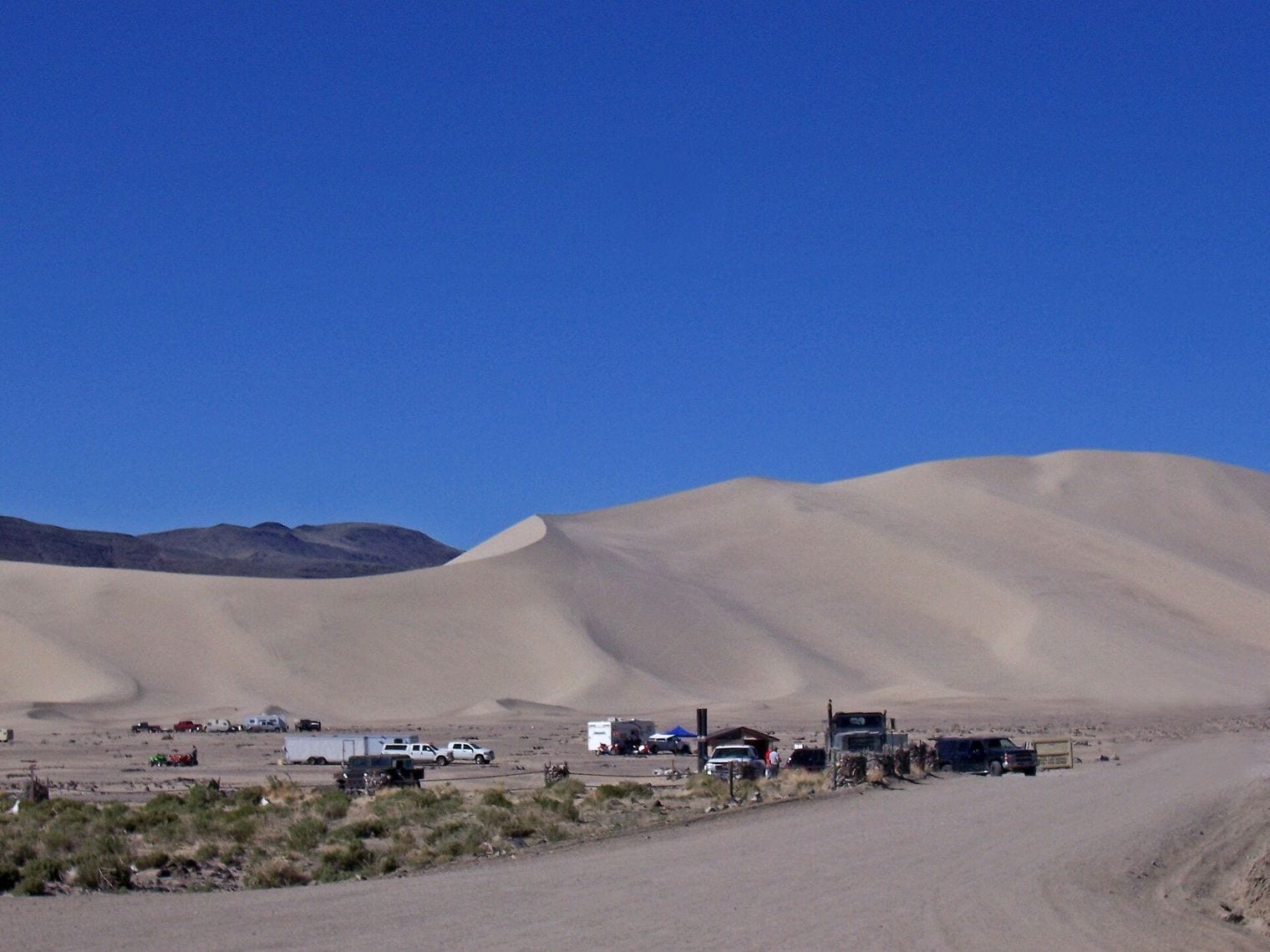
The Sand Mountain Blue Butterfly is endemic only to the Sand Mountain area, and the dune's trail system was routed partly to protect its habitat.
Its entire life cycle depends on Kearney buckwheat, a plant that grows on the sand around the dune's base and nowhere convenient. Protect the buckwheat and you keep the butterfly; lose it and the species has nowhere else to go.
43. Nevada Has a Sand Dune That Sings
Sand Mountain, a 600-foot singing sand dune east of Fallon, booms audibly when its sand slides.
The sound is low and carrying, more felt than heard, and it happens when a slab of dry sand shears and the grains shift together in step. Only a handful of dunes worldwide are shaped and sorted finely enough to do it.
44. Nevada Built Its Whole Park System in One Year
Beaver Dam was among the first four state parks established when the Nevada Legislature created the state park system in 1935.
It remains one of the hardest to reach, down a long gravel road near the Utah line, which is much of its appeal. Creating four parks at once in the depths of the Depression was an act of optimism the state has been living off ever since.
45. Nevada Has Exactly One Glacier Left
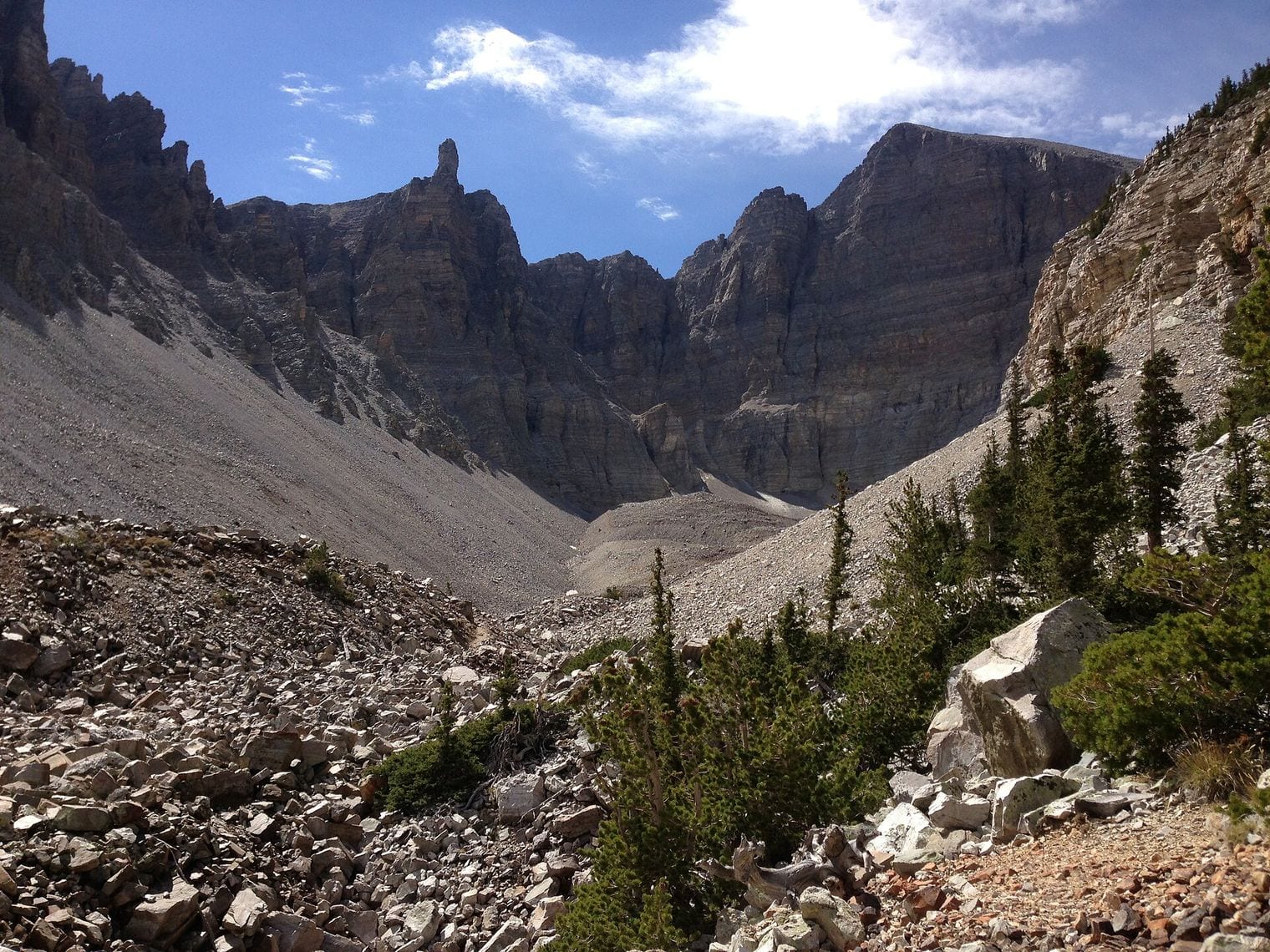
Great Basin National Park is home to the only glacier in Nevada, sitting in a protected cirque below Wheeler Peak and now classed as a rock glacier.
It survives because the cirque shades it for most of the day and funnels avalanche snow into it each winter. A rock glacier is ice with rubble mixed through and lying over the top, which insulates what is left and slows its retreat. That was the state of it as of 2026.
46. Nevada Re-Legalized Gambling in 1931
Gambling was legalized in Nevada in 1931, in the same legislative session that voted for what contemporaries called wide-open gambling.
It was a revenue measure taken in the worst year of the Depression, not a statement of principle — the state needed money and had little else to sell. The industry that grew out of it took another two decades to look like anything modern.
47. The Same Session Cut Divorce to Six Weeks
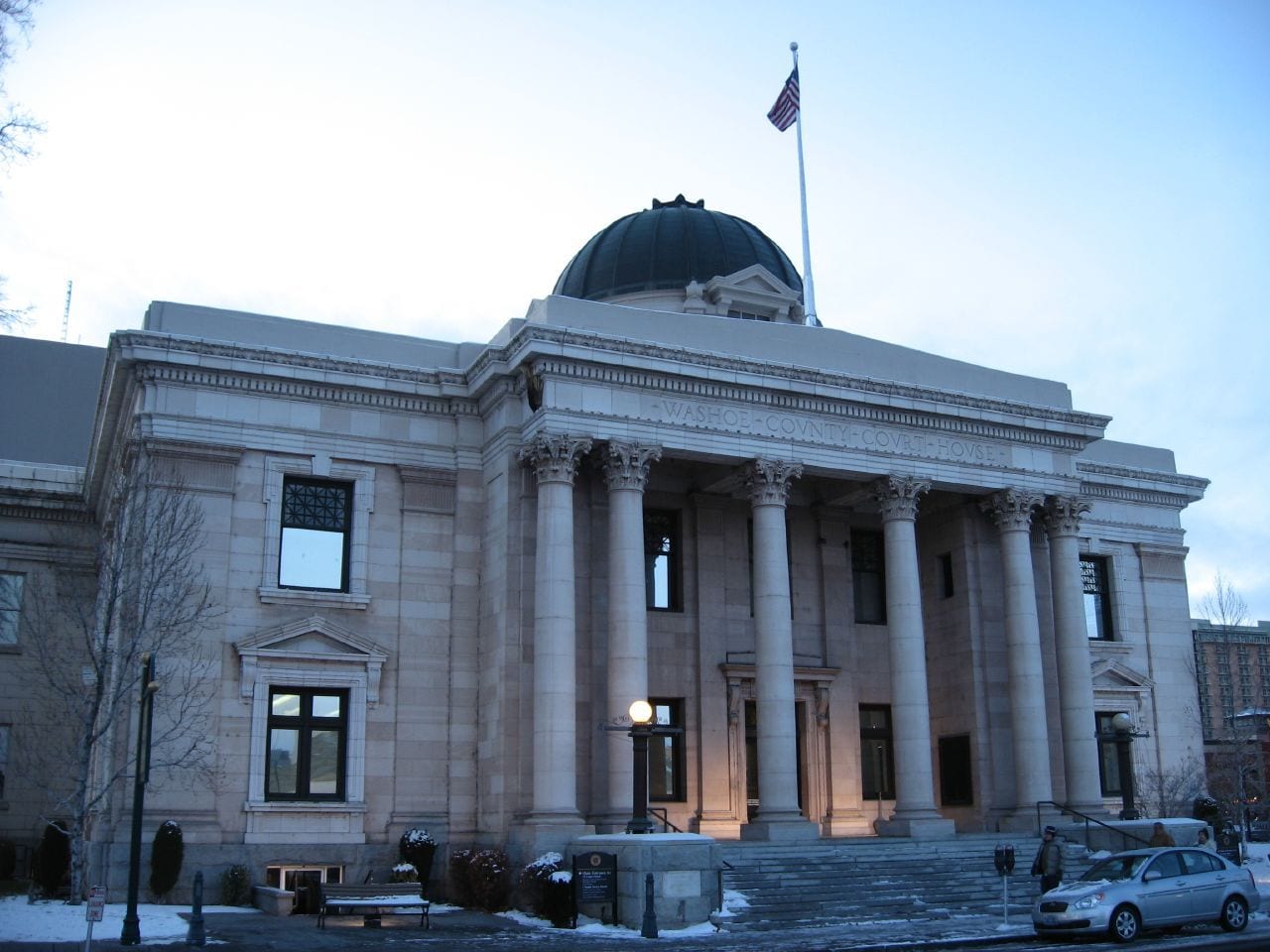
The 1931 legislature that legalized gambling also lowered Nevada's divorce residency requirement to six weeks, cementing Reno's standing as the divorce capital of the world.
Six weeks was short enough to be practical for anyone with the fare and time, and a whole economy of ranches and residential hotels grew up to house people waiting out the clock. The two 1931 laws worked on each other: you had to wait somewhere, and there was plenty to do.
48. Lincoln Signed Nevada's Enabling Act in March 1864
President Lincoln signed Nevada's enabling act on March 21, 1864, setting the procedure for admission at a moment when an additional Republican state carried perceived advantages.
The act laid out what the territory had to do to qualify: write an acceptable constitution and have it approved. That deadline, and the election coming in November, is why the finished document was later sent east by wire rather than by post. It held as of 2026.
49. Nevada Was Nearly Named the State of Washoe
Before statehood the region was known as Washoe, after the Washoe people, and in the September 1863 election 80% of voters approved framing a constitution for the State of Washoe.
The name had been in ordinary use for years — the Washoe process, the Washoe Valley, the whole silver district. It lost out to Nevada, which came instead from the Spanish for snow-covered, after the range on the western edge.
50. The Biggest Cutthroat Trout Ever Came From Nevada
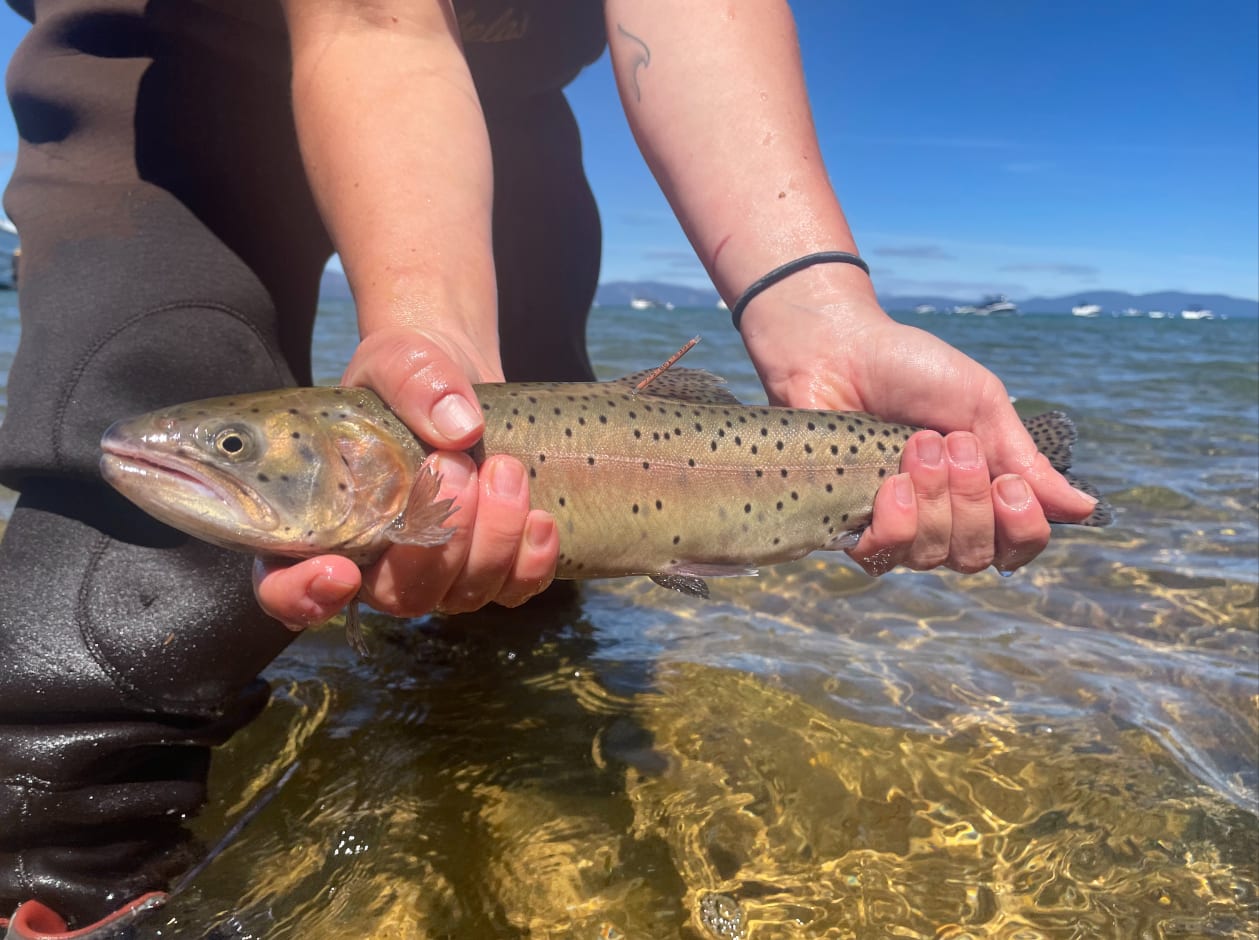
The record-size cutthroat trout of any subspecies was a Lahontan caught in Pyramid Lake weighing 41 pounds, and 20-pound fish are still considered normal there.
The strain grew that large because Pyramid is a big alkaline lake with abundant forage and no competition. The original Pyramid Lake fish were lost in the twentieth century, and today's are the product of a long restoration effort. That was still the position as of 2026.
51. A Fort Guarded the Pony Express Across Nevada
Construction on Fort Churchill began on July 20, 1860 and finished in 1861, built to protect early settlers and the mail route along the Pony Express.
It was made of adobe, which is why it looks the way it does now: the walls were never demolished so much as left to soften. Nevada State Parks holds them in arrested decay rather than rebuilding, so what you walk among is the original material, weathering slowly.
52. Pony Express Riders Changed Horses at Buckland Station
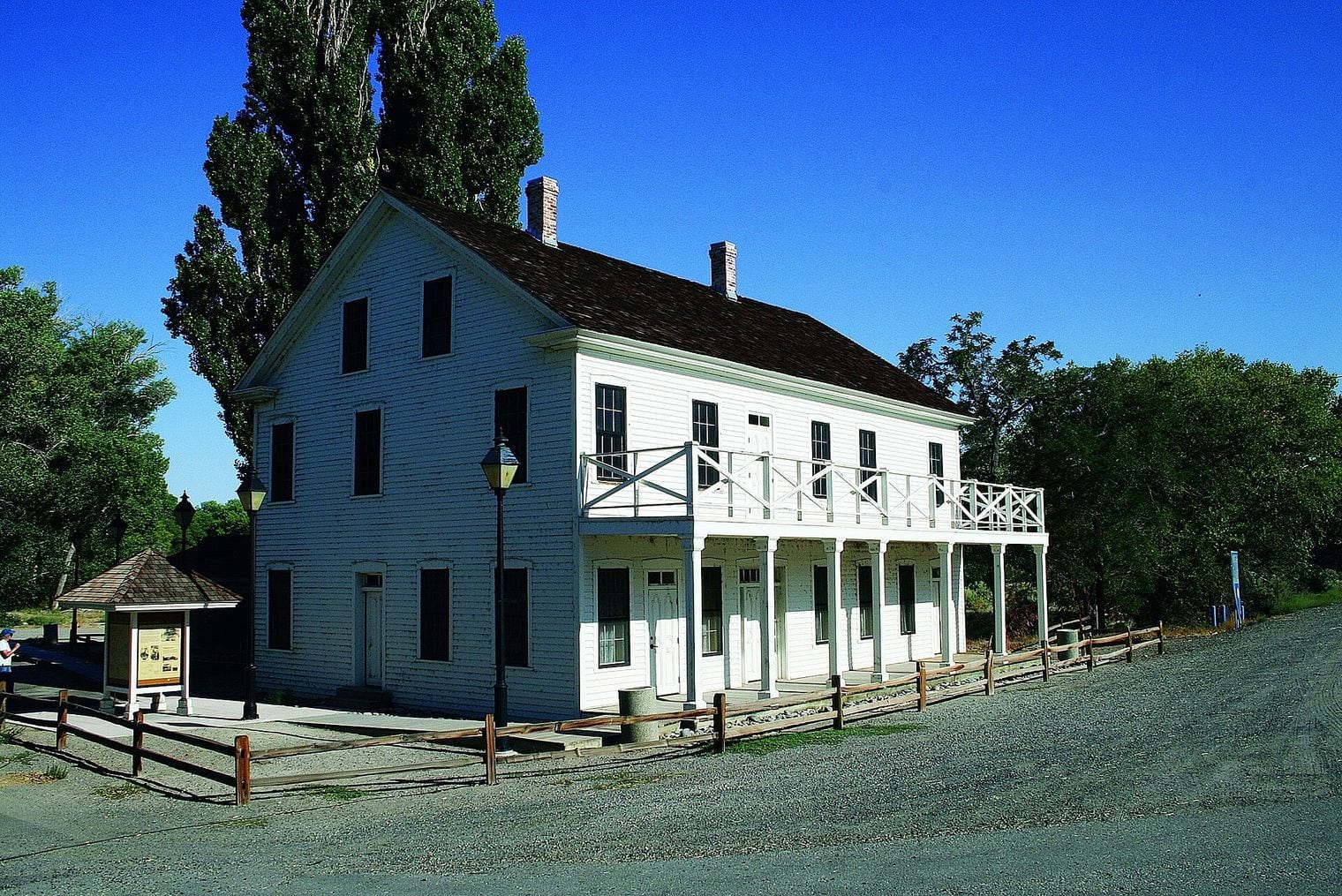
Samuel Buckland's ranch, established in 1859, served as a way station on the Central Overland Route where Pony Express riders took a change of mounts. He later salvaged the dismantled fort to build the two-storey house standing today.
A relay station was a working ranch with a fresh horse ready, not an outpost. Buckland's sits on the Carson River a short walk from the fort ruins, and the two are joined by a riverside trail.
53. A Las Vegas Ranch Predates the City by Decades
Sand Stone Ranch, now Spring Mountain Ranch State Park outside Las Vegas, was formed in 1876 by Sergeant James B. Wilson and George Anderson, and keeps some of the oldest buildings in Nevada.
The spring line at the base of the Wilson Cliffs is what made a ranch possible here. The result is an improbable green lawn under red sandstone walls, twenty minutes from a city that did not exist when the place was founded. The figure here is the one on record as of 2026.
54. Nevada Got the First Water Reclamation Ever Delivered
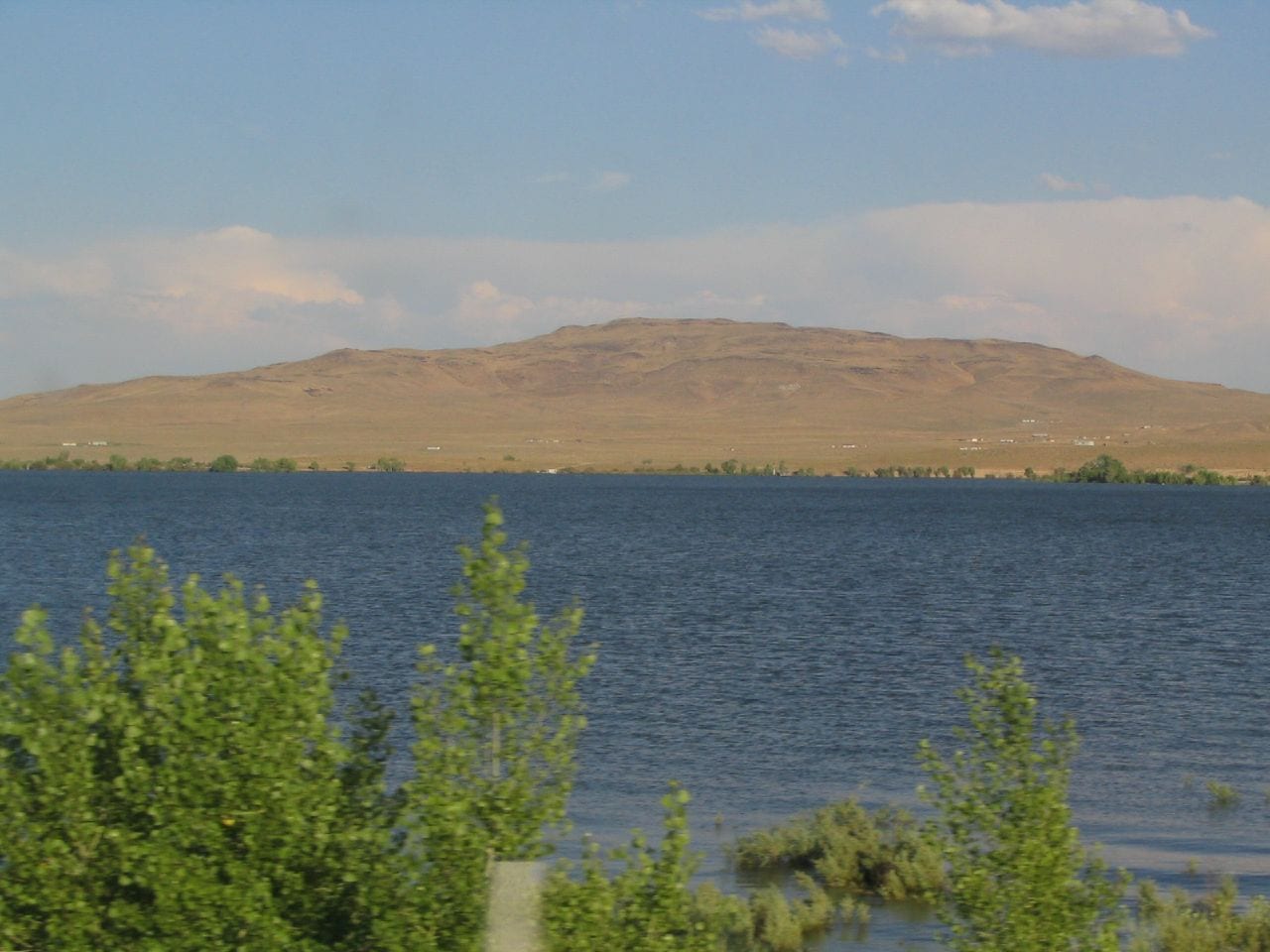
The Lahontan Dam is part of the Newlands Project, one of the first irrigation projects under the 1902 Reclamation Act, and in 1905 it became the first to deliver water from works built by the Bureau of Reclamation.
The whole federal reclamation programme — every dam and canal that followed across the West — starts here, on the Carson River. The reservoir behind it still irrigates the farms around Fallon.
55. Nevada Holds One of the Darkest Places on Earth
On March 19, 2019 the International Dark Sky Sanctuary Association named Massacre Rim in northwest Nevada one of the darkest places on Earth. It lies more than 150 miles north of Reno.
The darkness is a product of pure emptiness: there is almost nothing within a hundred miles bright enough to register. A long basalt escarpment drops into Long Valley along its western edge, and on a moonless night the Milky Way casts a shadow. It still stood that way as of 2026.
56. The CCC Built Nevada's First State Park
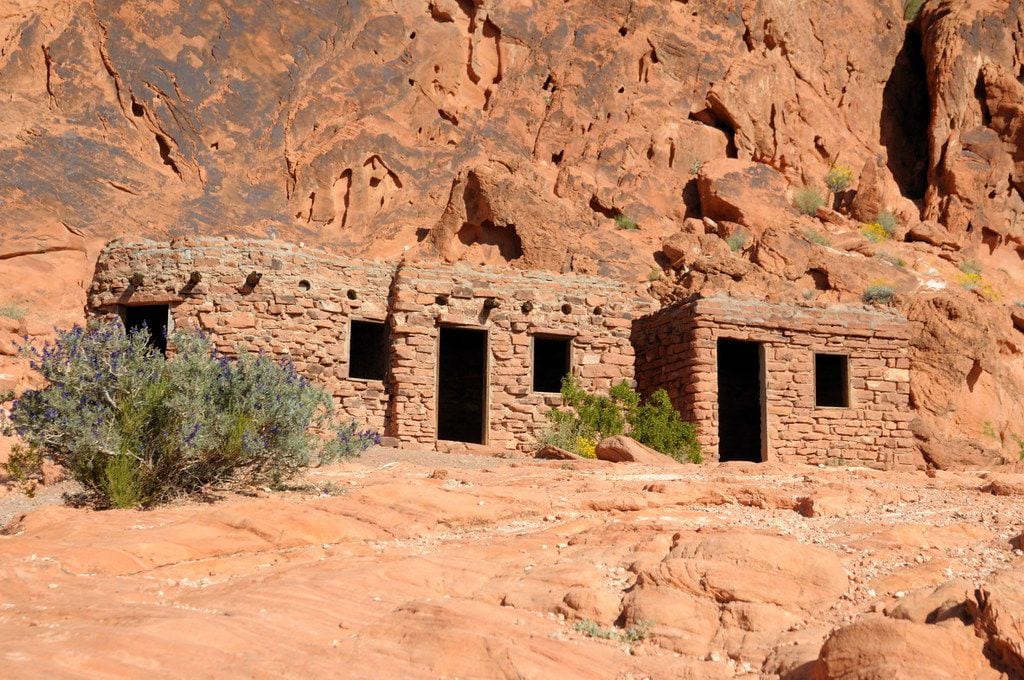
The Civilian Conservation Corps, created in 1933, built the first facilities and campgrounds at Valley of Fire, which opened on Easter Sunday 1934 as Nevada's first state park.
The CCC's sandstone cabins are still standing along the park road, built from the same rock they sit on. Half of Nevada's original park infrastructure was put up by young men on Depression relief wages.
57. Nevada's Oldest Building Burned Down in 1910
In June 1910 a fire swept through Genoa and destroyed what remained of the Mormon Station trading post. The stockade standing there today is a replica of the 1851 original.
The loss was total enough that the site sat empty for decades before the state rebuilt it as a museum. What survives from the town's first years is mostly a few doors down — including the saloon a few doors down.
58. A Rancher Gave Nevada a State Park in 1926
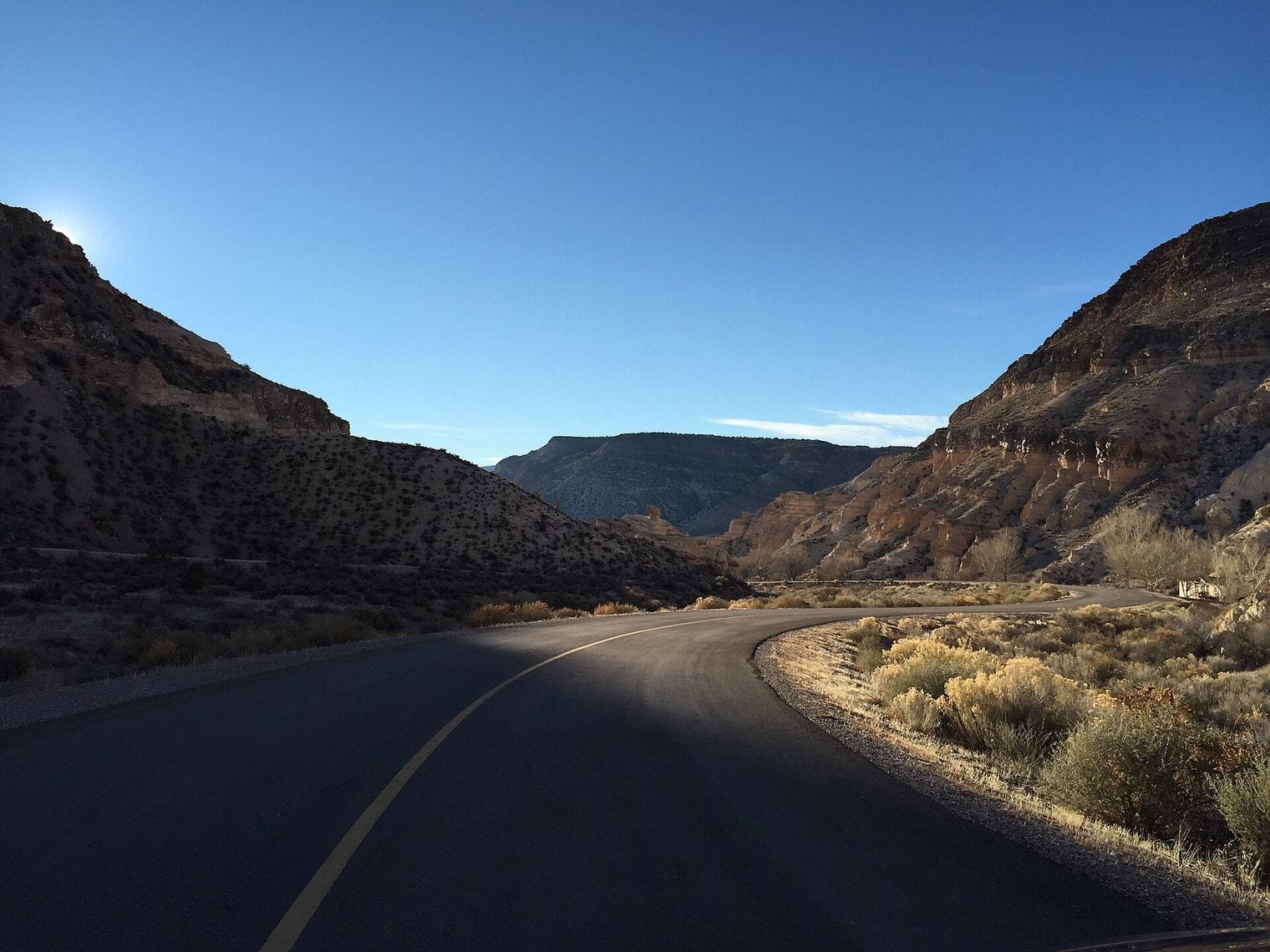
Samuel and Hannah Kershaw settled the canyon in 1873 and planted an orchard; they sold to rancher James Ryan in 1904, and Ryan donated the land to the state in 1926 to become a public park.
The canyon is a shock in that country — a green cleft with trees, vines and running water in the middle of dry limestone hills. The gift predates Nevada's park system by nearly a decade.
59. A Flash Flood Wiped Out a Nevada State Park
A flash flood in 1984 destroyed most of Kershaw-Ryan State Park's facilities, including the stone caretaker's cabin built by the CCC. The park did not reopen until 1997.
The same narrow canyon that makes the place green makes it dangerous: it collects water off a wide area of rock and funnels it. Thirteen years is a long closure, and much of what visitors use today was built after the flood.
60. Nevada Leads America and the World in Metals
Nevada mining leads the country: it was the leading mineral producing state by value for the second year in a row, and Nevada is the fourth-largest producer of gold in the world.
That is a striking position for a single state to hold against national economies. It rests on the Carlin-type deposits of the north — microscopic gold spread through carbonate rock, invisible in the hand and only economic at industrial scale. That remained true as of 2026.
61. Thousand-Year-Old Rock Art Survives in Echo Canyon
Thousand-year-old pictographs, stone flakes and pottery at Echo Canyon State Park are the legacy of the Fremont people, a culture dated from AD 1 to 1301.
The Fremont farmed and foraged across the eastern Great Basin and left rock art with a distinctive style of broad-shouldered figures. Echo Canyon's traces are modest and easy to walk past, which is part of why they are still there.
62. Nevada Has a State Park Whose Lake Keeps Vanishing
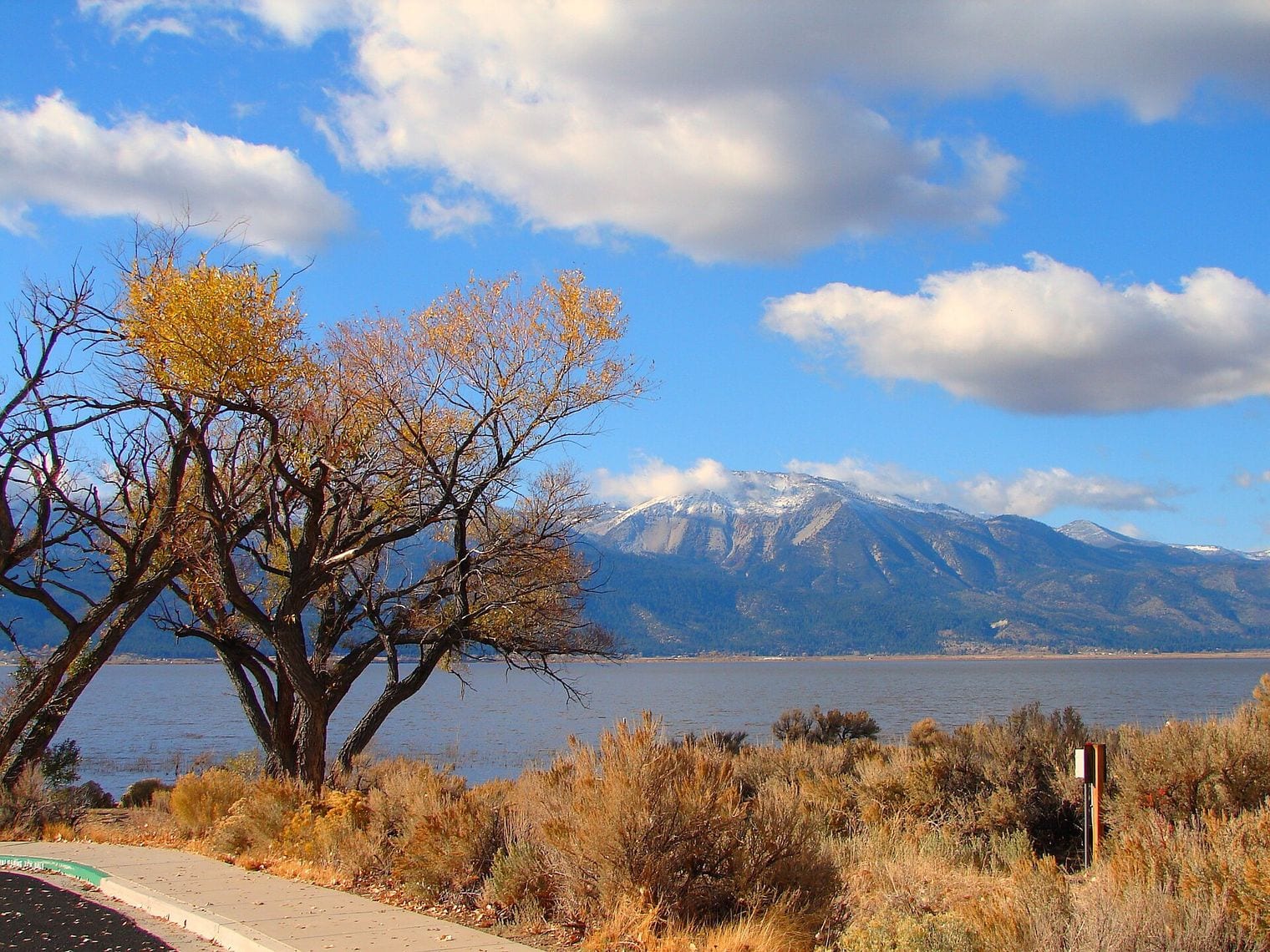
Washoe Lake is so shallow that it frequently dries up altogether and has to be restocked with fish by the Nevada Division of Wildlife. The state park around it opened in 1977.
In a wet year it is a broad sheet of water with the Sierra behind it; in a dry one it is a dust flat that blows across the highway. The park is managed for both conditions, which is an unusual brief.
63. A 1969 Dam Doubled a Nevada Reservoir Overnight
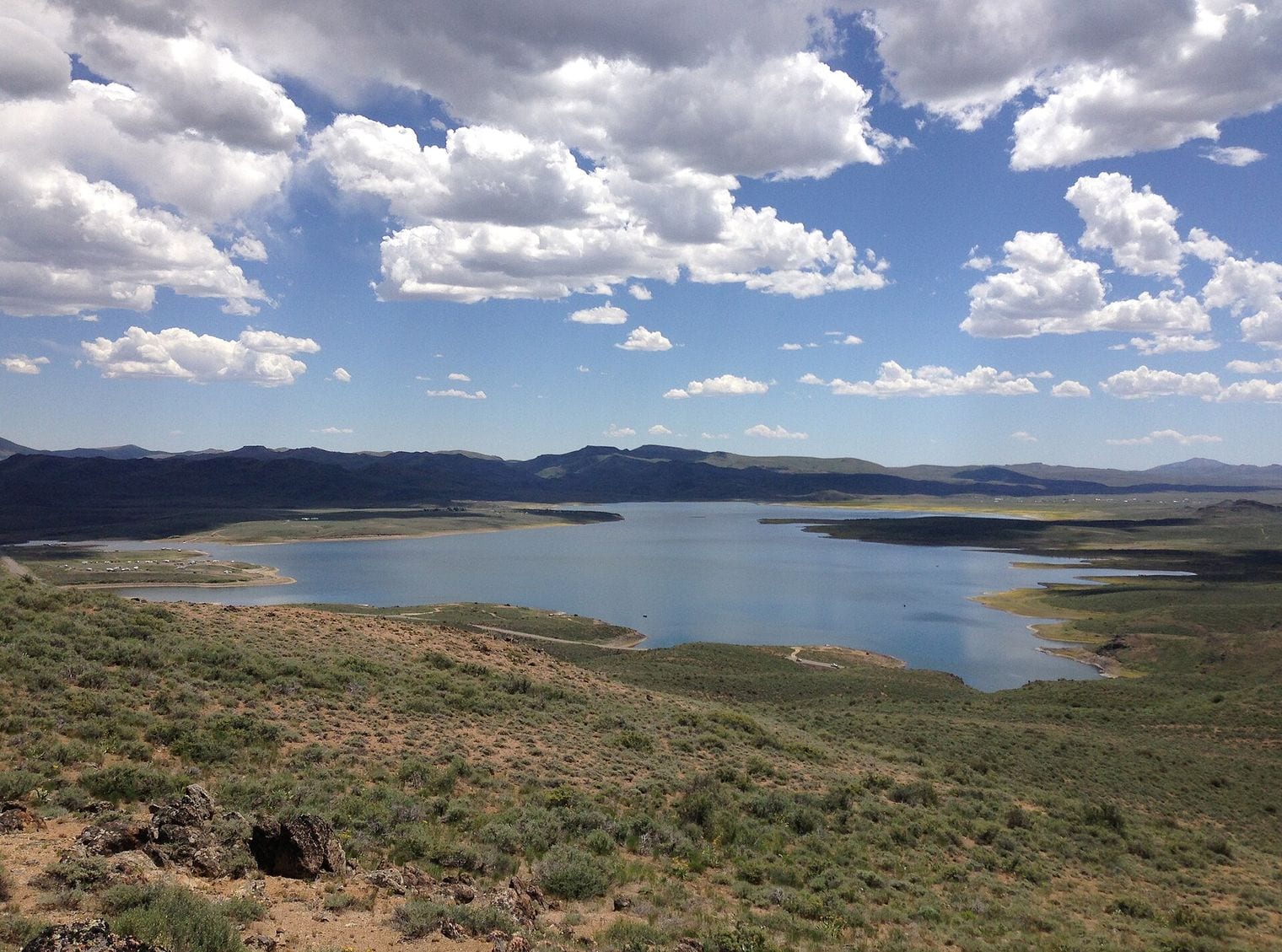
Wild Horse Reservoir was first built in 1937, and a new Bureau of Reclamation dam in 1969 doubled the size of the reservoir.
It sits high in the country north of Elko, which makes it one of the few Nevada waters that freezes hard enough for ice fishing. The 1937 dam drowned a meadow; the 1969 one drowned rather more.
64. One Nevada Park Sits 7,300 Feet Up
Cave Lake State Park occupies more than 4,000 acres at an elevation of 7,300 feet in the mountains above Ely.
The altitude changes everything about it: aspen and pine instead of sage, cold water, and a season that runs short at both ends. It is the kind of place that surprises people who expect Nevada to be uniformly low and hot.
65. Red Rock Canyon Protects 197,349 Acres
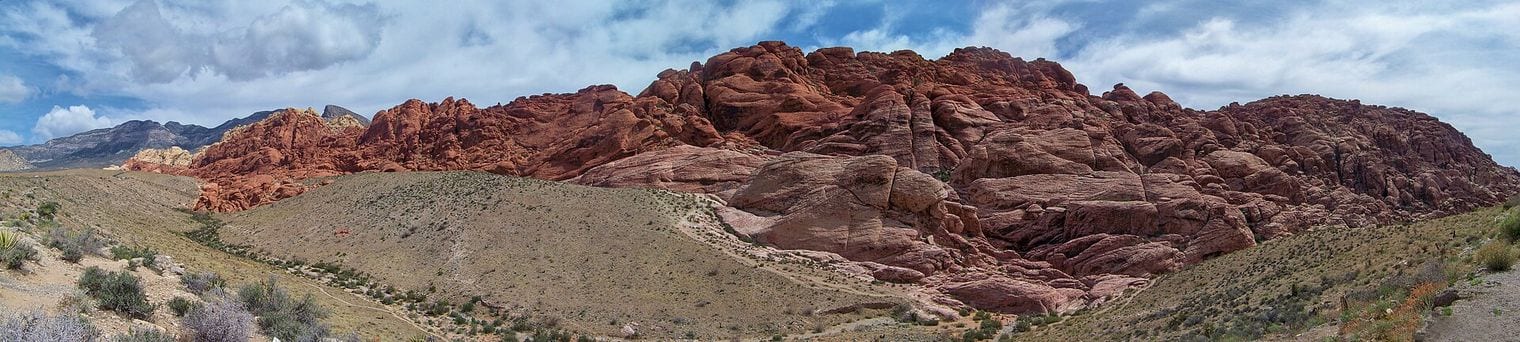
Red Rock Canyon National Conservation Area covers 197,349 acres of Mojave Desert on the edge of Las Vegas.
The headline feature is the Keystone Thrust, where older grey limestone has been pushed up over younger red sandstone — a textbook fault you can see from the road. Most of the acreage behind the escarpment is trailless and empty.
66. Ten Wilderness Areas Ring the Black Rock Desert
The Black Rock Desert-High Rock Canyon Emigrant Trails National Conservation Area takes in ten associated wilderness areas across northwestern Nevada.
Beyond the playa the country breaks into canyons, hot springs and long basalt rims, and the emigrant trail ruts are still legible in places. There are almost no developed facilities, which is the point of the designation.
67. The Humboldt Basin Spans 17,000 Square Miles
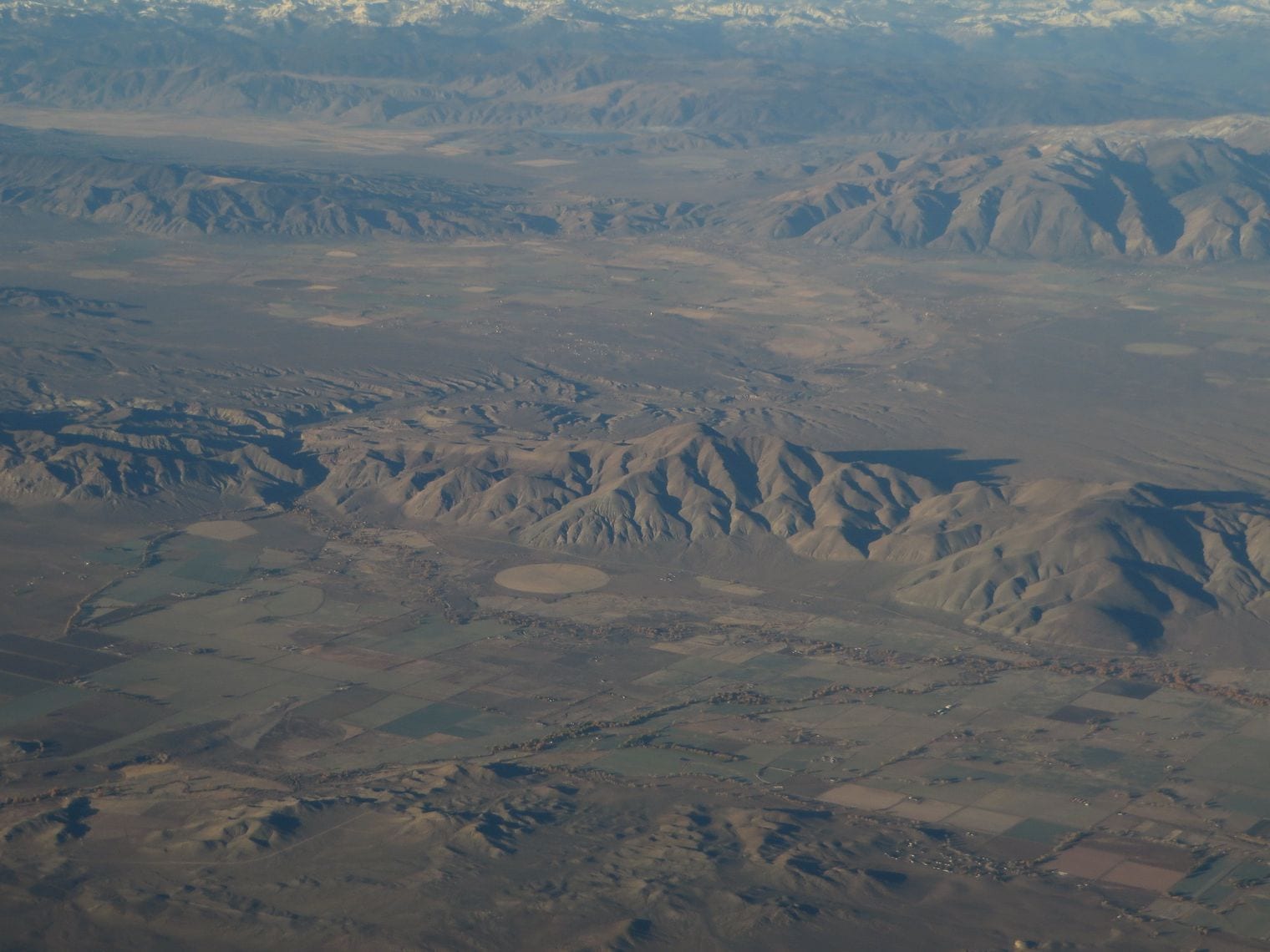
The Humboldt River Basin is the largest basin entirely within Nevada, covering about 17,000 square miles.
Everything that falls on that area drains toward one modest river and then stops. The basin reaches across the north of the state, and its water supports the ranching and the mining that have kept those towns going. These are the figures as they stood in 2026.
68. Cathedral Gorge Is Carved From Soft Clay
Cathedral Gorge State Park covers 1,792 acres of bentonite clay eroded into cathedral-like spires and narrow slot canyons.
Bentonite behaves unlike rock: it swells when wet and cracks as it dries, so every storm re-cuts the passages a little. Some are narrow enough to squeeze through sideways, and they open into chambers that give the place its name.
69. Hoover Dam Still Runs on 2,080 Megawatts
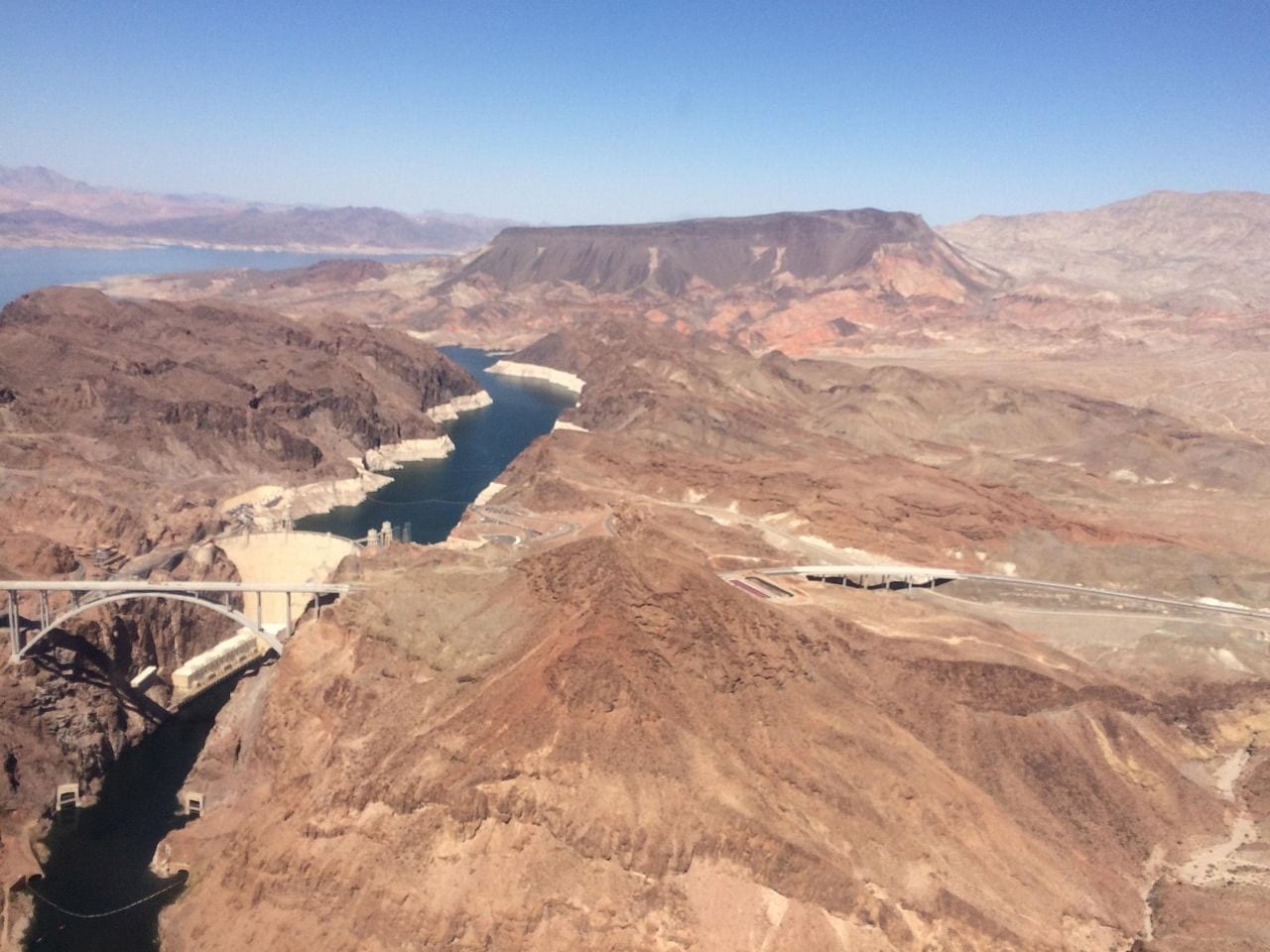
The Hoover Powerplant has a nameplate capacity of about 2,080 megawatts, and averaged about 4.2 billion kilowatt-hours a year between 1947 and 2008.
It is no longer among the largest hydro plants in the country, but it remains a working station rather than a monument, and its output is still apportioned by federal formula between three states. The record was unchanged as of 2026.
70. A Nevada Reservoir Only Finished Filling in 1995
Filling of the South Fork Reservoir on the Humboldt River was completed in 1995, drowning meadows that are now bluffs above the waterline.
It is a recent piece of landscape by any measure — younger than most of the people fishing it. The terraces visible above the water are old river benches, left standing when the valley floor went under.
71. A Ranch Near the Strip Dates to the 1860s
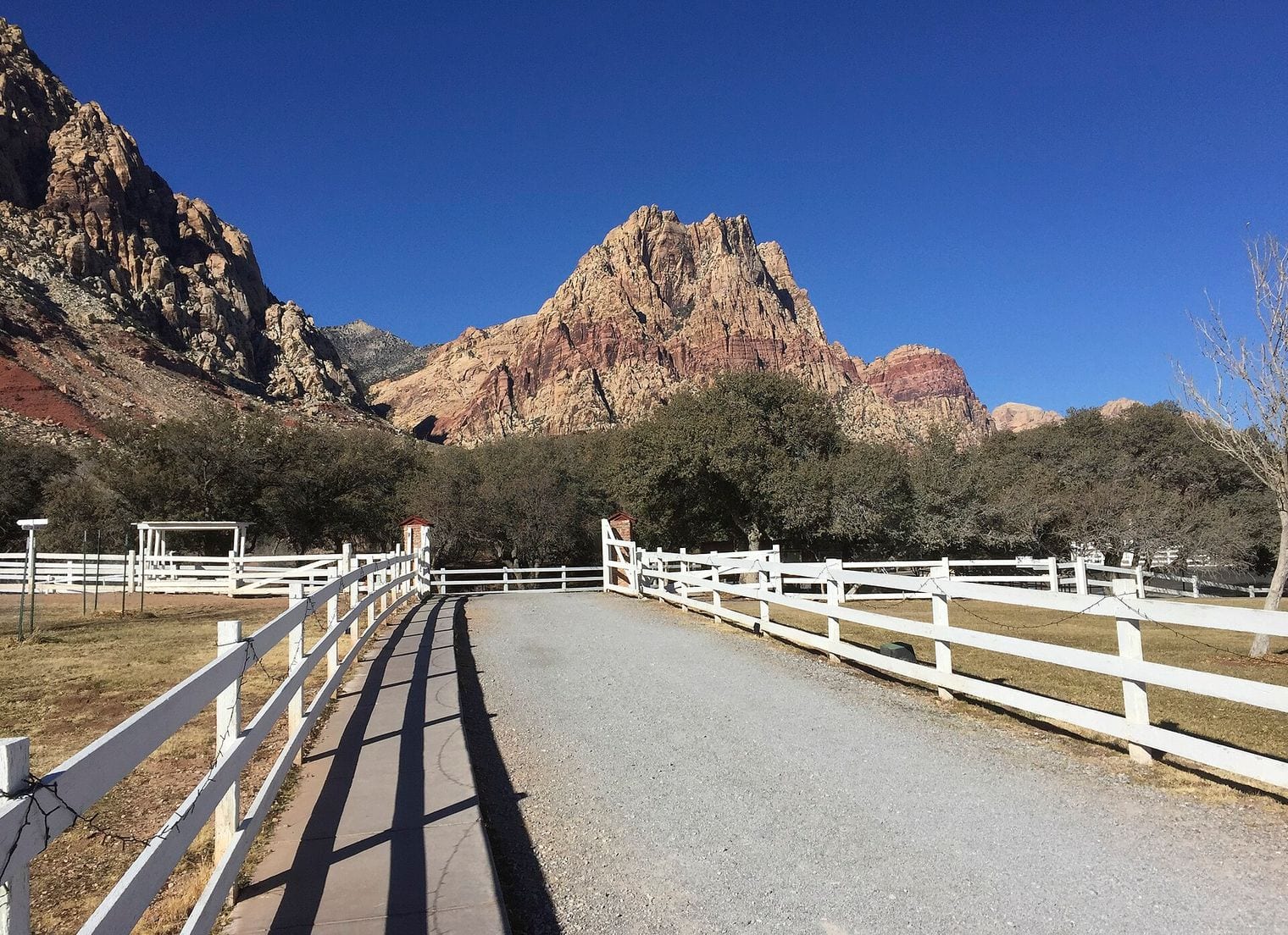
Spring Mountain Ranch keeps some of the oldest buildings in Nevada, including an 1860s blacksmith shop and the Sandstone Cabin that housed the founding family.
The ranch passed through a long series of owners who each added something, so the site reads as layers rather than a single period. The oldest structures predate the surrounding city by roughly forty years. That was the state of it as of 2026.
72. Las Vegas Has More Hotel Rooms Than Anywhere
Las Vegas has 150,300 hotel rooms, and as of 2023 the city attracted over 40.8 million visitors annually.
The count is concentrated into a remarkably small area — most of it along a four-mile stretch that is not, strictly speaking, inside the Las Vegas city limits at all. The resorts sit in unincorporated Clark County towns.
73. Valley of Fire's Rock Was Sand Dunes in the Jurassic
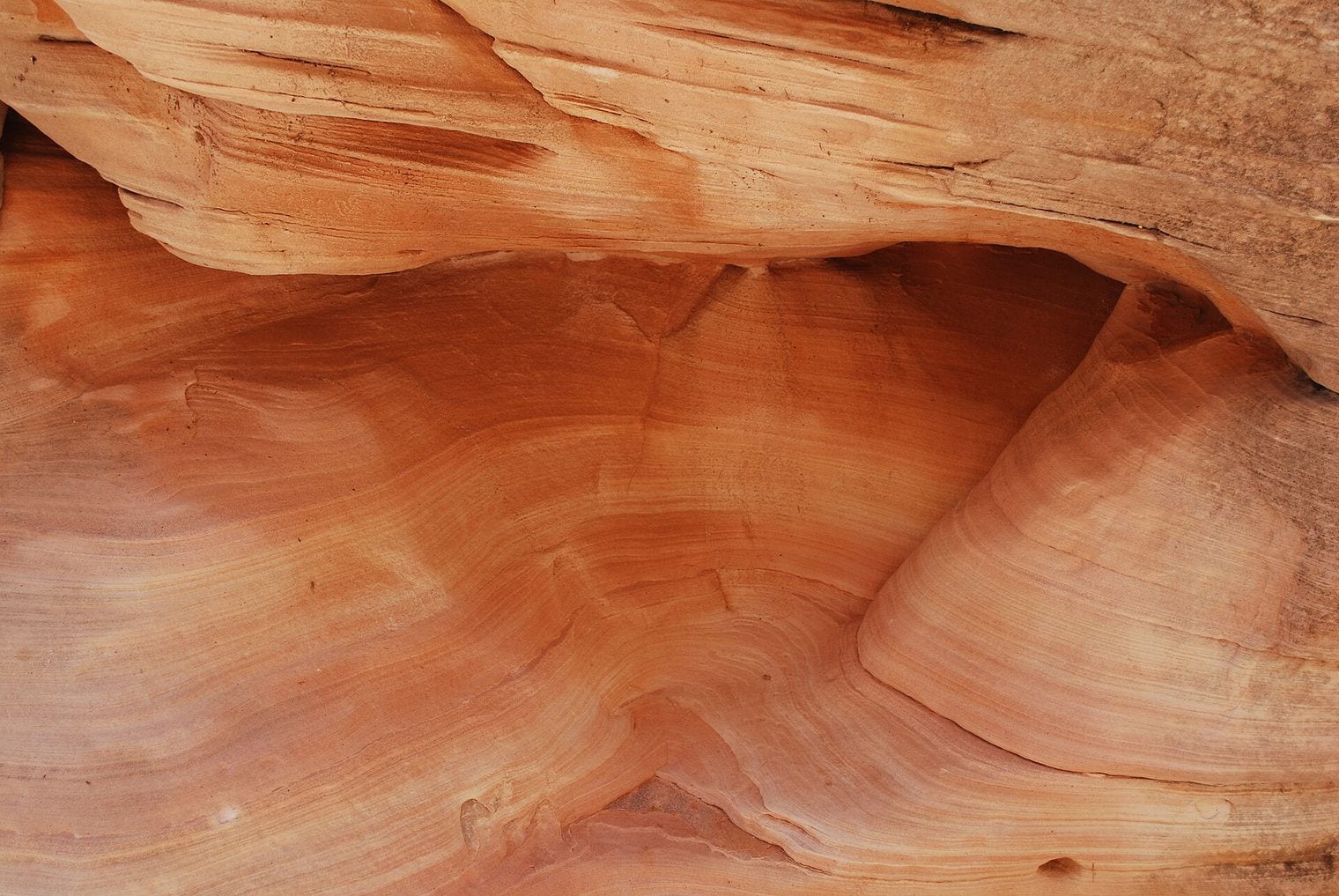
The red Aztec sandstone at Valley of Fire is Jurassic rock, formed from shifting sand dunes around 150 million years ago.
You can read the old dunes directly in the cliff faces: the sweeping diagonal lines are cross-bedding, the preserved slip-faces of dunes that migrated across a desert far larger than the present one.
74. A Canyon Outside Las Vegas Holds 1,700 Petroglyphs
The Sloan Canyon Petroglyph Site carries more than 300 rock writing panels and nearly 1,700 designs, made by native cultures from the Archaic to the historic era.
The concentration is unusual and the range of dates more so — the same canyon was being marked over thousands of years. It sits directly beneath the southern edge of the Las Vegas suburbs.
75. Congress Set Aside 48,438 Acres by Las Vegas
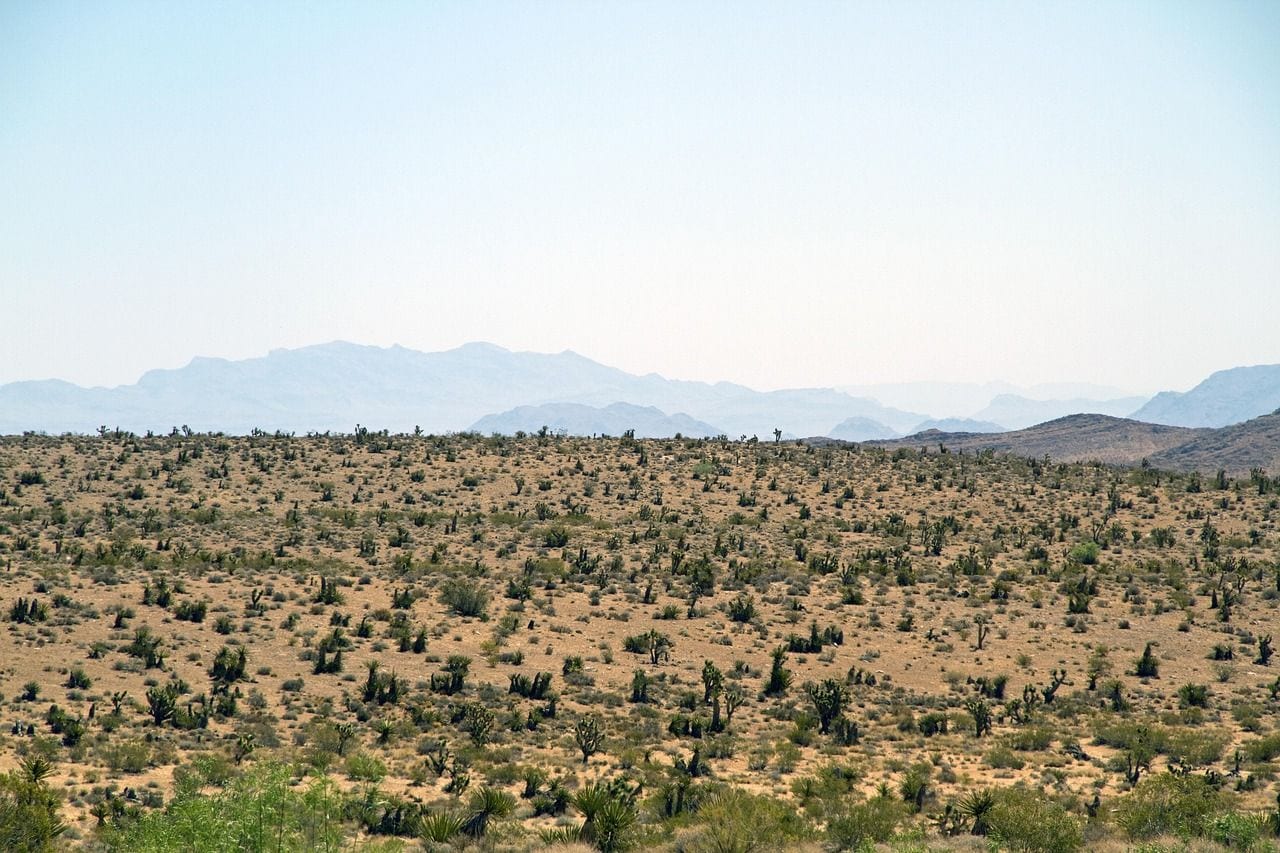
In November 2002 Congress designated the Sloan Canyon National Conservation Area, protecting 48,438 acres of Mojave Desert on the southern skyline of Las Vegas and Henderson.
The designation drew a hard line at the edge of a fast-growing metropolitan area, which is why the boundary is so abrupt: subdivisions on one side, undeveloped volcanic country on the other.
76. Nevada Leads America in Non-Fuel Mineral Value
Nevada leads the nation in the value of non-fuel minerals it produces, which in 2017 amounted to about $8.5 billion.
Non-fuel means everything but coal, oil and gas — gold and silver above all, but also lithium, barite, gypsum and aggregate. For a state with a small population, that is a remarkable share of national output. It held as of 2026.
77. Nevada Rivals Whole Countries for Gold
Nevada ranked 4th among global gold-producing jurisdictions in 2017, behind only the countries of China, Australia and Russia, despite making up a mere 4% of the United States in landmass.
Every other name on that list is a nation. The comparison is the clearest way to grasp the scale of the northern Nevada gold belt, which is invisible from a car and enormous on a balance sheet. That was still the position as of 2026.
78. The Comstock Was America's First Big Silver District
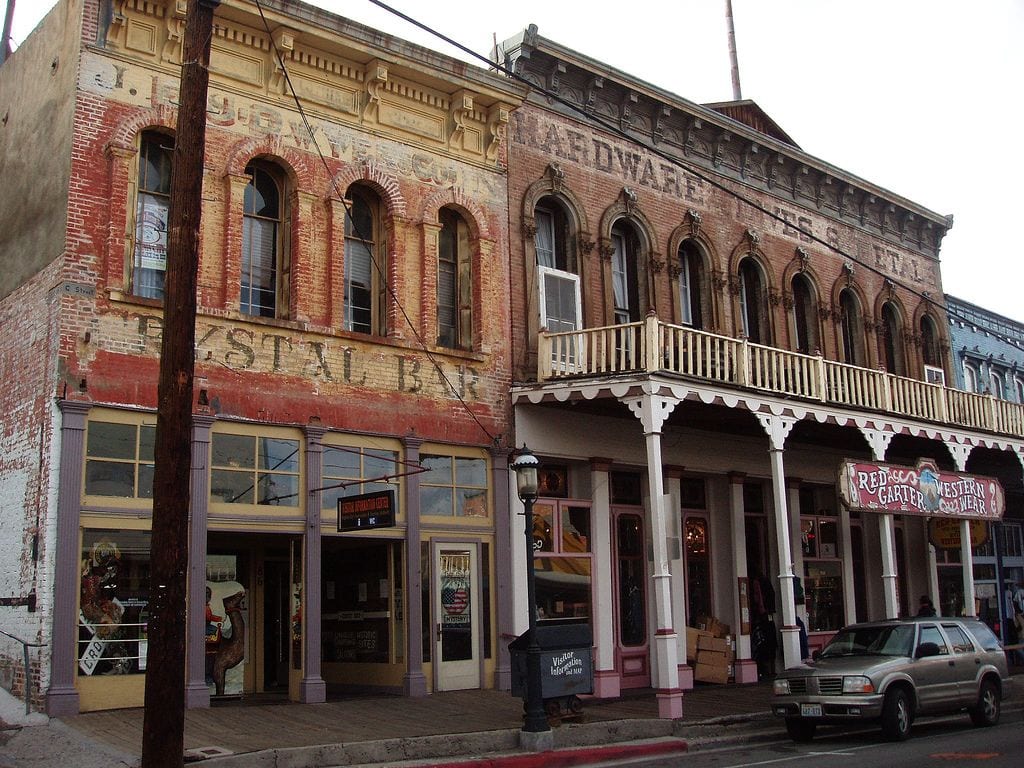
The Comstock was the first important silver-mining district in the United States, and its discovery set off prospecting across the Great Basin.
Before it, American mining meant gold and meant California. The Comstock proved there was a second metal and a second geography worth chasing, and prospectors spread out across Nevada looking for the next one for the following fifty years. The figure here is the one on record as of 2026.
79. Nevada Mining Ran in Two Great Boom-Bust Cycles
Nevada's mineral history runs in two boom-bust cycles: the Comstock production era covering roughly 1861 to 1889, then the Tonopah-Goldfield period beginning about 1901.
Between them lie the years historians call the twenty-year depression, when the state lost population and very nearly lost its case for statehood. The second boom, further south, refilled the towns and the treasury.
80. Coolidge Authorized Hoover Dam in 1928
On December 21, 1928, President Calvin Coolidge signed the act authorizing the Boulder Canyon Project, which appropriated $165 million and became Hoover Dam.
The project took its name from Boulder Canyon, the site originally recommended. The dam was eventually built a few miles downstream in Black Canyon, where the rock was sounder, but the legislation's name stuck for years. It still stood that way as of 2026.
81. Hoover Dam Is the Most-Visited Dam on Earth
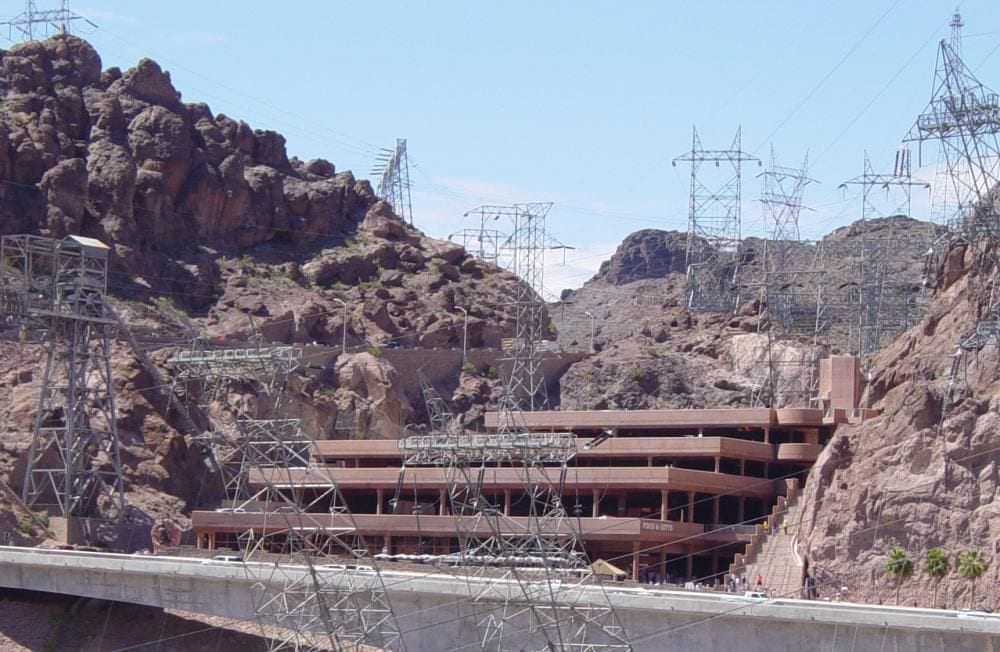
Hoover Dam is the most-visited dam in the world, counting some 7 million tourists a year, and the water it stores irrigates 2 million acres.
Both halves matter. It is simultaneously a working piece of water infrastructure serving farms across two states and one of the most-photographed structures in the country, with a car park at each end. That remained true as of 2026.
82. Hoover Dam Was the Tallest in the World in 1935
Hoover Dam was the highest dam in the world when it was completed in 1935. Today its 726 feet make it the second-tallest dam in the United States, behind Oroville.
It held the world record only briefly — dam-building accelerated through the mid-century and the title moved abroad. What it did not lose was the design language: the Art Deco intake towers and terrazzo floors were deliberate, and unusual for a public works project. These are the figures as they stood in 2026.
83. Pony Express Riders Crossed Nevada in Ten Days
The Pony Express cut coast-to-coast mail time to about 10 days, following the Central Nevada Route to Carson City. It ran for only 18 months from 1860.
The telegraph killed it almost immediately, and it lost money throughout. Its afterlife has been much longer than its operating life: the route across Nevada is now a National Historic Trail with stations preserved along it.
84. Clark County Has the State’s Lowest Radon Readings
Only 12% of the Nevada homes sampled in the radon survey were in Clark County, where more than half the state population lives and where the radon readings were among the lowest in the state.
Radon comes out of the ground, so the geology decides it. Southern Nevada's rock and soils release less of it than the granites and faulted basins of the north, which is a rare instance of Las Vegas getting the better end of a natural hazard. The record was unchanged as of 2026.
85. A Hundred Atmospheric Bomb Tests Lit Up the Desert
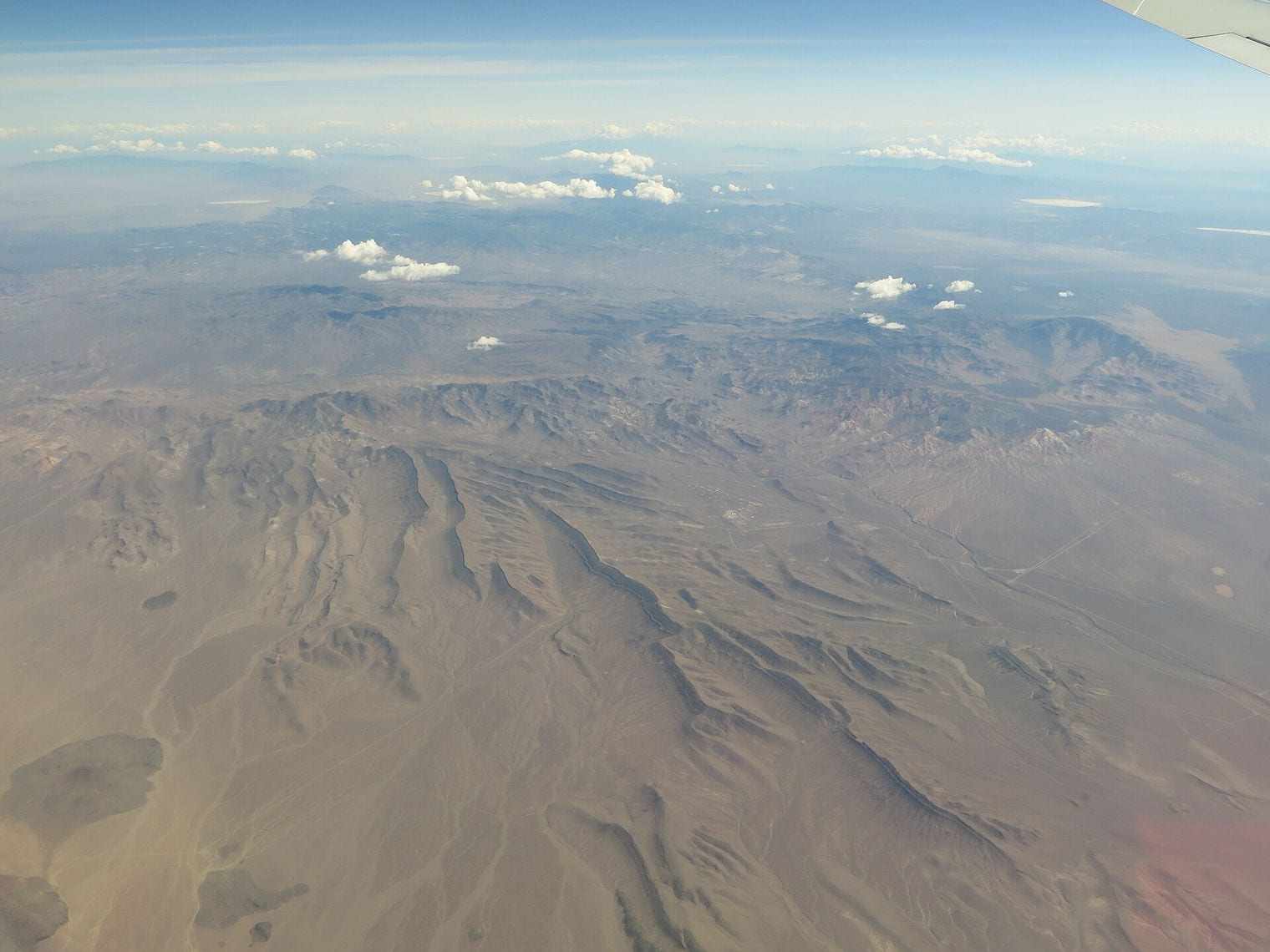
A total of 100 atmospheric tests were conducted at the Nevada Test Site between January 1951 and July 1962, their flashes visible from Las Vegas.
For a decade the detonations were a scheduled civic spectacle, with hotels advertising the view and printing timetables. Testing moved underground after 1962, and the visible era of the programme ended.
86. Congress Picked One Nevada Ridge for Nuclear Waste
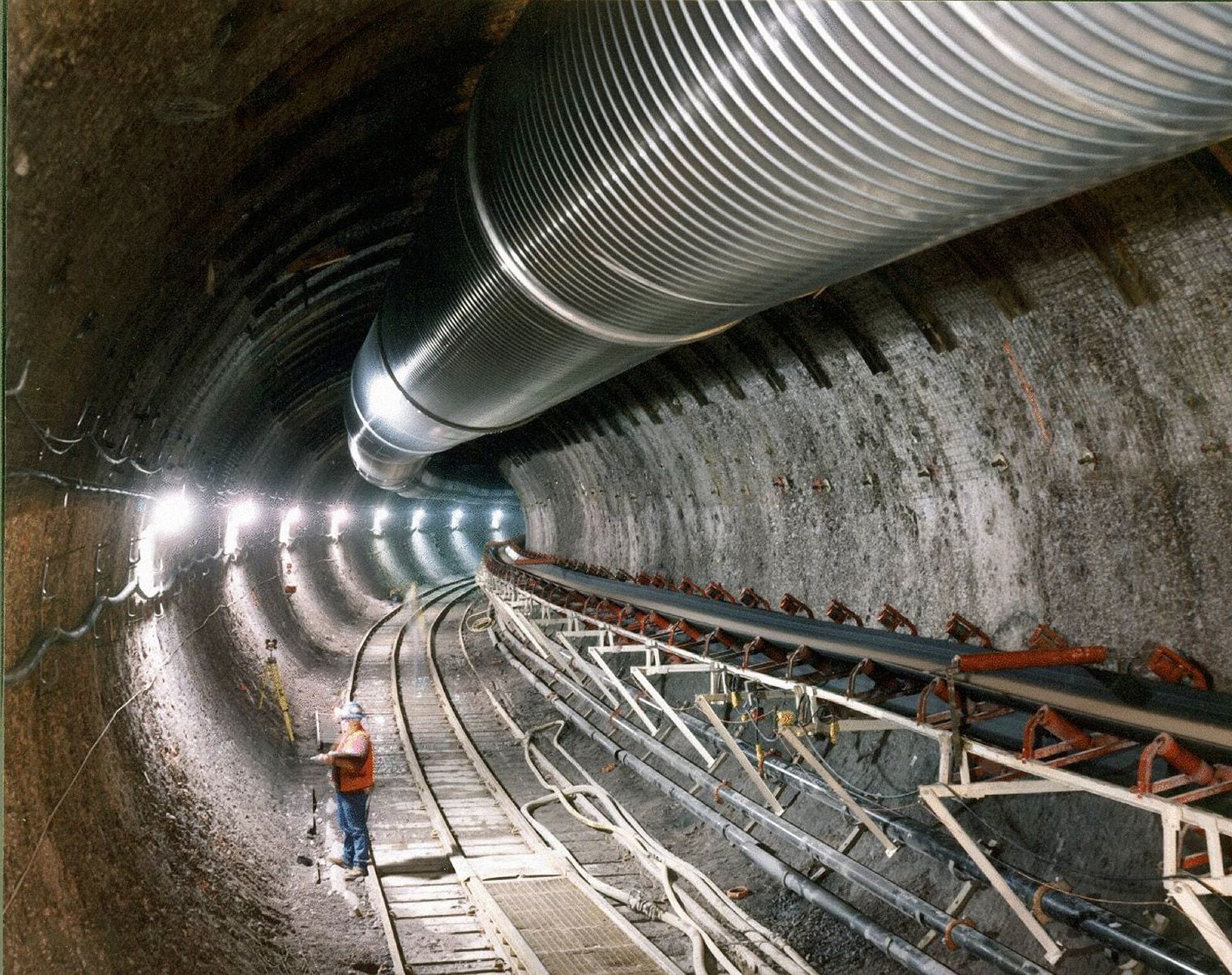
In 1987 an amendment to the Nuclear Waste Policy Act designated Yucca Mountain in Nye County as the sole site for detailed study as a nuclear waste repository. It has never been used.
The amendment ended a national search by naming one location, a decision Nevada has contested ever since. Tunnels were driven into the ridge, federal funding was later cut, and the country's spent fuel still sits at the reactors that made it. That was the state of it as of 2026.
87. Downtown Las Vegas Has Sunk Six Feet
Pumping groundwater from beneath the Las Vegas Valley has dropped the ground itself: by 1986 the downtown area had subsided about 6.2 feet and the Strip about 2.9 feet.
When water is drawn out of the sediments faster than it returns, the grains compact and the surface follows. The valley has fissures kilometres long where the settling has been uneven, and they cut across roads and foundations. It held as of 2026.
88. Nevada's First Oil Well Was a Dry Hole Near Reno
The first well drilled in search of oil in Nevada was a 1,890-foot dry hole sunk in 1907 on a terrace overlooking the Truckee River a few miles west of downtown Reno.
It was a sensible-looking gamble in a state that had made its fortune underground already. Nothing came of it, and nothing came of Nevada oil at all for another half-century. That was still the position as of 2026.
89. Nevada Does Produce Oil, From One Remote Valley
Most of Nevada's oil production comes from several small fields in Railroad Valley, a basin in the middle of the state, and totalled about 553,000 barrels during 2002.
By the standards of oil states that is a rounding error, but it is genuine production from genuine fields, in a basin few Nevadans have ever driven through. The figure here is the one on record as of 2026.
90. Copper, Not Gold, Once Ruled Nevada Mining
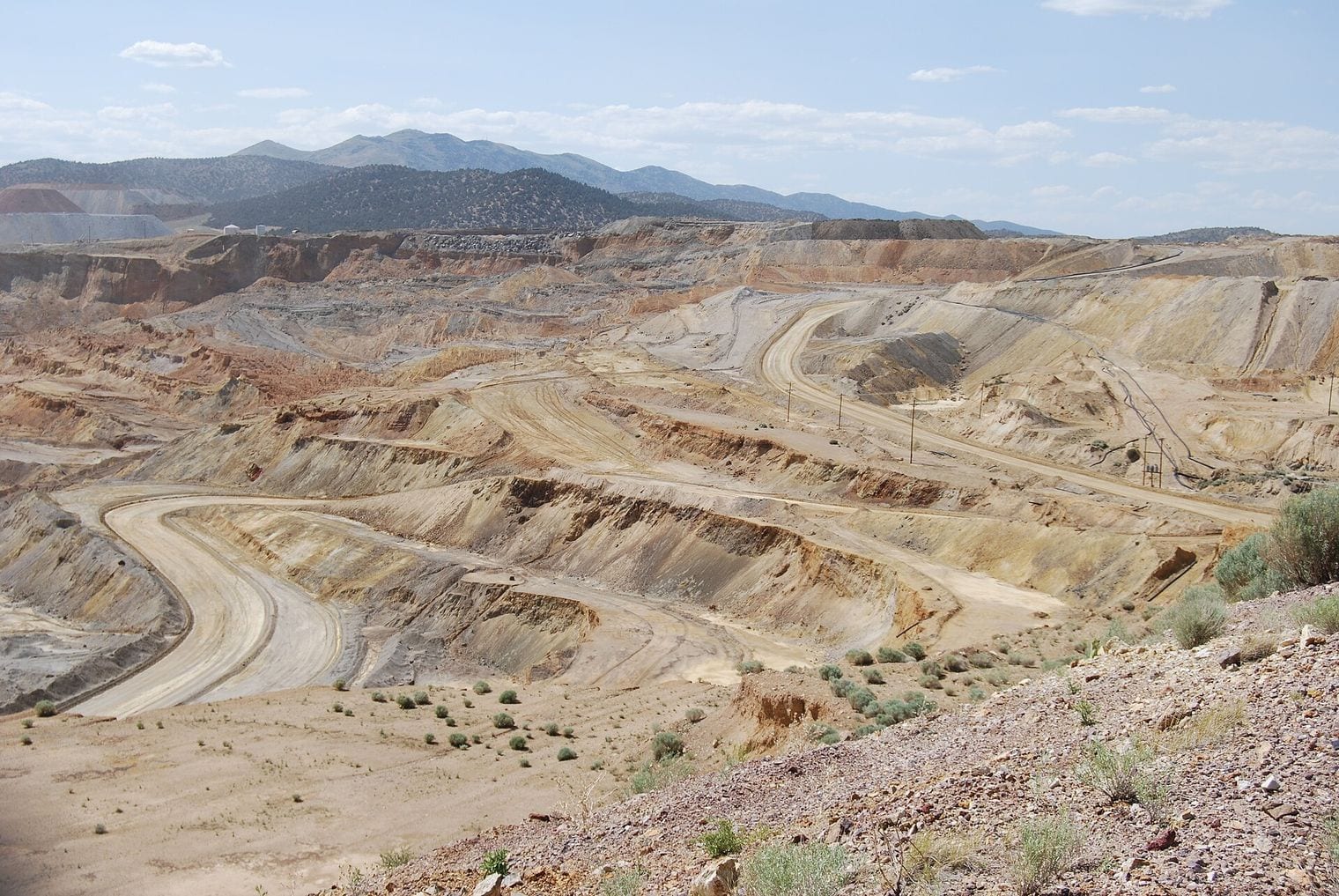
Through most of the 1960s and 1970s copper was Nevada's most important mineral, but production virtually ceased in 1979 before the Ely-district pits reopened in 2004.
The reversal is easy to forget now that gold dominates the story. Copper built Ely and the railway that served it, and when the price collapsed the town lost its reason for existing until the pits restarted. It still stood that way as of 2026.
91. Reno Sits on One of Nevada's Shakiest Corridors
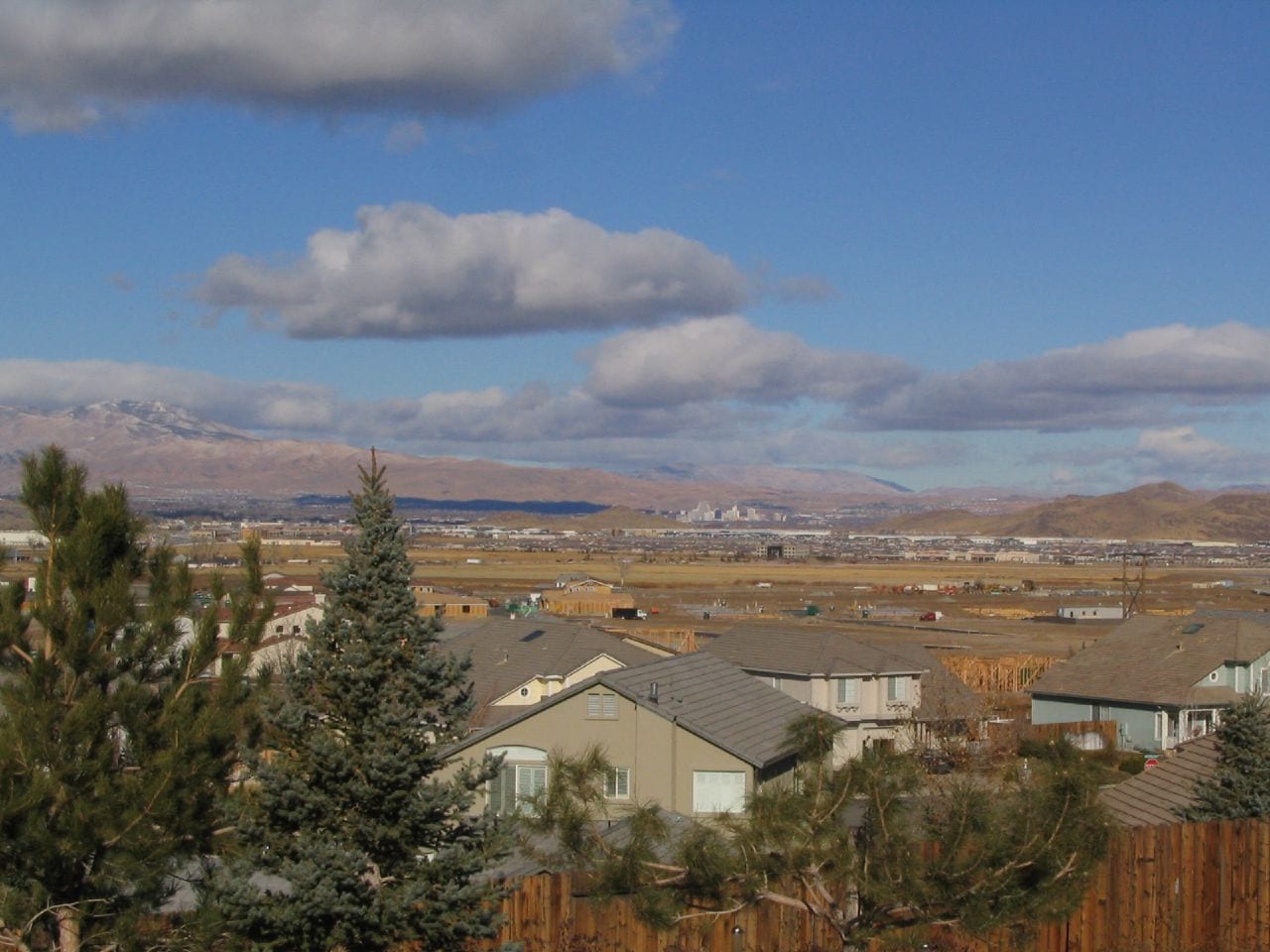
The Reno-Carson City urban corridor has one of the highest seismic hazards in the state, and an earthquake swarm beneath western Reno in 2008 damaged homes.
The corridor sits where the Sierra front meets the Basin and Range, a boundary crowded with active faults. Swarms of small shocks over weeks are a normal expression of that, and occasionally an uncomfortable one. That remained true as of 2026.
92. A Big Carson Valley Quake Left a Visible Scar
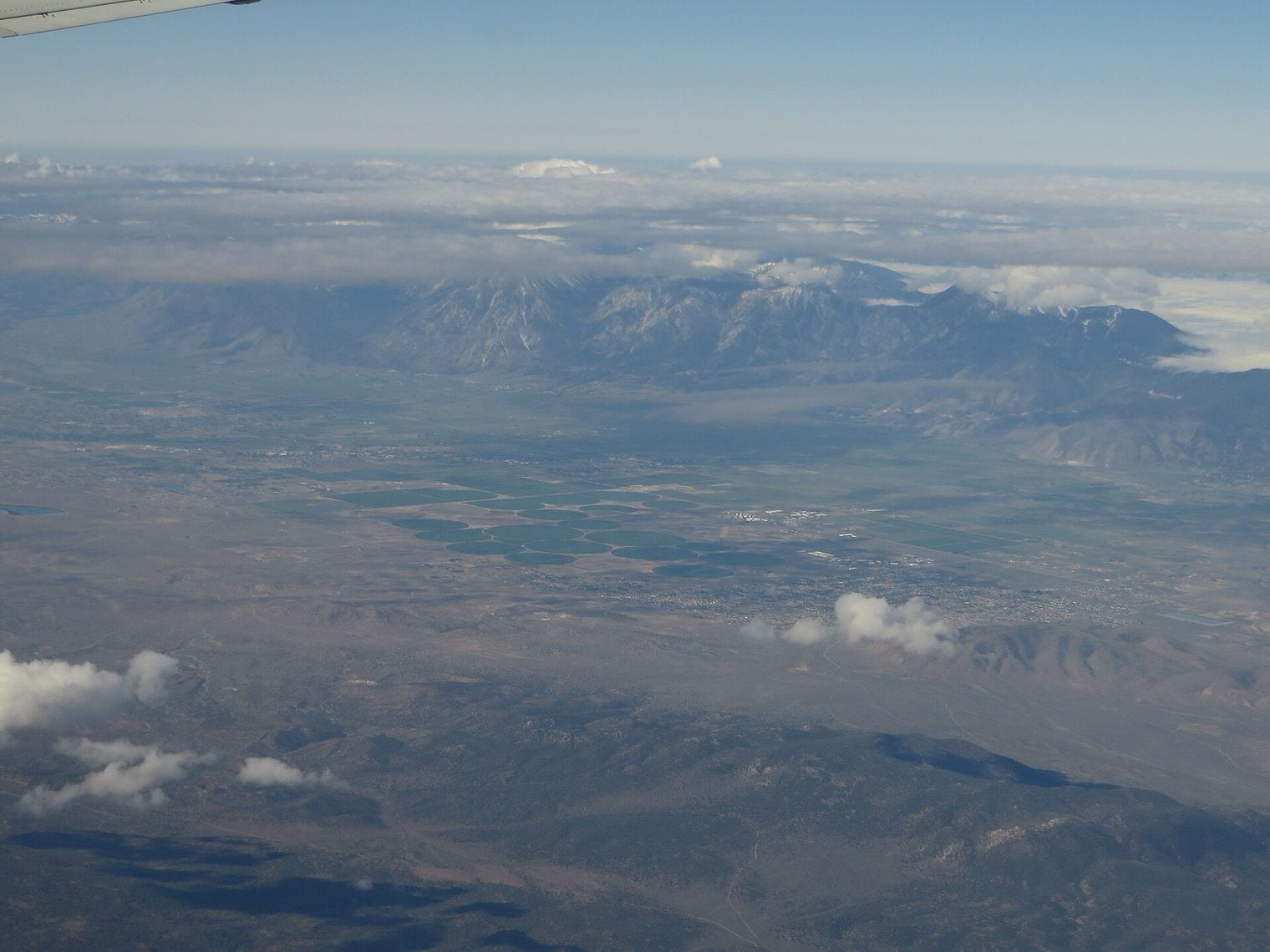
The geologic record shows an earthquake as large as magnitude 7.5 struck along the Carson Valley fault system about 500 to 650 years ago, leaving a scar still prominent in late-afternoon light.
A fault scarp is the step left at the surface when one side of a fault lifts relative to the other. This one has survived centuries of erosion, which tells you how much ground moved at once.
93. A Nevada Gold Mine Led the World in Silver
Echo Bay Mines' McCoy/Cove operation in Lander County, though primarily a gold producer, was the largest silver producer in North America and third largest in the world, turning out 12.5 million ounces of silver in 1993.
Silver came out as a by-product of gold, which is a fair summary of modern Nevada mining: the Silver State's silver mostly arrives as something else's remainder. These are the figures as they stood in 2026.
94. The Comstock Invented Its Own Way to Refine Silver
The Washoe process, developed in the 1860s to work Comstock ore, ground silver ore in iron tanks with mercury and salt, losing about a pound of mercury for every ton of ore treated.
It was devised on the spot because nothing existing suited the ore. The mercury losses are the reason the Carson River still carries a contamination legacy more than a century after the mills shut down.
95. Salt Was the First Non-Metal Nevada Ever Mined
Common salt was perhaps the first nonmetallic mineral mined in Nevada, with production beginning at Dixie Marsh in 1861 to feed the silver mills.
The Washoe process consumed salt by the ton, so the mills created a market before anyone thought of salt as a commodity here. Nevada's dry lakes had it lying on the surface, which made the supply almost embarrassingly easy.
96. Barely a Twentieth of Tahoe's Basin Is Built On
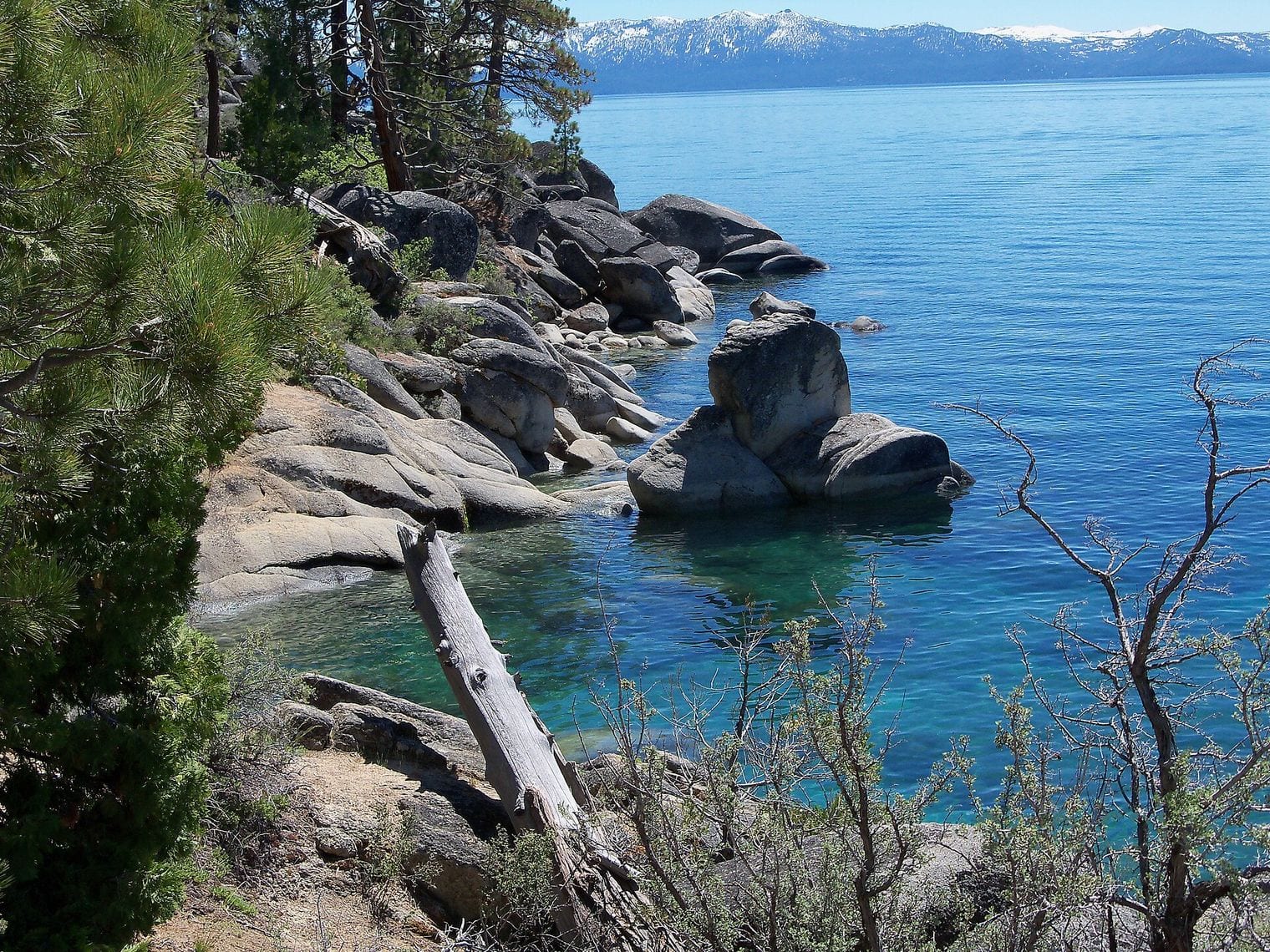
Only about 6% of the Lake Tahoe watershed is urbanized or residential land, and more than 75% of it is national forest.
That ratio is why the water is as clear as it is. Almost everything that drains into the lake drains off forest rather than pavement, and the long fight over Tahoe's clarity has largely been a fight to keep that number from rising. The record was unchanged as of 2026.
97. Nevada Once Led America in Four Minerals at Once
By 1991 Nevada led the nation in the production of gold, silver, mercury and barite — the last of which is used mostly as a weighting agent in oil and gas drilling muds.
Barite is the unglamorous one: heavy, cheap and consumed in bulk by the drilling industry. Leading the country in four unrelated commodities simultaneously is a function of how varied Nevada's geology is. That was the state of it as of 2026.
98. Nevada Tested 2,000 Homes for Radon
Nevada measured radon in the indoor air of about 2,000 homes across the state, a gas the EPA calls the second most frequent cause of lung cancer after smoking.
The survey mattered because Nevada's geology varies so sharply over short distances that national maps are close to useless here. Testing house by house was the only way to find out where the risk actually sat.
99. Great Basin’s Gateway Town Has 41 People
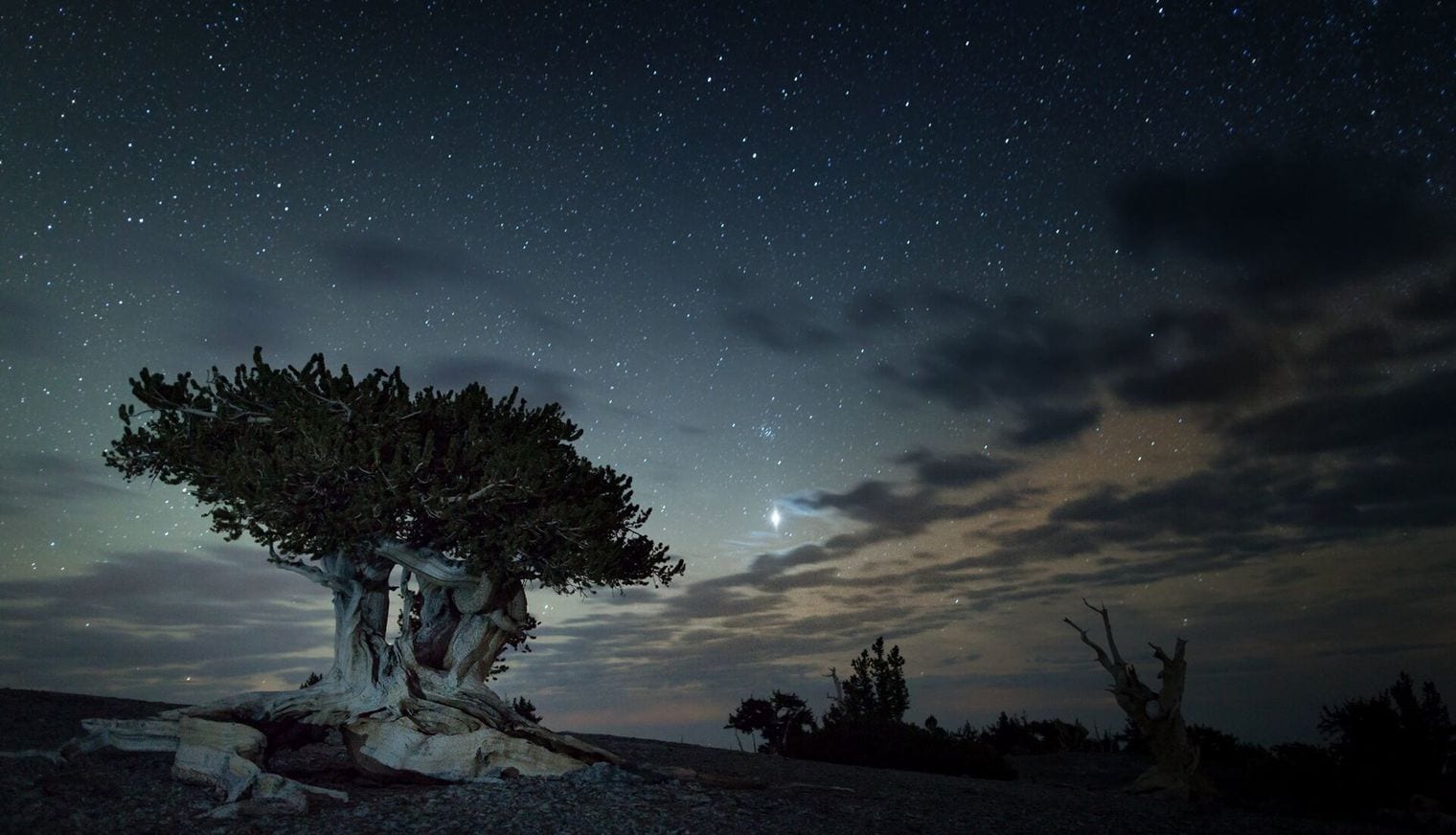
Baker, the gateway town five miles from the entrance to Great Basin National Park, had a population of 41 at the 2020 census, and the park is one of the most isolated in the lower 48.
There is no queue and no shuttle. The nearest cities are hours away in either direction, which is exactly why the night skies above the park are as good as they are. It held as of 2026.
100. Pumping Water Is Sinking Nevada's Valleys
Removing fluids such as groundwater, oil, gas and geothermal brine is one of the commonest causes of land subsidence, and one estimate attributes 80% of serious subsidence worldwide to excessive groundwater extraction.
It is a slow, cumulative and largely irreversible process: once the sediments compact, the aquifer's capacity to store water is permanently reduced. In a desert state that runs on pumped groundwater, that is the fact underneath a great many of the others here.
Where to Go Next in Nevada
Most of the places behind these facts are open to visitors, and a good many are free to walk into. Devils Hole, Berlin-Ichthyosaur, Cathedral Gorge and Valley of Fire are all state or federal land, and the emptiest of them are the ones that reward the drive.
If you want the facts turned into an itinerary, our guide to things to do in Nevada covers the sights themselves, and the wider Nevada hub collects every guide we have for the state.
How We Checked These Facts
Every claim on this page carries at least two independent sources, and at least one of them is an official register rather than another travel site: the National Park Service, the Bureau of Land Management, the Bureau of Reclamation, the US Geological Survey, the National Archives, Nevada State Parks, the Nevada Division of Wildlife, the Nevada State Library and Archives, and the Nevada Bureau of Mines and Geology.
Each source was read and quoted on the date recorded in our claim ledger, and every figure here was re-extracted from that quotation rather than from memory. Where a source hedges, we hedge: if the Park Service says a tree was estimated at 4,900 years old, we do not round it up to a flat number, and where two official bodies count something differently, we give both counts and say what separates them.
FAQ: Interesting Facts About Nevada
Why does Nevada have so many mountain ranges?
Because the crust beneath it is being pulled apart. Nevada's ranges are commonly about 10 miles wide and rarely longer than 80 miles, separated by wide valleys in the repeating pattern that gives the Basin and Range its name. Nearly all of the state also sits inside the Great Basin, a large area with no drainage to the ocean.
Which Nevada animal lives in the smallest habitat on Earth?
The Devils Hole pupfish. It occupies the smallest habitat in the world containing the entire population of a vertebrate species, foraging and spawning on a single shallow rock shelf inside one water-filled cavern in Nye County. No other backboned animal on Earth lives in so little space, which is why its water level is protected by federal action.
How much of Nevada is federal land?
80.1% of Nevada belongs to the federal government, the highest share of any state. The Bureau of Land Management alone administers 67% of the state, some 48 million acres. The two figures are often confused: the larger one counts every federal agency together, while the smaller is the BLM's own portfolio.
Why is Nevada called the Silver State?
Because of the Comstock Lode, the first important silver-mining district in the United States. Production from its mines between 1859 and 1878 came to $320,000,000, and the strike gave the territory the population and the argument it needed for statehood. Nevada was admitted as the 36th state on October 31, 1864.
Is there really a glacier in Nevada?
Yes, one. Great Basin National Park holds the only glacier in Nevada, sitting in a shaded cirque below Wheeler Peak and now classed as a rock glacier, meaning ice with rubble mixed through it and lying over the top. The debris cover insulates what remains and slows its retreat.
What is the oldest thing ever found in Nevada?
A Great Basin bristlecone pine near Wheeler Peak known as Prometheus, which contained 4,862 growth rings and was estimated to be 4,900 years old, the oldest nonclonal organism ever discovered. It was cut down in the summer of 1964 by a geographer who had Forest Service permission, years before the area became a national park.
Did Nevada really send its constitution by telegram?
It did. To reach Washington before the 1864 election, Nevada wired its entire draft constitution east as a 16,543-word telegram, transcribed at the other end onto 175 pages. There was no direct line from Carson City, so the text was relayed in stages, and the transcript survives as the longest telegram in the holdings of the National Archives.
How many nuclear tests were carried out in Nevada?
After conducting 928 nuclear tests, full-scale nuclear testing at the Nevada Test Site in Nye County came to an end in 1992. Of those, a total of 100 atmospheric tests were carried out between January 1951 and July 1962, and their flashes were visible from Las Vegas before testing moved underground.