We build and rank every list first. Booking links come after, and only where
a partner sells a ticket, tour or stay for that exact place, so a place with
nothing to book is listed exactly as prominently as one you can book.
So how do we earn? Some links on this page go to booking
partners, and if you book tickets, tours or a stay through
one, we may earn a commission. It costs you nothing extra.
That commission never decides which places make the list, the order they
appear in, or what we write about them. No entry is sponsored or a paid
placement.
By the City Viking editorial teamPublished 20 places · 17 min read
Fact-checked Checked before launchOct 6, 202620 sources18 publishers3 government & parks2 encyclopedias & research15 venues & other sitesPublished · Oct 6, 2026Researched and checked before it went liveClick for every source and the full change log.
Short answer
Start with Jackson for its red Honeymoon Covered Bridge and Jackson Falls, Portsmouth for its brick colonial streets and Strawbery Banke Museum, and Hanover for Dartmouth's Green and the Hood Museum of Art. Most towns on this list fill a relaxed day, while Portsmouth and the White Mountains towns of North Conway, Jackson and Lincoln reward a full weekend.
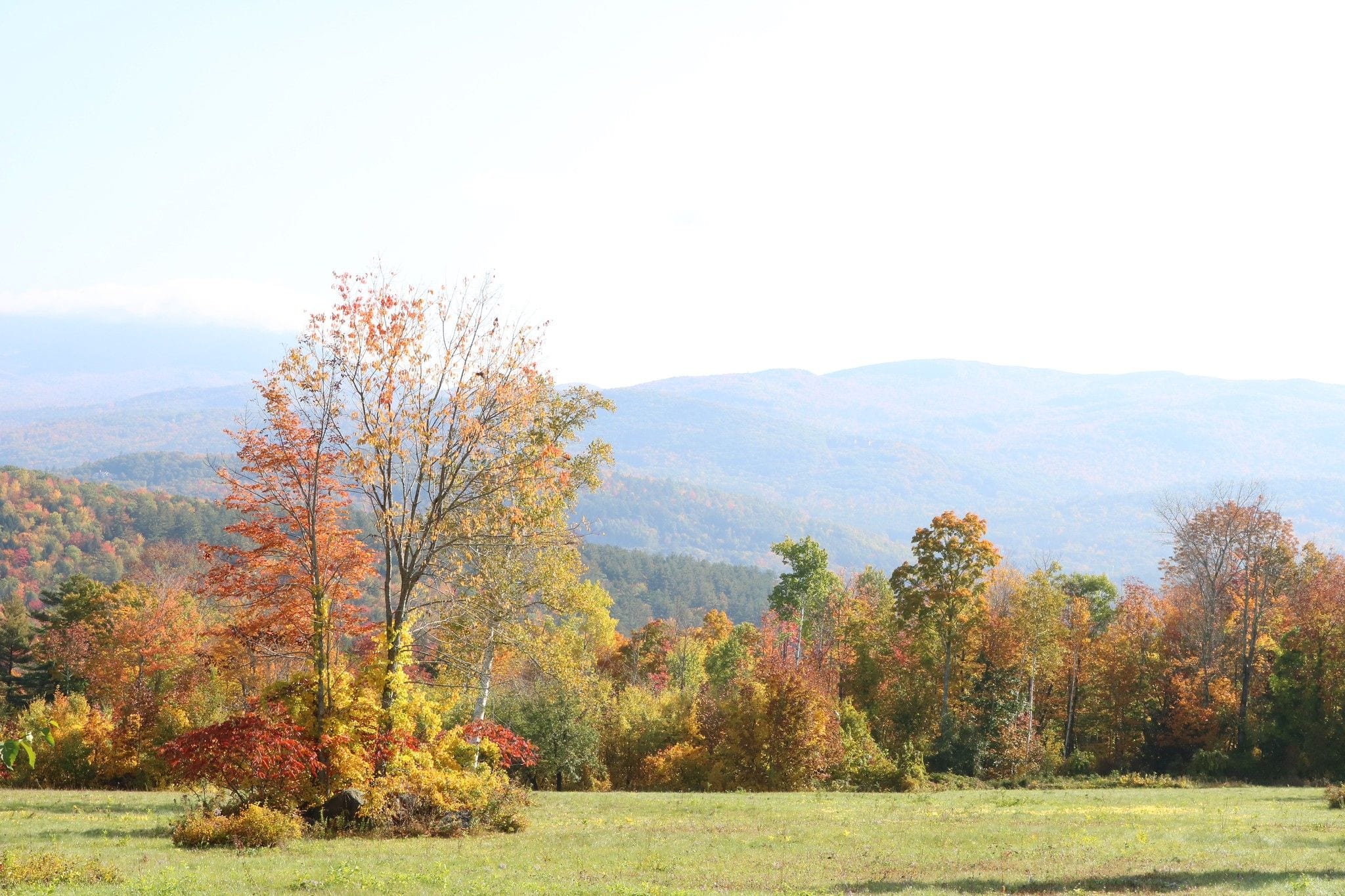
New Hampshire packs a lot into a small state: villages beneath the highest peaks in the Northeast, colonial ports on a short Atlantic coast, lake towns on Winnipesaukee and Sunapee, and white-steepled commons in the quiet Monadnock Region. With no sales tax and some of New England's finest fall color, its small towns are made for slow road trips.
This guide ranks the 20 best, from the covered bridge at Jackson and the brick streets of Portsmouth to Dartmouth's Hanover and the lupine fields of Sugar Hill. Most fill a relaxed day, and the mountain towns deserve a long weekend.
Sugar Hill is New Hampshire's newest town: it split from Lisbon and was incorporated in 1962, and its Peckett's-on-Sugar-Hill inn had started the first resort-based ski school in the United States decades earlier.
The Cannon Mountain Aerial Tramway in Franconia Notch opened in 1938 as the first passenger aerial tramway in North America; the 80-passenger cabins that ride it today replaced the originals in 1980.
Peterborough founded the first tax-supported free public library in the United States in 1833, housed at first in the town's general store and post office.
Chutters in Littleton holds the Guinness World Record for the longest continuous candy counter, nearly 112 feet of penny candy jars.
Exeter was New Hampshire's capital for 14 years from the Revolution on, and in the 1980s a rare Dunlap broadside of the Declaration of Independence turned up in the attic of one of its colonial houses.
Mount Washington, between Jackson and Gorham, ranks among the windiest places in the world: in 1934 its summit observatory recorded a gust of 231 miles per hour, a world record until 1996 and still the strongest measured outside a tornado or tropical cyclone.
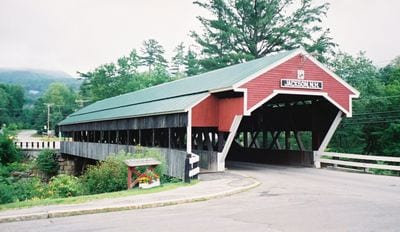
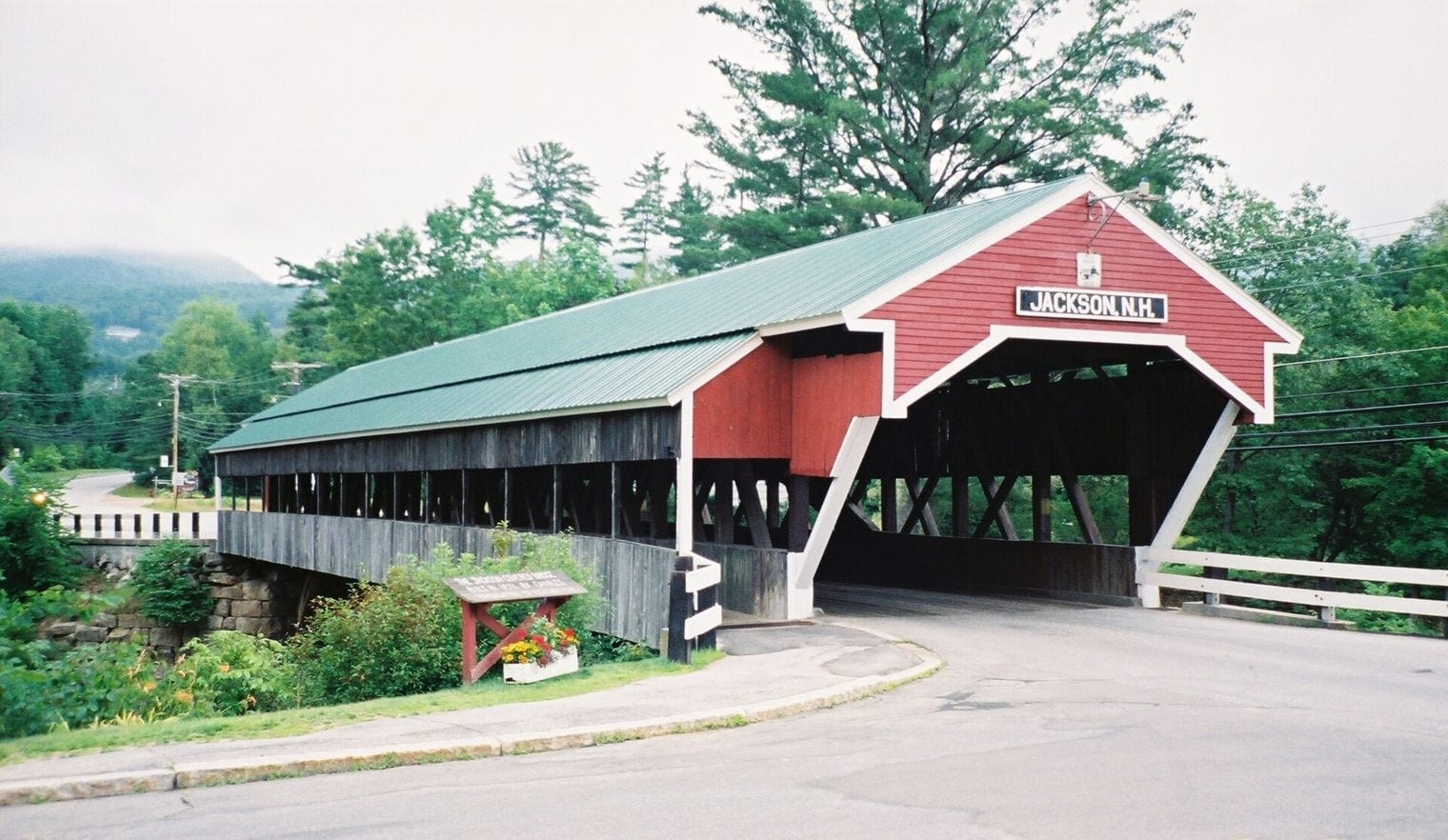
Jackson is the New Hampshire village of the postcards. You drive in through the red Honeymoon Covered Bridge, built over the Ellis River in 1876, and find a town of about 1,000 people tucked into the Mount Washington Valley, where painters of the White Mountain School began arriving in the 1840s and grand summer hotels soon followed.
Just above the village, Jackson Falls spills over broad granite ledges on the Wildcat River, a favorite place to cool off on a summer afternoon. In winter the Jackson XC network grooms cross-country trails through town and out into the forest, Wildcat Mountain's ski slopes are just up the road in Pinkham Notch, and fall paints the whole valley red and gold.
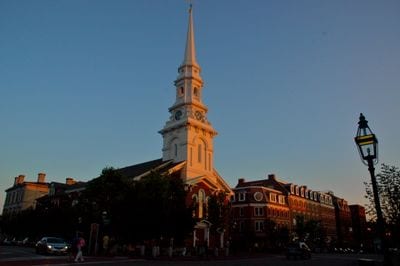
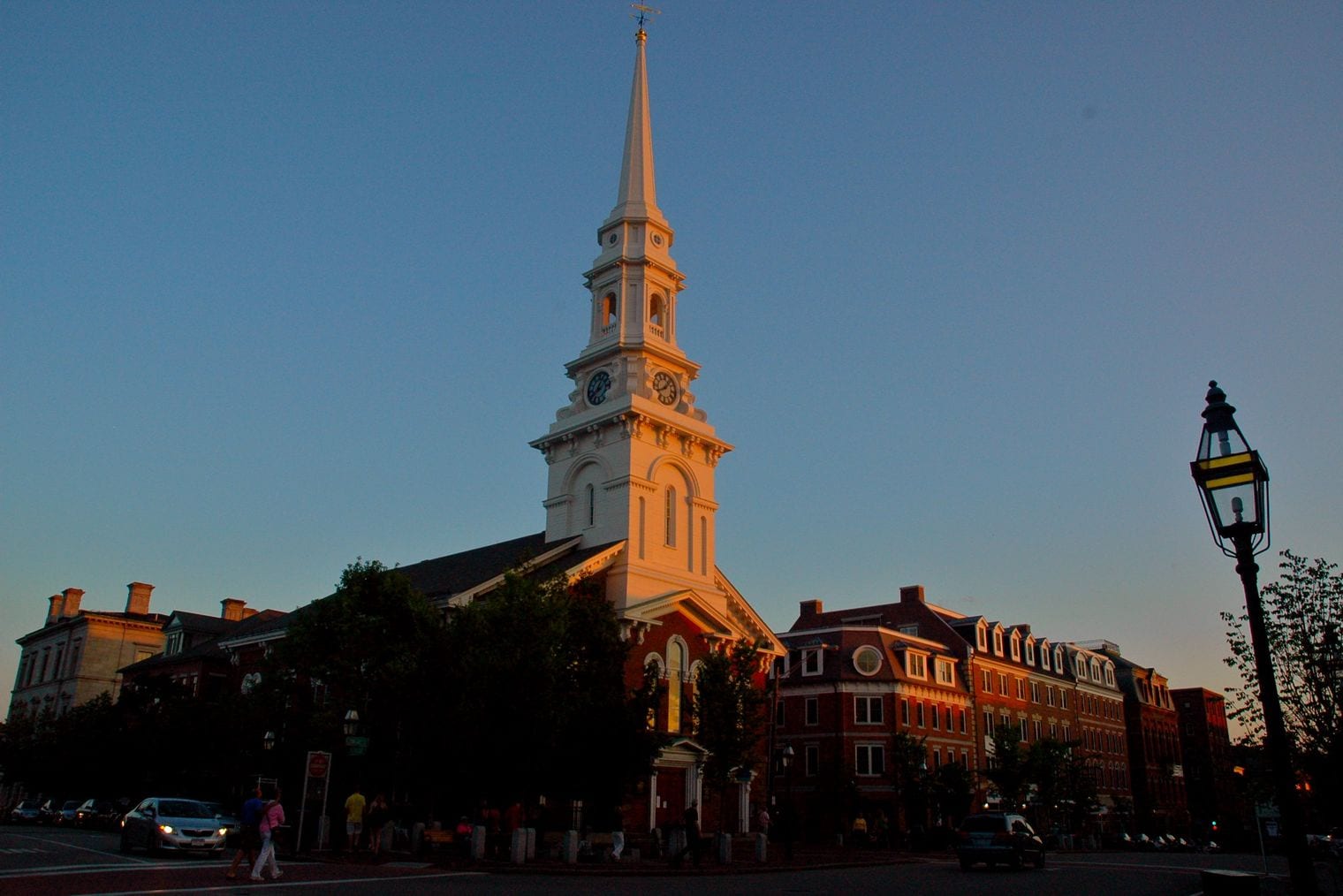
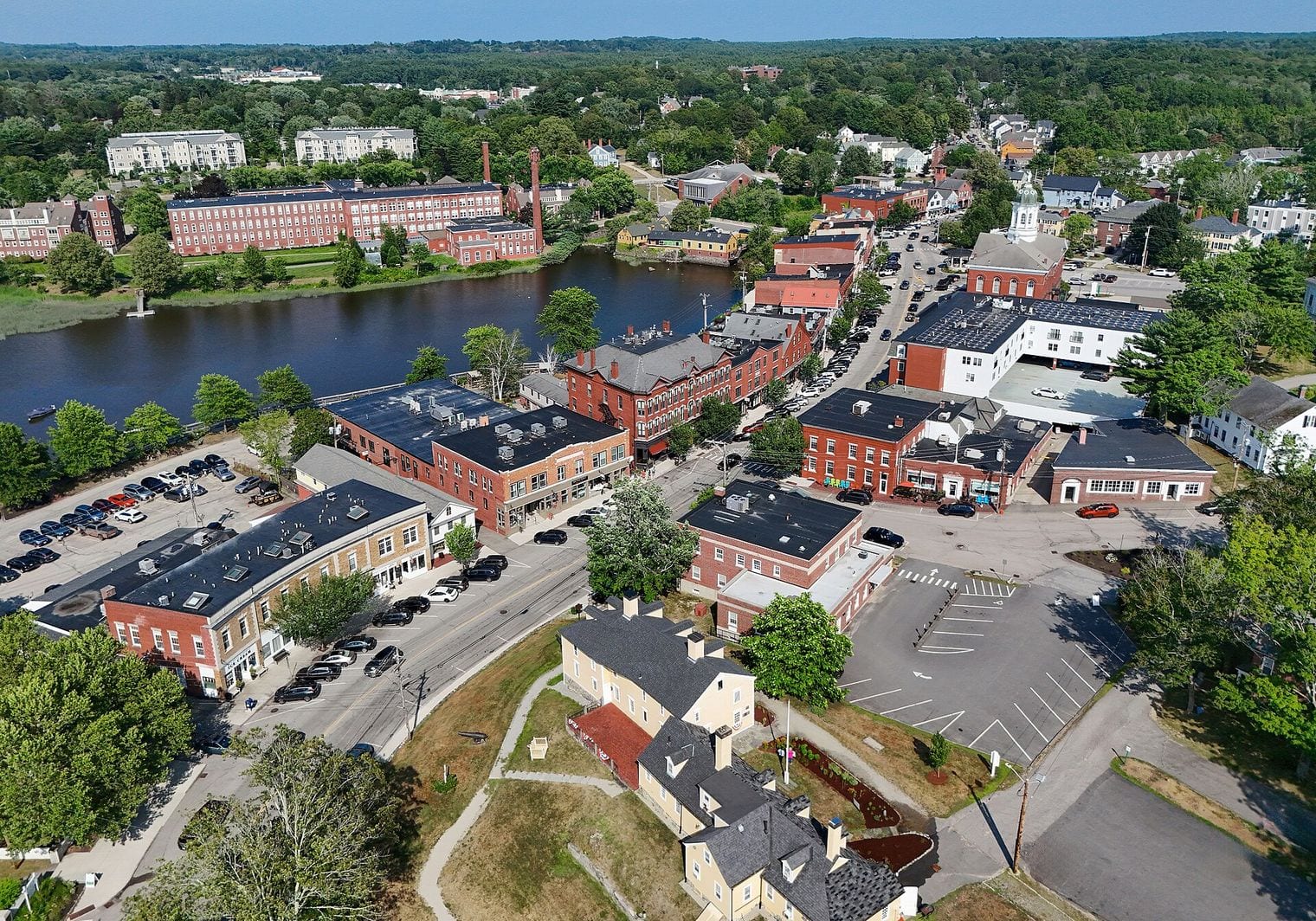
Portsmouth is New Hampshire's colonial seaport, settled around 1630 as Strawbery Banke, named for the wild strawberries on the bank of the Piscataqua River. It was the provincial capital until the Revolution, and after fires swept the center in the early 1800s it was rebuilt in brick, so the compact downtown of Federal storefronts around Market Square and North Church is made for walking.
Strawbery Banke Museum preserves more than 30 restored buildings from the 17th to the 19th centuries, and across the street Prescott Park fills its riverside gardens with summer performances. Tour the John Paul Jones House, where the naval hero boarded during the Revolution, see the submarine USS Albacore in its museum park, and look across the river to the shipyard in Kittery, Maine, where the 1905 Treaty of Portsmouth was signed.
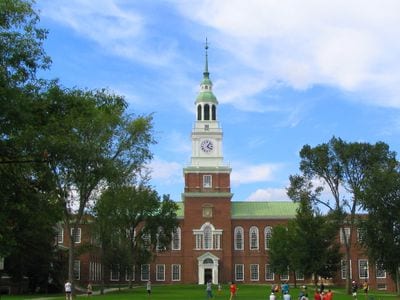
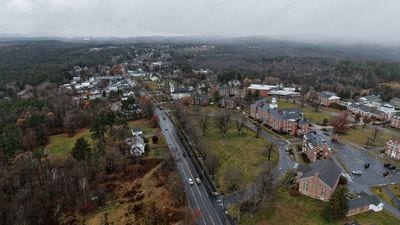
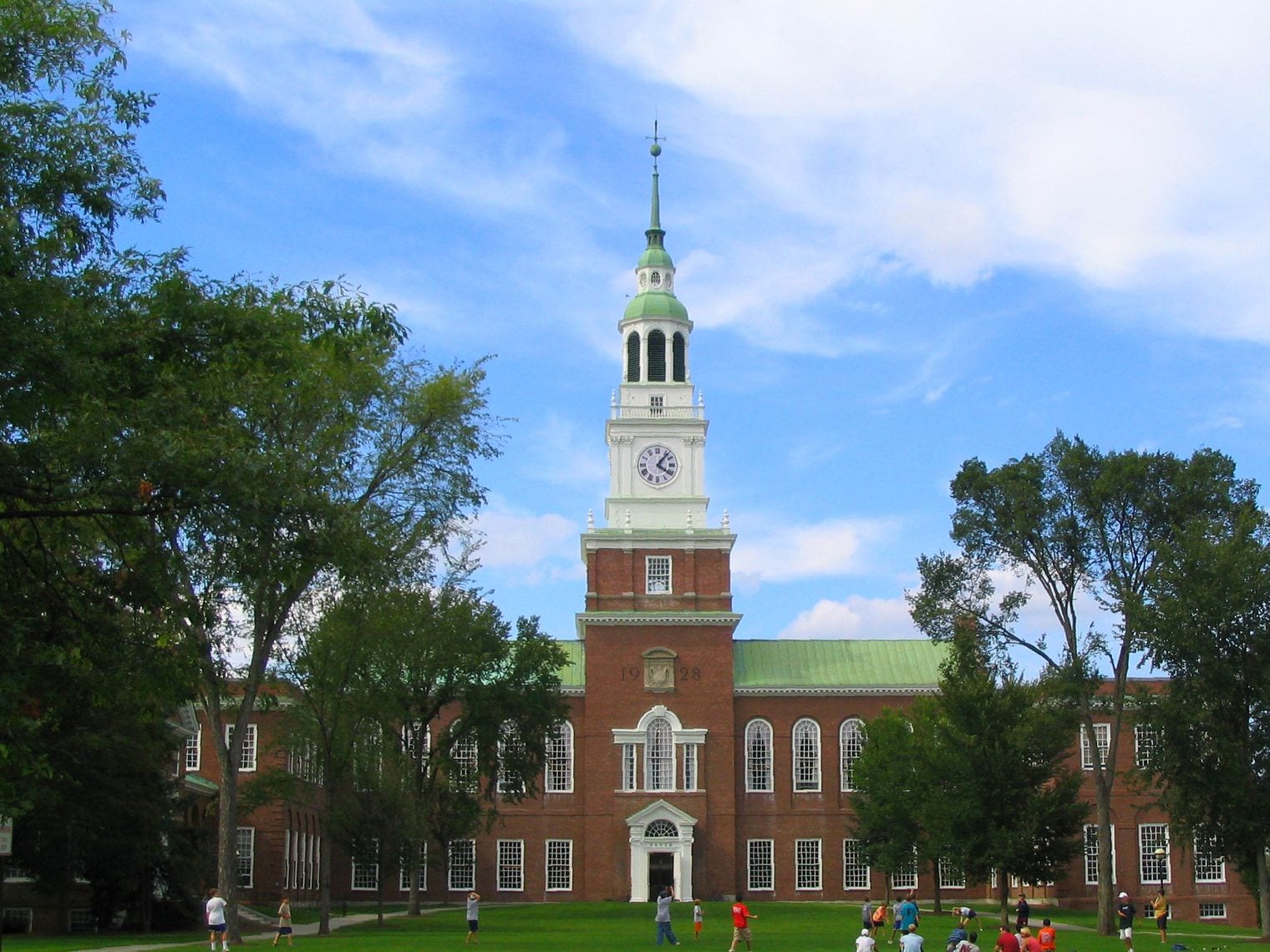
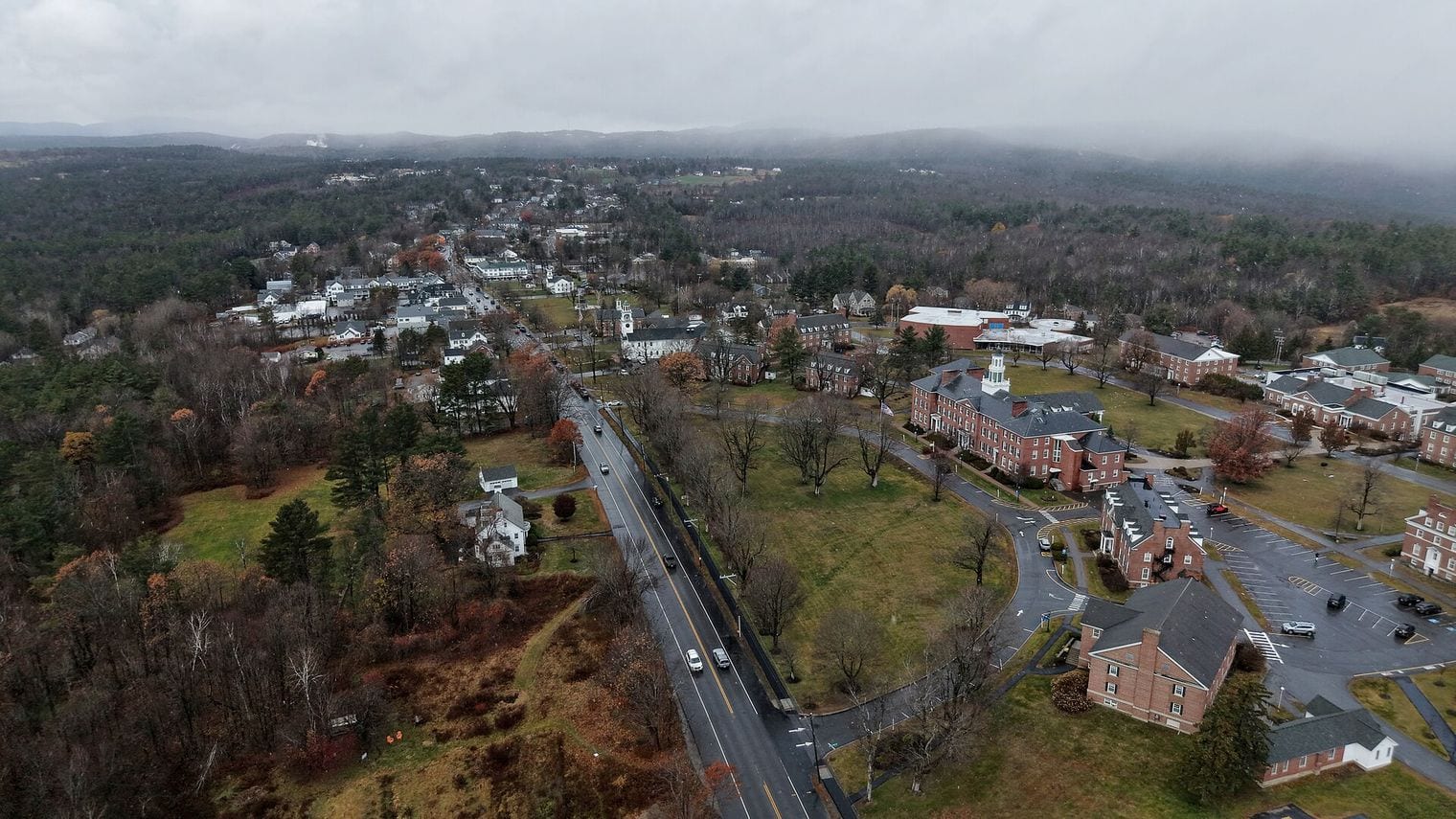
Hanover is the Ivy League town on the Connecticut River, home since 1769 of Dartmouth College, the ninth-oldest college in the country. Its campus wraps around the Green, a broad lawn overlooked by the 200-foot tower of Baker Library, and the Appalachian Trail walks right through town before crossing the Ledyard Bridge into Norwich, Vermont.
The Hood Museum of Art on the Green holds one of the oldest college art collections in the country, and in the basement reading room of Baker Library you can see José Clemente Orozco's The Epic of American Civilization, a fresco cycle painted from 1932 to 1934 and now a National Historic Landmark. Dartmouth's Winter Carnival, a tradition since 1911, livens up the snowy months.
Sugar Hill is a hilltop town of about 650 people, named for its groves of sugar maples, with long views across to the Franconia, Kinsman and Presidential ranges. It became New Hampshire's newest town when it split from Lisbon in 1962, but its resort history is far older: wealthy Victorians arrived by train to stay in grand hotels on the ridge, and Peckett's-on-Sugar-Hill started the first resort ski school in the United States.
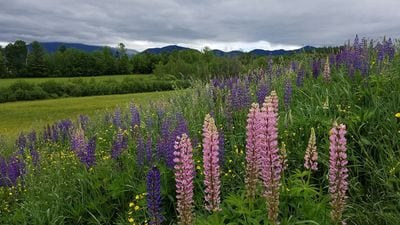
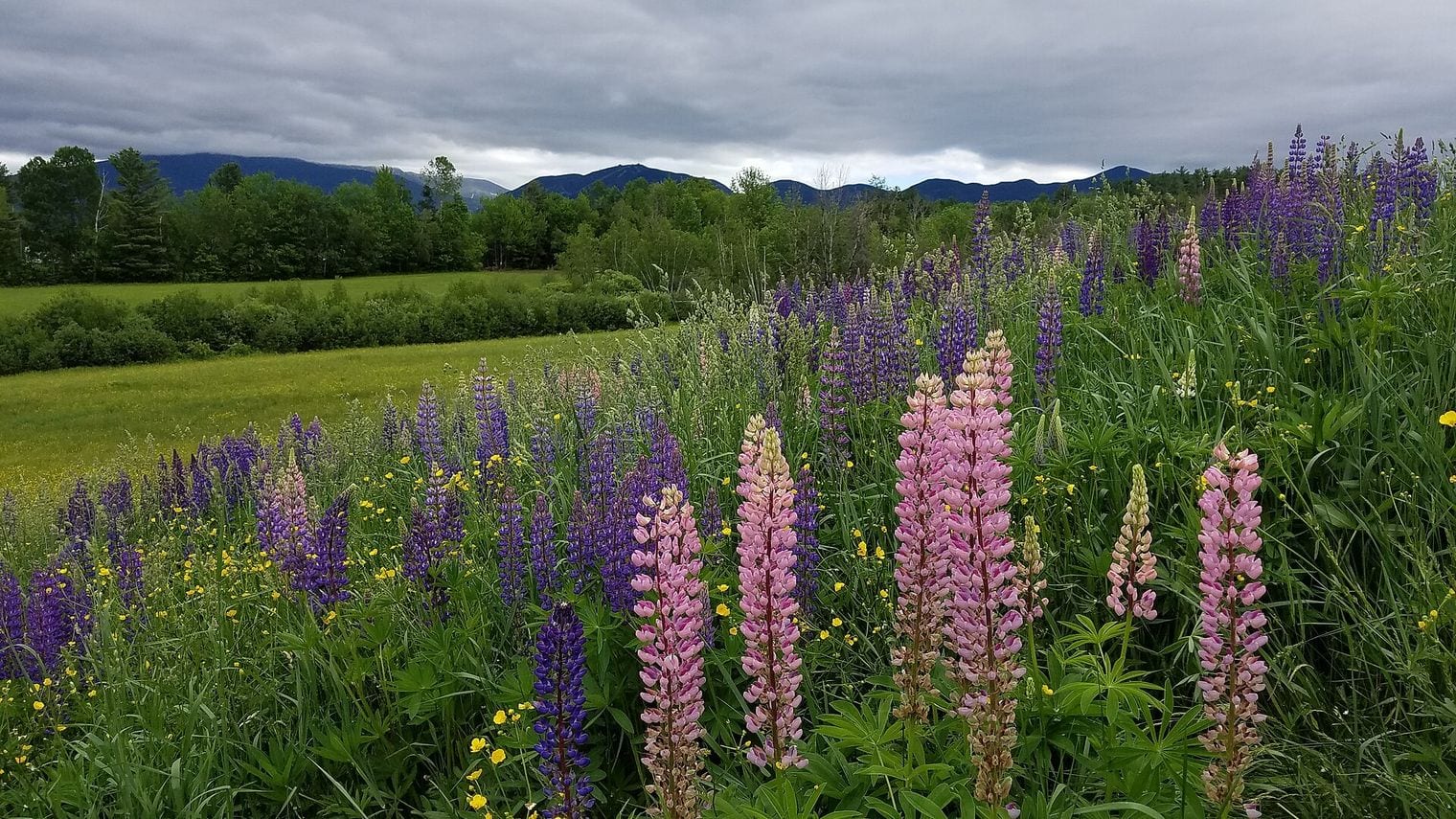
Come in June, when lupine fields across town bloom purple, pink and white and the town holds its Celebration of Lupines. Polly's Pancake Parlor has served pancakes since 1938, when the family began making them to promote its maple products, and is a James Beard Foundation American Classic; Harman's Cheese & Country Store and the Sugar Hill Historical Museum round out a visit.
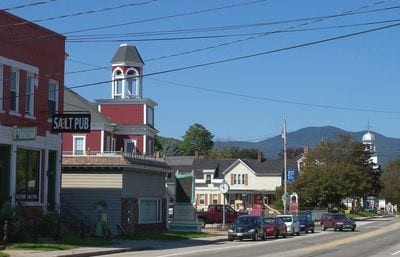
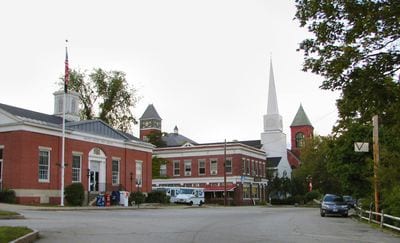
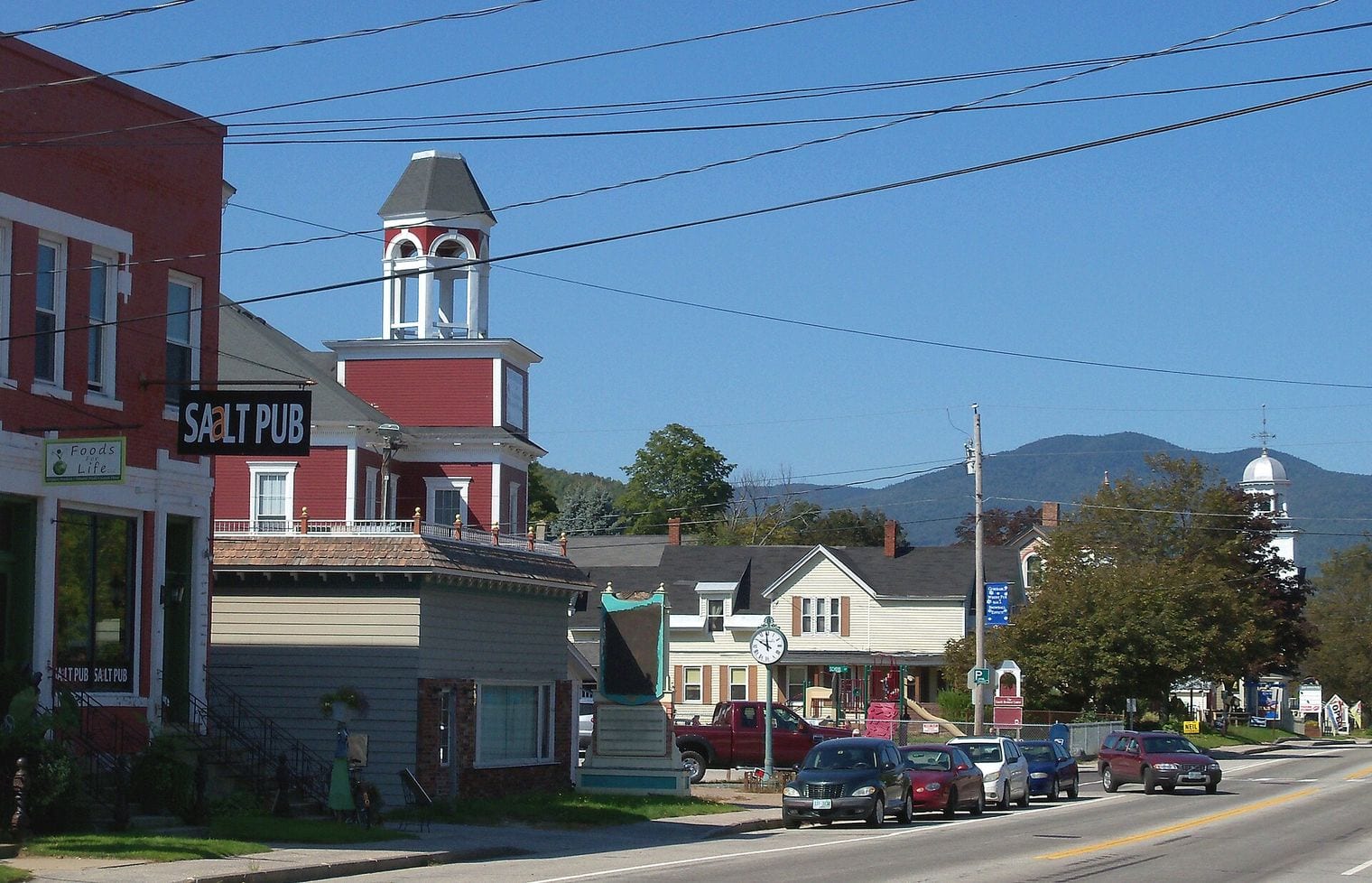
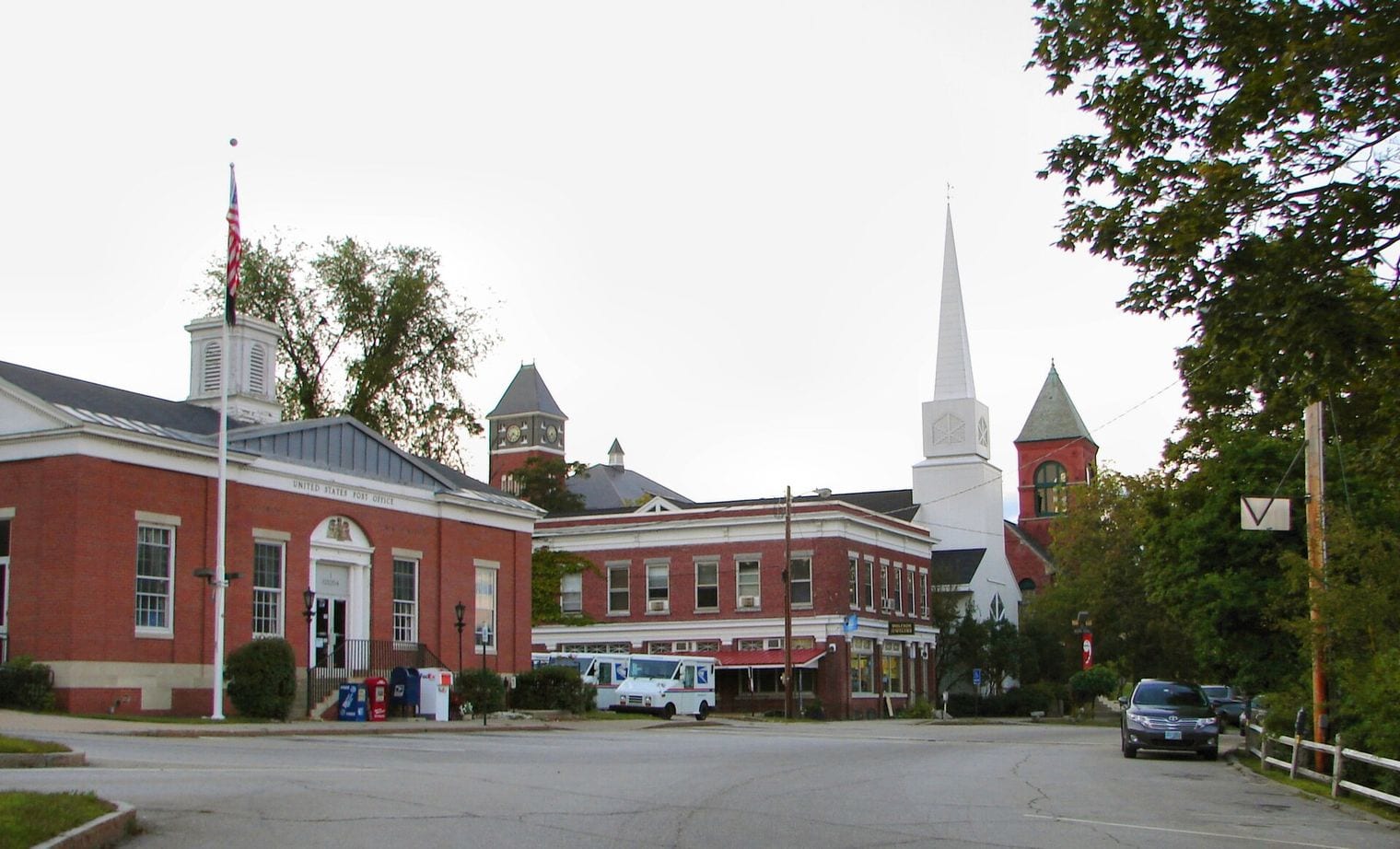
Littleton is the Main Street of the White Mountains, a downtown of brick and clapboard storefronts in a town of about 6,000 people on the Ammonoosuc River, at the northern edge of the mountains. It was the birthplace of Eleanor H. Porter, author of Pollyanna, and a bronze statue of her famously cheerful heroine stands downtown.
Chutters holds the Guinness World Record for the longest continuous candy counter, nearly 112 feet of jars of penny candy, and the Riverwalk leads to a covered footbridge over the Ammonoosuc beside the restored Littleton Grist Mill, which first opened in 1798. Shops, cafes and galleries line the rest of Main Street, and Franconia Notch is only a short drive south.
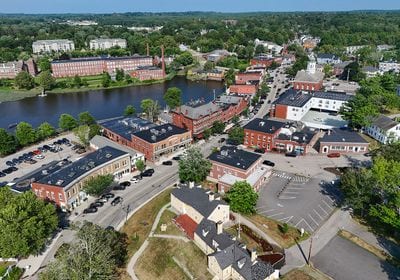
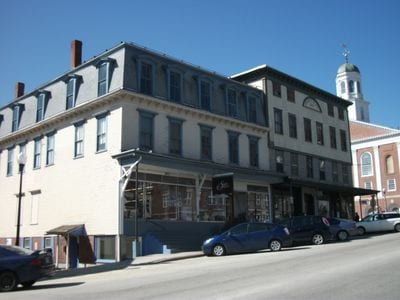
Exeter grew up where the Exeter River spills into the tidal Squamscott, founded in 1638 by the exiled clergyman John Wheelwright. During the Revolution it served as New Hampshire's capital for 14 years, and its downtown, with the Swasey Pavilion bandstand on the town square and a riverside parkway where wharves once stood, still has the air of a prosperous colonial town.
The American Independence Center, in the 1721 Ladd-Gilman House, owns one of the original Dunlap broadsides of the Declaration of Independence, found in the attic in the 1980s. Phillips Exeter Academy, founded in 1781, spreads its brick campus around the center, with Louis Kahn's celebrated library, and Abraham Lincoln visited in 1860 while his son Robert was a student there.
Peterborough is a Monadnock Region town of about 6,400 people on the Contoocook River, a former mill town that has long drawn artists. MacDowell, the artists' residency founded here in 1907 by composer Edward MacDowell and pianist Marian MacDowell, has hosted generations of writers and composers, among them Thornton Wilder, whose Grover's Corners in Our Town is often said to draw on Peterborough.
The town also founded the first tax-supported free public library in the United States, in 1833, and the Peterborough Players have staged summer theater since 1933. Drive the paved road to the top of Pack Monadnock in Miller State Park, New Hampshire's oldest state park, for wide views, and come in September to watch migrating hawks from the summit.
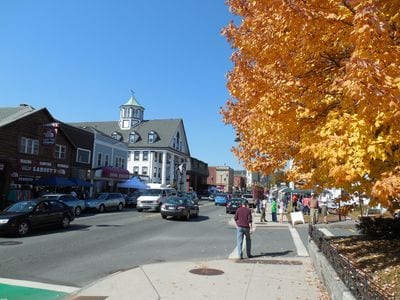
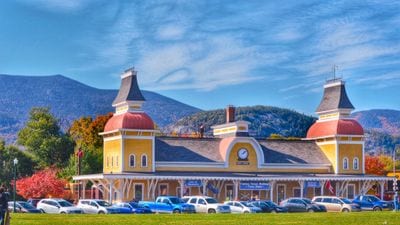
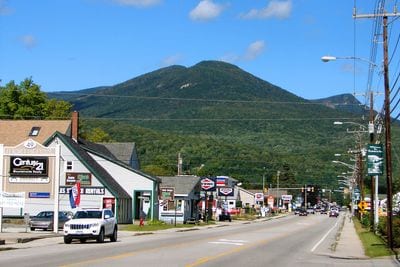
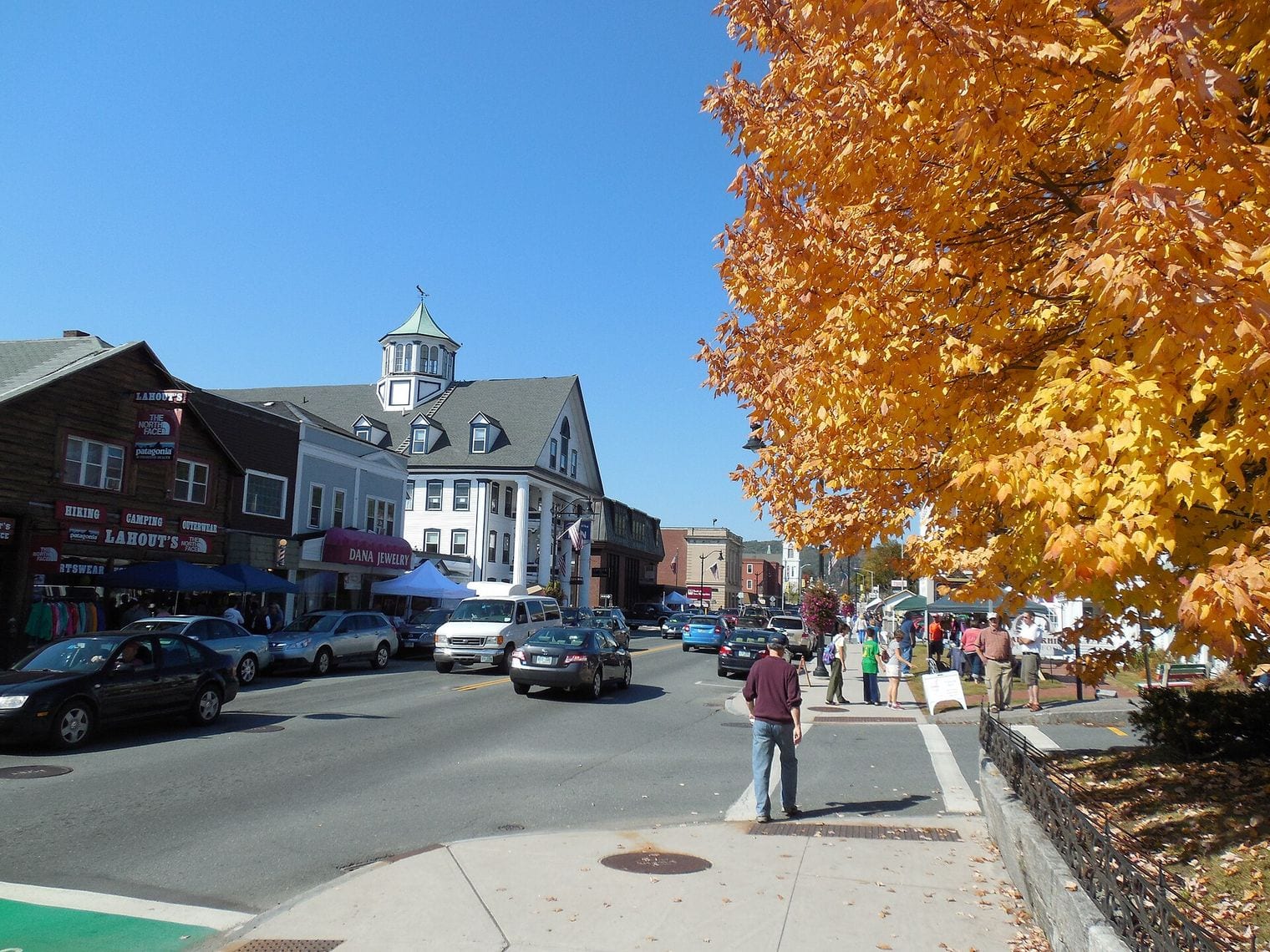
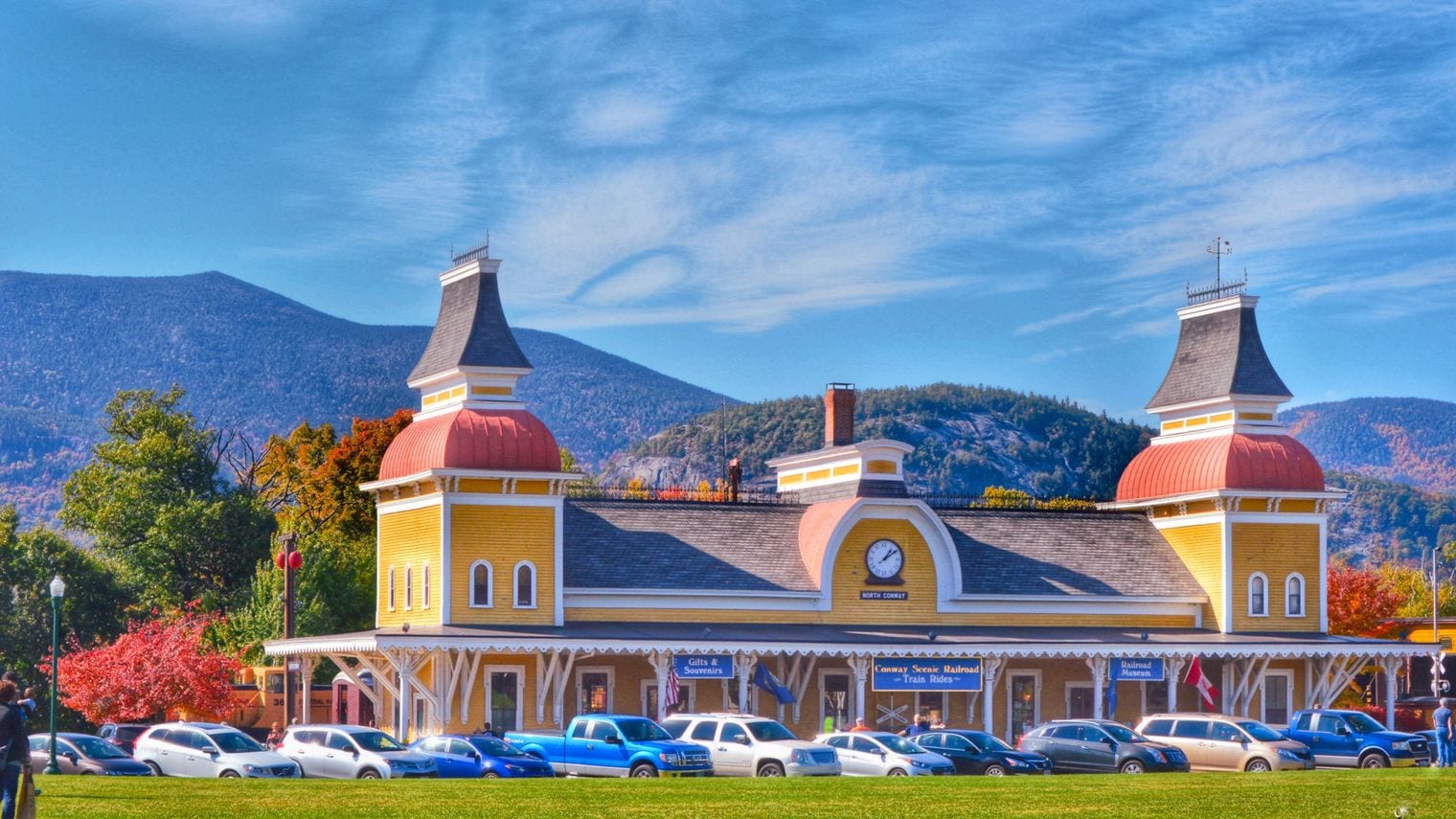
North Conway is the busy heart of the Mount Washington Valley, a village in the town of Conway lined with outlet stores, outfitters and restaurants, and with no sales tax in New Hampshire, shopping is part of the draw. Schouler Park, the village green, faces the 1874 Victorian depot of the Conway Scenic Railroad, whose trains run south to Conway and north through Crawford Notch.
Cranmore Mountain, skied since the 1930s, rises on the edge of the village, and just to the west Echo Lake State Park pairs a swimming lake with Cathedral Ledge, a 500-foot cliff loved by rock climbers that also has a road to its summit overlook. Story Land and Attitash are a short drive away in nearby Glen and Bartlett, and in winter the village fills with skiers from all over the valley.
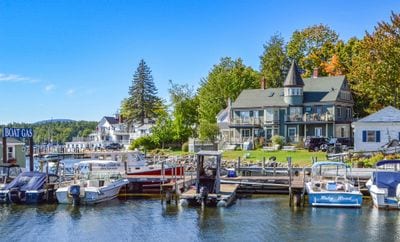
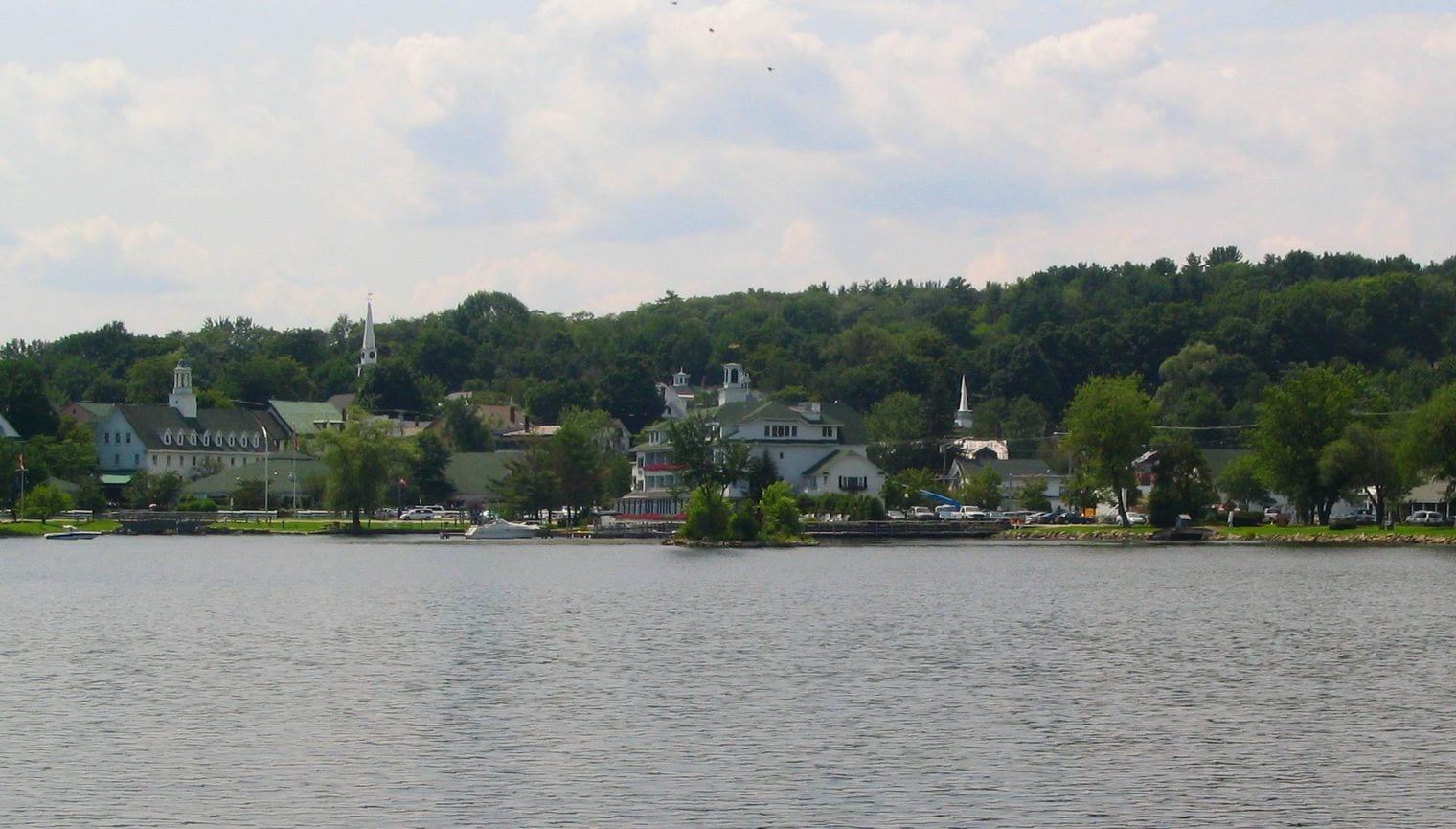
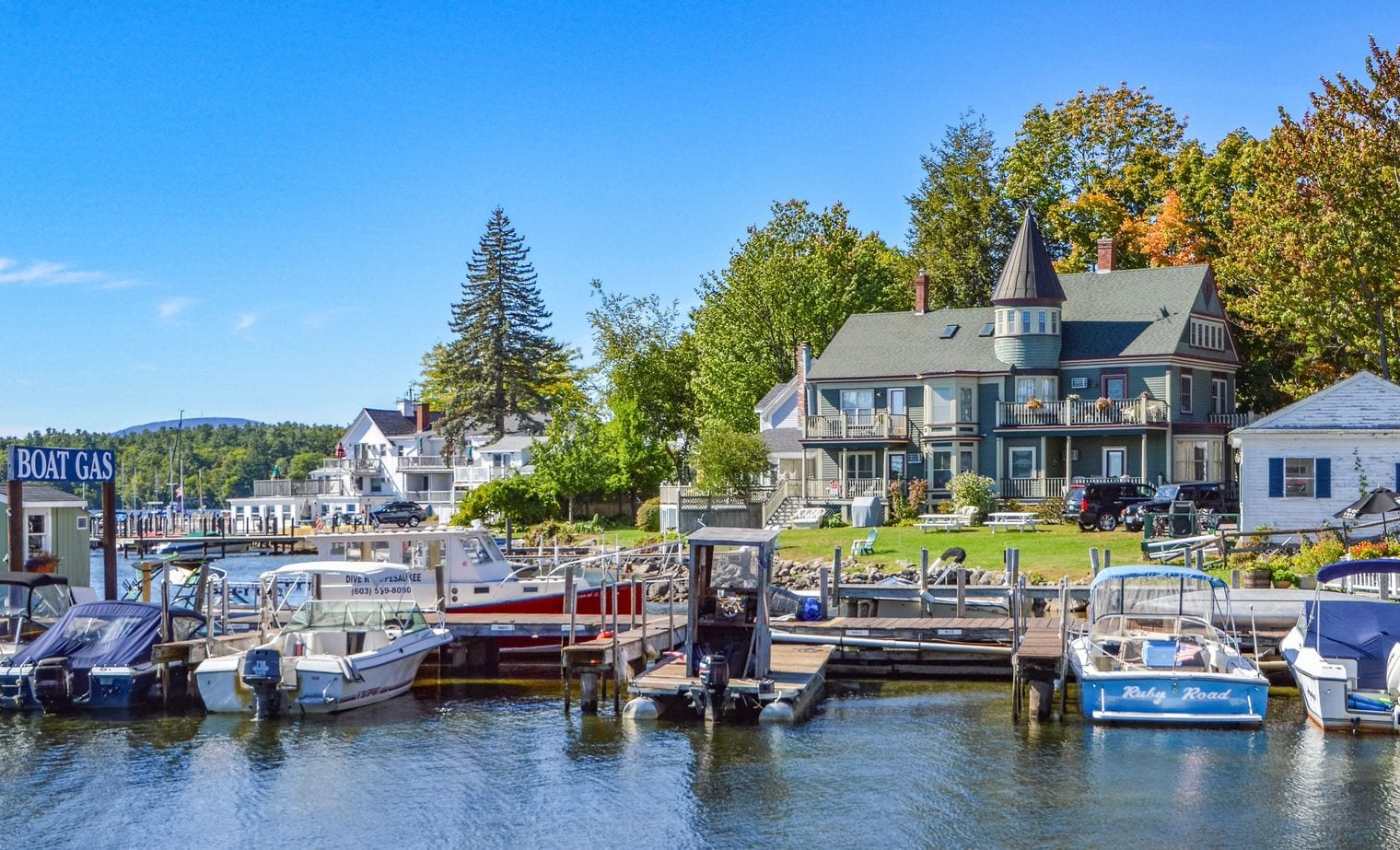
Meredith wraps around the head of Meredith Bay on Lake Winnipesaukee, New Hampshire's largest lake, and its compact village is one of the easiest lakefront strolls in the Lakes Region. Mill Falls Marketplace fills the old mill site where water from Lake Waukewan was channeled down to power the mills, and the town docks look out over the bay toward its wooded islands.
In summer the M/S Mount Washington, the big cruise ship of Winnipesaukee, calls at Meredith on its lake tours, and scenic excursion trains run along the shore toward Weirs Beach. Squam Lake, the setting of the film On Golden Pond, is a short drive north, and Lake Waukewan and Lake Winnisquam add quieter water for paddling.
Free printable checklist of all 20 places
Tick them off as you go. Confirm your email to download it, plus one email every Thursday with new guides for the places you tick.
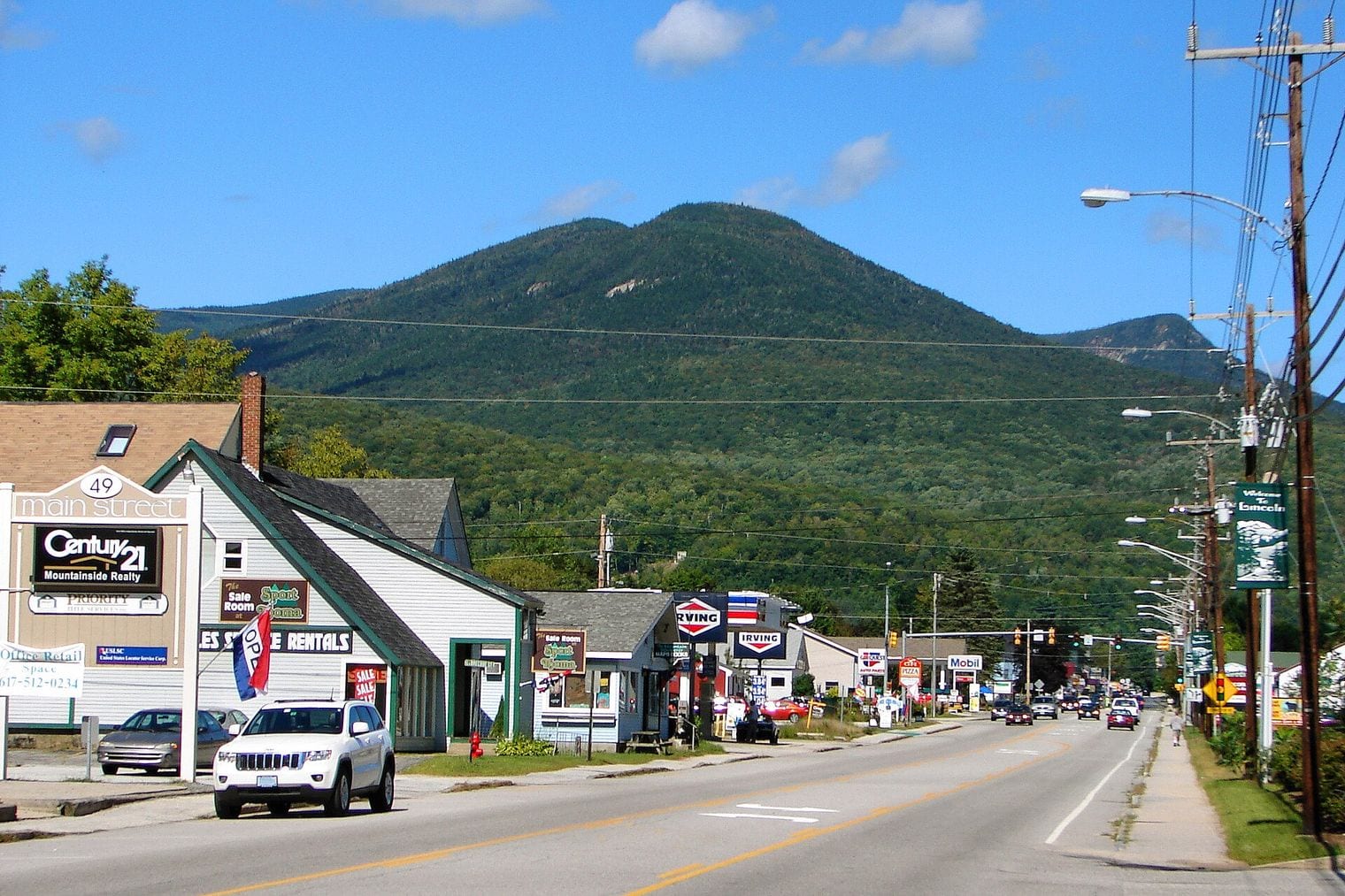
Lincoln grew from a logging company town on the Pemigewasset River into a four-season base for the western White Mountains. Loon Mountain sits on the edge of town, with a gondola to its summit, and just east of Main Street begins the Kancamagus Highway, a National Scenic Byway that climbs over Kancamagus Pass on its way to Conway and is at its most spectacular in fall.
The Flume Gorge, inside Franconia Notch State Park north of town, is one of the state's most visited sights, with a boardwalk that threads a narrow chasm between granite walls past waterfalls. Families also come for Clark's Bears, a roadside attraction since 1928 known for its trained black bears and steam train, and the town is home to the New Hampshire Highland Games.
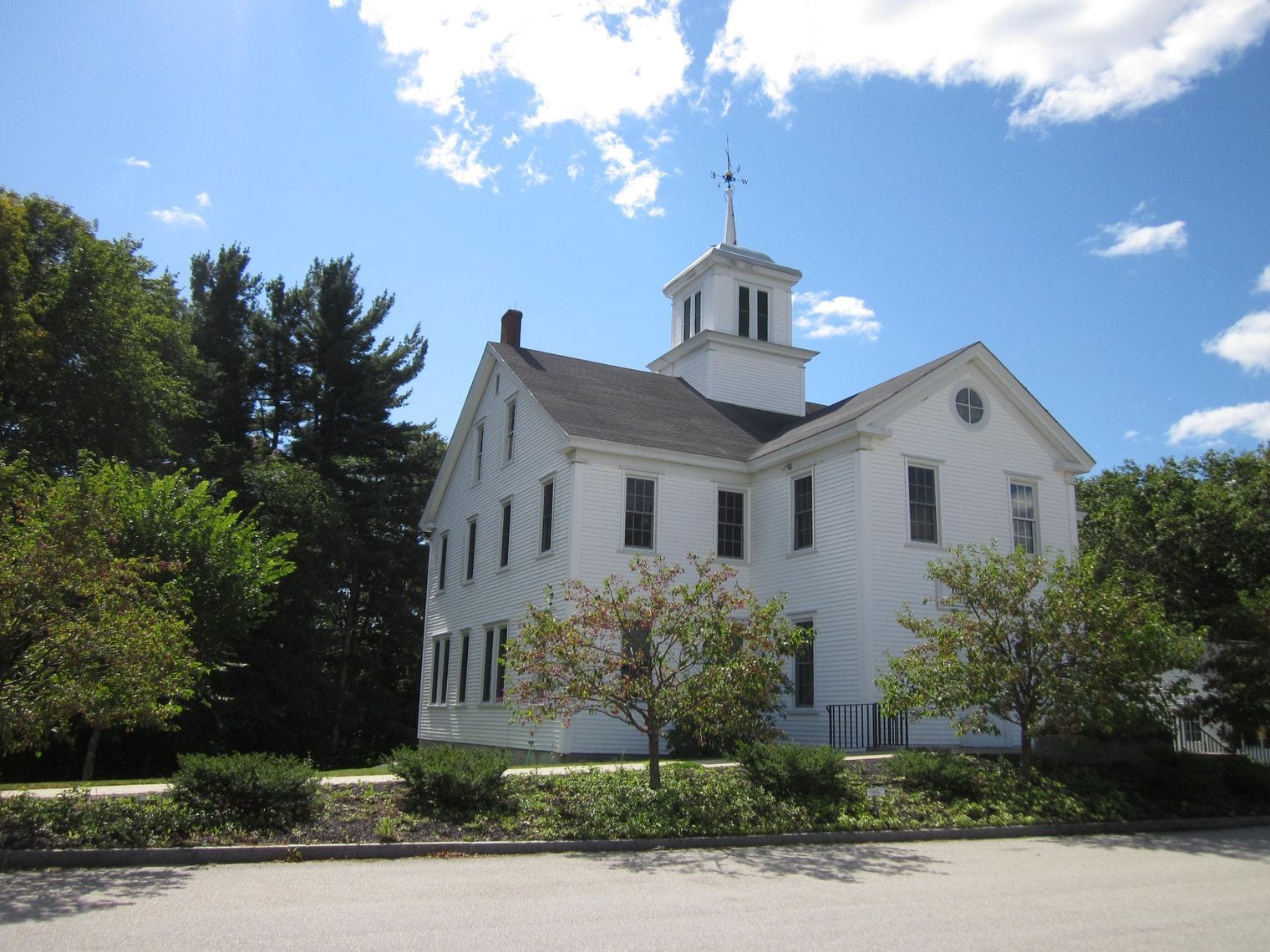
Keene is the Monadnock Region's small city, a college town of about 23,000 people on the Ashuelot River whose broad, tree-lined Main Street runs up to Central Square, with its bandstand and the white church at the head of the square. Much of the 1995 film Jumanji was shot downtown, and the shoe-store sign painted for the movie became a local landmark.
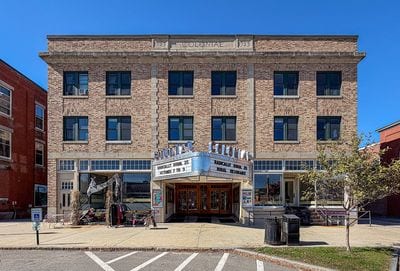
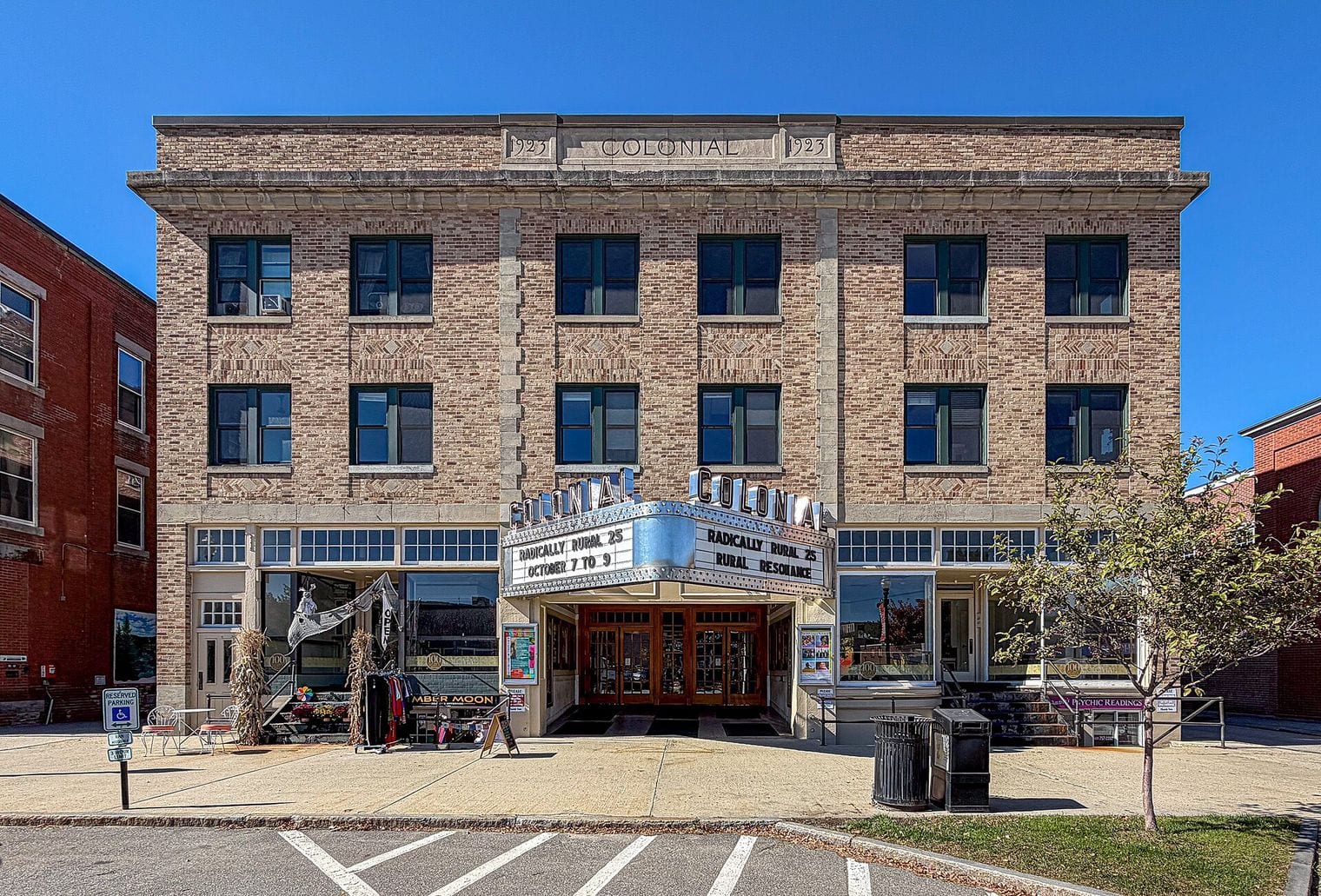
Catch a show at the Colonial Theatre, a restored stage dating to 1924, browse the shops and cafes downtown, then pick up the Cheshire Rail Trail, which crosses the Ashuelot on a stone arch bridge as it passes through the city. Keene hosted a famous pumpkin festival from 1991 to 2014, setting world records for lit jack-o'-lanterns, and fall still colors the hills toward Mount Monadnock.
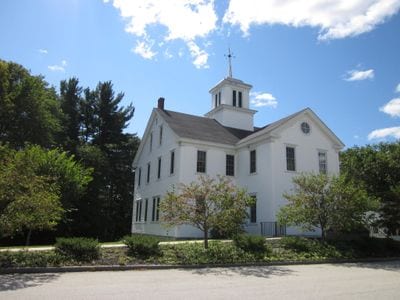
Hancock is the classic Monadnock village, a town of about 1,700 people named for John Hancock, who owned land here. Almost every building on Main Street belongs to a historic district, gravel paths stand in for sidewalks, and the meetinghouse holds a bell from Paul Revere's foundry that still rings the hours. The village inn has taken in travelers since 1789 and is billed as the oldest in New Hampshire.
Norway Pond sits at the edge of the village beneath the steeple, and the Harris Center for Conservation Education offers programs and trails on conserved land around town. Cross the Contoocook River on the Hancock-Greenfield covered bridge, built in 1937, and come in fall, when the maples around the village turn it into a calendar photo.
Franconia sits at the northern end of Franconia Notch, the dramatic pass between the Kinsman and Franconia ranges, and the town takes in Cannon Mountain, Echo Lake and the site of the Old Man of the Mountain. That granite profile, the state emblem since 1945, collapsed in May 2003, but a memorial on the shore of Profile Lake lines up steel profilers that recreate the face against the cliff.
Ride the Cannon Mountain Aerial Tramway to the summit; the first passenger aerial tramway in North America opened here in 1938. Swim and paddle at Echo Lake beneath the cliffs, then visit The Frost Place, where Robert Frost lived from 1915 to 1920, a poetry museum with porch views of the Franconia Range, and the New England Ski Museum.
Wolfeboro, on the eastern shore of Lake Winnipesaukee, calls itself the Oldest Summer Resort in America, a claim that goes back to 1771, when colonial Governor John Wentworth built his summer estate beside what is now Lake Wentworth. Families from Boston and southern New Hampshire have summered here ever since, and the town docks and Main Street shops give the village a genteel, old-fashioned feel.
The Wright Museum of World War II brings the 1940s home front to life alongside military vehicles, the Libby Museum, finished in 1912, was the state's first museum devoted to natural history, and the New Hampshire Boat Museum celebrates the classic wooden boats of the lakes. On a hot day, head for the beach at Wentworth State Park on Lake Wentworth.
Gorham sits on the Androscoggin River where the Presidential Range meets the Mahoosuc Range, a railroad town that grew up after the line from Portland to Montreal arrived in 1851. Its 1907 depot, saved from demolition by the Gorham Historical Society, is now the society's railroad museum, and the town makes a handy base for the northern White Mountains.
The Mount Washington Auto Road, opened in 1861, starts a short drive south of town and climbs 7.6 miles to the summit of the highest peak in the Northeast. Back in Gorham, evening moose-spotting tours head out along the back roads in summer, and the Presidential Rail Trail sets off west from near Moose Brook State Park through Randolph and Jefferson.
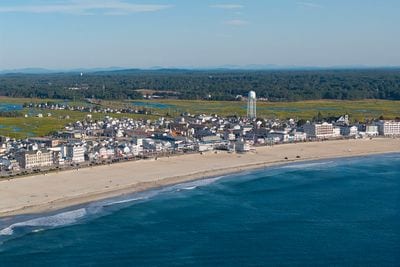
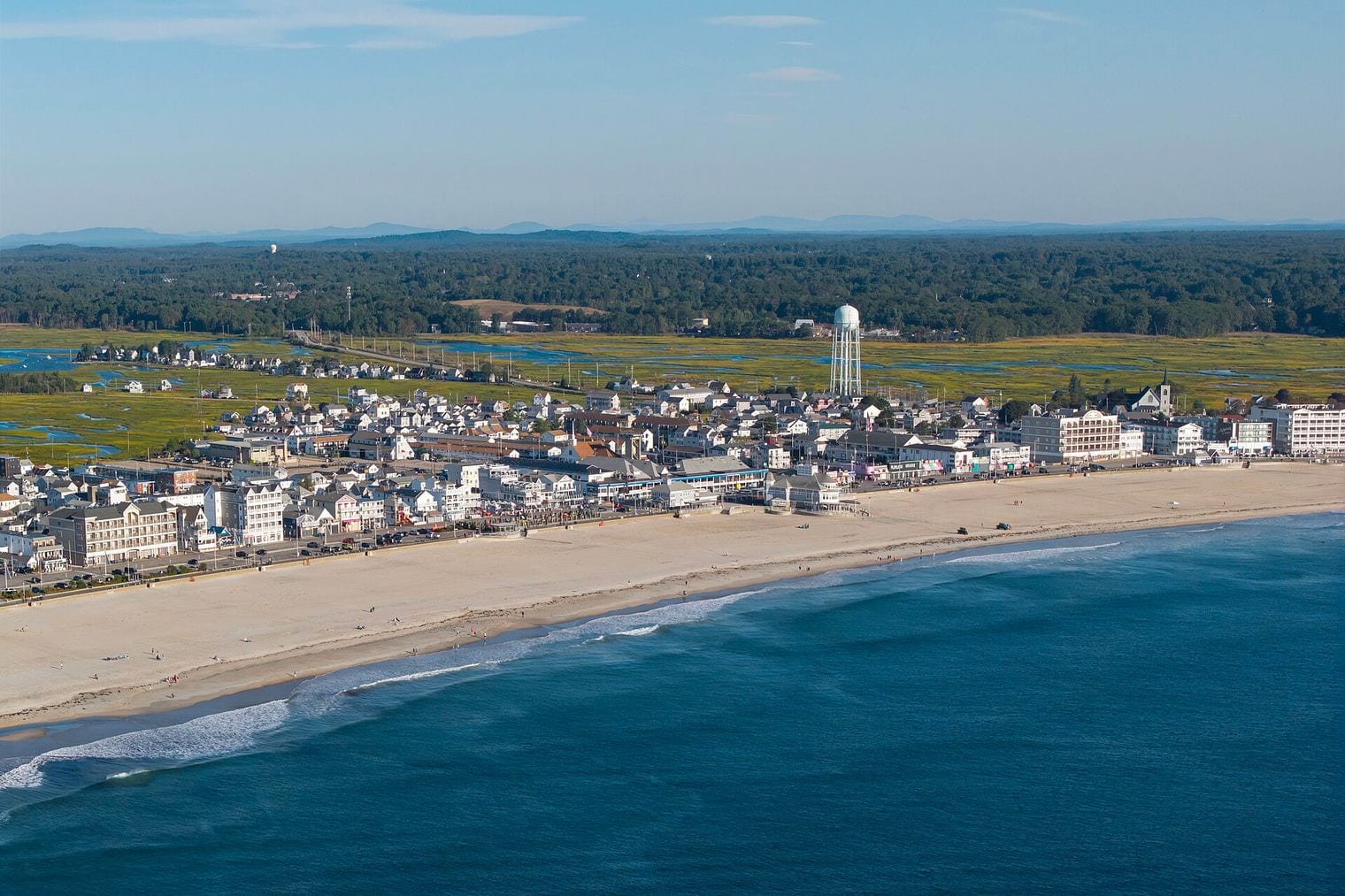
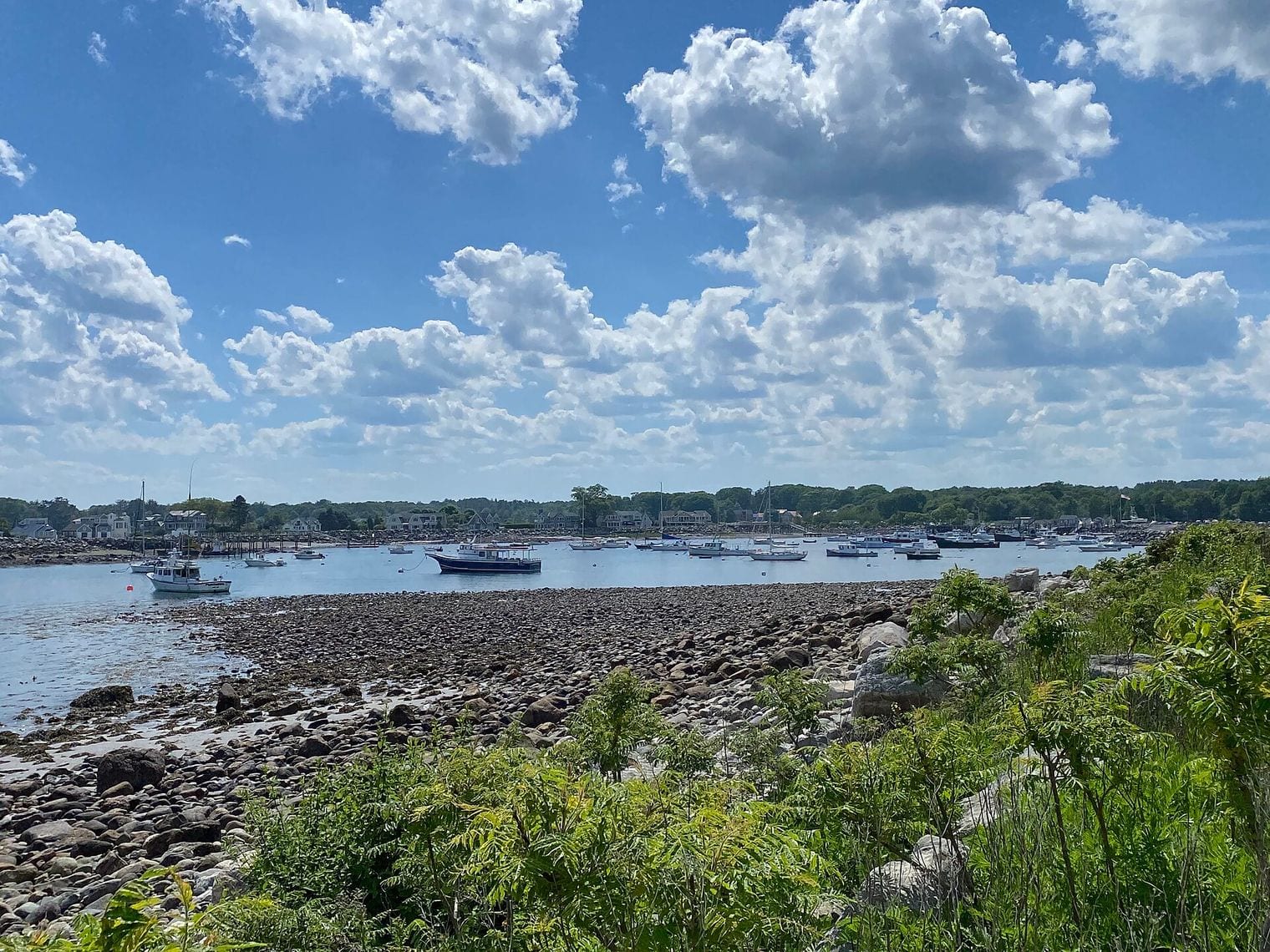
Hampton was settled in 1638 as one of New Hampshire's four original towns, but for most visitors it means Hampton Beach, the classic summer beach town on the state's short Atlantic coast. Ocean Boulevard runs beside the sand past arcades, shops, seafood stands and a boardwalk, and the southern end of the strip is protected as Hampton Beach State Park.
The Hampton Beach Casino Ballroom, opened in 1899, is a seasonal stage for national music and comedy acts, fireworks light up the beach on summer evenings, and the Hampton Beach Seafood Festival takes over the boulevard in September. Each summer sand sculptors from across the country compete on the beach, and out of season the wide, quiet shore is perfect for a bracing walk.
New London is a college town of about 4,400 people between Lake Sunapee and Mount Kearsarge, home of Colby-Sawyer College, which began as an academy in 1837. Three lakes give the town its summer life: Lake Sunapee on its western border, Little Sunapee in the middle of town and Pleasant Lake to the east, with a public beach.
The New London Barn Playhouse, the oldest continuously operating summer theater in New Hampshire, stages shows each summer in an old barn on Main Street. Hike from Winslow State Park in neighboring Wilmot to the bare summit of Mount Kearsarge for views across the region, and spend a day on Lake Sunapee, known for its three historic lighthouses.
Plymouth sits where the Baker River meets the Pemigewasset at the foot of the White Mountains, and Plymouth State University gives this town of about 6,700 people a lively, youthful downtown. History runs deep: Daniel Webster lost his first criminal case at the old courthouse, now home to the historical society, and Nathaniel Hawthorne died at a Plymouth hotel in 1864 while traveling with former President Franklin Pierce.
Use the town as a base for the lakes and the mountains alike. Newfound Lake is a short drive southwest, the Polar Caves, a maze of glacial boulder caves, are just west in Rumney, and Interstate 93 runs north to Franconia Notch. Hikers climb nearby Plymouth Mountain, and in fall the Pemigewasset valley glows with color.
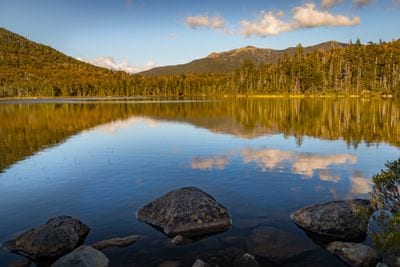
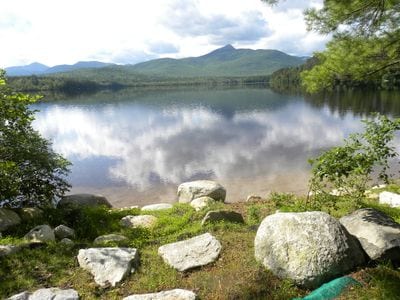
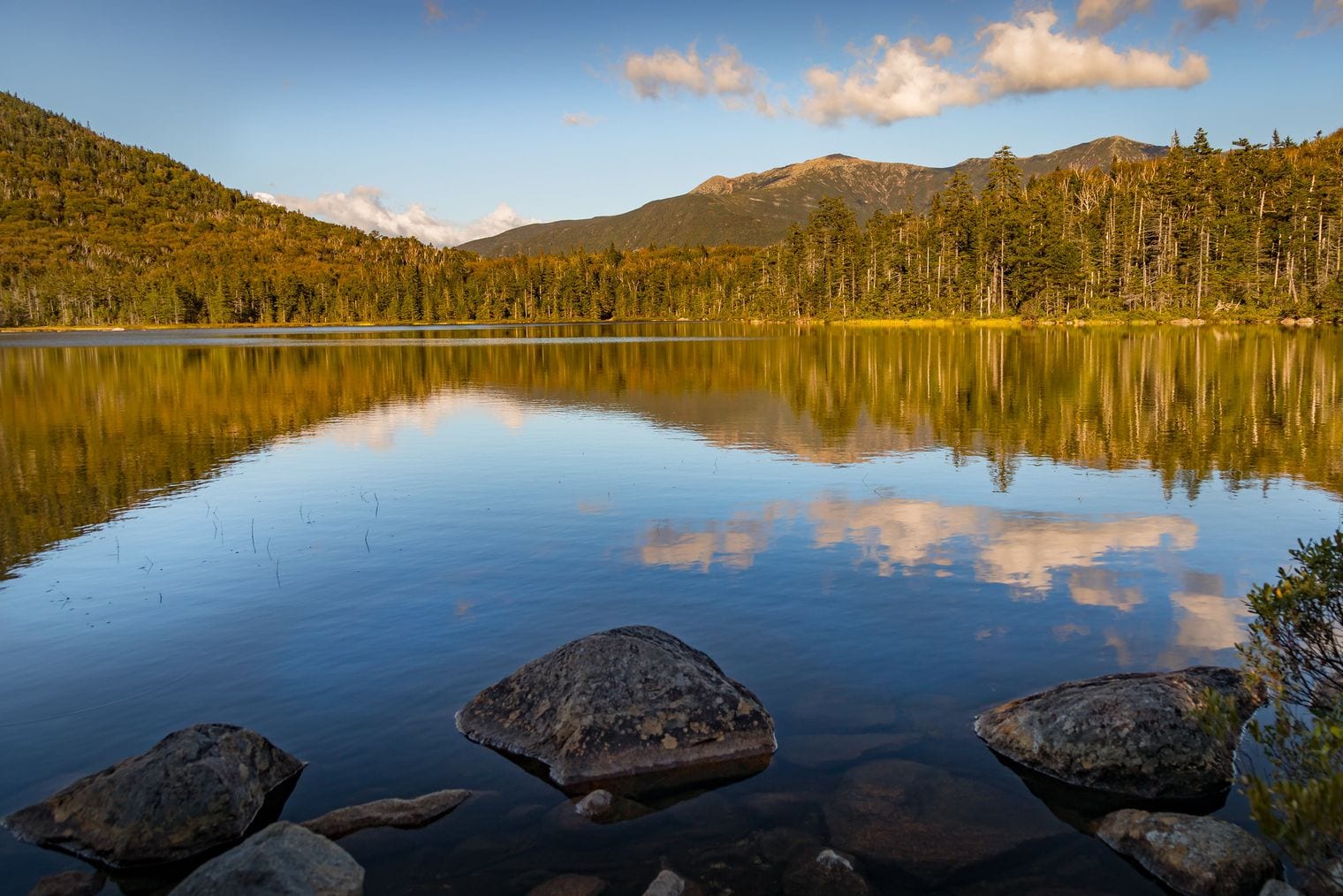
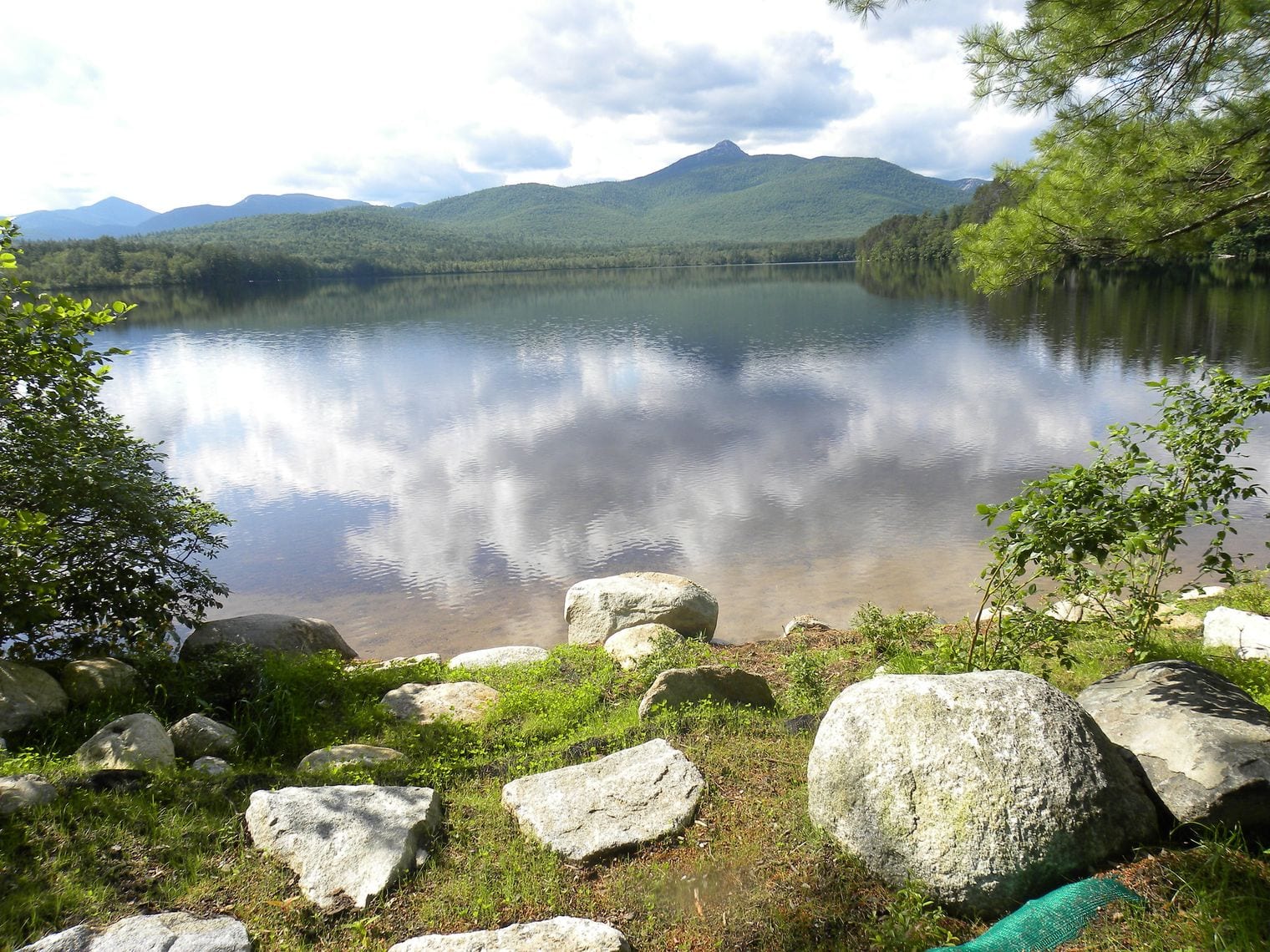
Tamworth is a quiet farm town beneath Mount Chocorua, whose bare, rocky cone rises just over the town line in Albany and has been a favorite subject of painters and photographers for generations. The classic view is from Chocorua Lake on the town's northern edge, where the peak is mirrored in still water, and the villages of Chocorua, South Tamworth, Wonalancet and Whittier spread along the Bearcamp River.
The Barnstormers Theatre, founded in 1931 by Francis Cleveland, son of President Grover Cleveland, is one of the oldest professional summer theaters in the country and performs in the village every summer. The Remick Country Doctor Museum and Farm tells the story of two generations of country doctors, and Tamworth Distilling makes small-batch spirits from local ingredients.
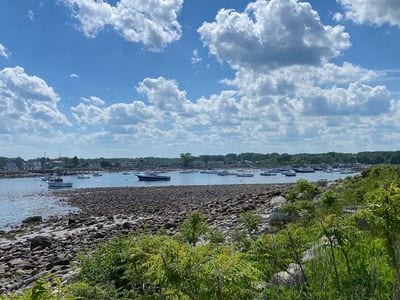
Rye is a seaside town of about 5,500 people with rocky points, sandy state beaches and summer houses strung along the coast road south of Portsmouth. English settlers founded Pannaway Plantation at Odiorne Point here in 1623, the first European settlement in what became New Hampshire.
Odiorne Point State Park now protects that shore, with tide pools, the remains of a World War II fort and the Seacoast Science Center, a family favorite for its marine exhibits. Swim at Wallis Sands or Jenness State Beach, and from Rye Harbor take a boat out to the Isles of Shoals, a cluster of rocky islands offshore, four of which belong to the town.
Free Things to Do in These New Hampshire Towns
Many of the best moments on this list cost nothing. Walk through the Honeymoon Covered Bridge and up to Jackson Falls in Jackson, stroll the brick streets around Market Square in Portsmouth, and see the Orozco murals in Baker Library and the free Hood Museum of Art in Hanover.
Photograph the June lupines in Sugar Hill, follow the Riverwalk to the covered footbridge in Littleton, listen for the Paul Revere bell in Hancock and line up the Old Man of the Mountain memorial at Profile Lake in Franconia. Drive the Kancamagus Highway east from Lincoln for fall color, walk the Cheshire Rail Trail through Keene, and stroll the sand and boardwalk at Hampton Beach.
New Hampshire is compact, so a long weekend can link several of these towns. In the White Mountains, Interstate 93 runs through Franconia Notch between Lincoln and Franconia, with Sugar Hill and Littleton just to the north.
From Lincoln the Kancamagus Highway crosses east to the Mount Washington Valley, where Route 16 strings together North Conway, Jackson and, beyond Pinkham Notch, Gorham, with Tamworth a short drive south of Conway. From Littleton, the Vermont line is minutes away, and the ski town of Stowe is an easy add-on for a longer loop.
On the Seacoast, Portsmouth, Rye, Hampton and Exeter sit within a short drive of one another, and Amtrak's Downeaster stops in Exeter on its way between Boston and Maine. The Lakes Region pairs Meredith and Wolfeboro on opposite shores of Lake Winnipesaukee, with Plymouth just to the northwest; Keene, Peterborough and Hancock make a gentle Monadnock Region loop; and Hanover and New London lie off Interstate 89, which links them to Concord, the state capital.
FAQ: Visiting the Best Small Towns in New Hampshire
What is the best small town in New Hampshire?
Jackson is the best small town in New Hampshire for classic White Mountains scenery, with its red Honeymoon Covered Bridge and Jackson Falls. Portsmouth is the pick for colonial history and dining on the water, while Hanover, home of Dartmouth College, Sugar Hill with its June lupines and Littleton's lively Main Street round out the top five.
Which New Hampshire small towns are best for fall foliage?
The White Mountains towns are the classic fall foliage trip: drive the Kancamagus Highway from Lincoln, ride the tramway at Franconia, and look out from Sugar Hill and Jackson over valleys full of color. Farther south, the Monadnock Region villages of Hancock and Peterborough, with Mount Monadnock on the horizon, usually color up a little later in the season.
Can you visit New Hampshire's small towns without a car?
A few, yes. Amtrak's Downeaster stops in Exeter on its run from Boston, and Portsmouth's compact downtown is easy to explore on foot, while intercity coaches from Boston and Logan Airport reach towns such as Hanover and Littleton. For the mountain and lake towns, though, a car is by far the easiest way to get around and link several together.
Which small towns are on Lake Winnipesaukee?
Meredith, at the head of Meredith Bay on the western side of the lake, and Wolfeboro, on the eastern shore, are the two lake towns on this list. Meredith has a walkable waterfront village and is a stop for the M/S Mount Washington, while Wolfeboro, which calls itself the Oldest Summer Resort in America, adds museums and a classic Main Street.
When is the best time to visit New Hampshire's small towns?
Fall is the high season, when foliage colors the White Mountains and the Monadnock Region. Summer is best for the lakes, the Seacoast beaches at Hampton and Rye and the summer theaters in Peterborough, New London and Tamworth, while June brings the lupines to Sugar Hill. Winter means skiing around North Conway, Jackson, Lincoln and Franconia.
How many days do you need to visit a small town in New Hampshire?
Most towns on this list fill a relaxed day, and several pair neatly, such as Portsmouth and Rye or Franconia and Sugar Hill. Portsmouth and the White Mountains towns of North Conway, Jackson and Lincoln reward a full weekend, and a week lets you link the mountains, the Lakes Region and the Seacoast in one trip.
Sources & updates
How this guide was checked
Checked before launch
Sources cited
20
Publishers
18
Every town on this list was pinned on the map and checked against official and local sources before publication.
A PDF with a box to tick for every place. Confirm your email to download it, and get one email every Thursday with our newest guides for the places you tick.
Free New Hampshire small towns printable checklist
All 20 places in one PDF
Tick them off as you go. Confirm your email to download it, plus one email every Thursday with new guides for the places you tick.
We use cookies to analyse site traffic and improve your experience.
You can accept or reject analytics cookies. See our
May we use analytics cookies? See ourCookie Policy.