We build and rank every list first. Booking links come after, and only where
a partner sells a ticket, tour or stay for that exact place, so a place with
nothing to book is listed exactly as prominently as one you can book.
So how do we earn? Some links on this page go to booking
partners, and if you book tickets, tours or a stay through
one, we may earn a commission. It costs you nothing extra.
That commission never decides which places make the list, the order they
appear in, or what we write about them. No entry is sponsored or a paid
placement.
75 Best Things to Do in New York City, New York (2026)
By the City Viking editorial teamPublished 75 places · 44 min read
Fact-checked Checked before launchOct 19, 202675 sources47 publishers7 government & parks24 encyclopedias & research44 venues & other sitesPublished · Oct 19, 2026Researched and checked before it went liveClick for every source and the full change log.
Short answer
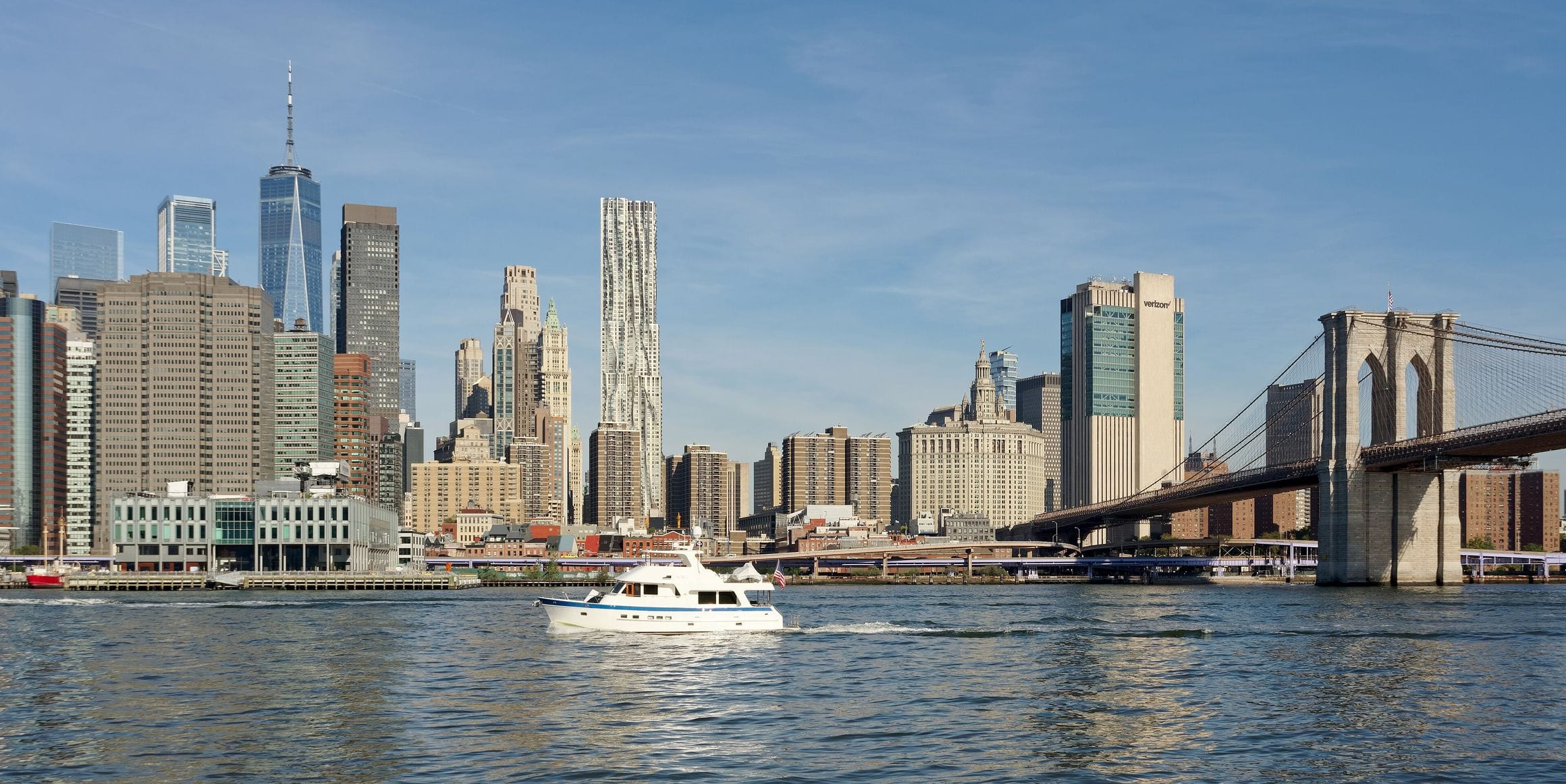
New York City is known for its Art Deco and glass skyline, its museums and theater, and its five boroughs of distinct neighborhoods. Start with the Statue of Liberty and Ellis Island, Central Park, the lights of Times Square, the view from the Empire State Building and the Brooklyn Bridge. Four to five days is the sweet spot for a first visit: one each for Lower Manhattan, Midtown, Central Park and its museums, and Brooklyn.
New York City crams more icons into its five boroughs than most countries hold: the Statue of Liberty in the harbor, Central Park, the glare of Times Square and a skyline of Art Deco spires and glass towers. America's most populous city and the gateway to New York State, it runs on museums, theater and neighborhoods that feel like towns of their own.
This guide ranks the 75 best things to do in New York City, from Manhattan's observation decks and blockbuster museums to Brooklyn's waterfront, Queens' World's Fair park and the Bronx's gardens. Give it four to five days.
Map of Things to Do in New York City, New York
Things to Do in New York City, New York
Things to Do in New York City, New York at a Glance
The city began as the Dutch trading post of New Amsterdam; it came under English control in 1664 and was renamed New York after Charles II granted the land to his brother, the Duke of York.
The modern city of five boroughs dates only from 1898, when Brooklyn, until then a separate city, was consolidated with Manhattan, the Bronx, Queens and Staten Island.
An estimated 800 languages are spoken in New York City, which is why it is often described as the most linguistically diverse city in the world.
George Washington took the oath as the first U.S. president in New York, at Federal Hall on Wall Street in 1789, when the city hosted the first Congress under the Constitution.
Grand Central Terminal has 44 platforms, more than any other railroad station in the world, all of them below street level.
The Oreo cookie was invented in Manhattan, in the Nabisco factory complex that is now Chelsea Market.
11. Statue of Liberty and Ellis Island
Historical Landmark~2.6 miles (4.2 km) from centre
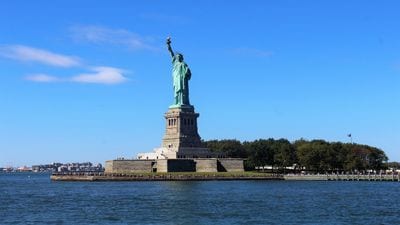
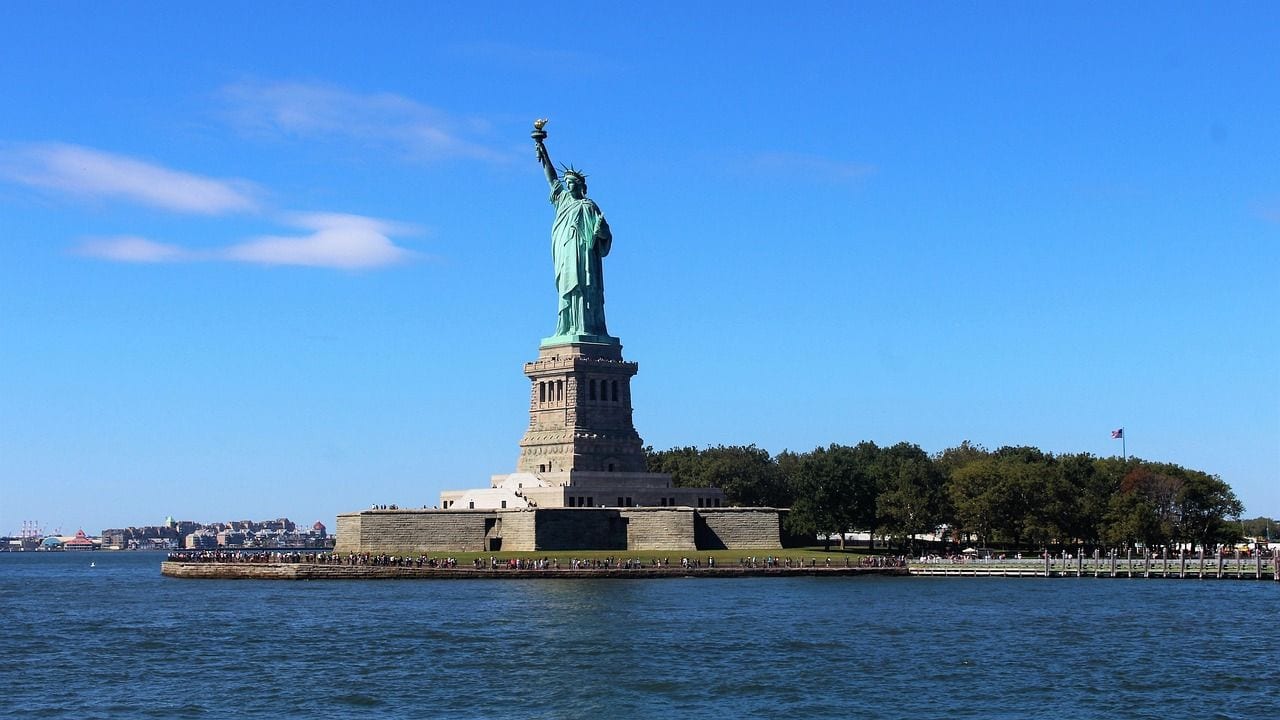
The Statue of Liberty has greeted ships in New York Harbor since it was dedicated in 1886, a copper-clad gift from the people of France designed by sculptor Frédéric Auguste Bartholdi around a metal framework built by Gustave Eiffel. Ferries leave from The Battery in Lower Manhattan and from Liberty State Park in Jersey City, and the same boat continues to Ellis Island, so one trip covers both.
On Ellis Island, the restored immigration station is now a national museum of immigration, telling the story of the roughly 12 million people processed there between 1892 and 1954. Pedestal and crown tickets are limited, so book well ahead if you want to climb inside the statue rather than circle it, and allow most of a day for both islands.
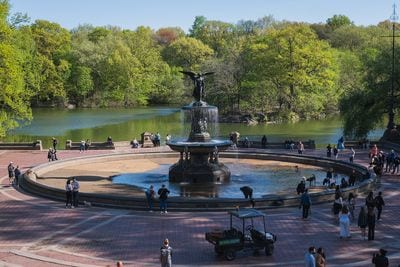
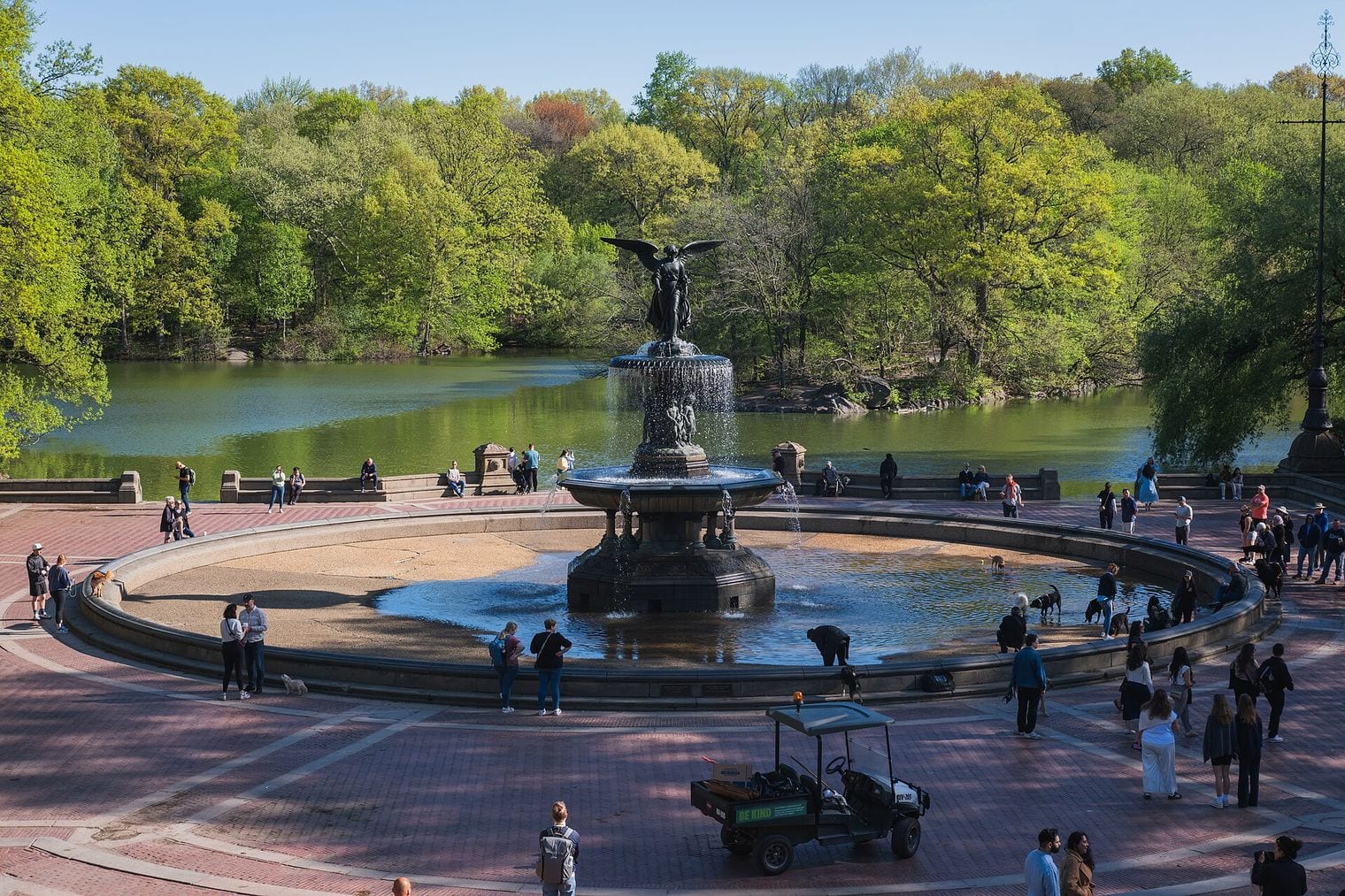
Central Park is Manhattan's 843-acre back garden, laid out from 1858 to the Greensward Plan of Frederick Law Olmsted and Calvert Vaux and now the most visited urban park in the United States. Its paths wind past Bethesda Terrace and Fountain, the rowboats on the Lake, the woodland of the Ramble and the lookout at Belvedere Castle, while Sheep Meadow and the Reservoir open up the middle.
Enter on Central Park West at 72nd Street for Strawberry Fields, the garden memorial to John Lennon, or start at the southeast corner for the Central Park Zoo and the skating at Wollman Rink in winter. Rent a bike, take out a boat or simply claim a bench: the park is as much a part of daily New York life as any subway line.
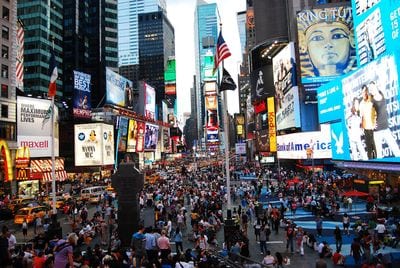
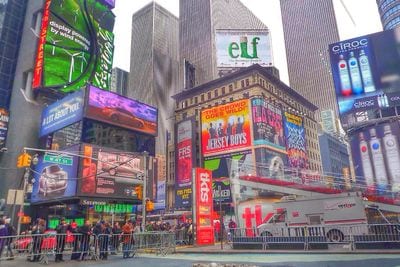
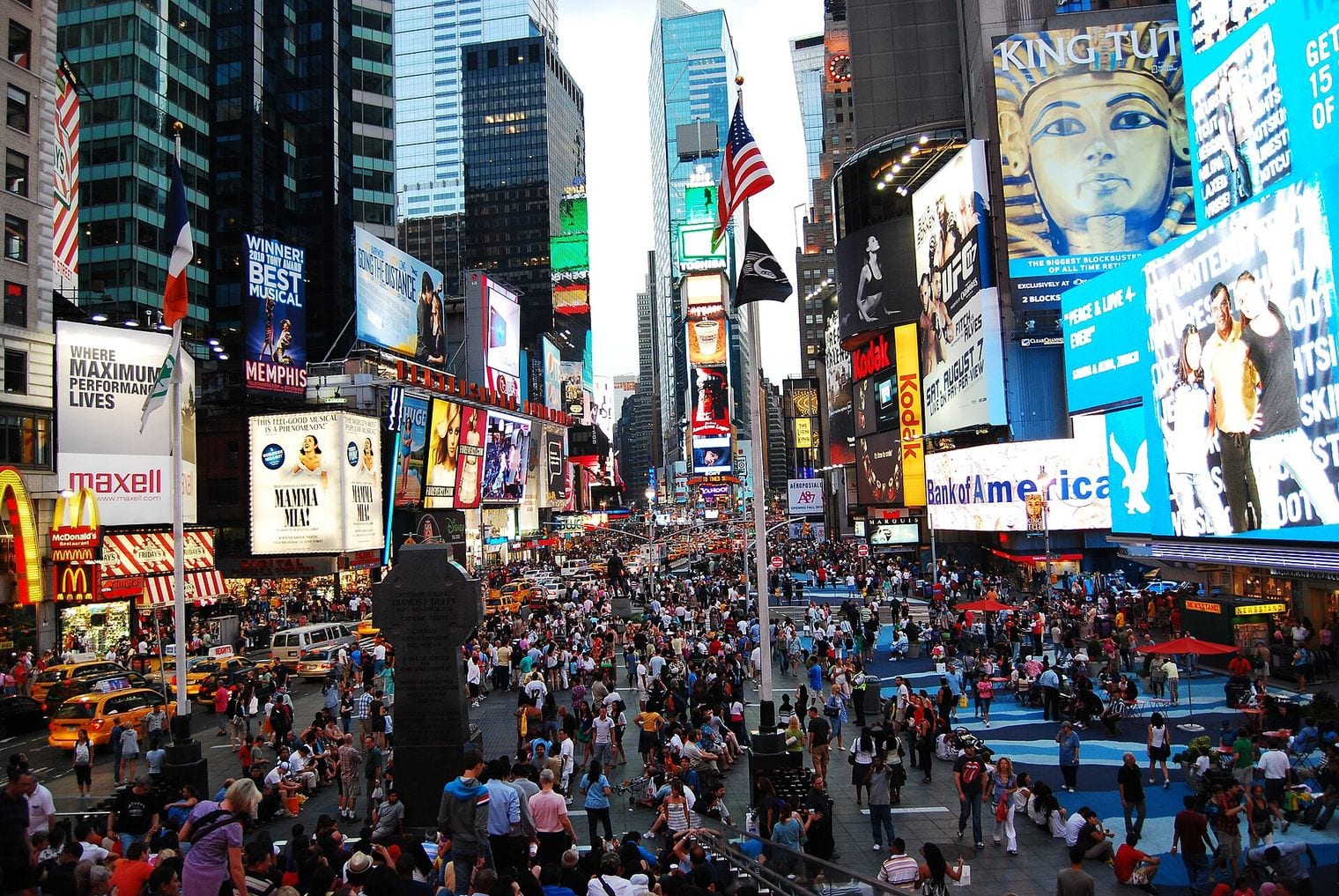
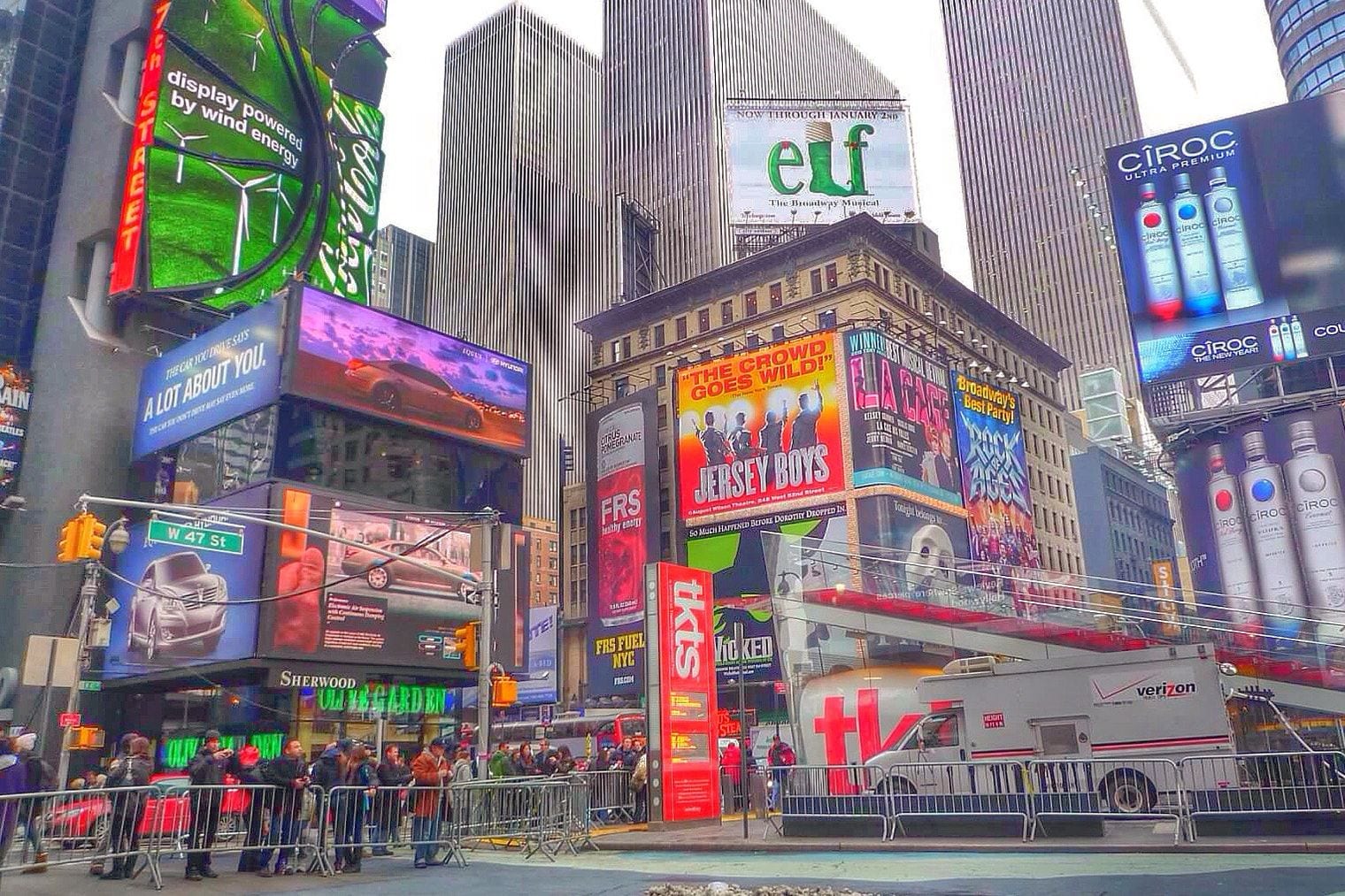
Times Square is New York at full volume, a bow tie where Broadway crosses Seventh Avenue, wrapped in giant digital billboards and crowds at every hour. Known as Longacre Square until 1904, it took its name from The New York Times when the paper moved into the tower now called One Times Square, the building whose New Year's Eve ball drop began in 1907.
Car-free pedestrian plazas let you stand in the middle of it all, and the red steps at Duffy Square, at the north end, make the classic perch for photos. Come after dark, when the screens are brightest, then slip into the side streets of the Theater District for a show.
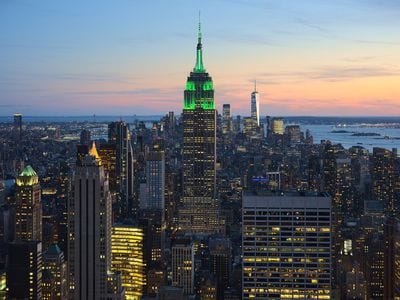
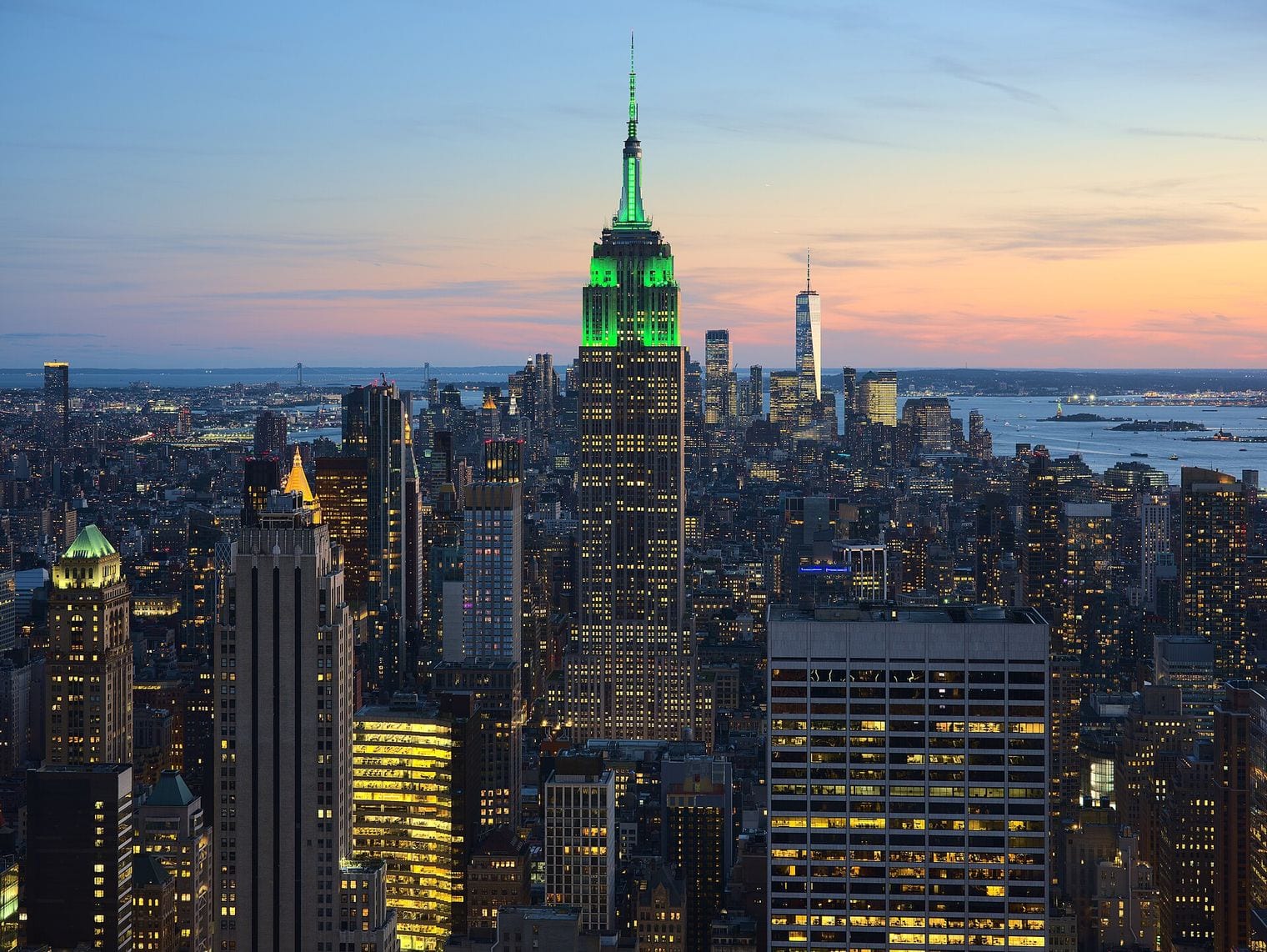
The Empire State Building is the Art Deco skyscraper most people picture when they think of New York, a 102-story tower designed by Shreve, Lamb & Harmon that opened in 1931 after barely more than a year of construction. It reigned as the world's tallest building for almost four decades, until the original World Trade Center's North Tower topped out in 1970.
Its 86th-floor observatory is open-air, a wraparound terrace where the wind and the hum of the city rise around you, and a second observatory on the 102nd floor climbs higher still. It is the classic choice among the city's observation decks, though you will need another deck to get the Empire State itself into your photos.
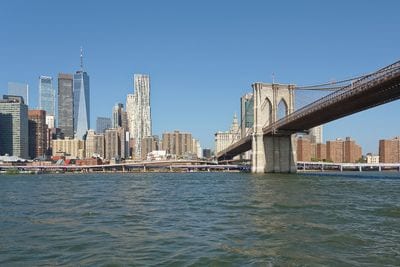
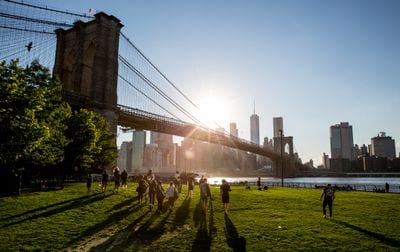
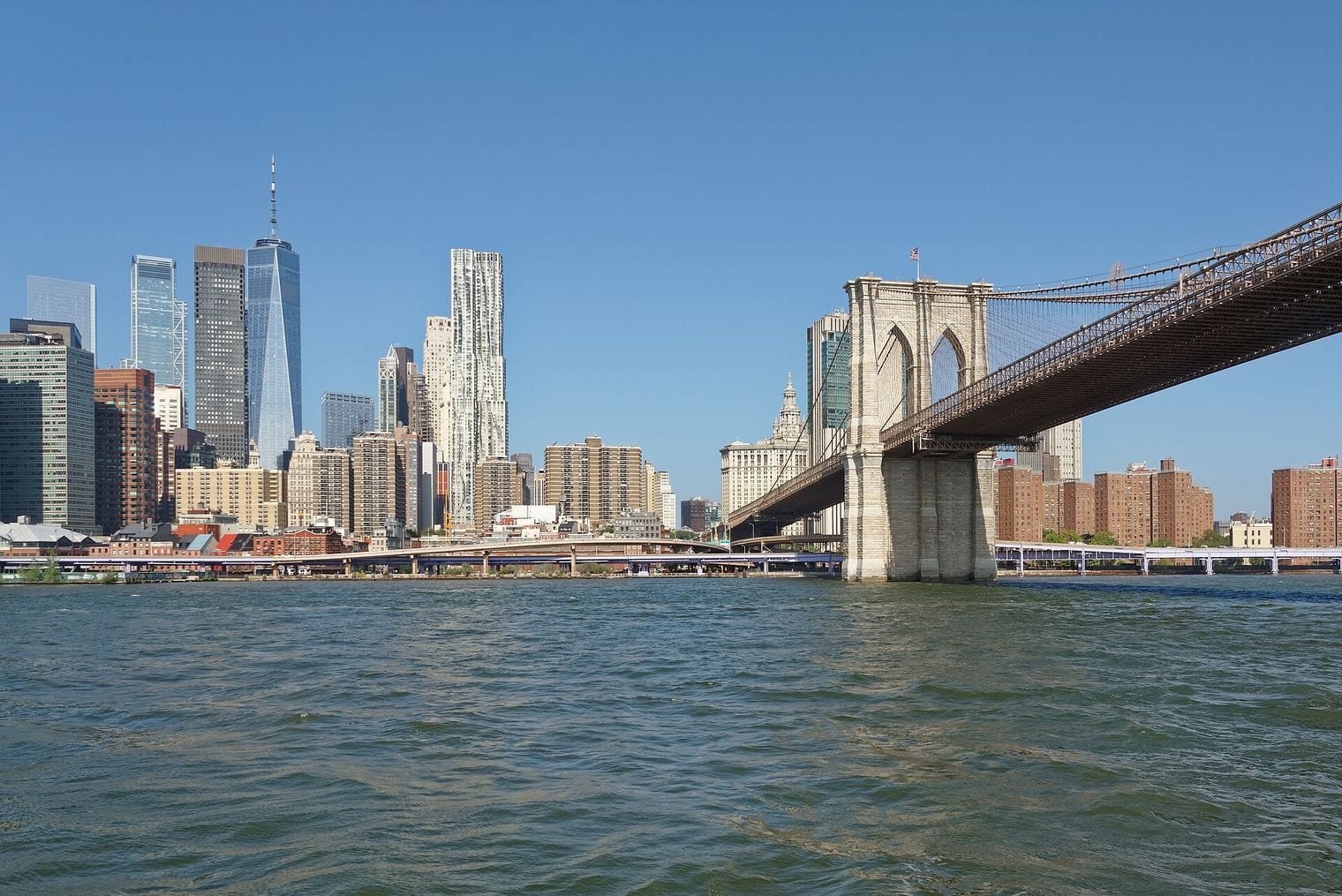
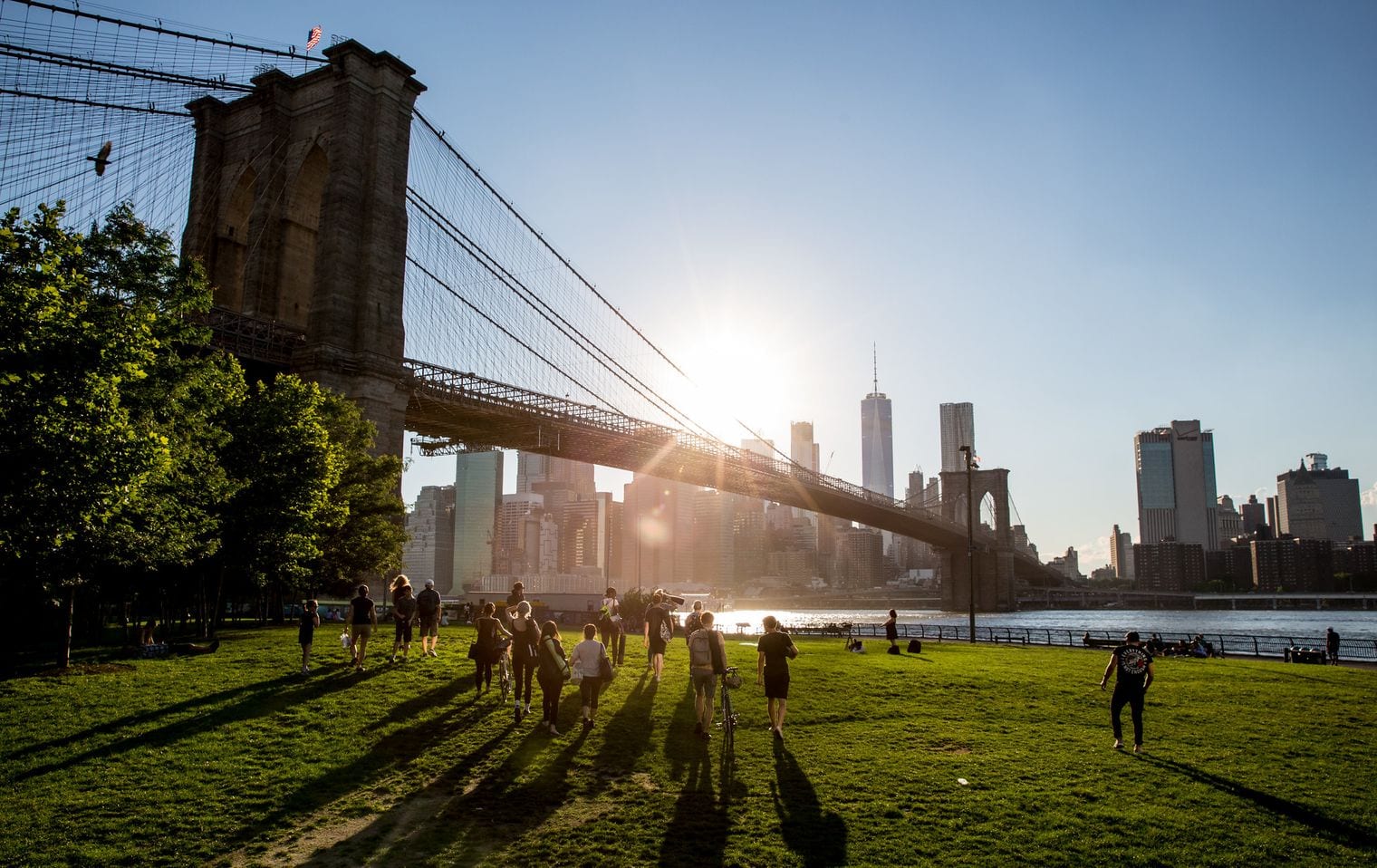
The Brooklyn Bridge was the first fixed crossing of the East River and, when it opened in 1883, the longest suspension bridge in the world. Designed by John A. Roebling and completed under his son Washington Roebling with the help of the engineer Emily Warren Roebling, its granite towers and web of steel cables still define the Lower Manhattan waterfront.
Walk it rather than just look at it: an elevated pedestrian promenade runs between and above the two roadways for the whole span, with the skyline, the harbor and the Manhattan Bridge in view. Start on the Brooklyn side in DUMBO so the Manhattan towers rise ahead of you, and go early in the morning to beat the crowds.
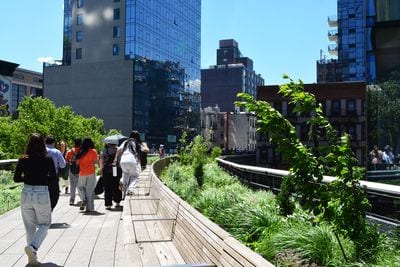
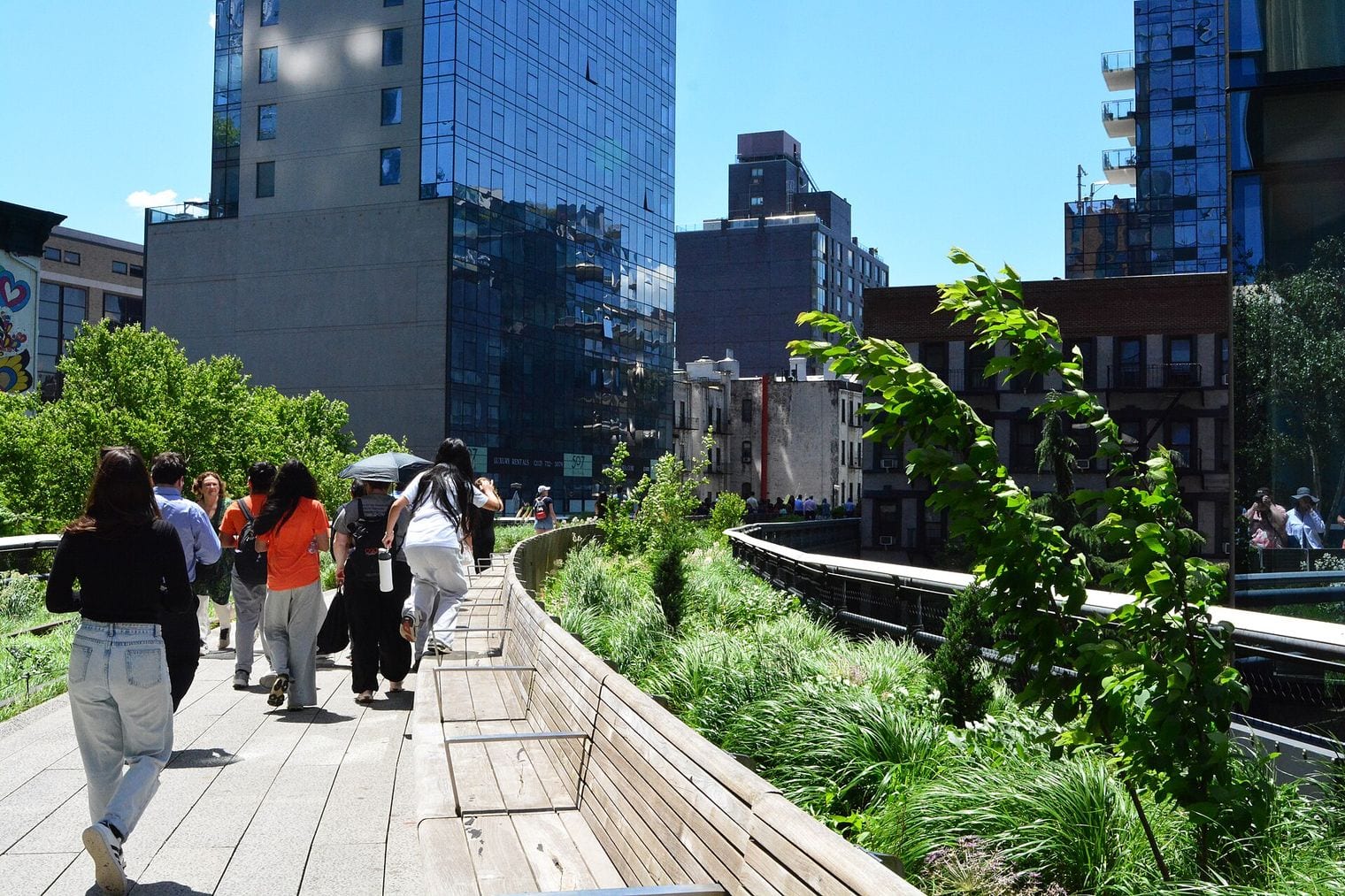
The High Line turned a derelict freight railway into an icon of contemporary landscape architecture: a 1.45-mile elevated park on an old New York Central Railroad spur above Manhattan's West Side. It runs from Gansevoort Street in the Meatpacking District through Chelsea to 34th Street, and it opened in stages from 2009.
Grasses, perennials and trees grow between stretches of the old rails, and benches, sundecks and public art line the way as the path threads between warehouses, new towers and glimpses of the Hudson River. Start at the Whitney Museum at the southern end and walk north to finish at Hudson Yards and Vessel, with a lunch stop at Chelsea Market along the way.
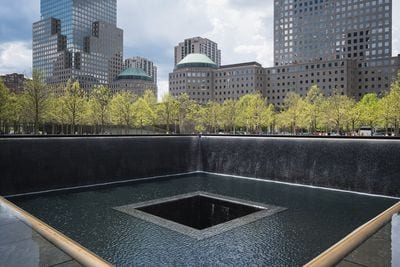
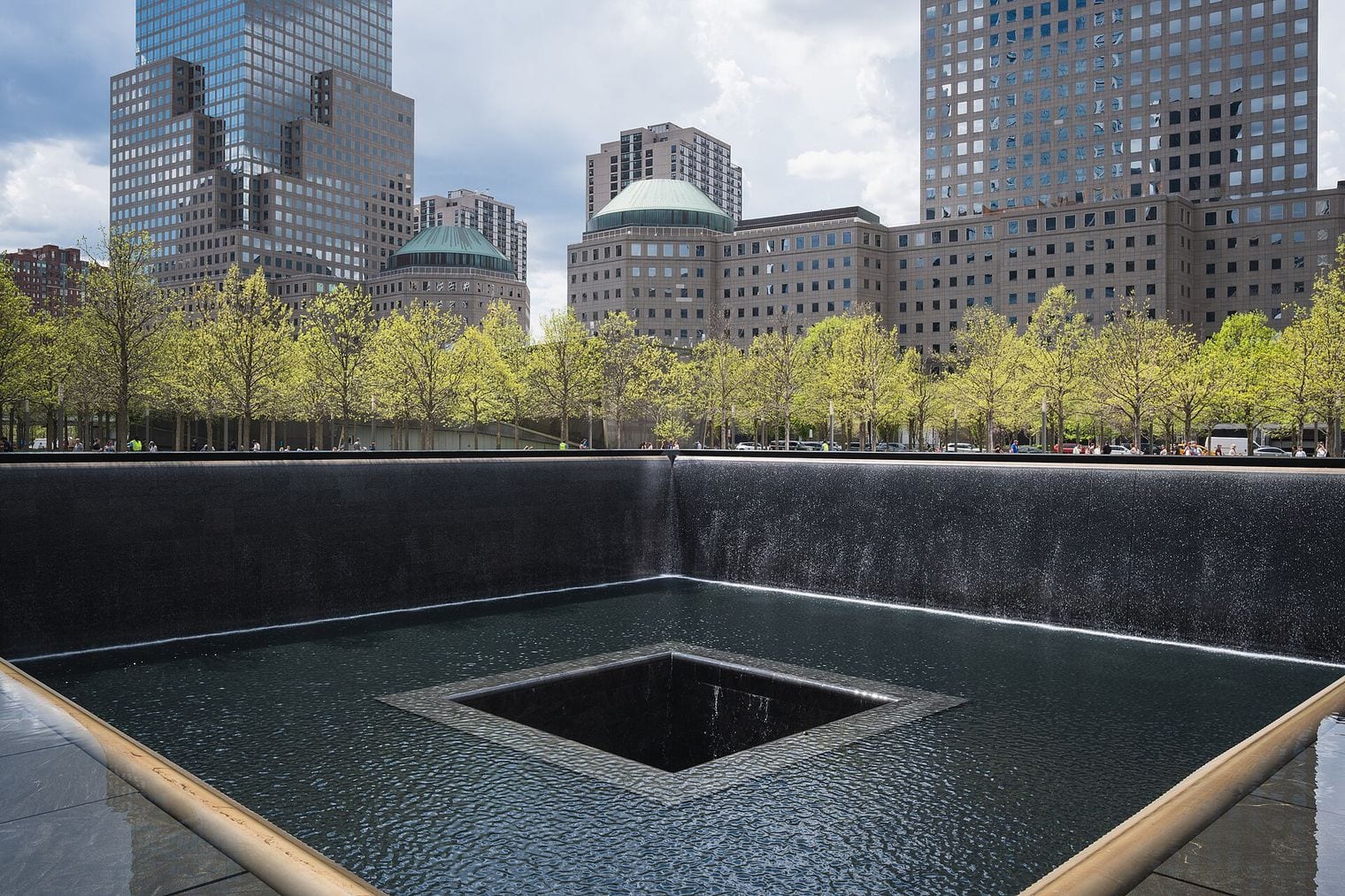
The 9/11 Memorial & Museum sits at the heart of the rebuilt World Trade Center. Two vast square reflecting pools mark where the Twin Towers stood, their waterfalls dropping into a central void, and the names of 2,983 victims, the 2,977 people killed on September 11, 2001, and six killed in the 1993 bombing, are inscribed on bronze parapets around them.
The memorial plaza, shaded by swamp white oaks, is free and open to all; the museum below, dedicated in 2014, needs a ticket and at least two hours, and tells the story of the attacks and the lives lost through artifacts recovered from the site. This is the memorial of the campus; One World Observatory is the deck overhead and the Oculus the transit hall next door.
88. Rockefeller Center
Historical Landmark~3.5 miles (5.6 km) from centre
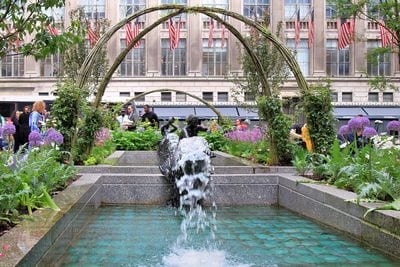
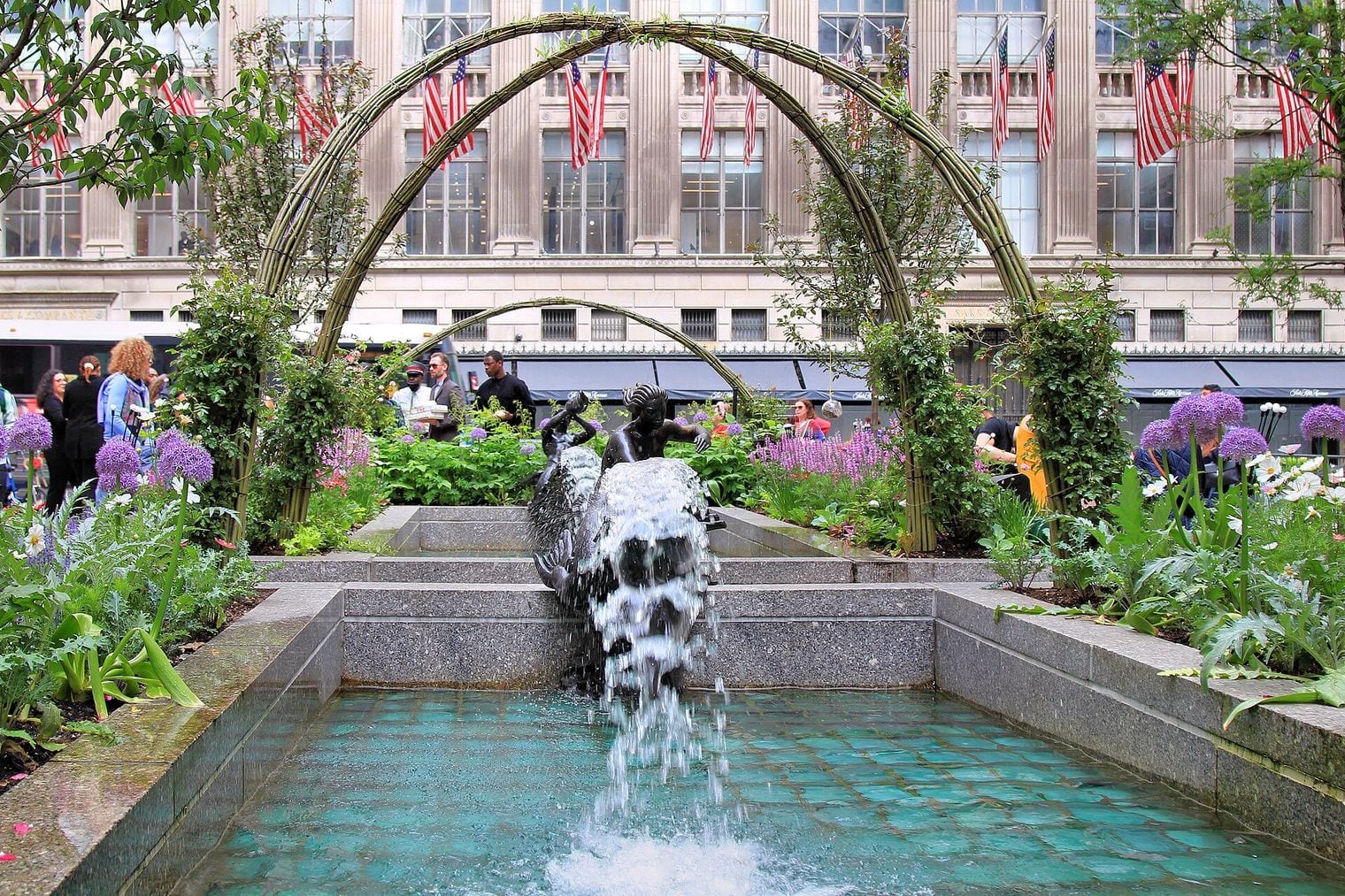
Rockefeller Center is Midtown's grand Art Deco set piece, a complex of 19 commercial buildings on 22 acres between Fifth and Sixth Avenues, begun by the Rockefeller family in 1931 and filled with public art. Walk in from Fifth Avenue through the Channel Gardens to the sunken plaza, where Paul Manship's gilded bronze Prometheus presides over the scene.
In winter that plaza holds the city's most famous ice rink and, each holiday season, the Rockefeller Center Christmas Tree, a tradition since 1933. Year-round you can browse the underground concourse, take the NBC Studios tour inside 30 Rockefeller Plaza, and look across Fifth Avenue to St. Patrick's Cathedral; Top of the Rock and Radio City Music Hall belong to the same complex.
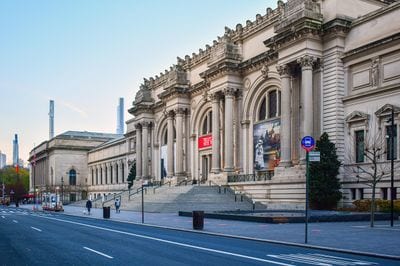
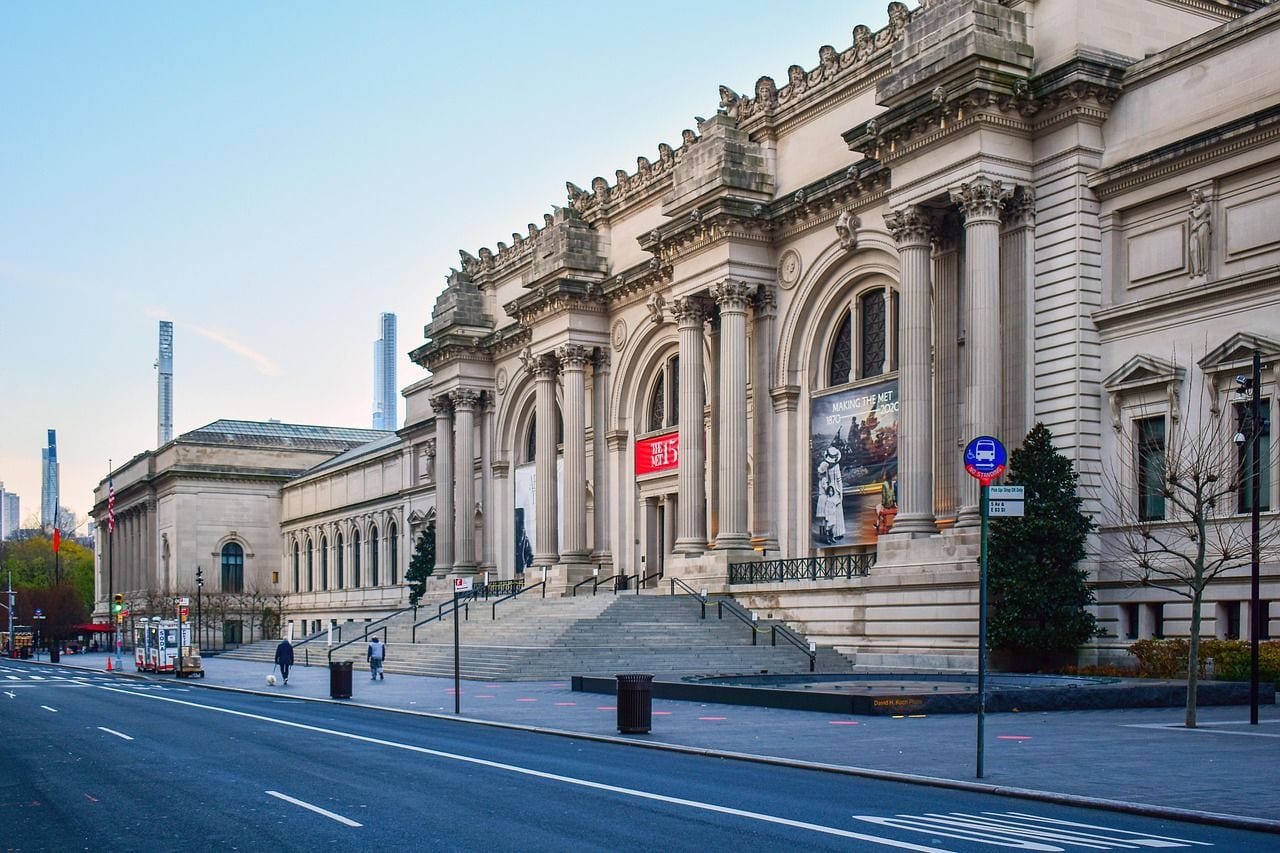
The Metropolitan Museum of Art, founded in 1870, is the largest art museum in the Americas and the most-visited museum in the United States, filling a vast building at 1000 Fifth Avenue on the eastern edge of Central Park. Its collection runs from ancient Egypt and classical Greece to European Old Masters, American art, arms and armor, and fashion.
You cannot see it all in a day, so pick a few wings. Do not miss the Temple of Dendur, a whole Egyptian temple set beside a reflecting pool under a wall of windows onto the park, and in the warmer months take the elevator to the roof garden for a view over the treetops to Midtown. Its medieval collection continues far uptown at The Met Cloisters.
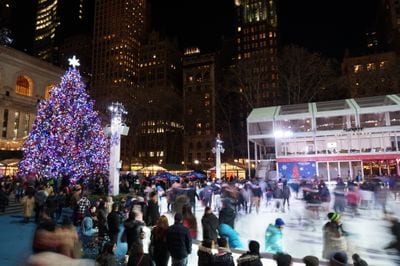
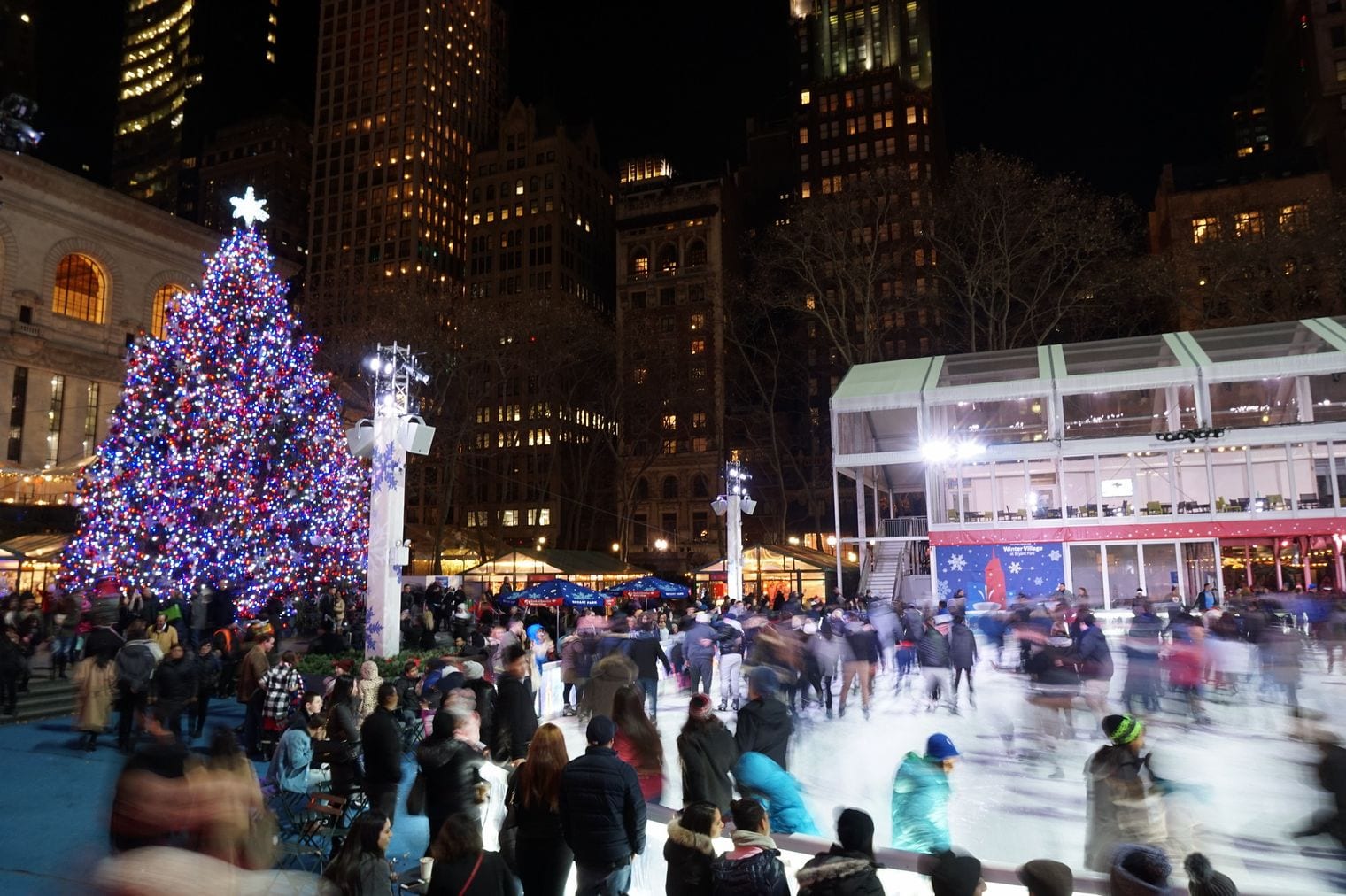
Bryant Park is Midtown's outdoor living room, a 9.6-acre lawn ringed by shaded walkways behind the New York Public Library's main branch, between Fifth and Sixth Avenues. Restored in the late 1980s and early 1990s after a long decline, it is now a favorite lunch and people-watching spot for office workers and visitors alike, with movable chairs and a carousel.
The lawn fills with picnics and events in the warmer months, and in winter the Winter Village brings an ice rink and rows of holiday shops. It makes an easy pause between Grand Central Terminal, SUMMIT One Vanderbilt and Times Square, all a few blocks away.
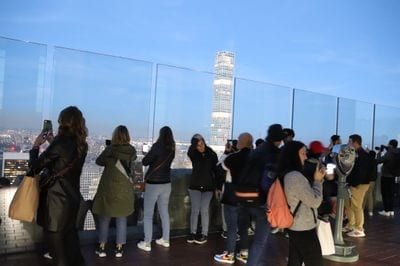
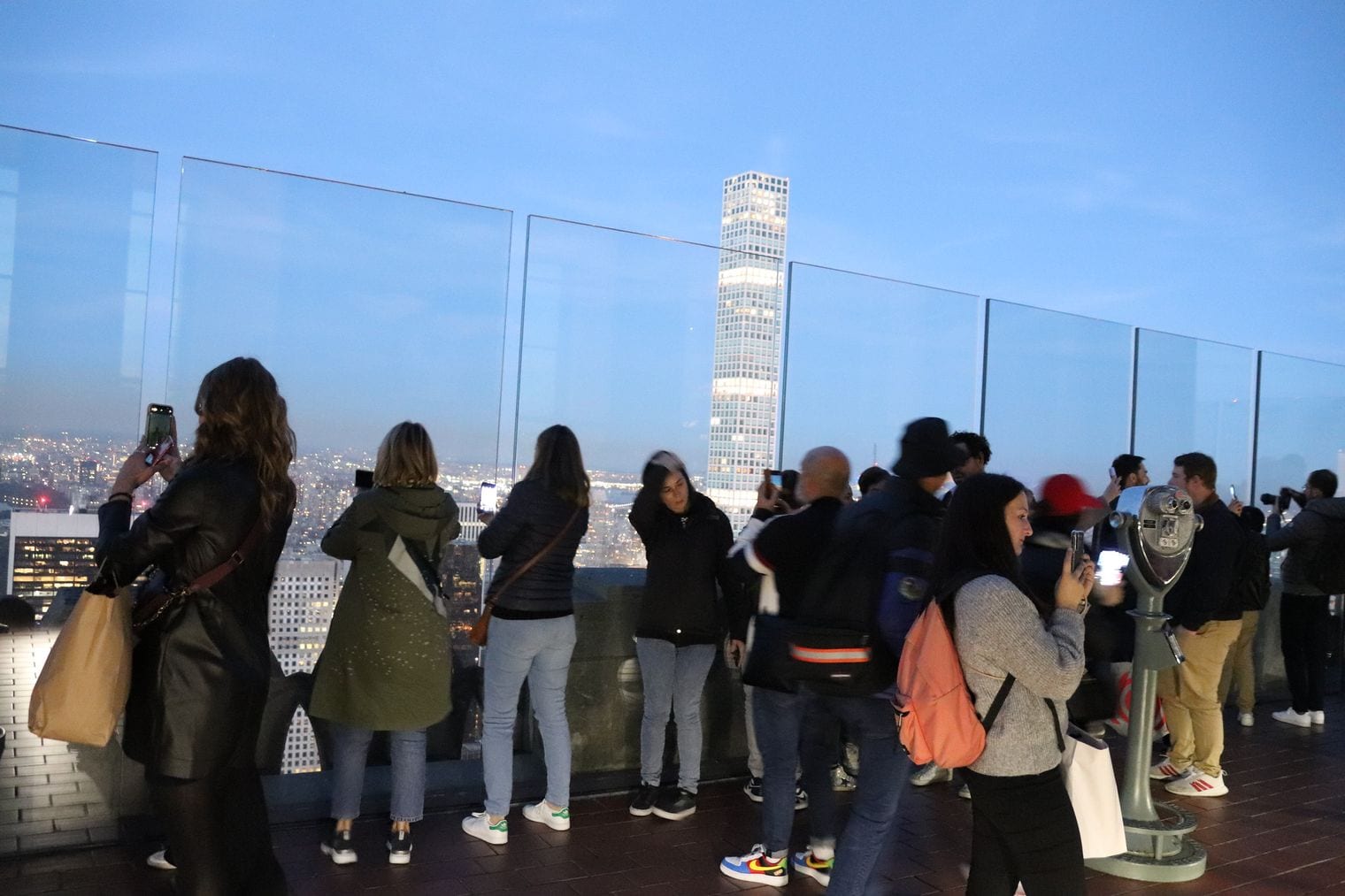
Top of the Rock is the observation deck crowning 30 Rockefeller Plaza, the Art Deco centerpiece of Rockefeller Center, and its trump card is the view itself: the Empire State Building stands front and center to the south, while Central Park stretches out in full to the north.
The visit climbs through a triple-story observatory on the 67th to 69th floors to the open-air 70th-floor deck, about 850 feet above the street, which first opened in 1933. Pick it over the other decks if you want the classic postcard of Midtown with the Empire State in the frame, and book a slot around sunset.
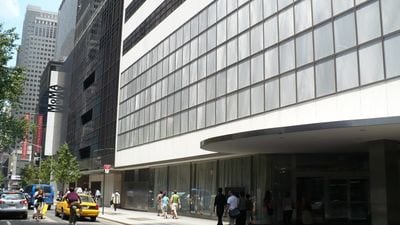
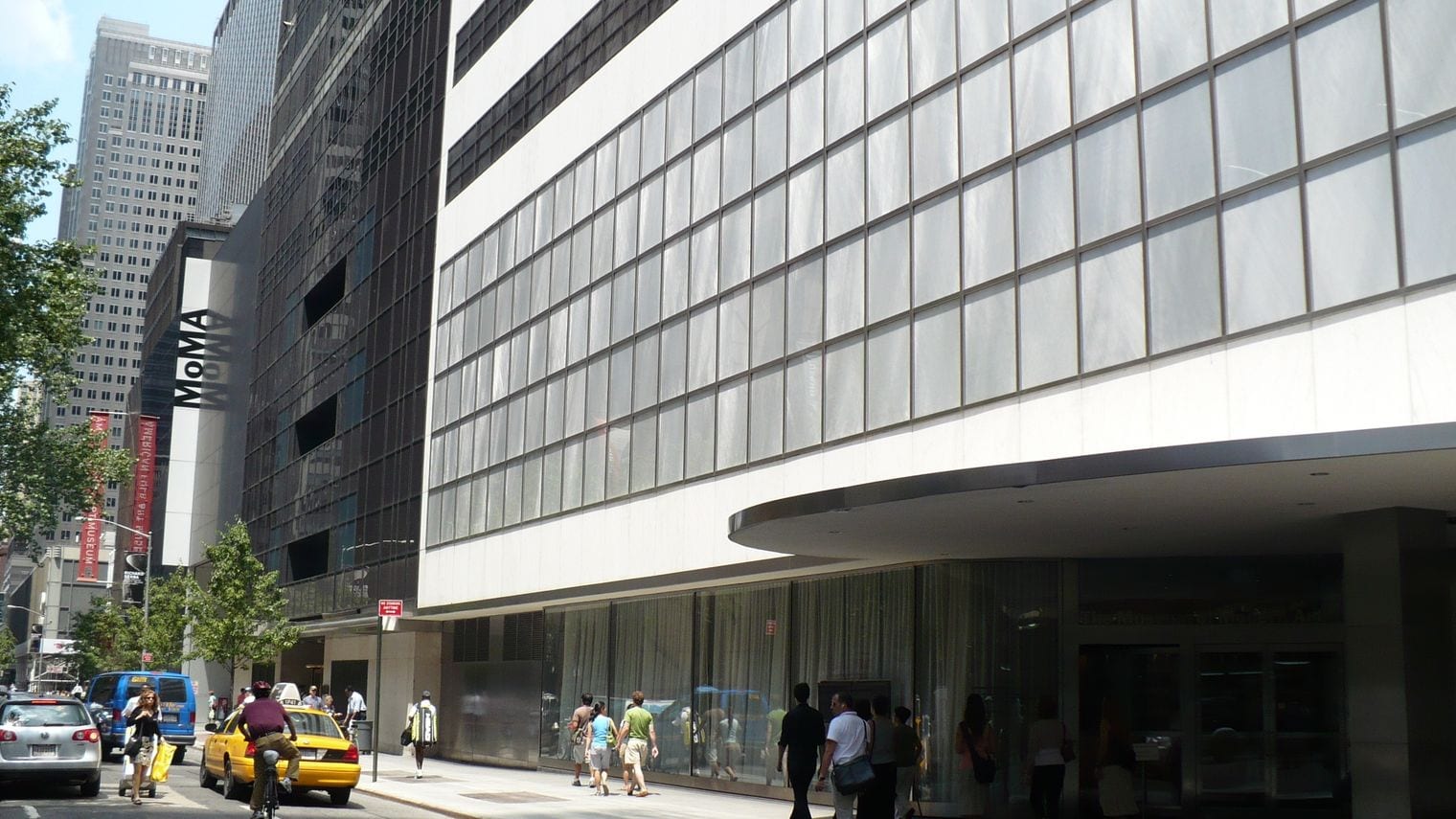
The Museum of Modern Art holds one of the world's great collections of modern art, from Vincent van Gogh's The Starry Night, here since 1941, to Cubism, Pop Art, photography, film and design. Conceived in 1929, MoMA fills an expanded building on West 53rd Street in Midtown with a collection of more than 200,000 works.
Plan on at least half a day and pace yourself through the painting and sculpture galleries, then take a break in the Abby Aldrich Rockefeller Sculpture Garden, the outdoor courtyard redesigned by Philip Johnson in 1953. Film screenings and the architecture and design galleries round out a visit, and its contemporary-art affiliate, MoMA PS1, is across the river in Long Island City.
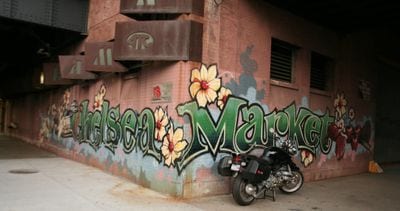
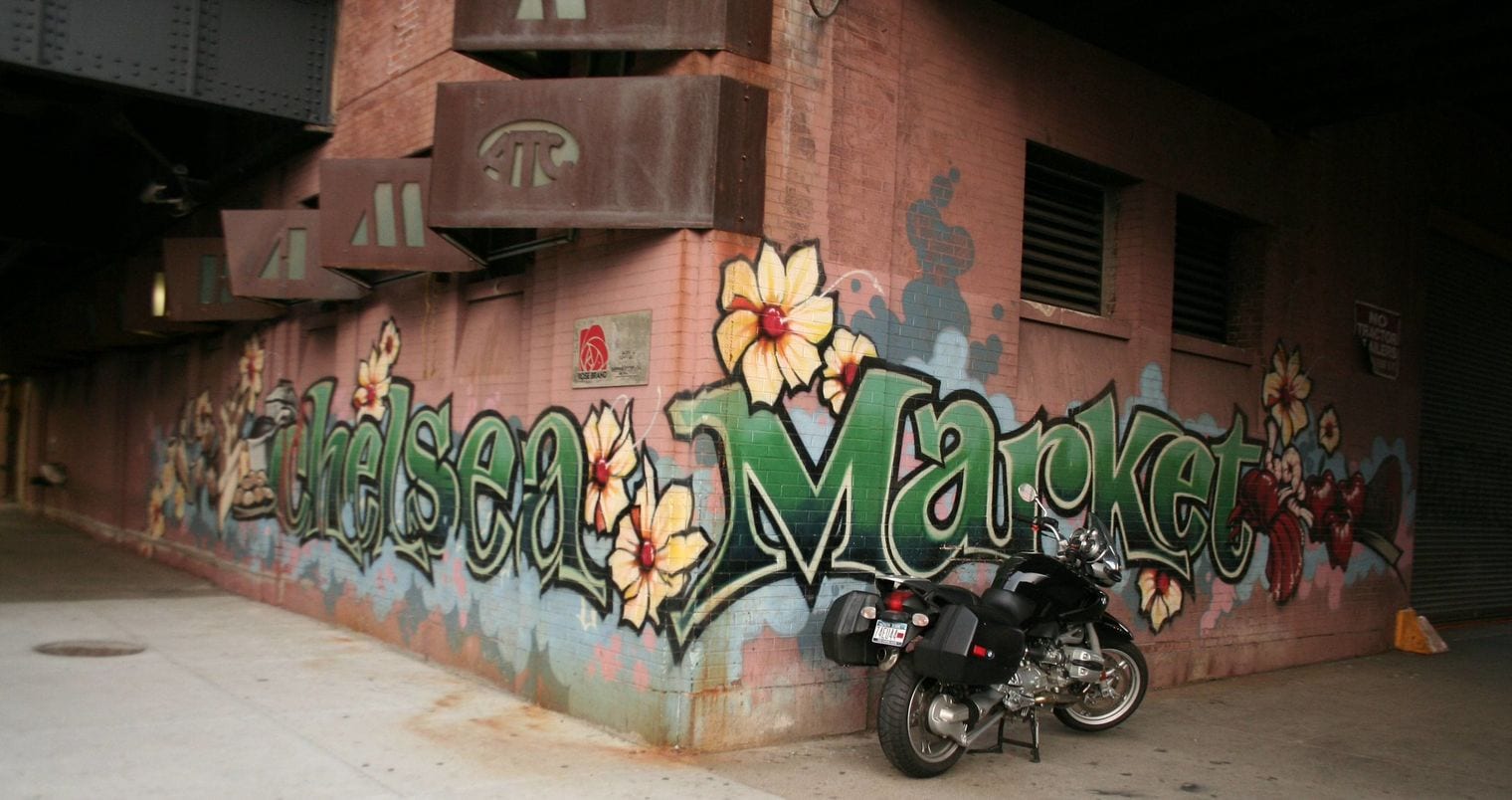
Chelsea Market fills the brick factory complex where the National Biscuit Company, Nabisco, invented and produced the Oreo cookie, and its long, industrial concourse is now one of the city's best-known food halls. Exposed brick, old pipes and factory fittings frame stalls selling everything from tacos and lobster rolls to doughnuts, noodles and gelato.
It sits on Ninth Avenue between 15th and 16th Streets, right beside the High Line, so it makes an easy lunch stop on a West Side walk. The upper floors hold offices and television studios, and the building is owned by Google's parent company, Alphabet.
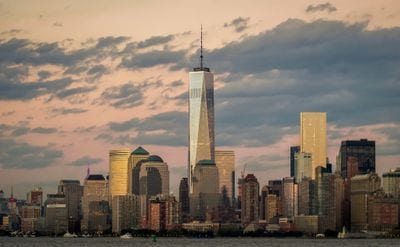
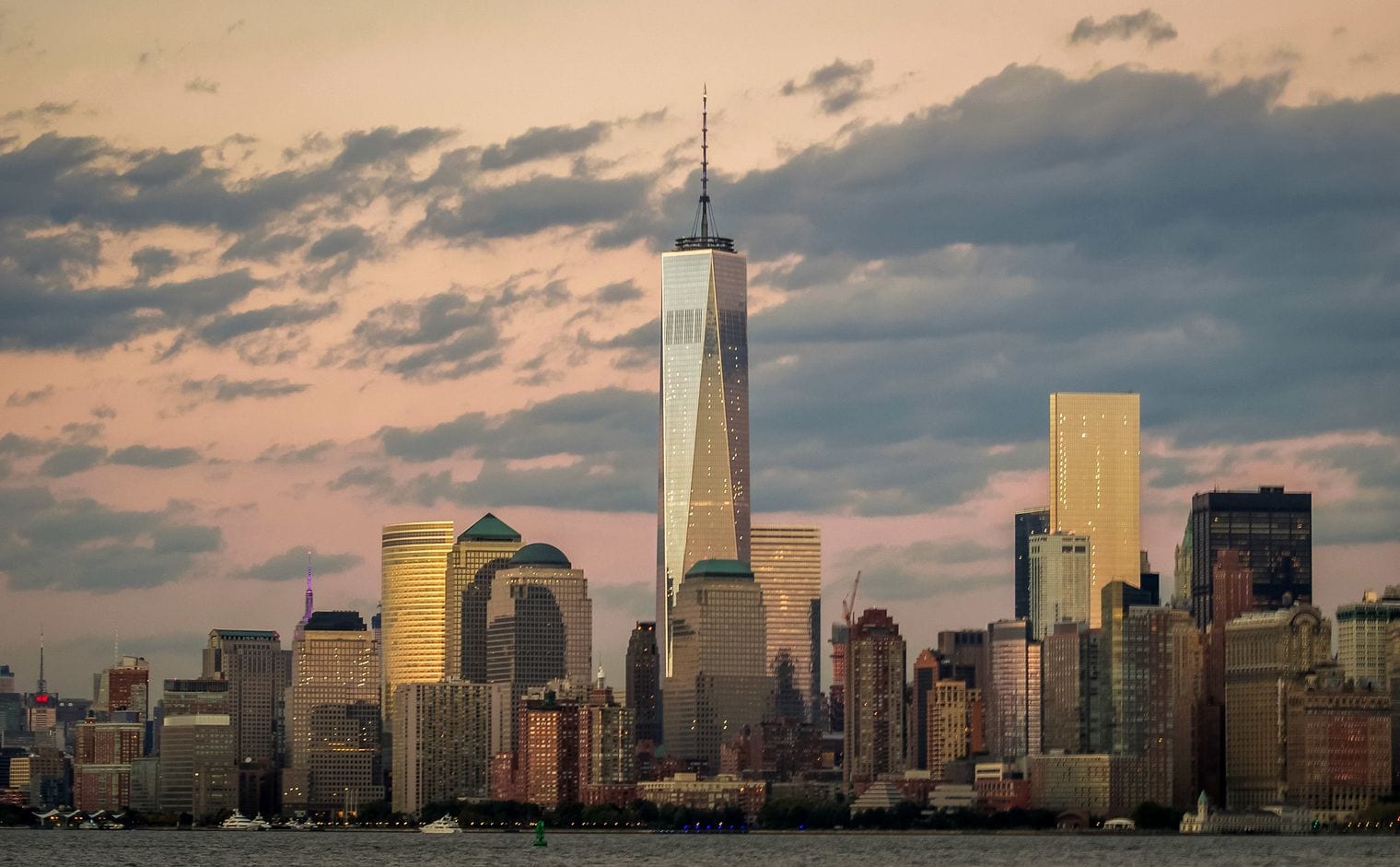
One World Observatory sits near the top of One World Trade Center, the tallest building in the Western Hemisphere at a symbolic 1,776 feet, and its main viewing floor is on the 100th floor. Opened in 2015, it looks down on everything around it: the harbor and the Statue of Liberty, the bridges over the East River and the towers of Midtown in the distance.
Unlike the open-air decks uptown, this is an enclosed observation deck with floor-to-ceiling glass, so it works in any weather, and it is the one to choose for Lower Manhattan, the harbor and the rivers. Pair it with the 9/11 Memorial and the Oculus, which share the same World Trade Center campus at its foot.
Seeing a show on Broadway is the quintessential New York night out. Broadway theater means the 41 professional theaters with 500 or more seats, nearly all clustered in the Theater District on the side streets around Times Square, where this stretch of Broadway itself earned the nickname the Great White Way.
Long-running musicals share the marquees with new plays and limited runs each season, so check what is on before you travel and book the biggest hits ahead. For same-day seats, the TKTS booth in Duffy Square sells discounted tickets, and Shubert Alley, the pedestrian lane between 44th and 45th Streets, is the district's traditional heart.
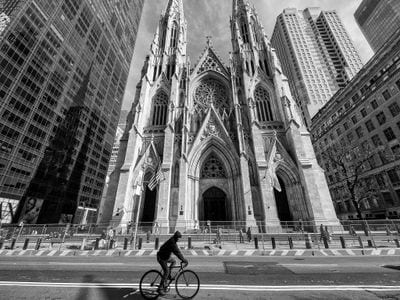
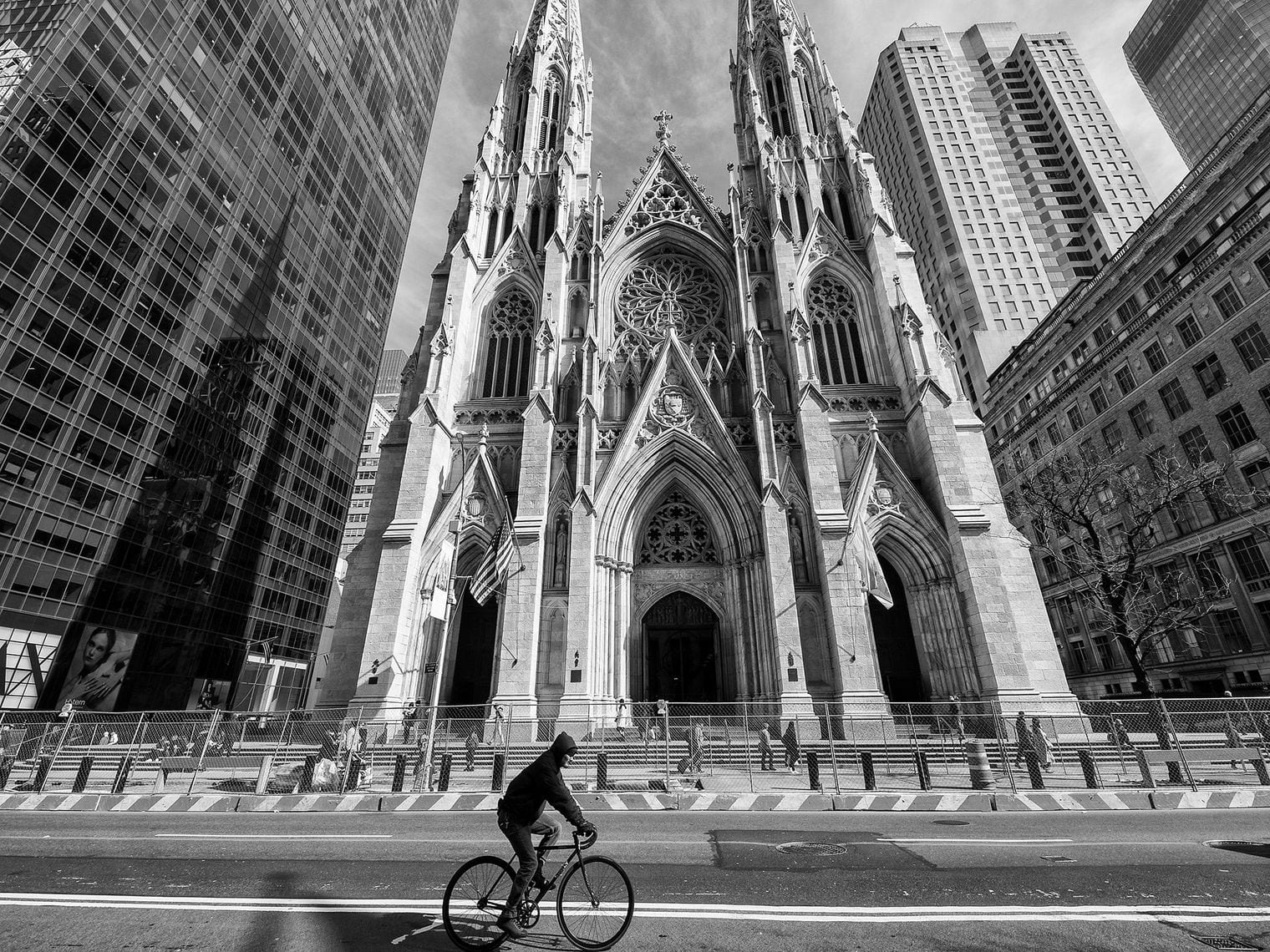
St. Patrick's Cathedral is the largest Gothic Revival Catholic cathedral in North America and the seat of the Archbishop of New York. Designed by James Renwick Jr., it was dedicated in 1879, its twin spires were added in 1888, and it stands on Fifth Avenue directly across from Rockefeller Center.
Step in from the bustle of Fifth Avenue to see the soaring nave, the great rose window and the side altars; entry is free and visitors are welcome outside services. Walk to the far end for the Lady Chapel behind the main altar, the quietest corner of the building.
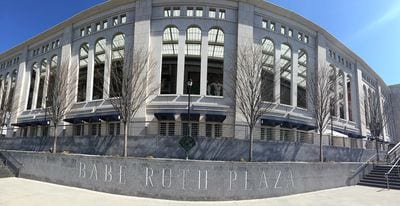
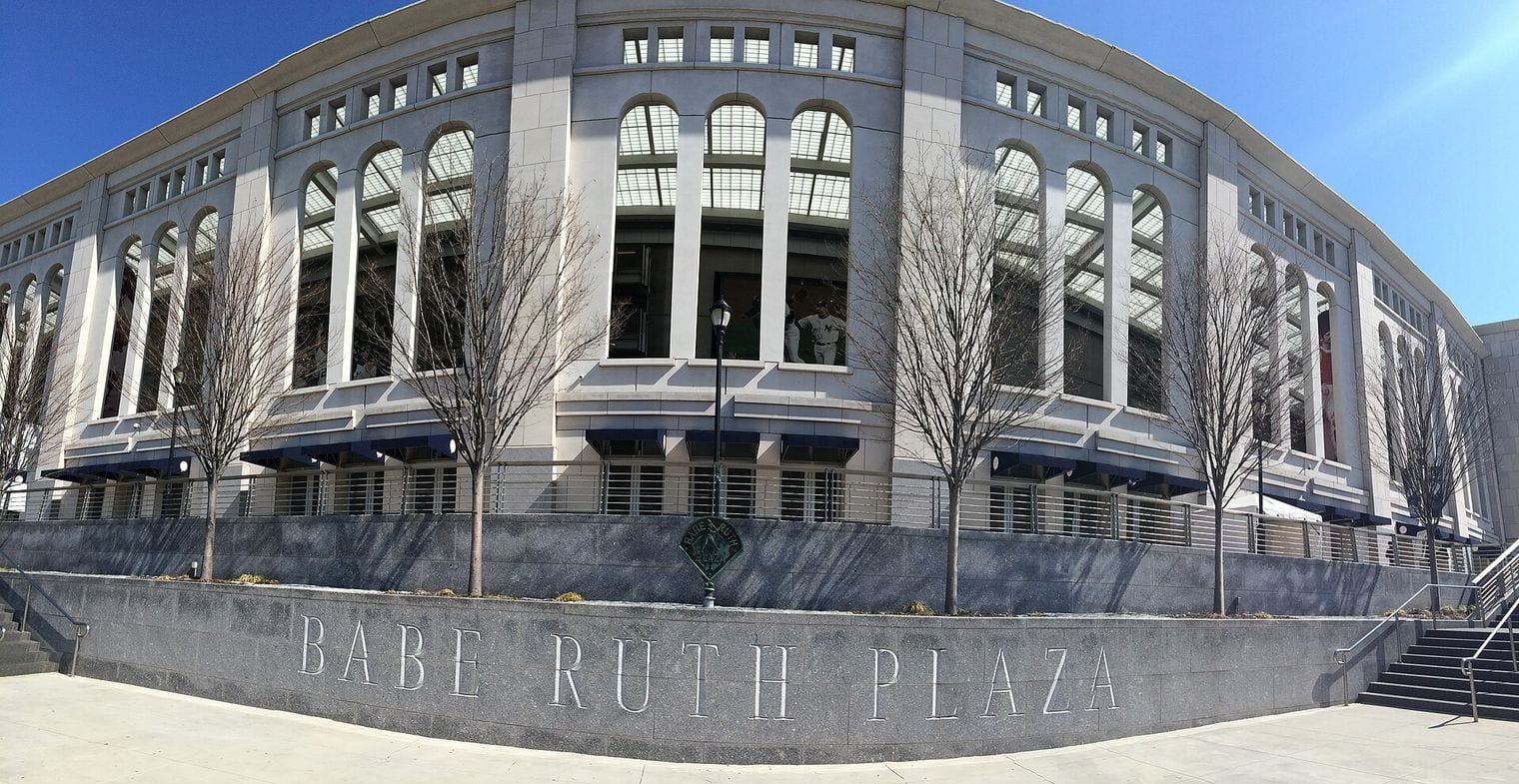
Yankee Stadium in the Bronx is the home of the New York Yankees, baseball's most famous franchise. The current ballpark opened in 2009 one block north of the original stadium, which operated from 1923 to 2008, and its grand facade and cavernous Great Hall echo the old ballpark's look.
Catching a game in the regular season is the real experience, with subway trains rattling past on the elevated tracks beyond the outfield. On other days, guided stadium tours take in Monument Park, where the team honors its legends with plaques and retired numbers, and the New York Yankees Museum.
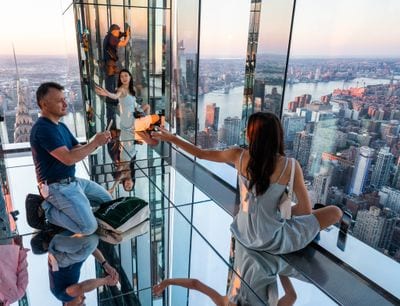
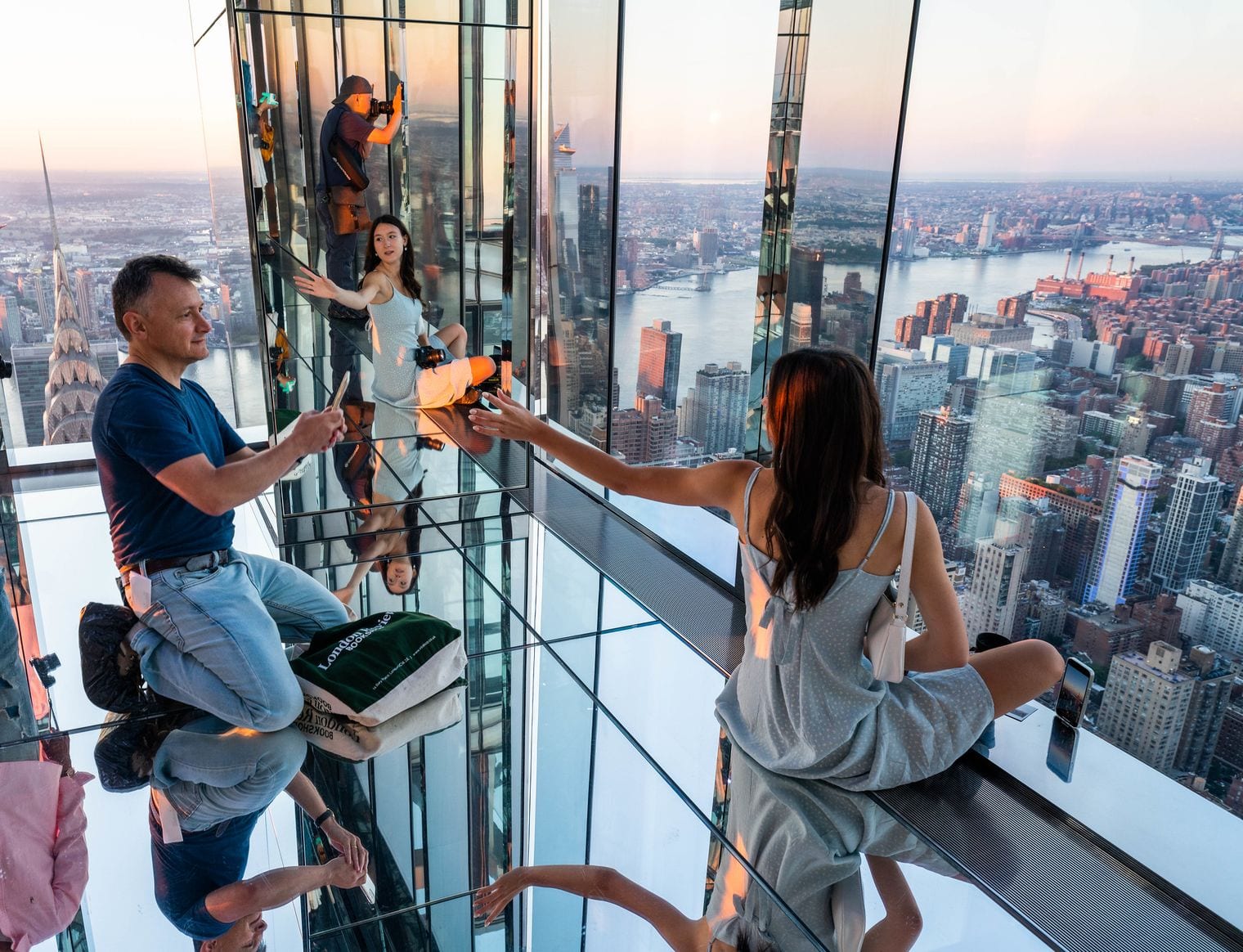
SUMMIT One Vanderbilt is less a viewing platform than an art installation in the sky. It fills the top floors of One Vanderbilt, the 1,401-foot tower that opened in 2020 right beside Grand Central Terminal, and its centerpiece is Air by Kenzo Digital, an infinity room of mirrors in which the skyline repeats in every direction.
Add Ascent, an all-glass elevator that climbs the outside of the building, and this is the most playful of the city's observation decks. Its position also gives the closest view of the Chrysler Building's crown a few blocks east, with the Empire State Building to the southwest.
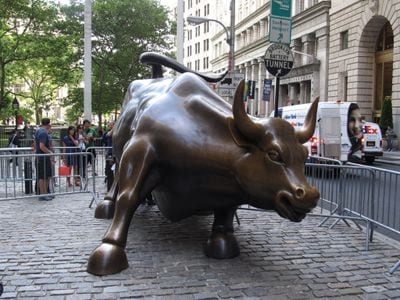
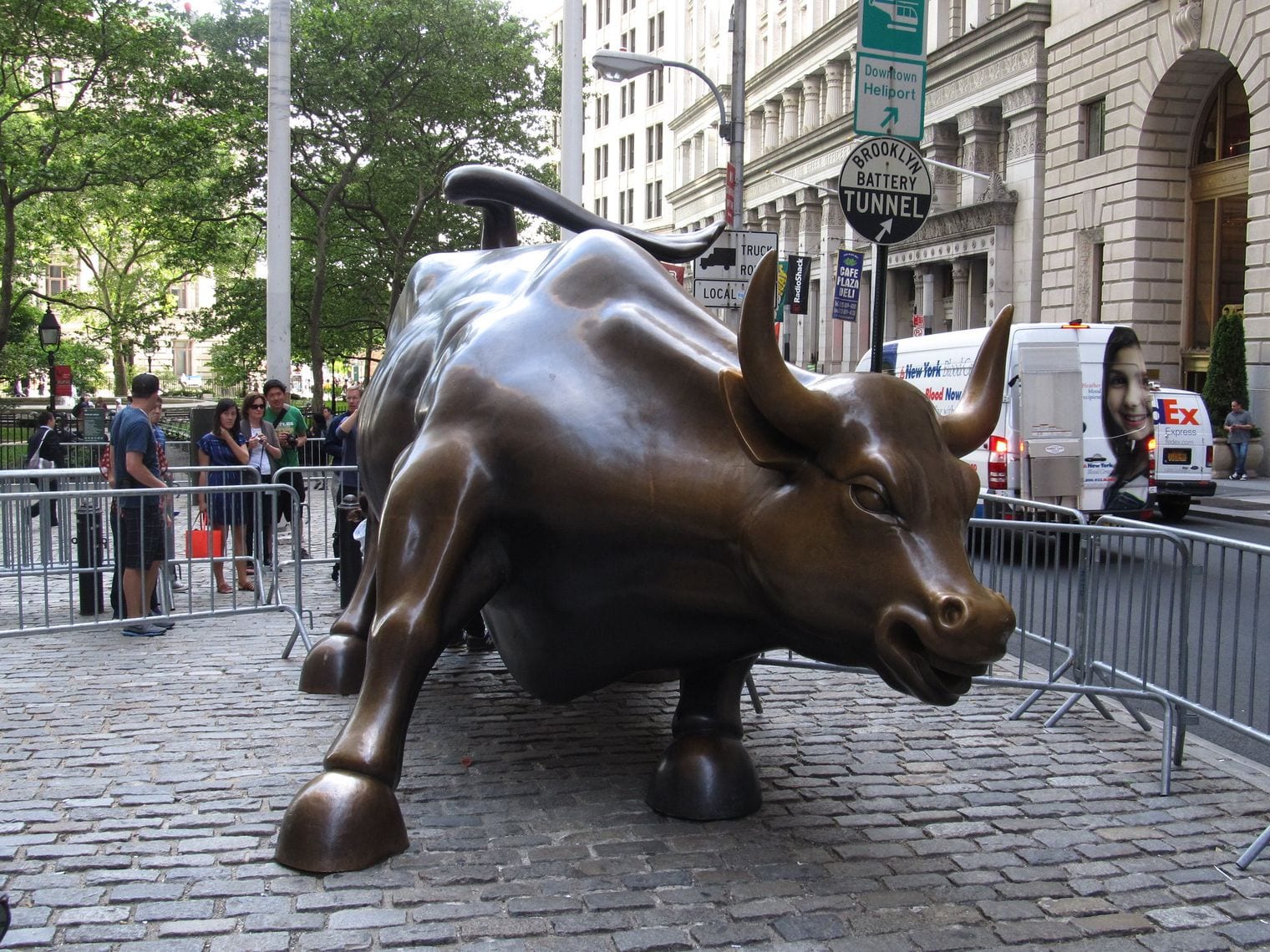
Charging Bull, the 7,100-pound bronze by Italian artist Arturo Di Modica, began as guerrilla art: in December 1989 he dropped it outside the New York Stock Exchange without permission, and after police removed it, it found a new home at Bowling Green, where it has drawn crowds ever since.
From the bull, walk up Broadway and into Wall Street, the narrow canyon at the heart of the Financial District, to see the columned facade of the New York Stock Exchange from outside, the Fearless Girl statue now facing it, and Federal Hall, on the site where George Washington took the oath as the first president in 1789. Trinity Church stands at the head of the street.
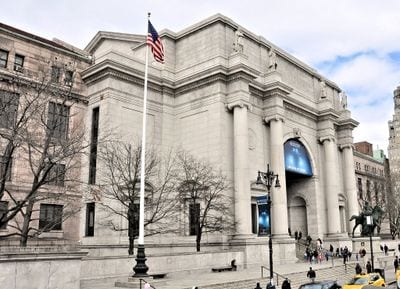
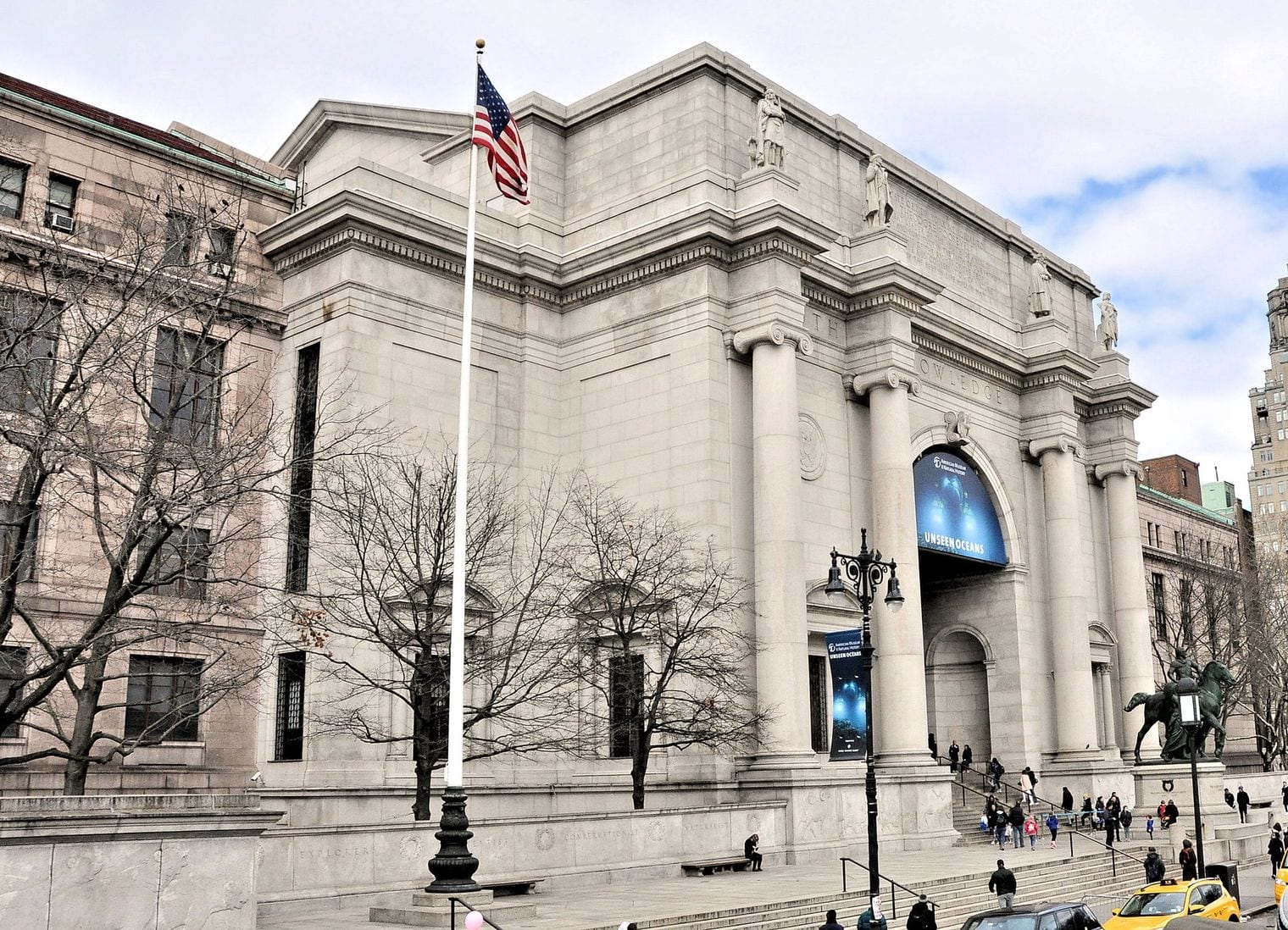
The American Museum of Natural History, founded in 1869 across from Central Park on the Upper West Side, is a city within a city: 45 permanent exhibition halls in 21 interconnected buildings, drawing on a collection of about 32 million specimens and artifacts.
The dinosaur halls, the 94-foot blue whale model suspended in the Hall of Ocean Life and the Hayden Planetarium inside the glass-walled Rose Center for Earth and Space are the essentials. The Richard Gilder Center, opened in 2023 on the Columbus Avenue side, adds a striking new wing, so budget a full morning or afternoon.
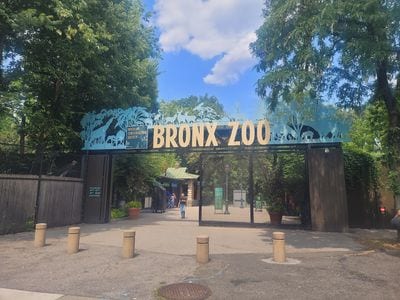
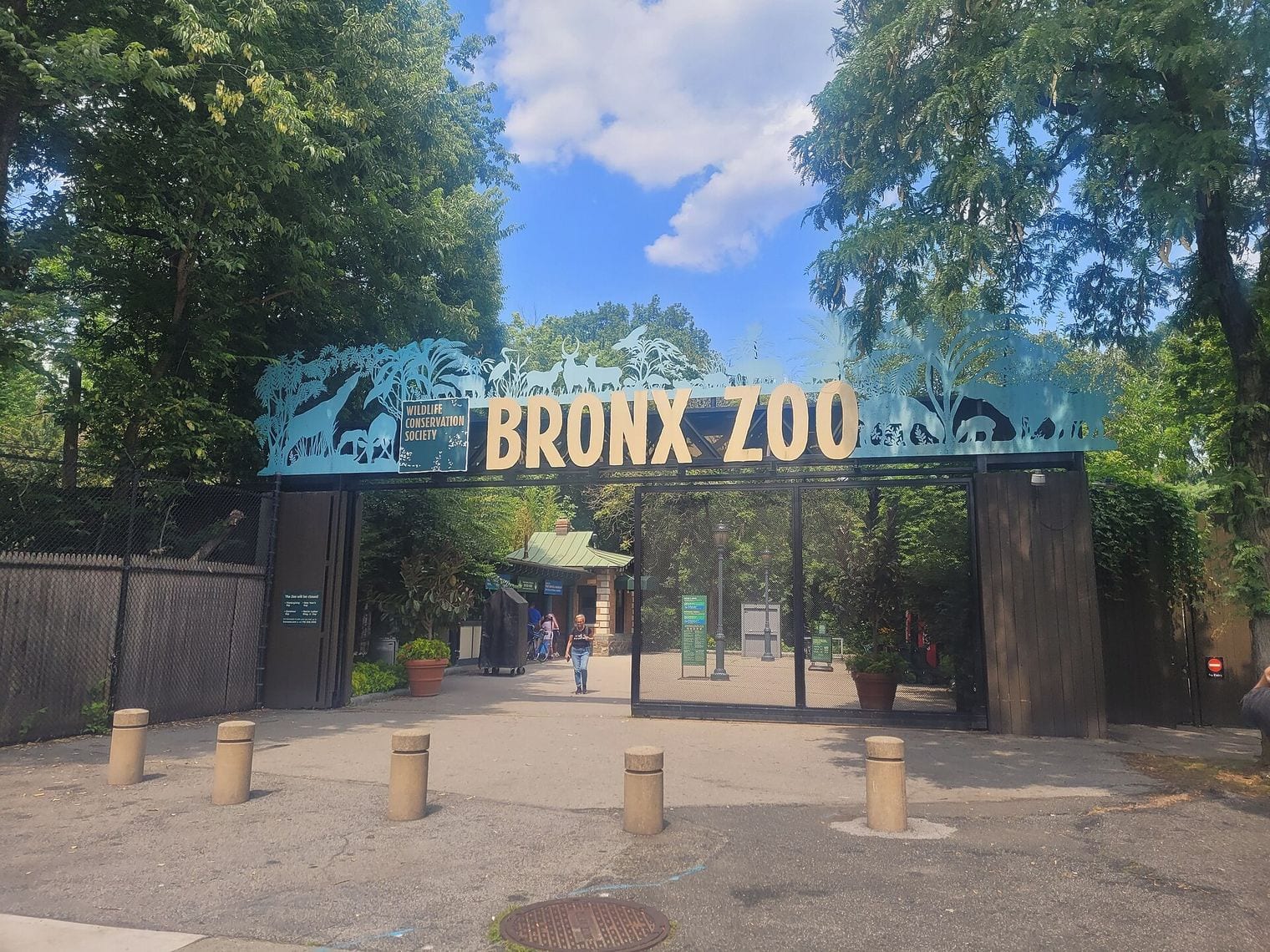
The Bronx Zoo is the largest metropolitan zoo in the United States, 265 acres of woodland and naturalistic habitats along the Bronx River, opened in 1899 and run by the Wildlife Conservation Society.
Highlights include Congo Gorilla Forest, a 6.5-acre rainforest home to a troop of western lowland gorillas, the indoor JungleWorld, the World of Birds and the seasonal Wild Asia Monorail over open ranges of Asian animals. Wear comfortable shoes; the zoo shares Bronx Park with the New York Botanical Garden, so the two together make a full day in the borough.
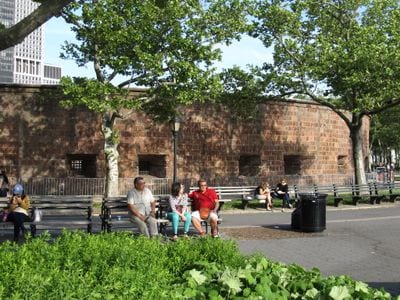
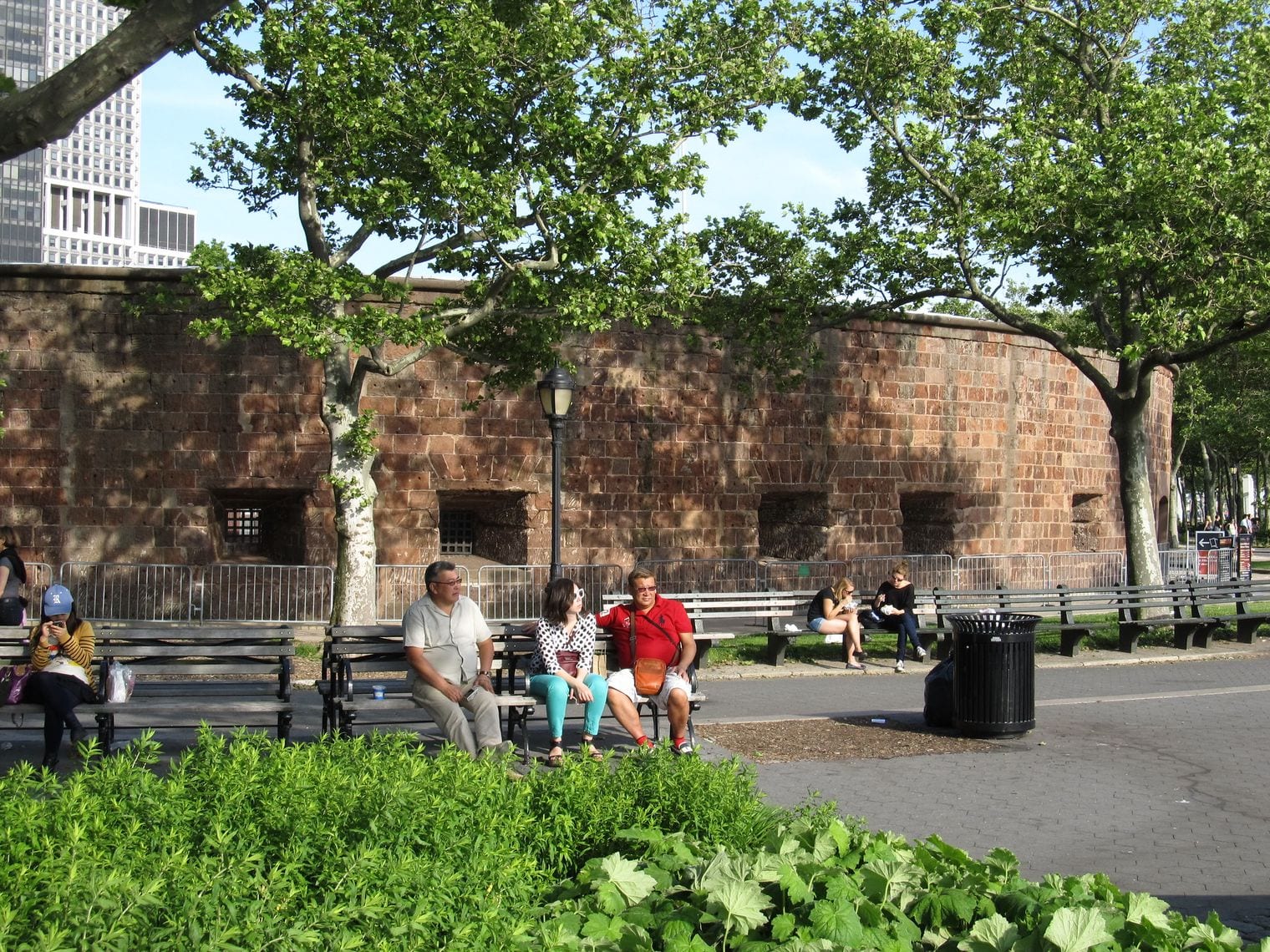
The Battery, the 25-acre park at the southern tip of Manhattan, is where New York meets its harbor. Its centerpiece, Castle Clinton, is an early 19th-century fort that later served as an immigration station, and today it is where you pick up tickets for the Statue of Liberty and Ellis Island ferries that leave from the park's waterfront.
Beyond the ferry lines, the promenade looks straight out to Lady Liberty, gardens and memorials line the paths, and the SeaGlass Carousel lets riders glide inside glowing fish. The Staten Island Ferry's Whitehall Terminal and the boats to Governors Island are right next door.
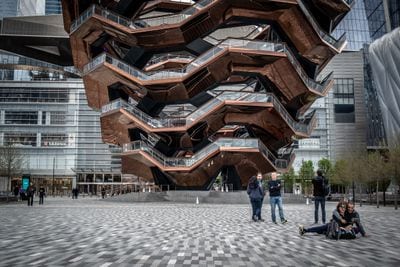
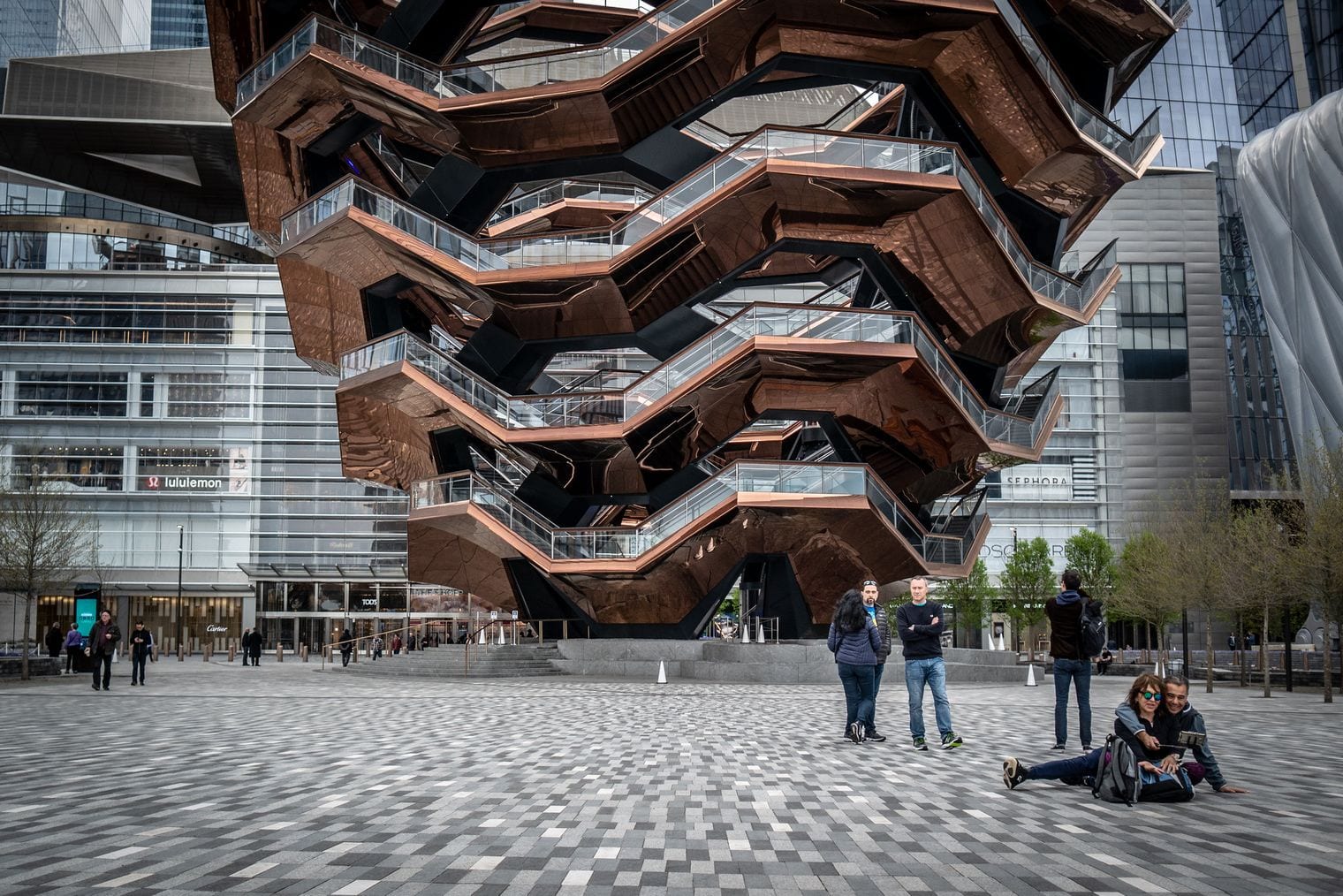
Vessel is the bronze-toned honeycomb of interlocking staircases at the center of Hudson Yards, the giant development of towers, shops and plazas built over a rail yard on Manhattan's far West Side. Designed by Thomas Heatherwick and opened in 2019, it links 154 flights of stairs, about 2,500 steps and 80 landings into a 16-story sculpture.
Climbing it requires a ticket, but it is just as striking from the plaza below. Around it, Hudson Yards packs a shopping center, the Edge observation deck and The Shed, an arts center whose retractable shell rolls out over its plaza for big performances, and the northern end of the High Line delivers you straight here.
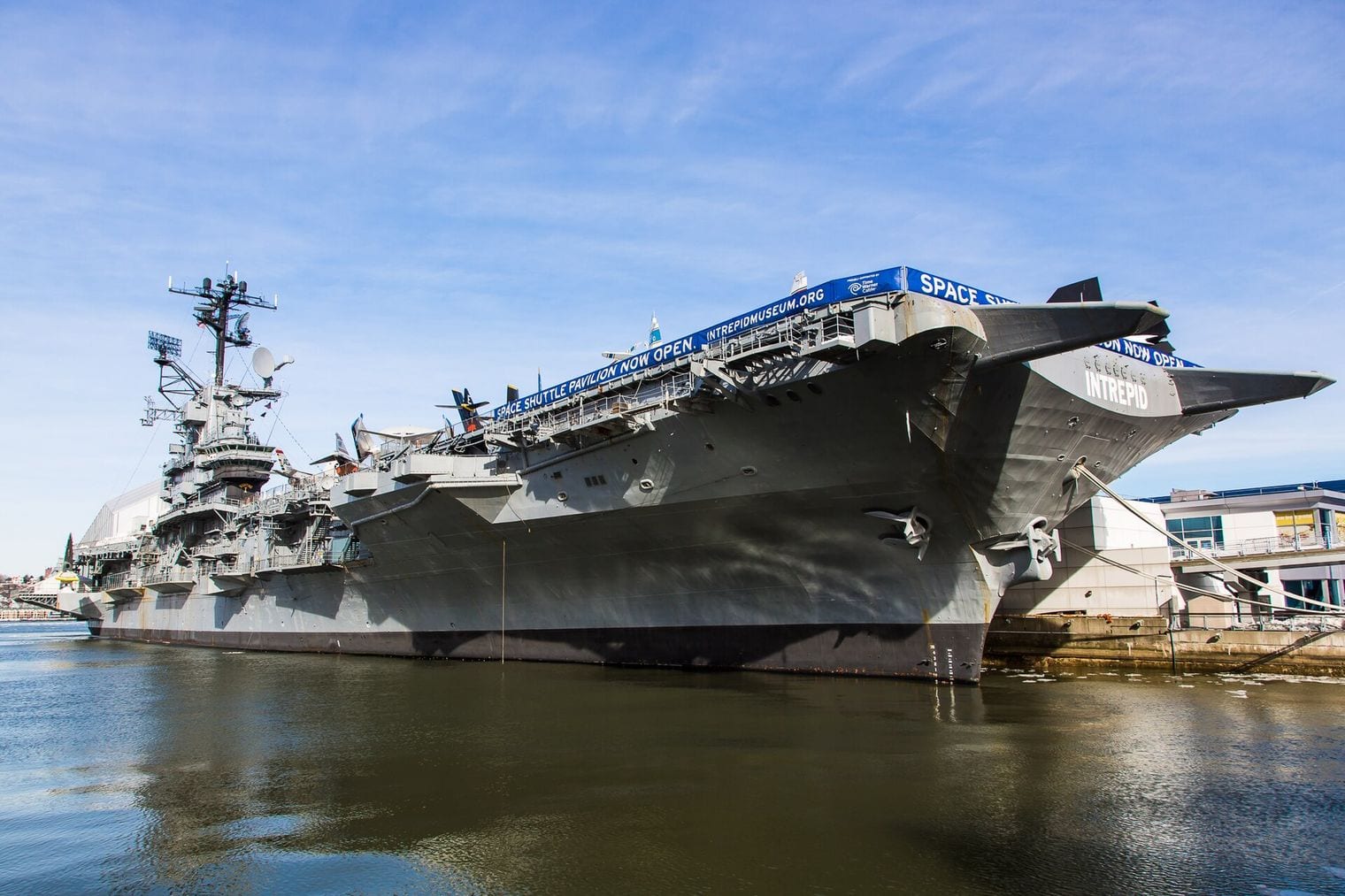
The Intrepid Museum is built around USS Intrepid, a World War II aircraft carrier and National Historic Landmark moored at Pier 86 on the Hudson River since the museum opened in 1982. Fighter jets and helicopters line the flight deck, and exhibits on the hangar deck follow the ship from wartime service to its role as a recovery ship for NASA space missions.
Two showpieces set it apart: the Space Shuttle Enterprise, NASA's prototype orbiter, in the Space Shuttle Pavilion on the flight deck, and a British Airways Concorde on the pier. Add the cruise-missile submarine USS Growler, whose cramped interior you can squeeze through, and it is a half day that keeps all ages busy.
Brooklyn Bridge Park stretches 1.3 miles along the Brooklyn shore of the East River, an 85-acre ribbon of lawns, playgrounds, sports courts and waterfront paths built on old cargo piers, from Atlantic Avenue past the Brooklyn Bridge to beyond the Manhattan Bridge.
Its piers and pebbly shoreline give some of the finest ground-level views of the Lower Manhattan skyline, best at sunset. Near the bridges, Jane's Carousel, a restored 1922 merry-go-round, spins inside a glass pavilion by the water; the Brooklyn Heights Promenade runs along the bluff above, and the streets of DUMBO are right behind.
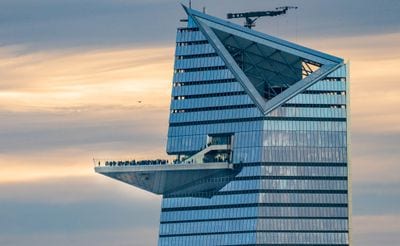
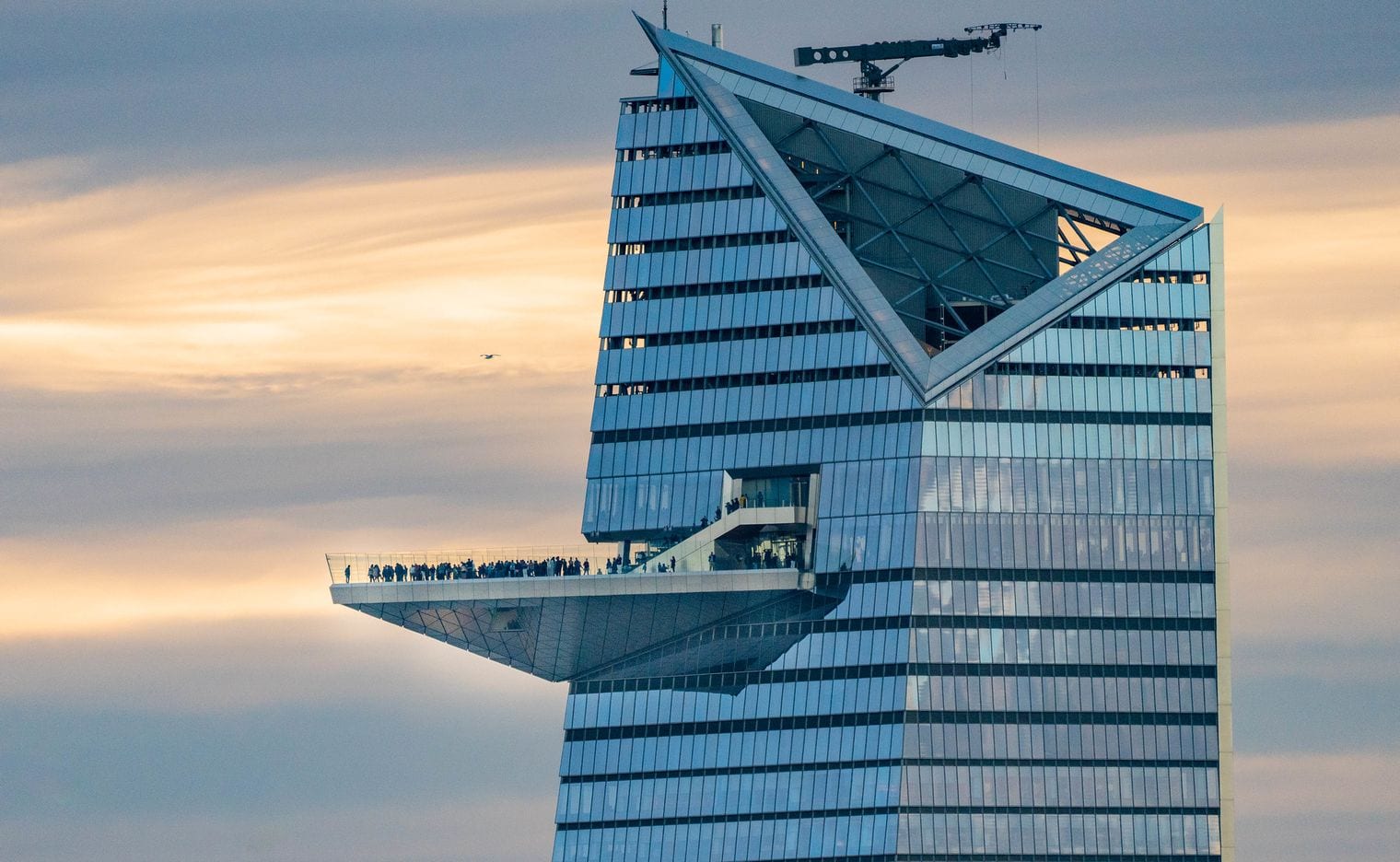
Edge NYC is the triangular sky deck that juts out from the 100th floor of 30 Hudson Yards, billed as the highest outdoor sky deck in the Western Hemisphere at 1,100 feet. It is the most vertiginous of the city's observation decks: the walls are angled outward panes of glass, and a glass floor lets you look straight down to the street.
Because it sits on the far West Side, it faces the Hudson River and New Jersey as well as Midtown, which makes it a superb place to watch the sun go down. It pairs naturally with Vessel and the High Line, both at its foot.
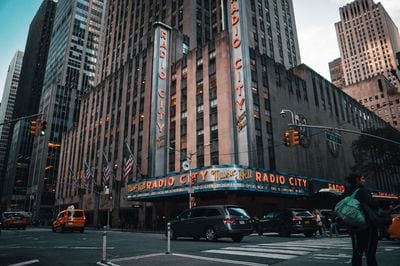
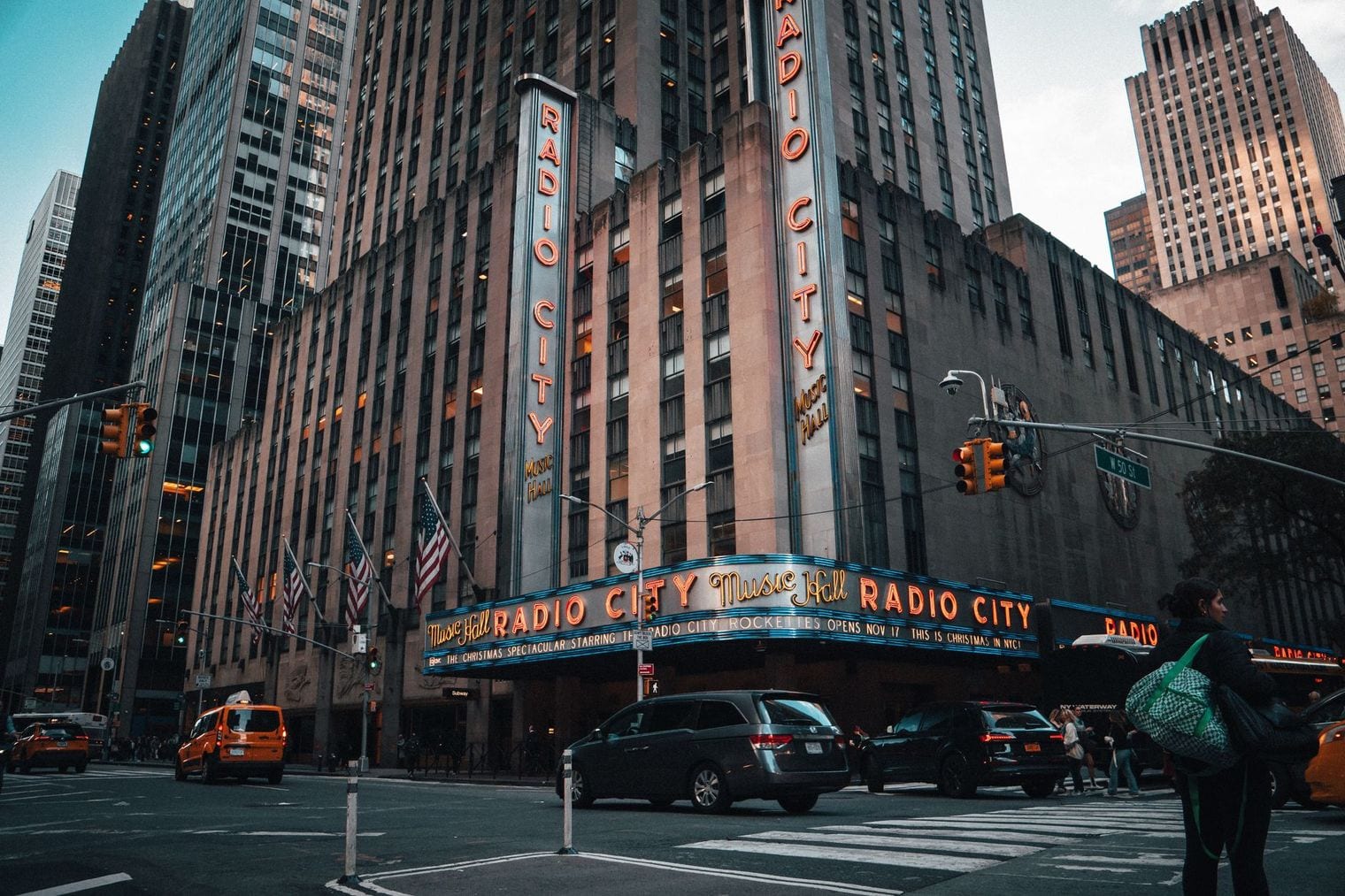
Radio City Music Hall, nicknamed the Showplace of the Nation, opened in 1932 as part of Rockefeller Center, and its four-tiered Art Deco auditorium was the largest in the world when it was built. Designed by Edward Durell Stone with interiors by Donald Deskey, it announces itself with a neon marquee wrapping the corner of Sixth Avenue.
It is the home of the Rockettes, whose Radio City Christmas Spectacular fills the hall each holiday season, and it hosts concerts, comedy and televised award shows through the rest of the year. If you cannot catch a show, a backstage tour shows off the grand foyer and the auditorium's sweeping arches.
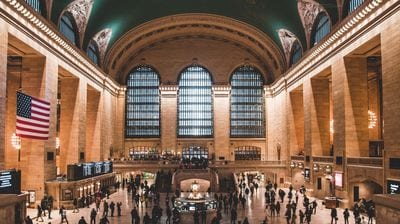
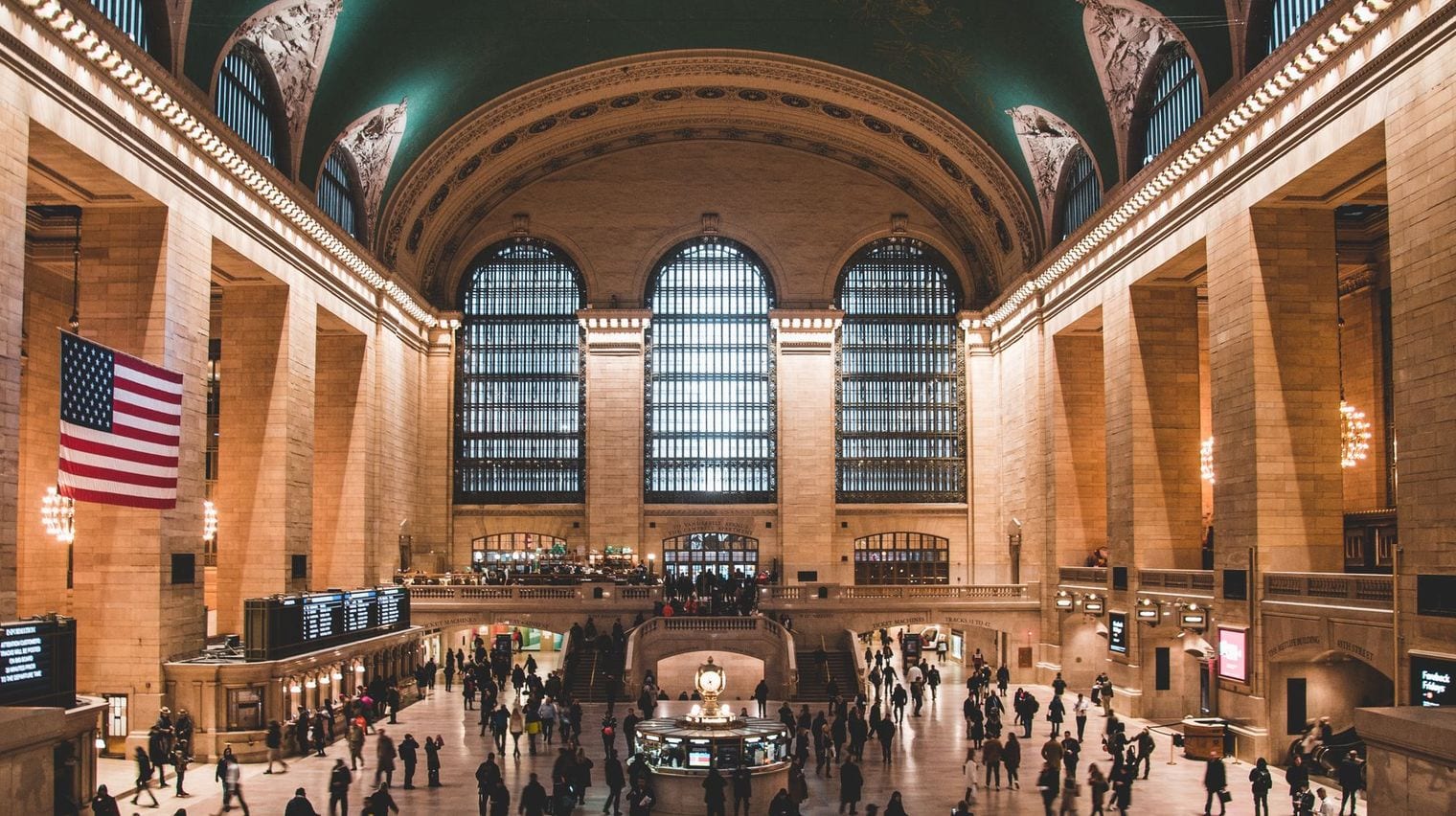
Grand Central Terminal is the Beaux-Arts gateway to the commuter railroads north of the city, opened in 1913 with 44 platforms, more than any other railroad station in the world. Even if you are not catching a train, stand in the Main Concourse and look up at the blue-green ceiling painted with constellations, then find the clock above the central information booth.
On the lower level, the vaulted arches near the dining concourse form a whispering gallery: speak softly into one corner and a friend in the diagonally opposite corner will hear you. The terminal sits beside SUMMIT One Vanderbilt, a short walk from the New York Public Library and Bryant Park, and holds a small annex of the New York Transit Museum.
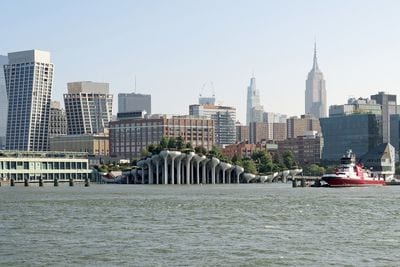
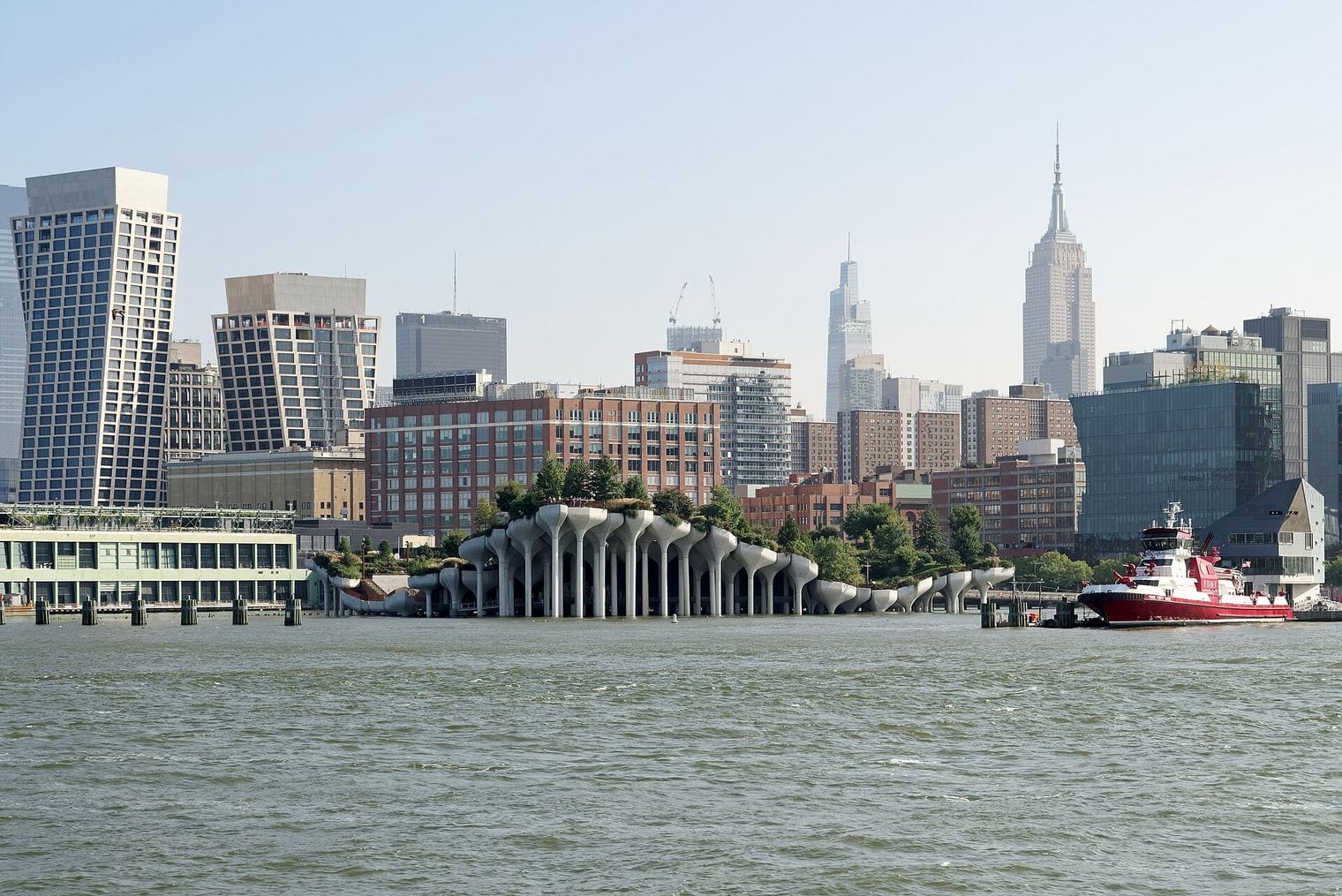
Little Island is a 2.4-acre park floating off the Hudson River shore near West 13th Street, raised above the water on 132 concrete pots called tulips. Designed by Heatherwick Studio and opened in 2021, it rolls up and down in planted hills, lawns and lookouts.
Winding paths climb to overlooks with views up and down the river, and a 687-seat amphitheater, The Amph, stages performances in the warmer months. Entry to the park itself is free, and it is a short walk from the southern end of the High Line and the Whitney Museum.
3030. Lincoln Center for the Performing Arts
Performing Arts Theater~4.3 miles (6.9 km) from centre
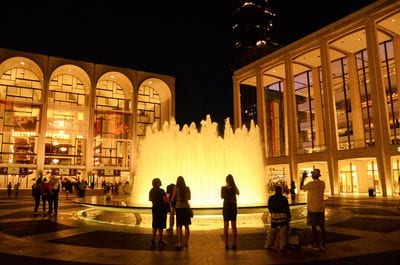
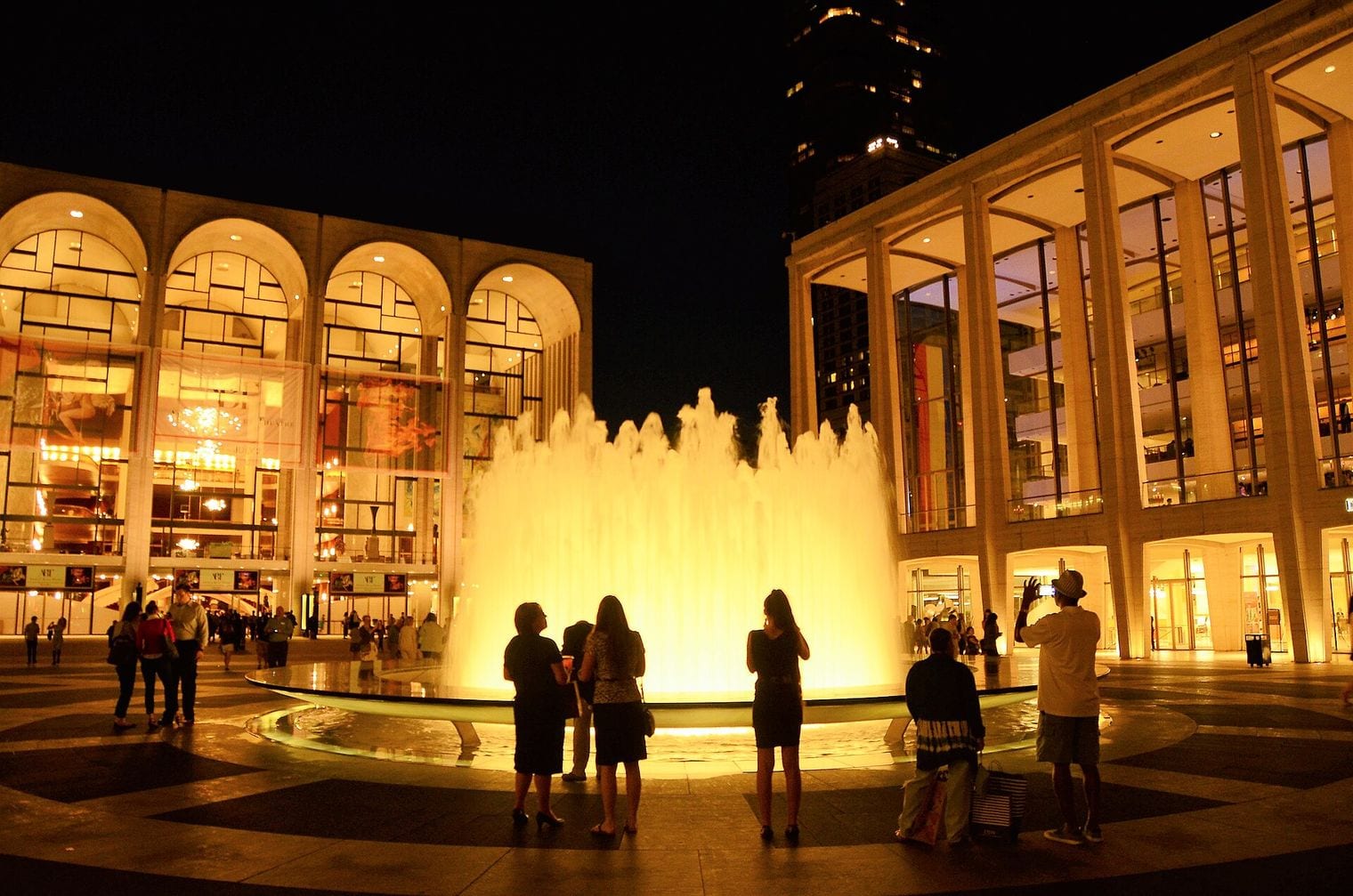
Lincoln Center for the Performing Arts is a 16.3-acre campus on the Upper West Side that houses the Metropolitan Opera, the New York Philharmonic, New York City Ballet, the Chamber Music Society of Lincoln Center and the Juilliard School.
Even without a ticket it is worth crossing the main plaza at night, when Revson Fountain dances in front of the Metropolitan Opera House's tall arched windows. Seeing an opera, ballet or orchestral concert here is a New York rite, and a second TKTS booth in the David Rubenstein Atrium sells discounted same-day seats.
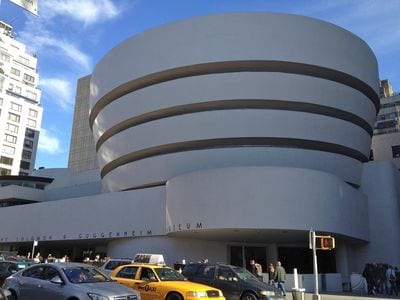
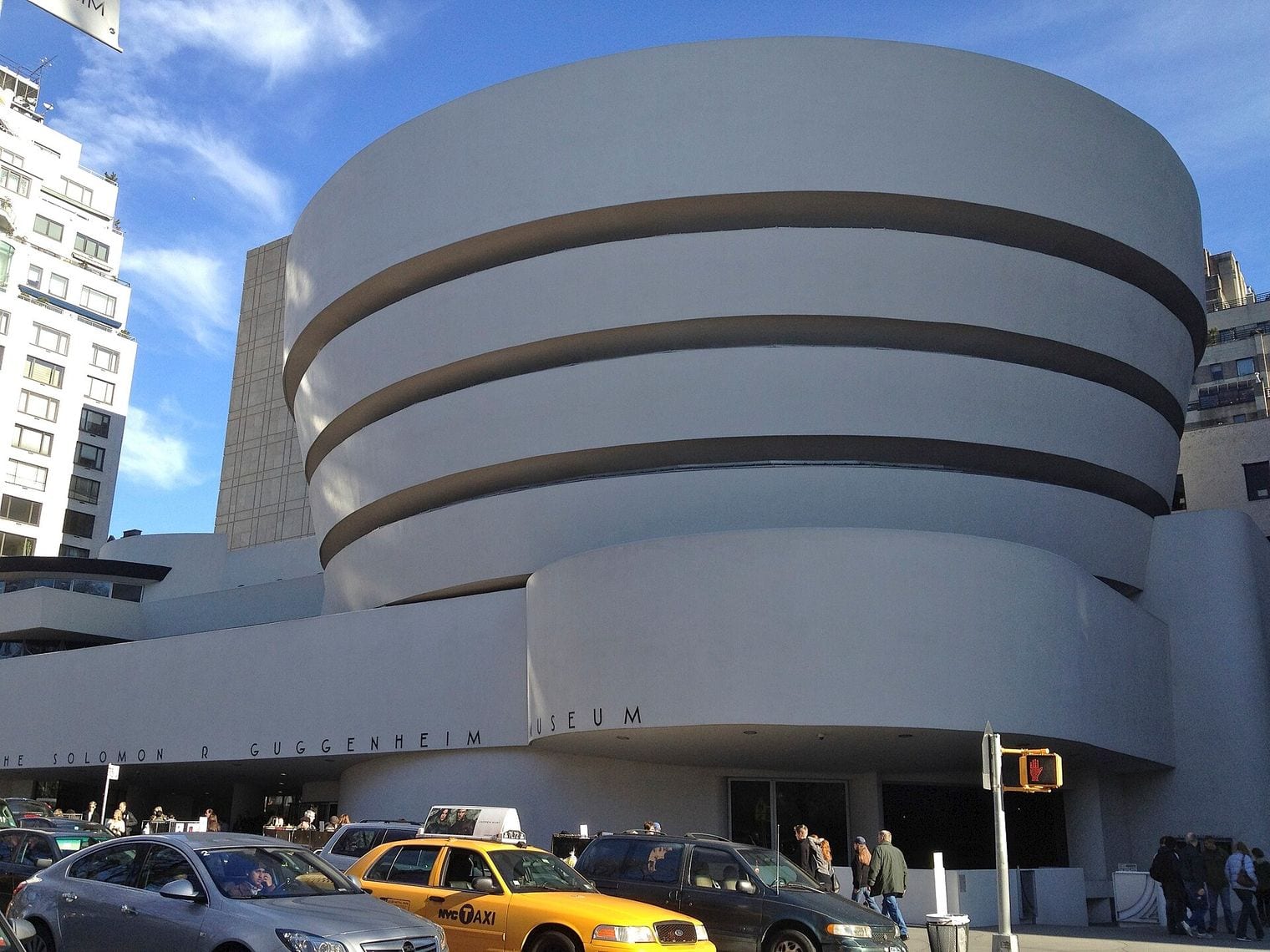
The Solomon R. Guggenheim Museum is as famous for its building as for its art. Frank Lloyd Wright's white spiral on Fifth Avenue, completed in 1959 after 15 years of design and construction, joined the UNESCO World Heritage List in 2019 as part of a group of his 20th-century buildings.
Inside, a continuous ramp curls up beneath a skylit dome, so many visitors ride the elevator to the top and stroll down past the exhibitions. Side galleries show works from the museum's own collection of modern and contemporary art, and The Met and the rest of Museum Mile are a short walk south.
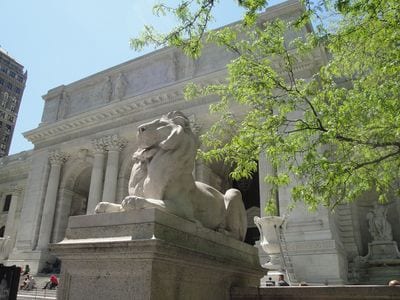
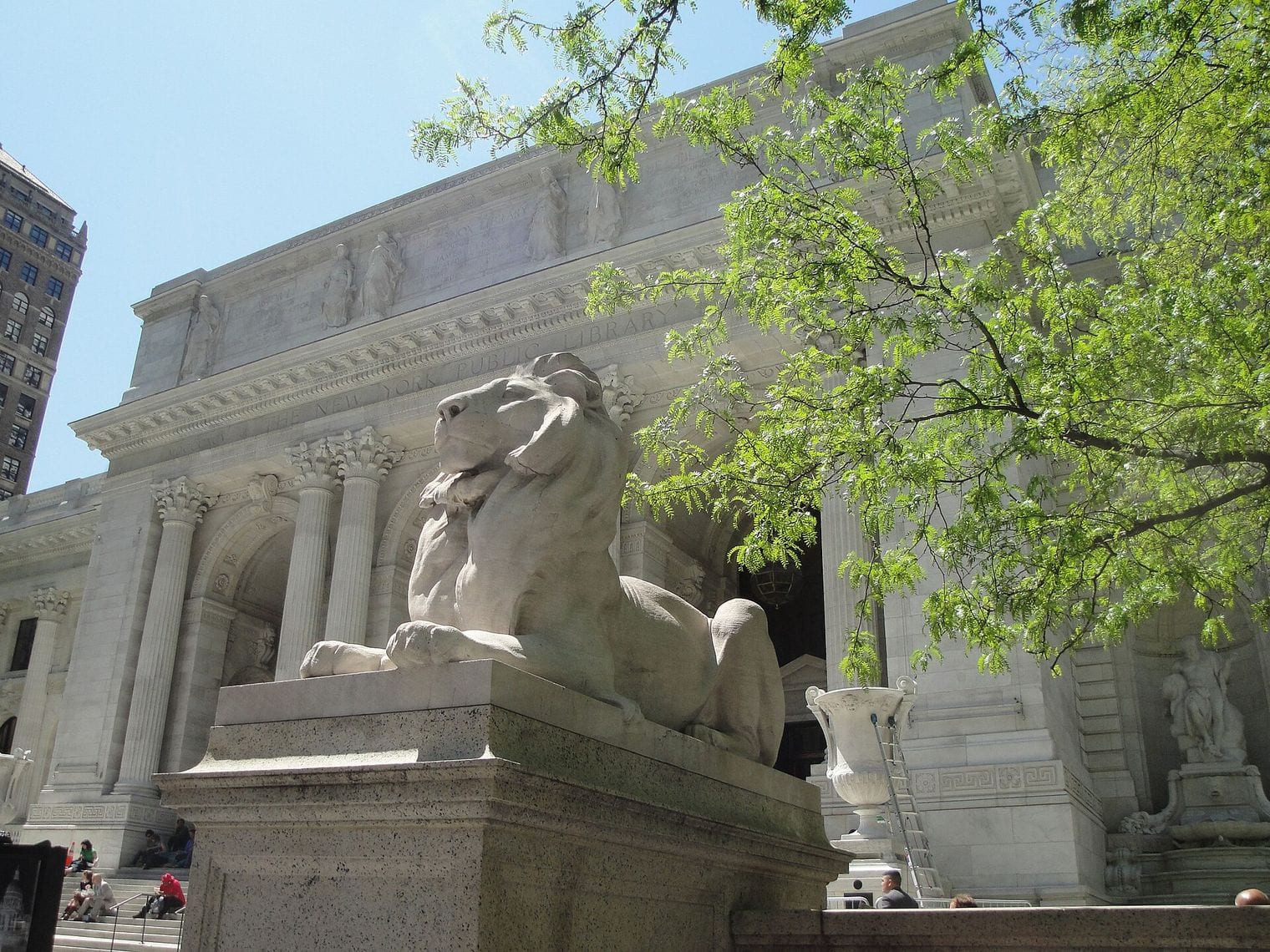
The New York Public Library's main branch, the Stephen A. Schwarzman Building on Fifth Avenue at 42nd Street, is a Beaux-Arts palace guarded by two stone lions named Patience and Fortitude. Opened in 1911, it is the flagship of the second-largest library in the United States, with nearly 53 million items across the system.
It is free to enter, and visitors can wander the marble Astor Hall, see the changing exhibitions and look into the Rose Main Reading Room, a vast hall of long oak tables beneath a painted sky. Bryant Park spreads out directly behind the building.
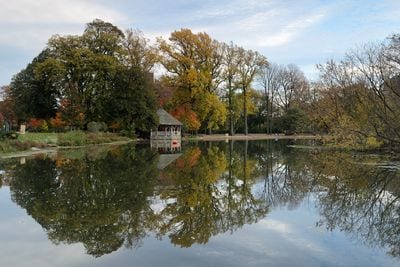
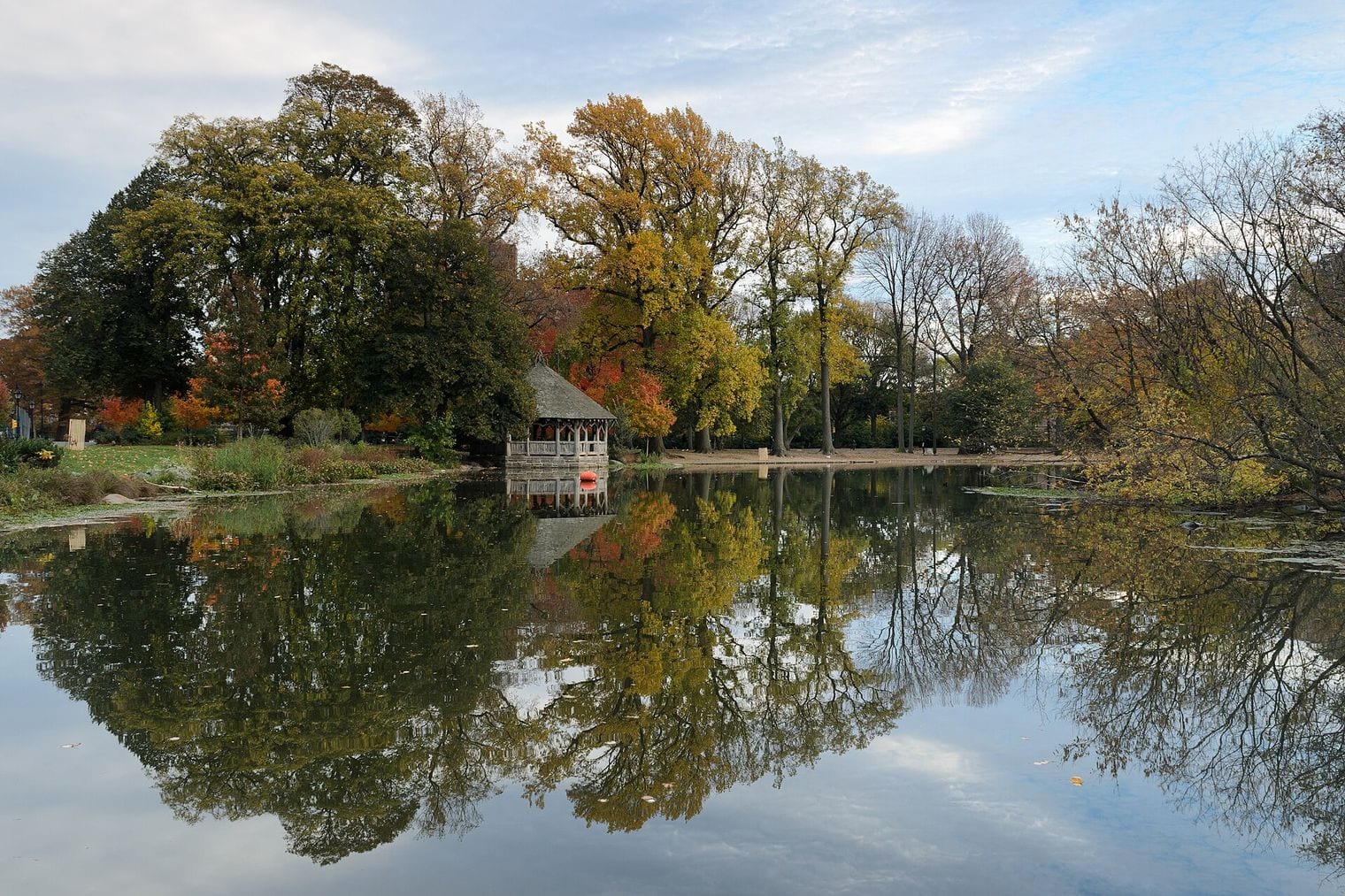
Prospect Park is Brooklyn's answer to Central Park, laid out across 526 acres by the same designers, Frederick Law Olmsted and Calvert Vaux, and opened in 1867. It feels wilder and more local than its Manhattan sibling, with joggers, cyclists and weekend barbecues filling its meadows.
Highlights include the 90-acre Long Meadow, Brooklyn's only lake, the Boathouse, the Prospect Park Zoo and the Bandshell, which hosts outdoor concerts in summer. Enter at Grand Army Plaza and its triumphal arch, and pair a walk with the Brooklyn Botanic Garden and the Brooklyn Museum just beyond the park's edge.
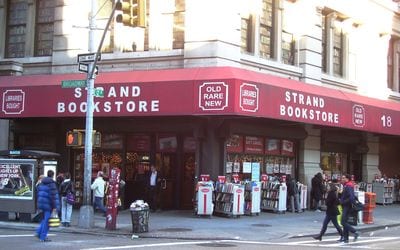
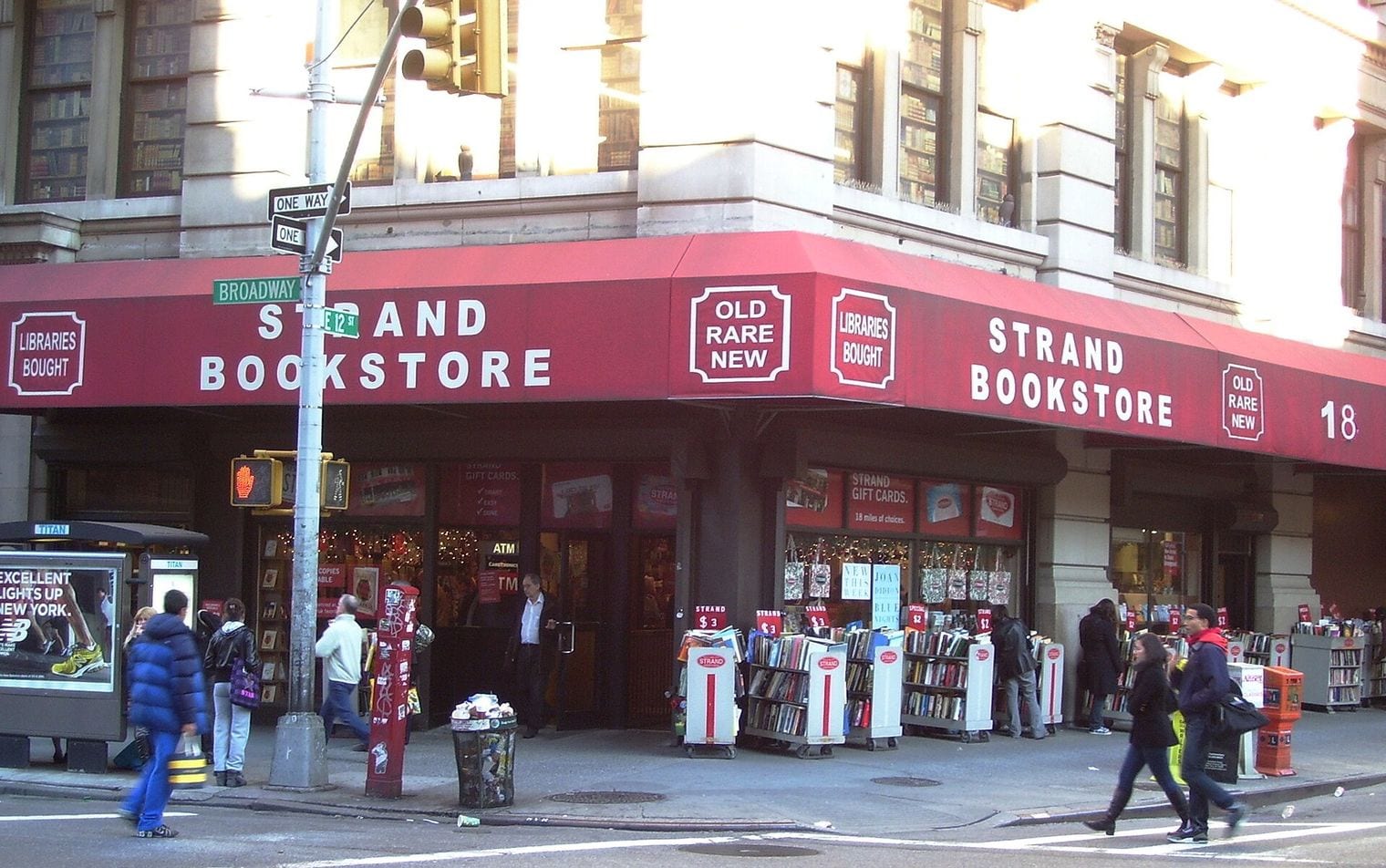
Strand Bookstore is New York's great independent bookshop, founded in 1927 by Benjamin Bass on Fourth Avenue's Book Row and now on Broadway at 12th Street, a short walk from Union Square, under a slogan that promises 18 Miles of Books.
Browse new, used and rare titles over several floors, dig through the bargain carts on the sidewalk and leave time to get lost in the stacks. Its tote bags have become a popular New York souvenir in their own right.
Free printable checklist of all 75 places
Tick them off as you go. Confirm your email to download it, plus one email every Thursday with new guides for the places you tick.
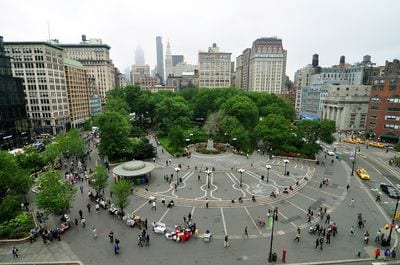
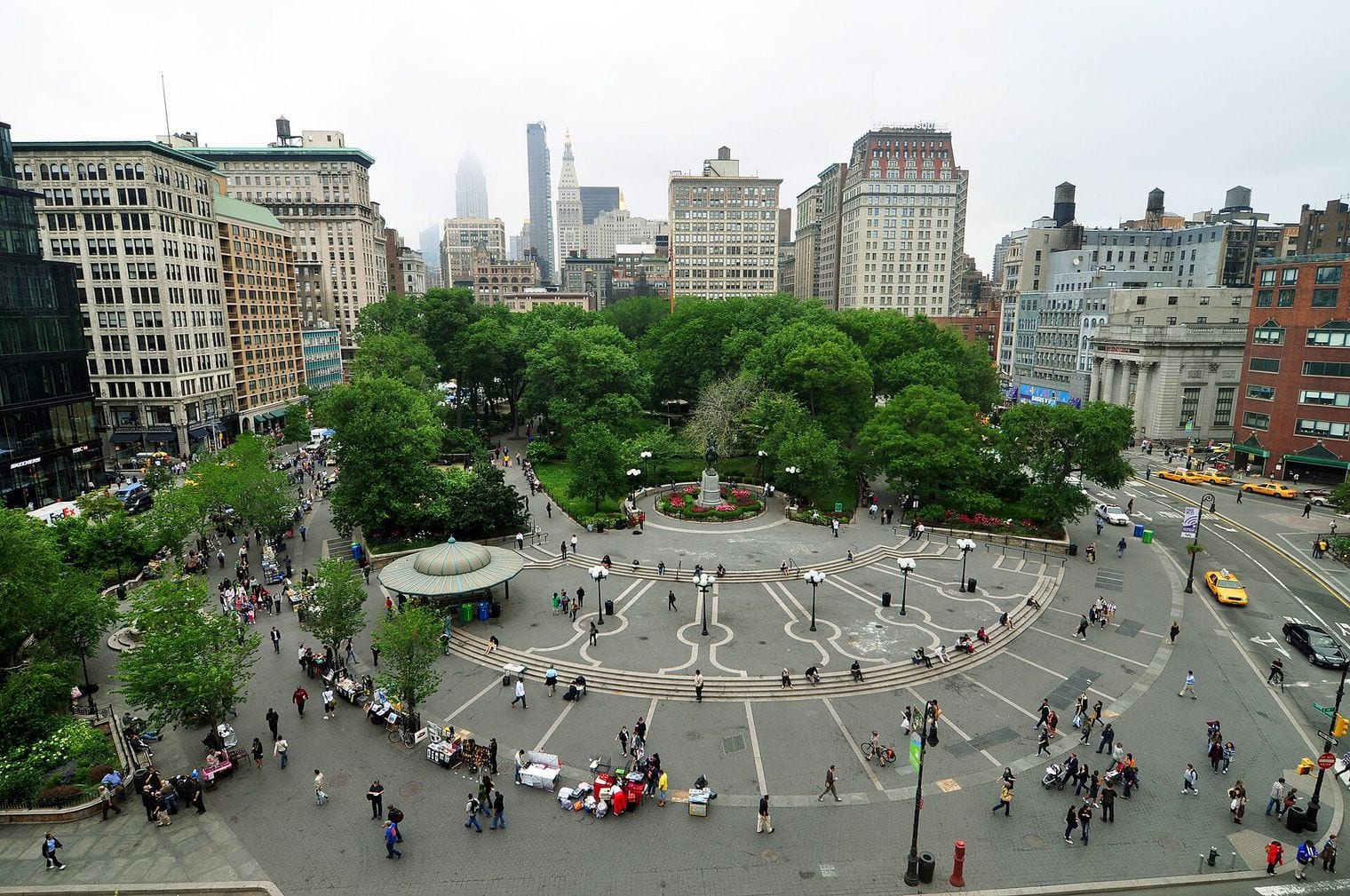
Union Square Park, between 14th and 17th Streets where Broadway meets Park Avenue South, is one of downtown Manhattan's busiest gathering places, dotted with statues of George Washington, the Marquis de Lafayette, Abraham Lincoln and Mahatma Gandhi.
Several days a week the Union Square Greenmarket, the flagship of a farmers' market program begun in 1976, fills the plaza with farm stands selling regional produce, cheese, bread and flowers. The rest of the time it is a stage for skateboarders, chess players, buskers and rallies, with a major subway hub below and the Strand a block south.
3636. Flatiron Building
Historical Landmark~2.1 miles (3.4 km) from centre
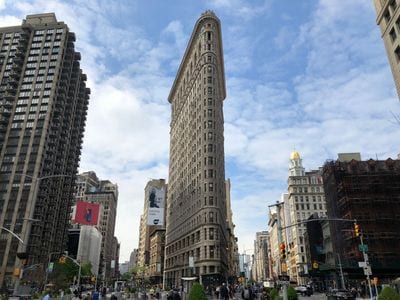
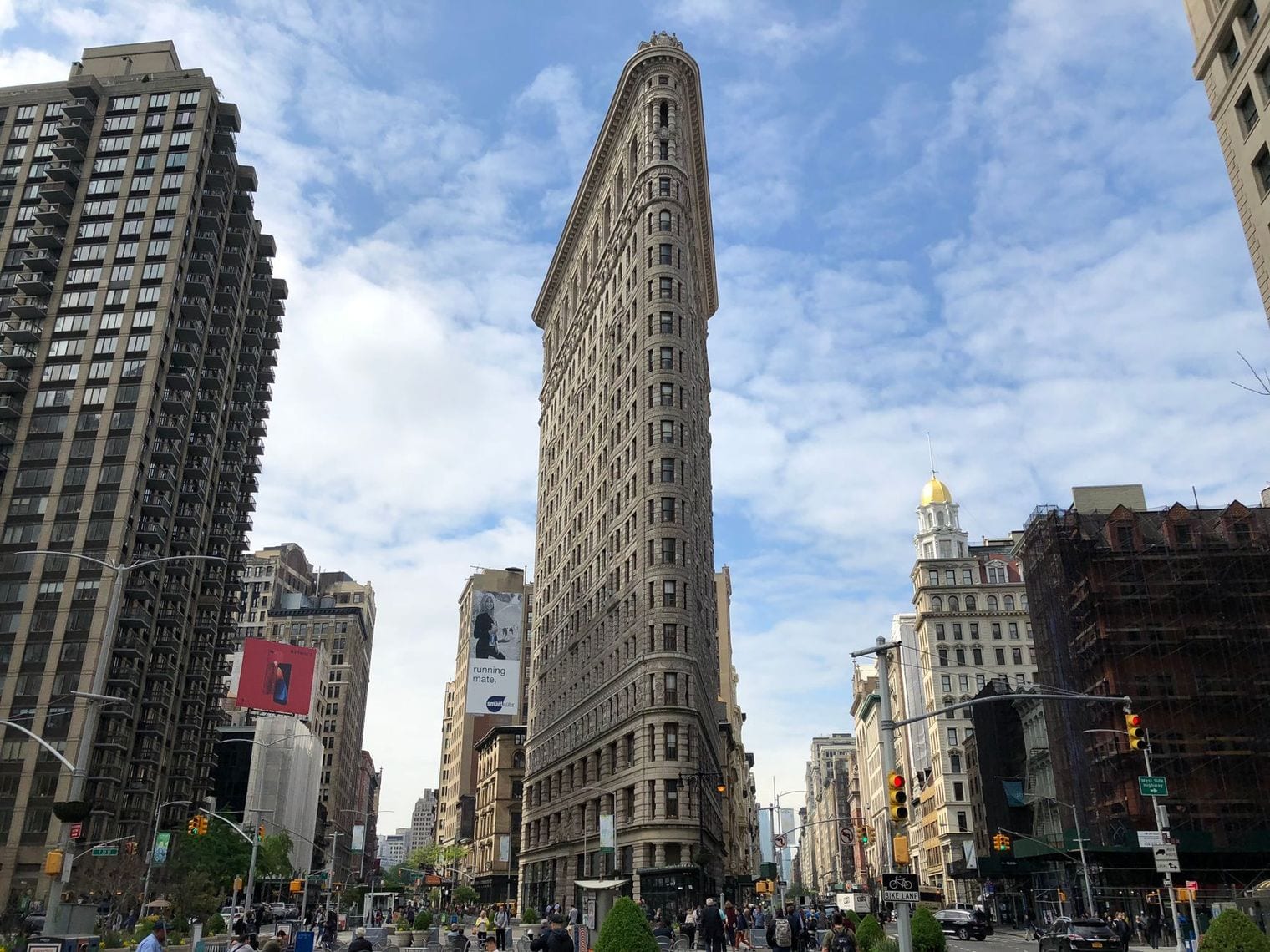
The Flatiron Building rises like the prow of a ship where Broadway crosses Fifth Avenue at 23rd Street, a 22-story steel-framed wedge designed by Daniel Burnham and Frederick Dinkelberg that opened in 1902. Its triangular site gives it the name, borrowed from the shape of an old cast-iron clothes iron, and the whole Flatiron District takes its name from the building.
It is a sight to admire from outside, best photographed from the pedestrian plaza at its northern tip or from Madison Square Park across the street, a leafy square known for its rotating public art installations.
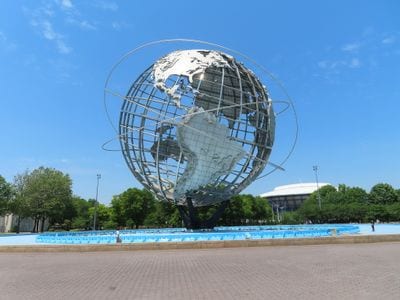
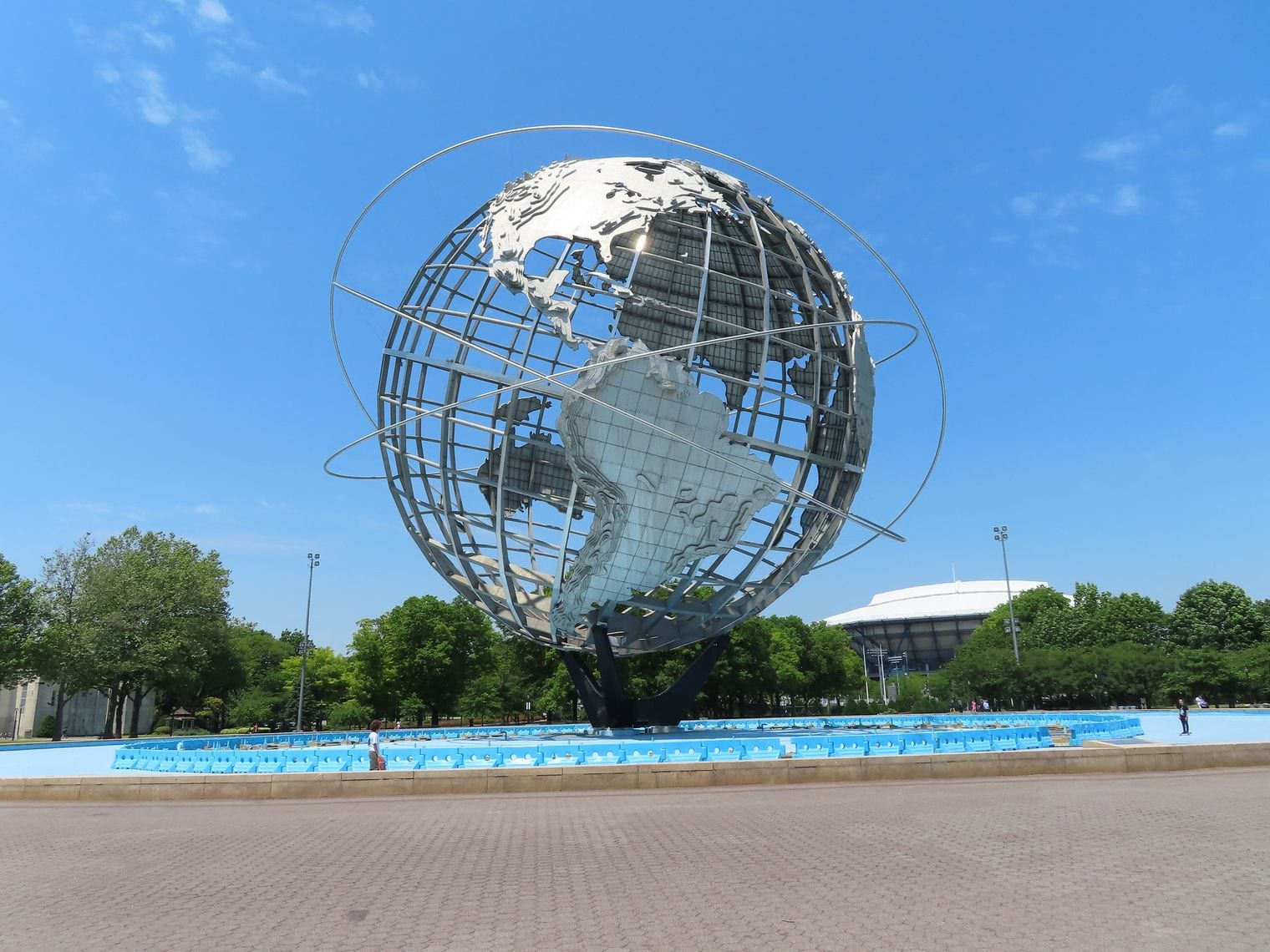
Flushing Meadows Corona Park, at 897 acres one of the largest parks in New York City, was created for the 1939 World's Fair and hosted the 1964 fair too, and relics of both still stand. The star is the Unisphere, the giant steel globe built as the symbol of the 1964 fair, which has become the park's signature sight.
Nearby rise the towers of the New York State Pavilion, and the Queens Museum holds the Panorama of the City of New York, an enormous scale model of the entire city. Sports fans know the park as the home of the US Open tennis tournament at the USTA Billie Jean King National Tennis Center, with the Mets' Citi Field next door.
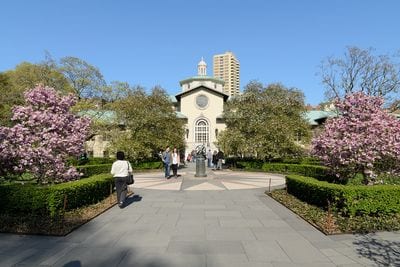
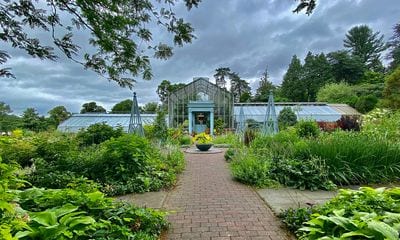
Brooklyn Botanic Garden packs 52 acres of themed gardens into central Brooklyn, right beside Prospect Park and the Brooklyn Museum. A brook runs from the Japanese Hill-and-Pond Garden in the north to the Water Garden in the south, linking formal gardens, an overlook and a historic palm house along the way.
Spring is the showstopper, when the Cherry Esplanade, planted in 1941, bursts into bloom and the garden hosts its annual cherry blossom festival. The Steinhardt Conservatory keeps things green year-round, so it rewards a visit in any season.
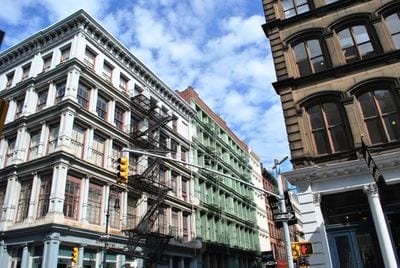
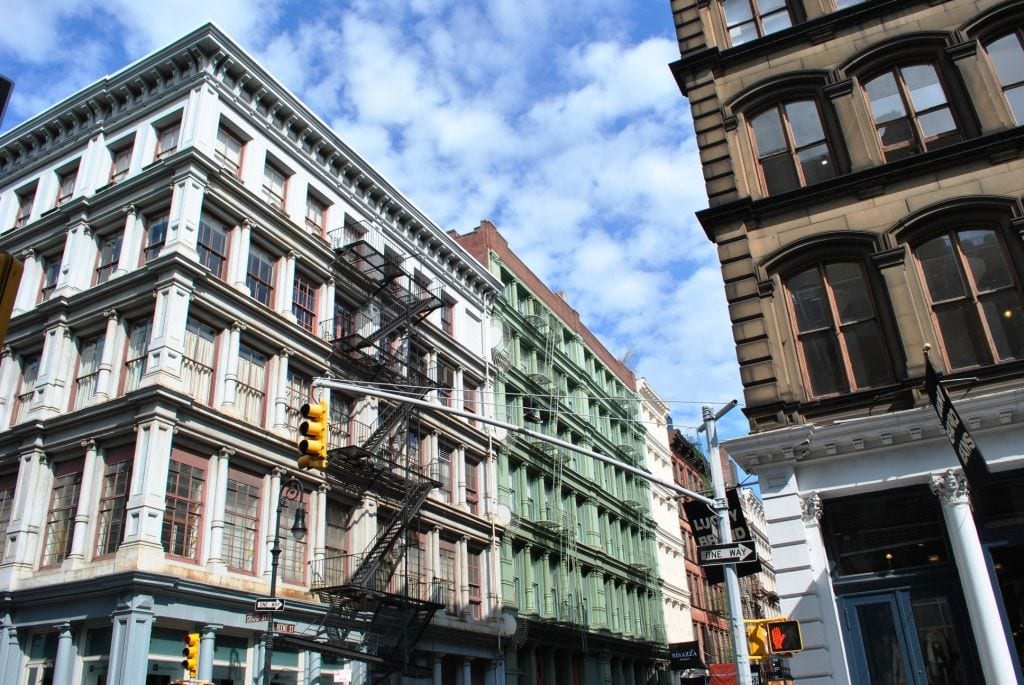
SoHo, short for South of Houston Street, is downtown Manhattan's shopping and gallery district, and almost all of it lies within the SoHo–Cast Iron Historic District: 26 blocks and around 500 buildings, many of them with ornate 19th-century cast-iron facades.
Artists moved into its empty lofts from the 1960s and 1970s; today cobblestoned streets such as Greene and Mercer are lined with flagship stores and boutiques, from global brands to independent designers. Walk Broadway for the big names and the side streets for the architecture.
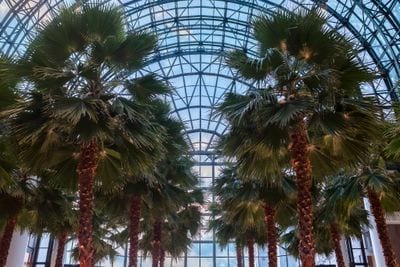
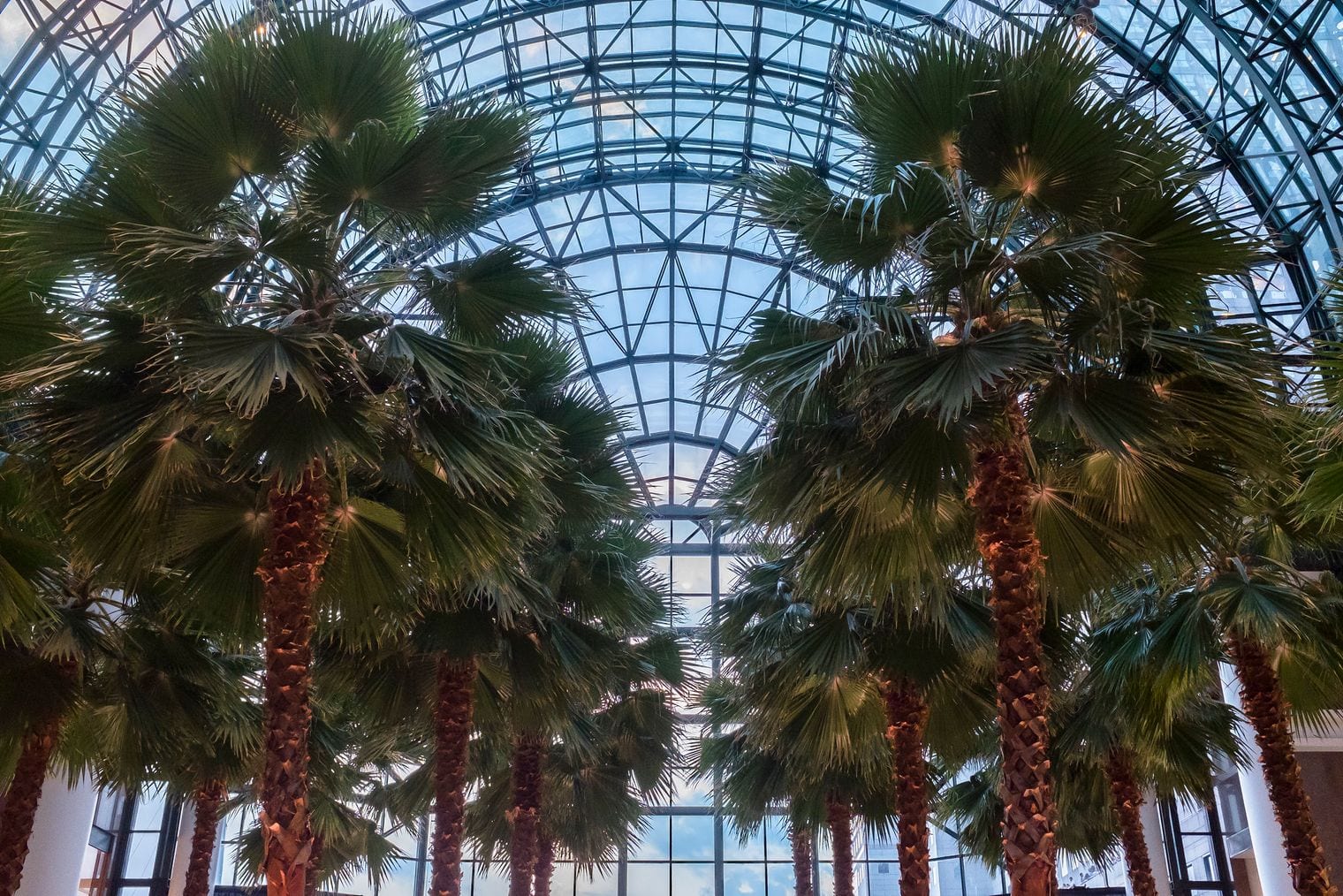
Brookfield Place, still often called by its old name, the World Financial Center, is a waterfront office and shopping complex across West Street from the World Trade Center. Its heart is the Winter Garden, a ten-story glass-vaulted atrium planted with sixteen tall palm trees and rebuilt after it was badly damaged on September 11, 2001.
The atrium hosts free events and art installations and makes a comfortable shortcut from the World Trade Center to the Hudson River esplanade. Outside, yachts tie up in the North Cove Marina, and the riverside walk is a fine spot to watch the sun set over New Jersey.
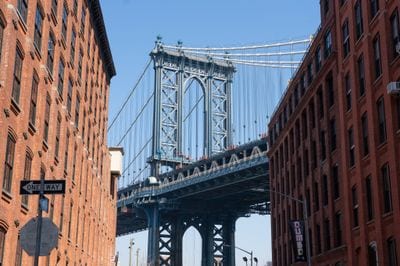
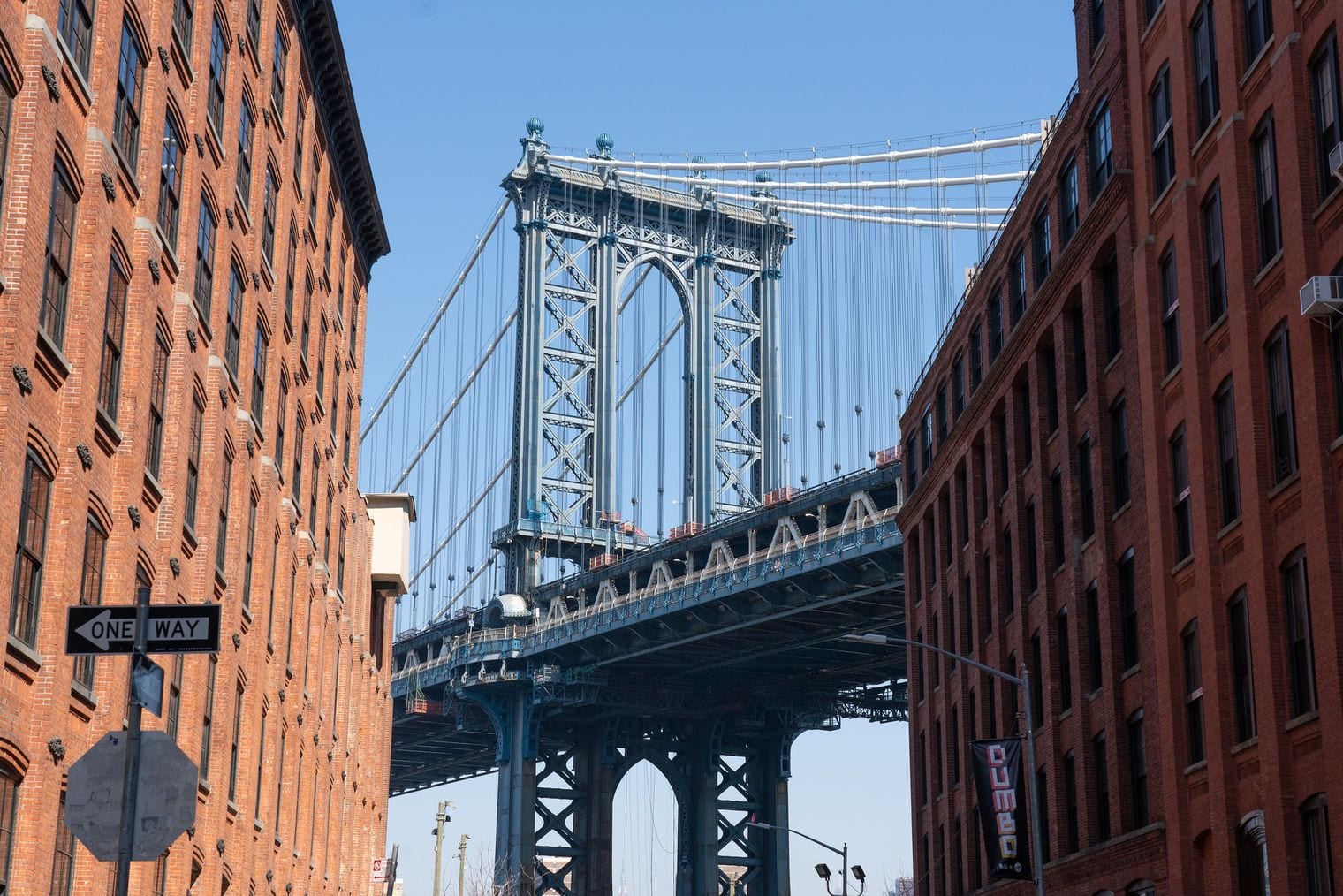
DUMBO, short for Down Under the Manhattan Bridge Overpass, is the former Brooklyn warehouse district between the Manhattan and Brooklyn Bridges, with Belgian-block streets, converted factories and the massive anchorage of the Manhattan Bridge looming overhead.
Its famous view is on Washington Street at Water Street, where the Manhattan Bridge is framed between brick buildings, with the Empire State Building visible through the bridge's tower on a clear day. The old warehouses now hold galleries, design shops and offices, and the waterfront end of the neighborhood opens straight into Brooklyn Bridge Park.
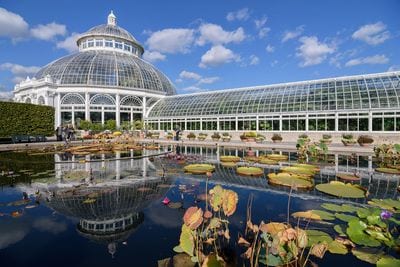
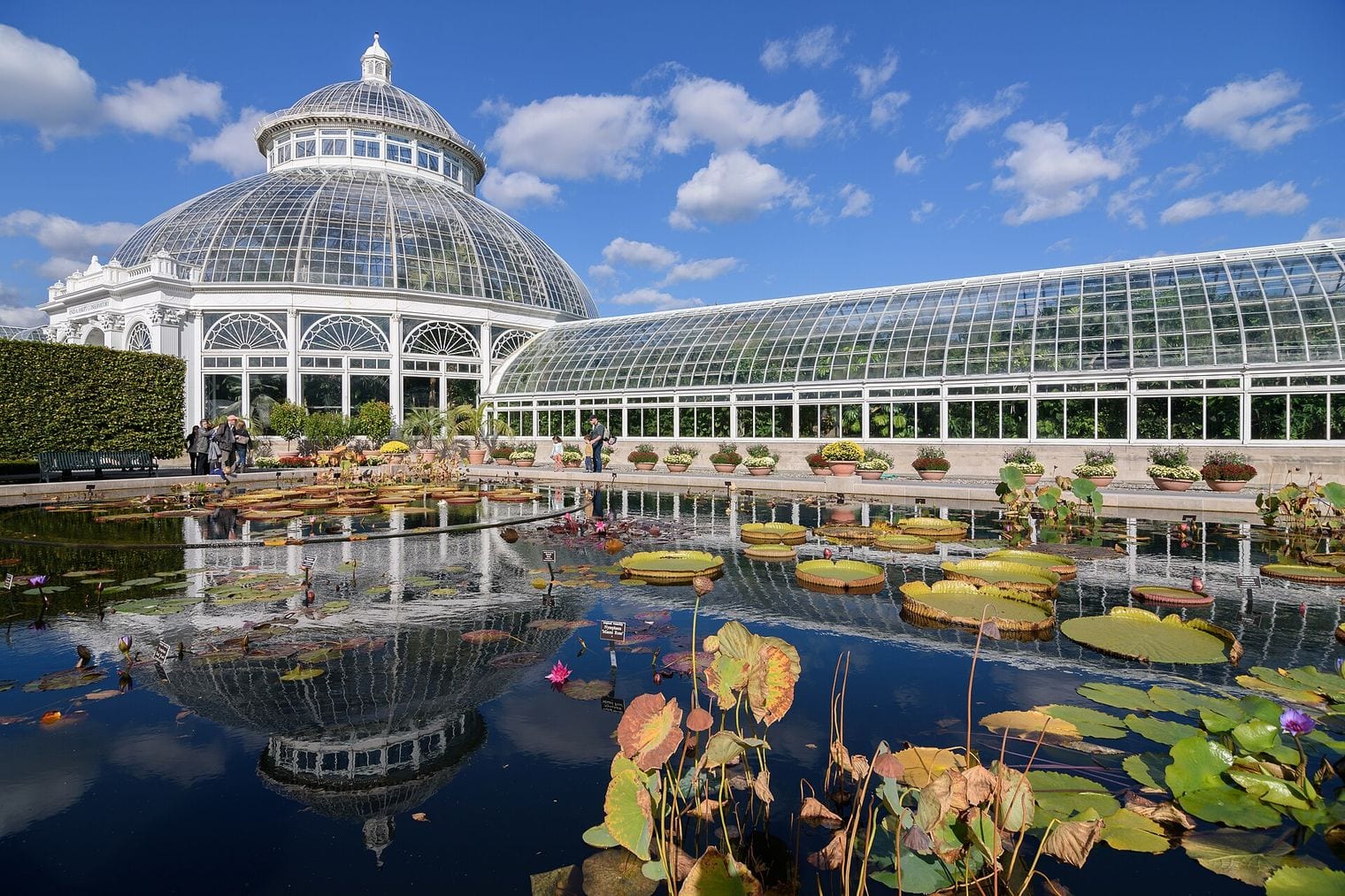
The New York Botanical Garden, founded in 1891, spreads across 250 acres of the Bronx with more than a million living plants and has been a National Historic Landmark since 1967.
Its centerpiece is the Enid A. Haupt Conservatory, a Victorian-style glasshouse holding several plant habitats under glass, and the Thain Family Forest preserves a 50-acre tract of original, never-logged New York forest. Seasonal orchid and holiday train shows draw big crowds, and the Bronx Zoo is right next door.
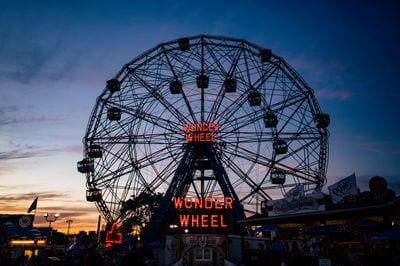
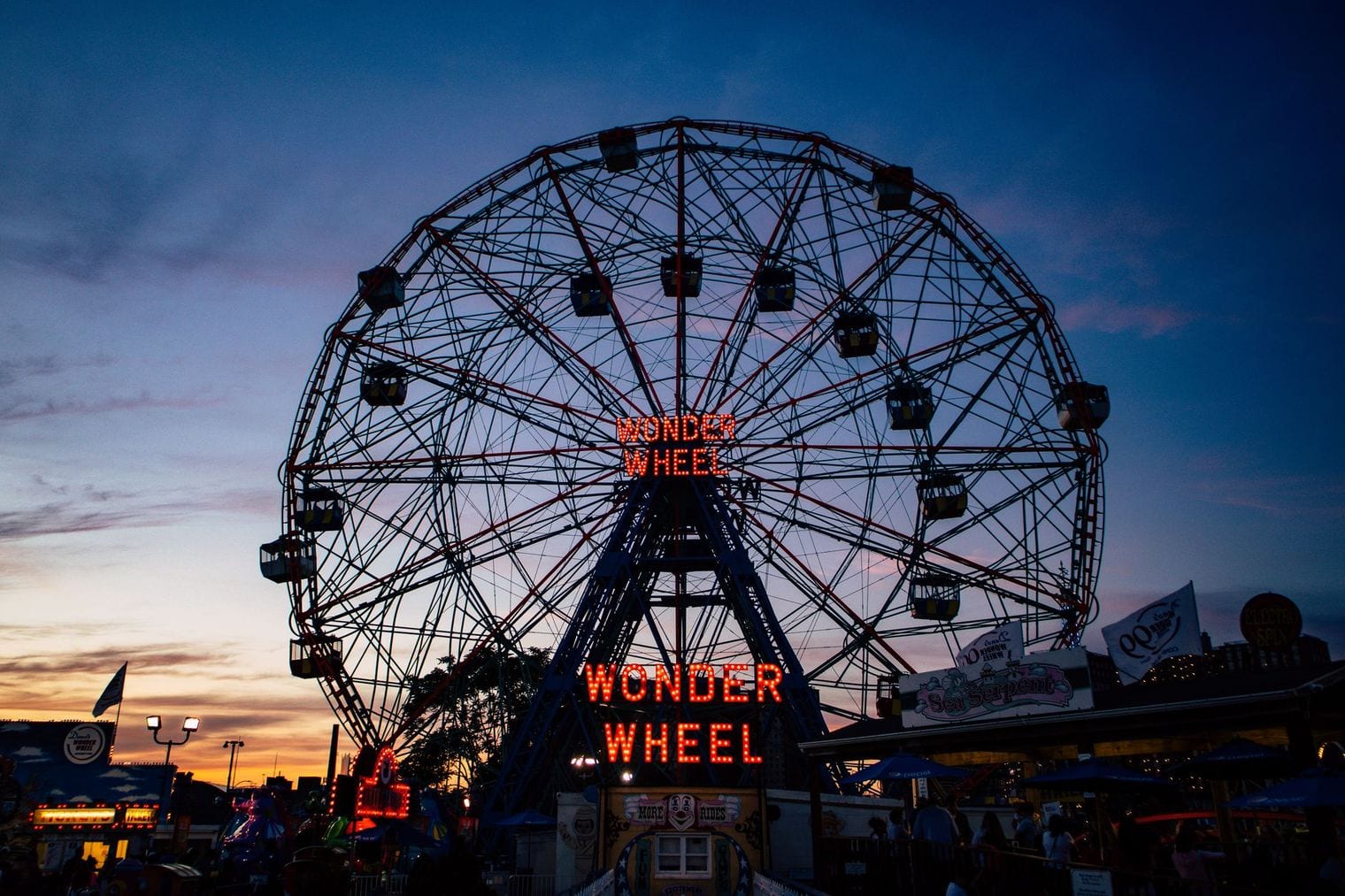
Coney Island is New York's seaside playground at the southern edge of Brooklyn, with a wide sandy beach, the Riegelmann Boardwalk and an amusement district that once held three rival parks: Luna Park, Dreamland and Steeplechase Park.
The landmark rides are the Wonder Wheel, turning since 1920, and the wooden Coney Island Cyclone roller coaster from the same decade, both beside today's Luna Park. The rides run seasonally, roughly spring to fall, but the beach, the boardwalk and the New York Aquarium are there year-round; it is a long subway ride from Manhattan, so make a day of it.
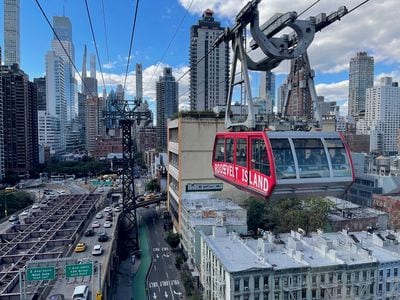
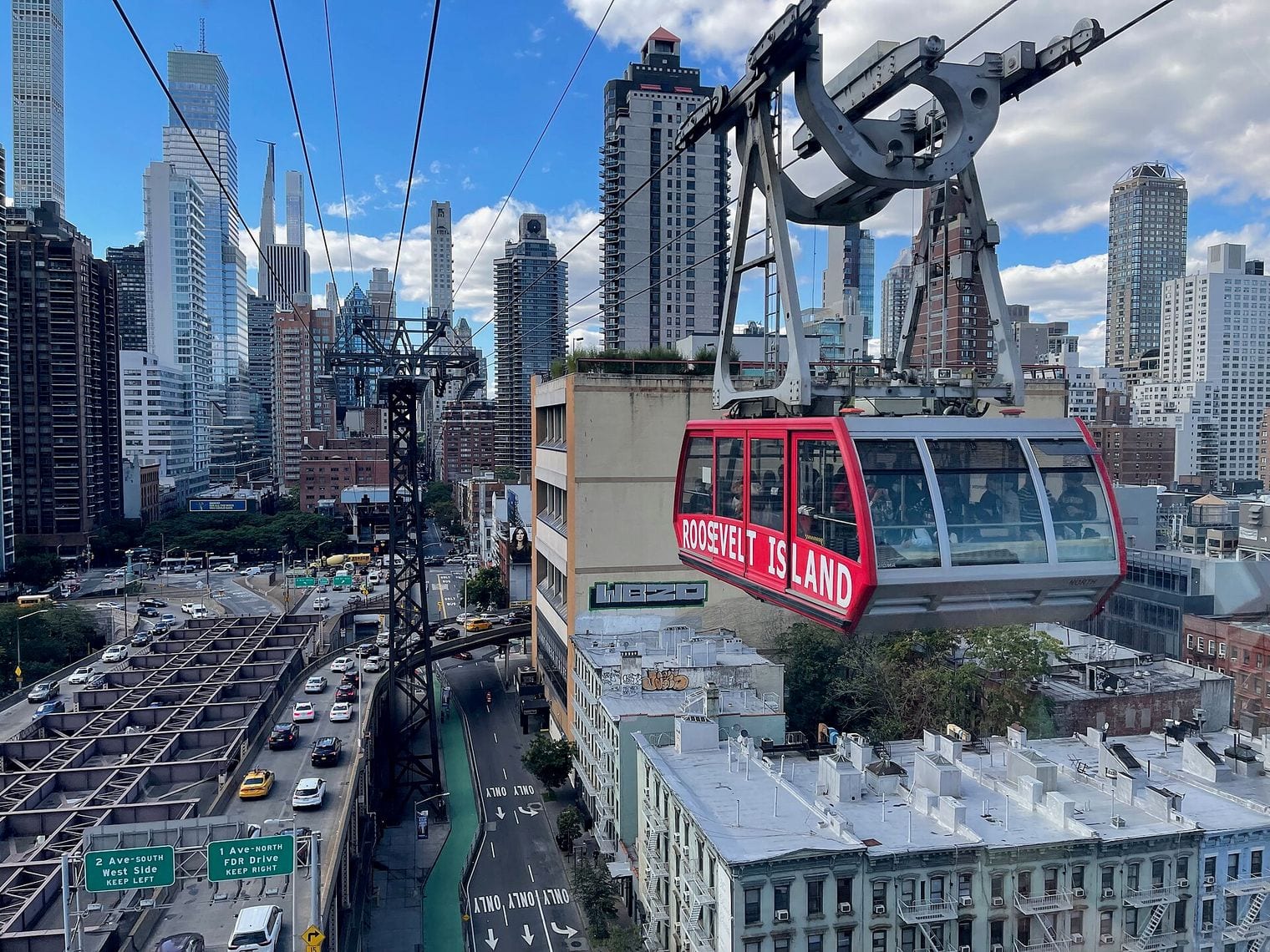
The Roosevelt Island Tramway is one of the most scenic rides in New York, an aerial cable car that swings out over the East River from East 60th Street and Second Avenue to Roosevelt Island beside the Queensboro Bridge. Opened in 1976, it was the first commuter aerial tramway in the United States, and it takes the standard MTA fare, so you can tap in with the same card or phone you use on the subway.
The views of the Midtown skyline and the bridge are the whole point, so grab a spot by the windows. On the island, walk south to Four Freedoms Park at its tip, passing the ruins of the 19th-century Smallpox Hospital.
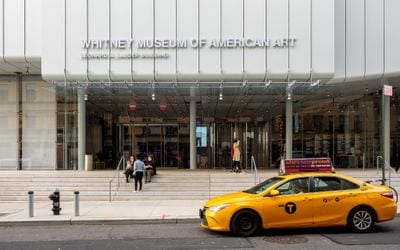
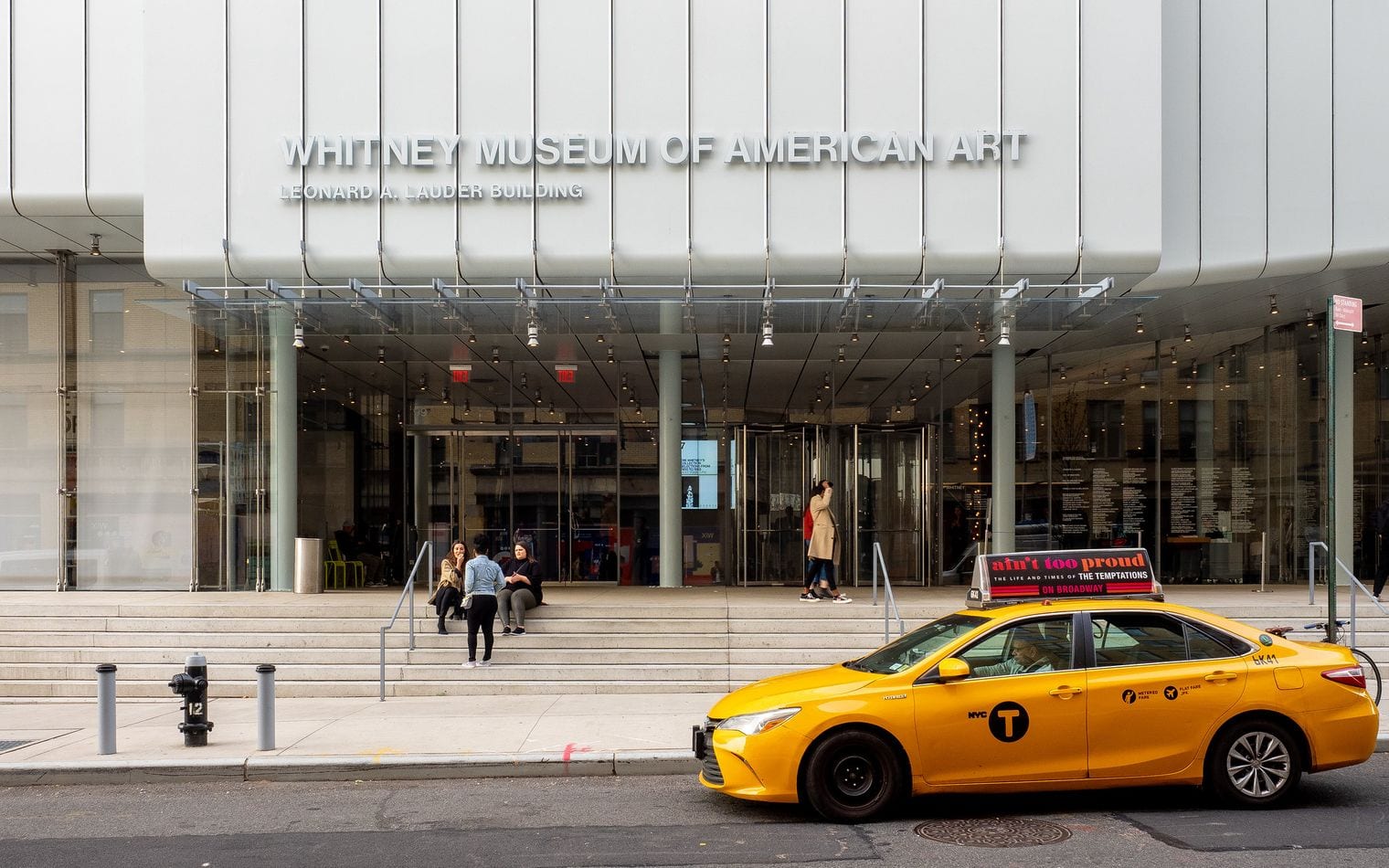
The Whitney Museum of American Art, founded in 1930 by sculptor and patron Gertrude Vanderbilt Whitney, focuses on 20th- and 21st-century American art, and since 2015 it has occupied a Renzo Piano building at the southern end of the High Line in the Meatpacking District.
Its stepped outdoor terraces look over the Hudson River and the High Line, and the galleries mix works from the permanent collection with changing shows. Every two years the Whitney Biennial surveys new American art and sets the conversation for the season.
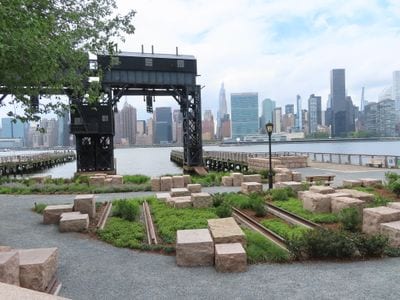
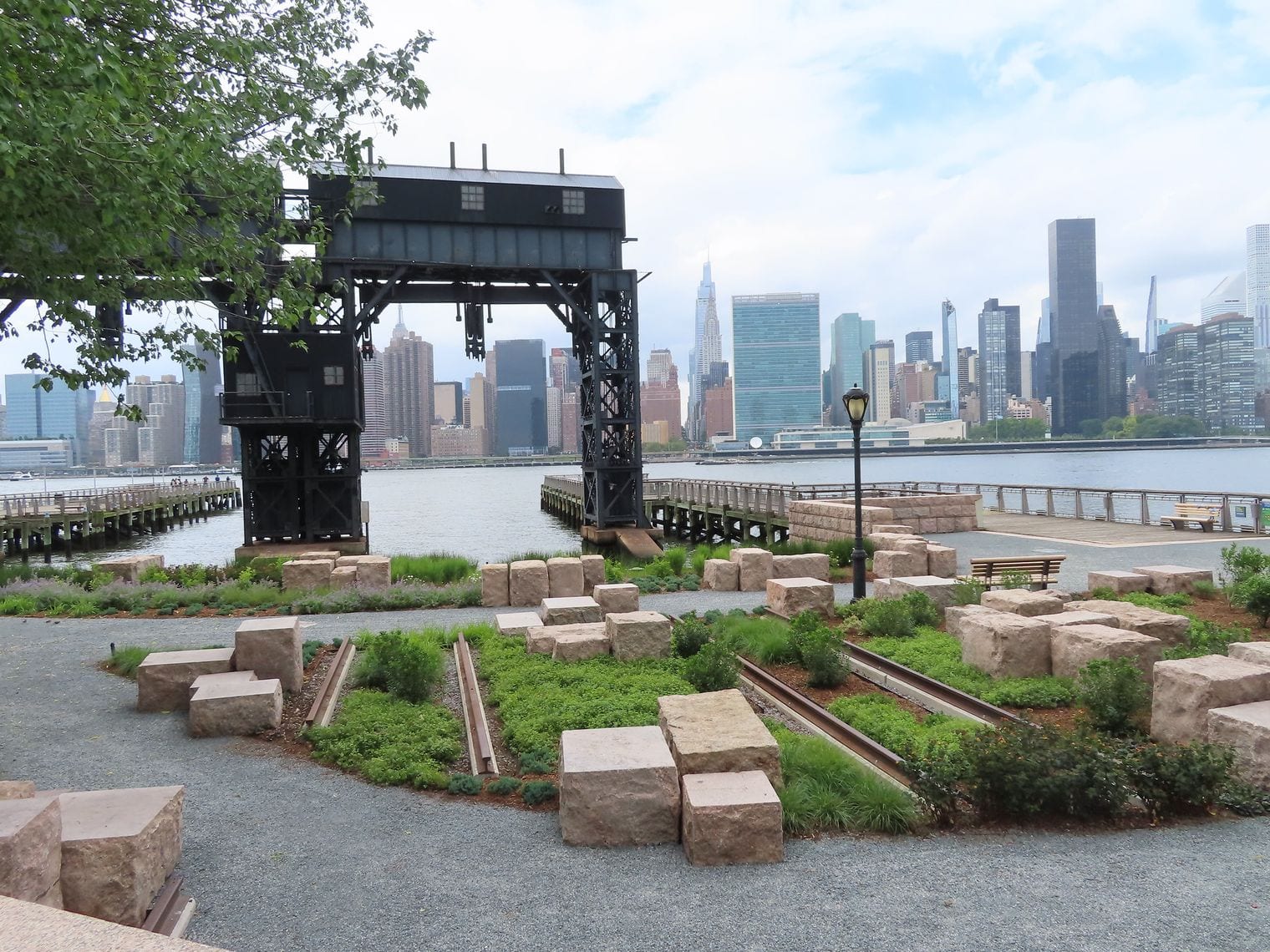
Gantry Plaza State Park, on the East River in the Hunters Point section of Long Island City, Queens, takes its name from the restored gantries that once loaded railcars onto barges bound for Manhattan, and those hulking structures now frame a sweeping view of the Midtown skyline.
Across the water stand the United Nations headquarters, the Chrysler Building and the Empire State Building, while the red neon Pepsi-Cola sign, made in 1939 and a city landmark since 2016, glows over the northern end of the park. Come at sunset and take the ferry or a short subway ride back to Manhattan.
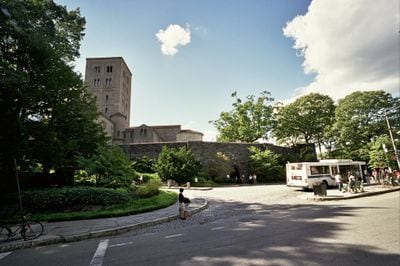
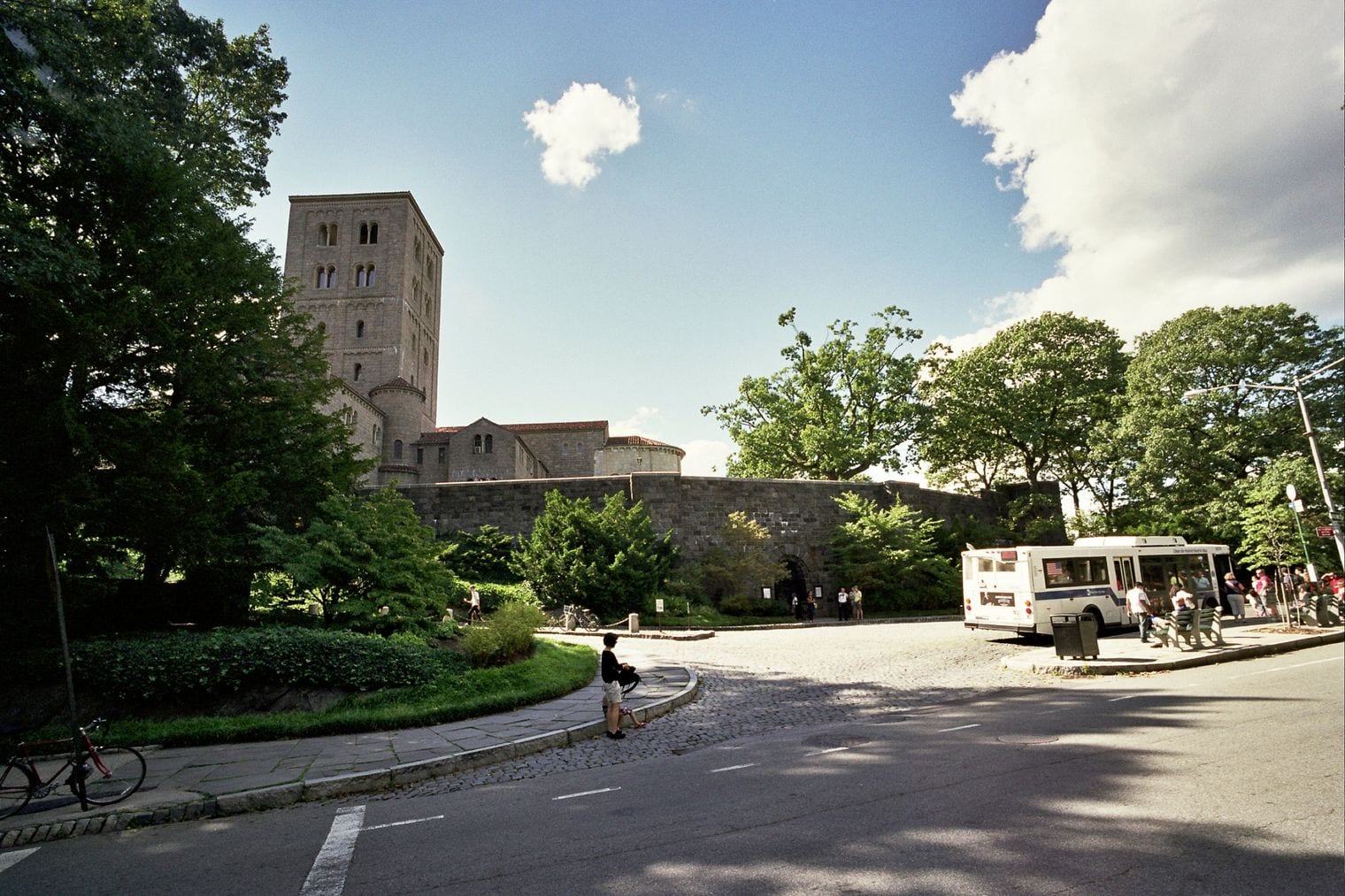
The Met Cloisters, the Metropolitan Museum of Art's branch for medieval Europe, sits high in Fort Tryon Park at the northern end of Manhattan, a separate building far uptown from the main museum. Opened in 1938, it is built around four cloisters acquired in France, so Romanesque and Gothic art is shown in rooms that feel like a monastery.
Do not miss the Unicorn Tapestries, woven around 1500, and the medieval gardens in the cloistered courtyards. The park's terraces look across the Hudson River to the Palisades, which makes the long subway ride feel like an escape from the city.
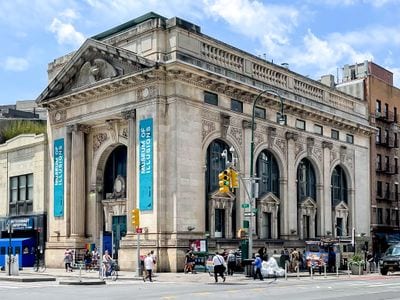
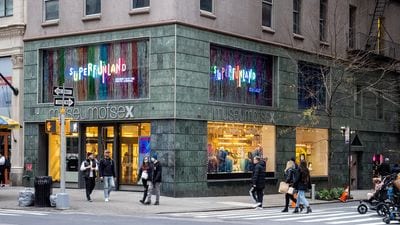
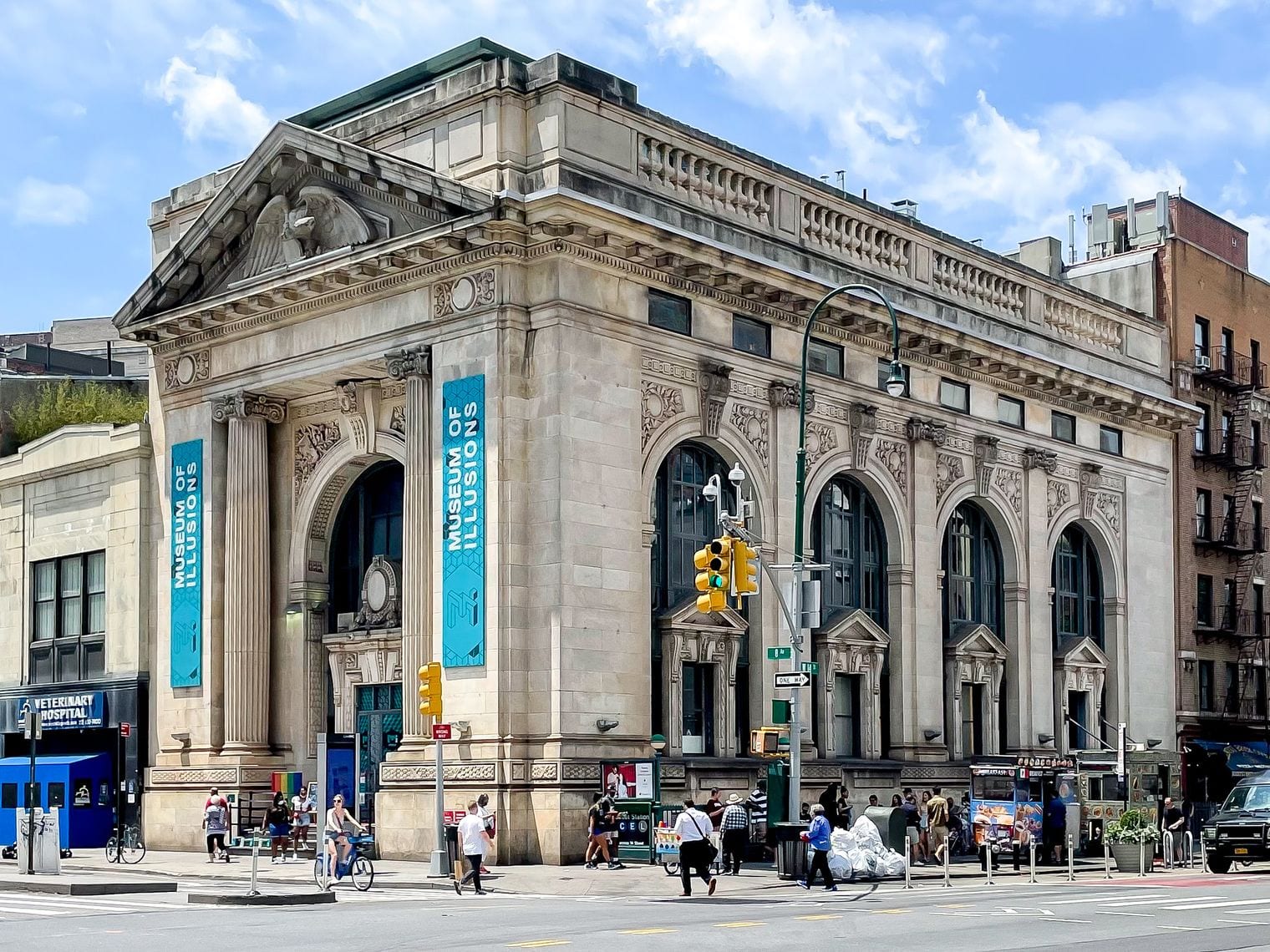
Museum of Illusions is a hands-on stop at the corner of Eighth Avenue and West 14th Street, where more than 60 exhibits play tricks on perception, the brain and the camera. It belongs to a chain that began in Zagreb, Croatia, in 2015.
A visit takes under an hour and is made for photos, which makes it a good pick with children or on a rainy day. Afterward, the Meatpacking District, Chelsea Market and the High Line are a few blocks west.
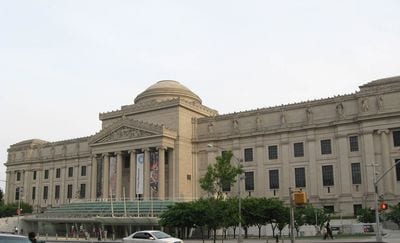
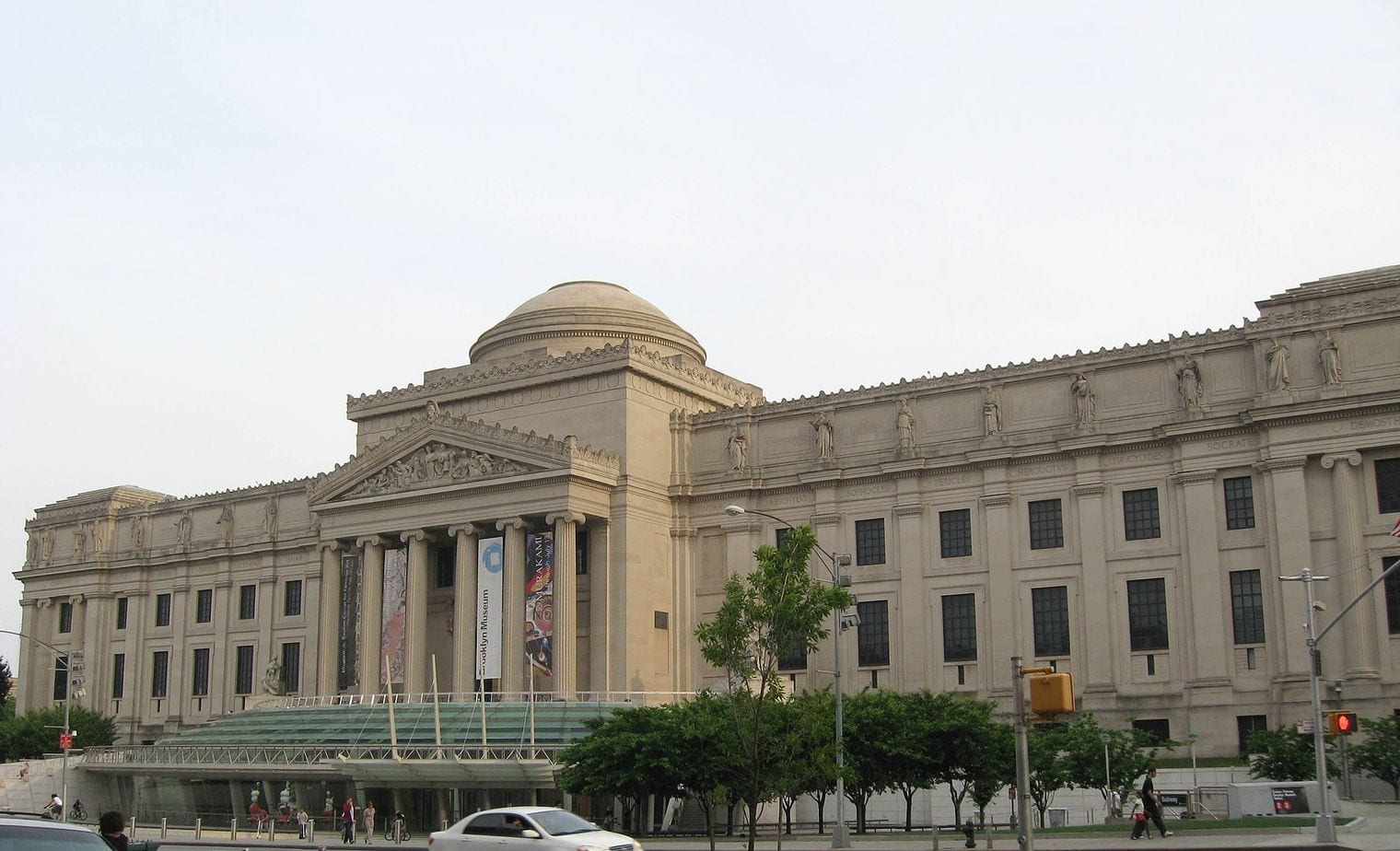
The Brooklyn Museum is New York City's second-largest museum by area, housed in a Beaux-Arts building by McKim, Mead & White that dates to 1897 on Eastern Parkway, next to the Brooklyn Botanic Garden and Prospect Park.
Its collection of around 500,000 objects is especially strong in Egyptian antiquities spanning more than 3,000 years, and it is home to Judy Chicago's landmark feminist installation The Dinner Party. Changing exhibitions often spotlight fashion, photography and artists from Brooklyn's own communities.
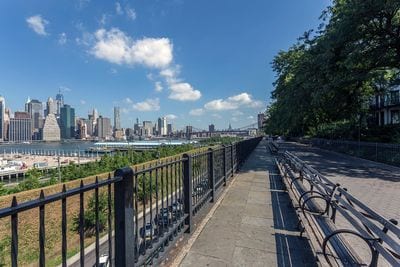
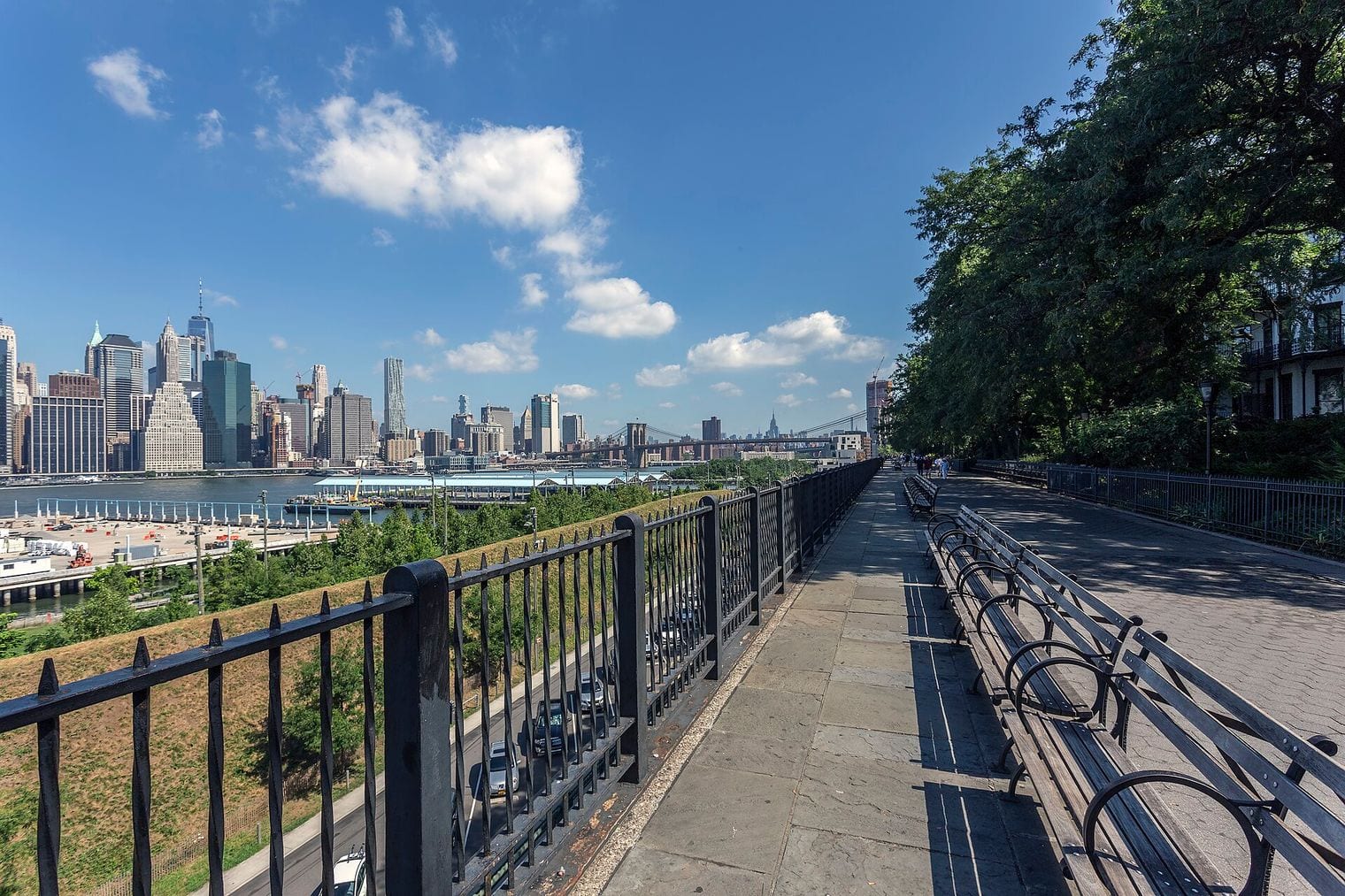
The Brooklyn Heights Promenade is a 1,826-foot walkway cantilevered over the Brooklyn-Queens Expressway along the bluff of Brooklyn Heights, and its panorama of the Lower Manhattan skyline, New York Harbor and the Brooklyn Bridge is one of the city's classic views.
Come for the view and stay for the neighborhood: Brooklyn Heights became New York's first designated historic district in 1965, and its quiet streets of brownstones and 19th-century row houses make a lovely walk. Paths lead down to Brooklyn Bridge Park on the waterfront below.
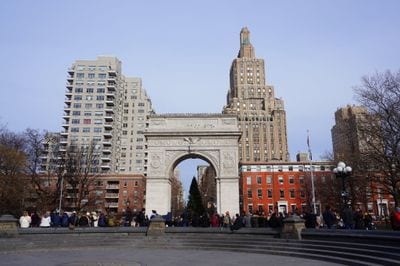
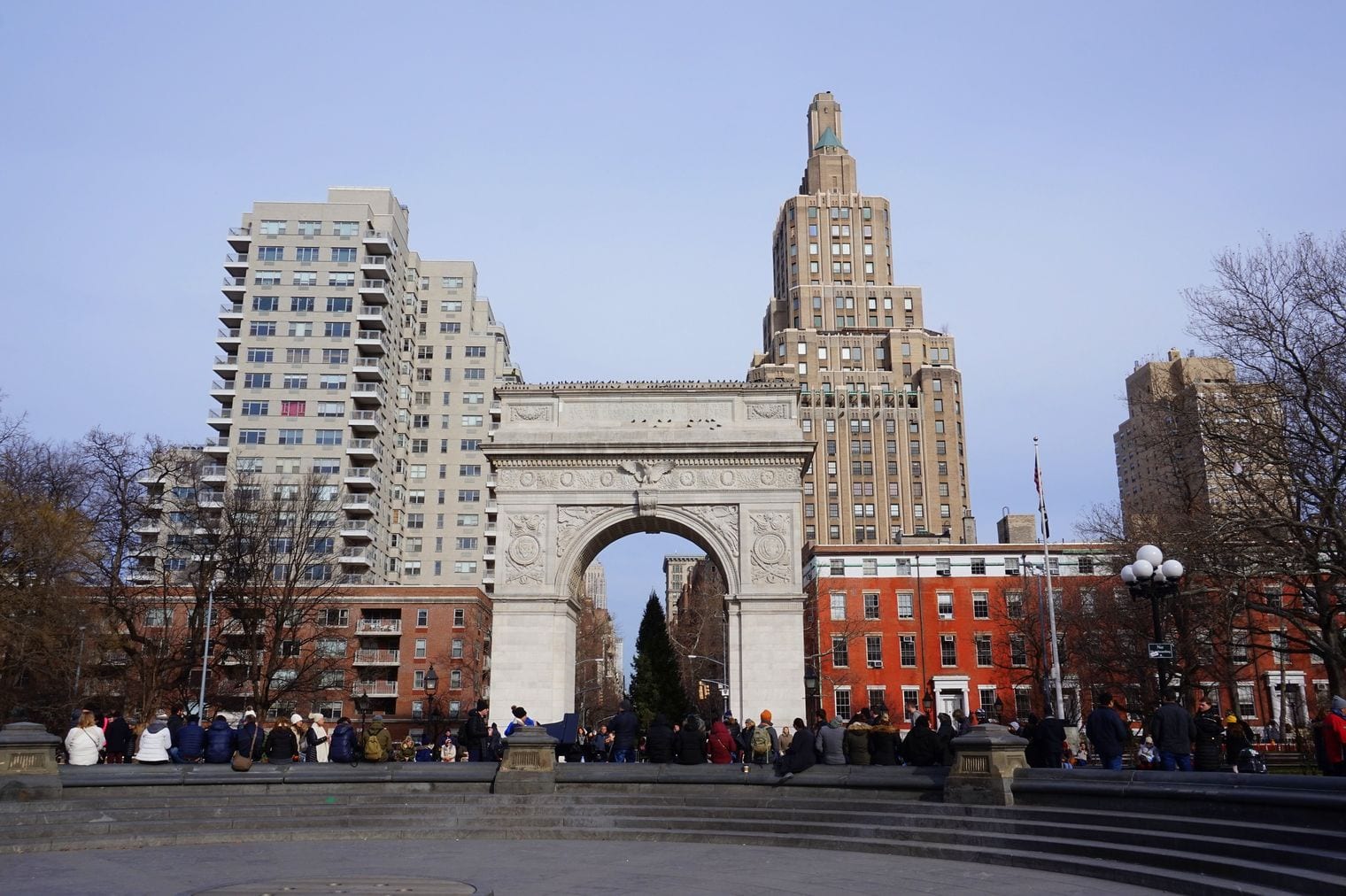
Washington Square Park is the heart of Greenwich Village, framed by the white marble Washington Square Arch, designed by Stanford White to mark the centennial of George Washington's inauguration and standing at the foot of Fifth Avenue.
The fountain plaza in the middle is one of the city's best stages for street musicians, chess players, students from New York University, which surrounds the square, and people-watchers of every stripe. Once a potter's field, the park has long had a tradition of celebrating nonconformity.
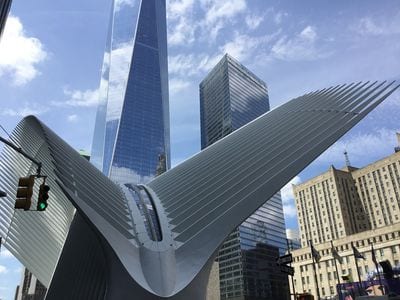
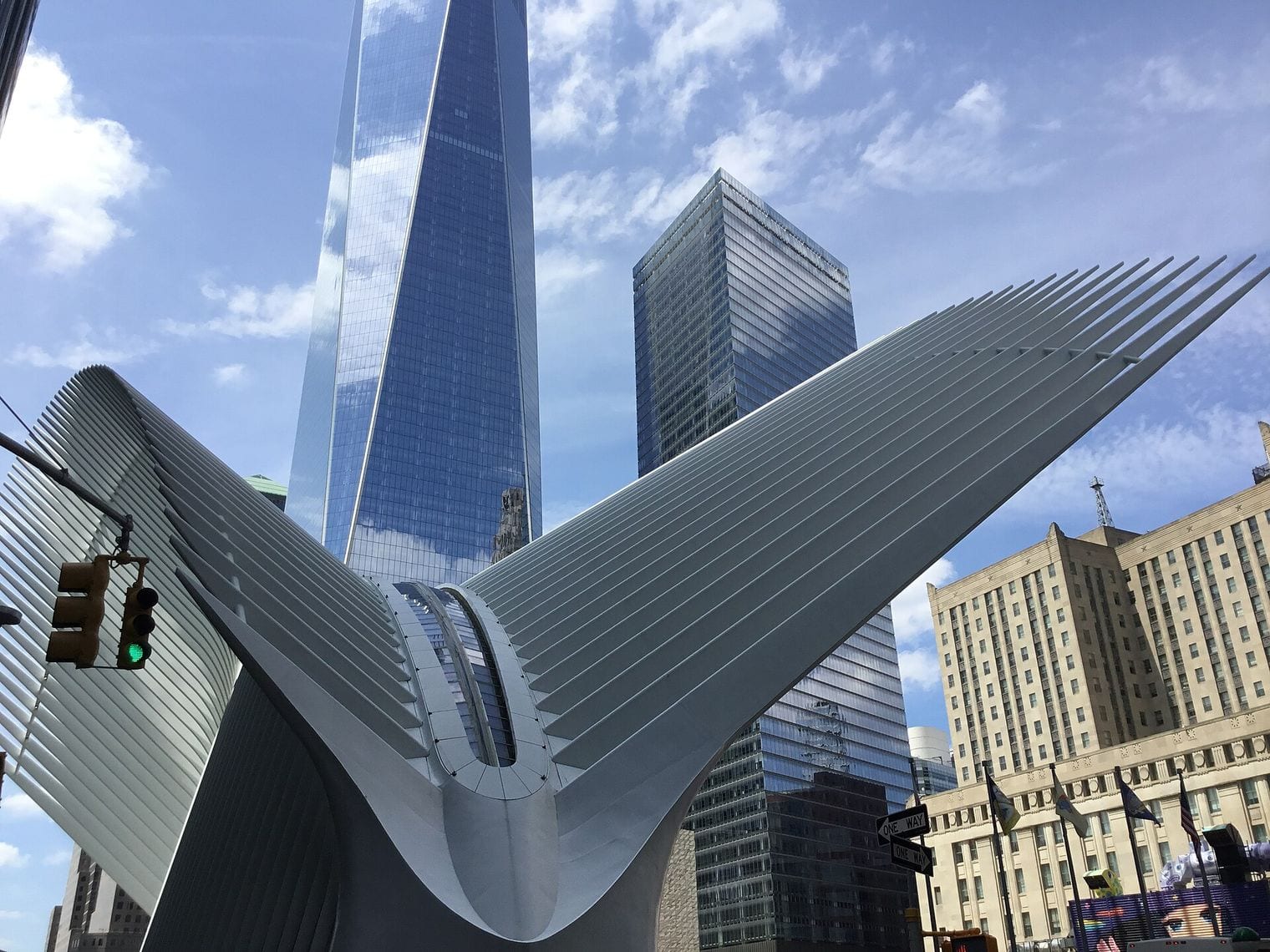
The Oculus is the soaring white station house of the World Trade Center Transportation Hub, designed by Spanish architect Santiago Calatrava and opened in 2016, its interlocking steel ribs rising like wings above a bright, marble-floored hall.
Inside, it links PATH trains to New Jersey with the subway and a shopping center, but most visitors come simply to stand in the vast hall and look up. It is the transit hall of the World Trade Center campus, steps from the 9/11 Memorial pools and One World Observatory, and an underground passage leads west to Brookfield Place.
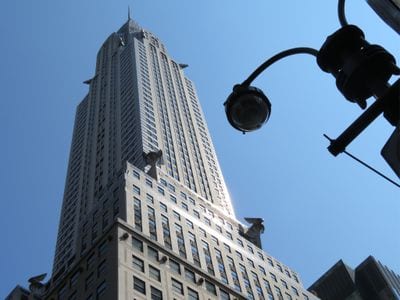
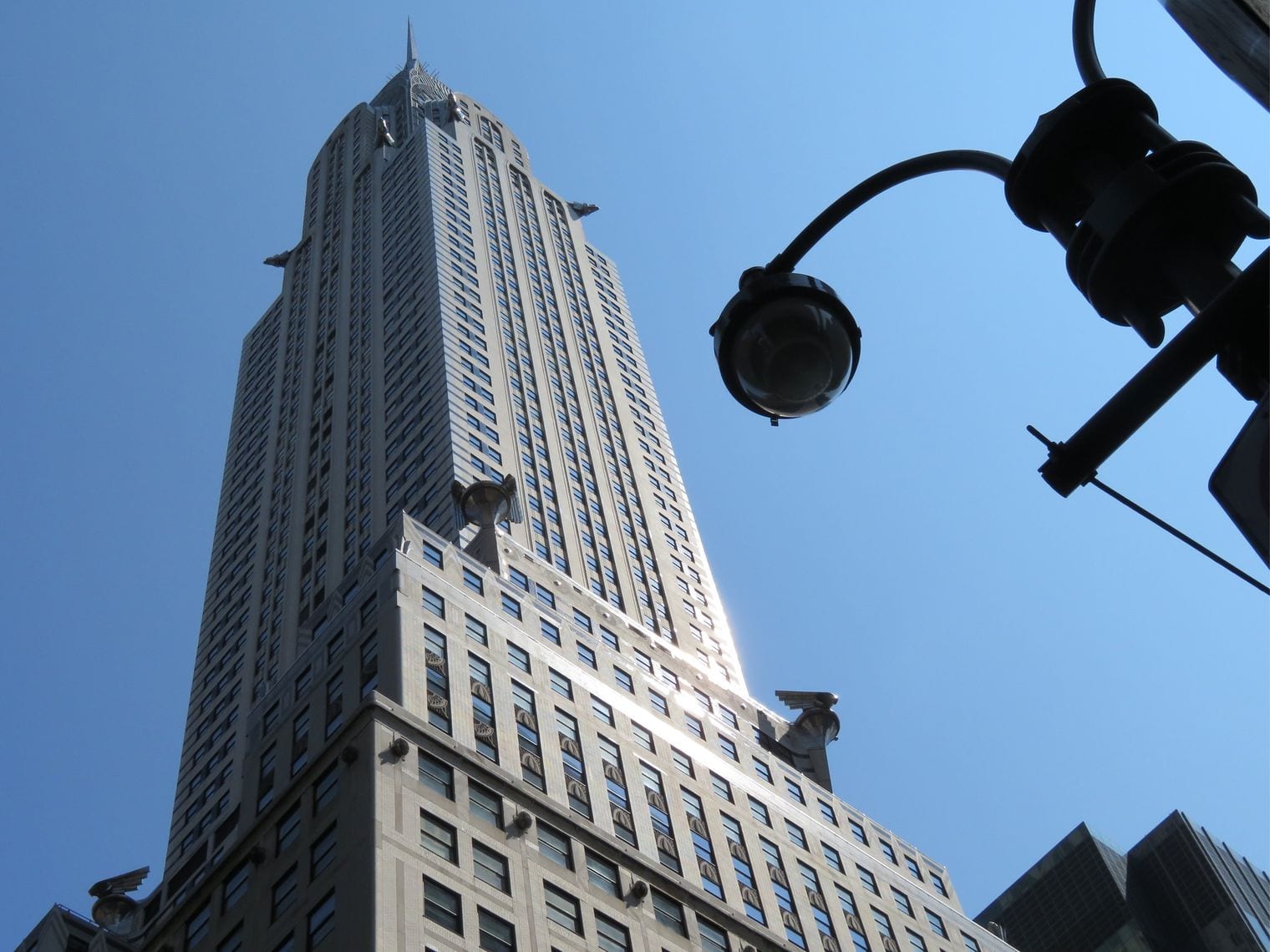
The Chrysler Building, at 42nd Street and Lexington Avenue, is widely regarded as a paragon of Art Deco design. Completed in 1930, it was the world's first supertall skyscraper and the world's tallest building for 11 months, until the Empire State Building overtook it, and it is still the tallest steel-framed brick building in the world.
Look up for its stainless-steel crown of stacked sunbursts and the eagle gargoyles on the corners. There is no observation deck, but visitors can usually step into the lobby during office hours to see its red marble, chrome and Edward Trumbull's ceiling mural.
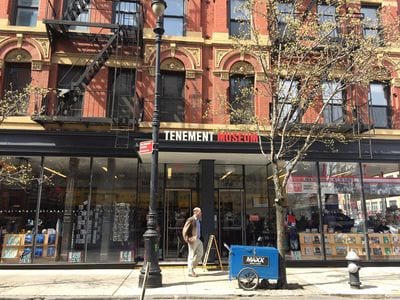
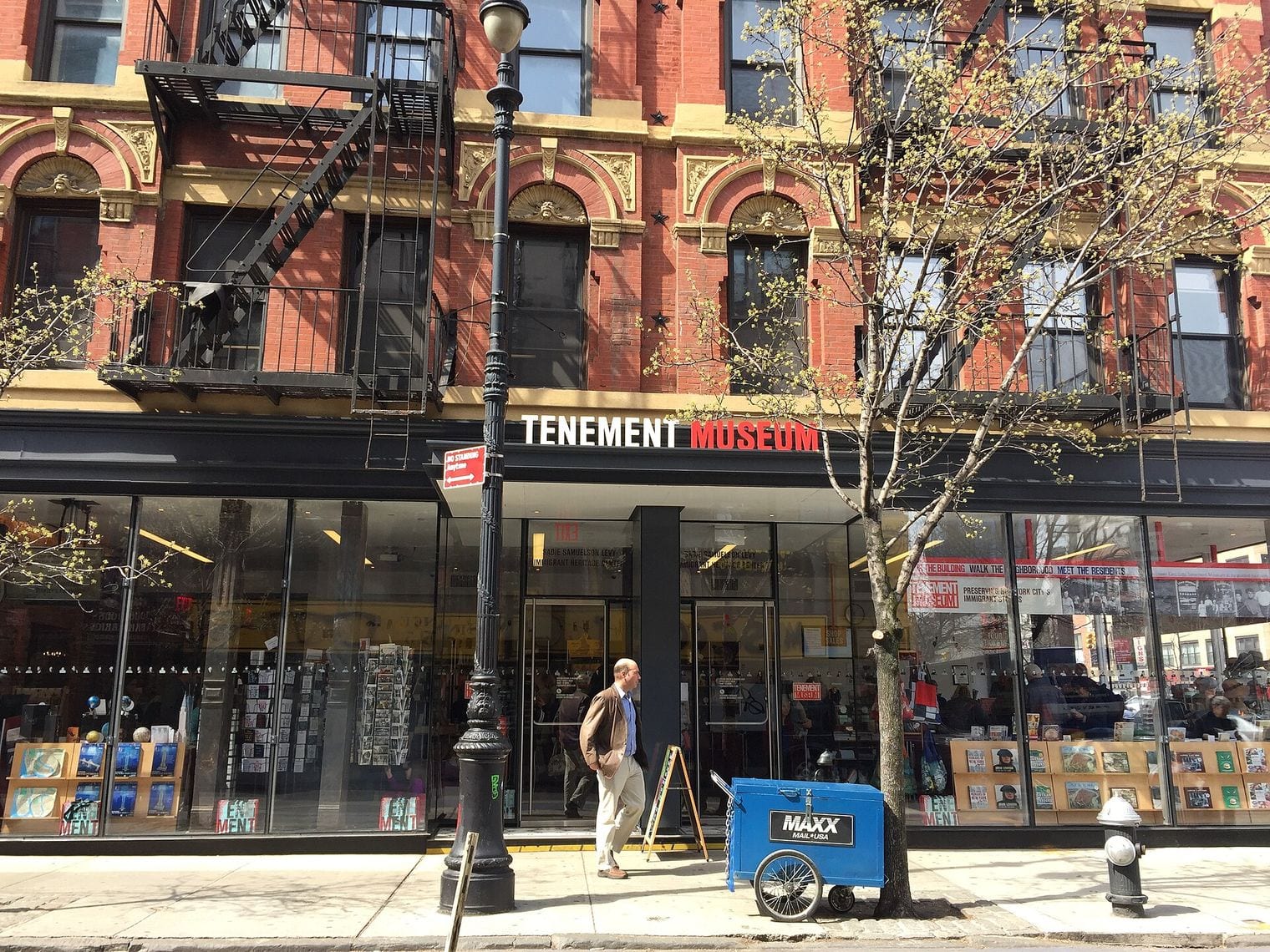
The Tenement Museum brings the Lower East Side's immigrant history to life inside two real tenement buildings at 97 and 103 Orchard Street, home over the years to an estimated 15,000 people from more than 20 nations.
The restored apartments and shops are seen on guided tours, each built around the documented story of a family who lived there, and other tours walk the surrounding neighborhood or pair history with food tastings. Groups are small, so book ahead, and leave time to explore the Lower East Side afterward.
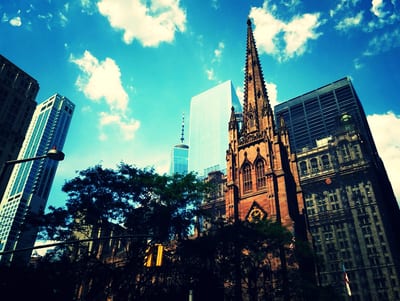
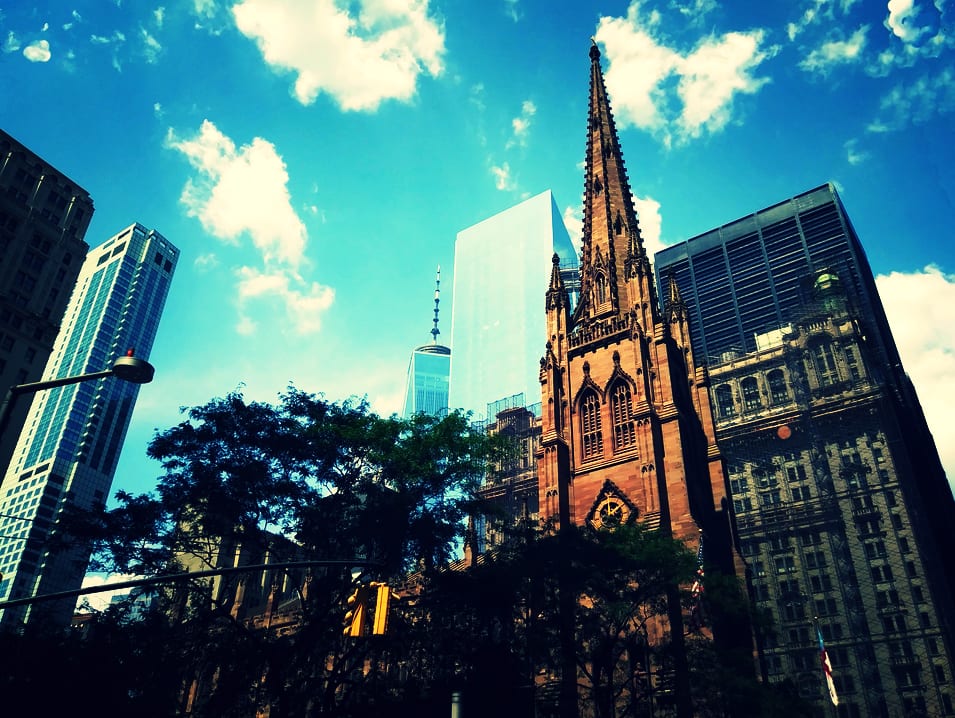
Trinity Church stands on Broadway at the head of Wall Street, a Gothic Revival church designed by Richard Upjohn and completed in 1846, the third building for its parish. When it was finished, its spire made it the tallest building in the United States until 1869.
Its churchyard, a patch of weathered headstones amid the Financial District's towers, holds the grave of Alexander Hamilton. Step inside for the stained glass and the calm, then walk down Wall Street toward the New York Stock Exchange and Charging Bull.
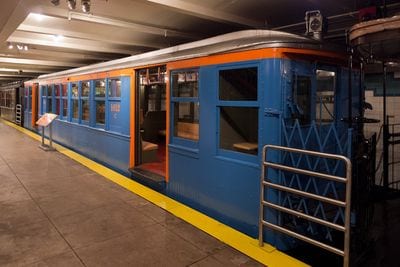
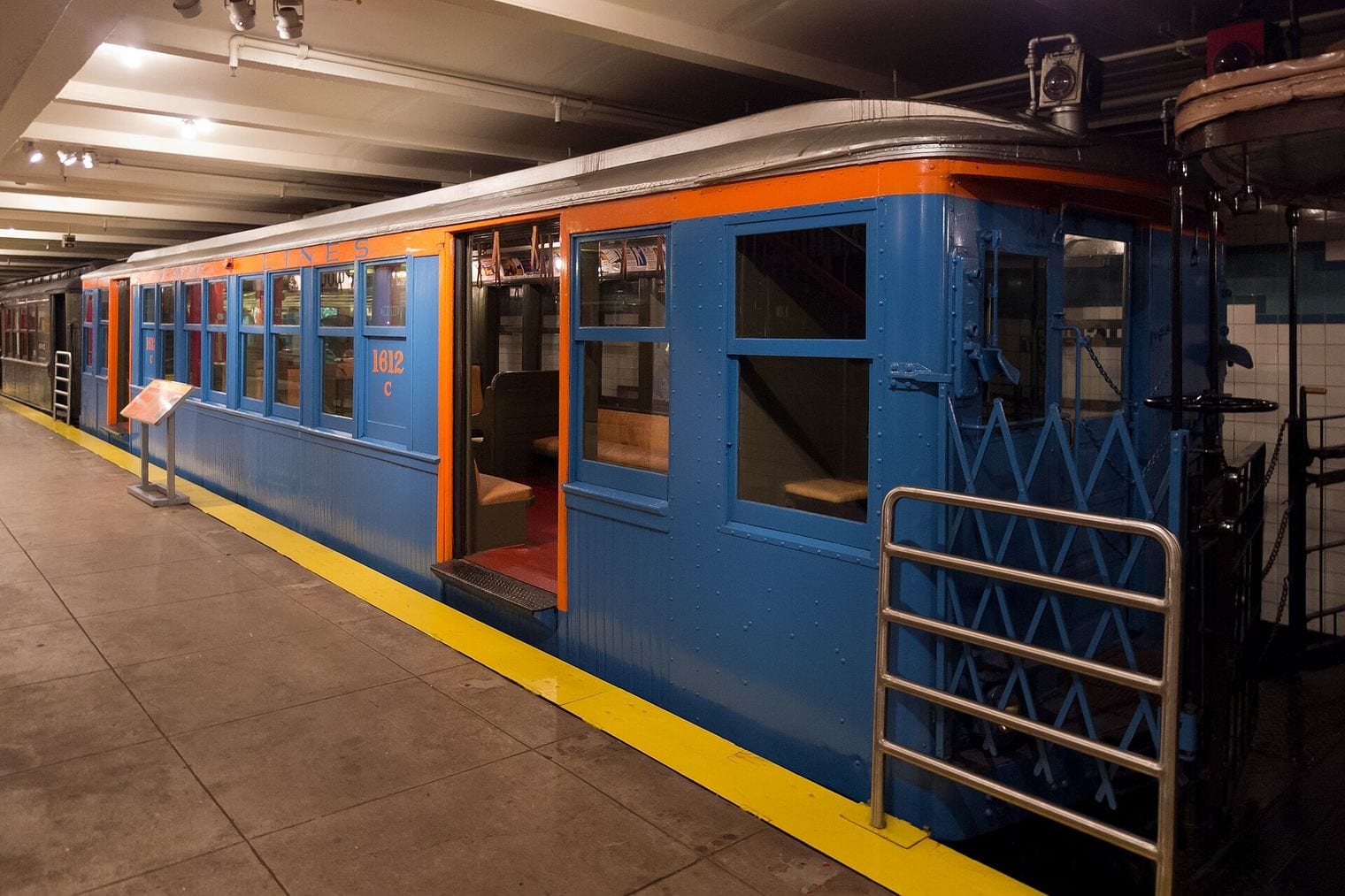
The New York Transit Museum fills a real decommissioned subway station, Court Street in Downtown Brooklyn, which opened in 1936, and its lower level is a platform lined with vintage subway cars you can walk through, complete with old advertisements and signage.
Upstairs, exhibits cover buses, bridges, tunnels and the engineering that built the system, with models and dioramas along the way. It is a favorite with children and transit buffs, and a smaller gallery annex in Grand Central Terminal runs changing shows.
Greenwich Village, the low-rise web of tree-lined streets in Lower Manhattan, was the city's bohemian capital in the 20th century: an artists' haven, the East Coast birthplace of the Beat Generation and the 1960s counterculture, and the cradle of the modern LGBTQ movement.
Its crooked streets predate the Manhattan grid, so wander rather than navigate: Bleecker and MacDougal Streets for cafes and music, the West Village's brownstone blocks, and the jazz and comedy clubs that keep the nights lively. Washington Square Park and the Stonewall National Monument both lie within it.
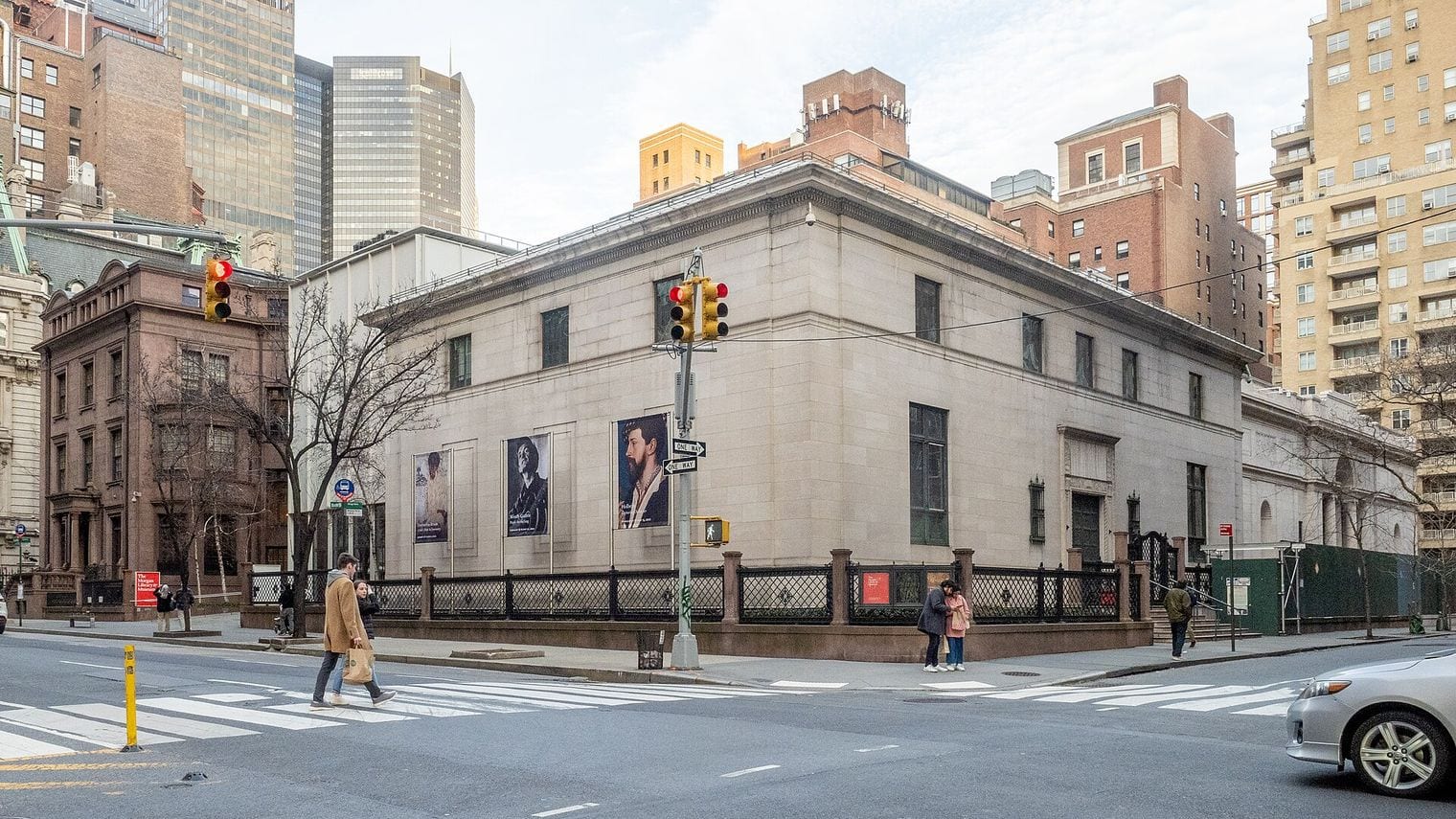
The Morgan Library & Museum began as the private library of financier J. Pierpont Morgan, built between 1902 and 1906 on Madison Avenue in Murray Hill, and its original library and study are among the most lavish rooms in the city.
The collection includes three Gutenberg Bibles, medieval manuscripts, drawings and literary and musical manuscripts, shown in changing exhibitions, and a glass entrance building by Renzo Piano ties the historic buildings together. It is a short walk from the Empire State Building and Grand Central.
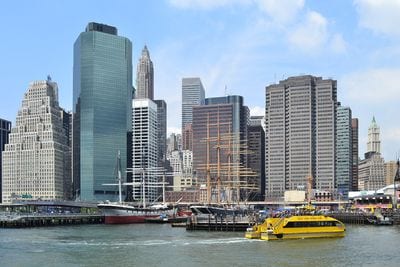
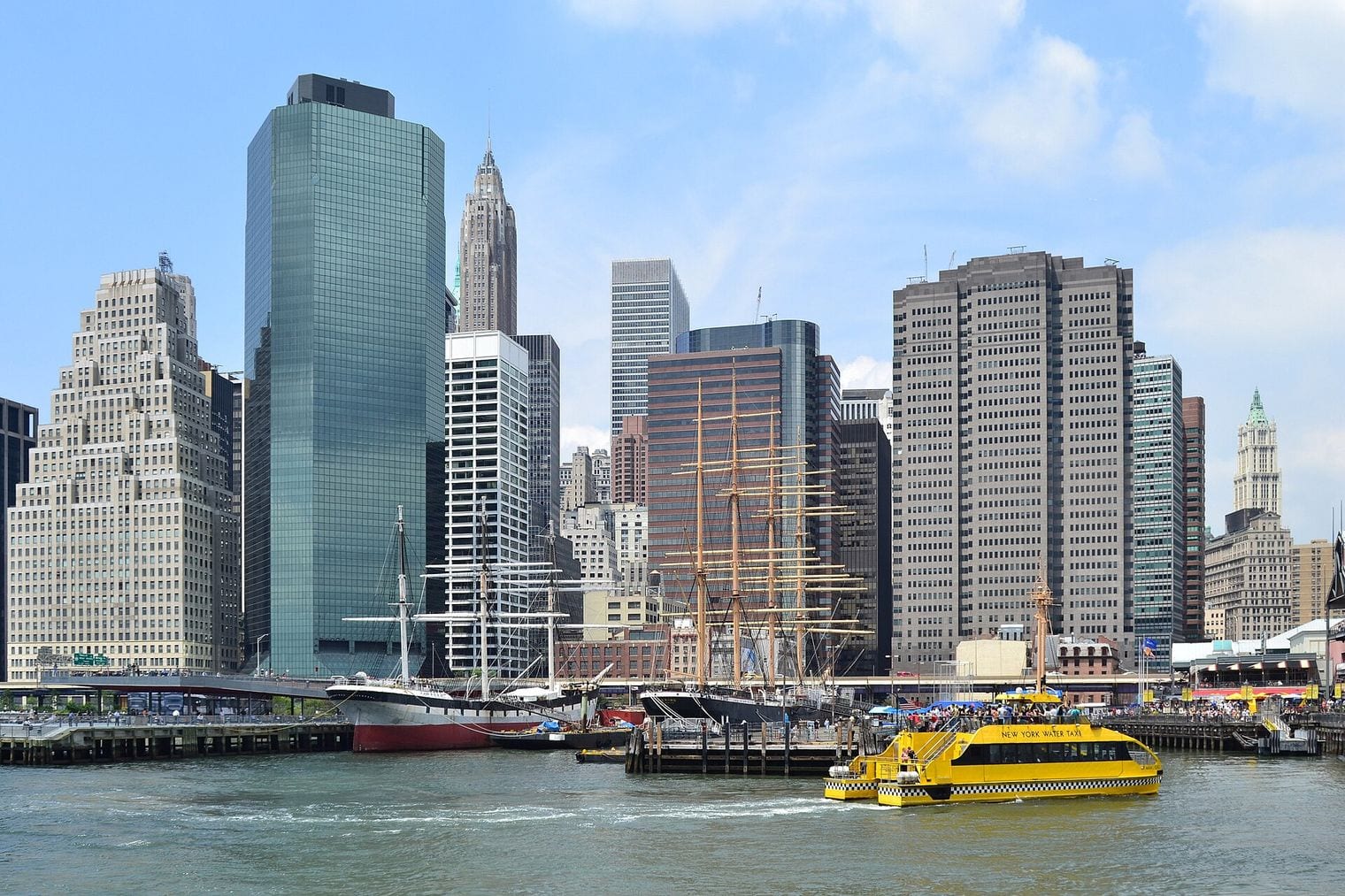
South Street Seaport is the historic heart of the old port of New York, a designated historic district of cobblestone streets and early 19th-century mercantile buildings on the East River just south of the Brooklyn Bridge.
Restored sailing ships tie up at the piers of the South Street Seaport Museum, the old market buildings of the former Fulton Fish Market now hold shops and places to eat, and Pier 17's rooftop, a summer concert venue, looks straight up the river to the Brooklyn Bridge.
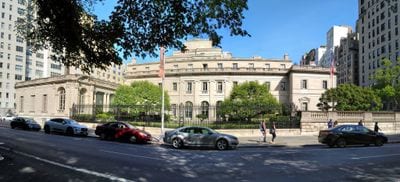
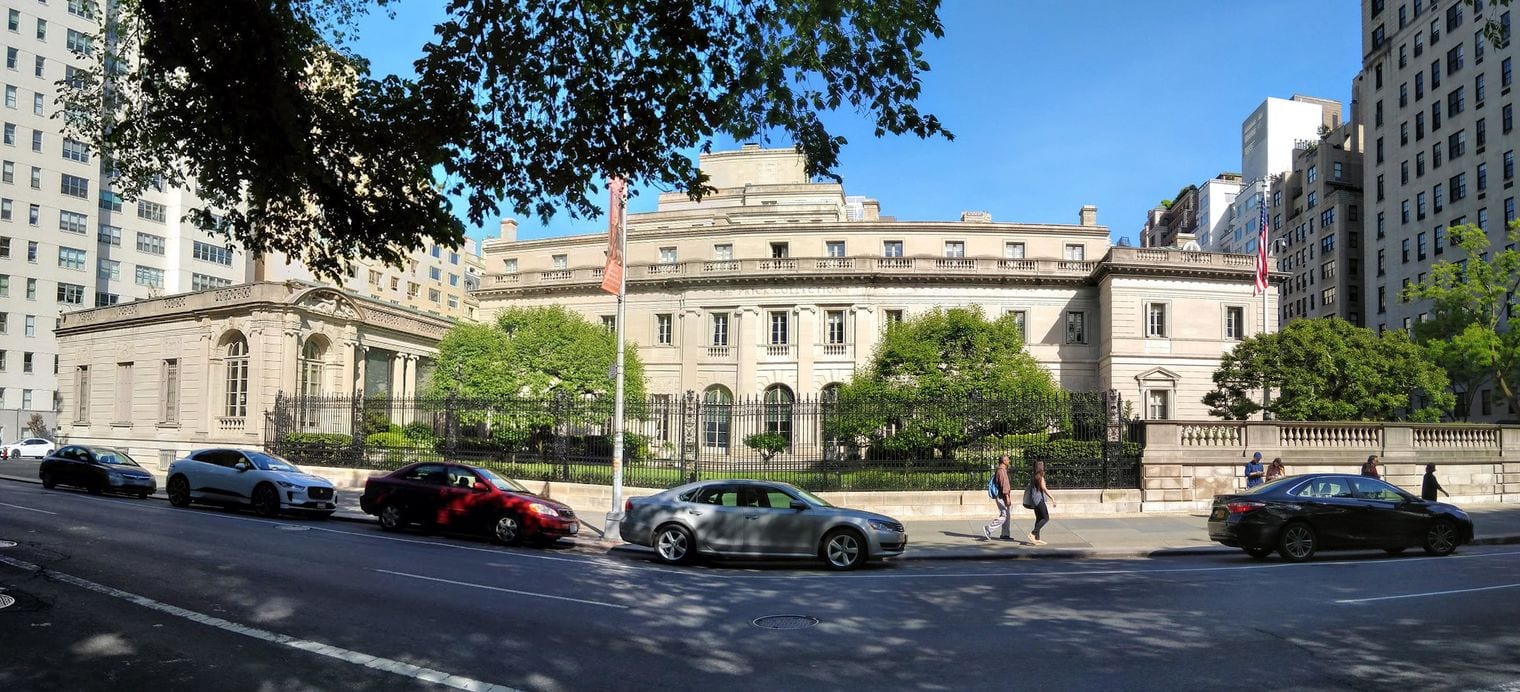
The Frick Collection shows the art amassed by industrialist Henry Clay Frick inside his own Beaux-Arts mansion on Fifth Avenue at 70th Street, opened as a museum in 1935. Masterpieces by Vermeer, Rembrandt, Holbein, Titian, Velázquez, Goya and Fragonard hang in rooms that still feel like a Gilded Age home.
The museum reopened in April 2025 after a renovation and expansion by Selldorf Architects, and the house remains one of the most intimate places in the city to see Old Masters. Its art research library, founded by Frick's daughter Helen, is part of the same institution.
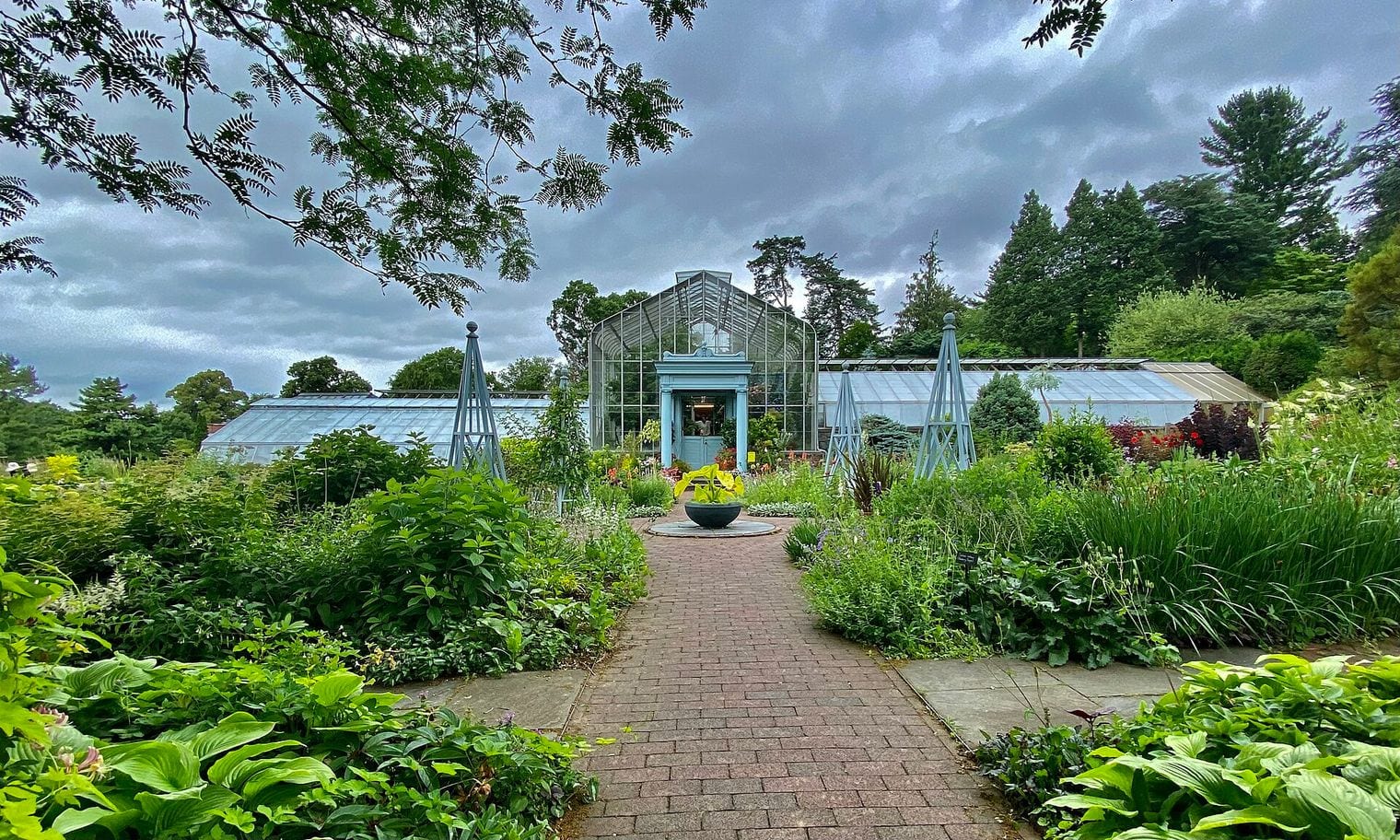
Wave Hill is a 28-acre public garden and cultural center on the slopes of Riverdale in the Bronx, looking across the Hudson River to the cliffs of the New Jersey Palisades.
The estate's past residents include Mark Twain, who leased it in the early 1900s, a young Theodore Roosevelt, whose family summered there, and the conductor Arturo Toscanini. Today its flower gardens, woodland, greenhouses and galleries make it one of the quietest corners of the city, well worth the trip to the city's northern edge.
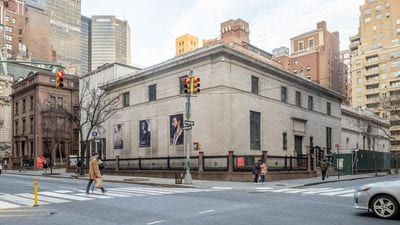
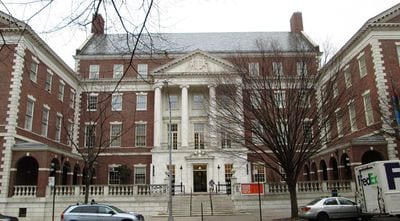
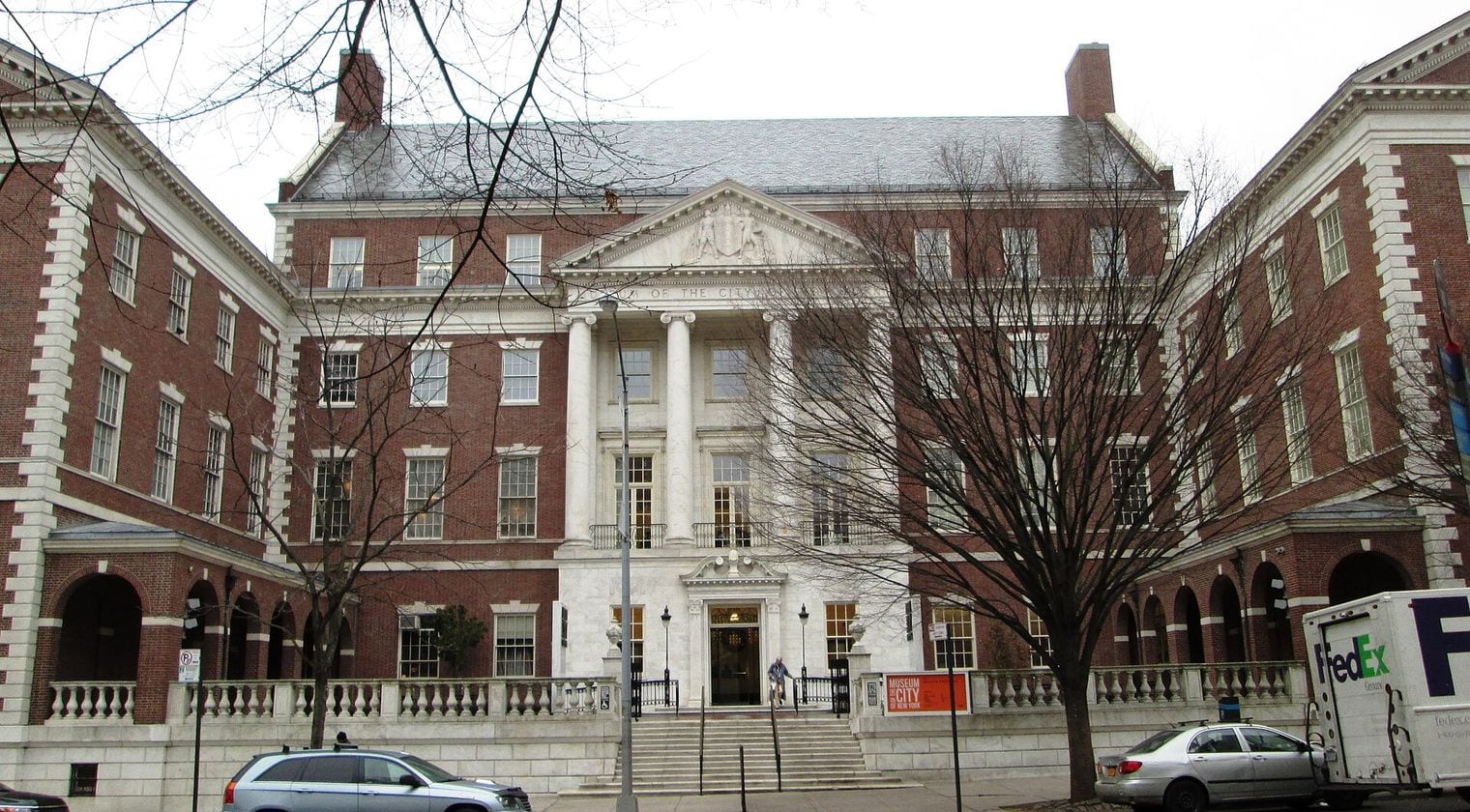
The Museum of the City of New York, founded in 1923 to preserve and present the history of the city and its people, stands on Fifth Avenue between 103rd and 104th Streets, across from Central Park at the northern end of Museum Mile.
Its exhibitions trace the city's story from Dutch trading post to global capital and explore photography, fashion, activism and neighborhood life. It makes a great primer early in a trip, and a quiet one, away from the crowds farther down Fifth Avenue.
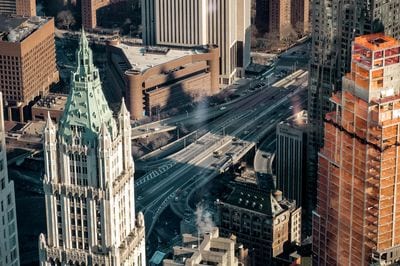
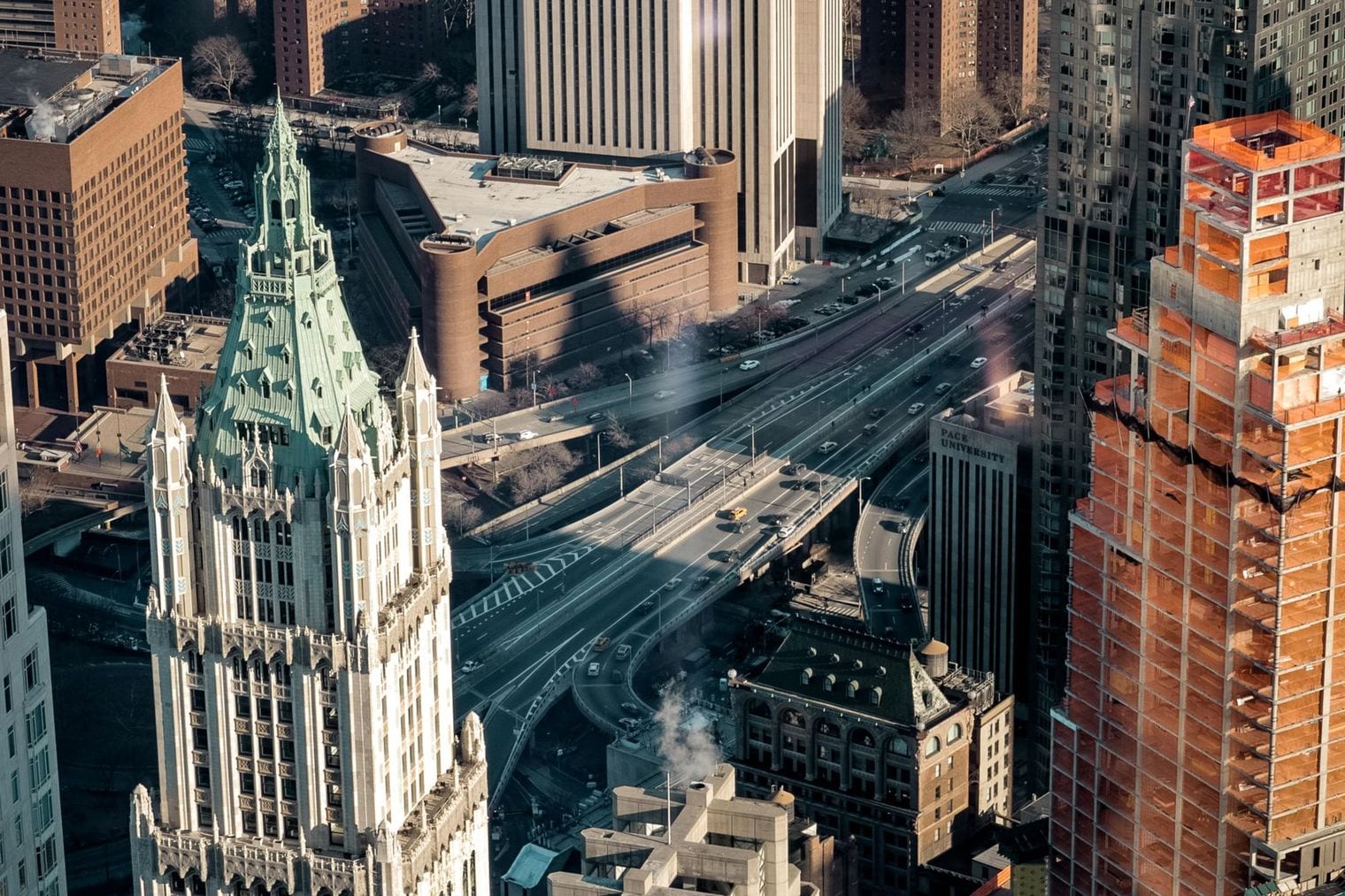
The Woolworth Building on Broadway, opposite City Hall Park, was the tallest building in the world from 1913 to 1929, a Neo-Gothic tower by Cass Gilbert clad in glazed terracotta and nicknamed the Cathedral of Commerce.
Its ornate lobby, with mosaics, sculptures and vaulted ceilings, is open to the public only on guided tours, which are worth booking for the details hidden in the stonework. Otherwise, admire its spires from the street or from City Hall Park on a walk between the Brooklyn Bridge and the World Trade Center.
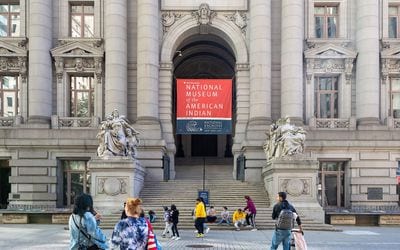
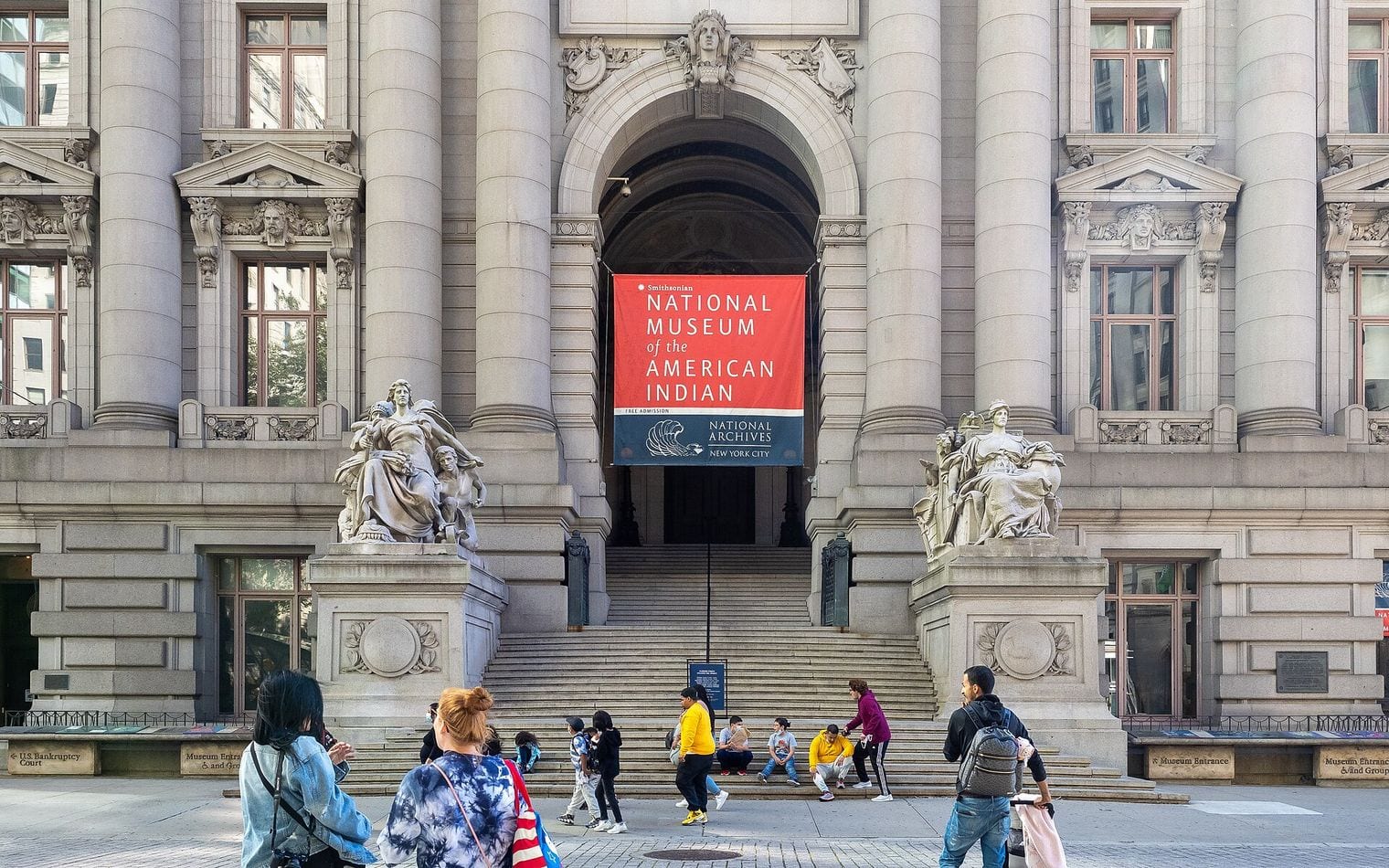
The National Museum of the American Indian in New York, the Smithsonian's George Gustav Heye Center, occupies the Alexander Hamilton U.S. Custom House on Bowling Green, a Beaux-Arts landmark designed by Cass Gilbert and completed in 1907.
Admission is free, and alongside exhibitions of Native art and culture from across the Americas, the building itself is a showpiece; look up in the rotunda at the murals by Reginald Marsh. Charging Bull and The Battery are a minute's walk away.
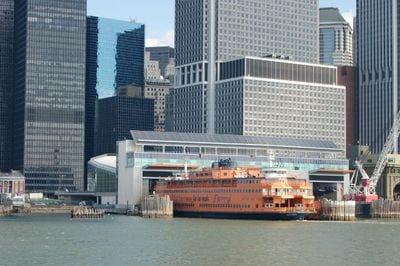
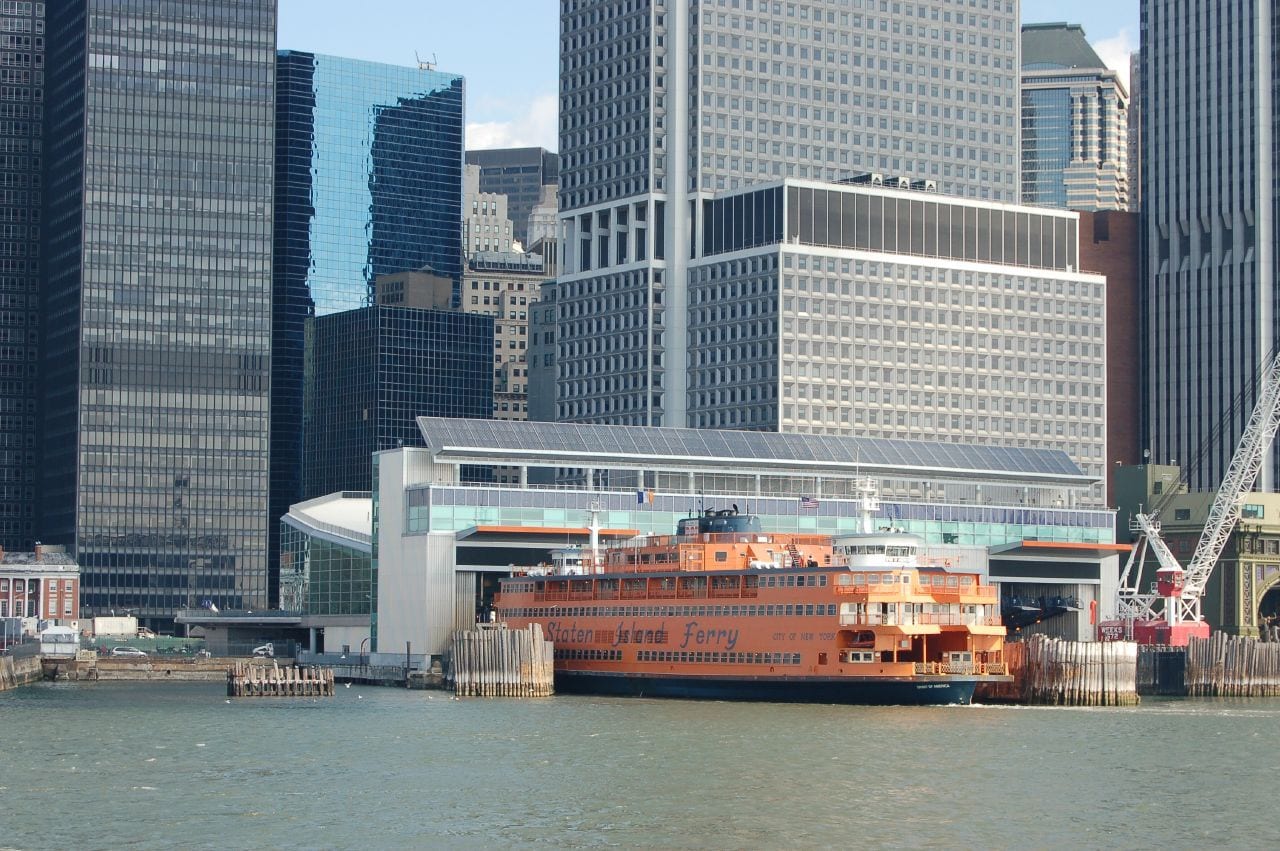
The Staten Island Ferry is one of the best free rides in the city, a commuter ferry that crosses 5.2 miles of New York Harbor between Whitehall Terminal in Lower Manhattan and St. George on Staten Island in about 25 minutes, around the clock and fare-free since 1997.
Stand on the right-hand side heading out for a passing view of the Statue of Liberty, then watch the Lower Manhattan skyline grow on the way back. It does not stop at Liberty Island, so it is a view rather than a visit; to land there, take the official ferry from The Battery.
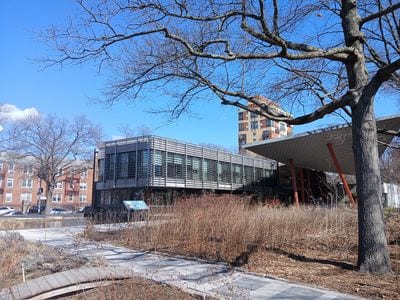
Queens Botanical Garden began as an exhibit at the 1939 New York World's Fair and moved to its 39-acre site on Main Street in Flushing in 1963, ahead of the 1964 fair.
Its rose, bee, herb and perennial gardens, an arboretum and a LEED-certified visitor building make it a peaceful, lower-key alternative to the city's bigger gardens. Flushing's busy dining streets are a short walk away, and Flushing Meadows Corona Park lies just to the west.
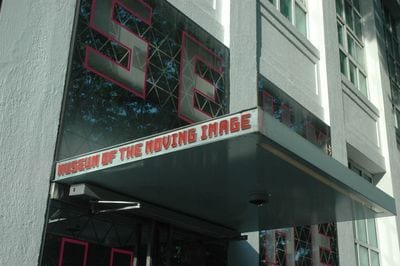
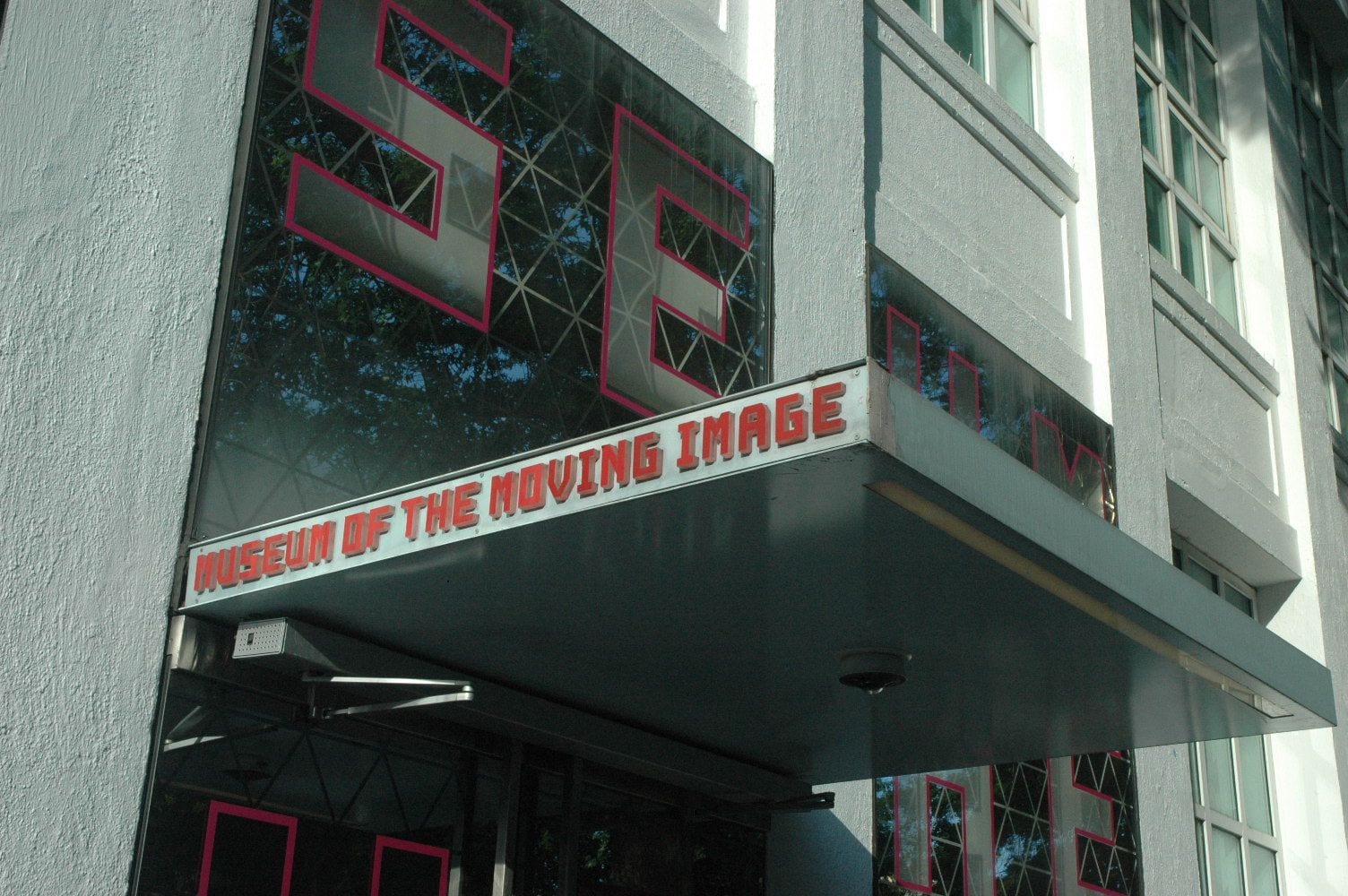
The Museum of the Moving Image in Astoria, Queens, is devoted to film, television and digital media, and it occupies a former building of the historic Astoria Studios, now Kaufman Astoria Studios.
Its long-running core exhibition, Behind the Screen, shows how moving images are made, from cameras to editing and sound, and the Jim Henson Exhibition, a permanent show since 2017, celebrates the creator of the Muppets with puppets, sketches and film clips. The museum also screens films in its own theaters.
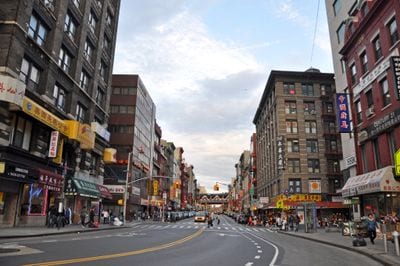
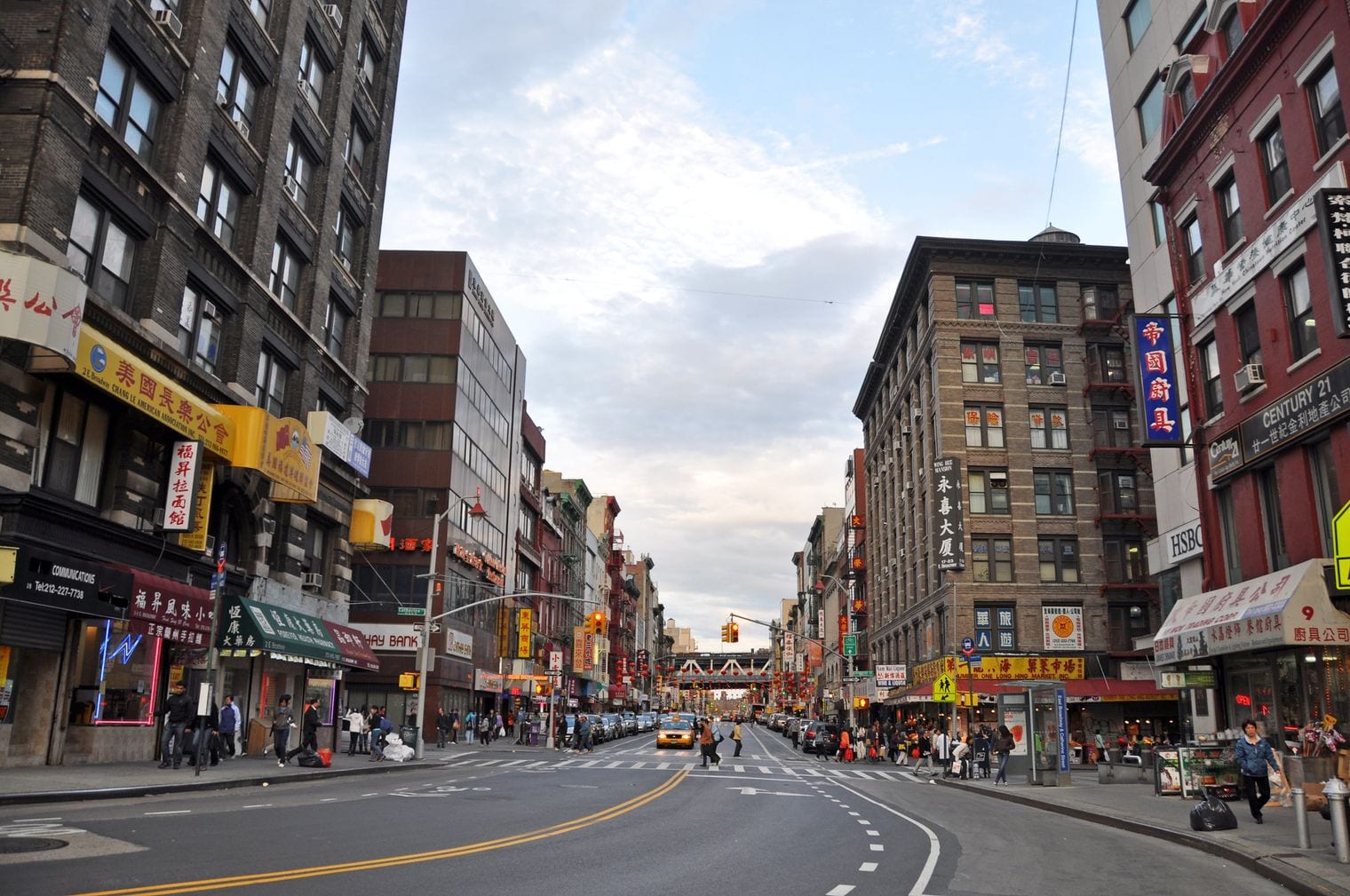
Chinatown in Lower Manhattan is home to the highest concentration of Chinese people in the Western Hemisphere, a dense, lively grid around Mott, Pell, Canal and Mulberry Streets packed with bakeries, grocers, herbalists and dumpling counters.
Come hungry for dumplings, roast meats, noodles and dim sum, and stop in Columbus Park to watch card and mahjong games. Just to the north, the remaining blocks of Little Italy along Mulberry Street keep their red-white-and-green trim and host the Feast of San Gennaro each September.
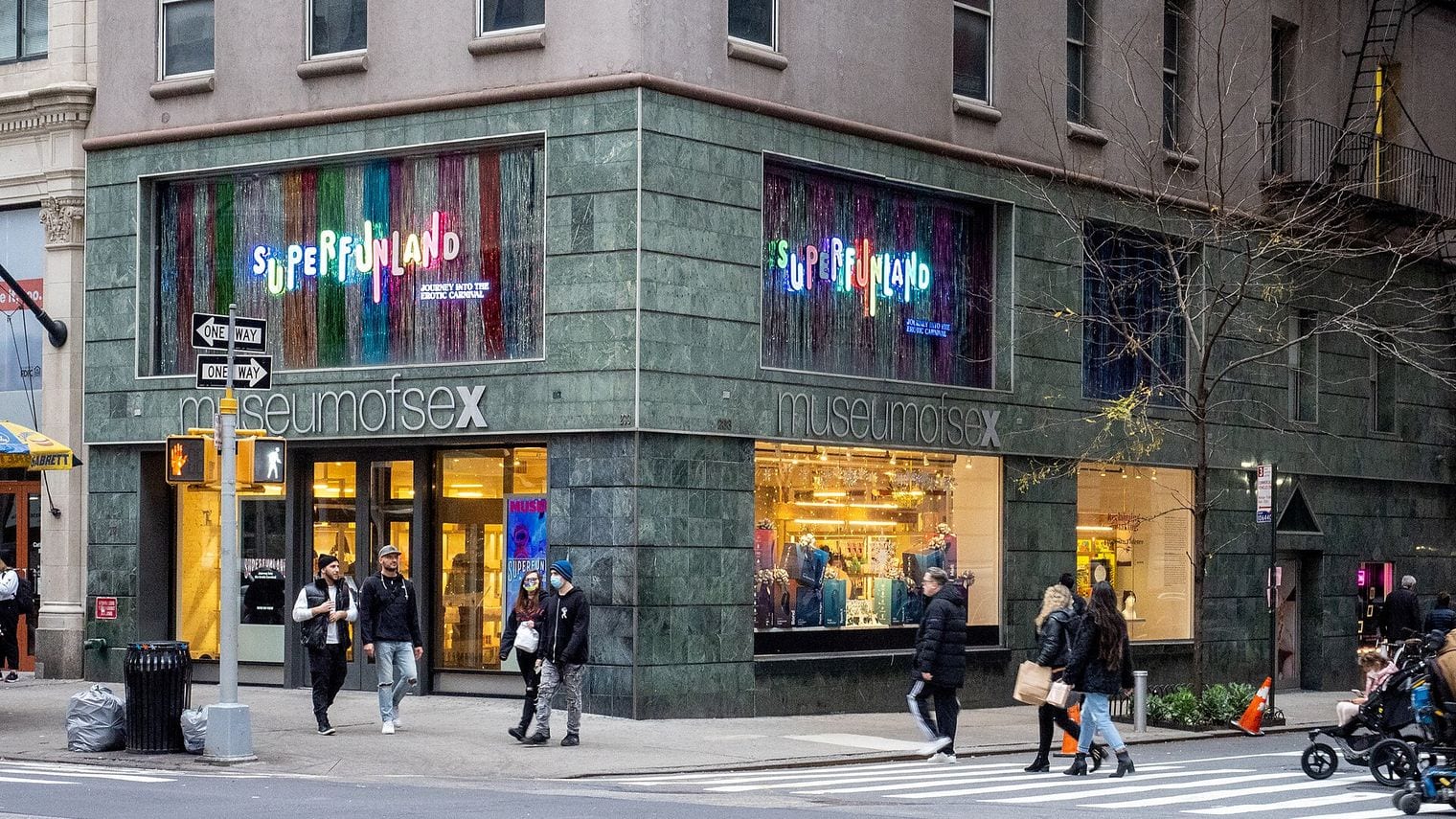
The Museum of Sex, opened in 2002 on Fifth Avenue at 27th Street in NoMad, explores the history and culture of human sexuality through art, artifacts and interactive installations, and it is strictly for adults, with visitors required to be at least 18.
Exhibitions change regularly and range from serious history to playful, immersive rooms, which makes it a witty, grown-up detour between the Flatiron Building and the Empire State Building.
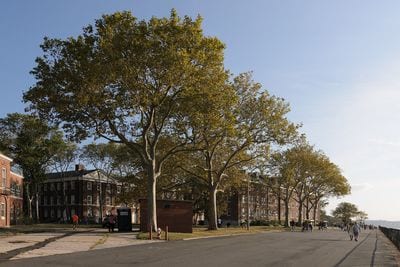
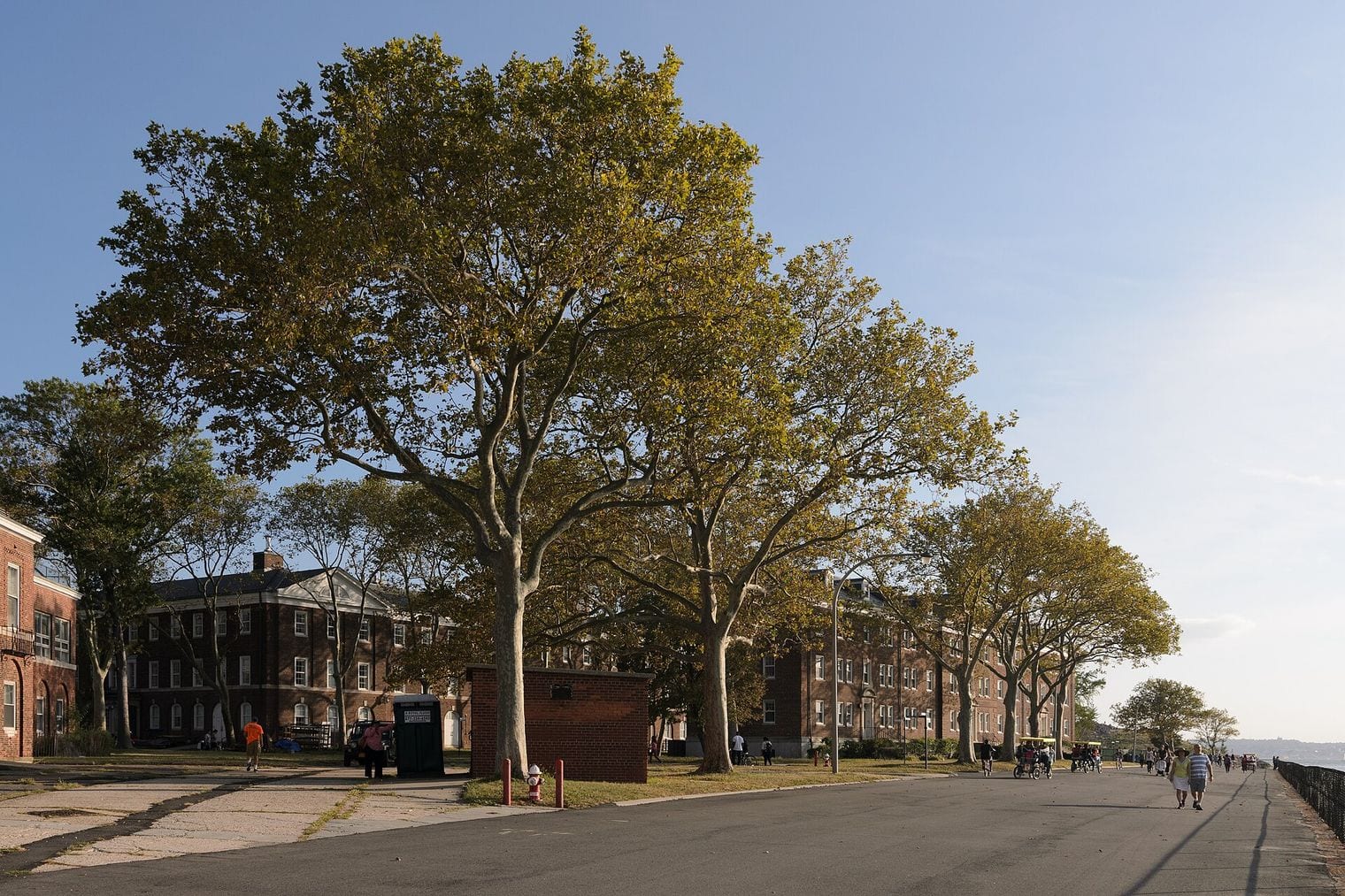
Governors Island is a 172-acre island in New York Harbor, a short ferry ride from Lower Manhattan and Brooklyn, that served as a military post from 1755 until the Coast Guard left in 1996 and is now one of the city's favorite escapes.
Bike or stroll past the old officers' houses to star-shaped Fort Jay and round Castle Williams, both part of Governors Island National Monument, then climb The Hills, artificial hills opened in 2016 with close-up views of the Statue of Liberty and the skyline. Ferry service is most frequent in summer, when the lawns, hammocks and art installations are in full swing.
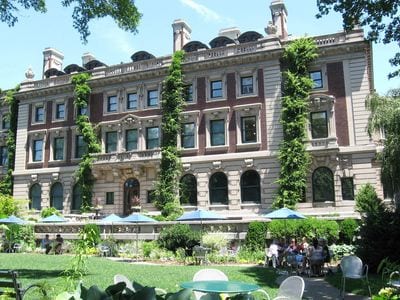
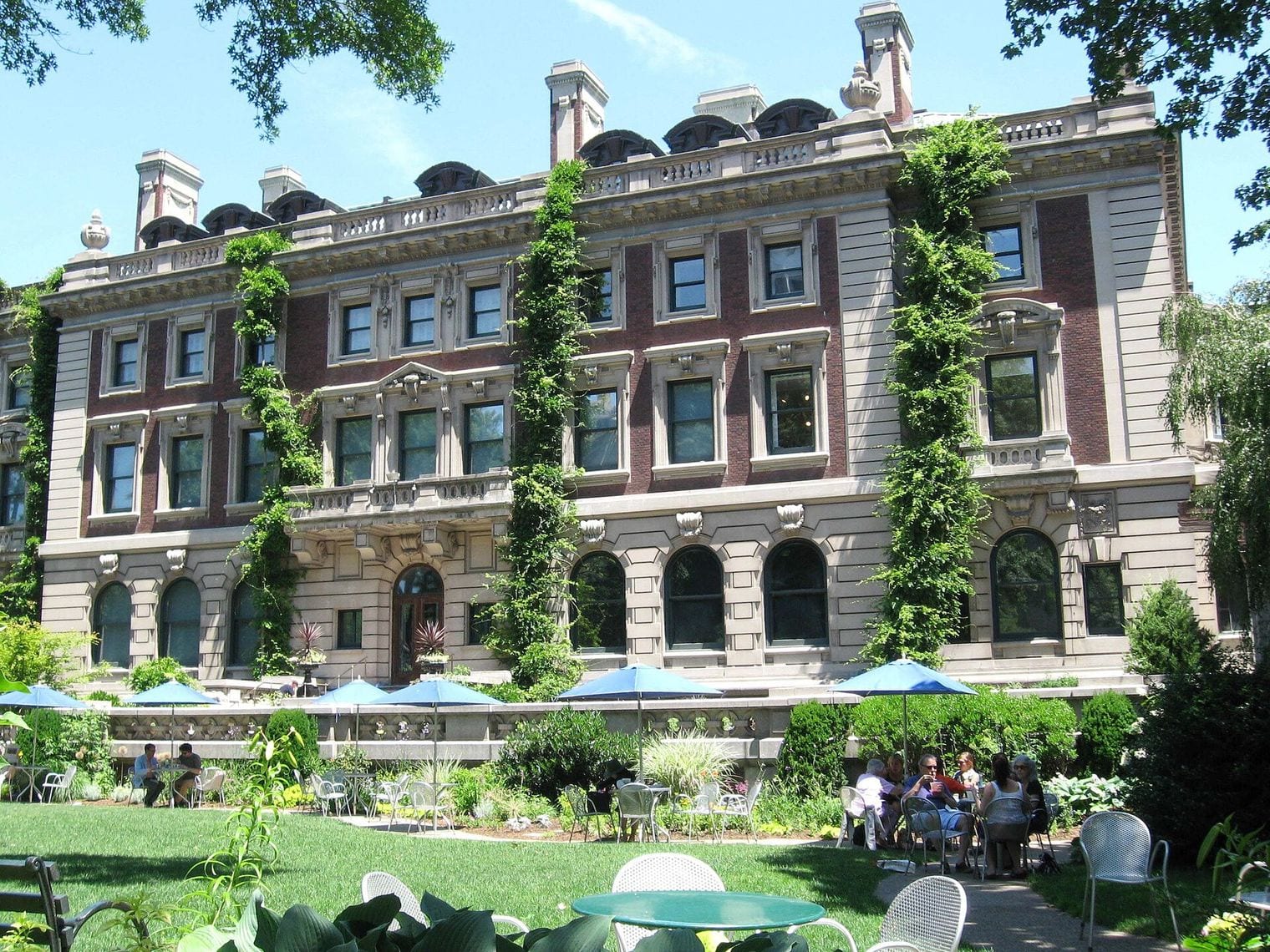
Cooper Hewitt, Smithsonian Design Museum is the Smithsonian's museum of design, housed in Andrew Carnegie's Fifth Avenue mansion on Museum Mile; it was the first Smithsonian museum outside Washington, D.C.
Exhibitions range across centuries of design, from textiles, wallpaper and drawings to furniture and digital products, with interactive displays that invite you to try your own ideas. The mansion's garden and terrace make a calm pause between the bigger museums farther down Fifth Avenue.
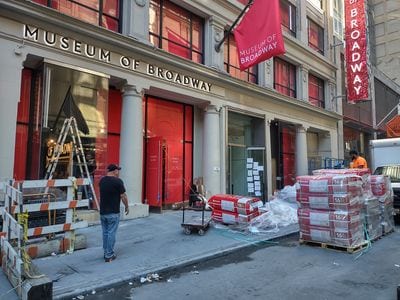
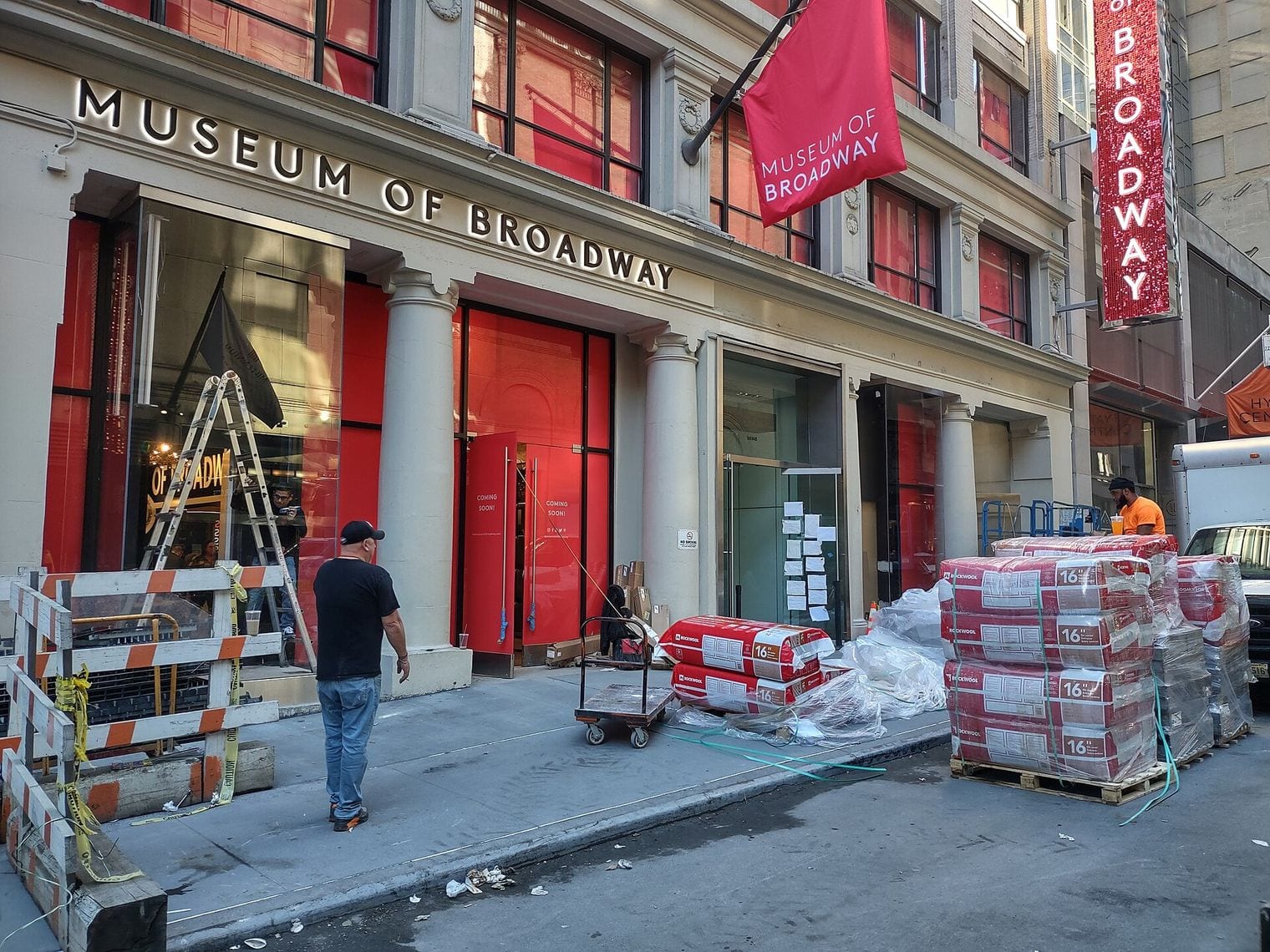
The Museum of Broadway, on West 45th Street in the heart of Times Square, opened in 2022 as the first permanent museum dedicated to the history and experience of Broadway theater.
A timeline traces landmark productions with costumes, set models and immersive rooms, and other galleries show what it takes to put a show on stage, from design to the crew backstage. Visit before a matinee for context, or after the show while you are still humming the tunes.
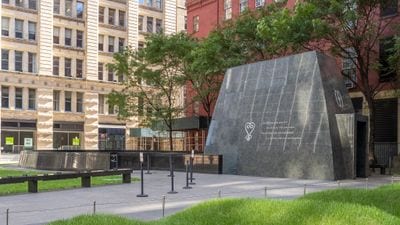
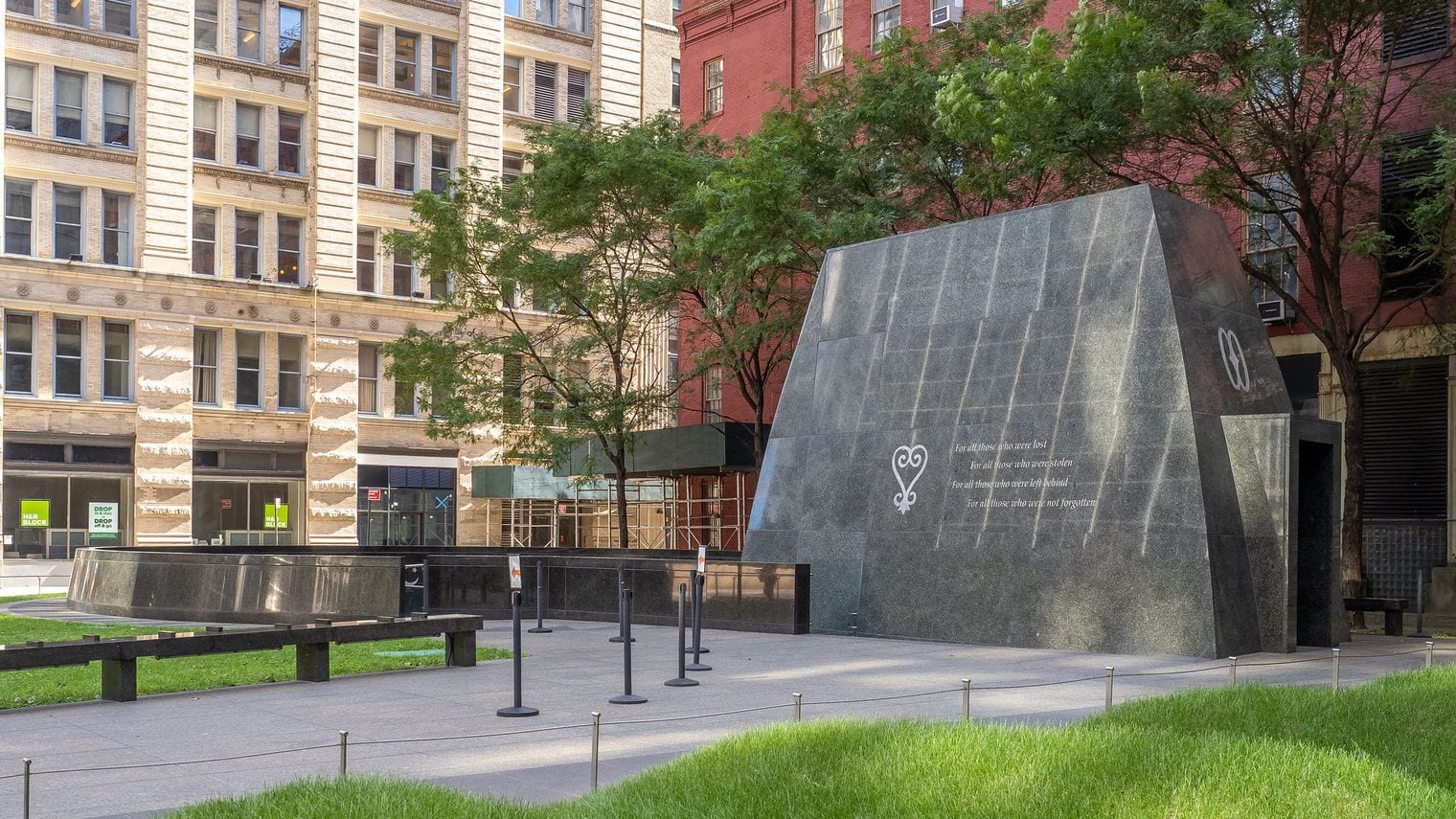
The African Burial Ground National Monument marks part of what was the largest colonial-era cemetery for people of African descent, where up to 15,000 Africans, some free and most enslaved, were buried in the late 17th and 18th centuries. The site was rediscovered in 1991 during excavations for a new federal office building at 290 Broadway.
An outdoor memorial, dedicated in 2007, honors the more than 419 people whose remains were excavated and later reburied there, and a National Park Service visitor center inside the federal building explains the site's history. Entry is free, and it is a short walk north of City Hall.
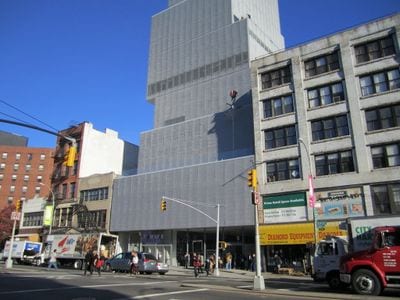
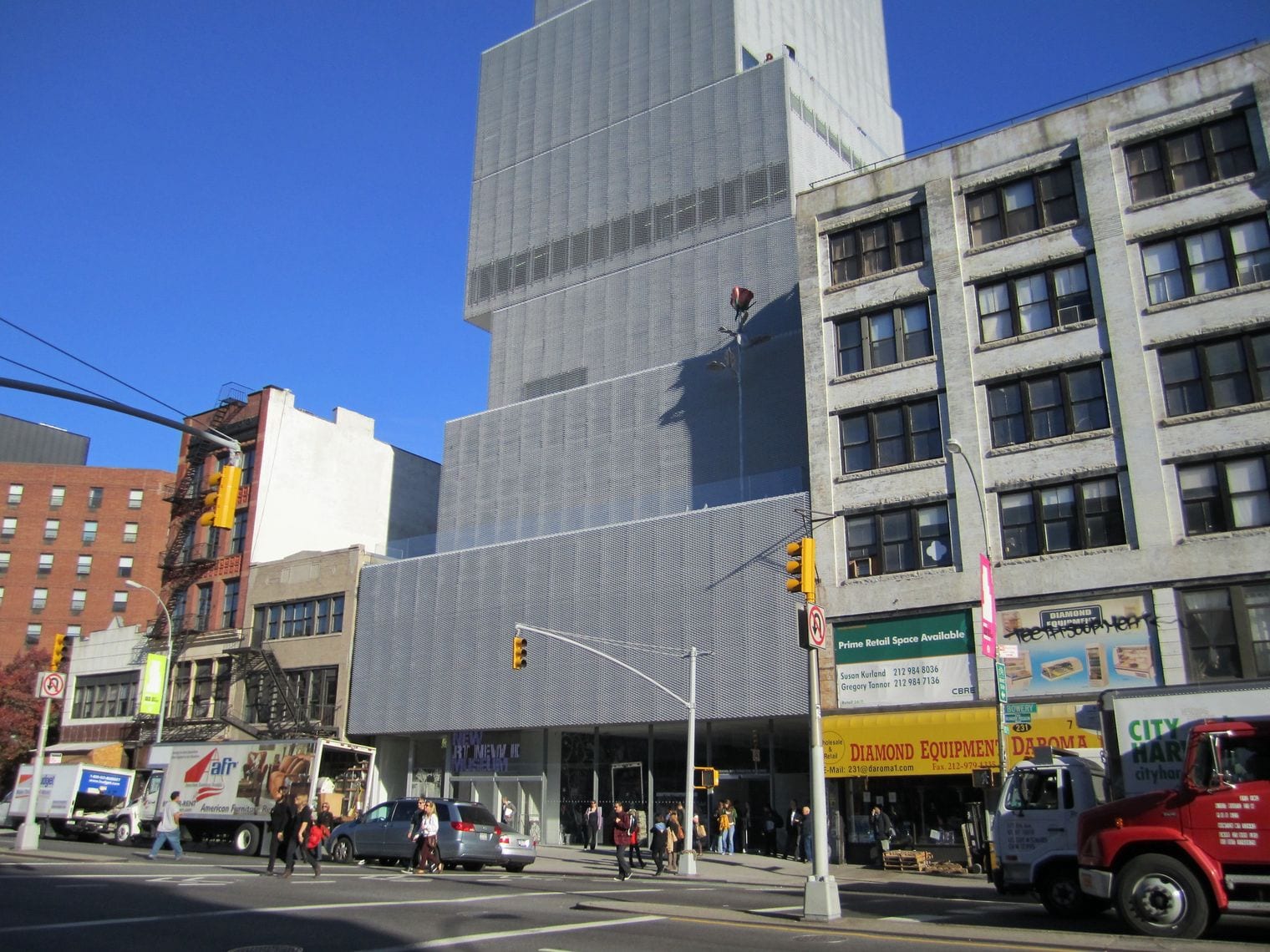
The New Museum, founded in 1977 by curator Marcia Tucker, is Manhattan's museum dedicated to contemporary art, housed on the Bowery in a stack of offset boxes designed by the Tokyo firm SANAA that opened in 2007.
An expansion designed by OMA has added more space beside the original building, and the museum is known for showing emerging and international artists. It sits on the edge of the Lower East Side, whose galleries and the Tenement Museum are a short walk away.
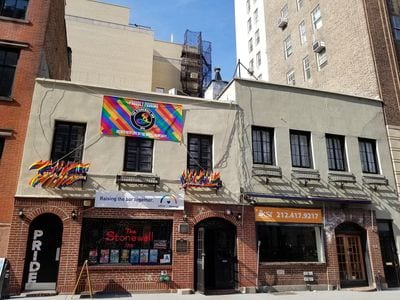
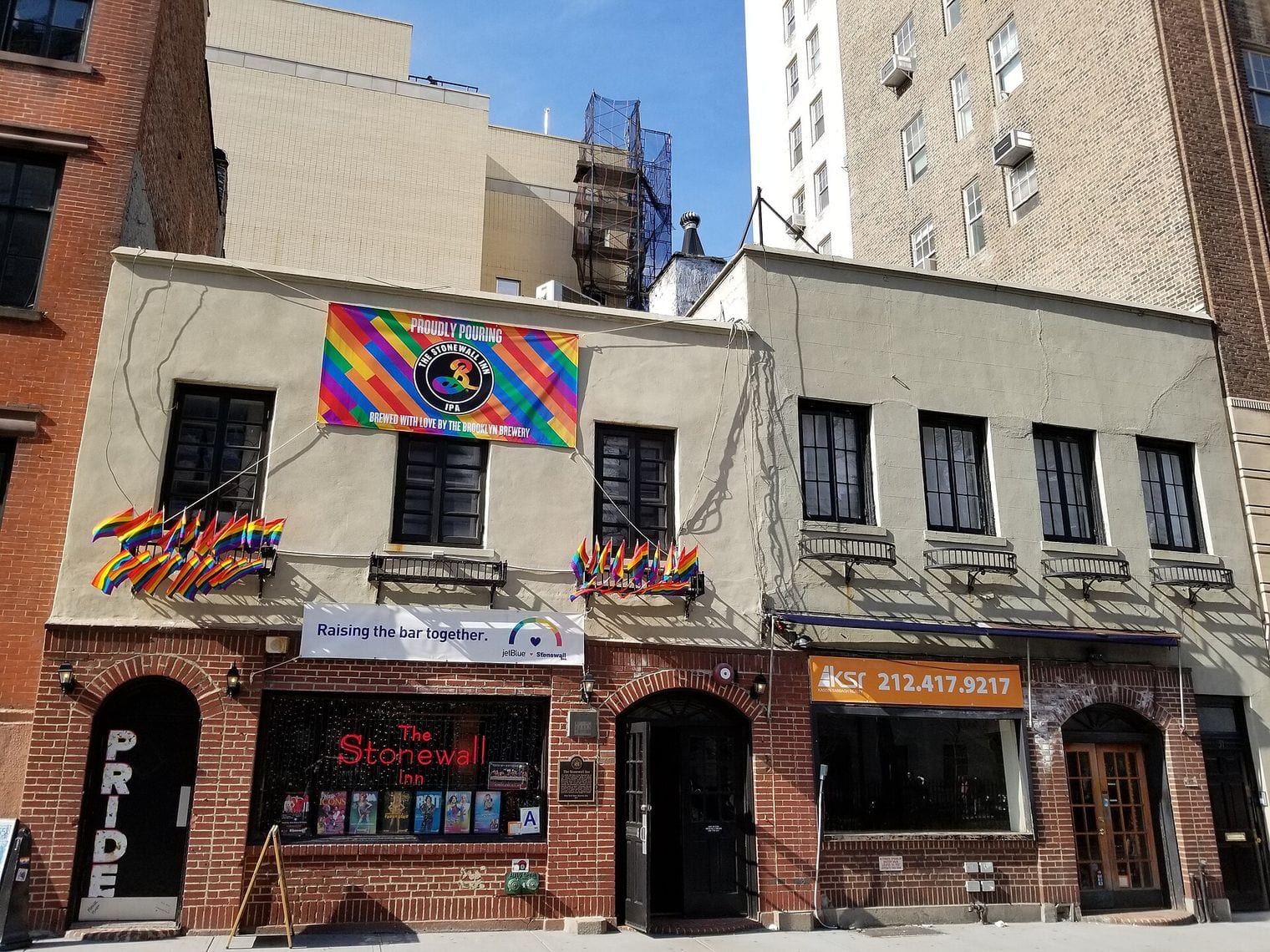
Stonewall National Monument in Greenwich Village is the first U.S. national monument dedicated to LGBTQ rights and history, designated in 2016 to protect the site of the Stonewall uprising of June 28, 1969, widely regarded as the start of the modern LGBTQ rights movement in the United States.
It takes in tiny Christopher Park, with George Segal's white Gay Liberation sculptures, the surrounding streets and the Stonewall Inn across the way, and a National Park Service visitor center nearby tells the story of the uprising. Entry is free.
Plan your trip
Best Time to Visit New York City
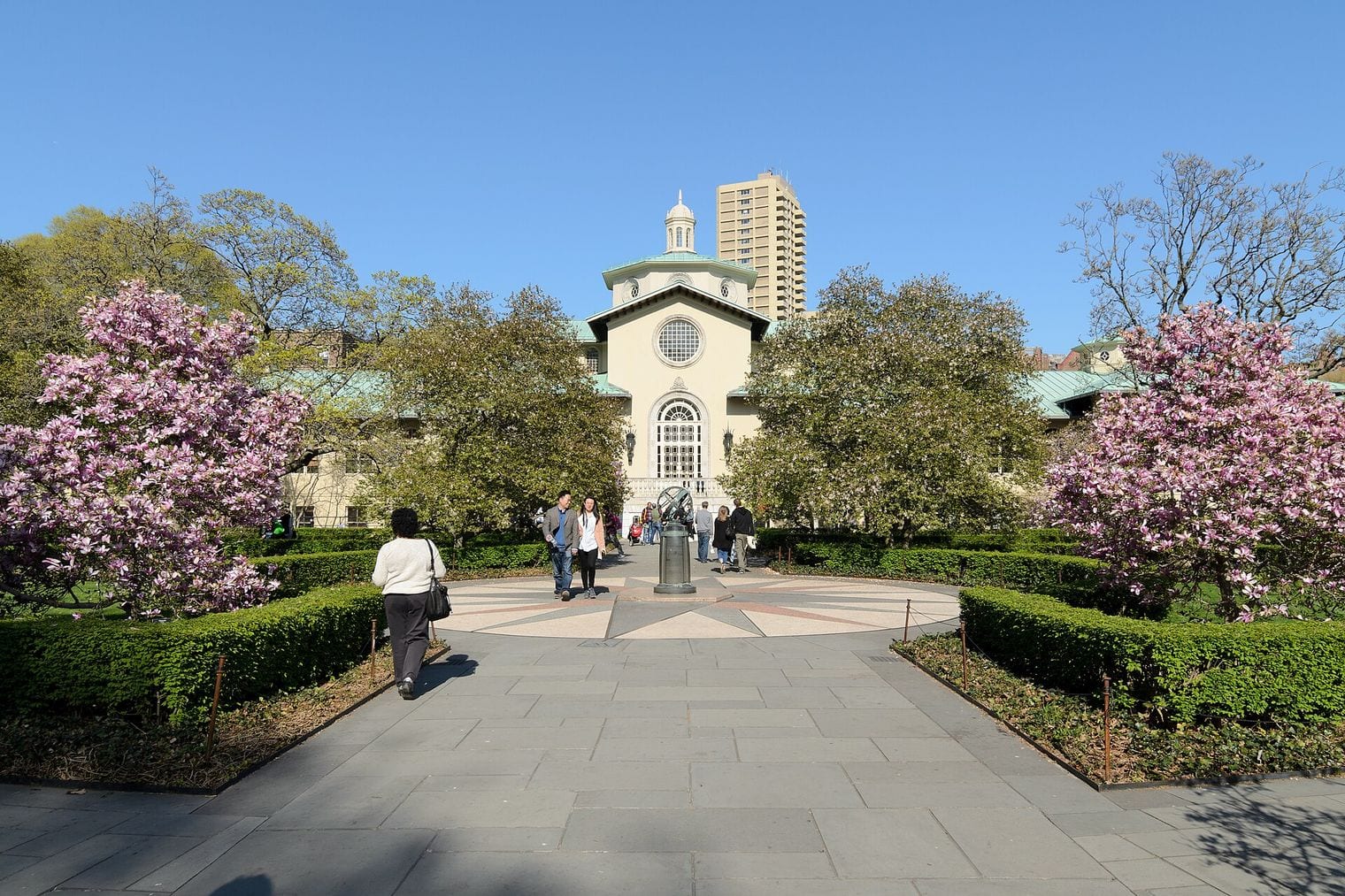
Spring and fall are the sweet spots. From April to early June, cherry trees and magnolias bloom in Central Park and the botanical gardens and the weather is ideal for walking the bridges and the High Line; September to early November brings crisp days, the start of the theater, opera and concert seasons, and fall color in the parks.
Summer is hot and humid, but it is the season for outdoor concerts and films in the parks, the beach and rides at Coney Island and lazy days on Governors Island. Winter is cold and sometimes snowy, yet December is magical, with the Rockefeller Center tree, the ice rinks and the holiday windows along Fifth Avenue; January and February are the quietest months at the big sights.
Getting to New York City
Three major airports serve the city: John F. Kennedy International and LaGuardia, both in Queens, and Newark Liberty International across the Hudson River in New Jersey. Each is roughly 30 to 60 minutes from Midtown by road depending on traffic, and AirTrain shuttles link JFK and the Newark airport to the rail network.
Amtrak trains arrive at Penn Station from Washington, D.C., Philadelphia and Boston along the Northeast Corridor, and from Albany, Syracuse, Rochester and Buffalo along the Hudson River and across upstate New York; Metro-North commuter trains from the Hudson Valley and Connecticut pull into Grand Central Terminal. Drivers come in on I-95, the New Jersey Turnpike and the New York State Thruway, but a car is more burden than help once you arrive.
Getting Around New York City
The subway is the fastest way around: it runs 24 hours a day, reaches four of the five boroughs, and you can pay by tapping a contactless bank card or phone at the turnstile. Buses fill the gaps, especially crosstown, city ferries link Manhattan with the waterfronts of Brooklyn, Queens and the Bronx, and the fare-free Staten Island Ferry crosses the harbor.
Manhattan is made for walking, especially above 14th Street, where the numbered street grid makes navigation simple, and bike-share docks and protected lanes make cycling easy in good weather. Taxis and rideshares are everywhere but crawl through Midtown traffic, and driving and parking are slow and expensive, so leave the car behind.
Where to Stay in New York City
Midtown, around Times Square, Rockefeller Center and Grand Central, is the most convenient base for a first visit, with the widest choice of rooms and many top sights within walking distance or a few subway stops. Lower Manhattan and the Financial District are quieter at night but handy for the Statue of Liberty ferries, the 9/11 Memorial and the Brooklyn Bridge.
For more neighborhood character, look to Greenwich Village, Chelsea or SoHo downtown, or the Upper West Side between Central Park and the Hudson, close to the museums. Across the East River, DUMBO, Brooklyn Heights, Williamsburg and Long Island City in Queens offer skyline views and often better value, a short subway ride from Manhattan.
Where to Eat in New York City
New York's signature foods are made to eat on the move: a folded slice of thin-crust pizza, a bagel with cream cheese and lox, a pastrami sandwich on rye, a hot dog from a street cart and a slab of dense New York-style cheesecake. Food halls such as Chelsea Market gather dozens of vendors under one roof.
For neighborhoods, head to Chinatown for dumplings and dim sum, Mulberry Street in Little Italy for red-sauce Italian, the East Village and the Lower East Side for everything from pierogi to ramen, Arthur Avenue in the Bronx, near the zoo, for Italian delis and bakeries, and Flushing and Jackson Heights in Queens for regional Chinese, Korean, South Asian and Latin American cooking.
Day Trips from New York City
Some of the easiest escapes lie just across the Hudson. Jersey City, a few minutes away by PATH train, has Liberty State Park with close-up views of the Statue of Liberty and the Manhattan skyline, and Newark, about 20 minutes by train, adds the Portuguese and Brazilian flavor of its Ironbound district. Princeton, roughly an hour and a half southwest by train or car, pairs an Ivy League campus with a walkable college town.
Metro-North trains run up the Connecticut shore to Stamford, under an hour from Grand Central, and on to Bridgeport, and north along the Hudson to river towns such as Cold Spring and Beacon, about an hour and a quarter away, with hiking trails and antique shops. For more ideas up the valley and beyond, see our guide to the best small towns in New York.
New York City is best known for the Statue of Liberty, Central Park, Times Square, the Empire State Building and the Brooklyn Bridge, along with Broadway theater, world-class museums such as The Met and MoMA, and a skyline that came to define the modern city. Pizza, bagels and pastrami are its signature foods.
How many days do you need in New York City?
Four to five days is the sweet spot for a first visit: one for Lower Manhattan and the Statue of Liberty, one for Midtown's landmarks and an observation deck, one for Central Park and the museums around it, and one for Brooklyn's bridges and waterfront. A week leaves time for Queens, the Bronx and more shows.
What can you do in New York City for free?
Plenty. Walking the Brooklyn Bridge and the High Line, exploring Central Park and Prospect Park, riding the Staten Island Ferry past the Statue of Liberty, and visiting the 9/11 Memorial pools, Grand Central Terminal, the New York Public Library and St. Patrick's Cathedral all cost nothing, as does the Smithsonian's National Museum of the American Indian.
Which New York City observation deck is best?
It depends on the view you want. Top of the Rock frames the Empire State Building and Central Park; the Empire State Building's open-air 86th floor is the classic; One World Observatory looks over the harbor from the tallest building in the Western Hemisphere; SUMMIT One Vanderbilt adds mirrored art rooms; and Edge NYC has an outdoor sky deck with a glass floor.
Is New York City worth visiting?
Yes. Few cities pack so much into so small an area: landmark architecture, some of the world's great museums, Broadway, five very different boroughs and food from every corner of the globe. Even a long weekend covers the icons, and repeat visitors keep finding new neighborhoods to explore.
Sources & updates
How this guide was checked
Checked before launch
Sources cited
75
Publishers
47
Every place on this list was confirmed open and pinned on the map before publication, and what we say about each one was checked against its own website or an official source.
A PDF with a box to tick for every place. Confirm your email to download it, and get one email every Thursday with our newest guides for the places you tick.
Free New York City printable checklist
All 75 places in one PDF
Tick them off as you go. Confirm your email to download it, plus one email every Thursday with new guides for the places you tick.
We use cookies to analyse site traffic and improve your experience.
You can accept or reject analytics cookies. See our
May we use analytics cookies? See ourCookie Policy.