We build and rank every list first. Booking links come after, and only where
a partner sells a ticket, tour or stay for that exact place, so a place with
nothing to book is listed exactly as prominently as one you can book.
So how do we earn? Some links on this page go to booking
partners, and if you book tickets, tours or a stay through
one, we may earn a commission. It costs you nothing extra.
That commission never decides which places make the list, the order they
appear in, or what we write about them. No entry is sponsored or a paid
placement.
35 Best Things to Do in Charlotte, North Carolina (2026)
By the City Viking editorial teamPublished 35 places · 27 min read
Fact-checked Checked before launchOct 10, 202635 sources23 publishers1 tourism board14 encyclopedias & research20 venues & other sitesPublished · Oct 10, 2026Researched and checked before it went liveClick for every source and the full change log.
Short answer
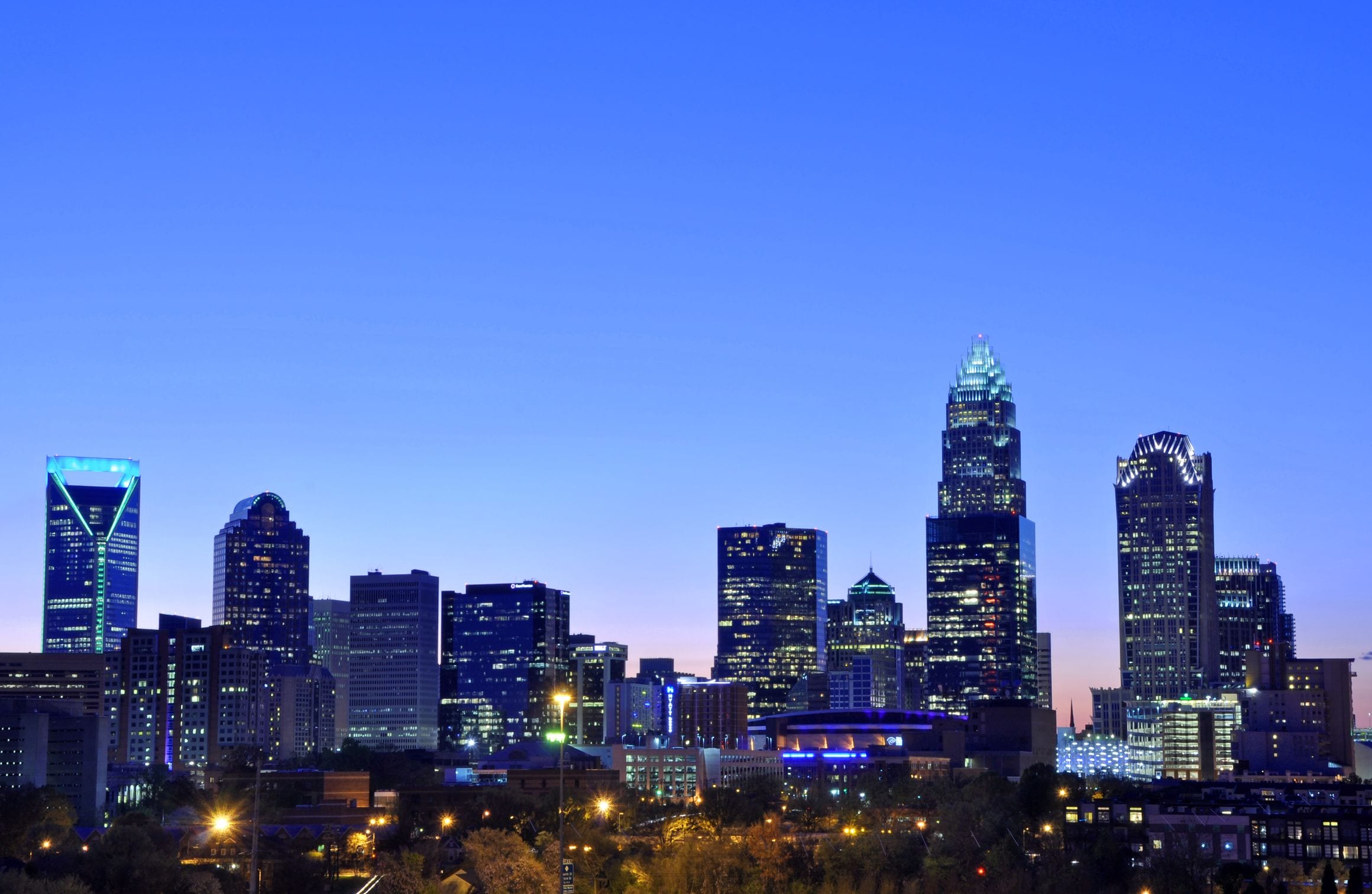
Charlotte, the Queen City, is known for NASCAR, its banking towers and its place as the largest city in the Carolinas. Start in Uptown at the NASCAR Hall of Fame and the Levine Center for the Arts, then head west to the U.S. National Whitewater Center and, in season, south to Carowinds. Two to three days is the sweet spot, adding the South End and NoDa neighborhoods and a racing day at Charlotte Motor Speedway.
Charlotte, the largest city in North Carolina, grew up where two old trading paths crossed and became the Queen City, a banking capital whose towers now crowd Uptown. Beyond the skyline it is NASCAR country, with leafy old neighborhoods, mill districts turned brewery quarters and a whitewater river on the Catawba.
This guide covers the 35 best things to do in Charlotte, from the NASCAR Hall of Fame and the U.S. National Whitewater Center to art museums, greenways and Revolutionary-era homes, plus a few big draws just over the city line. Plan on two to three days.
Map of Things to Do in Charlotte, North Carolina
Things to Do in Charlotte, North Carolina
Things to Do in Charlotte, North Carolina at a Glance
Charlotte is named for Queen Charlotte of Mecklenburg-Strelitz, the German-born wife of Britain's King George III, which is why it is nicknamed the Queen City and why its county is called Mecklenburg.
During the Revolutionary War, British commander Lord Cornwallis called the town "a hornet's nest of rebellion". The nickname lives on in the NBA's Charlotte Hornets and in Carowinds' hornet-themed Fury 325, one of the tallest roller coasters in the world.
The first documented gold find in the United States was made in 1799 on the Reed family farm, east of the city in Cabarrus County. The gold rush that followed led Congress to open the Charlotte Mint, which began operating in 1837 and later became the Mint Museum.
The date May 20, 1775 on the North Carolina state flag recalls the Mecklenburg Declaration of Independence, said to have been signed in Charlotte, although historians still debate whether the document ever existed.
Charlotte is the second-largest banking center in the United States, home to the headquarters of Bank of America and Truist and the East Coast headquarters of Wells Fargo.
With about 945,000 residents in the Census Bureau's 2024 estimate, Charlotte is the largest city in the Carolinas and one of the fastest-growing big cities in the country.
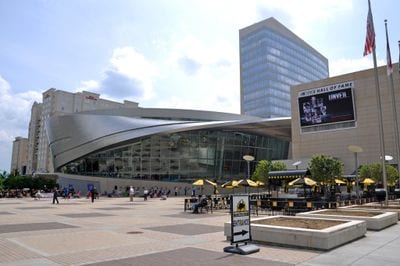
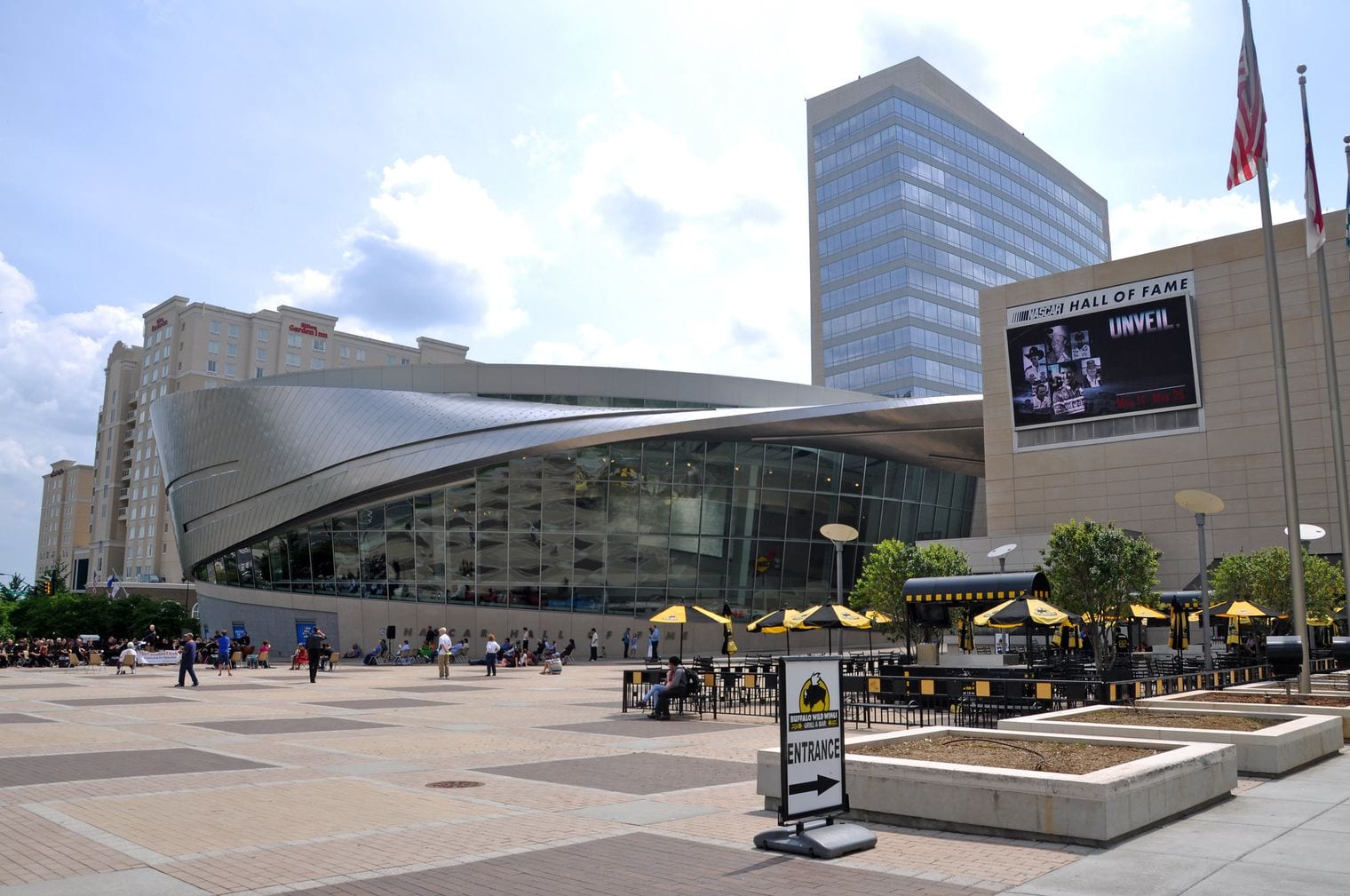
Charlotte sits at the center of stock-car racing, with many of the sport's teams based around the city, so it is fitting that the NASCAR Hall of Fame stands in Uptown. Opened in 2010, the museum traces the sport from its moonshine-country roots to the modern Cup Series, and its first great set piece is Glory Road, a banked ramp lined with historic race cars that climbs steeper as it goes, with track surfaces you can touch.
Upstairs, the Hall of Honor celebrates the drivers, crew chiefs and owners who have been inducted, and dozens of interactive exhibits let you try your hand at the skills behind the sport. Racing simulators add a taste of what it feels like behind the wheel. Even visitors who have never watched a race tend to leave impressed by the scale and the stories.
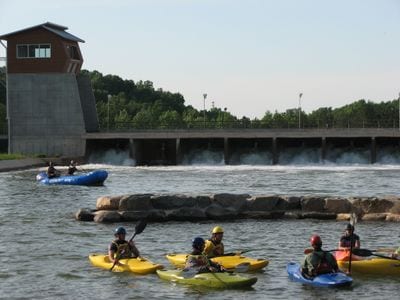
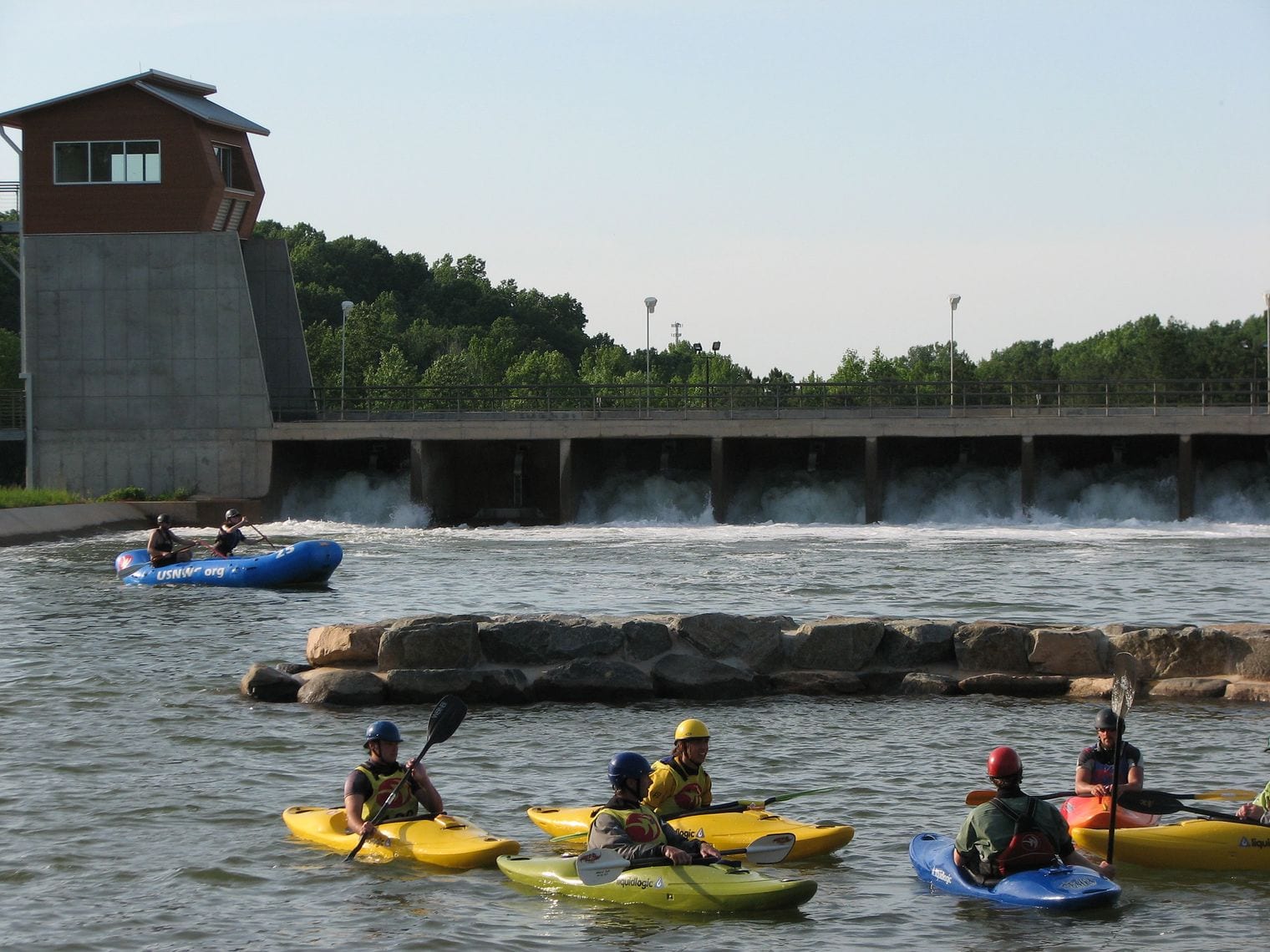
On some 1,300 wooded acres beside the Catawba River on Charlotte's western edge, the U.S. National Whitewater Center is built around what it describes as the world's largest and most complex recirculating artificial whitewater river. The channels were designed by three-time Olympian Scott Shipley, and rafting and kayaking trips run on rapids that elite paddlers also use for training.
The river is only the start. The center also has zip lines, ropes courses, rock climbing, flatwater paddling on the Catawba and more than 50 miles of trails for hiking and mountain biking. On summer evenings the riverside lawn fills with people listening to live music, and it is just as easy to come for a walk and a meal as for an adrenaline-packed day.
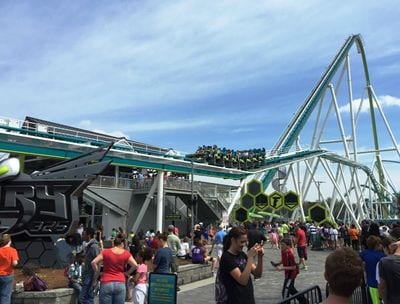
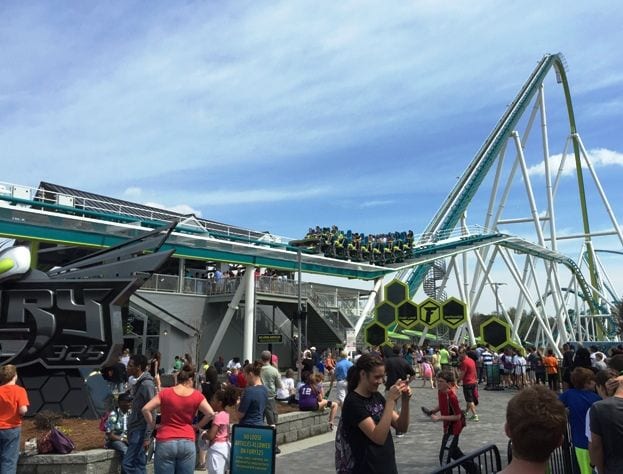
Carowinds sits on Charlotte's southern edge beside Interstate 77 and straddles the state line, with part of the park in Fort Mill, South Carolina; the border is painted across the main entrance, so you can stand in both Carolinas at once. Opened in 1973, it is the region's big theme park, with a water park, Carolina Harbor, included in admission.
The headline ride is Fury 325, a hornet-themed giga coaster with a 325-foot lift hill and a top speed of 95 mph, consistently ranked among the best steel coasters in the world. Family rides, shows and a full lineup of thrill coasters fill the rest of the day, and the park turns spooky for SCarowinds in the fall and festive for WinterFest around the holidays.
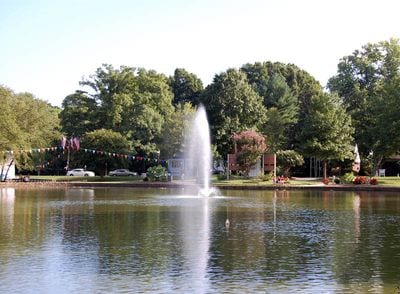
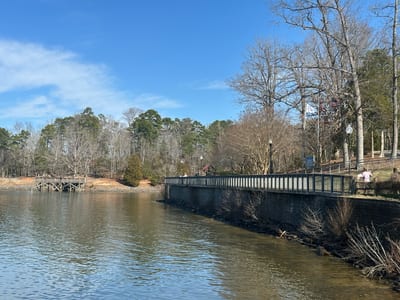
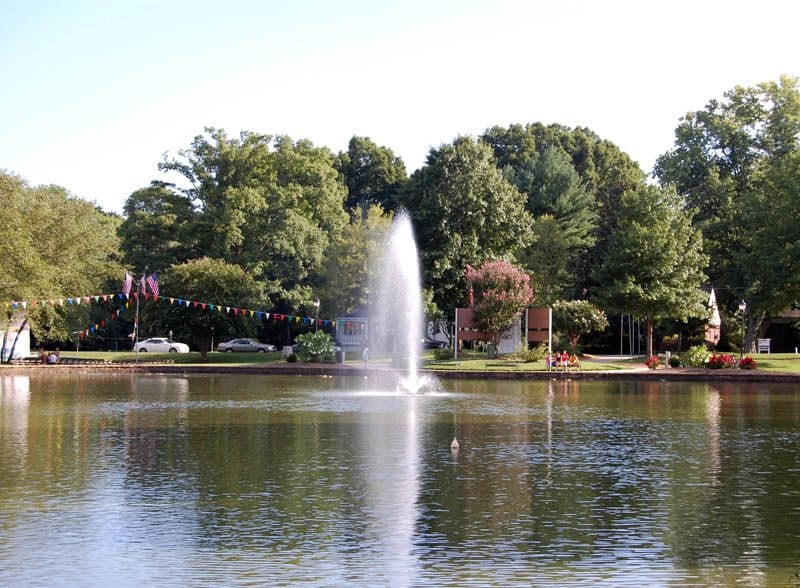
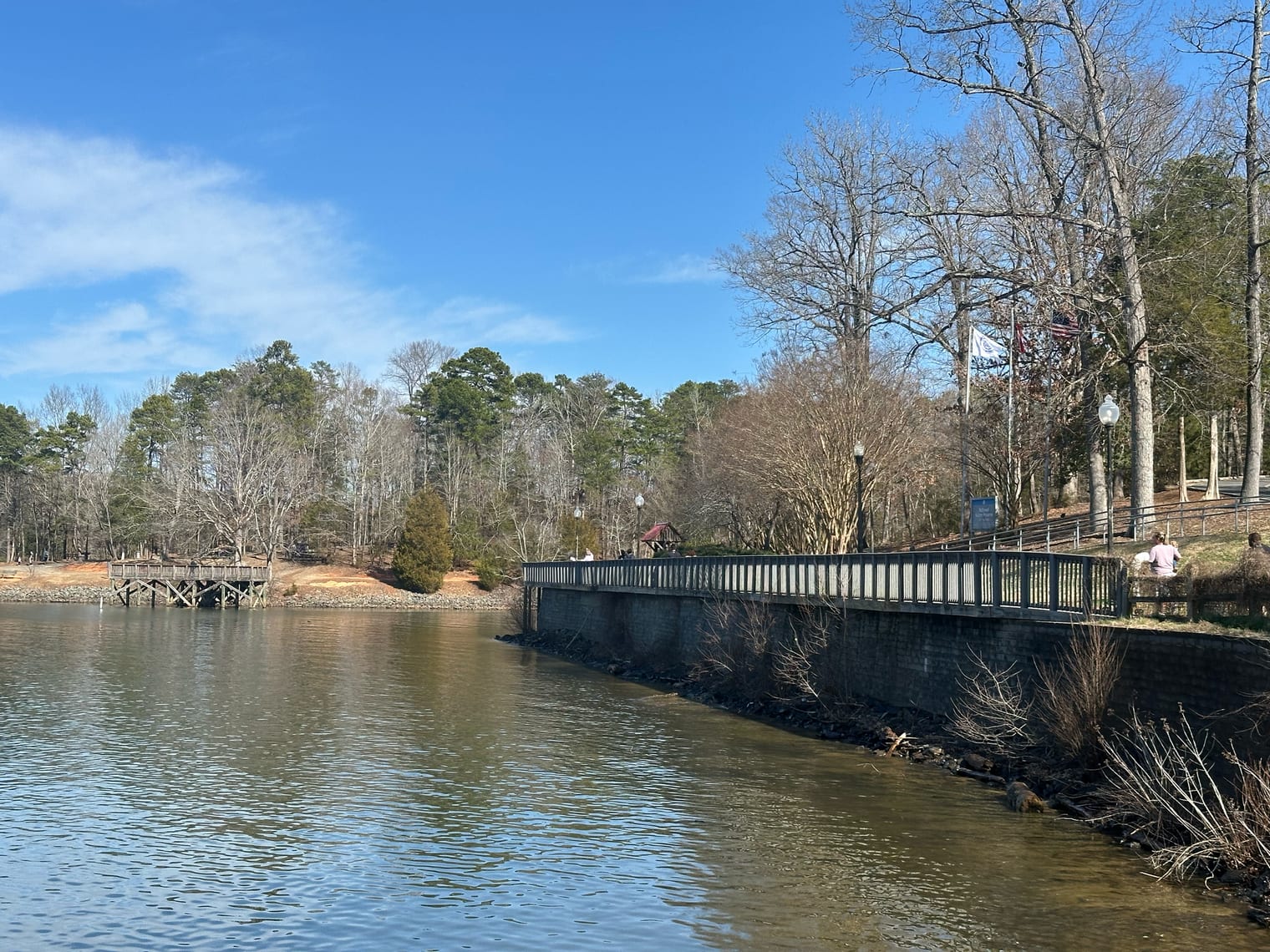
Charlotte's best-loved city park, Freedom Park covers 98 acres between the historic Dilworth and Myers Park neighborhoods, about three miles from Uptown. A seven-acre lake sits at its heart, ringed by paved paths, and the Little Sugar Creek Greenway runs along its edge, so it is easy to fold a longer walk or bike ride into a visit.
Families come for the playgrounds, sports fields and the old steam locomotive parked in the park, which children can climb into. Every September the five-day Festival in the Park brings artists, food and live music to the lakeshore, and in summer the pavilion hosts free films and concerts. On any fine weekend it is the place to see the city relaxing.
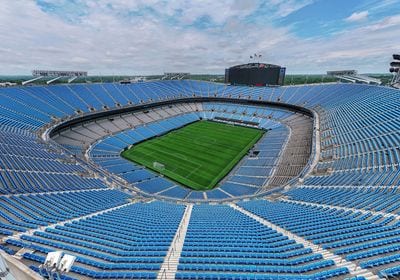
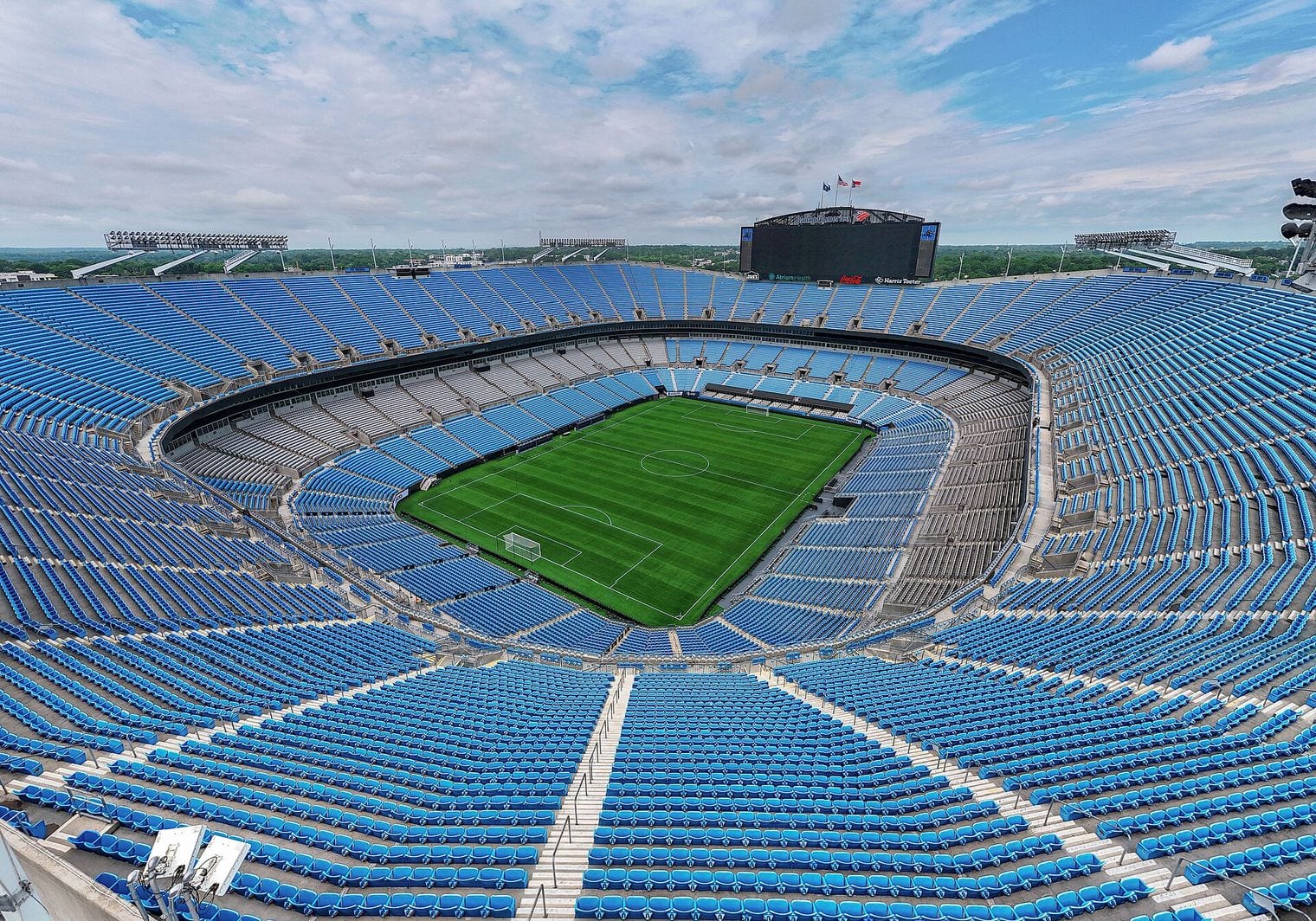
Rising on the southwestern side of Uptown, Bank of America Stadium is home to the NFL's Carolina Panthers and Charlotte FC of Major League Soccer. It opened in 1996, and its gates are guarded by six huge bronze panther statues, named Indomitable Spirit, that have become one of the city's favorite photo stops.
A Panthers game on a fall Sunday brings tailgating crowds into the streets around the stadium, while Charlotte FC matches have built a loud, flag-waving following of their own. The stadium also hosts big college football games and major concerts, and the Uptown towers rise just beyond its walls.
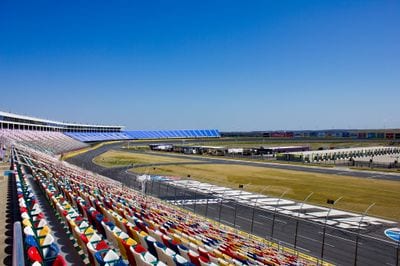
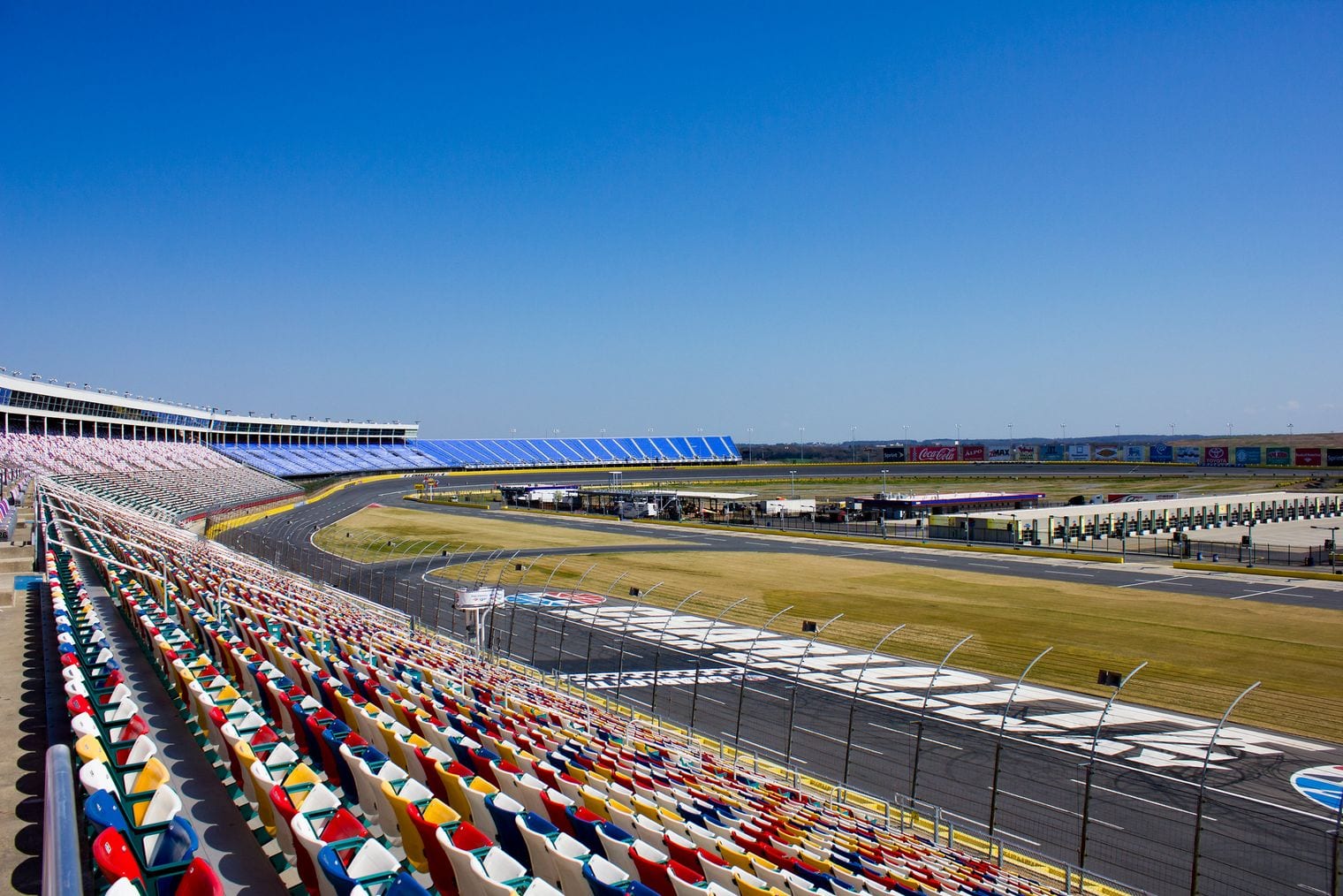
Strictly speaking, Charlotte Motor Speedway is not in Charlotte at all: it sits in Concord, just past the city line to the northeast, but it is the track that made the region the capital of stock-car racing. The 1.5-mile quad-oval has hosted major races since 1960 and holds the Coca-Cola 600 on Memorial Day weekend, the longest race on NASCAR's schedule.
The complex is a whole motorsports campus, with zMAX Dragway and a dirt track alongside the main oval, plus an infield road course that combines with the oval to form the "roval." Race weeks in May and the fall fill the area with fans and campers, and the grandstands rank among the largest sports venues in the United States.
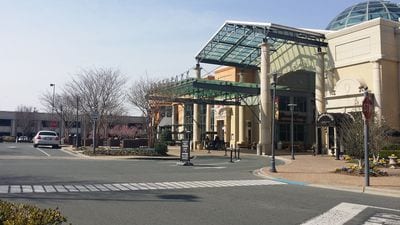
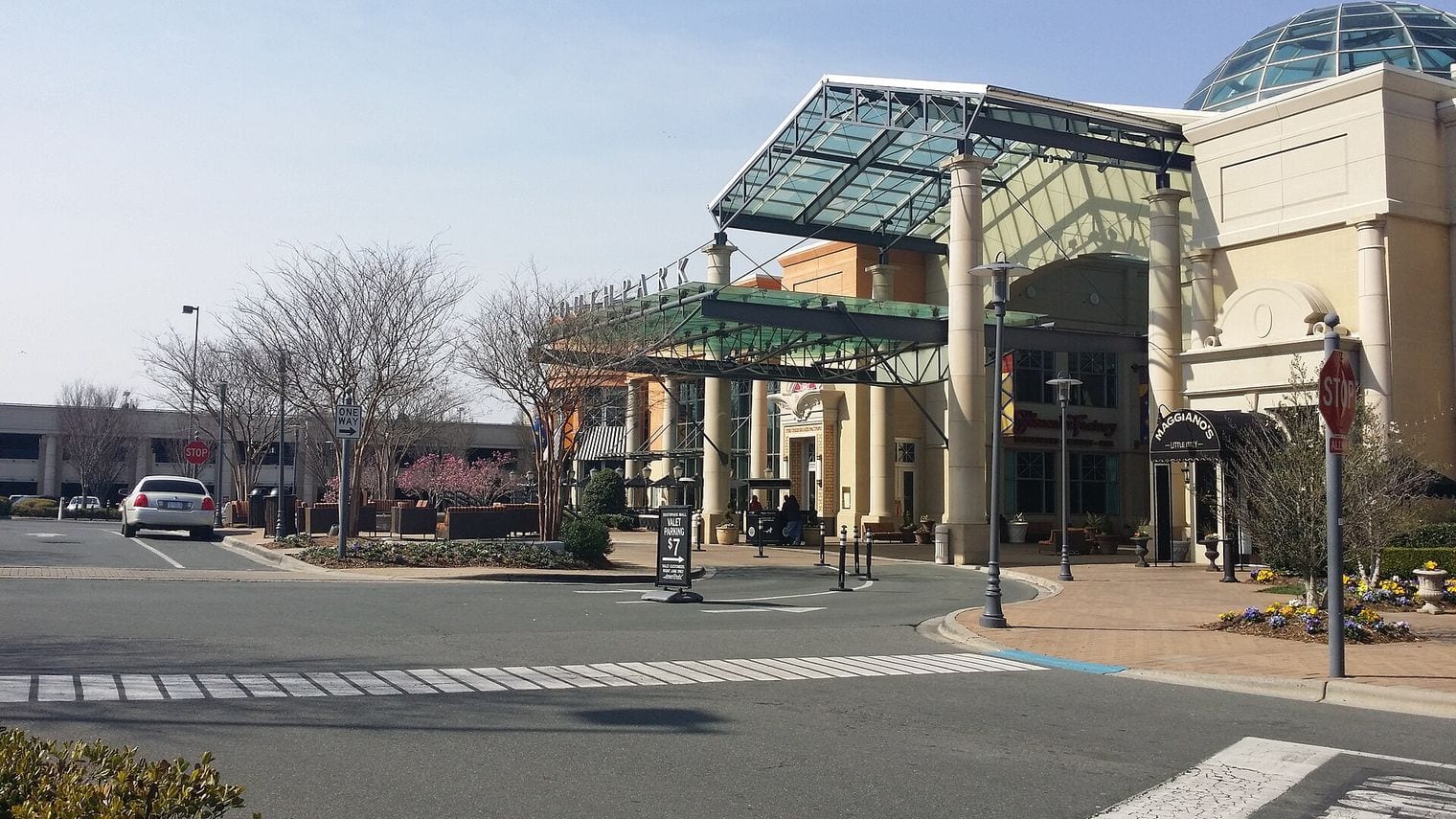
About five miles south of Uptown, SouthPark Mall is Charlotte's upscale shopping destination and is often billed as the largest mall in the Carolinas. It anchors the affluent SouthPark neighborhood at the corner of Sharon and Fairview Roads, with department stores, luxury boutiques and a long list of national brands under one roof.
Even if shopping is not the goal, SouthPark makes an easy rainy-day stop, with restaurants inside and around the mall and smaller open-air shopping centers across the road. The surrounding district has grown into one of Charlotte's busiest dining and hotel areas, which makes it a comfortable base for exploring the south side of the city.
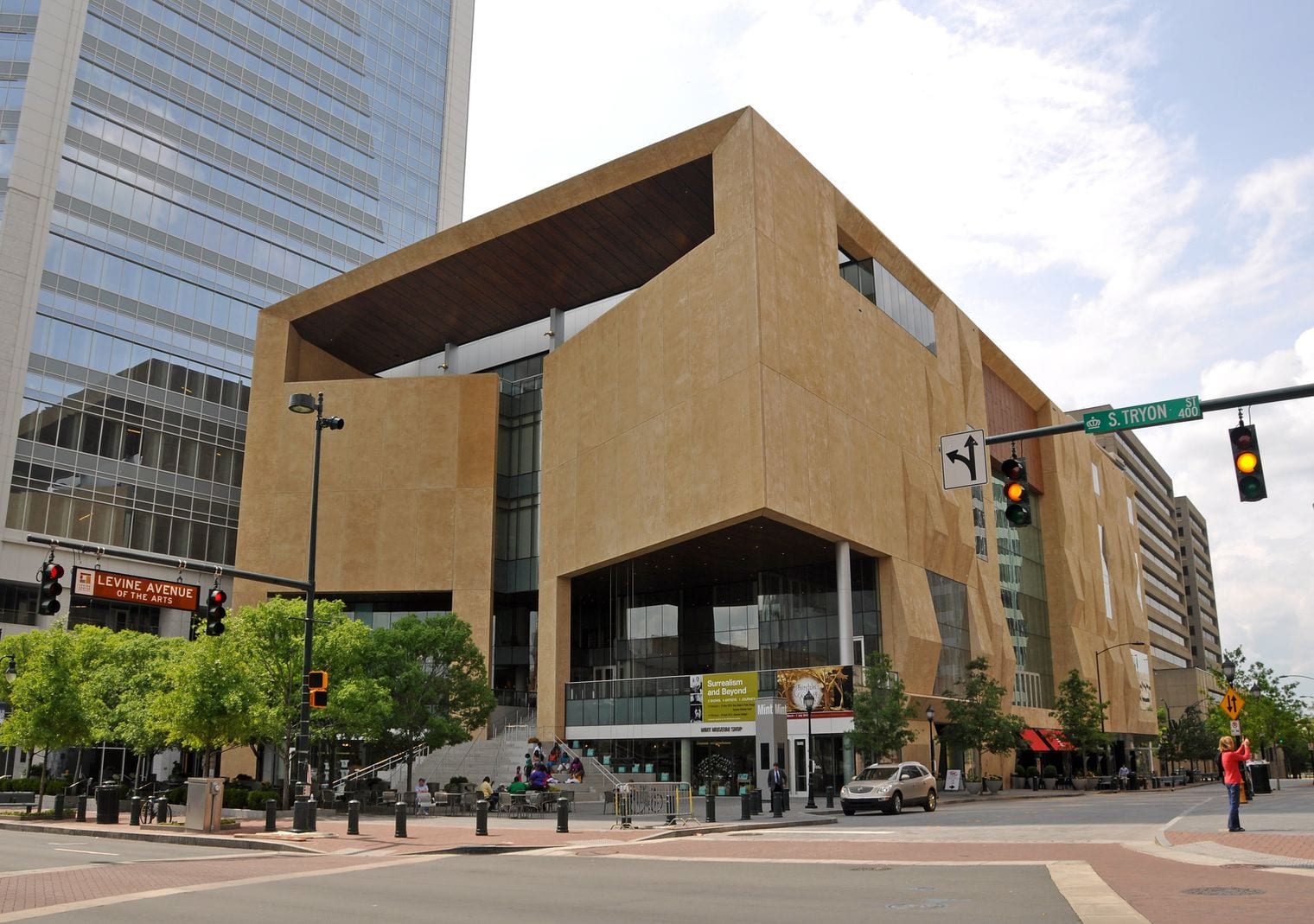
The Mint Museum, North Carolina's oldest art museum, has two homes, and Mint Museum Uptown is the newer, modern one, anchoring the Levine Center for the Arts on South Tryon Street alongside the Bechtler and the Gantt Center. Its five floors of galleries make it the place to start for anyone with only an hour or two for art in Uptown.
Inside, the galleries move from American and contemporary art to an outstanding craft and design collection, with glass, ceramics and furniture that feel as much like sculpture as anything on the walls. The museum holds a major collection of work by Charlotte-born artist Romare Bearden. For the museum's older story and its ceramics and fashion collections, continue to its original home, Mint Museum Randolph, number 20 on this list.
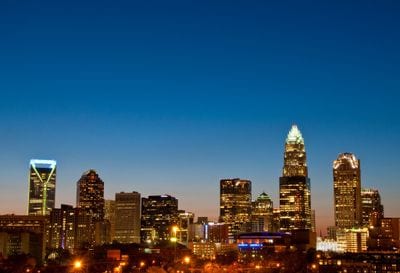
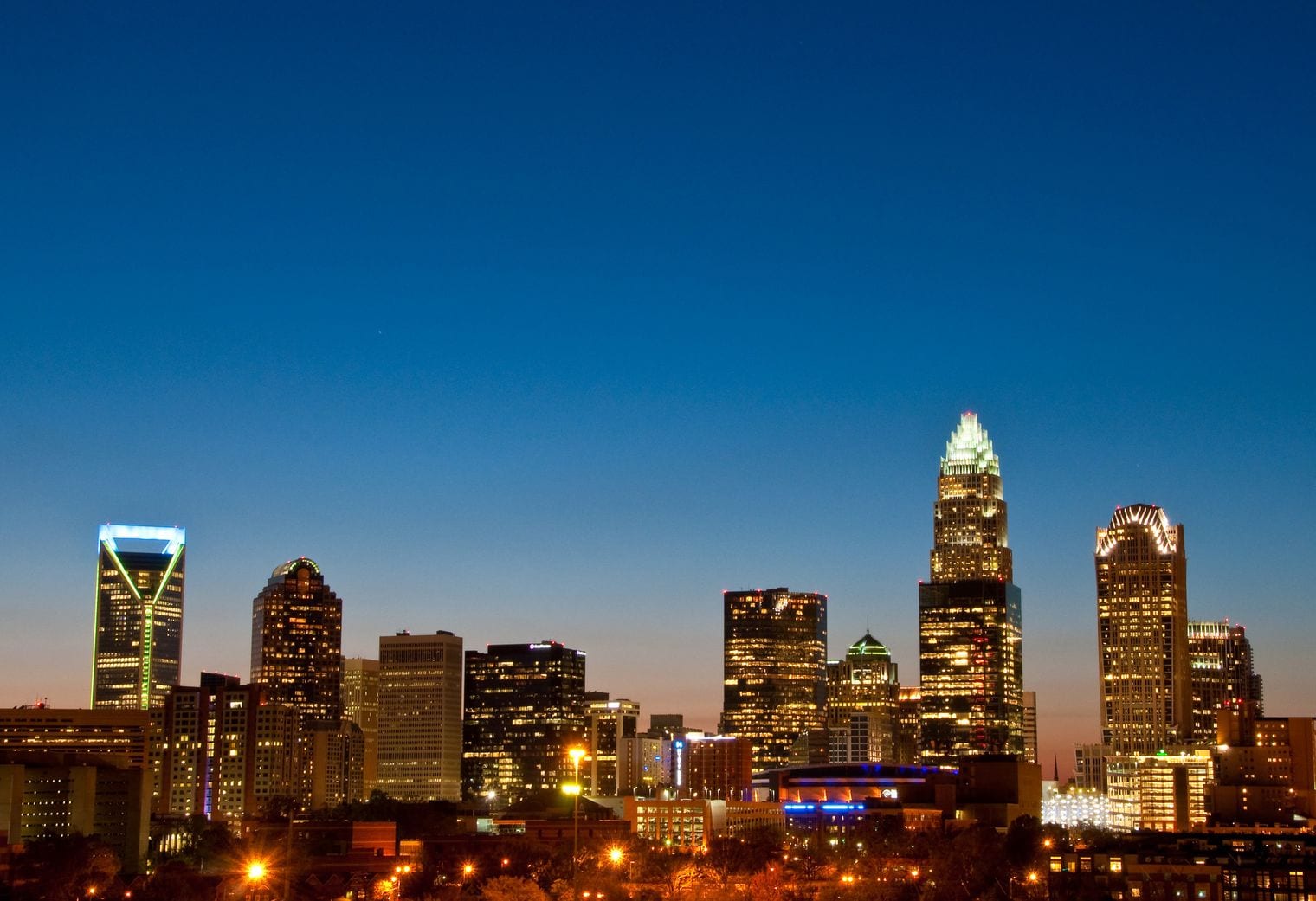
Charlotte's downtown is called Uptown Charlotte, a compact grid of bank towers, museums, stadiums and parks divided into four historic wards by the crossing of Trade and Tryon Streets. Its skyline is led by the crown-topped Bank of America Corporate Center, and the district is home to the headquarters of some of the country's biggest companies.
For visitors, Uptown is where much of the list sits within walking distance: the NASCAR Hall of Fame, the Levine Center museums, Discovery Place, three major sports venues and a string of small parks. Look out for public art as you walk, from the mirrored Firebird outside the Bechtler to the statues of Independence Square, and come back at night, when the towers light up and the bars around the stadiums fill.
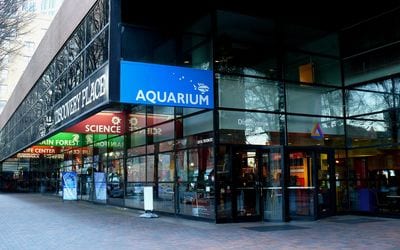
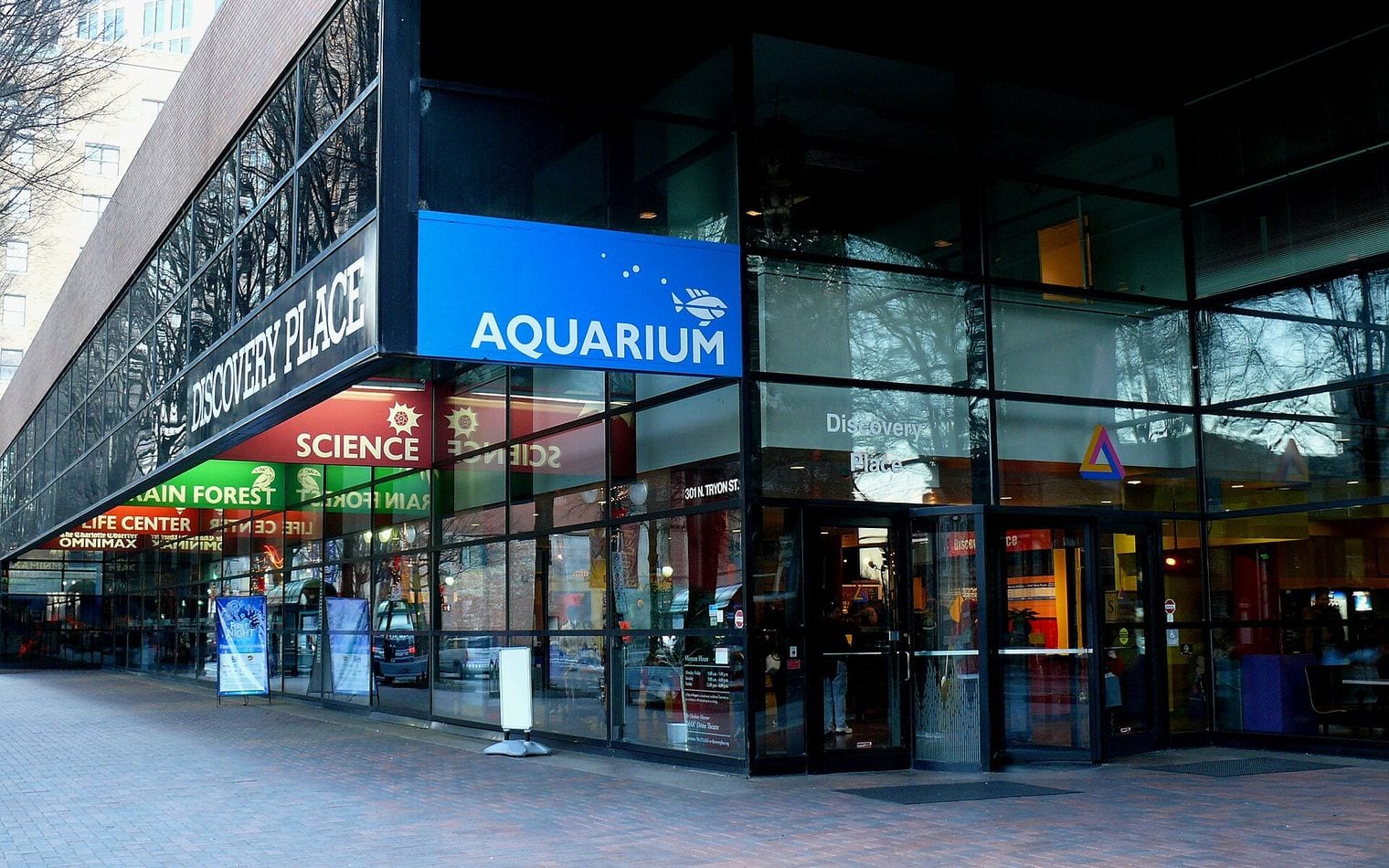
A favorite with families since it opened in 1981, Discovery Place Science fills three floors of an Uptown building with hands-on science. The highlight for many is the indoor rainforest, crossed by a swaying rope bridge and home to live birds, frogs and other creatures, while other galleries add aquariums and hands-on exhibits across a wide range of science topics.
Live science shows and demonstrations run through the day, and the museum operates a domed IMAX theater, the largest of its kind in the Carolinas, where documentaries wrap around the audience. It is an easy add-on to a day in Uptown and a reliable choice when the weather turns hot or wet.
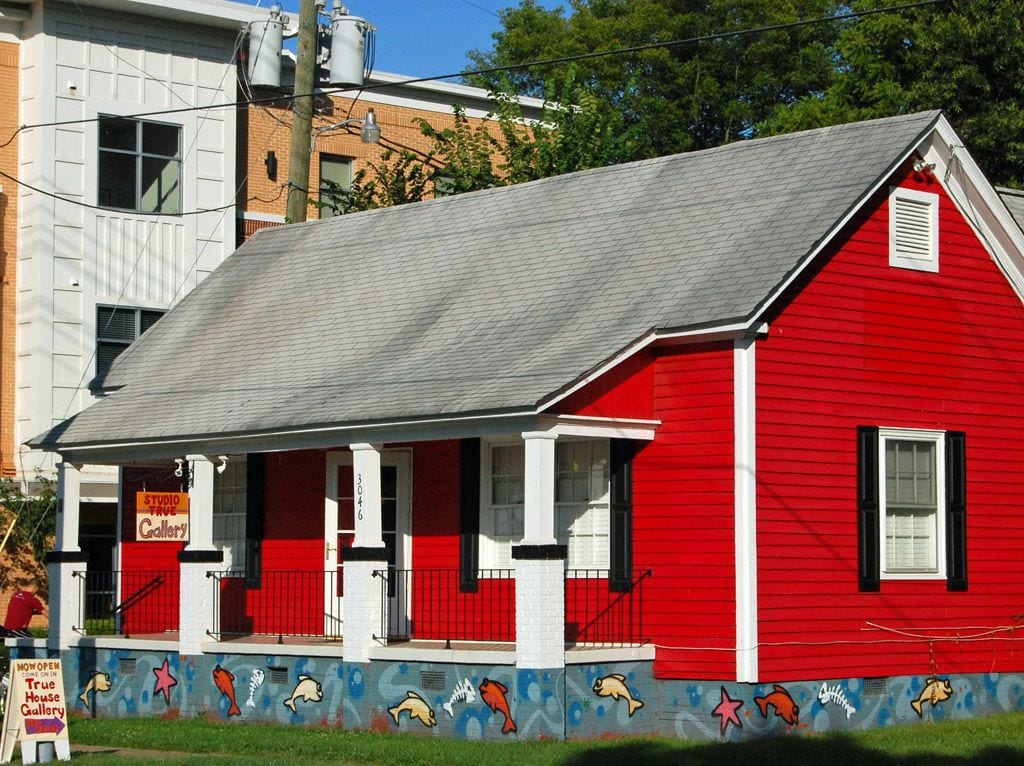
About two and a half miles northeast of Uptown, NoDa takes its name from North Davidson Street and grew out of an old textile-mill village whose brick mills and small mill houses still line the streets. After the mills closed, artists moved in, and the neighborhood has long been Charlotte's arts district.
Today the NoDa Arts District is known for colorful murals, small galleries, live-music venues, breweries and casual restaurants, centered on North Davidson and 36th Streets. Gallery crawls bring out crowds, and on weekend evenings the sidewalks are busy with people hopping between bars and shows. The light rail stops nearby, so it is easy to reach from Uptown without a car.
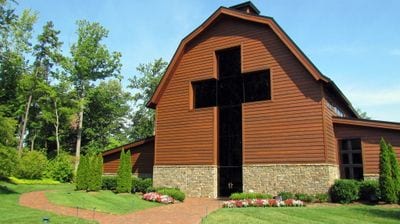
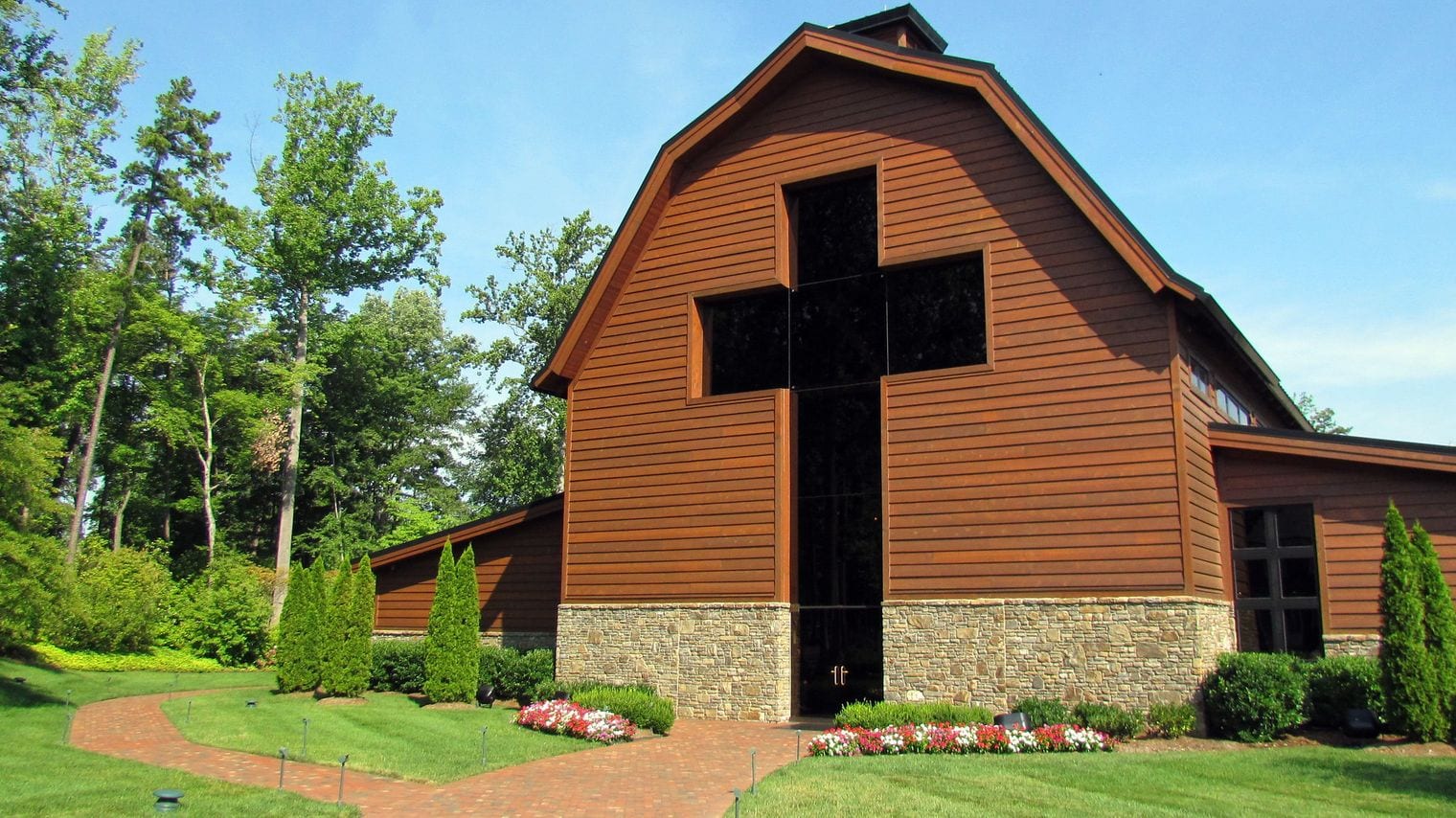
On the grounds of the Billy Graham Evangelistic Association's headquarters in west Charlotte, the Billy Graham Library tells the story of the evangelist who grew up on a dairy farm just a few miles away. Opened in 2007, the building is designed to look like a dairy barn, and a mechanical talking cow greets visitors at the start of the tour.
The self-guided exhibits follow Graham's decades of preaching around the world, with film, photographs and memorabilia from his crusades. Outside, his restored family homeplace has been moved onto the grounds, and a quiet Memorial Prayer Garden at the end of a cross-shaped walkway is where Billy Graham and his wife, Ruth, are buried.
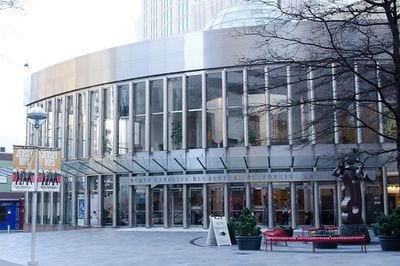
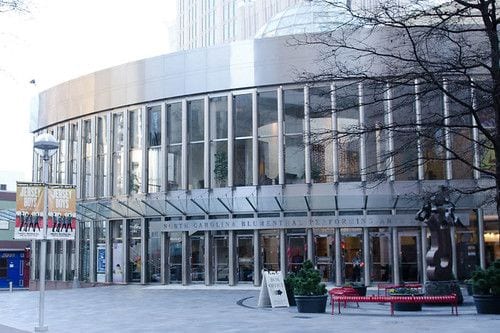
The Blumenthal Performing Arts Center on North Tryon Street is the hub of Charlotte's theater scene. Since it opened in 1992, Blumenthal Arts has grown into a group of Uptown venues, led by the large Belk Theater, the more intimate Booth Playhouse and the Knight Theater at the Levine Center for the Arts.
Touring Broadway musicals are the big draw, but the stages also host concerts, dance, comedy and the city's resident performing companies, so there is usually something on. A show here pairs neatly with dinner in Uptown, with crowds spilling out onto Tryon Street afterward.
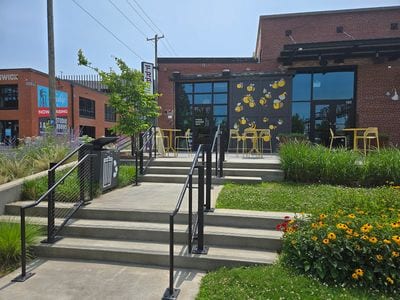
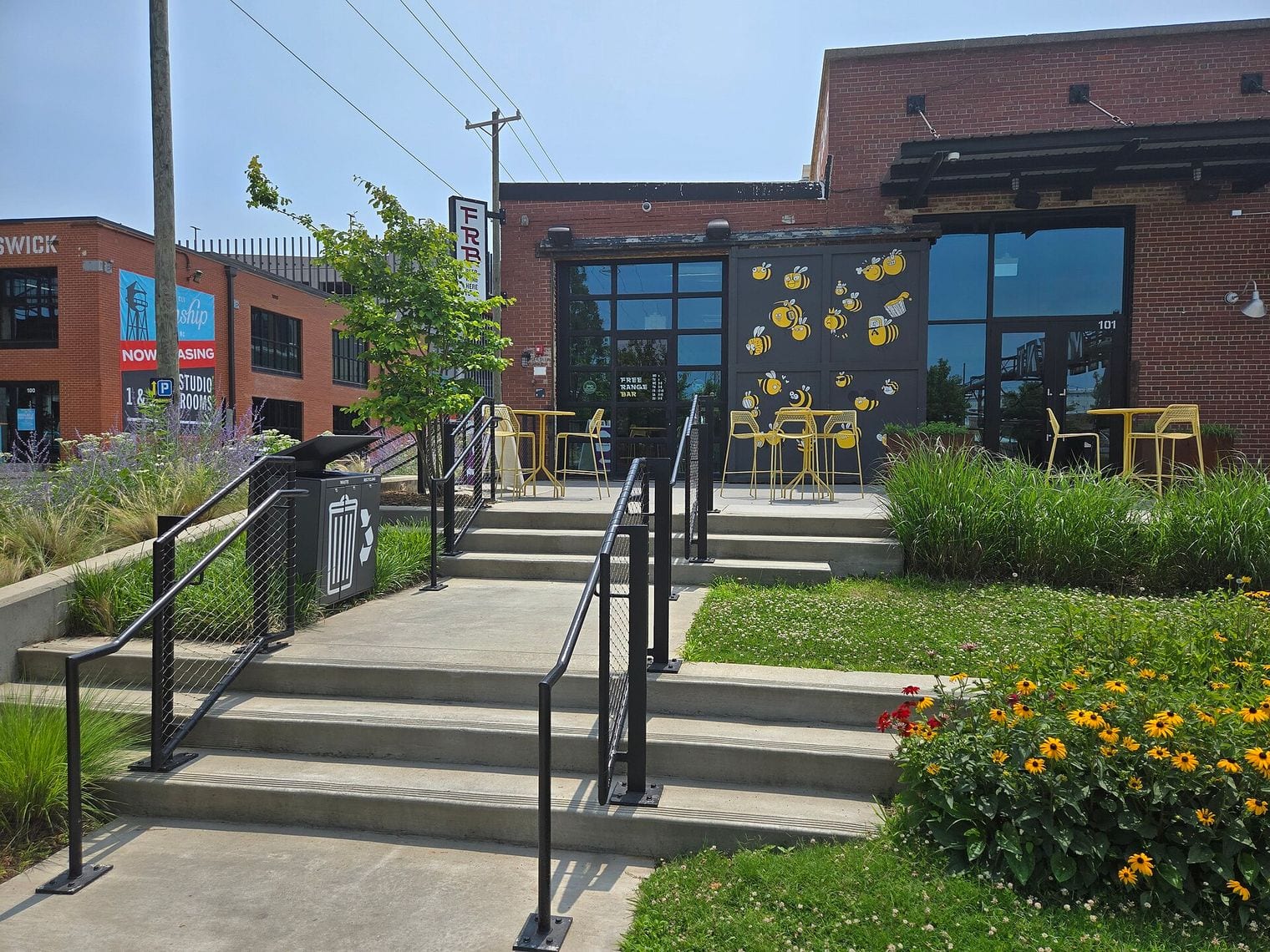
Just north of Uptown, Camp North End occupies a sprawling industrial site with an unusual past. Ford opened a Model T assembly plant here in 1924, the Army later used the complex as a supply depot during World War II, and from 1955 the site built Nike missiles as the Charlotte Army Missile Plant, which is where today's name, CAMP, comes from.
The old factory buildings have since been reborn as a creative campus of food stalls, bars, shops, studios and event spaces, with murals and outdoor seating spread across the former loading yards. Weekends often bring markets, concerts and festivals, and it is a good place to see how Charlotte reuses its industrial buildings.
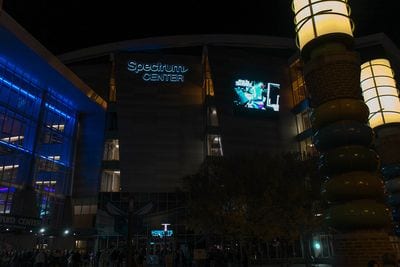
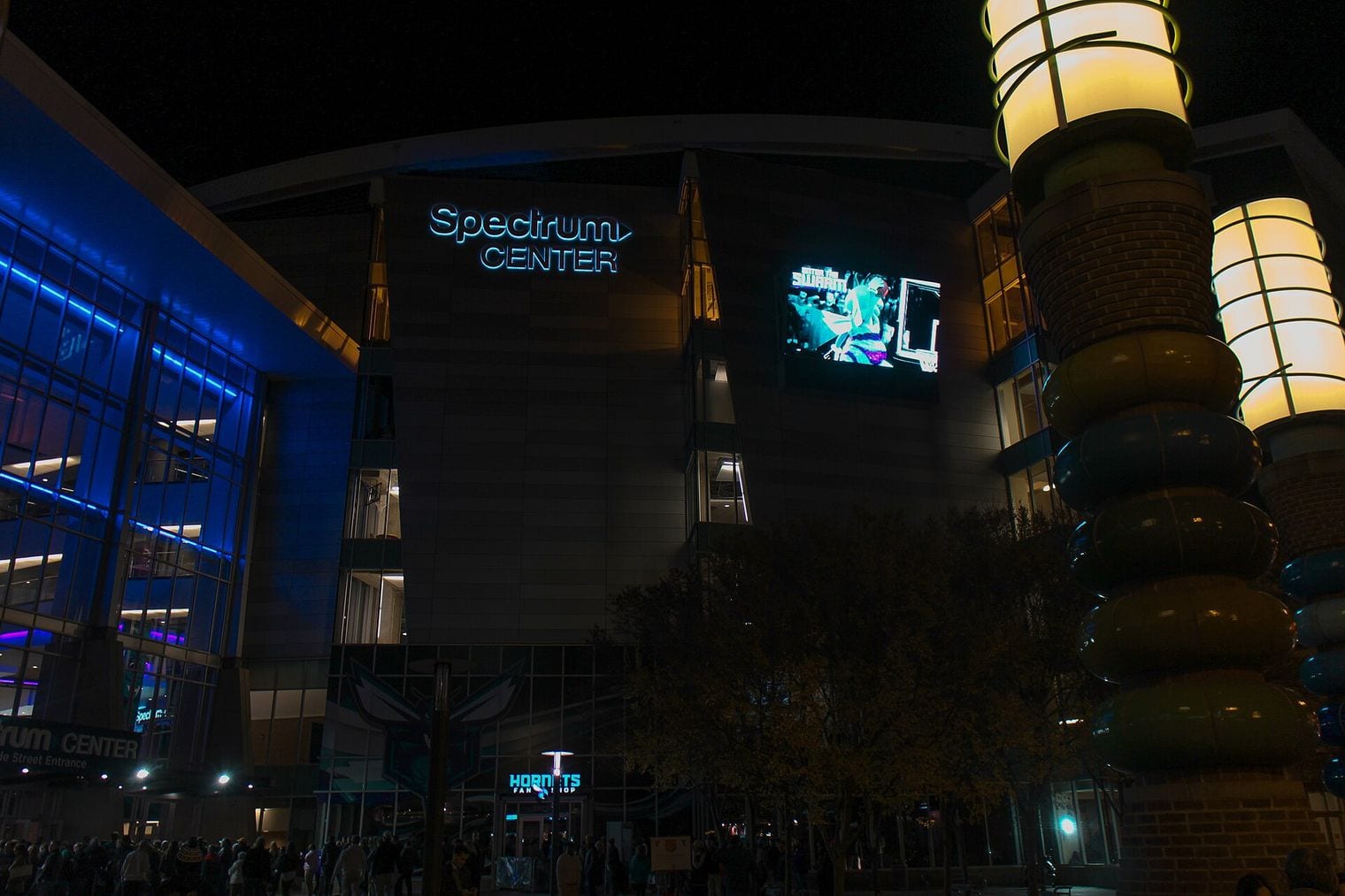
The Spectrum Center is Uptown Charlotte's indoor arena and home of the NBA's Charlotte Hornets, whose name harks back to the city's Revolutionary War nickname. On game nights the streets around the arena fill with teal-clad fans, and the atmosphere carries over into the bars and restaurants nearby.
When the Hornets are away, the arena hosts big-name concerts, family shows, college basketball and other touring events, so it is worth checking the calendar before a trip. Its central Uptown location makes it easy to combine a show with dinner and a walk past the skyline, without needing to move the car.
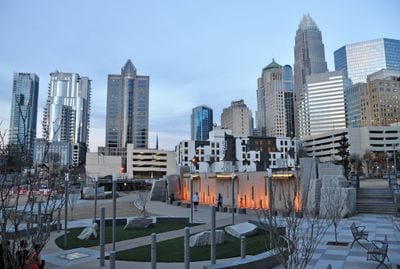
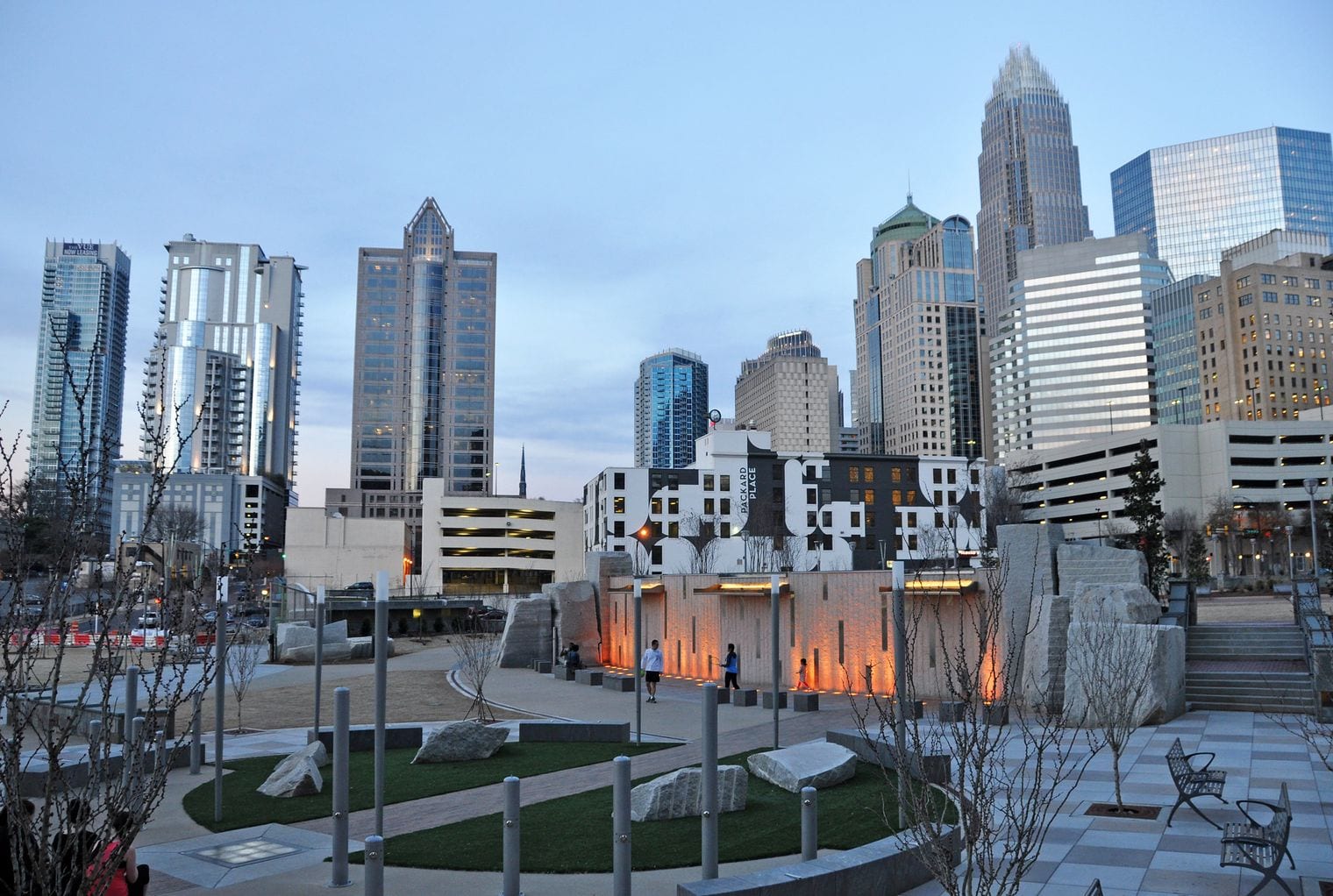
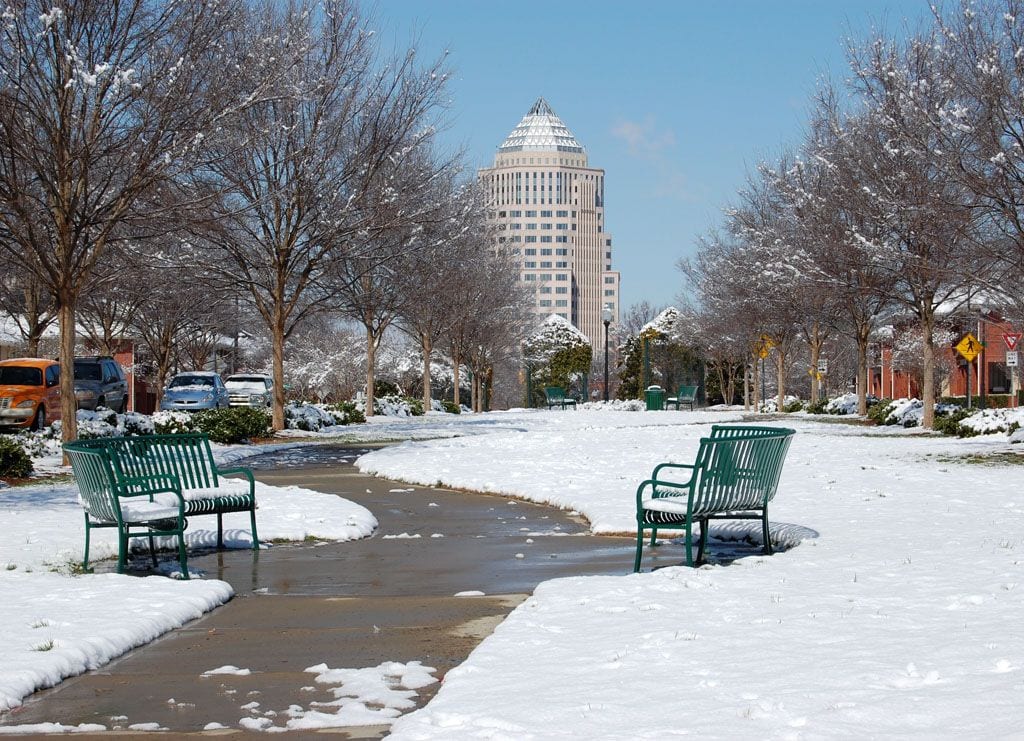
Named for the Charlotte-born artist, Romare Bearden Park is a 5.4-acre green space in the heart of Uptown, opened in 2013. Its design is based on Bearden's collages and paintings, as interpreted by artist Norie Sato, so the gardens, paths and plantings are laid out as a series of shapes and colors rather than a typical lawn.
There are waterfalls, shady gardens, a big event green and a play area with musical chimes, and the park looks straight across the street to Truist Field and the city's towers. It is one of the best spots in Uptown for a picnic, a pre-game gathering or a classic skyline photo, especially at dusk.
Free printable checklist of all 35 places
Tick them off as you go. Confirm your email to download it, plus one email every Thursday with new guides for the places you tick.
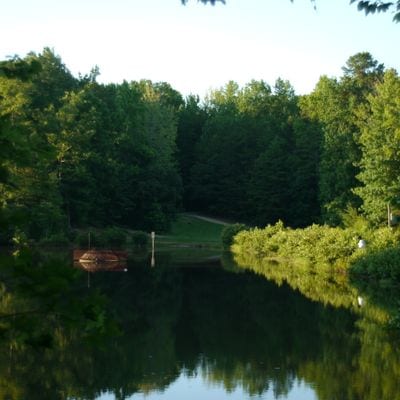
On the shore of Lake Wylie in far southwestern Charlotte, McDowell Nature Preserve feels a world away from Uptown. Forested trails wind through hardwood hills and along the water, and the preserve's nature center introduces the wildlife and plants of the Piedmont.
The preserve also has campsites, fishing spots and a boat ramp onto the lake, making it a popular spot for a full day outdoors. Come on a weekday morning for quiet trails and good birdwatching, or in the fall, when the woods around the lake turn gold and red.
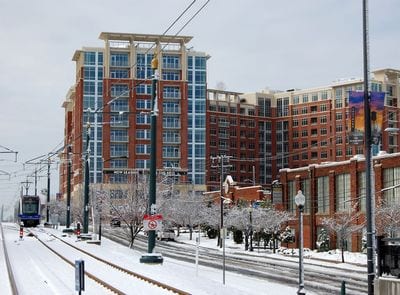
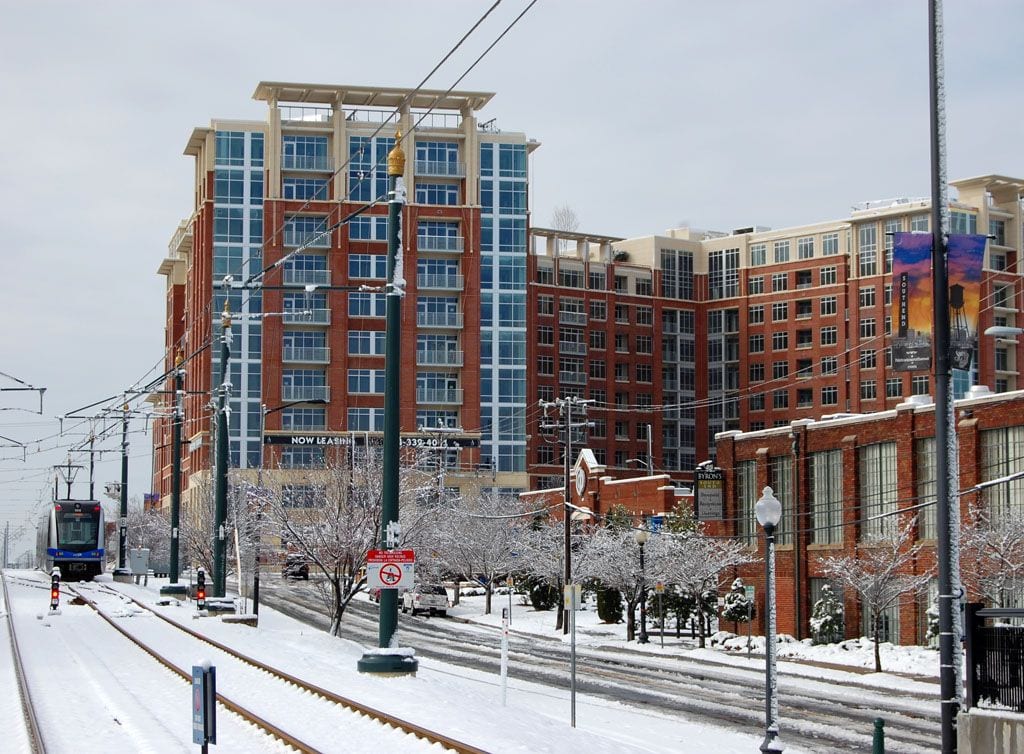
Immediately southwest of Uptown, South End is a former mill and warehouse district that took off after the LYNX Blue Line light rail opened through it in 2007. The old industrial buildings now hold breweries, restaurants, design shops and apartments, and the neighborhood has become one of the liveliest places in the city to spend an evening.
The Charlotte Rail Trail, a walking and cycling path that runs beside the light-rail tracks, ties it together, with public art, benches and patios along the way. Walk the trail from the edge of Uptown south through South End, stopping at breweries and taprooms as you go, then ride the train back. It is busiest on warm weekend afternoons.
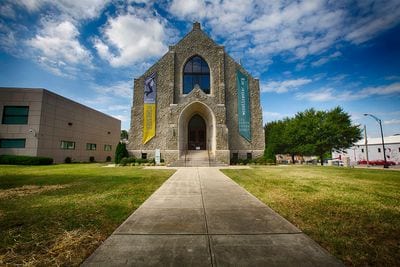
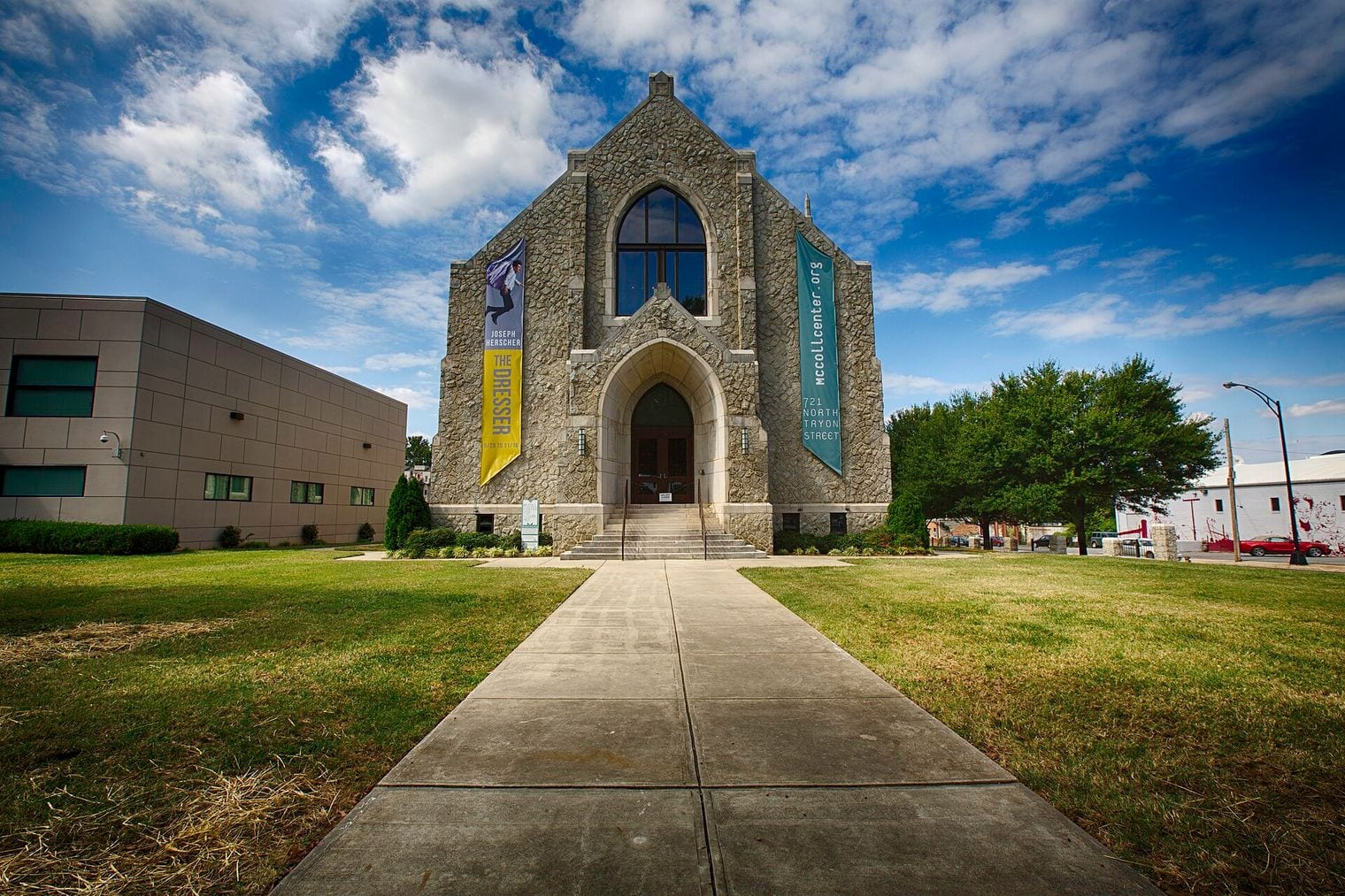
The McColl Center for Art + Innovation occupies one of Uptown's most striking buildings, a neo-Gothic brick-and-stone church built in 1926 on North Tryon Street. The congregation dissolved in 1950, and a fire in 1984 gutted the empty building, leaving only its shell, before it was rebuilt as an artist residency and contemporary art space.
Today the McColl Center hosts visual artists and other creative residents from around the country, and visitors can see exhibitions in the galleries and meet artists during open-studio events. The contrast between the old Gothic walls and the experimental work inside is the attraction, and it makes a fine pairing with the nearby galleries of the arts district.
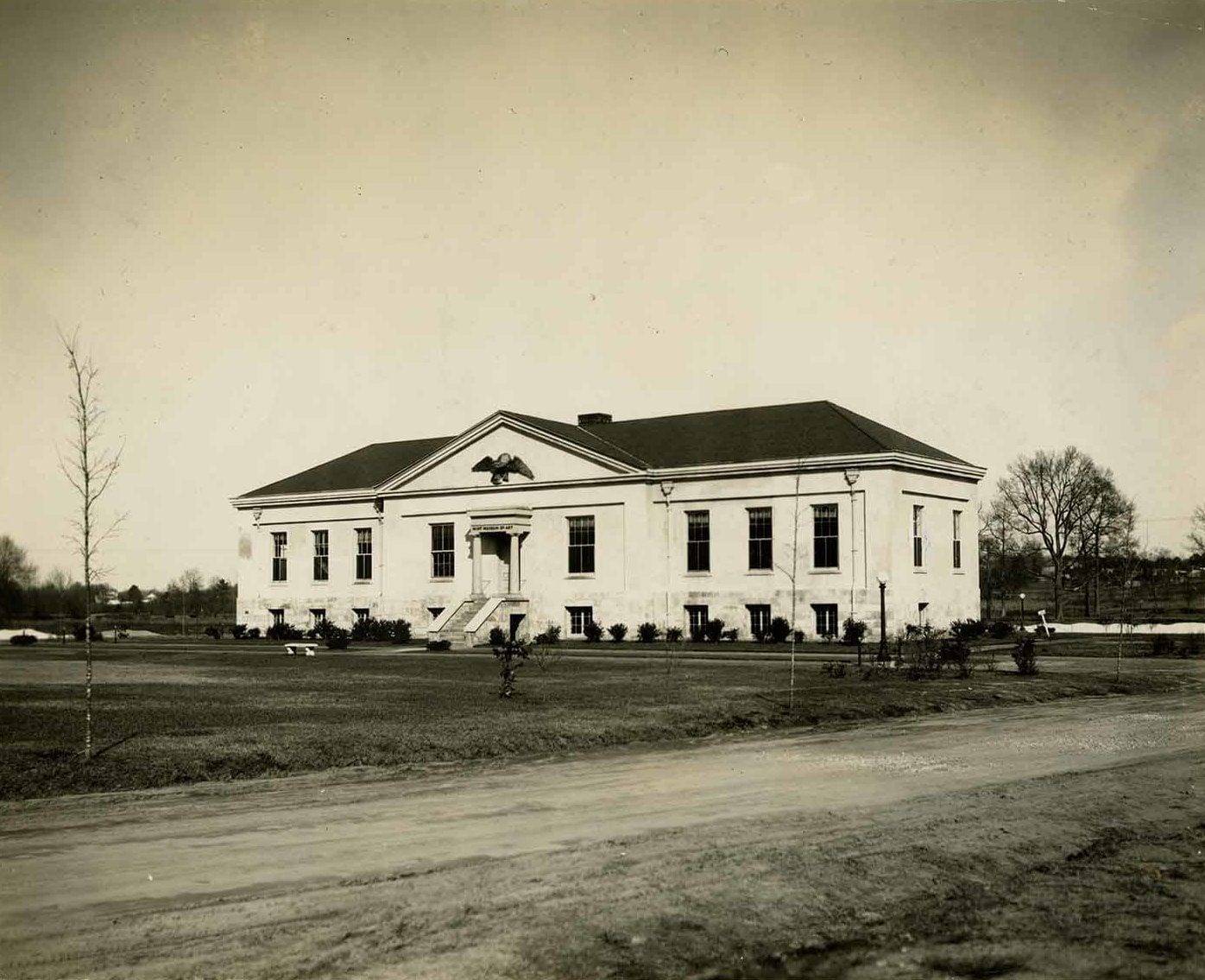
Mint Museum Randolph is where Charlotte's art museum story began. Its Federal-style building went up in 1836 as the Charlotte Mint, one of the country's first branch mints, built to coin the gold that poured out of the Carolina gold rush.
When the old mint was slated for demolition in the 1930s, a group of residents had it taken down and rebuilt a few miles east in the Eastover neighborhood, where it was dedicated in 1936 as the Mint Museum of Art, the first art museum in North Carolina.
Today the Randolph branch draws on the museum's collections of ceramics and decorative arts, widely regarded as among the finest in the country, along with North Carolina pottery, historic costume and fashion, and art of the ancient Americas, with changing exhibitions in between. It is smaller and calmer than the Uptown branch, set on landscaped grounds on Randolph Road, and pairs well with a drive past the grand old homes of Eastover and Myers Park.
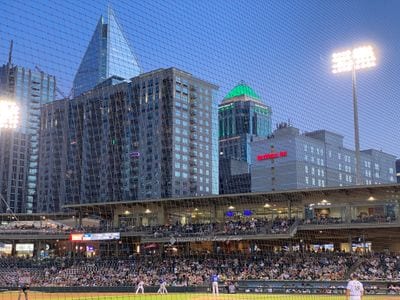
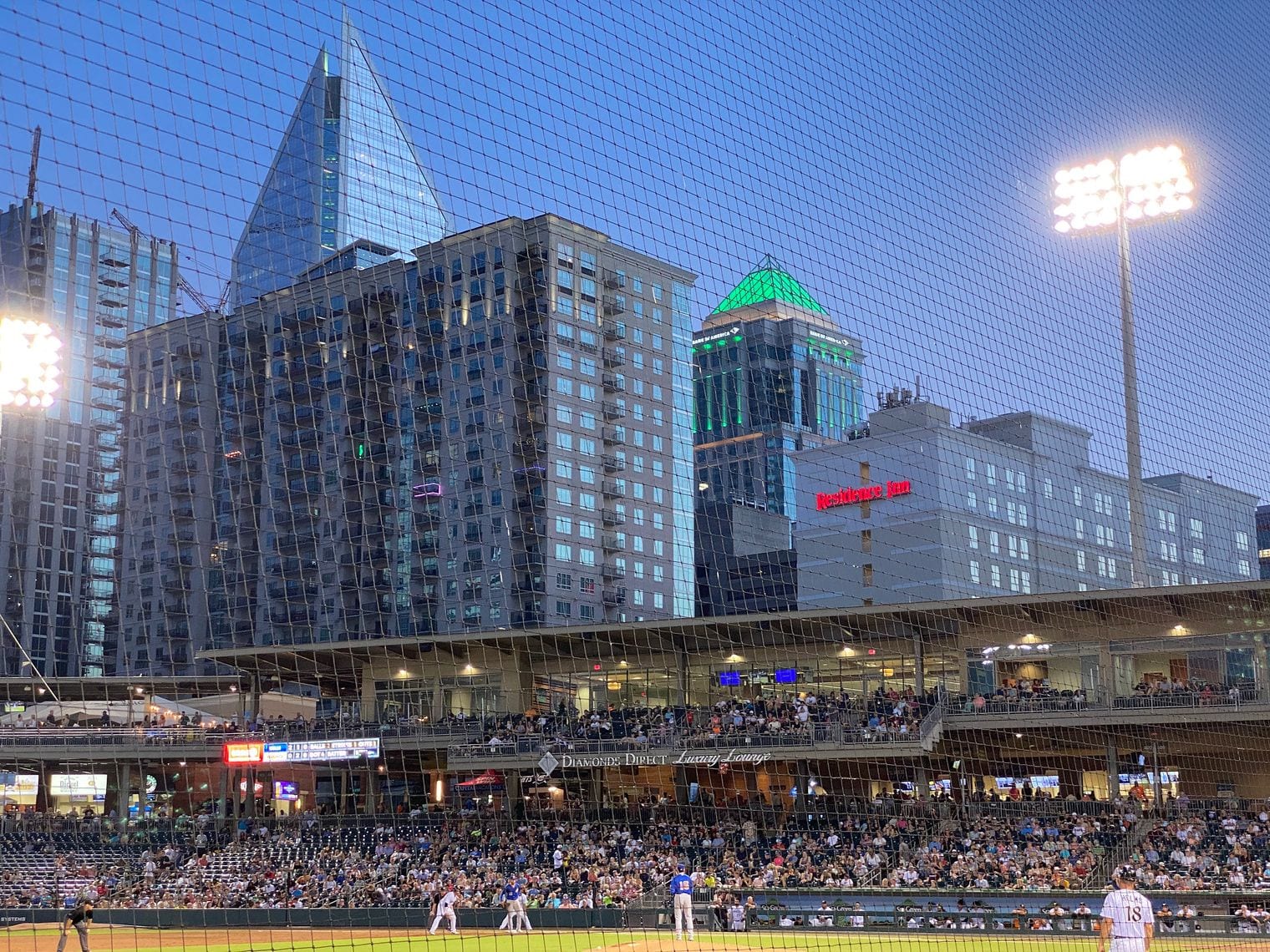
Truist Field is the Uptown ballpark of the Charlotte Knights, the city's Triple-A Minor League Baseball team in the International League. It was the third major sports venue built in Uptown, after the football stadium and the arena, and it sits right across the street from Romare Bearden Park.
The big selling point is the view: from the stands, the city's towers rise just beyond the outfield, making it one of the more photogenic ballparks in the minors. The crowds are relaxed and family-friendly, and a summer evening game with the skyline lighting up behind the field is a classic Charlotte night out.
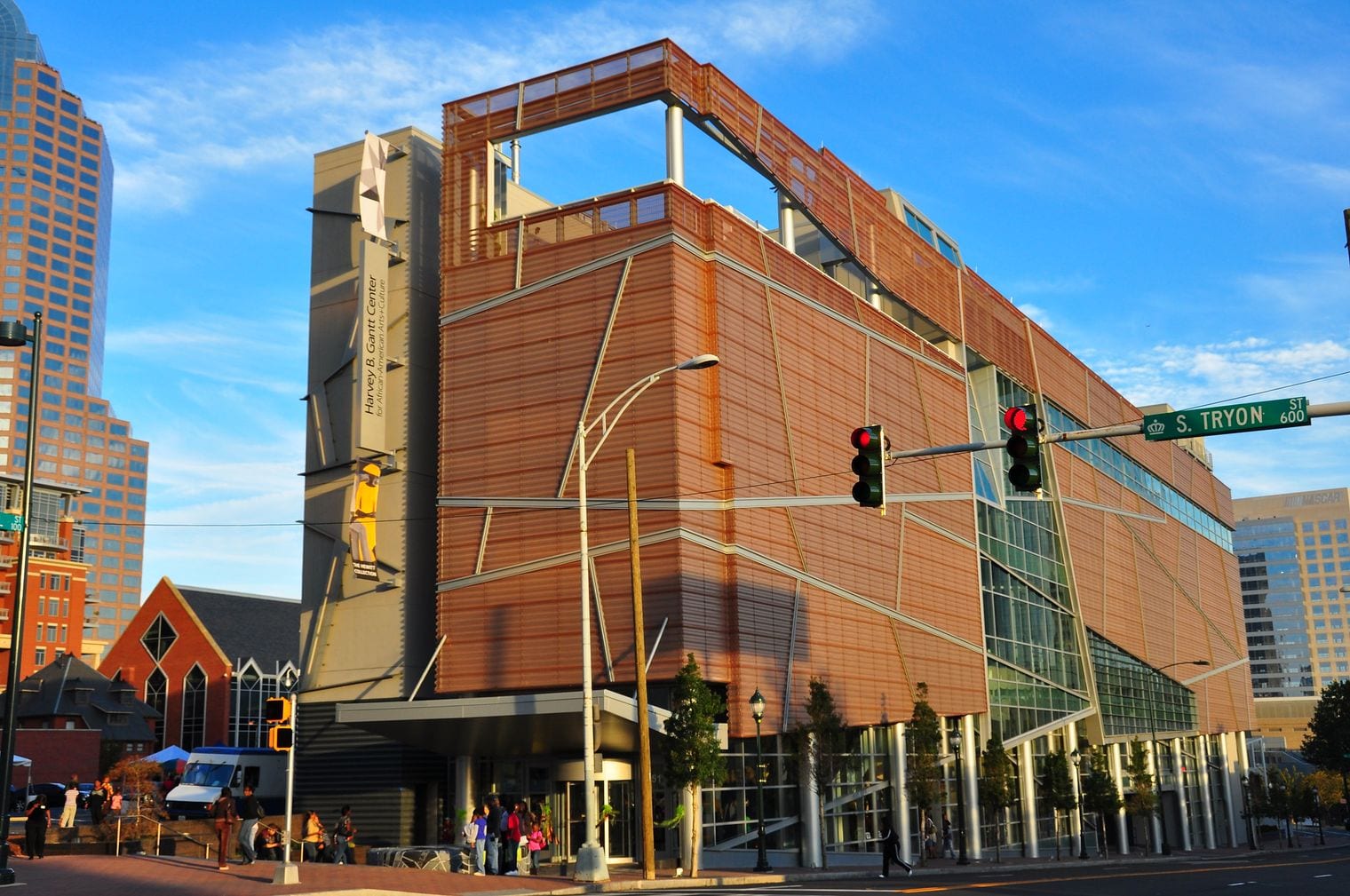
2222. Harvey B. Gantt Center for African-American Arts + Culture
The Harvey B. Gantt Center for African-American Arts + Culture is named for Harvey Gantt, Charlotte's first African-American mayor and the first African-American student at Clemson University. Formerly the Afro-American Cultural Center, it moved into its striking four-story building, designed by the Freelon Group, in 2009 as part of the Levine Center for the Arts on South Tryon Street.
The Gantt Center presents exhibitions of African-American art, history and culture, along with talks, films, performances and family programs. Its location beside the Duke Energy Center tower puts it a short walk from the Mint Museum Uptown and the Bechtler, so it is easy to spend a full day moving between the three.
Opened in 2015, First Ward Park is a 4.6-acre urban park in Uptown's First Ward, tucked between new towers, the ImaginOn children's library and the LYNX light-rail line. Its completion meant each of Uptown's four wards finally had a major park of its own.
The park mixes open lawn with shady paths and seating, and it is a favorite lunchtime retreat for office workers and residents of the surrounding apartments. Stop here on a walk between the Blumenthal theaters, the light rail and the arena, or bring a coffee and enjoy one of the calmer corners of downtown.
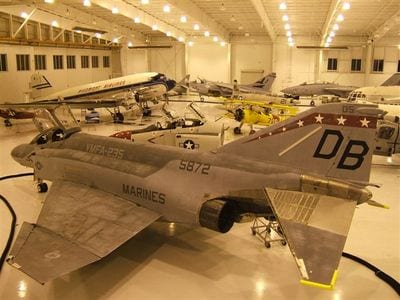
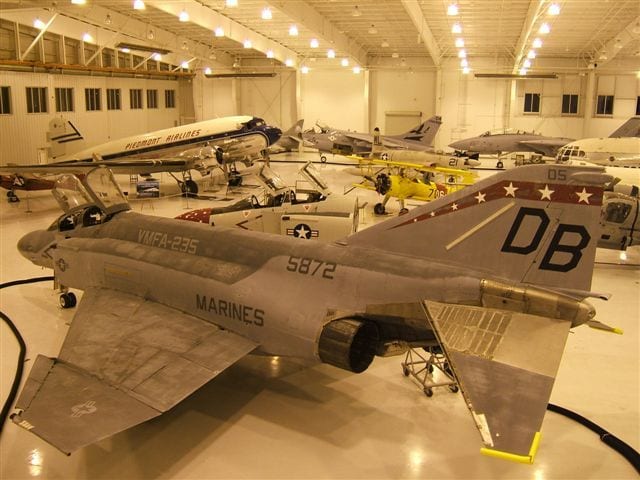
On the grounds of Charlotte Douglas International Airport, the Sullenberger Aviation Museum, formerly the Carolinas Aviation Museum, reopened in 2024 in a new home and under a new name honoring Captain Chesley "Sully" Sullenberger. Its centerpiece is the actual Airbus A320 of US Airways Flight 1549, which he landed safely on New York's Hudson River in 2009.
Around the "Miracle on the Hudson" exhibit, the museum displays dozens of aircraft and a large collection of artifacts that trace aviation history, with interactive exhibits aimed at younger visitors and future pilots. It is a natural stop on the way to or from a flight, and the airport setting means planes are never far away.
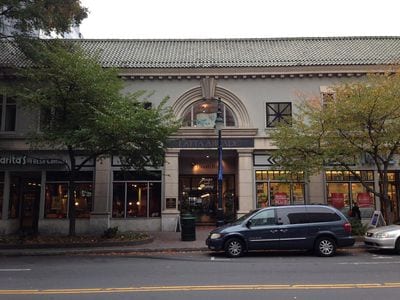
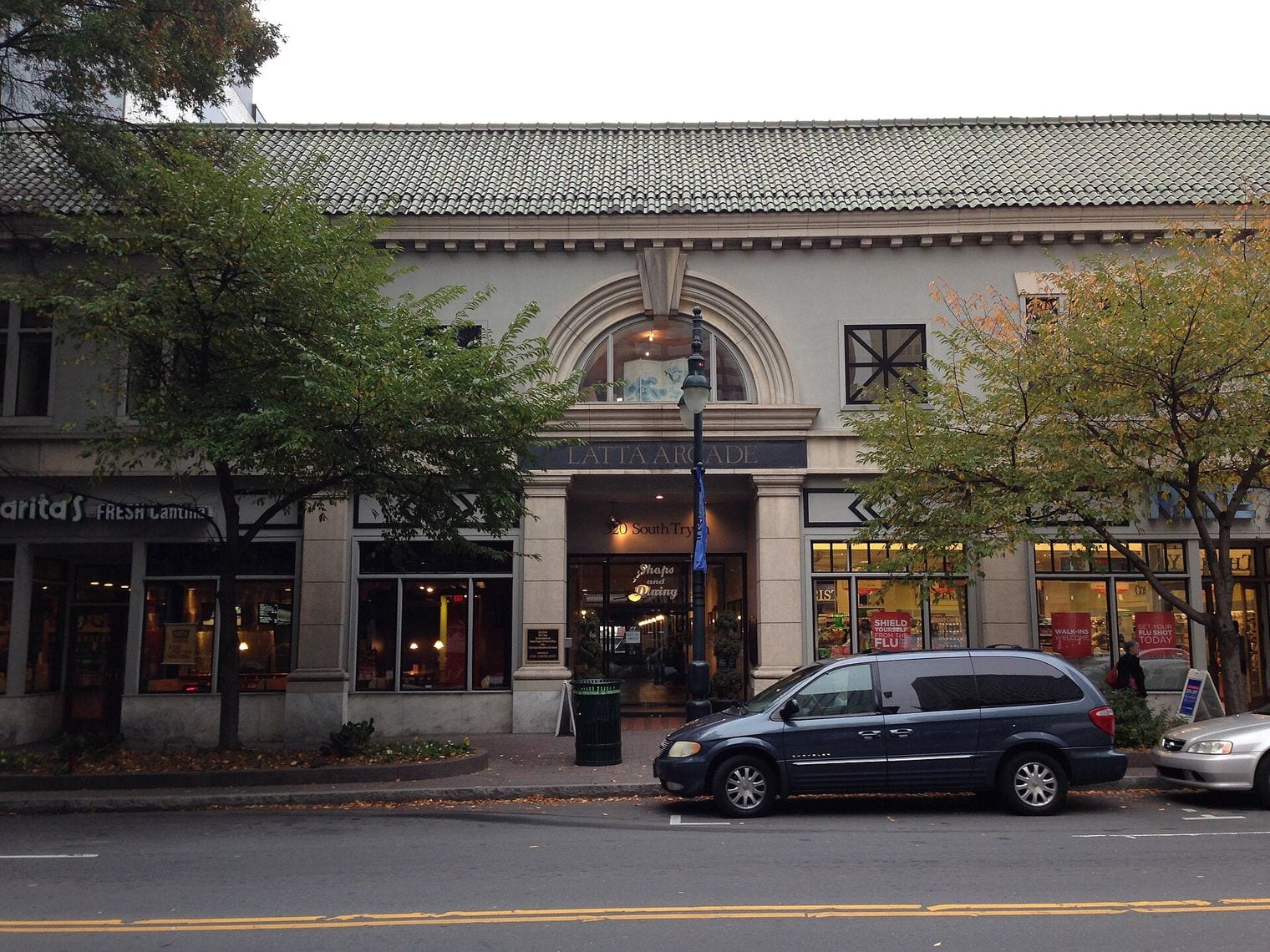
Step off South Tryon Street into the Latta Arcade and you are back in 1914. Designed by architect William H. Peeps, this narrow, two-level shopping arcade has a long glass skylight that originally gave cotton brokers natural light for grading cotton, a reminder of the trade that built early Charlotte.
Listed on the National Register of Historic Places, the arcade now holds small shops, cafes and lunch spots, and it opens onto Brevard Court behind it. It takes only a few minutes to walk through, but it is one of the most atmospheric interiors in Uptown and a welcome escape from the glass towers outside.
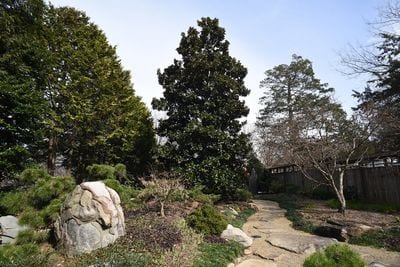
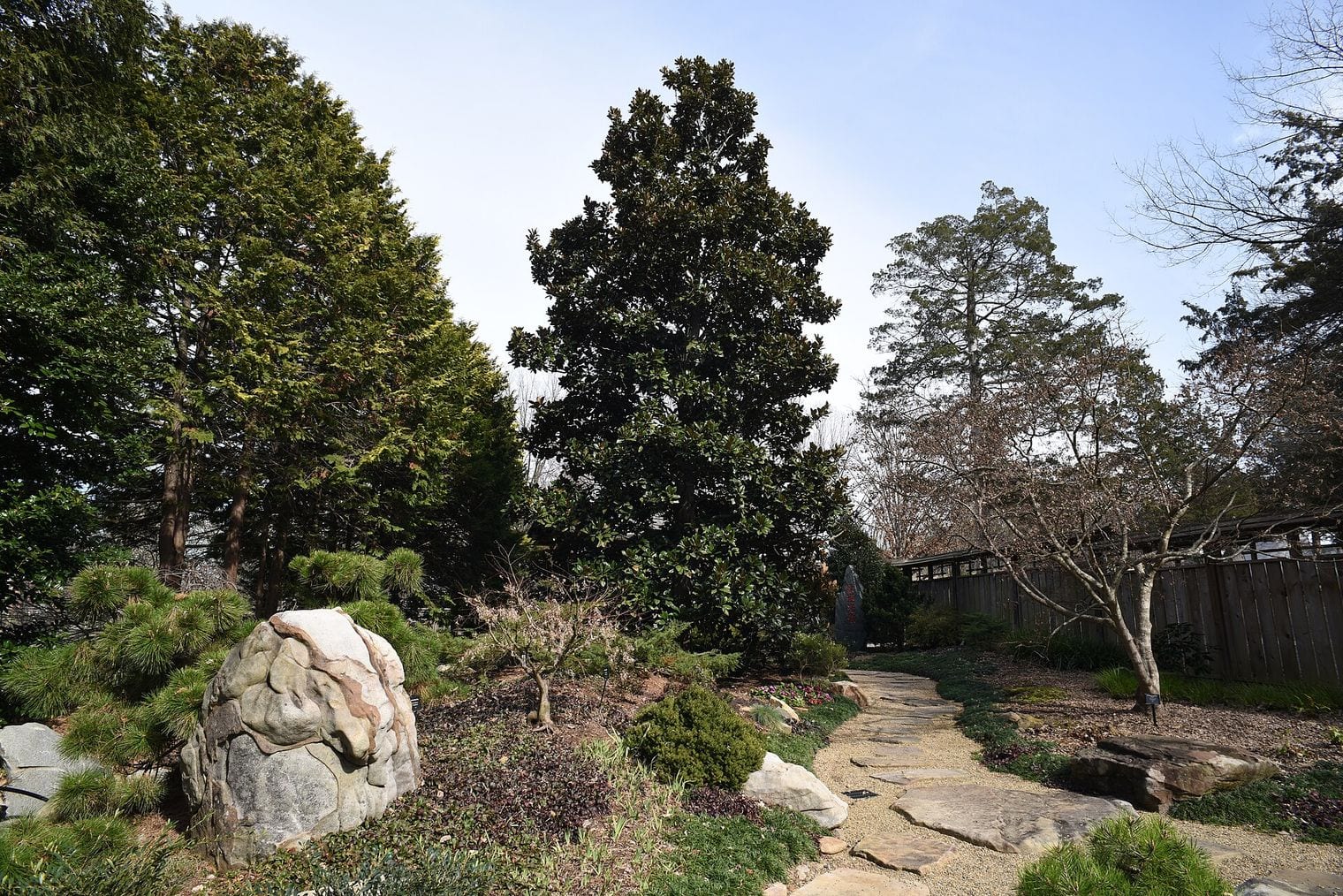
On the campus of the University of North Carolina at Charlotte in University City, the UNC Charlotte Botanical Gardens are a quiet surprise. The McMillan Greenhouse holds orchids, tropical plants, desert collections and native carnivorous plants such as pitcher plants, sundews and Venus flytraps.
Outdoors, the Van Landingham Glen is planted with thousands of rhododendrons and azaleas alongside native trees, ferns and wildflowers, and the Susie Harwood Garden adds dwarf conifers, Japanese maples, an Asian-style gazebo, arched bridges and a moon gate. Spring, when the azaleas and rhododendrons bloom, is the showiest time to visit.
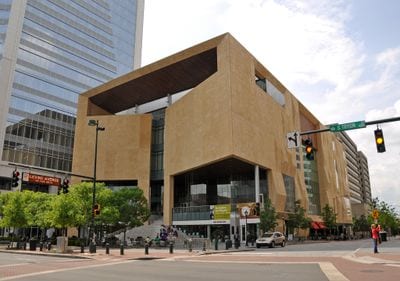
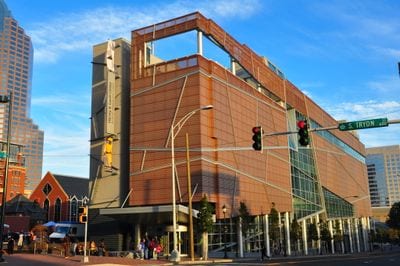
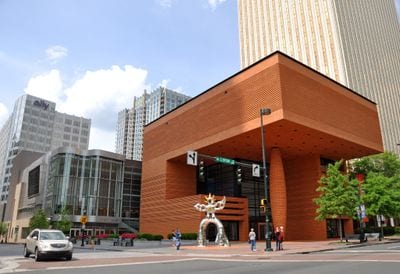
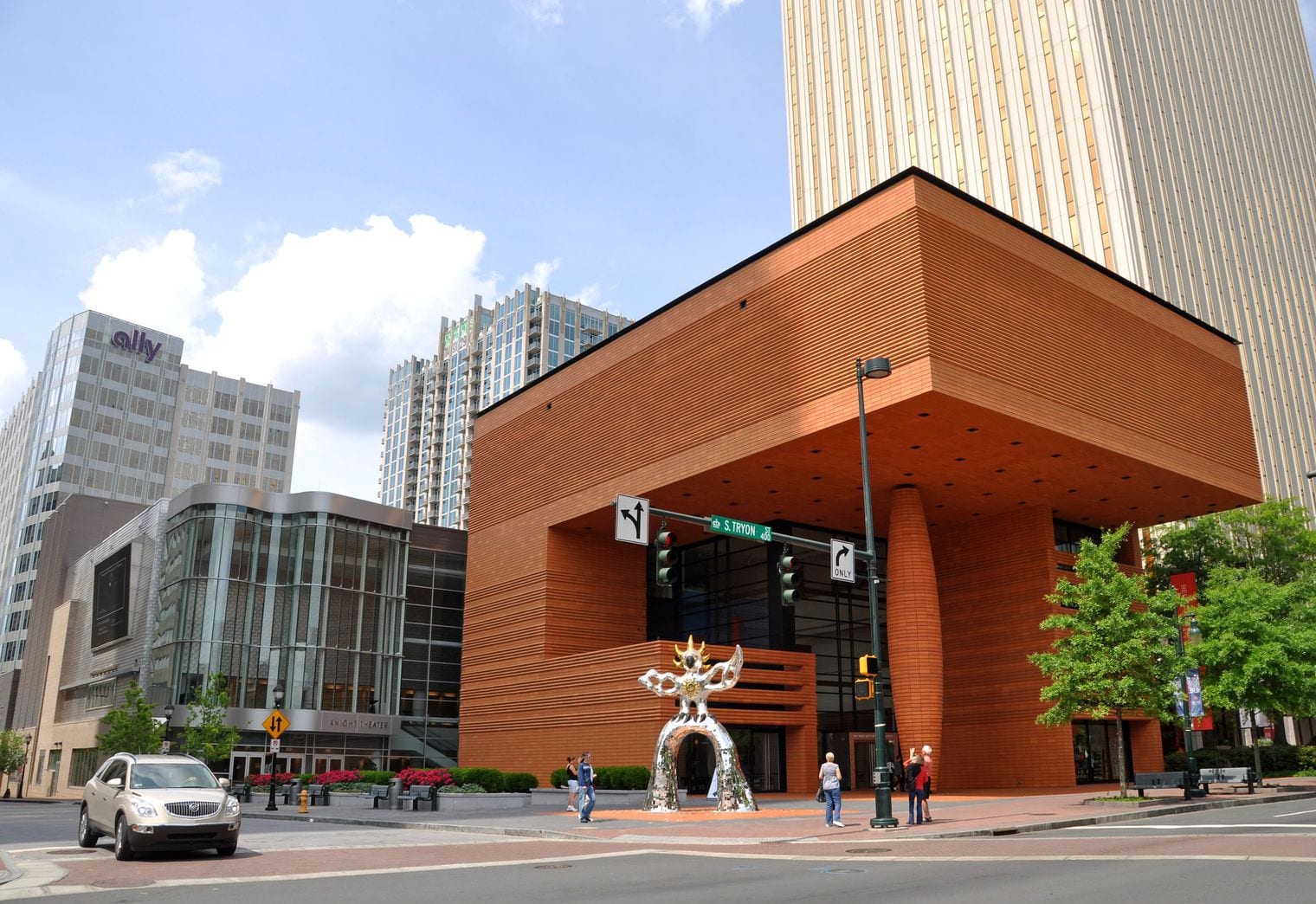
The Bechtler Museum of Modern Art is devoted to mid-20th-century modernism, drawn from a collection of more than 1,400 works assembled by the family of Andreas Bechtler, a Swiss-born Charlotte resident. Its terracotta-clad building on South Tryon Street, designed by Swiss architect Mario Botta, opened in 2010 as part of the Levine Center for the Arts.
Inside you can find works by major names of 20th-century modern art, shown in light-filled galleries around a soaring atrium. Outside, the Firebird, Niki de Saint Phalle's 17-foot sculpture covered in thousands of mirrored tiles, has become one of Uptown's best-loved landmarks and a favorite photo stop.
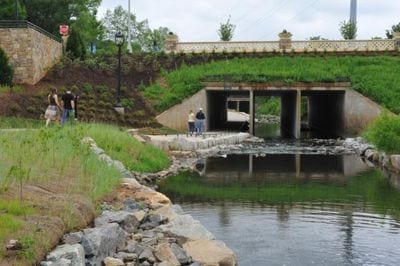
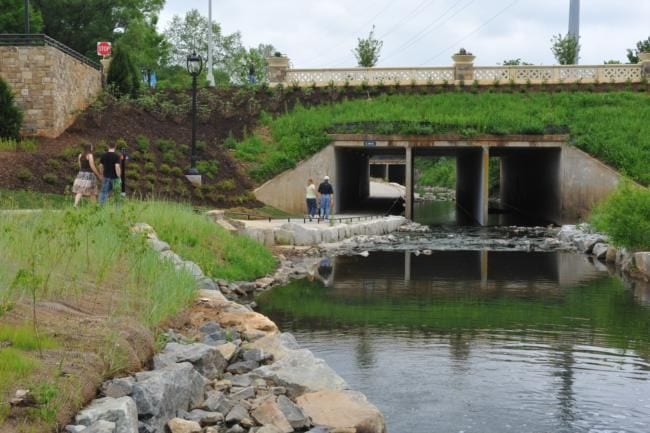
The Little Sugar Creek Greenway is Charlotte's signature urban trail, a linear park and stream-restoration project that follows the creek from just north of Uptown south through Midtown and past Freedom Park. When finished it is planned to reach all the way to the South Carolina line, and it already forms a key part of the Cross Charlotte Trail.
The urban stretch near Uptown offers miles of unbroken paved path beside landscaped creek banks, with bridges, public art and easy access to restaurants in Midtown and Dilworth. Walk, run or bike a section in the morning, or use it to link Freedom Park with the city's southern neighborhoods without ever sharing the road with cars.
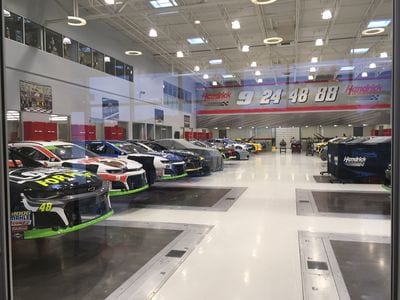
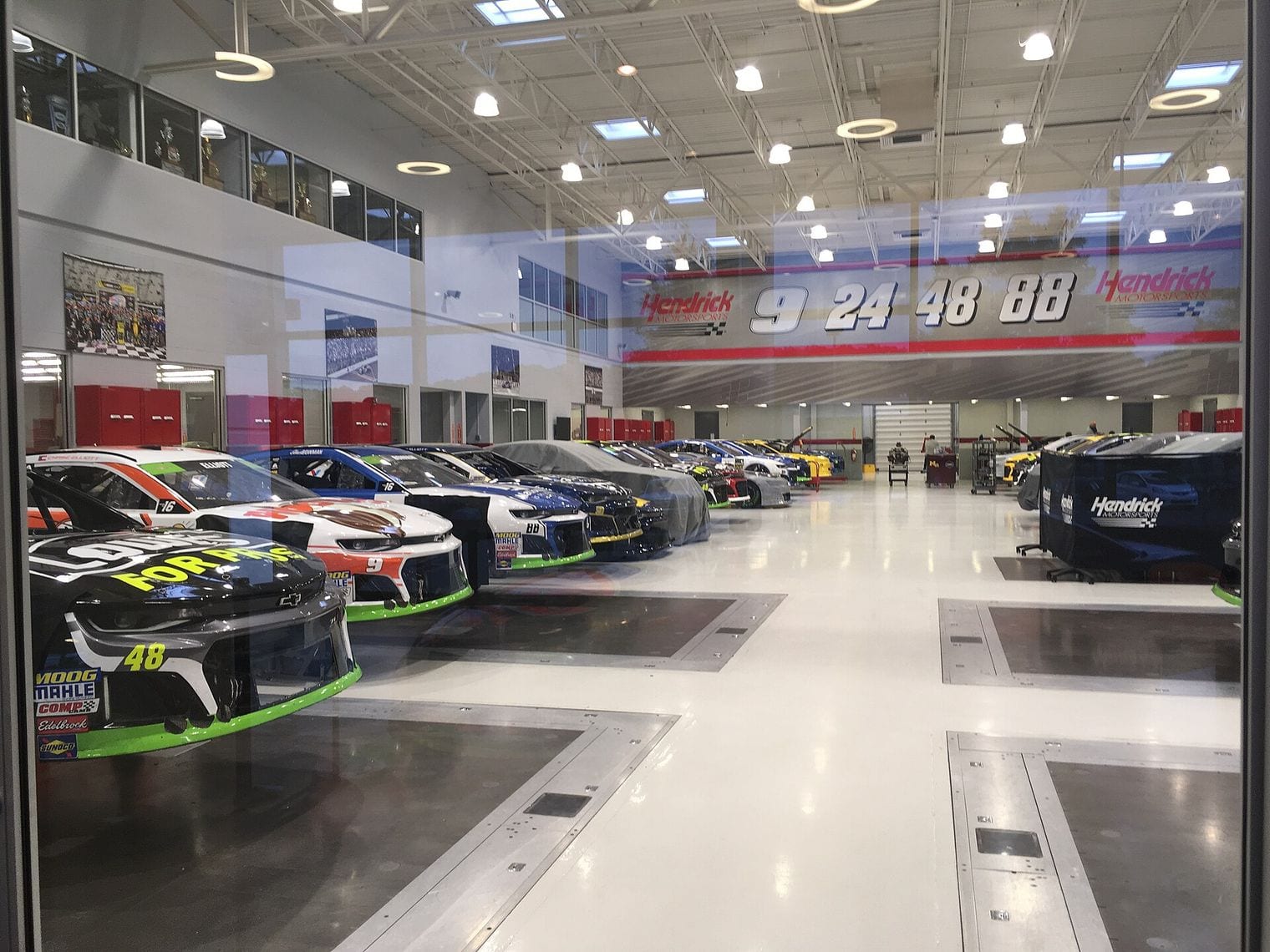
On Charlotte's northeastern edge, close to the Concord line and a short drive from the speedway, the Hendrick Motorsports campus is the working headquarters of one of NASCAR's most successful teams, founded by Rick Hendrick in 1984. Its museum and team store open the doors of a real race shop to fans.
The Hendrick Motorsports museum displays championship cars, trophies and memorabilia from the team's decades of racing, with interactive displays on its history. Visitors can also view the race shops during normal business days, which makes it a rewarding stop for anyone who enjoyed the NASCAR Hall of Fame and wants to see where today's cars are built.
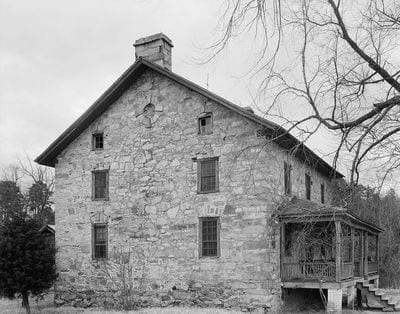
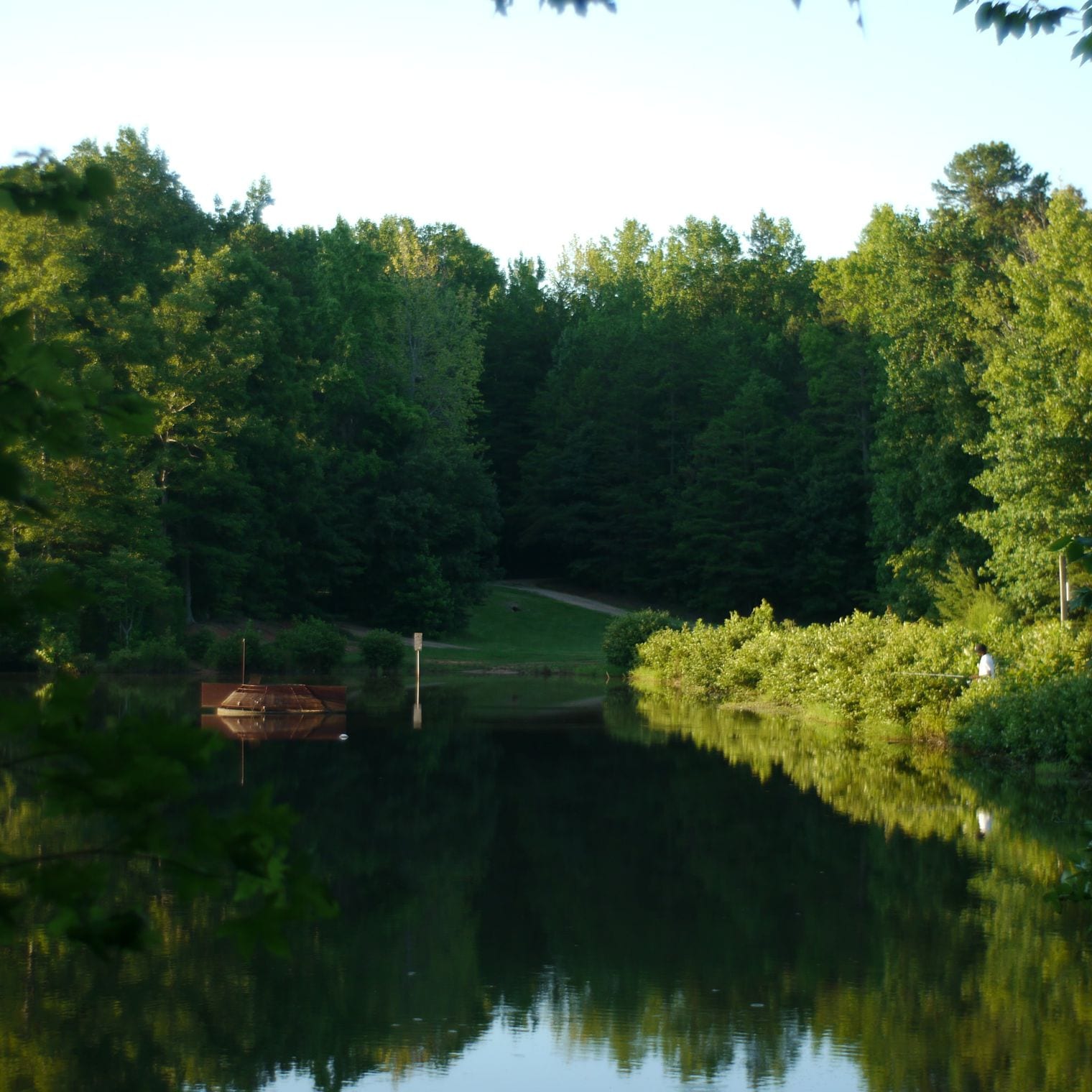
On Charlotte's east side, Reedy Creek Park pairs a busy community park with a 737-acre nature preserve, and the Reedy Creek Nature Center is the gateway to the wild side. Trails lead out from the center through hardwood forest, along streams and past ponds, with good chances of spotting birds and other wildlife.
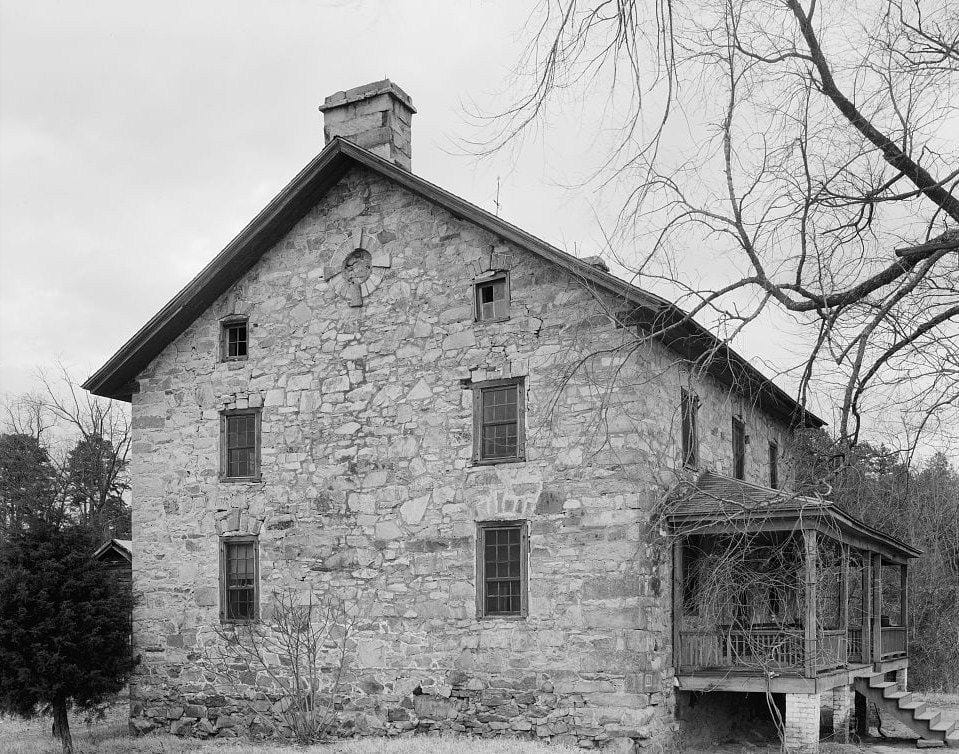
One trail leads deep into the preserve to the ruins of the John Robinson Rockhouse, a stone house dating from the 1780s that is listed on the National Register of Historic Places. The nature center has exhibits for younger visitors, and the neighboring park adds picnic shelters, playgrounds, a fishing pier and a disc golf course.
The Charlotte Museum of History in east Charlotte grew up around the 1774 Alexander Rock House, a two-story stone home built by early patriot Hezekiah Alexander that is the oldest surviving structure in Mecklenburg County. The museum was founded to care for the house and has since widened its focus to the whole story of the city.
Guided visits of the Rock House and its outbuildings bring colonial backcountry life into focus, while the galleries cover subjects ranging from the Revolutionary era to Charlotte's music history. It is a thoughtful counterweight to the gleaming towers of Uptown and a reminder of how old the Queen City's roots really are.
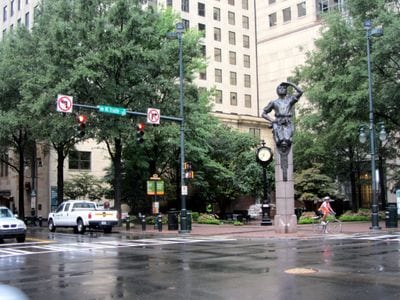
3232. Trade and Tryon Streets (Independence Square)
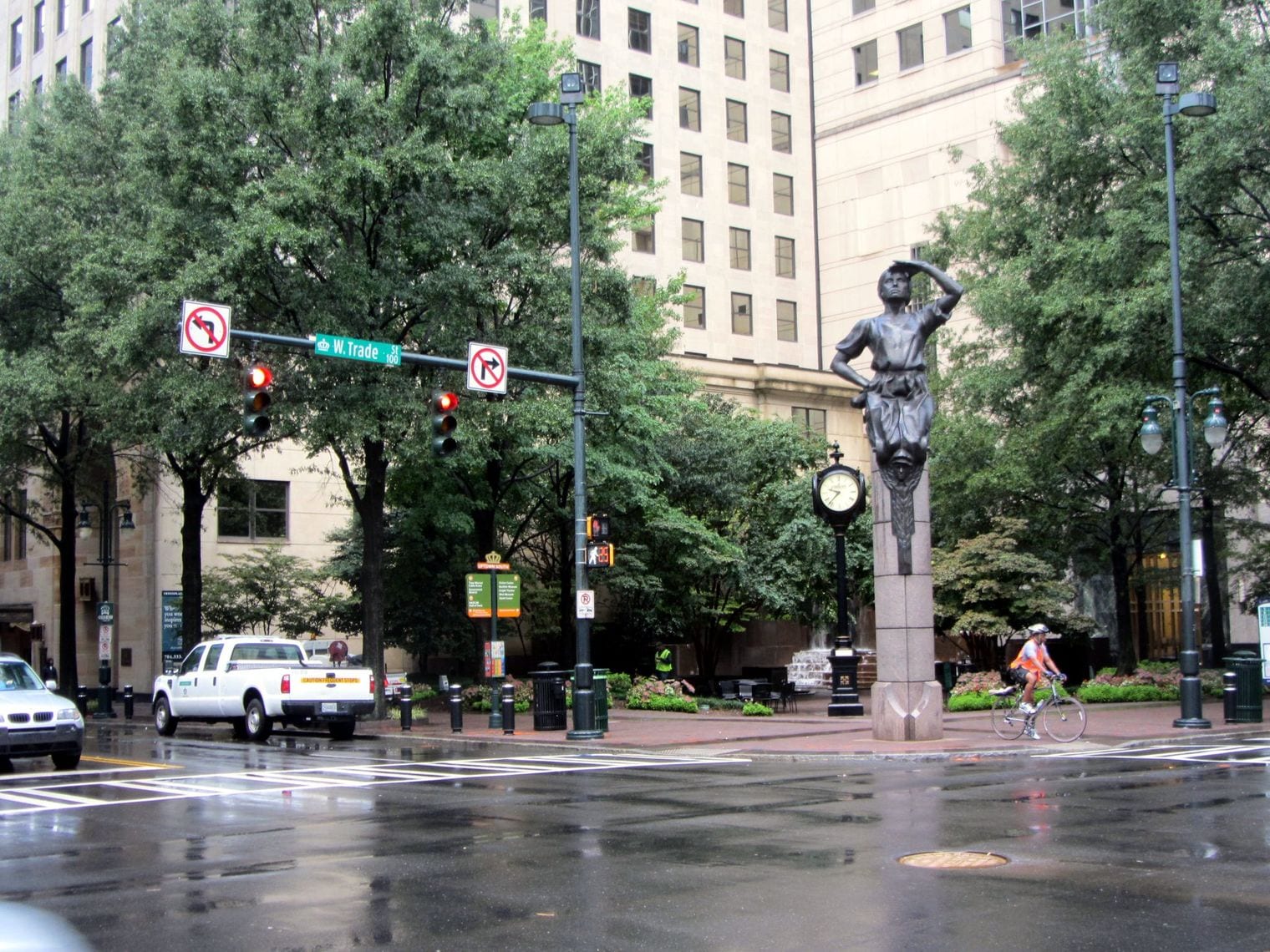
Charlotte grew up around the crossing of two old trading paths, and the junction of Trade and Tryon Streets, known as Independence Square, is still the center of the city, dividing Uptown into its four wards. The square's name recalls the Mecklenburg Declaration of Independence, which local tradition says was signed in Charlotte in May 1775.
At each corner of Trade and Tryon stands a large bronze statue by sculptor Raymond Kaskey, dedicated in 1995: Commerce, a gold prospector; Industry, a mill worker; Transportation, a railroad builder; and the Future, a mother and child that includes a hornet's nest. Stand in the middle of the crossing to see all four at once, framed by the bank towers.
About a mile east of Uptown, Plaza Midwood is one of Charlotte's most diverse and eclectic neighborhoods, a place of art galleries, funky shops and dive bars. Central Avenue is its main street, lined with independent restaurants, coffee shops and music spots that give the area a laid-back, slightly offbeat character.
Plaza Midwood is at its best in the evening, when the patios fill and the bars come alive, but daytime is good for browsing the shops and galleries. Just south of Central Avenue, 19-acre Veterans Park adds a green escape, and the neighborhood makes a good counterpoint to the polish of SouthPark or Uptown.
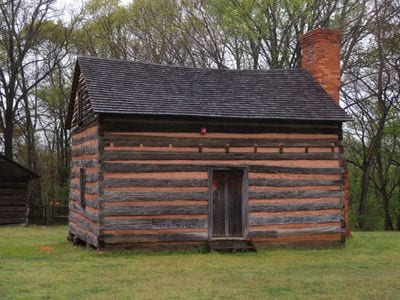
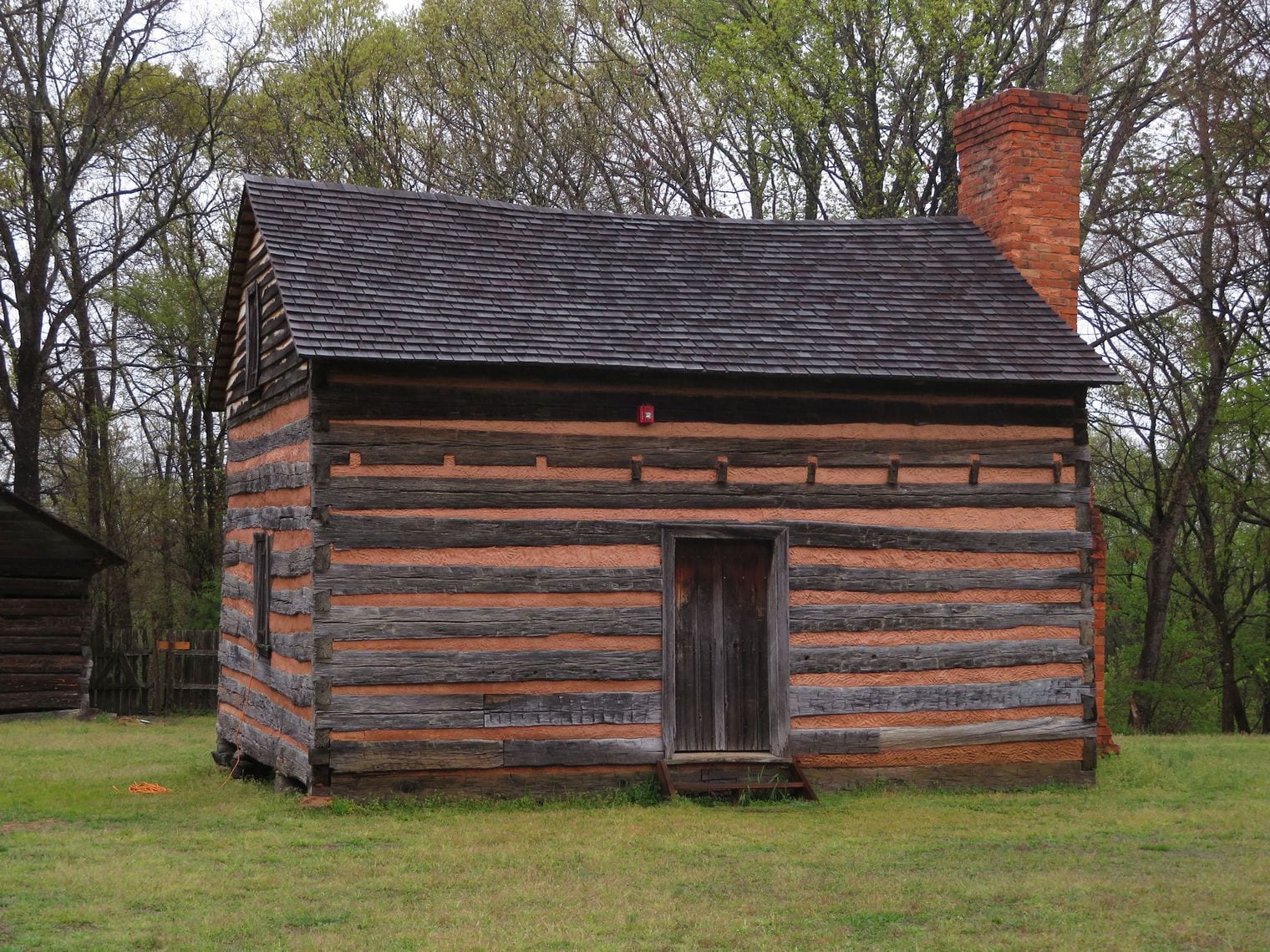
Just past Charlotte's southern city line in Pineville, the President James K. Polk State Historic Site marks the farm where the 11th president was born in 1795. The land belonged to his parents, and today the state historic site tells the story of Polk's political career, from his North Carolina roots to the White House and the expansion of the country during his term.
A visitor center with exhibits and a short film introduces his life, and guided tours lead through reconstructed log buildings, including a house, kitchen and barn, furnished to show farm life in the Carolina backcountry of the early 19th century. It is a quiet, rewarding stop on the way to or from Carowinds.
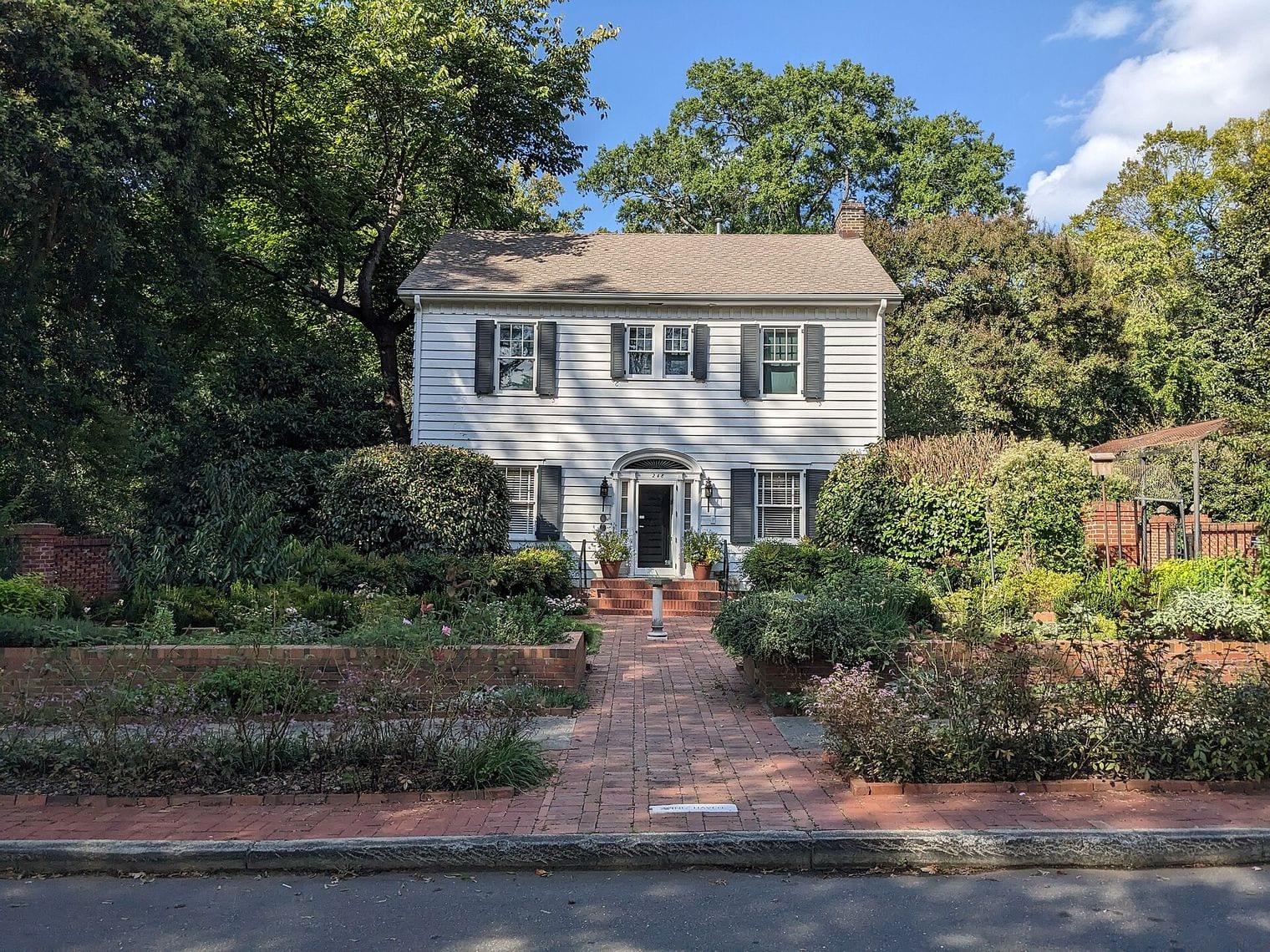
Hidden on a residential street in the Myers Park neighborhood, Wing Haven Gardens and Bird Sanctuary began in 1927 as the home garden of Elizabeth and Edwin Clarkson, who designed it with birds in mind. A series of intimate garden rooms is laid out with pools, birdbaths and nesting spots, and a long list of bird species visit through the year.
The Wing Haven foundation also cares for the nearby Elizabeth Lawrence House and Garden, the home of one of the South's best-known garden writers, and the SEED Wildlife and Children's Garden. Together they make a peaceful morning out, especially in spring, when the gardens are full of birdsong and blooms.
Plan your trip
Best Time to Visit Charlotte
Spring and fall are the most comfortable seasons in Charlotte. From April into May the dogwoods and azaleas bloom across Myers Park, Wing Haven and the UNC Charlotte gardens, and late May brings the city's biggest race week, when the Coca-Cola 600 fills hotels around the speedway. September through November is warm and dry with crisp evenings, the season for the Festival in the Park, football and fall color along the greenways and on Lake Wylie.
Summers are long, hot and humid, but that is prime time for the Whitewater Center, Carowinds and evening ball games at Truist Field. Winters are mild, with only occasional snow or ice, and bring holiday lights, WinterFest at Carowinds and shorter lines at the museums.
Getting to Charlotte
Charlotte Douglas International Airport lies about 15 to 20 minutes west of Uptown and is one of the busiest airports in the country, with nonstop flights across the United States and abroad. By road, Interstate 85 links the city with Greensboro to the northeast and Atlanta, about four hours to the southwest, while Interstate 77 runs north toward Virginia and south to Columbia, South Carolina. The Interstate 485 beltway circles the city.
Amtrak trains stop in Charlotte on routes to Raleigh, the Northeast and Atlanta, and intercity buses serve the city as well.
Getting Around Charlotte
Uptown is compact and easy to explore on foot, with the museums, stadiums, theaters and parks a short walk apart. The LYNX Blue Line light rail runs from the University City area through NoDa, Uptown and South End to the city's southern edge, and a streetcar line runs along Trade Street through Uptown, so a car-free stay is possible if you base yourself near the rail line.
For most of the rest of the list, from the Whitewater Center and Carowinds to the Billy Graham Library, the speedway and the nature preserves, a car is the practical choice, and rideshares are widely available. Parking is plentiful outside Uptown, and the Little Sugar Creek Greenway and the Rail Trail make good car-free routes for walkers and cyclists.
Where to Stay in Charlotte
Uptown is the best base for a first visit, putting the NASCAR Hall of Fame, the museums, the theaters and game nights within walking distance and the light rail on the doorstep. South End, just to the south along the rail line, suits travelers who want breweries, restaurants and a livelier neighborhood feel in the evening.
SouthPark offers a quieter, upscale base near the mall and the leafy neighborhoods of Myers Park, while hotels near the airport are convenient for early flights and the Whitewater Center. For race weeks at the speedway, University City and Concord to the northeast are closest to the track.
Where to Eat in Charlotte
Charlotte's food leans Southern: Carolina barbecue, pimento cheese, shrimp and grits, fried chicken and biscuits, banana pudding and a cold Cheerwine, the cherry soda from nearby Salisbury. The city is also a serious craft-beer town, with many of its breweries clustered in South End and NoDa.
For a night out, South End, NoDa and Plaza Midwood have the densest mix of restaurants and bars, Camp North End gathers food stalls in its old factory buildings, and Uptown covers pre-game and pre-theater dining. Central Avenue and the east side are the place to look for Vietnamese, Latin American and other international cooking.
Day Trips from Charlotte
About half an hour north on Interstate 77, the college town of Davidson sits near the shores of Lake Norman, North Carolina's largest man-made lake, and is one of the best small towns in North Carolina.
About 45 minutes northeast, Salisbury has a handsome historic downtown, and about an hour and a half up Interstate 85, Greensboro adds Revolutionary War and civil-rights history. Closer to home, the Reed Gold Mine, about 40 minutes east, lets you walk old mine tunnels on the site of the country's first documented gold find.
For scenery, Crowders Mountain State Park, about 40 minutes west, has hiking trails to rocky summits with views back toward the Charlotte skyline on clear days, and the Blue Ridge Mountains around Blowing Rock and Asheville are about two hours away. With more time, the beaches and riverfront of Wilmington, roughly four hours east, make a good weekend trip.
Charlotte is best known as a banking capital and the home of NASCAR. Its top sights include the NASCAR Hall of Fame in Uptown, the U.S. National Whitewater Center on the Catawba River, Carowinds on the state line, Freedom Park and Bank of America Stadium, home of the Carolina Panthers and Charlotte FC.
How many days do you need in Charlotte?
Two to three days is the sweet spot. One day covers Uptown's NASCAR Hall of Fame, museums and parks; a second takes in the U.S. National Whitewater Center and neighborhoods such as South End and NoDa; and a third leaves time for Carowinds or a racing day at Charlotte Motor Speedway and Hendrick Motorsports.
What can you do in Charlotte for free?
Many of Charlotte's highlights are free, including Freedom Park, the Little Sugar Creek Greenway, Romare Bearden Park, First Ward Park, the Latta Arcade and the statues of Independence Square. The Billy Graham Library, the Hendrick Motorsports Museum and the Polk State Historic Site charge no admission, and the Whitewater Center's trails are free to walk.
Is Charlotte worth visiting?
Yes. Charlotte combines a walkable Uptown packed with museums, stadiums and theaters with lively neighborhoods such as South End, NoDa and Plaza Midwood, and big outdoor draws like the U.S. National Whitewater Center and Carowinds. Racing fans can see the sport's hall of fame, a major speedway and a working race shop in a single trip.
When is the best time to visit Charlotte?
Spring and fall are the most pleasant seasons, with mild weather, blooming gardens in April and the Festival in the Park in September. Summer is hot and humid but ideal for the Whitewater Center and Carowinds, and late May brings the biggest race week of the year at the speedway.
Sources & updates
How this guide was checked
Checked before launch
Sources cited
35
Publishers
23
Every place on this list was confirmed open and pinned on the map before publication, and what we say about each one was checked against its own website or an official source.
A PDF with a box to tick for every place. Confirm your email to download it, and get one email every Thursday with our newest guides for the places you tick.
Free Charlotte printable checklist
All 35 places in one PDF
Tick them off as you go. Confirm your email to download it, plus one email every Thursday with new guides for the places you tick.
We use cookies to analyse site traffic and improve your experience.
You can accept or reject analytics cookies. See our
May we use analytics cookies? See ourCookie Policy.