We build and rank every list first. Booking links come after, and only where
a partner sells a ticket, tour or stay for that exact place, so a place with
nothing to book is listed exactly as prominently as one you can book.
So how do we earn? Some links on this page go to booking
partners, and if you book tickets, tours or a stay through
one, we may earn a commission. It costs you nothing extra.
That commission never decides which places make the list, the order they
appear in, or what we write about them. No entry is sponsored or a paid
placement.
By the CityViking Research TeamPublished 25 places · 19 min read
Sources Checked before launchOct 4, 202625 sources22 publishers5 government & parks6 tourism boards3 encyclopedias & research11 venues & other sitesPublished · Oct 4, 2026Researched and checked before it went liveClick for every source and the full change log.
Short answer
Start with Medora for its Western main street at the gate of Theodore Roosevelt National Park, Valley City for the Hi-Line Railroad Bridge high above the Sheyenne River, and Jamestown for the World's Largest Buffalo and a live bison herd. Most towns on this list fill a relaxed day, while Medora deserves two or three days.
Away from the interstates, North Dakota is a state of small towns: Badlands cow towns, Missouri River and lake towns, railroad towns in the Sheyenne and Red River valleys, and prairie villages known for giant roadside sculptures you can spot from miles away.
This guide ranks 25 of the best, each home to fewer than 50,000 people, from Medora in the west to the Red River Valley in the east, with several an easy drive from Bismarck. Most fill a relaxed day, Medora deserves two or three, and many pair up neatly on a road trip.
Theodore Roosevelt National Park, on Medora's doorstep, is the only American national park named after a single person, honoring the future president who ranched in the Dakota Badlands in the 1880s.
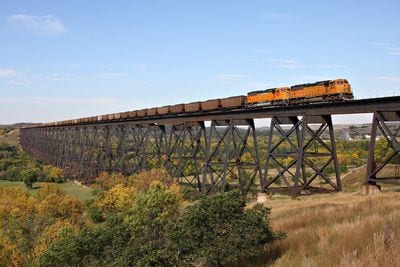
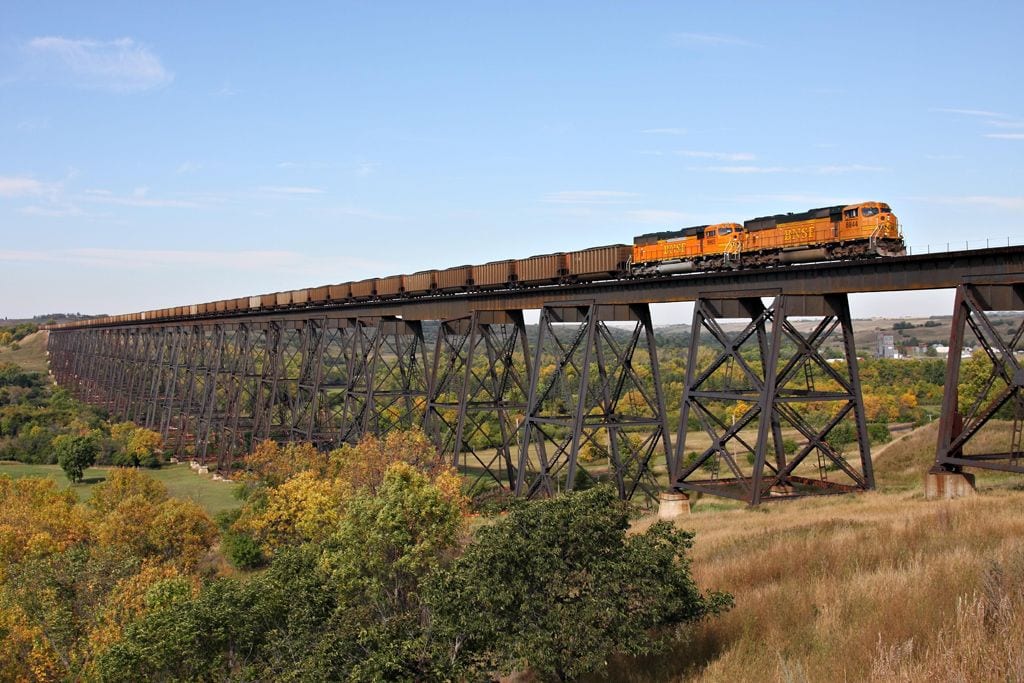
Valley City's Hi-Line Railroad Bridge, finished in 1908, runs 3,860 feet and stands 162 feet above the Sheyenne River, making it one of the longest and highest single-track railroad bridges in the United States.
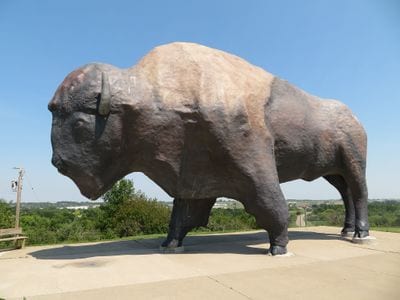
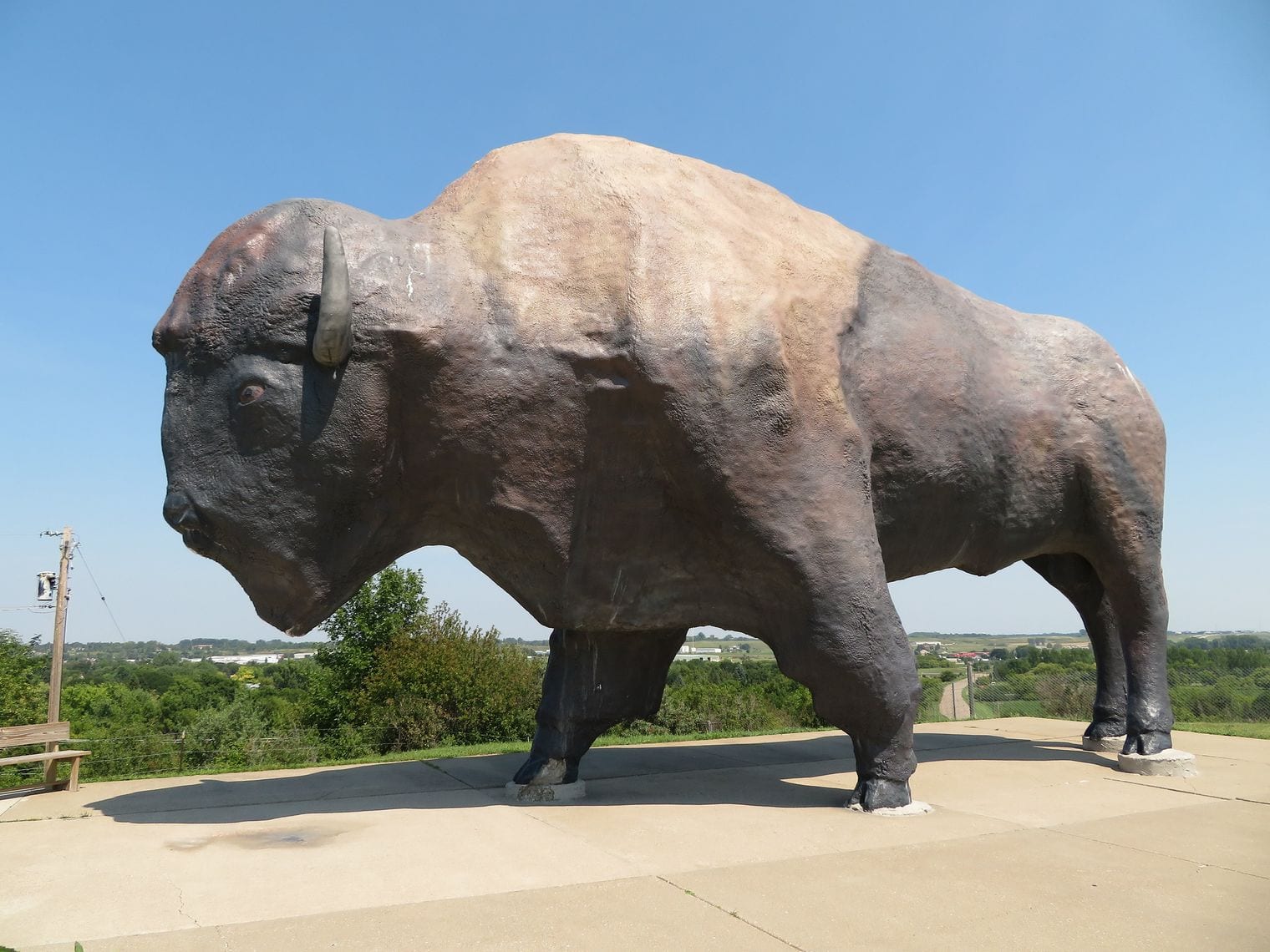
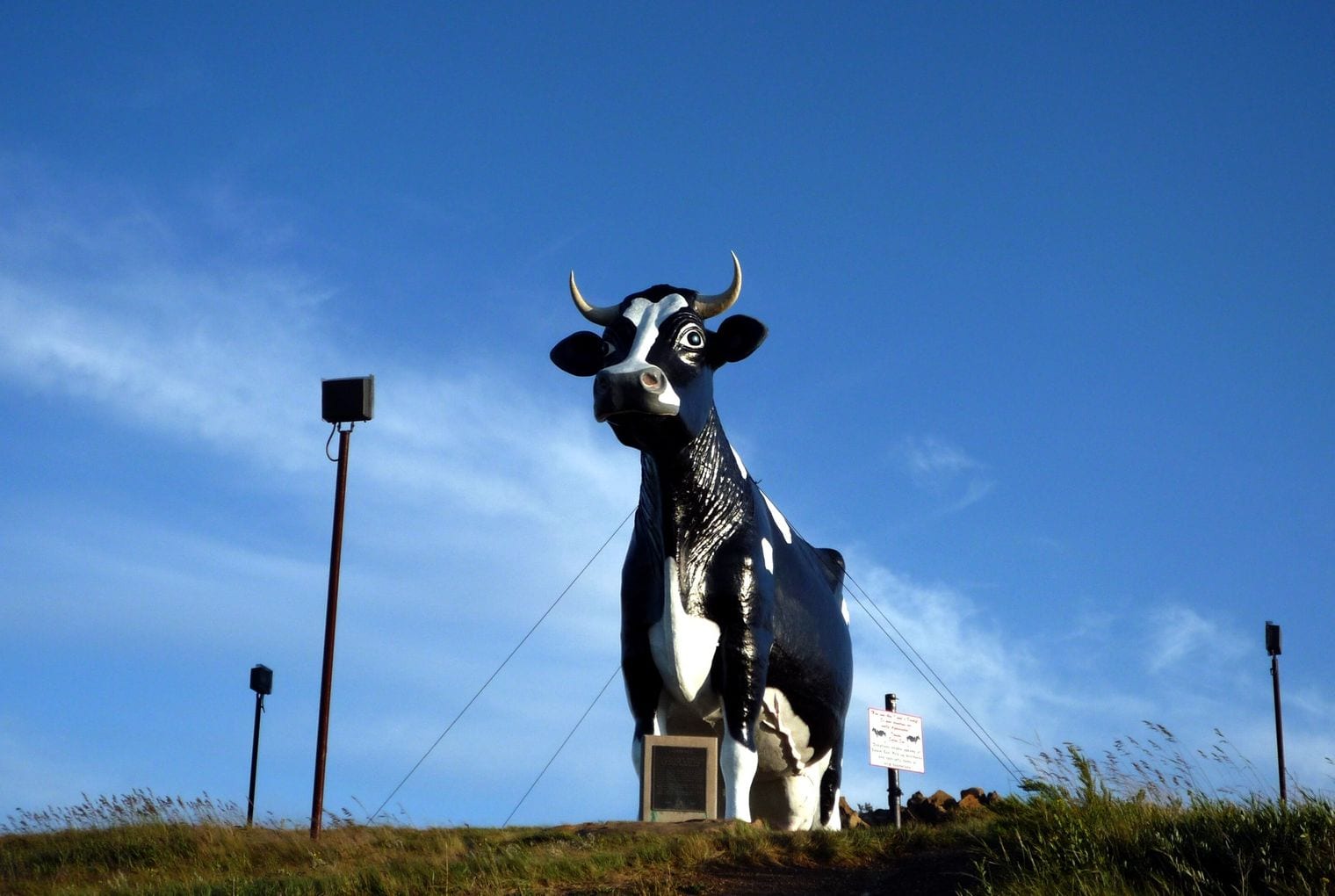
Jamestown's World's Largest Buffalo, a 26-foot bison raised in 1959, was the state's first giant roadside animal; New Salem's Salem Sue, a 38-foot Holstein cow, followed in 1974.
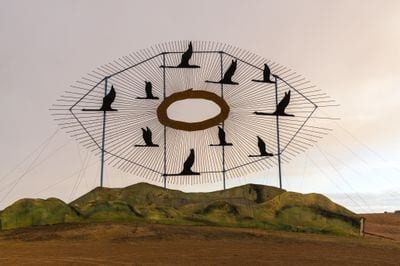
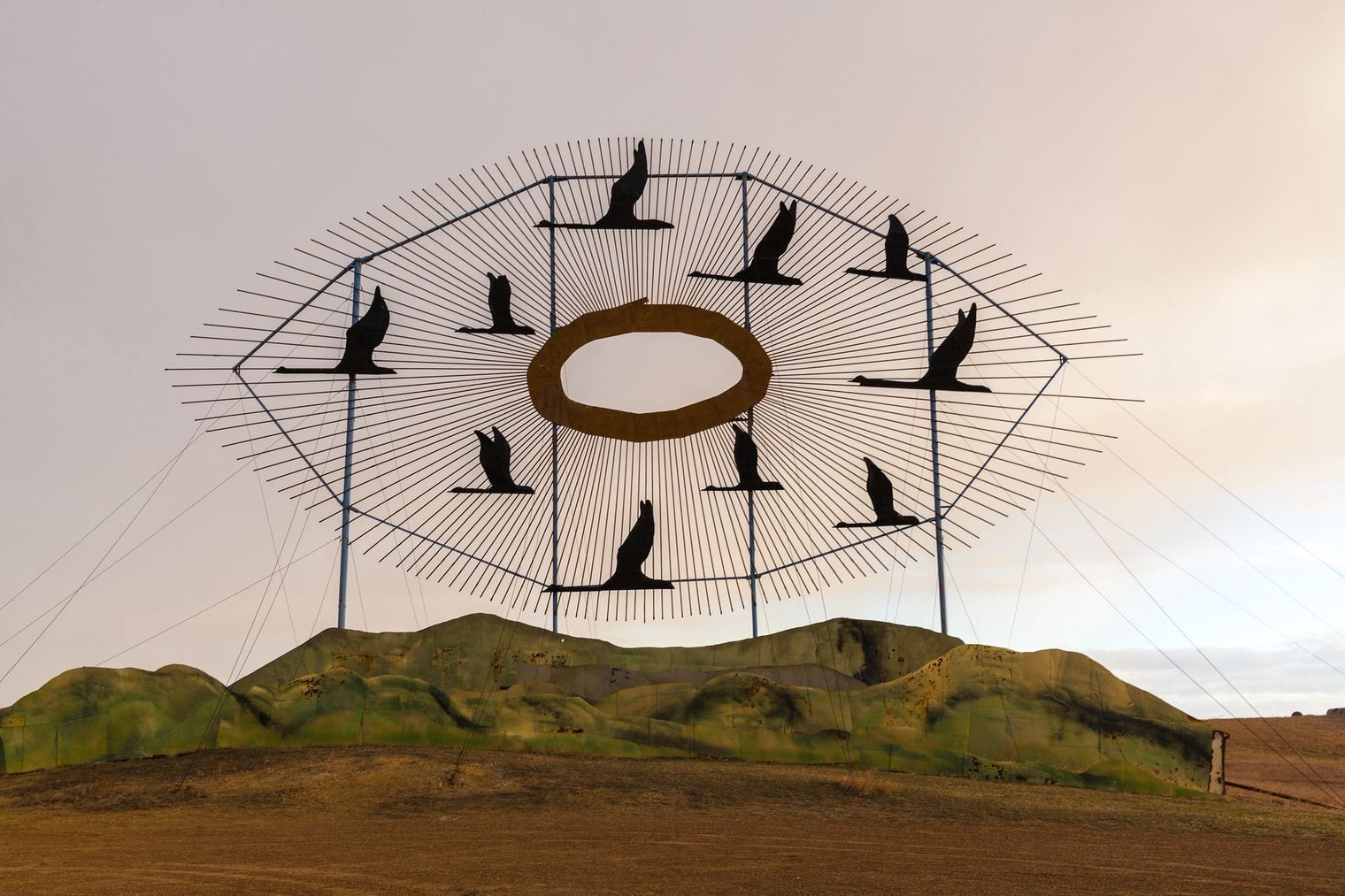
The Enchanted Highway to Regent, built by Regent native Gary Greff along a 32-mile stretch of road, is the world's largest collection of scrap metal sculptures.
Western novelist Louis L'Amour, author of Hondo and the Sackett novels, was born in Jamestown in 1908.
North Dakota's nickname, the Peace Garden State, comes from the International Peace Garden on the Manitoba border northeast of Bottineau, established in 1932 as a symbol of friendship between the US and Canada.
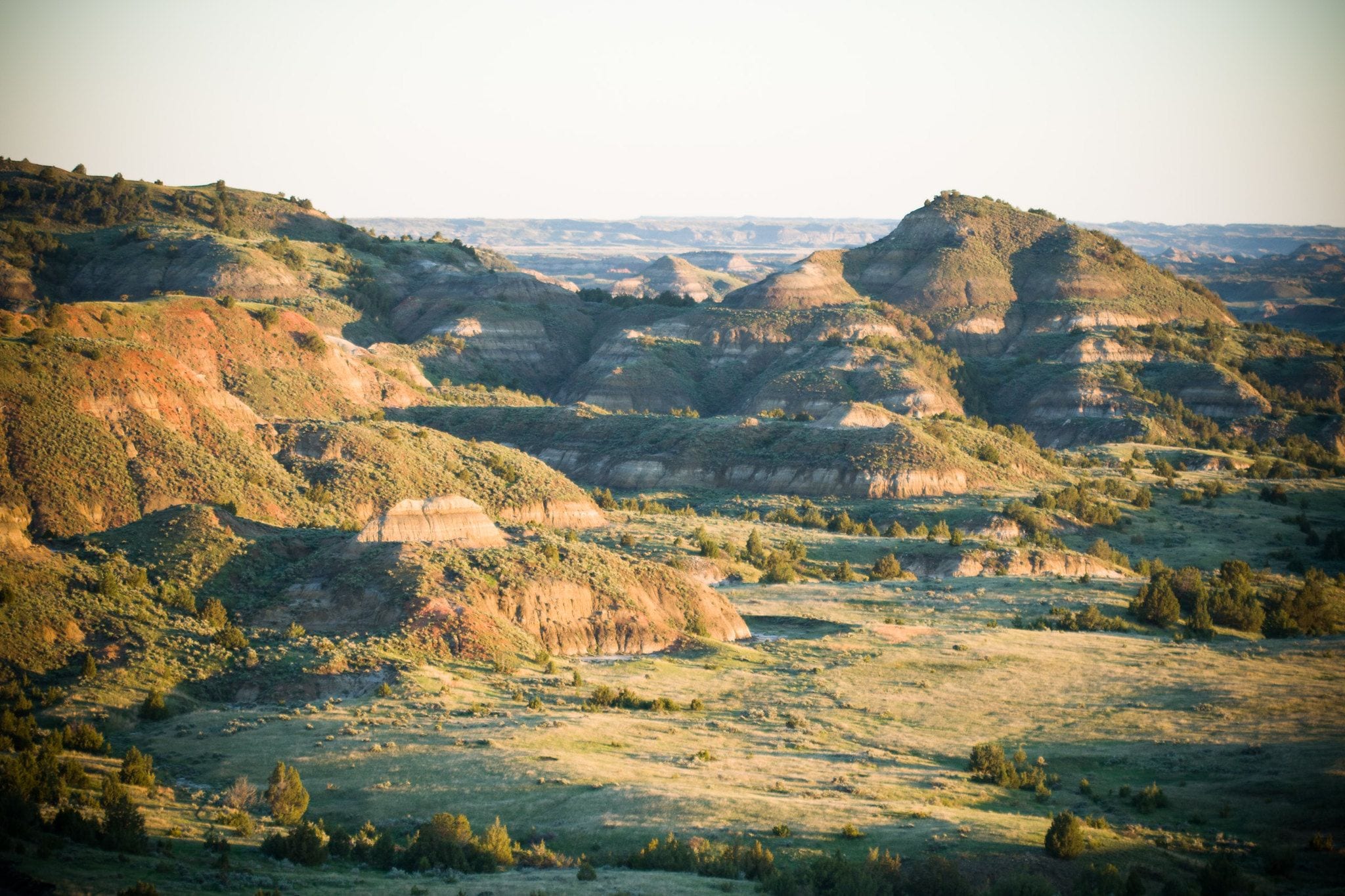
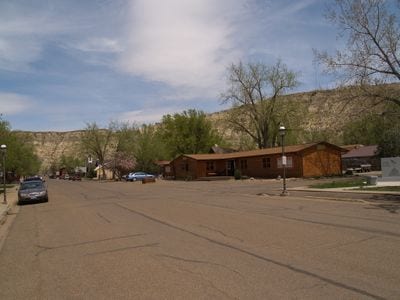
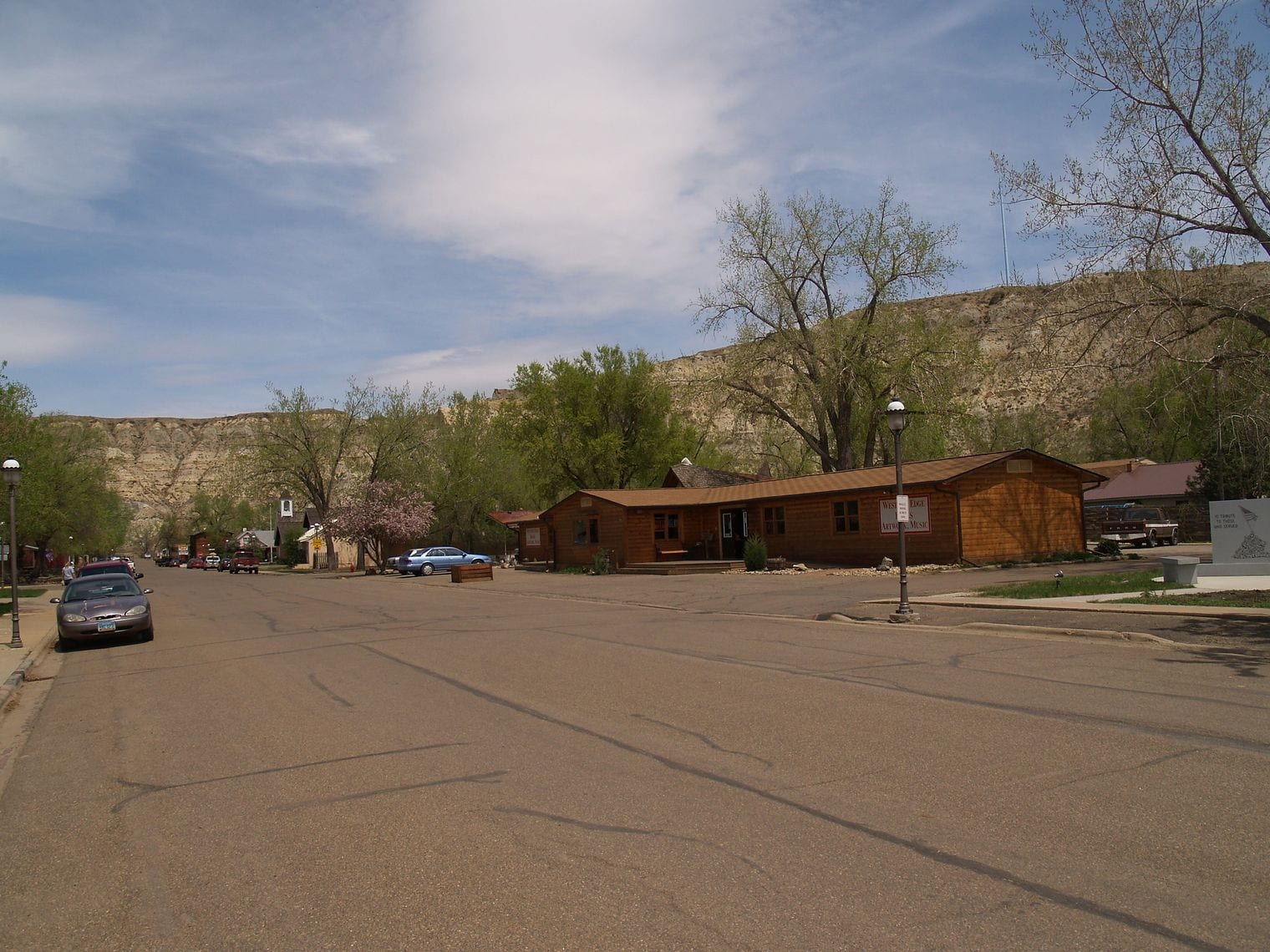
Medora is the small town most visitors picture when they think of North Dakota: a Western-style cow town with fewer than 200 residents, set at the entrance to the South Unit of Theodore Roosevelt National Park. It is busiest in summer, when the outdoor Medora Musical plays at the Burning Hills Amphitheater against a backdrop of painted Badlands buttes.
Tour the Chateau de Mores, the hunting lodge the French Marquis de Morès built here in 1883, and the Theodore Roosevelt Presidential Library, which tells the story of the president who ranched in these Badlands. The park's scenic drive, the Maah Daah Hey Trail and the Little Missouri River are on the doorstep for hiking, biking, horseback riding and watching bison and prairie dogs.
Valley City calls itself the City of Bridges, and it earns the name: a series of road and foot bridges cross the winding Sheyenne River through town, while the Hi-Line Railroad Bridge spans the whole valley high overhead. Completed in 1908 and still used by freight trains, it is one of the longest and highest single-track railroad bridges in the United States, and it was guarded by soldiers during both World Wars.
The town sits on the Sheyenne River Valley National Scenic Byway, which winds 63 miles from Baldhill Dam through Valley City and on to Fort Ransom and Lisbon. Pick up a map at the Rosebud Visitor Center, walk Medicine Wheel Park on the Valley City State University campus, and head north to Lake Ashtabula for boating and fishing.
Jamestown is the Buffalo City, named for the World's Largest Buffalo, a 26-foot bison sculpture known as Dakota Thunder that has looked out over the James River valley and Interstate 94 since 1959. It stands at Frontier Village, a cluster of old buildings and attractions, beside the North American Bison Discovery Center, which keeps a live bison herd on site.
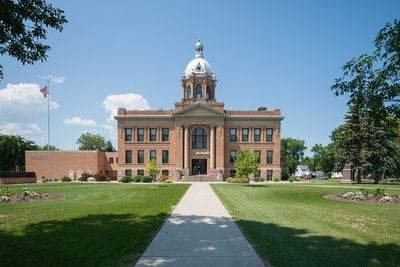
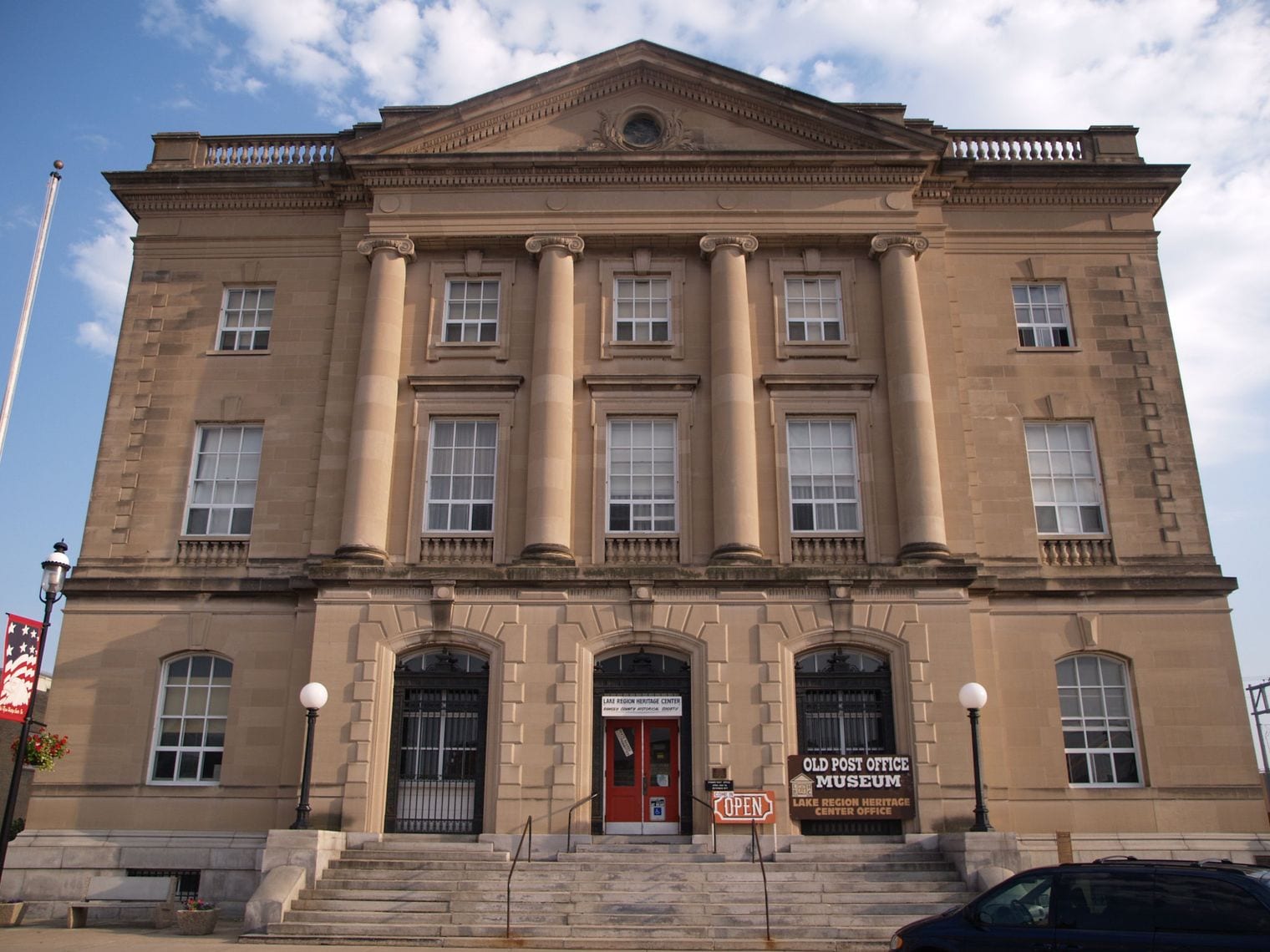
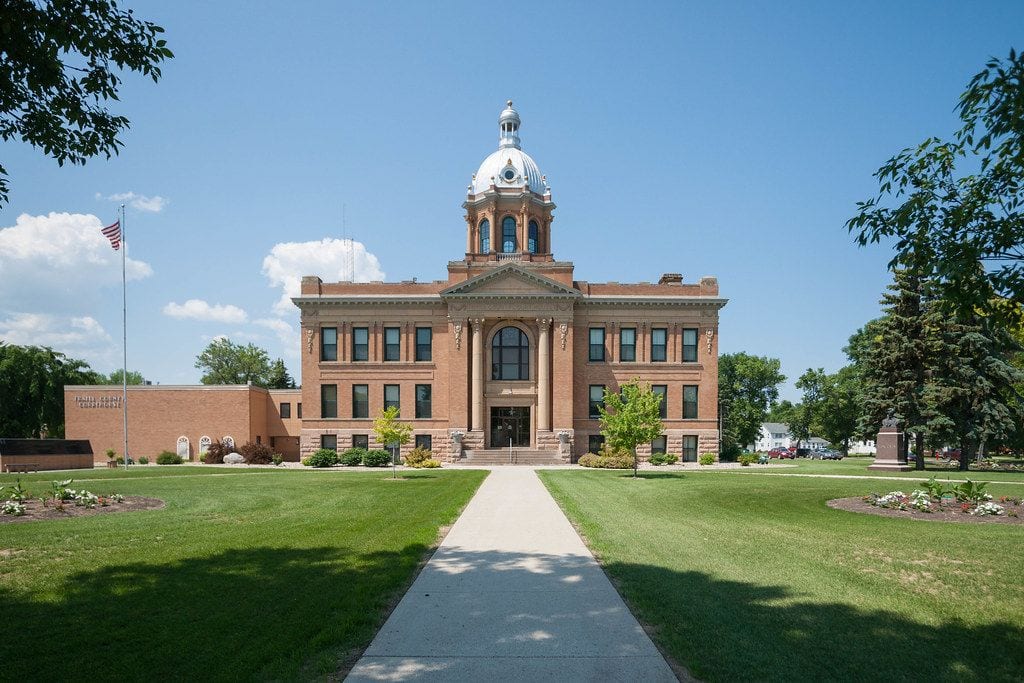
Beyond the buffalo, Jamestown has St. James Basilica, a minor basilica since 1988, and the historic 1883 Stutsman County Courthouse, which is older than the state itself. Western novelist Louis L'Amour was born here in 1908, and the Jamestown Reservoir and Pipestem Lake on the edge of town draw boaters and anglers.
Devils Lake takes its name from the lake beside it, the largest natural body of water in North Dakota, and the town lives by its fishing. Anglers come for perch and walleye in open water all summer and through the ice in winter, and the lake's long, ragged shoreline leaves plenty of bays to explore by boat.
On the south shore, Fort Totten State Historic Site is one of the best-preserved frontier military posts of the Indian Wars era, later used for decades as a boarding school for Native American children. The Spirit Lake Reservation lies along the same southern shore, and the town itself has a walkable downtown and the campus of Lake Region State College.
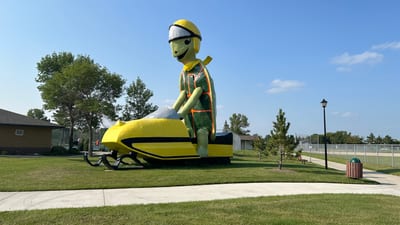
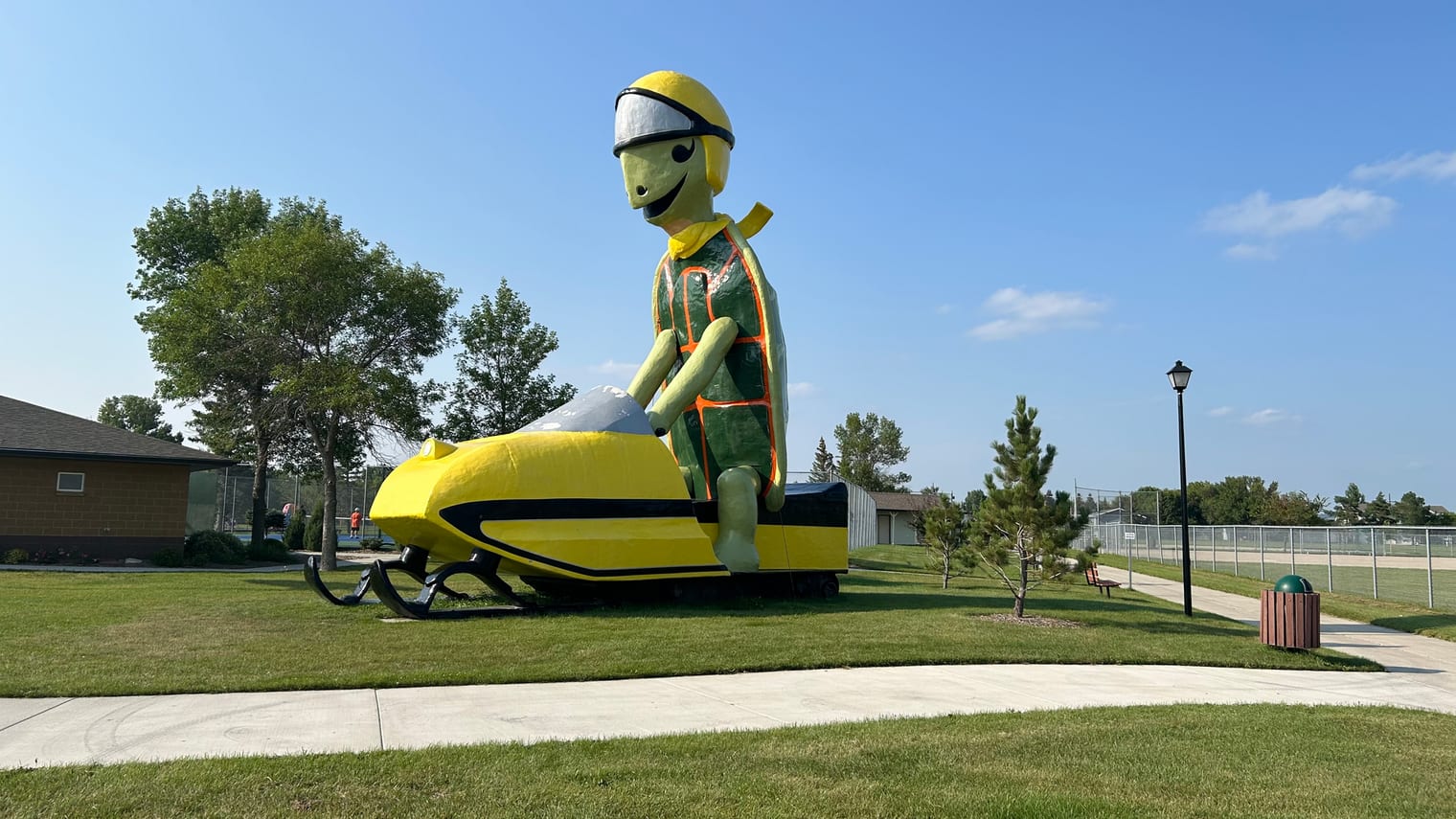
Bottineau sits at the foot of the Turtle Mountains, just over ten miles south of the Canadian border, and greets visitors with Tommy the Turtle, a 30-foot fiberglass turtle built in 1978 as a symbol of the nearby hills and billed as the world's largest turtle. The town is home to Dakota College at Bottineau and makes a friendly base for the north woods of the state.
The wooded, lake-dotted hills are the real draw. Lake Metigoshe State Park, 14 miles northeast on the border, is a favorite for boating, swimming, hiking and winter trails, and Bottineau Winter Park offers downhill skiing close to town. The International Peace Garden, which straddles the border with Manitoba, is an easy drive to the northeast.
Minot is the biggest place on this list by far, North Dakota's fourth-largest city with around 48,000 people, so it is small only by the standards of a state of small towns. Nicknamed the Magic City for how quickly it grew after the Great Northern Railway arrived in 1886, it is the shopping and services hub for the north of the state and a good base for exploring it.
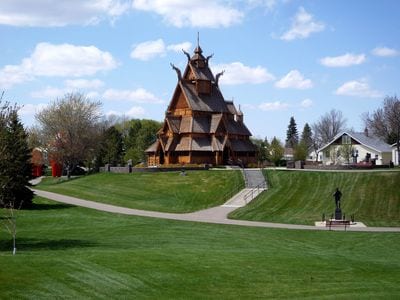
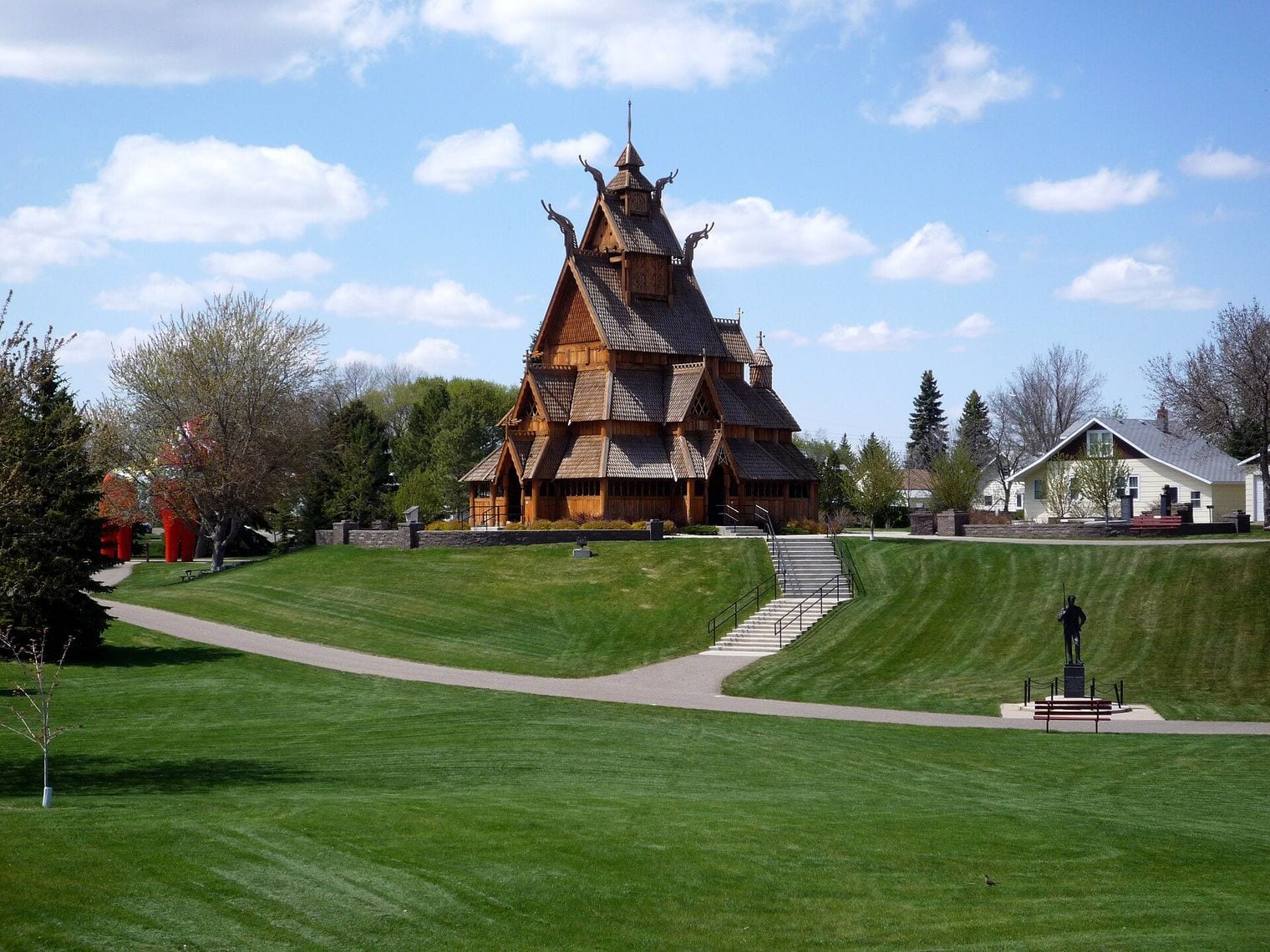
Its showpiece is Scandinavian Heritage Park, which honors all five Nordic countries with a replica of Norway's Gol Stave Church, a 30-foot Swedish Dala horse, a Danish windmill, a Finnish sauna and a 200-year-old house moved from Norway. Add the Roosevelt Park Zoo and the parks along the Souris River, and our full guide to things to do in Minot covers the rest.
Walhalla is a quiet town on the Pembina River in the far northeast corner of the state, five miles from the Manitoba border, where the flat Red River Valley gives way to the wooded hills and steep slopes of the Pembina Gorge. It is one of the least expected landscapes in North Dakota, and one of the best for fall color.
Pembina Gorge State Park, six miles west, has river kayaking and trails for hiking, horseback riding and mountain biking, and nearby Frost Fire Park runs ski slopes in winter, downhill mountain biking in summer and plays in its outdoor amphitheater. In town, Gingras Trading Post State Historic Site preserves the home and store of Métis fur trader and legislator Antoine Gingras.
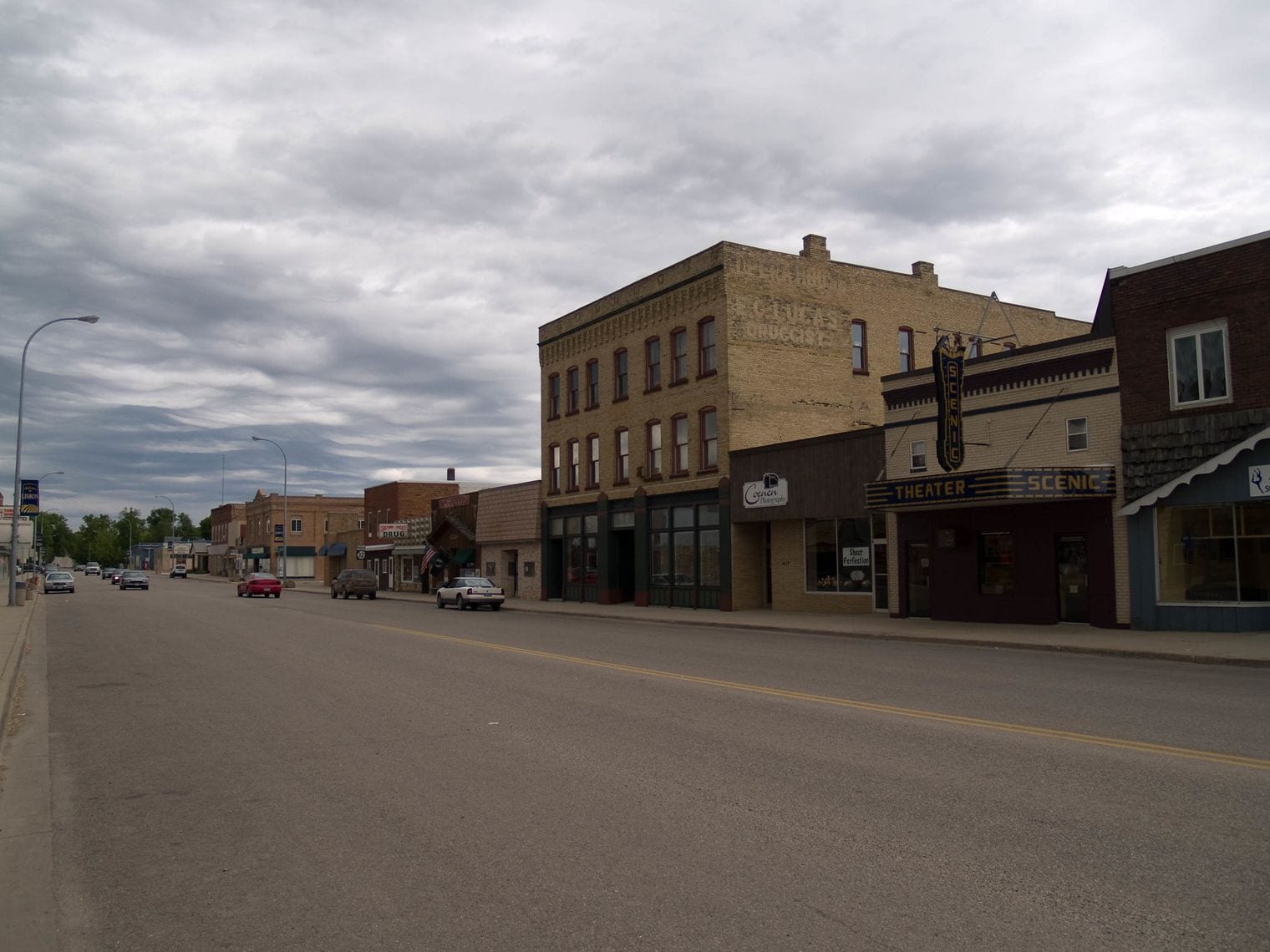
Lisbon, the Ransom County seat, sits in a bend of the Sheyenne River at the southern end of the Sheyenne River Valley National Scenic Byway, with a historic downtown along Main Street. It is a designated trail town on the North Country National Scenic Trail, so hikers can join one of the country's long-distance footpaths close to town.
To the southeast spreads the Sheyenne National Grassland, the only national grassland in the tallgrass prairie region of the United States, where sandy hills and open prairie shelter the state's largest population of greater prairie chickens. The drive north along the river to Fort Ransom and Valley City is one of the most scenic in the state.
Garrison bills itself as the Walleye Capital of the World, and Wally the Walleye, a 26-foot fiberglass fish on North Main Street, makes sure nobody forgets it. The town sits just north of Lake Sakakawea, the vast Missouri River reservoir held back by the Garrison Dam, and fishing and hunting shape its calendar.
Fort Stevenson State Park, four miles south on a peninsula in the lake, is the main base for boating, fishing and camping, with a partial reconstruction of the 19th-century Missouri River fort whose original site now lies under the water. The Garrison Dam and its powerhouse are a short drive away, and the shoreline beyond is a favorite of walleye anglers.
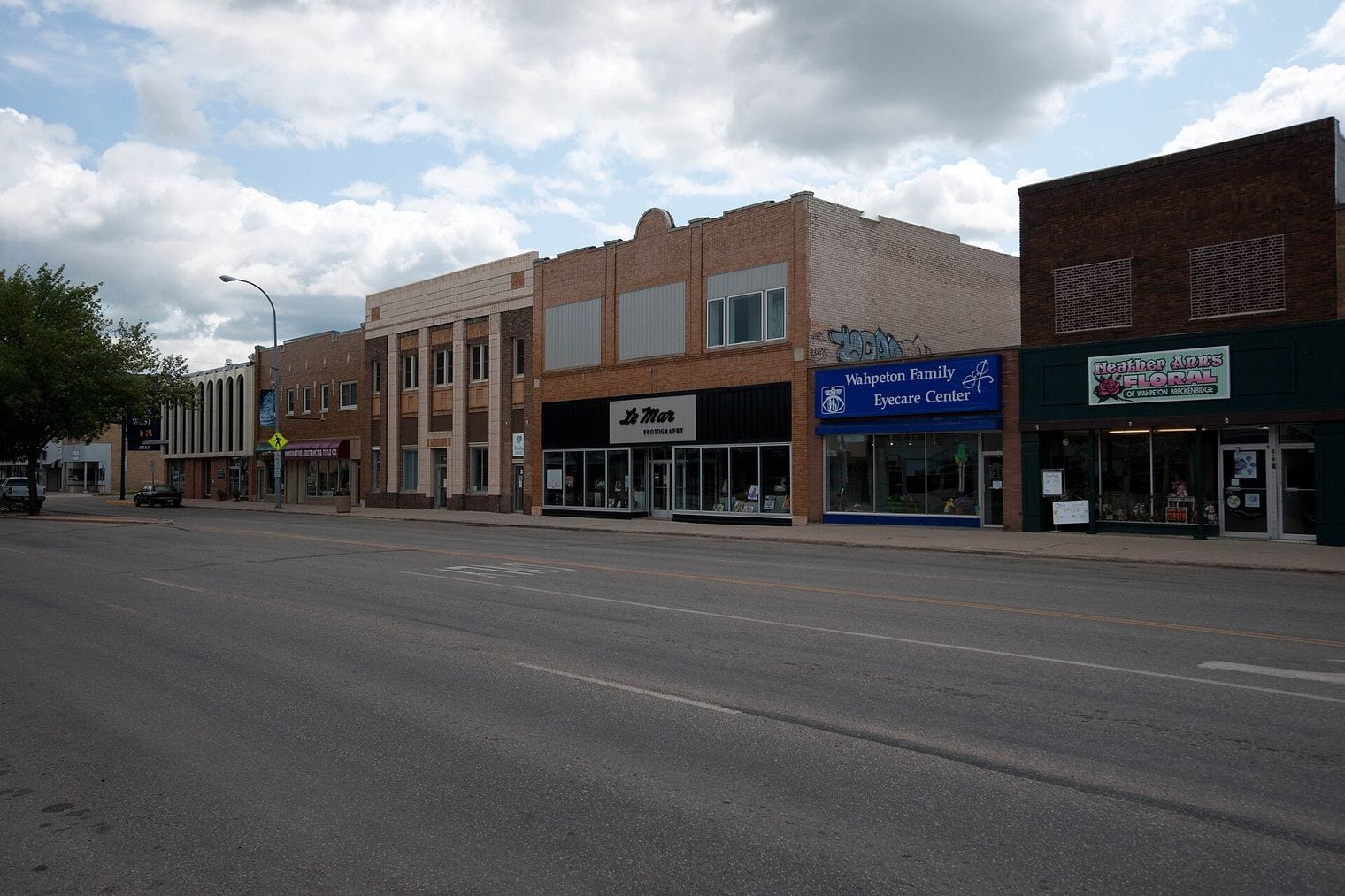
Wahpeton stands where the Bois de Sioux and Otter Tail rivers meet to form the Red River of the North, facing its twin town of Breckenridge, Minnesota, across the water. It is the Richland County seat and home to the North Dakota State College of Science.
Its big draw is the Chahinkapa Zoo, opened in 1933 as the first zoo in North Dakota, and a ride on the Prairie Rose Carousel, a fully restored 1926 carousel. Look out for Wahpper, a 40-foot fiberglass catfish beside the Red River, and browse the Richland County Historical Museum for local history.
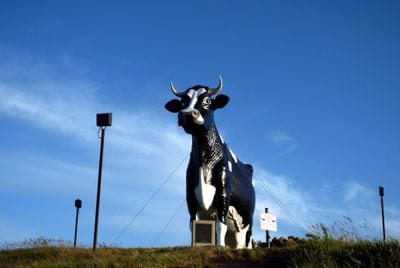
New Salem is a dairy town about 24 miles west of Mandan, and you will know it by Salem Sue, the World's Largest Holstein Cow, standing on School Hill above Interstate 94. Built in 1974 with donations from local farmers and residents, the fiberglass cow is 38 feet tall and 50 feet long and can be seen for miles.
A road climbs to her base, where the hilltop gives wide views over the rolling farmland of Morton County, and a donation bin shaped like a milk can helps pay for her upkeep. The town itself, founded in 1883, is an easy stop on the drive between Bismarck and the Badlands.
Free printable checklist of all 25 places
Tick them off as you go. Confirm your email to download it, plus one email every Thursday with new guides for the places you tick.
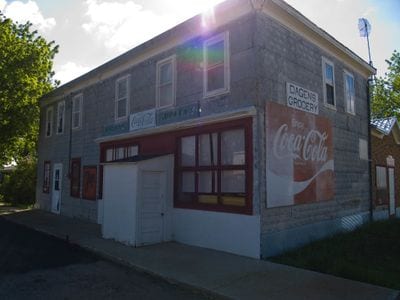
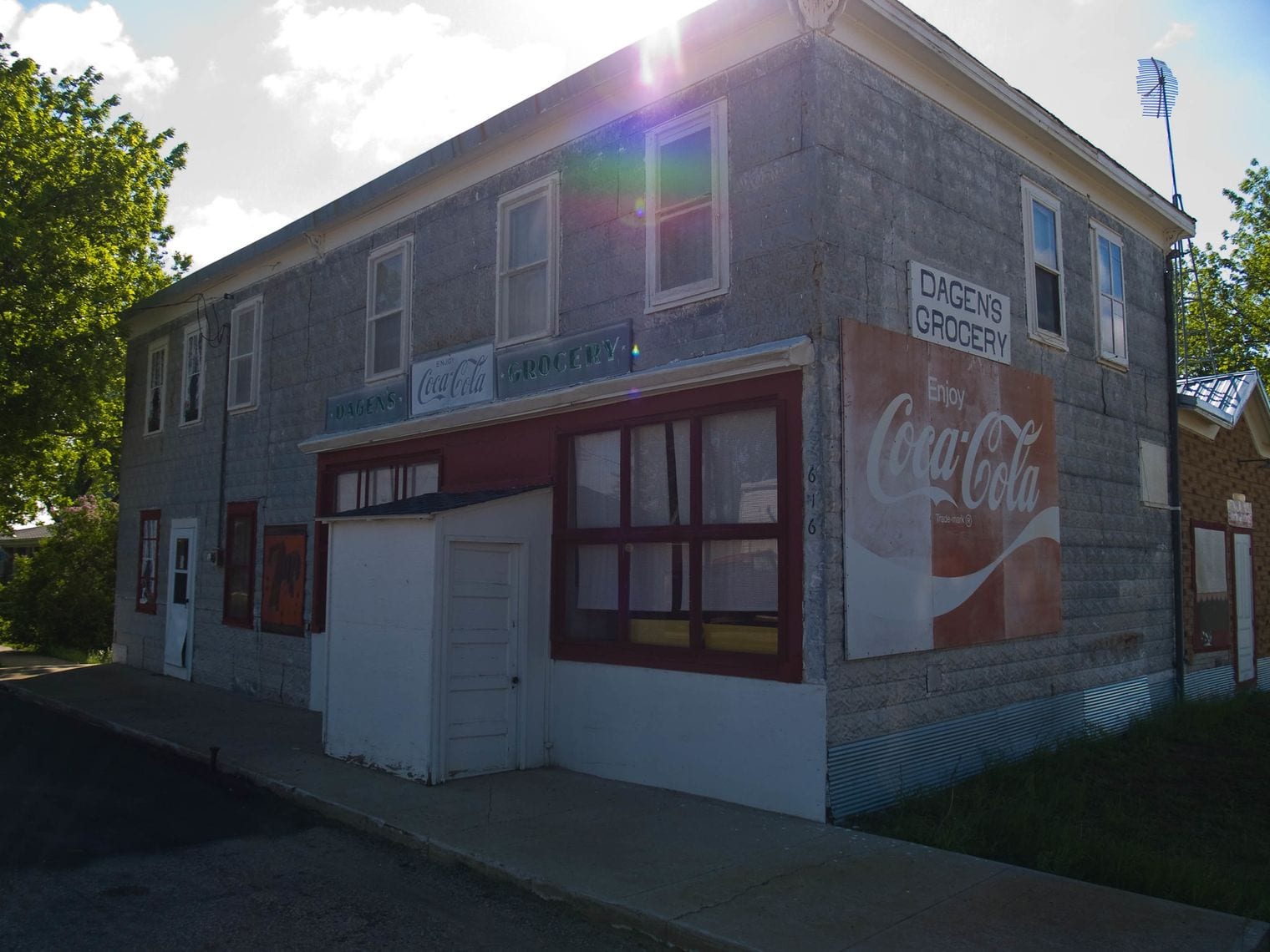
Jud is the smallest town in this guide, a LaMoure County village of about 65 people set among farmland and open plains on an unpaved road nine miles west of US Route 281. Founded in 1904 and renamed in 1906 for Judson LaMoure, the county's namesake, it once sat on a branch line of the Northern Pacific Railroad.
Its best-known building is Dagen's Grocery, built in 1905 and listed on the National Register of Historic Places, which over the years served as a store, post office and hotel. It is a quiet, photogenic detour rather than a place with attractions, best paired with Jamestown to the north.
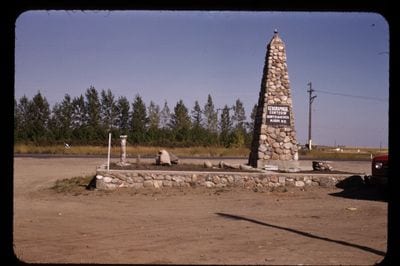
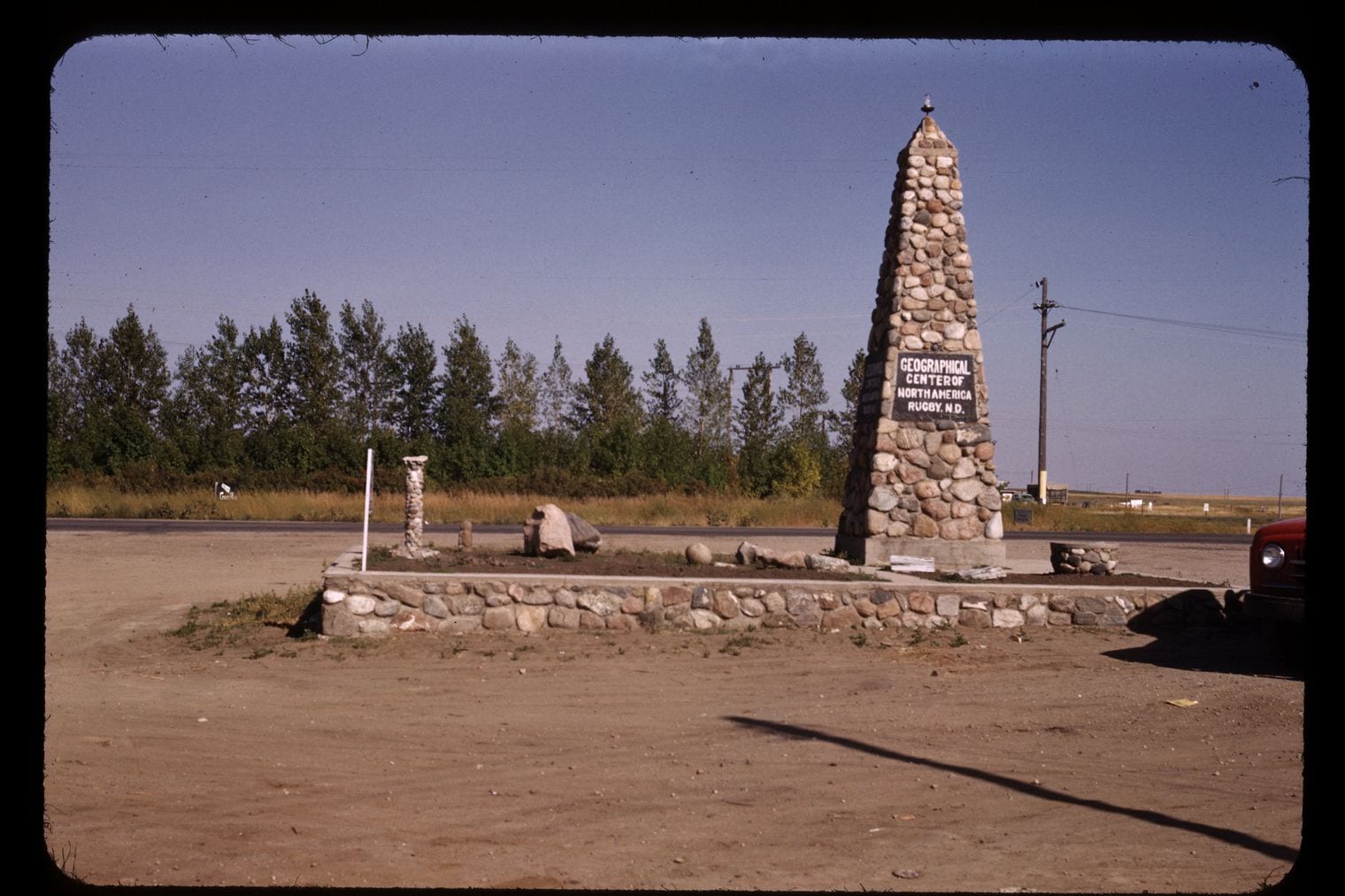
Rugby has long billed itself as the Geographical Center of North America, a title based on a 1931 US Geological Survey calculation that placed the center in Pierce County. A stone monument has stood at the junction of US Highway 2 and Highway 3 since 1932, and although later calculations have put the center elsewhere in North Dakota, the cairn remains the town's favorite photo stop.
Within walking distance, the Prairie Village Museum gathers historic buildings and exhibition halls of pioneer life around a village square, with collections that run from farm machinery and antique cars to an iron lung. Rugby, the Pierce County seat, also makes a handy stop on US Highway 2 between Devils Lake and Minot.
Watford City is the McKenzie County seat and the northern gateway to Theodore Roosevelt National Park, whose quieter North Unit lies a short drive south among rugged Badlands along the Little Missouri River. The Bakken oil boom brought rapid growth in people and construction, giving this ranching town a newer, busier edge.
Start at the Long X Visitor Center for local history and trail advice, then drive the North Unit's scenic road to overlooks above the river, or ride a section of the Maah Daah Hey Trail, a long-distance Badlands trail for mountain bikers, hikers and horseback riders. The Little Missouri National Grassland spreads out around the park.
Dickinson, the Stark County seat, is the main town of southwest North Dakota and a practical base for the Badlands, with Medora and Theodore Roosevelt National Park about half an hour west on Interstate 94. The oil boom made it one of the fastest-growing cities in the country, and Dickinson State University gives it a college-town feel.
The Badlands Dinosaur Museum at the Dickinson Museum Center displays real dinosaur skeletons and fossils, including a complete Triceratops skull, alongside a colorful mineral collection. The Ukrainian Cultural Institute celebrates the heritage of the region's Ukrainian settlers with a museum and events through the year.
Mandan sits on the west bank of the Missouri River directly across from Bismarck, and although the two cities form one metro area, Mandan keeps its own downtown and its own character. Founded in 1879, it has been the Morton County seat since 1881.
Its standout is Fort Abraham Lincoln State Park, seven miles south, where reconstructed earth lodges at On-A-Slant Village recall the Mandan people who once lived here, and rebuilt military buildings include the Custer House, the home of George Armstrong Custer before the Battle of the Little Bighorn. The riverside trails and views over the Missouri make it a rewarding half day.
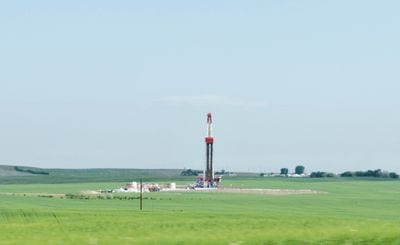
Williston is the hub of North Dakota's Bakken oil country, a city whose population nearly doubled between 2010 and 2020 during the oil boom. It sits on the Missouri River near the Montana line, close to where the Yellowstone River flows in, and is home to Williston State College.
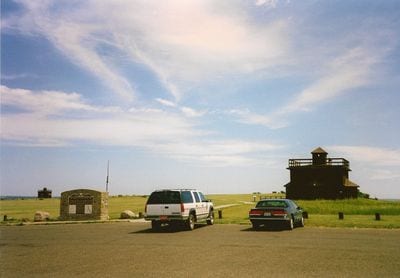
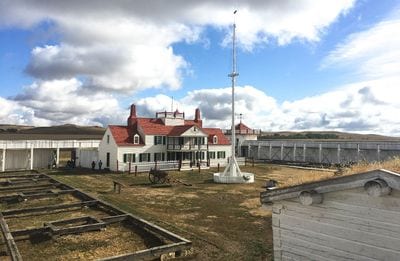
History is the reason to visit. Fort Union Trading Post National Historic Site, about 25 miles away on the state line, reconstructs the most important fur trading post on the upper Missouri, which operated from 1829 to 1867. Nearby, the Missouri-Yellowstone Confluence Interpretive Center and Fort Buford State Historic Site, where Sitting Bull surrendered in 1881, round out the day.
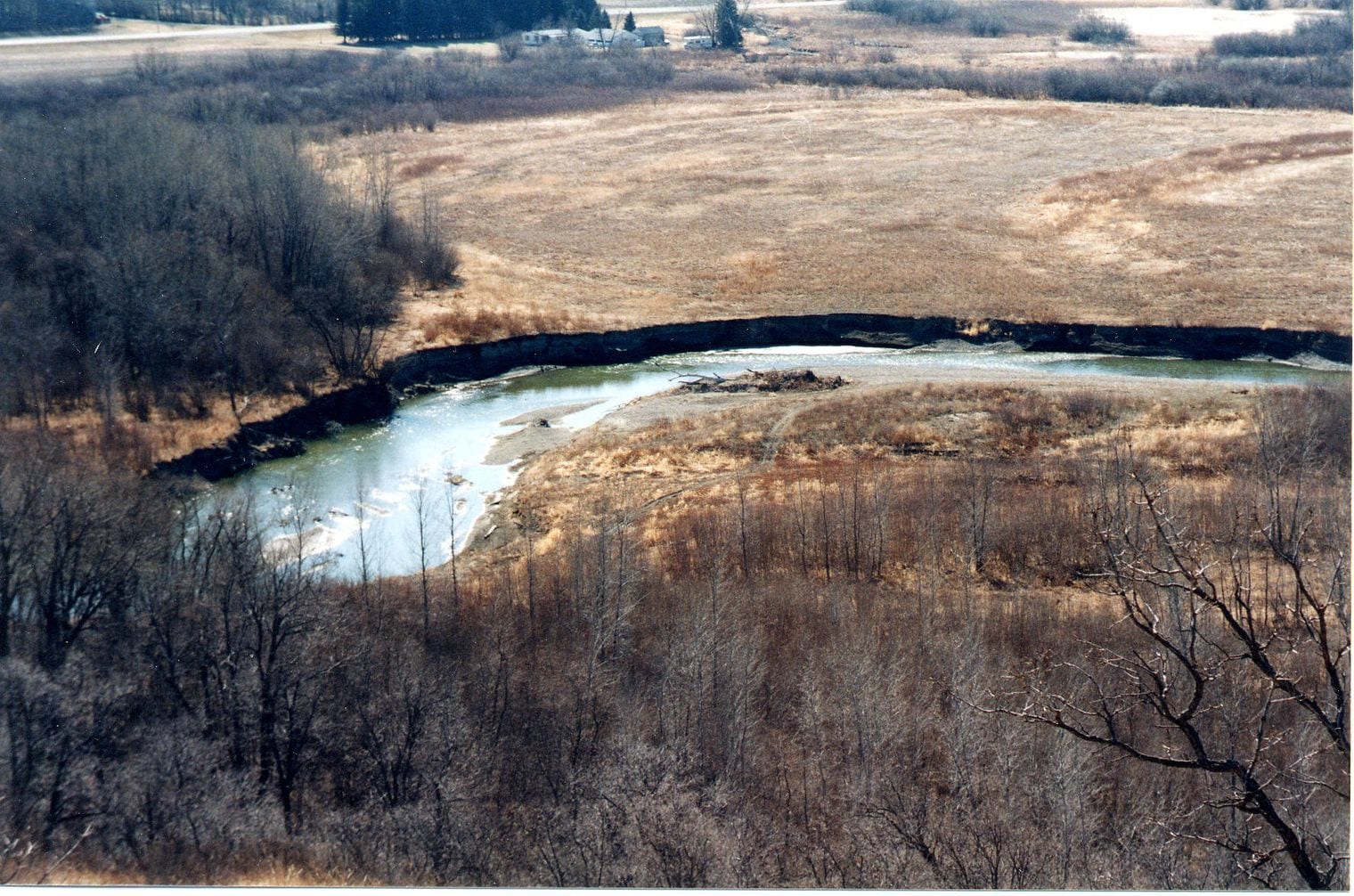
Fort Ransom is a village of fewer than 100 people tucked into the wooded Sheyenne River valley, on one of the prettiest stretches of the Sheyenne River Valley National Scenic Byway. It takes its name from an army fort built nearby in the 1860s, and its setting of river bottoms and steep, tree-covered hills feels far from the open prairie around it.
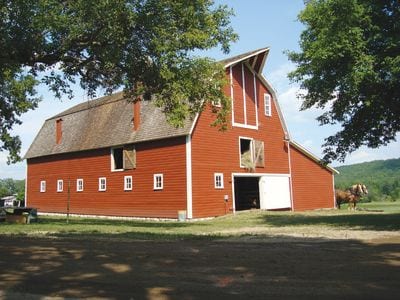
Fort Ransom State Park, two miles north, preserves two homesteader farms and hosts Sodbuster Days, a celebration of homesteading skills on its farmstead. More than 20 miles of trails, including a stretch of the North Country National Scenic Trail, serve hikers, cyclists and riders in summer and cross-country skiers in winter, and the river is good for canoeing.
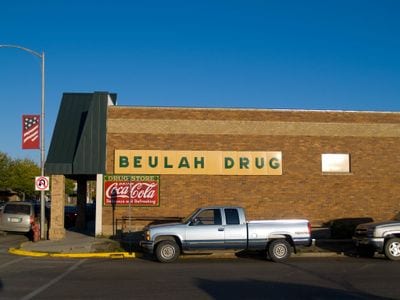
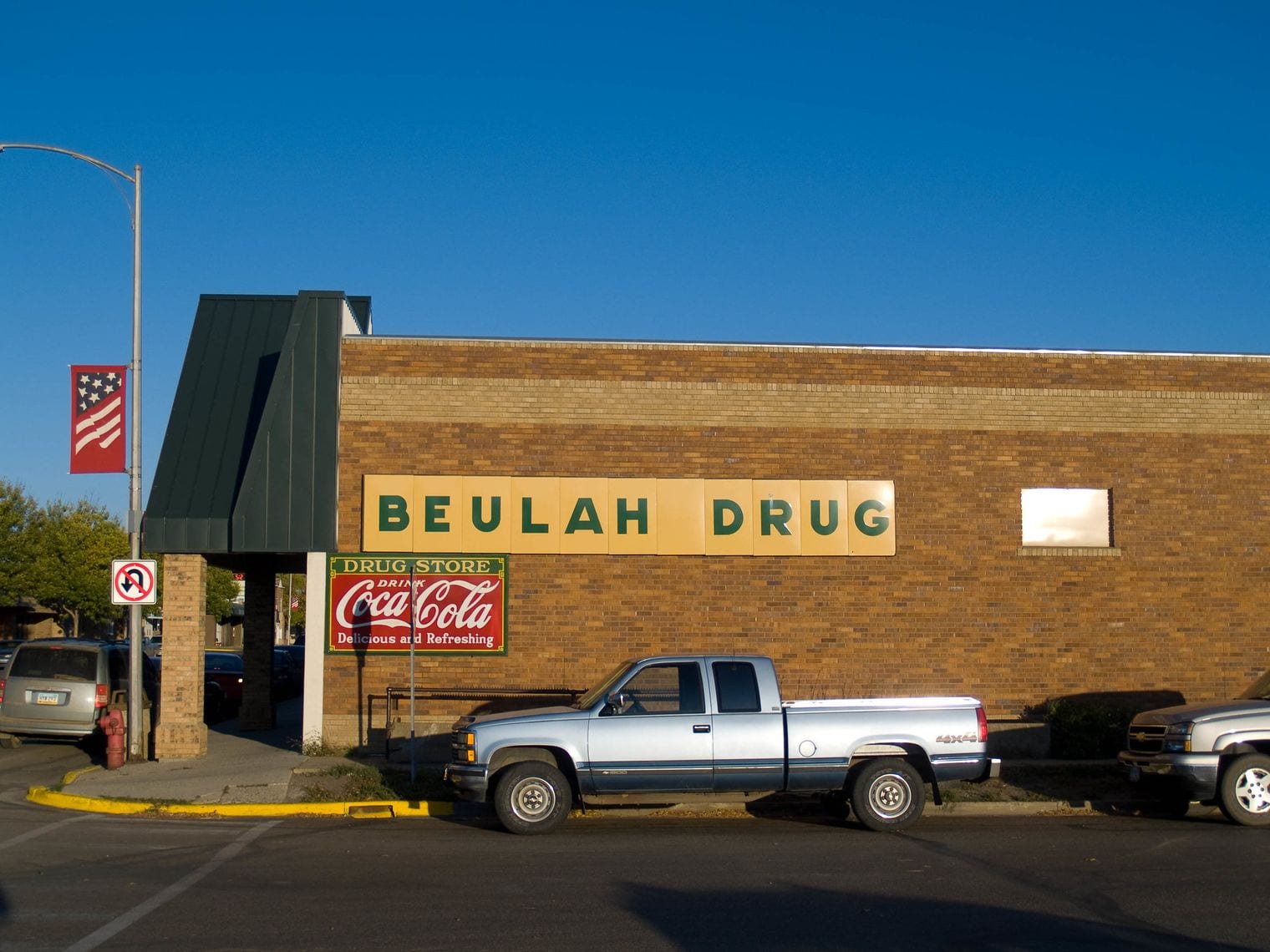
Beulah is a Mercer County energy town in the heart of North Dakota's lignite coal country, home to the Dakota Gasification Company and close to one of the largest lignite mines in the United States. It is a working town with a friendly main street, and a good base for the lake and the river villages nearby.
Beulah Bay on Lake Sakakawea, a few minutes from town, is a favorite for boating, fishing, paddleboarding and camping. A short drive east near Stanton, the Knife River Indian Villages National Historic Site preserves the remains of Hidatsa earth lodge villages along the Knife River, once a major trading and farming center of the northern Plains.
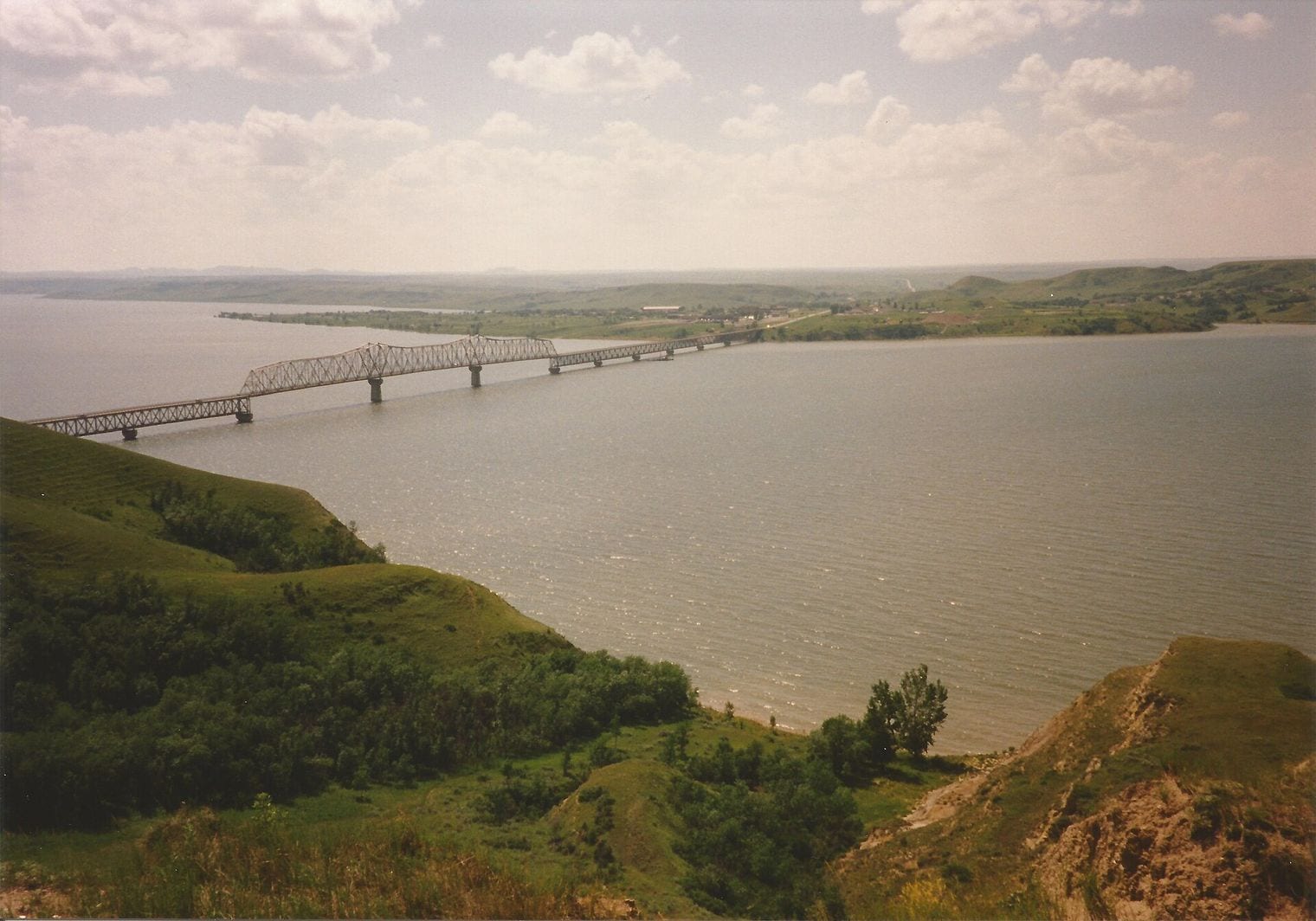
New Town lives up to its name: it was laid out in 1950 to house the residents of Sanish and Van Hook, two towns flooded by the rising waters of Lake Sakakawea. Today it is the largest town and the administrative center of the Fort Berthold Reservation, home of the Mandan, Hidatsa and Arikara Nation.
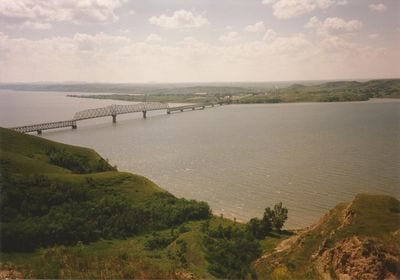
The Four Bears Bridge carries Highway 23 across the lake west of town, decorated with medallions honoring the heritage of the Three Affiliated Tribes and named for two chiefs called Four Bears, one Mandan and one Hidatsa. The tribal museum and interpretive center nearby are the best introduction to MHA culture, and the surrounding shoreline is popular for walleye fishing.
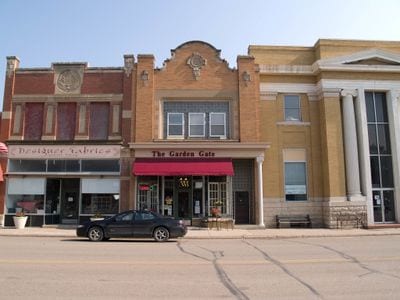
Hillsboro, the Traill County seat, sits on the Goose River in the flat, fertile Red River Valley, right on Interstate 29 halfway between Fargo and Grand Forks. Farming has shaped the town since it was founded in 1881, and it remains an easy, unhurried stop on the drive up the valley.
The Traill County Historical Society Museum is based in the Plummer House, an 1897 Queen Anne mansion listed on the National Register of Historic Places, with restored woodwork and original stained glass. Woodland Park on the Goose River has picnic spots and shore fishing, and the river also winds past the town's nine-hole golf course.
Grafton, the Walsh County seat, sits on the Park River in the northern Red River Valley, with a downtown that serves a wide stretch of farm country. It is one of the larger towns in the northeast, and a practical stop between Grand Forks and the Pembina Gorge.
History buffs can tour the Walsh County Heritage Village, whose farmhouse, country church, log cabin, depot with caboose and working carousel recreate frontier life on the prairie. In town, Elmwood is an 1895 Victorian house built by C.A.M. Spencer, North Dakota's second attorney general, and listed on the National Register of Historic Places.
Mayville is a college town on the Goose River, home to Mayville State University, founded as a teachers' normal school in 1889, the year North Dakota became a state. Named for May Arnold, the first settler's child born in the area, it pairs with neighboring Portland as May-Port.
The Goose River ties the community together, with riverside parks, a mature golf course along its banks and a walking and biking trail linking Mayville and Portland. The Goose River Heritage Museum covers local history, and the campus brings concerts, games and a lively student population to a town of fewer than 2,000 people.
Regent, a Hettinger County town of fewer than 200 people, sits at the southern end of the Enchanted Highway, a 32-mile road from Interstate 94 lined with giant scrap metal sculptures. It is the world's largest collection of scrap metal sculptures, and the reason most visitors make the drive.
Regent native Gary Greff began building the sculptures in 1990 to keep his hometown on the map, and they now include giant geese in flight, grasshoppers, pheasants, deer, a tin family and Theodore Roosevelt on horseback. Drive the route south from the interstate at Gladstone, stopping at each pull-off, and finish in Regent itself, with its quiet main street at the end of the road.
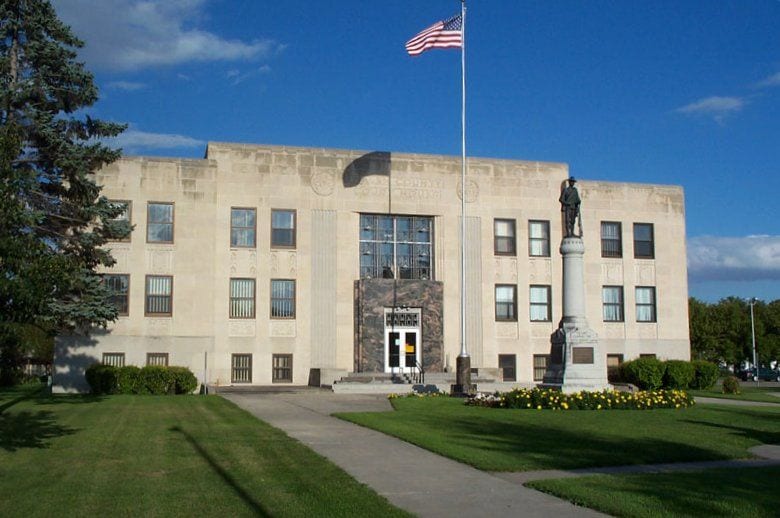
Carrington, the Foster County seat, is a farm town in the middle of the state, surrounded by wheat fields and home to a large pasta maker. Its central location makes it a natural stop on the drive between Jamestown and Devils Lake.
Visitors come for the Putnam House, a 1907 home on Main Street built for the town's pioneer lumberman and listed on the National Register of Historic Places, and for Arrowwood National Wildlife Refuge south of town, where the James River runs through wetlands, prairie and oak woods that draw tens of thousands of migrating waterfowl in spring and fall.
Best Time to Visit North Dakota's Small Towns
Summer is the main season for most of these towns. Long, warm days open the lakes at Garrison, Beulah and Bottineau, the Medora Musical plays nightly in the Badlands, and state parks, museums and roadside stops are at their busiest.
Late spring and early fall are quieter and often the most pleasant, with fall color in the Pembina Gorge near Walhalla and along the Sheyenne River between Valley City, Fort Ransom and Lisbon, and great flocks of migrating waterfowl at Arrowwood near Carrington.
Winter is long and cold, but it has its own draws: ice fishing on Devils Lake, downhill skiing near Bottineau and at Frost Fire Park, and cross-country trails at Fort Ransom State Park. Many seasonal museums and attractions close or keep shorter hours outside summer, so check before planning a cold-weather trip.
Free Things to Do in These North Dakota Towns
North Dakota's giant roadside sculptures cost nothing to see. Drive the Enchanted Highway to Regent, climb the hill to Salem Sue in New Salem, and photograph the World's Largest Buffalo in Jamestown, Wally the Walleye in Garrison, Tommy the Turtle in Bottineau and the Wahpper catfish in Wahpeton.
Stand beneath the Hi-Line Railroad Bridge in Valley City, visit the Geographical Center of North America monument in Rugby, walk the Western main street of Medora, and hike the North Country Trail and the open prairie of the Sheyenne National Grassland near Lisbon.
North Dakota is big and its towns are spread out, so the easiest way to see them is to follow one of its main roads. Interstate 94 strings together Valley City, Jamestown, Bismarck and its neighbor Mandan, New Salem, Dickinson and Medora, with the Enchanted Highway to Regent as a southern detour near Dickinson.
In the northwest, Watford City, Williston, New Town, Beulah and Garrison circle the shores of Lake Sakakawea, while US Highway 2 crosses the north through Devils Lake and Rugby to Minot, with Bottineau and the Turtle Mountains a short drive north.
In the east, the Sheyenne River Valley National Scenic Byway links Valley City, Fort Ransom and Lisbon, and Carrington and Jud sit on quiet prairie roads north and south of Jamestown. Interstate 29 runs up the Red River Valley past Wahpeton, Hillsboro, Mayville and Grafton toward Walhalla and the Pembina Gorge. Distances across North Dakota are long and services can be sparse between towns, so fill up the tank and plan a night or two in the larger towns.
FAQ: Visiting the Best Small Towns in North Dakota
What is the best small town in North Dakota?
Medora is the best small town in North Dakota for most visitors, a Badlands cow town at the gate of Theodore Roosevelt National Park with the outdoor Medora Musical and the Chateau de Mores. Valley City, Jamestown, Devils Lake and Bottineau round out the top five for bridges, bison, fishing and the wooded Turtle Mountains.
Which small towns are near Theodore Roosevelt National Park?
Medora sits right at the entrance to the park's South Unit, which makes it the best base for the scenic drive and Badlands trails. Watford City is the gateway to the quieter North Unit, and Dickinson, about half an hour east of Medora on Interstate 94, has the widest choice of services and the Badlands Dinosaur Museum.
What are the best roadside attractions in North Dakota's small towns?
The giant sculptures are the stars: the scrap metal figures of the Enchanted Highway near Regent, the World's Largest Buffalo in Jamestown and Salem Sue, the giant Holstein cow, in New Salem. Add Wally the Walleye in Garrison, Tommy the Turtle in Bottineau, the Wahpper catfish in Wahpeton and the Geographical Center of North America monument in Rugby.
When is the best time to visit North Dakota's small towns?
Summer is the best time for most of these towns, when the lakes, parks, museums and the Medora Musical are all in full swing. Late spring and early fall bring milder weather, fewer crowds and fall color in the Pembina Gorge and Sheyenne River valley, while winter suits ice fishing and skiing.
How many days do you need to visit a small town in North Dakota?
Most towns on this list fill a relaxed day, and many make easy stops along Interstate 94 or US Highway 2. Medora deserves two or three days to enjoy the town, the Medora Musical and Theodore Roosevelt National Park, while a week lets you link several towns into a road trip across the state.
Sources & updates
How this guide was verified
Checked before launch
Sources cited
25
Publishers
22
Every town on this list was pinned on the map and checked against official and local sources before publication.
A PDF with a box to tick for every place. Confirm your email to download it, and get one email every Thursday with our newest guides for the places you tick.
Free North Dakota small towns printable checklist
All 25 places in one PDF
Tick them off as you go. Confirm your email to download it, plus one email every Thursday with new guides for the places you tick.
We use cookies to analyze site traffic and improve your experience.
You can accept or reject analytics cookies. See our
May we use analytics cookies? See ourCookie Policy.