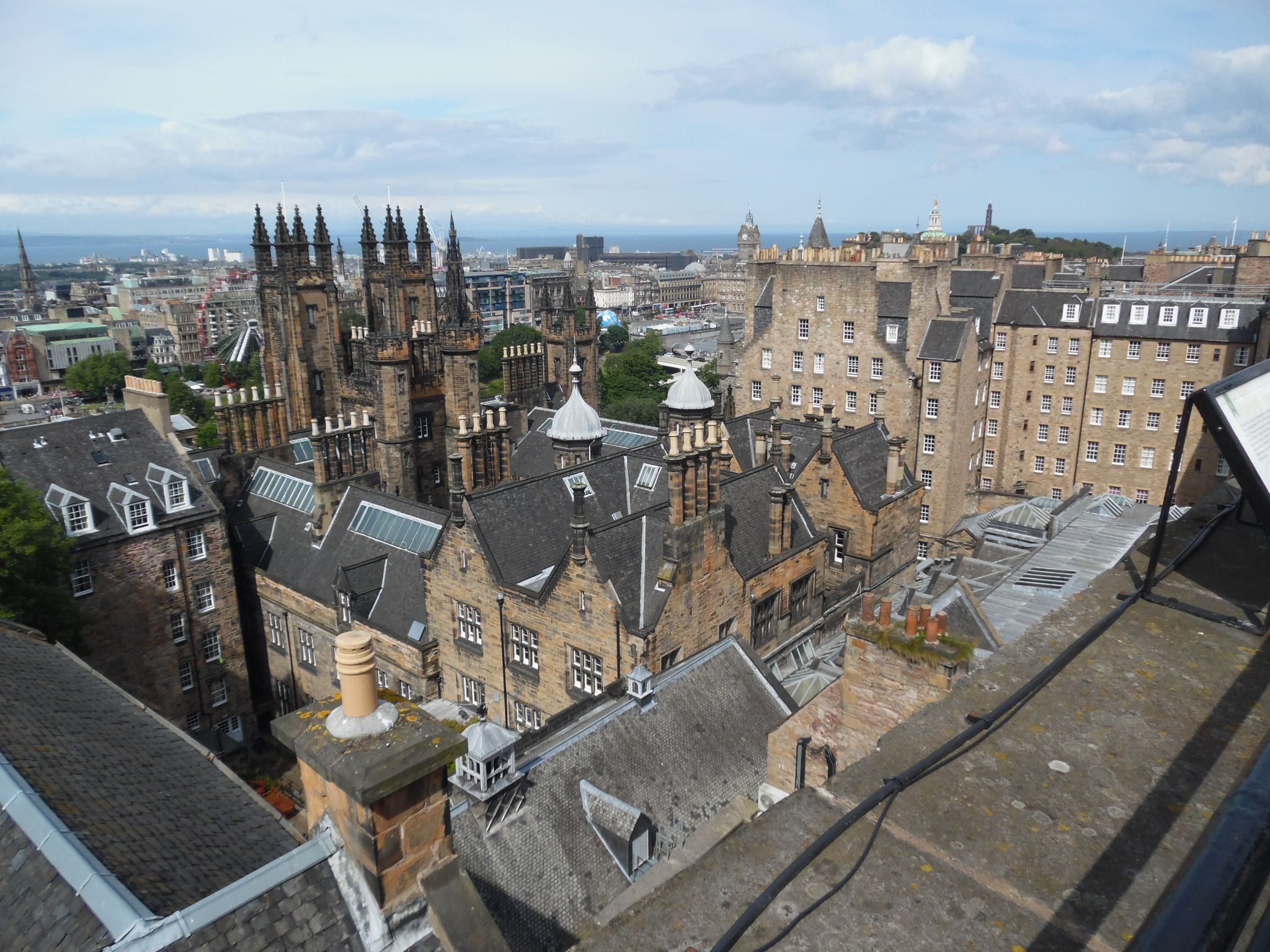
Castles on crags, single-track roads to the sea, and midsummer light that barely leaves the sky — the wildest country in Britain, and among the easiest to reach.
Scotland packs Europe's most concentrated scenery into a country the size of South Carolina — sea lochs and glens, a thousand islands, and two great cities an hour apart by train. Edinburgh stacks a medieval Old Town beneath a castle on an extinct volcano; Glasgow answers with Victorian grandeur, art and the best live music in Britain. North and west of them the Highlands begin, and the roads get slower and better the further you go. Use this hub to plan your trip: browse our Scottish city guides below, or read on for the regions, seasons and driving routes that tie the country together.
The quiet sweet spot. Days lengthen fast, the glens green up, and May is among the driest and sunniest months in the west — all before the midges arrive. Snow can still linger on the high tops, and the far north stays cold into April.
SummerJun–Aug
Peak season, and the only stretch when the islands and mountain roads are reliably easy. Daylight is extraordinary — past 10pm in the Highlands, barely dark at all in Shetland. The trade-offs are booked-out Skye, festival prices in Edinburgh, and biting midges in the west from late June.
FallSep–Nov
Arguably the best time to drive Scotland. September keeps long days and loses the crowds and most of the midges, the hillsides turn rust and gold, and the stags roar through the October rut. By November the light is short and the weather turns properly wild.
WinterDec–Feb
Dark by mid-afternoon and often wet, but the cities are at their best indoors — museums, whisky bars and Hogmanay, which Scotland does better than anywhere. The Highlands can deliver snow, empty roads and the occasional aurora, though single-track passes and island ferries are unreliable.
Regions
Edinburgh & the LothiansThe capital — castle rock, the Royal Mile, Georgian New Town and the world's largest arts festival every August — with the Forth bridges, Rosslyn Chapel and a string of beaches all inside a short train ride.
Glasgow & the westScotland's biggest city: Victorian and Mackintosh architecture, free civic museums, and the country's music scene. Loch Lomond starts within an hour, and the Clyde coast ferries leave from its doorstep.
The HighlandsGlencoe, the Great Glen and Loch Ness, Ben Nevis and the roads north from Inverness — sea lochs, empty glens and the North Coast 500 circuit round the top of the mainland.
The HebridesSkye's Cuillin ridge and Quiraing, the white shell beaches of Harris and Tiree, whisky on Islay and basalt columns on Staffa. Reached by CalMac ferry or the bridge to Skye.
Orkney & ShetlandThe northern isles, closer to Norway than to London in feel and history — Skara Brae and the Ring of Brodgar predate Stonehenge, and Shetland's midsummer barely gets dark.
The Cairngorms & SpeysideBritain's largest national park — arctic plateau, ancient Caledonian pine forest and ski runs — wrapped around the greatest concentration of malt whisky distilleries in the world.
Fife & the northeastSt Andrews and the home of golf, the fishing villages of the East Neuk, Dundee's design museum and waterfront, and Aberdeen's granite streets and castle country inland.
The Borders & GallowayThe quiet south — ruined abbeys, Walter Scott country, dark-sky forest and a coastline of cliffs and harbours. The first and last of Scotland if you arrive by road from England.
The Isle of SkyeThe most dramatic of the Hebrides — the jagged Cuillin ridge, the landslip pinnacles of the Quiraing, and sea cliffs at every turn.Basecamp: Portree
GlencoeA glacial valley walled by near-vertical mountains, and the most photographed glen in Scotland — driven through in ten minutes, walked for days.Basecamp: Fort William
Heart of Neolithic OrkneySkara Brae, the Ring of Brodgar and Maeshowe — a Stone Age village and ceremonial landscape older than the pyramids and better preserved than most.Basecamp: Kirkwall
Loch Ness & the Great GlenA 23-mile freshwater trench along Scotland's geological fault line, with Urquhart Castle on its shore and the Caledonian Canal running its length.Basecamp: Inverness
The Forth BridgeA cantilever railway bridge of 1890 in oxide red, still carrying trains, and a World Heritage Site as a monument of Victorian engineering.Basecamp: South Queensferry
Suggested routes
The Highlands loop
~5–7 days
The classic first drive: out through the western glens to Skye, back across the middle of the country. A car is close to essential, and the route works clockwise or anticlockwise from either city.
1Edinburgh or Glasgow — start point; collect the car
2Loch Lomond & the Trossachs — the first lochs, an hour out
3Glencoe — the most dramatic glen in Scotland
4Isle of Skye — two nights; the Cuillin, Quiraing and Trotternish
5Loch Ness & Inverness — back east along the Great Glen
6The Cairngorms — pine forest and plateau on the way south
The North Coast 500
~1 week
A 516-mile circuit of the far north from Inverness — single-track roads, empty beaches and the emptiest country in Britain. Book accommodation well ahead; there is very little of it, and do not try to rush the loop in three days.
1Inverness — start and finish
2The east coast to John o' Groats — castles, cliffs and Dunrobin
3Durness & the north coast — Smoo Cave and empty white beaches
4Assynt & Ullapool — Suilven, Stac Pollaidh and the best seafood on the route
5Torridon & Applecross — the Bealach na Bà pass — the hardest driving of the trip
6Back to Inverness — via Loch Carron and the Black Isle
Two cities and an island, by train and ferry
~5 days
Scotland without a car, and proof you don't always need one. Every leg is a scheduled train or ferry, and the West Highland Line does more for the scenery than any road would.
1Edinburgh — two days; castle, Old Town and the galleries
2Glasgow — 50 minutes by train; museums, Mackintosh and music
3Oban — the West Highland Line west to the ferry port
4Isle of Mull — ferry over; Tobermory and the Iona boat
5Fort William — return via the Glenfinnan Viaduct
Scotland travel FAQ
Nine questions travellers ask before they go.
When is the best time to visit Scotland?
May and September are the sweet spots — long days, the thinnest crowds of the usable season, and far fewer midges than high summer. June to August gives the most daylight and the most reliable island ferries but the highest prices, especially in Edinburgh during the August festivals. Winter is dark and wet, though it suits city breaks and Hogmanay well.
How many days do you need in Scotland?
Five days covers Edinburgh, Glasgow and one trip into the Highlands. A week to ten days is the sweet spot: it lets you add Skye or the Cairngorms without spending the whole trip driving. Two weeks opens up the North Coast 500 or the Outer Hebrides, both of which punish a rushed schedule.
Do you need a car in Scotland?
Not for the cities. Edinburgh and Glasgow are walkable and 50 minutes apart by frequent train, and both have poor, expensive city-centre parking. For the Highlands and the islands a car changes the trip — buses are sparse and slow — with two great exceptions: the West Highland Line to Mallaig and the Far North Line to Thurso are journeys worth taking for themselves.
What are the midges, and how bad are they?
Highland midges are tiny biting flies that swarm in the west and the Highlands from roughly late June to early September, worst at dawn and dusk, in still damp air and near water. They are a genuine nuisance rather than a danger, and they hate wind and bright sun. Repellent, a head net for hillwalking and a breezy camping spot handle most of it; the cities and the east coast are largely unaffected.
Is Scotland part of the UK, and is it the same as Britain?
Scotland is one of the four countries of the United Kingdom, alongside England, Wales and Northern Ireland. Great Britain is the island holding Scotland, England and Wales — so Scotland is part of Britain and part of the UK, but is not itself either. It has its own parliament in Edinburgh, its own legal and education systems, and its own national teams.
What currency does Scotland use, and are Scottish banknotes different?
The pound sterling (GBP, £), the same as the rest of the UK. Three Scottish banks issue their own sterling notes, which look different from Bank of England ones but are worth exactly the same; they are accepted throughout Scotland and, in practice, in England too. Cards and contactless are taken almost everywhere, including on buses.
What food and drink should you try in Scotland?
Haggis with neeps and tatties is the national dish and much better than its reputation, and it turns up in a vegetarian version nearly as often. Beyond it: cold-water seafood — langoustines, oysters, hand-dived scallops and smoked salmon — Aberdeen Angus beef, Cullen skink, and a cooked breakfast with a tattie scone. Scotch whisky is the obvious drink, with more than 130 working distilleries, most of them open to visitors.
What is Scotland known for?
Highlands and islands, castles, whisky and festivals.
What kind of trip is Scotland best for?
Road trips, hiking and two great cities.
We use cookies to analyse site traffic and improve your experience.
You can accept or reject analytics cookies. See our Cookie Policy.