A country you can cross in an afternoon, with mountains that take a week to get out of your head.
Slovakia packs an improbable amount of country into a space smaller than Scotland: a Danube capital with a castle on the skyline, the sheer granite wall of the High Tatras, and more castles per head than almost anywhere in Europe. It is a place where you can spend the morning in a baroque old town and the afternoon on a via ferrata or in an ice cave. Distances are short, the roads and railways are good, and the crowds thin out fast once you leave Bratislava.
The lowlands green up early and Bratislava's terraces reopen, but the high Tatra trails stay shut under snow well into June. A fine window for the capital, the wine villages and the lowland castles; a poor one for the ridgelines.
SummerJun–Aug
The only reliable season for high-mountain hiking, with long daylight and all the Tatra huts and chairlifts running. Afternoon thunderstorms are common on the ridges, and the lowlands around Bratislava get properly hot.
FallSep–Nov
Arguably the best all-round time to come: settled, clear September weather, the beech forests of the Malá Fatra and Slovak Paradise turning gold, and the Small Carpathian vineyards in harvest. November turns grey and wet.
WinterDec–Feb
Ski season in Jasná and the Tatras, and the season the country's many thermal baths make most sense. Bratislava's Christmas markets run through Advent. Mountain roads need winter tyres, which are a legal requirement in wintry conditions.
Regions
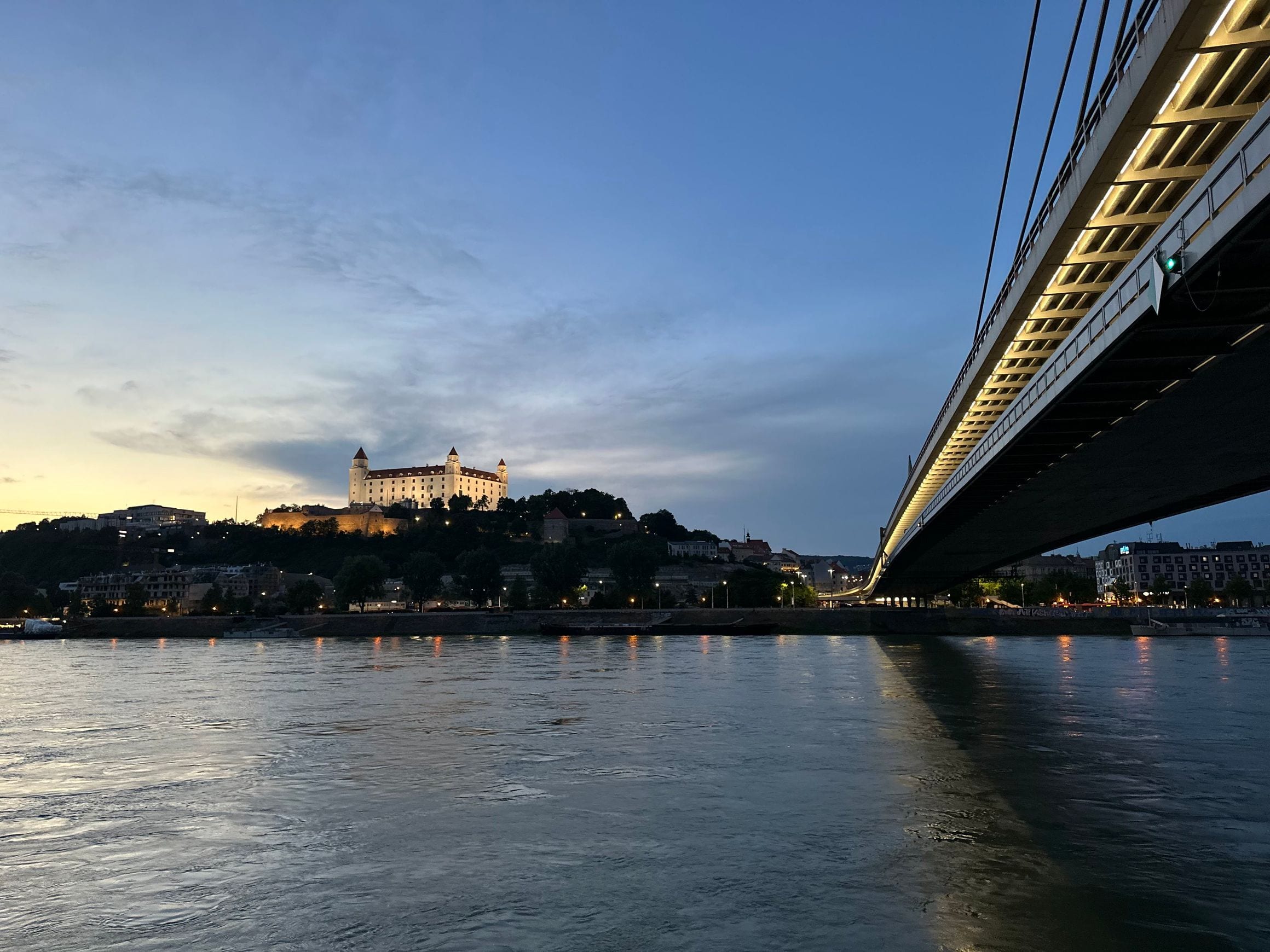
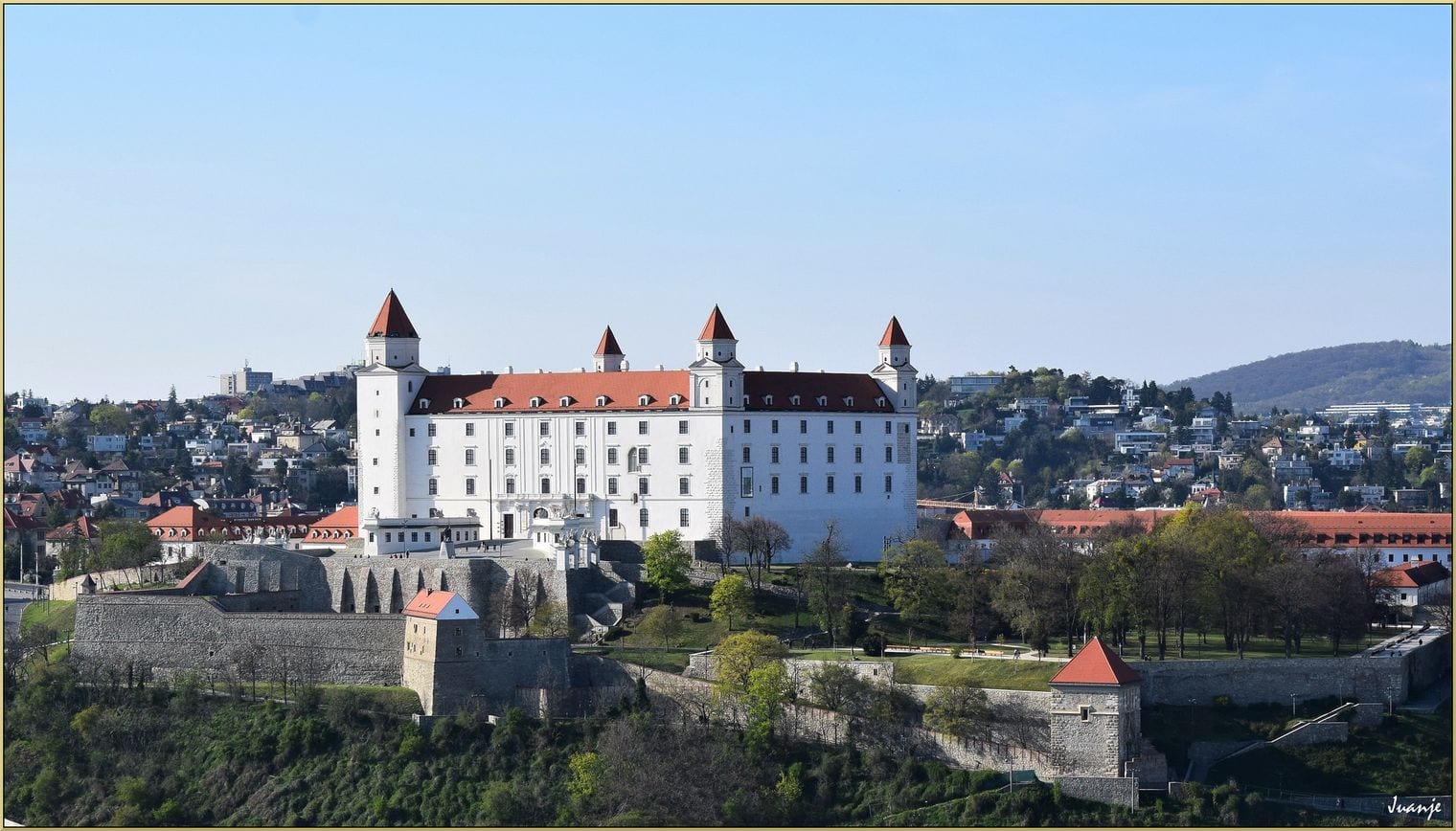
Bratislava & the Danube LowlandsThe capital sits in the country's south-west corner, closer to Vienna than to any Slovak city, with its castle above the Danube and a compact baroque old town below. Beyond it lie the Small Carpathian wine villages, the Roman frontier at Rusovce and the flat, water-laced Žitný ostrov.
The High TatrasEurope's smallest alpine range and the reason many people come at all — a 25 km wall of granite peaks, glacial tarns and hut-to-hut trails rising abruptly out of the plain, with Poprad and the resort villages of Štrbské Pleso and Starý Smokovec at its foot.
Spiš & the EastThe historic region around Levoča and the vast ruin of Spiš Castle, with medieval walled towns, painted wooden churches and Košice — the country's handsome second city — anchoring the far east.
Liptov & the Low TatrasThe country's activity heartland: the Demänovská cave system, the Jasná ski area on Chopok, thermal parks around Liptovský Mikuláš and a big reservoir ringed by hiking and cycling routes.
Central Slovakia & the Mining TownsThe old silver and gold country, where Banská Štiavnica sits in a collapsed volcanic caldera and Kremnica still runs one of Europe's oldest working mints. Banská Bystrica is the regional hub and a good base for the Veľká Fatra.
Orava & the NorthwestThe cinematic north — Orava Castle on its rock above the river, the limestone ridges and gorges of the Malá Fatra, wooden villages like Vlkolínec and Čičmany, and Žilina as the gateway city.
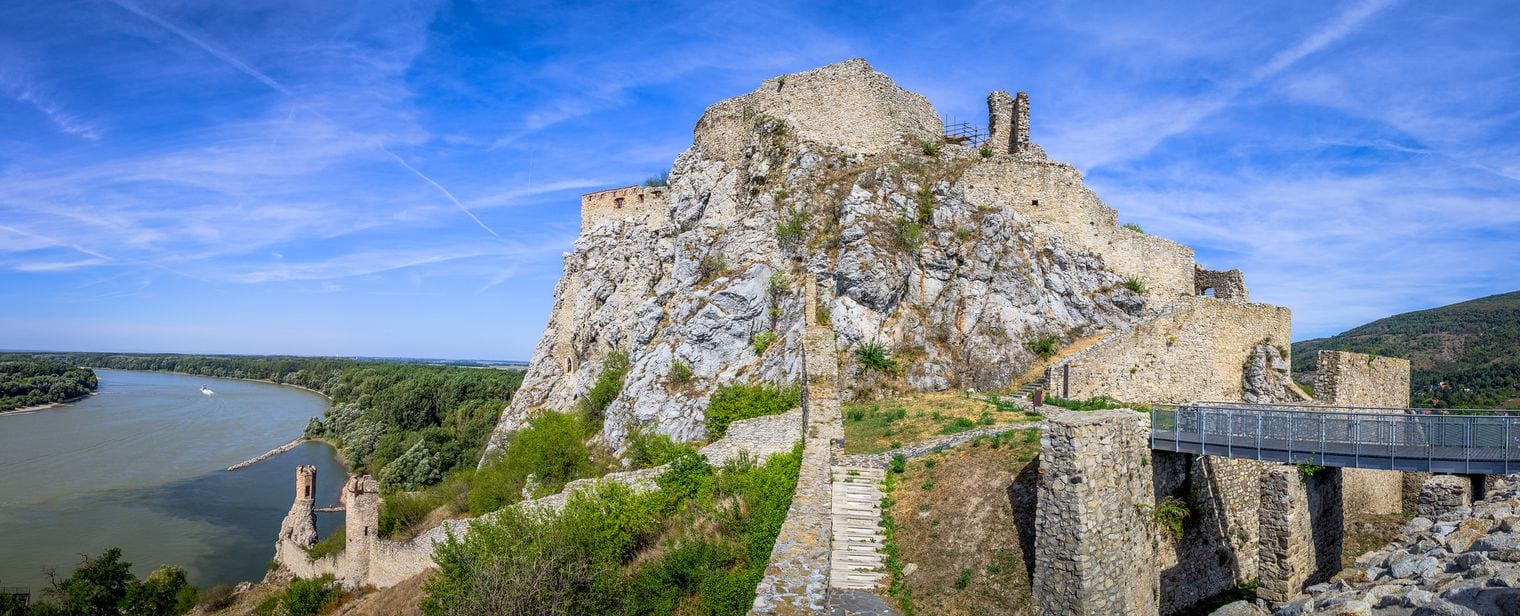
Spiš CastleOne of the largest castle complexes in Central Europe — a vast, pale ruin sprawling across a limestone hill, visible for miles across the Spiš plain.Basecamp: Levoča
The High TatrasSlovakia's alpine core: glacial lakes, marked ridge trails, mountain huts and a funicular and cable-car network that gets you high without a technical climb.Basecamp: Poprad
Banská ŠtiavnicaA UNESCO-listed silver-mining town built inside an extinct volcano, ringed by a system of hand-dug reservoirs and reached by steep cobbled lanes.Basecamp: Banská Štiavnica
Slovak Paradise National ParkGorge hiking on ladders, chains and catwalks bolted beside waterfalls — a one-way trail system unlike anything else in the region.Basecamp: Hrabušice
A car-free introduction built around Bratislava, using boats, buses and the regional train to reach the Danube confluence and the Small Carpathian vineyards on the city's doorstep.
2Devín — cliff-top ruin where the Morava meets the Danube
3Svätý Jur & Pezinok — wine villages on the Small Carpathian slopes
4Čunovo — riverside modern-art museum and the whitewater course
The grand Slovak loop
About two weeks
The full west-to-east traverse, taking in the mining towns, the mountains and the Spiš castles before finishing in Košice. Best driven, though the main cities all link by rail.
2Banská Štiavnica — silver town in a volcanic caldera
3Liptovský Mikuláš — caves, thermal baths and the Low Tatras
4The High Tatras — two or three days on the ridge trails
5Levoča & Spiš Castle — walled town and the great ruin
6Košice — finish in the eastern capital
Mountains, gorges and caves
Under a week
An outdoors-first loop through the country's northern parks for hikers, pairing the ladder trails of Slovak Paradise with the cave systems and ridgelines of the Low Tatras and Malá Fatra.
1Žilina — gateway to the Malá Fatra
2Vrátna Valley — cable car and limestone ridge walks
3Demänovská Valley — the ice cave and the Cave of Liberty
4Slovak Paradise — one-way gorge routes on ladders and chains
Slovakia travel FAQ
Eight questions travellers ask before they go.
When is the best time to visit Slovakia?
September is the sweet spot — settled weather, autumn colour in the gorges and forests, the wine harvest under way in the Small Carpathians, and the summer crowds gone. July and August are the only dependable months for high-Tatra ridge walking, since snow lingers on the tops into June. Winter is for skiing at Jasná and in the Tatras, and for the thermal baths.
How many days do you need in Slovakia?
Two or three days covers Bratislava and its immediate surroundings comfortably. Five to seven lets you add the High Tatras or the mining towns. Around two weeks is enough to drive the full west-to-east loop through the mountains and the Spiš castles to Košice without rushing.
Do you need a car in Slovakia?
Not for the cities. Trains and intercity buses link Bratislava, Žilina, Poprad and Košice cheaply and reliably, and Bratislava is entirely walkable. A car matters once you want the castles, the caves, the mining towns and the trailheads, which sit in valleys that public transport serves slowly. Motorways require a digital vignette, and winter tyres are compulsory in wintry conditions.
What is Slovakia known for?
Castles and castle ruins in extraordinary number, the High Tatras, an unusually rich cave system, folk architecture in villages like Vlkolínec and Čičmany, and a long mining history preserved at Banská Štiavnica and Kremnica. It is also a country of thermal water, with spa and thermal-park towns scattered across the north.
Is English widely spoken in Slovakia?
Widely among younger people and throughout Bratislava, the Tatra resorts and the main tourist towns, where menus and signage are routinely bilingual. It thins out in rural areas and among older residents, where German is often the more useful second language. A few words of Slovak are appreciated everywhere.
What currency does Slovakia use, and is it in the EU?
Slovakia is in the European Union, the eurozone and the Schengen area, and uses the euro. That sets it apart from its neighbours Czechia, Hungary and Poland, which all still use their own currencies — so visitors arriving from Prague or Budapest often expect to change money and do not need to. Cards are accepted almost everywhere.
What food should you try in Slovakia?
Bryndzové halušky is the national dish: soft potato dumplings with sheep's cheese and bacon. Look also for kapustnica, a smoky sauerkraut and sausage soup eaten especially at Christmas, and for the sheep's-milk cheeses žinčica and oštiepok in the mountains. The country makes good white wine, particularly around the Small Carpathians.
What kind of trip is Slovakia best for?
Hiking, road trips and a short city break.
We use cookies to analyse site traffic and improve your experience.
You can accept or reject analytics cookies. See our Cookie Policy.