We may earn a commission if you book or buy through a link on
this page, at no extra cost to you. It never affects which places we list or how
we rank them (how we make money).
Short answer
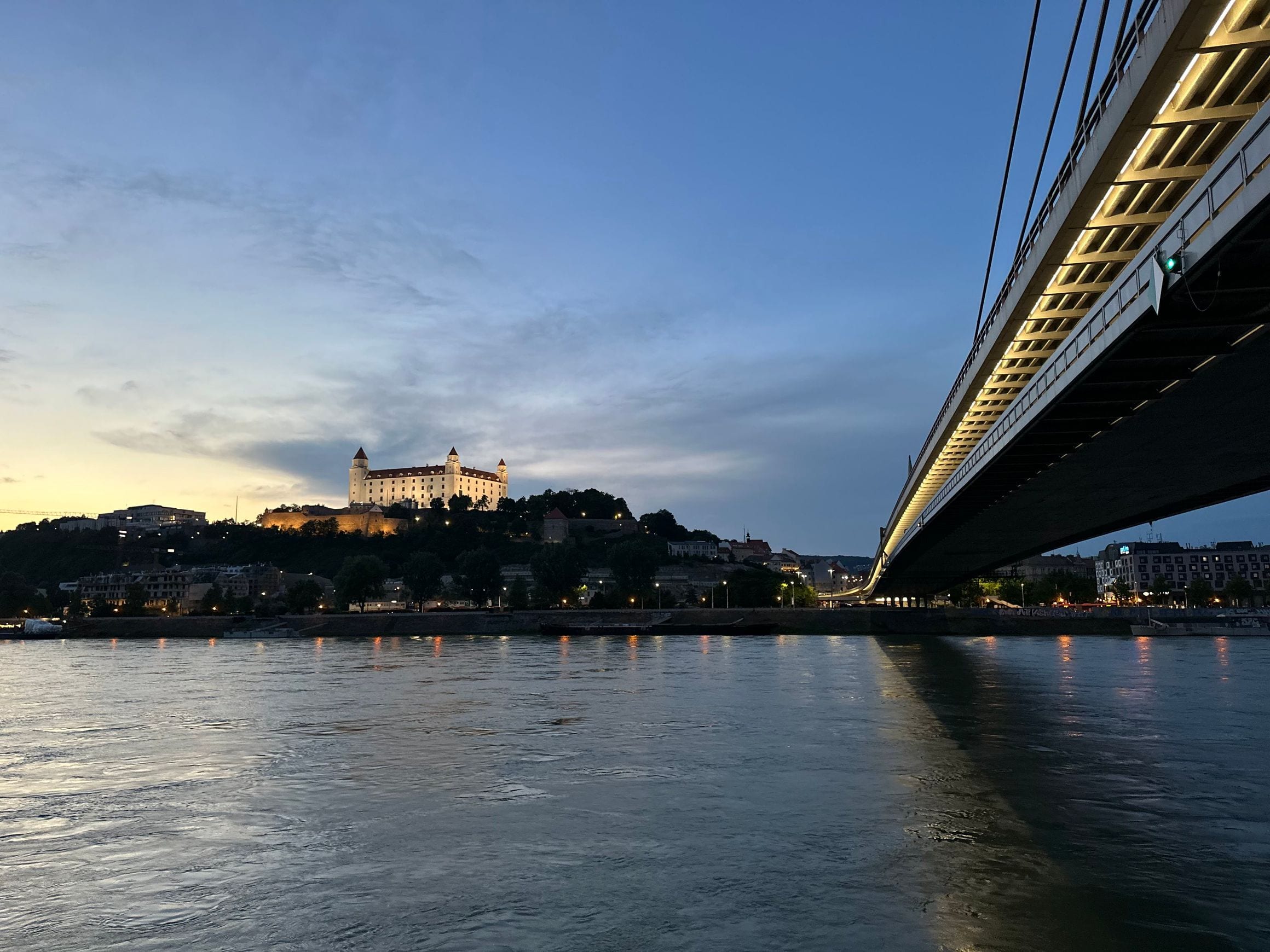
Bratislava's essentials are the white four-towered castle on its bluff over the Danube, Devín Castle, a cliff-top ruin at the confluence of the Danube and Morava, and the UFO deck welded atop the SNP Bridge's single pylon. Two days is right: one for the castle, the old town and the main square, a second to reach Devín.
Bratislava is the only capital that borders two countries, and it wears that crossroads history openly: a white castle on the bluff, a baroque old town you can cross in ten minutes, and socialist-era concrete on the far bank of the Danube.
This guide runs to 30 things to do, from the coronation cathedral and the Blue Church to a cliff-top ruin above the Morava and a modern-art museum out on a river peninsula. Two days covers the centre comfortably; three lets you reach the edges.
Bratislava is the only national capital that borders two countries — Austria to the west and Hungary to the south, both reachable on a bicycle from the city centre.
It is also remarkably close to a third capital: Vienna sits roughly 60 kilometres upstream, linked by road, rail and a Danube catamaran, which makes the two an easy pairing on one trip.
For nearly three centuries Bratislava — then known as Pressburg — was the coronation city of the Kingdom of Hungary, after Buda fell to the Ottomans. The crown only returned to Buda, today part of Budapest, in the nineteenth century.
The city holds a UNESCO World Heritage Site most visitors never see: the Roman fort of Gerulata, in the Rusovce borough, is Slovakia’s part of the transnational Frontiers of the Roman Empire – Danube Limes listing.
There are working vineyards inside the city limits. The Small Carpathian wine region begins in the Rača and Vajnory boroughs, on slopes that run right up to the edge of the built-up city.
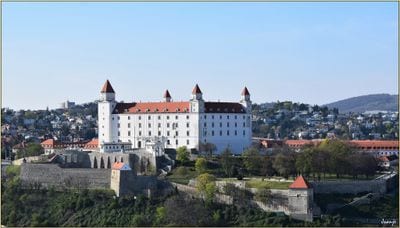
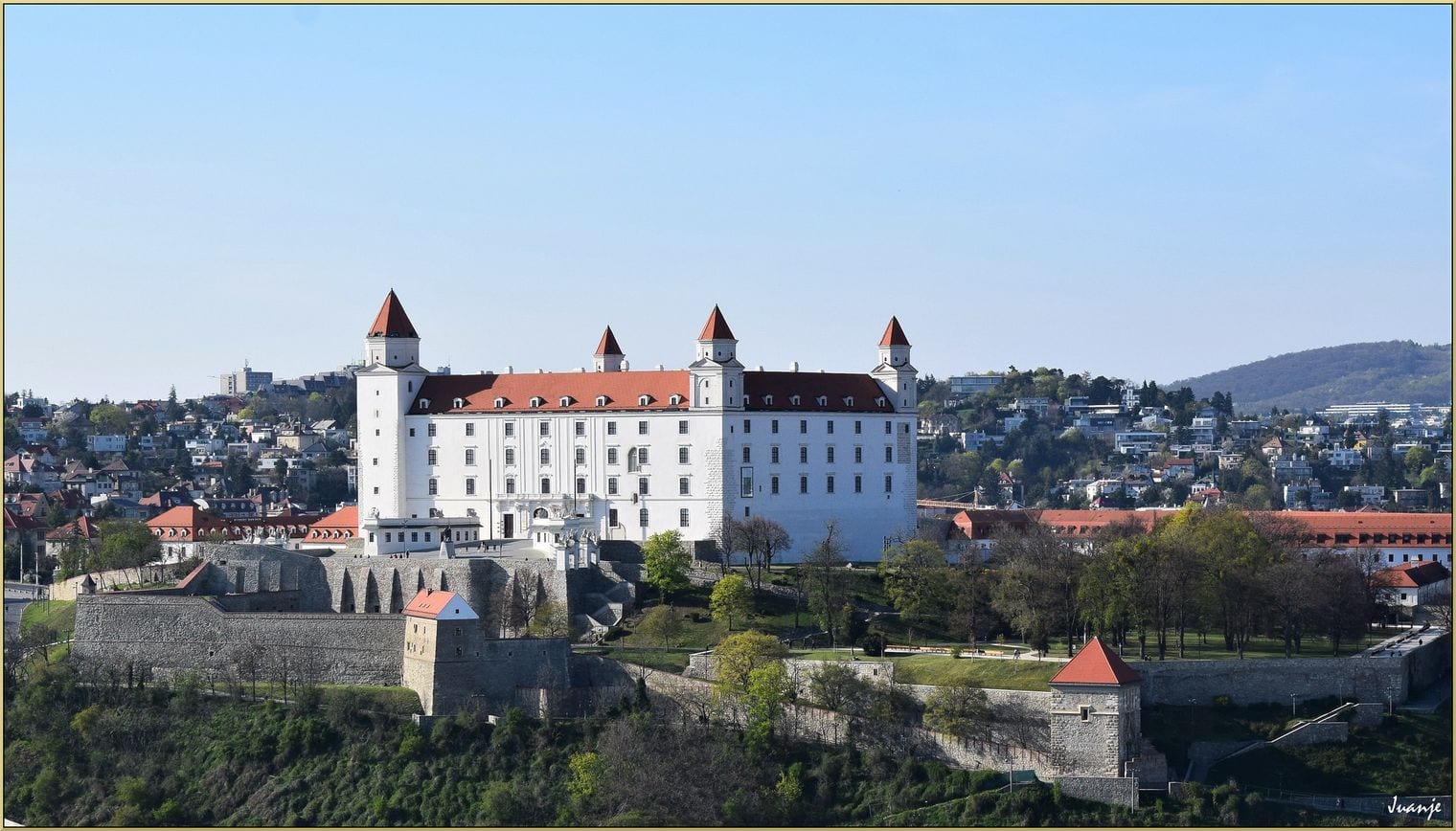
Bratislava Castle is the shape the whole city is recognised by — a square white block with a tower at each corner, sitting on a bluff where the Carpathians drop to the Danube.
There has been a fortress on the rock since long before the present building, and the hill has been fortified in one form or another since prehistory. The castle burned out in the nineteenth century and stood as a shell for well over a hundred years before the long reconstruction that produced what you see today.
Inside is the Slovak National Museum's history collection, spread over several floors, though plenty of visitors come only for the terraces. The views are the real draw: the Danube and its bridges, the panel-block skyline of Petržalka opposite, and on a clear day a flat horizon that reaches into Austria and Hungary. The walk up from the old town is short but steep, and the courtyard and ramparts can be visited without a museum ticket.
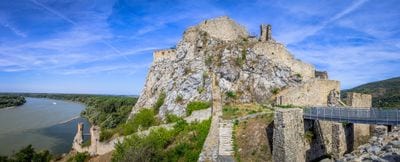
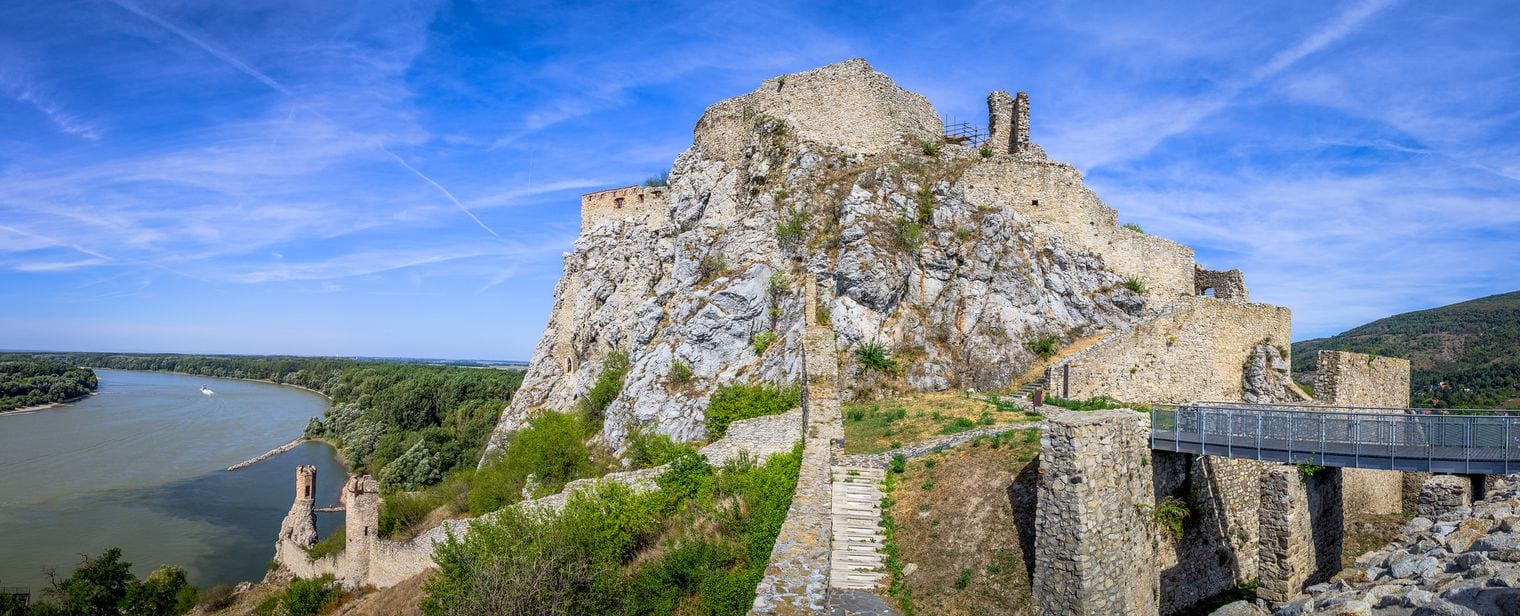
Devín Castle sits ten kilometres upriver on a crag at the exact point where the Morava flows into the Danube, and it is the most dramatic thing in the Bratislava area by some distance. The site's importance is old — it was a stronghold of Great Moravia — and the ruin you walk through today was blown up by Napoleon's retreating troops, leaving jagged walls that follow the shape of the rock.
The cliff-edge terraces look straight across the water into Austria, which is precisely why the site carries a second, much more recent history: this was a sealed frontier during the Cold War, and a memorial below the castle remembers people shot trying to cross. It is still inside the Bratislava city limits and reachable by city bus or by boat in season, which makes it an easy half-day rather than an expedition.
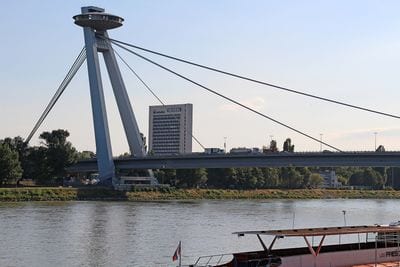
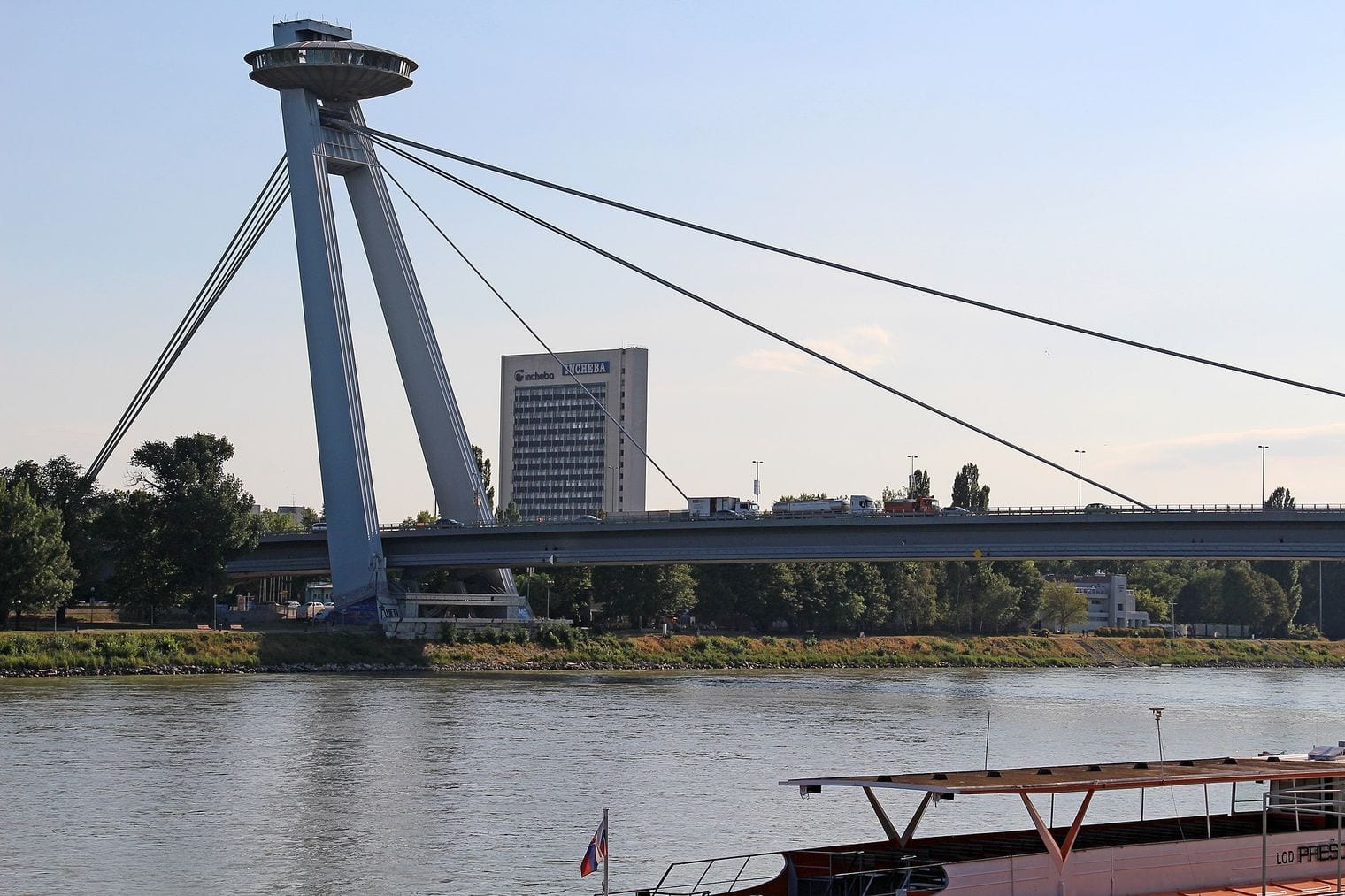
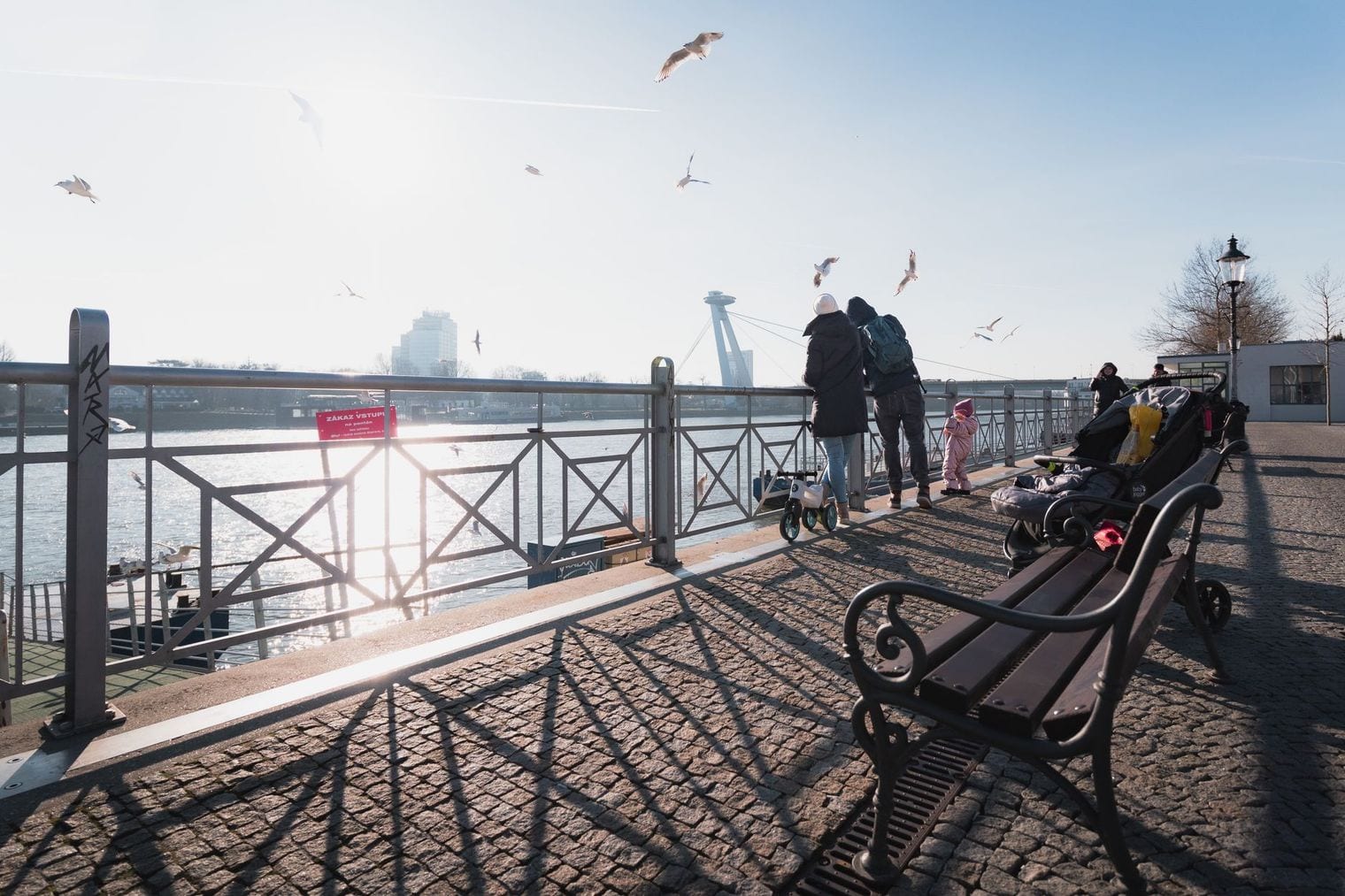
Bratislava's strangest landmark is a flying saucer welded to the top of a bridge pylon. The UFO Observation Deck caps the single asymmetric tower of the SNP Bridge, a bold piece of Czechoslovak engineering thrown across the Danube in the 1970s, and a lift inside the pylon runs up to a viewing platform with a restaurant above it.
The view is the best argument for going: the old town and castle on one bank, the vast housing estates of Petržalka on the other, and the river running between them. It is also the clearest place to read what happened to this city in the twentieth century, since the bridge's approach road was driven straight through the old Jewish quarter below the castle. Go near sunset if you can.
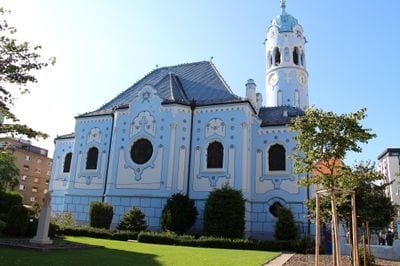
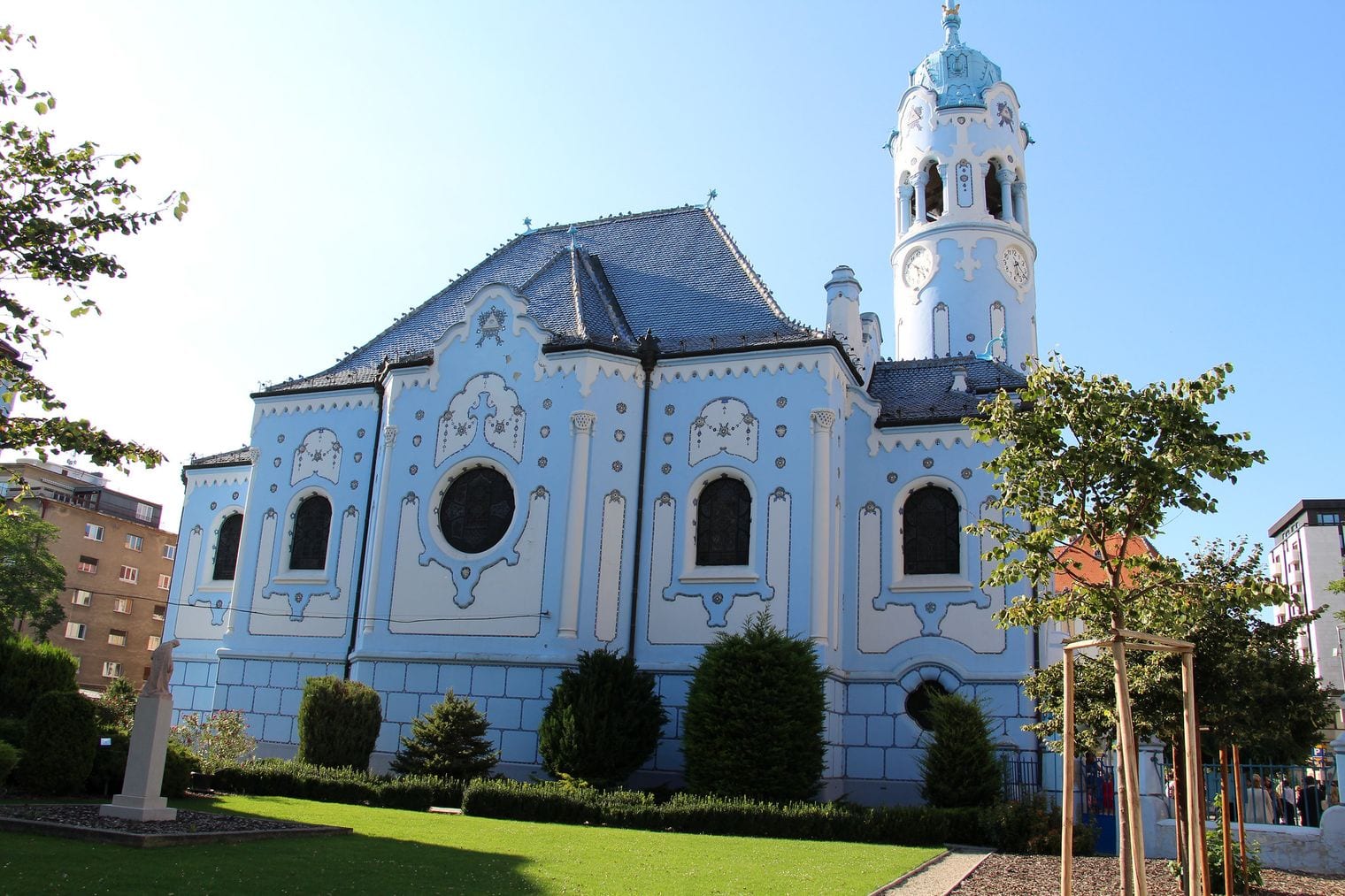
The Blue Church is the building everyone photographs, and it earns it. Officially the Church of St. Elizabeth, it is a small Hungarian Secession-style church finished in the early twentieth century, and it is blue almost everywhere — walls, roof tiles, mouldings, even much of the interior — in a soft powder shade that looks nearly edible in low sun.
It sits a short walk east of the old town on a quiet residential street, which catches some visitors out; it is not on the main square. It remains an active parish church rather than a museum, so opening is built around services and the interior is not always accessible. Even from the pavement the exterior, with its cylindrical tower and rounded mouldings, is worth the ten-minute detour.
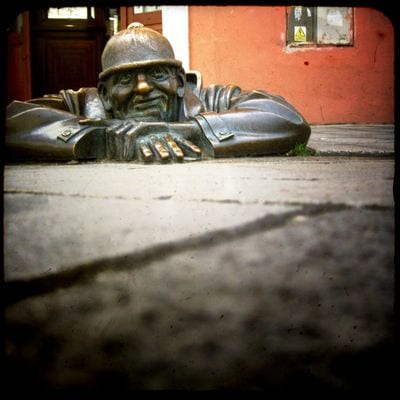
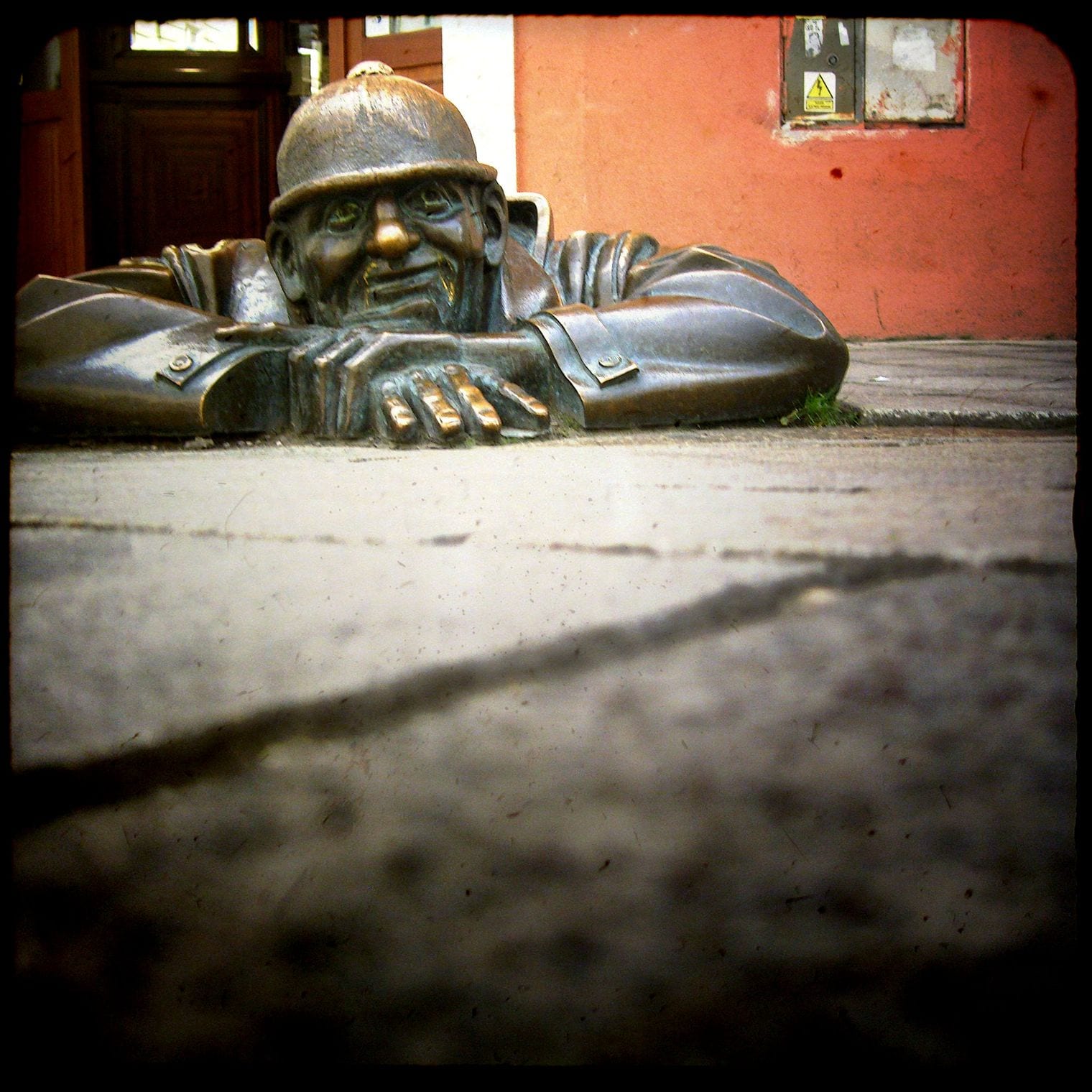
Čumil is a bronze man leaning out of a manhole at a street corner in the old town, chin on his hands, grinning at passers-by. The name translates roughly as "the watcher", and he has become the city's unofficial mascot since appearing in the 1990s as part of a set of bronzes installed around the centre after the end of communism.
He is the most photographed of the group, and his head and helmet are polished bright by the number of people who touch them. Finding the others turns a wander round the old town into a small treasure hunt: a top-hatted figure tipping his hat on the main square, and a soldier in Napoleonic uniform leaning on a bench nearby. All of them sit at pavement level, so keep your eyes down.
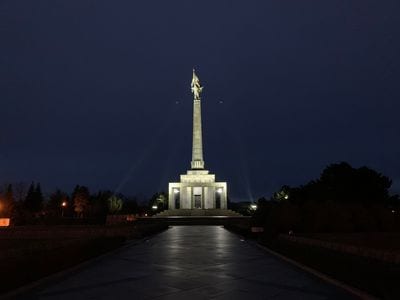
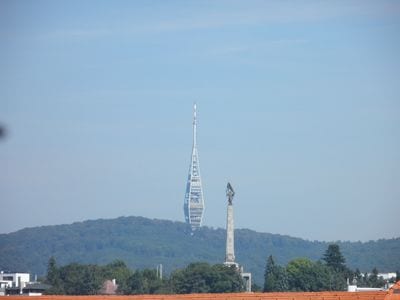
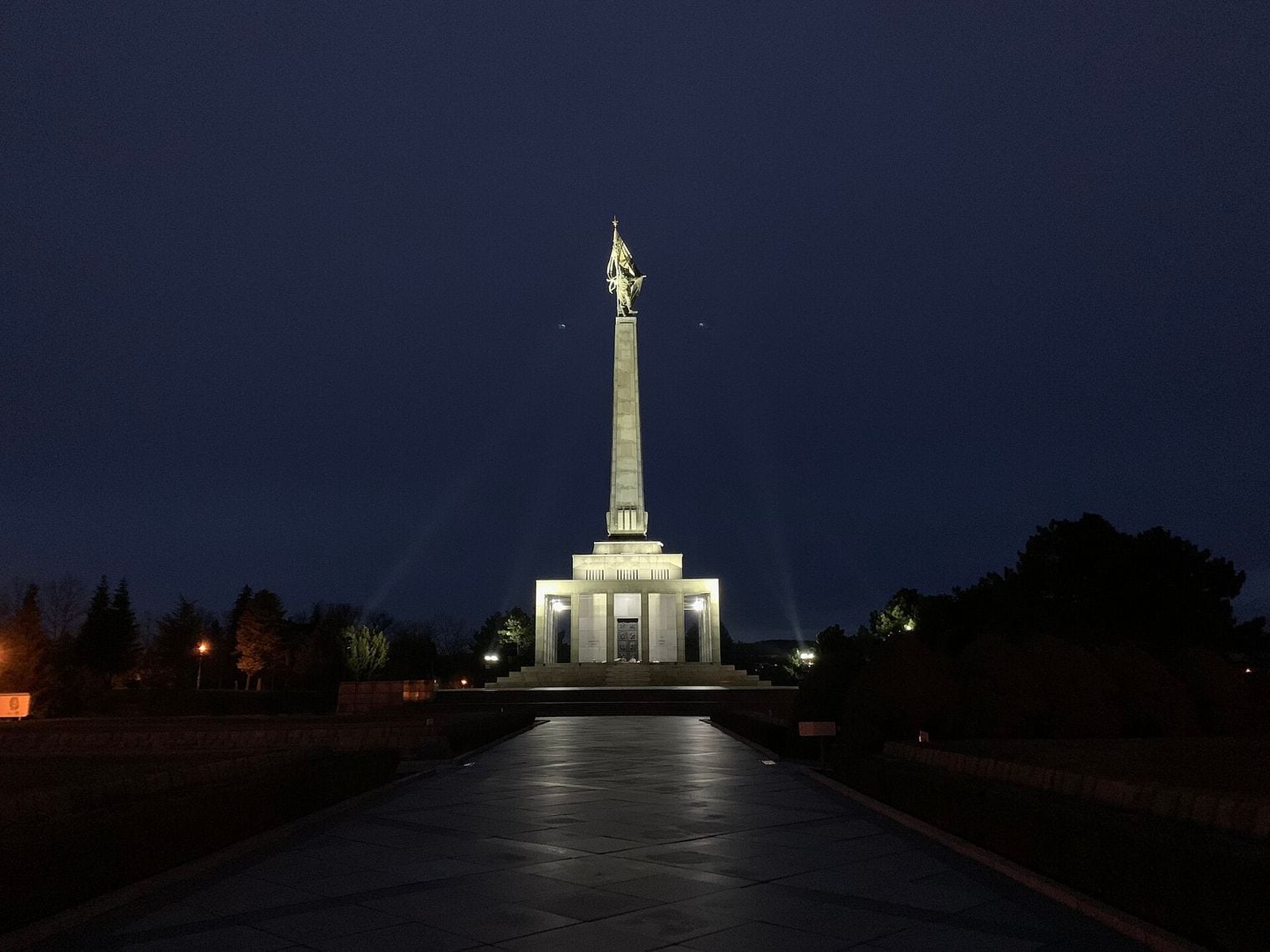
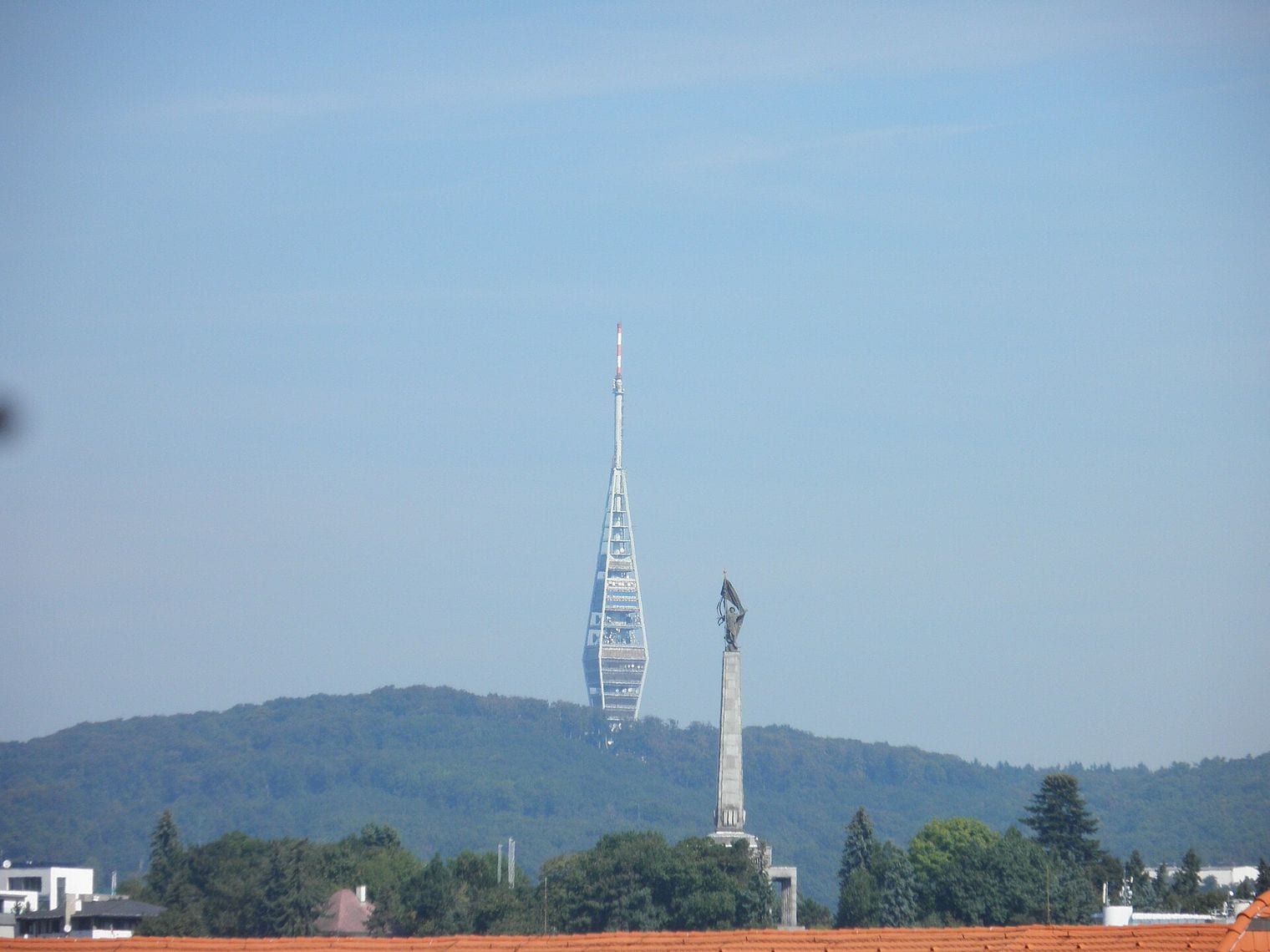
Slavín is a hilltop memorial and military cemetery above the city, built for the Soviet soldiers who died taking Bratislava in the closing months of the Second World War. A tall pylon topped by a figure rises over a terrace of mass graves, and the scale is deliberately imposing — this was state architecture with a message.
For visitors it doubles as the best free viewpoint in Bratislava. The terrace looks down over the rooftops to the castle and the river, and because it sits in a quiet embassy district of villas and mature trees, it is almost always calmer than the castle. The walk up through the streets below is steep but pleasant, and the site remains a working cemetery, so it is treated as a place to be quiet.
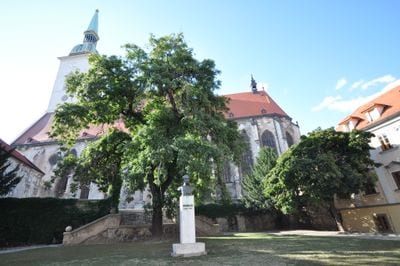
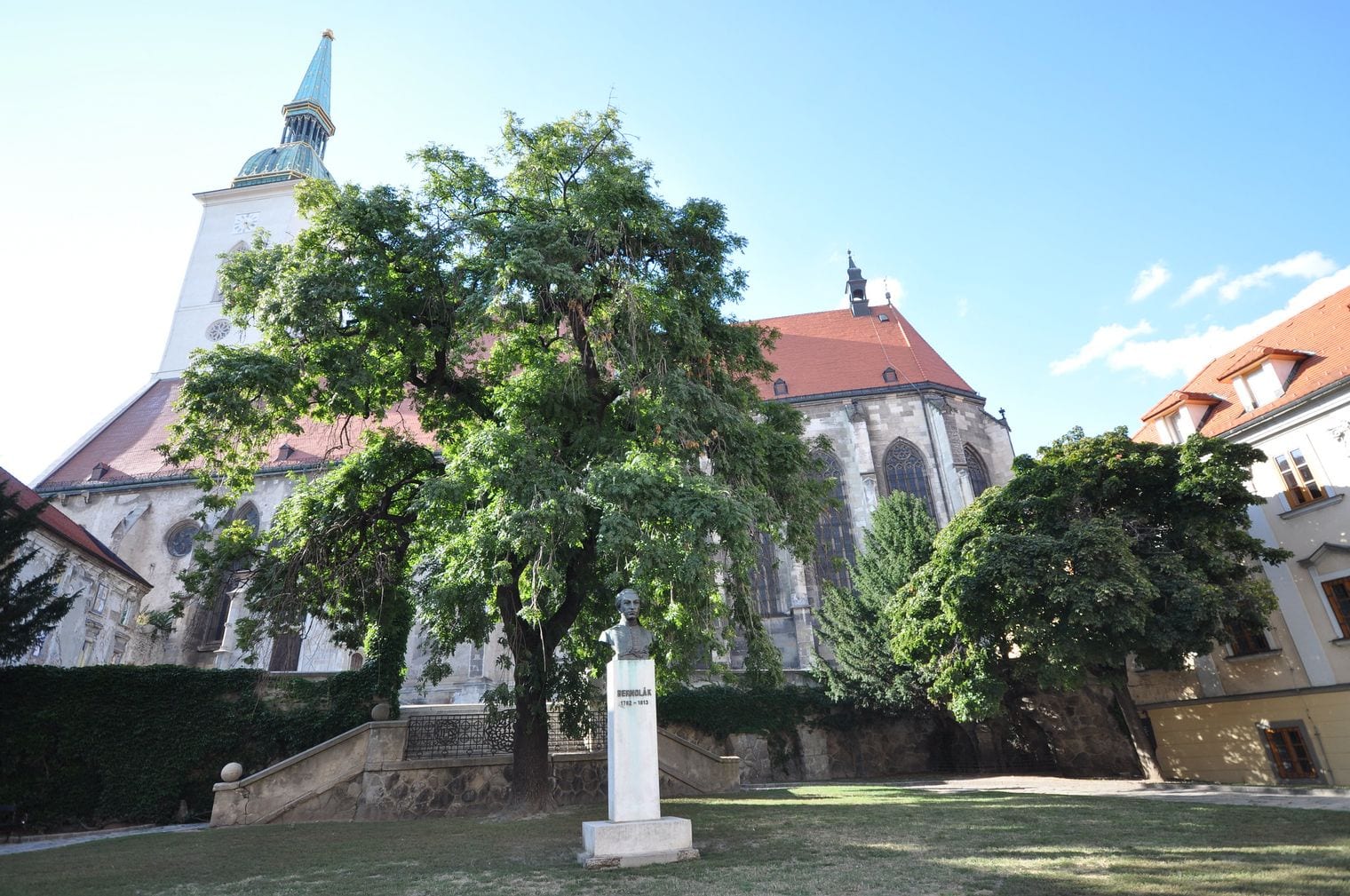
St. Martin's Cathedral is the Gothic church wedged against the old city walls at the foot of the castle hill, and for close to three centuries it was where the monarchs of Hungary were crowned, after Buda fell to the Ottomans and Pressburg — as Bratislava then was — became the kingdom's capital.
The detail that gives the game away is on the spire: instead of a cross, a gilded replica of the Hungarian crown sits on a cushion at the top. Inside, the cathedral is tall, narrow and much plainer than that history suggests, which is part of its appeal. Small brass crowns set into the pavement outside trace the old coronation route through the streets, and they are worth following.
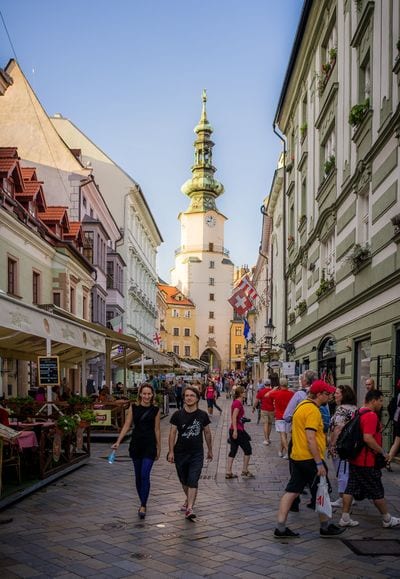
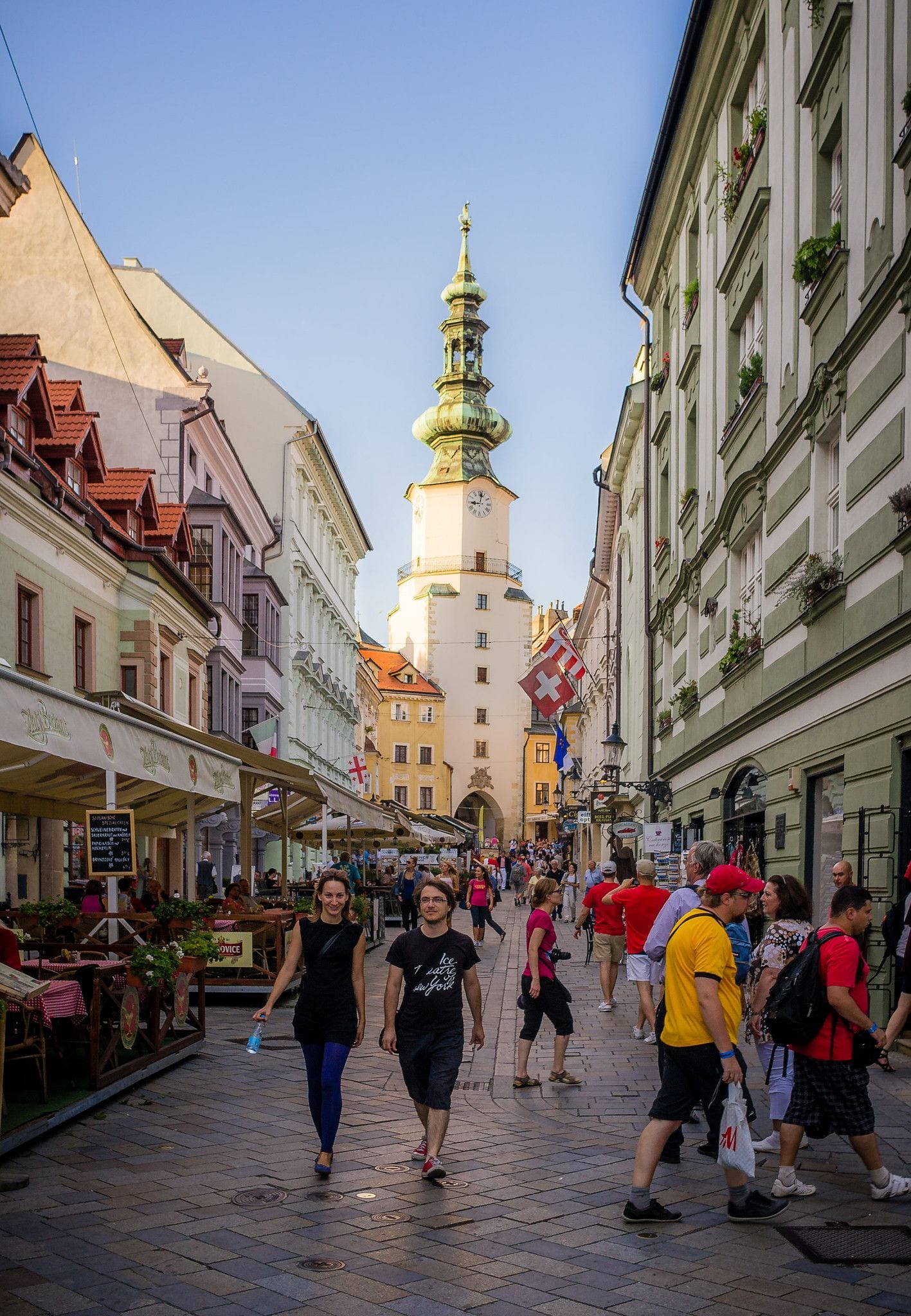
Michael's Gate is the last of the medieval town gates still standing, a slim tower with a green onion dome at the north end of the old town's main pedestrian run. Walking through the archway is the closest thing Bratislava has to a formal entrance, and the lane that leads to it is one of the prettiest in the centre.
The tower houses a small museum of arms and fortifications arranged up its narrow floors, and the climb ends at an open gallery with a close, rooftop-level view down over the old town — different from the castle's wide panorama and arguably more interesting. Look for the brass compass set into the pavement beneath the arch, marking distances to cities around the world.
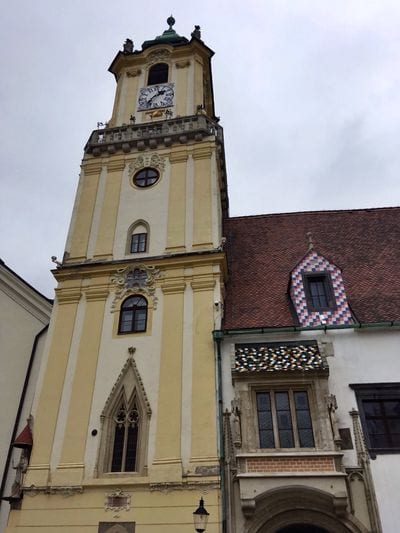
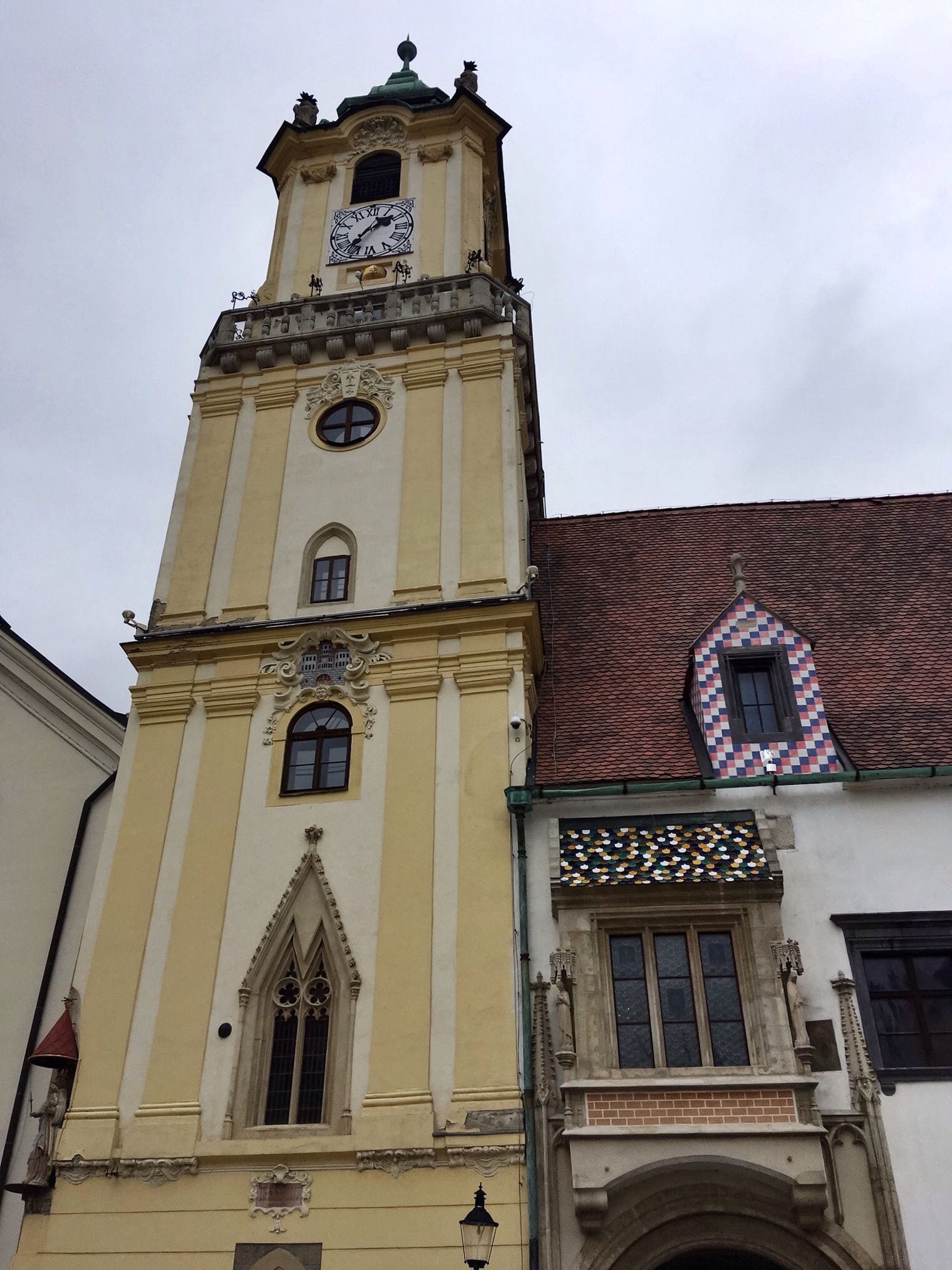
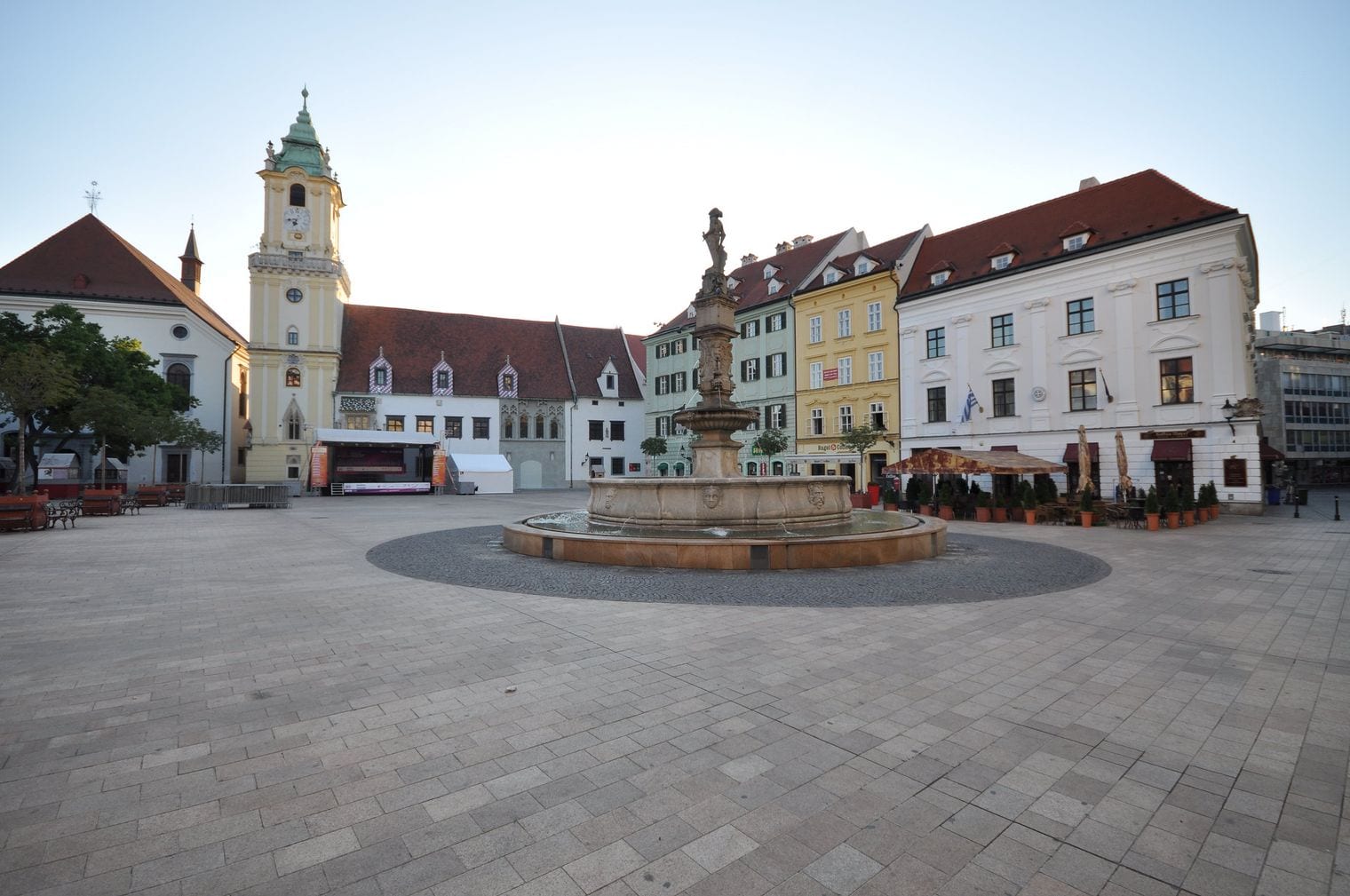
The Old Town Hall is not one building but a run of medieval houses knitted together over centuries, which is why its facade changes style as your eye travels along it. It fronts the main square with a tower and a tiled roof, and its arcaded inner courtyard is one of the loveliest enclosed spaces in the city — and free to walk into.
Inside is the Bratislava City Museum, the place to go if you want the city's story told in order, from a medieval trading town through the coronation years to the twentieth century. The tower can be climbed for a view straight down onto the square. Look for the cannonball lodged in the facade, a memento of Napoleon's army that locals will happily point out.
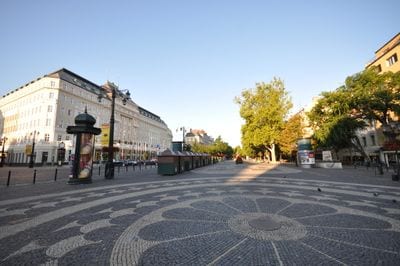
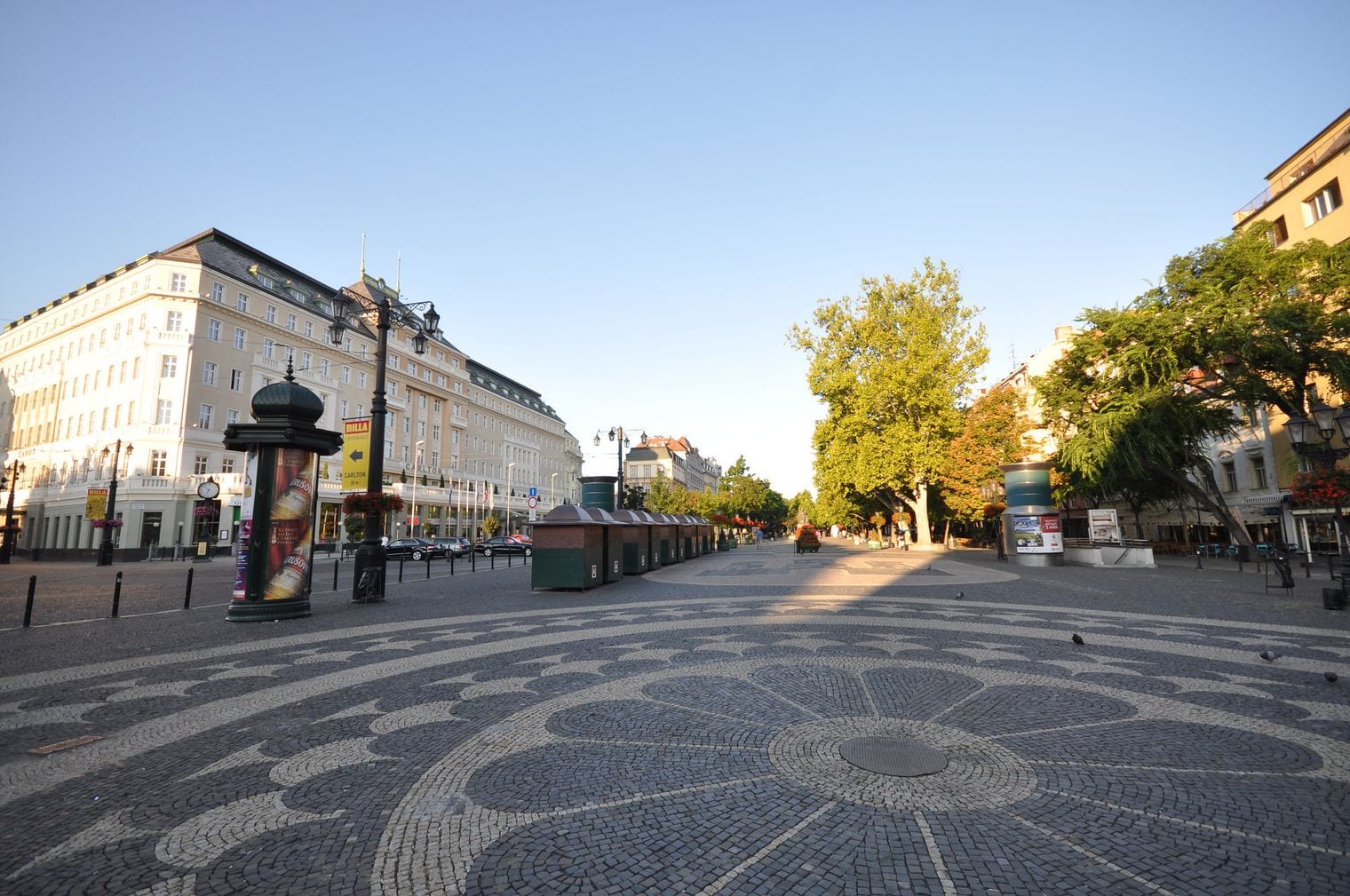
Hviezdoslav Square is less a square than a long, tree-lined promenade running from the opera house towards the river, and it functions as the old town's outdoor living room. Cafés and restaurants line both sides, a statue of the poet it is named after stands at the centre, and in December it fills with one of the city's Christmas markets.
It is the natural place to sit down when you have run out of sights, and the natural route between the old town and the Danube embankment. The buildings around it are grand nineteenth-century stuff — the theatre at one end, embassies and hotels along the flanks — and the whole strip is pedestrianised, so it stays pleasant even when the centre is busy.
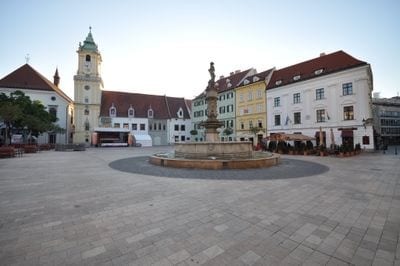
Hlavné Námestie, the main square, is the centre of everything in the old town: a compact rectangle of pastel facades with the Old Town Hall on one side and cafés spilling across the cobbles. It is small enough to cross in under a minute, which is part of why Bratislava feels so manageable.
At its heart stands Maximilian's Fountain, a Renaissance fountain with an armoured knight on top, put up in the sixteenth century as a public water supply and now the square's fixed meeting point. Around the edges you will find the Schöne Náci statue tipping his hat, the French embassy with a bronze soldier asleep on a bench outside it, and in winter the main Christmas market.
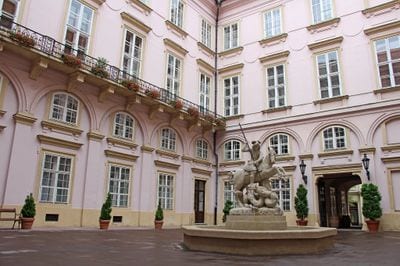
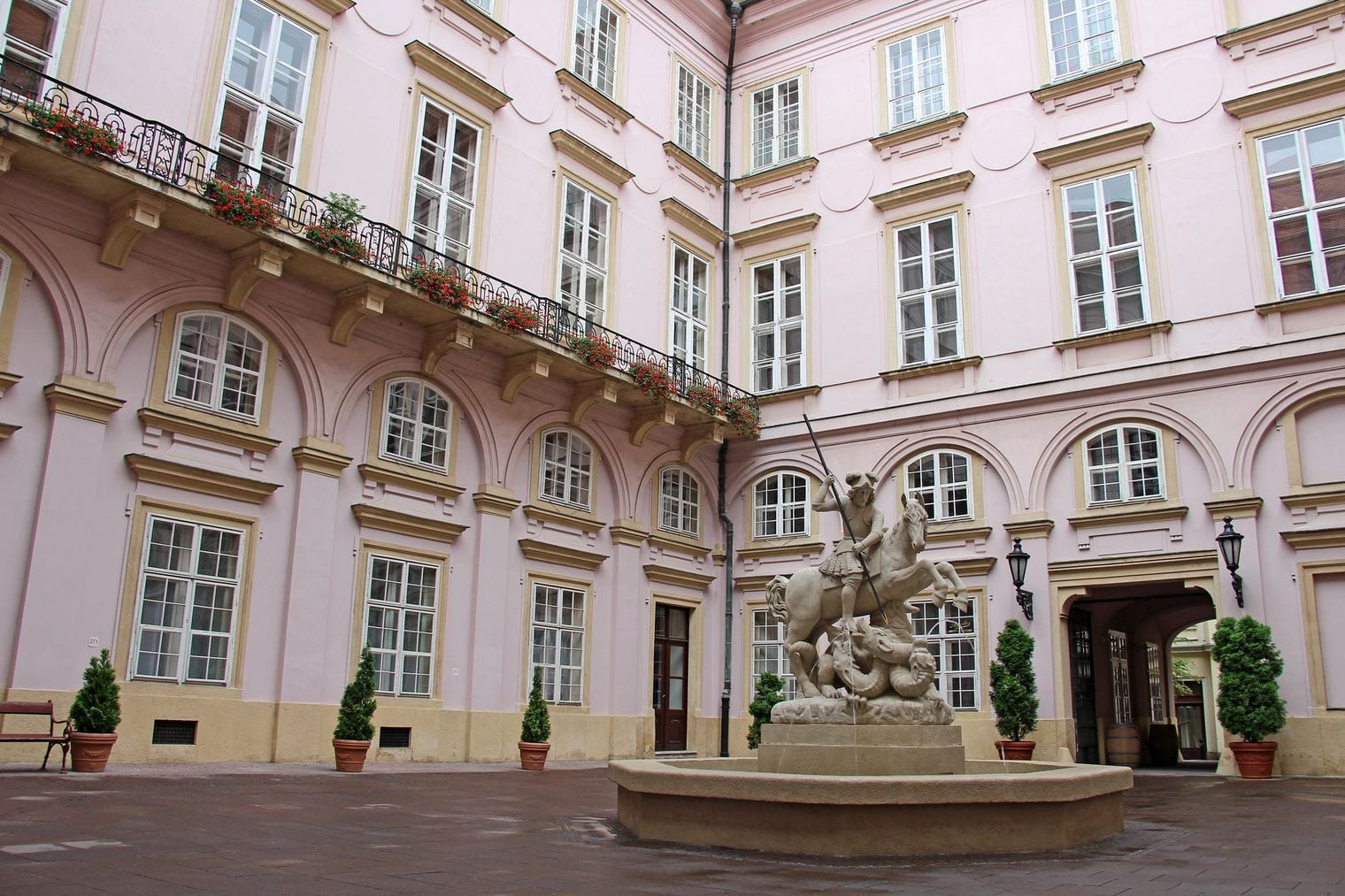
The Primate's Palace is a pale pink neoclassical palace a step behind the main square, and it is the most consequential building in Bratislava that most visitors walk past. Its Hall of Mirrors is where the Peace of Pressburg was signed after the Battle of Austerlitz, and the room is still used for city ceremonies today.
The other reason to go in is a set of English tapestries depicting the Greek legend of Hero and Leander, discovered hidden in the walls during renovation work at the start of the twentieth century and now displayed in the palace. The courtyard has a fountain with a statue of St. George and the dragon, and the building serves as the seat of the city's mayor, so parts of it are working offices.
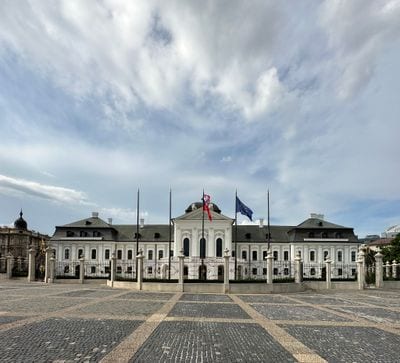
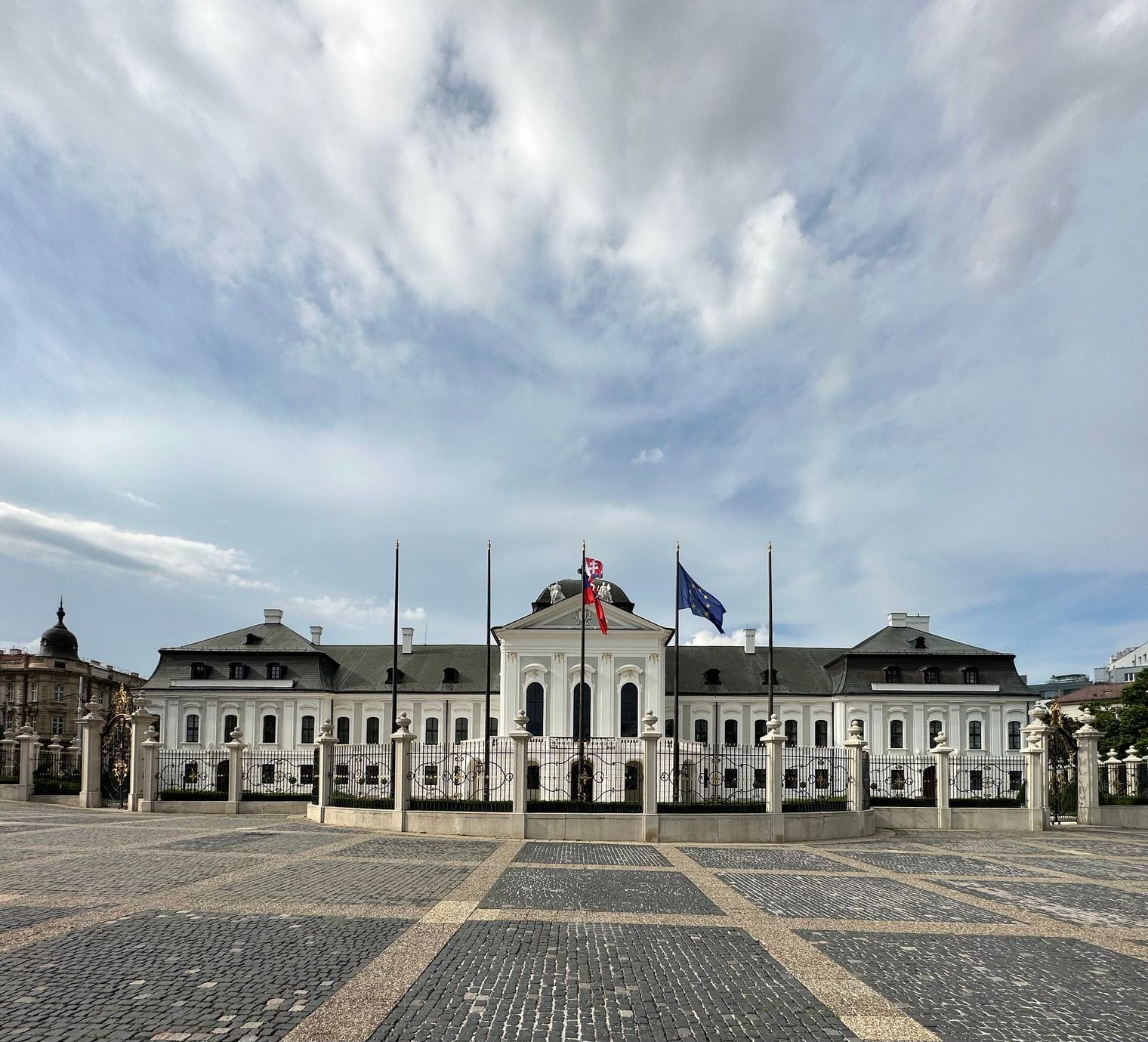
Grassalkovich Palace is the official residence of Slovakia's president, an elegant Rococo summer palace built in the eighteenth century for a Hungarian count and now guarded by soldiers in ceremonial dress at the front gate. You cannot normally go inside, but the facade and the changing of the guard are a fixture of the walk north out of the old town.
The part that rewards a visit is behind it. The palace gardens are a free public park, formally laid out with clipped hedges, gravel walks and mature trees, and they are one of the most pleasant places in central Bratislava to sit down. A modern sculpture and a fountain sit among the plantings, and locals treat the whole thing as a shortcut and a lunch spot rather than a monument.
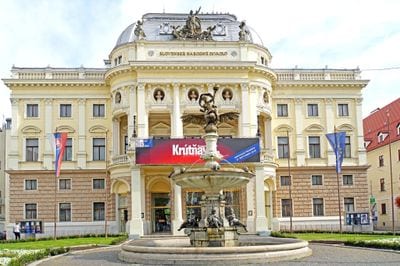
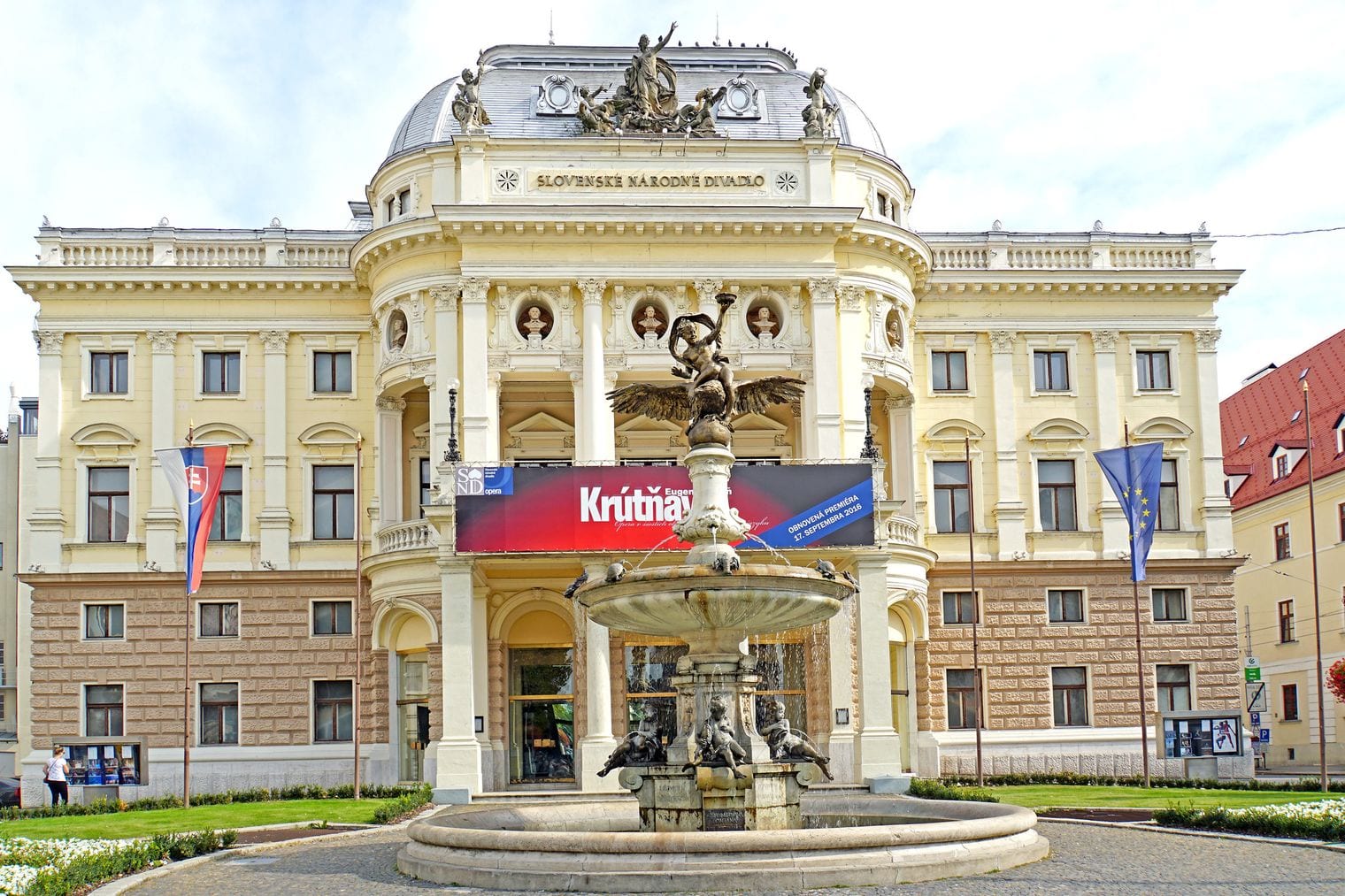
The Slovak National Theatre's historic building closes the end of Hviezdoslav Square with a neo-Renaissance facade that would not look out of place in Vienna, which is roughly the point — it was built in the 1880s by the Viennese architectural partnership responsible for theatres across the empire. Opera and ballet are still staged here.
Even if you do not see a performance, the building and its setting are worth a look, and the Ganymede Fountain in front of it is a favourite meeting place. The company also works from a much larger modern building on the riverfront to the east, so check which address a ticket refers to before setting out; the two are a brisk twenty-minute walk apart along the Danube.
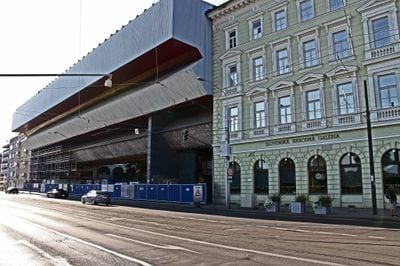
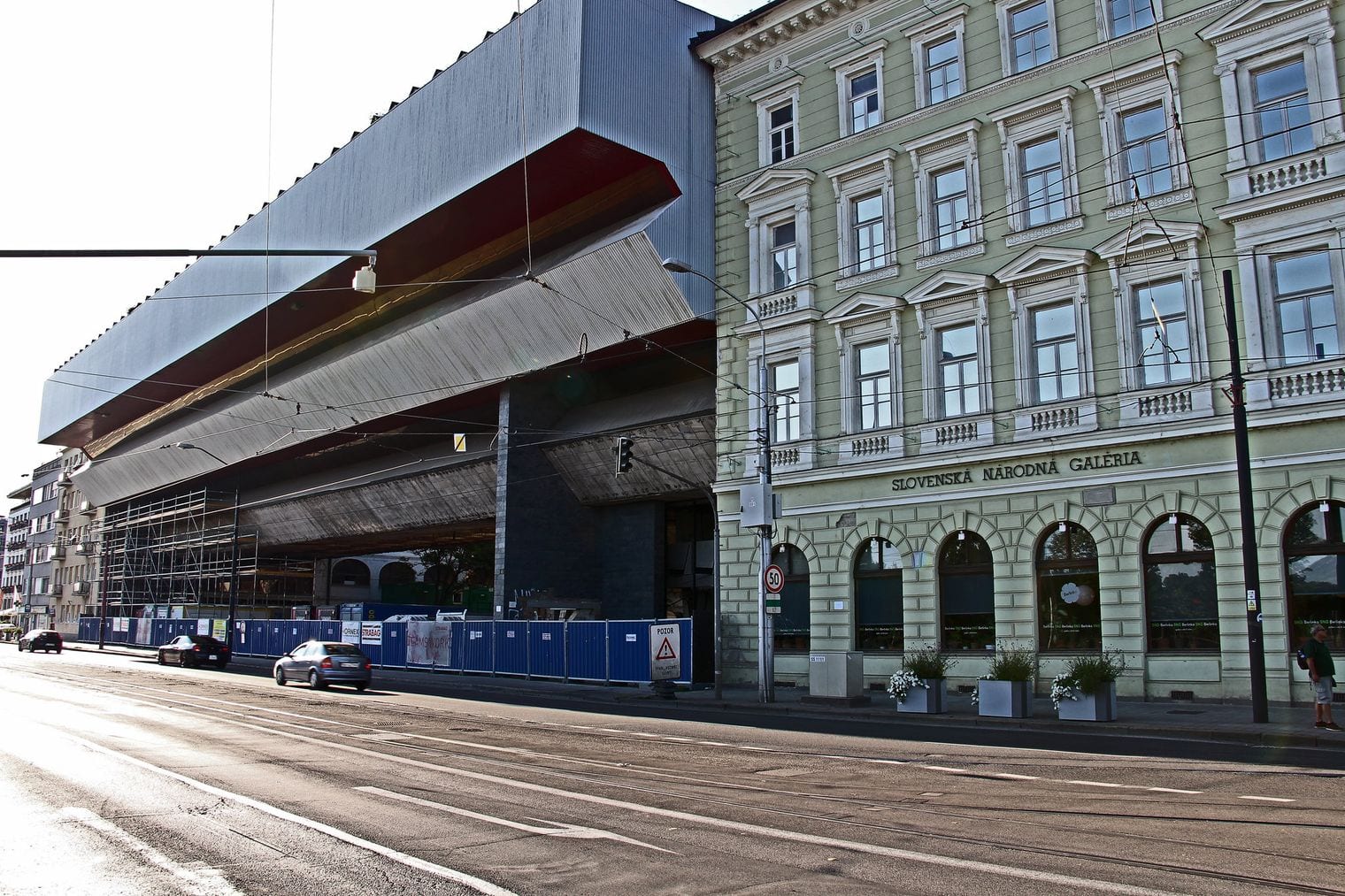
The Slovak National Gallery occupies a stretch of the Danube embankment where an eighteenth-century palace has been fused to a startling modernist extension — a raised concrete bridge-like structure that hangs over the older wing on angled supports. It divided opinion for decades and has recently been restored as part of a long overhaul of the whole complex.
The collection covers Slovak art from Gothic panel painting and baroque sculpture through to twentieth-century modernism and contemporary work, with the temporary exhibitions usually the liveliest part. The riverside courtyard and café are open to anyone passing, and the site sits directly on the promenade between the old town and the Eurovea development, so it is easy to fold into a walk.
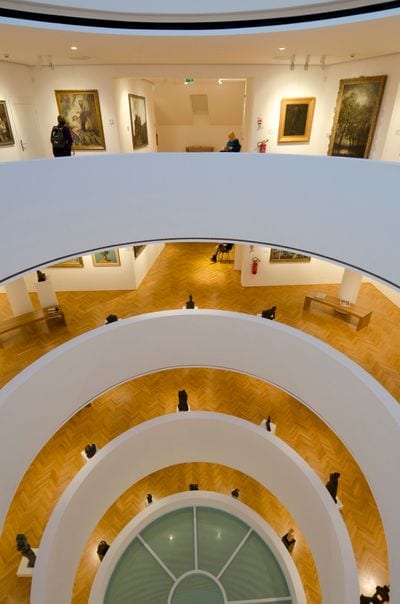
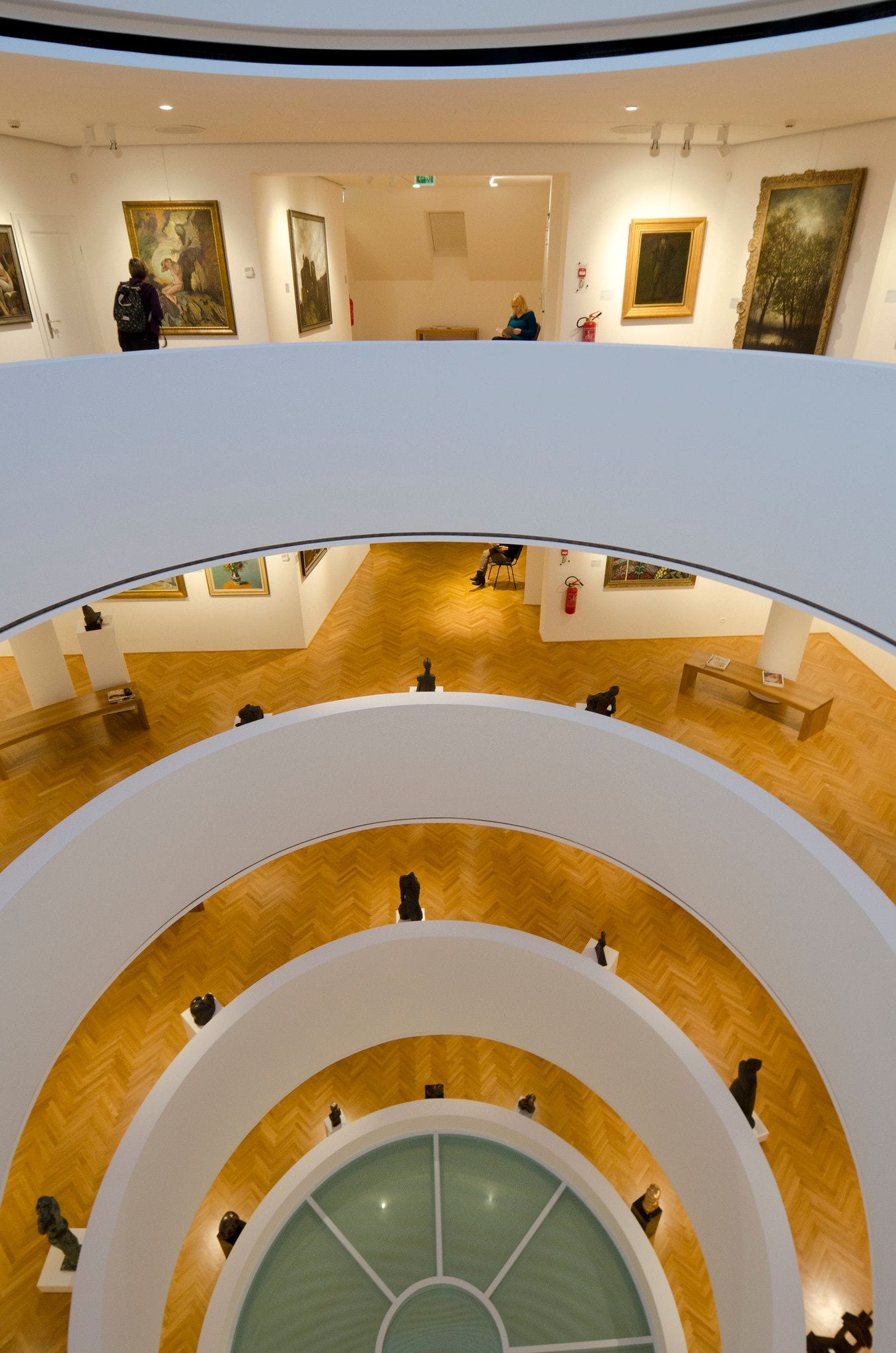
Nedbalka Gallery is a small private museum of Slovak modern art built into a converted building in the old town, and it is the one gallery in Bratislava that regularly surprises people. Its interior is arranged as a spiral of balconies around a bright central atrium, an arrangement that invites comparison with the Guggenheim in New York, on a far more intimate scale.
The collection walks you up through Slovak painting of the nineteenth and twentieth centuries floor by floor, so the building itself sets the order in which you see the art. It is rarely crowded, it takes about an hour, and there is a café at the top. For anyone who wants to understand Slovak art without committing to a whole afternoon, this is the best single stop in the city.
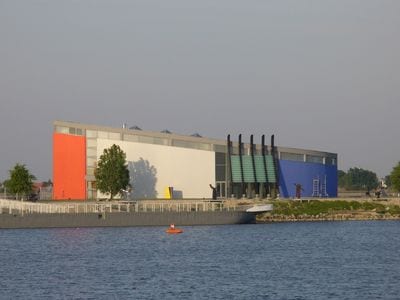
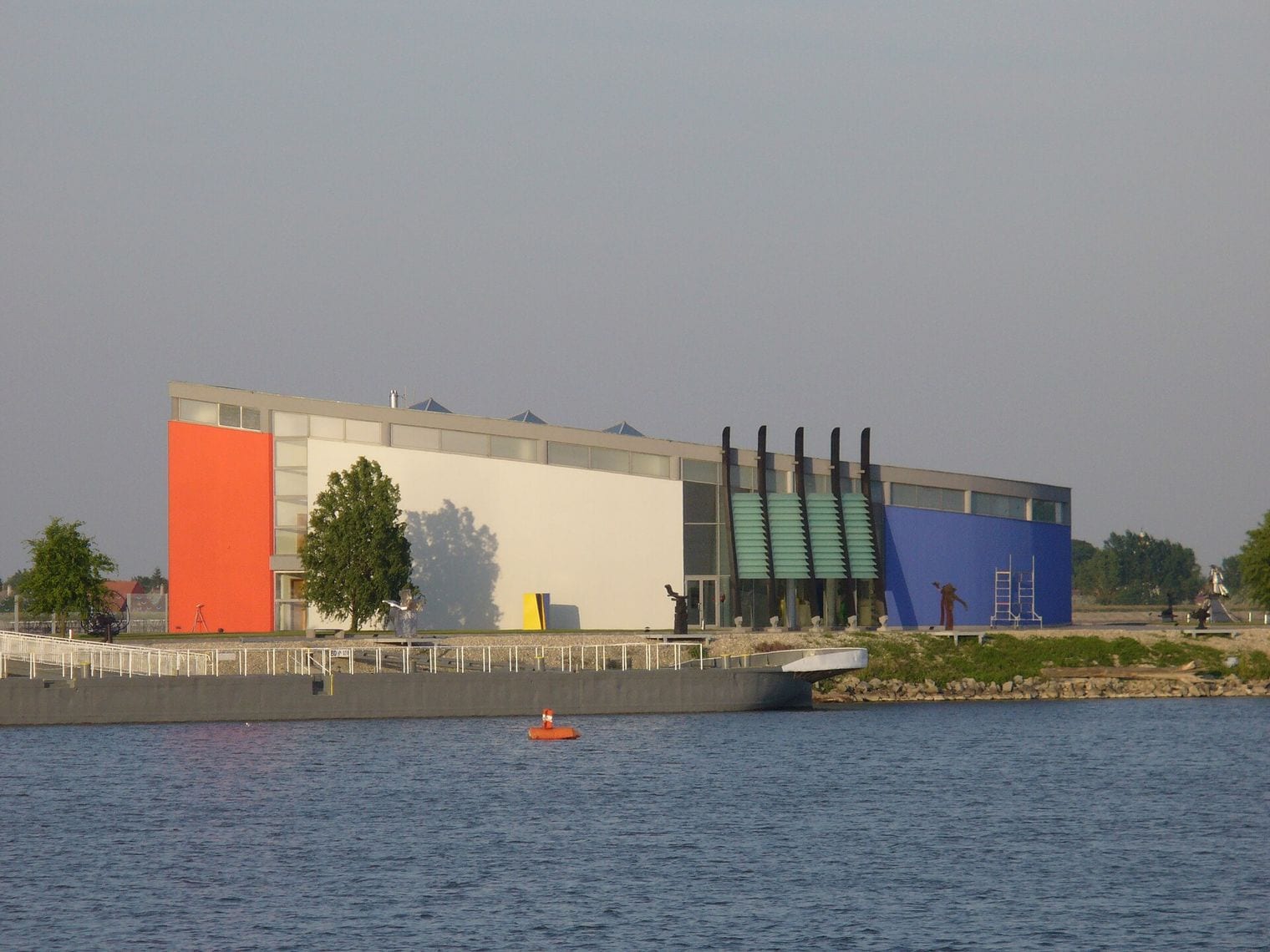
The Danubiana Meulensteen Art Museum sits at the tip of a narrow peninsula jutting into the Danube at Čunovo, on the southern edge of Bratislava, with water on three sides. The setting does much of the work: the building is low and pale, the river runs past the windows, and an outdoor sculpture park spreads across the grass around it.
Inside is modern and contemporary art, shown in changing exhibitions rather than as a fixed permanent display, with a strong international slant. Getting there takes some planning — it is a fair way out of the centre by bus or car, and in summer a boat runs down the river — but the combination of art, water and open sky makes it the most memorable museum visit in the city.
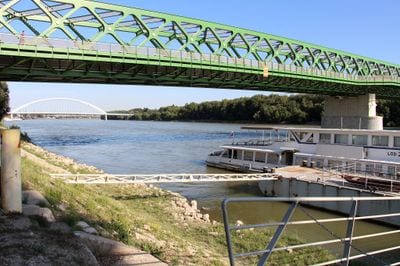
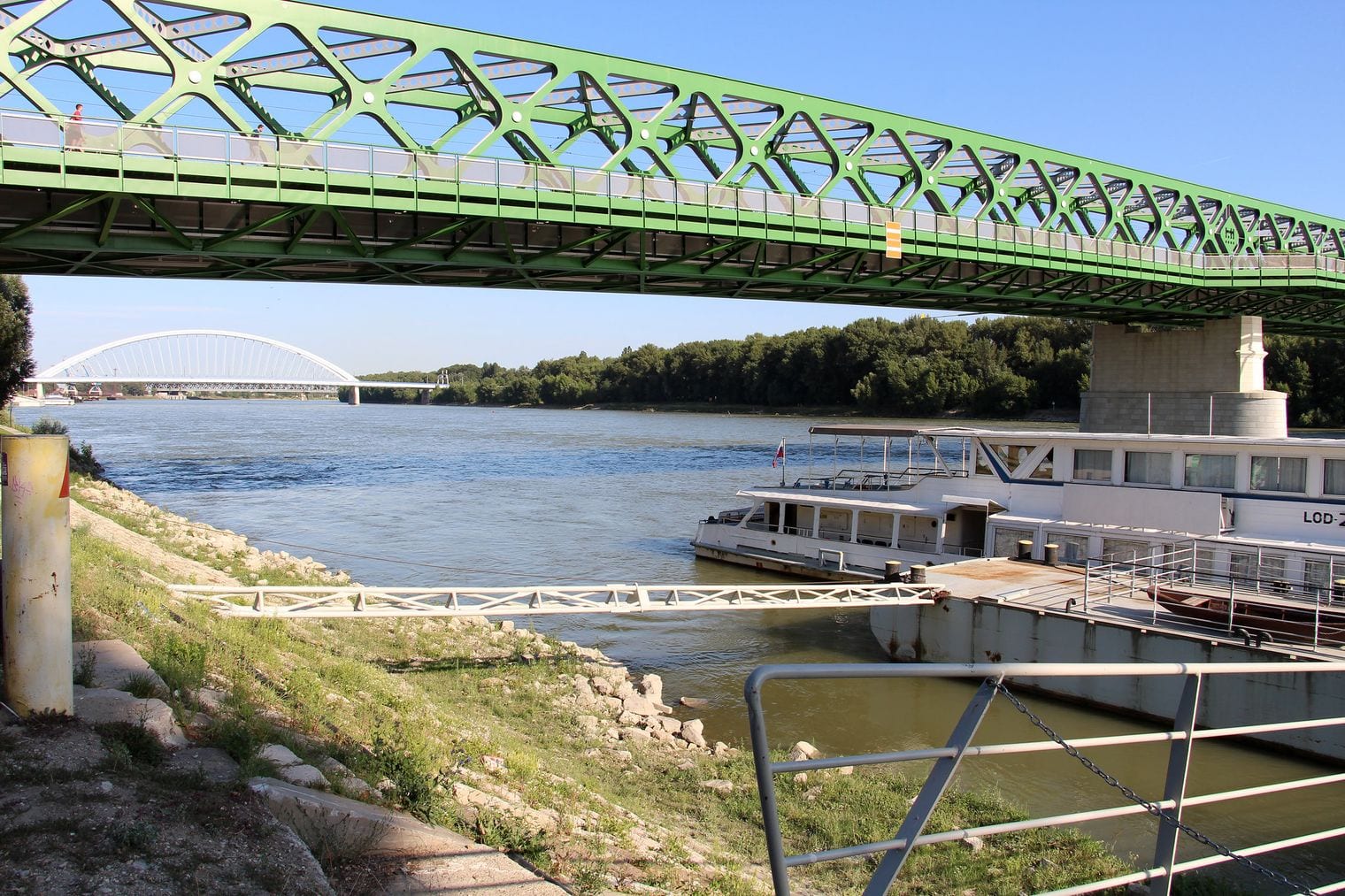
Starý Most, the Old Bridge, is the low steel crossing just downstream of the centre, and it is the one bridge in Bratislava built for people rather than cars. Rebuilt in the last decade on the line of a much older crossing, it now carries a tram, a cycle track and a generous pedestrian deck, with no traffic lanes at all.
Walking across it is one of the quiet pleasures of the city. You get a broad view back to the castle and the old town, the SNP Bridge and its saucer downstream, and the water moving underneath. On the Petržalka side it lands beside the riverside path and the parks, making it the natural way to cross for Sad Janka Kráľa or a walk along the embankment.
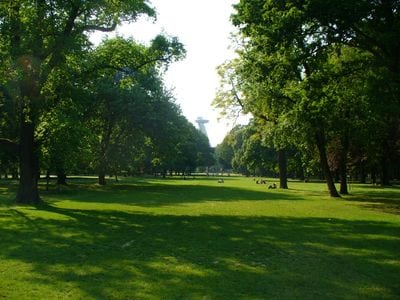
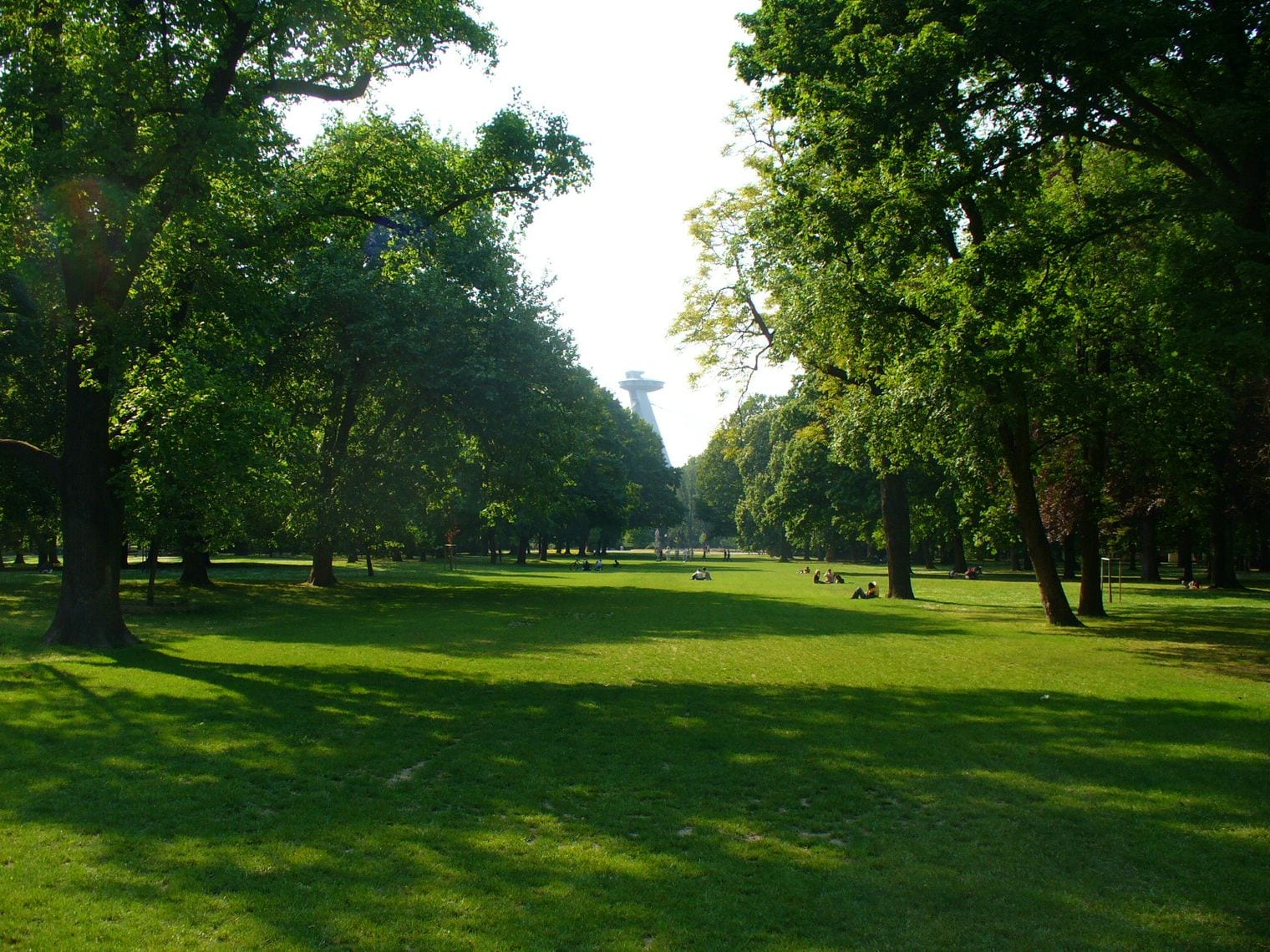
Sad Janka Kráľa, on the Petržalka bank opposite the old town, is among the oldest public parks in Europe, laid out in the late eighteenth century when the idea of a park created for ordinary townspeople rather than a private estate was still a novelty. Its avenues of mature trees still follow the original radial plan.
It is a genuinely used park rather than a monument — joggers, prams, people lying on the grass — and it makes an easy pairing with a walk over the Old Bridge. A neo-Gothic tower fragment stands among the trees, salvaged from a Franciscan church that once stood in the old town. The park runs down to the river, so you can continue along the embankment in either direction.
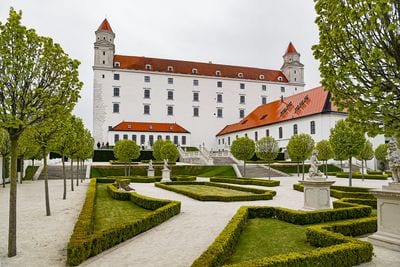
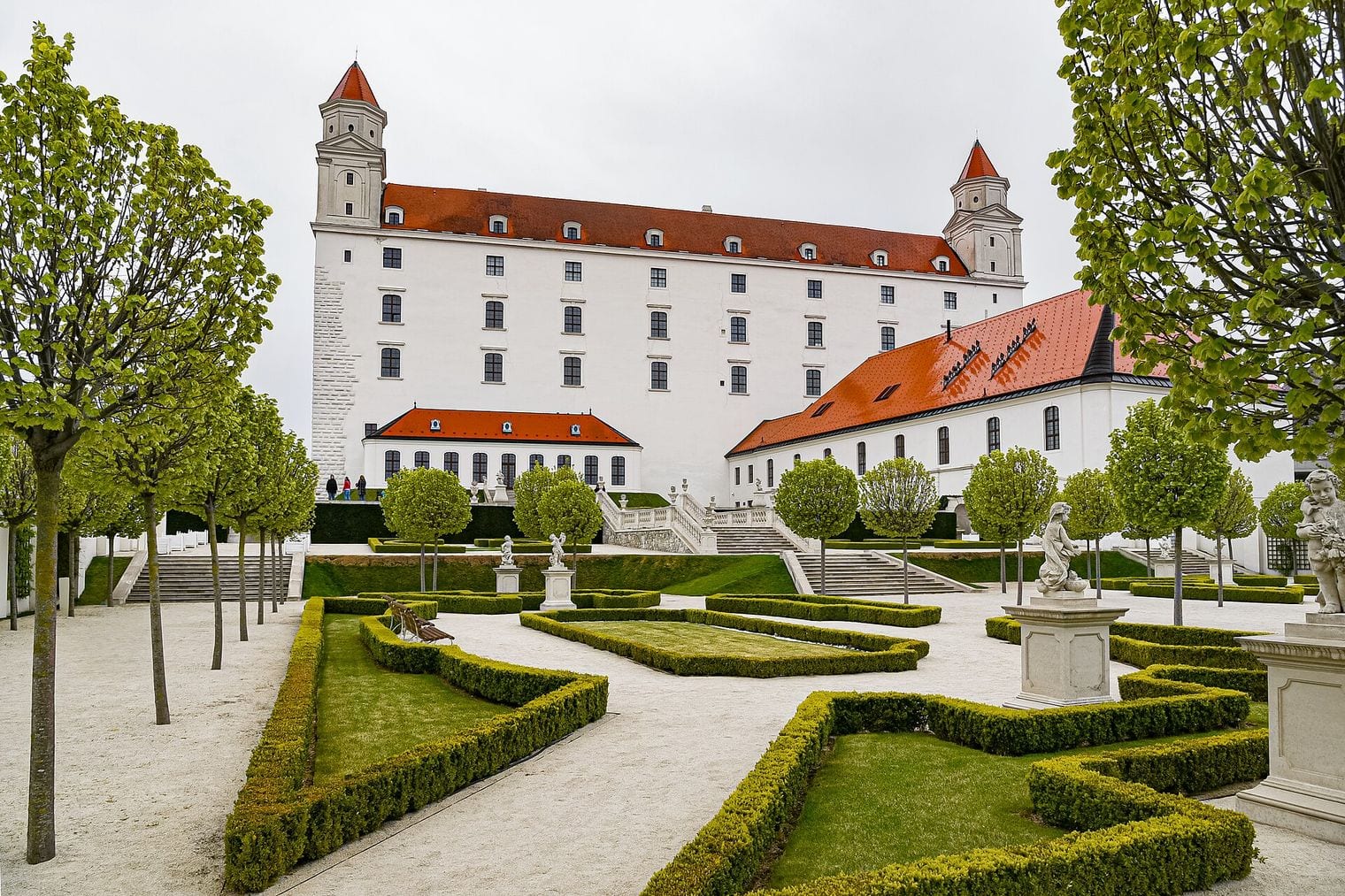
On the northern side of the castle, reached through a gate in the ramparts, lies a formal baroque garden that many visitors to the castle never realise is there. It is laid out in the strict geometry of the style — clipped box hedging, gravel paths, symmetrical beds and a central axis — and reconstructed in recent years on the pattern of the eighteenth-century original.
Entry is free and separate from the castle museum, which makes it one of the better-value stops in the city. It is quieter than the castle courtyard, there are benches and a small fountain, and the terrace at the far end gives a view north over the roofs towards the Small Carpathians. In late spring, when the planting fills in, it is at its best.
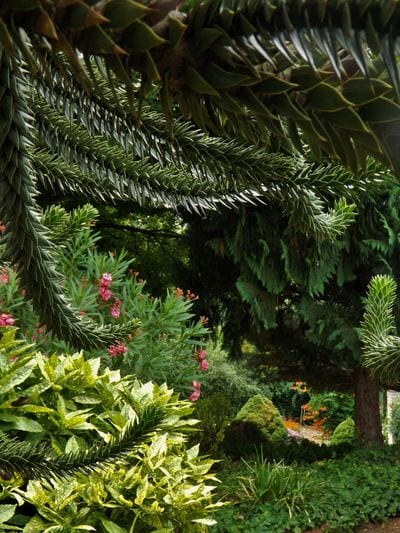
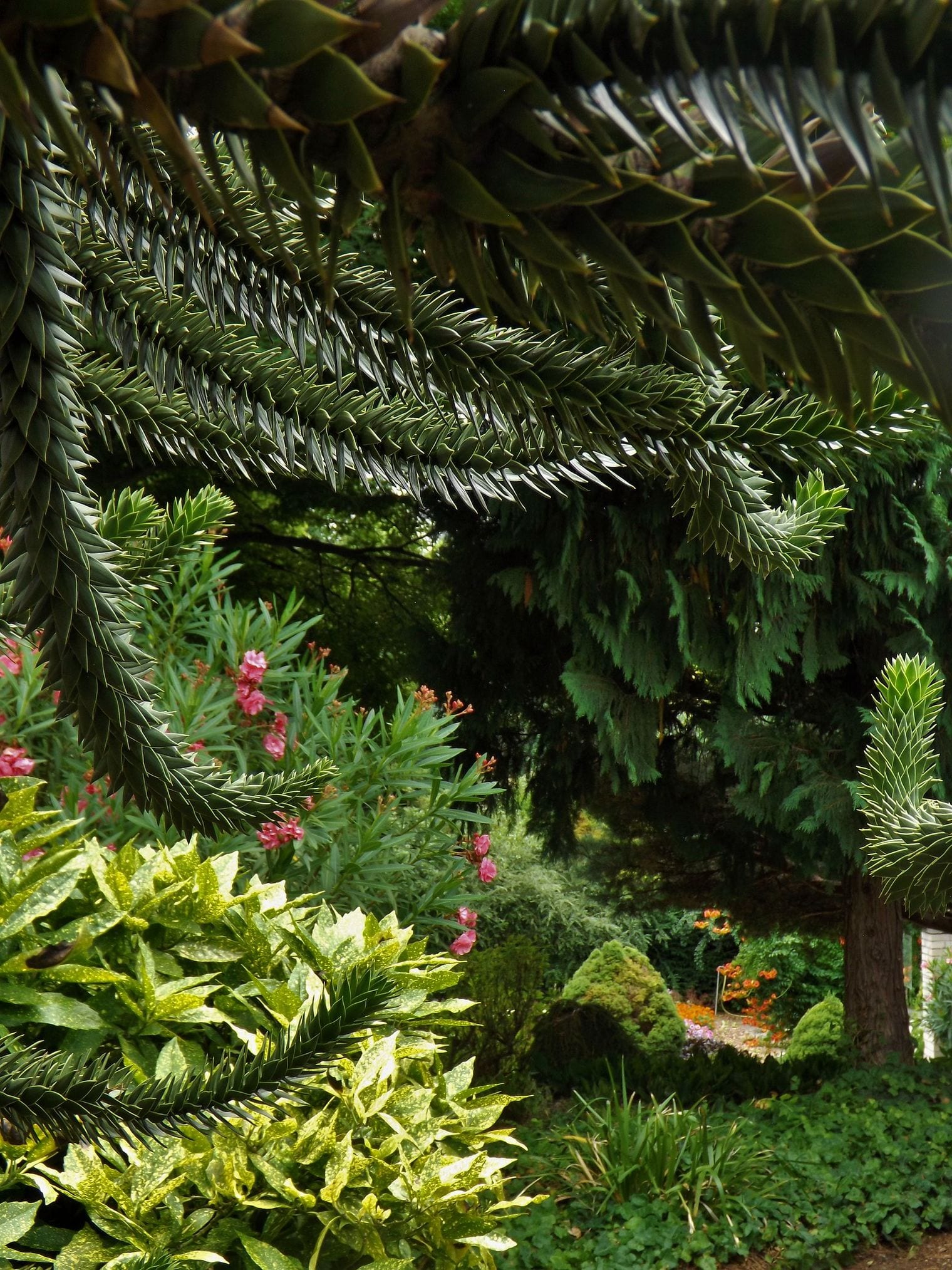
The university's botanical garden occupies a sloping riverside site west of the centre, below the Lafranconi Bridge, and it is a working teaching and research collection rather than a show garden. That gives it a slightly ramshackle charm: labelled beds, glasshouses of cacti and tropical plants, and a rose garden that is the reason many locals come.
It is a good place to escape a hot afternoon, and small enough to see properly in an hour. The glasshouses are the highlight when the weather is poor. Because it belongs to the university, opening is seasonal and much reduced outside the growing months, so it suits a spring or summer visit far better than a winter one.
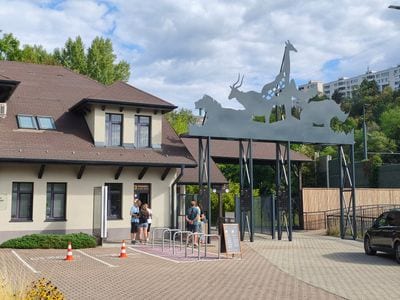
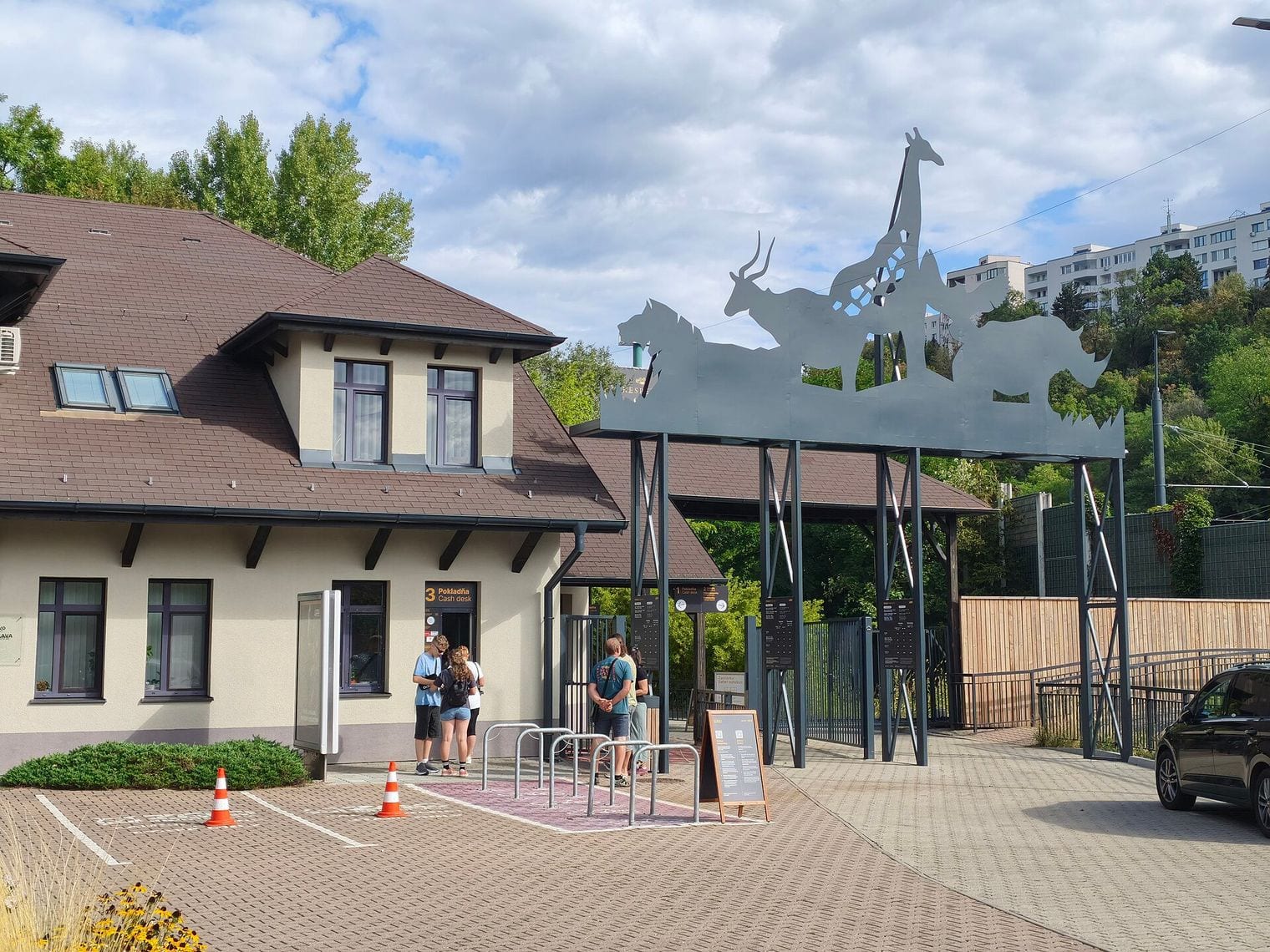
Bratislava Zoo lies in the wooded Mlynská dolina valley on the western edge of the city, and its hillside setting among mature trees does a lot for it — the enclosures are strung along slopes and paths wind through real woodland rather than across flat ground. It is a straightforward city zoo, and a reliable option with children.
The feature that draws most families is the Dinopark attached to it, a trail of life-sized animatronic dinosaurs set among the trees, ticketed separately from the zoo itself. Between the two you can fill most of a day. It is a short bus or car trip from the centre, uphill from the river, and the whole site is more spread out and more of a walk than it first appears.
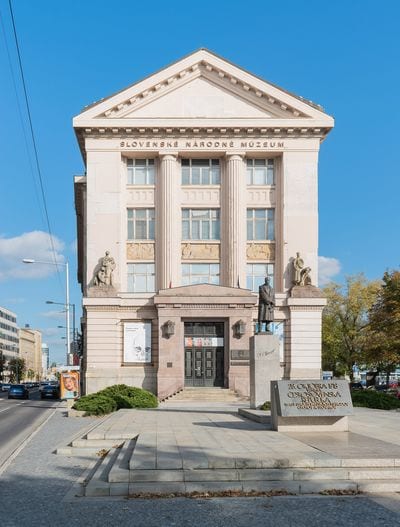
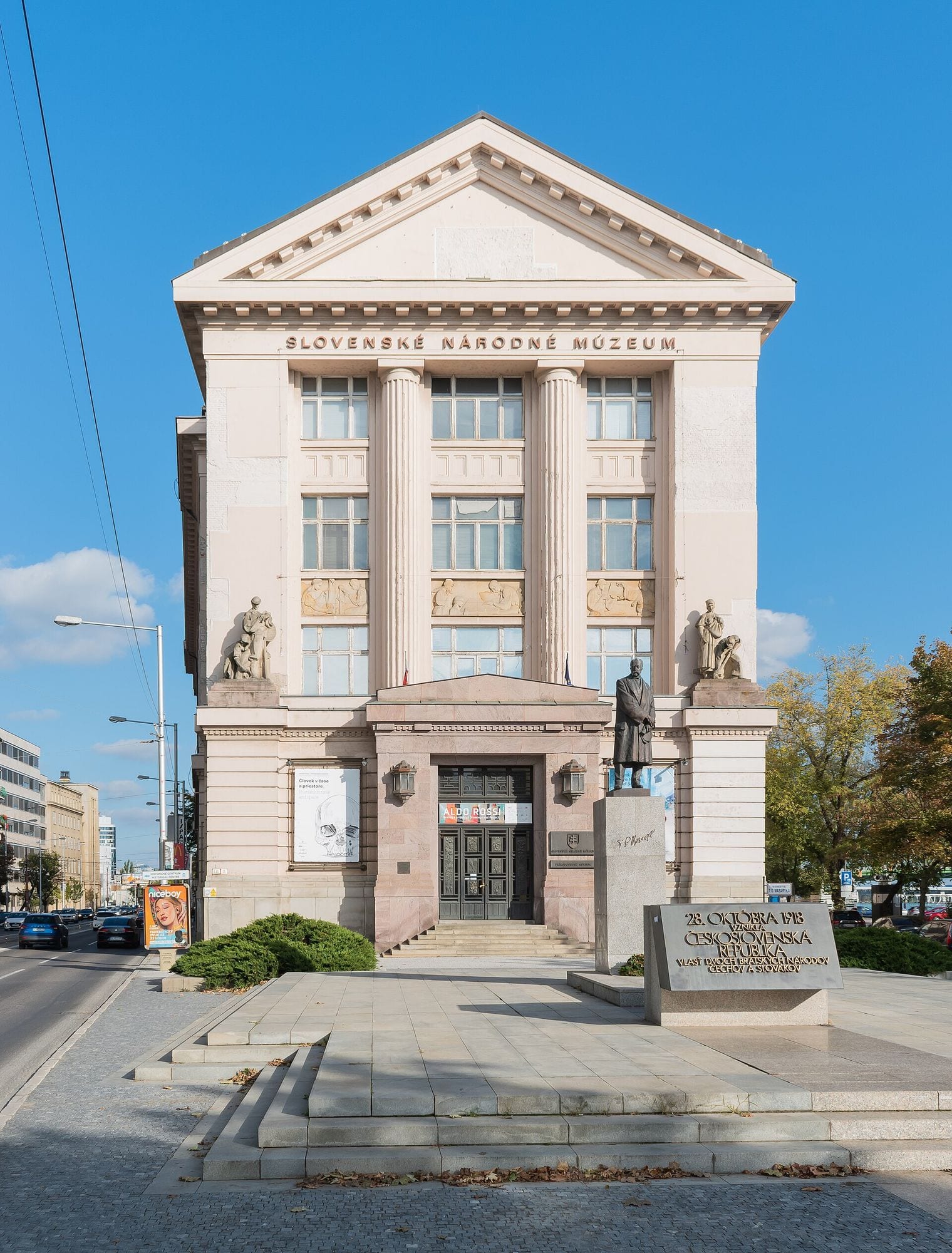
The Natural History Museum is one of the Slovak National Museum's branches, housed in its riverside headquarters on the embankment near the SNP Bridge. It covers geology, palaeontology, zoology and botany, and it is unapologetically a traditional museum of cases, specimens and skeletons rather than an interactive science centre.
That is much of its appeal, along with a strong focus on the natural history of Slovakia itself — the Carpathian forests, the cave systems, the fossil record of the region. The building also holds other Slovak National Museum collections, so it is worth checking what else is showing when you go. Its central riverside position makes it one of the easiest wet-weather options in the city.
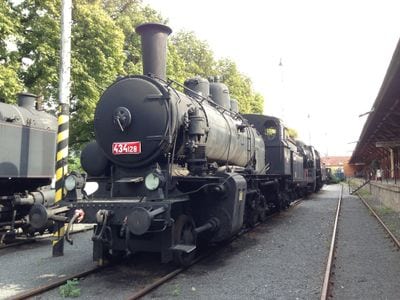
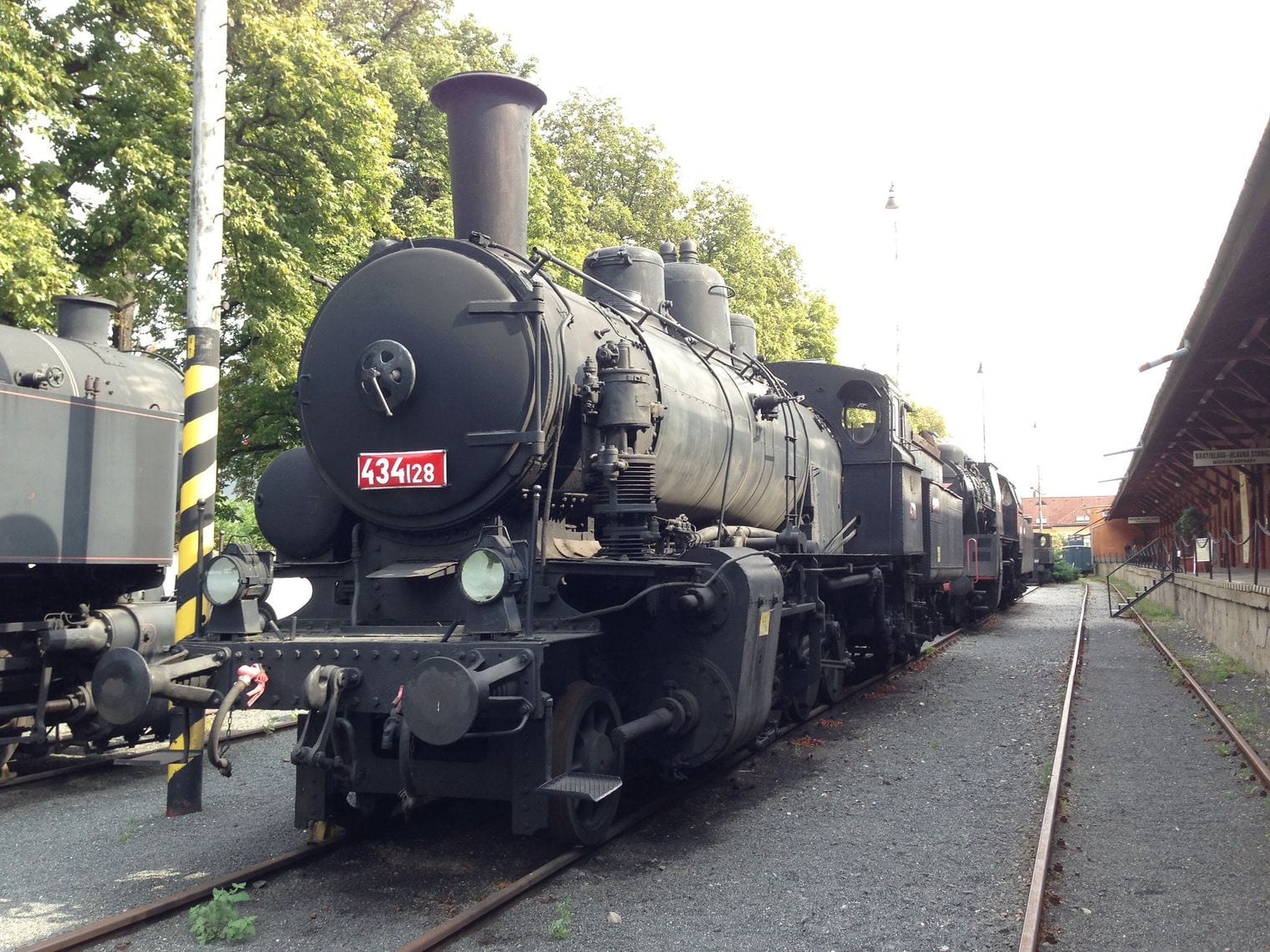
The Transport Museum occupies the buildings and yard of Bratislava's first railway station, which is the right setting for it: steam locomotives and carriages stand on original track under the old depot roofs, and you walk between them rather than viewing them behind glass.
Alongside the railway collection is a large display of historic road vehicles — early cars, motorcycles, buses and fire engines, many of them Czechoslovak-made and unfamiliar to visitors from further west. It is close to the main railway station, a short walk or tram ride north of the old town, and it is an easy hour or two. For anyone with an interest in industrial history, or with children who like large machines, it is a rewarding and inexpensive stop.
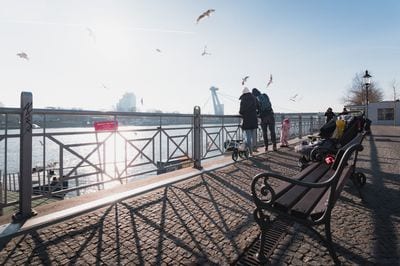
Tyršák is the stretch of Petržalka embankment opposite the old town that Bratislava has turned into its summer riverside hangout — a run of sand, decking, deckchairs and bars along the water, with the castle and the old town in view across the Danube. There is no swimming in the river here; the point is sitting by it.
It comes alive from late spring through summer, with food stalls, music and volleyball courts, and it is where a good part of the city ends up on a warm evening. It is a five-minute walk from the Old Bridge, which makes it a natural end to a day that started in the old town. Outside the warm months it reverts to a quiet riverside path.
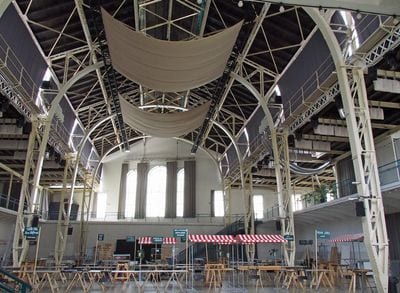
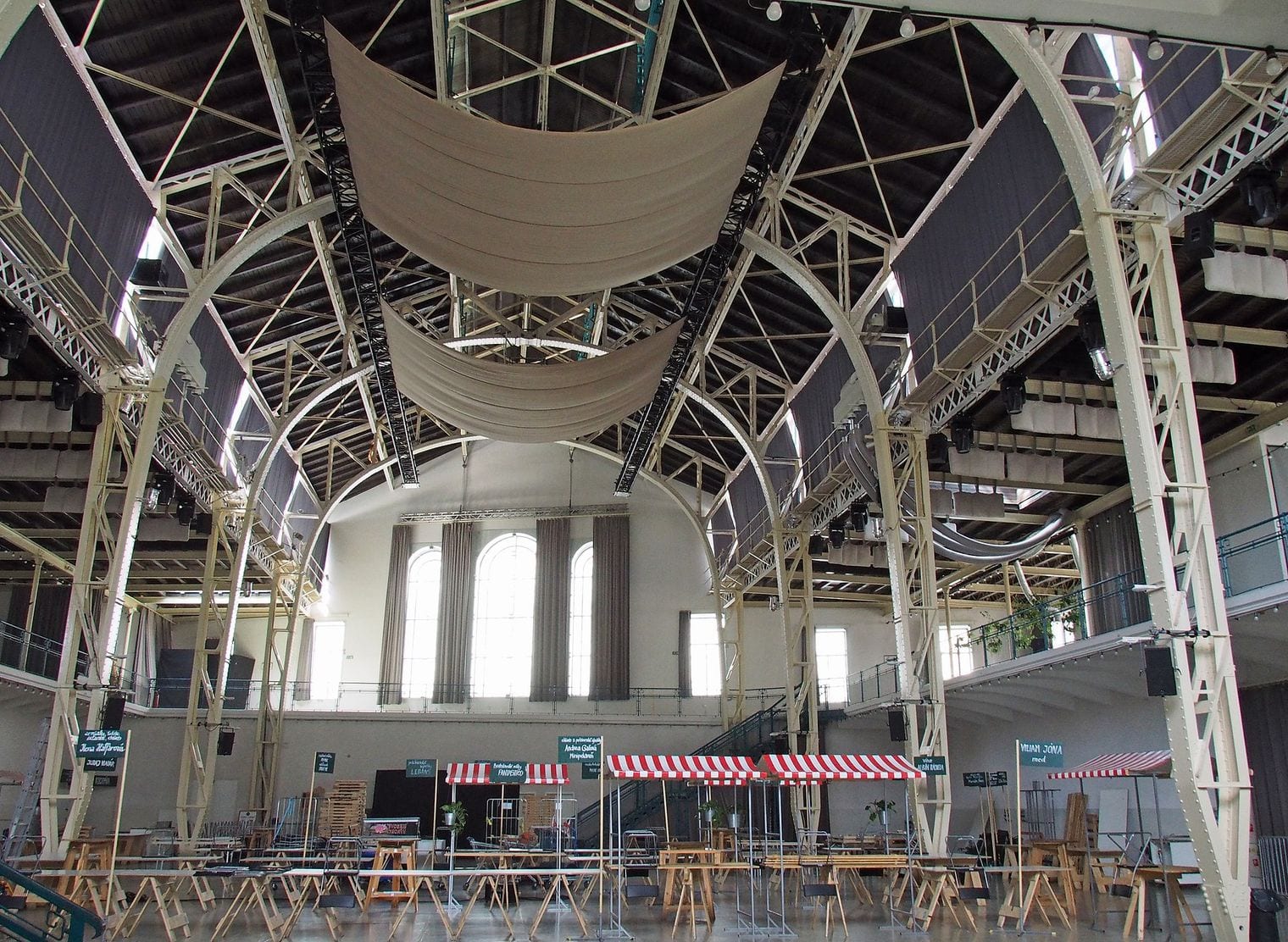
Stará tržnica opened in 1910 as Bratislava's first covered market, an eclectic hall by František Nechyba raised on the footings of a fifteenth-century bastion in the old town wall. It spent the later part of the century underused and half-forgotten, and it came back only in 2013, when a civic association took the building on and put a food market back under the iron roof.
The Saturday market — Trh-Piac-Markt, named in the three languages Pressburg used to speak — runs from nine until three and pulls six or seven thousand people through the hall: growers and small producers from the surrounding region, bread, cheese, wine and cooked food eaten standing at long tables.
The rest of the week it is a concert and event space, with a book market upstairs, a street-food park and a Christmas market in December. It is a few minutes east of the main square, and it is the easiest place in the city to eat among locals rather than tourists.
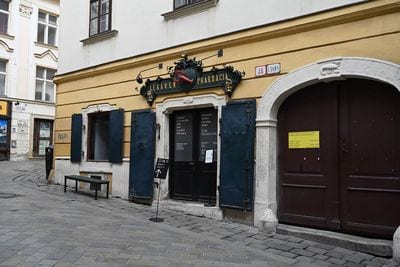
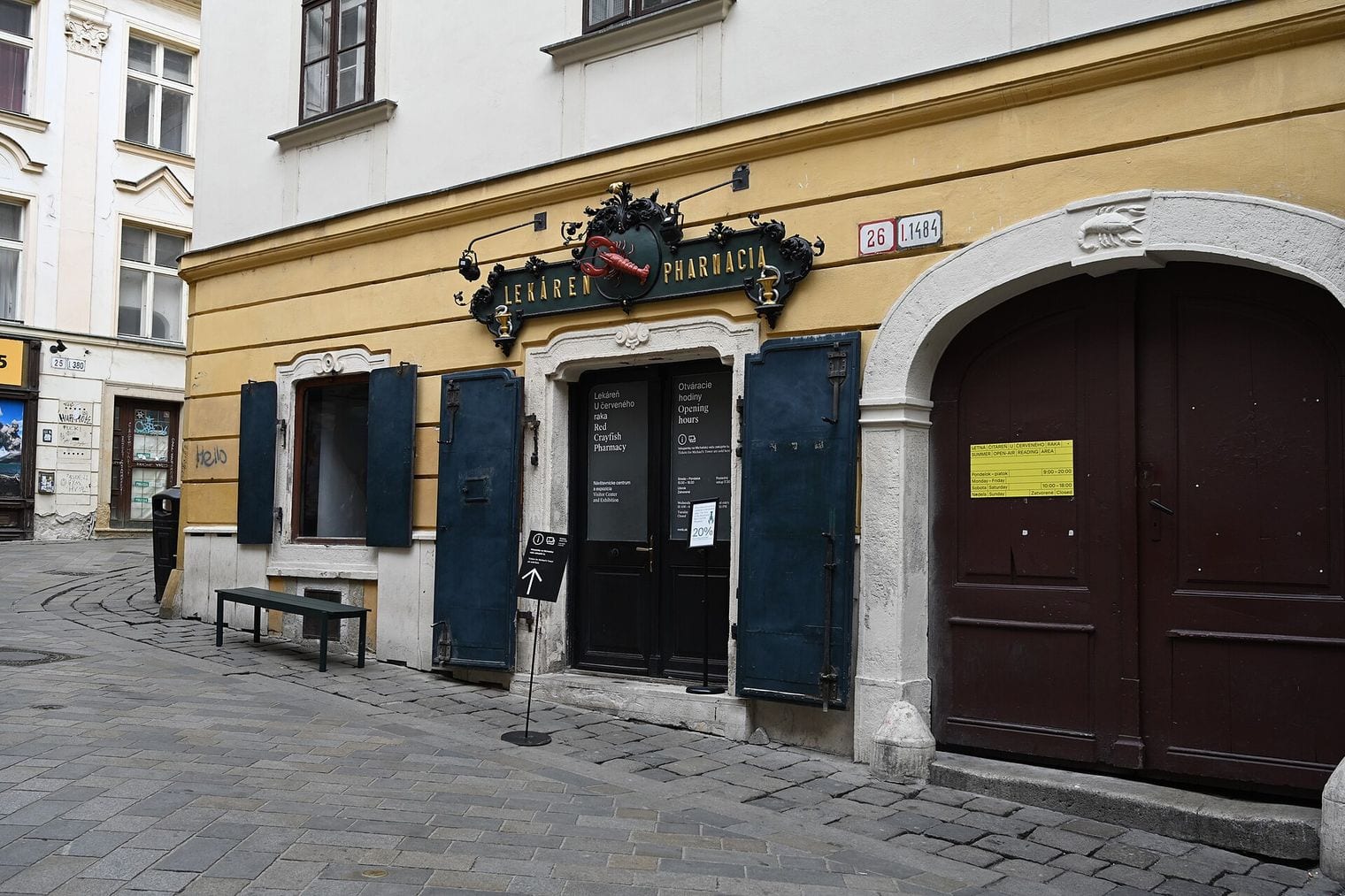
The pharmacy At the Red Crayfish has stood at the foot of Michael's Gate since 1773, and its rococo front office survives intact — fitted cabinets, labelled apothecary jars, baroque-classicist frescoes overhead and the carved red crayfish that gave the shop its name. It closed for a major refurbishment and reopened in October 2025, run, like the Old Town Hall, by the Bratislava City Museum.
Behind the old shop the building now works as a visitor centre as much as a museum. The centrepiece is a model of Pressburg in the fifteenth century covering nearly four square metres, built to show the fortifications at their most elaborate, with the bastions and barbicans that have since vanished under the streets.
There is a shop, luggage storage and a ticket desk for the tower next door, which makes it the practical stop before you climb the gate. It opens Wednesday to Monday and closes on Tuesdays.
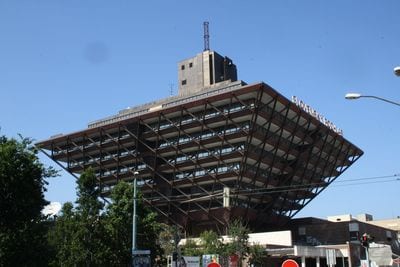
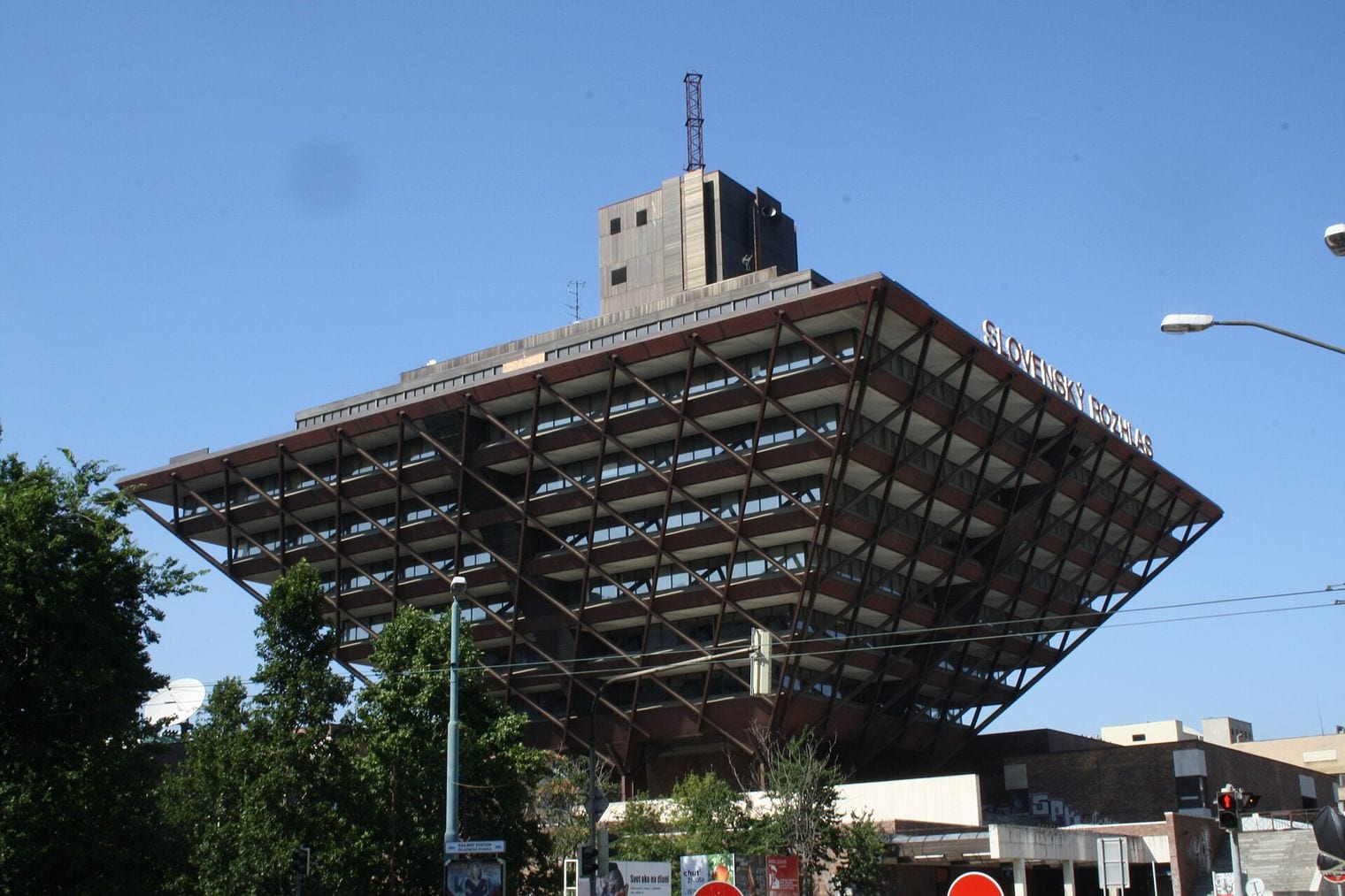
The Slovak Radio Building is an eighty-metre steel pyramid standing on its point, rust-orange against the sky, and it is the one building in Bratislava visitors argue about. Štefan Svetko, Štefan Ďurkovič and Barnabáš Kissling began the design in 1967; it was not finished until 1983 and did not broadcast regularly until 1985, by which point the state that commissioned it had four years left to run.
Inside the inverted pyramid hangs a concert hall of 522 seats, suspended in the steel frame and set on springs so that the traffic outside cannot be heard, with one of the largest organs in central Europe — some 6,300 pipes — behind the stage.
The building is still the headquarters of Slovak Television and Radio and the home of the Slovak Radio Symphony Orchestra, so a concert ticket is the reliable way inside; otherwise the box office is open on weekday afternoons and the exterior is the point. It was listed as a national cultural monument in 2017.
Moses Sofer — the Chatam Sofer — was rabbi of Pressburg from 1806 until his death in 1839, founded the yeshiva that trained a generation of central European rabbis, and is the figure Orthodox Judaism dates itself from.
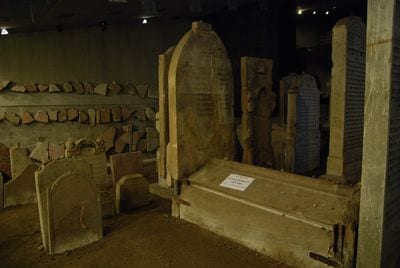
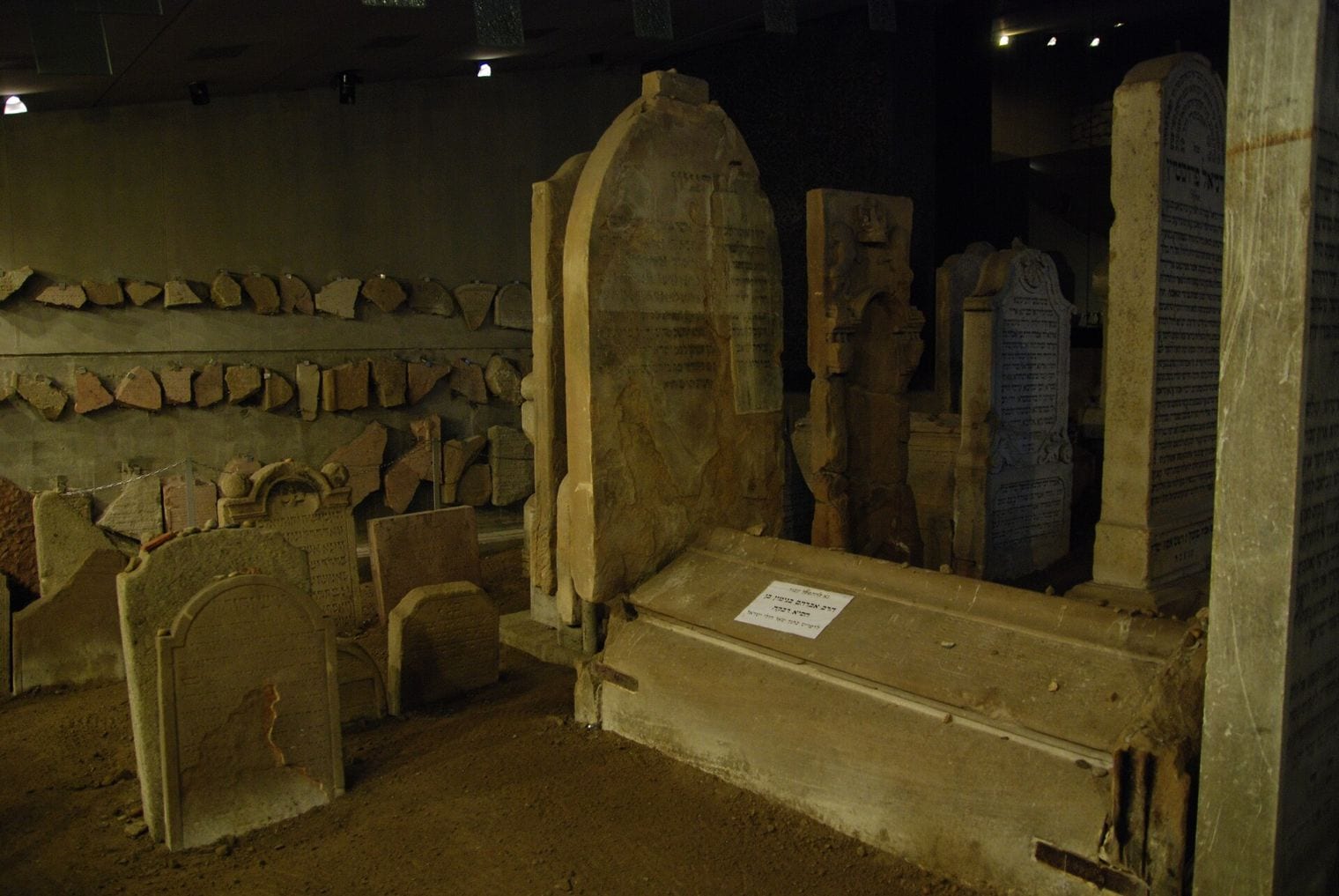
He was buried in the Jewish cemetery below the castle, and in 1942 and 1943 the wartime Slovak State destroyed that cemetery to drive a road and tram tunnel along the riverbank. The memorial exists because twenty-three graves around his — the most significant rabbinical burials in the ground — were encased in concrete beneath the new road instead of cleared.
They stayed sealed there for sixty years. The chamber was reopened and rebuilt as an underground mausoleum by the architect Martin Kvasnica and opened in July 2002; you go down from the embankment into a low, dim room where the original headstones stand exactly where they always stood.
It is a working shrine rather than an exhibit, visited by Orthodox pilgrims from around the world, so entry is by appointment arranged at least forty-eight hours ahead, modest dress is expected, and it is closed on Mondays, on Shabbat and on Jewish holidays.
Kamzík is the 439-metre hill in the forest park north of the city, and the television tower on its summit is visible from most of Bratislava.
The view is the reason to go: the observation deck takes in the whole city, the Danube plain and, on a clear day, ground in both Austria and Hungary, and below it a restaurant turns slowly through a full circle while you eat. The deck charges a few euros, and the fee is waived if you order a main course upstairs.
Getting there is half of it. Trolleybus 203 from Hodžovo námestie drops you at Koliba, a twenty-minute walk up through the woods; better, ride the chairlift from Železná studnička, the valley of ponds and old mill buildings on the far side of the hill.
A fifteen-metre wooden lookout tower stands beside the TV tower and costs nothing to climb, if the view matters more than the height. At weekends this is where the city comes to walk, cycle and eat outside.
Plan your trip
Best Time to Visit Bratislava
Late spring and early autumn are the sweet spots. May, June and September give you warm, walkable days, terraces open across the old town and Hviezdoslav Square, and none of the midsummer heat that settles over the Danube lowlands in July and August. The city is small and largely outdoors, so weather matters more here than in a capital with a dozen indoor blockbusters.
Autumn brings the grape harvest to the Small Carpathian slopes on the city's northern edge, and the wine cellars in the boroughs above town are at their busiest and best. Winter is cold and often grey, but December is a genuine reason to come: Christmas markets fill the main square and Hviezdoslav Square, and the old town is at its most atmospheric. January and February are the quietest and cheapest months, when the museums and galleries earn their keep.
Getting to Bratislava
The city has its own airport, Bratislava Airport (BTS), a short drive from the centre and served mainly by low-cost carriers. The larger gateway, though, is Vienna International Airport (VIE), which sits closer to Bratislava than to many Austrian towns — roughly an hour away by direct bus, and the route most long-haul travellers use. Košice Airport (KSC) serves the far east of the country rather than the capital.
By land, Bratislava is exceptionally well connected for its size. The D1 and D2 motorways meet here, trains run frequently to Vienna in about an hour and to Prague and Budapest in a few, and long-distance coaches use the terminal beneath the Nivy centre. A seasonal catamaran runs up the Danube to Vienna, which is far and away the most enjoyable way to arrive. Travelling on Slovak motorways requires a digital vignette, bought online or at border petrol stations.
Getting Around Bratislava
You will not need a car. The old town is compact, entirely pedestrianised in its core, and almost every sight in the centre of this guide is within a fifteen-minute walk of the main square. The one real climb is up to the castle and Slavín, and both are done on foot in well under half an hour from the river.
For everything further out — Devín, Čunovo, the zoo, the botanical garden — the city runs an integrated network of trams, trolleybuses and buses on a single ticket bought before boarding from machines or kiosks. The riverside cycle path is excellent and runs for miles in both directions along the Danube, and bike share is widely available. Parking in the old town is restricted and awkward, so if you do drive, leave the car at the accommodation.
Where to Stay in Bratislava
The Old Town (Staré Mesto) is the obvious base and worth the premium: you can walk to everything, and the streets are lively into the evening without being overwhelming. The area around Hviezdoslav Square and the riverfront puts you between the sights and the Danube promenade, while the quieter lanes north towards Michael's Gate trade a little atmosphere for a better night's sleep.
Just east of the centre, the redeveloped riverside around Eurovea is modern, well connected and popular with families, with the promenade and park on the doorstep.
Across the river, Petržalka is much cheaper and only a bridge walk from the old town, which suits a longer or budget stay — it is a vast socialist-era housing district rather than a scenic one, but it is safe, well served by transport and right beside the big riverside parks. Staying near the main railway station is convenient for onward travel but a dull base otherwise.
Where to Eat in Bratislava
The old town is where most visitors eat, and the streets around the main square and Hviezdoslav Square are thick with terraces — pleasant, if priced for the location. For something less touristed, walk five minutes out to the streets around Obchodná or the restored market hall on Námestie SNP, which runs a Saturday food market and is the best single place to graze. The Eurovea riverfront is the other concentration, with a modern, international slant.
Eat the national dish at least once: bryndzové halušky, soft potato dumplings with sheep's cheese and bacon, which is heavier and better than it sounds. Look also for kapustnica, a smoky sauerkraut and sausage soup, and for lokše, thin potato pancakes served rolled with sweet or savoury fillings.
Slovak white wine is genuinely good and barely exported — the Small Carpathian whites, particularly Grüner Veltliner and Riesling, are the thing to order, and the city's wine bars pour them by the glass.
Day Trips from Bratislava
Vienna is the obvious one, and unusually easy: the Austrian capital is about an hour away by train or bus, and a Danube catamaran runs between the two in season. No other pair of capitals in Europe sits this close together, and plenty of people base themselves in one and visit the other.
Budapest is further, at roughly three hours by train, but it works as a long day out or, better, as the next stop on a Central European trip — the two cities share a coronation history that makes visiting both unusually rewarding.
Closer to home, the Small Carpathian wine villages of Svätý Jur, Pezinok and Modra sit twenty to forty minutes north and make the best short trip out of the city, with cellars, castle ruins and vineyard walks. Trnava, a walled town of churches often called "little Rome", is about an hour east, and the vast baroque estate of Schloss Hof lies just over the Austrian border to the west.
Before you go
Mobile dataAn eSIM gives your phone local data when you land, with no SIM card to swap.via AiraloGet an eSIM
Airport transferA driver meets you at arrivals and takes you to your hotel, at a price fixed when you book.via Welcome PickupsBook a transfer
We may earn a commission when you buy through these links, at no extra cost to you. How we make money.
One Day in Bratislava
Morning
Start high. Walk up to Bratislava Castle before the coach parties, do a circuit of the ramparts for the view over the Danube, and slip through the gate on the north side into the castle's baroque garden, which is free and usually empty. Come down the old steps towards the river and stop at St. Martin's Cathedral at the bottom, following the small brass crowns set into the pavement outside.
If you only have room for one gallery, make it Nedbalka Gallery, which takes about an hour. Then walk ten minutes east to the Blue Church, which most day-trippers miss entirely.
Cross the river for the view back. Take the lift up the UFO Observation Deck for sunset over the old town and the castle, then walk down and back across Starý Most, the traffic-free old bridge. In summer, finish on the Petržalka bank at Tyršák, where the city sits out by the water; the rest of the year, head back to Hviezdoslav Square and find a table.
Bratislava is best known for its castle on the bluff above the Danube, the cliff-top ruin of Devín Castle at the Morava confluence, the flying-saucer observation deck on the SNP Bridge, the powder-blue Art Nouveau Blue Church, and the bronze figure of Čumil peering out of a manhole in the old town. It is also the only national capital that borders two countries.
How many days do you need in Bratislava?
Two days is the right length for most visitors. One full day covers the castle, the old town and the main square comfortably, and a second lets you reach Devín Castle, the Danubiana museum at Čunovo, or the wine villages north of the city. Many people visit on a day trip from Vienna, which works but leaves the edges of the city unseen.
What can you do in Bratislava for free?
A great deal. Climbing to the Slavín war memorial for the best panorama in the city is free, as are the castle's baroque garden, the public gardens behind Grassalkovich Palace, and the whole of the old town on foot. Walking across the traffic-free Old Bridge into Sad Janka Kráľa, one of Europe's oldest public parks, costs nothing either.
Is Bratislava worth visiting?
Yes, particularly if you like compact cities you can actually finish. Bratislava is small enough to see properly in two days, noticeably cheaper than Vienna or Prague, and unusually layered for its size — a coronation cathedral, a Roman frontier fort, baroque palaces and socialist-era concrete all within a few kilometres. It rewards visitors who give it a night rather than an afternoon.
What currency does Bratislava use?
Slovakia is in the eurozone, so Bratislava uses the euro. That catches out visitors arriving from Prague, Budapest or Warsaw, whose countries all still use their own currencies. Cards are accepted almost everywhere, including on public transport ticket machines, so there is little need to carry much cash.