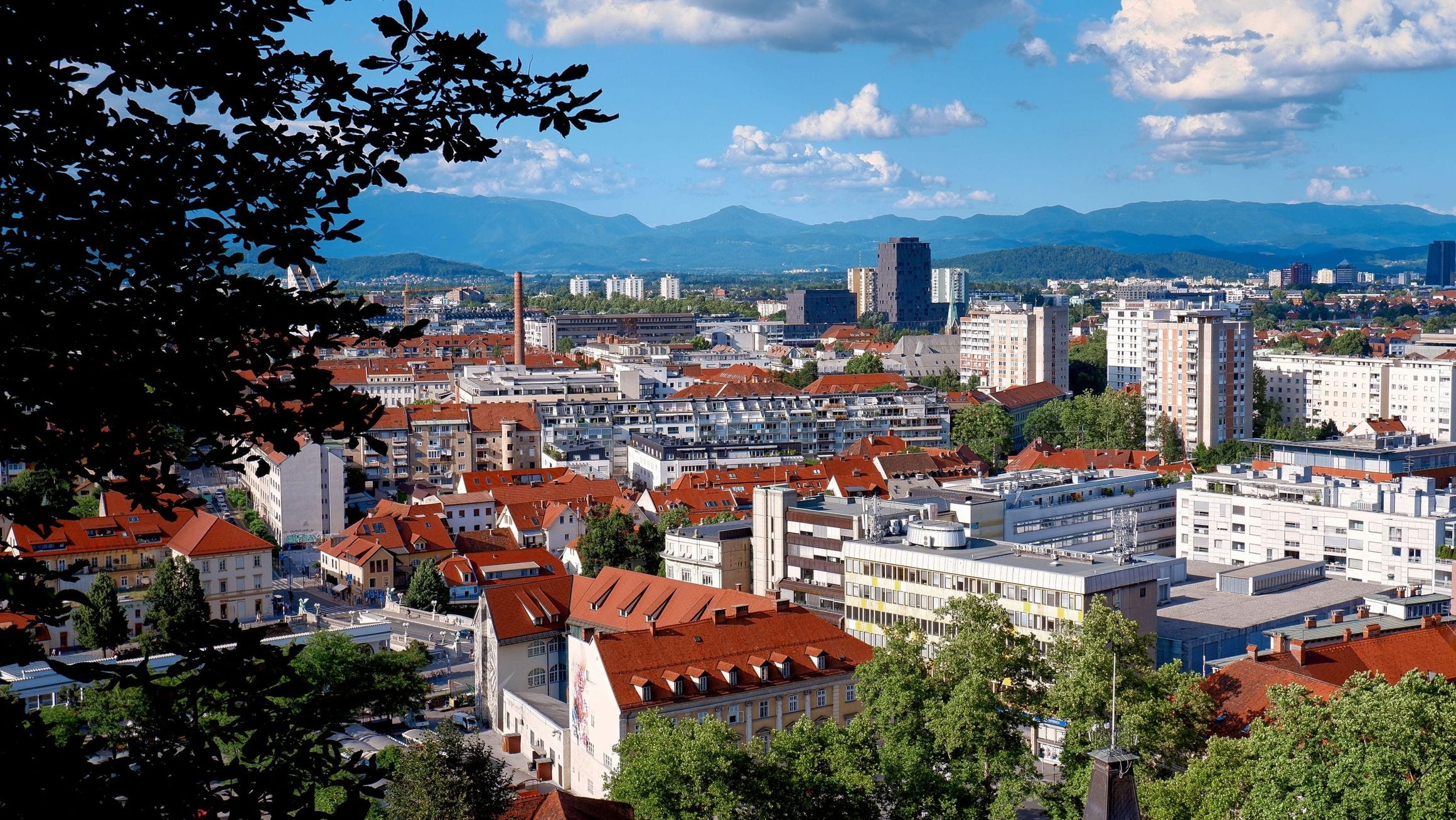
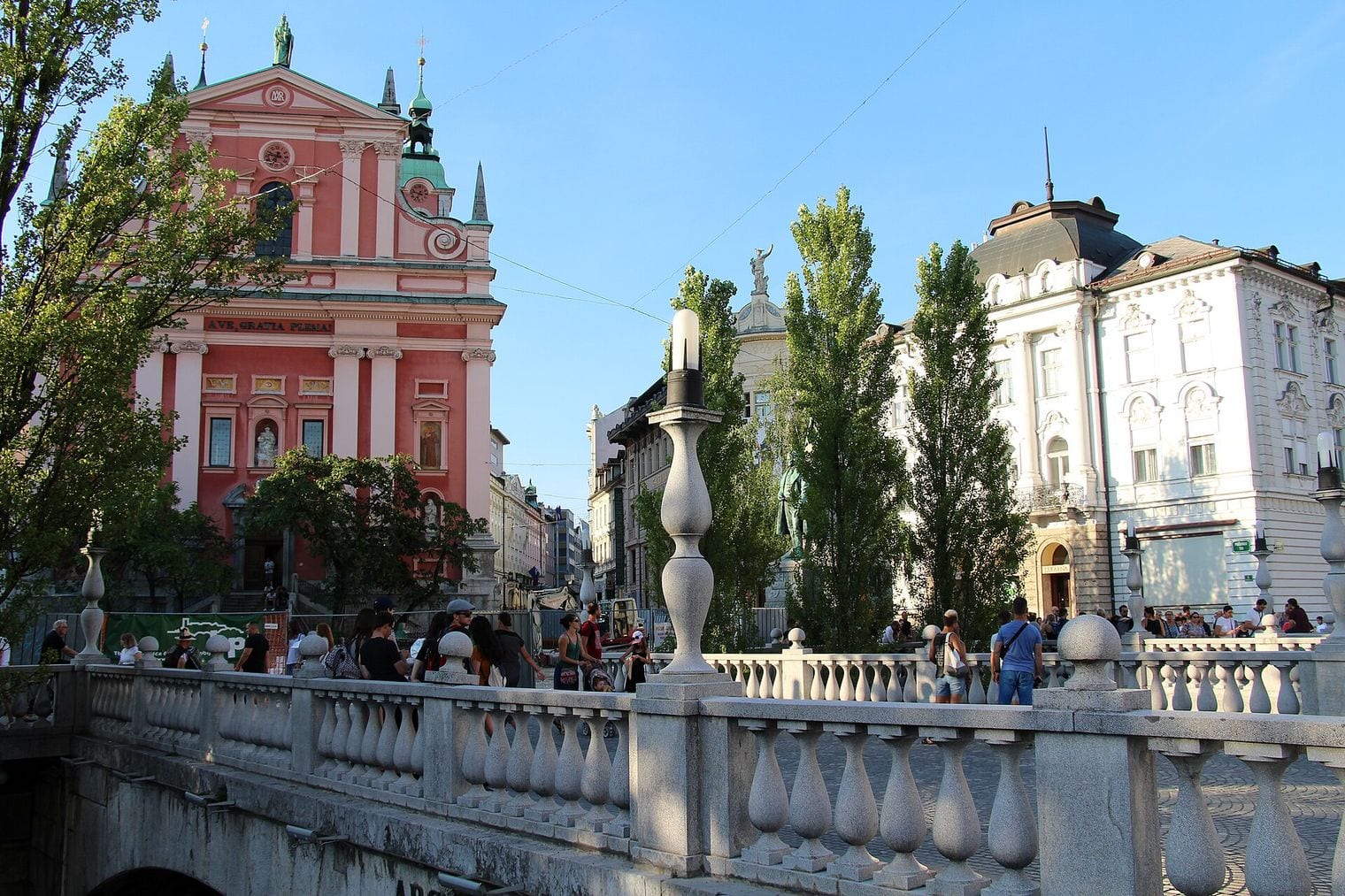
A country where you can swim in the Adriatic, walk under a mountain and sleep beneath the Alps — all in the same day.
Slovenia packs the Alps, a karst underworld, a short Adriatic coastline and a vineyard-covered east into a country you can drive across in about three hours. Half of it is forest and a third is protected, so the distances between a glacial lake, a limestone cave and a Venetian fishing town are measured in tens of minutes rather than days. Ljubljana sits almost exactly in the middle, which makes the capital a practical base for the whole country. It is compact, green and unusually easy to travel — the kind of place where a single week covers mountains, caves and sea without ever feeling rushed.
Meltwater makes the Soča and the Savica falls run hard, and the valleys turn green well before the high passes open. The Vršič pass and the highest Julian Alps trails are usually still under snow into early summer, so plan the mountains low and the towns long.
SummerJul–Aug
The warmest and busiest stretch: alpine huts and passes are open, the coast is swimmable, and Bled and Bohinj draw the heaviest crowds of the year. Caves stay at their constant chill year round, so they make a good midday escape from the heat.
FallSep–Oct
Arguably the country's best season — warm days, thinner crowds, and the grape harvest across Štajerska and Primorska. Beech forests on the karst and in the Julian Alps turn colour, and hiking conditions are usually settled well into October.
WinterNov–Mar
Snow settles over the Julian Alps and the ski resorts at Kranjska Gora, Vogel and Krvavec open. Ljubljana is at its most atmospheric under lights and fog, the caves run all year, and the coast is mild but quiet with many seasonal places shut.
Regions
Central Slovenia & LjubljanaThe capital and its ring of hills, castles and marshland. Compact, walkable and within about an hour of most of the country — the obvious base for a first visit.
The Julian AlpsTriglav National Park, Lake Bled and Lake Bohinj, plus the ski and hiking bases at Kranjska Gora. The country's postcard scenery and its highest peak.
The Soča ValleyA startlingly turquoise alpine river running past Bovec and Kobarid, known for rafting and kayaking and for the First World War history of the Isonzo front.
The Karst & the CoastLimestone country of sinkholes and cave systems — Postojna and the UNESCO-listed Škocjan Caves — running down to a 47 km Adriatic shore and Venetian-era Piran.
Štajerska & the northeastMaribor, the old Roman town of Ptuj and the rolling wine roads of the country's largest wine region, with spa towns scattered along the Drava and Savinja valleys.
Prekmurje & the Pannonian eastFlat farmland and thermal spas beyond the Mura river, the least-visited corner of the country, with its own dialect, storks and a distinct kitchen.
Slovenia's signature sights at a glance
Lake BledA glacial lake with a church on an island and a clifftop castle above it — the single most photographed view in the country, reached by traditional pletna boat.Basecamp: Bled
Triglav National ParkSlovenia's only national park, built around the three-headed peak on the national flag, with the Vintgar gorge boardwalk and Lake Bohinj inside its boundary.Basecamp: Bled or Bohinj
Postojna Cave & Predjama CastleA 24 km cave system toured partly by underground train, paired with a castle built into the mouth of a cliff cave a short drive away.Basecamp: Postojna
Škocjan CavesA UNESCO World Heritage site where the Reka river has cut one of the largest known underground canyons, crossed on a bridge high above the water.Basecamp: Divača
Piran & the Adriatic coastA Venetian-era port on a narrow headland, with a tight grid of alleys, a hilltop campanile and Slovenia's short but scenic stretch of coastline.Basecamp: Piran
The standard first-visit circuit: capital, Alps, caves and coast, all on short drives. Run it in either direction — nothing on the loop is more than about two hours from the next stop.
4Postojna Cave — underground train through the karst
5Predjama Castle — a fortress built into a cliff cave
6Piran — Venetian streets on the Adriatic
Alps & the Emerald River
~4–5 days
A mountain-focused run over the Vršič pass and down the Soča valley, best in summer and early autumn when the high pass is reliably open. Short distances, big elevation, and the most vivid river water in the country.
1Kranjska Gora — alpine base at the head of the valley
2Vršič pass — fifty hairpins over the Julian Alps
3Bovec — rafting and kayaking on the Soča
4Kobarid — the Isonzo front and its museum
5Tolmin gorges — confluence walk at the park's southern edge
Karst, caves & coast
~3–4 days
A short southwestern trip through limestone country to the sea, easy to bolt onto a Ljubljana stay or to run from Trieste. Caves stay cool whatever the season, which makes this a good hot-weather itinerary.
1Škocjan Caves — UNESCO-listed underground canyon
2Lipica — the stud farm the Lipizzaner horses are named for
3Štanjel — a walled karst village with terraced gardens
4Piran — the headland old town
5Portorož — salt pans and a resort beachfront
Slovenia travel FAQ
Eight questions travellers ask before they go.
What is the best time to visit Slovenia?
Late spring and early autumn are the sweet spots — warm, settled weather with far fewer people than midsummer, and September brings the wine harvest. July and August are best if you want the high alpine passes and huts open and the coast swimmable, but Bled and the coast get busy. Winter is for skiing in the Julian Alps and a quiet, atmospheric Ljubljana.
How many days do you need in Slovenia?
About a week covers the classic loop of Ljubljana, the Julian Alps, the karst caves and the coast without rushing. Four or five days is enough for the capital plus either the mountains or the caves and sea. Because the country is small and the drives are short, even a long weekend based in Ljubljana can reach Bled or Postojna as day trips.
Do you need a car in Slovenia?
Not for the main towns — trains and buses reach Ljubljana, Bled, Postojna, Maribor and the coast perfectly well. A car earns its keep in the Julian Alps, the Soča valley and the rural east, where public transport thins out and the best stops are between the towns. You do not want a car inside Ljubljana itself, where the old town is pedestrianised.
What is Slovenia known for?
Alpine lakes and mountains, an extensive karst cave system, dense forest, and a capital shaped by the architect Jože Plečnik. It is also known for being unusually green and compact — you can reach the Alps, the caves and the Adriatic from Ljubljana in under two hours each.
Is English widely spoken in Slovenia?
Yes, very widely, especially among younger people and everywhere used to visitors. Slovenian is the official language, and Italian and Hungarian are co-official in parts of the coast and the northeast. German and Italian are also common in the border regions.
What currency does Slovenia use, and is it in the EU?
Slovenia is a member of the European Union and the eurozone, and uses the euro. It is also in the Schengen area, so travel from neighbouring Italy, Austria, Hungary and Croatia is generally without border checks. Cards are accepted almost everywhere, though it is worth carrying some cash for small rural places.
What food is Slovenia known for?
The kitchen borrows from its neighbours: Alpine and Austrian in the north, Italian on the coast, Balkan and Hungarian in the east. Look for potica, a rolled nut cake, and štruklji, rolled dumplings served sweet or savoury. Primorska and Štajerska both produce serious wine, and the country has a strong craft beer scene centred on the capital.
What kind of trip is Slovenia best for?
Short trips that mix mountains, caves and coast.
We use cookies to analyse site traffic and improve your experience.
You can accept or reject analytics cookies. See our Cookie Policy.