We build and rank every list first. Booking links come after, and only where
a partner sells a ticket, tour or stay for that exact place, so a place with
nothing to book is listed exactly as prominently as one you can book.
So how do we earn? Some links on this page go to booking
partners, and if you book tickets, tours or a stay through
one, we may earn a commission. It costs you nothing extra.
That commission never decides which places make the list, the order they
appear in, or what we write about them. No entry is sponsored or a paid
placement.
45 Best Things to Do in Charleston, South Carolina (2026)
By the City Viking editorial teamPublished 45 places · 30 min read
Fact-checked Checked before launchOct 11, 202643 sources30 publishers2 government & parks12 encyclopedias & research29 venues & other sitesPublished · Oct 11, 2026Researched and checked before it went liveClick for every source and the full change log.
Short answer
Charleston is known for the church steeples that earned it the nickname the Holy City, America's first locally protected historic district and its Gullah heritage. Start with Rainbow Row's pastel houses, the seawall promenade of The Battery, a ferry to Fort Sumter, where the Civil War began, and the City Market's sweetgrass baskets. Three days is the sweet spot: the historic peninsula, Fort Sumter and Patriots Point, then the Ashley River plantations or the Angel Oak.
Few American cities wear their history as gracefully as Charleston. Founded in 1670 on the Lowcountry coast of South Carolina, it packs pastel houses, church steeples, cobbled lanes and Civil War history onto a walkable peninsula between two rivers, then spreads out to moss-draped plantations, sea islands and a harbor full of stories.
This guide covers the 45 best things to do in Charleston, from Rainbow Row and Fort Sumter to Gullah heritage sites, house museums and hidden alleys. Plan at least three days to see the highlights without rushing, and longer if you want the beaches and small towns nearby.
Map of Things to Do in Charleston, South Carolina
Things to Do in Charleston, South Carolina
Things to Do in Charleston, South Carolina at a Glance
It started on the other side of the river — English colonists founded Charles Town in 1670 at Albemarle Point on the west bank of the Ashley River, now Charles Towne Landing, and moved the settlement to the peninsula in 1680.
It is named for a king — Charles Town honored King Charles II, and when the city was finally incorporated in 1783 the act spelled it "Charles Ton," though "Charleston" quickly won out.
It created America's first locally protected historic district — the Old and Historic District, established by the city in 1931, inspired preservation laws across the country.
The "Four Corners of Law" got its name from Ripley's Believe It or Not! — Robert Ripley coined it in the 1930s for the intersection of Broad and Meeting streets, where buildings representing city, county, federal and church law face each other.
Many old buildings are held together with earthquake bolts — after the 1886 earthquake, estimated at magnitude 6.9 to 7.3, owners ran iron rods through damaged masonry walls, and the decorative plates that cap them still dot facades across the old city.
Its nickname is "the Holy City" — a name you will understand the first time you see the low skyline punctuated by church steeples.
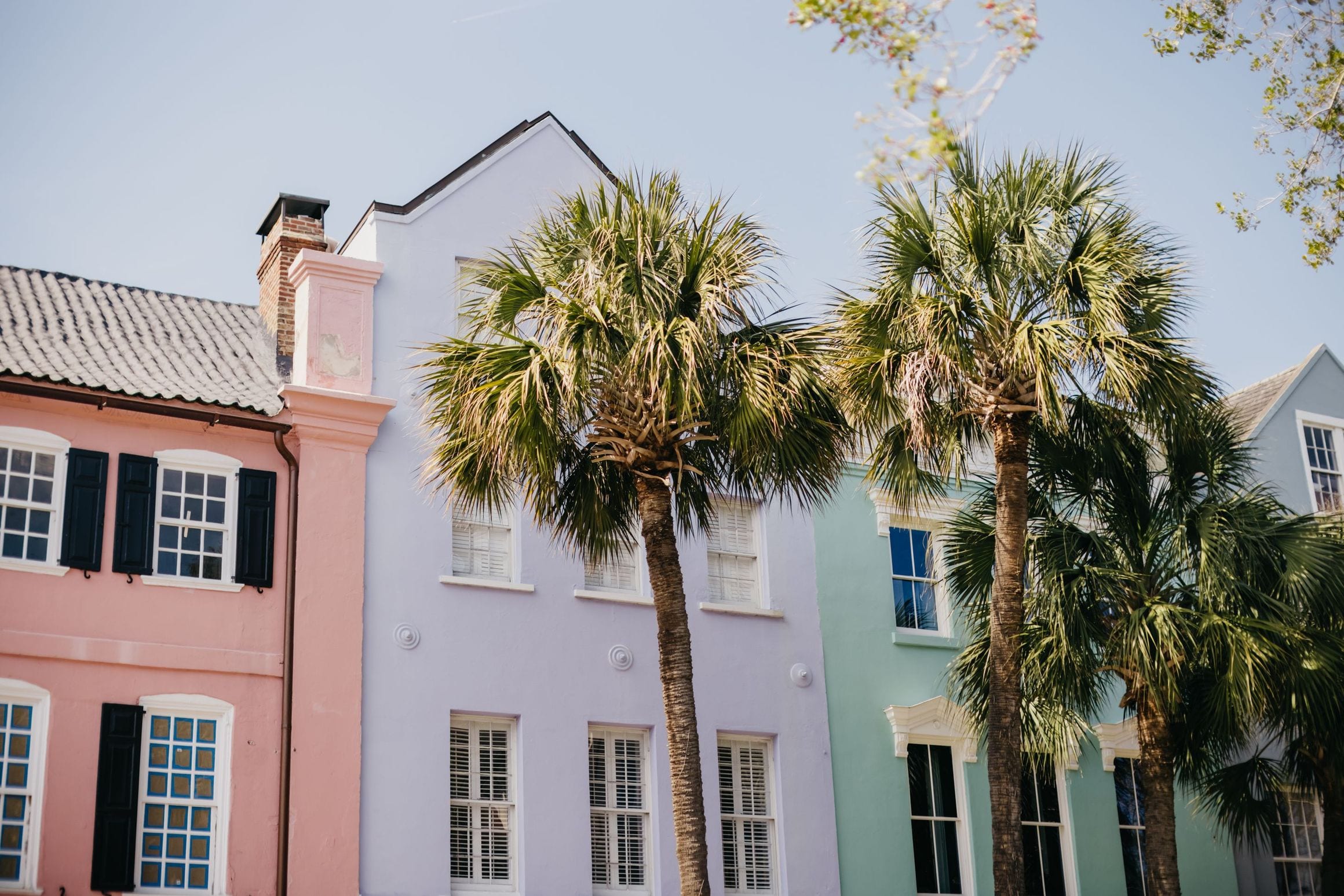
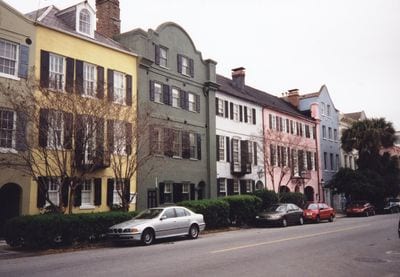
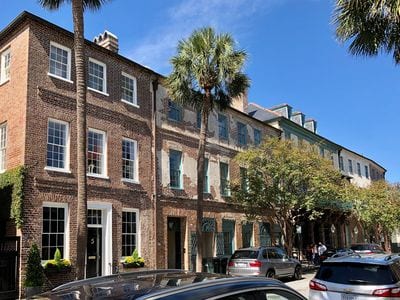
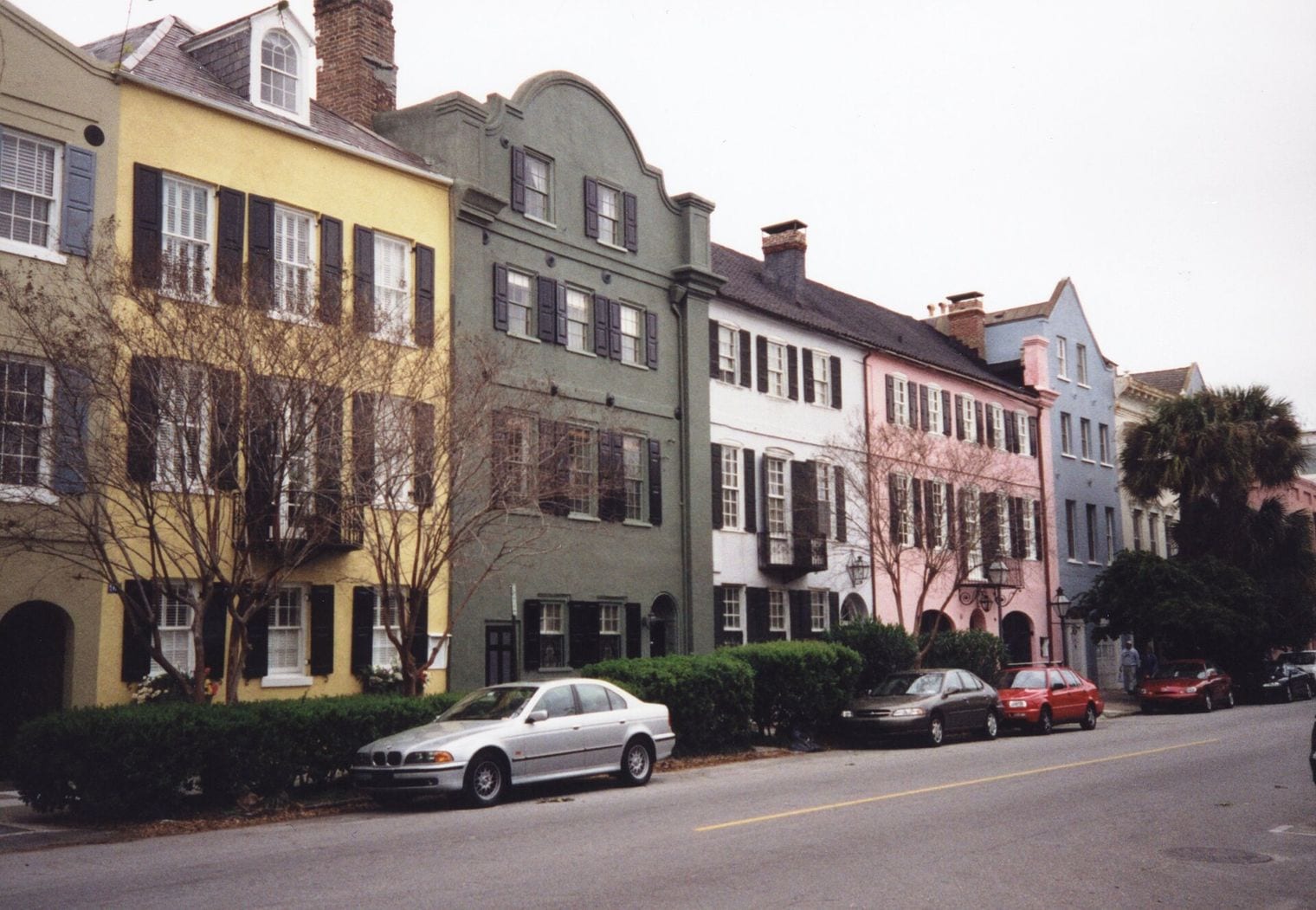
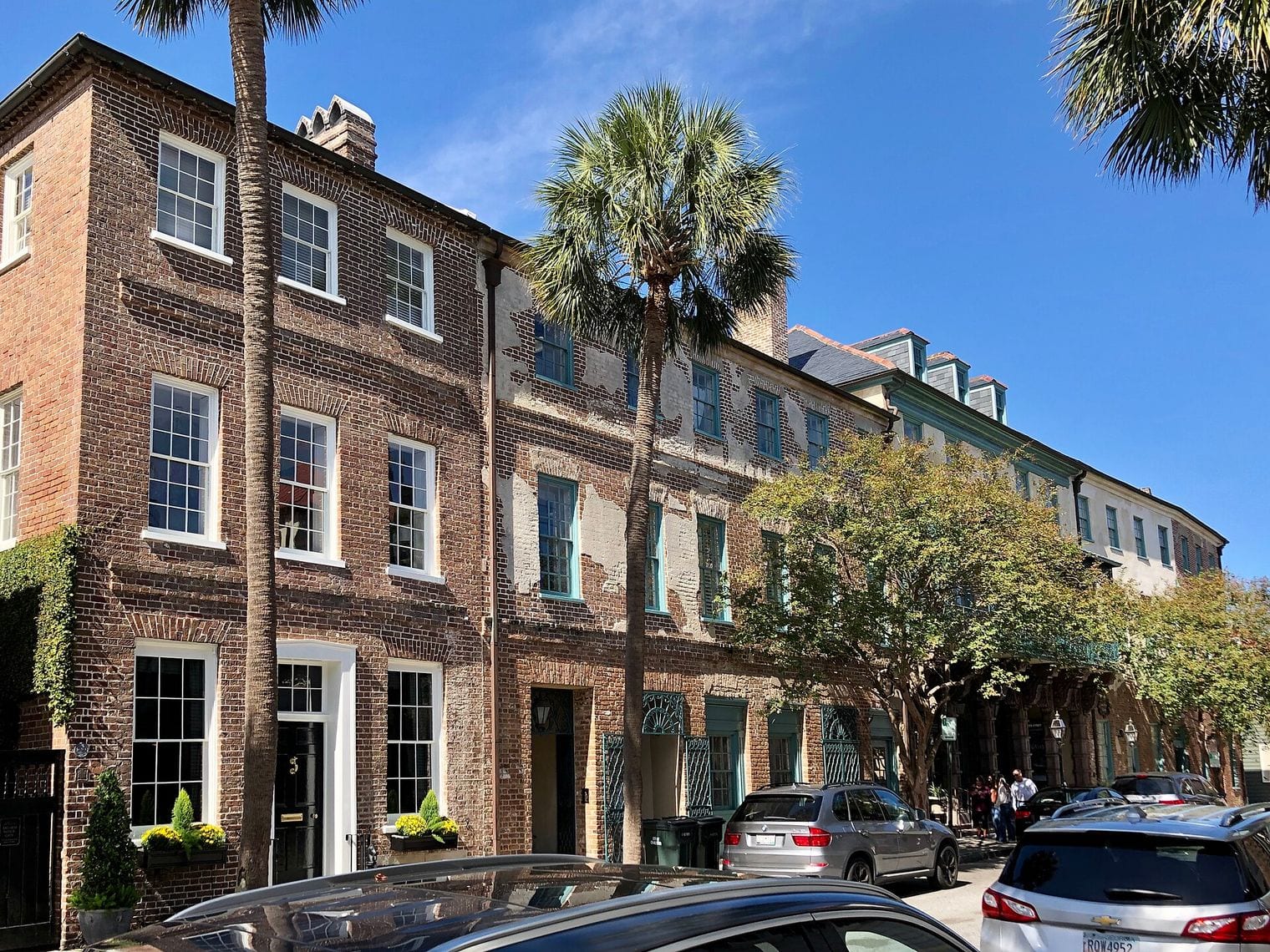
Rainbow Row is the image most people carry home from Charleston: a run of thirteen historic houses on East Bay Street, each painted a different pastel shade. The name stuck after the houses were restored and colorfully painted in the 1930s and 1940s, and the stretch between Tradd and Elliott streets is now one of the most photographed corners of the city.
The houses are private homes, so this is a sidewalk sight rather than a tour. Come early in the morning, when the light is soft and the street is quiet, then keep walking south toward the seawall or north toward the harbor parks; the whole lower peninsula rewards wandering on foot.
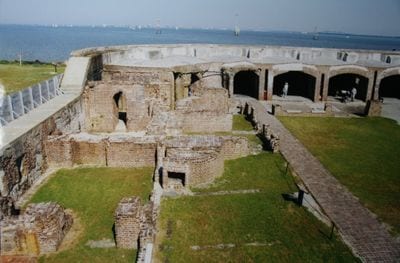
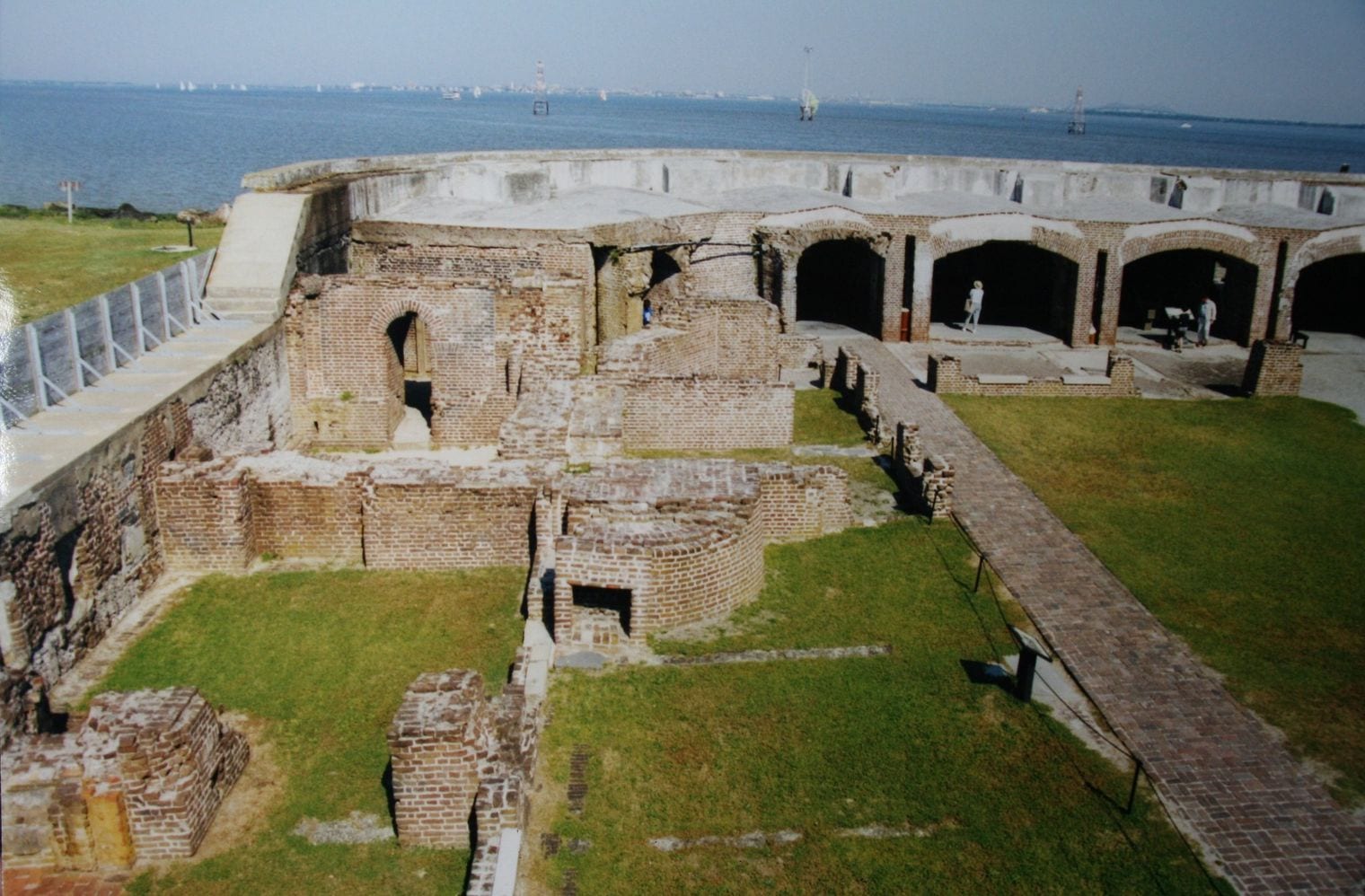
The Civil War began here. On April 12, 1861, Confederate batteries opened fire on Fort Sumter, the brick fort on an island at the mouth of Charleston Harbor, and the Union garrison surrendered the next day. The fort is now protected as part of Fort Sumter and Fort Moultrie National Historical Park.
The only way out is by ferry: boats leave from the visitor center at Liberty Square downtown and from Patriots Point in Mount Pleasant, and private vessels may not dock. The harbor crossing is half the fun, with views back to the mansions along the waterfront, and rangers on the island explain how the fort was pounded into rubble during the war.
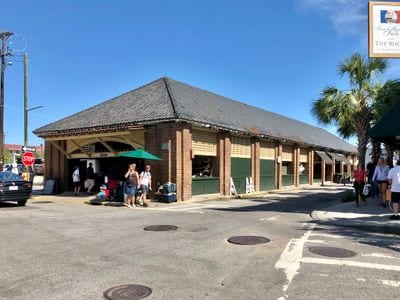
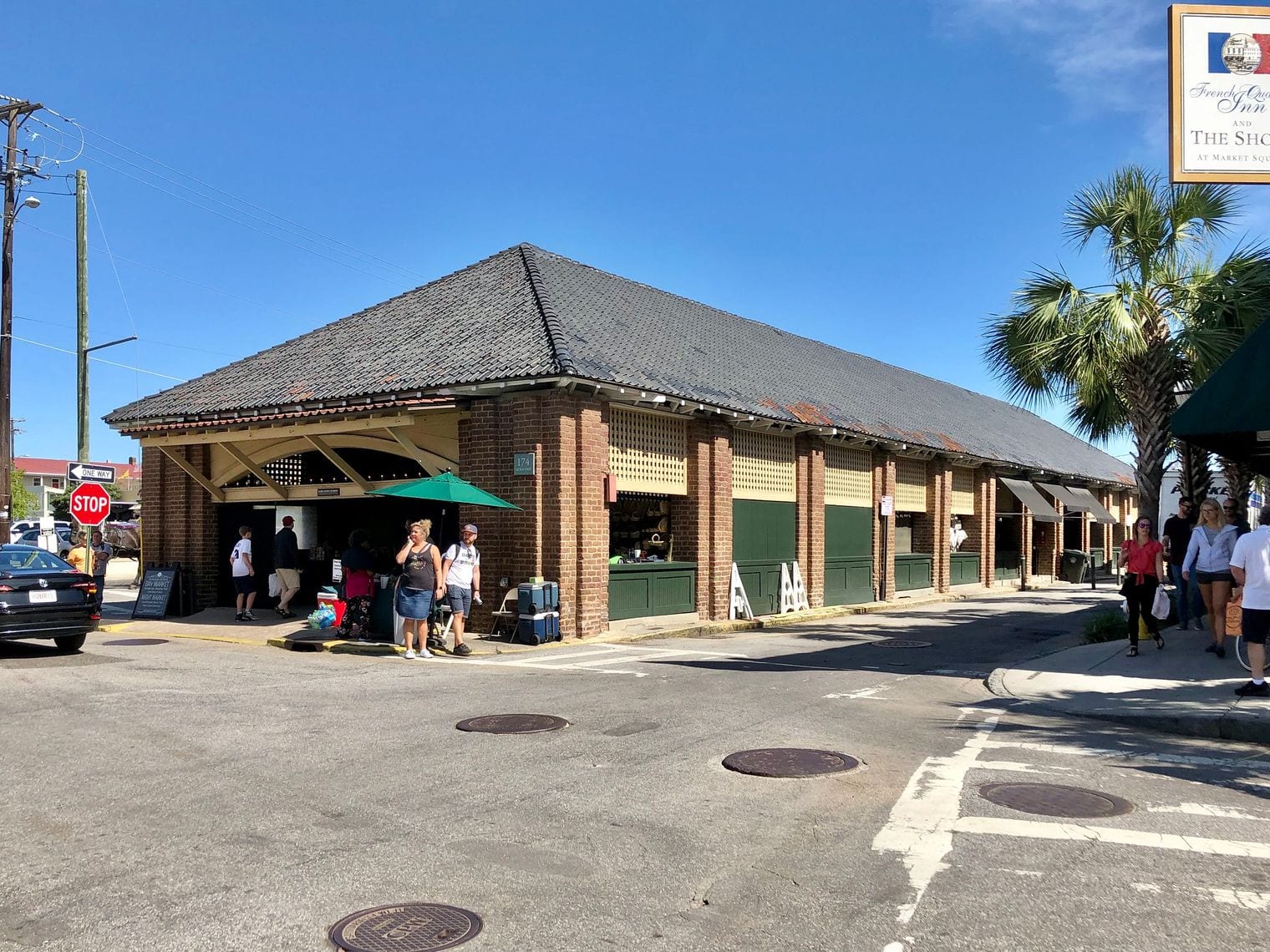
Stretching four blocks from Meeting Street to East Bay Street, the Charleston City Market has been trading since the 1790s. Its columned Market Hall, added in the 1840s, fronts a long run of open-sided sheds where vendors sell jewelry, art, local foods and Gullah sweetgrass baskets woven by hand.
Despite a persistent myth, enslaved people were never sold here; that history belongs to the Old Slave Mart a few blocks south. The complex is a National Historic Landmark, and it is the easiest place in town to meet sweetgrass basket makers and pick up a souvenir that was actually made in the Lowcountry.
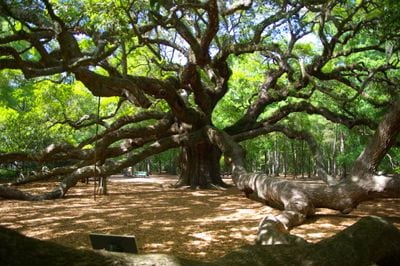
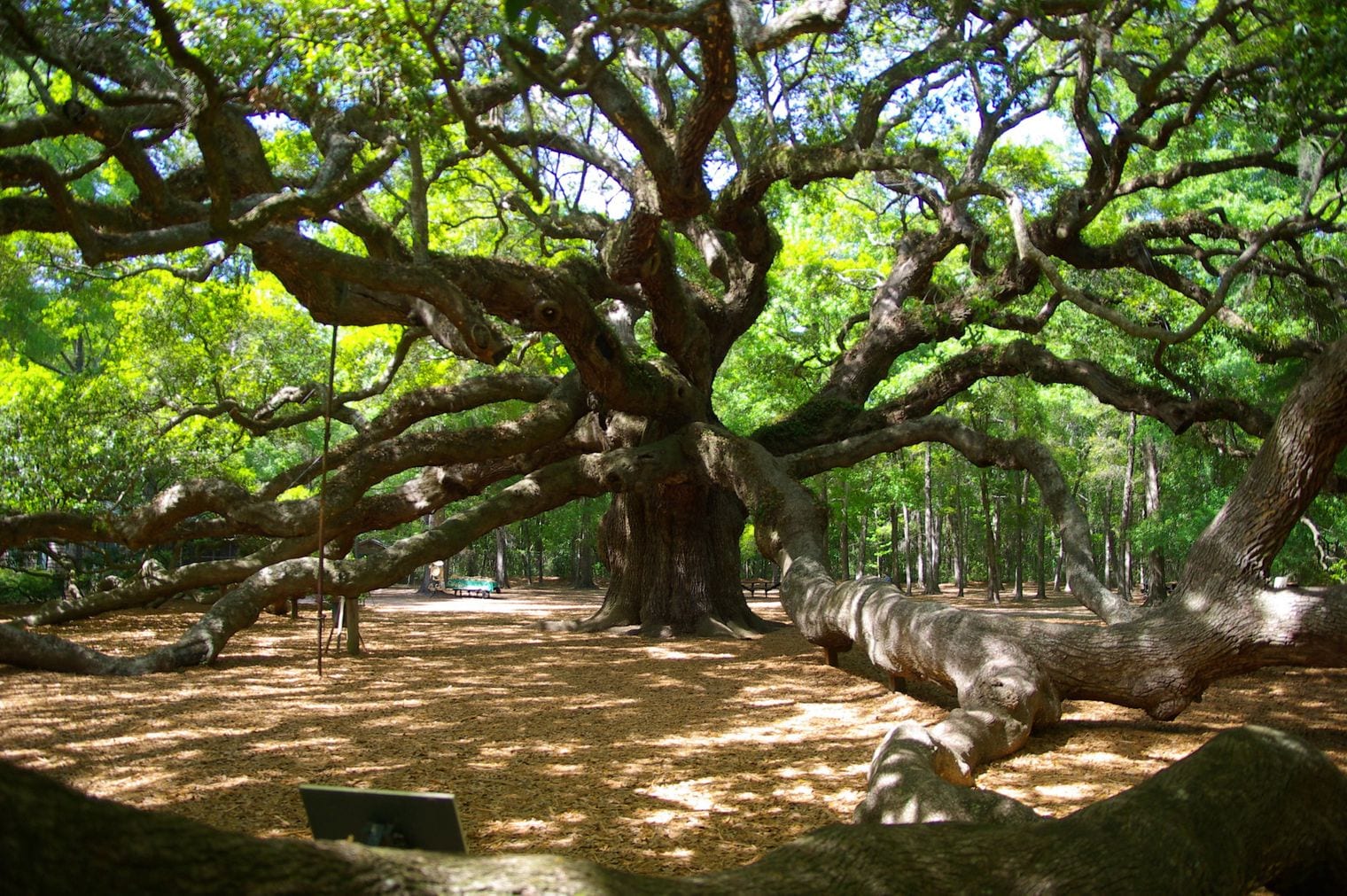
Angel Oak is a southern live oak of almost unreal proportions, its massive limbs snaking out in every direction and dipping to the ground before rising again. It stands in a small city-owned park on Johns Island, and its age is estimated at several hundred years; published estimates range from about 300 to 500, so treat the bigger numbers you may hear with caution.
The tree rises about 65 feet and shades roughly 17,000 square feet, so a photo rarely captures the scale; stand beneath the canopy instead. The park is free to enter, with donations helping to care for the tree, and it pairs naturally with a day on the sea islands south of the city.
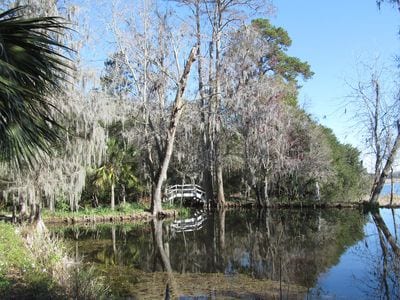
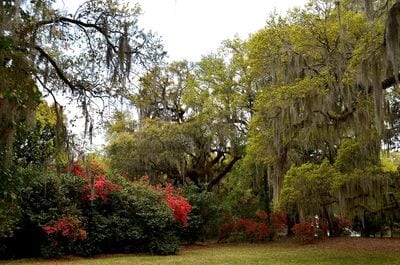
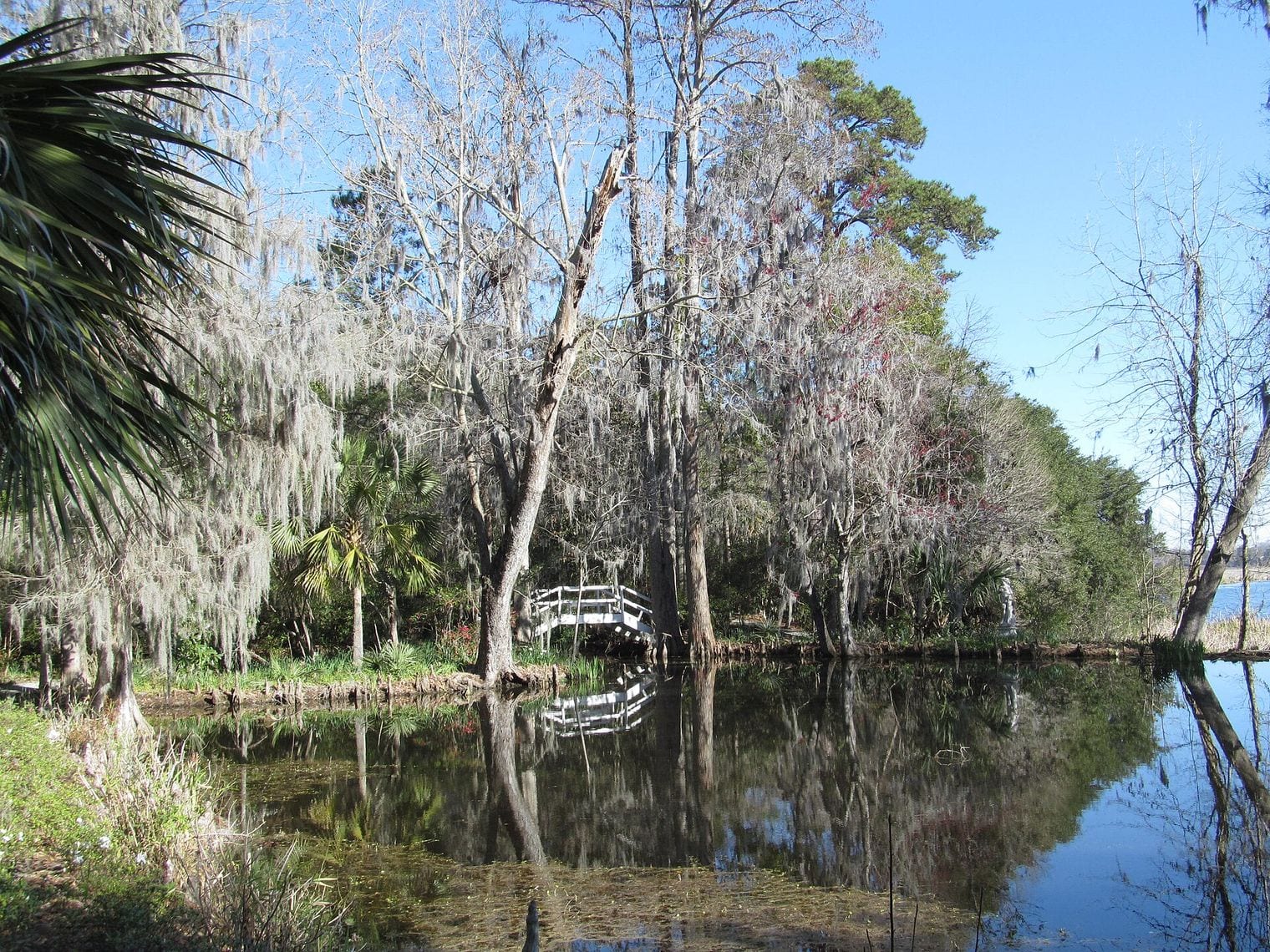
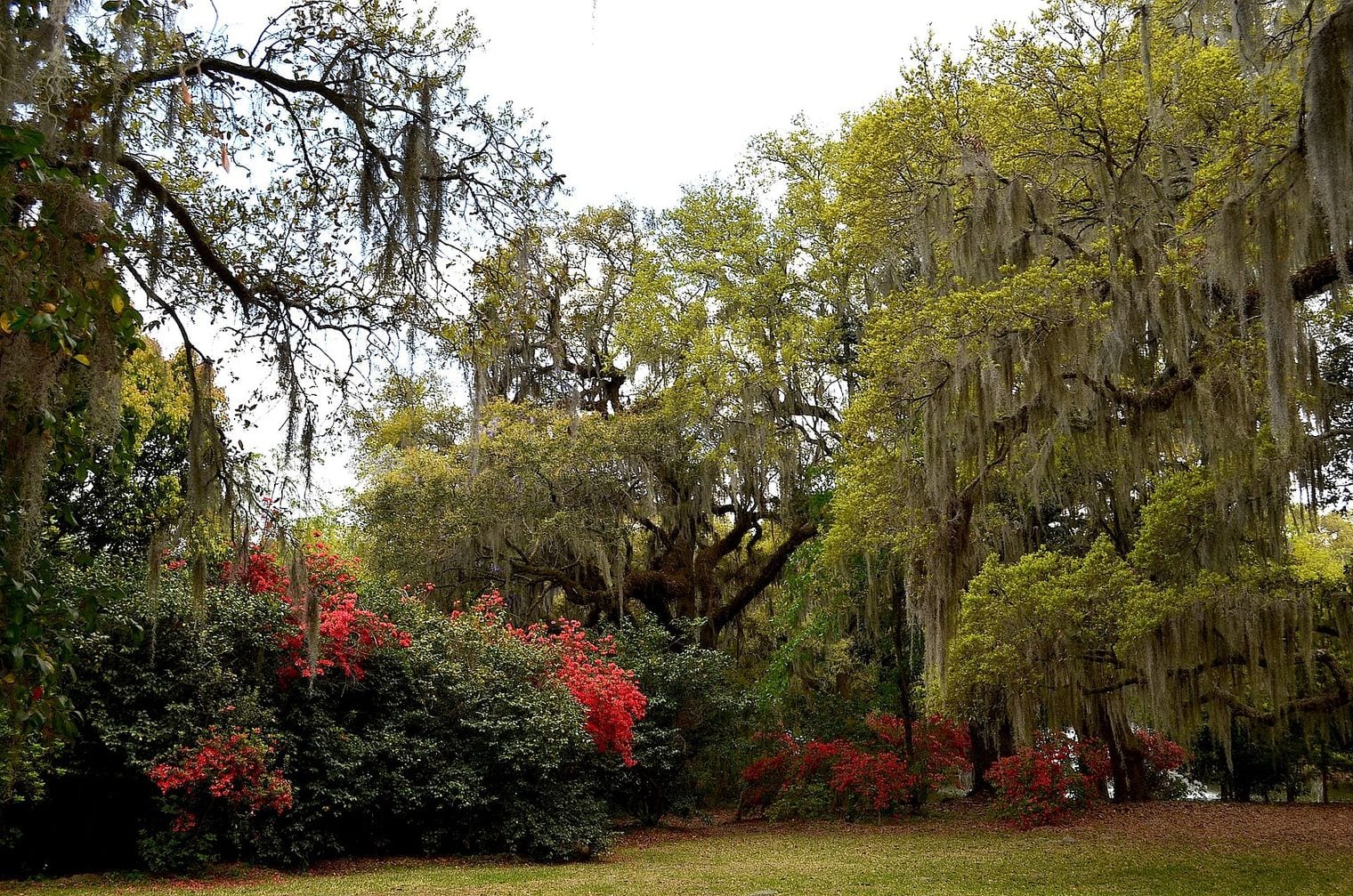
Magnolia Plantation and Gardens has been in the hands of the Drayton family since 1679, and its gardens are the reason to come. In the 1840s the Reverend John Grimké Drayton began reshaping them in a romantic English style, and today winding paths lead past azaleas, camellias and moss-draped oaks to bridges reflected in still, dark ponds.
Allow time for the Audubon Swamp Garden, a boardwalk loop through cypress swamp where alligators and wading birds are a common sight. The plantation began as a rice operation worked by enslaved Africans, and tours and exhibits on the grounds trace that history alongside the house and gardens.
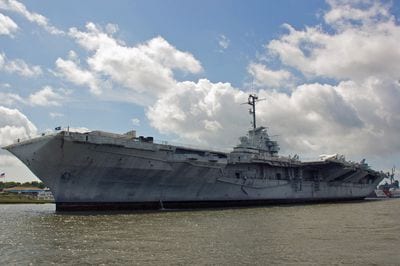
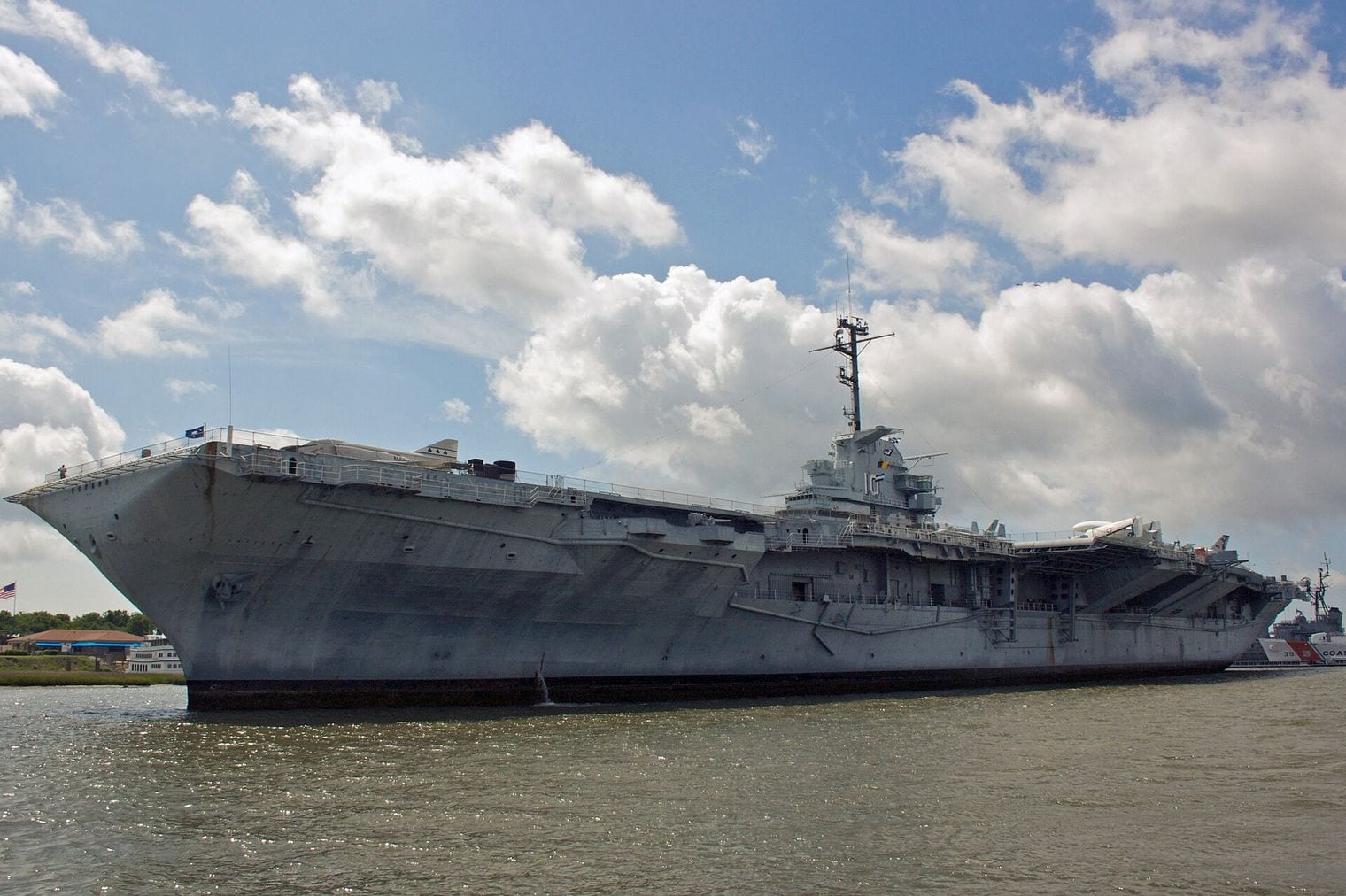
66. Patriots Point Naval & Maritime Museum (USS Yorktown)
Across the harbor in Mount Pleasant, Patriots Point is built around the USS Yorktown, a World War II aircraft carrier that has been open to visitors since 1976. You can roam its hangar deck and flight deck, where restored aircraft sit lined up as if ready for launch, then climb down into the cramped working spaces below.
The destroyer USS Laffey is moored nearby, and a recreated Vietnam War-era naval support base sits on shore. Fort Sumter ferries also leave from here, so it is easy to combine the two in a single day, and the carrier's deck gives one of the best views back across the water to the Charleston skyline.
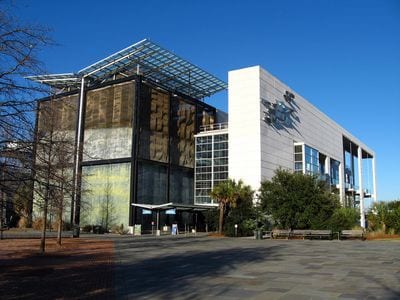
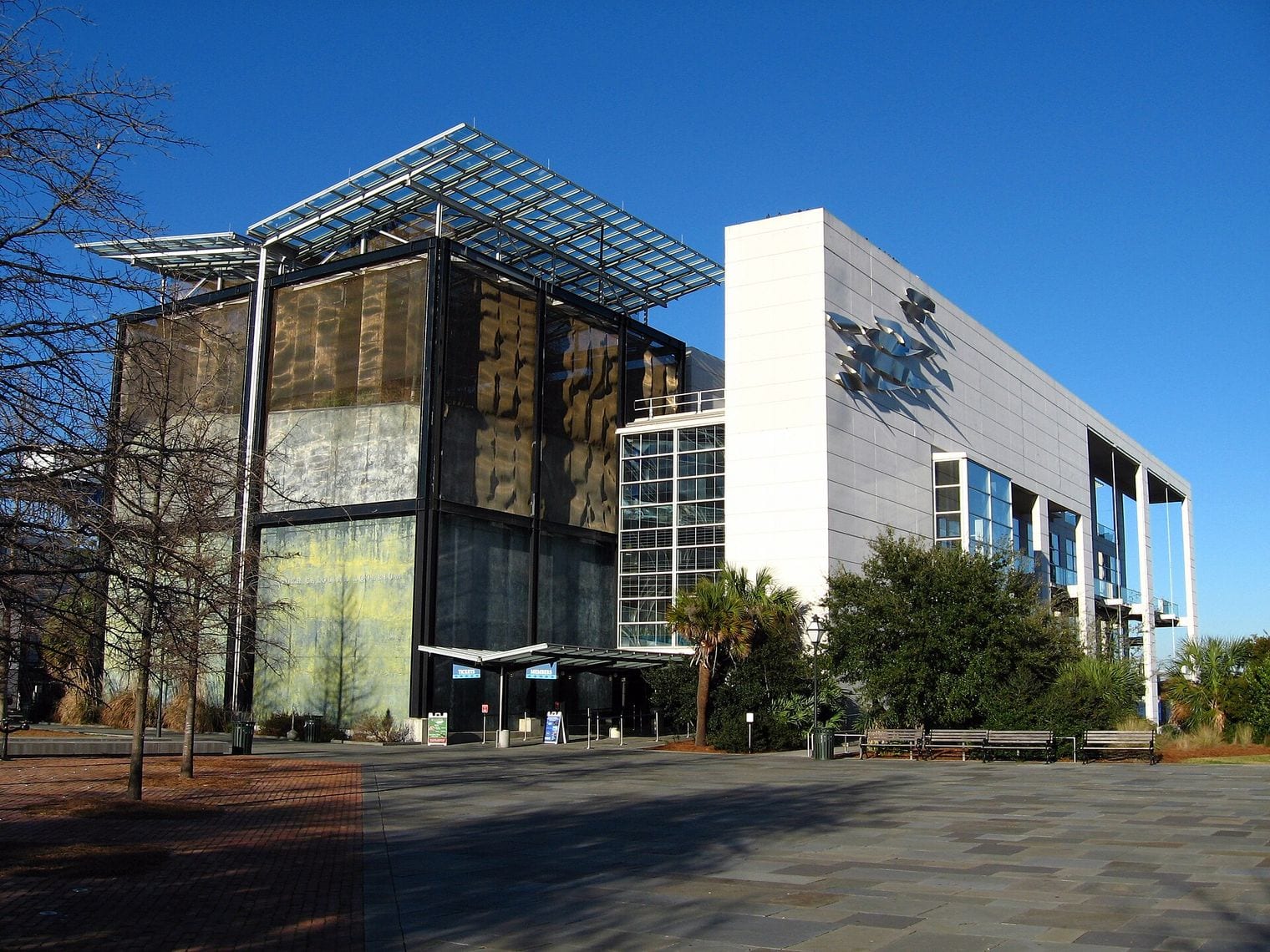
The South Carolina Aquarium follows the state's waters from mountain streams to the open sea, so a visit moves from river otters and alligators through the salt marsh to the Great Ocean Tank, a towering two-story exhibit full of sharks, rays and schooling fish. More than 5,000 animals live here, many of them native South Carolina species.
Don't skip the Sea Turtle Care Center, a working hospital where sick and injured sea turtles are rehabilitated before release, with patients in view of visitors. The aquarium sits on the harbor at Liberty Square, and its waterfront terrace looks across to the USS Yorktown and the Ravenel Bridge.
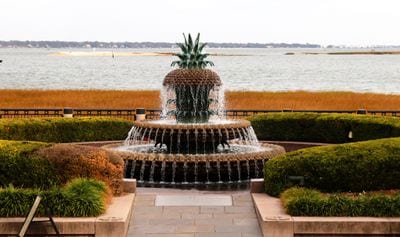
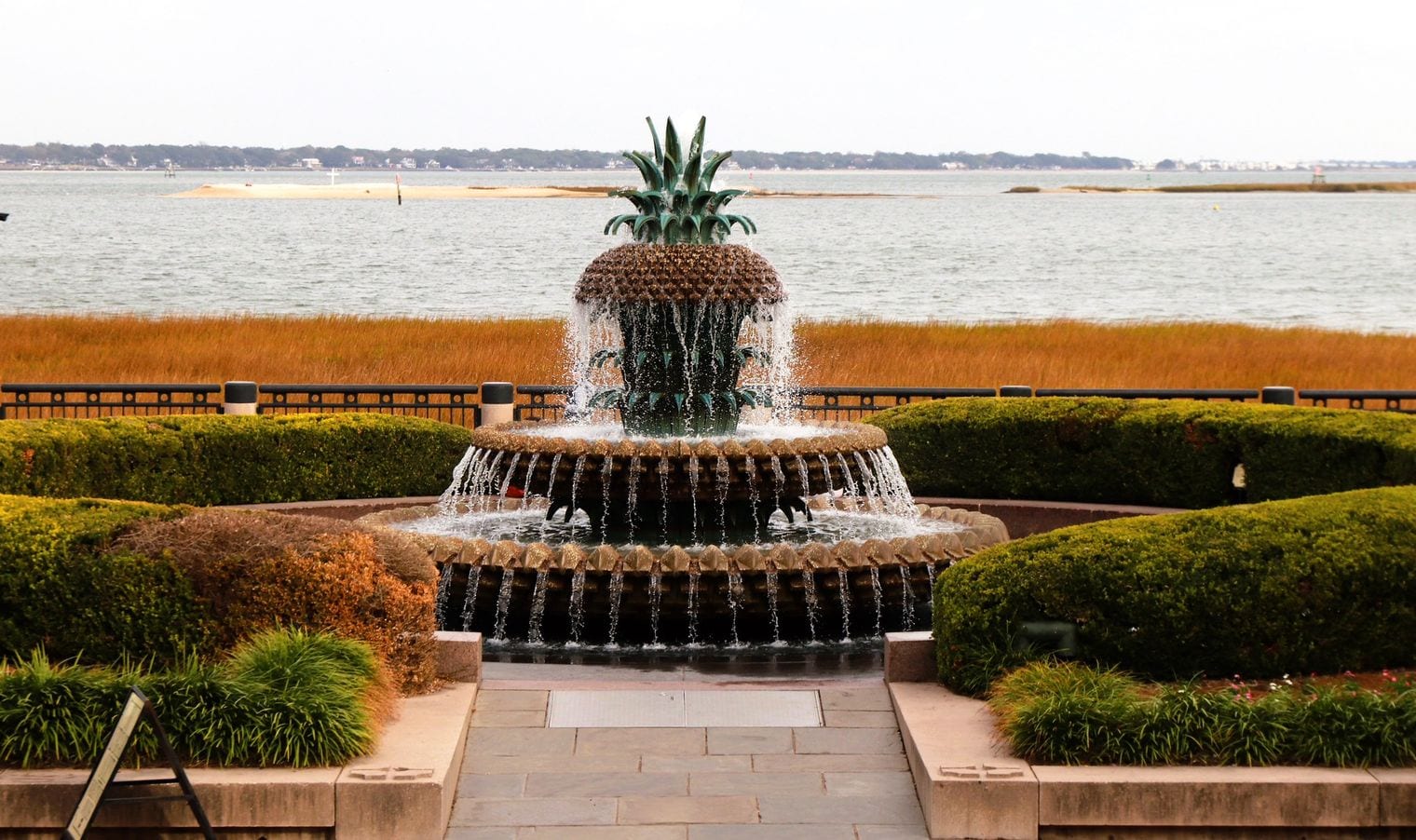
Waterfront Park runs for about half a mile along the Cooper River, an eight-acre ribbon of lawns, palmettos and shaded walks that serves as the city's front porch. At its heart is the Pineapple Fountain, a fountain shaped like a giant pineapple, the traditional Southern symbol of hospitality, and one of Charleston's favorite photo stops.
At the north end, Vendue Wharf reaches out over the water with covered swings that face the harbor and the Ravenel Bridge. The park has earned a Landmark Award from the American Society of Landscape Architects, and it links easily with Rainbow Row and the seawall on a walk down East Bay Street.
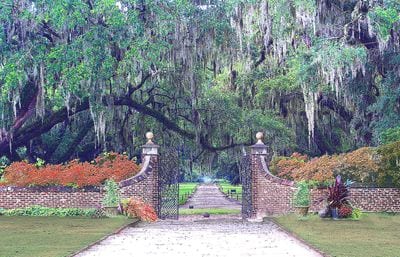
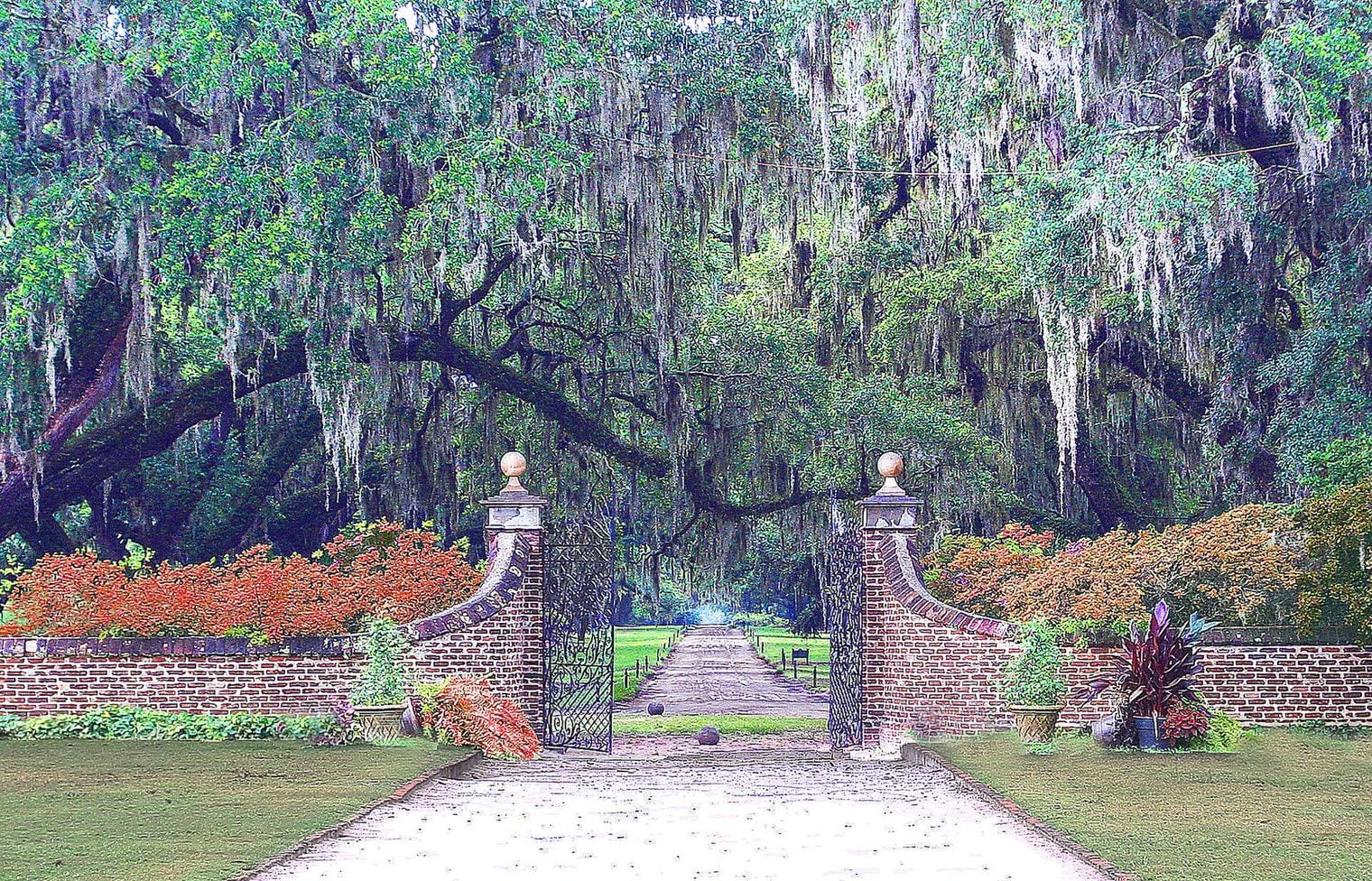
Boone Hall's Avenue of Oaks, a long drive lined with live oaks believed to have been planted in 1743, is one of the most recognizable approaches in the South. The plantation in Mount Pleasant traces back to a 1681 land grant to Major John Boone, and it is still farmed today, which makes it one of the oldest working plantations in the country.
The main house dates only from 1936, so the most important original structures are the brick cabins built for enslaved people between about 1790 and 1810, now used to tell their story. A live presentation on Gullah culture and the plantation's seasonal farm activities round out a visit that is part history lesson, part working farm.
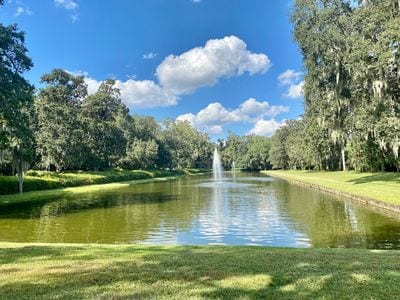
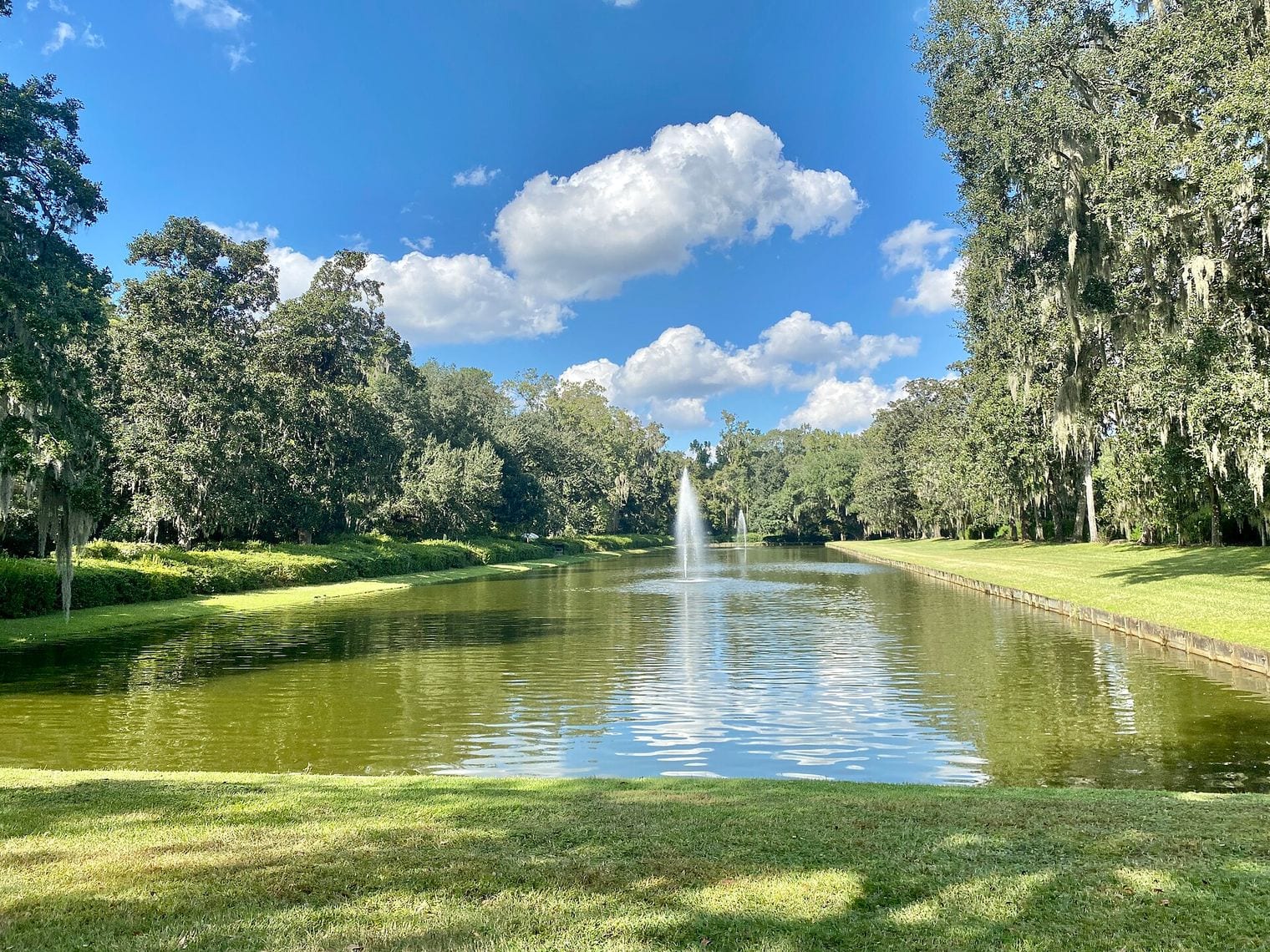
Middleton Place is home to what is regarded as the oldest landscaped garden in the United States, begun in 1741 by Henry Middleton, who later served as president of the First Continental Congress. The design is formal and geometric, with terraced lawns stepping down to a pair of butterfly-shaped lakes on the Ashley River, and it is at its showiest when the camellias and azaleas bloom.
Union troops burned the main house in 1865 and the 1886 earthquake toppled much of what remained, so the surviving south wing now serves as the house museum. In the stableyards, costumed craftspeople and heritage-breed animals show the working side of plantation life, and the site addresses the lives of the enslaved people who built and ran it.
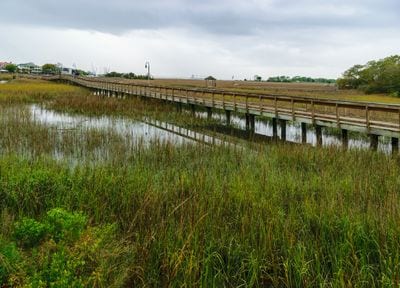
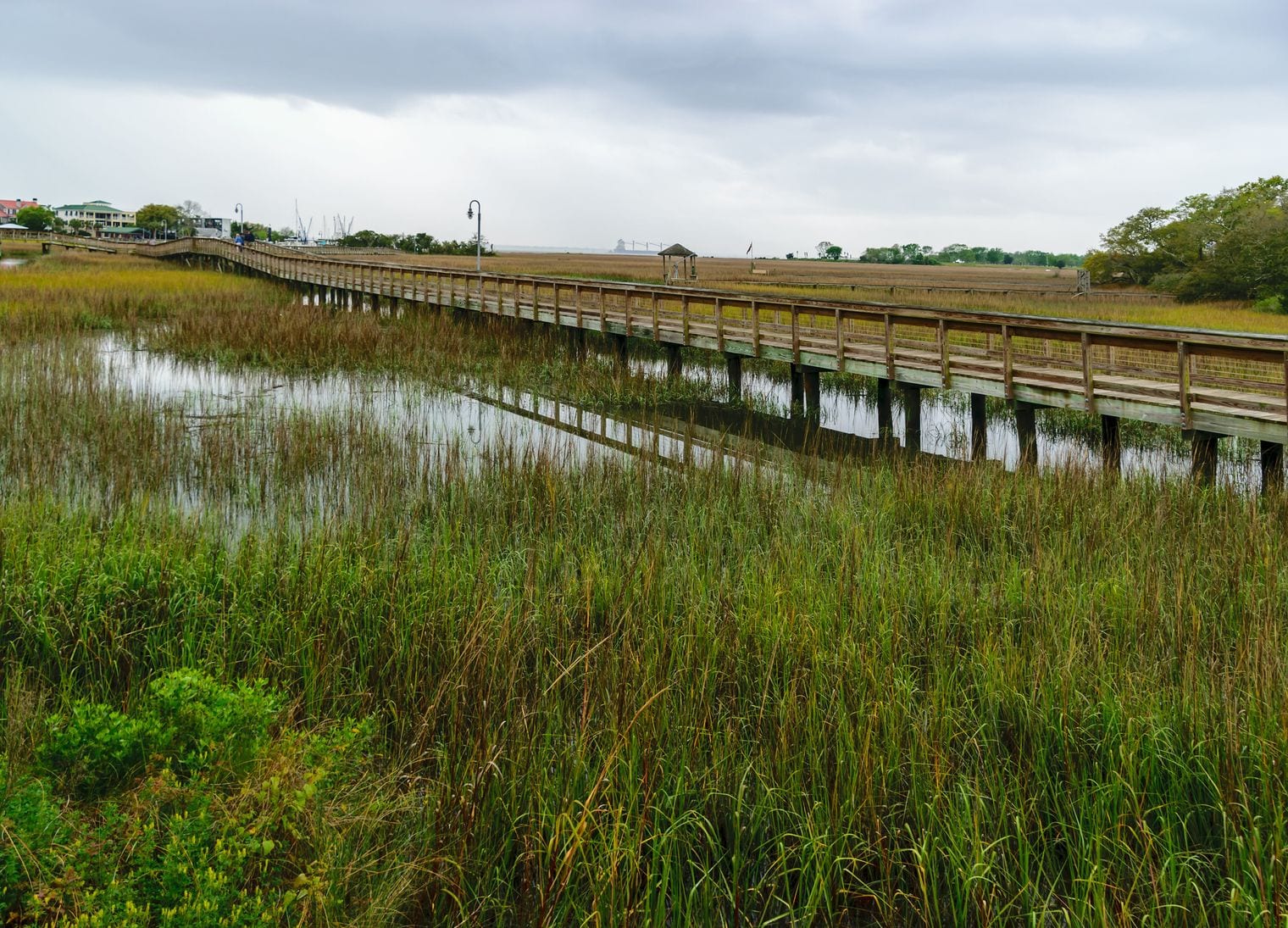
Shem Creek Park is a boardwalk that winds out over the salt marsh where Shem Creek meets Charleston Harbor in Mount Pleasant. It makes a lovely, easy walk with wide views across the spartina grass, and the creek's shrimp boats and working docks make a classic Lowcountry backdrop.
Dolphins are often spotted in the creek, and herons and egrets fish the marsh, especially toward sunset. The creek is also a hub for kayaking and paddleboarding, and the waterfront restaurants and bars lined up along its docks make it a favorite spot to end the day with seafood.
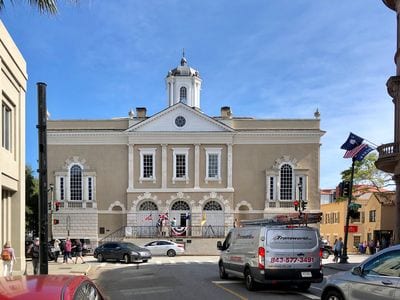
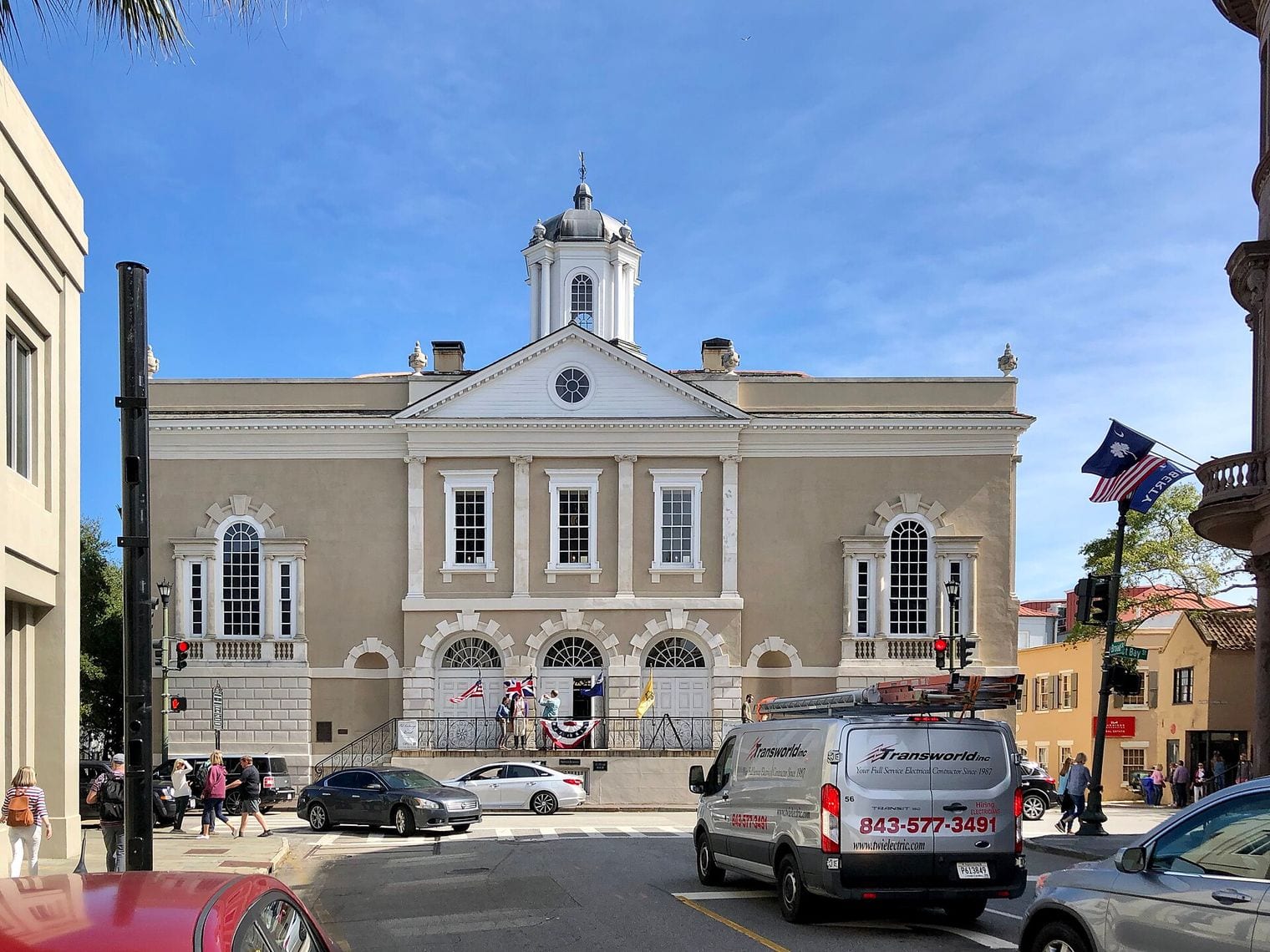
Built between 1767 and 1771 at the foot of Broad Street, the Old Exchange was colonial Charleston's grand customs house and meeting hall. It hosted South Carolina's convention to ratify the U.S. Constitution in 1788, and George Washington was feted here during his week-long visit in 1791.
Below the elegant rooms lies the Provost Dungeon, where British forces held prisoners during the Revolutionary War, and guides lead you through its brick-vaulted cellar. The building is a National Historic Landmark and makes a good first stop for the colonial chapter of the city's story.
Charleston began here in 1670, on the west bank of the Ashley River, and Charles Towne Landing preserves the site of the first permanent English settlement in Carolina. The 664-acre state historic site mixes ongoing archaeology, an exhibit hall and an experimental crop garden of the plants early colonists grew for food and profit.
Climb aboard Adventure, a replica of a 17th-century trading ketch, then walk the trails through a natural-habitat zoo of animals native to the region when the settlers arrived. It is the kind of place that keeps both history buffs and children happy for an afternoon.
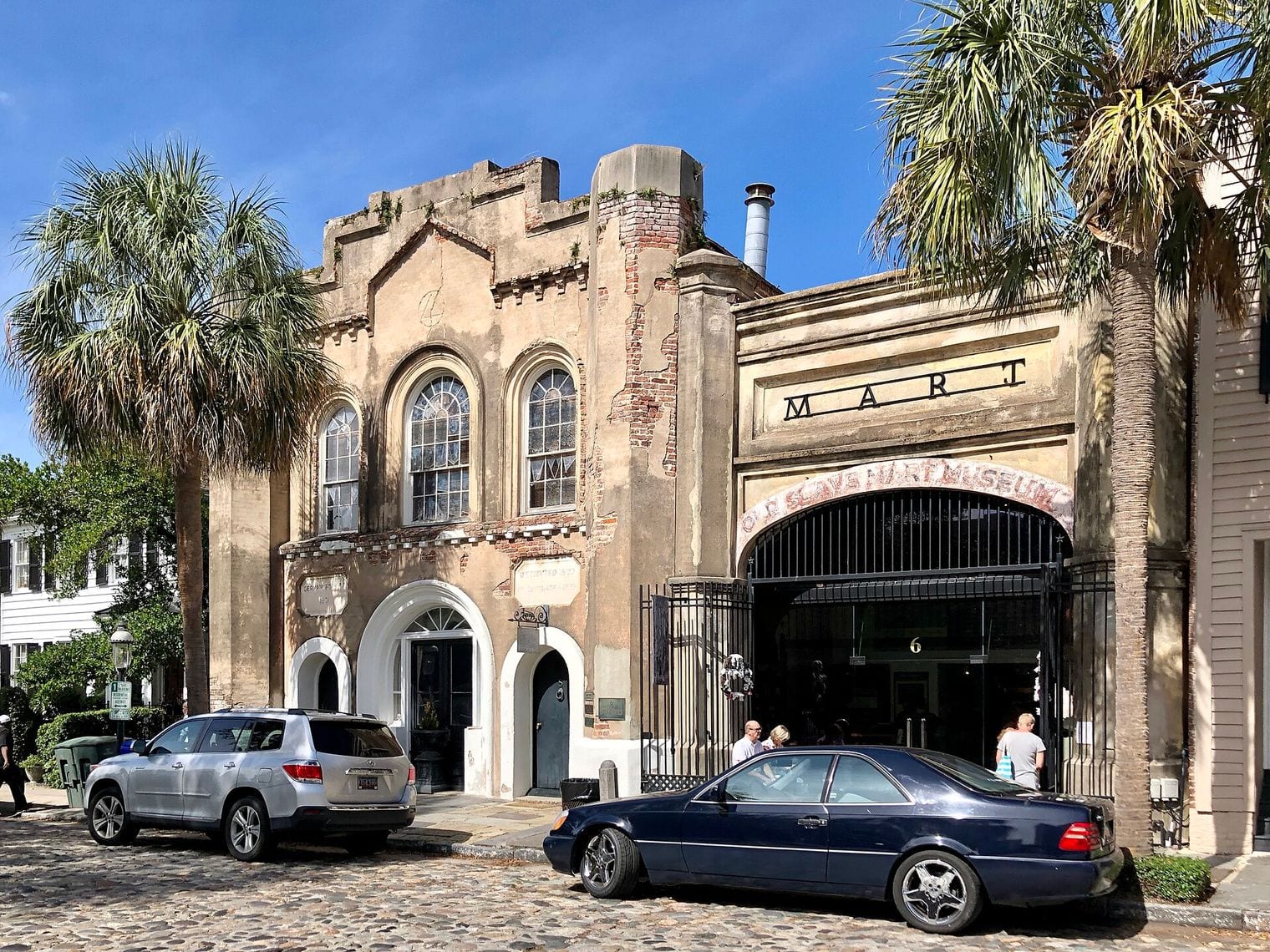
On cobbled Chalmers Street, the Old Slave Mart Museum occupies a building constructed in 1859 as part of Ryan's Mart, a private auction yard opened after the city banned public slave auctions. It is believed to be the last surviving slave auction building in South Carolina.
Exhibits inside tell the story of the domestic slave trade that passed through Charleston, through documents, artifacts and personal stories. It is a sobering, essential stop, and only a few minutes' walk from the City Market, which is often wrongly assumed to have been a slave market itself.
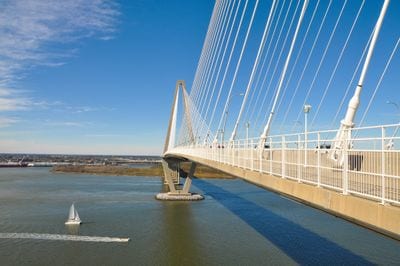
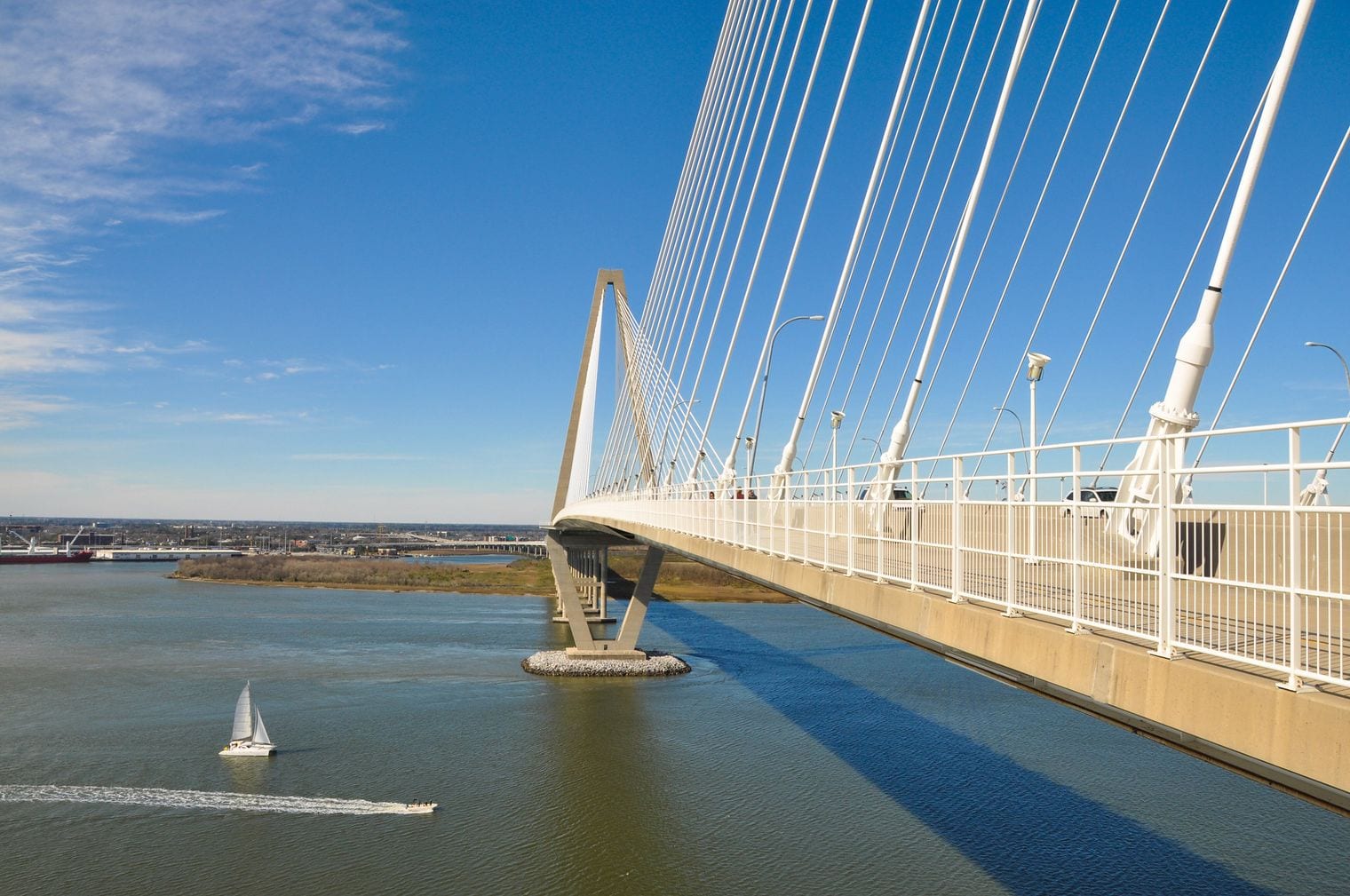
The twin diamond-shaped towers of the Arthur Ravenel Jr. Bridge have been Charleston's modern landmark since the cable-stayed bridge opened over the Cooper River in 2005. Its main span stretches 1,546 feet between the towers, linking downtown with Mount Pleasant.
The best way to experience it is on foot or by bike: a dedicated path called Wonders' Way runs along the harbor side, with sweeping views of the port, the Yorktown and the ocean beyond. Every spring the bridge also hosts the Cooper River Bridge Run, a 10K that closes it to traffic.
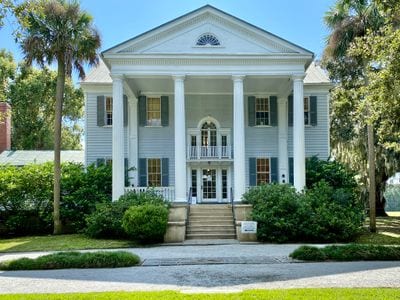
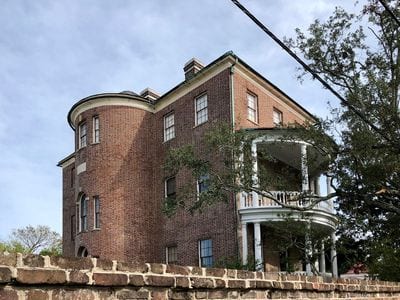
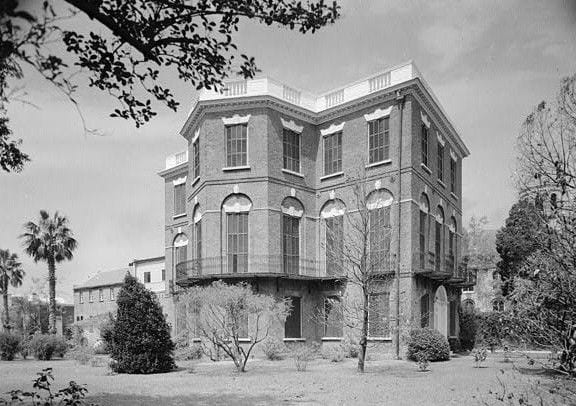
Completed in 1808 for Nathaniel Russell, a wealthy merchant and slave trader, the Nathaniel Russell House on Meeting Street is counted among the most important neoclassical houses in the United States. Its showpiece is an elliptical staircase that seems to float as it spirals up through the house.
Historic Charleston Foundation runs the house as a museum, and tours cover both the Russell family and the enslaved people who lived and worked on the property. Finish in the garden, laid out with gravel paths and boxwood hedges and planted with species favored in the 19th century.
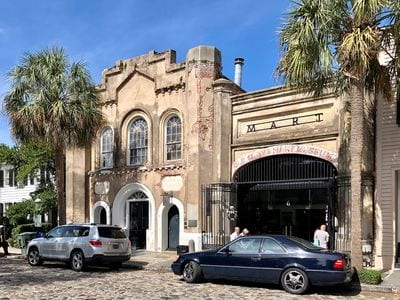
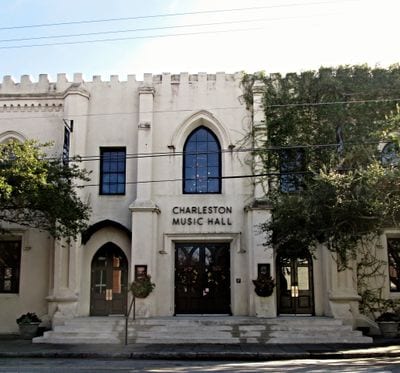
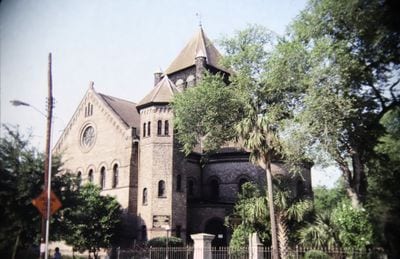
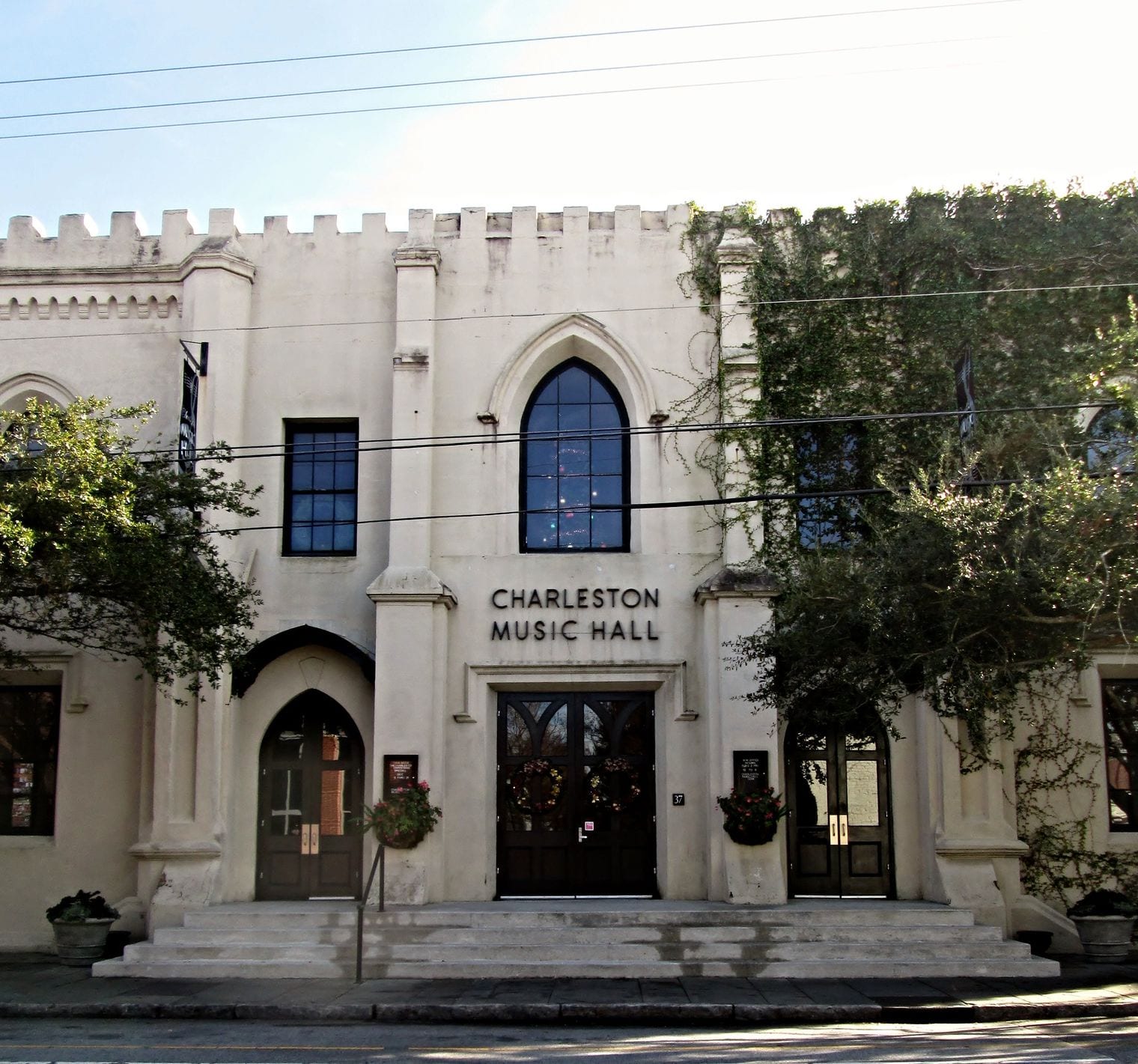
The Charleston Music Hall began life in 1849-50 as a passenger station for the South Carolina Railroad, a castle-like Gothic Revival building designed by Charleston architect Edward C. Jones. Its days as a depot were short, and after long decades of other uses it reopened in the 1990s as one of the city's favorite mid-sized performance halls.
The lineup ranges from touring musicians and comedians to local orchestras and festival shows, and the intimate room means good sightlines from almost every seat. It stands on John Street, a short walk from Marion Square and the restaurants of upper King Street.
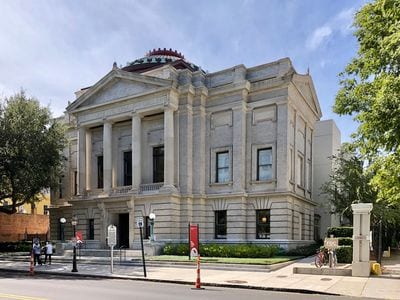
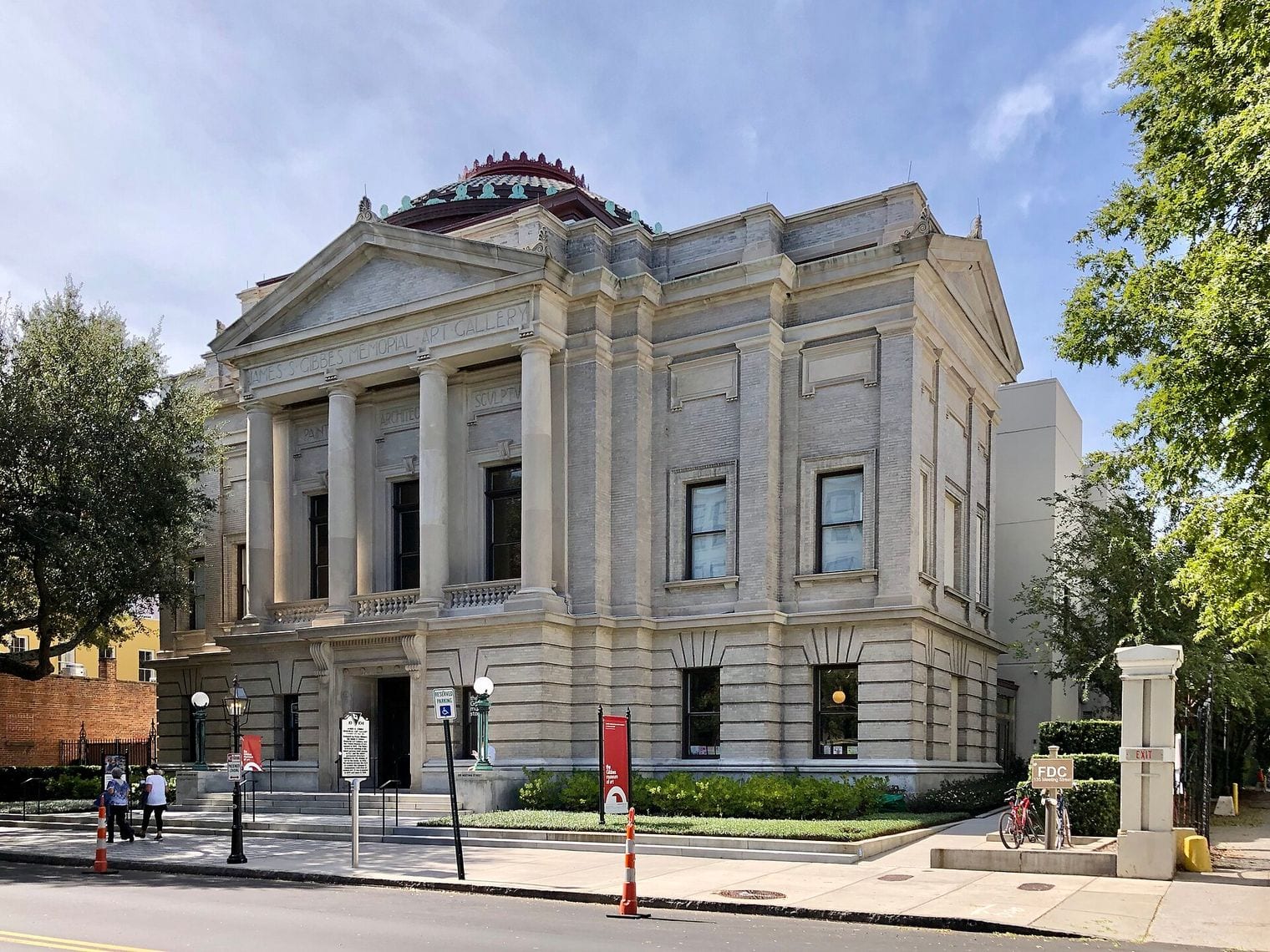
The Gibbes Museum of Art has collected art with Charleston connections since its founding as the Carolina Art Association in 1858. Its Beaux Arts home on Meeting Street opened in 1905 beneath a Tiffany-style dome, and the collection now numbers more than 10,000 works, most of them American and many tied to Charleston or the South.
Look for its portrait miniatures and the paintings of Lowcountry life by local artists, alongside changing exhibitions. Out back, the museum's garden is part of the Gateway Walk, a quiet chain of churchyards and gardens that threads through the blocks of the old city.
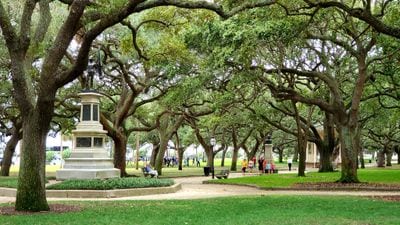
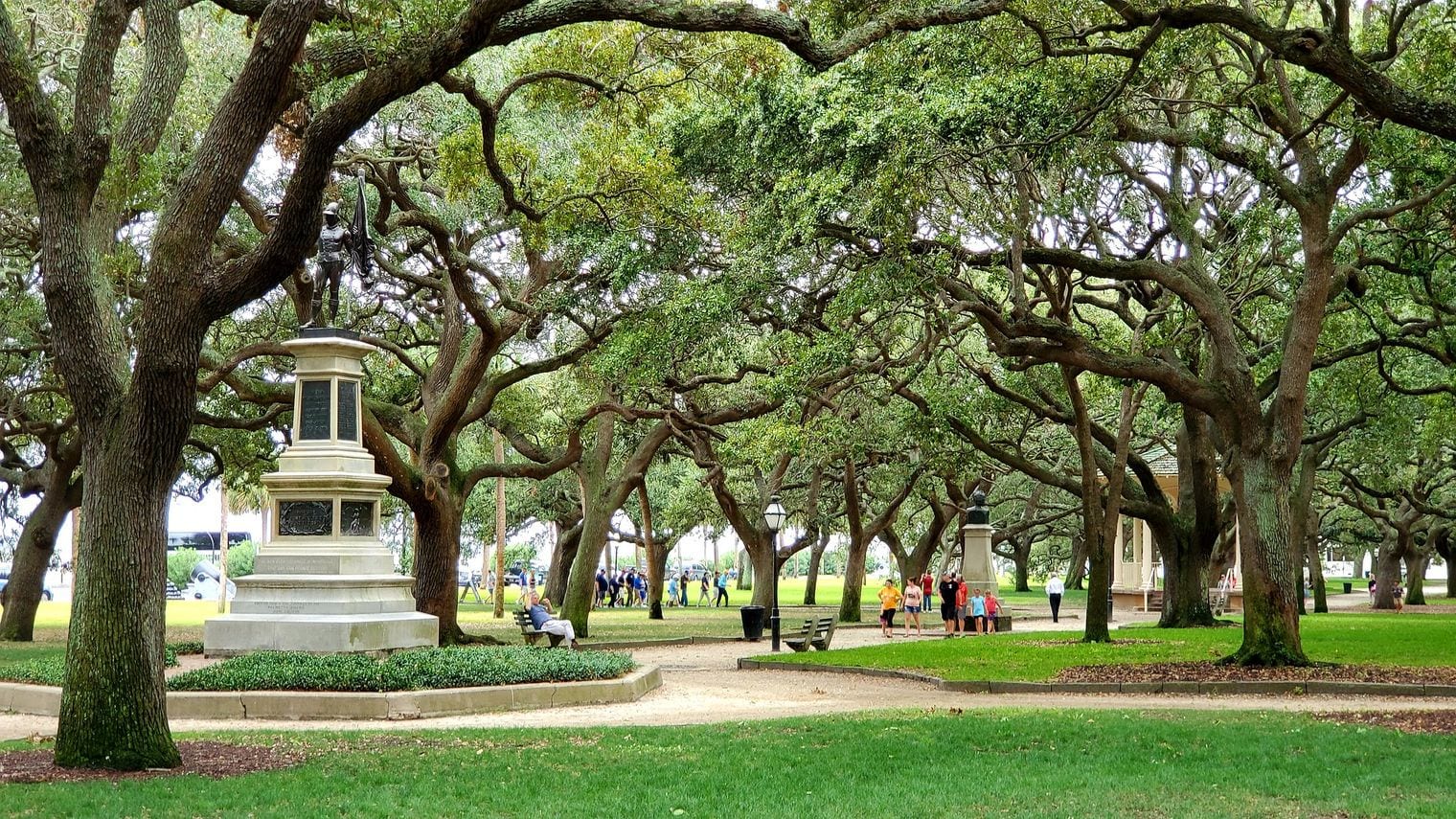
At the southern tip of the peninsula, the Battery is a raised seawall promenade where the Ashley and Cooper rivers meet to form Charleston Harbor. Walk it for the sea breeze and the views out toward Fort Sumter, with a row of grand 19th-century mansions lining East Battery on the land side.
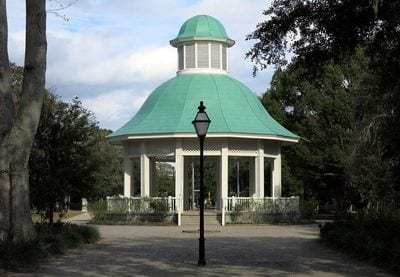
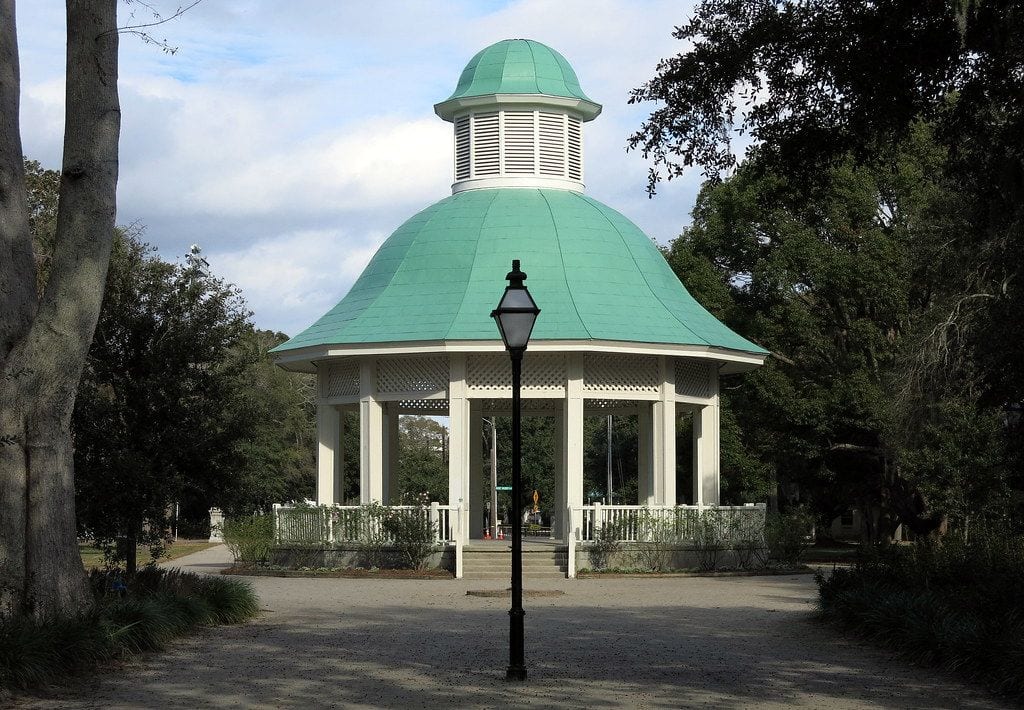
Behind it, White Point Garden is a shady park of live oaks, monuments and old cannon, used as a public park since 1837 and fortified with artillery during the Civil War. A gazebo stands at its center, and benches under the oaks make it a fine place to rest between walks.
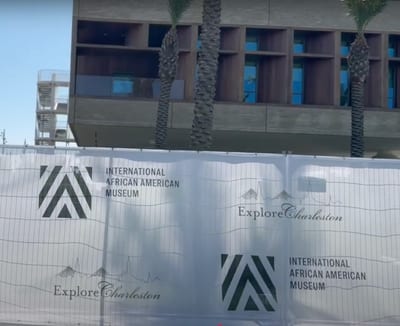
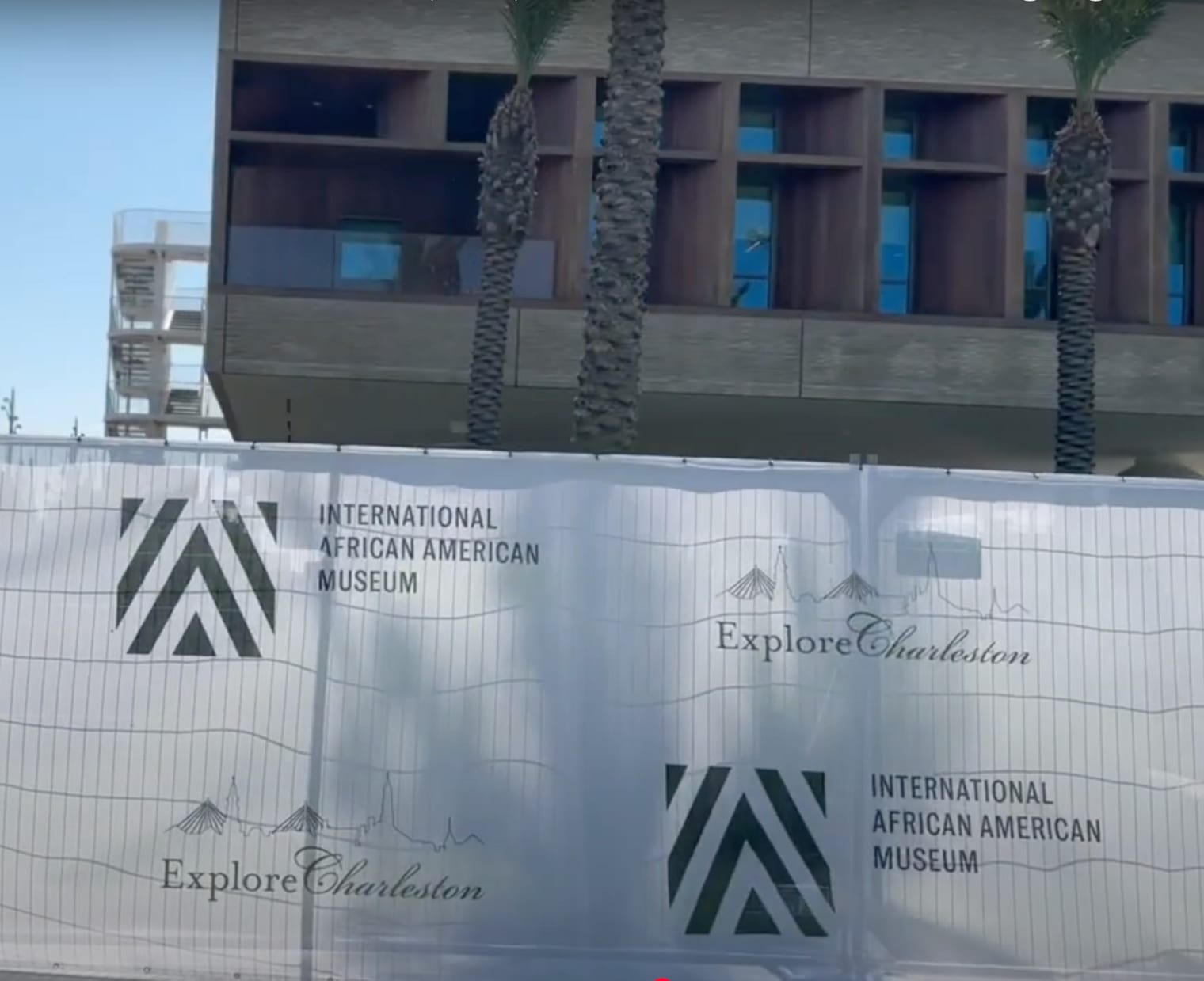
The International African American Museum stands on the site of Gadsden's Wharf, where a large share of all enslaved Africans brought to North America first set foot; estimates run from about 40 percent to nearly half. Opened in 2023, the museum is raised on columns above the ground, and its galleries trace the African American journey and its influence across the world.
Around and beneath the building, the African Ancestors Memorial Garden is an open, contemplative space facing the harbor, and the Center for Family History helps visitors research their own genealogy. Give it a few unhurried hours.
Free printable checklist of all 45 places
Tick them off as you go. Confirm your email to download it, plus one email every Thursday with new guides for the places you tick.
2121. McLeod Plantation Historic Site
Historical Landmark~2.6 miles (4.2 km) from centre
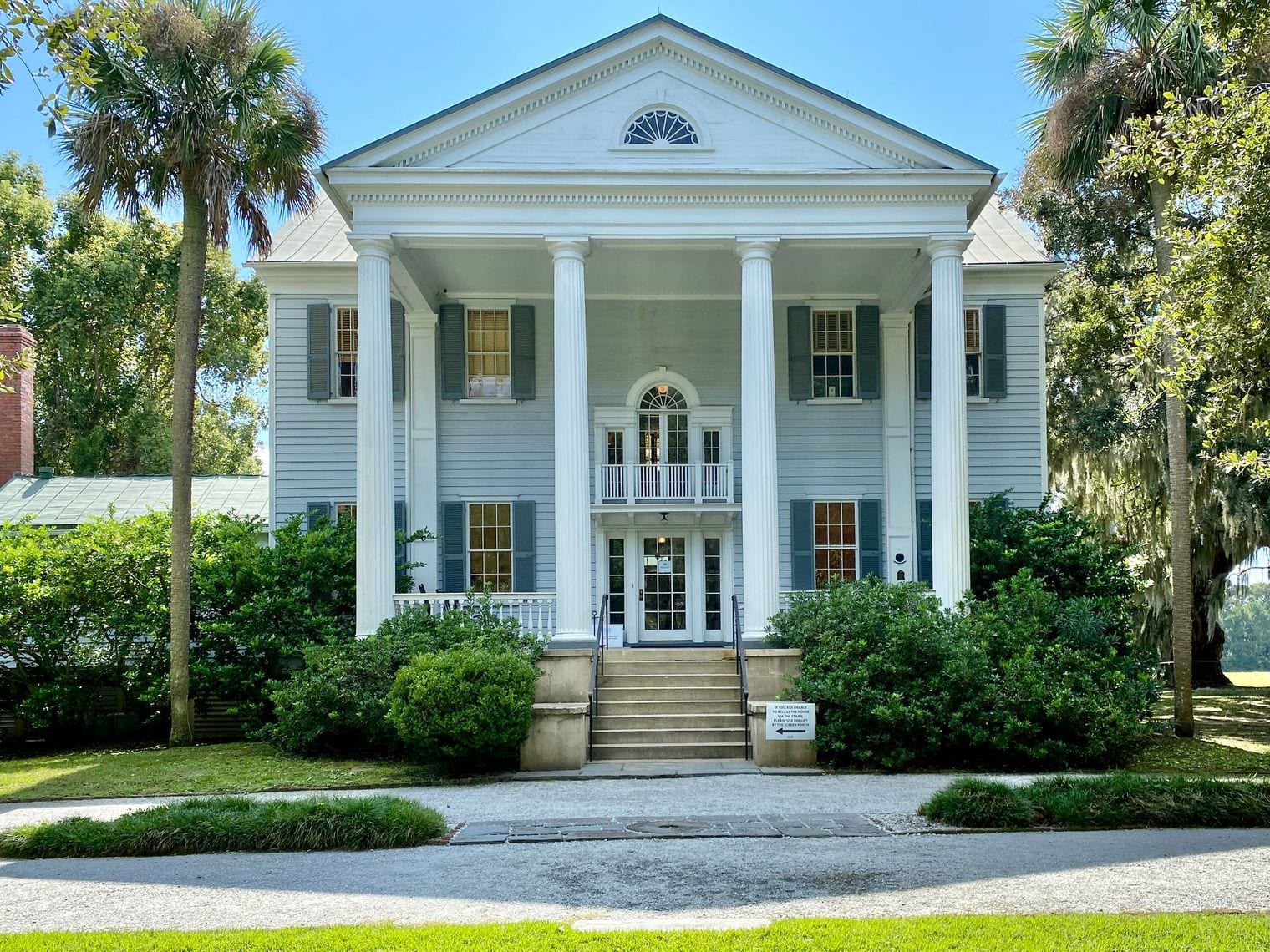
McLeod Plantation Historic Site on James Island tells a plantation's story largely through the lives of the people who were enslaved there and their descendants. A former Sea Island cotton plantation, it is recognized as an important Gullah Geechee heritage site, and a row of surviving cabins once home to enslaved workers anchors the visit.
Guided tours follow the site from slavery through emancipation, when the main house served as offices for the Freedmen's Bureau, and beyond. Run by Charleston County Parks, it is one of the most thoughtful historic sites in the region and a valuable counterpoint to the grander plantation gardens.
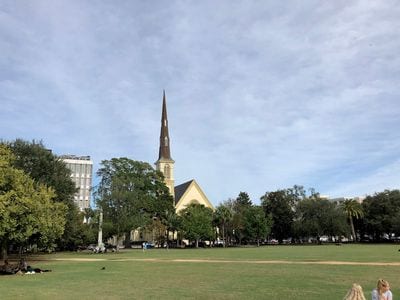
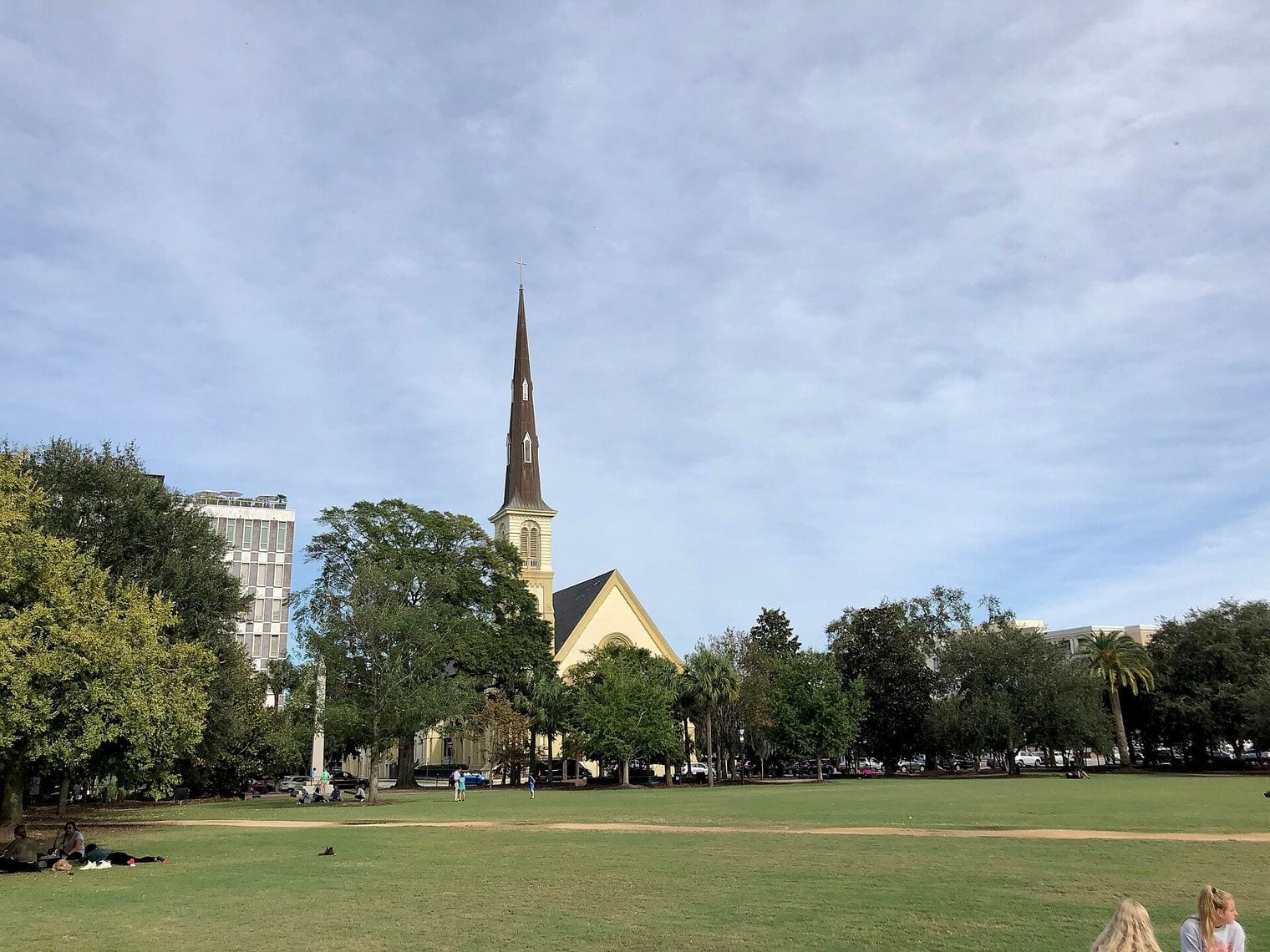
Marion Square is downtown Charleston's main green, a ten-acre square on King Street named for Revolutionary War hero Francis Marion. It began as a parade ground for the state arsenal, and The Citadel military college occupied the old arsenal on its north side until 1922.
On Saturdays through the warmer months, the Charleston Farmers Market fills the square with produce, crafts and food stalls, and big festivals use it as a stage. At other times it is simply a place to sit in the shade, with the Holocaust memorial and the shops of King Street close by.
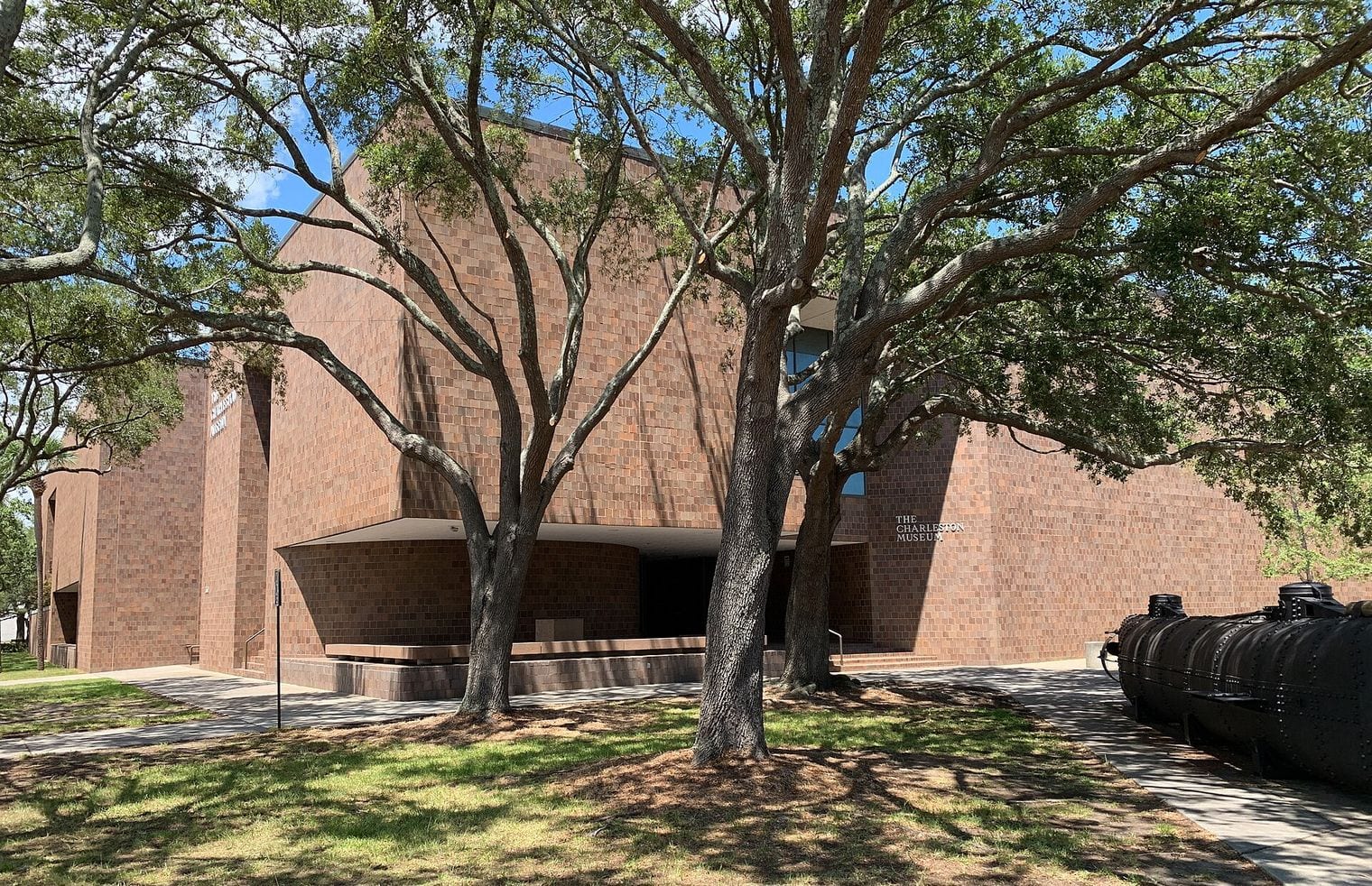
Founded in 1773, the Charleston Museum is widely billed as America's first museum, and its collections roam across the Lowcountry's natural and human history. Expect fossils and natural-history displays alongside Charleston silver, textiles, furniture and even Egyptian artifacts.
It also runs two historic house museums nearby, the Heyward-Washington House and the Joseph Manigault House, and combination tickets make it easy to see all three. Start here for context and the rest of the city's historic houses fall neatly into place.
At about 60 acres, Hampton Park is the largest park on the Charleston peninsula and a local favorite of joggers, dog walkers and picnickers. Paths loop around a pond and past flower beds, with The Citadel's campus right next door.
The land has a deeper history: it was once the Washington Race Course, which Confederates turned into an open-air prison, and in 1865 freed Black Charlestonians honored the Union dead buried there with a parade and ceremony often described as one of the earliest Memorial Day observances. It is a peaceful escape from the crowds of the lower peninsula.
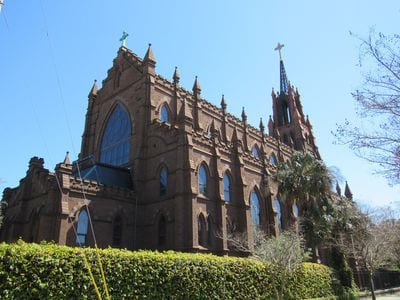
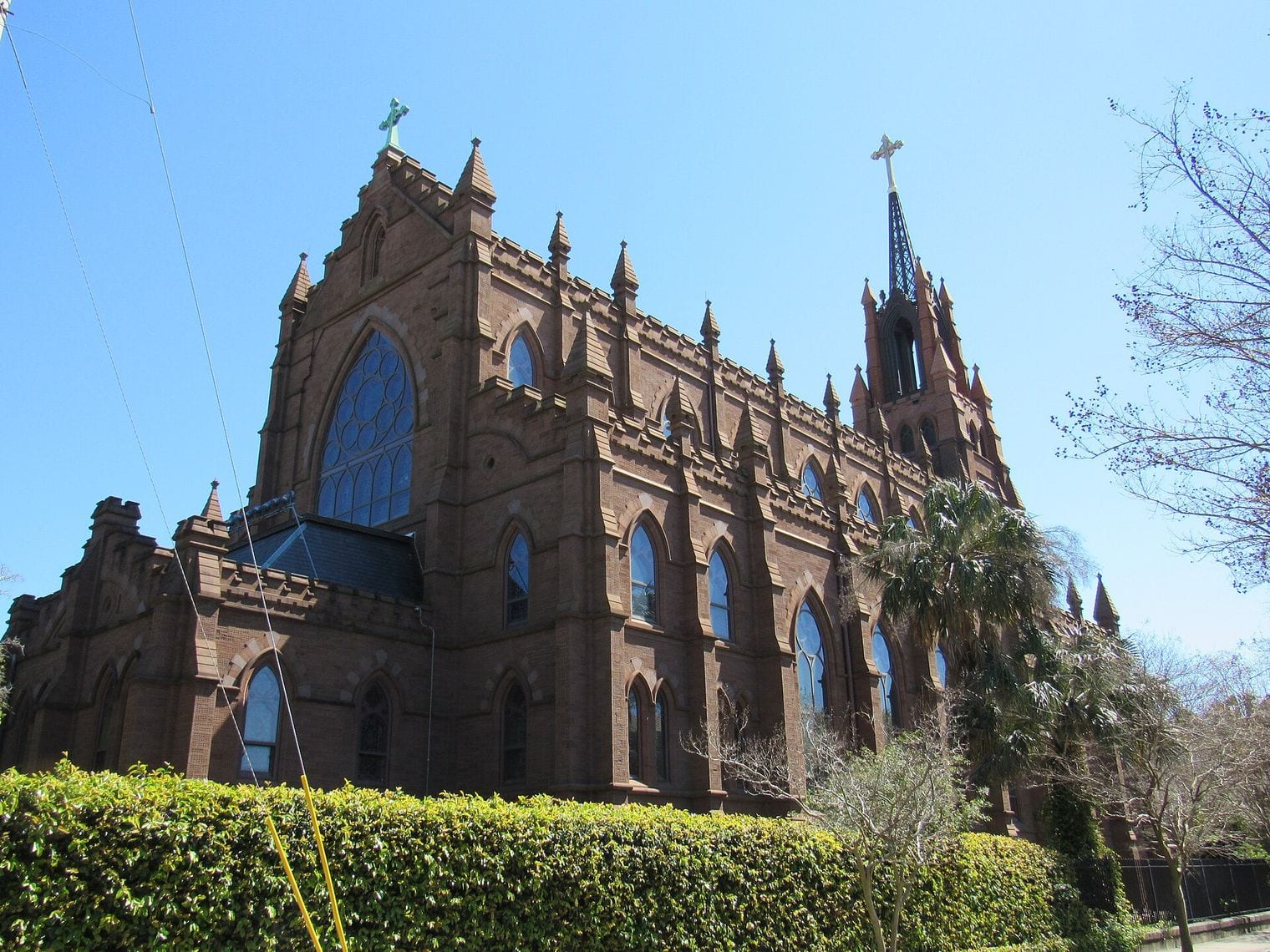
The Cathedral of Saint John the Baptist is the mother church of the Roman Catholic Diocese of Charleston, a Gothic Revival landmark on Broad Street. Designed by architect Patrick Keely, it replaced a cathedral destroyed by fire in 1861 and was dedicated in 1907.
Step inside for the stained glass windows made in France, which fill the nave with color beneath a soaring vaulted ceiling. It is an easy stop on a walk down Broad Street toward the Four Corners of Law.
Charleston's French Quarter is a compact historic district of narrow streets, brick sidewalks and gas lanterns, tucked between the Market and Broad Street. The name dates only from 1973, chosen during preservation efforts to recognize the French merchants who once clustered here, but many of its buildings reach back to the 18th century.
It is one of the city's best neighborhoods for art galleries, and several of this list's sights, including the Huguenot church, the Dock Street Theatre and Philadelphia Alley, sit within a few blocks of each other. Wander without a plan; the side streets and hidden courtyards are the point.
The Dock Street Theatre occupies the site of the first building in the American colonies designed for theatrical performances, which opened in 1736 with a production of The Recruiting Officer. That original theater was probably lost in a fire a few years later; the present building began as the Planter's Hotel in 1809 and was converted into a theater in the 1930s.
Its wrought-iron balcony and sandstone columns face Church Street, and the intimate, wood-paneled auditorium hosts productions by Charleston Stage as well as festival performances. Even without a ticket, its facade is one of the handsomest in the French Quarter.
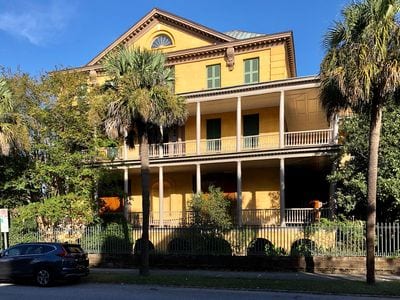
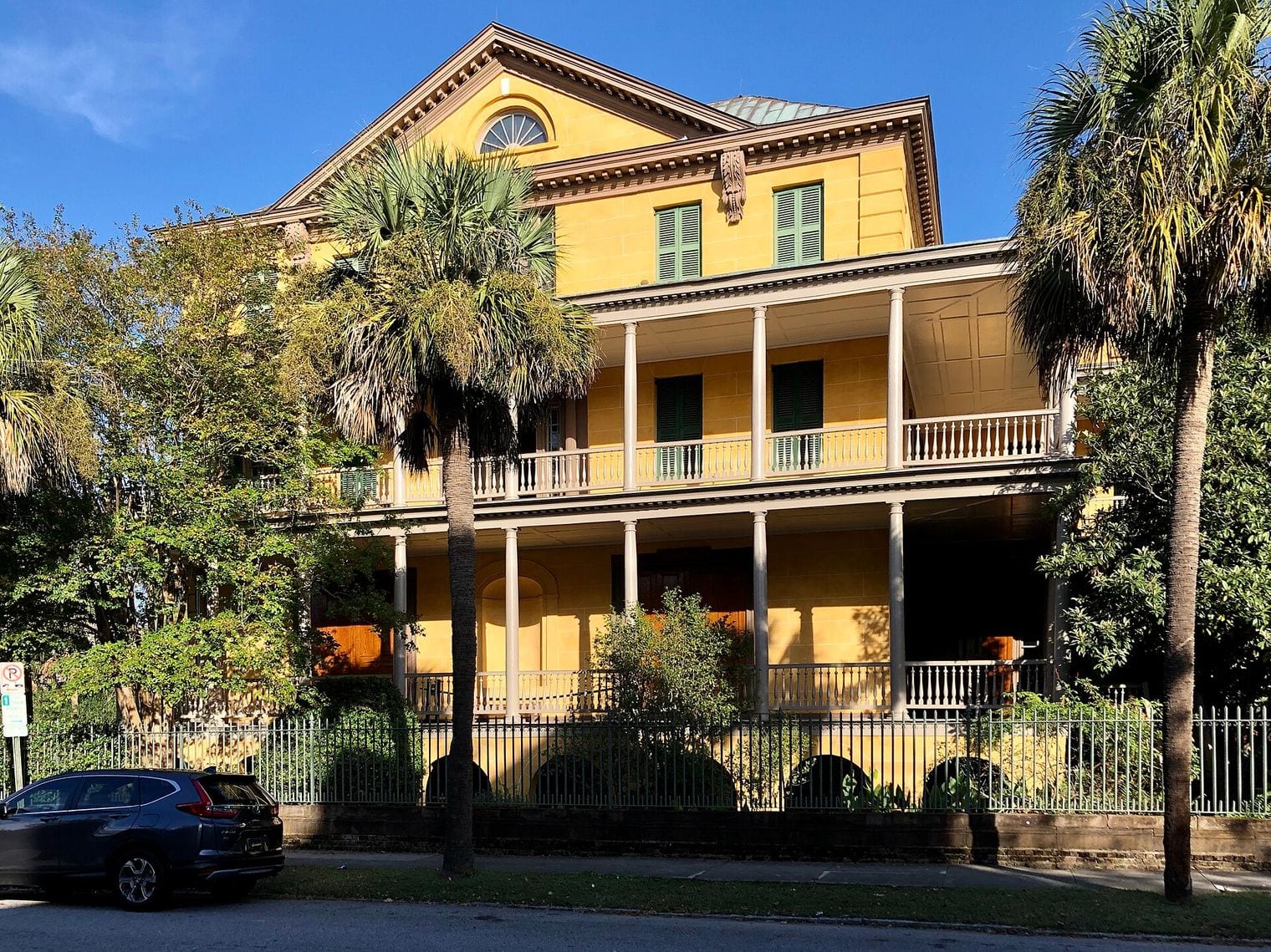
Where most house museums are polished and restored, the Aiken-Rhett House is preserved as found, its faded finishes, furniture and architecture left largely unaltered since the mid-19th century. Built in 1820 and later home to South Carolina governor William Aiken Jr., it is considered the best-preserved complex of antebellum town buildings in Charleston.
The real revelation is out back, where the kitchen, laundry and quarters of the enslaved people who worked here survive with their original paint, floors and fixtures, rare survivors in a city where most such buildings were demolished or adapted. Historic Charleston Foundation owns and runs the site.
Hidden on quiet Archdale Street, the Unitarian Church in Charleston is the oldest Unitarian church in the South. Construction began in 1772, and in the 1850s a Charleston architect remade the building in the English Perpendicular Gothic style, adding the extraordinary fan-vaulted ceiling modeled on English examples.
Equally memorable is the churchyard, a romantic garden of old headstones, ferns and flowering vines that is famously left to grow wild. It lies along the Gateway Walk, so you can slip from here through neighboring churchyards toward King Street.
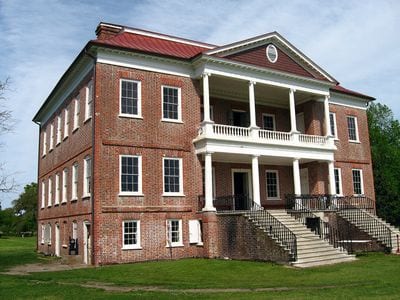
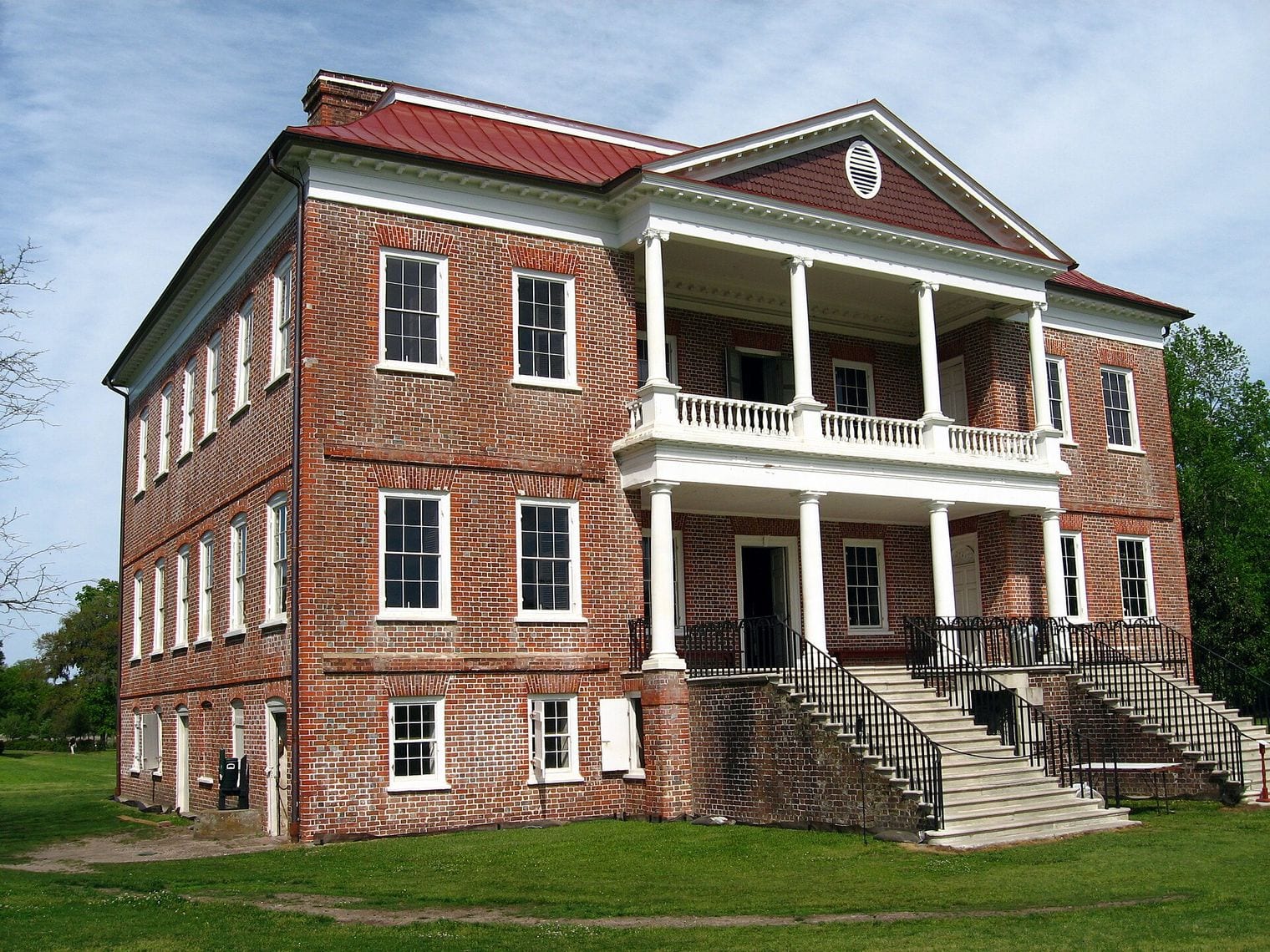
Drayton Hall is the only plantation house on the Ashley River to survive both the Revolutionary War and the Civil War intact, and it is one of the finest examples of Palladian architecture in North America. John Drayton acquired the land in 1738, and the brick house that rose here has come down to us remarkably unchanged.
Unlike its neighbors, Drayton Hall is preserved rather than restored and shown unfurnished, so the focus falls on the architecture: the carved woodwork, plaster ceilings and centuries-old paint. A site of the National Trust for Historic Preservation, it also interprets the lives of the enslaved people who built and sustained it.
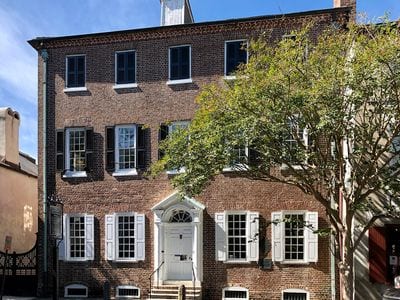
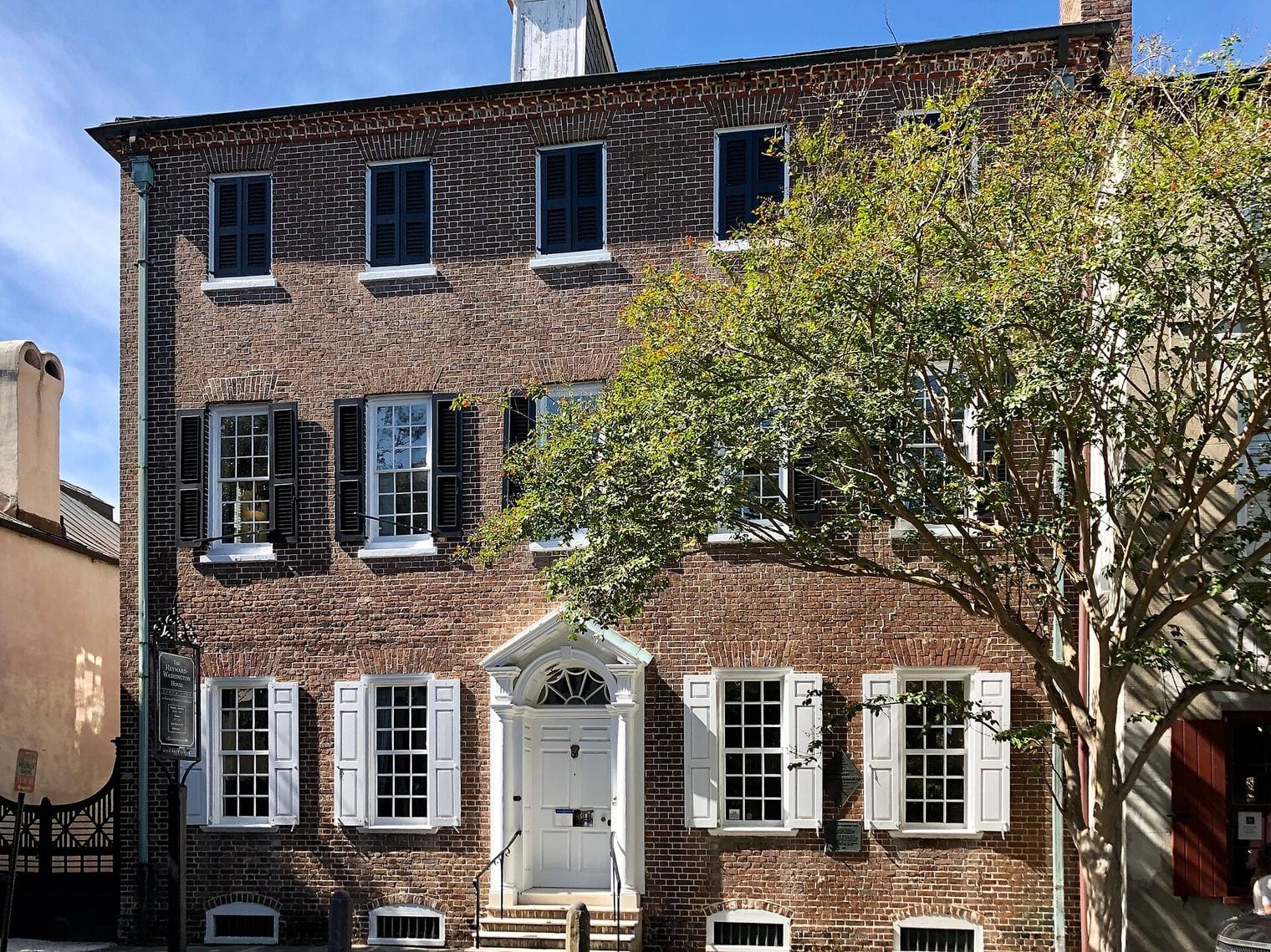
Built in 1772 for Thomas Heyward Jr., a signer of the Declaration of Independence, the Heyward-Washington House on Church Street takes its double name from its most famous guest: George Washington stayed here during his week-long visit to Charleston in 1791.
Run by the Charleston Museum, the house is furnished for the late 18th century with a fine collection of Charleston-made furniture. Out back, the 1740s kitchen building and a formal garden complete the picture of a wealthy townhouse of the era.
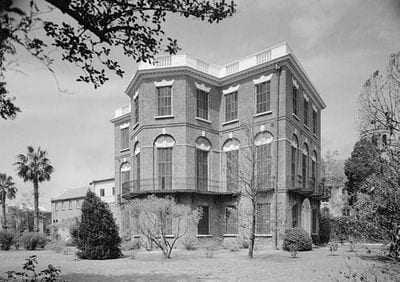
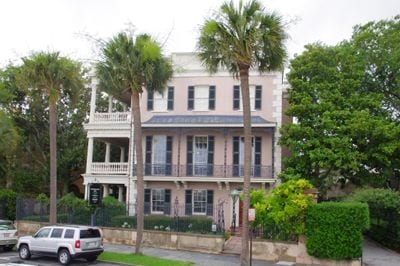
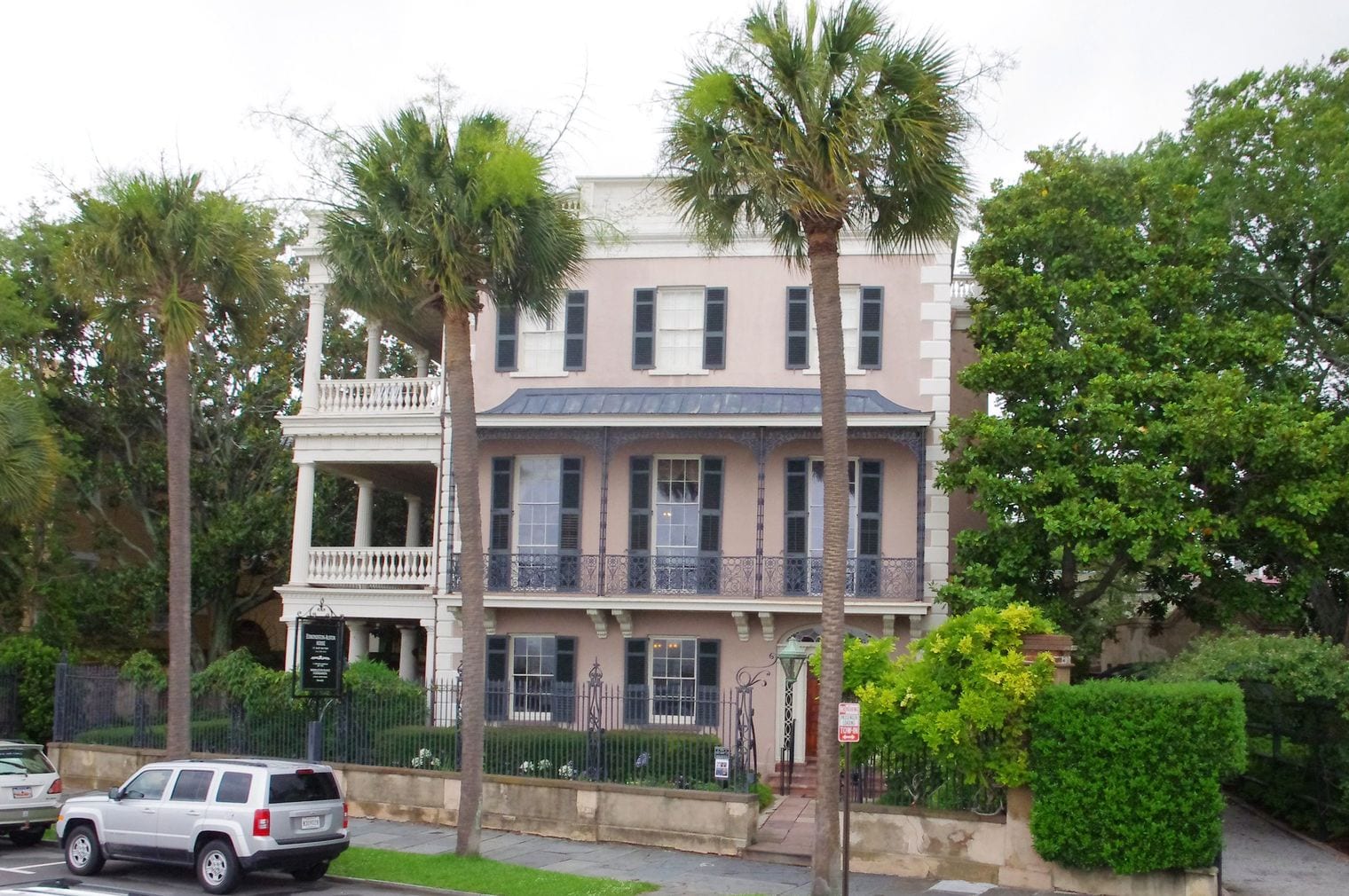
Facing the harbor from East Battery, the Edmondston-Alston House was built around 1825 by merchant Charles Edmondston and bought in 1837 by rice planter Charles Alston, who remodeled it in the Greek Revival style with its tiers of columned piazzas. It was one of the earliest grand houses built along the seawall.
Guided tours of the first two floors show off the family's furniture, silver and decorative arts, and the piazzas look straight out over the harbor where the Civil War began. The museum is operated by the Middleton Place Foundation, and its stories cover both the family and the enslaved people who lived and labored here.
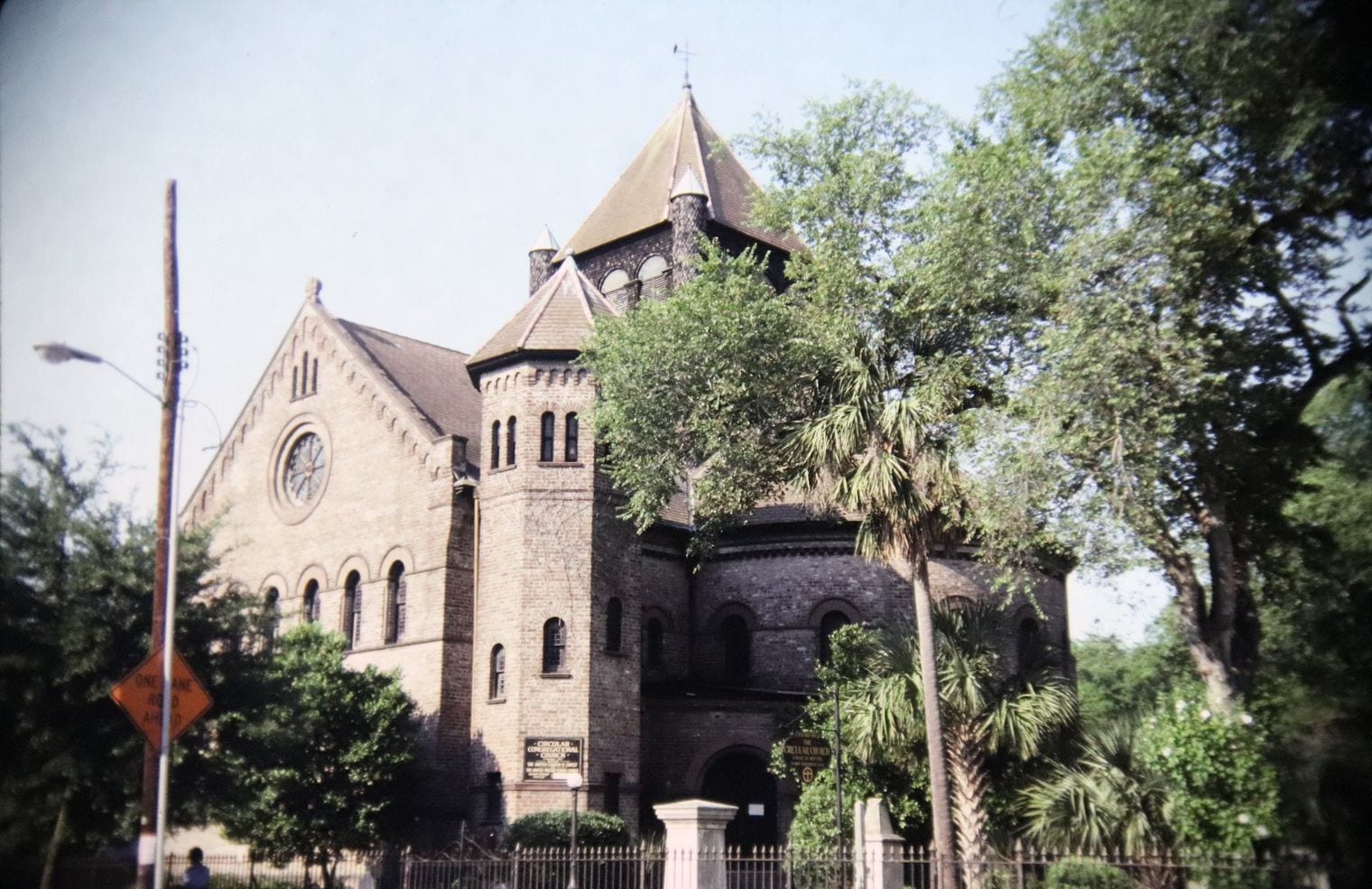
The Circular Congregational Church traces its congregation to 1681, founded alongside the city itself by English Congregationalists, Scots Presbyterians and French Huguenots. The present round sanctuary on Meeting Street is the latest of several buildings on the site, and its Greek Revival parish house, designed by Robert Mills, is a National Historic Landmark.
The draw for many visitors is the graveyard, counted among the oldest burial grounds in Charleston, where slate headstones carved in New England lean at odd angles among the trees. Wander respectfully; the stones form an open-air gallery of colonial funerary art.
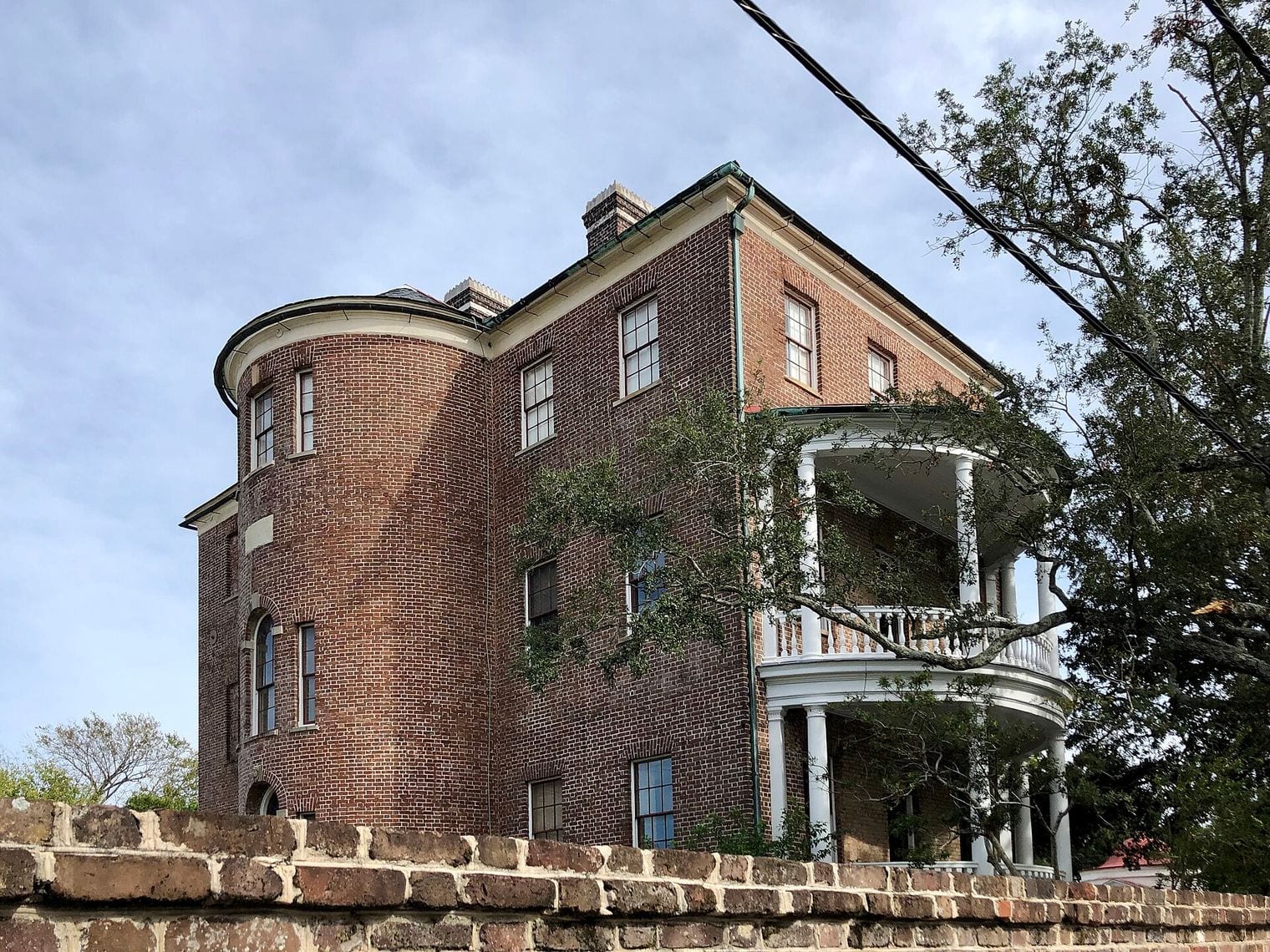
Gabriel Manigault designed the Joseph Manigault House for his brother in 1803, and it is nationally significant as a well-preserved example of the elegant Adam, or Federal, style. A graceful curving staircase, delicate plasterwork and period furnishings show how Charleston's rice-planting elite lived at the turn of the 19th century.
Run by the Charleston Museum, which sits just across Meeting Street, the house is easy to pair with the museum itself. Look for the small gate temple in the garden, one of the house's most photographed details.
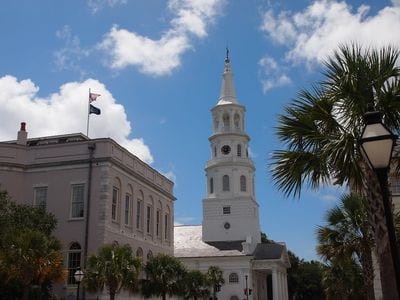
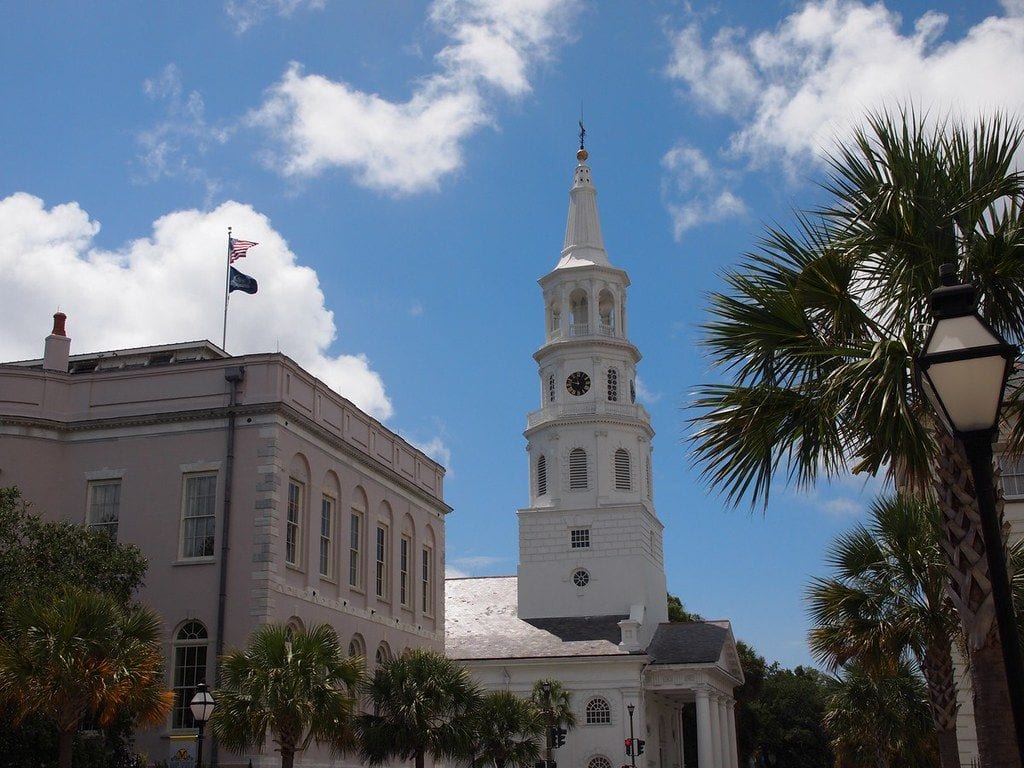
Its tall white steeple has punctuated the Charleston skyline since the 1750s, and St. Michael's is the oldest surviving church building in the city. It stands at Broad and Meeting streets, where it represents the law of the church on the famous Four Corners of Law.
George Washington worshipped here during his 1791 visit, and Robert E. Lee also attended services. The tower's clock and change-ringing bells date from colonial times, and the churchyard holds the graves of many prominent early Charlestonians.
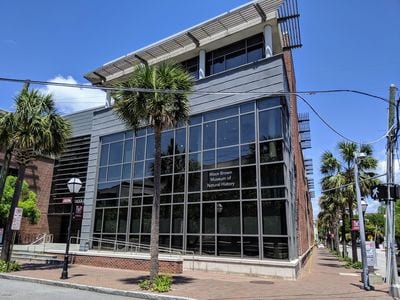
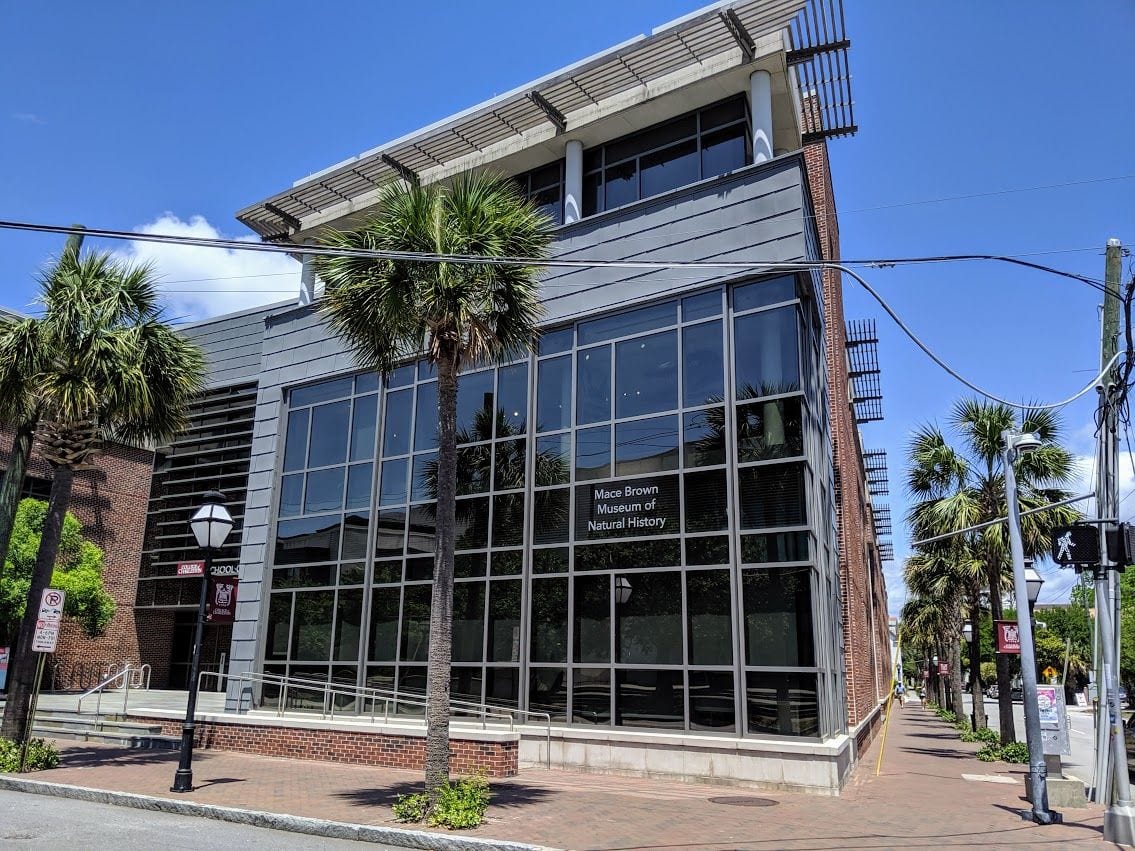
Tucked inside a building on the College of Charleston campus, the Mace Brown Museum of Natural History is a small, free museum with a surprisingly big collection: more than 30,000 fossils, with a focus on the paleontology of the South Carolina Lowcountry.
The stars are the region's fossil whales; the museum holds the type specimens of several species first described from Charleston-area finds. It is an easy, crowd-free detour on a walk across campus.
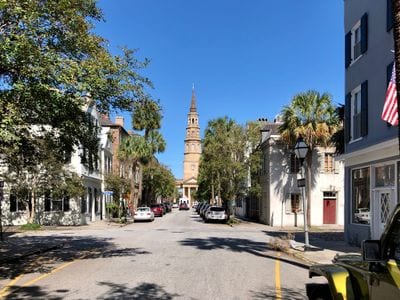
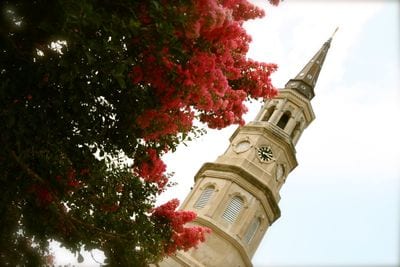
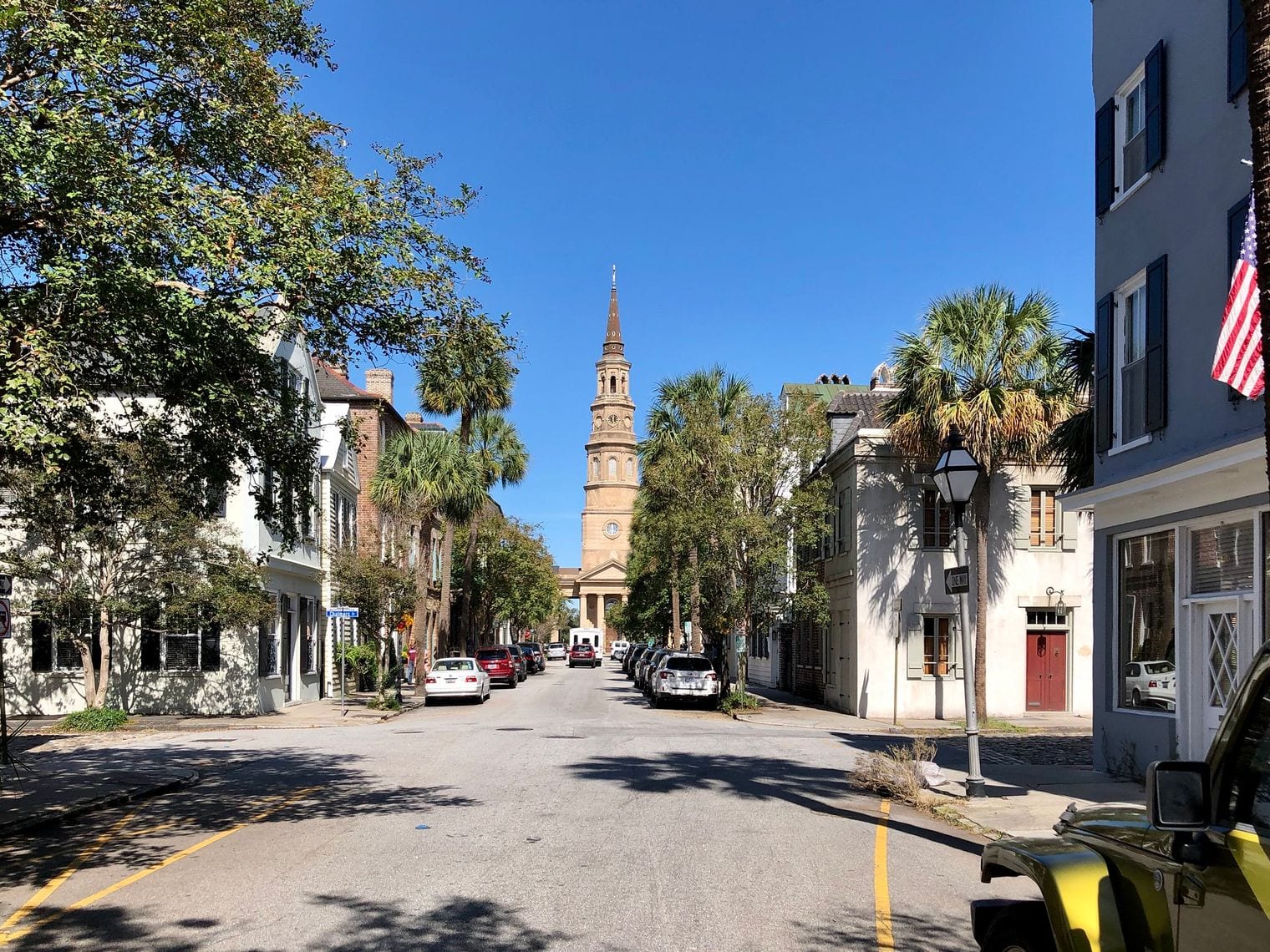
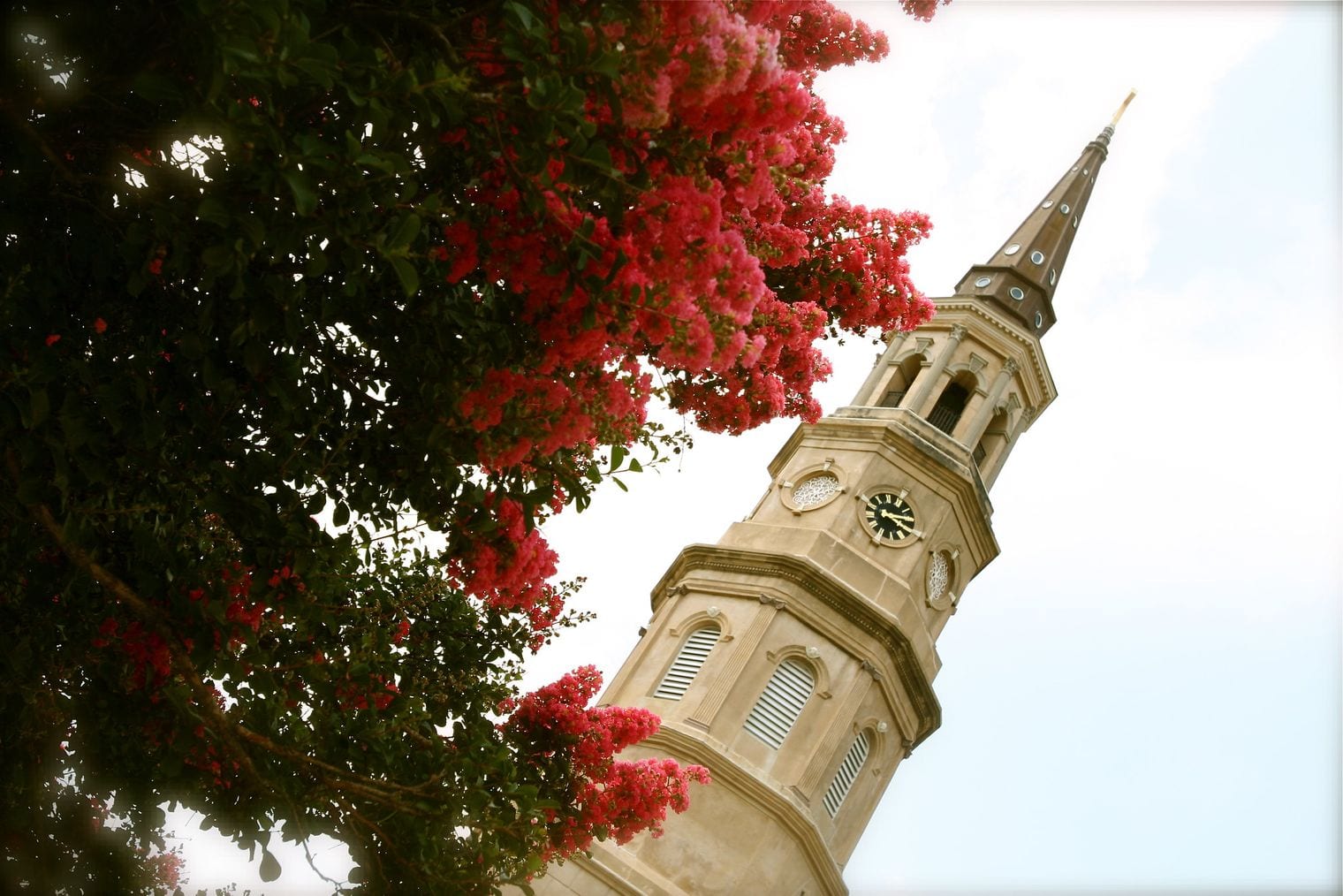
St. Philip's Church juts into Church Street, so its tall, Wren-style tower closes the view as you walk up from the French Quarter. The present building dates from 1836, with the spire completed in 1850, and it is a National Historic Landmark.
Its churchyards hold the graves of John C. Calhoun and Revolutionary leader Christopher Gadsden, among many others from the city's early centuries. Along with St. Michael's, its steeple is a big part of why Charleston is nicknamed the Holy City.
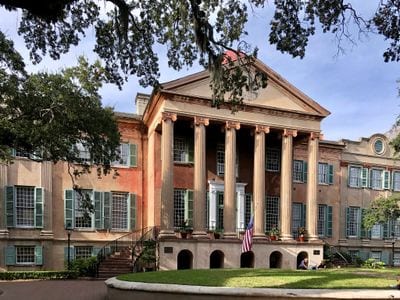
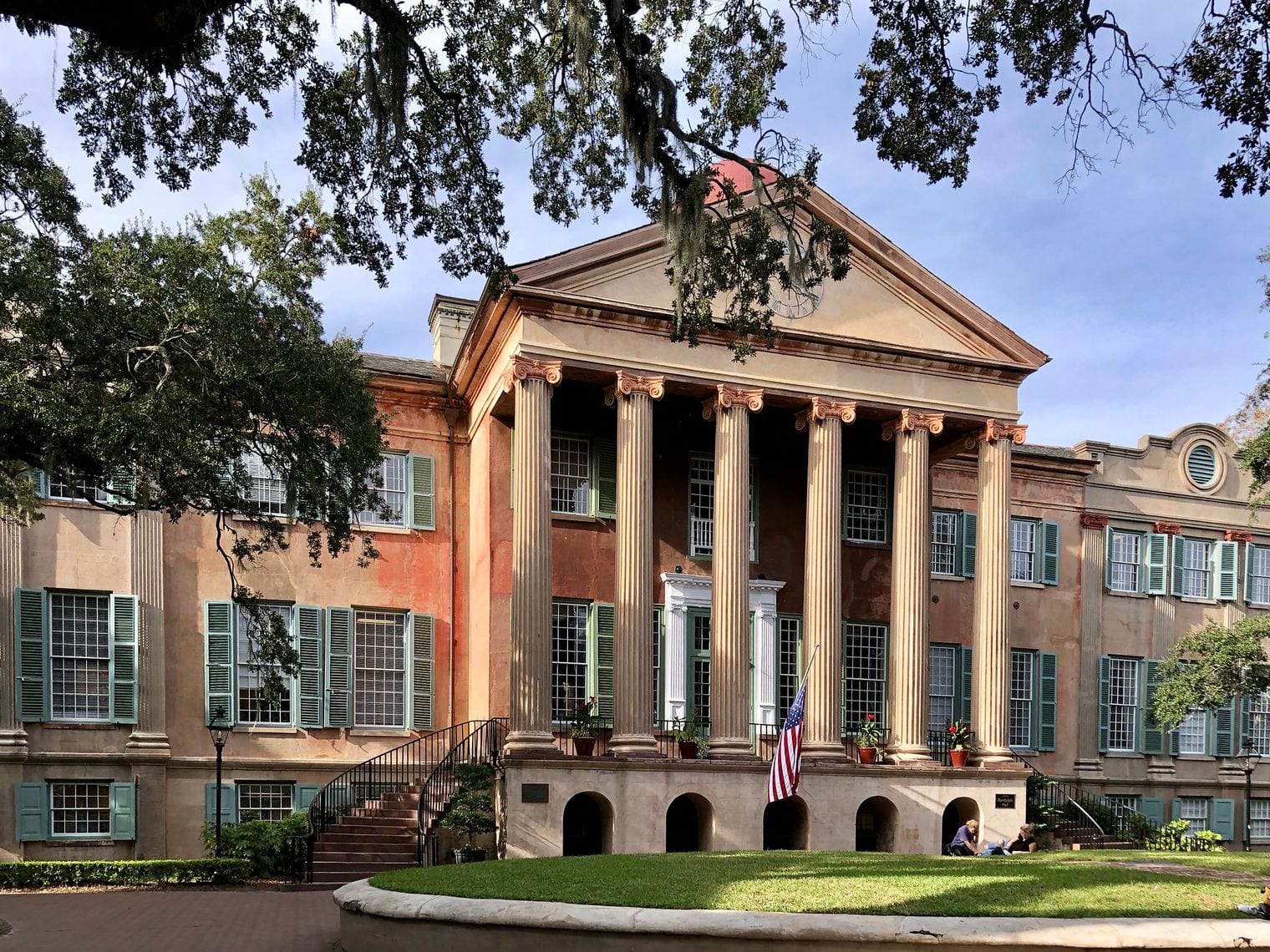
Founded in 1770, the College of Charleston is the oldest college in South Carolina and one of the oldest in the country; its founders included three signers of the Declaration of Independence. Its historic core lies right downtown, a few blocks off King Street.
Walk into the Cistern Yard, where moss-hung live oaks frame columned Randolph Hall, for one of the prettiest spots in the city and the setting for graduation ceremonies. The free natural history museum on campus is a worthwhile add-on.
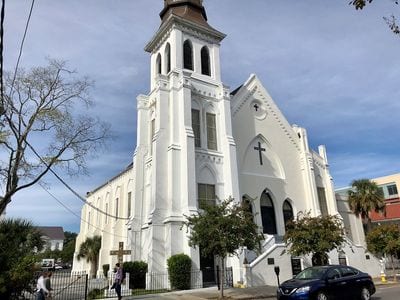
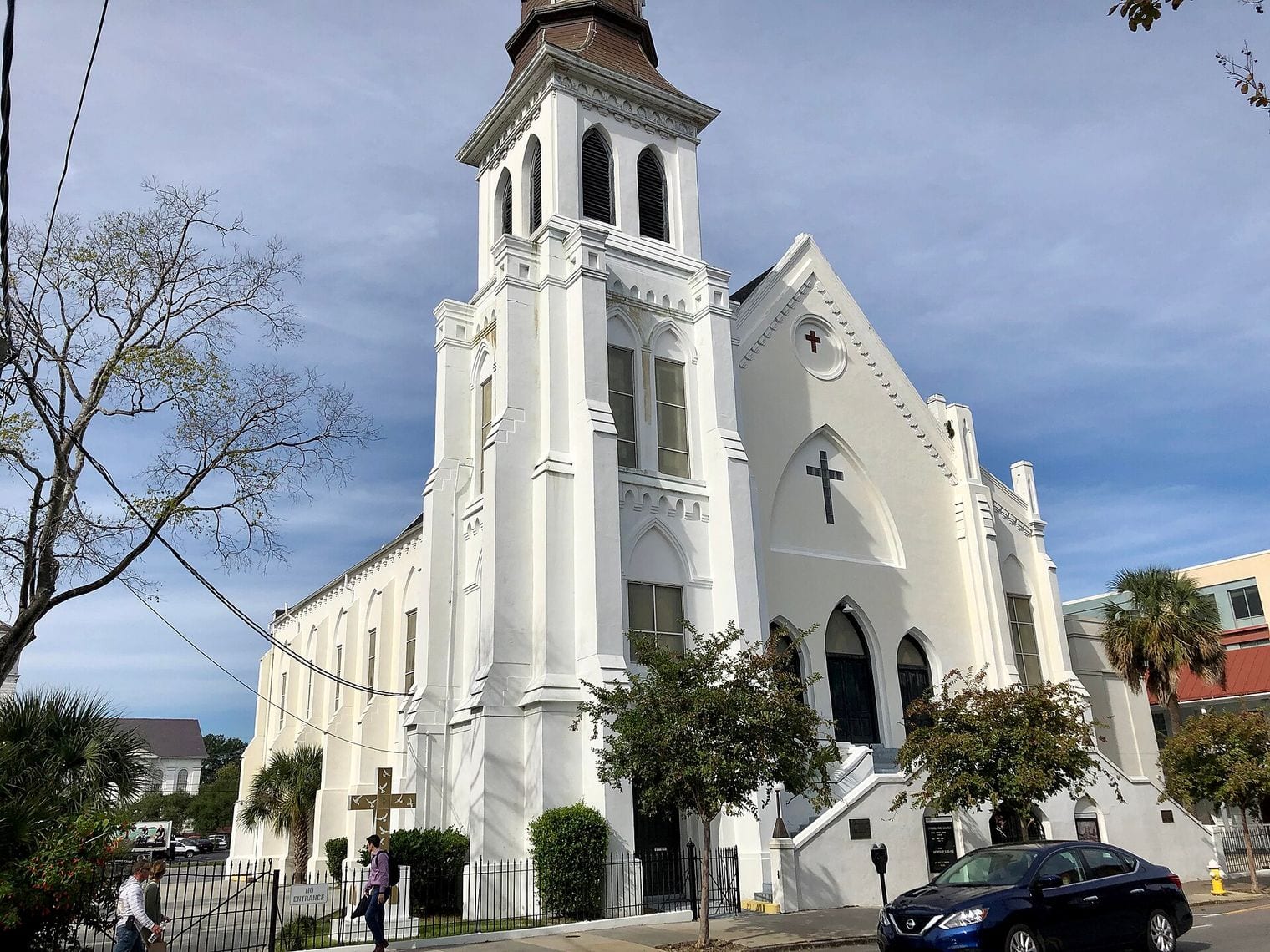
Mother Emanuel, as Emanuel African Methodist Episcopal Church is known, is the oldest AME church in the South, with a congregation dating to 1817. Its history is one of resilience: the original church was burned in 1822 after co-founder Denmark Vesey was accused of planning a slave revolt, and the congregation met in secret for years before rebuilding after the Civil War.
On June 17, 2015, nine worshippers were killed during Bible study in a racist attack, and the church has since become a place of pilgrimage and remembrance. Visitors can pay their respects at the 1891 church on Calhoun Street, where the congregation has built a memorial honoring the Emanuel Nine.
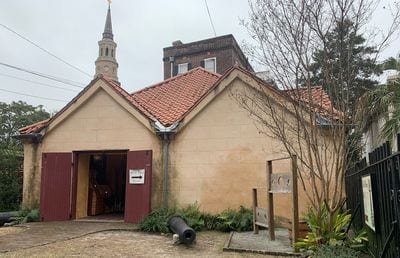
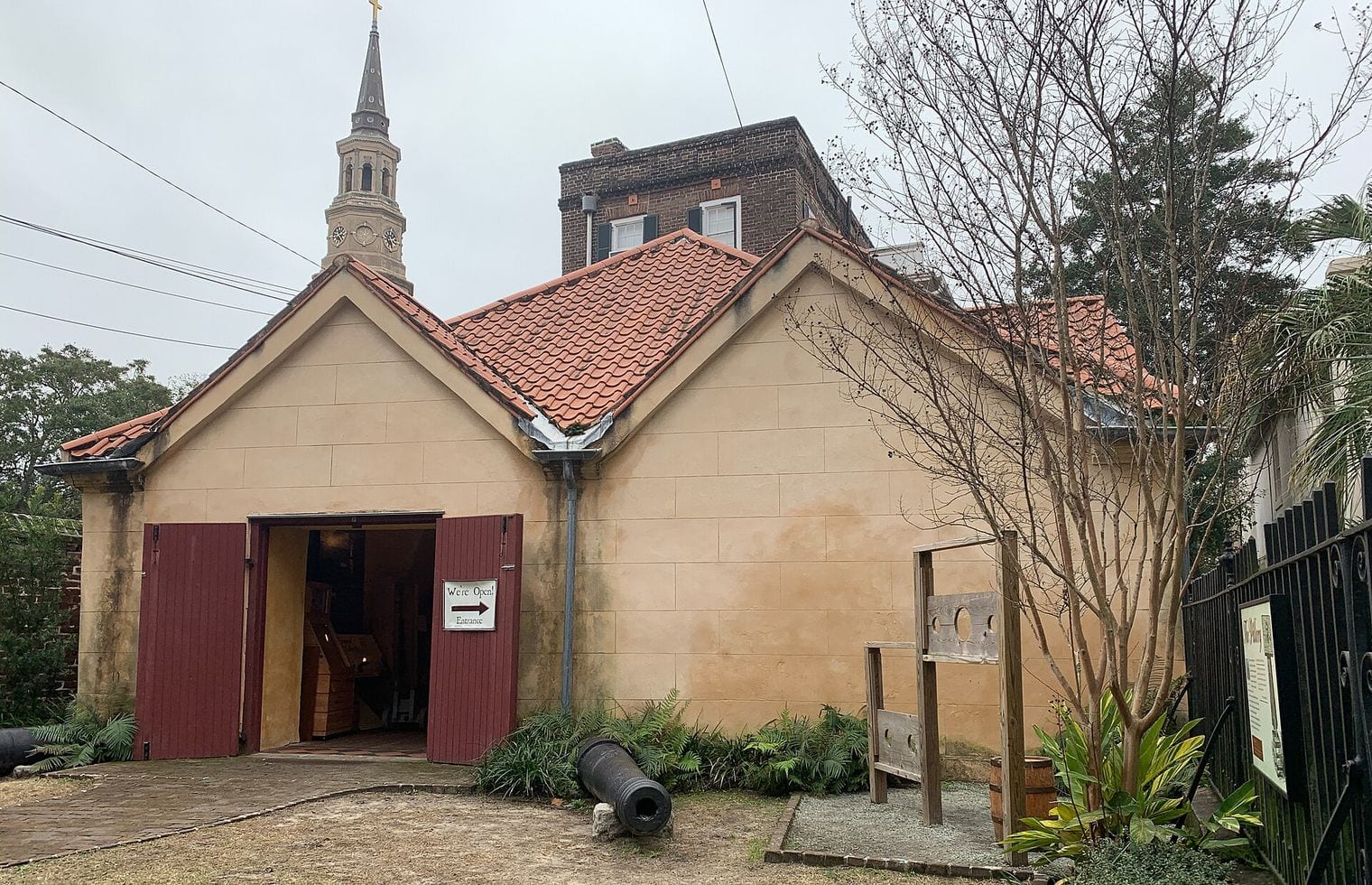
Completed in 1713, the squat, thick-walled Powder Magazine is the oldest surviving public building in what was once the Province of Carolina. It stored the colony's gunpowder through the Revolutionary War and later served other purposes before preservationists stepped in.
The National Society of the Colonial Dames of America has run it as a museum since the early 1900s, with exhibits on early Charleston and its defenses. It takes only a short visit, and it sits on Cumberland Street, a few steps from the Market.
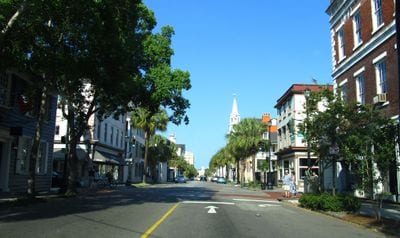
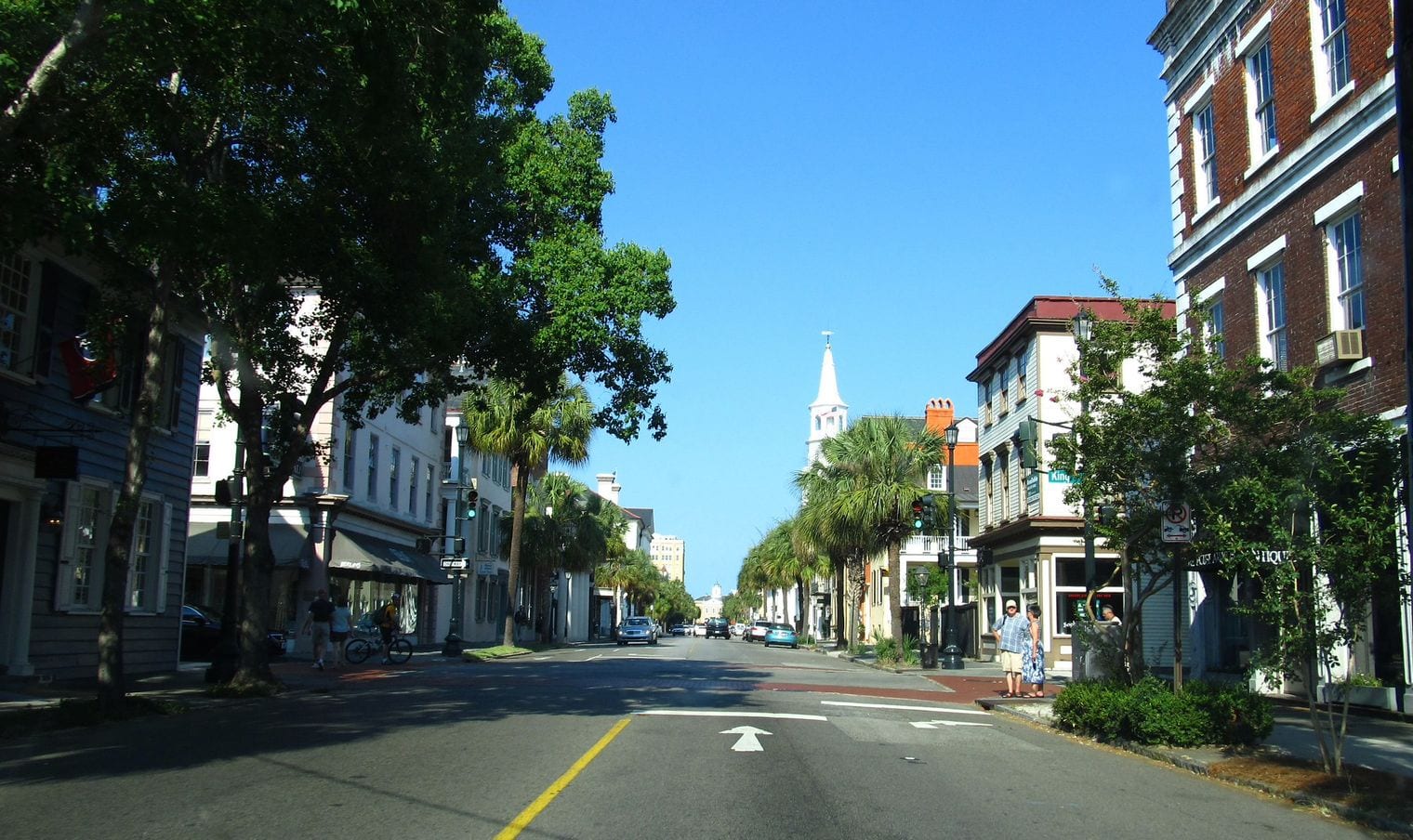
King Street is Charleston's main shopping street and the spine of downtown, running the length of the peninsula. Its character shifts as you head north: lower King is known for antiques dealers and galleries, the middle stretch for fashion boutiques and big-name stores, and upper King for restaurants, cocktail bars and late-night buzz.
The historic storefronts, iron balconies and church steeples peeking over the rooftops make it a pleasure to stroll even if you are not buying. Combine it with Marion Square, which fronts the street, and the College of Charleston campus a block away.
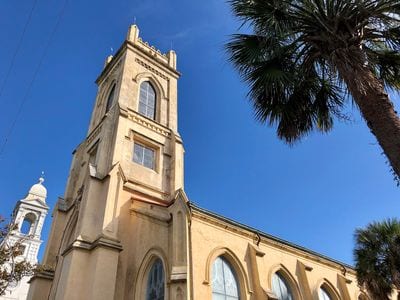
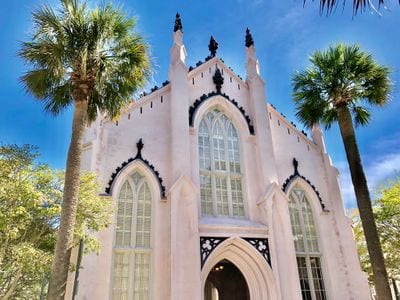
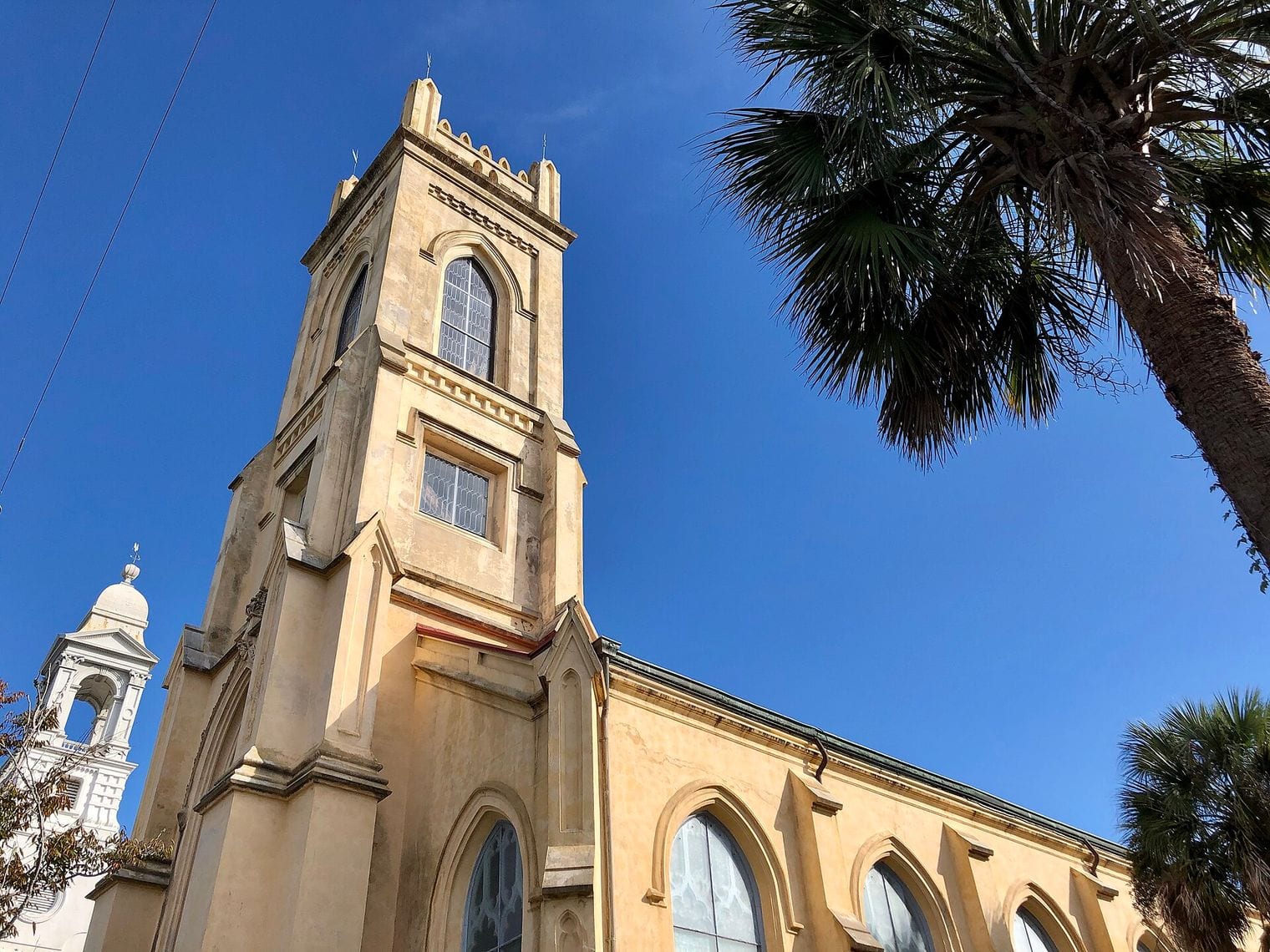
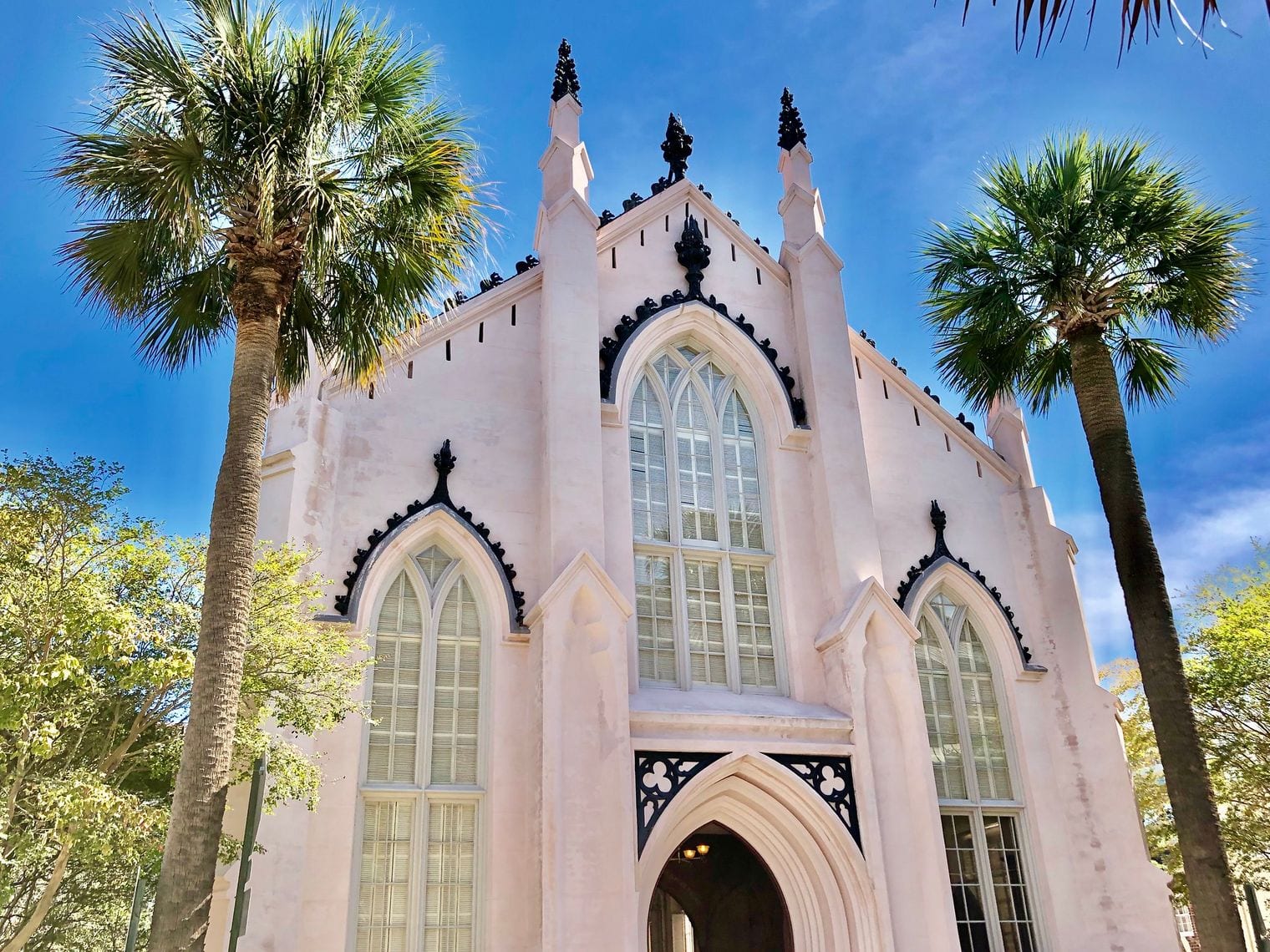
The French Huguenot Church on Church Street was built in 1844 and is the oldest Gothic Revival church in South Carolina, its slender pinnacles a striking contrast to the classical churches around it.
Its congregation traces its roots to French Protestant refugees who arrived in the 1680s, and it is the only independent Huguenot church in the United States. Services still follow an 18th-century French liturgy, though they are held in English.
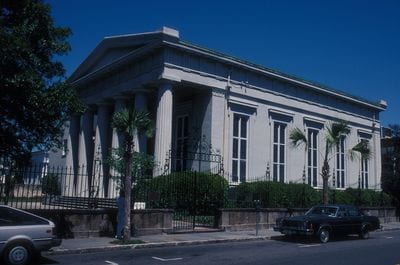
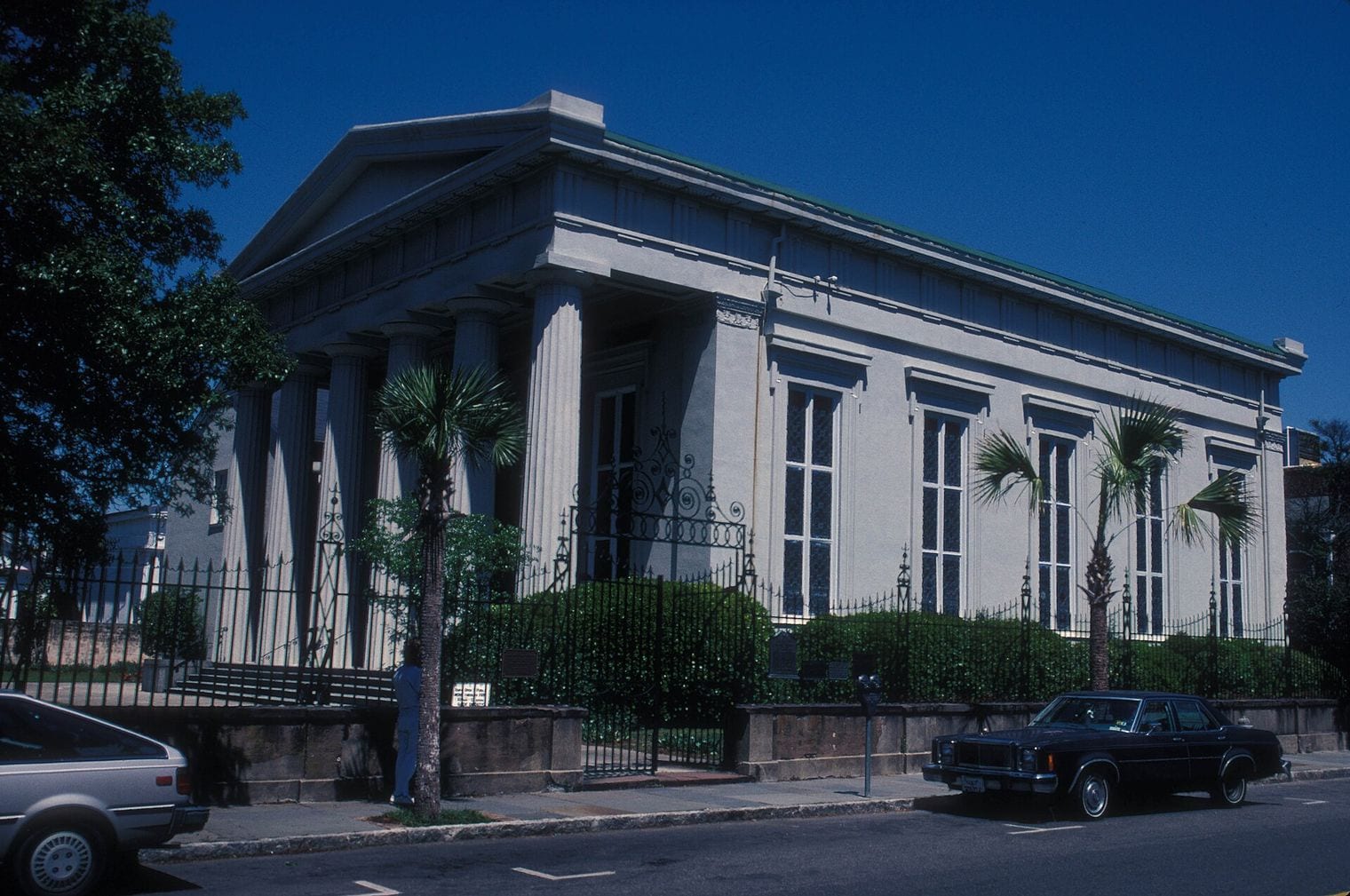
Kahal Kadosh Beth Elohim, founded in 1749, is one of the oldest Jewish congregations in the United States, and its Greek Revival synagogue on Hasell Street, completed in 1840, is among the oldest synagogue buildings in the country still in use.
The congregation is regarded as a birthplace of Reform Judaism in America, and tours explain that story along with the history of Charleston's early Jewish community. A monument on the grounds acknowledges the enslaved people whose labor built the synagogue.
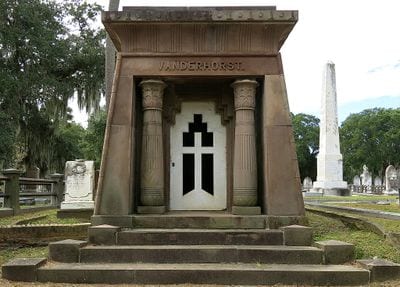
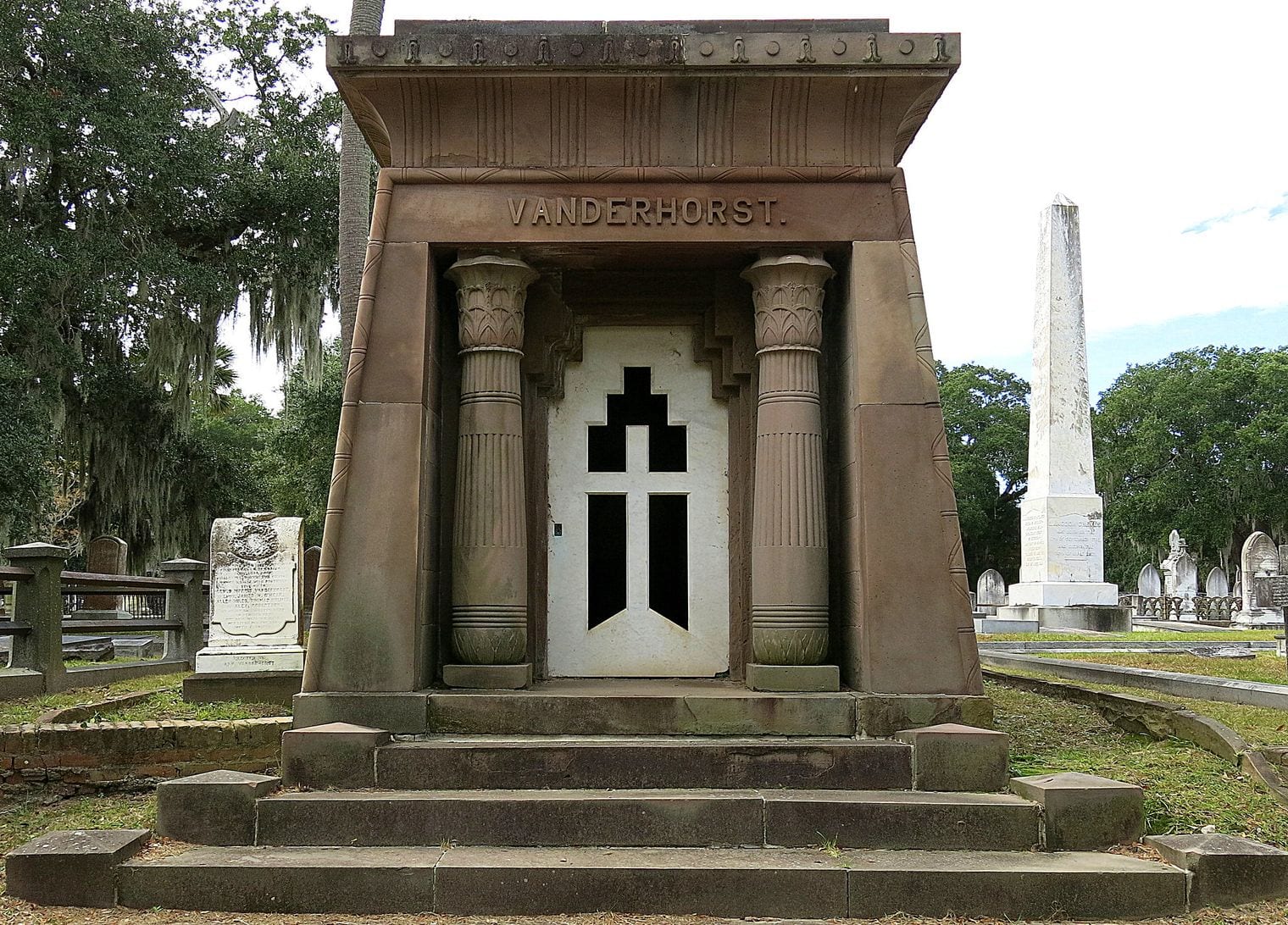
Laid out in 1850 on a former plantation north of downtown, Magnolia Cemetery is a classic rural cemetery of winding lanes, ponds, marsh views and monuments shaded by moss-draped live oaks. It was designed by Edward C. Jones and is listed on the National Register of Historic Places.
Among its notable burials are submarine builder Horace Lawson Hunley and the crews of the H.L. Hunley, as well as the novelist William Gilmore Simms. Come for a quiet, atmospheric walk, and visit respectfully, since it is still an active cemetery.
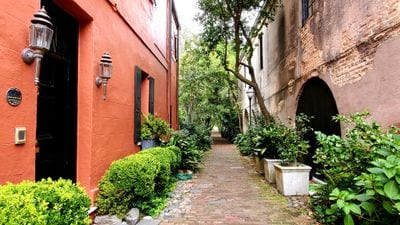
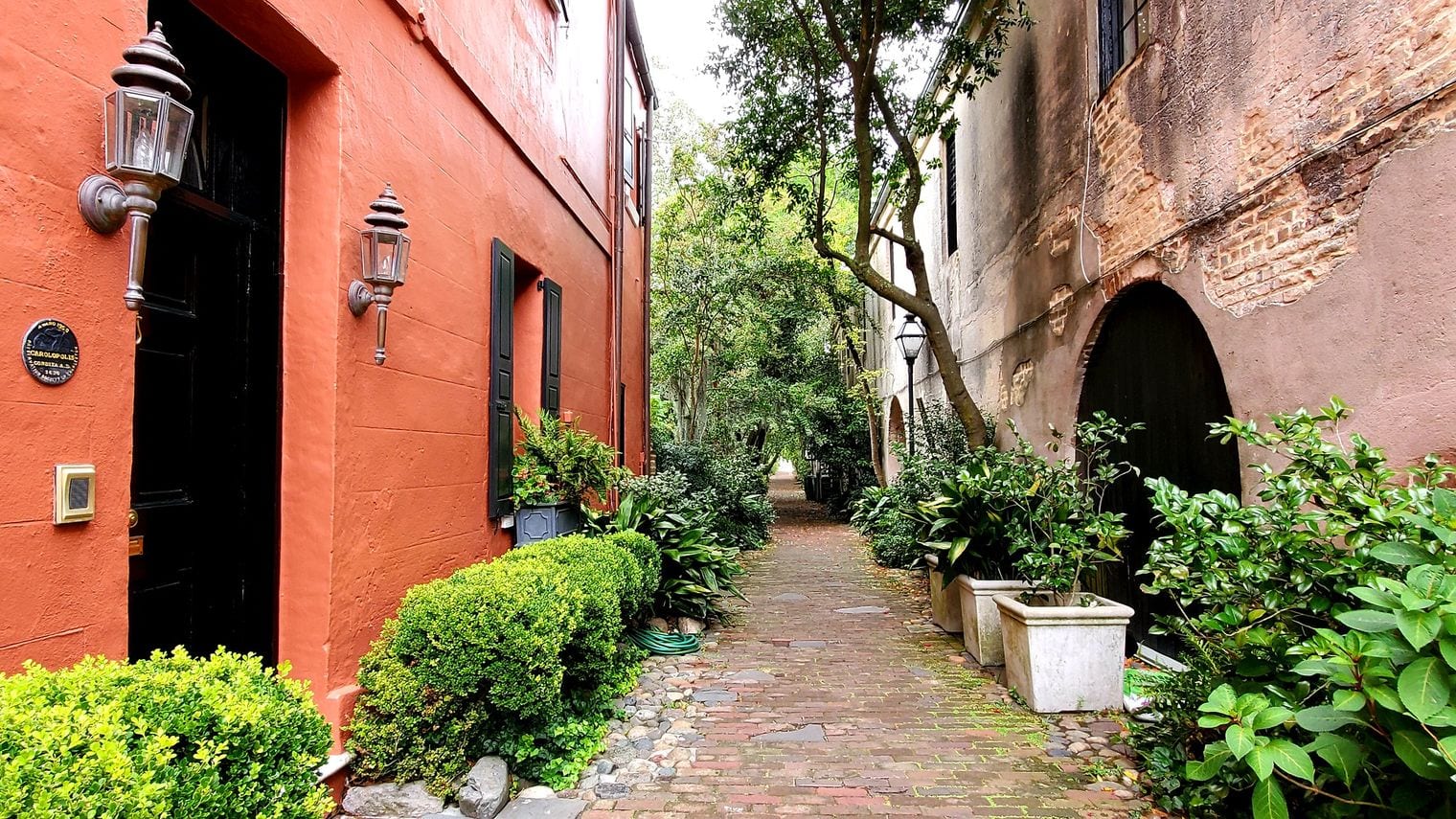
Philadelphia Alley is a narrow, ivy-draped brick lane in the French Quarter, running between Queen and Cumberland streets and easy to miss if you are not looking for it. Its name is generally said to honor the people of Philadelphia, who sent aid to Charleston after a destructive fire.
Local lore calls it Dueler's Alley, claiming that gentlemen once settled disputes here with pistols, and the city's ghost tours lean heavily on the stories. Fact or legend, it is one of the most atmospheric corners of the old city, especially in the soft light of early morning or evening.
Plan your trip
Best Time to Visit Charleston
Spring is Charleston at its best: azaleas and camellias light up the plantation gardens, the weather is warm but not yet sticky, and late spring brings the city's big performing-arts festival season. Fall is the other sweet spot, with mild days, warm ocean water and thinner crowds once summer ends.
Summer is hot and humid, with frequent afternoon thunderstorms, and the Atlantic hurricane season runs from June through November, so keep an eye on the forecast if you travel then. Winter is mild and quiet, a good time for house museums and lower hotel rates, and Marion Square gets its holiday tree.
Getting to Charleston
Charleston International Airport (CHS) in North Charleston is about 12 miles from downtown, roughly a 20-minute drive, with nonstop service to major hubs. For more flight choices, Charlotte's larger airport is about three and a half hours away by car, and Atlanta's about five.
By road, I-26 runs from Columbia, about two hours inland, straight into the peninsula, and US 17 follows the coast north toward Myrtle Beach and south toward Savannah. Amtrak's East Coast trains stop at a station in North Charleston.
Getting Around Charleston
The historic peninsula is compact, flat and best explored on foot, and most of the sights south of Marion Square are within a 20-minute walk of each other. A downtown shuttle, local buses, pedicabs, bike rentals and rideshares fill the gaps.
You will want a car, or a tour, for the Ashley River plantations, Mount Pleasant, Angel Oak and the beaches. Downtown parking is mostly in city garages and metered street spaces, and it fills up on weekends, so leave the car at your hotel when you can.
Where to Stay in Charleston
For a first visit, stay in the historic district below Calhoun Street, ideally near the Market, the French Quarter or lower King Street, where nearly everything on this list is walkable and the evenings are lively. Upper King and the surrounding neighborhoods suit travelers who want to be close to restaurants and nightlife.
Mount Pleasant, across the Ravenel Bridge, is quieter and handy for Patriots Point, Boone Hall and Shem Creek. West Ashley and North Charleston offer better value near the plantations and the airport, and the beach towns of Folly Beach and Isle of Palms trade city sightseeing for the ocean.
Where to Eat in Charleston
Charleston is one of the South's great food cities. Upper King Street and the streets around the Market hold the densest mix of restaurants, from casual oyster bars to celebrated Southern kitchens, while Shem Creek in Mount Pleasant is the place for waterfront seafood and North Charleston's Park Circle has a relaxed neighborhood dining scene.
Look for Lowcountry classics: shrimp and grits, she-crab soup, Frogmore stew (a Lowcountry boil of shrimp, sausage, corn and potatoes), Hoppin' John, fried green tomatoes and benne wafers, the thin sesame cookies sold all over town.
Day Trips from Charleston
The beaches are the easiest escape. Folly Beach, about 25 minutes south, has a laid-back surf-town feel and a view of the Morris Island Lighthouse from its northern end, while Sullivan's Island, about 25 minutes east, pairs a quiet beach with Fort Moultrie, part of the same national park as Fort Sumter. Isle of Palms is just beyond, and Kiawah Island, about 45 minutes southwest, is known for its wide, natural beach and maritime forest.
For a longer outing, Beaufort, about an hour and a half southwest, is an antebellum river town with its own Gullah heritage and moss-draped streets. Closer in, the fishing village of McClellanville lies about 45 minutes north on US 17, Edisto Beach makes an unhurried trip about an hour southwest, and our guide to South Carolina's small towns covers many more within easy reach.
What is Charleston, South Carolina best known for?
Charleston is best known for its beautifully preserved historic district, especially the pastel houses of Rainbow Row, and as the place where the Civil War began at Fort Sumter. Visitors also come for the Charleston City Market and its sweetgrass baskets, the vast Angel Oak on Johns Island and the gardens of Magnolia Plantation on the Ashley River.
How many days do you need in Charleston?
Three days is the sweet spot. Spend the first on the historic peninsula, from the Battery and Rainbow Row to the City Market and King Street; the second on Fort Sumter and Patriots Point; and the third on the Ashley River plantations or Angel Oak. Add a day or two for the beaches and nearby towns.
What can you do in Charleston for free?
Plenty. Walk past Rainbow Row, along the Battery and through White Point Garden and Waterfront Park, explore the French Quarter and Philadelphia Alley, and browse the City Market and King Street. Hampton Park and Marion Square are free, as are the Mace Brown Museum of Natural History, the Angel Oak and the walk across the Ravenel Bridge.
How do you get to Fort Sumter?
Fort Sumter sits on an island in Charleston Harbor and can only be reached by the concession ferry. Boats leave from the visitor center at Liberty Square in downtown Charleston, next to the South Carolina Aquarium, and from Patriots Point in Mount Pleasant. Private boats are not allowed to dock at the fort.
Is Charleston walkable?
Yes. The historic peninsula is flat and compact, and most of its sights, from the Battery and Rainbow Row to the City Market, the French Quarter and King Street, are within easy walking distance of each other. You will need a car or a tour for the plantations, Mount Pleasant, Angel Oak and the beaches.
Are the plantations near Charleston worth visiting?
Yes, and they differ more than you might expect. Magnolia is about romantic gardens and its swamp walk, Middleton Place about formal landscaped terraces, Drayton Hall about an unrestored Palladian house, Boone Hall about its avenue of oaks, and McLeod about the lives of the enslaved people and their Gullah Geechee descendants.
When is the best time to visit Charleston?
Spring, roughly March through May, is the classic choice, when the plantation gardens bloom and the weather is warm without summer's humidity. Fall is nearly as good and less crowded. Summer is hot and sits within hurricane season, while winter is mild, quiet and good value.
Sources & updates
How this guide was checked
Checked before launch
Sources cited
43
Publishers
30
Every place on this list was confirmed open and pinned on the map before publication, and what we say about each one was checked against its own website or an official source.
A PDF with a box to tick for every place. Confirm your email to download it, and get one email every Thursday with our newest guides for the places you tick.
Free Charleston printable checklist
All 45 places in one PDF
Tick them off as you go. Confirm your email to download it, plus one email every Thursday with new guides for the places you tick.
We use cookies to analyse site traffic and improve your experience.
You can accept or reject analytics cookies. See our
May we use analytics cookies? See ourCookie Policy.