We build and rank every list first. Booking links come after, and only where
a partner sells a ticket, tour or stay for that exact place, so a place with
nothing to book is listed exactly as prominently as one you can book.
So how do we earn? Some links on this page go to booking
partners, and if you book tickets, tours or a stay through
one, we may earn a commission. It costs you nothing extra.
That commission never decides which places make the list, the order they
appear in, or what we write about them. No entry is sponsored or a paid
placement.
By the CityViking Research TeamPublished 20 places · 15 min read
Sources Checked before launchOct 6, 202620 sources17 publishers7 government & parks2 tourism boards2 encyclopedias & research9 venues & other sitesPublished · Oct 6, 2026Researched and checked before it went liveClick for every source and the full change log.
Short answer
Start with Deadwood for its gold-rush Main Street and Mount Moriah Cemetery, Custer for Custer State Park and Crazy Horse Memorial, and Keystone at the foot of Mount Rushmore. Most towns on this list fill a relaxed day, while the Black Hills towns deserve three or four days together.
Much of South Dakota's story is told in its small towns: gold-rush camps tucked into the Black Hills, cattle and railroad towns on the open plains, Missouri River towns on vast reservoirs, and prairie towns made famous by the Little House books. Many sit within an easy drive of a national park or monument.
This guide ranks 20 of the best, from Deadwood in the west to the college and river towns near Sioux Falls in the east. Most fill a relaxed day, the Black Hills towns make a base for several, and many pair up neatly on a road trip.
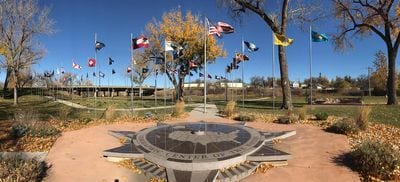
The geographic center of the United States has sat about 20 miles north of Belle Fourche since Alaska and Hawaii joined the Union in 1959, and the town marks it with the Center of the Nation monument.
Wind Cave, about 10 miles north of Hot Springs, became a national park in 1903, the first cave anywhere in the world to be made a national park, and holds about 95 percent of the world's discovered boxwork formations.
Lead's Homestake Mine was the largest and deepest gold mine in the Western Hemisphere until it closed; today its tunnels house the Sanford Underground Research Facility, the deepest underground laboratory in the United States.
With about 14,000 residents, Pierre is the second-least-populous state capital in the country, after Montpelier, Vermont.
Milbank is the birthplace of American Legion Baseball, created there in 1925 and now played by high-school-age teams in all fifty states.
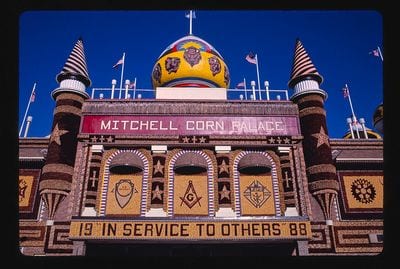
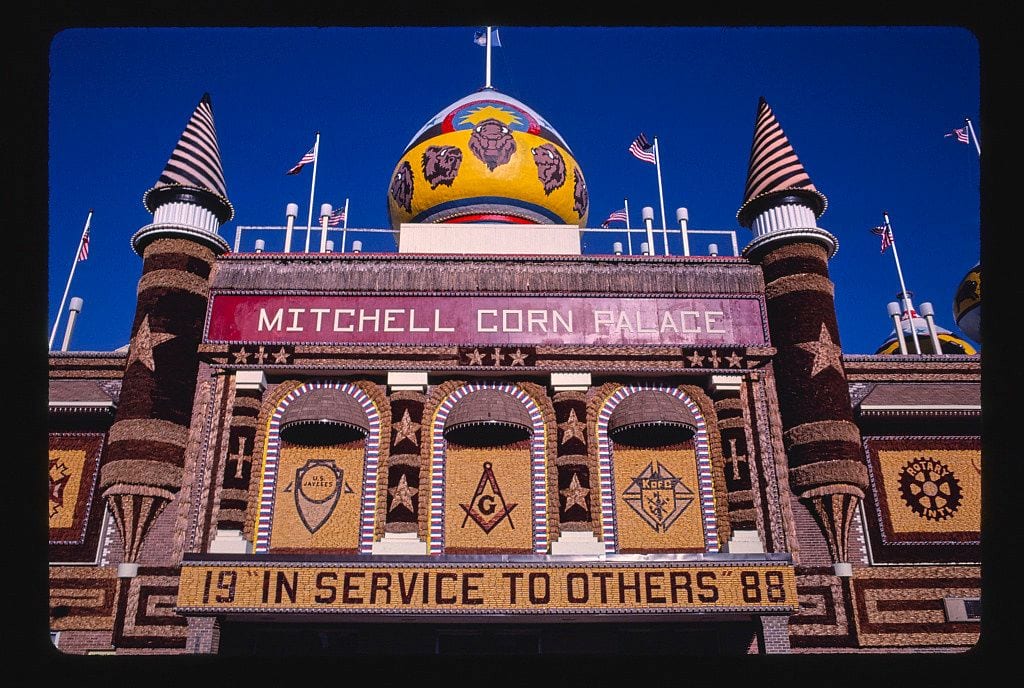
The murals on Mitchell's Corn Palace are made from corn and other grains, and a new design goes up every year.
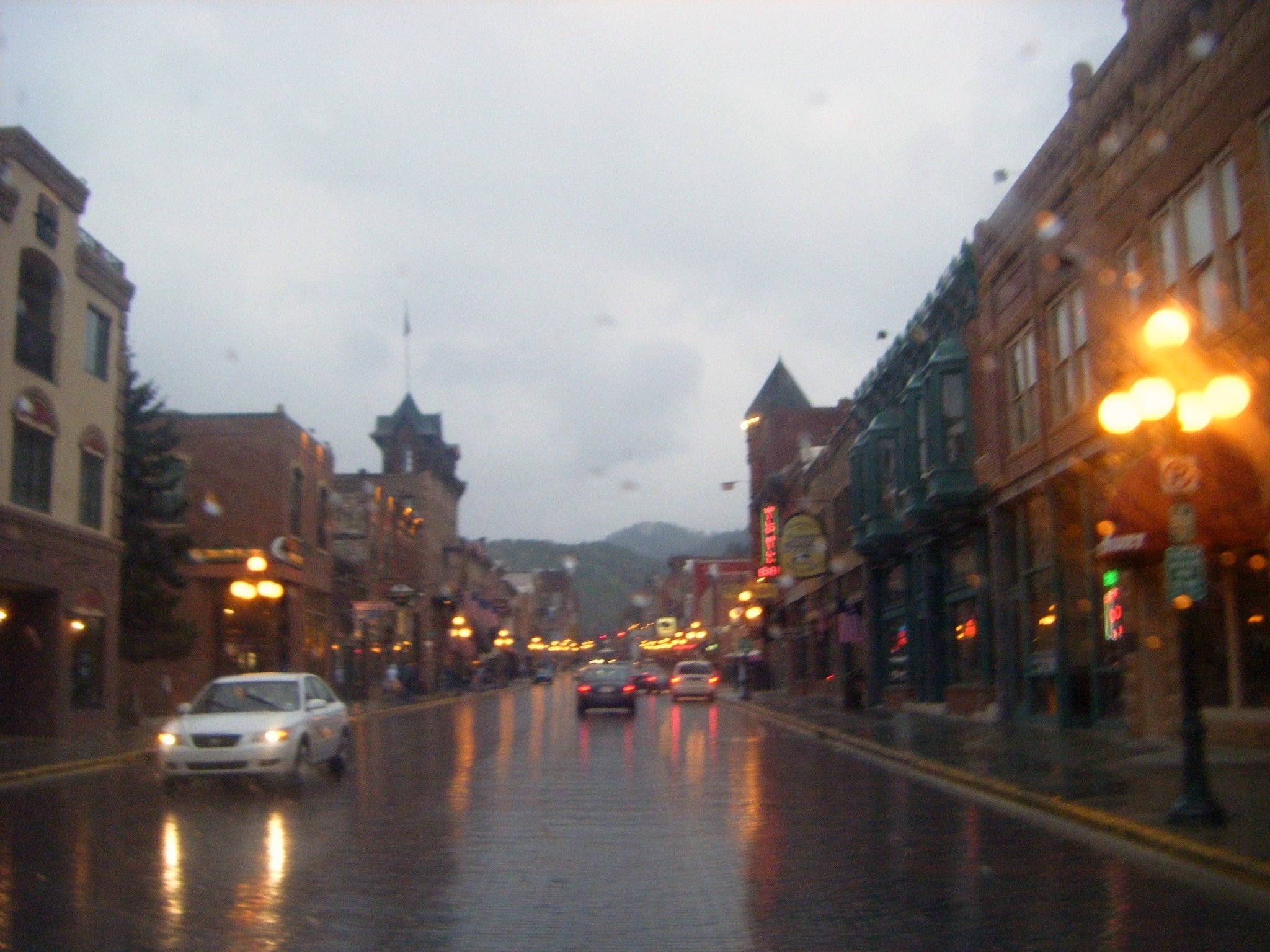
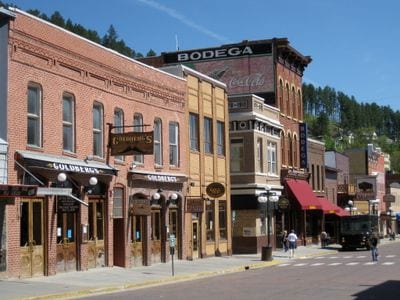
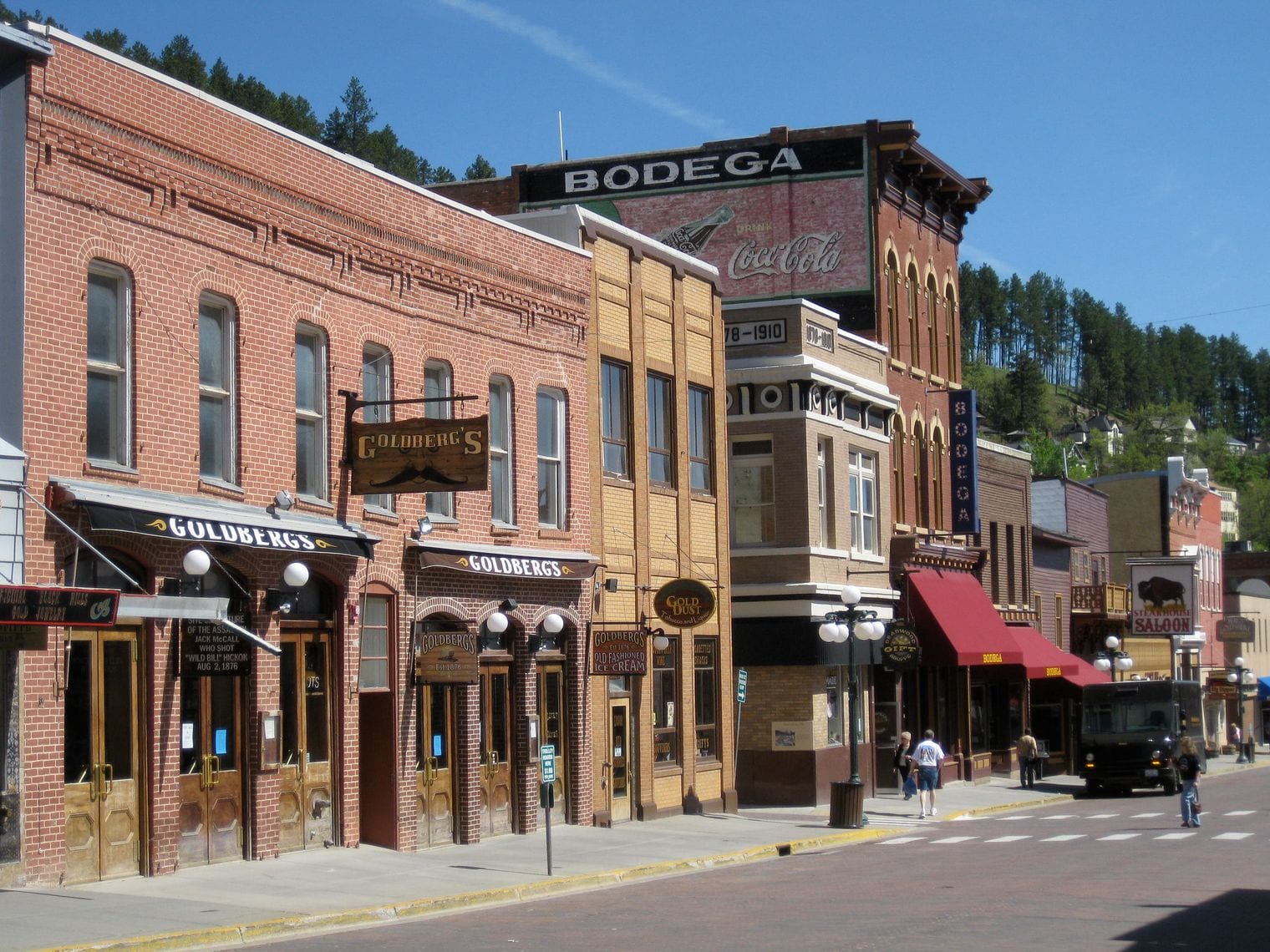
Deadwood boomed almost overnight in the Black Hills Gold Rush of the 1870s, drawing Old West figures such as Wild Bill Hickok, Calamity Jane and Seth Bullock. Hickok was shot dead here in 1876, and the entire town is now a National Historic Landmark District for its preserved gold-rush architecture.
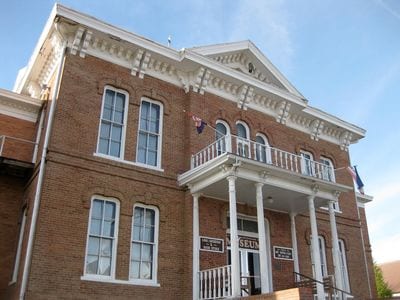
Climb to Mount Moriah Cemetery, where Hickok, Calamity Jane and Bullock are buried, then browse the Adams Museum, the oldest history museum in the Black Hills, founded in 1930 by former mayor W.E. Adams. Main Street's brick and stone buildings now hold casinos, saloons and shops, there is enough to fill a full weekend in Deadwood, and neighboring Lead is just up the gulch.
Founded in 1875, a year after gold was found near French Creek during George Armstrong Custer's Black Hills Expedition, Custer is the oldest town established by European Americans in the Black Hills. Today it is the natural base for the southern Hills, with the George S. Mickelson Trail running through town.
Custer State Park, South Dakota's first and largest state park, is a short drive east, with its bison herd along the Wildlife Loop, the granite spires of the Needles Highway and the calm water of Sylvan Lake. Crazy Horse Memorial, a mountain carving in progress since 1948, rises a few miles north of town, and Jewel Cave National Monument, one of the longest caves in the world, lies about 13 miles west.
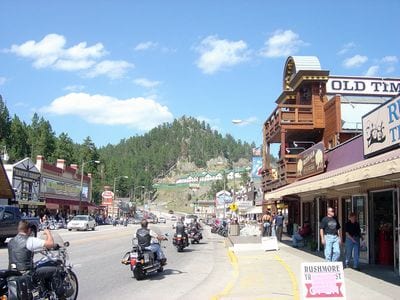
Keystone began as a mining town in 1883 and has become the resort town at the foot of Mount Rushmore National Memorial, which stands about two miles away, just beyond the town limits. Its main street of shops, attractions and places to eat fills each summer with visitors on their way up to the four presidents' faces.
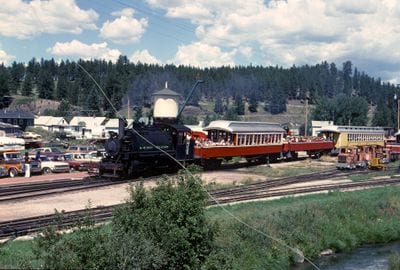
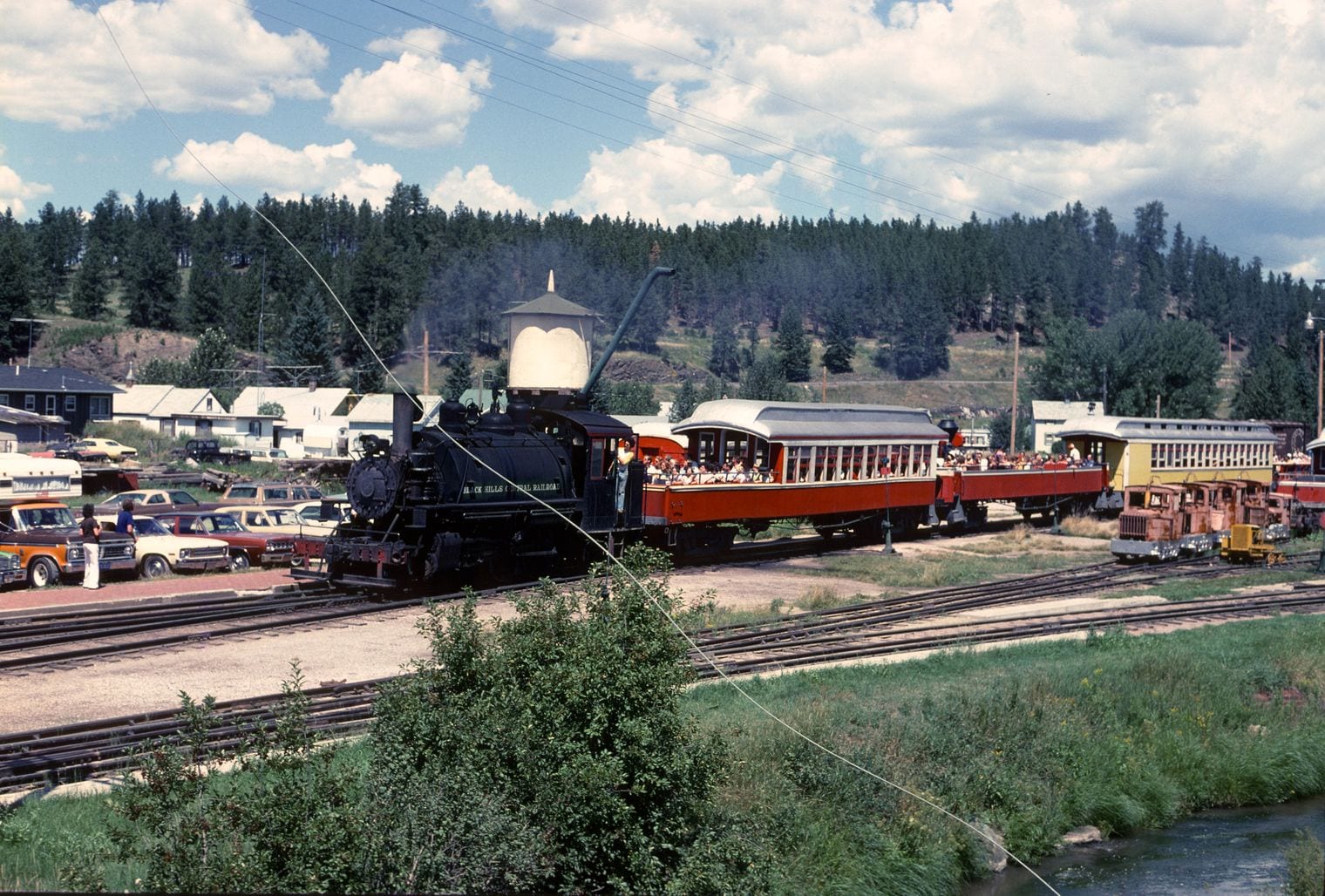
Carrie Ingalls, sister of Laura Ingalls Wilder, spent much of her adult life here, a thread that ties Keystone to De Smet on this list. Ride the 1880 Train, a heritage steam railroad between Keystone and Hill City, or drive the Iron Mountain Road, the winding stretch of US Highway 16A that heads south toward Custer State Park.
Wall sits on the northern edge of the Badlands, and its Lakota name translates as "Town alongside the Badlands." It is the natural base for Badlands National Park, whose eroded buttes, pinnacles and mixed-grass prairie begin a short drive south of town, and the Badlands Loop Road makes an easy scenic drive through the park.
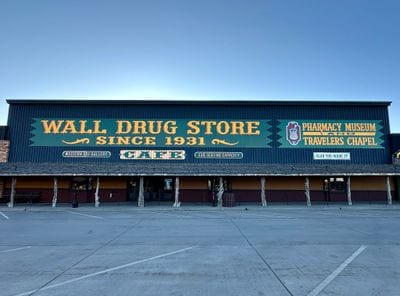
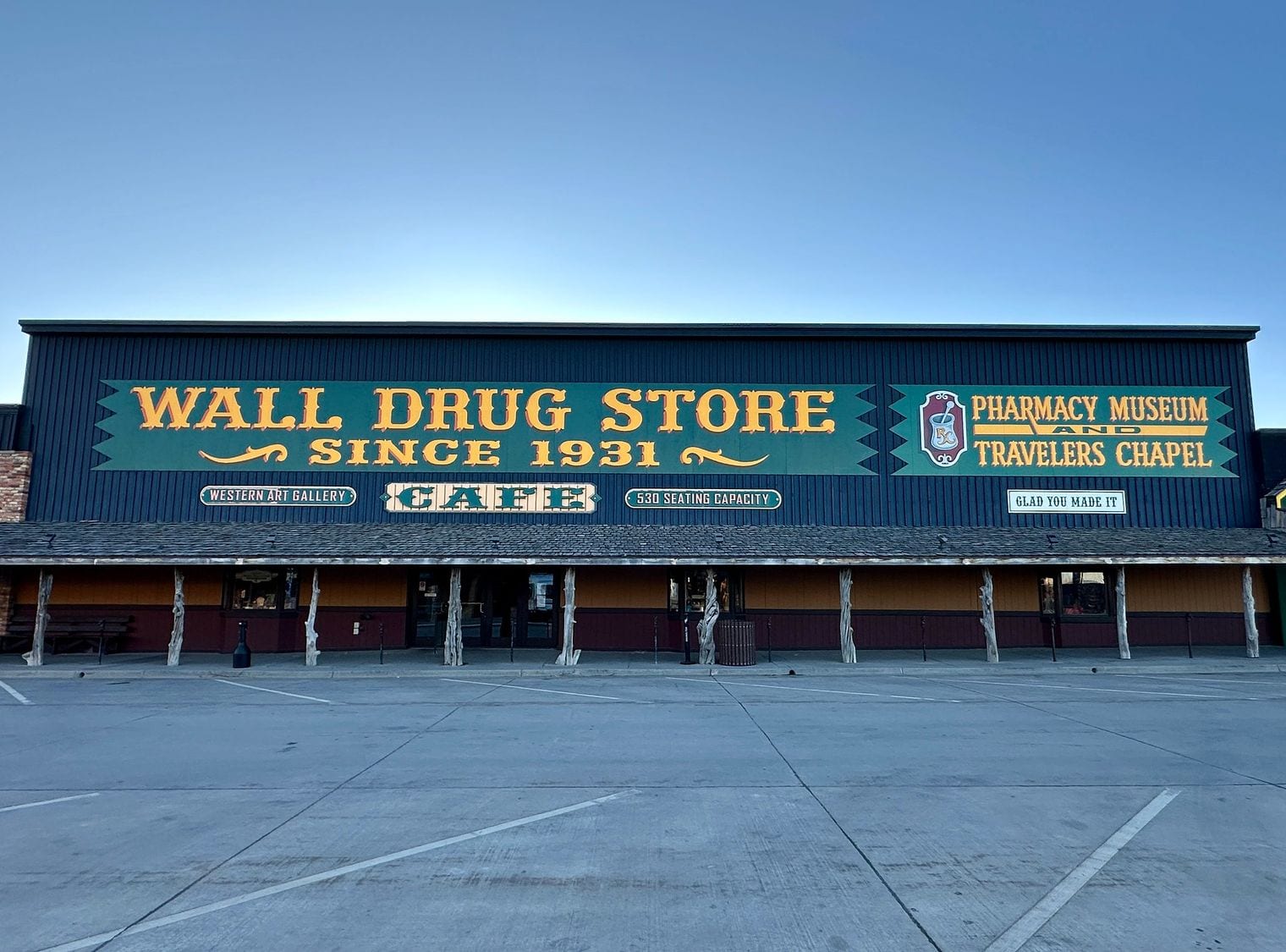
Back in town, Wall Drug has grown since pharmacist Ted Hustead bought the drugstore in 1931 into a sprawling cowboy-themed roadside stop, famous for the free ice water it has long advertised to travelers and for its 80-foot brontosaurus. The Minuteman Missile National Historic Site, which preserves a Cold War missile silo and launch control center, lies east of town along Interstate 90.
Hill City calls itself the "Heart of the Hills" for its spot near the geographic center of the Black Hills, and it is the oldest existing city in Pennington County, with roots in the mining rush of the 1880s, when tin mining dominated. Its main street has since become an arts center for the region, lined with studios and galleries.
Hill City is the other end of the line for the 1880 Train, whose steam trains run through the hills to Keystone, and the South Dakota State Railroad Museum stands beside the depot. The George S. Mickelson Trail passes through town, and Mount Rushmore and Crazy Horse Memorial are both a short drive away.
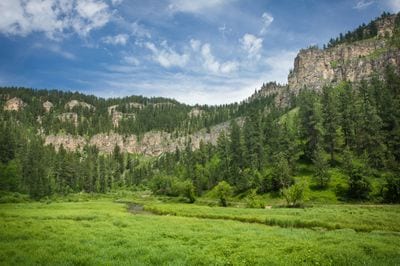
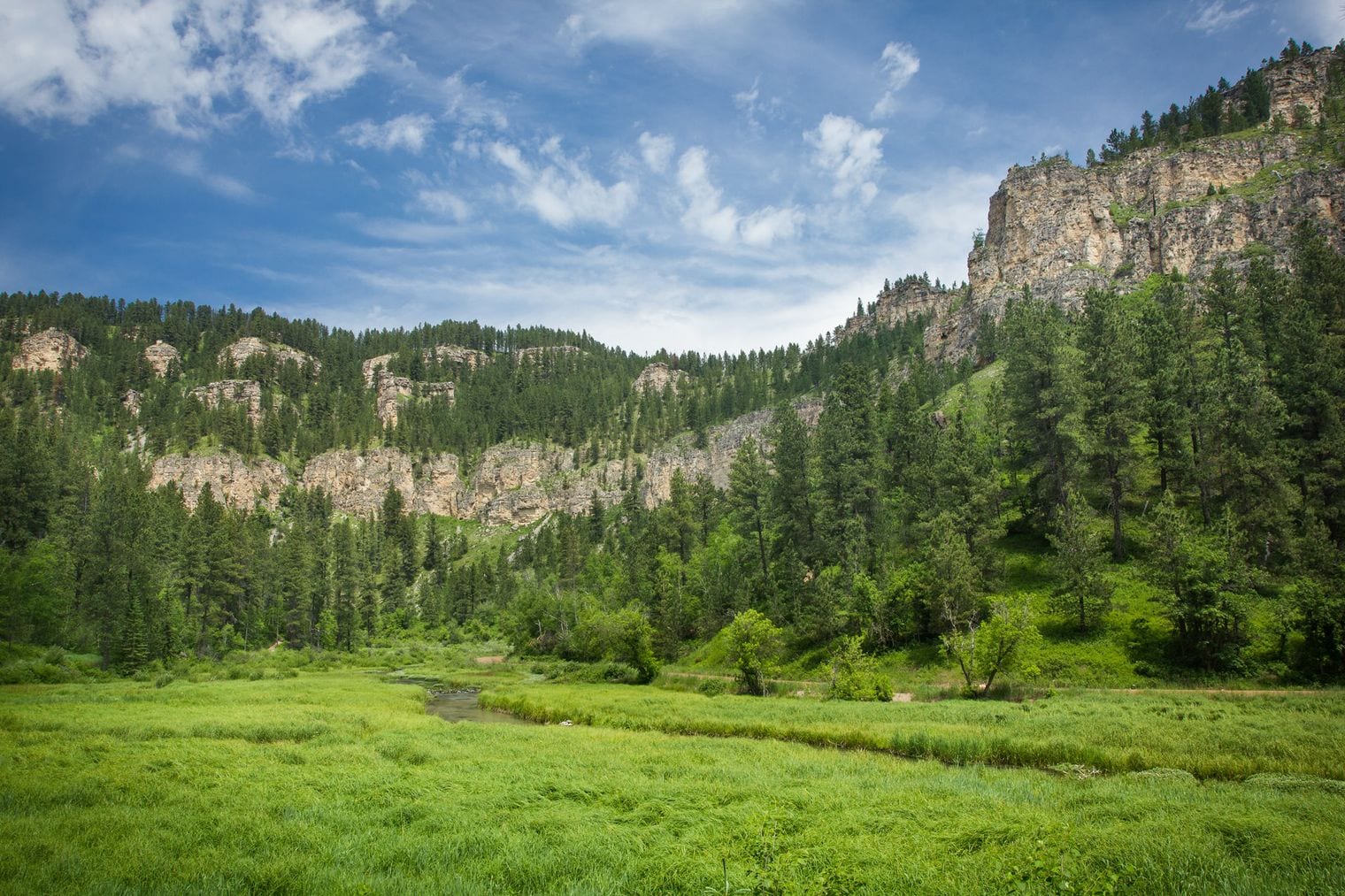
Spearfish, home of Black Hills State University, sits where Spearfish Creek leaves the northern Black Hills, and it is the gateway to Spearfish Canyon, a deep, narrow gorge carved by the creek. The Spearfish Canyon Scenic Byway follows US Highway 14A south through the canyon to Cheyenne Crossing, along an old railroad grade abandoned after flooding in 1933.
Stop along the way for Bridal Veil Falls beside the road, the trail to Spearfish Falls and the Roughlock Falls Nature Area on Little Spearfish Creek. Back in town, the D.C. Booth Historic National Fish Hatchery, established in 1896 to bring trout to the Black Hills, is one of the oldest fish hatcheries in the United States.
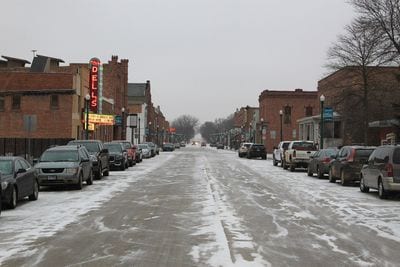
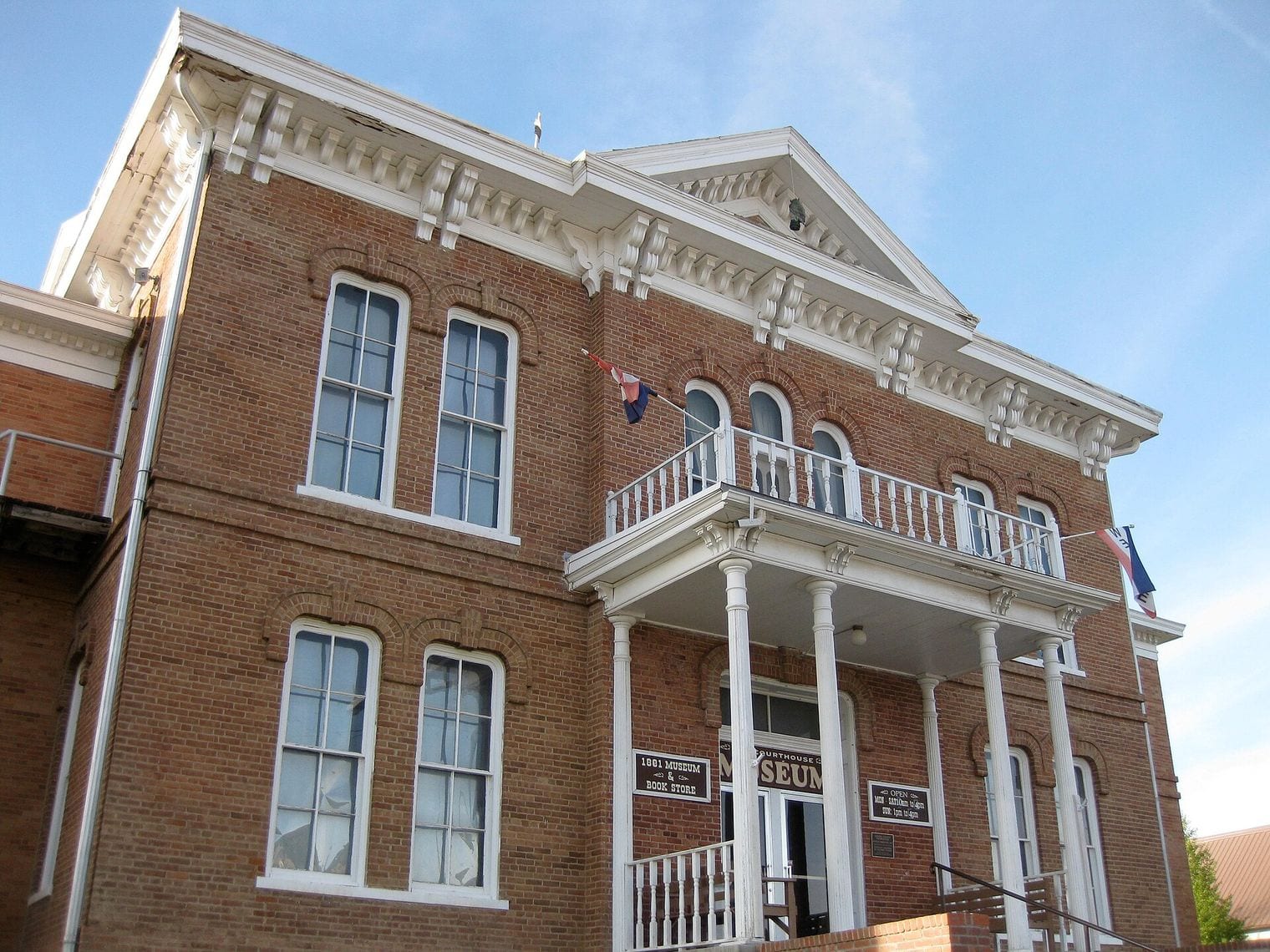
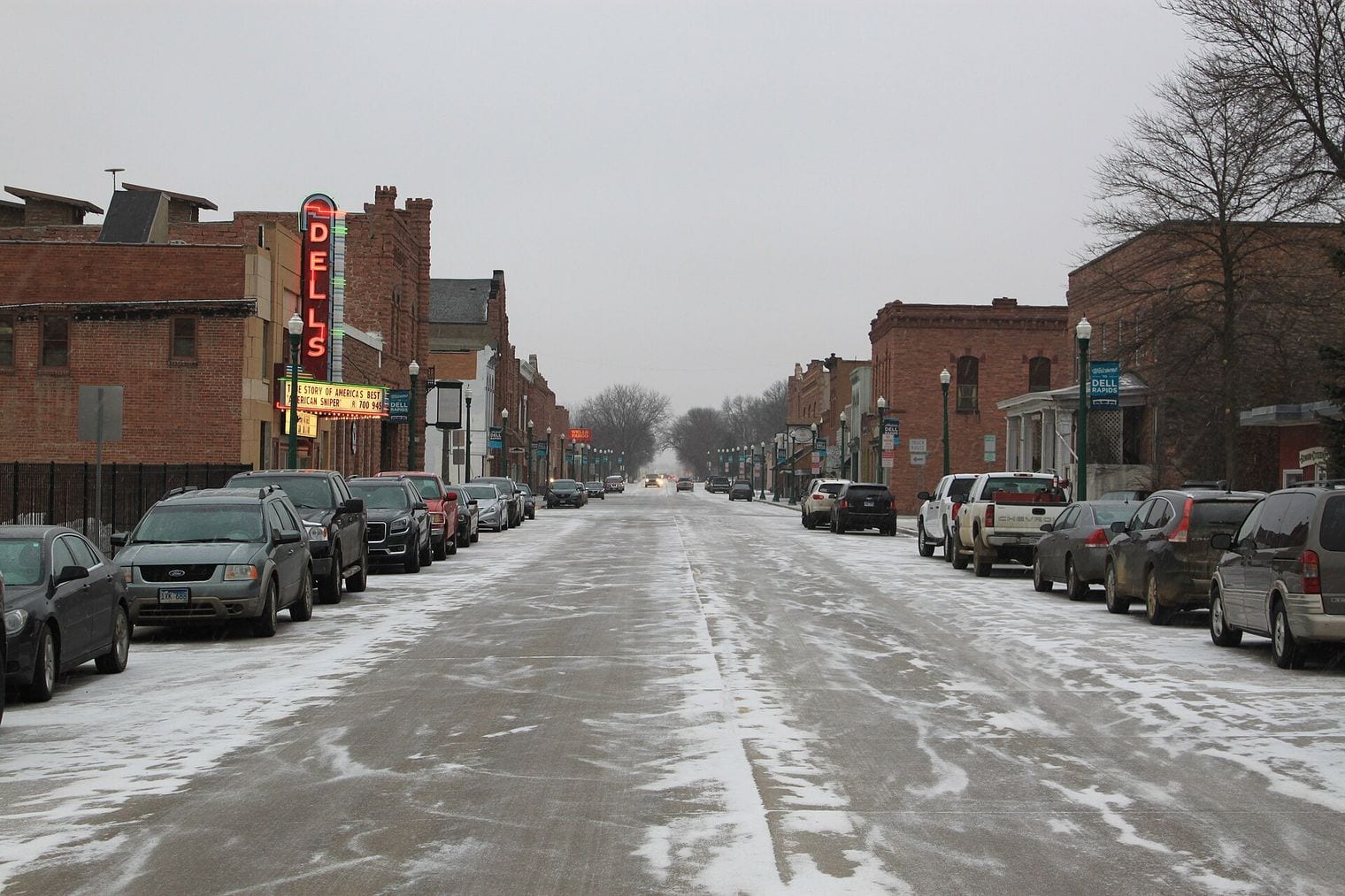
Dell Rapids, established in 1871 on the Big Sioux River, takes its name from rapids that early settlers likened to the Dells of the Wisconsin River. After fire destroyed its wooden buildings in the 1880s, the town rebuilt its downtown in pink Sioux quartzite, the local stone, and the result is a handsome main street unlike any other in the region.
Walk the quartzite storefronts, then follow the Big Sioux as it runs through rocky dells and rapids at the edge of town. Calling itself "The Little City with the Big Attractions," Dell Rapids makes an easy half-day trip, a short drive north of Sioux Falls.
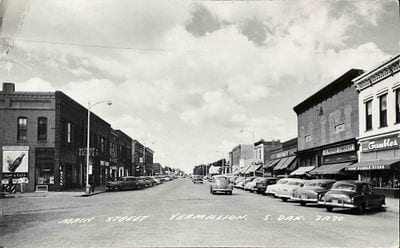
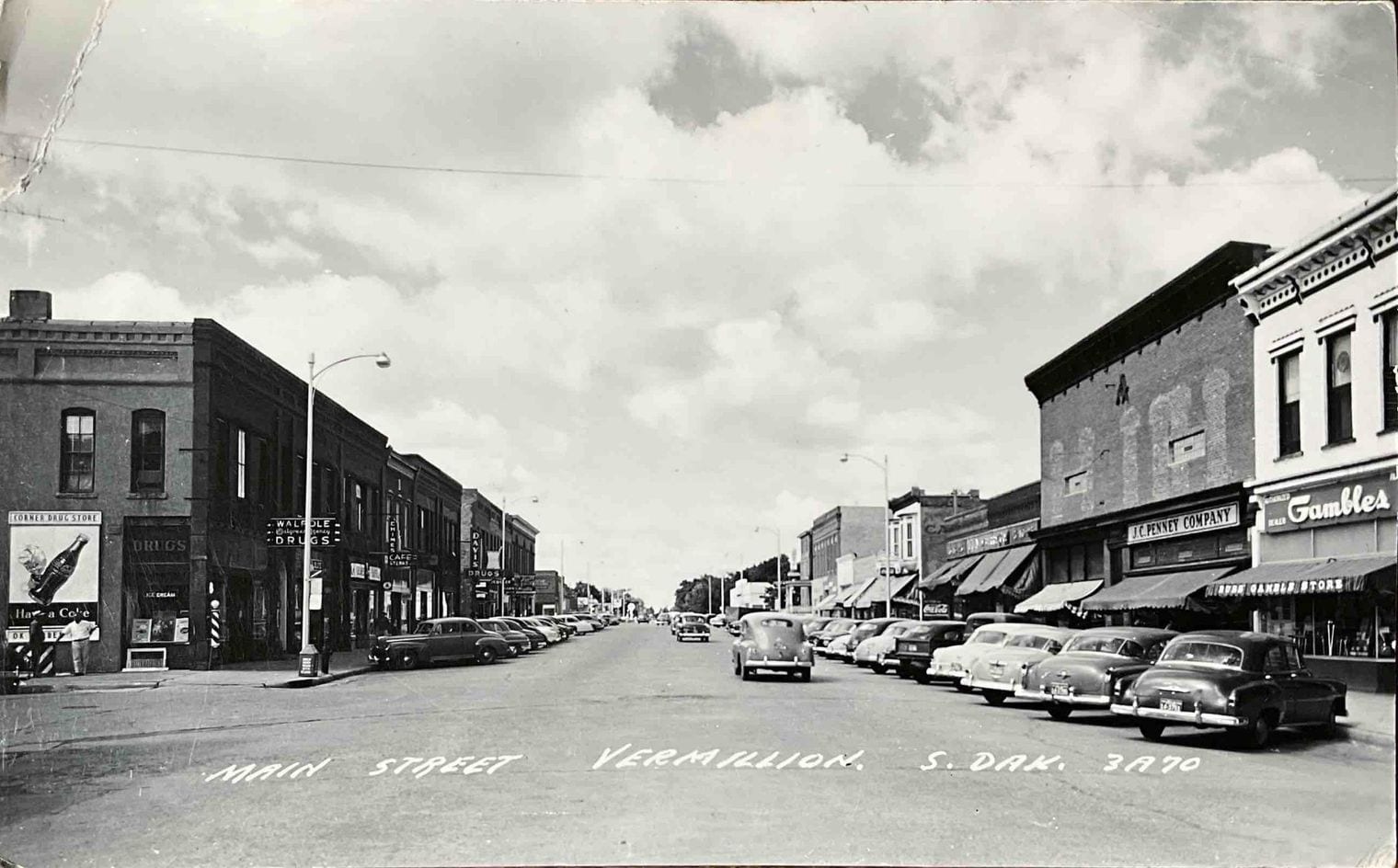
Vermillion stands on a bluff near the Missouri River in the state's southeastern corner and is home to the University of South Dakota, founded by the Dakota Territory legislature in 1862 and the state's oldest public university. The campus gives the town a lively college-town feel.
Its big draw is the National Music Museum, founded on campus in 1973, whose collections of American, European and non-Western musical instruments are among the most comprehensive anywhere. About six miles north, Spirit Mound Historic Prairie protects the hill that members of the Lewis and Clark Expedition climbed in August 1804.
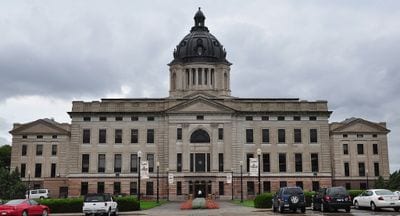
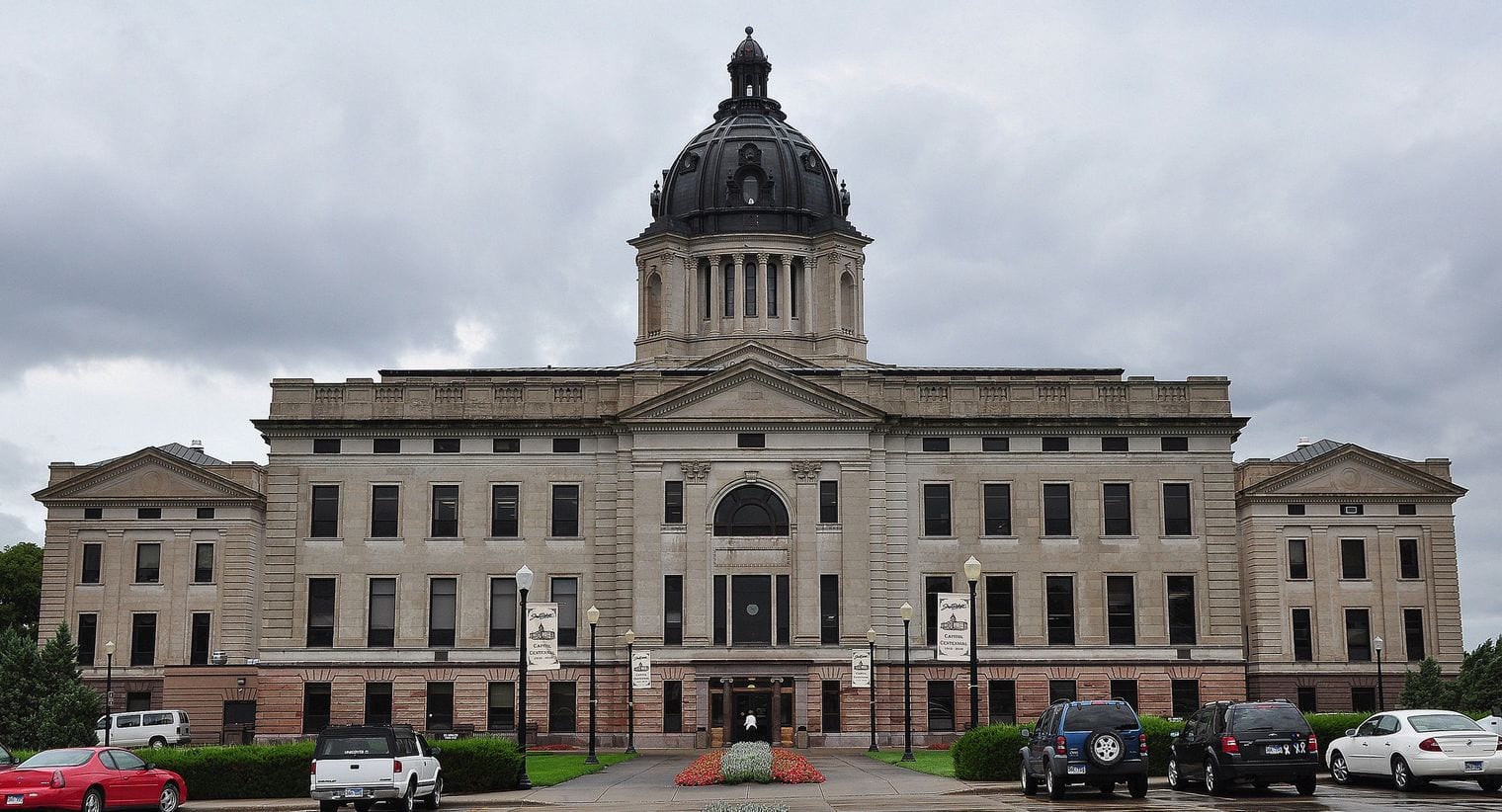
Pierre, on the Missouri River near the center of the state, has been South Dakota's capital since statehood in 1889, and with about 14,000 people it is the second-least-populous state capital in the country, after Montpelier, Vermont. The South Dakota State Capitol, built between 1905 and 1910, rises above Capitol Lake.
Tour the Capitol, walk the lakeside memorials and the bronze statues of the Trail of Governors, then visit the South Dakota Cultural Heritage Center, home of the state museum and archives. Just north of town, Oahe Dam holds back Lake Oahe, one of the largest reservoirs in the United States and a favorite with anglers and boaters.
Free printable checklist of all 20 places
Tick them off as you go. Confirm your email to download it, plus one email every Thursday with new guides for the places you tick.
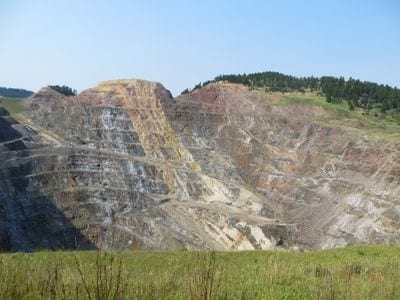
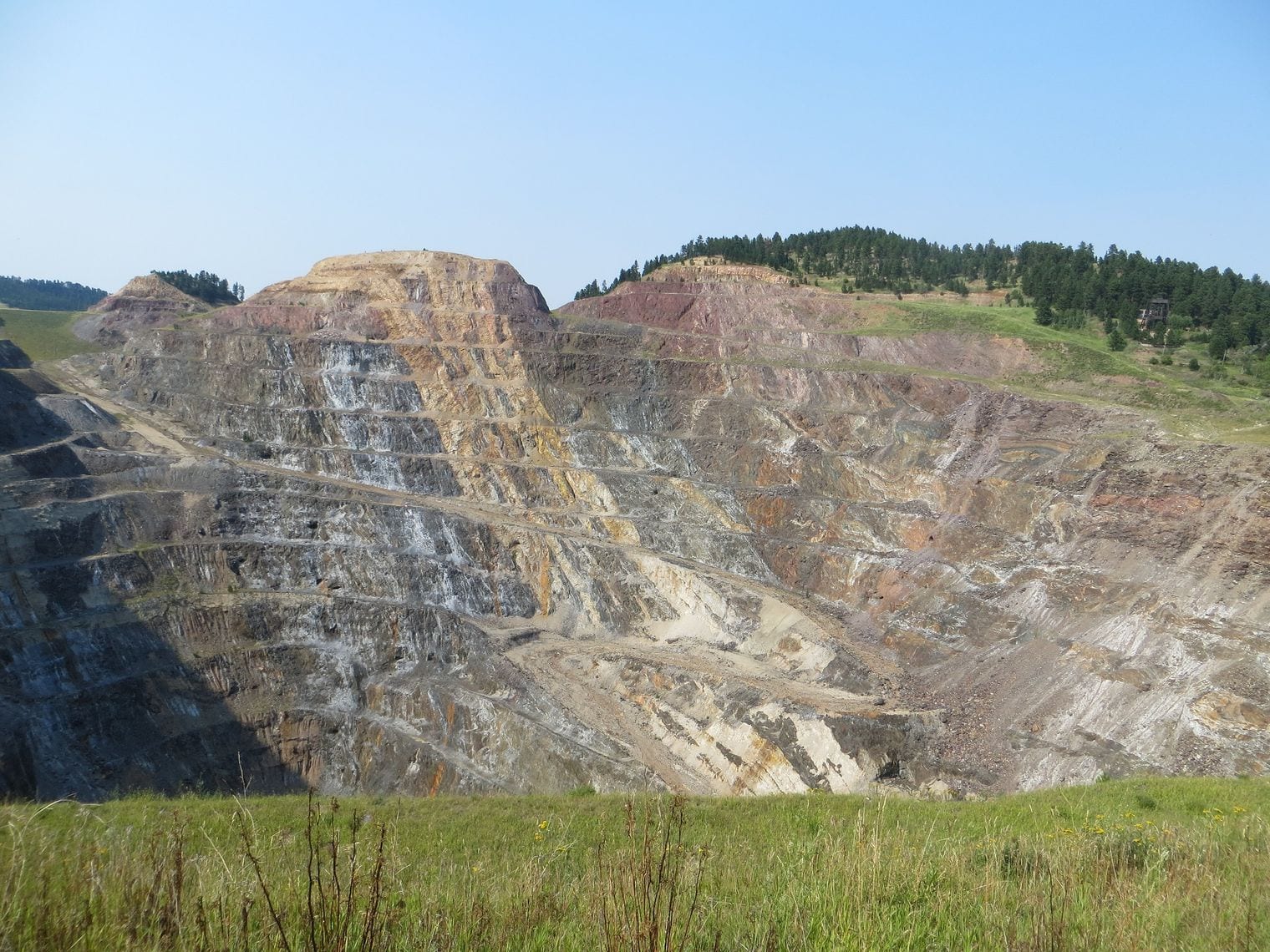
Lead (pronounced "leed") was founded in 1876 during the gold rush and grew up around the Homestake Mine, which by the time it closed was the largest and deepest gold mine in the Western Hemisphere. The mine's enormous open cut still gapes beside town, just up the gulch from Deadwood.
On Main Street, the Sanford Lab Homestake Visitor Center overlooks the open cut and tells how the old mine became the Sanford Underground Research Facility, the deepest underground laboratory in the United States, where scientists study neutrinos and dark matter. The Historic Homestake Opera House, created with the help of Phoebe Hearst for the miners and their families, is nearby, and Terry Peak ski area rises just outside Lead.
Mitchell is home to the Corn Palace, a Moorish Revival arena whose outside walls are covered in murals made from corn and other grains, with a new design created every year. It is one of South Dakota's best-known roadside stops and an easy break from Interstate 90 on the way across the state.
Beside Lake Mitchell, the Mitchell Prehistoric Indian Village preserves a fortified farming village occupied about a thousand years ago, a National Historic Landmark where visitors can watch archaeologists at work inside a protective dome. Dakota Wesleyan University adds a small college presence, and the lake has room for picnics and boating.
Hot Springs grew up as a spa town around the warm mineral springs that give it its name, a translation of its Lakota name, and its downtown holds more than 35 historic sandstone buildings. Evans Plunge, built in 1890, still fills its pools with naturally warm spring water.
At The Mammoth Site, a museum built over a prehistoric sinkhole, see the bones of dozens of mammoths where they were found, with excavation still going on. Wind Cave National Park, established in 1903 as the first cave anywhere to become a national park, lies about 10 miles north, and Angostura Reservoir is about 10 miles southeast.
De Smet, platted in 1880 and named for the Jesuit missionary Father Pierre De Smet, is the prairie town Laura Ingalls Wilder made famous as the "Little Town on the Prairie." The Ingalls family settled here for good, and the town and its surroundings appear in several of her Little House books, including The Long Winter.
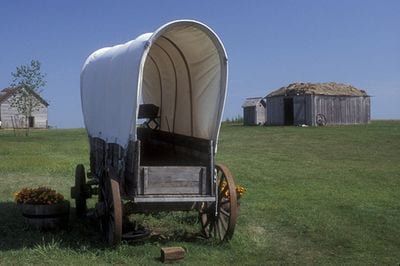
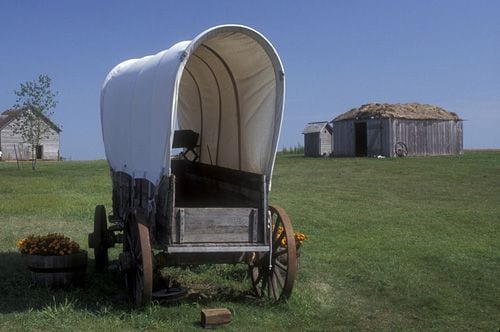
Tour the family's original homes in town, including the Surveyors' House where they first lived and the house Charles Ingalls built in the late 1880s. Just outside De Smet, the Ingalls Homestead sits on part of the family's original claim, with covered-wagon rides to a one-room schoolhouse, and the outdoor Laura Ingalls Wilder Pageant is staged on summer evenings.
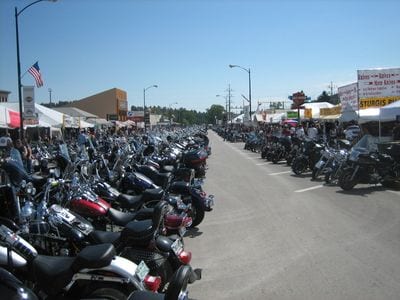
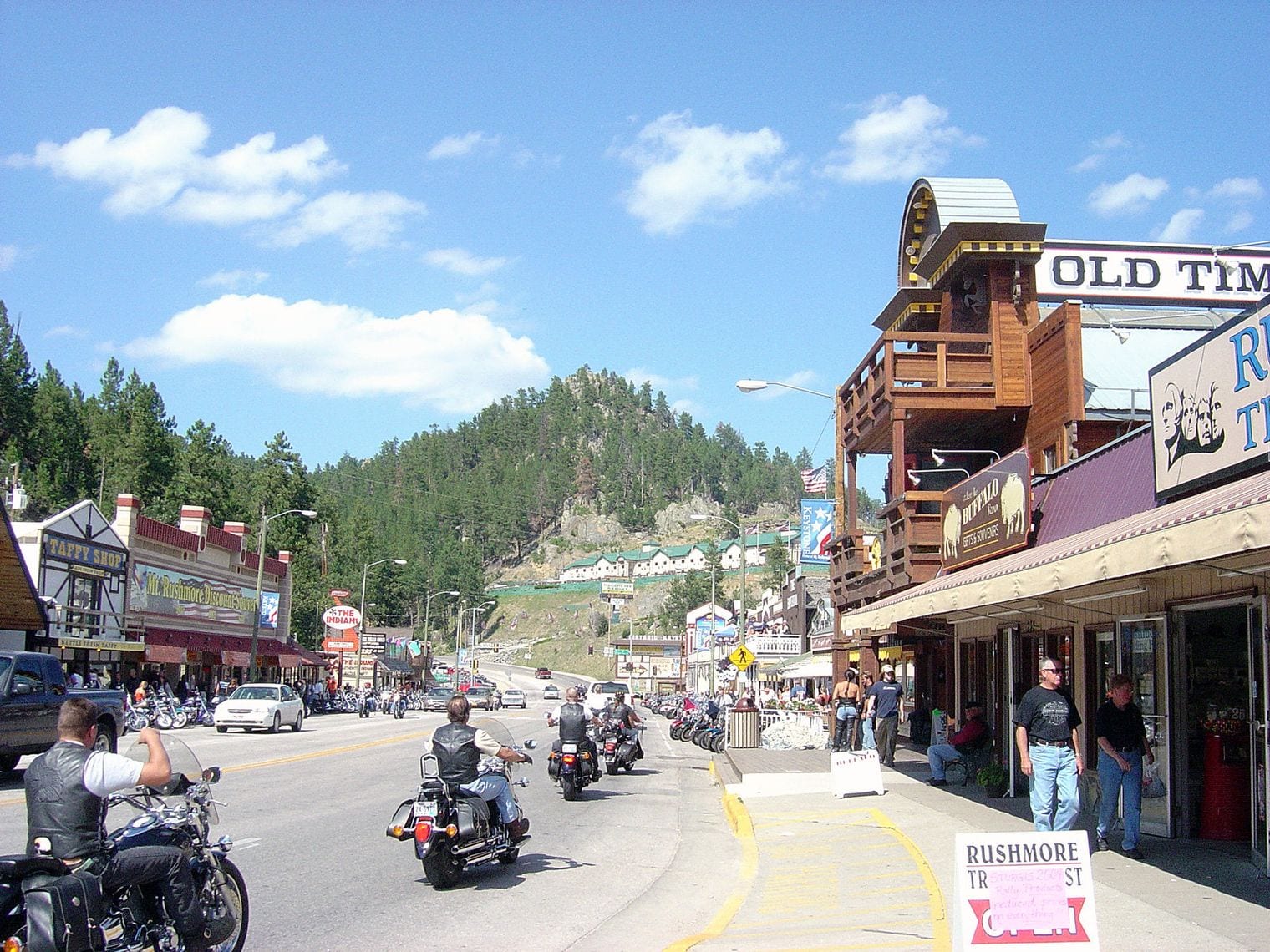
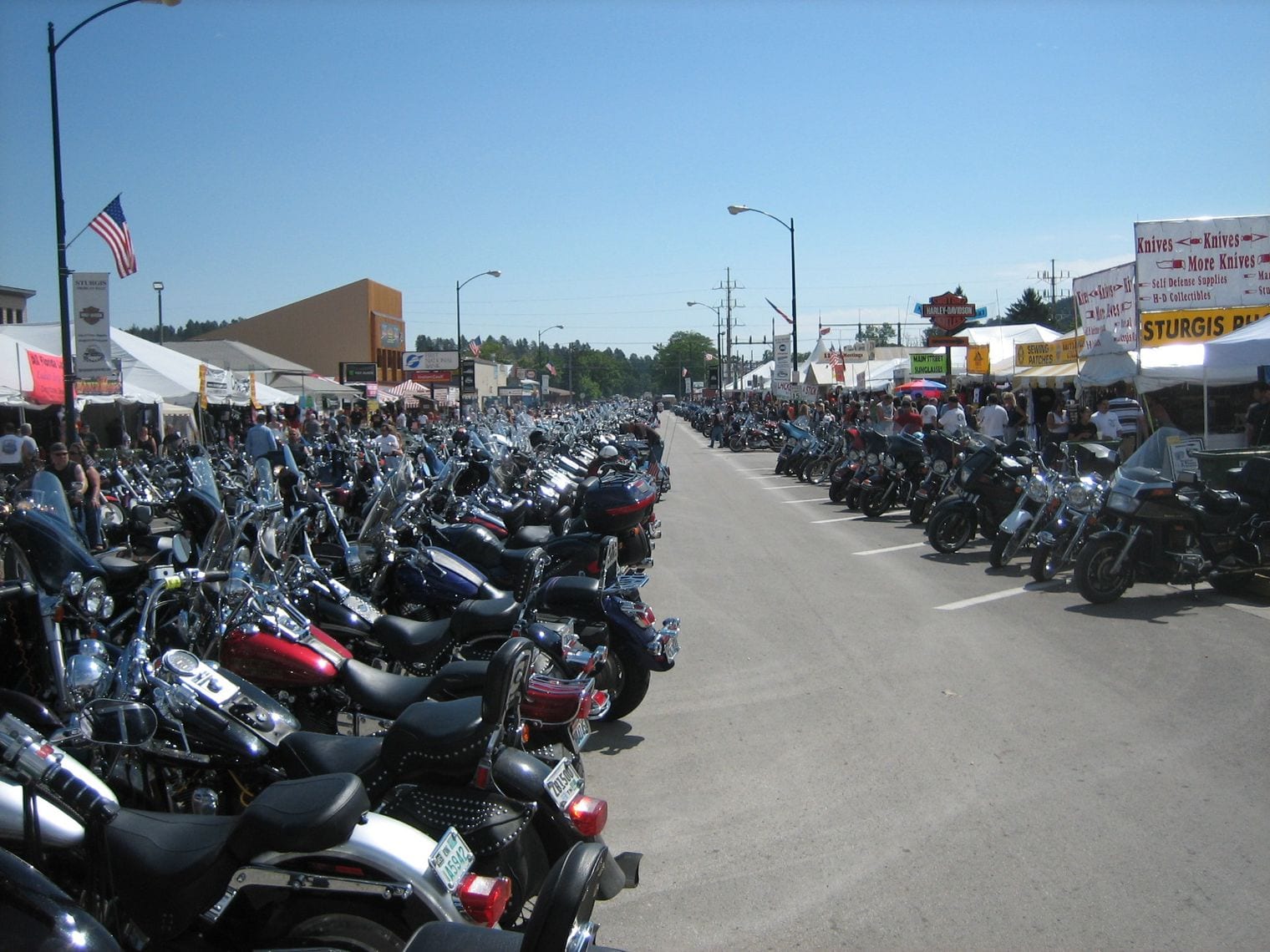
Sturgis, named for Civil War general Samuel D. Sturgis, is a quiet county seat at the northern edge of the Black Hills for most of the year. Each August it hosts the Sturgis Motorcycle Rally, one of the largest motorcycle events in the world, which began in 1938 with a group of Indian Motorcycle riders and now runs for 10 days.
The Sturgis Motorcycle Museum traces the history of the rally and the machines. A few miles northeast, Bear Butte State Park protects a lone mountain sacred to the Lakota, Cheyenne and other Plains peoples, where a trail climbs past prayer cloths tied to the trees toward wide views from the summit.
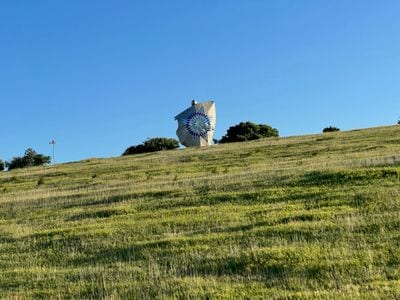
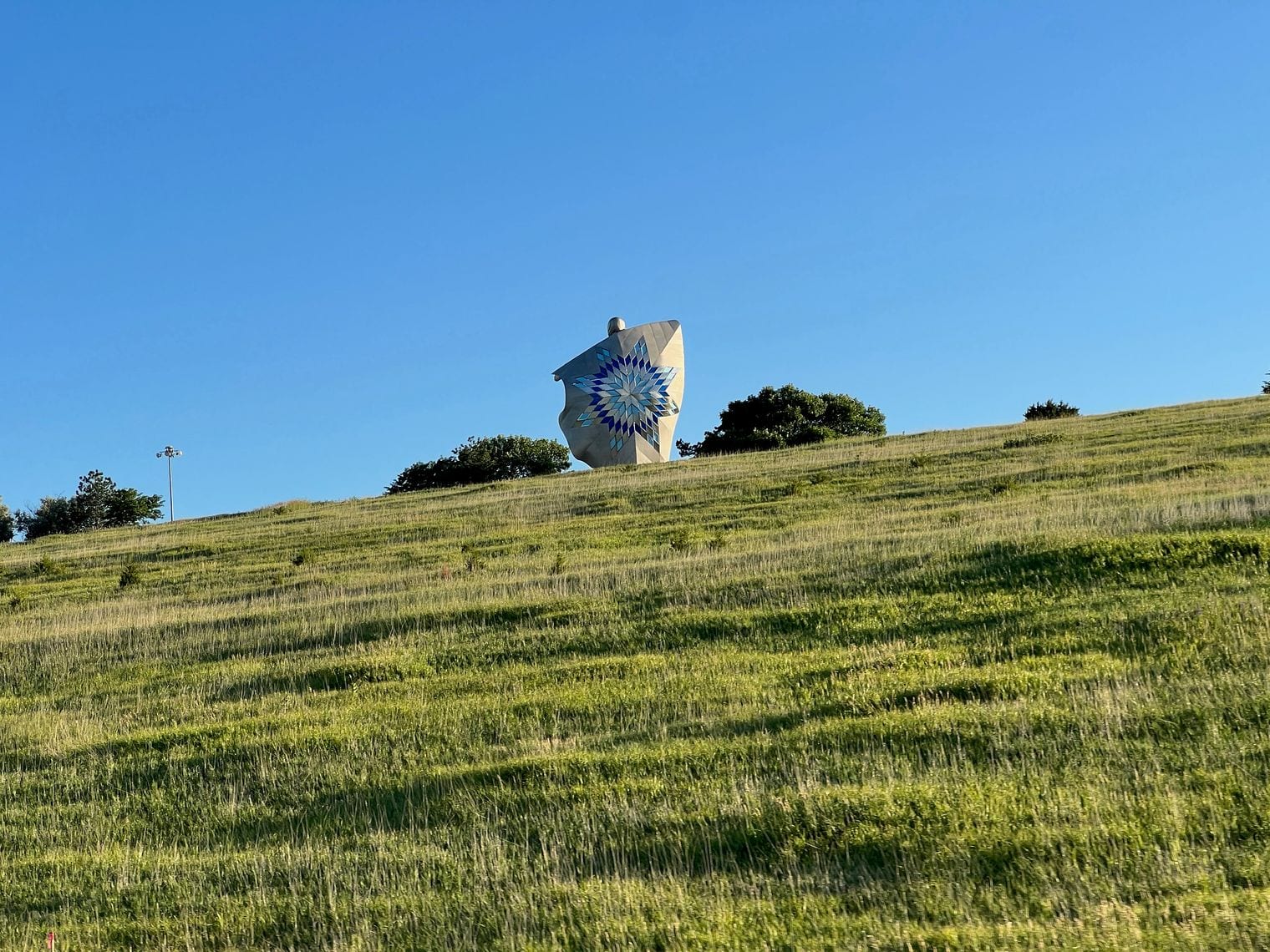
Chamberlain sits on the east bank of the Missouri River close to where Interstate 90 crosses it, and on a bluff above the river stands Dignity of Earth and Sky, a 50-foot stainless steel statue by South Dakota artist Dale Lamphere of a Native woman receiving a star quilt. It honors the Lakota and Dakota peoples and is free to see from the interstate rest area.
On the campus of St. Joseph's Indian School just outside town, the Akta Lakota Museum holds one of South Dakota's most comprehensive collections of Northern Plains Native American art and artifacts. The South Dakota Hall of Fame has its visitor center in Chamberlain, and the river here widens into Lake Francis Case, popular for fishing and boating.
Belle Fourche, founded in 1884, was a cattle town first: by 1895 it was shipping so many carloads of cattle that it was billed as the world's largest livestock-shipping point. Its name, French for "beautiful fork," comes from the river that runs past town.
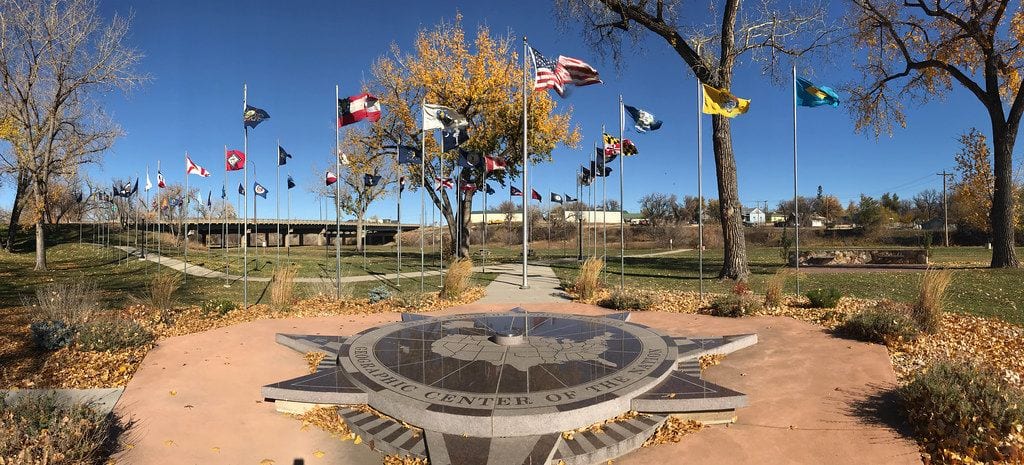
Since 1959 the geographic center of the United States has been placed about 20 miles north of town, and the Center of the Nation monument and its avenue of flags at the Tri-State Museum mark the honor. Each summer around the Fourth of July, the Black Hills Roundup, one of the oldest continuously held outdoor rodeos in the country, fills the town.
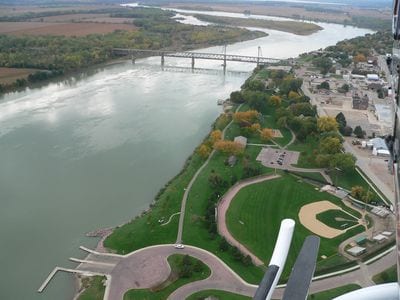
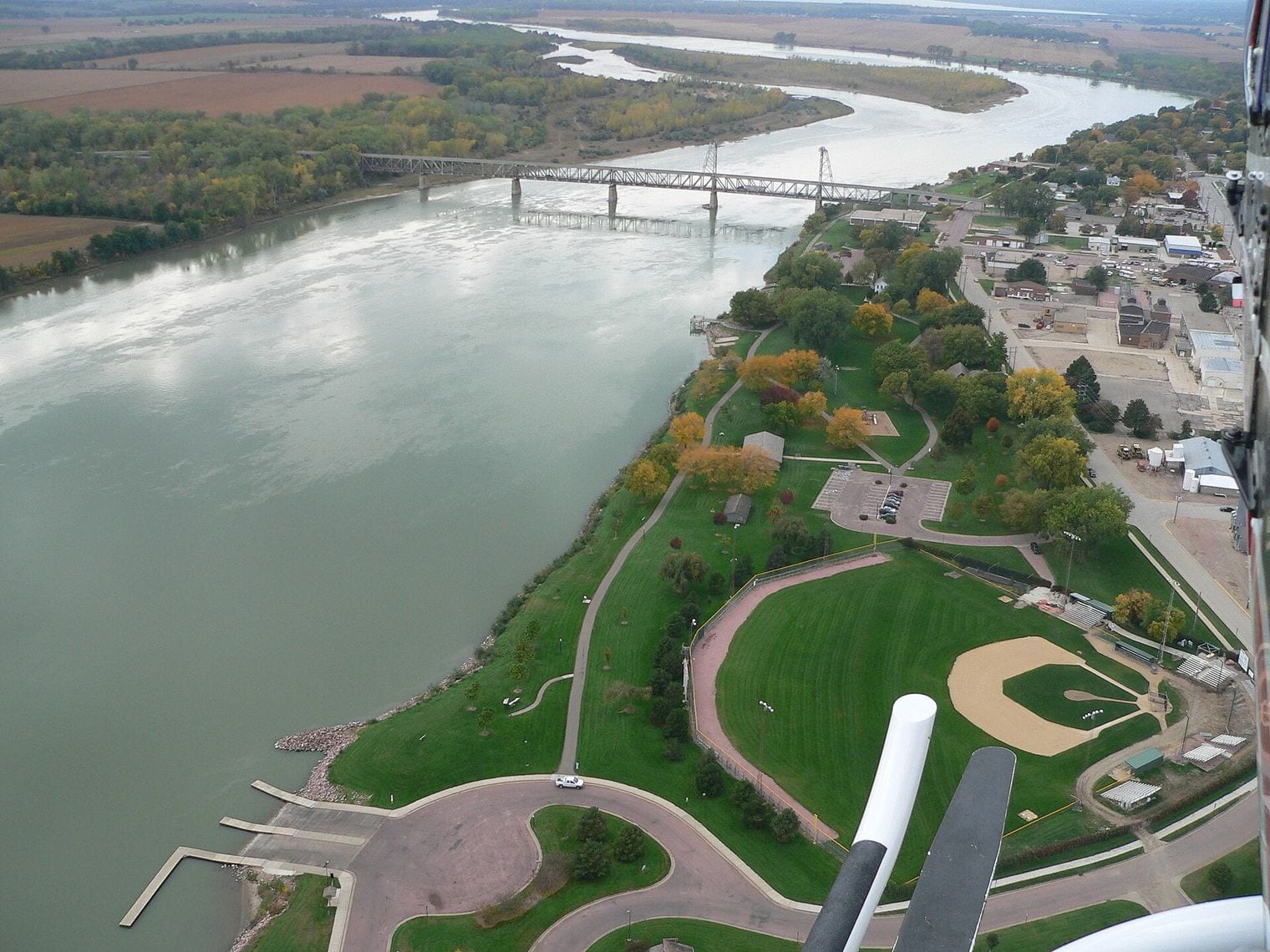
Yankton, nicknamed the "River City" and the "Mother City of the Dakotas," was the first capital of Dakota Territory, created in 1861. It sits on the Missouri River just downstream of Gavins Point Dam, and the National Park Service runs the Missouri National Recreational River from its headquarters here.
Walk or bike across the Meridian Bridge, a double-deck bridge to Nebraska that has been open only to pedestrians and cyclists since 2011. About four miles west, Gavins Point Dam holds back Lewis and Clark Lake, roughly 25 miles long and a favorite for boating, fishing and camping.
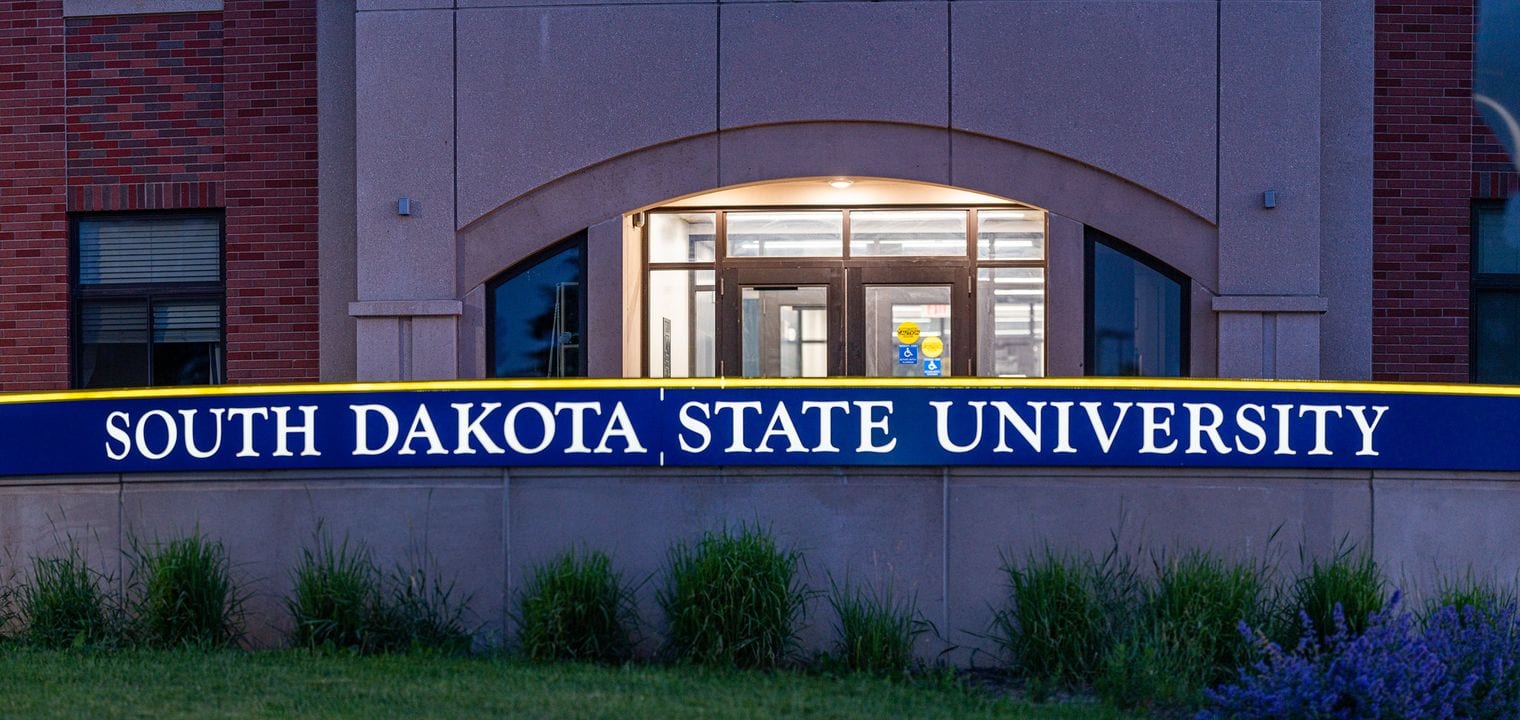
Brookings, about 60 miles north of Sioux Falls, is home to South Dakota State University, founded in 1881 and now the state's largest university, and the campus shapes the town's easygoing college-town character.
On campus, McCrory Gardens spreads across 70 acres of formal display gardens and arboretum, and the South Dakota Art Museum shows prairie paintings by Harvey Dunn, works by Oscar Howe and the most complete collection of Marghab linens in the world. The Children's Museum of South Dakota makes Brookings an easy stop for families too.
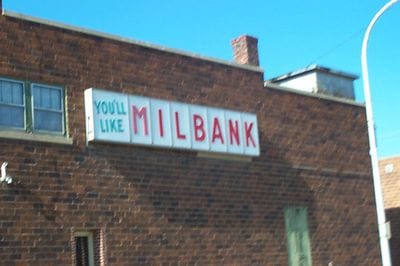
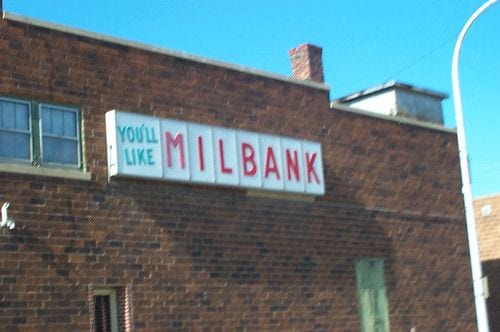
Milbank, the Grant County seat in the state's northeastern corner, is the birthplace of American Legion Baseball, created here in 1925 and now played by high-school-age teams in all fifty states. It is also home to the restored Hollands Grist Mill, a wind-powered mill built in the 1880s with four great sails.
Big Stone Lake, a long, narrow lake on the Minnesota border, lies a short drive northeast of Milbank, and Hartford Beach State Park on its shore offers swimming, fishing, hiking, boating and camping.
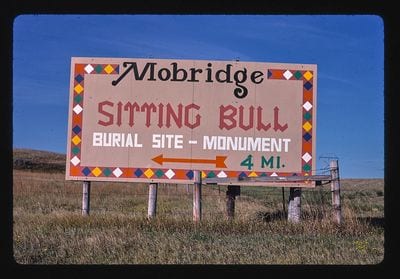
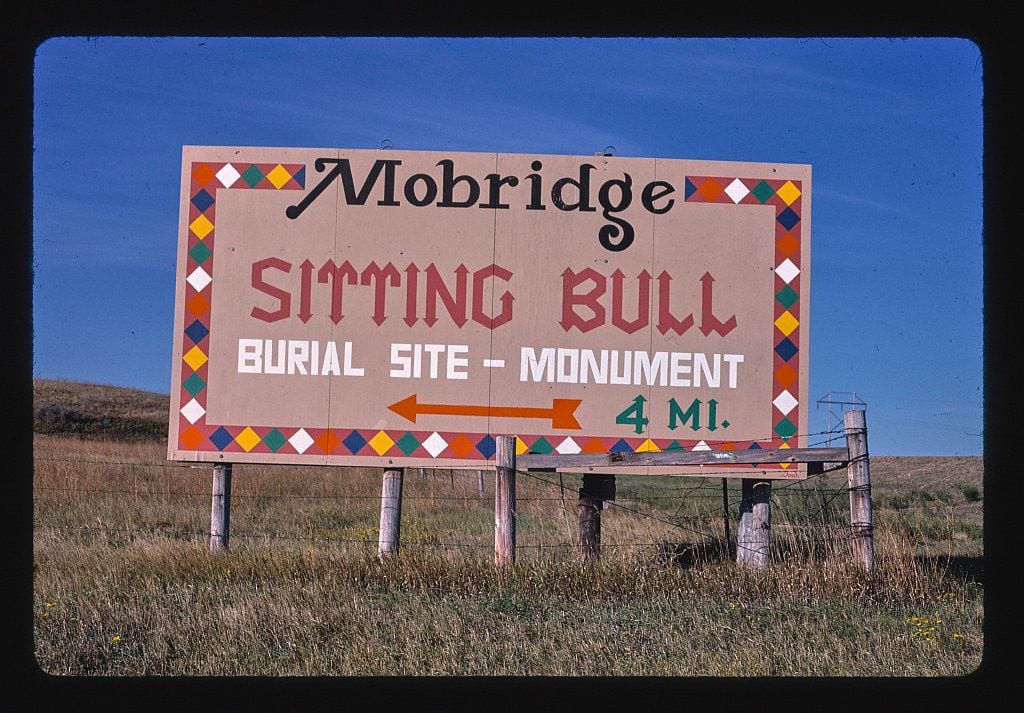
Mobridge was founded in 1906 when the Milwaukee Road railroad crossed the Missouri River here, and its name is a contraction of "Missouri Bridge," the railroad's designation for the spot. Today it sits on the eastern shore of Lake Oahe, the vast reservoir behind Oahe Dam, and makes a base for fishing and boating on the lake.
Inside the Scherr-Howe Arena, ten murals painted in 1942 by Yanktonai Dakota artist Oscar Howe depict Dakota life and history along the Missouri. About two miles southwest of town, across the river, the Sitting Bull and Sakakawea monuments stand on a bluff above the water; the Sitting Bull bust is the work of Korczak Ziolkowski, the sculptor who began Crazy Horse Memorial.
Best Time to Visit South Dakota's Small Towns
Summer is the main season for most of these towns, when the Black Hills byways, Custer State Park, Badlands National Park and the Missouri River lakes are at their busiest. It is also event season, from the Black Hills Roundup in Belle Fourche around the Fourth of July and the Laura Ingalls Wilder Pageant in De Smet to the Sturgis Motorcycle Rally in August, when beds across the northern Black Hills fill quickly.
Late spring and early fall are quieter and often the most pleasant, with fall color in Spearfish Canyon and room to breathe at Mount Rushmore and the Badlands. Winter is cold, but it brings skiing at Terry Peak near Lead, and Deadwood's museums and casinos stay open year-round. Many seasonal attractions shorten their hours or close outside summer, so check before planning a cold-weather trip.
Free Things to Do in These South Dakota Towns
Plenty of the best sights in these towns cost nothing. See Dignity of Earth and Sky from the interstate rest area at Chamberlain, walk the Meridian Bridge across the Missouri in Yankton, admire the grain murals on the Corn Palace in Mitchell and tour the State Capitol in Pierre.
Stroll the quartzite main street of Dell Rapids, look into the Homestake open cut from the visitor center in Lead, stop for the free ice water at Wall Drug in Wall, and drive the Spearfish Canyon Scenic Byway from Spearfish.
In the west, the Black Hills towns sit close together. Deadwood, Lead, Spearfish, Sturgis and Belle Fourche cluster in the northern Hills, while Hill City, Custer and Hot Springs line up along US Highway 385, which runs south from Deadwood to Hot Springs, with Keystone a short drive east of Hill City. Rapid City has the region's main airport, and Wall and the Badlands lie about an hour east along Interstate 90.
Interstate 90 then crosses the state through Chamberlain and Mitchell to Sioux Falls, with Pierre a drive north of the interstate and Mobridge farther north on Lake Oahe, roughly halfway between Pierre and Bismarck.
In the east, Dell Rapids and Brookings are easy trips from Sioux Falls, Vermillion and Yankton sit on the Missouri River to the south, and De Smet and Milbank lie on quieter prairie roads to the north. Distances are long and services can be sparse between towns west of the Missouri, so plan fuel stops.
FAQ: Visiting the Best Small Towns in South Dakota
What is the best small town in South Dakota?
Deadwood is the best small town in South Dakota for most visitors, a gold-rush town whose entire downtown is a National Historic Landmark District, with Wild Bill Hickok's grave on Mount Moriah above Main Street. Custer, Keystone, Wall and Hill City round out the top five as bases for Custer State Park, Mount Rushmore and the Badlands.
Which small towns are closest to Mount Rushmore?
Keystone is the closest, about two miles from Mount Rushmore National Memorial, and Hill City is a short drive west, linked to Keystone by the 1880 Train. Custer, a little farther south, puts Custer State Park, Crazy Horse Memorial and Jewel Cave National Monument within easy reach, which makes it a good base for the southern Black Hills.
Which South Dakota small towns are best for history?
Deadwood and Lead tell the story of the Black Hills Gold Rush, De Smet preserves the Ingalls family homes from the Little House books, and Yankton was the first capital of Dakota Territory. Mitchell's prehistoric village was occupied about a thousand years ago, and Mobridge has Oscar Howe's murals and the Sitting Bull monument across the river.
When is the best time to visit South Dakota's small towns?
Summer is the best time for most of these towns, when the parks, byways, museums and Missouri River lakes are in full swing. Late spring and early fall are quieter, with fall color in Spearfish Canyon, while August brings the Sturgis Motorcycle Rally and crowded roads and lodging across the northern Black Hills.
How many days do you need to visit South Dakota's small towns?
Most towns on this list fill a relaxed day, and many make easy stops along Interstate 90. The Black Hills towns deserve three or four days together to cover Deadwood, Mount Rushmore, Custer State Park and Spearfish Canyon, while a week lets you cross the state from the Badlands to the river and prairie towns near Sioux Falls.
Sources & updates
How this guide was verified
Checked before launch
Sources cited
20
Publishers
17
Every town on this list was pinned on the map and checked against official and local sources before publication.
A PDF with a box to tick for every place. Confirm your email to download it, and get one email every Thursday with our newest guides for the places you tick.
Free South Dakota small towns printable checklist
All 20 places in one PDF
Tick them off as you go. Confirm your email to download it, plus one email every Thursday with new guides for the places you tick.
We use cookies to analyze site traffic and improve your experience.
You can accept or reject analytics cookies. See our
May we use analytics cookies? See ourCookie Policy.