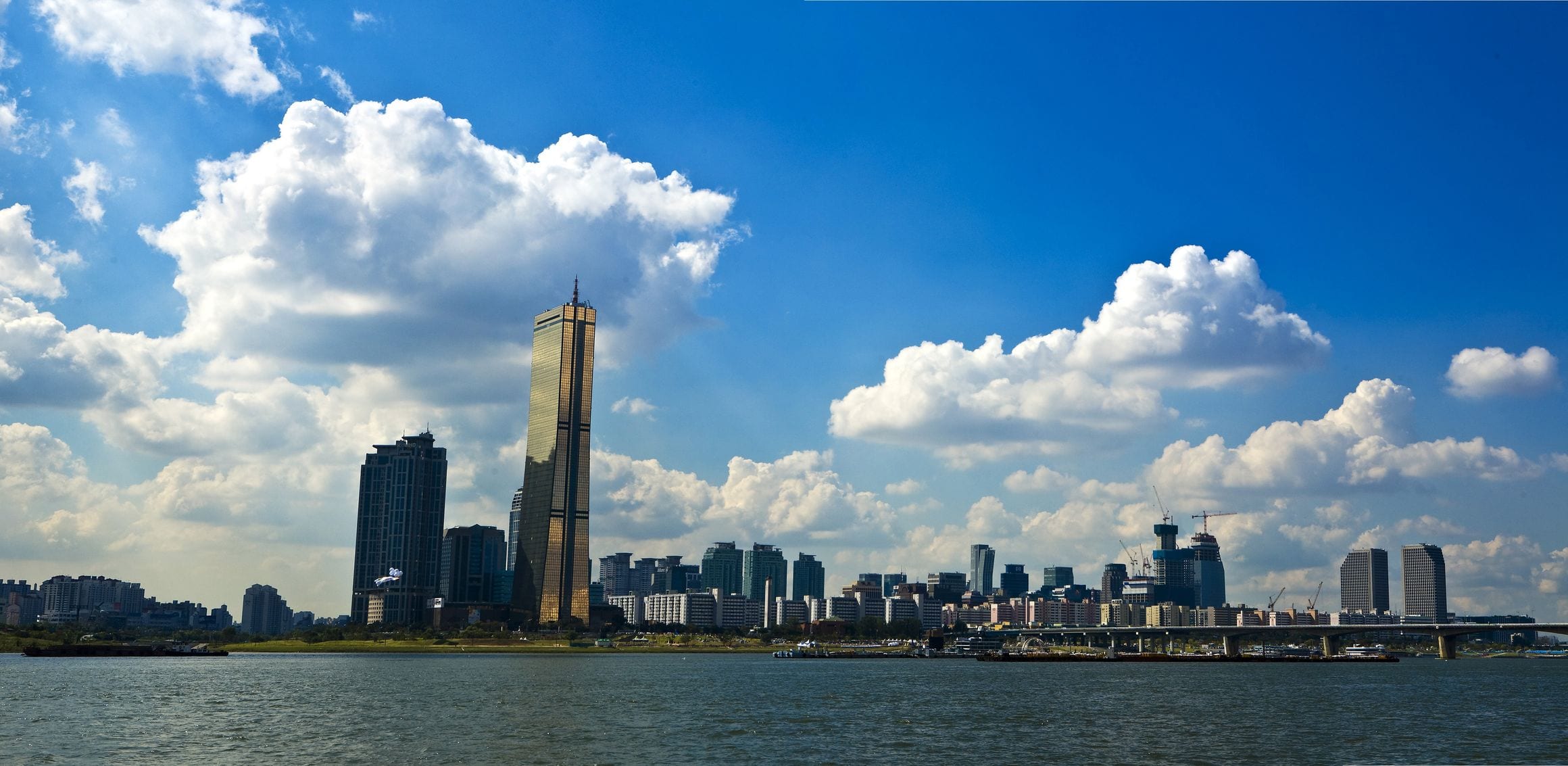
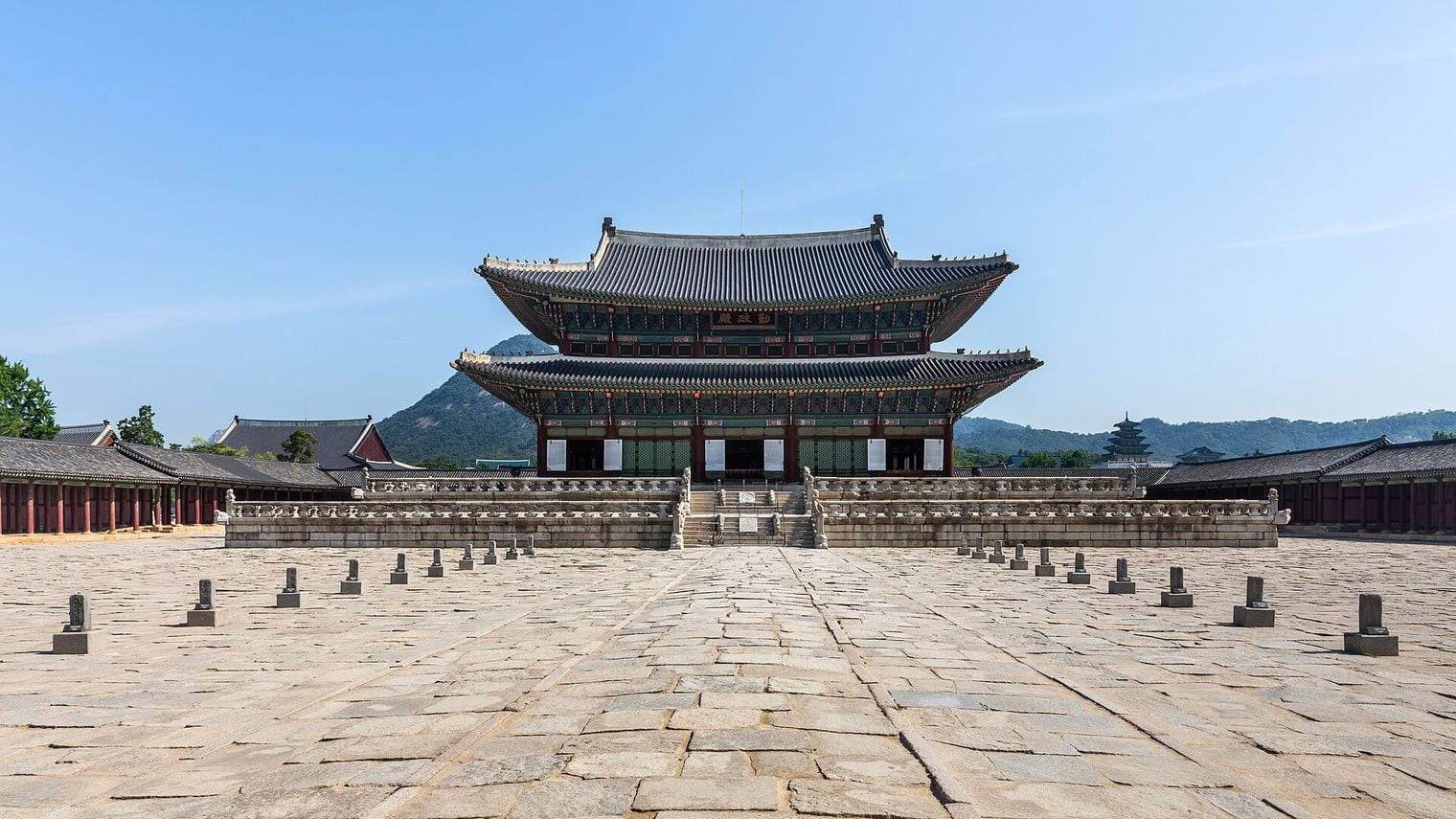
Nowhere else does a six-hundred-year-old throne hall share a horizon with a 555-metre glass tower and look like it was always meant to.
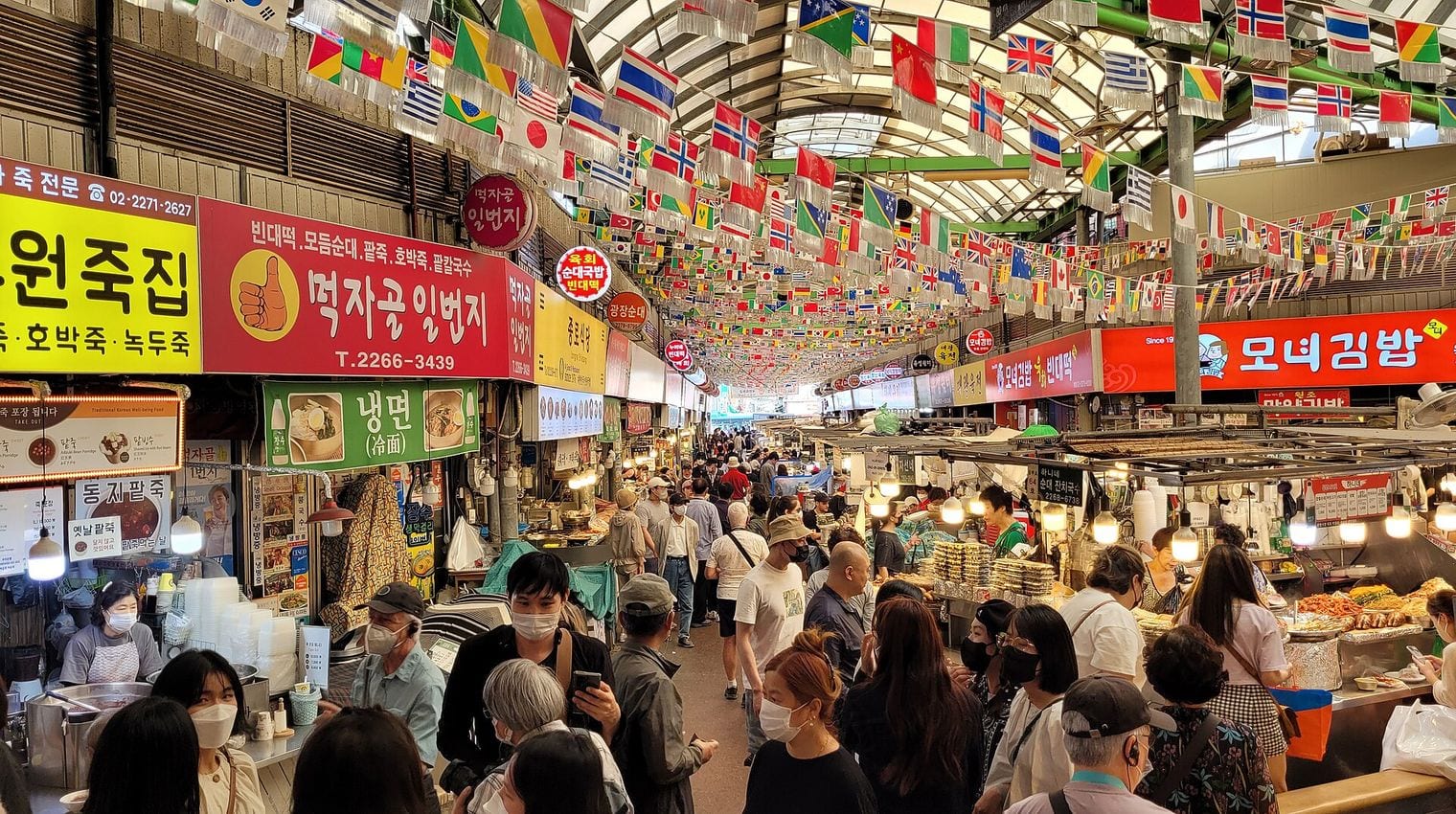
South Korea packs a startling amount into a peninsula roughly the size of Kentucky: Joseon palaces and tiled hanok lanes sitting inside a capital of nearly ten million, mountain temples that take overnight guests, and a coastline of fishing ports and volcanic islands. Fast, inexpensive trains put Seoul, Gyeongju and Busan within a few hours of one another, so a first trip rarely needs a car. Come for the food — the country's real national collection is its markets — and stay for how comfortably the very old and the very new share a skyline.
The country's showpiece season. Cherry blossom sweeps north from Jeju and Busan to Seoul over a few weeks, palace grounds and riverside parks fill with picnickers, and daytime temperatures sit comfortably in the mid-teens to low twenties Celsius. Late March can still turn sharply cold, and fine yellow dust drifting in from the west occasionally hazes the air.
SummerJun–Aug
Hot, humid and green. The monsoon front known as jangma parks over the peninsula from roughly late June into July, delivering long spells of heavy rain, and August is the muggiest stretch of the year. It is also when the beaches, the water parks and the mountain valleys come alive, and when city life shifts outdoors after dark.
FallSep–Nov
For many travellers the best time to come. The humidity breaks, the skies turn genuinely clear, and foliage moves down from the northern mountains through October into November, lighting up the national parks and the temple valleys. Days are mild, evenings cool, and the hiking is superb.
WinterDec–Mar
Cold, dry and bright, with Siberian air pushing temperatures in Seoul below freezing for weeks at a time. Snow is common in the northern and eastern mountains, which is what makes Gangwon a ski region, and the clear light is excellent for photography. Pack seriously warm layers; the wind is what gets you.
Regions
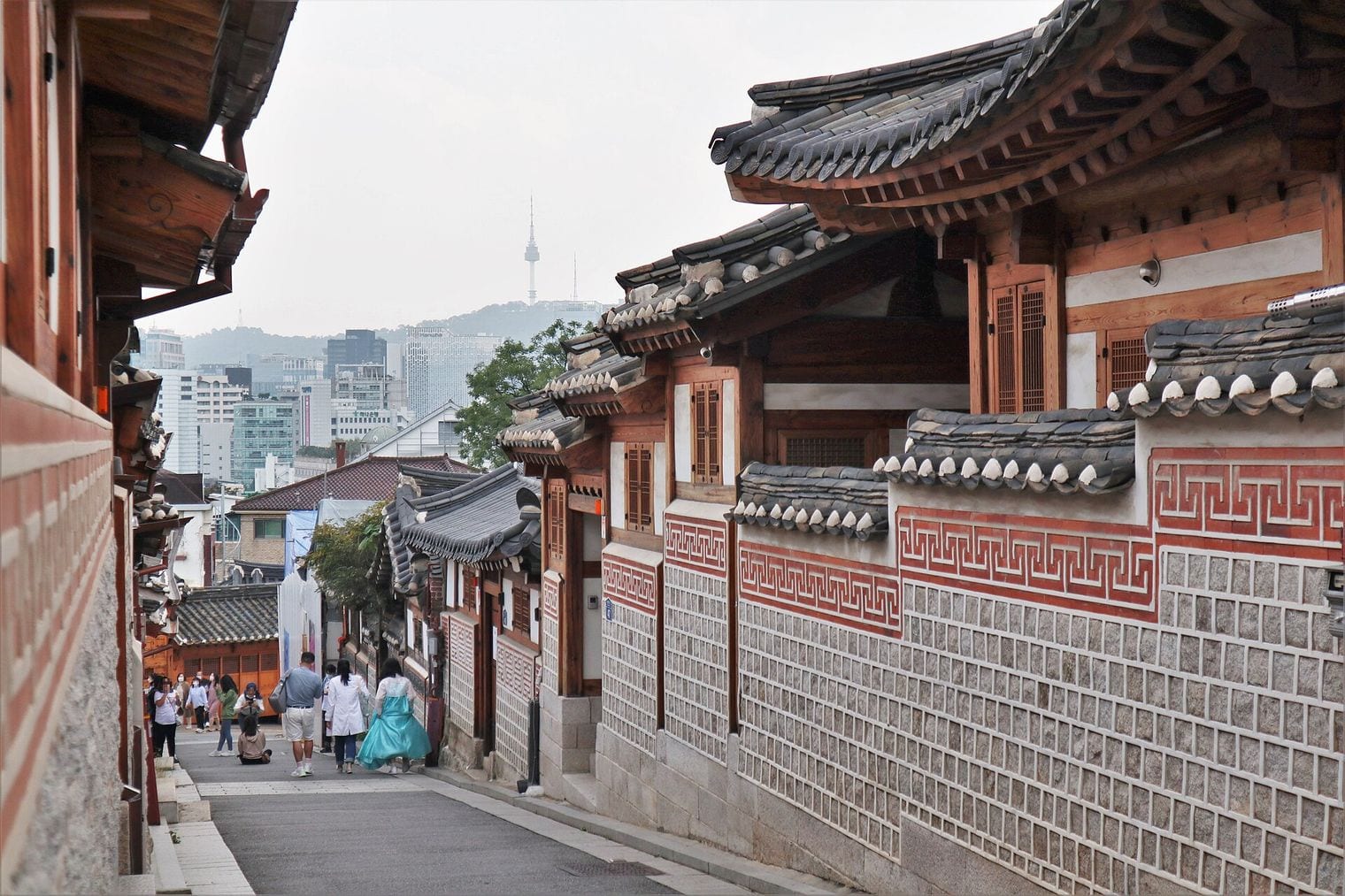
Seoul & the capital regionThe obvious starting point and where most trips begin and end. Five Joseon palaces, the hanok quarters of Bukchon and Ikseon-dong, and the night-market food alleys sit inside a metropolis that also gave the world K-pop and a design plaza by Zaha Hadid — with the port city of Incheon and the fortress town of Suwon within an hour by subway or train.
Gangwon & the east coastThe mountainous northeast, where the Taebaek range runs down to a startlingly blue coast. This is Korea's ski country and the setting for Seoraksan National Park, whose granite ridges and temple valleys draw serious crowds when the autumn colour arrives.
Gyeongju & the southeastThe old Silla capital, often called a museum without walls: grass burial mounds sit in the middle of town, and the UNESCO-listed Bulguksa temple and Seokguram grotto look down from the hills above. Nearby Andong keeps a working village of thatched and tiled houses and a strong Confucian tradition.
Busan & the south coastThe country's second city and its great port — beaches, a vast fish market, a cliffside temple above the sea and the tumbling painted houses of Gamcheon. West of it lies a coastline of quiet islands and the sea-bridge scenery around Tongyeong and Geoje.
Jeolla & the southwestThe gastronomic heartland, where a single set meal can arrive as a dozen shared dishes. Jeonju's hanok village is the best-known stop, Damyang has its bamboo forest, and the ragged coast and thousands of tidal islands around Mokpo and Suncheon are among the least-visited parts of the country.
Jeju IslandA volcanic island south of the mainland with a character of its own — lava tubes, a dormant central peak in Hallasan, waterfalls, black-sand beaches and a coastal walking trail that circles the whole island. It is the one place where hiring a car makes an obvious difference.
Bulguksa & SeokguramA UNESCO-listed pair above Gyeongju — an eighth-century temple of stone terraces and pagodas, and a hillside grotto holding one of Asia's great seated Buddhas.Basecamp: Gyeongju
Hallasan & Jeju's lava tubesThe shield volcano at the centre of Jeju, ringed by UNESCO-listed lava-tube caves, crater cones and a coastal trail that circles the island on foot.Basecamp: Jeju Island
Haeinsa & the Tripitaka KoreanaA mountain temple in Gayasan that has housed the complete Buddhist canon carved onto more than eighty thousand woodblocks since the thirteenth century.Basecamp: Gyeongsang
Suggested routes
The classic first trip
~10 days
A straight run down the spine of the country on the KTX, taking in the capital, the old Silla capital and the southern port. No car needed at any point, and it works just as well in reverse if you fly out of Busan.
1Seoul — four days for the palaces, markets and hanok lanes
2Gyeongju — burial mounds, Bulguksa and Seokguram
3Busan — fish market, cliffside temple and the beaches
4Jeonju — optional detour for the hanok village and the food
Seoul in depth
~4–5 days
Enough time to get past the headline sights and into the neighbourhoods, using nothing but the subway and a T-money card. Pairs a palace-and-market core with a day out to the fortress town of Suwon.
1Palace quarter — Gyeongbokgung, Changdeokgung and Bukchon
A slower loop for a second visit or a longer first one, trading city time for volcanic scenery, ridge walking and the eastern seaboard. This is the itinerary where a hire car genuinely pays for itself on Jeju.
1Busan — fly or ride in; the south coast base
2Jeju Island — short hop by air; lava tubes and the coastal trail
3Seoraksan — granite peaks and temple valleys in the northeast
4Gangneung — east-coast beaches and coffee street before the train home
South Korea travel FAQ
Eight questions travellers ask before they go.
When is the best time to visit South Korea?
Autumn, from September to November, is the popular answer — the humidity has broken, the skies are clear and the foliage is spectacular in the mountains and temple valleys. Spring, roughly April to May, runs it close for cherry blossom and mild walking weather. Summer is hot and includes a genuine rainy season in late June and July, while winter is cold and dry but bright, and it is the only time the Gangwon ski resorts make sense.
How many days do you need in South Korea?
Four or five days is enough for Seoul alone and makes a rewarding short trip. Around ten days lets you add Gyeongju and Busan by high-speed train without rushing, which is the shape most first visits take. Two weeks opens up Jeju Island, the Seoraksan mountains or the food-focused southwest as well.
Do you need a car in South Korea?
For most itineraries, no. KTX trains, intercity buses and city subways cover the country thoroughly and cheaply, and Seoul in particular is easier without a car than with one. Hire a car for Jeju Island, the eastern coastal road, or if you want to reach remote temples and national-park trailheads on your own schedule.
What is South Korea best known for?
Its food and its contrasts, mostly. The country is famous for Korean barbecue, kimchi and market street food; for K-pop, film and television that now travel worldwide; and for a set of royal palaces, mountain temples and hanok villages that sit within walking distance of some of the most modern architecture in Asia. It also has 17 UNESCO World Heritage Sites for a country you can cross in an afternoon.
Is English widely spoken in South Korea?
Less than visitors often expect, but enough to travel comfortably. Subway signage, station announcements, major museum labels and most tourist attractions carry English, and younger people in Seoul and Busan frequently speak some. Outside the cities and in smaller restaurants it thins out quickly, so a translation app and a few phrases in Korean go a long way — and learning to read hangul takes about an evening and pays off immediately.
What currency does South Korea use, and are cards accepted?
The South Korean won, written ₩ and abbreviated KRW. Card payment is close to universal — Korea is among the most cashless countries in the world, and even small cafés and taxis take cards. Carry a modest amount of cash anyway for traditional market stalls, temple donation boxes and rural buses, and expect foreign cards to be declined at some unattended machines.
What should you eat in South Korea?
Start with Korean barbecue, where you grill pork belly or marinated beef at the table, and with a stew such as kimchi jjigae or sundubu. Work through the market staples — mung-bean pancakes, knife-cut noodles, blood sausage, sweet filled hotteok pancakes in winter — and try a bibimbap in Jeonju, where the dish is said to have been perfected. Every meal arrives with a spread of free shared side dishes called banchan, which is half the pleasure.
What kind of trip is South Korea best for?
First-time Asia trips, food, city breaks, hiking.
We use cookies to analyse site traffic and improve your experience.
You can accept or reject analytics cookies. See our Cookie Policy.