We may earn a commission if you book or buy through a link on
this page, at no extra cost to you. It never affects which places we list or how
we rank them (how we make money).
Short answer
Seoul's three essentials are Gyeongbokgung, the main Joseon palace with its hourly changing of the royal guard, Bukchon Hanok Village's tiled lanes wedged between two palaces, and Gwangjang Market, the oldest covered market in the city and the birthplace of Korean street food. Four to five days suits most first visits: two for the palace quarter and markets, a third for the Yongsan museums, and more for the neighbourhoods.
Seoul runs on contrast. Five Joseon palaces sit within a few subway stops of glass towers and neon shopping streets, mountain trails start at the end of residential lanes, and a market alley can be busiest well after midnight.
This guide covers the forty sights worth your time, from throne halls and hanok alleys in the old city to a skydeck 555 metres up. Four or five days is enough for most of it; the palaces and the markets alone will fill two.
Seoul was the first city in the world to put contactless smart cards on its metro — the subway rolled them out in 1996, and a single rechargeable card now covers buses, taxis and convenience stores nationwide.
Gyeongbokgung ranks among the largest royal palaces in the world by ground area, and it is only one of five Joseon palace complexes still standing inside the modern city.
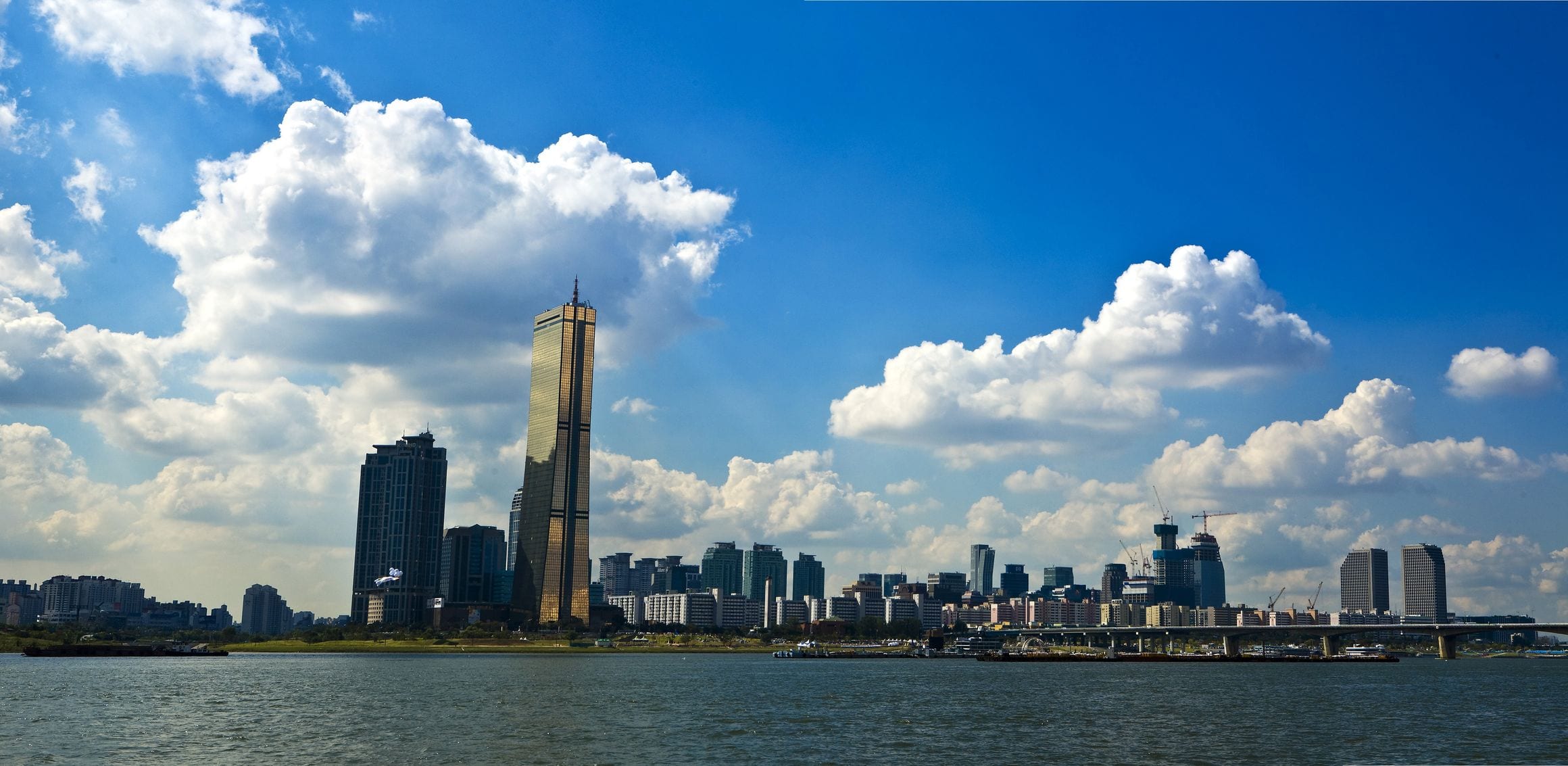
At 555 metres, Lotte World Tower is one of the tallest buildings in the world — and its Sky Deck carries one of the highest glass floors anywhere, reached by lifts among the fastest ever installed.
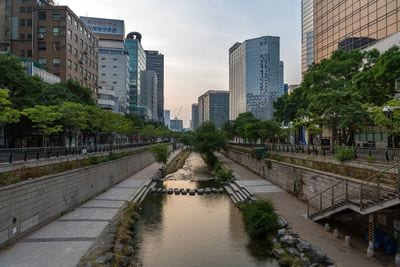
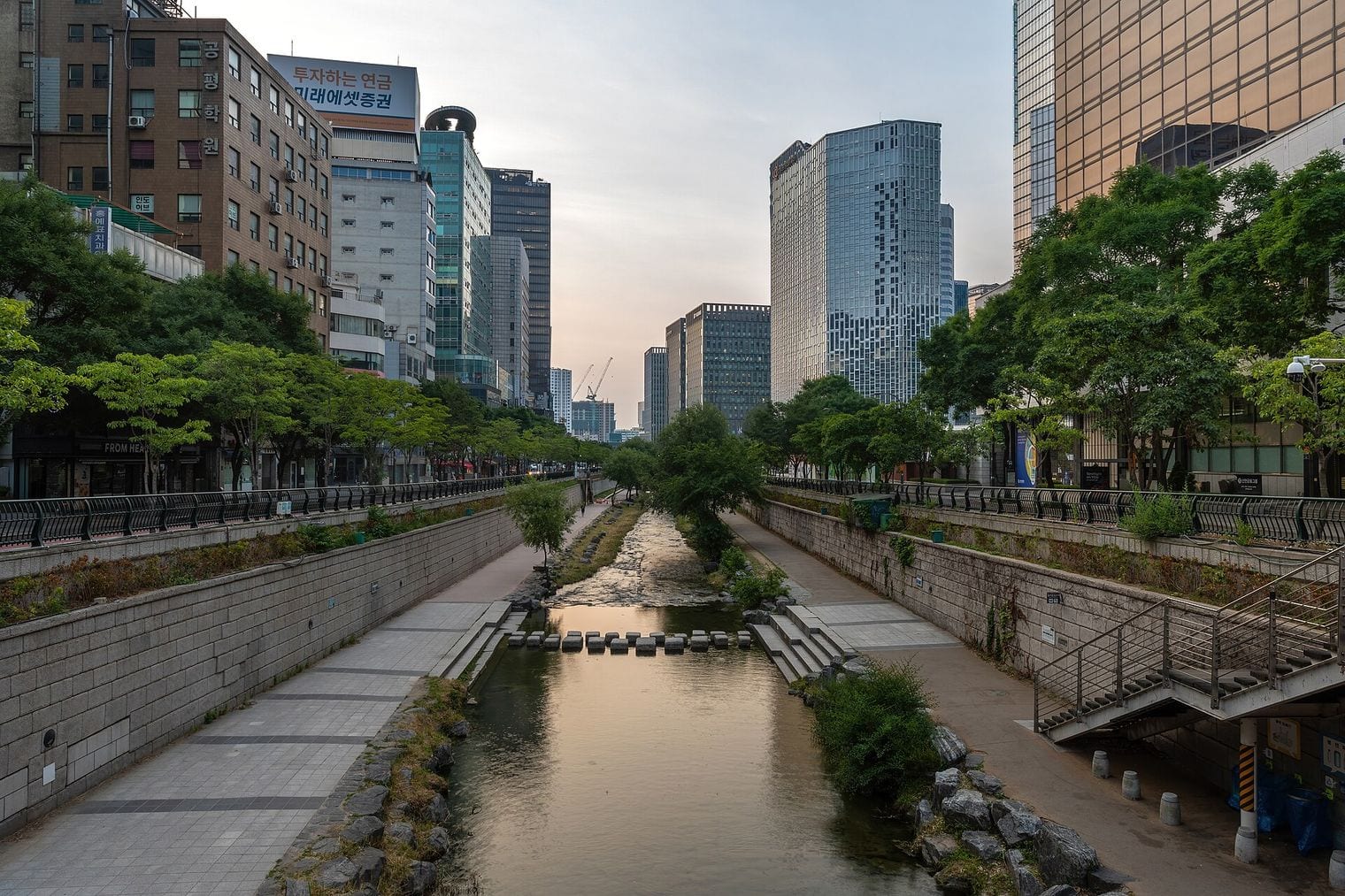
The Cheonggyecheon stream spent decades buried under a motorway: the elevated road above it was pulled down in the early 2000s and the water uncovered, turning a traffic artery into a walking route through the middle of downtown.
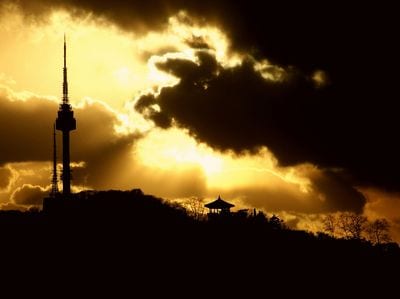
A wooded mountain rises in the middle of the city. Namsan, crowned by N Seoul Tower, has hiking trails that begin a few minutes on foot from the shopping streets of Myeongdong.
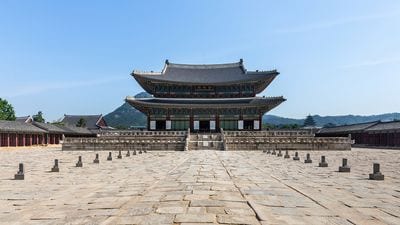
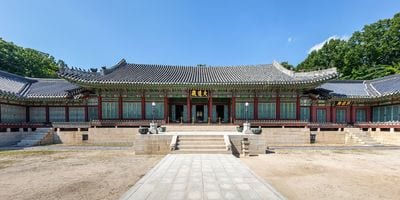
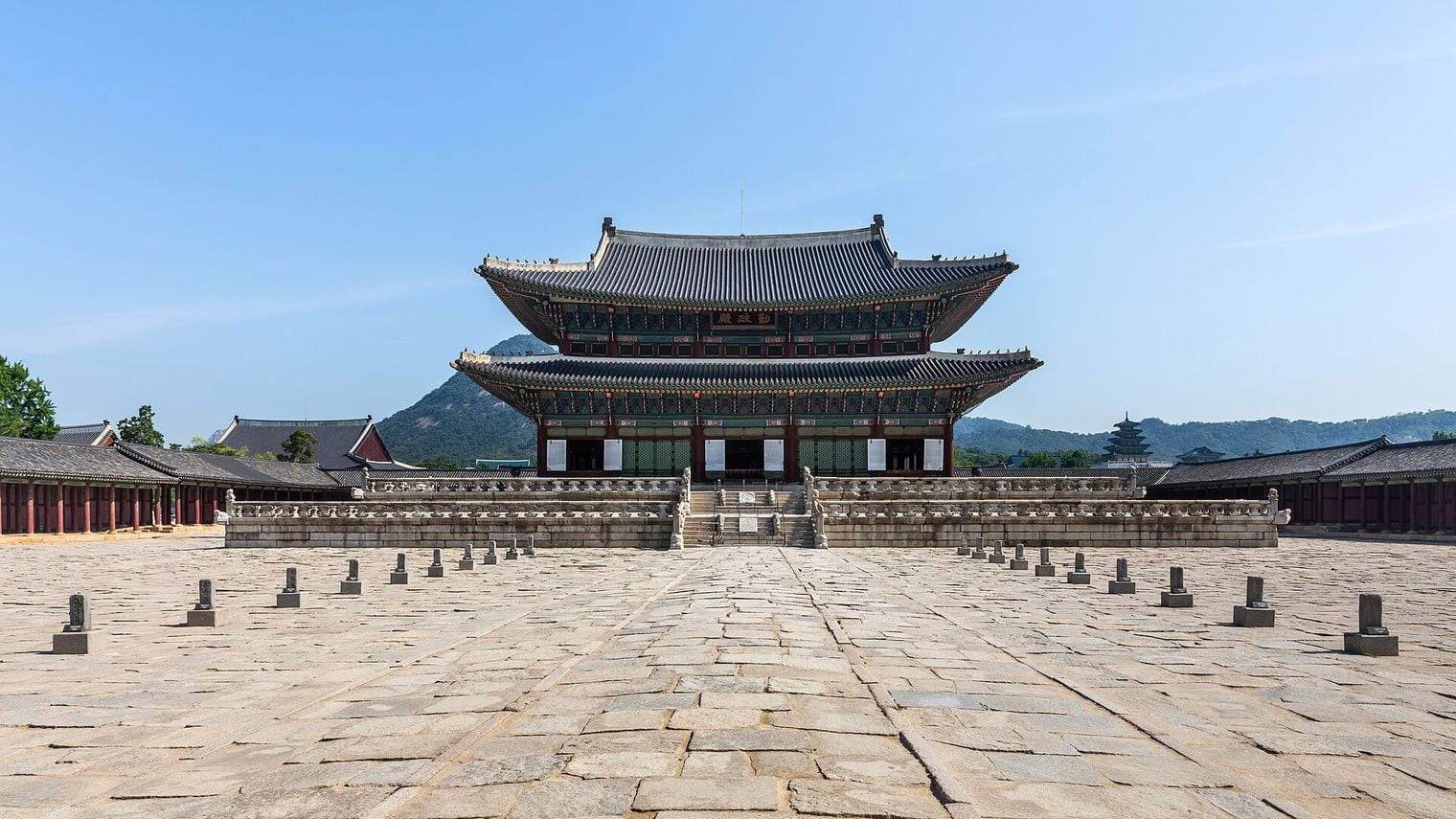
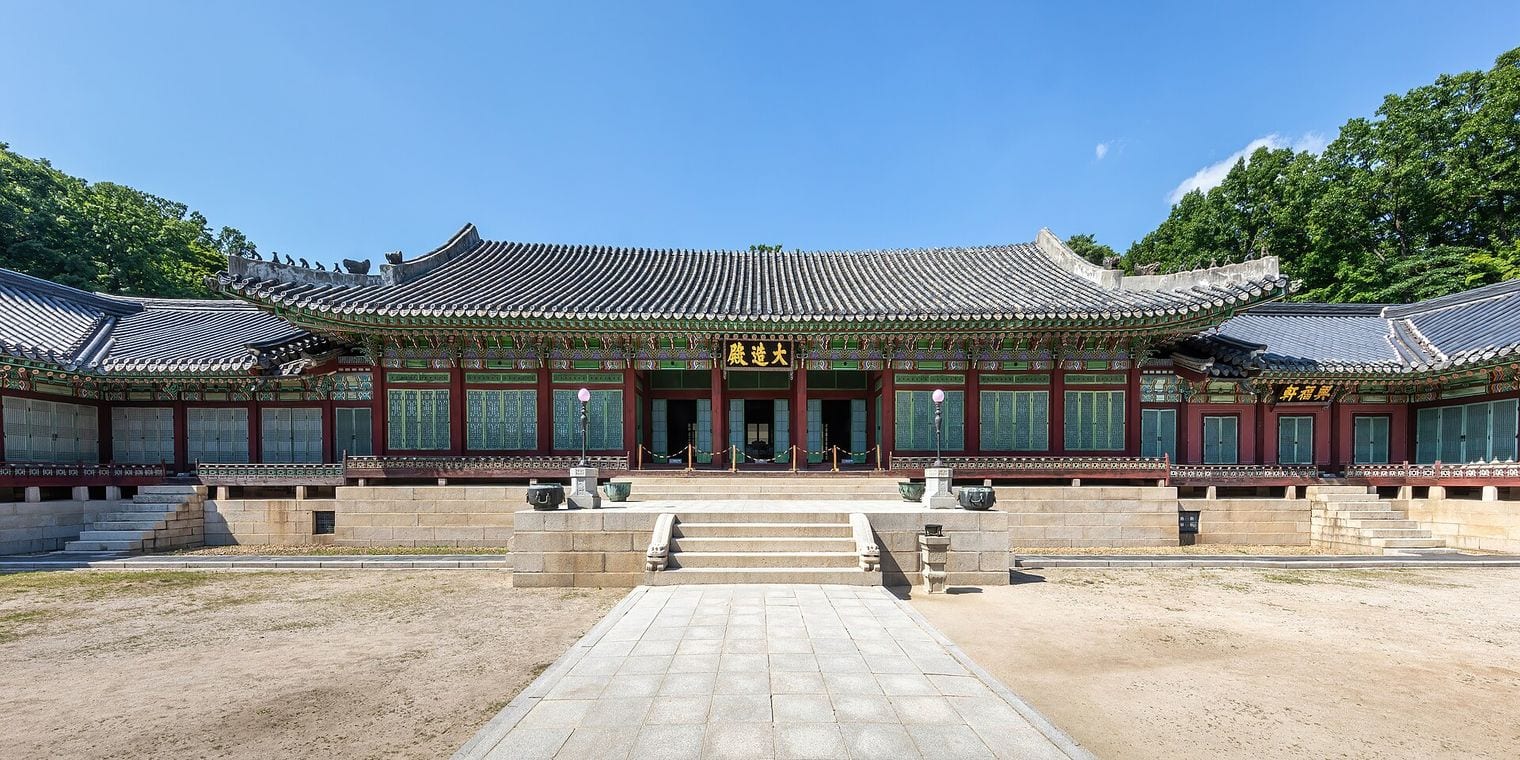
Gyeongbokgung Palace is the largest and grandest of the five palaces the Joseon dynasty built in Seoul, and the obvious place to begin. Pass through the Gwanghwamun gate and the traffic noise drops away behind a sequence of courtyards, painted eaves and the broad throne hall of Geunjeongjeon, with the granite ridge of Bugaksan rising directly behind the rooflines.
Time your visit around the changing of the royal guard at the main gate, a drum-and-banner ceremony staged more than once a day. The grounds also hold the National Folk Museum and the pavilion of Gyeonghoeru, which appears to float on its own lotus pond. Rent a hanbok from one of the shops nearby and you will be in plenty of company — the courtyards are full of visitors in traditional dress.
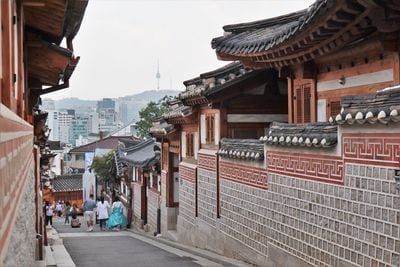
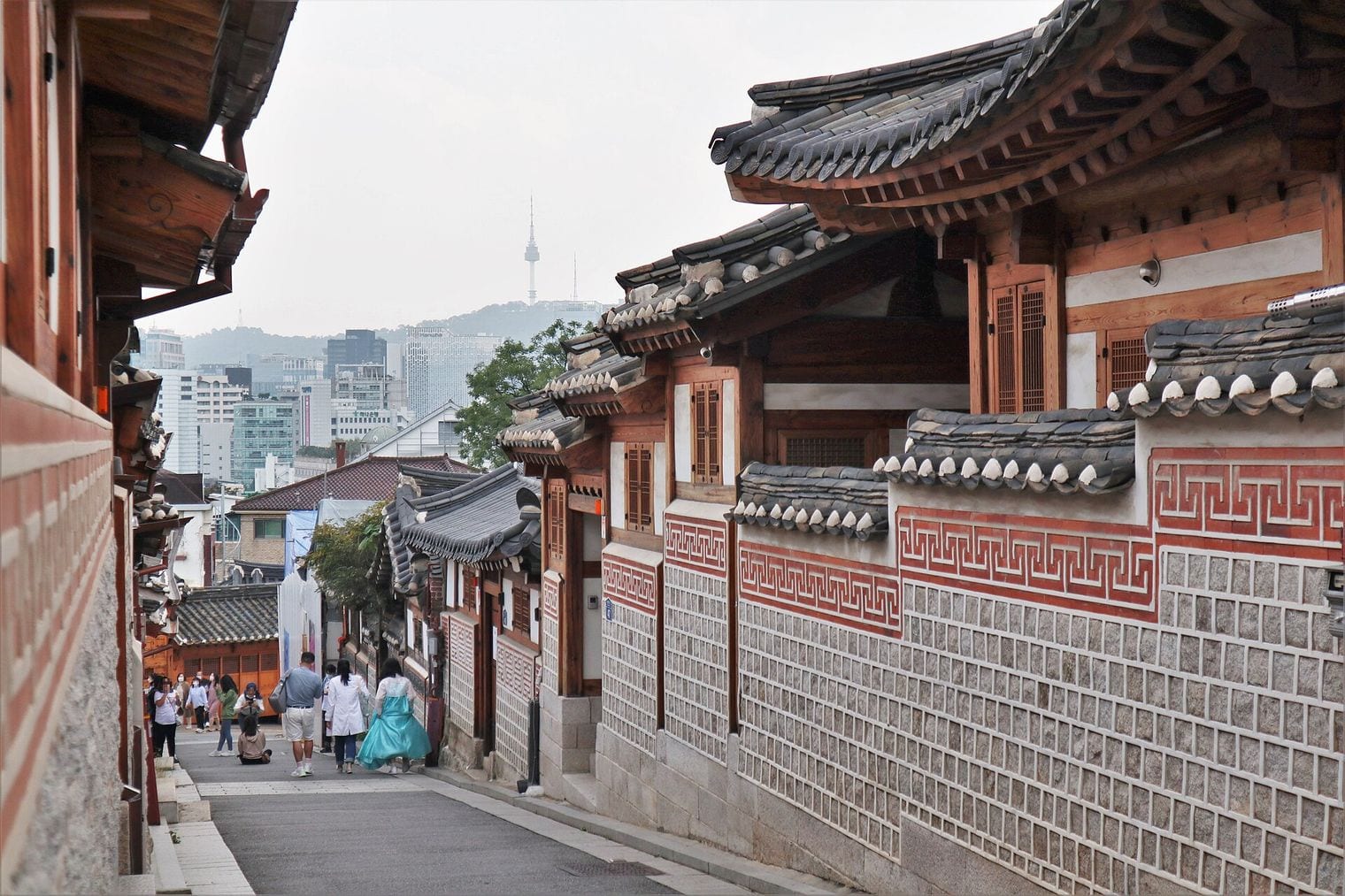
Bukchon Hanok Village fills the slope between Gyeongbokgung and Changdeokgung with hanok — the low, tile-roofed courtyard houses that once covered the whole capital. The lanes climb and turn without warning, and every few metres the view opens downhill over a run of curved grey roof tiles with the modern skyline stacked up behind them.
The essential thing to know is that Bukchon is a real neighbourhood rather than an open-air museum: people live behind those gates, and signs throughout the village ask visitors to keep their voices down. Come early in the morning if you want the lanes to yourself, and step into the craft workshops and tea houses that occupy some of the restored houses.
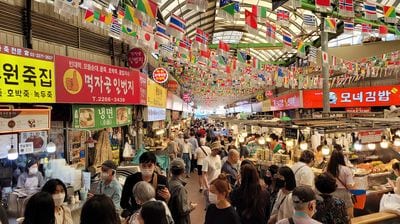
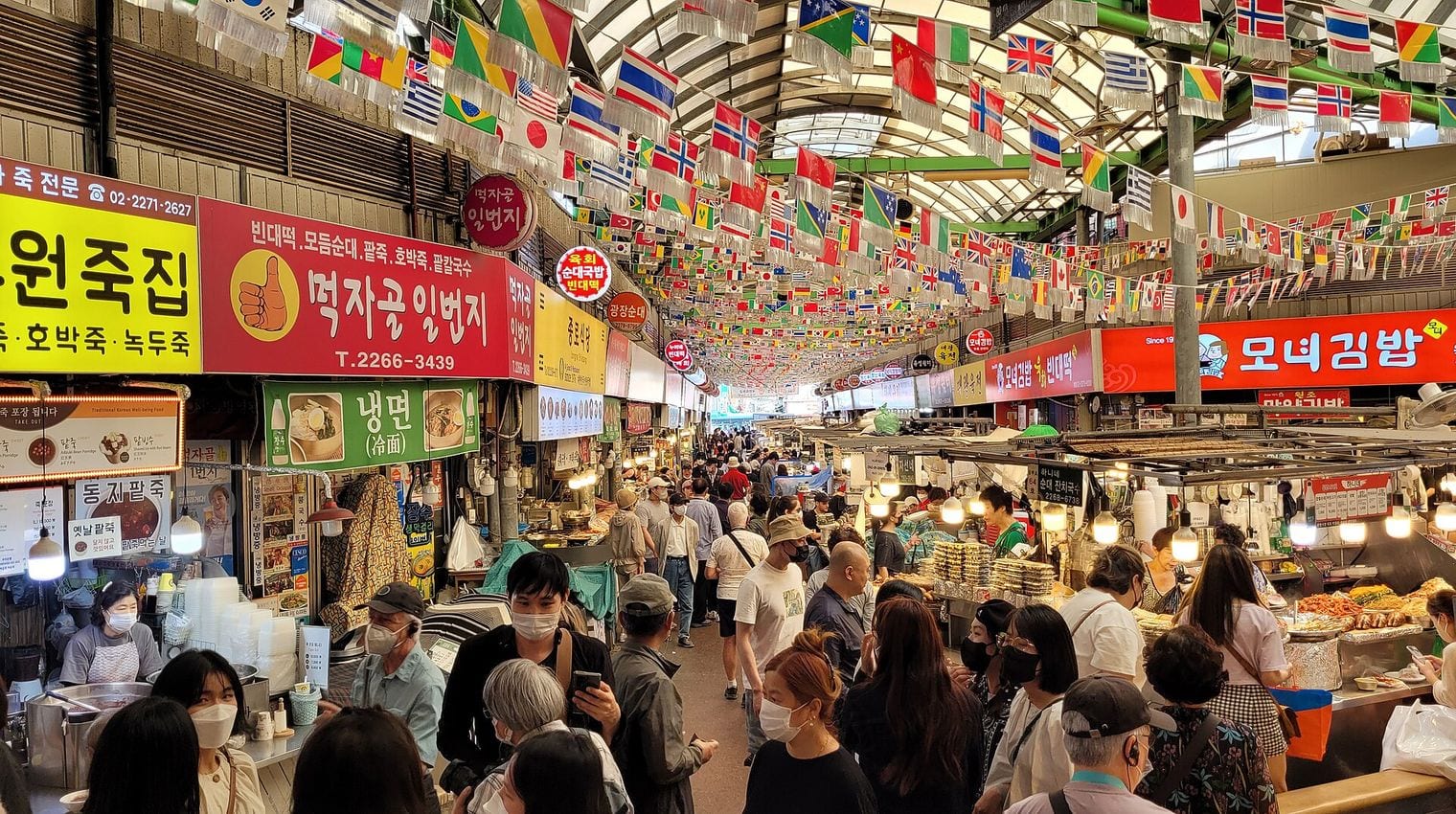
Gwangjang Market is one of the oldest permanent markets in Korea and the single best introduction to Korean food in Seoul. The covered food alley at its heart is a corridor of stalls where the cooks work at arm's length, ladling, griddling and slicing in front of a rank of plastic stools.
The signature dish is bindaetteok, a thick mung-bean pancake fried until the edges crisp. Beyond that, look for mayak gimbap — bite-sized seaweed rolls dipped in mustard sauce — along with knife-cut noodles, blood sausage and raw beef. Sit down at a stall, point at whatever the person beside you is eating, and share the counter with whoever turns up next.
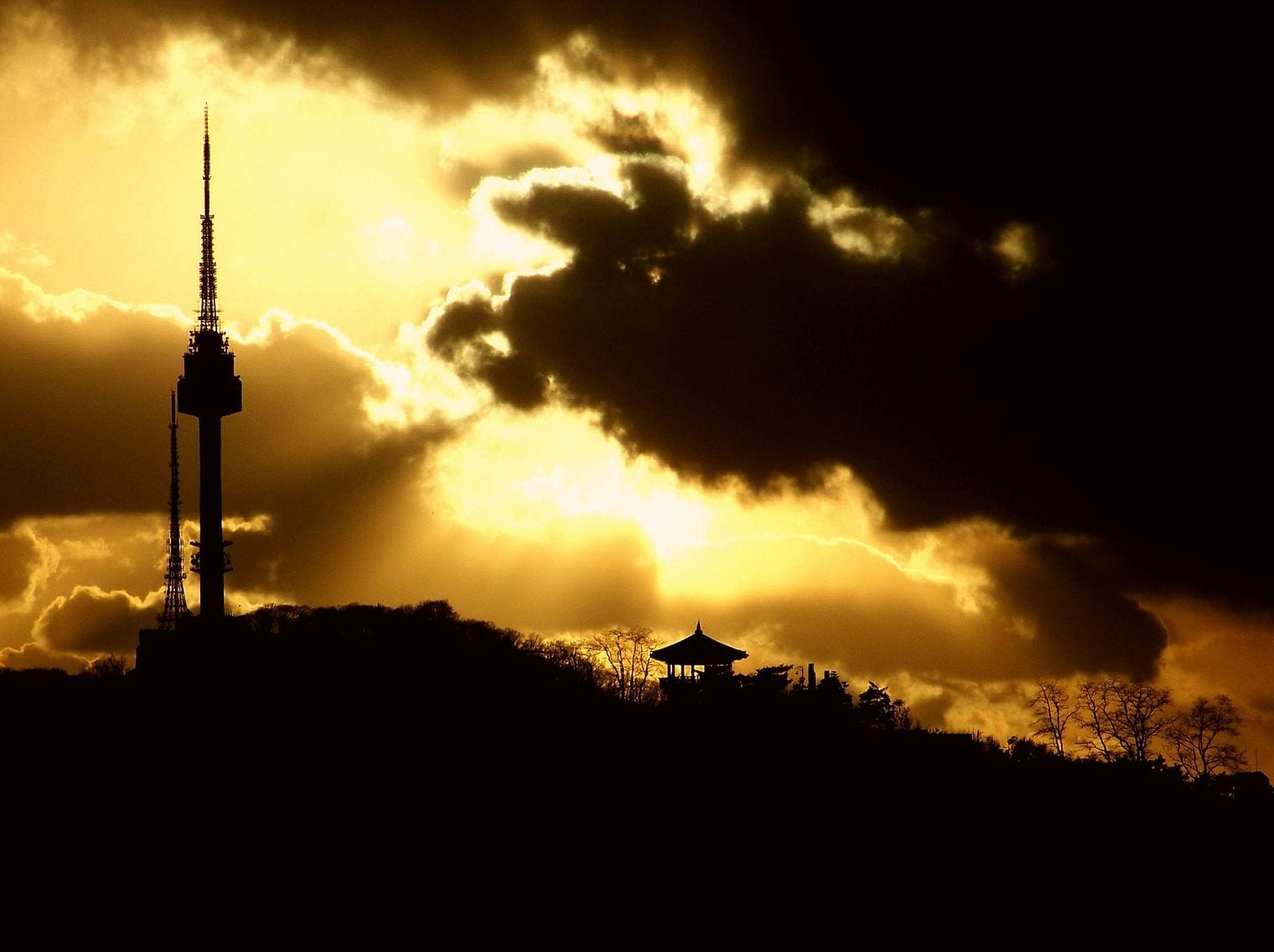
N Seoul Tower stands on the summit of Namsan, the wooded mountain that rises straight out of the middle of the city, and it is the landmark everyone navigates by. The observation deck looks out over a basin of towers ringed by mountains, and on a clear evening you can watch the whole grid switch on beneath you.
Getting up is half the appeal. You can ride the cable car from the lower slope, take the shuttle bus, or walk one of the shaded trails that climb through the park from several directions. The terraces below the tower are hung with padlocks left by couples, which has quietly become a landmark of its own.
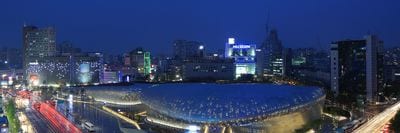
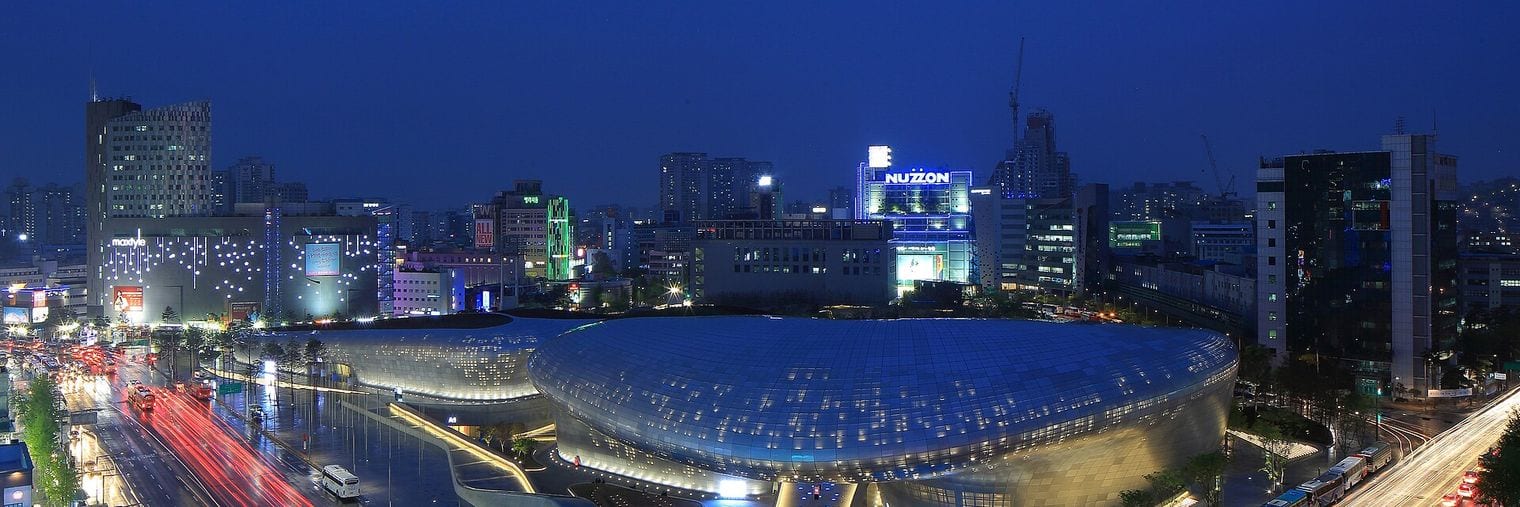
Dongdaemun Design Plaza (DDP) is the boldest building in Seoul: a seamless silver mass by the architect Zaha Hadid, with no straight lines and no obvious front door. It sits in the middle of the Dongdaemun garment district, and the collision between the two is very much the point.
Inside are exhibition halls, design shops and a museum; outside, ramps and grassed roofs let you walk over and around the structure without a ticket. Part of the site is given over to excavated remains of the old city wall and a Joseon-era military camp, uncovered during construction and left on display in a sunken park beside the building.
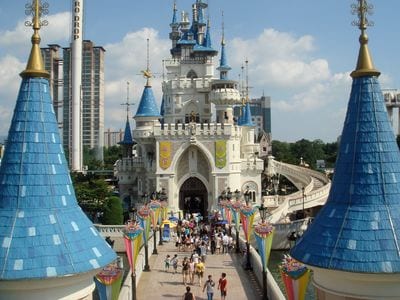
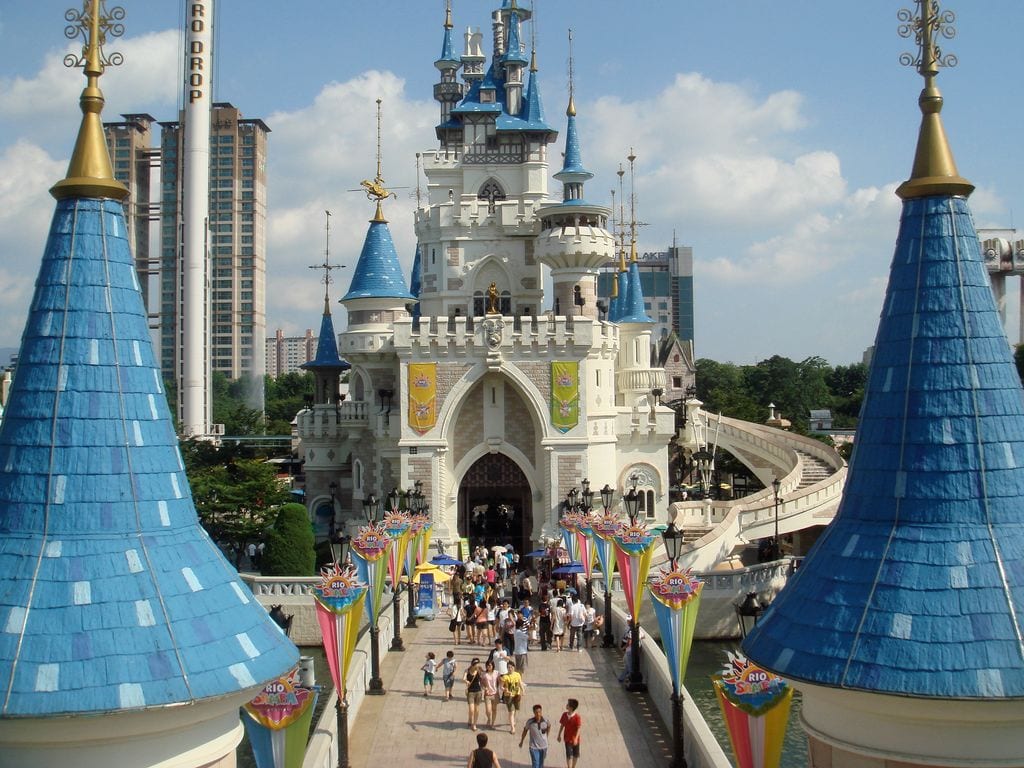
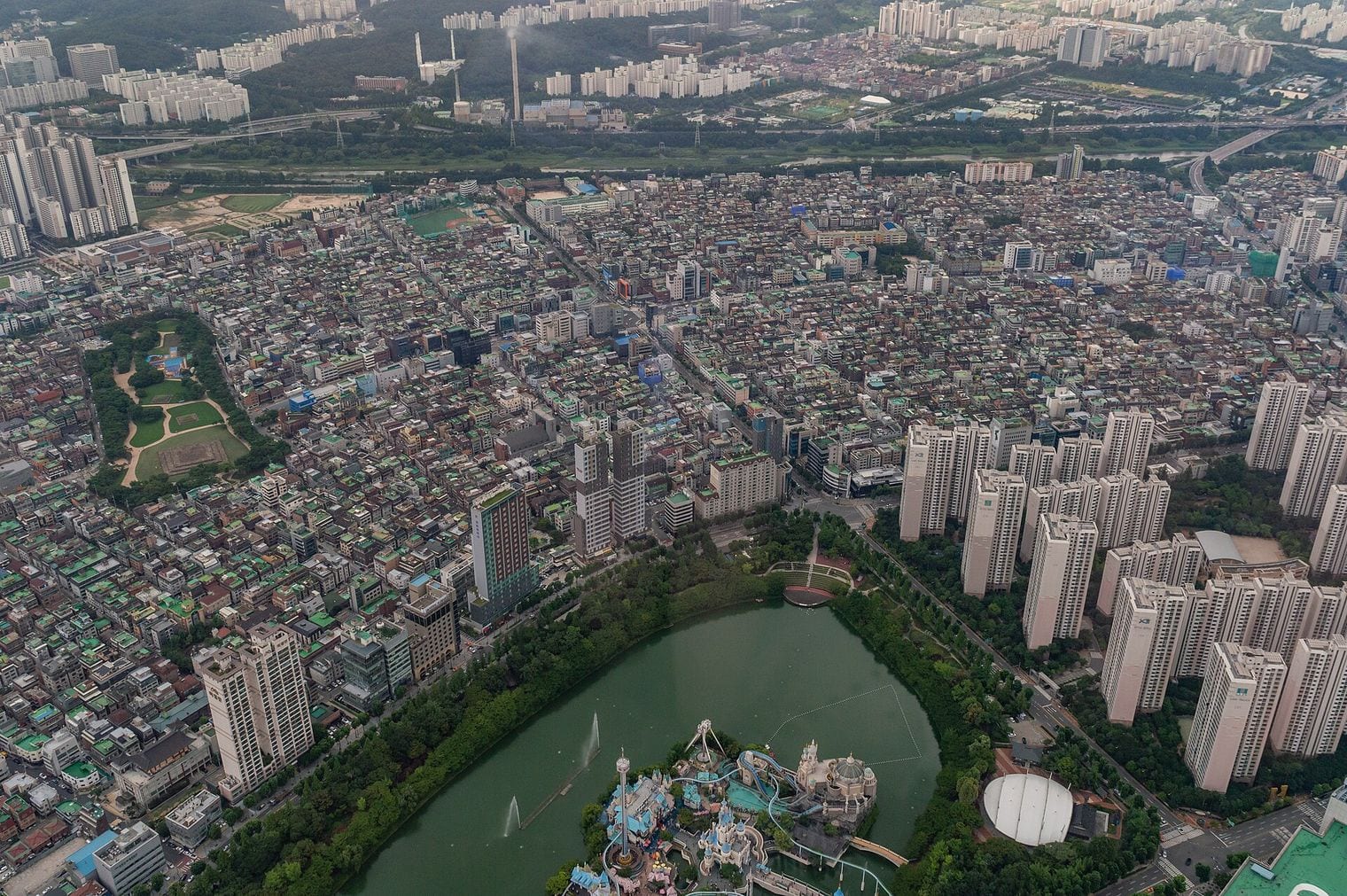
Lotte World is the biggest amusement park in Seoul and an unusual hybrid: a vast glass-roofed indoor park that stays open whatever the weather, joined to an outdoor island section set in a lake. Opened in the late 1980s, it remains one of the most-visited attractions in the country.
The indoor half wraps rides, parades and an ice rink around a central atrium, while Magic Island, reached by a short bridge, adds the bigger outdoor coasters beneath a fairytale castle. It is squarely a family destination and gets very busy at weekends, so a weekday visit is far more comfortable if you have the choice.
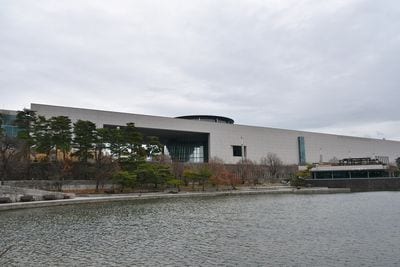
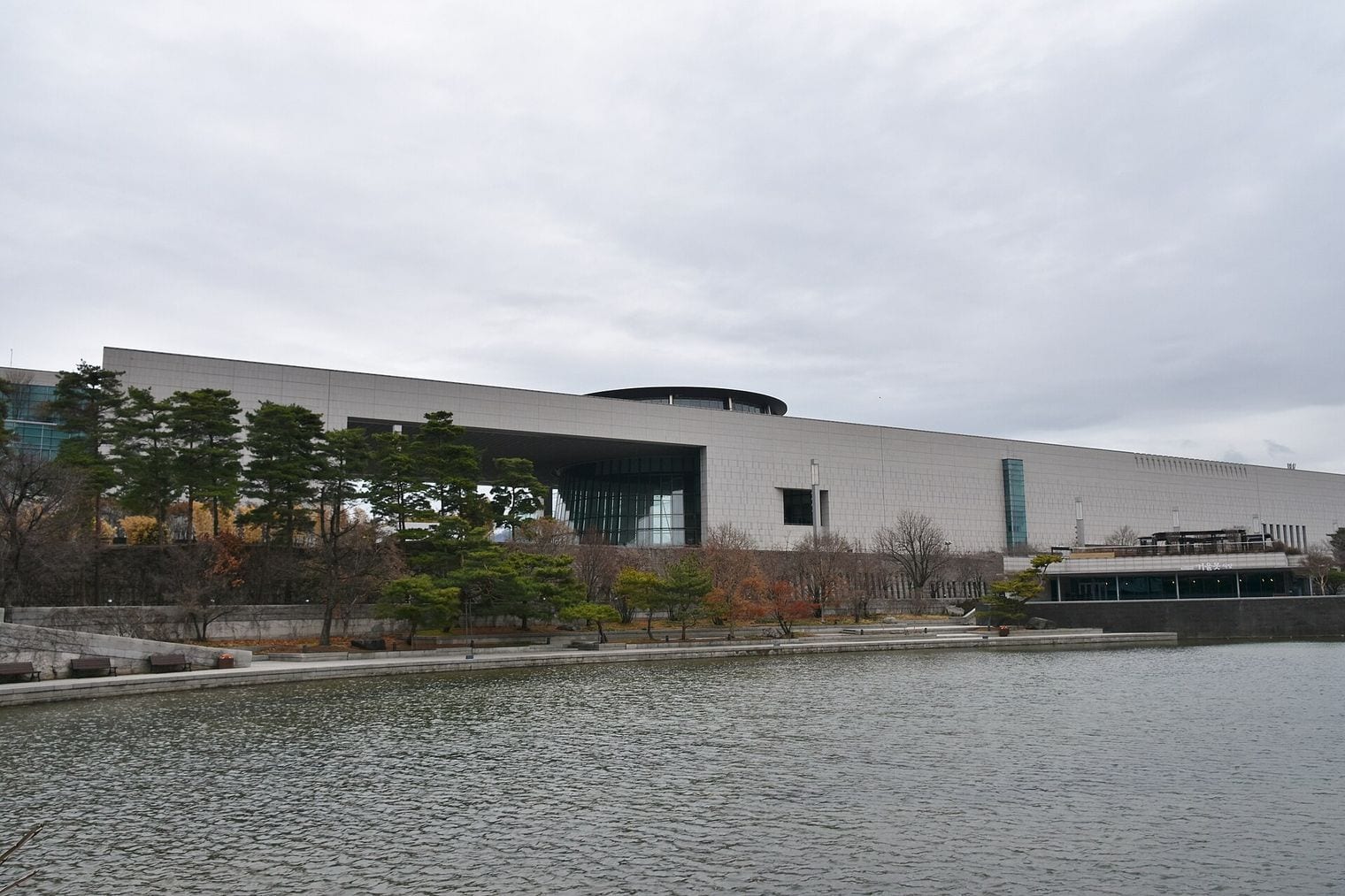
The National Museum of Korea is the country's flagship collection and one of the largest museums in Asia, laid out along vast, calm galleries in Yongsan. It runs chronologically from prehistory through the Three Kingdoms, Goryeo and Joseon, so an hour spent here does more to make sense of the rest of your trip than anything else in the city.
Seek out the gilt-bronze Pensive Bodhisattva, displayed alone in a darkened room, and the ten-storey Gyeongcheonsa pagoda that rises through the middle of the building. The surrounding park, with its reflecting pond and its view back towards Namsan, is a good place to sit afterwards and let it settle.
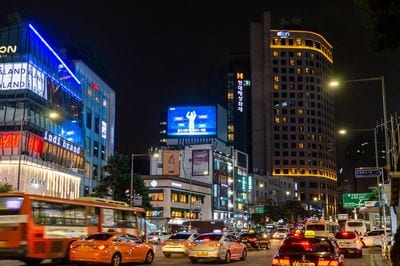
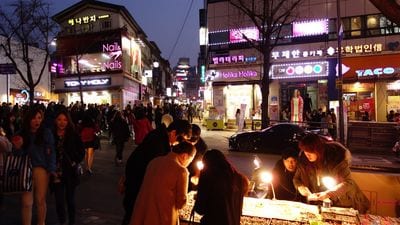
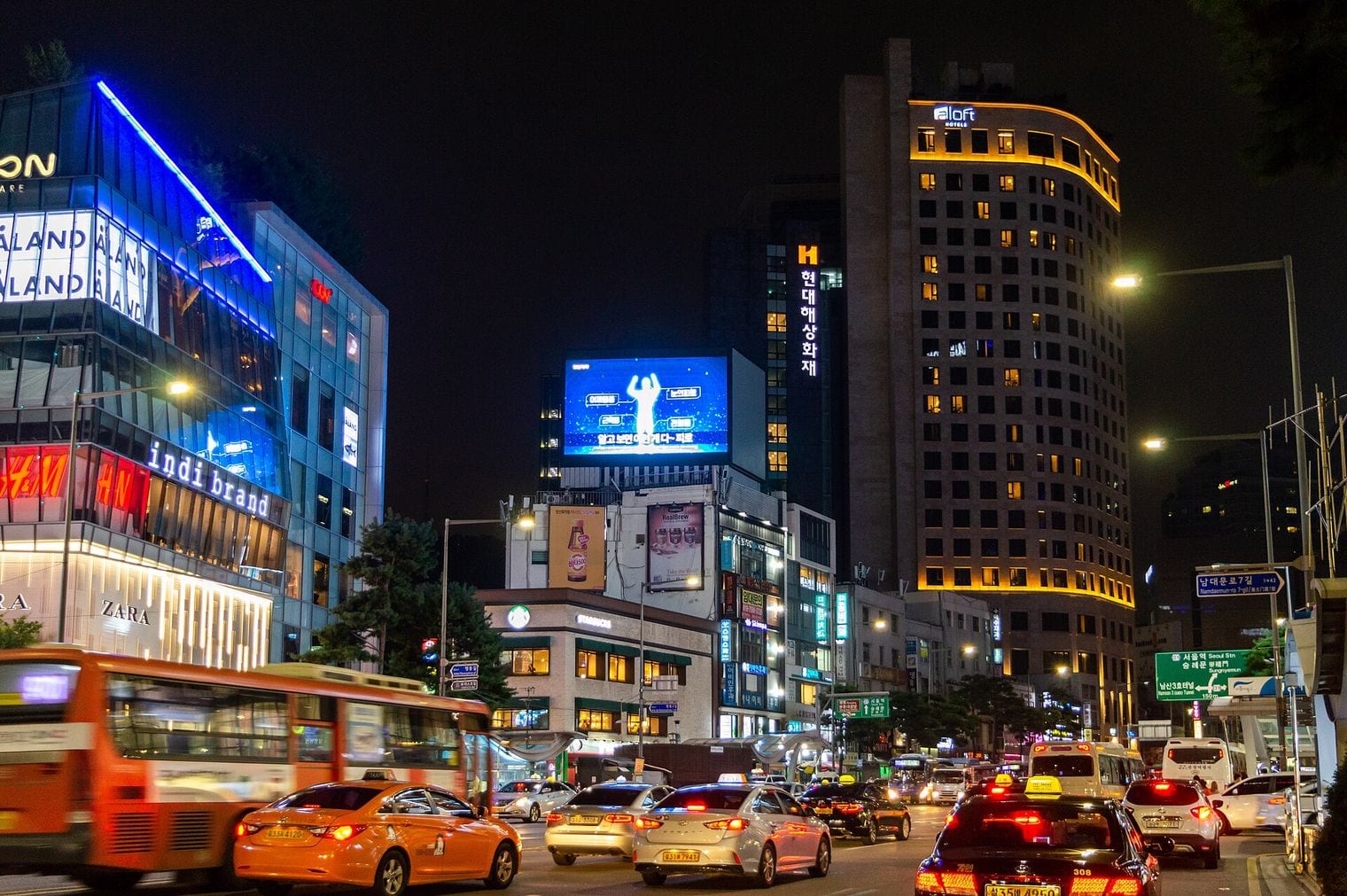
Myeongdong Shopping Street is the densest retail strip in the city, a grid of pedestrianised lanes given over almost entirely to Korean cosmetics, fashion and footwear. Assistants call from doorways, samples are pressed into your hands, and the district runs at a pitch that is either exhilarating or exhausting depending on your mood.
Come back after dark, when carts unfold down the middle of the streets and the whole area turns into a street-food market — grilled cheese lobster, egg bread, tornado potatoes and hotteok. Myeongdong also makes a convenient base, sitting between the Deoksugung palace grounds and the foot of Namsan, within walking distance of both.
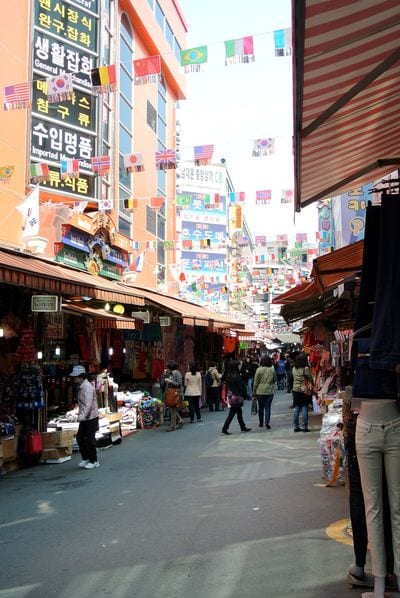
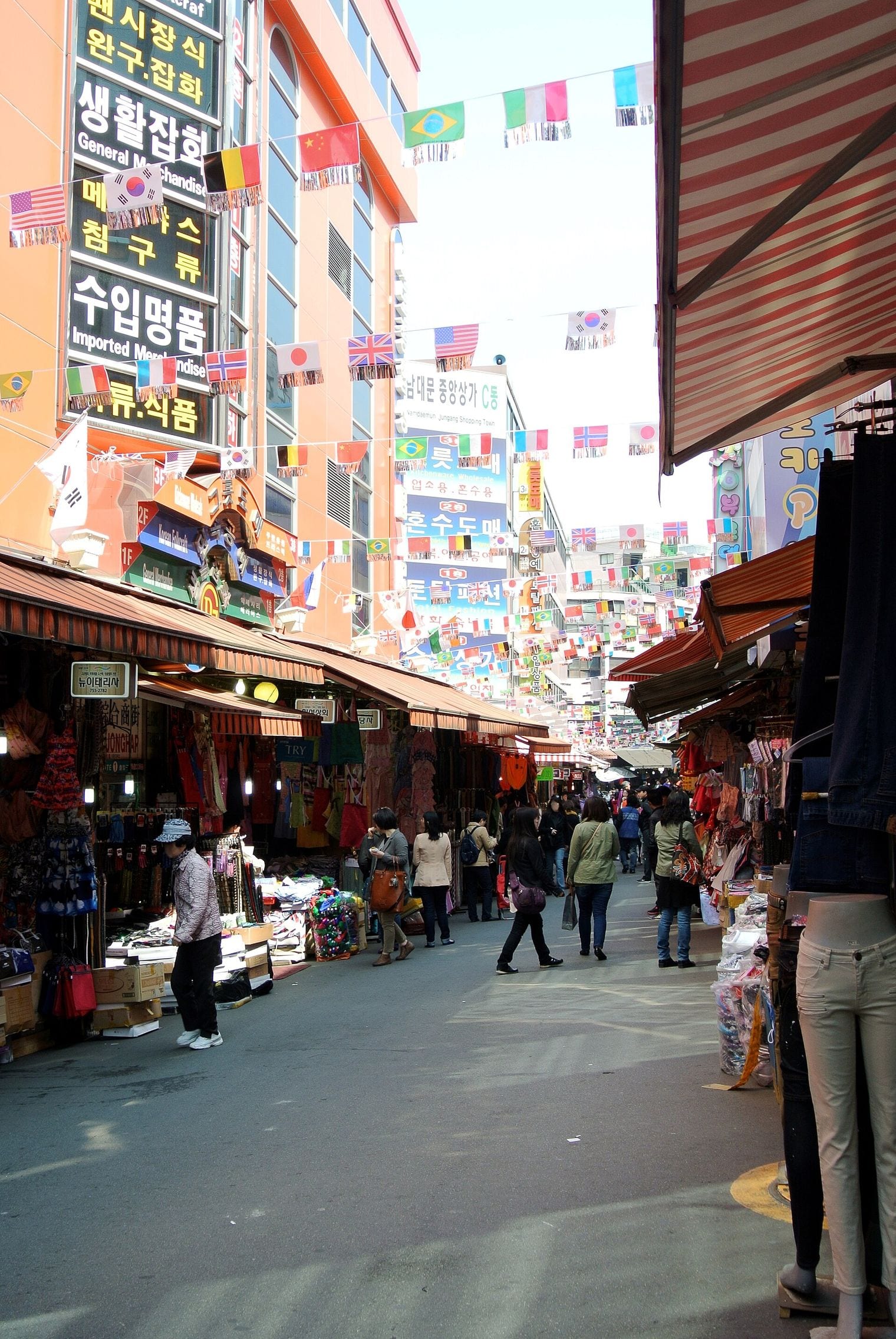
Namdaemun Market is the largest traditional market in Korea, a sprawl of alleys, arcades and multi-storey wholesale buildings that has traded on this spot since the early Joseon period. It sells everything — kitchenware, hanbok, eyeglasses, camping gear, imported food — and much of it wholesale, which is what keeps the whole place moving.
For visitors the draw is the food, and whole alleys here specialise in a single dish: hairtail fish stew in one, hand-made dumplings in another, knife-cut noodles in a third. The market sits directly beside Sungnyemun, the great south gate that gave it its name, so the two are naturally seen together.
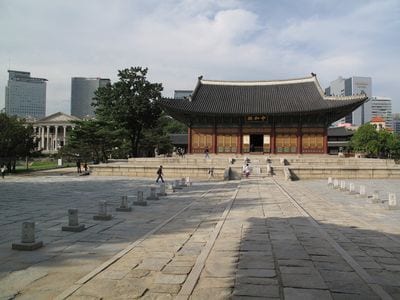
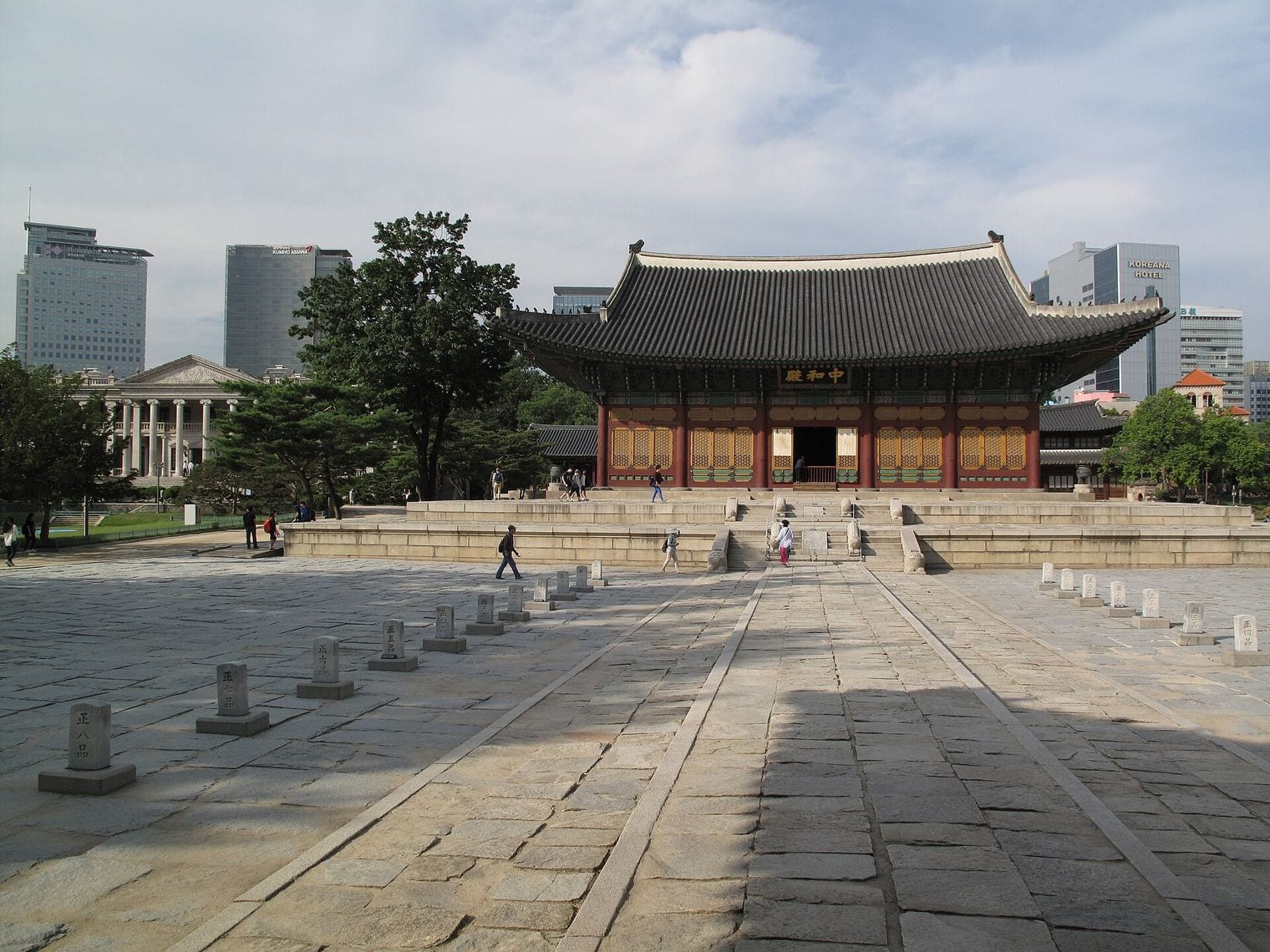
Deoksugung Palace is the smallest and strangest of Seoul's palaces, and the only one where traditional wooden halls stand alongside Western-style stone buildings. That mixture is a direct record of the final years of the Korean empire, when the court was looking outward under pressure and building in both idioms at once.
It sits right in the modern downtown, opposite City Hall, so the contrast with the surrounding office towers is sharper here than at any other palace. The stone-wall road running along its perimeter is one of the most-walked streets in the city, particularly when the trees turn in autumn, and the palace stages its own changing-of-the-guard ceremony at the front gate.
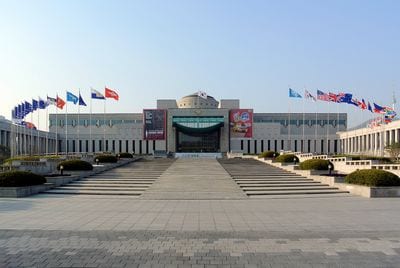
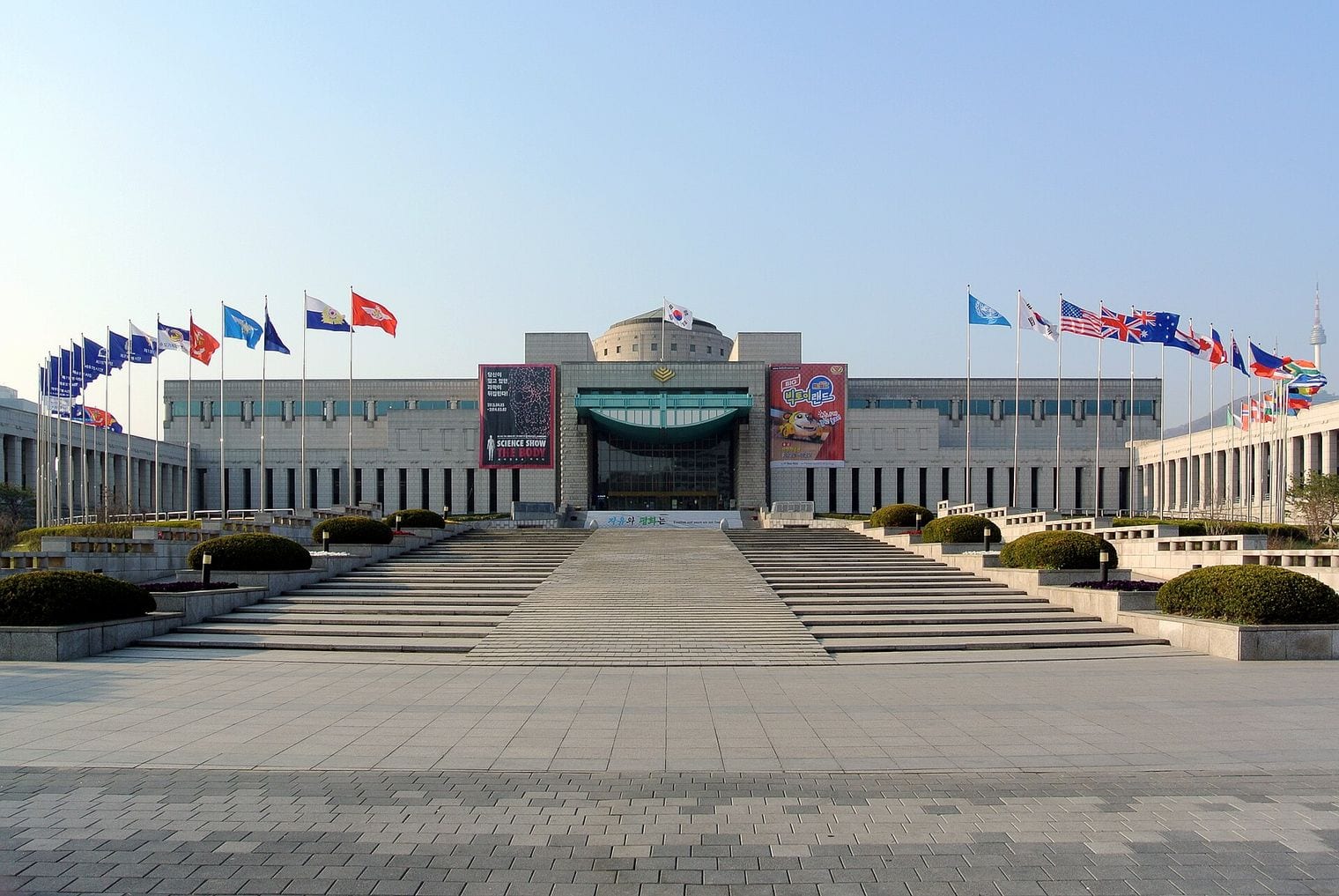
The War Memorial of Korea is a museum rather than a monument, and it is far larger than most visitors expect. The galleries run from ancient Korean warfare through to the Korean War, which occupies the bulk of the space and is presented in real depth, with a strong emphasis on personal accounts and objects.
Outdoors, the plaza is filled with aircraft, tanks, artillery and a naval vessel that you can walk among and in some cases climb into, which makes this an easy stop with children. The memorial colonnade listing the fallen, including the soldiers of allied nations, is the part most people remember afterwards.
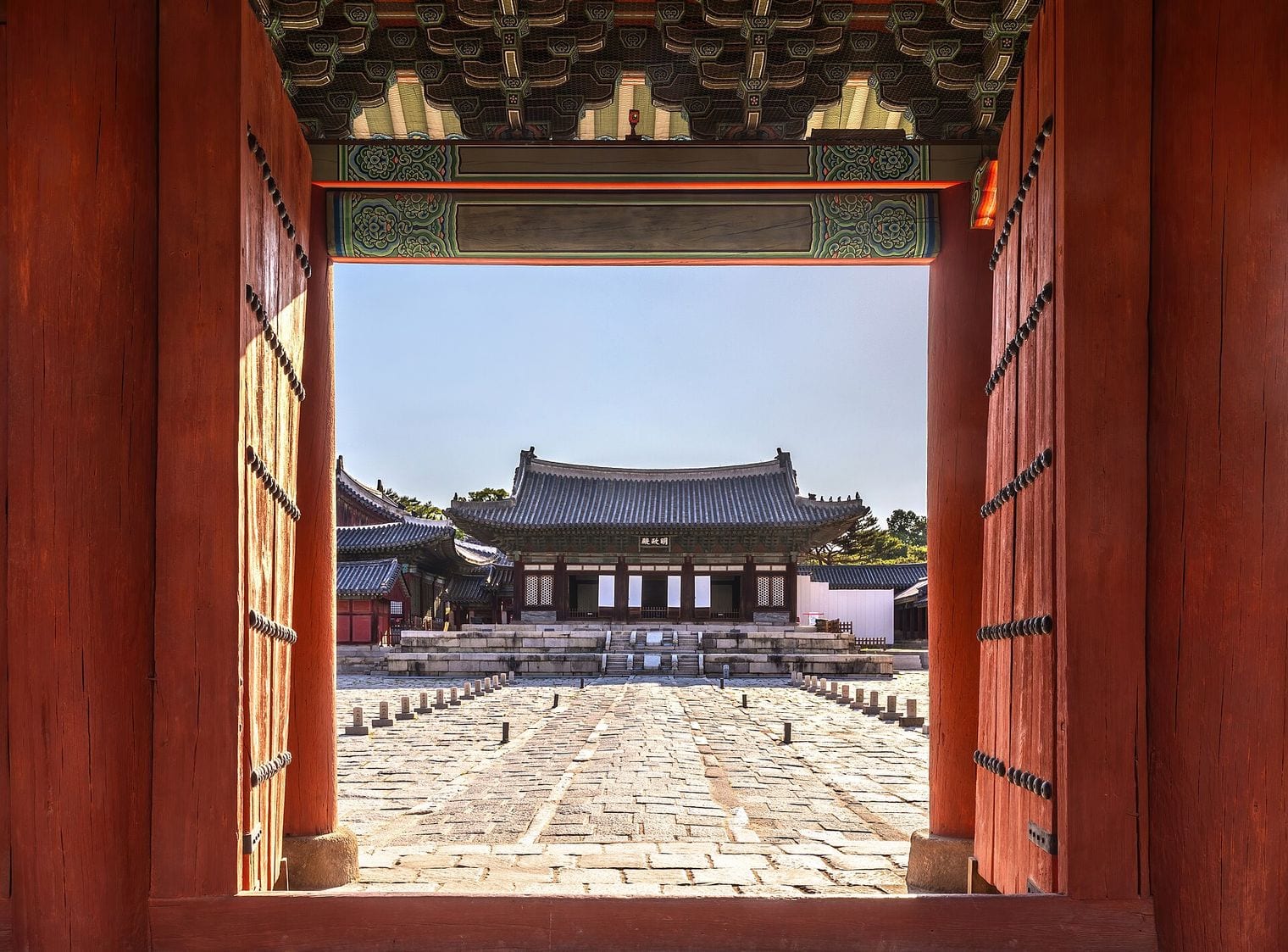
Changdeokgung Palace is the best preserved of the Joseon palaces and the one inscribed on the UNESCO World Heritage list, chosen partly because it was laid out to follow the contours of its hillside rather than impose a grid on them. The result is a looser, more intimate complex than Gyeongbokgung, and for many visitors the more atmospheric of the two.
Behind the palace lies Huwon, the Secret Garden — a wooded valley of pavilions, ponds and very old trees that was the private preserve of the royal family. It can only be seen on a guided walk with a timed entry, and places are limited, so it is worth planning around rather than leaving to chance.
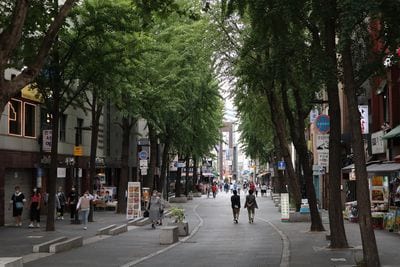
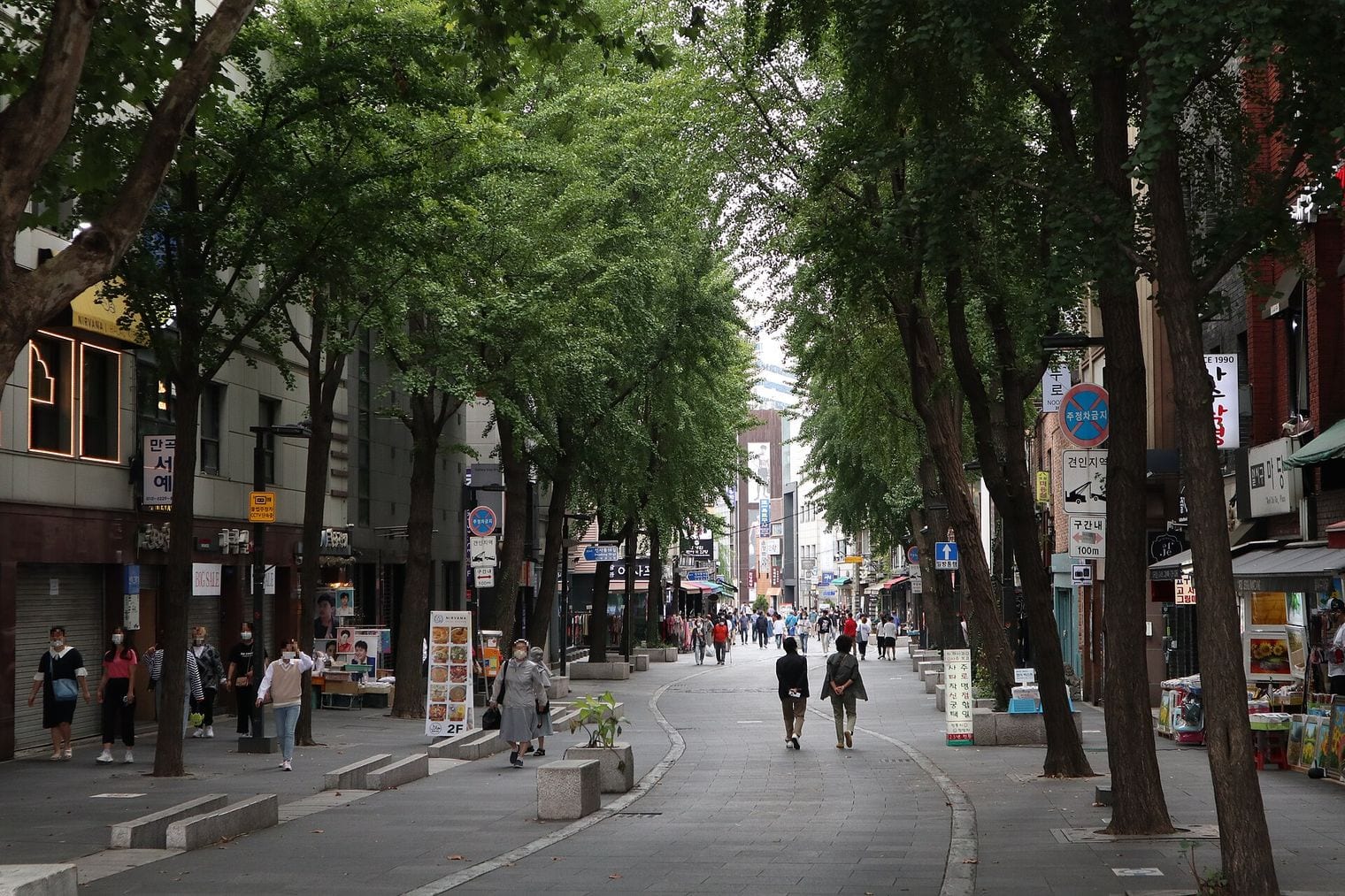
Insa-dong Culture Street is the traditional-crafts quarter of Seoul, a single pedestrian spine with a warren of alleys running off it. The shops sell hanji paper, celadon and white porcelain, calligraphy brushes, tea and antiques, and the density of small galleries means you can wander into contemporary Korean art without having planned to.
The street's landmark is Ssamziegil, a shopping complex built as one continuous spiral ramp around an open courtyard and lined with craft studios. Insa-dong is also the place to sit down in a traditional tea house over a bowl of citron or jujube tea, and it is an easy walk from both Gyeongbokgung and Jogyesa.
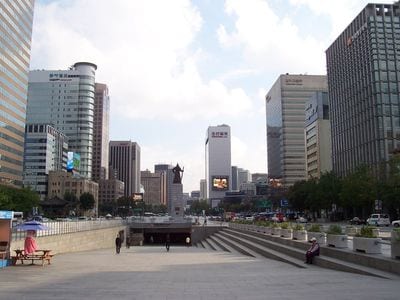
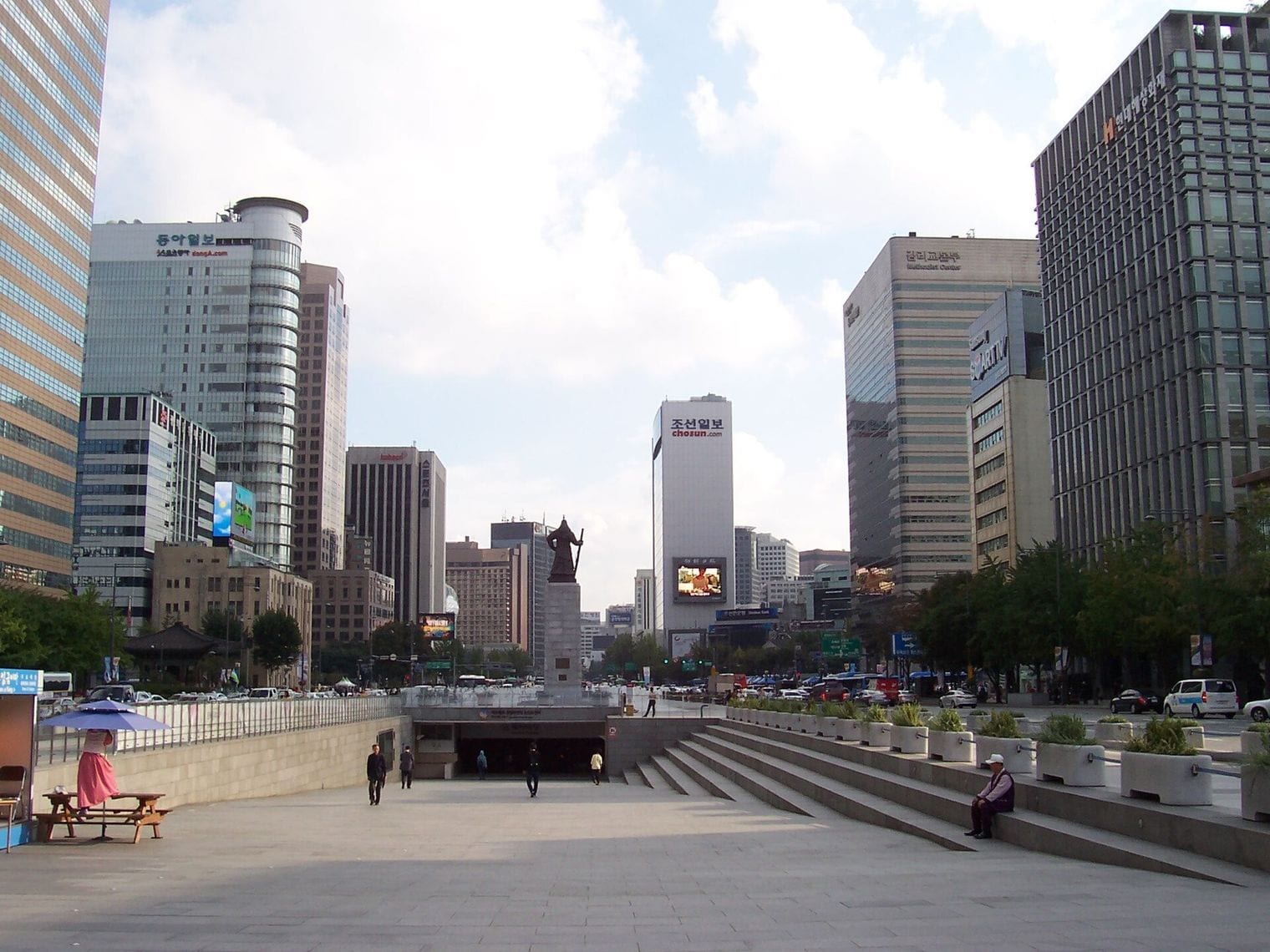
Gwanghwamun Square is the civic heart of Seoul, a broad open plaza running north towards the main gate of Gyeongbokgung with Bugaksan closing the view behind it. This is where the city gathers — for celebrations, for protests, for festivals — and walking its length is the quickest way to feel the scale of the capital.
Two statues dominate it: Admiral Yi Sun-sin, the naval commander, and King Sejong, under whom the Korean alphabet was created. An underground exhibition beneath the Sejong statue is devoted to both figures. Water channels and fountains run the length of the square, and the Cheonggyecheon stream begins just off its southern end.
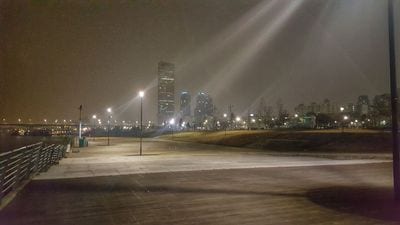
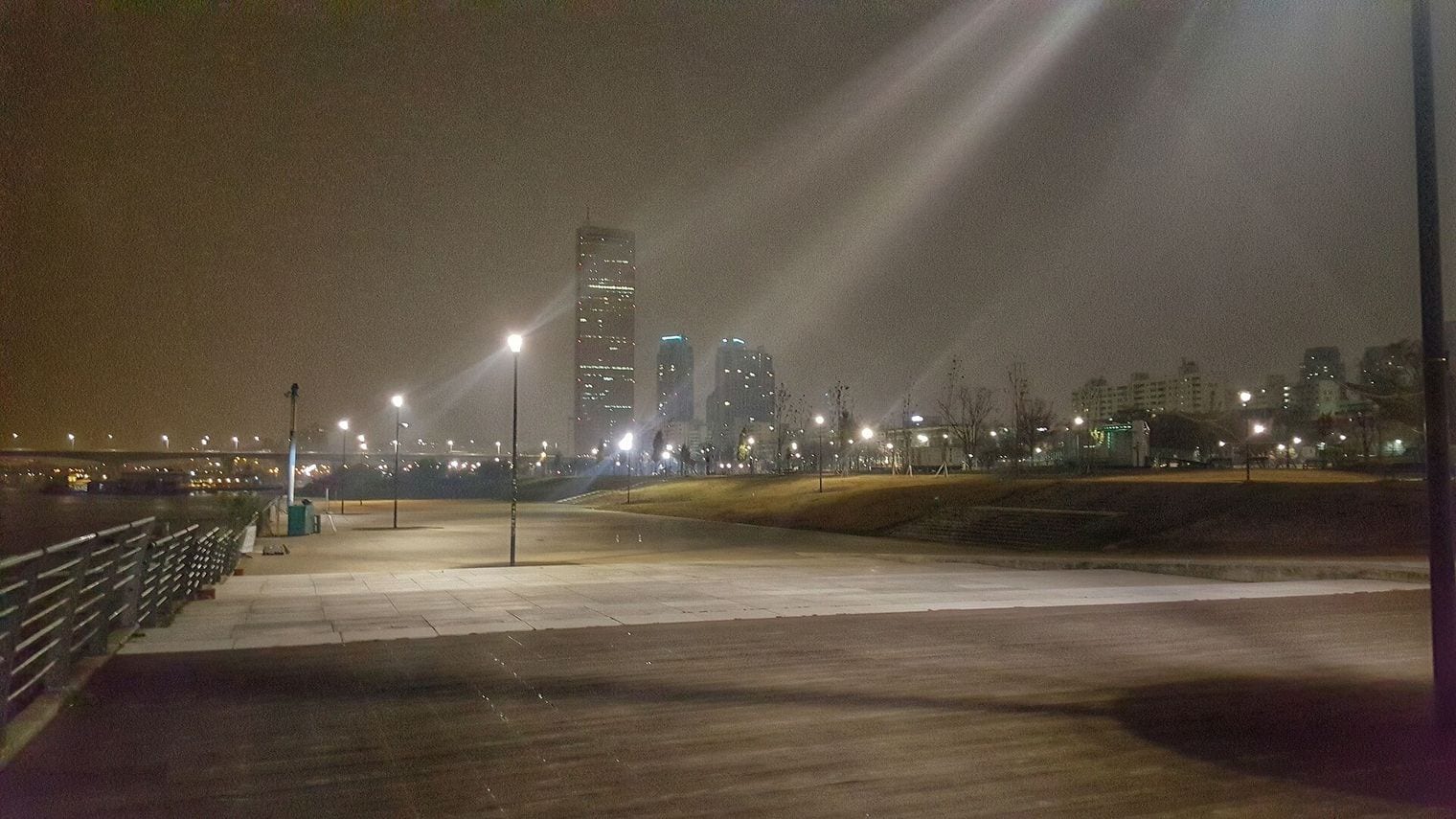
Yeouido Hangang Park is the best-known stretch of the riverside parkland that runs for miles along both banks of the Han, and it shows Seoul at its most relaxed. On a warm evening the lawns fill with mats, pop-up tents and delivery riders bringing fried chicken out to people sitting on the grass.
The park is built for movement: a continuous cycle path, boat and kayak hire, and ferries that dock here. Behind it, the road known as Yunjungno is lined with cherry trees and becomes one of the city's great spring set-pieces when they flower. Come at dusk, when the bridges light up over the water.
Cheonggyecheon Stream is a restored waterway that runs for several miles east through the middle of downtown Seoul, sunk a level below the traffic. For decades it lay buried beneath a road and then an elevated motorway; the highway was demolished and the stream reopened in the mid-2000s, which changed how the centre of the city feels to walk in.
Walking it is the whole point. Stepping stones cross at intervals, the walls are planted, and each bridge overhead marks a different neighbourhood, so you can drop in near Gwanghwamun and surface again at Dongdaemun. It runs noticeably cooler than street level in summer, and it carries light installations through the winter.
Seoul Forest Park is the most generous piece of green space east of the centre — a former royal hunting ground, later a racecourse and a water-treatment site, now laid out as woodland, wetland and open lawn beside the Han. Residents treat it as the default weekend destination.
The park divides into distinct zones: a culture park with a plaza and fountains, an ecological forest where deer graze in a large enclosure, a wetland reserve and a riverside stretch. It also sits directly beside Seongsu-dong, the old factory quarter now full of concept stores and coffee roasters, so the two fold together neatly into one afternoon.
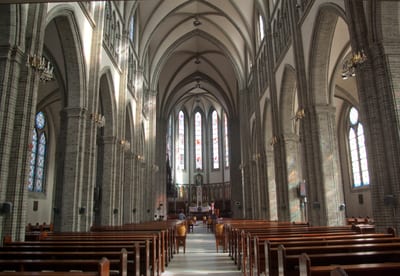
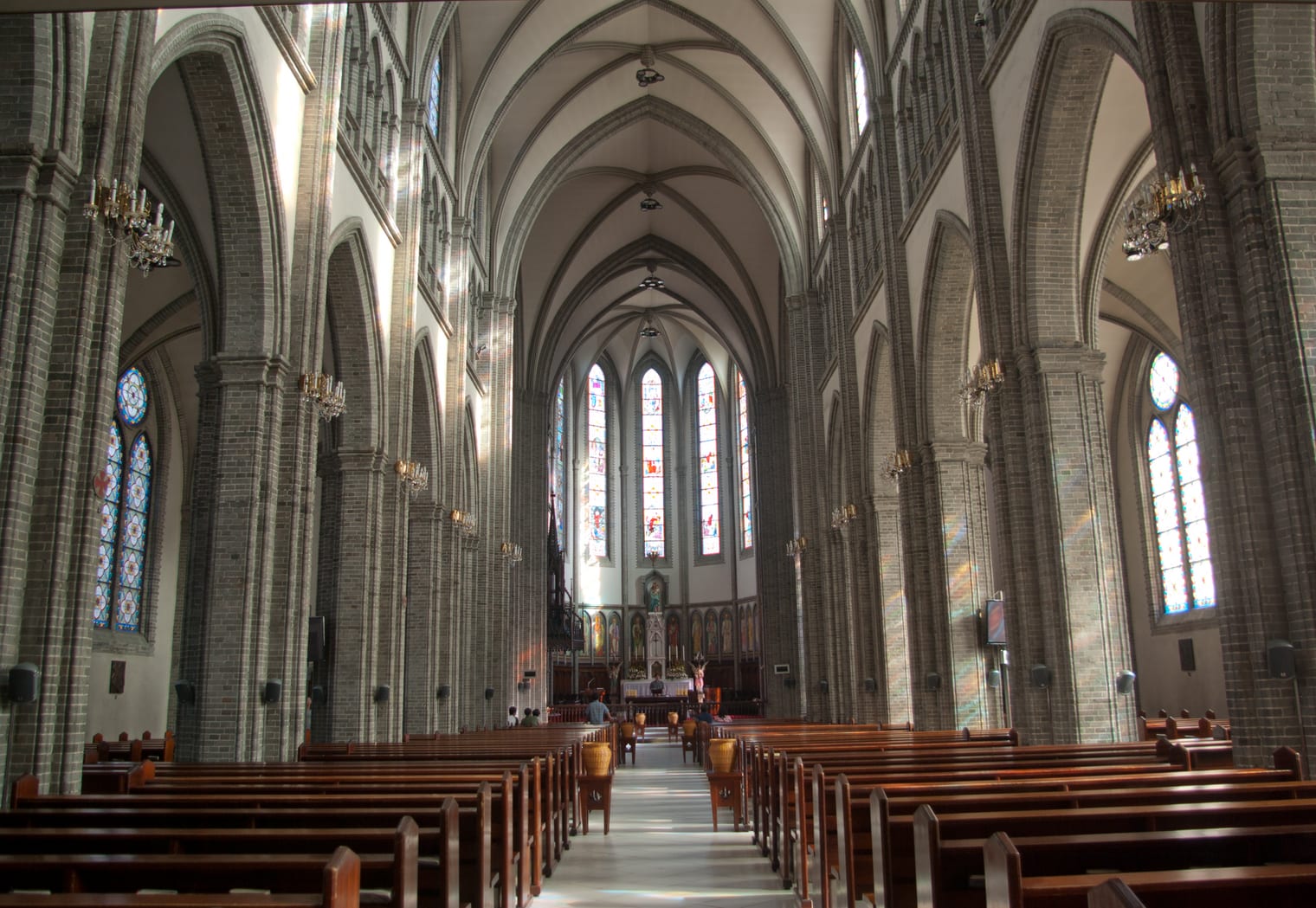
Myeong-dong Cathedral is the mother church of Korean Catholicism and the seat of the Archdiocese of Seoul, a red-brick Gothic revival building completed at the end of the nineteenth century. It stands on a low rise above the shopping district, and the change in atmosphere as you climb the steps away from the crowds is abrupt.
Beyond the architecture, the cathedral holds a particular place in modern Korean history: it became a refuge and a rallying point for the pro-democracy movement in the 1980s, and that association is still strongly felt. The crypt holds the remains of Korean martyrs, and the plaza and arcade beneath the church are open to everyone.
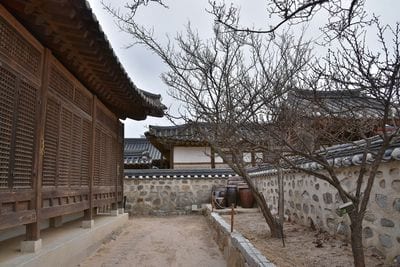
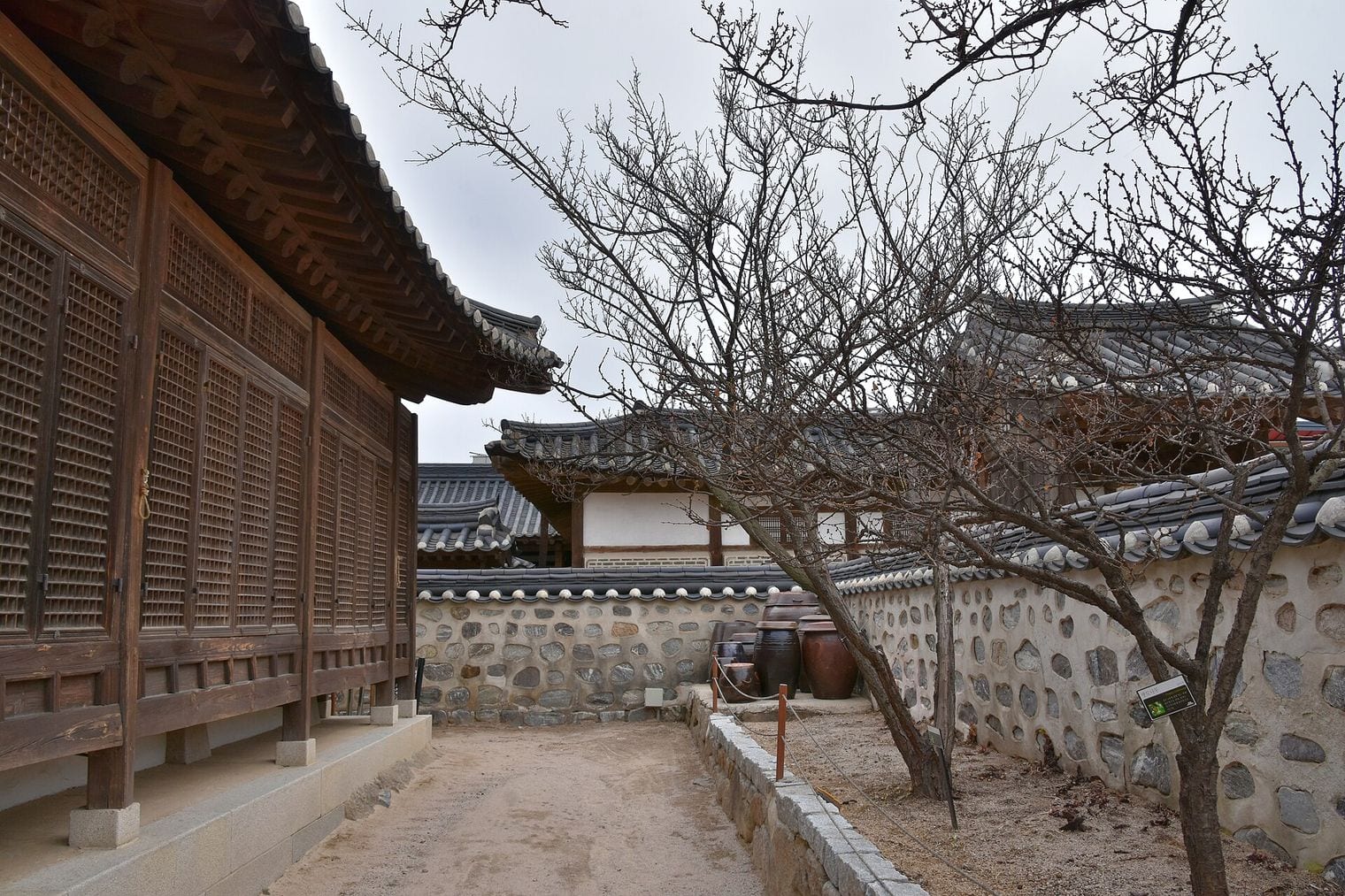
Namsangol Hanok Village gathers five restored hanok at the northern foot of Namsan, each moved here from elsewhere in the city and furnished to reflect the social rank of its original owner — from a merchant's house to the residence of a royal in-law.
It is quieter and far more explanatory than Bukchon, which makes it the better choice if you want to understand how a hanok actually worked: the underfloor heating, the raised wooden floor for summer, the courtyard that organises everything around it. The grounds also hold a traditional garden, a pavilion and a time capsule buried for the city's six-hundredth anniversary, to be opened four centuries later.
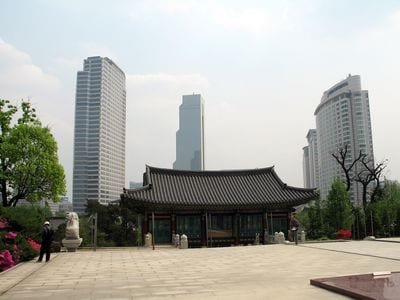
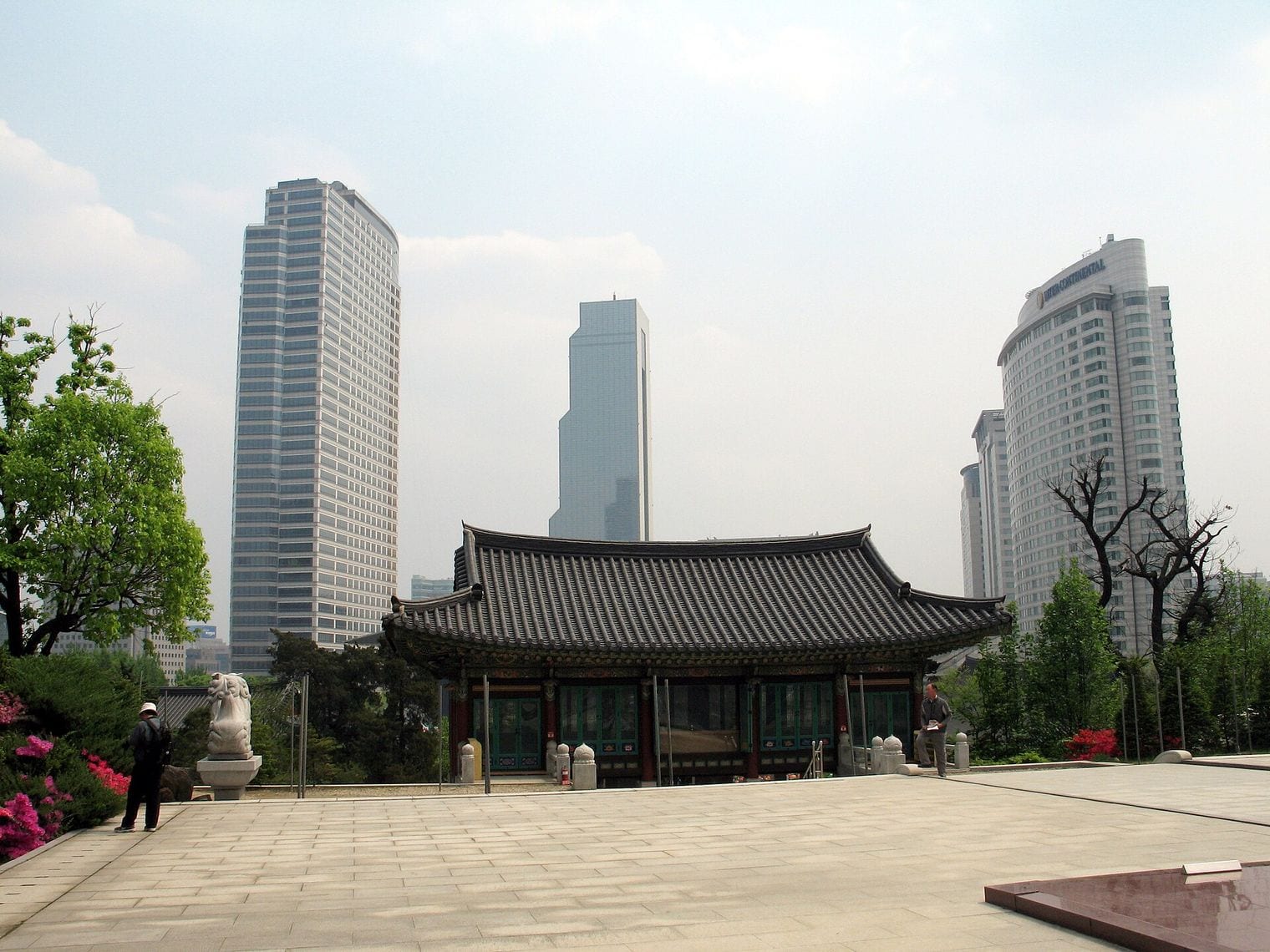
Bongeunsa Temple is a working Buddhist monastery founded more than twelve hundred years ago, and it now sits directly across the road from the glass and steel of the COEX complex in Gangnam. The juxtaposition — timber halls, incense and chanting set against a wall of towers — is one of the defining images of modern Seoul.
Walk up through the halls to the Mireuk Daebul, the tall standing stone Buddha on the upper terrace, and take the path that loops behind it through the trees. Bongeunsa runs a temple-stay programme and a regular English-language session for visitors, so it is one of the easier places to see Korean Buddhist practice rather than just its buildings.
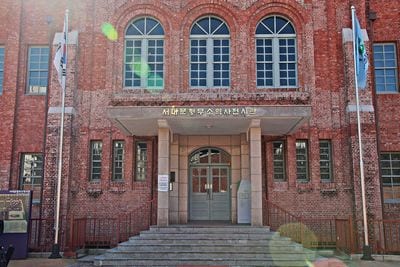
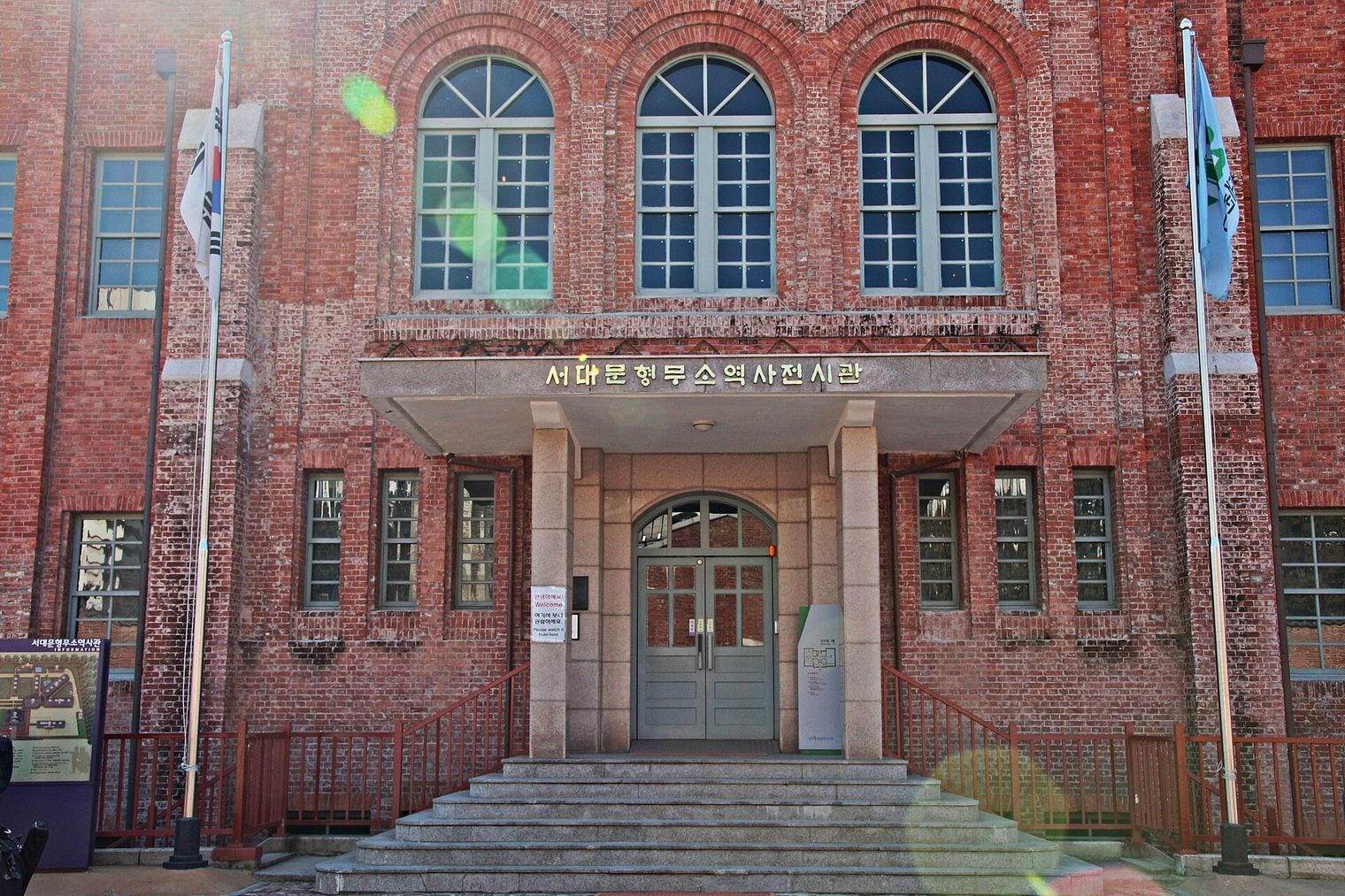
Seodaemun Prison History Hall preserves the prison built by the Japanese colonial authorities in the first decade of the twentieth century, where Korean independence activists were held, interrogated and executed. The red-brick cell blocks, the exercise yard and the underground interrogation rooms have been kept largely as they were.
It is a sober and unflinching museum, and not a comfortable visit, but it explains twentieth-century Korea better than anything else in the city. The memory of Yu Gwan-sun, the student activist who died here, runs right through the displays. Allow more time than you think you need, and treat the surrounding Independence Park as part of the visit.
Jogyesa Temple is the head temple of the Jogye Order, the largest Buddhist order in Korea, and it sits improbably in the middle of downtown Seoul a short walk from Insa-dong. Unlike the great mountain monasteries, this is a city temple, hemmed in by office blocks and shops selling Buddhist supplies.
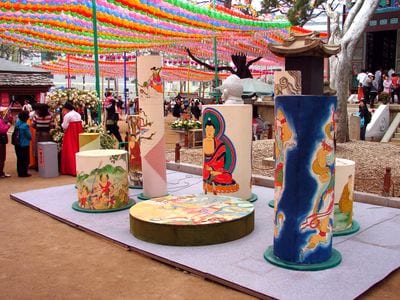
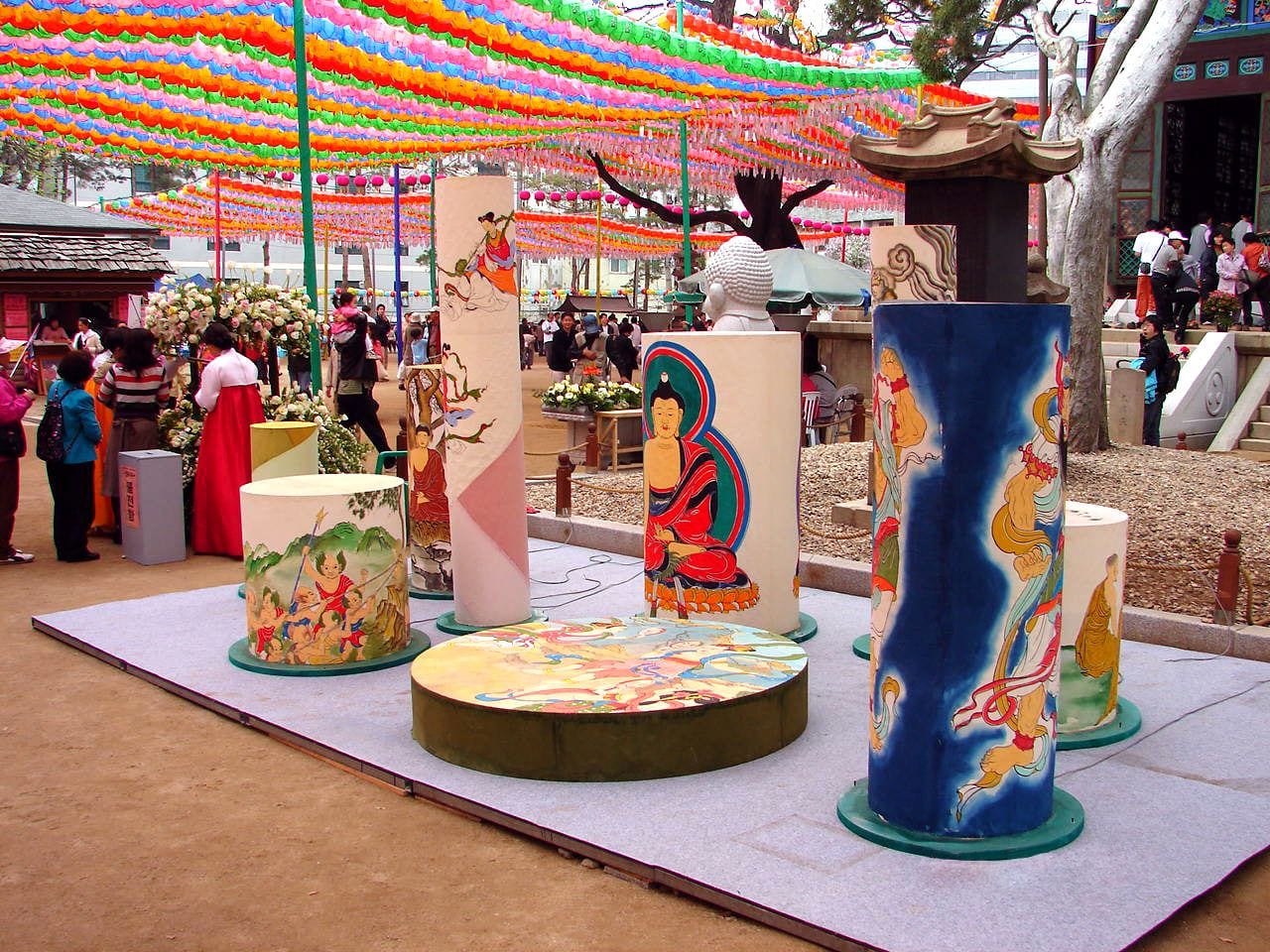
The main hall holds three large gilded Buddhas, and the courtyard is dominated by an old white pine and a spreading locust tree. Overhead hang paper lotus lanterns, at their densest in the weeks around the Buddha's Birthday, when the lantern festival fills the surrounding streets. Anyone may step inside and sit quietly at the back of the hall.
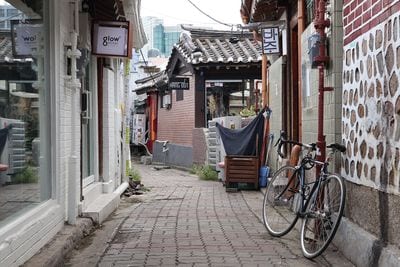
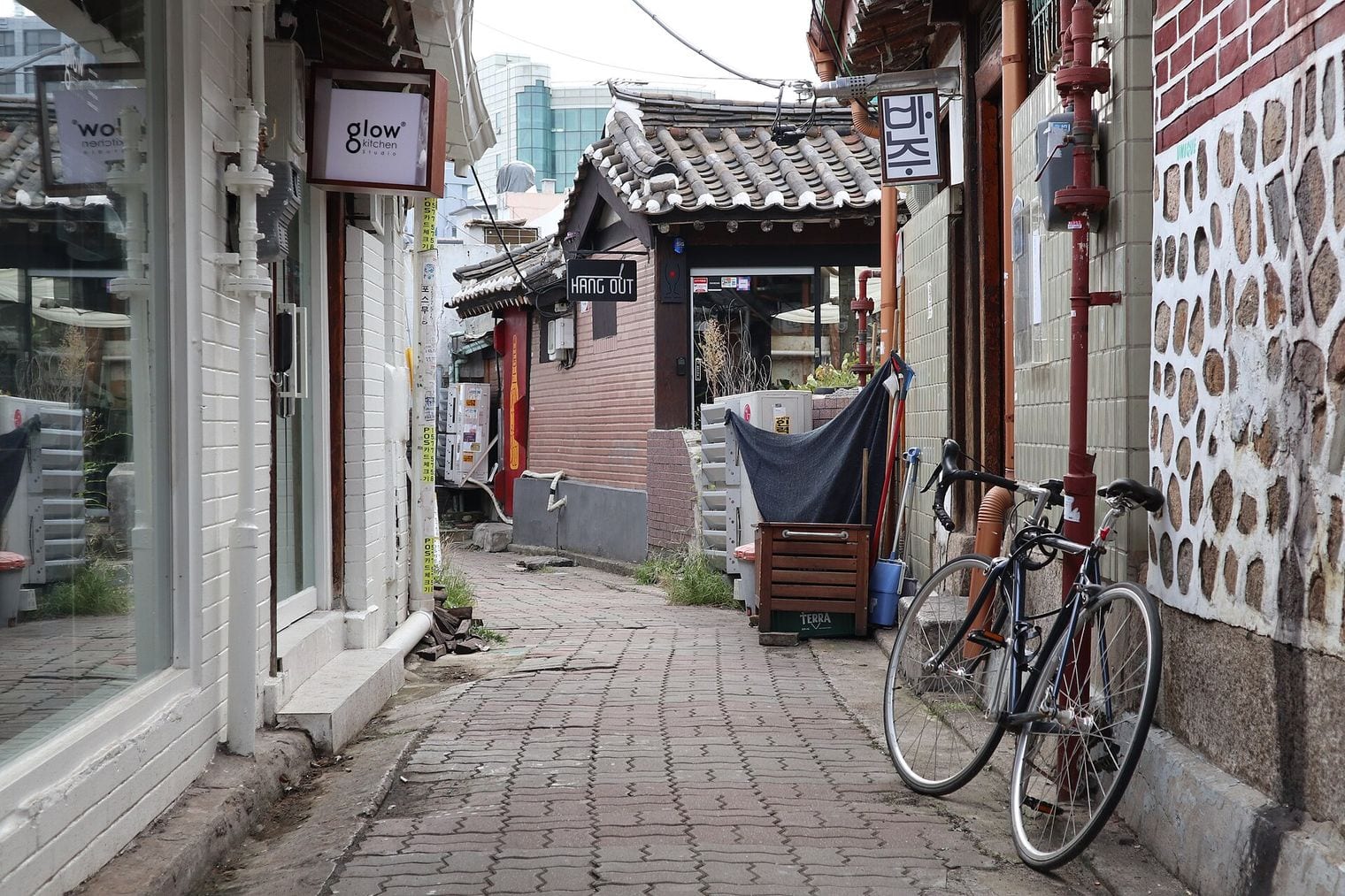
Ikseon-dong Hanok Village is a dense pocket of small hanok laid out as a speculative housing development in the 1930s and left largely intact while the city rebuilt around it. Over the past decade its alleys have filled with cafés, bars, boutiques and restaurants slotted carefully into the old houses.
The lanes are barely wide enough for two people, roofed in places with glass and strung with lights, and the pleasure is simply losing the thread of them. It is the most atmospheric corner of central Seoul to eat after dark, and it sits between Jongno and Insa-dong, so it folds neatly into a day spent around the palaces.
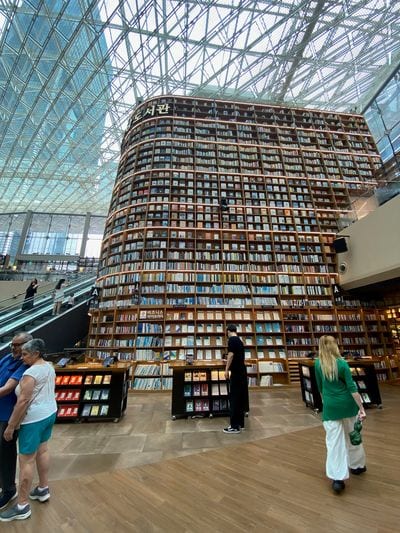
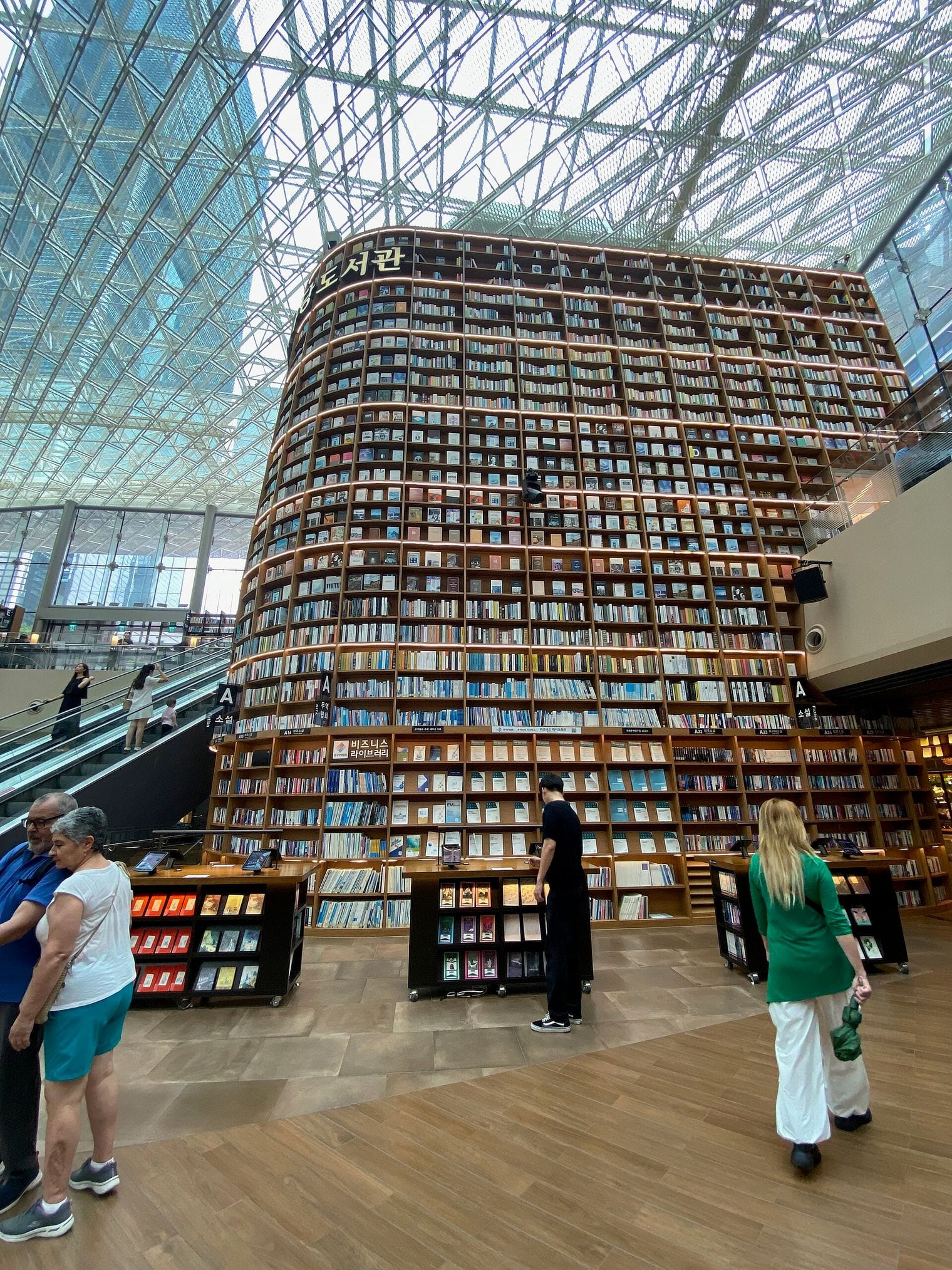
Starfield Library is an open, two-storey reading room dropped into the middle of the COEX mall in Gangnam, with shelves rising the full height of the space and a scatter of desks, armchairs and stepped seating beneath them. It holds thousands of books and a long wall of magazines, and anyone can walk in and read.
It was designed as a public space rather than a retail one, and it works: students study, commuters read, and the atrium functions as the mall's living room. It is also, unavoidably, one of the most photographed interiors in the city. Bongeunsa Temple stands directly across the road, which makes for a very Seoul pairing.
Seoul Sky occupies the top floors of Lotte World Tower, which at 555 metres is by a wide margin the tallest building in Korea. Its deck ranks among the highest observation decks in the world, and the lifts that carry you up are among the fastest ever built.
The experience is built around the view and the floor beneath it: a glass-bottomed section lets you look straight down at the streets of Jamsil from a great height, and the terraces face west over the Han towards the rest of the city. Come towards sunset if you can, and pair it with Seokchon Lake directly below, which rings the tower with cherry trees in spring.
2626. Heunginjimun Gate (Dongdaemun)
Historical Landmark~2.8 km (1.7 miles) from centre
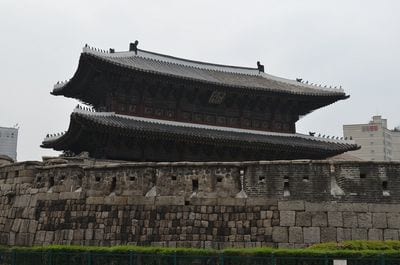
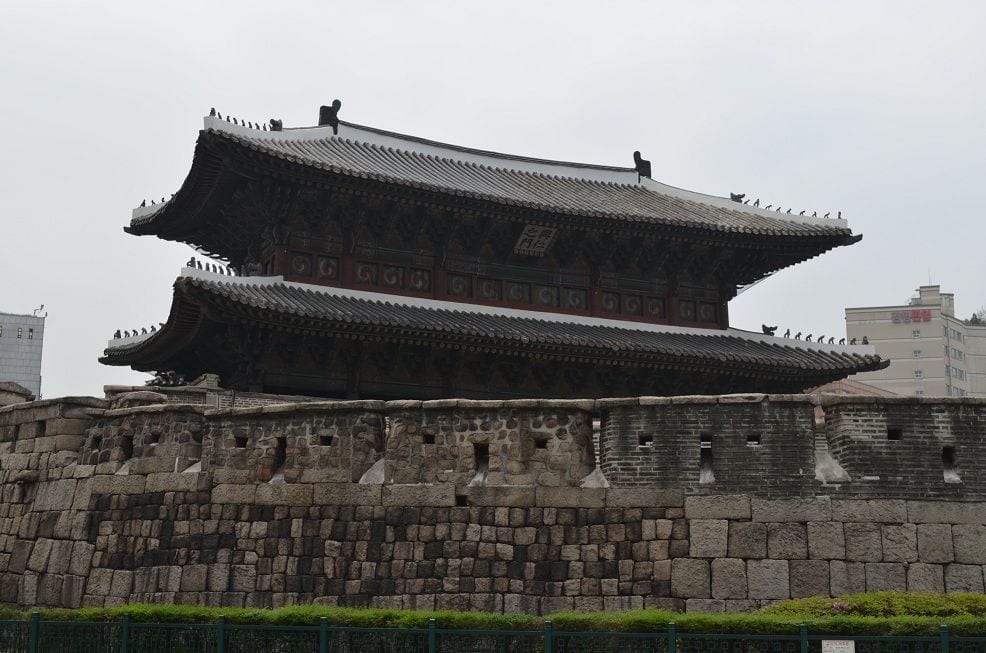
Heunginjimun Gate (Dongdaemun) is the great east gate of the old city wall and the counterpart to Sungnyemun in the south. A two-tier wooden pavilion sits on a stone base, wrapped by a distinctive semicircular outer wall that was added because the ground here is low and needed the extra defence.
It now stands marooned on a traffic island at the eastern edge of downtown, floodlit after dark and ringed by the wholesale fashion malls that give the Dongdaemun district its name. You cannot go inside, but the adjoining park carries an excavated stretch of the old wall, and the walking route up onto the Naksan ridge begins a few minutes away.
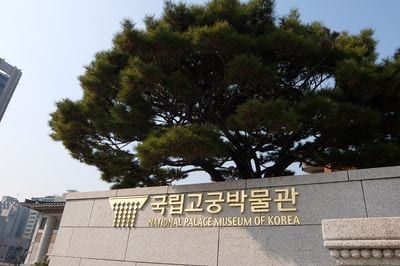
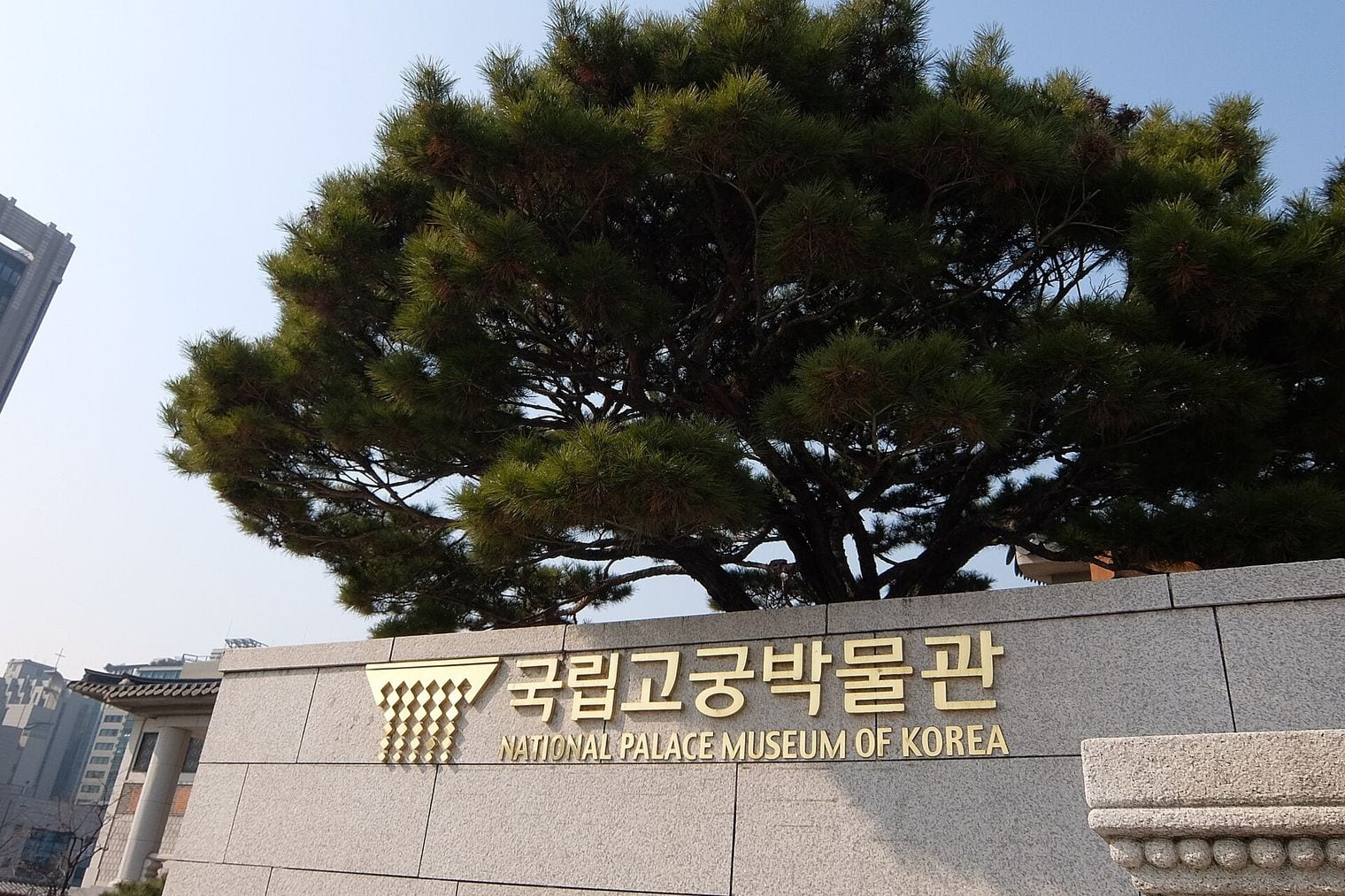
The National Palace Museum of Korea sits in the south-western corner of the Gyeongbokgung grounds and holds what the palace halls themselves no longer contain: royal seals, court robes, painted screens, astronomical instruments and the ceremonial apparatus of the Joseon court.
It is the natural companion to a palace visit, and it answers the question those empty halls raise — what actually went on inside them. The galleries are arranged by theme rather than date, covering royal ritual, the state's obsessive record-keeping, and the science and astronomy the court sponsored. It is compact enough to see properly in an hour on your way out of the palace.
Changgyeonggung Palace is the quietest of the four palaces open in central Seoul, built originally as a residence for retired kings and dowager queens rather than as a seat of government. It shares a wall with Changdeokgung, and the two once formed a single connected complex.
Its grounds are the real appeal: a large pond with a small island, wooded walks, and a striking iron-and-glass greenhouse raised in the early twentieth century. That greenhouse dates from the colonial period, when the palace was demoted to a public park and a zoo — a history the site now addresses directly rather than hiding. This is the palace to choose when you want room to think.
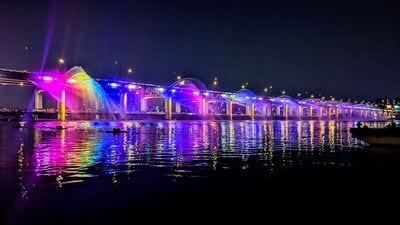
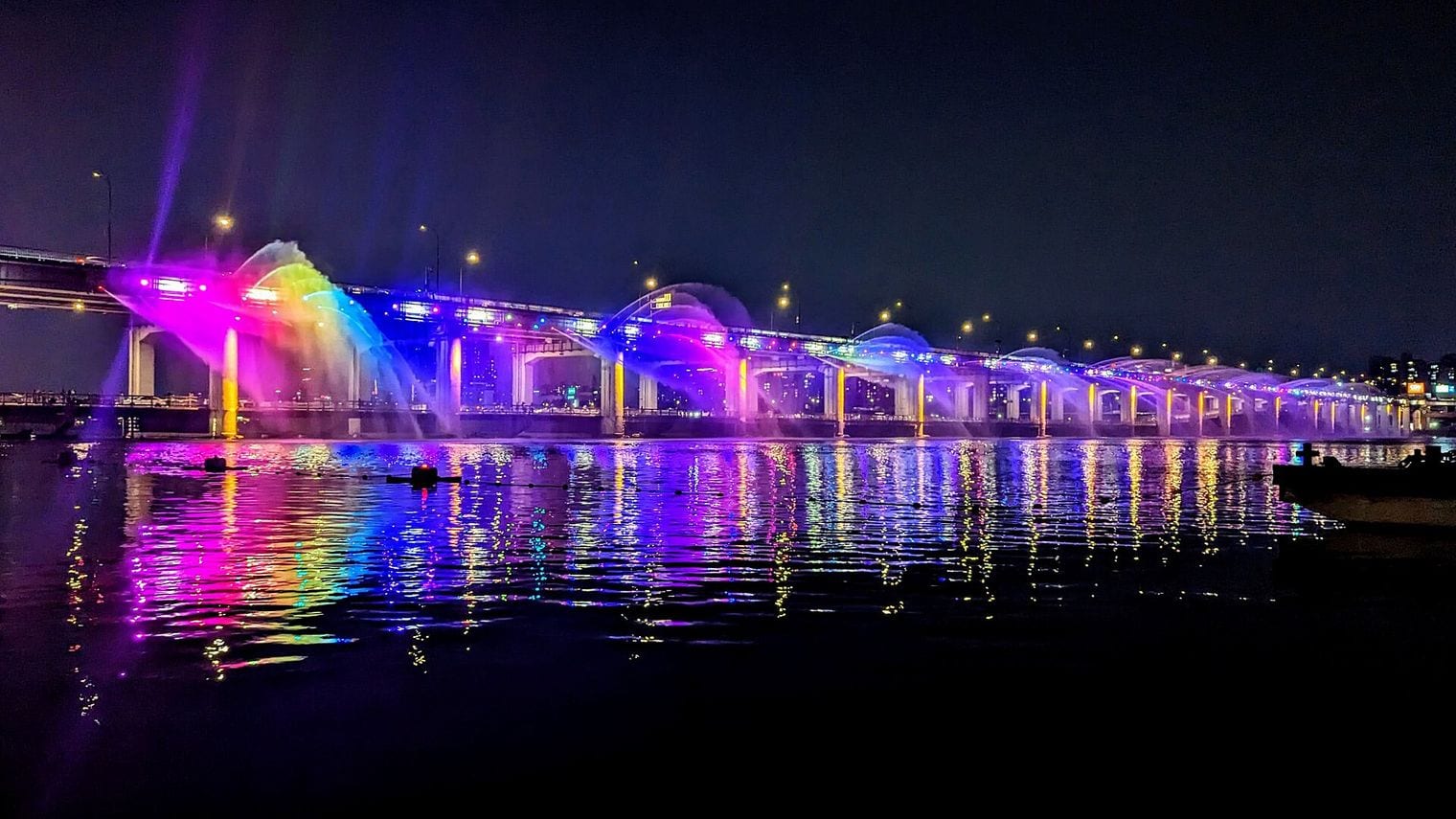
The Banpo Bridge Moonlight Rainbow Fountain turns an ordinary road bridge over the Han into a piece of public theatre. Hundreds of nozzles set along both sides of the deck send water arcing out over the river, lit in shifting colours and choreographed to music, with the city stacked up behind.
It runs in the warmer months, several times over the course of an evening, and the best vantage point is the riverside lawn of Banpo Hangang Park directly beneath, where people arrive early with mats and food. Each display lasts only a few minutes, which makes it a natural addition to an evening by the river rather than a destination on its own.
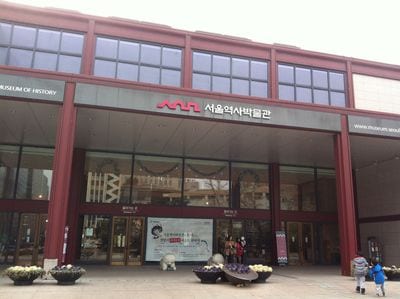
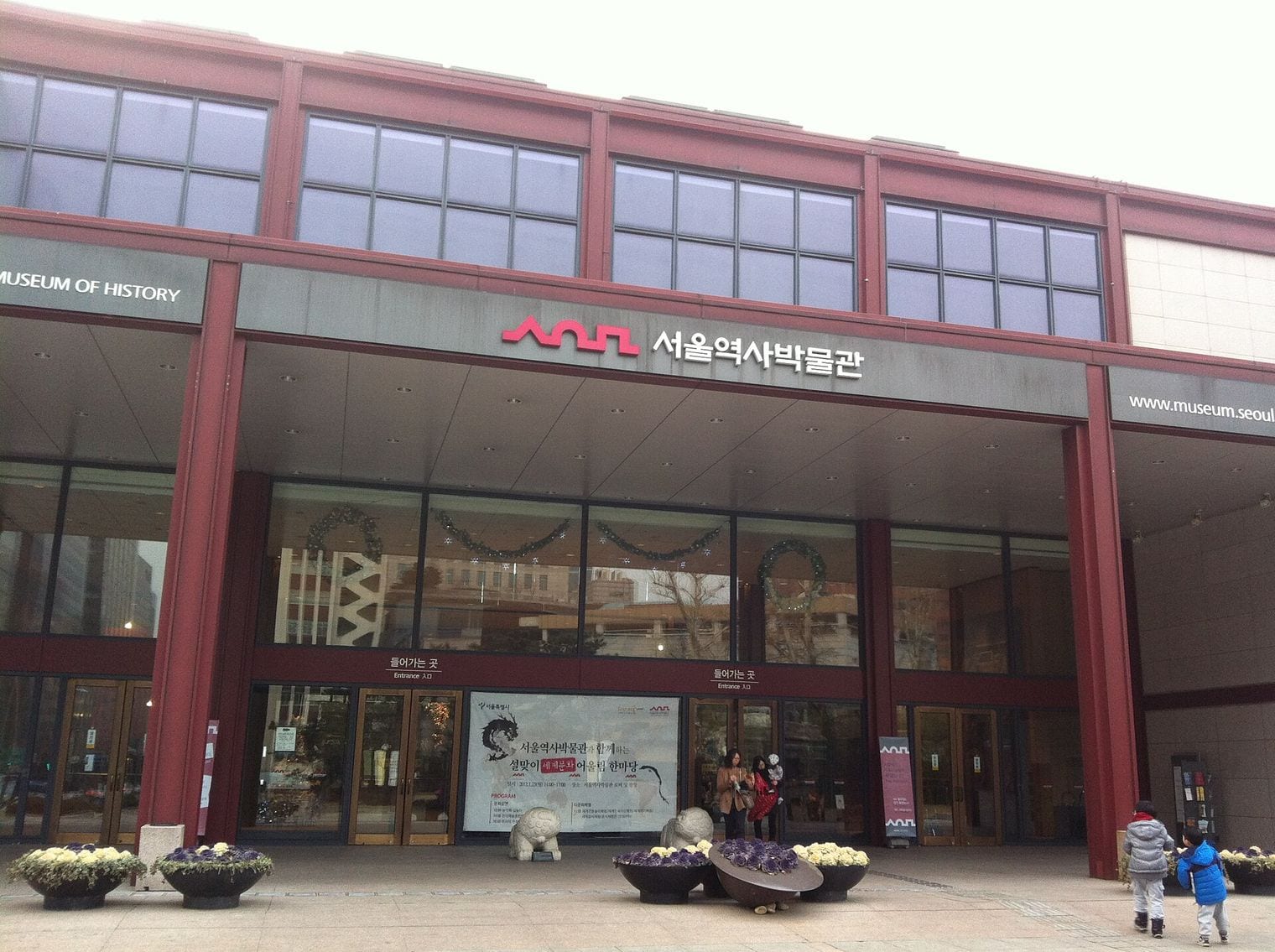
The Seoul Museum of History tells the story of the city itself rather than the country, running from the walled Joseon capital of Hanyang through the colonial decades and the extraordinary postwar expansion into the megacity of today.
Its standout exhibit is a vast scale model of Seoul filling most of a floor, on which you can find every neighbourhood in this guide in relation to all the others — worth ten minutes early in a trip. Reconstructed shopfronts, apartments and household objects from the twentieth century convey how fast ordinary life here changed. It stands beside the Gyeonghuigung palace grounds, so the two combine easily.
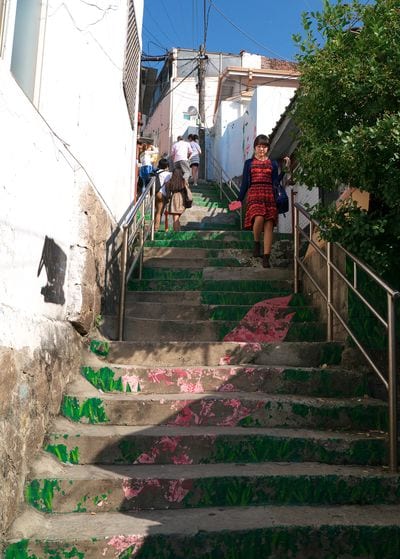
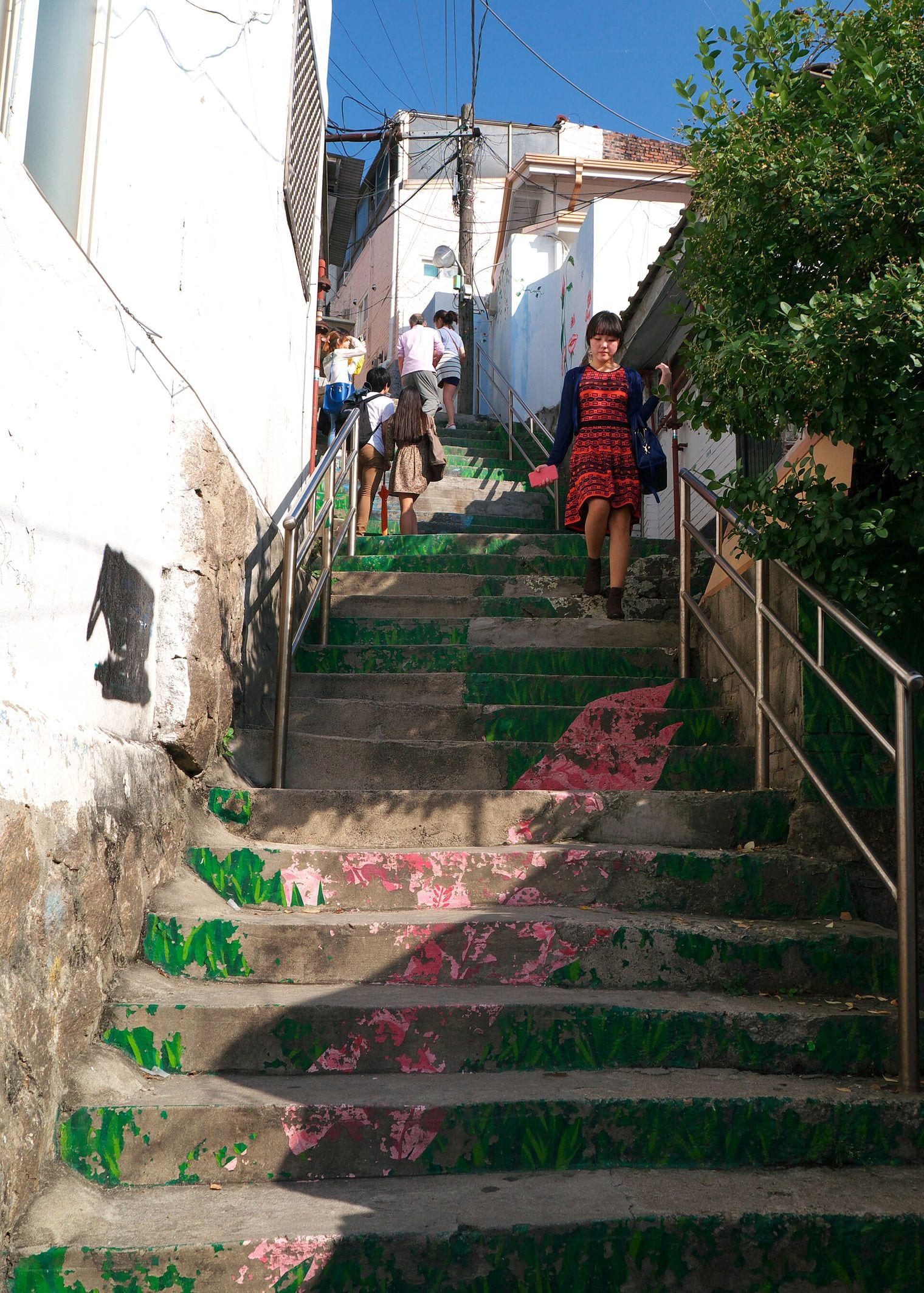
Ihwa-dong Mural Village is a steep residential neighbourhood on the slope below Naksan, where a regeneration project brought artists in to paint the retaining walls, stair flights and house fronts. The result is a hillside of murals, sculptures and painted staircases threaded through streets that people actually live on.
Climbing it is the point, and the reward near the top is one of the better open views back across central Seoul. Some works have been painted over at residents' request, so treat this as a living neighbourhood rather than an outdoor gallery — keep your voice down and do not photograph into windows. The city wall path along Naksan runs directly above it.
3232. National Museum of Modern and Contemporary Art
The National Museum of Modern and Contemporary Art occupies a low brick complex immediately beside Gyeongbokgung, on a site that served as a hospital and a military barracks in earlier lives. This is the central Seoul branch of the national contemporary art institution, and much the most convenient one for visitors.
Exhibitions rotate constantly across several linked buildings and open courtyards, covering Korean and international work from the early twentieth century to the present. The architecture — galleries arranged around a sequence of yards — is a pleasure to move through in its own right. It pairs naturally with the palace next door and with the small galleries of Samcheong-dong just uphill.
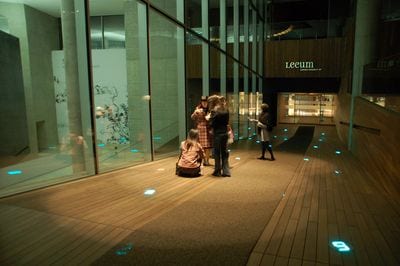
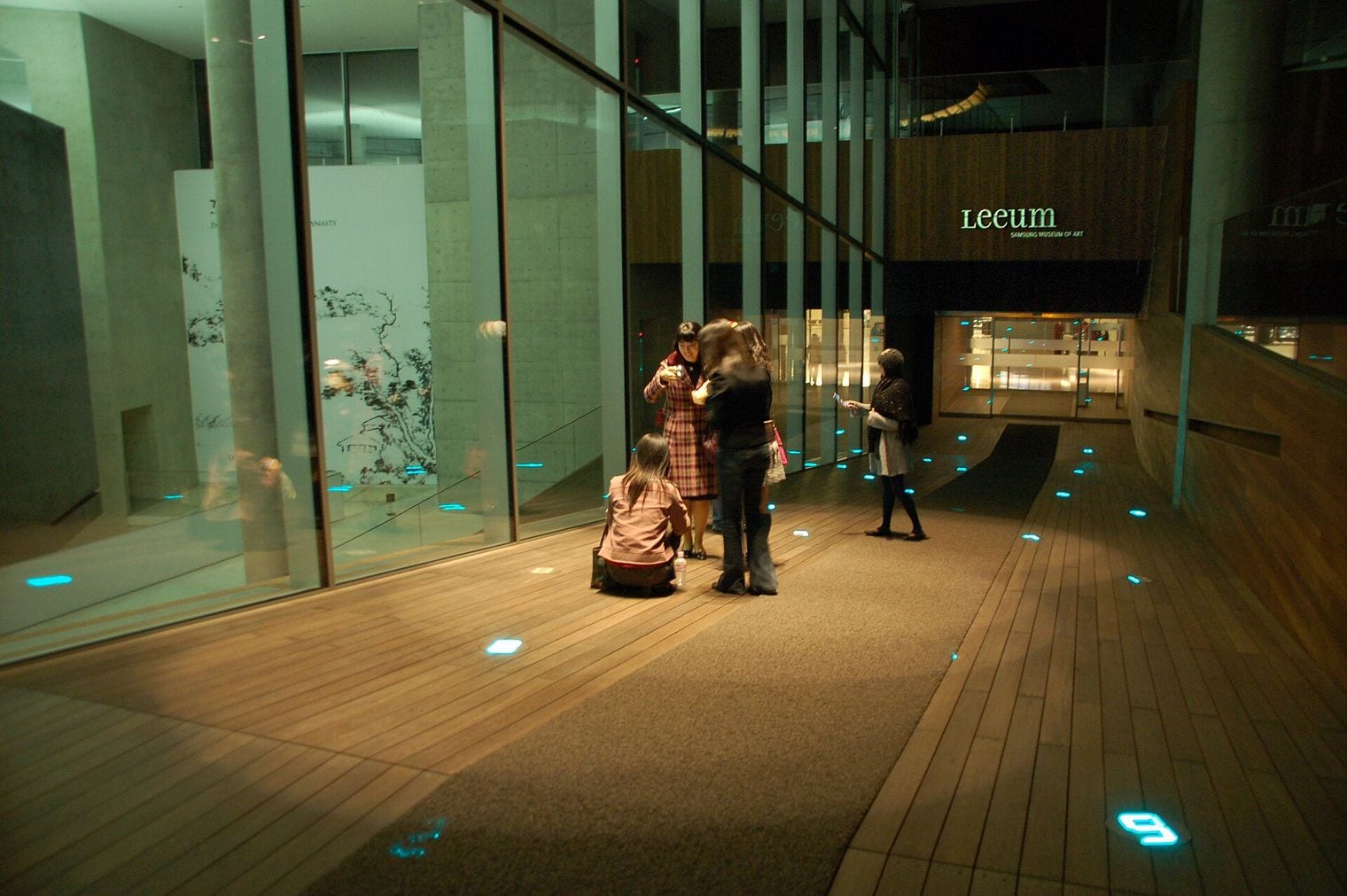
Leeum Museum of Art is the finest private collection in Seoul, split between two purpose-built wings: one for Korean traditional art — celadon, white porcelain, gold crowns and Buddhist painting — and one for modern and contemporary work, Korean and international.
The buildings are as much of a draw as the holdings, the work of three separate internationally known architects working in dialogue on a steep site in Hannam. It is a short walk uphill from Itaewon, and the combination of a world-class ceramics collection with ambitious rotating contemporary shows makes it the single best art stop in the city for most visitors.
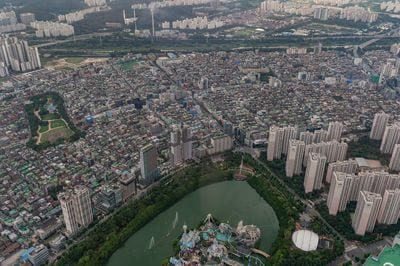
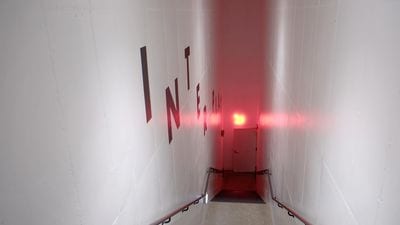
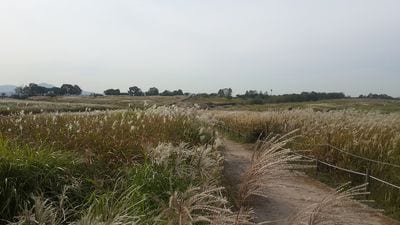
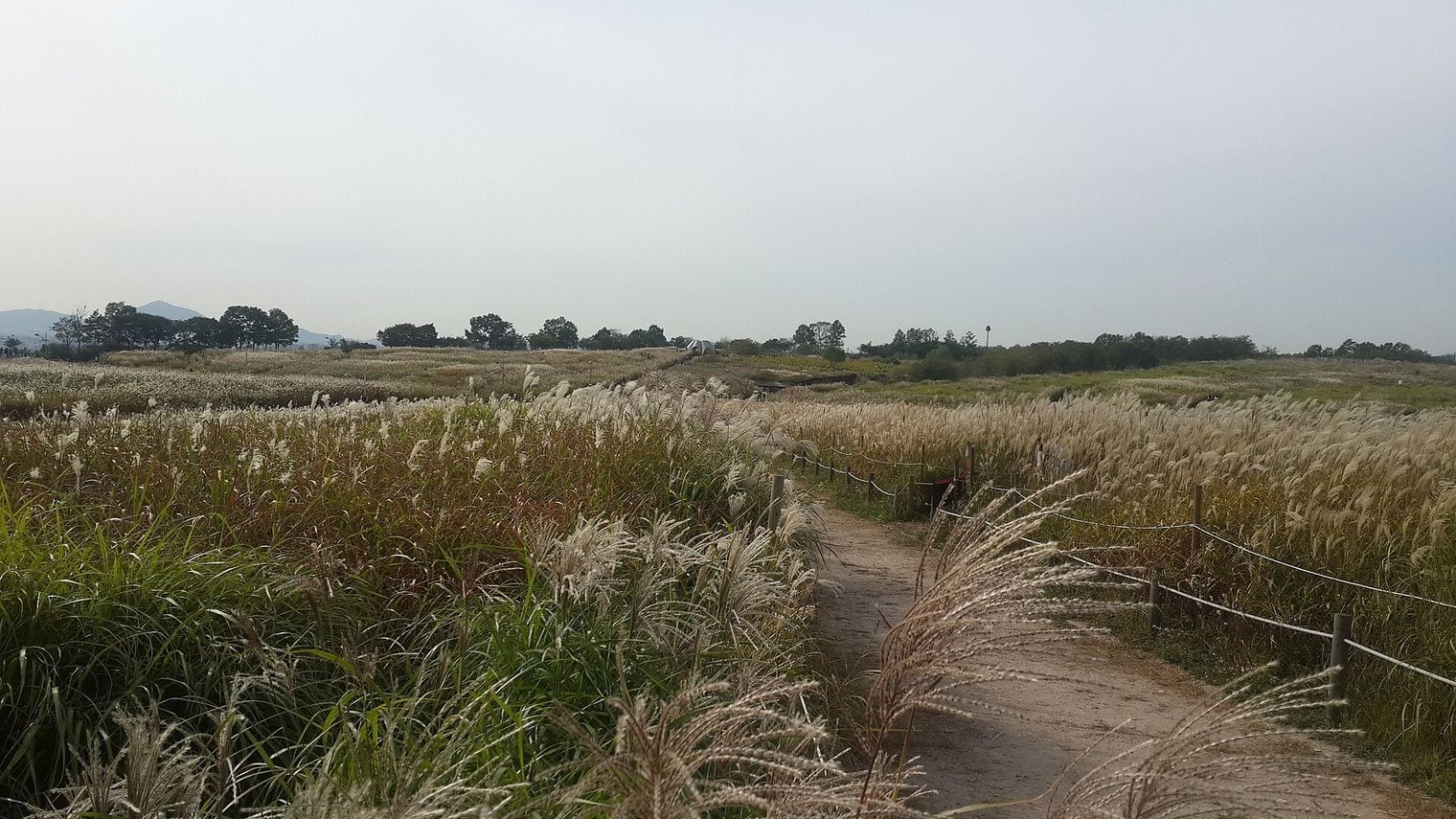
Haneul Park — the name means sky park — sits on top of what was once one of the largest landfills in the country, since capped, planted and reopened as a hilltop meadow high above the Han. Getting up means a long flight of steps or the shuttle that grinds up the side.
The draw is the silver grass covering the plateau, which turns pale and feathery in autumn and is when the park is at its most photographed. From the top you get an open sweep over the river, the World Cup Stadium and the whole western half of the city. It forms part of the wider World Cup Park complex, so it combines with the stream and wetland parks below.
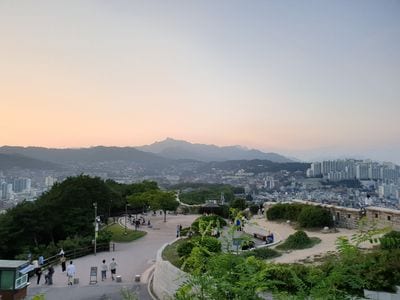
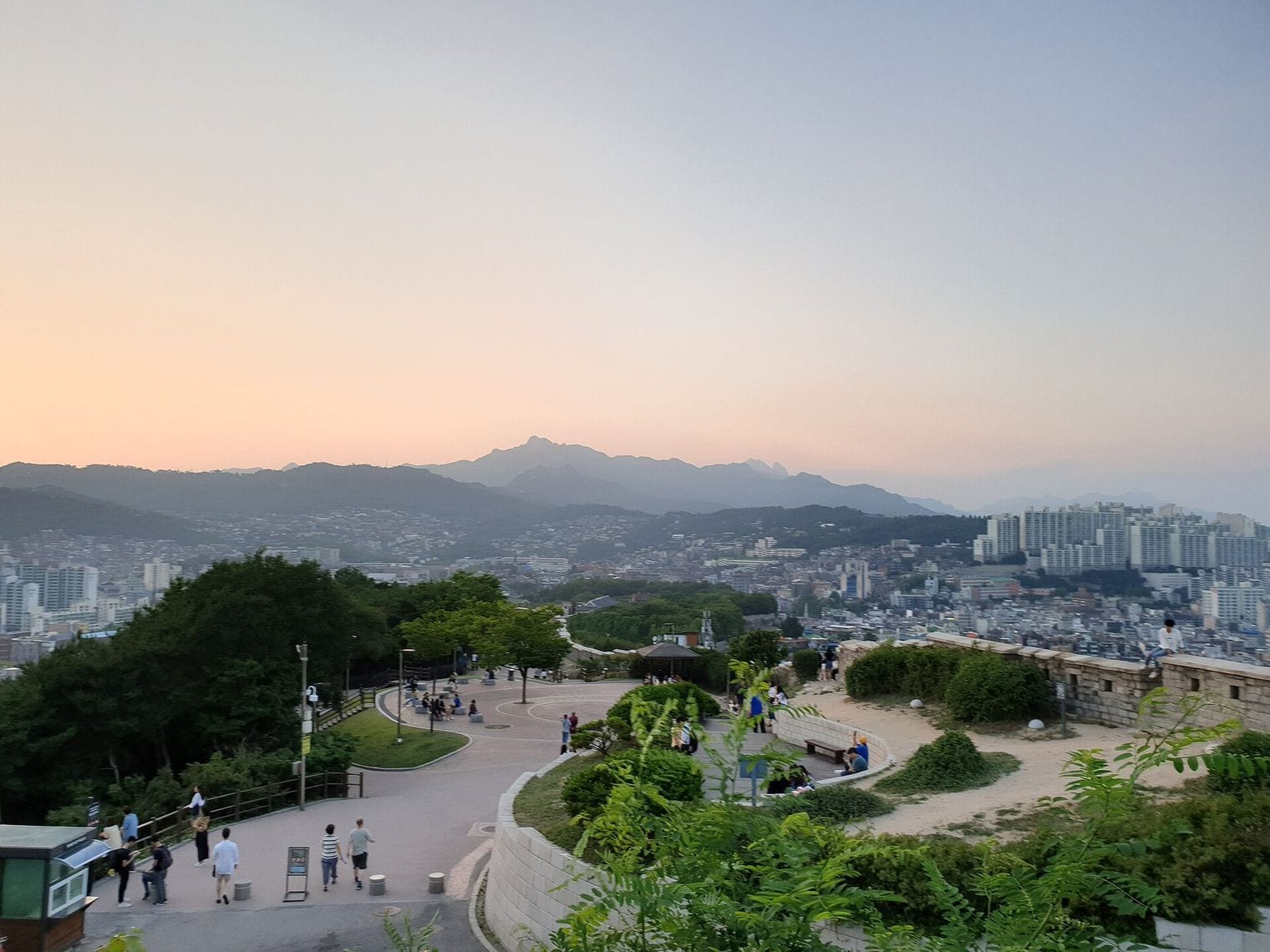
Naksan Park follows the crest of a low hill on the eastern side of the old city, and a restored section of the Seoul City Wall runs along its spine. Walking the wall here is the easiest possible introduction to the fortification that once enclosed the entire capital.
The park is a local favourite for sunset: the path is lit after dark, the wall glows, and the ground drops away west over the rooftops towards Namsan and the towers beyond. Ihwa-dong Mural Village spills down the slope immediately below, so the two are nearly always walked together, and Heunginjimun Gate stands at the bottom of the hill.
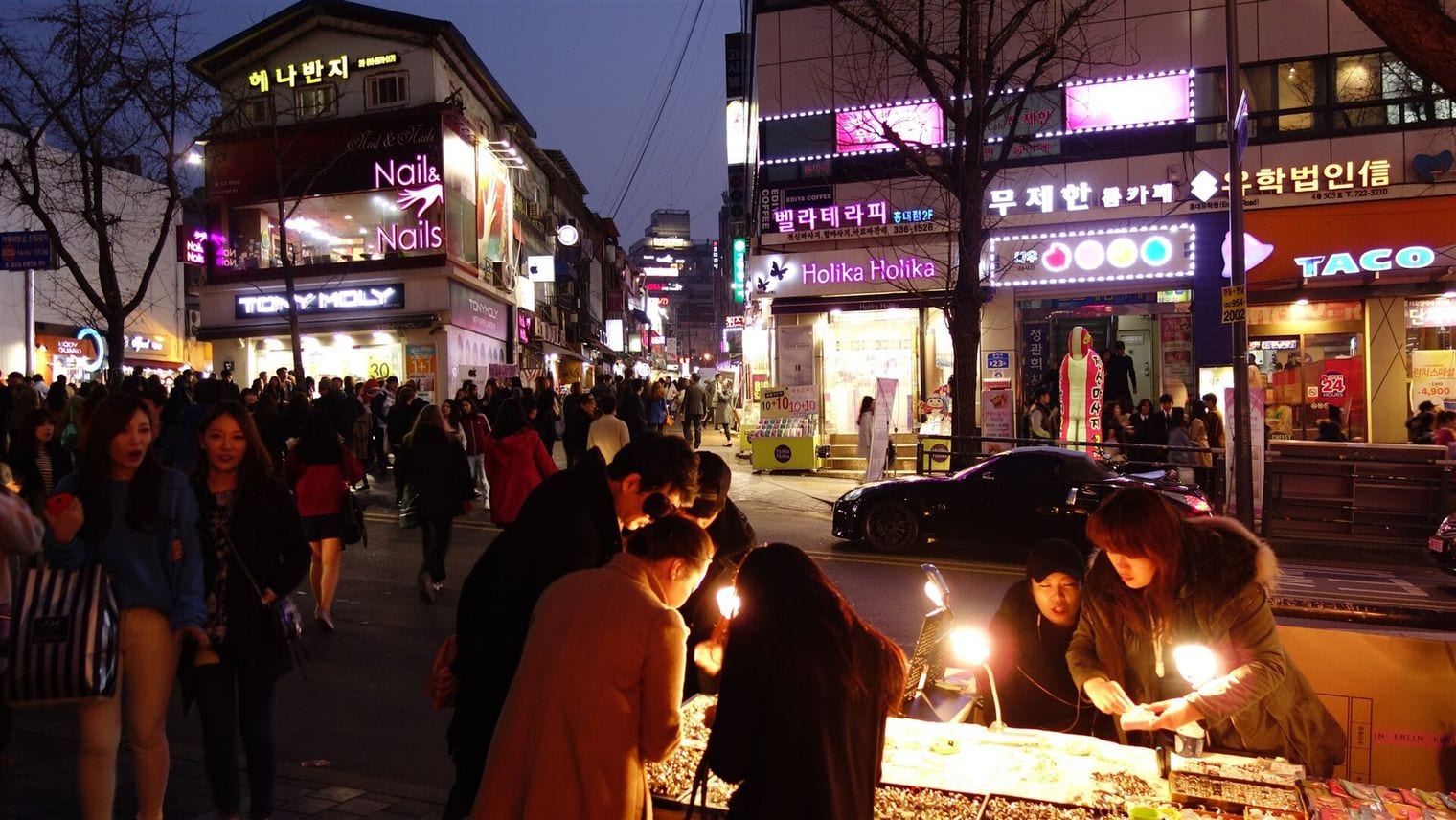
Hongdae takes its name from Hongik University, whose art school set the tone for the whole district: this is where Seoul goes out. The streets around the campus are a grid of live-music venues, dance clubs, board-game cafés, vintage shops and street food, and they stay busy long after the subway has stopped running.
The main pedestrian stretch is a permanent, informal stage — buskers set up amplifiers in the early evening and draw crowds that block the road, and dance crews perform to a ring of phone cameras. Come during the day and it is a different place: quieter, given over to independent boutiques, cafés and a weekend outdoor artists' market. It is the best base in the city if nightlife matters.
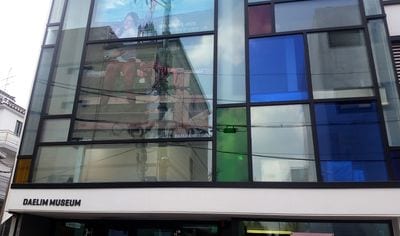
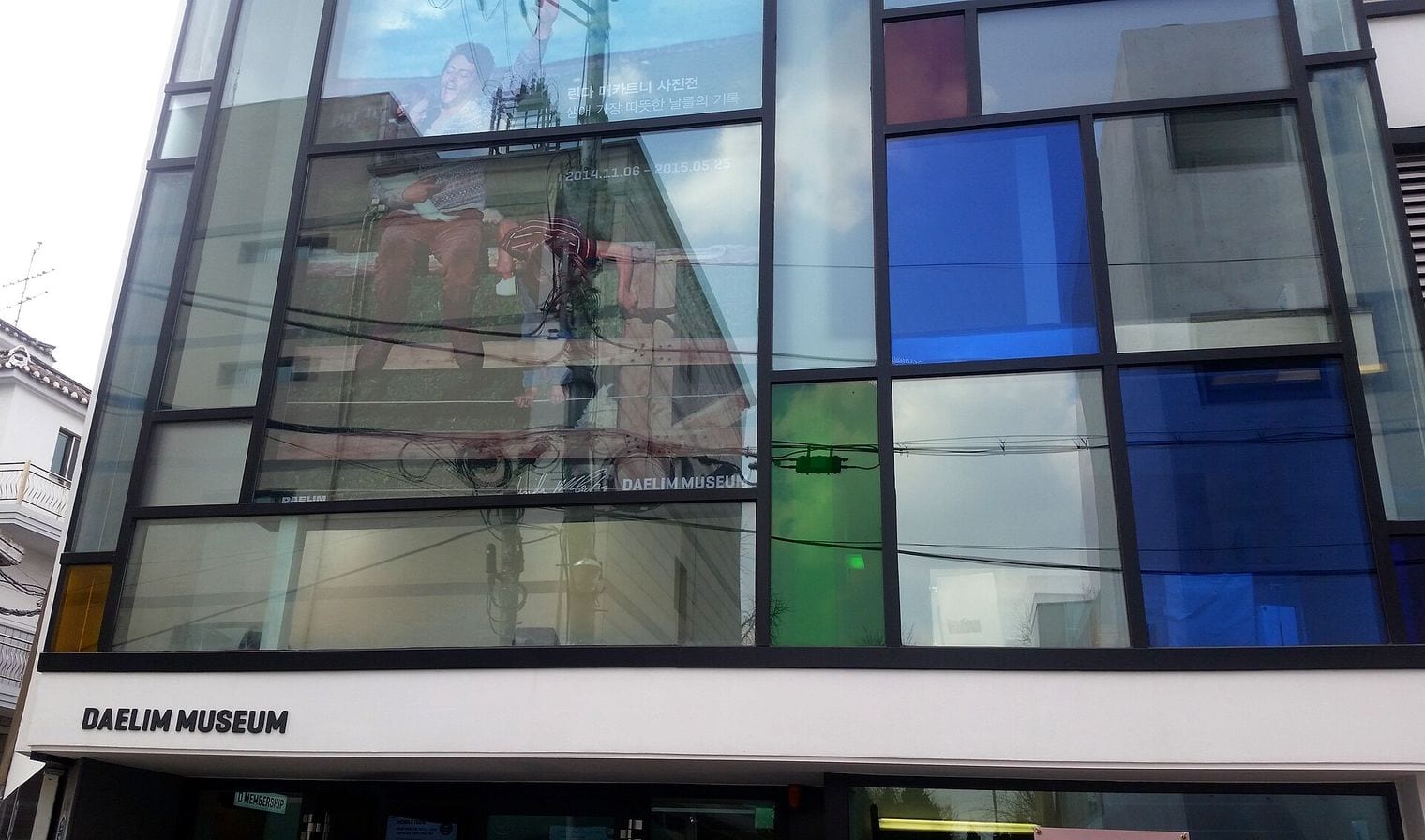
D Museum is a private exhibition space that made its name on design, photography and immersive installation rather than a permanent collection. It runs a small number of ambitious, heavily-produced shows at a time, and those shows are pitched squarely at a young Seoul audience — which is why it turns up on so many local recommendations.
There is no fixed hang, so what you see depends entirely on the current programme, and it is worth checking what is on before making the trip. The building sits in Seongsu-dong, the former factory quarter now dense with concept stores and coffee roasters, so it slots naturally into an afternoon on that side of the river.
3838. Jongmyo Shrine
Historical Landmark~1.7 km (1.1 miles) from centre
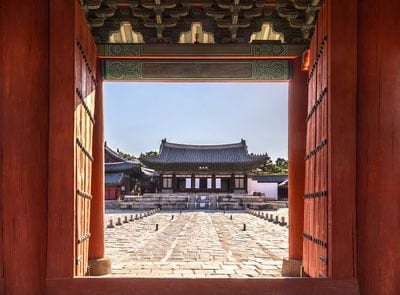
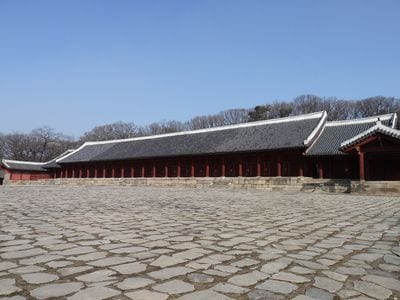
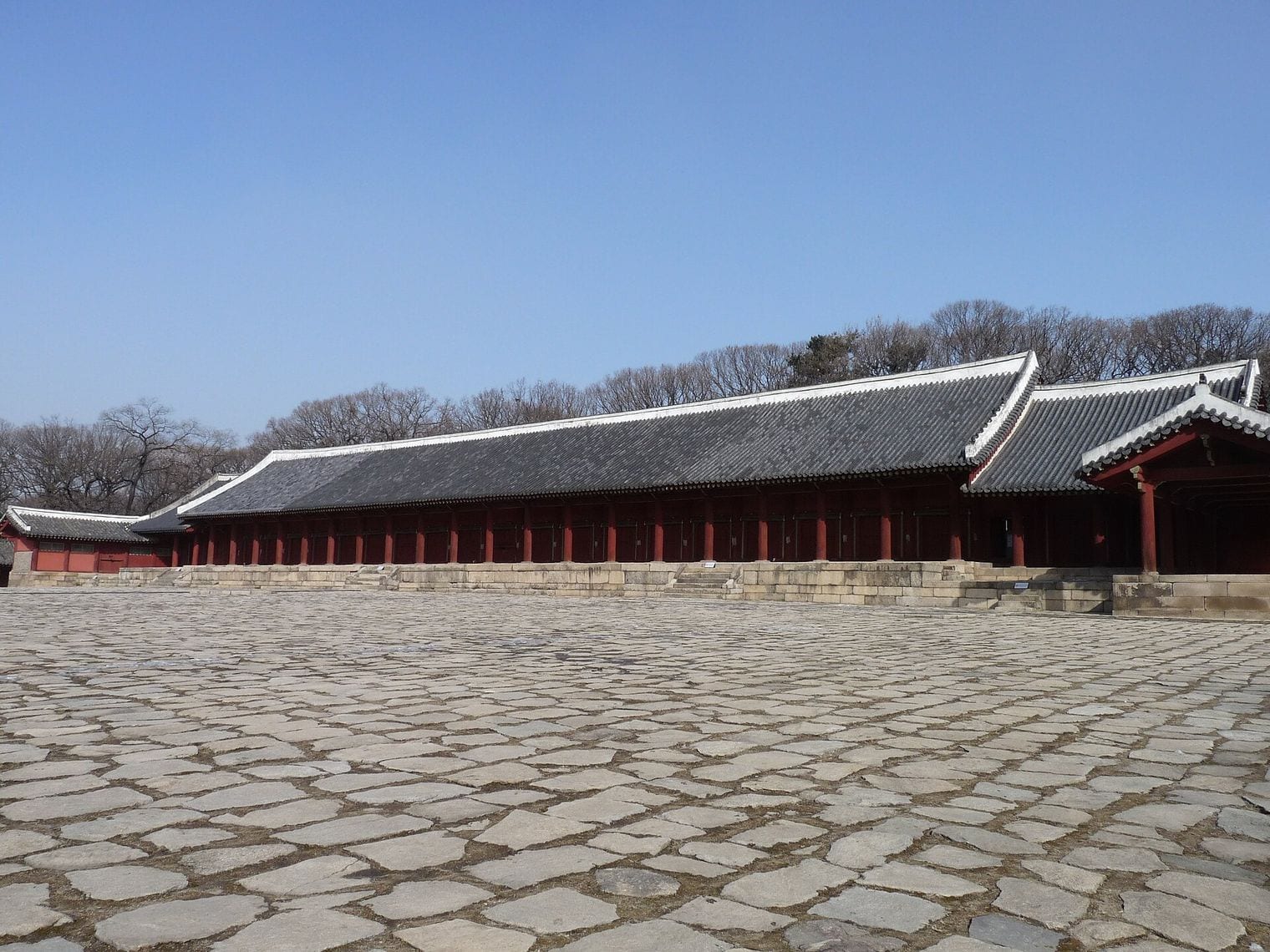
Jongmyo Shrine is the royal ancestral shrine of the Joseon dynasty and a UNESCO World Heritage Site, built to house the spirit tablets of kings and queens. It is deliberately the plainest of the great Joseon sites: long, low, unpainted wooden halls under vast tiled roofs, set at the end of a raised stone path that only the dead and the king were meant to walk.
That restraint is the point, and the effect in the main hall's endless colonnade is genuinely solemn in a way the painted palaces are not. The wooded grounds are quiet, and the shrine sits directly across from Changdeokgung, so the two pair naturally into a single morning.
Gyeonghuigung Palace is the least visited of Seoul's five Joseon palaces, and the most partial — most of it was dismantled during the colonial period, and what stands today is a careful reconstruction of a fraction of the original complex. It occupies a hillside site at the western end of the old city.
What it offers in return for the missing buildings is space and quiet: you can often have the courtyards largely to yourself, which is not true of any other palace here. It stands directly beside the Seoul Museum of History, and Gwanghwamun is a short walk east, so it works best as a calm addition to a day already built around the palace quarter.
Itaewon is Seoul's most international quarter, shaped over decades by the large foreign presence nearby, and it remains the part of the city where you will hear the widest mix of languages on one street. Its restaurants cover ground the rest of Seoul does not — Turkish, Nigerian, Pakistani, Mexican — alongside the bars and clubs it has long been known for.
The district has changed considerably in recent years, with the quieter, more design-led streets of neighbouring Hannam drawing much of the energy that once concentrated on the main strip. It sits directly below Namsan, within walking distance of the Leeum Museum of Art and a short ride from the National Museum of Korea, so it doubles as a convenient base for the museums in Yongsan.
Plan your trip
Best Time to Visit Seoul
Autumn is the season Seoul is at its best. From roughly September through November the summer humidity breaks, the skies turn genuinely clear, and the colour moves down the mountains that ring the city, lighting up the palace grounds and the trails on Namsan and Bukhansan. Spring is the other strong window: the cherry trees along the Han and around Seokchon Lake flower for a short, spectacular stretch, and the walking weather is mild.
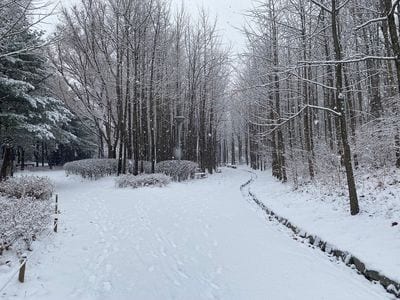
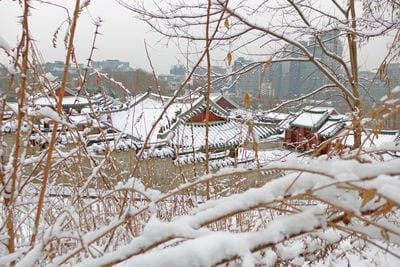
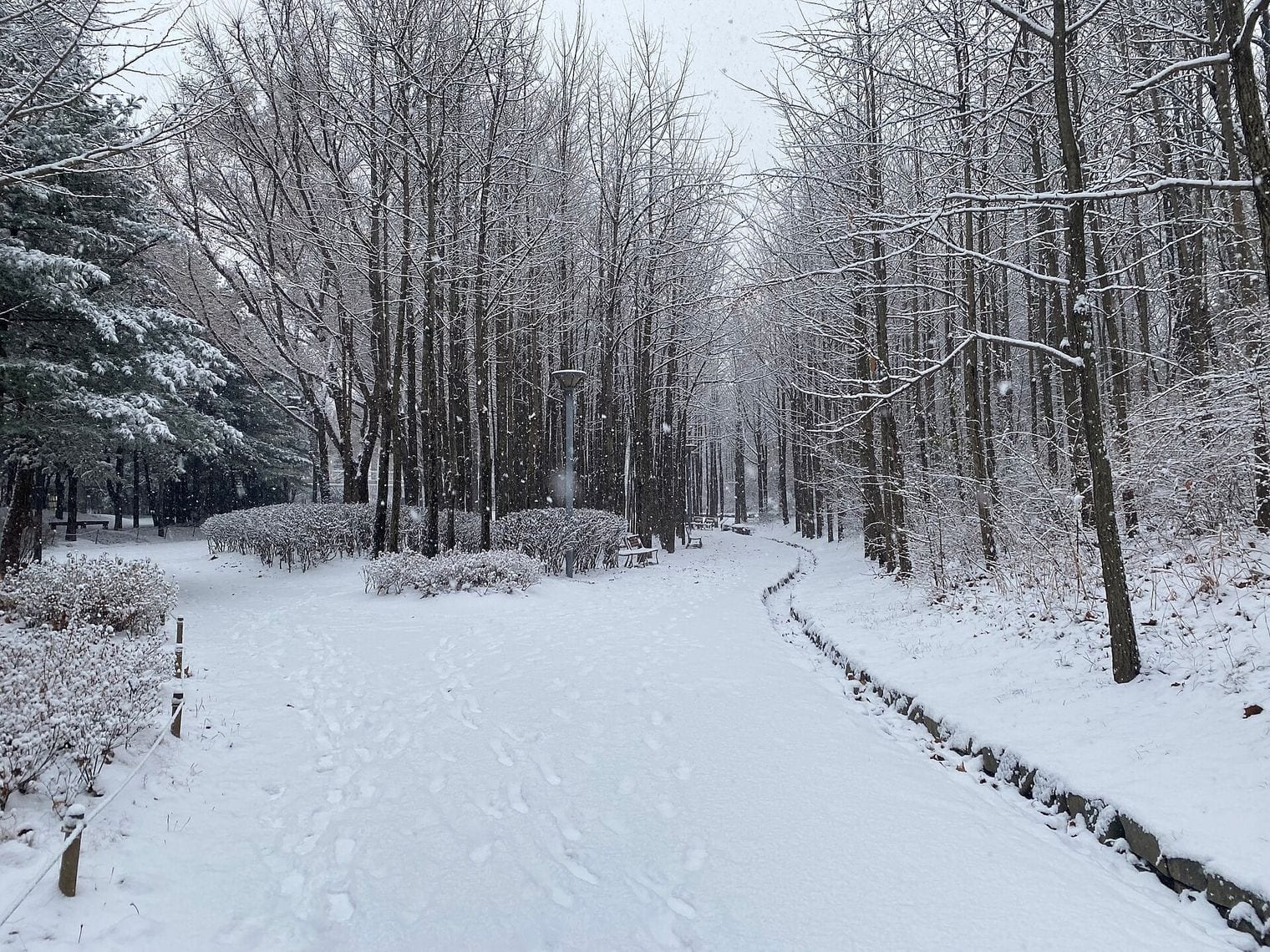
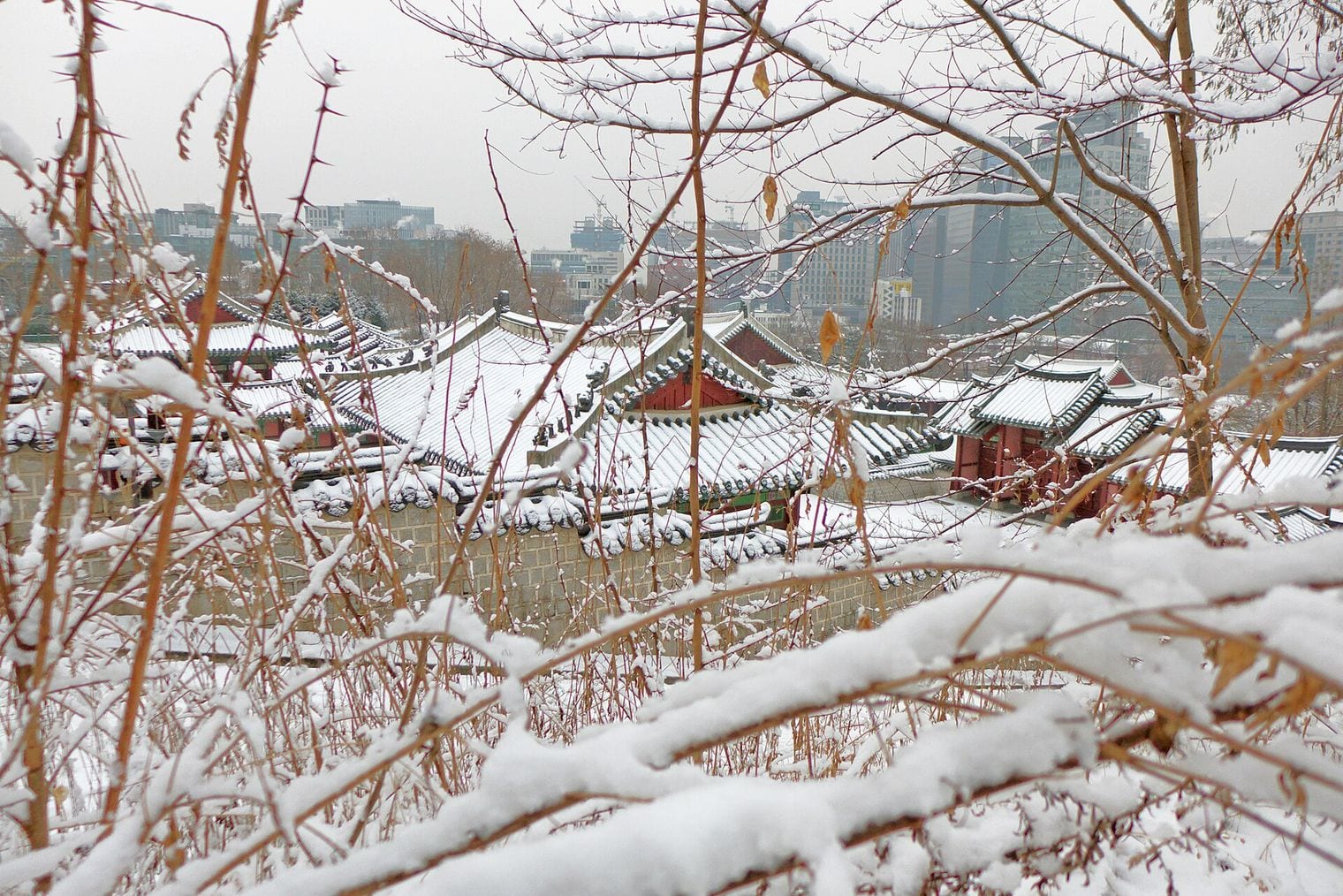
Summer is hot and sticky, and a monsoon front settles over the peninsula for several weeks between early summer and midsummer, bringing long spells of heavy rain — plan indoor days around the museums and covered markets and you will still enjoy it. Winter is cold, dry and often brilliantly bright, with Siberian air pushing temperatures well below freezing; the palaces look extraordinary under snow, and the lantern-lit streets take the edge off, but you will want serious layers.
Getting to Seoul
Almost every long-haul visitor arrives at Incheon International Airport, on an island west of the city and consistently rated among the best airports in the world.
The AREX rail link runs from the airport into Seoul Station, with an express service and a cheaper all-stops train; airport buses fan out to the main hotel districts, and taxis take roughly an hour depending on traffic. The smaller Gimpo Airport, much closer to the centre, handles domestic flights and short-haul routes from Japan and China, and connects straight into the subway network.
Within the country, the KTX high-speed line makes Seoul Station the hub: Busan is a little over two and a half hours away, with Daejeon, Daegu and a branch towards Gyeongju along the route. Express buses leave from several terminals for towns the railway does not reach. Driving into Seoul is the one thing to avoid — the ring expressways are busy, central parking is scarce and expensive, and nothing in this guide needs a car.
Getting Around Seoul
The subway is the answer to almost every journey. It is vast, clean, signposted in English and Korean, and it reaches every attraction in this guide; trains are frequent enough that you never really consult a timetable.
Buy a rechargeable transit card at any station or convenience store and tap in and out — the same card works on buses and in taxis, and it is far simpler than buying single tickets. Taxis are plentiful and reasonably priced by big-city standards, which makes them a sensible late-night fallback once the subway stops.
Above ground, Seoul rewards walking but is bigger than it looks on a map, and it is hilly. The palace quarter, Insa-dong, Bukchon and Ikseon-dong form one continuous walkable district; Myeongdong and the foot of Namsan are another; Hongdae and Gangnam are each walkable in themselves but a long way apart. Bicycles work well on the riverside paths along the Han, where a public hire scheme has docks throughout the parks, though city traffic is best left to the buses.
Where to Stay in Seoul
Myeongdong is the default first-time base: it is central, ringed by subway lines, walkable to Deoksugung and the foot of Namsan, and busy in a way that feels safe late at night.
Jongno and Insa-dong put you closest to the palaces and the hanok lanes and stay quieter after dark, which suits a sightseeing-led trip. Hongdae, around the universities in the west, is the place to stay if nightlife and live music matter most, and it has the best budget accommodation in the city.
South of the river, Gangnam and Jamsil are modern, spacious and well connected, better for business travel or a second visit than a first one — you trade atmosphere for polish and a longer ride to the palaces. Itaewon and Hannam suit travellers who want international restaurants and a shorter hop to the museums in Yongsan, while Seongsu appeals if you would rather be among independent shops and coffee roasters than tour groups.
Where to Eat in Seoul
Eat at the markets first. The covered food alley at Gwangjang is the classic introduction — mung-bean pancakes, seaweed rolls, knife-cut noodles — while Namdaemun devotes whole lanes to a single dish, and the carts that unfold across Myeongdong after dark handle the sweet end of the spectrum.
For sit-down meals, Ikseon-dong and Euljiro have the most interesting rooms in the centre, Mangwon and Yeonnam are where locals eat in the west, and Garosu-gil and Apgujeong cover the smarter end south of the river.
The dishes to prioritise are the ones Korea does better than anywhere: pork belly or marinated beef grilled at your own table, a bubbling kimchi or soft-tofu stew, cold buckwheat naengmyeon noodles in summer, ginseng chicken soup in the hottest weeks, and fried chicken with beer late at night.
Every meal arrives with a spread of free shared side dishes, so order less than you think you need. Vegetarians should look to the temple-cuisine restaurants near Jogyesa and Bongeunsa, which serve the Buddhist monastic tradition.
Day Trips from Seoul
The most-booked day trip is north to the Demilitarized Zone, roughly an hour from the city, where organised tours reach observation posts looking over the border — it must be booked through an approved operator and cannot be done independently.
South of the city, about an hour by subway or train, Suwon has the UNESCO-listed Hwaseong fortress, whose walls you can walk in a long circuit past gates and command posts. Incheon lies an hour west and combines a large Chinatown with the ferry ports for the West Sea islands.
East of the capital, the lake country around Chuncheon and the wooded island of Nami make an easy rail excursion of about ninety minutes, popular in autumn for the tree-lined avenues. Closer still, Bukhansan National Park sits on the northern edge of the city itself and is reachable by subway and bus, putting granite peaks and ridge trails within an hour of the palaces — the clearest illustration of how close Seoul keeps its mountains.
Before you go
Mobile dataAn eSIM gives your phone local data when you land, with no SIM card to swap.via AiraloGet an eSIM
Airport transferA driver meets you at arrivals and takes you to your hotel, at a price fixed when you book.via Welcome PickupsBook a transfer
We may earn a commission when you buy through these links, at no extra cost to you. How we make money.
One Day in Seoul
Morning
Start at Gyeongbokgung Palace and time your arrival for the changing of the royal guard at the main gate, then work through the courtyards to the throne hall and the pavilion on its lotus pond. Walk out of the east side into Bukchon Hanok Village and let the lanes take you uphill for the view back over the roof tiles, remembering that people live behind those gates. Drop down into Insa-dong Culture Street for craft shops and a tea house.
Cut south to Gwanghwamun Square for the Sejong and Yi Sun-sin statues, then pick up the Cheonggyecheon Stream a level below the traffic and follow it east — a shaded, quiet walk right through the middle of downtown. Surface at Gwangjang Market for a late lunch of bindaetteok at a stall counter, then continue to Dongdaemun Design Plaza (DDP) to walk over and around Zaha Hadid's silver curves.
Choose your view. Take the cable car up Namsan to N Seoul Tower and watch the city light up from the mountain in its middle, or ride some of the fastest elevators in the world to the deck at Seoul Sky for the version from 555 metres. Either way, finish in Myeongdong Shopping Street, where the food carts unfold down the centre of the road and the evening runs on much later than you expect.
The buskers who take over the main pedestrian street in Hongdae every evening cost nothing either. Between them that is most of a week without an entry ticket.
Seoul is best known for the collision of the very old and the very new. Its signature sights are Gyeongbokgung Palace with its changing-of-the-guard ceremony, the hanok lanes of Bukchon, the street-food alleys of Gwangjang Market, the Namsan skyline landmark of N Seoul Tower, and the Zaha Hadid curves of Dongdaemun Design Plaza — five things you can see in a single day.
How many days do you need in Seoul?
Four to five days suits most first visits. Two days covers the palace quarter, the hanok villages and the central markets; a third adds the museums in Yongsan and a river or mountain afternoon; a fourth reaches Gangnam, the temples and a skydeck. Add a fifth if you want a day trip to the DMZ or Suwon without rushing.
What can you do in Seoul for free?
A great deal. Bukchon and Ikseon-dong cost nothing to walk, as does the sunken Cheonggyecheon stream and Gwanghwamun Square. The Han River parks at Yeouido, the woodland and deer at Seoul Forest, the courtyards of Jogyesa and Bongeunsa temples, and the soaring reading room of Starfield Library are all open to anyone. So are Naksan Park, the Ihwa-dong murals and the Banpo Bridge fountain.
When is the best time to visit Seoul?
Autumn, from September to November, is the clearest and most comfortable stretch, with mountain colour around the city. Spring brings the cherry blossom along the Han for a short window. Summer is hot with a genuine rainy season, and winter is cold and dry but bright — and the palaces under snow are worth the layers.
Is Seoul easy to visit without speaking Korean?
Yes. Subway signage, station announcements and major museum labels carry English, transit cards remove most ticketing friction, and translation apps handle menus well. English is less common in smaller restaurants and outside the centre, so a few phrases help — and hangul is a genuinely logical alphabet that takes about an evening to learn to read.
Is Seoul Sky worth it if you have already done N Seoul Tower?
They give different views. N Seoul Tower sits on a mountain in the middle of the city, so you look outward across the basin from among the hills. Seoul Sky is far higher, on the south-east side, with a glass floor ranking among the highest glass floors in the world and a long westward view back over the Han. Pick one for a short trip.