We build and rank every list first. Booking links come after, and only where
a partner sells a ticket, tour or stay for that exact place, so a place with
nothing to book is listed exactly as prominently as one you can book.
So how do we earn? Some links on this page go to booking
partners, and if you book or buy through
one, we may earn a commission. It costs you nothing extra.
That commission never decides which places make the list, the order they
appear in, or what we write about them. No entry is sponsored or a paid
placement.
By the City Viking editorial teamPublished 40 places · 28 min read
Fact-checked Checked before launchOct 12, 202640 sources27 publishers1 government & parks2 tourism boards15 encyclopedias & research22 venues & other sitesPublished · Oct 12, 2026Researched and checked before it went liveClick for every source and the full change log.
Short answer
Seville is known for orange trees, flamenco and a golden age as the port for Spain's trade with the Americas. Its three essential sights are the Royal Alcázar, the cathedral with its Giralda bell tower and the tiled Plaza de España. Three days is the sweet spot: one for the Alcázar, the cathedral and Santa Cruz, one for the Plaza de España, the river and Triana, one for the Setas, the Macarena and the museums.
Seville is the city many travellers picture when they imagine southern Spain: orange trees shading the squares, tiled courtyards, horse carriages circling the cathedral and flamenco spilling out of Triana's bars. Its old town grew rich as the port for Spain's trade with the Americas, and the palaces, churches and archives of that golden age still fill it.
This guide ranks the 40 best things to do in Seville, from the Royal Alcázar and the Giralda to quiet Baroque chapels, ceramic workshops and riverside parks. Three days covers the highlights without rushing; a fourth leaves time for a day trip.
Seville's official motto is NO8DO, popularly read as a rebus for "No me ha dejado", meaning "She has not abandoned me".
The Giralda has no stairs: its builders gave the former minaret 35 ramps, wide enough for people and beasts of burden to climb.
When it was finished in the early 16th century, Seville Cathedral overtook Hagia Sophia as the largest cathedral in the world, and it remains the largest Gothic cathedral. Christopher Columbus is buried inside.
Magellan's fleet set sail from Seville on 10 August 1519, heading down the Guadalquivir on the voyage that became the first circumnavigation of the globe.
The bitter Seville orange is prized for British marmalade: once a year, fruit is collected from trees in Seville and shipped to Britain.
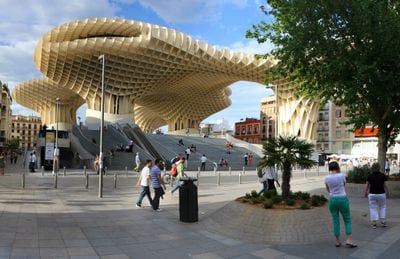
The Setas de Sevilla are marketed as the world's largest wooden structure, built from micro-laminated Finnish pine and completed in 2011.
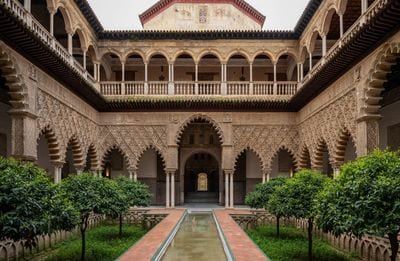
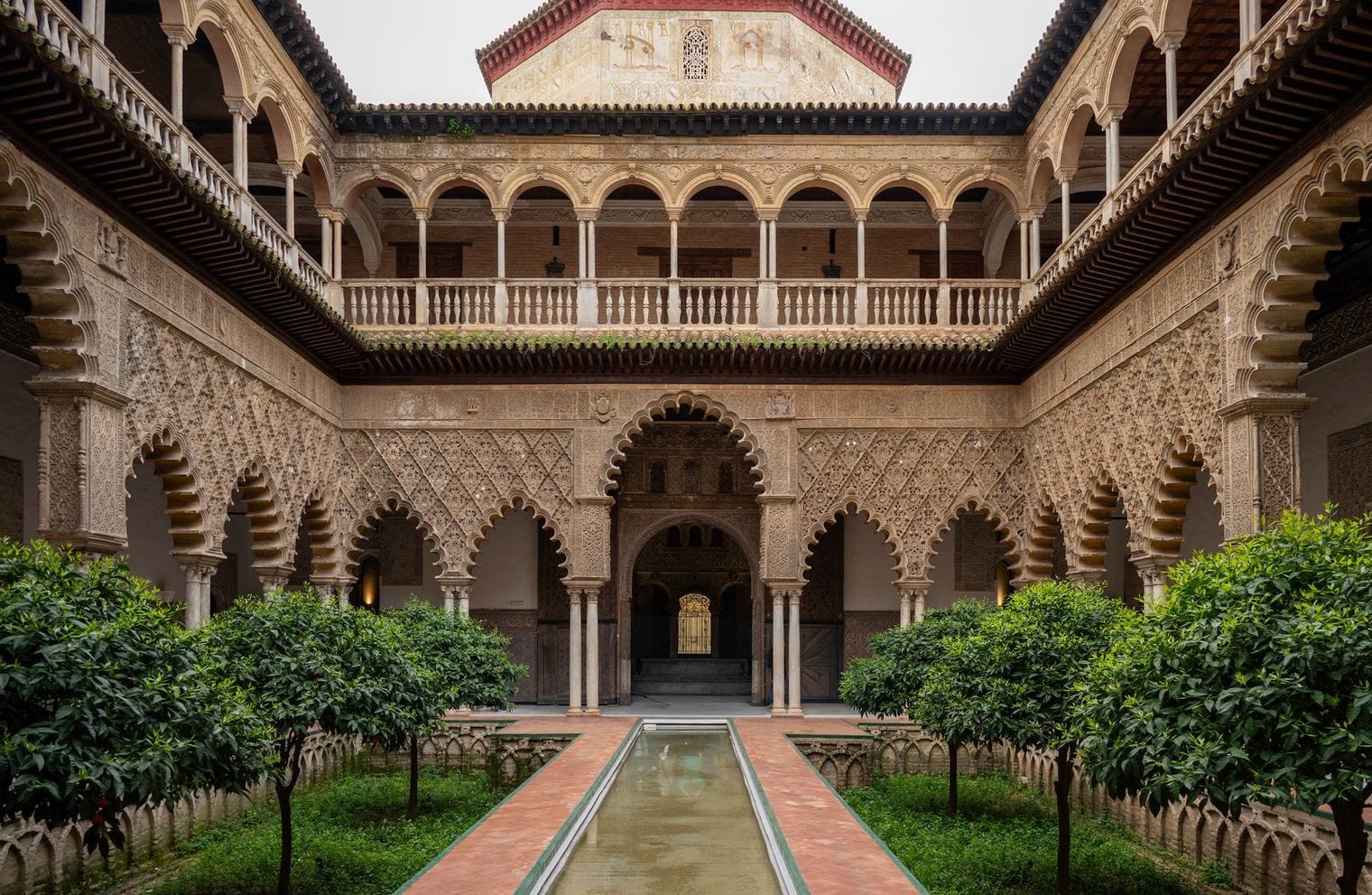
The Royal Alcázar of Seville began as the citadel of the city's Islamic rulers and grew, after the Castilian conquest of 1248, into a sprawl of palaces, patios and gardens that is still one of the official residences of the Spanish royal family. Its centrepiece is the Mudéjar palace Pedro I built in the 1360s, where carved stucco, tiled walls and the domed Hall of the Ambassadors show Islamic craftsmanship working for a Christian king.
Save plenty of time for the gardens, a maze of fountains, pavilions, pools and orange trees that unfolds beyond the palace halls. The complex was listed by UNESCO in 1987 together with the cathedral and the Archive of the Indies, and Game of Thrones fans will recognise corners of it from the show's fifth season. A timed ticket booked ahead is the easiest way past the queue.
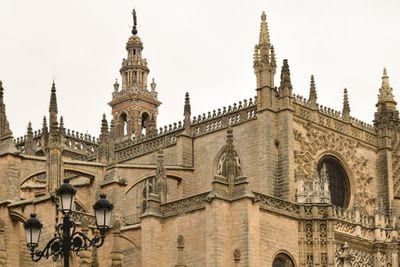
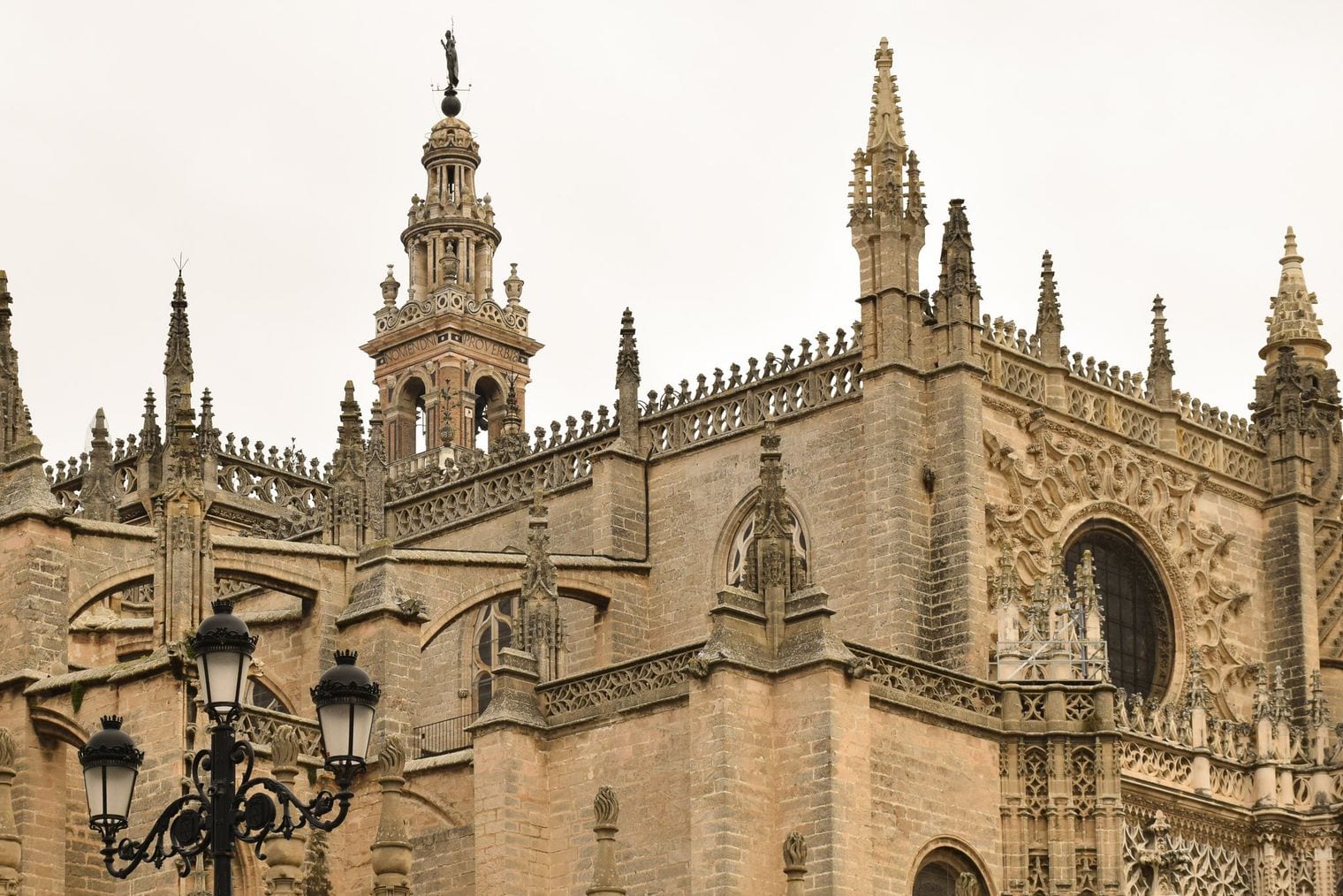
The Catedral de Sevilla rose on the site of the city's great Almohad mosque and, once completed in the early 16th century, overtook Hagia Sophia as the largest cathedral in the world. It is still the largest Gothic cathedral anywhere, and inside the scale is the point: a forest of pillars, a towering gilded altarpiece and the monumental tomb of Christopher Columbus, who is buried here along with his son Diego.
The bell tower, La Giralda, began life as the mosque's minaret and gained its Renaissance belfry after the Reconquest. Instead of stairs, 35 ramps wind up inside it, built wide enough for people and beasts of burden, and the view from the top over the rooftops of Santa Cruz rewards the climb. Finish in the Patio de los Naranjos, the mosque's old ablutions courtyard, still planted with orange trees around its fountain.
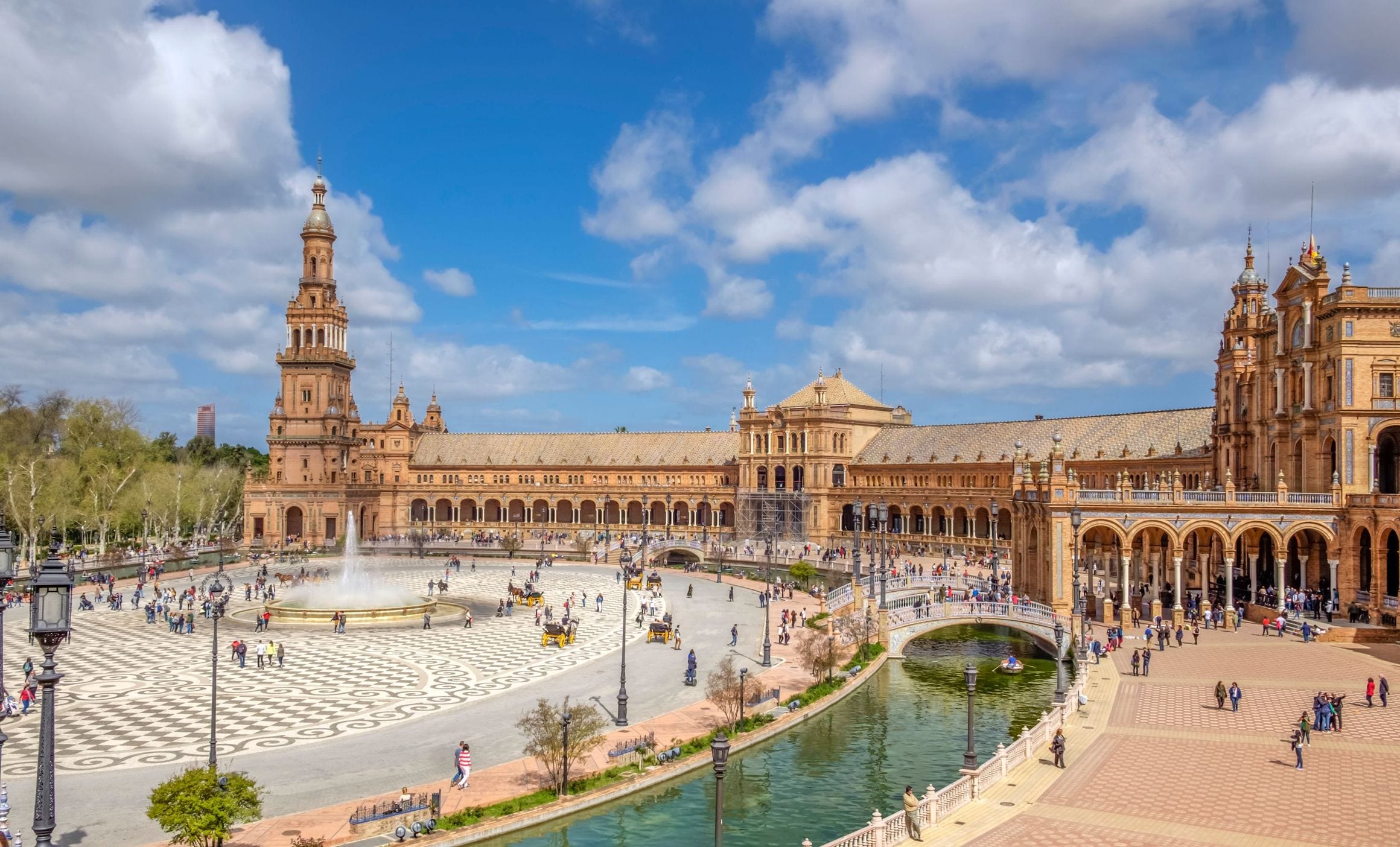
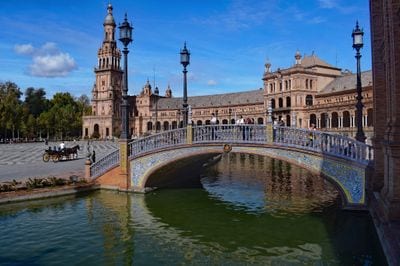
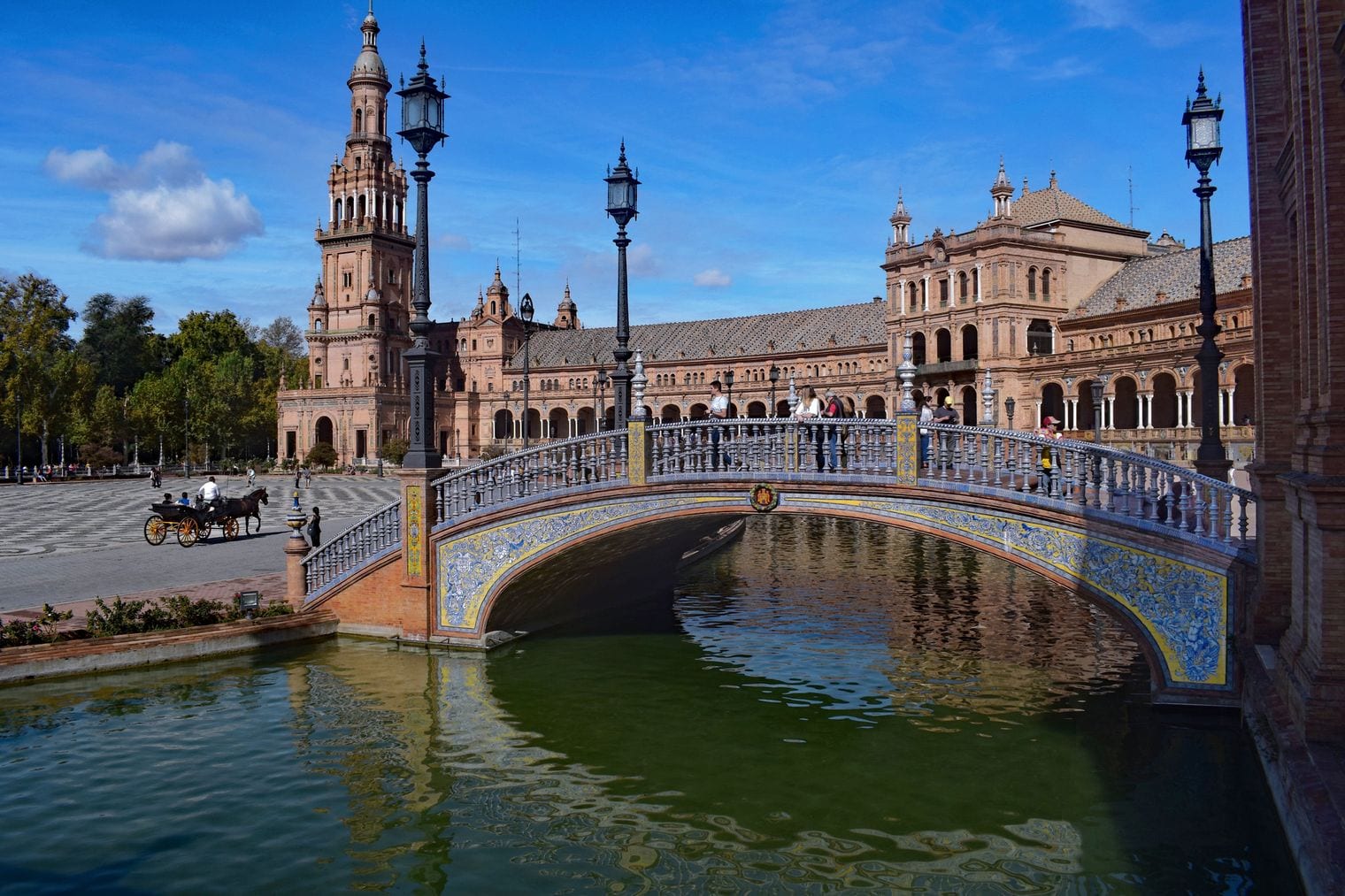
Built for the Ibero-American Exposition of 1929, the Plaza de España is Seville at its most theatrical: a huge half-circle of brick, marble and glazed tile designed by architect Aníbal González, wrapped around a moat crossed by four bridges that represent the ancient kingdoms of Spain. Its style blends Renaissance, Baroque and Moorish revival into one sweeping building.
Walk the arcade to find the tiled alcoves of the provinces, one for each Spanish province, where Spanish visitors like to pose at the bench of their home region. The square sits on the edge of María Luisa Park, so the two make an easy pairing, and it is at its most photogenic in the soft light of early morning or late afternoon.
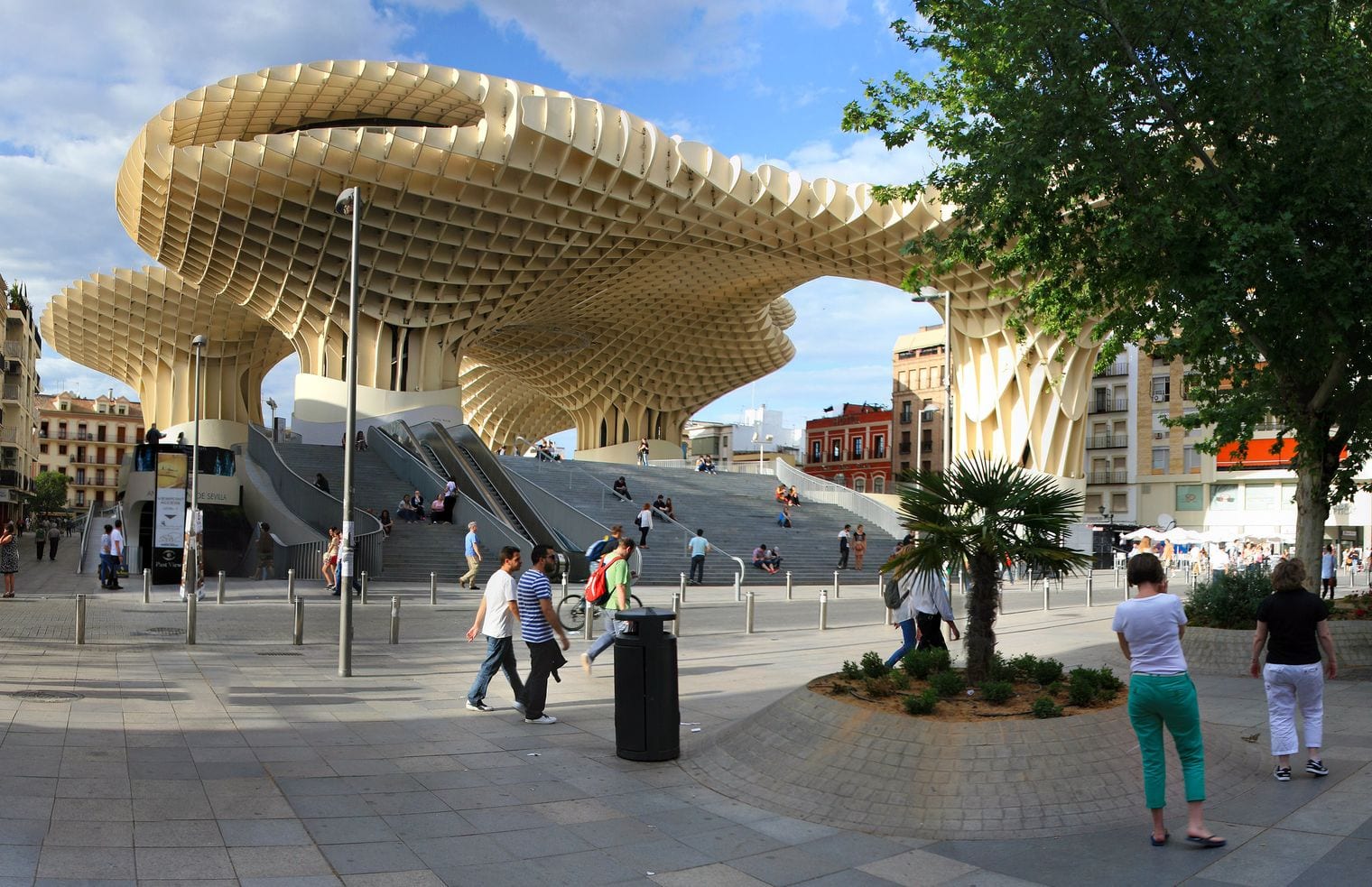
Locals call it the Setas de Sevilla, the mushrooms of Seville: a giant timber canopy designed by German architect Jürgen Mayer for the Plaza de la Encarnación, completed in 2011 and marketed as the world's largest wooden structure. Love it or not, its undulating parasols changed the skyline of the old town, sheltering a market hall and a public square beneath.
Take the lift up to the rooftop walkway, which snakes across the top of the canopy for wide views over church towers to the cathedral, especially good around sunset. Below street level, the Antiquarium preserves Roman and Moorish remains uncovered during construction, seen from glass walkways on a separate small ticket.
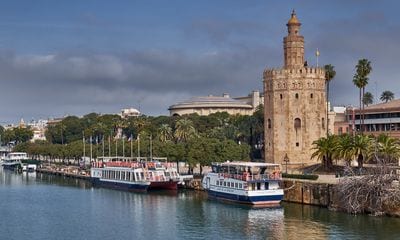
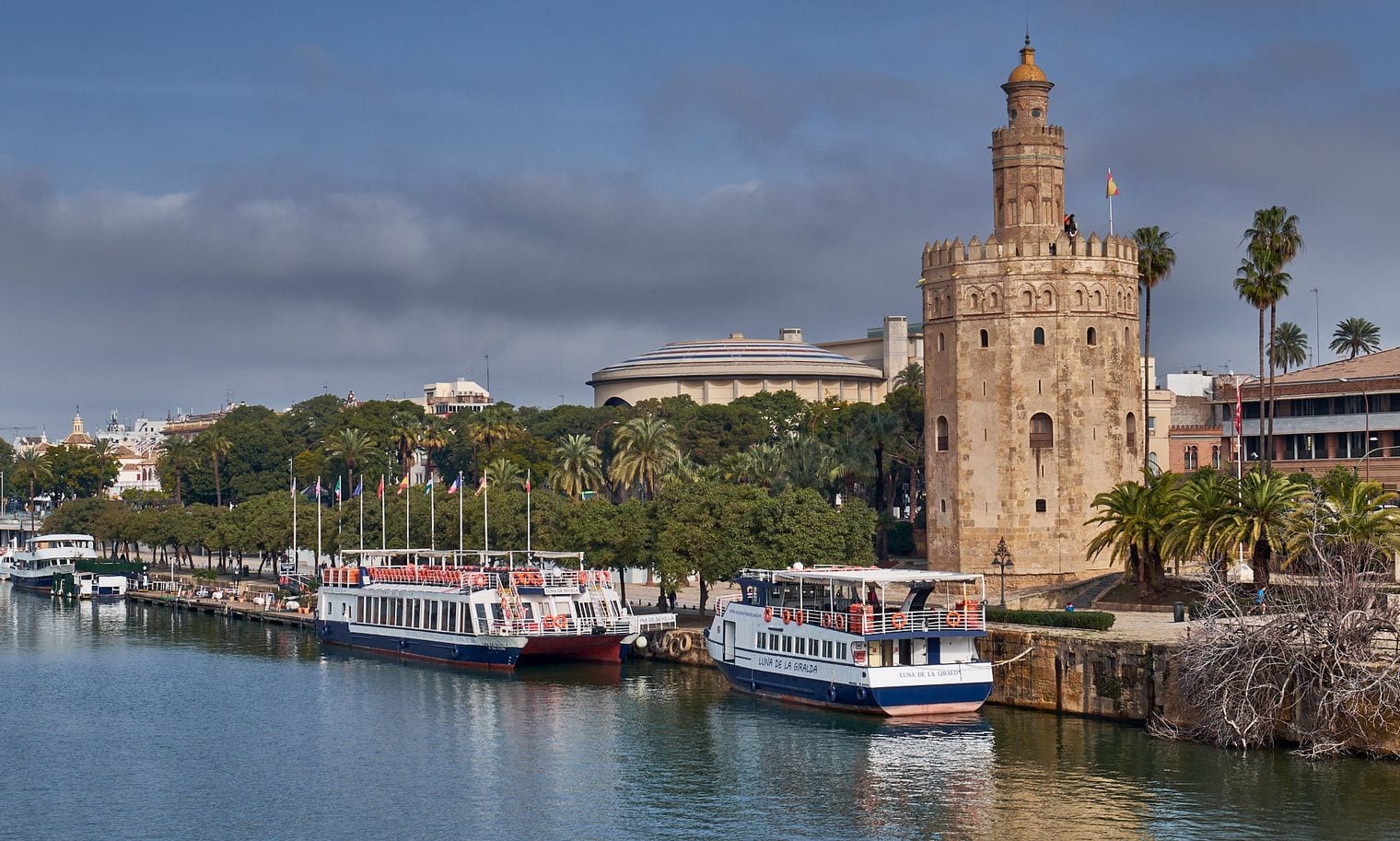
The twelve-sided Torre del Oro was raised by the Almohads in the first third of the 13th century to control river access to Seville, and later served as a prison. Its name, Tower of Gold, comes from the golden sheen its walls of mortar, lime and pressed hay once threw across the Guadalquivir.
Today it holds a small maritime museum run by the Spanish Ministry of Defence, with models, charts and instruments recalling the centuries when Seville was Spain's gateway to the Americas, plus a terrace looking up and down the river. Sightseeing boats leave from the quay beside the tower, a relaxed way to see the bridges and the Triana bank from the water.
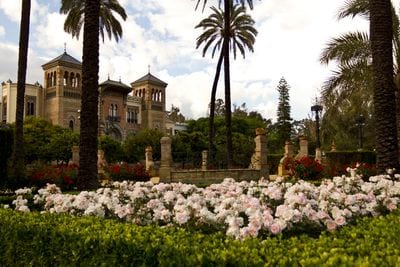
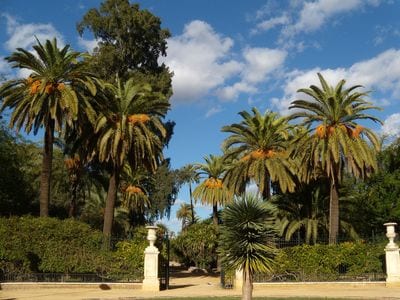
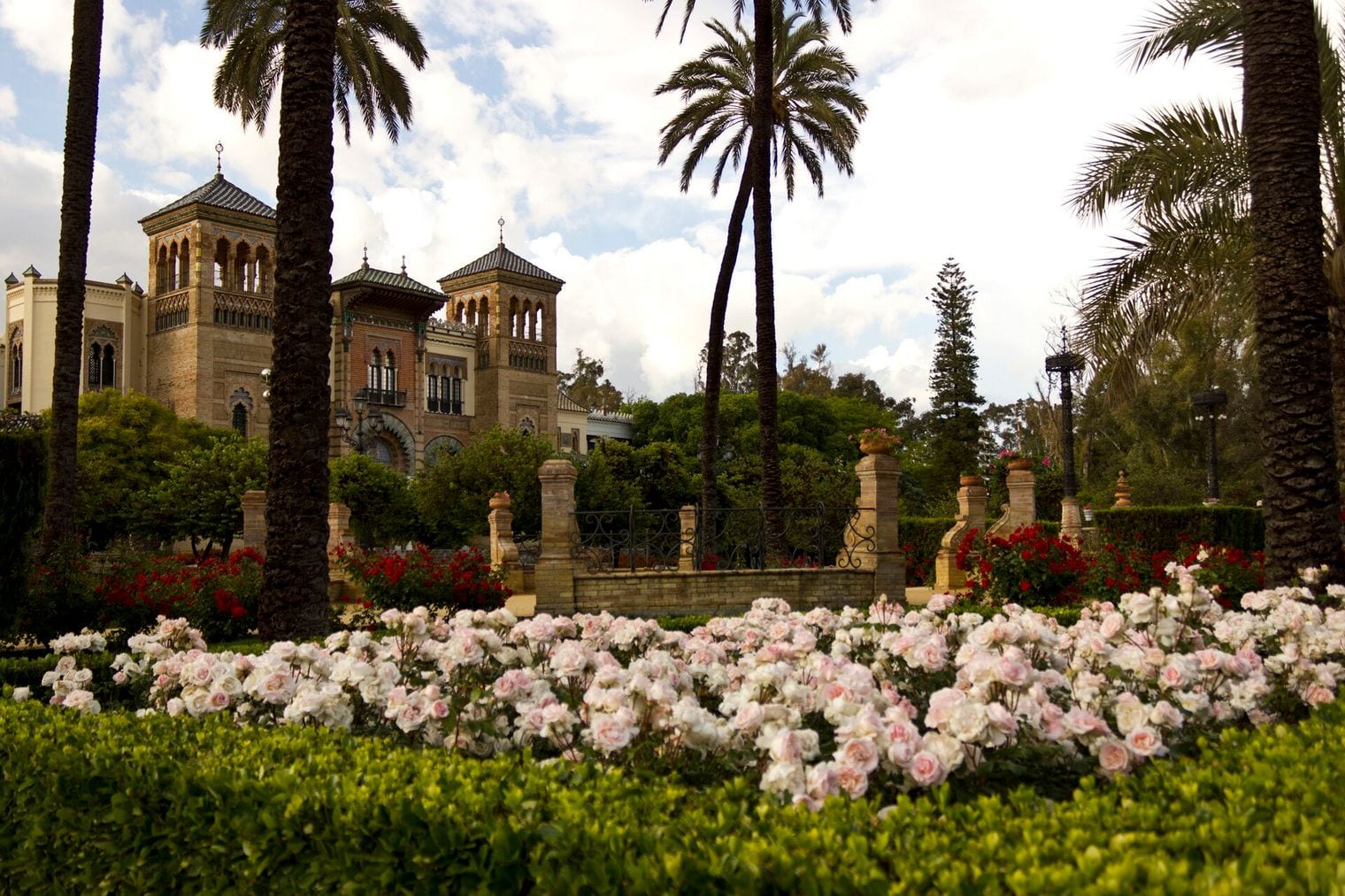
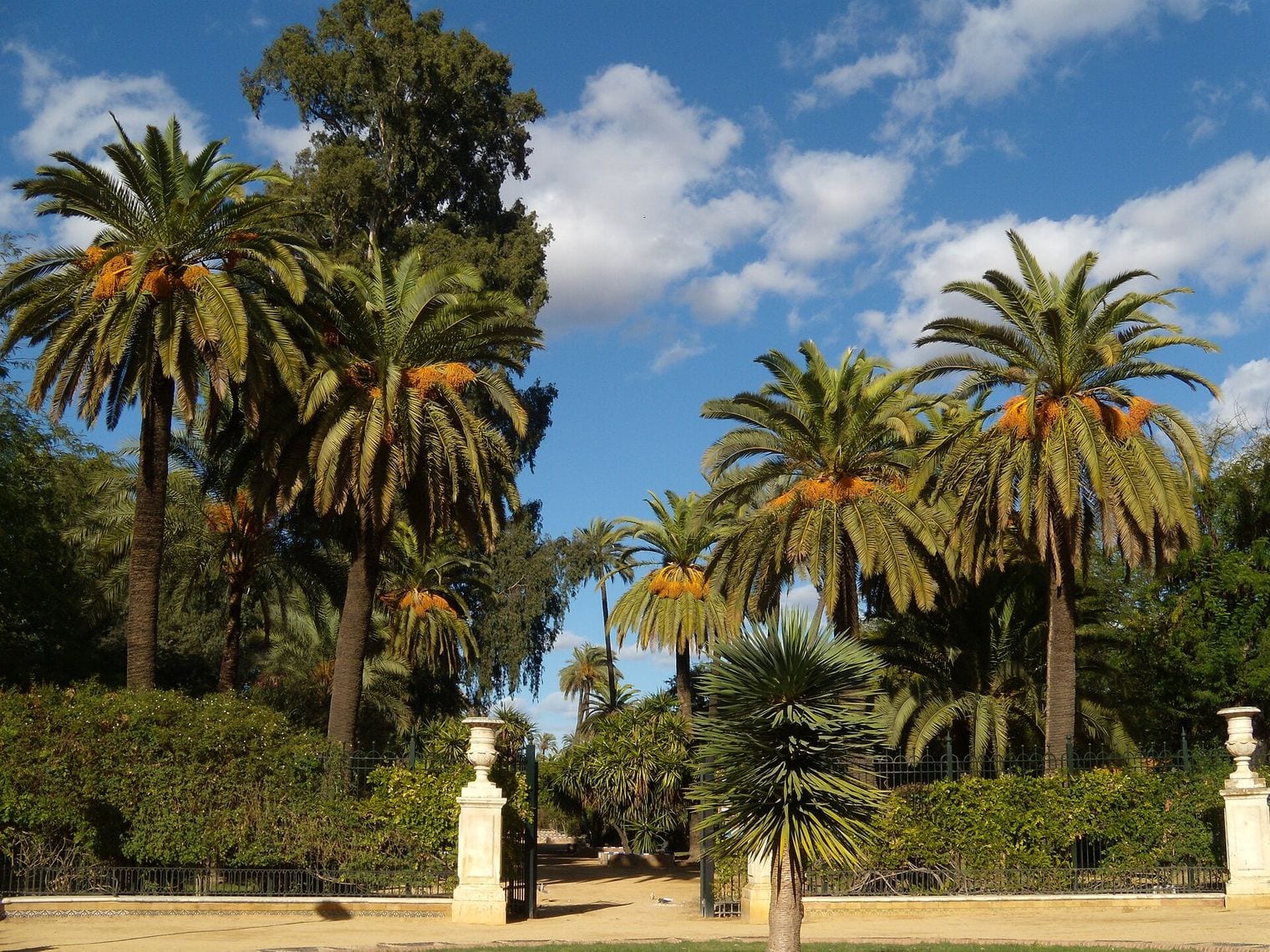
Seville's principal green space, the Parque de María Luisa was donated to the city in 1893 by the Infanta Luisa Fernanda, Duchess of Montpensier, and reshaped from 1911 by the French landscape designer Jean-Claude Nicolas Forestier ahead of the 1929 exposition. Shady avenues, tiled fountains, ponds and pavilions fill it, and it frames both the Plaza de España and the Plaza de América.
Look for the monument to the Romantic poet Gustavo Adolfo Bécquer, the Fountain of the Lions and the Isleta de los Patos, a little pond island popular with ducks and doves, then climb the small artificial hill of Monte Gurugú. On a hot afternoon the park's shade is one of the best refuges in the city.
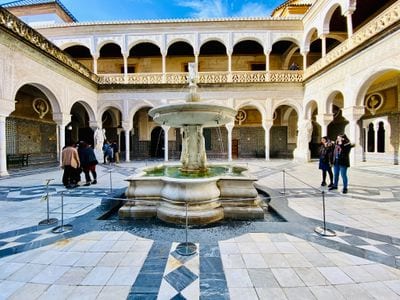
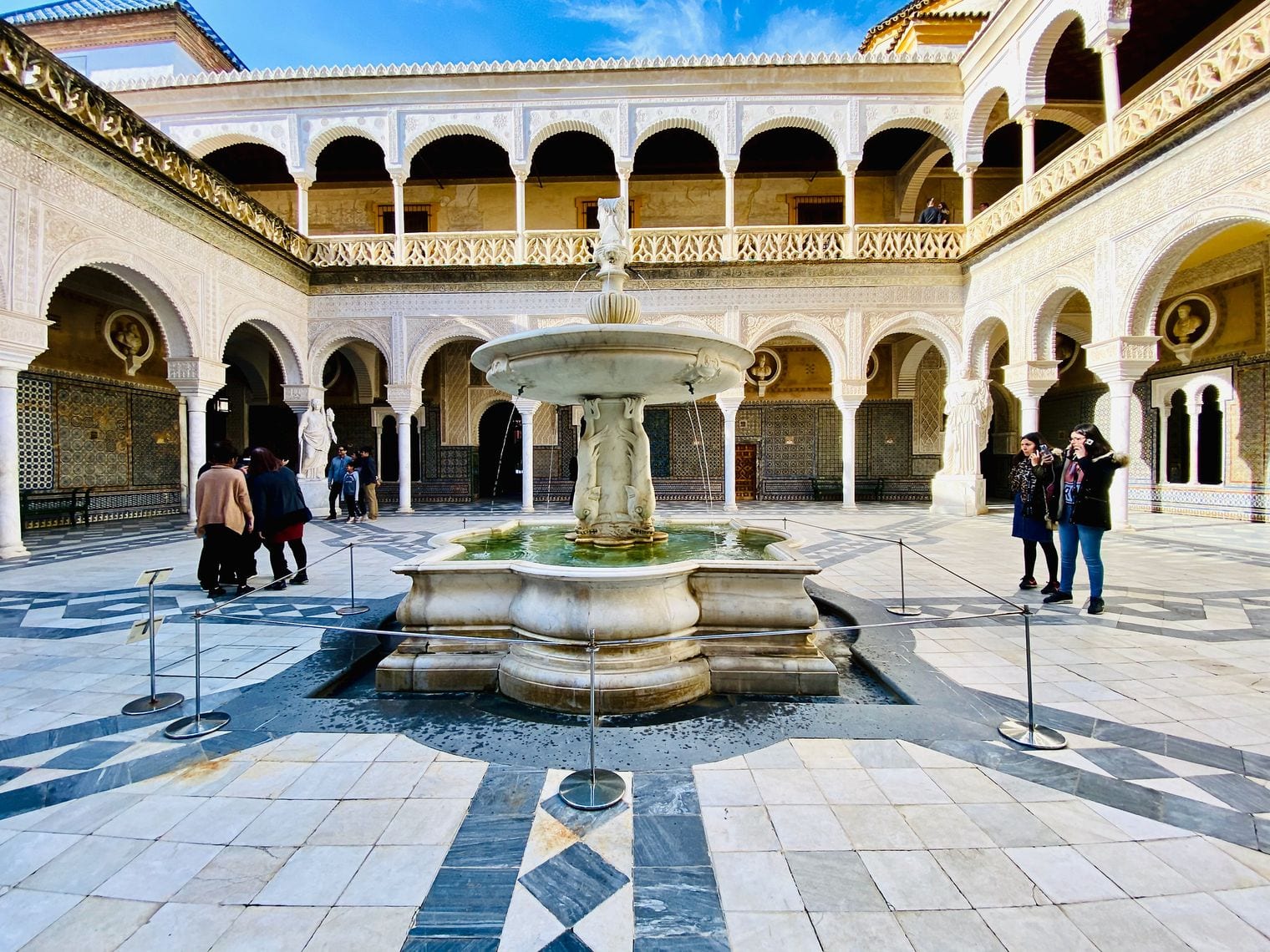
Still the residence of the Dukes of Medinaceli, Casa de Pilatos is often called the prototype of the Andalusian palace: an Italian Renaissance house laced with Mudéjar plasterwork, built around a courtyard of fountains and classical statues. Arches, gardens and loggias open off it in every direction, and the effect is calmer and more intimate than the Alcázar.
The real star is the tilework, with around 150 different azulejo designs made in the 1530s by the brothers Diego and Juan Pulido, one of the largest early-modern tile collections in the world. Take your time in the ground-floor rooms and gardens, and add the upper floor if you want to see the family's painted ceilings and art collection.
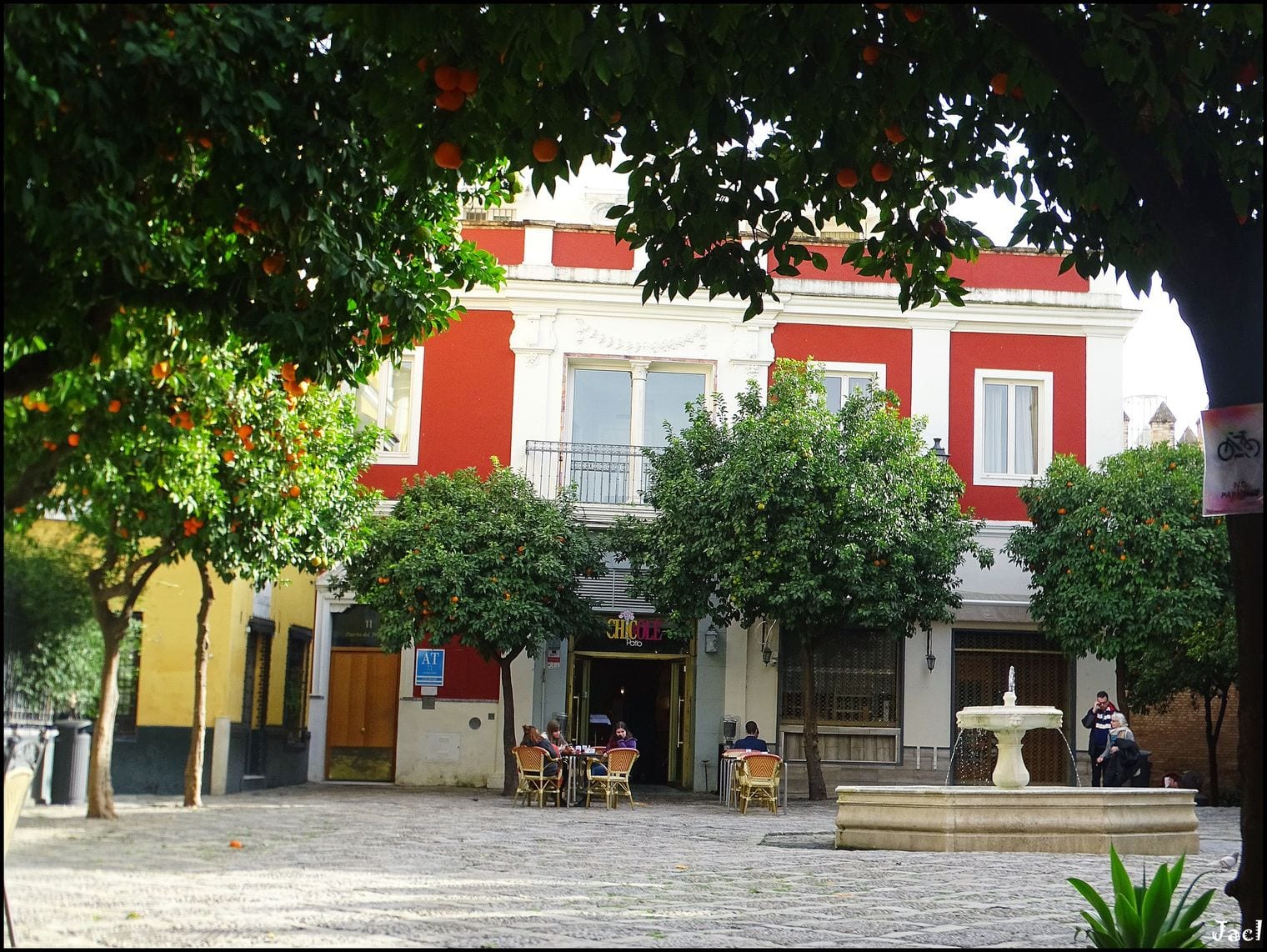
Seville's former Jewish quarter, the Barrio de Santa Cruz is a tangle of whitewashed lanes, tiny plazas and flower-filled balconies squeezed between the cathedral, the Alcázar walls and the Jardines de Murillo. It is the city's main tourist neighbourhood, and the best way to see it is simply to get lost in it, ideally early in the morning before the tour groups arrive.
The Callejón del Agua follows the old Alcázar wall, while lanes barely wider than a doorway open suddenly onto squares like the Plaza de Santa Cruz and the Plaza de Doña Elvira, shaded by orange trees. Several of the city's oldest churches hide in the quarter, and tapas bars wait on almost every corner when the wandering gets tiring.
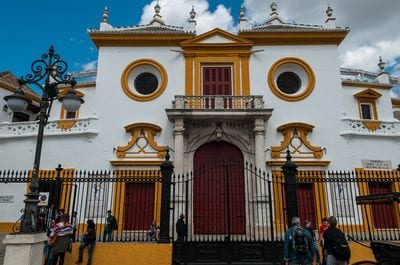
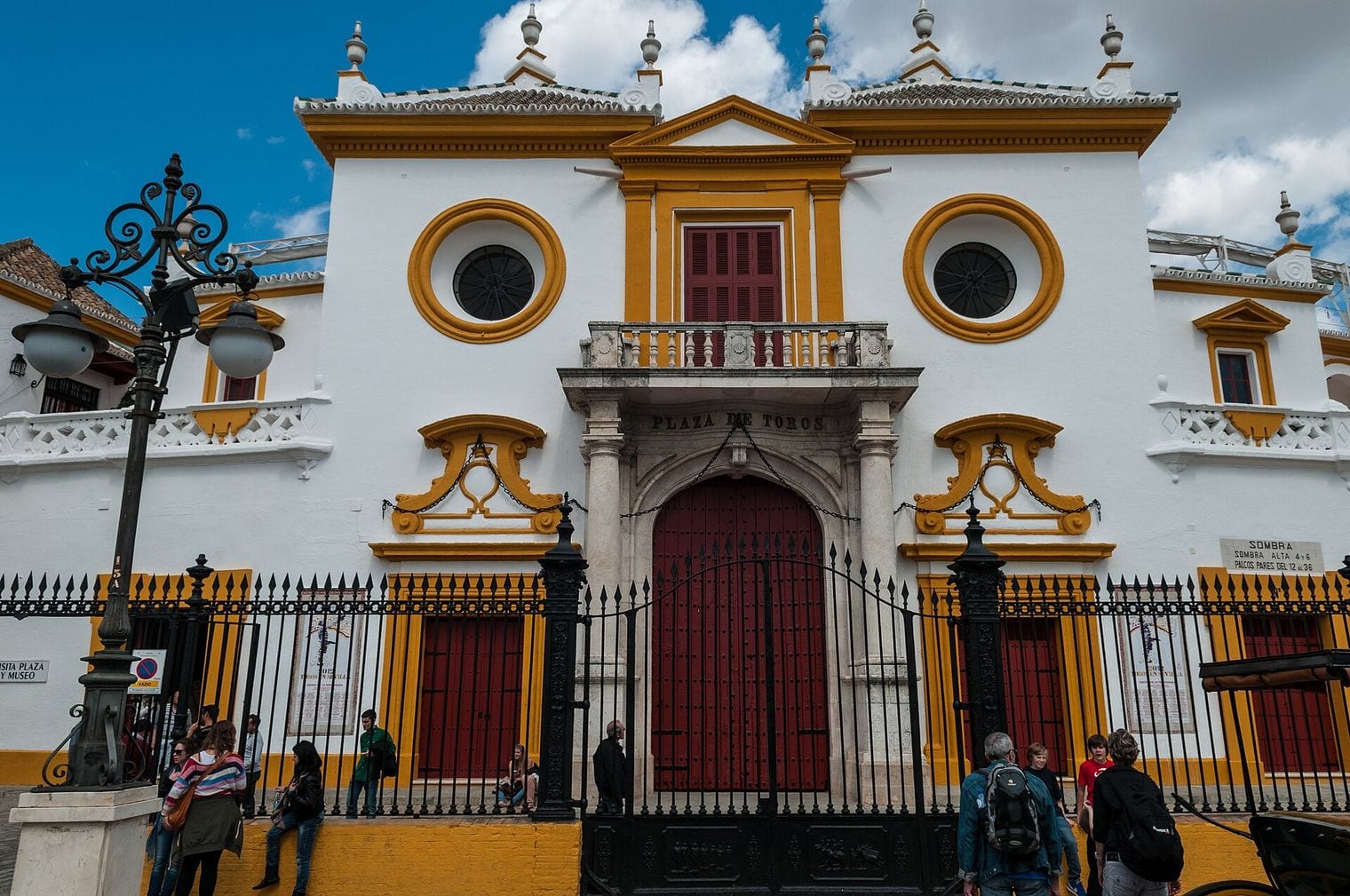
The Plaza de Toros de la Real Maestranza, a 12,000-seat bullring on the riverfront, belongs to the Real Maestranza de Caballería de Sevilla, a noble guild founded for cavalry training. Its white and ochre arcades are one of Seville's classic images, and during the April Fair it hosts one of the best-known bullfighting festivals in the world.
Whatever you think of bullfighting, the guided tour is worth taking for the building alone. You see the arena from the stands and visit the Museo Taurino, whose costumes, posters and paintings trace the ring's long history and the city's place in Spanish bullfighting culture.
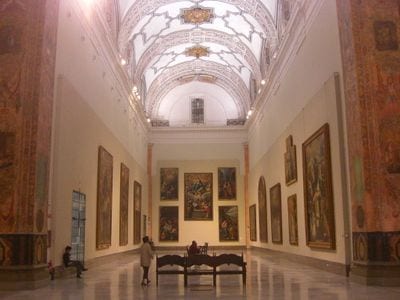
1010. Seville Museum of Fine Arts (Museo de Bellas Artes)
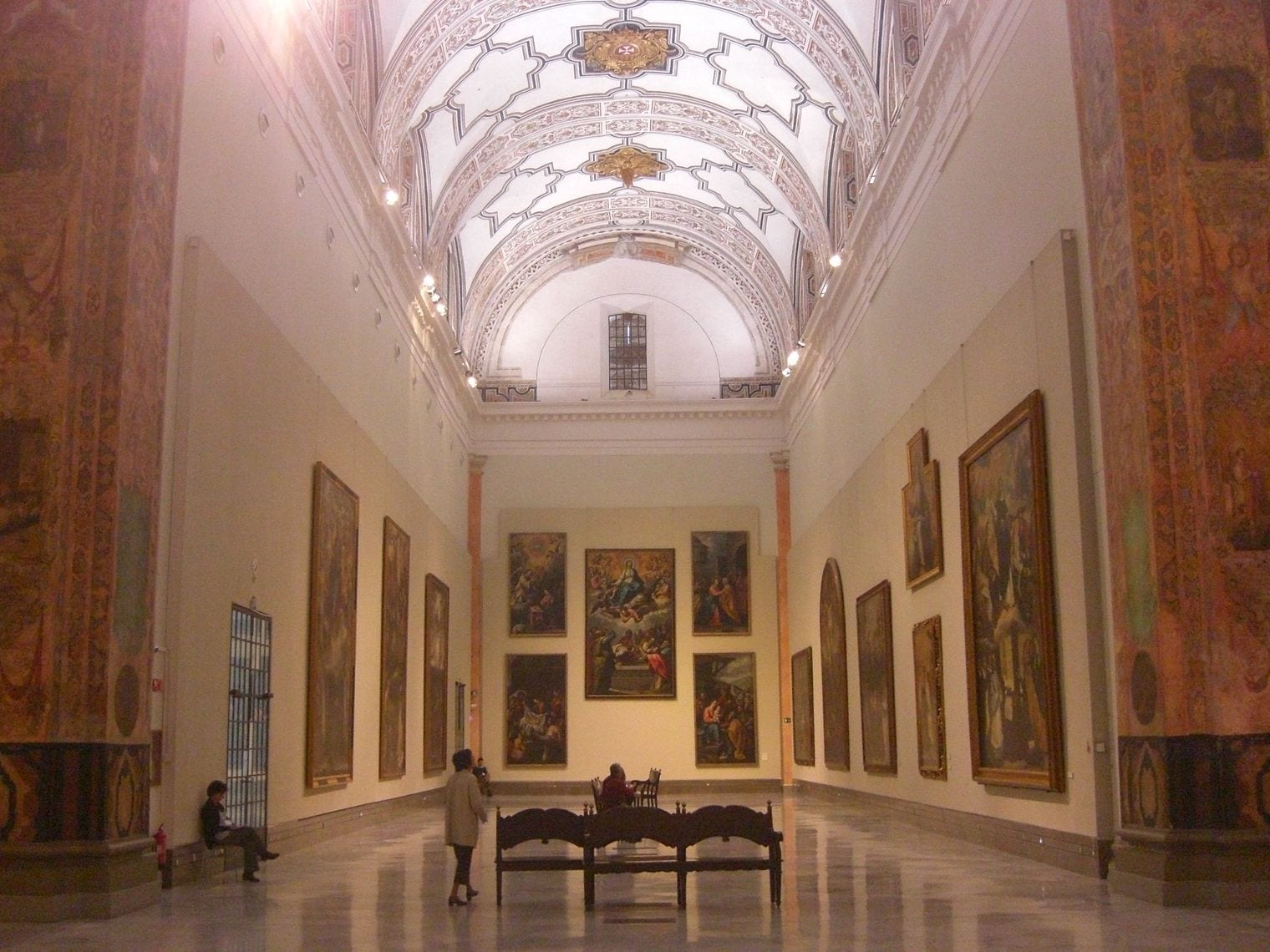
The Museo de Bellas Artes de Sevilla occupies a convent built in 1594 for the Mercedarian order, and its collection spans Spanish art from the medieval period to the early 20th century. Much of it came from convents and monasteries closed in the 19th century, so religious painting of the Sevillian Baroque dominates.
This is the place to understand the Golden Age of Sevillian painting, with outstanding works by Bartolomé Esteban Murillo, Francisco de Zurbarán and Juan de Valdés Leal. The galleries wrap around three cloisters and a patio, and the building itself, with its tiles and courtyards, is a pleasure to wander between rooms.
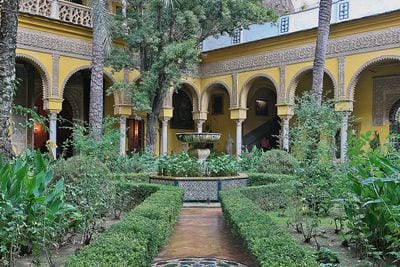
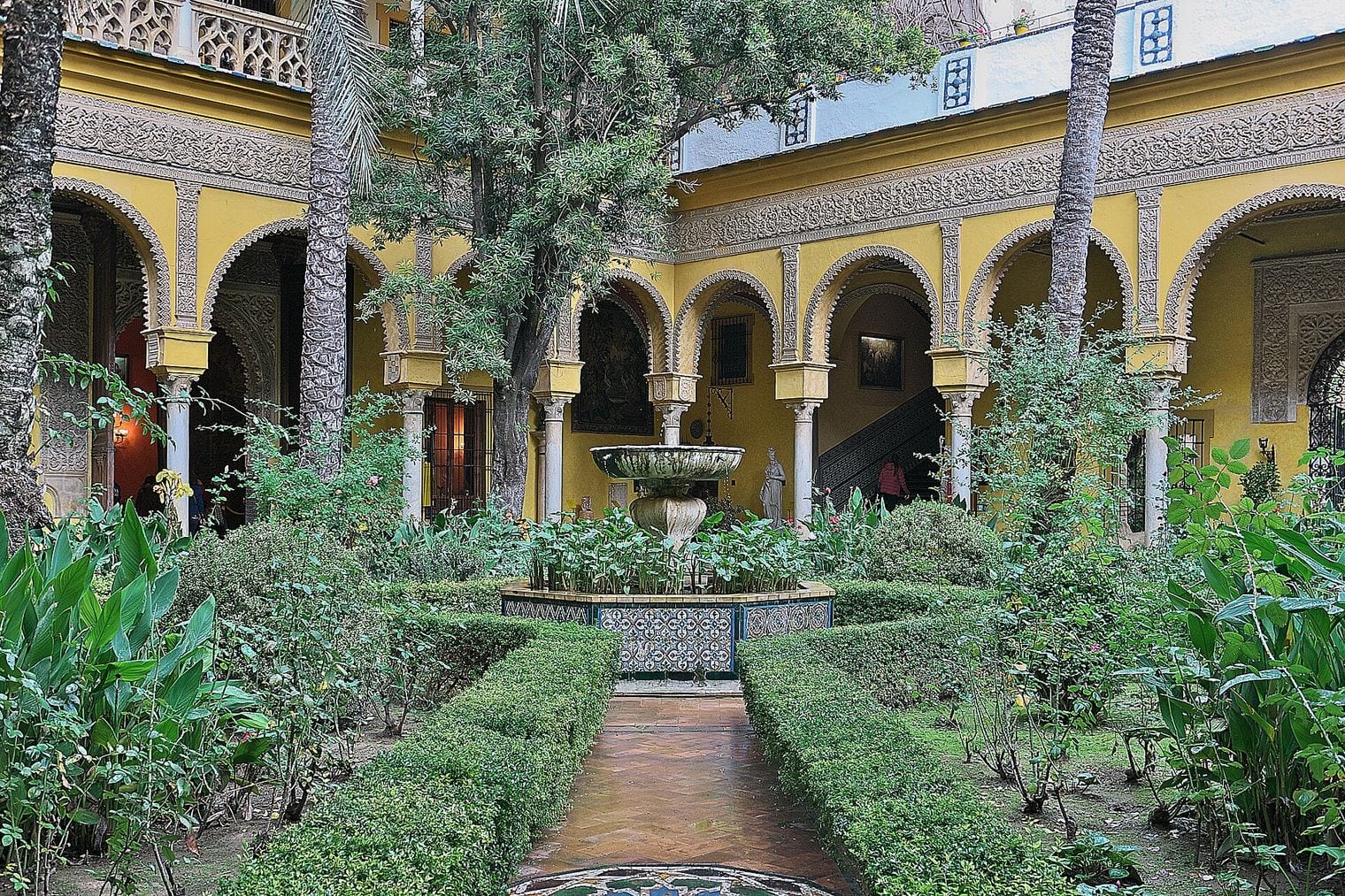
Built in the late 15th century and still owned by the House of Alba, the Palacio de las Dueñas mixes Renaissance, Gothic and Moorish styles around arcaded patios and gardens. The poet Antonio Machado was born here and opened one of his best-known poems with childhood memories of a patio in Seville and an orchard where a lemon tree ripens.
The family opened the palace to visitors in 2016, and it has quickly become one of the city's most visited monuments. Rooms are filled with the Alba family's paintings, furniture and mementoes, but the courtyards, with their tiled fountains and greenery, are what most people remember.
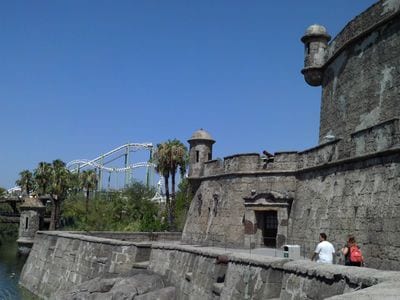
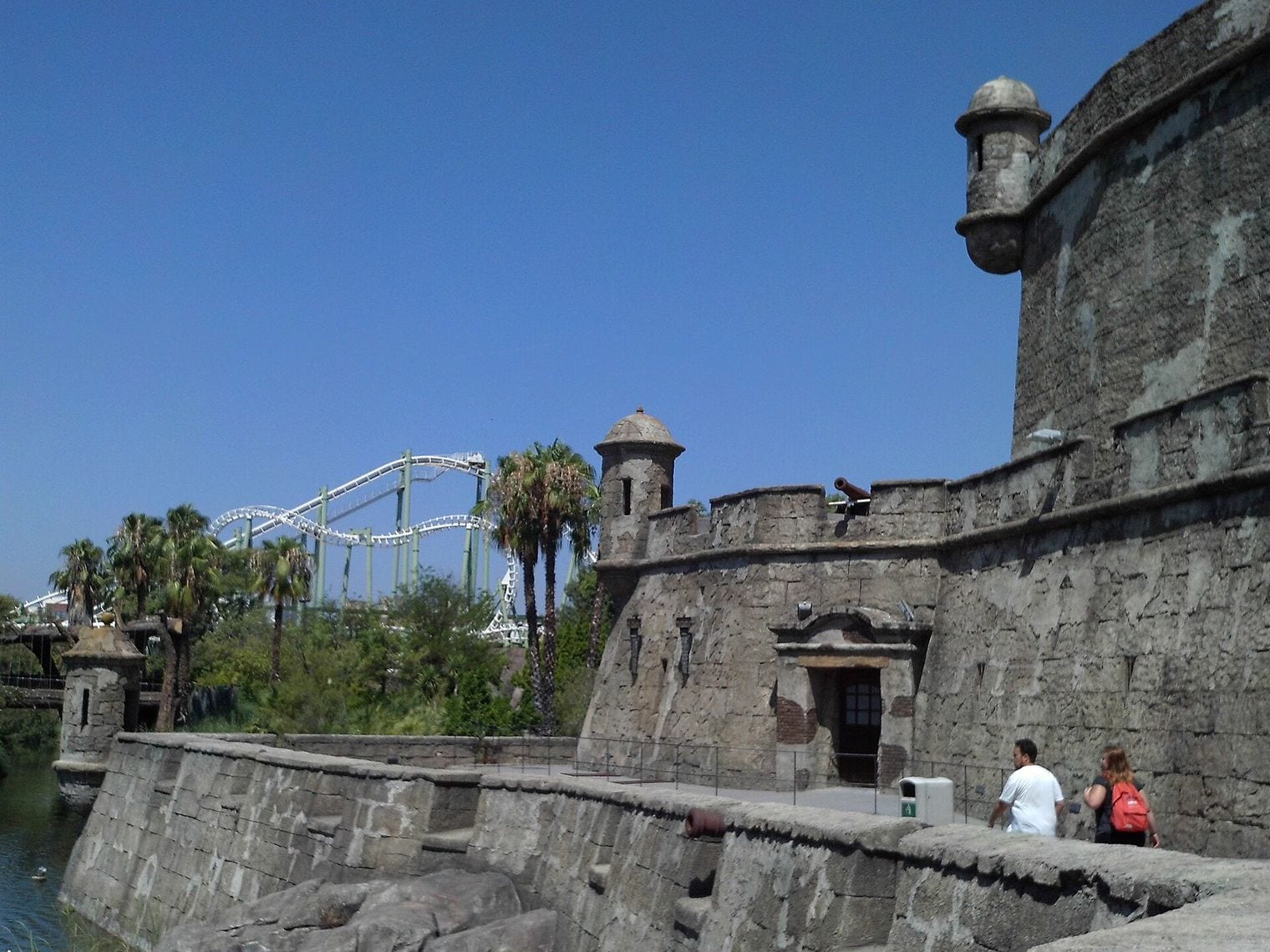
Isla Mágica is a theme park on the Isla de la Cartuja, built on part of the grounds of the Expo '92 world's fair and opened under its current name in 1997. Its six themed areas circle a large lake, with roller coasters, water rides and live shows, and a theme rooted in the age of exploration.
Next door, the Agua Mágica water park, added in 2014, is a welcome escape from the summer heat on its own ticket. The park is seasonal, opening from spring through autumn and closing in winter, so check its calendar before planning a day around it.
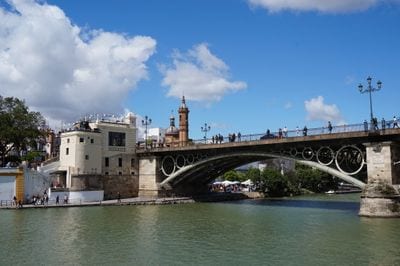
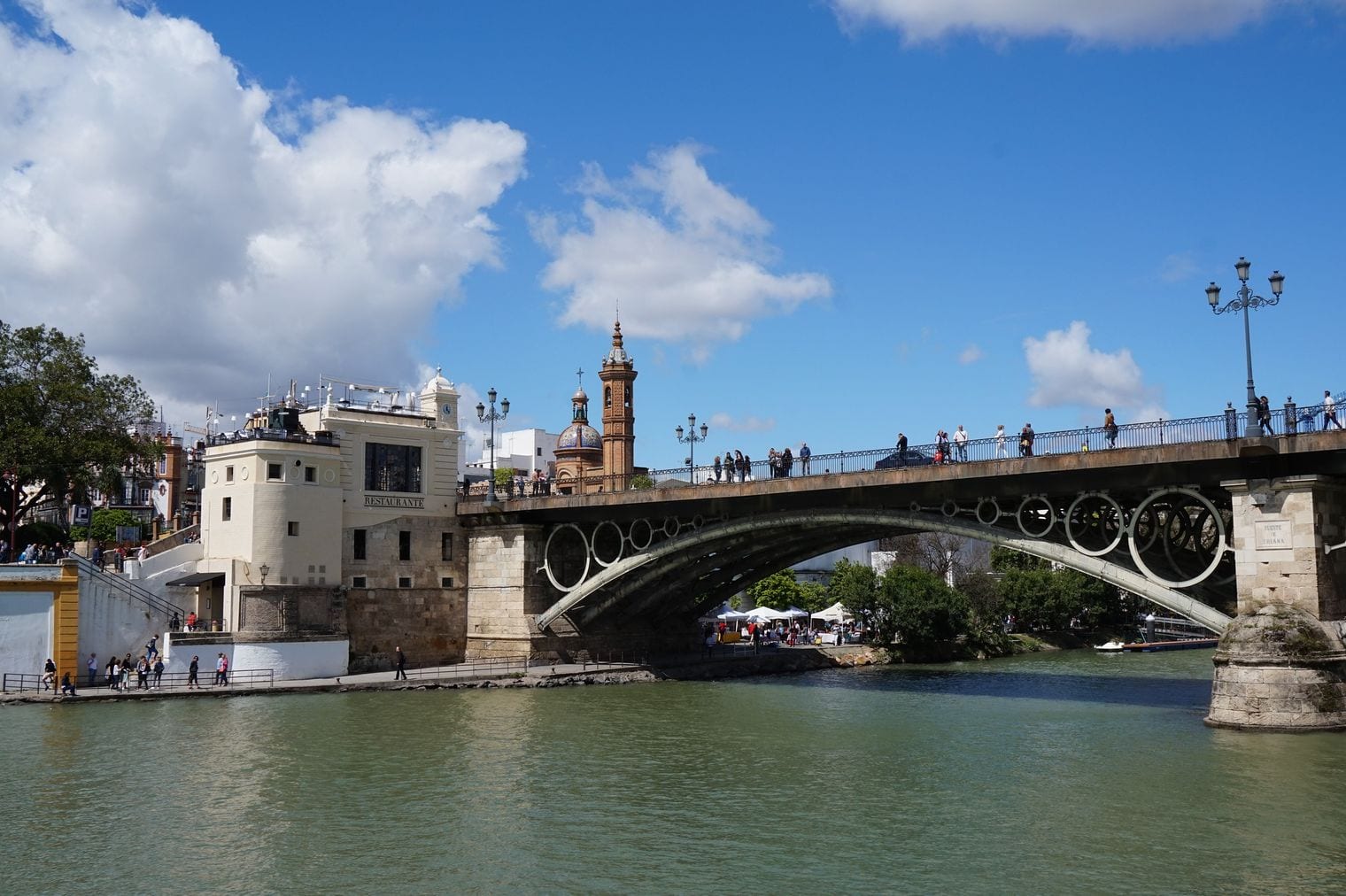
The Puente de Isabel II, better known as the Triana Bridge, was completed in 1852 as the first solid bridge in Seville, replacing a pontoon bridge of moored boats that the city had relied on since Moorish times. Its iron arches and rings link the old centre with Triana and are one of Seville's best-loved landmarks.
Cross it slowly, ideally around sunset, for views downriver to the Torre del Oro and the bullring. At the Triana end, the little tiled Capillita del Carmen marks the entrance to the neighbourhood, and the steps down to the riverbank are a favourite spot to sit and watch the boats.
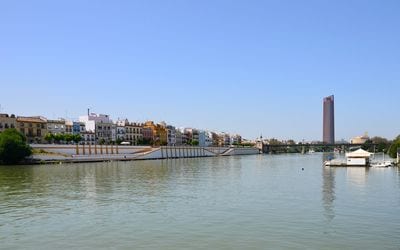
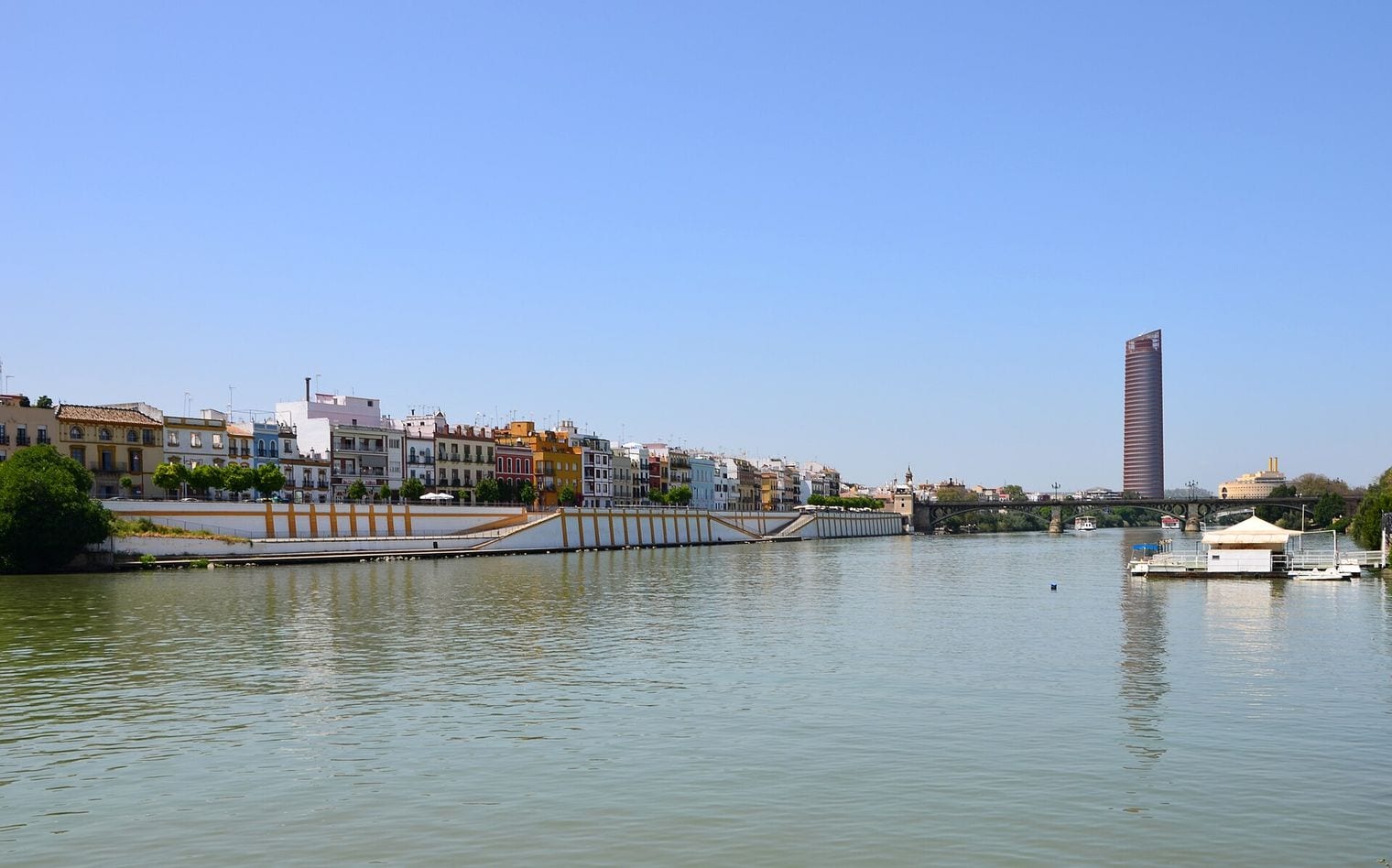
Across the river from the old town, Triana is the neighbourhood where many Sevillians say the city's soul lives. Set on an almost-island between two branches of the Guadalquivir, it was long home to sailors, potters and flamenco artists, and its residents, the trianeros, still consider it a place apart.
Stroll the riverside Calle Betis for views back across to the city, then dive into the streets behind it, where ceramic shops, tiled façades and neighbourhood tapas bars line the way. Triana's flamenco culture and its own festivals make an evening here feel very different from the centre.
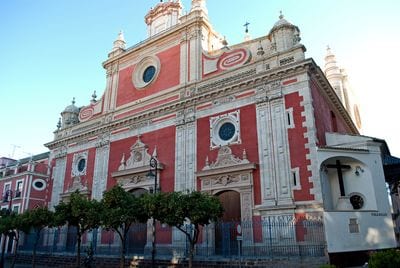
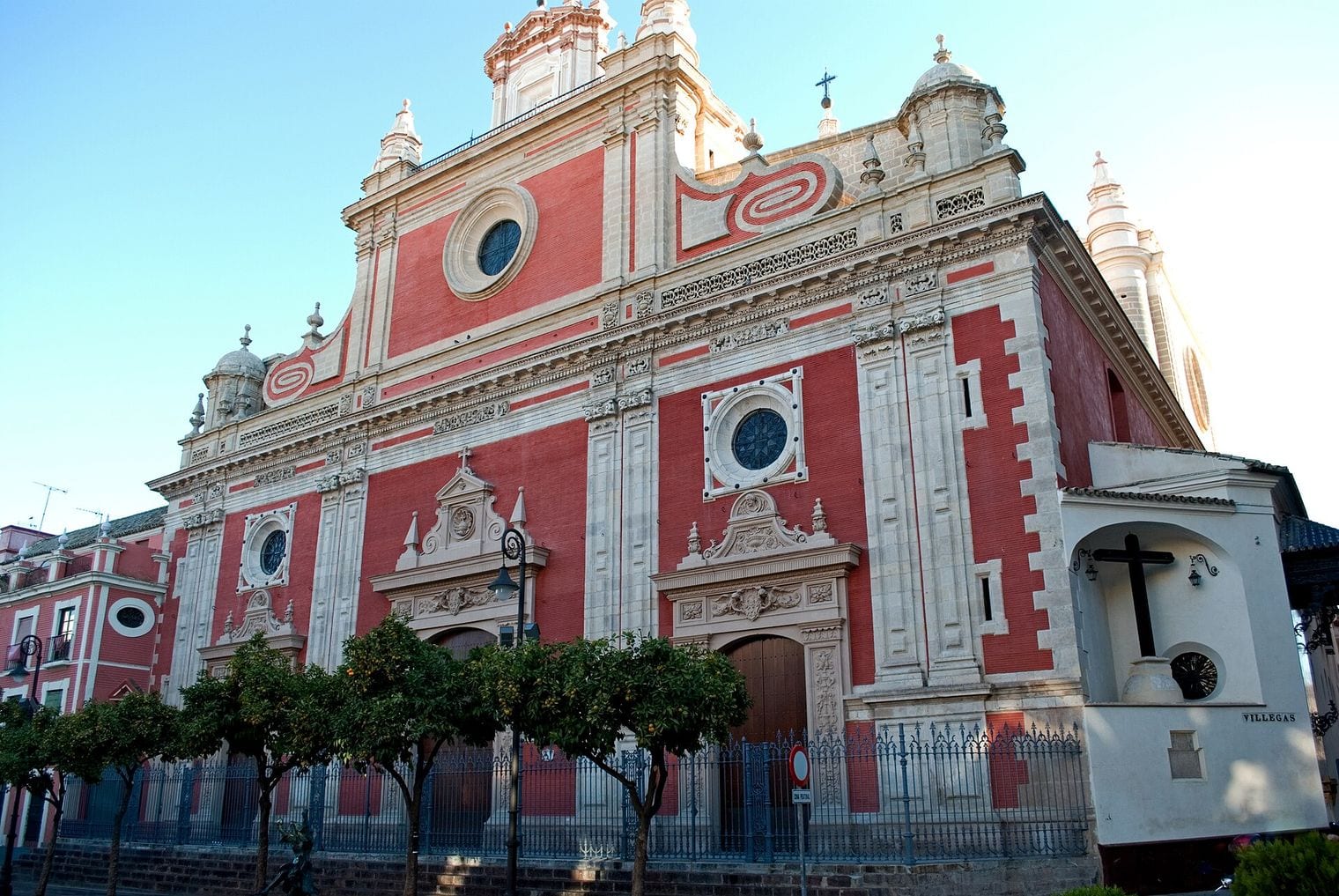
The Iglesia Colegial del Divino Salvador is the second-largest church in Seville after the cathedral, and it stands on the site of the Ibn Adabbas Mosque, the city's main mosque from the ninth century until it was converted into a church after the conquest of 1248. The lofty Baroque building you see today was built between 1674 and 1712.
Inside, a run of gilded Baroque altarpieces fills the walls, an overwhelming show of Sevillian woodcarving. Outside, the Plaza del Salvador is one of the liveliest squares in the old town, with locals spilling out of its bars at the end of the working day.
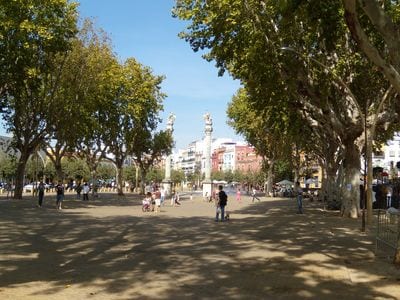
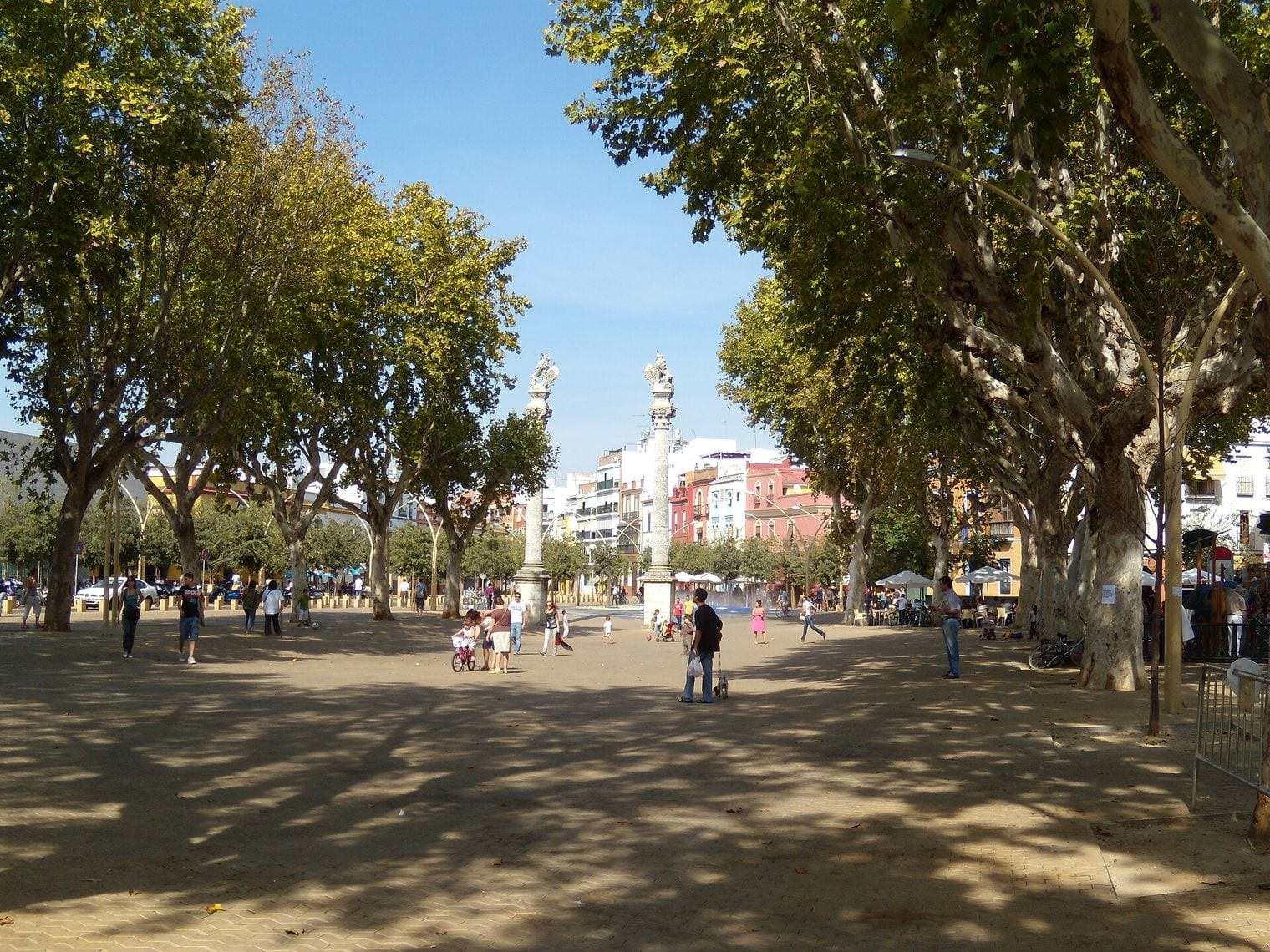
Laid out in 1574 as a promenade of poplar trees, the Alameda de Hércules is often described as the oldest public garden in Spain. Two of the columns at its southern end came from a Roman temple on Calle Mármoles and carry statues of Hercules, the city's mythical founder, and Julius Caesar; the northern pair are later reproductions topped with lions.
Today the long, tree-lined square is the hub of Seville's most bohemian quarter, lined with bars, cafés and terraces that stay busy late into the night. By day it is a relaxed place for families and a good stop on the way to the Macarena.
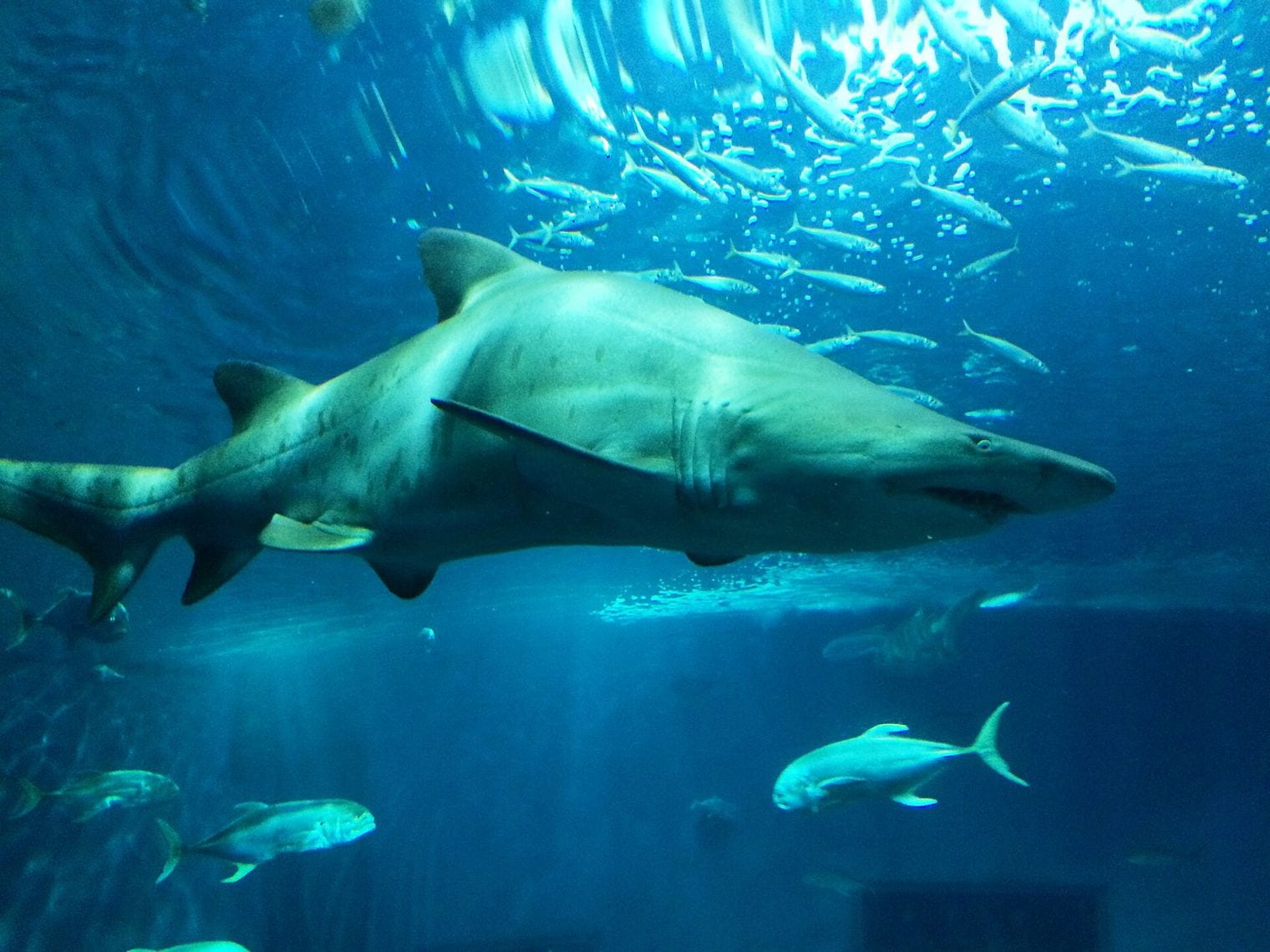
Opened in 2014 on the Muelle de las Delicias, the Sevilla Aquarium sits on the riverbank south of the centre and holds 35 tanks with animals from more than 400 species. Part of the route is themed on the Magellan–Elcano expedition, the first voyage around the world, which set out from Seville.
The highlight is a deep oceanarium of around two million litres, its water column almost nine metres tall. It makes a good choice for families or for a stretch of indoor time on a scorching afternoon, and pairs well with a walk through nearby María Luisa Park.
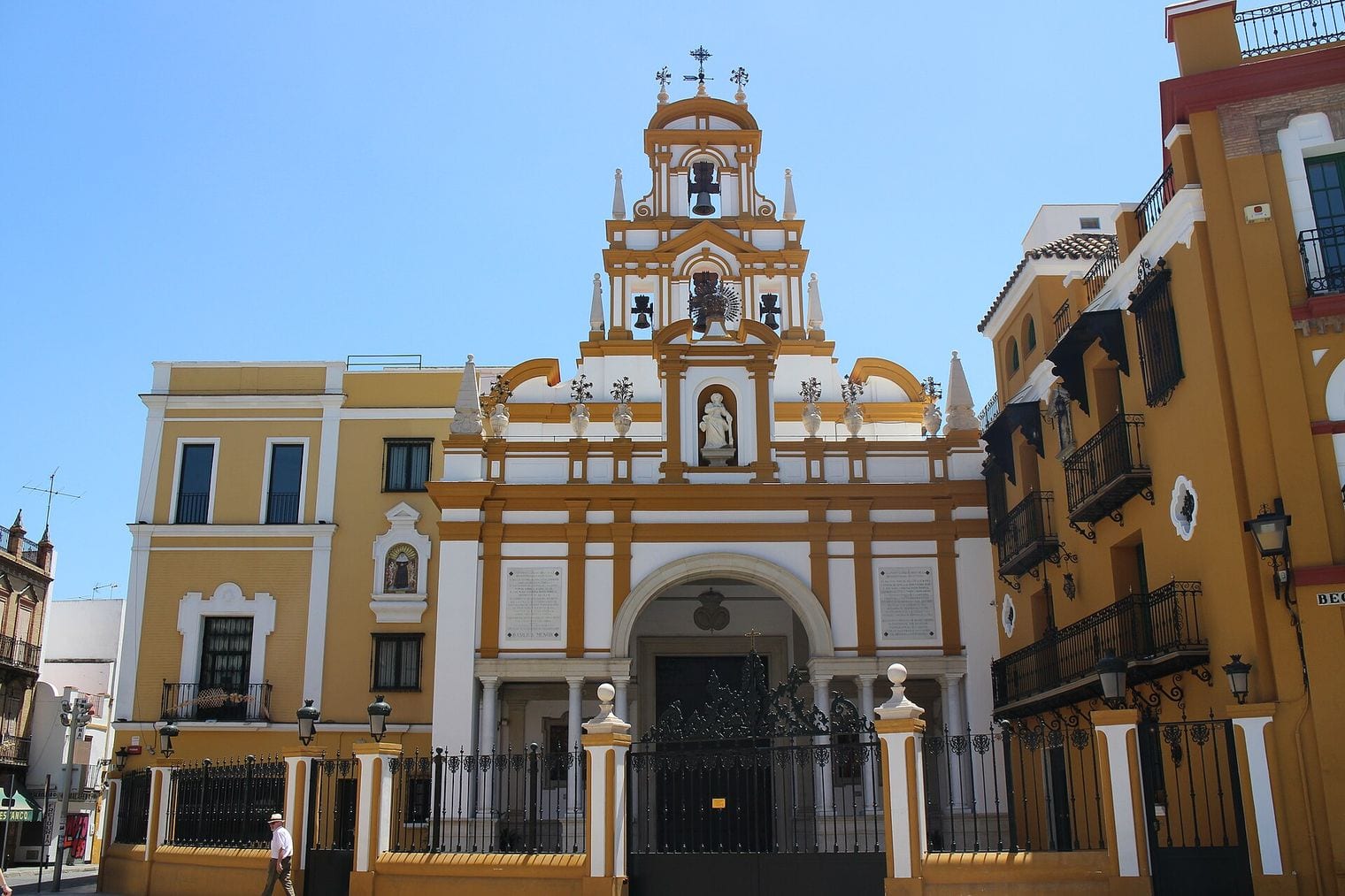
The Basílica de la Macarena is home to the Esperanza Macarena, a 17th-century wooden image of the Virgin that is one of the most venerated figures of Seville's Holy Week. Its brotherhood carries her through the streets in the early hours of Good Friday, the emotional peak of the city's Semana Santa.
Even outside Holy Week the basilica draws a steady stream of devotees, and its museum displays the brotherhood's processional treasures and embroidered mantles. It stands directly opposite the Arco de la Macarena, so the two are easy to see together.
Free printable checklist of all 40 places
Tick them off as you go. Confirm your email to download it, plus one email every Thursday with new guides for the places you tick.
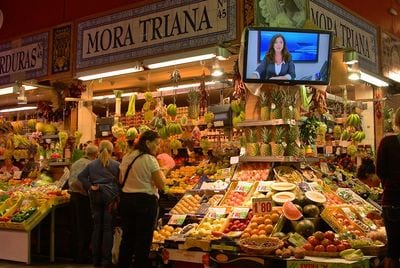
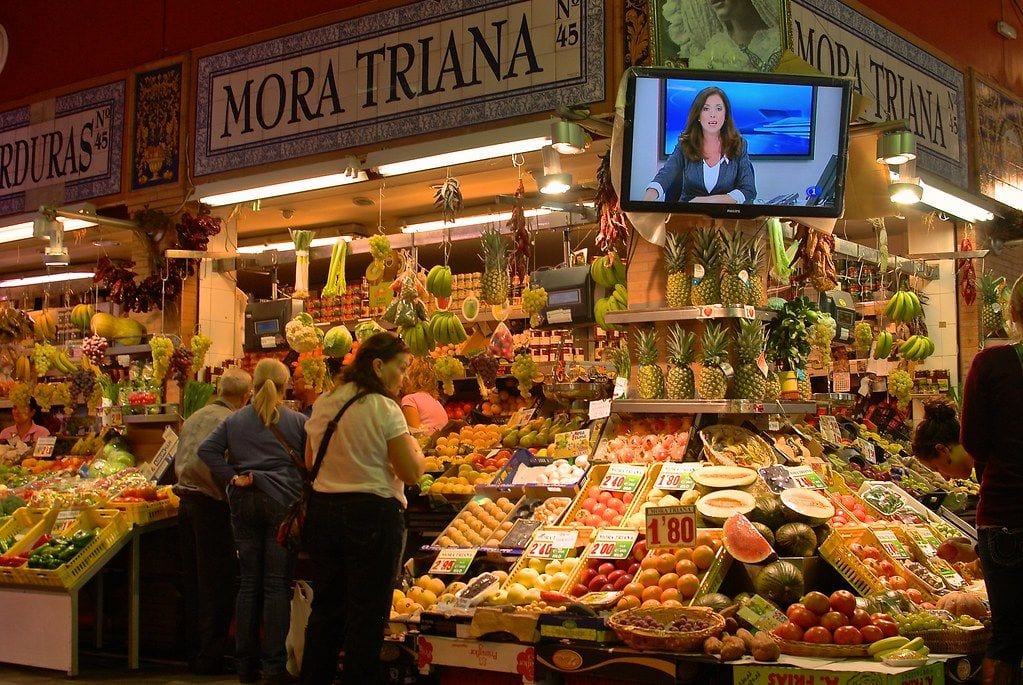
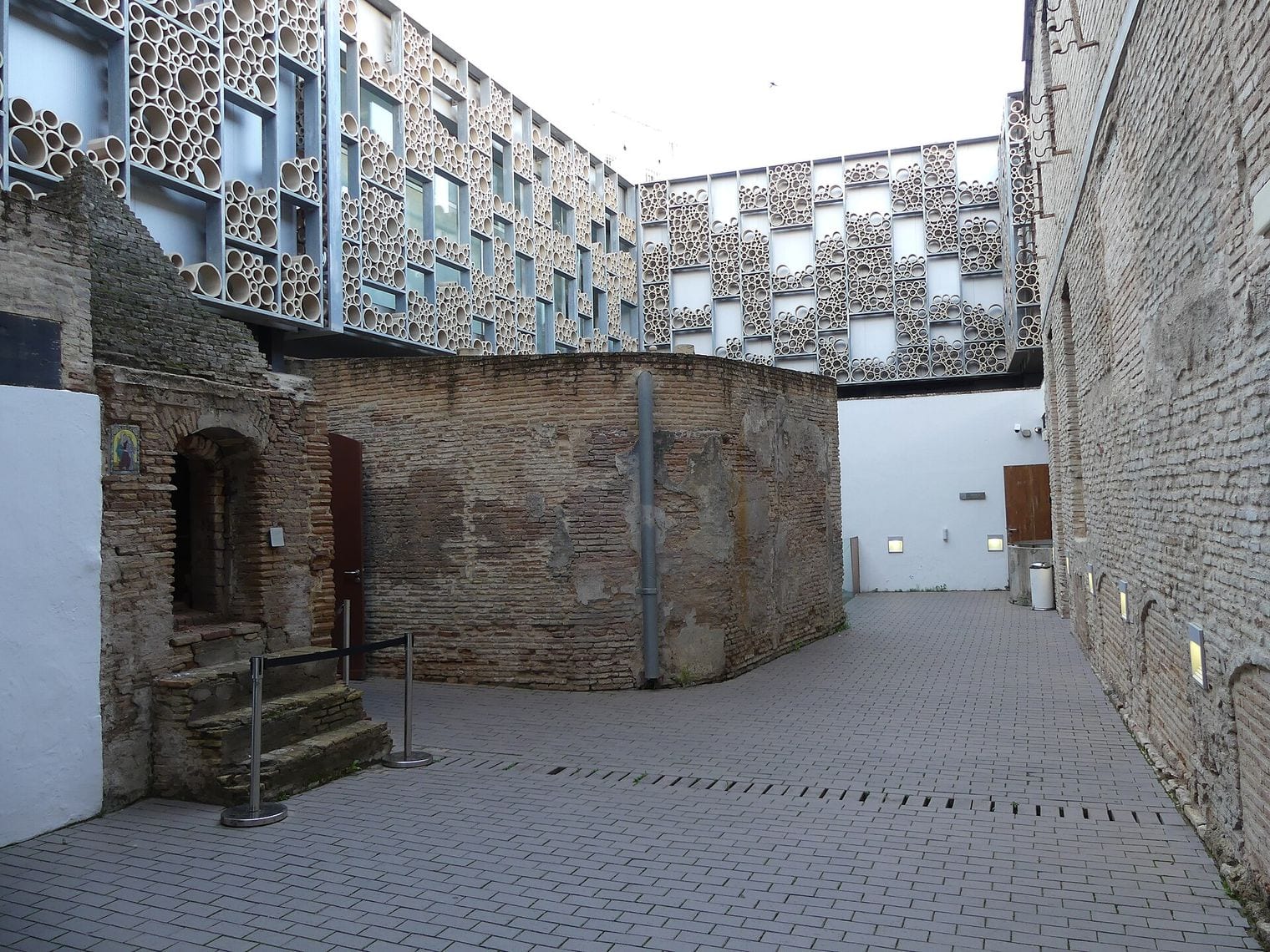
The Mercado de Triana is the neighbourhood's food market, built on the site of the medieval Castle of San Jorge, which served for centuries as the headquarters and prison of the Spanish Inquisition. Fishmongers, butchers, fruit sellers and small tapas counters fill the stalls at the Triana end of the bridge.
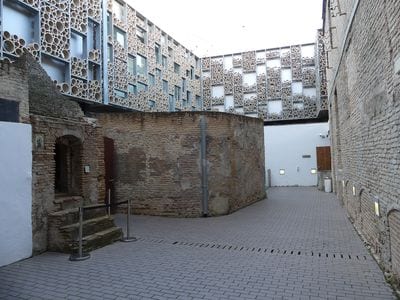
Beneath the market, a museum in the castle's excavated ruins tells the story of the fortress, the Inquisition and religious persecution. Beside it, the narrow Callejón de la Inquisición, once part of the fortifications, leads down to the river.
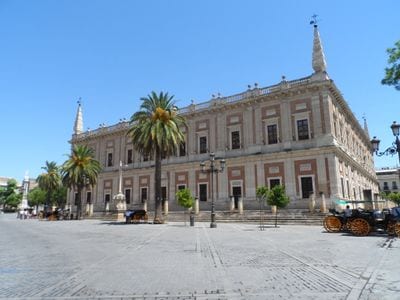
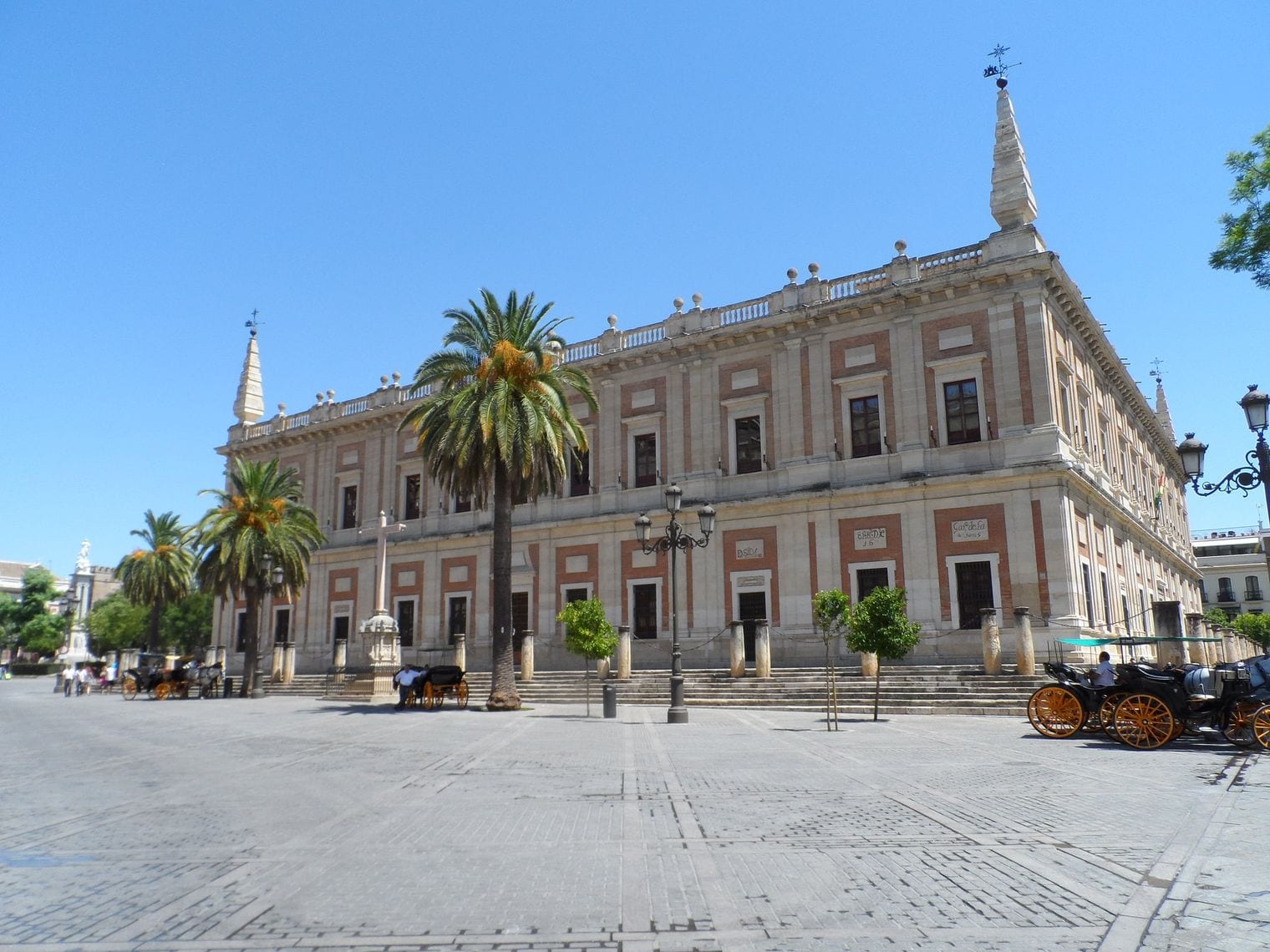
The Archivo General de Indias was created by Charles III and inaugurated in 1785 to gather the records of the Spanish Empire in the Americas and Asia. It is housed in the former merchants' exchange, a late 16th-century Renaissance building designed by Juan de Herrera, and was listed by UNESCO in 1987 with the neighbouring cathedral and Alcázar.
Visitors can walk the long upper galleries, where exhibitions draw on maps, letters and documents from the age of exploration. Its calm, symmetrical halls are a cool and quiet contrast to the crowds across the street.
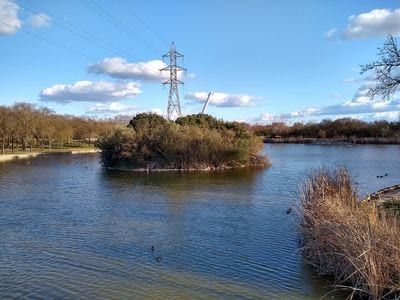
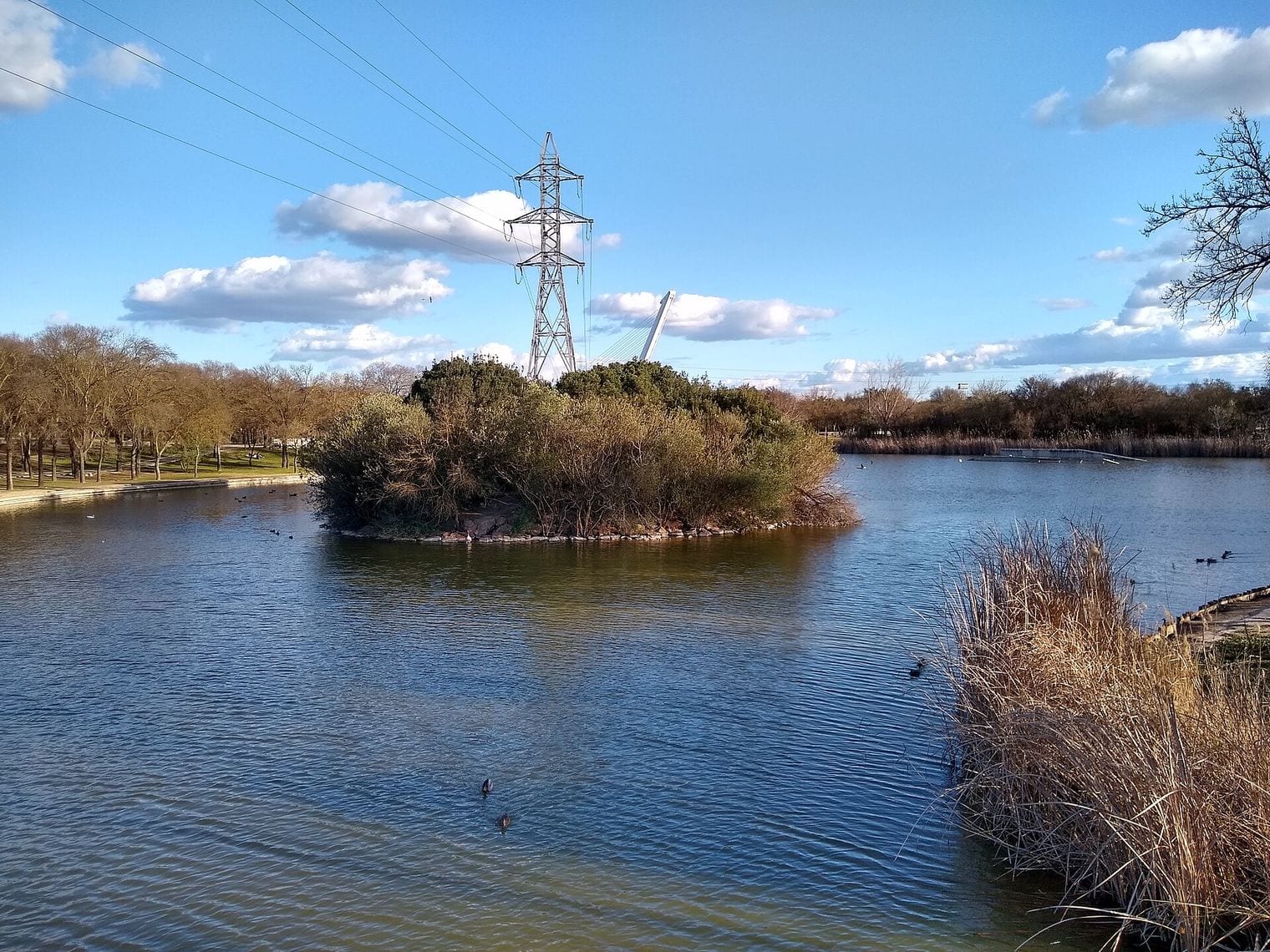
Alamillo Park, the Parque del Alamillo, stretches across around 120 hectares at the northern end of the Isla de la Cartuja and is one of Spain's largest urban parks, often called the green lung of Seville. Its lakes, groves and open meadows were developed around the time of Expo '92.
The park is reached across Santiago Calatrava's Alamillo Bridge, completed in 1992, whose single steeply inclined tower counterbalances the deck with its cables like a harp. Come for a long walk, a bike ride or a picnic away from the old town's crowds.
The Jardines de Murillo run along the outside of the Alcázar walls, between the Barrio de Santa Cruz and the Ronda Histórica. They were created from 1911 on land given to the city by King Alfonso XIII and named after the painter Bartolomé Esteban Murillo.
Tiled benches, tall trees and shady paths make the gardens a natural breather between the Alcázar and the lanes of Santa Cruz. Walk them as a peaceful way into the quarter from the south, away from the busiest streets.
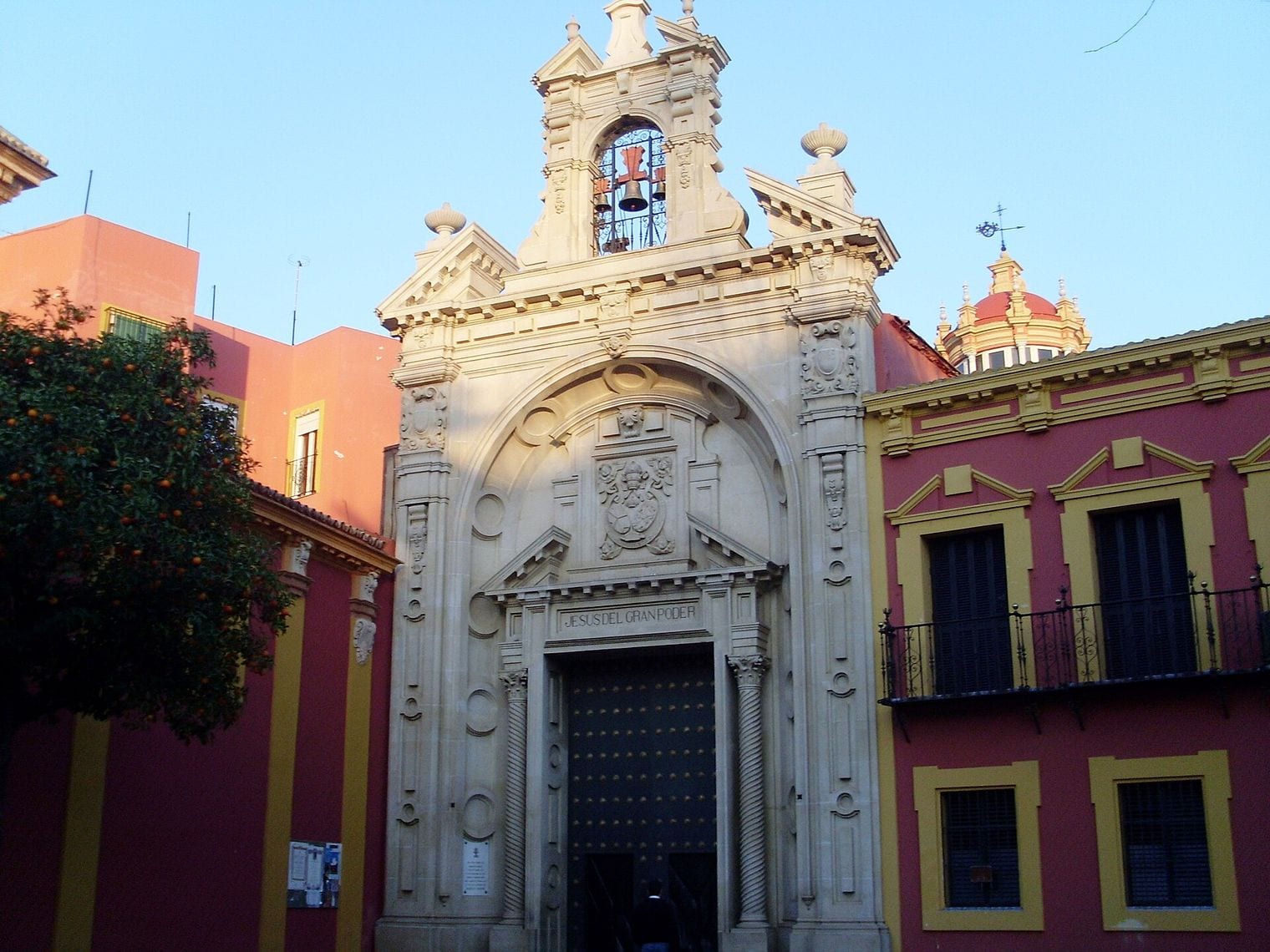
The Basílica de Jesús del Gran Poder stands on the Plaza de San Lorenzo, near the Alameda de Hércules, and was built in the 1960s to house one of Seville's most revered images: Jesús del Gran Poder, carved by the sculptor Juan de Mesa in 1620. The figure, bent under the weight of the cross, draws devotees all year round.
The basilica's round hall, under a great coffered dome, gathers the faithful before the image. Next door, the parish church of San Lorenzo rises over the site of an earlier mosque whose old minaret still survives.
2424. Flamenco Dance Museum (Museo del Baile Flamenco)
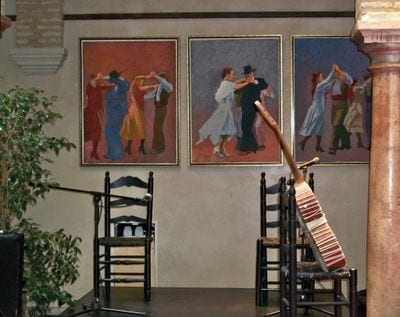
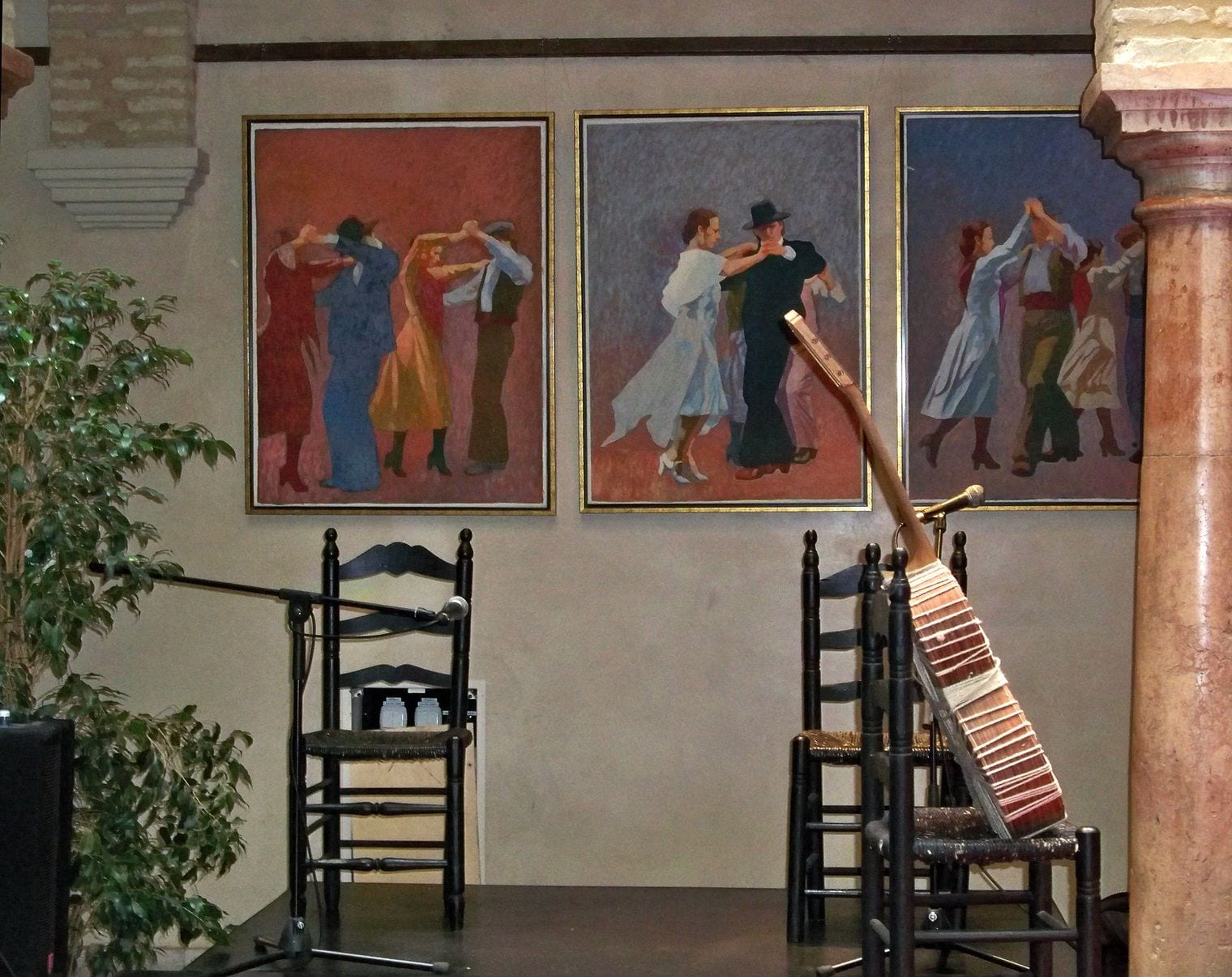
The Museo del Baile Flamenco was the initiative of the Sevillian dancer Cristina Hoyos and opened in 2006 in an 18th-century building in the Barrio de Santa Cruz. Across four floors, interactive rooms, costumes and film trace the art's roots and its great names, from Carmen Amaya and Antonio Gades to Sara Baras and Hoyos herself.
This is also the easiest place in Seville to see a flamenco show, with regular evening performances in the museum's 18th-century courtyard. If you want more, the Casa de la Memoria in the old centre and Tablao Las Setas near the Setas are well-known alternatives, and Triana's bars keep the tradition alive late into the night.
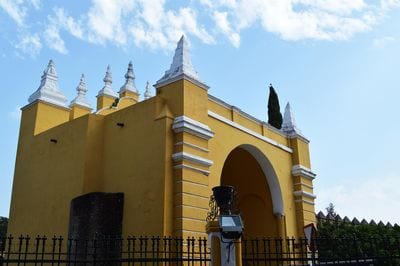
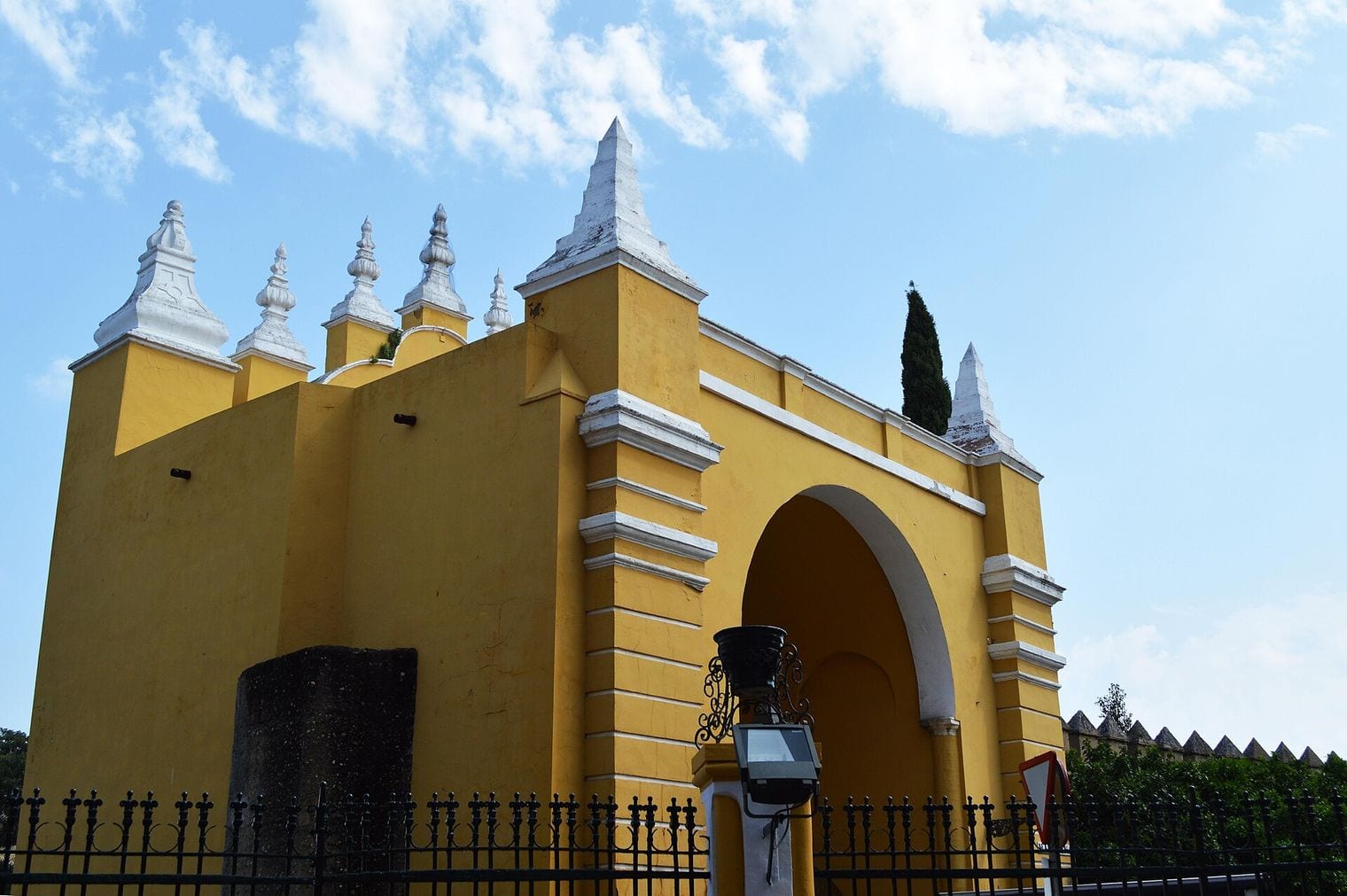
The Arco de la Macarena, or Puerta de la Macarena, is one of only three gates that survive from Seville's medieval city walls, alongside the Postigo del Aceite and the Puerta de Córdoba. It is the northernmost and largest of them, and it faces the Basílica de la Macarena across the street.
From the gate, a long stretch of the Almohad wall runs east towards the Puerta de Córdoba with seven of its towers still standing, a well-preserved section of the old defences. Walk its length along the Ronda for a sense of how the city was once enclosed.
The Centro Andaluz de Arte Contemporáneo, one of Andalusia's leading contemporary art museums, has occupied the Monastery of Santa María de las Cuevas, known as La Cartuja, since 1997. The monastery was restored for Expo '92, and the museum's collection of more than 3,200 works is shown alongside a steady programme of temporary exhibitions.
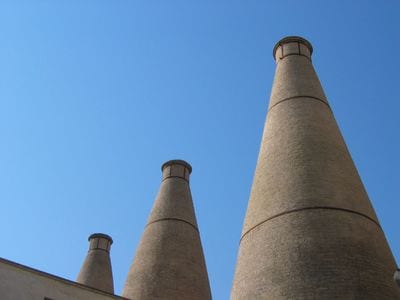
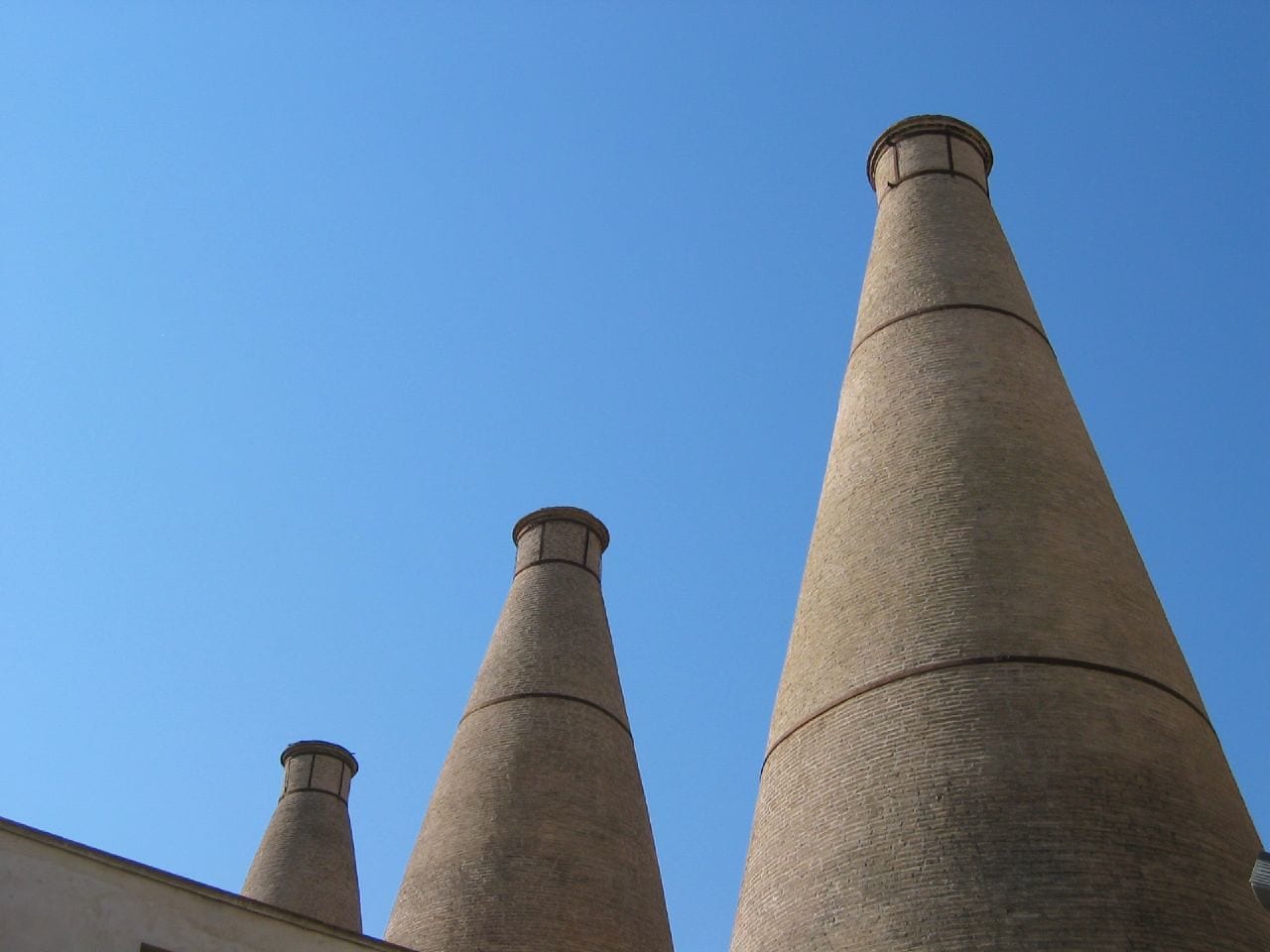
The setting is half the appeal. Christopher Columbus's remains rested here for a time, and in the 19th century the Englishman Charles Pickman turned the monastery into a famous ceramics factory, whose bottle-shaped kilns and tall chimney still rise among the cloisters and orchards.
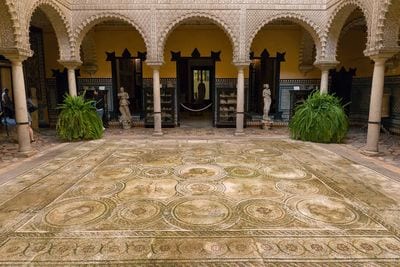
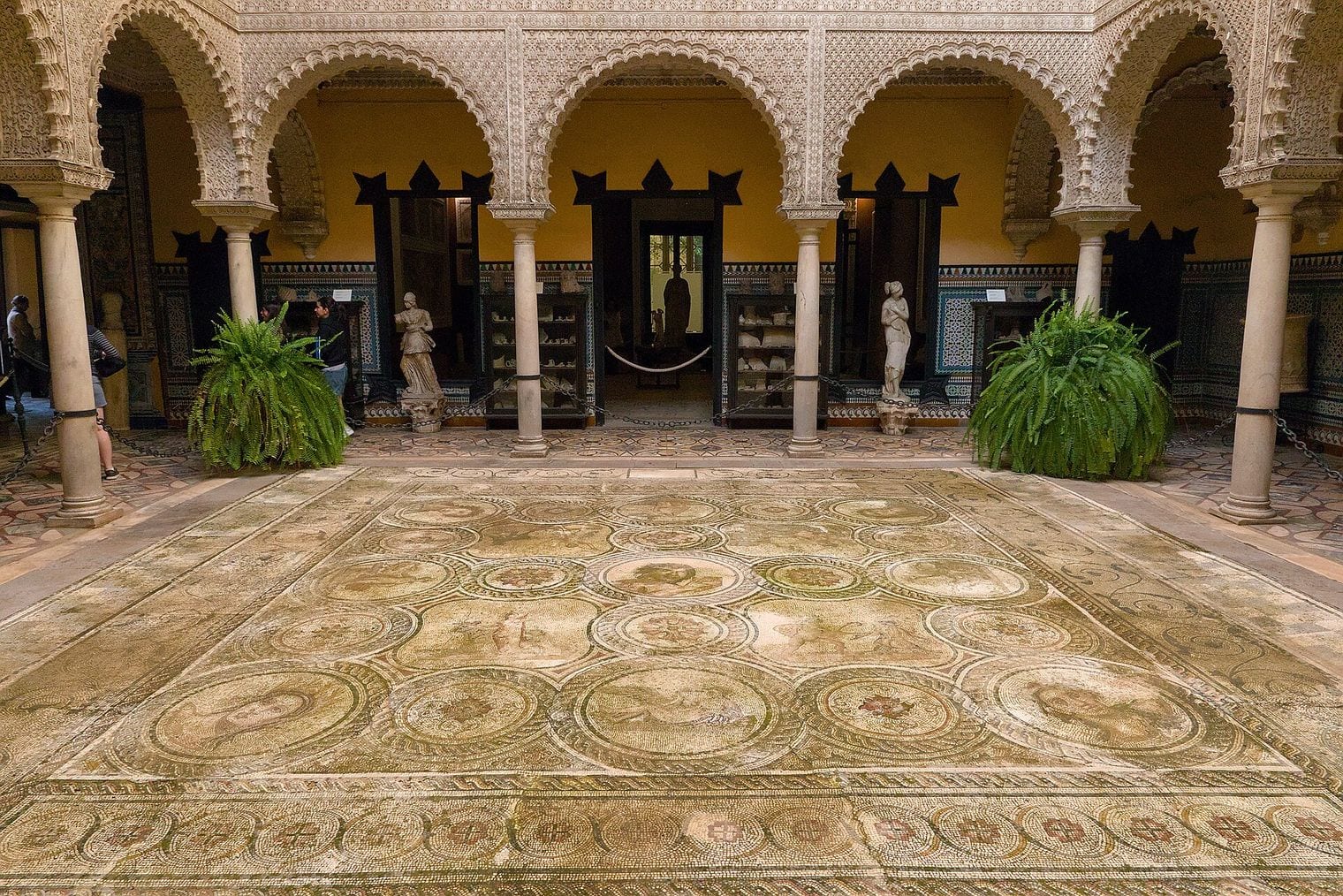
The Palacio de la Condesa de Lebrija is a 16th-century house museum remodelled over the following centuries and filled by the Countess of Lebrija with her collection. Roman mosaics taken from the ancient city of Italica pave almost its entire ground floor, the finest of them showing the god Pan in the central courtyard.
Around the patio, Moorish arches, Plateresque decoration, recovered tiles and a 16th-century coffered ceiling create a collage of Andalusian styles. The collection adds antiquities, Asian art, European paintings and decorative arts, so it rewards a slow visit.
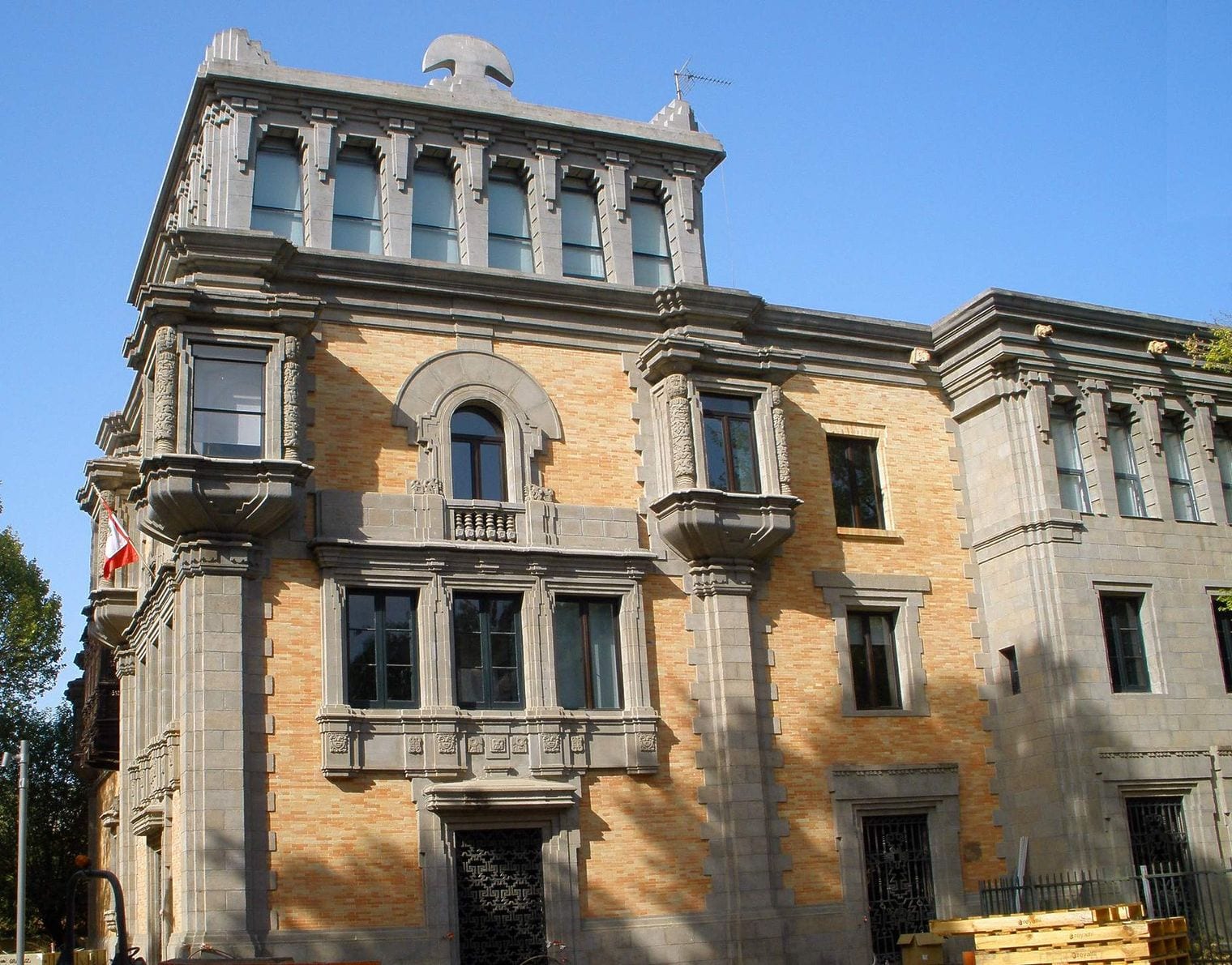
The Casa de la Ciencia is a science museum housed in the Peruvian Pavilion, built in María Luisa Park for the Ibero-American Exposition of 1929. Its architect blended indigenous and colonial Peruvian motifs into the façade, and the building is a sight in its own right.
Run by Spain's National Research Council, the museum opened to the public in 2008 with permanent and temporary exhibitions and a planetarium. It is a good stop for families exploring the park, and a reminder of how many nations built pavilions here for the 1929 fair.
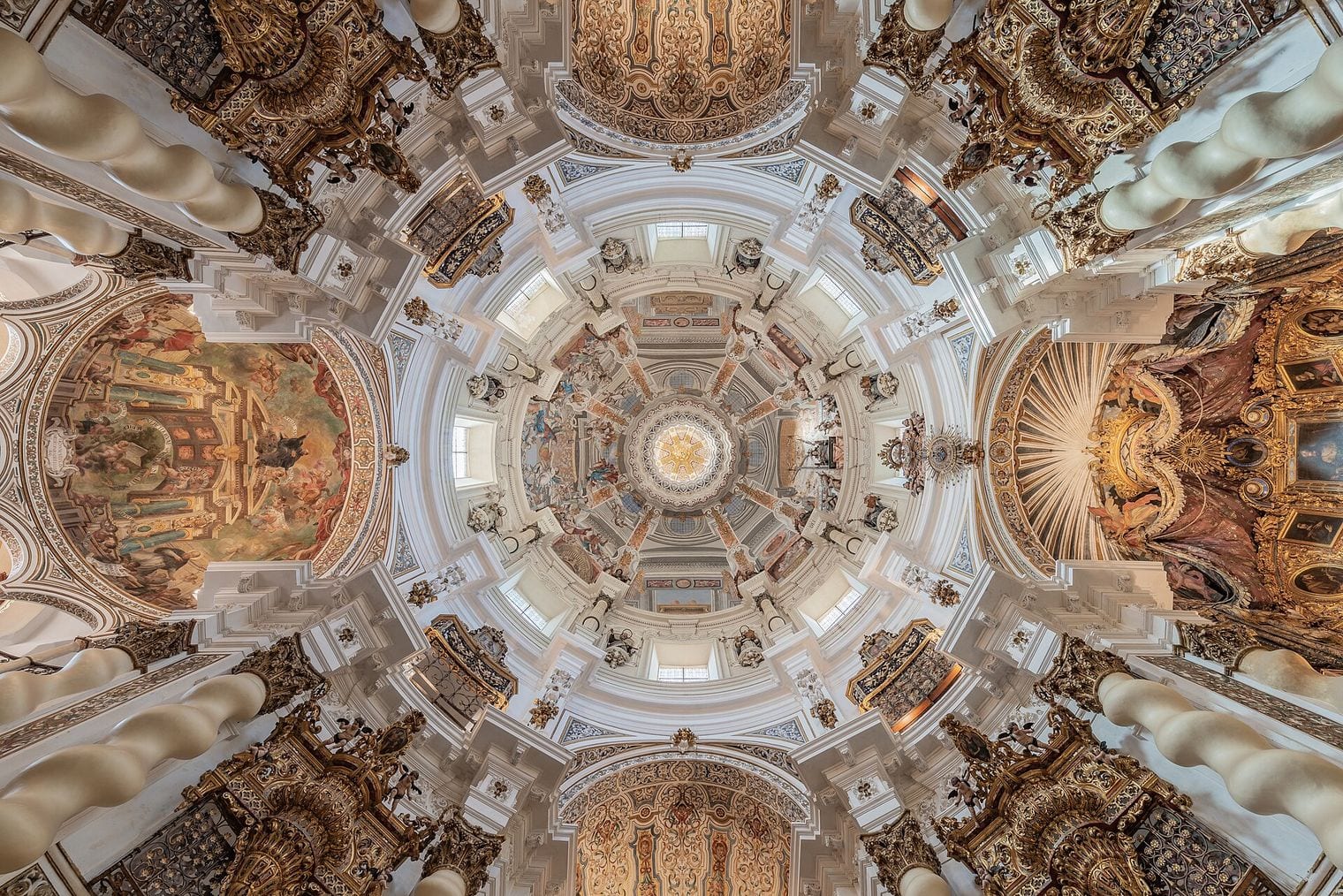
The Iglesia de San Luis de los Franceses is one of the showpieces of Seville's Baroque, designed by the architect Leonardo de Figueroa and built for the Jesuits between 1699 and 1731. After the Jesuits were expelled it passed through several uses, was deconsecrated and now belongs to the Provincial Council of Seville.
Inside, a centrally planned church rises under a painted dome, with gilded altarpieces, frescoes and rich decoration on every surface. It sits in the San Luis neighbourhood north of the centre, an easy pairing with the Alameda de Hércules.
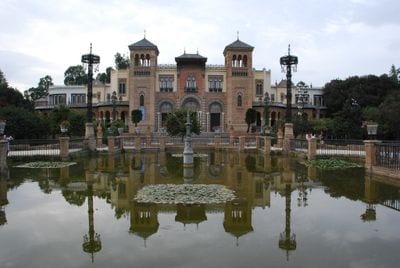
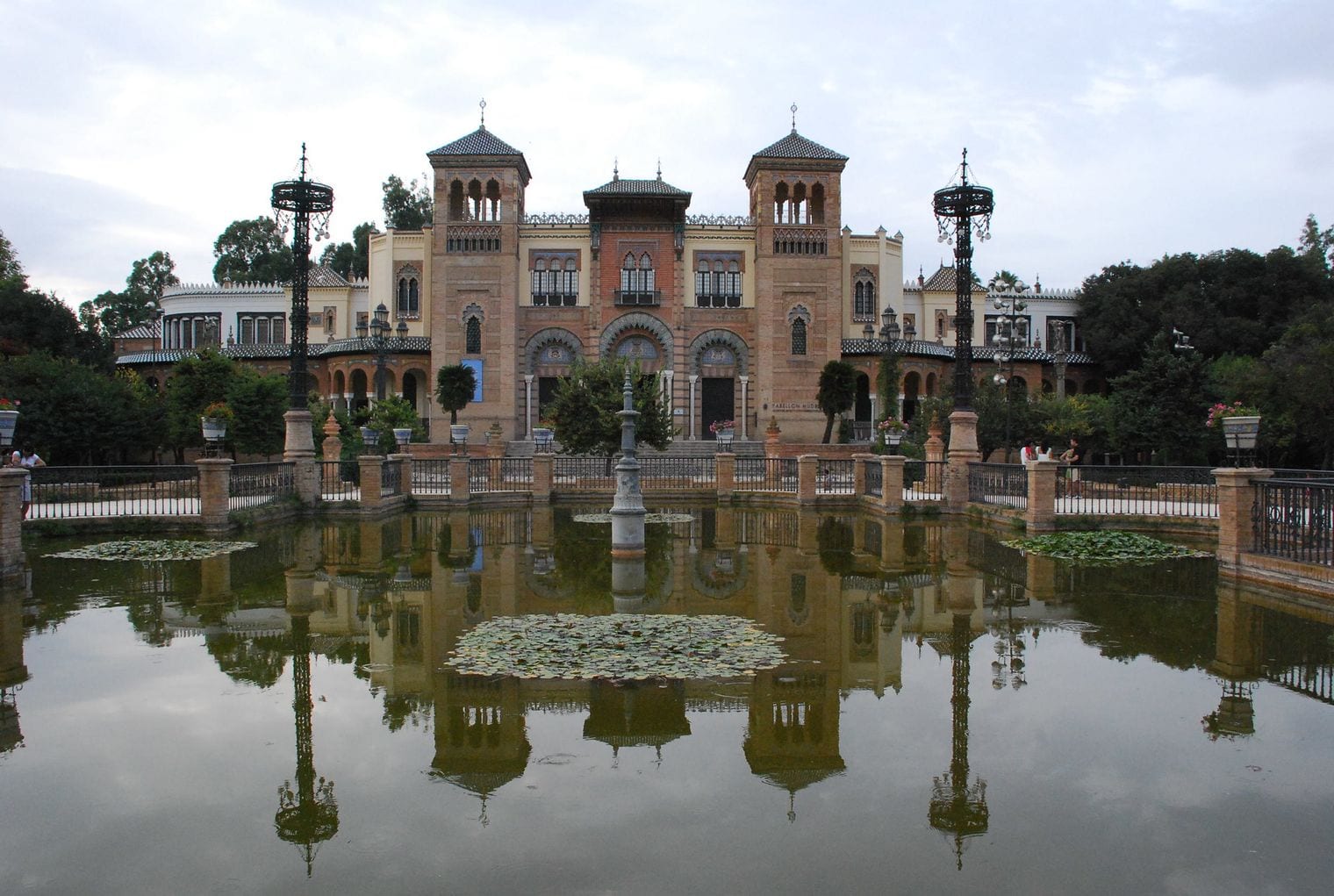
The Museum of Popular Arts and Customs occupies the Mudéjar Pavilion on the Plaza de América, designed by Aníbal González and used as an art pavilion during the 1929 exposition. Its brick, tile and carved detail make it one of the prettiest buildings in María Luisa Park.
The collections focus on traditional Andalusian life, from costumes and crafts to ceramics and the domestic objects of past generations. Pair it with a stroll around the Plaza de América, with its fountains, gardens and flocks of white doves.
The Iglesia de Santa María Magdalena is a Baroque church built between 1691 and 1709 to a design by Leonardo de Figueroa, close to the Plaza Nueva and the Museum of Fine Arts. Its dome rises above the streets of the old centre.
The interior is richly decorated, with painted vaults and gilded altarpieces, and the church is home to several Holy Week brotherhoods whose images and processional floats are kept here. It makes an easy stop on a walk between the river and the shopping streets.
The Centro Cerámica Triana, opened by the city in 2014, occupies the old Cerámica Santa Ana factory, whose kilns were still firing until the late 20th century. It tells the story of Triana's pottery and tile tradition, from Moorish techniques to the azulejos that decorate the whole city.
The preserved kilns, workshops and pigment stores are the highlight, giving a real sense of how the industry worked. Afterwards, browse the ceramic shops in the surrounding streets, where the craft is still very much alive.
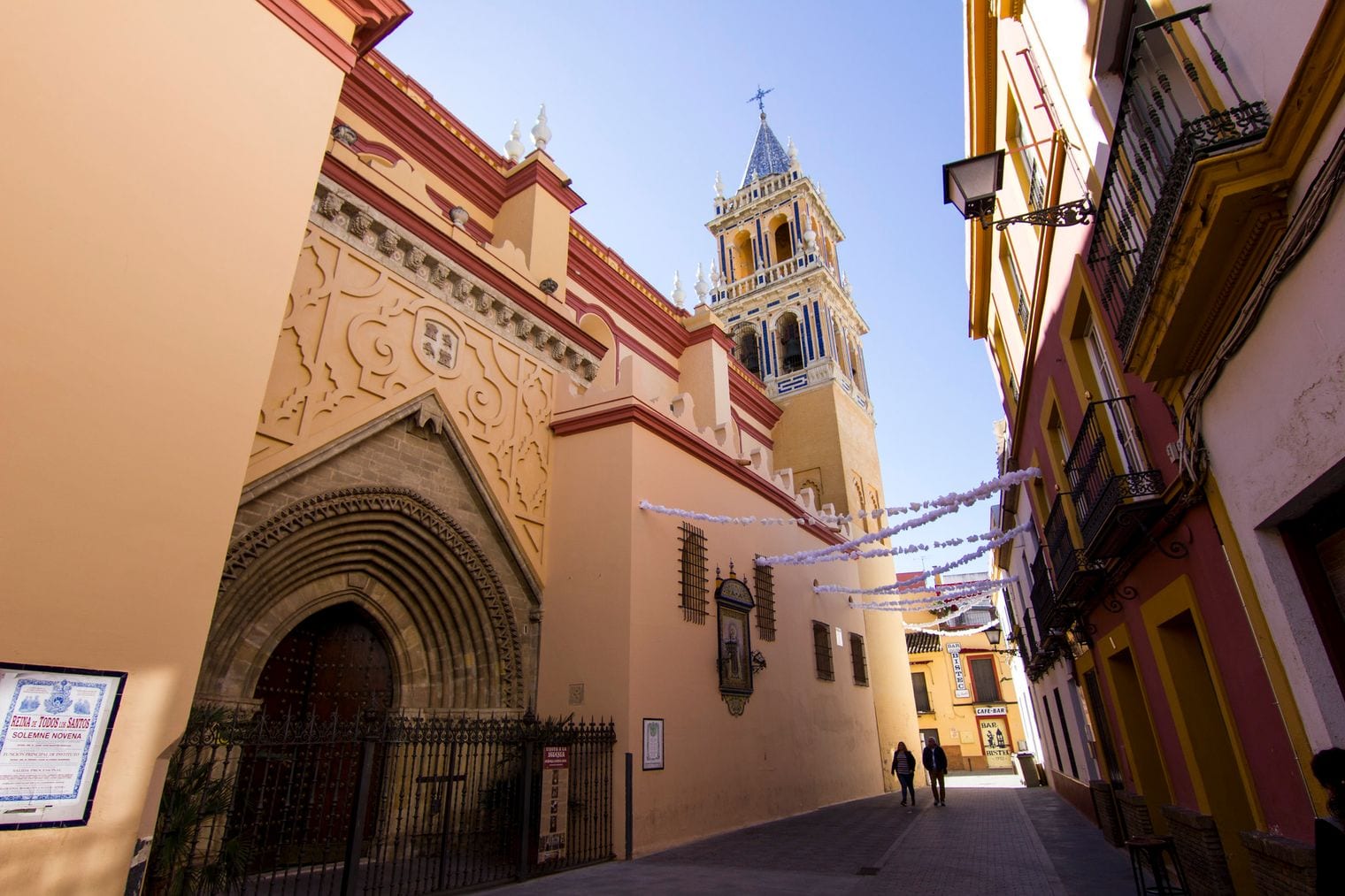
The Real Parroquia de Señora Santa Ana is a Gothic church begun around 1280 on the orders of Alfonso X, and it is affectionately known as the cathedral of Triana. Tradition has the king founding it in thanks to St Anne for curing an eye ailment.
Its Gothic-Mudéjar interior, altarpieces and tilework reward a look inside, and the church remains the spiritual heart of the neighbourhood. Find it a couple of streets back from the river, a short walk from the Triana Bridge.
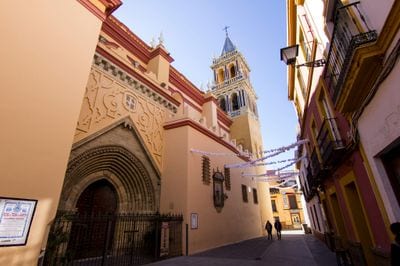
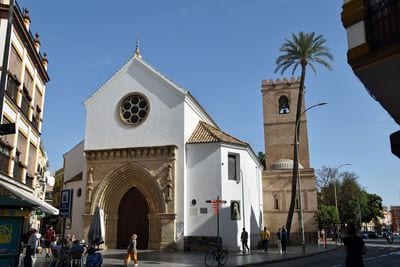
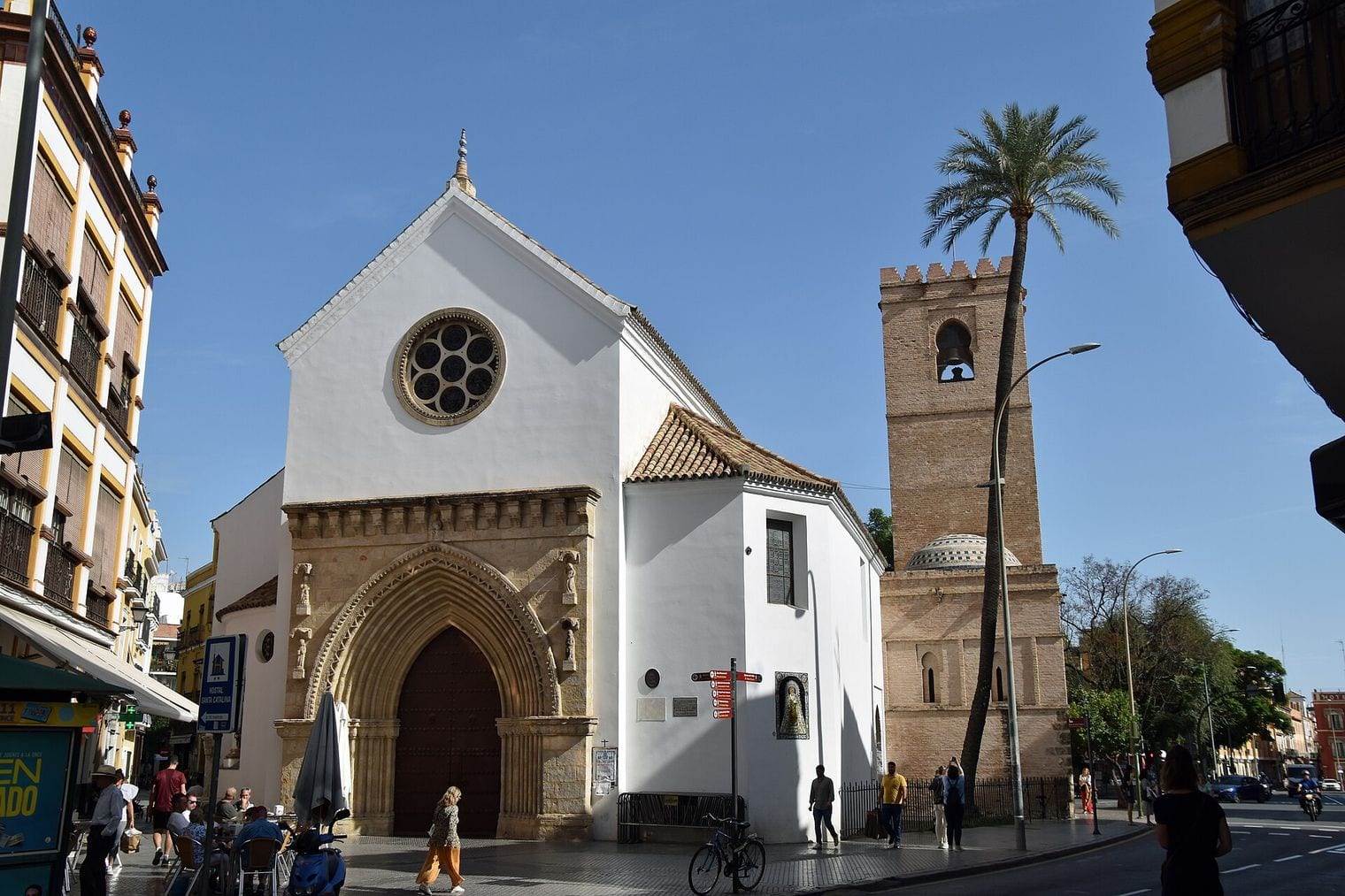
The Church of Santa Catalina dates from the 14th century and was built on the site of a former mosque, as excavations have confirmed. It mixes Gothic and Mudéjar architecture, and it was declared a Bien de Interés Cultural in 1912.
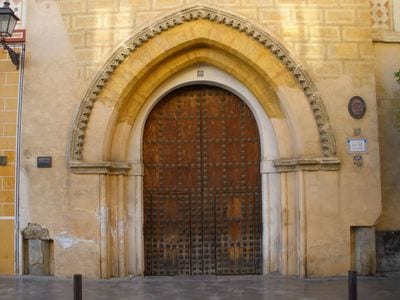
Look closely at the main entrance: during a 1920s restoration, a 14th-century Gothic doorway from the demolished church of Santa Lucía was installed over the original Mudéjar door. The church is a short walk from the Setas, an easy add-on for anyone exploring the north of the old town.
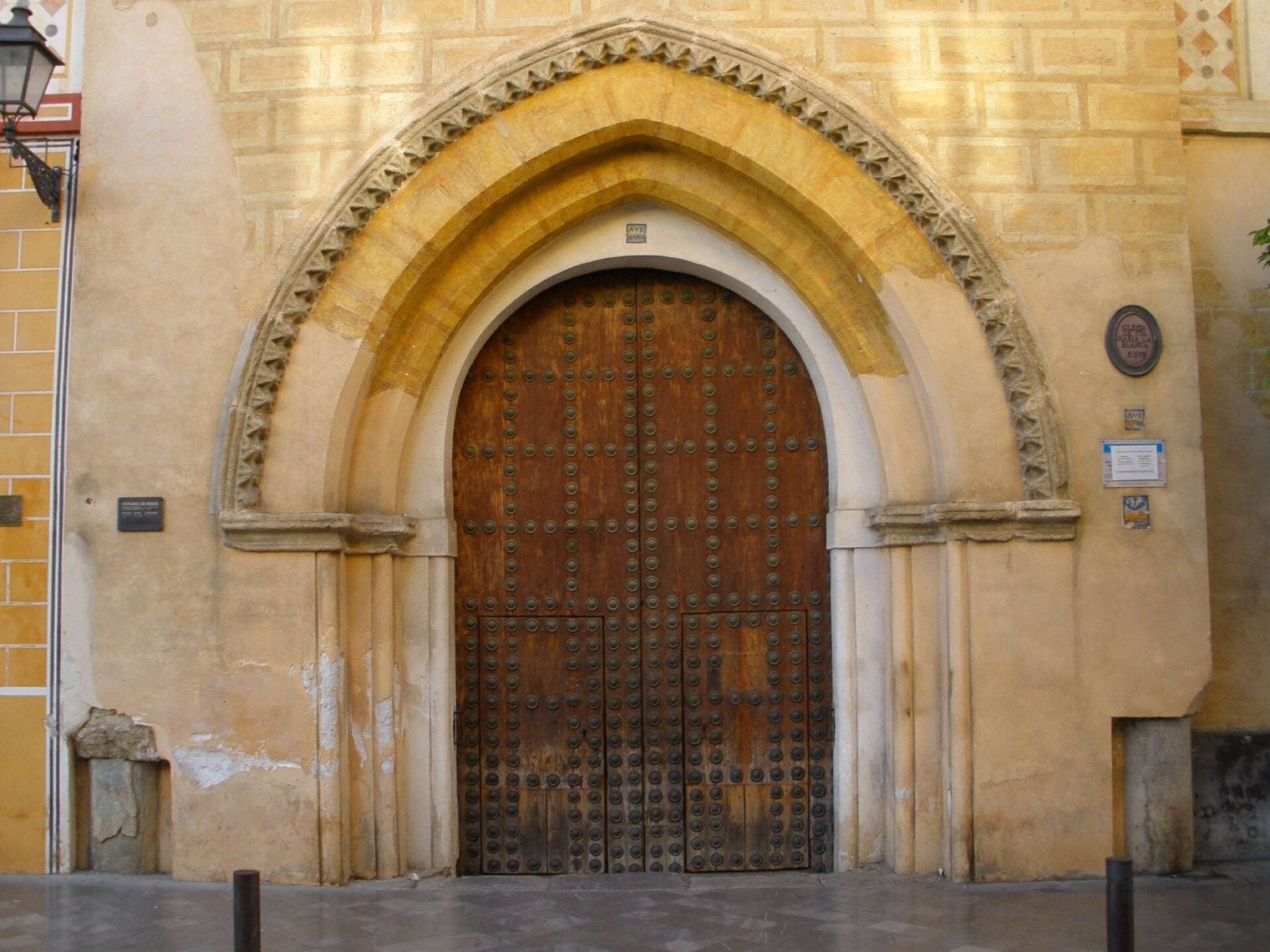
The Iglesia de Santa María la Blanca stands on the edge of the old Jewish quarter, on the site of a 13th-century synagogue that became a Christian church after the anti-Jewish violence of 1391. The building was later reworked in the 17th century.
Inside, the church is known for its exuberant Baroque decoration and for Murillo's Last Supper, painted in 1650, the one survivor of several Murillo works it once held. It is a short walk from the Plaza de Santa Cruz.
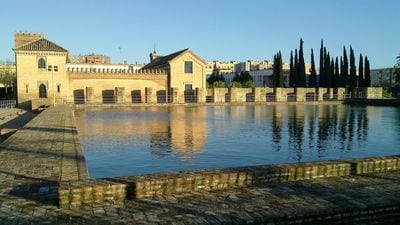
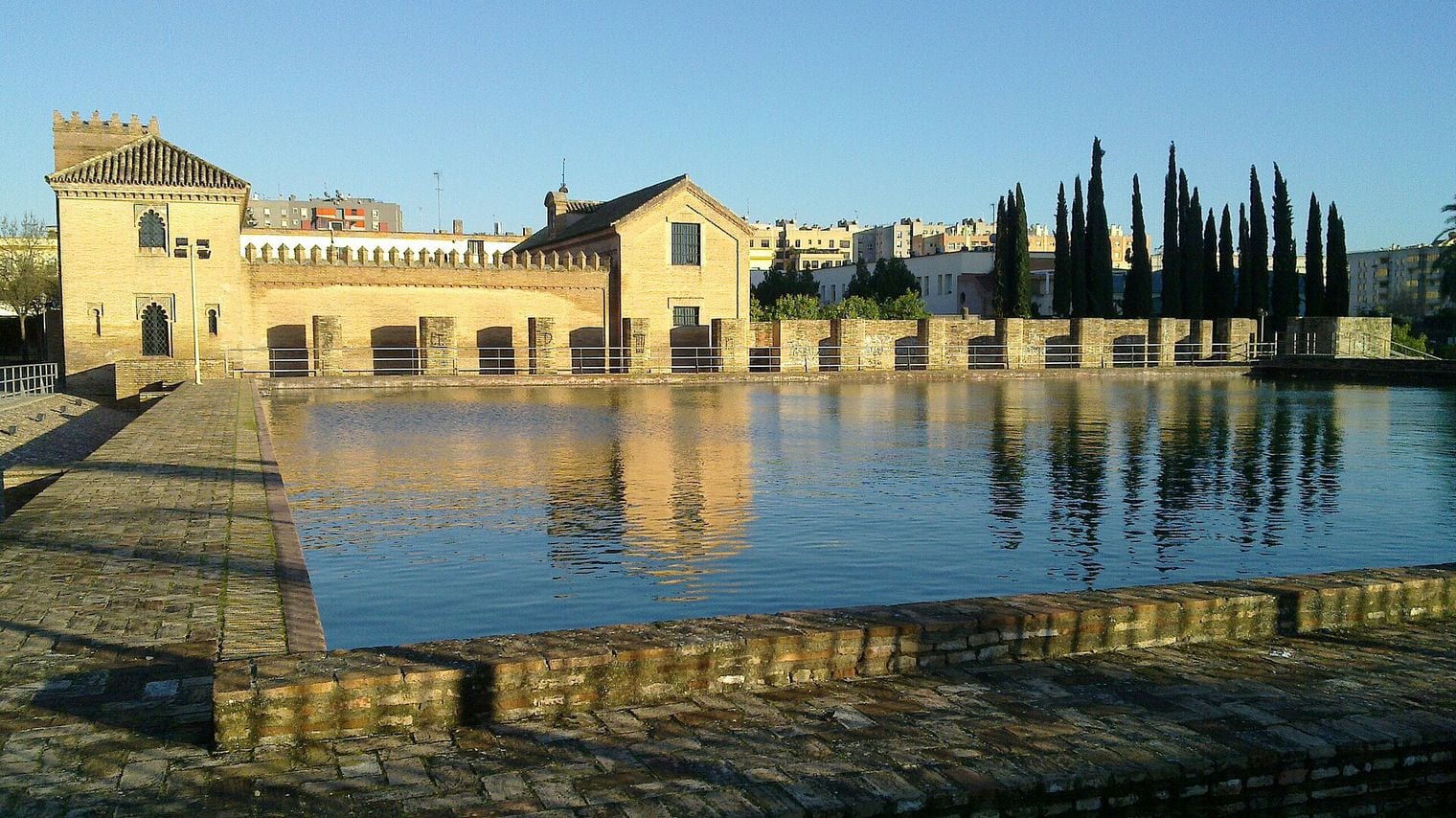
The Jardines de la Buhaira preserve one of Seville's oldest garden sites, an Almohad garden and palace created in the 12th century. After the Christian conquest it became known as the Huerta del Rey, the King's Garden, and today it is a public park and historic site.
A quiet stop east of the centre, it lets you see the remains of the old palace and its great pool. Few tourists make it here, which is part of the charm.
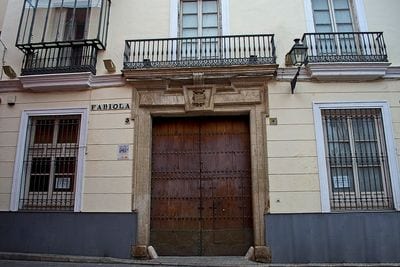
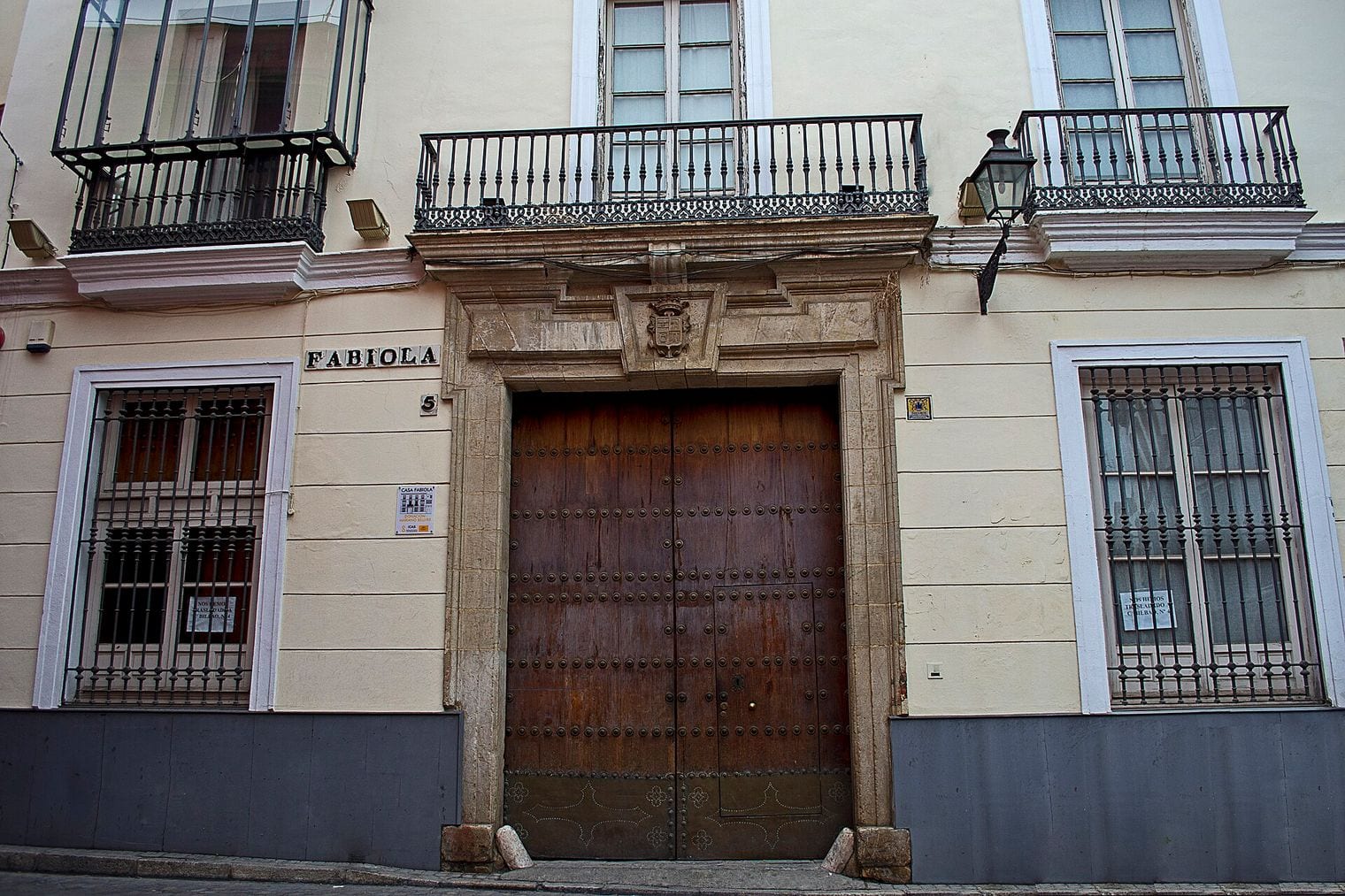
Casa Fabiola is a historic house in the San Bartolomé quarter, once a private home and the guesthouse of a convent, and the birthplace of Cardinal Nicholas Wiseman, whose novel Fabiola gives the house its name. Since 2018 it has housed the Museo Bellver, the art collection Mariano Bellver donated to the city.
More than 500 works fill its 13 rooms, with Sevillian costumbrista painting, scenes of everyday Andalusian life, at the heart of the collection. The house's patio and the quiet surrounding streets make it a pleasant break from the busier monuments.
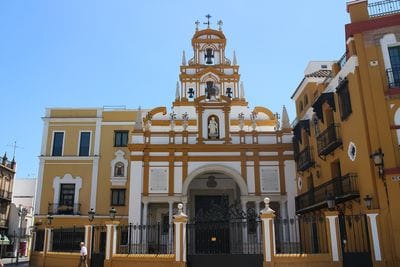
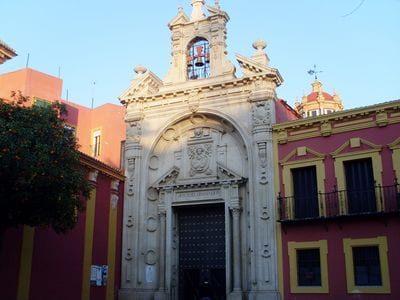
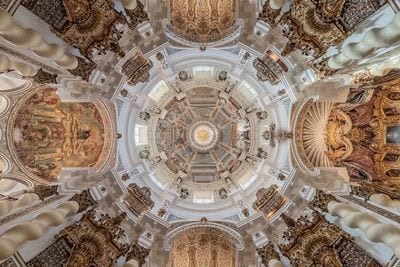
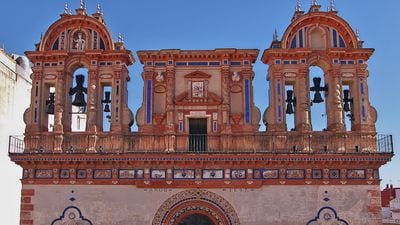
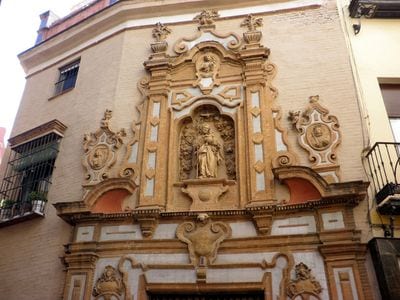
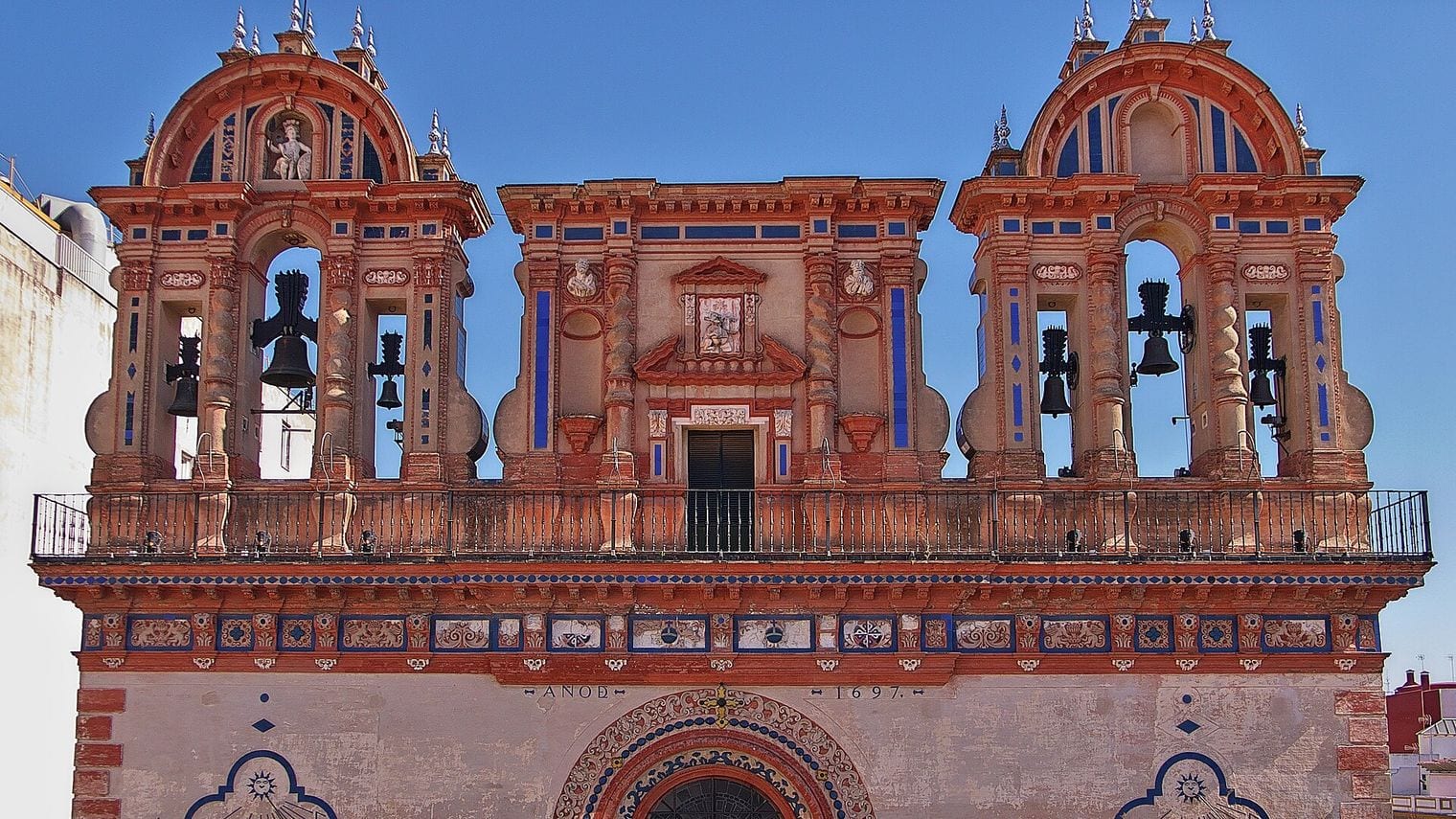
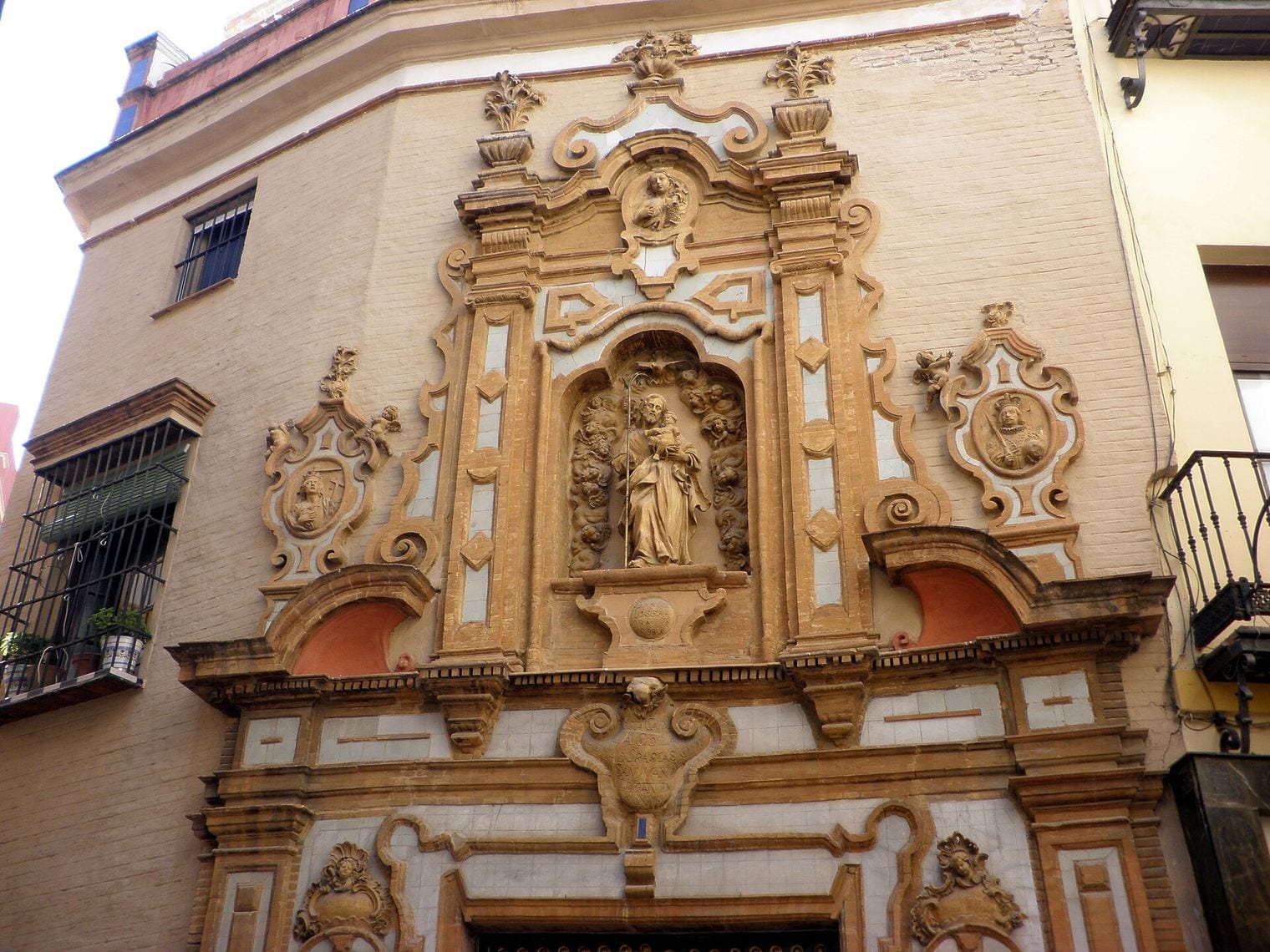
Tucked into Calle Jovellanos in the shopping district, the Chapel of San José was built between 1698 and 1766 for the city's carpenters' guild. Despite its small size, it is one of the most lavishly decorated Baroque churches in Seville, with a brick and tile façade crowned by a two-tier bell gable.
Step inside and the ornament reaches its peak in the apse, where a huge gilded altarpiece with St Joseph at its centre fills the wall. It was declared a Bien de Interés Cultural in 1912 and makes a dazzling five-minute detour off the busy streets.
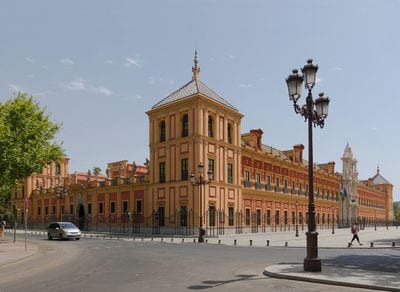
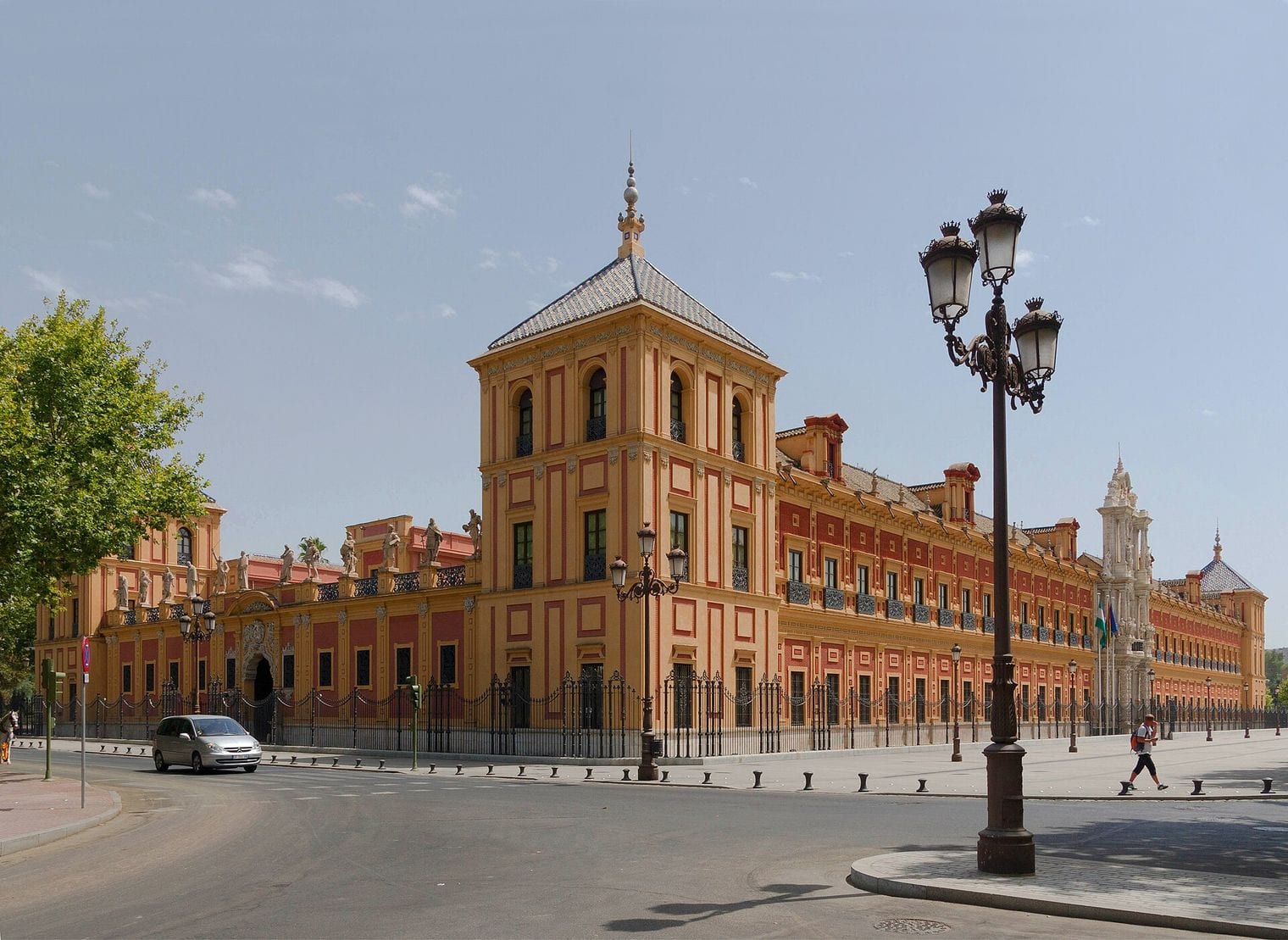
Construction of the Palacio de San Telmo began in 1682 outside the city walls, as the seat of the Universidad de Mareantes, a school that trained orphaned children as sailors. Today it is the seat of the presidency of the Andalusian regional government, and it stands near the Puerta de Jerez, a few minutes' walk from the Torre del Oro.
The interior can be seen on free guided group visits, booked in advance through the regional government's San Telmo Abierto programme. Its former gardens became part of María Luisa Park, so it fits naturally into a walk south from the centre.
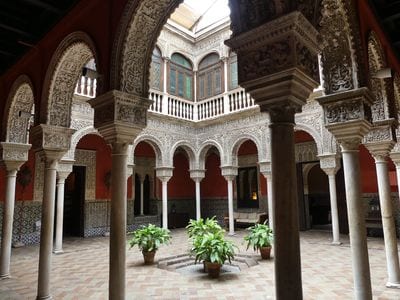
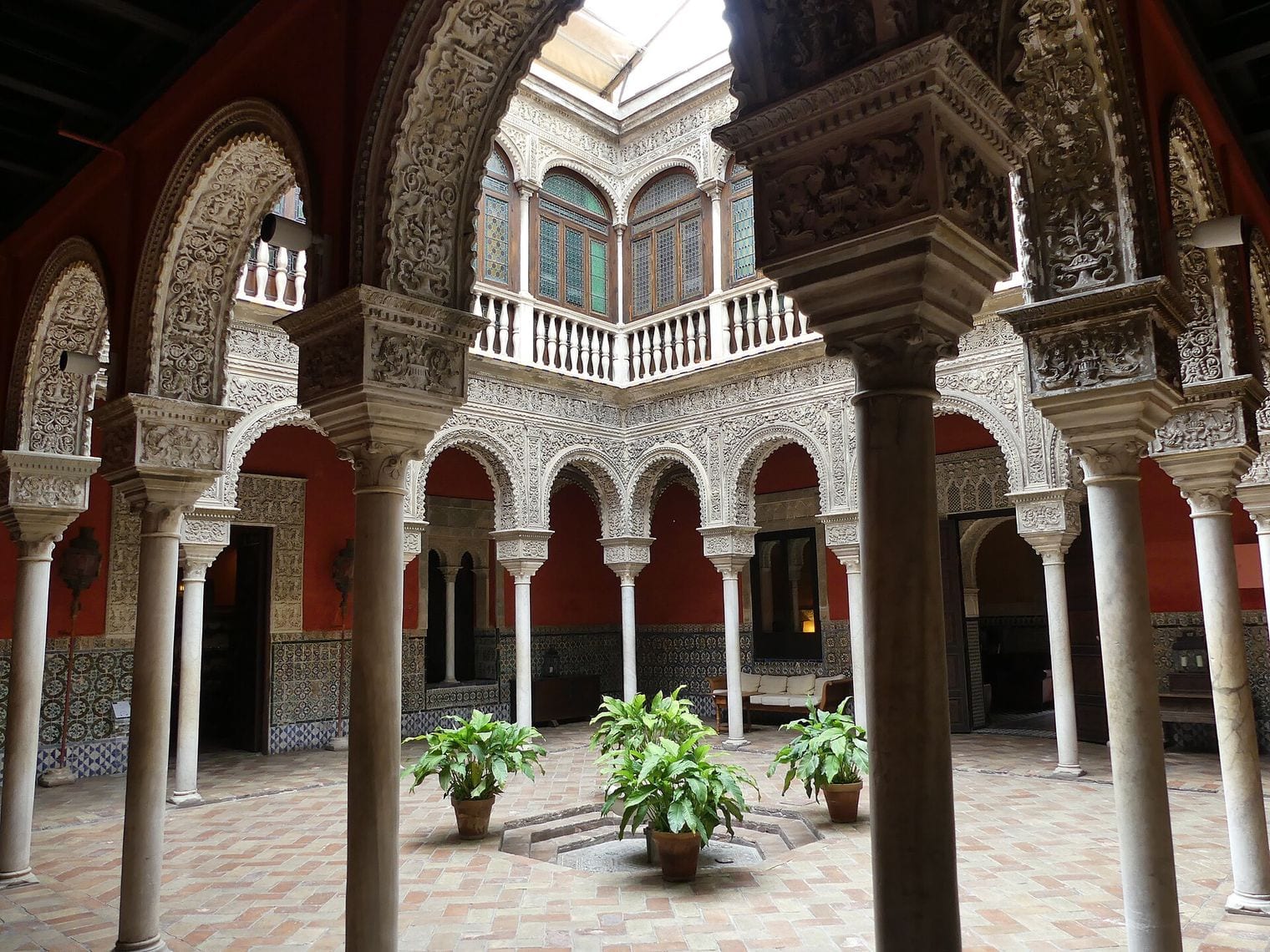
Casa de Salinas is a private 16th-century palace house in the historic centre, a short walk from the cathedral, the Alcázar and the Archive of the Indies. Built in 1577, it was the main residence of its founding family's line until the 19th century.
Short guided visits reveal a double-height patio of marble columns and carved 16th-century plasterwork, walls lined with Triana tiles and a second patio with a 2nd-century Roman mosaic of Bacchus from Italica. Because it is still a lived-in home, it offers a rare look at how Seville's old families lived.
Plan your trip
Best Time to Visit Seville
Spring is Seville at its most beautiful and most festive. The orange blossom scents the streets, and the city's two great celebrations follow each other: Holy Week, when brotherhoods carry their images through the streets on lavish floats, and the Feria de Abril, a week of horses, flamenco dresses and decorated marquees that usually begins two weeks after Easter. Accommodation books up early around both.
Autumn, from October into November, brings warm, settled days and thinner crowds, and winter is mild and quiet, with oranges hanging from the trees. Midsummer is the time to avoid: Seville is one of the hottest cities in Europe, with daily highs routinely above 35 °C in July and August, and much of the city slows down in the afternoon heat.
Getting to Seville
Seville Airport sits about 10 km east of the centre, with buses and taxis into town; travellers on long-haul routes often connect through Madrid or arrive via Málaga's larger airport, a little over two hours' drive away.
High-speed AVE trains from Madrid reach Seville's Santa Justa station in roughly two and a half hours, stopping at Córdoba on the way, which makes it easy to combine Seville with a stay in the capital. Direct high-speed services also run from Barcelona, though the journey is long enough that many travellers fly.
By road, the A-4 motorway links Seville with Córdoba and Madrid to the north and Jerez and Cádiz to the south, the A-92 heads east towards Granada and Málaga, and the A-49 runs west to Huelva and the Portuguese border.
Getting Around Seville
Seville's old town is compact, flat and best explored on foot; many of the lanes in Santa Cruz are too narrow for cars, and driving and parking in the centre are more trouble than they are worth. A short tram line runs through the centre past the cathedral, a metro line and city buses reach the outer districts, and taxis are plentiful.
The city is also one of the most bike-friendly in Spain, with a long network of flat, segregated cycle lanes and a public bike-share scheme, and the riverside paths are a pleasant way to reach Triana, the Cartuja island and the parks.
Where to Stay in Seville
For first-time visitors, the streets around the cathedral and the Barrio de Santa Cruz put the Alcázar and the main monuments on your doorstep, though they are the busiest and most touristy part of the city. El Arenal, between the cathedral and the river, is just as central and a little calmer, with the bullring and the riverfront close by.
The commercial centre around the Setas, the Plaza de la Alfalfa and the Plaza del Salvador has a more local feel and plenty of bars, while the Alameda de Hércules suits those who want nightlife on the doorstep. Across the river, Triana offers views back to the old town and a neighbourhood atmosphere of its own, a short walk over the bridge from the sights.
Where to Eat in Seville
Seville is one of Spain's great tapas cities, and the best way to eat is to graze, moving from bar to bar with a small plate and a drink at each. The streets around the Plaza de la Alfalfa and the Plaza del Salvador, the lanes of Santa Cruz, Triana's riverside Calle Betis and its market, and the terraces of the Alameda de Hércules are all good hunting grounds.
Look for salmorejo, the thick chilled tomato soup; espinacas con garbanzos, spinach and chickpeas with cumin; pescaíto frito, crisp fried fish; slow-braised pork cheeks and oxtail; jamón ibérico; and small montaditos sandwiches, washed down with a chilled fino or manzanilla sherry from the nearby wine towns.
Day Trips from Seville
The closest and most rewarding escape is Itálica, the ruins of a Roman city in Santiponce, about 9 km north-west of the centre and the birthplace of the emperor Trajan; its Roman amphitheatre was among the largest in the empire. Carmona, a hilltop town of walls, churches and a Roman necropolis about 33 km north-east, makes an easy half-day trip, and Córdoba, with its Mezquita, is only about 45 minutes away by high-speed train.
Heading south, Jerez de la Frontera, about an hour's drive away, is the home of sherry and Andalusian horsemanship, and the ancient port of Cádiz is roughly an hour and a half away by road or rail. Ronda, perched above its gorge, is around two hours to the south-east, and Granada and the Alhambra can be done as a long day out, though they deserve a night of their own.
Before you go
Mobile dataAn eSIM gives your phone local data when you land, with no SIM card to swap.via AiraloGet an eSIM
Airport transferA driver meets you at arrivals and takes you to your hotel, at a price fixed when you book.via Welcome PickupsBook a transfer
We may earn a commission when you buy through these links, at no extra cost to you. How we make money.
Seville is best known for the Royal Alcázar, the cathedral and its Giralda tower, and the tiled Plaza de España, along with the Setas de Sevilla and the Torre del Oro on the river. It is also the heartland of flamenco, tapas culture and two famous spring festivals, Holy Week and the Feria de Abril.
How many days do you need in Seville?
Three days is the sweet spot for Seville. Spend one on the Alcázar, the cathedral and Santa Cruz, a second on the Plaza de España, María Luisa Park, the river and Triana, and a third on the Setas, the Macarena and the museums. A fourth day leaves time for a trip to Itálica or Córdoba.
What can you do in Seville for free?
Plenty: wander the Plaza de España and María Luisa Park, explore the lanes of Santa Cruz and the Murillo Gardens, cross the Triana Bridge into Triana at sunset, and stroll the Alameda de Hércules. The Archivo General de Indias is free to enter, and the Palacio de San Telmo offers free guided visits booked in advance.
When is the best time to visit Seville?
Spring, from March to May, is the classic time to visit, with orange blossom, Holy Week and the April Fair, while October and November bring warm days and fewer crowds. Avoid July and August if you can: Seville is one of the hottest cities in Europe, and summer afternoons are draining.
Is Seville worth visiting?
Yes. Few European cities pack so much into a walkable old town: a UNESCO-listed royal palace, cathedral and archive, Baroque churches and noble palaces, riverside parks and a lively tapas and flamenco scene. Its compact size and easy high-speed rail links to Madrid and Córdoba also make it simple to fit into a wider trip through Spain.
Sources & updates
How this guide was checked
Checked before launch
Sources cited
40
Publishers
27
Every place on this list was confirmed open and pinned on the map before publication, and what we say about each one was checked against its own website or an official source.
A PDF with a box to tick for every place. Confirm your email to download it, and get one email every Thursday with our newest guides for the places you tick.
Free Seville printable checklist
All 40 places in one PDF
Tick them off as you go. Confirm your email to download it, plus one email every Thursday with new guides for the places you tick.
We use cookies to analyse site traffic and improve your experience.
You can accept or reject analytics cookies. See our
May we use analytics cookies? See ourCookie Policy.