

A single Texas ranch covers some 825,000 acres, more ground than the state of Rhode Island. A cave north of San Antonio shelters up to 20 million bats, the largest colony on earth. Houston runs the largest medical complex in the world. And Texas did not buy its Capitol with money at all — it paid three million acres of Panhandle land.
Every fact below carries at least two independent sources, and hedges exactly where they hedge. For the places behind them, start with our guide to things to do in Texas.
1. Bracken Cave Holds the Largest Bat Colony on Earth
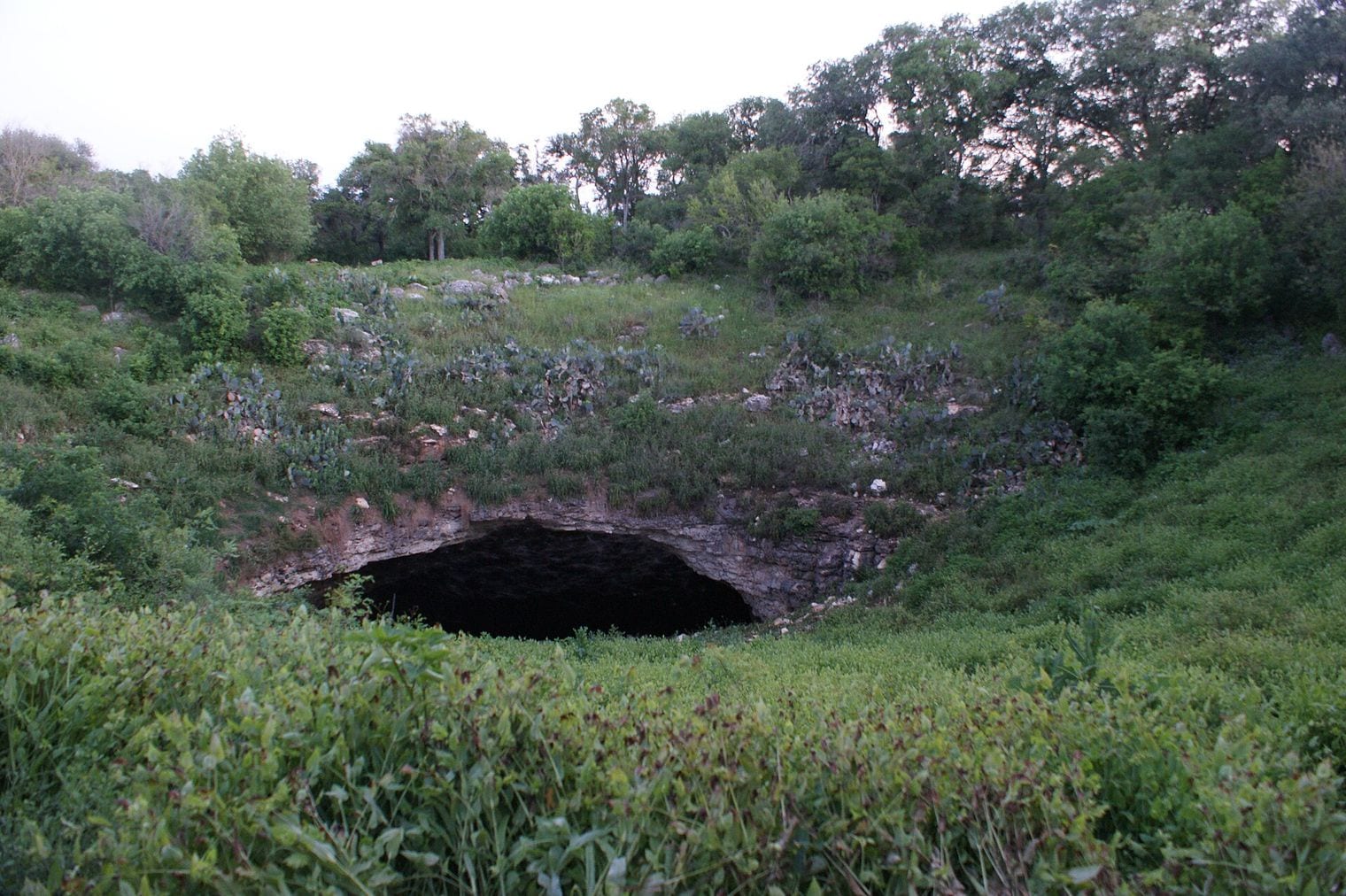
Bracken Cave, in the hills north of San Antonio, shelters what Bat Conservation International calls the largest colony of bats in the world: up to 20 million Mexican free-tailed bats crowd into it each summer, as of 2026. The figure is an estimate rather than a count — nobody has found a dependable way to tally a roost that dense.
The emergence is the spectacle. On a summer evening the bats pour out of the sinkhole in a slow spiral that takes hours to empty, then fan out across the surrounding country to feed through the night before returning at dawn.
2. One Texas Ranch Is Bigger Than Rhode Island
The King Ranch in South Texas covers some 825,000 acres — close to 1,300 square miles, which the Texas State Historical Association notes is more ground than the entire state of Rhode Island, as of 2026. It is not one continuous block but four separate divisions spread across the coastal plain.
Richard King began it with a cattle camp on Santa Gertrudis Creek in the eighteen-fifties. The ranch went on to breed its own line of cattle and to register the Running W brand that is still burned into its stock today.
3. Houston Holds the Largest Medical Complex on Earth
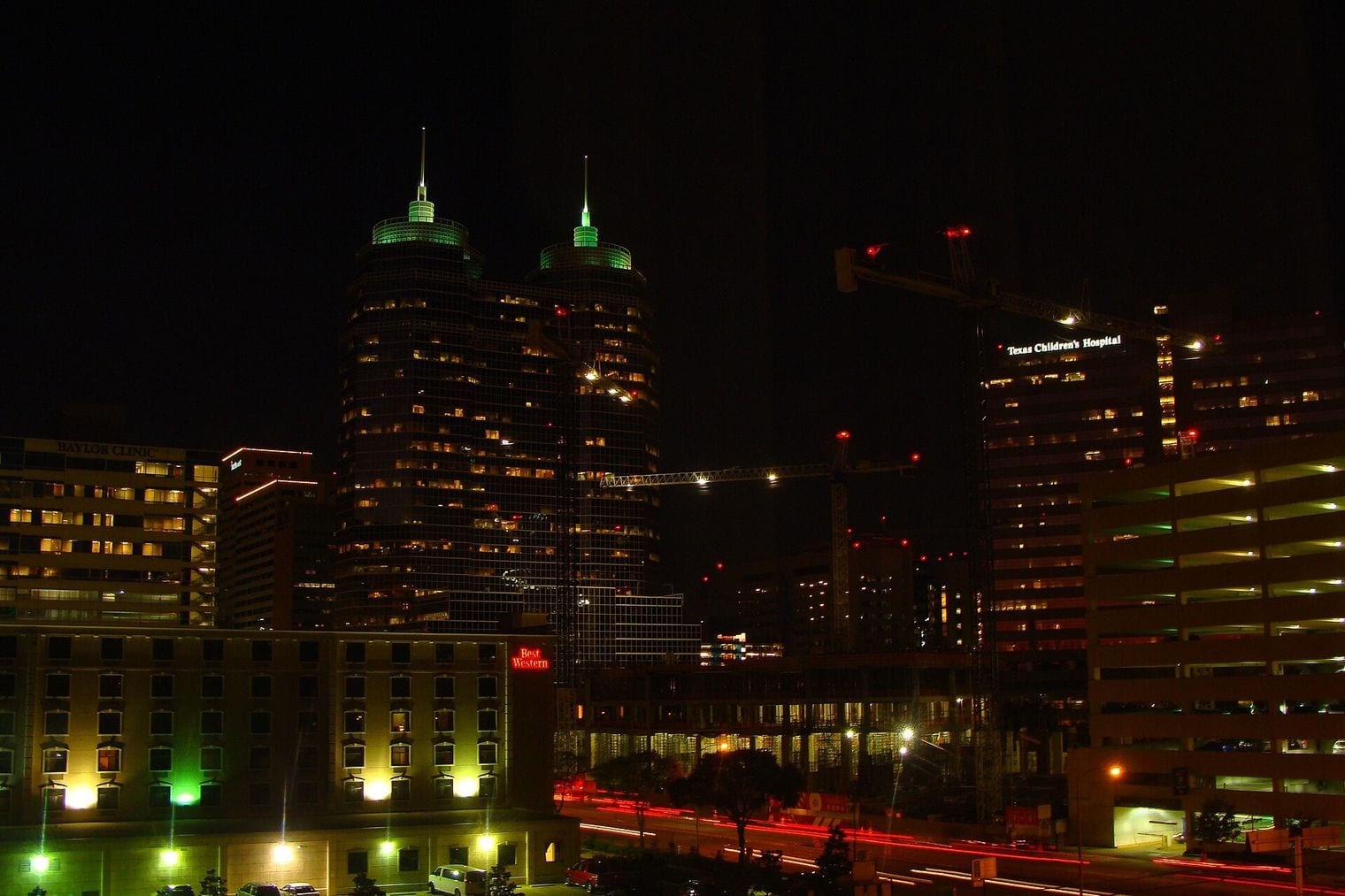
The Texas Medical Center in Houston calls itself the largest medical complex in the world, with over 60 member institutions sharing one campus just south of downtown, as of 2026.
The density is the whole idea. Hospitals, medical schools and research institutes sit within walking distance of each other, and the campus has grown its own street grid, its own transit stops and a skyline of hospital towers that reads from the freeway as a second downtown.
4. Texas Paid for Its Capitol With Land, Not Money
Texas did not buy its statehouse with cash. The commission behind the Texas Capitol advertised for a contractor who would put up the entire building in exchange for three million acres of public land in the Panhandle, and that is the deal that was struck.
It was a barter no state would attempt now: a finished seat of government traded for an empty quarter of the map. The syndicate that took the contract got the acres, and Texas got its statehouse without writing a cheque.
5. The XIT Ranch Was Fenced With 781 Miles of Wire
The land that paid for the Capitol became the XIT Ranch, and fencing it took 781 miles of wire. The property ran 200 miles down the New Mexico border and varied between twenty and thirty miles wide.
Stringing that much fence across open plains was itself an undertaking on the scale of a railway. The XIT was never meant to be a ranch forever — the syndicate always intended to sell the land off in pieces, and eventually it did.
6. The Capitol Has 392 Rooms and 924 Windows
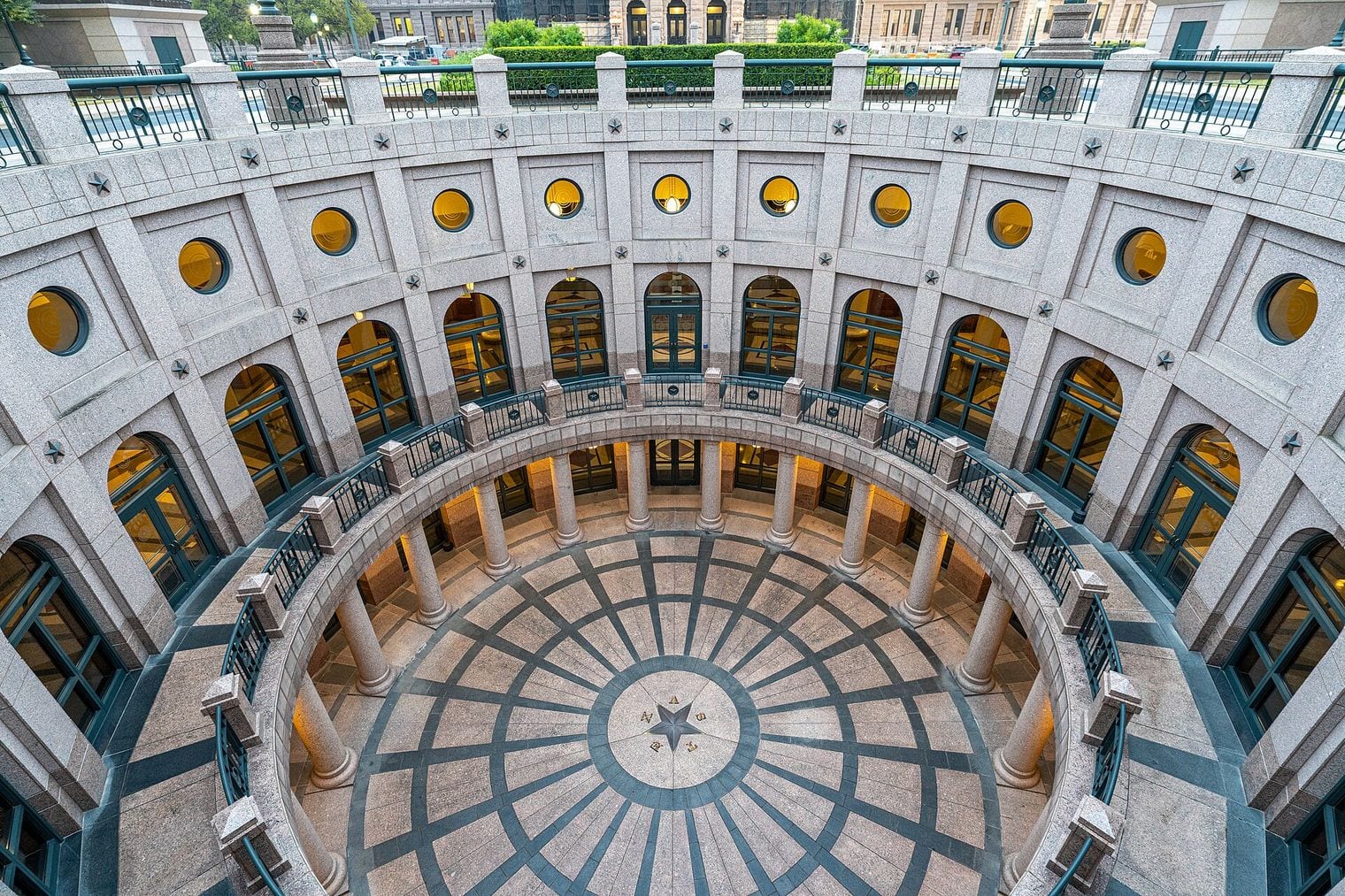
When the Texas Capitol was finished in 1888 it contained 392 rooms, 18 vaults, 924 windows and 404 doors. It stands 311 feet from the ground to the top of the statue on its dome — a figure measured to the tip of the Goddess of Liberty, not to the roofline, which is why published heights for the building differ.
The walls are red granite from Burnet County, quarried and hauled in on a railway built for the purpose. The colour is the giveaway: where other statehouses are pale limestone or marble, this one is unmistakably pink.
7. San Jacinto Was Won in Just 18 Minutes
The Battle of San Jacinto, fought on 21 April 1836, decided Texan independence in 18 minutes. Sam Houston's army caught Santa Anna's force during an afternoon rest and overran the camp before it could form a line.
The fighting that followed the charge lasted far longer than the battle itself. But the outcome was settled in those opening minutes, and the captured Santa Anna signed away the campaign within weeks.
8. The Alamo Held Out for Thirteen Days
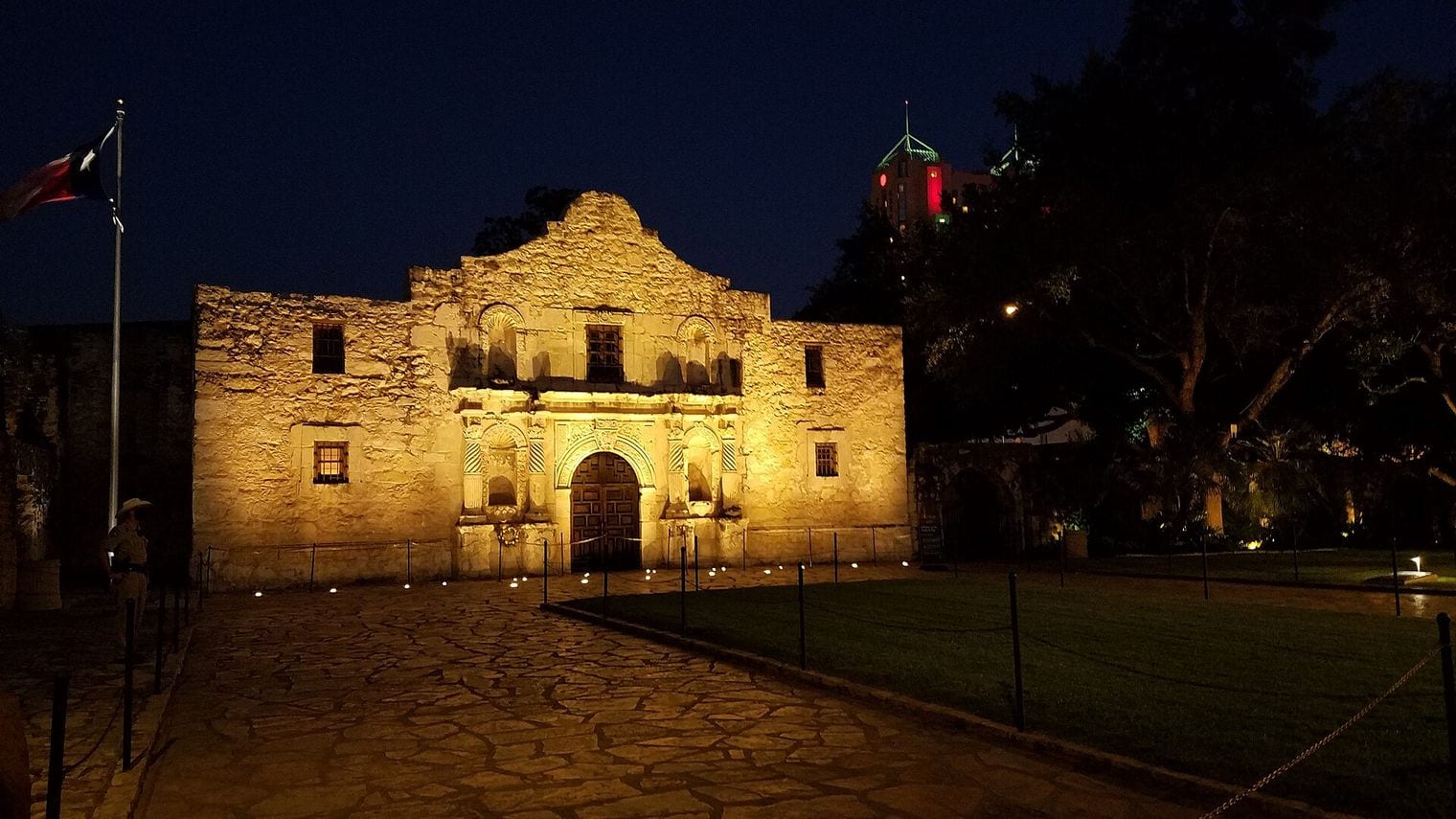
The siege of the Alamo ran for thirteen days before Mexican columns came over the walls on 6 March 1836. Throughout it, William Travis kept sending couriers out with appeals for the reinforcements that never arrived in strength.
The mission was a fortified ruin rather than a fortress, its walls patched and its guns short of gunners. What the defenders bought was time — and, in the end, a rallying cry that outlasted every wall they were standing behind.
9. Juneteenth Began in Galveston on 19 June 1865
Juneteenth marks 19 June 1865, the day Major General Gordon Granger stood in Galveston and ordered the final enforcement of the Emancipation Proclamation in Texas. The proclamation had been in force elsewhere for more than two years; Texas was the last corner of the Confederacy to feel it.
The anniversary was kept in Texas long before the rest of the country noticed, and General Order Number 3 was read out in Galveston again when federal recognition finally arrived.
10. The 1900 Galveston Storm Is Still the Deadliest
The hurricane that came ashore at Galveston in September 1900 remains, as of 2026, the deadliest natural disaster in United States history. Between 6,000 and 8,000 people died in the city itself, and estimates for the whole island run higher still — a range, not a figure, because the record was destroyed along with the town.
Galveston at the time was a wealthy port with no seawall at all. The storm ended that in a night, and the city that rebuilt behind a wall of concrete never regained the commercial lead it lost.
11. Palo Duro Canyon Runs Almost 120 Miles
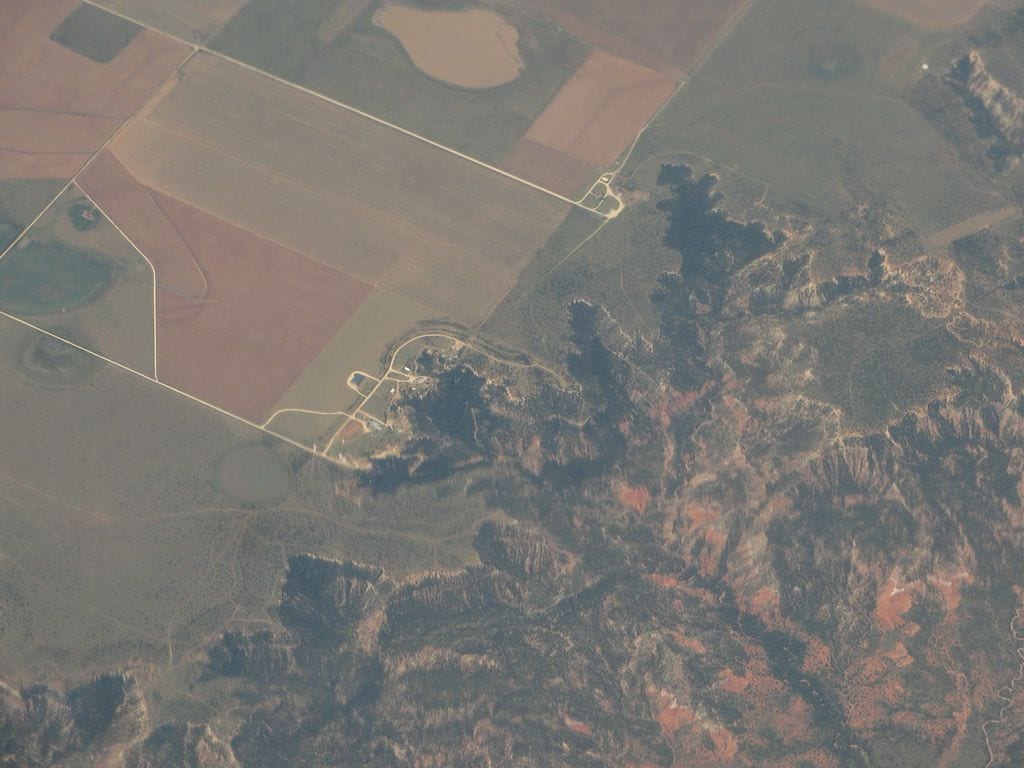
Palo Duro Canyon cuts almost 120 miles across the Texas Panhandle, dropping 800 feet from rim to floor and widening in places to twenty miles. It opens without warning in flat country — there is no rise to announce it, only the ground falling away.
The banded walls read as stripes of orange, red and white, layers laid down across four geological periods. Charles Goodnight drove cattle down into it to found the first commercial ranch in the Panhandle, and part of the canyon is a state park today.
12. Big Bend Records More Birds Than Any US Park
More than 450 species of bird have been recorded in Big Bend National Park — more than any other national park in the United States, and over half of all the species found in North America, as of 2026.
The reason is position. Big Bend sits where the eastern and western ranges of dozens of species overlap, on a migration corridor following the Rio Grande, with desert floor and wooded mountain within a few miles of each other. Birders come for the Colima warbler, which nests nowhere else in the country.
13. The Chisos Are the Southernmost Range in the US
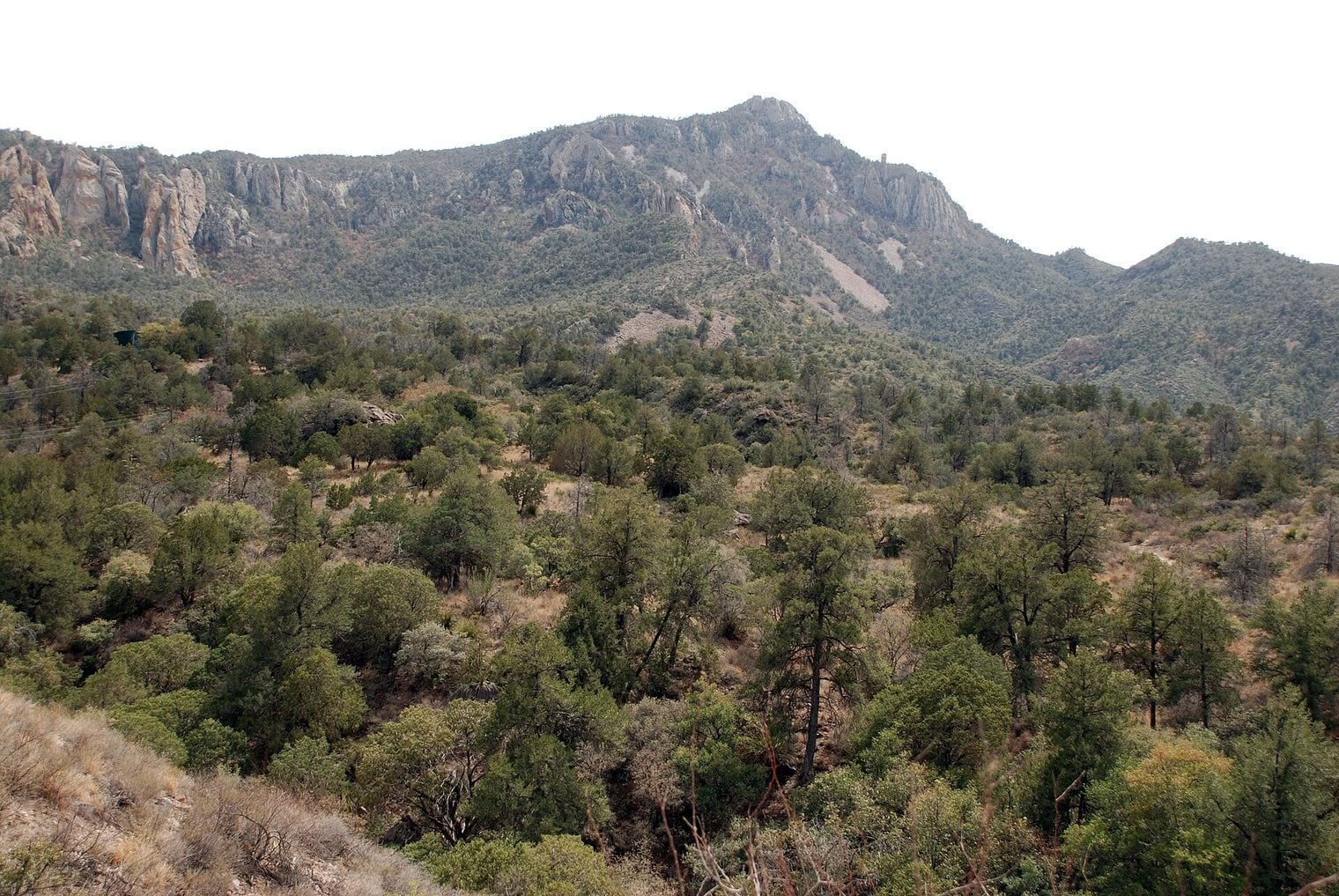
The Chisos Mountains, rising over 7,800 feet, are the southernmost mountain range in the mainland United States — and the only range in the country contained entirely within a single national park.
The altitude makes them an island. Climb out of the desert into the Chisos Basin and the cactus gives way to oak, juniper and maple, holding species that were stranded there when the surrounding country dried out after the last ice age.
14. One Park Holds the Four Highest Peaks in Texas
Guadalupe Mountains National Park covers 76,293 acres of far West Texas and contains the four highest peaks in the state, including Guadalupe Peak itself.
It is one of the least-visited national parks in the country, which has more to do with distance than merit — the nearest city of any size is a long drive in any direction. The reward is McKittrick Canyon, a sheltered cut that turns gold and red in late autumn while the desert around it stays bare.
15. Padre Island Has the Longest Sand Beach in America
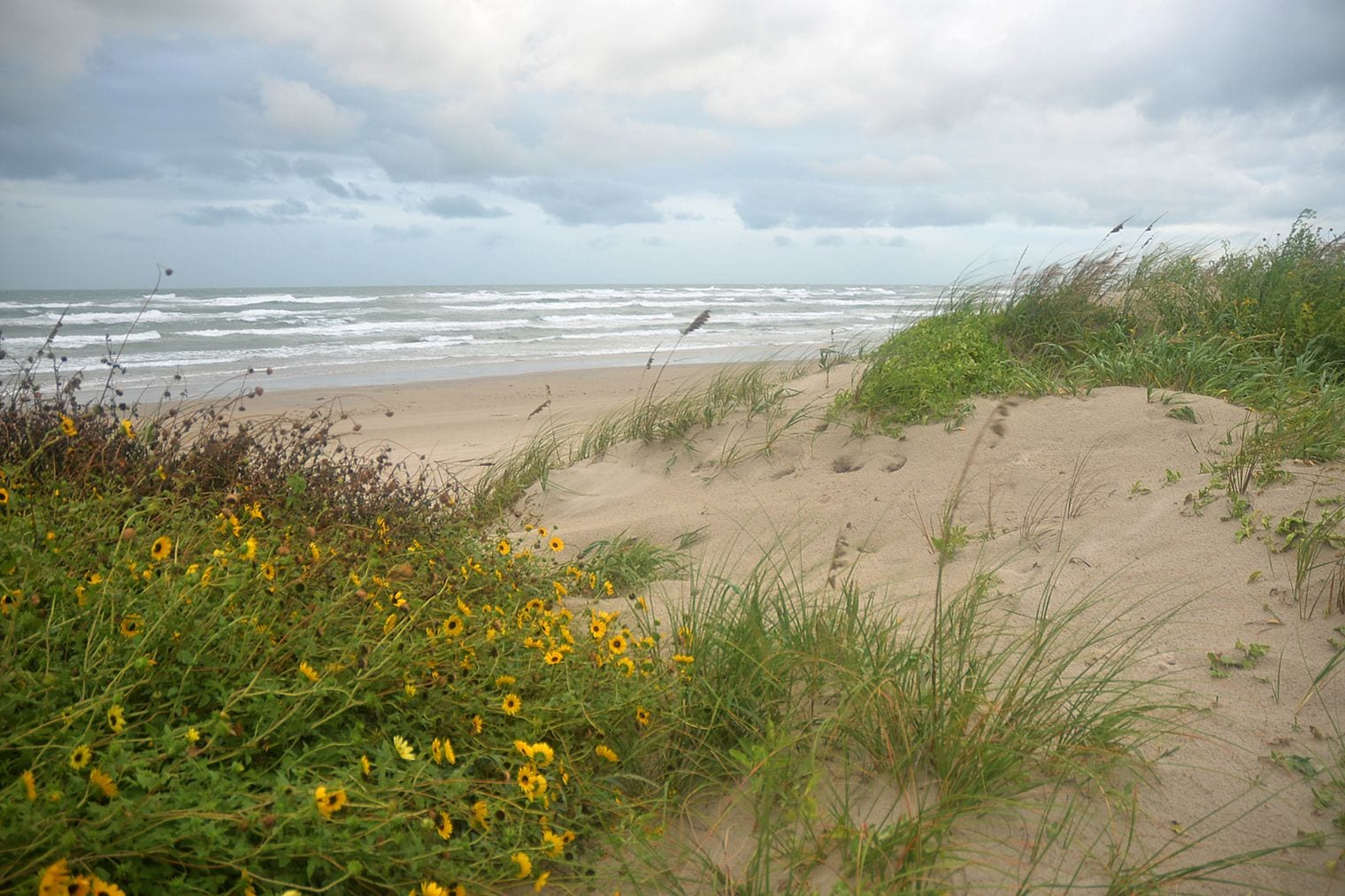
Padre Island runs some 130 miles down the South Texas coast and carries the longest sand beach in the United States, as of 2026. A belt of dunes runs the length of the Gulf side, and the island is nowhere more than about three miles wide.
Most of it is undeveloped. The northern end is built up, but beyond the last road the beach simply continues, and driving it is the only practical way to reach the far reaches.
16. Enchanted Rock Is the Biggest Pink Granite Dome
Enchanted Rock, in the Hill Country north of Fredericksburg, is the largest pink granite monadnock in the United States, rising to 1,825 feet above sea level, as of 2026.
It is the exposed top of a much larger body of granite still buried beneath the surrounding country. The rock groans and creaks as it cools at night — the effect that gave it its name long before geologists explained it as thermal contraction.
17. A Texas Cave Room Runs 350 Feet Long
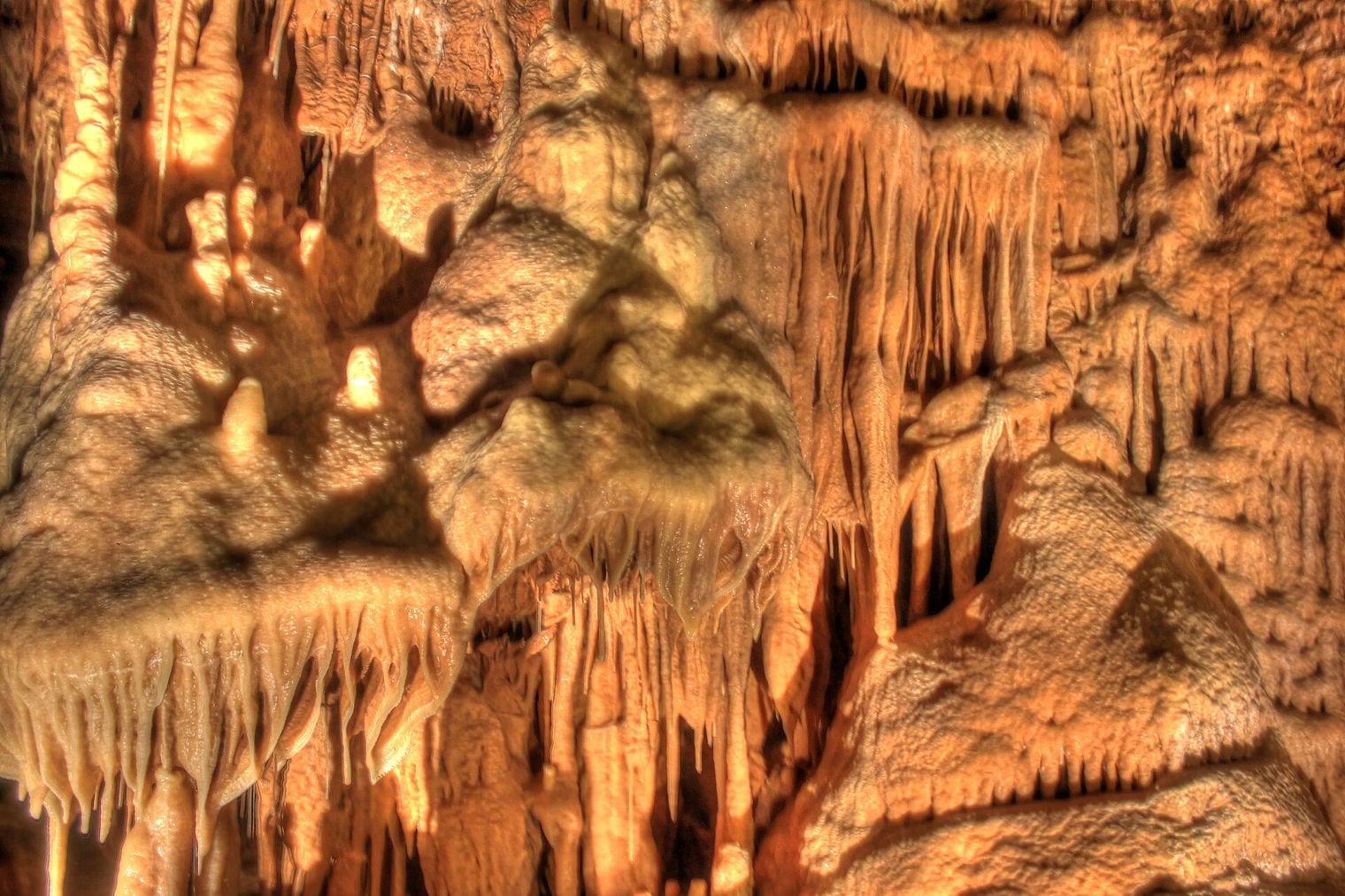
The Hall of the Mountain Kings, the largest chamber in Natural Bridge Caverns near San Antonio, measures 350 feet long, 100 feet wide and 100 feet high.
The cave takes its name from the natural limestone bridge spanning the entrance sinkhole. Four students from a nearby university found the system in the early nineteen-sixties by squeezing through a crawlway at the bottom of that sink, and it is still being explored.
18. Big Thicket Became a National Preserve in 1974
Congress created the 84,550-acre Big Thicket National Preserve in East Texas in 1974, and UNESCO recognises the area as a biosphere reserve.
It was the first unit of its kind in the national park system, protected not for a single landmark but for the collision of habitats inside it — swamp, pine savannah, hardwood forest and arid sandyland within a short drive of one another. Carnivorous plants grow there, which is not what visitors tend to expect of Texas.
19. Nobody Agrees How Long the Rio Grande Border Is
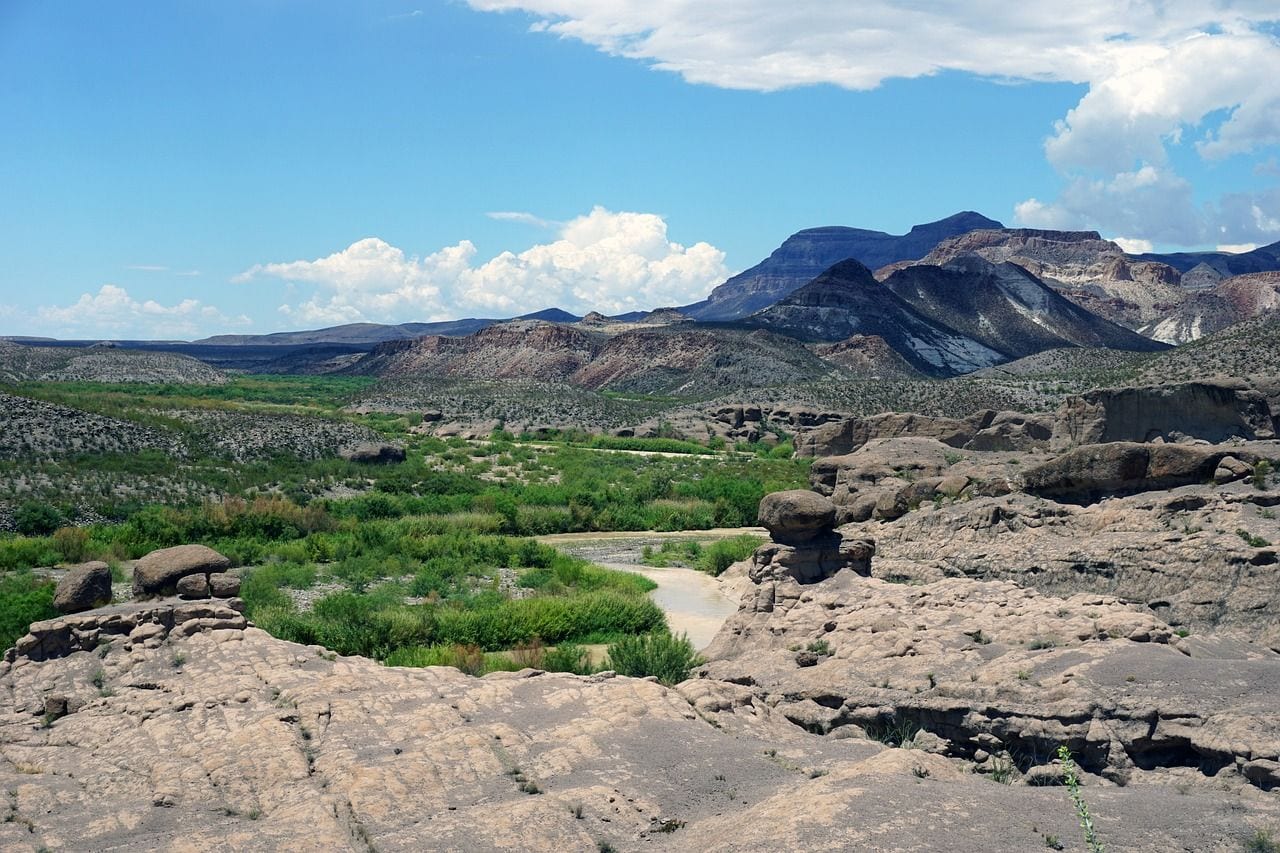
The Rio Grande runs 1,896 miles in total, but the stretch that forms the international boundary is measured at anywhere from 889 to 1,248 miles depending on how you count. The difference is not sloppiness — it is whether you follow every meander or straighten the channel for the purpose of measuring.
The river moves, which compounds the problem. Its bends migrate across the floodplain over decades, and a boundary commission has spent well over a century deciding what happens to the land when they do.
20. The Llano Estacado Is One of the Largest Tablelands
The Llano Estacado is one of the largest tablelands on the continent, a high mesa tilting at approximately ten feet per mile toward the south-east, as of 2026. Its edges are escarpments; its surface is close to featureless.
Early Spanish accounts describe crossing it as being at sea, with no landmark to steer by in any direction. The Caprock escarpment that bounds it on the east is the one place the plain announces itself, dropping several hundred feet in a single step.
21. Texas Has 254 Counties, More Than Any Other State
Texas is divided into 254 counties, more than any other state, along with 1,218 incorporated cities, as of 2026.
The number is a leftover from the horse era: counties were drawn small enough that a citizen could ride to the courthouse and home again in a day. The result is a landscape of county seats, each with a square and a courthouse at its centre, many of them serving a few thousand people.
22. Brewster County Alone Is Bigger Than Connecticut
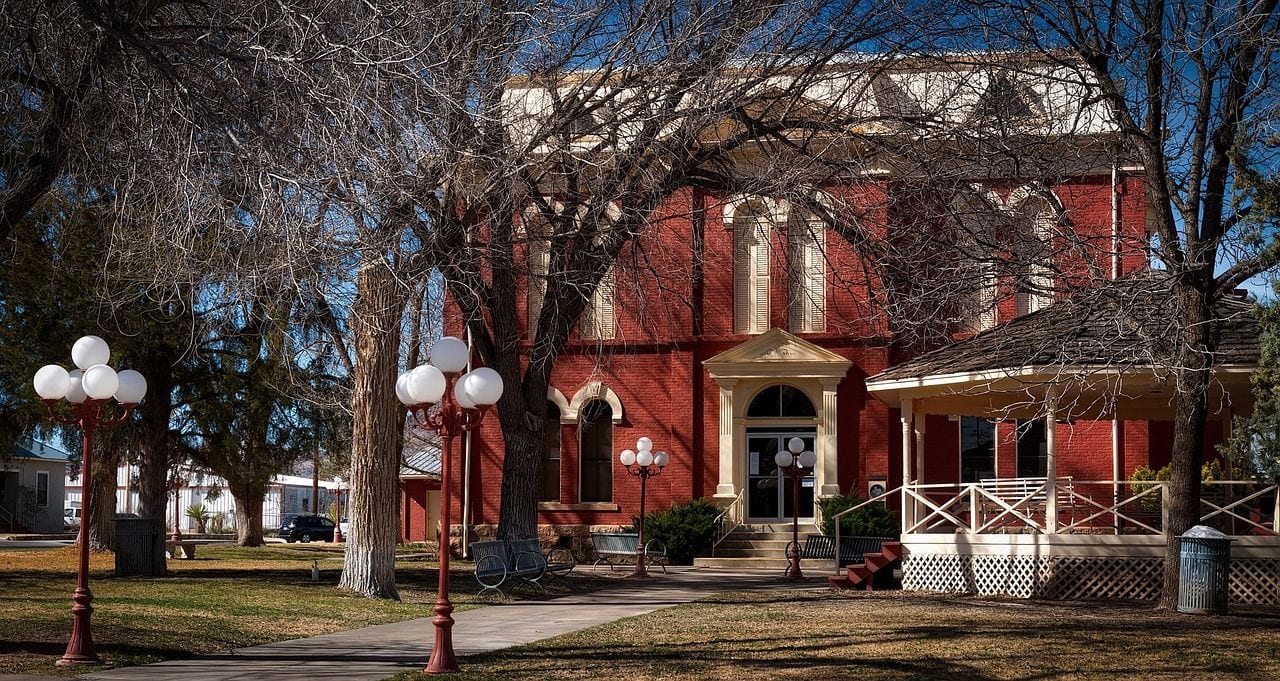
Brewster County is the largest county in Texas at 6,192 square miles — more than 500 square miles bigger than the state of Connecticut and over three times the size of Delaware, as of 2026.
Almost all of it is mountain and desert, and most of Big Bend National Park sits inside it. Alpine, the county seat, is the only town of any size, which means a single sheriff's department covers an area larger than several states.
23. Loving County Is the Emptiest County in America
Loving County in West Texas recorded a population of 64 at the 2020 census, making it, as of 2026, the least populous county in the United States with a permanent population.
It has one community, Mentone, and no school, no bank and no cemetery in use. It also sits on the Permian Basin, so the emptiest county in the country is not a poor one — the oil beneath it generates far more money than its handful of residents could ever spend.
24. El Paso Is the Only Big Texas City on Mountain Time
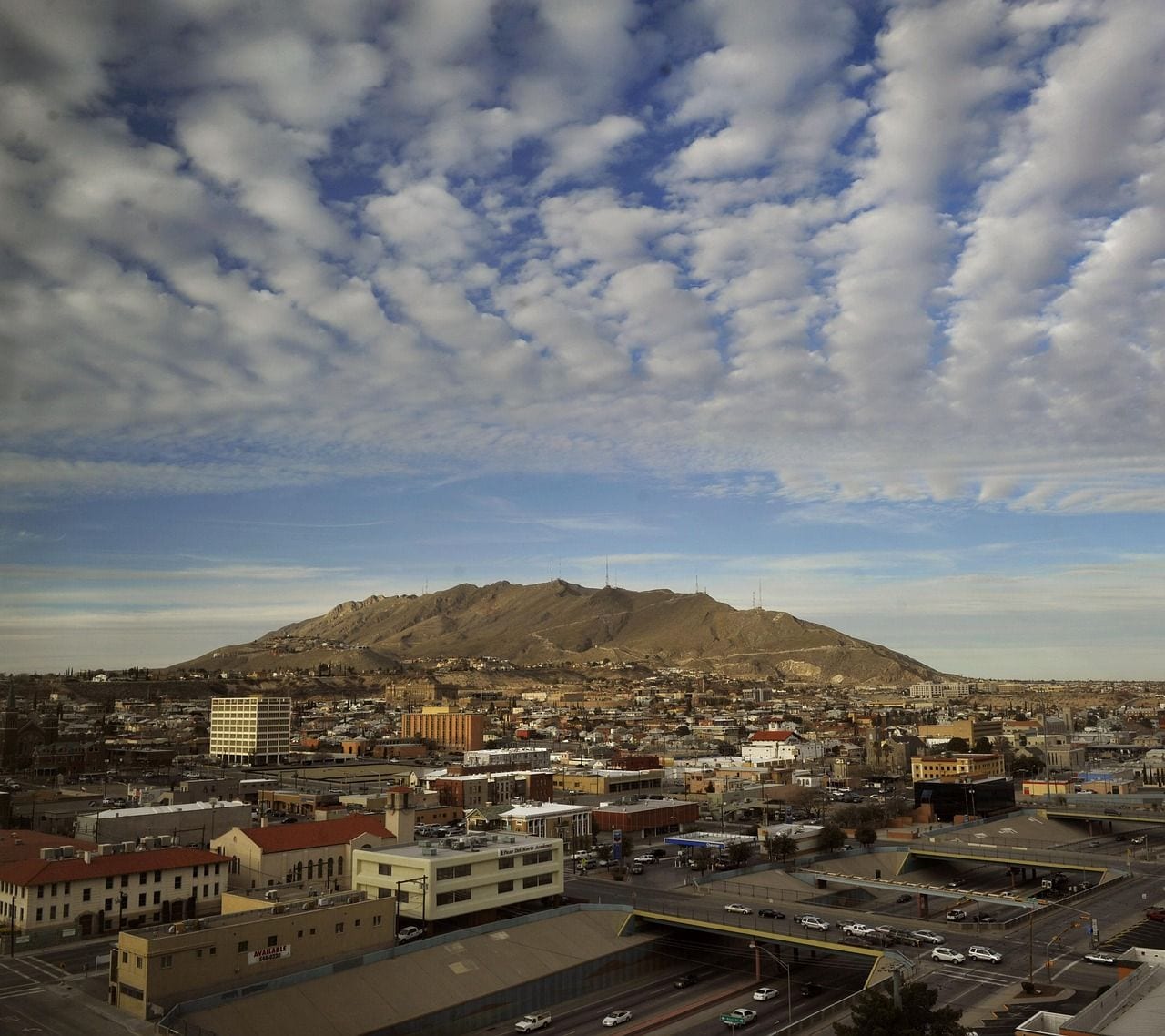
El Paso sits so far west — at the Pass of the North, where the Rio Grande cuts between mountain ranges — that it is the only major Texas city in the Mountain Time Zone. Everywhere else in the state runs an hour ahead of it.
The distances involved are hard to picture from outside. From El Paso, the state line with New Mexico is minutes away and California is closer than the Louisiana border, which is why the city has always looked west and south rather than back toward Austin.
25. People Have Lived in Texas for 16,000 Years
The earliest archaeological evidence for human habitation of Texas dates back more than 16,000 years, according to the Bullock Texas State History Museum.
That pushes the record far behind the arrival of any people named in written Texas history. The evidence comes from stone tools and hearths rather than monuments, which is part of why the deep past of the region is so easily overlooked beside the noisier centuries that followed.
26. Canary Islanders Founded San Antonio Civil Government
In 1731 a party of immigrants from the Canary Islands founded the villa of San Fernando de Béxar, establishing the first regularly organised civil government in Texas. Fifty-six of them made the journey, sent by the Spanish crown to put a permanent civilian population beside the existing mission and presidio.
Their descendants stayed. The parish church they founded became San Fernando Cathedral, still standing in the middle of San Antonio, and the street plan they laid out around the main plaza is the one the city grew from.
27. Houston Built the First Domed Stadium in the World
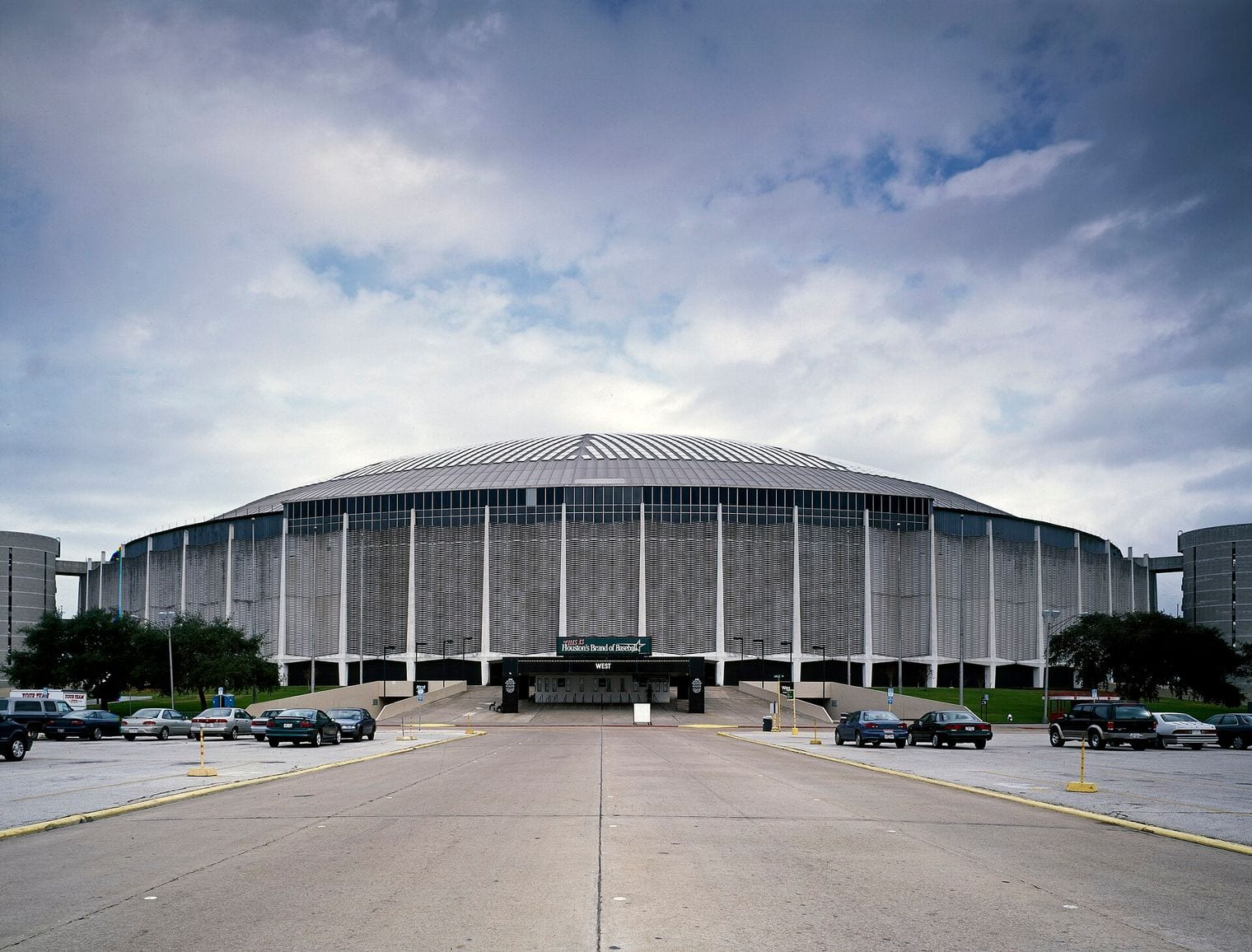
The Astrodome, which opened in Houston in 1965, was the first multi-purpose domed sports stadium in the world, and was promptly nicknamed the Eighth Wonder of the World.
It solved a problem specific to the Gulf coast: outdoor baseball in Houston in August is close to unplayable. Roofing a stadium also killed the grass beneath it, which is how a synthetic playing surface came to be invented and named after the building's home team.
28. The Microchip Was Invented in Dallas
Jack Kilby built the first integrated circuit at Texas Instruments in Dallas in 1958, work for which he later shared the Nobel Prize in Physics. He was a new employee with no holiday entitlement, left alone in an empty laboratory over the summer shutdown.
The device he assembled was crude — a sliver of germanium with components wired above it. But it demonstrated that a whole circuit could be made in one piece of semiconductor, which is the principle every processor since has been built on.
29. Dr Pepper Was First Poured in Waco in 1885
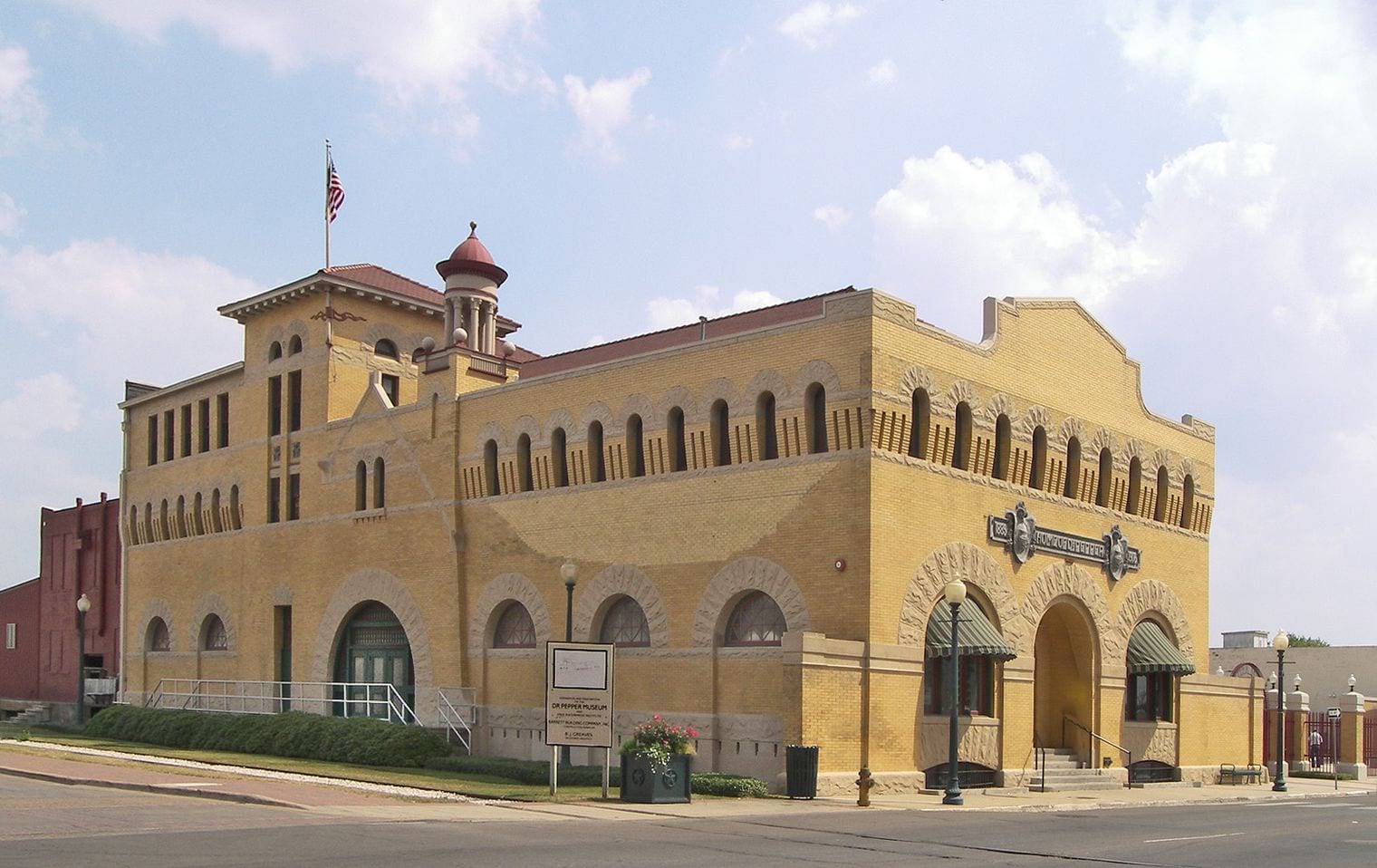
Dr Pepper was first made in Waco in 1885, mixed by the pharmacist Charles Alderton at Morrison's Old Corner Drug Store. Customers at the soda fountain took to ordering it by the name of the town before it acquired the one it has now.
That makes it older than most of the American soft drinks it sits beside on a shelf. The drugstore counter it came from was the research laboratory of its day, and the recipe has never been publicly disclosed.
30. The First Whataburger Sold Through a Window in 1950
The first Whataburger was sold through the window of a portable building in Corpus Christi on 8 August 1950. Harmon Dobson wanted a burger big enough to need two hands and good enough that a customer would say the name of the shop out loud on the first bite.
The orange-and-white A-frame came later and became the signature. The chain stayed in Texas hands for decades, which is a large part of why Texans treat it as infrastructure rather than fast food.
31. Blue Bell Started as a Butter Co-op in 1907
Blue Bell began in 1907 as the Brenham Creamery Company, a co-operative of Washington County dairy farmers who converted an abandoned cotton gin and made butter out of their surplus cream. Ice cream did not arrive until 1911, and the company only stopped making butter decades later.
The name came from a native Texas wildflower. For most of its life the company sold nowhere near the whole country, and the scarcity did the marketing for it.
32. The Texas Rangers Date Back to 1823
The Texas Rangers trace their beginning to 1823, when Stephen F. Austin hired ten experienced frontiersmen as rangers for a punitive expedition. That makes them among the oldest law-enforcement bodies in North America, as of 2026.
They were not a police force for most of that history — closer to a frontier militia, raised and disbanded as circumstances demanded. The modern division is a small investigative arm of the state police, and the mythology around it long ago outgrew the number of officers involved.
33. Texas Generates More Wind Power Than Any State
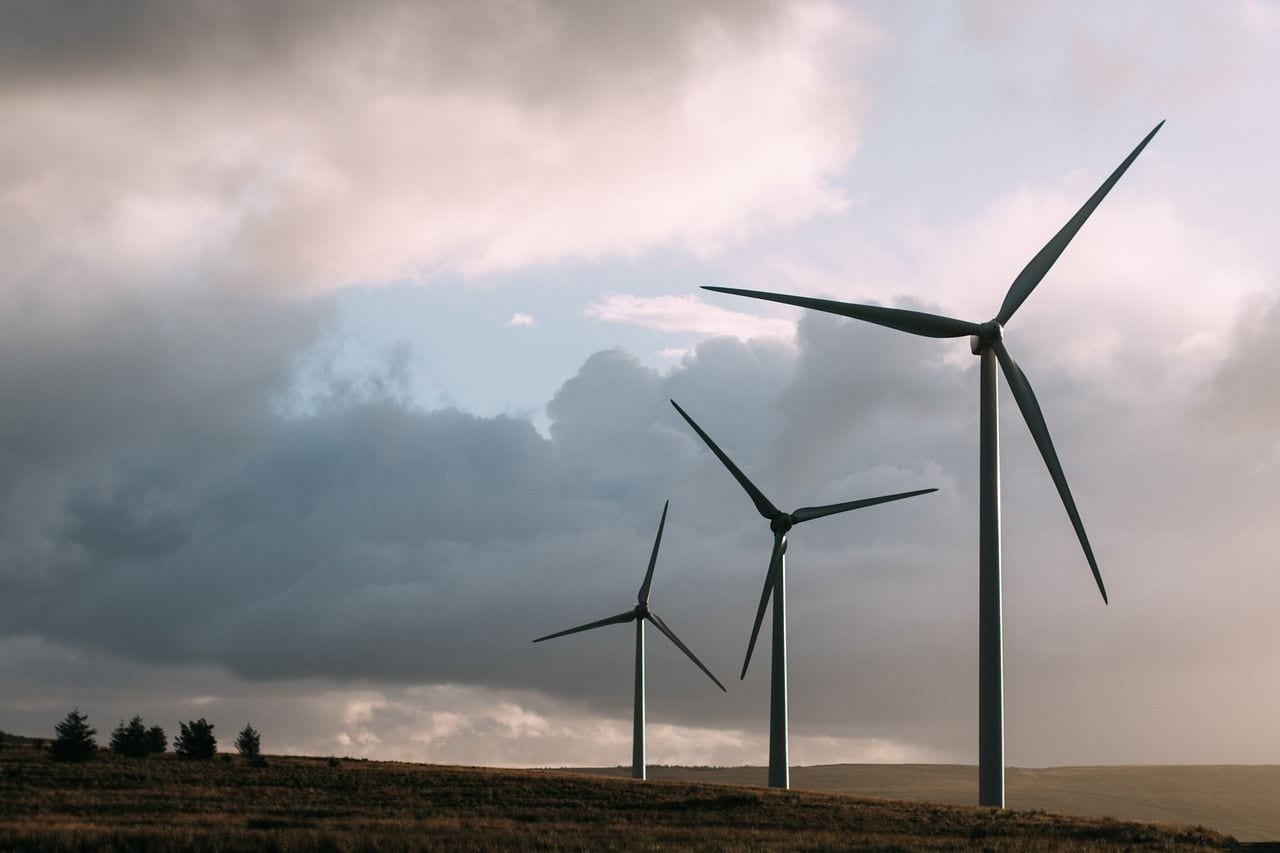
Texas generated more electricity from wind in 2025 than any other state, on the latest full-year figures available as of 2026. Wind supplied 22.4 per cent of the power on the ERCOT grid that year, more than coal.
The turbines are concentrated in the west and the Panhandle, where the wind is steady and the land is cheap. It is an unlikely headline for the state that built its wealth on oil, and the two industries now compete for the same rural leases.
34. Texas Runs Its Own Power Grid
Texas is the only state in the lower forty-eight with its own separate power grid. ERCOT operates the Texas Interconnection, which carries about 90 per cent of the state's electric load and supplies more than 25 million customers, as of 2026.
Staying disconnected was a deliberate choice: a grid that does not cross state lines largely escapes federal regulation. The trade-off is that when Texas runs short of power it cannot import much of it, a limitation the state has tested more than once.
35. The Permian Basin Has Yielded 28.9 Billion Barrels
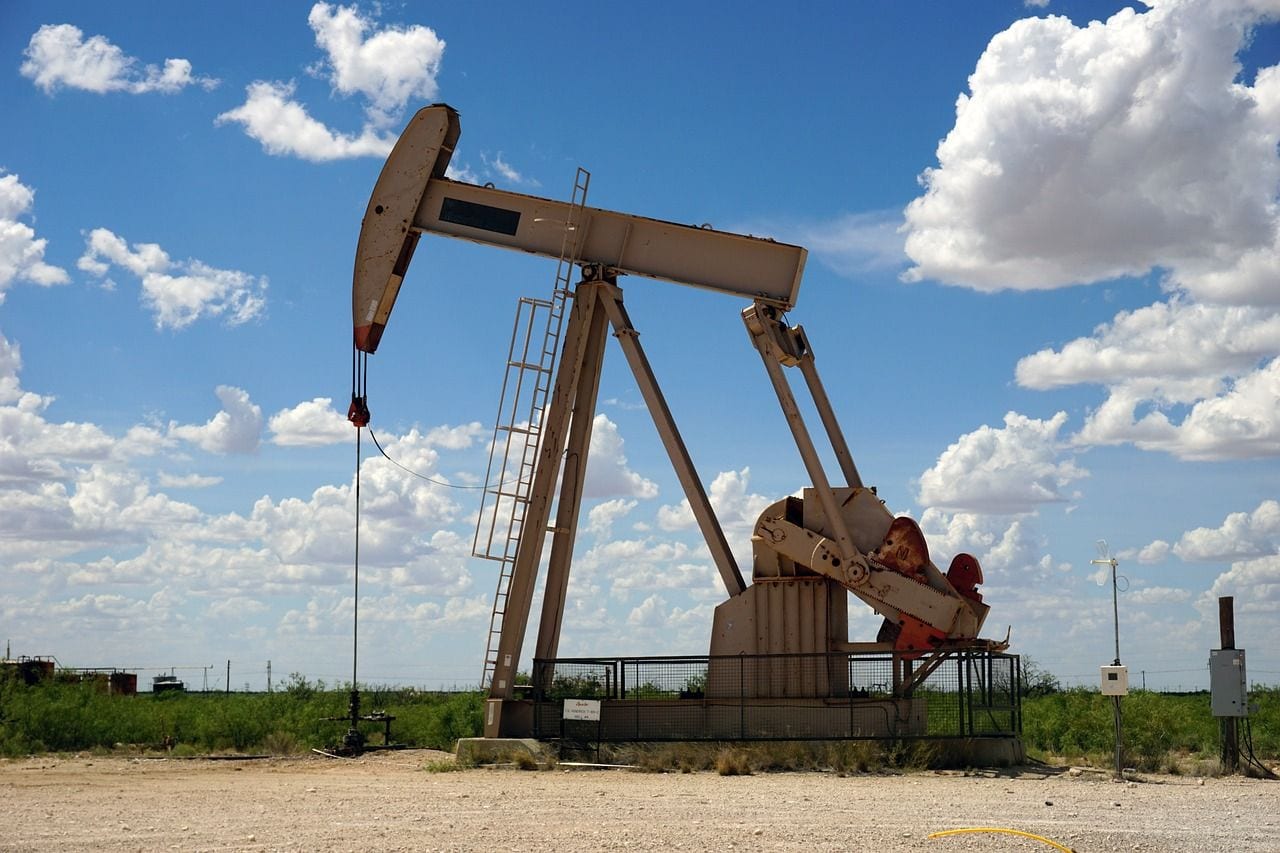
The Permian Basin of West Texas is the largest petroleum-producing basin in the United States and has yielded a cumulative 28.9 billion barrels of oil, as of 2026.
It was written off more than once as played out, and each time a new technique — waterflooding, then horizontal drilling and fracturing — reopened rock that older methods could not reach. Midland and Odessa exist because of it, and their fortunes still rise and fall with the price per barrel.
36. Spindletop Blew 100,000 Barrels a Day for Nine Days
The Lucas gusher at Spindletop, near Beaumont, blew for nine days from 10 January 1901 at an estimated 100,000 barrels of oil a day. Nobody had seen a well behave like it, and nobody had equipment capable of capping it.
It began the Texas oil industry in a single morning. Beaumont's population multiplied within months, and several of the companies founded in the scramble that followed are still among the largest energy firms in the world.
37. An 1849 Census Counted 58,073 Bales of Texas Cotton
Cotton was first grown in Texas by Spanish missionaries, and an 1849 census of the state counted 58,073 bales of it, as of the record for that year.
Cotton, not cattle, was the crop that shaped nineteenth-century Texas — it drove the plantation economy of the east, filled the river ports, and put the state at the centre of a global trade. The cattle drives that came later have simply had better publicity.
38. The Texas Longhorn Is a Crossbred Accident
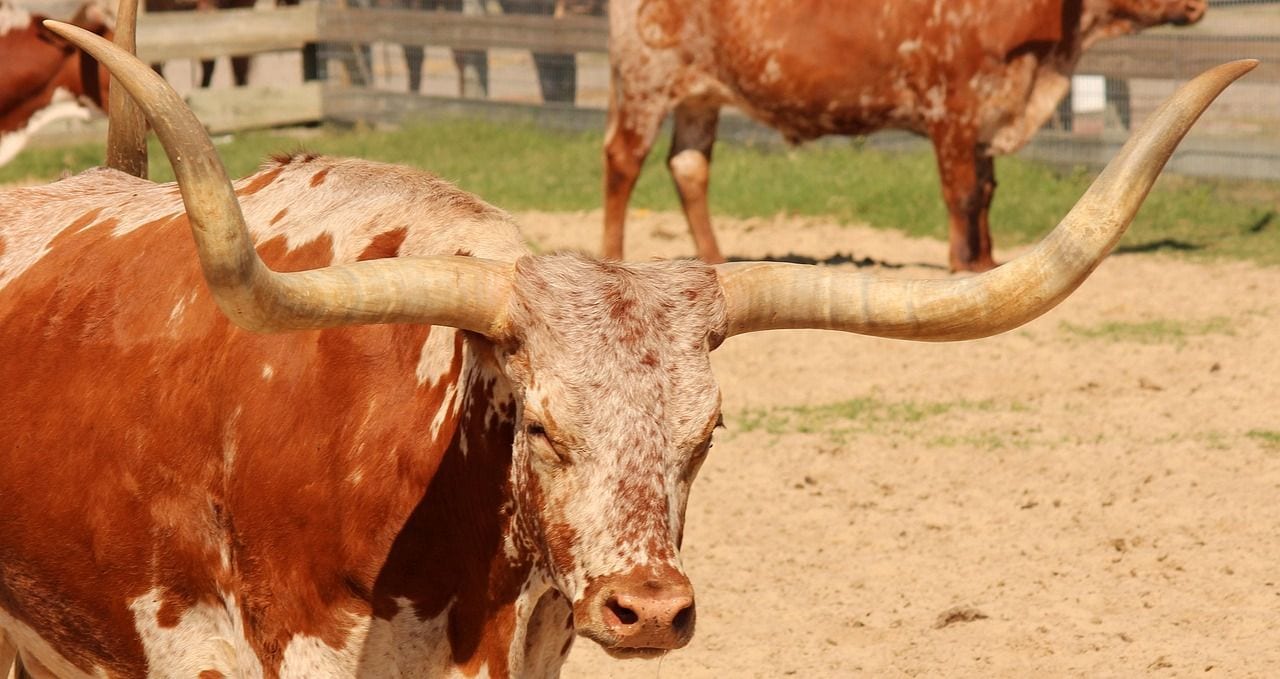
The Texas Longhorn is a hybrid that emerged by chance, when Spanish criollo stock left running on the range mixed with English cattle brought west by Anglo-American settlers. Nobody designed it.
What the accident produced was an animal that handled heat and drought better than the imported breeds, able to walk to market over hundreds of miles of dry country. That toughness is precisely what made the long cattle drives possible, and what made the breed nearly obsolete once railways reached the ranches.
39. Caddo Lake Holds a Vast Flooded Cypress Forest
Caddo Lake, on the Louisiana line, is an internationally protected Ramsar wetland and holds one of the largest flooded cypress forests in the United States, as of 2026. Its surface area runs to 20,700 acres.
It looks nothing like the rest of Texas — bald cypress standing in dark water, hung with Spanish moss, threaded by channels that need marked boat roads to navigate. It is also the only large lake in the state that began as a natural body of water rather than a reservoir.
40. A Texas Cave Grows Helictites Shaped Like a Butterfly
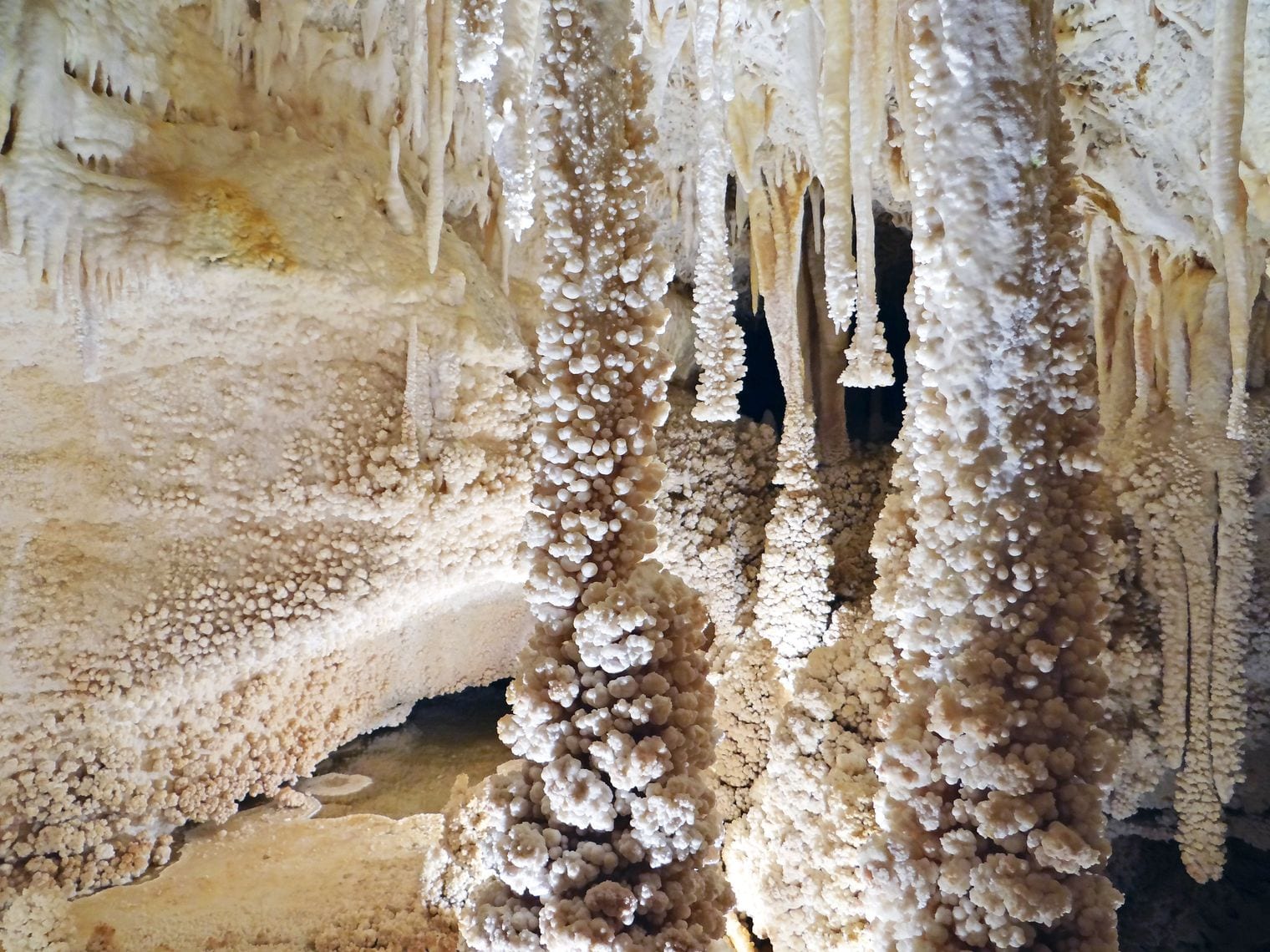
The Caverns of Sonora, designated a National Natural Landmark in 1965, grow hundreds of helictites — crystals that twist against gravity in shapes running from soda straws to fish fins.
The best known of them was a pair of fishtail growths meeting at a single point on the cave wall to form a butterfly. Helictite formations of that purity are rare anywhere; having them in abundance is what puts this cave in the front rank internationally.
41. The State Reptile Squirts Blood From Its Eyes
The Texas horned lizard, made the state reptile in 1993, can squirt an aimed stream of blood from the corners of its eyes at a predator up to five feet away. The blood carries a compound that dogs and coyotes find foul.
It is a last resort, after camouflage and after the flattened, spiky posture that makes the animal hard to swallow. The species has become scarce across much of its old range, which is why a generation of Texans grew up with them and the next one largely did not.
42. Armadillos Always Give Birth to Identical Quadruplets
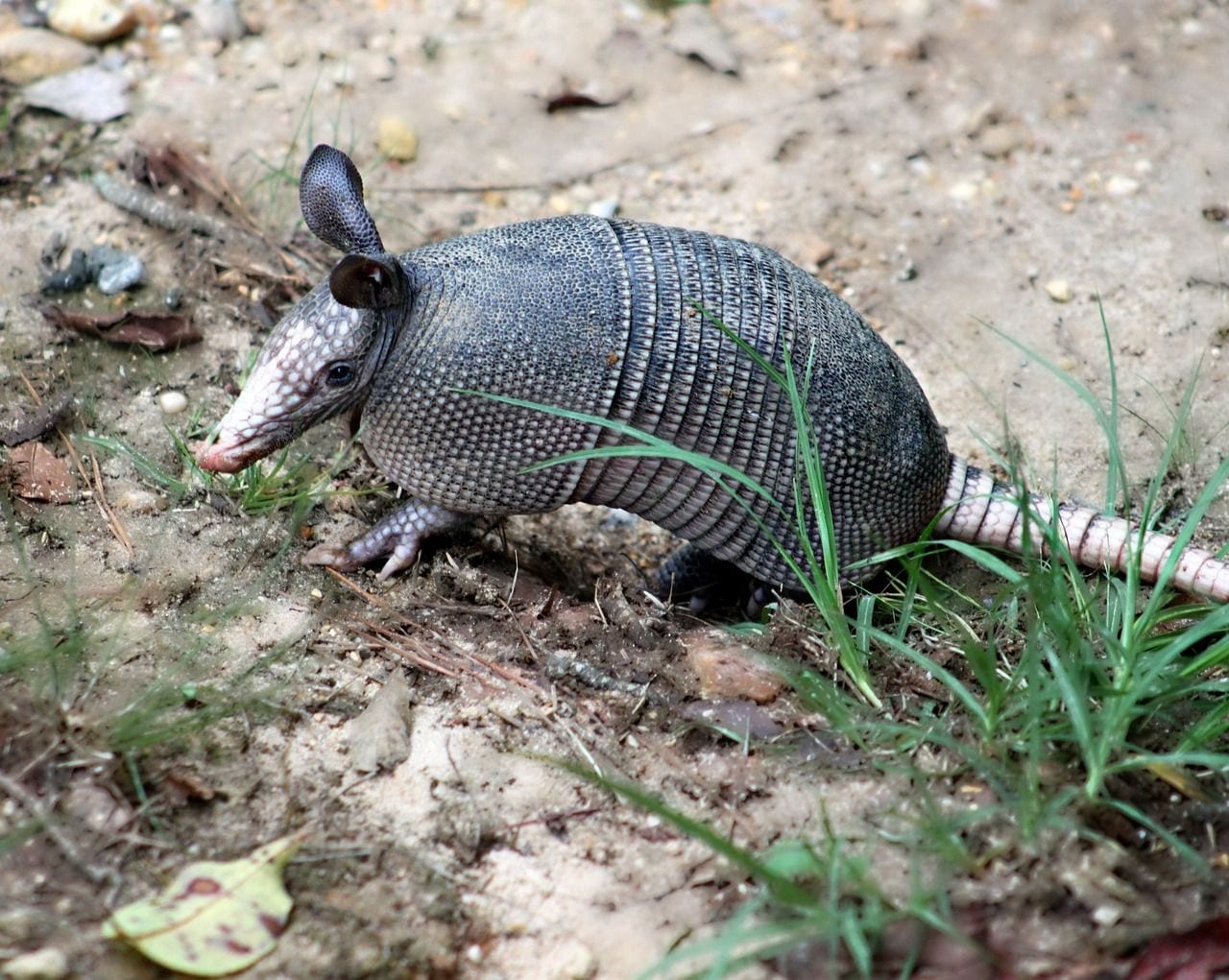
The nine-banded armadillo — the only armadillo in North America and the Texas state small mammal — produces four genetically identical young in every litter. A single fertilised egg splits, so the offspring are natural clones of one another.
That quirk has made the animal useful to researchers, who get four identical subjects at a time. It is also one of the very few mammals that can carry leprosy, which is why biologists take an interest in an animal drivers tend to meet at the roadside.
43. Whooping Cranes Winter on the Texas Coast
The last wild migratory flock of whooping cranes winters on the Texas coast around the Aransas National Wildlife Refuge. Aerial surveys put an estimated 540 birds there in the winter of 2025-2026.
The flock came within a handful of birds of vanishing in the middle of the last century. Every one alive in that population today descends from that remnant, and the refuge on the Blackjack Peninsula is the reason the species still has a wild wintering ground at all.
44. Austin Bridge Hosts the Largest Urban Bat Colony
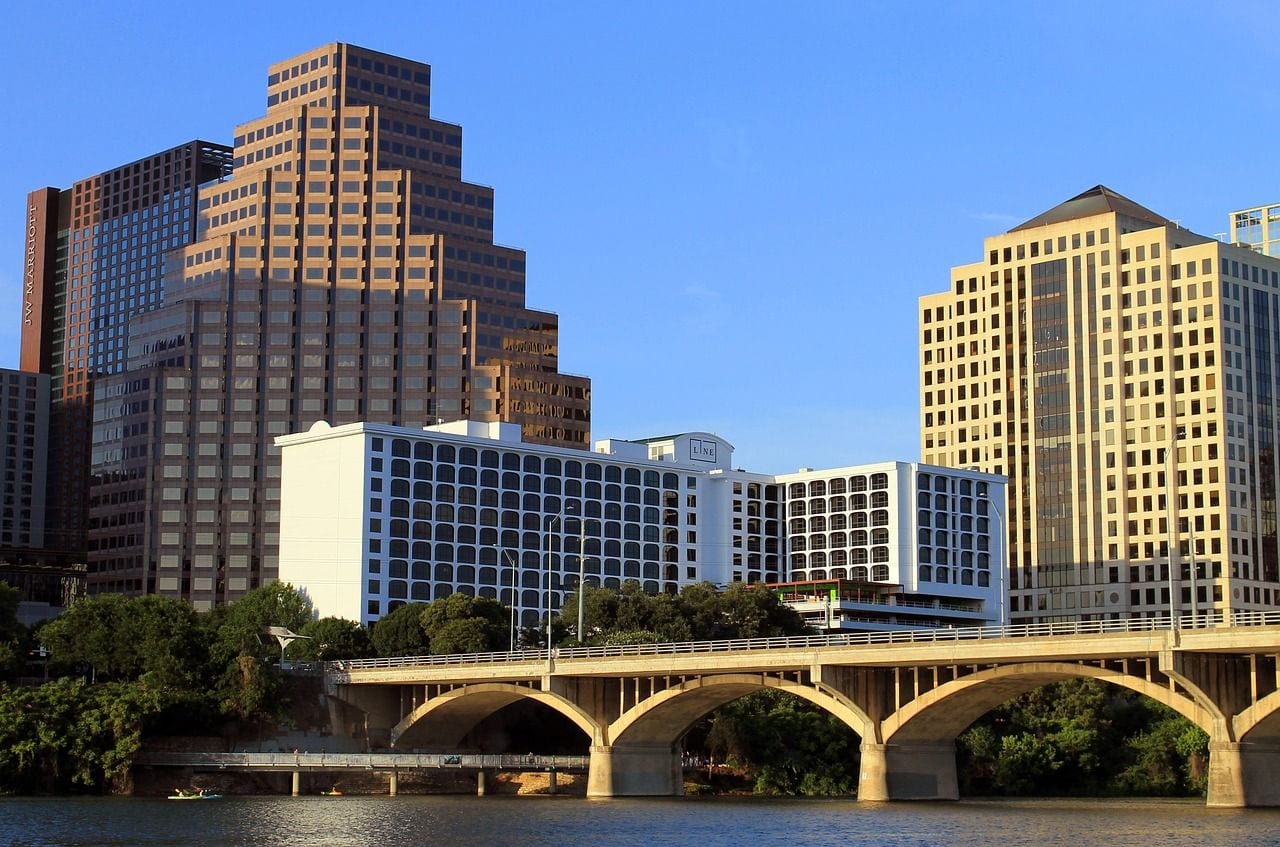
The Ann W. Richards Congress Avenue Bridge in Austin holds the world's largest urban bat colony, with between 750,000 and 1.5 million Mexican free-tailed bats beneath it each summer, as of 2026.
The bats were an accident of engineering: a bridge rebuild in the early nineteen-eighties left expansion joints of exactly the right width. Austin tried at one point to be rid of them, then decided to sell tickets instead — crowds now gather on the bridge and on the water below to watch the evening emergence.
45. Every NASA Crewed Flight Since 1965 Was Run From Texas
The Mission Control Center at the Johnson Space Center has handled flight control for every NASA human spaceflight since Gemini 4, from a campus on the edge of Clear Lake outside Houston.
That is why the first word spoken from another world was the name of a Texan city. The centre was placed there for reasons that had as much to do with congressional influence as with geography, and the space industry that grew up around it never left.
46. San Antonio Missions Are Texas Only World Heritage Site
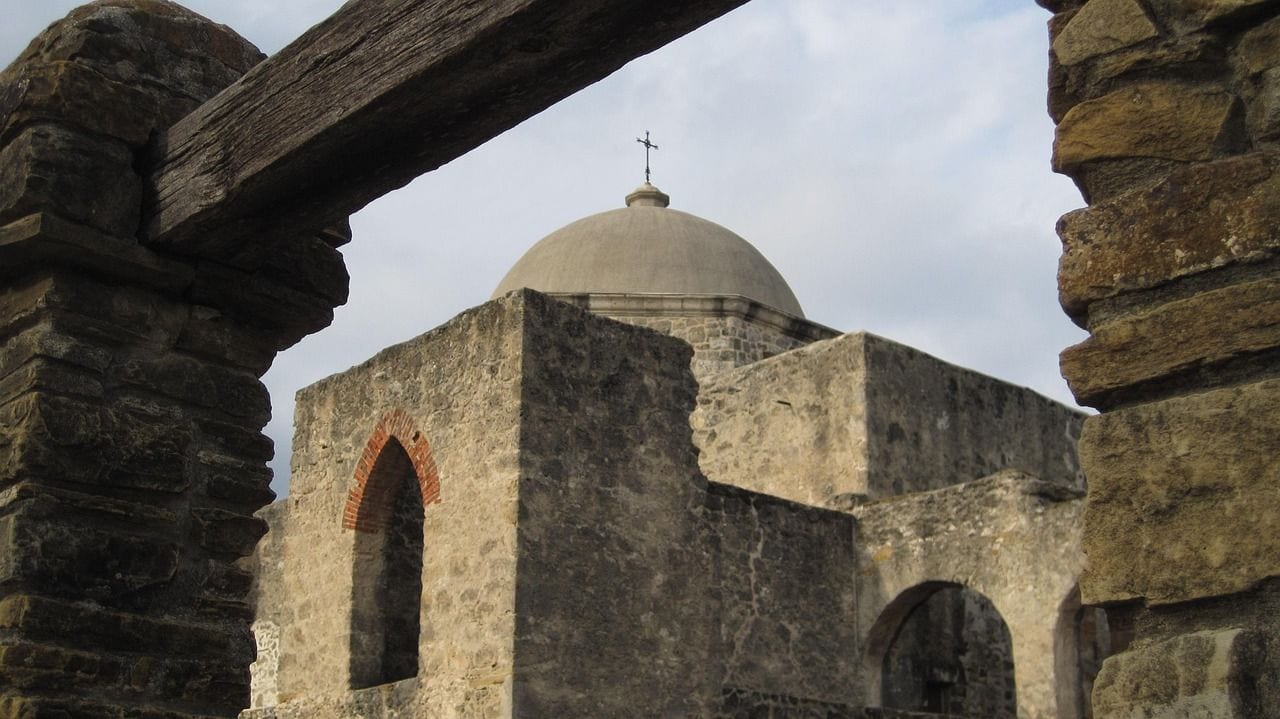
The five Spanish colonial missions in San Antonio together form a UNESCO World Heritage Site, the only one in Texas. Four of them sit inside a national historical park established on 10 November 1978.
They are not ruins. The mission churches still hold services, the acequias that irrigated their fields still carry water, and the whole chain can be walked or cycled along the river in a day — which makes them a rare case of a heritage site still doing its original job.
47. Waco Holds the Only Known Mammoth Nursery Herd
Waco Mammoth National Monument preserves the only known remains of a nursery herd of Columbian mammoths. At least 19 animals appear to have been trapped together in a steep-sided channel during a flash flood and drowned.
The find began with two men looking for arrowheads and fossils in a ravine and coming back with a femur. Excavation left the bones where they lay, so what visitors see is the death assemblage itself under a roof, not a mounted skeleton in a hall.
48. LBJ Spent a Quarter of His Presidency in Texas
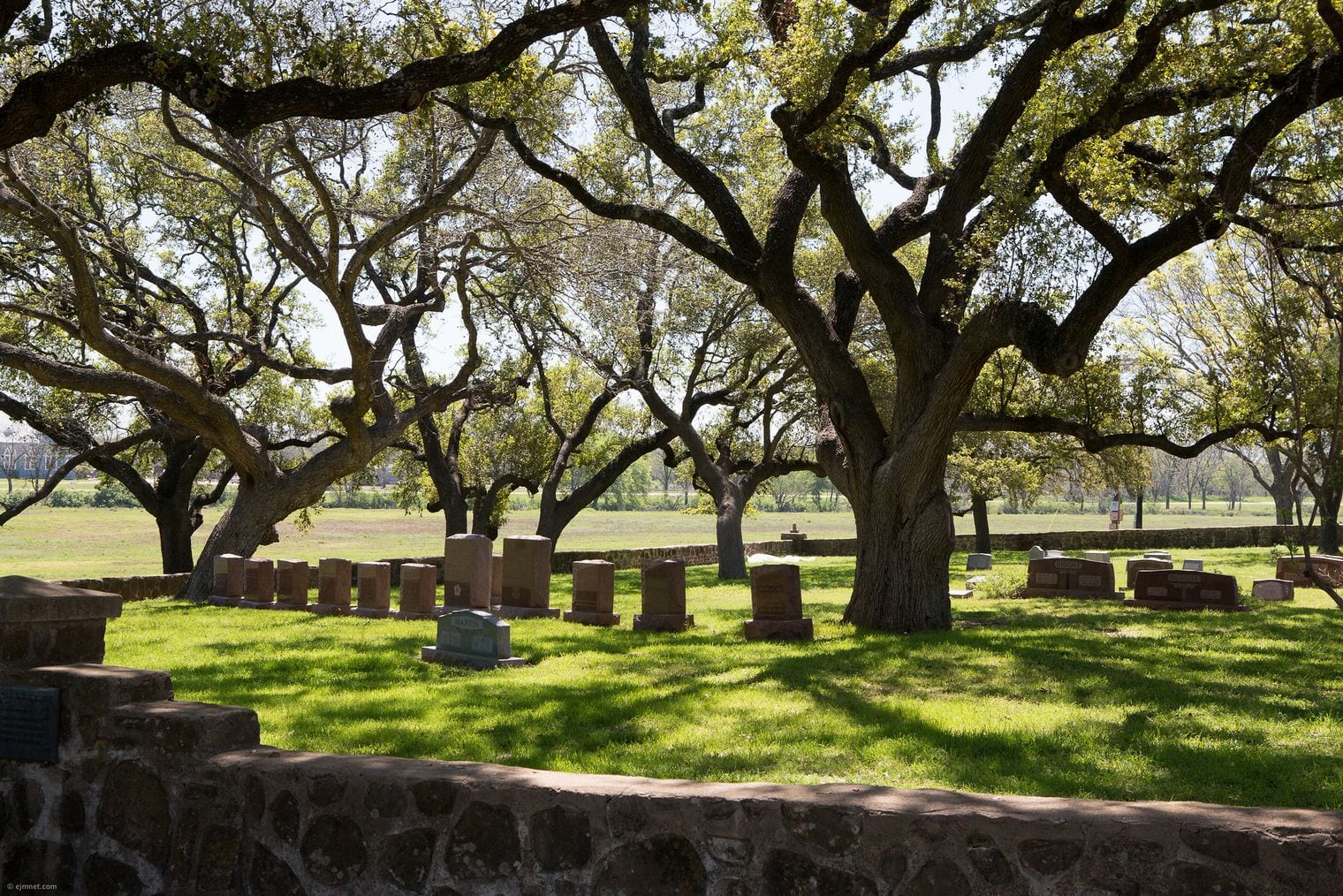
Lyndon B. Johnson spent a quarter of his presidency at his ranch in the Hill Country, so much of it that the press took to calling the house the Texas White House.
He worked the place as a working ranch throughout, and used it deliberately — foreign leaders and senators were driven around the pastures in his convertible, which put them at a disadvantage he enjoyed. He is buried in the family cemetery under the oaks a short walk from the house.
49. Big Tex Started Life as a Giant Santa Claus
Big Tex, the 52-foot cowboy who has greeted the State Fair of Texas since 1952, was built out of the parts of a giant Santa Claus that a chamber of commerce sold on for 750 dollars.
The conversion involved a new head, new hands and a great deal of denim. He has been rebuilt since, once after a fire destroyed him, and still functions as the meeting point on the grounds: directions are given in relation to him.
50. The State Fair of Texas Set an American Attendance Record
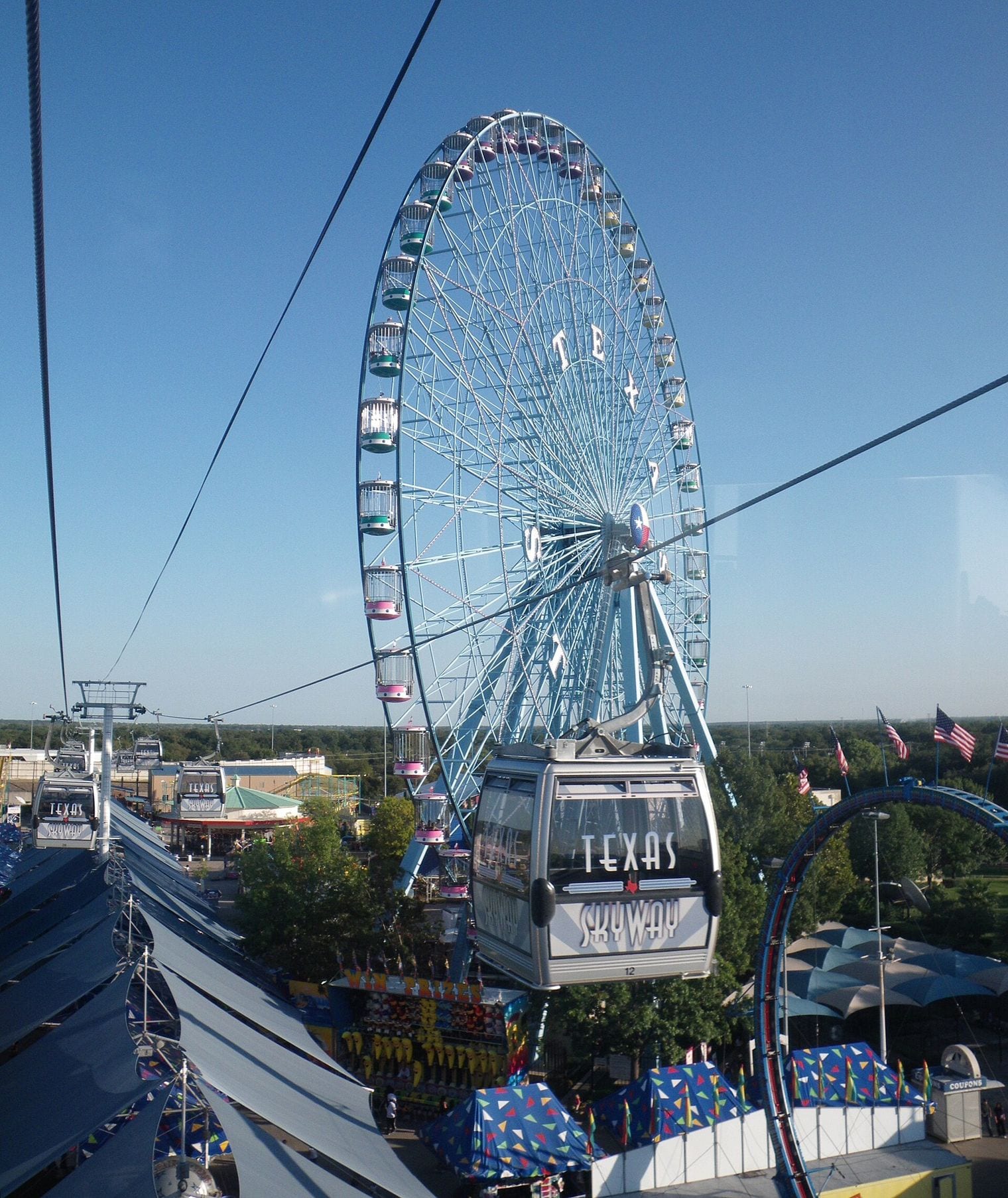
The State Fair of Texas once drew 3,959,058 visitors across a single run — the largest attendance ever recorded at an American state fair, as of 2026.
It runs for weeks rather than days, on a permanent art deco fairground built for an international exposition, and it has its own football rivalry, its own auto show and a deep-frying tradition that has become a competitive sport in its own right.
51. Fort Worth Drives Longhorns Down the Street Twice a Day
The Fort Worth Stockyards, once the biggest livestock market south of Kansas City, still send a small herd of longhorns down Exchange Avenue twice a day, as of 2026.
It is a staged remnant of the real thing, and it is honest about that. The pens, the brick commission houses and the livestock exchange building are all original, which is why the district reads as a working cattle town rather than a film set.
52. A Texas School Fund Began With 221,400 Acres in 1839
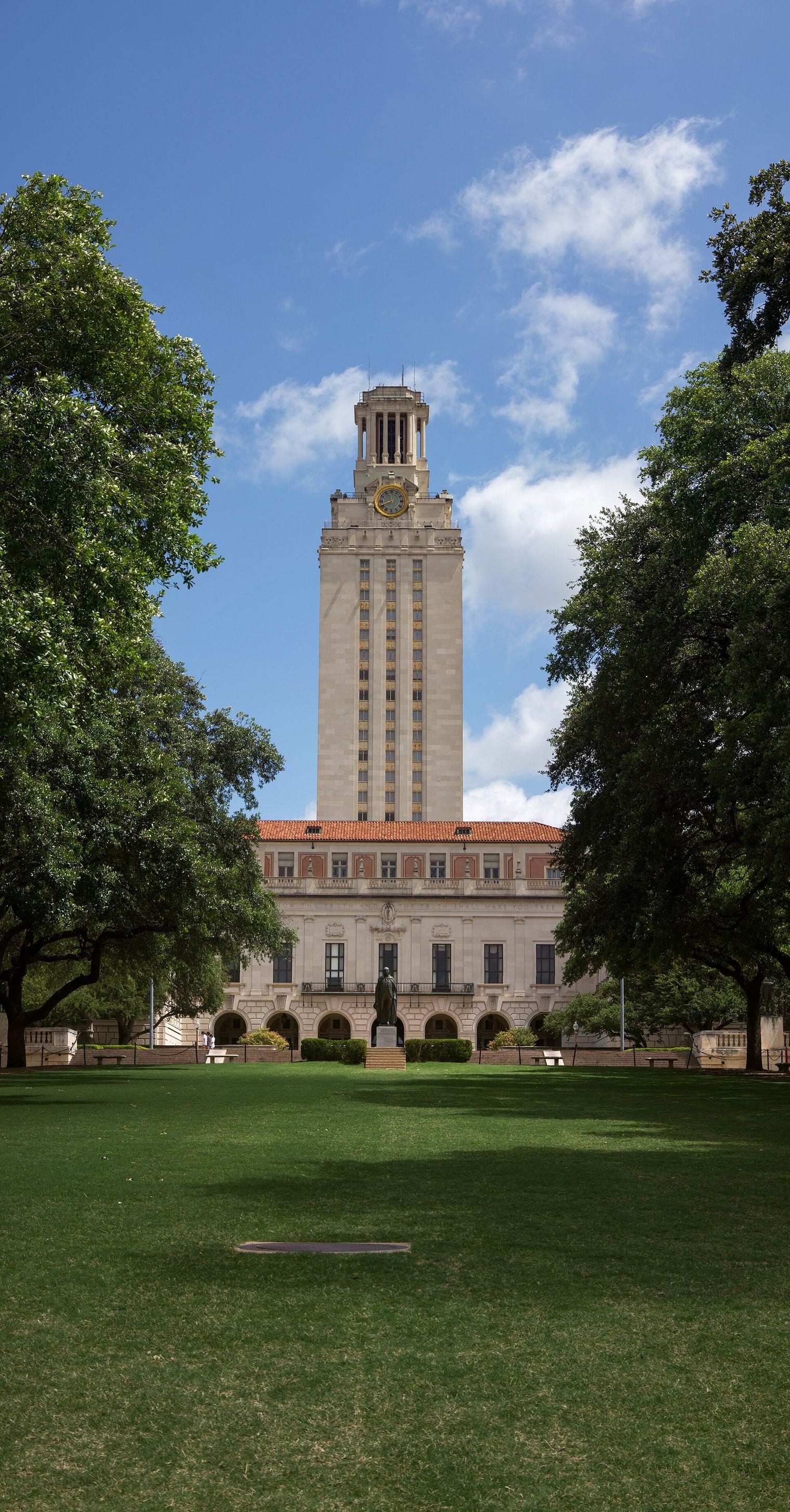
The Permanent University Fund began in 1839, when the Congress of the Republic of Texas set aside fifty leagues of land — 221,400 acres — to pay for higher education.
The endowment was later enlarged with far larger grants of West Texas country that nobody wanted for farming. When oil was found beneath it, land chosen precisely because it looked worthless turned into one of the wealthiest university endowments in the world.
53. DFW Airport Covers More Ground Than Manhattan
Dallas Fort Worth International Airport occupies about 17,207 acres — almost twenty-seven square miles, an area larger than the island of Manhattan, as of 2026.
It was built that big deliberately, on empty land between two cities that had spent decades refusing to share an airport. The scale is why it has its own postal address, its own police and fire departments, and internal roads long enough to need highway signage.
54. Texas Posts the Highest Speed Limit in the Americas
A 41-mile stretch of State Highway 130, the toll road running east of Austin toward Seguin, is posted at 85 mph — the highest posted speed limit in the Western Hemisphere, as of 2026.
The limit was part of the deal that got the road built: a higher speed was the incentive to pull drivers off the congested interstate and onto a toll route. Traffic has never reached the volumes the projections promised.
55. Fort Cavazos Sprawls Across 218,000 Acres
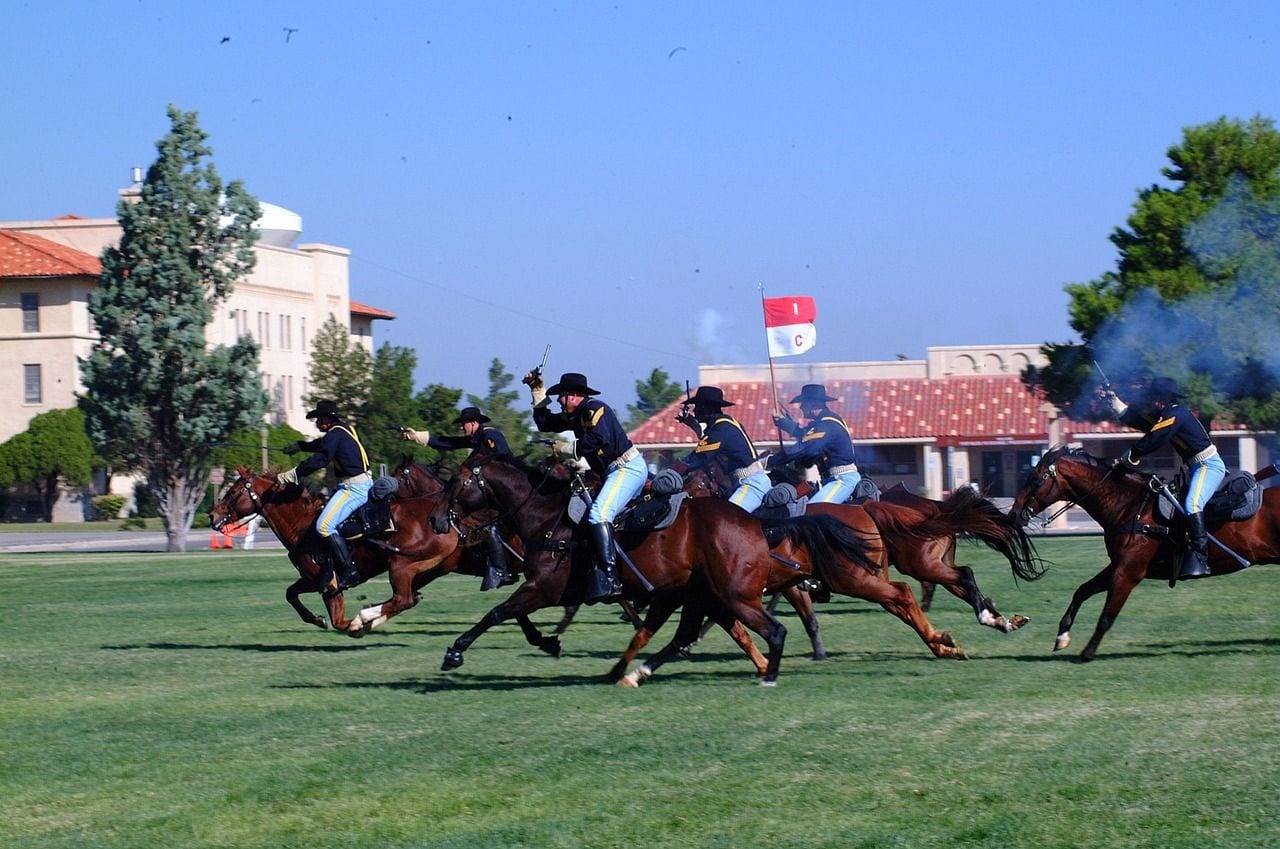
Fort Cavazos in Central Texas, known for most of its history as Fort Hood, spreads over about 218,000 acres, the bulk of it in Coryell County, as of 2026.
The land was assembled during the Second World War because tank destroyers needed somewhere enormous and empty to practise. Entire communities were bought out to make room, and the manoeuvre area is still large enough to hold armoured exercises at full scale.
56. SXSW Began With 700 People in 1987
South by Southwest started in Austin in 1987 with 700 registrants and roughly 200 bands playing fifteen venues. The organisers had expected a few hundred people at most.
It has since swallowed the film and technology industries as well as music, and takes over the centre of the city for a fortnight each spring. The original conceit — that Austin had more music than anyone outside Texas realised — turned out to be correct.
57. 342 Men Were Executed at Goliad in One Morning
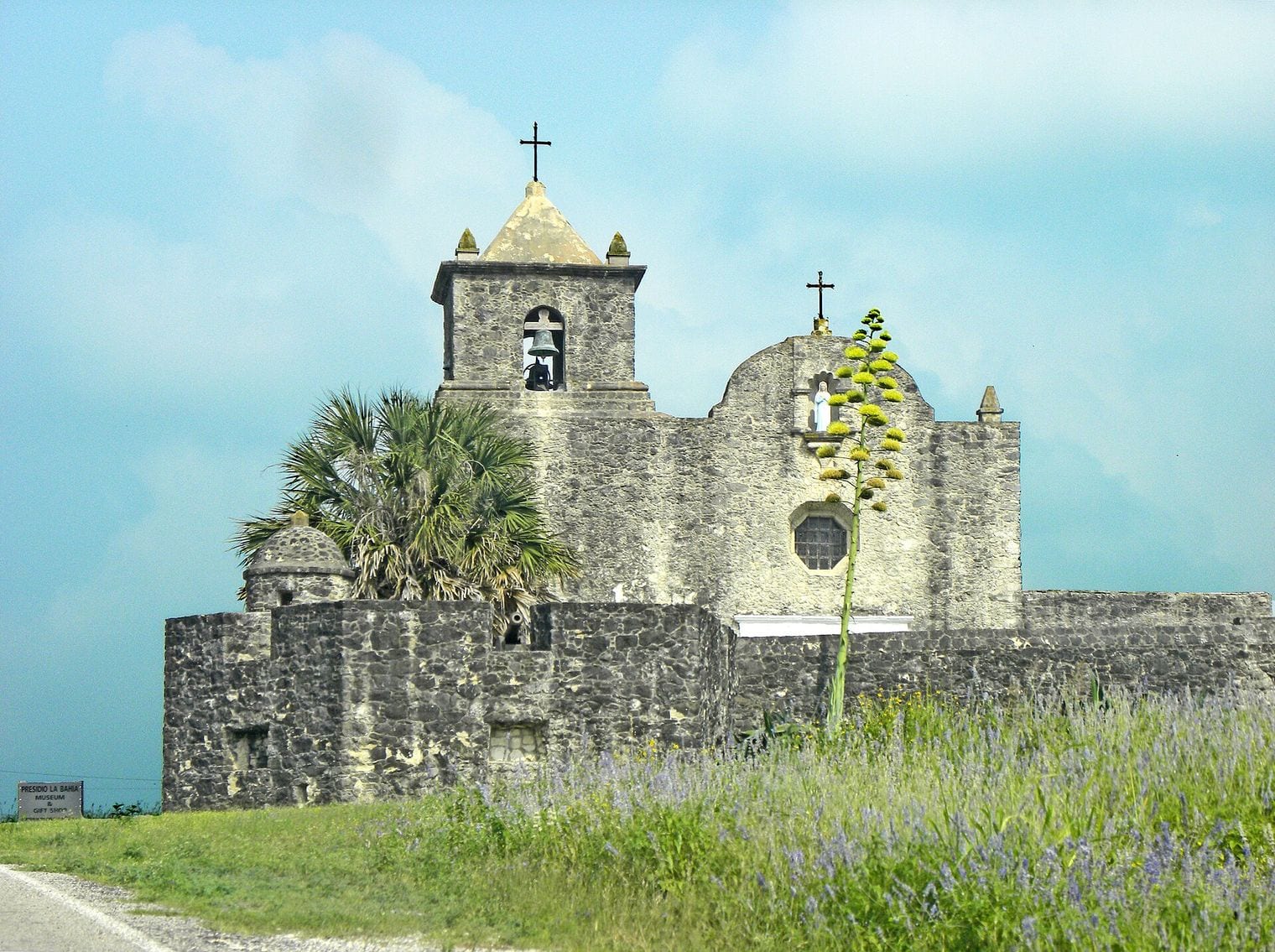
A man-by-man study of James Fannin's command found that 342 Texans were executed at Goliad on Palm Sunday, 27 March 1836, after surrendering under terms they believed protected them.
It was a larger loss than the Alamo and is remembered far less. A Mexican decree passed that winter had classified armed foreigners taken in combat as pirates, which is the order Santa Anna invoked to override the surrender terms his own officers had granted.
58. Sixty Men Signed the Texas Declaration of Independence
Sixty men signed the Texas Declaration of Independence, framed and issued by the Convention of 1836 at Washington-on-the-Brazos on the second of March.
They met in an unfinished building with no glass in the windows, in freezing weather, while Santa Anna's army was already in the field. The Alamo fell four days later, which means the republic they had just declared spent its first week apparently losing.
59. The Lone Star Flag Was a National Flag First
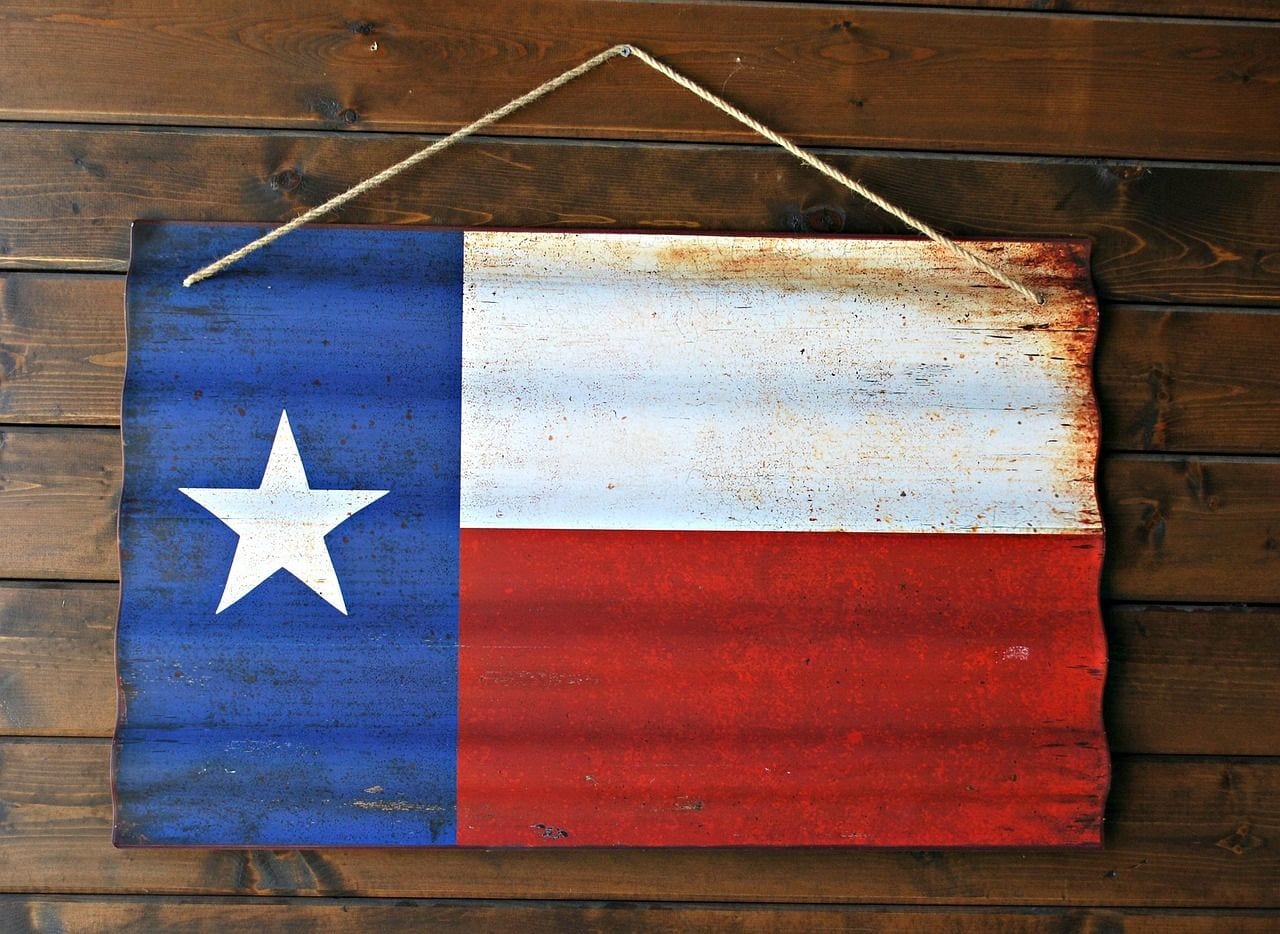
The Lone Star Flag was adopted in 1839 as the national flag of the Republic of Texas, and simply carried over as the state flag after annexation. Texas had three official flags across its life as a country, and this was the last of them.
That history is the reason for a habit outsiders notice: the Texas flag is routinely flown at the same size and prominence as the national one, because for a decade it was a national one.
60. The Chisholm Trail Ran for Only 17 Years
The Chisholm Trail — the cattle route that produced most of the imagery the world attaches to Texas — was in use as a cattle trail only from the summer of 1867 to 1884.
Seventeen years is barely a working lifetime. It ended not in drama but in infrastructure: once railways reached deeper into Texas and Kansas closed its border to tick-carrying herds, there was no reason to walk cattle north, and the cowboy became a ranch hand.
61. Balmorhea Has the Largest Spring-Fed Pool in the World
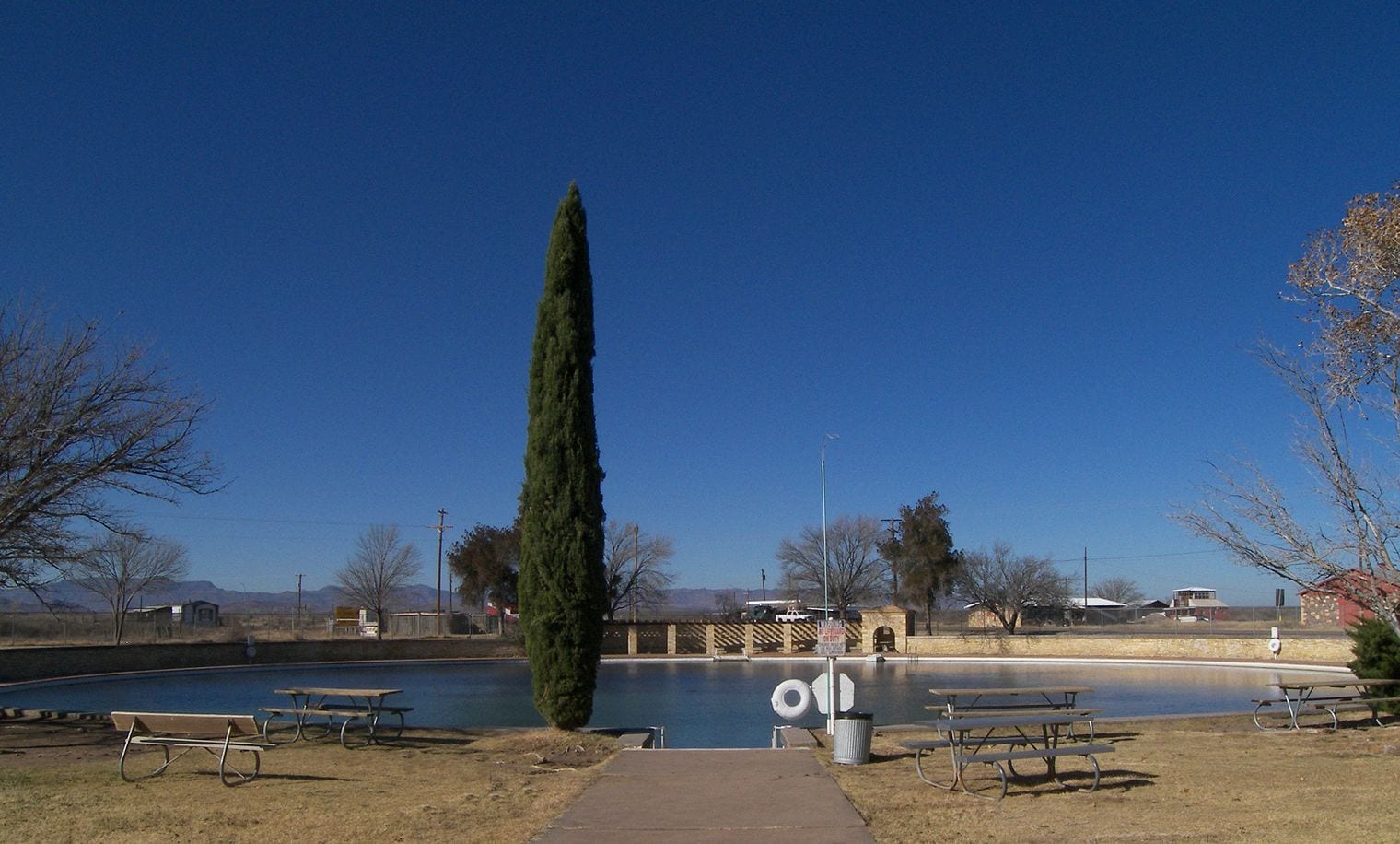
The pool at Balmorhea State Park is the world's largest spring-fed swimming pool, as of 2026. It is filled by San Solomon Springs, which flowed at an average rate of 230 gallons per second when measured in 1900 and again in 1978.
Because the water is constantly replaced there is no chlorine in it, and because it comes from deep underground it stays cool through a West Texas August. Fish and turtles live in the pool alongside the swimmers.
62. Ten Cadillacs Stand Nose-Down Outside Amarillo
Cadillac Ranch, planted beside old Route 66 outside Amarillo in 1974, is a row of ten Cadillacs buried nose-first in a wheat field at a matching angle.
It was commissioned by a local millionaire and built by a San Francisco art collective, and the cars were chosen to show how the tailfin evolved and then disappeared. Visitors are expected to spray-paint them, so the colour changes weekly and the original paint has long since vanished under the accumulation.
63. A Fake Prada Store Sits Alone in the Desert
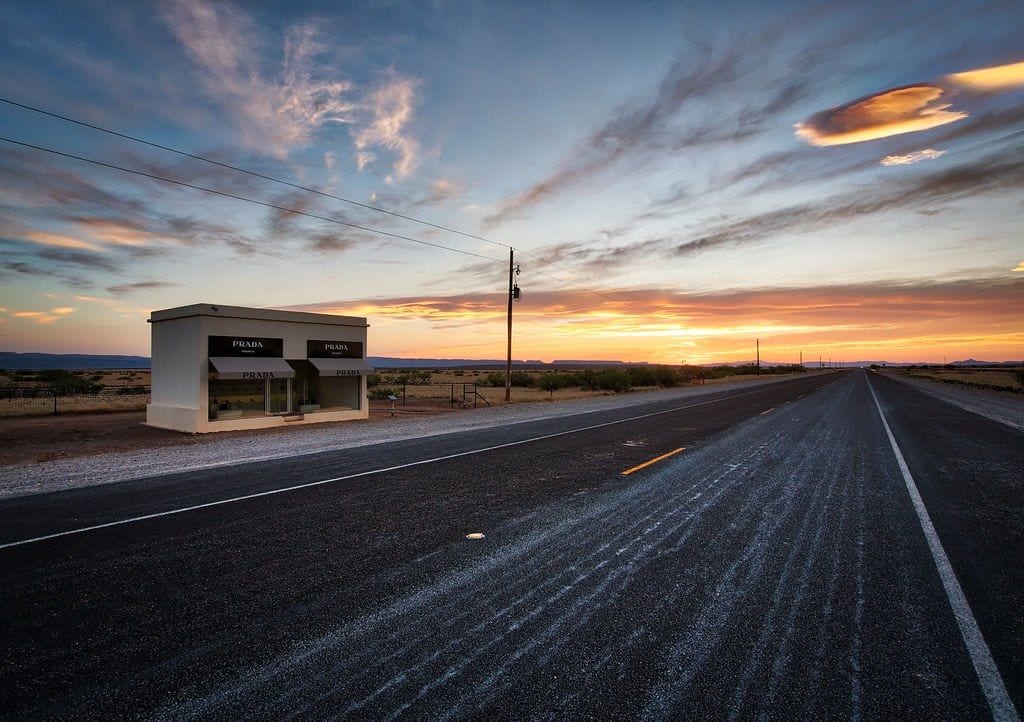
Prada Marfa, a permanently sealed replica of a Prada storefront, was inaugurated beside US 90 near Valentine on 1 October 2005. It has no door that opens and sells nothing.
It belongs to the art scene that grew around Marfa after Donald Judd moved there. It was designed to be left alone and to decay slowly into the desert, an intention complicated by the fact that it was burgled the night it was finished.
64. West Texas Has Some of the Darkest Skies in America
McDonald Observatory, in the Davis Mountains, enjoys some of the darkest night skies in the continental United States, as of 2026, which is why the University of Texas put its telescopes there.
The darkness is a resource that has to be defended. The observatory works with the surrounding counties and the oil industry on lighting rules, because the nearest serious threat to West Texas astronomy is not cloud but the glow from gas flares and well pads on the horizon.
65. Houston Founded Its Port in 1842, 50 Miles Inland
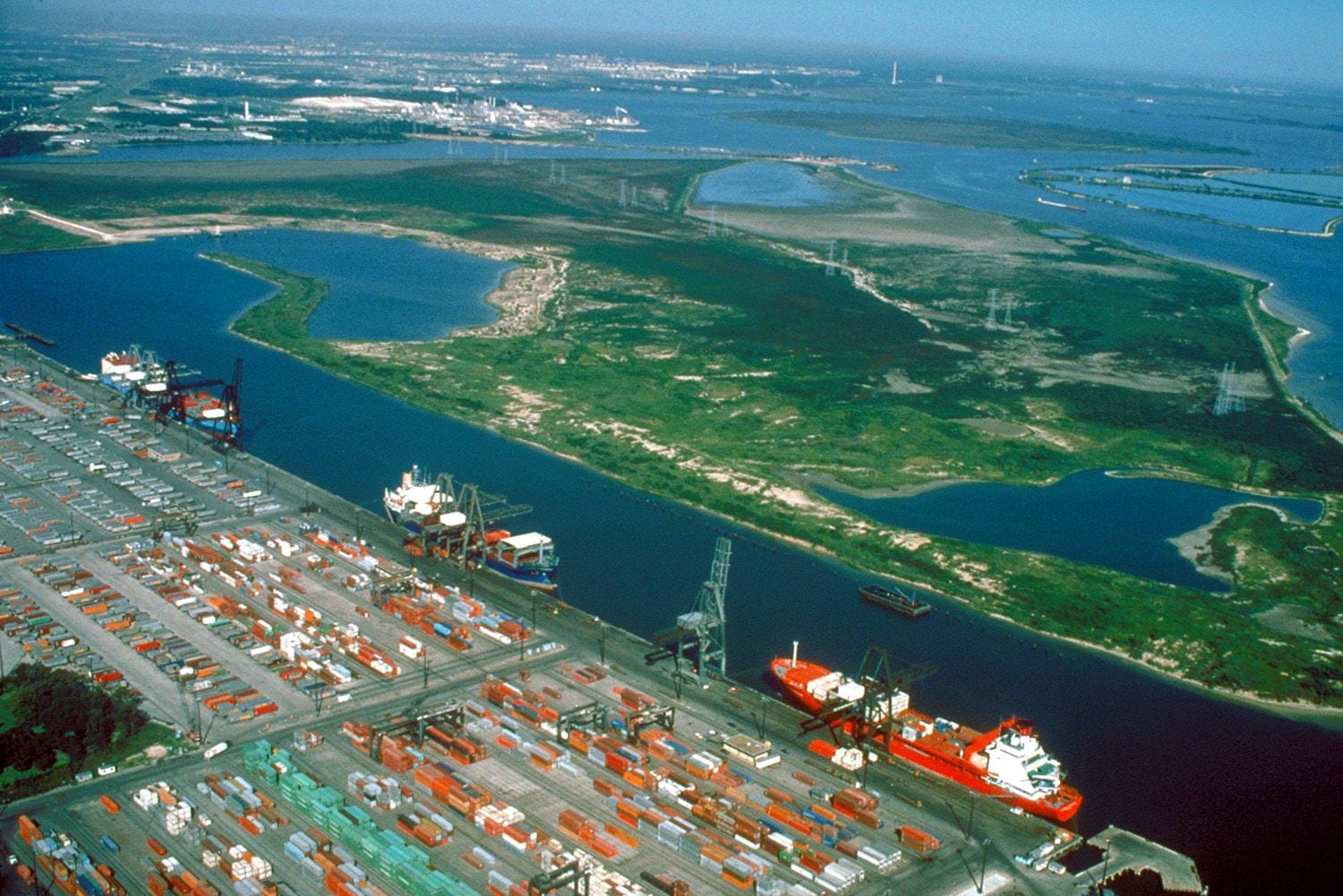
Houston established the Port of Houston on 29 January 1842, on a bayou some fifty miles from open water. The city then spent generations dredging a channel deep enough to make the claim true.
It worked. An inland city on a sluggish stream became a major seaport, and the petrochemical industry that lines the ship channel today exists because the water was made deep enough to bring tankers to it.
66. Czech Settlers Gave Texas the Kolache
Czech immigration to Texas was driven largely by letters home from Josef Arnošt Bergmann, a pastor at Cat Spring who wrote to friends in Bohemia about what was available here. The settlers who followed brought the kolache with them.
The pastry stayed. Bakeries across the central Texas prairie still sell them by the dozen, and a run of small towns between Austin and Houston built their identity — and their highway signage — on being the place to stop for one.
67. The Comanche Dominated the Plains From Horseback
The Comanche acquired horses in the late seventeenth century, and the acquisition transformed their culture. They became the exceptional horsemen who dominated the Southern Plains through the eighteenth and nineteenth centuries.
Their territory was large enough to hold back Spanish, Mexican and then American expansion for generations, which is a large part of why the settlement of Texas ran along the coast and the rivers first and reached the plains last.
68. The Marfa Lights Were First Reported in 1883
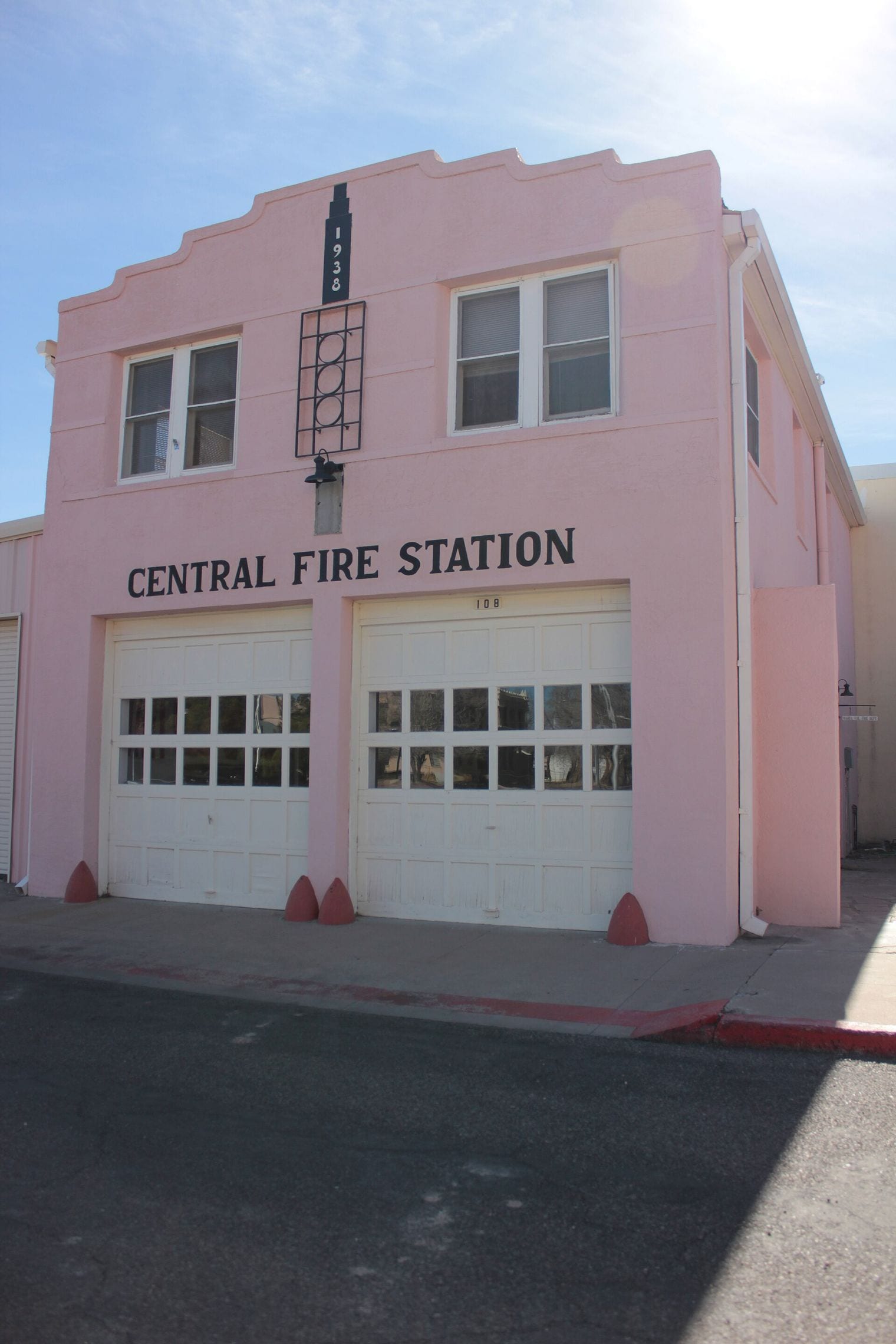
The first record of the Marfa lights dates from 1883, when a young cowhand named Robert Reed Ellison saw a flickering light while driving cattle through Paisano Pass and wondered whether it was an Apache campfire.
They have been reported ever since, and no explanation has settled the matter to everyone's satisfaction. There is a purpose-built viewing area east of town, which means the dependable part of the phenomenon is that people will stand in the dark looking for it.
69. The Name Texas Means Friend
Texas takes its name from a Caddo word meaning friend, which the Spanish rendered as Tejas and applied to the Hasinai people before it ever attached to the land. The state motto is, accordingly, simply Friendship.
It is an unusually literal piece of naming. A word one group of people used for allies became the label for a province, then a republic, then a state — and the meaning survived intact into the motto on the seal.
70. Austin Calls Itself the Live Music Capital of the World
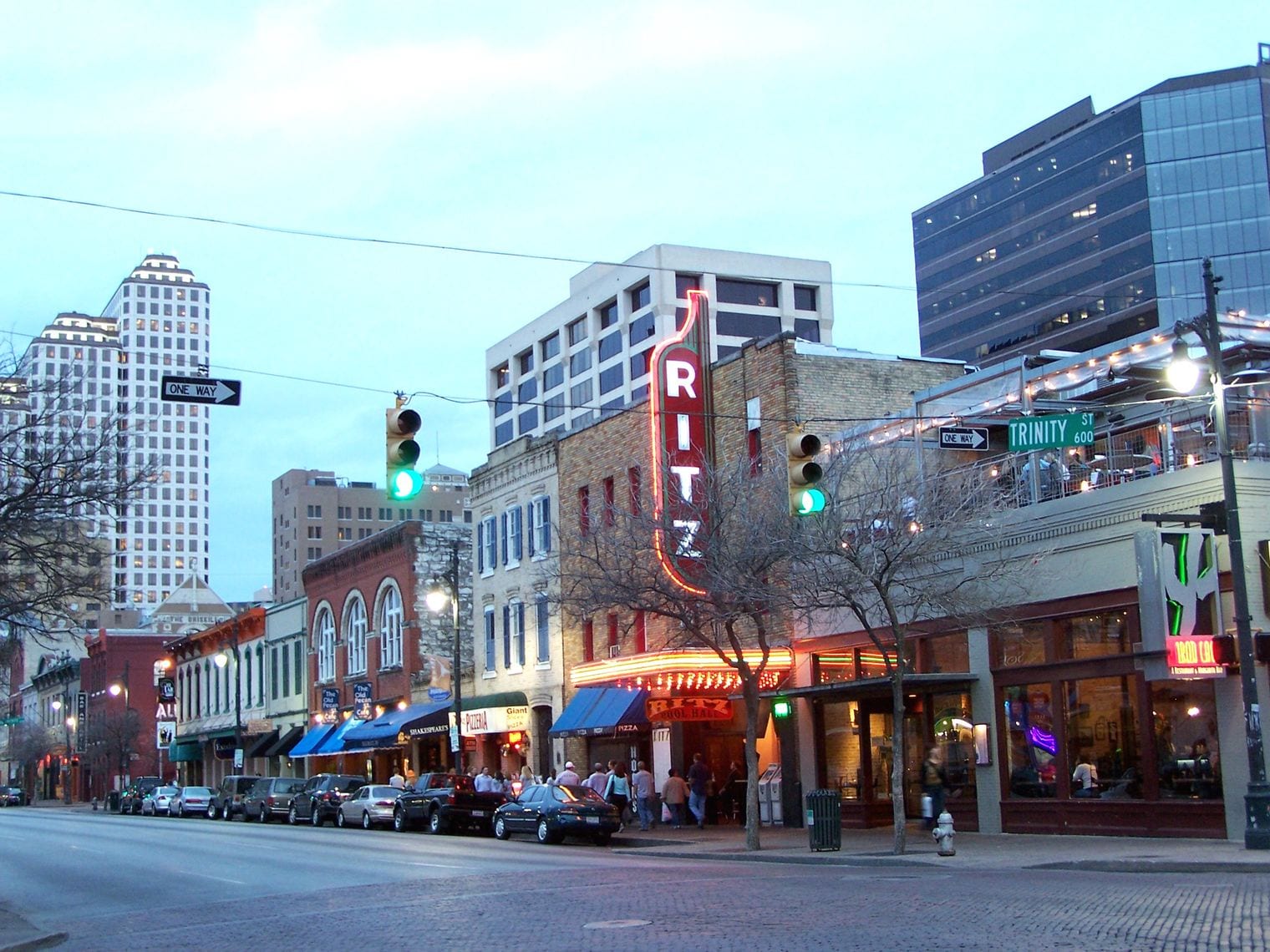
Austin's official slogan promotes the city as the Live Music Capital of the World, a claim resting on the number of venues per head and on the long run of the Austin City Limits concert series.
It is a self-description rather than an award, and the city has spent years trying to make it stay true as rents rise and the clubs that earned it get priced off the streets they made famous.
71. Fort Worth Has a Louis Kahn Masterpiece
The Kimbell Art Museum in Fort Worth, designed by Louis Kahn and opened in October 1972, wraps 120,000 square feet of space in cycloidal vaults that light the galleries with daylight alone.
Architects rate it among the finest museum buildings anywhere. The trick is a slot along the crown of each vault with a reflector beneath it, so that harsh Texas sun arrives on the walls as a soft silver wash that changes through the day.
72. The First Six Flags Park Opened in Arlington in 1961
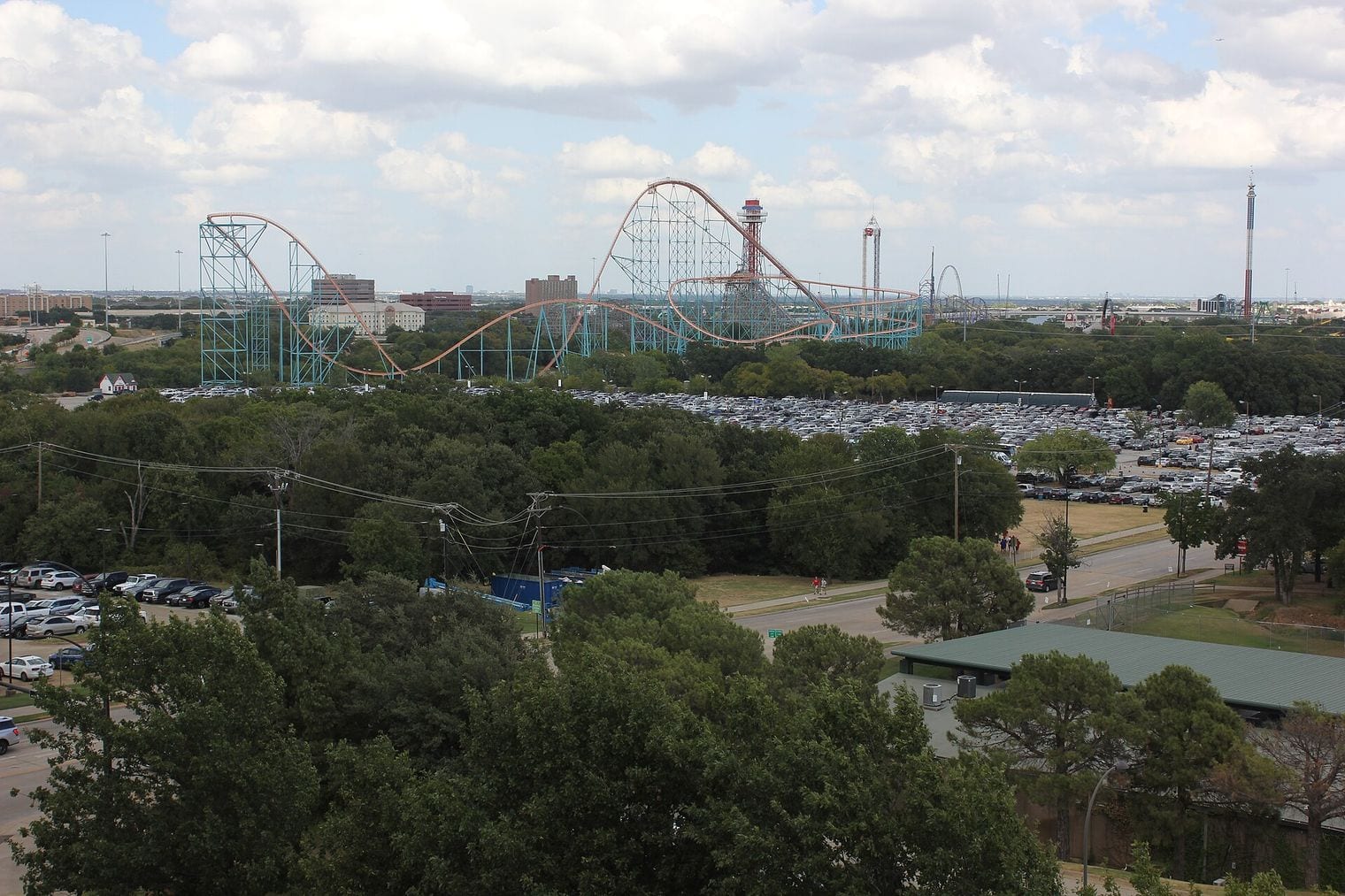
Six Flags Over Texas opened at Arlington on 5 August 1961 as one of the first theme parks in the United States, and it is the park the entire Six Flags chain grew out of.
The six flags of the name are the six sovereign powers that have governed the territory, and the original park was themed by section to each of them. It began as a scheme to add value to a surrounding industrial development, and outlived that purpose entirely.
73. Galveston Had the Best Natural Harbour on the Gulf
Galveston sits on what was historically the best natural port site between New Orleans and Veracruz, which is why it served as the harbour of the Texas Navy and, for a long stretch, as the commercial gateway to the whole state.
Everything that arrived in Texas by sea arrived here first, immigrants included. The Strand was called the Wall Street of the South, and the surviving iron-fronted buildings of that boom are the reason the district looks the way it does.
74. A Blind Salamander Lives Only Under San Marcos
The Texas blind salamander lives nowhere on earth but the San Marcos pool of the Edwards Aquifer, and has been listed as endangered since 11 March 1967.
It has no eyes and no pigment, because neither is any use in permanent darkness — what it has instead are external gills and a set of senses tuned to water movement. It surfaces where the aquifer does and nowhere else, which is why an animal this obscure has a whole town's water politics attached to it.
75. Two Texas Springs Hold Extraordinary Biodiversity
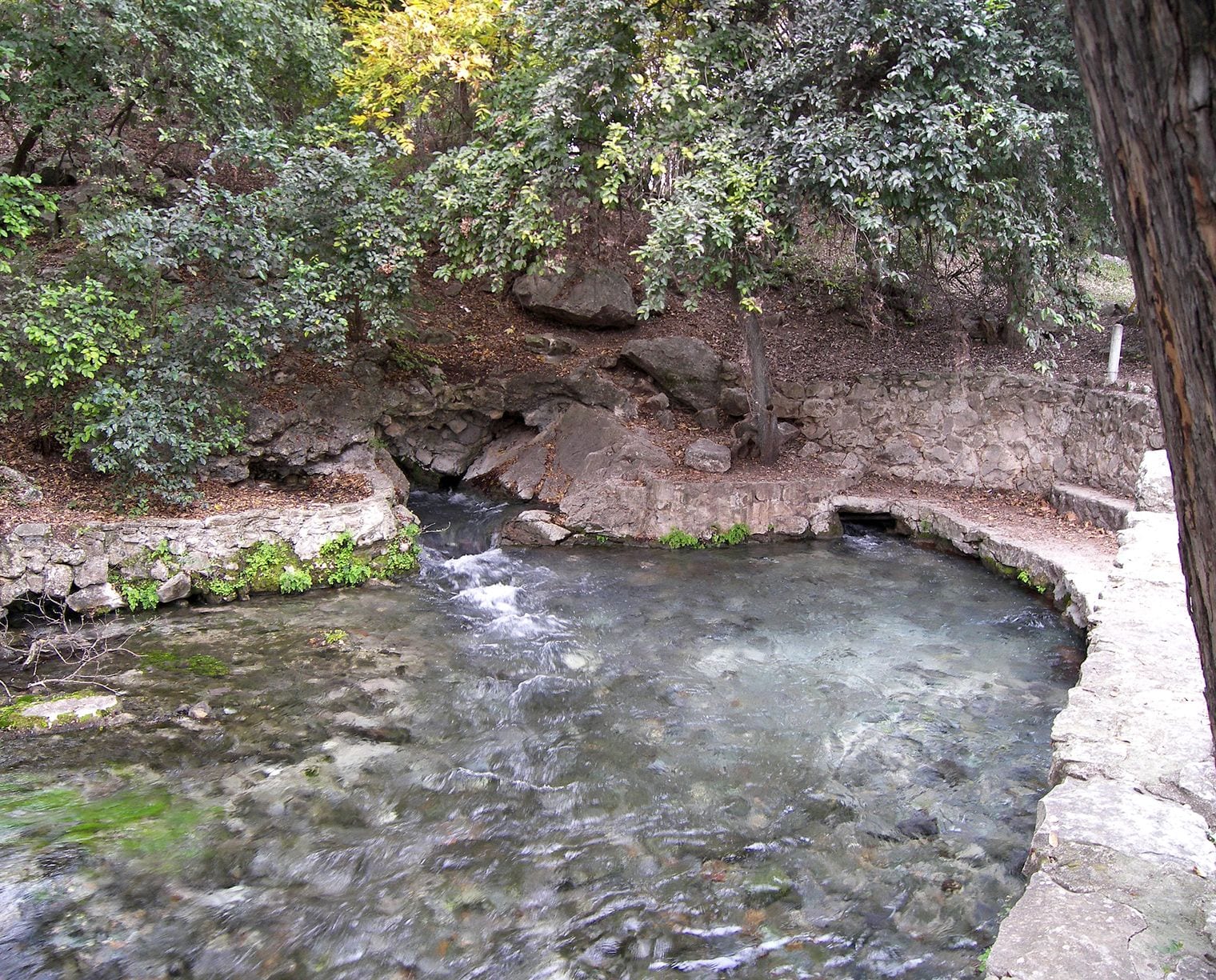
The Comal and San Marcos Springs, fed by the Edwards Aquifer, hold one of the greatest known diversities of organisms of any aquatic ecosystem in the south-western United States.
Several of those species exist in these springs and nowhere else, having been isolated there since the surrounding country dried out. That makes the flow rate of an underground limestone aquifer a conservation question as much as a municipal one.
76. The Chili Queens of San Antonio Sold Chili in the Plazas
Texas chili con carne largely originated with working-class Tejana and Mexican women, and the chili queens of San Antonio sold it from open-air stalls in the city plazas, setting up tables and lanterns after dark.
They were a fixture for generations before health regulations pushed them off the squares. The dish they popularised travelled outward from those plazas and became the thing most of the world now means by the word chili.
77. Schlitterbahn Invented the Uphill Water Coaster
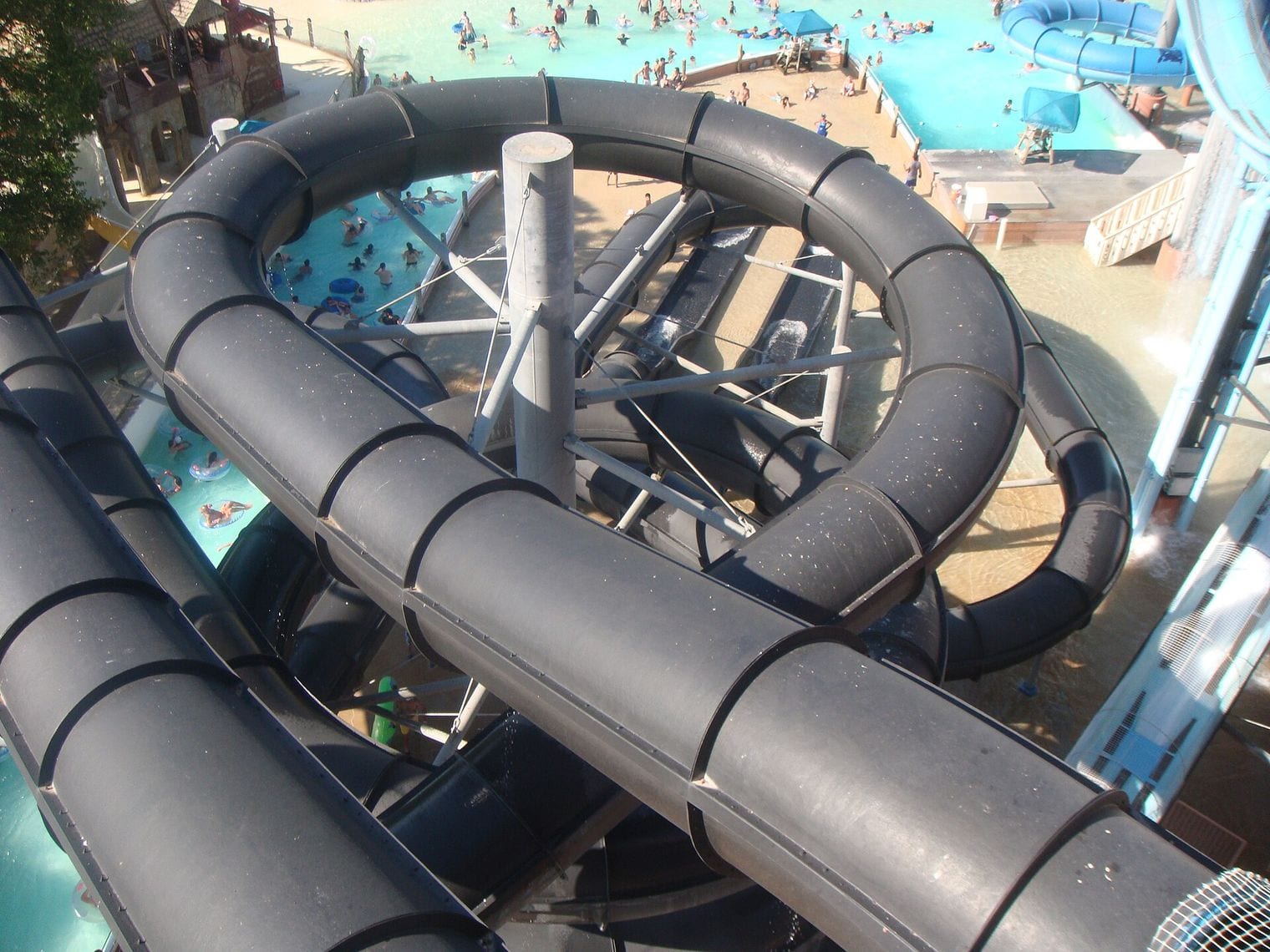
Schlitterbahn opened at New Braunfels on 2 August 1979, on the site of a riverside campground, and went on to build the world's first uphill water coaster, the Dragon Blaster, in 1994.
The park was built around the Comal River rather than beside it, using the river's own cold spring water in the rides. Solving the problem of pushing a raft uphill turned a local water park into an exporter of engineering to the rest of the industry.
78. Amistad Guards 5,000 Years of Rock Art
Amistad National Recreation Area on the Rio Grande — amistad is Spanish for friendship — protects a cultural record reaching back nearly 5,000 years, including rock art painted on the walls of the canyons now partly flooded by the reservoir.
The paintings are among the oldest in North America and depict figures whose meaning is still argued over. The reservoir itself is jointly managed by the United States and Mexico, which is where the name came from.
79. Corpus Christi Runs One of America’s Biggest Ports
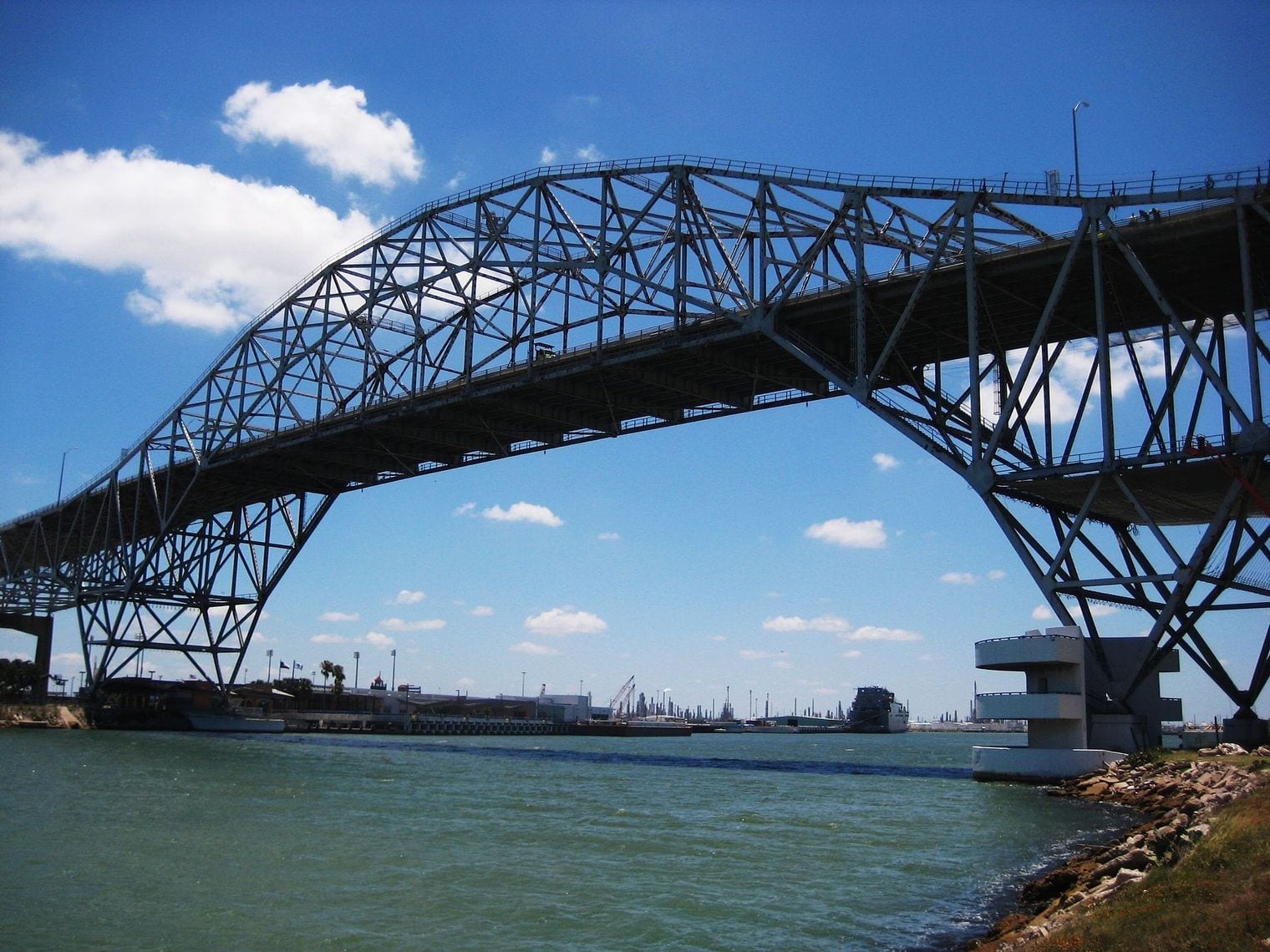
The Port of Corpus Christi is one of the largest ports in the United States by total waterborne tonnage, as of 2026 — on a bay that Spanish expeditions did not properly reach until 1747.
It handles crude oil and refined products more than containers, which is why it rarely features in the rankings people quote. The ship channel is being deepened to take larger tankers, and the port is now a significant export point for American crude.
80. The Astrodome Drew Four Million People a Year
Between 1965 and 2000 the Astrodome averaged more than four million visitors a year, across baseball, football, rodeo and everything else Houston could stage under a roof.
The building has been empty of tenants for years, as of 2026, threatened with demolition more than once and reprieved each time. It is now a protected landmark that nobody has settled on a use for — an awkward monument to an idea that every domed stadium since has copied.
81. Sam Houston Governed Two Different States
Sam Houston is the only person ever elected governor of two different American states — Tennessee, and then Texas — with a term as president of the Republic of Texas in between.
He lost the Texas job over secession. Having led the fight for independence from Mexico, he refused to swear loyalty to the Confederacy, was removed from office for it, and died before the war he had predicted would ruin the state was over.
82. Eisenhower Was Born in Denison, Texas
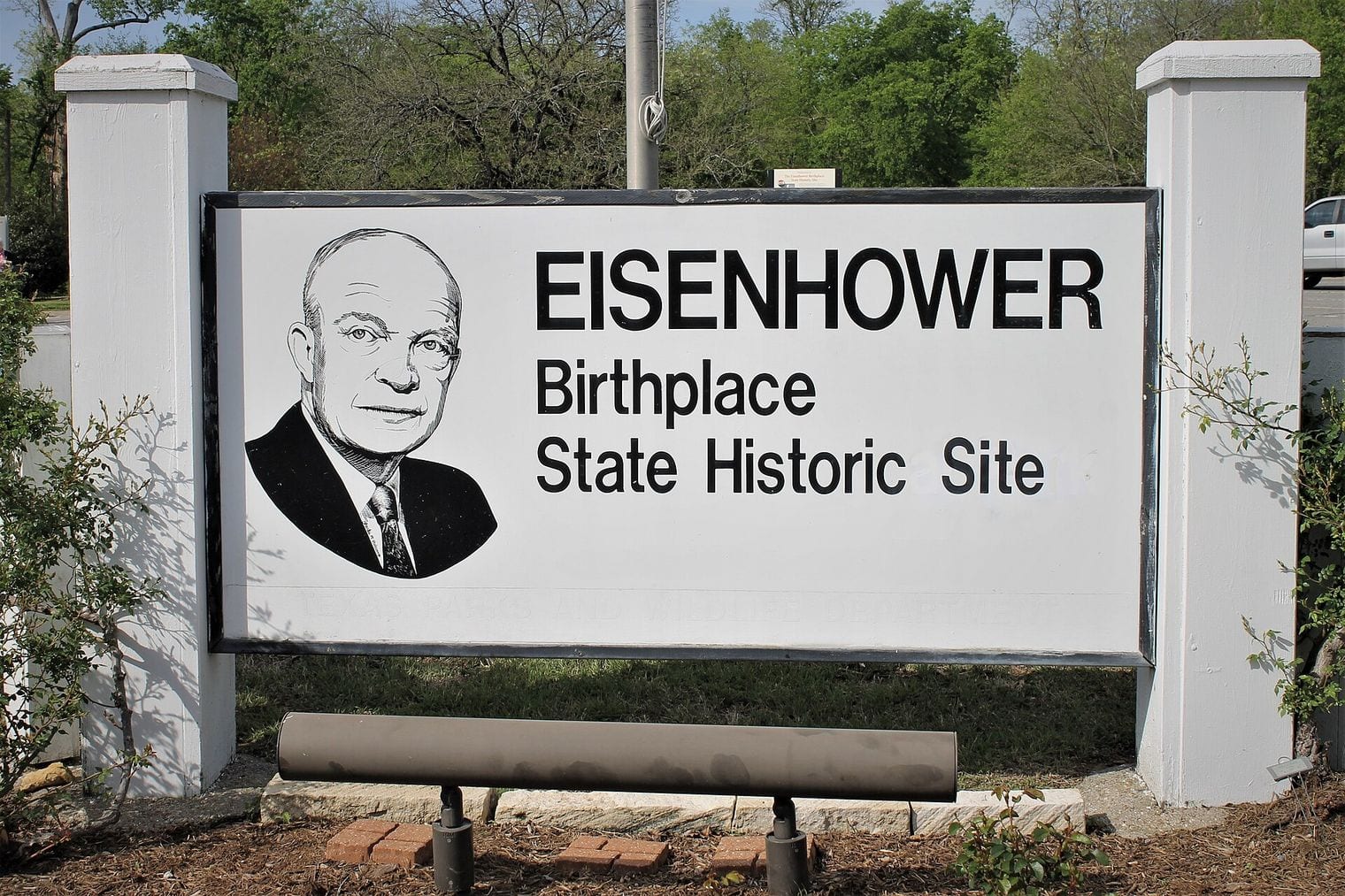
Dwight D. Eisenhower was born in Denison in 1890, the third of seven sons, in a house beside the railway where his father was working at the time.
The family left for Kansas soon afterwards and he grew up there, which is why the Texas connection surprises people. The house he was born in has been restored and sits in a small state historic site with a museum attached.
83. The Brazos Runs 840 Miles Across Texas
The Brazos is the longest river lying entirely within Texas, and the one with the greatest discharge, running 840 miles from the confluence of its forks in Stonewall County to the Gulf, as of 2026.
It was the river the first Anglo colonies settled along, and the one that carried their cotton to the coast. Its full name — Brazos de Dios, the arms of God — comes from a story about thirsty men finding water, of which there are several competing versions.
84. The Pecos Shadows the Rio Grande for 900 Miles
The Pecos River runs more than 900 miles from the mountains of New Mexico to its mouth on the Rio Grande, paralleling the larger river for most of that distance before finally joining it.
Crossing it was the dividing line in nineteenth-century usage: west of the Pecos meant beyond the reach of ordinary law, a phrase a self-appointed justice of the peace at Langtry built an entire reputation on.
85. The Panhandle Is Made of Exactly 26 Counties
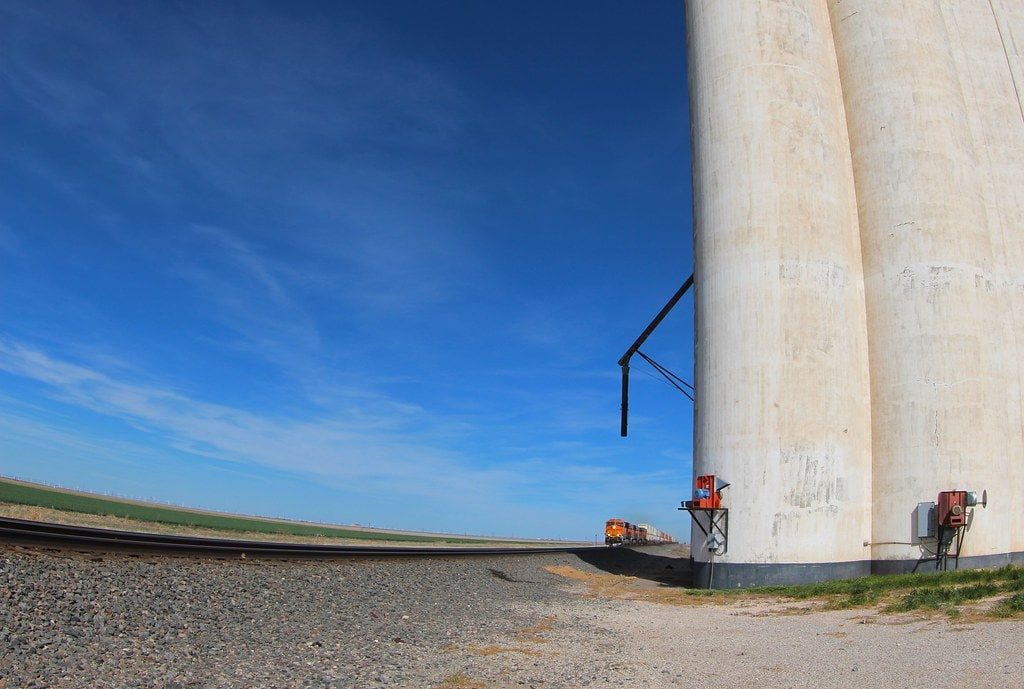
The Texas Panhandle comprises the northernmost twenty-six counties of the state, a block the legislature marked off in 1876 and which has kept the same boundary since.
It is a rectangle of high plains that has more in common with Kansas and eastern New Mexico than with the rest of Texas — different weather, different farming, and a horizon that does not interrupt itself for an hour's drive in any direction.
86. An Aircraft Carrier Is Moored at Corpus Christi
The aircraft carrier USS Lexington, nicknamed the Blue Ghost, was donated as a museum on 15 June 1992 and has been moored at Corpus Christi ever since.
She served through the Pacific war and was reported sunk by Japanese broadcasts often enough to earn the nickname. She then spent decades as a training carrier qualifying student naval aviators, which is how a Second World War ship stayed in service into the nineteen-nineties.
87. The Sixth Floor Museum Opened in 1989
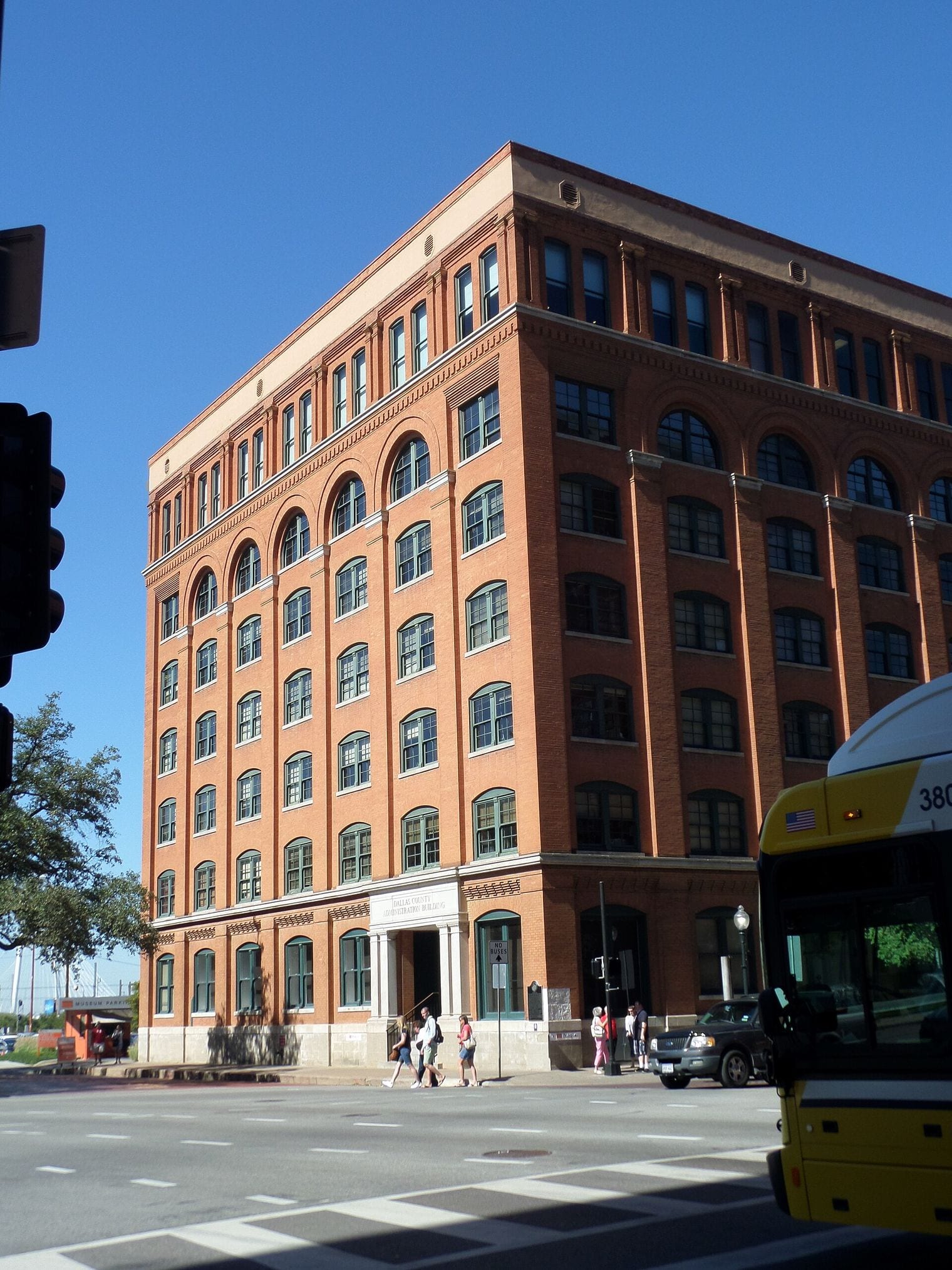
The Sixth Floor Museum opened on 20 February 1989 inside the former Texas School Book Depository, the building John F. Kennedy's motorcade was passing when he was assassinated in Dealey Plaza.
The building was nearly demolished more than once, and the museum occupies the floor the shots were fired from. The corner window itself is glassed off and left arranged as it was found, which many visitors describe as the moment the room stops feeling like a museum.
88. West Texas Mountains Are a 250-Million-Year-Old Reef
The Guadalupe Mountains are the exposed remains of a fossil reef built about 250 million years ago, when seawater and marine organisms deposited lime along the shelf of the Permian Sea and West Texas lay underwater.
It is one of the best-preserved fossil reefs on earth, which is why geologists come from everywhere to walk it. The peaks that now stand over the Chihuahuan Desert are made of the skeletons of things that lived in a warm shallow sea.
89. Amarillo Sits on a Gas Field Rich in Helium
The Cliffside gas field discovered near Amarillo in 1928 was so rich in helium that the federal Bureau of Mines built a United States Helium Plant four miles west of town to extract it.
For much of the twentieth century the national helium reserve was stored in the rock beneath the Texas Panhandle, and Amarillo supplied a large share of global demand — a strategic commodity coming out of cattle country.
90. Texas Joined the Union by Resolution, Not Treaty
The Senate rejected the Tyler–Texas annexation treaty in June 1844, so Texas was eventually brought into the Union by a joint congressional resolution instead — an outcome Texan voters had already asked for at the ballot box.
The distinction mattered because a treaty needed a two-thirds Senate majority and a joint resolution needed simple majorities in both houses. Annexation was too contentious to clear the higher bar, so the lower one was used.
91. The Bluebonnet Has Been State Flower Since 1901
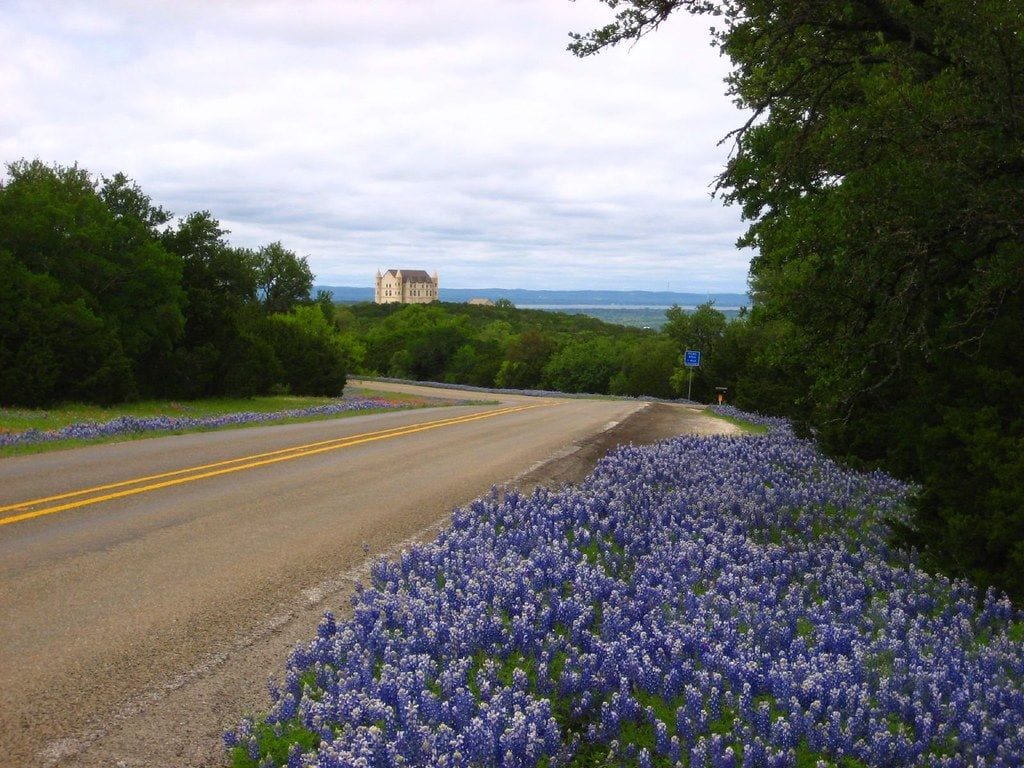
The bluebonnet became the Texas state flower in 1901, and the legislature later folded every native lupine species in the state under the same official title rather than adjudicate between them.
The legislature also adopted a state flower song in 1933. The spring bloom along the highway verges is deliberate policy: the transportation department sows and manages wildflowers on the roadsides, which is why the display follows the roads.
92. Emory Peak Is the Tenth Highest Point in Texas
Emory Peak, the high point of the Chisos Mountains in Big Bend, rises to 7,825 feet — the tenth highest elevation in the state.
That it only ranks tenth says something about West Texas: the nine peaks above it are all clustered in the Guadalupe Mountains, hundreds of miles north. Emory is the one hikers actually climb, because the trail to it starts from a road-accessible basin.
93. Houston Is the Fourth Largest City in America
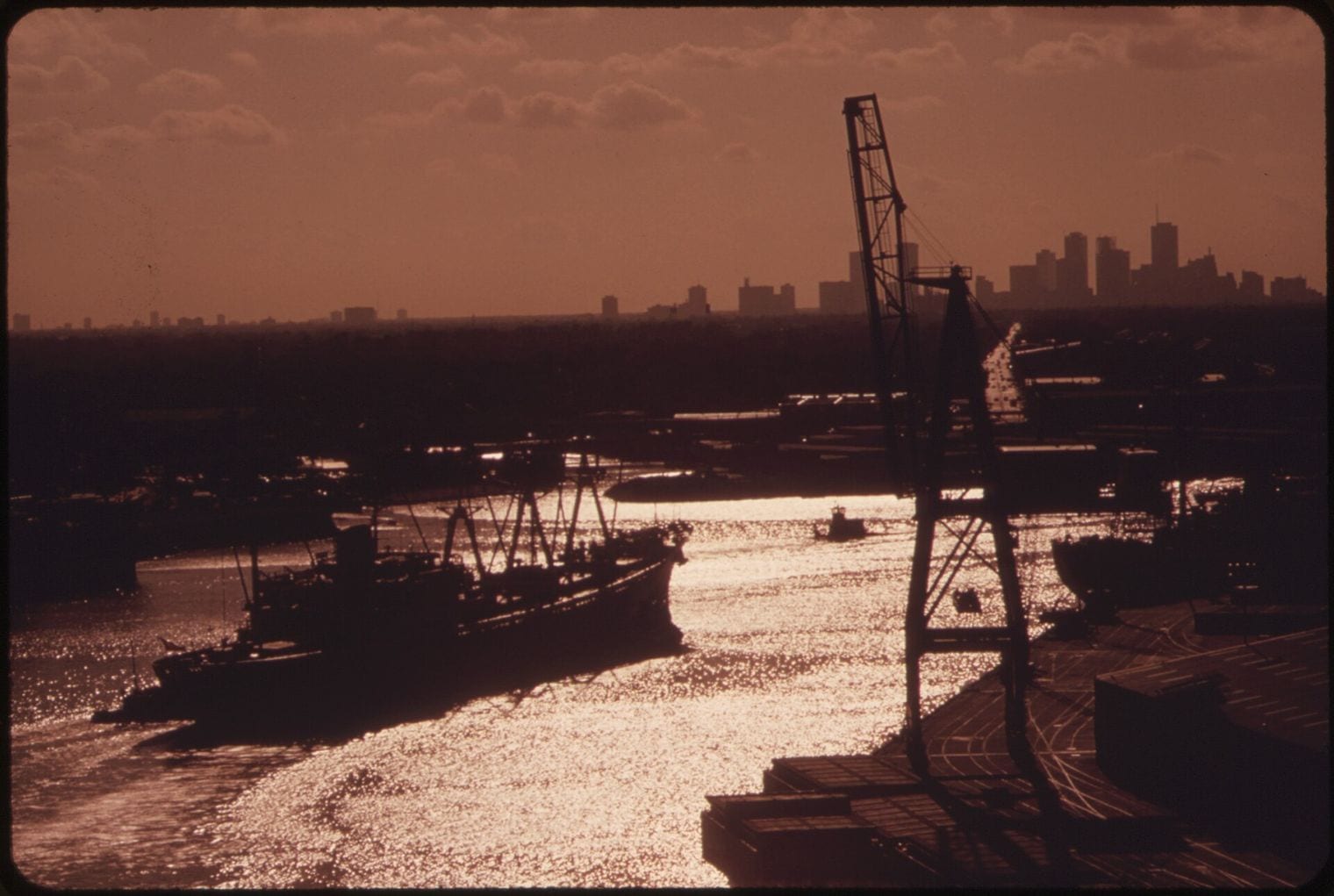
Houston is, as of 2026, the fourth most populous city in the United States, with a population of 2.3 million at the 2020 census, spread across 627 square miles.
The area figure is the striking one. Houston famously has no zoning code, and the city limits have expanded by annexation for a century, which is why a place with fewer people than Chicago covers so much more ground.
94. The Alamo Was a Mission for 118 Years First
The Alamo was founded as Mission San Antonio de Valero on 1 May 1718, and spent well over a century as a mission and then a fortress before the siege that made its name.
The chapel everyone photographs was never finished as a church — its roof was added by the United States Army decades after the battle, and the famous curved parapet is a later addition too. The building the world recognises is largely a nineteenth-century face on an eighteenth-century mission.
95. German and Czech Settlers Invented Texas Barbecue
Texas barbecue traces back to European butchery and meat-smoking traditions carried into Central Texas by German and Czech settlers in the middle of the nineteenth century.
The form followed the business. Immigrant butchers smoked the cuts they had not sold and served them on butcher paper with bread and pickles, no plates and no sauce — which is why the classic Central Texas meat market still looks and operates like a shop rather than a restaurant.
96. Stephen F. Austin Settled the Old Three Hundred
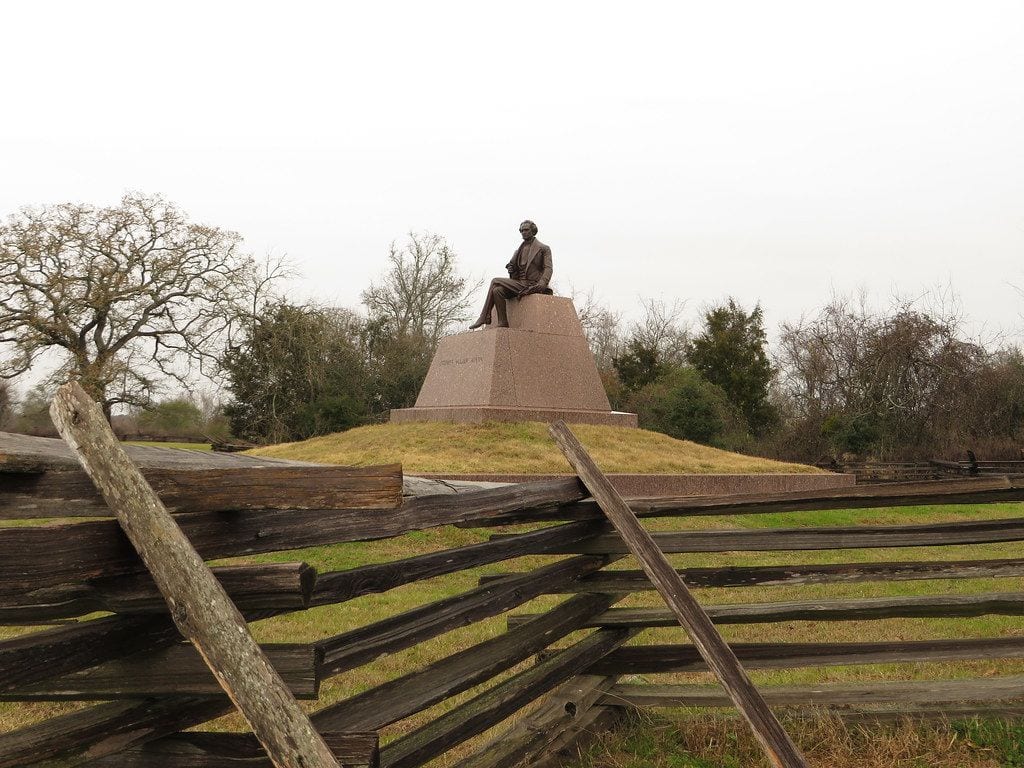
Stephen F. Austin, called the Father of Texas, had brought 300 families from the United States into his colony by late 1825 — the settlers Texans still call the Old Three Hundred. He went on to contract for hundreds more.
He inherited the enterprise from his father, negotiated it through two changes of government in Mexico City, and spent years trying to keep the colonists loyal to a state most of them had no intention of staying loyal to.
97. Padre Island Runs a Sea Turtle Hatchling Release
Padre Island National Seashore runs public sea turtle hatchling releases through the middle of summer, part of the recovery programme for the Kemp's ridley, the most endangered sea turtle in the world.
The species nests in numbers on only a short stretch of coast, and the Texas releases are an attempt to re-establish a second nesting population. Visitors watch from a roped line at dawn as the hatchlings make their own way down the sand.
98. Hamilton Pool Is a Collapsed Underground River
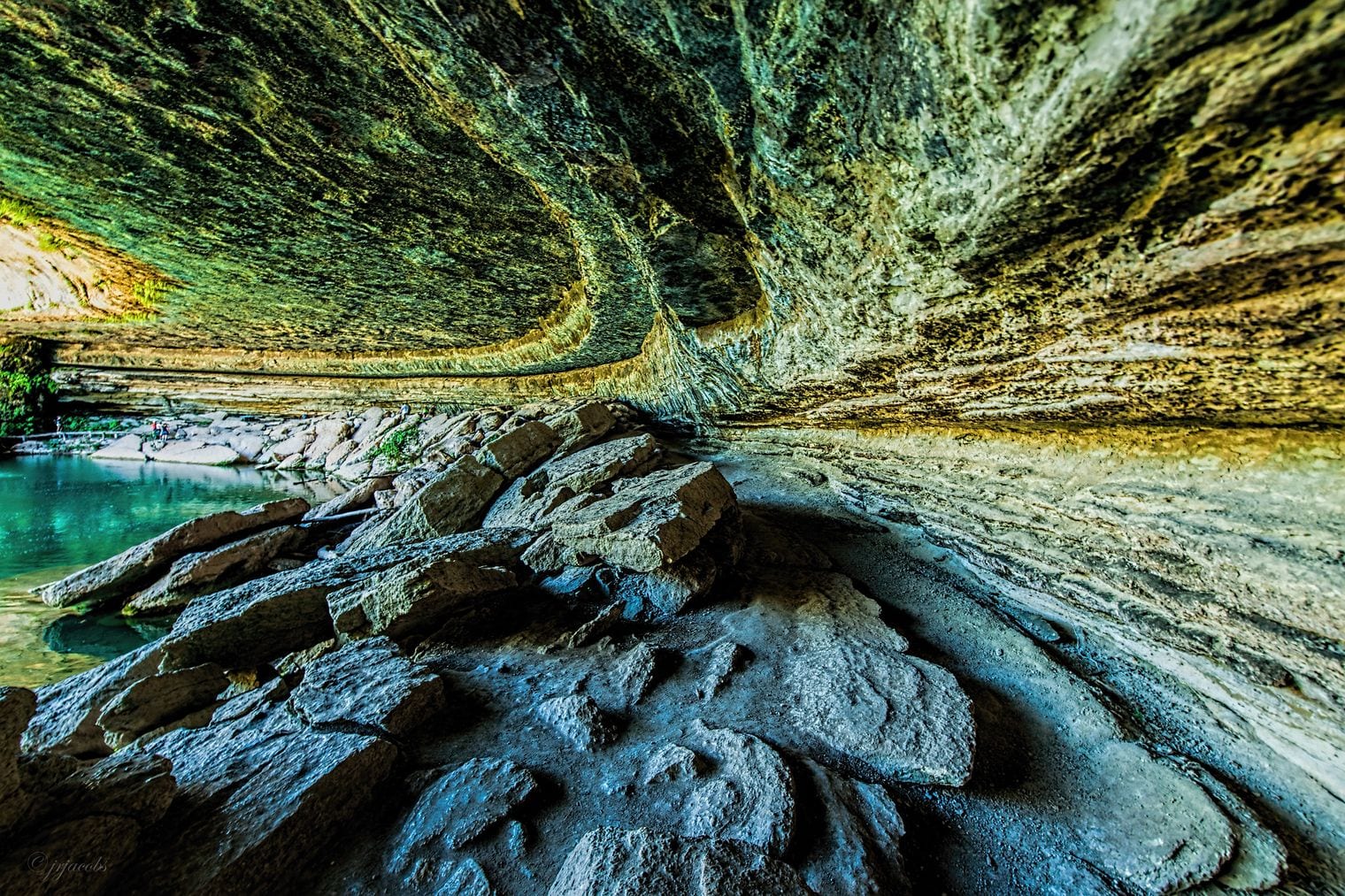
Hamilton Pool, west of Austin, was created when the dome over an underground river collapsed. What is left is a jade-green pool in a limestone grotto with a 50-foot waterfall dropping into it over the lip of the remaining overhang.
Ferns and moss hang from the ceiling of the grotto and swallows nest in it. The pool is popular enough that access has to be rationed by reservation, and it closes to swimming whenever bacteria levels in the creek rise.
99. Attwater’s Prairie Chicken Fell From 1,070 to Under 100
Attwater's prairie-chicken, native to the Texas coastal prairie, went onto the endangered species list in March 1967 when an estimated 1,070 birds were left in the wild. As of 2026, the latest figure available is a 2021 report putting the wild population at fewer than 100.
The bird needs coastal tallgrass prairie, and almost all of that habitat has been ploughed, grazed or built on. What survives does so on a refuge and a handful of private ranches, supported by captive breeding.
100. The Hill Country Sits on the Balcones Fault
The Texas Hill Country begins where the Balcones Escarpment lifts the land west of Austin and San Antonio, which is why the rivers there run clear and cold over limestone instead of brown over mud.
The fault line is the reason for everything people like about the region — the springs, the swimming holes, the sudden hills, and the line of cities strung along its base where the water came out of the ground.
Where to Go Next in Texas
Facts are a way in; the places are the point. Several of the entries above sit in cities that have guides of their own — the mammoth site and the drugstore that first mixed Dr Pepper are both in Waco, the original Six Flags park is in Arlington, and the Pass of the North is El Paso.
Our guide to the best things to do in Texas covers the parks, landmarks and cities that keep reappearing in the list above, and from there you can browse every Texas guide we have written.
How We Checked These Facts
Every fact on this page carries at least two sources in different classes, and at least one of them is a primary record rather than an encyclopedia — the Texas State Historical Association's Handbook of Texas, the Texas Almanac, the Bullock Texas State History Museum, the National Park Service, the Fish and Wildlife Service, the Energy Information Administration and the institutions that hold the records themselves.
Each source was re-read on the date recorded against it, and the wording here follows the wording there: where a source hedges, this page hedges, and where the sources disagree we say so rather than pick the tidier number. Claims we could not stand up were cut rather than softened, including one widely repeated record that had quietly moved to another state.
FAQ: Interesting Facts About Texas
What is the strangest fact about Texas?
The state reptile defends itself by bleeding. A cornered Texas horned lizard can squirt an aimed stream of blood from the corners of its eyes at a predator up to five feet away, and the blood carries a compound that dogs and coyotes find foul. It is a last resort, after camouflage and after flattening itself into a shape too spiky to swallow.
How many counties does Texas have?
Texas is divided into 254 counties, more than any other state, alongside 1,218 incorporated cities. The number is a leftover from the horse era: counties were drawn small enough that a citizen could ride to the courthouse and back in a single day. The result is a landscape organised around county seats, many of them serving only a few thousand people.
Which county in Texas is the biggest?
Brewster County, at 6,192 square miles, is the largest county in Texas — more than 500 square miles bigger than the state of Connecticut and over three times the size of Delaware. Almost all of it is mountain and desert, most of Big Bend National Park sits inside it, and Alpine is the only town of any real size within its boundaries.
Where is the largest bat colony in the world?
Bracken Cave, in the hills north of San Antonio. Bat Conservation International describes it as the largest colony of bats in the world, with up to 20 million Mexican free-tailed bats roosting there each summer. The evening emergence takes hours to empty the cave and is dense enough to register on weather radar as it rises.
Did Texas really pay for its Capitol with land?
It did. Rather than raise the money, the building commission advertised for a contractor who would put up the entire statehouse in exchange for three million acres of public land in the Panhandle. The syndicate that took the deal turned those acres into a ranch, and Texas got its seat of government without writing a cheque for the construction.
What is the highest speed limit in Texas?
A 41-mile stretch of State Highway 130, the toll road running east of Austin toward Seguin, is posted at 85 mph — the highest posted speed limit anywhere in the Western Hemisphere. The high limit was part of the incentive to pull drivers off the congested interstate and onto a toll route that has never carried the traffic its projections promised.
Was a US president born in Texas?
Dwight D. Eisenhower was born in Denison in 1890, the third of seven sons, in a house beside the railway where his father was then working. The family moved to Kansas soon afterwards and he grew up there, which is why the Texas connection surprises people. The house has been restored and forms a small state historic site.
Where are the darkest night skies in Texas?
The Davis Mountains of West Texas, where McDonald Observatory enjoys some of the darkest night skies in the continental United States — the reason the University of Texas put its telescopes there. The observatory now works with surrounding counties and the oil industry on lighting rules, because the nearest threat to that darkness is glare from the oilfield.