We may earn a commission if you book or buy through a link on
this page, at no extra cost to you. It never affects which places we list or how
we rank them (how we make money).
Short answer
Bangkok's three essentials are the Grand Palace and Wat Phra Kaew inside it, holding Thailand's most sacred Buddha image carved from a single block of jade, Wat Pho with its 46-metre Reclining Buddha and the school where Thai massage is still taught, and Wat Arun across the river. Three full days is the practical minimum: one for the royal quarter, one for Chinatown and the markets, one for the museums and parks.
Bangkok arrives all at once — gold-spired temples backing onto canal-side shophouses, food carts steaming under elevated railways, and a river that still works for a living. It is a city best taken in short, well-planned bursts, with air-conditioned breaks in between.
This guide ranks the 50 things most worth your time, from the Grand Palace and the Reclining Buddha to Chinatown's alleys and the view from the top of the Mahanakhon tower. Three days covers the essentials; a week lets you slow down, or use the city as a base for a wider Thailand trip.
Bangkok has the longest place name in the world — the full ceremonial title runs to 168 letters, from Krung Thep Maha Nakhon through to Sakkathattiya Witsanukam Prasit, and Guinness World Records lists it as such. Thais simply say Krung Thep, "city of angels".
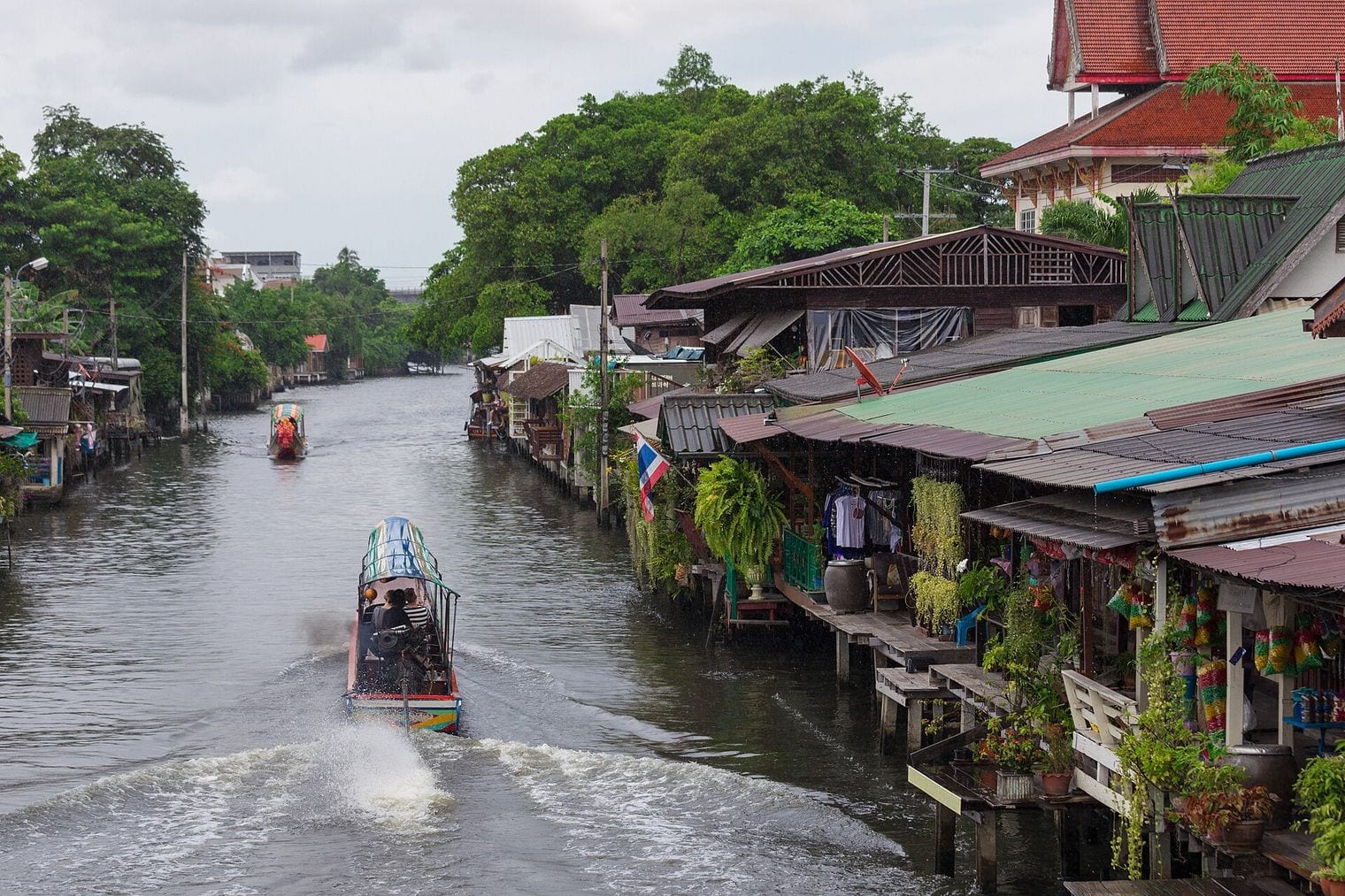
The city was known in the nineteenth century as the Venice of the East, when most residents lived on or beside the water and canals did the work of streets. Many of those khlongs were later filled in to make roads, which is why the surviving ones feel like remnants.
Lumphini was Thailand’s first public park, opened to the city after spending its earliest years as a fairground.
Bangkok is slowly sinking. Land subsidence ran at roughly 120 mm a year in the early 1980s and has since been brought down to a few tens of millimetres annually, though parts of the city now sit below sea level.
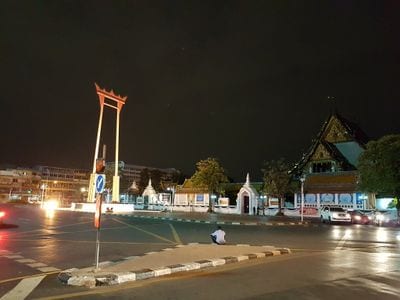
The original teak timbers of the Giant Swing are kept in the Bangkok National Museum — the towering red frame in front of Wat Suthat today is a replacement, rebuilt from trees felled for the purpose.
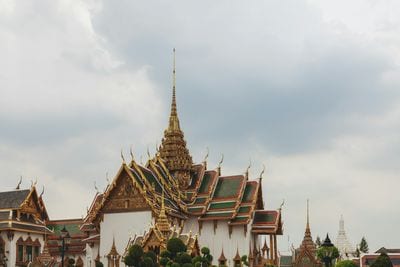
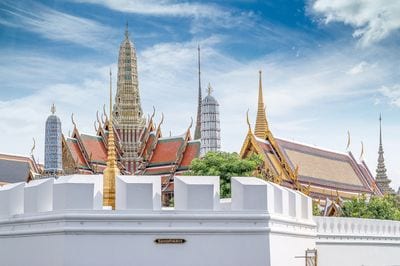
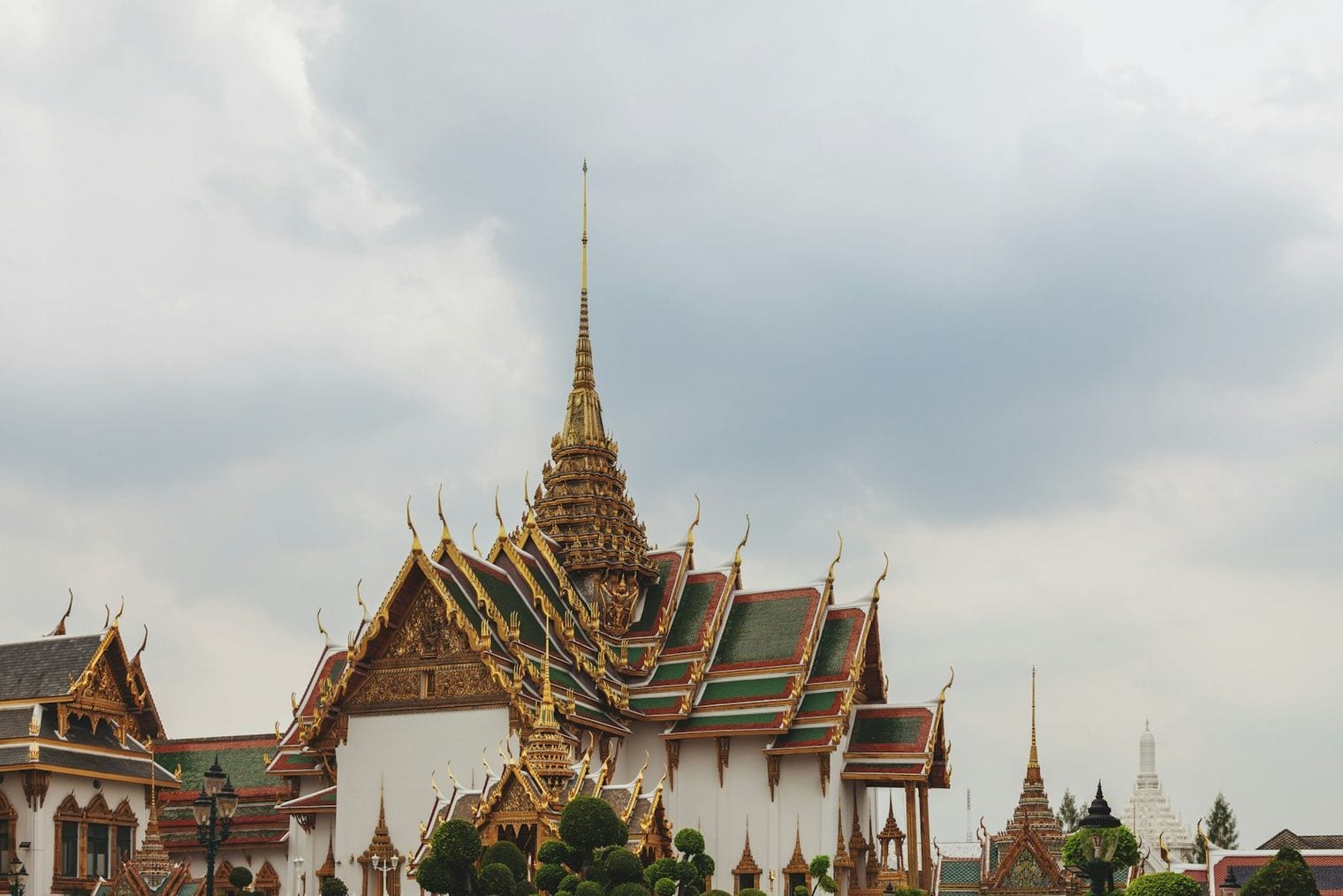
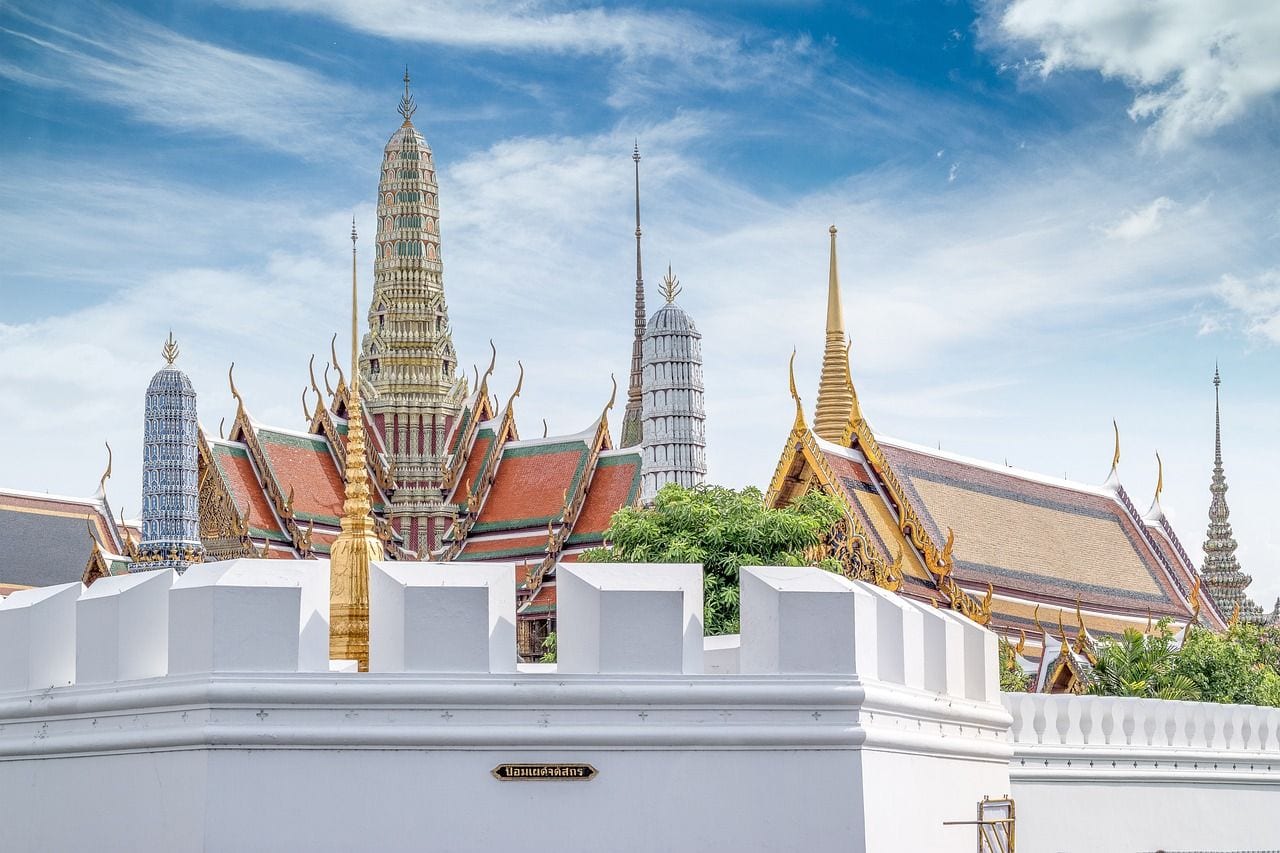
Begun in 1782, when Rama I moved the Siamese capital across the river, the Grand Palace is a walled city-within-a-city of throne halls, pavilions and glittering spires. Successive kings each added their own buildings, which is why the compound swerves from Thai gilt and coloured glass into European neoclassical stonework without ever quite settling on one style.
The royal family no longer lives here, but the palace remains in use for coronations, state receptions and funerals, and it is still the single most visited place in the country. Go early: the compound is largely unshaded, the crowds thicken sharply by mid-morning, and the dress code covering shoulders and knees is enforced firmly at the gate.
Sharing the palace walls but ticketed as part of the same visit, Wat Phra Kaew is the royal chapel and the most revered Buddhist site in Thailand. Unusually for a Thai temple, no monks live here — it exists solely to house one object, a dark green figure a little over half a metre tall seated high on a gilded throne.
The Emerald Buddha is carved from jade rather than emerald, and its history of capture and recapture across Laos and Siam is a story Thai schoolchildren learn by heart. The king changes its robes three times a year to mark the hot, rainy and cool seasons. Murals along the cloister walls run the entire Ramakien epic in sequence.
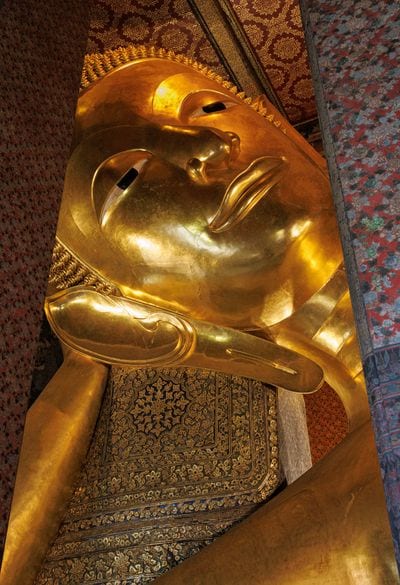
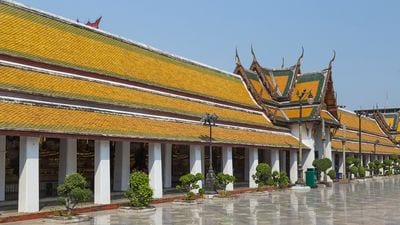
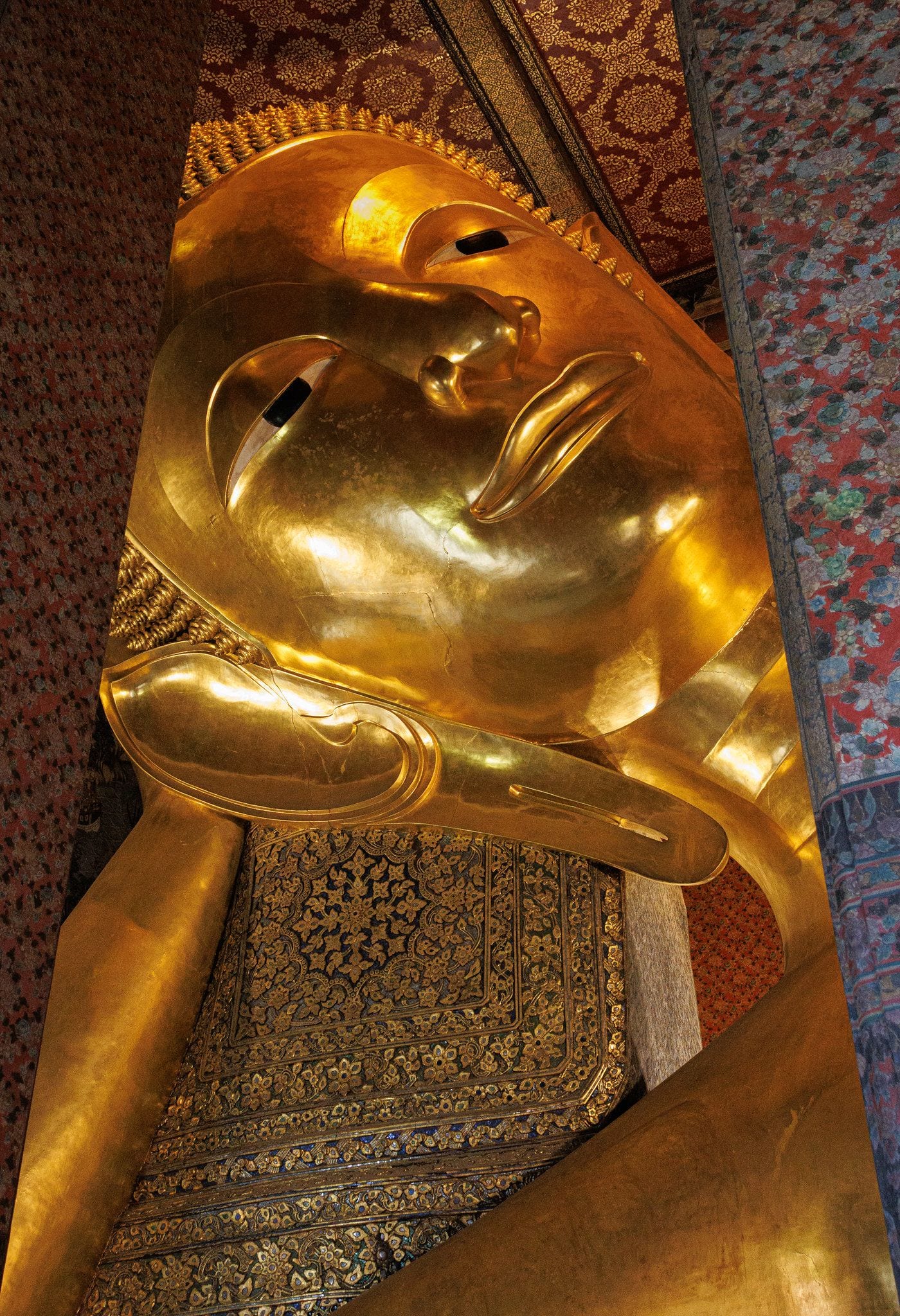
A ten-minute walk south of the palace, Wat Pho is older than the capital itself and considerably more relaxed than its neighbour. Its headline resident is the Reclining Buddha, a gold-leafed figure some 46 metres long wedged into a hall barely bigger than it is, so you shuffle along its length taking it in a section at a time.
Walk to the far end for the soles of the feet, inlaid with mother-of-pearl showing 108 auspicious signs. The temple is also the historic home of Thai massage, and the school in the grounds still teaches and practises it — a genuinely good idea after a morning of walking. The courtyards behind the main hall are full of stone chedis and almost always quiet.
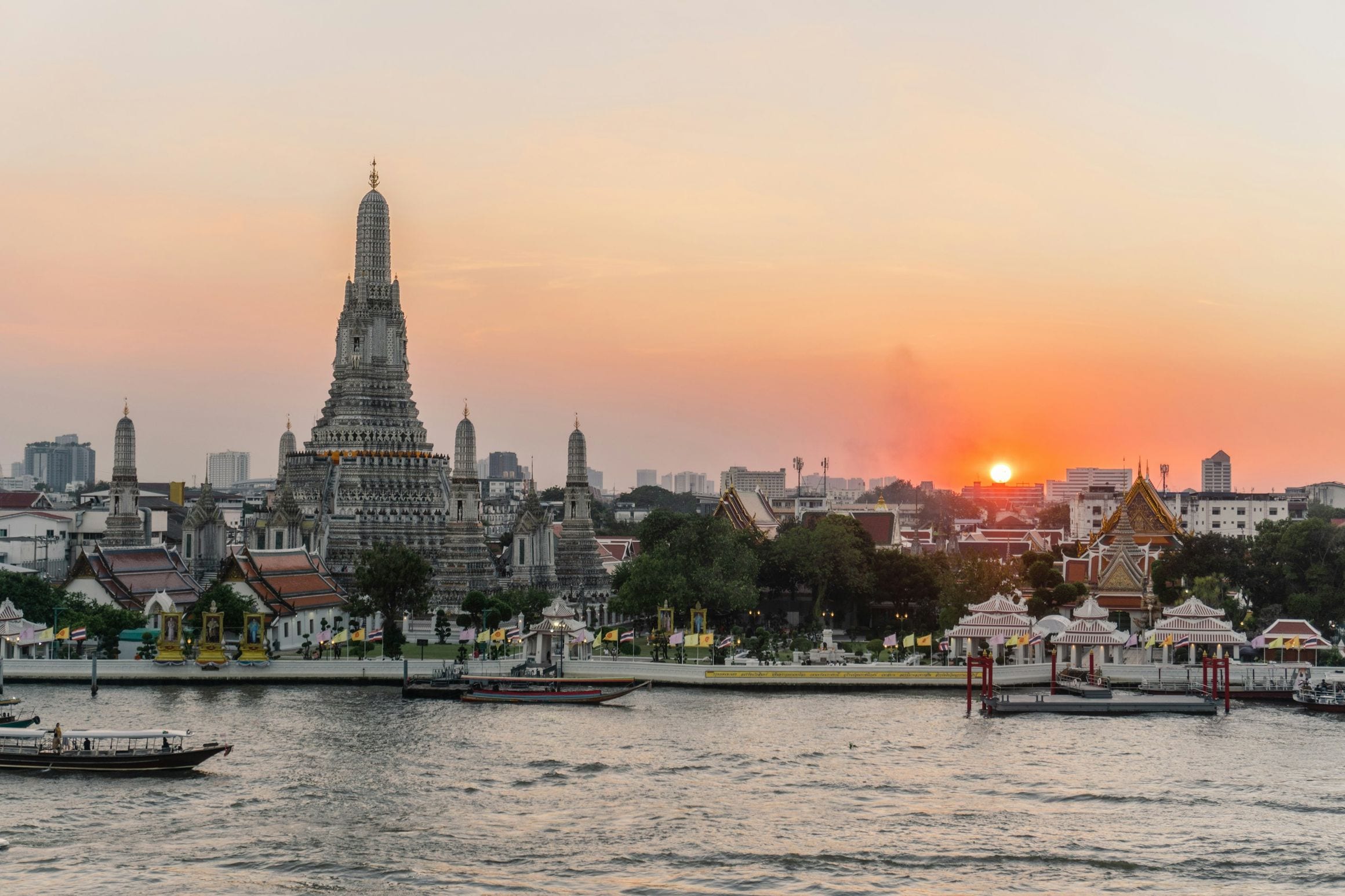
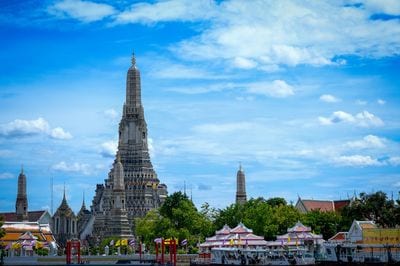
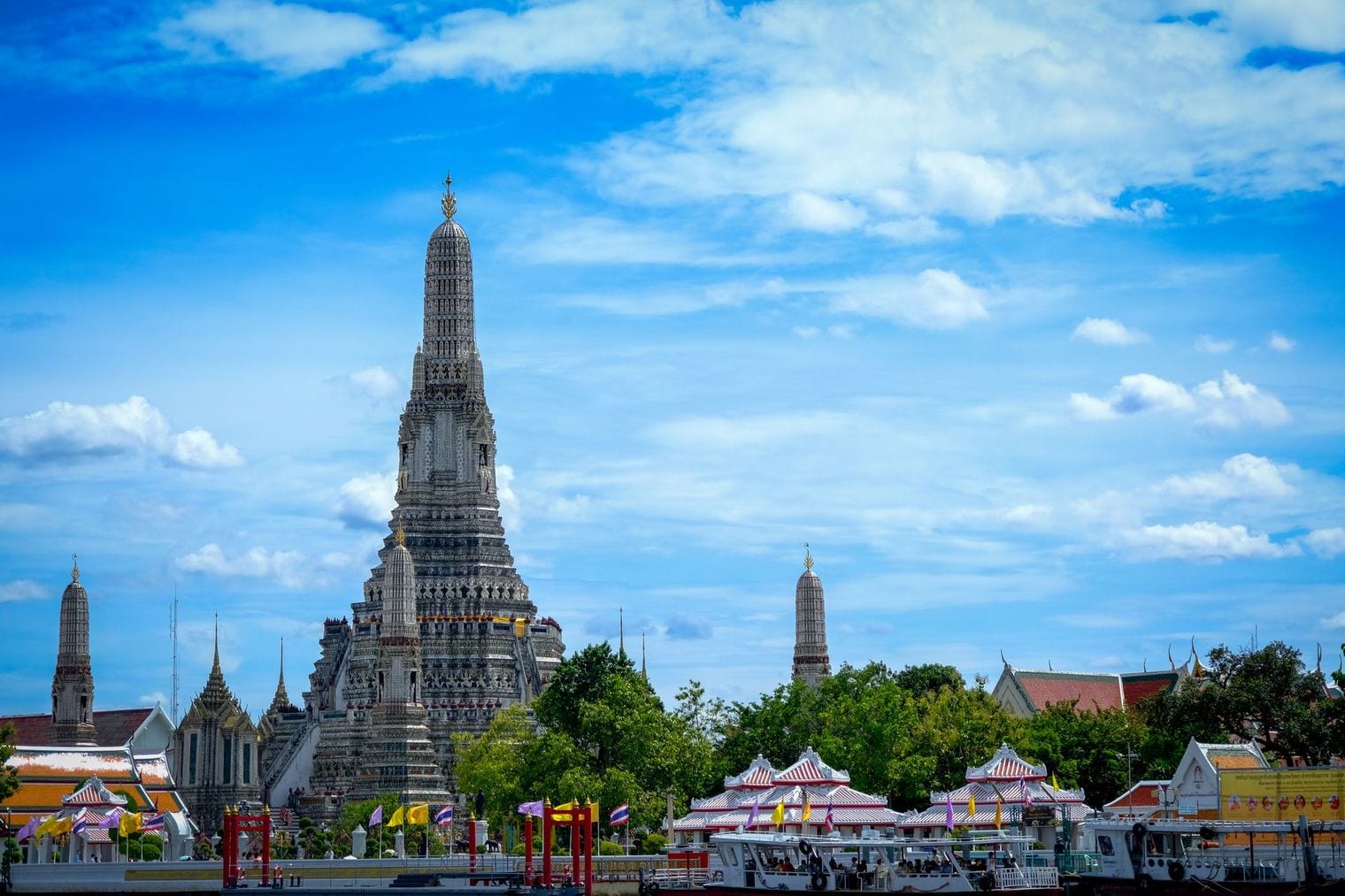
Directly across the Chao Phraya on the Thonburi bank, Wat Arun is the temple that defines Bangkok's skyline from the water. Its central prang rises more than 60 metres, and close up the whole surface turns out to be encrusted with broken Chinese porcelain — ballast from trading ships, pressed into mortar as flowers and mythical figures.
The Temple of Dawn is misleadingly named: it photographs best at sunset, lit up and seen from the opposite bank. Cross-river ferries run constantly from the pier beside Wat Pho and take only a few minutes. You can climb partway up the prang on steps steep enough to need both hands, and the terrace view back across the river is worth the scramble.
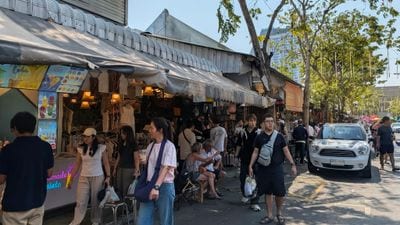
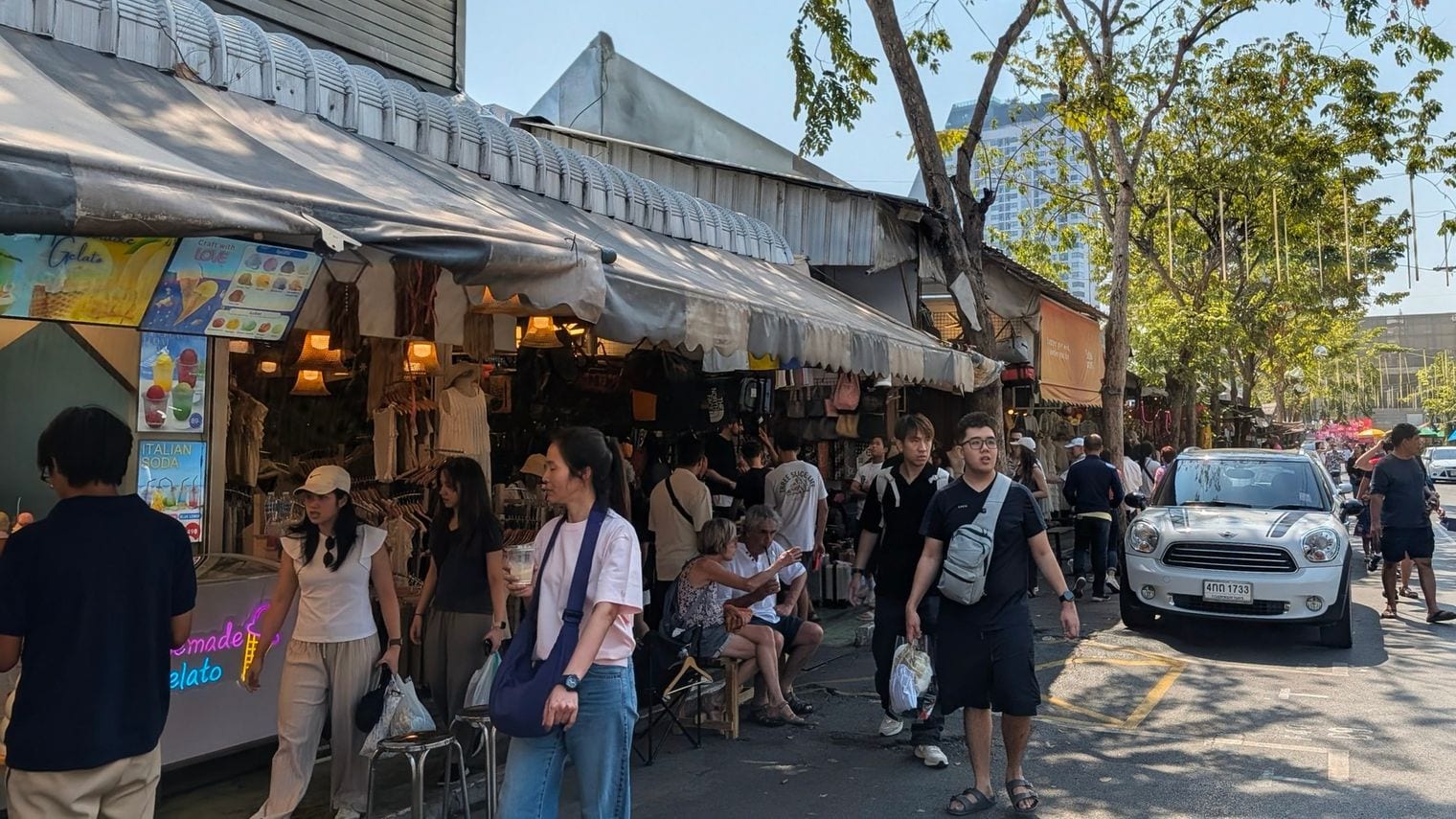
Chatuchak Weekend Market is less a market than a temporary city, with something in the region of 15,000 stalls arranged across 27 numbered sections. It sprawls north of the centre at the end of the Skytrain line, and it draws more than 200,000 visitors across a weekend.
The sections are the key to surviving it: clothing and vintage in one quarter, ceramics and home goods in another, plants and garden supplies out at the edges, art and antiques deeper in. Get a photo of a section sign when you arrive, because the aisles all look identical after an hour. Come as early as you can — the covered lanes hold heat brutally by mid-afternoon.
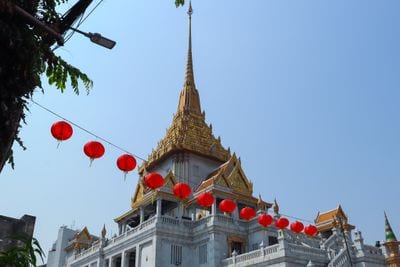
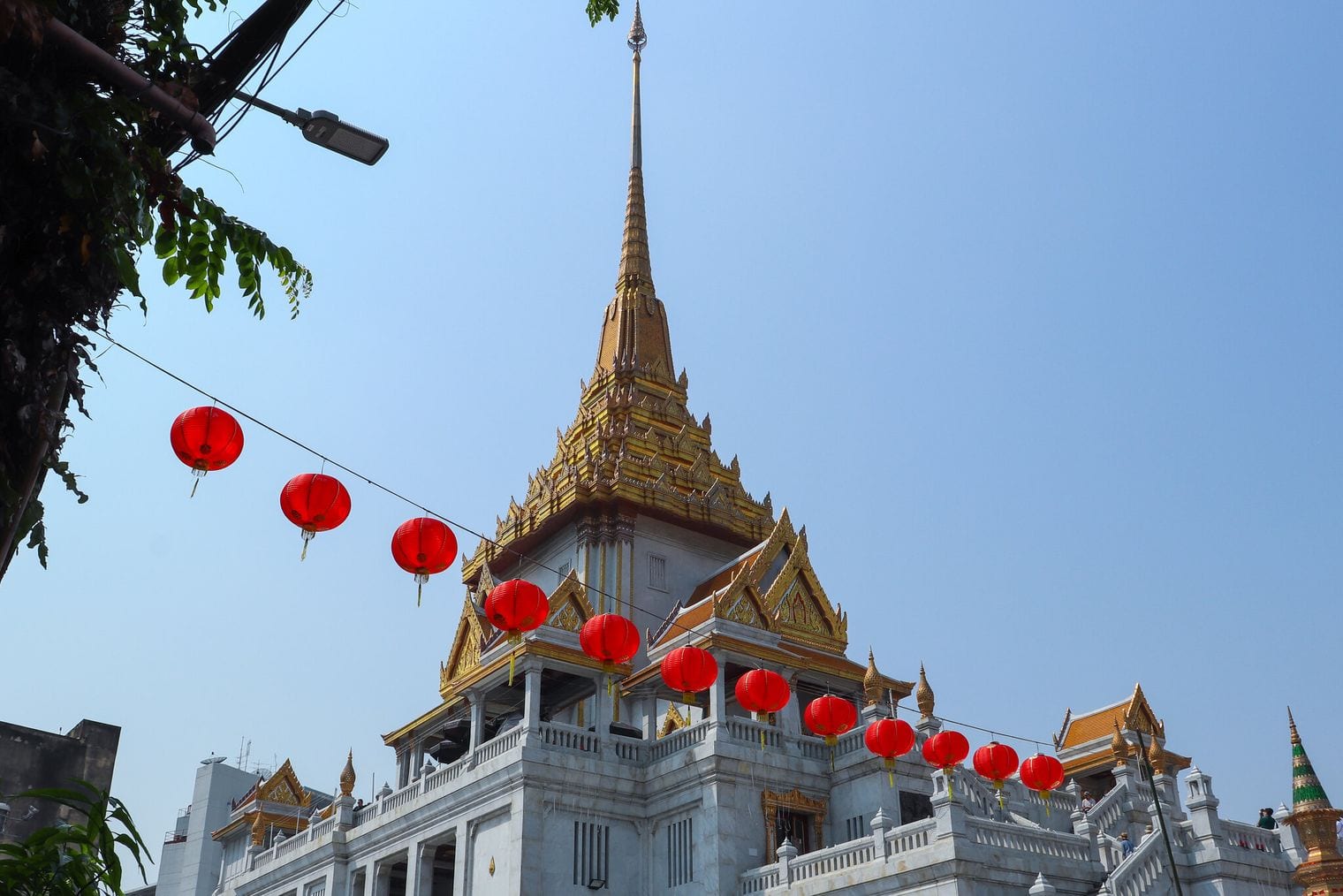
At the western gateway to Chinatown, Wat Traimit holds a seated Buddha of roughly five and a half tonnes of solid gold — generally reckoned the largest solid-gold Buddha in the world, and for centuries nobody knew it existed. The statue spent generations under a thick coat of plaster, which is very likely why it survived the sacking of Ayutthaya in the eighteenth century.
The plaster cracked in 1955 when the statue was dropped during a move to a new hall, revealing the metal underneath. The temple now sits in a white marble hall built specifically for it, with small museum floors below covering the statue's rediscovery and the history of Bangkok's Chinese community. It takes half an hour, and it pairs naturally with a walk down Yaowarat.
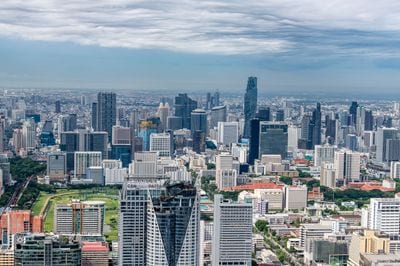
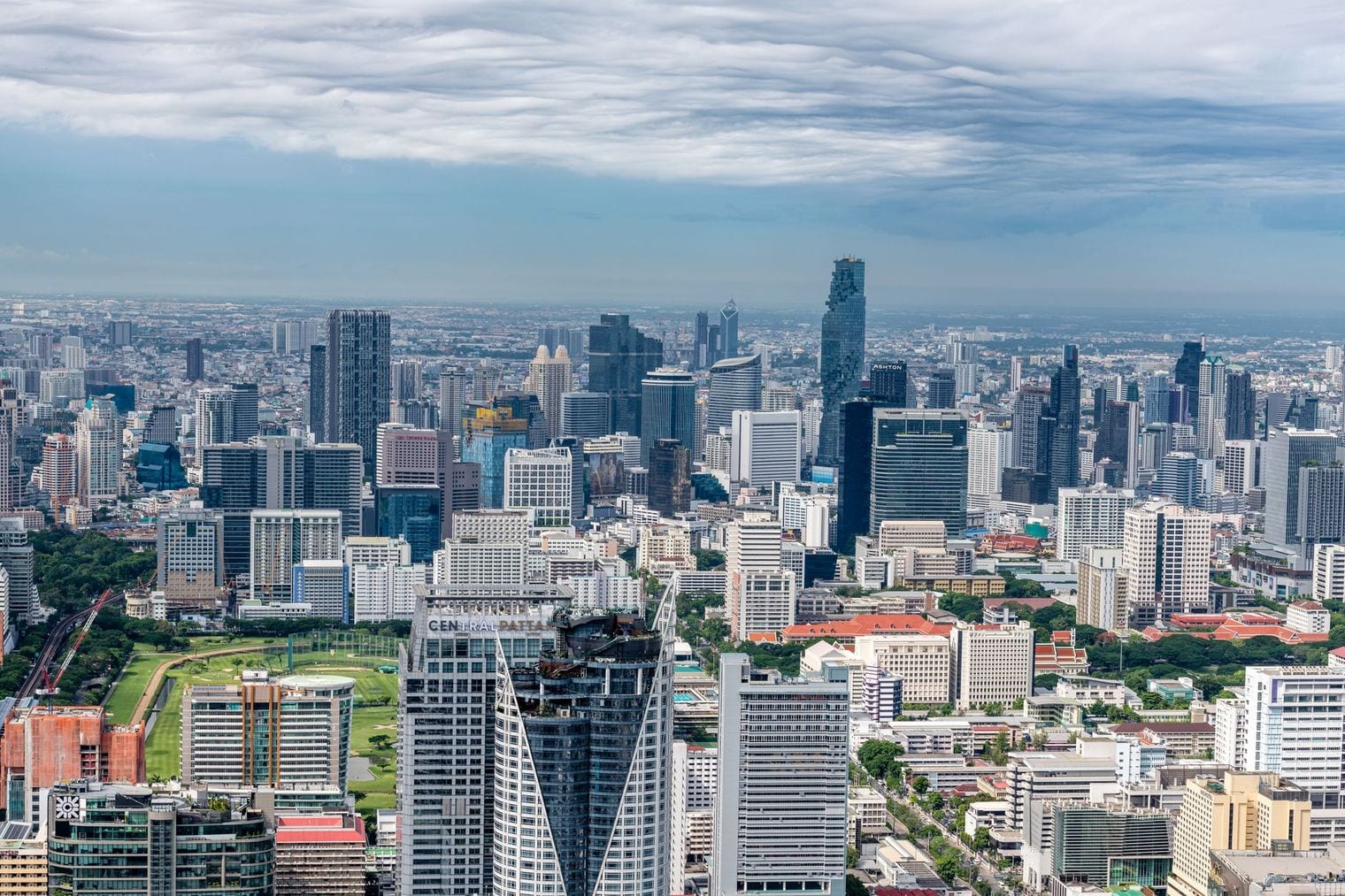
The pixelated tower rising over Silom is the most distinctive building in Bangkok, a 314-metre block that looks as though a column of cubes has been chipped out of one corner. The observation floors near the top open onto an outdoor rooftop deck, high enough that the traffic below goes completely silent.
The King Power Mahanakhon SkyWalk's signature is a glass tray set into the floor of the terrace, which you step onto with the city directly beneath your shoes. Sunset is the obvious slot and books out first; the river bends away to the west and the whole grid lights up within about twenty minutes. Lifts run from the building's own Skytrain-linked entrance at Chong Nonsi.
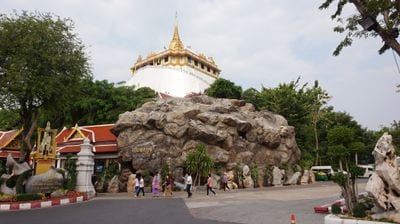
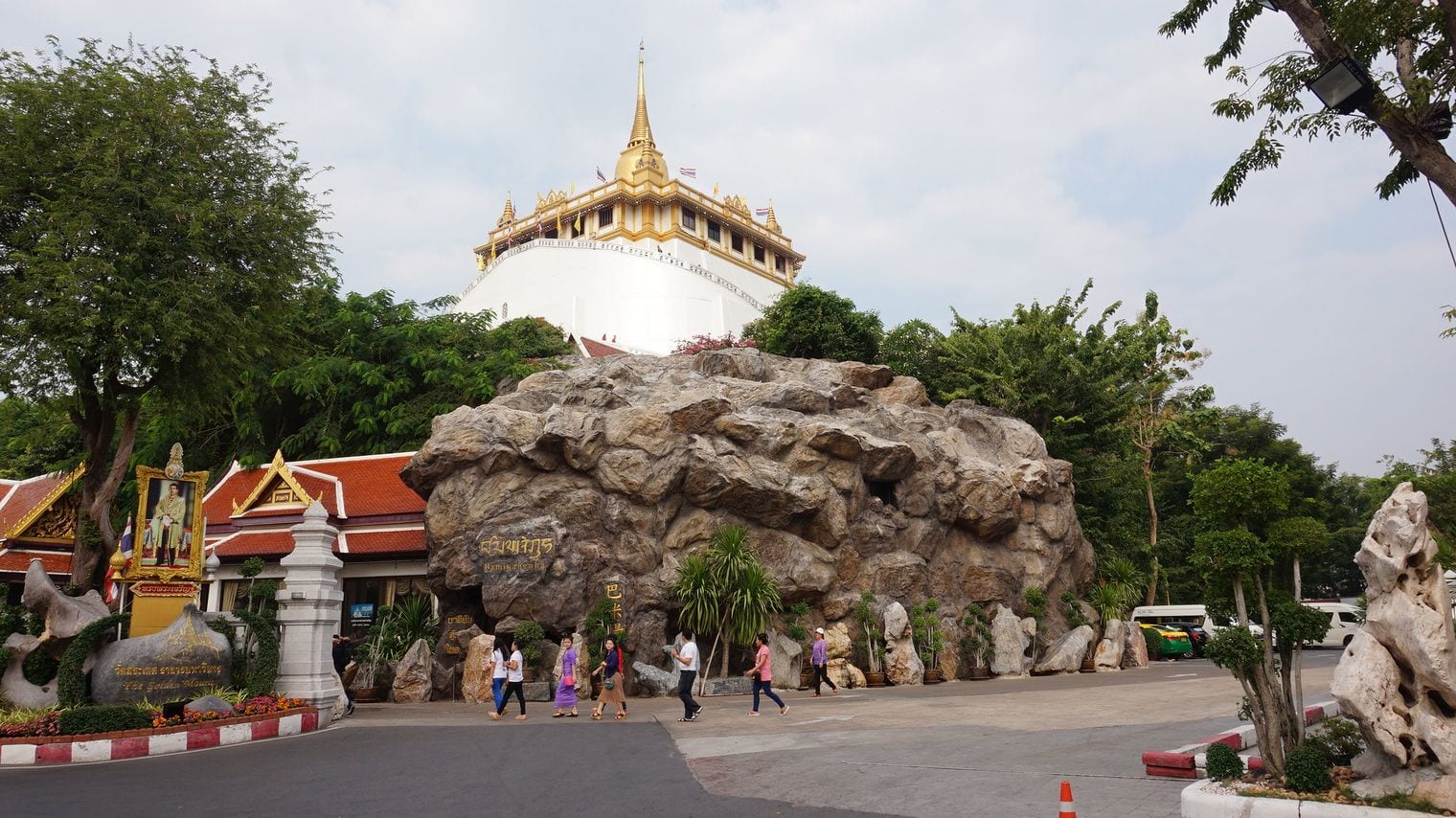
Bangkok is famously flat, so the artificial hill at Wat Saket does a lot of work. A staircase spirals up around the outside of the mound, past bells, small shrines and a good deal of shade, to a golden chedi and a terrace that gives you a genuine panorama of the old city.
The climb is gradual rather than punishing, and the view is the best in Rattanakosin — rooftops, temple spires and the Democracy Monument laid out below. Every November the Golden Mount hosts one of the city's biggest temple fairs, when the chedi is wrapped in red cloth and the slopes fill with food stalls and candlelight. It is quiet and largely tourist-free on an ordinary morning.
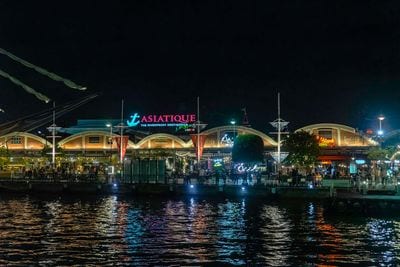
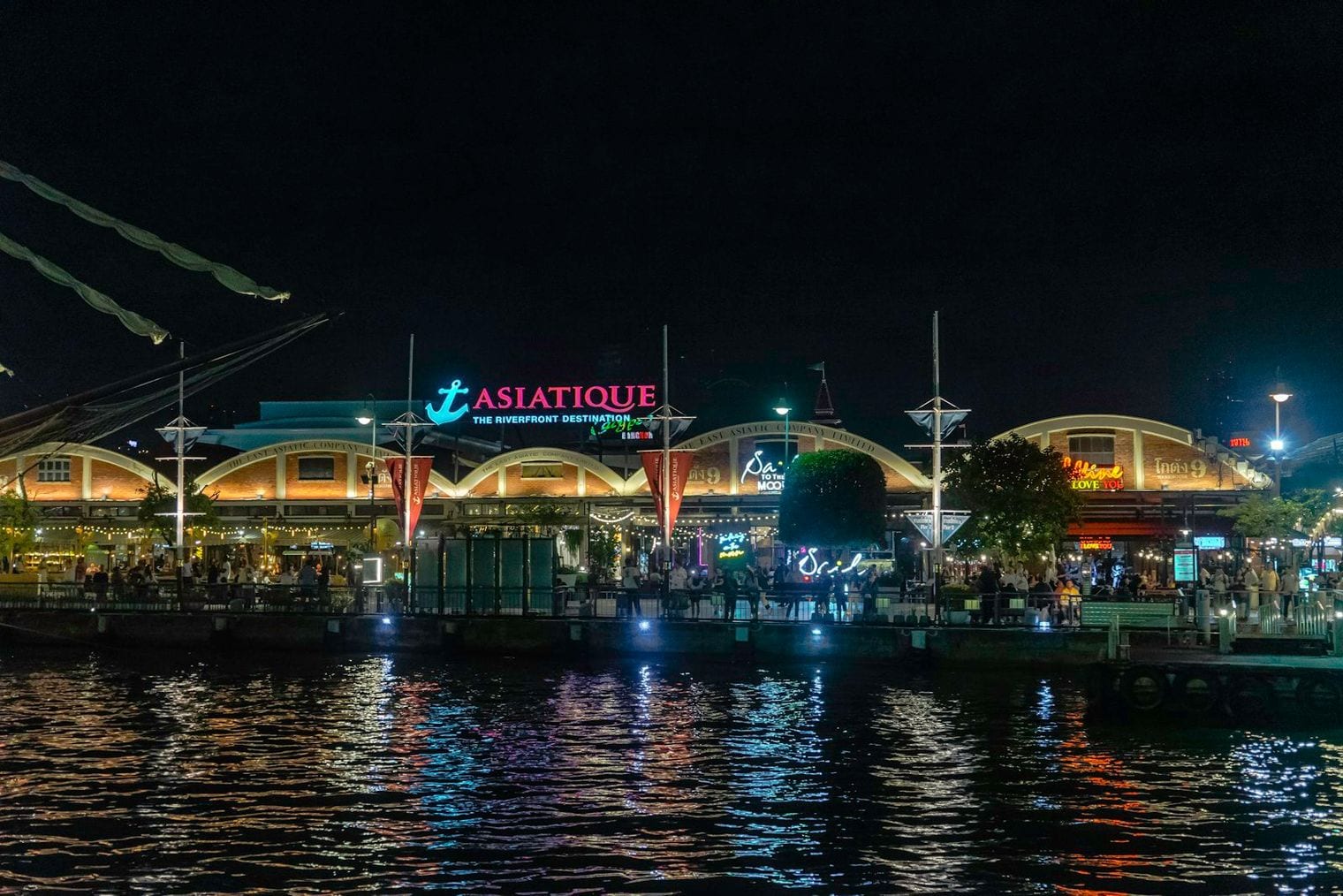
Built into the restored warehouses of a nineteenth-century Danish trading company's riverside dock, Asiatique The Riverfront is the tidy, walkable answer to Bangkok's chaotic night markets. The old godowns now hold several thousand small units selling clothing, crafts and souvenirs, with restaurants lining the water.
The pleasure is as much in getting there as being there: free shuttle boats run down from the Skytrain pier at Saphan Taksin, and the ride past illuminated temples and hotel towers is a small river cruise in itself. A large Ferris wheel anchors the far end, and there are cabaret and puppet theatres on site. Prices are higher than a street market, but nobody is hustling you.
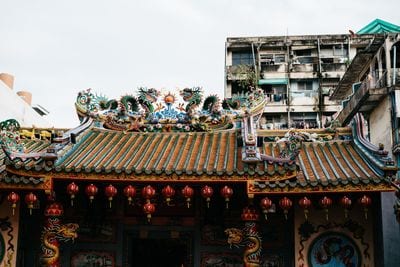
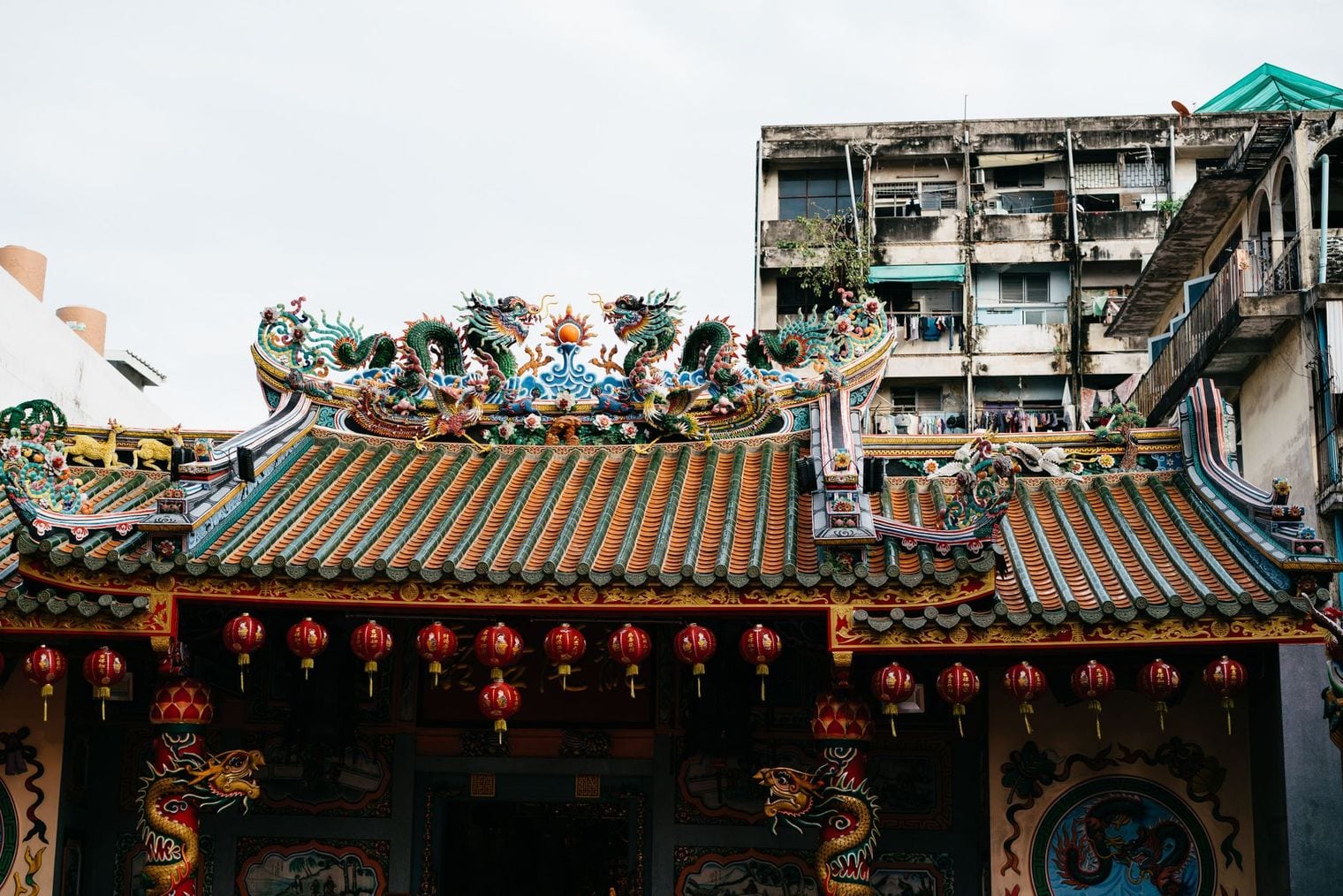
The largest and most important Chinese Buddhist temple in Bangkok, founded in the early 1870s, Wat Mangkon Kamalawat sits just off Yaowarat behind a swirl of incense smoke and red lanterns. It follows Mahayana rather than Thai Theravada practice, so the halls, the altars and the pace of worship all feel distinctly different from the temples around the palace.
This is a working neighbourhood temple rather than a monument, and it is at its most extraordinary during the annual Vegetarian Festival, when Chinatown goes meat-free for nine days and the surrounding streets fill with yellow banners and food stalls. Its own metro station on the blue line has made it far easier to reach, and the whole Chinatown walk can start here.
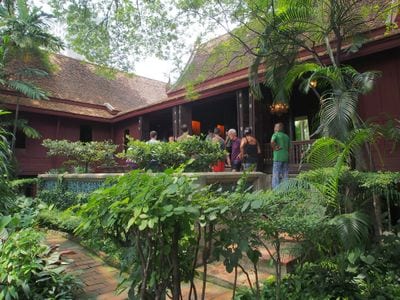
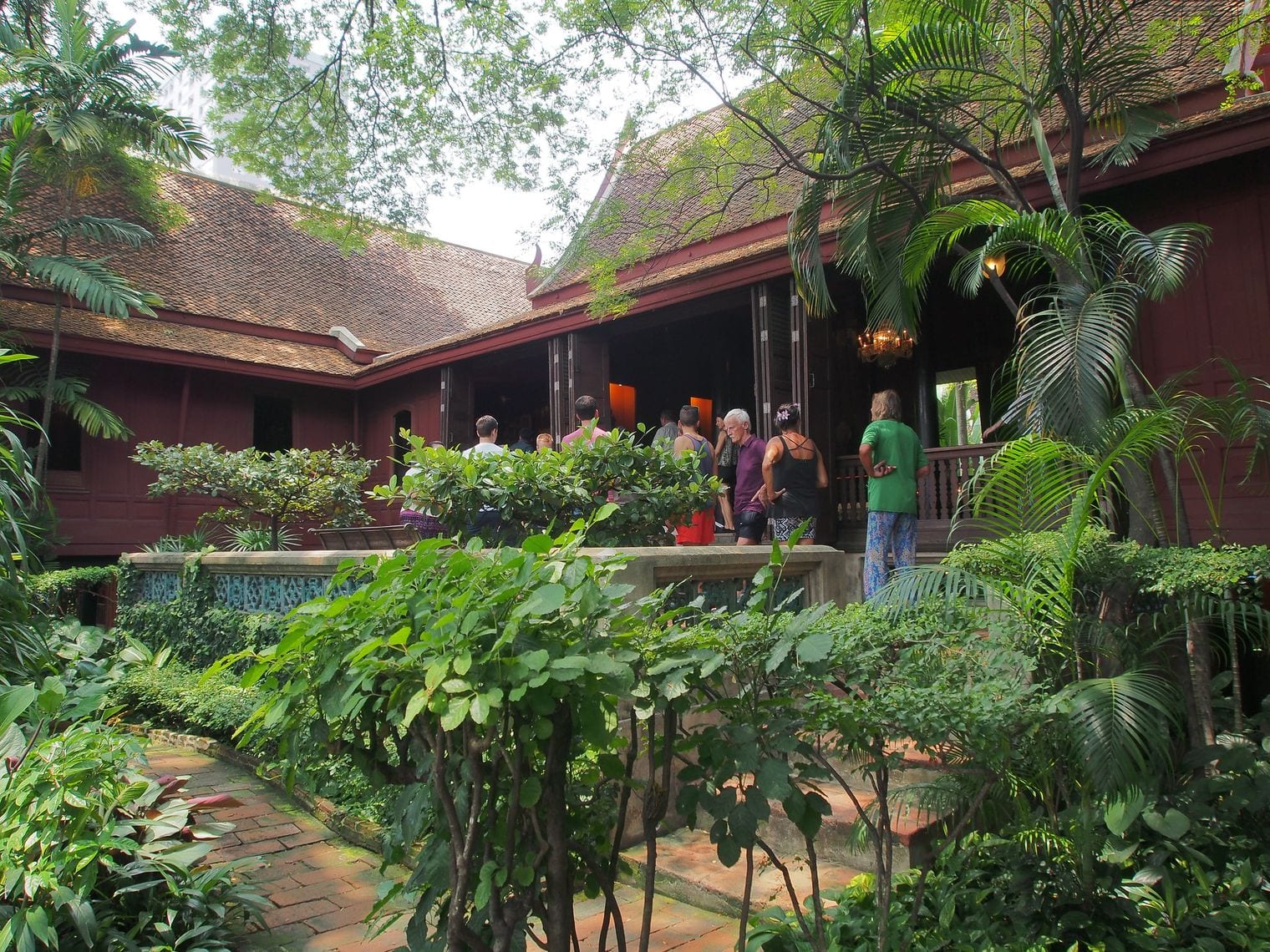
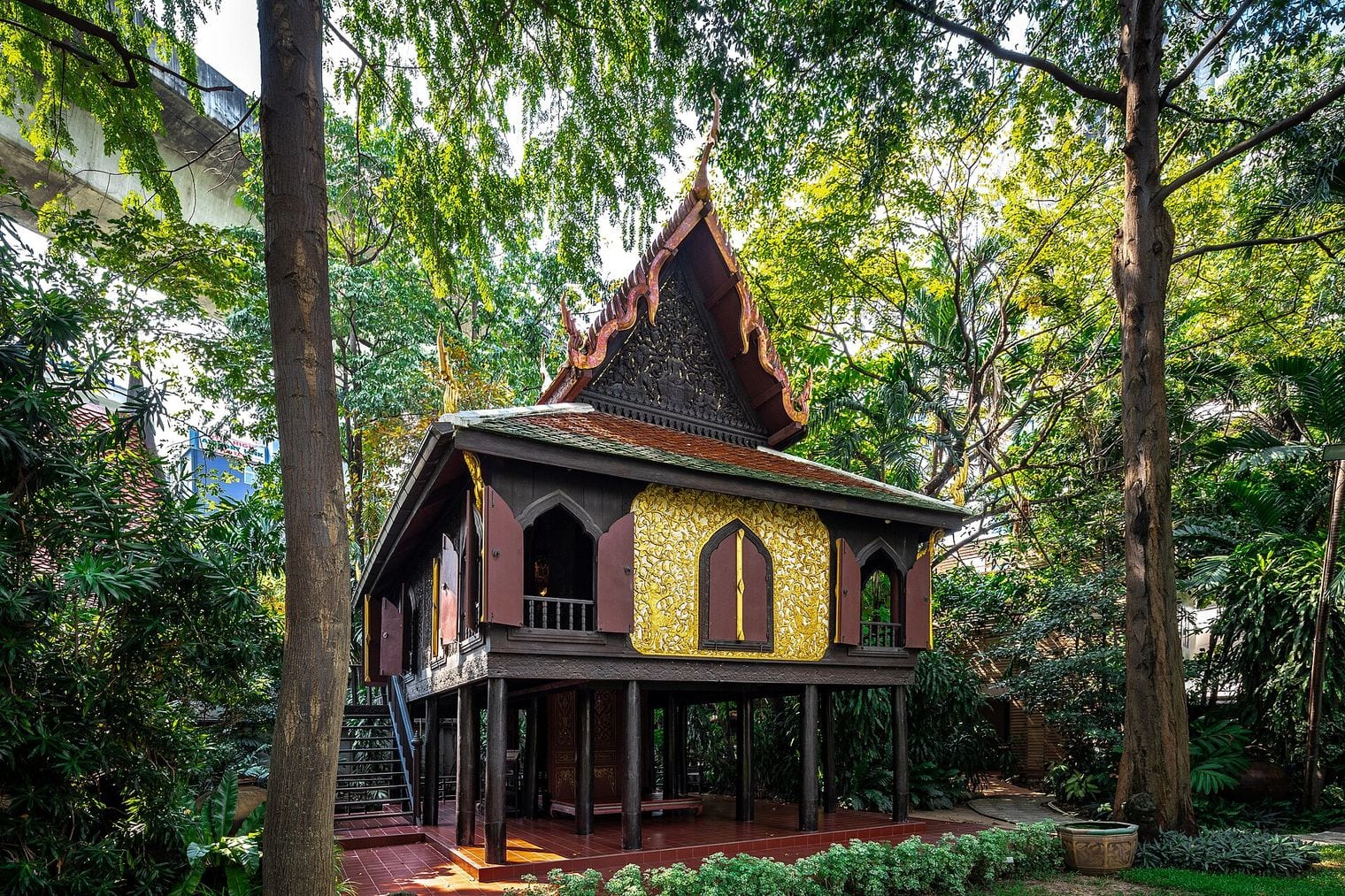
Jim Thompson was an American architect and former intelligence officer who settled in Bangkok after the Second World War and rebuilt the Thai silk trade almost single-handedly. He assembled six traditional teak houses from around the country into one compound beside a canal, filled it with Southeast Asian art, and then vanished while walking in the Malaysian highlands in 1967.
The Jim Thompson House Museum is preserved much as he left it, and guided tours walk you through room by room. It is the best surviving example of traditional Thai domestic architecture in the city — raised on stilts, opened to the breeze, with the whole thing wrapped in dense garden. A short walk from the National Stadium Skytrain station, and shaded throughout.
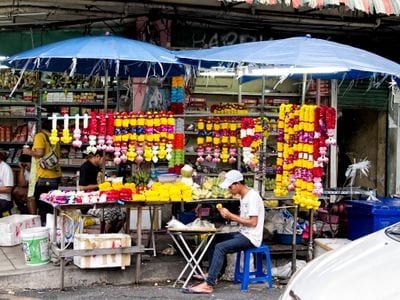
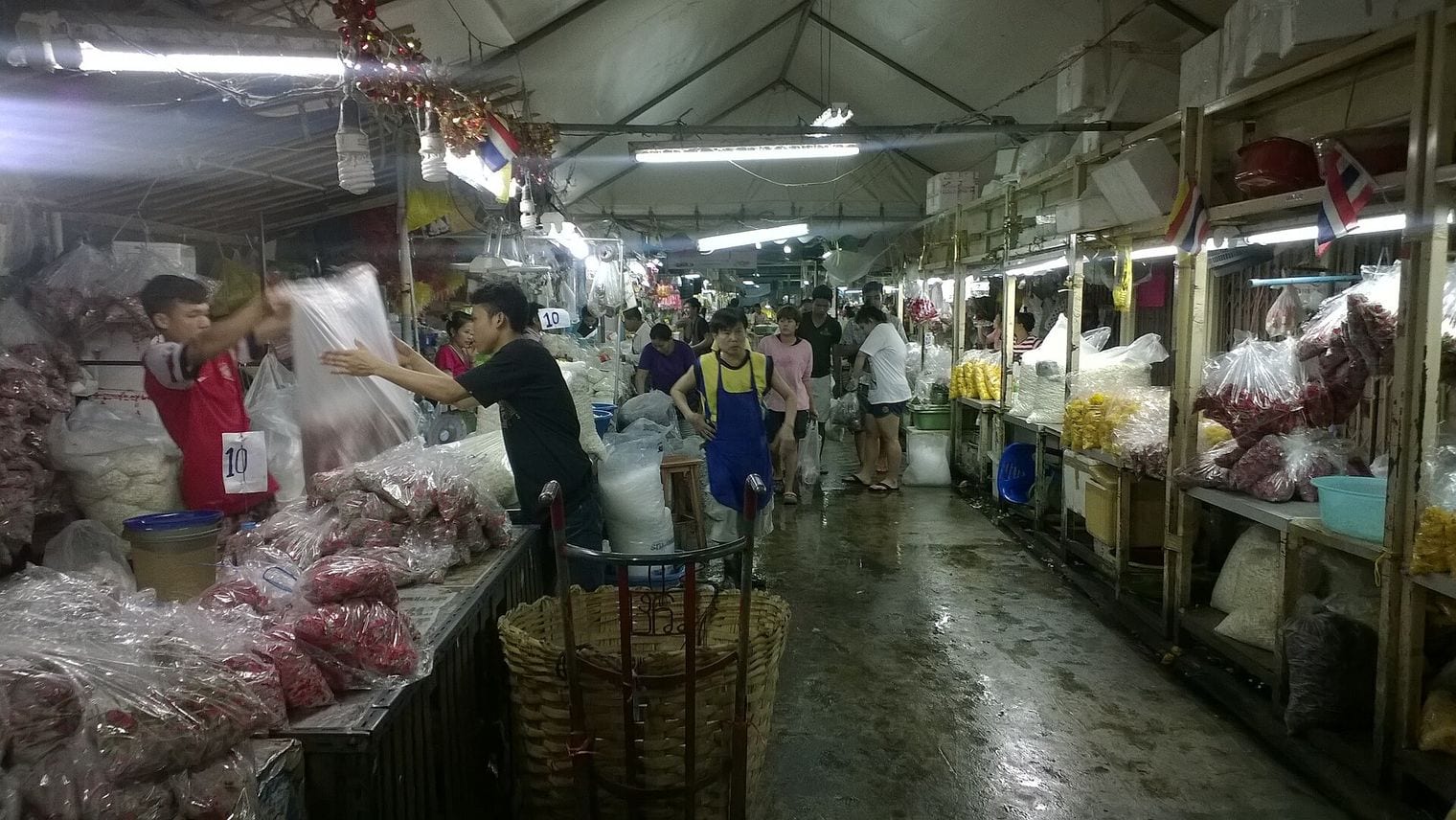
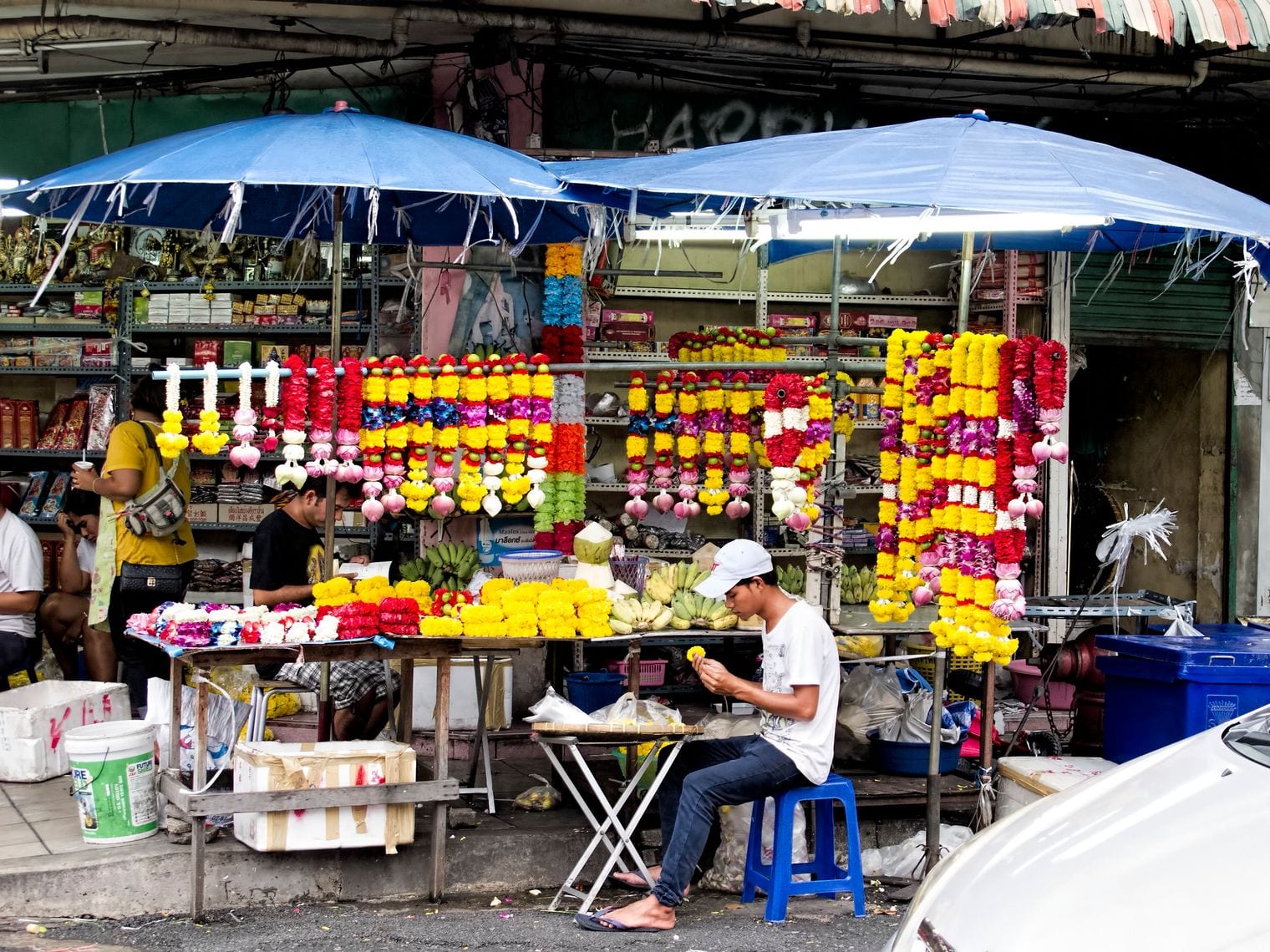
Bangkok's wholesale flower market runs around the clock beside the river near Memorial Bridge, and it is at its most alive in the small hours when trucks arrive from the growing provinces. Pak Khlong Talat is where the city's temples, hotels and restaurants buy their flowers, so the volume is startling — marigolds by the sack, orchids by the crate, roses stacked in ice.
The thing to watch is the making of phuang malai, the jasmine and marigold garlands offered at shrines and hung from car mirrors, threaded at speed by hand at pavement stalls. It costs nothing to walk through, the scent is overwhelming in the best way, and it is one of the few genuinely round-the-clock sights in the city.
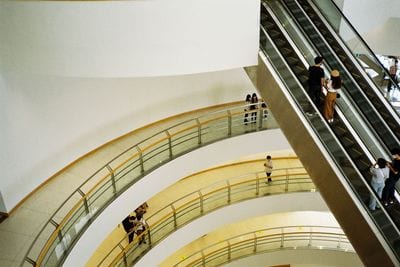
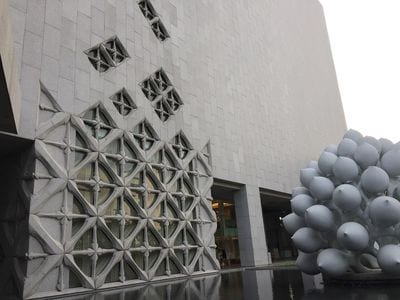
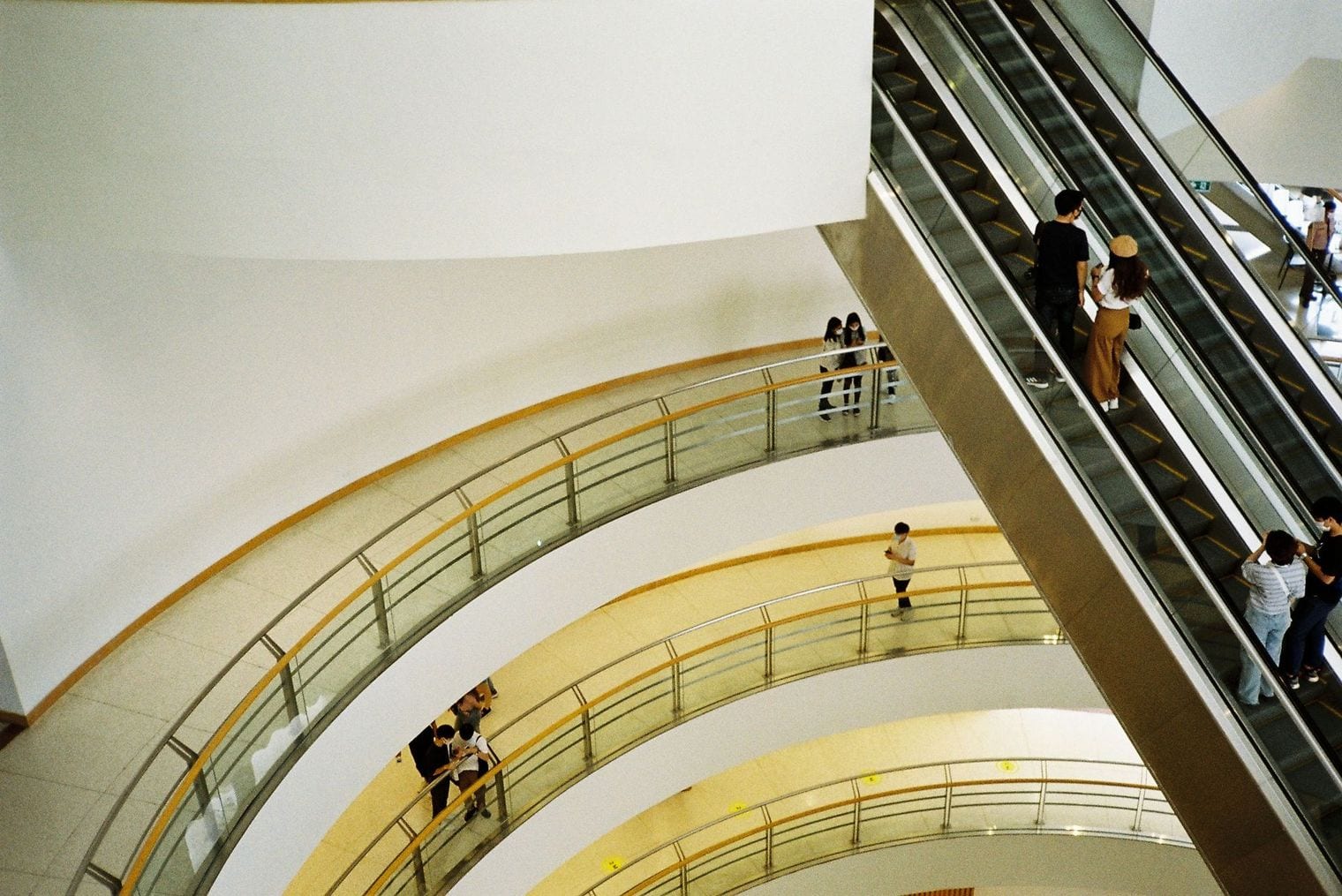
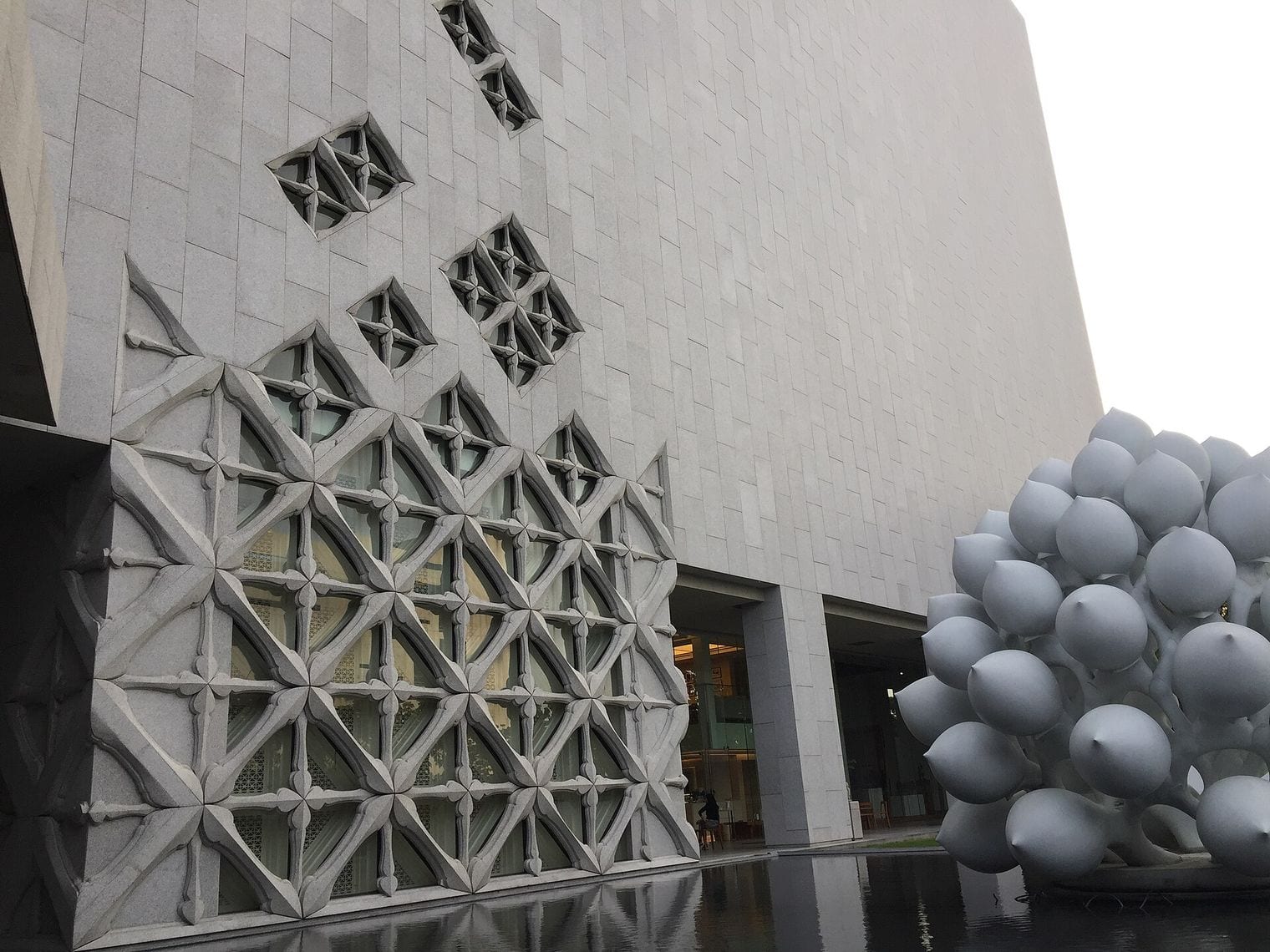
Sitting on the corner of one of the city's busiest intersections and connected directly to the Skytrain, the Bangkok Art and Culture Centre is a nine-storey drum of white galleries wrapped around a spiral ramp. The design invites comparison with the Guggenheim, and the effect of walking up through it is much the same.
The upper floors hold the main rotating exhibitions of Thai and international contemporary art, while the lower levels are given over to independent bookshops, small design studios, cafés and a cinema. It is a genuine hub for Bangkok's creative scene rather than a museum piece, and the air conditioning alone justifies a stop between Siam's shopping malls.
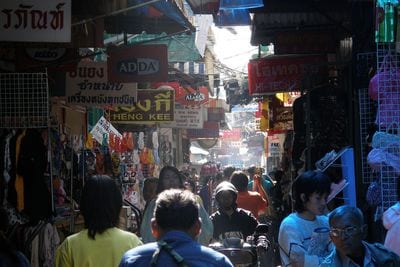
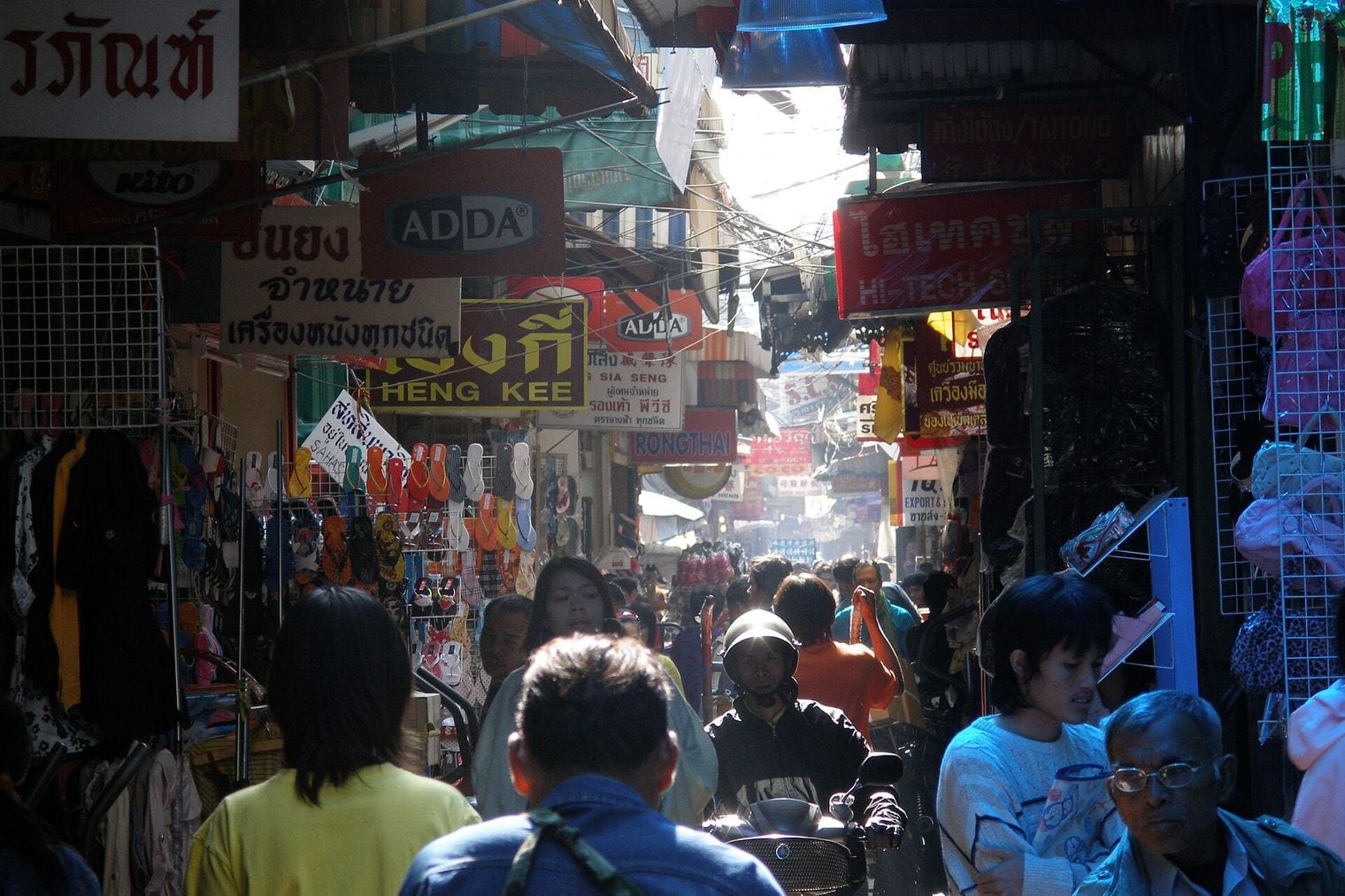
Sampheng Lane is a wholesale alley running parallel to Yaowarat, barely wide enough for two people and a delivery trolley, and it has been Chinatown's trading spine since the district was founded. Stalls sell in bulk — hair clips, ribbon, phone cases, gift bags, fabric, toys — to the small shopkeepers who supply the rest of the city.
It is not a souvenir market and makes no concession to visitors, which is exactly the appeal. Motorbikes nose through the crowd, goods stack to head height on both sides, and the noise is constant. Walk it end to end for a sense of how the neighbourhood actually works, then surface onto Yaowarat for food when you have had enough.
Built in 1879 by Tamil immigrants and known to most Bangkokians as Wat Khaek, the Sri Maha Mariamman Temple stands at a busy Silom corner behind a gopuram tower crowded with brightly painted deities. It is a working South Indian Hindu temple in the middle of the financial district, and the contrast with the office blocks around it is startling.
The temple draws Hindu and Thai Buddhist worshippers alike, and the flower and garland sellers outside do steady business all day. Photography inside the shrine is restricted and shoes come off at the entrance, so treat it as a place of worship rather than a photo stop. The evening puja, with bells and drums, is when it comes fully alive.
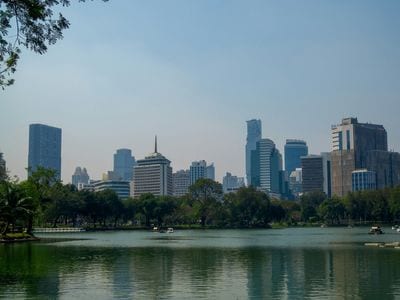
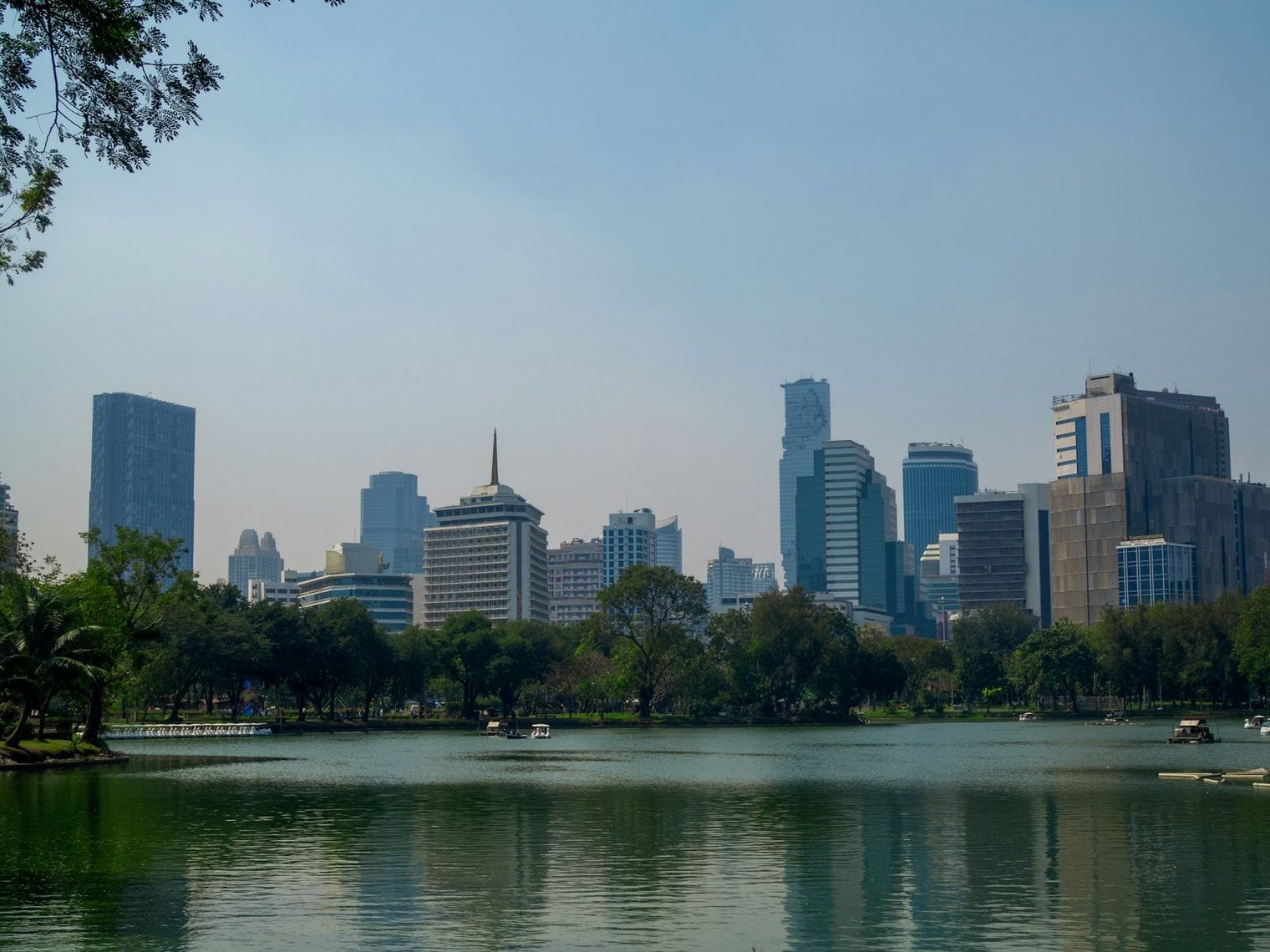
Laid out in the 1920s under Rama VI and named after the Buddha's birthplace in Nepal, Lumphini Park is the green lung of central Bangkok — a large expanse of lawns, banyan trees and artificial lakes hemmed in by the towers of Silom and Sathorn.
It runs on a rhythm worth catching: outdoor aerobics classes and joggers before the heat arrives, then a long quiet middle of the day, then a second surge in the evening. You can hire a swan pedal boat on the lake, and the resident water monitors — large, prehistoric-looking lizards that swim the canals unbothered by anyone — are a genuine local landmark. Entry is free and the shade is welcome.
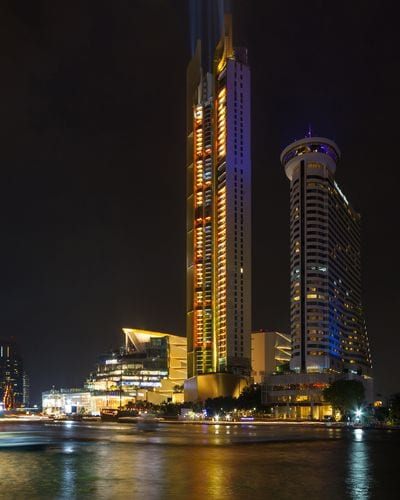
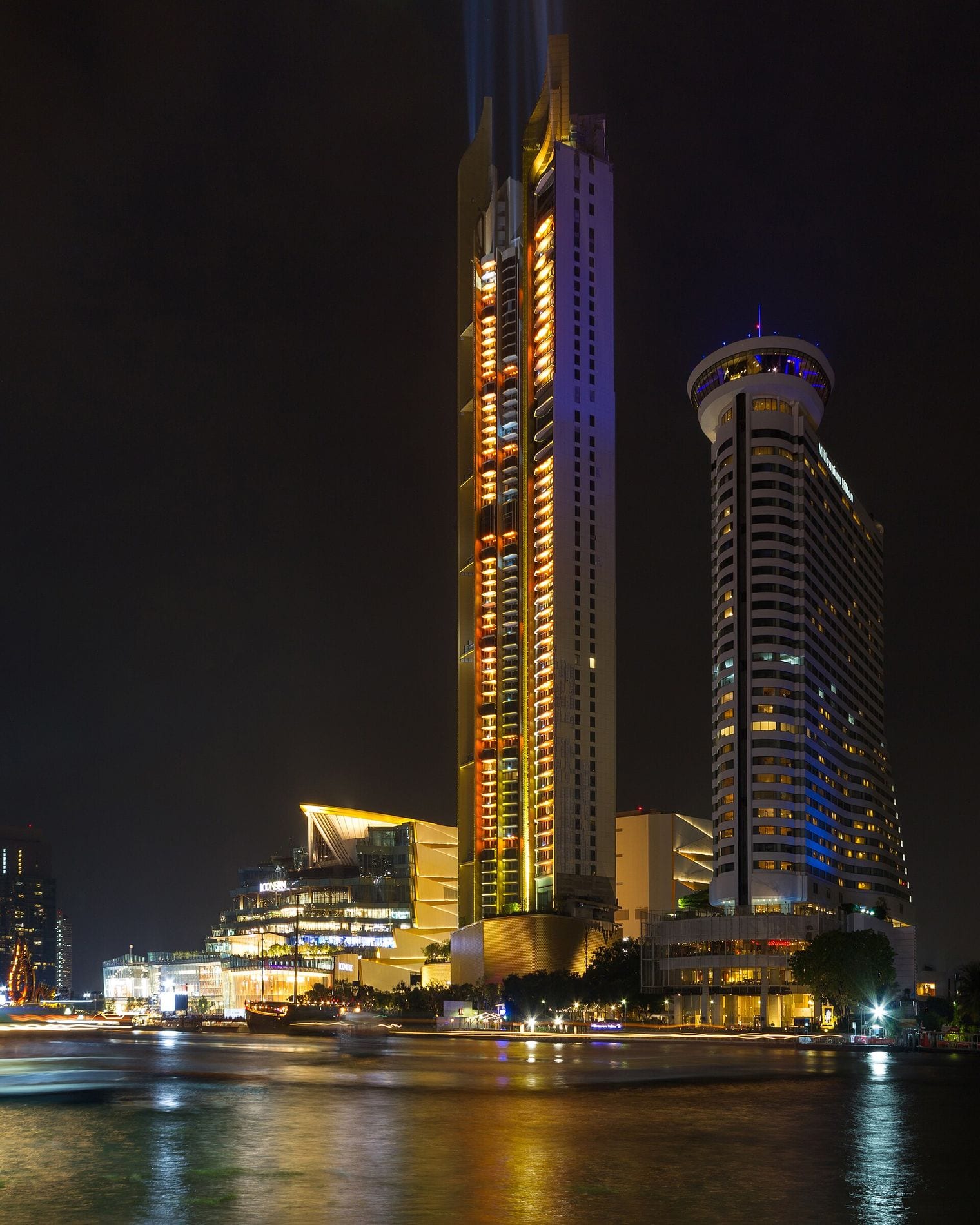
ICONSIAM is the riverside mall that changed the west bank, a vast glass complex facing the Chao Phraya with its own pier and free shuttle boats running from the Skytrain at Saphan Taksin. The upper floors are conventional luxury retail, but that is not the reason to come.
The ground floor holds SookSiam, an indoor recreation of a Thai floating market and village that gathers food and crafts from all 77 provinces under one roof — vendors in wooden boats, regional dishes you would otherwise have to travel for, and an entirely reasonable way to eat your way around the country in an afternoon. The riverside terrace outside is one of the better free viewpoints in the city.
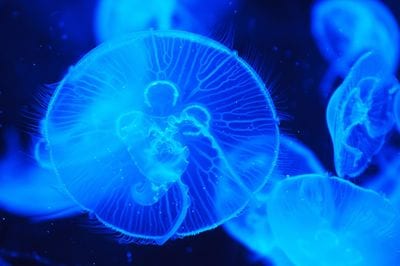
Occupying two basement levels beneath the Siam Paragon shopping centre, SEA LIFE Bangkok Ocean World is among the largest aquariums in Southeast Asia and by some distance the best rainy-afternoon option in the middle of the city.
Zones move from rocky shore and rainforest tanks through to a large open ocean display crossed by a walk-through glass tunnel, with sharks and rays passing overhead. There are penguins, a glass-bottomed boat ride over the main tank and regular feeding sessions. It is unashamedly a family attraction, but it is well kept and genuinely large, and its position under Siam Paragon makes it trivially easy to combine with anything else in the Siam area.
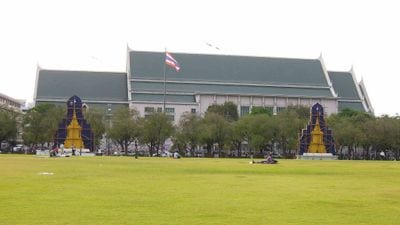
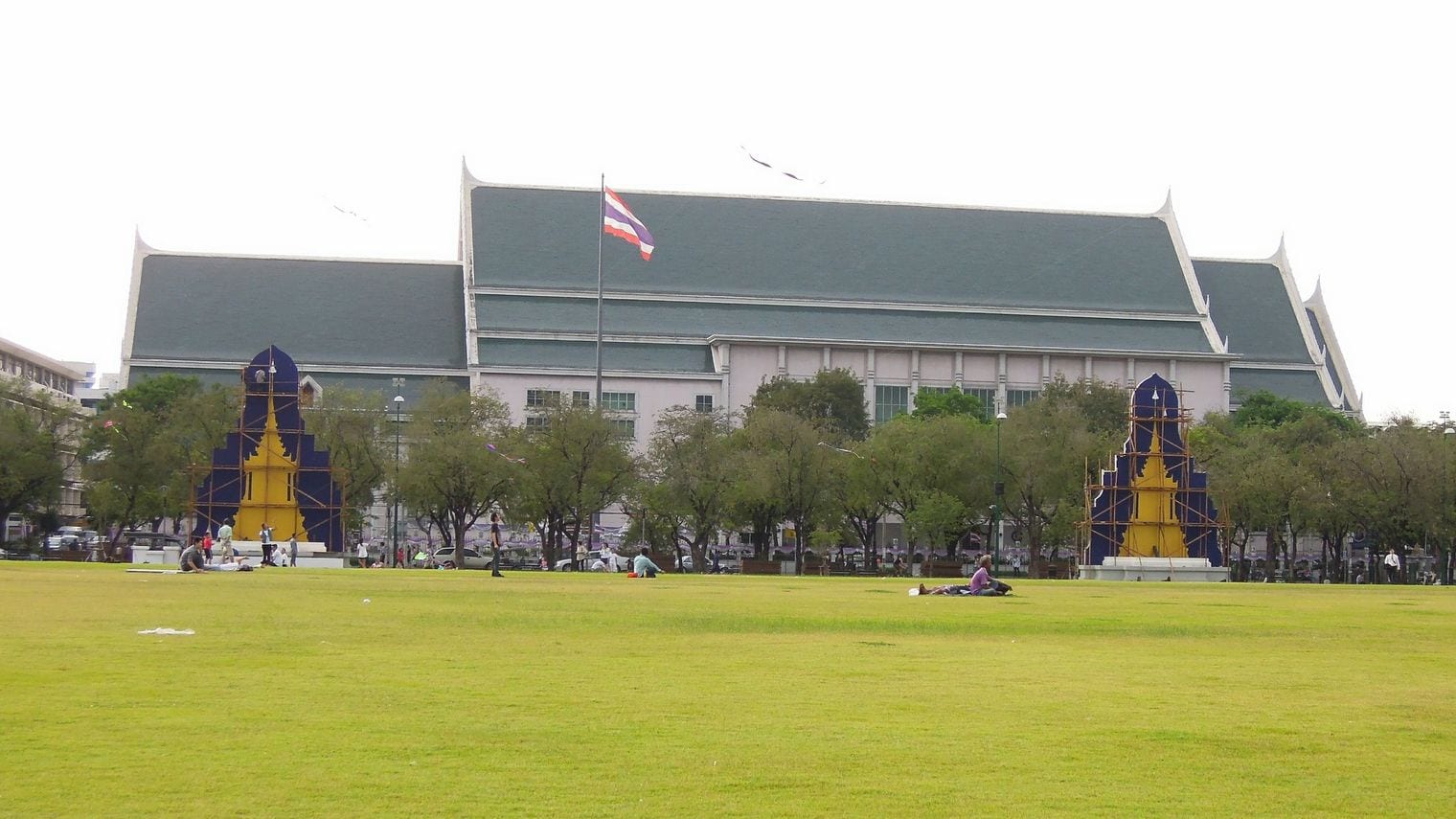
The great oval field immediately north of the Grand Palace is not a park in the usual sense but a royal ceremonial ground, and knowing what it is for changes how it reads. Sanam Luang has hosted royal cremations for more than two centuries, and its most-watched annual event is the Royal Ploughing Ceremony that formally opens the rice-growing season.
On ordinary days it is a vast open lawn ringed by tamarind trees, crossed by pedestrians and used for kite flying when the winds pick up in the hot months. It costs nothing, it gives you the clearest uninterrupted view of the palace walls and the spires behind them, and it sits directly between the palace and the National Museum.
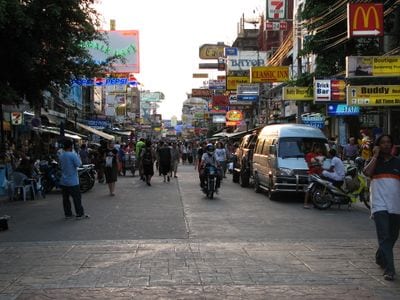
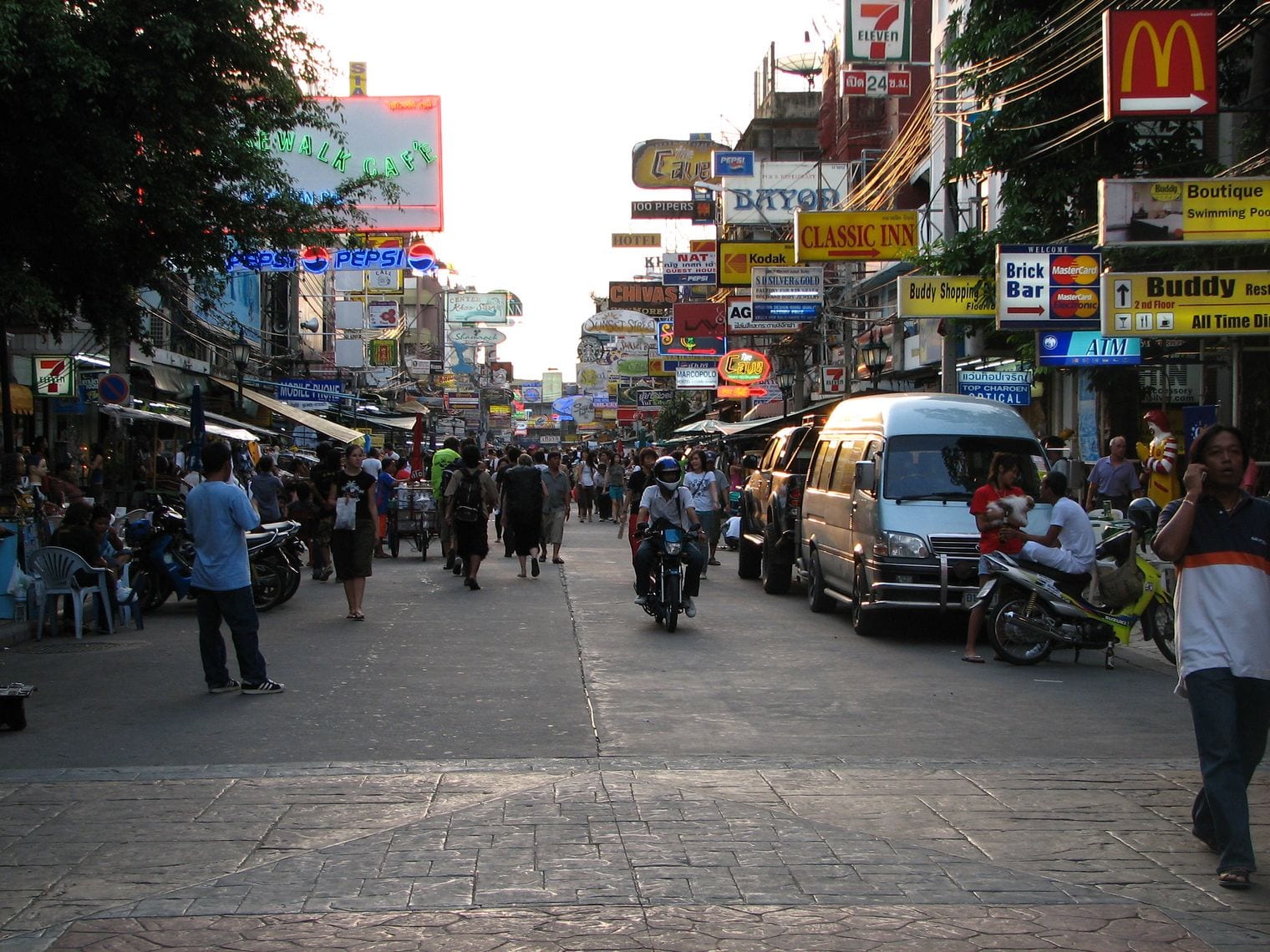
A few hundred metres of bars, hostels, stalls and noise in the Banglamphu district, Khao San Road has been the staging post for backpackers crossing Southeast Asia since the 1980s, and its turn in the film adaptation of The Beach fixed it in the popular imagination.
It is unabashedly a tourist street and not remotely representative of Bangkok, but it is a spectacle in its own right after dark, and the cheap tailors, travel agents and street food make it useful as well as loud. If the volume is too much, the parallel Soi Rambuttri curves away one street north with the same food and roughly a third of the din. Days here are sleepy; nights are not.
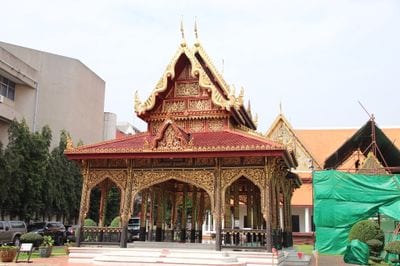
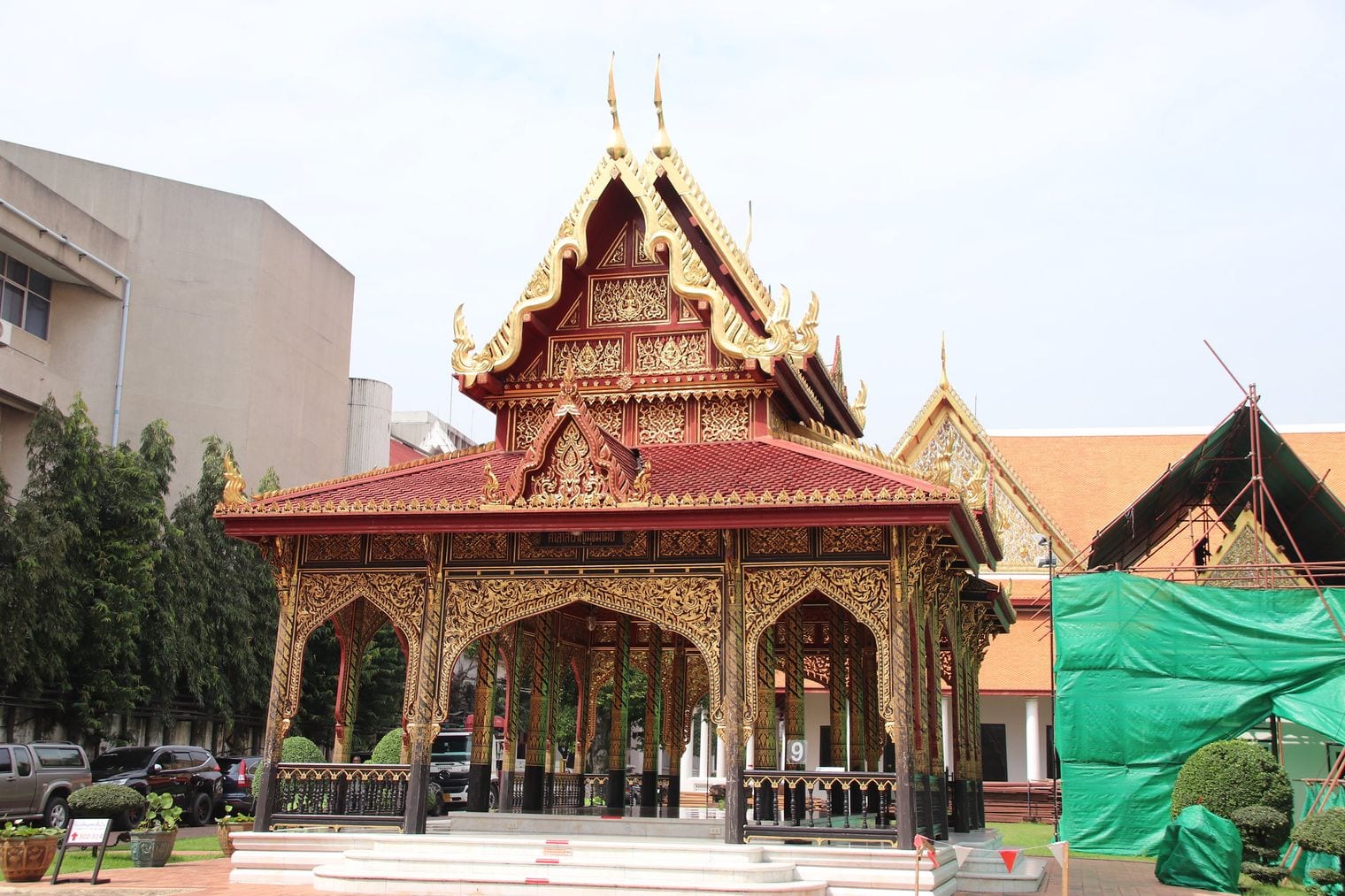
Housed in the former palace of the vice-king beside Sanam Luang, the National Museum Bangkok is one of the largest museums in Southeast Asia, its collection running from prehistoric finds through the Dvaravati, Sukhothai and Ayutthaya periods to the Bangkok era.
The setting is half the appeal, since several galleries are original palace buildings you walk between across open courtyards. Highlights include the Buddhaisawan Chapel with its early murals, and the royal funeral chariots kept in a hall of their own — enormous gilded structures still used for royal cremations on the field outside. Free English-language volunteer tours run on set mornings and are much the best way to see it.
When Rama I founded the capital in 1782 he raised a city pillar to mark its spiritual centre, following a tradition that gives each Thai city a guardian post. The Bangkok City Pillar Shrine, directly opposite the Grand Palace, is where that pillar still stands, sheltered under a white ordained hall with a gilded spire.
It is a small stop and an actively used one — worshippers come to make offerings, and troupes of costumed dancers perform commissioned thanksgiving dances in a side pavilion throughout the day. Entry is free, it takes fifteen minutes, and it makes far more sense of the palace across the road than the palace does of itself.
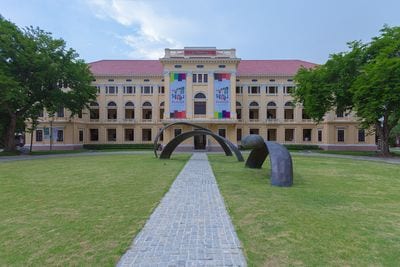
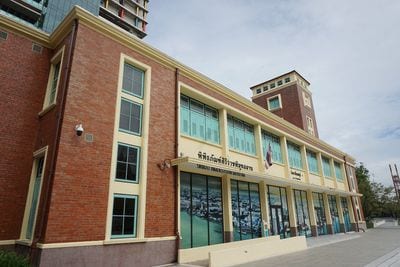
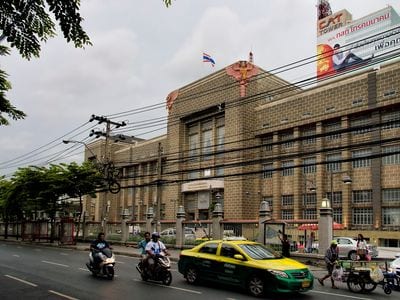
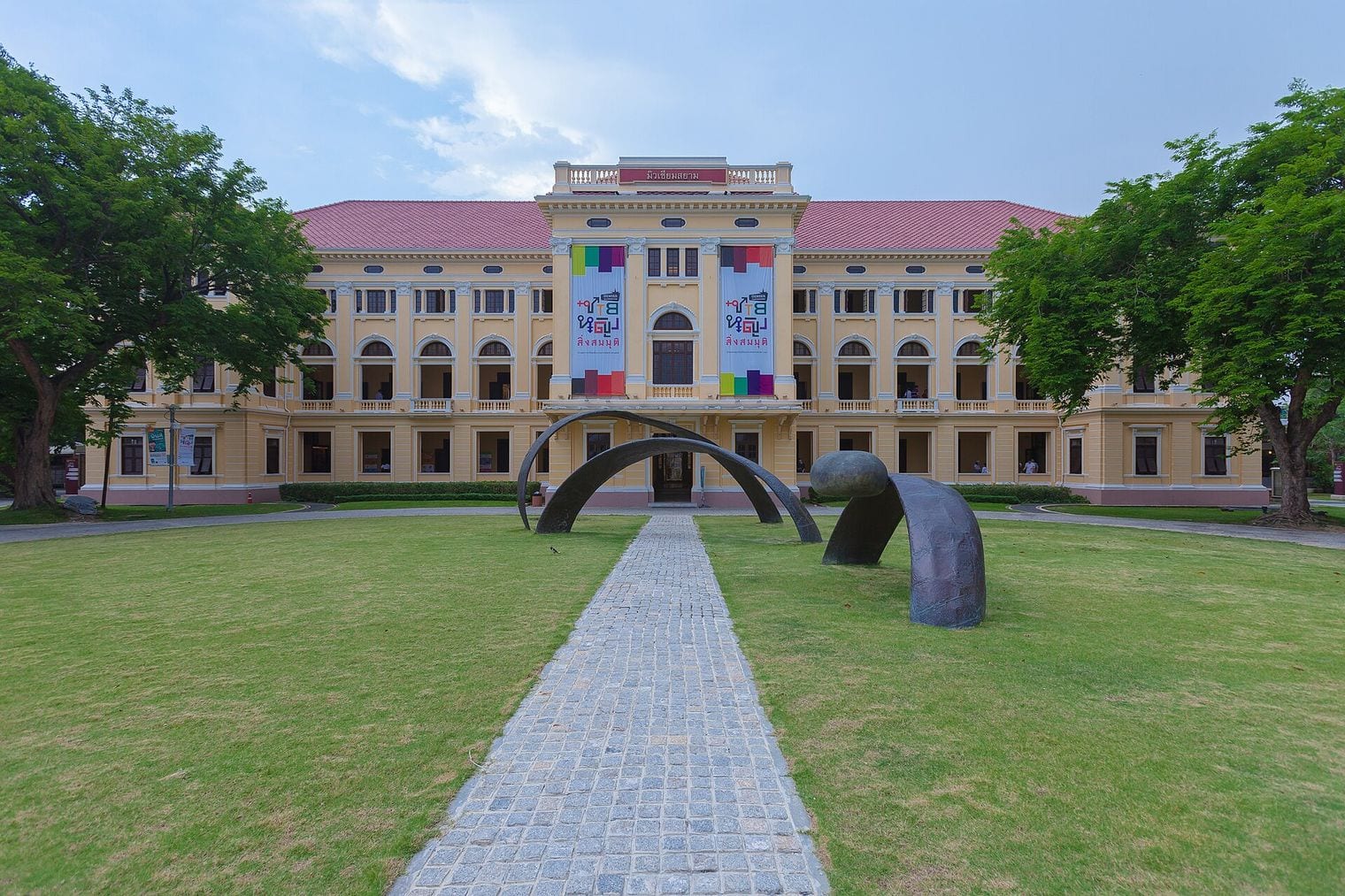
Set in the handsome former Ministry of Commerce building south of the palace, Museum Siam takes on a single question — what does it mean to be Thai — and answers it with interactive displays rather than glass cases of artefacts.
Exhibits trace the story from the Suvarnabhumi trading era through Ayutthaya and the founding of Bangkok to the present, with plenty of hands-on and audiovisual material that works well for older children. It is a useful counterweight to the temple circuit: where the palace shows you royal Thailand, Museum Siam is more interested in migration, trade and the mixing of cultures that actually produced the city. The courtyard is a pleasant place to sit.
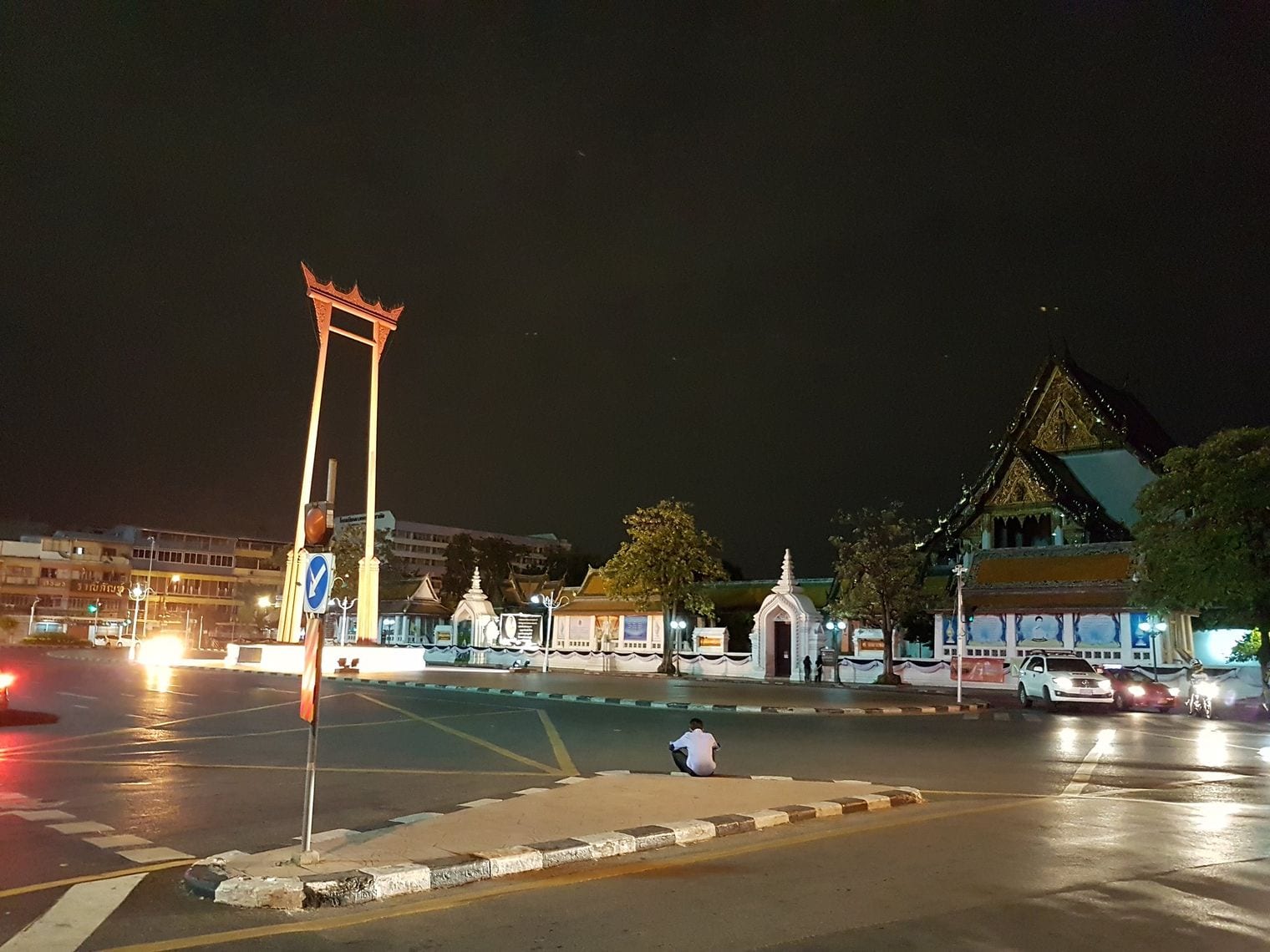
The tall red teak frame standing in the square in front of Wat Suthat is the most conspicuous piece of street furniture in the old city. The Giant Swing was first raised in 1784 for a Brahmin ceremony in which teams swung out to grab a bag of coins suspended high above the ground.
The ritual was abandoned in the 1930s after repeated fatalities, and the frame has been rebuilt more than once since, most recently in teak felled for the purpose. What remains is a striking and slightly unsettling landmark that photographs beautifully against the surrounding shophouses, and it stands directly outside Wat Suthat, which is among the most impressive and least crowded temples in Bangkok.
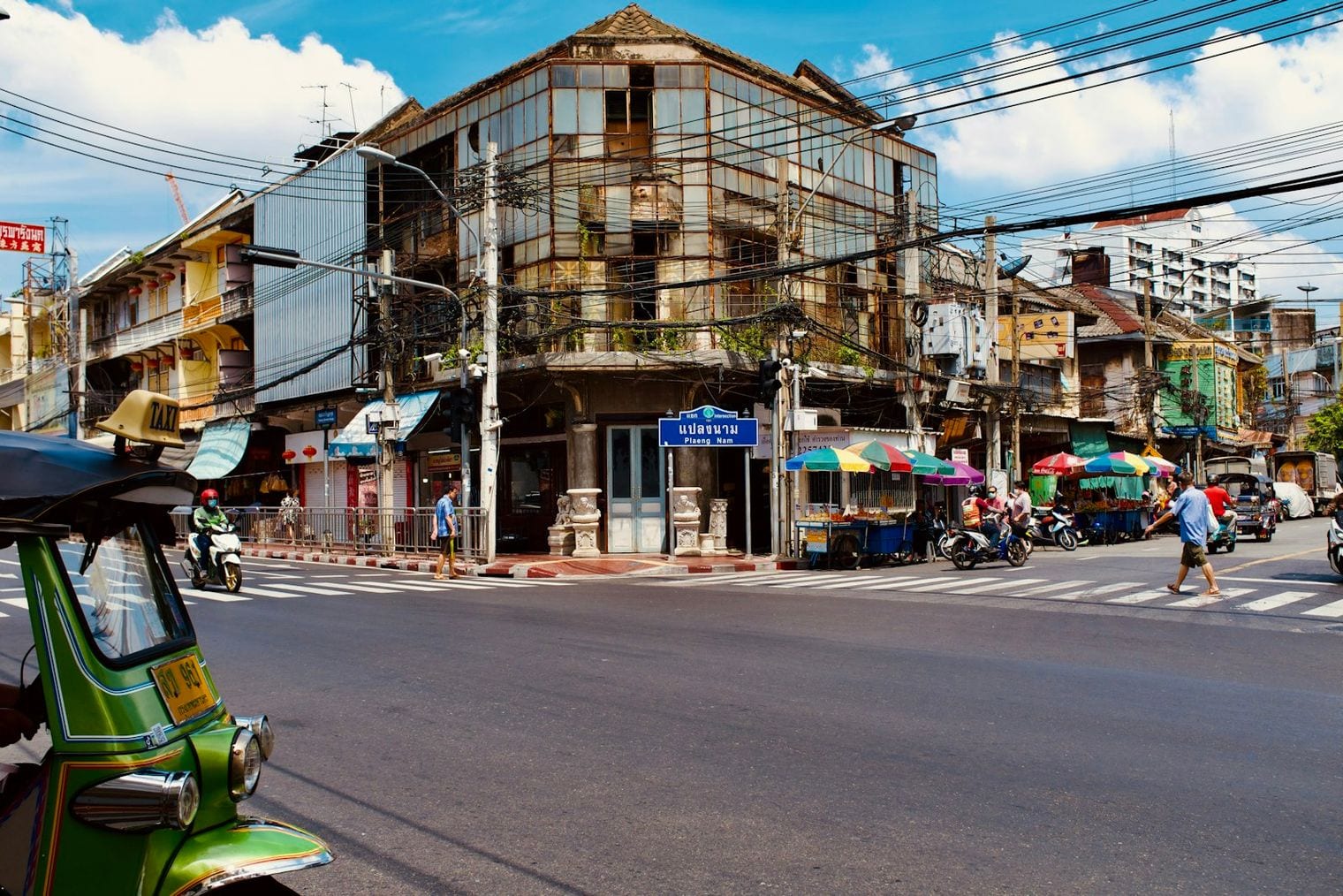
Wedged between Chinatown and the river, Talat Noi is a dense grid of century-old shophouses, Hokkien shrines and car-parts workshops where engine blocks are stacked on the pavement. It has quietly become the most photographed neighbourhood in Bangkok, its walls covered in murals and its alleys barely shoulder-width.
The standout building is So Heng Tai, a Hokkien courtyard mansion several centuries old, unexpectedly occupied by a diving school with a pool in the middle of it. Otherwise the pleasure is simply wandering — riverside piers at the end of blind alleys, shrines wedged between workshops, and coffee shops in restored shophouses. Go on foot, and allow it to take longer than you planned.
2626. Yaowarat Road
Historical Landmark~1.8 km (1.1 miles) from centre
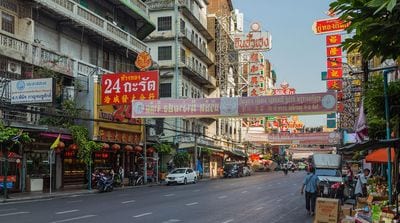
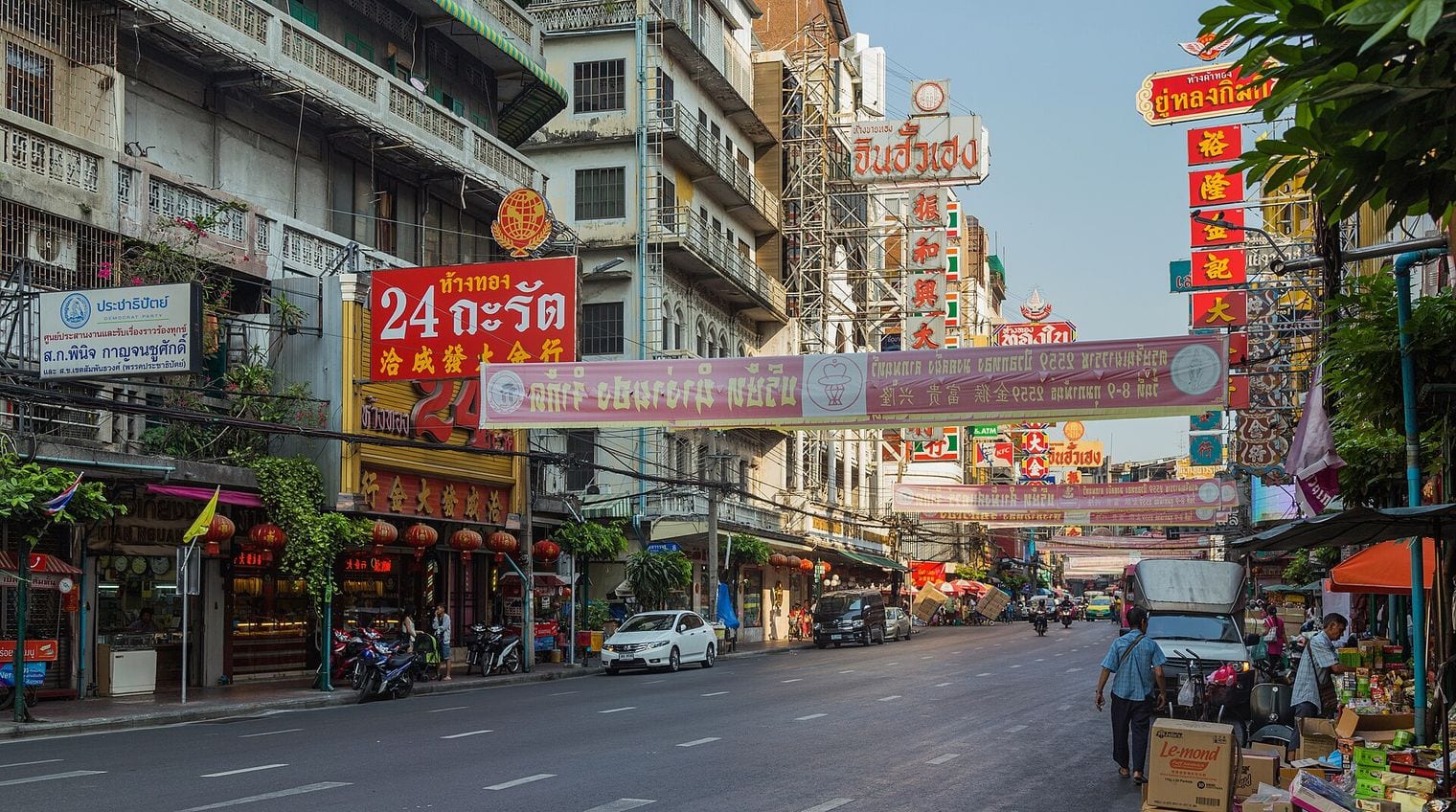
Chinatown has three entries earlier in this list and none of them is the street itself. Yaowarat Road is the mile-and-a-half spine that King Chulalongkorn drove through the district in the 1890s, and after dark it becomes the most concentrated stretch of neon, charcoal smoke and pavement cooking anywhere in Thailand.
By day it is gold shops — dozens of them, all red and gilt, quoting the baht price in the window. From about six in the evening the stalls go up outside them and the pavement narrows to one person wide: grilled prawns, oyster omelettes, chestnuts turned in hot gravel, and bird’s nest and shark fin in the older shophouses. Come by MRT to Wat Mangkon and walk east, and do it hungry.
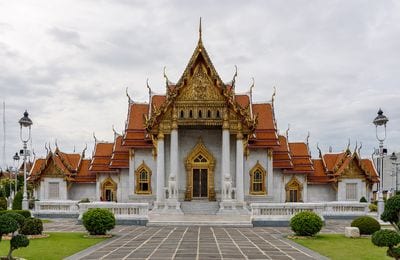
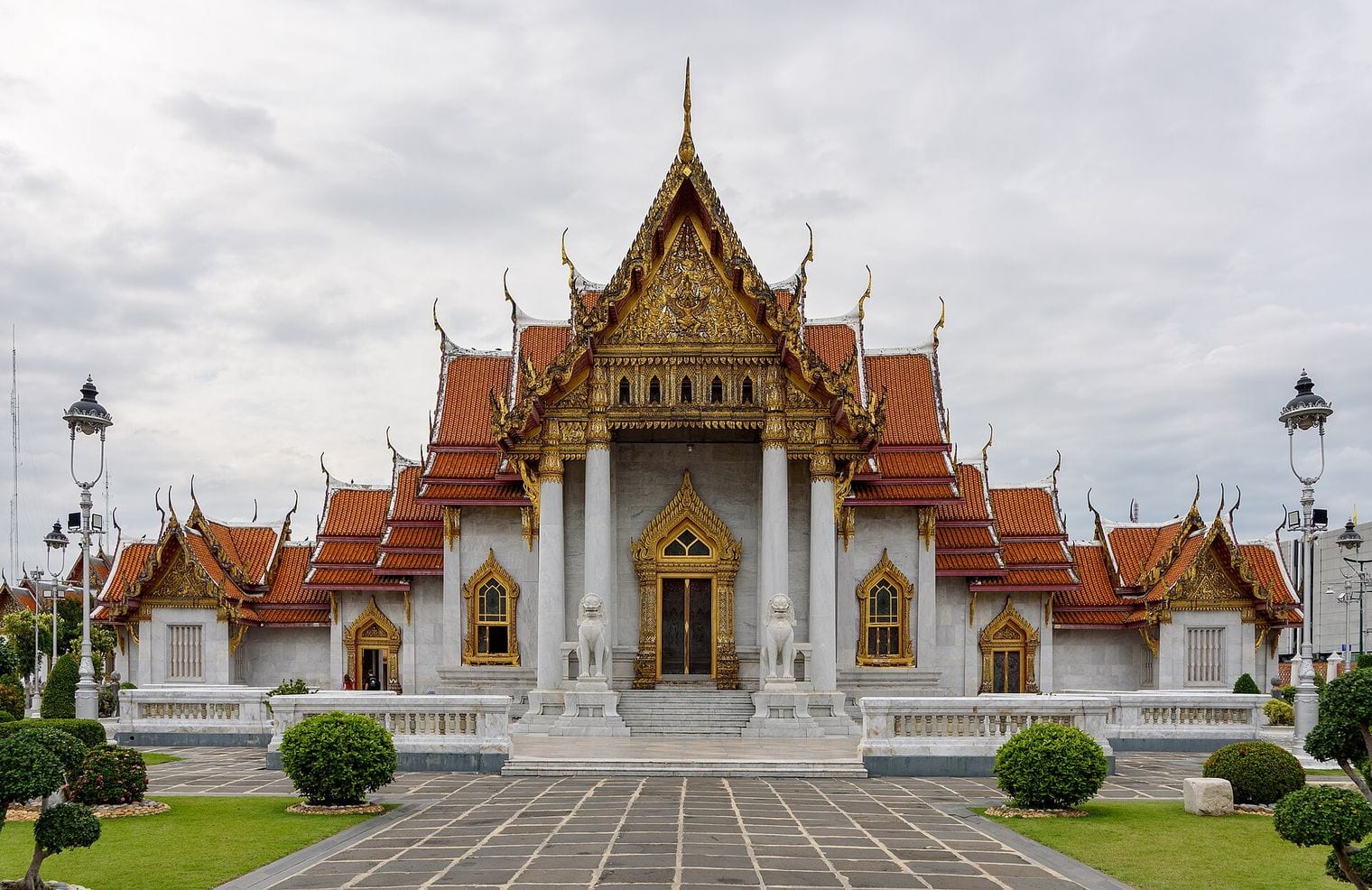
If a Thai temple has ever turned up in your change, it was this one — Wat Benchamabophit is the building on the back of the five-baht coin. Rama V commissioned it in 1899 beside his new Dusit palace and had the ordination hall faced in Carrara marble shipped from Italy, which is why it is white where every other temple in the city is gold.
Prince Naris designed it, and the result is the most European-feeling temple in Bangkok without ever stopping being Thai: stained glass in the gable windows, a courtyard of pale marble, and a cloister behind the hall holding fifty-two Buddha images gathered from across Asia as a study in how the same figure has been carved differently in each place. Rama V’s ashes are interred beneath the principal image.
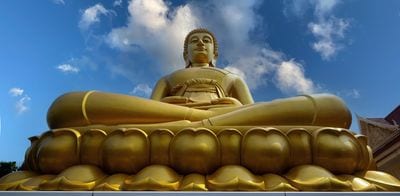
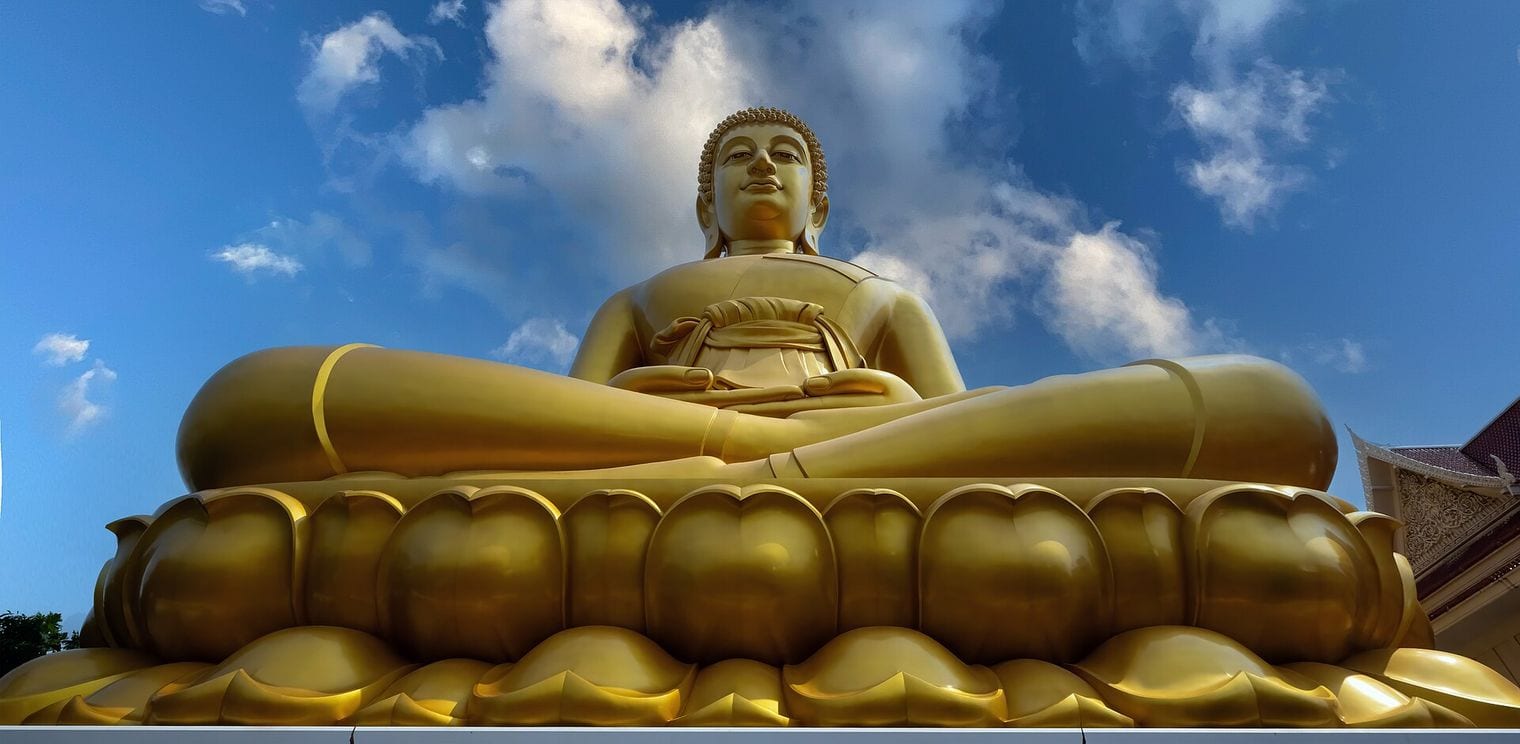
Two things at Wat Paknam Phasi Charoen were finished within the last decade and between them have made a four-hundred-year-old Thonburi monastery one of the most photographed places in the city. The first is the Maharatchamongkhon stupa, eighty metres tall, with a lift inside it.
On its fifth floor sits an emerald-green glass stupa about eight metres high, under a domed ceiling painted as a deep blue and violet galaxy — a room that looks manufactured for a camera and predates the phones now pointed at it. The second is Phra Buddha Dhammakaya Thepmongkhon, a seated bronze Buddha sixty-nine metres tall completed in 2021 and visible from most of western Bangkok. Entry is free; cover shoulders and knees, and come in the morning.
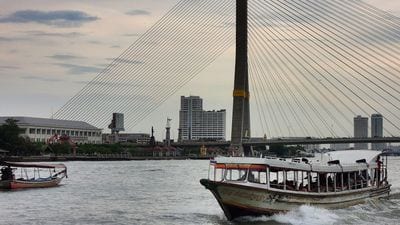
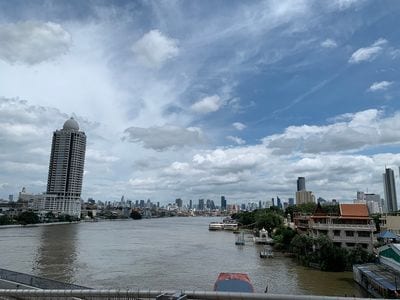
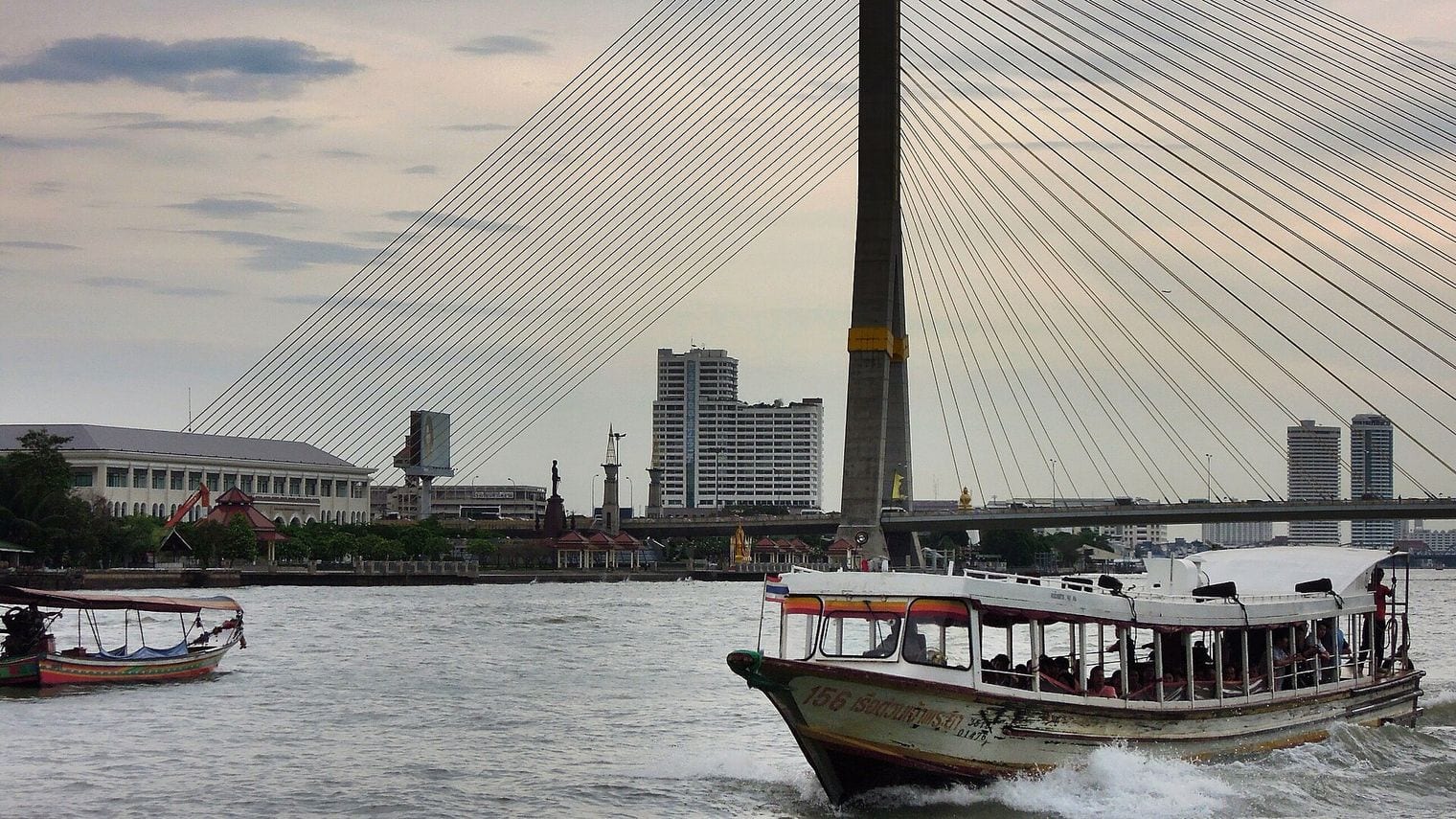
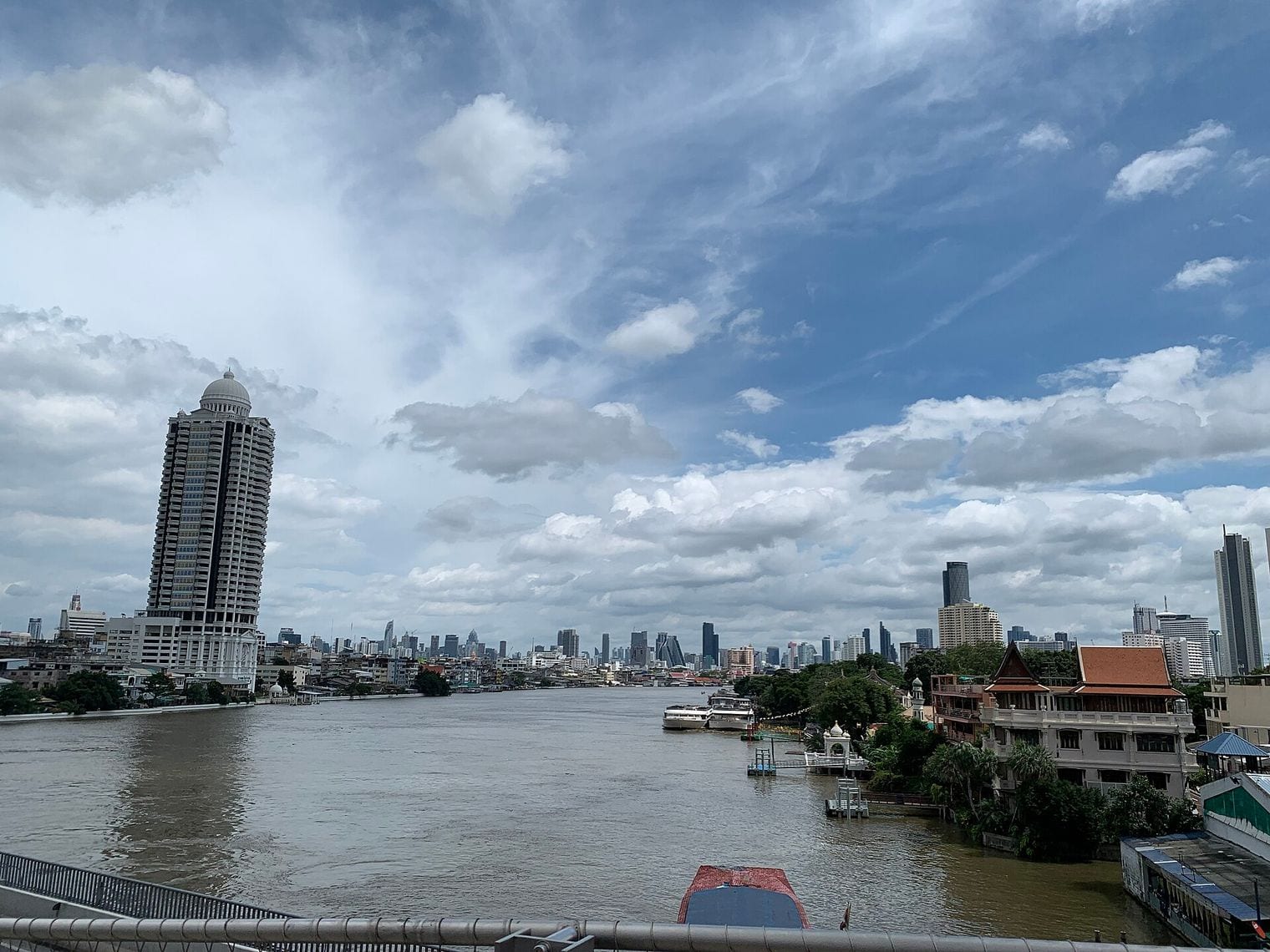
The cheapest sightseeing in Bangkok is a commuter service. The Chao Phraya Express Boat runs flag-coded lines up and down the river from Sathorn Pier, under the Skytrain at Saphan Taksin, and a single fare costs less than a bottle of water while carrying you past the Grand Palace, Wat Arun, Wat Kalayanamitr and half the city’s river frontage.
The flags matter. The coloured-flag boats are the commuter services, stop at different piers and are what Thais actually ride; the blue-flag tourist boat charges several times as much for a day pass and a commentary. Piers are numbered, boarding is brisk and the crews whistle the ropes in, so know your stop before you step on. Short cross-river ferries run at most piers too, for a few baht and about four minutes.
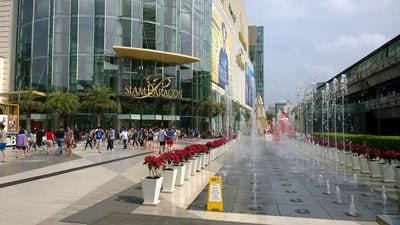
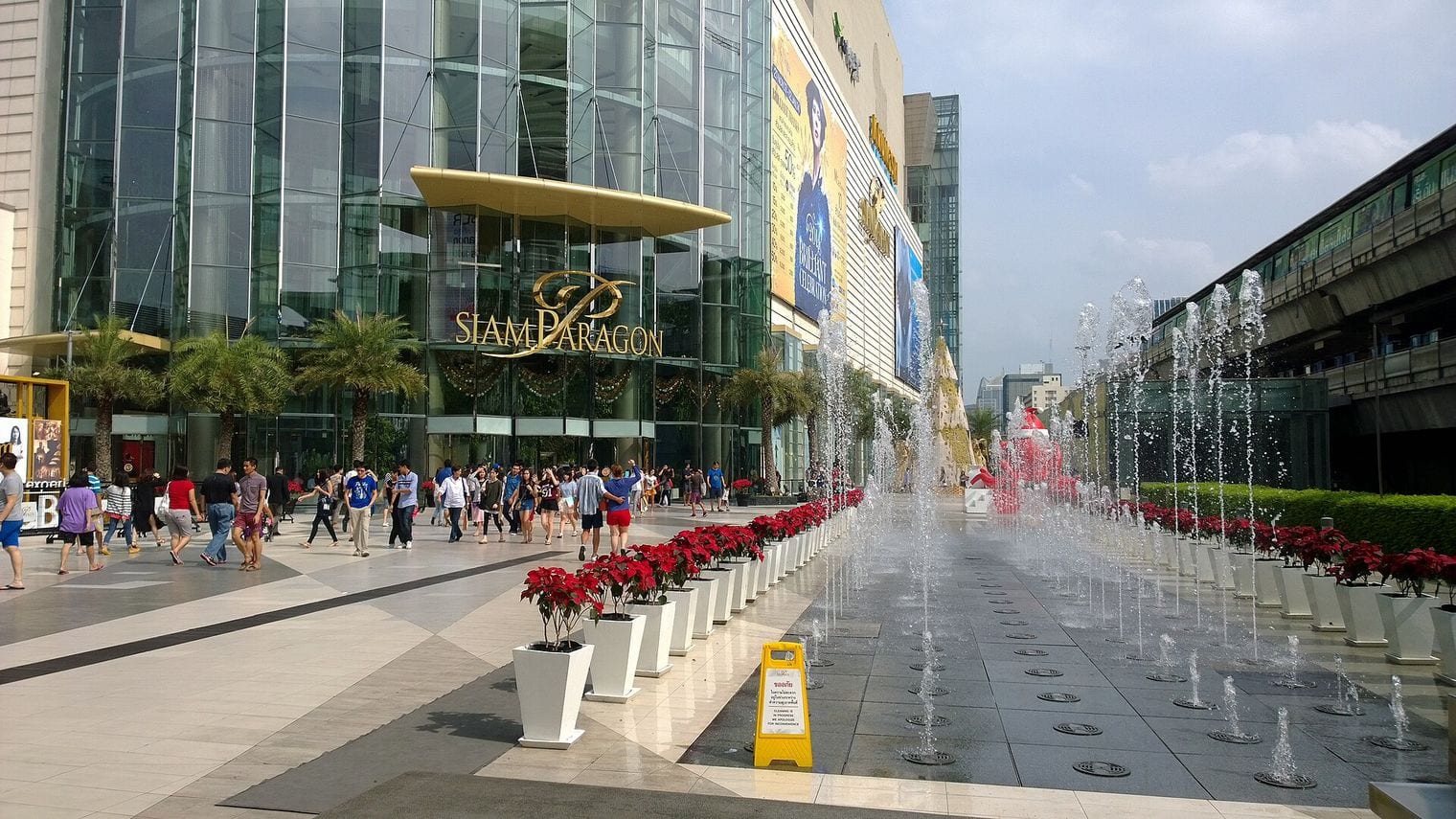
Shopping is not a sideline in Bangkok, and Siam Paragon is where the city does it at full volume. Opened in 2005 at the Siam interchange, it is the flagship of the Siam Square cluster: a supercar showroom on the ground floor, a basement food hall that is genuinely one of the better places to eat in the district, and a cinema complex on top.
It is also the address of the aquarium at number 18 on this list, which sits directly underneath it, so the two fold neatly into one afternoon. Come for the air conditioning as much as the shops — Siam Paragon, Siam Center and Siam Discovery are joined by walkways to the Skytrain, and in April that lets you cross the whole district without stepping into the heat.
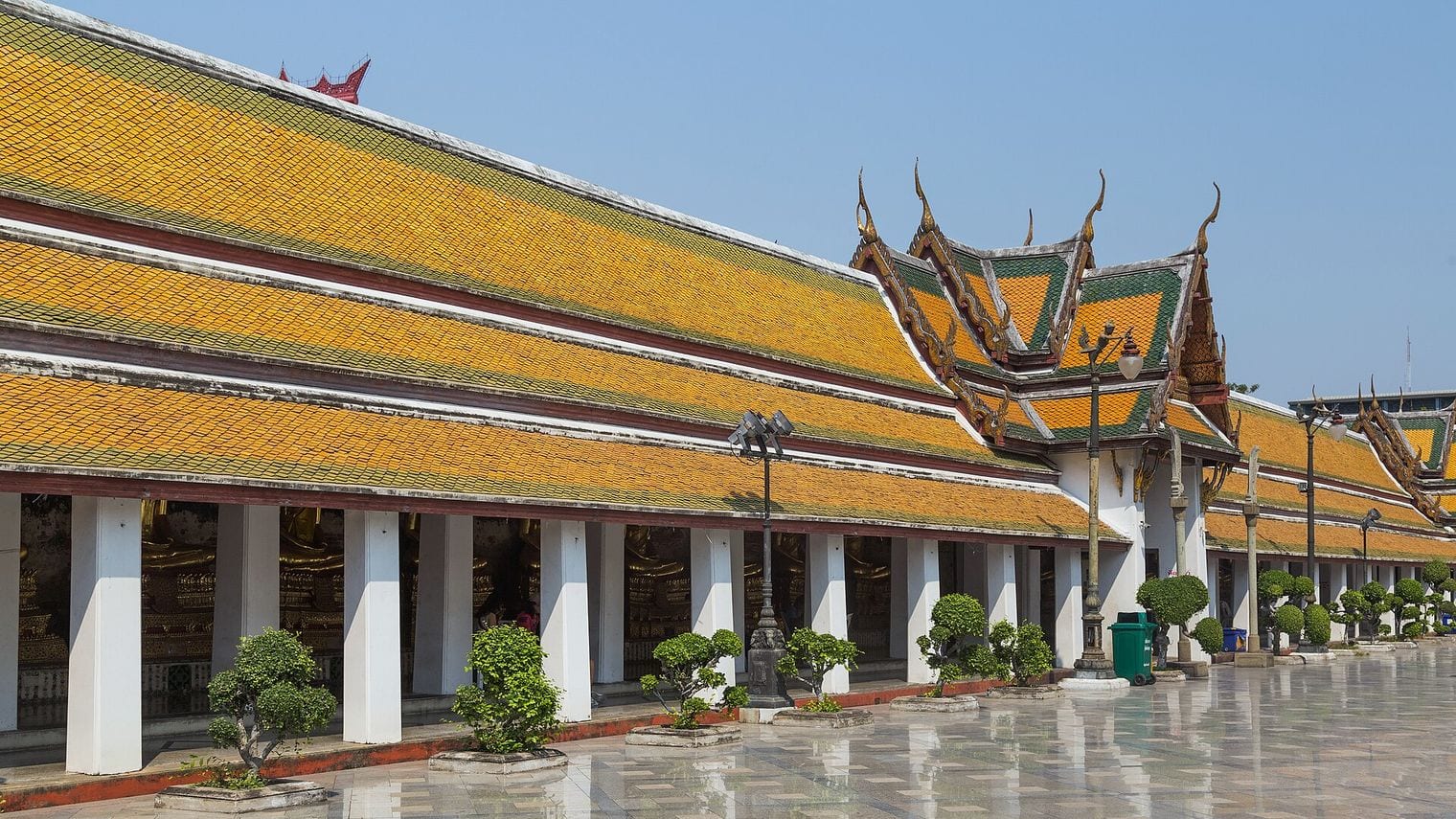
The Giant Swing at number 24 stands in front of a temple most visitors photograph the frame and then walk away from, which is a mistake. Rama I began Wat Suthat in 1807 to house a bronze Buddha he had barged down from Sukhothai, and it took three reigns to finish.
Its viharn is among the tallest in Bangkok and the walls are covered floor to ceiling in murals; the courtyard is a quiet grid of Chinese stone figures brought in as ships’ ballast. It is a first-class royal temple, it holds the ashes of Rama VIII, and it is almost always empty compared with the palace temples ten minutes away. Bamrung Mueang Road outside is where Bangkok buys its Buddha images, which is a sight in itself.
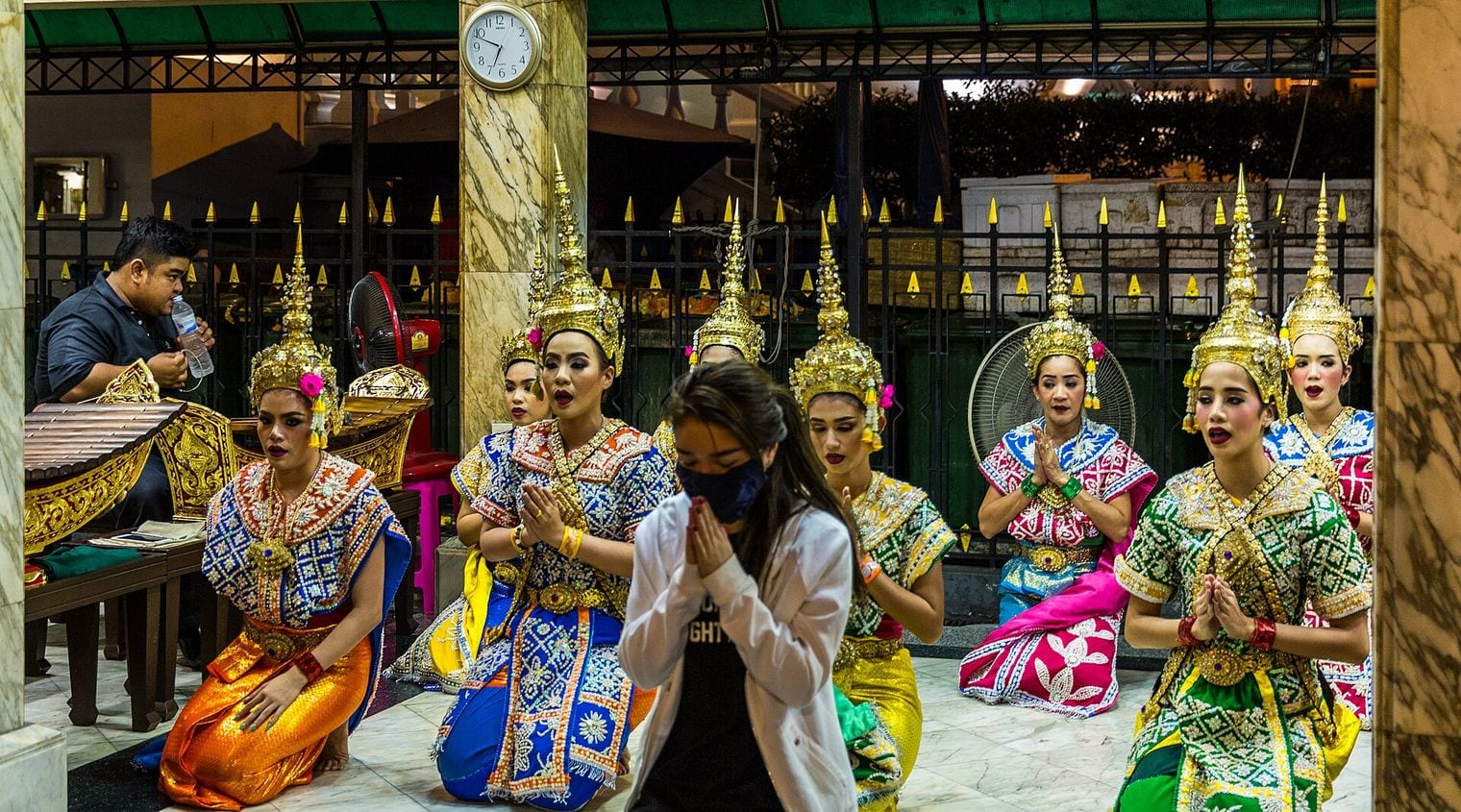
On the corner of the busiest intersection in modern Bangkok, wedged between shopping malls and a skywalk, the Erawan Shrine is a small gilt four-faced Brahma image with a permanent queue in front of it. It went up in 1956 after a run of accidents during the building of the Erawan Hotel, on an astrologer’s advice, and the accidents stopped.
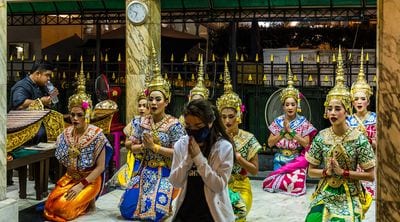
What makes it worth crossing Ratchaprasong for is the traffic in offerings: marigold garlands, teak elephants and, when a wish has been granted, a troupe of resident classical dancers hired on the spot to perform in front of the image. The air is thick with incense at any hour, the ranat carries over eight lanes of traffic, and the whole thing is free to watch from the rail.
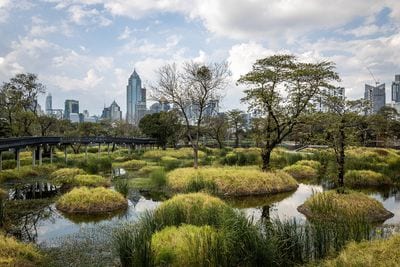
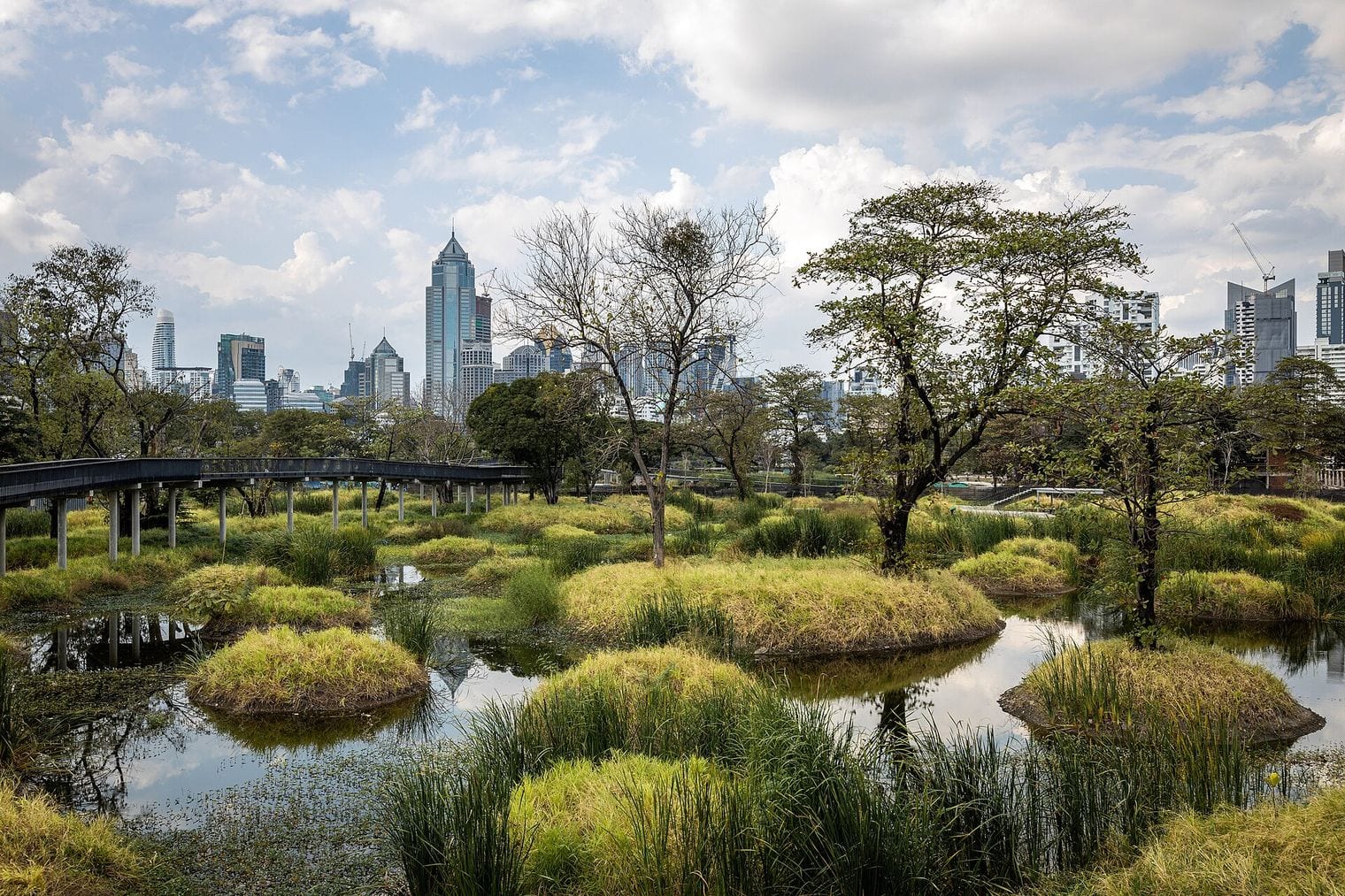
Lumphini at number 16 gets the visitors, but the best green space in Bangkok is the one built on a tobacco factory. The forest extension to Benjakitti Park opened in 2022 on land the Tobacco Monopoly gave up, and instead of lawns the designers built a constructed wetland — four ponds, a few hundred plant species, and 1,733 of the original trees kept where they stood.
A 1.6-kilometre walkway runs above all of it at canopy height, so you cross reed beds and open water with the Asok towers standing directly behind them, which is the view that has made the park an evening fixture. It joins Lumphini on foot by a green bridge over the expressway, and the Skytrain at Asok and the MRT at Queen Sirikit National Convention Centre both land beside it.
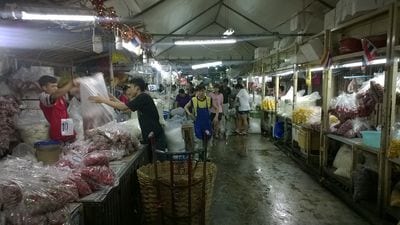
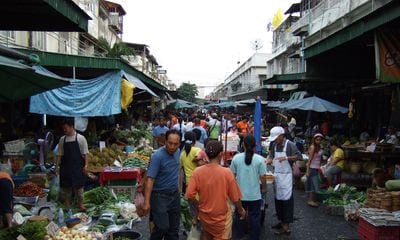
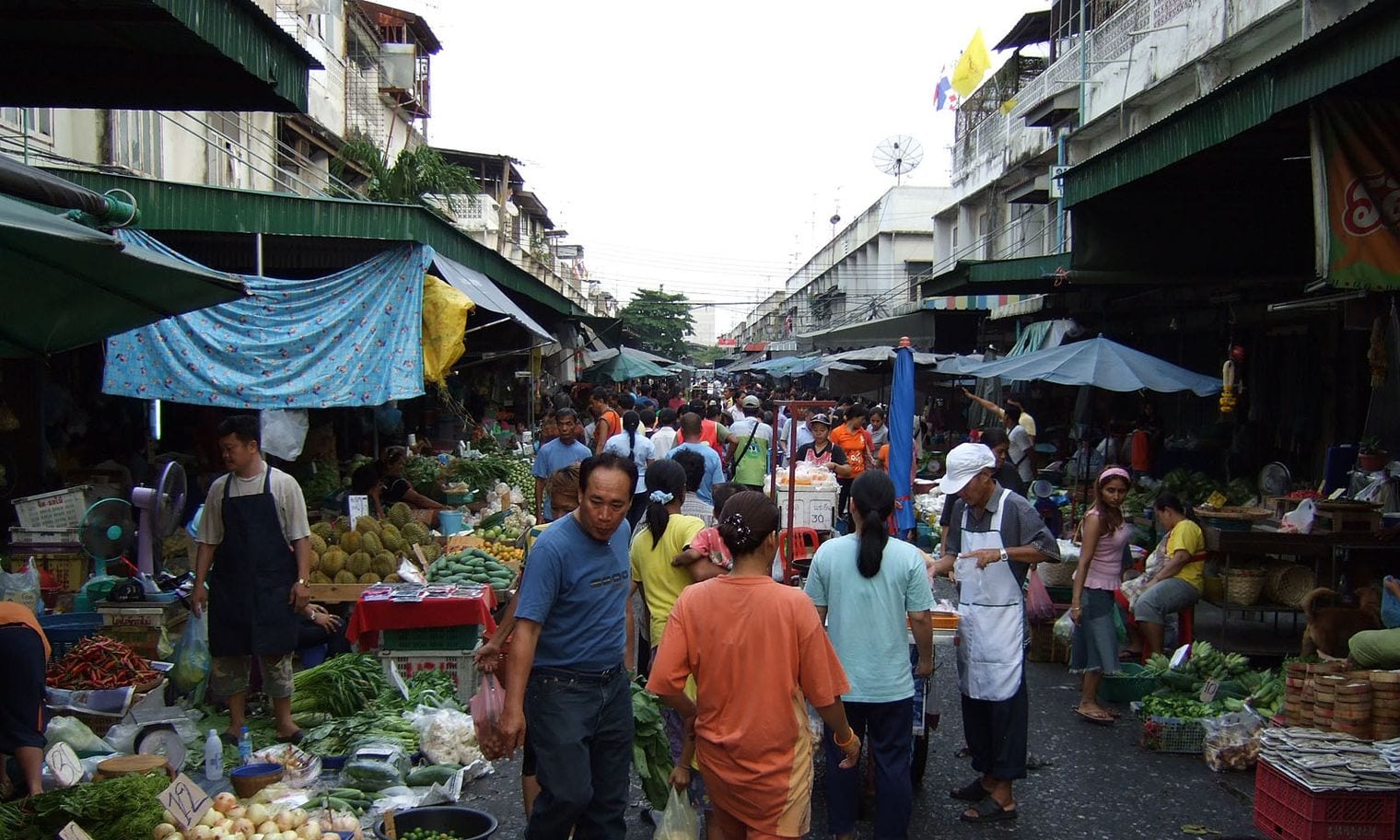
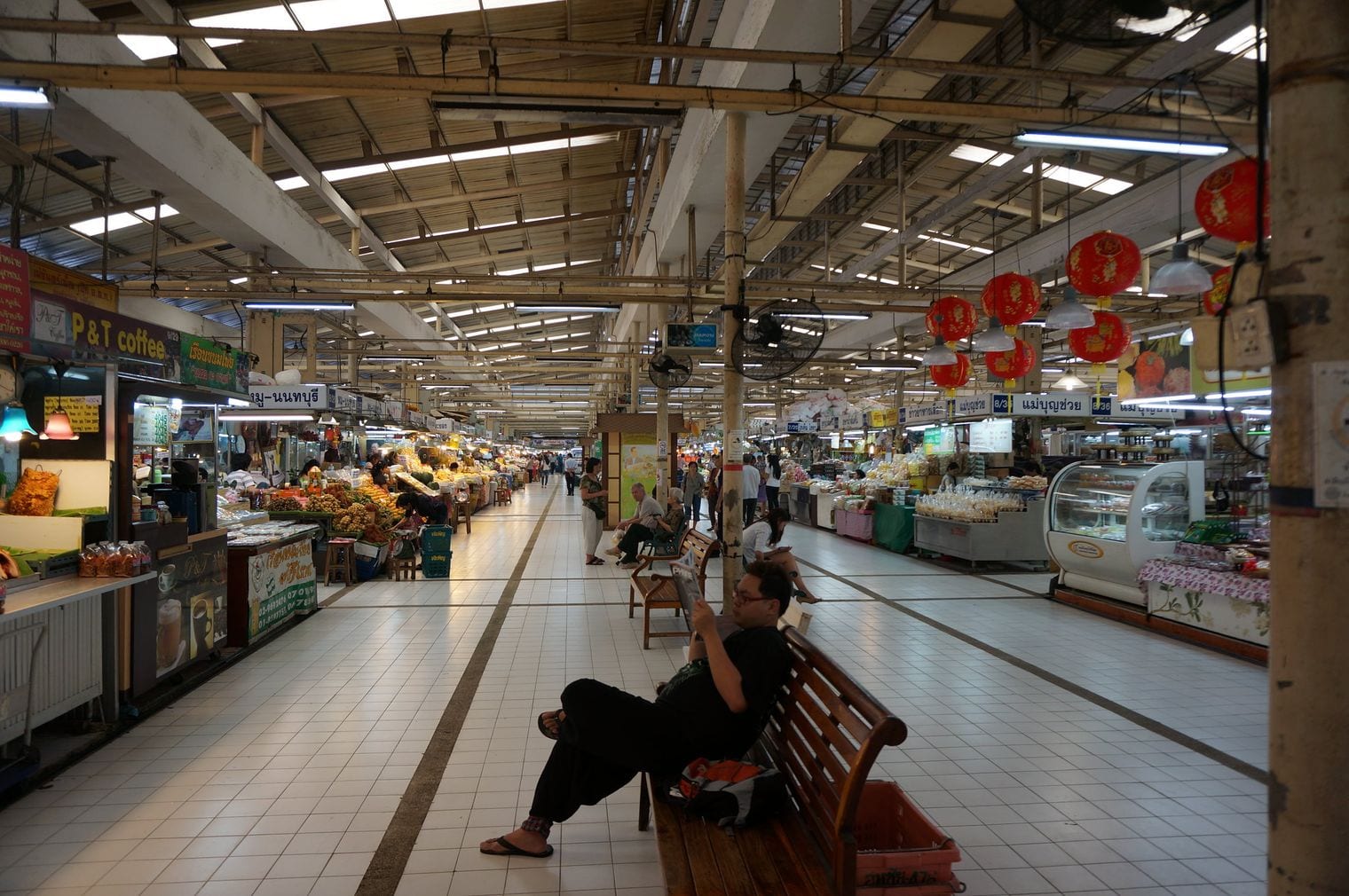
Every restaurant kitchen in Bangkok is supplied from somewhere, and mostly it is from here. Khlong Toei Market is the city’s biggest fresh market — a covered maze off Rama IV between the port and the expressway, where the wholesale trade runs through the small hours and the retail trade takes over at dawn.
It is not arranged for visitors, and that is the appeal: whole tuna broken down on concrete, live catfish in shallow trays, sacks of galangal and bird’s-eye chilli, banana leaf by the kilo, and a butchery section that is not for the squeamish. The wholesale hours from about one in the morning are the real spectacle; by mid-afternoon it thins out. Khlong Toei MRT is five minutes away on foot, and it trades every day.
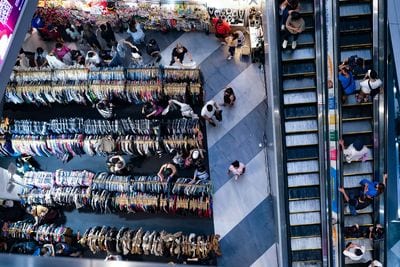
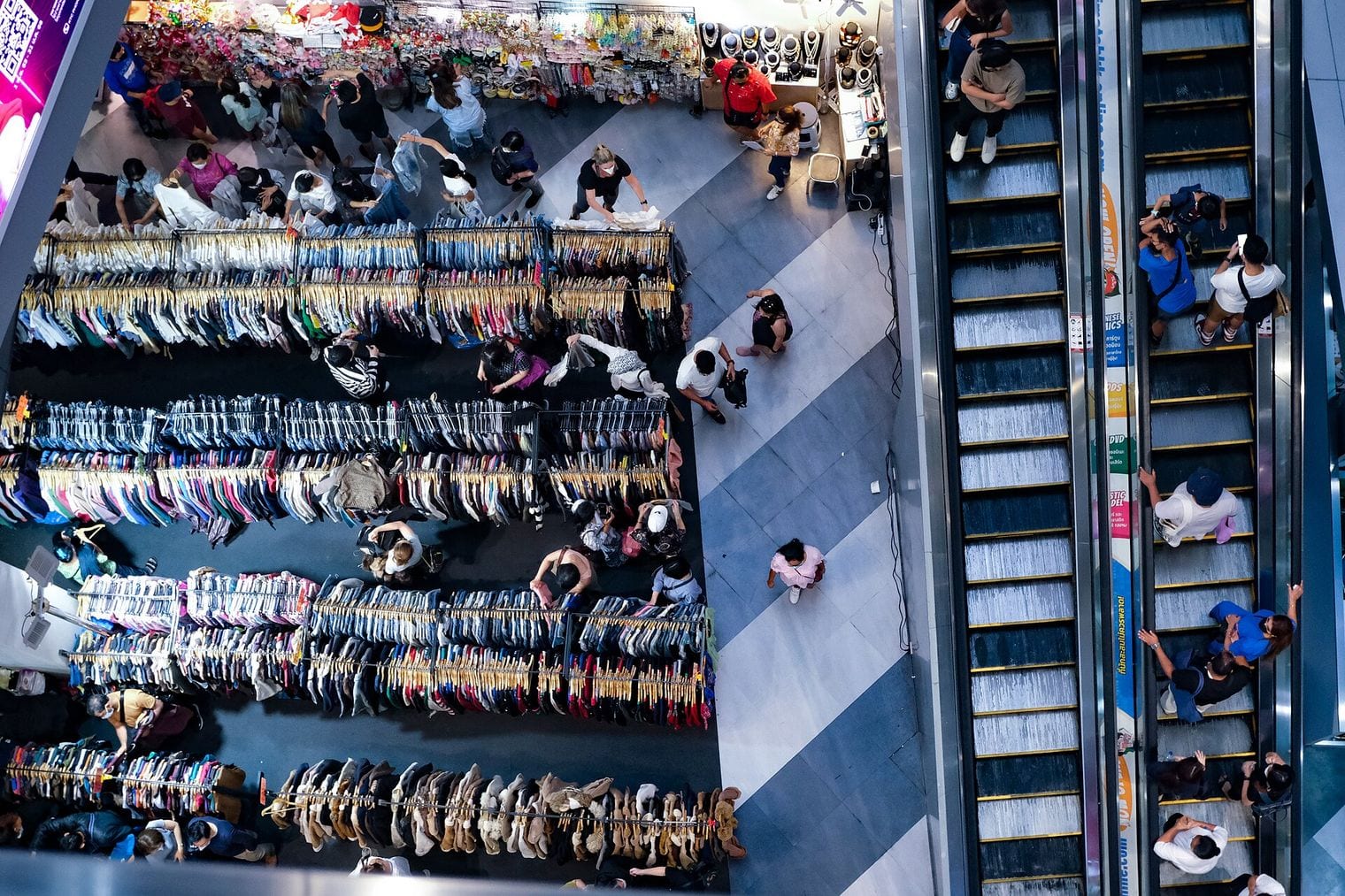
A ten-minute walk from Siam Paragon and a different country. MBK Center opened in 1985 and never modernised into a luxury mall — eight floors of roughly two thousand small independent units packed shoulder to shoulder, with the phone-and-electronics floors that are the reason half of Bangkok comes here.
It is the indoor, air-conditioned version of a Thai market, prices are negotiable on most floors, and the counterfeit trade that made its name has thinned without vanishing. The top-floor food court is one of the cheapest sit-down meals in central Bangkok. A skywalk connects it to National Stadium BTS and onward to the Bangkok Art and Culture Centre at number 13, which stands directly opposite.
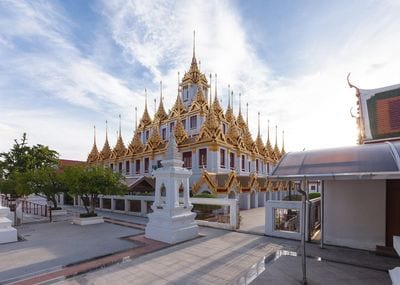
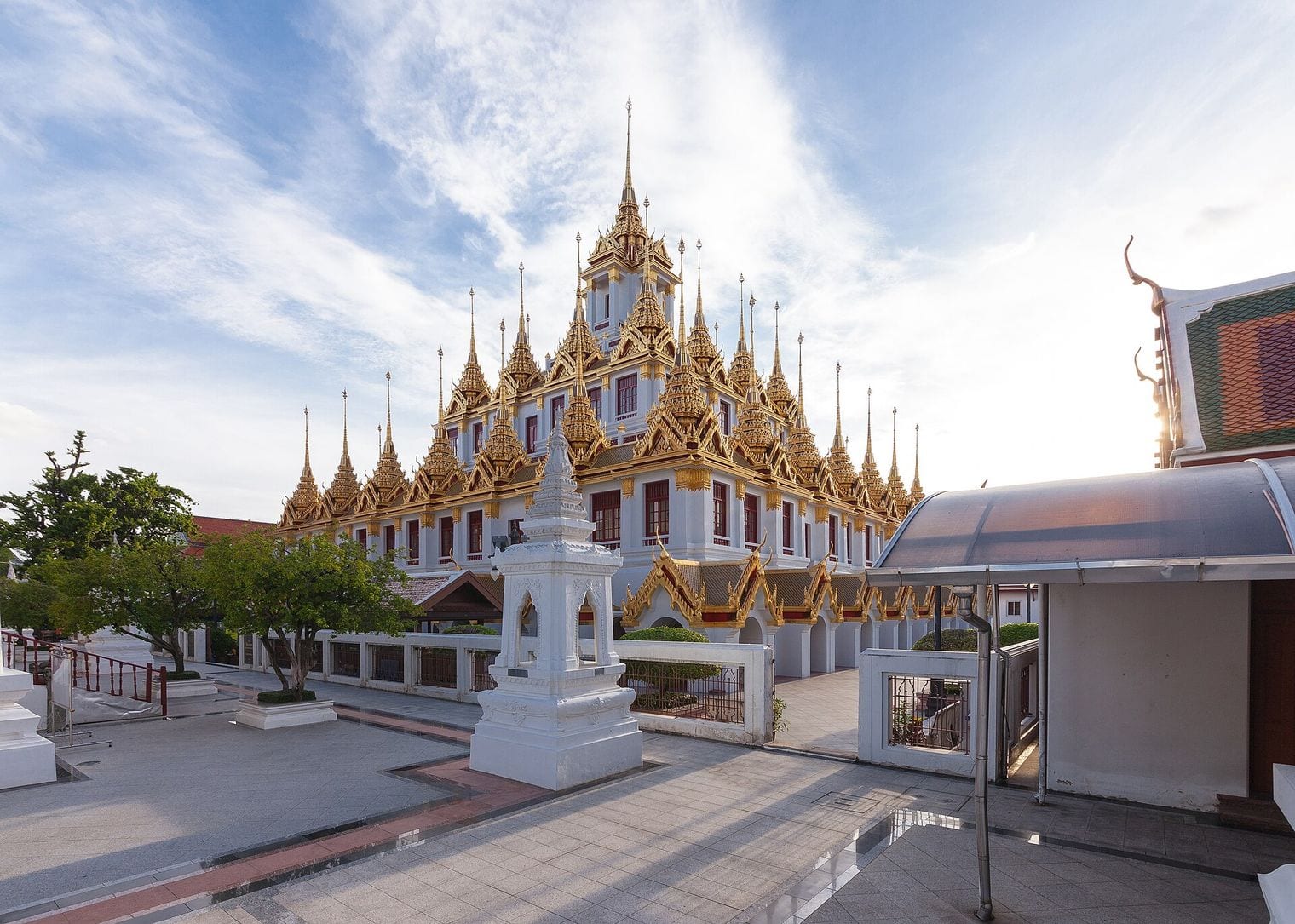
Rama III built the metal castle at Wat Ratchanatdaram in 1846 for his granddaughter, copying a form that had once existed in India and Sri Lanka and has survived nowhere else. Thirty-seven iron spires rise in tiers above a square building, one for each of the thirty-seven virtues that lead to enlightenment, and the whole thing sits on Thailand’s tentative list for UNESCO.
Inside it is a dim concentric maze of corridors and meditation cells, with a spiral stair at the centre climbing to a relic chamber and a roof terrace. From up there you look straight across at the Golden Mount at number 8 and down onto Ratchadamnoen Avenue — the best free view in the old city, and one most visitors walk past on their way to somewhere else.
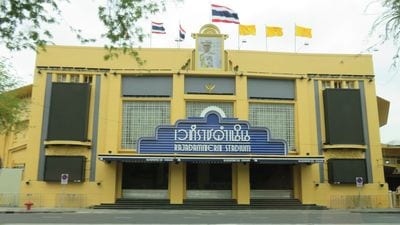
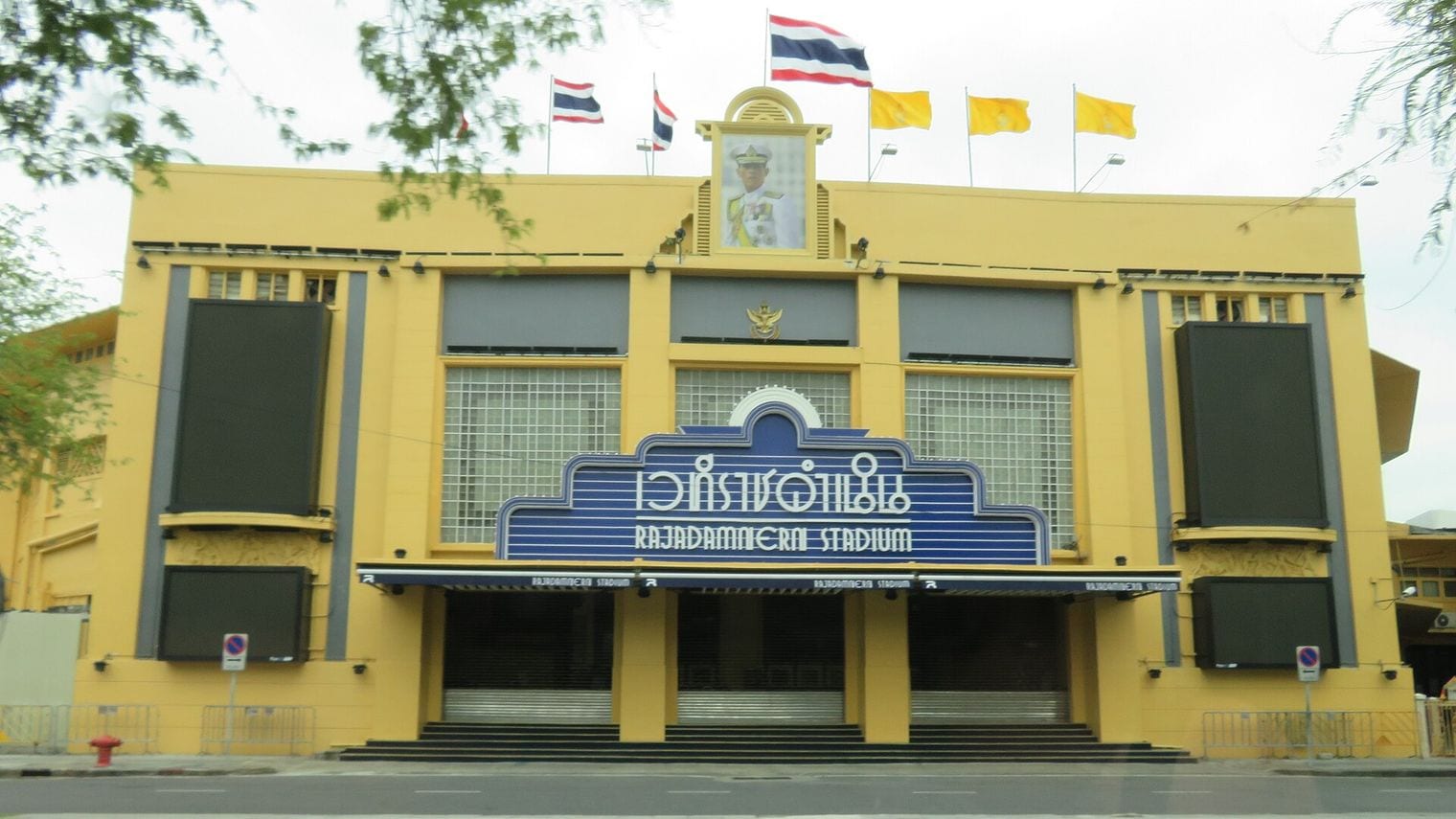
Muay Thai is the national sport and Rajadamnern Stadium is where it became a professional one. Commissioned in 1941, finished in the last months of 1945 and open for its first card that December, it is the oldest purpose-built Muay Thai stadium in the world, and a recent renovation has given it a modern arena without moving it off its original site on Ratchadamnoen Nok.
Cards run most nights of the week, usually eight bouts, starting in the early evening and building from teenage prospects to the main event. The ritual is half the point: the wai kru dance each fighter performs before the first bell, the piercing sarama music that speeds up with the action, and the wall of gamblers on the far side calling odds by hand. Tickets are sold on the stadium’s own site.
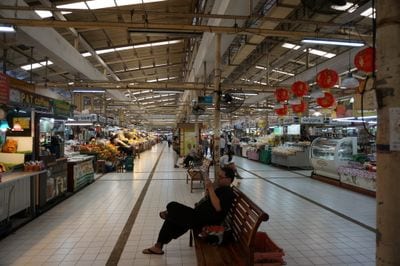
Directly across the road from the Chatuchak crowds at number 5, Or Tor Kor Market is the calm, air-conditioned opposite: a produce hall run by the government’s Marketing Organisation for Farmers, where the fruit is graded, stacked like jewellery and priced accordingly.
It is the place to try durian without committing to a whole one, to see mangosteen and rambutan at their best in May and June, and to buy curry pastes and dried spices that are not tourist blends. A food court along one side does southern curries, boat noodles and grilled river prawn to a standard that pulls in Bangkok office workers rather than visitors. MRT Kamphaeng Phet exit 3 puts you at the door, and it opens daily.
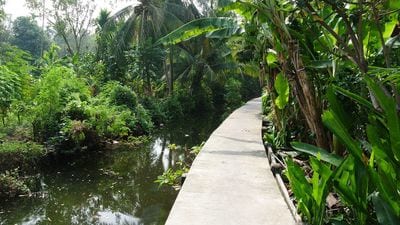
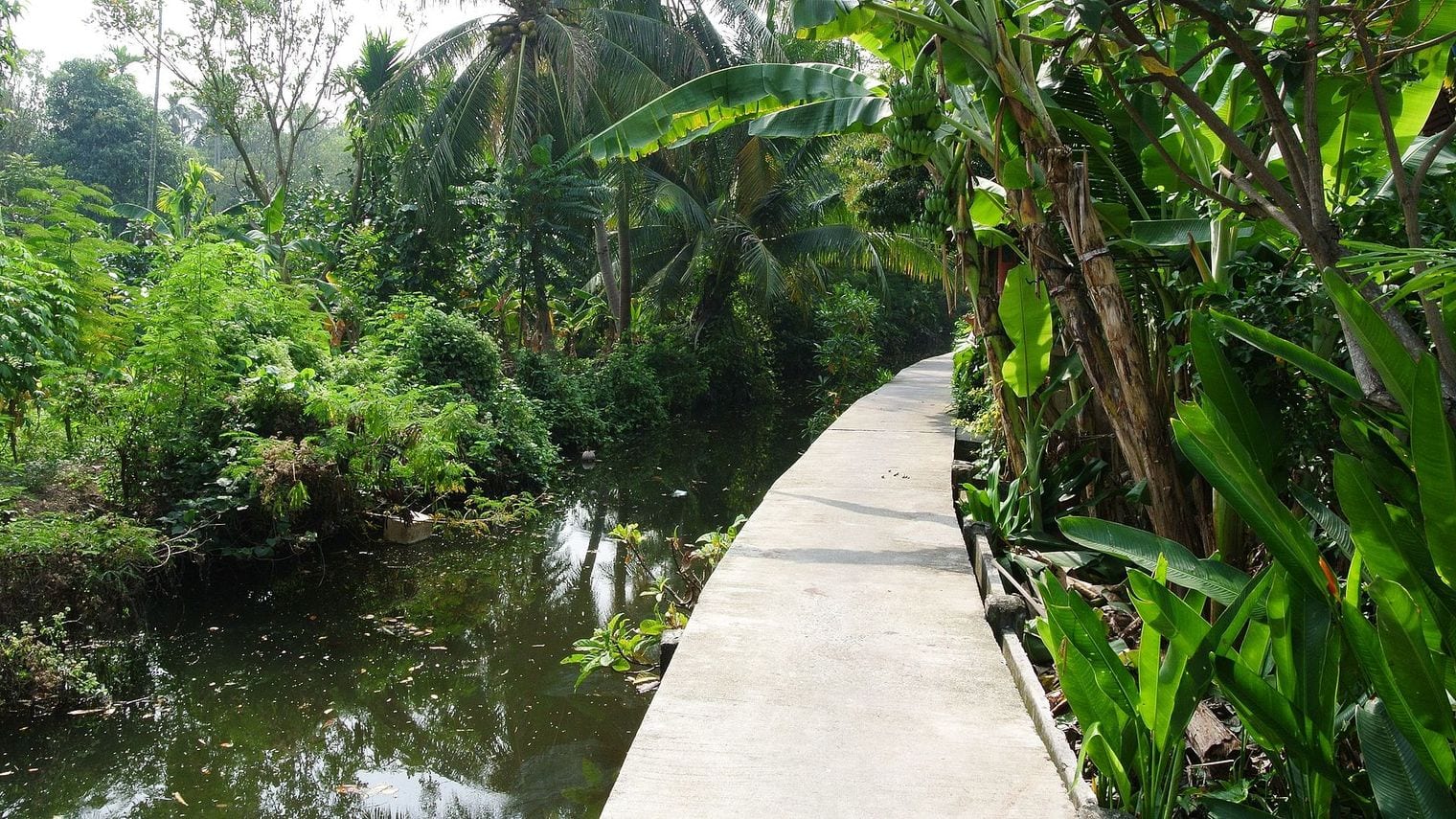
The Chao Phraya makes a hairpin south of the city and leaves an artificial island of about sixteen square kilometres inside the bend, never developed, still largely mangrove and coconut plantation. Bang Krachao is reached by longtail from Klong Toey or Bang Na for a few baht — a four-minute crossing that swaps eight lanes of traffic for birdsong.
The way to see it is by bicycle, hired at the pier, on the network of narrow raised concrete paths that run above the swamp between the orchards. Sri Nakhon Khuean Khan Park sits at the middle with a lake and a watchtower, and at weekends the Bang Nam Phueng floating market lines a canal-side boardwalk with food stalls. Go early: there is little shade, and no plan survives a Bangkok afternoon.
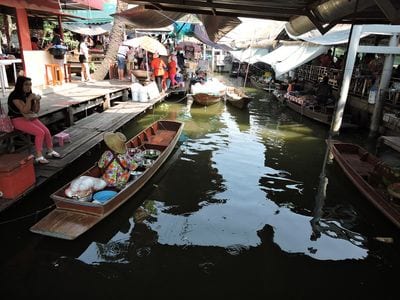
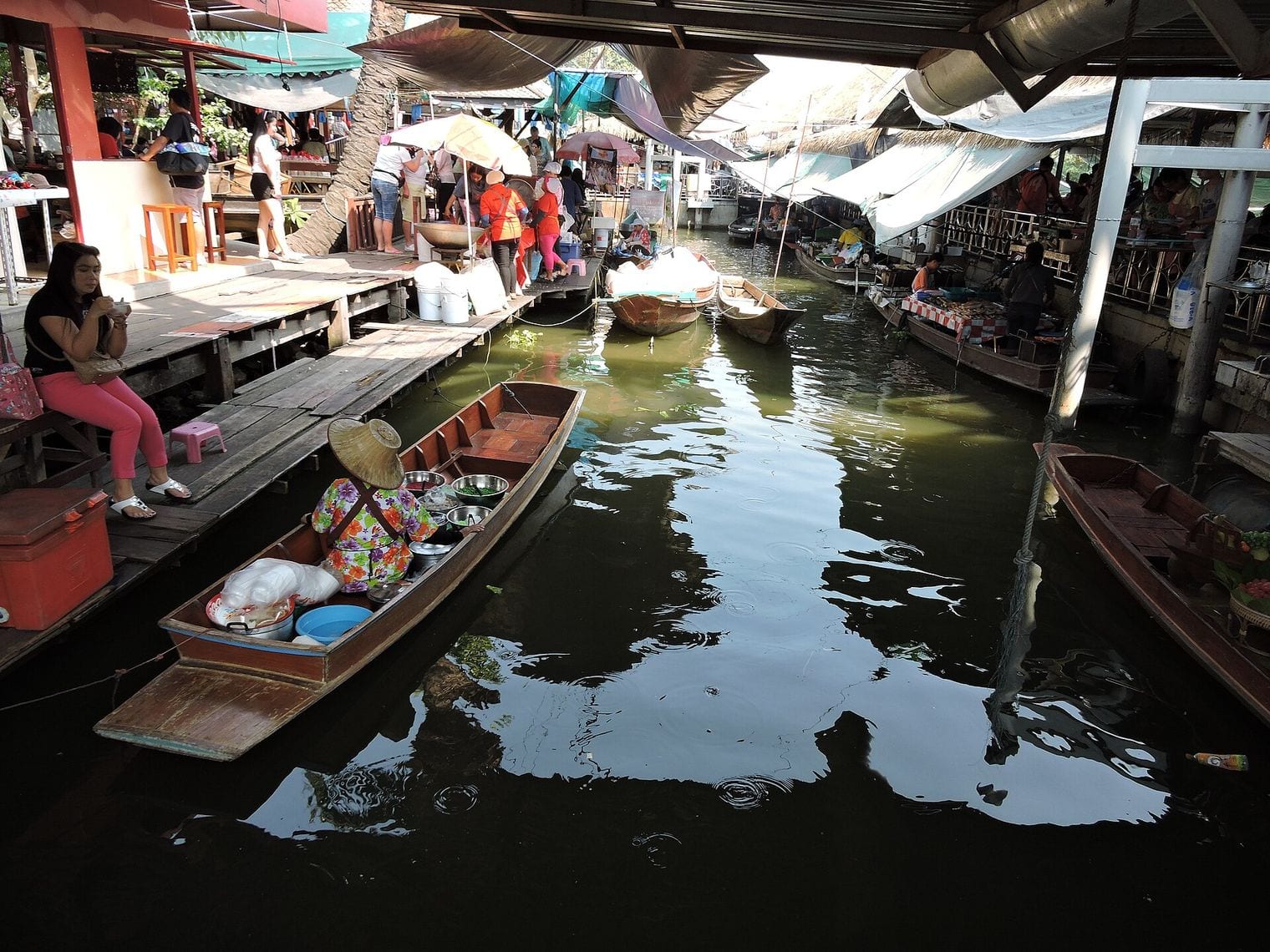
Damnoen Saduak is ninety minutes away and coach-sized. The floating market on Khlong Chak Phra, run by the Taling Chan district office since 1987, is twenty minutes from the old city and still mostly Thai — a set of pontoons roped together on the canal, with boats moored alongside grilling river prawn, squid and mackerel to order.
You sit cross-legged on the floating platform to eat, and it rocks whenever a longtail goes past. Behind it runs an ordinary weekend market of orchids, herbal remedies and pomelo, and longtail trips leave the same jetty for an hour through the Thonburi canal network, past stilt houses and an orchid farm. Weekends and public holidays only, roughly eight until half past four, and best before eleven.
The Museum of Contemporary Art sits well north of the centre, out towards Don Mueang, and is worth the taxi. MOCA Bangkok was built to hold one private collection — the telecoms founder Boonchai Bencharongkul’s — and opened in 2012 as five floors of white gallery space designed around it.
What it does better than anywhere else in the country is show modern Thai painting as a continuous story: Silpa Bhirasri’s students in the 1940s, then the generation that put Buddhist cosmology and temple-mural technique into oil on canvas. The three-storey Thawan Duchanee room and Prateep Kochabua’s enormous surrealist panels are the pieces people come back for. Closed Mondays.
Across the river inside Thailand’s oldest hospital, six small museums share a single ticket, and the Siriraj Medical Museum at the centre of them is not for everyone. Anatomy, pathology, parasitology and forensics are laid out in old wooden cases: preserved organs, a room of congenital specimens, and a forensic gallery that includes material from the 2004 tsunami identification effort.
It is a teaching collection rather than a freak show, and the museum has been rethinking the difference — the embalmed body of Si Quey, displayed as a cannibal for sixty-one years, was relabelled in 2019 and cremated in 2020 after a public campaign.
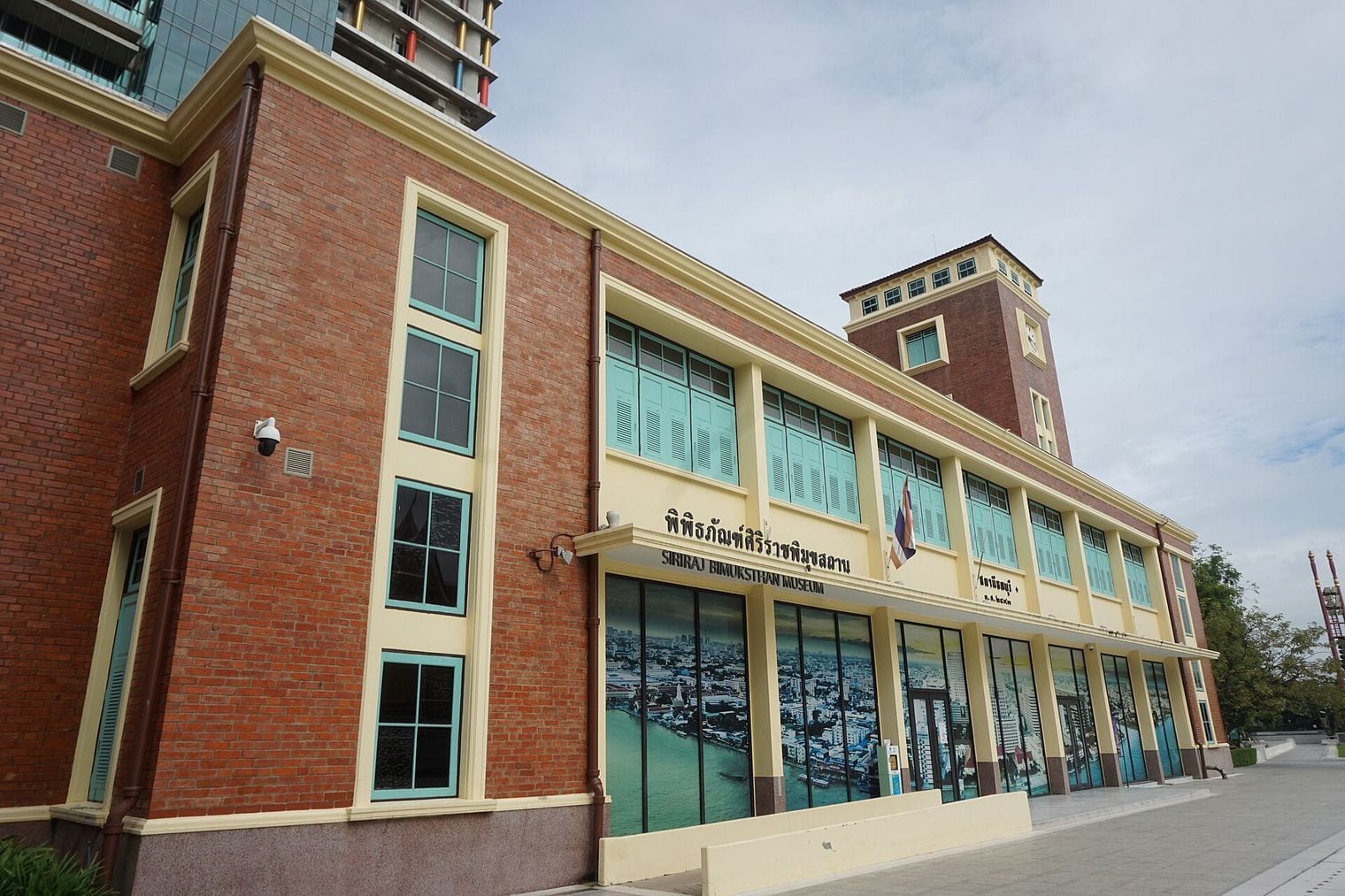
The gentler half of the ticket is the Siriraj Bimuksthan Museum, a history of Thai medicine in the restored Thonburi railway station at the river end of the site. Wednesday to Monday, ten until five, and the Wang Lang ferry from Tha Chang lands beside it.
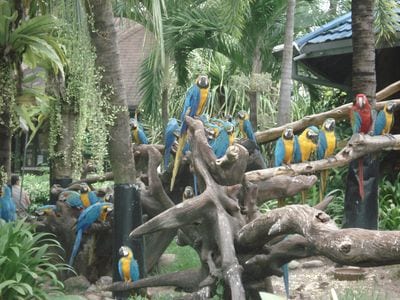
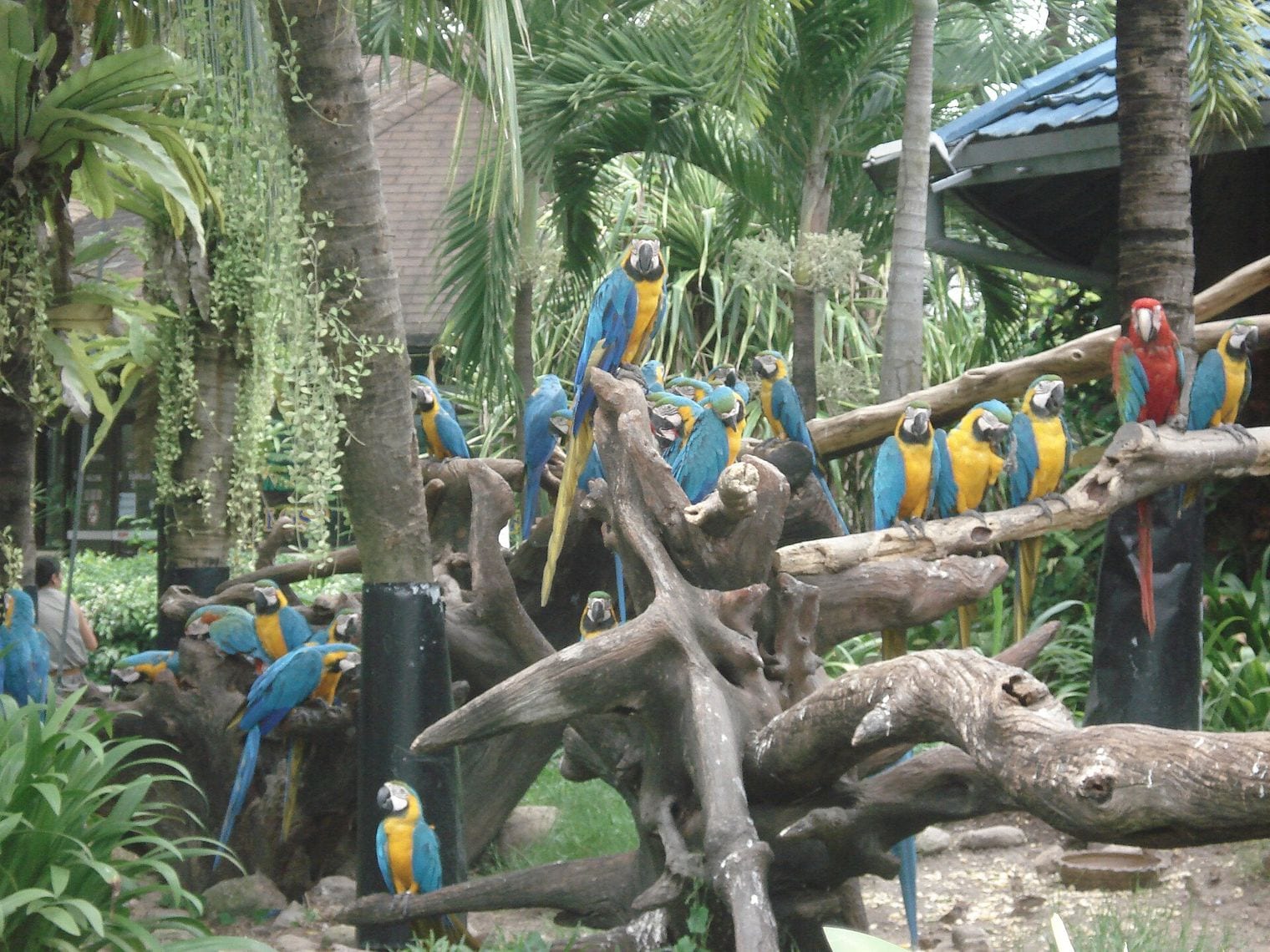
Out on the eastern edge of the city, Safari World opened in 1988 and is split in two: a drive-through Safari Park of some 480 acres where zebra, giraffe, rhino and lion range in open enclosures, and a walk-through Marine Park with an aviary and a dolphin lagoon.
It is the biggest day out in Bangkok for a family with children, about an hour from the centre by taxi, and the drive-through is done in your own car or on the park’s coach. It is also the entry on this list that comes with a caveat: the Marine Park’s animal shows — orangutans, sea lions, elephants — are what draws criticism from welfare groups, and the drive-through half is the part that stands up best.
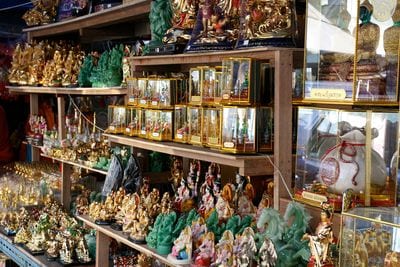
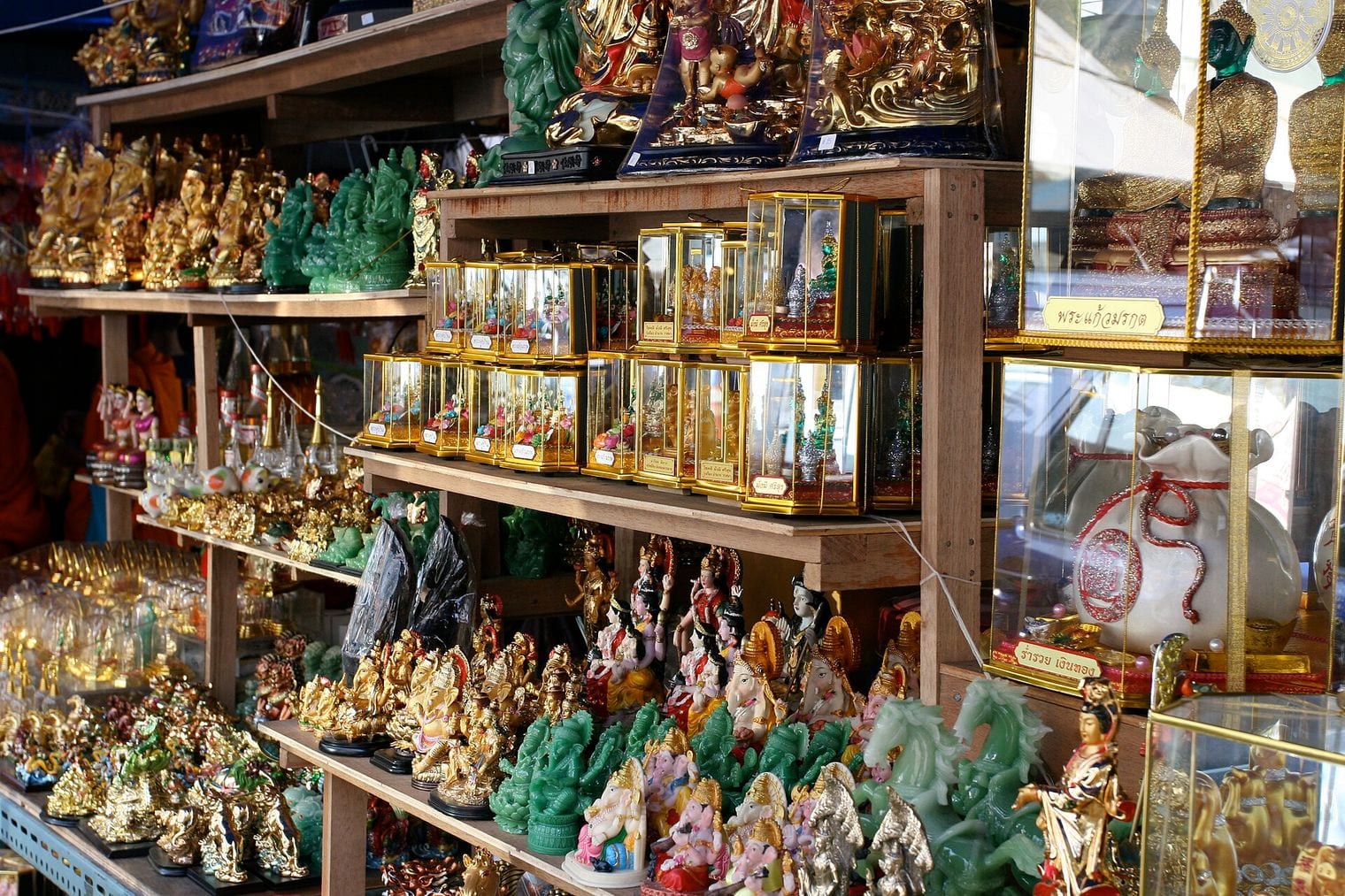
On Maha Rat Road between Wat Mahathat and the Tha Phra Chan pier, a warren of stalls and folding tables sells nothing but Thai Buddhist amulets — small cast or moulded images worn on a chain, believed to carry protection, and traded here between dealers and collectors rather than tourists.
The thing to watch is the buyers: men bent over glass cases with jeweller’s loupes, examining a clay tablet the size of a thumbnail that can change hands for the price of a car if the temple and the year are right. Vendors stack them in plastic trays by monk, by temple, by mould. It runs daily from mid-morning, it is five minutes from the Grand Palace, and it costs nothing to walk through.
A skytrain line was started across the river in the 1980s, abandoned half-built, and its concrete deck left standing in the middle of the Phra Pok Klao Bridge for thirty years. In 2020 Chulalongkorn University’s urban design centre turned it into Chao Phraya Sky Park — 280 metres of planted walkway, and the first elevated park in the city.
It is a short stroll end to end and the point of it is the view: Wat Arun and the Memorial Bridge upstream, the Thonburi bank and the Chinatown skyline downstream, and the river directly beneath your feet. Open daily from five in the morning until eight at night, free, and best in the last hour before it closes. Phra Pok Klao Park underneath the bridge is the way up.
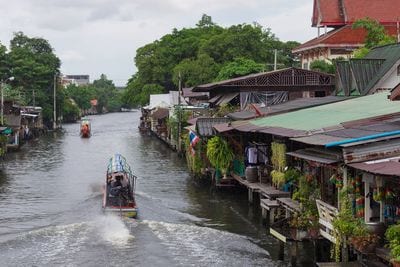
Khlong Bang Luang is one of the Thonburi canals that survived the road-building, and a two-hundred-year-old teak house on its bank has become the Artist’s House — a gallery, coffee shop and workshop built out over the water, with a white chedi standing in the yard.
Most days at two in the afternoon there is a hun lakhon lek performance, the small Thai rod-puppet form worked by three visible puppeteers moving as one; it lasts about twenty minutes and is free, with a hat passed round afterwards. Around it the canal community sells paint-your-own masks and coffee from wooden verandas. Reach it by longtail from the river, or by taxi to Wat Kamphaeng and a short walk along the towpath.
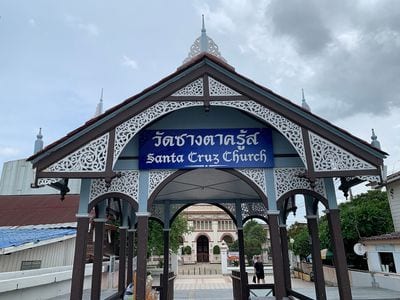
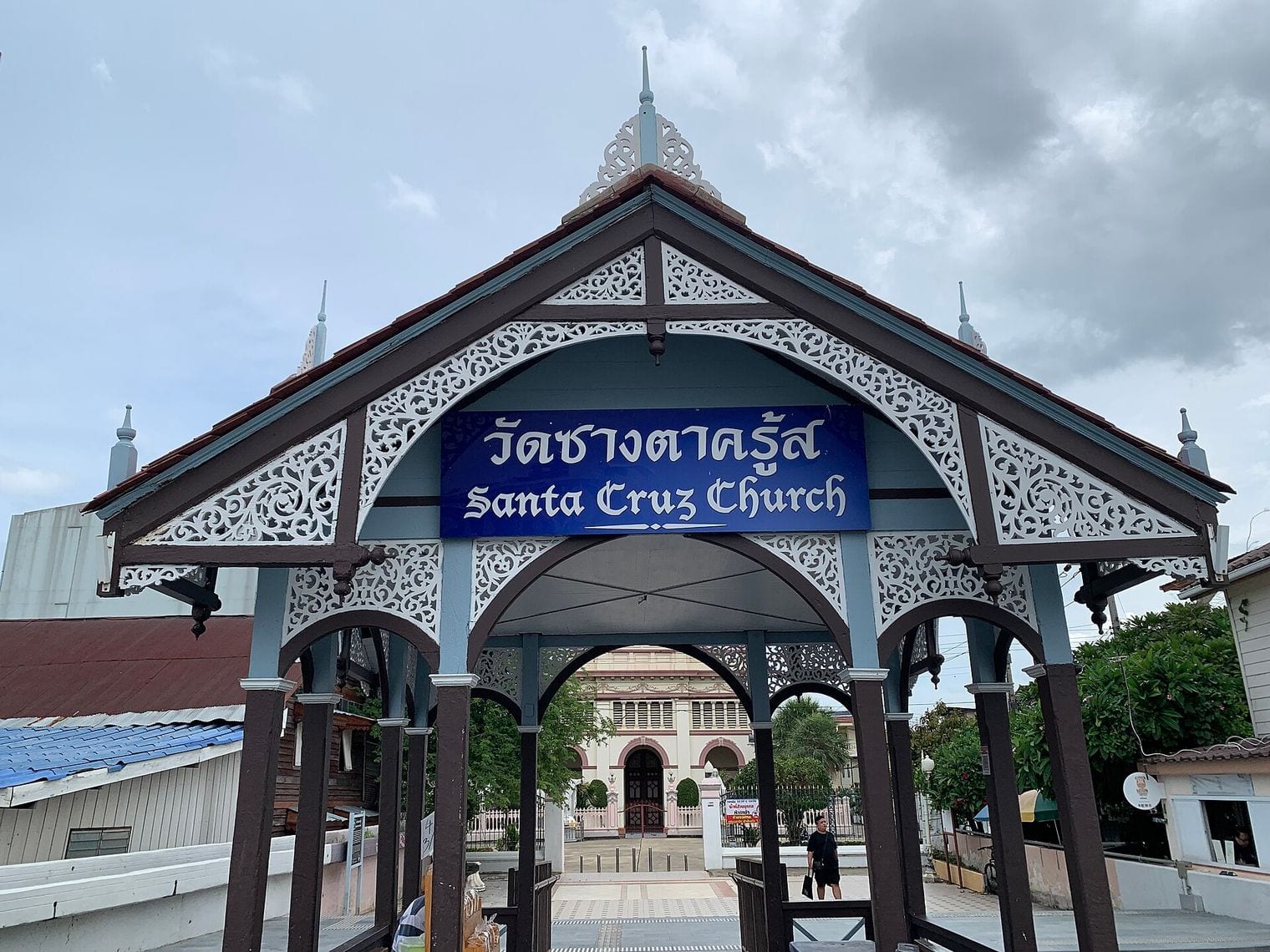
When Taksin founded Thonburi in 1768 he gave a stretch of riverbank to the Portuguese who had helped him, and their descendants are still on it. Santa Cruz Church — pink, domed, Italianate, rebuilt in 1916 on ground granted in 1770 — stands at the middle of a lane-width Catholic village hemmed in by a Chinese shrine on one side and a mosque on the other.
The whole quarter takes half an hour to walk and has one edible souvenir: khanom farang kudi chin, a small dry sponge cake baked to a Portuguese recipe with charcoal above and below the pan, sold from the two or three houses that have made it for generations. A community museum in a shophouse explains the rest. Cross on the Memorial Bridge, or come down from the Sky Park at number 45.
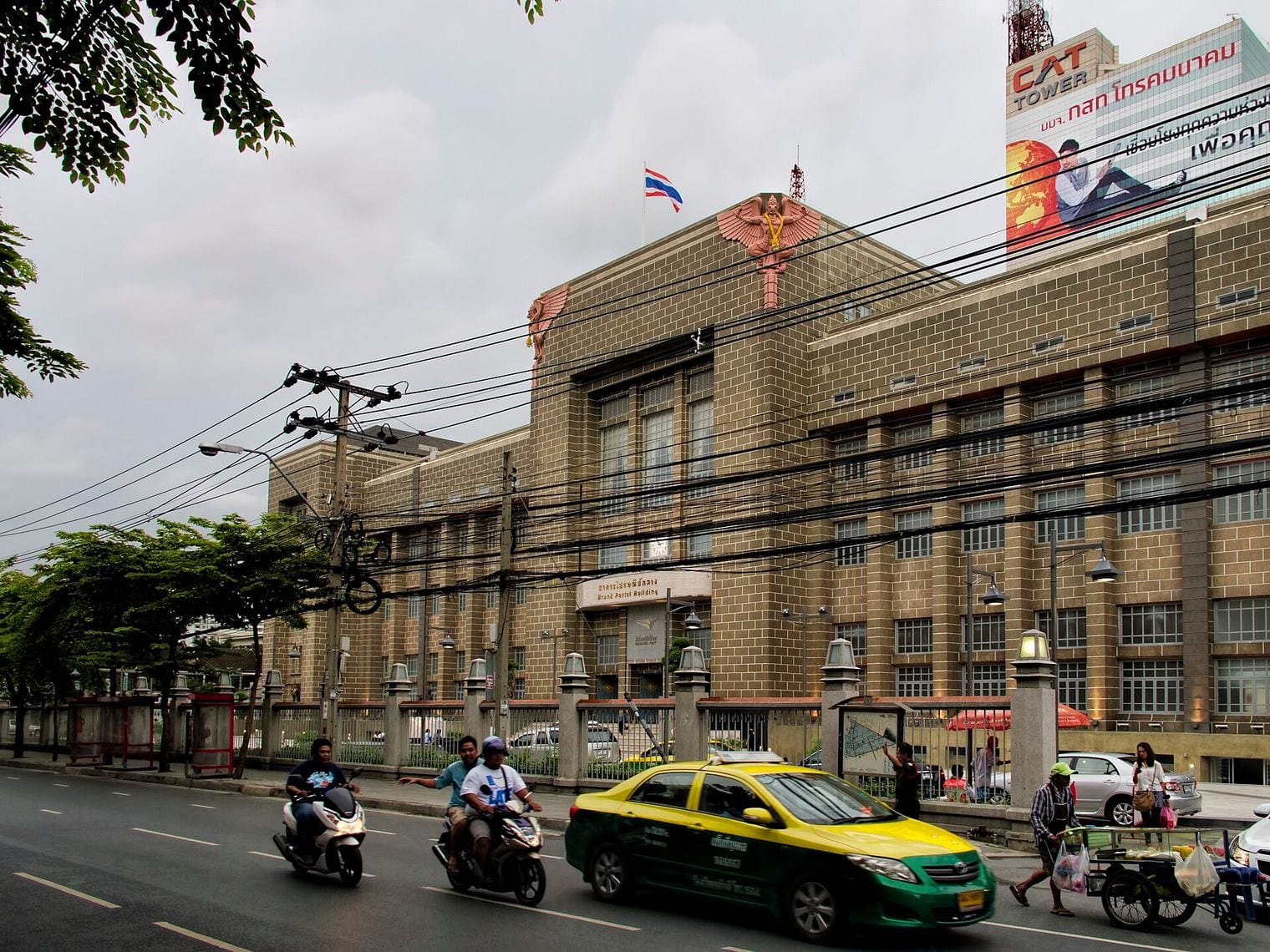
Charoen Krung was the first paved road in Bangkok, cut in the 1860s for the foreign legations and trading houses along the river. Their warehouses and shophouses are still standing, and over the last decade the southern end around Bang Rak has turned into the city’s design quarter.
The Thailand Creative and Design Center occupies the 1940 Grand Postal Building and opens its rooftop to visitors; Warehouse 30 is a row of wartime godowns converted into galleries and a cafe; ATT 19 puts antiques in a former teak trading house. It is a walking district rather than a ticketed one — the Assumption Cathedral, the old Customs House and the East Asiatic building all stand within a few hundred metres.
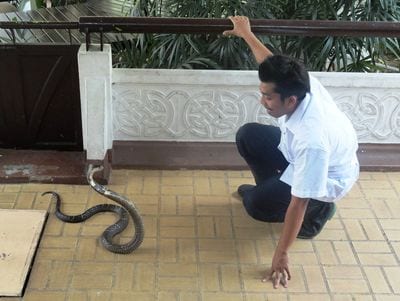
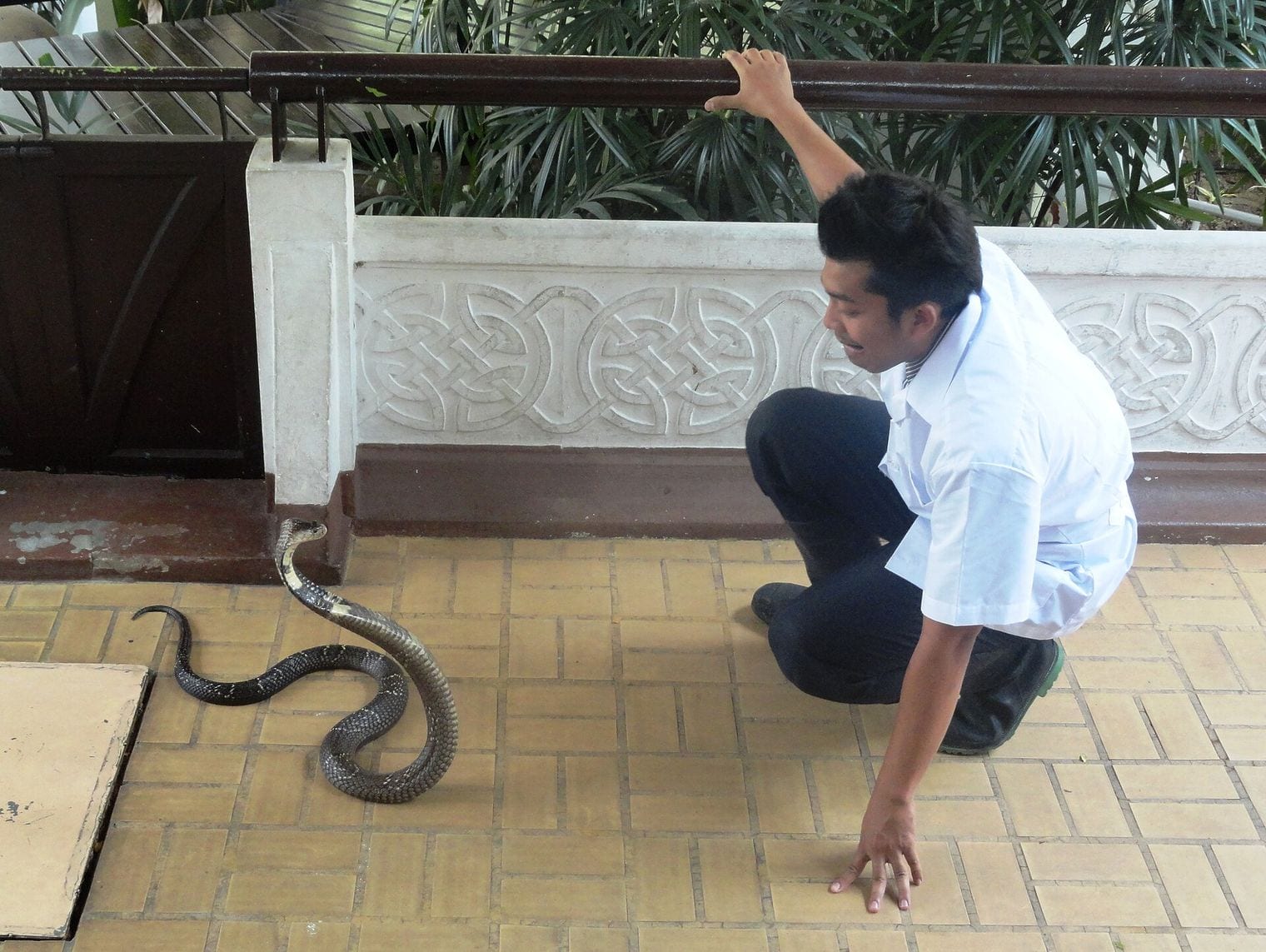
The snake farm at the Queen Saovabha Memorial Institute on Rama IV Road is a working Thai Red Cross laboratory that has been making antivenom since 1923, when it became the second institution of its kind anywhere after Brazil’s Butantan. Visitors are let into the part where the snakes are kept.
There is a serious museum of Thai species — king cobra, Malayan pit viper, banded krait — and then the reason most people come: a venom extraction on weekday mornings, in which a handler pins a cobra and milks it against a membrane, with a handling show in the afternoon. It is educational rather than theatrical, it funds the antivenom programme, and it is a ten-minute walk from Sala Daeng BTS or Si Lom MRT.
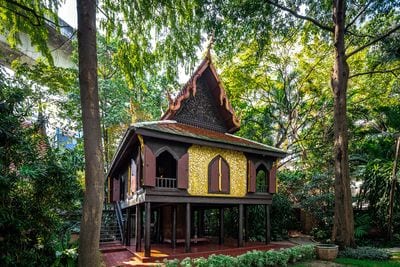
Named for the cabbage patch it was built on, Suan Pakkad Palace is a garden of traditional teak houses that Prince and Princess Chumbhot moved here from family land and joined into a home in the 1950s. It works as the quieter alternative to the Jim Thompson House at number 11, ten minutes up the road.
The set piece is the Lacquer Pavilion, a seventeenth-century Ayutthaya building found in a monastery near the old capital and reassembled in the garden, its interior walls covered in black-and-gold scenes from the Ramakien and the life of the Buddha. The rest holds the princess’s collections — Ban Chiang pottery excavated on her own land, Khmer bronzes, shells and musical instruments. Open daily, nine until four.
Plan your trip
Best Time to Visit Bangkok
The cool, dry season from November to February is the clear winner: humidity drops, the skies stay bright, and walking the temple circuit stops being an endurance test. It is also the busiest and priciest stretch of the year, so the Grand Palace and Wat Pho fill early and hotel rates climb. Book ahead if you are travelling over the year-end holidays.
March to May is the hot season and genuinely punishing at midday, though it is quieter and rooms are cheaper — plan indoor stops for the middle of the day and save temples for early morning. The southwest monsoon runs roughly June to October, bringing short heavy downpours rather than all-day rain, and the city is at its greenest. Mid-April brings Songkran, the Thai new year, when the streets turn into a citywide water fight.
Getting to Bangkok
Two airports serve the city. Suvarnabhumi (BKK) sits about 30 kilometres east and handles most long-haul and full-service flights, with the Airport Rail Link running into the city in under half an hour. Don Mueang (DMK), roughly the same distance north, is the base for most low-cost carriers flying within Thailand and around the region. Allow plenty of time if you have to transfer between the two, since the road journey crosses the whole metropolitan area.
Overland, Bangkok is the hub of the national rail network: sleeper trains run north to Chiang Mai and south towards the Malaysian border from Krung Thep Aphiwat Central Terminal in the north of the city, which has replaced the old Hua Lamphong terminus for most long-distance services. Long-distance buses leave from three main terminals depending on direction — northern, eastern and southern — and reach virtually every province.
Getting Around Bangkok
The BTS Skytrain and the MRT metro are the fastest way to move around central Bangkok and they bypass the traffic entirely, which taxis and buses cannot. Between them they reach most of the modern city — Silom, Sukhumvit, Siam, Chatuchak and now Chinatown — and a stored-value card removes the queue at the ticket machines. Ride-hailing apps work well and are the simplest option late at night or for anywhere off the rail lines.
The old royal quarter around the Grand Palace is the one part of the city that genuinely rewards walking, since the major temples sit within twenty minutes of one another.
It is also the part the rail network reaches least well, so the Chao Phraya express boats become the practical link — cheap, frequent, and far more pleasant than sitting in traffic. Do not rent a car: the traffic is heavy, parking is scarce, and nothing you want to see needs one.
Where to Stay in Bangkok
Riverside Bang Rak and the stretch around Charoen Krung suit a first visit best, putting you on the express-boat network with easy reach of both the old city and the Skytrain. The old town around Banglamphu and Phra Athit puts the temples on your doorstep and is far quieter at night than its backpacker reputation suggests, though it means relying on boats and taxis rather than trains.
For rail access and dining, base yourself along Sukhumvit — Asok and Phrom Phong for convenience, Thonglor and Ekkamai for a more residential, restaurant-heavy neighbourhood. Silom and Sathorn are the business districts and go quiet at weekends but are well connected and central. Siam is the most convenient of all for shopping and interchange, but it is the least atmospheric place to sleep.
Where to Eat in Bangkok
Bangkok is a street-food city first. Yaowarat in Chinatown is the obvious evening destination, its pavements taken over after dark by seafood grills, noodle stalls and dessert carts. Banthat Thong near the university has become the city's other great eating street, and the lanes around Nang Loeng and Talat Noi reward anyone willing to wander. Look for the stall with the longest local queue and join it.
Dishes worth hunting down include boat noodles, thick and dark and served in small bowls; khao man gai, the Thai take on Hainanese chicken rice; guay tiew reua and pad kaphrao for everyday eating; and mango with sticky rice when the fruit is in season. Chinatown is the place for roast duck, dim sum and bird's nest desserts, while the food halls in the big malls offer an air-conditioned, low-risk introduction if the street stalls feel daunting.
Day Trips from Bangkok
Ayutthaya, the Siamese capital sacked in 1767, lies about 80 kilometres north and is the standout day trip — an easy ride by train or minivan, with brick prangs and headless Buddha figures spread across a compact historical park you can cover by bicycle.
Kanchanaburi and the bridge over the River Kwai sit roughly two hours west, and the floating markets at Damnoen Saduak and the extraordinary Maeklong railway market, where stalls fold away as a train passes through, are both around 90 minutes southwest.
About 90 kilometres north at Wat Muang in Ang Thong stands the Great Buddha of Thailand, a gilded seated figure that ranks among the tallest statues in the world and is startling to come upon in flat rice country. Closer in, the open-air museum at Muang Boran and the Erawan Museum sit just southeast of the city in Samut Prakan, both reachable in well under an hour.
Before you go
Mobile dataAn eSIM gives your phone local data when you land, with no SIM card to swap.via AiraloGet an eSIM
Airport transferA driver meets you at arrivals and takes you to your hotel, at a price fixed when you book.via Welcome PickupsBook a transfer
We may earn a commission when you buy through these links, at no extra cost to you. How we make money.
One Day in Bangkok
Morning
Start at the Grand Palace the moment it opens, before the heat and the tour groups arrive, and take in Wat Phra Kaew inside the same walls. Dress for the code — covered shoulders and knees — and allow a good two hours. Walk ten minutes south to Wat Pho for the Reclining Buddha, and stop at the massage school in the grounds if your feet are already complaining.
Take the cross-river ferry from the pier beside Wat Pho to Wat Arun, climb as far up the prang as you are comfortable, then come back across. If there is time and energy left, the staircase at Wat Saket gives you the best panorama of the old city, and the Giant Swing stands on the way between the two.
Head into Chinatown for Wat Traimit and the solid-gold Buddha, then walk the wholesale alley of Sampheng Lane Market and finish at Wat Mangkon Kamalawat as the lanterns come on. Eat on Yaowarat once the street stalls set up. If you would rather trade the food street for a view, the King Power Mahanakhon SkyWalk times perfectly for sunset instead.
Above all its royal and religious architecture: the Grand Palace compound, one of the largest palaces in the world, and the Emerald Buddha inside Wat Phra Kaew, plus Wat Pho's 46-metre Reclining Buddha and the porcelain-covered spire of Wat Arun across the river. Beyond the temples, Bangkok is known for street food and for Chatuchak Weekend Market, one of the largest markets anywhere.
How many days do you need in Bangkok?
Three full days is the practical minimum: one for the royal quarter and its temples, one for Chinatown, the markets and a viewpoint, and one for museums, parks or a river trip. Four or five lets you add a day trip to Ayutthaya without cutting anything. Anything less than two days and you will only see the palace circuit.
What can you do in Bangkok for free?
Plenty. Sanam Luang, Lumphini Park and the Bangkok City Pillar Shrine all cost nothing to enter, as do the Chinatown temples including Wat Mangkon Kamalawat. Walking is the real free attraction: the flower market at Pak Khlong Talat, the wholesale alley of Sampheng Lane, the shophouse lanes of Talat Noi and the nightly spectacle of Khao San Road all cost only your time.
When is the best time to visit Bangkok?
November to February, when the cool dry season brings lower humidity and reliable sunshine — much the most comfortable window for temple-walking, though also the busiest. March to May is very hot, and June to October sees monsoon downpours that are usually short rather than all-day. Mid-April means Songkran and a citywide water fight.
Is Bangkok walkable?
Only in parts. The old royal quarter around the Grand Palace, Wat Pho and Wat Arun is genuinely walkable, with the main temples close together, and so are Chinatown's alleys. Everywhere else the city is too large, hot and traffic-heavy for walking, so use the Skytrain, the metro and the river boats to cover distance and save your legs for the neighbourhoods.