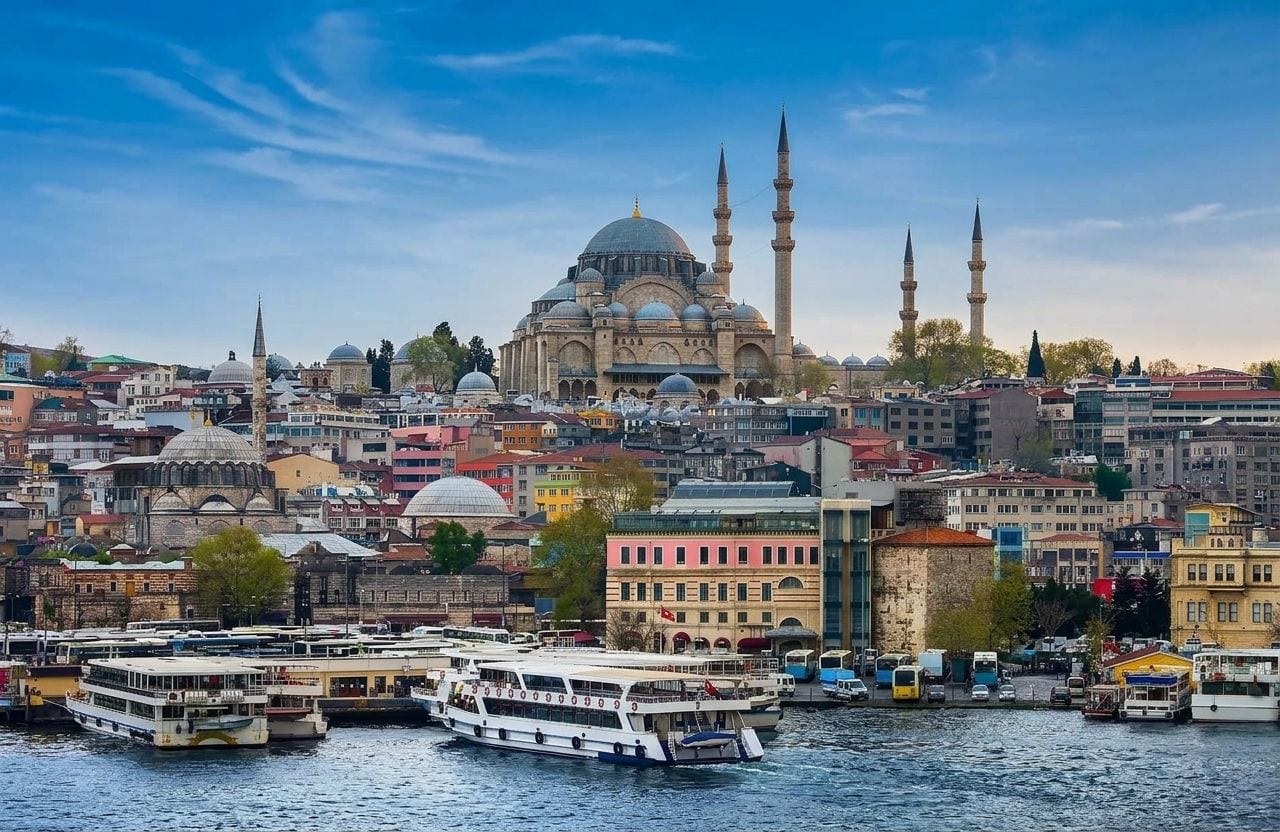
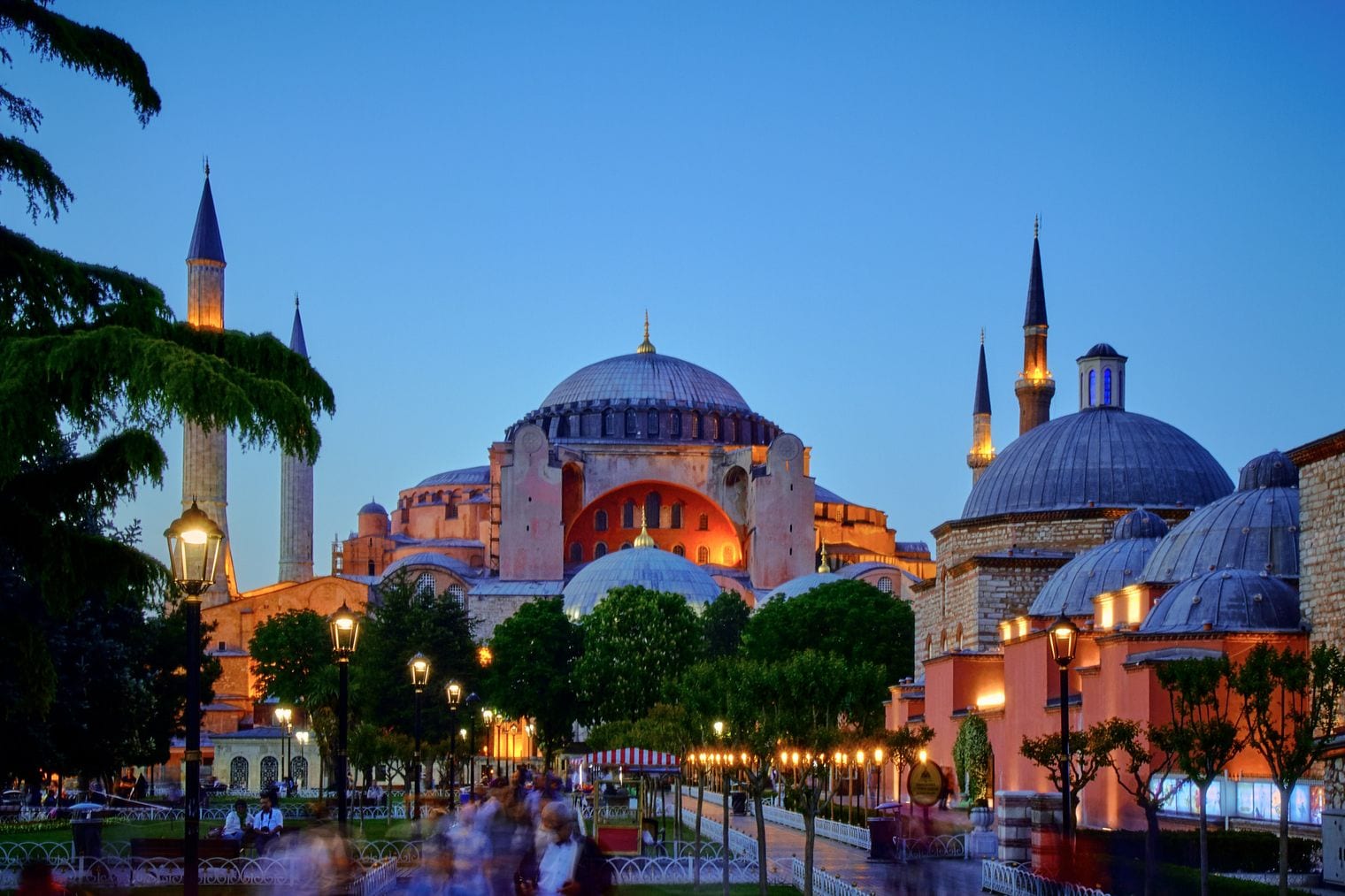
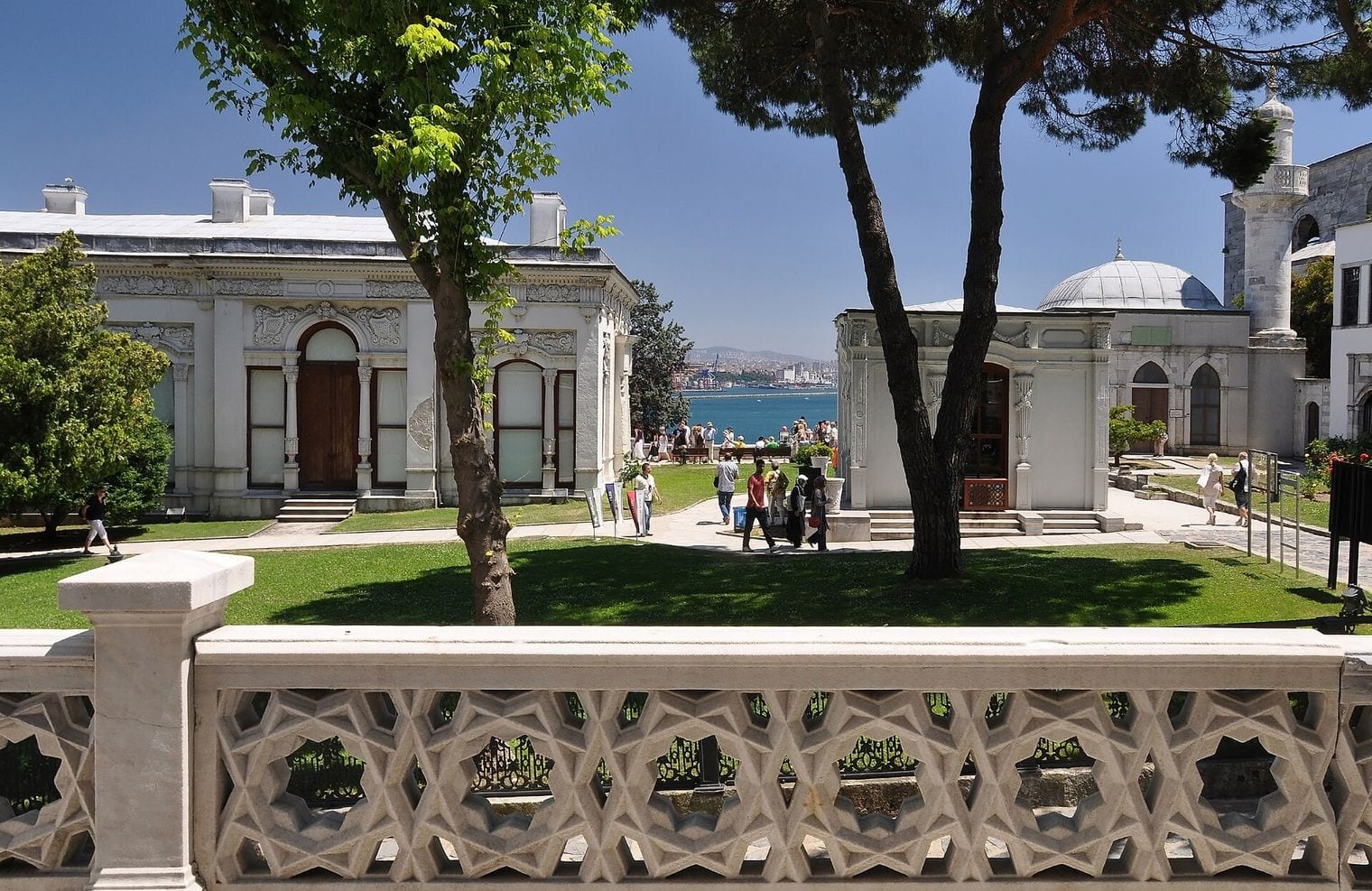
Two continents, three empires and a coastline the colour of glass — few countries fit so many worlds inside one border.
Turkey straddles Europe and Asia, and a trip here can mean Byzantine domes one morning and a balloon over volcanic valleys the next. Istanbul alone spans two continents, while the Aegean coast holds the marble streets of Ephesus, the Mediterranean shore runs turquoise past Lycian rock tombs, and Cappadocia hides whole churches carved into soft stone. Add the white terraces of Pamukkale, a breakfast table that takes an hour to eat, and the oldest known temple on earth at Gobeklitepe, and you have one of the most layered countries anywhere. Use this hub to plan your trip: browse our Turkish city guides below, or read on for the regions, seasons and routes that tie the country together.
The best all-round window. Istanbul fills with tulips in April, Cappadocia turns green before the summer scorch, and the coast is warm enough to walk the Lycian Way without the heat that makes it punishing later. Ruins like Ephesus and Pergamon are far kinder in spring, when there is almost no shade to be had at midday.
SummerJun-Aug
Hot and busy. The Aegean and Mediterranean resorts are at full tilt with warm, calm sea; inland Anatolia and the southeast get genuinely fierce, and Istanbul turns humid. Balloon flights over Cappadocia still run at dawn, before the heat builds. Good for beaches and boats, hard work for archaeology.
FallSep-Nov
The other sweet spot, and the sea is at its warmest of the year in September even as the crowds thin. Grape and olive harvests come in along the Aegean, the light softens for photography, and the eastern highlands are clear before the snow. By late November the coast begins shutting down for winter.
WinterDec-Mar
Cold and quiet, and a different country. Istanbul is grey, rainy and wonderfully uncrowded at the big monuments; Cappadocia under snow is one of the great sights in Turkey; the eastern mountains are deep in it. Coastal resorts largely close, while the ski season runs at Uludag, Erciyes and Palandoken.
Regions
Istanbul & MarmaraThe city on two continents, plus Ottoman Bursa, the mosques and bridges of Edirne, the Gallipoli battlefields and the car-free Princes' Islands out in the Sea of Marmara.
The Aegean CoastClassical ruins by the dozen — Ephesus, Pergamon, Aphrodisias — strung between Izmir's waterfront, the whitewashed peninsulas of Cesme and Bodrum, and the travertine terraces of Pamukkale inland.
The Turquoise CoastLycia and Pamphylia: rock-cut tombs above the sea, the lagoon at Oludeniz, gulet boats out of Fethiye and Kas, and Antalya's old harbour below the Taurus mountains.
Cappadocia & Central AnatoliaFairy chimneys, cave hotels and dawn balloon flights around Goreme, plus the underground cities of Derinkuyu and Kaymakli, whirling dervishes in Konya and the museums of the capital, Ankara.
The Black Sea CoastGreen, wet and mountainous — tea terraces above Rize, the Sumela monastery clinging to a cliff near Trabzon, wooden highland villages and the Kackar range behind them.
Eastern Anatolia & the SoutheastThe oldest and least-visited half: Gobeklitepe and the pilgrimage pools of Sanliurfa, honey-stone Mardin over the Mesopotamian plain, the giant stone heads on Mount Nemrut and the blue expanse of Lake Van.
CappadociaVolcanic rock eroded into chimneys and cones, hollowed out into churches, houses and whole underground cities — and flown over by balloon at dawn.Basecamp: Goreme
EphesusOne of the best-preserved classical cities in the Mediterranean, with a marble main street and the towering facade of the Library of Celsus.Basecamp: Selcuk
PamukkaleA hillside of blinding white travertine terraces filled with warm mineral water, with the ruins of Roman Hierapolis on the plateau above.Basecamp: Denizli
GobeklitepeCarved stone pillars raised around 9500 BC — the oldest known monumental temple anywhere, older than farming, pottery or the wheel.Basecamp: Sanliurfa
The first-timer's circuit, and the one most visitors fly in for: imperial Istanbul, the rock landscapes of Cappadocia, then down to the travertines and the great classical ruins of the Aegean before flying home from Izmir.
A rental-car run along the Lycian shore, where the good beaches and the ruins both sit at the end of unserved side roads. Short driving days, a lot of swimming, and rock tombs above the water almost the whole way.
1Dalaman — pick up the car
2Fethiye & Oludeniz — 2 nights
3Kas — 2 nights
4Olympos & the Chimaera — 1 night
5Antalya — 2 nights, fly out
Eastern Anatolia Overland
2 weeks
The deep southeast, for a second or third trip: the oldest temple on earth, Mesopotamian hill towns, and stone heads on a mountaintop. Long distances and thin infrastructure, but almost no crowds anywhere.
1Sanliurfa & Gobeklitepe — 3 nights
2Mardin — 2 nights
3Diyarbakir — 1 night
4Mount Nemrut — sunrise, from Kahta
5Lake Van — 3 nights
Turkey travel FAQ
Eight questions travellers ask before they go.
When is the best time to visit Turkey?
April to May and September to October. Both give you warm days without the summer heat that makes shadeless ruins like Ephesus punishing, and September has the warmest sea of the year. July and August are best only if you have come for the beaches; winter is cold and quiet but shows you Cappadocia under snow and Istanbul without the queues.
How many days do you need in Turkey?
Four days covers Istanbul properly. Ten to fourteen days is the realistic minimum for the classic loop of Istanbul, Cappadocia and the Aegean, because the hops between them are long enough to need internal flights. If you only have a week, pick Istanbul plus one region rather than trying to see all three.
Do you need a car in Turkey?
Not for Istanbul, where driving is genuinely worse than the metro, trams and Bosphorus ferries. A car is worth it on the Turquoise Coast and around the Cappadocian valleys, where the best spots sit down side roads with no bus. For the long distances between regions, cheap domestic flights and the overnight coach network beat driving.
What is Turkey known for?
Ottoman and Byzantine architecture — above all in Istanbul, a city split between Europe and Asia by the Bosphorus — along with the balloon-flown rock valleys of Cappadocia, classical ruins such as Ephesus, a long turquoise coastline, hammams, and a food culture that runs from a sprawling breakfast table to regional kebabs, mezze and baklava.
Do people speak English in Turkey?
Widely in Istanbul, the resort coast and anywhere geared to visitors, and among younger people in the big cities. Much less in the interior, the Black Sea and the southeast, where a translation app and a few words of Turkish go a long way. Menus and signage at major sights are usually bilingual.
What currency does Turkey use, and is it in the EU?
The Turkish lira (TRY). Turkey is not a member of the European Union and is in neither the eurozone nor the Schengen area, so you will need lira rather than euros and your EU roaming allowance will not apply. Cards are accepted almost everywhere in cities; carry some cash for village markets, small cafes and shared taxis.
What should you eat in Turkey?
Start with a proper Turkish breakfast, which is a table of cheeses, olives, eggs, jams and bread rather than a plate. Then work through mezze, the regional kebabs that change every few hundred kilometres, pide and lahmacun, a fish sandwich on the Istanbul waterfront, and baklava or kunefe after. Tea arrives constantly and is part of the hospitality, not an upsell.
What kind of trip is Turkey best for?
History, beaches and balloon rides.
We use cookies to analyse site traffic and improve your experience.
You can accept or reject analytics cookies. See our Cookie Policy.