We build and rank every list first. Booking links come after, and only where
a partner sells a ticket, tour or stay for that exact place, so a place with
nothing to book is listed exactly as prominently as one you can book.
So how do we earn? Some links on this page go to booking
partners, and if you book tickets, tours or a stay through
one, we may earn a commission. It costs you nothing extra.
That commission never decides which places make the list, the order they
appear in, or what we write about them. No entry is sponsored or a paid
placement.
32 Largest College Football Stadiums in the US (2026)
By the City Viking editorial teamPublished Ranked by seating capacity · 20 min read
Last verified Checked before launchOct 5, 202632 sources1 encyclopedias & research31 venues & other sitesPublished · Oct 25, 2026Researched and checked before it went liveClick for every source and the full change log.
The record
107,601 seats
Michigan Stadium
United States
The record
The largest college football stadium in the US is Michigan Stadium, in the United States — 107,601 seats, seating capacity.
Source: mgoblue.com. Verified .
Short answer
Michigan Stadium in Ann Arbor is the largest, with 107,601 seats, just ahead of Penn State's Beaver Stadium at 106,572. Eight college stadiums seat more than 100,000, all in the Big Ten or the SEC, so for the biggest game-day crowd, catch a home game at one of those eight.
The Cotton Bowl seats 92,100 and hosts Texas against Oklahoma every October, yet it misses this list: no college team calls it home. This countdown ranks the 32 largest college football stadiums in the US by the seating capacity each school lists for the 2026 season, from Michigan Stadium's 107,601 down to Kroger Field's 61,000. Capacity means seats, not crowds, so Beaver Stadium counts 106,572 even though Penn State has packed in more than 111,000.
Membership goes to a stadium whose main tenant is a college team, which keeps the Rose Bowl and the Los Angeles Memorial Coliseum in and leaves out NFL homes where a college plays second fiddle, such as Lincoln Financial Field (Temple) and Hard Rock Stadium (Miami). Where two schools publish the same figure, they share a rank, and every stadium here is the regular home of its team.
Map of Largest College Football Stadiums in the US
Fun Facts About America's Largest College Football Stadiums
Eight college stadiums seat more than 100,000 — from Michigan Stadium down to Bryant–Denny Stadium, the whole six-figure tier belongs to college football.
The SEC owns 14 of the 32 stadiums on this list, the Big Ten 11, the ACC four and the Big 12 two, with independent Notre Dame Stadium making 32.
Crowds often beat the official capacity — Michigan has topped 115,000, Penn State has drawn 111,030 and Kyle Field once held 110,633.
Kinnick Stadium in Iowa City is the only college stadium named for a Heisman Trophy winner, and Jack Trice Stadium is the only FBS stadium named for an African American.
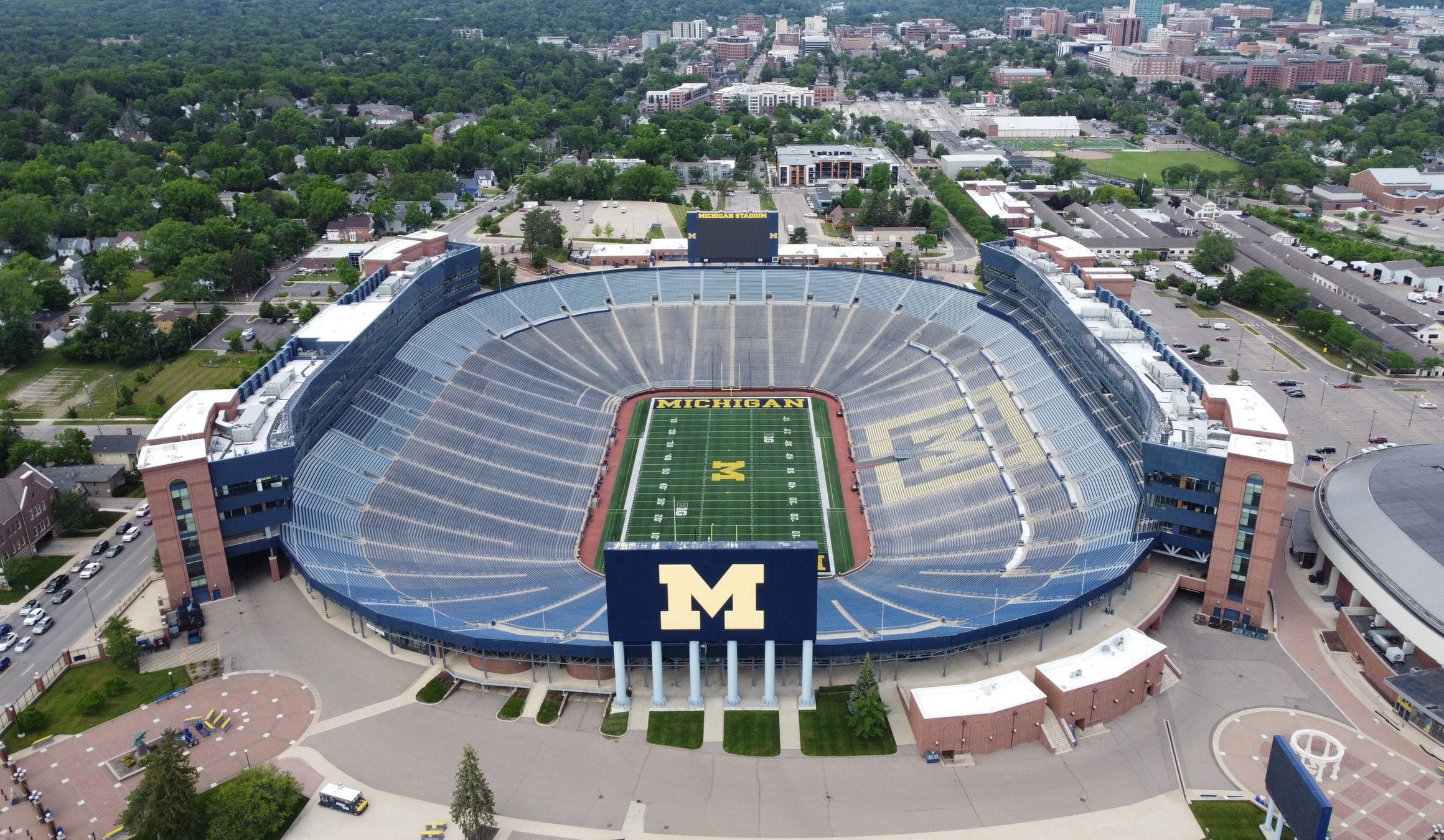
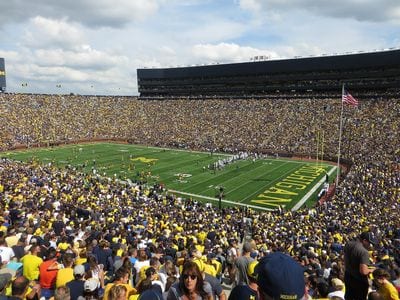
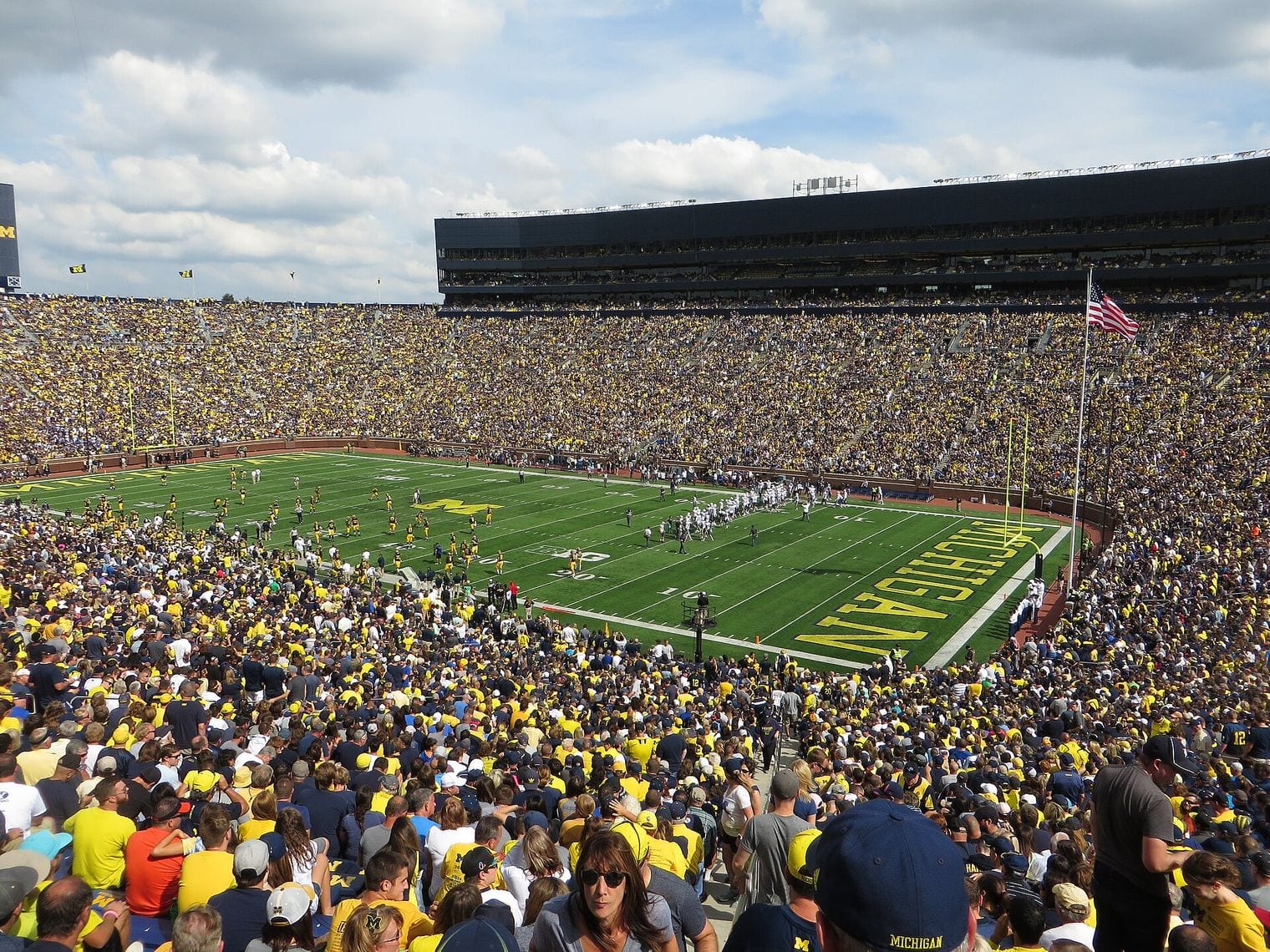
At 107,601 seats, Michigan Stadium is the largest college football stadium in the US and the biggest stadium in the Western Hemisphere. The University of Michigan's "Big House" sits in Ann Arbor, sunk partly below ground so the bowl looks modest from the street until you step inside and see the rows fall away beneath you. Crowds have topped 115,000, but 107,601 is the official count.
The stadium was built with footings that allowed it to grow past 100,000, because coach Fielding Yost imagined a day when 150,000 seats would be needed. Beyond football, it hosts the university's main graduation ceremonies, and President Lyndon B. Johnson outlined his Great Society program here. Penn State expects Beaver Stadium to pass this figure during its renovation, so the top spot is the one to watch.
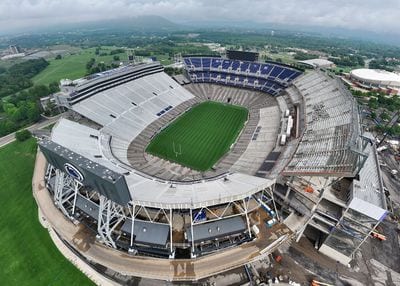
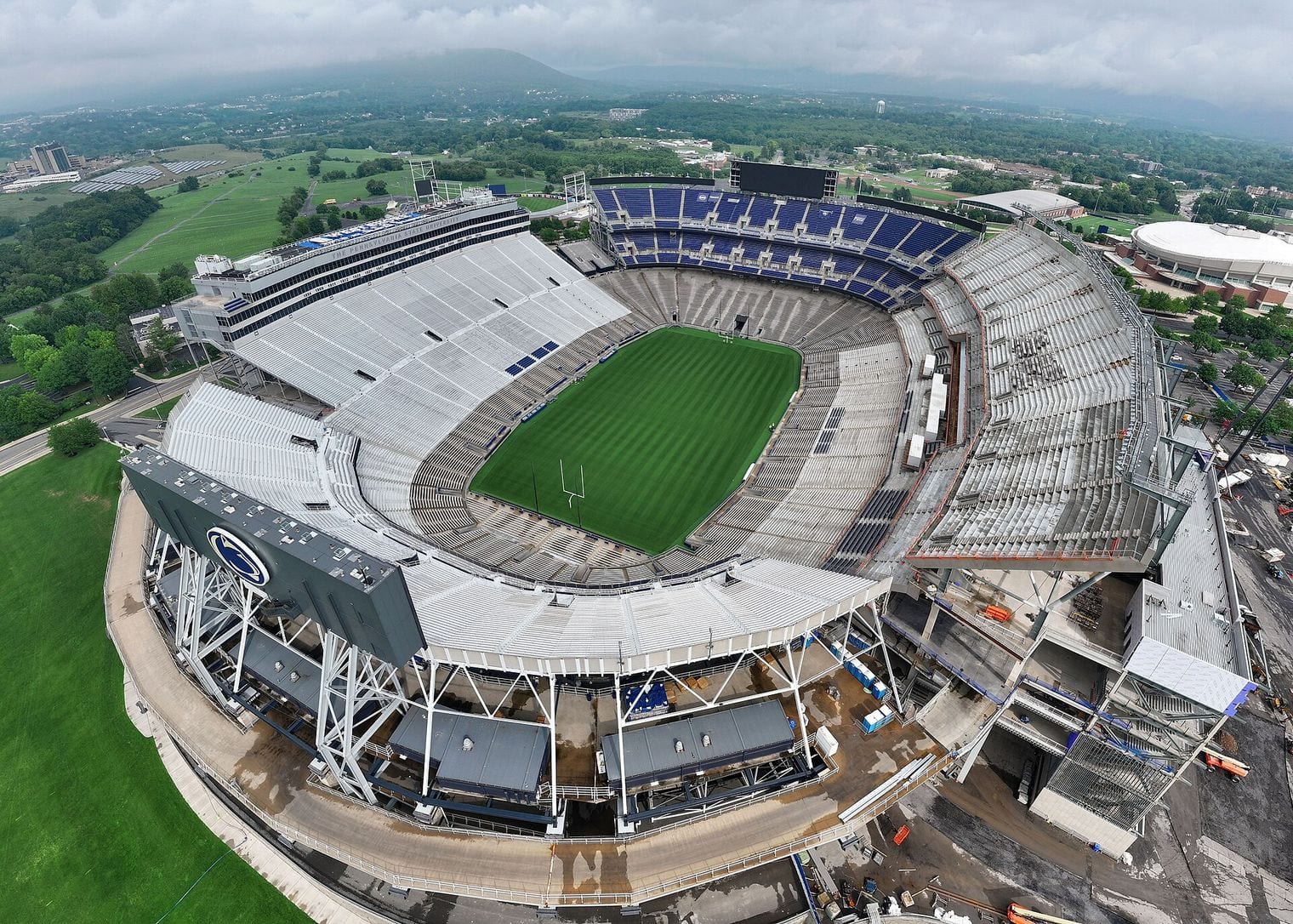
At 106,572 seats, Beaver Stadium is the second-largest college football stadium in the US and the home of Penn State. It has hosted the Nittany Lions since 1960, though parts of the structure date back to 1909, and it is named for James A. Beaver, a governor of Pennsylvania and president of the university's board of trustees. The White Out games, when the whole bowl dresses in white, draw crowds above 111,000.
A major renovation is reshaping the stadium. Penn State's own 2026 media guide still lists 106,572 and calls Beaver the nation's second-largest, but the athletic director expects the new west upper deck to lift it to about 109,000, enough to pass Michigan. Until the school publishes that figure, Beaver holds second place.
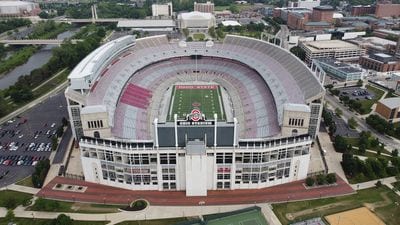
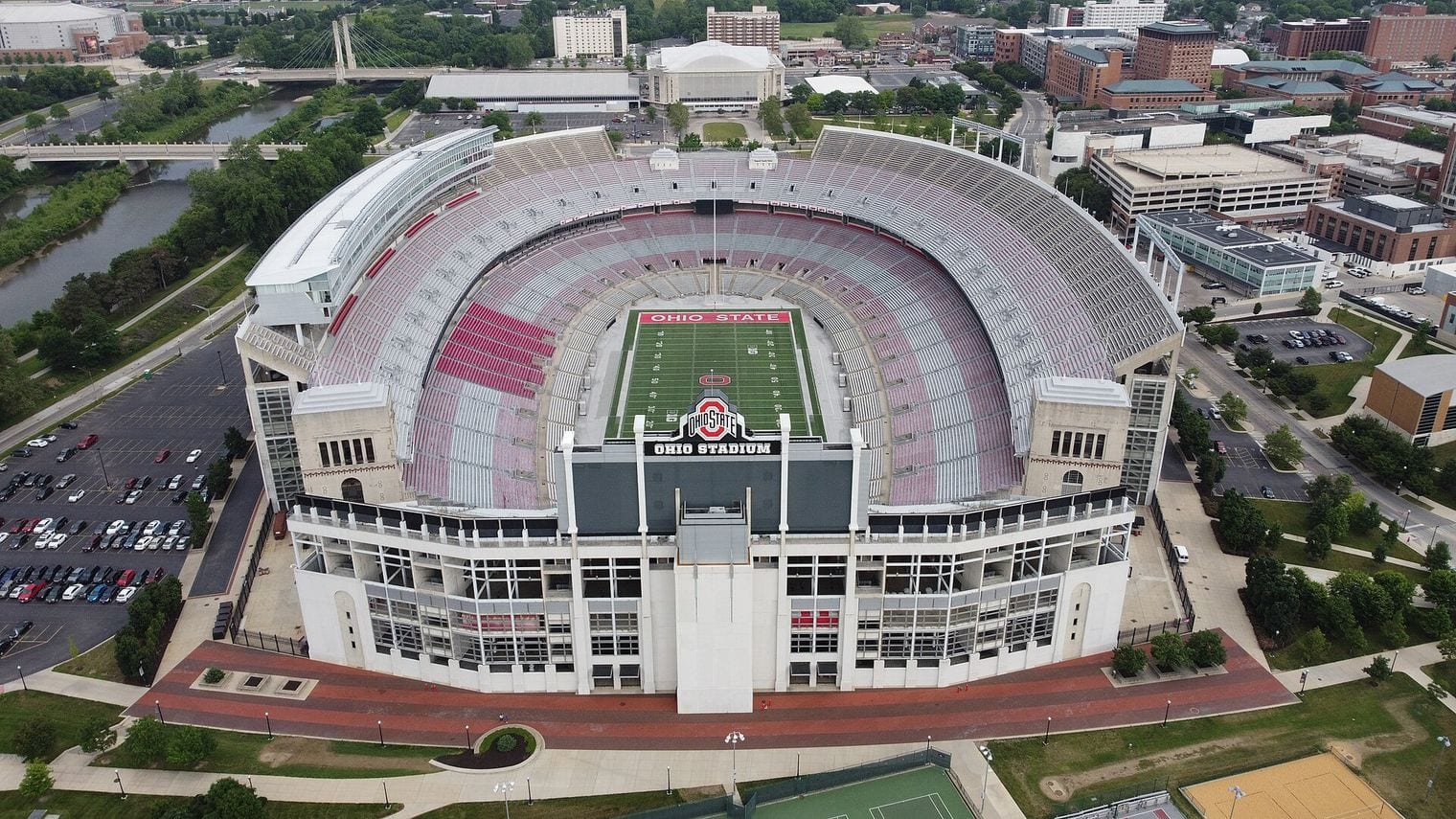
At 102,780 seats, Ohio Stadium is the third-largest college football stadium in the US and the horseshoe-shaped home of the Ohio State Buckeyes in Columbus. Fans call it "The Horseshoe" or simply "The Shoe." It opened in 1922, hosted Major League Soccer's Columbus Crew in the late 1990s, and has welcomed concerts by the Rolling Stones, Pink Floyd and Taylor Swift.
The figure here is the one Ohio State's spring notes, its opponents' game notes and Wikipedia all agree on. Ohio State's own in-season 2026 notes list 102,041 after new field-level suites went into the south end zone. At that figure the Shoe would drop below Kyle Field and Tiger Stadium, so its exact place is the closest call near the top of this list.
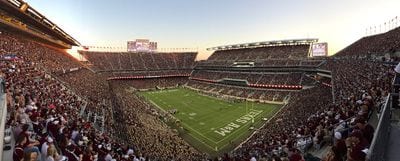
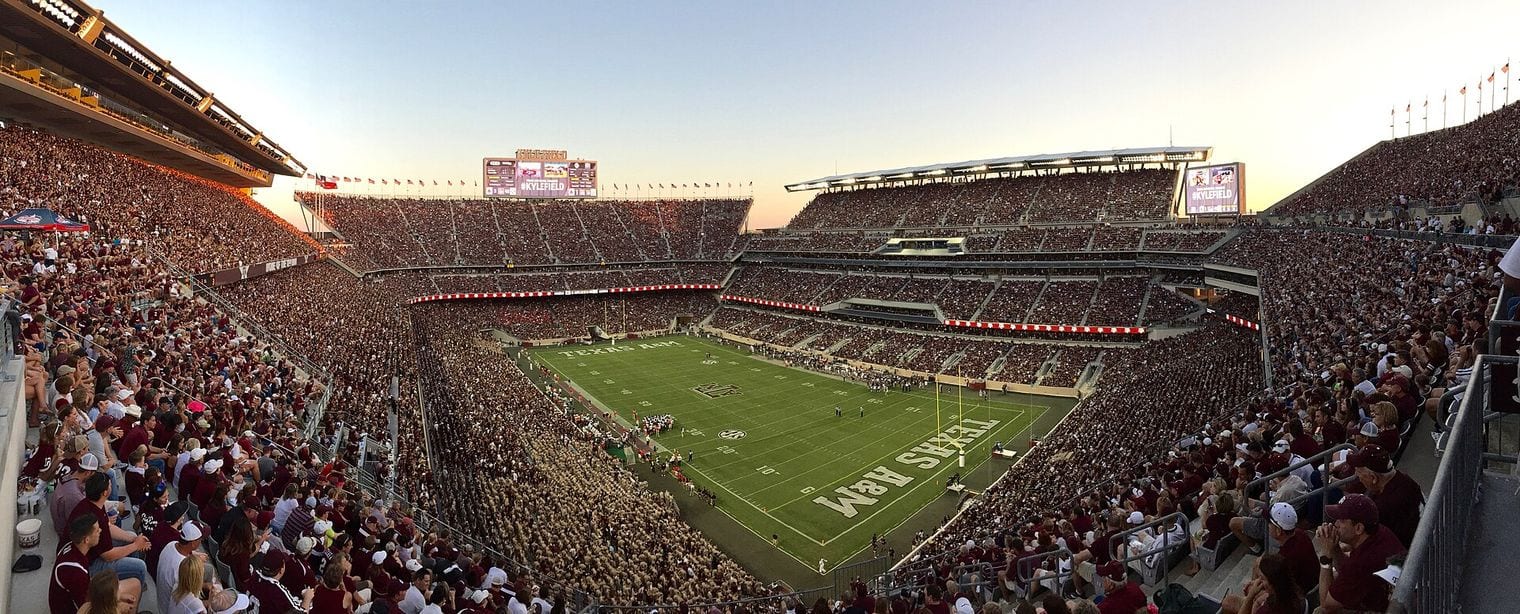
At 102,733 seats, Kyle Field is the largest stadium in Texas and the home of the Texas A&M Aggies in College Station. A&M has played on this site in some form since 1904 and in a permanent concrete stadium since 1927. The steep, towering stands hold their noise well, which is part of the reason the venue has such a fierce reputation.
The biggest crowd in Kyle Field history came on October 11, 2014, when 110,633 people watched Ole Miss beat the Aggies 35–20, at the time the largest football attendance in Texas and SEC history. A redevelopment completed in the mid-2010s produced today's enclosed bowl, and on a full Saturday the stadium holds more people than many Texas towns.
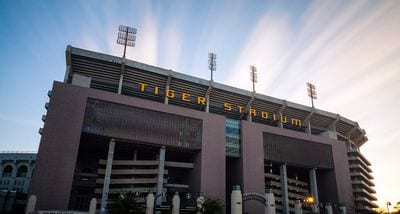
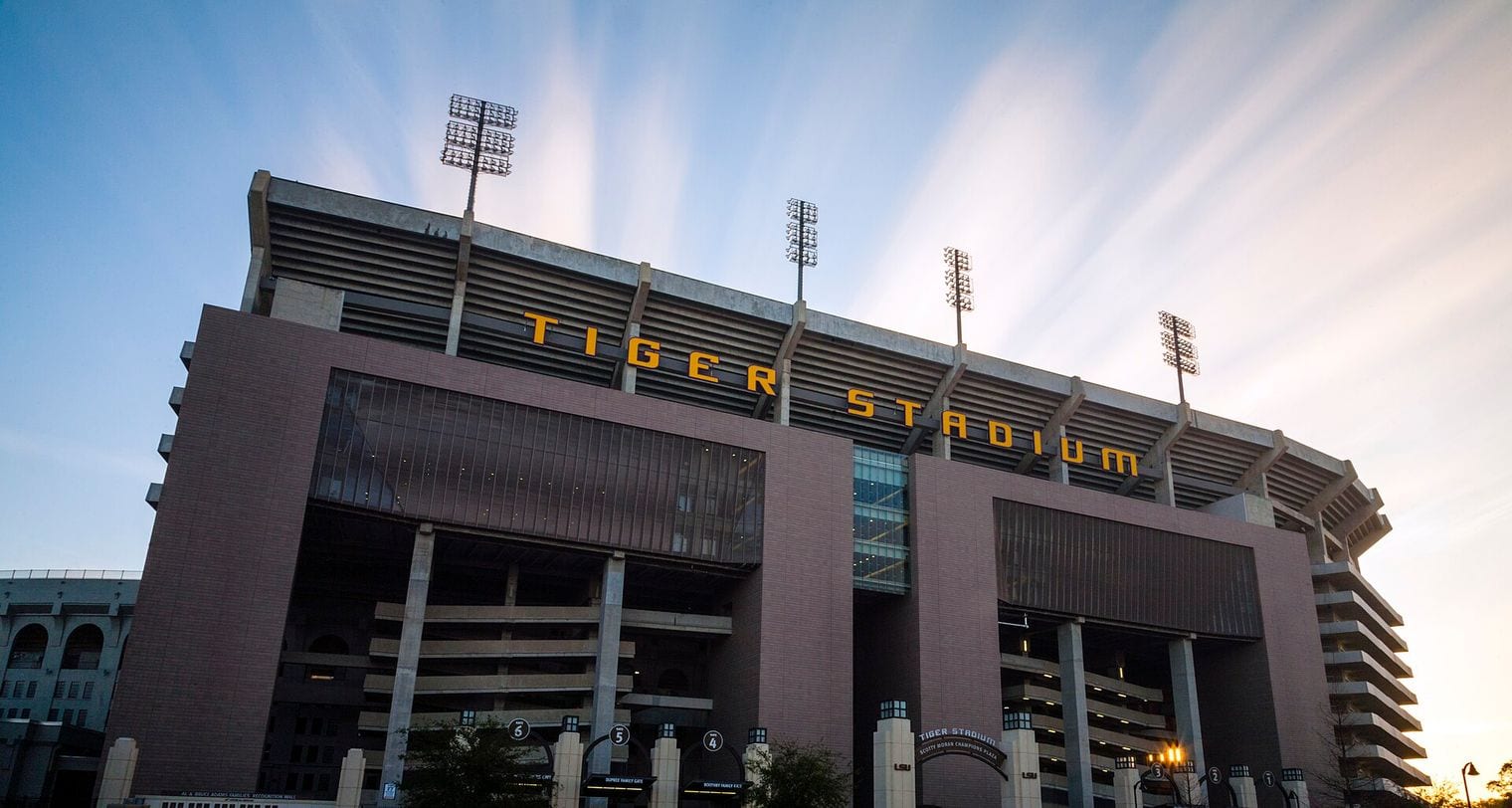
At 102,321 seats, Tiger Stadium is the home of the LSU Tigers on the Louisiana State University campus in Baton Rouge. It is known across college football as Death Valley, and its reputation rests on the volume a full house produces, especially at night. LSU moved here in 1924; before that the team played at State Field on the university's downtown campus.
The bowl rises steeply on all sides, so even the upper rows feel close to the field. On game days the campus fills with tailgaters from early in the morning, and the purple-and-gold crowd that pours into the stands is one of the sport's great sights.
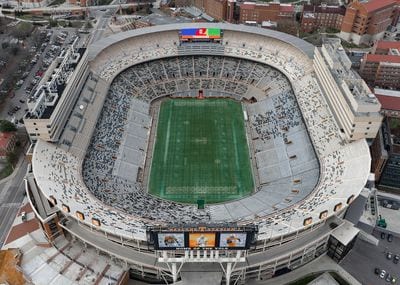
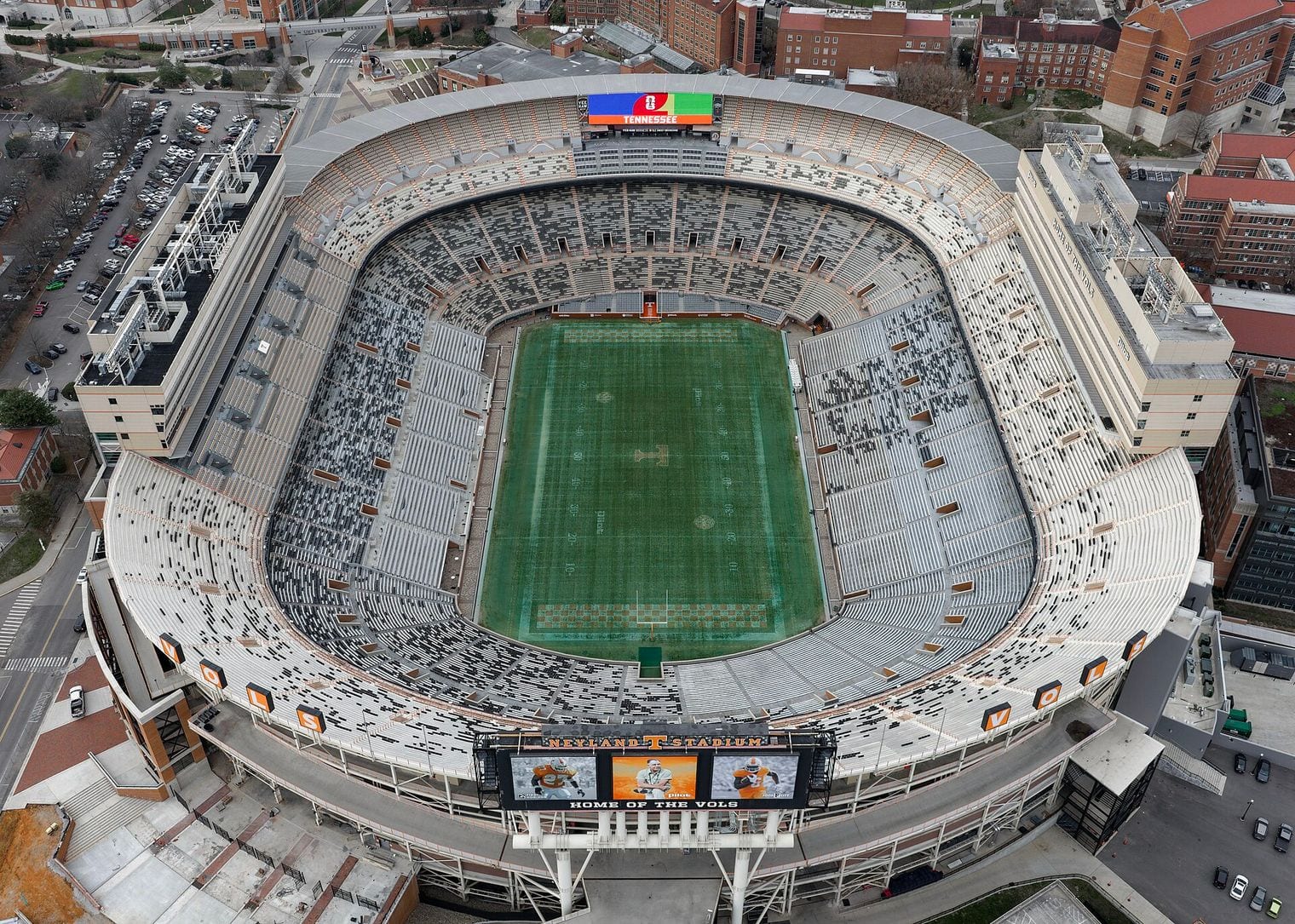
At 101,915 seats, Neyland Stadium is the home of the Tennessee Volunteers on the banks of the Tennessee River in Knoxville. It opened in 1921 as Shields–Watkins Field, a name the playing surface still carries, and it is named for Robert Neyland, who coached Tennessee across three separate stints. Fans arriving by boat on the river form the "Vol Navy" on game days.
Neyland has gone through 16 expansion projects. At one point it held 104,079 before later alterations trimmed it to today's figure. Its checkerboard end zones and the sea of orange in the stands make it one of the most recognizable venues in the sport.
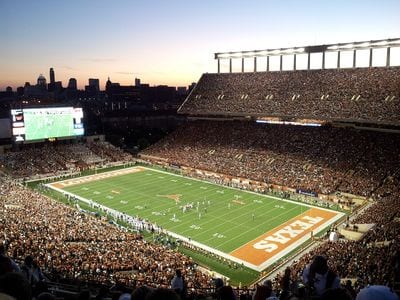
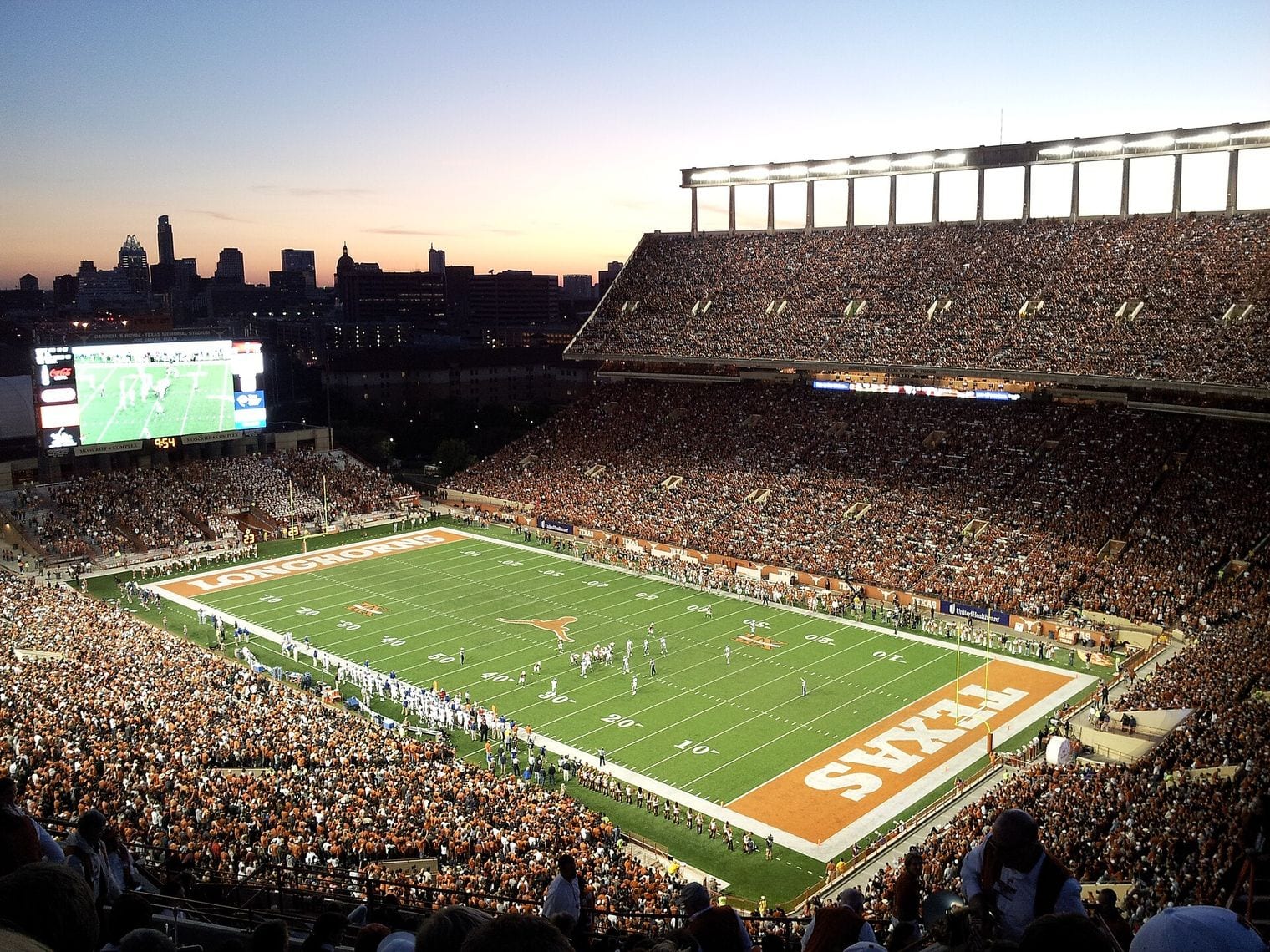
At 100,119 seats, Darrell K Royal–Texas Memorial Stadium has been home to the Texas Longhorns in Austin since 1924. It began as a memorial to Texans who served in World War I and now honors Darrell K Royal, the coach who led Texas to national championships. Its burnt-orange stands rise just north of the state capitol, and the skyline looms beyond the south end zone.
The official capacity is 100,119, but its record crowd is far larger: 105,215 people watched Texas play Georgia on October 19, 2024. The home record here is one of the best in the sport, and a full house singing "The Eyes of Texas" after the game is an Austin ritual.
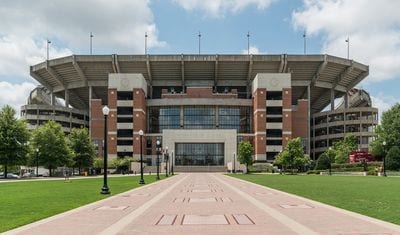
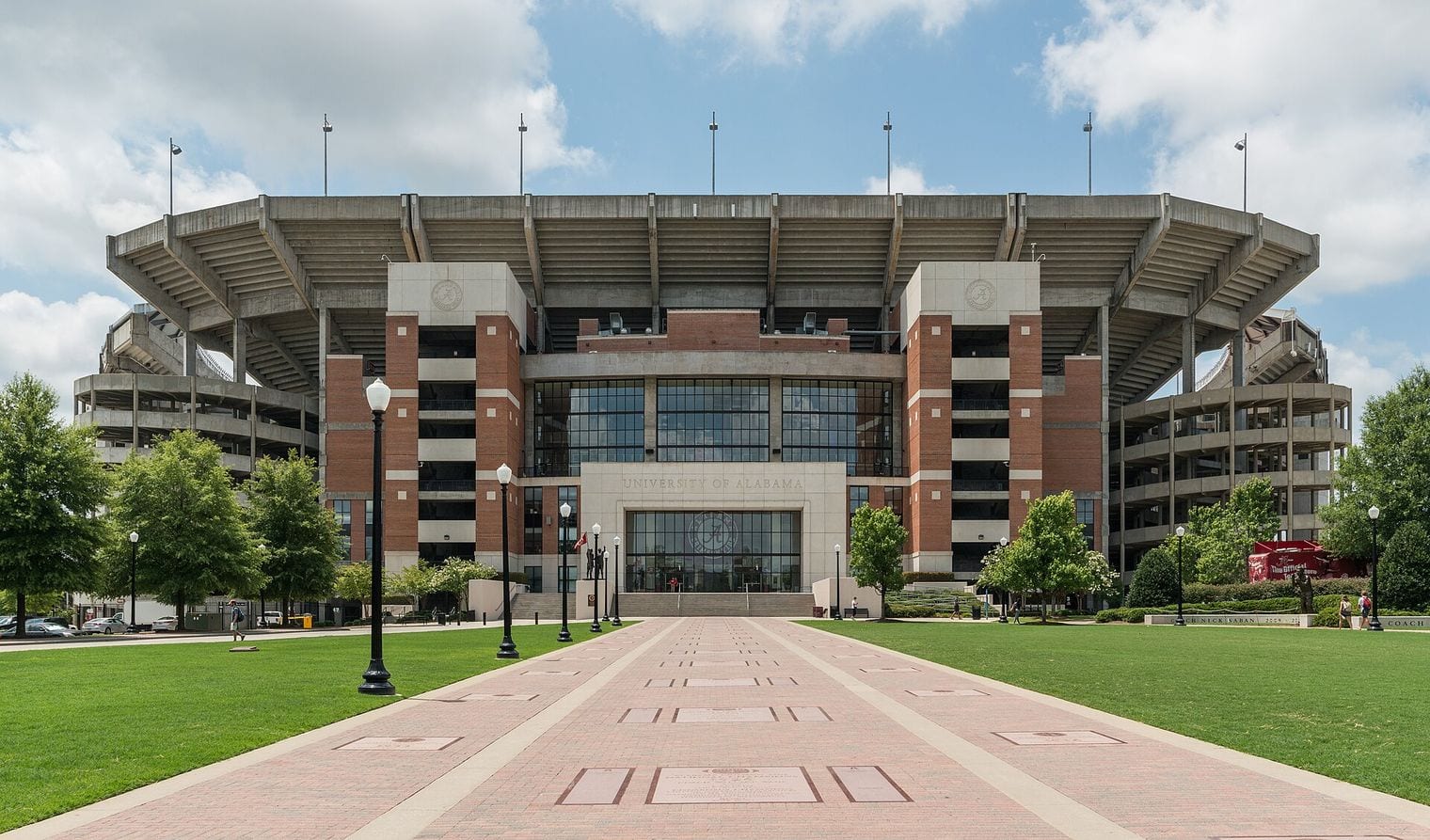
At 100,077 seats, Bryant–Denny Stadium is the home of the Alabama Crimson Tide in Tuscaloosa. It opened in 1929 as Denny Stadium, named for George H. Denny, the university's president from 1912 to 1932. In 1975 the state legislature added Paul "Bear" Bryant, the coach who was still on the sideline, to the name.
In 2024 Alabama named the playing field for Nick Saban, who led the Crimson Tide to six national championships, so the full name now reads Saban Field at Bryant–Denny Stadium. Renovations completed in 2020 set today's figure of 100,077, and on game days the walk past the coaches' statues near the stadium is part of the visit.
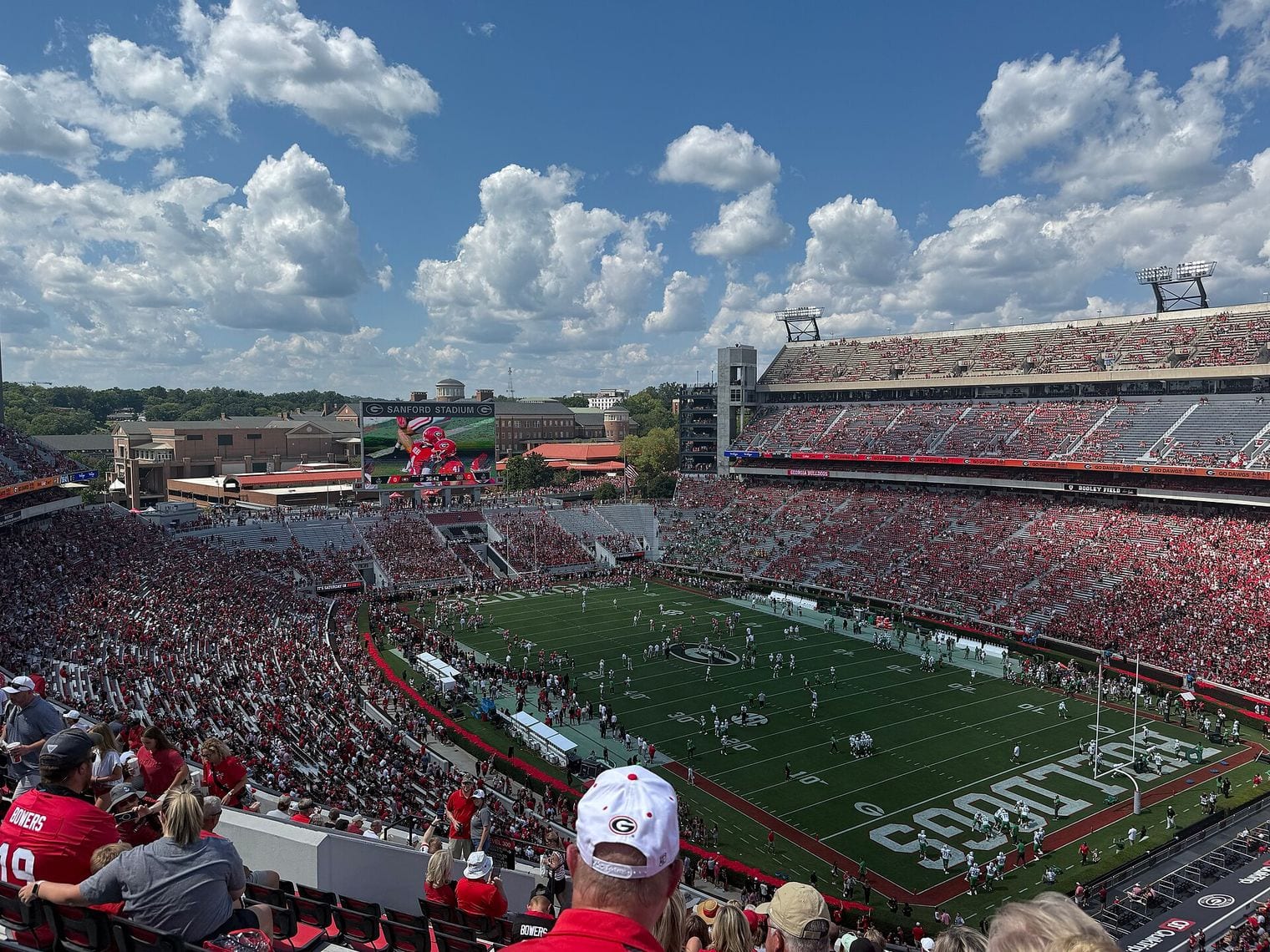
At 93,033 seats, Sanford Stadium is the home of the Georgia Bulldogs on the University of Georgia campus in Athens. Games here are said to be played "between the hedges" because privet hedges have ringed the field since the stadium opened in 1929. The hedges were replanted in 2024, decades after the originals were removed to make room for the soccer tournaments of the 1996 Summer Olympics.
The stadium sits in a natural valley in the middle of campus, so the stands feel tucked into the landscape rather than piled up above it. Its atmosphere is often ranked among the loudest and most intimidating in college football, and Saturday crowds turn Athens into one of the sport's great game-day towns.
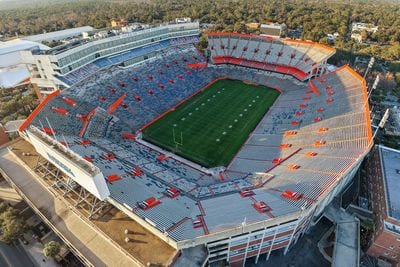
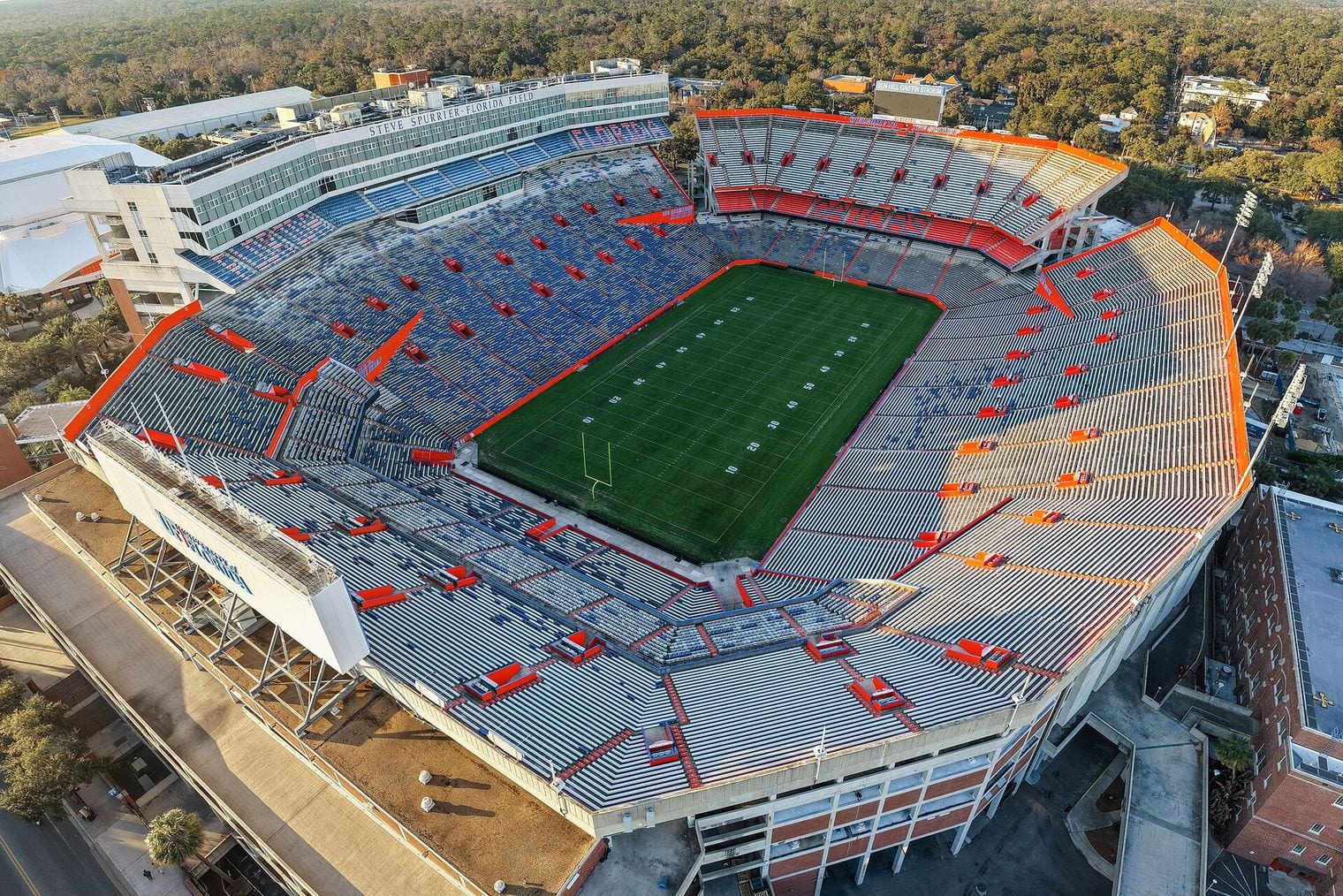
At 88,548 seats, Ben Hill Griffin Stadium is the largest stadium in Florida and the home of the Florida Gators in Gainesville. Better known as "The Swamp," it opened in 1930 as Florida Field, a 22,000-seat facility, and has been expanded many times since. Its full name honors coach Steve Spurrier as well as Ben Hill Griffin Jr., the citrus grower and benefactor whose name covers the stadium.
The stands rise steeply and trap the heat and noise, which is how the nickname stuck. The university's athletic offices have sat beneath the west stands since the 1960s, and a big renovation planned to begin after the 2026 season will reshape the stadium again.
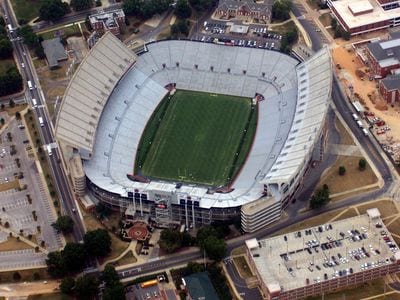
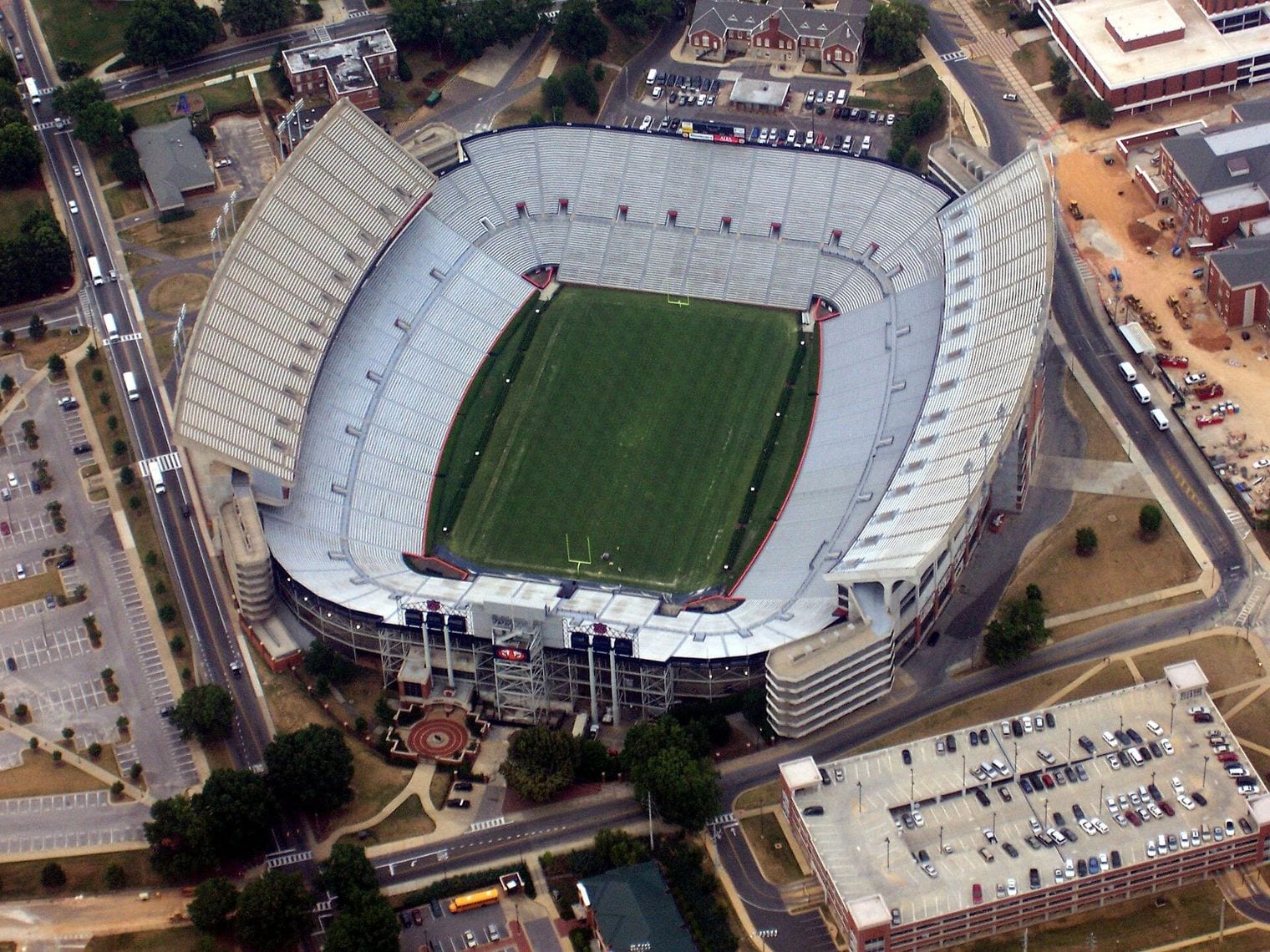
At 88,043 seats, Jordan–Hare Stadium is the home of the Auburn Tigers on the Auburn University campus in east Alabama. It is named for Ralph "Shug" Jordan, the winningest head coach in Auburn history, and Cliff Hare, a member of Auburn's first football team and president of the Southern Conference. Since 2005 the playing surface has been Pat Dye Field.
The stadium reached its current capacity in 2023. After a home win, fans roll the oak trees of Toomer's Corner in toilet paper, a short walk from the stadium on the edge of downtown Auburn, and an eagle flight over the field before kickoff is one of the sport's best-known pregame traditions.
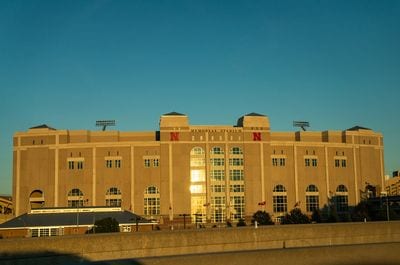
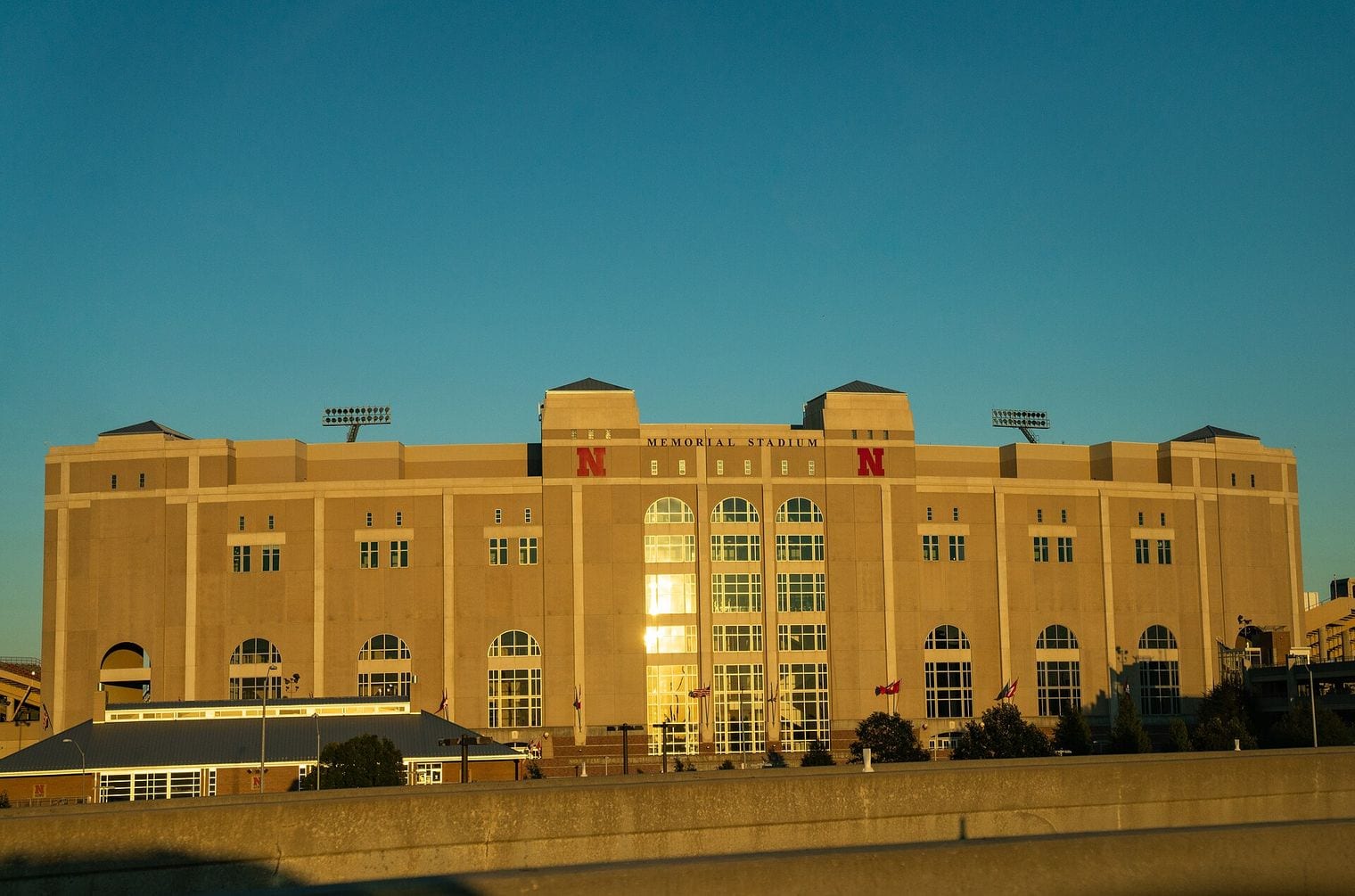
At 82,841 seats, Memorial Stadium is the home of the Nebraska Cornhuskers on the University of Nebraska–Lincoln campus. Nicknamed "The Sea of Red," it opened on October 13, 1923, and was dedicated to Nebraskans who served in the Civil War, the Spanish–American War and World War I. Nebraska has sold out every home game here for decades, an NCAA-record streak.
The 82,841 figure is the one Nebraska prints in its 2026 media guide. Other listings give 85,458, a number closer to the sellout crowds that regularly pass the official count. A major rebuild begins after the 2026 season, so this is the last year the bowl will look the way it does now.
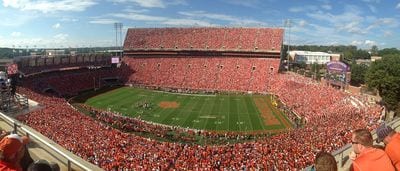
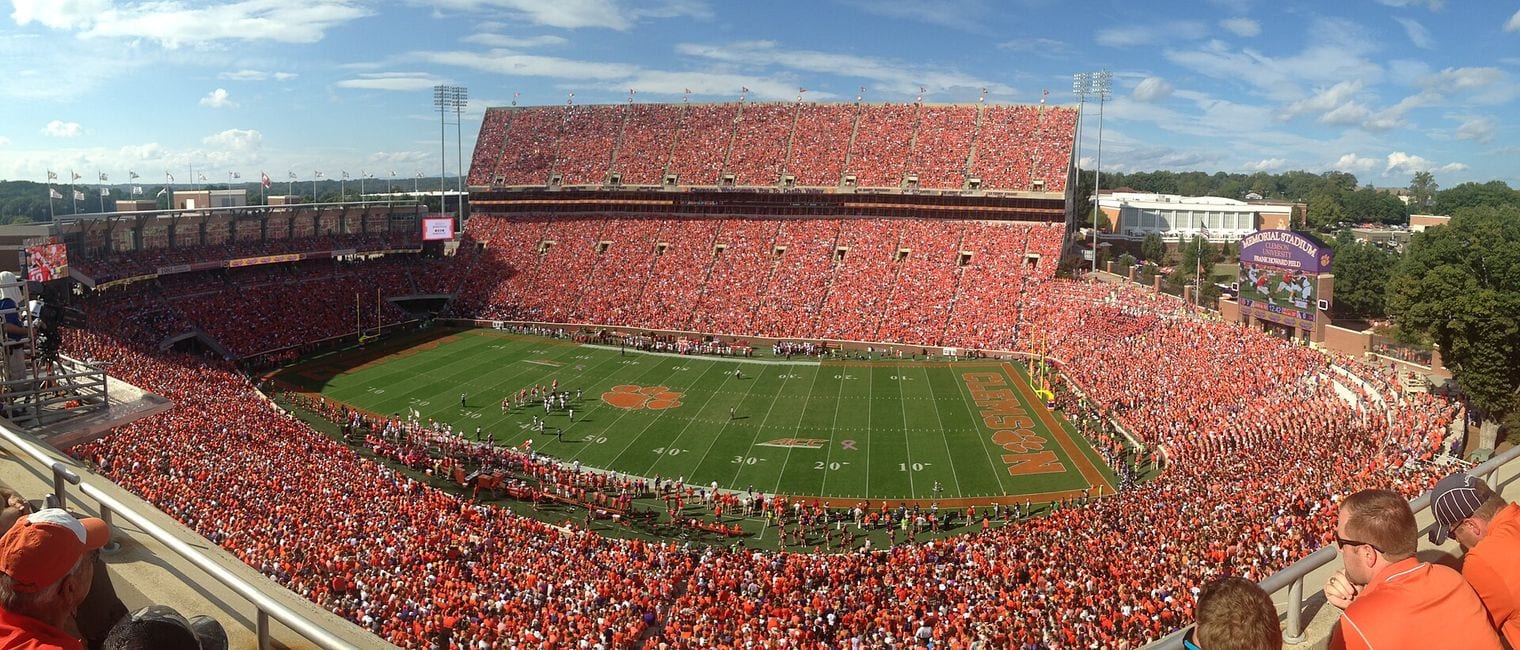
At 81,500 seats, Memorial Stadium is the home of the Clemson Tigers, and like LSU's stadium it is called Death Valley. It was built in 1941 and 1942 and named in memory of "all Clemson men who have made the supreme sacrifice for their country." The playing surface has carried the name of coach and athletic director Frank Howard since 1974.
The stadium sits in a bowl on the edge of the Clemson University campus in upstate South Carolina, with Lake Hartwell close by. The WestZone expansion, finished in 2015, added the Oculus, and on game days a full house of orange makes one of the loudest settings in the ACC.
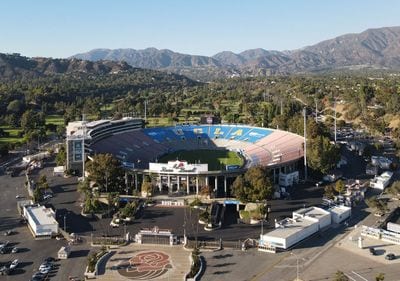
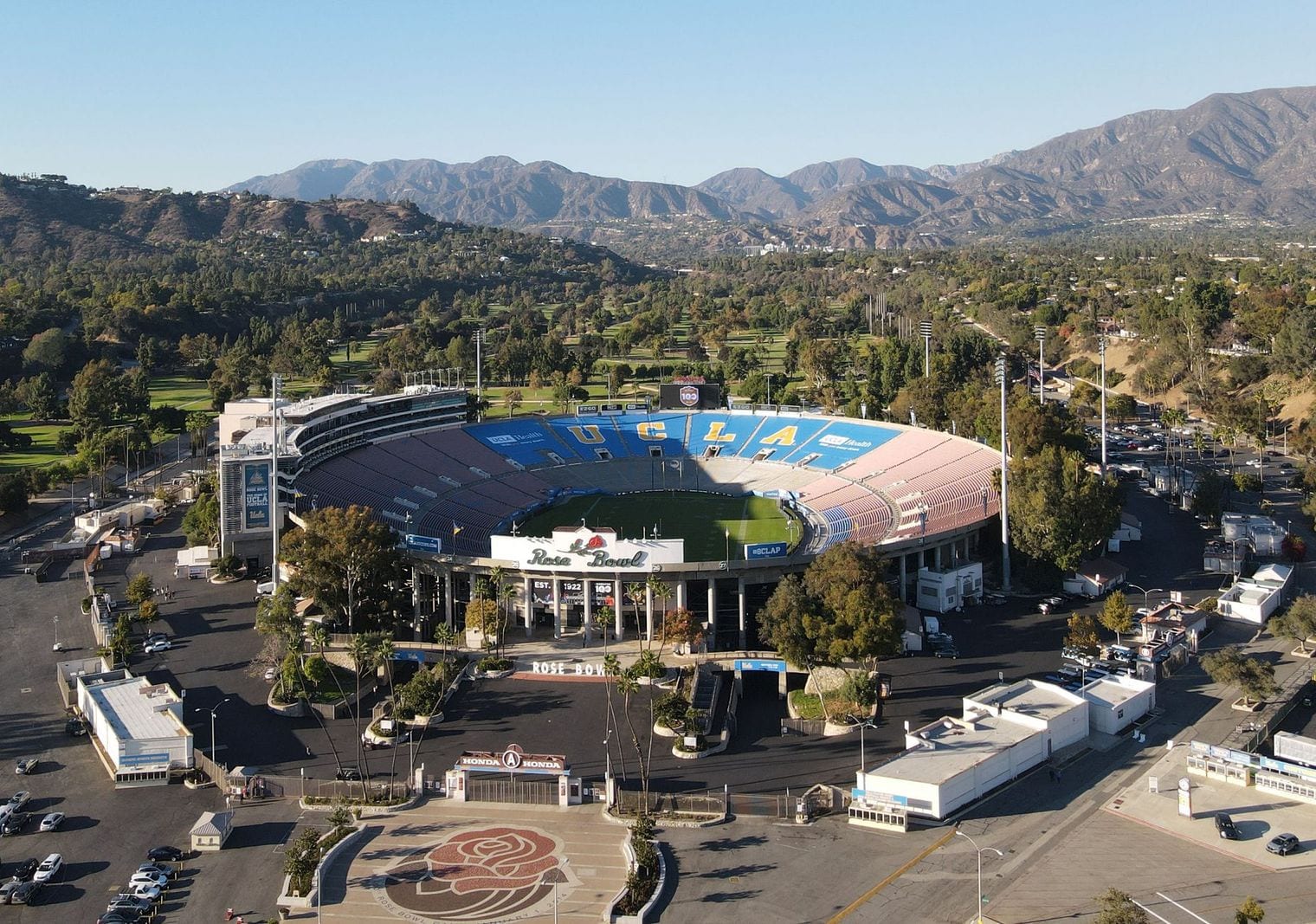
At 81,258 seats, the Rose Bowl is the home of the UCLA Bruins in Pasadena, about 10 miles from downtown Los Angeles. It opened in October 1922 and is a National Historic Landmark, best known for the New Year's Day game that shares its name. The stadium sits in the Arroyo Seco, framed by the San Gabriel Mountains, which makes it one of the most beautiful settings in the sport.
The 81,258 figure is the capacity UCLA lists in its 2026 game notes for its own home games, after a new field-level club went into the south end zone. Older listings give 89,702 or more for the whole bowl. That difference is why the Rose Bowl ranks here, just behind Clemson, rather than higher.
Get new guides like this by email
One email every Thursday with our newest guides for the places you tick.
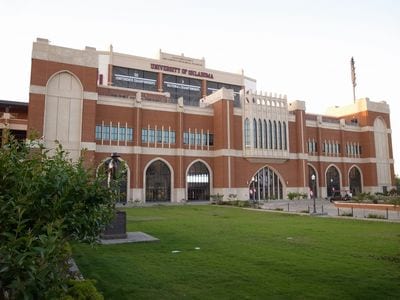
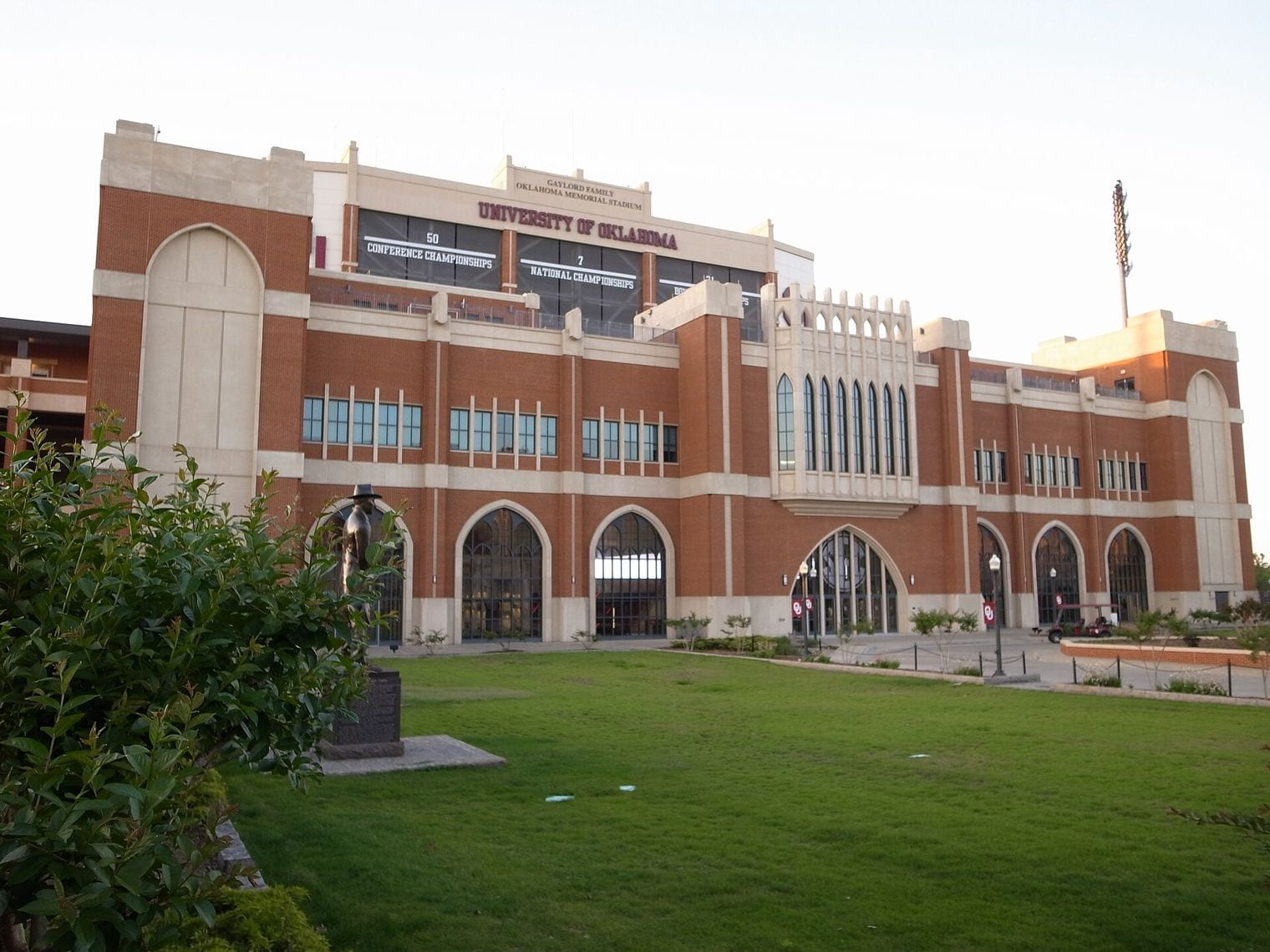
At 80,126 seats, Gaylord Family Oklahoma Memorial Stadium is the home of the Oklahoma Sooners on the University of Oklahoma campus in Norman. Fans also call it Owen Field or the "Palace on the Prairie." Today's figure was set after renovations completed before the 2019 season.
The bowl runs north to south, and both ends are enclosed. The south end was enclosed during the 2015–2016 off-season as part of a $160 million project. Oklahoma has announced a further renovation that will shrink the capacity after the 2027 season, so today's figure is set to change.
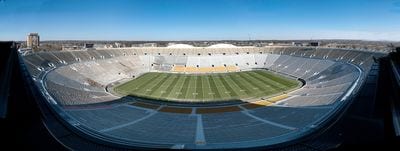
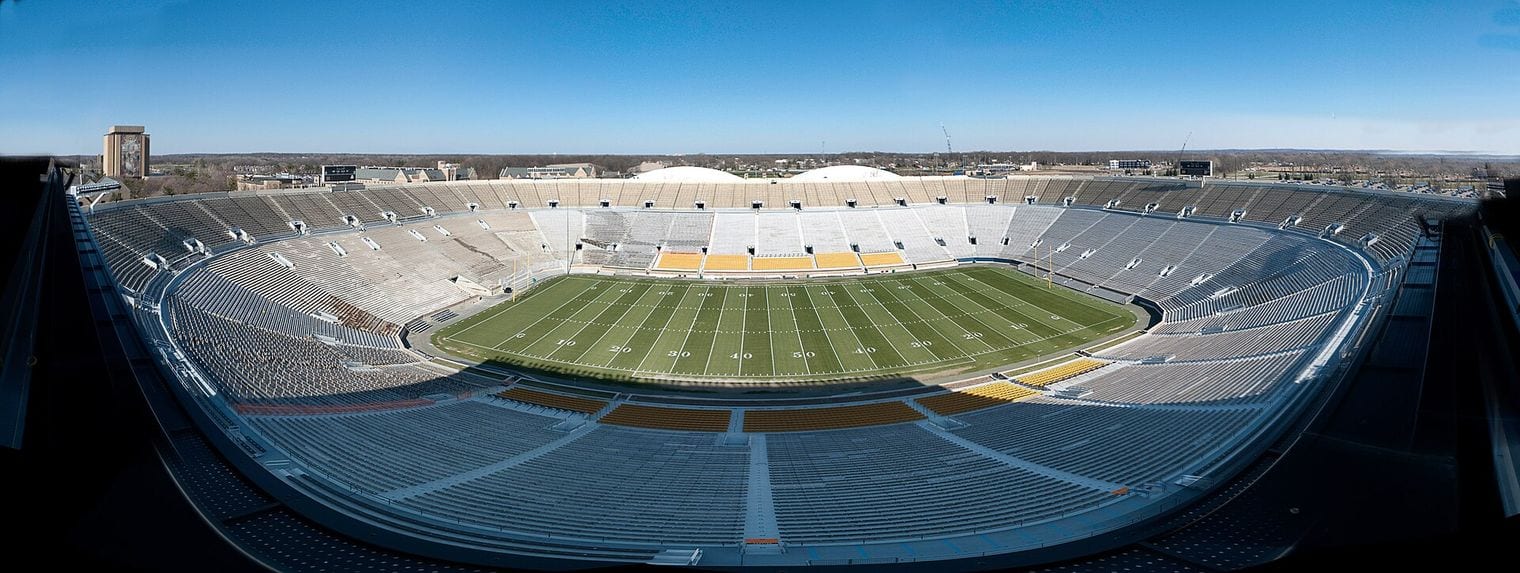
At 77,622 seats, Notre Dame Stadium is the home of the Fighting Irish in South Bend, Indiana. It was built in 1930 under the guidance of Knute Rockne, which earned it the nickname "The House that Rockne Built." Every home game has sold out since 1964, one of the longest runs in the sport.
For decades the stadium held nearly 60,000. A renovation between 1994 and 1997 added an upper bowl and pushed capacity past 80,000, and the Campus Crossroads project of 2014 then set today's 77,622. From the stands you can see the mural of Jesus on the Hesburgh Library, nicknamed "Touchdown Jesus."
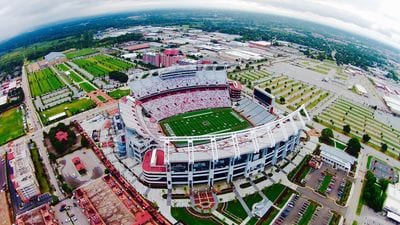
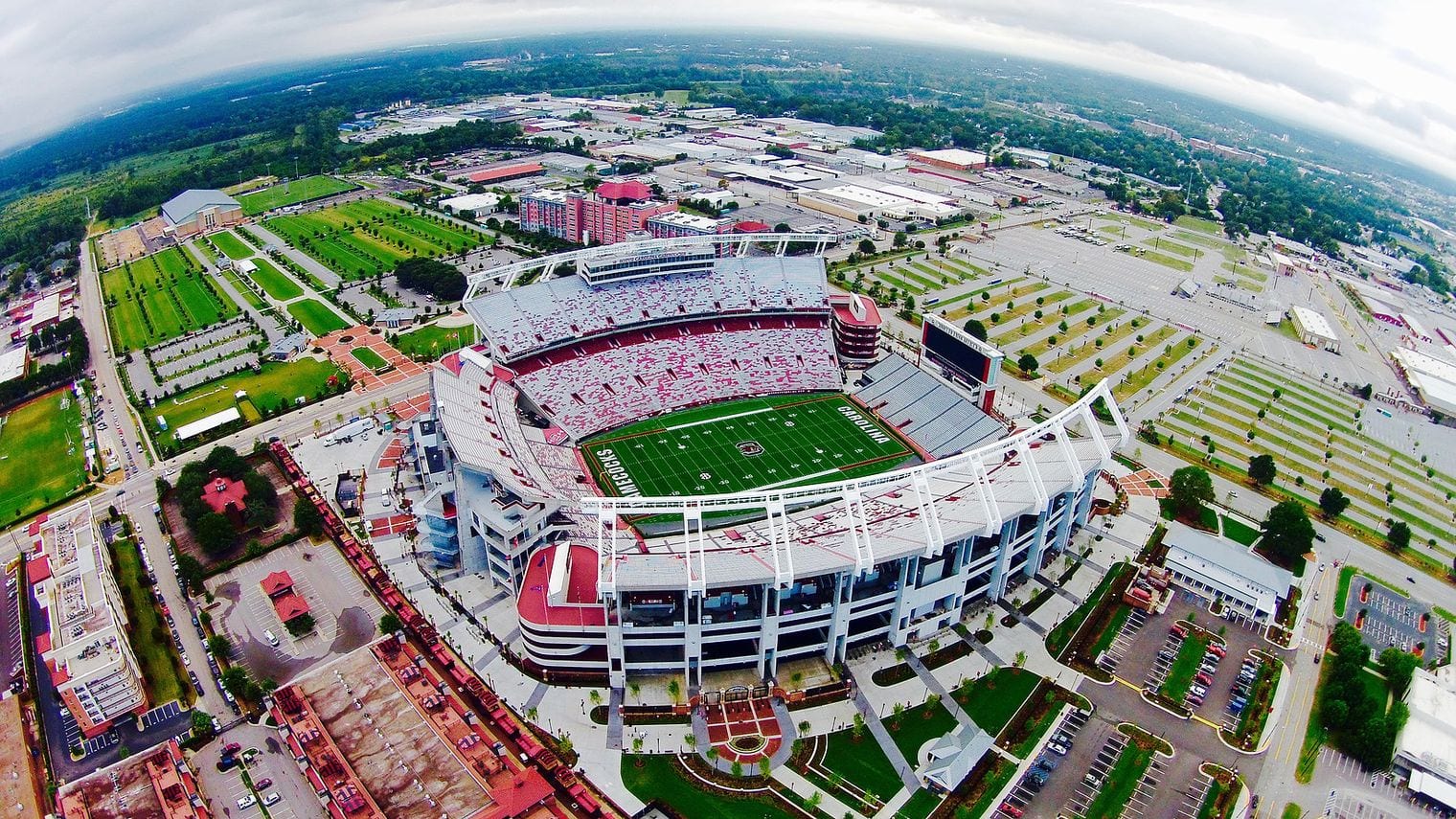
At 77,559 seats, Williams–Brice Stadium is the home of the South Carolina Gamecocks in Columbia. It stands at the corner of George Rogers Boulevard and Bluff Road, next to the South Carolina State Fairgrounds, and it also hosts concerts and state high school football championships.
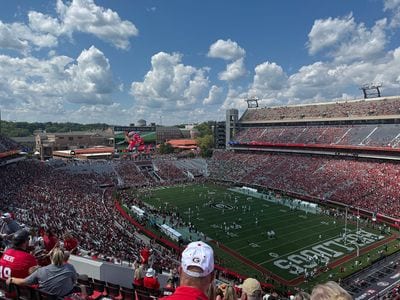
The Gamecocks draw standing-room-only crowds here, and the game-day atmosphere has been voted the best in the SEC. Tailgaters fill the old railcars of the Cockaboose Railroad beside the stadium. South Carolina plans a renovation that will lower capacity from 2027, so 2026 is the last season at this size.
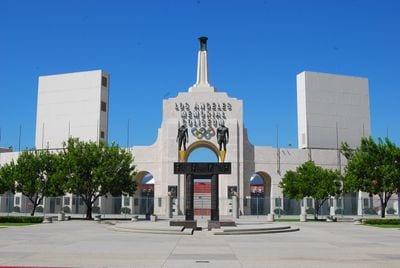
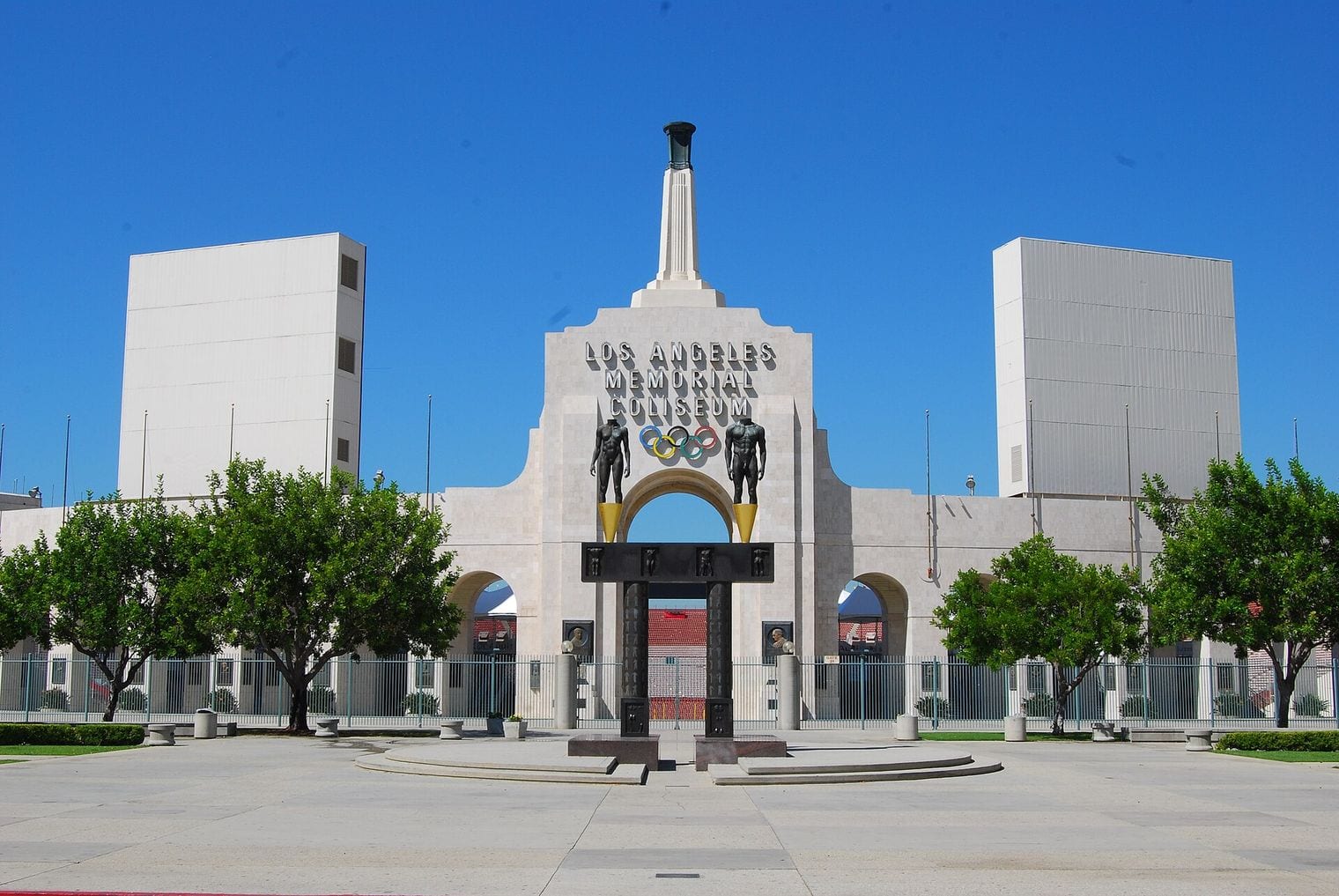
At 77,500 seats, the Los Angeles Memorial Coliseum is the home of the USC Trojans, right next to the school's main campus in Exposition Park. It was commissioned in 1921 and completed in 1923 as a memorial to Los Angeles veterans of World War I. For decades it sat among the largest stadiums in the country, seating more than 100,000.
Few venues have hosted more history. The Coliseum staged the Olympic Games in 1932 and 1984, was home to the NFL's Los Angeles Rams in two spells, and hosted the first AFL–NFL World Championship Game, later known as Super Bowl I. Its peristyle arch and Olympic torch are Los Angeles landmarks.
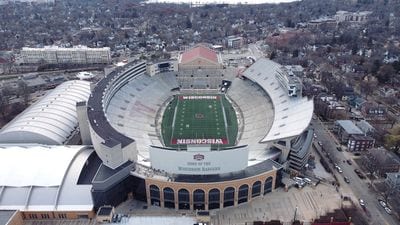
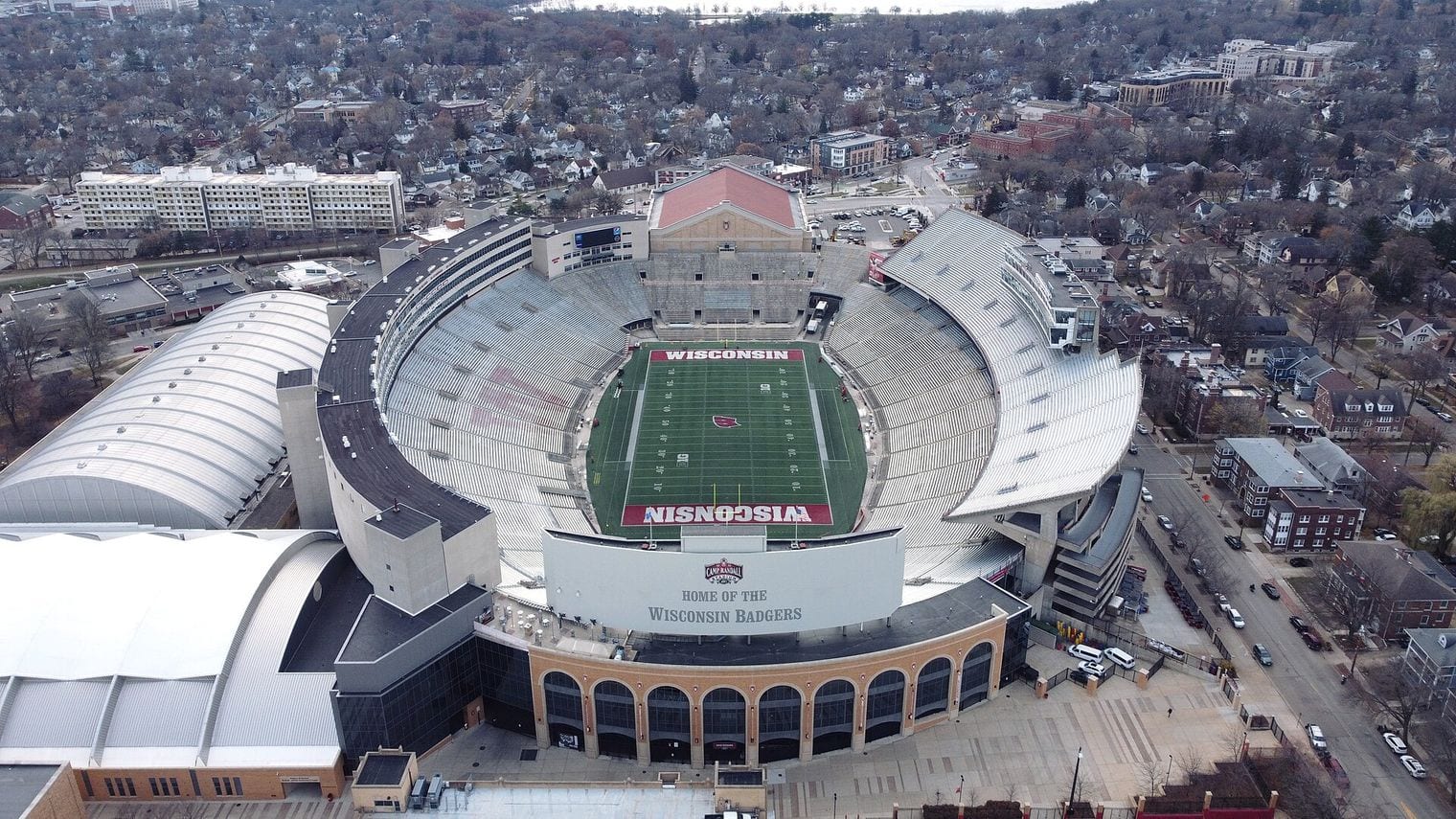
At 76,057 seats, Camp Randall Stadium is the home of the Wisconsin Badgers on the University of Wisconsin campus in Madison. It is the oldest stadium in the Big Ten: Wisconsin has played football on the site since 1895 and in a fully built stadium since 1917. The ground takes its name from a Civil War training camp that stood here.
Wisconsin's own documents give several close figures, between 76,030 and 76,130, and 76,057 is the one the school, its opponents and Wikipedia share. At any of them it stays ahead of Razorback Stadium. Between the third and fourth quarters, the whole crowd jumps to "Jump Around," and the stands visibly shake.
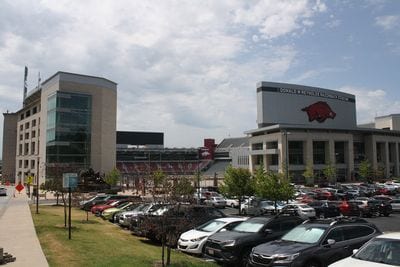
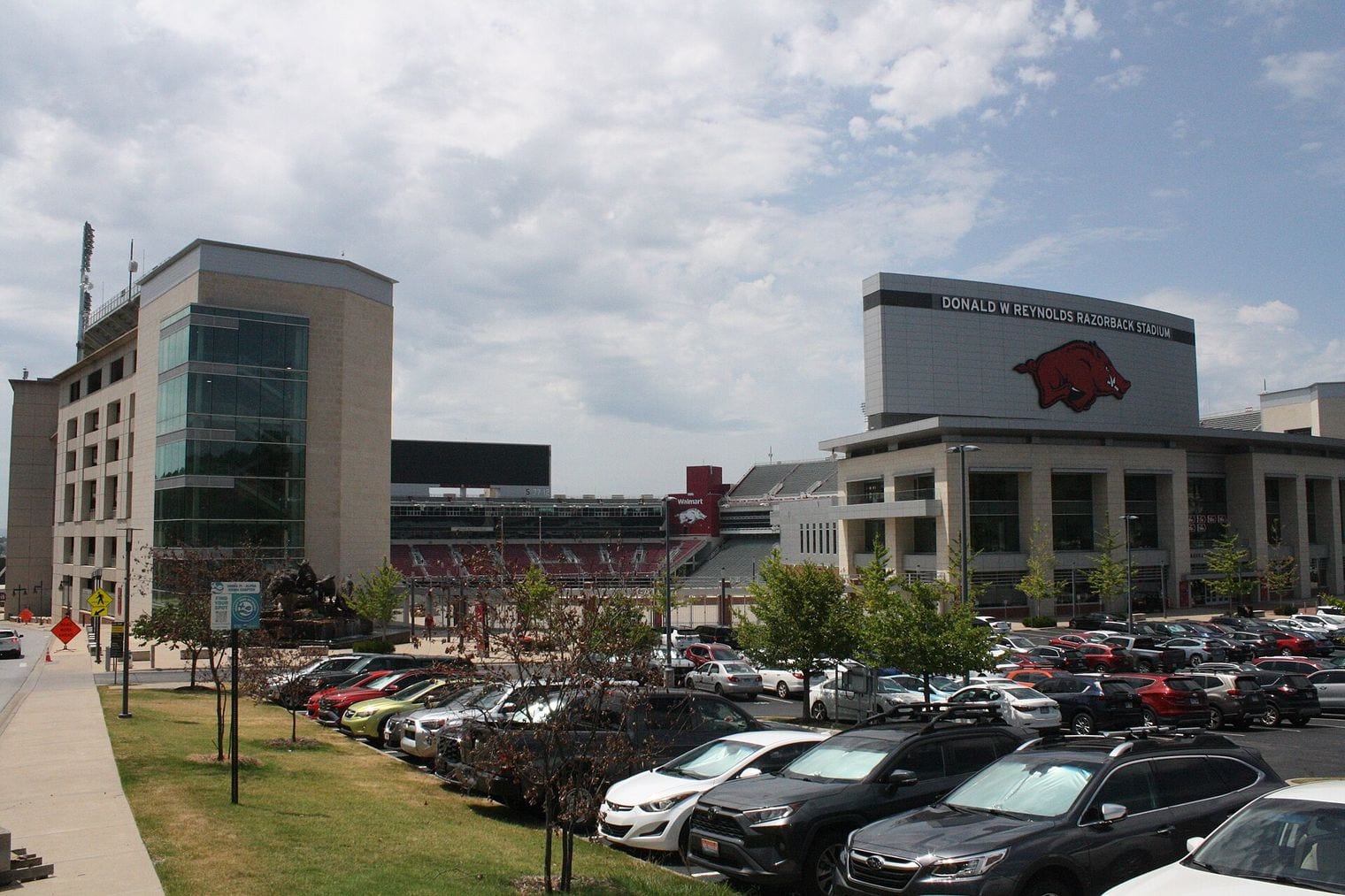
At 76,000 seats, Razorback Stadium has been the home of the Arkansas Razorbacks in Fayetteville since it opened in 1938. The playing field is named Frank Broyles Field, after the coach and athletic director who led Arkansas for decades, and renovations in 2000 and 2001 lifted the capacity from about 50,000 to 72,000.
Arkansas lists a round 76,000 in its media guide, while other references give 76,212. At the higher figure it would edge past Camp Randall, so these two sit close together. On game days the crowd's "Calling the Hogs" cheer, "Woo Pig Sooie," rolls around the bowl from the Ozark hills.
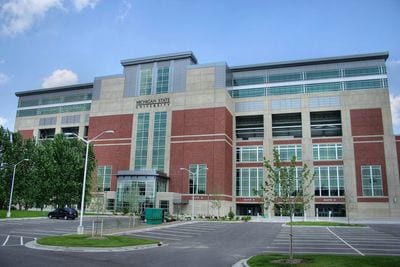
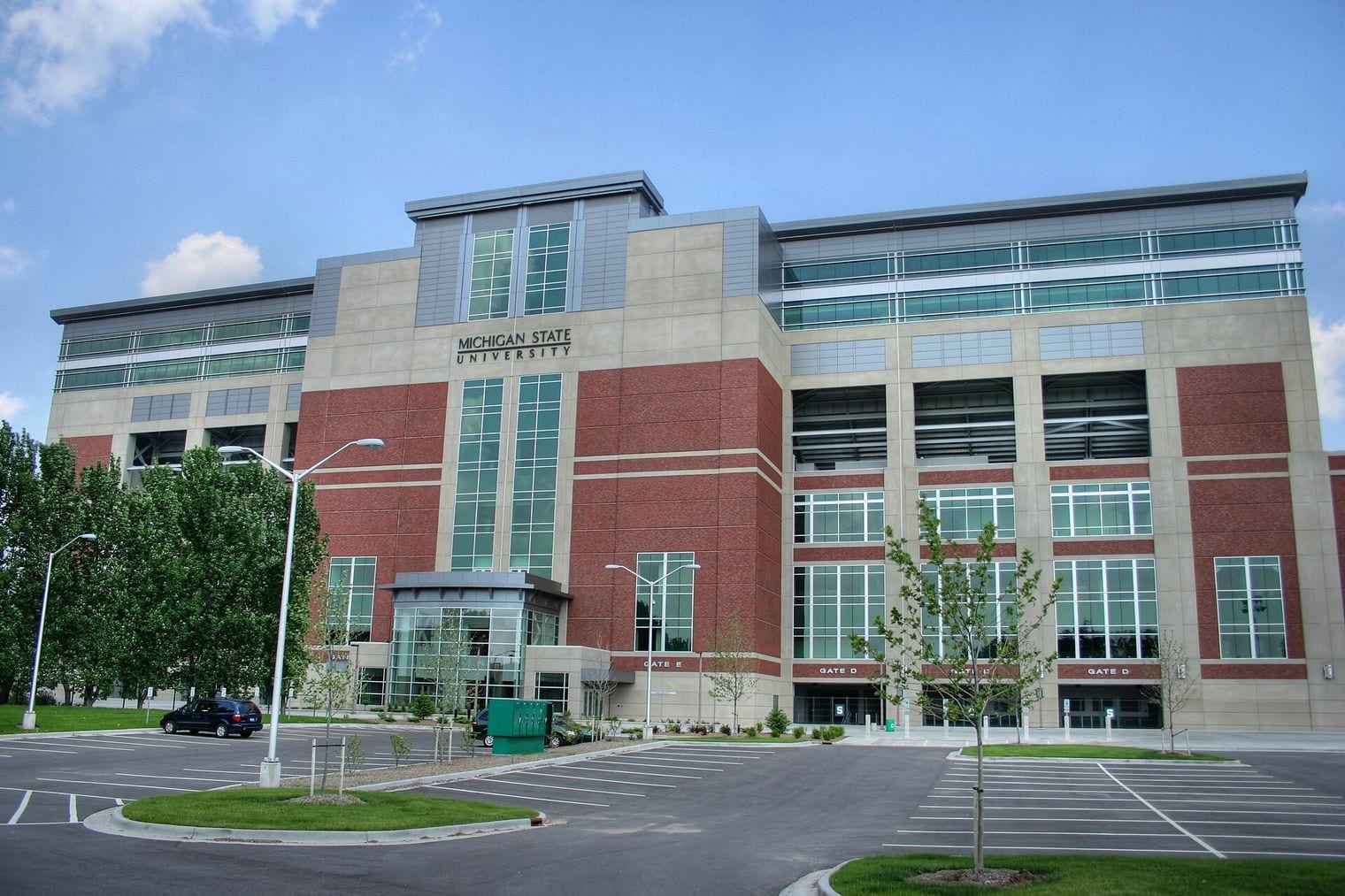
At 74,866 seats, Spartan Stadium is the home of the Michigan State Spartans in East Lansing. It opened in 1923 and is used mainly for football. Luxury boxes and club seating added in 2004 and 2005 raised its size, and the stadium has held more than 80,000 fans for its biggest games.
The Sparty statue near the stadium is a meeting point for students and visitors, and the green-and-white crowd turns out in force for rivalry games against Michigan. The stadium is a short walk from the Red Cedar River and the heart of campus.
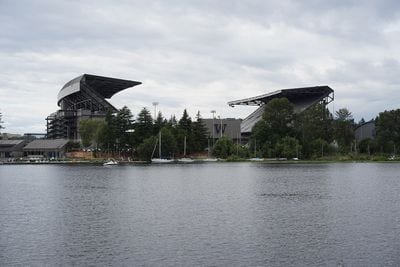
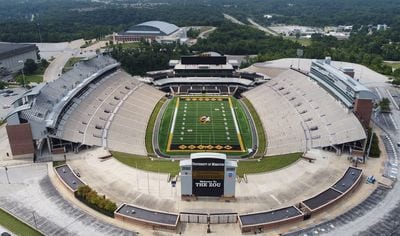
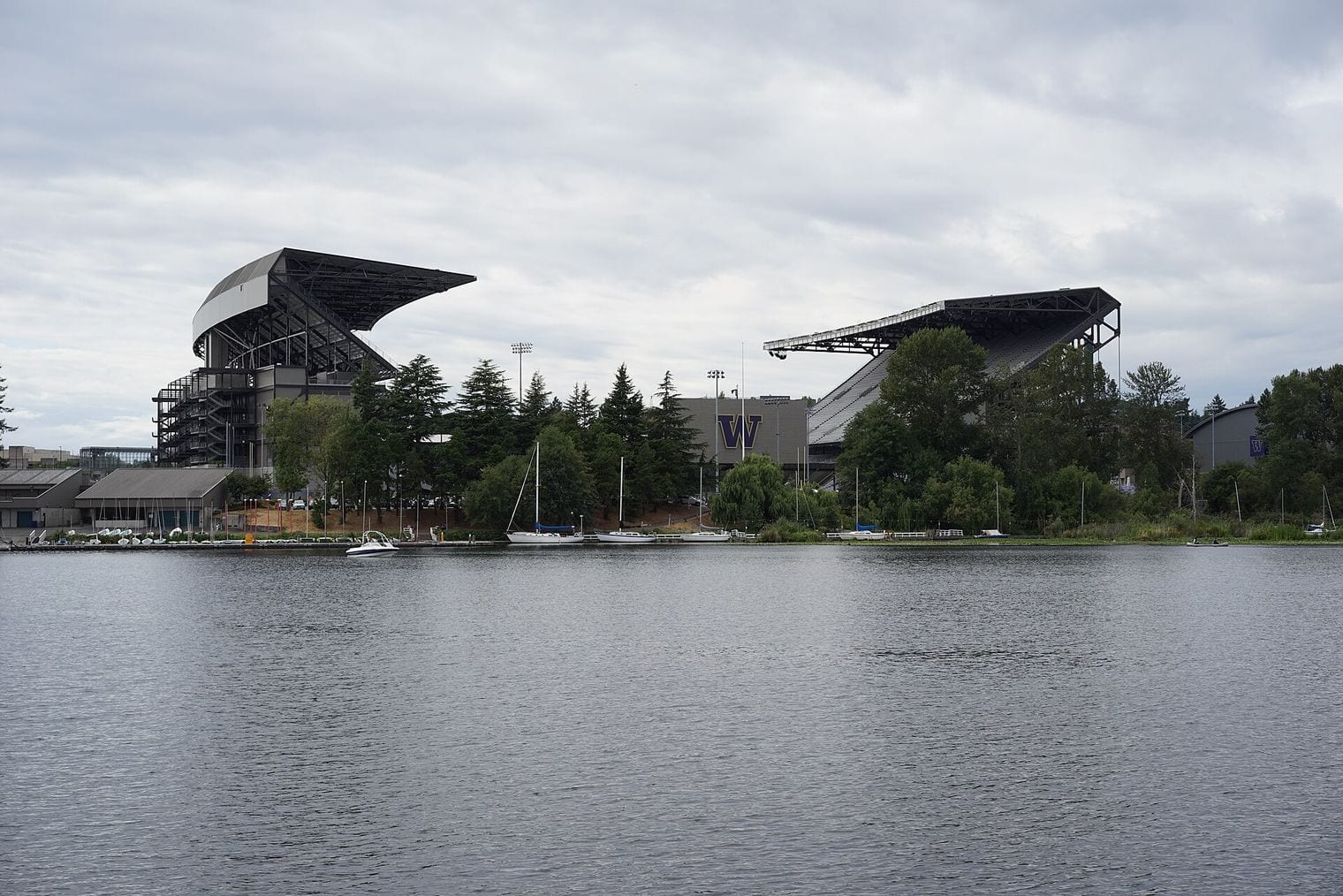
At 70,138 seats, Husky Stadium is the largest stadium in the Pacific Northwest and the home of the Washington Huskies in Seattle. It has hosted Washington football since 1920 and sits on the edge of campus above Union Bay, with views across Lake Washington to the Cascade Mountains and Mount Rainier.
Its open east end frames that view, and many fans arrive by boat, tying up on the water below the stands. The stadium briefly hosted the Seattle Seahawks while the Kingdome was repaired and again while their new stadium was built. Some university pages still list 72,132, but 70,138 is the figure in Washington's 2026 media guide.
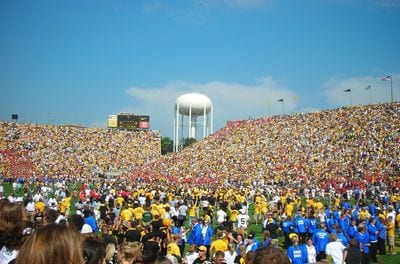
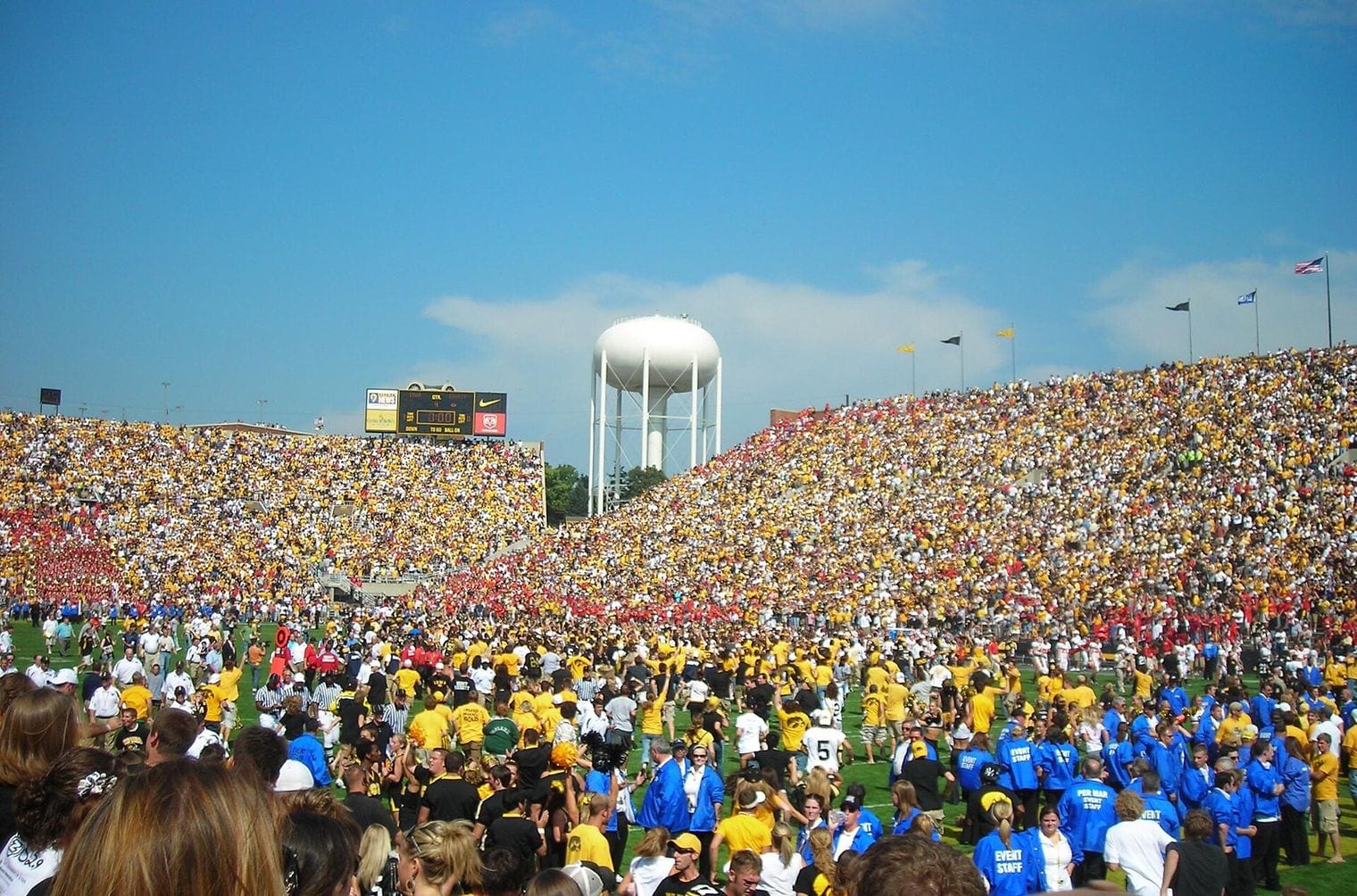
At 69,250 seats, Kinnick Stadium is the home of the Iowa Hawkeyes in Iowa City. It opened in 1929 as Iowa Stadium and is named for Nile Kinnick, the Iowa player who won the 1939 Heisman Trophy and died in service during World War II. It is the only college football stadium named for a Heisman winner.
The stadium stands across the street from the University of Iowa Stead Family Children's Hospital. At the end of the first quarter, the whole crowd turns to wave to the patients watching from the hospital's upper floors, one of the most moving traditions in college sport.
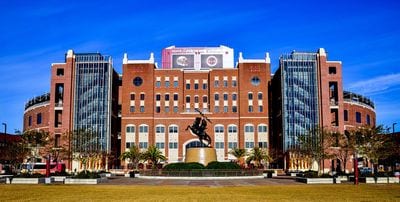
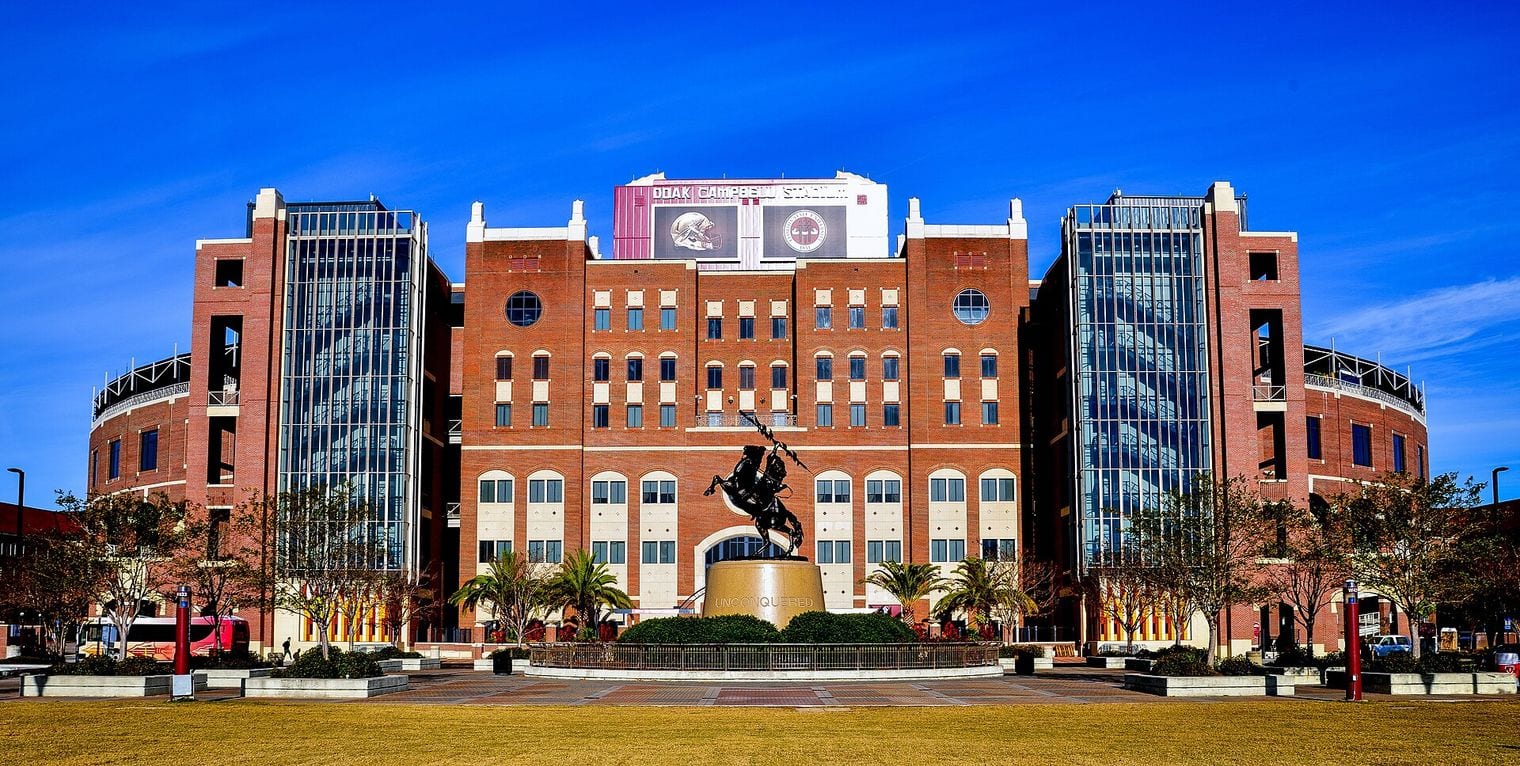
At 67,277 seats, Doak Campbell Stadium is the home of the Florida State Seminoles in Tallahassee. It opened in 1950 and was named for Doak S. Campbell, the university's first president. Since 2004 the playing surface has carried the name of coach Bobby Bowden, so the full name reads Bobby Bowden Field at Doak S. Campbell Stadium.
A two-year renovation in 2024 and 2025 added chairback seating and premium areas, and that brought the capacity down from 79,560 to today's 67,277. Before kickoff, a rider on the Appaloosa horse Renegade plants a flaming spear at midfield, a tradition run with the approval of the Seminole Tribe of Florida.
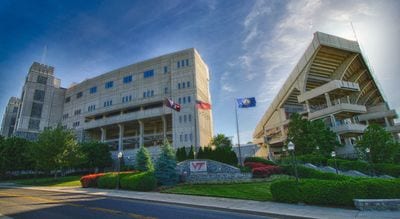
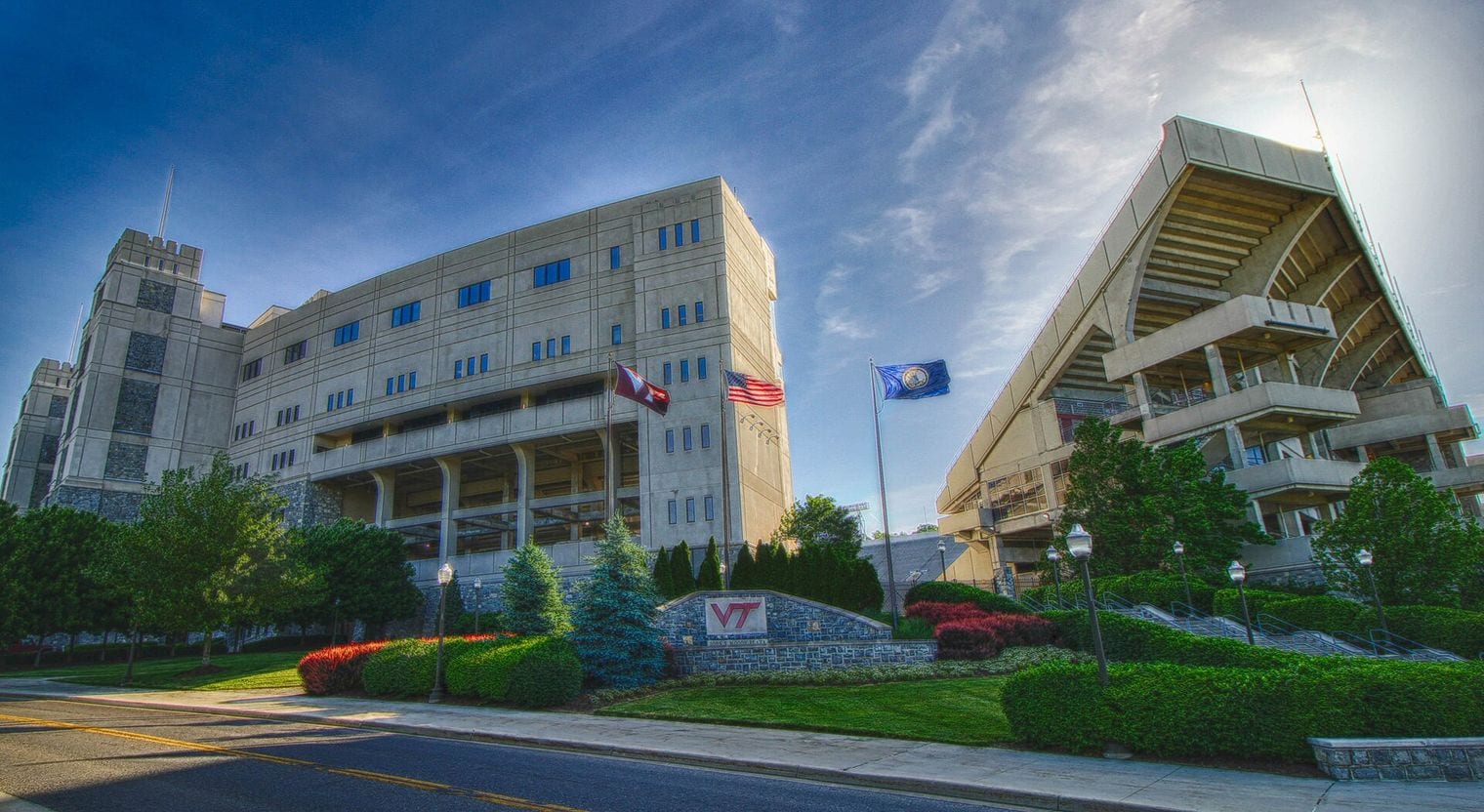
At 65,632 seats, Lane Stadium is the home of the Virginia Tech Hokies in Blacksburg, in the mountains of southwest Virginia. The playing surface is Worsham Field, and the stadium is named for Edward Hudson Lane, a Virginia Tech student and local businessman.
Rivals.com rated it the best home-field advantage in college football in 2005, and ESPN ranked it second among the sport's scariest places to play in 2007. At more than 2,000 feet above sea level, it long held the highest elevation of any FBS stadium in the eastern United States. The noise peaks when the team runs out to "Enter Sandman."
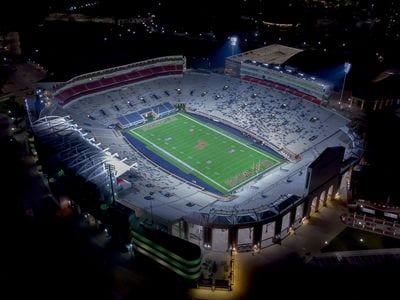
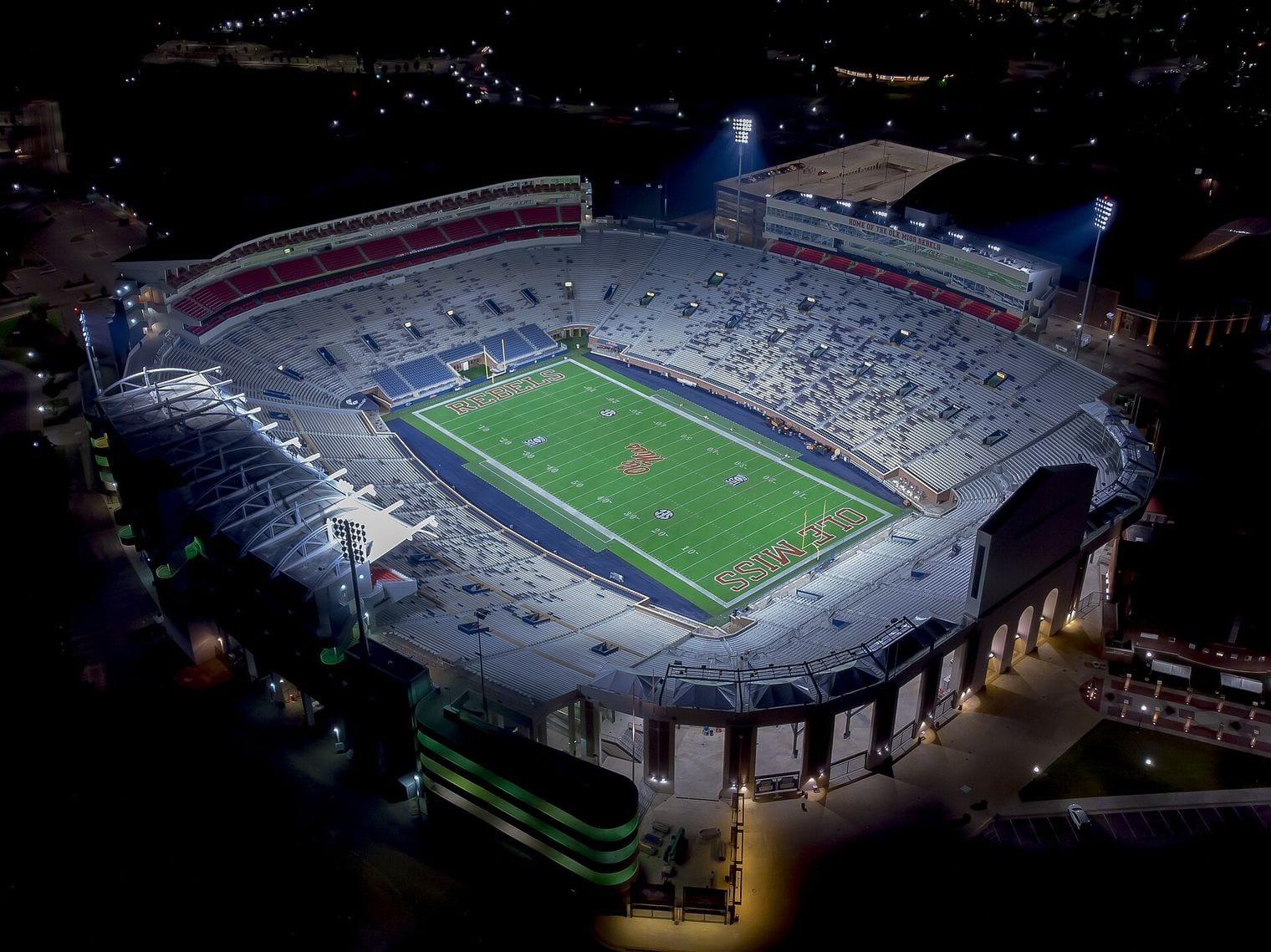
At 64,038 seats, Vaught–Hemingway Stadium is the home of the Ole Miss Rebels in Oxford, Mississippi. It is named for Johnny Vaught, the coach who built Ole Miss into a national power, and Judge William Hemingway, a law professor who chaired the university's athletics committee.
The stadium sits beside the Grove, a 10-acre stand of oak trees where fans set up tents, chandeliers and silver serving trays for what many call the best tailgate in college football. The walk from the Grove to the stadium through the Walk of Champions is part of the game-day ritual.
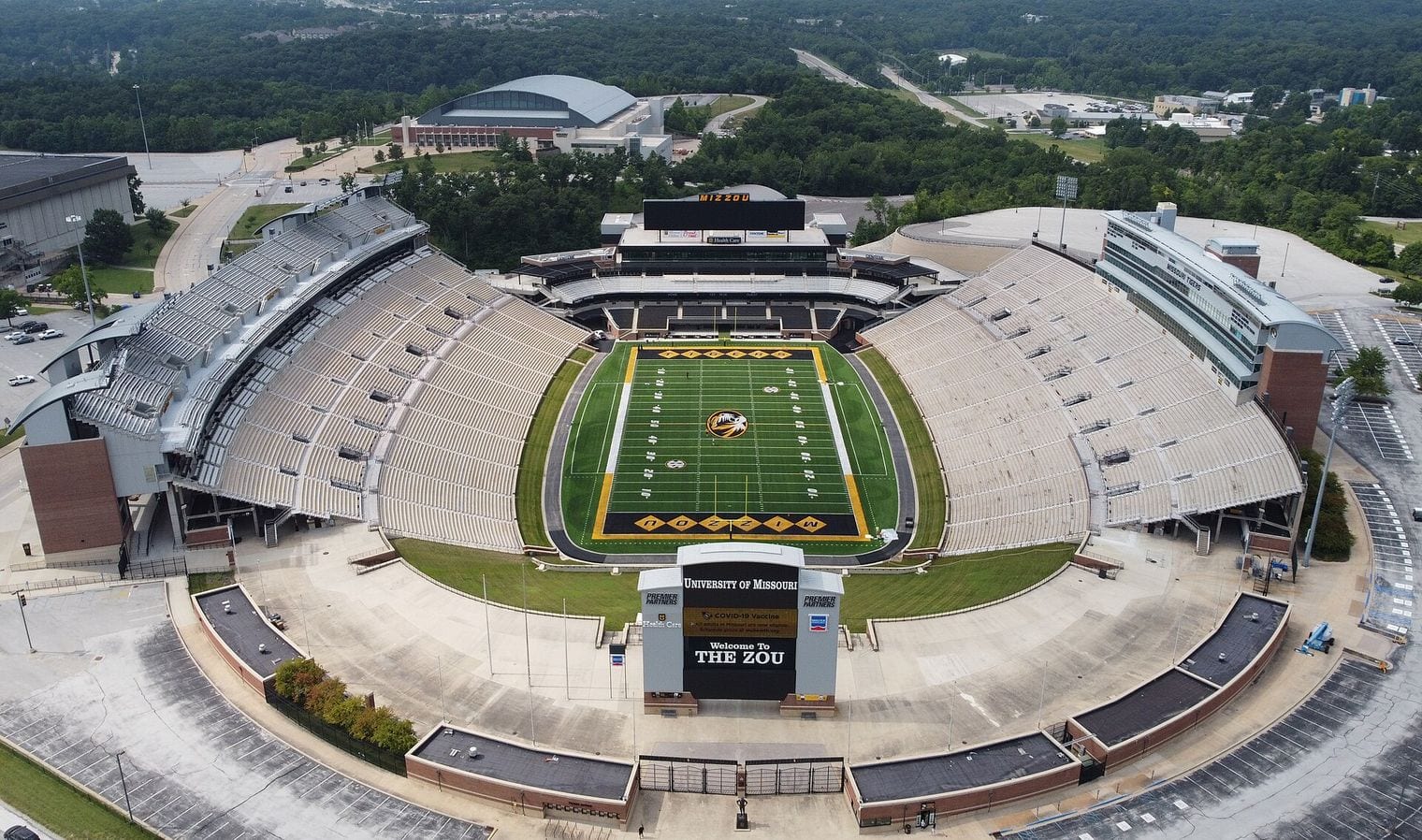
At 63,609 seats, Faurot Field at Memorial Stadium is the home of the Missouri Tigers in Columbia. The playing surface was named in 1972 for Don Faurot, a longtime Missouri coach, and the stadium is the third-largest sports venue in Missouri, behind the domes and stadiums of St. Louis and Kansas City.
A new north end zone, built for the stadium's 100th season, opened in 2026 with suites, loge boxes and club seats. Missouri's 2026 game notes list 63,609. Other references give about 65,000, but the stadium ranks 27th at either figure.
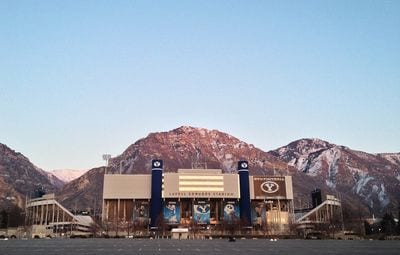
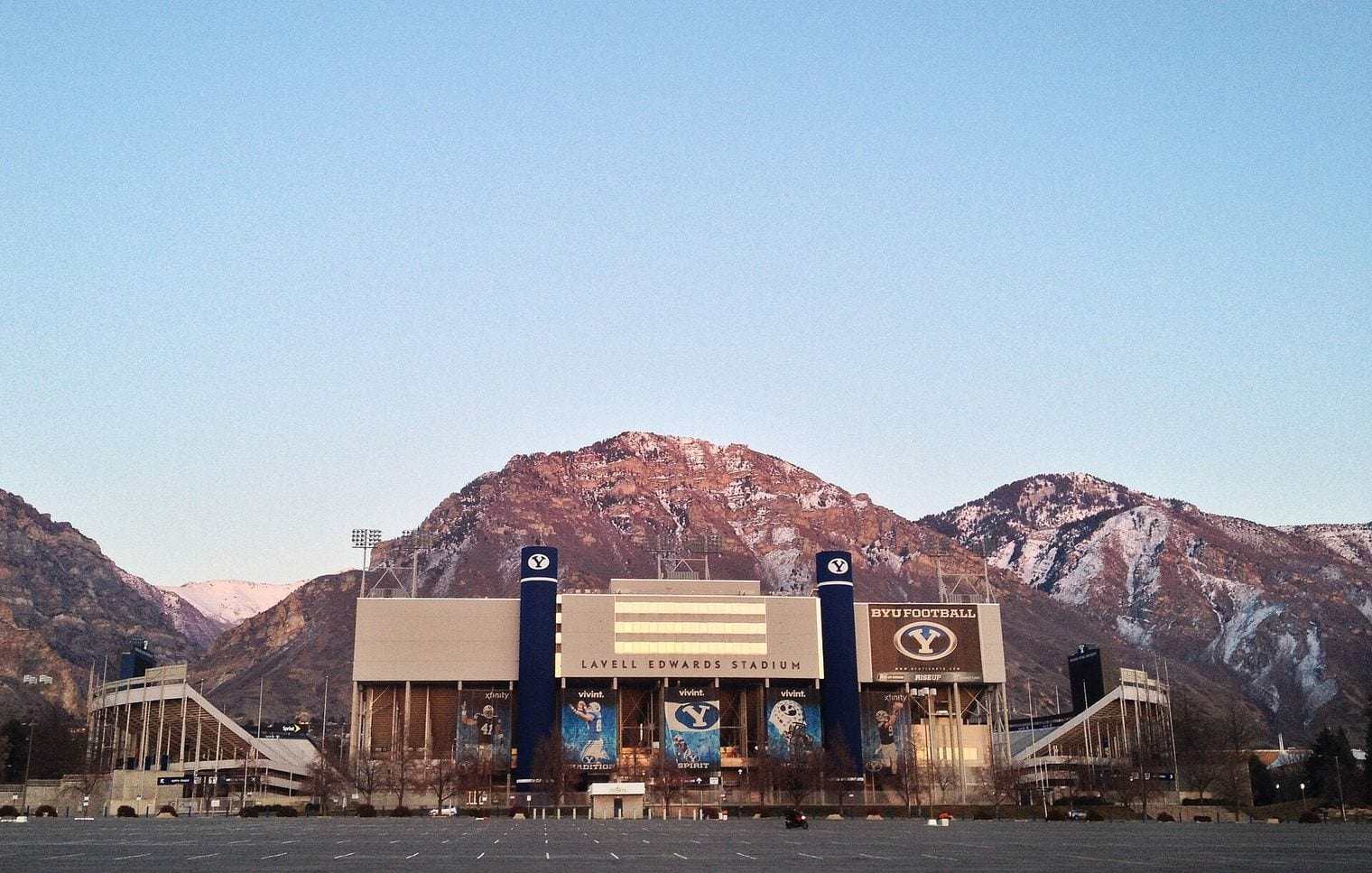
At 62,073 seats, LaVell Edwards Stadium is the largest stadium in the Big 12 and the home of the BYU Cougars in Provo, Utah. It opened in 1964 as Cougar Stadium and was renamed in 2000 for LaVell Edwards, the Hall of Fame coach who led BYU to a national championship.
The field lies at 4,649 feet above sea level, aligned north to south, and the stands look out over the Wasatch Range, which rises steeply behind the stadium. Evening games, when the sun sets on the mountains, are some of the most scenic in the sport.
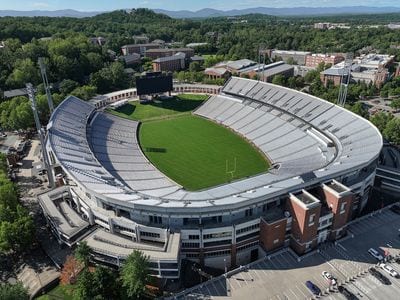
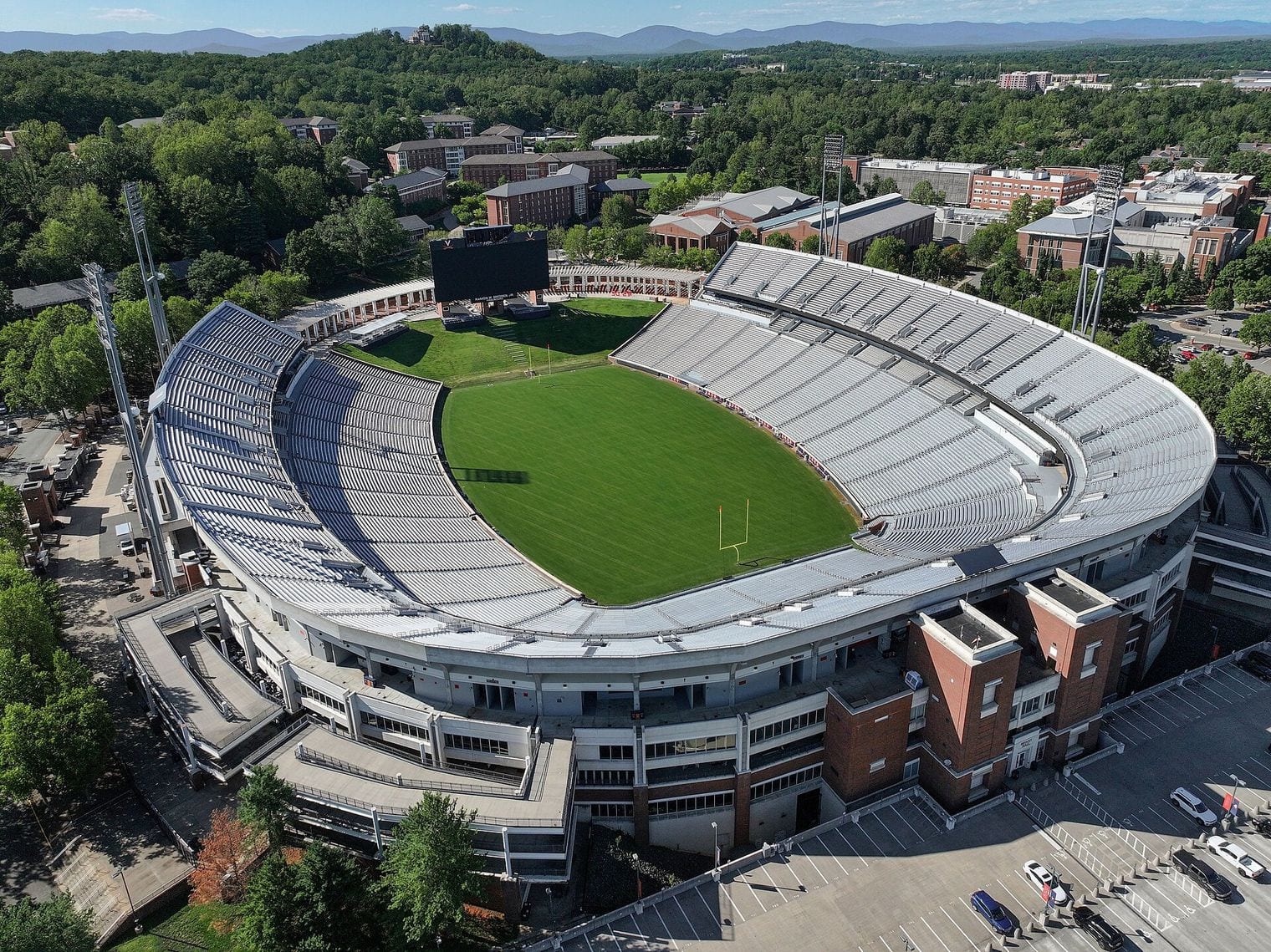
At 61,500 seats, Scott Stadium shares 29th place with Jack Trice Stadium, because both schools list exactly the same figure. It is the home of the Virginia Cavaliers in Charlottesville, set on the University of Virginia's Grounds, and it was built in 1931, which makes it the oldest active FBS stadium in Virginia.
On its grassy hillside, students in shirts and ties watch from the slopes, and the stadium has also hosted concerts by the Dave Matthews Band, the Rolling Stones and U2. Two NCAA men's lacrosse championships have been played here too.
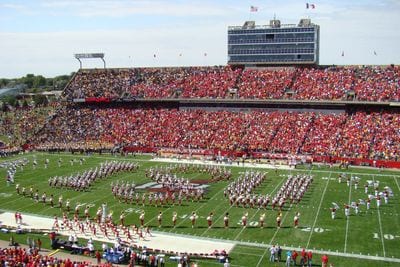
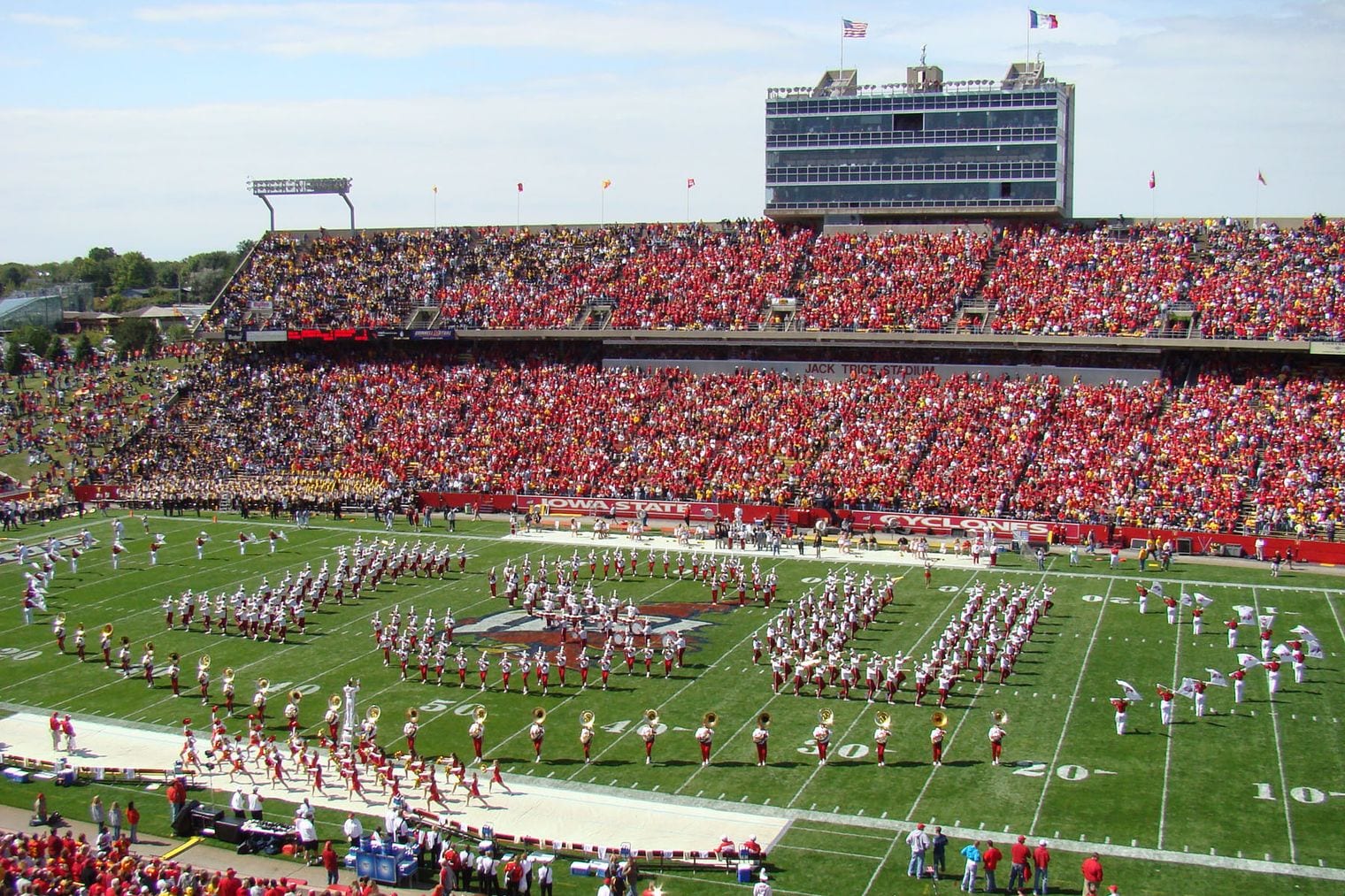
At 61,500 seats, Jack Trice Stadium shares 29th place with Scott Stadium. It is the home of the Iowa State Cyclones in Ames, and its official capacity includes the hillside seats in the corners of the bowl. It is named for Jack Trice, Iowa State's first African American athlete, who died of injuries sustained during a 1923 game against Minnesota.
It is the only FBS stadium named for an African American. The stadium opened on September 20, 1975, with a 17–12 win over Air Force, and it is the second-largest in the Big 12, behind LaVell Edwards Stadium.
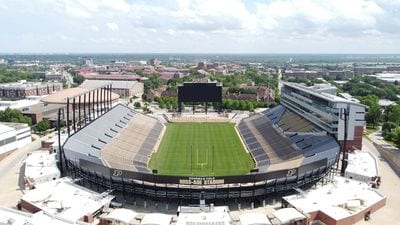
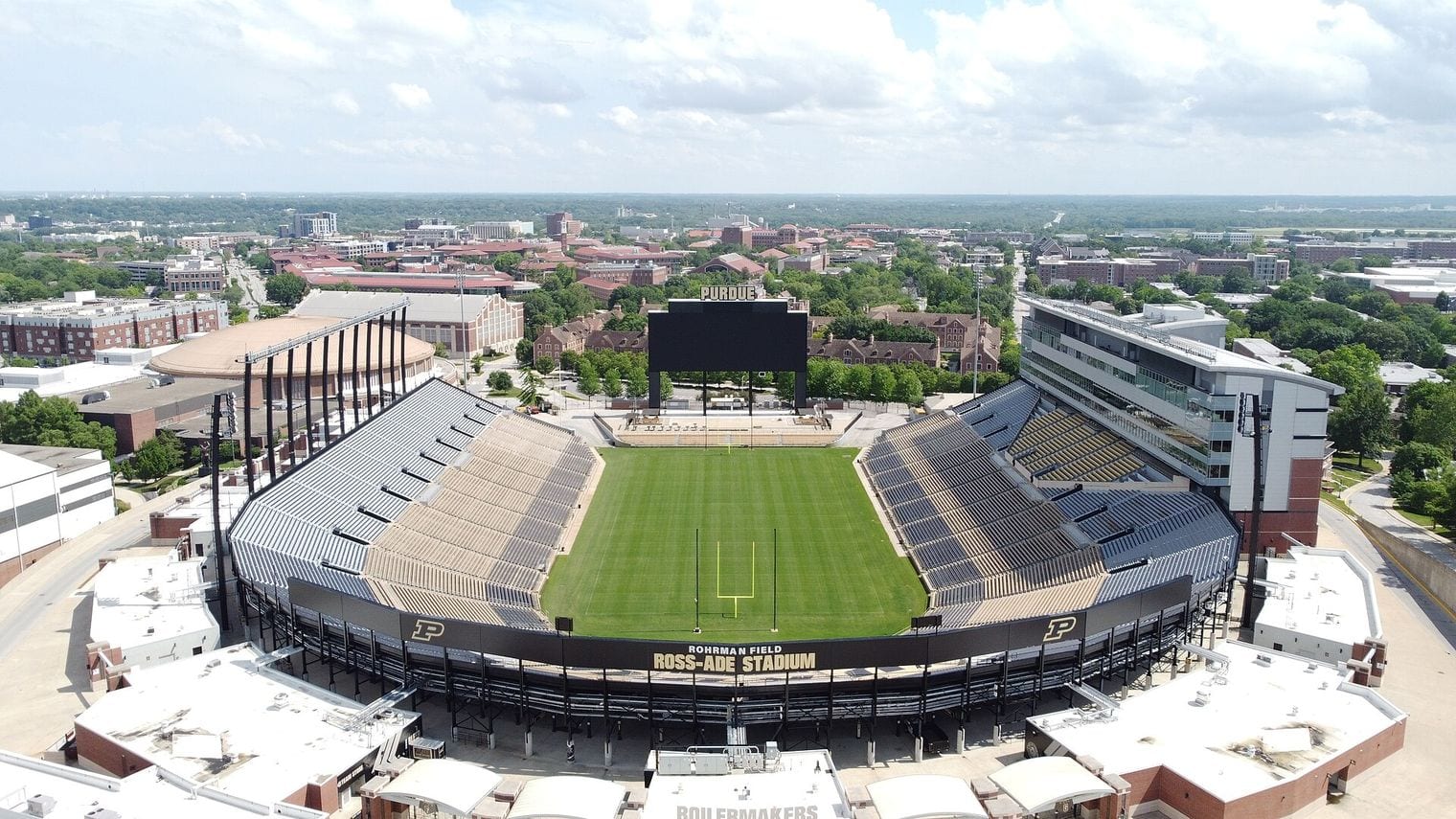
At 61,441 seats, Ross–Ade Stadium is the home of the Purdue Boilermakers in West Lafayette, Indiana. It is named for two Purdue graduates who bought the land and backed its construction: David Ross, an inventor and benefactor, and George Ade, the humorist and playwright.
The stadium opened in 1924 and has been expanded several times since. Purdue's train, the Boilermaker Special, rolls through campus on game days, and the Purdue All-American Marching Band's giant bass drum is a fixture of pregame shows.
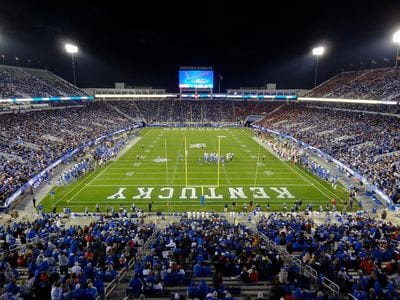
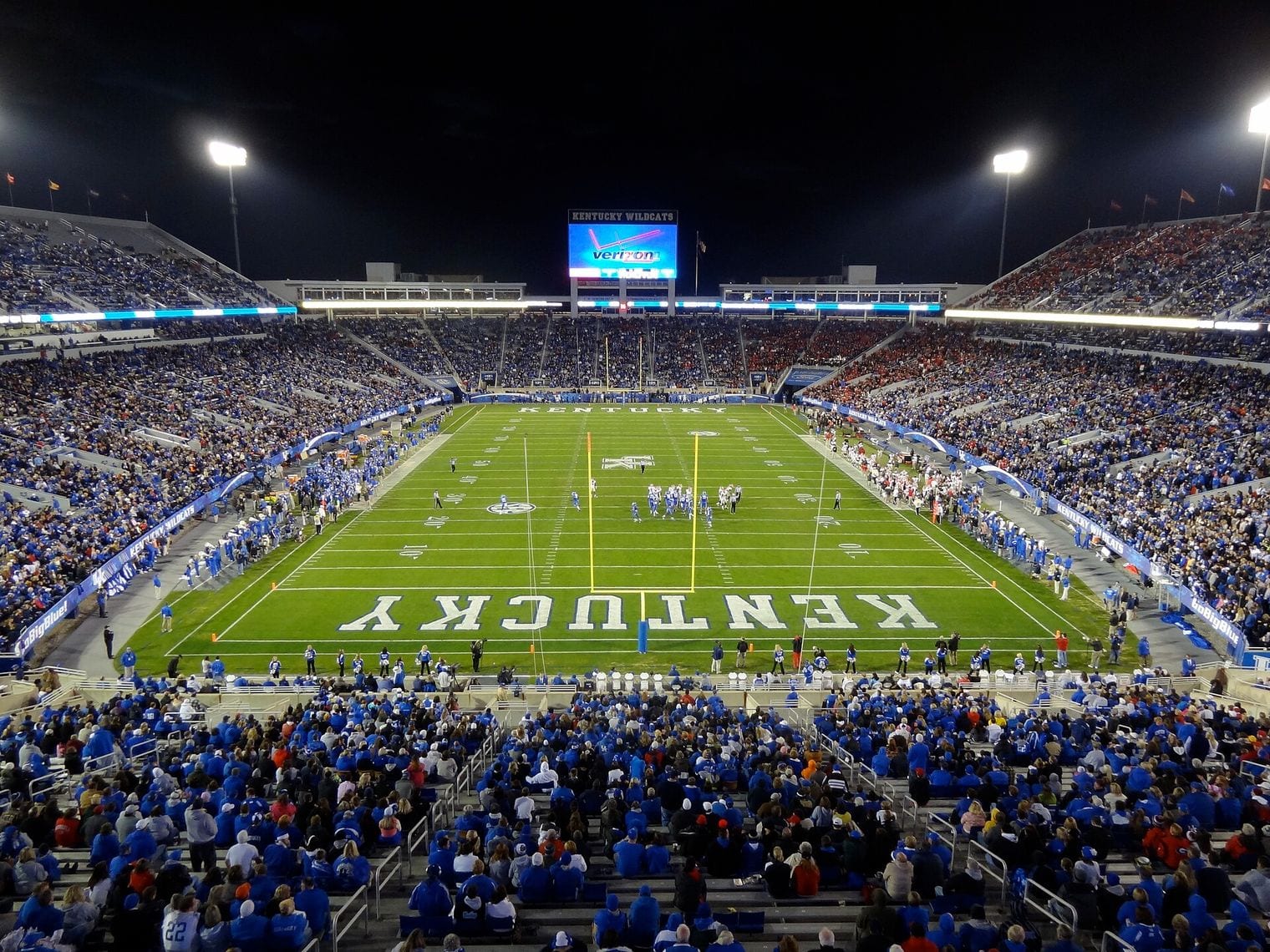
At 61,000 seats, Kroger Field is the home of the Kentucky Wildcats in Lexington, and it rounds out the list. Also known as Commonwealth Stadium, it was built in 1973, which makes it the newest football stadium in the SEC by original construction date. Kentucky beat Virginia Tech 31–26 in the first game played here.
The playing surface is named C. M. Newton Grounds, honoring a longtime Kentucky athletic director. Kentucky lists an approximate 61,000 seats, just ahead of Illinois's Gies Memorial Stadium at 60,670, the first stadium to miss the list.
FAQ: America's Largest College Football Stadiums
What is the largest college football stadium in the US?
Michigan Stadium in Ann Arbor is the largest, with an official capacity of 107,601 seats, which also makes it the biggest stadium in the Western Hemisphere. Penn State's Beaver Stadium is close behind at 106,572 and could pass Michigan once its renovation adds the new west upper deck.
How many college football stadiums hold more than 100,000 people?
Eight do: Michigan Stadium, Beaver Stadium, Ohio Stadium, Kyle Field, Tiger Stadium, Neyland Stadium, Darrell K Royal–Texas Memorial Stadium and Bryant–Denny Stadium. All eight are campus stadiums in the Big Ten or the SEC, and every one of them regularly fills to capacity on a big Saturday.
Why aren't the Cotton Bowl or NFL stadiums on this list?
This list counts only stadiums whose main tenant is a college team. The Cotton Bowl in Dallas has no college home team and hosts neutral-site games, while NFL stadiums such as Lincoln Financial Field (Temple), Acrisure Stadium (Pitt) and Hard Rock Stadium (Miami) belong first to their pro teams, so they are left out.
Which conference has the most big stadiums?
The SEC has 14 of the 32 stadiums here, from Kyle Field to Kroger Field in Lexington, and the Big Ten has 11, including the two biggest. The ACC has four, the Big 12 two, and independent Notre Dame Stadium completes the list.
Do the biggest crowds match the official capacity?
Not always. Capacity counts seats, but student sections and standing room can push crowds well past it: Michigan has hosted more than 115,000, Penn State 111,030 and Kyle Field 110,633. The largest college football crowd on record, 156,990, came in 2016 at Bristol Motor Speedway, a racetrack rather than a stadium.
Sources & updates
How this ranking was checked
Checked before launch
Sources cited
32
Every figure in this ranking was checked against the record-keeper or official source behind it before publication, and the top of the ranking re-checked live so a newer record would not be missed.
One email every Thursday with our newest guides for the places you tick.
Newsletter
Get new guides like this by email
One email every Thursday with our newest guides for the places you tick.
We use cookies to analyse site traffic and improve your experience.
You can accept or reject analytics cookies. See our
May we use analytics cookies? See ourCookie Policy.